Middle School: Week in Review

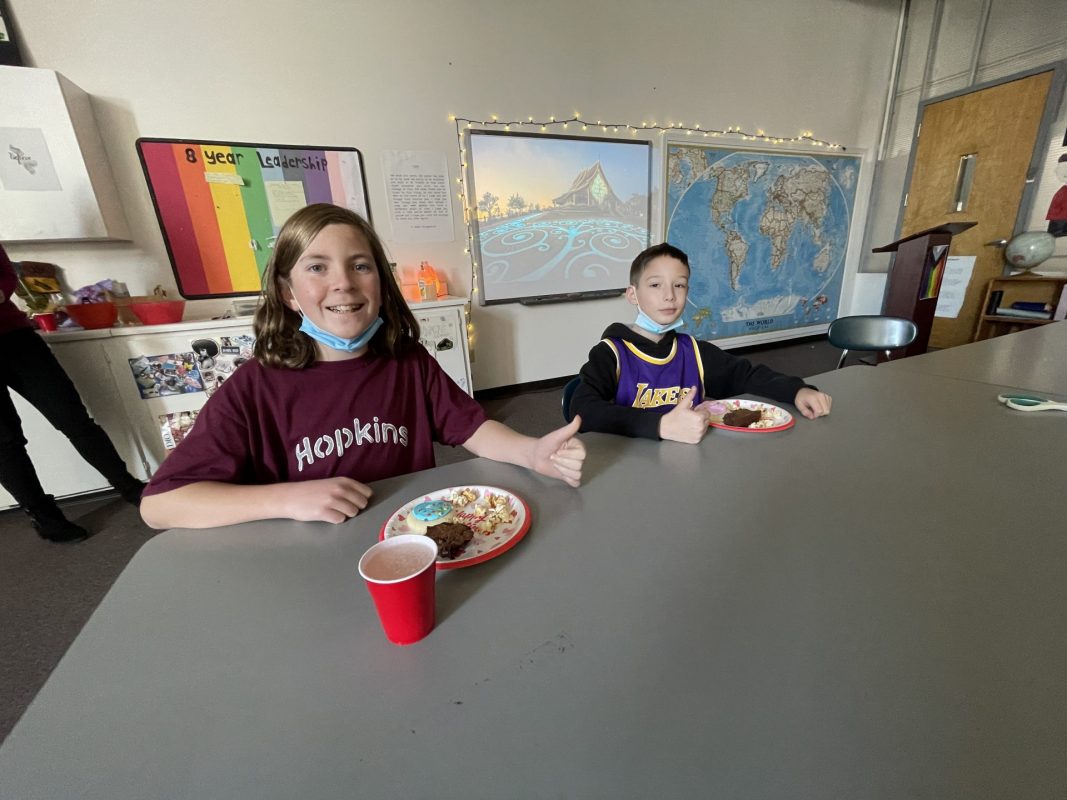
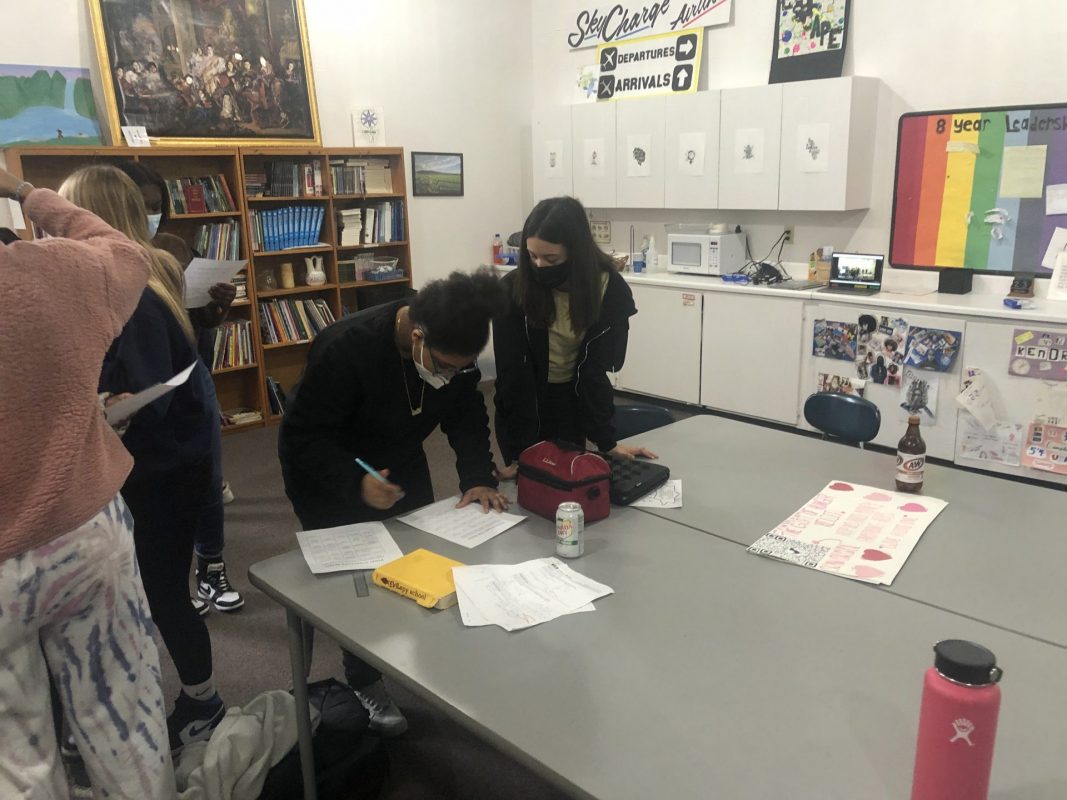
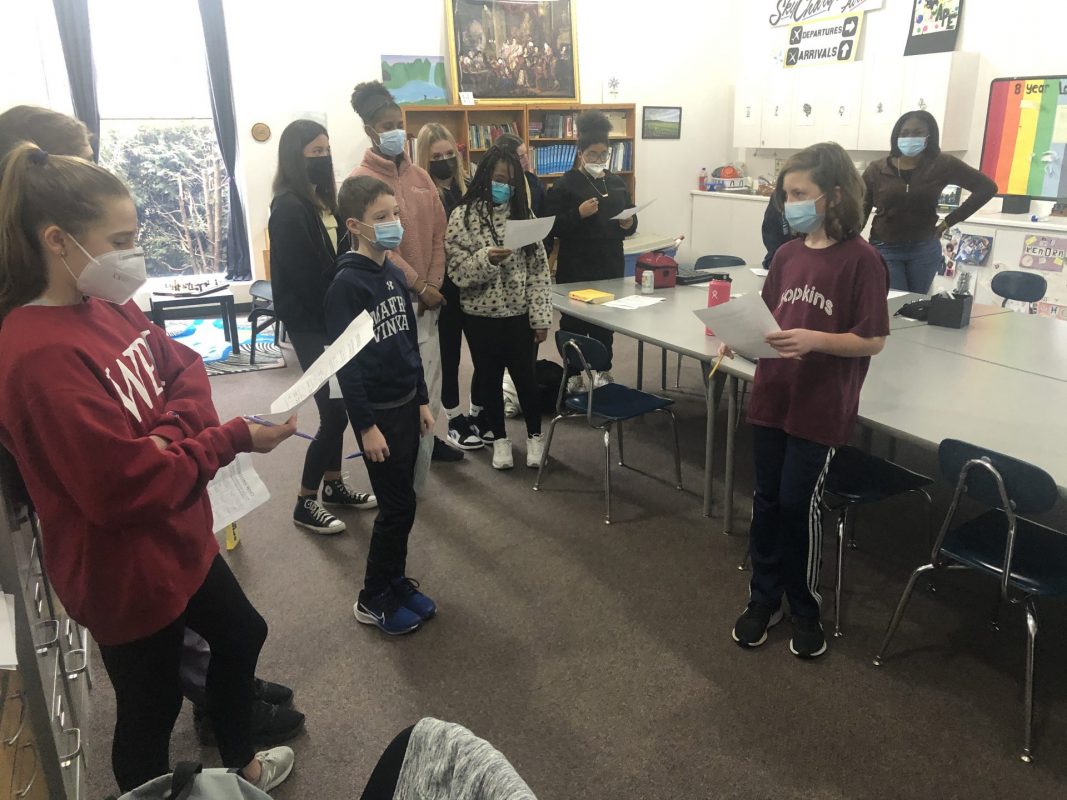
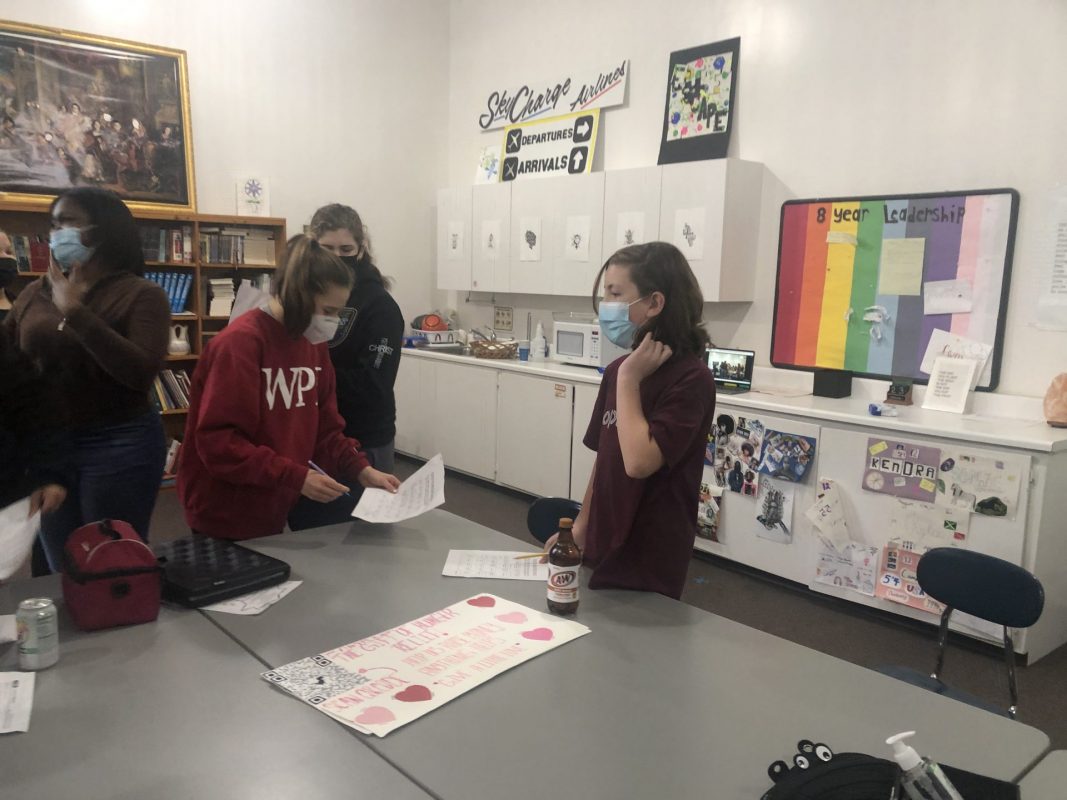
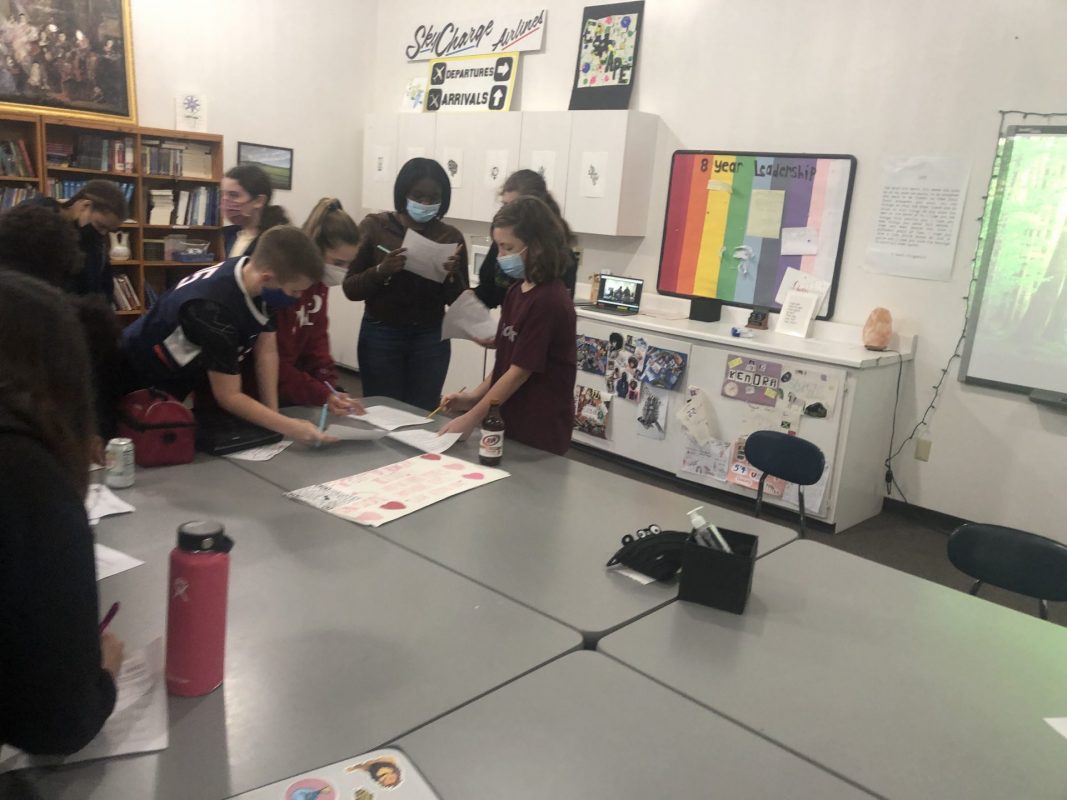
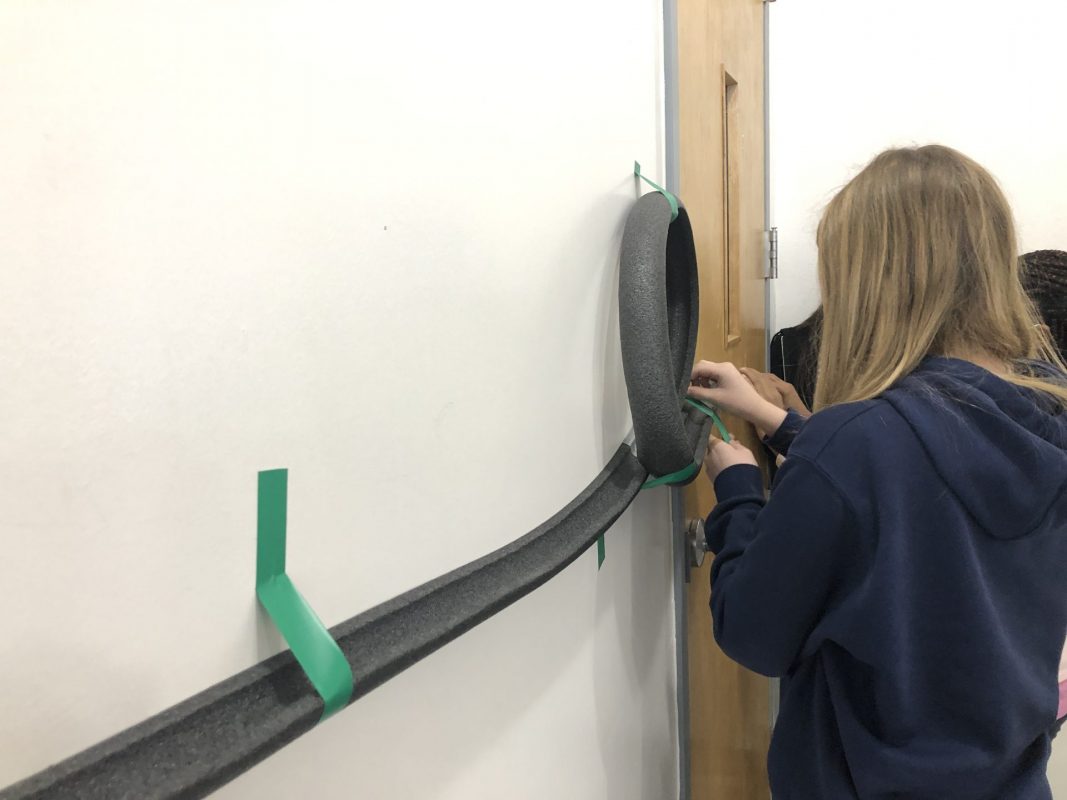
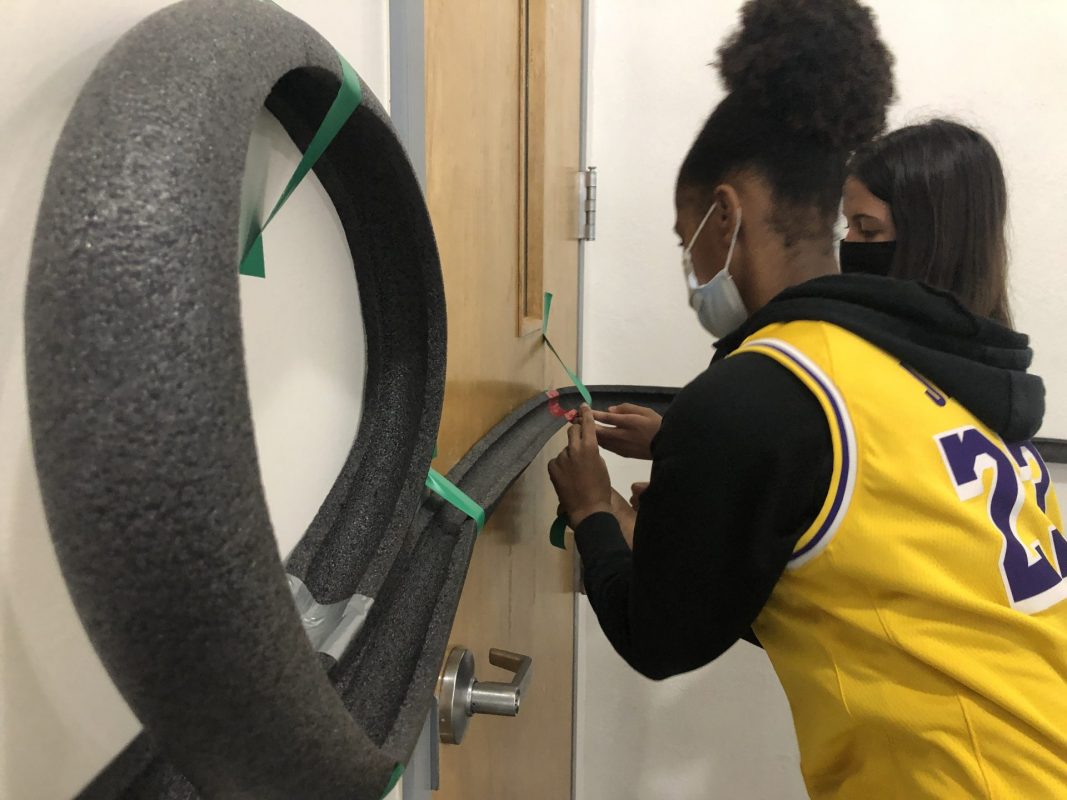
Winter break is one week away and the Middle School community is busy sharing their energetic festive spirit. All the Middle School students recorded their music video with Mr. Erik and the video should be available for viewing soon. We also began decorating our respective advisory doors with this years theme of Winter Wonderland. In addition, the grade 8 class completed the gift wrapping for all the wonderful donations brought in for the Family Gift Drive to support two families.

Next week we will be celebrating the students great accomplishments in 2021 with a fun holiday party on Friday December 17th. Please remember to have your child bring in their secret snowman gift (10$ spending limit) and any treats to share for our party. A respective SignUp genius was emailed to all families in order to help us bring in all the goodies we will need.

HUMANITIES:

6th grade Humanities class has been working on their independent reading novel this week. Individual goals are set for reading and the accompanying assignments will guide book discussions. This week, students have discussed and written about the importance of the setting in a plot as well, identifying the conflict, and making predictions for how the conflict will be resolved. Additionally, students completed another unit of vocabulary.
7th grade Humanities classes are continuing to work through Baba Wague Diakite’s memoir, A Gift From Childhood, that focuses on growing up in Mali during the second part of the 20th century. In addition to book discussion, students learned about the traditional ceremonies and celebrations surrounding boys becoming adults in Mali as well as Kenya. 7th grade students also learned about the qualities of a fable, since many of the stories that Baba tells could be considered fables. The class has begun prewriting for their own fables that will be drafted next week. Finally, students completed a unit of vocabulary.
In 8th grade Humanities, students learned about the Age of Exploration. This involved taking a deeper look at explorers, their reasons for wanting to travel west, where they ended up exploring, and the subsequent impacts. Students also continued reading their class novel, If I Ever Get Out of Here by Eric Gansworth. Finally, 8th grade students completed a unit of vocabulary.

MATH: 

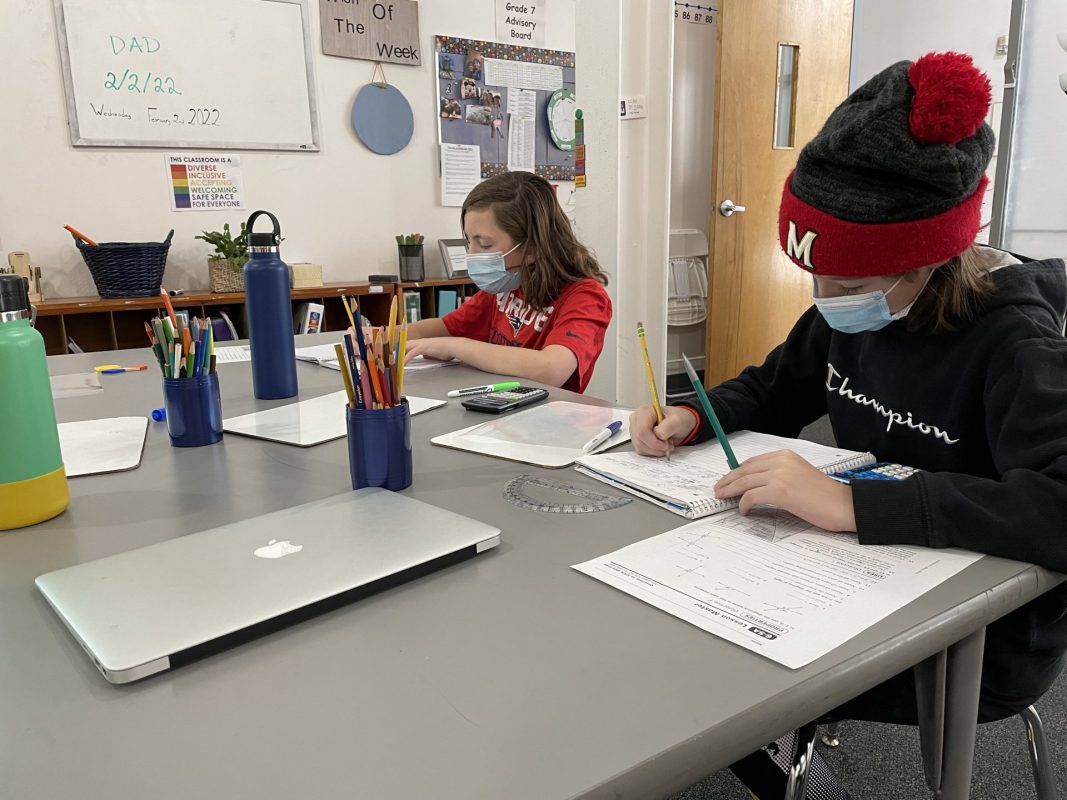
In Transition class, students began working through chapter 7 in the UCSMP textbook. We will revisit chapter 6 in the new year all together. This class is learning about area and perimeter of 2D shapes, multiplying fractions and applying the commutative and associative property of multiplication. Students are also practicing how to use the distributive property when multiplying large values.
In Algebra class, students can successfully convert rates to a different unit and use ratios to compare two quantities. This class is practicing how to interpret percentile questions and how to solve proportions using a cross-multiplication method. We will conclude our learning of chapter 5 next week and encourage all students to begin long term studying for the chapter test scheduled for Tuesday December 14th.
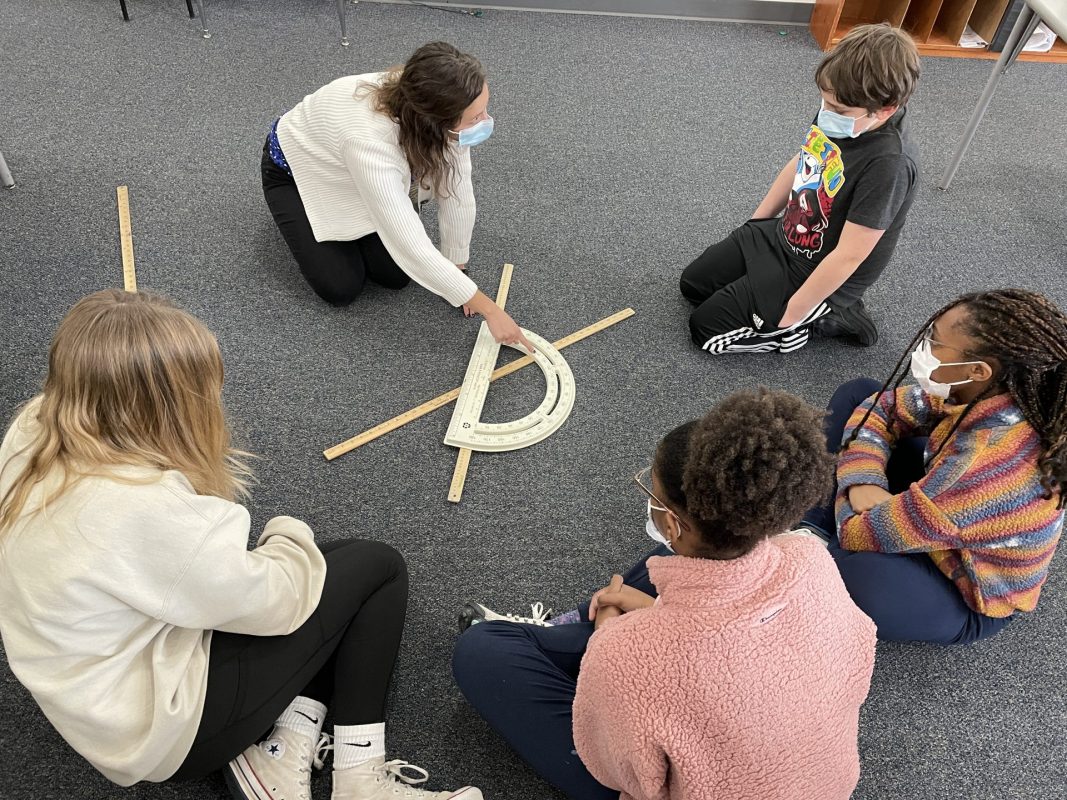
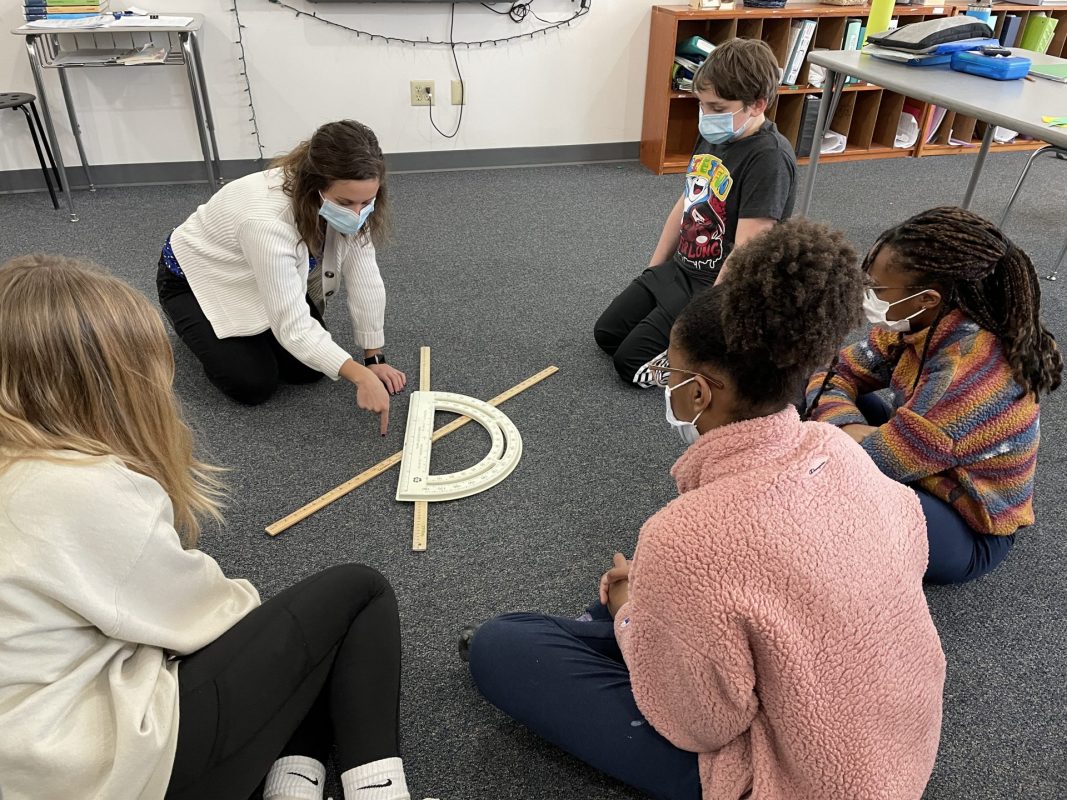
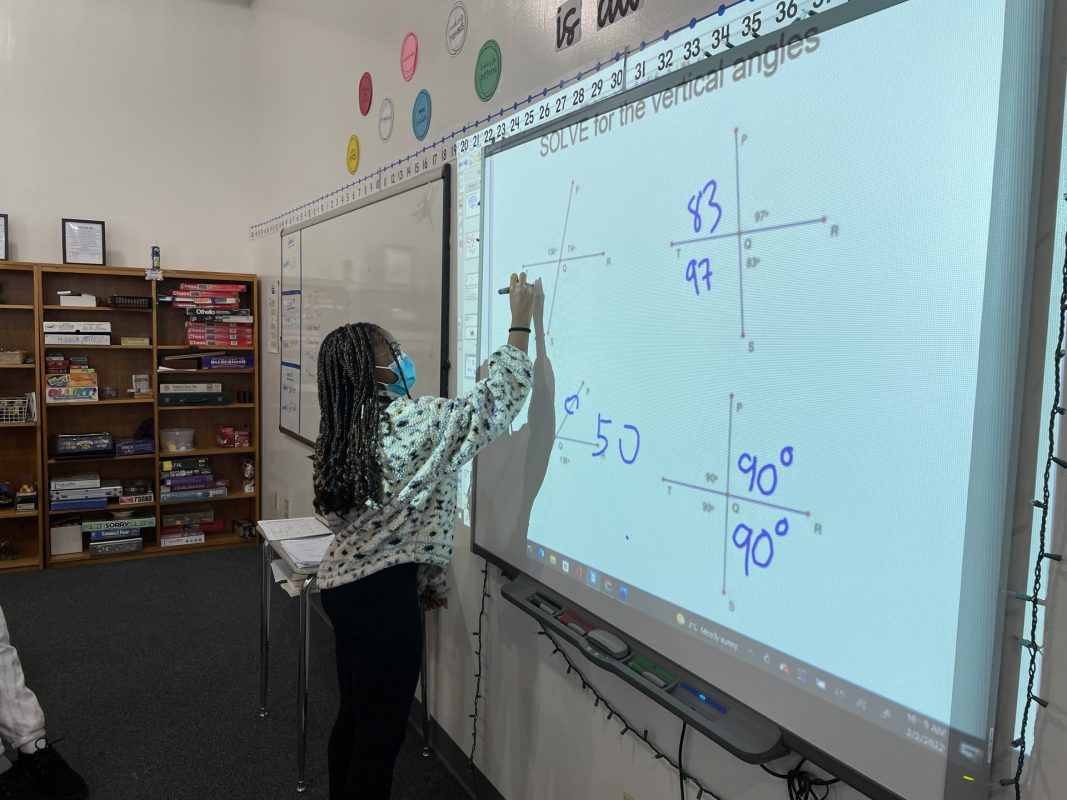
In Geometry class, students are continuing to work through proof statements using properties of isometries. This class can successfully label alternate interior and exterior angles in a figure, as well as construct equilateral triangles from three non-collinear points. We will continue to work through the triangle-sum, quadrilateral-sum and polygon-sum theorems next week.
Math Joke: What’s the one shape you should avoid at all costs?…..a TRAP-ezoid.

SCIENCE:

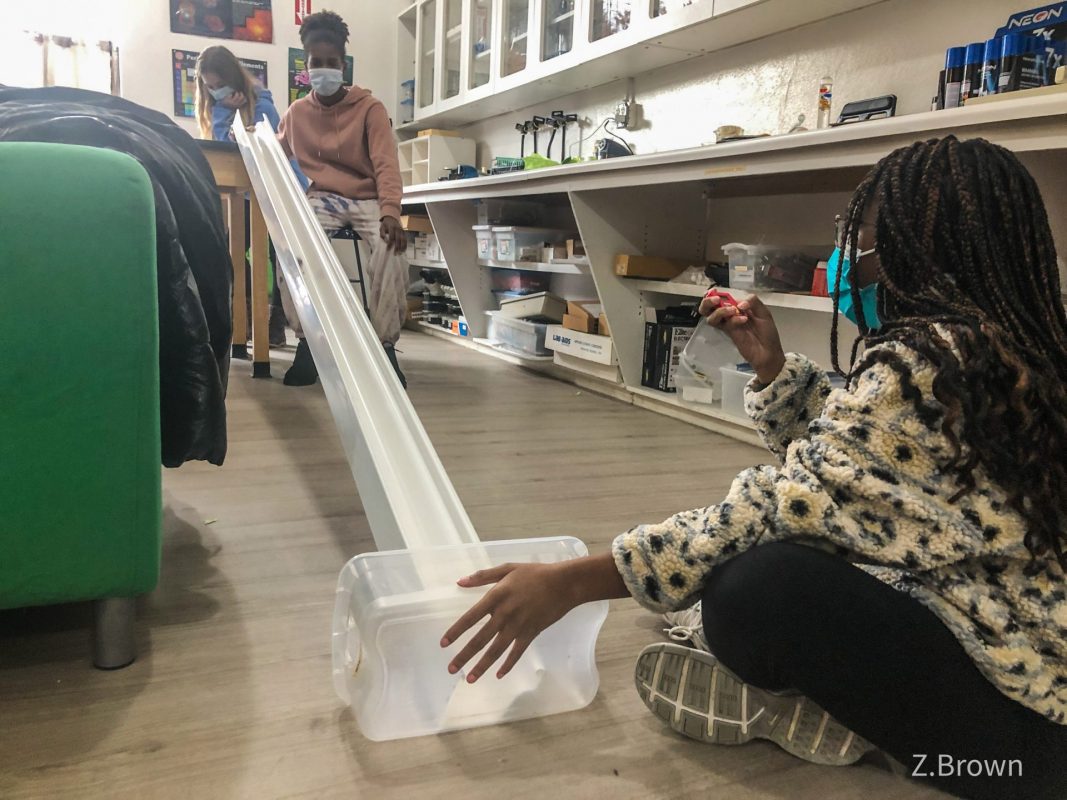
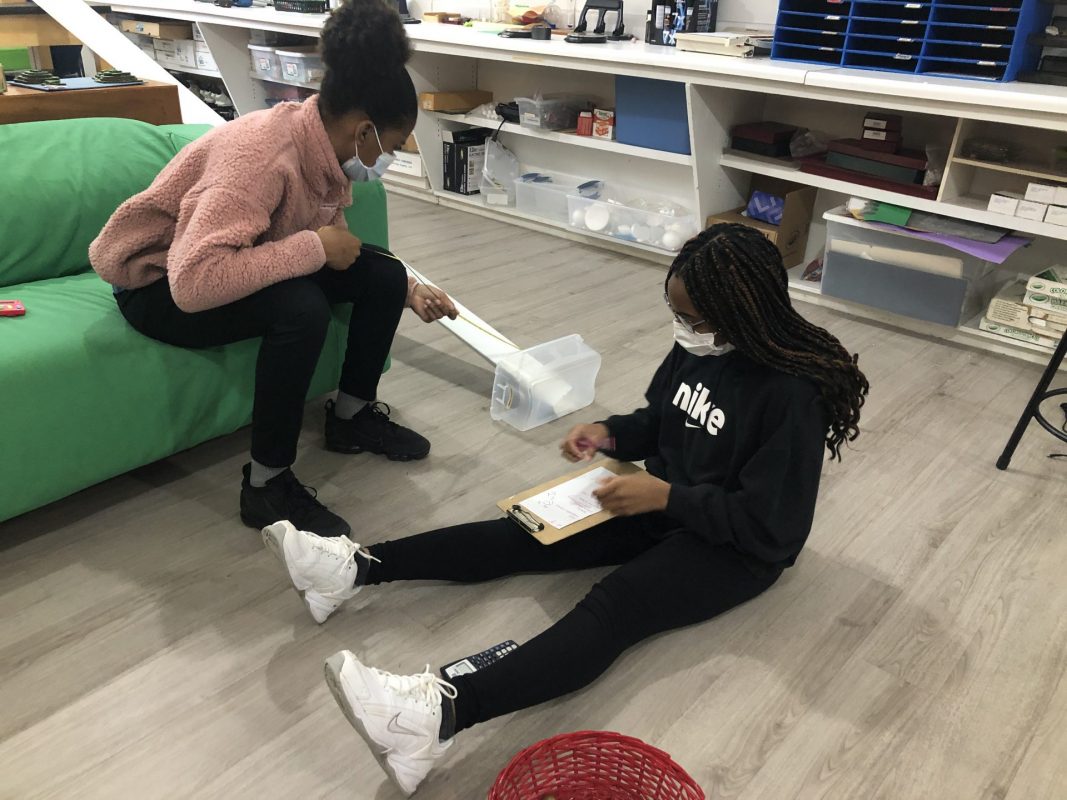
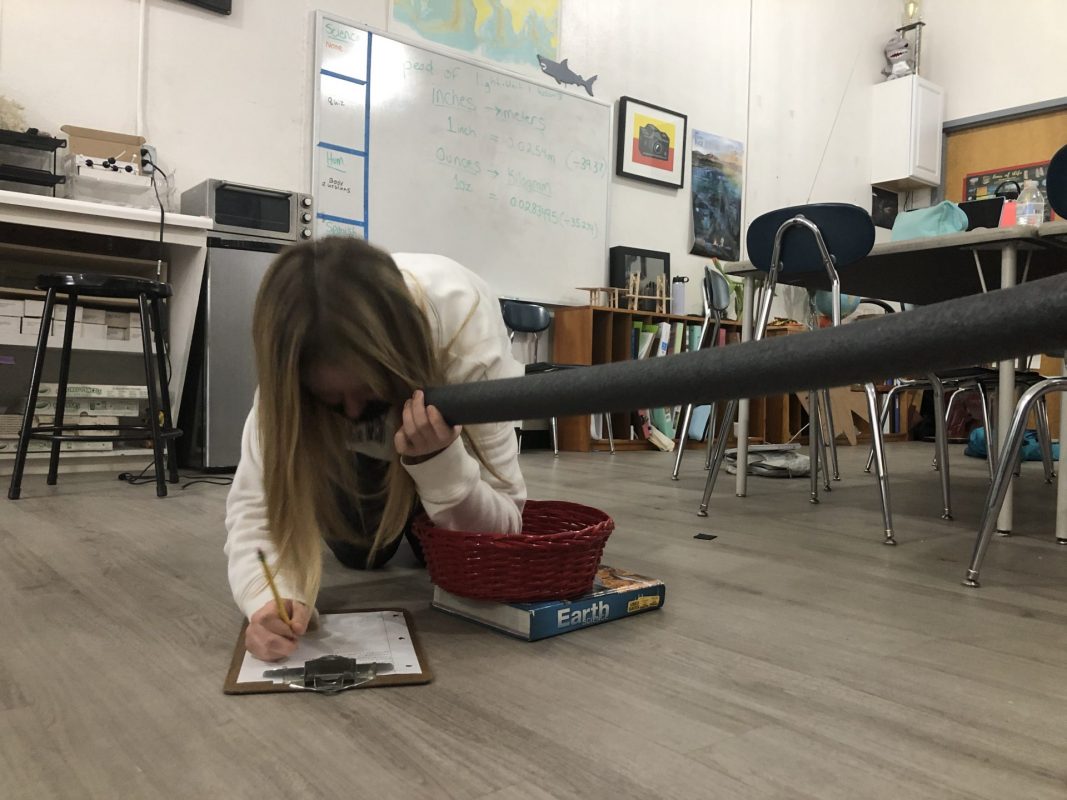
This week in Earth Science, students have worked on locating the epicenter of an earthquake using data obtained by 3 seismic stations. Students were tasked with identifying the difference in arrival of P and S waves recorded from a seismograph which were used to determine the distance to the epicenter. Students graphed circles on a map, representing areas of seismic activity through earth’s crust. By graphing 3 different seismograms, students were able to determine the epicenter by locating the area of overlap of the 3 circles.

In Physical Science, students finished their stop motion video representations of covalent and ionic bonding of atoms. Students selected 2 molecules that each represented ionic and covalent bonds. The videos depicted the transfer/exchange of electrons between atoms that resulted in a specific type of bond. Throughout working on this project, students became familiar with the properties elements have and how the history of the periodic table of elements.
In Life Science, students finished their stop motion video representations of meiosis. Students created a stop motion video that illustrated the 4 main stages of meiosis (Prophase, Metaphase, Anaphase, Telophase). Students were able to show the difference between mitosis and meiosis as in meiosis, genetic variation occurs during prophase by the exchange of DNA by crossing over. Each student worked hard meeting each of the objectives.
Middle School: Week in Review

What a great week in Middle School! We hope you had a wonderful Thanksgiving and time with your family and friends. Thank you to everyone who contributed to our bread baking last week. We had a lot of fun in the process, and the breads were delicious.

In keeping with the giving spirit, the 8th grade has adopted two Newtown families in need for the holidays. Their wishlists are posted in these Sign Up Geniuses. Thank you for taking time to help us help these families. Wrapped gifts from the SignUp can be sent in anytime by next Friday, 12/10.

Family #63

Family #9

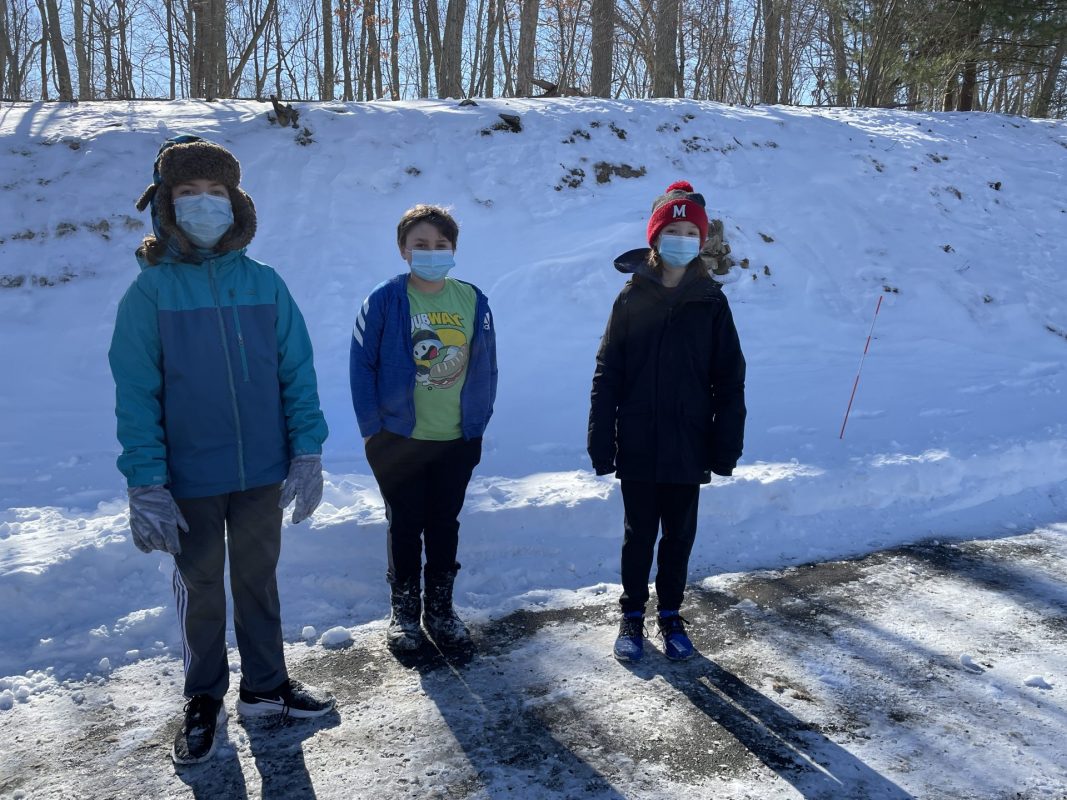
Also, as it gets colder, we are asking parents to be sure that their Middle School child/children come to school with the appropriate outerwear for the weather, as we will continue going outside even as the temperatures drop. This includes a winter jacket, long pants, and gloves/hat (depending on the temperature). Thank you for helping the teachers with this.

Science

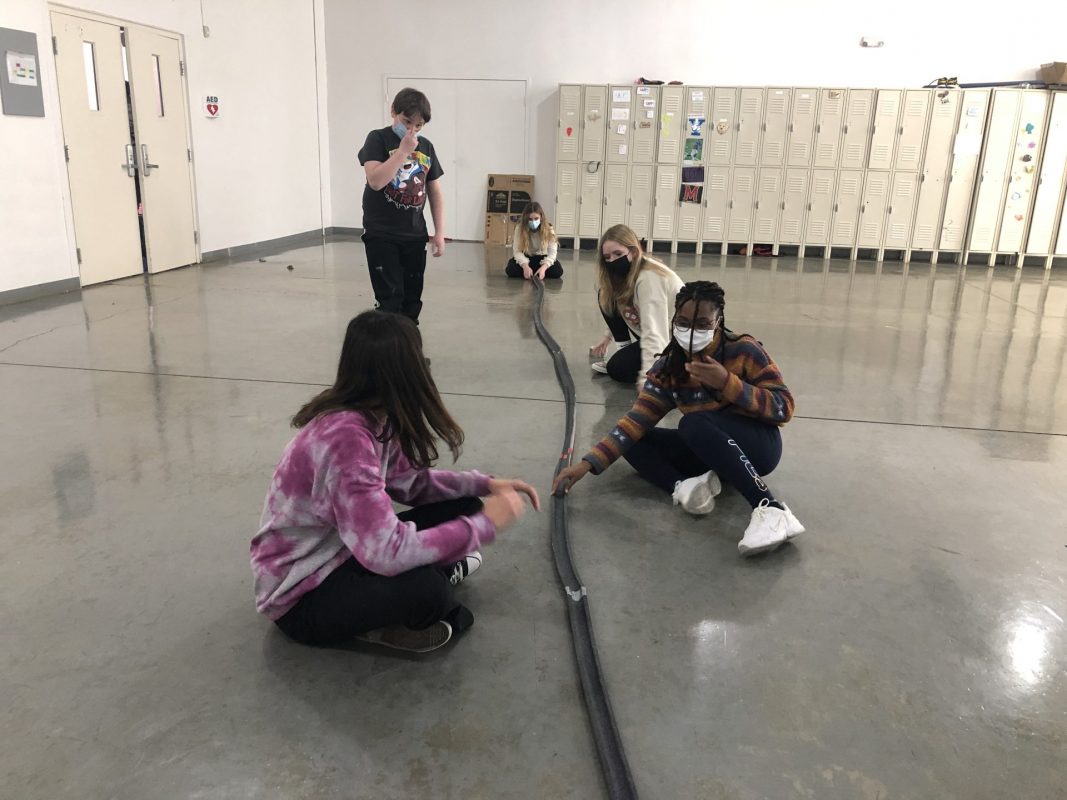
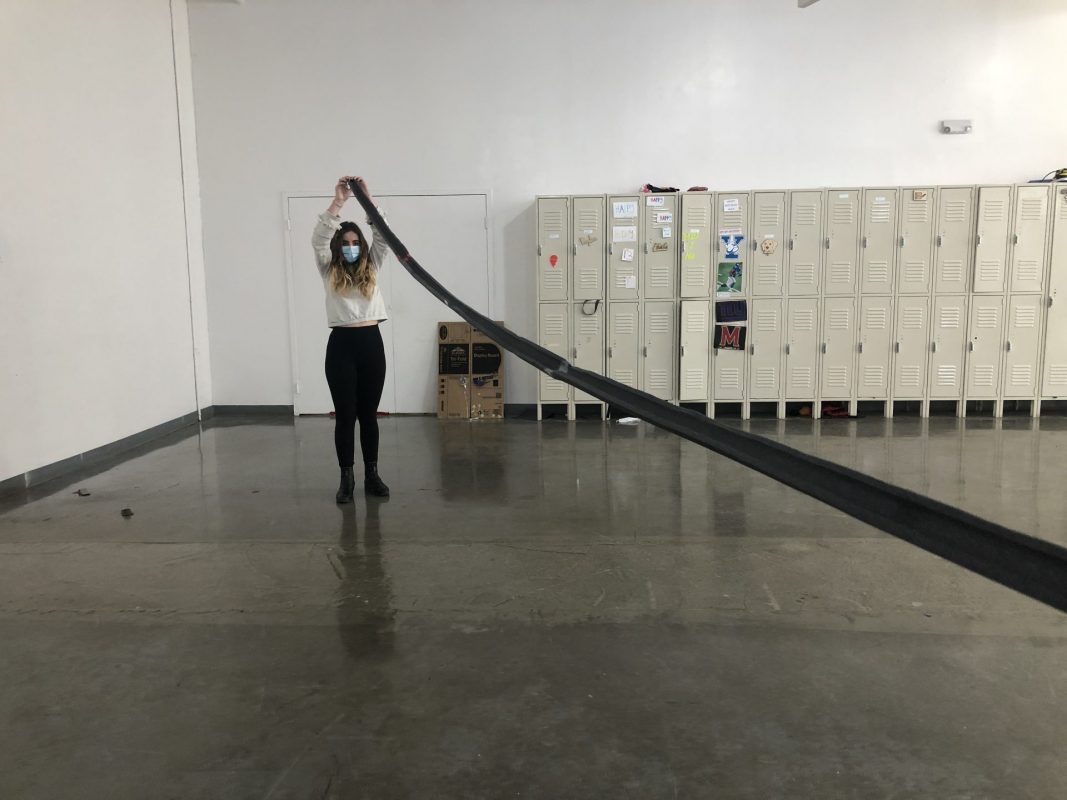
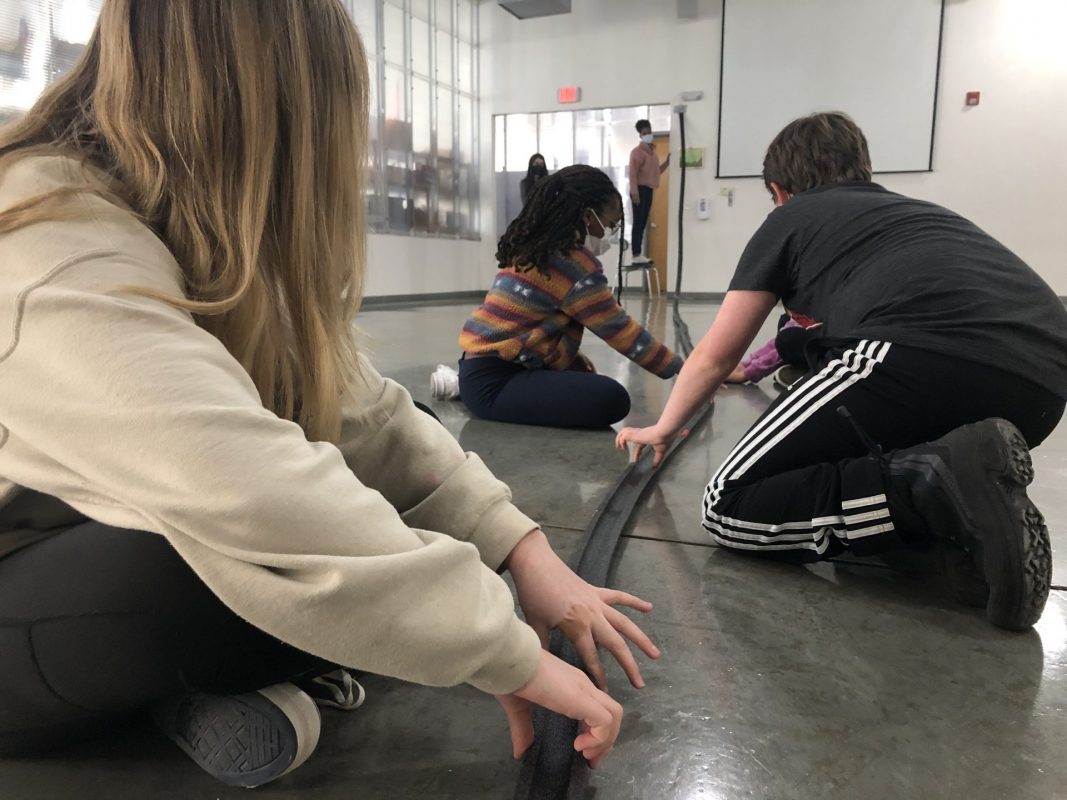
6th year Earth Science students are currently on the unit, Why Earthquakes Occur. Students were able to represent seismic waves by using slinkies throughout each class. Students were able to draw upon past knowledge of tectonic plates as it relates to the sudden release of pressure, resulting in earthquakes. The objectives for this unit are to describe how crustal deformation by plate tectonics causes earthquakes, model the crustal deformation of Earth that causes earthquakes, and explain how scientists study earthquakes and why studying earthquakes is important.

7th year Physical Science students are in the unit, Molecules. This week in class, students were able to represent their own molecule using manipulatives. Students artistically represented the difference between an atom/element, elemental molecule, and compound molecule. The objectives of this unit are to recognize that atoms and molecules are too small to be seen; identify examples of elements, compounds, molecules, and diatomic molecules; describe how the properties of a compound are different from the properties of the elements that form the compound; and, draw atomic diagrams of elements, compounds, and diatomic molecules.

8th year Life Science students are in the unit, Meiosis. Throughout this unit, students will be able to explain when meiosis occurs and in what organisms, describe how chromosomes change and move at each stage of meiosis, determine the number of chromosomes in the gametes of an organism given its parental chromosome number, and explain why meiosis allows diversity of characteristics in offspring, whereas mitosis does not.

Math
In Transition class, students are concluding their learning for Chapter 5, which involves patterns in addition and subtraction problems. This class is continuing to work on how to solve equations in the form x+a< b or x+a=b. This class can also successfully substitute values in a table and use the triangle inequality property to find missing side lengths.
In Algebra class, students began a new chapter this week and are excited to be learning about simplifying algebraic fractions. This class learned about using rates to solve real world problems and can now identify congruent negative fractions. This class will continue to work on converting rates with multiple units and practice setting up complete algebraic fractions from word problems.
In Geometry class, students are able to label congruent figures on any 2D shape and can apply the segment congruent theorem to simple two-column proof statements. Students are confident with using different isometries in order to change or alter a given shape in space. This class concluded the week with a short quiz that tested their learning from Lesson 5.1-5.4.
 
Math Joke: Why can you never trust math teachers who use graph paper?…….Because they’re always plotting something.
Humanities
6th grade Humanities students began their independent novels this week. Students selected a novel and will be reading them until winter break. They have reading goals every few days along with a written assignment that will prepare them for our reading discussion. The class will keep track of each other’s plots and ask questions of each other. 6th grade students also completed a unit of vocabulary this week.
In 7th grade Humanities class, students continued reading their class novel, A Gift From Childhood by Baba Wague Diakite. This memoir is about traditional Malian upbringing but also gives glimpses of French occupation and independence from France. We looked at the colonization of the continent of Africa from 1450-late 1900s by European countries and talked about how cultural influences are present in the countries from languages spoken to traditions and city names. The novel also focuses on storytelling as a mode of education, using proverbs and metaphors. The class has recorded all of these as they have been read, and they will be used for a later writing assignment. Finally, the 7th grade completed a unit of vocabulary.
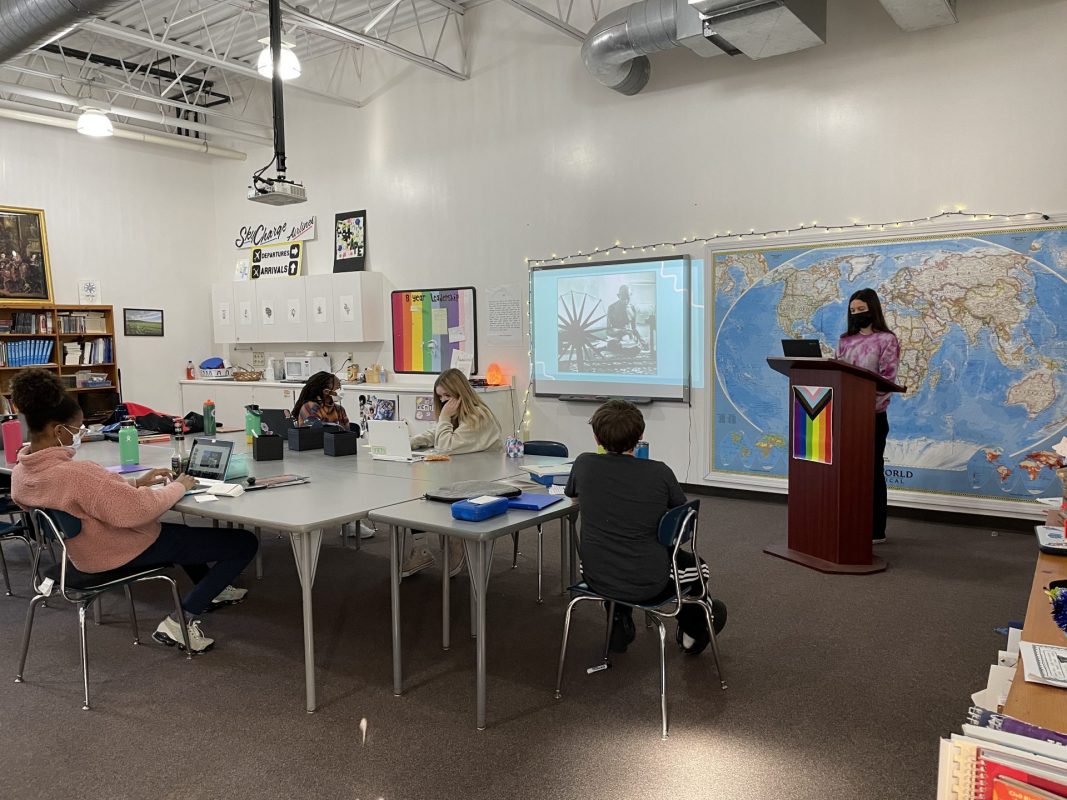
8th grade students completed and presented their career presentations this week! Due to Covid, this project was created as a safe alternative to our usual five-day internship. Students chose a profession, completed research about it, interviewed a professional in the field, and were given the option of visiting a place of business for two days. The topics were Mental Skills Specialist, Chef and Restaurateur, D1 College Coach, Librarian, and College Athletic Administrator. With the diversity of professions, the presentations were interesting and reflected the students’ personal interests. It was great hearing their reflections of the interviews as well! The 8th grade also began their class novel, If I Ever Get Out of Here by Eric Gansworth and began a unit of vocabulary.
Have a beautiful weekend!

Middle School: Week in Review

The energy is up this week on the cusp of a short, Thanksgiving week coming up and some beautiful weather. Also, the 8th grade and the generosity of the FWM community is providing a holiday meal plus extra provisions for the season to a Newtown family in need. Lots of great moments happening!

Math

In Transition class, students are working through the second half of Chapter 5 in the UCSMP textbook. They covered new topics such as using fact triangles to find related number sentences and solving for unknown variables in an addition or subtraction question. This class is able to solve equations of the form x + a = b and understand how to isolate a variable using a single-step method.
In Algebra class, students can successfully solve for variables in the form ax + b = cx + d. This class can also write linear equations and inequalities based on a real-world problem. They are continuing to practice how to rearrange formulas for specific variables and recognize what equations have no real solution or all real solutions.
In Geometry class, students are concluding their learning for Chapter 4 about congruent transformations. This class is learning about reflection, rotations, translations, and magnifications of different figures on a plane. With great patience and practice, this class is able to draw composite reflections over intersecting lines and draw translations using a vector guide.
Math Joke: Why did the two 4’s skip Thanksgiving dinner?…….Because they already 8!
Humanities
Grade 6 Humanities worked on final writing and discussions relating to their class novel, Out of My Mind. They wrote reactions to the novel using guided questions and are now brainstorming for a creative writing piece that involves writing to the main character, Melody. 6th grade students also completed a poetry analysis for the poem, “Don’t Go Into the Library” by Albert Rios that discusses the notion of how spaces can evoke emotion. They will begin another descriptive writing piece next week!
Grade 7 Humanities students wrapped up culture discussion this week and moved into their next region of the globe: the SubSaharan African Continent. Geography work was done as well as gaining information regarding human geography as well as the industries of forestry, fishing, mining, and drilling and their impacts on the environment, the people, and the world.
Grade 8 Humanities students spent the week working on their career research project/internship. They have chosen a profession of interest and are doing research about what the job entails, what days are like, qualifications needed, and much more. They are also asked to interview or intern with an individual in the field as part of their research. The 8th years are doing great work!
Science
     This week all Middle School science students are working on the fundamentals of a scientific investigation. Students are exploring and identifying the differences between independent and dependent variables, what a control is within an experiment, how to format and carry out an experiment,  represent and analyze data, and build a logical conclusion. Throughout this process, students will be presented with a series of graphs that represent a variety of data. The students’ objective will be to deduce what the purpose (problem/question) of the experiment was that resulted in collection of data. From that purpose, they will analyze the results.  Through this practice, students will have a broader understanding into a scientific mindset.
Have a great weekend, everyone!


Middle School: Week in Review

Happy Friday! We hope you enjoy reading about the full week of learning and great work by the Middle School Students!

Science

6th year Earth Science students are finishing their unit on Tectonic Plates. Throughout this week, students have continued to apply their knowledge of the rock cycle as it relates to tectonic plate activity. Students were asked to hypothesize how tectonic plates play a role in the development of the rock cycle. After sharing their hypothesis, each student conducted research to either support or disprove their own theory.

7th year Physical Science students have finished designing and producing their stop motion videos depicting States of Matter. Each group of students was required to plan and carry out their ideas which artistically represented the transition between solids, liquids, gases, and plasma. Students were to include each state’s molecular arrangement, thermal energy as it relates to potential energy, and whether or not a definite shape and volume are recorded. After students finished their videos, they reflected on areas of their work they felt went as planned and those that can be improved upon moving forward.
8th year Life Science students also finished their stop motion video on Cellular Respiration. With cellular respiration being a rather extensive sequence, the objective students were to represent in their video was the sequence of each phase transition between glycolysis, citric acid cycle, and electron transport chain. Each phase was to include the input and outputs of each. Our next unit will be Meiosis and Mitosis.
Math
In Transition class, students concluded their learning for Chapter 3 titled, Representing Numbers. This class has moved onto learning Chapter 5 and are excited to learn about absolute values, adding integers, and solving single-step equations.
In Algebra class, students continued to learn more about linear equations and linear inequalities. Students practiced graphing vertical and horizontal lines on a coordinate plane, solving equations with a variable on both sides of the problem, as well as finding percentages of a total quantity.
In Geometry class, students began working through Chapter 4 and are studying transformations in space. This class is continuing to practice how to draw a reflection over parallel and intersecting line segments. This group can also find the new coordinates of a figure after a reflection, rotation, or magnification is performed.
Math Joke: Why do plants dislike math?…….Because it gives them square roots.
Humanities
6th grade Humanities students finished their class novel, Out of My Mind. With an action-packed week of reading, they successfully participated in insightful book discussion and completed written work associated with the novel. It was great to have the students become so invested in their novel! They also completed a unit of vocabulary this week.
7th grade Humanities students began the week wrapping up their current events from last Friday. With such important topics and a class that has respectful and profound discussions, it is always exciting to watch and listen to them engage and learn from each other. Next, students have been discussing culture, specifically how it relates to our country and also China, as we finish up our learning about the country. What makes a culture? How does culture change? What happens when it does? We looked at traditional vs. modern culture. Additionally, they completed an assignment analyzing the poems, “A Prayer for the 21st Century” by James Marsden and the lyrics from Bob Dylan’s, “Forever Young”. Finally, students completed a unit of vocabulary.
8th grade Humanities class also began the week wrapping up current events presentations from last Friday. Similarly to the 7th grade class, they had excellent topics that elicited good discussion and inquiry.  Students had respectful conversation that was great to listen to. Next, students completed research to share with the class next week about a few Pre-Contact Civilizations from the Americas: Incas, The Mayan Empire, Aztecs, Mississippians, Ancestral Puebloans (Anasazi), and Olmec. Additionally, students began looking at the genre of personal narratives by reading and responding to two essays, “Plate of Peas” by Rick Beyer and “Mississippi Mud” by Jessica Piper. Finally, students completed a unit of vocabulary.
Have a wonderful weekend!

Middle School: Two Weeks in Review

Happy Friday! We are going to backtrack to last week when we had our fun Halloween celebration. We enjoyed everyone’s costumes and had a great time together!

Also, thank you for your time meeting with us for conferences. The conversations were great, and we enjoy being on the same page with both students and parents. Please continue the conversations with us anytime!

Now, onto this week. It’s been a full and busy week in the Middle School.

Science

6th year Earth Science students finished creating their tectonic plate stop motion video. Each group of students was, asked to represent what exactly tectonic plates are, how convection currents cause plate movement, and what land formations are a result of these. This week, students are working on representing how tectonic plate movement is responsible for the rock cycle as it relates to the formation of igneous, metamorphic, and sedimentary rocks.

7th year Physical Science students began their unit, States of Matter. Students spent time observing and illustrating the physical changes of a candle, recording notes as it relates to a change in state of matter from solid – liquid – gas. From this unit, students will identify what similarities and differences are present in each state’s definitive shape, volume, spatial arrangement, and kinetic energy (temperature). Concluding this unit, students will create a stop motion video representing these phase changes.
8th year Life Science students are currently learning about Cellular Respiration. This past week, students conducted experiments revealing the amount of stored energy in food by burning it. In order to obtain this data, students ignited several types of food (marshmallow, popcorn, and Pringles) while heating a known volume of water. Students recorded the initial and final mass of food before and after the burning and the beginning and final temperature of water. Students took the change in food’s mass and temperature change of water to determine the amount of energy released (kilojoules). Students have been able to model the chemical reaction that is cellular respiration by using a variety of manipulatives within class. This provided students an opportunity to see how within a chemical reaction, matter is neither created nor destroyed, only rearranged.
Math
In Transition class, students are comparing decimals and fractions, they are understanding repeated decimal notation, and they are converting numbers between decimals, fractions, and percents. This class is practicing their skills with calculating the percent of a quantity, as well as using square roots in real world problems. They will be concluding Chapter 3 next week, and Ms. Sutherland encourages students to start long term studying in order to help prepare.
In Algebra class, students can use distributive property to simplify expressions, solve for linear inequalities, as well as graph linear equations on a coordinate grid without using technology. This class has been working hard to be more comfortable with algebraic statements and can now confidently collect like terms correctly.
In Geometry class, students are able to apply size transformations to a given figure as well as determine the measures of angles formed by parallel lines, perpendicular lines, and transversals. Students are able to identify the slope of parallel or perpendicular lines and are beginning to understand the purpose of a proof statement. This class concluded their learning of Chapter 3 this week and will begin studying Chapter 4 next week.
Math Joke: Why was the equal sign so humble?……………………..Because they knew they weren’t greater than or less than anyone else.
Humanities
Grade 6 Humanities students continue to work on descriptive writing. They wrote descriptive narration to a nature video of a shark leaping out of the water, eating a seal. They had to use figurative language including imagery, simile, metaphor, personification, and specific words. The end products were fun to read and had the students exploring the thesaurus. 6th grade students also continued to read their class novel, Out of My Mind by Sharon Draper, and complete accompanying work. Finally, students completed their monthly current events presentations.
Grade 7 Humanities students learned about the events leading up to China’s cultural revolution of the early 20th century. More specifically, they learned about the Opium Wars, Taiping Rebellion, and the Boxer Rebellion. They also discussed aspects of a culture, such as language, clothing, food, and roles of men and women. In particular they learned about Chinese Foot Binding, which was outlawed in 1912. They also finished learning about the political economic systems of capitalism, socialism, and communism. Finally, students completed monthly current events presentations.
8th grade Humanities students completed assessments on their sentence structure unit that focused on clauses as well as compound and complex sentences. They also began their history book, A Different Mirror for Young People: A History of Multicultural America by Ronald Takaki. Particularly, he begins the book by defining what it means to be American and what being American “looks” like. His main idea and the students’ discussion centered around that fact that there is no American “look” since we are a blend of cultures and people from all over the globe, each with different experiences. To echo what it means to be American, we analyzed two perspectives through poetry: Walt Whitman’s “I Hear America Singing” and Langston Hughes’s “I, Too”. Students answered written questions then had a group discussion. Next, we moved on to the movement patterns of humans from the start of homo sapiens and theories of human migration over time. We also learned about Pre-Contact America and the people that spread across the Americas. Finally, students completed monthly current events presentations.
Have a great weekend!

Middle School: Week in Review

Happy Friday! It was a beautiful fall week with the colorful foliage and temperatures cool enough for jackets. There is a lot of great work going on in Middle School that we are excited for you to hear about!

Also, if you haven’t done so already, please sign up for our fall conferences for a student-parent-teacher meeting with your child’s advisor. Sign Up Genius notifications were sent out on Tuesday, 10/12. Feel free to email your child’s advisor for the link if you need it!

Humanities

Grade 6 Humanities students are enjoying the novel, Out of My Mind by Sharon Draper. They have been reading, discussing, and writing about this piece of realistic fiction given in the point of view of a student with cerebral palsy. Before beginning, students defined and brainstormed qualities of compassionate and empathetic people. Before we dive into world history, it is important to highlight these qualities as they are vital to understanding different cultures and perspectives. 6th grade students have also been working on descriptive writing, in particular, figurative language and imagery. They can now identify these in literature and are working to use them in their writing. Finally, a unit of vocabulary was completed as well.
7th grade Humanities students gave presentations at the end of last week for the following religions: Buddhism, Taoism, Confucianism, Islam, and Christianity. While giving information regarding history, philosophy, and practice, they also researched their role in China/Chinese history. Students are now learning about the political economic systems of capitalism, socialism, and communism. As they discuss different areas of the world this year, as well as current events, it is important that they have a foundation for these terms. Finally, a unit of vocabulary was completed.

In 8th grade Humanities class, students are working on their revisions for their second draft of their literary analysis essays about irony in short stories. They also spent the week completing grammar lessons and work about dependent clauses, independent clauses, semicolons, commas, and conjunctions as they make up complex and compound sentences. They will have an assessment on this grammar work next week. Finally, 8th grade students completed a unit of vocabulary as well.
Math

In Transition class, students are concluding their learning for Chapter 2. This class was also able to start Chapter 3 titled, Representing Numbers. In this unit, students will gain a better understanding of ordering decimals, comparing fractions, and adding/subtracting mixed fractions.
In Algebra class, students are excited to start learning about Chapter 3 titled, Linear Equations and Inequalities. This class has been learning how to represent an equation in the form ax+b=c on a coordinate grid, as well as solving for the unknown variables using a two-step process.
In Geometry class, students are happy to learn about arcs, angles, and lines in Chapter 3. In this chapter, students have started to learn about finding missing angle measurements, drawing rotation images, and identifying major or minor arcs.
Math Joke:  Do you know what type of math birds like best? Owlgebra!
Science
6th year Earth Science students have begun their plate tectonic stop motion video project. Each student is working with a partner to artistically represent what exactly plate tectonics are and how they influence our planet’s geography. As a class, we decided what aspects of the unit should be included in this project along with a reasonable time-frame for completion. After students have finished filming, each will write a script that will be applied to their video, explaining what action/process is being represented.
7th year Physical Science students have been busy conducting several hands-on experiments pertaining to their unit, Characteristic Properties of Matter. Students have tested electrical conductivity between salt and sugar water, tested the release of CO2 (carbon dioxide) by extinguishing a flame, and determining the pH of liquids. Each of these experiments was followed up with class discussion as it relates to becoming familiar with how certain tests can yield different results of similar items.
8th year Life Science students finished their unit on Structure of Life. Throughout the unit they had the opportunity to hold several in-depth discussions as they relate to present-day research related to cancer. Students became familiar with establishing the differences between a healthy tissue cell compared to a mutated cancer cell along with a variety of treatment possibilities currently in use. Our next unit, Cellular Respiration, will cover how the body is able to utilize energy from the food we take in.

Middle School: Week in Review


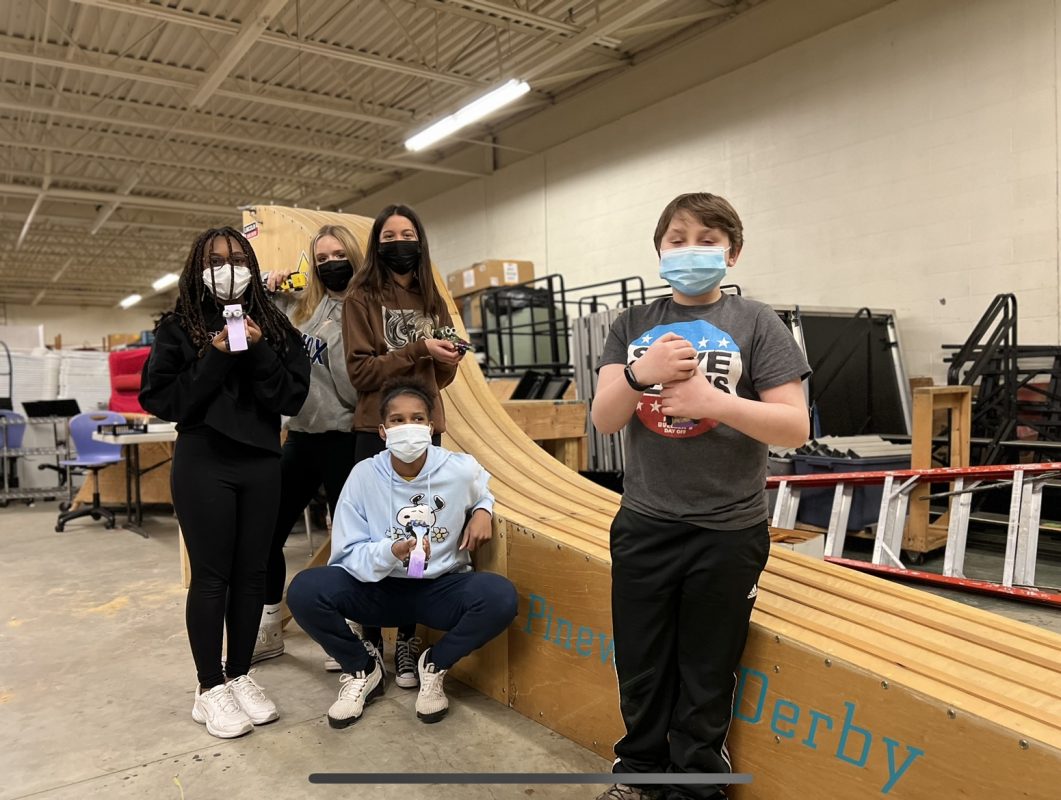
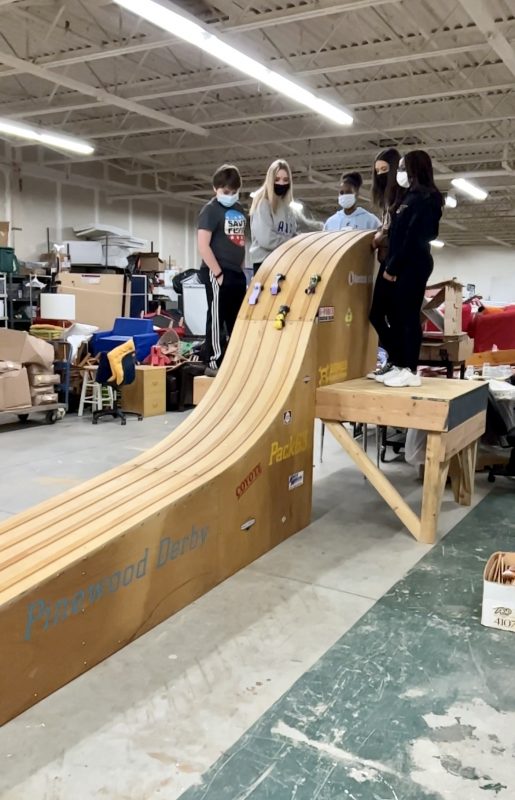
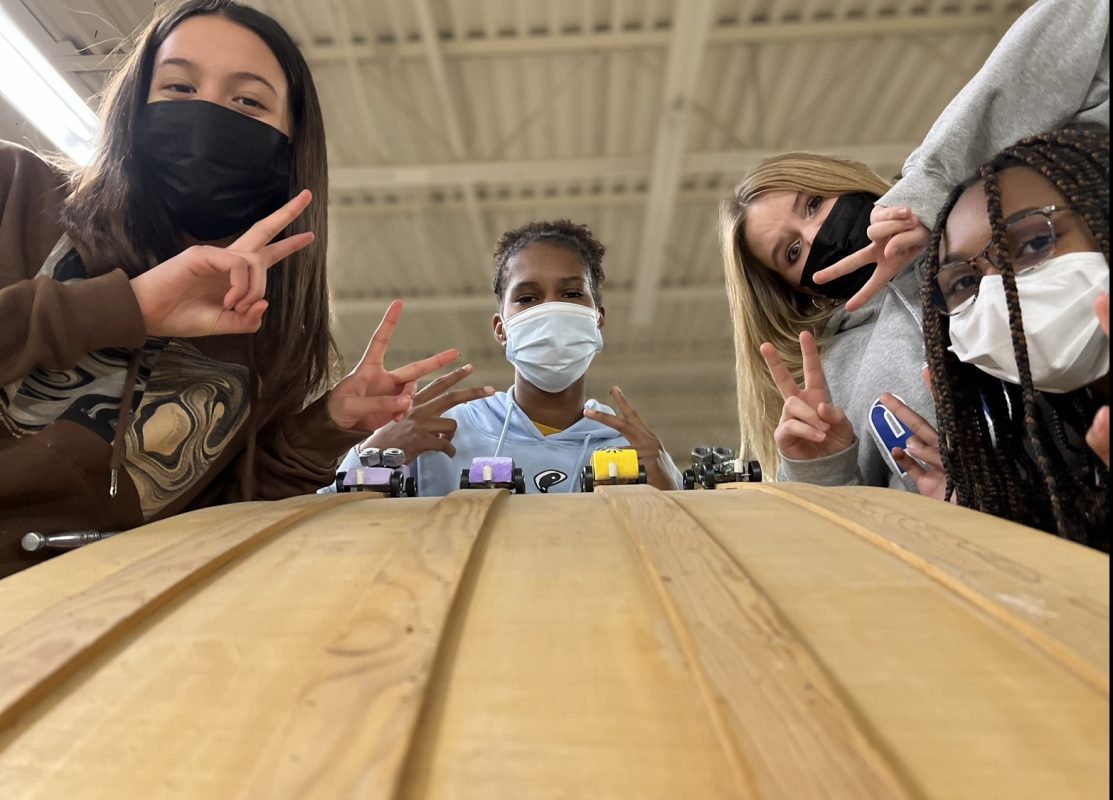
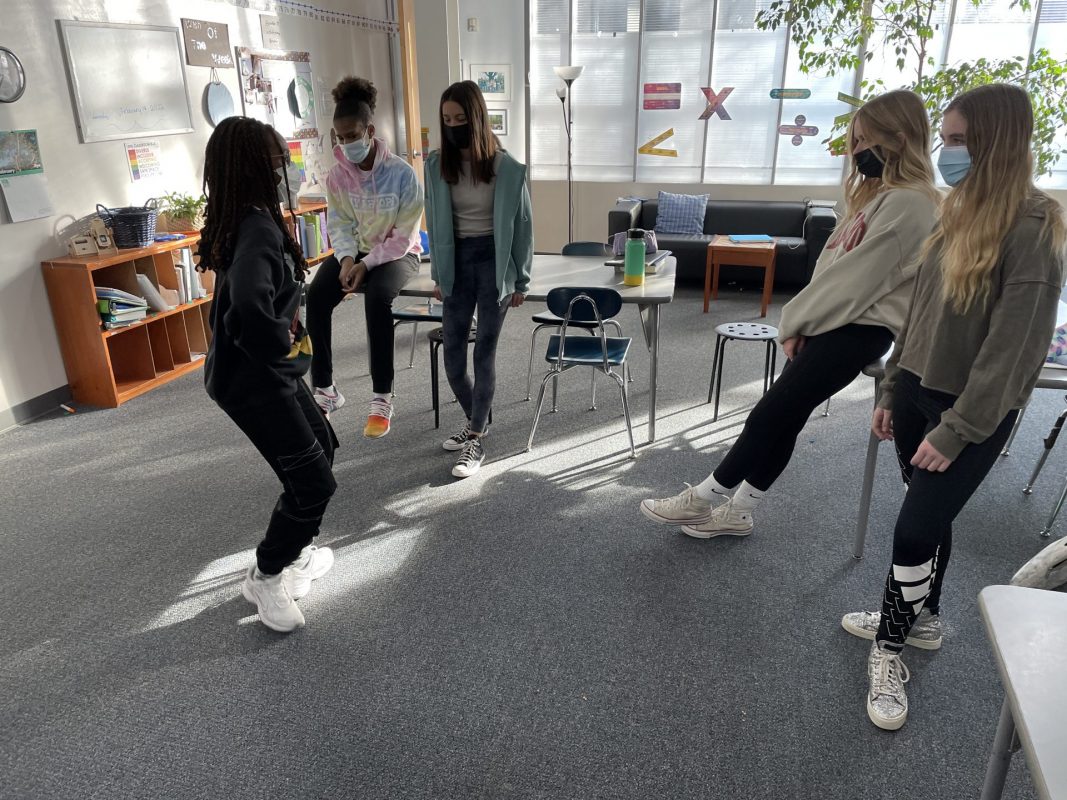
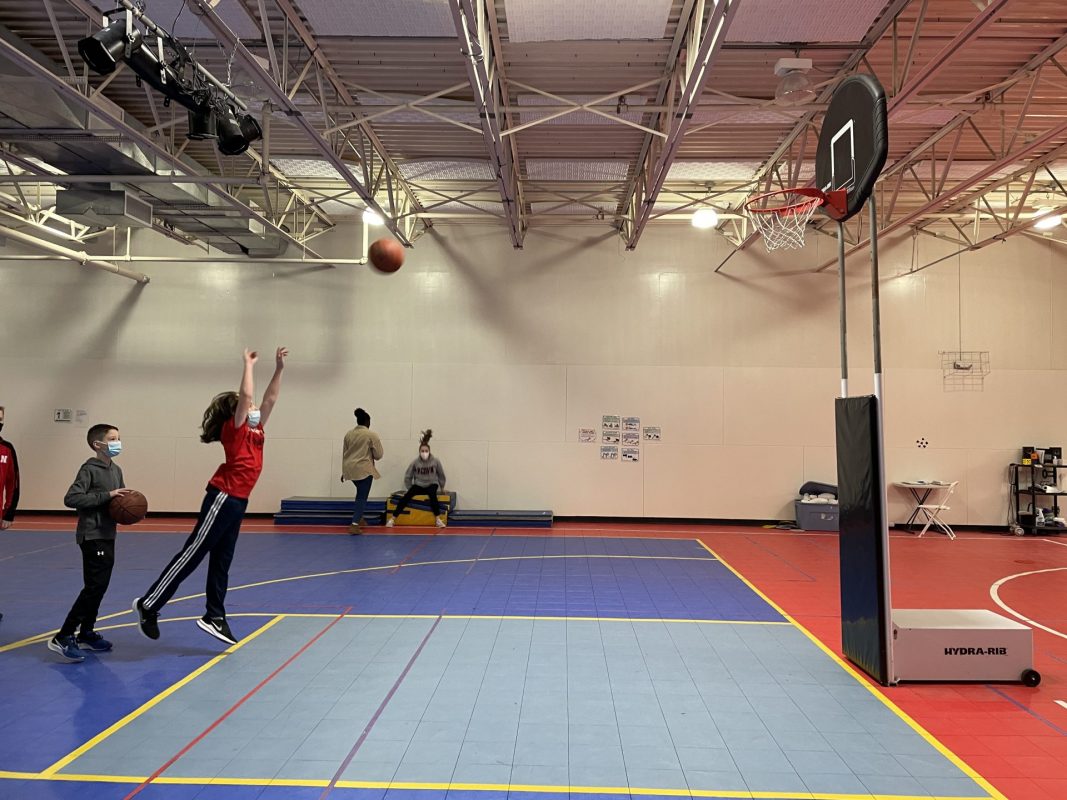
It was a short week for the middle school community with lots of fun fall activities. This week the students enjoyed the beautiful fall foliage while playing soccer during recess each day. They also had fun with our community advisory activity this week, where students had to arrange themselves in a chronological birthday order without speaking.

In addition to these events, all math students participated in a pumpkin exploration activity. On Friday October 15th, each class used a guided worksheet to learn about surface area and volume of a sphere. We used a mini pumpkin as the real world object to help understand our learning. Students worked in pairs and used a measuring tape to find the diameter, height and circumference of a pumpkin. Once they found their dimensions, we used formulas to find the exact surface area and volume of the unique pumpkins. This exercise gave students an opportunity to apply their learning of substituting values into a formula and use estimation to predict their measurements. Students enjoyed the activity for the hands-on learning and being able to work with a partner.
Fall Math Joke: What do you get if you divide the circumference of a pumpkin by its diameter?…..Pumpkin Pi
As a general reminder, please have students check myFWM/google classroom on a daily basis for upcoming assignments and assessments. We encourage all parents and guardians to sign-up for a middle school conference time slot to ensure you find a time that best works for you. HAPPY FALL!

Middle School: Week in Review

It has been a robust week of learning in middle school! Luckily, students were also able to get outside with the beautiful weather and enjoy the season!

Math
In Transition class, students are excited to learn about scientific notation, plotting ordered pairs on a coordinate grid, and solving radical operations. This class has concluded their learning for chapter 1 and will begin chapter 2 next week… get ready to discover what a variable is!
In Algebra class, students can successfully find the range, mean, and mean absolute deviation in a data set. Students can simplify expressions with absolute values and can use substitution to evaluate equations. This class also concluded their learning of chapter 1 and will begin chapter 2 next week, starting with simple distributive property questions.
In Geometry class, students are able to use and identify the difference between graph theory, discrete geometry, and Euclidean geometry methods. This class can determine distances between values and can find points of intersections. Next week they will study conditional statements, classifying polygons, and labeling convex figures.
Math Joke: What state has the most Math Teachers?……Math-achusetts

Humanities

6th grade Humanities students focused on writing this week. Since it was their first week completing current events writing and presentations, they spent time searching for articles that will work best, reviewing what is needed to compose a well-developed paragraph, and understanding the importance of revision. They also composed, edited, and revised poetry inspired by poet, William Carlos Williams. He wrote to express that writing can be inspired by the simplicity of the world around you.

The 7th grade class went over in more detail the dynasties of China, specifically of Imperial China, that were in power for 4,000 years. They shared their research about the dynasties that included the length of their reign, advancements or developments made during their reign, and the reason that they lost power. They are beginning work on religions of China, and will focus on that next week. Finally, 7th grade students presented their first current events of the school year.

8th grade Humanities students were immersed in literature this week. They continued their exploration of irony in literature while reading Richard Connell’s plot-twisting, short story, “The Most Dangerous Game” (1924). In addition to the main focus of identifying irony in the plot, attention was brought to the author’s word choice. We discussed how there were instances that inappropriately sent a message of oppression and why that is not something that would be published now.  Students also discussed their summer reading The Outsiders and talked about how stereotypes affect society and how society affects stereotypes, as showcased in the novel.  Finally, 8th grade students completed their first current events presentations of the year.

Science

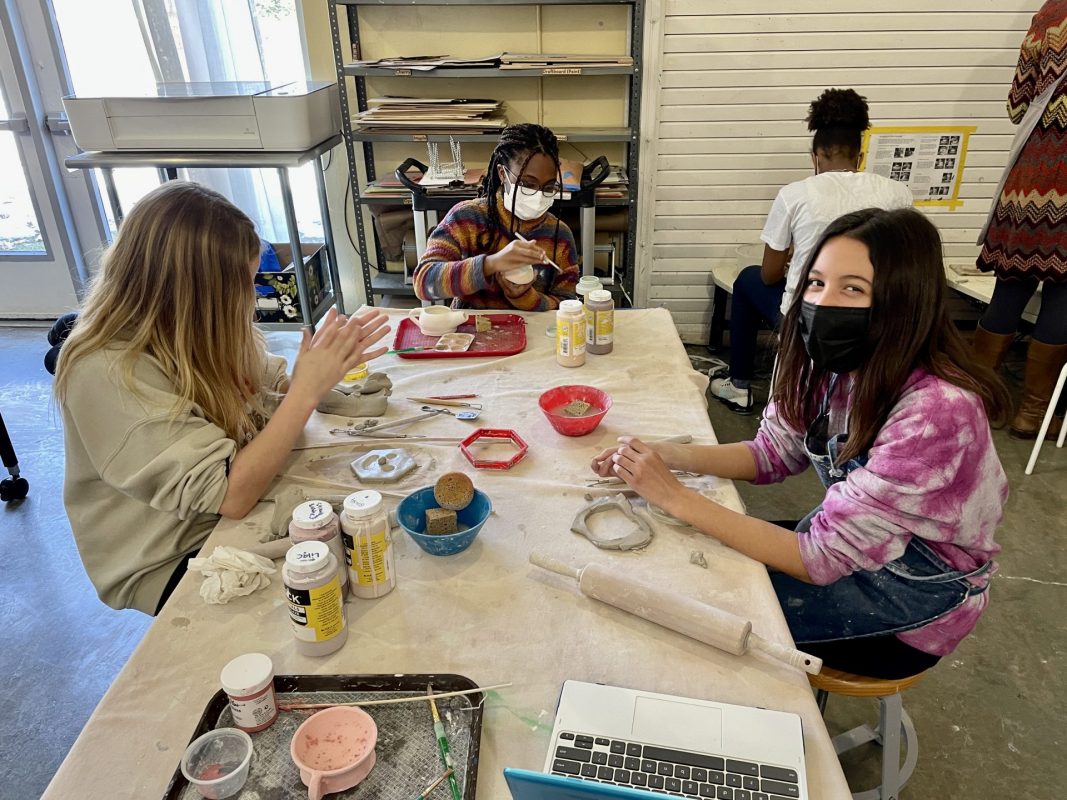
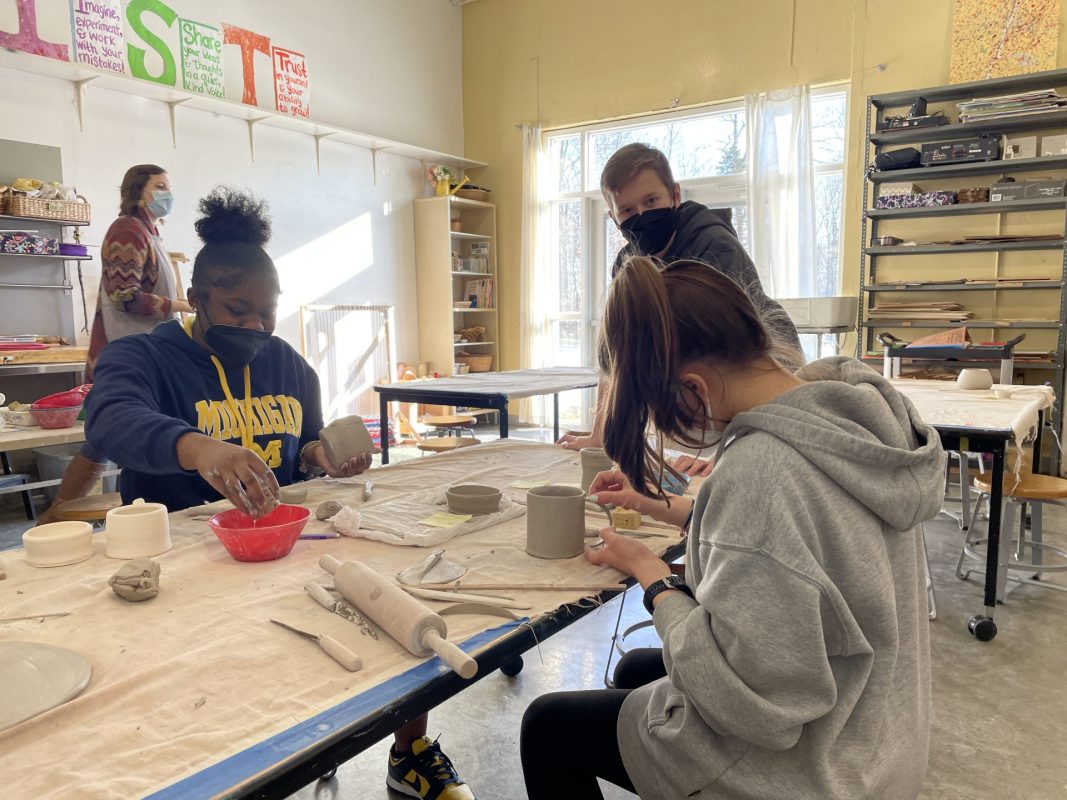
6th year Earth Science students are working on artistically representing eras from the geologic timeline as part of their unit on Fossils and Studying Earth’s Past. Students have the option to use a variety of mediums, from pencils to clay, in order to represent the environmental conditions or species present during that time period.

7th year Physical Science students have just begun their unit on Characteristic Properties of Matter. Within this unit students will become familiar with defining characteristics that identify the similarities and differences between matter. This will consist of color, texture, density, conductivity, and solubility. Students were asked to identify the density of unknown matter this week using their mass and volume. Density is defined as a physical property which does not change regardless of size, as the mass and volume remain proportional.
8th year Life Science students conducted their Stem Cell Debate. Students were provided time in class to research information that either supported or disproved the continued use of stem cell application with scientific data. The goal of this assignment was for students to become aware of the extensive scientific research behind such a treatment in regards to our current unit on Cell Theory. Our next unit will be Structure of Life.
Have a great weekend!