Mrs. Doyle: Head, Thorax, Abdomen, Abdomen!


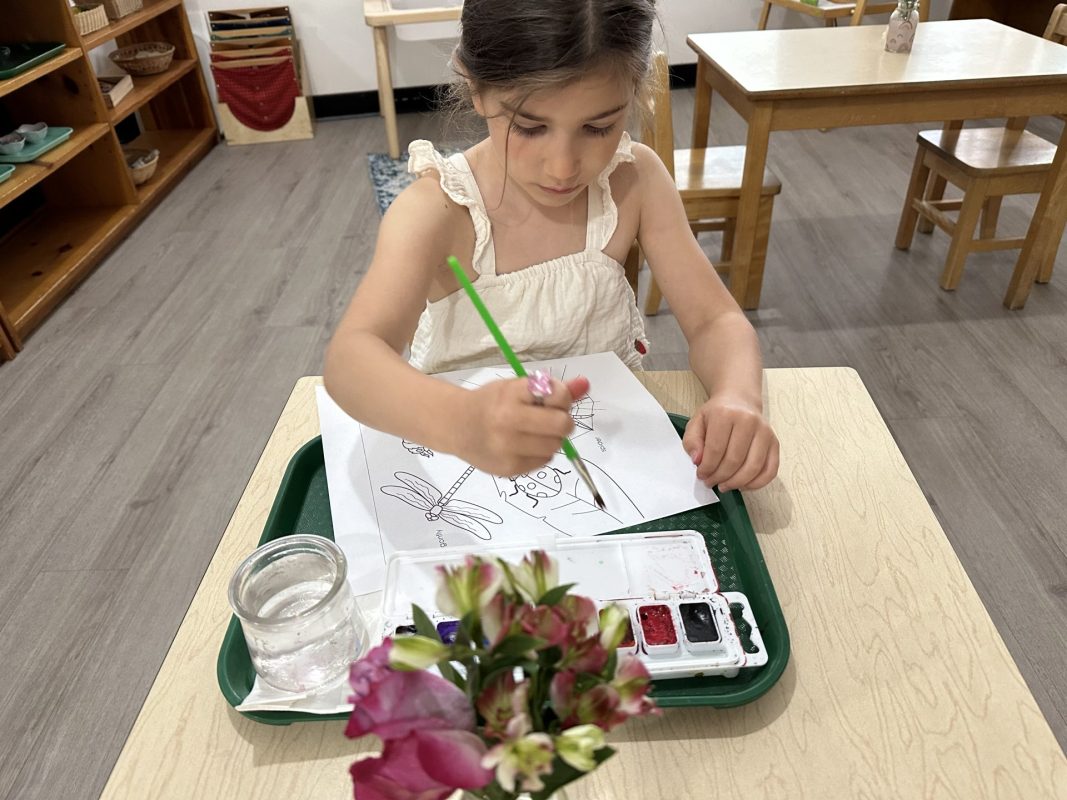
We are hard at work becoming entomologists. This is always a favorite unit of study for the children. An entomologist is a scientist who studies insects. We began our unit by discussing what we already know about insects, what they are, and what they can do. We discovered that insects are slimy, little, gross, soft, and hard. Insects can crawl, sting, bite, eat, fly, walk upside down, and jump. We learned that insects lay eggs and have antennae, and three main body parts, a head, thorax and abdomen, eyes, and six legs. Insects are also cold-blooded, have an exoskeleton, and many have wings. Finally, we found out why a spider is not an insect. Ask your child to see if they know why.

We also welcomed five tiny caterpillars to our classroom. It is so exciting to observe each step of the fascinating life cycle of the painted lady butterfly. Right now, our caterpillars are busy eating, spinning silk, and growing bigger every day. During this incredible period of growth, they will shed their exoskeletons four times and grow more than ten times their original size! When they have finished growing, the caterpillars will climb to the top of the cup. Once there, they will hang from the paper disk in a “j” shape under the lid. Finally, they will shed their exoskeletons one last time before they pupate and form a chrysalis.

Wishing you a week filled with peace and love!

Michelle & Maria


Mrs. Semmah: Head, Thorax, Abdomen, Abdomen!

We are hard at work becoming entomologists. This is always a favorite unit of study for the children. An entomologist is a scientist who studies insects. We began our unit by discussing what we already know about insects, what they are, and what they can do. We discovered that insects are slimy, little, gross, soft, and hard. Insects can crawl, sting, bite, eat, fly, walk upside down, and jump. We learned that insects lay eggs and have antennae, and three main body parts, a head, thorax and abdomen, eyes, and six legs. Insects are also cold-blooded, have an exoskeleton, and many have wings. Finally, we found out why a spider is not an insect. Ask your child to see if they know why.

We also welcomed five tiny caterpillars to our classroom. It is so exciting to observe each step of the fascinating life cycle of the painted lady butterfly. Right now, our caterpillars are busy eating, spinning silk, and growing bigger every day. During this incredible period of growth, they will shed their exoskeletons four times and grow more than ten times their original size! When they have finished growing, the caterpillars will climb to the top of the cup. Once there, they will hang from the paper disk in a “j” shape under the lid. Finally, they will shed their exoskeletons one last time before they pupate and form a chrysalis.

Wishing you a week filled with peace and love!

Kaoutar & Sue

Mrs. Lopes: Head, Thorax, Abdomen, Abdomen!

We are hard at work becoming entomologists. This is always a favorite unit of study for the children. An entomologist is a scientist who studies insects. We began our unit by discussing what we already know about insects, what they are, and what they can do. We discovered that insects are slimy, little, gross, soft, and hard. Insects can crawl, sting, bite, eat, fly, walk upside down, and jump. We learned that insects lay eggs and have antennae, and three main body parts, a head, thorax and abdomen, eyes, and six legs. Insects are also cold-blooded, have an exoskeleton, and many have wings. Finally, we found out why a spider is not an insect. Ask your child to see if they know why.

We also welcomed five tiny caterpillars to our classroom. It is so exciting to observe each step of the fascinating life cycle of the painted lady butterfly. Right now, our caterpillars are busy eating, spinning silk, and growing bigger every day. During this incredible period of growth, they will shed their exoskeletons four times and grow more than ten times their original size! When they have finished growing, the caterpillars will climb to the top of the cup. Once there, they will hang from the paper disk in a “j” shape under the lid. Finally, they will shed their exoskeletons one last time before they pupate and form a chrysalis.

Wishing you a week filled with peace and love!

Amanda & Hema


Mrs. Doyle: Next Stop, South America!


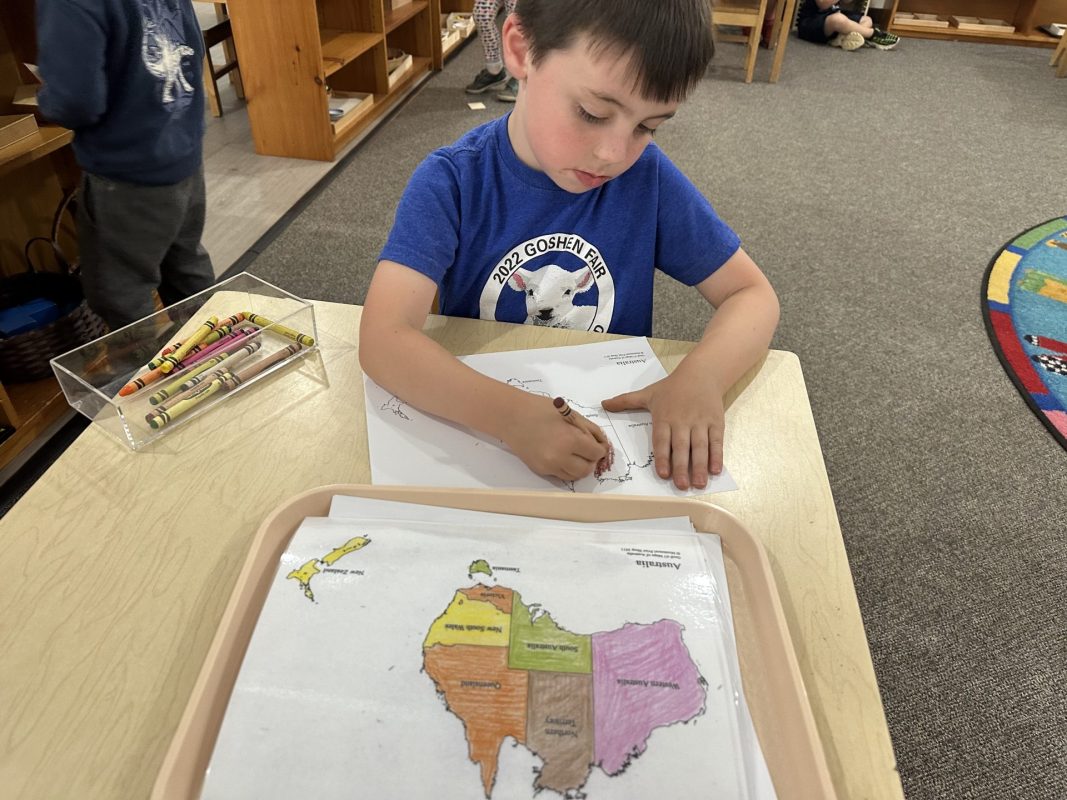
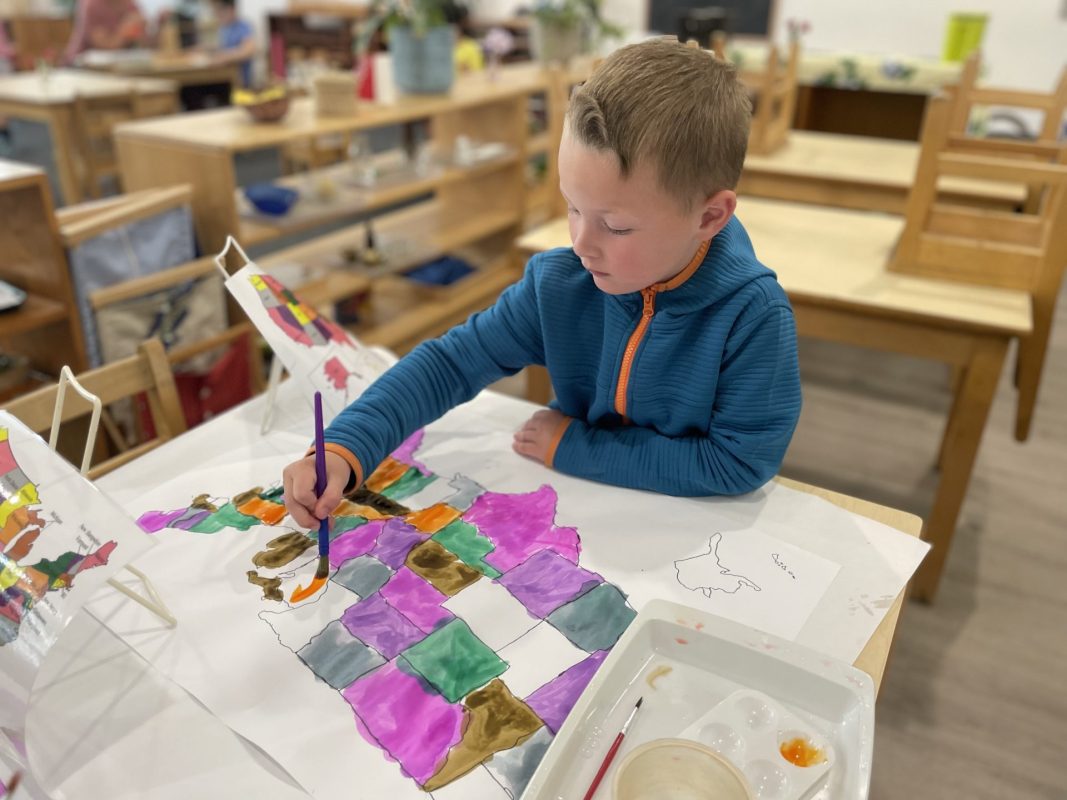
We are now studying the continent of South America in our classroom. South America is pink on the Montessori map and a topic of great fascination for the children. It is a beautiful region with vibrant cultures and traditions and a wide range of climates and terrains.

South America is the fourth largest continent in our world and comprises twelve individual countries. It is connected to North America by the Isthmus of Panama. An isthmus is one of the landforms we study. Brazil is the largest country in South America, and the major languages spoken are Spanish and Portuguese.

Located in South America, the largest rainforest in the world is the Amazon Jungle. So it makes sense that we start to explore the rainforest as well. The rainforest is an ecosystem with a dense tree canopy that lets very little light through. To be considered a rainforest, there must be more than 60 inches of rain each year. Rainforests also contain over 40% of the world’s animal and plant species. There are four layers in a rainforest; each layer receives different amounts of sun, rain, and wind and is home to various species.

As the weather gets warmer, now is a great time to check the extra clothes in your child’s locker to see if they should be changed from winter clothes to spring/summer clothes.

Wishing you a week filled with peace and love!

Michelle & Maria


Mrs. Lopes: Next Stop, South America!

We are now studying the continent of South America in our classroom. South America is pink on the Montessori map and a topic of great fascination for the children. It is a beautiful region with vibrant cultures and traditions and a wide range of climates and terrains.

South America is the fourth largest continent in our world and comprises twelve individual countries. It is connected to North America by the Isthmus of Panama. An isthmus is one of the landforms we study. Brazil is the largest country in South America, and the major languages spoken are Spanish and Portuguese.

Located in South America, the largest rainforest in the world is the Amazon Jungle. So it makes sense that we start to explore the rainforest as well. The rainforest is an ecosystem with a dense tree canopy that lets very little light through. To be considered a rainforest, there must be more than 60 inches of rain each year. Rainforests also contain over 40% of the world’s animal and plant species. There are four layers in a rainforest; each layer receives different amounts of sun, rain, and wind and is home to various species.

As the weather gets warmer, now is a great time to check the extra clothes in your child’s locker to see if they should be changed from winter clothes to spring/summer clothes.

Wishing you a week filled with peace and love!

Amanda & Hema


Mrs. Semmah: Next Stop, South America!

We are now studying the continent of South America in our classroom. South America is pink on the Montessori map and a topic of great fascination for the children. It is a beautiful region with vibrant cultures and traditions and a wide range of climates and terrains.

South America is the fourth largest continent in our world and comprises twelve individual countries. It is connected to North America by the Isthmus of Panama. An isthmus is one of the landforms we study. Brazil is the largest country in South America, and the major languages spoken are Spanish and Portuguese.

Located in South America, the largest rainforest in the world is the Amazon Jungle. So it makes sense that we start to explore the rainforest as well. The rainforest is an ecosystem with a dense tree canopy that lets very little light through. To be considered a rainforest, there must be more than 60 inches of rain each year. Rainforests also contain over 40% of the world’s animal and plant species. There are four layers in a rainforest; each layer receives different amounts of sun, rain, and wind and is home to various species.

As the weather gets warmer, now is a great time to check the extra clothes in your child’s locker to see if they should be changed from winter clothes to spring/summer clothes.

Wishing you a week filled with peace and love!

Kaoutar & Sue

Mrs. Doyle: Five Fun Senses


First the education of the senses, then the education of the intellectMaria Montessori

Maria Montessori believed there is a sensitive period for a child’s development of their senses. Although the senses are an integral part of our lives, children have the greatest potential to develop and retrieve them during their early years. It is precisely this idea that demonstrates the purpose of Sensorial materials in the Montessori classroom. The Sensorial materials are powerful tools that allow children to become aware of their unconscious impressions and bring these impressions into conscious awareness. Additionally, they enable your children to create a basis of order in their minds, allowing for the intelligent exploration of their environment.

This week we are beginning our study on the five senses. What better way to teach this than to use popcorn? Popcorn is a multi-sensory snack as it incorporates all five of our senses. It might just be our most appetizing science unit yet! Did you ever notice that when you make popcorn, somehow the entire family knows about it and shows up to have some of this favorite treat?

We begin by discussing our five senses and how we use different body parts to learn about things in our environment. For example, our noses are for smelling, ears are for listening, eyes are for seeing, hands are for touching, and our tongue is for tasting. We learned that sometimes we use more than one sense at a time.
Next, each child had the opportunity to handle popcorn kernels to observe what they saw, smelled, and felt. We record all of our observations as we go along. Finally, we used an air popper to pop some popcorn. Now we can include our observations about hearing and tasting as well.

Wishing you a week filled with peace and love!

Michelle & Maria


Mrs. Lopes: Five Fun Senses


First the education of the senses
,
then the education of the intellectMaria Montessori

Maria Montessori believed there is a sensitive period for a child’s development of their senses. Although the senses are an integral part of our lives, children have the greatest potential to develop and retrieve them during their early years. It is precisely this idea that demonstrates the purpose of Sensorial materials in the Montessori classroom. The Sensorial materials are powerful tools that allow children to become aware of their unconscious impressions and bring these impressions into conscious awareness. Additionally, they enable your children to create a basis of order in their minds, allowing for the intelligent exploration of their environment.

This week we are beginning our study on the five senses. What better way to teach this than to use popcorn? Popcorn is a multi-sensory snack as it incorporates all five of our senses. It might just be our most appetizing science unit yet! Did you ever notice that when you make popcorn, somehow the entire family knows about it and shows up to have some of this favorite treat?

We begin by discussing our five senses and how we use different body parts to learn about things in our environment. For example, our noses are for smelling, ears are for listening, eyes are for seeing, hands are for touching, and our tongue is for tasting. We learned that sometimes we use more than one sense at a time.
Next, each child had the opportunity to handle popcorn kernels to observe what they saw, smelled, and felt. We record all of our observations as we go along. Finally, we used an air popper to pop some popcorn. Now we can include our observations about hearing and tasting as well.

Wishing you a week filled with peace and love!

Amanda & Hema