Mrs. Sargeant: A Peek at the Week


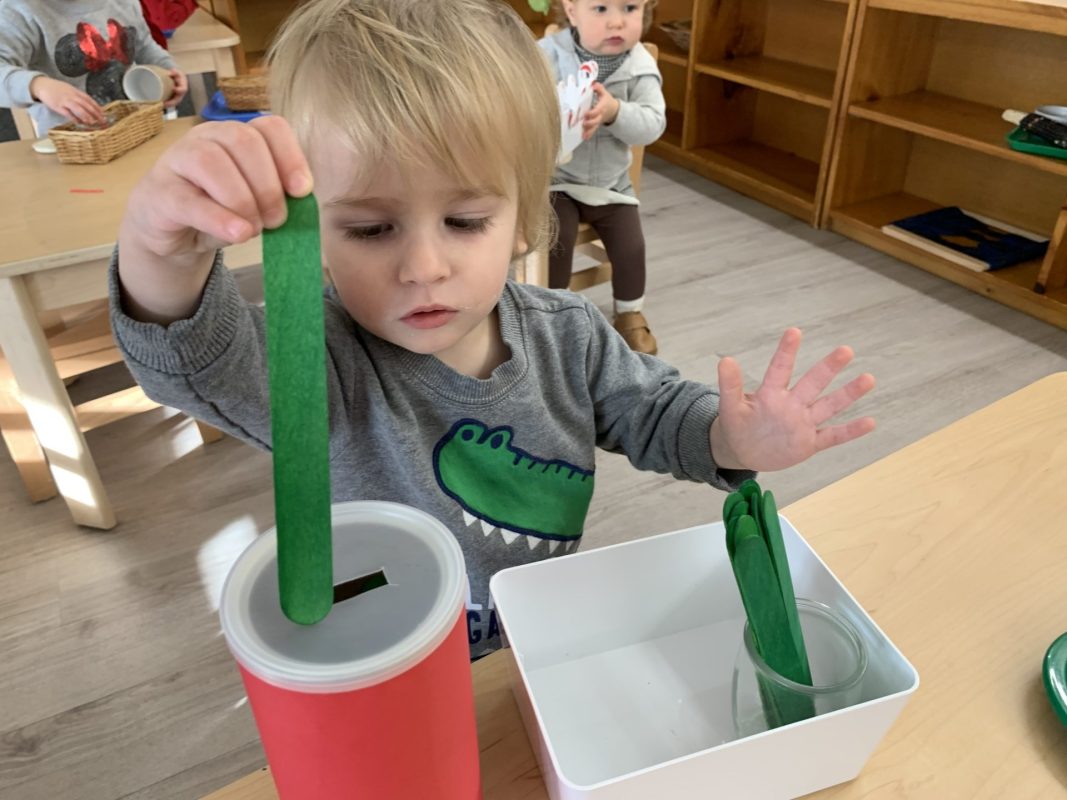
With autumn in the air, we have been taking advantage of pumpkin-related activities. This week, the children have been enjoying pumpkin scrubbing, and pumpkin hammering.

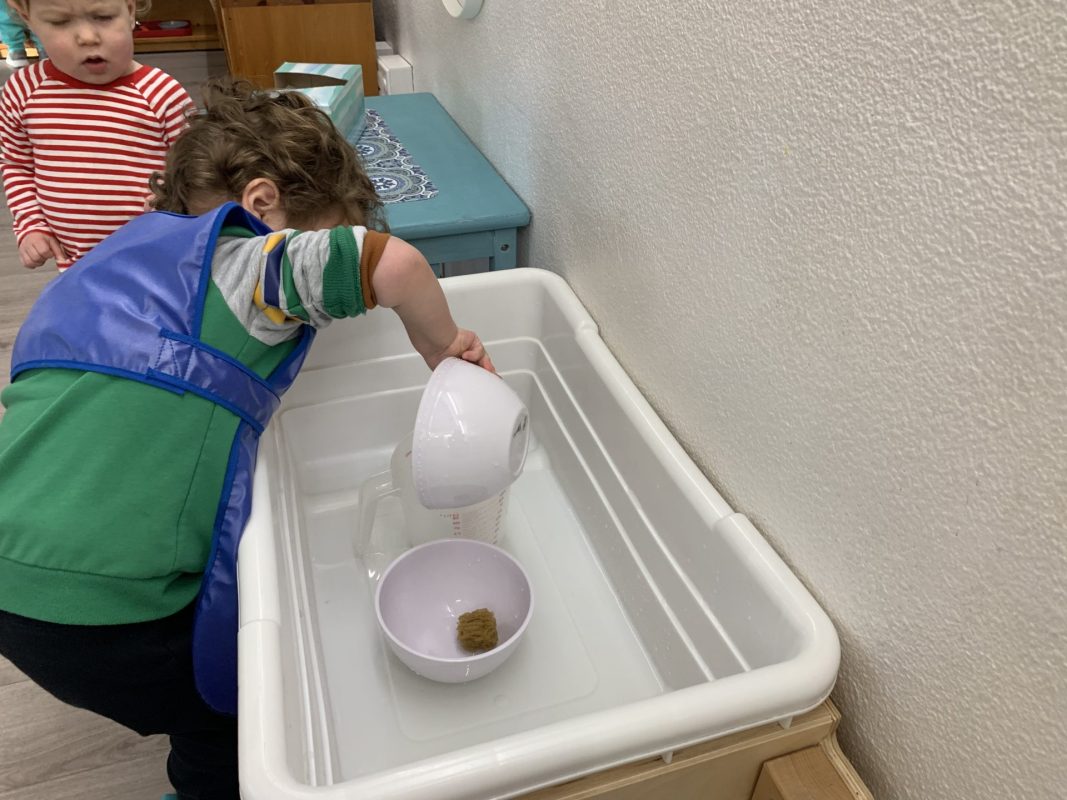
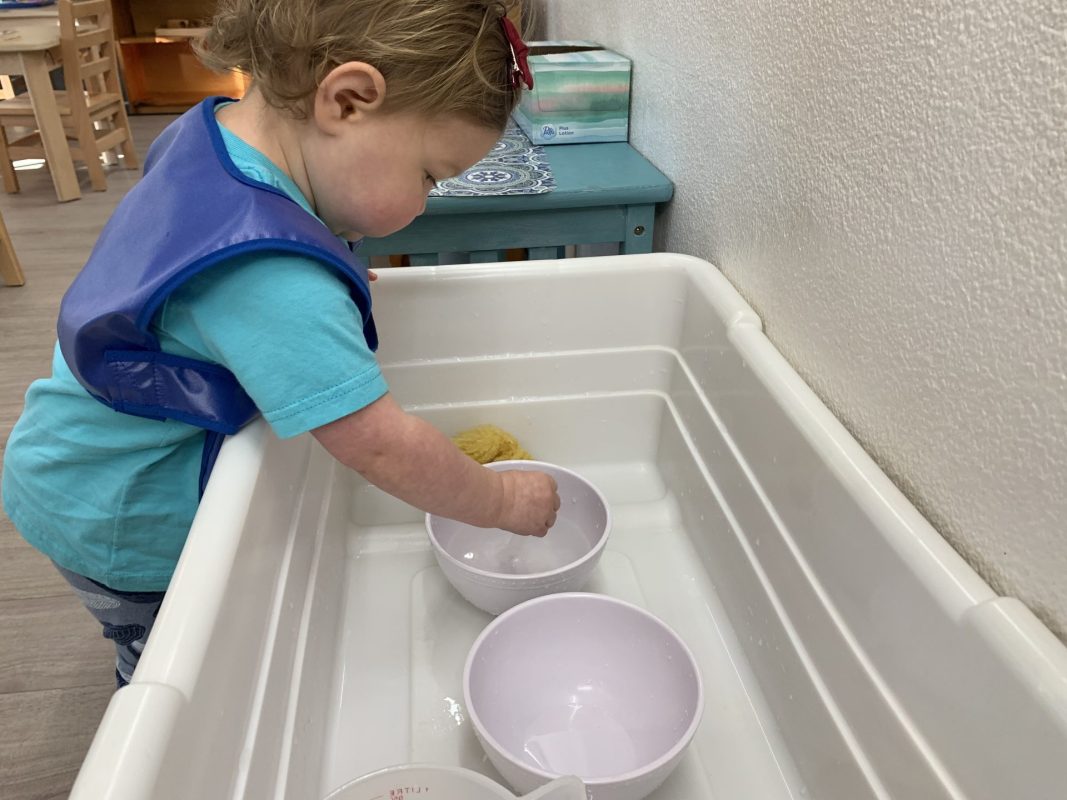
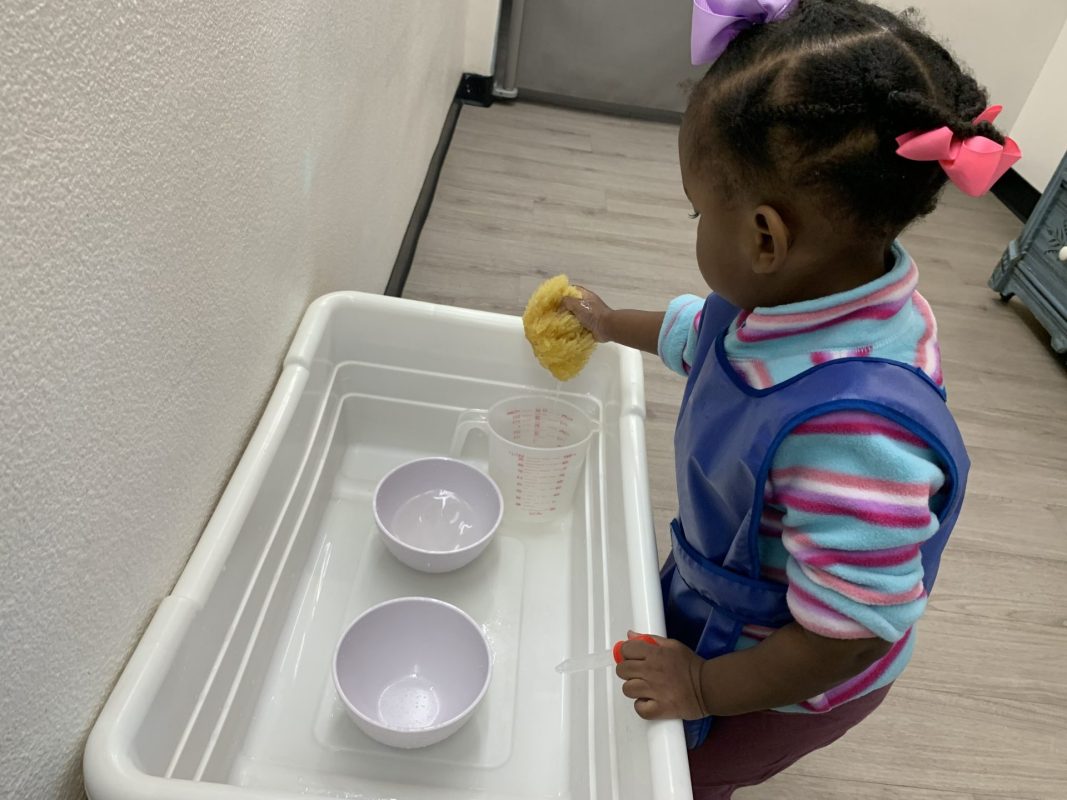
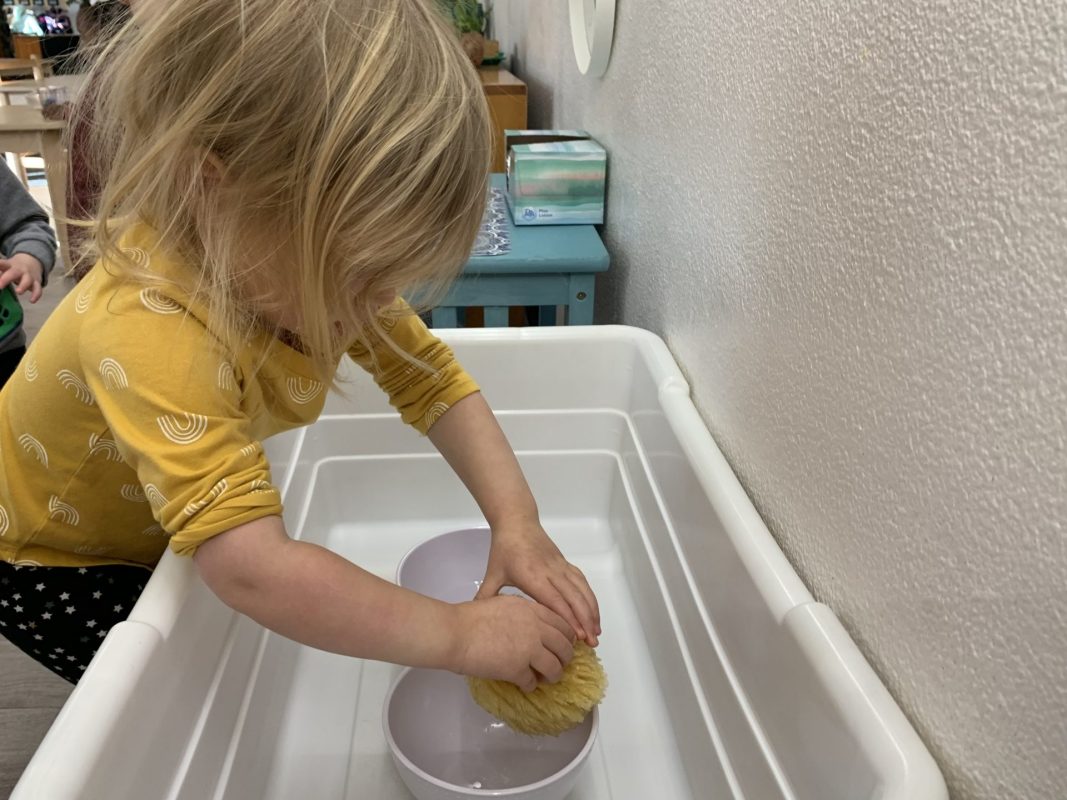
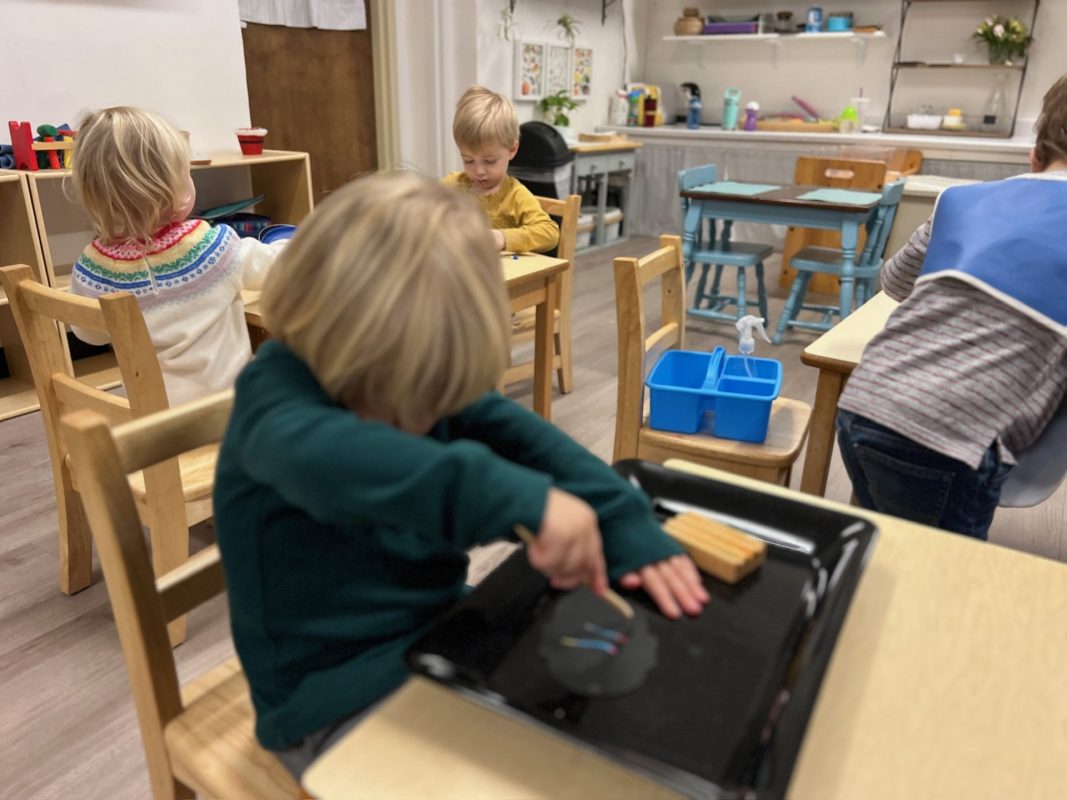
Pumpkin scrubbing is a multi-step practical life activity which the children love. They start by rolling up their sleeves, then putting an apron on over their head, securing the velcro, turning the water on, scrubbing the pumpkin, (as they delight in observing the bubbles form from the soap), turning the water off, drying the pumpkin, and finally removing the apron. They also have the opportunity to use a sponge to remove the dirty soap bubbles. This activity strengthens the muscles in the hands and fingers, in addition to building concentration and independence.

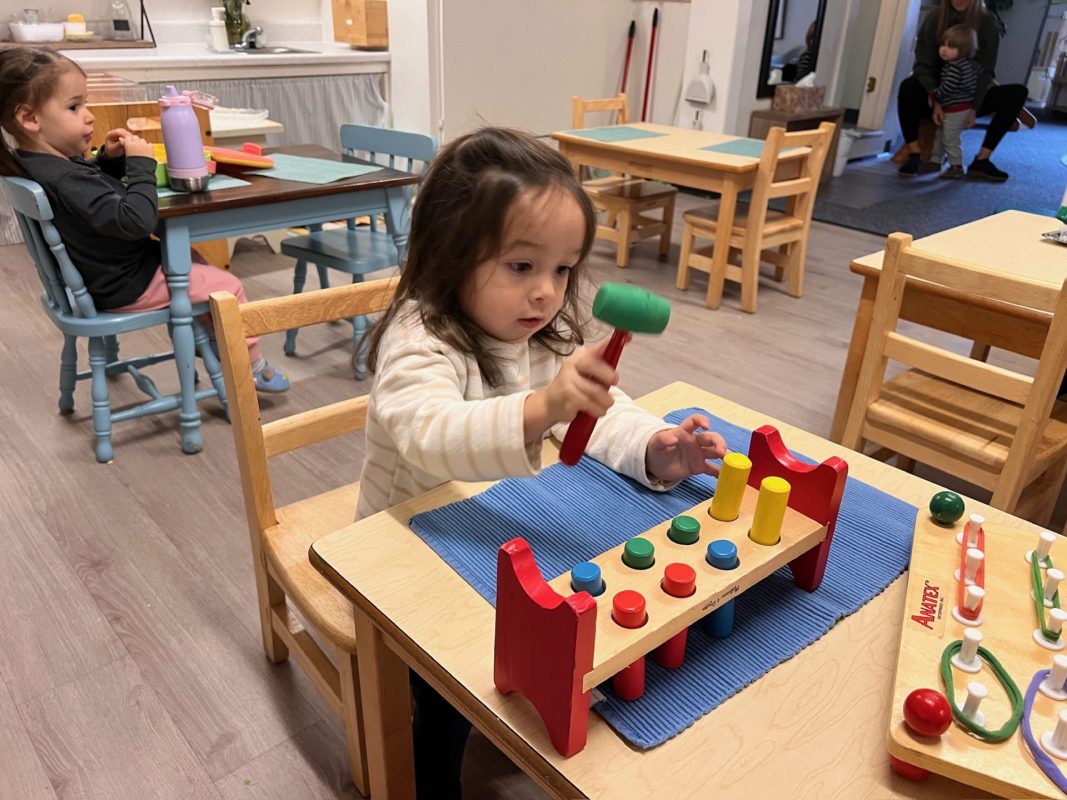
Pumpkin hammering requires a great deal of hand-eye coordination. We use a wooden mallet to hammer golf tees into a pumpkin. When the children are finished, they remove the tees with their fingers – which is quite a challenge – in order to make the activity ready for the next person.

One new song that we have been singing, which has become a fast favorite, is Five Perfect Pumpkins by Stephanie Leavell.

We’re looking forward to next week’s pumpkin picking activity in the Zen garden, which our Middle School friends will help us with. Thank you all for providing the decorations, wagons, pumpkins, and snack – we couldn’t do this without your participation.

Continue reading “Mrs. Sargeant: A Peek at the Week”


Mrs. Hood: Palabras!

Maria Montessori believed that the initial six years of a child’s life are crucial for their language development; from birth, a child must receive appropriate stimulation. This is also widely recognized by many language specialists when referring to learning foreign languages.

Research shows that learning a second language boosts problem-solving, critical-thinking, and listening skills, in addition to improving memory, concentration, and the ability to multitask. Children proficient in other languages also show signs of enhanced creativity and mental flexibility.

In our environment, children are exposed to Spanish multiple times a day. From songs to books to direct conversations, Spanish is always part of our routines.

This week, children were introduced to the following commands: caminar (walk), parar (stop), brincar (jump), bailar (dance), correr (run), comer (eat), and dormir (sleep). They are also already familiar with phrases such as Buenos dias (good morning), Ven aca, por favor: (Come here, please), Agua (water), lavate las manos (wash your hands), and Vamos (Let’s go) to name a few.

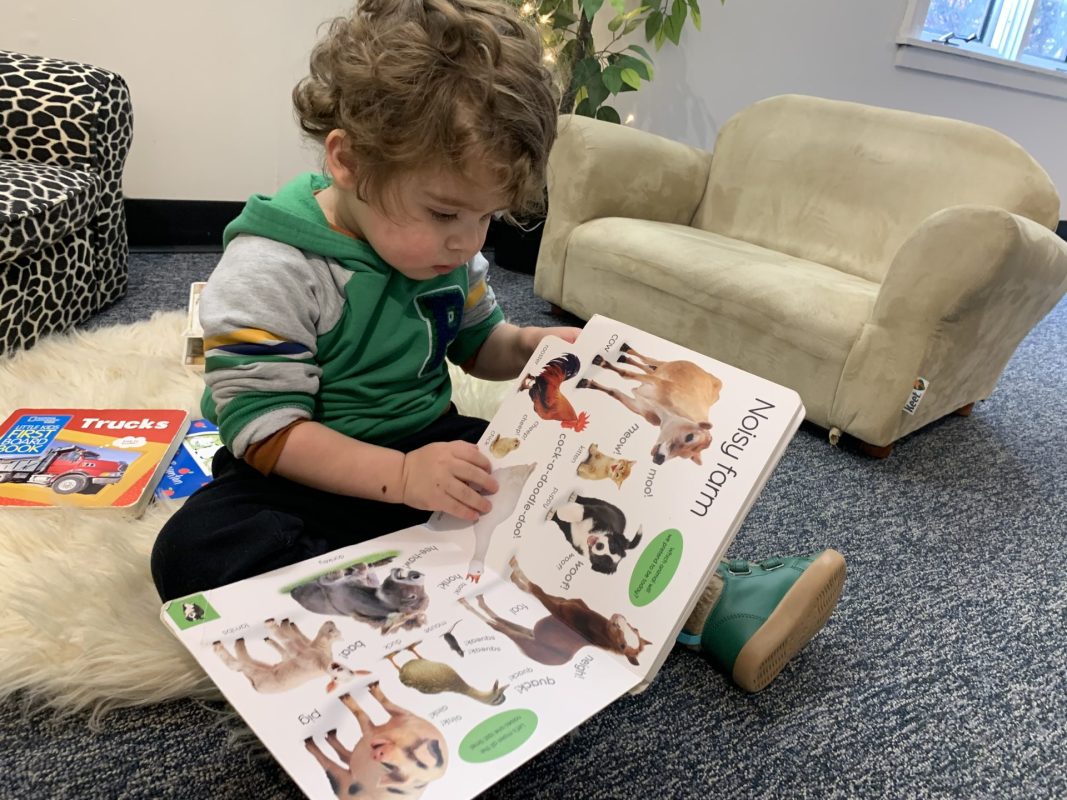
The children’s favorite book this week seemed to be Palabras by Kidsbooks. Children were encouraged to look at the pictures and repeat different vocabulary words in Spanish during story time. It was a well-requested book!

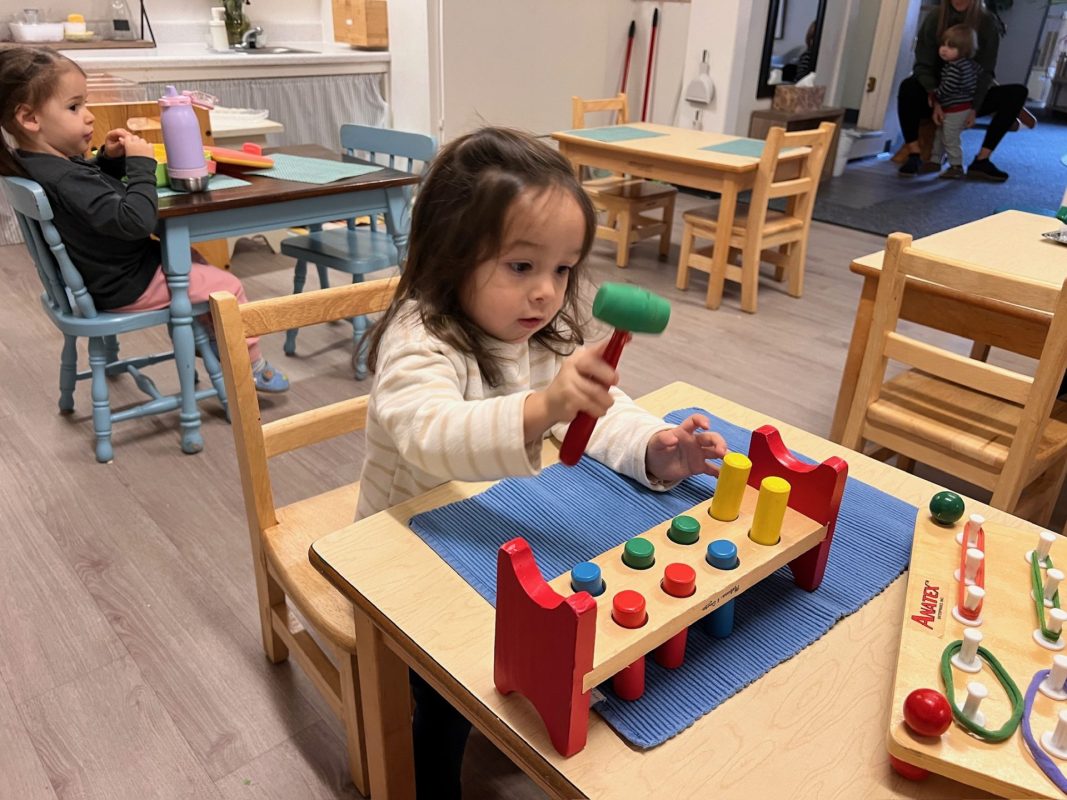
On another note, this week’s most popular work seemed to be hammering golf tees into a pumpkin using a mallet! There is so much hand-and-eye coordination needed for this work! We enjoy watching your children challenge themselves and sharpen their skills every day!

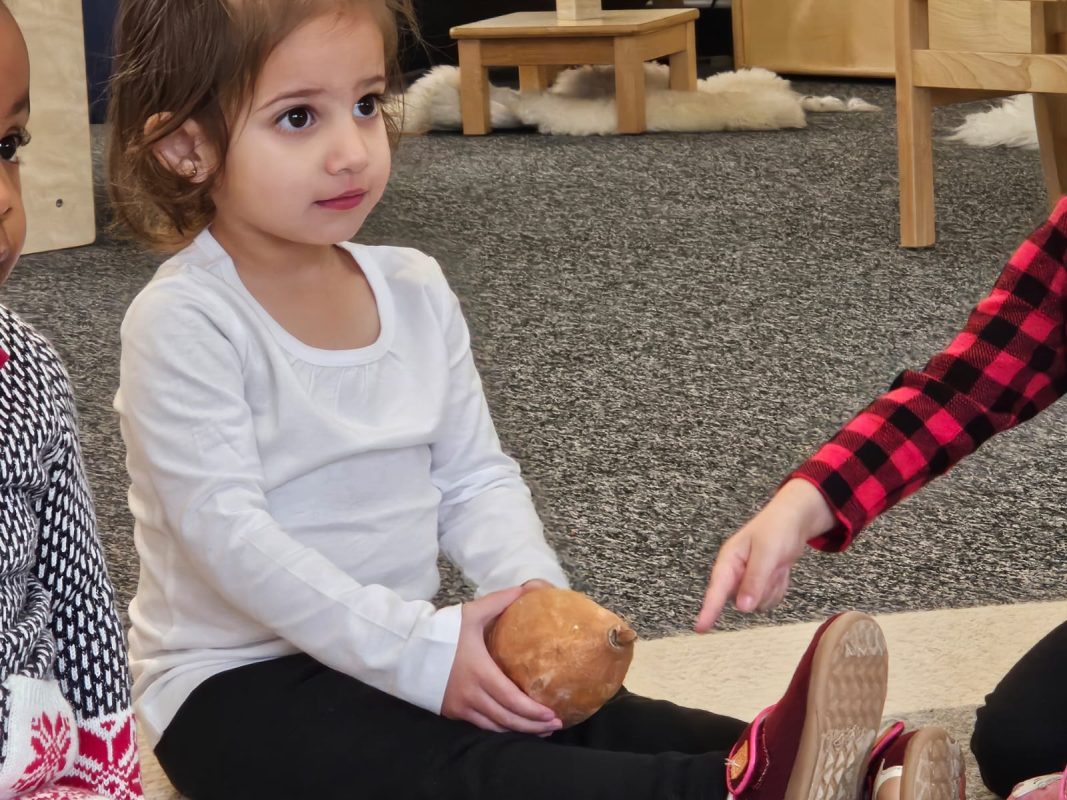
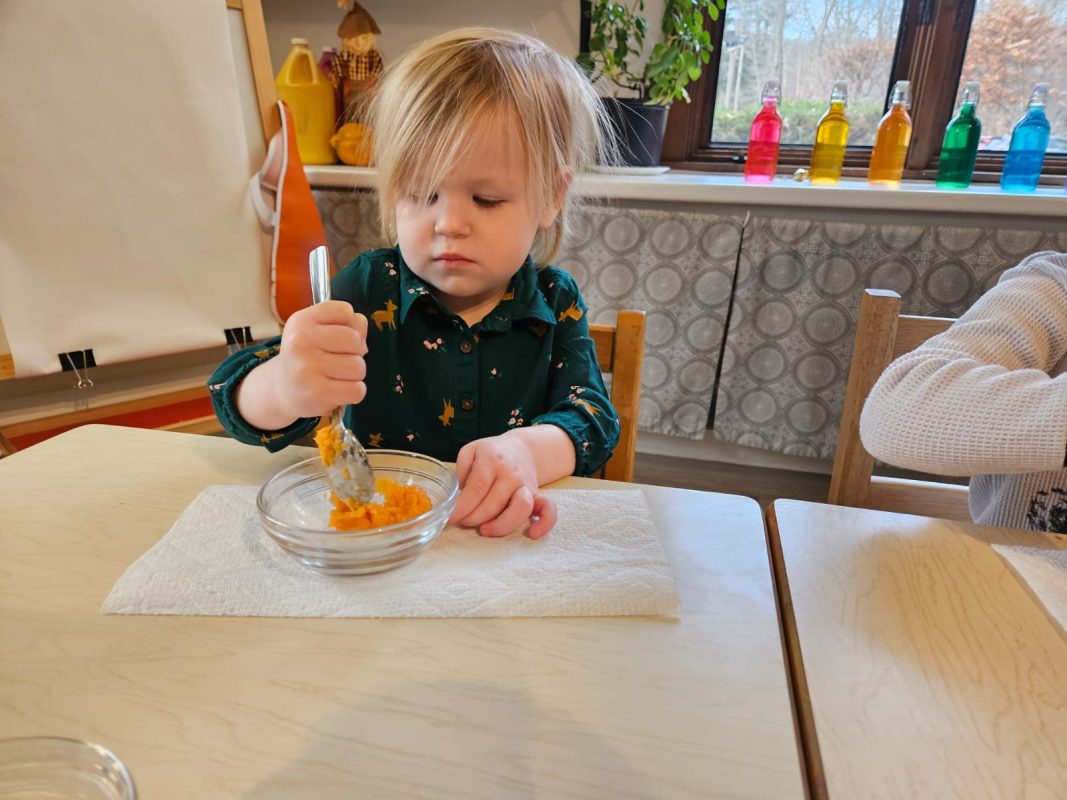
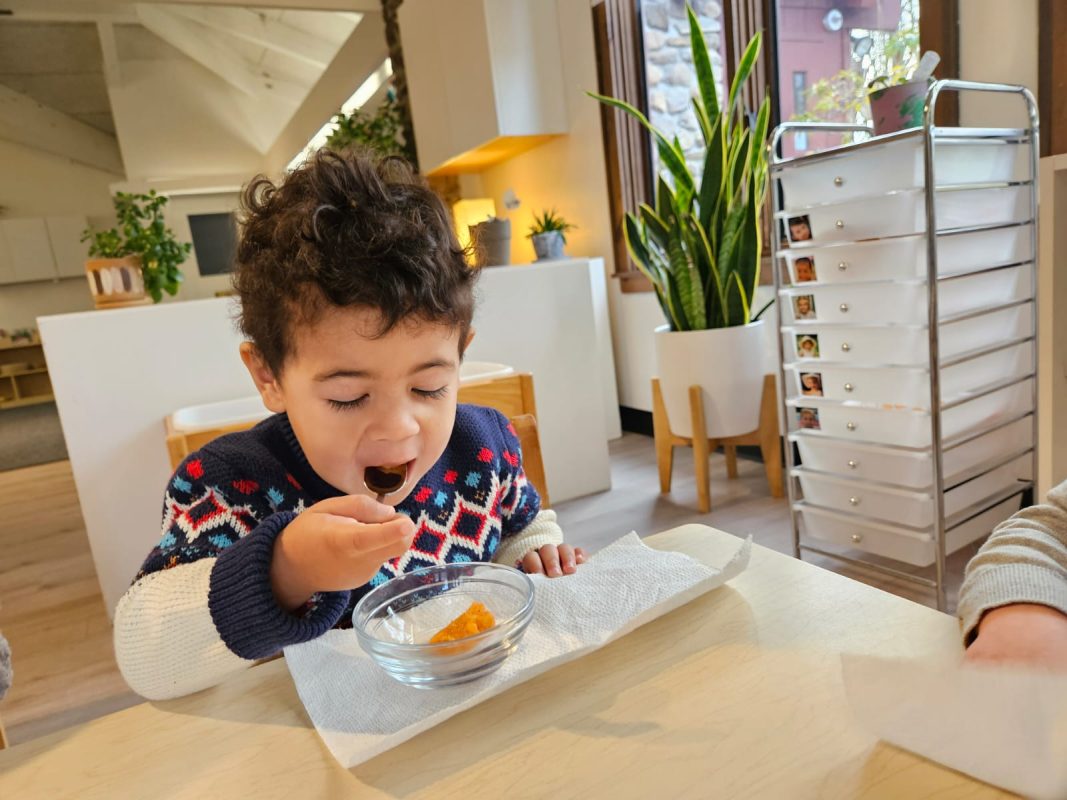
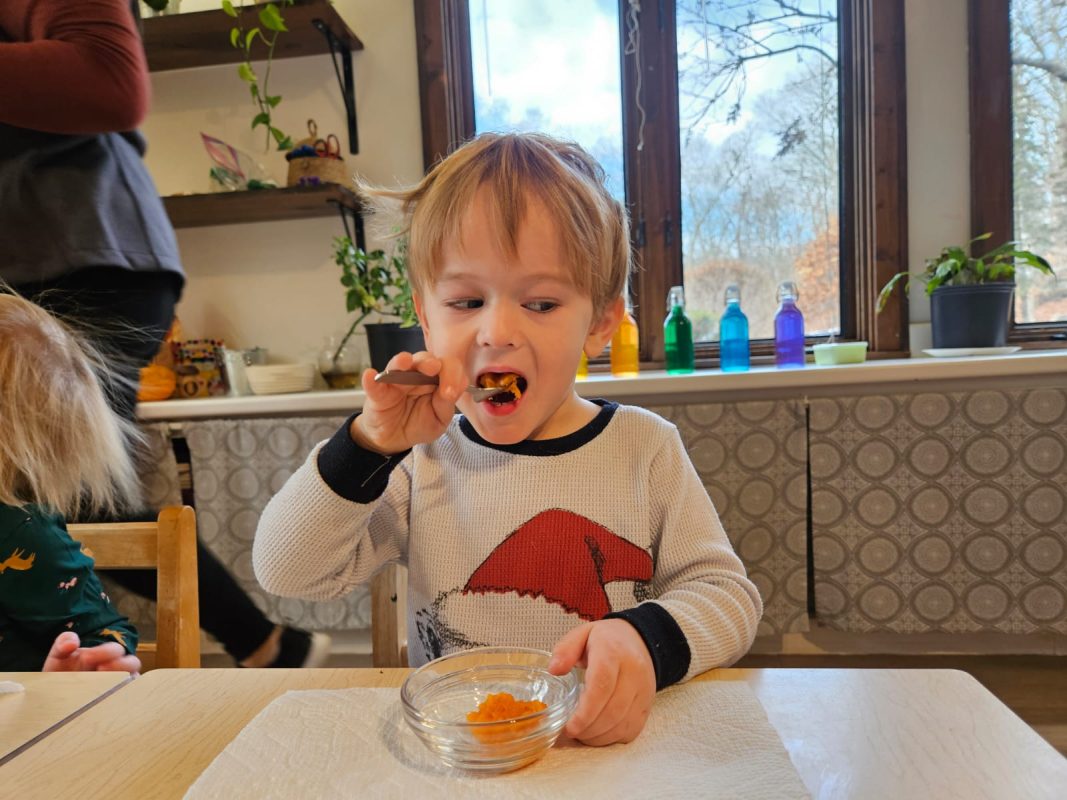
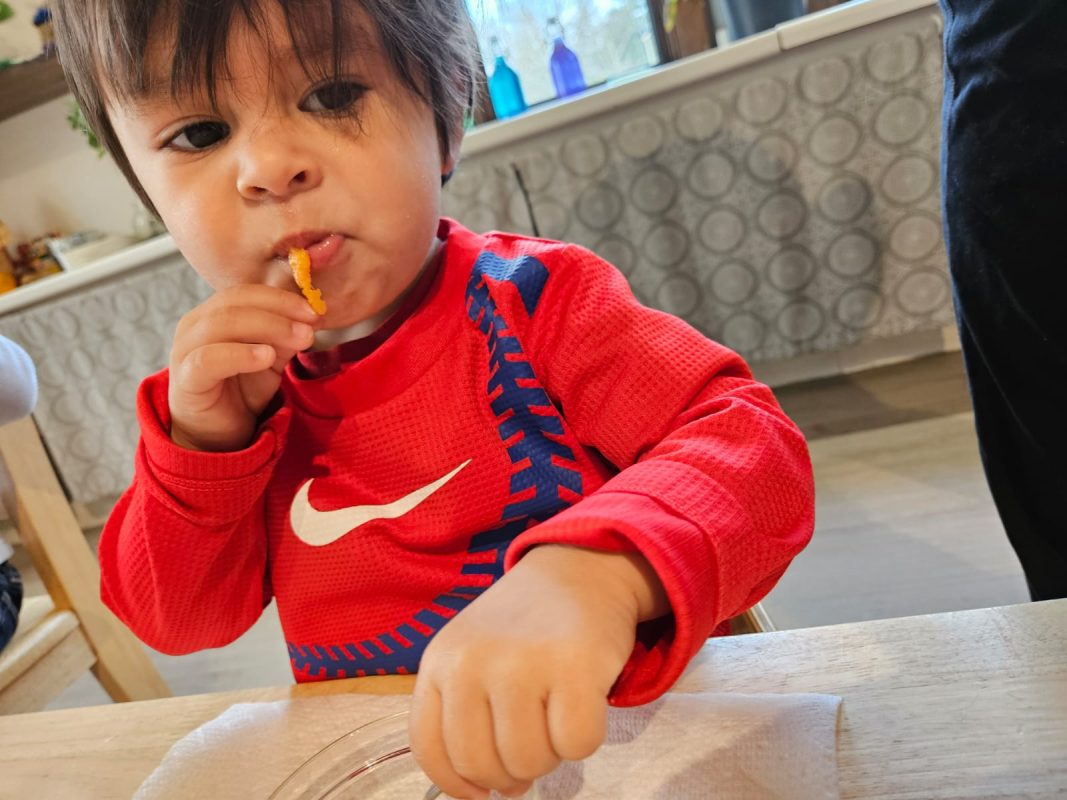
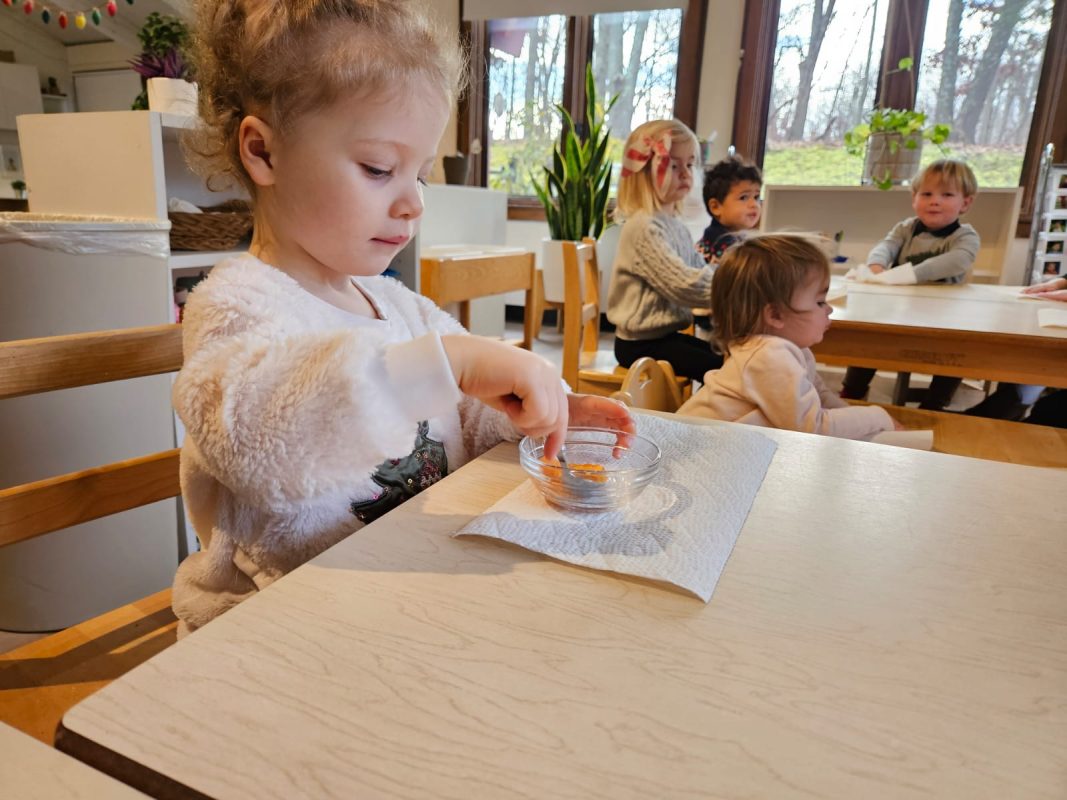
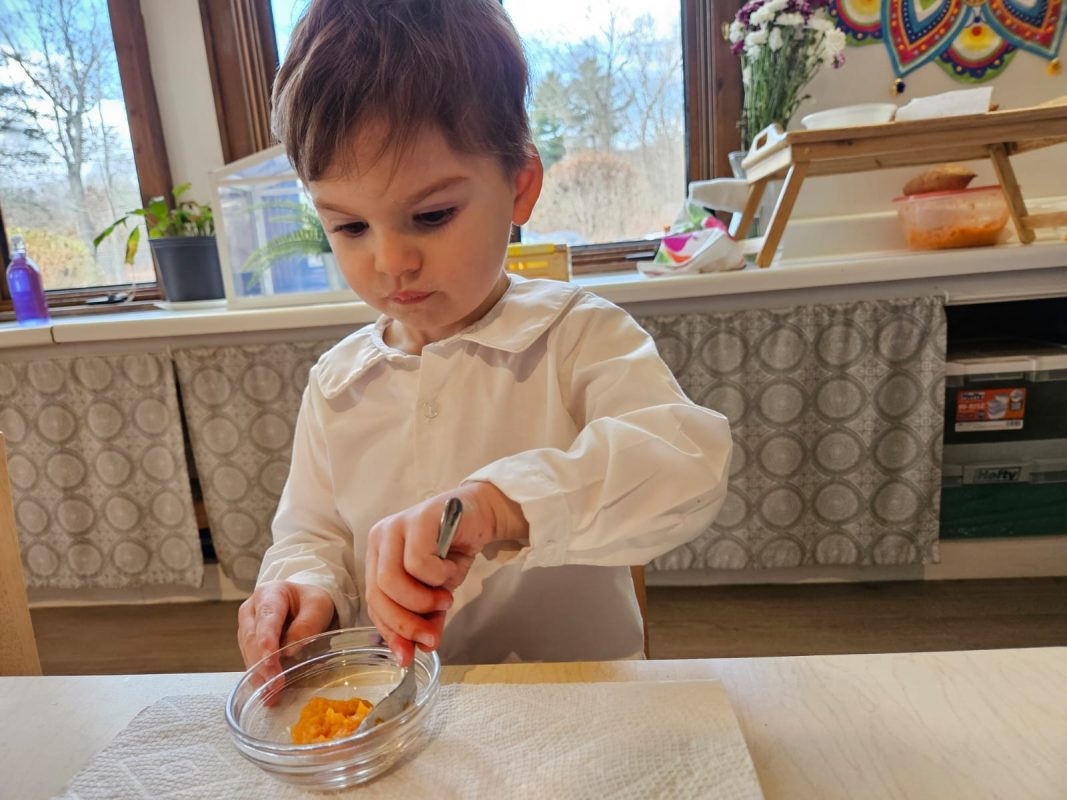
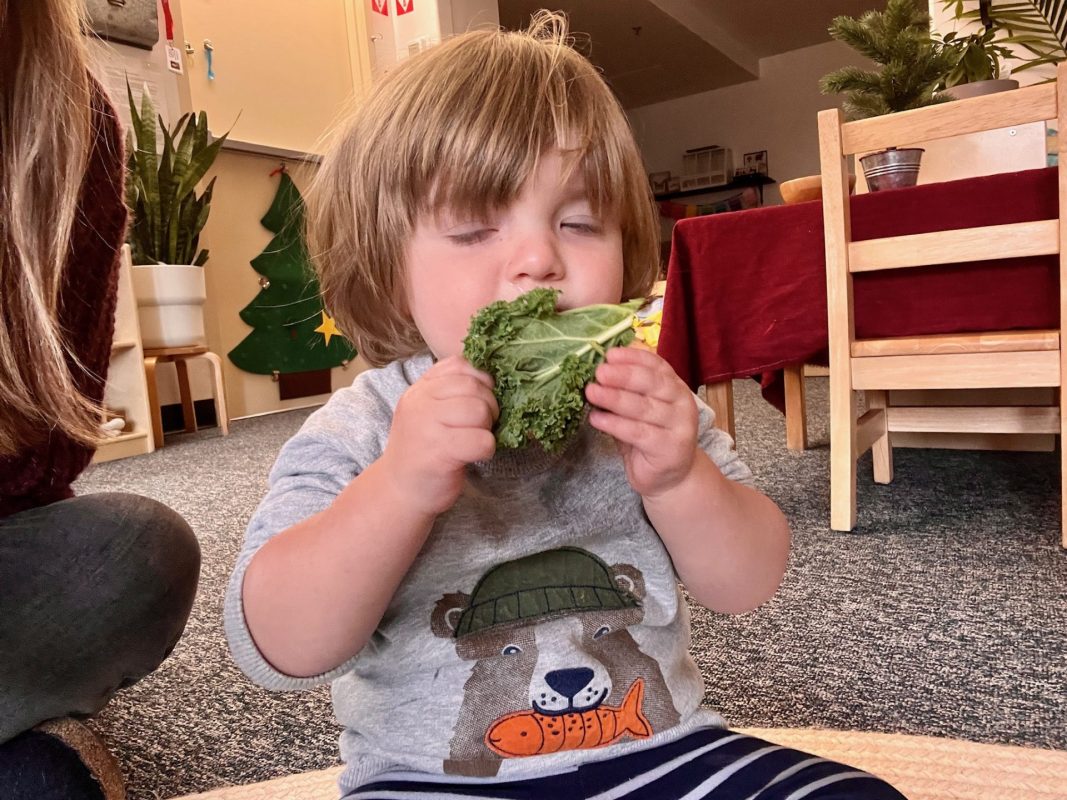
Lastly, we explored spaghetti squash for food tasting, and as a Sensorial extension, children were able to examine the pulp for another squash in our sensory bin! The children also tasted its toasted seeds. Yum!

Reminder: If you haven’t done so yet, please remember to sign up for our upcoming parent-teacher conferences next Thursday, October 25th, using this link.

Have a great weekend,

Mrs. Hood and Ms. Mollie

Mrs. Wilson: Pumpkin Hammering

One of the fun and challenging activities that the children enjoyed this week was pumpkin hammering. This activity requires a child-sized mallet, golf tees, and a small pumpkin. Through this activity, the children develop hand-eye coordination, learn to use a hammer or mallet, and strengthen their fine motor skills while trying to hold the golf tee in place. Additionally, the children learn about safety whether they are hammering or observing.

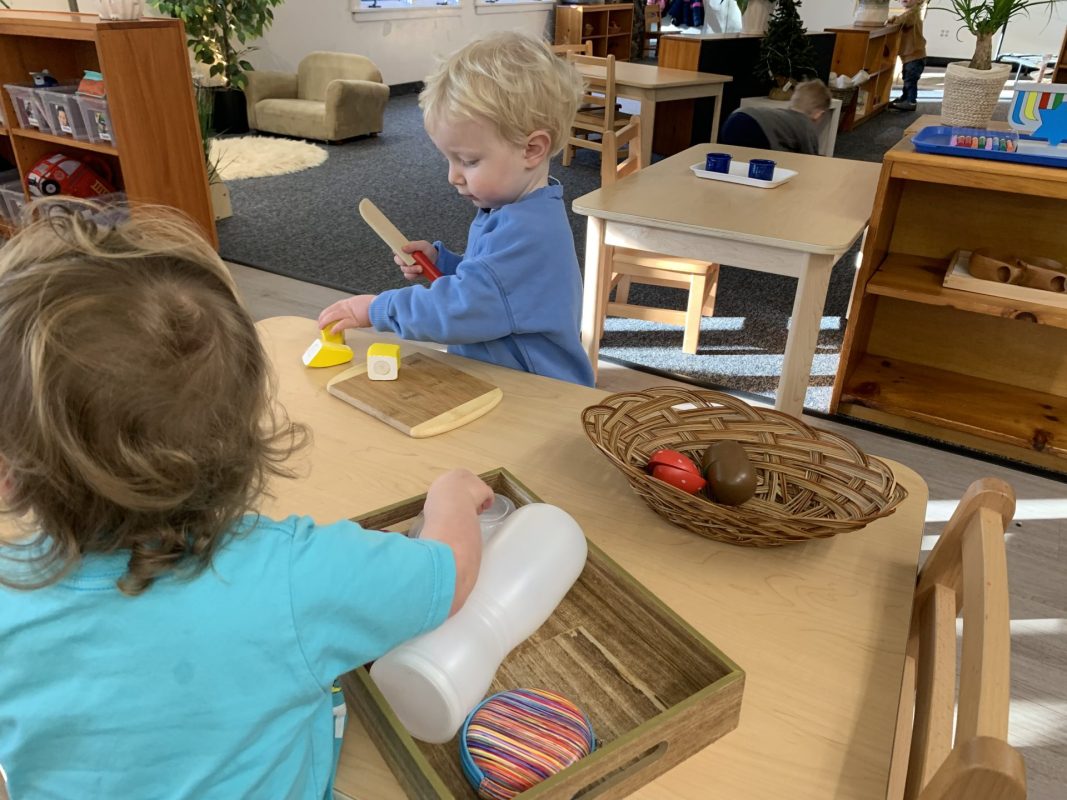
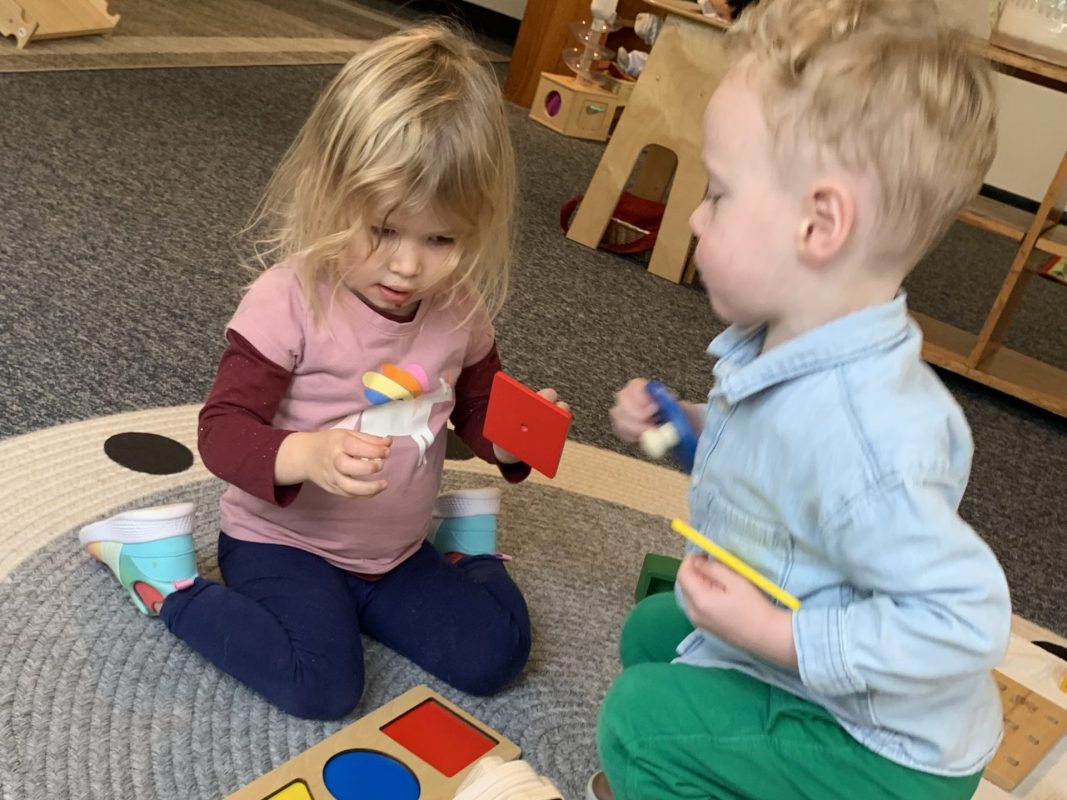
Another popular activity the children is sorting miniature utensils. They sift through a tray of spoons, forks and knives, and match each object with its corresponding photo. They then separate them into individual sections for each type of utensil. Your children can help with this task at home.

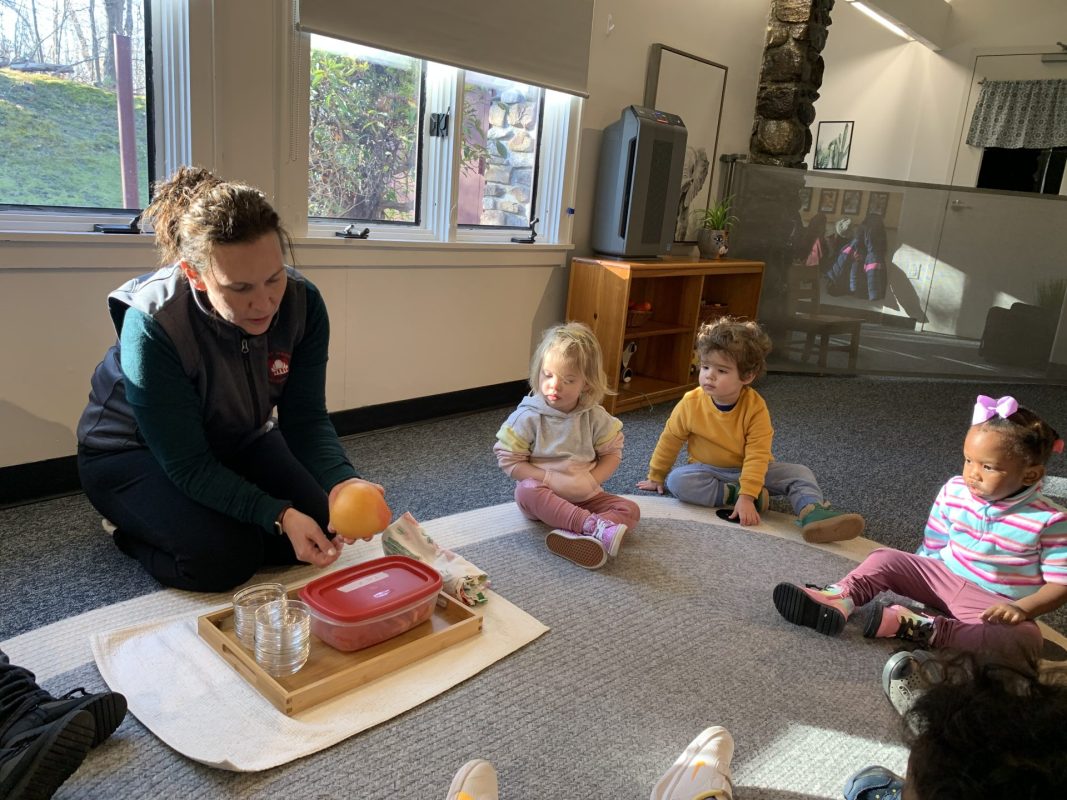
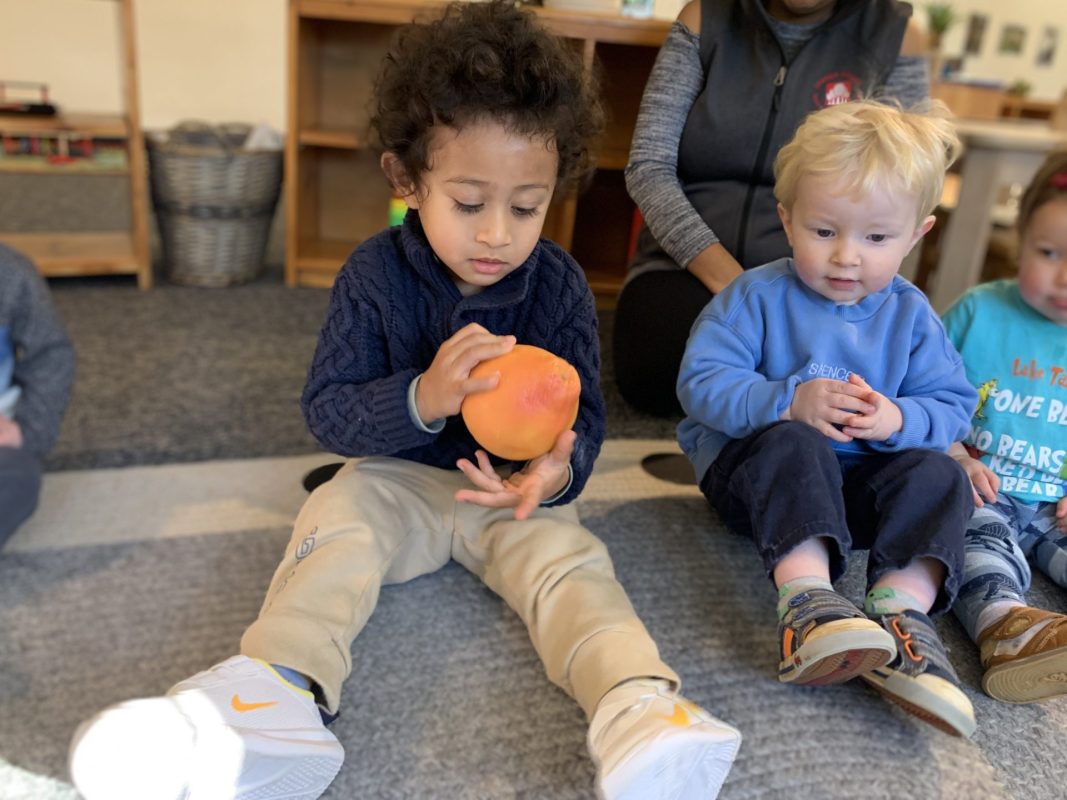
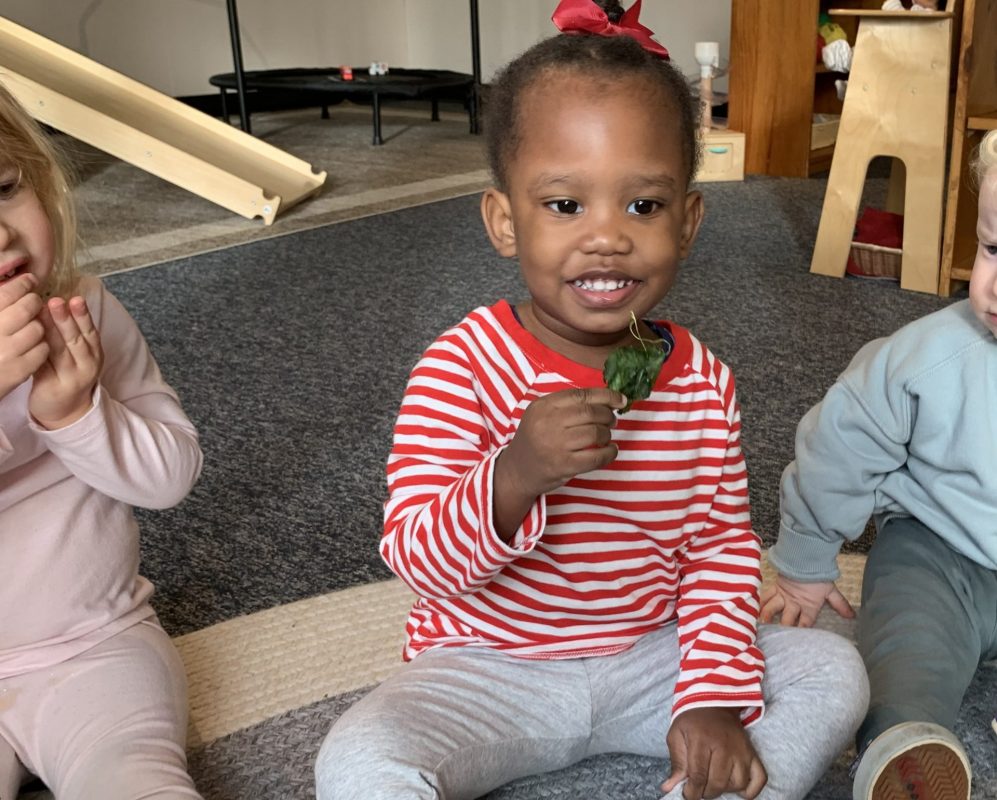
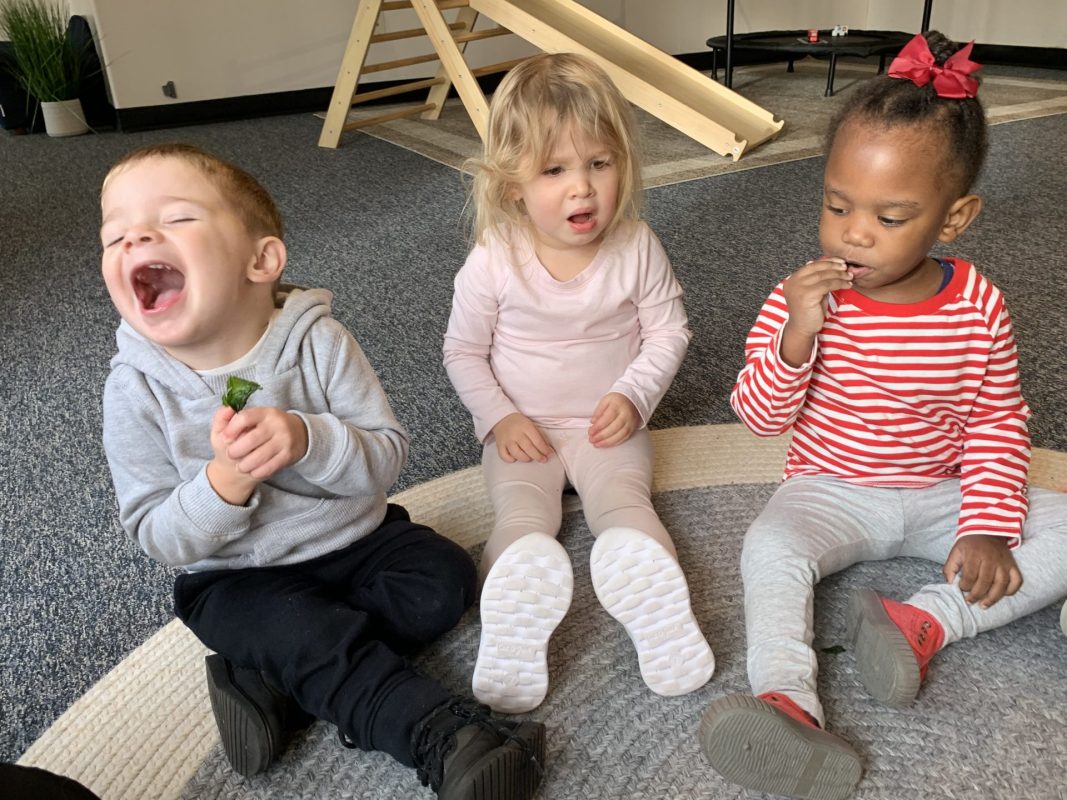
Food Tasting: The children explored and tasted a yellow pepper. Out of all three peppers we tried, I think the red pepper was the winner with yellow coming in second.

Have a wonderful weekend,

Cynthia and Sara


Mrs. Wilson: What Does Taking Turns Mean in a Montessori Environment

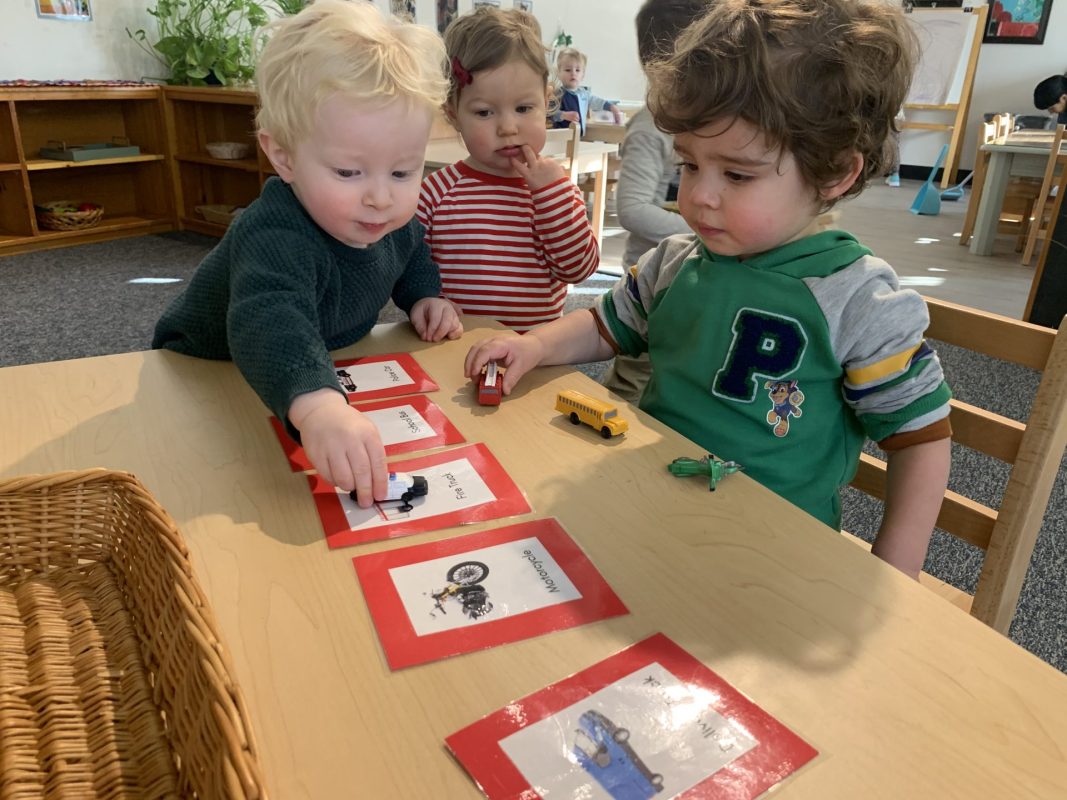
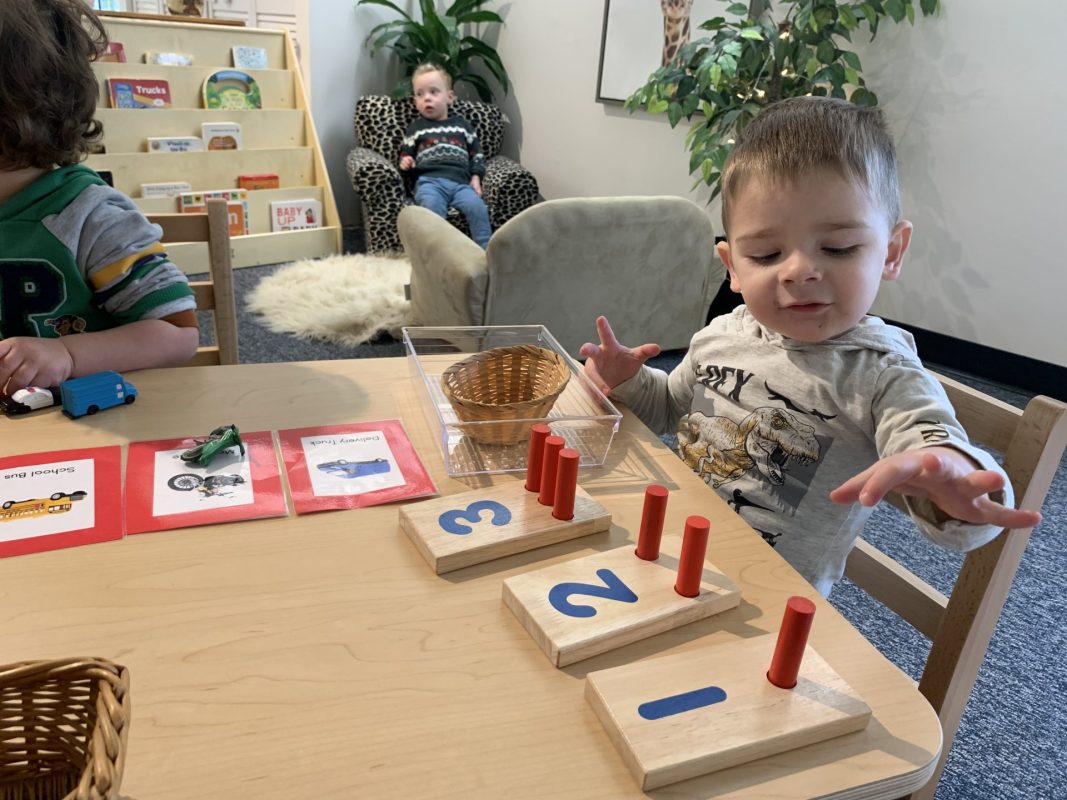
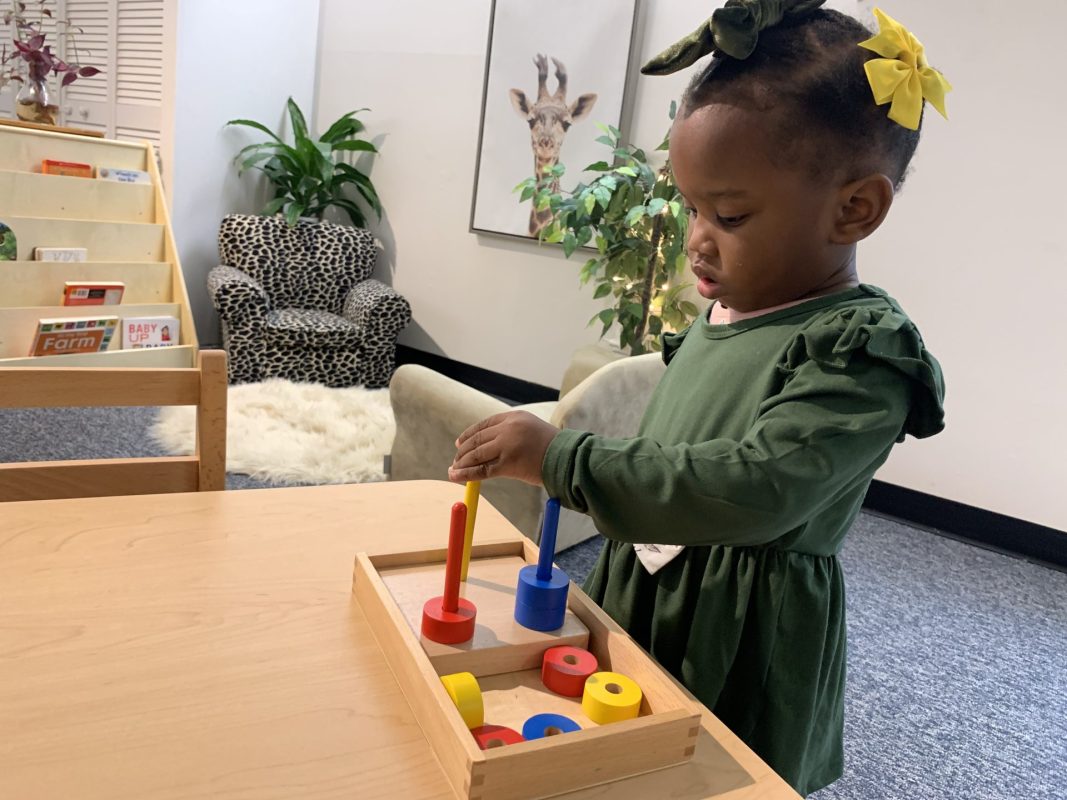
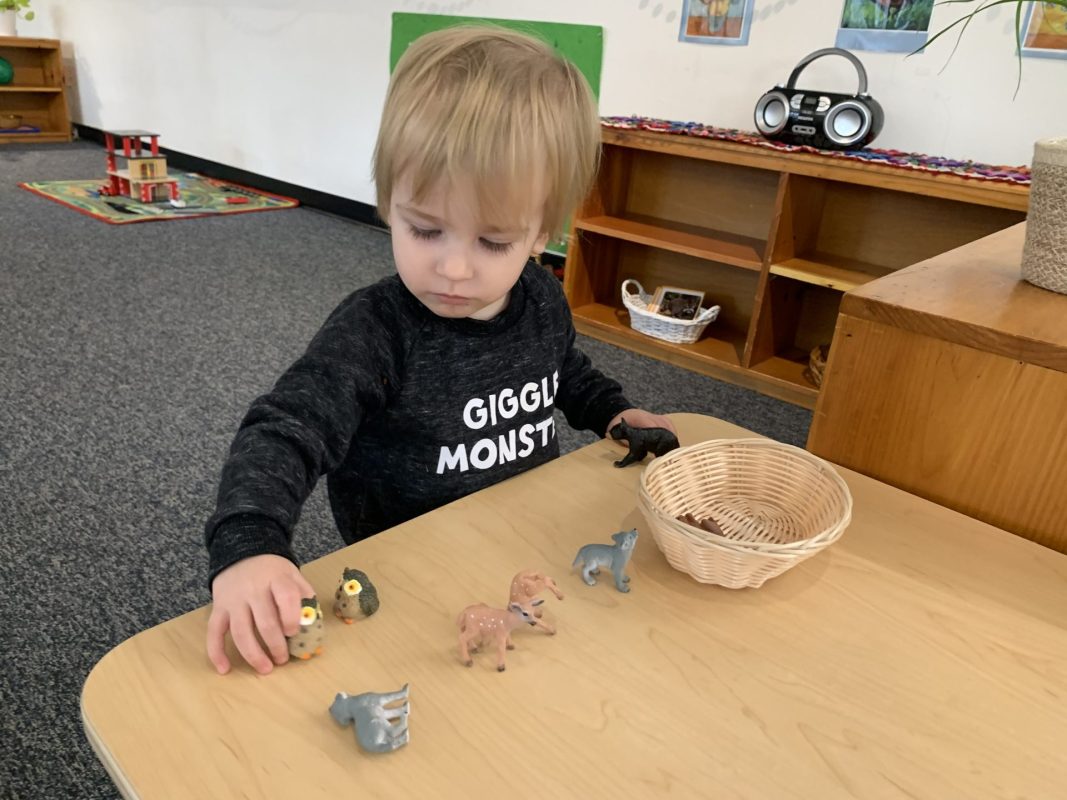
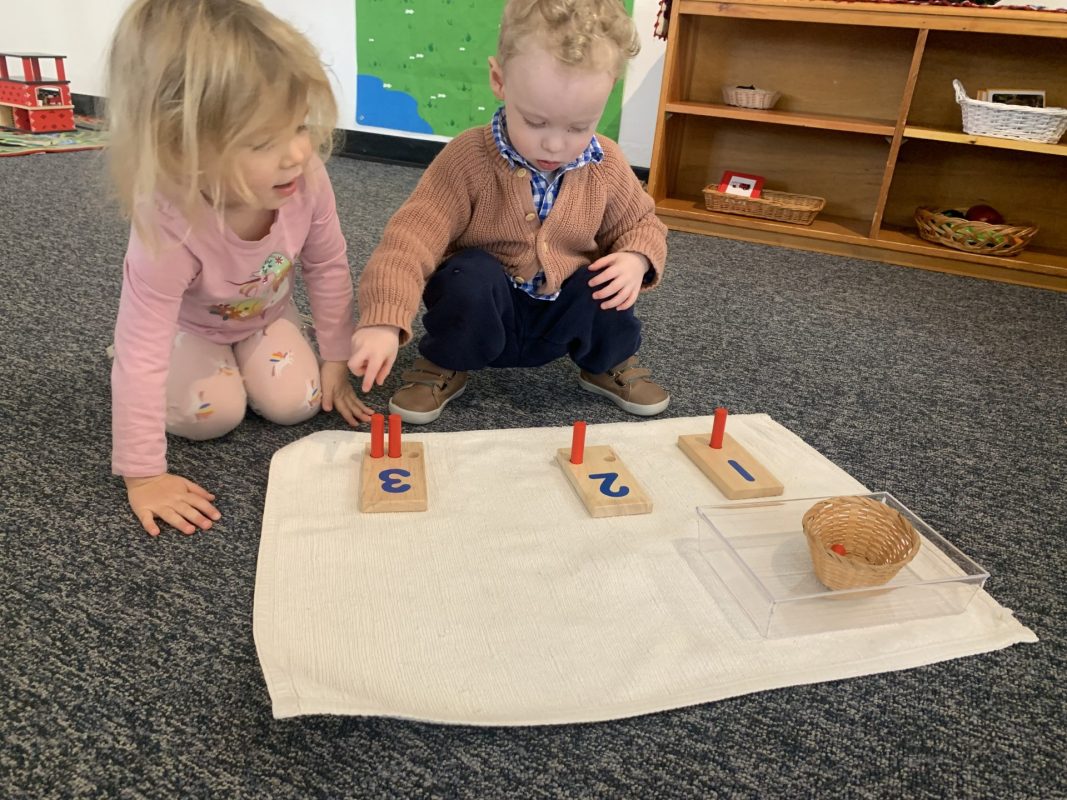
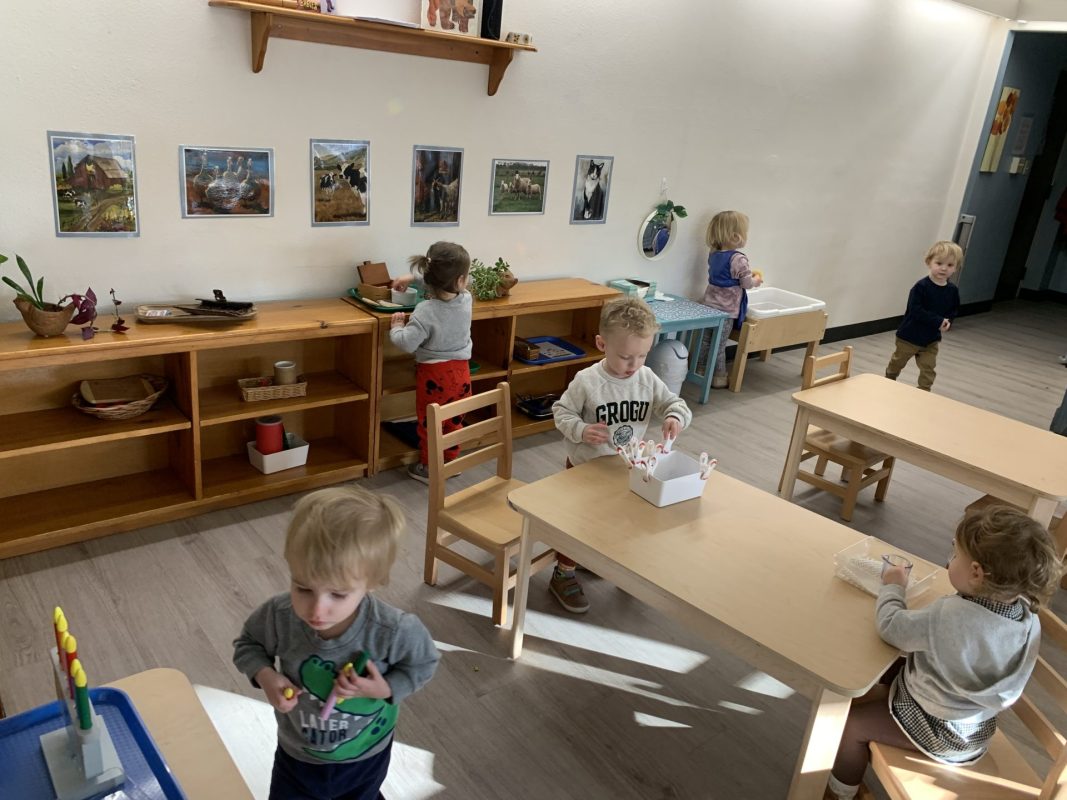
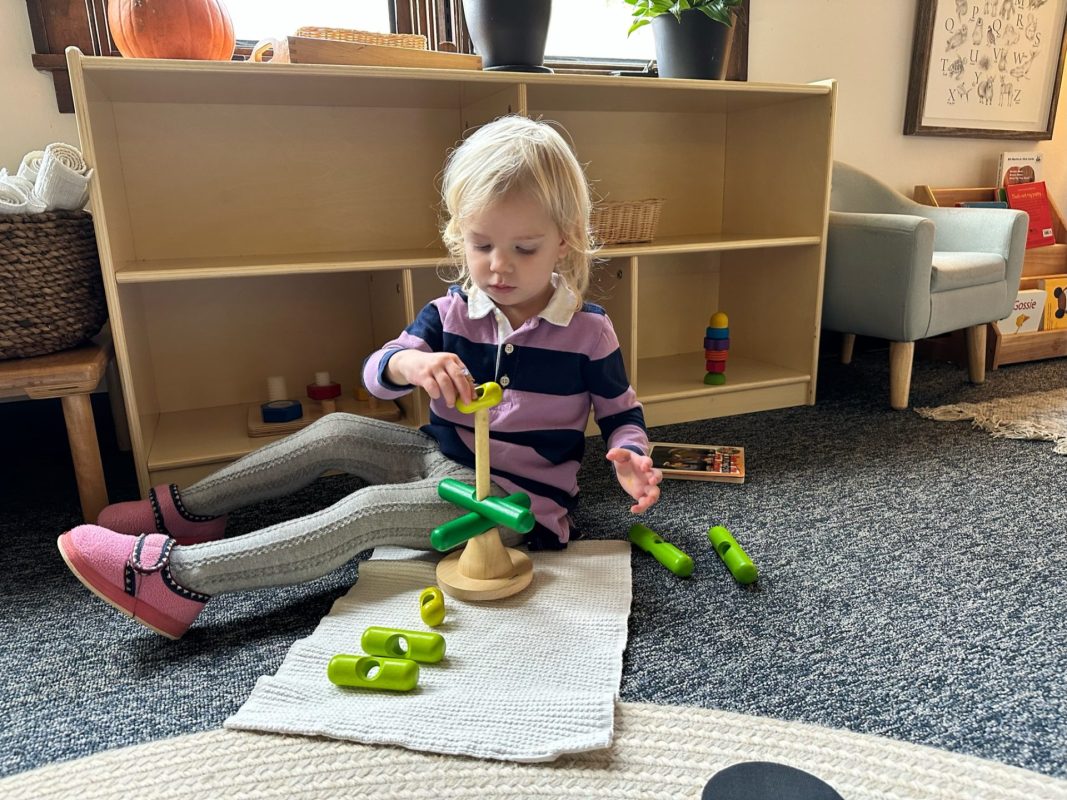
In a Montessori classroom, you will only find one of each lesson. This practice serves multiple purposes: promoting better learning, instilling respect, enhancing concentration, and encouraging in-depth exploration. Upon selecting a lesson from the shelf, a child may use it for as long as they desire. Once finished, the child returns the lesson to the shelf, making it accessible for other children.

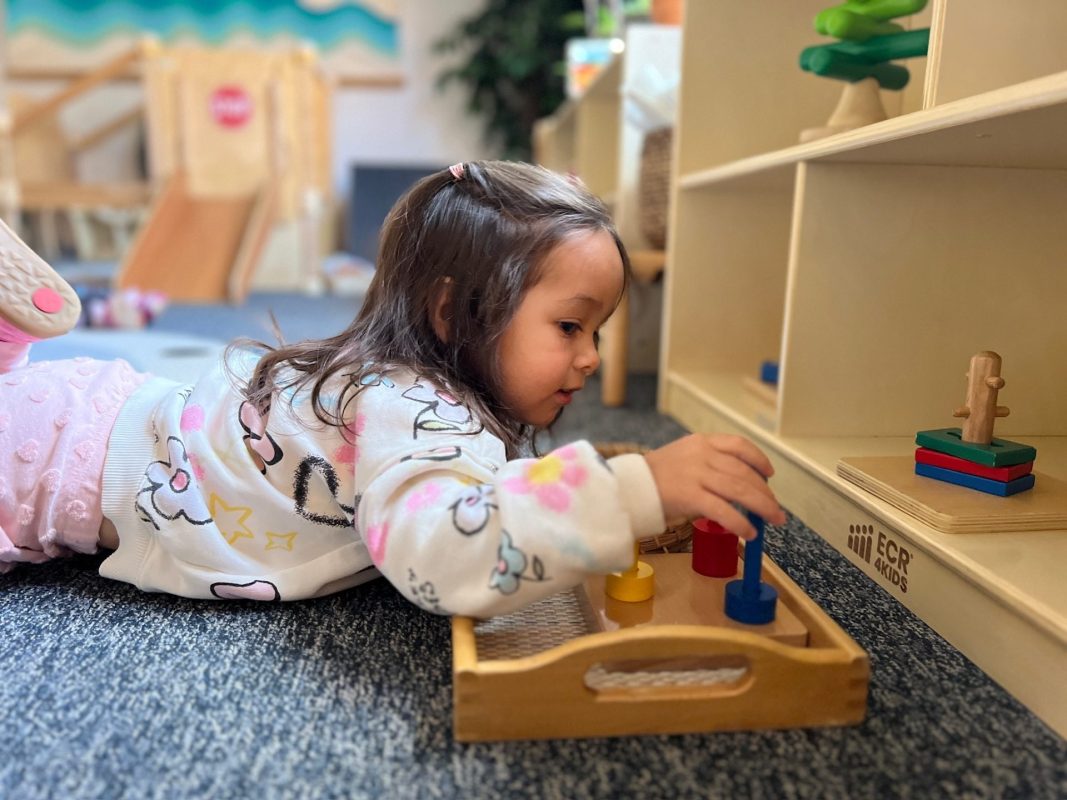
However, what if another child wants to use the same lesson? In such cases, we model respectful communication by saying, “I see Jake is using the peg board. It is not available. It will be available again once he returns it to the shelf.” We encourage children who can speak to use similar language with their curious peers.

In these situations, we provide the child with the option to observe their peers working on the lesson or to select from another available activity.

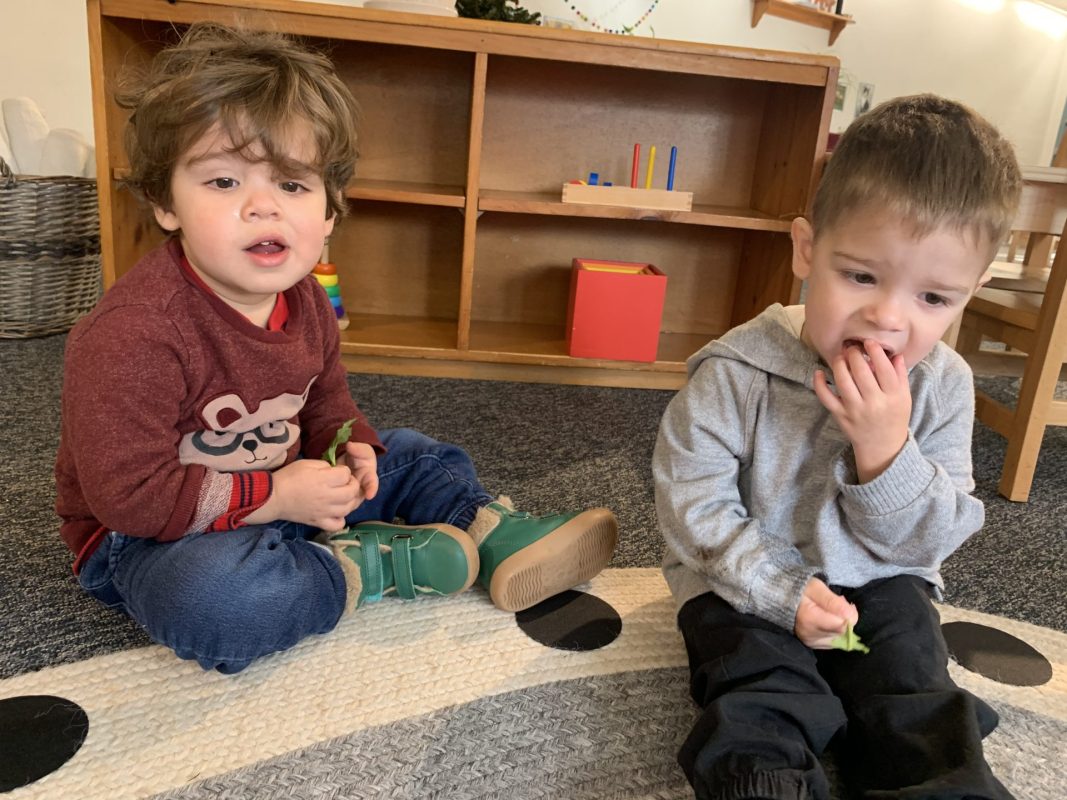
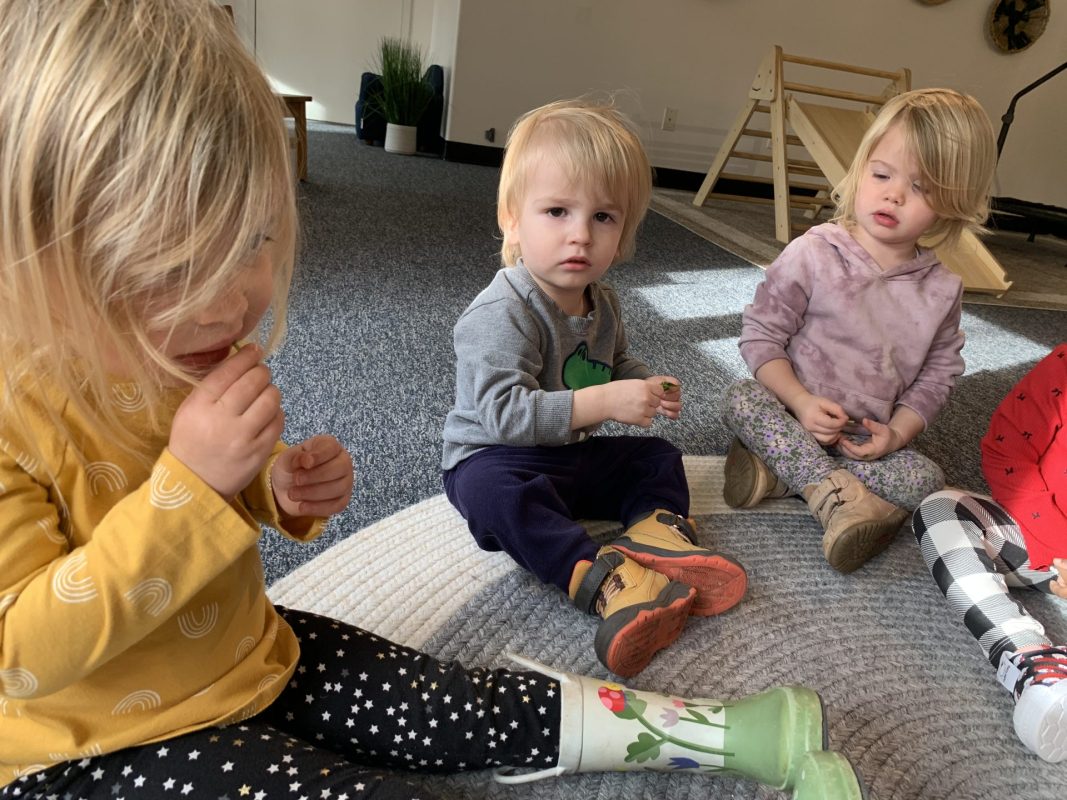
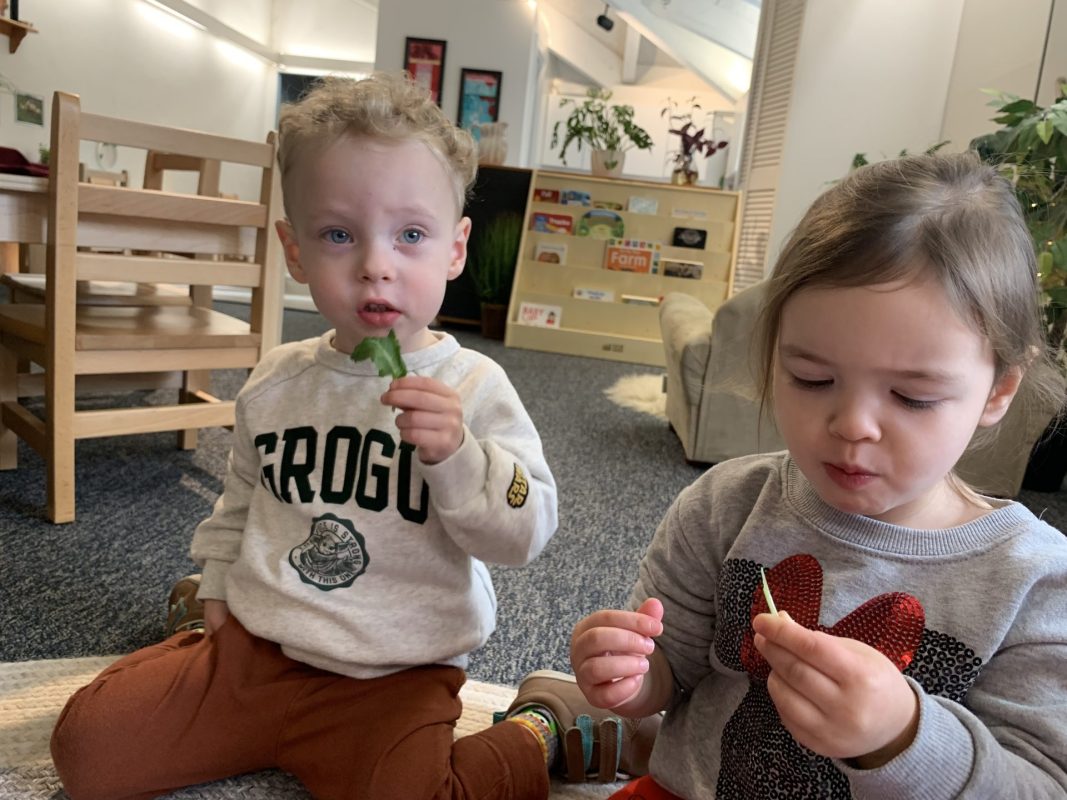
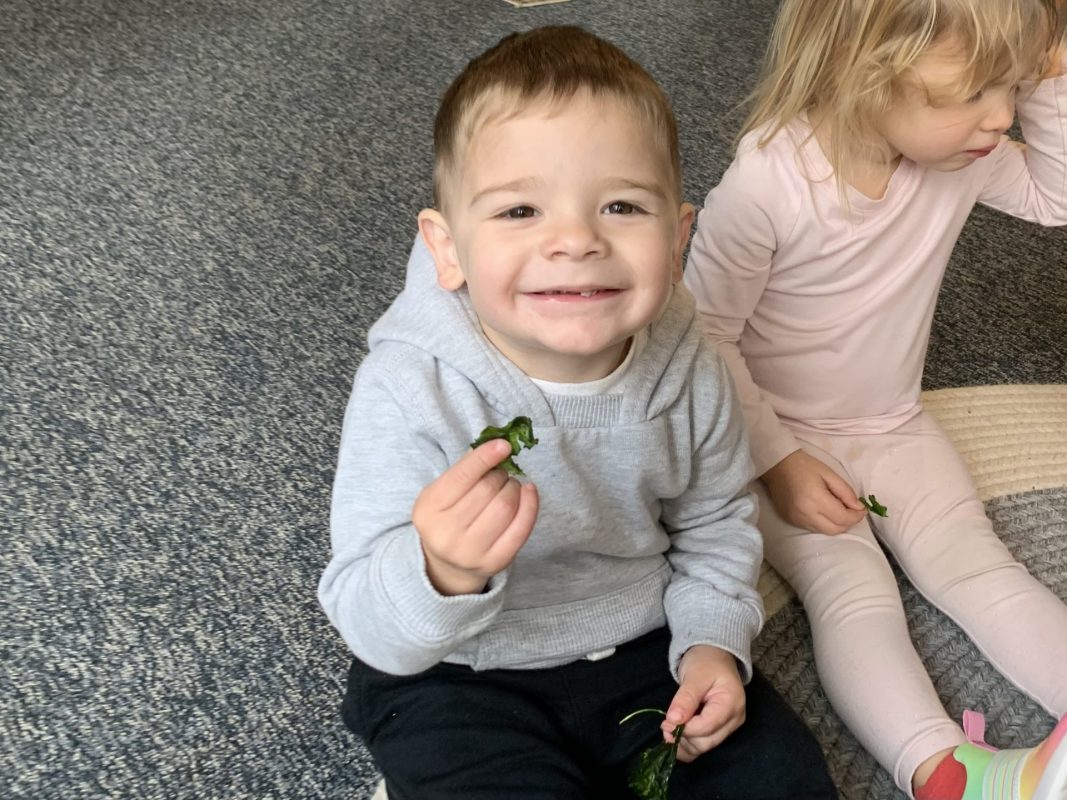
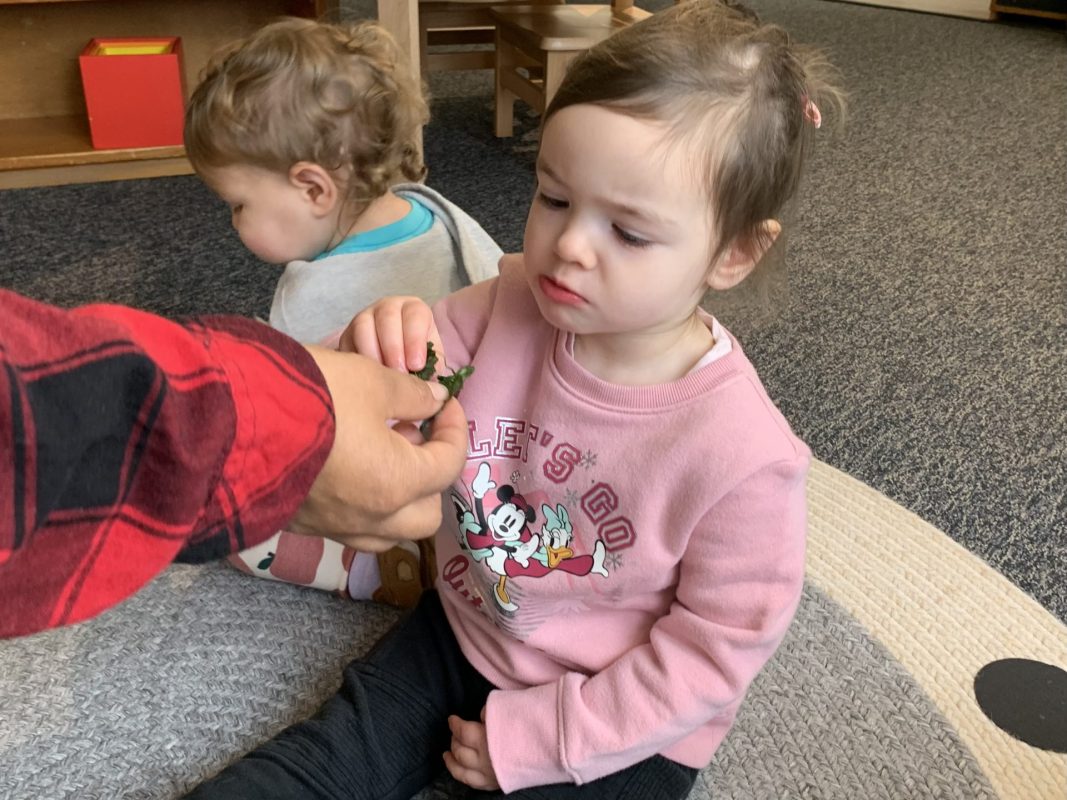
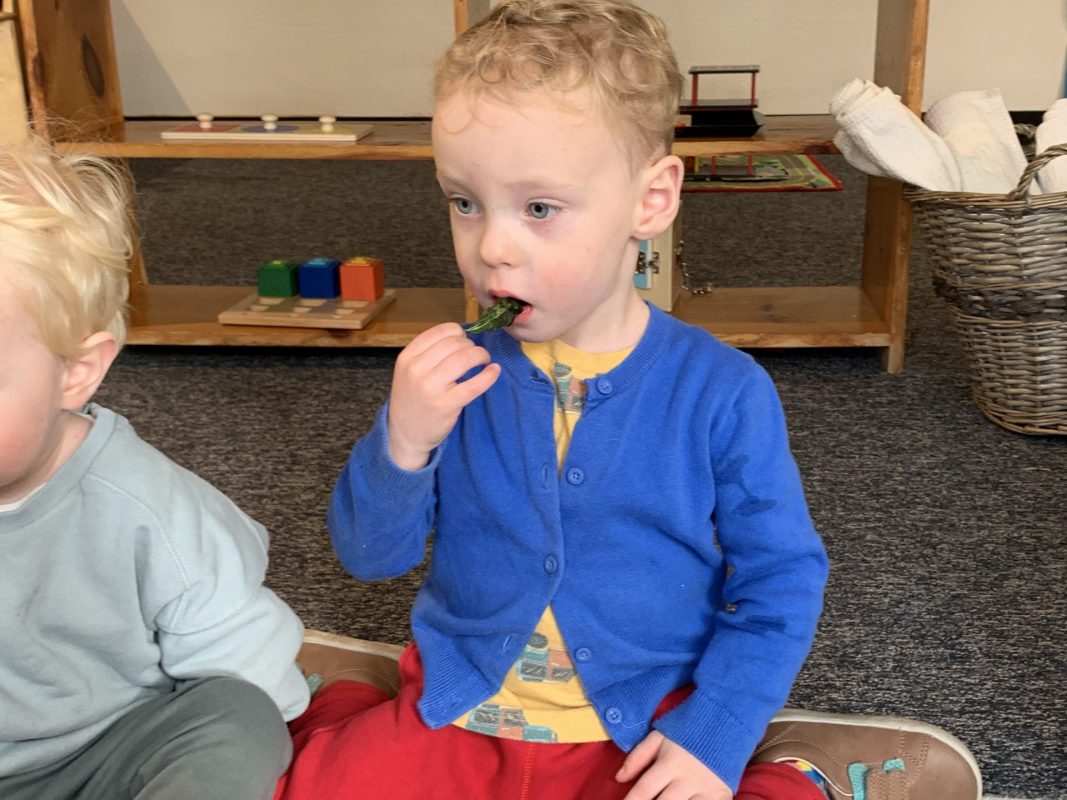
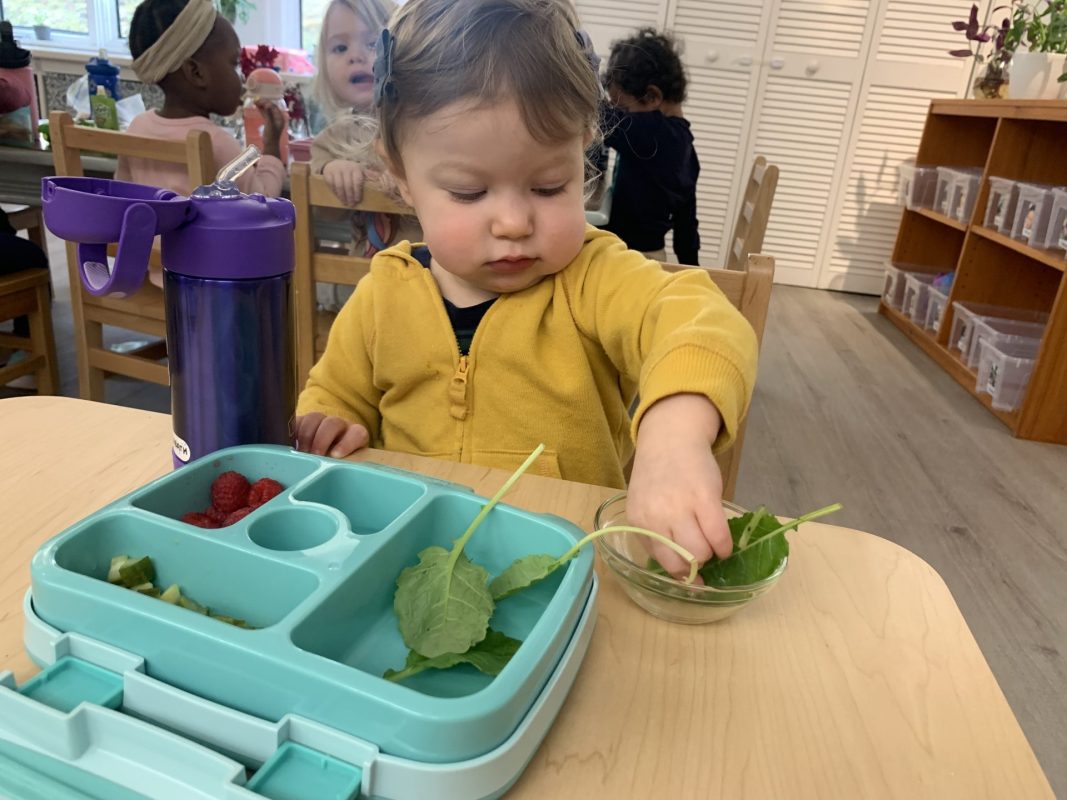
Food Tasting: This week, the children tried green bell peppers during a food-tasting activity but didn’t seem too enthusiastic about it.

Enjoy the weekend,

Cynthia and Sara


Mrs. Hood: Practical Life and Pumpkin Guts!

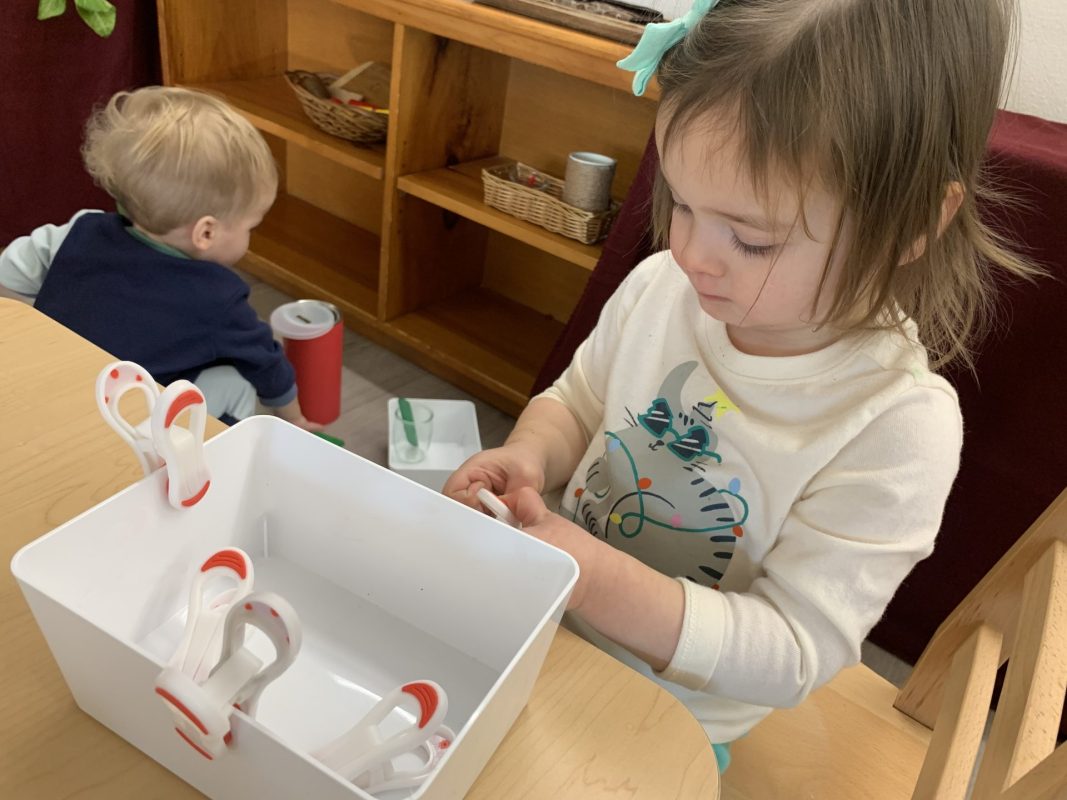
Dr. Maria Montessori introduced Practical Life exercises to provide children with opportunities to perform simple tasks that they have already observed at home. Practical Life exercises enable children to care for themselves, take care of the environment, and develop respect for others.

Care of the environment activities encourage the child to interact with the environment, exhibiting respect and love. These activities help the child form a connection with their environment and find a personal responsibility towards it.

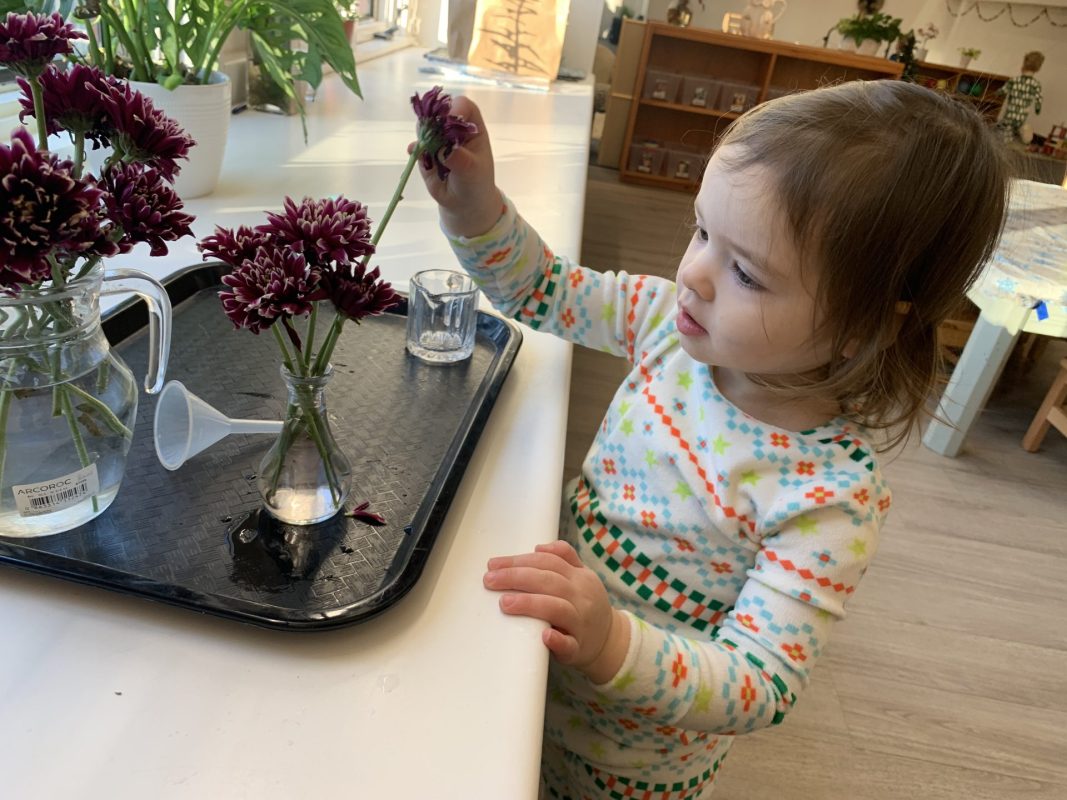
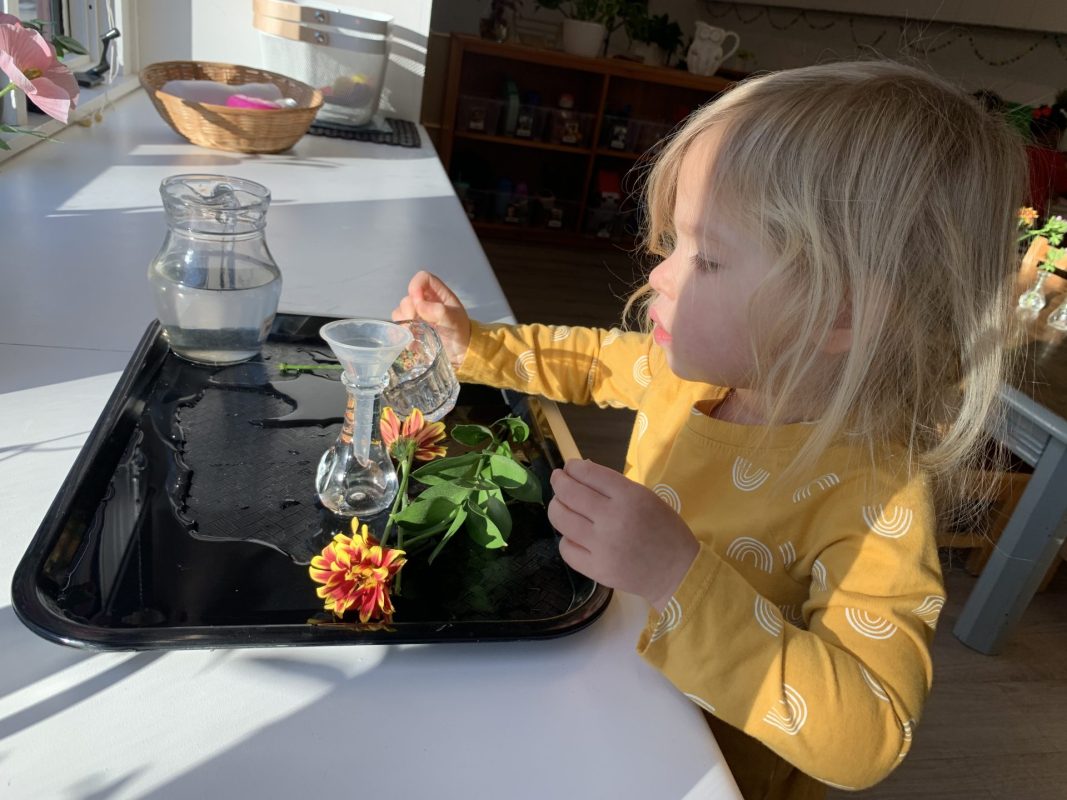
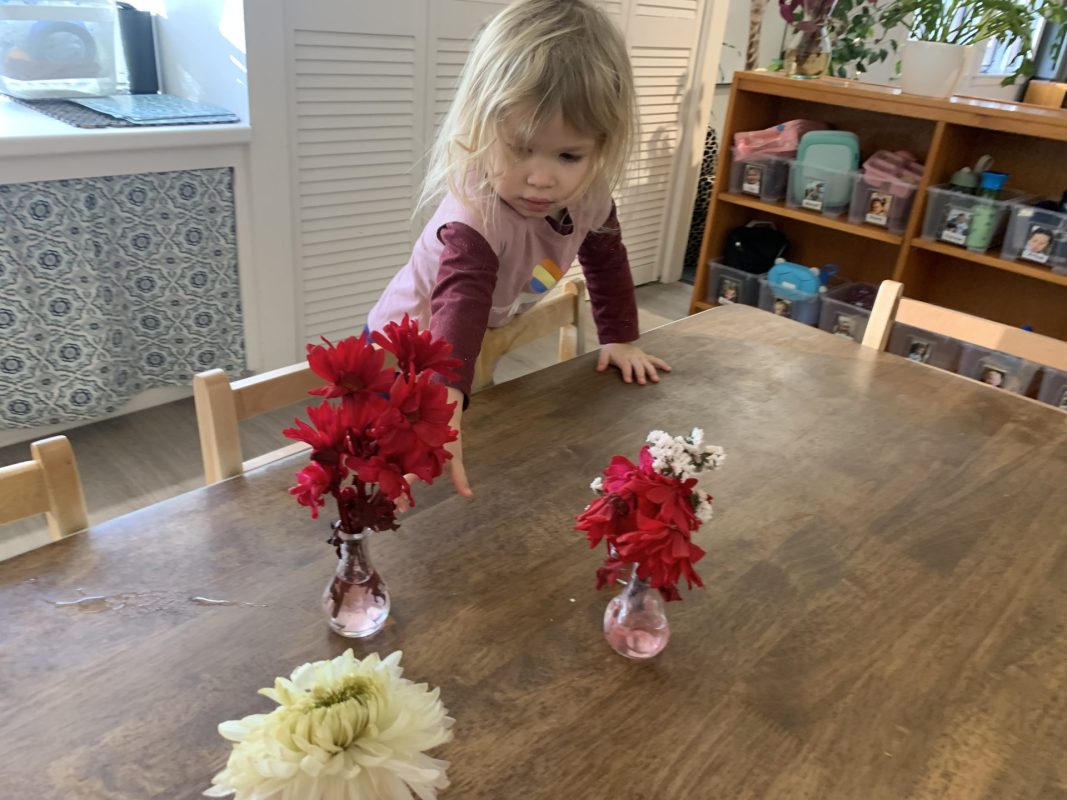
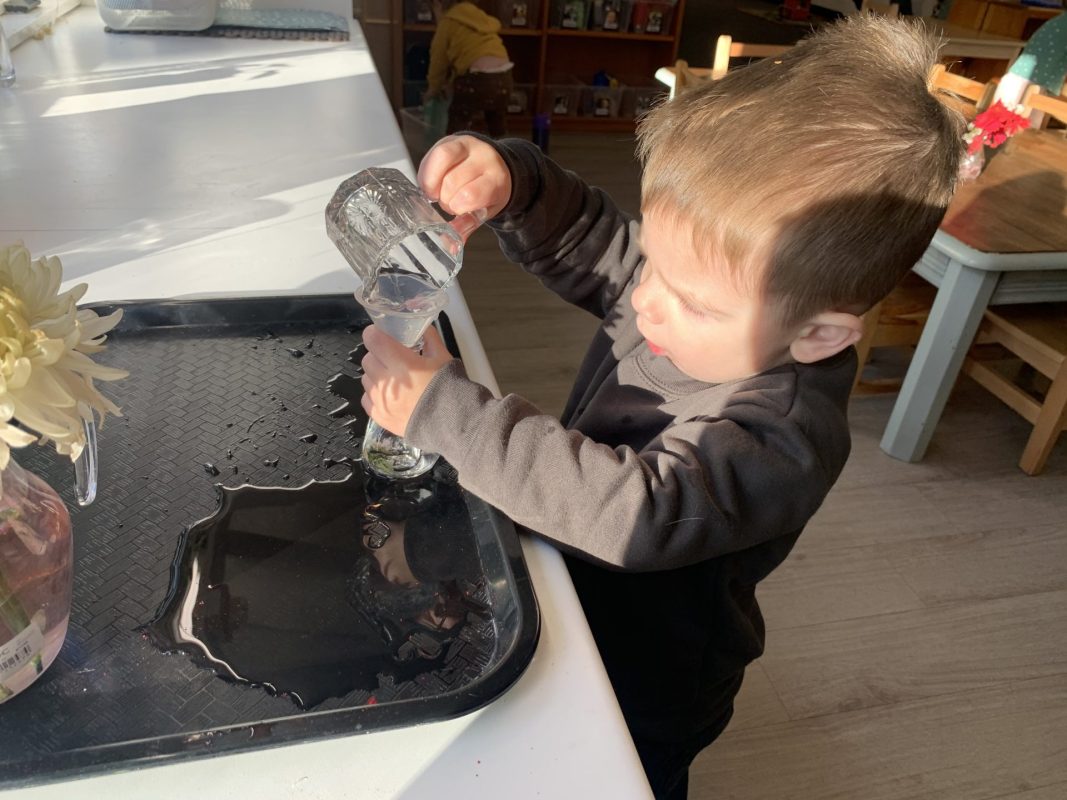
This week, we introduced one of the most beloved activities in our Montessori environments: flower arrangement. Second-year students were thrilled to observe the work, and they were ready to continue sharpening their hand skills. Our first-year students were super eager to get their hands on it. This is a beautiful activity that offers so much to your child’s development. Through this exercise, children develop a sense of beauty and the mental task of sequencing; they learn to exercise the judgment of size and capacity in matching flowers to vases and in pouring water, as well as manual dexterity as they need to fetch water and use different tools. This activity also indirectly prepares your child for botany studies in our Primary program and offers a great opportunity to work on independence and concentration. Your children love it! We can’t thank you enough for your weekly flower donations!

Another practical life lesson we introduced this week in the area of self-care was putting on a jacket. Children received a lesson using what we called the “fliparoo” trick. Children have been practicing this skill over and over. Please see the video below on the lesson, and please support your child at home to practice this skill.

On another note, as we started our pumpkin unit this week, children had the opportunity to explore the outside and inside of a pumpkin! Skin, pulp, strands, and seeds were new vocabulary words used to describe the parts of a pumpkin. We also talked about its texture, size, and color. Smooth, rough, and mushy were adjectives we repeated over and over, as well as naming the color orange. Pumpkin was also our food-tasting item this week, but as most of the children didn’t find it really tasty, we decided to find another way to introduce this fruit, so we baked pumpkin muffins with the children, and oh boy, what a difference! Children enjoyed it so much that they kept asking for more and more.

Lastly, we celebrated another birthday this week! It’s such a joy seeing the children growing healthy and loved!

Enjoy the pictures!

Mrs. Hood and Ms. Mollie
Reminder: Parent-teacher conferences are coming up. To maximize our 20 minutes together, we would greatly appreciate you emailing your questions to us prior to it. Please take some time to think about your questions and send them to ahood@fraserwoods.com by Friday, October 20th.
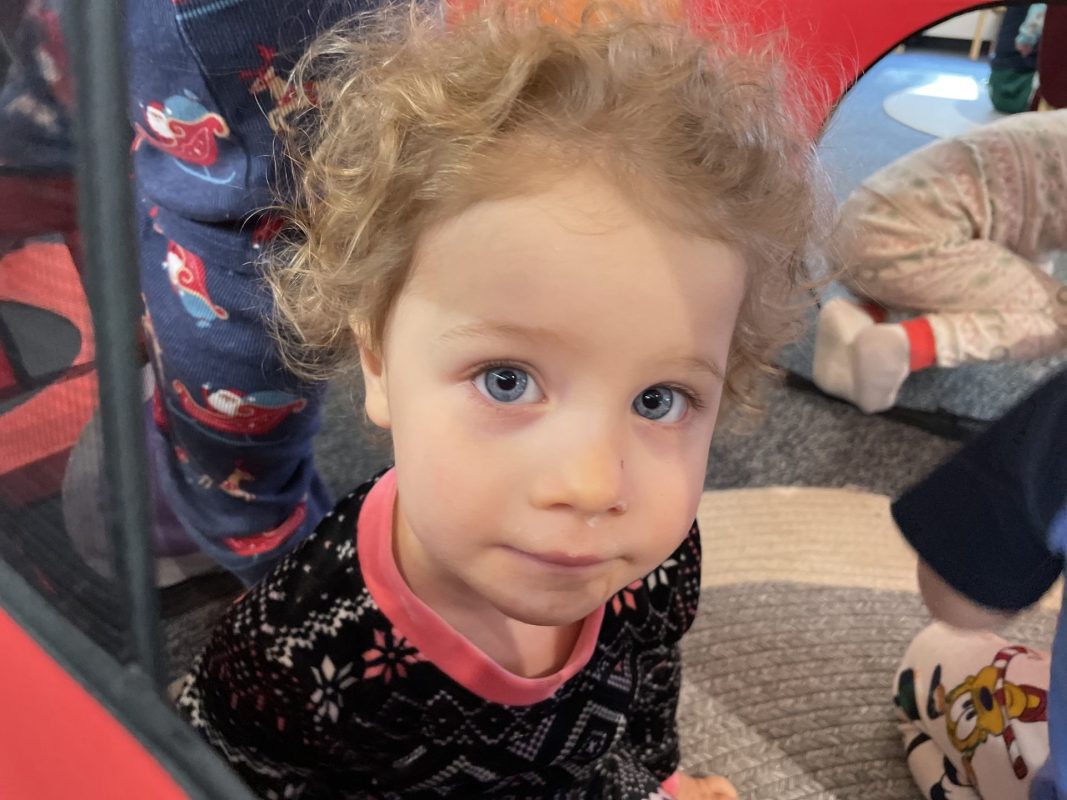
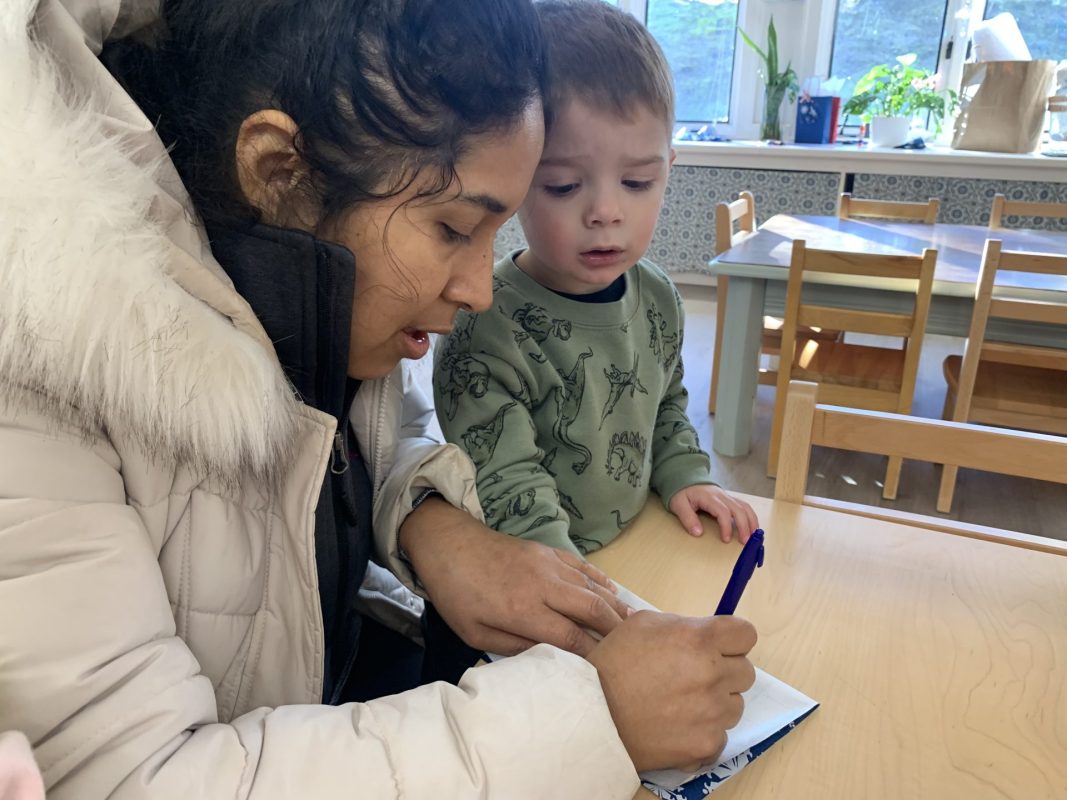

Mrs. Sargeant: A Montessori Approach to Sharing

Sharing does not come naturally to children under the age of three. They are not developmentally ready to share. From a Montessori point of view, sharing should never be imposed upon a young child. We emphasize independence, self-directed learning, and respect for each child. As adults, it is our job to protect the concentration and focus of the children when they are deeply engrossed in an activity. It is also our responsibility to empower the children and model for them how to advocate for themselves and communicate effectively and respectfully with their peers.

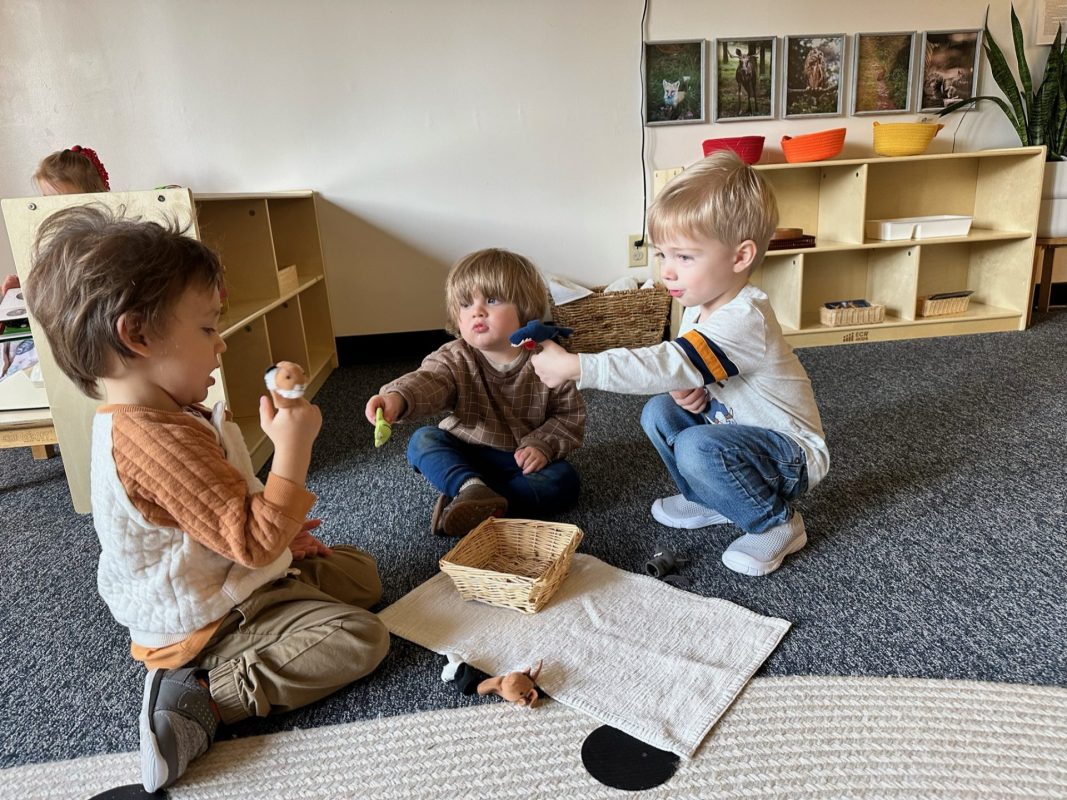
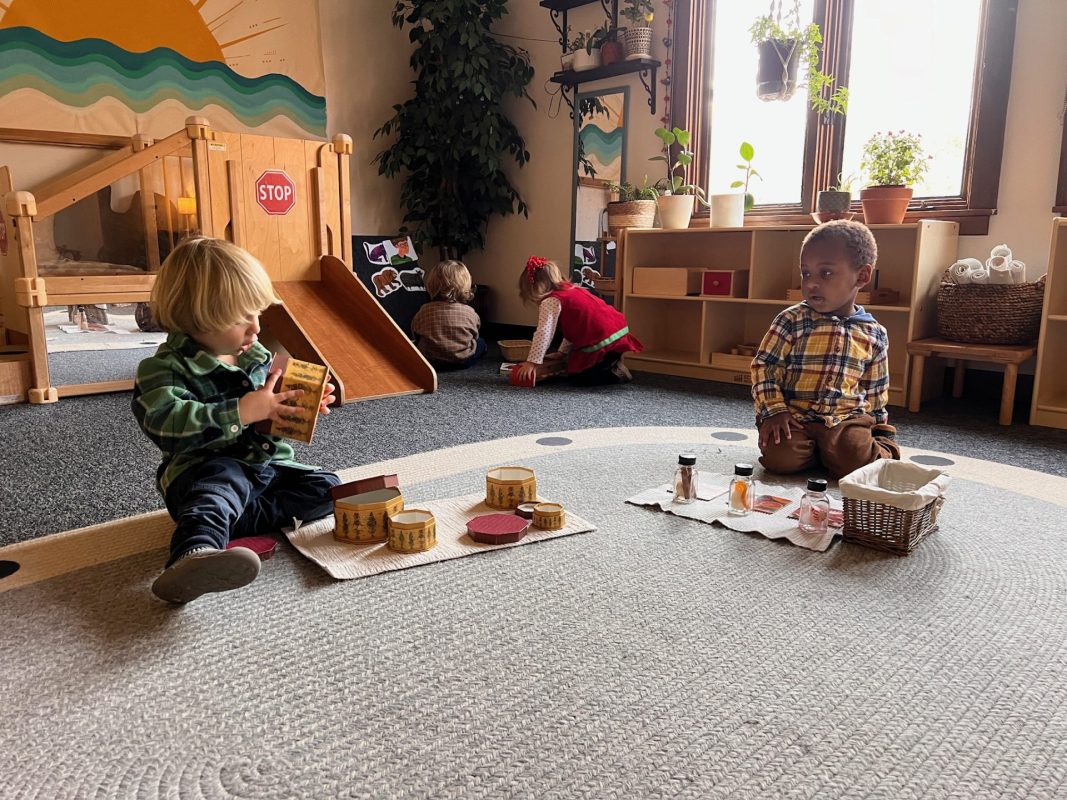
Most of the activities in a Montessori classroom are set up for just one child at a time. All the materials are shared by all the children. However, each child is free to work as long as they’d like with any material. The children learn that if an activity is not present on the shelf, then it is unavailable. Once the activity is returned to the shelf, then it becomes available, and it can be another child’s “turn”.

Instead of forcing immediate sharing, Montessori teachers often encourage turn-taking. If a child is using a material or working on an activity, another child might be asked to wait or observe until it’s their turn. This approach helps children develop patience and understand the concept of taking turns.

Throughout the day, you will hear many murmurs of  “This is my work” and “I’m using this right now”, as well as “May I take a turn?” It is important for children to feel comfortable saying ‘no’ and also to respect when others do, too.

Forcing children to share may unintentionally send the message to the child that their needs and opinions don’t matter. Often, children also learn that crying or throwing a tantrum is a way to immediately get what they want.

The goal of Montessori education is to support the child’s development of social skills in a respectful and individualized manner. While sharing is an important aspect of social development, it is approached in a manner that aligns with the child’s natural development and readiness to understand and practice this skill. It is exciting to observe the children’s growth in both patience and confidence (and, down the road, empathy).


Mrs. Sargeant: A Peek at the Week

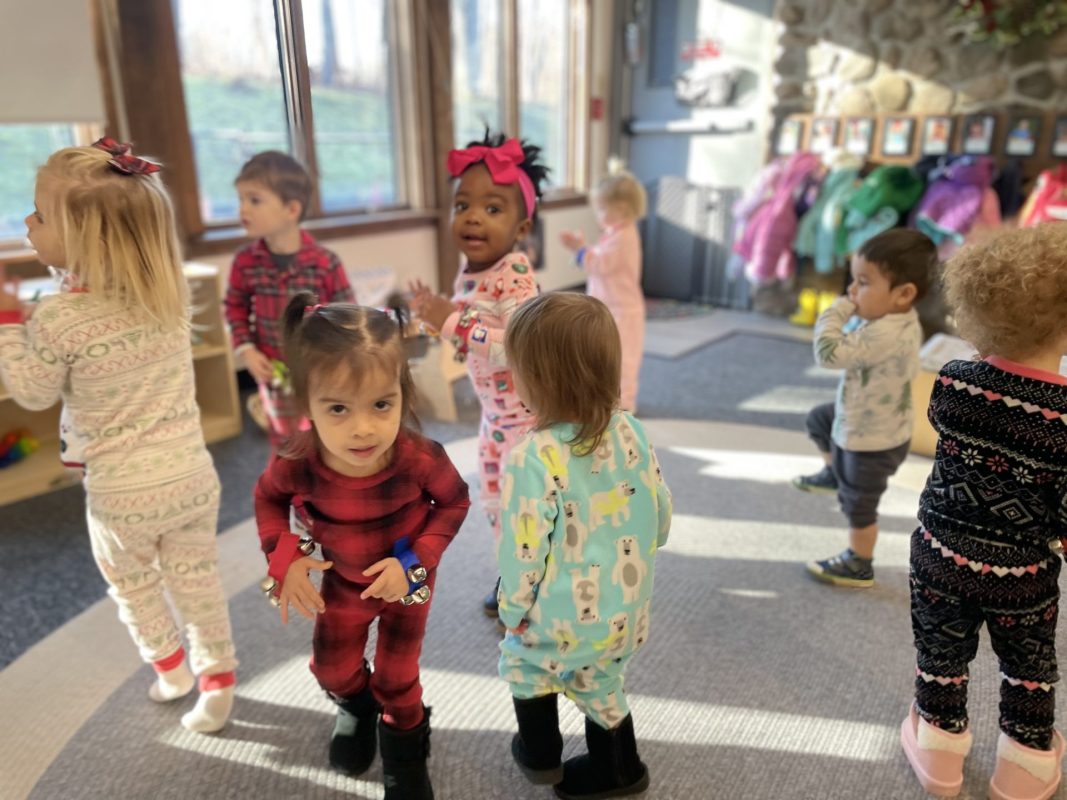
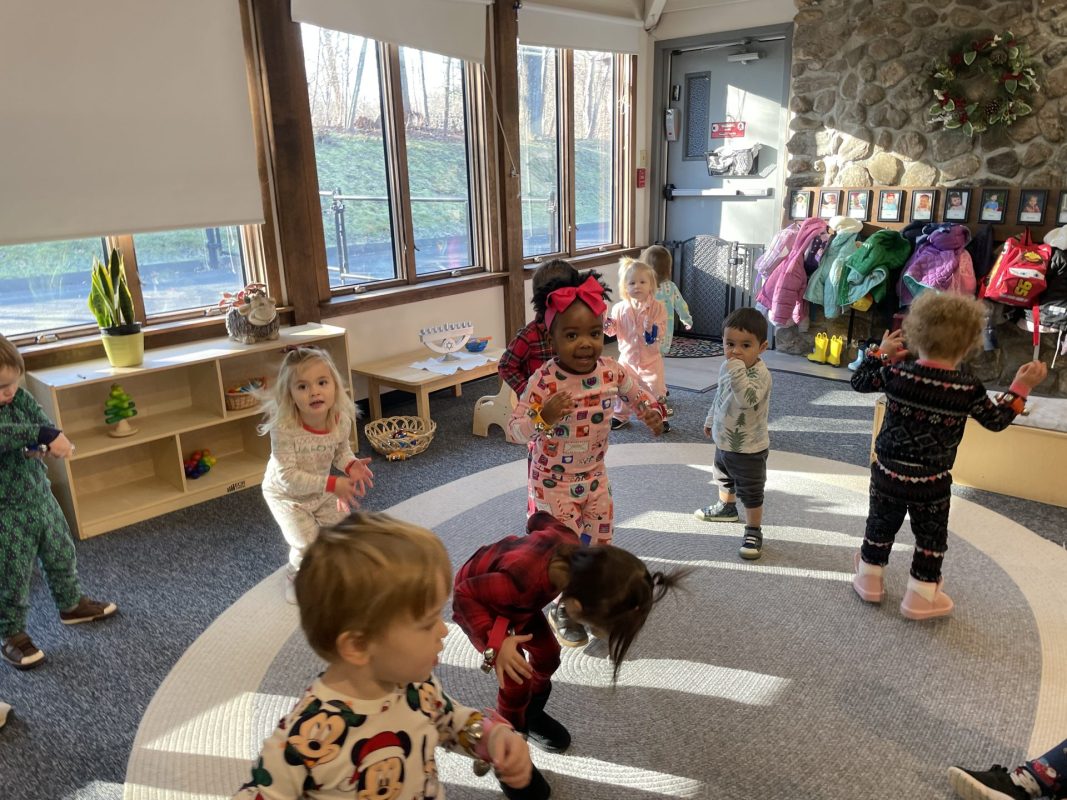
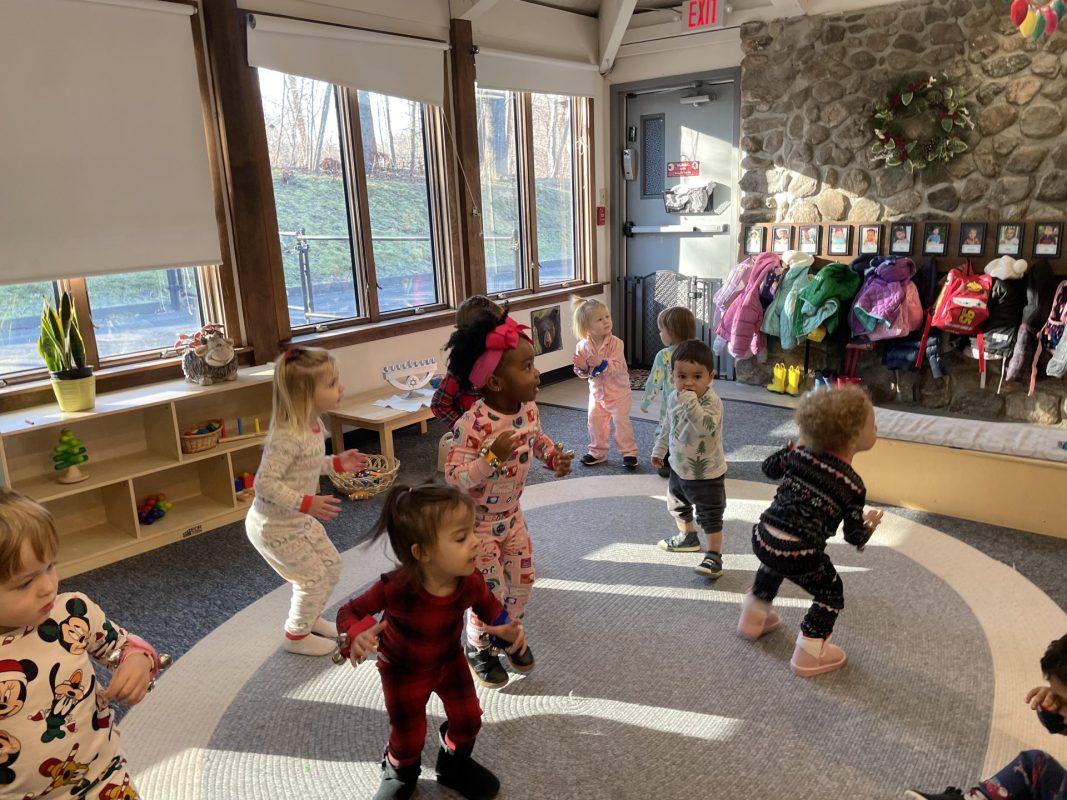
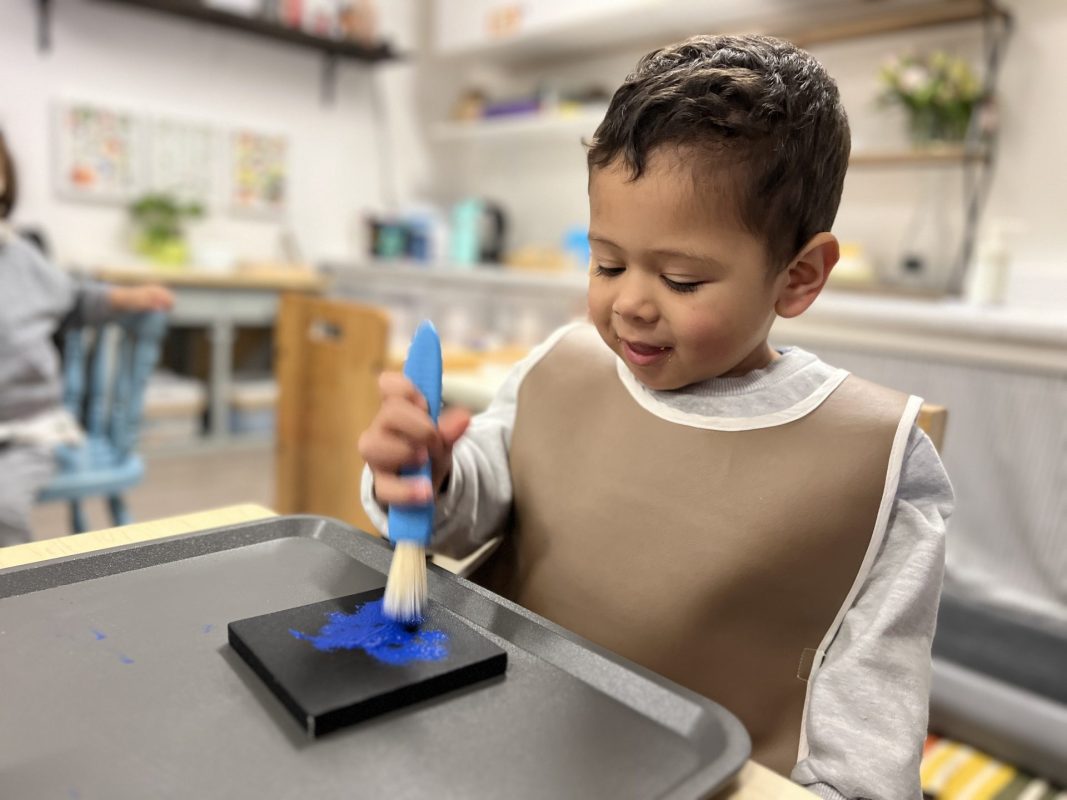
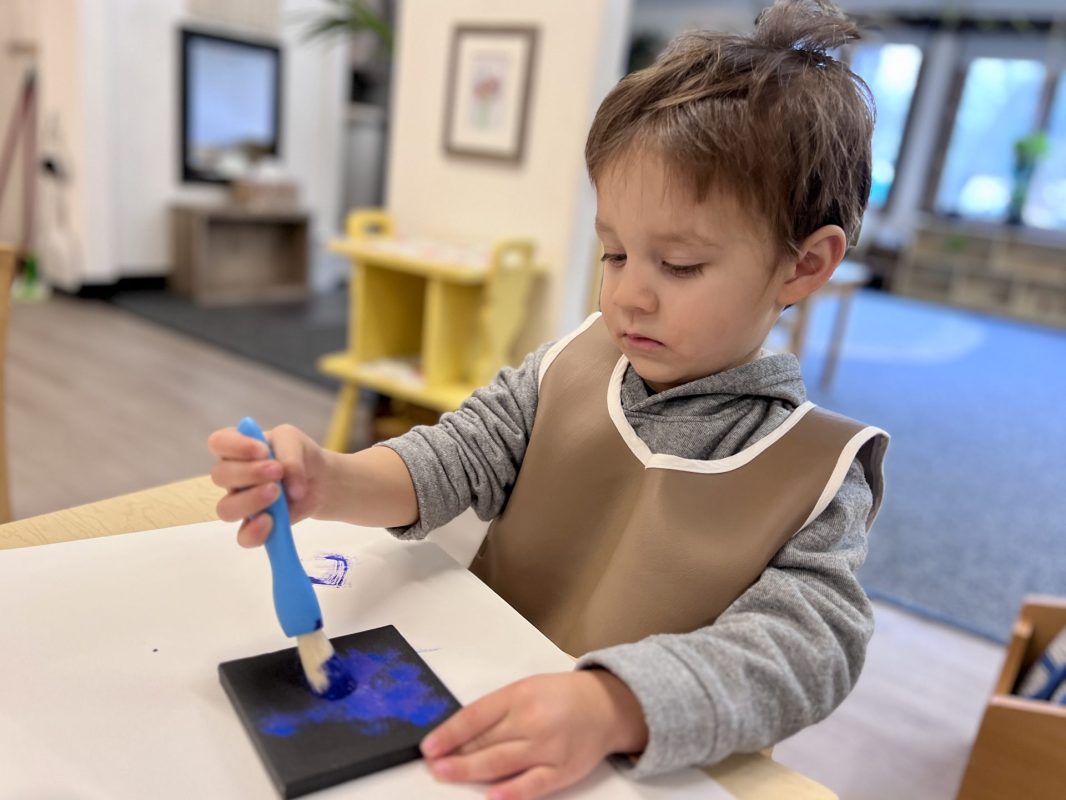
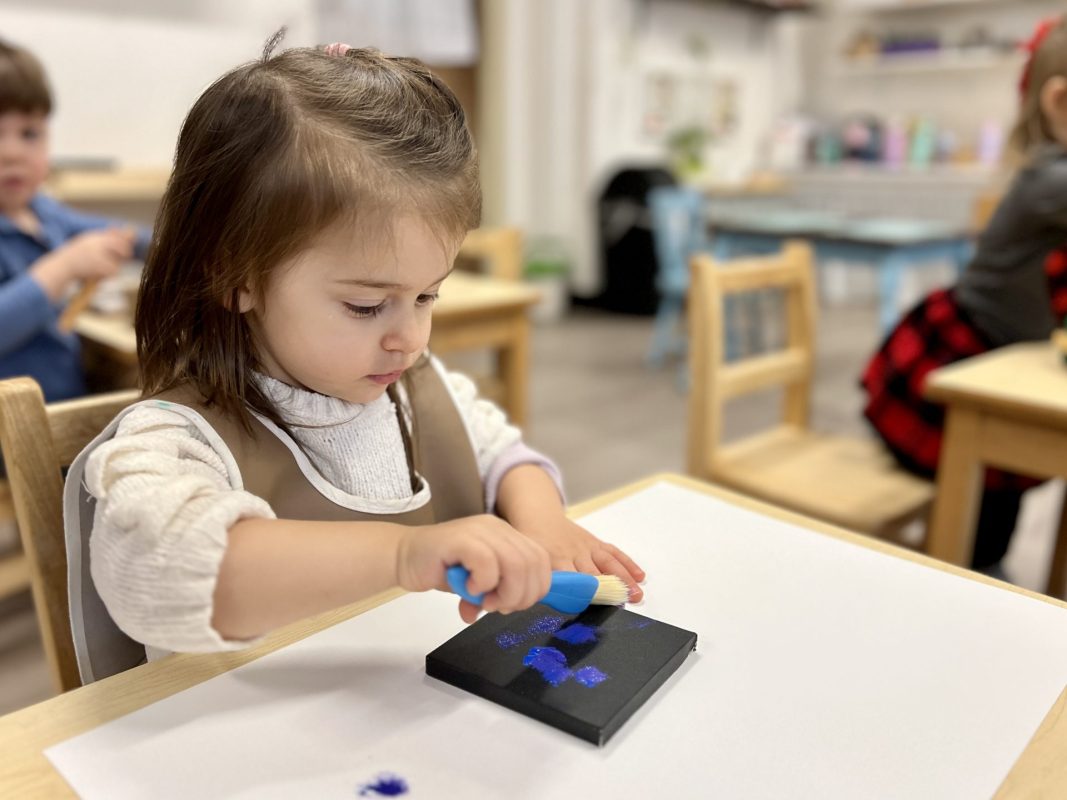
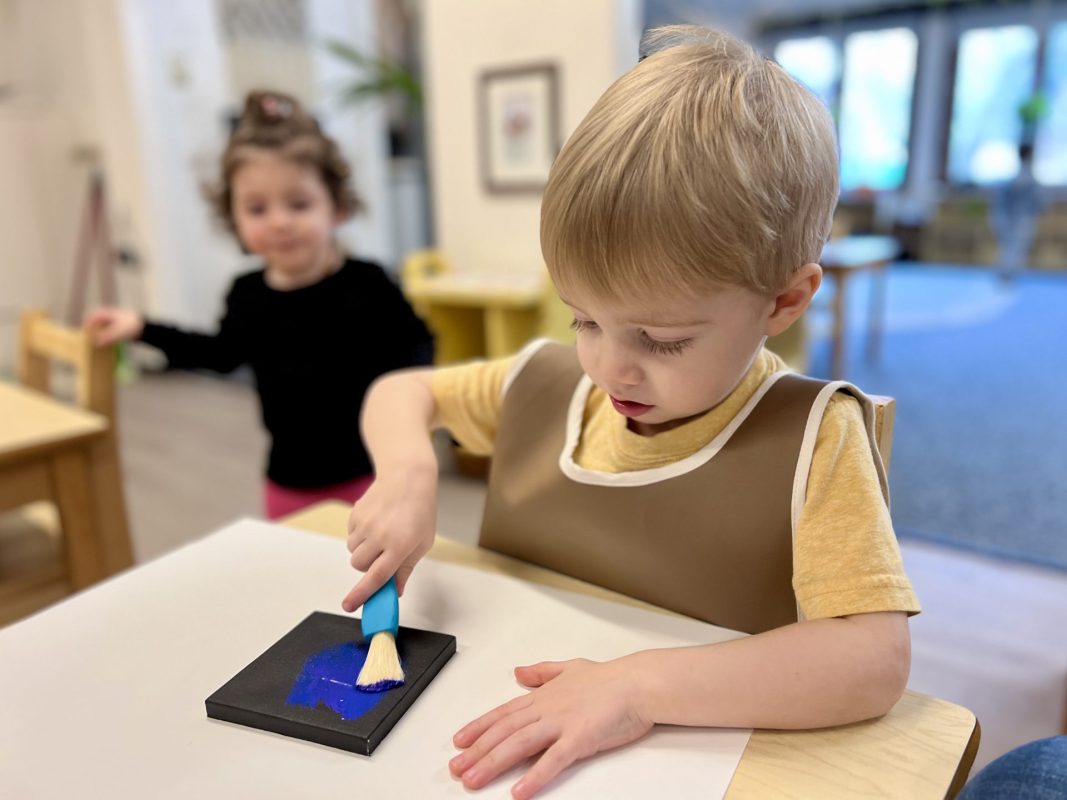
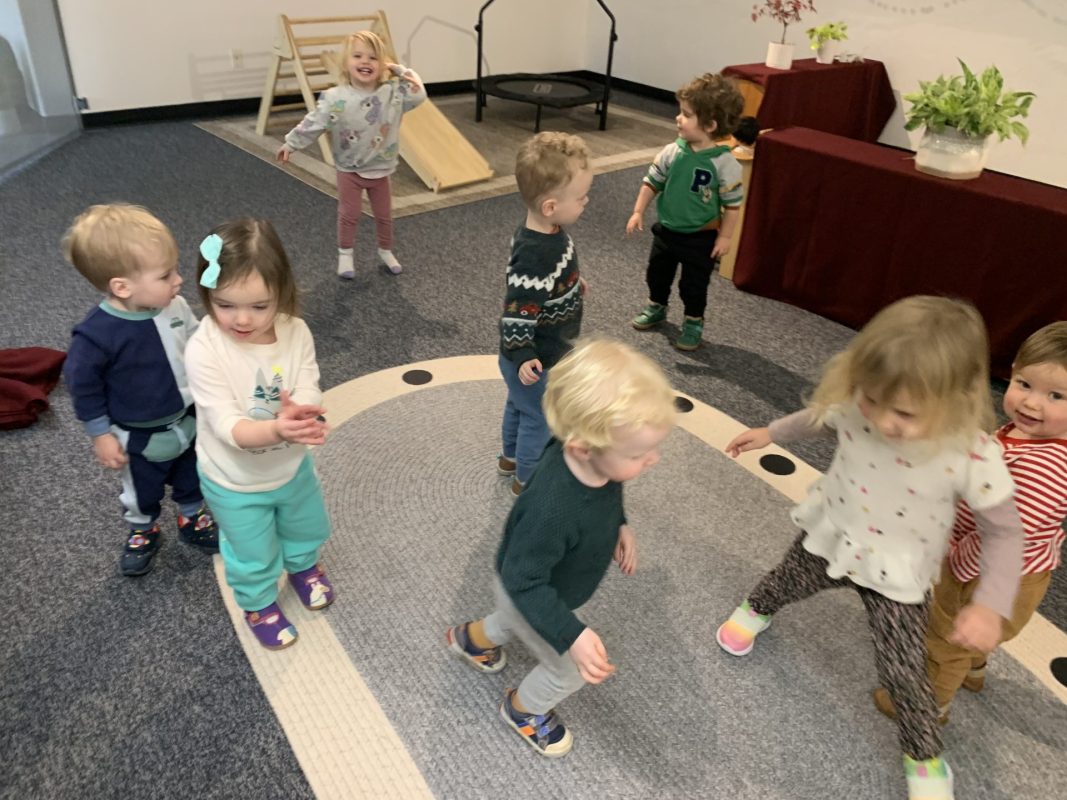
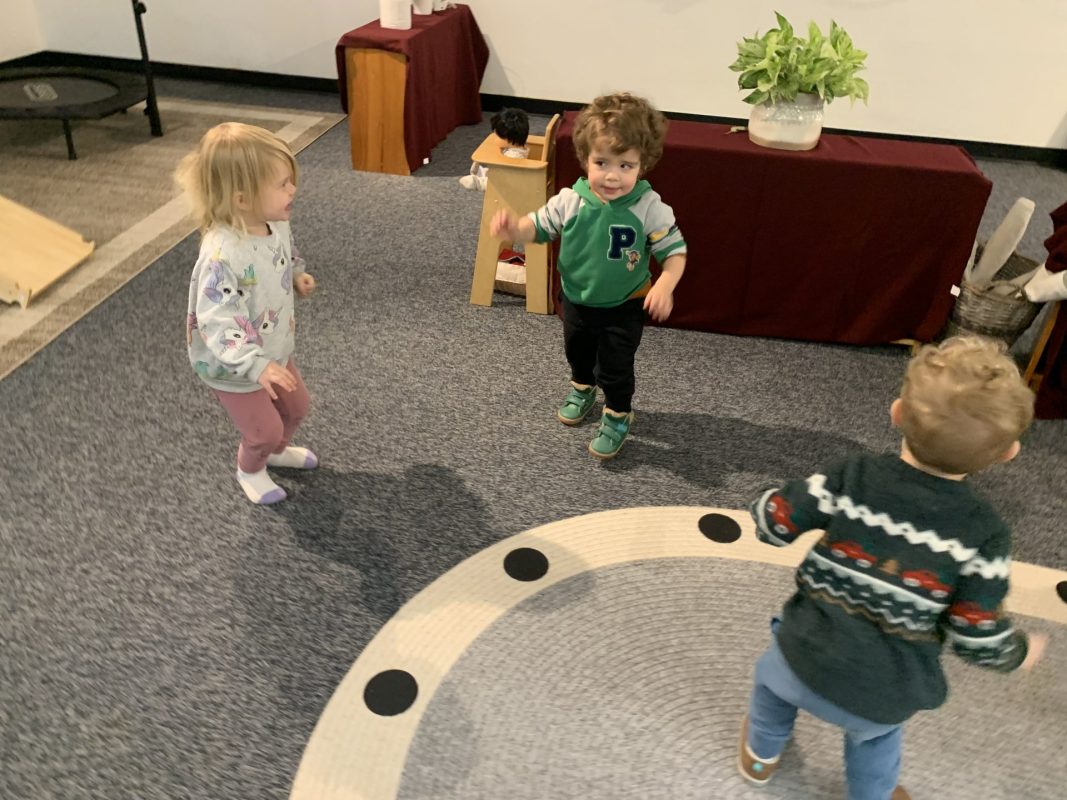
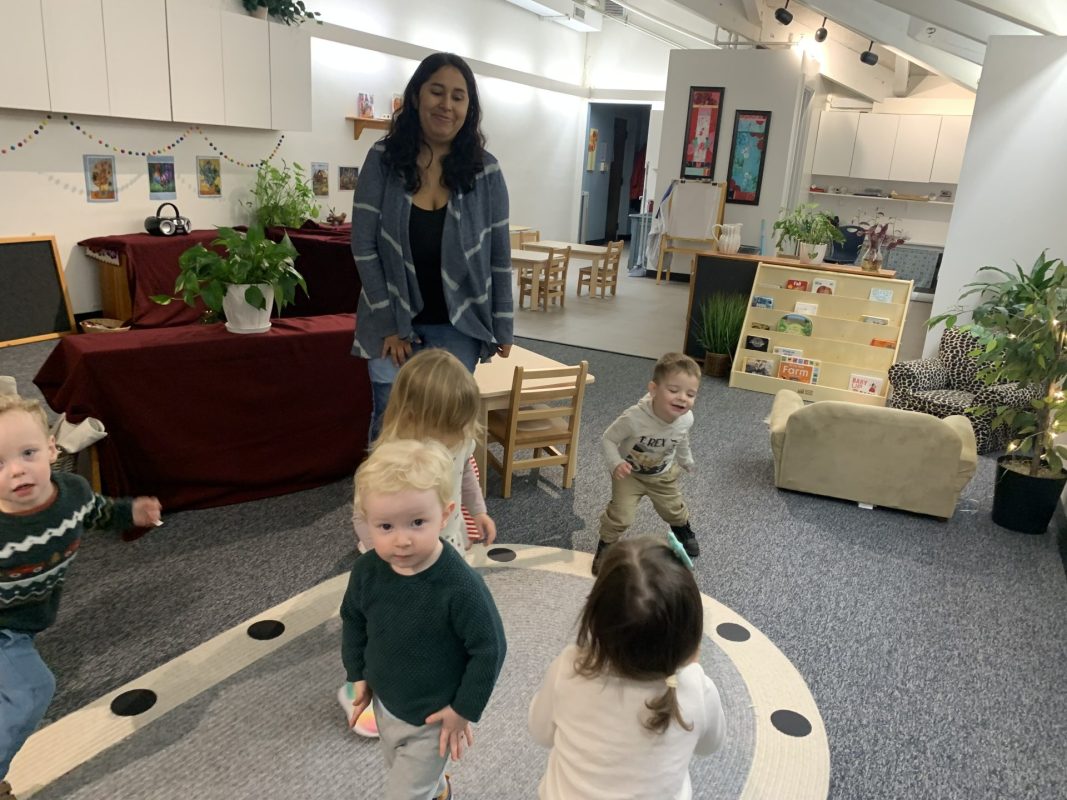
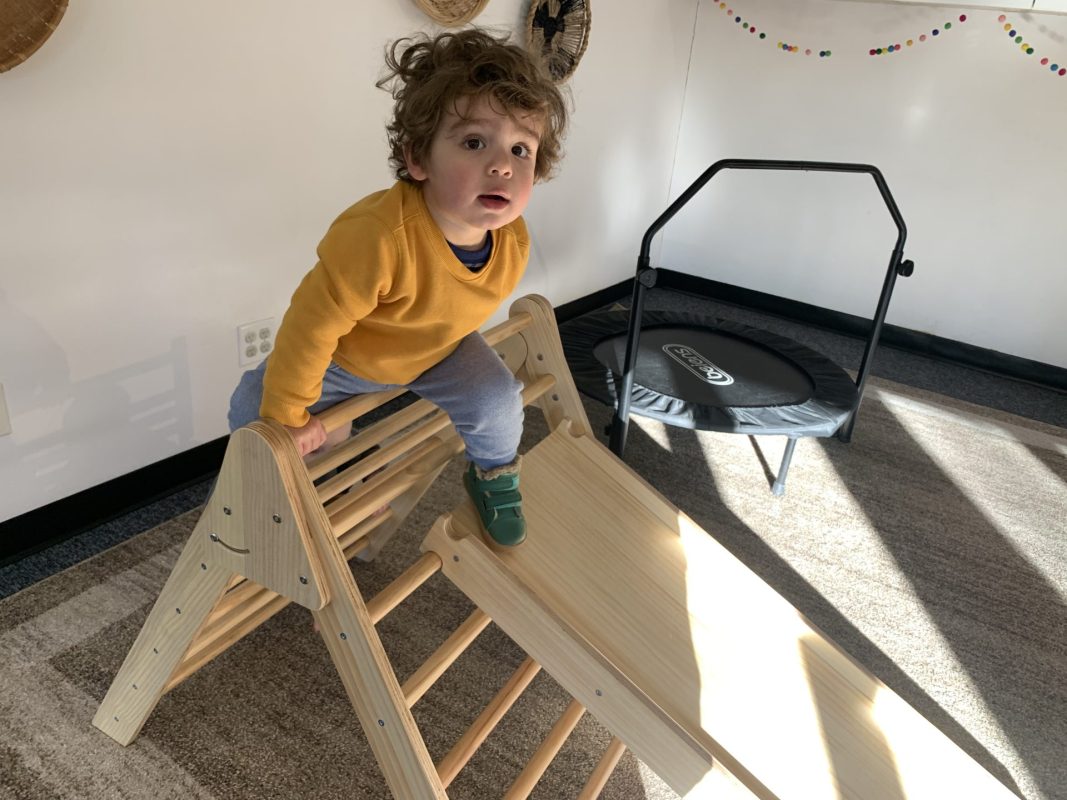
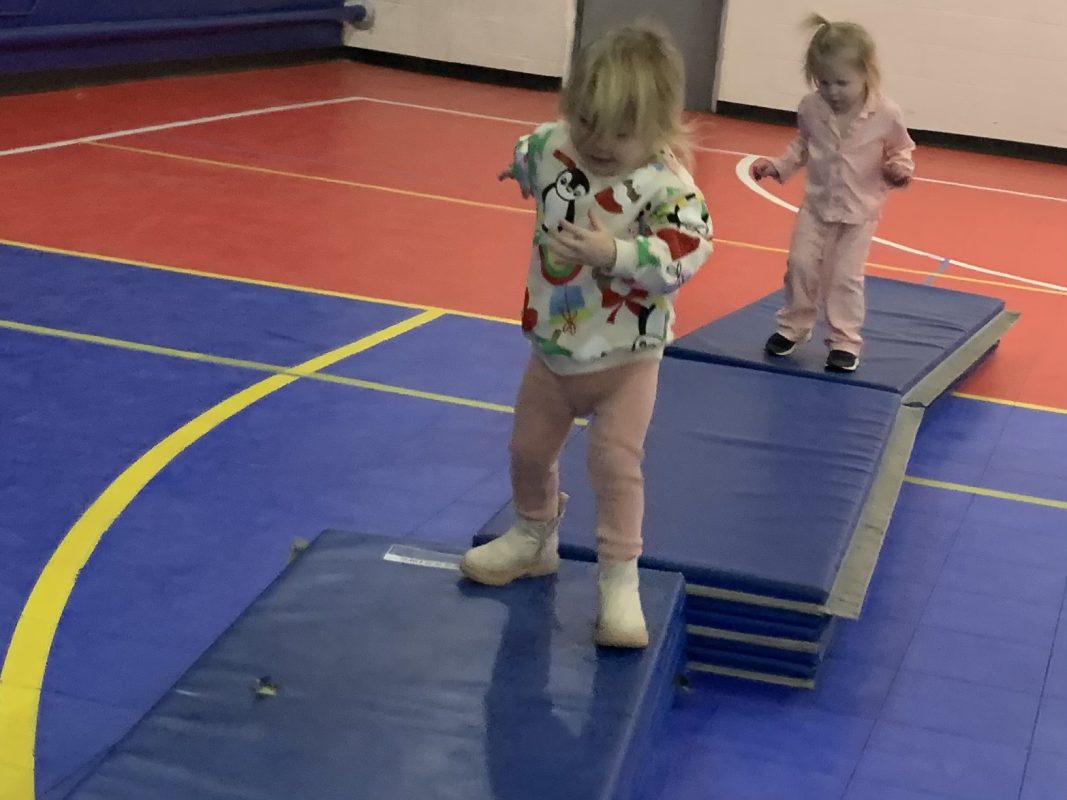
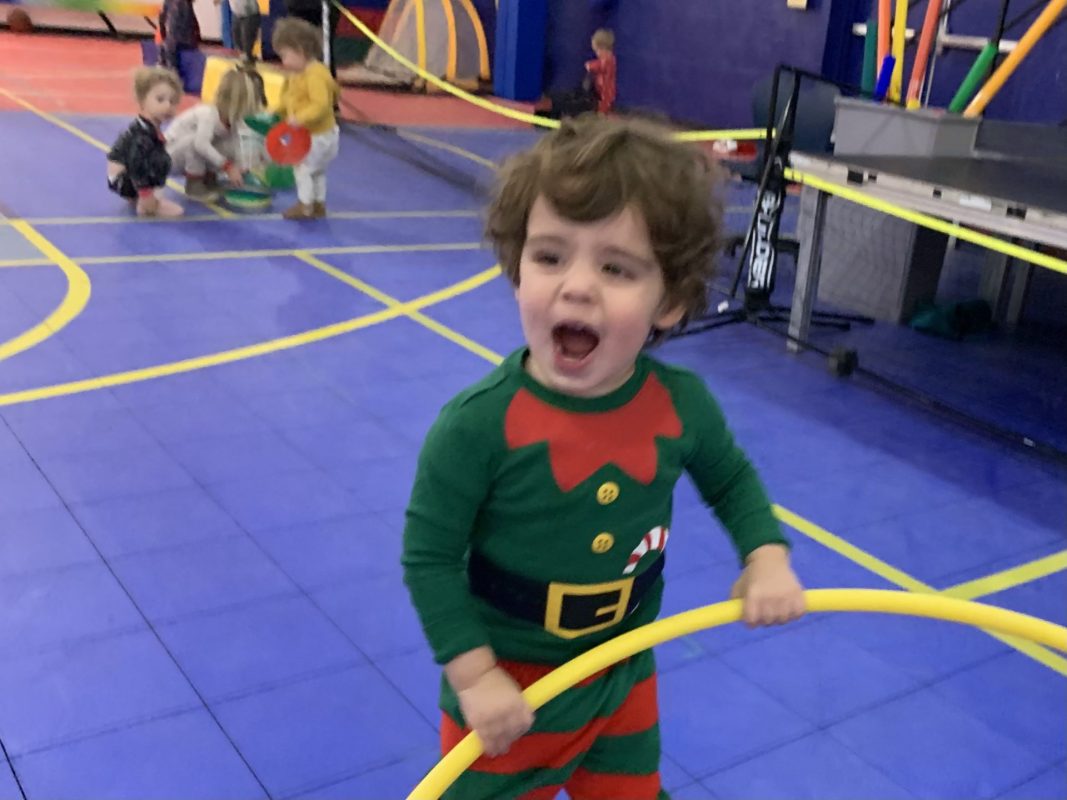
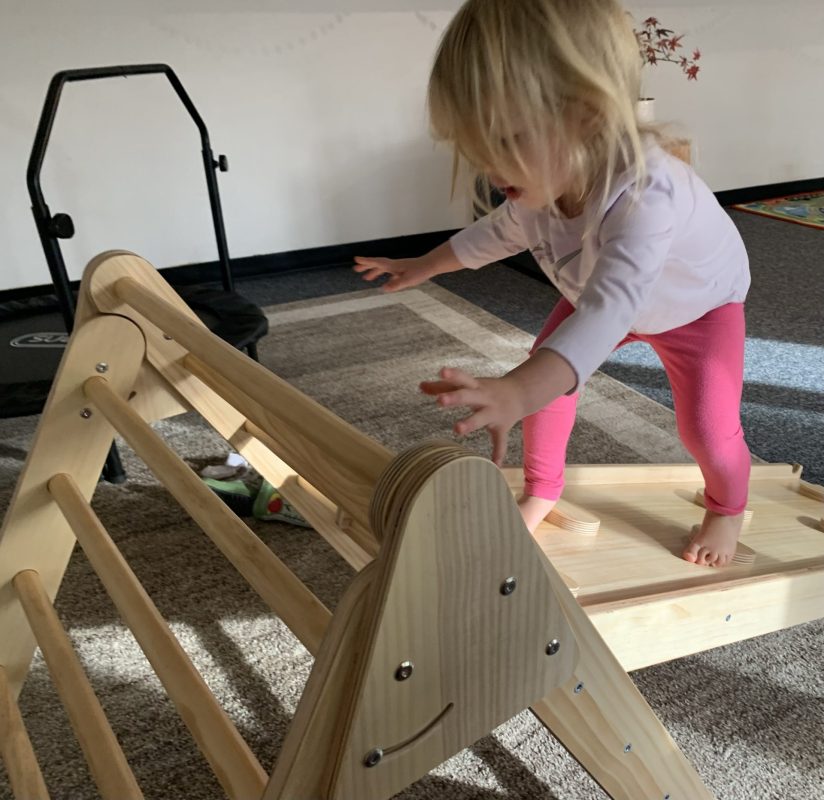
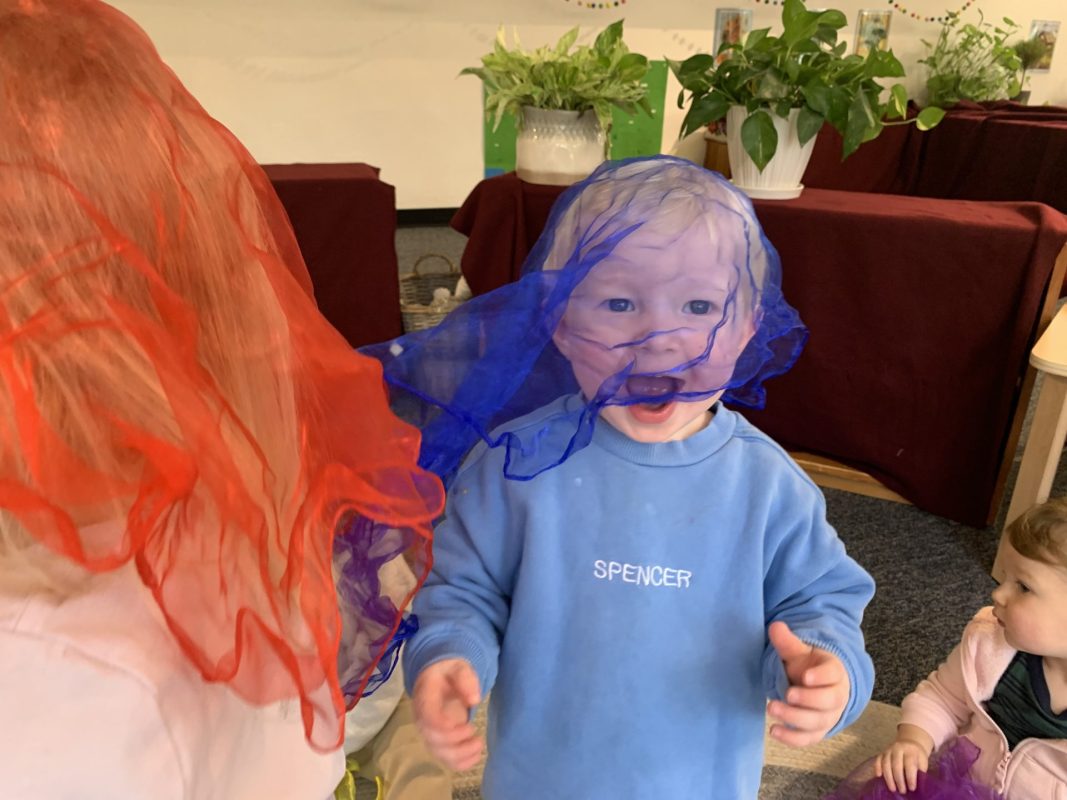
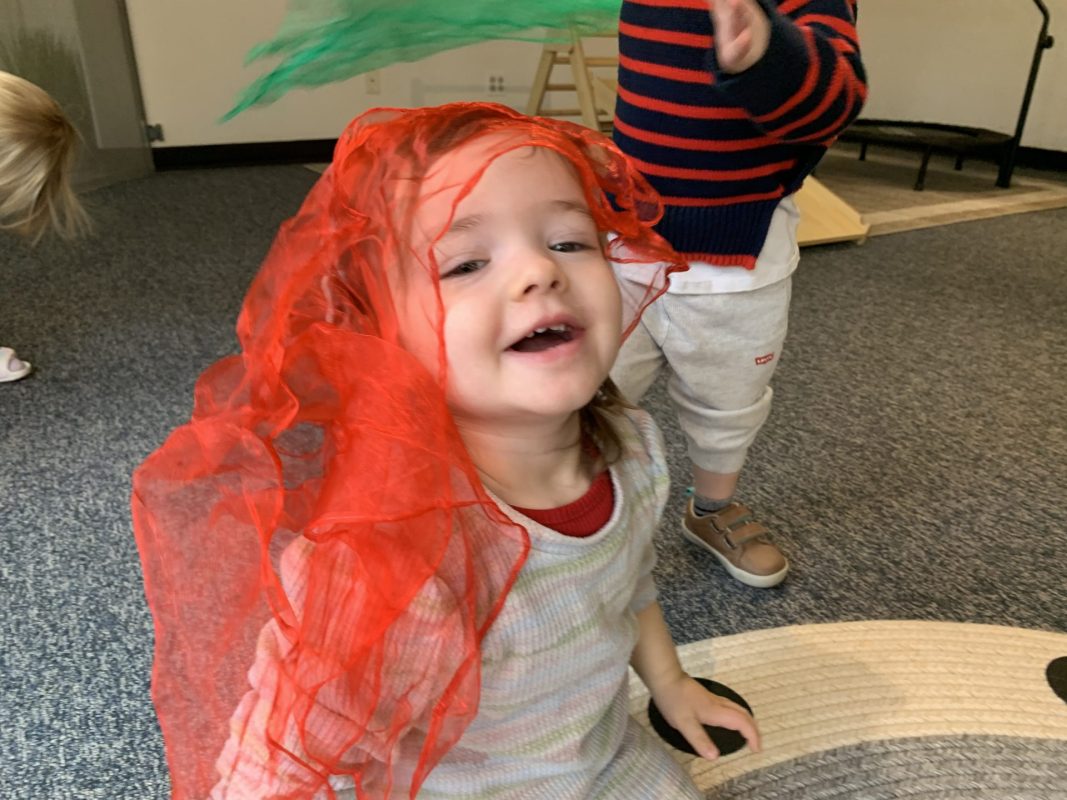
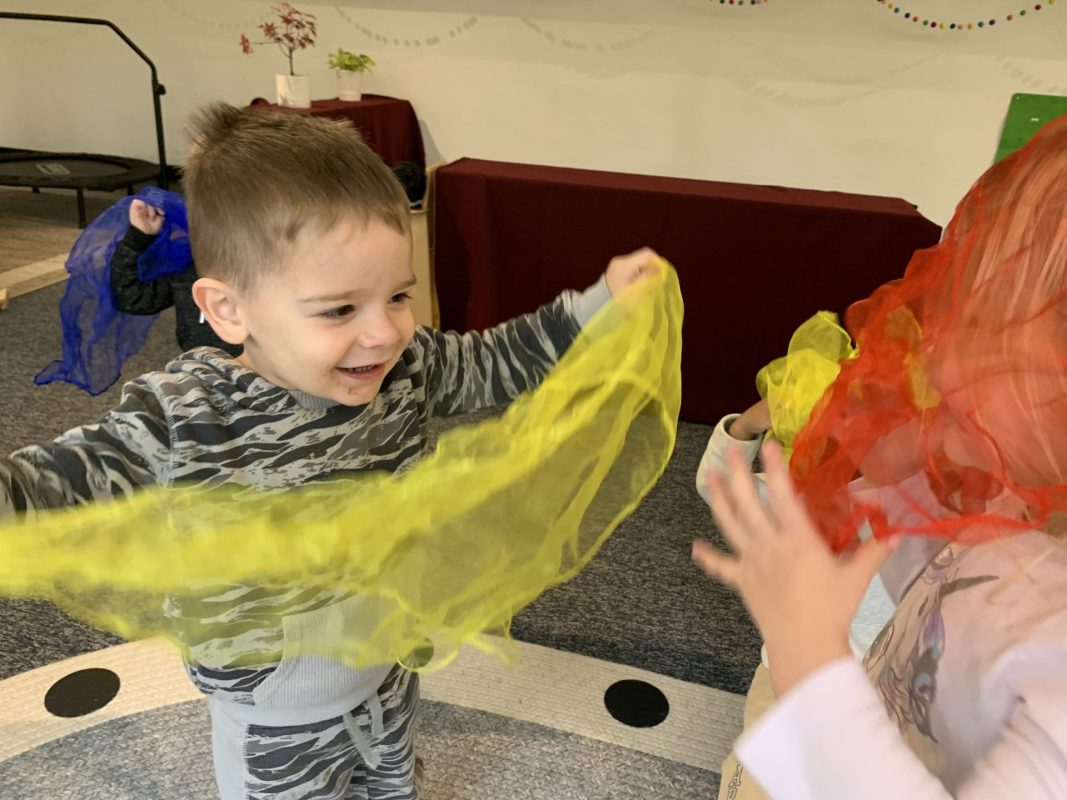
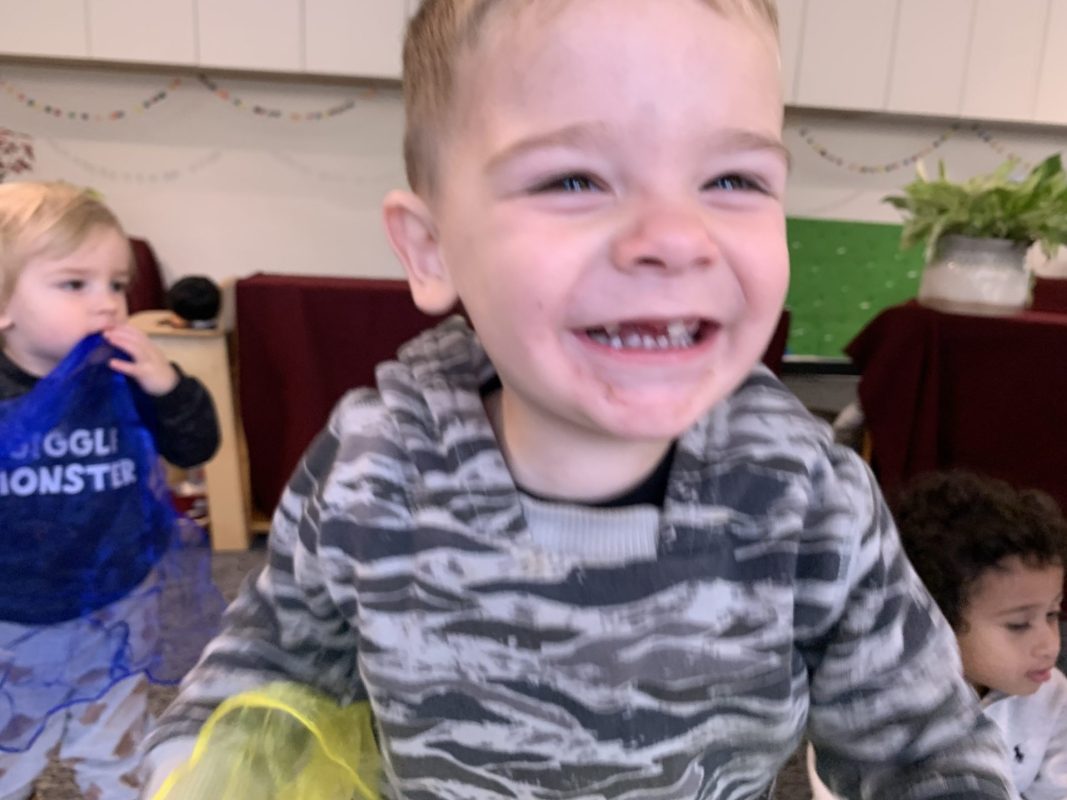
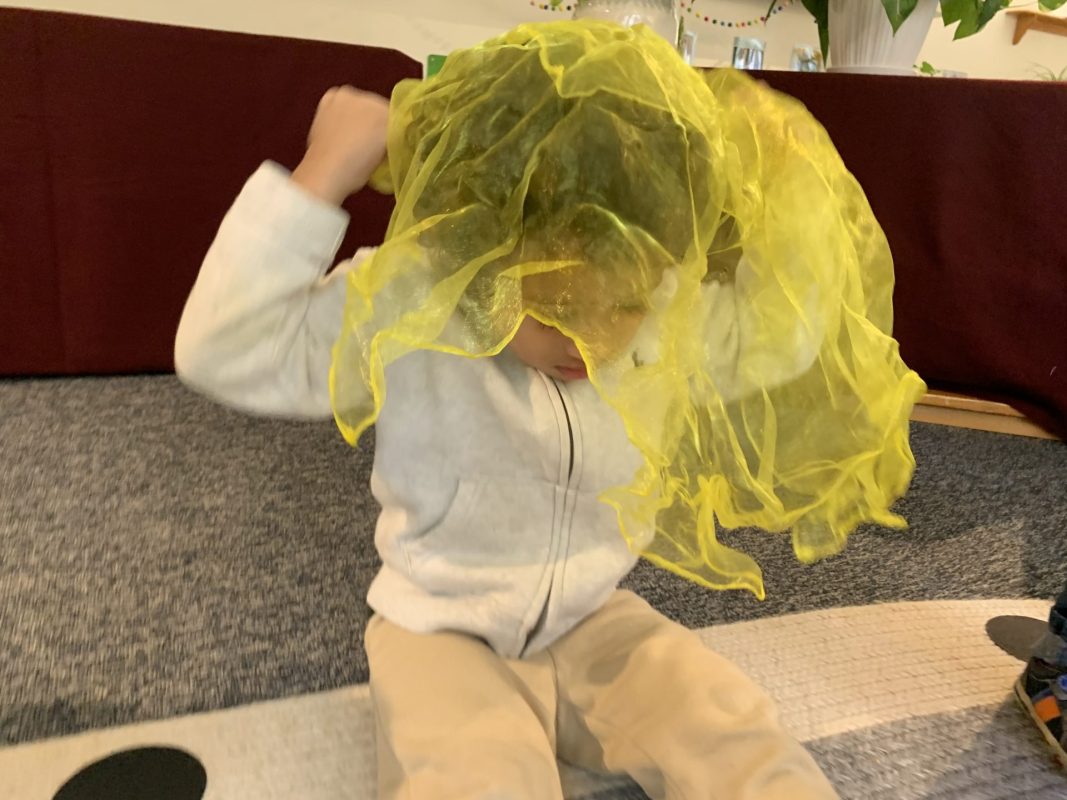
With all the rain over the past week, we had to find ways to have fun and move our bodies indoors. We played in the gym – used hula hoops, balls, stacked cones, climbed on foam blocks, and enjoyed running safely in the wide open space. In the classroom, we danced with scarves and used a salad spinner to paint!

We finished sampling red, green, and yellow apples. Do you know which type your child likes best? The yellow received the most requests for “more, please!”

The children enjoyed arranging flowers to add beauty to our classroom.

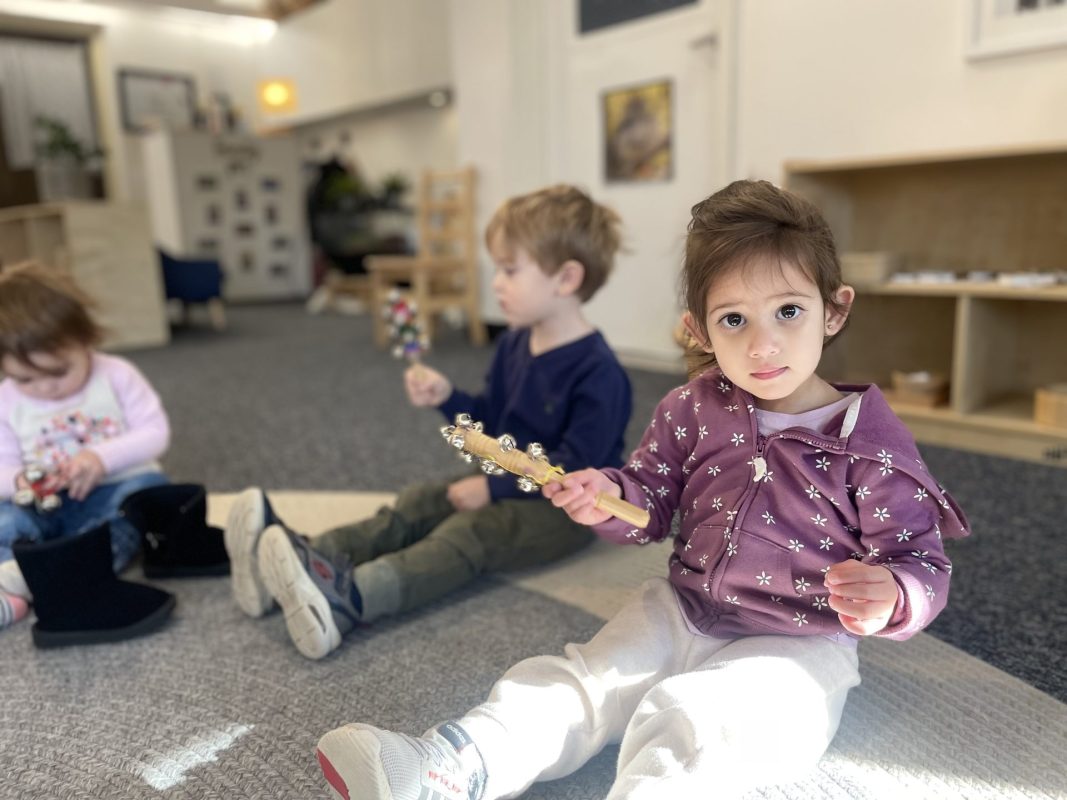
We’ve been singing a variety of songs – they love ‘Baa Baa Black Sheep’ and ‘Cluck Cluck Red Hen,’ especially the exaggerated head nod as they say ‘yes’ in both songs. The children who stay for lunch have been listening to Dave Brubeck’s greatest hits while they eat. We’ve been listening for different instruments, and I’ve noticed a few children moving their bodies subtly to the music as it plays. 

We’ve been counting everything! We count the children when we line up, we count the animals on the pages of books, the beads we are stringing, the apples we are sorting, the number of times we push the salad spinner, and the list goes on!

This week, we tried red bell peppers. The children had been so used to having apples for the past three weeks that the pepper was quite a surprise! Throughout the week, we tried both cooked and raw. Raw was the clear favorite! 

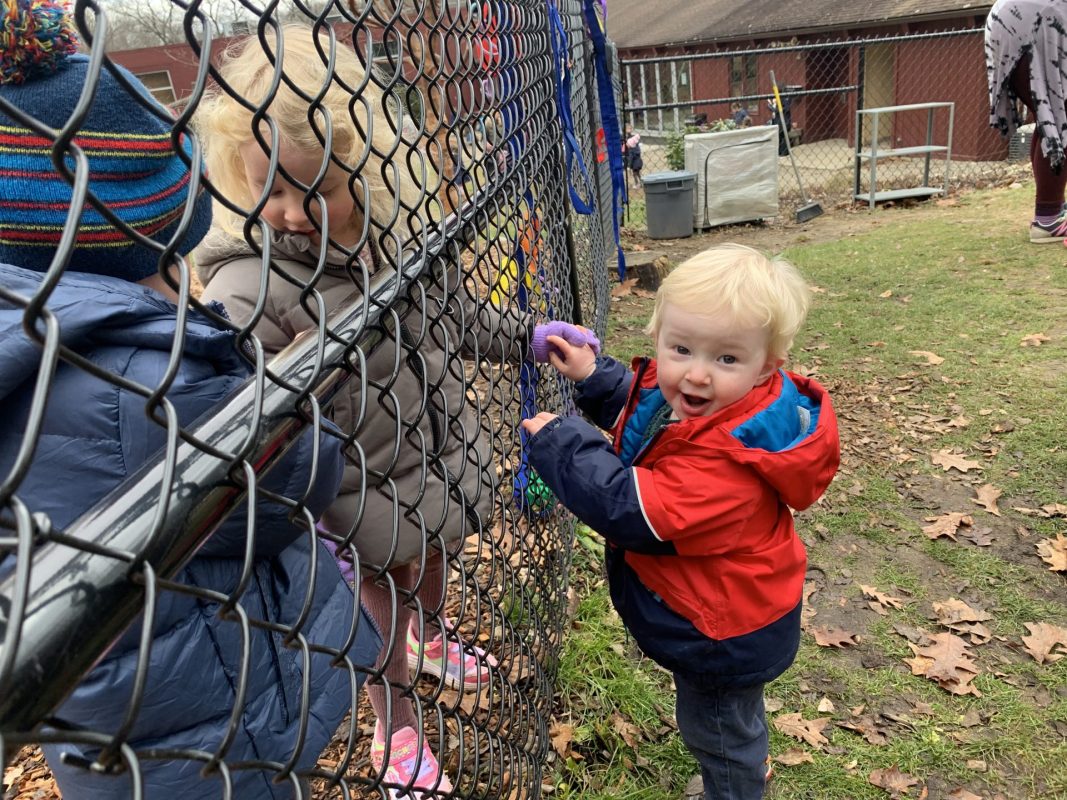
We’ve had the same group of middle school students visiting on Wednesdays. The children eagerly greet them upon their arrival. Chloe and J.C. come first. When they leave, William joins us. Then Mia meets us on the playground. This program clearly benefits everyone involved. I’ve been pleasantly surprised to witness the interest and care between the toddlers and middle schoolers.

Enjoy the weekend with your families. We are looking forward to beginning a new week with your children on Tuesday!

Mrs. Sargeant & Ms. Lizette


Mrs. Hood: Food Prep and Friends!

One of our goals at FWM is to create caring, empathetic students who are capable of thinking beyond themselves. Dr. Montessori’s vision was that a peaceful world, starting with children, would make the world a better place. Social Impact is a program led by Middle School students and one of our Montessori strategies to help develop and educate the whole child. Students learn the joy of giving of themselves and develop compassion because of these real, practical life volunteer experiences.

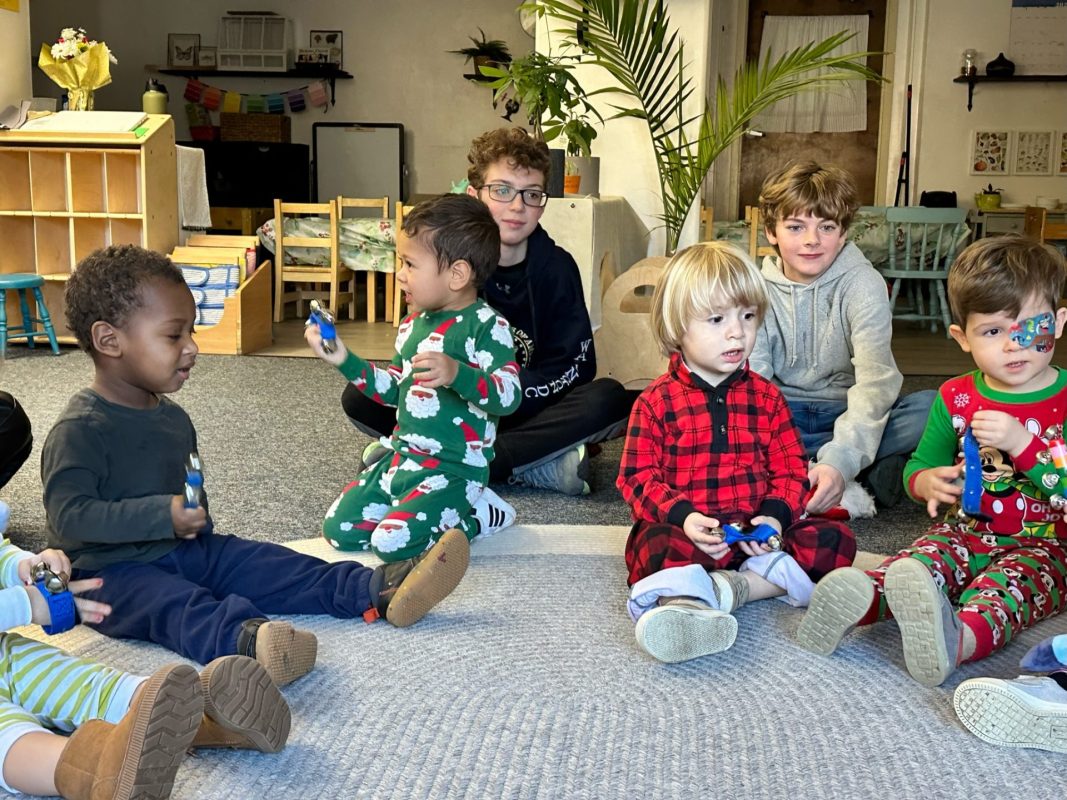
Once a week, middle school students visit our environment and work with our toddlers. They do so by reading and working with the different materials on our shelves. They assist your children in how to put on their shoes and jackets, how to clean their face and hands, they look for ways of comforting their younger peers when they are having a hard time, and they love to join in the fun when we sing, dance and play games together. They are great role models, and your children LOVE when they enter our environment and get to spend time with them.

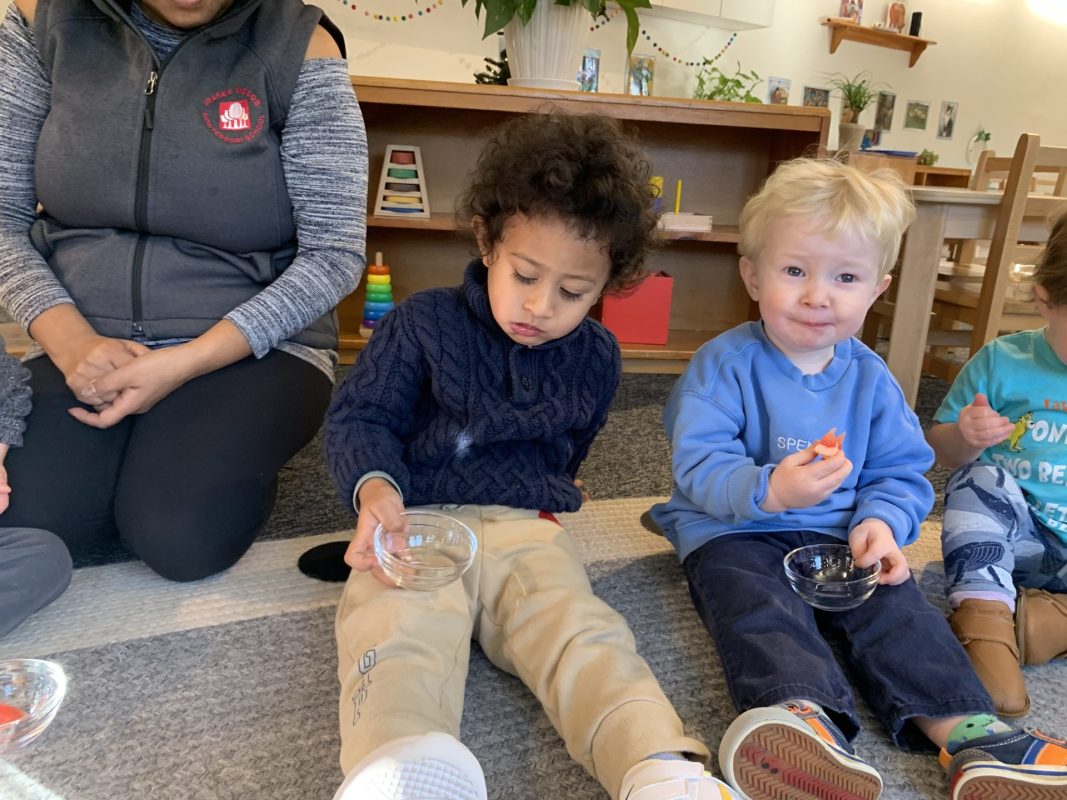
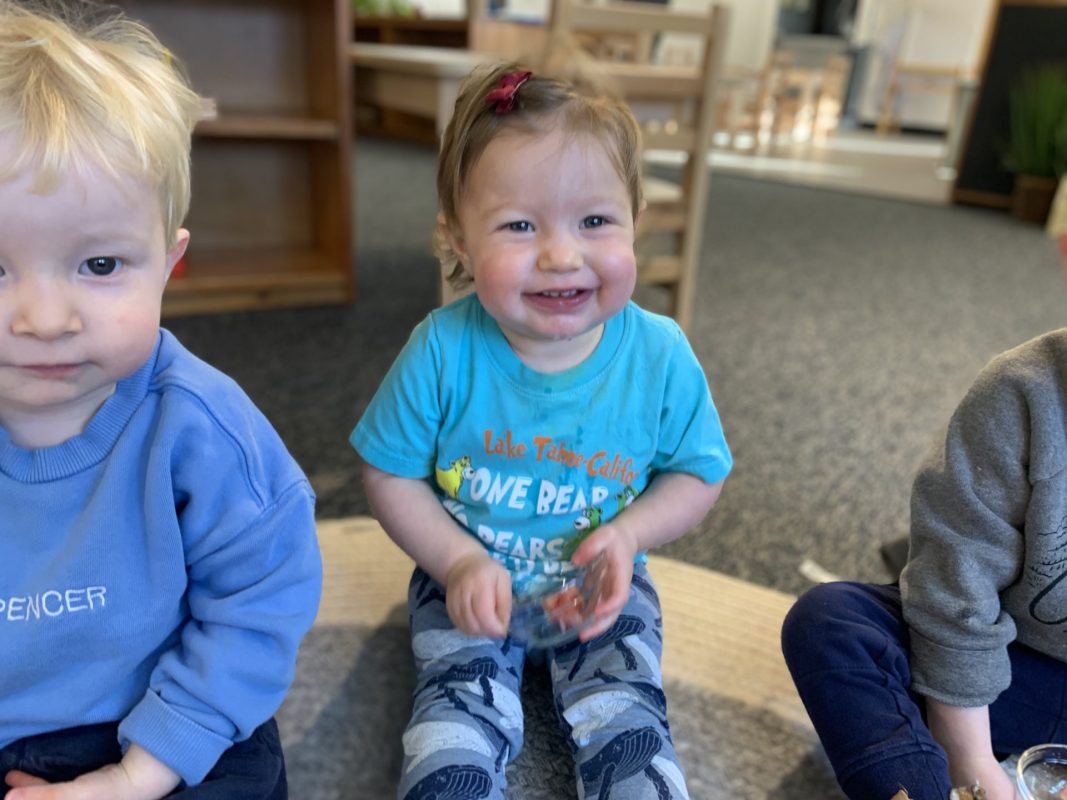
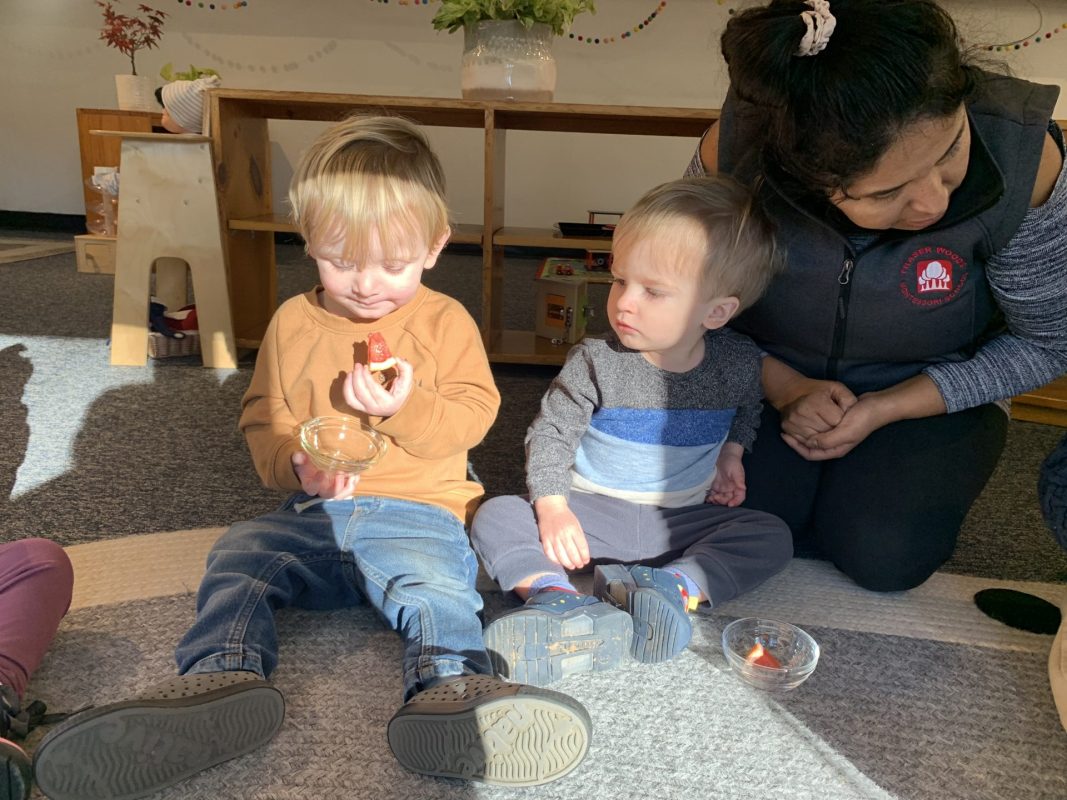
On another note, in continuation with our apple studies, we explored a yellow apple for our food-tasting lesson this week. We also closed this unit with a fun Sensorial experience. Each of your children dissected an apple, and oh boy! They really seemed to enjoy it!

With senses full of curiosity, children touched, observed, smelled, peeled, and cored a delicious apple. The children found it very fun and interesting to use the handle of the peeler, but their eyes sparkled, and their smiles bloomed when they watched the skin of the apple peel and fall on the napkin. They explored the core and the seeds in it. They also helped break the apple into pieces and place it inside our crock pot to be cooked and turned into a delicious apple sauce! The next morning, we gathered as a class, and the children enjoyed the fruits of their work. Most of them kept asking for more!

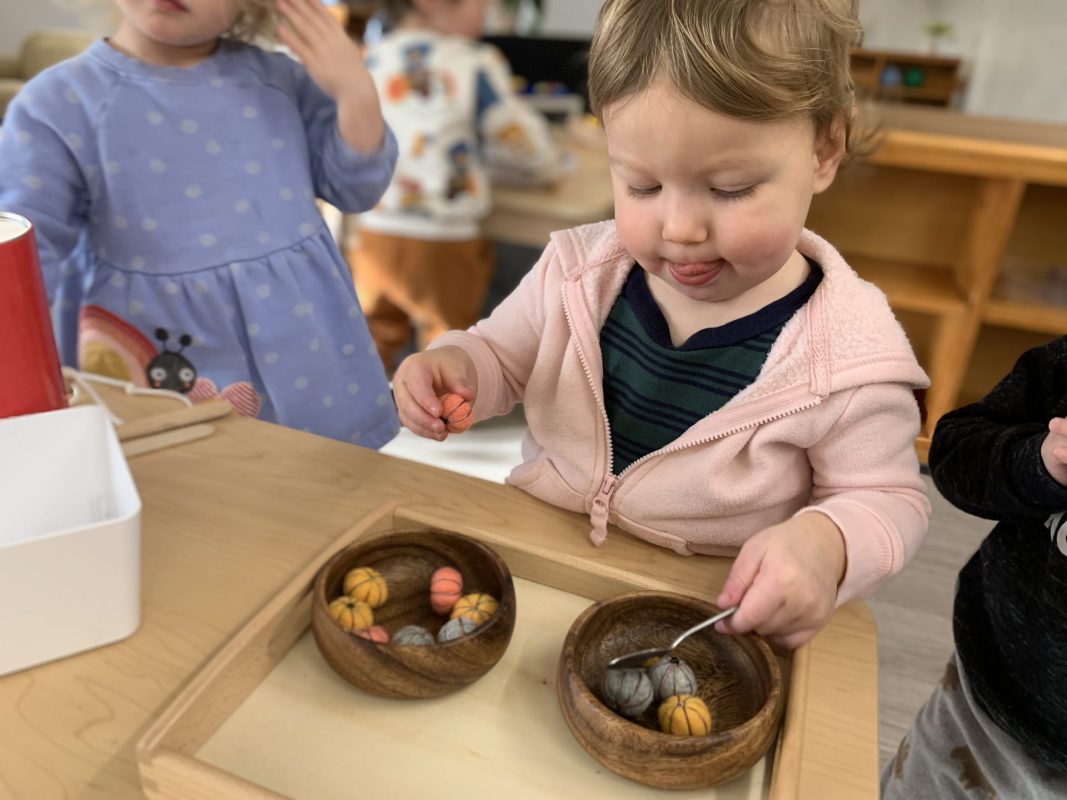
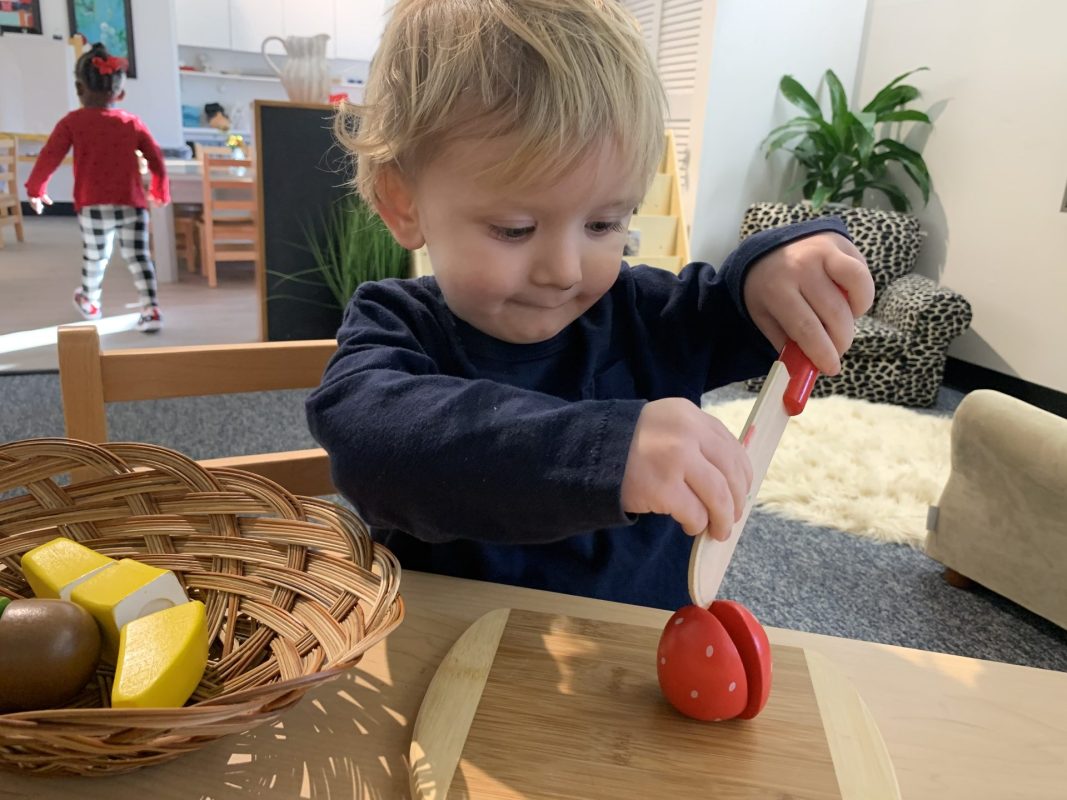
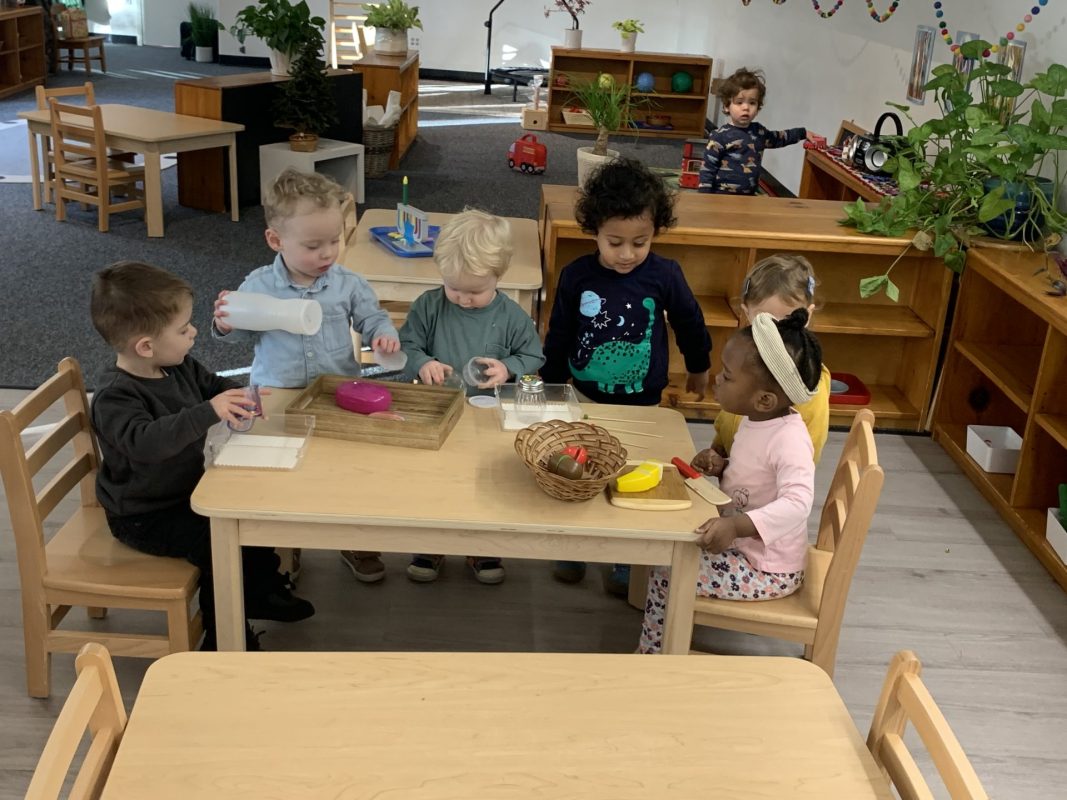
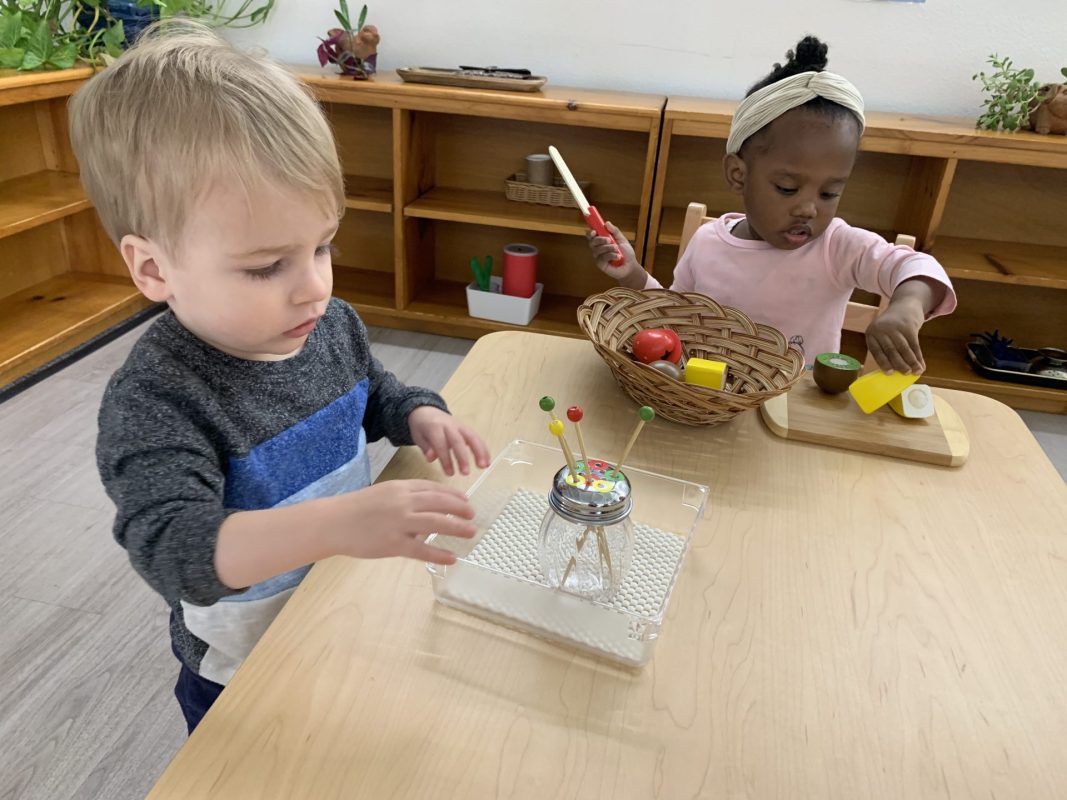
Food preparation is one of the main areas in our Practical Life curriculum! There are many benefits to involving children in food prep. Even the pickiest of eaters have been known to be more willing to try things when they have had a hand in preparing them. These works also help develop fine motor skills, build coordination, create a sense of community, and increase knowledge of nutrition, science, and math. We will continue to provide individual and group experiences like this throughout the year.

We encourage you to make experiences like this available at home as well. Here are just some examples of how you can include your toddler in food preparation at home:

  • Scoop cereal into a bowl
  • Add milk to cereal
  • Wipe up spills with a small towel
  • Take the plate to the kitchen
  • Prepare a sandwich
  • Spread sun butter/jelly/cream cheese on crackers
  • Peel and slice a banana
  • Peel a mandarin orange
  • Peel and cut an apple with assistance
  • Wash fruits and vegetables
  • Make orange juice
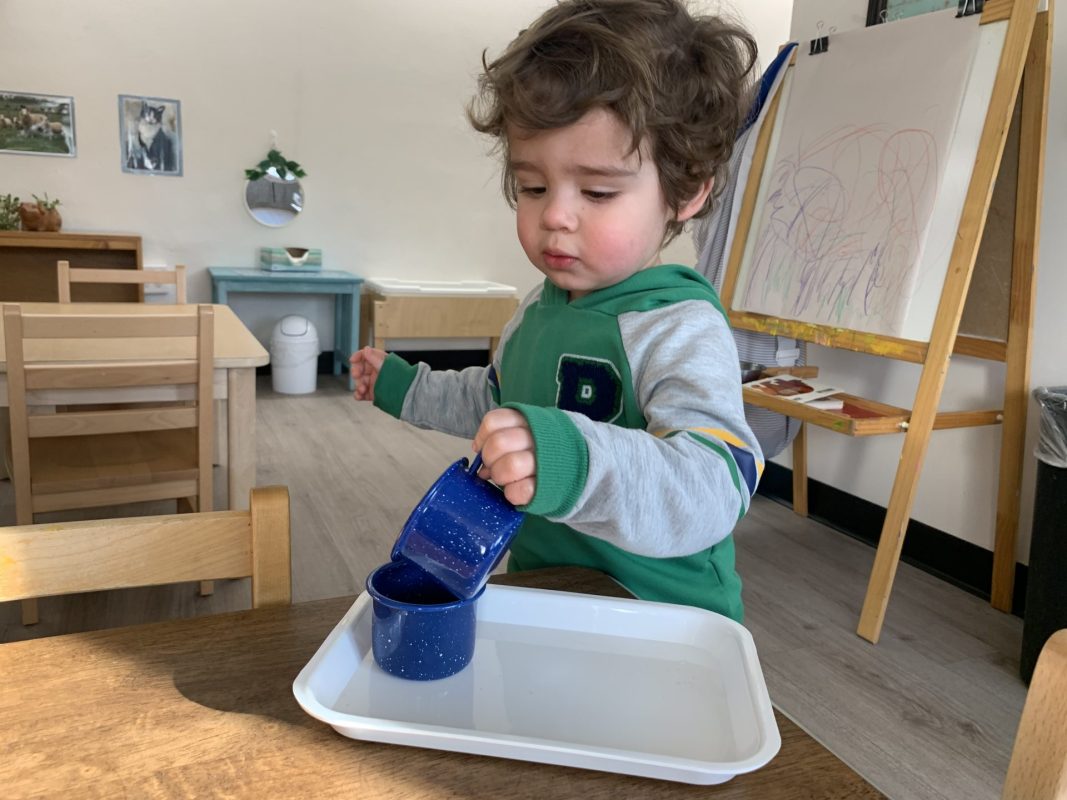
  • Pour a glass of water or milk using a small jug- use a small amount of liquid to avoid a large spill.
  • Drink from a glass
  • Follow a recipe with assistance using measuring cups
  • Set the table/clear the table
  • Wipe the table
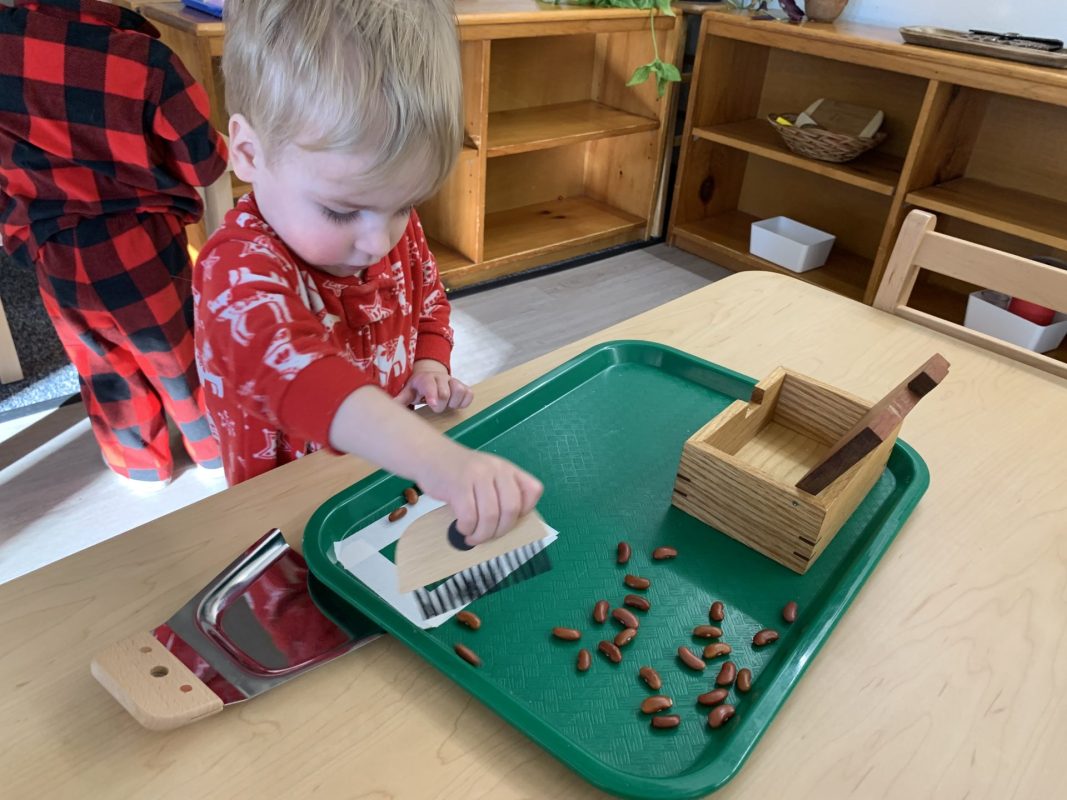
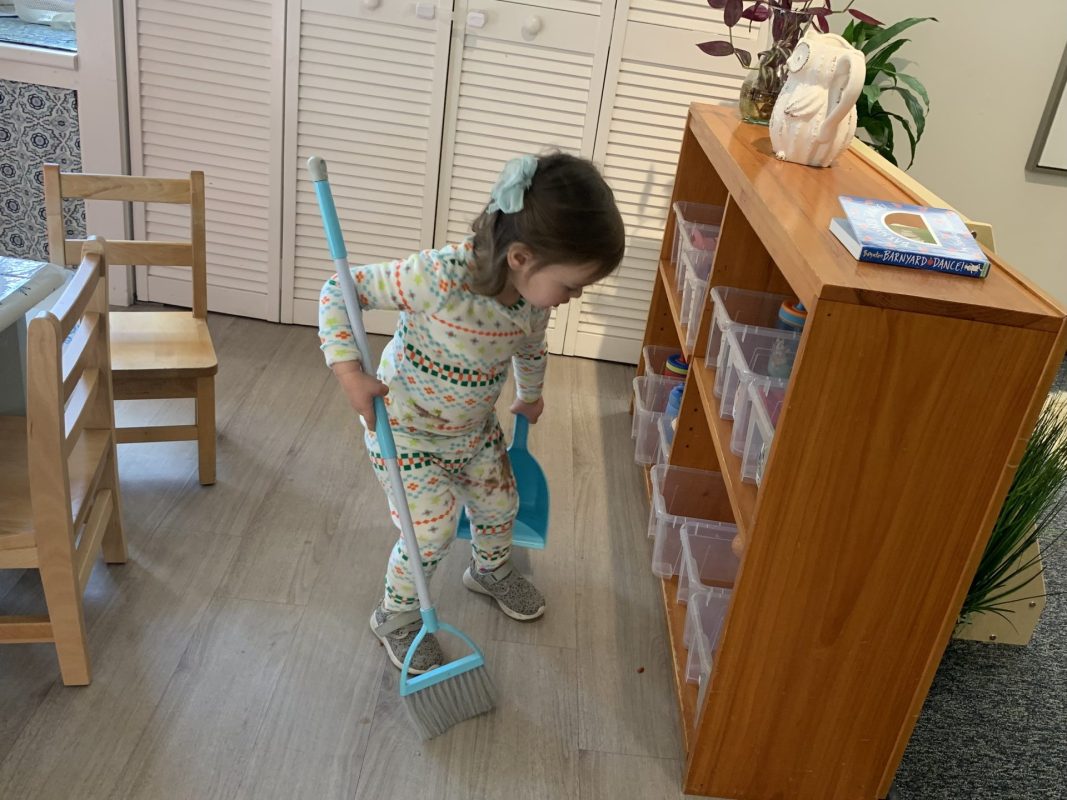
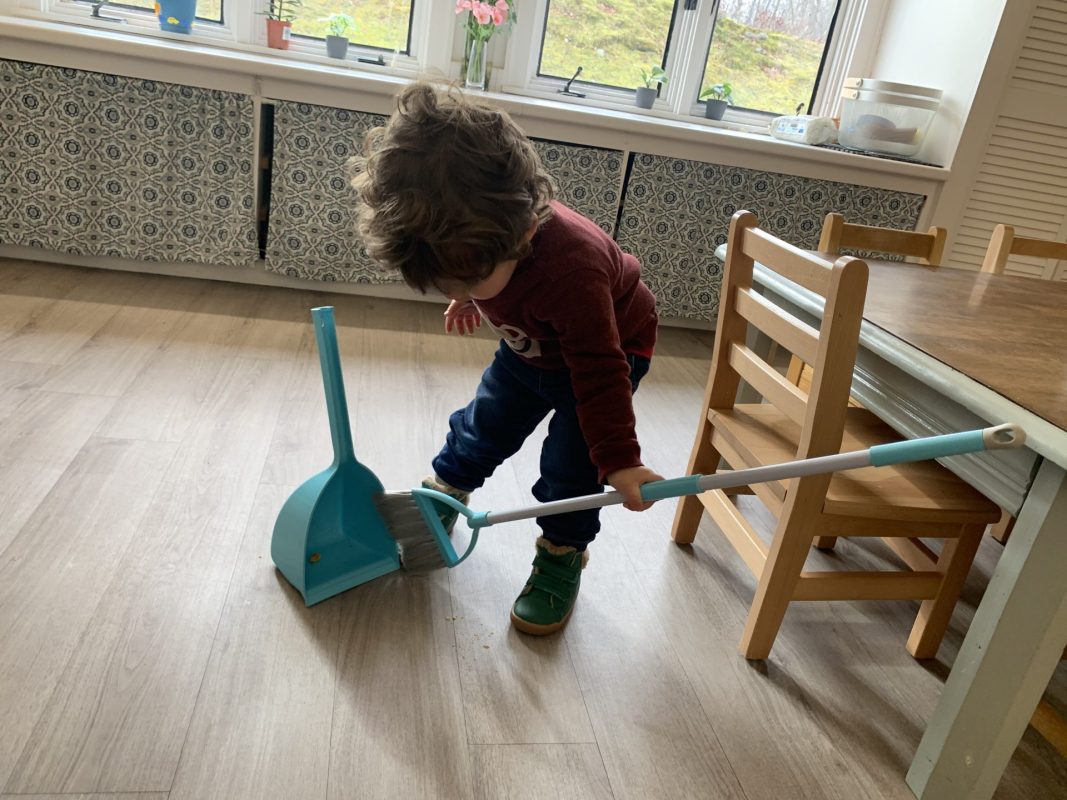
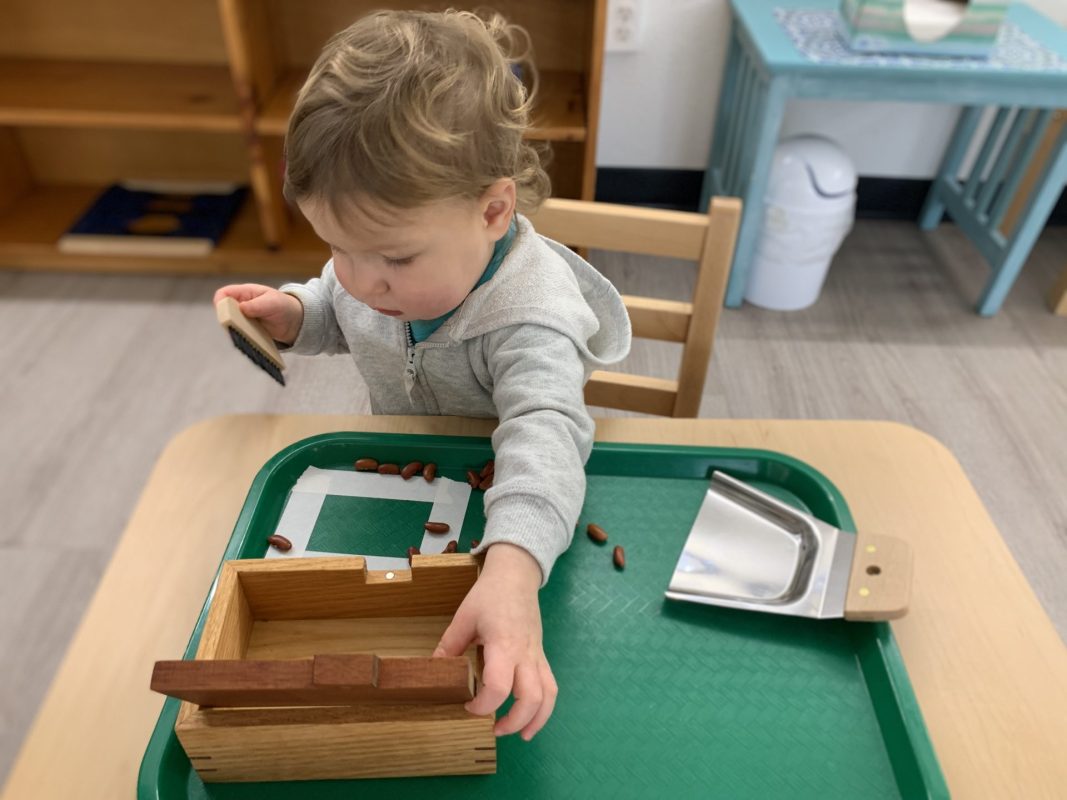
  • Sweep the floor -use a dustpan and brush

Enjoy the weekend,

Mrs. Hood and Ms. Mollie