Blog

Mrs. Sargeant: A Peek at the Week

With all the rain over the past week, we had to find ways to have fun and move our bodies indoors. We played in the gym – used hula hoops, balls, stacked cones, climbed on foam blocks, and enjoyed running safely in the wide open space. In the classroom, we danced with scarves and used a salad spinner to paint!

We finished sampling red, green, and yellow apples. Do you know which type your child likes best? The yellow received the most requests for “more, please!”

The children enjoyed arranging flowers to add beauty to our classroom.

We’ve been singing a variety of songs – they love ‘Baa Baa Black Sheep’ and ‘Cluck Cluck Red Hen,’ especially the exaggerated head nod as they say ‘yes’ in both songs. The children who stay for lunch have been listening to Dave Brubeck’s greatest hits while they eat. We’ve been listening for different instruments, and I’ve noticed a few children moving their bodies subtly to the music as it plays. 

We’ve been counting everything! We count the children when we line up, we count the animals on the pages of books, the beads we are stringing, the apples we are sorting, the number of times we push the salad spinner, and the list goes on!

This week, we tried red bell peppers. The children had been so used to having apples for the past three weeks that the pepper was quite a surprise! Throughout the week, we tried both cooked and raw. Raw was the clear favorite! 

We’ve had the same group of middle school students visiting on Wednesdays. The children eagerly greet them upon their arrival. Chloe and J.C. come first. When they leave, William joins us. Then Mia meets us on the playground. This program clearly benefits everyone involved. I’ve been pleasantly surprised to witness the interest and care between the toddlers and middle schoolers.

Enjoy the weekend with your families. We are looking forward to beginning a new week with your children on Tuesday!

Mrs. Sargeant & Ms. Lizette


The FWM Tiny Art Show!

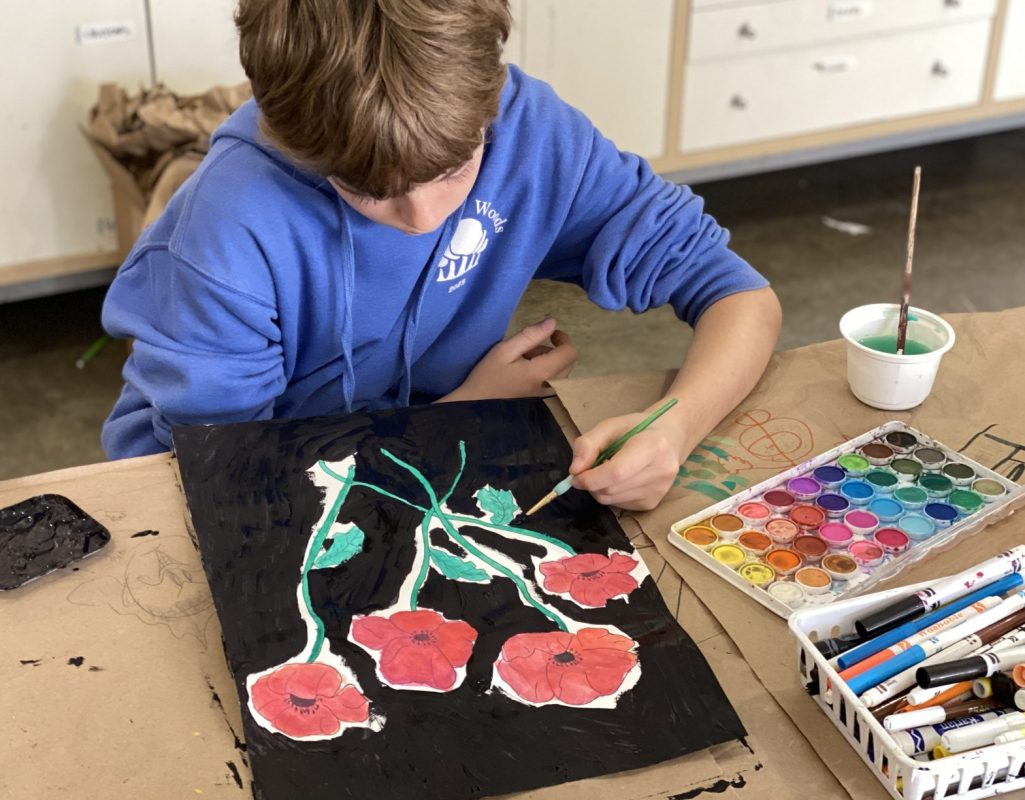
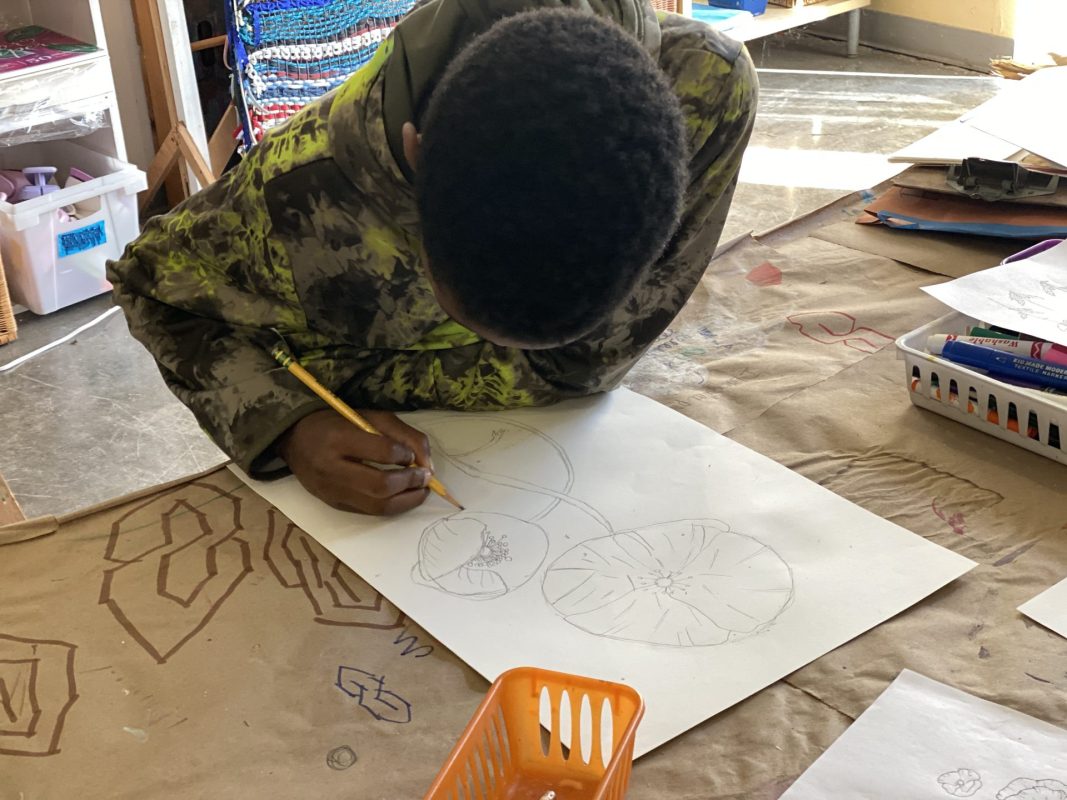
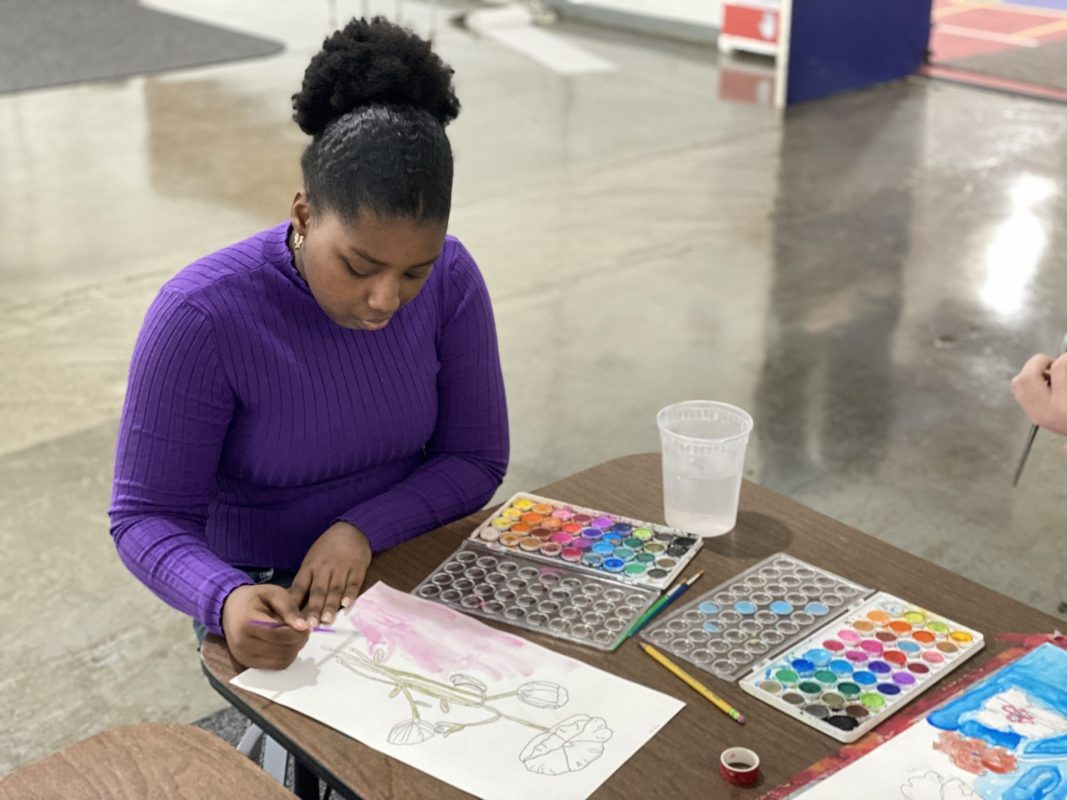
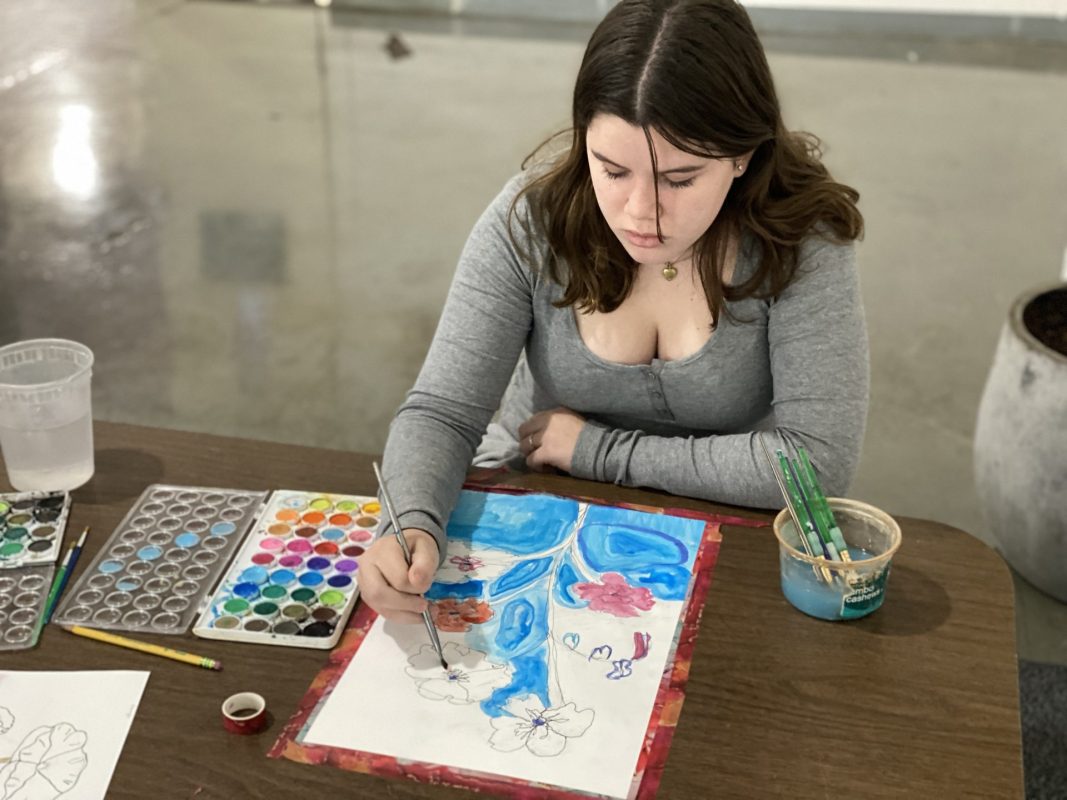
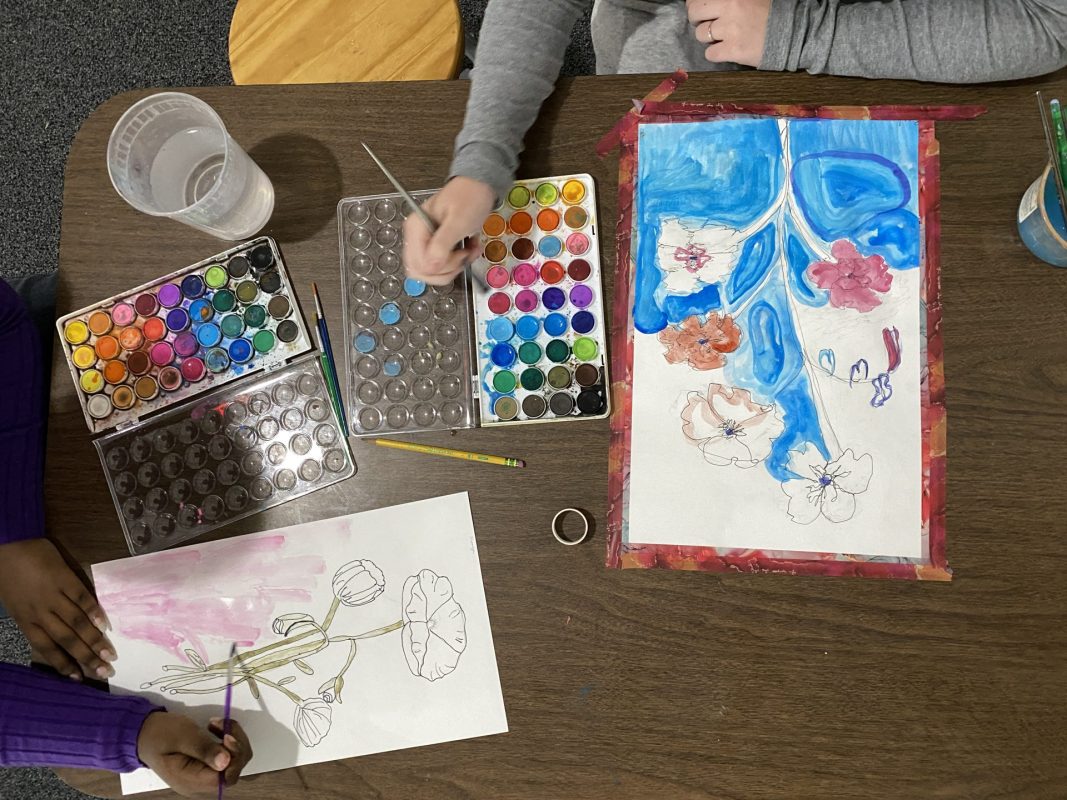
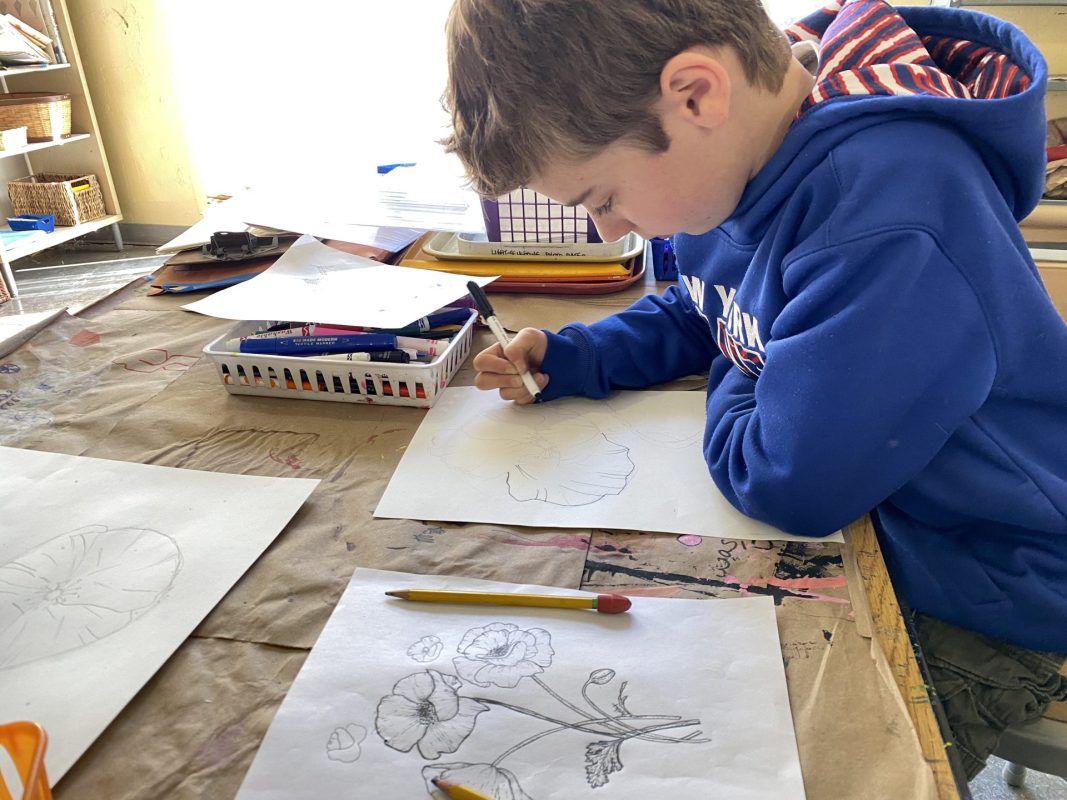
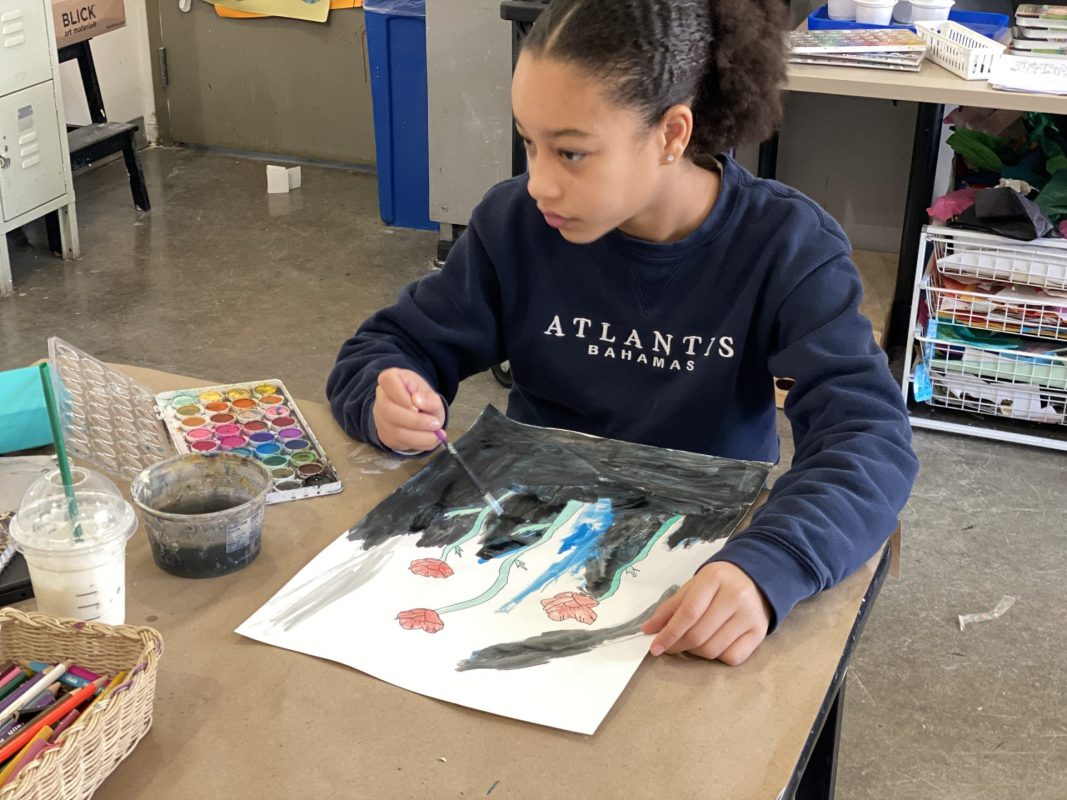
In the Art Studio, our young artists from Kindergarten through 8th grade kicked off the school year by putting together a Tiny Art Exhibition! Our artists have been hard at work creating multiple tiny works of art on small paper the size of 4×4 inches or smaller. Students

have explored various art materials such as colorful sharpies, acrylic paints, watercolors, color pencils, and more. Some students chose to recreate a famous painting, such as Van Gogh’s Starry Night, or one of Bob Ross’ famous landscape paintings. Others chose to create a unique work of art of their own creative expression. The small size restriction challenged students to problem solve ways in which they could fit the entire composition onto the tiny canvases, as well as developed their fine motor skills as they carefully applied paint with tiny paintbrushes. It has been a joy to see the variety of artwork created on such a tiny scale!

Next, we will set up the exhibition in the hallway for the whole school to enjoy. Many students have already even begun  prototyping and constructing miniature gallery/museum spaces to display their artwork in using cardboard.  Magnifying glasses will be set up with each display so everyone can take a closer look at all of the wonderfully unique FWM Tiny Art Exhibition!


Starting a New Year of Spanish Class

Learning another language is beneficial for memorization development in a child’s brain, making it more efficient and flexible. At Fraser Woods Montessori School, we started introducing Spanish in Primary. We design lessons that are age-appropriate where students can learn and have fun at the same time.

Beginning with the first week of school, children starting in primary to middle school reviewed and learned basic Spanish phrases and words. Primary, Lower Elementary, and Upper Elementary students recalled greetings, self-introductions, and how they were doing in Spanish. In addition, children could practice all those words learned in their classroom, either during our group lesson on circle or practicing with paper and pencil exercises. They are reviewing the Spanish alphabet, learning how to spell their names, and practicing handwriting, pronunciation, and more vocabulary. Middle school students are working on a review of what they learned last year in basic grammar, listening, conversation, and pronunciation. On Fridays, we have Spanish enrichment, where students learn more about Spanish-speaking countries and their history, traditions, and celebrations using interactive games, videos, and other fun and engaging activities in class.


This Week In Upper El

I look forward to seeing you all at our upcoming Parent-Teacher Conferences on October 26. Look for an email sent today to sign up for your time slot.

We’ve had a busy week here in Upper Elementary. In addition to our lessons, we added some new things to our daily work cycle.

Before starting their work, students respond to a daily journal prompt. Journaling is a great way to reflect on everyday experiences and relationships and can help us get in better touch with our thoughts and feelings. A journal offers a safe space to express and work through emotions. These journals are for each student’s eyes only to honor that safe space. The second new addition is a daily word problem. Students are encouraged to work together to solve each problem, allowing them to tell and write about their thinking process.

In our history lesson this week, we discussed evidence that may indicate our closest living relative: the species with which we share common ancestry. Using cladogram diagrams, we looked at the alternatives, remembering that we are looking for the animal with whom we share an ancestor. We compared humans with gorillas and chimpanzees by evaluating complicated evidence for the different possibilities. We compared bones and teeth, soft body parts, chromosomes, and molecules. As we completed this work, we discovered that humans share an unknown ancestor with chimps and that ancestor shares an unknown ancestor with gorillas. In other words, it seems we are most closely related to chimpanzees.
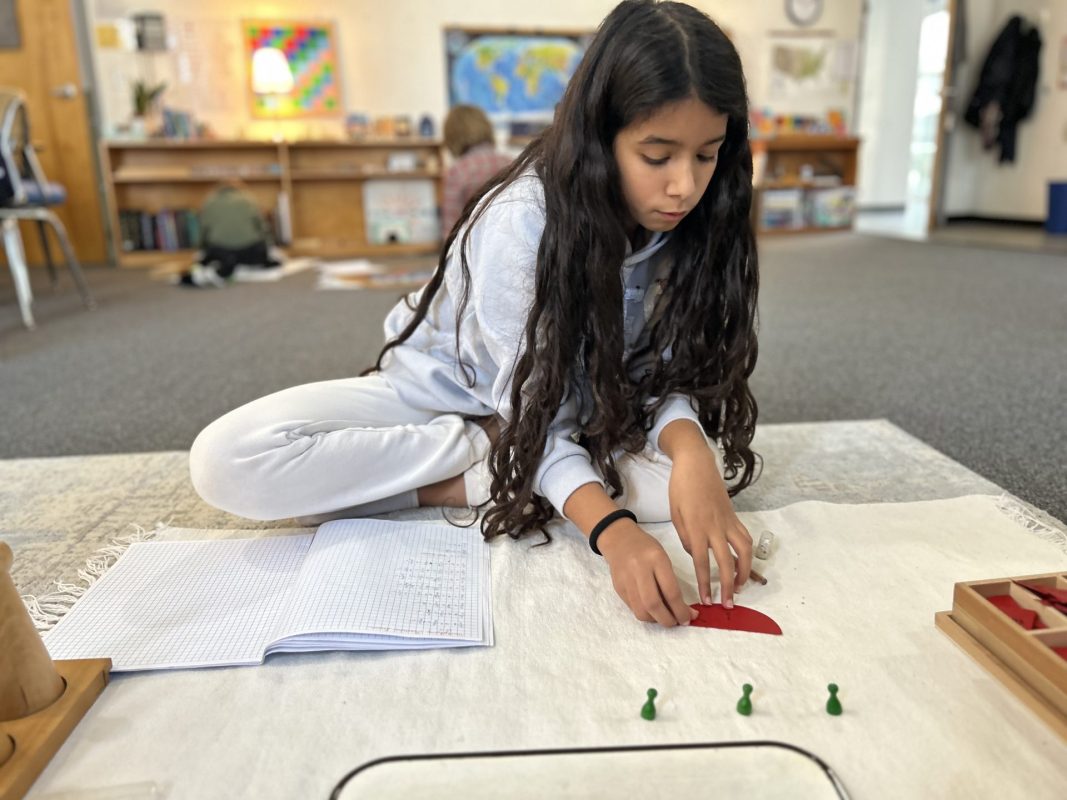
Fourth-year students learned about six regular polygons and some of their lines in geometry, such as major and minor base, height, diagonal, bisector, perimeter, and point. Fifth-year students learned to show equivalence between a regular polygon and a rectangle.

Our biology lesson introduced students to the “evolutionary strip.” Using a series of cards arranged in evolutionary order, we reviewed the common and taxonomic names of the familiar animals shown. Students noticed missing labels under two unfamiliar animal groups and were introduced to two new animals, amphioxus and lamprey. They learned that amphioxus had the first notochord that went from the tail to the head and that the lamprey had the first vertebral column.

Finally, Upper El students are enjoying creative writing time, and many have started collaborative stories with friends. They have especially enjoyed sharing their stories in progress with the class at the end of writing time, and we have loved hearing them!

Wishing you a wonderful weekend,
Karen and Deb


Mrs. Hood: Food Prep and Friends!

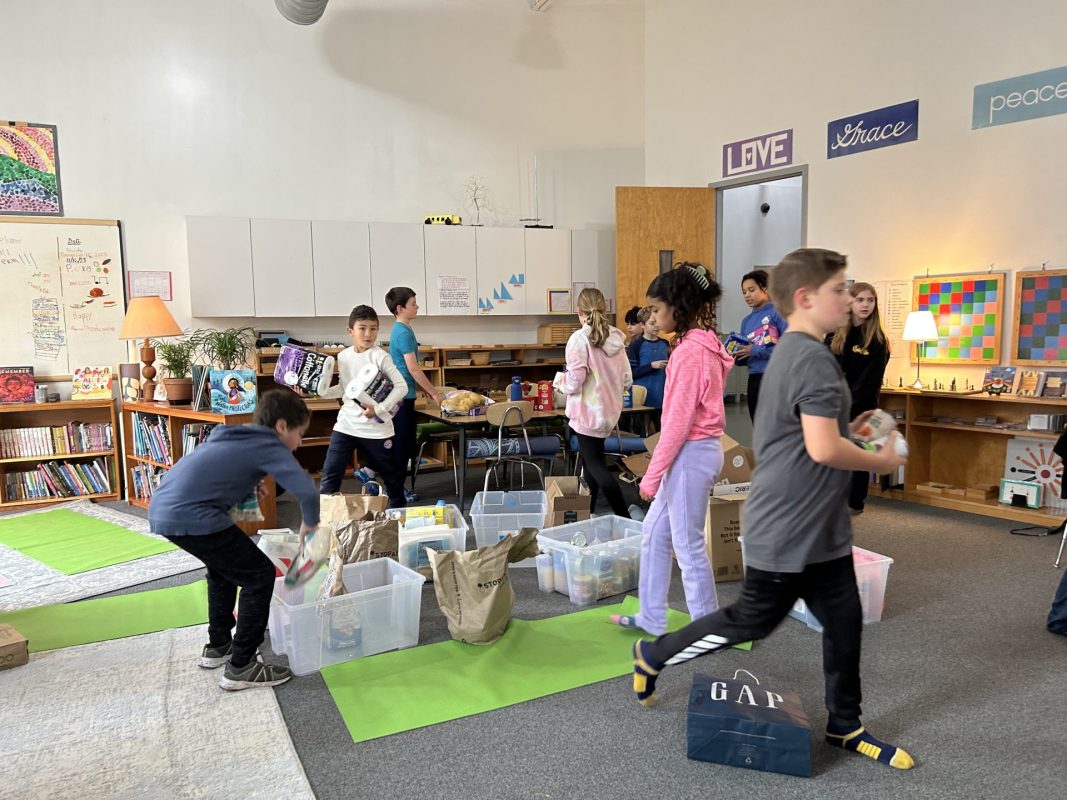
One of our goals at FWM is to create caring, empathetic students who are capable of thinking beyond themselves. Dr. Montessori’s vision was that a peaceful world, starting with children, would make the world a better place. Social Impact is a program led by Middle School students and one of our Montessori strategies to help develop and educate the whole child. Students learn the joy of giving of themselves and develop compassion because of these real, practical life volunteer experiences.

Once a week, middle school students visit our environment and work with our toddlers. They do so by reading and working with the different materials on our shelves. They assist your children in how to put on their shoes and jackets, how to clean their face and hands, they look for ways of comforting their younger peers when they are having a hard time, and they love to join in the fun when we sing, dance and play games together. They are great role models, and your children LOVE when they enter our environment and get to spend time with them.

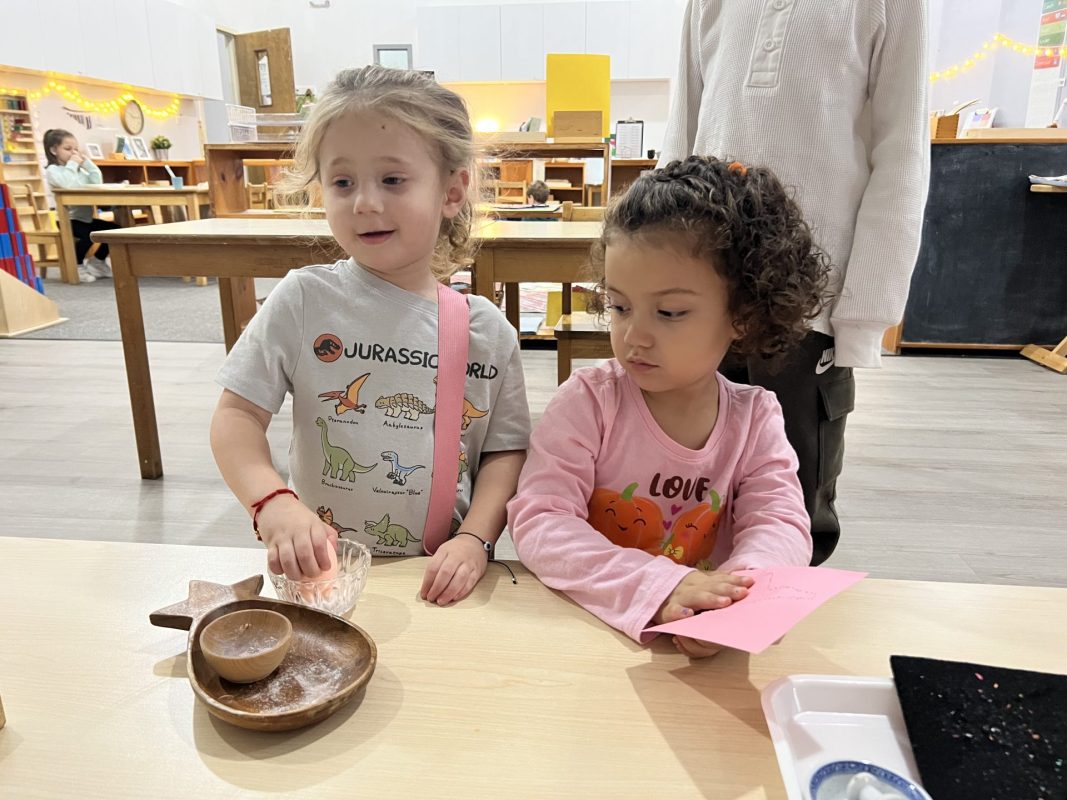
On another note, in continuation with our apple studies, we explored a yellow apple for our food-tasting lesson this week. We also closed this unit with a fun Sensorial experience. Each of your children dissected an apple, and oh boy! They really seemed to enjoy it!

With senses full of curiosity, children touched, observed, smelled, peeled, and cored a delicious apple. The children found it very fun and interesting to use the handle of the peeler, but their eyes sparkled, and their smiles bloomed when they watched the skin of the apple peel and fall on the napkin. They explored the core and the seeds in it. They also helped break the apple into pieces and place it inside our crock pot to be cooked and turned into a delicious apple sauce! The next morning, we gathered as a class, and the children enjoyed the fruits of their work. Most of them kept asking for more!

Food preparation is one of the main areas in our Practical Life curriculum! There are many benefits to involving children in food prep. Even the pickiest of eaters have been known to be more willing to try things when they have had a hand in preparing them. These works also help develop fine motor skills, build coordination, create a sense of community, and increase knowledge of nutrition, science, and math. We will continue to provide individual and group experiences like this throughout the year.

We encourage you to make experiences like this available at home as well. Here are just some examples of how you can include your toddler in food preparation at home:

  • Scoop cereal into a bowl
  • Add milk to cereal
  • Wipe up spills with a small towel
  • Take the plate to the kitchen
  • Prepare a sandwich
  • Spread sun butter/jelly/cream cheese on crackers
  • Peel and slice a banana
  • Peel a mandarin orange
  • Peel and cut an apple with assistance
  • Wash fruits and vegetables
  • Make orange juice
  • Pour a glass of water or milk using a small jug- use a small amount of liquid to avoid a large spill.
  • Drink from a glass
  • Follow a recipe with assistance using measuring cups
  • Set the table/clear the table
  • Wipe the table
  • Sweep the floor -use a dustpan and brush

Enjoy the weekend,

Mrs. Hood and Ms. Mollie


Middle School: Week in Review

Happy Friday! It’s looking (and feeling) like fall outside. Students were busy during this first week of October.

**Please note the adjustment to the MS Play Performance. It will be on the evening of December 6th.**

Humanities

6th-grade Humanities classes are working on their descriptive writing unit. They are learning to improve their word choice (specific nouns, strong verbs, and descriptive adjectives) and identify and use figurative language and imagery. Students identified examples of simile, metaphor, and personification and recognized the imagery in the poems “Harlem” and “Dream” by Langston Hughes as well as “The Train” by Emily Dickinson. In addition to completing their final draft of their “Where I’m From” poem, 6th-grade students are drafting a nature through writing piece, incorporating their new knowledge of descriptive writing. Students also now recognize that their emotional reactions to reading their class novel,  Out Of My Mind, are due to the author’s descriptive writing techniques. As Robert Frost says, “No tears in the writer, no tears in the reader.” Finally, the 6th grade began meeting with Mr. Newman this week!

The 7th-grade students completed their first novel this year, Ties That Bind, Ties That Break by Lensey Namioka. This novel saw the political and cultural shift between Imperial China and the Republic of China, focusing on the ancient tradition of foot binding. The class had many rich conversations about the main character, Ailin’s personal struggle with her family versus what she knew was right for herself and the change in her life’s trajectory for choosing to go against tradition. Additionally, students are each researching one dynasty that ruled Imperial China. Finally, Mr. Newman’s classes are focusing on Chinese history during the time, including Western influence on Chinese culture.

The 8th grade completed their first class novel, The Outsiders, by S.E. Hinton. This dramatic novel highlights socioeconomic class struggles in an imagined situation between two groups, the Greasers and the Socs. Students drafted a culminating writing piece discussing the assumptions made about the Greasers by society and then how they transcended those assumptions using examples from the book with quotations to support ideas. Students also began working on possessive nouns to better understand and improve apostrophe usage in writing. Additionally, the 8th grade learned about human migration and how, over time, Earth was populated. Finally, the 8th grade started meeting with Mr. Newman this week and discussing the land that is now the Americas and pre-contact American civilizations.

Math
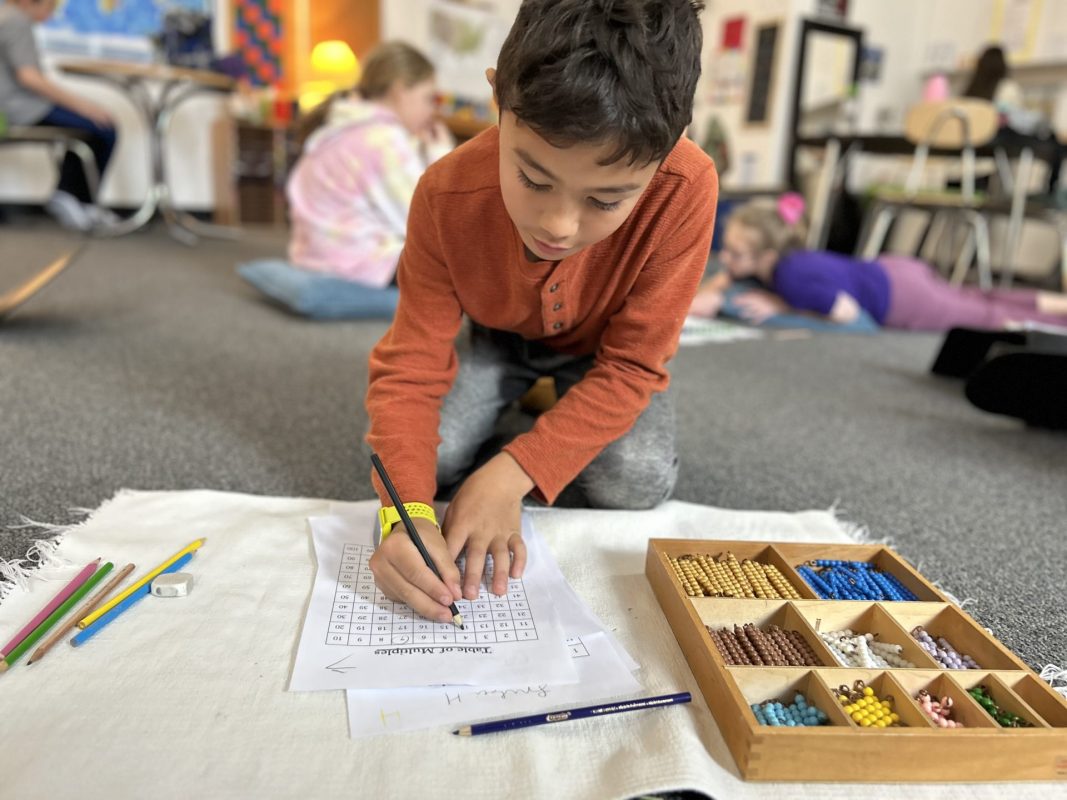
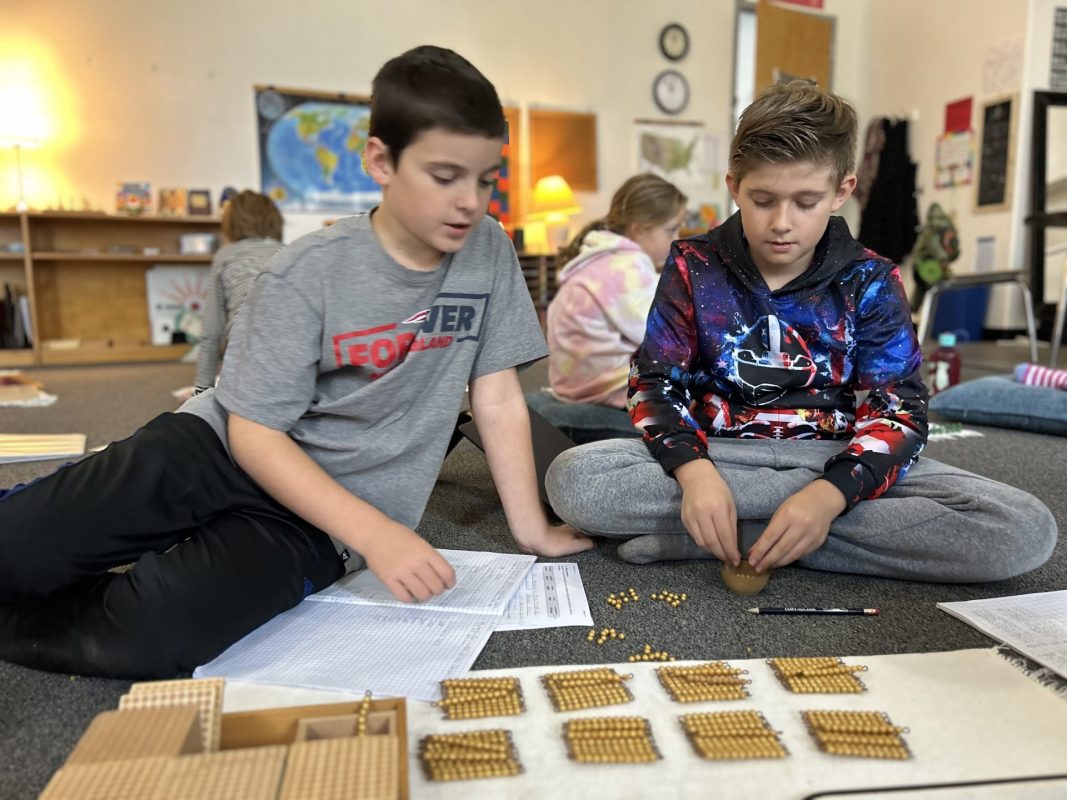
In the Pre-Transition math class, students concluded their learning of Chapter 1. This week, the class reviewed ordering integer values, identifying equivalent fractions, rewriting improper fractions to mixed numbers, and interpreting real-world situations with positive or negative influences. Students wrote the Chapter 1 Unit Test on Friday, October 6th, and will begin learning Chapter 2 next week.
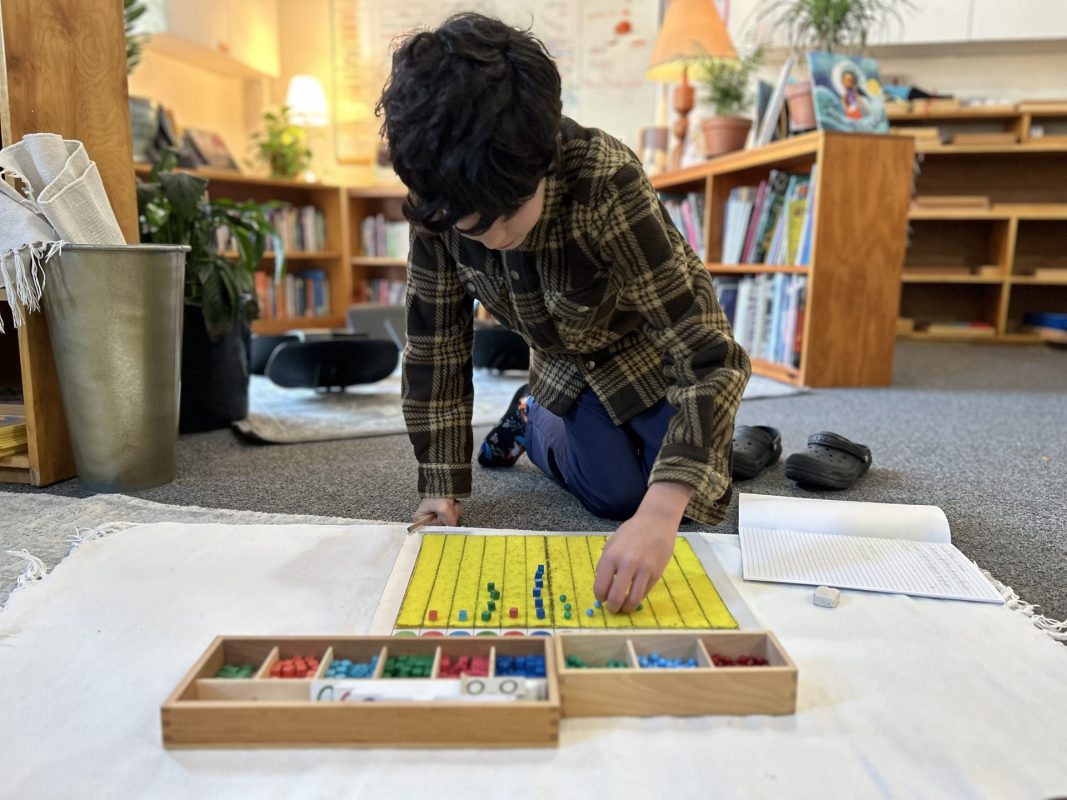
In the Transition math class, students started exploring variable use and were introduced to simple algebraic equations. Using a table, this class can translate a word sentence into an equation and represent a relationship between two variables. All students in this class concluded the week with a short assessment of their understanding of Chapter 2.
In the Algebra math class, students reviewed the distributive property and collected like terms in a complex algebraic expression. This class can also use the opposite and inverse properties to simplify equations. Students will write the Chapter 2 Unit Test next week, and Ms. Sutherland encourages everyone to begin studying well in advance to feel confident with the material.
In the Geometry math class, students learned about conditional and conjecture statements. This class can use and interpret Venn Diagrams and distinguish between convex and non-convex figures. Students will write the Chapter 2 Unit Test next week, and Ms. Sutherland encourages everyone to begin studying well in advance to feel confident with the material.
Make Joke: Where do multiplication problems eat breakfast? – At Time’s Tables.
Science

6th-year Earth Science students are identifying how geologic time is measured and how fossils play a role in dating geologic events. Students are collaborating with their peers to create an artistic representation of the geologic timeline. This timeline includes eons, eras, periods, and predominant species found within each phase. The objective of this project is for students to see how fossils are used to gauge the time period species were alive based on previously discovered index fossils. Students have also begun creating their resin fossils related to the preservation potential each fossil undergoes.

7th-year Physical Science students are finishing their until, Combining and Separating. Students were asked to research and present on particular careers that involve separation. Students chose such jobs as sanitation workers, water treatment facilitators, and chemical spill management. Students did a great job with their work. Their next unit will identify the unique properties within states of matter.

8th-year Life Science students did well presenting their research on stem cells earlier in the week. Students provided evidence to support their claim on whether to support or oppose further research regarding stem cells. Students then presented research on the differences between our body cells. Students shared their findings on nerve, cardiac, blood, and fat cells. Each student highlighted the difference in the cell’s structure/shape as it relates to the function each cell is intended to serve.

Have a beautiful long weekend.

Mrs. Lopes: Friday Folder Fun Facts

As adults, we must remember that we want things done as quickly as possible so they are finished and out of the way. In contrast, the child is interested and content in the doing, not the done.” –Margaret Stephenson, The Art of Montessori in the Home.

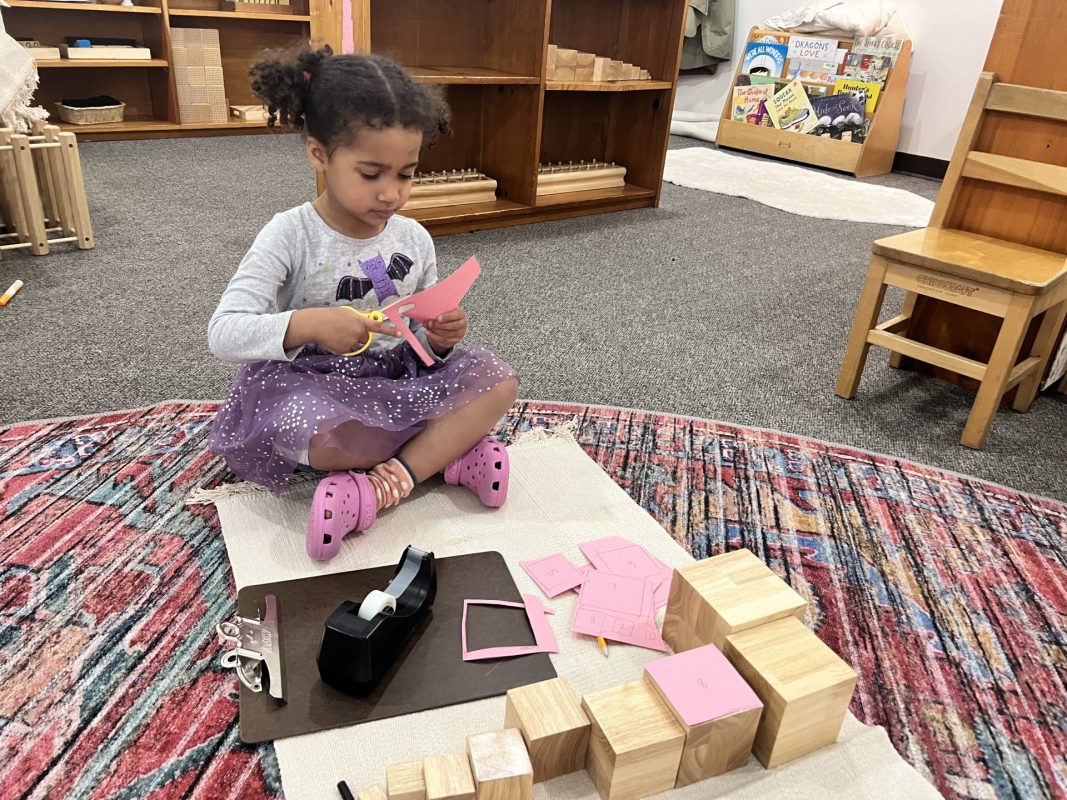
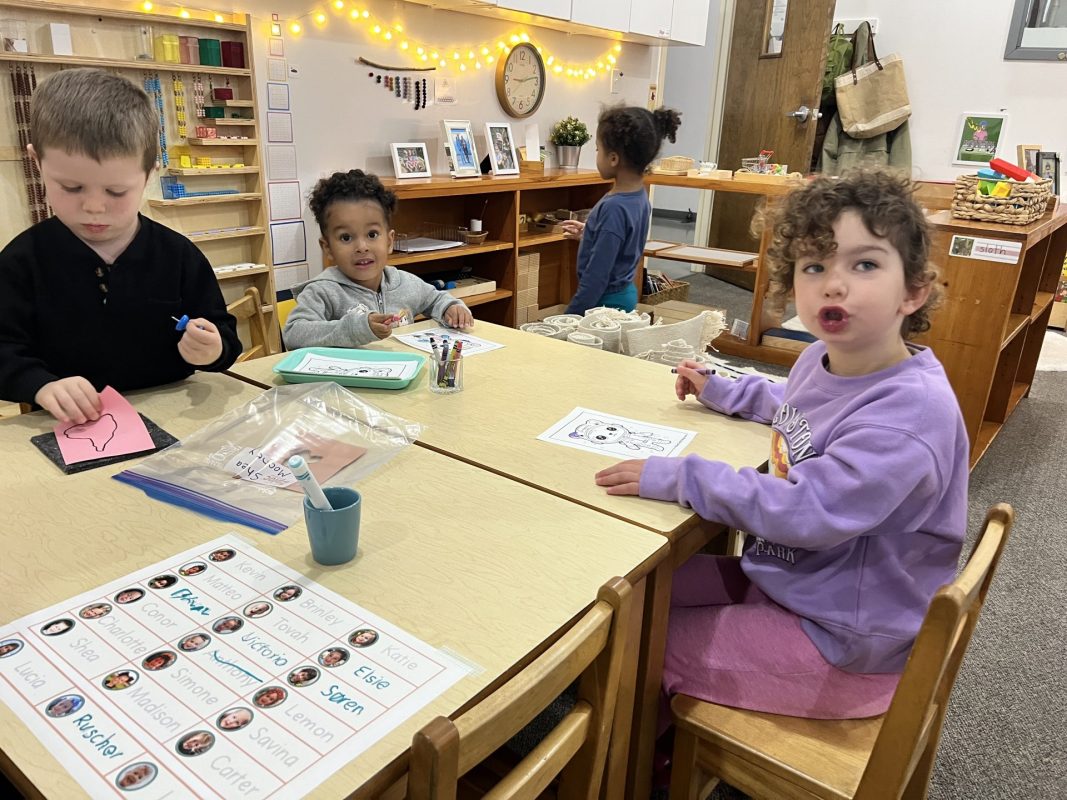
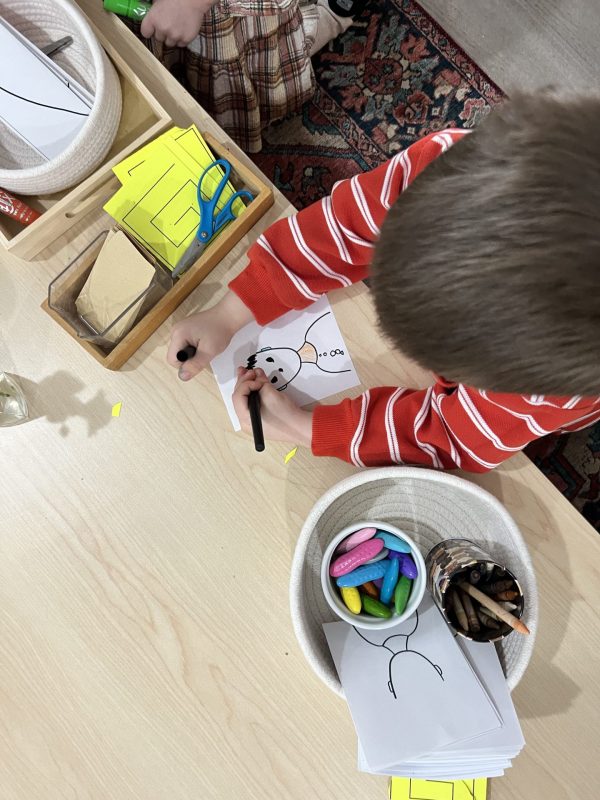
Each Thursday, we send home Weekly Folders with the work the children have completed over the past week. We often receive emails asking why there was so little work inside and what exactly the children are doing.

Sometimes, it can be difficult to accept the idea of focusing on the process, not the product. What exactly does that mean? Many works in the Montessori classroom do not end with a physical product the children will bring home to share with everyone. There is often no way to visually assess what a child is learning. Overall, as a society, we are product-driven and often base our success on this factor. The experience a child has when working with the materials is truly what is most important. However, it can often be unsettling when you hear they did “nothing” day after day.

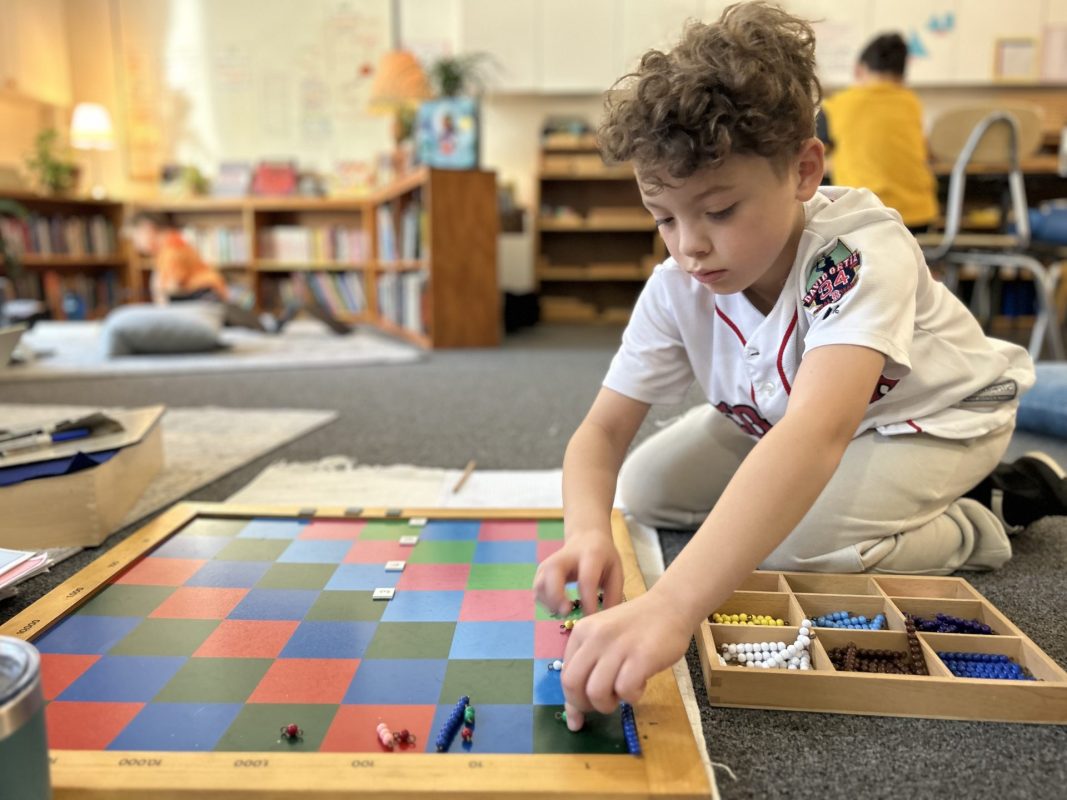
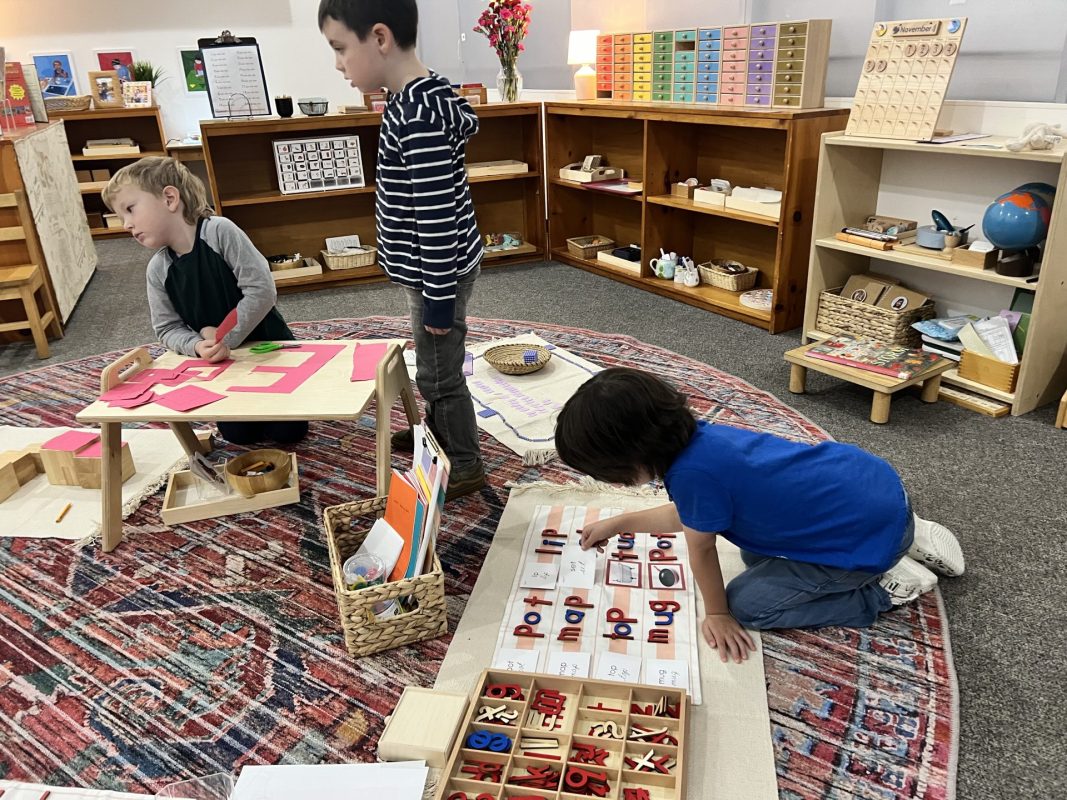
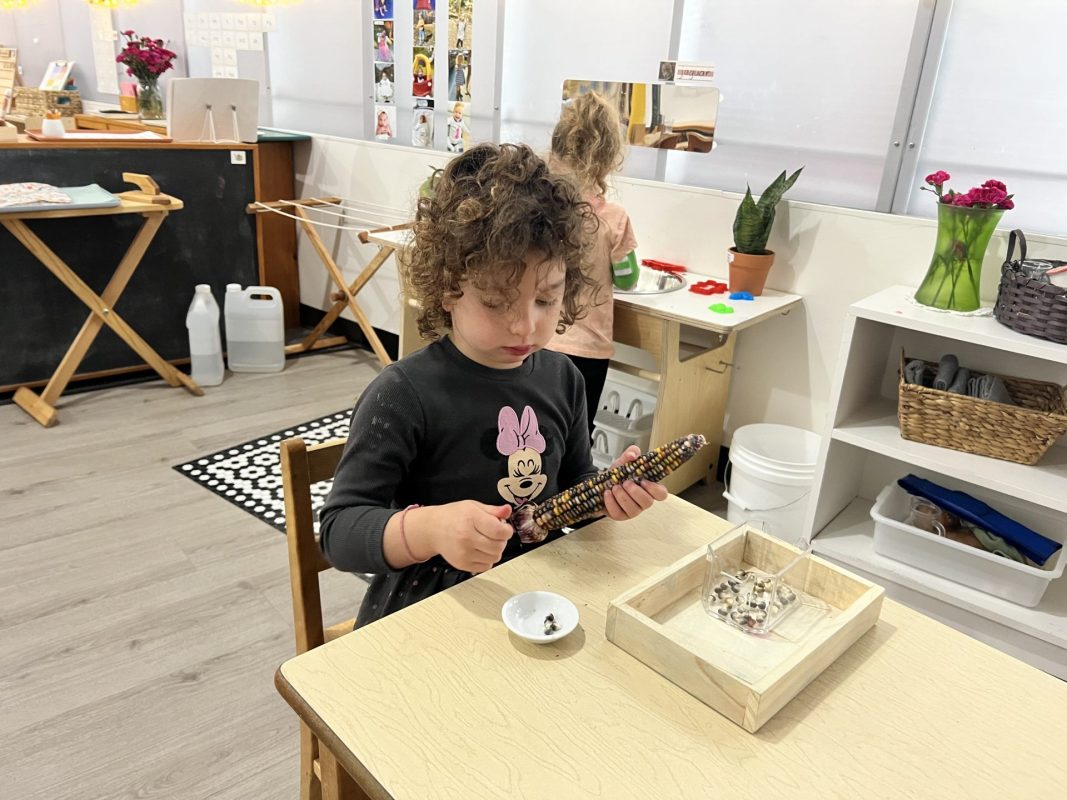
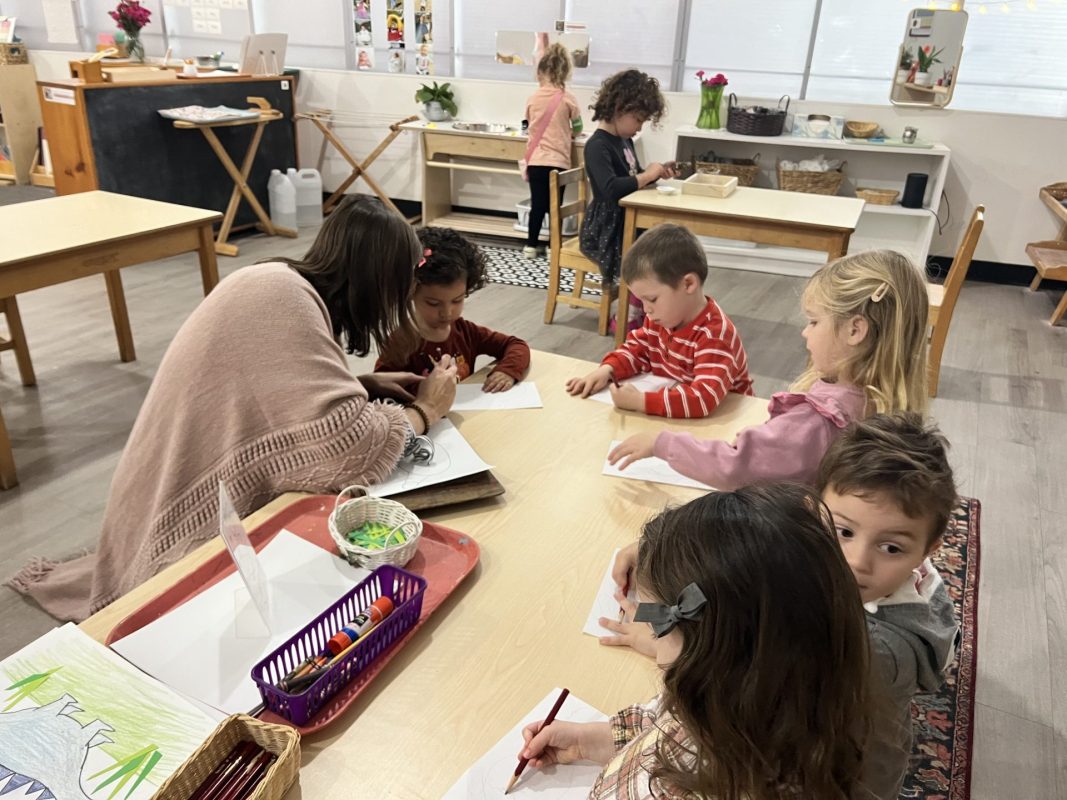
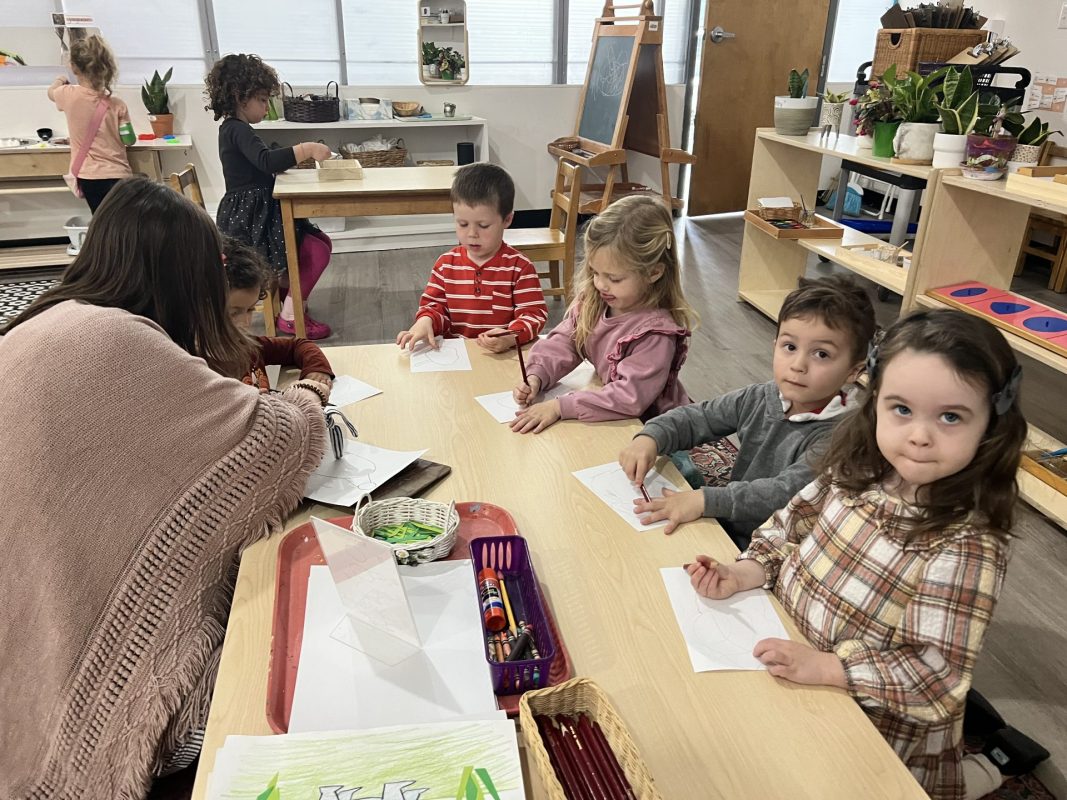
Research shows children ages three to six learn best through their hands. To truly understand a concept, they need to explore it through touch. This is why so many lessons in the Montessori environment are not based on memorization alone. Most concepts we teach involve tracing, manipulating, and exploring with their hands. Perhaps most importantly, focusing on the process protects the child’s intrinsic motivation to learn and understand. External factors such as recognition, praise, or reward do not influence it. We truly value and encourage the time and experience with the materials.

So, if your child’s folder comes home with little to no work, know that their accomplishments can’t always ‘fit’ in that folder. Maybe after weeks and weeks of trying, they learned how to zipper their coat, or perhaps they can finally carry a work without it dropping. Maybe after observing a lesson day after day, your child tried it independently for the first time. The list of skills each child can accomplish will never be fully represented in the Weekly Folder. So please enjoy the work in there, but know it will never be an accurate portrayal of all the children are learning and accomplishing.

Fall conferences are scheduled for Thursday, October 26th. Please click here to sign up and choose your time. We look forward to seeing everyone on conference day and sharing all of the exciting growth that has taken place these past few weeks.

Wishing you a week filled with peace and love.

Amanda and Hema


Mrs. Doyle: Friday Folder Fun Facts

As adults, we must remember that we want things done as quickly as possible so they are finished and out of the way. In contrast, the child is interested and content in the doing, not the done.” –Margaret Stephenson, The Art of Montessori in the Home.

Each Thursday, we send home Weekly Folders with the work the children have completed over the past week. We often receive emails asking why there was so little work inside and what exactly the children are doing.

Sometimes, it can be difficult to accept the idea of focusing on the process, not the product. What exactly does that mean? Many works in the Montessori classroom do not end with a physical product the children will bring home to share with everyone. There is often no way to visually assess what a child is learning. Overall, as a society, we are product-driven and often base our success on this factor. The experience a child has when working with the materials is truly what is most important. However, it can often be unsettling when you hear they did “nothing” day after day.

Research shows children ages three to six learn best through their hands. To truly understand a concept, they need to explore it through touch. This is why so many lessons in the Montessori environment are not based on memorization alone. Most concepts we teach involve tracing, manipulating, and exploring with their hands. Perhaps most importantly, focusing on the process protects the child’s intrinsic motivation to learn and understand. External factors such as recognition, praise, or reward do not influence it. We truly value and encourage the time and experience with the materials.

So, if your child’s folder comes home with little to no work, know that their accomplishments can’t always ‘fit’ in that folder. Maybe after weeks and weeks of trying, they learned how to zipper their coat, or perhaps they can finally carry a work without it dropping. Maybe after observing a lesson day after day, your child tried it independently for the first time. The list of skills each child can accomplish will never be fully represented in the Weekly Folder. So please enjoy the work in there, but know it will never be an accurate portrayal of all the children are learning and accomplishing.

Fall conferences are scheduled for Thursday, October 26th. Please click here to sign up and choose your time. We look forward to seeing everyone on conference day and sharing all of the exciting growth that has taken place these past few weeks.

Wishing you a week filled with peace and love.

Michelle and Maria