
Blog

Lower El Language Lessons

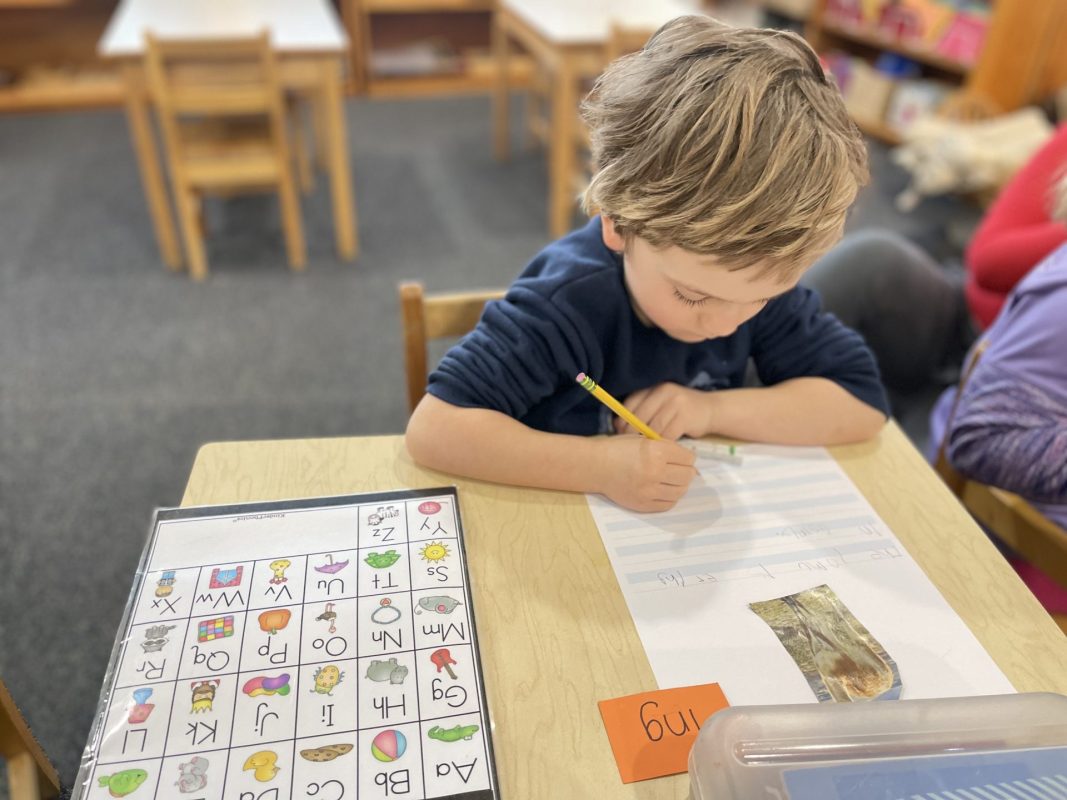
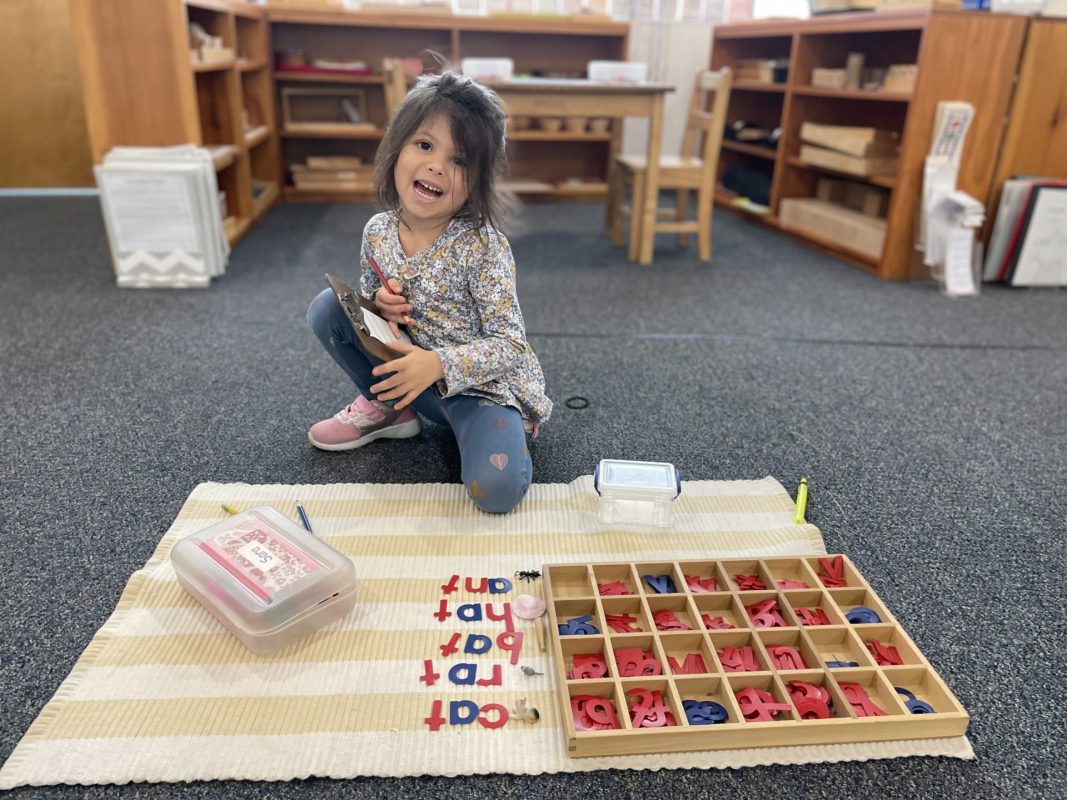
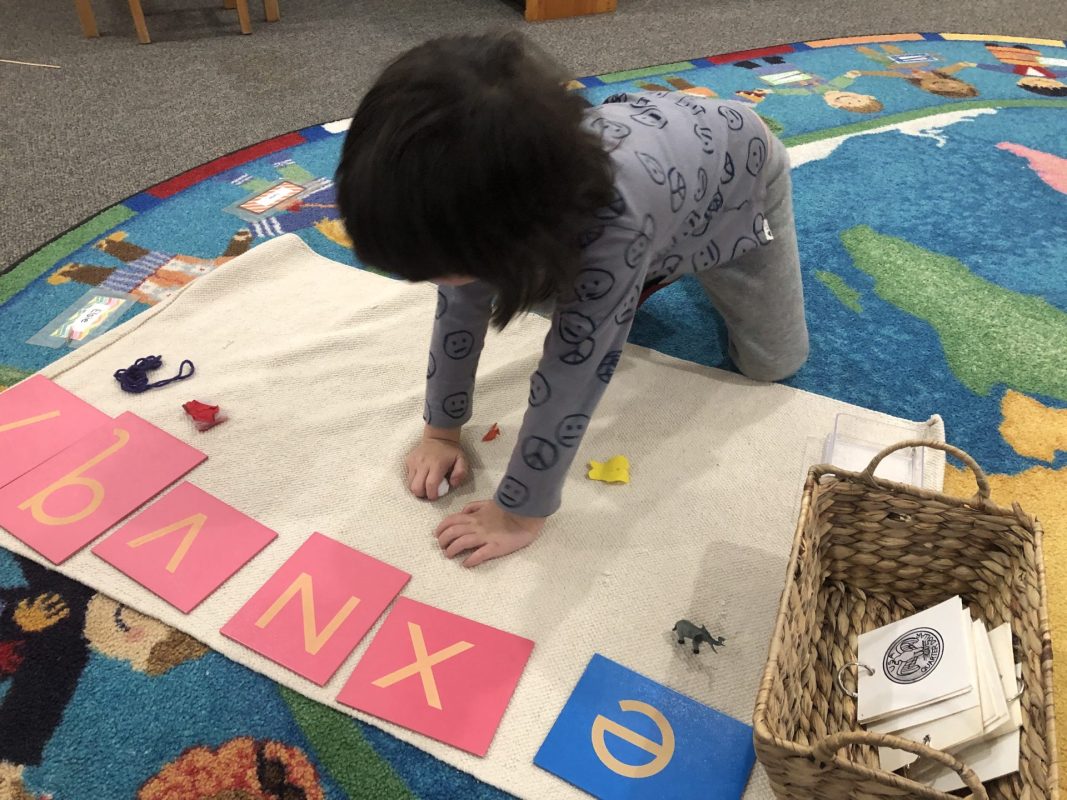
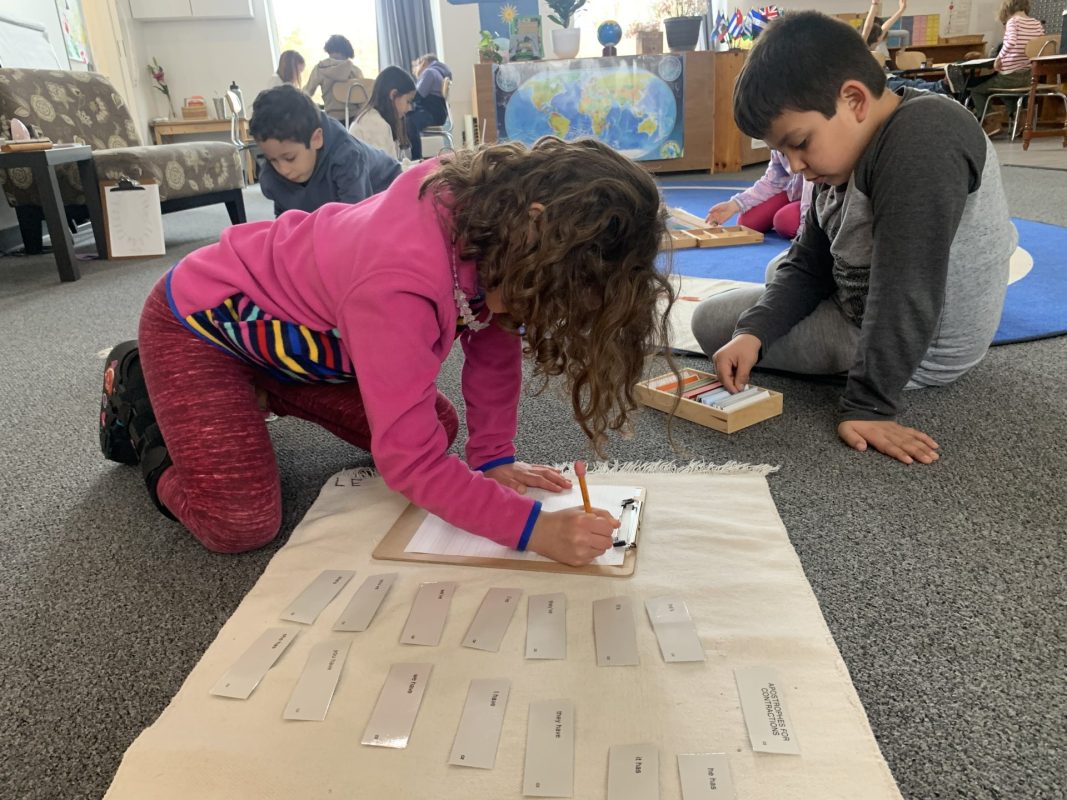
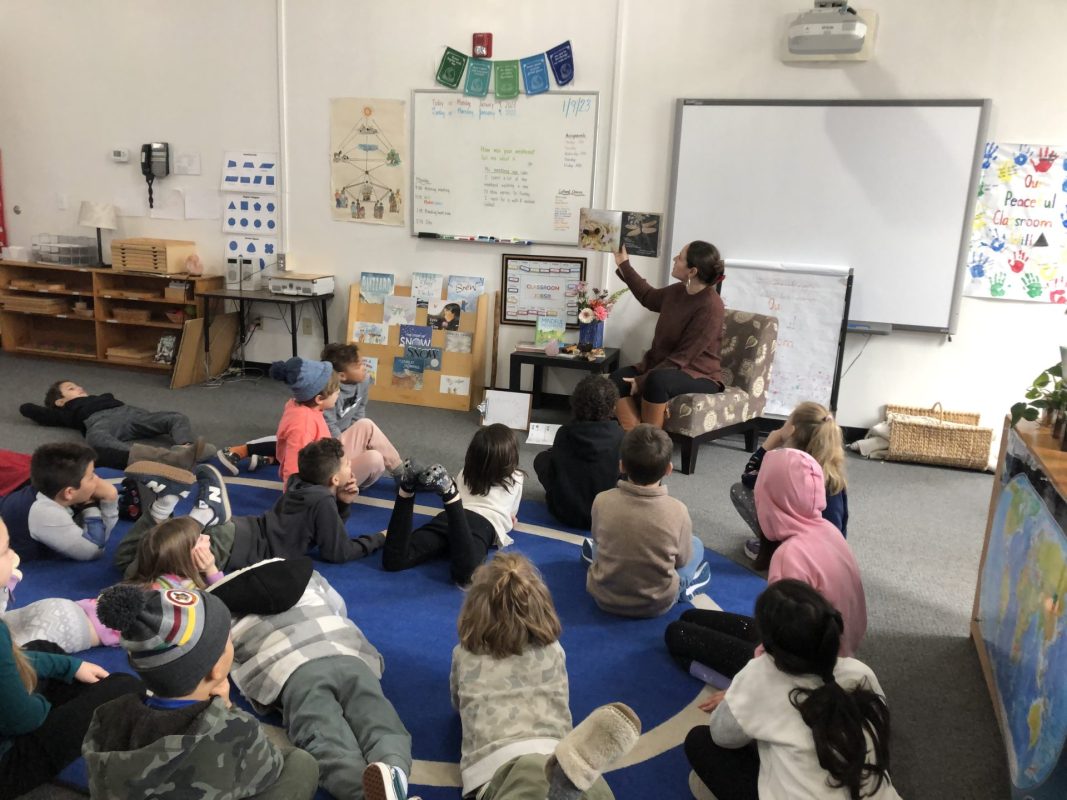
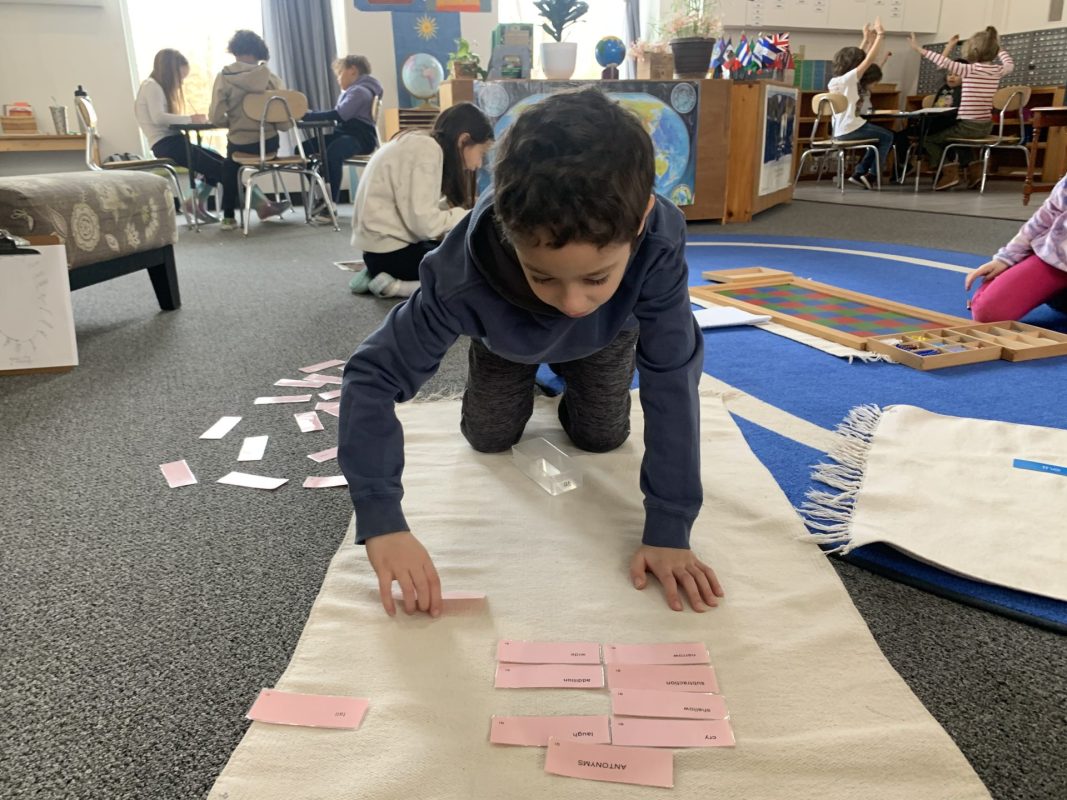
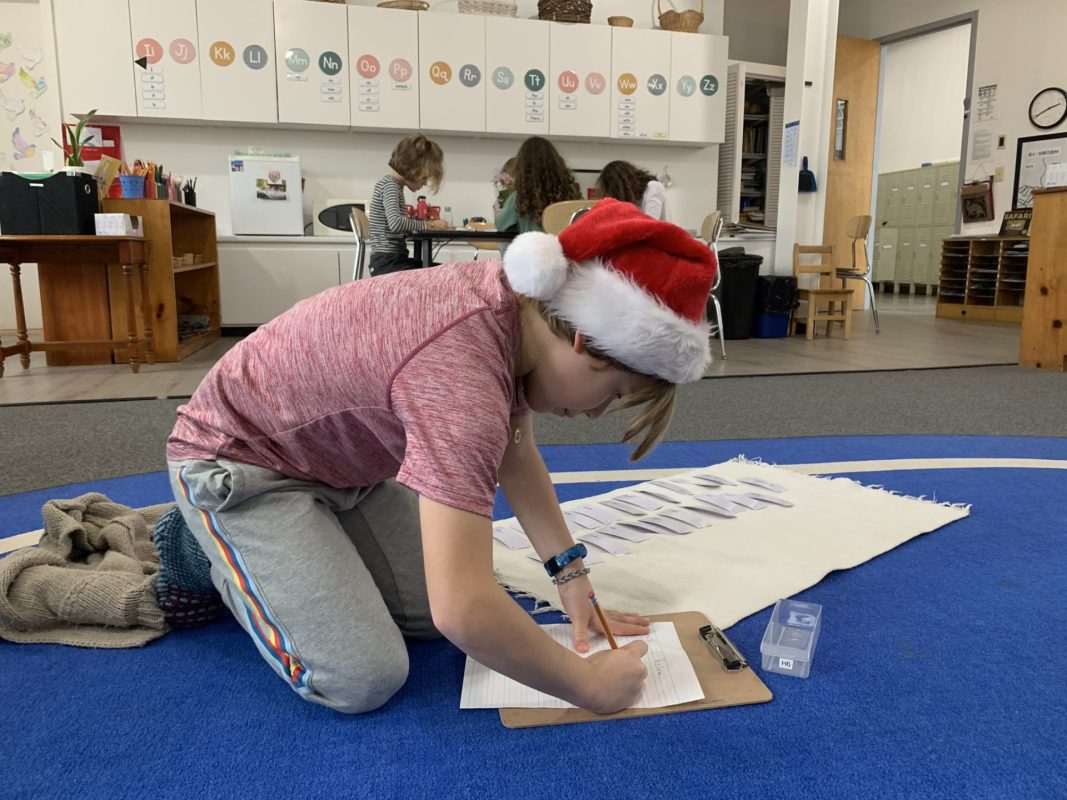
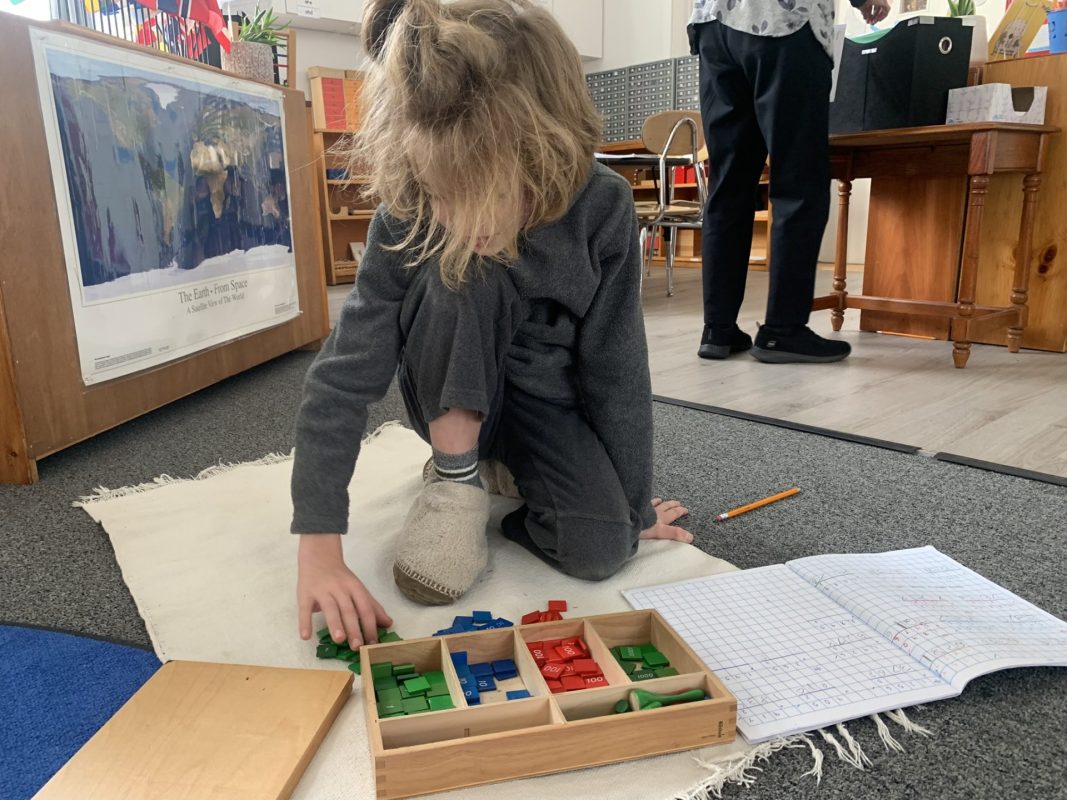
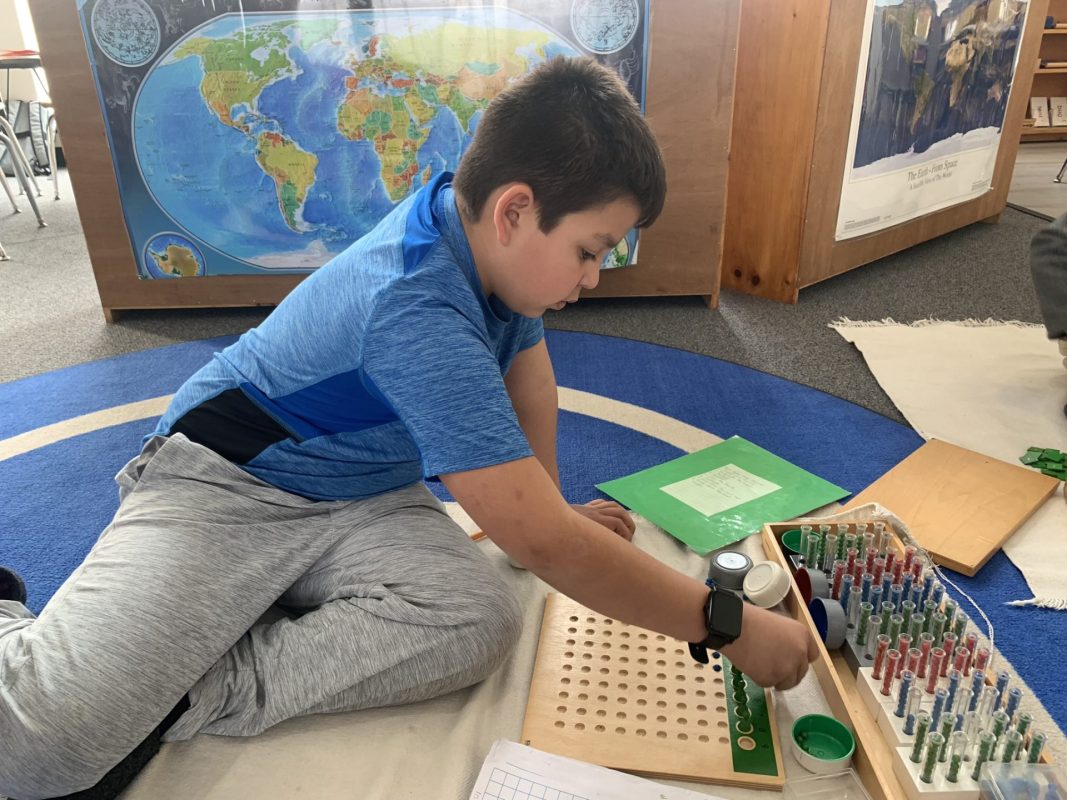
To Maria Montessori, the teaching of grammar was at the center of her language curriculum for elementary-age children. Today, it still remains a critical element in the teaching of a complete language program in a Montessori environment. At this age, grammar is being presented at an impressionistic level, and later on, in their later elementary years, they will explore these concepts on a more formal level.

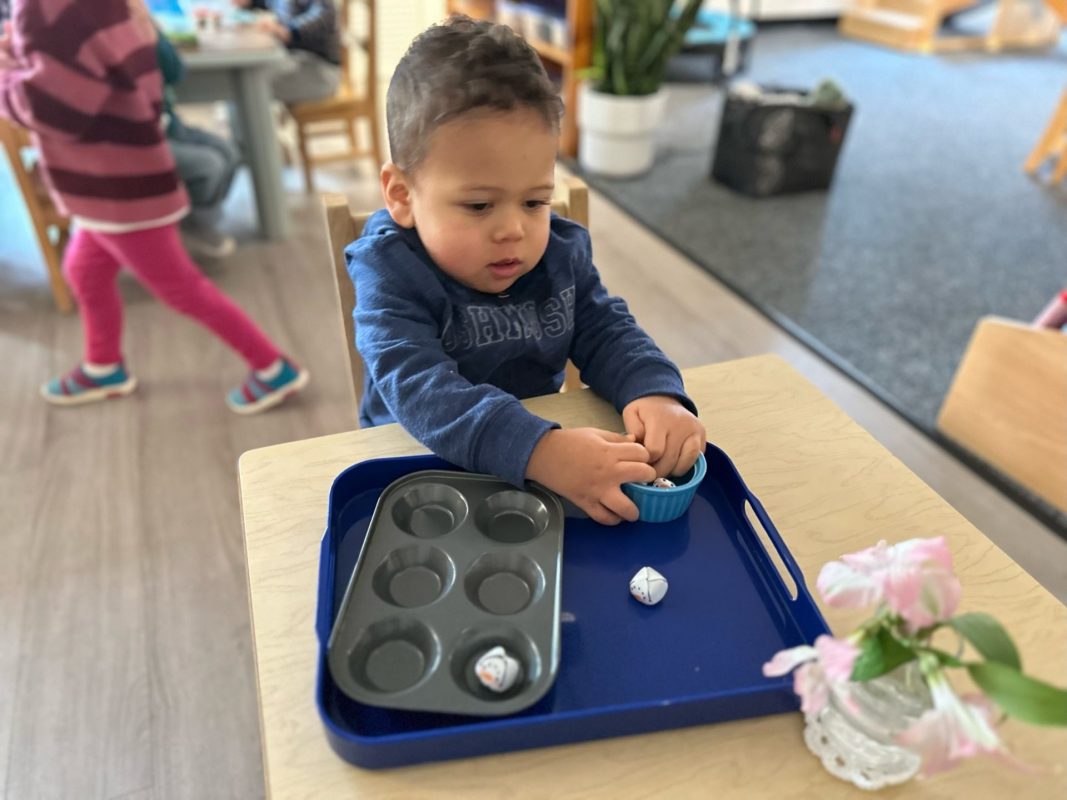
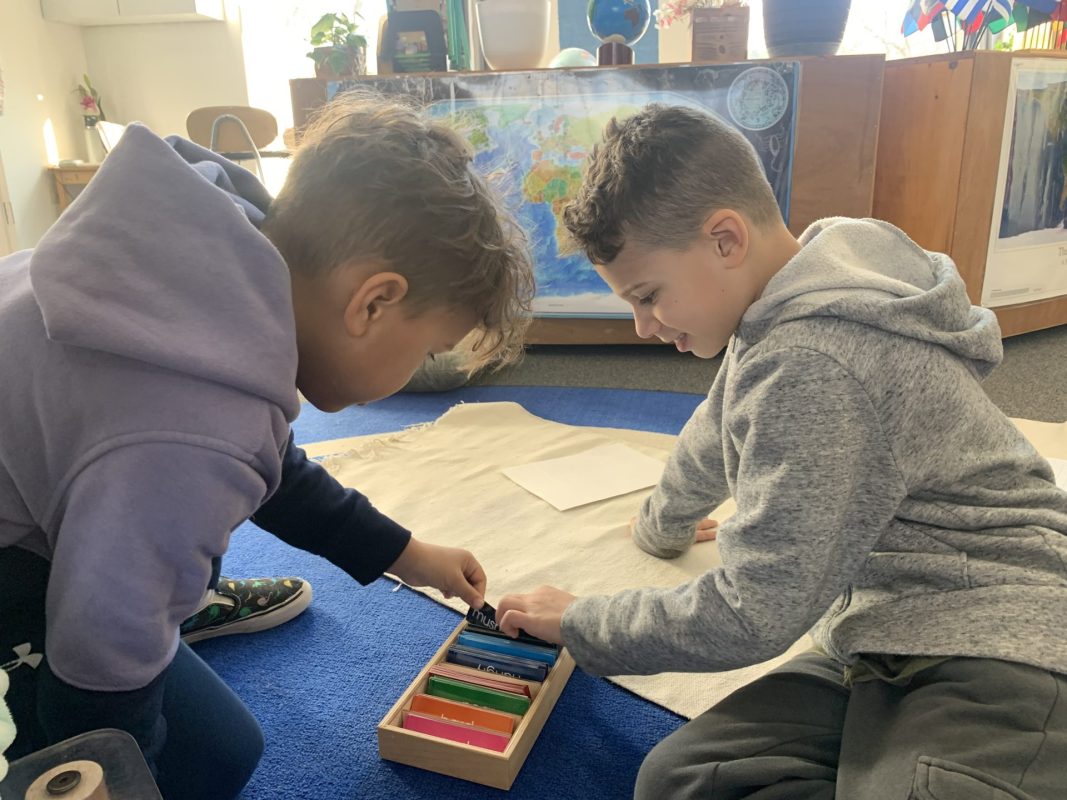
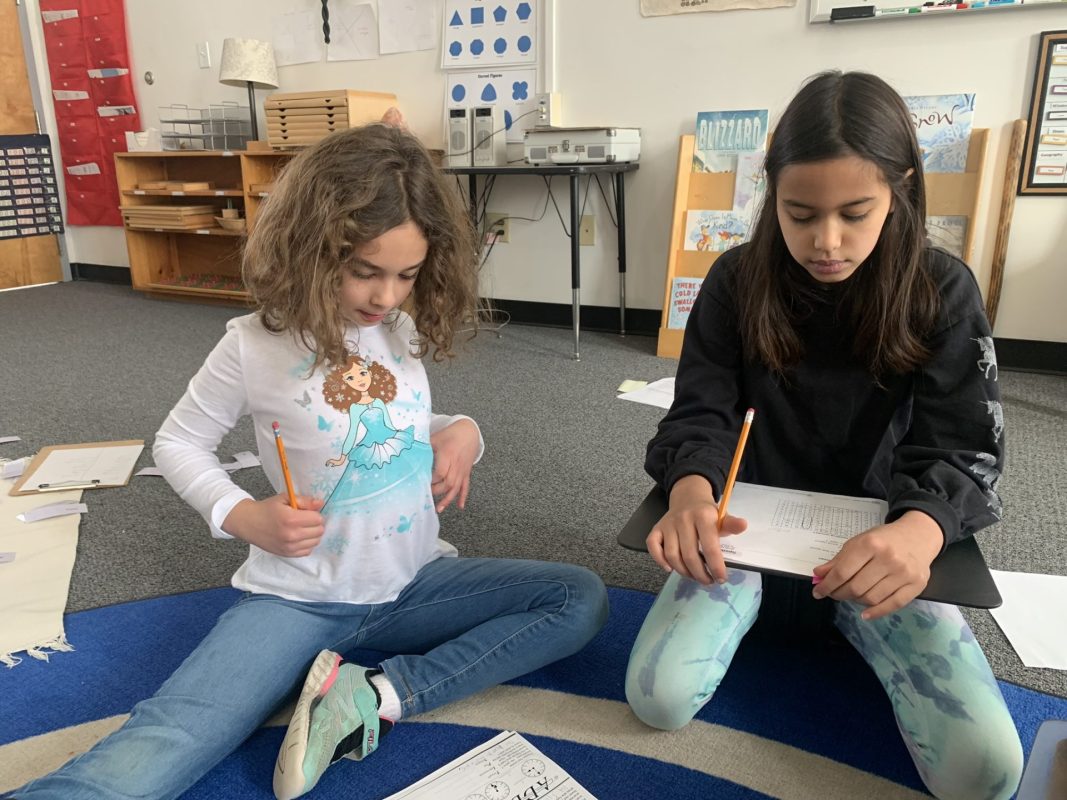
This week the first-year group has enjoyed learning about articles. We started the lesson by reviewing the previous part of speech learned earlier in the year (nouns). They learned that articles are a special group of only three words, that go in front of nouns. The second-years are learning about adverbs- a complex part of speech. They are learning that an adverb supports the verb and they tell us how to do an action. In Montessori grammar, just like the verb, the adverb is also represented as a ball. The adverb is a smaller ball than the verb because it is less important than the verb itself. In the third grade year, the children are learning about conjunctions. They are learning that words that join two objects or actions together are called conjunctions. We even jammed out to the Schoolhouse Rock song- Conjunction Junction. As a follow-up work to practice this grammar, they all love to use the grammar dice.
Mrs. Doyle: It All Adds Up With Montessori Math

“Children display a universal love of mathematics, which is par excellence the science of precision, order, and intelligence.”~ Dr. Maria Montessori

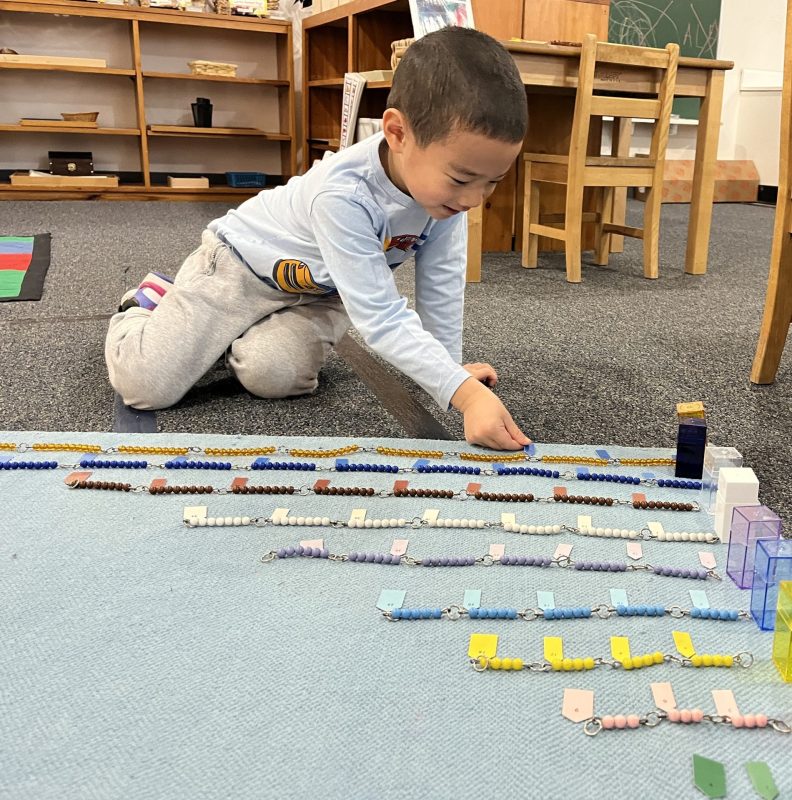
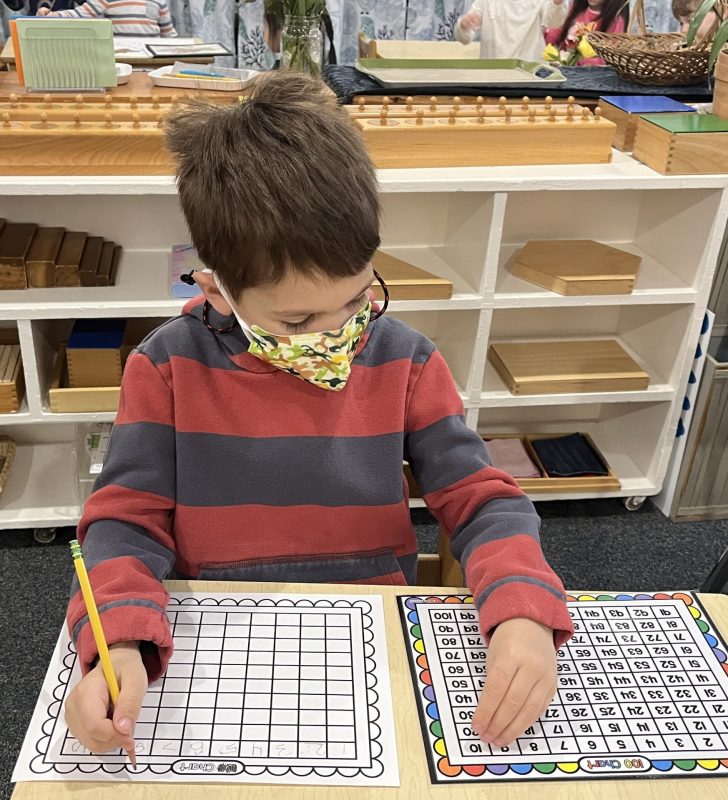
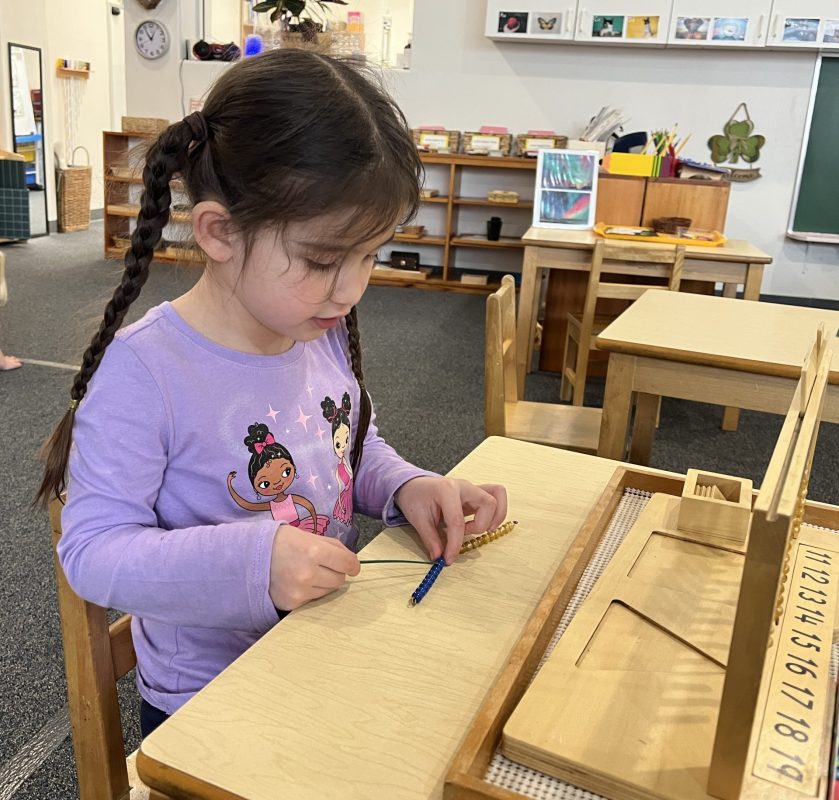
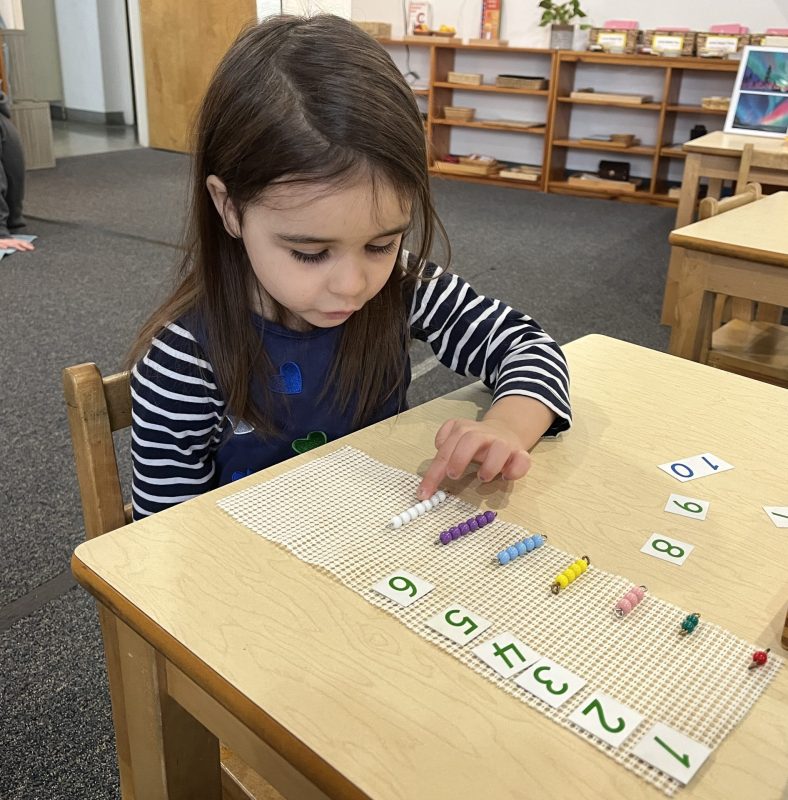
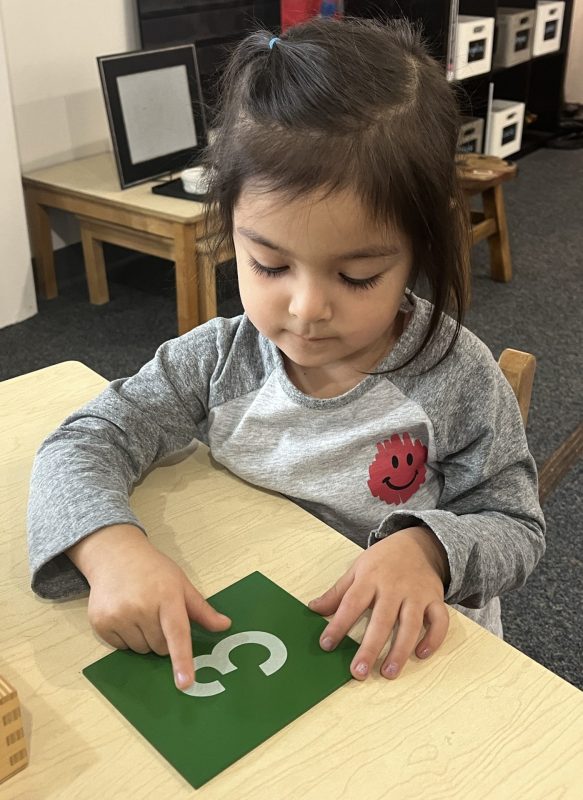
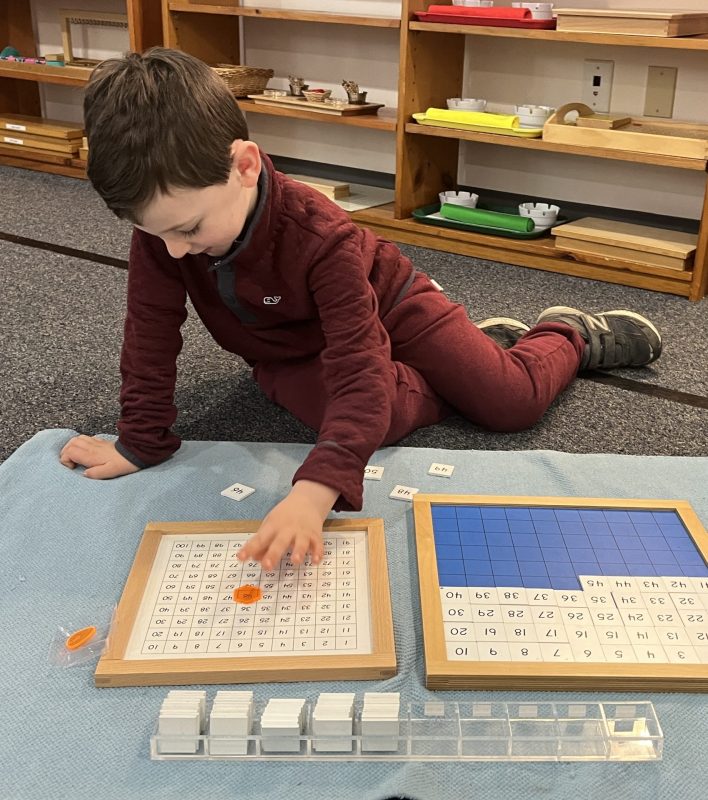
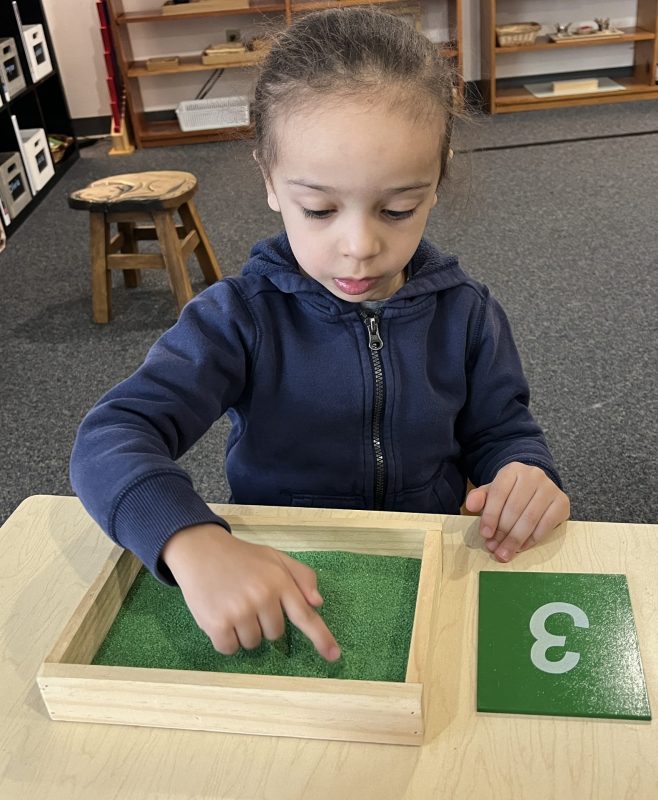
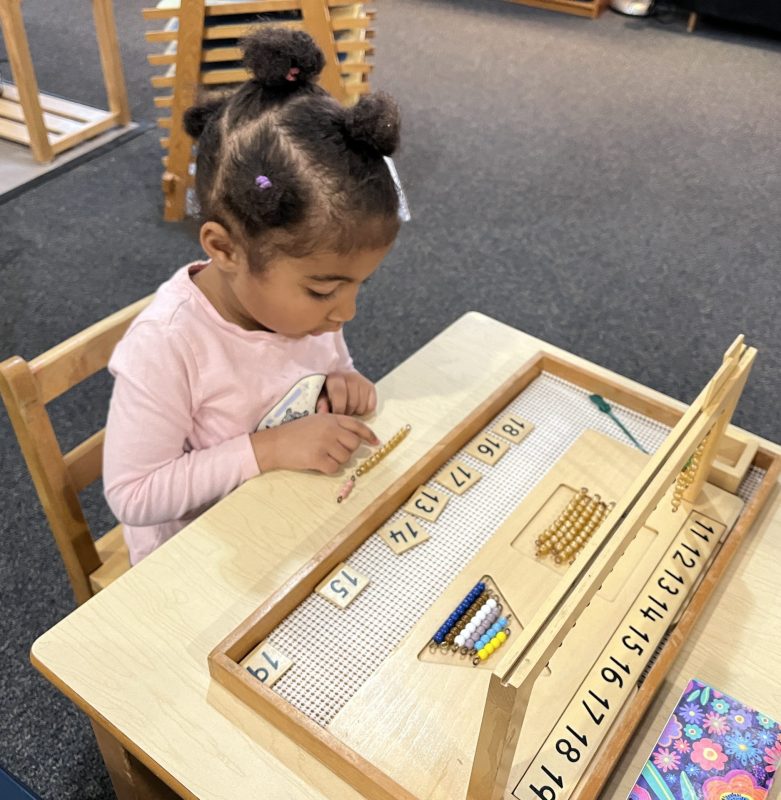
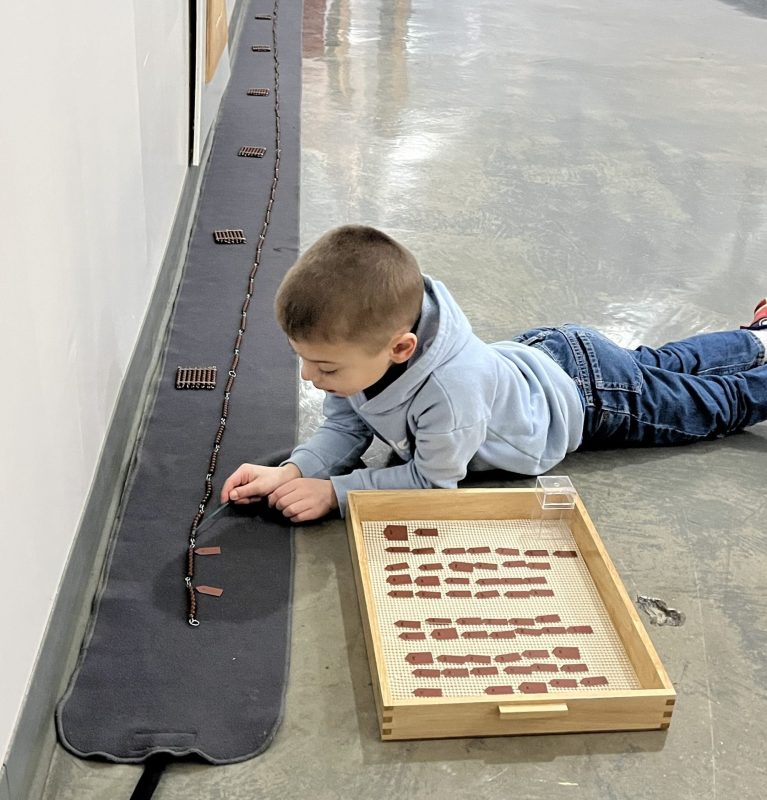
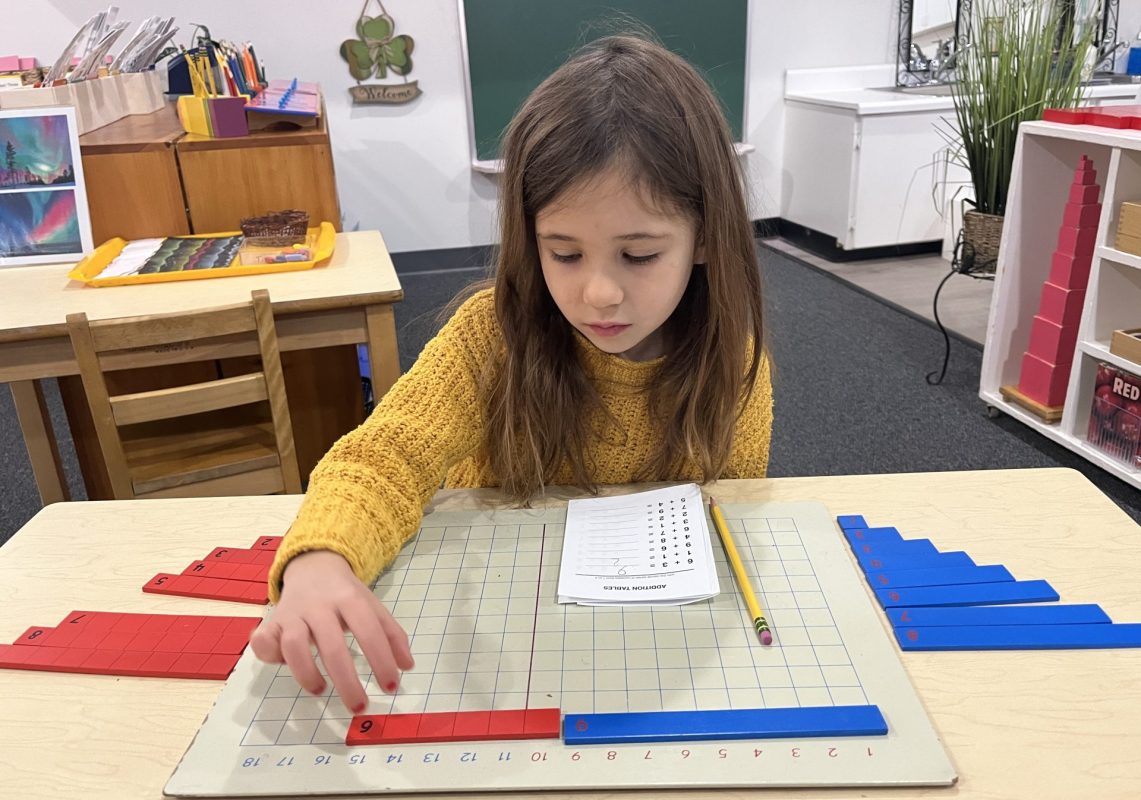
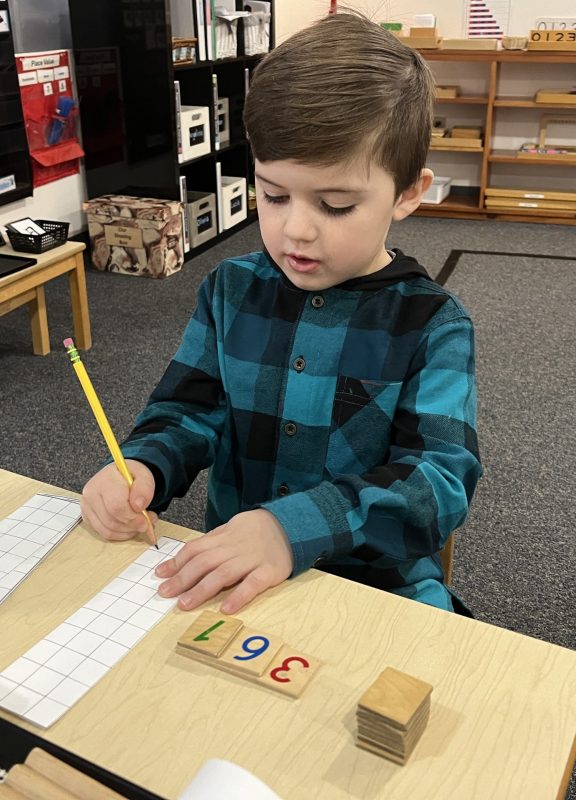
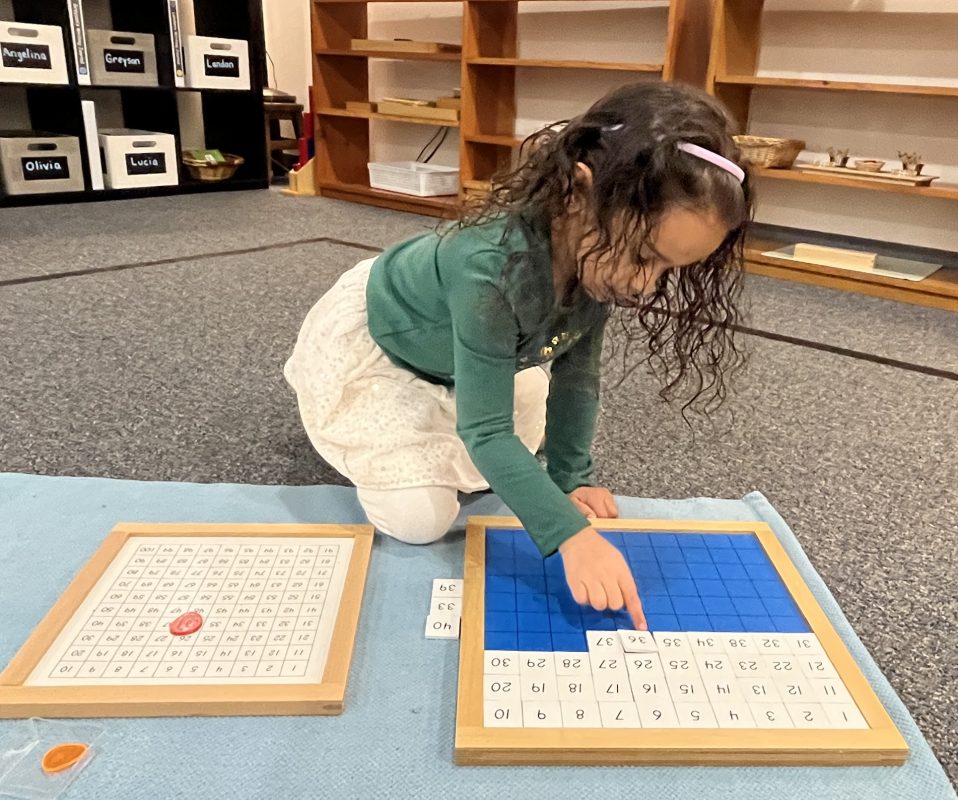
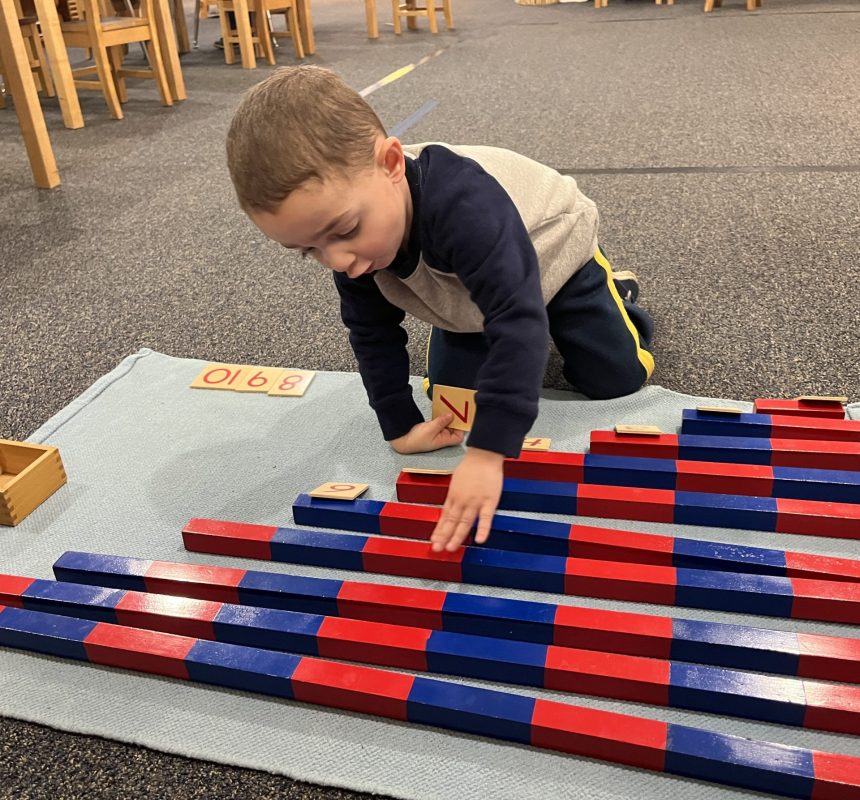
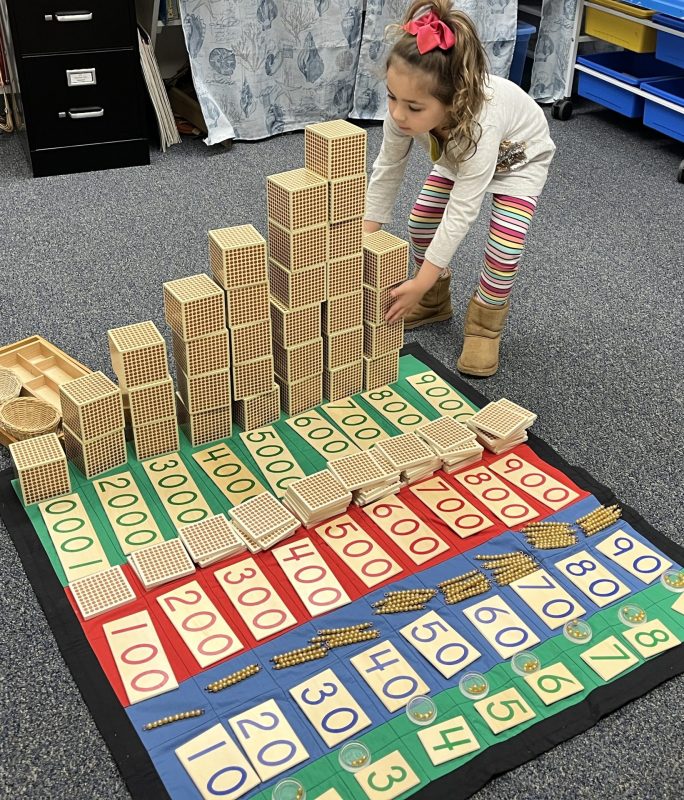
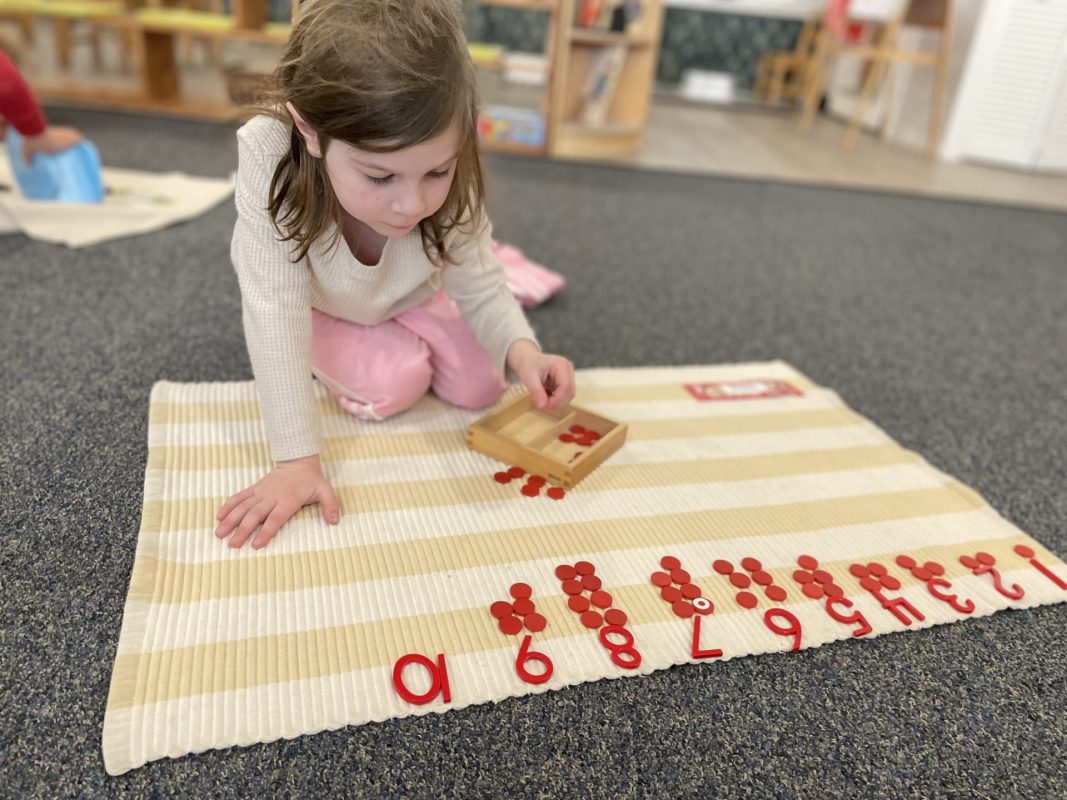
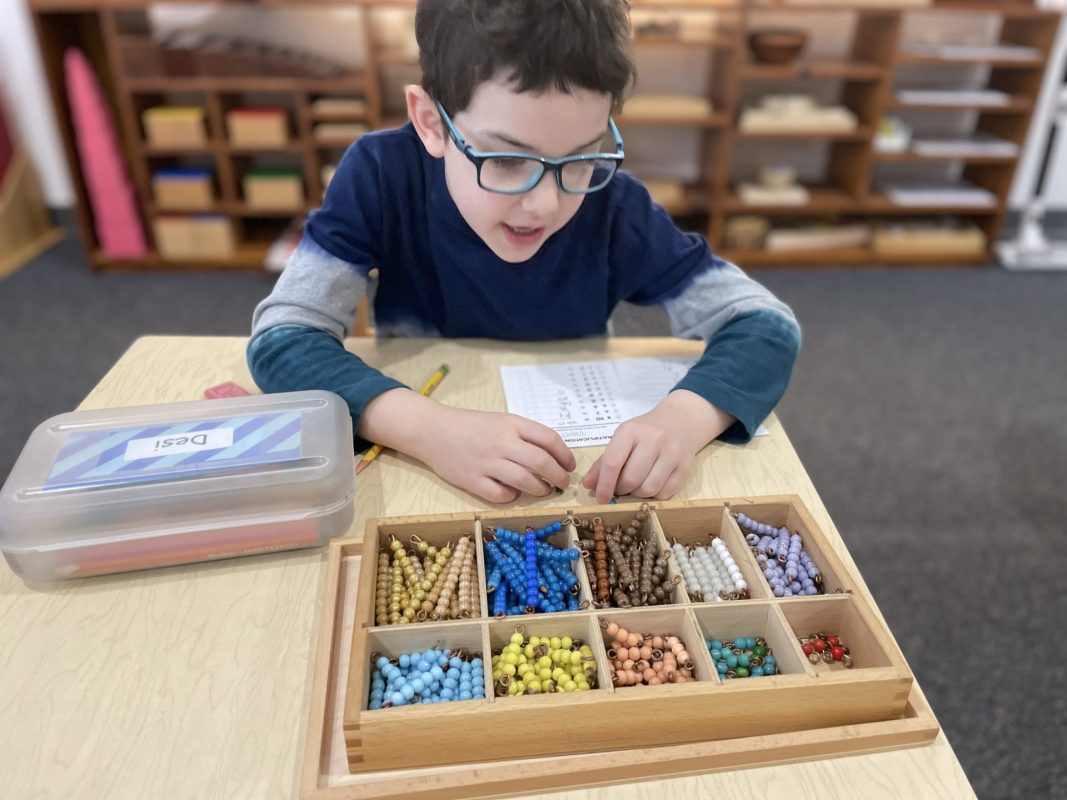
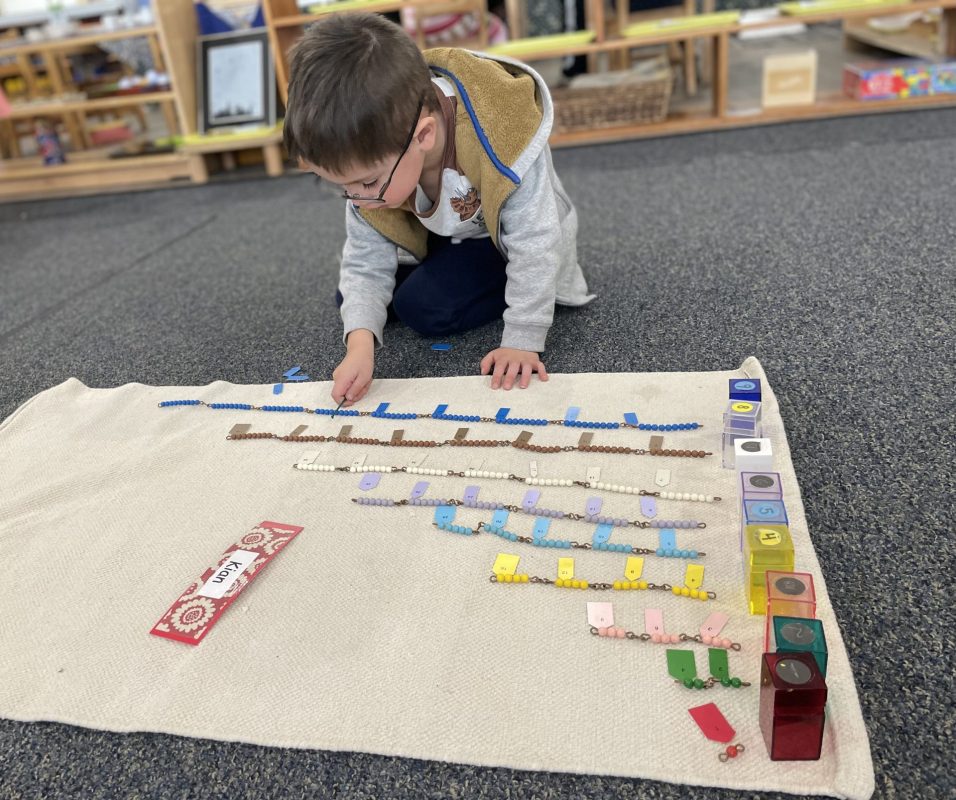
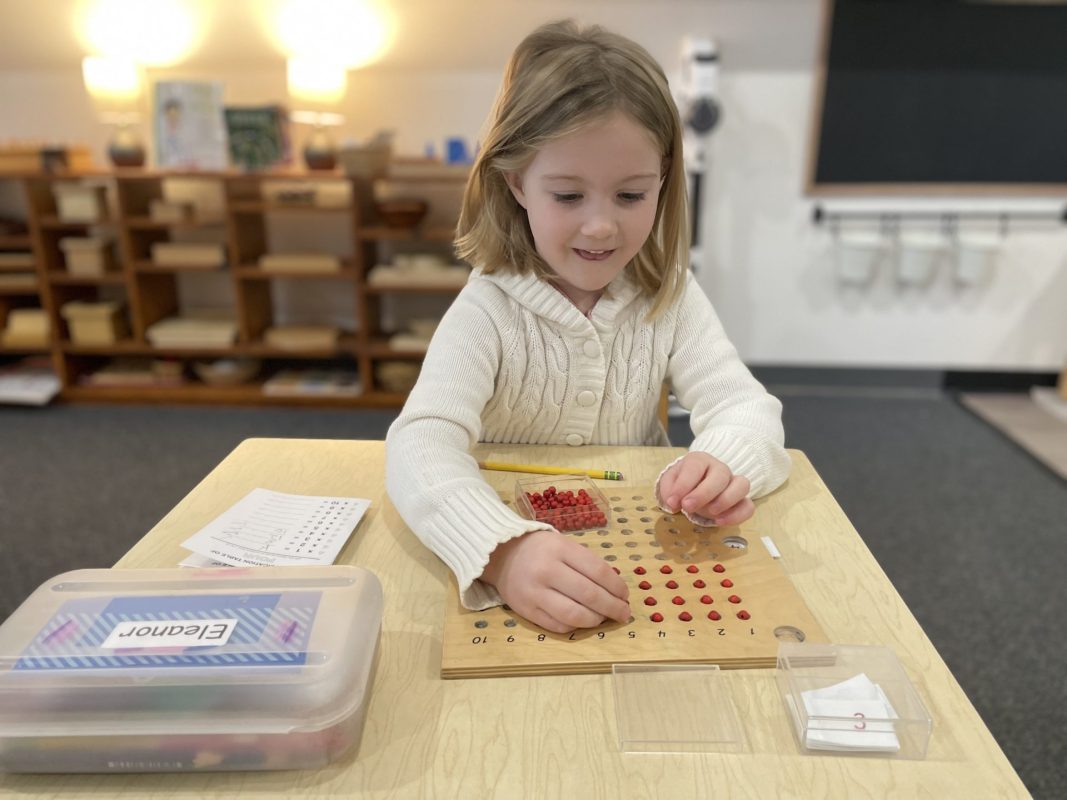
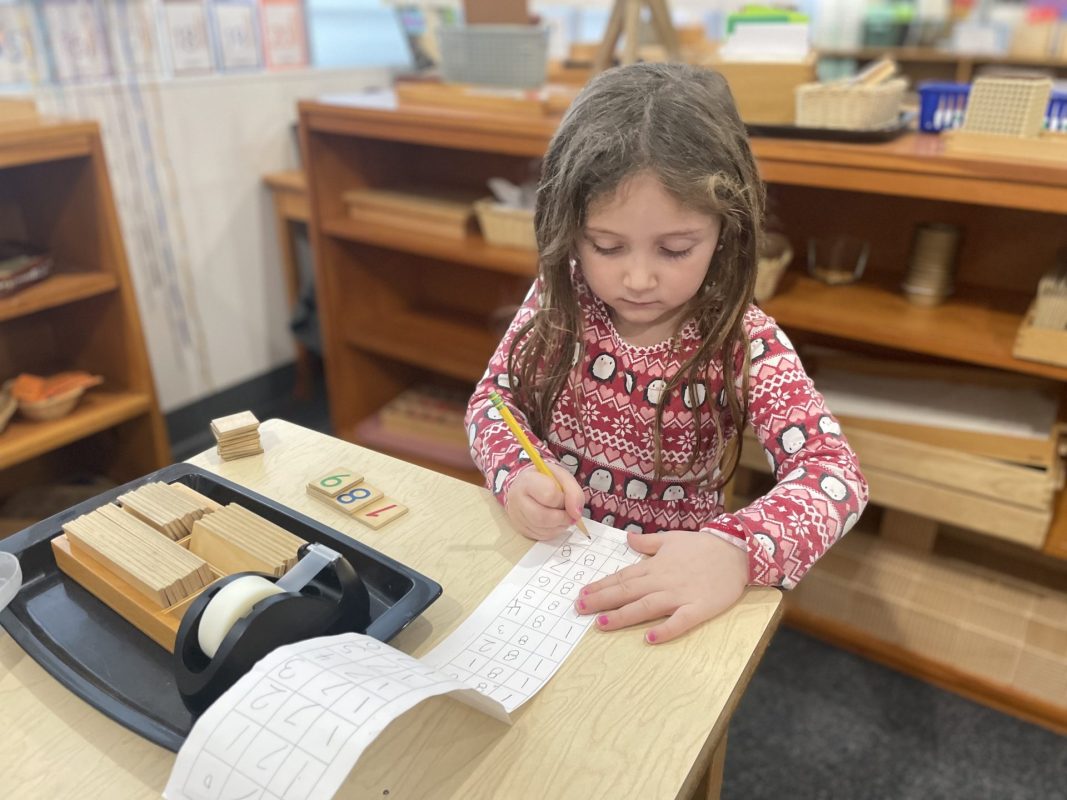
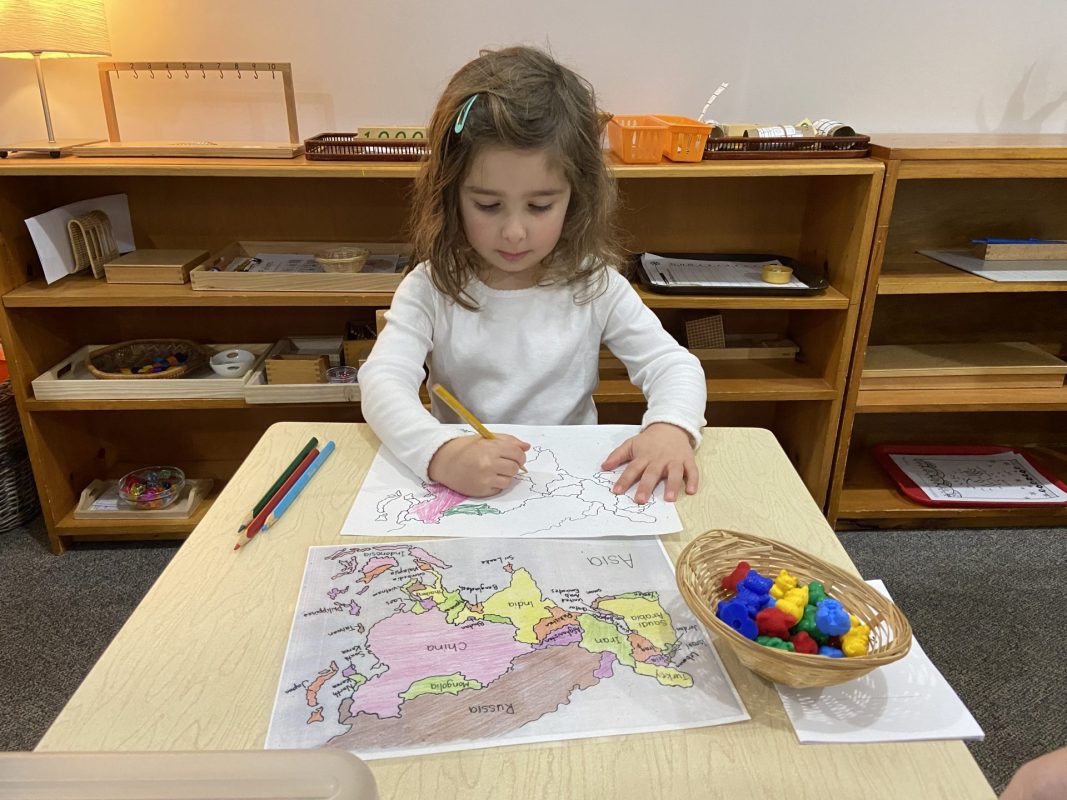
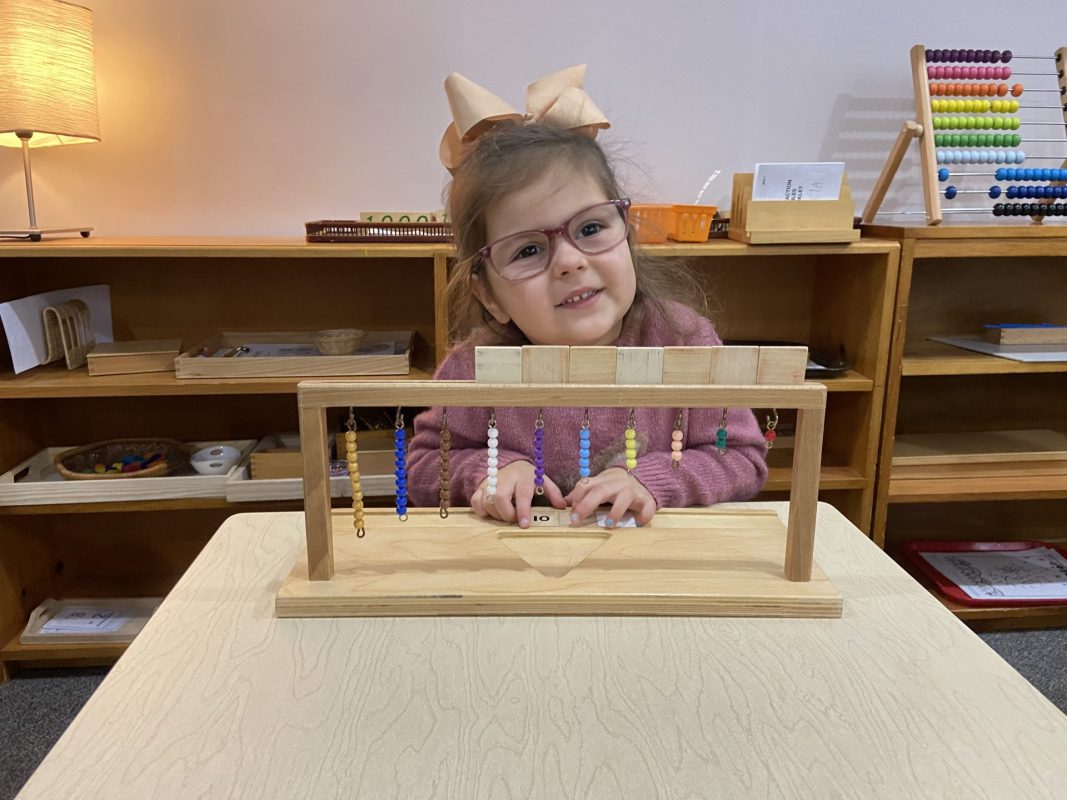
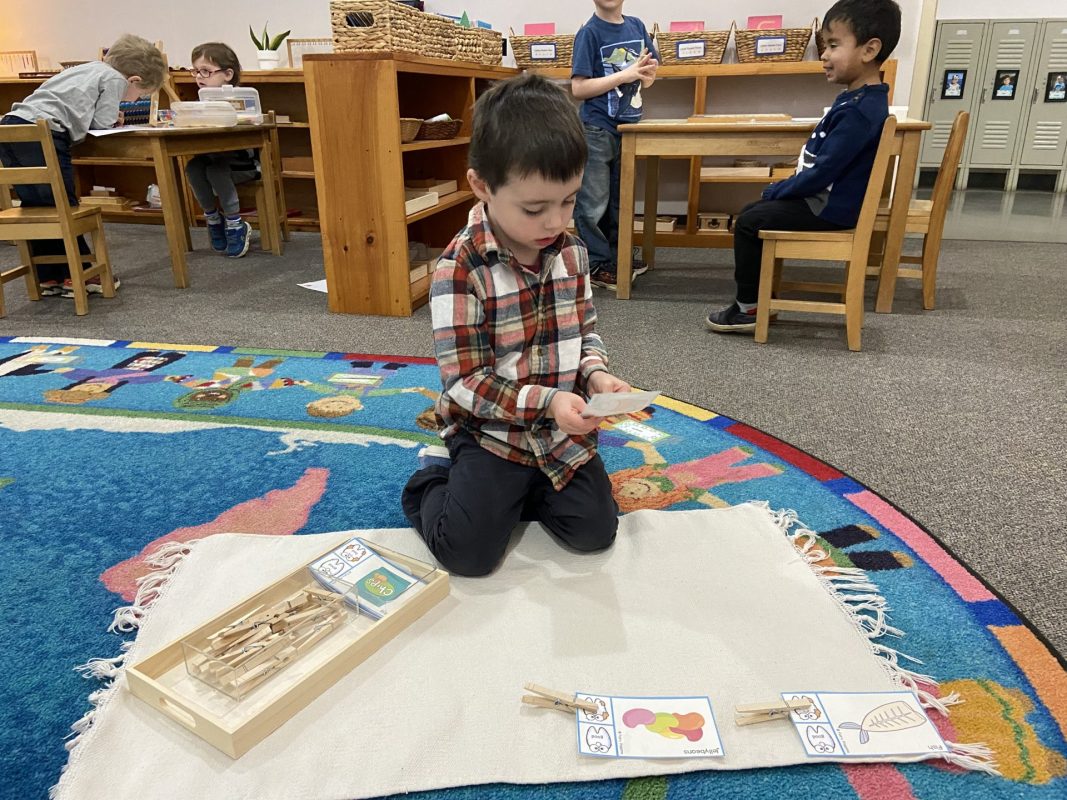
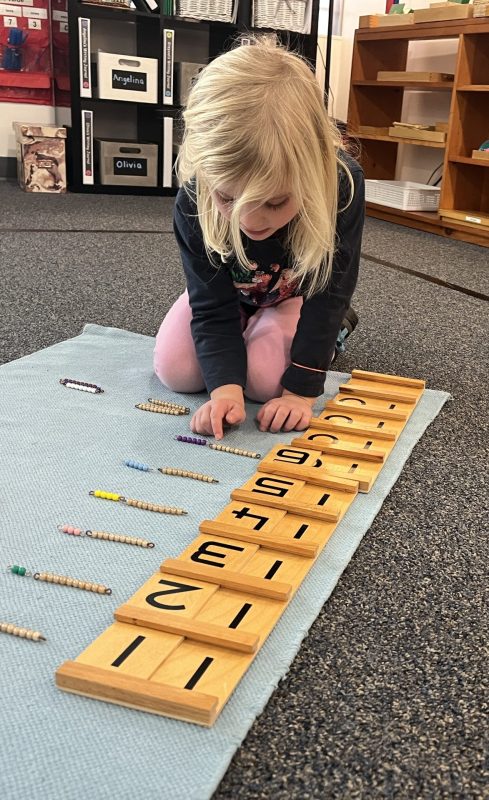
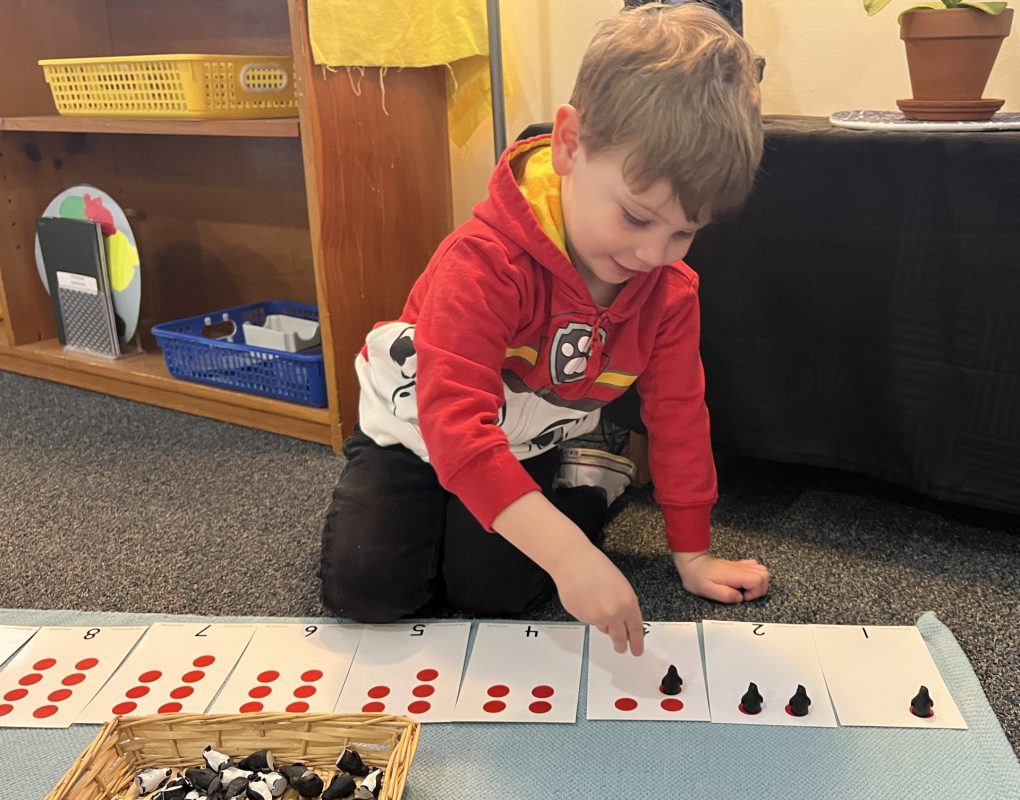
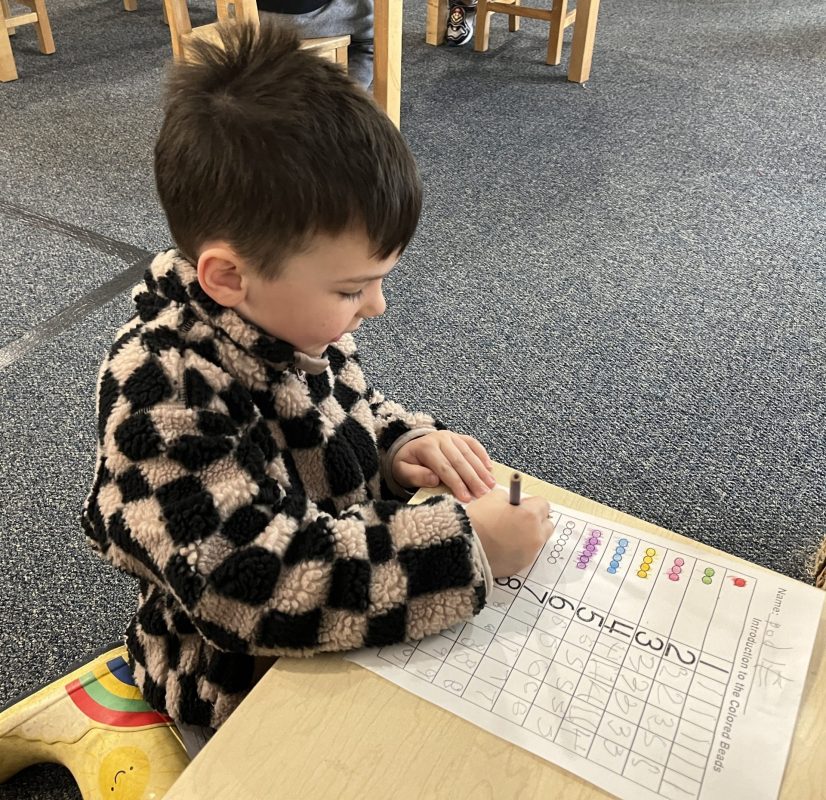
The Montessori math materials are visual and hands-on manipulatives, aiding in the ability of a child to understand mathematical concepts concretely. After many repetitions and when the child is ready, we introduce the more complex and abstract concepts. We teach the process first because the goal is to develop a true understanding of mathematical concepts and not simply memorization. The materials are sequenced in a way that each success a child experiences is a building block for the next concept to be introduced.

Maria Montessori believed that all children have a mathematical mind and an internal drive to understand the environment around them. We know that the Montessori math materials are exact and precise and allow the child to have positive experiences in math right from the beginning.  We also know that the Practical Life activities have helped the child to develop order, concentration, coordination, and independence.  Likewise, the Sensorial materials have allowed the children to recognize and extend patterns.  Here’s the real secret behind the success of the Montessori math materials though, the children truly enjoy them.

Hope your week adds up to one filled with peace and love.

Michelle & Maria


Mrs. Wilson: Welcome Winter!

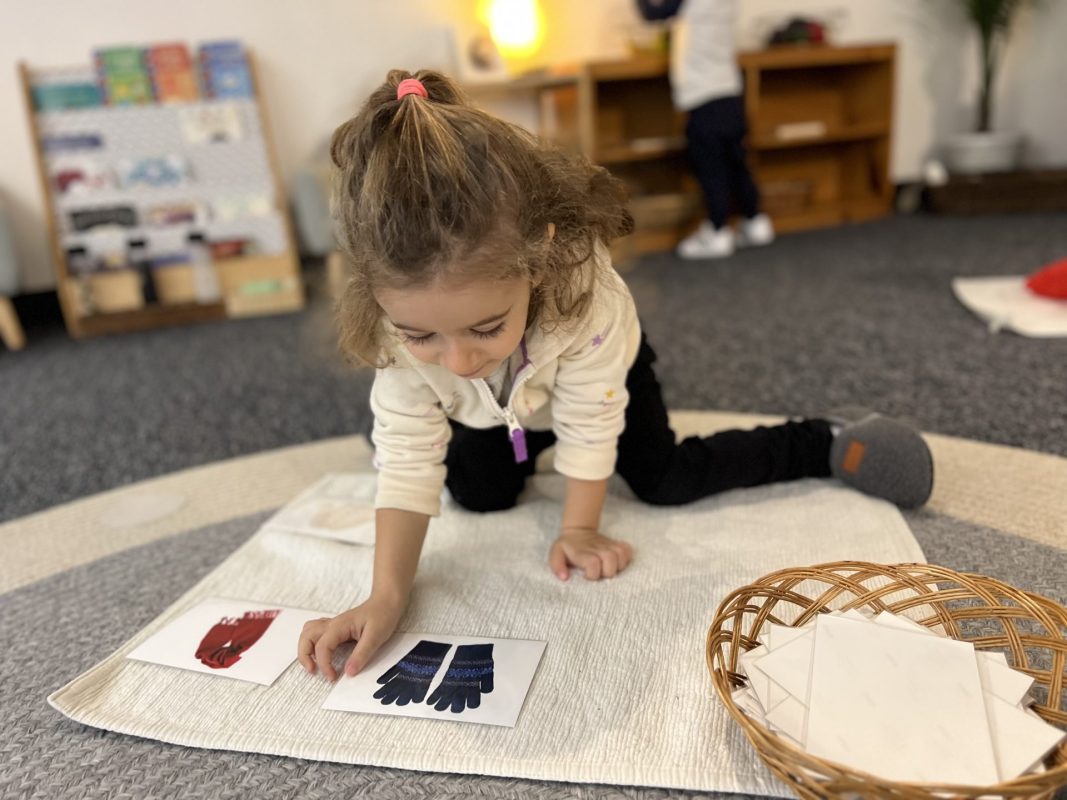
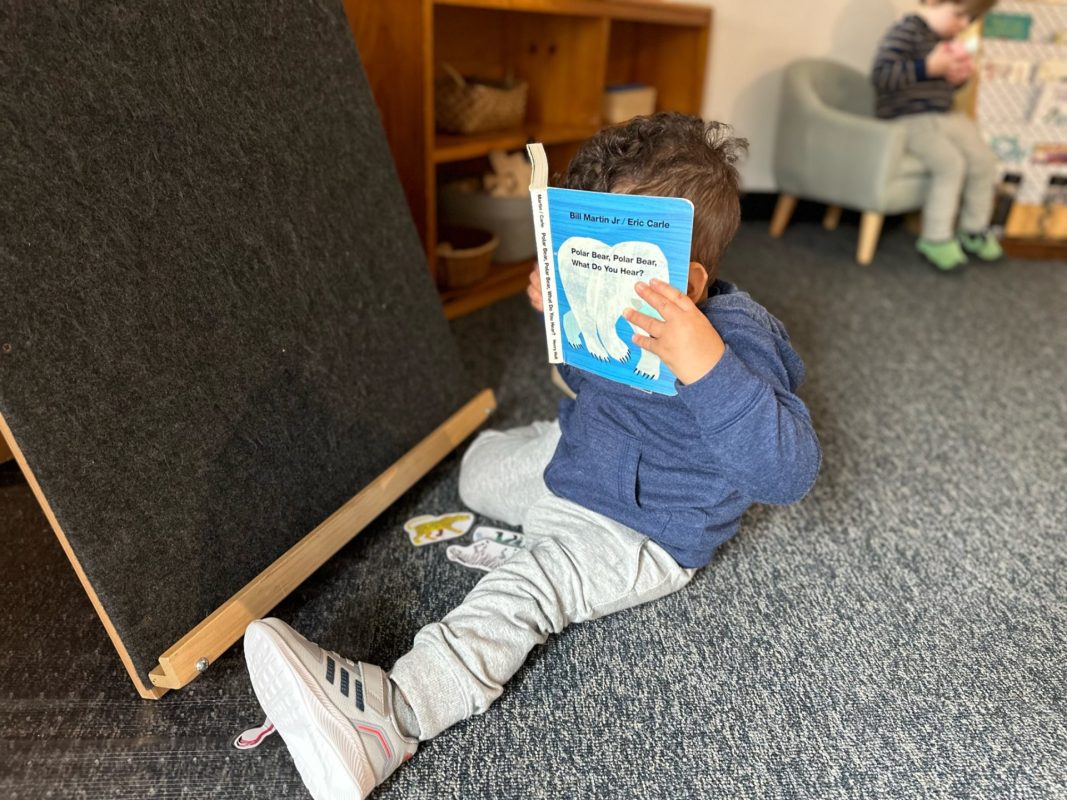
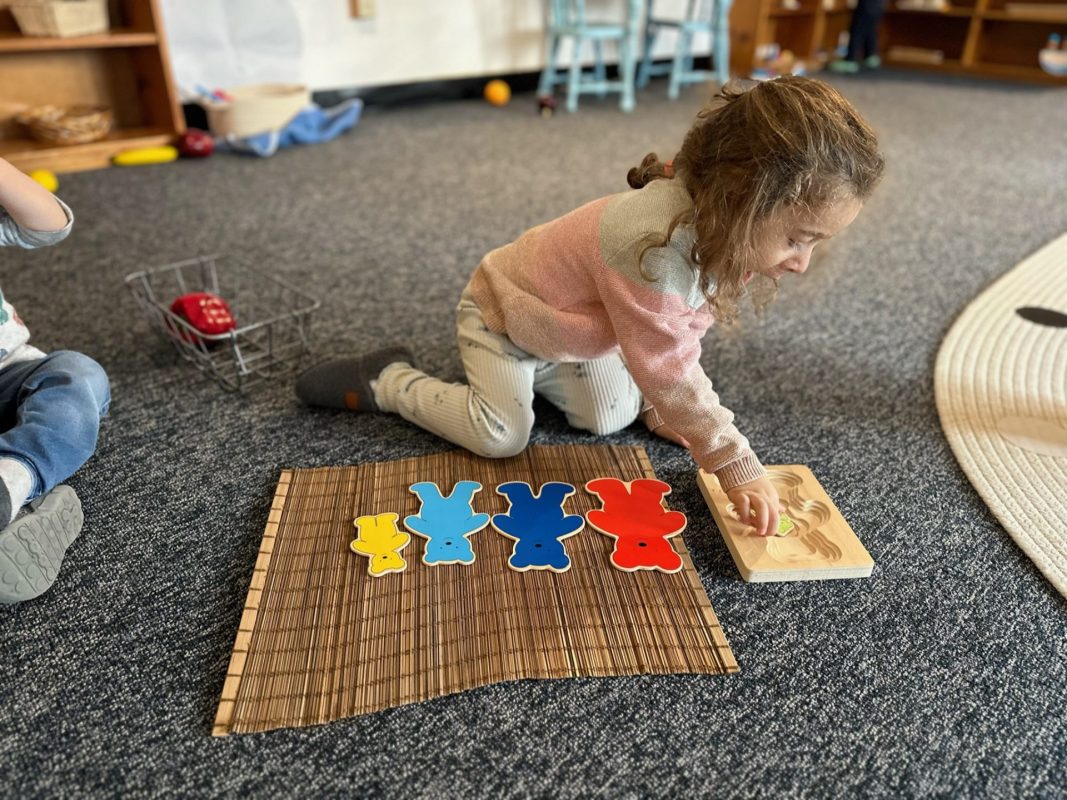
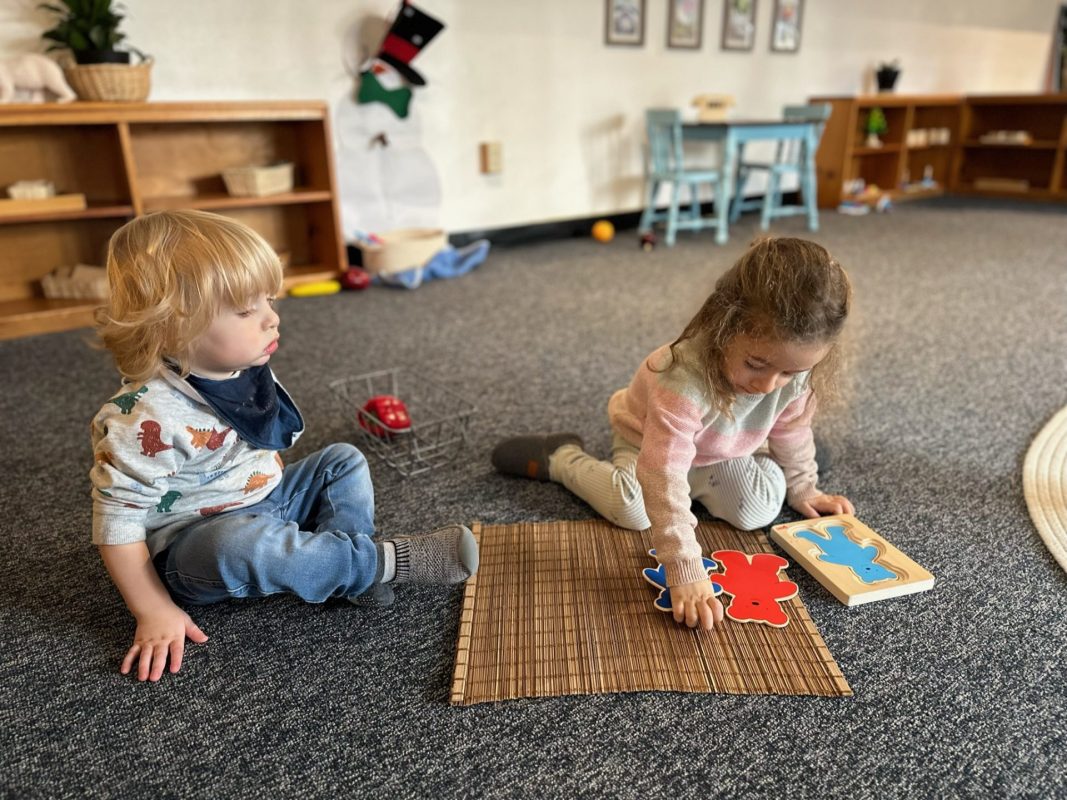
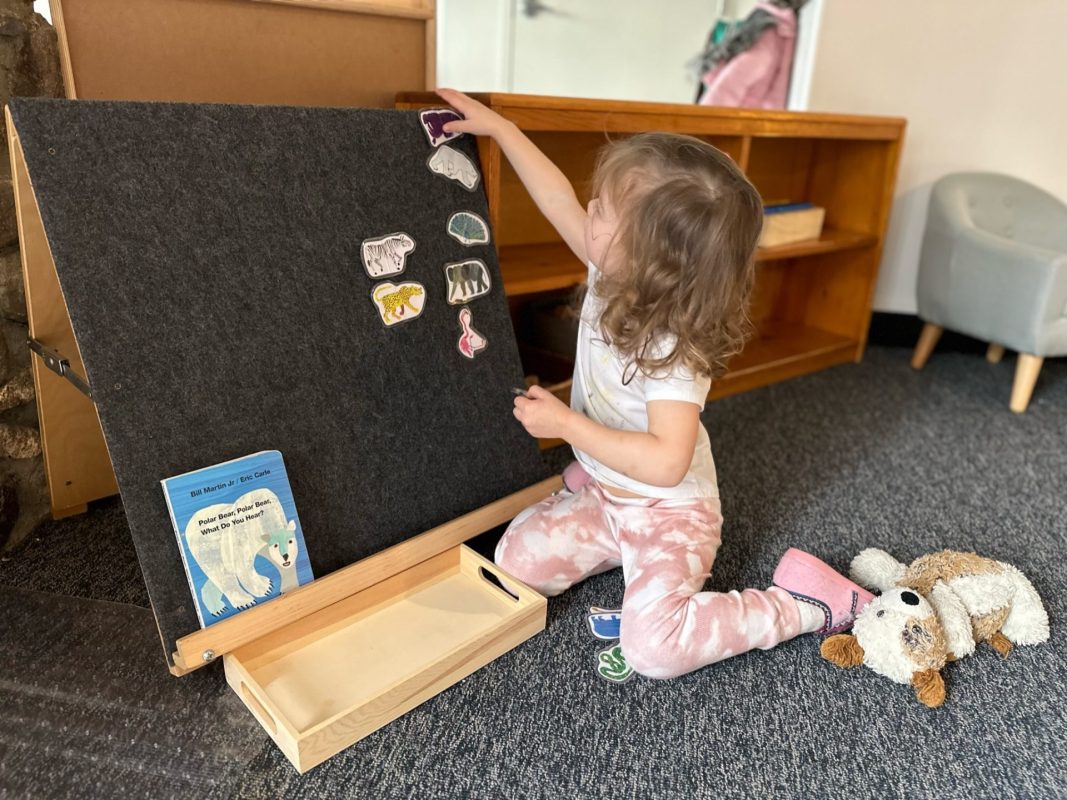
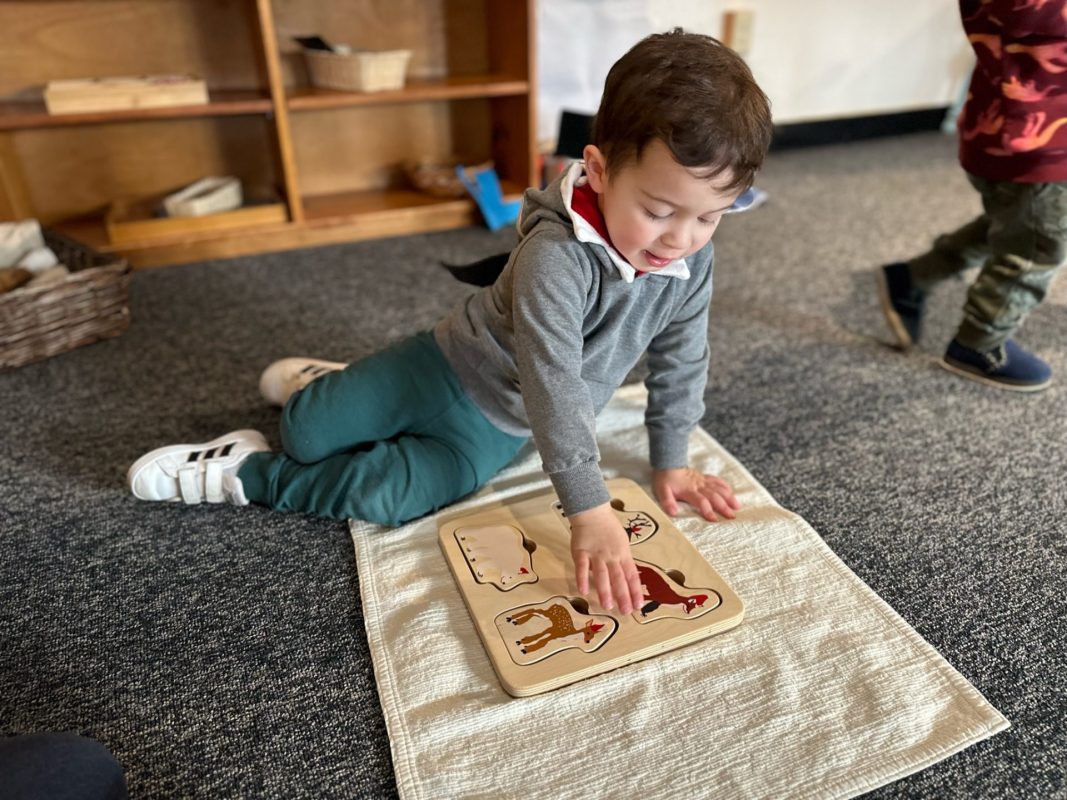
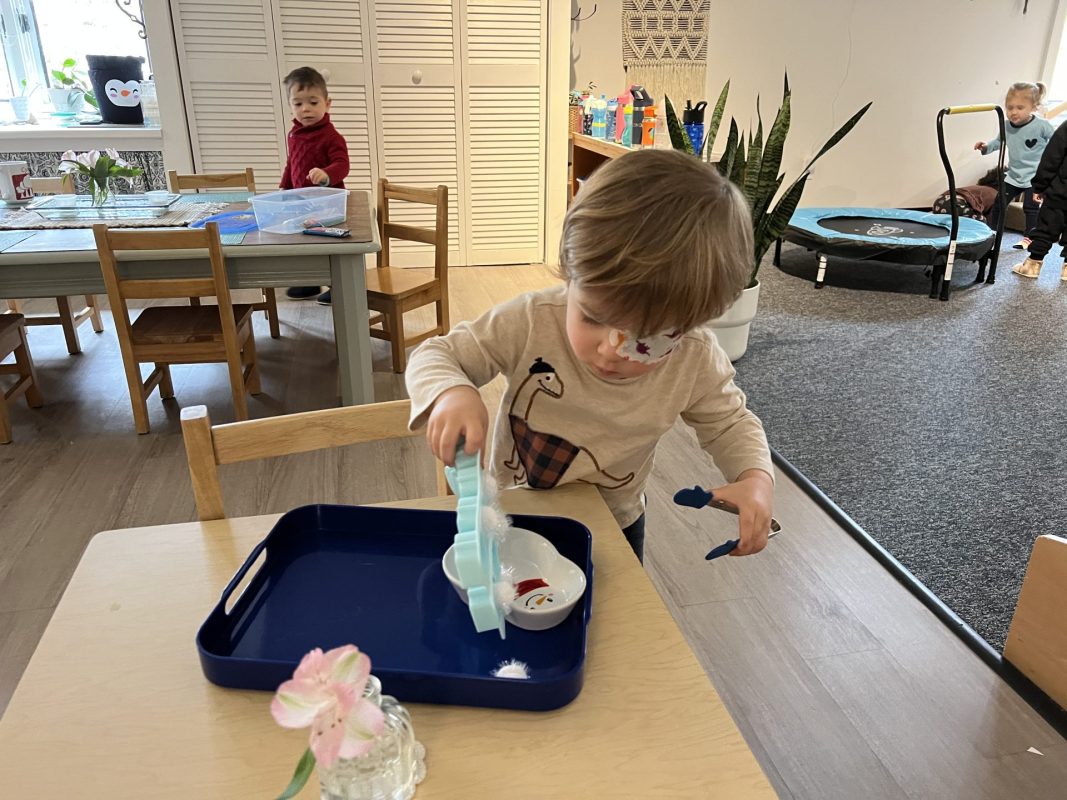
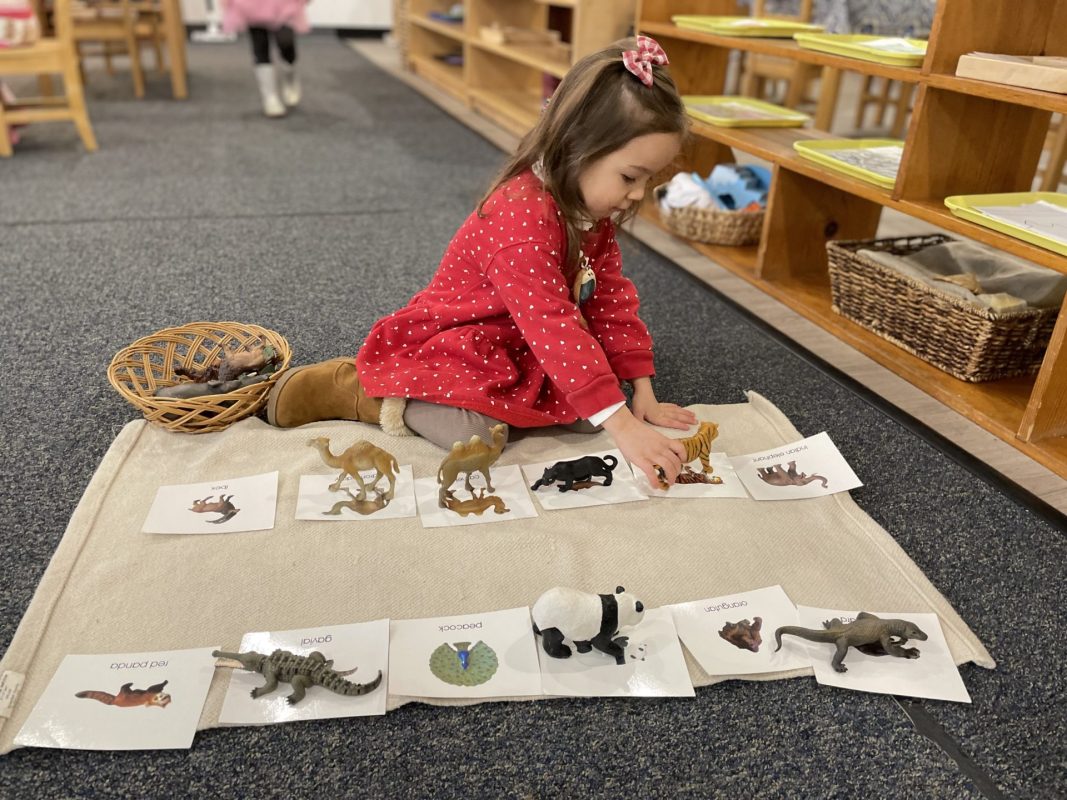
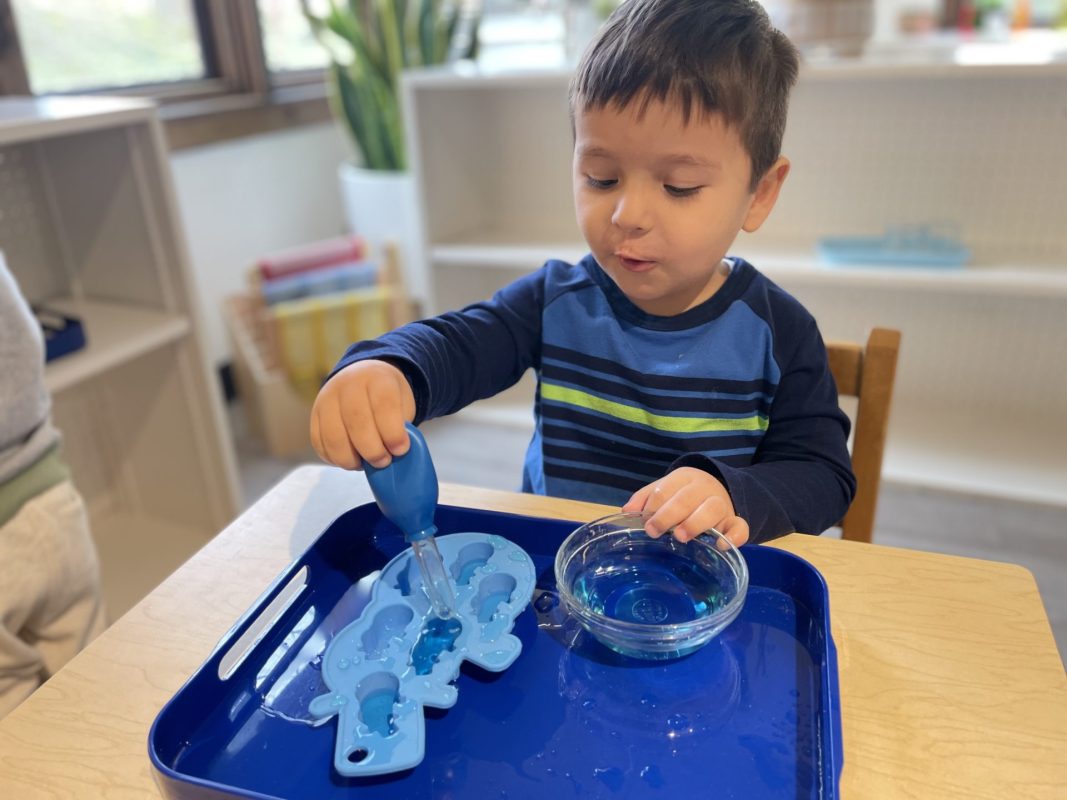
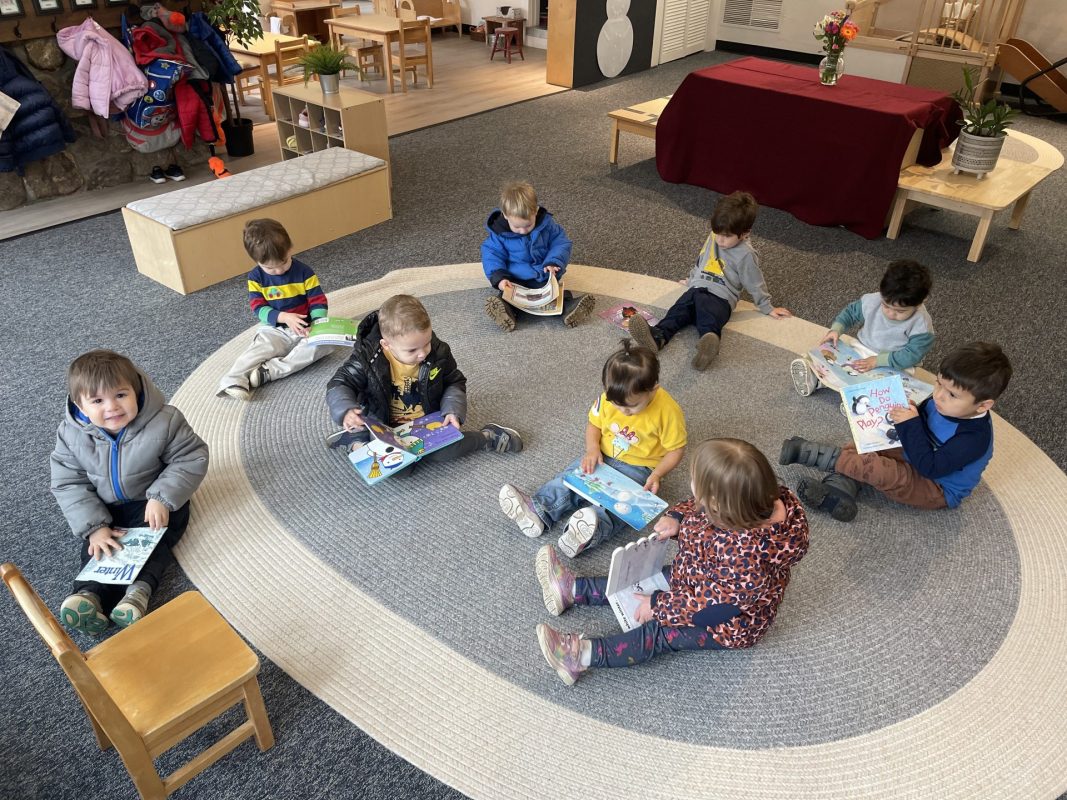
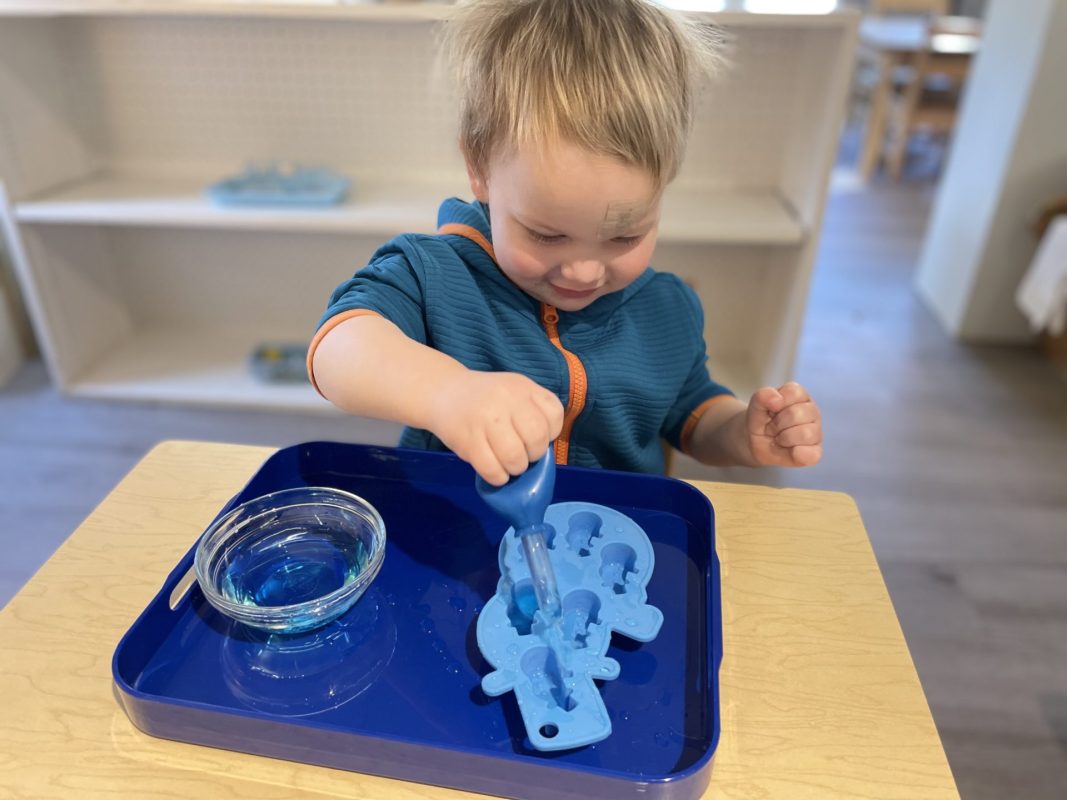
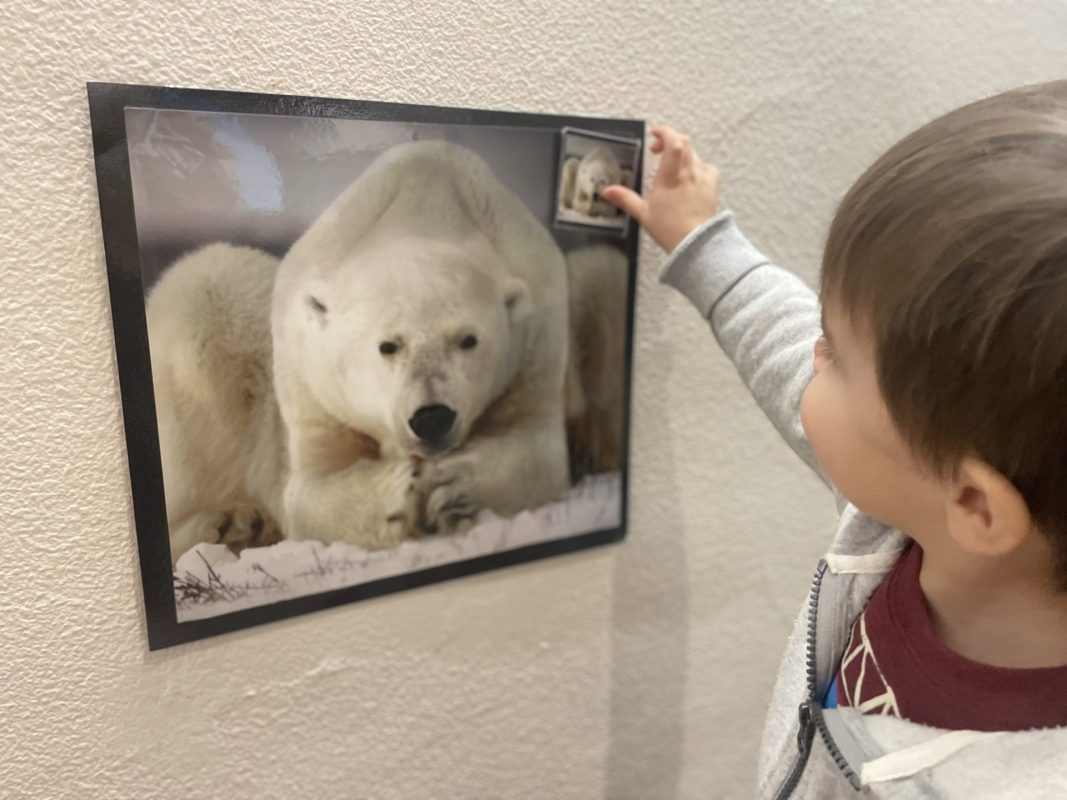
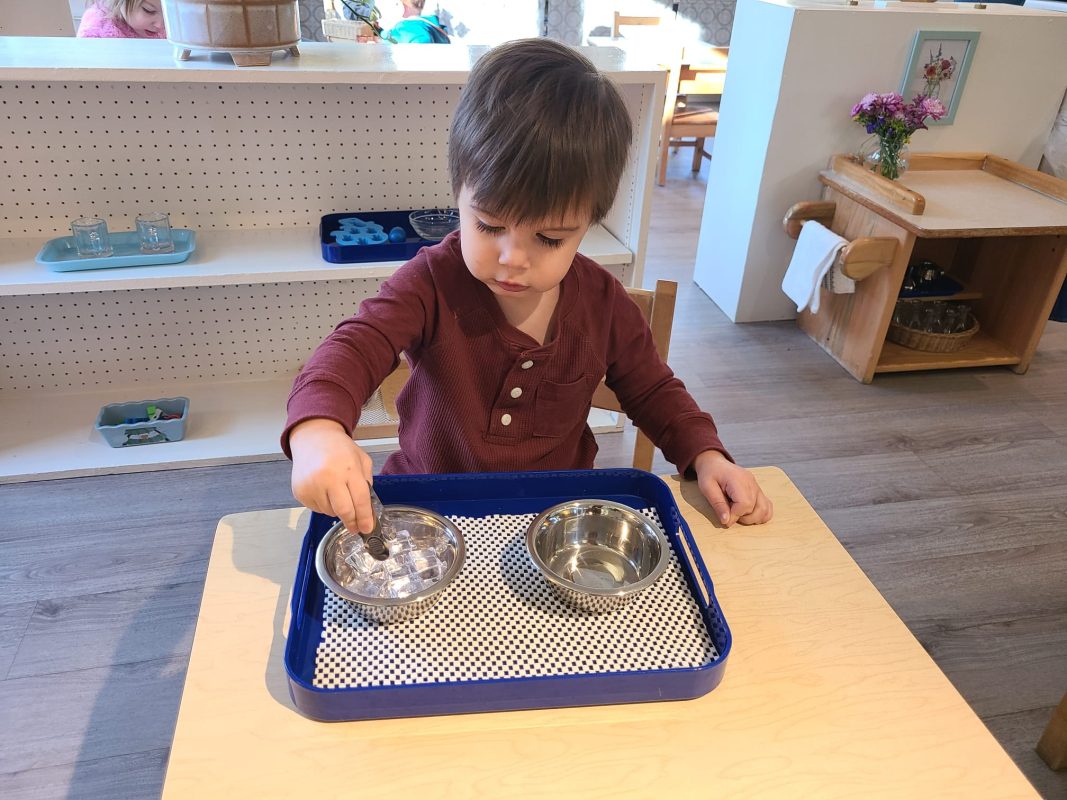
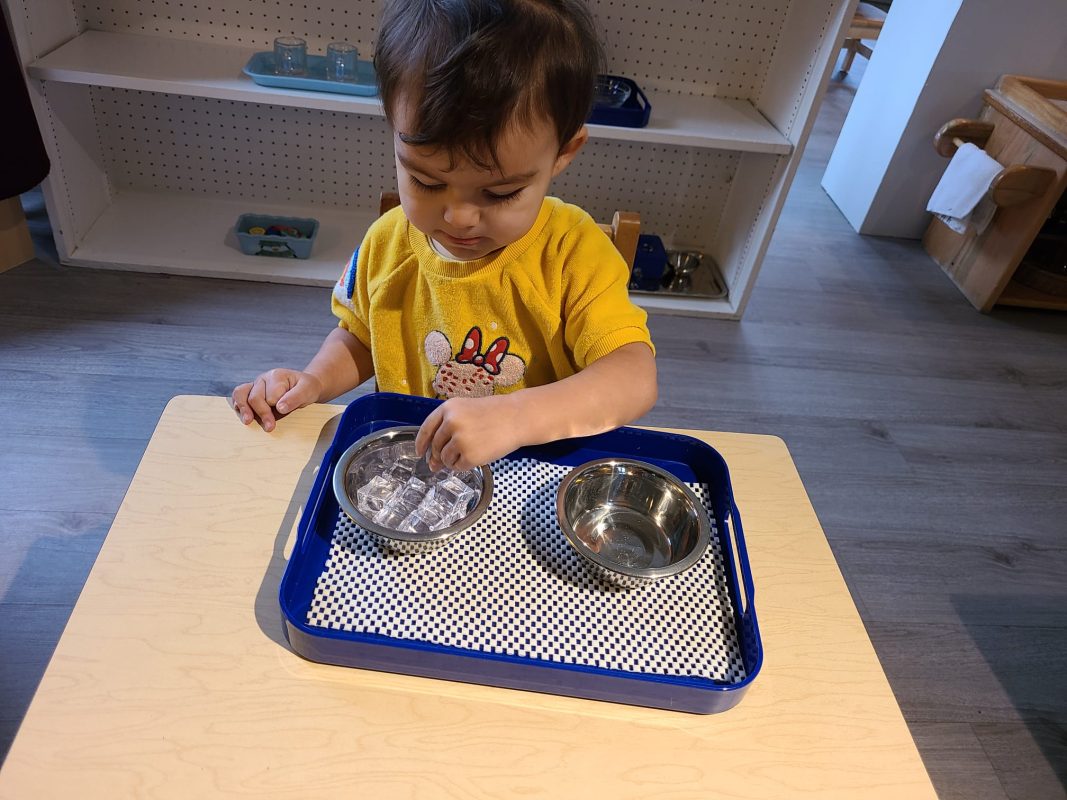
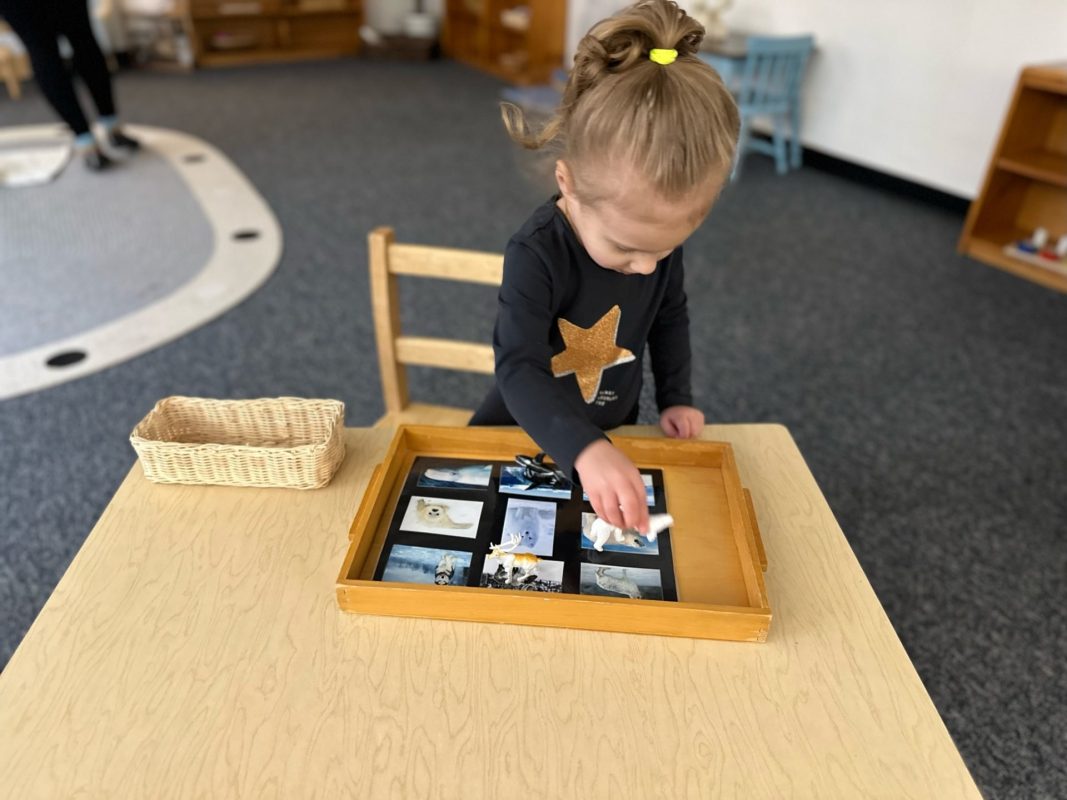
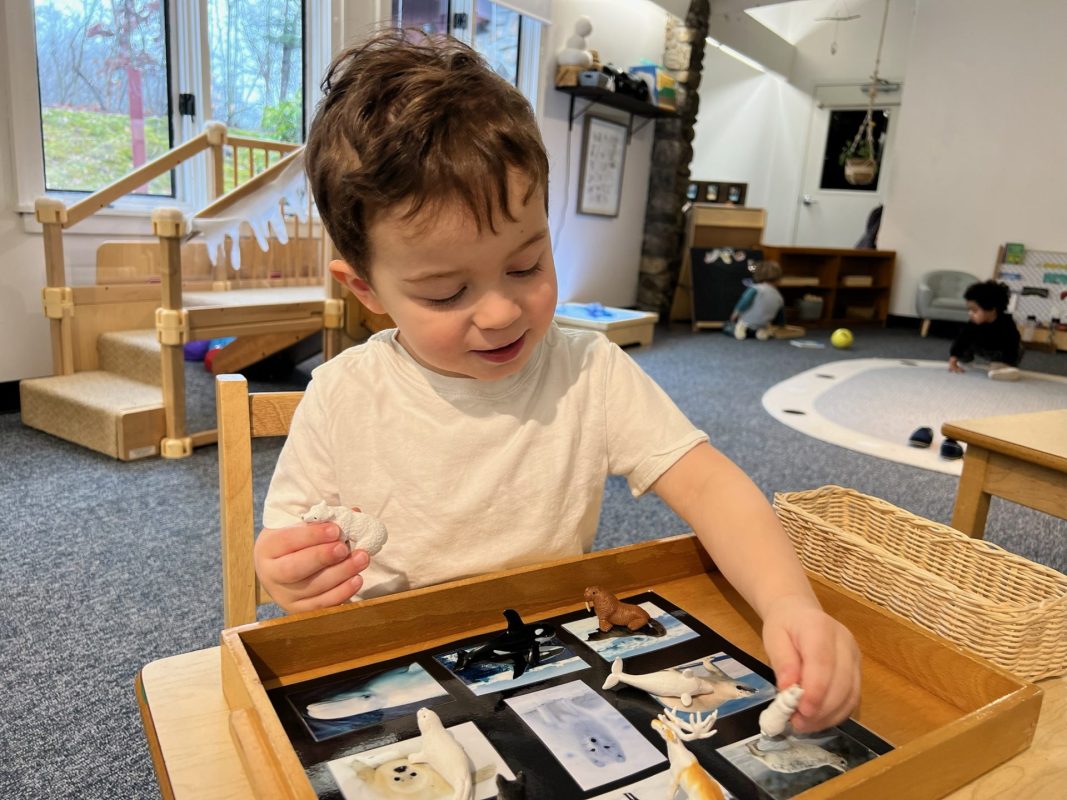
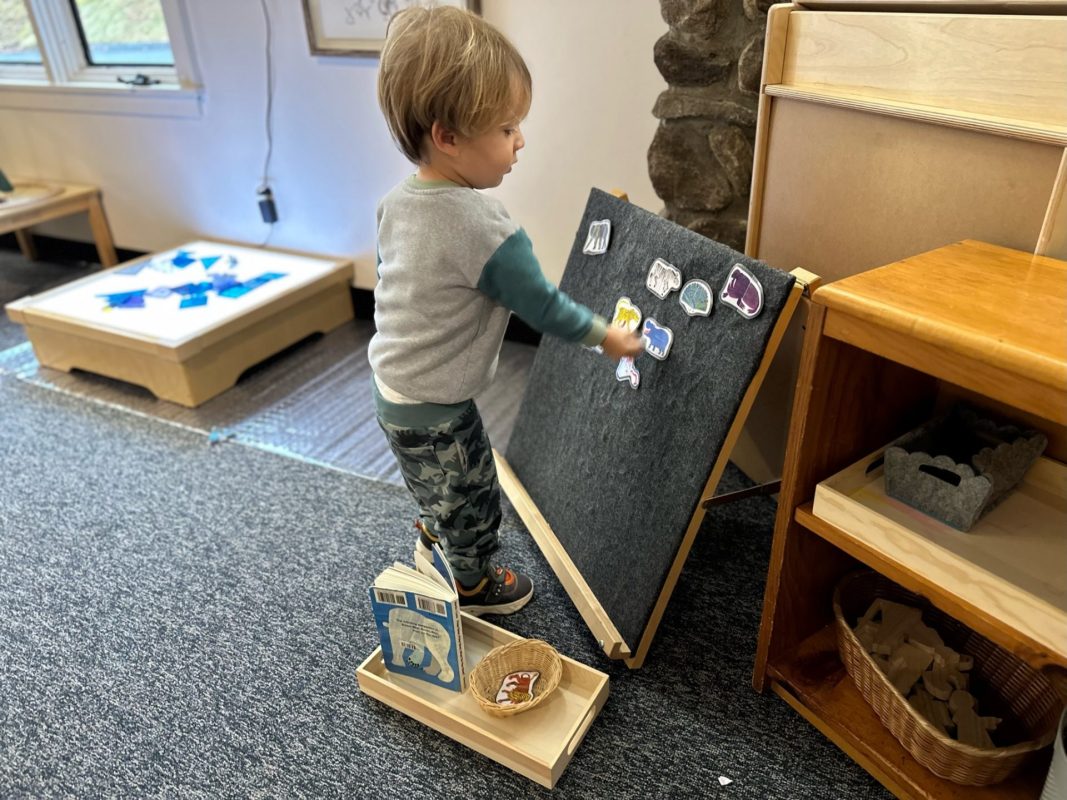
In January, we are focusing on the winter season and cold climate animals. The children can explore penguins trapped in ice with a family of polar bears. This activity is a great way to explore the feeling of cold, and the stages of water as a solid to liquid. As the ice melts, the children express their joy in retrieving the penguins from the ice. In language, the children are learning new vocabulary words for winter weather clothing and arctic animals such as caribou, arctic fox, arctic rabbit, Huskey, beluga whale, orca, harp seal, walrus, and polar bear.
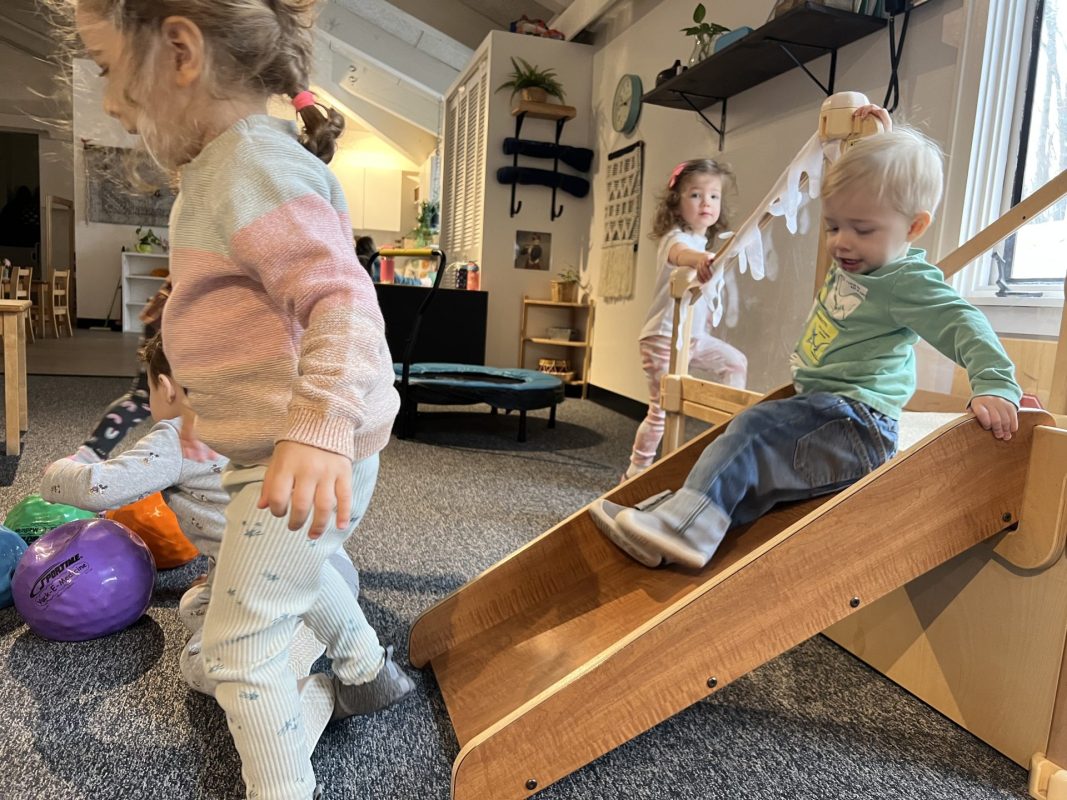
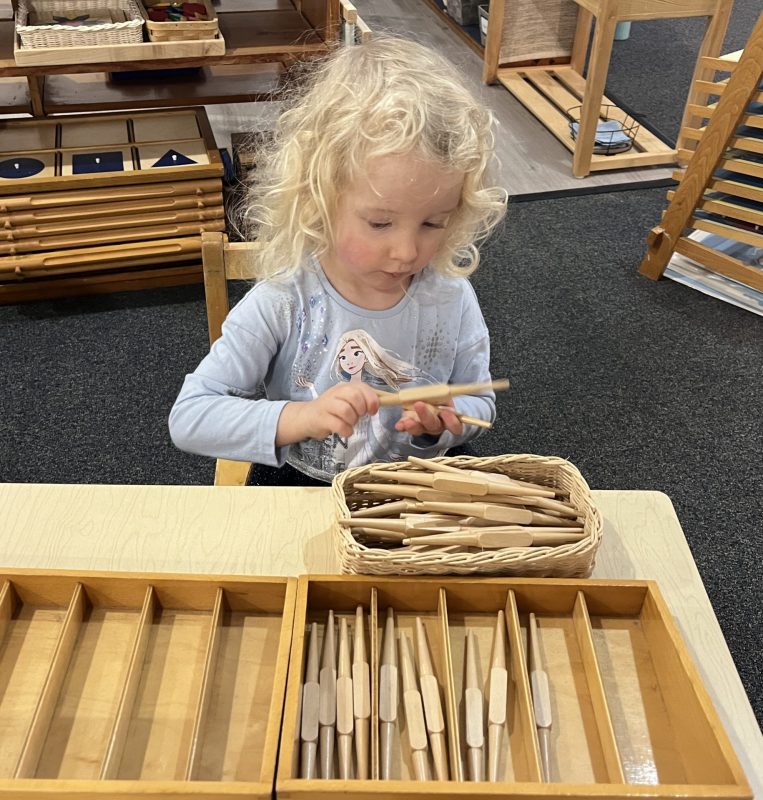
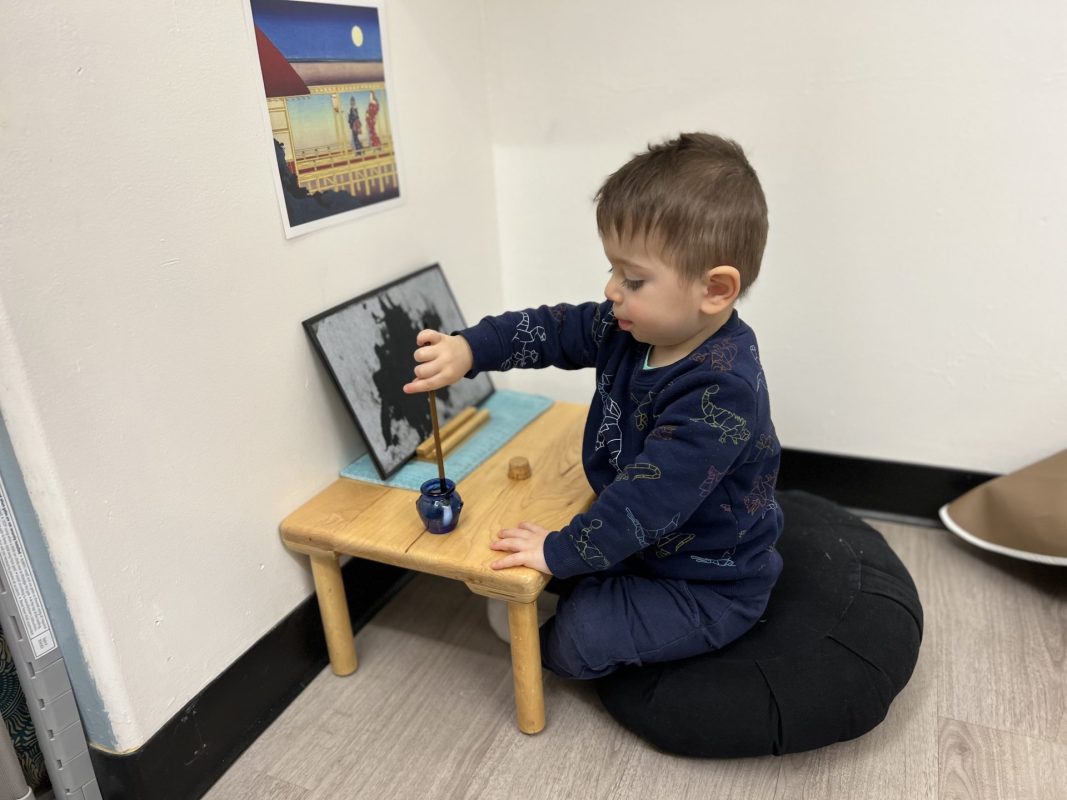
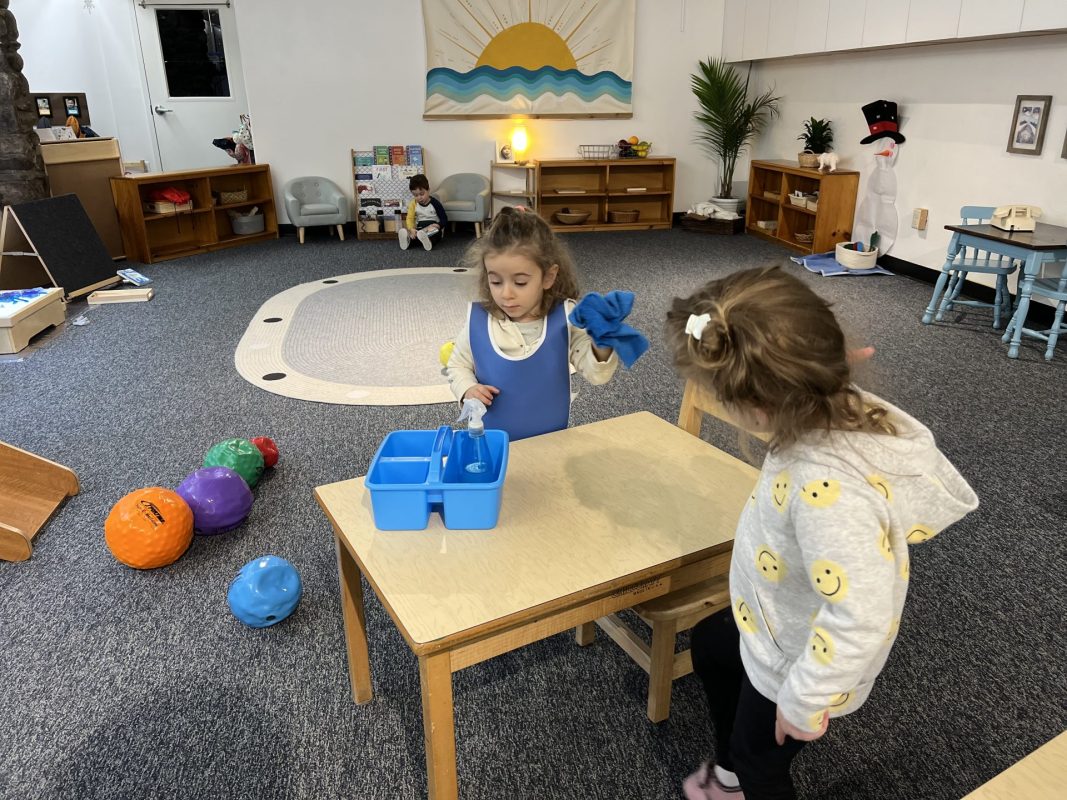
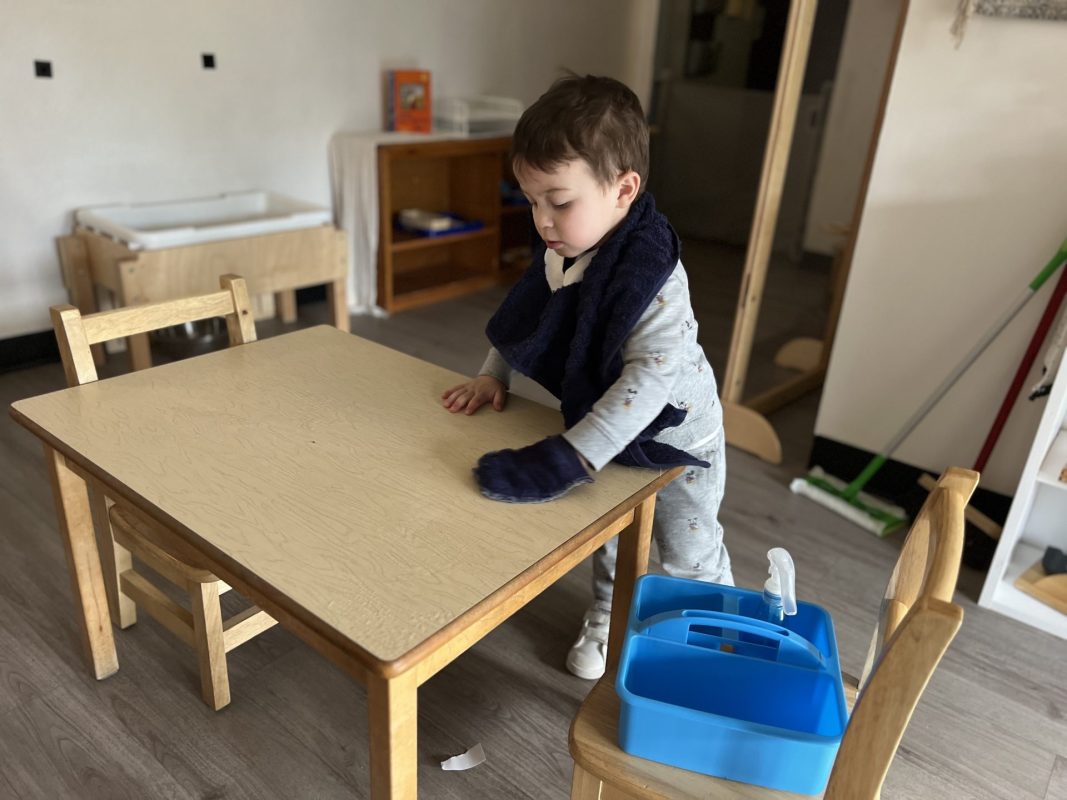
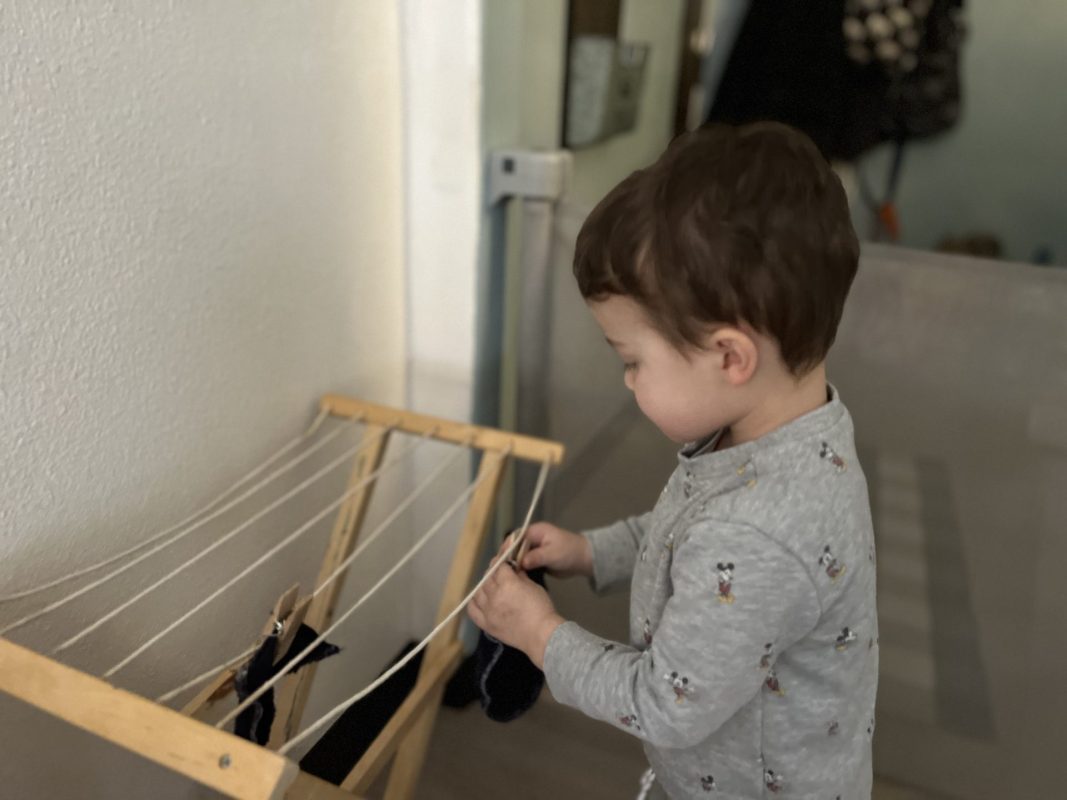
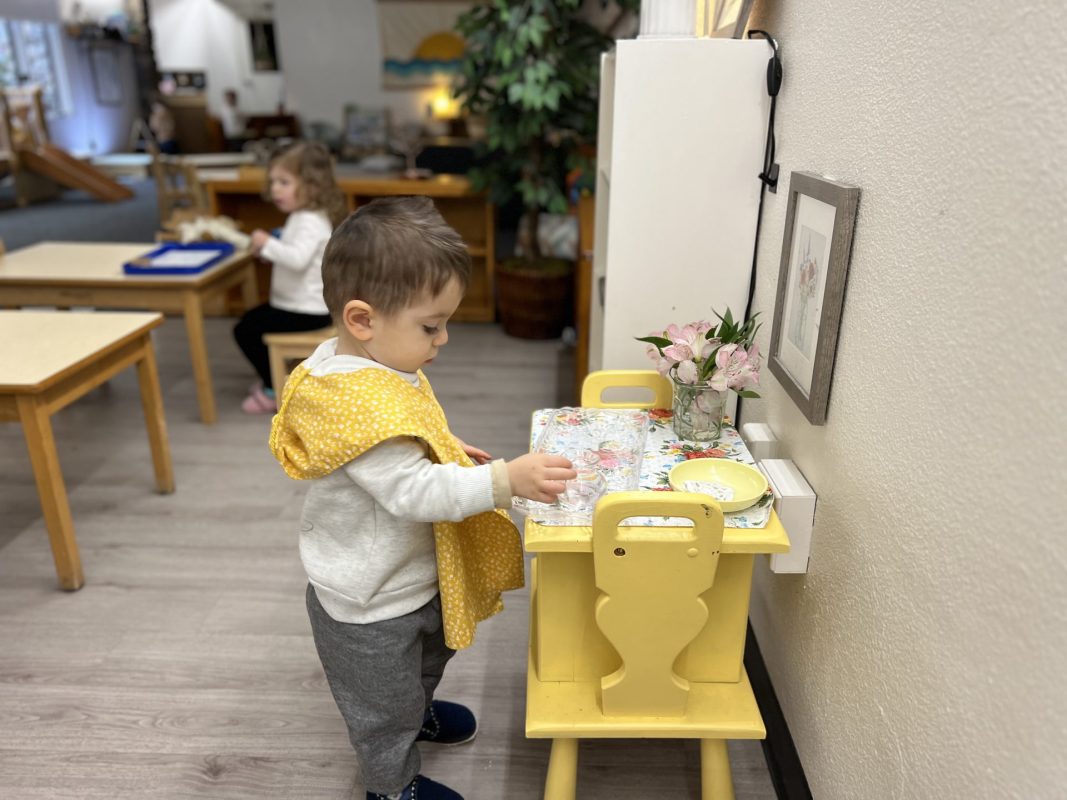
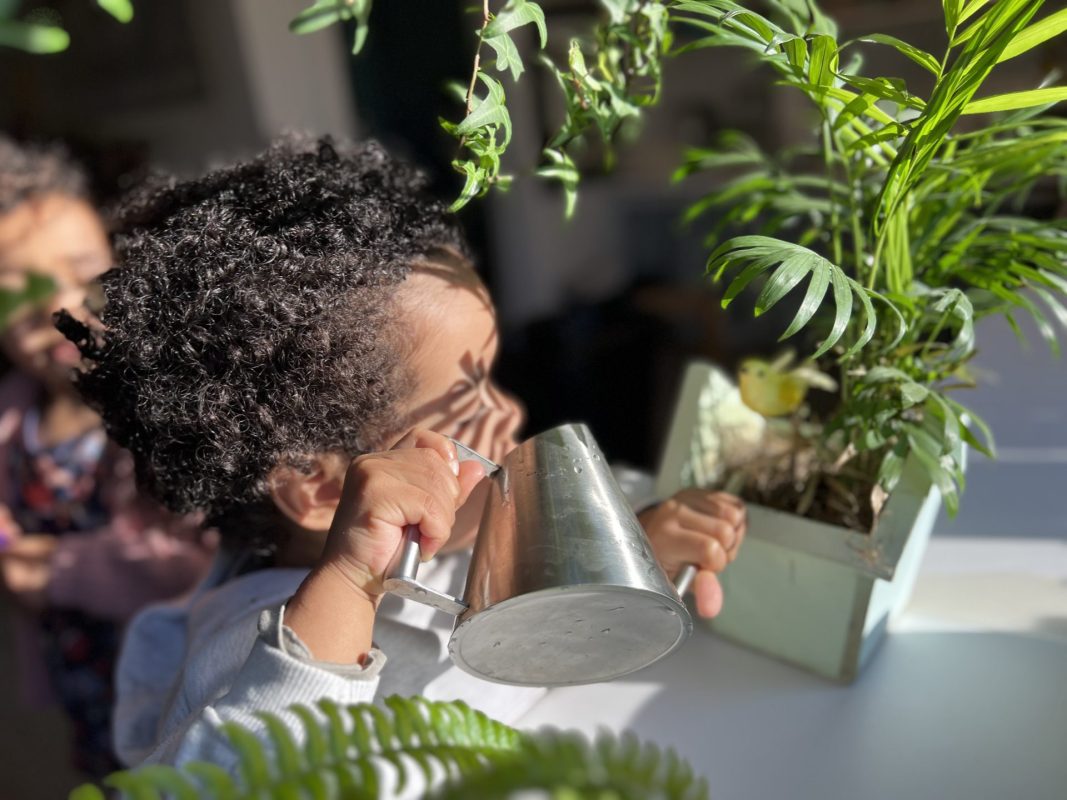
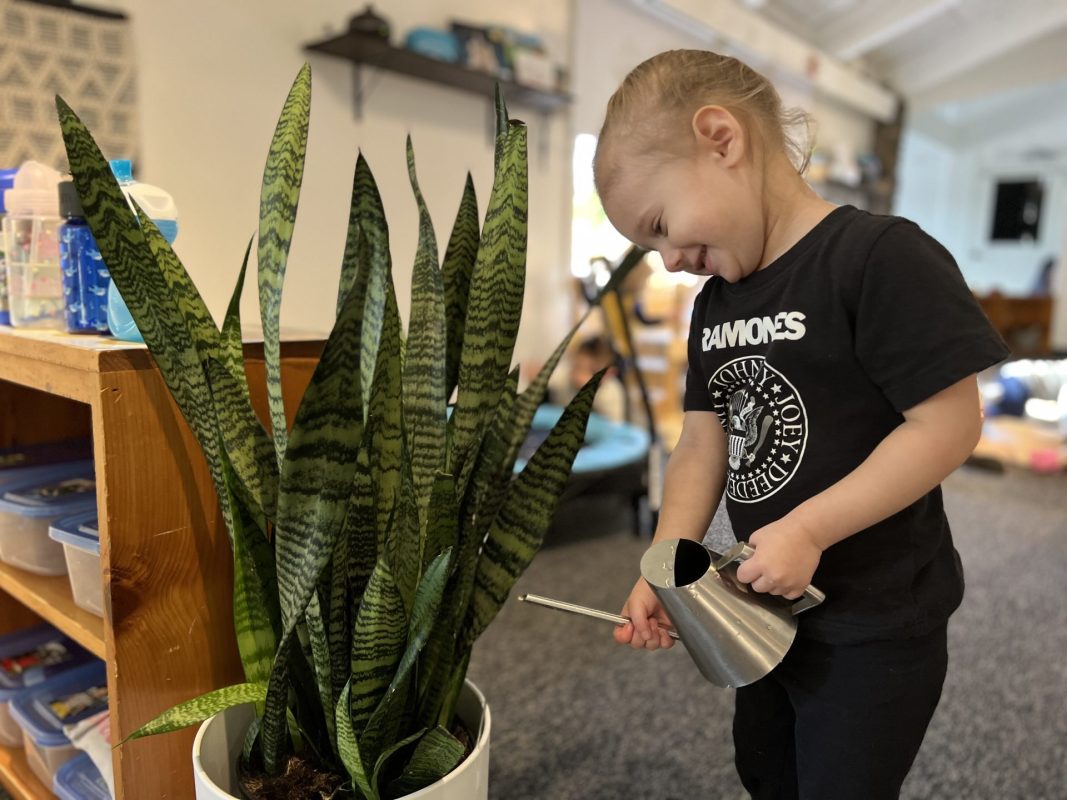
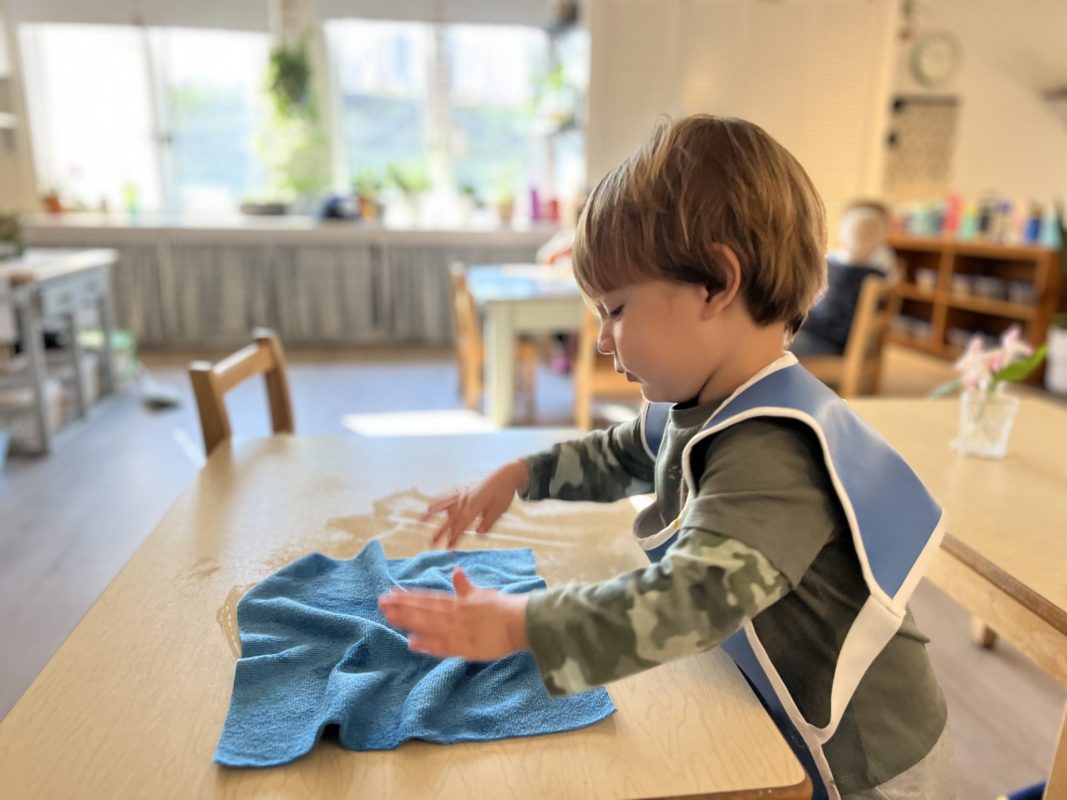
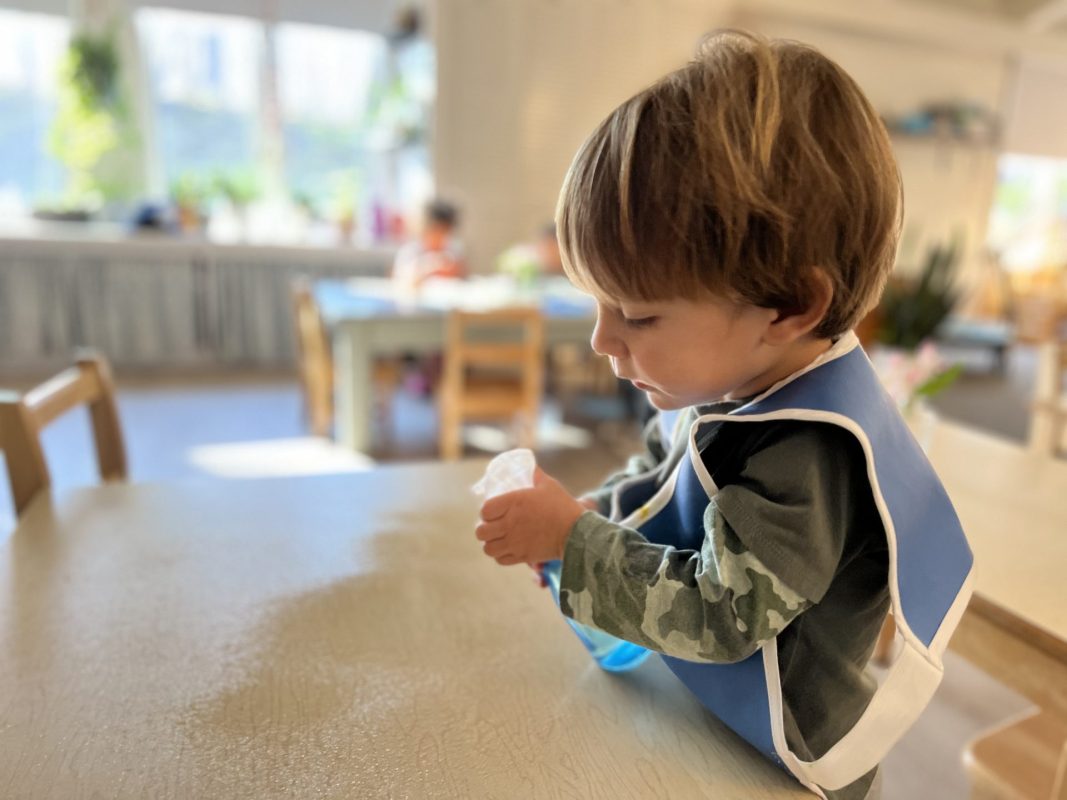
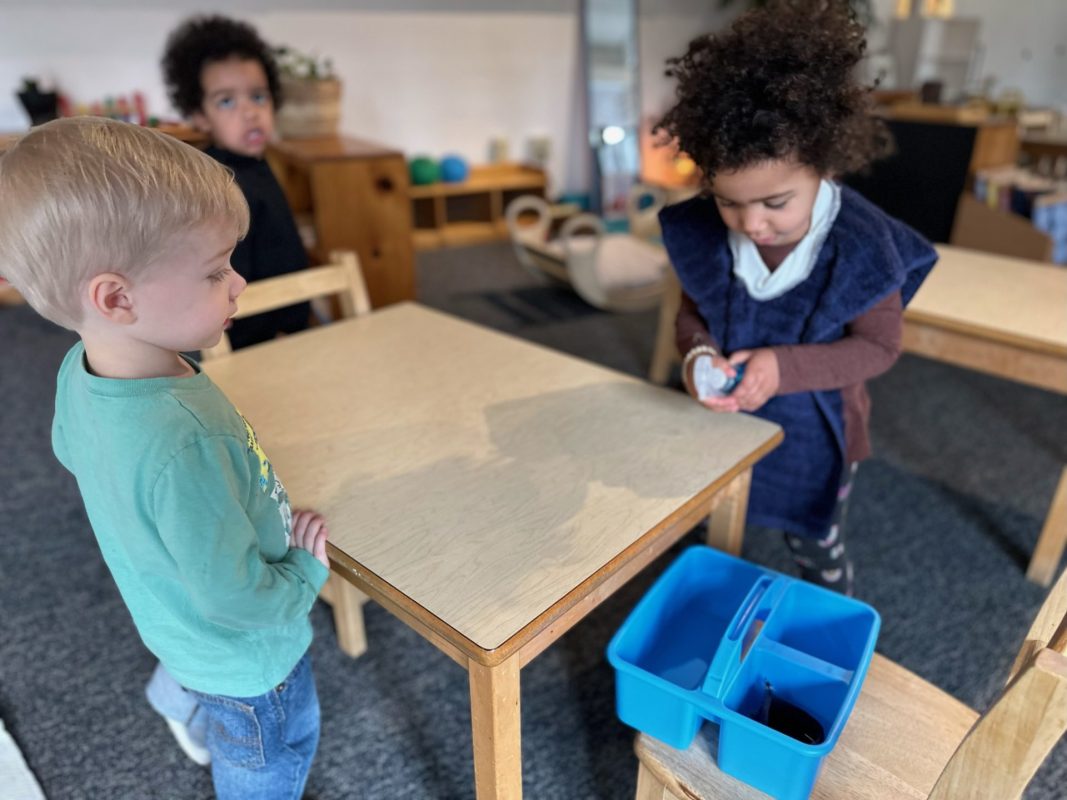
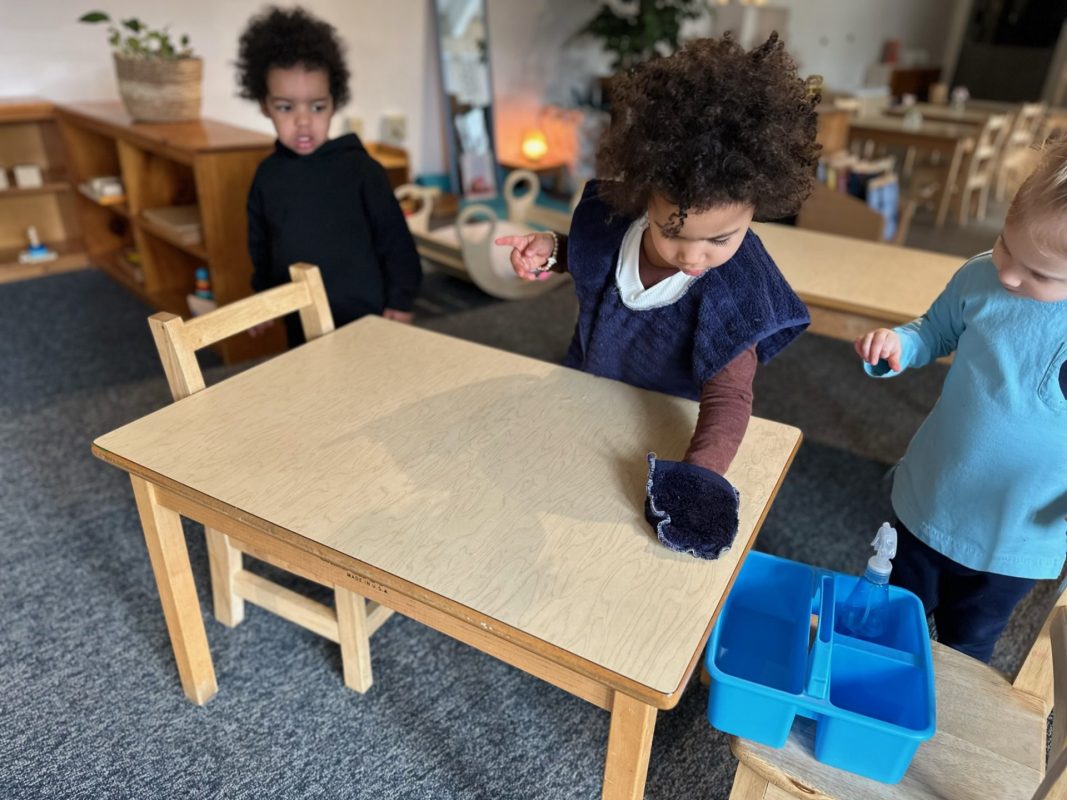
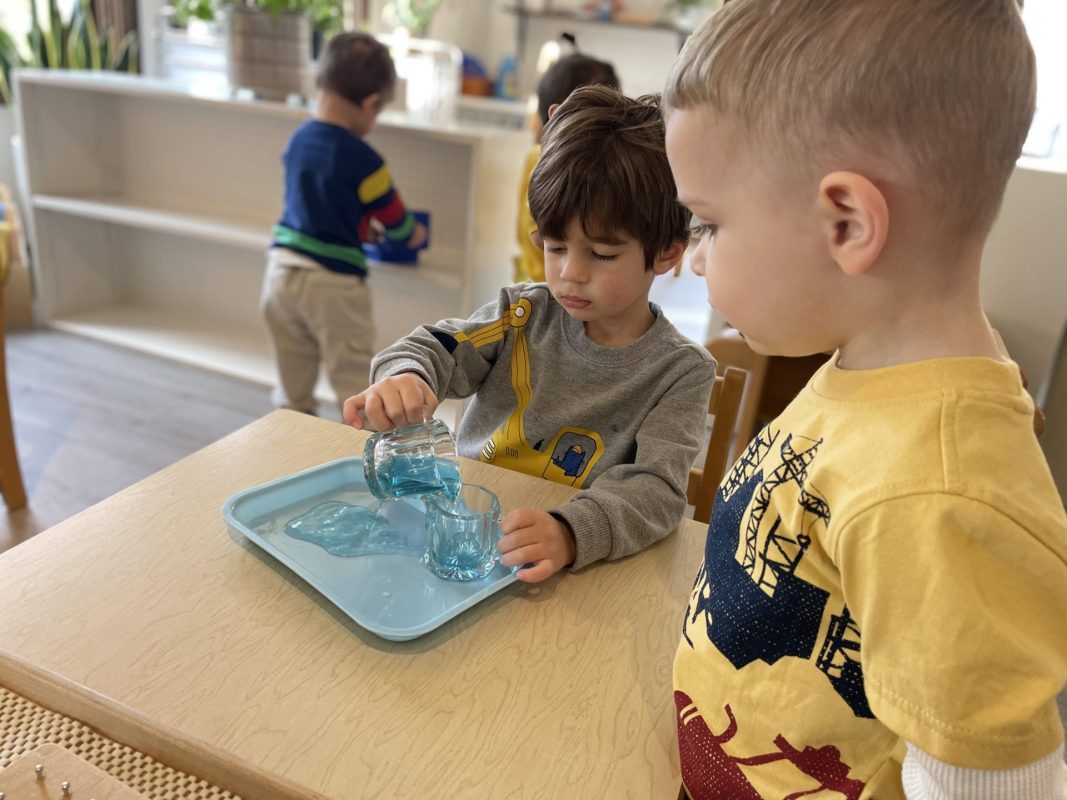
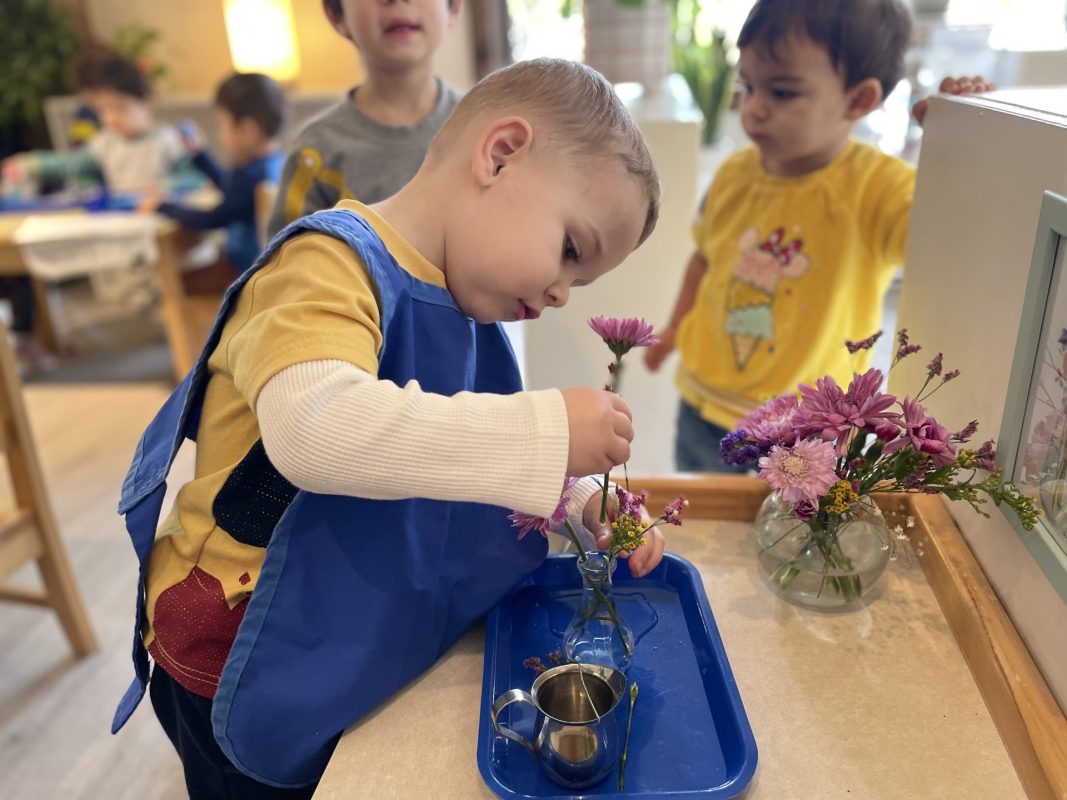
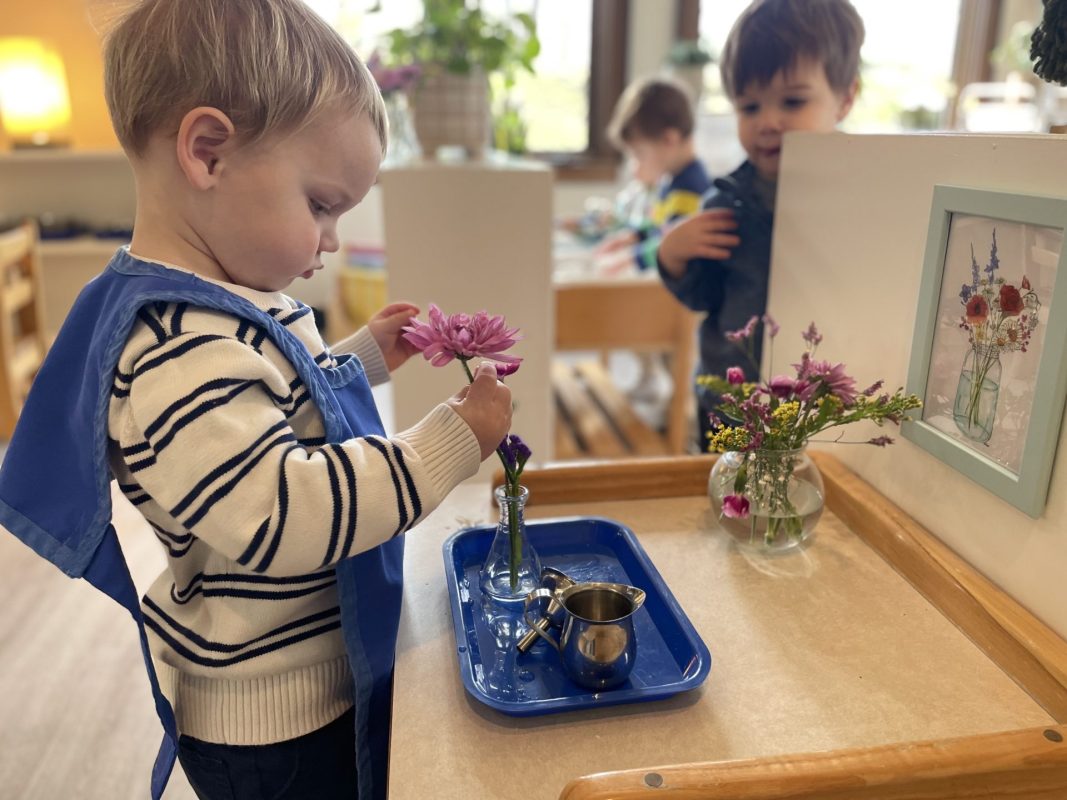
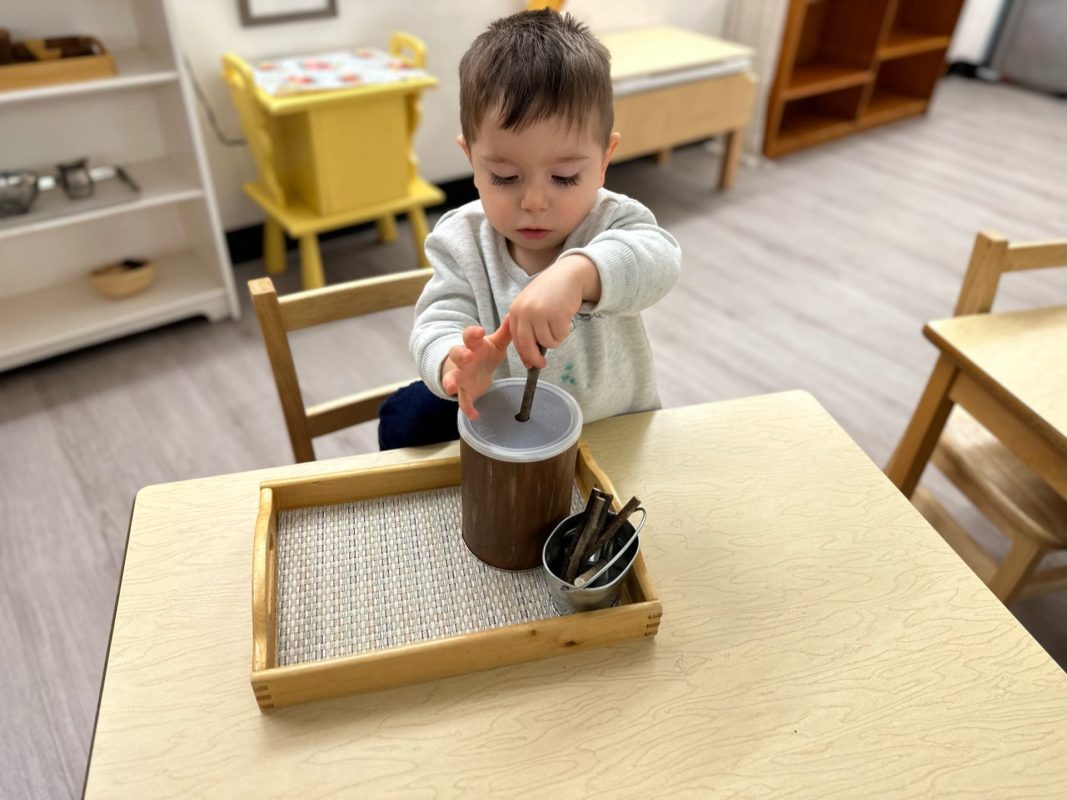
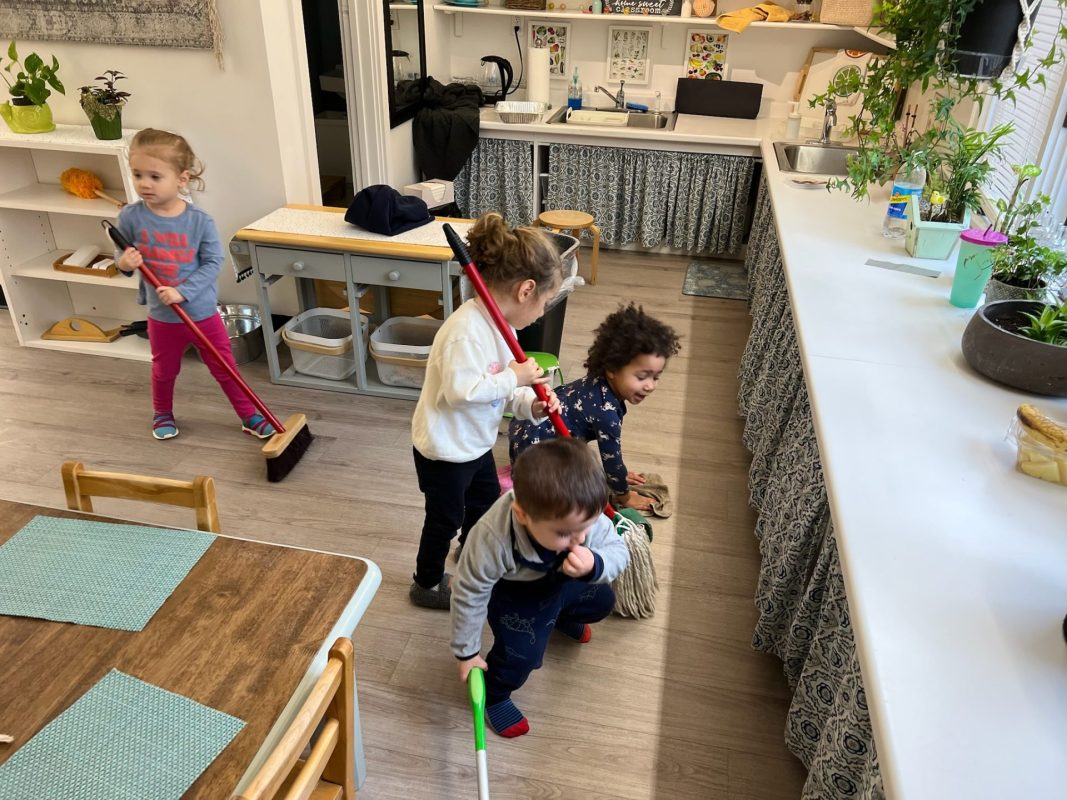
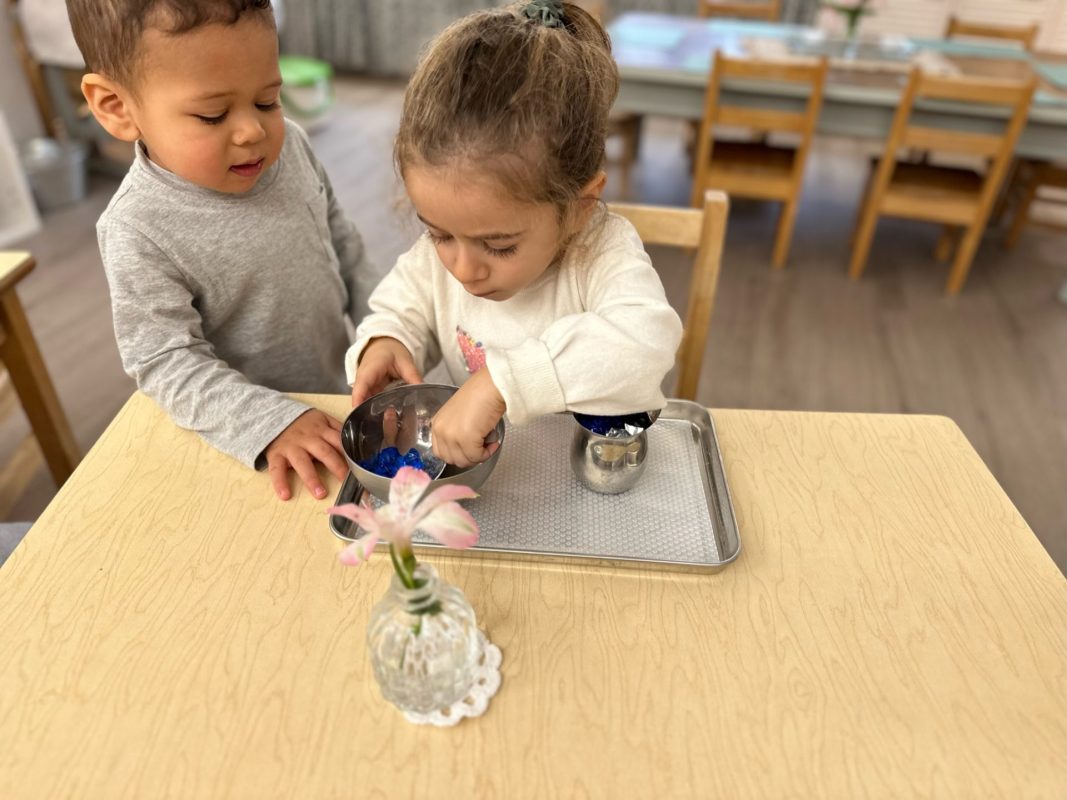
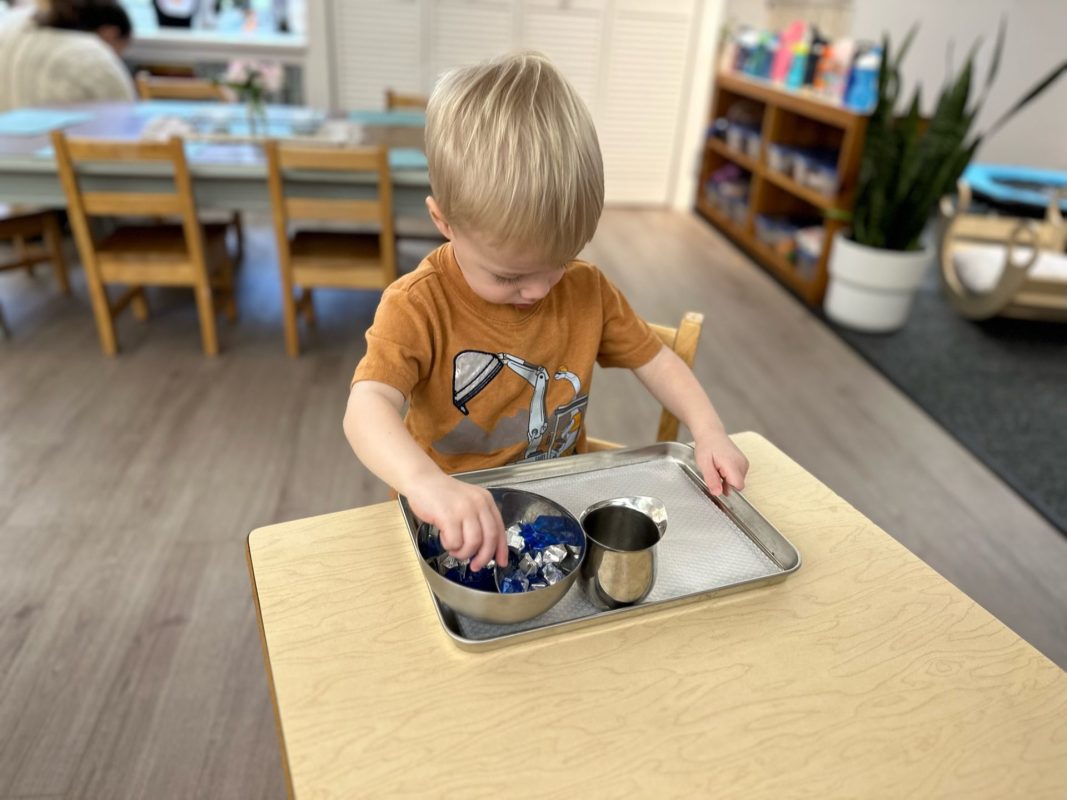
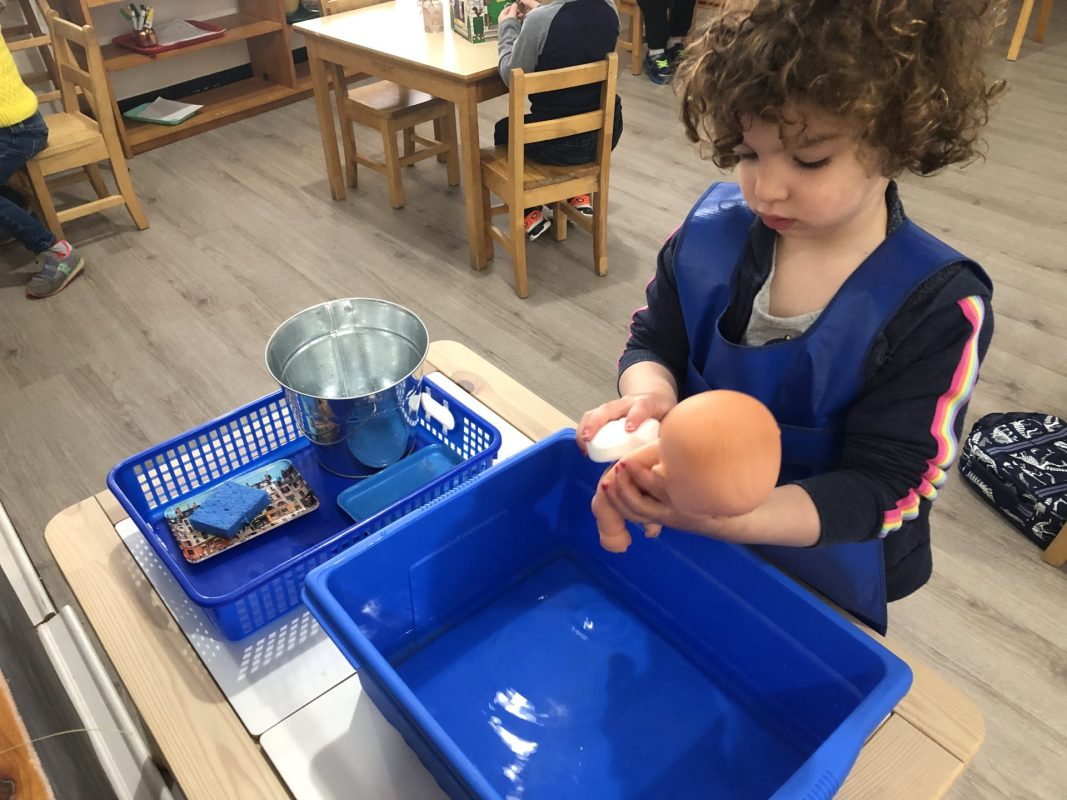
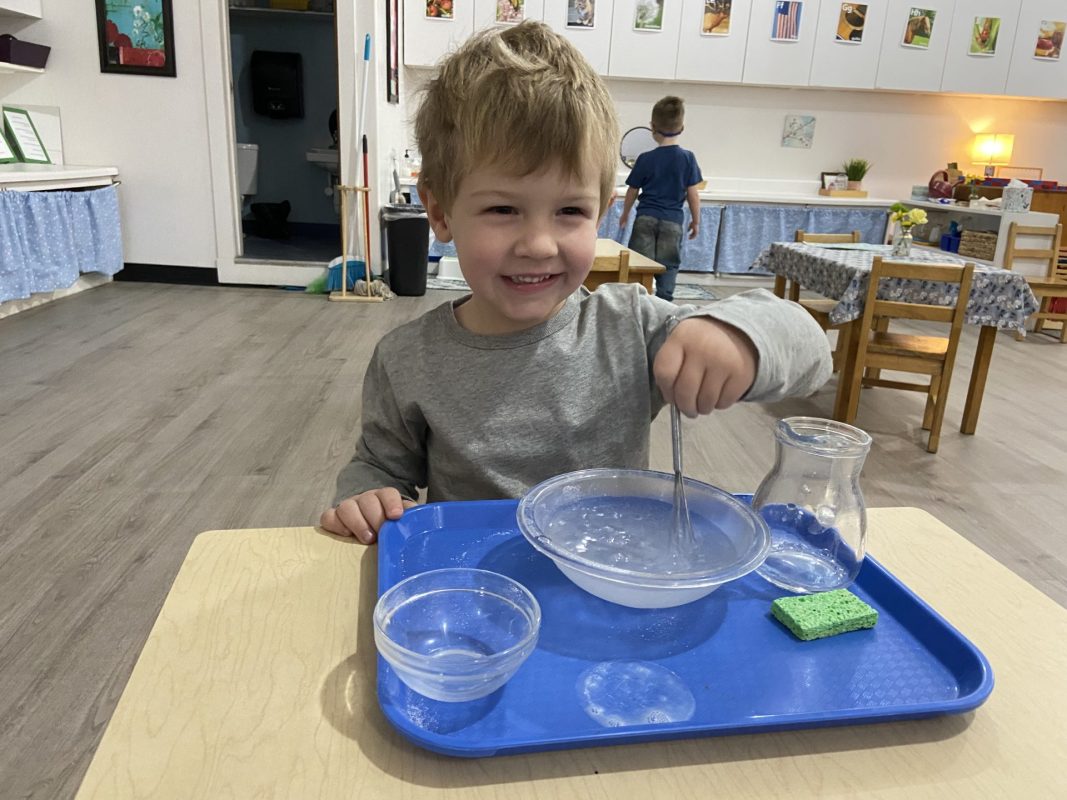
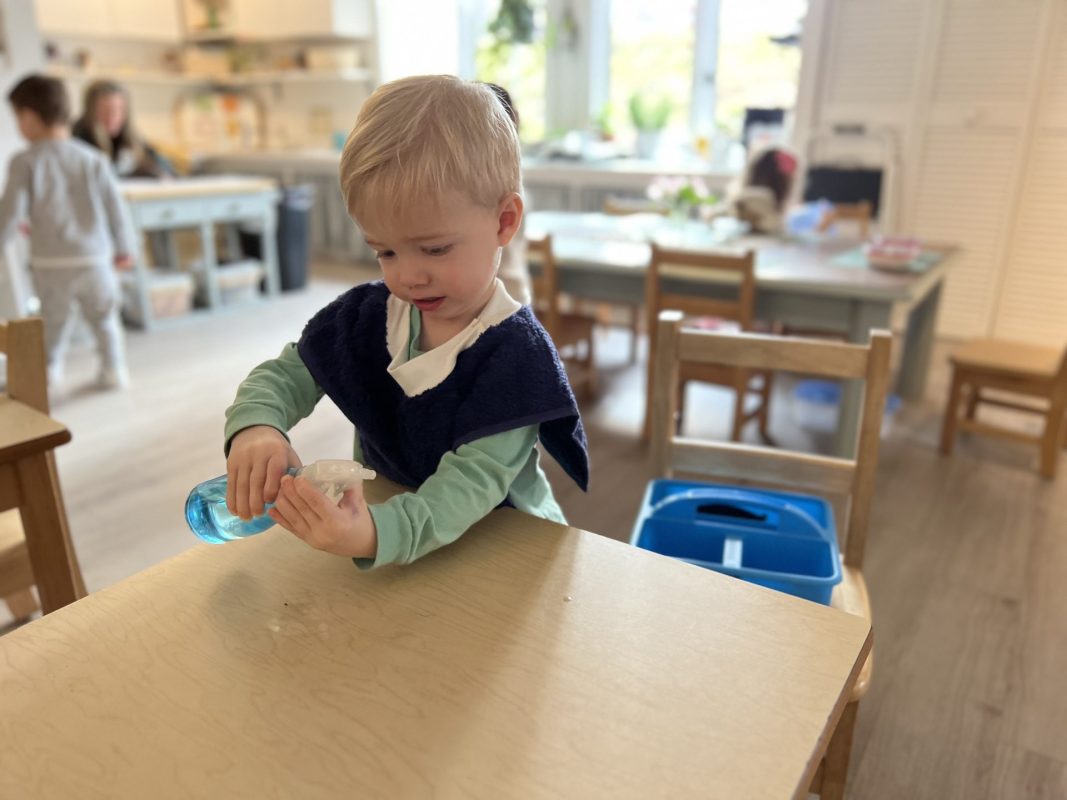
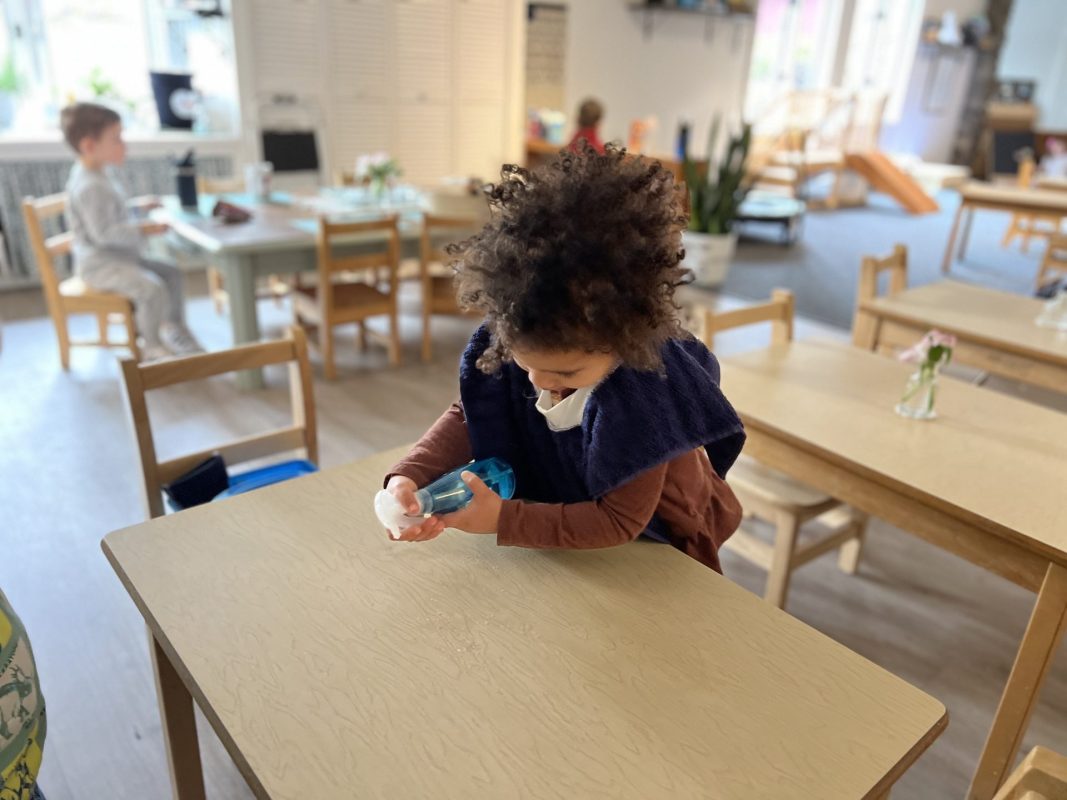
The practical life area is expanding. Some of the children received lessons this week on table washing. The task has a lot of steps and takes time to complete. The very last step in this work is to hang the wet towel on the clothesline, then put a dry towel in the bin for the next child. At this moment, they would much rather spray all of the water out of the bottle. As time goes on they will soon realize that too much water is harder to dry. I love watching the progression of this work go from a fun wet experience to purposeful work.

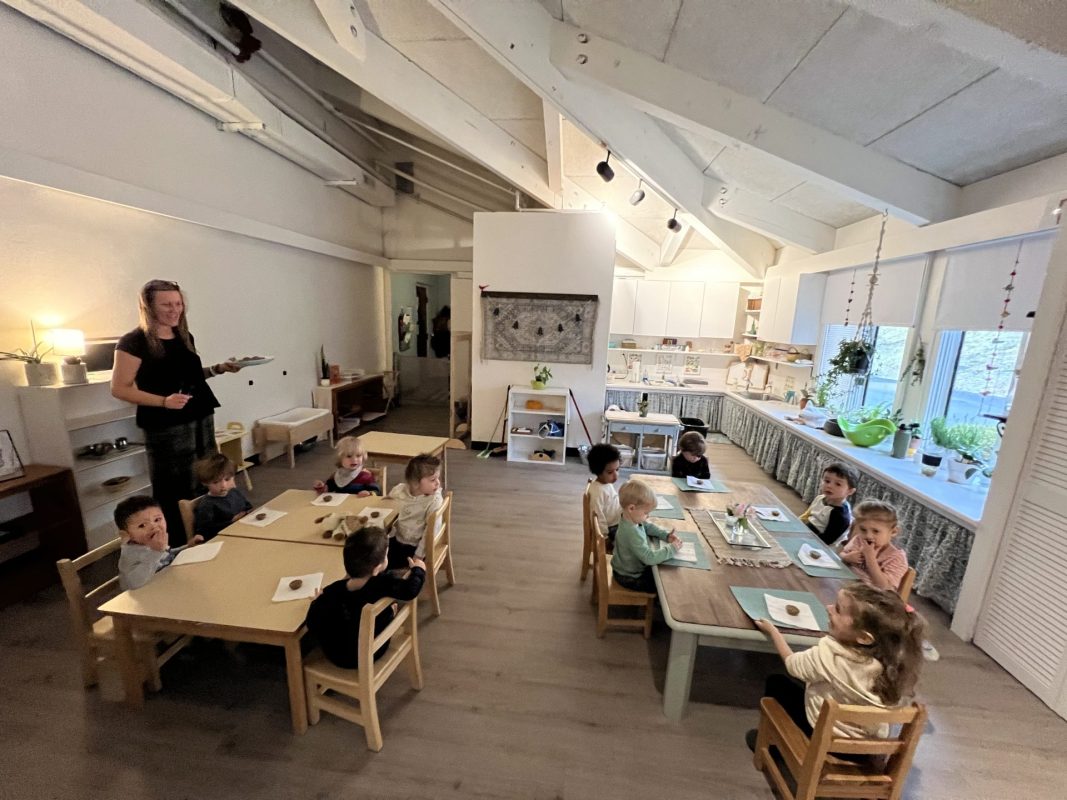
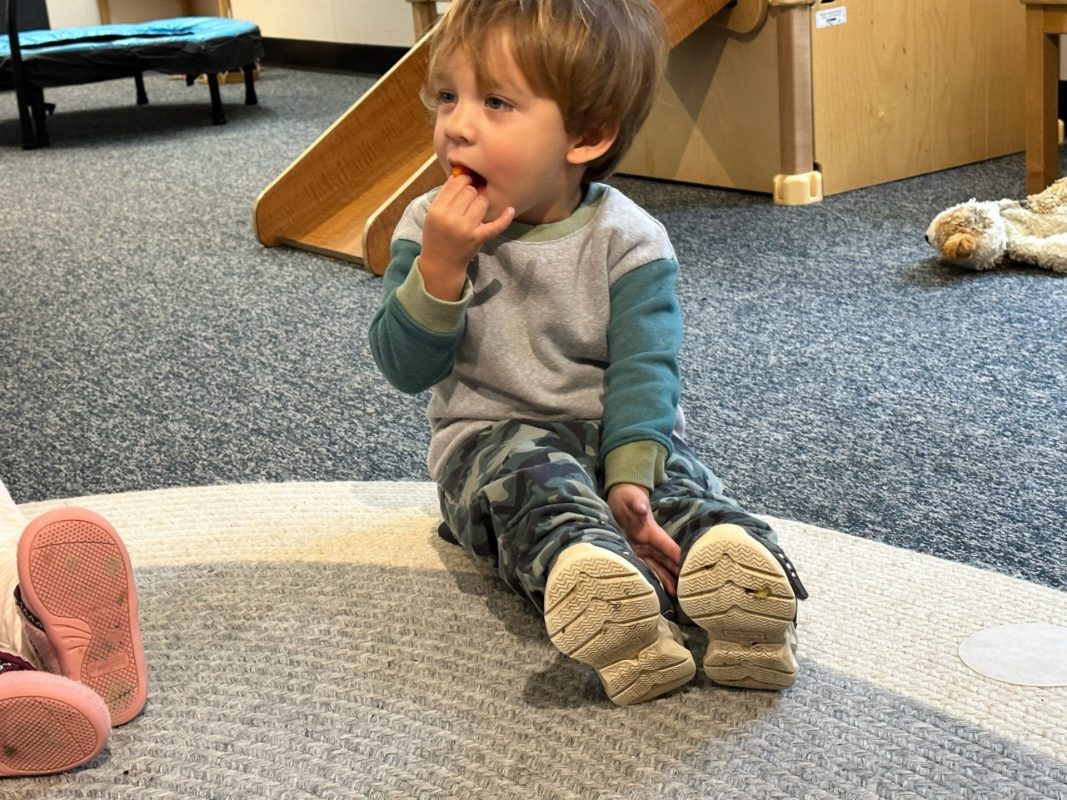
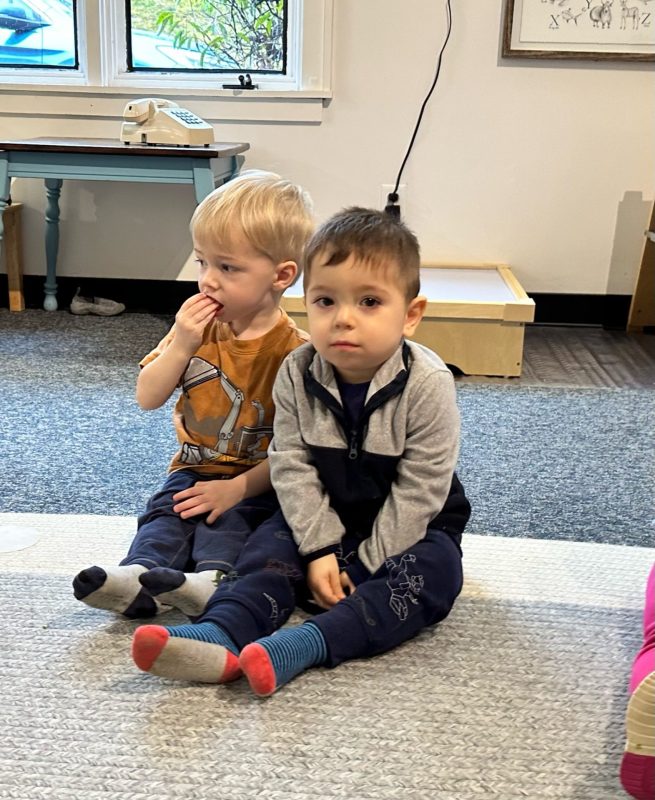
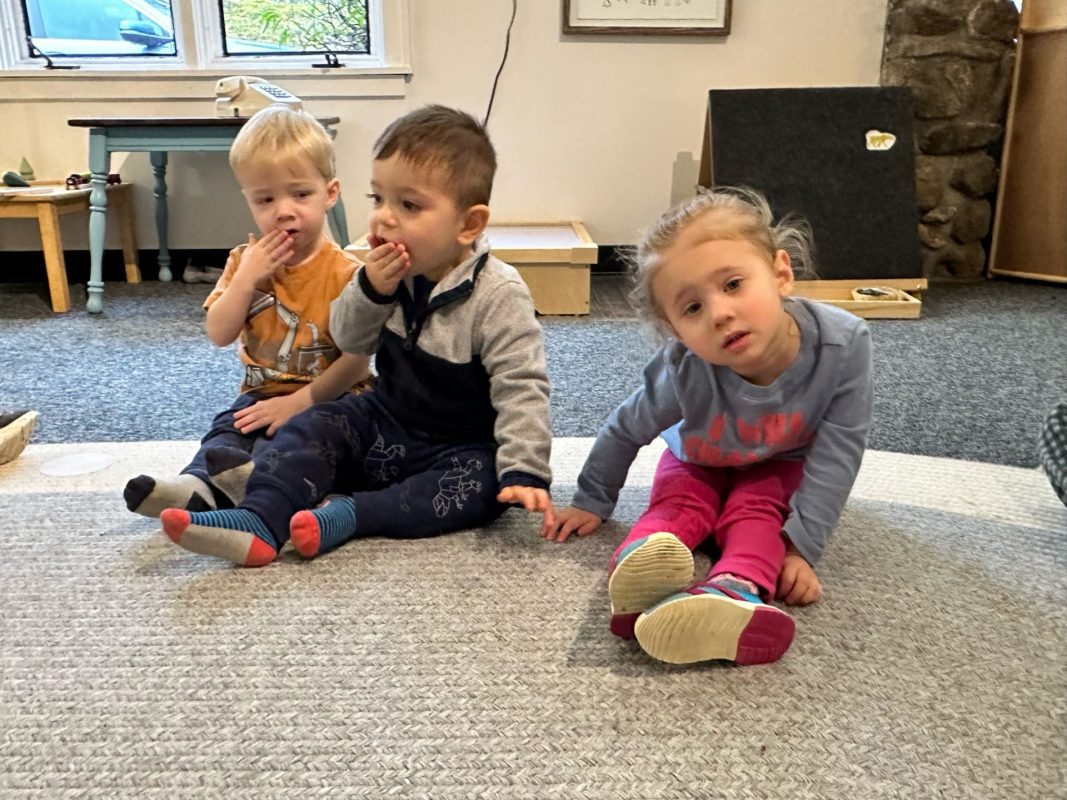
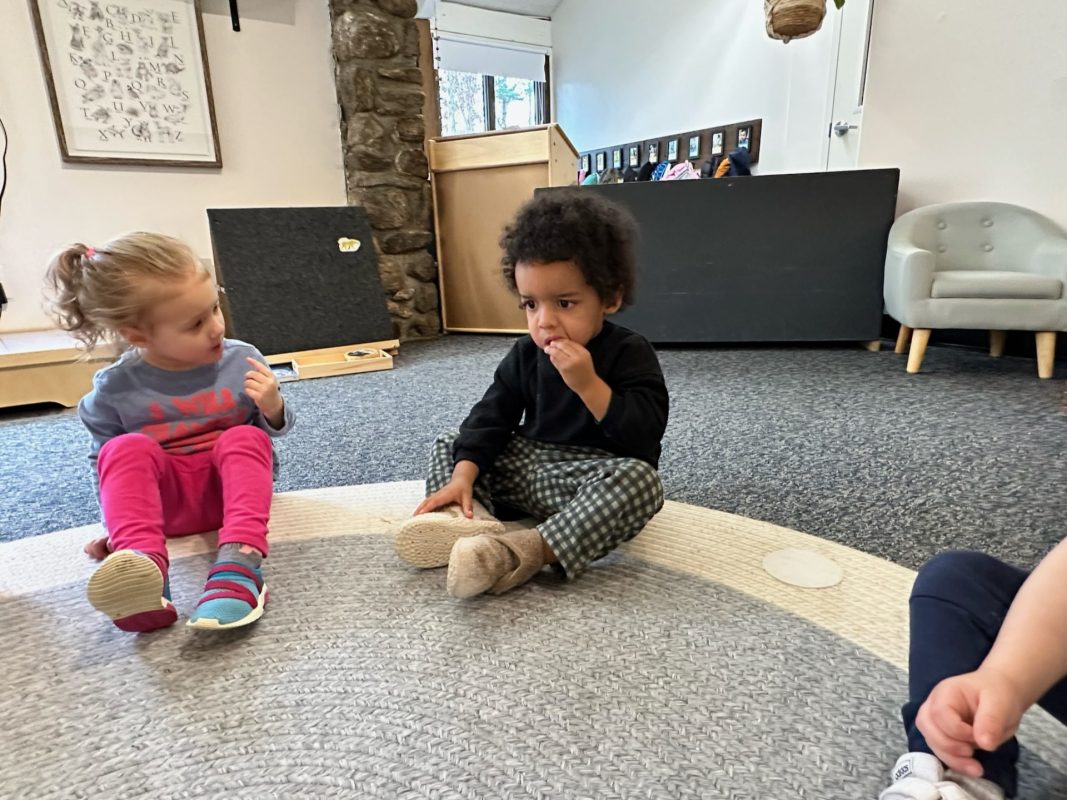
Food Tasting this week was roasted parsnip. The parsnips were roasted with honey and most of the children enjoyed it very much.

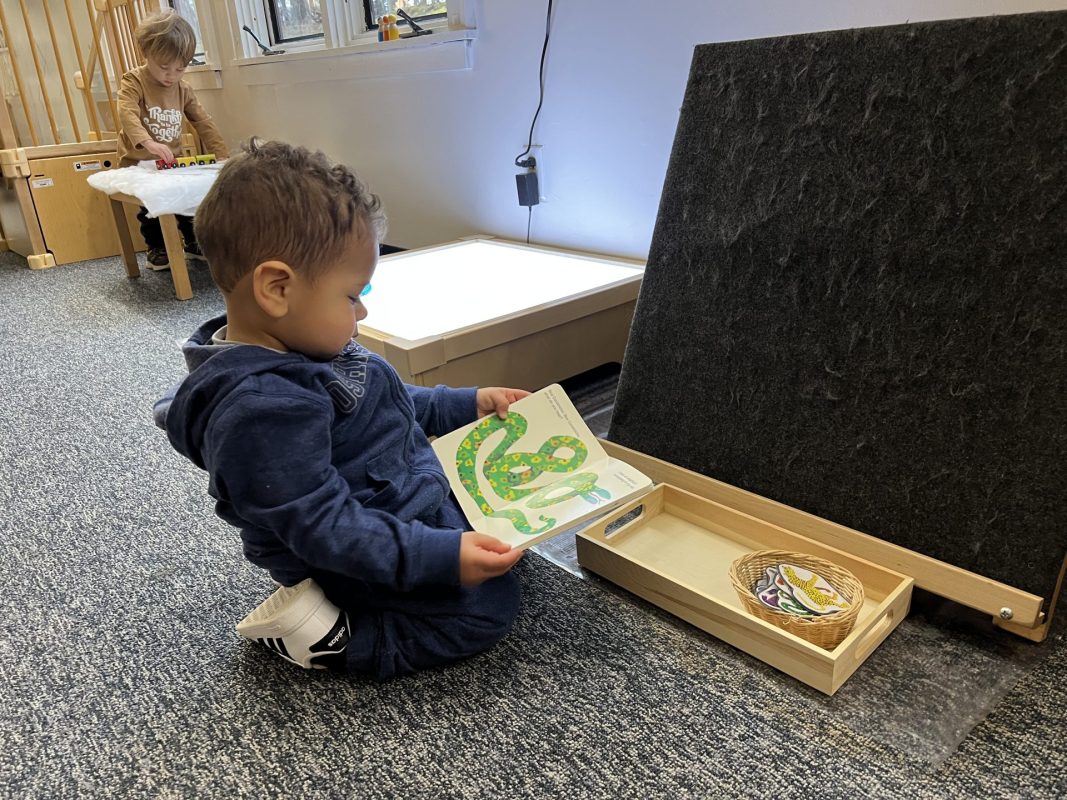
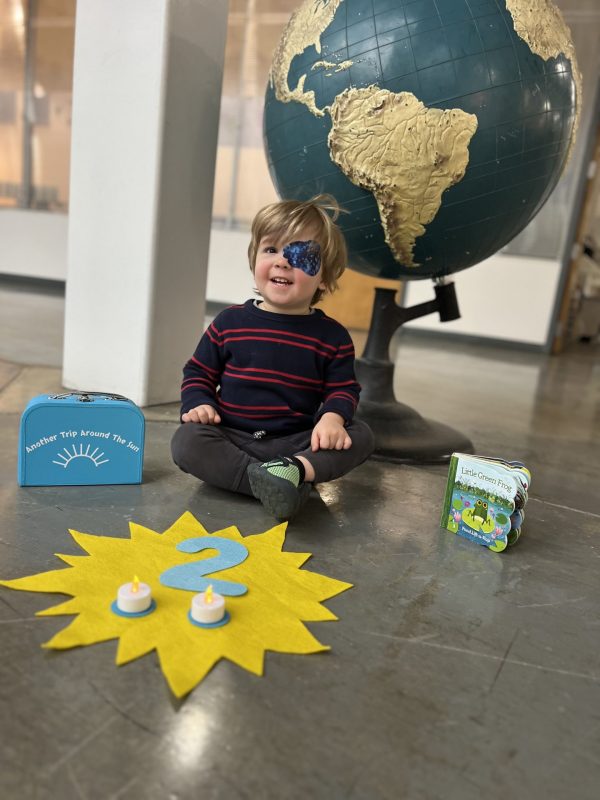
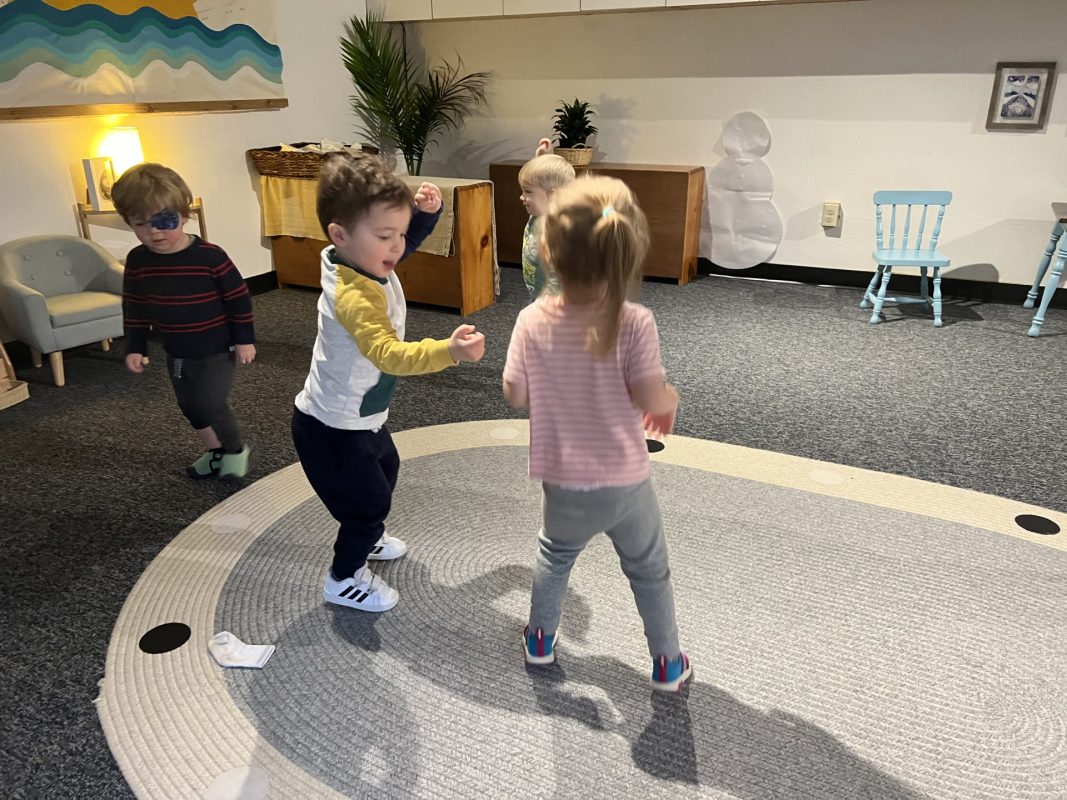
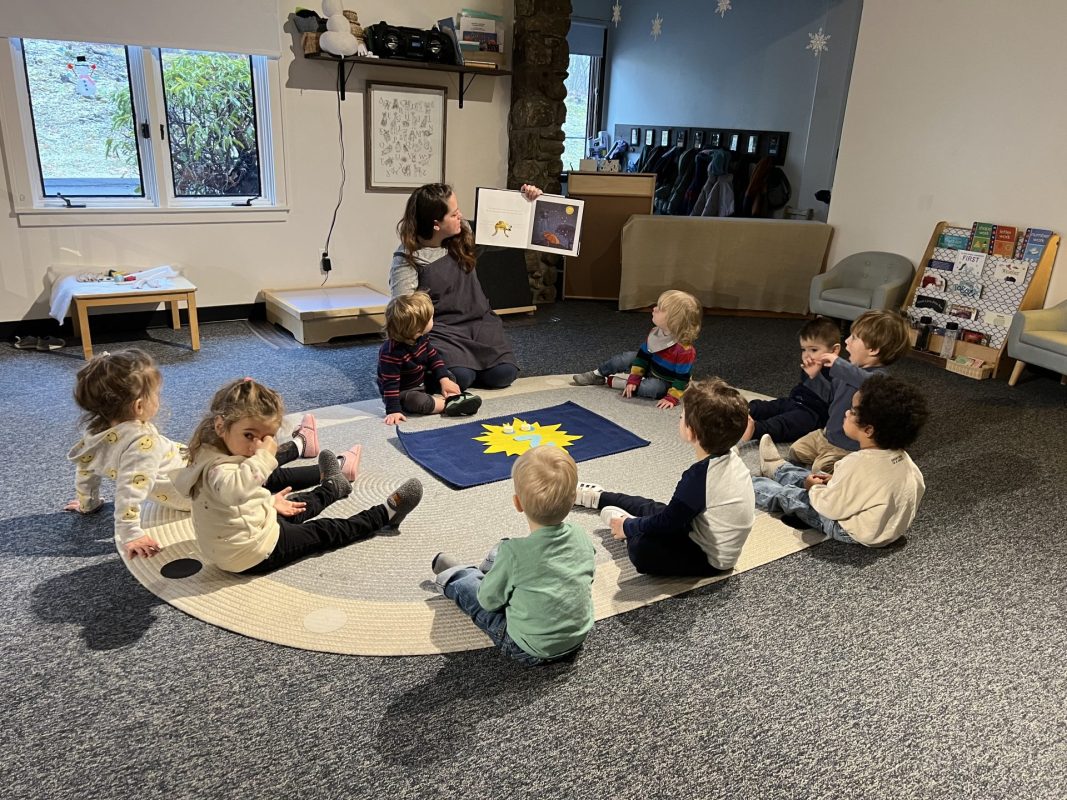
Lastly, we ended this week with a birthday celebration. The children enjoyed the story Little Green Frog, ate banana chocolate chip muffins, and danced as we celebrated our friend’s second birthday!

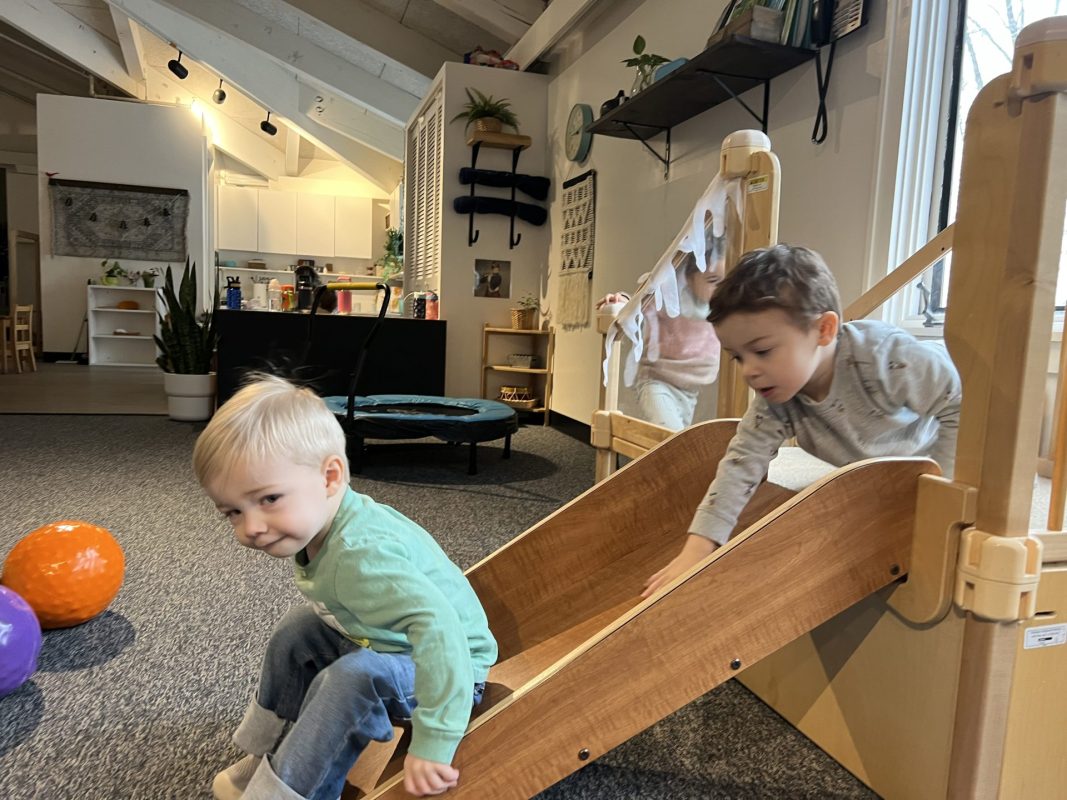
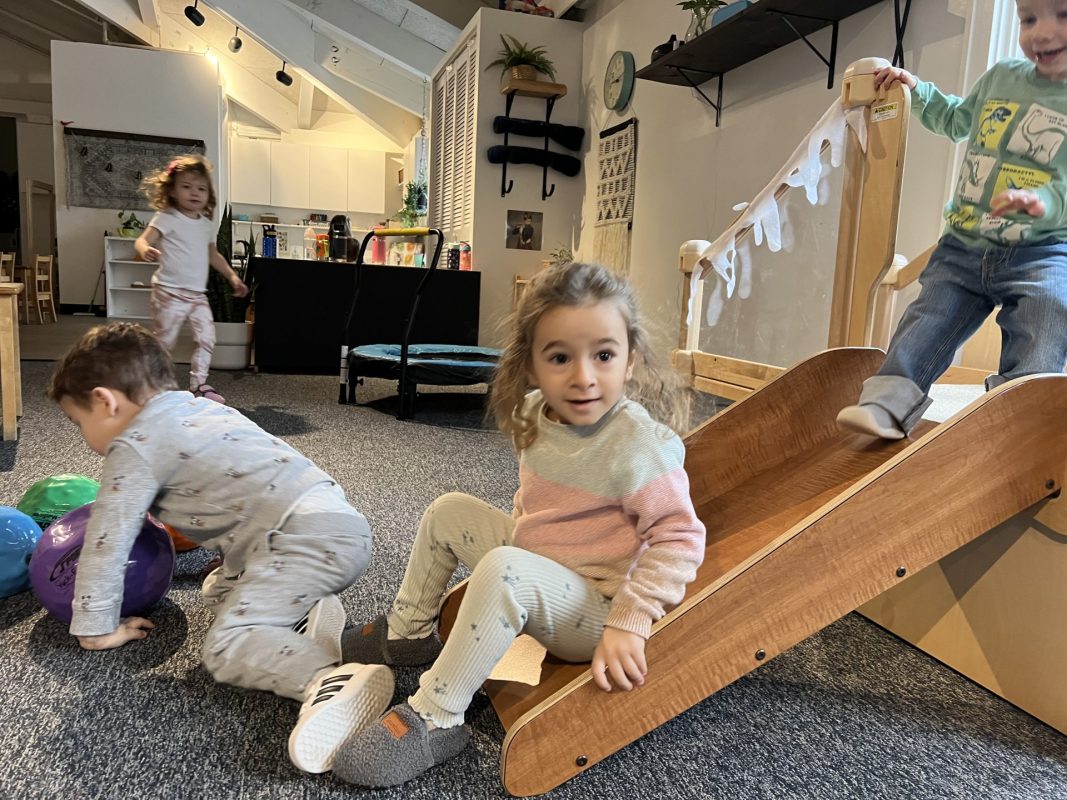
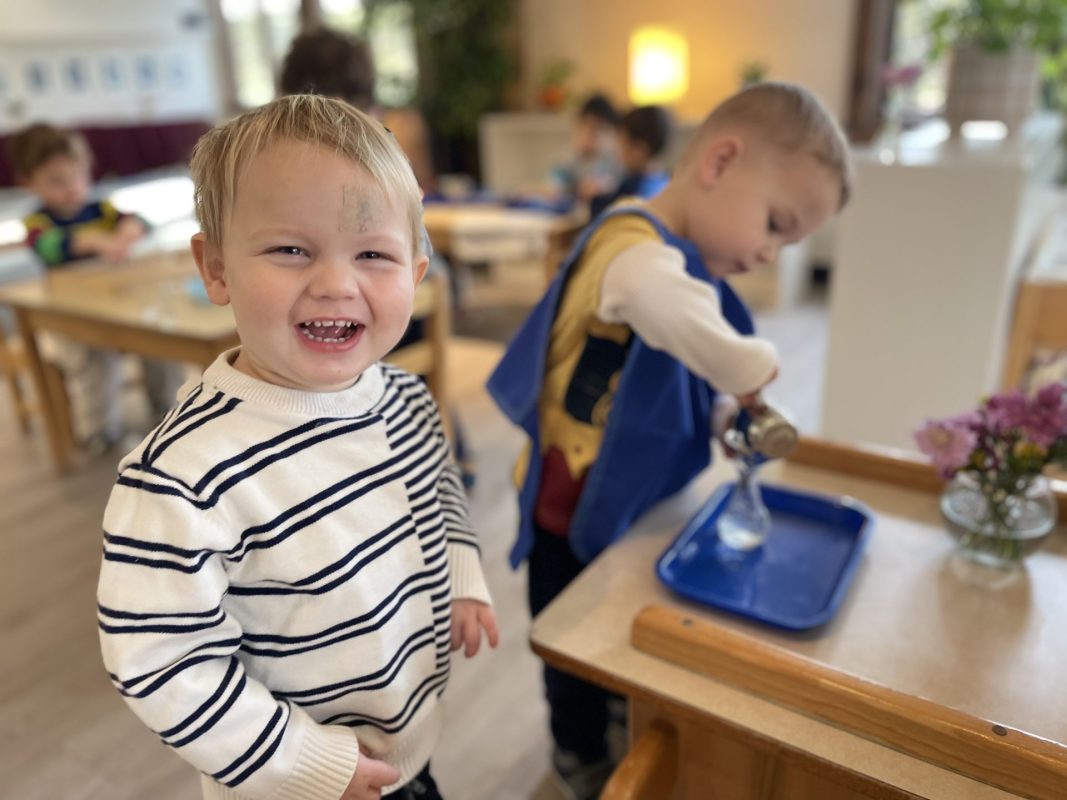
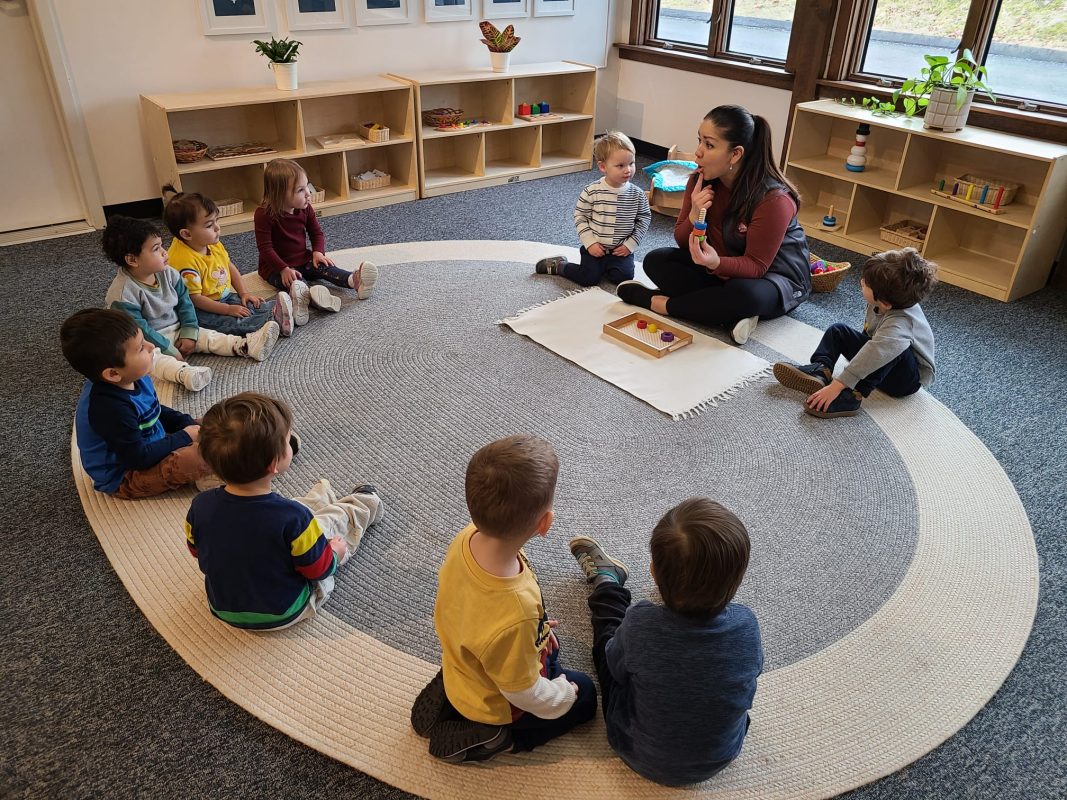
Enjoy the photos!

Cynthia and Sara


Mrs. Lopes: It All Adds Up With Montessori Math


“Children display a universal love of mathematics, which is par excellence the science of precision, order, and intelligence.”
~ Dr. Maria Montessori

The Montessori math materials are visual and hands-on manipulatives, aiding in the ability of a child to concretely  understand mathematical concepts. After much repetition and when the child is ready,  we introduce the more complex and abstract concepts. We teach the process first because the goal is to develop a true understanding of mathematical concepts and not simply memorization. The materials are sequenced in a way that each success a child experiences is a building block for the next concept to be introduced.

Maria Montessori believed that all children have a mathematical mind and an internal drive to understand the environment around them. We know that the Montessori math materials are exact and precise and allow the child to have positive experiences in math right from the beginning.  We also know that the Practical Life activities have helped the child to develop order, concentration, coordination, and independence.  Likewise, the Sensorial materials have allowed the children to recognize and extend patterns.  Here’s the real secret behind the success of the Montessori math materials though, the children truly enjoy them.
Hope your week adds up to one filled with peace and love,

Amanda and Hema


Mrs. Hood: The Process of Normalization

In Montessori education, the term “normalization” has a specialized meaning. “Normal” does not refer to what is considered to be “typical” or “average” or even “usual.” “Normalization” does not refer to a process of being forced to conform. Instead, Maria Montessori used the terms “normal” and “normalization” to describe a unique process she observed in child development.

Dr. Montessori observed that when children are allowed freedom in an environment suited to their needs, they blossom. After a period of intense concentration, working with materials that fully engage their interest, children appear to be refreshed and content. Through continued concentrated work of their own choice, children grow in inner discipline and peace. She called this process “normalization” and cited it as “the most important single result of our whole work (The Absorbent Mind, 1949).”
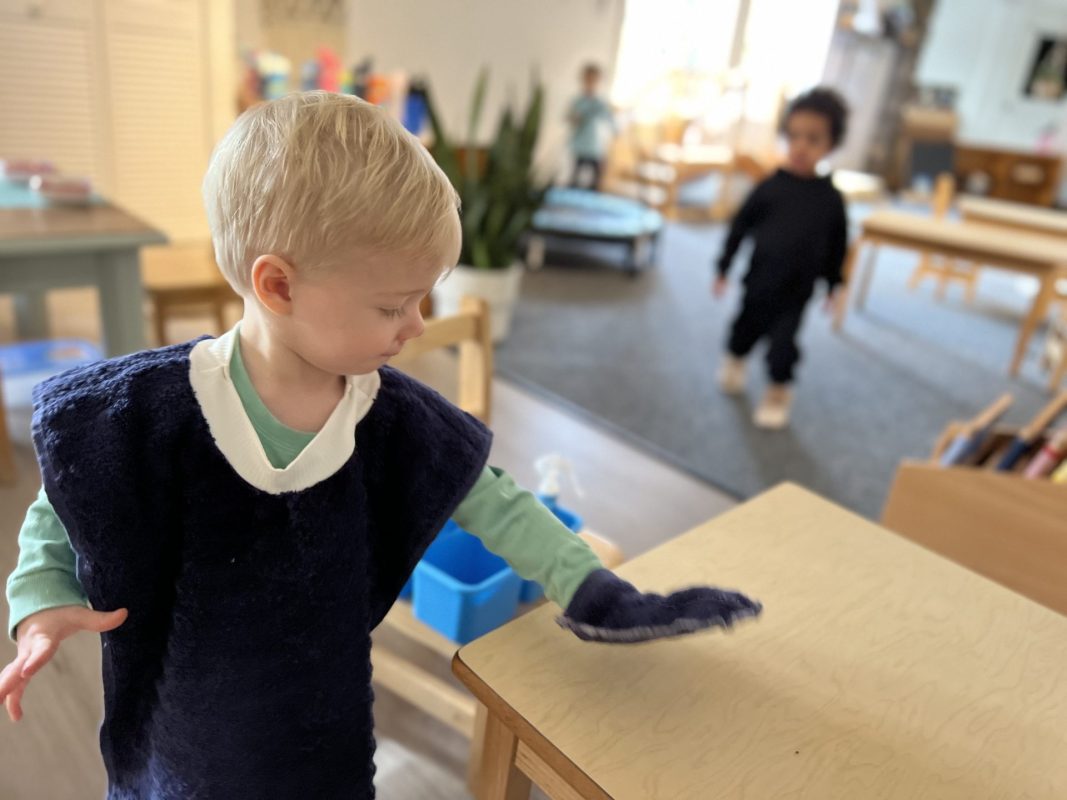
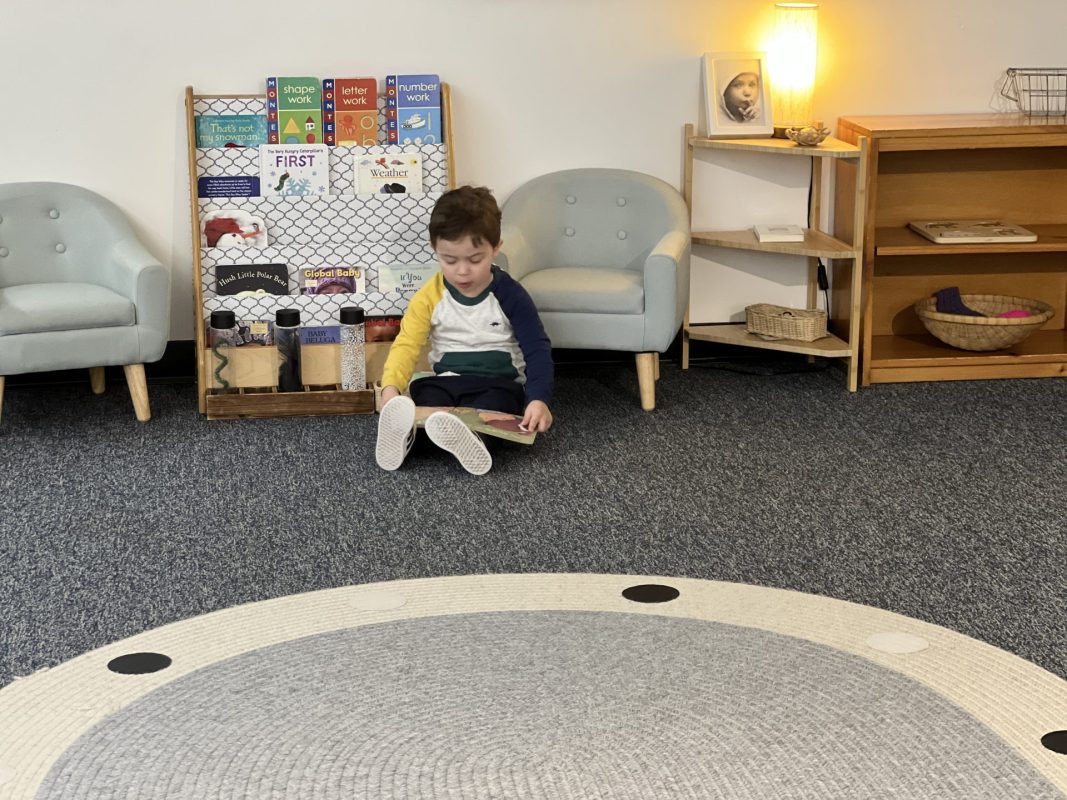
The children in our environment are on a great path to “normalization.” Every morning we get to see its signs! We also watch with joy how children have internalized the routines, and transitions are more peaceful! They recognize their friends and feel comfortable sharing and working together. Deep friendships are developing, and expressions of love and care for each other are more evident.
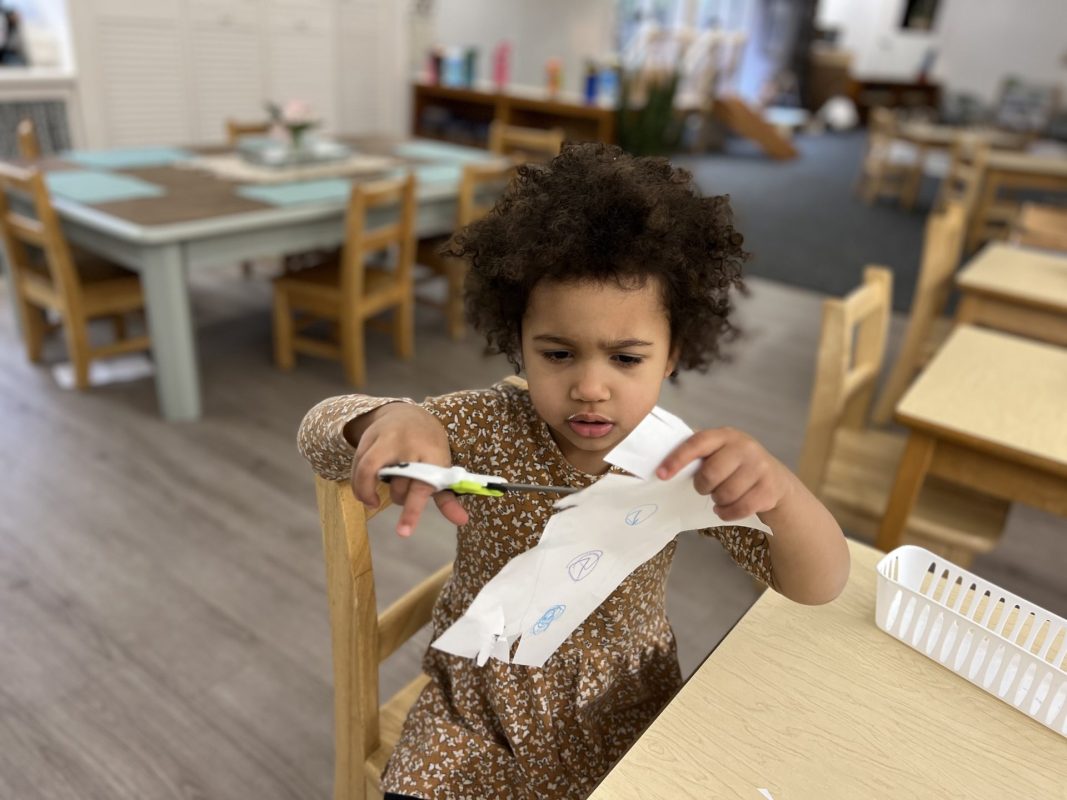
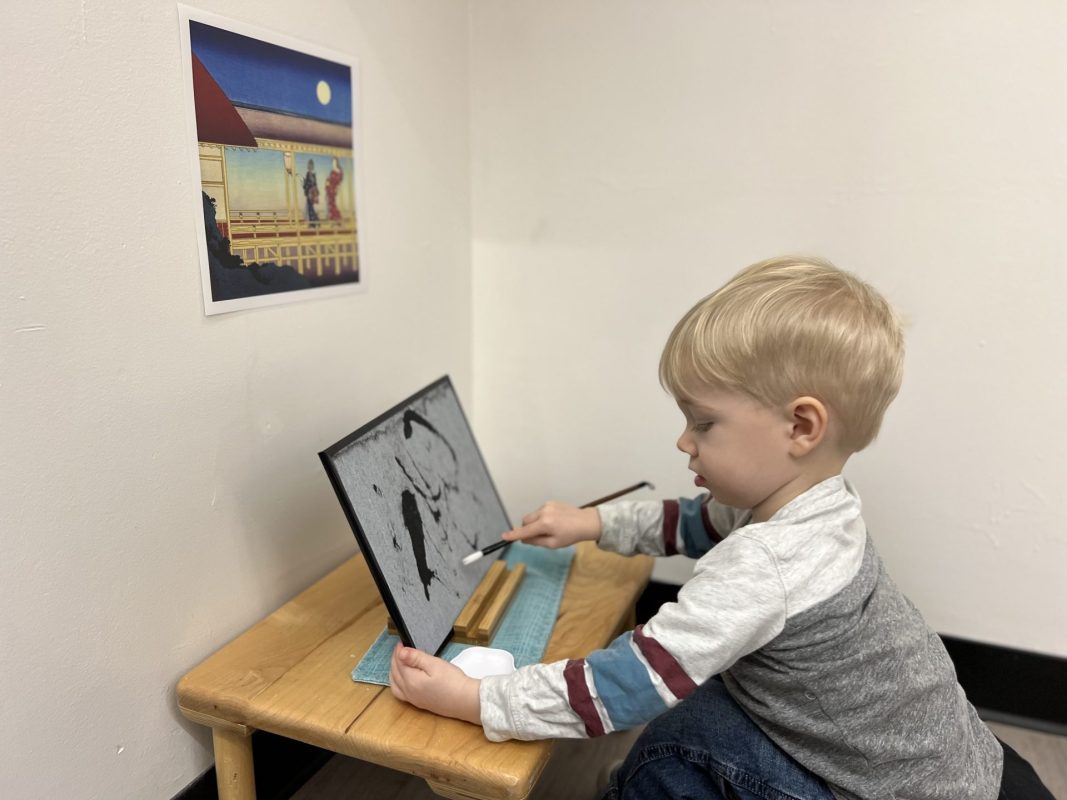
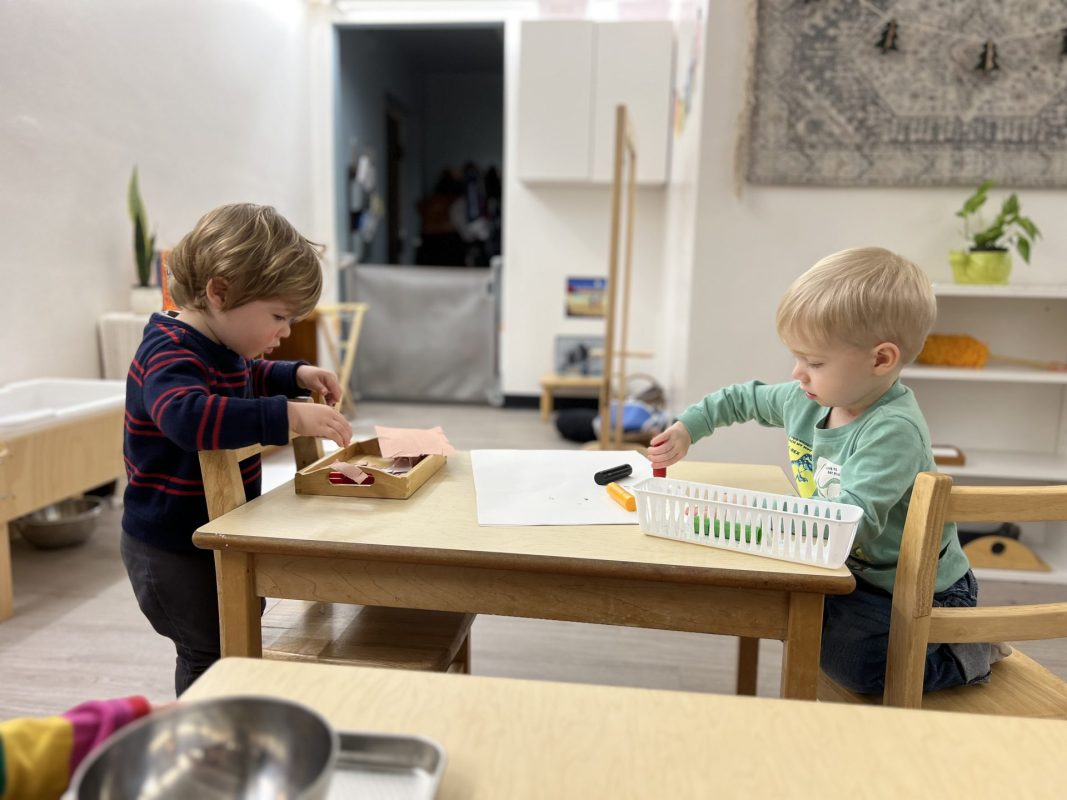
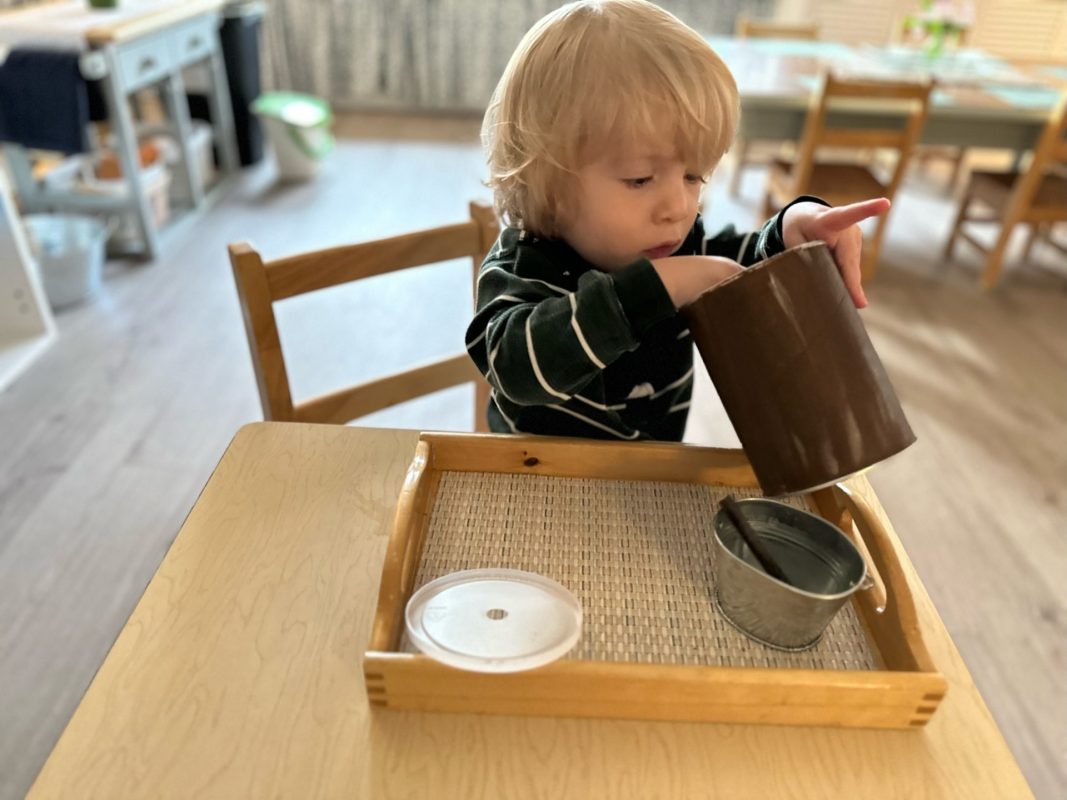
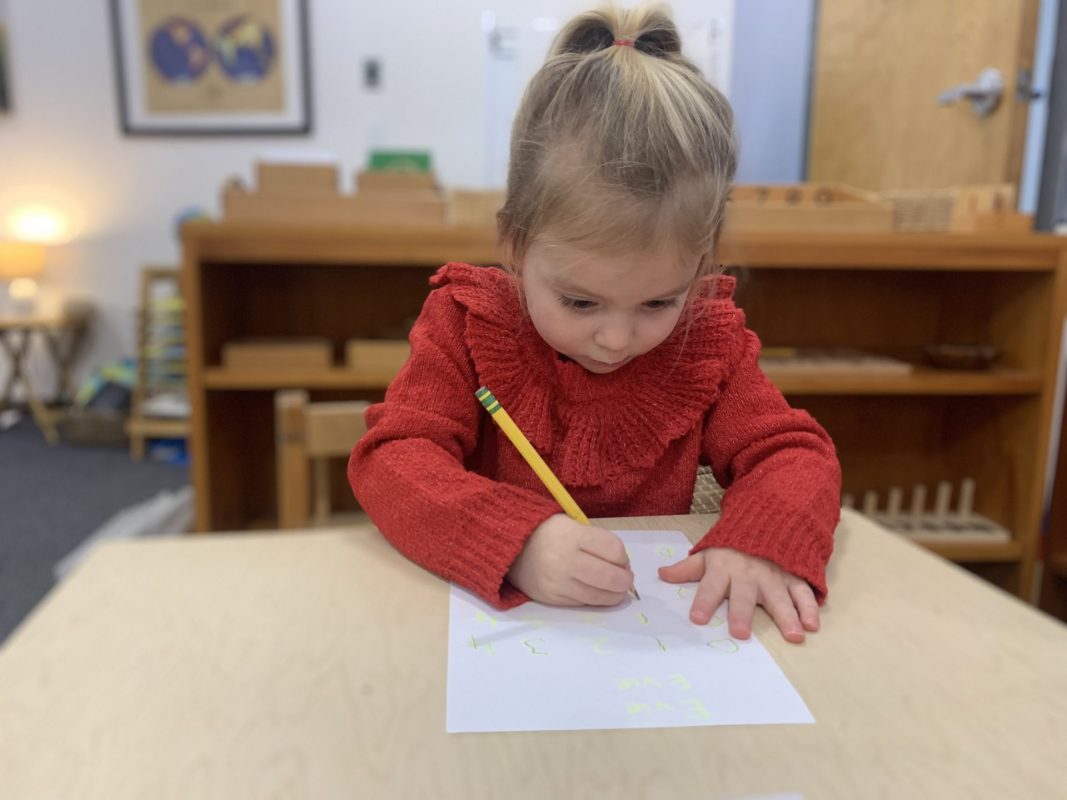
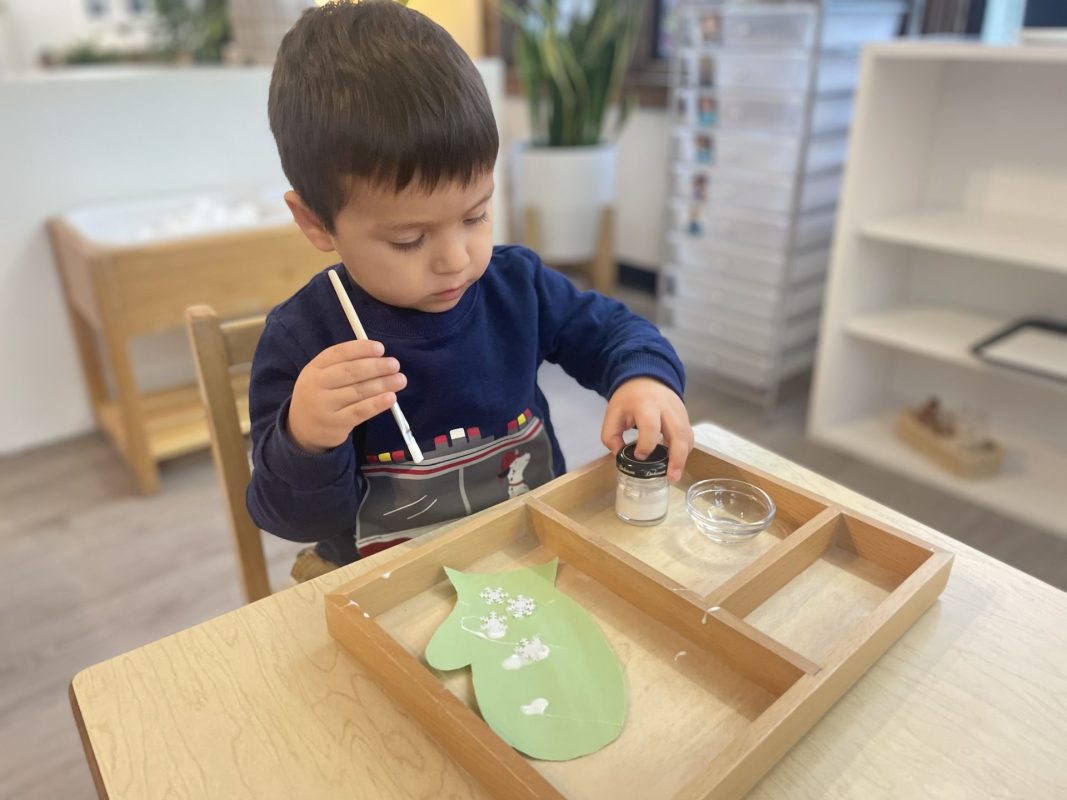
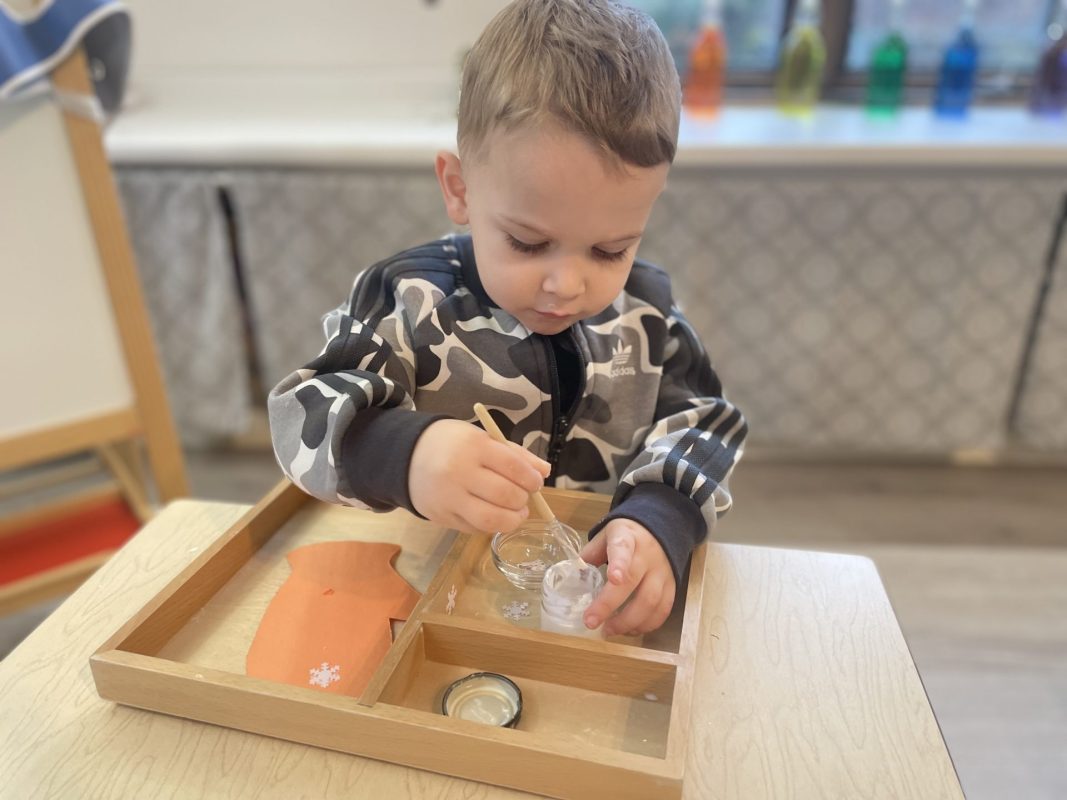
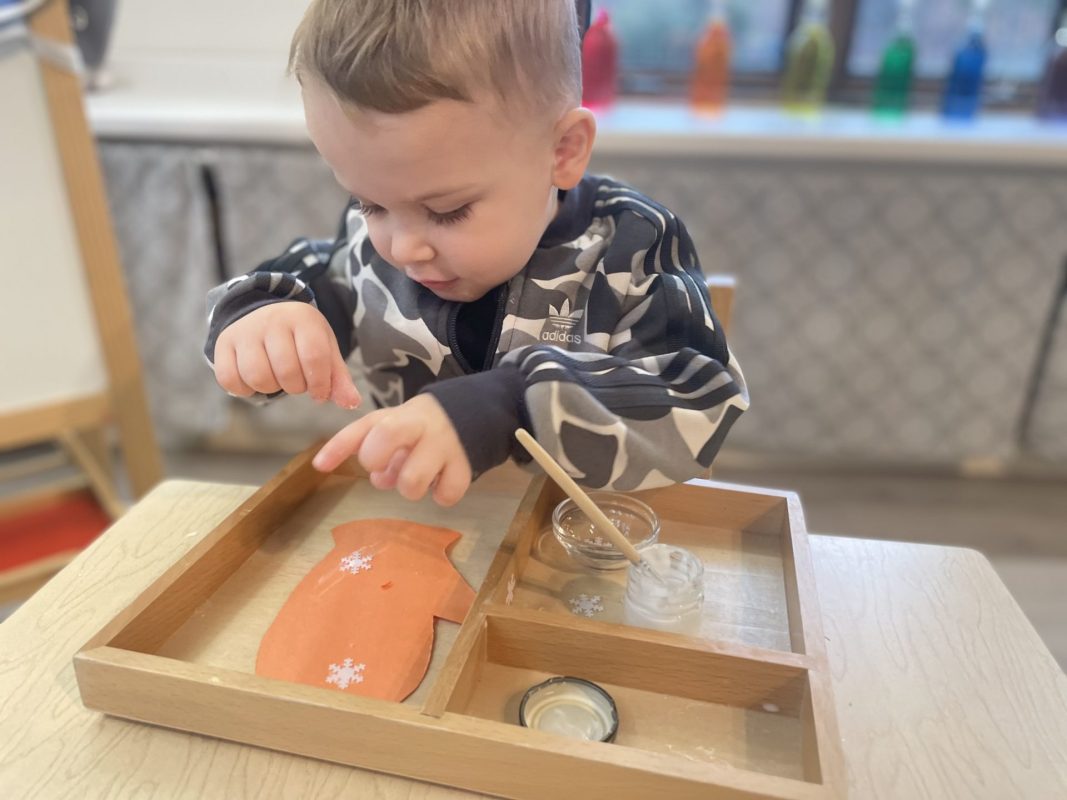
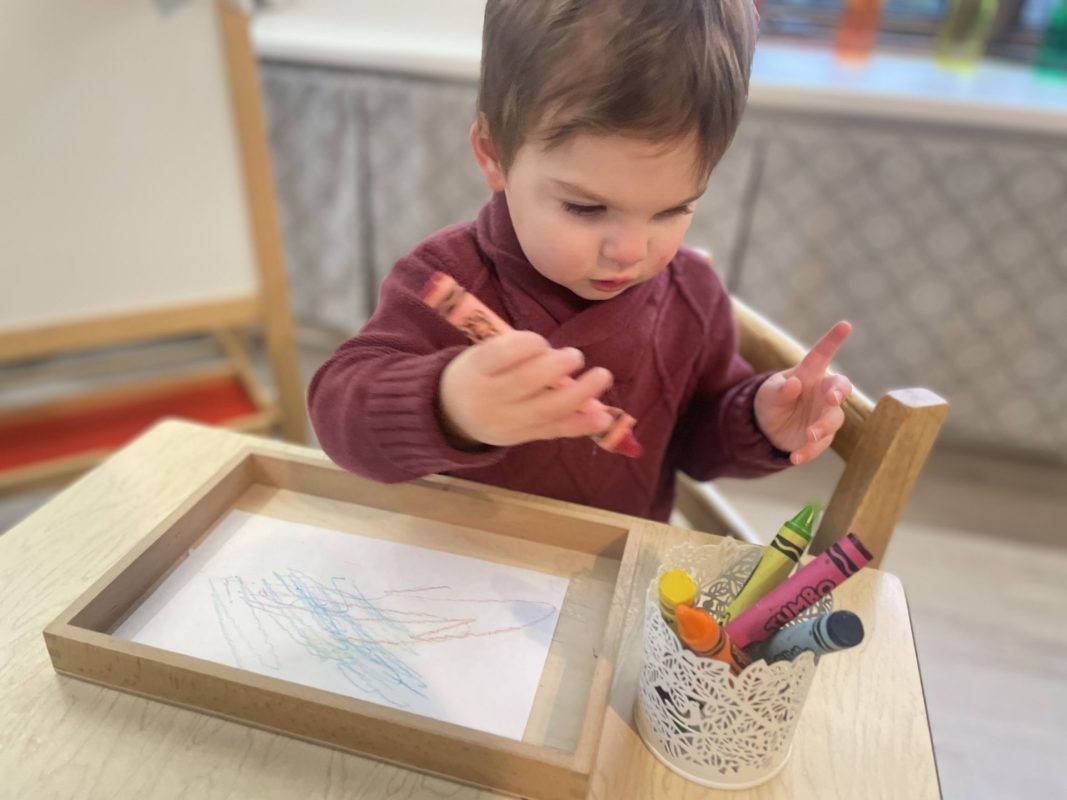
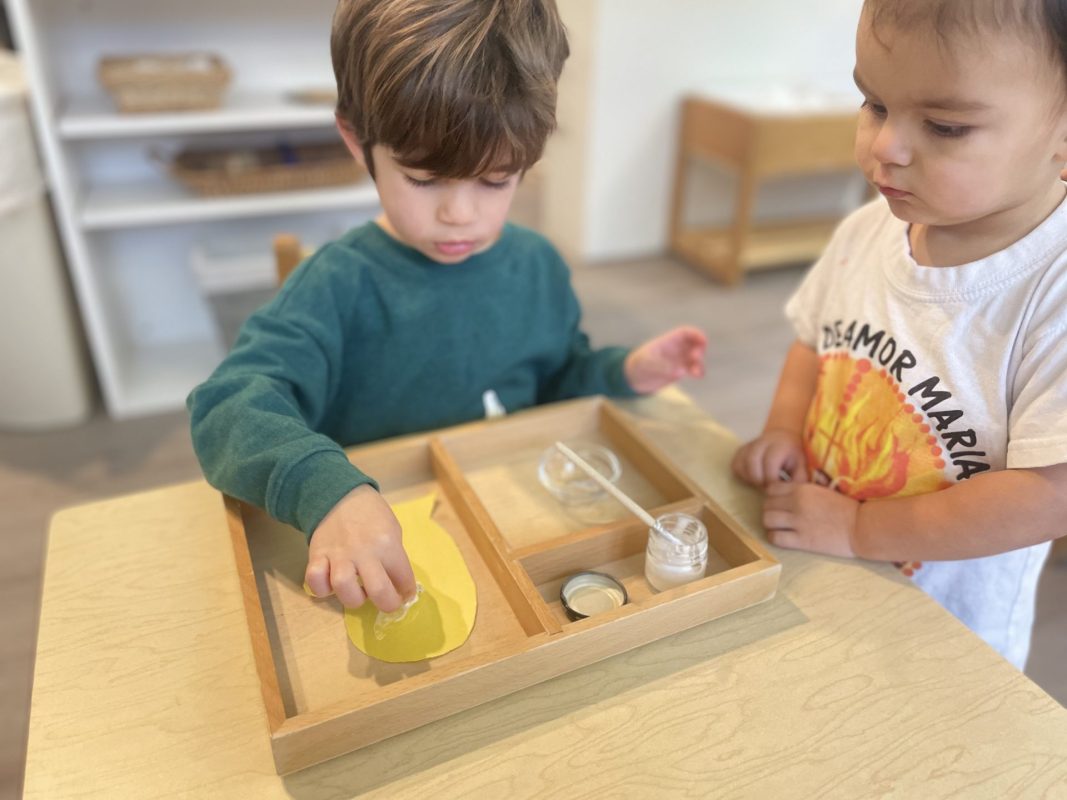
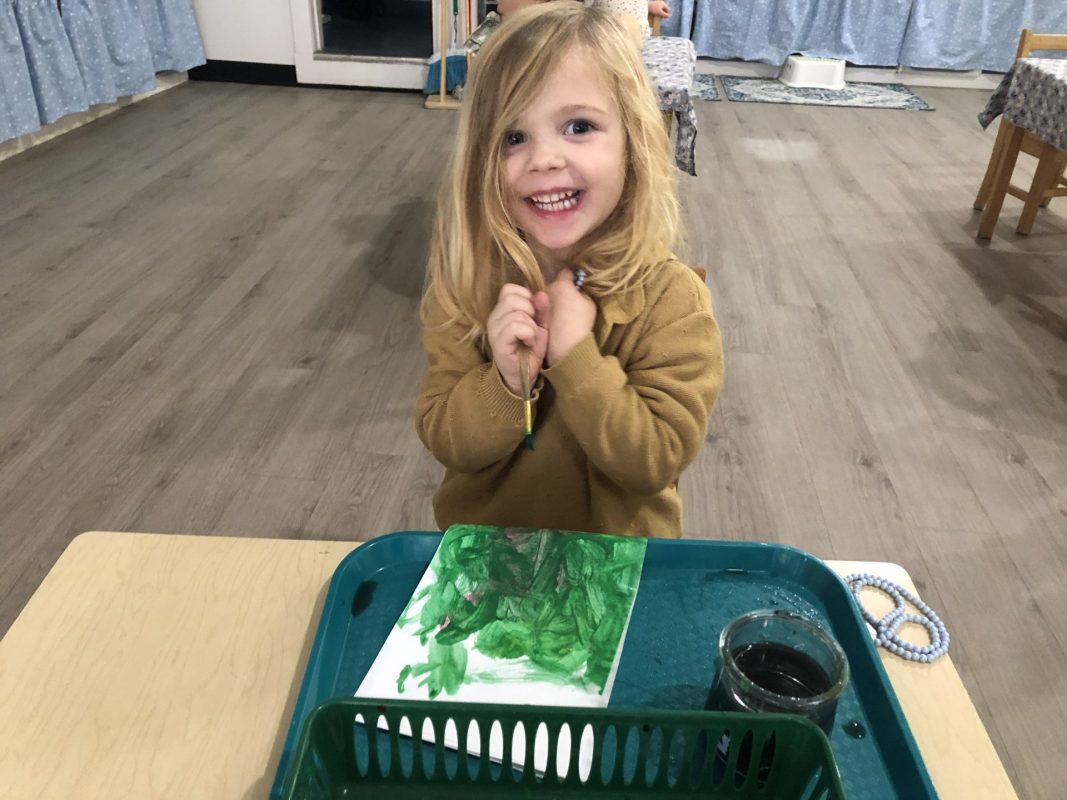
On another note, we introduced the art skill of gluing and it’s now a very popular work in our environment! Learning to use glue develops hand-eye coordination and fine motor planning skills. It also helps your child understand the sensory concept of stickiness.

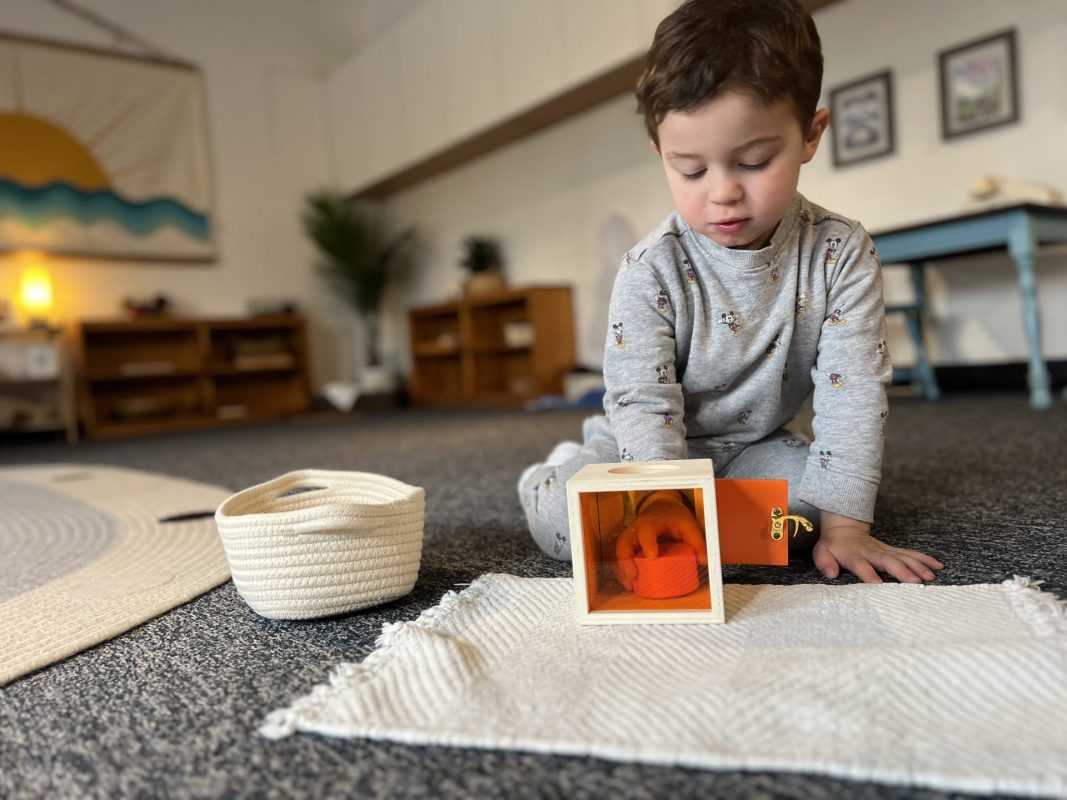
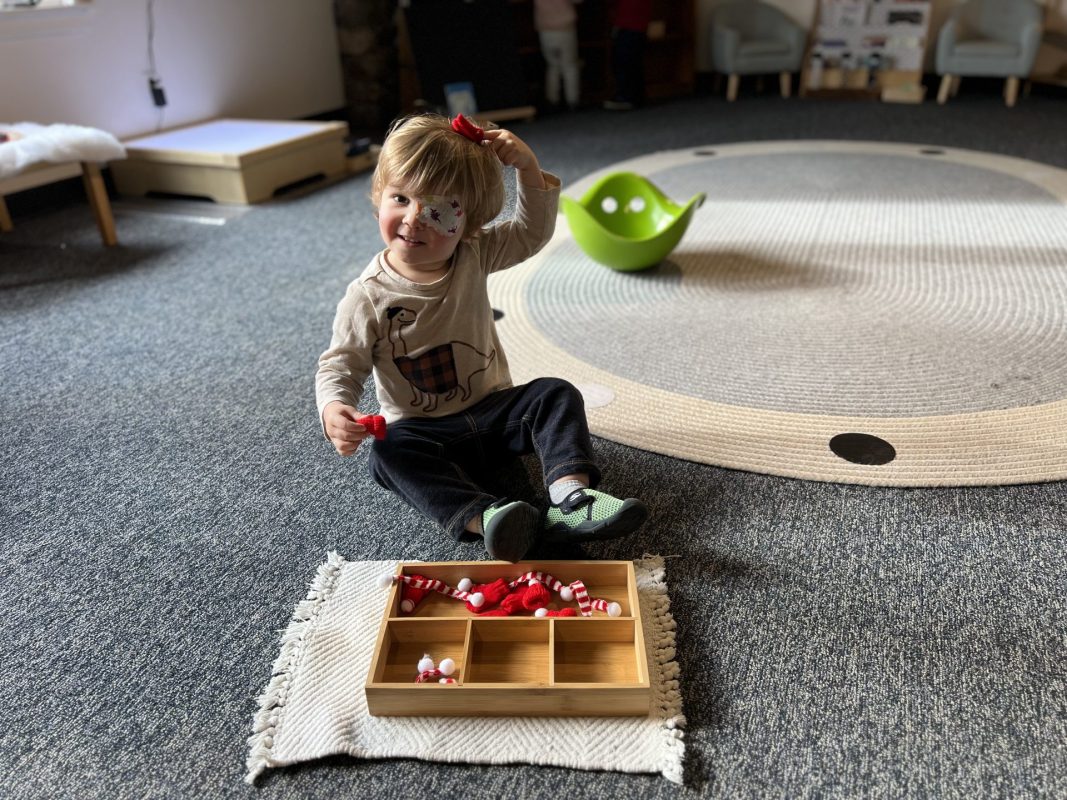
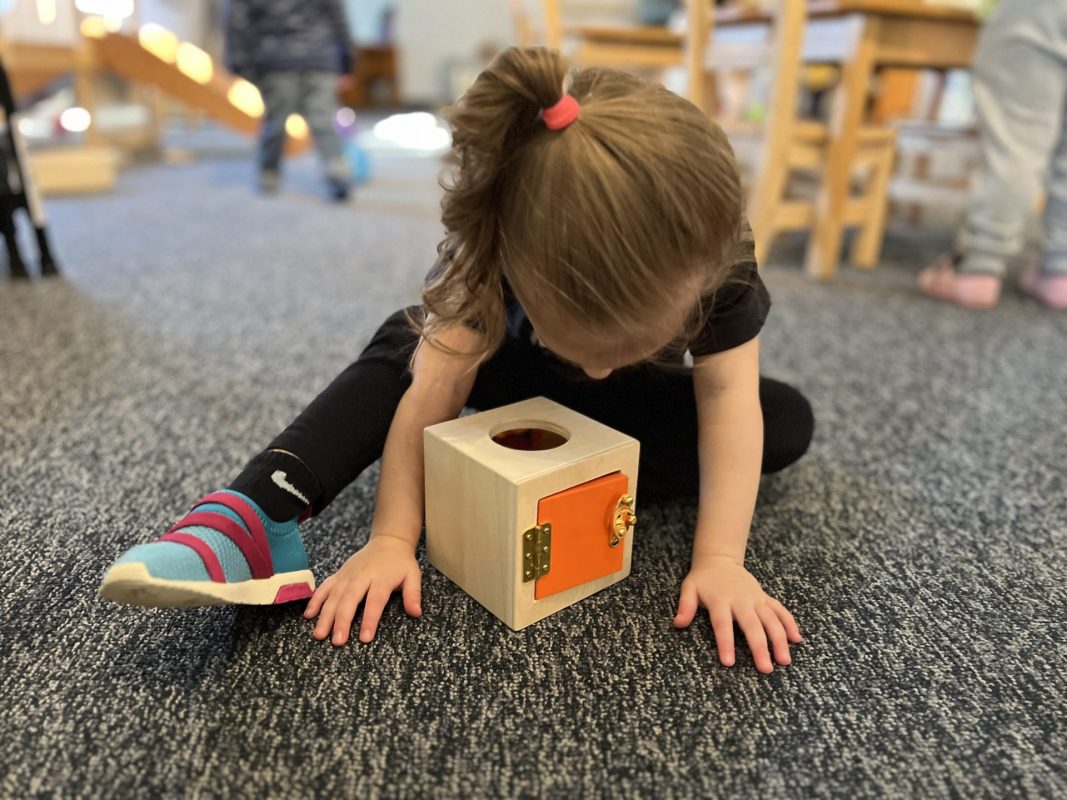
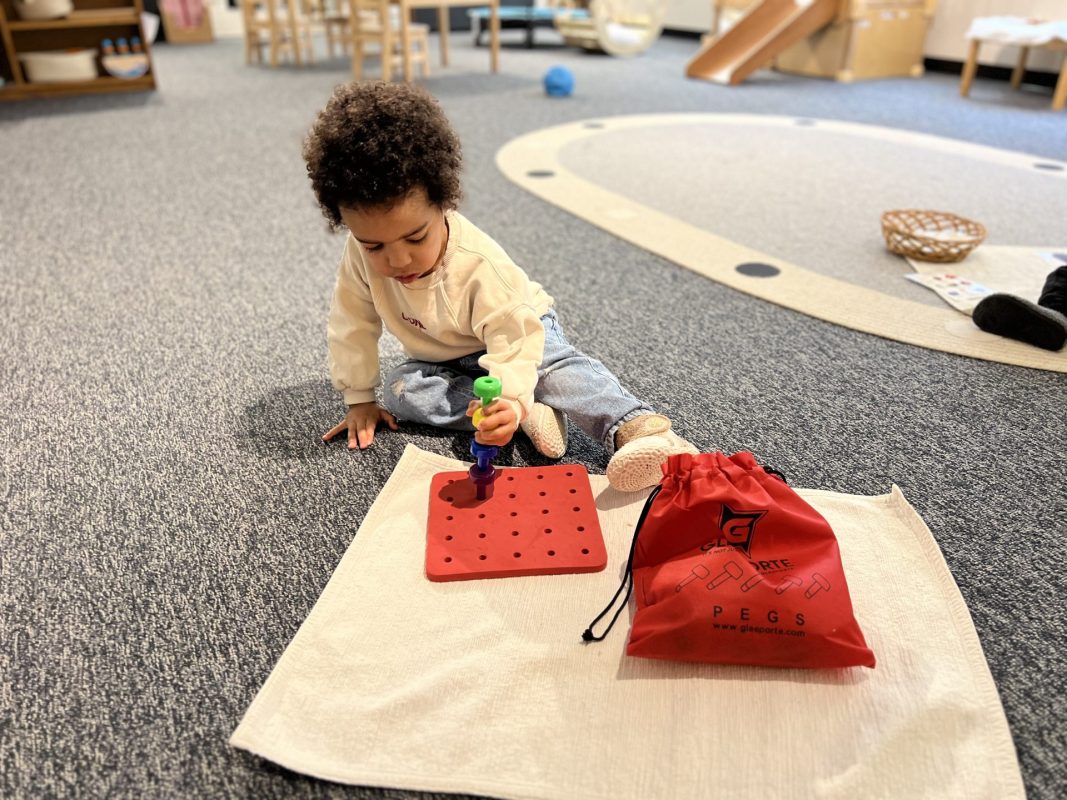
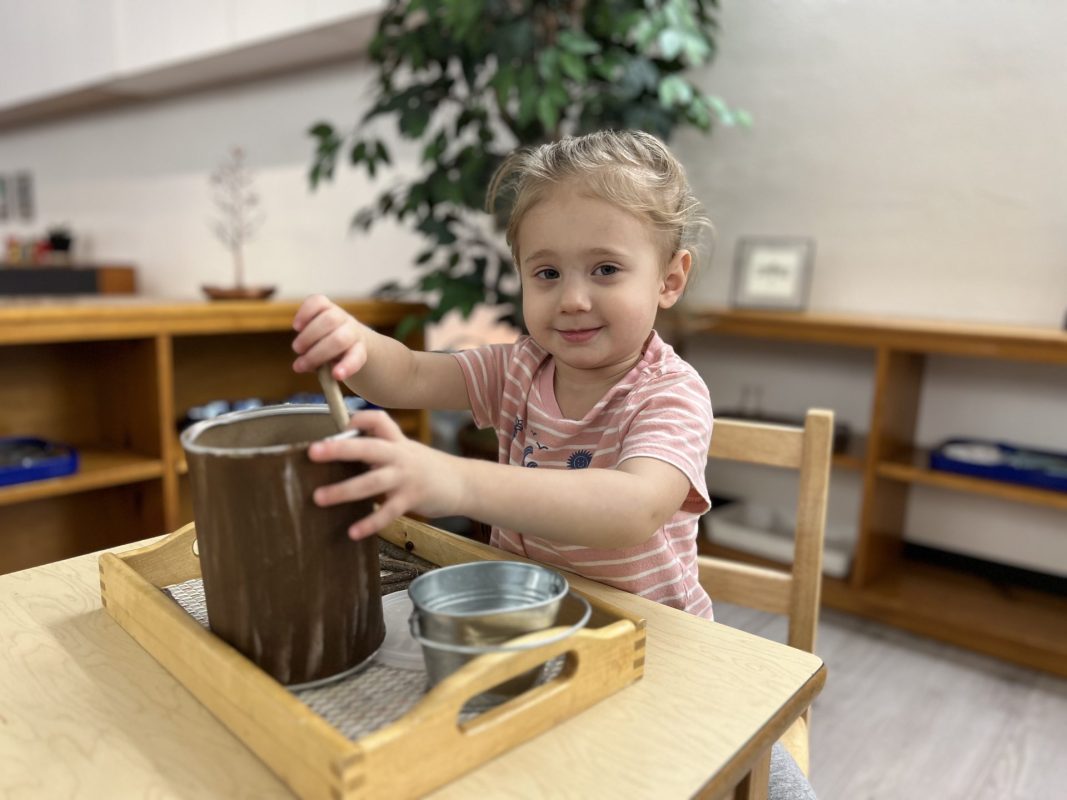
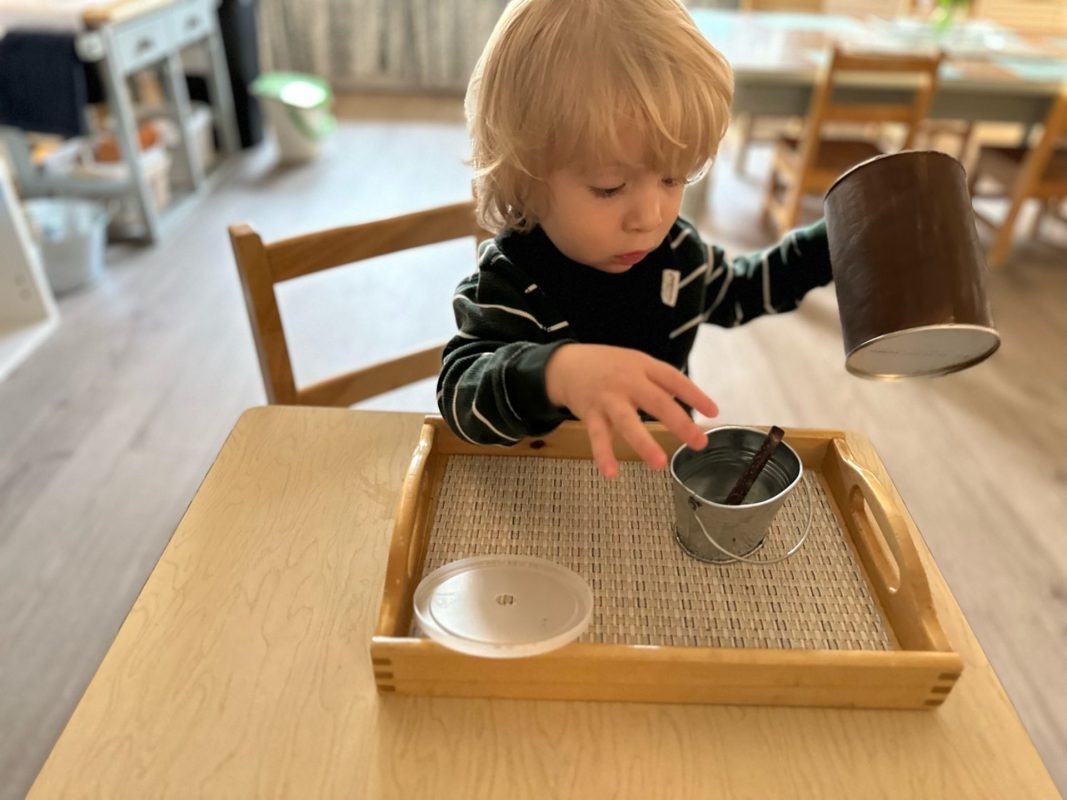
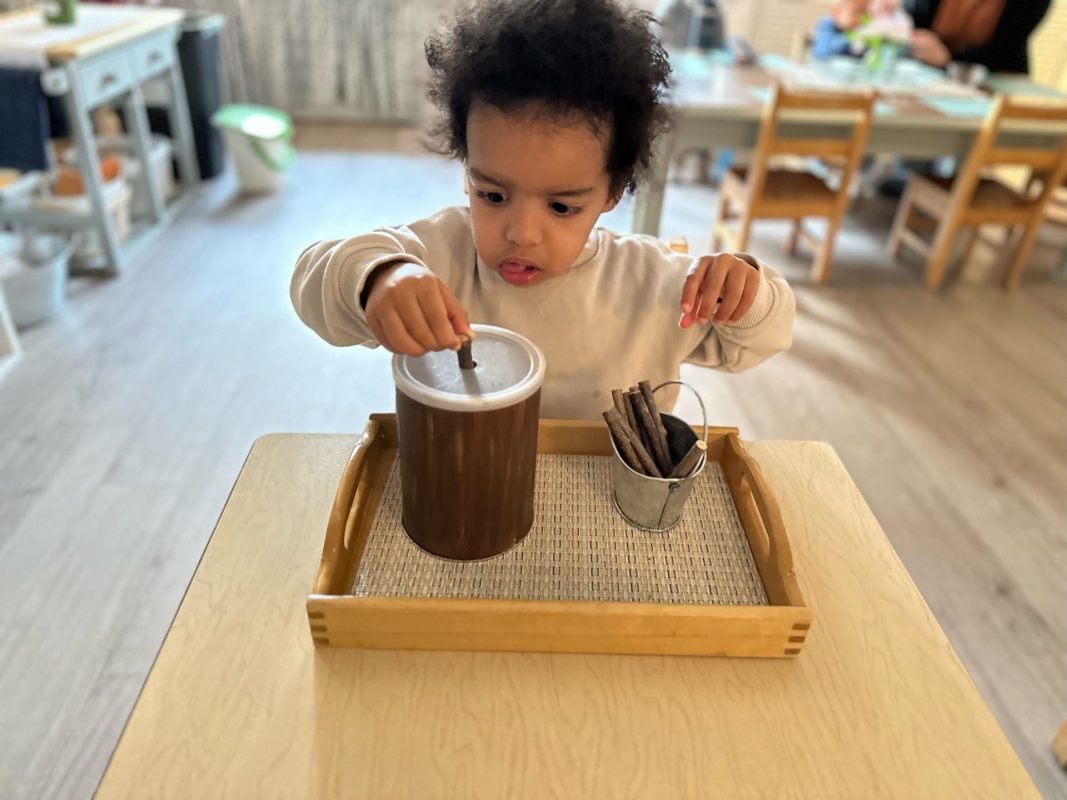
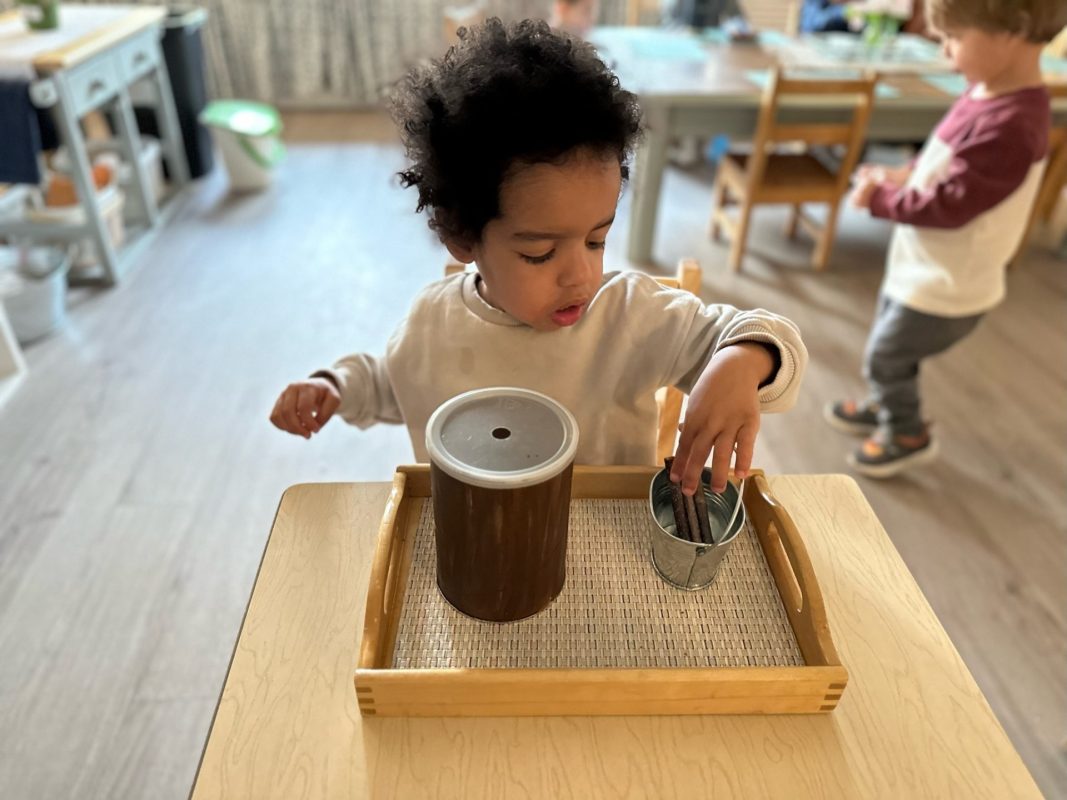
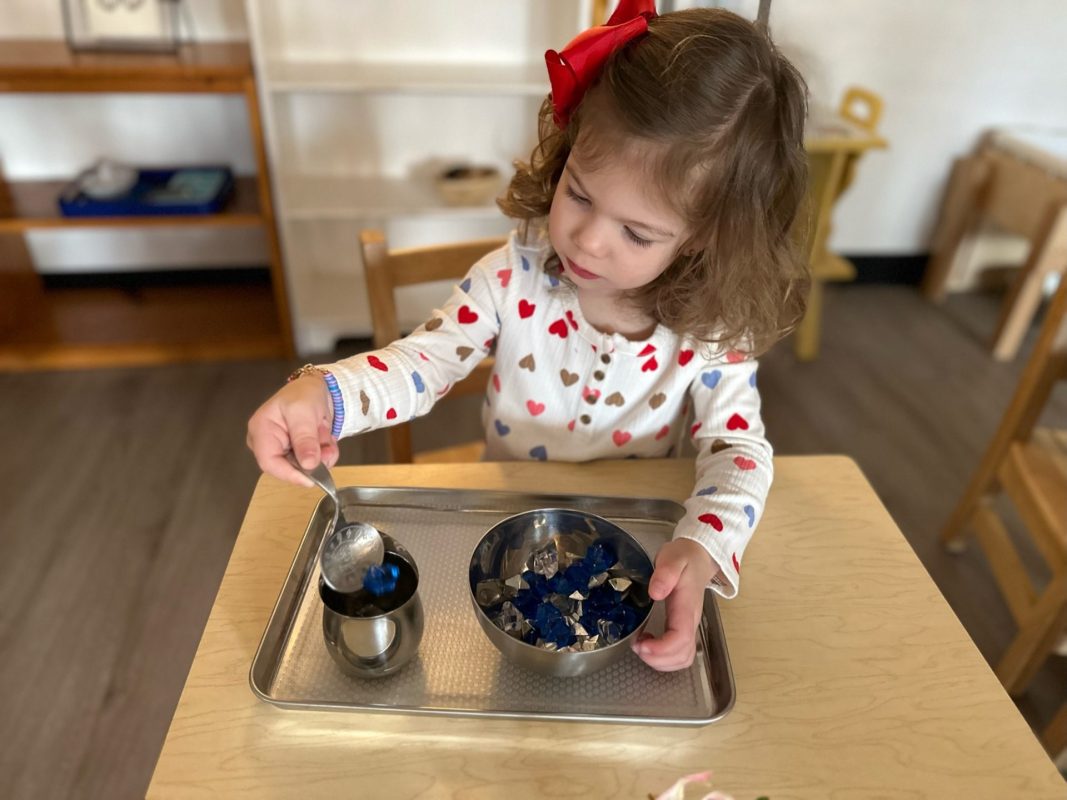
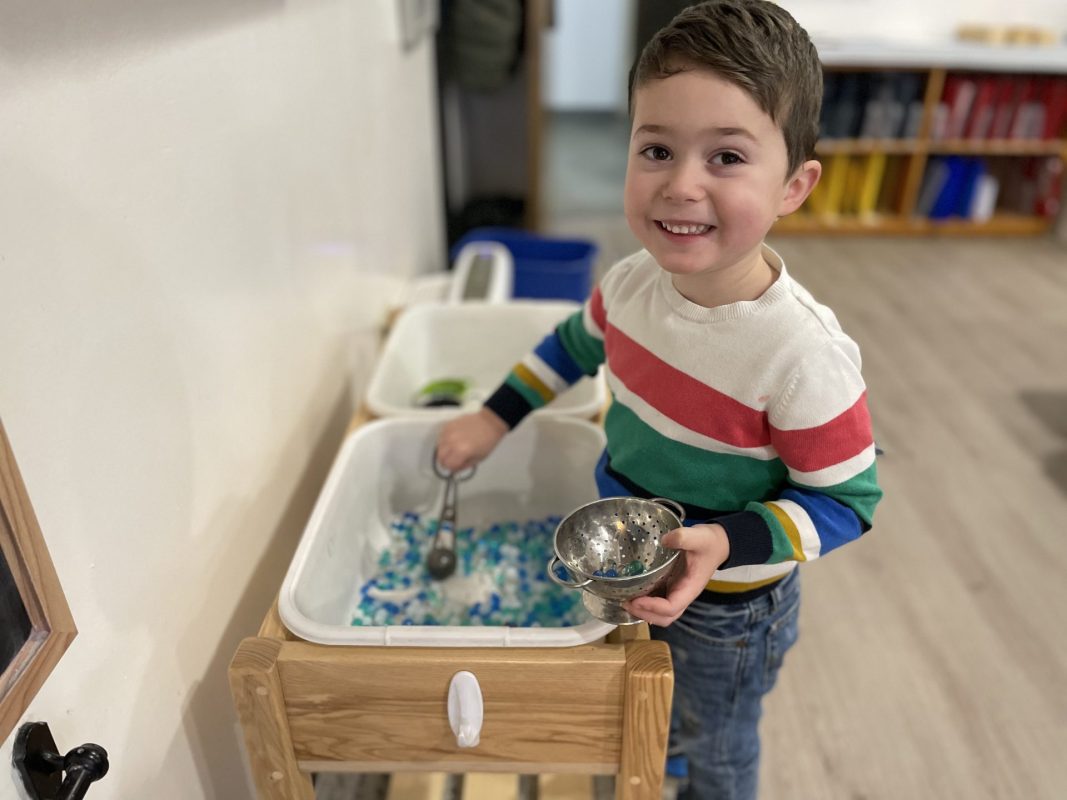
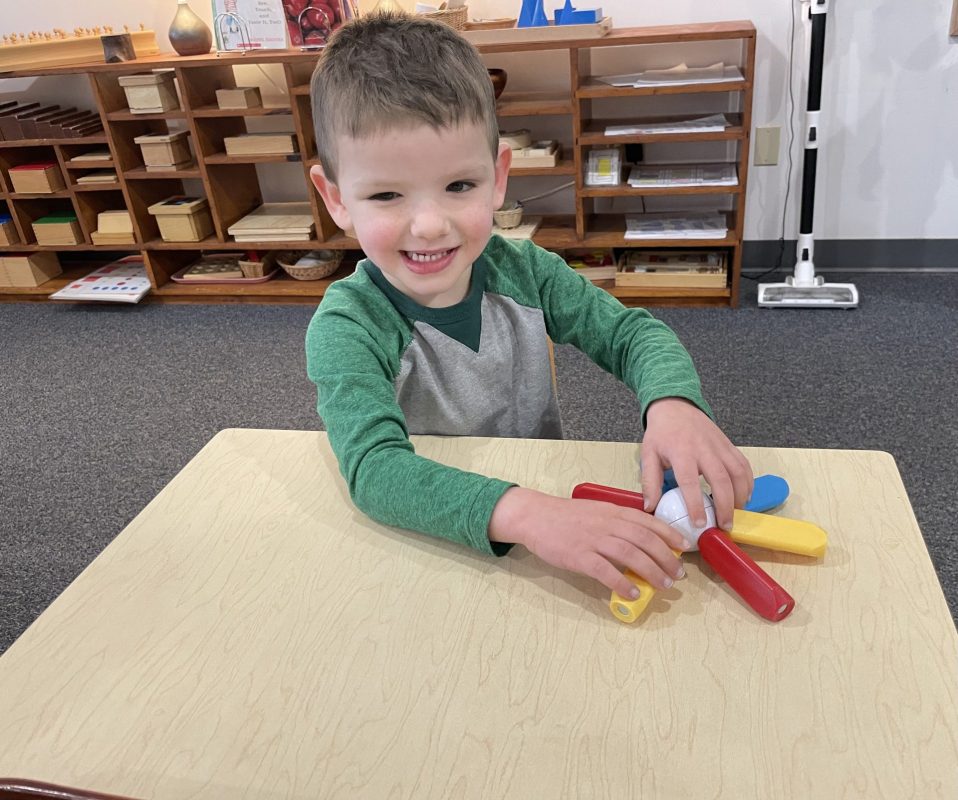
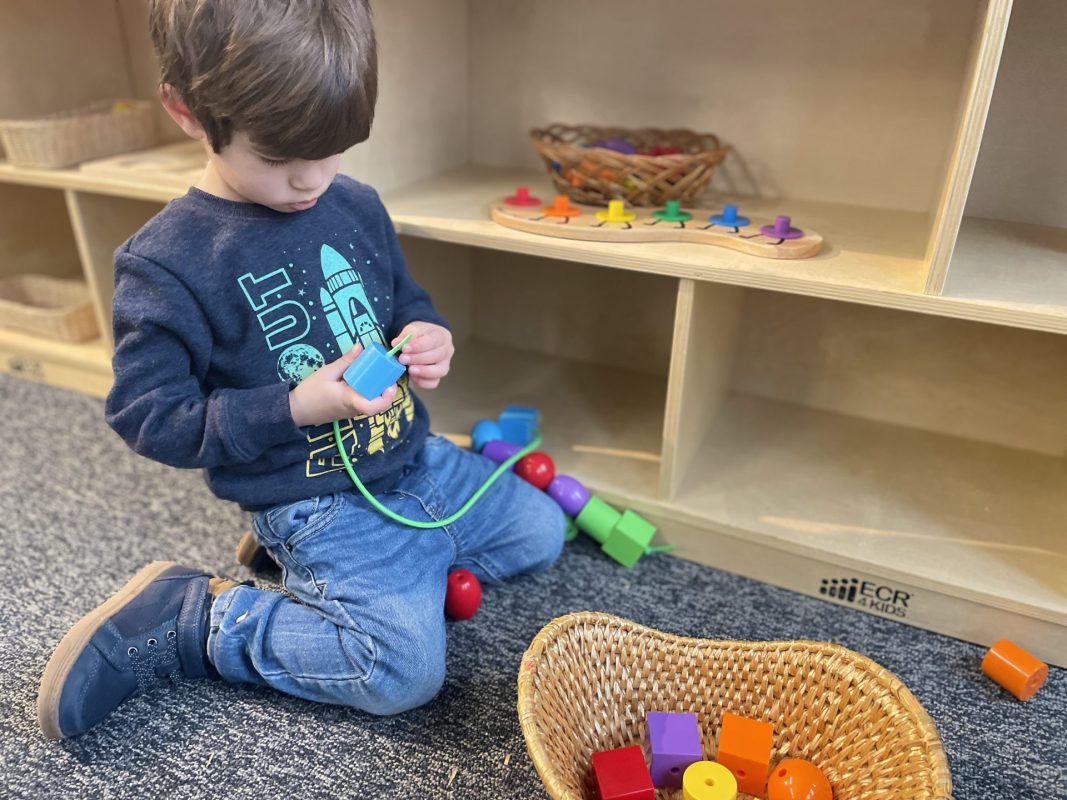
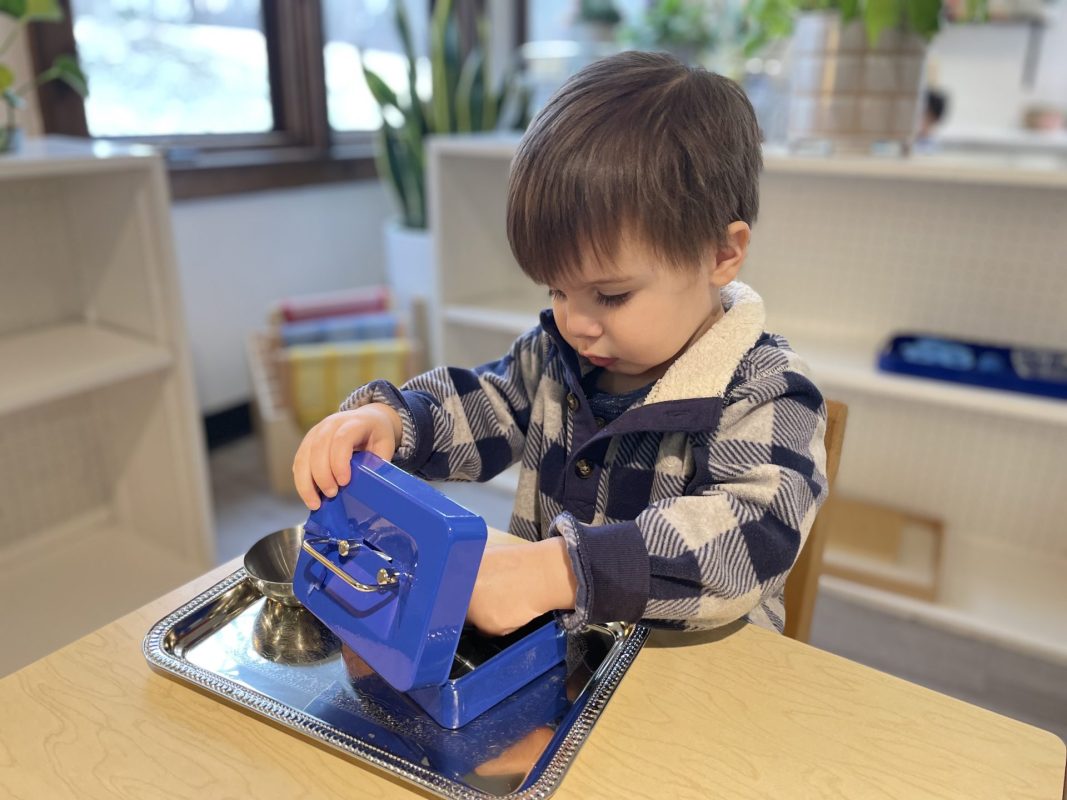
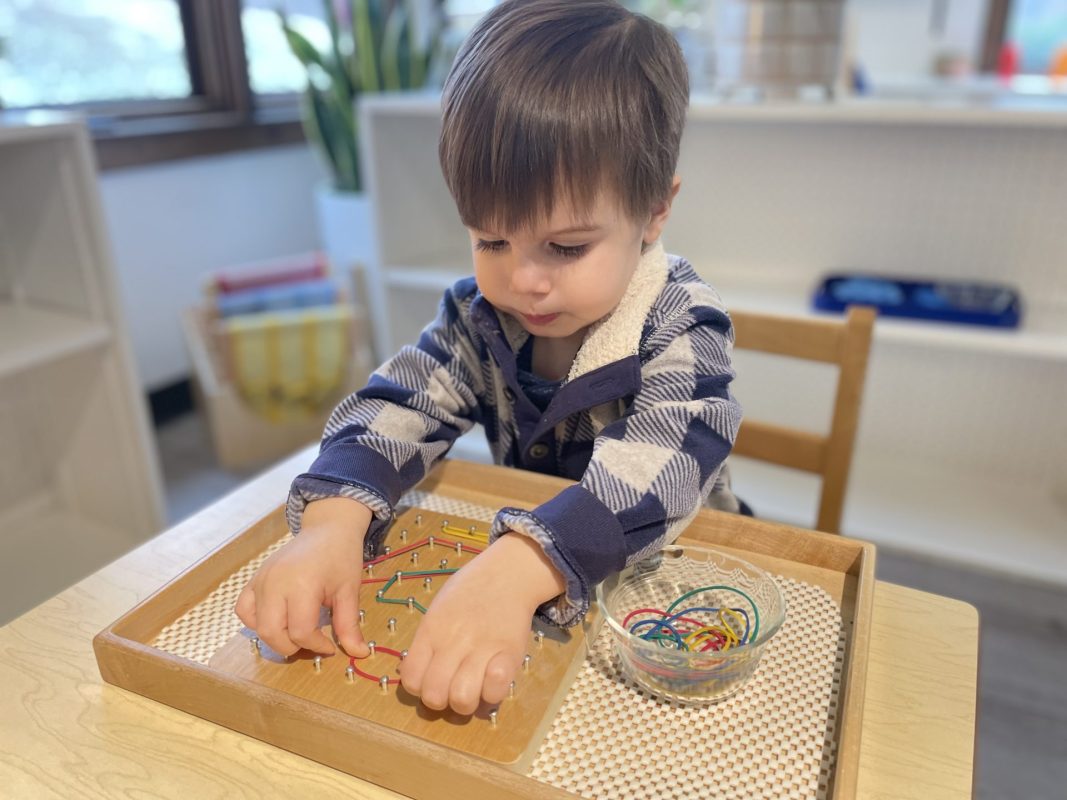
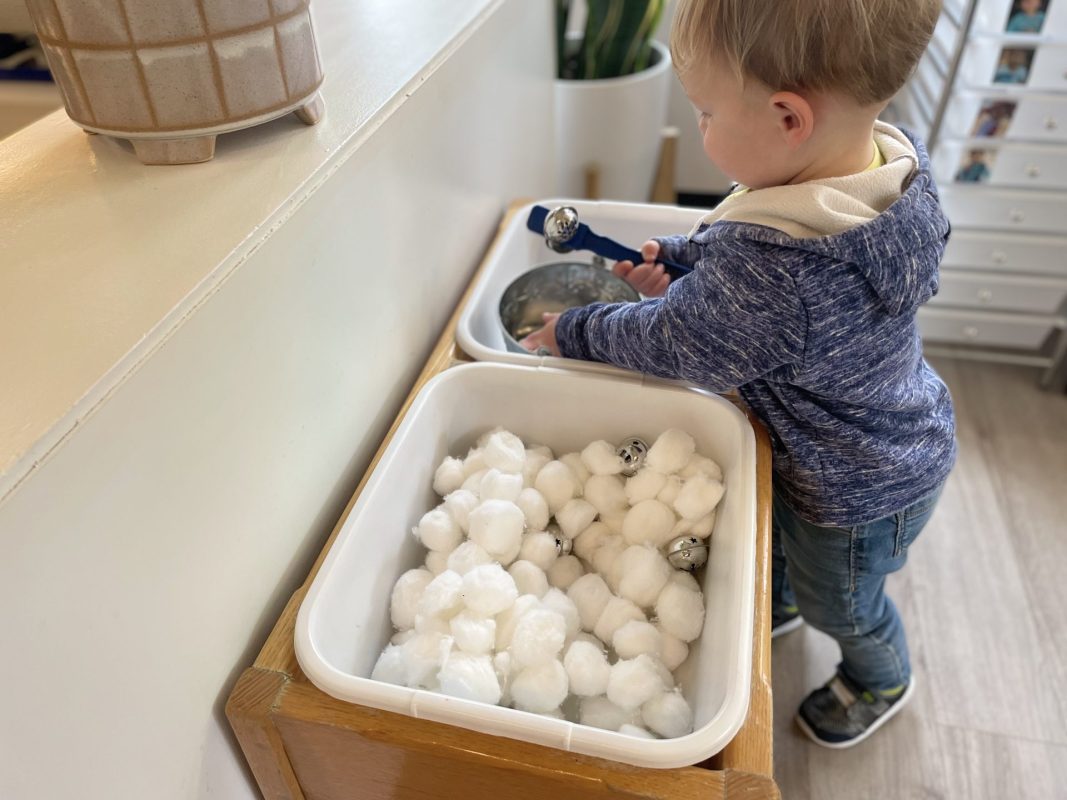
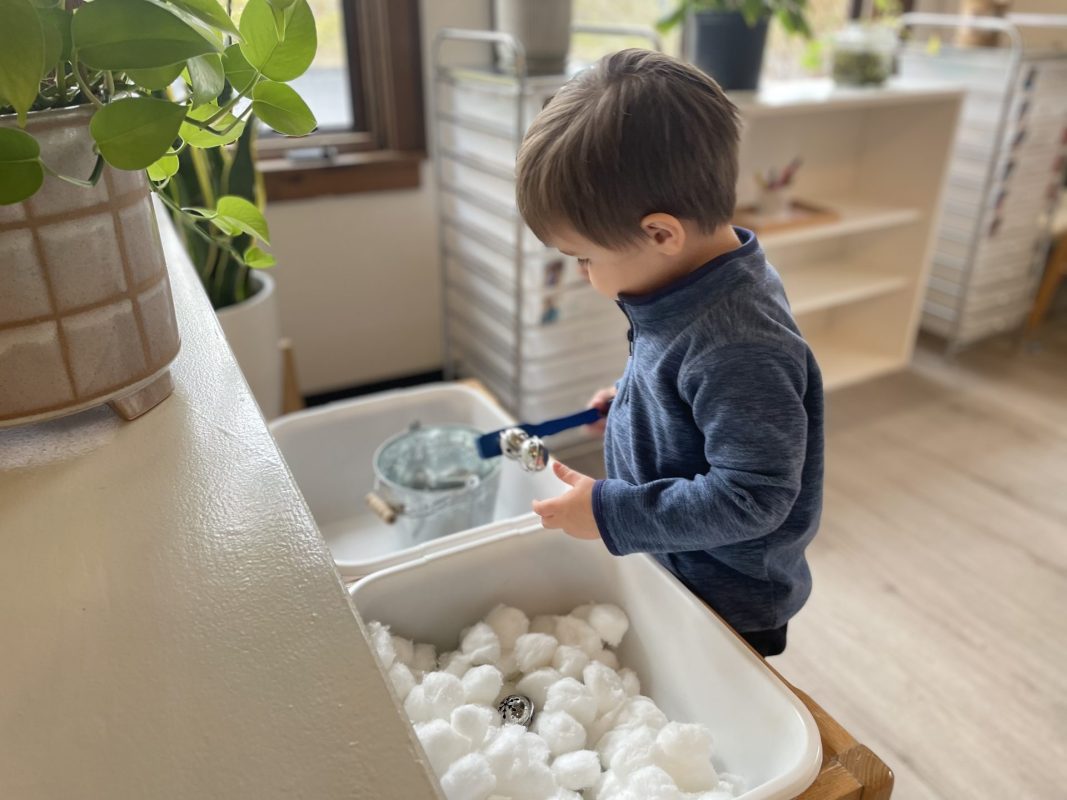
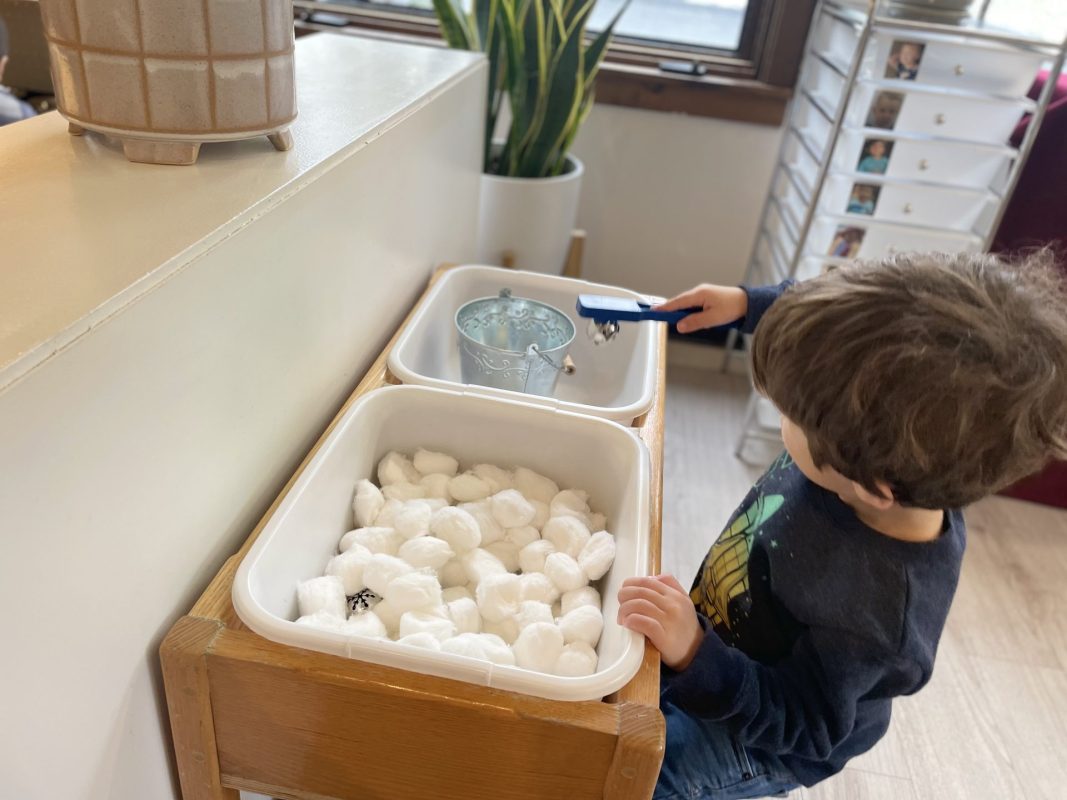
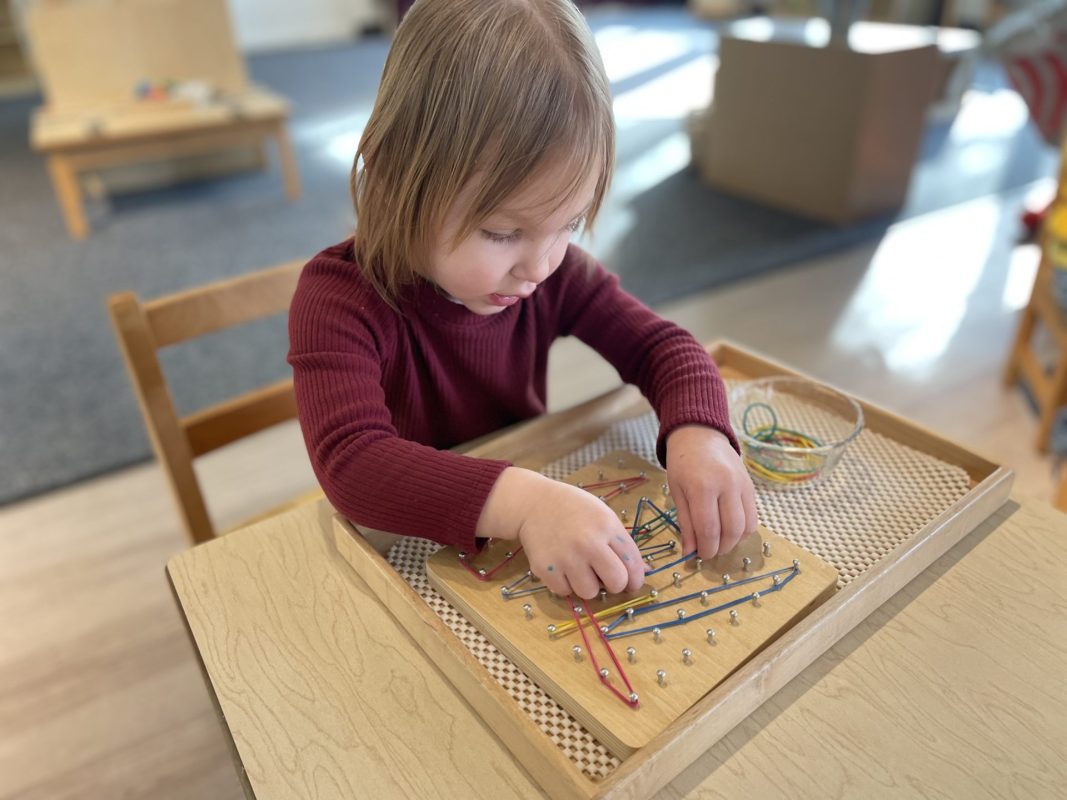
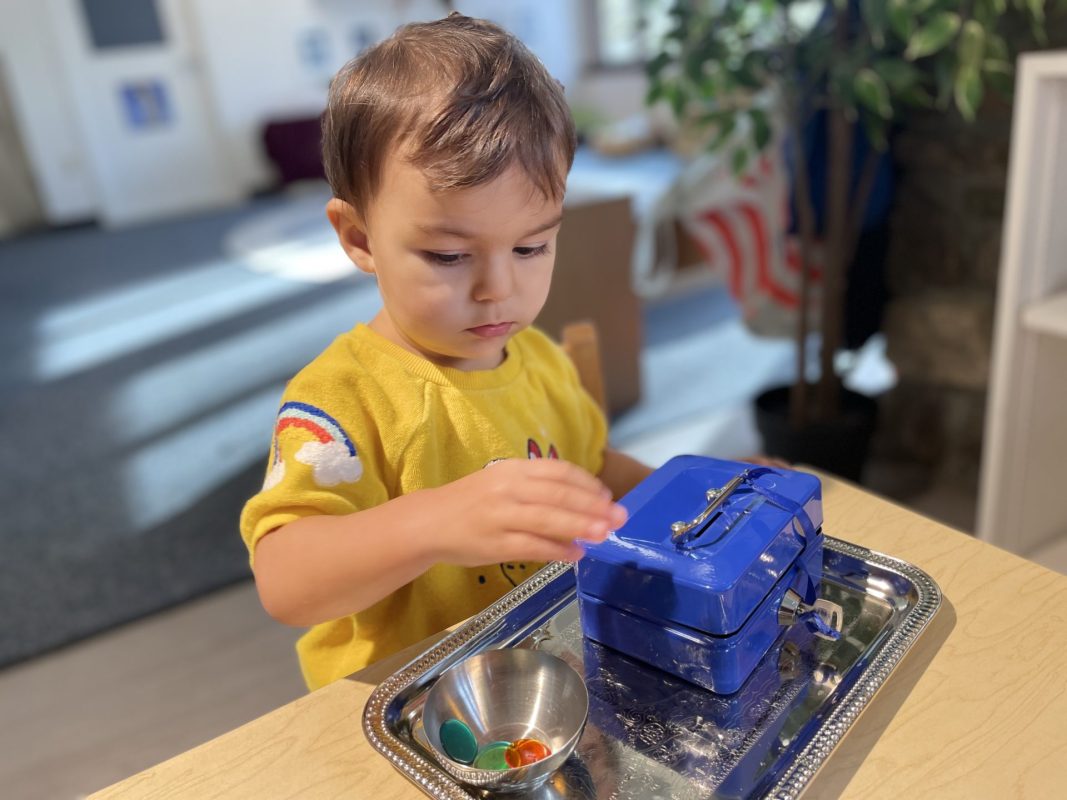
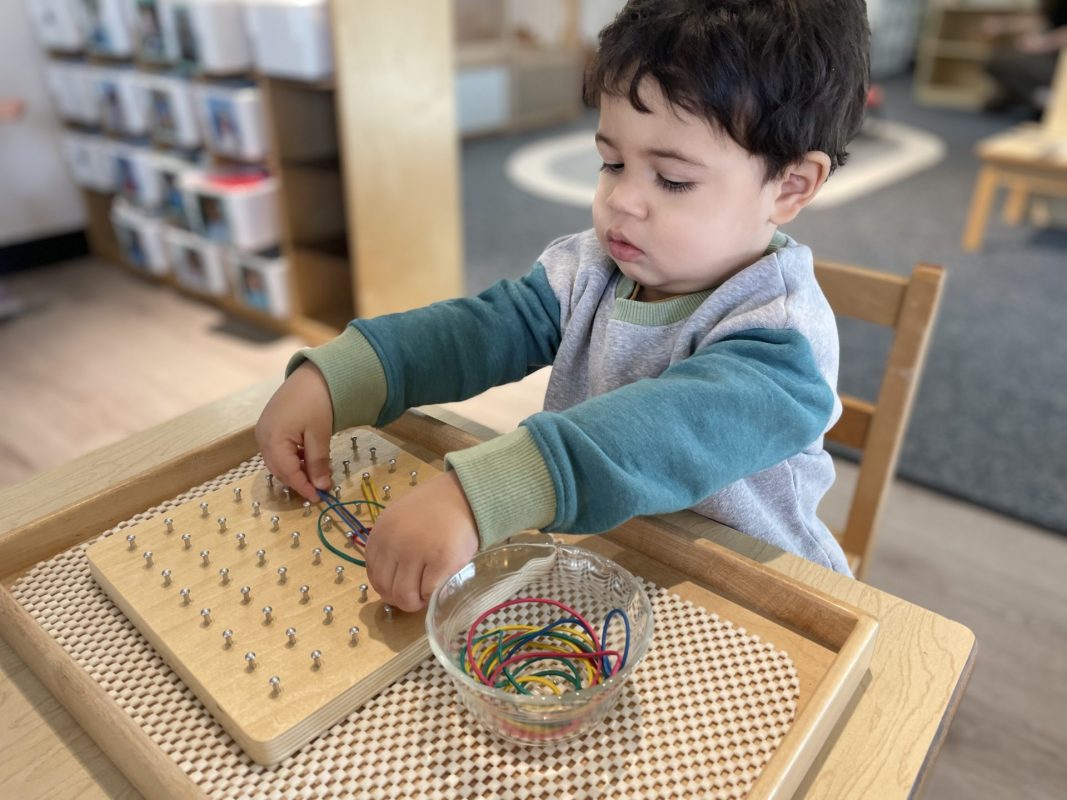
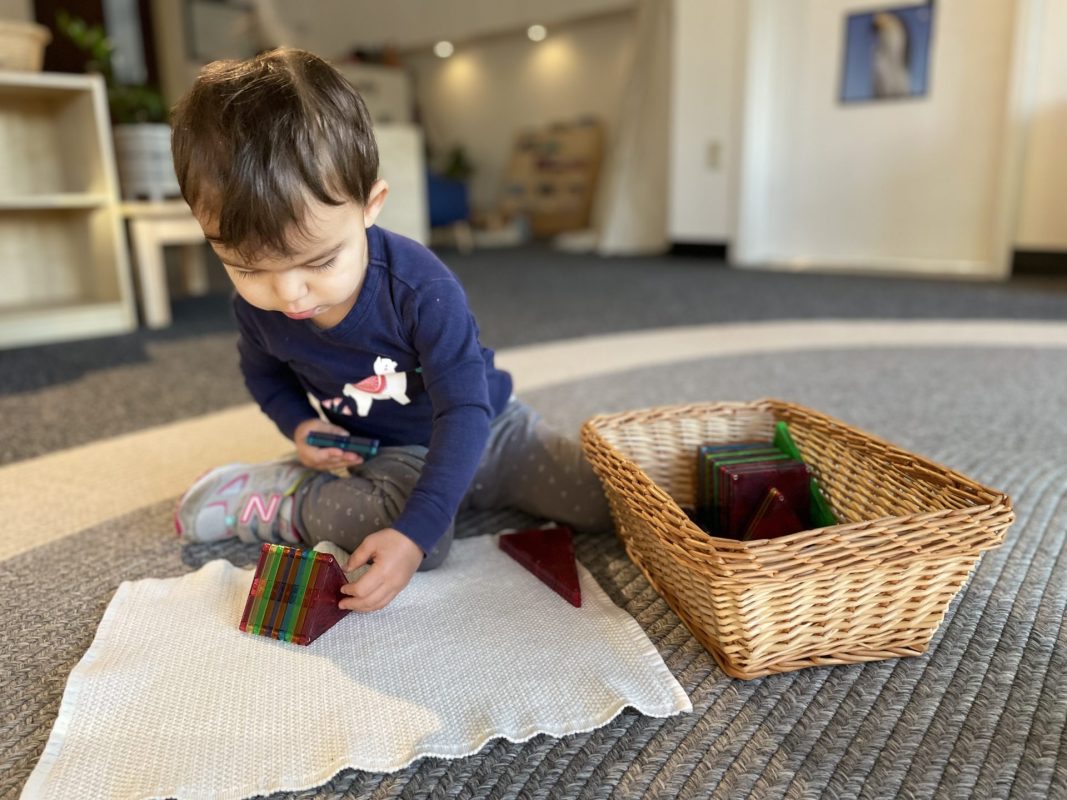
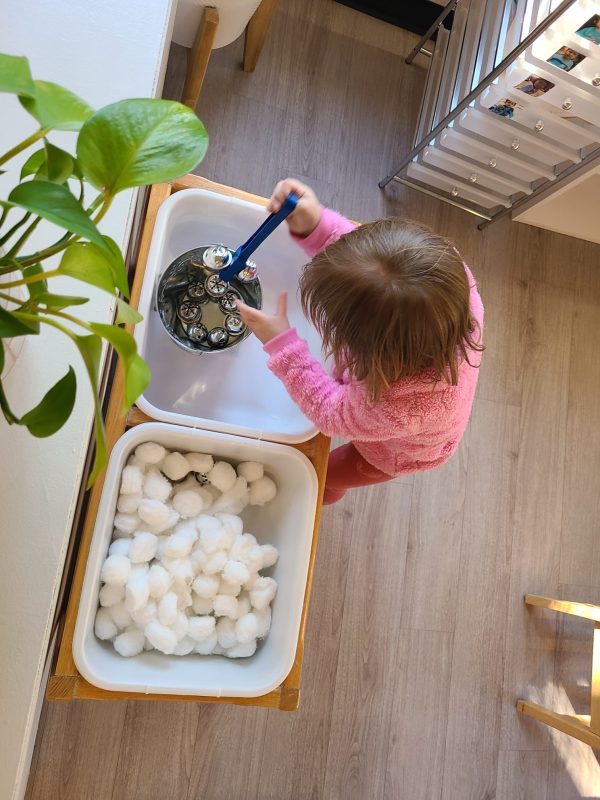
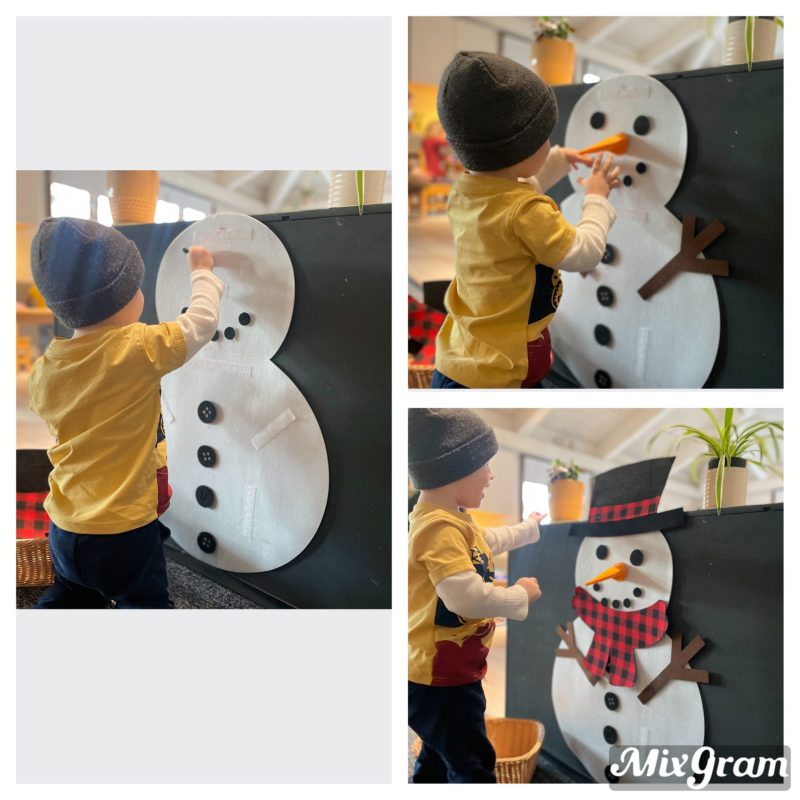
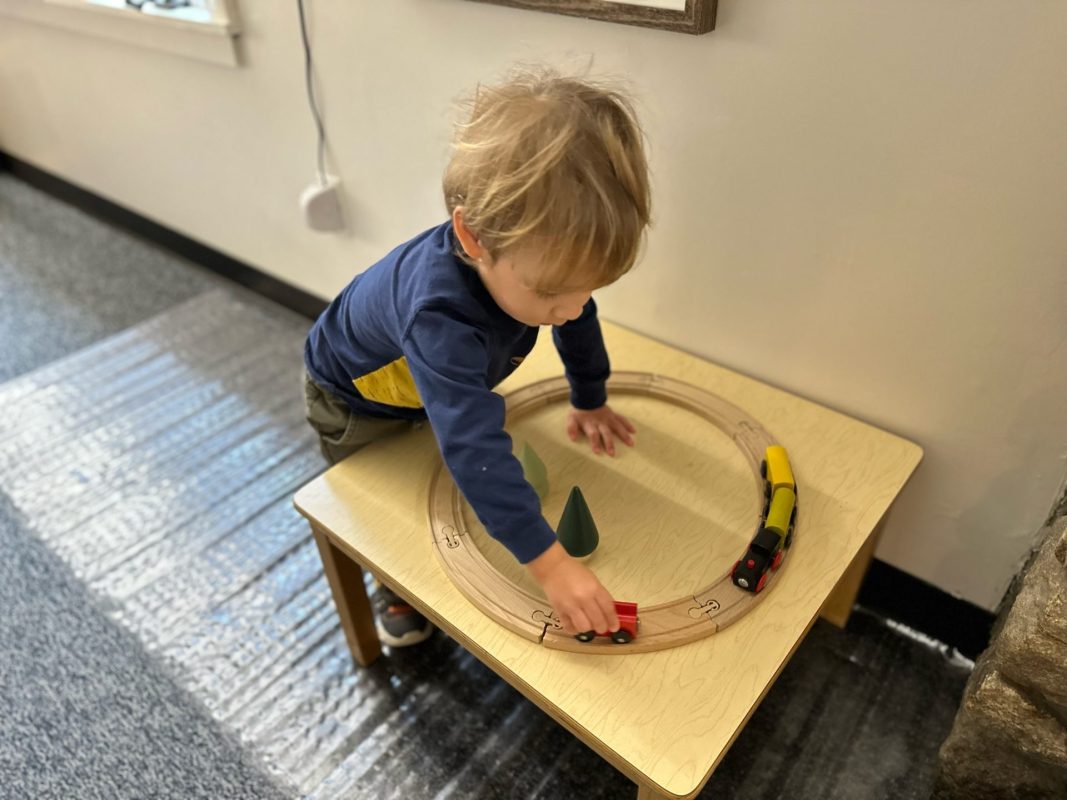
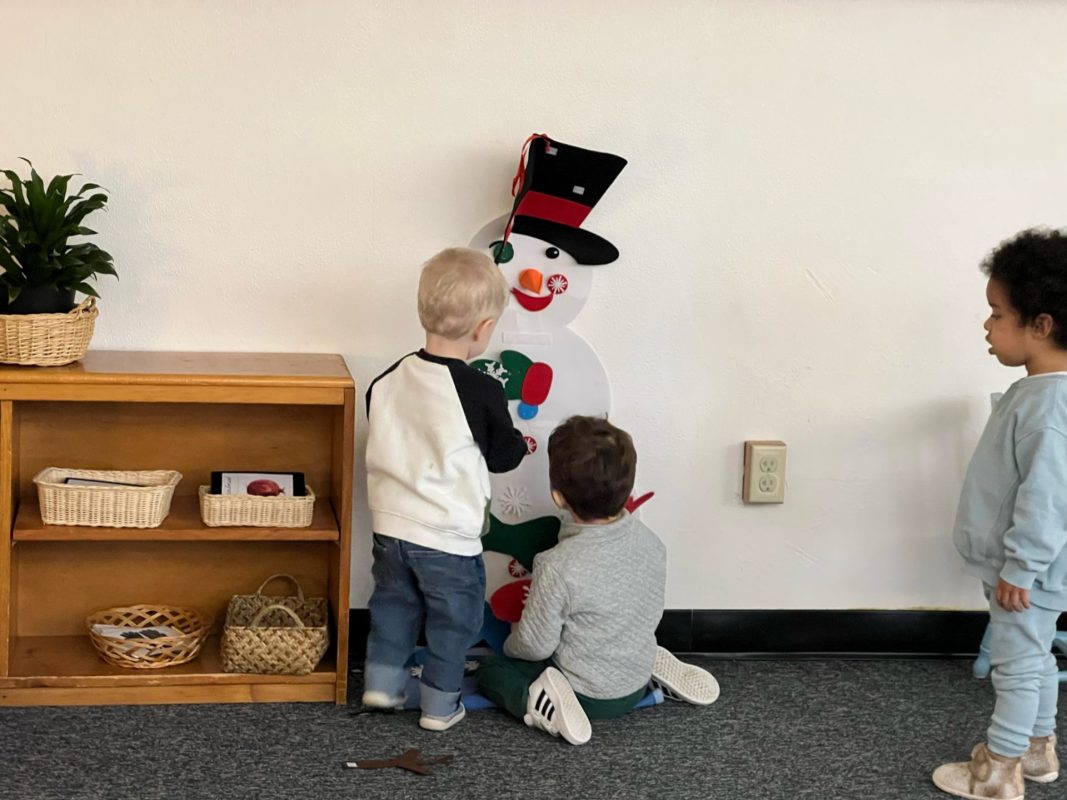
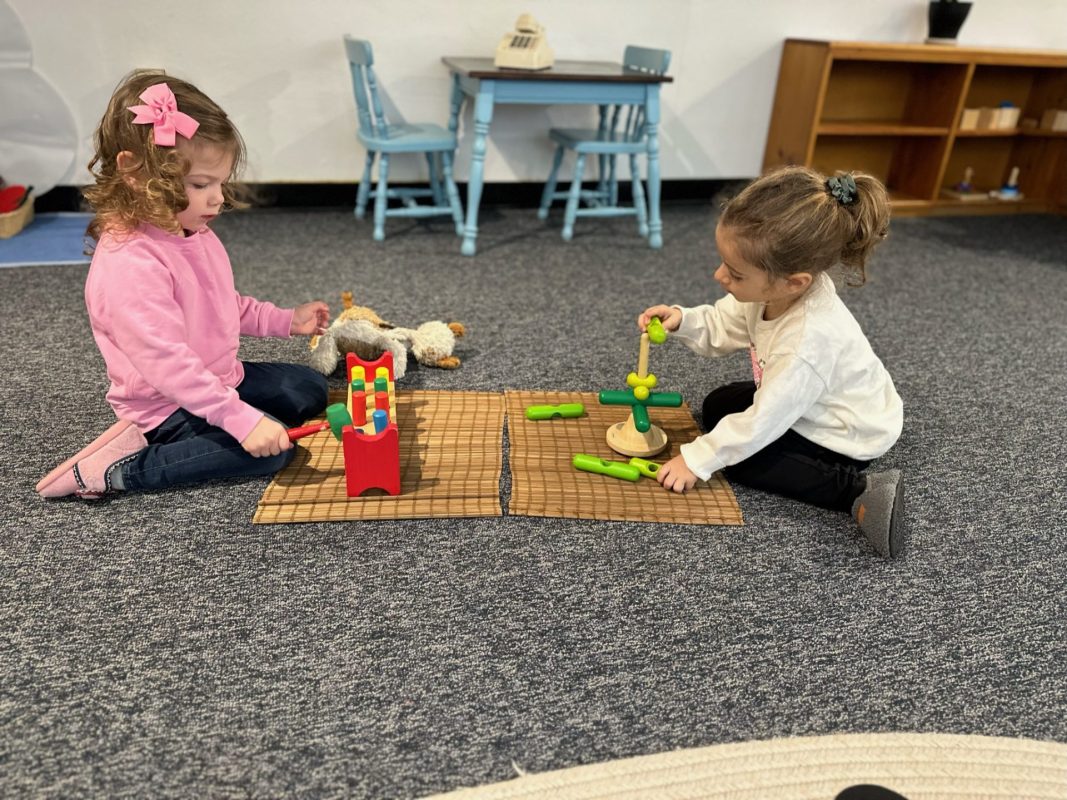
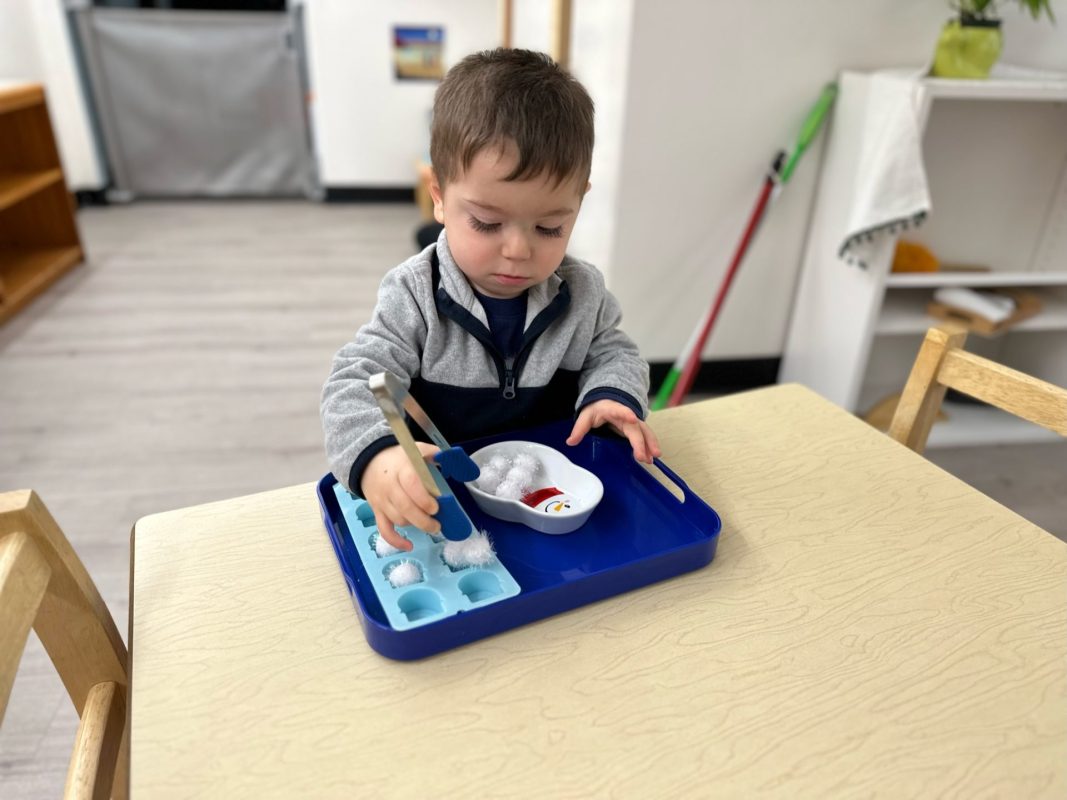
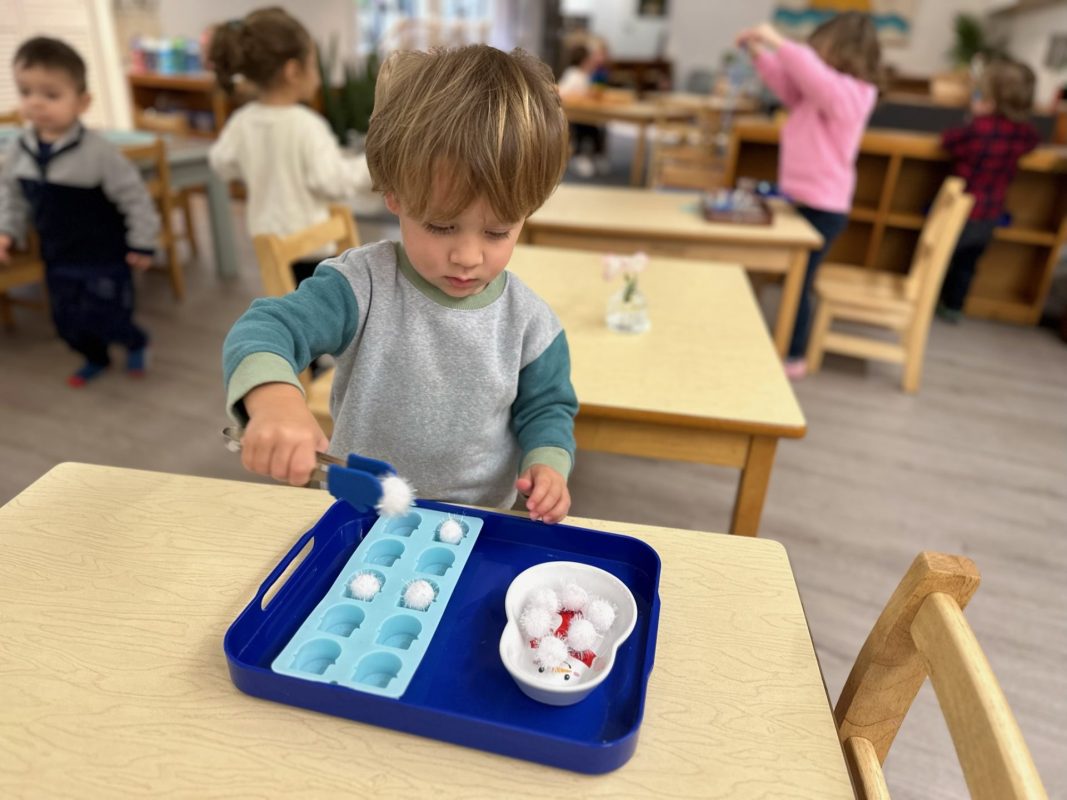
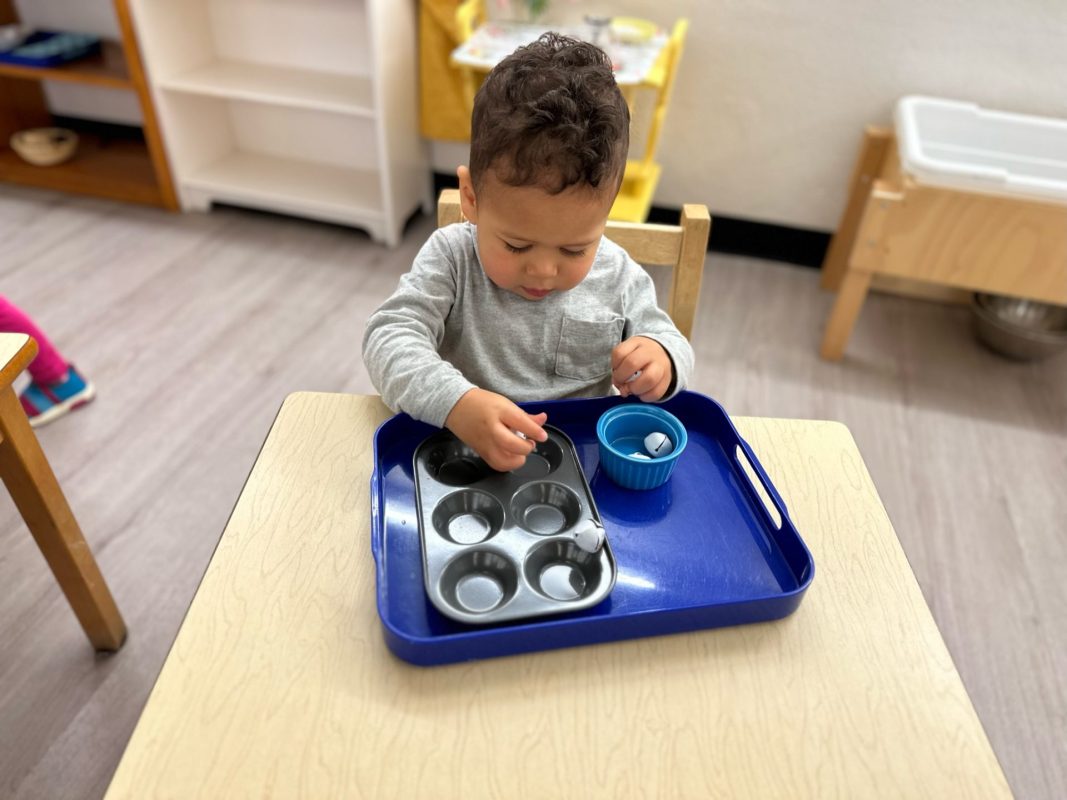
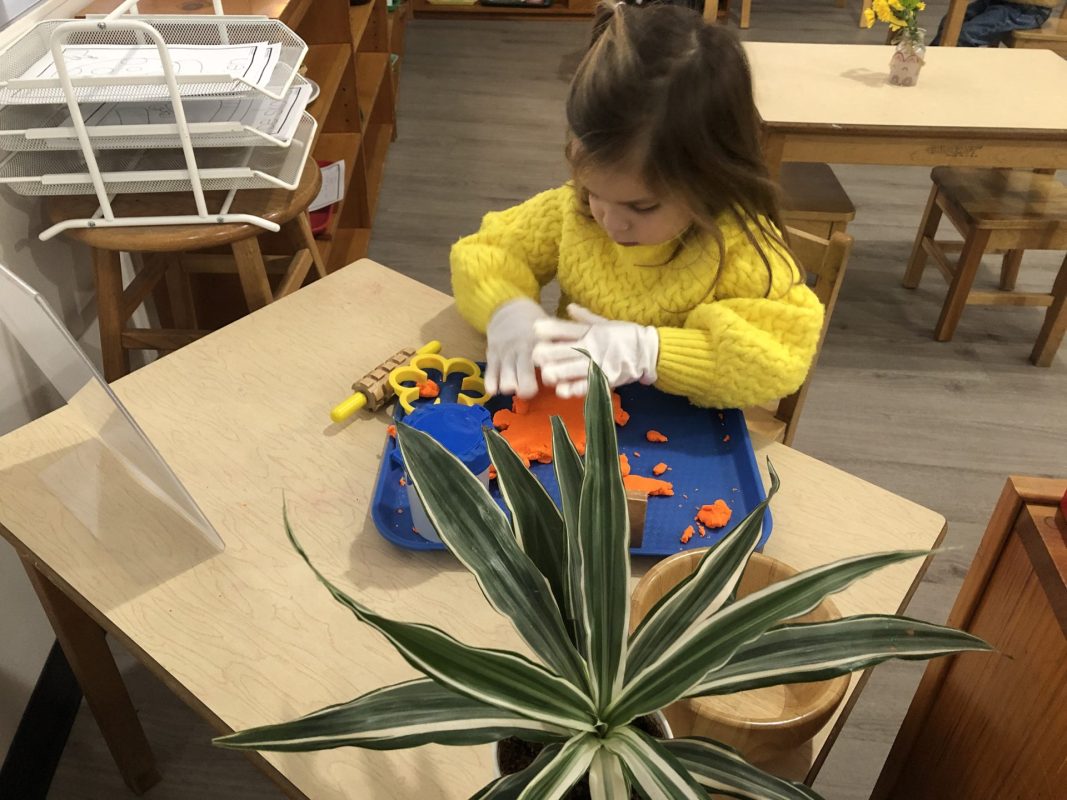
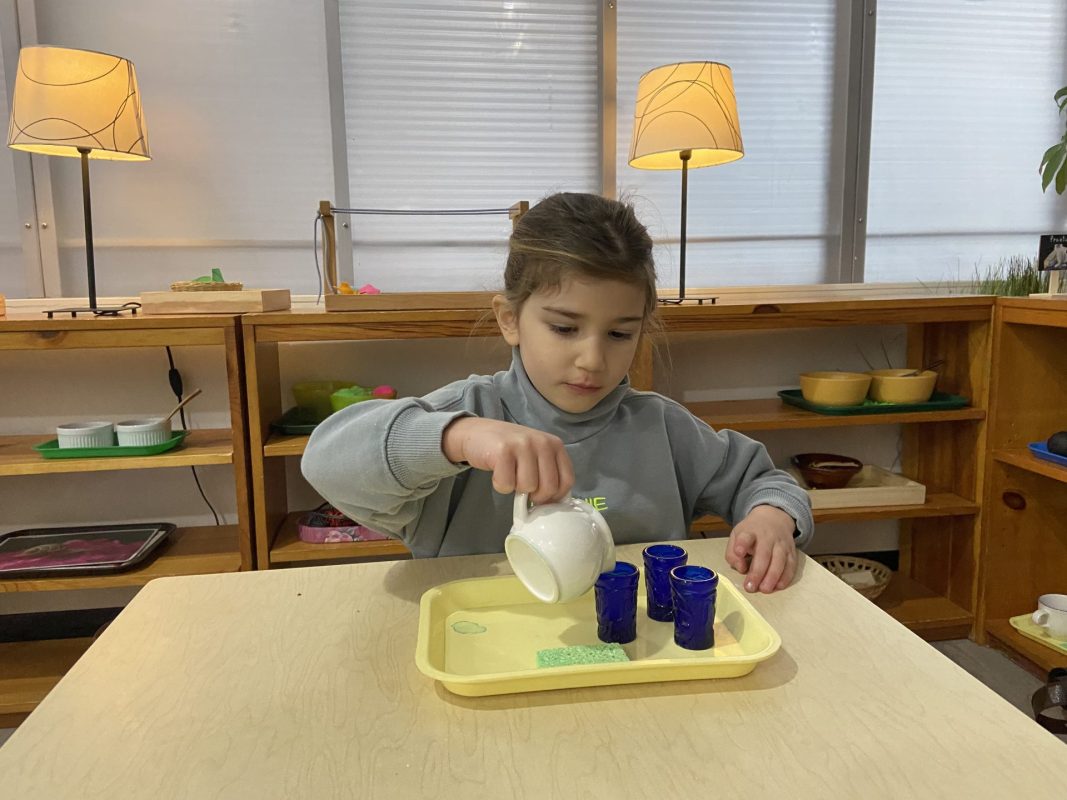
In practical life, apart from exploring all the new winter works, children have been learning how to use a key to open a coin box and learning how to use a pegboard using colorful elastics to create shapes. Children have also enjoyed learning about magnetism in our sensory bin where they have to search inside cotton balls for magnetic snowflakes.  Another of the popular works this week was building a snowman out of felt. Through this exercise, children review body parts and winter clothing names and enhance their critical thinking skills in deciding where these parts belong on the snowman.

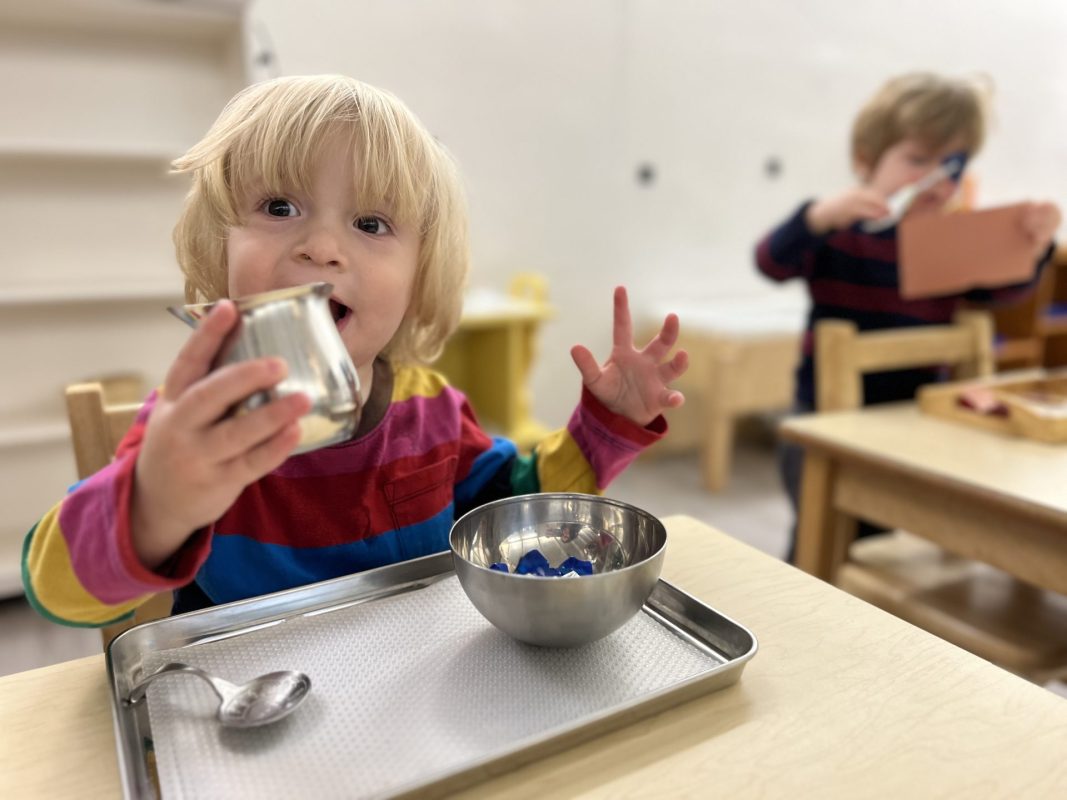
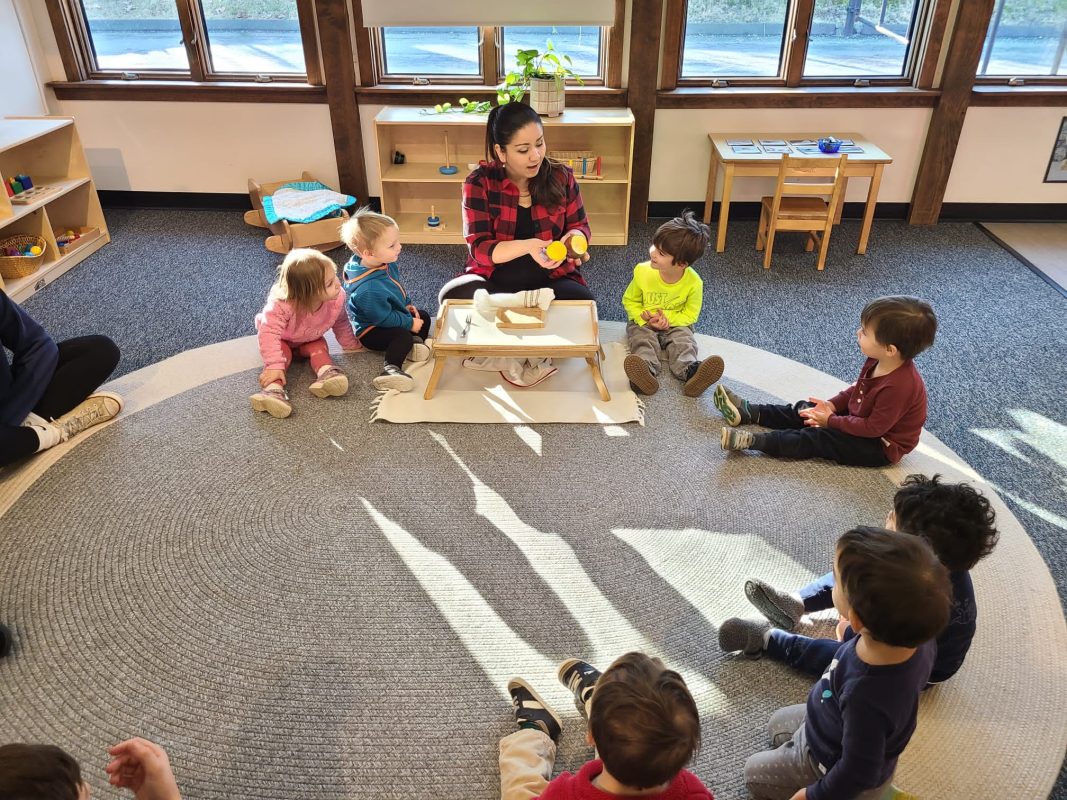
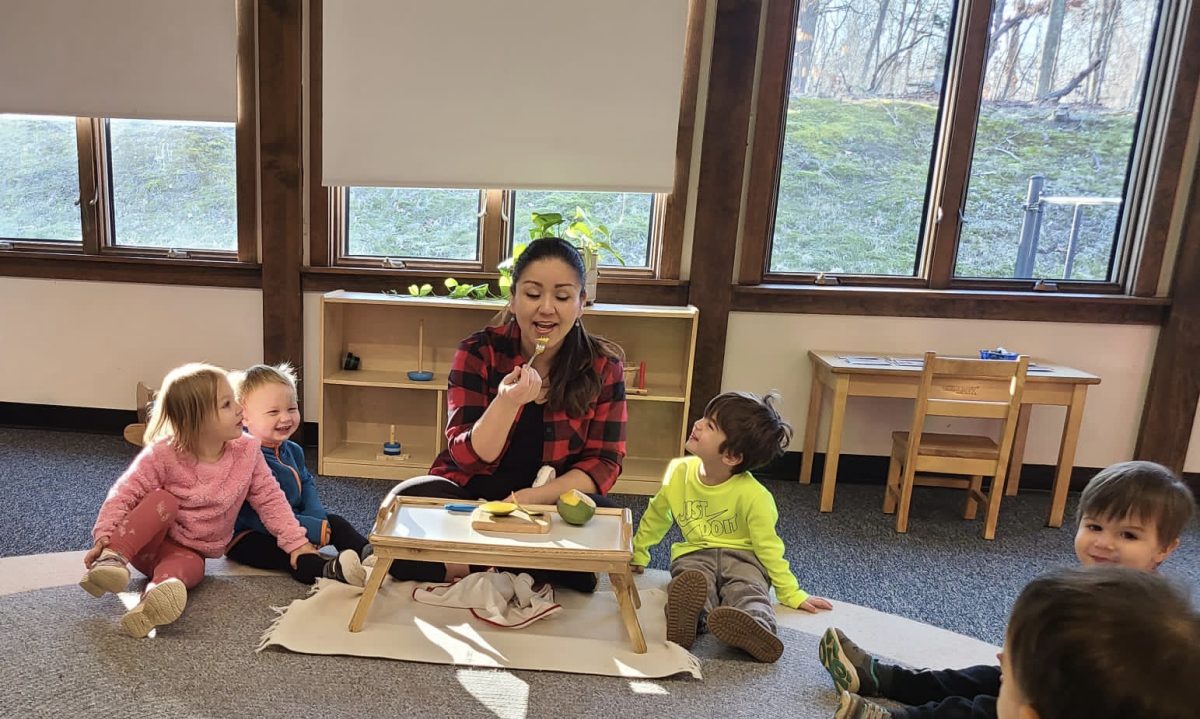
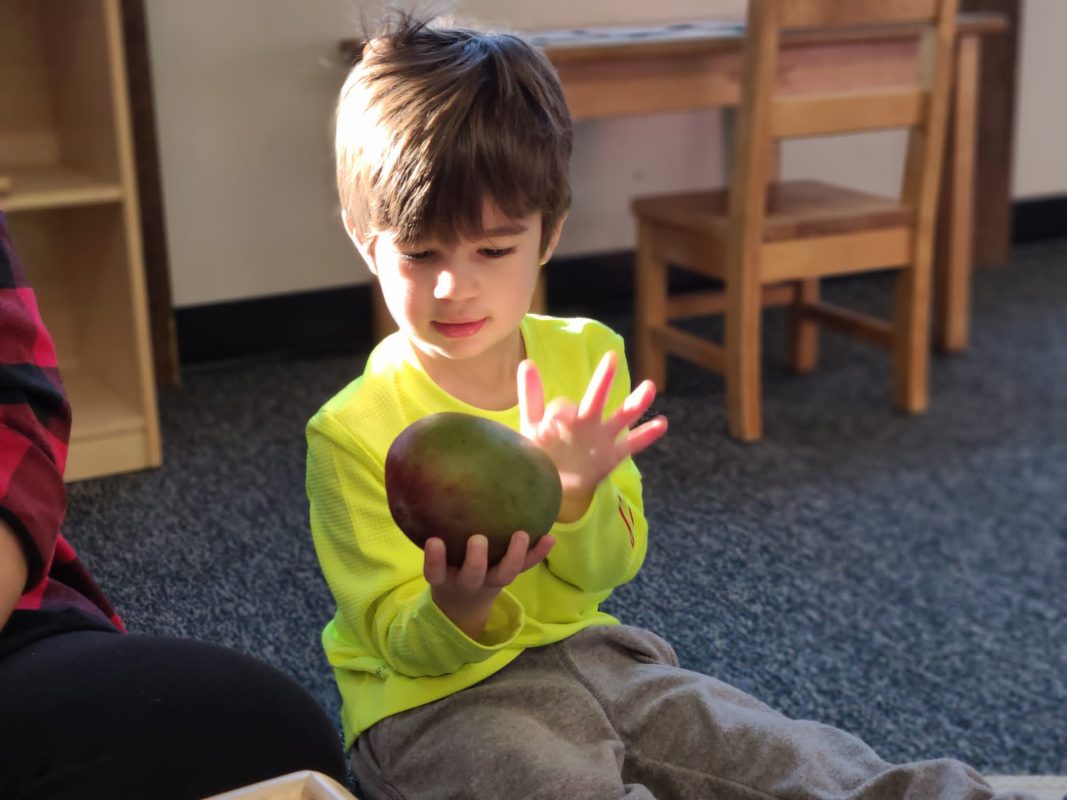
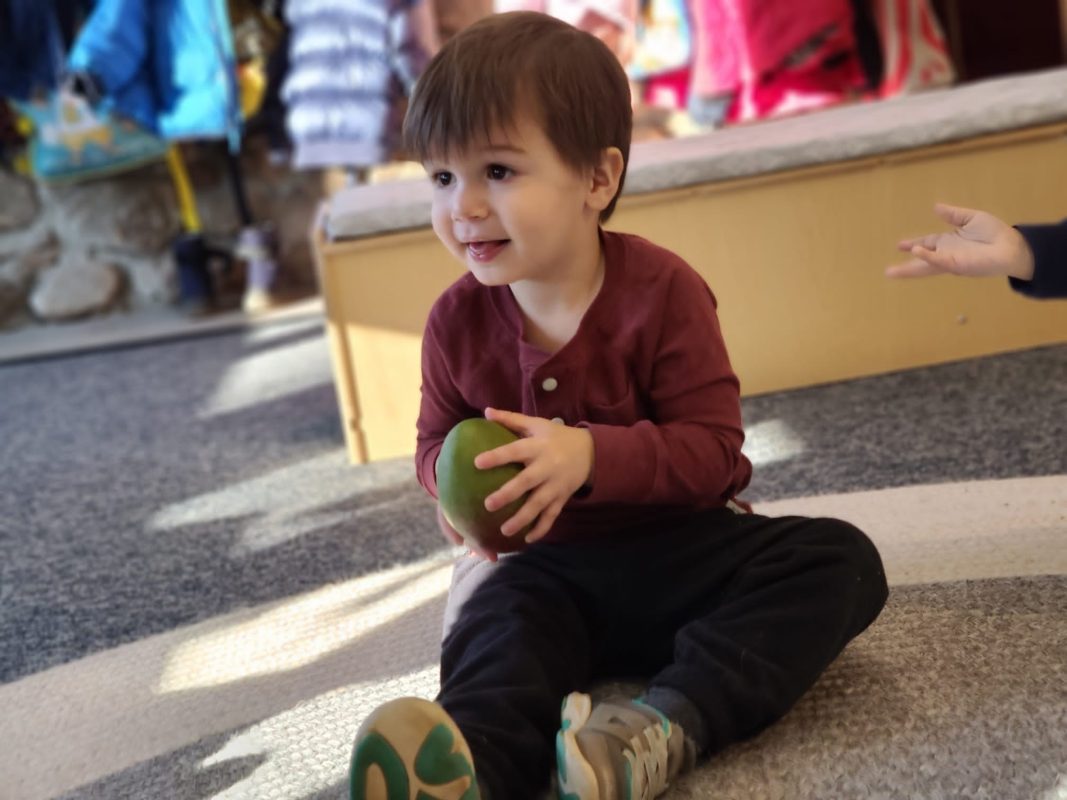
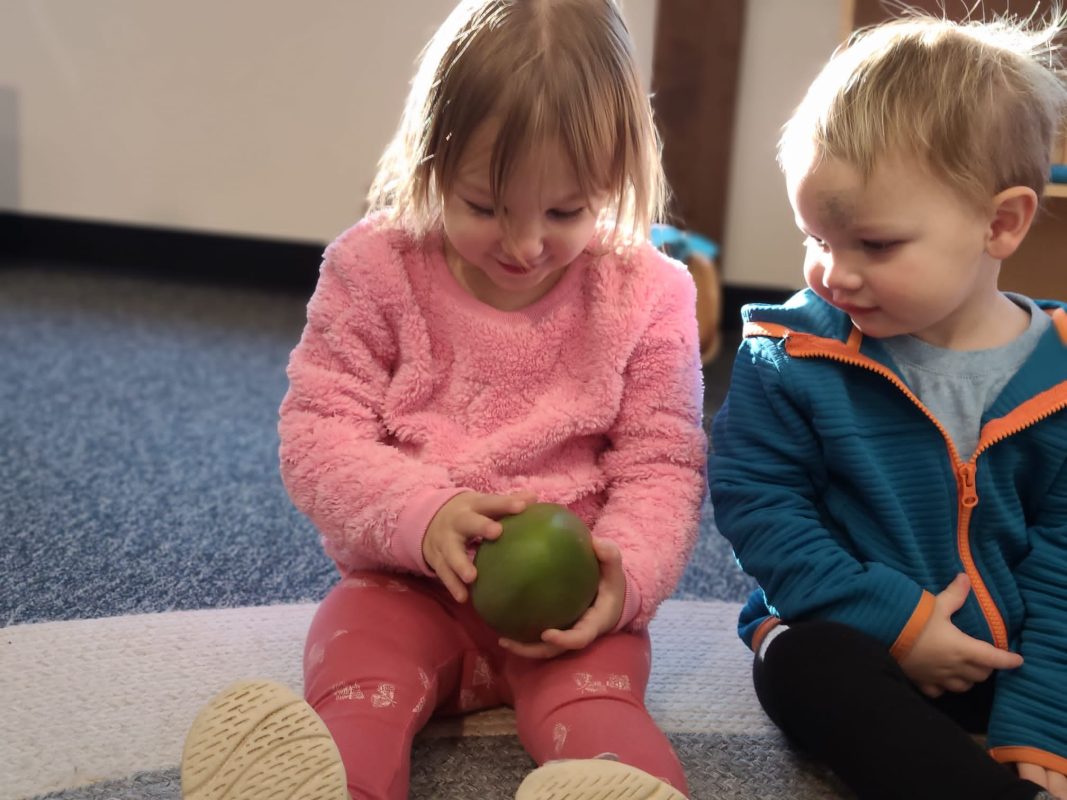
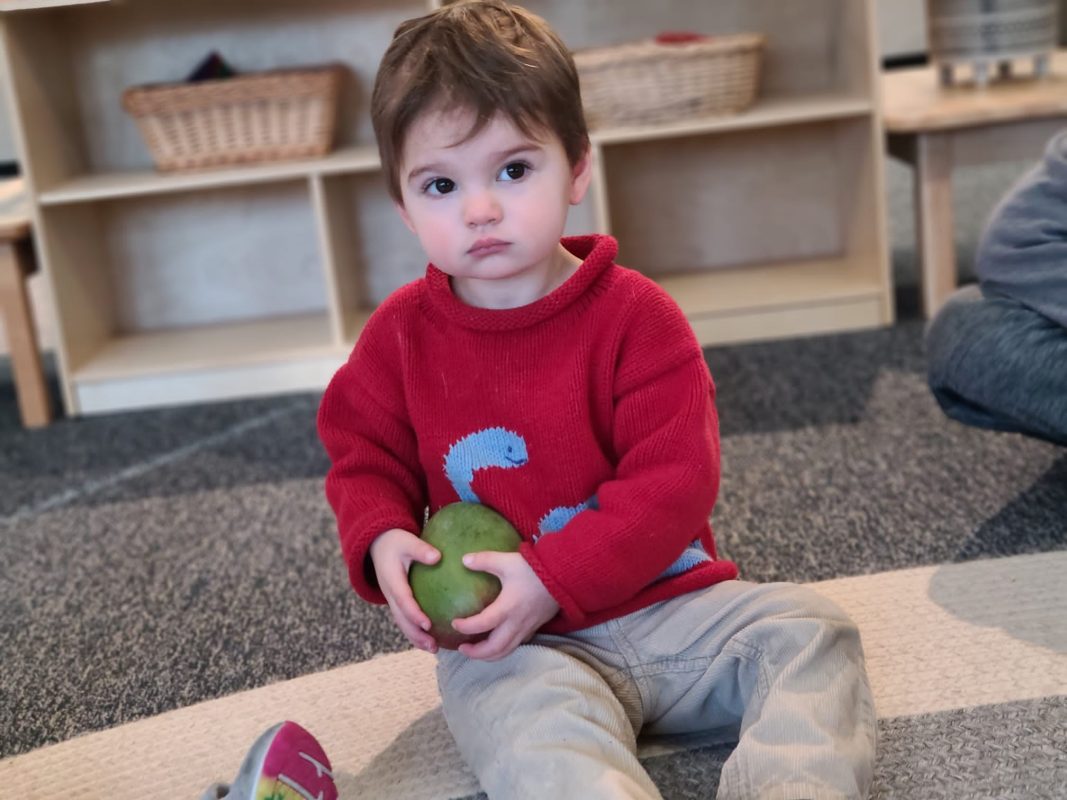
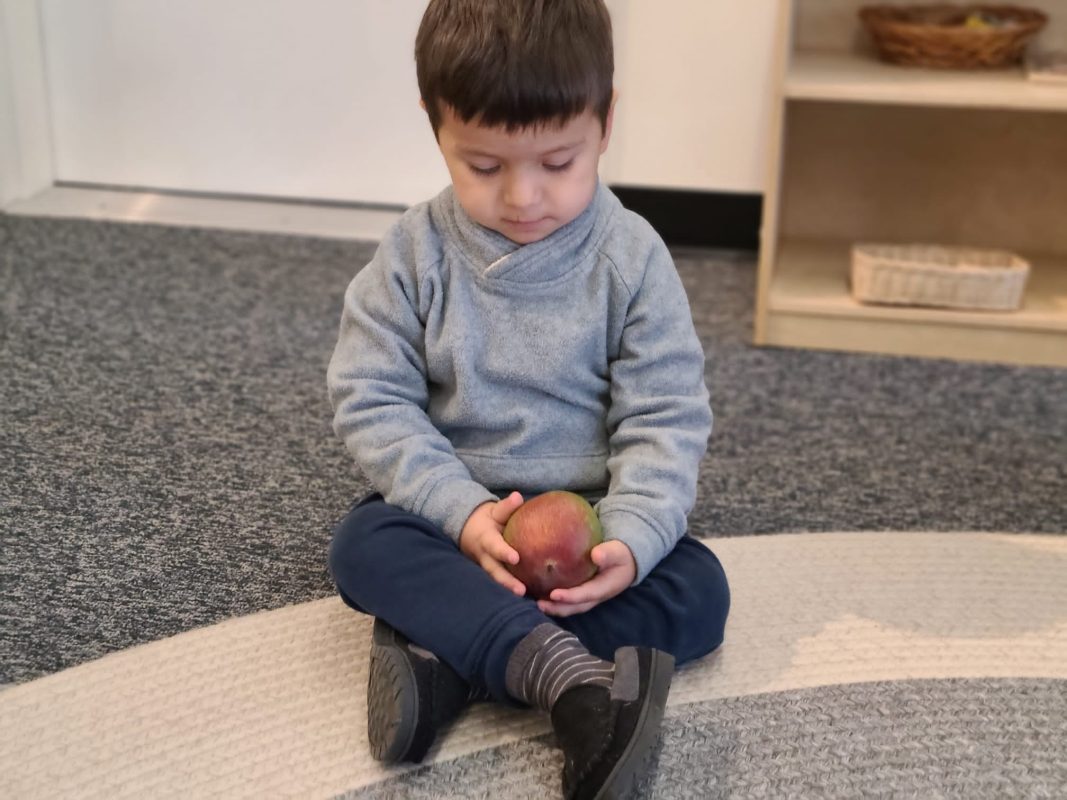
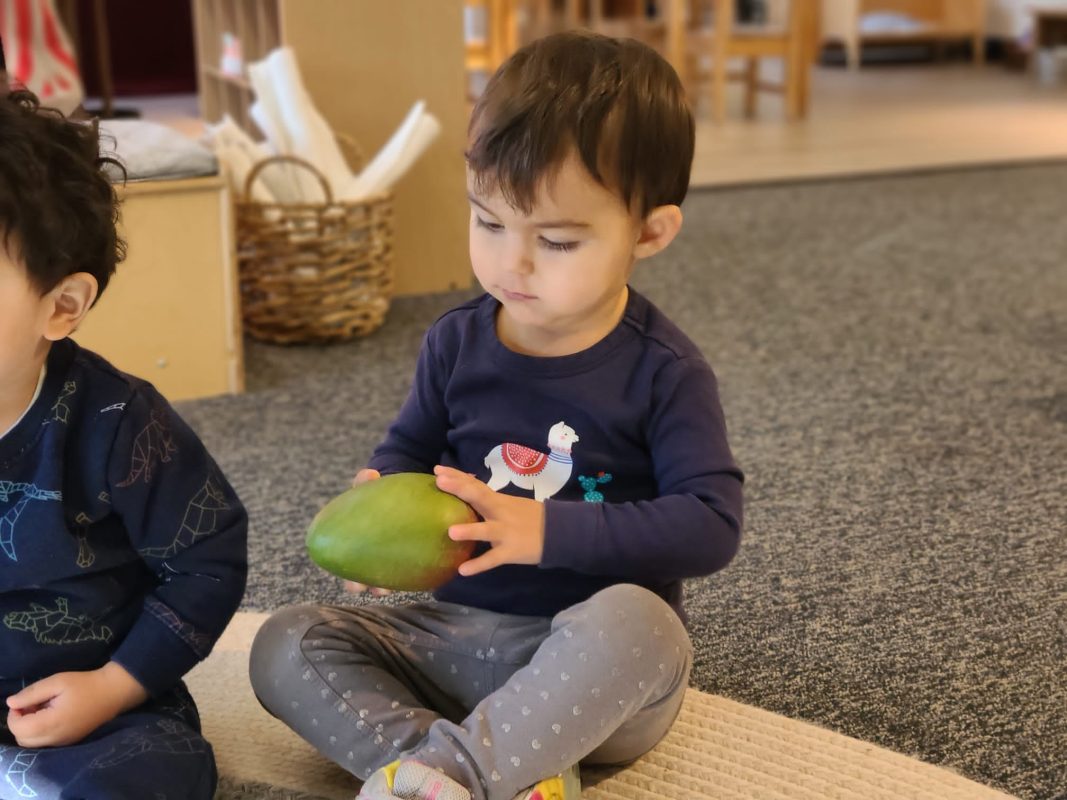
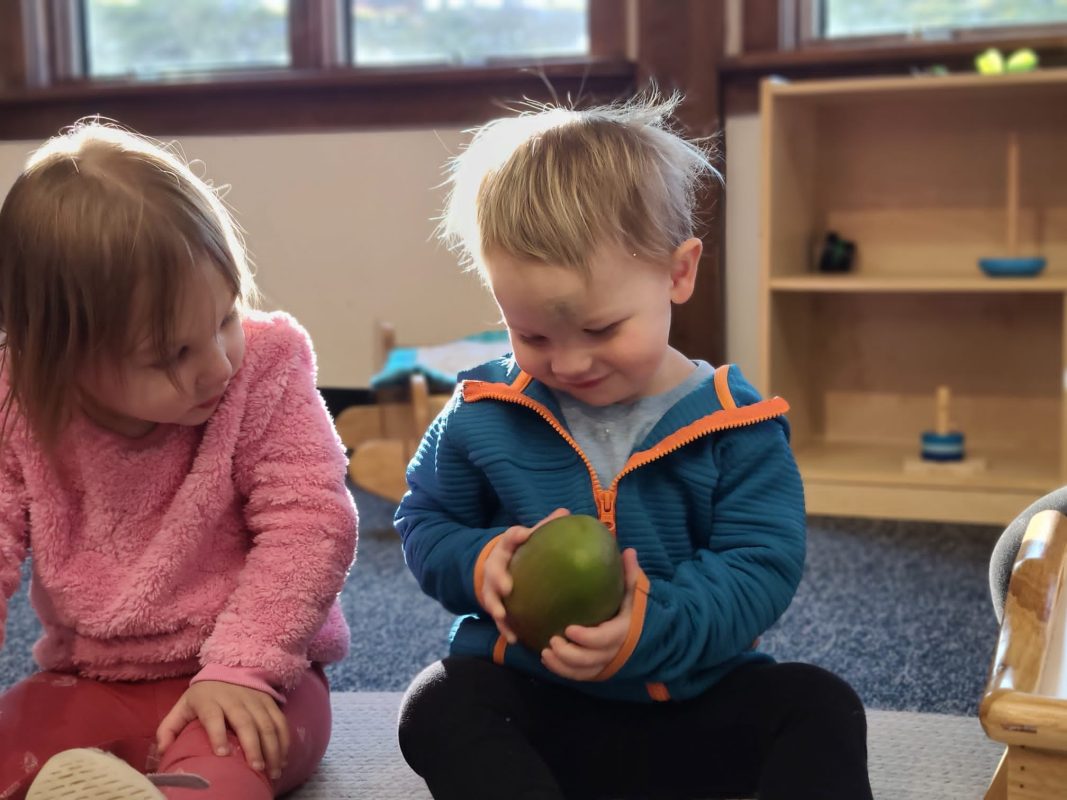
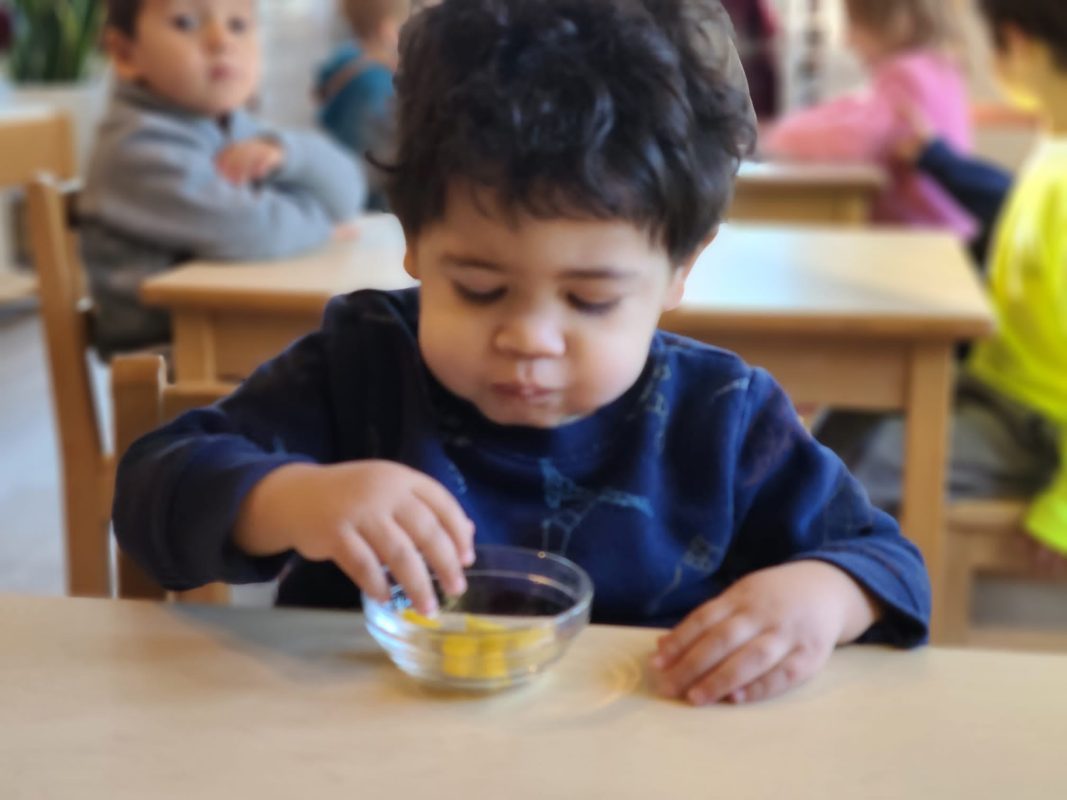
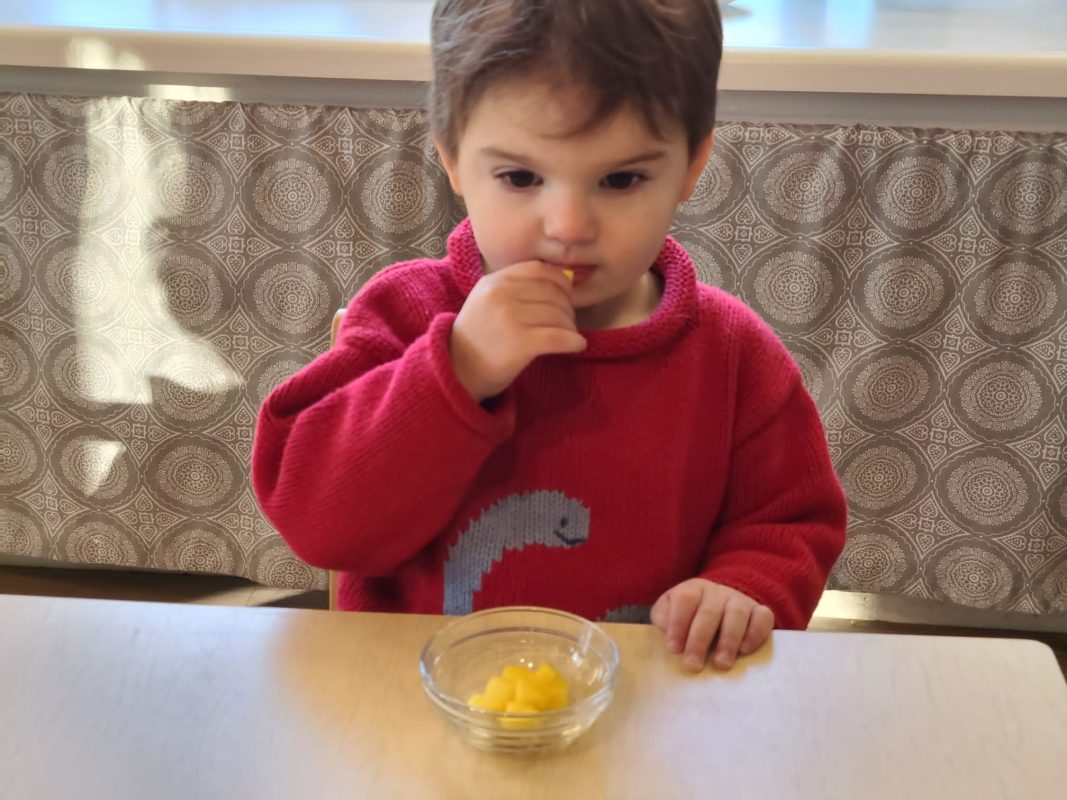
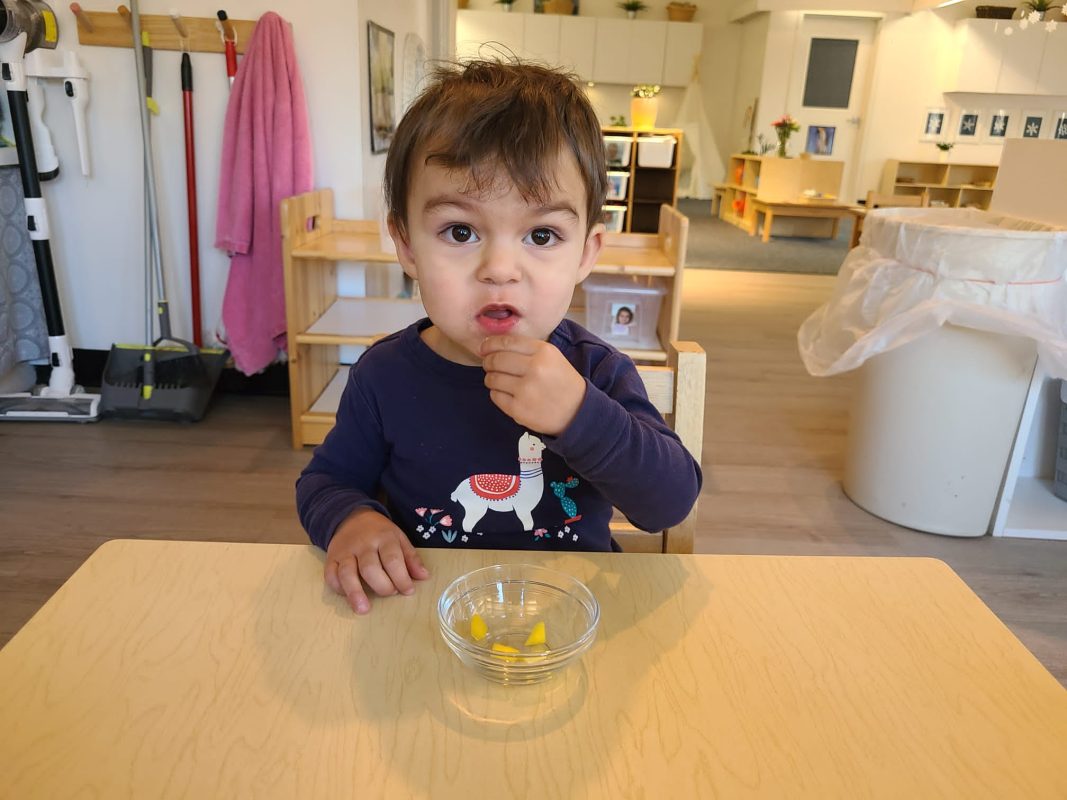
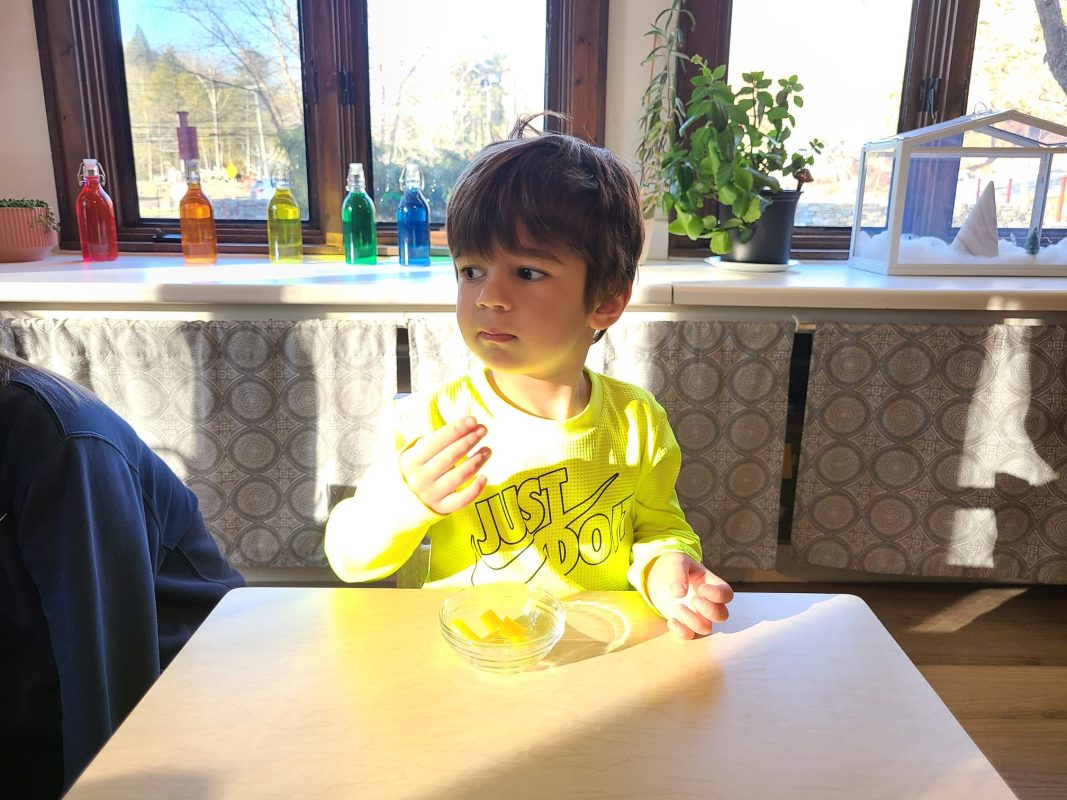
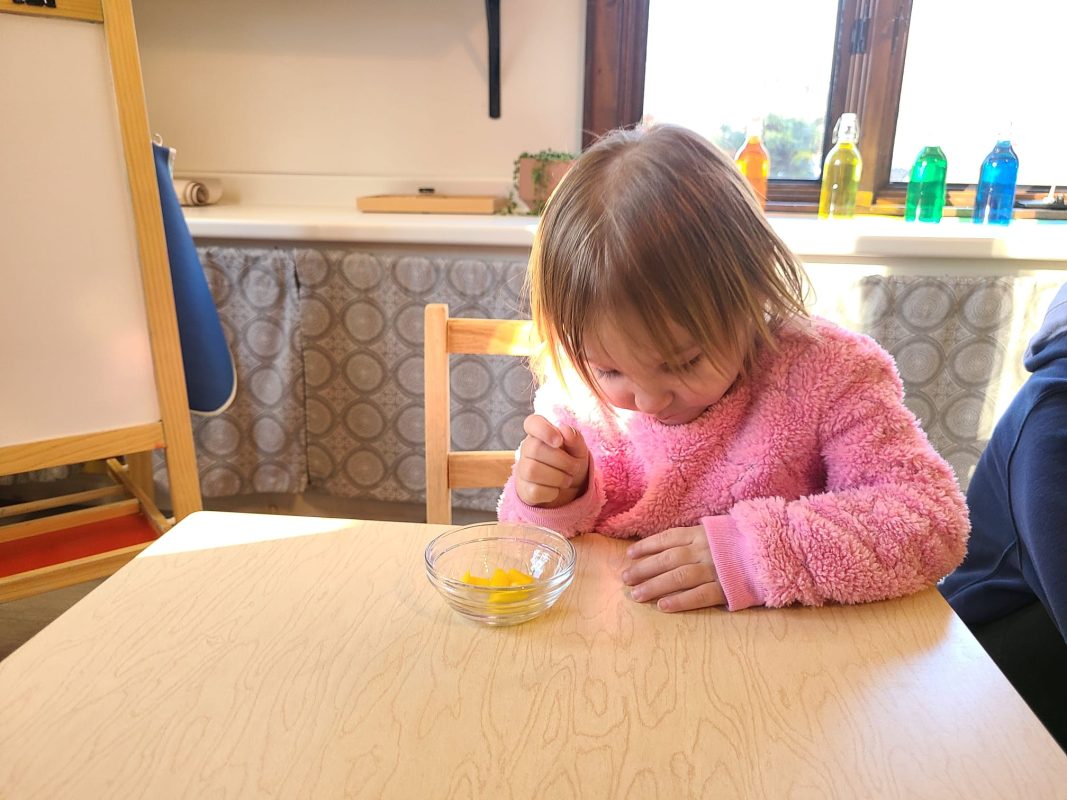
For food tasting, children explored a mango and they were very surprised to find out that it had a yellow pulp. For some reason, some of the children were convinced that it was going to be green or purple! 🙂 Needless to say, they devoured the mango and asked for repeats. It’s a great fruit to add to your grocery list!

Enjoy the weekend,

Mrs. Hood and Mrs. Bethann


Middle School: Math Carnival Week

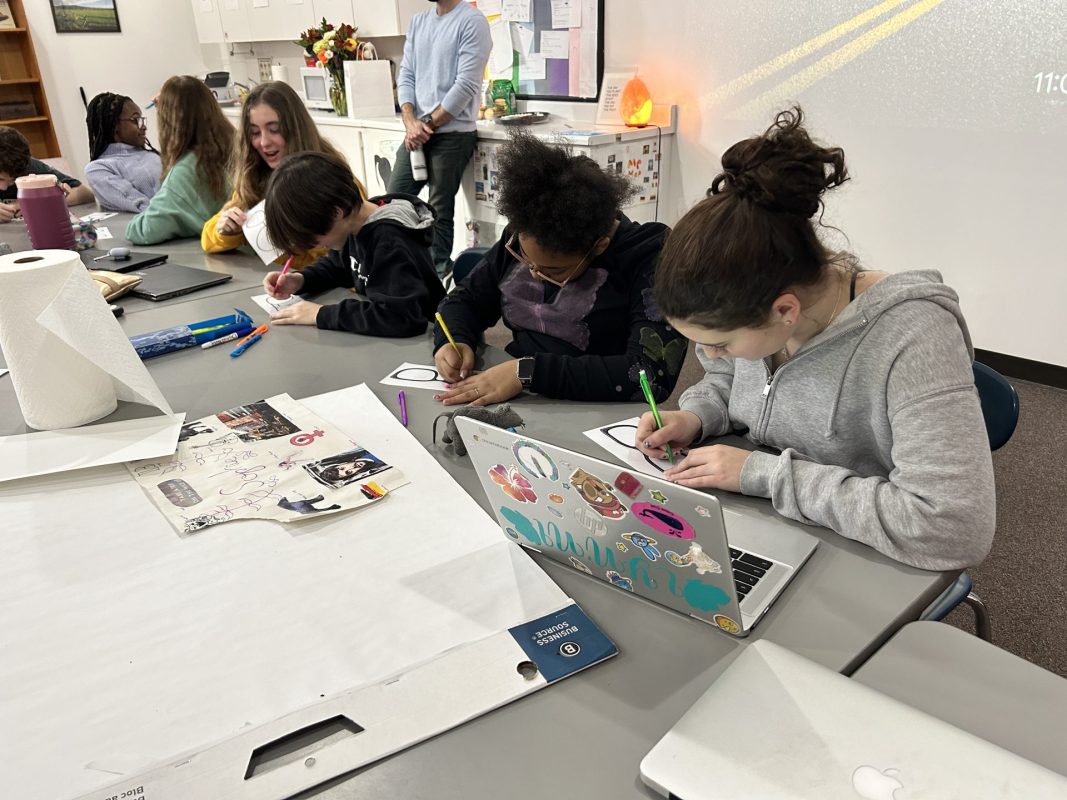
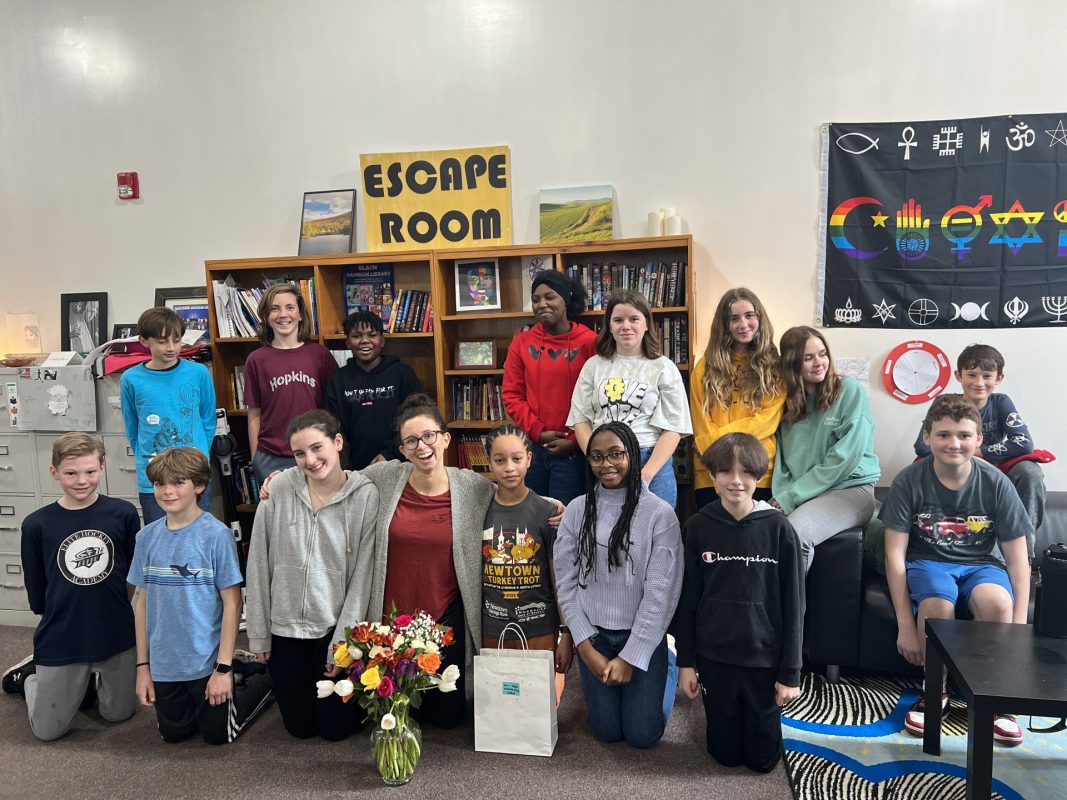
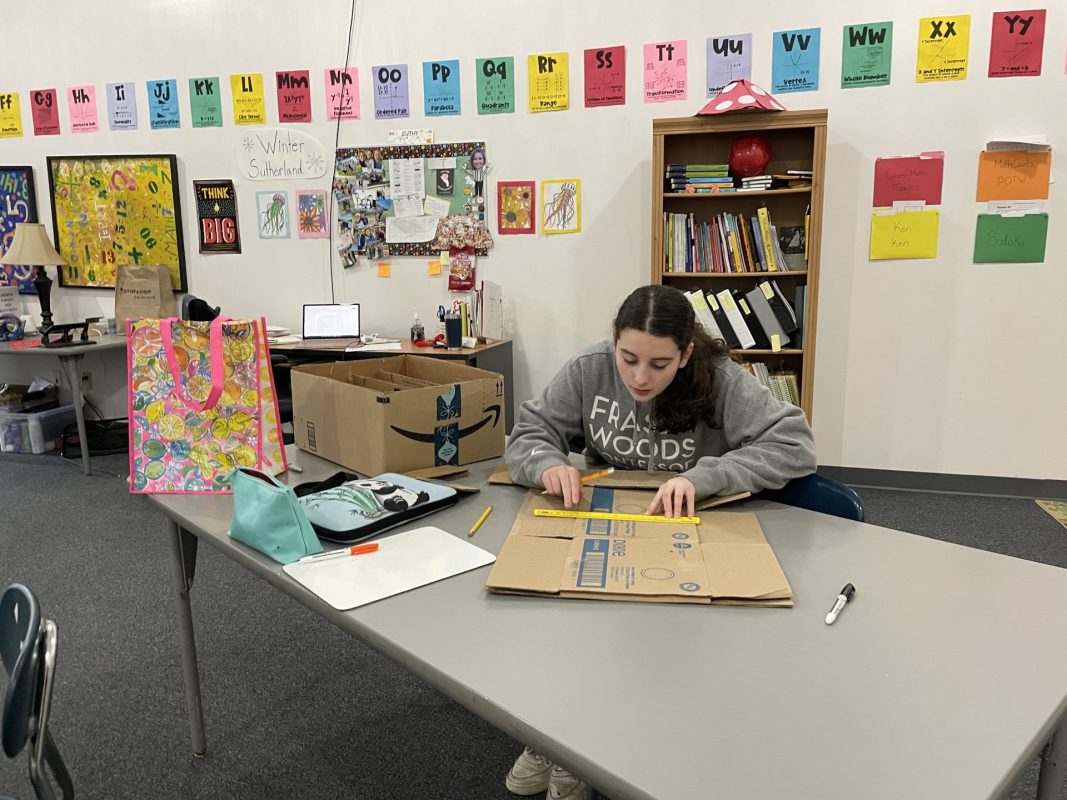
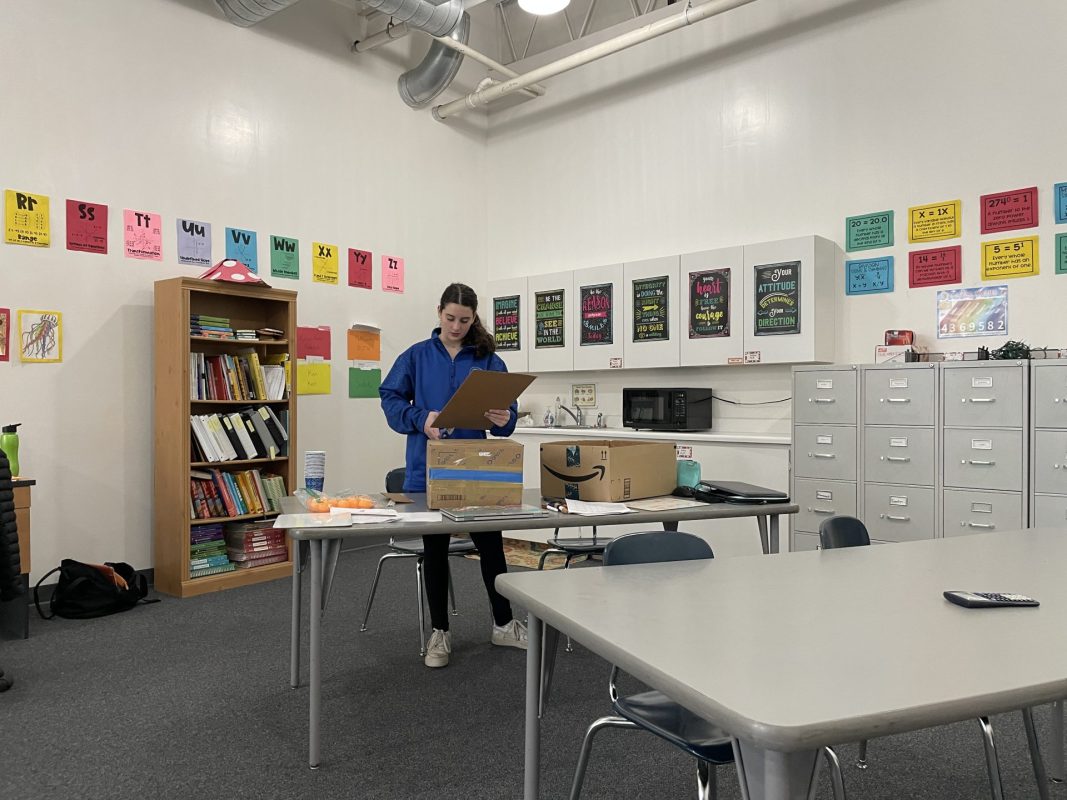
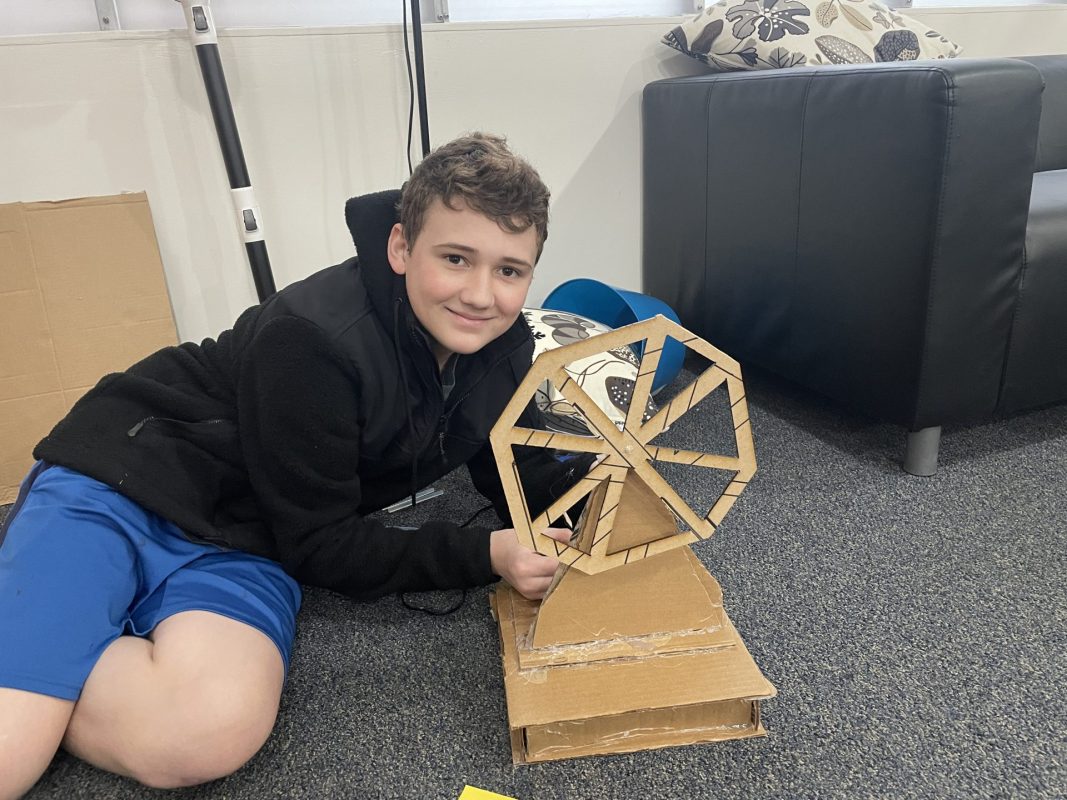
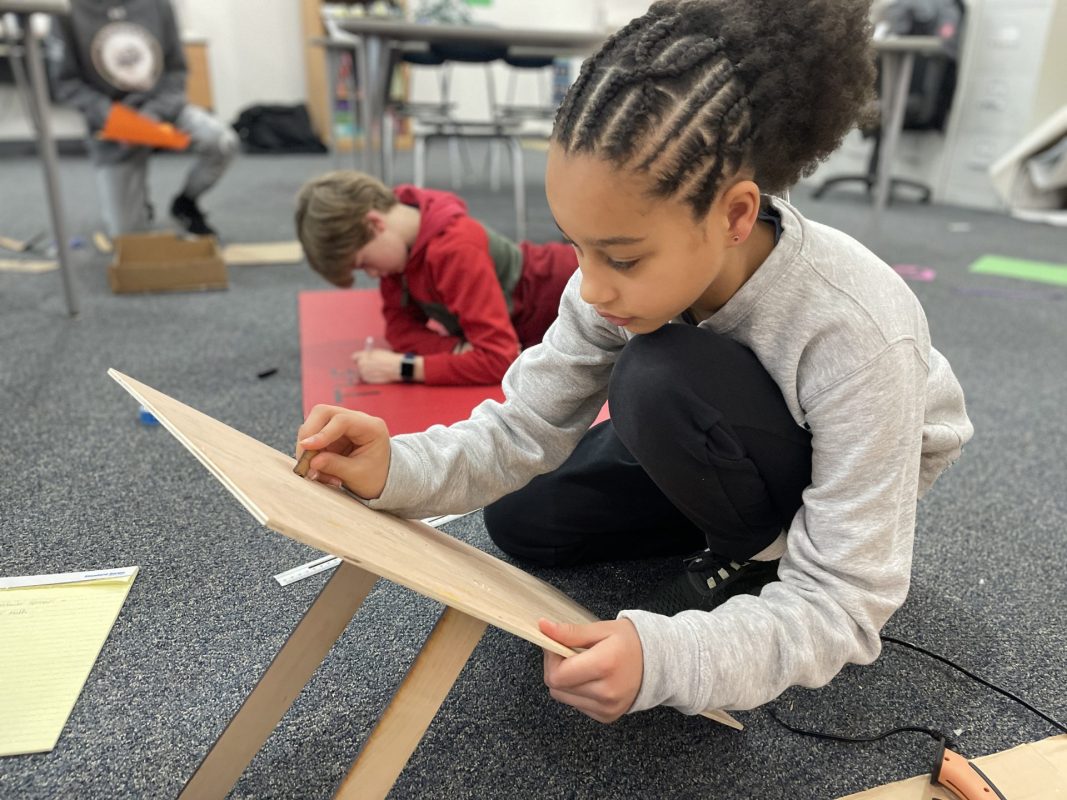
Welcome back to a new year at FWM! Teachers and students were excited to return and celebrate the start of 2023. To kick off the school year, the middle school students began working on the math carnival project.
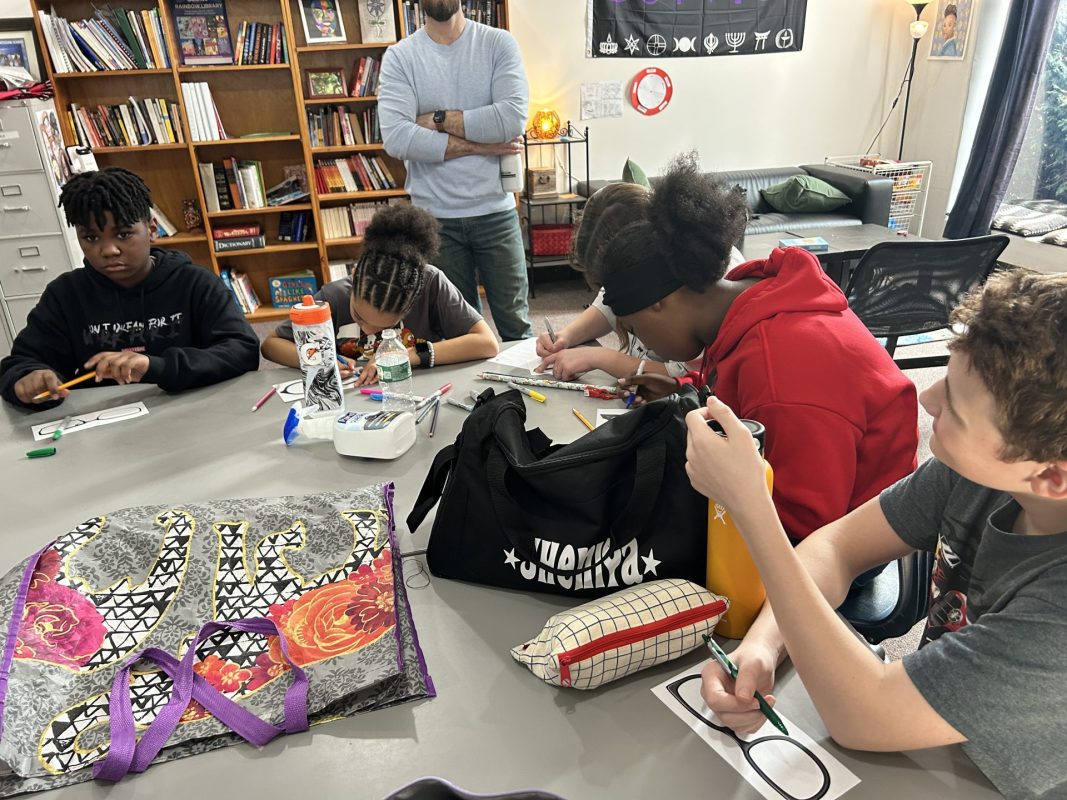
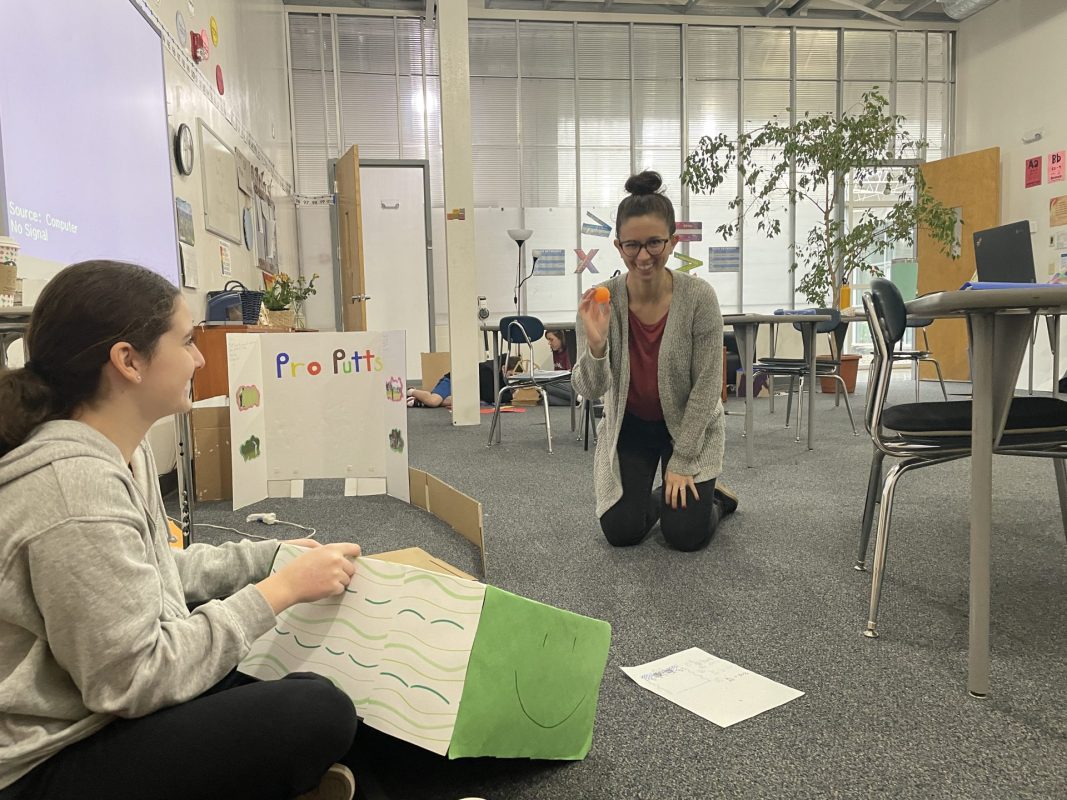
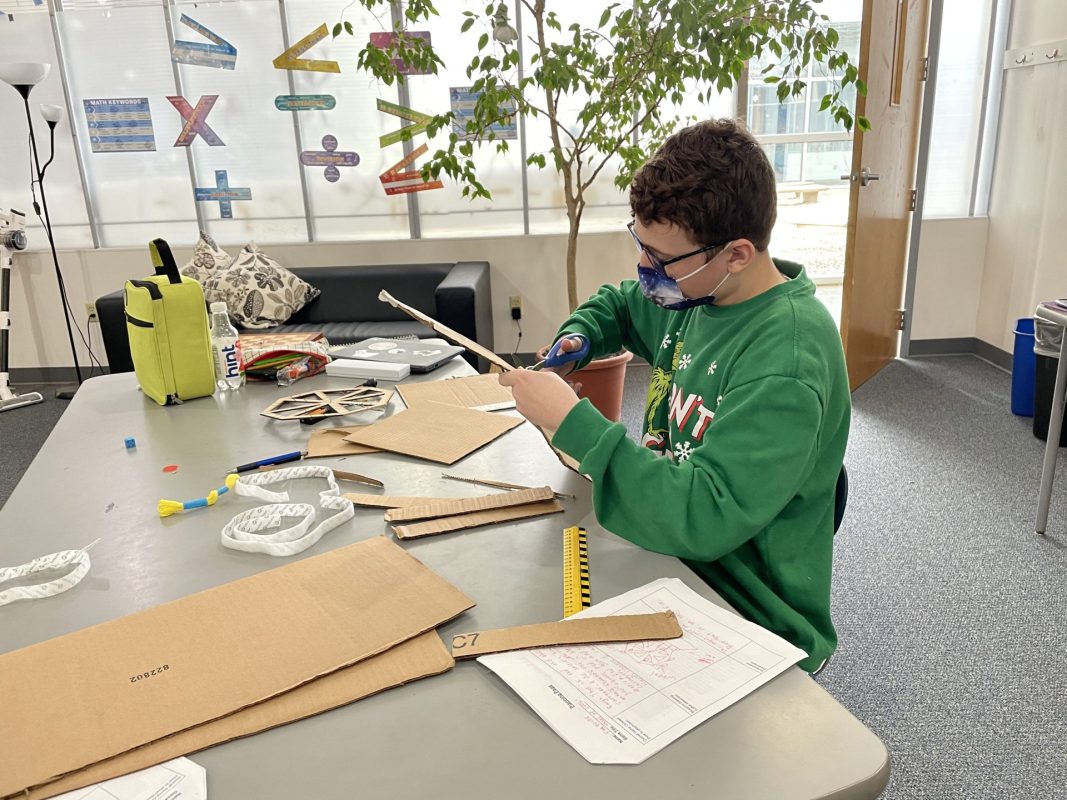
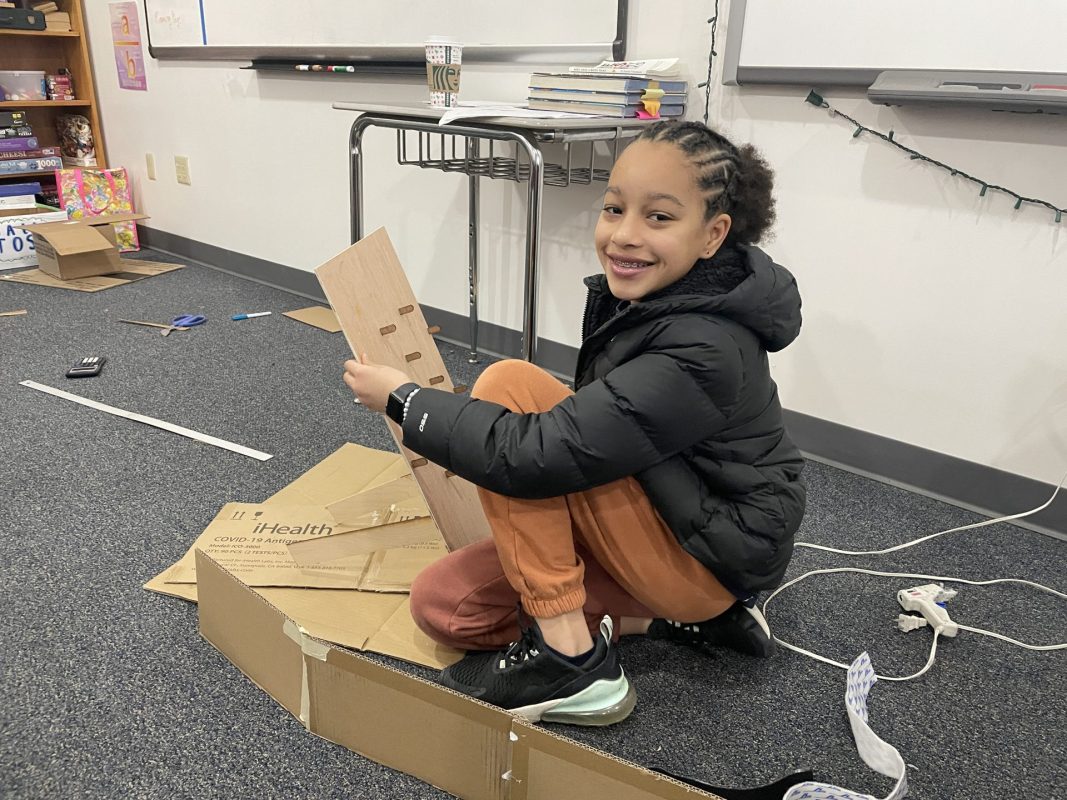
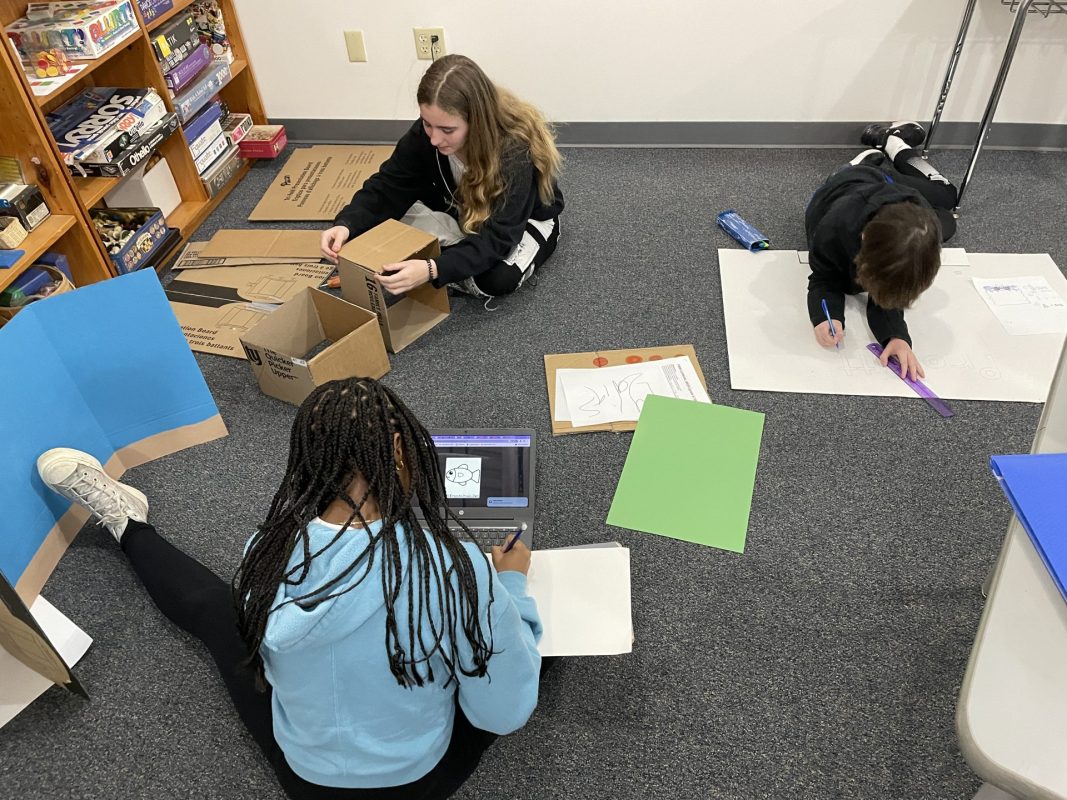
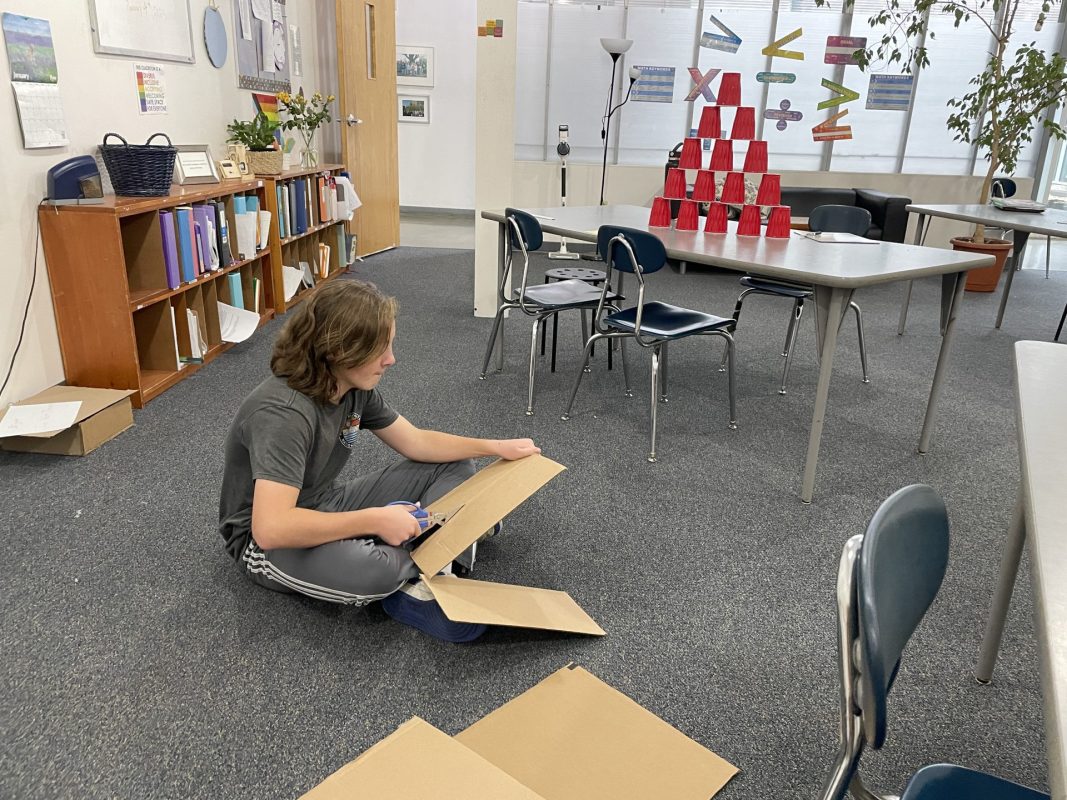
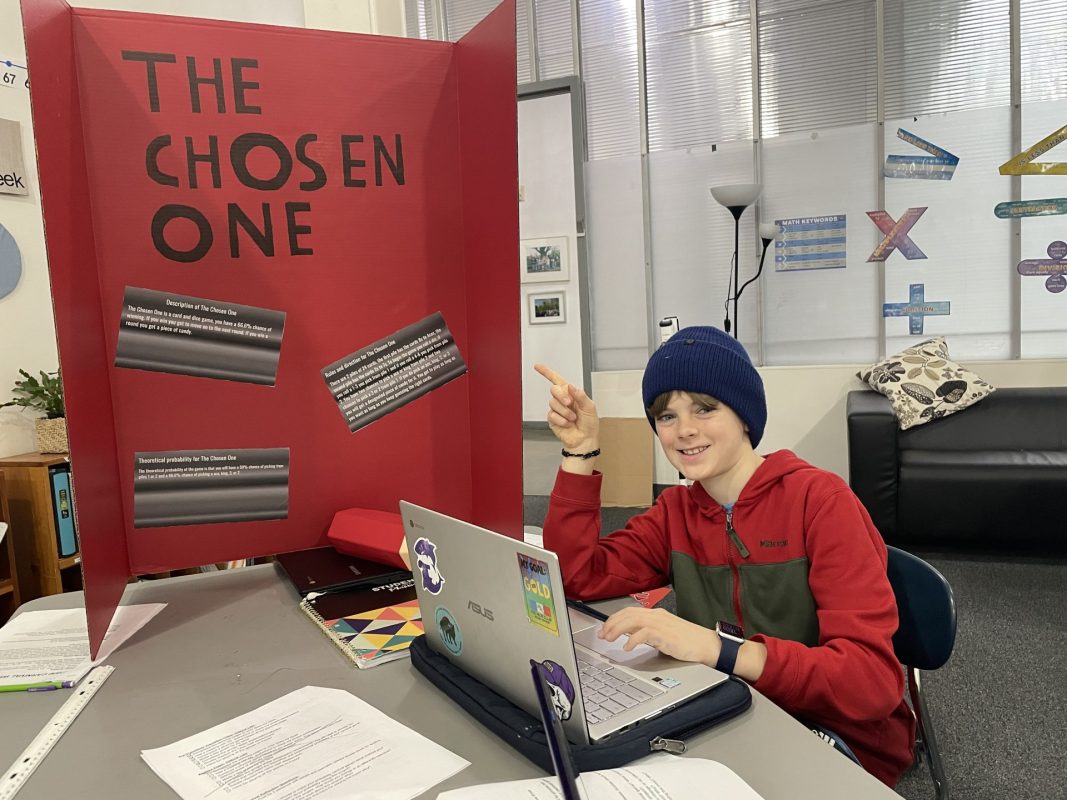
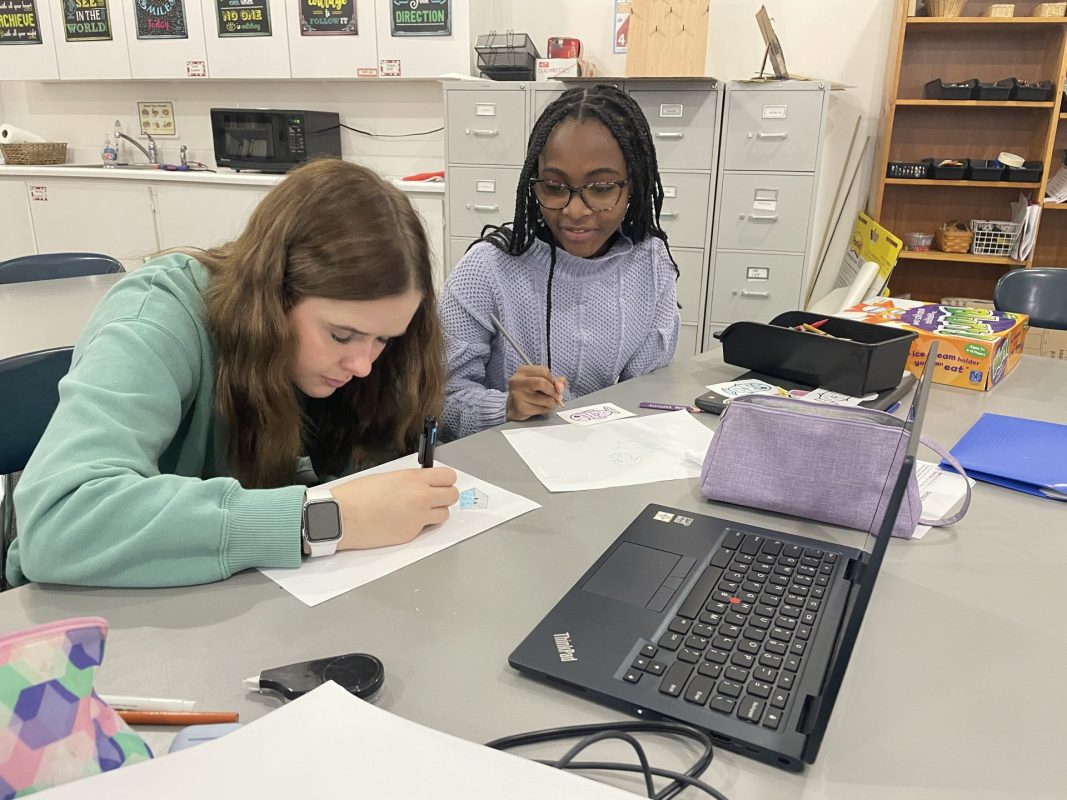
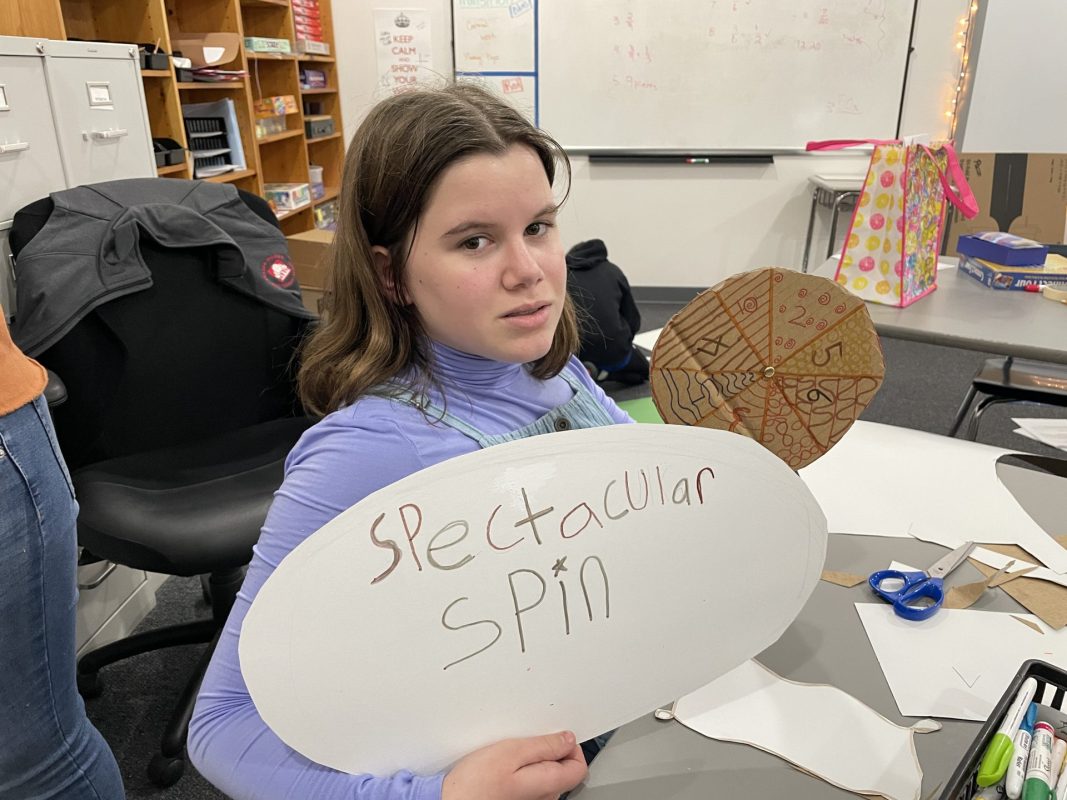
All classes participated in the third annual Carnival Day activity scheduled for Friday January 13th from 10-11am. This year, we are happy to invite students from Lower Elementary, Upper Elementary, Staff and Parents to join us in playing all the fun filled games.  Each student was assigned to create a unique game with rules, a creative title, and a full description. Students were asked to calculate the theoretical probability before the actual game day in order to predict the players’ chances of winning the games. Students created games that involved throwing discs, spinning a spinner, tossing a bean bag, randomly selecting a candy, flipping a coin, and knocking down cans. We have been working tirelessly all week to construct and perfect our carnival games. The students are extremely proud of their accomplishments and we hope you will be able to attend our upcoming event. Please contact Ms. Sutherland if you have any questions.
A few general reminders:
– Moving Up Night is Thursday, January 12th, 2023 from 5:30pm-7:00pm
This event is for prospective students interested in joining our middle school community next year.
– Flower Distribution for 2023
Please be sure to check the flower distribution schedule posted in resources on MyFWM for when your family’s assigned day is scheduled.

Mrs.Wilson: Happy New Year!

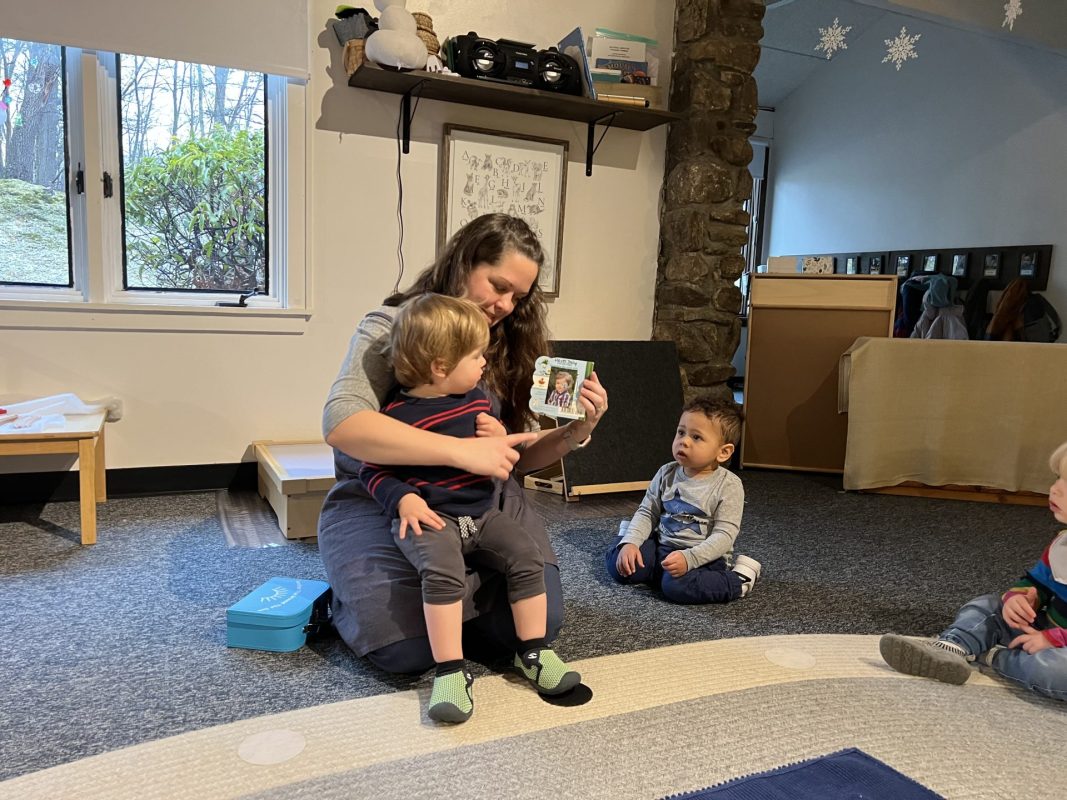
Welcome back from winter break. We missed all of our little friends while we were away. It was so nice to receive a warm hug and see their smiling faces. While we welcomed them back we also welcomed a new friend to our community. The children gently guided our new friend around the classroom. They offer to hold his hand and help him navigate the environment.

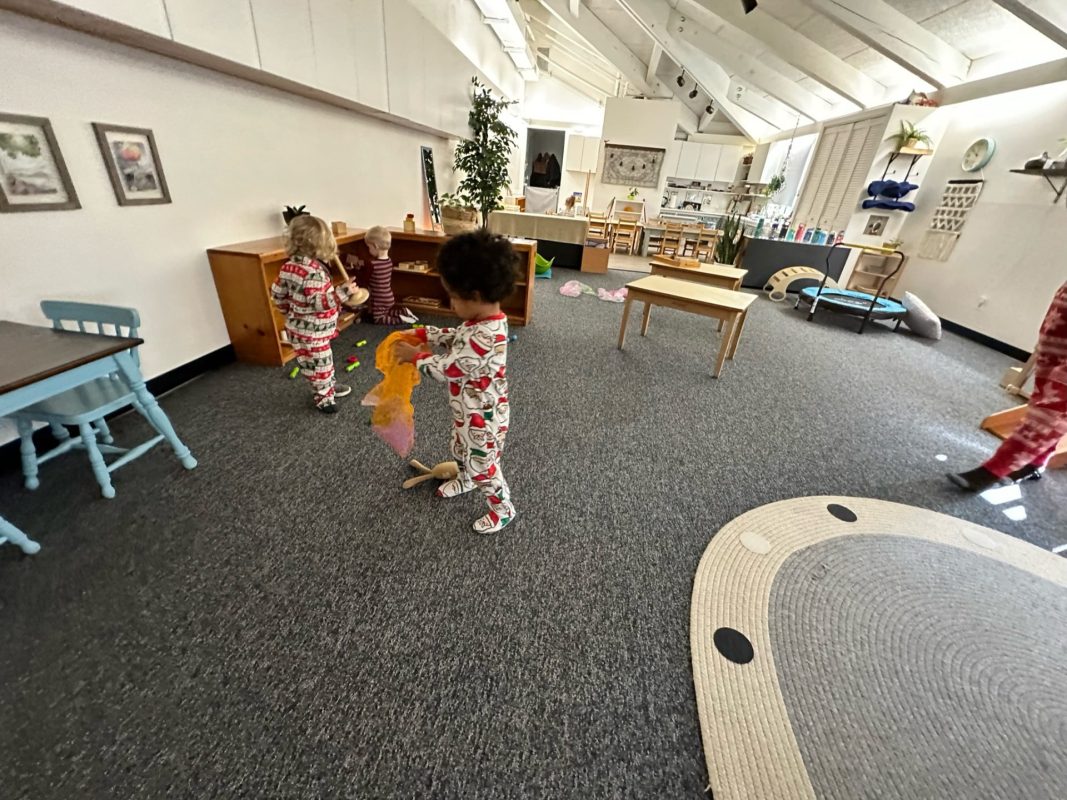
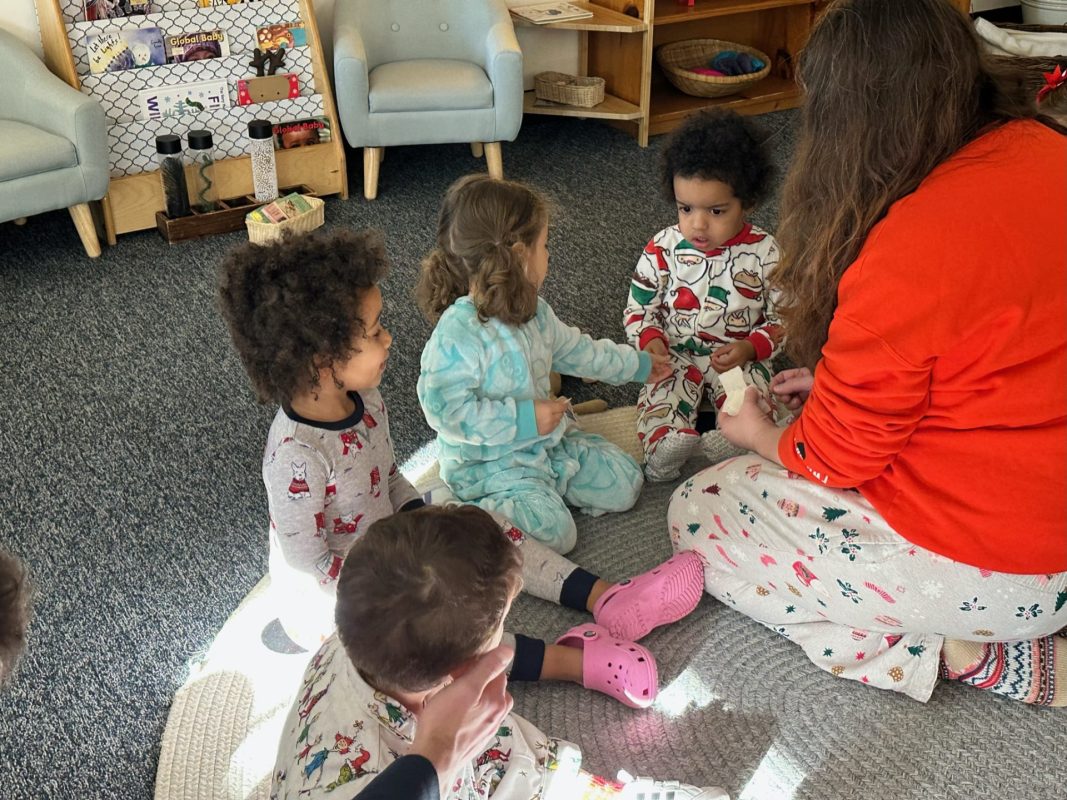
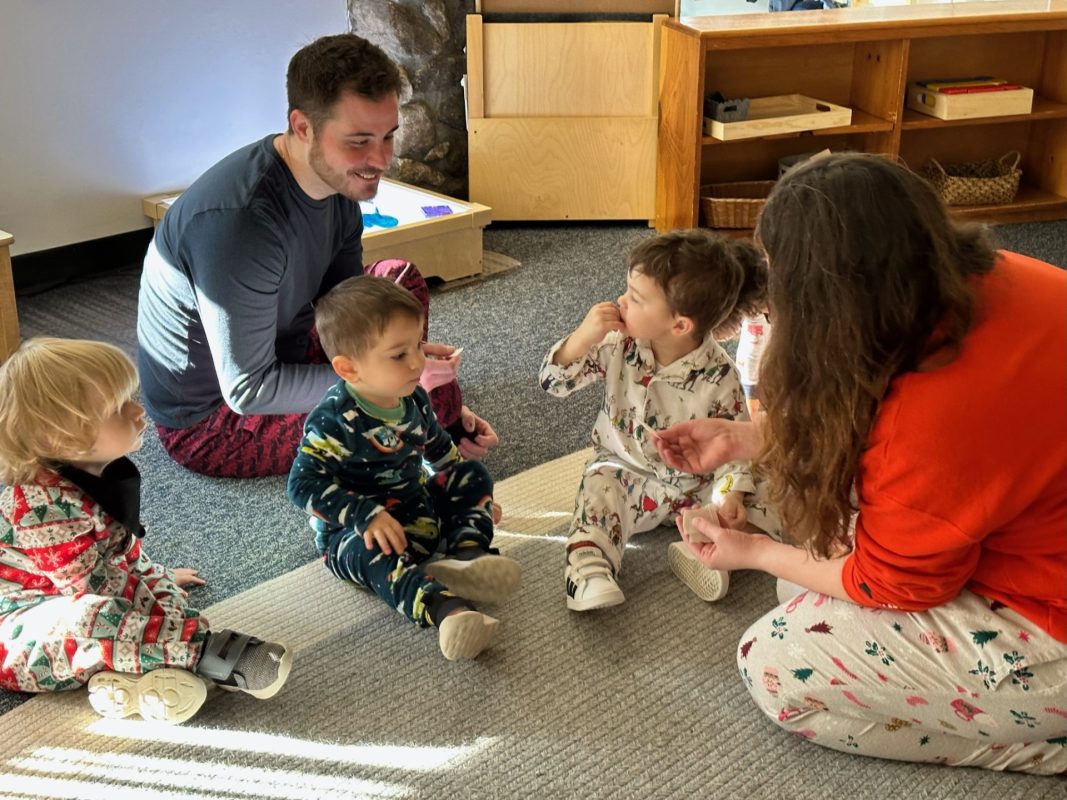
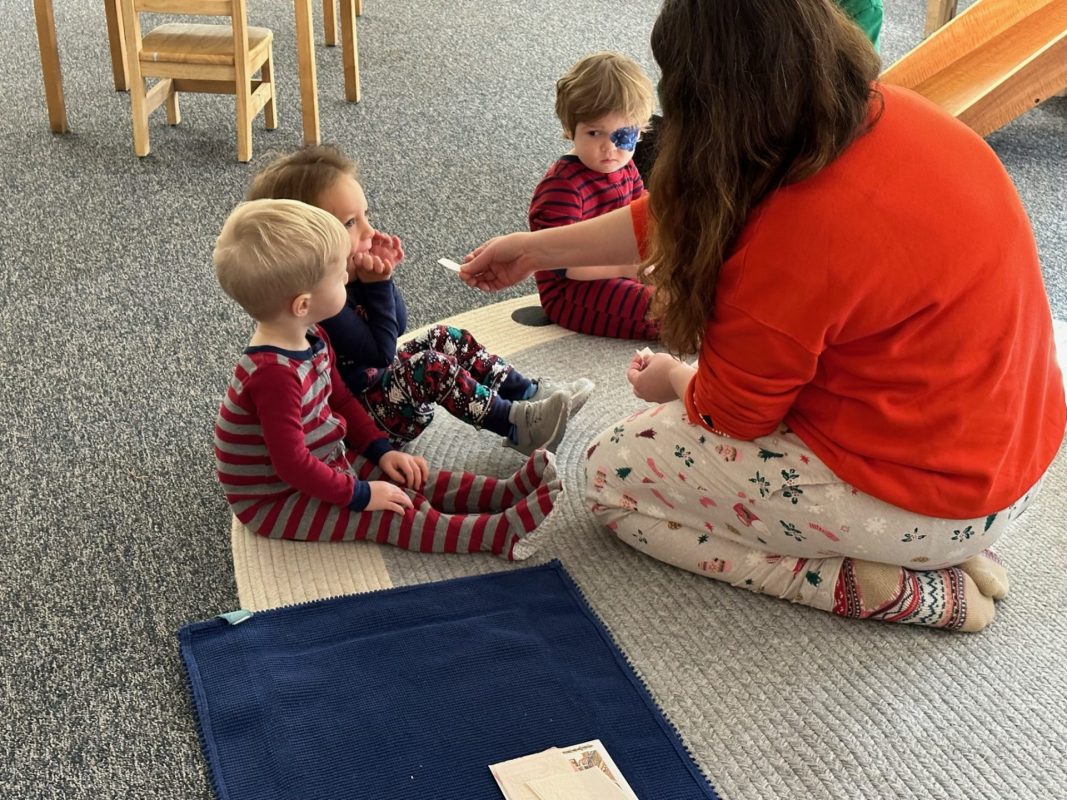
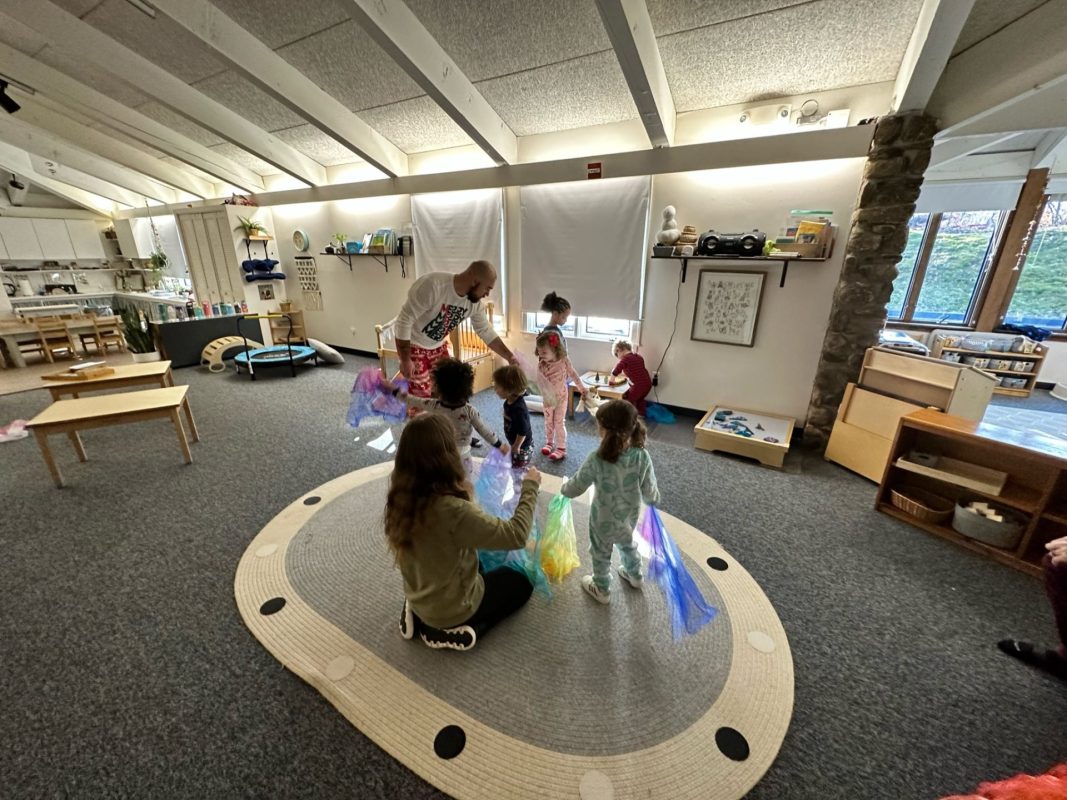
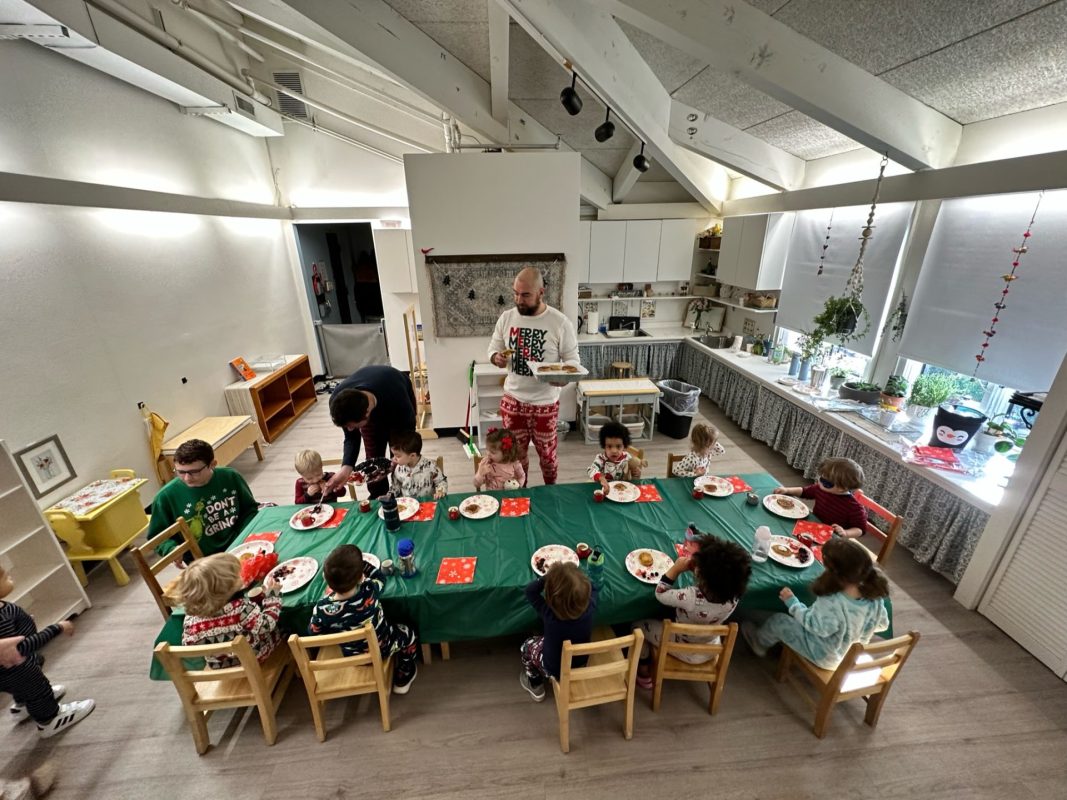
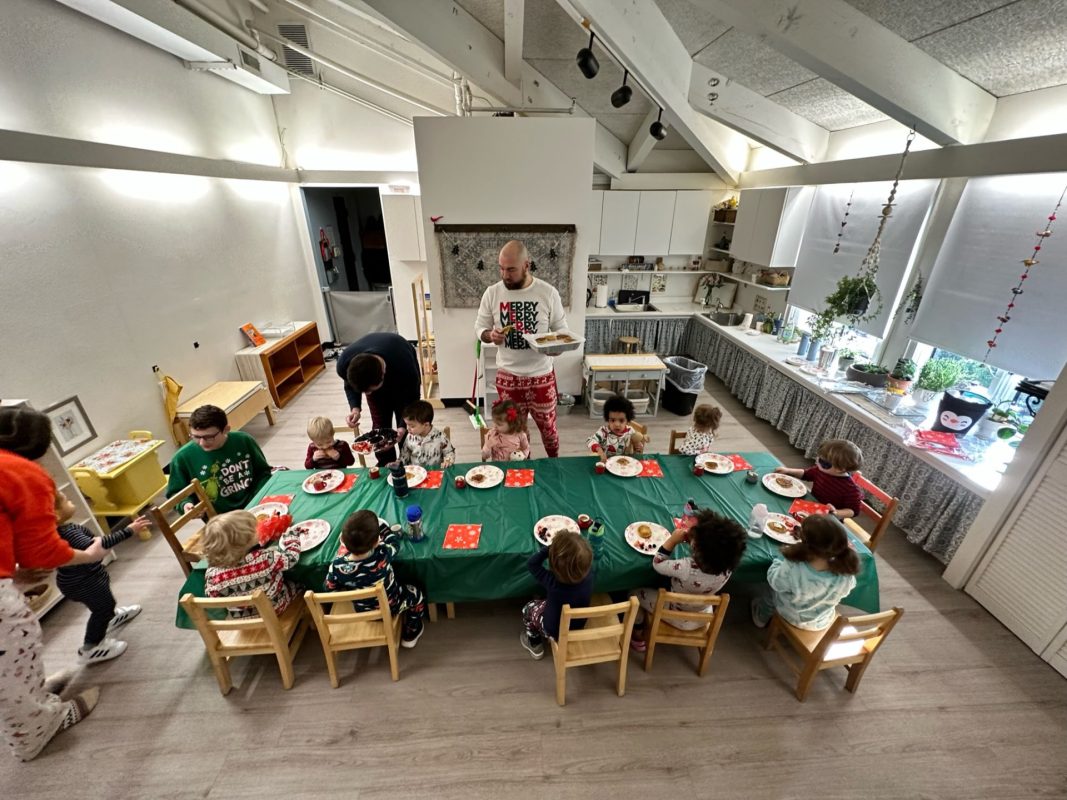
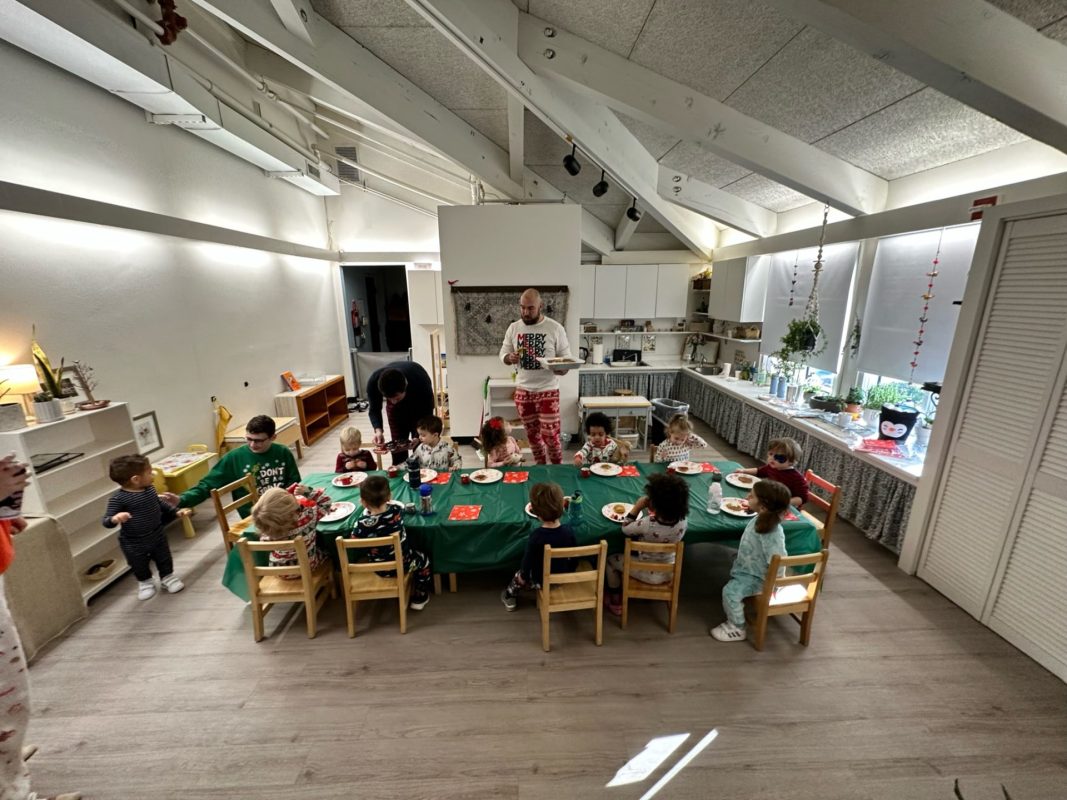
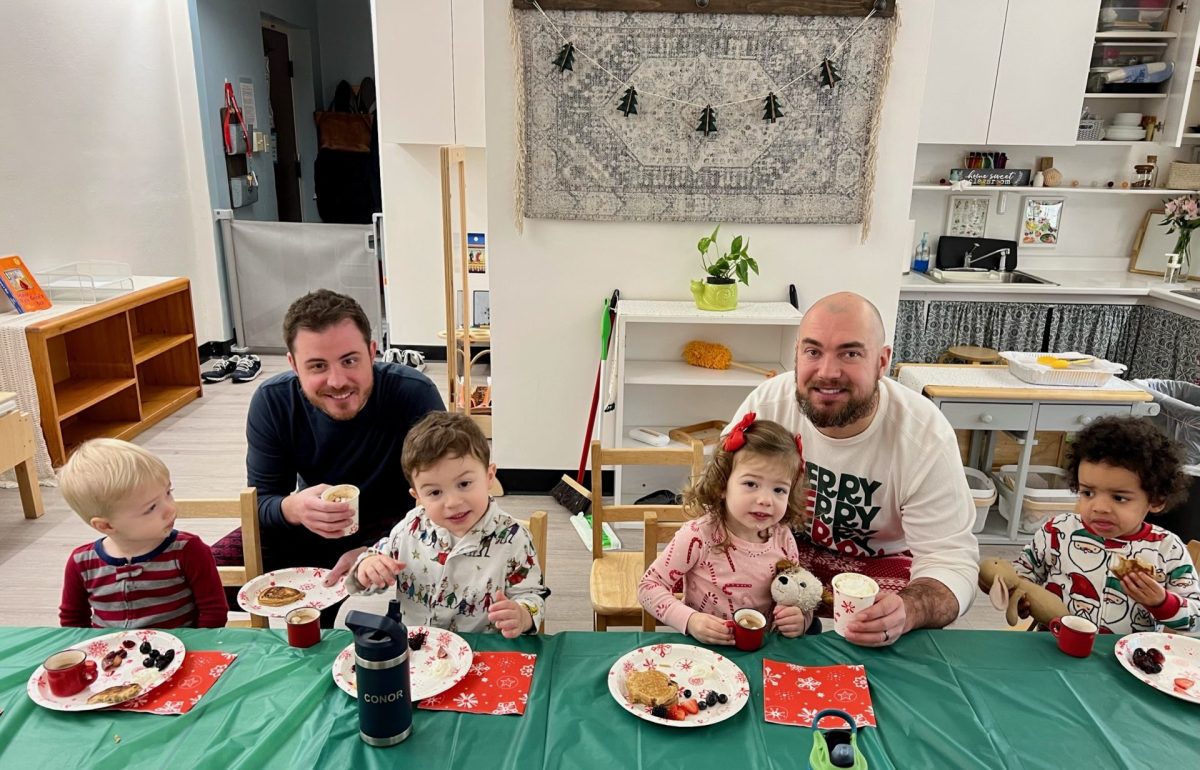
Wednesday, we had our pajama and pancake party. The children started by participating in a lovely tradition that Ryan’s family does over the holidays. Before they enjoy their Christmas Eve dinner, they break a piece of a Christmas Wafer called Oplatek with one another to show how much they love and appreciate each other. The children all received a piece of this wafer and we modeled the language to say, Thank you for being my friend, I love you, or Happy New Year.

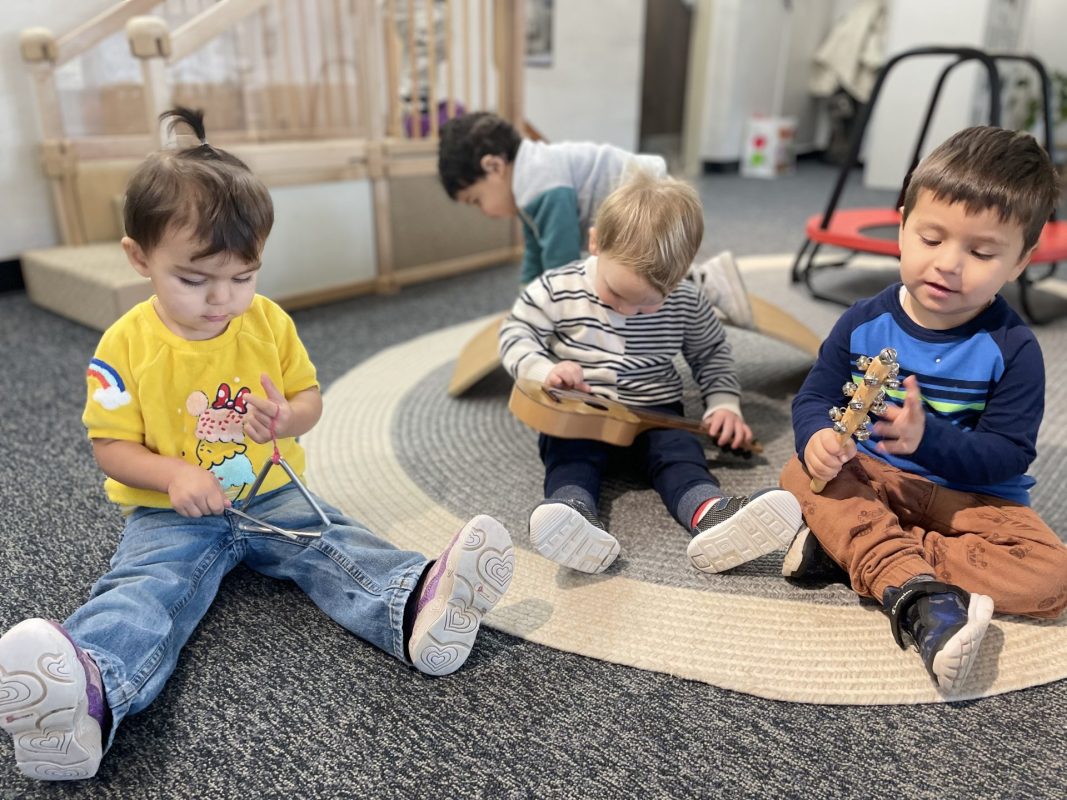
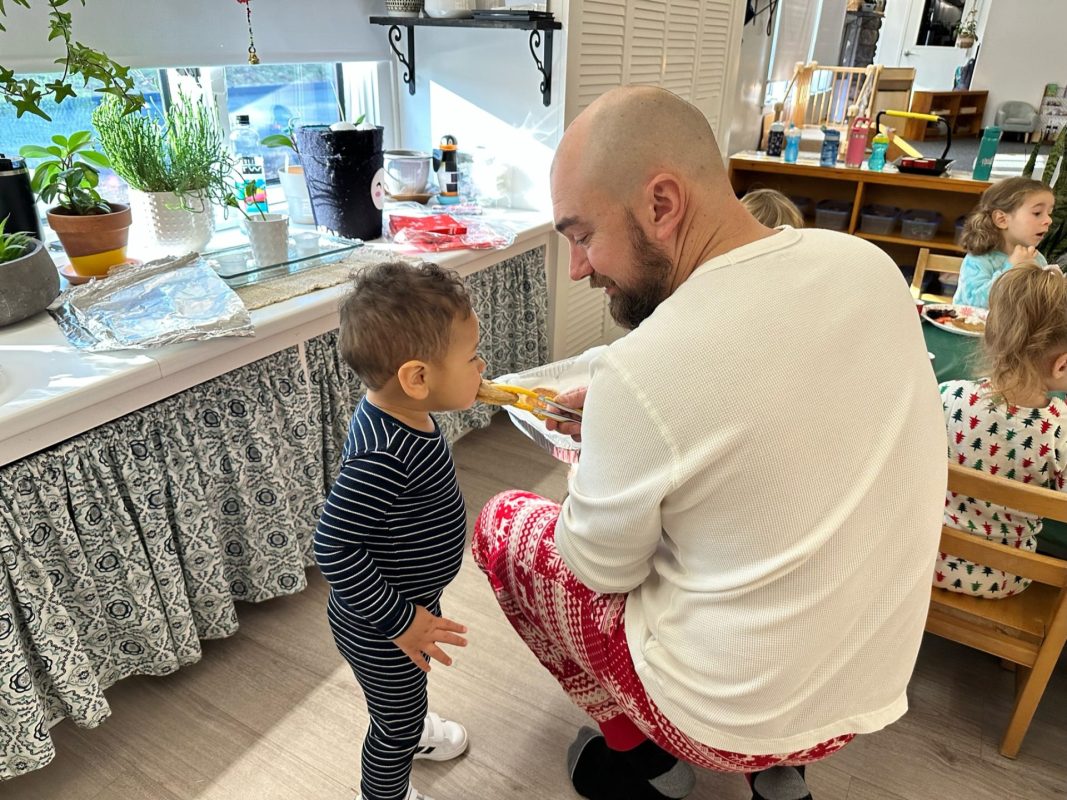
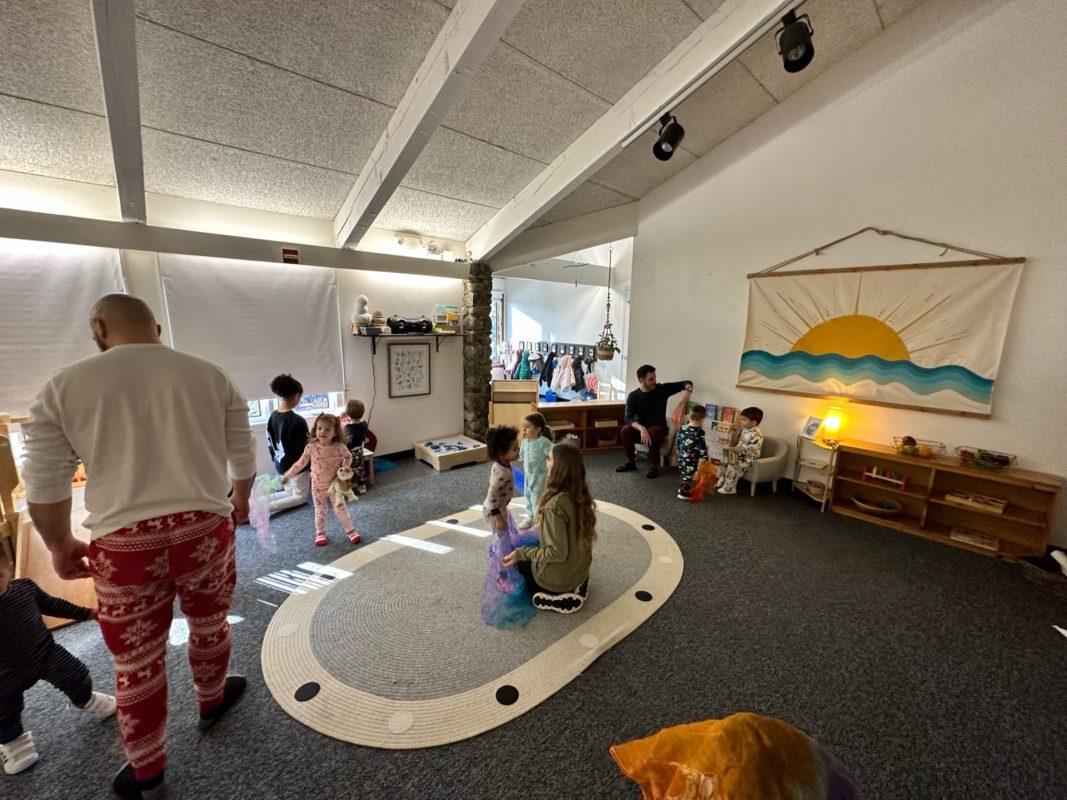
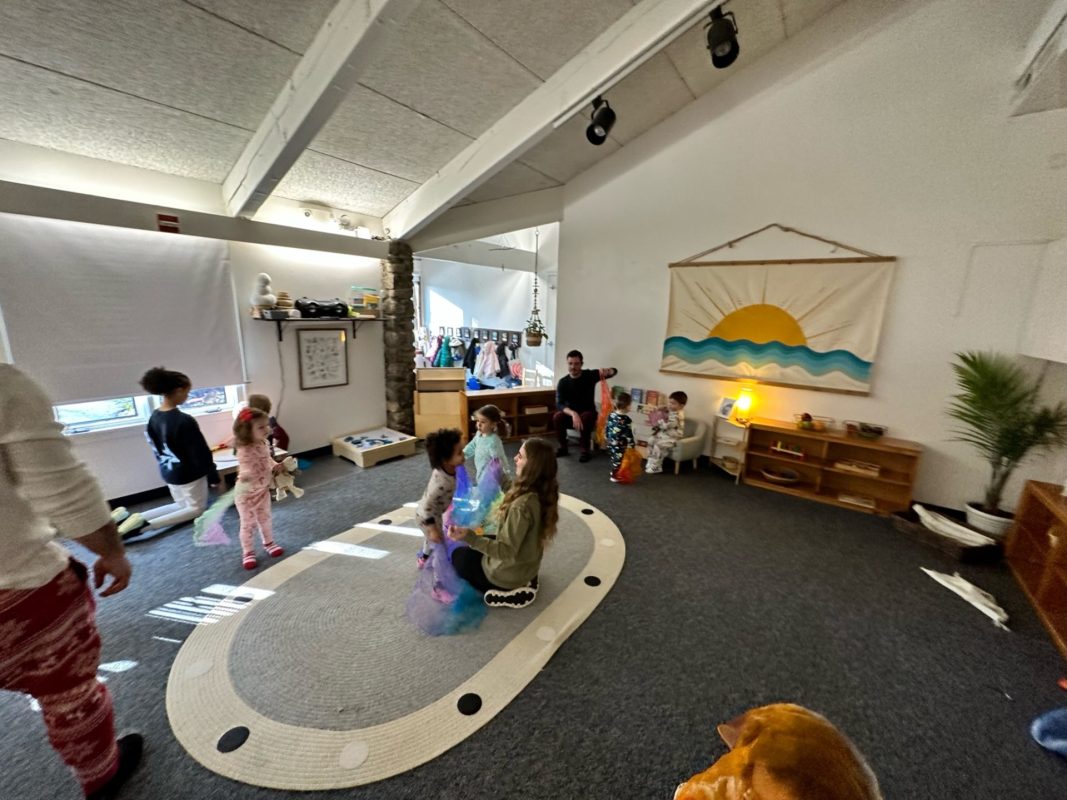
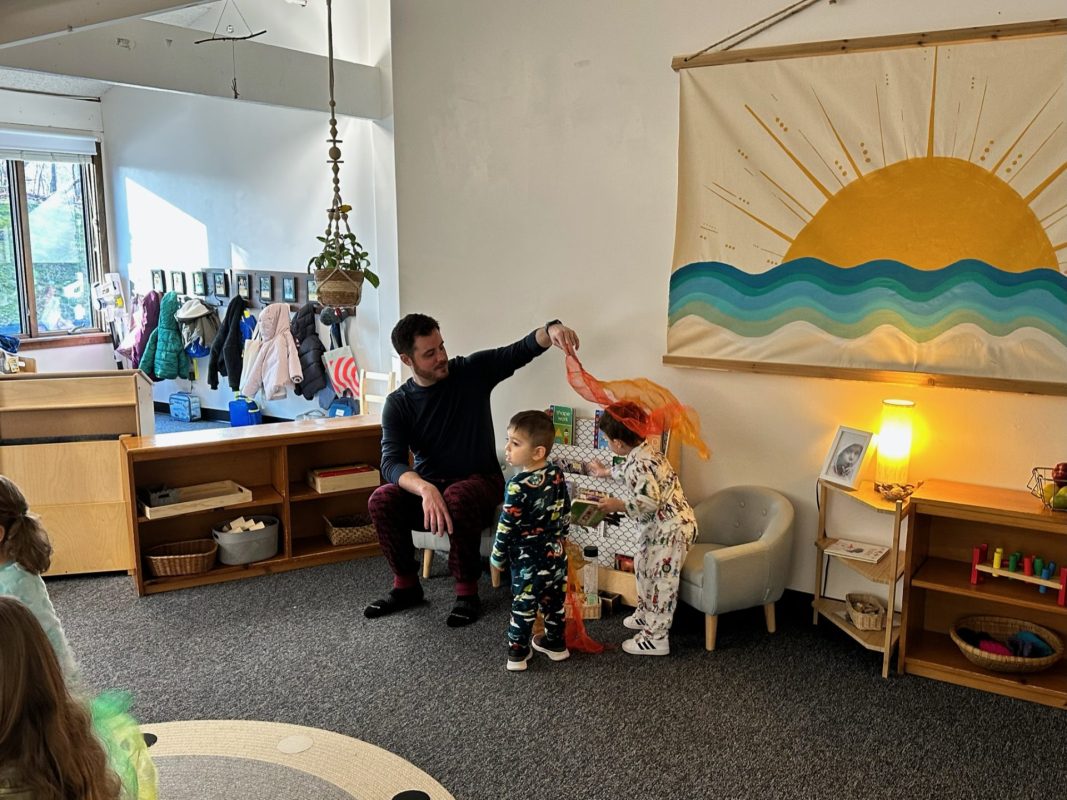
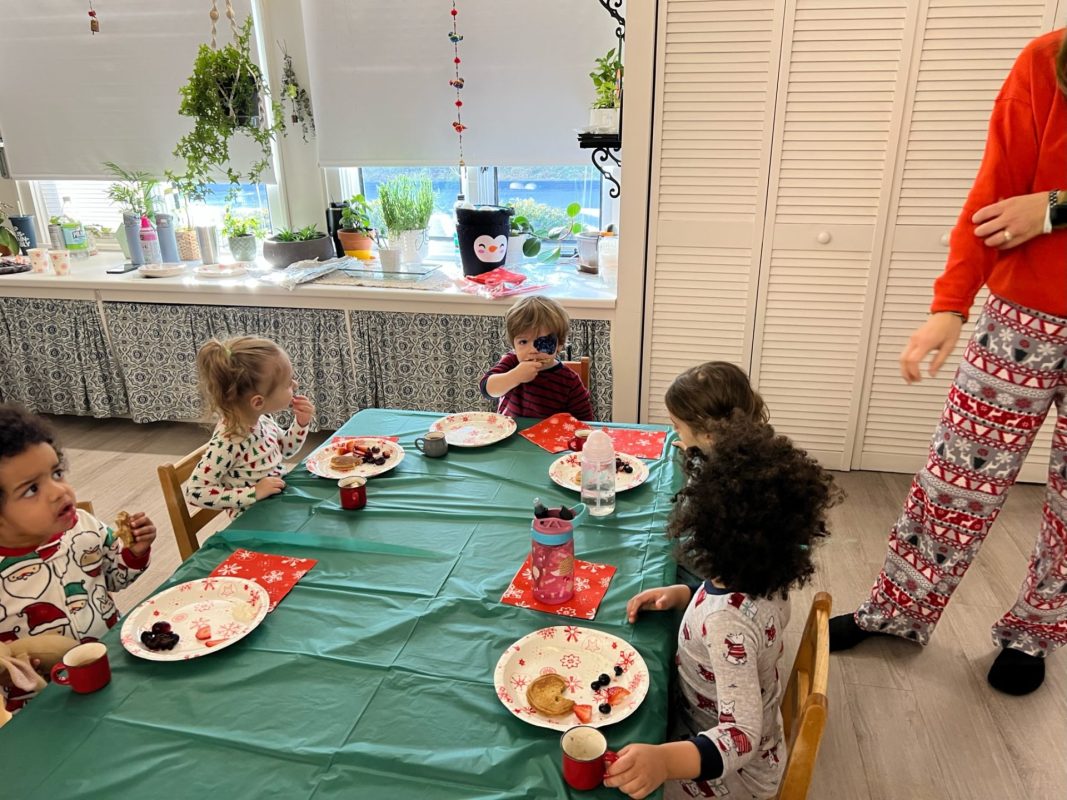
Thereafter, the children were invited to sit at the table to enjoy some delicious pancakes, mixed fruit, and a dollop of whip cream. They also enjoyed some Mexican Hot Chocolate with a couple of mini marshmallows. To end our party we had a pajama dance with fun music and scarves.

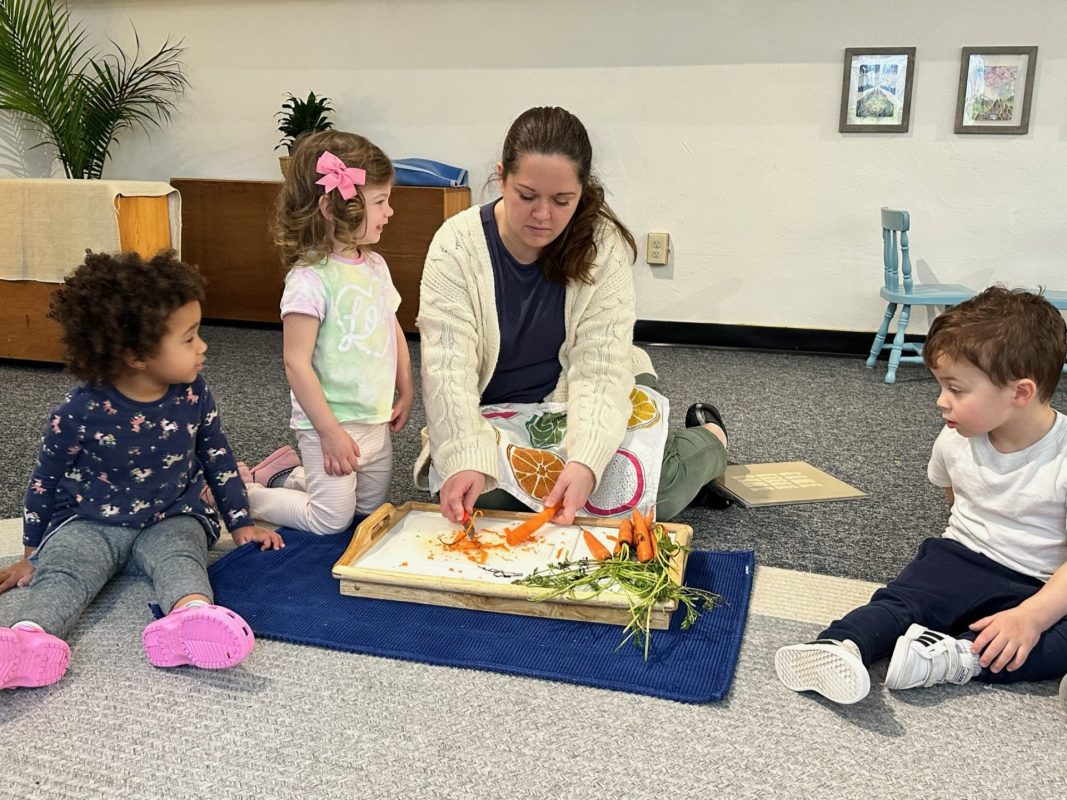
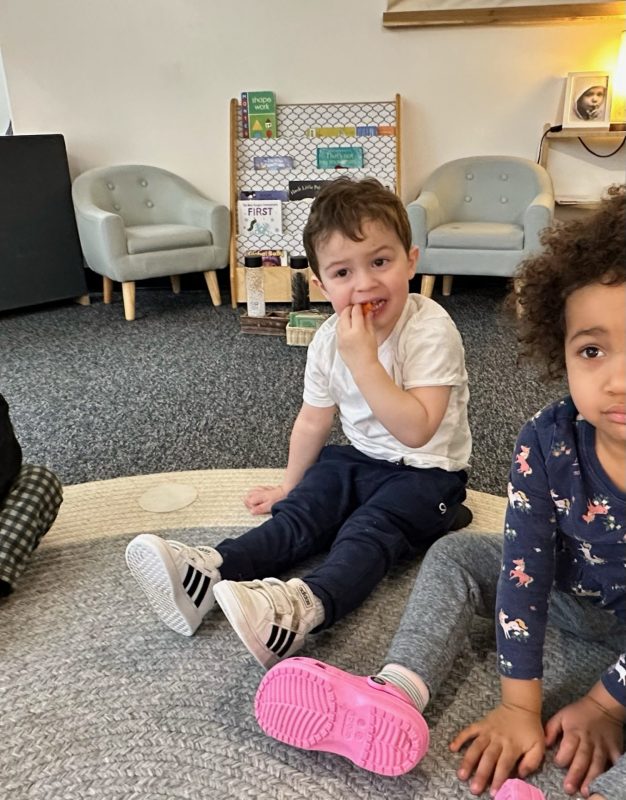
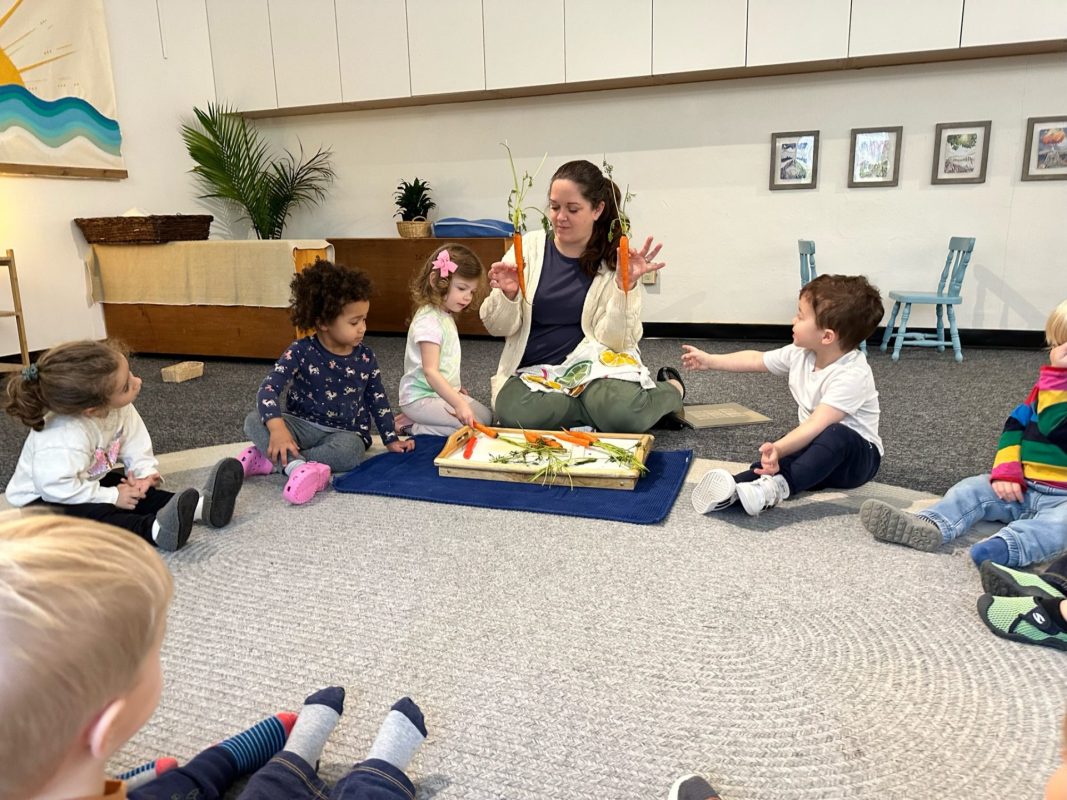
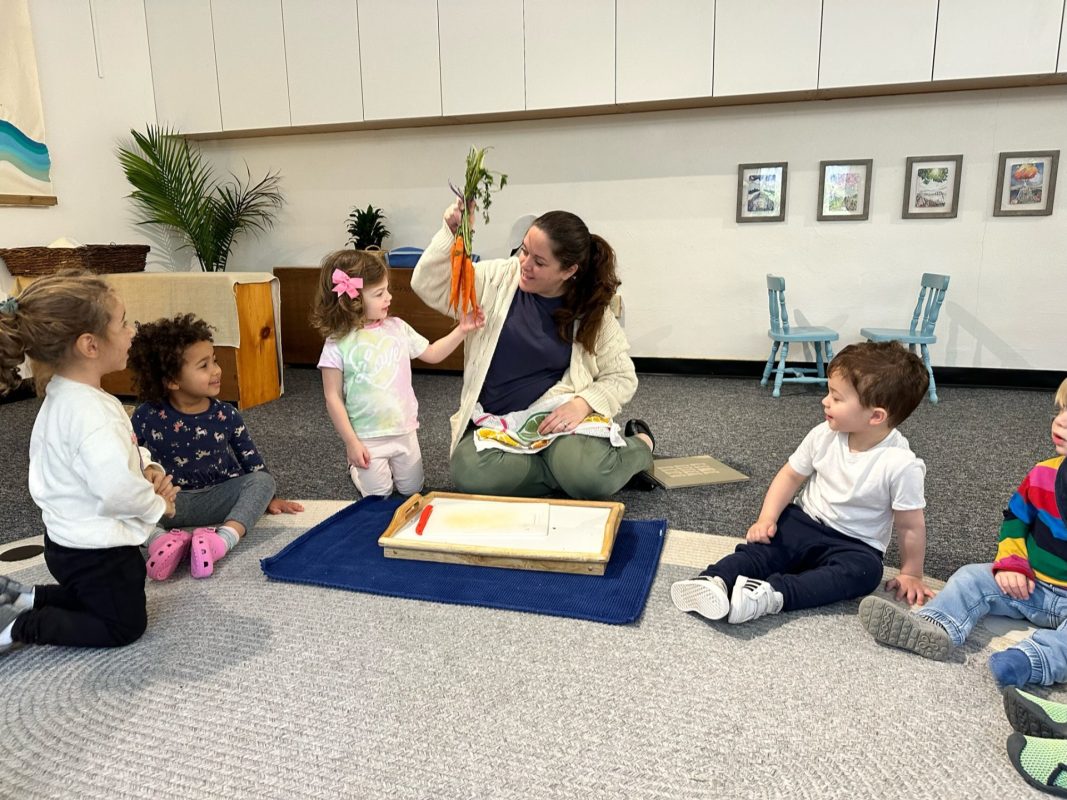
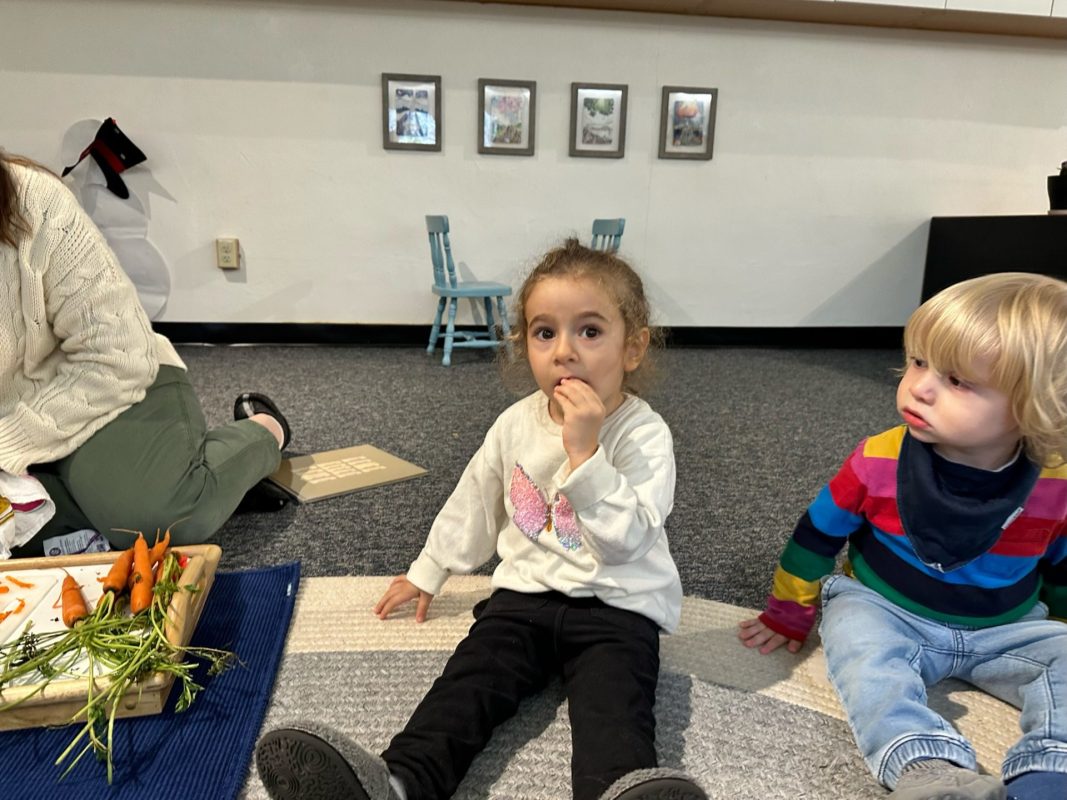
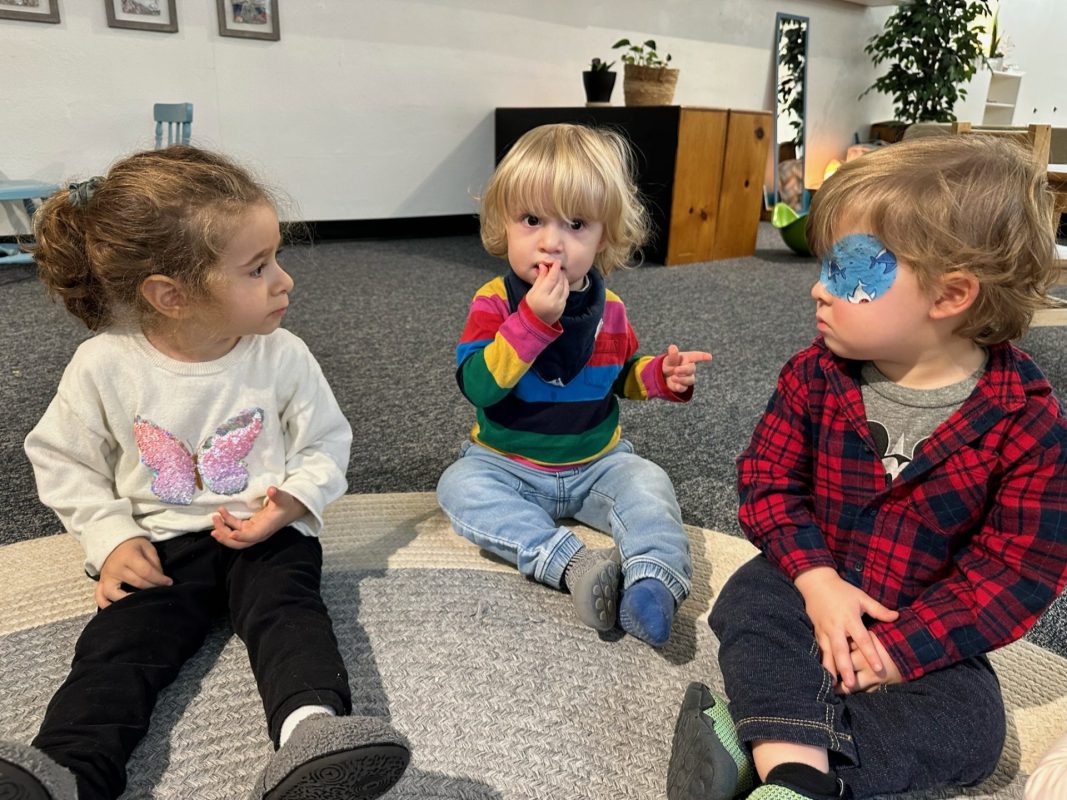
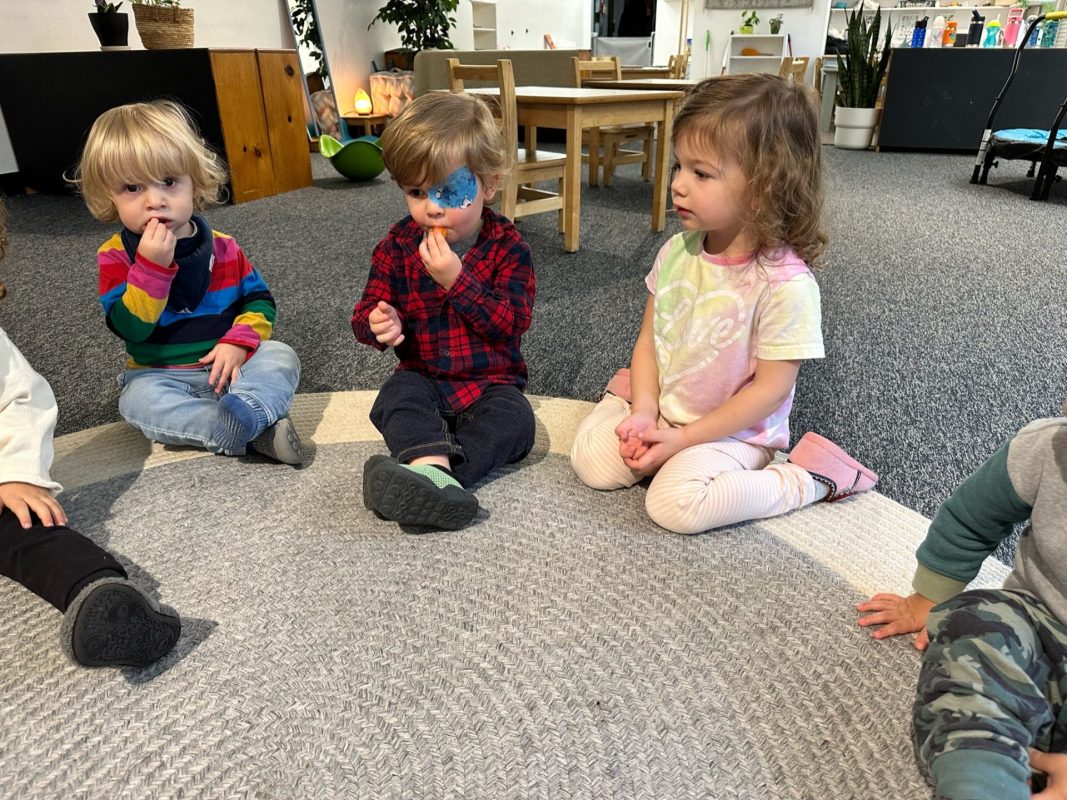
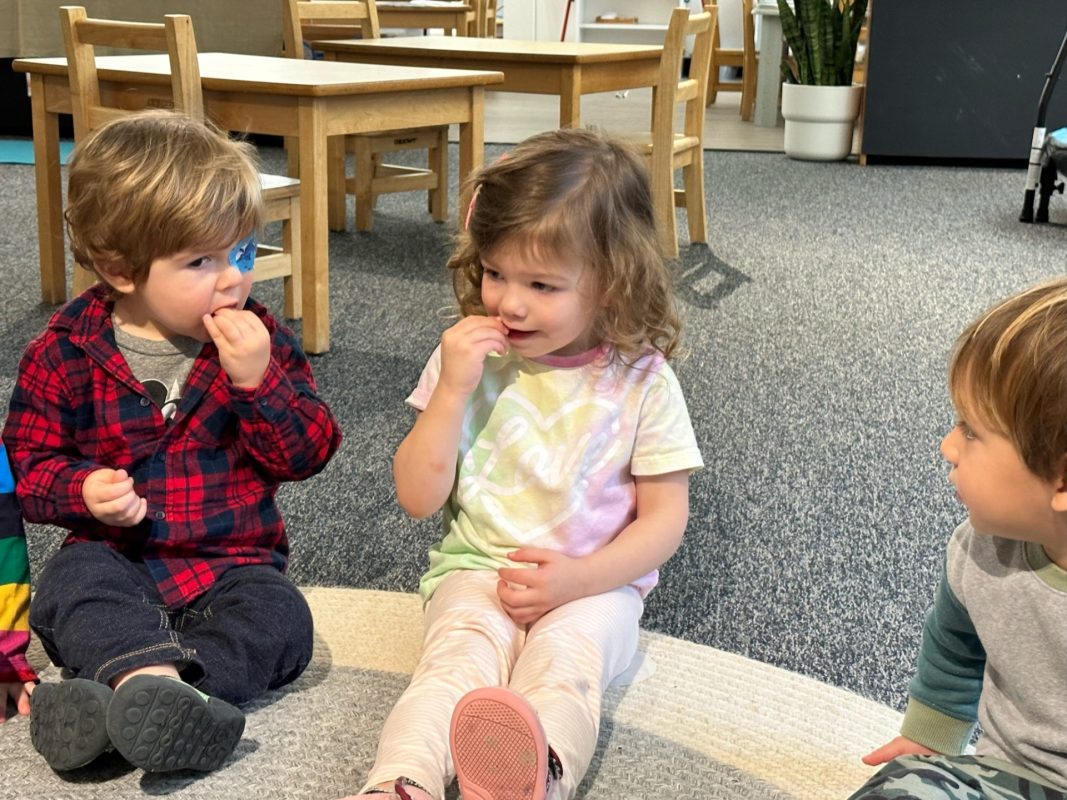
Thursday the children tasted a raw carrot. They learned about the parts of a carrot: carrot greens which are made up of leaves and stems, the root, and root hairs. They also learned that a carrot is a root vegetable that grows underground. We took the carrot tops and placed them into water. We are hoping to watch the carrots grow.


Mrs. Semmah: A Normalized Classroom

“Social grace, inner discipline, and joy. These are the birthright of the human being who has been allowed to develop essential human qualities.”  Maria Montessori

Normalization is a buzzword often used by Montessori teachers everywhere. So, what exactly does it mean, and more importantly, how do we achieve it? When children in a Montessori environment demonstrate deep concentration, self-discipline, social skills, and a true love of work, we describe this as a normalized classroom. Normalization is achieved by consistent and clear ground rules that everyone is familiar with. It is our job to ensure the environment is always well prepared and designed to meet the needs of the children. As Montessori teachers, we are confident that if we do our job well and the children are free to experience the opportunities provided by the environment and Montessori materials, they will thrive.
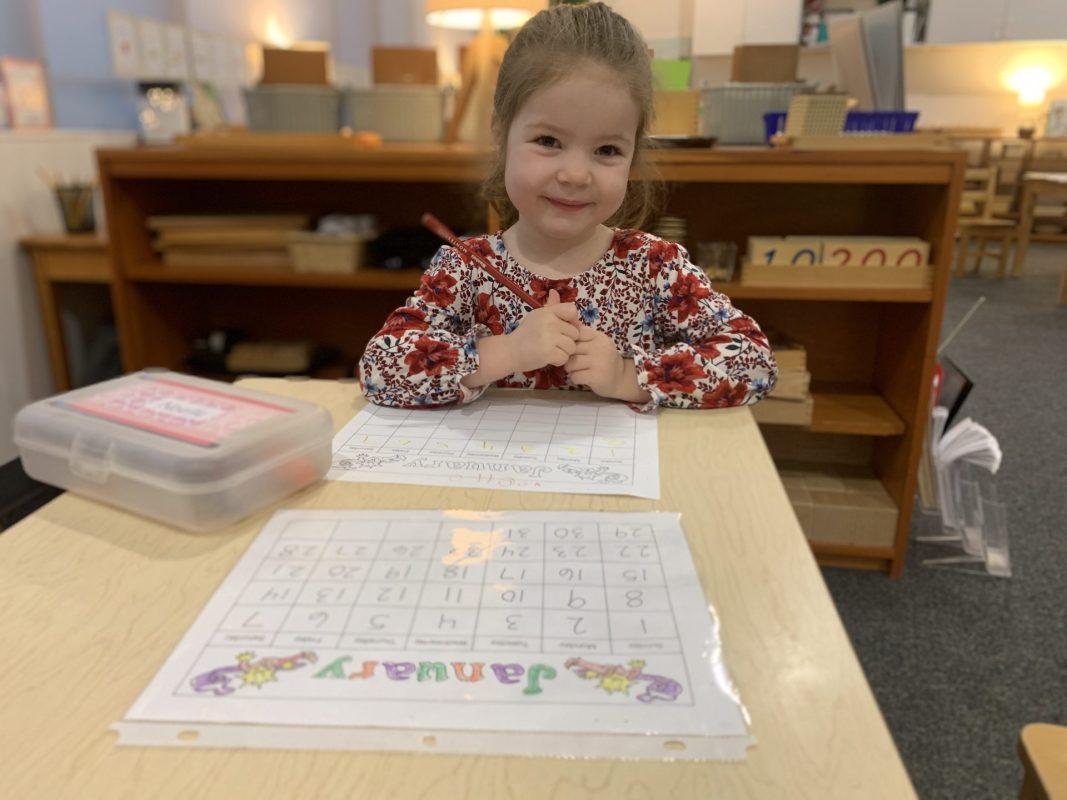
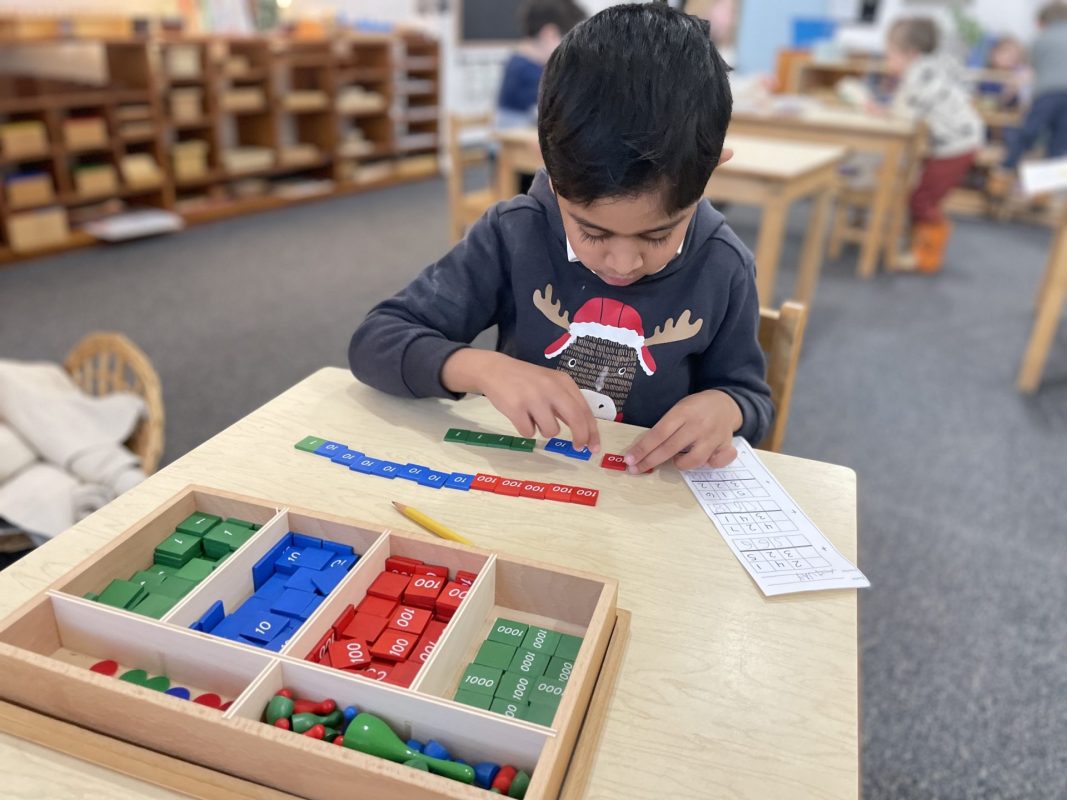
After the winter break and upon our return in January, we often see noticeable growth in the children’s social and emotional development. They come back eager to learn and raring to go! The first half of the year, they have become comfortable and confident with our classroom routines and expectations. They have developed deeper relationships with their peers and teachers. It is always an exciting time and sets the groundwork for the second half of the school year.

It was so wonderful to welcome the children back to class and observe all of their growth.  While nothing may seem normal as of late, our classroom was definitely normalized and brought us great joy and hope!

Wishing everyone a 2023 filled with much peace and love.

Kaoutar & Michelle