Blog

Mrs. Hood: Community Helpers and Apple Fun!

One of our goals at FWM is to create caring, empathetic students who are capable of thinking beyond themselves. It was Dr. Montessori’s vision that a peaceful world, starting with children, would make the world a better place. Community service is one of our Montessori strategies to help develop and educate the whole child. Students learn the joy of giving of themselves and develop compassion because of these real, practical life, volunteer experiences.

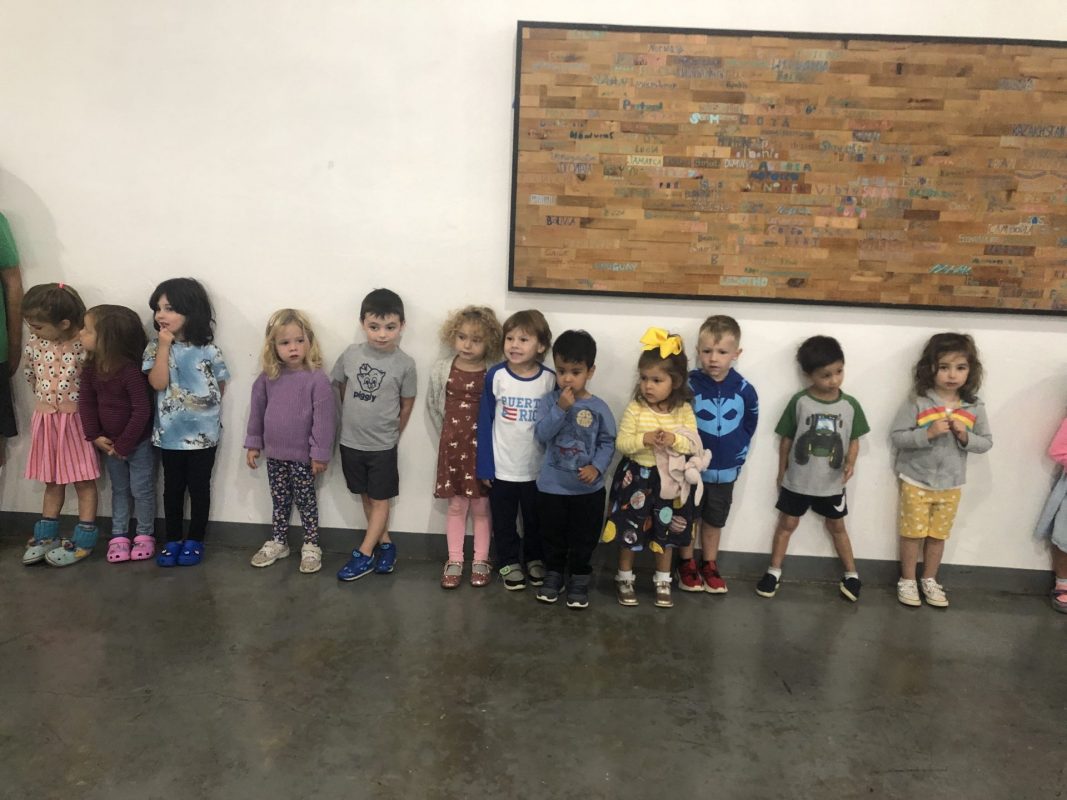
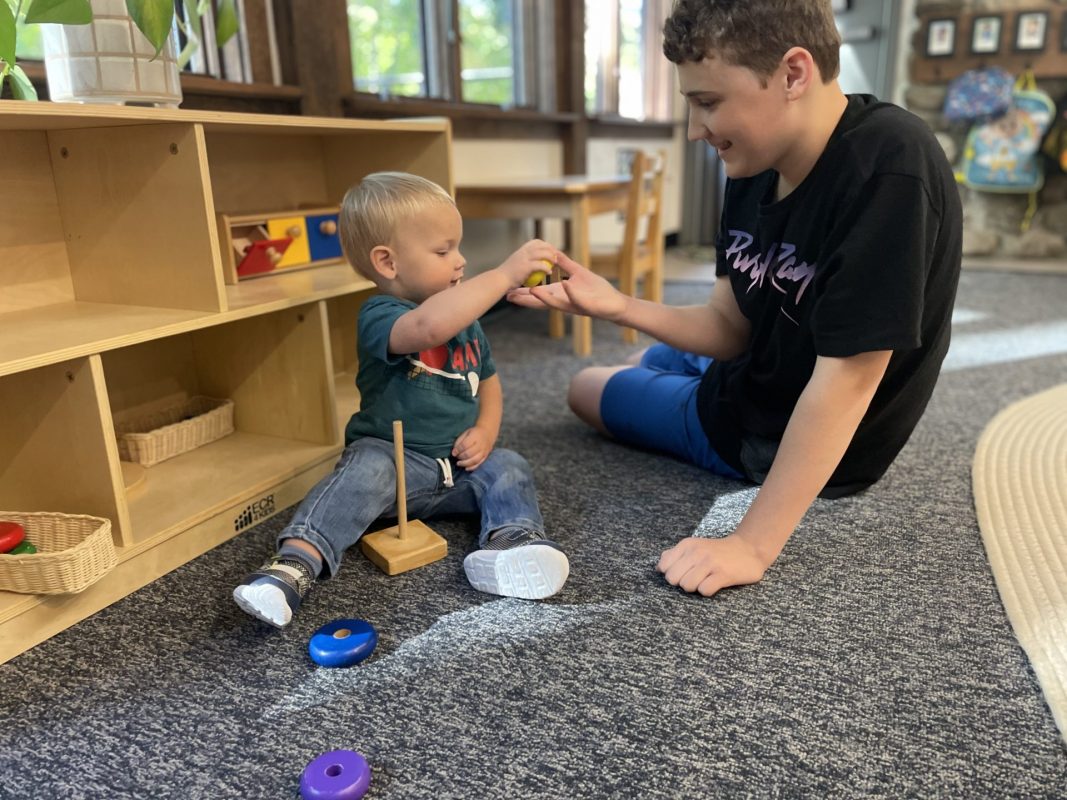
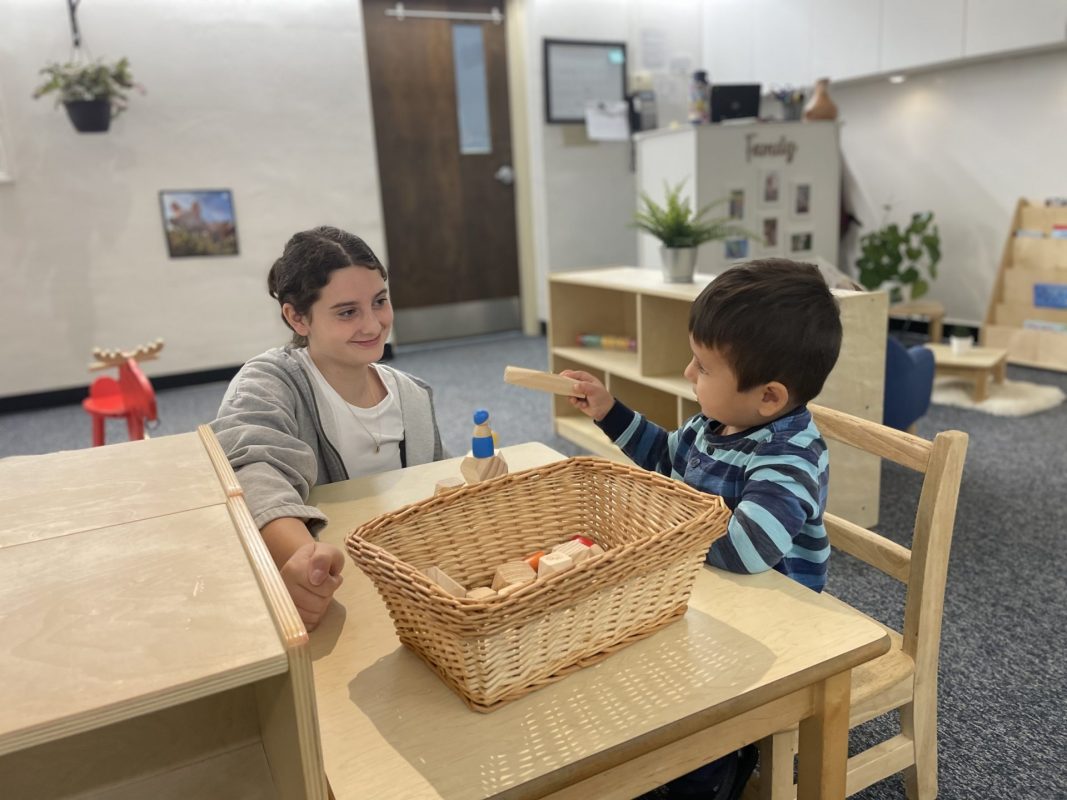
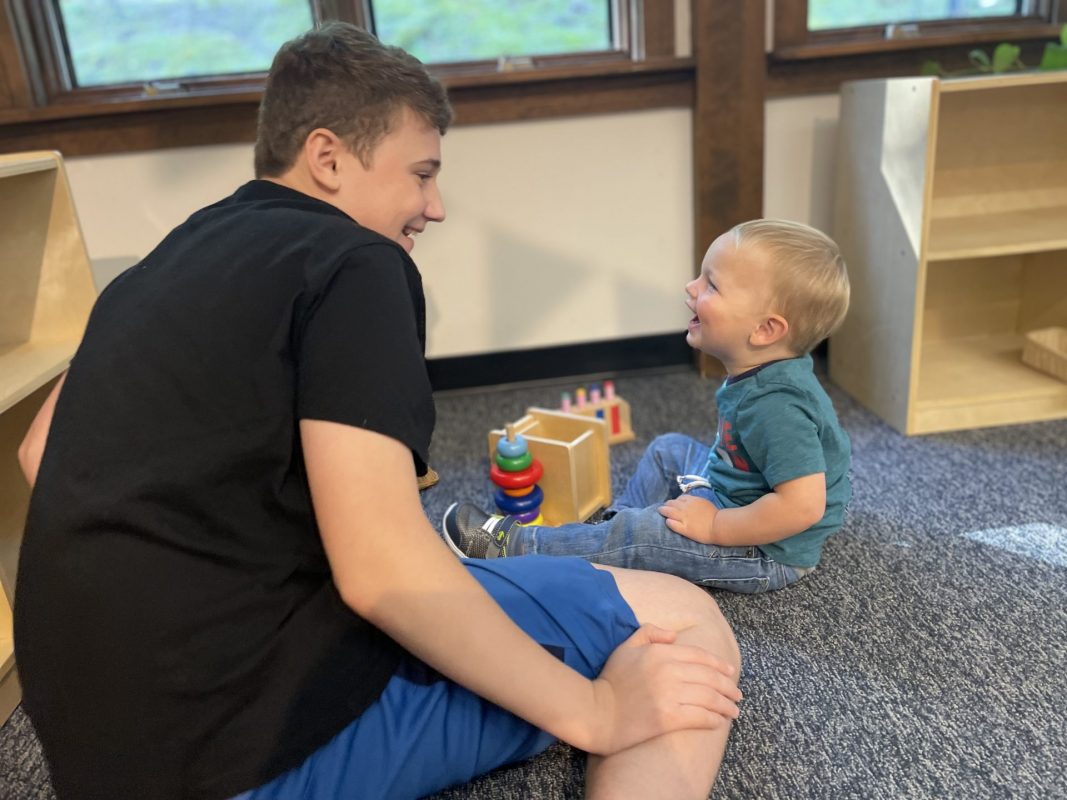
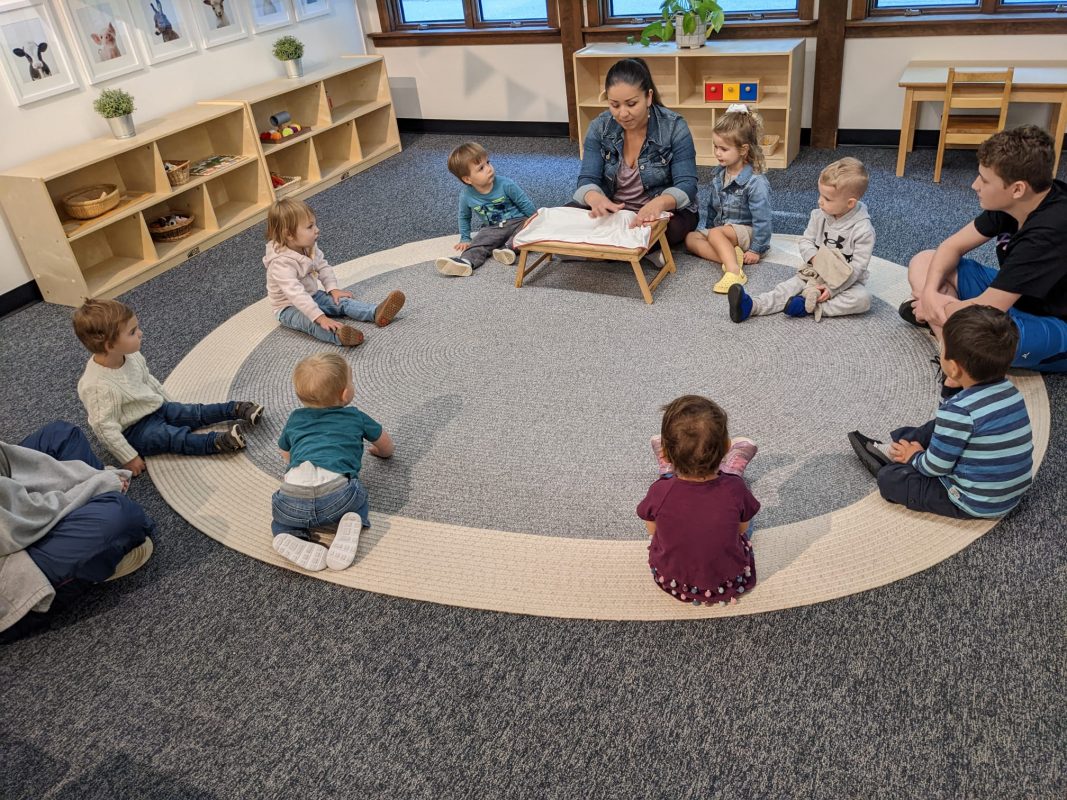
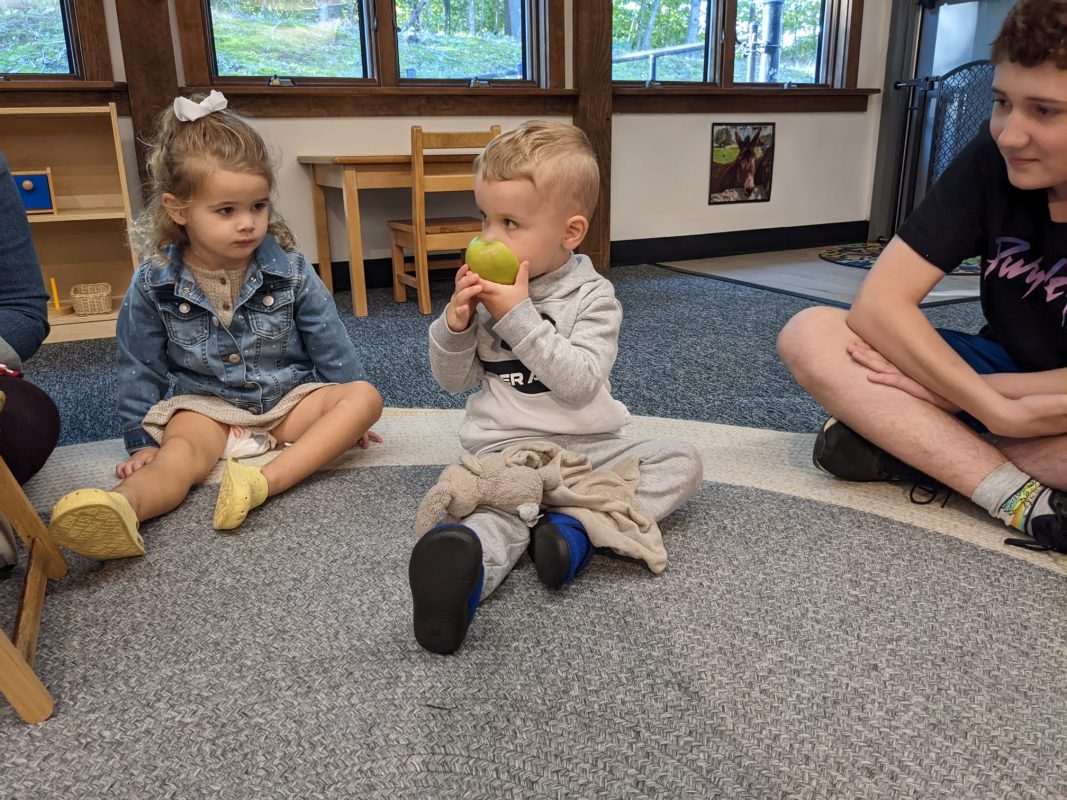
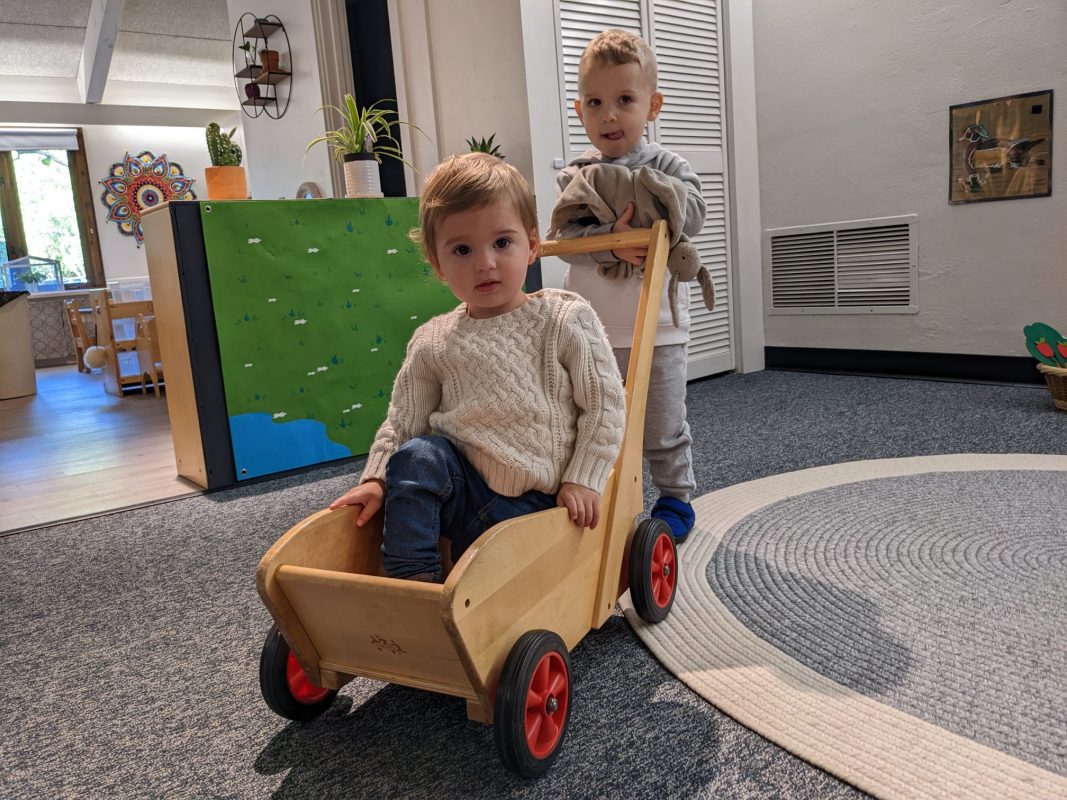
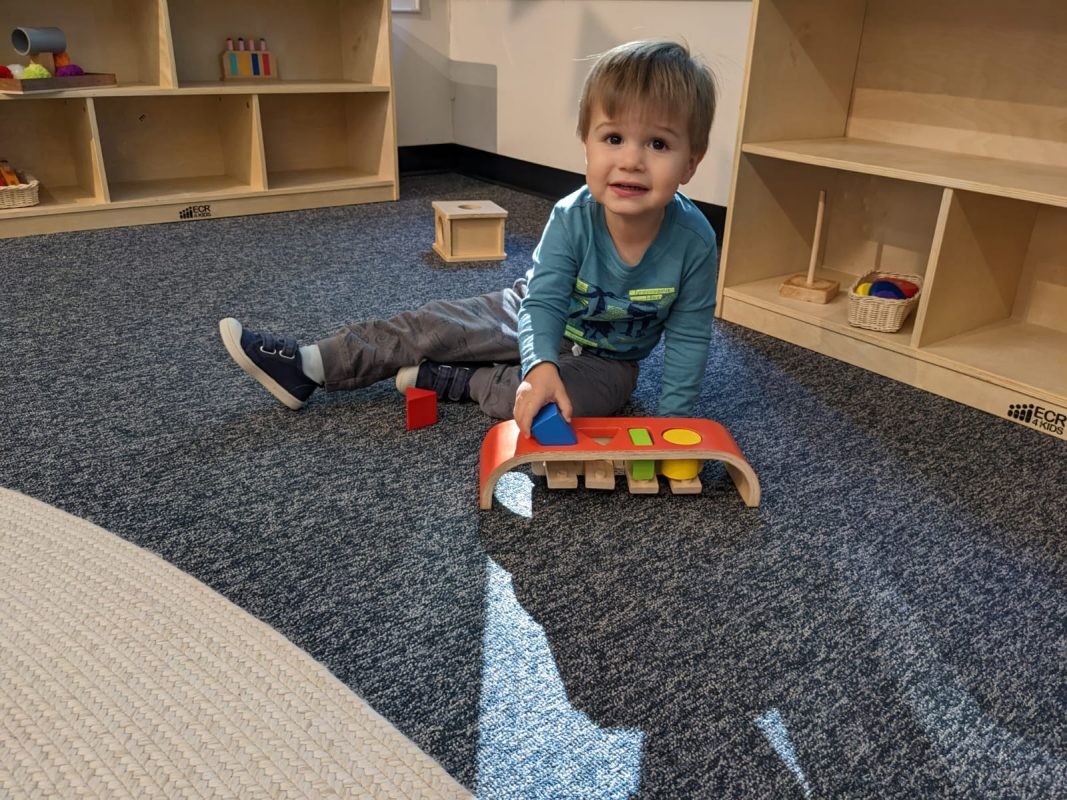
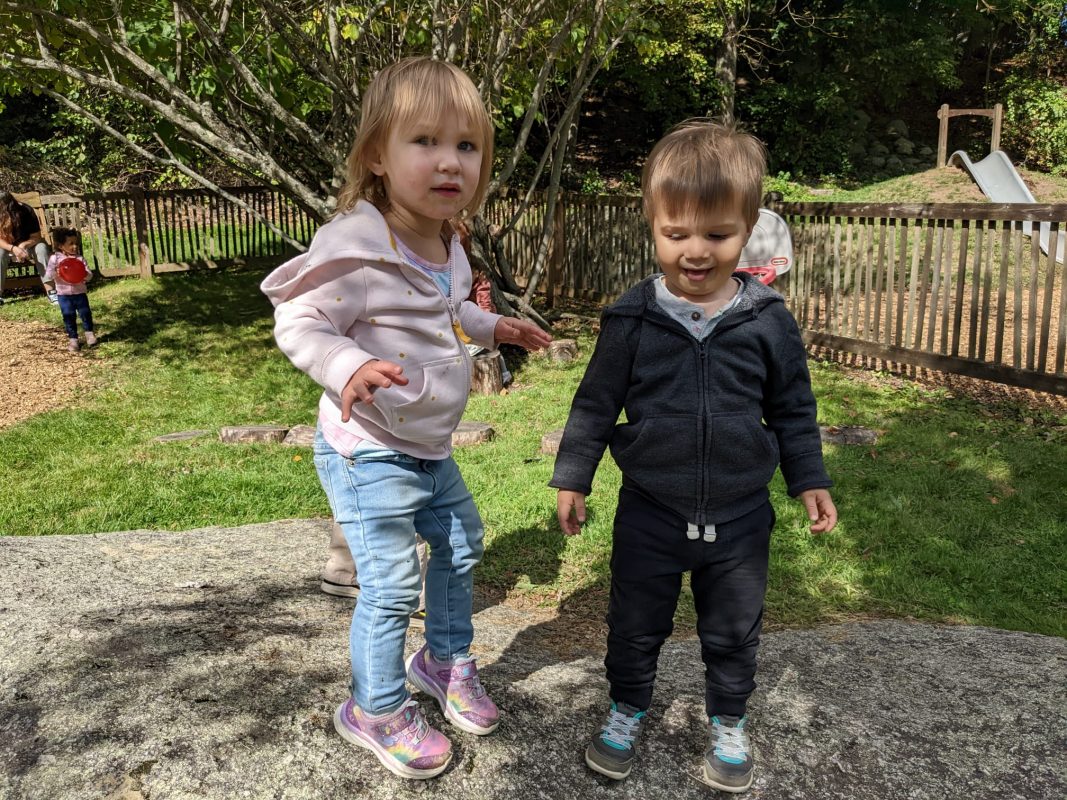
A couple of times a month our Middle School students visit our environment and work with our toddlers. They do so by reading and working together with the different materials displayed on our shelves. They assist your children in how to put on their shoes and jackets, how to clean their face and hands, they look for ways of comforting their younger peers when they are having a hard time, and they love to join in the fun when we sing, dance and play games together. They are great role models and your children love when they enter our environment and get to spend time with them. 

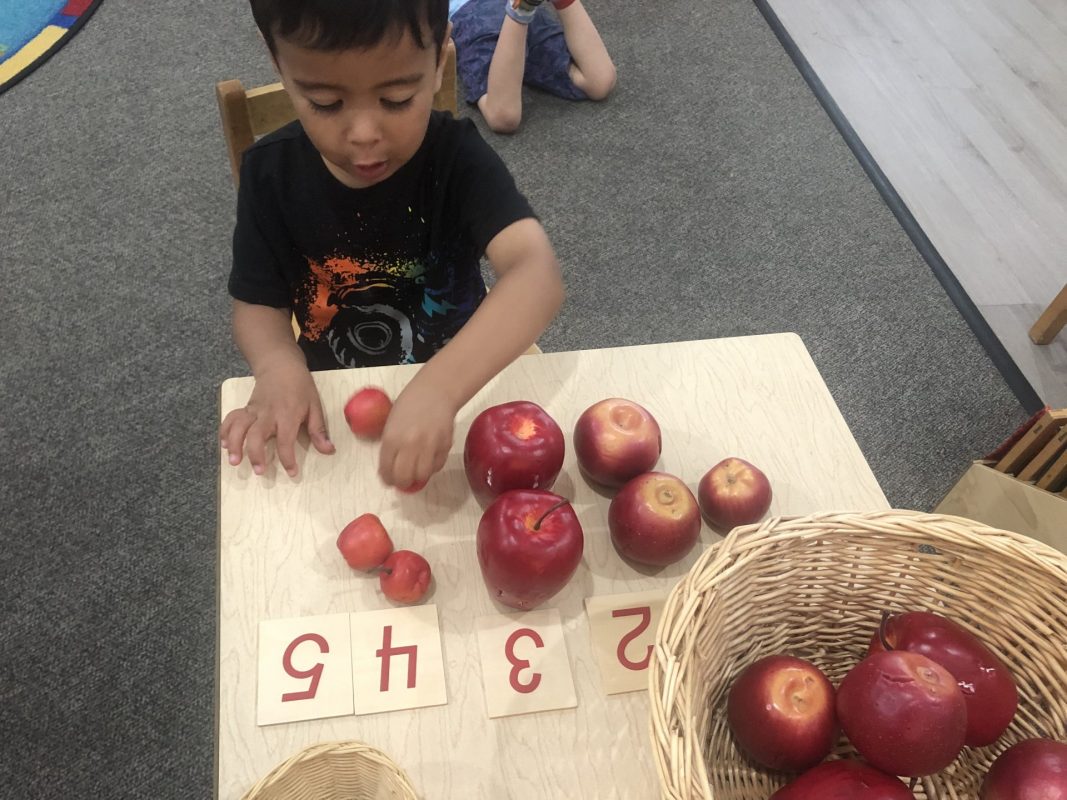
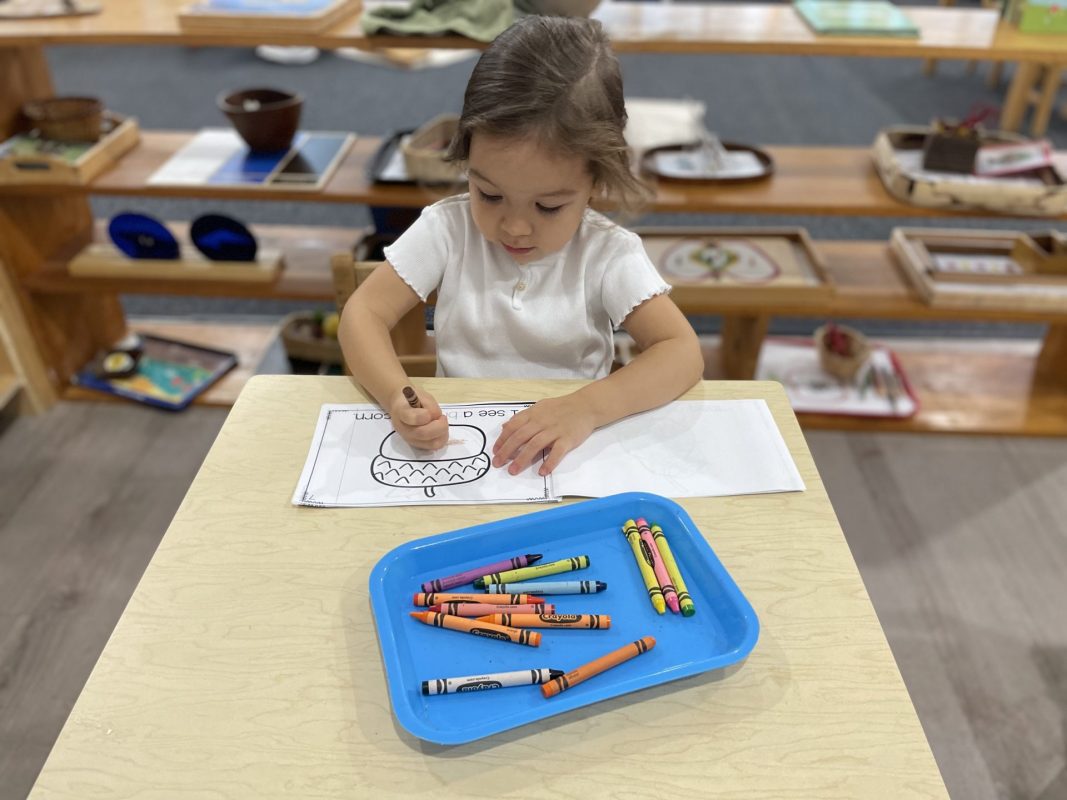
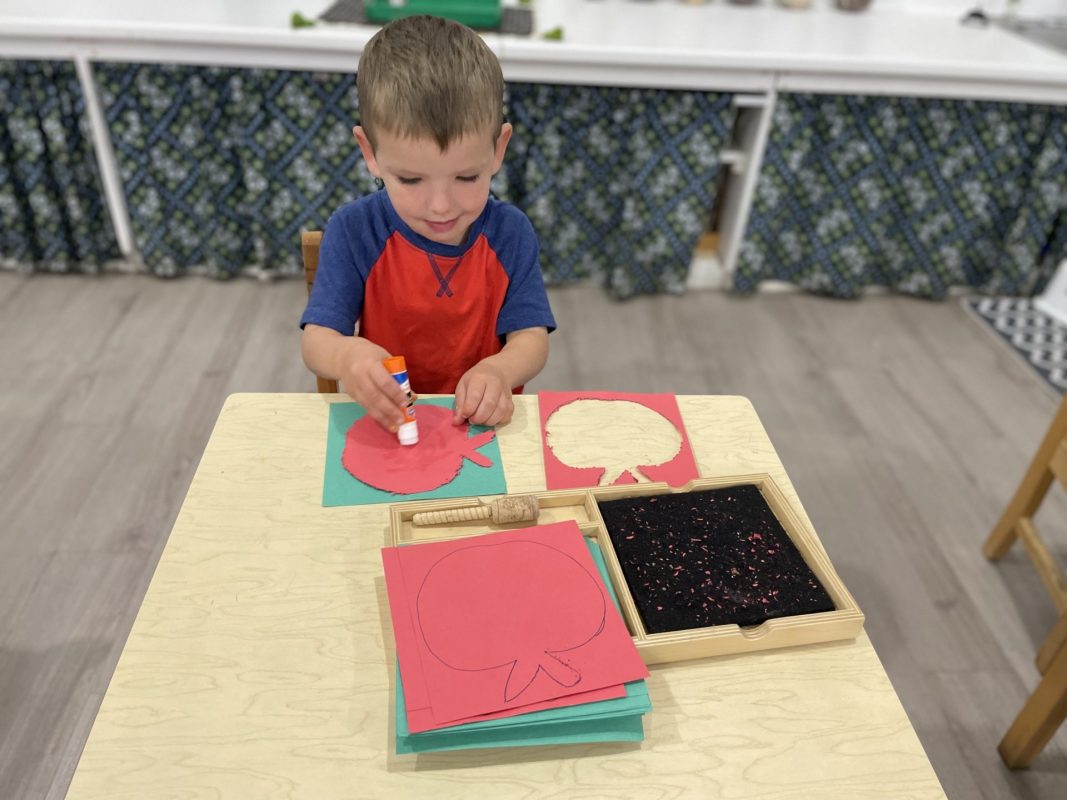
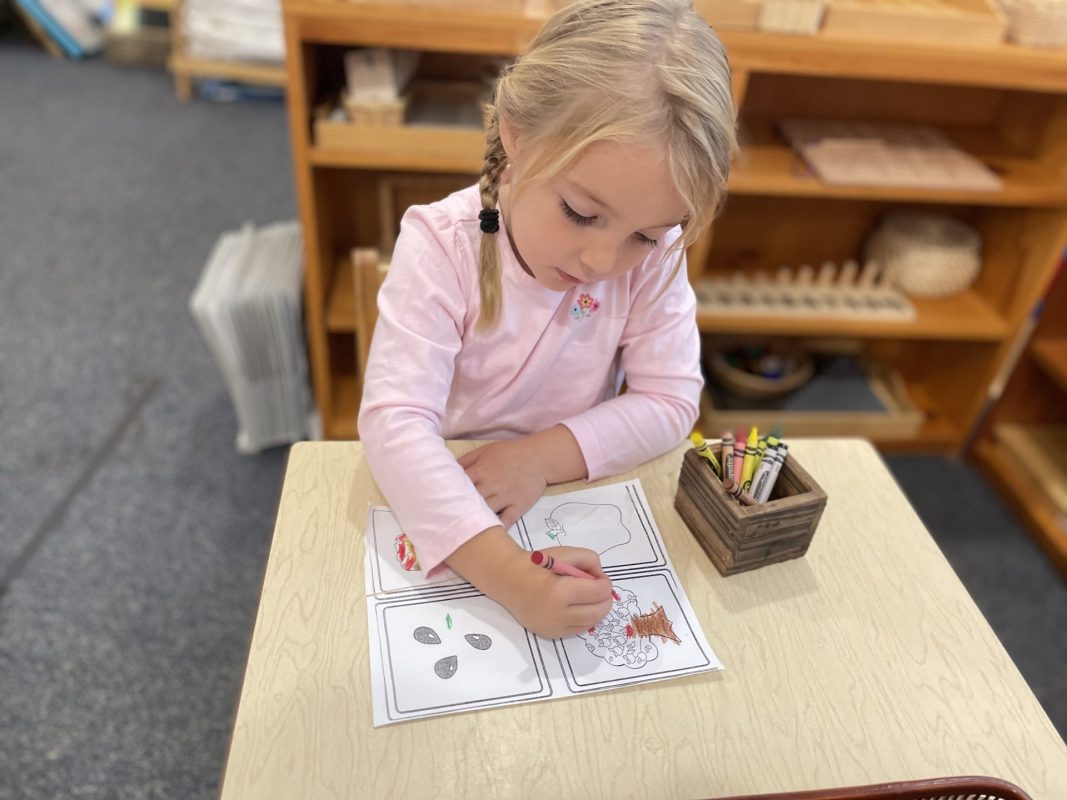
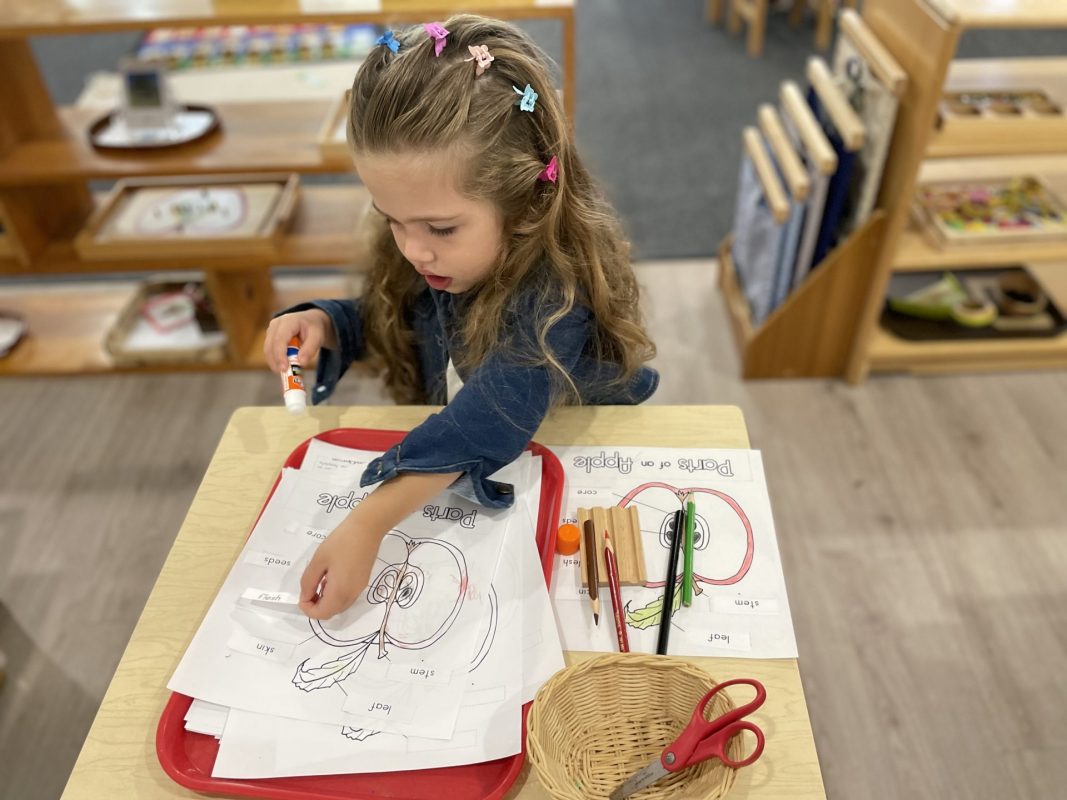
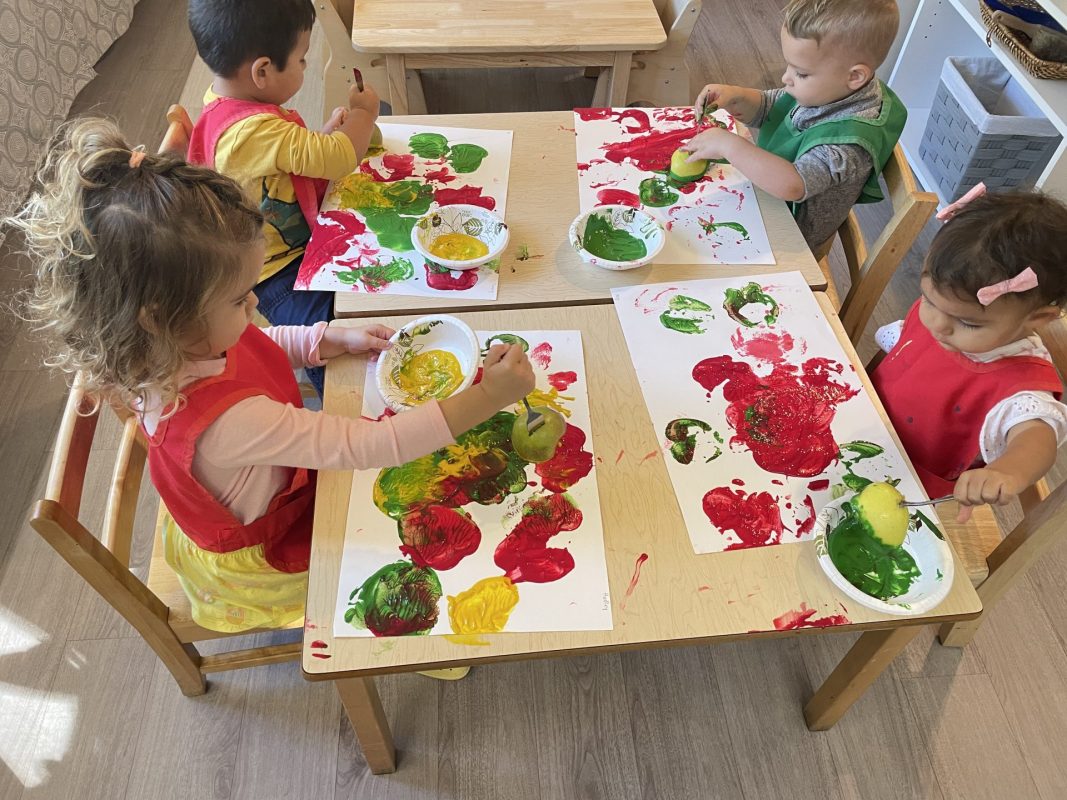
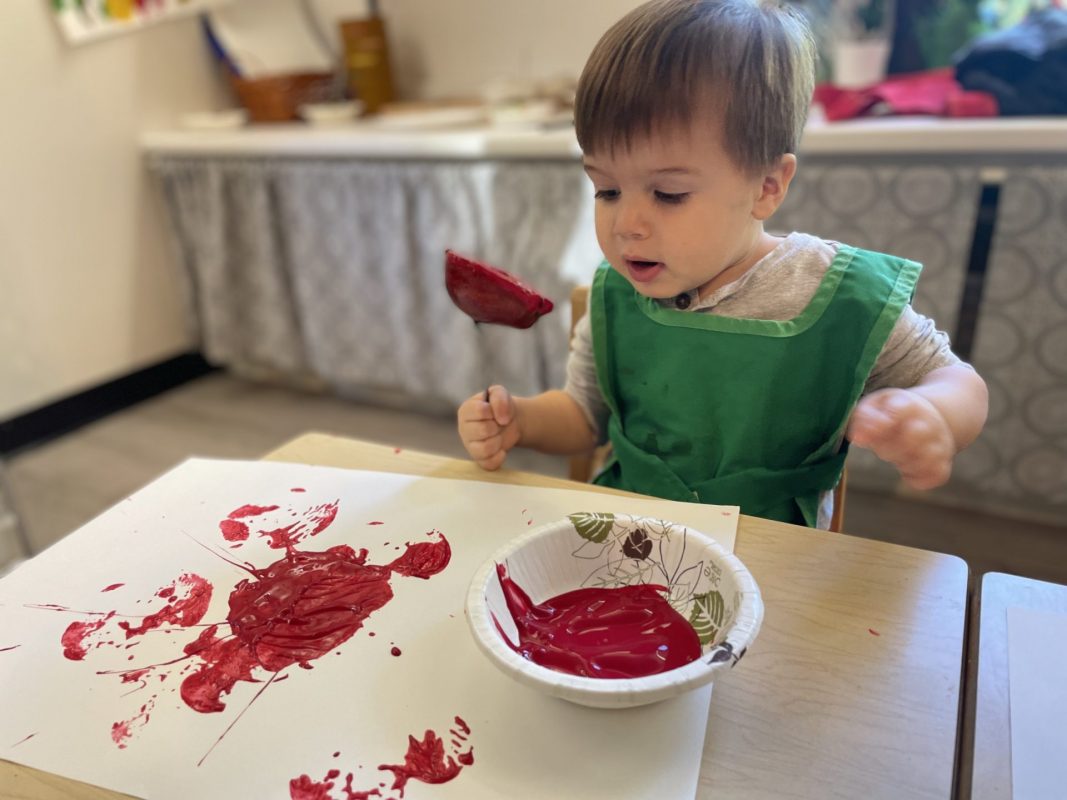
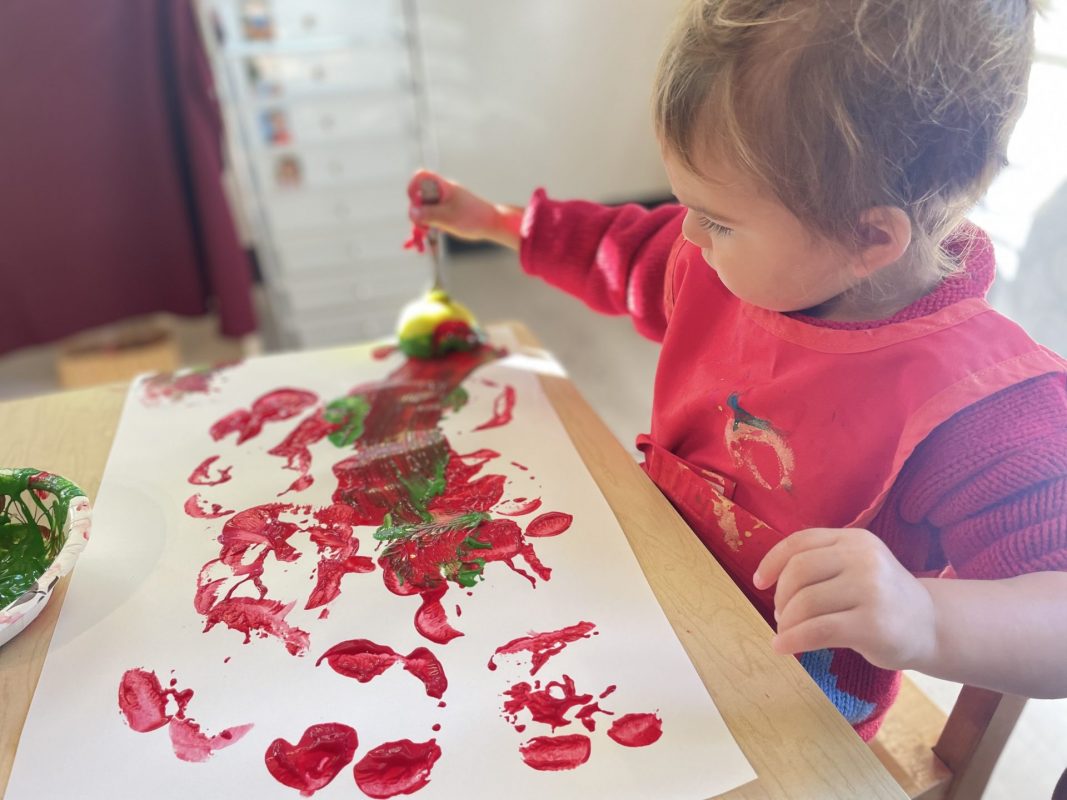
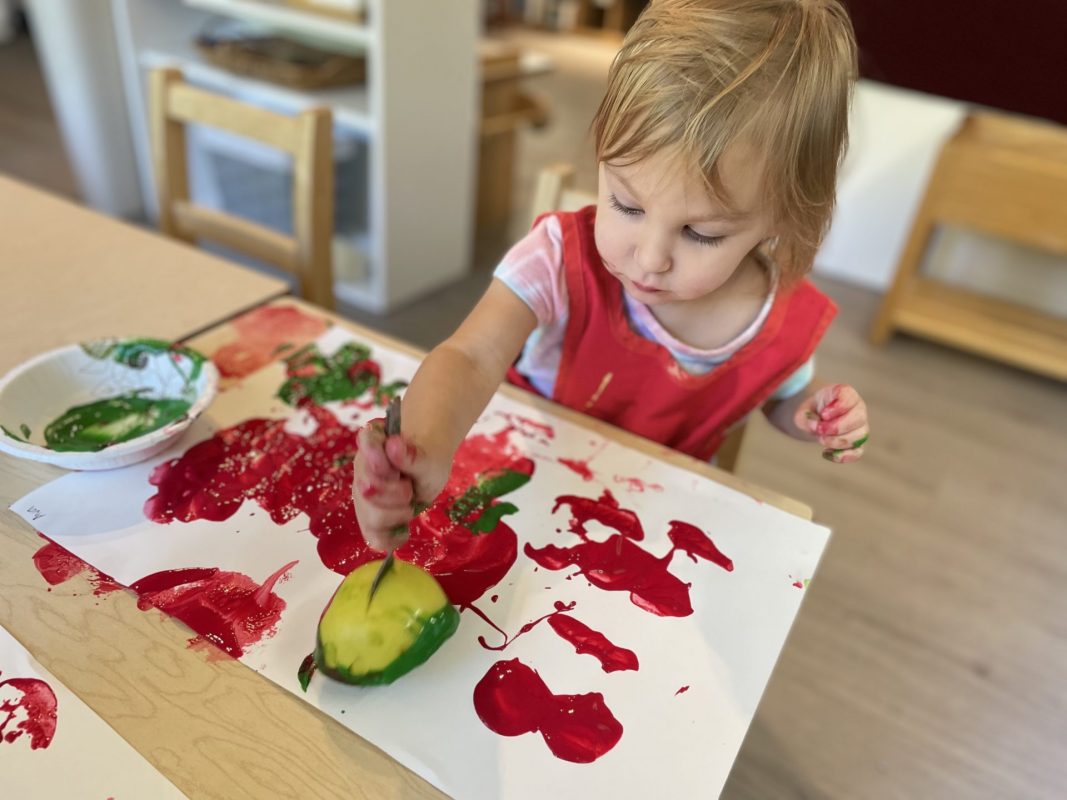
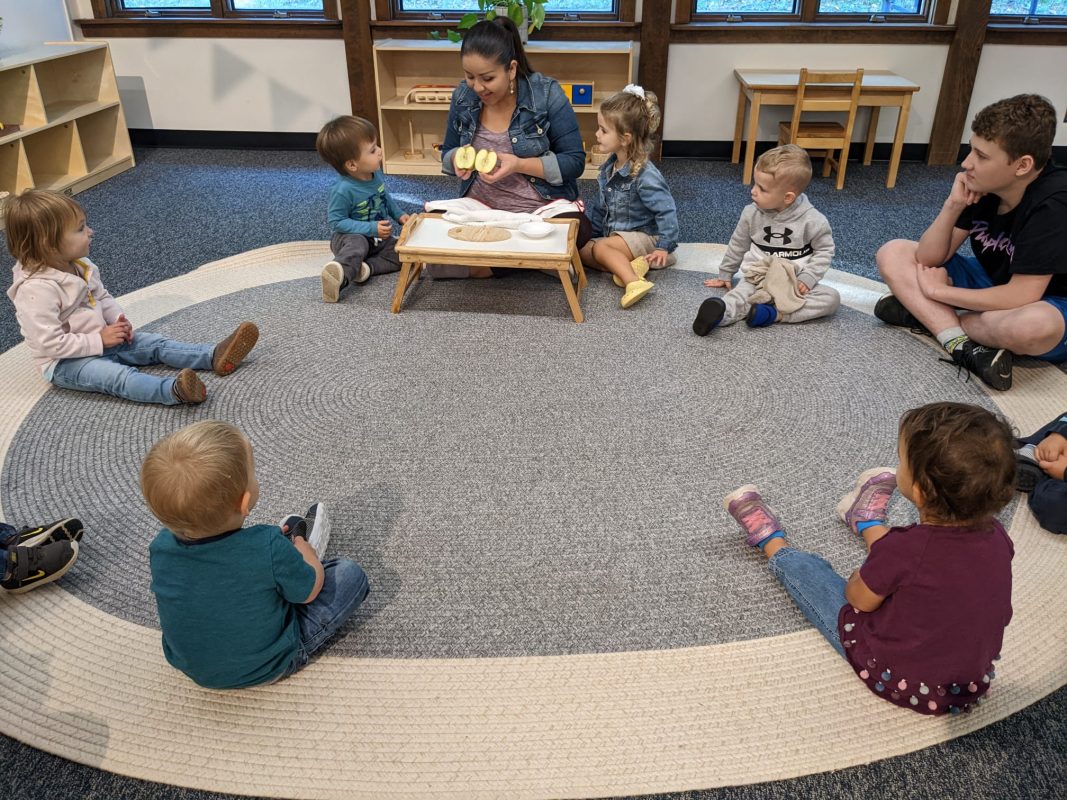
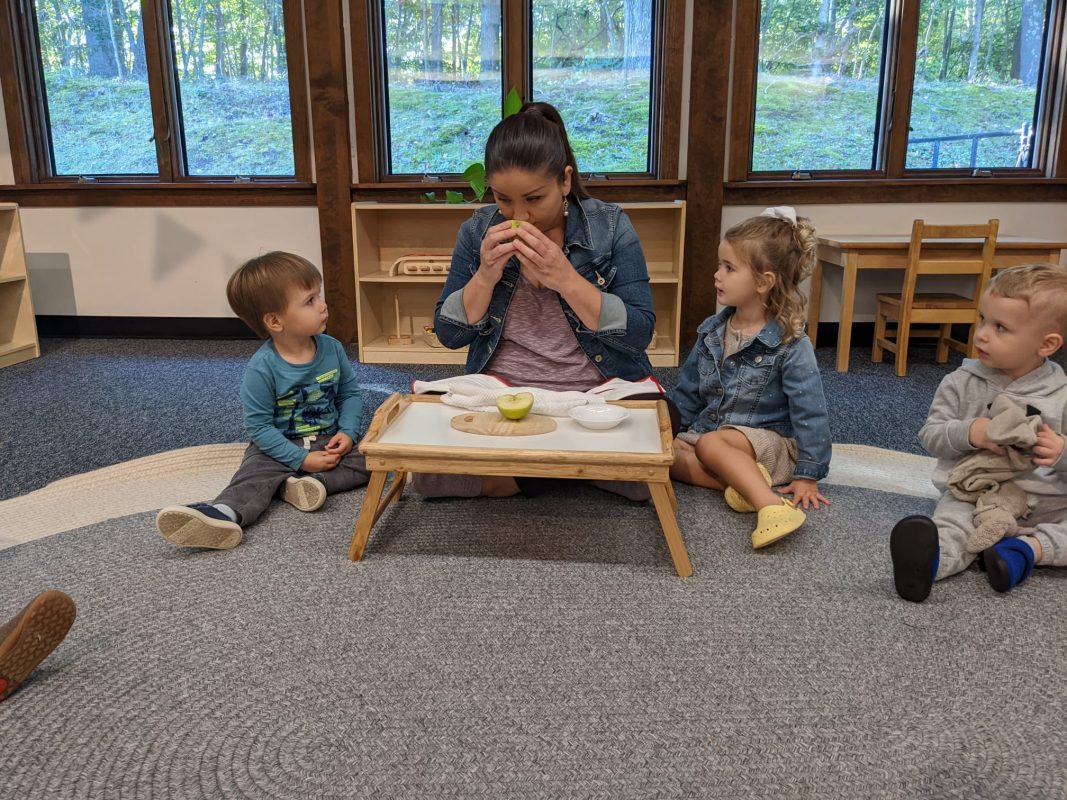
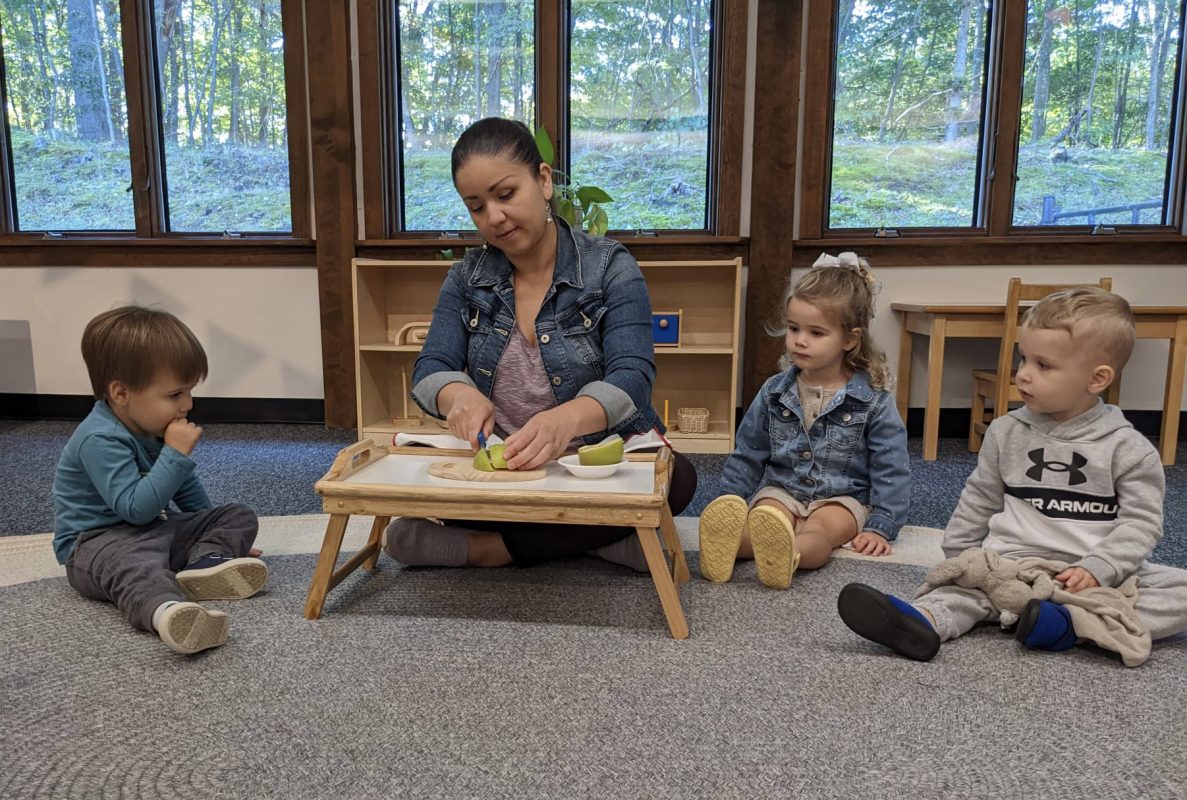
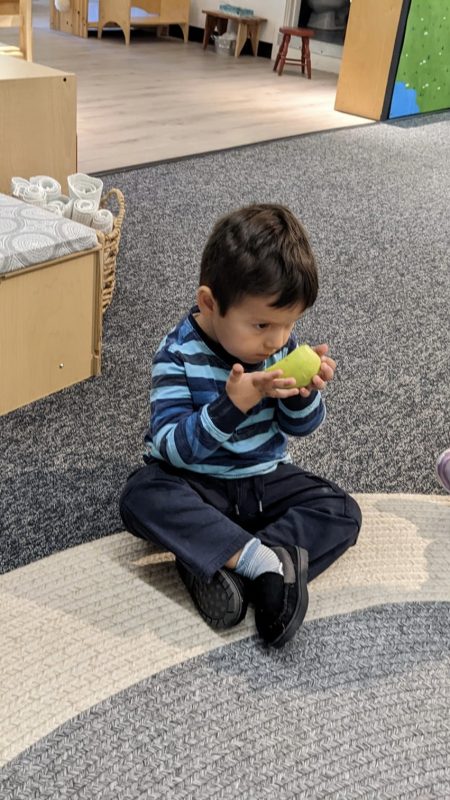
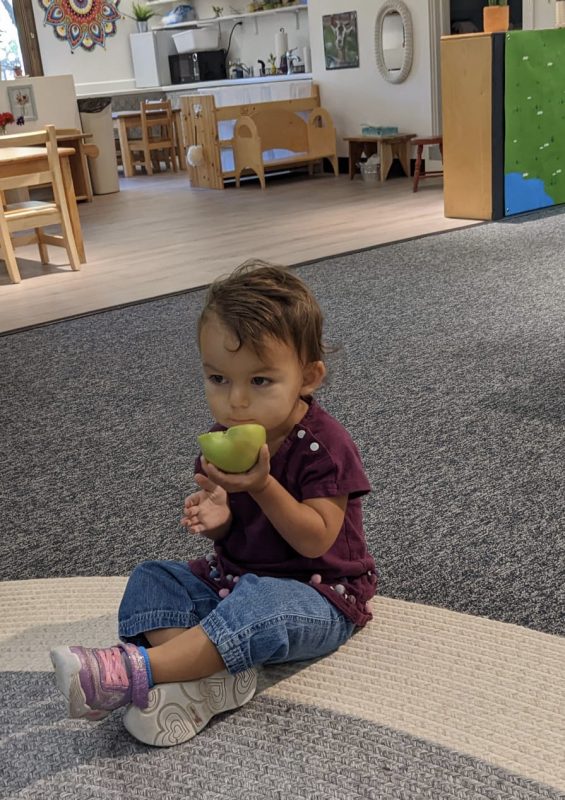
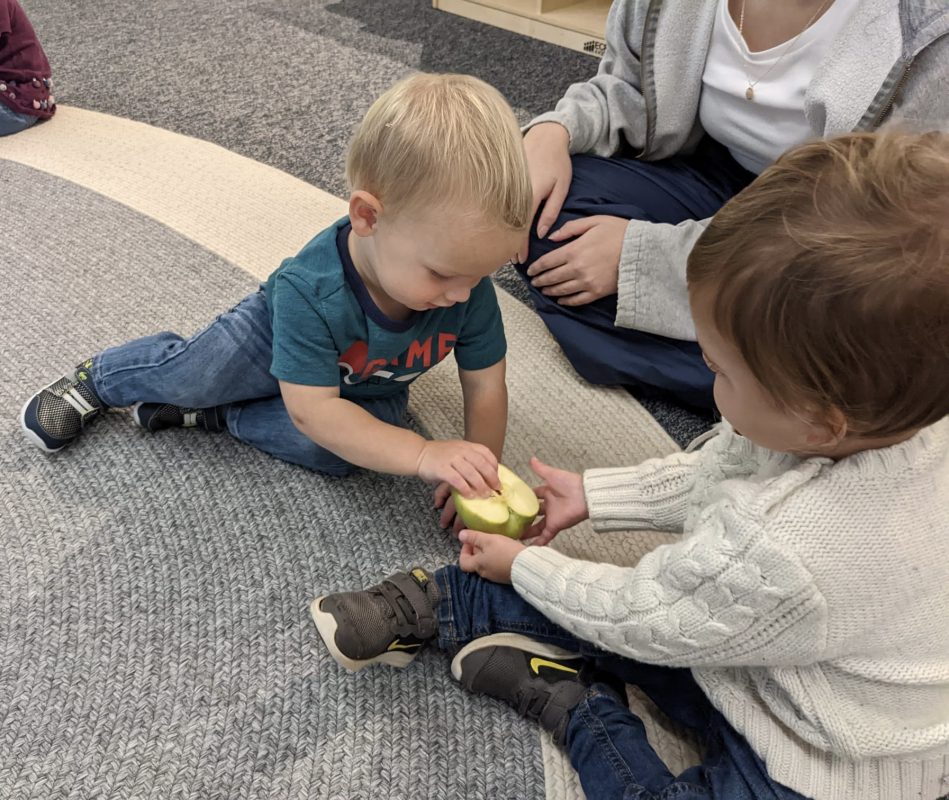
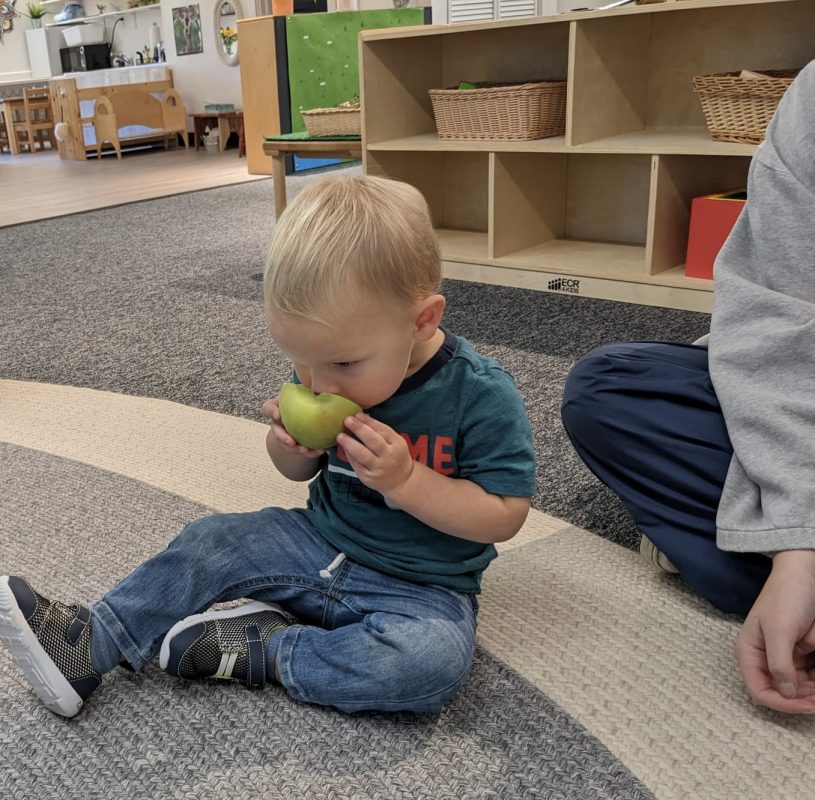
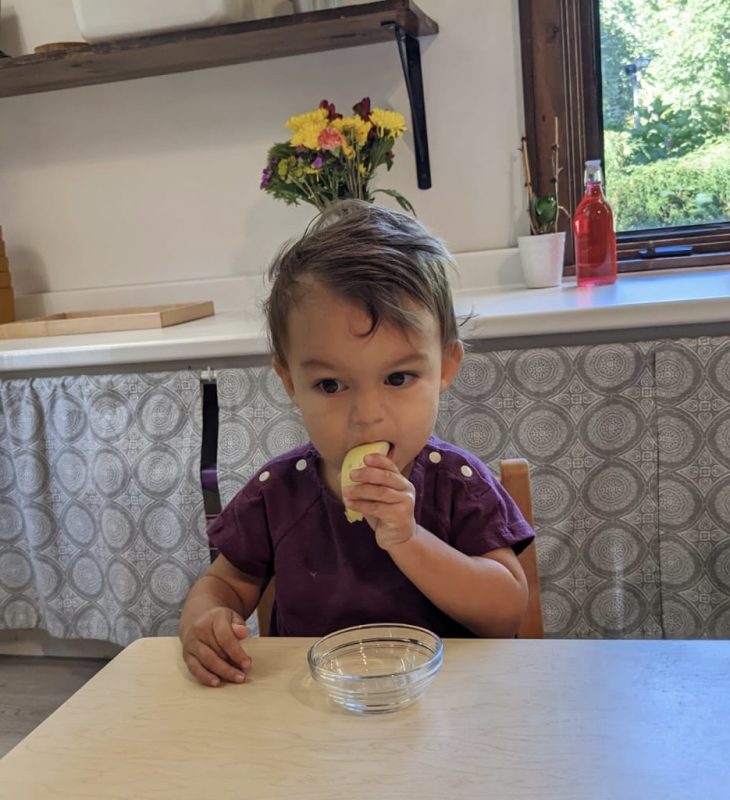
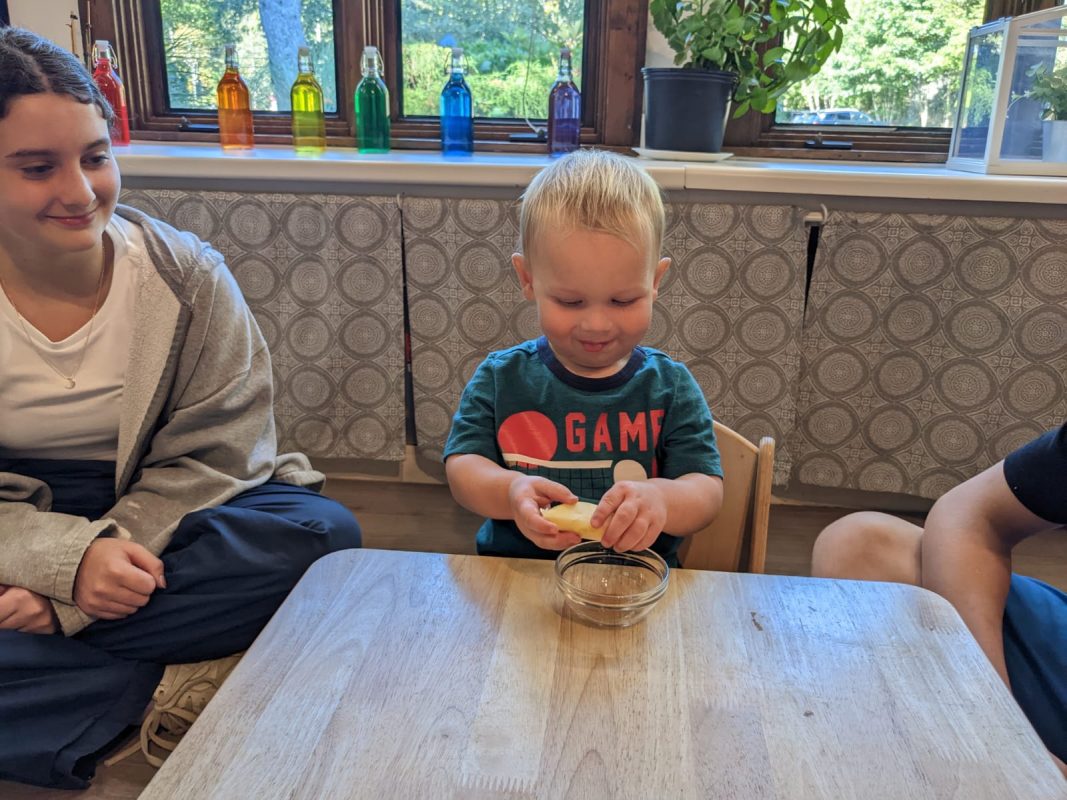
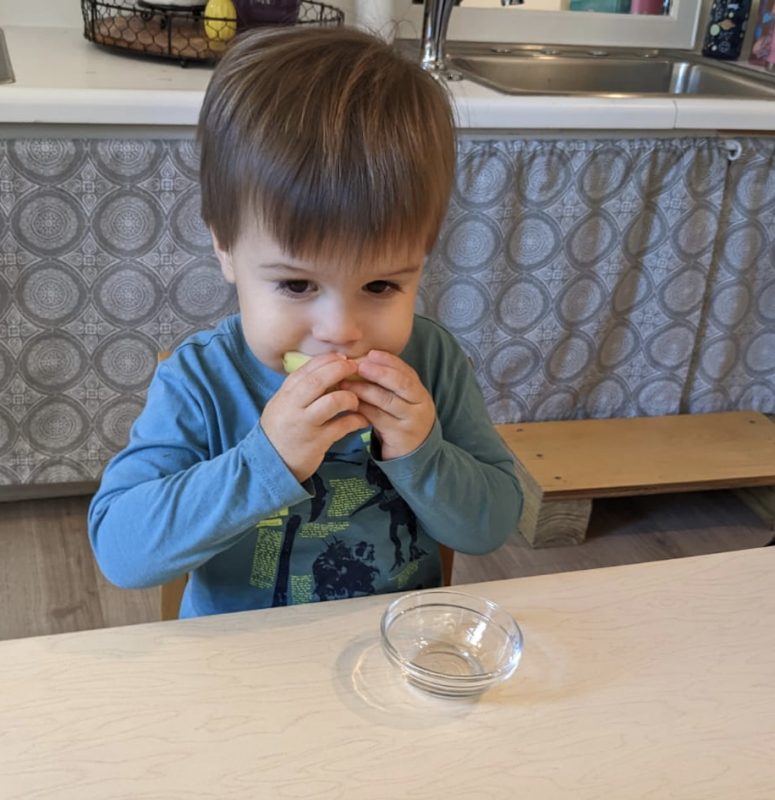
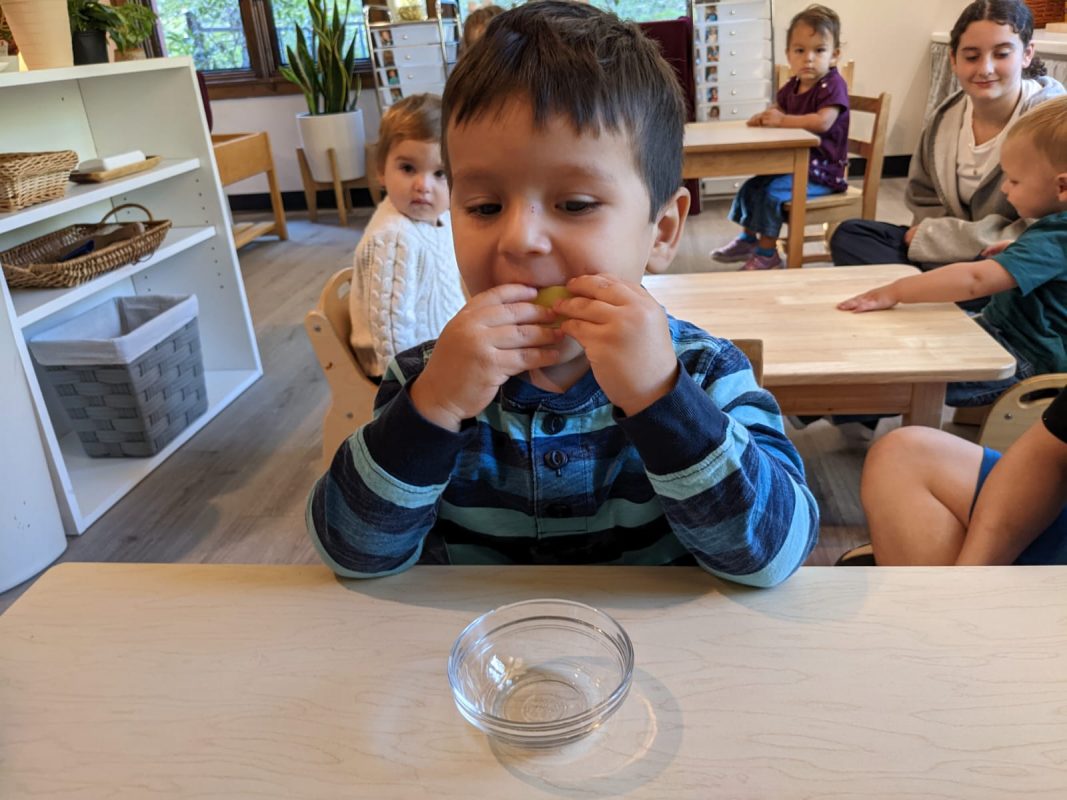
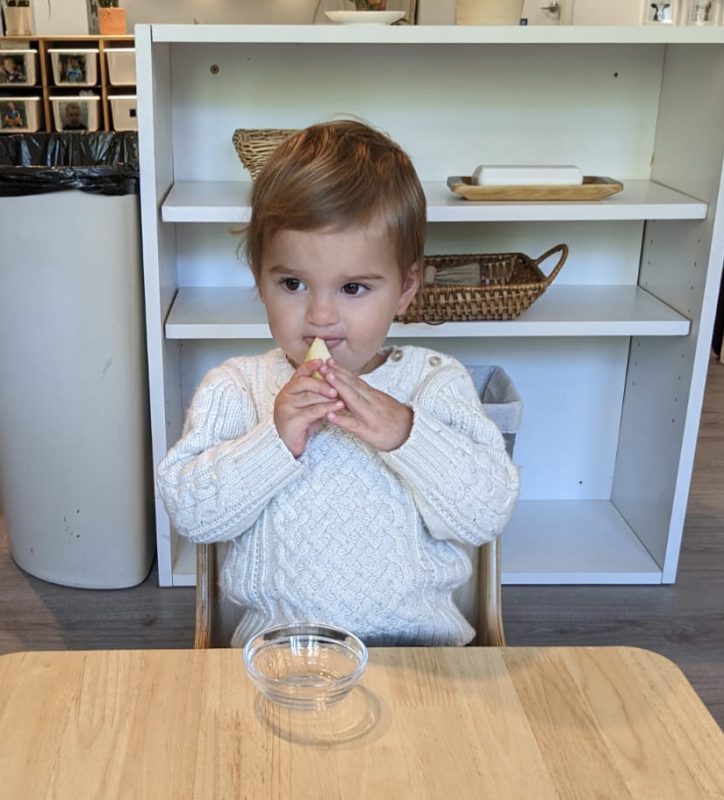
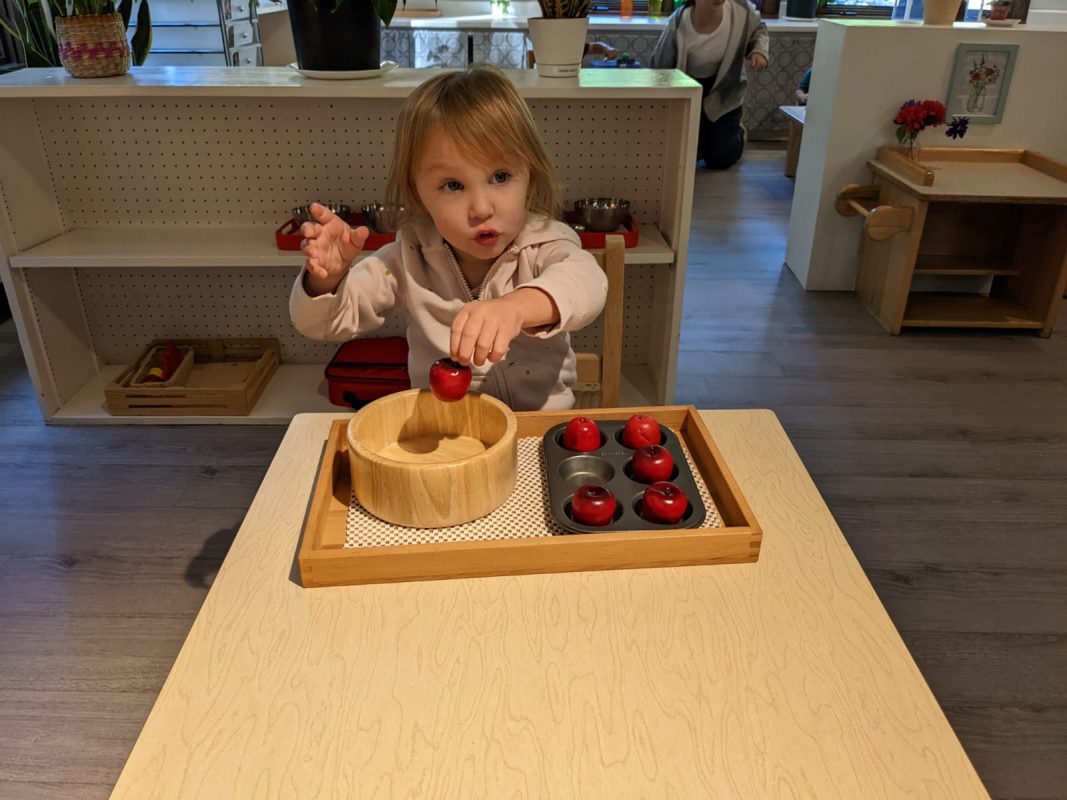
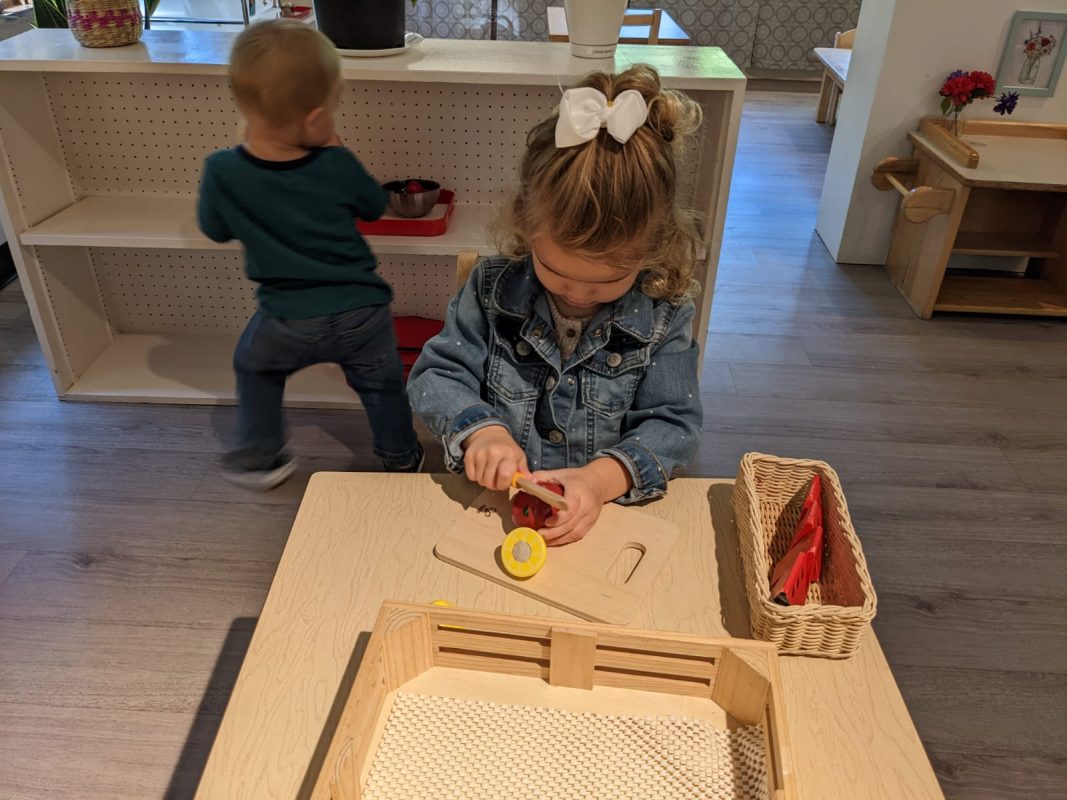
In continuation with our apple studies this week we explored a Granny smith apple for our food tasting lesson. Children were in awe to see the apple this week was green! Some actually found it funny! They were expecting something red, like last week. Skin, flesh, stem, core and seeds are vocabulary words we are repeating often these days. 

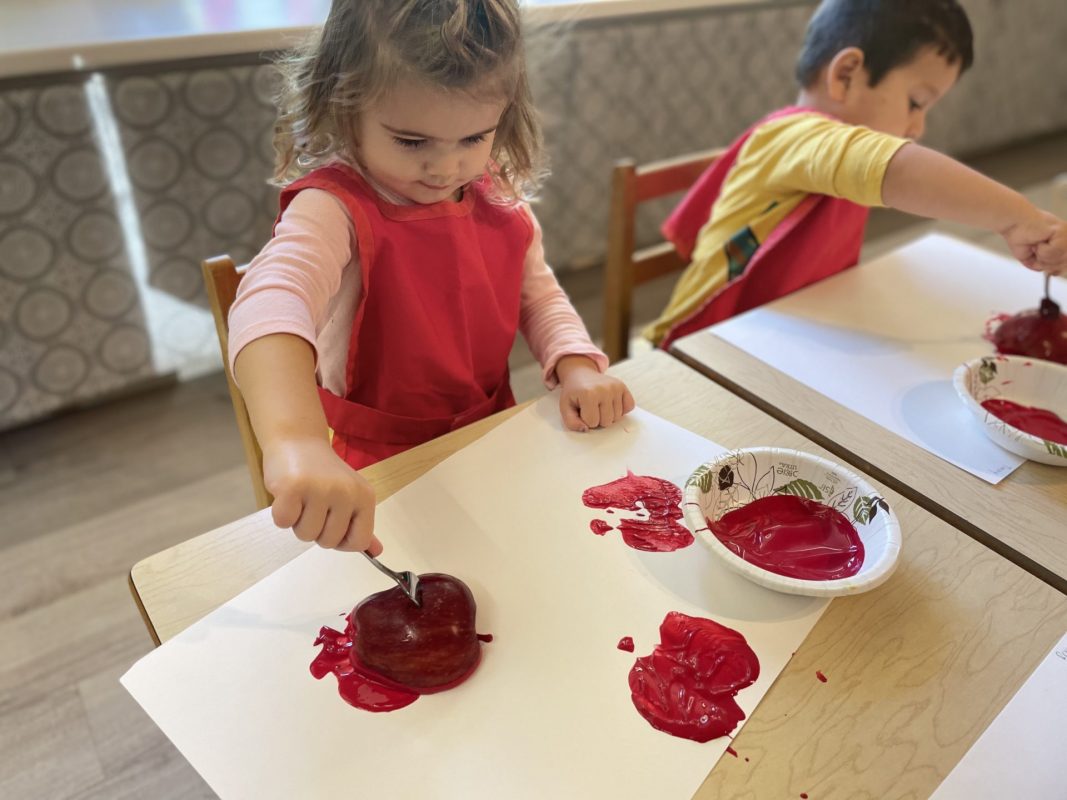
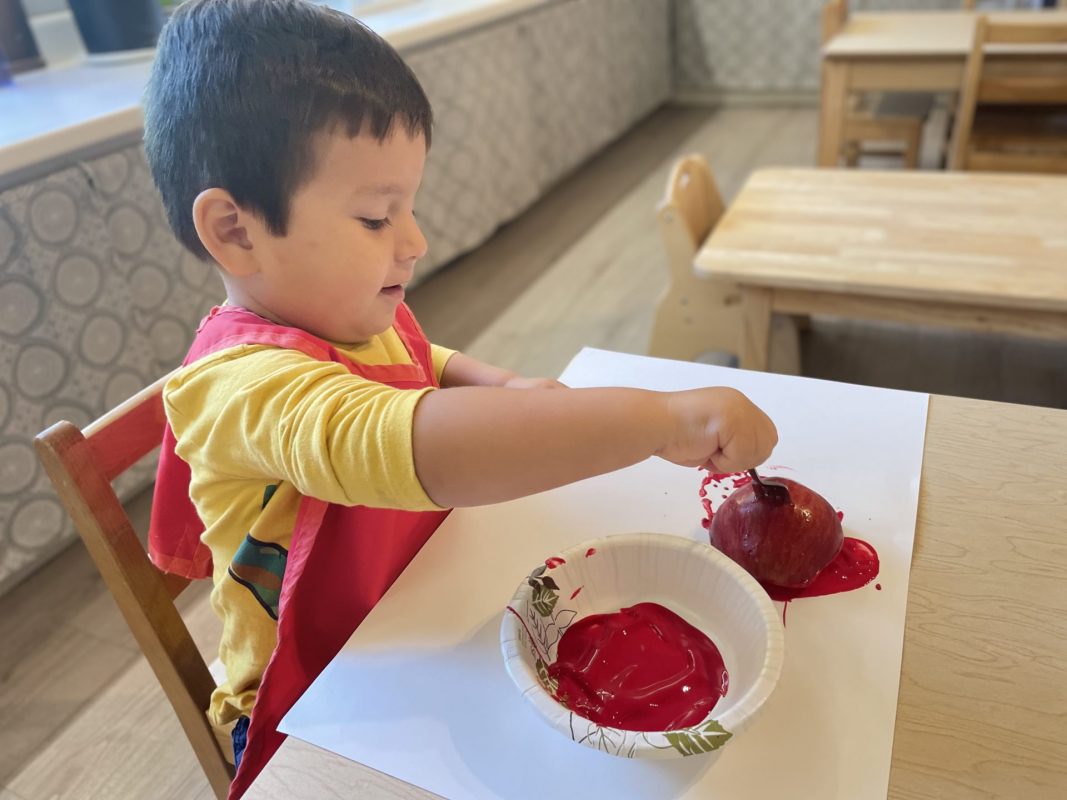
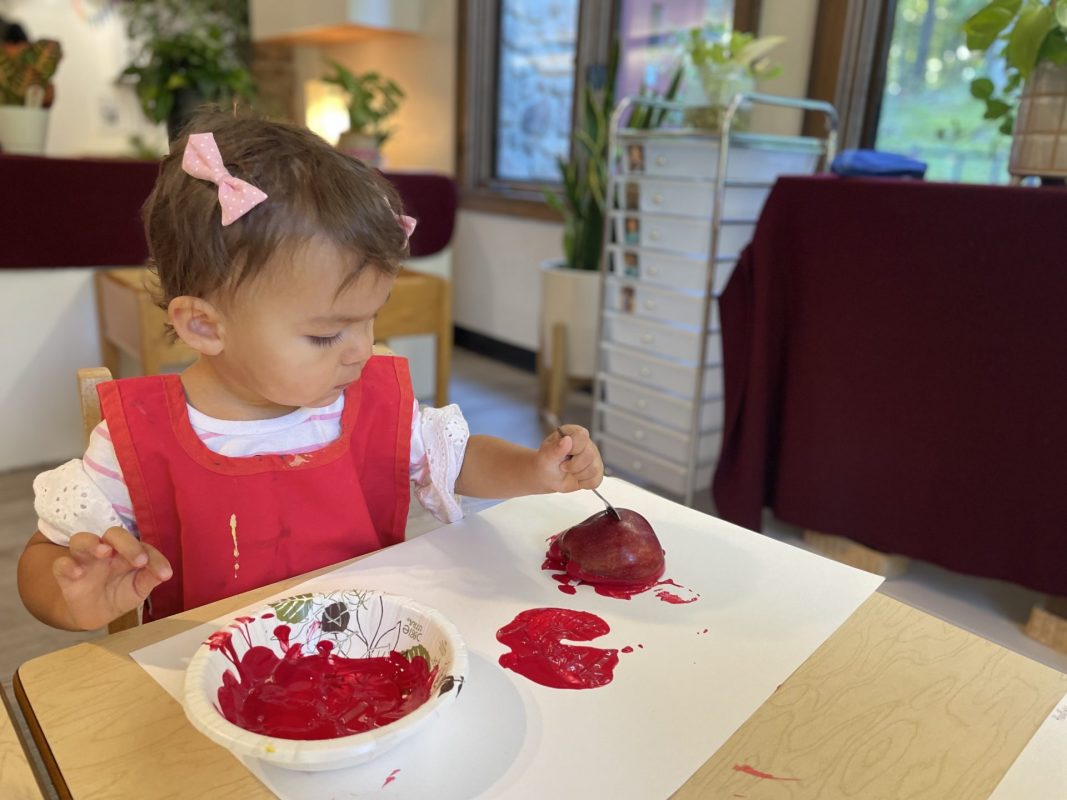
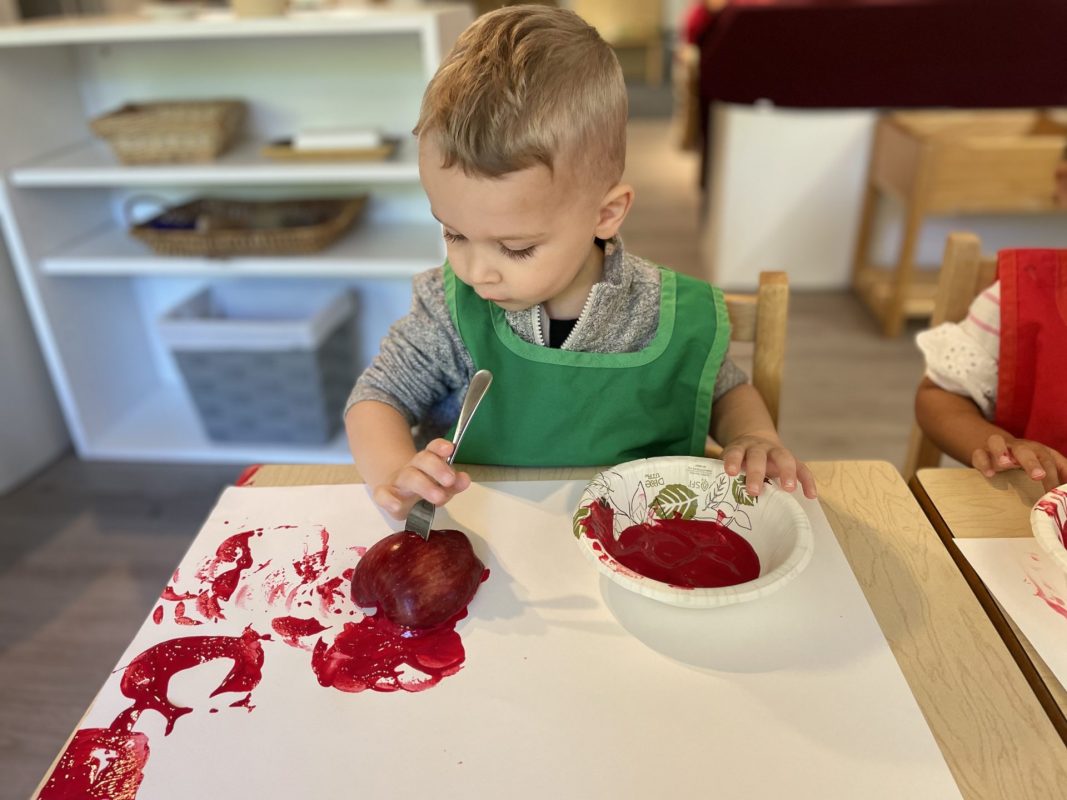
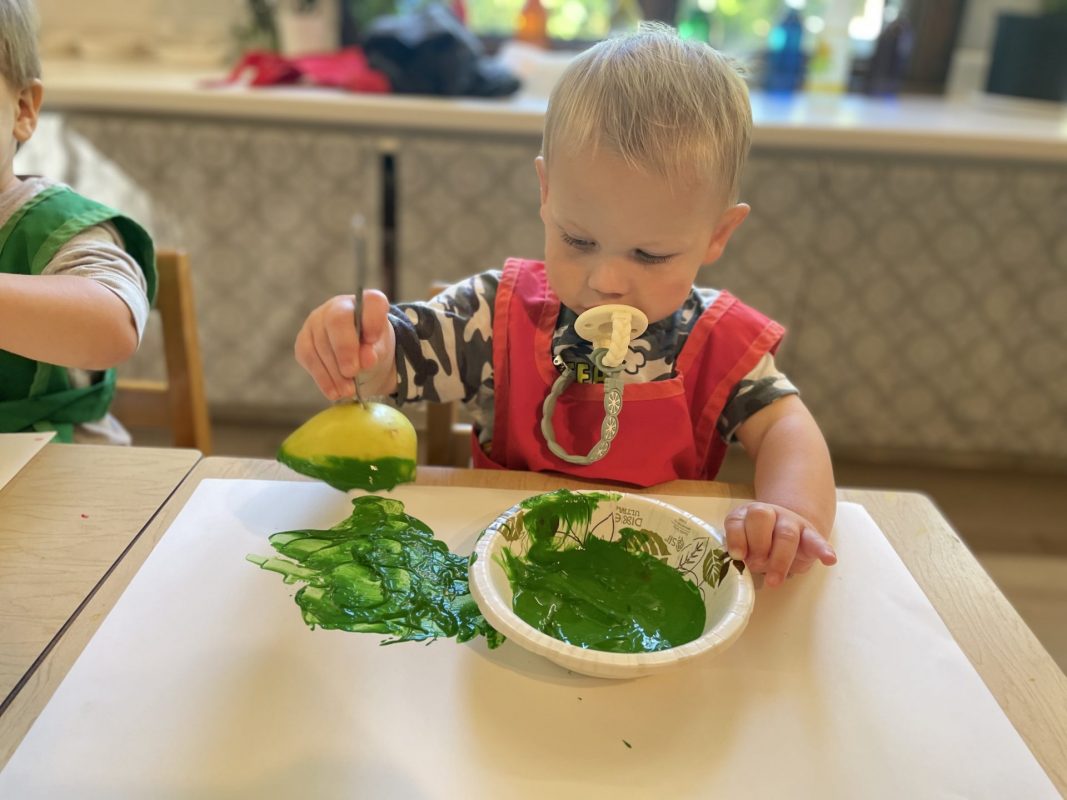
As an extra  Sensorial addition we worked on an apple stamping art piece. Children enjoyed dipping the apple halves into different color paints and stamping them all over their papers! They were so proud of their work! 

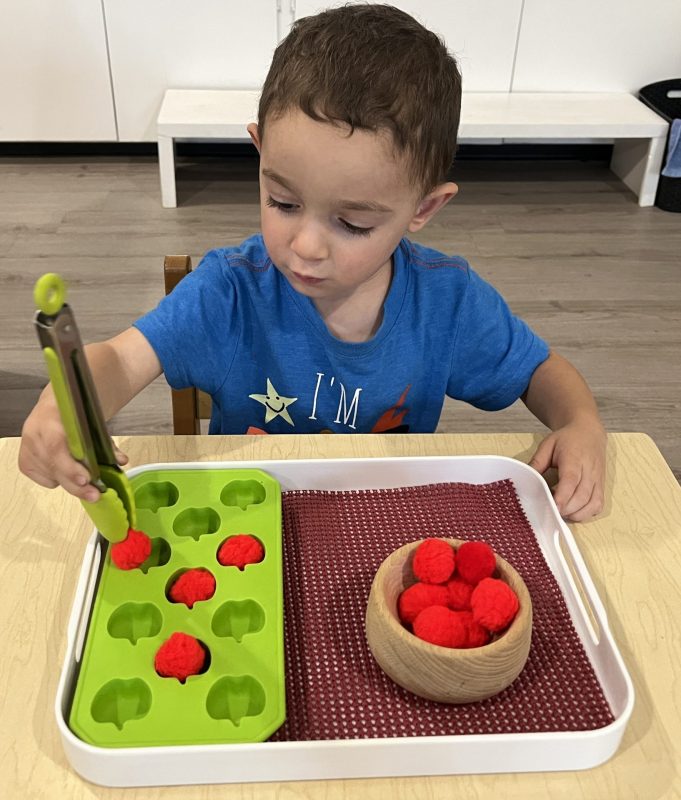
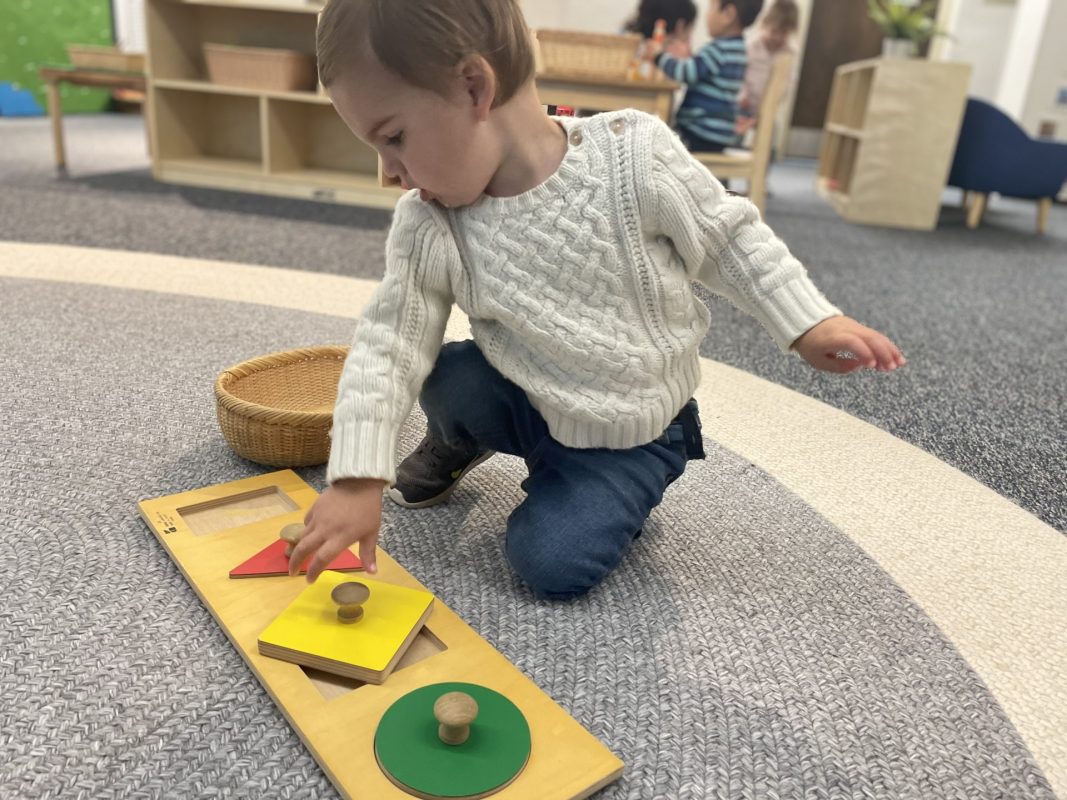
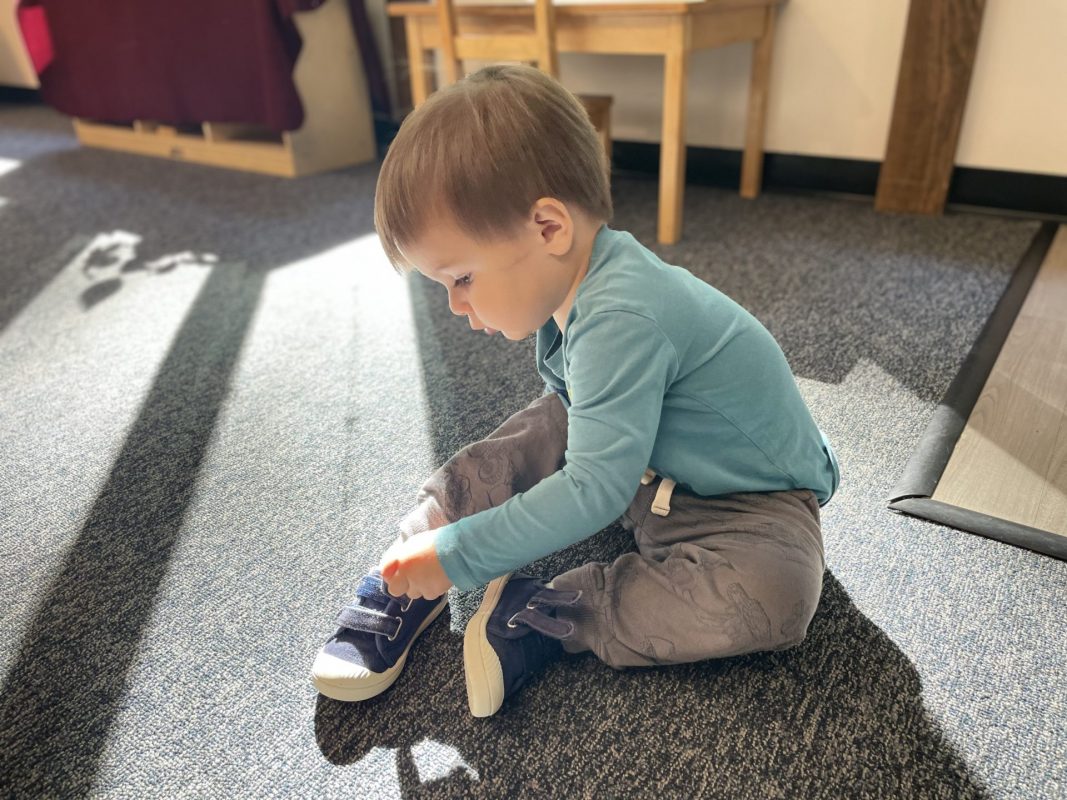
As a fundamental Practical Life skill, your children have been working diligently on learning to take off and put on their shoes! It’s hard work for them, but we are so confident they will master it as they keep practicing. 

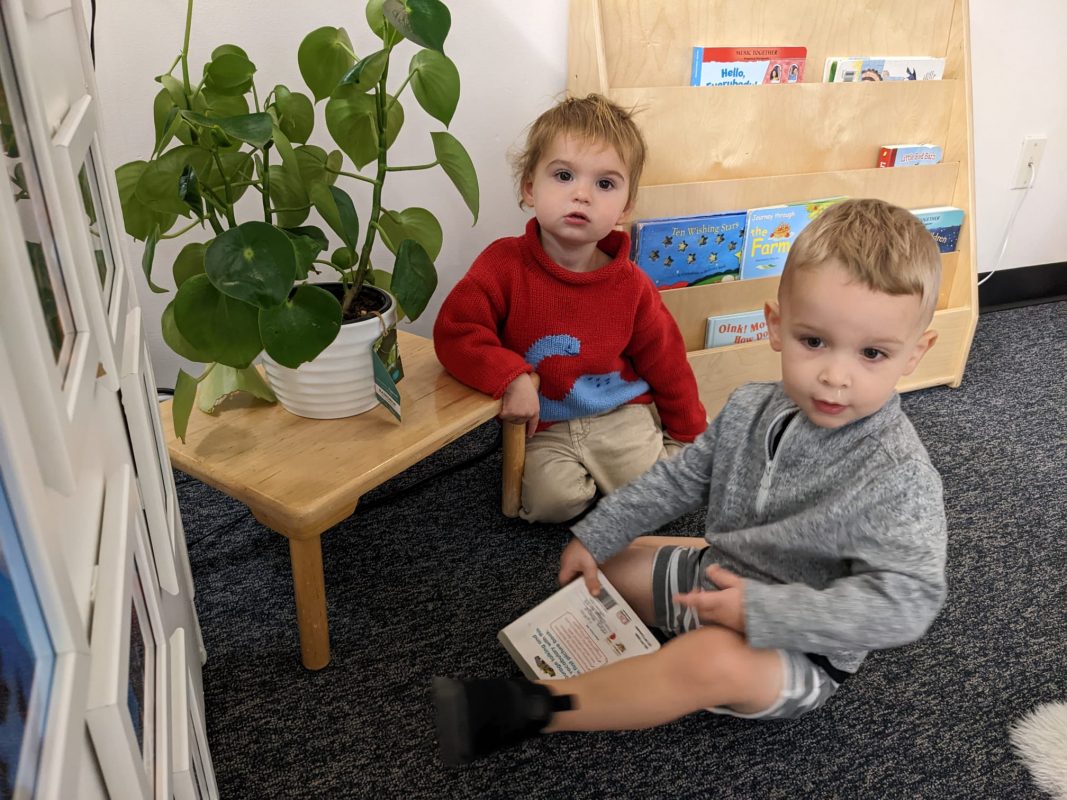
The favorite books this week have been : Brown Bear, Brown Bear What Do You See by Eric Carle, Row, Row Your Boat By Jane Cabrera and We All Go Traveling By by Barefoot books. “We are the Dinosaurs’ by Laurie Berkner and “Shake Your Sillies Out” by Andy Mason were the top hits musically this week. 

We wish you a healthy and peaceful weekend, 

Mrs. Hood and Ms. Bethann 

Mrs. Doyle’s Class: Friday Folder Fun Facts
We have to remember as adults, that we want things done, and as quickly as possible, so that they are finished and out of the way; whereas the child is interested and content in the doing, not the done.” –Margaret Stephenson, The Art of Montessori in the Home
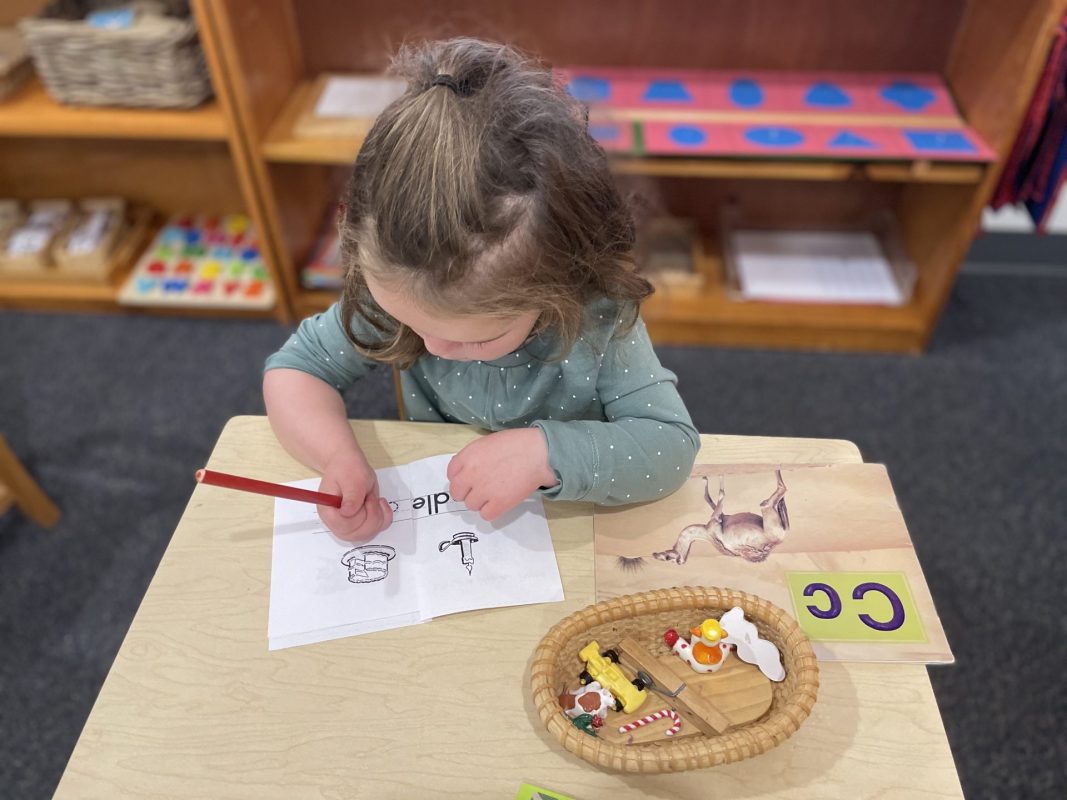
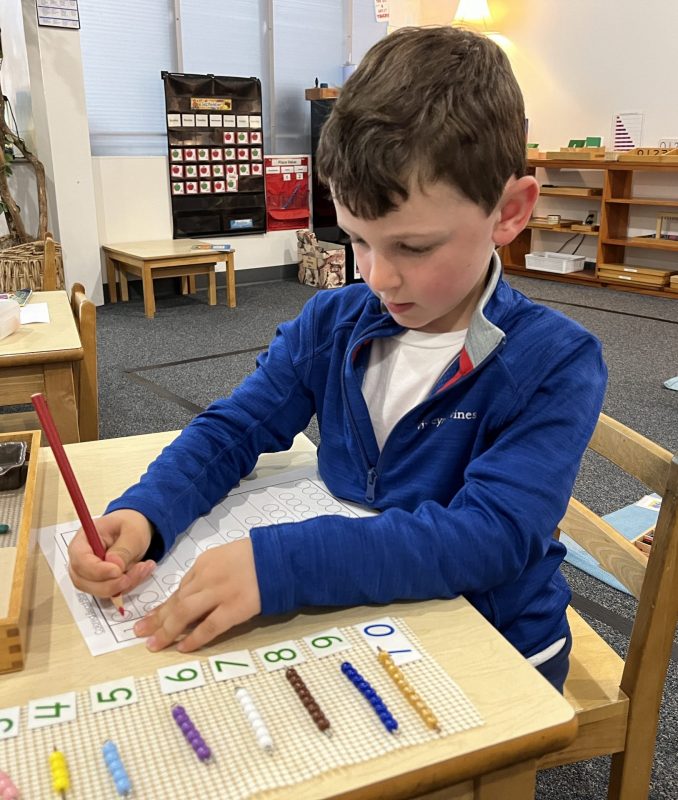
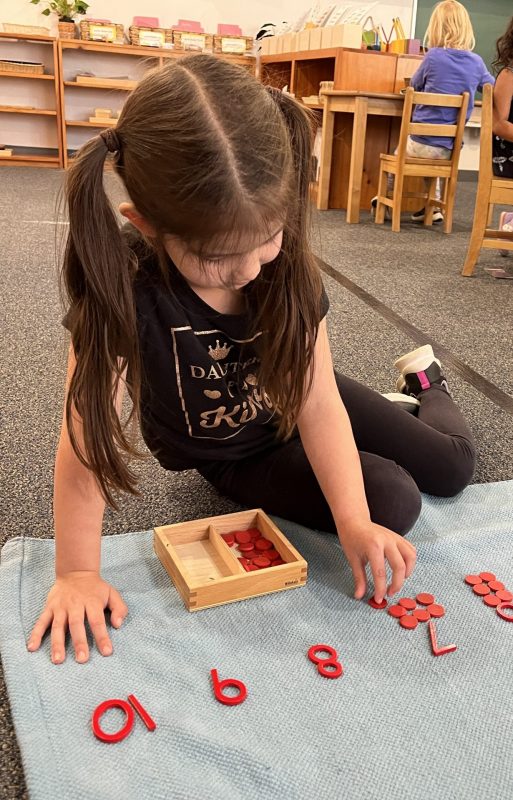
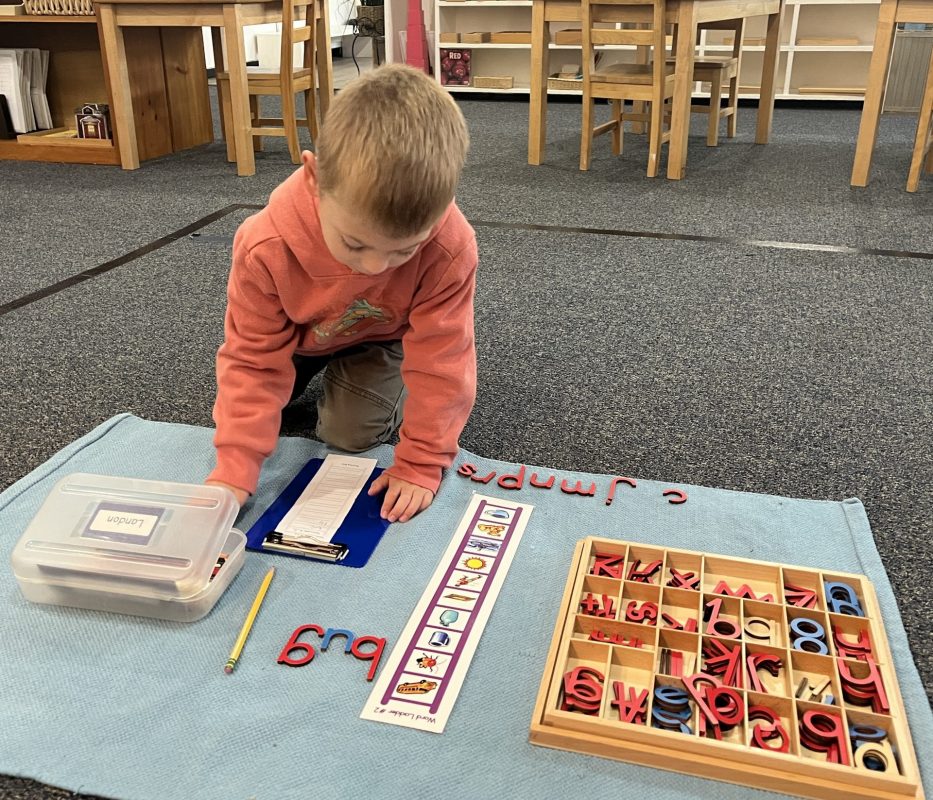
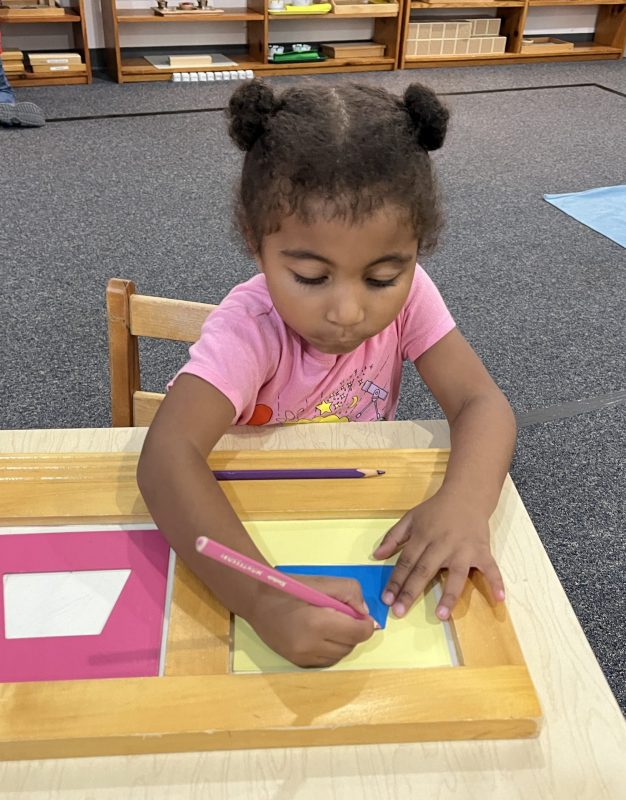
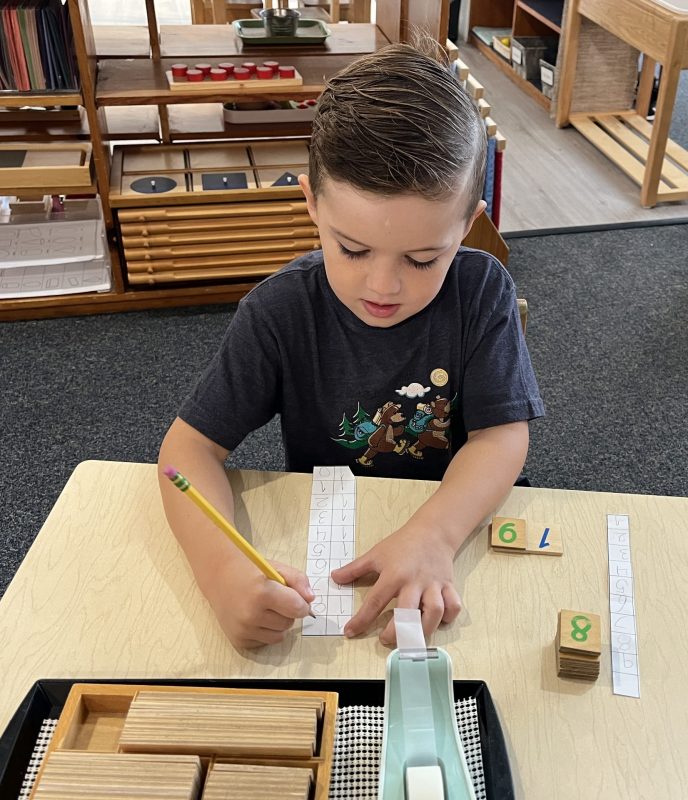
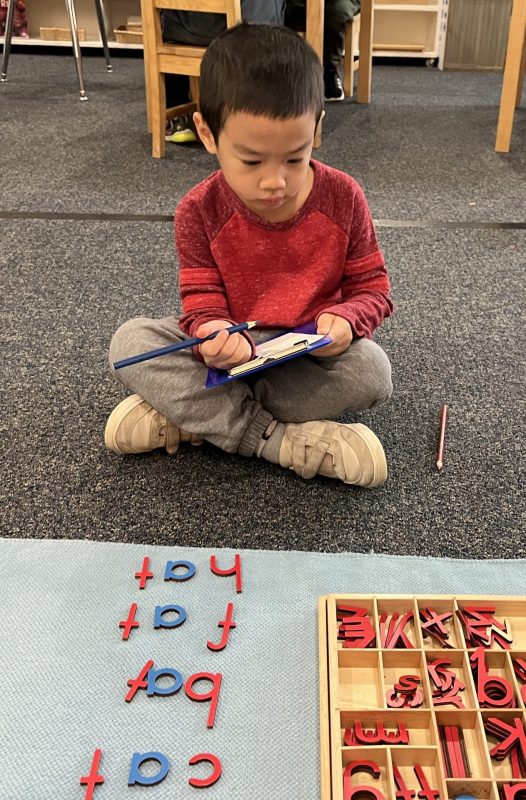
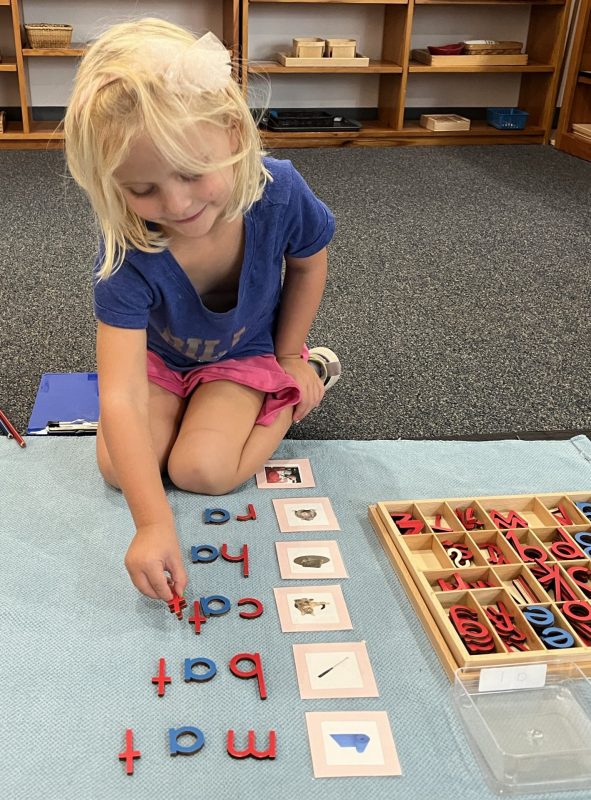
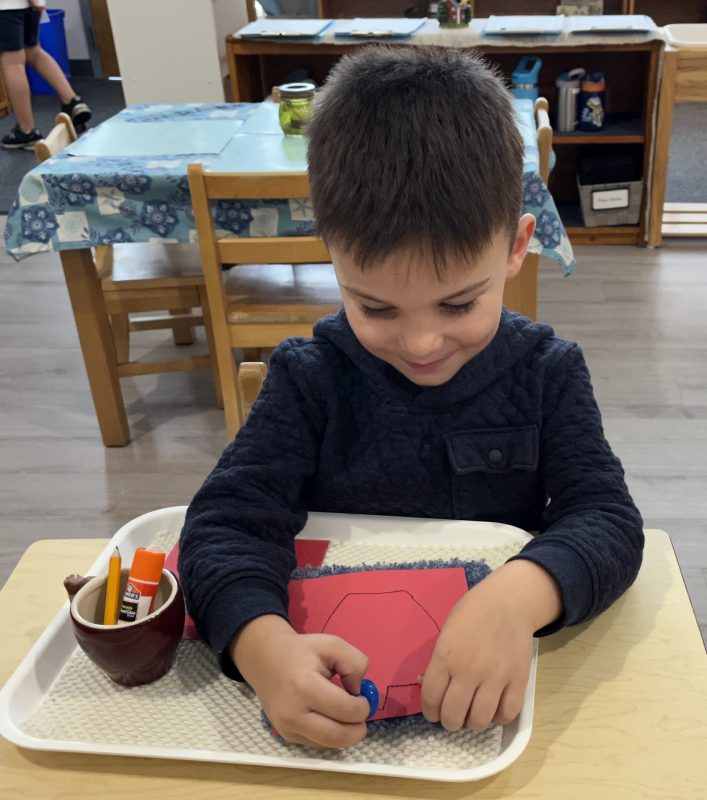
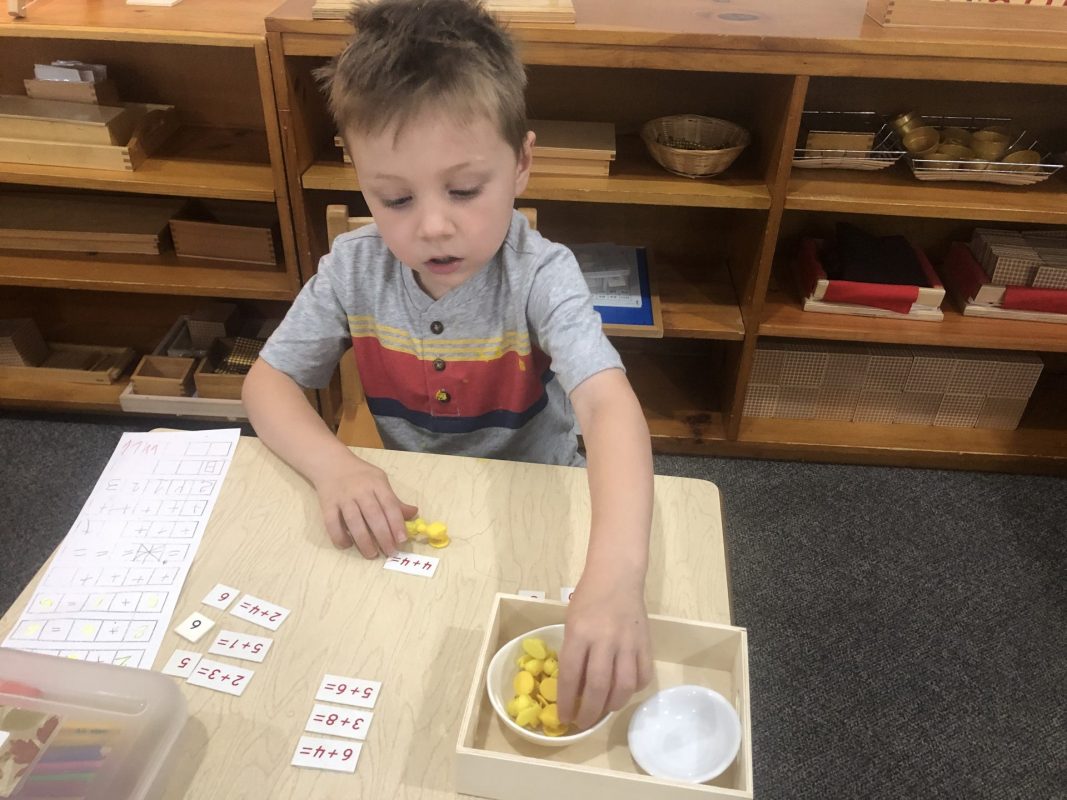
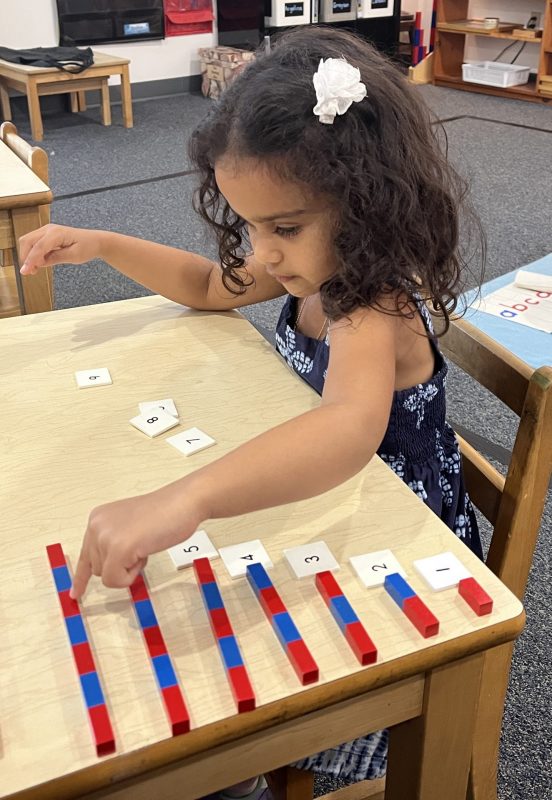
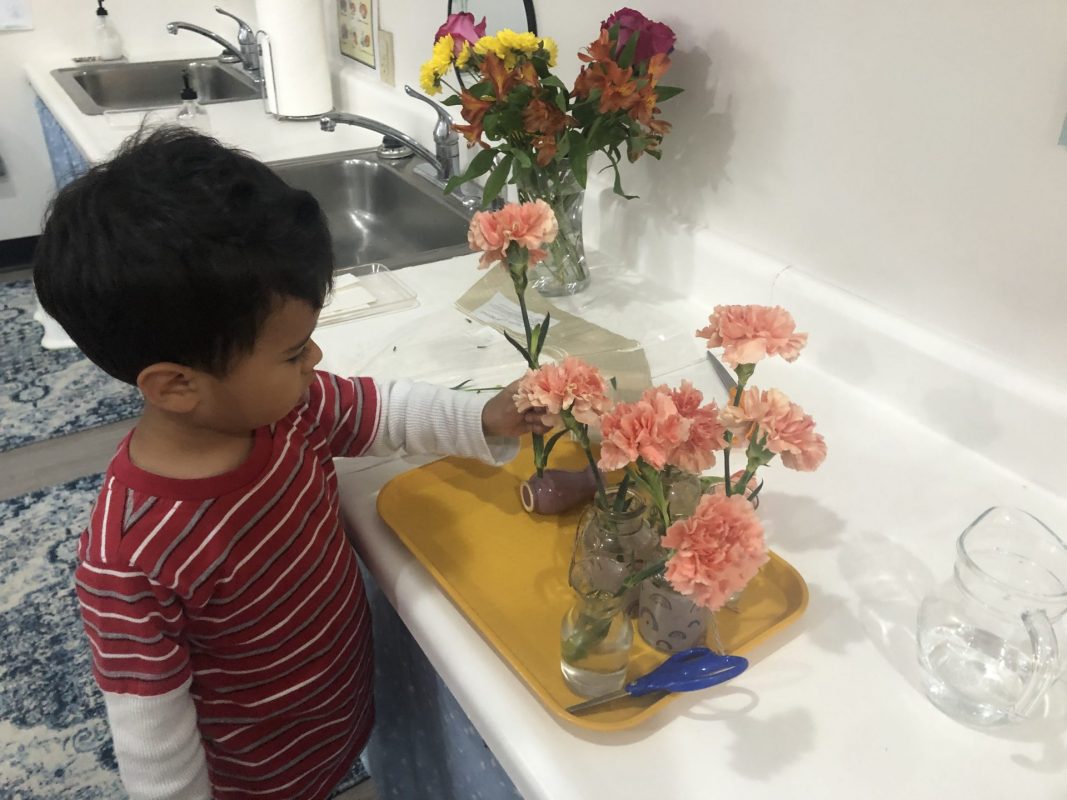
Each Friday we send home Friday Folders with the work the children have completed over the course of the past week. It is not uncommon for us to receive emails asking why there was so little work inside and what exactly are the children doing?

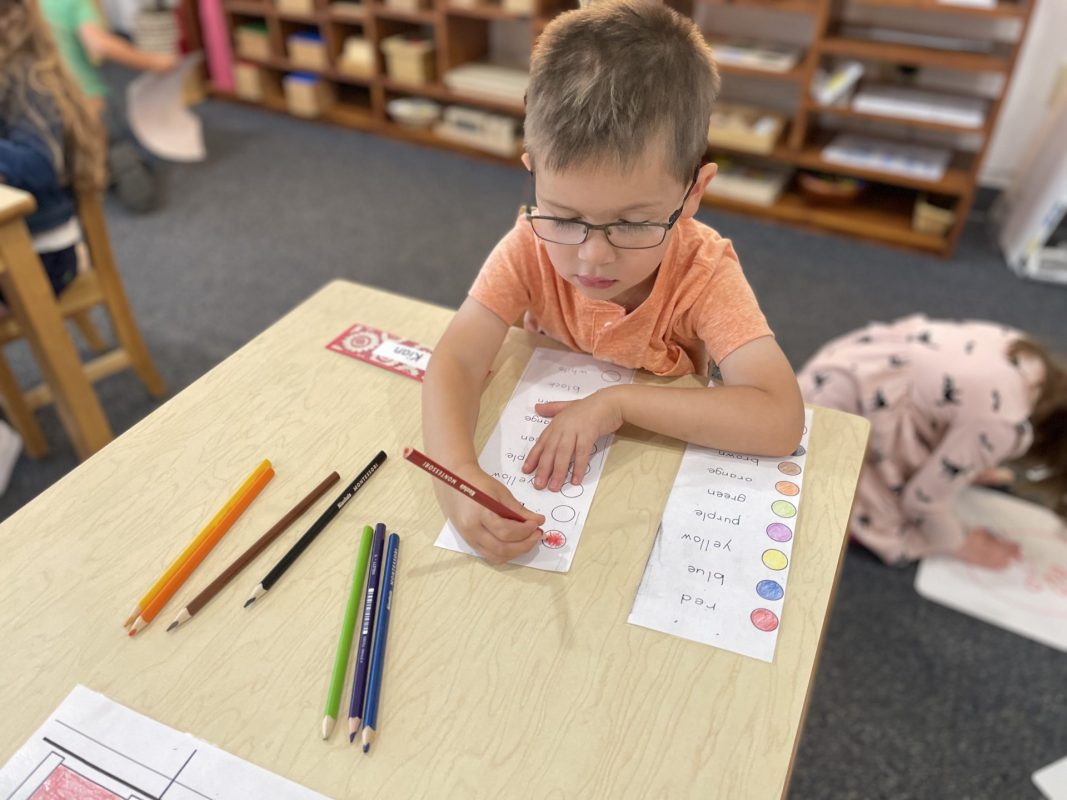
Sometimes it can be difficult to accept the idea of focusing on the process, not the product. What exactly does that mean? Many of the works in the Montessori classroom do not end with a physical product the children will bring home to share with everyone. There is often no way to visually assess what a child is learning. Overall, as a society, we are product driven and often times, base our success on this factor. The experience a child has when working with the materials is truly what is most important. However, when you hear they did “nothing” day after day, it can often be unsettling.

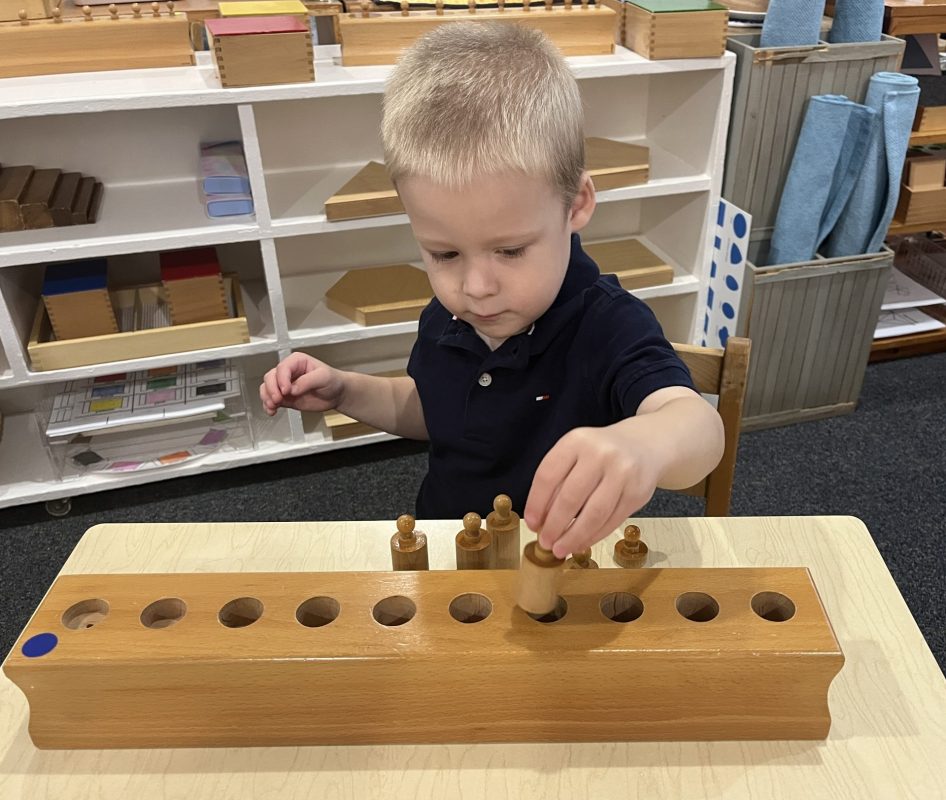
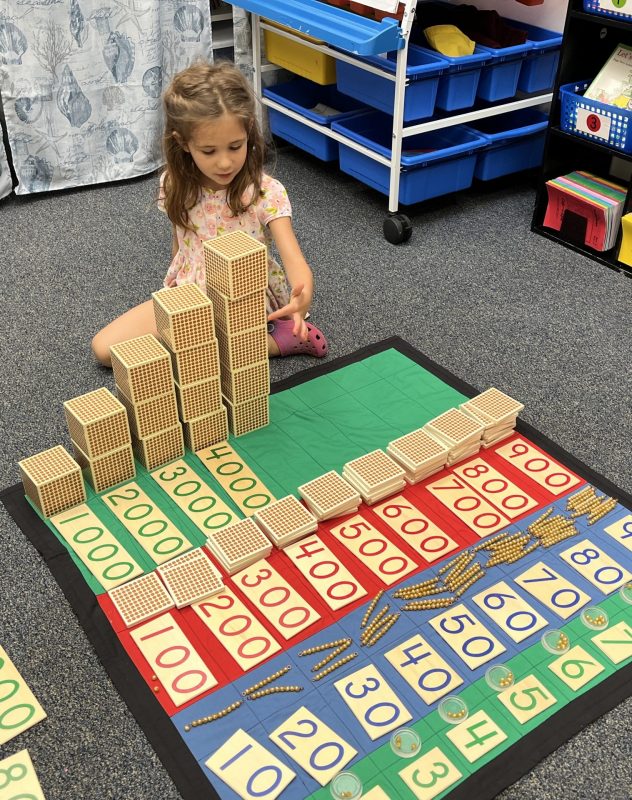
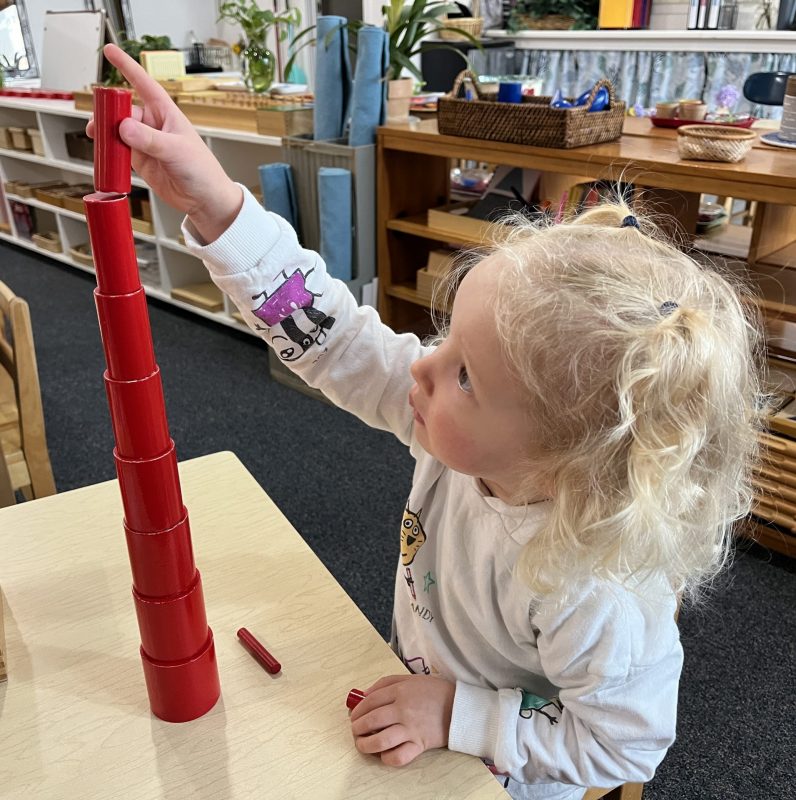
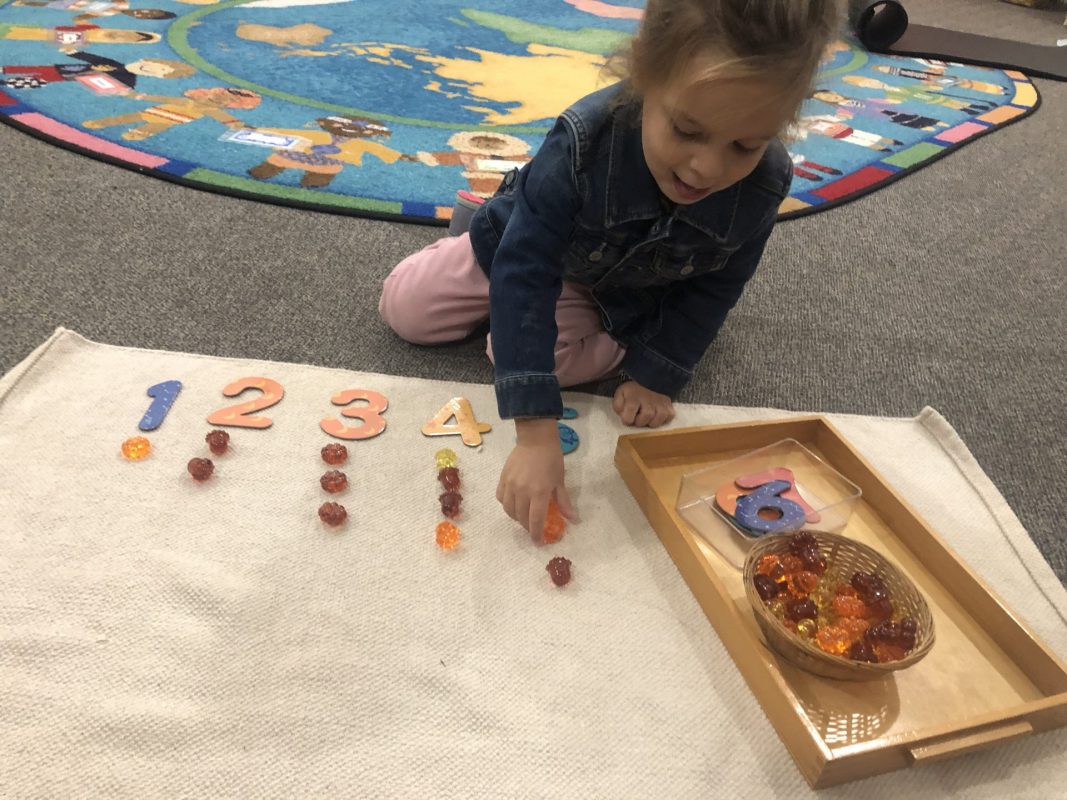
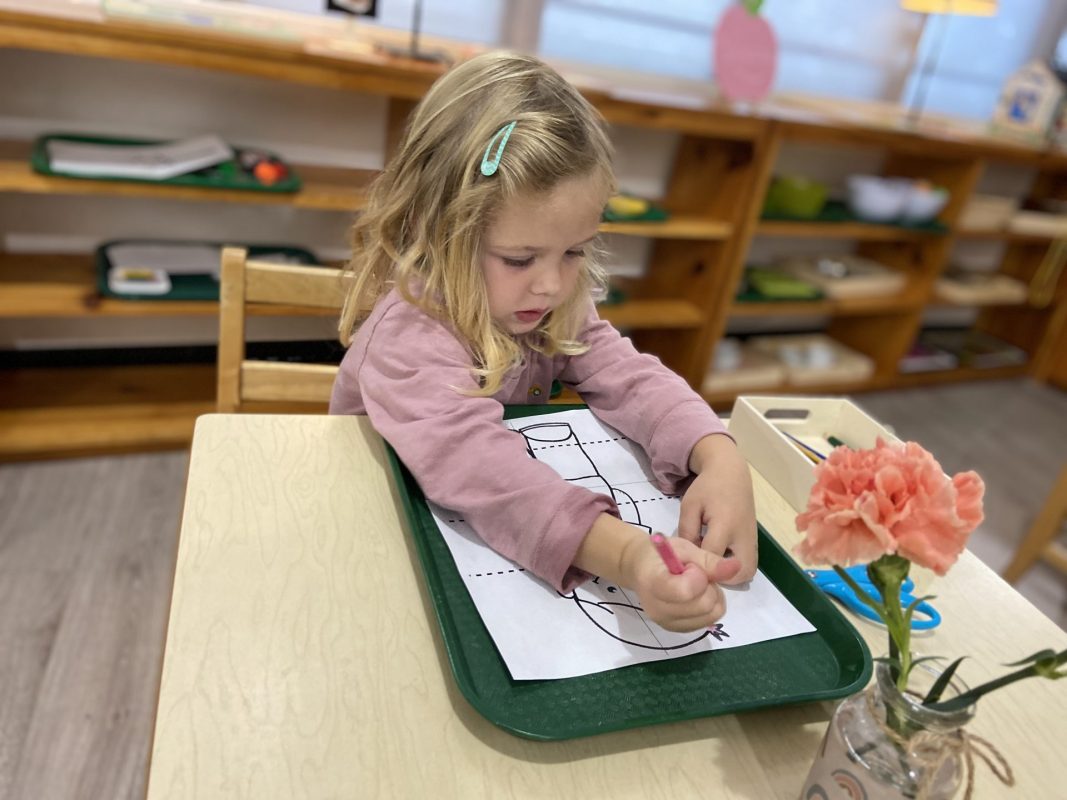
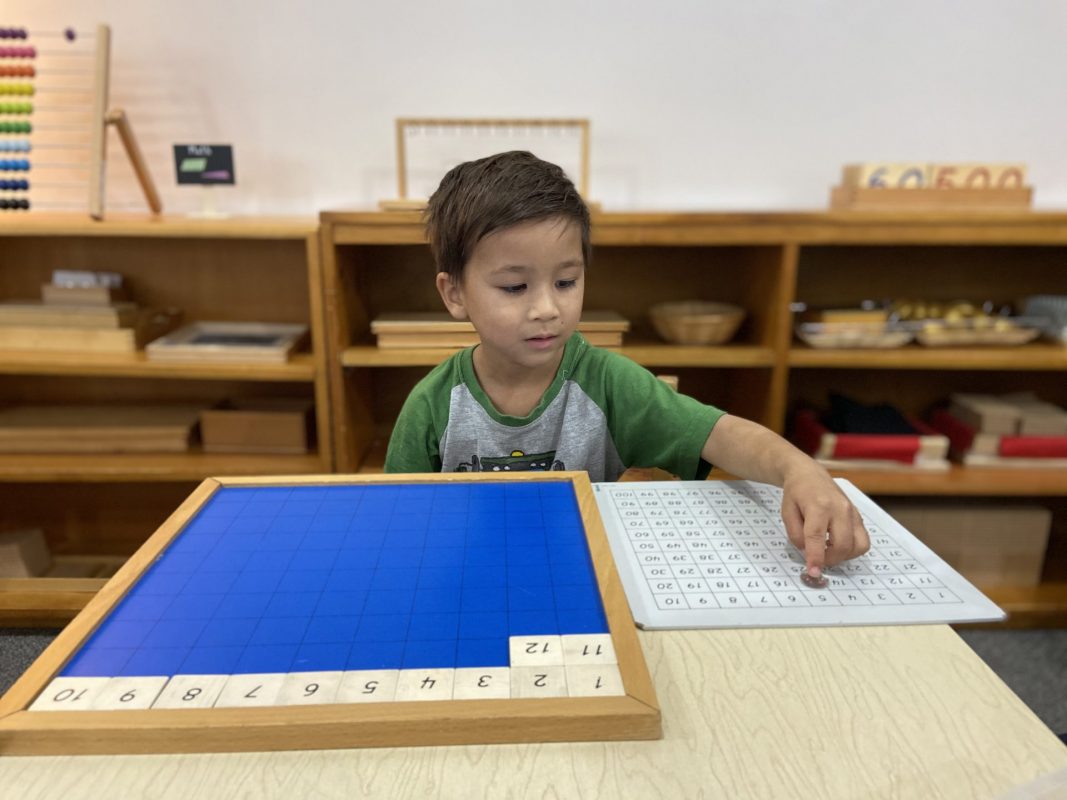
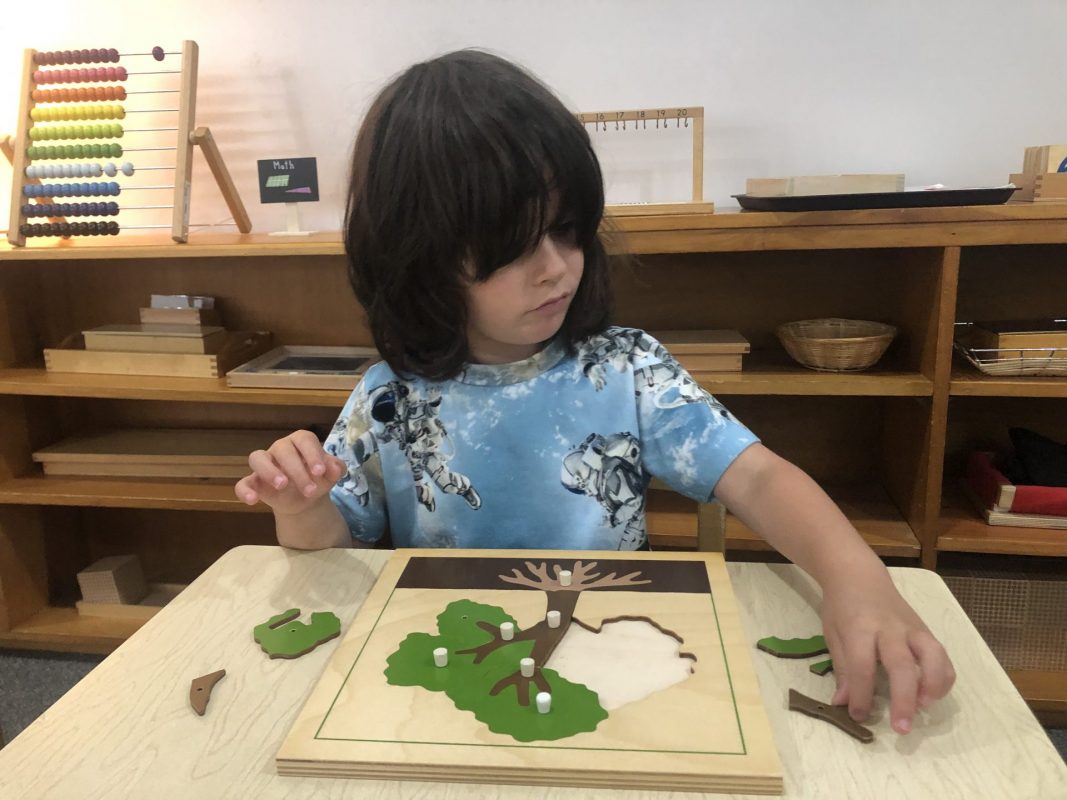
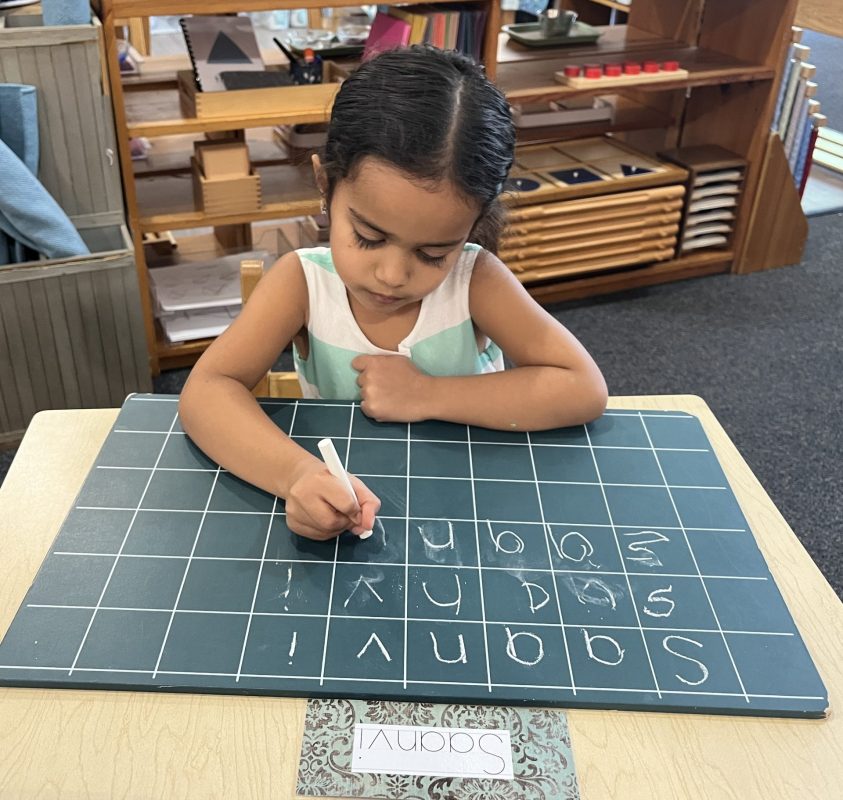
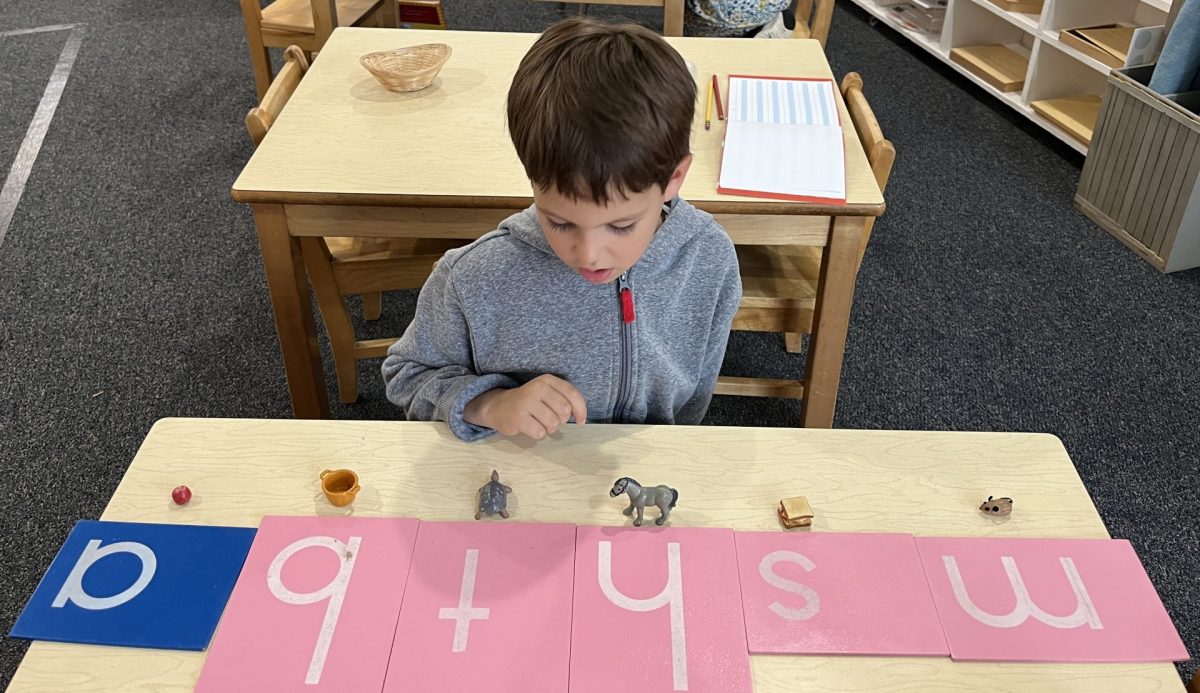
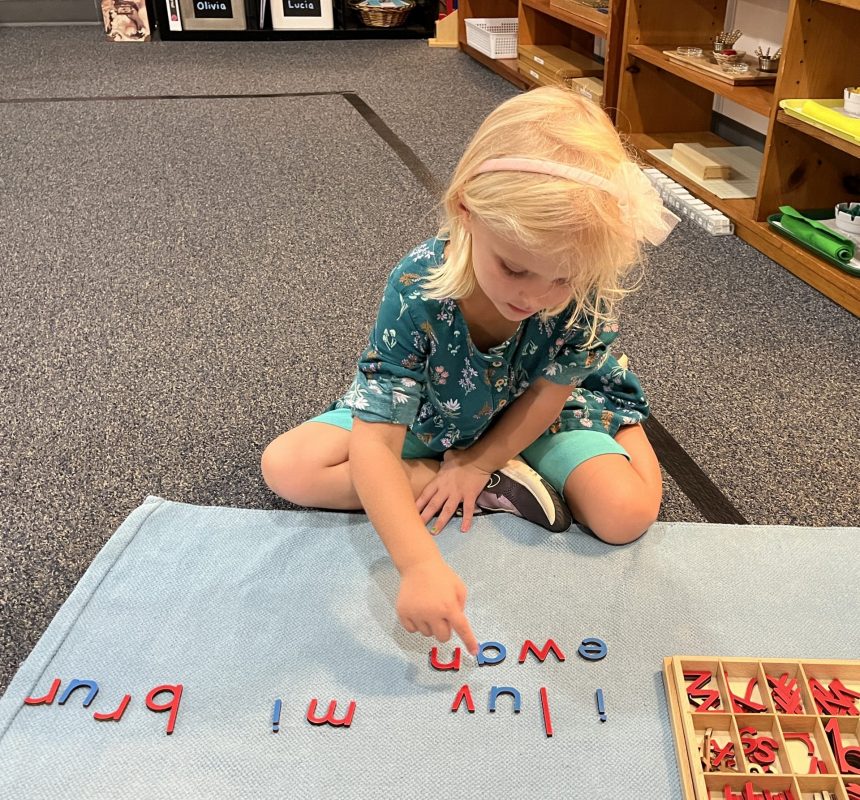
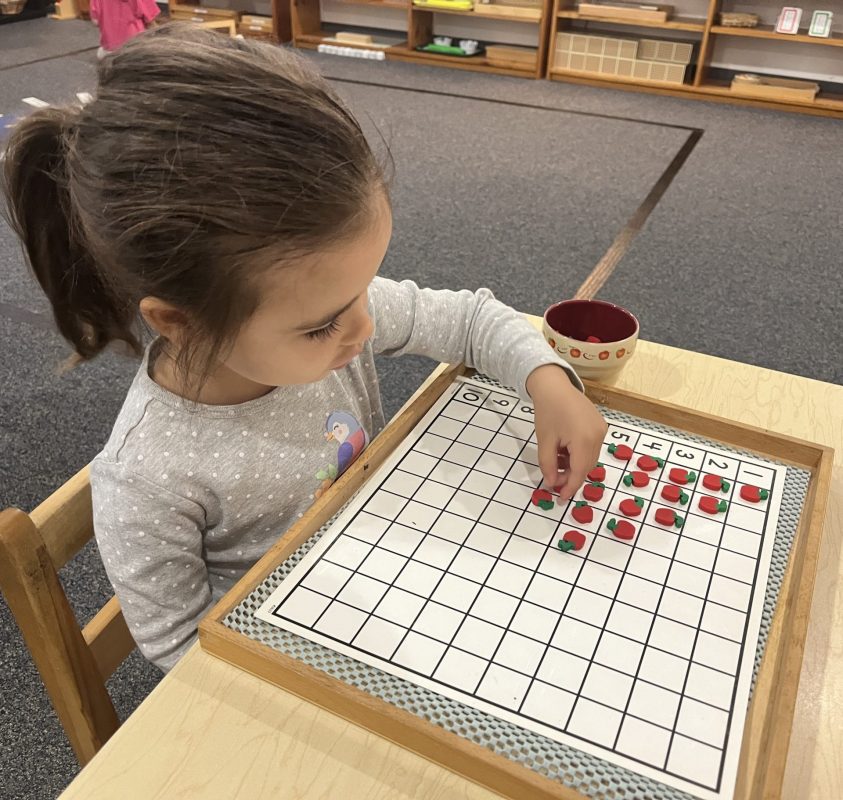
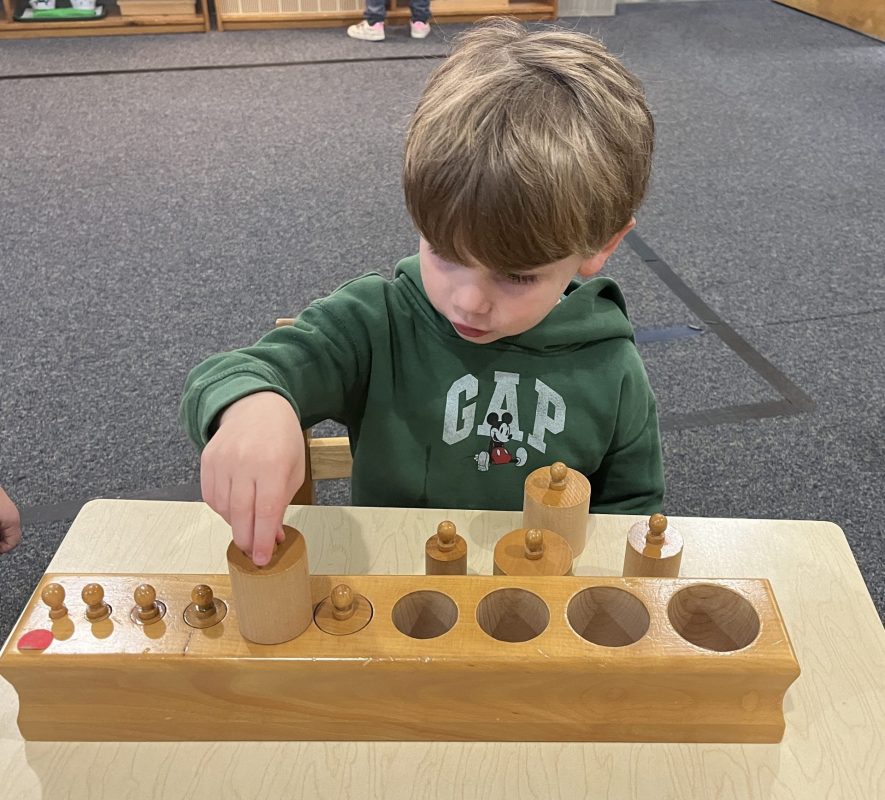
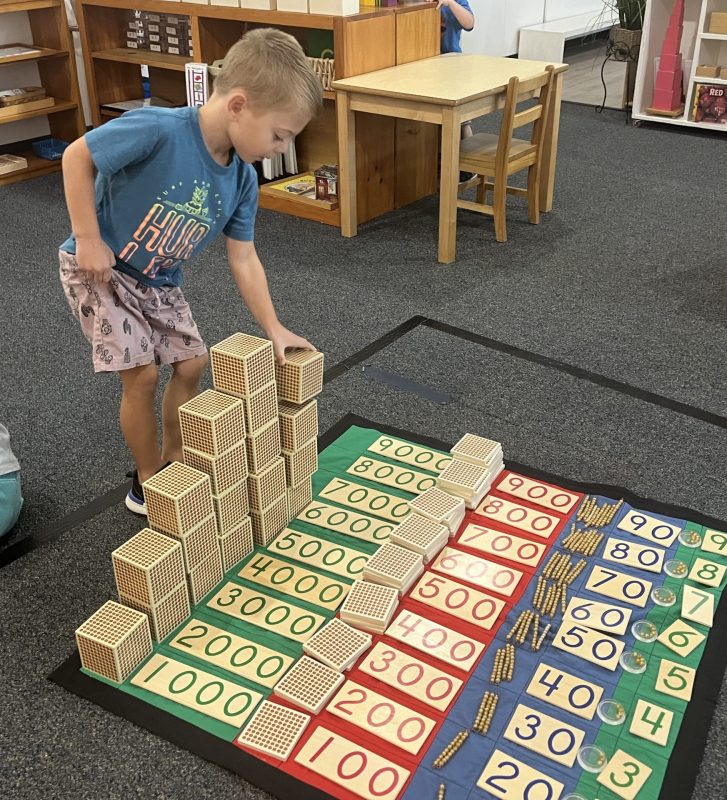
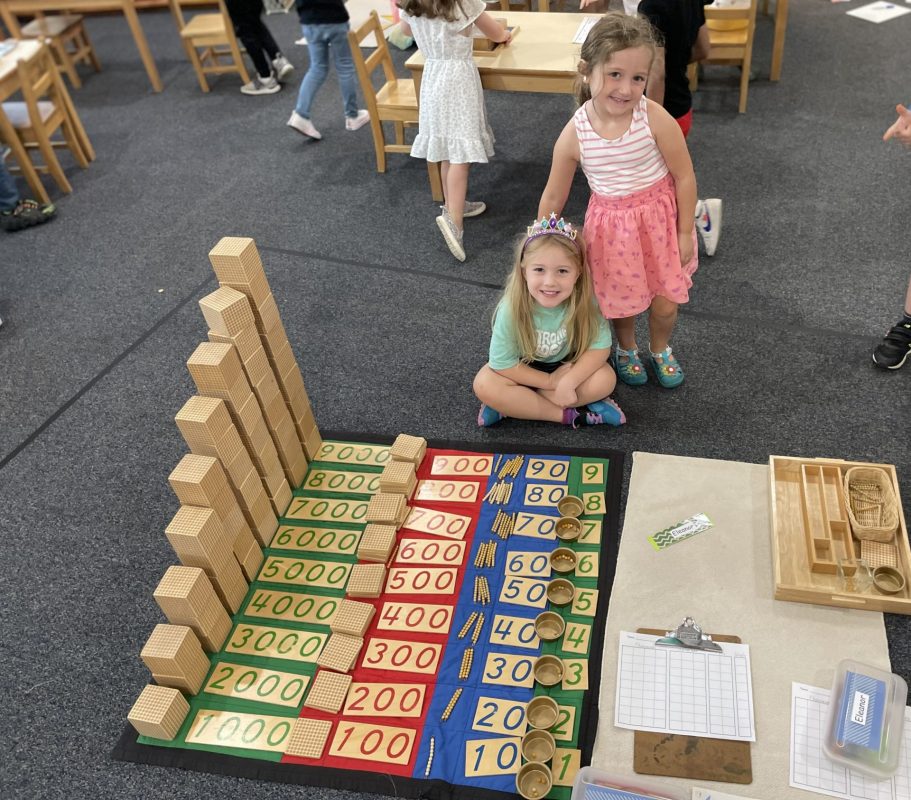
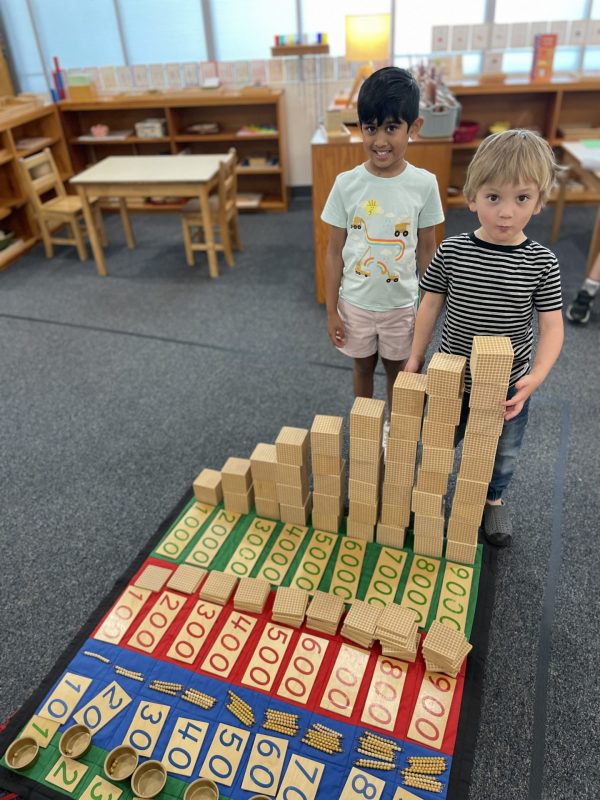
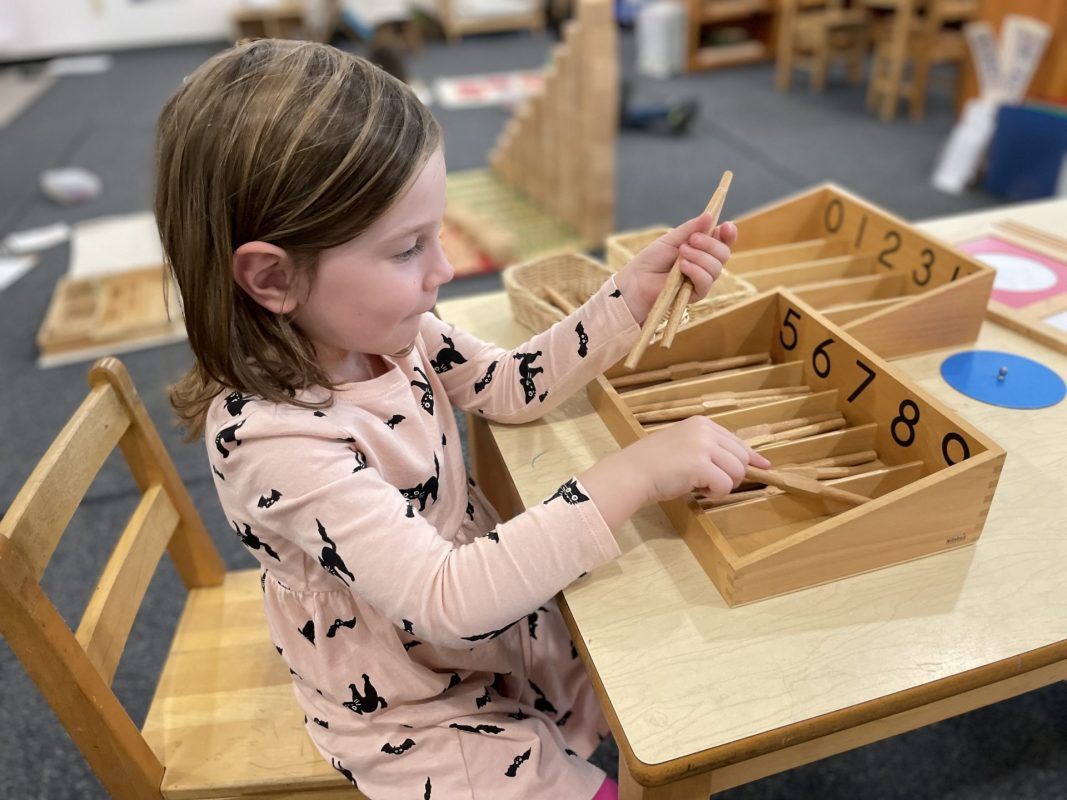
Research shows that children from ages 3-6 learn best through their hands. In order to truly understand a concept they need to explore it through touch. This is why so many of the lessons found in the Montessori environment are not based on memorization alone. Most concepts we are teaching involve tracing, manipulating, and exploring with their hands. Perhaps most importantly, focusing on the process protects the child’s intrinsic motivation to learn and understand. It is not influenced by external factors such as recognition, praise, or reward. The time and experience with the materials is what we truly value and encourage.

So, if your child’s folder comes home with little to no work, just know that their accomplishments can’t always ‘fit’ in that folder. Maybe after weeks and weeks of trying, they learned how to zipper their own coat or maybe they can finally carry a work without it dropping. Maybe after observing a lesson day after day,  your child tried it independently for the first time. The list of skills each child can accomplish will never be fully represented in the Friday Folder. So please enjoy the work that is in there, but know it is not a full portrayal of all that the children are accomplishing.

Wishing you a week filled with peace and love.

Michelle and Maria


Mrs. Semmah: Friday Folder Fun Facts

We have to remember as adults, that we want things done, and as quickly as possible, so that they are finished and out of the way; whereas the child is interested and content in the doing, not the done.” –Margaret Stephenson, The Art of Montessori in the Home

Each Friday we send home Friday Folders with the work the children have completed over the course of the past week. It is not uncommon for us to receive emails asking why there was so little work inside and what exactly are the children doing?

Sometimes it can be difficult to accept the idea of focusing on the process, not the product. What exactly does that mean? Many of the works in the Montessori classroom do not end with a physical product the children will bring home to share with everyone. There is often no way to visually assess what a child is learning. Overall, as a society, we are product driven and often times, base our success on this factor. The experience a child has when working with the materials is truly what is most important. However, when you hear they did “nothing” day after day, it can often be unsettling.

Research shows that children from ages 3-6 learn best through their hands. In order to truly understand a concept they need to explore it through touch. This is why so many of the lessons found in the Montessori environment are not based on memorization alone. Most concepts we are teaching involve tracing, manipulating, and exploring with their hands. Perhaps most importantly, focusing on the process protects the child’s intrinsic motivation to learn and understand. It is not influenced by external factors such as recognition, praise, or reward. The time and experience with the materials is what we truly value and encourage.

So, if your child’s folder comes home with little to no work, just know that their accomplishments can’t always ‘fit’ in that folder. Maybe after weeks and weeks of trying, they learned how to zipper their own coat or maybe they can finally carry a work without it dropping. Maybe after observing a lesson day after day,  your child tried it independently for the first time. The list of skills each child can accomplish will never be fully represented in the Friday Folder. So please enjoy the work that is in there, but know it is not a full portrayal of all that the children are accomplishing.

Wishing you a week filled with peace and love.

Kaoutar and Michelle


Together We Can Help With Back to School Anxiety or The Sunday Scaries 

Hello Fraser Woods Families,

The start of the year can bring anxious feelings along with it. That goes for everyone – educators, students, and families. This is especially true this school year as we all try to create a new sense of normal. 

According to Dr. Susan Albers, of the Cleveland Clinic, the Sunday Scaries are triggered by the end of the weekend approaching and us anticipating our return to work (or school). She says when people start to make their to-do lists or contemplate upcoming responsibilities, the transition from relaxation to work mode can be a tough 180.  

Together we can build on strategies and best practices that counselors regularly apply to their work with children and families, to help make the transition back to school feel better. 

  1. Acknowledge where everyone is. At FWM we address the needs of the whole child and meet them where they are academically, socially, emotionally, and developmentally. 
  2. Listen, and encourage others to listen as well. Over the past three school years, our familiar connections grew apart. Taking time to listen thoughtfully can help rebuild those connections.
  3. Be thoughtful about communication, routines, and procedures. A major reason for back-to-school anxiety is uncertainty. When communication, expectations, and routines are clear, and effective procedures are in place, everyone feels more comfortable and at ease.
  4. Establish a more relaxed pace. There is a lot of new information to cover in the first days and weeks of school- for students and their parents. Giving students the time and space to process information and practice applying new routines and procedures will provide the foundation for productive academic learning. 
  5. Take time to laugh, move, and connect. All of our classrooms allow for unstructured breaks, classroom conversations, and other opportunities that help to meet students’ social and emotional needs. Given the opportunity to take a brief brain-break from academic learning where students can move around, talk with one another, and just enjoy being together, will help all students–from our youngest to our oldest, feel more at ease. 

Creating an atmosphere of peace and harmony in every classroom is at the core of what we do. 

Gina Tryforos

Assistant Head of School & Student Support Coordinator


Upper El: Singing for Peace

“…we have before us in the child a psychic entity, a social group of immense size, a veritable world-power if rightly used. If salvation and help are to come, it is from the child, for the child is the constructor of man, and so of society. The child is endowed with an inner power which can guide us to a more luminous future. Education should no longer be mostly about the imparting of knowledge, but must take a new path, seeking the release of human potentialities.” -Maria Montessori

This week we celebrated the International Day of Peace, a day established in 1981 by the United Nations for all of humanity to commit to Peace above all differences and to contribute to building a Culture of Peace (internationaldayofpeace.org). On this day each year, we join Montessori schools from around the world to Sing for Peace. Peace education is a major part of the Montessori curriculum, in fact, Maria Montessori is considered by many to be a founder of peace education. As Montessorians, we believe that the root of peace lays in the education of young children and we work with students to establish global citizenship, respect for differences, and personal responsibility from a very young age. It was really wonderful to gather as a school again this year, toddler through middle school, to sing for peace with elementary and middle school children signing the song as they sang.

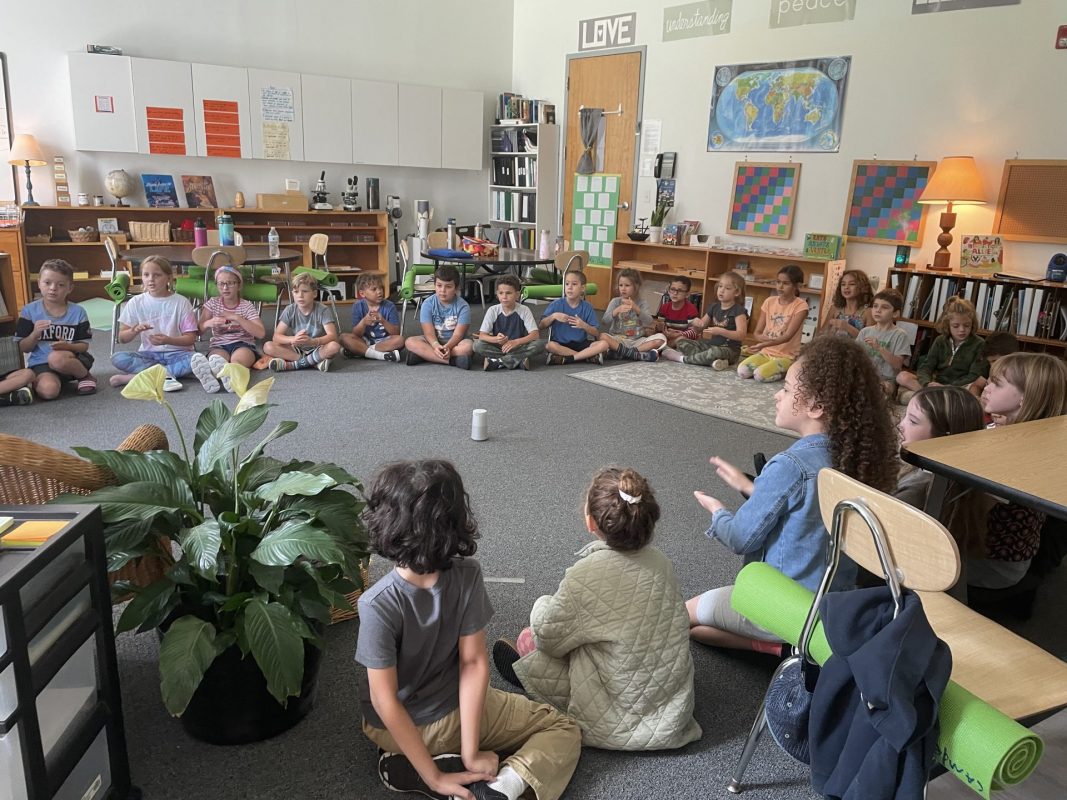
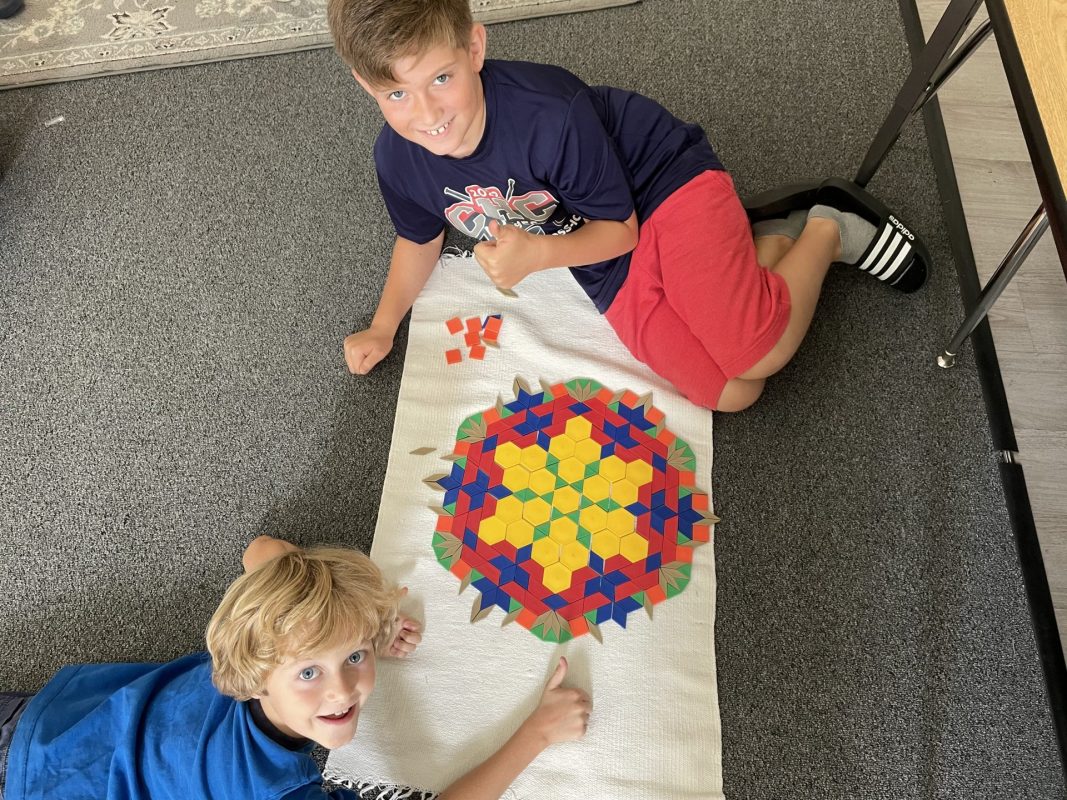
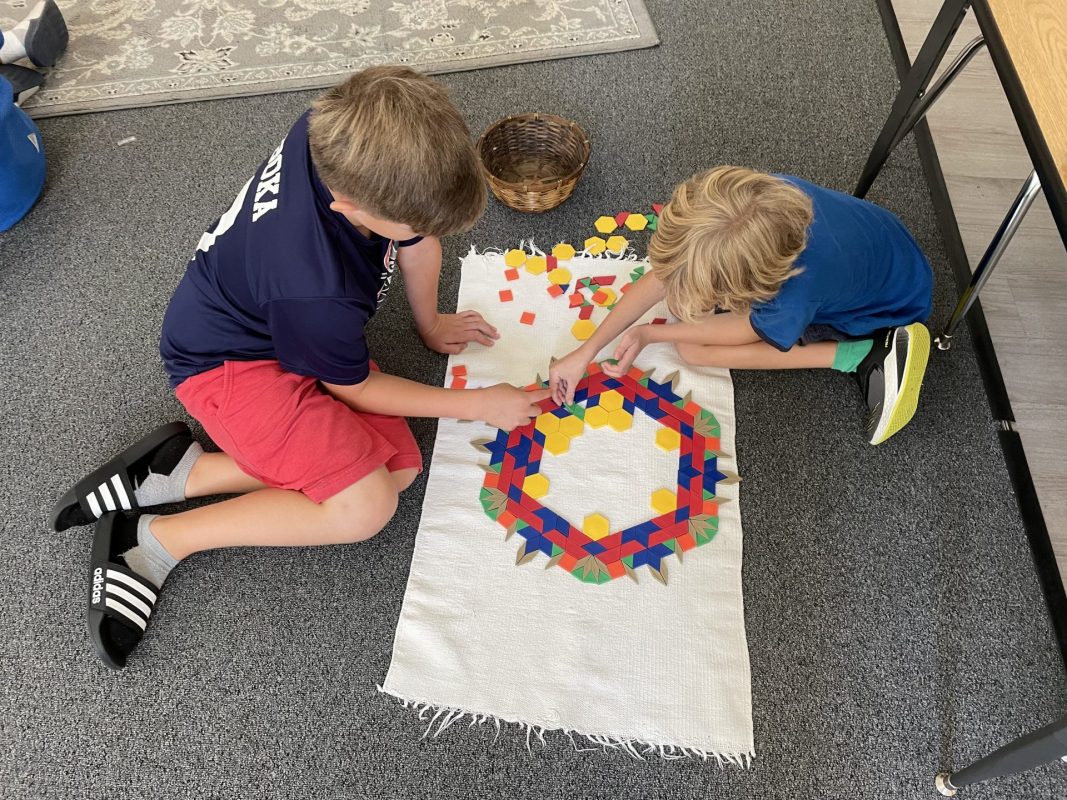
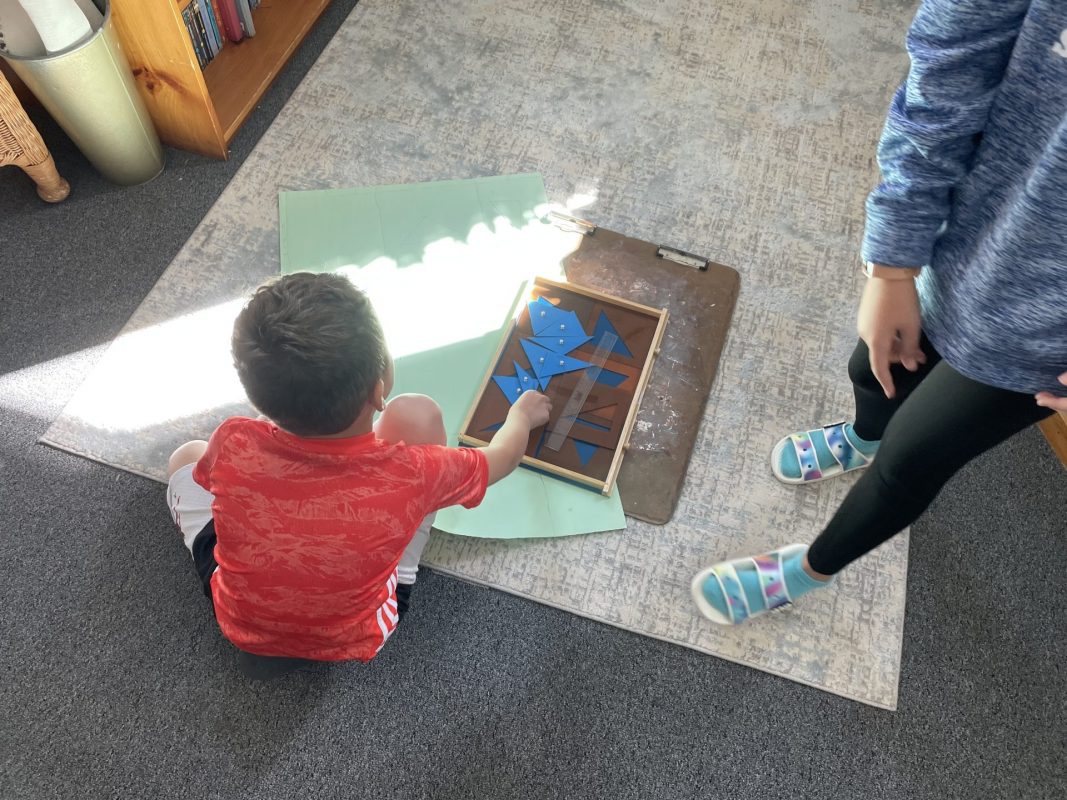
Our Upper Elementary lessons this week included lots of individualized math and spelling work. The fourths learned about the Seven Triangles of Reality and the fifths learned about proving equivalence between a triangle and a rectangle and a rhombus and a rectangle. In biology we learned about the classification system scientists use to categorized living things. In history we began our lessons on Human Evolution with an examination of what it means to be human.

Wishing you a peaceful weekend,

Karen and Angie


Mrs. Semmah: Sing Peace Around The World


Peace is what every human being is craving for, and it can be brought about by humanity through the child. -Maria Montessori

Peace education is a basic tenet of the Montessori philosophy. In the 3-6 environment, studying the seven continents, including their people and cultures, provides a global view of our world. As Montessori teachers, practicing and teaching peace, kindness, and acceptance is a natural part of our day. Dr. Maria Montessori believed we should think of education as peace, not education for peace. She also believed that young children were our hope for eliminating conflict and instilling peace throughout the world. Dr. Montessori, as always, knew that lecturing children would accomplish very little and that to truly understand peace they would need to discover it for themselves.

Typically to celebrate Peace Day, we participate in “Sing Peace Around The World.”  Beginning in New Zealand and ending in Hawaii, Montessori schools around the world sing “Light A Candle For Peace” for five minutes.  Here at FWM, we gathered together and sang with the entire school, early Wednesday morning.  It was a powerful moment and reminder of the importance of teaching and modeling peace to everyone we interact with.  So for 24 hours, this special song was sung in a different part of the world by Montessori children.  Wishing everyone a peaceful week!

Kaoutar & Michelle


Mrs. Doyle: Sing Peace Around The World


Peace is what every human being is craving for, and it can be brought about by humanity through the child. -Maria Montessori

Peace education is a basic tenet of the Montessori philosophy. In the 3-6 environment, studying the seven continents, including their people and cultures, provides a global view of our world. As Montessori teachers, practicing and teaching peace, kindness, and acceptance is a natural part of our day. Dr. Maria Montessori believed we should think of education as peace, not education for peace. She also believed that young children were our hope for eliminating conflict and instilling peace throughout the world. Dr. Montessori, as always, knew that lecturing children would accomplish very little and that to truly understand peace they would need to discover it for themselves.

Typically to celebrate Peace Day, we participate in “Sing Peace Around The World.”  Beginning in New Zealand and ending in Hawaii, Montessori schools around the world sing “Light A Candle For Peace” for five minutes.  Here at FWM, we gathered together and sang with the entire school, early Wednesday morning.  It was a powerful moment and reminder of the importance of teaching and modeling peace to everyone we interact with.  So, for 24 hours, this special song was sung in a different part of the world by Montessori children.

Wishing everyone a week filled with peace and love!

Michelle & Maria


Mrs. Lopes: Sing Peace Around the World


Peace is what every human being is craving for, and it can be brought about by humanity through the child. -Maria Montessori

Peace education is a basic tenet of the Montessori philosophy. In the 3-6 environment, studying the seven continents, including their people and cultures, provides a global view of our world. As Montessori teachers, practicing and teaching peace, kindness, and acceptance is a natural part of our day. Dr. Maria Montessori believed we should think of education as peace, not education for peace. She also believed that young children were our hope for eliminating conflict and instilling peace throughout the world. Dr. Montessori, as always, knew that lecturing children would accomplish very little and that to truly understand peace they would need to discover it for themselves.

Typically to celebrate Peace Day, we participate in “Sing Peace Around The World.”  Beginning in New Zealand and ending in Hawaii, Montessori schools around the world sing “Light A Candle For Peace” for five minutes.  Here at FWM, we gathered together and sang with the entire school, early Wednesday morning.  It was a powerful moment and reminder of the importance of teaching and modeling peace to everyone we interact with.  So for 24 hours, this special song is being sung in a different part of the world by Montessori children.  Wishing everyone a peaceful week!

Amanda and Hema