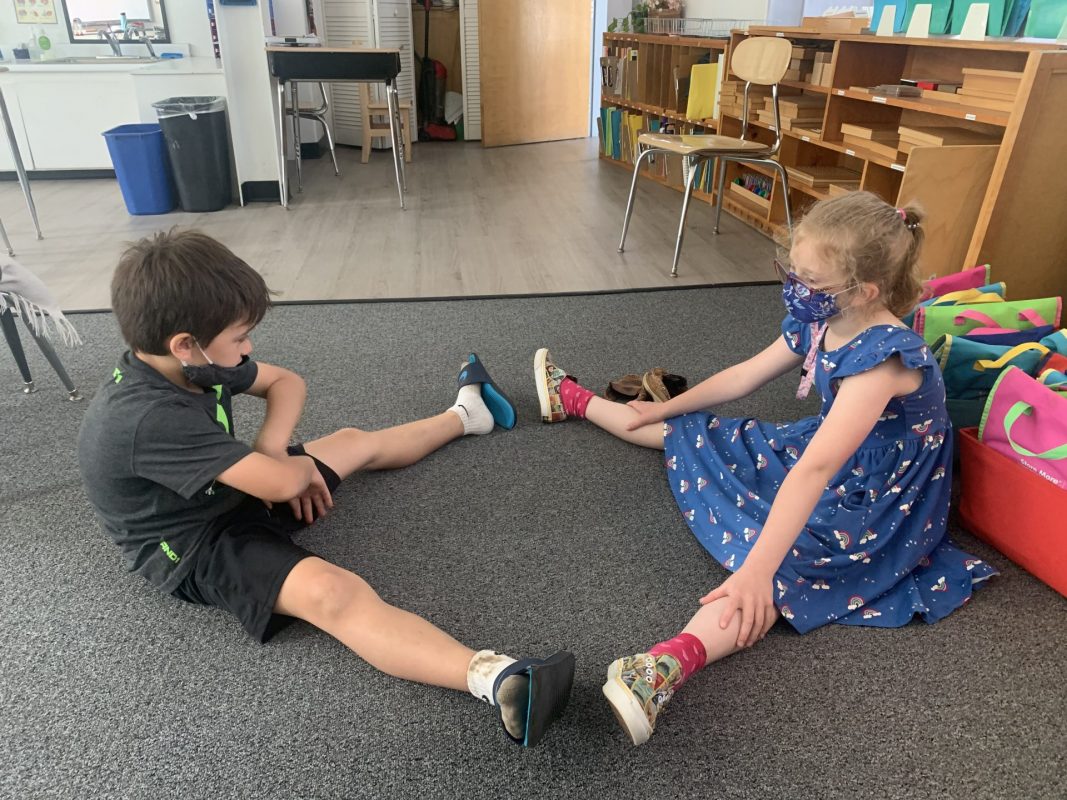
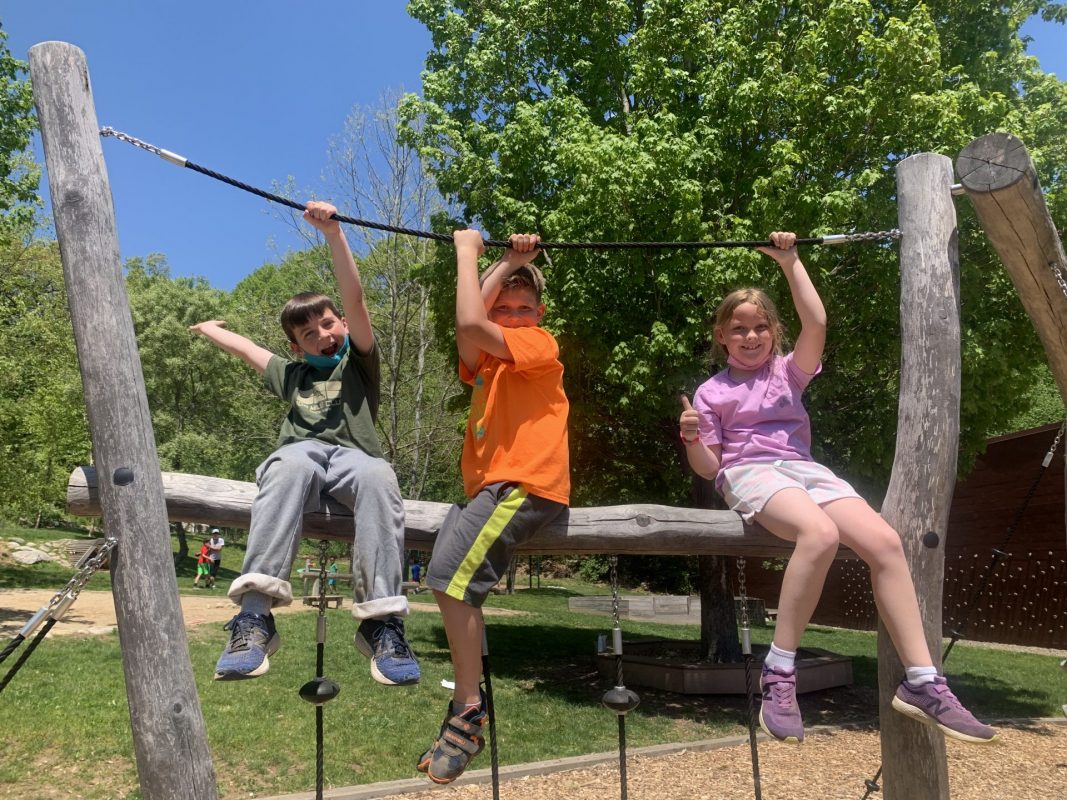
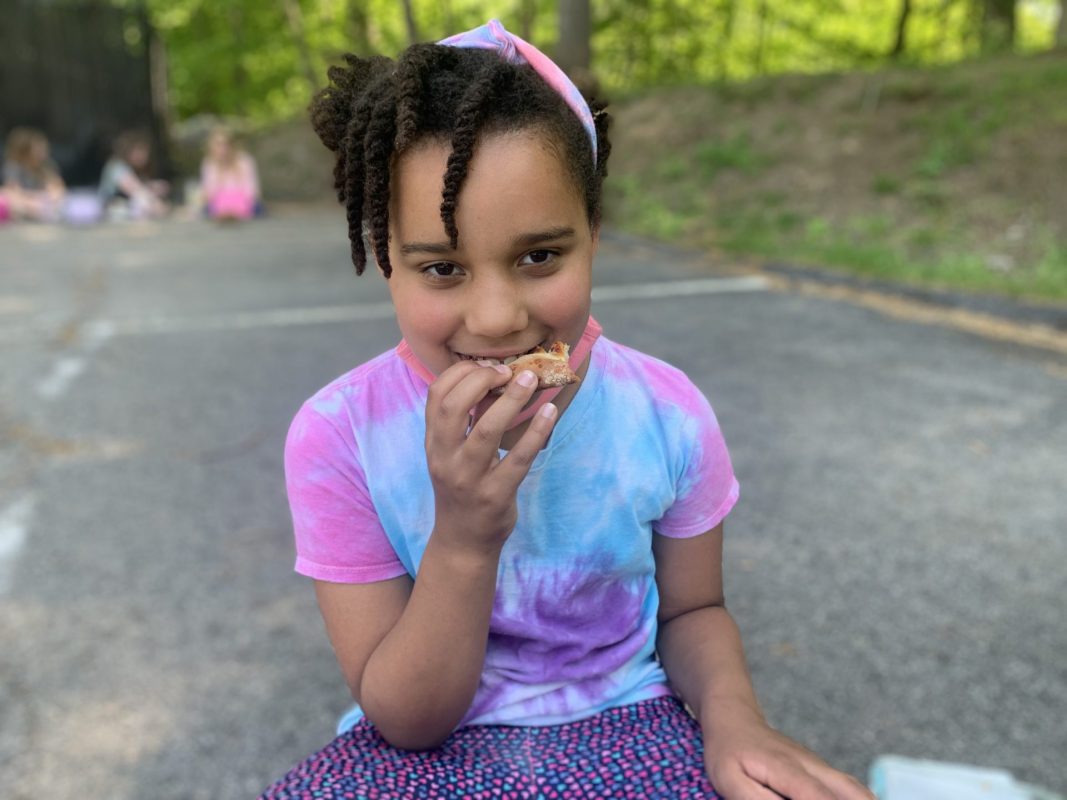
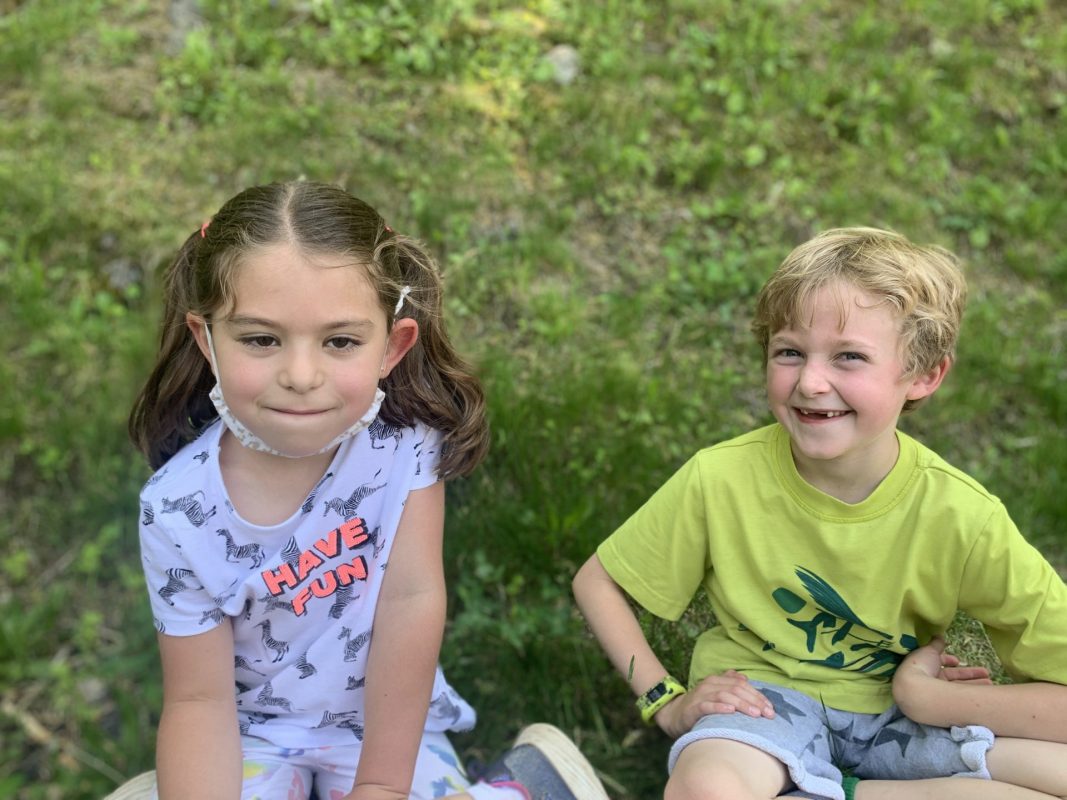
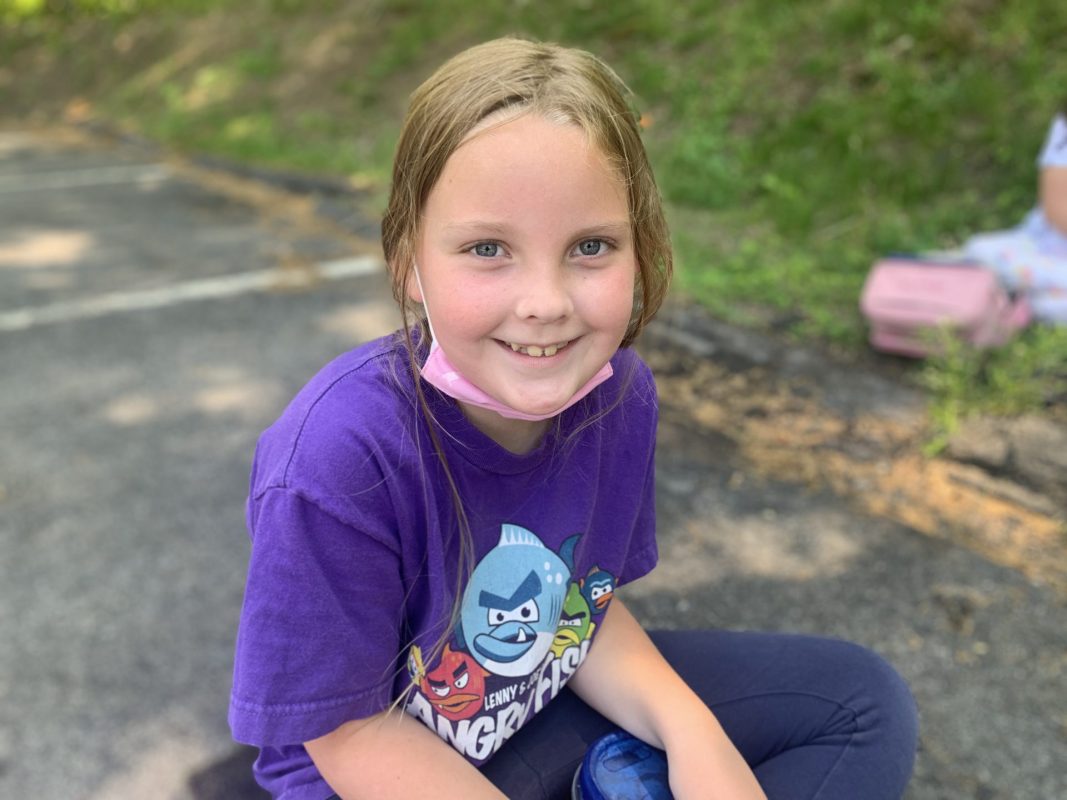
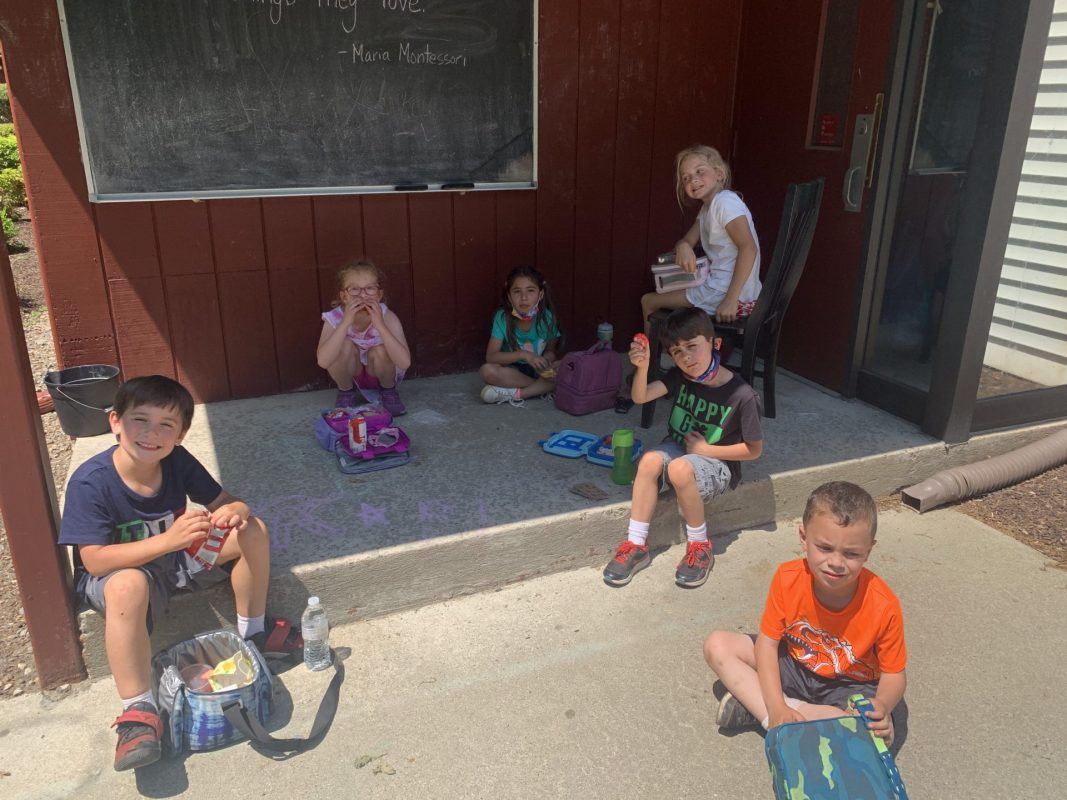
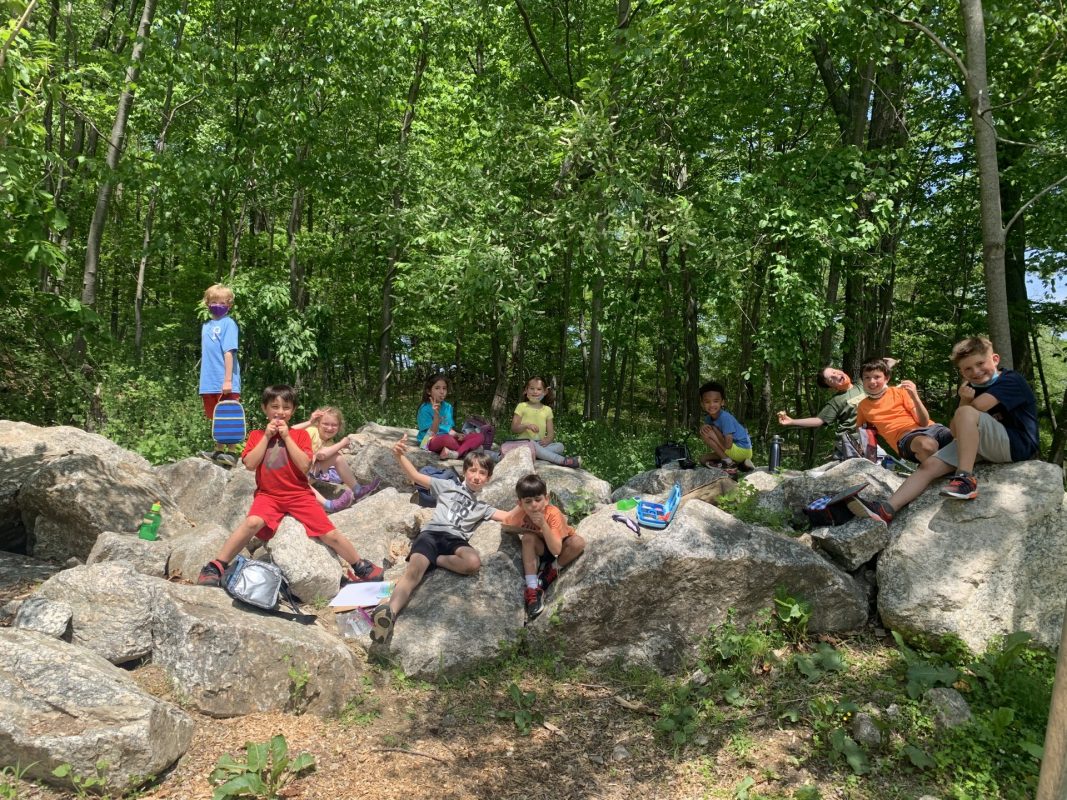
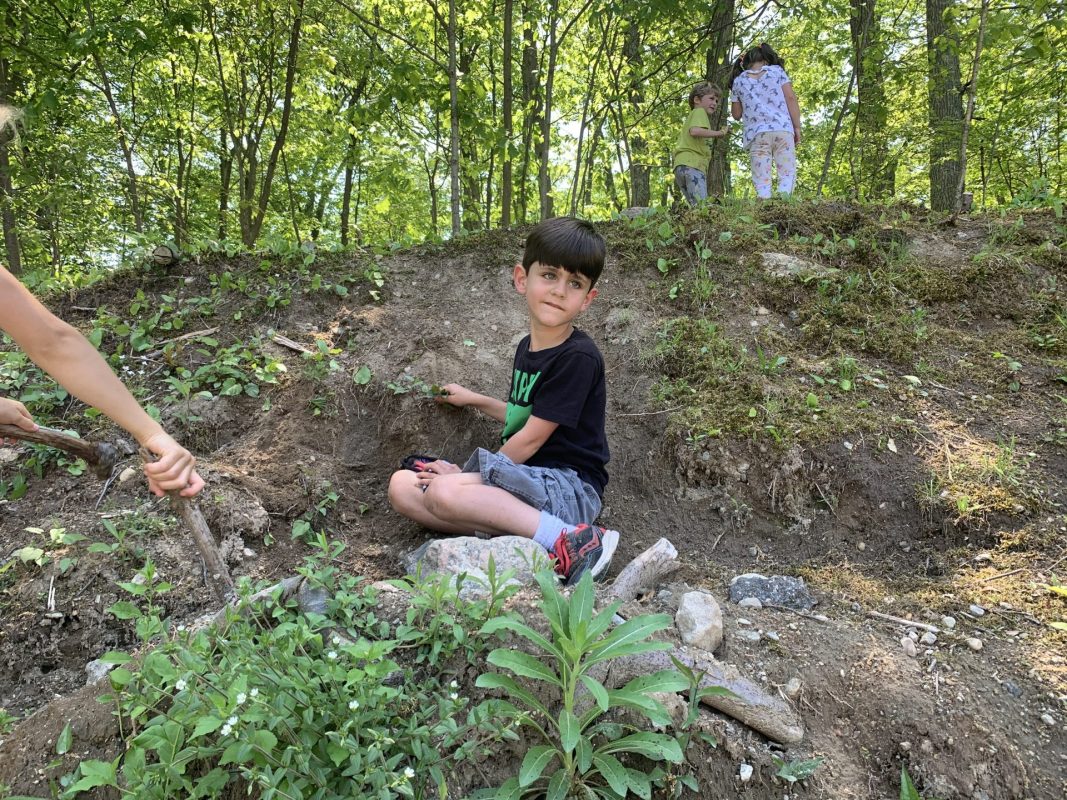
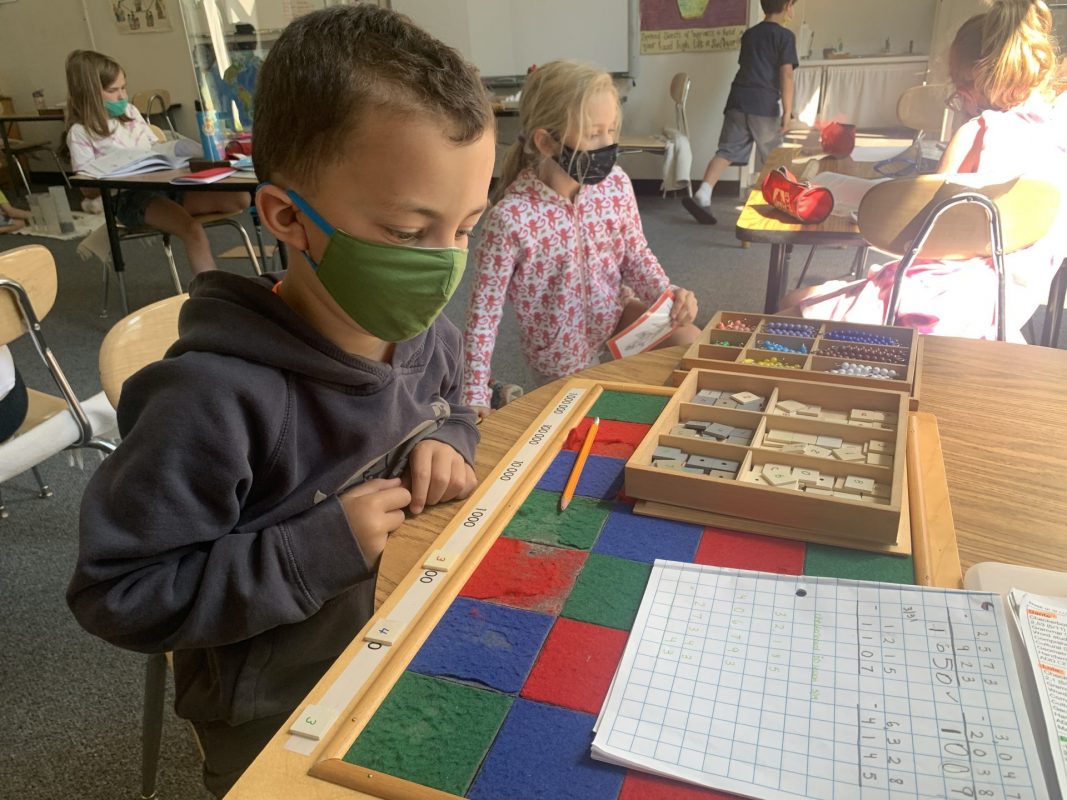
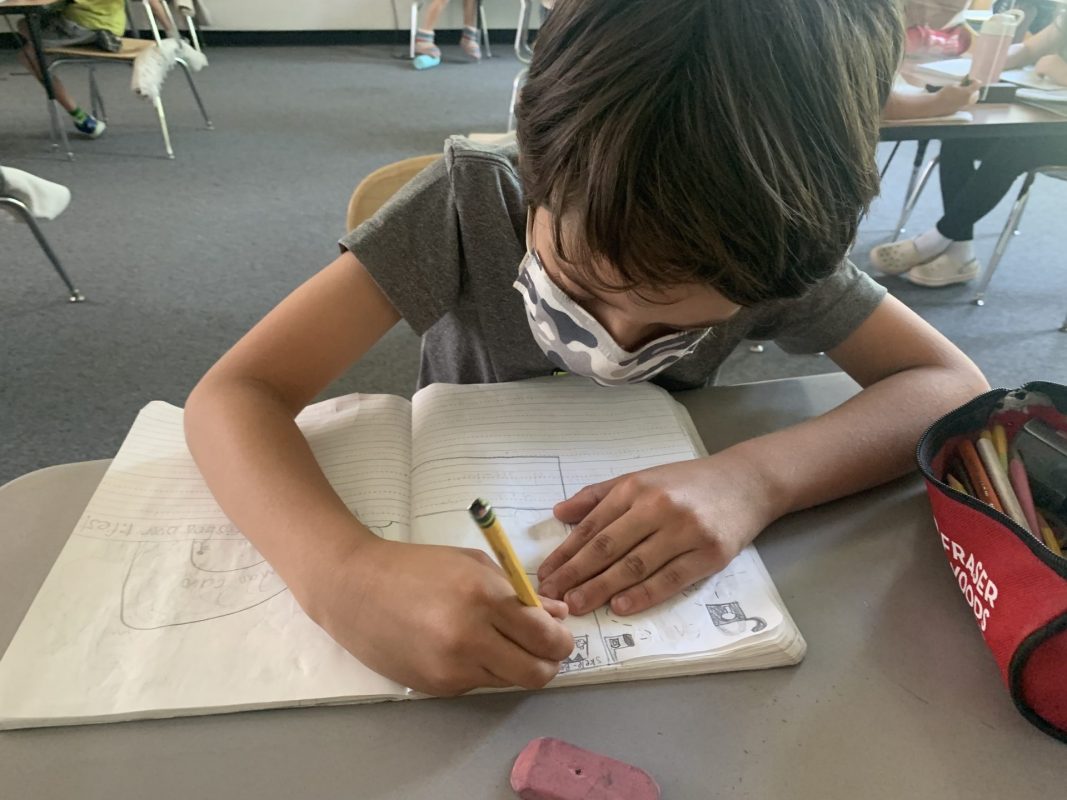


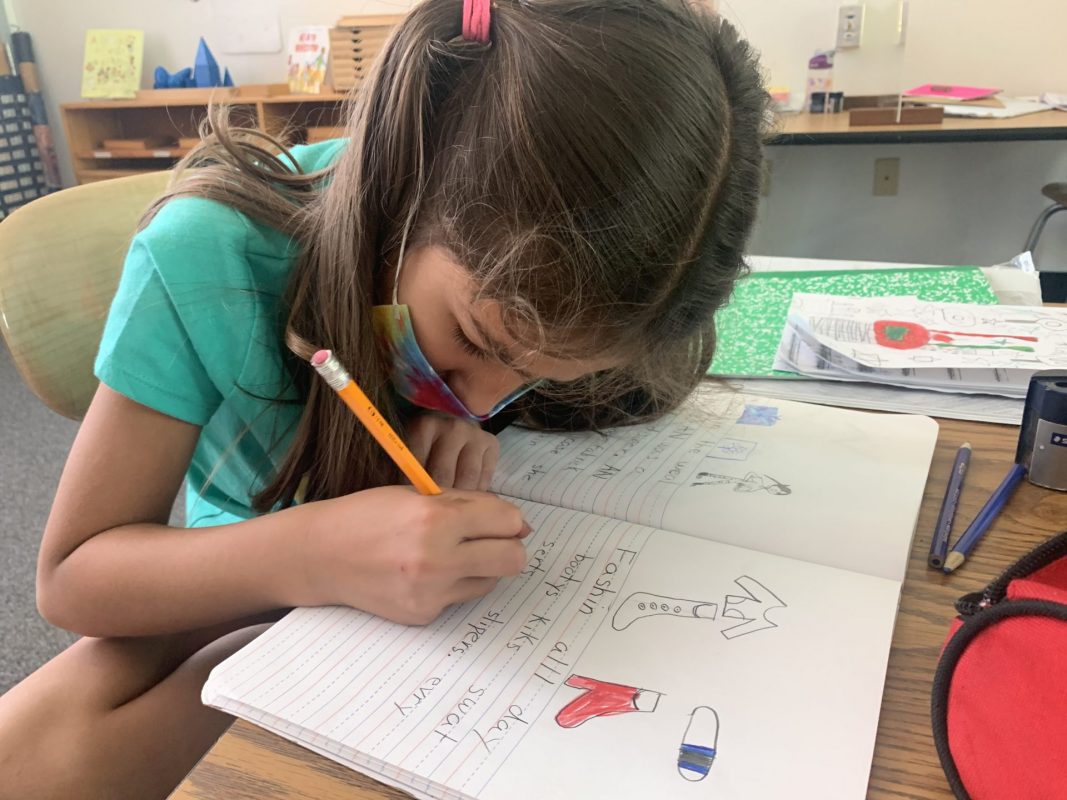
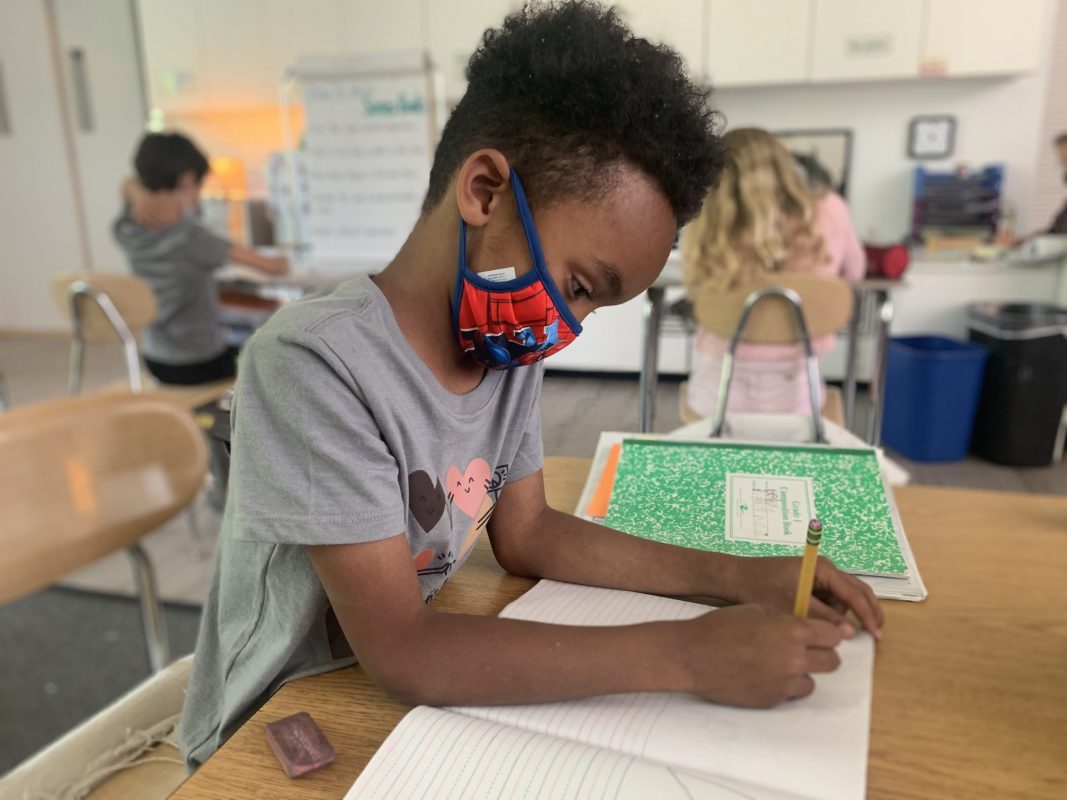
The year is winding down, but Lower Elementary isn’t! This week the children were engaged in History lessons. The first year children had the lesson of The Long Black Line. This lesson is meant to strike the imagination of the children and create a humbling feeling of the appearance of humans on Earth in the perspective of the vast amount of time that Earth has existed. The second year children had lessons on the Clock of Eons. These lessons introduce the sequence of events that resulted in the evolution of life on Earth, give the history of life on Earth, and introduce the interrelatedness of all organisms and the fragile balance that maintains life. The third year students had lessons on the Time Line of Life. These lessons focus on the interrelatedness of Earth to those who live on it and on the evolution of life on Earth.
Blog
Middle School: Science Fair
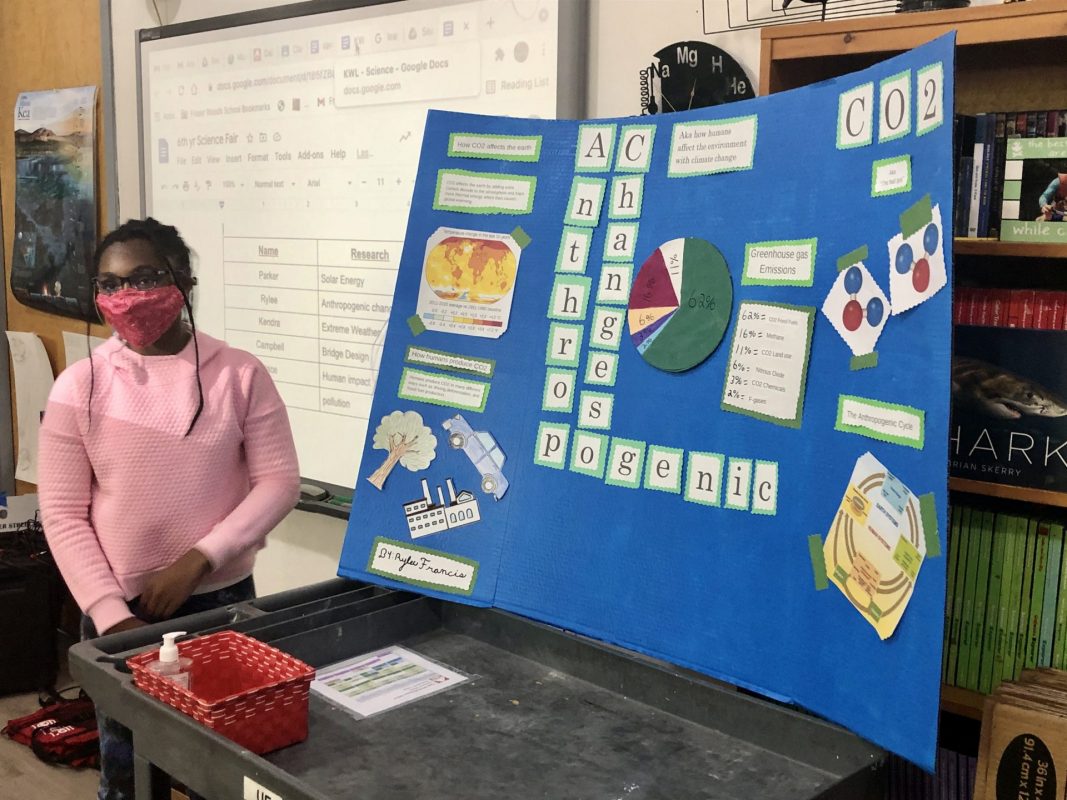
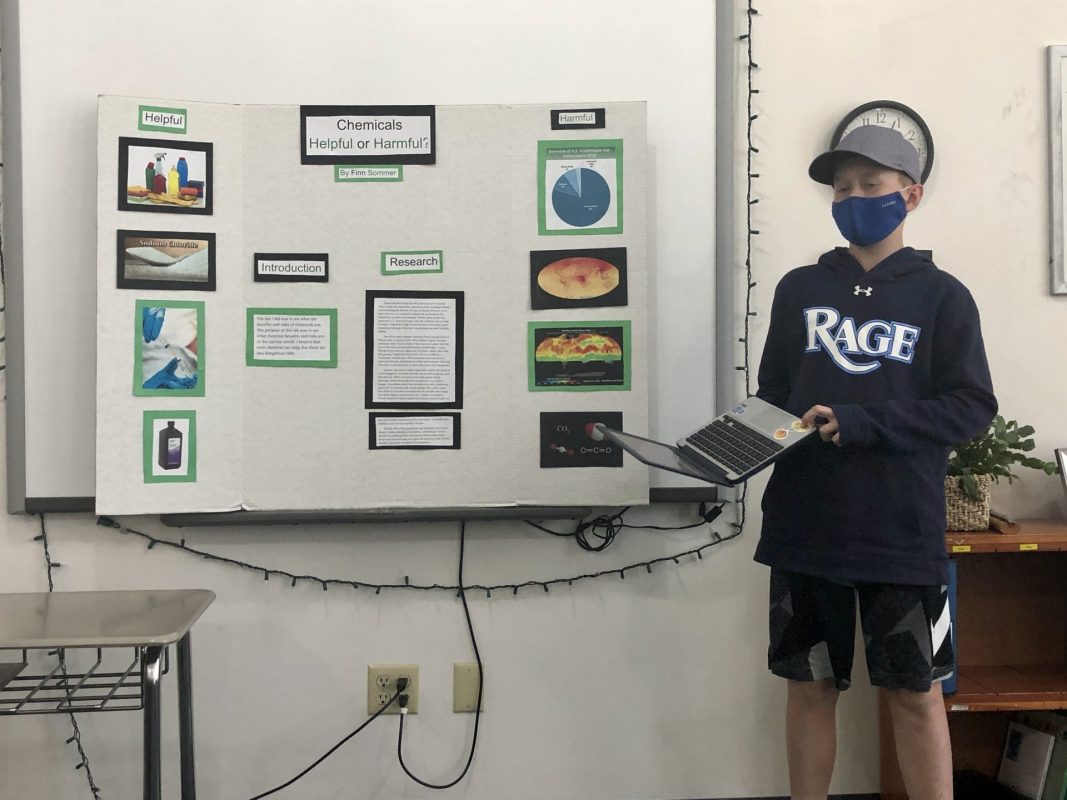
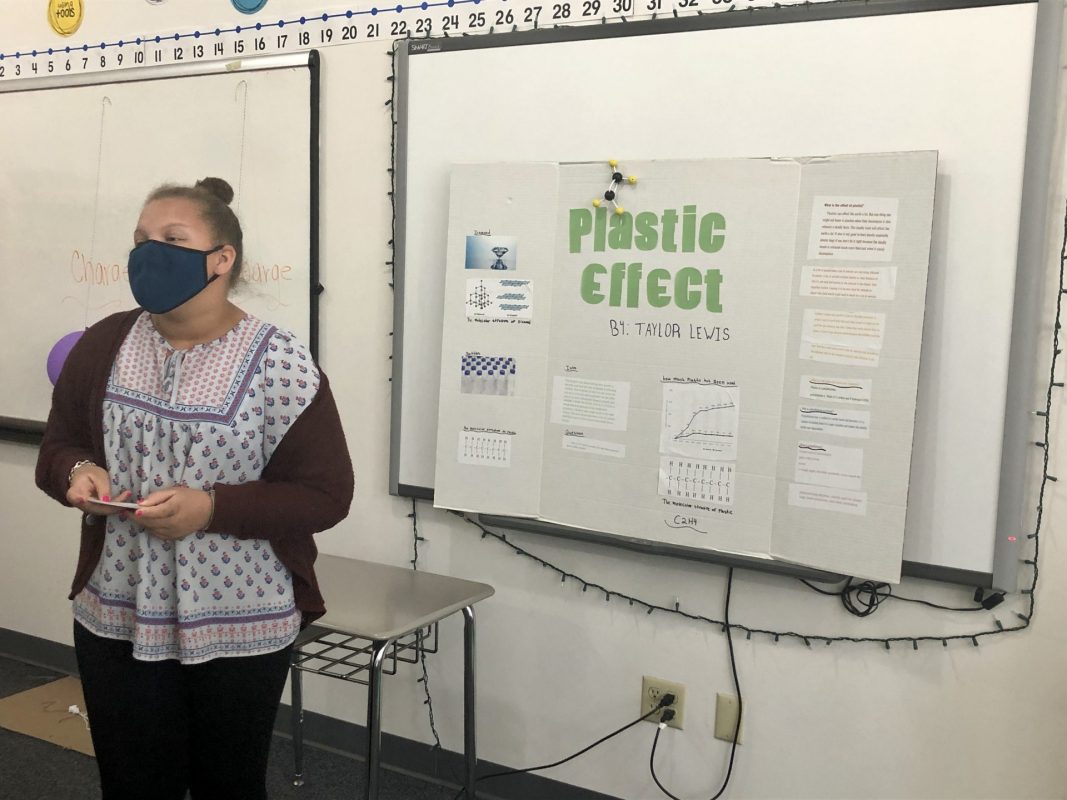

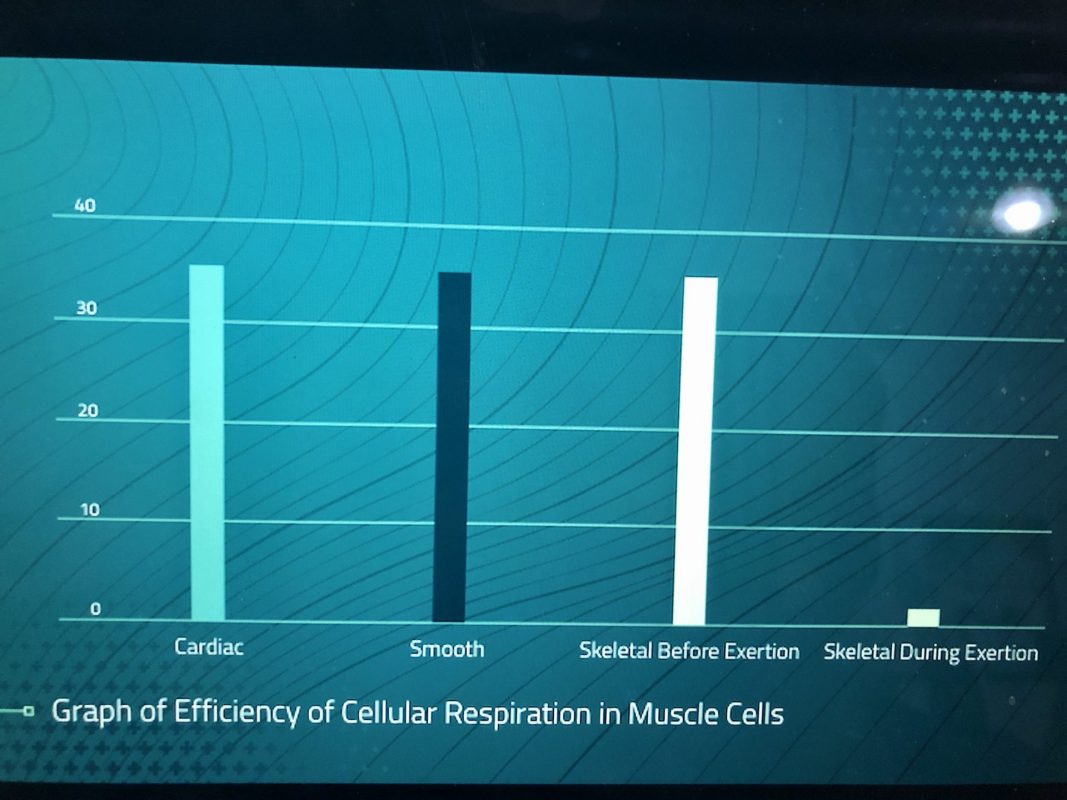
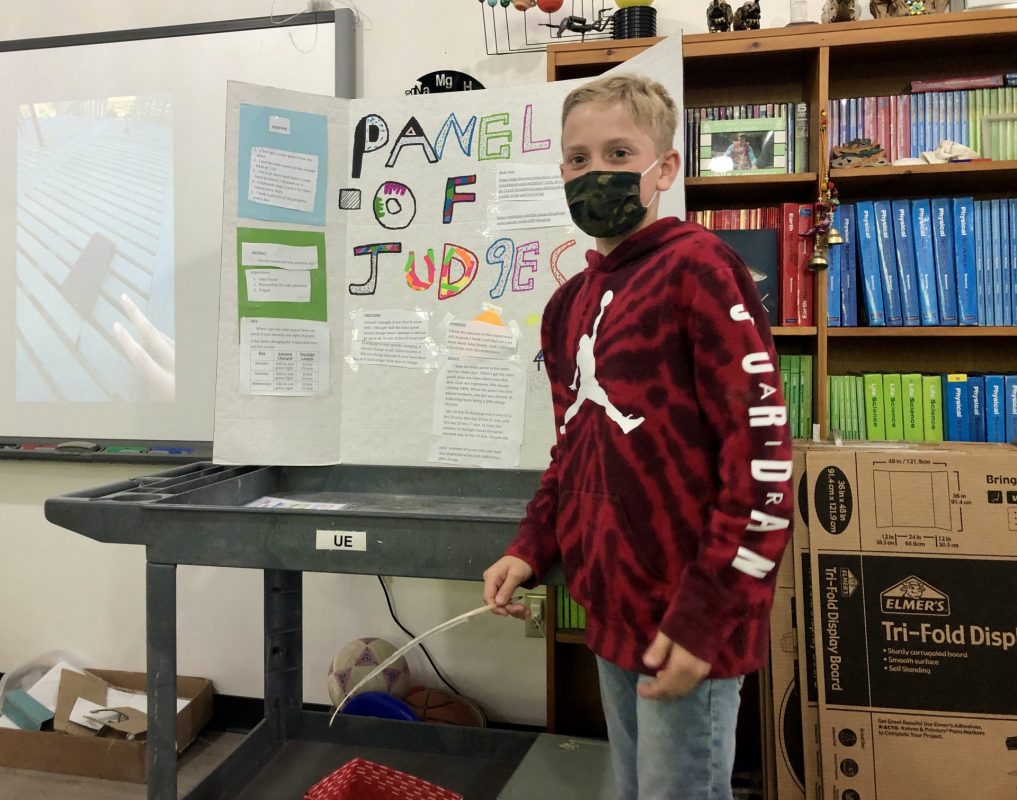
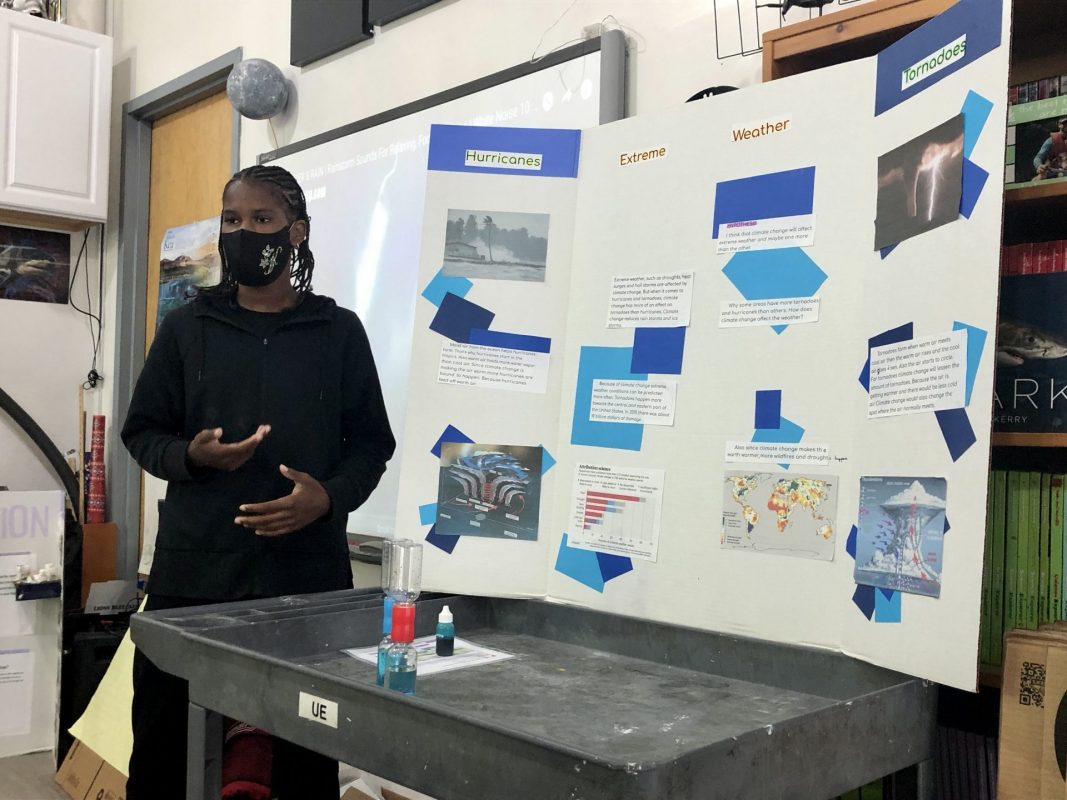

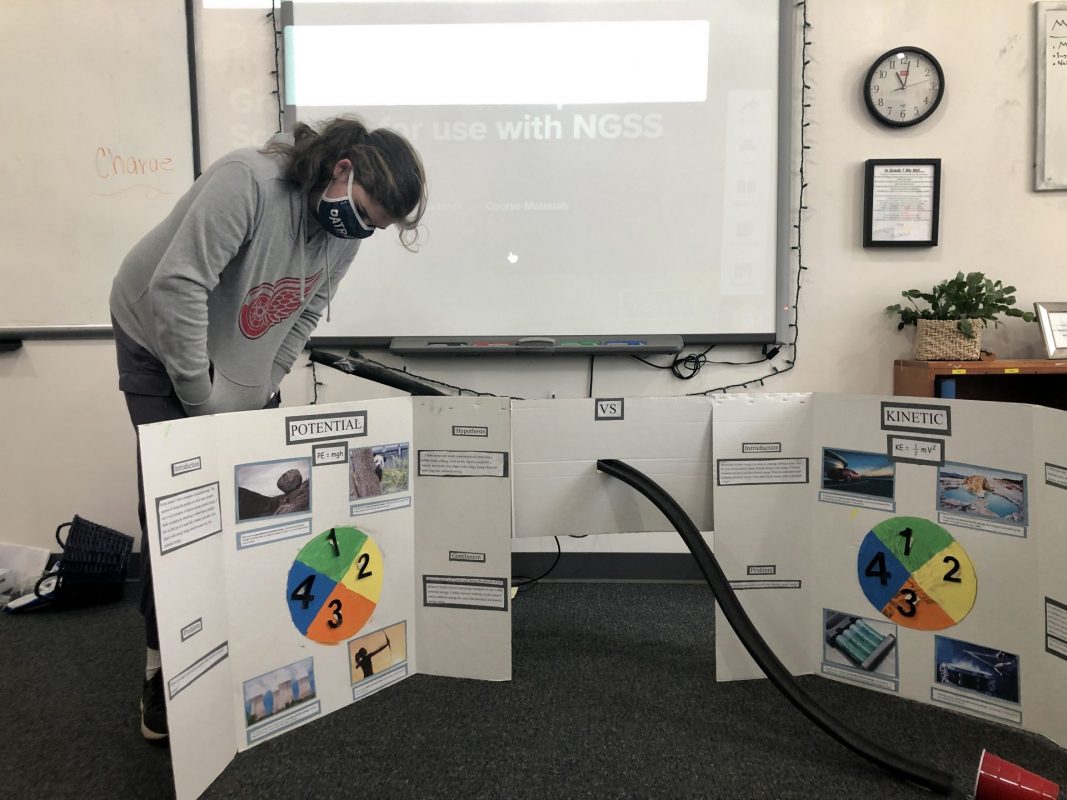
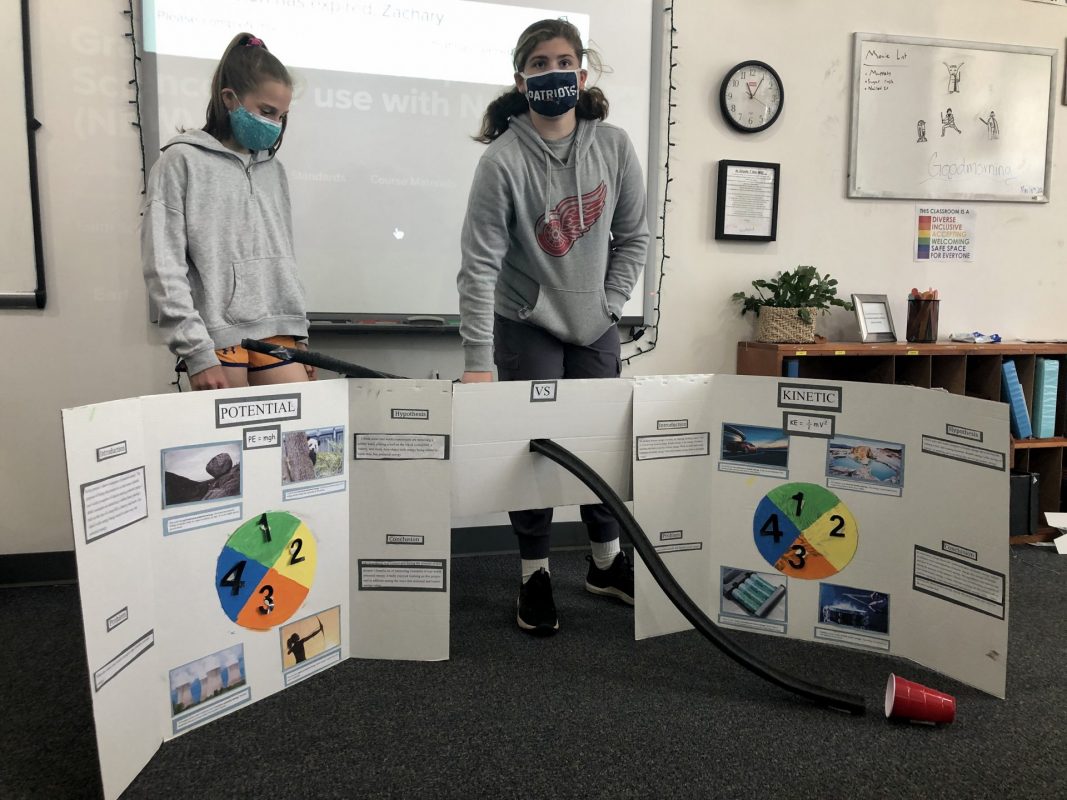
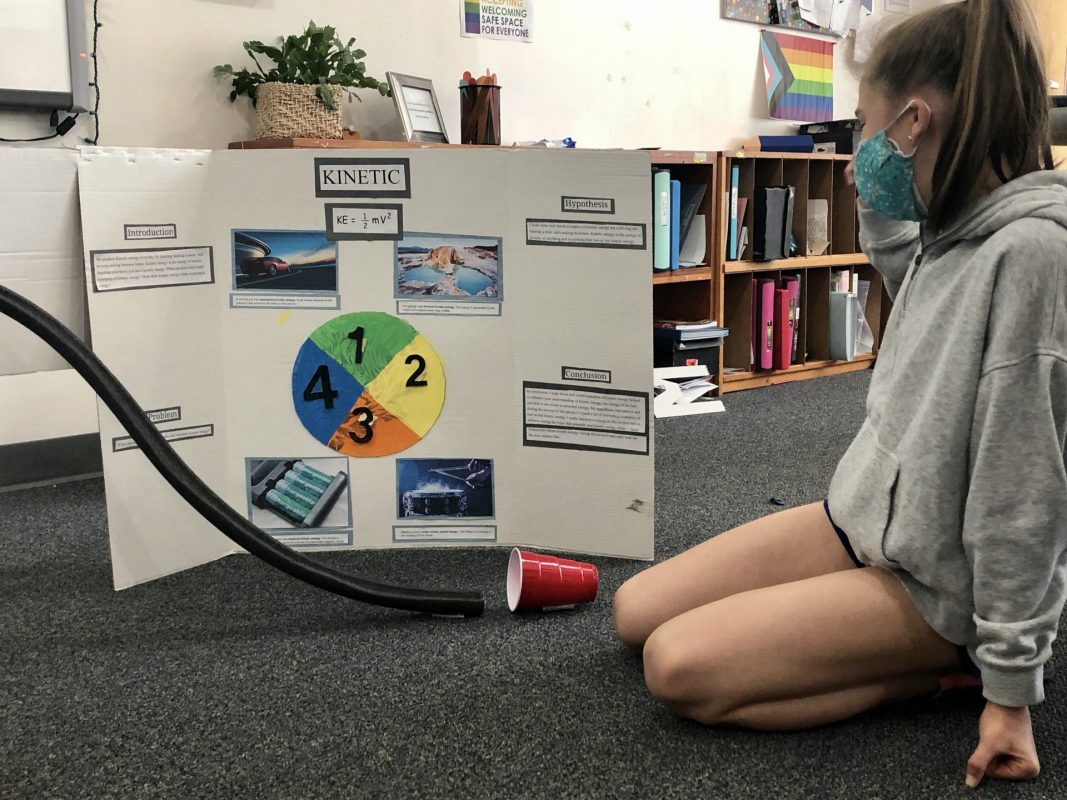

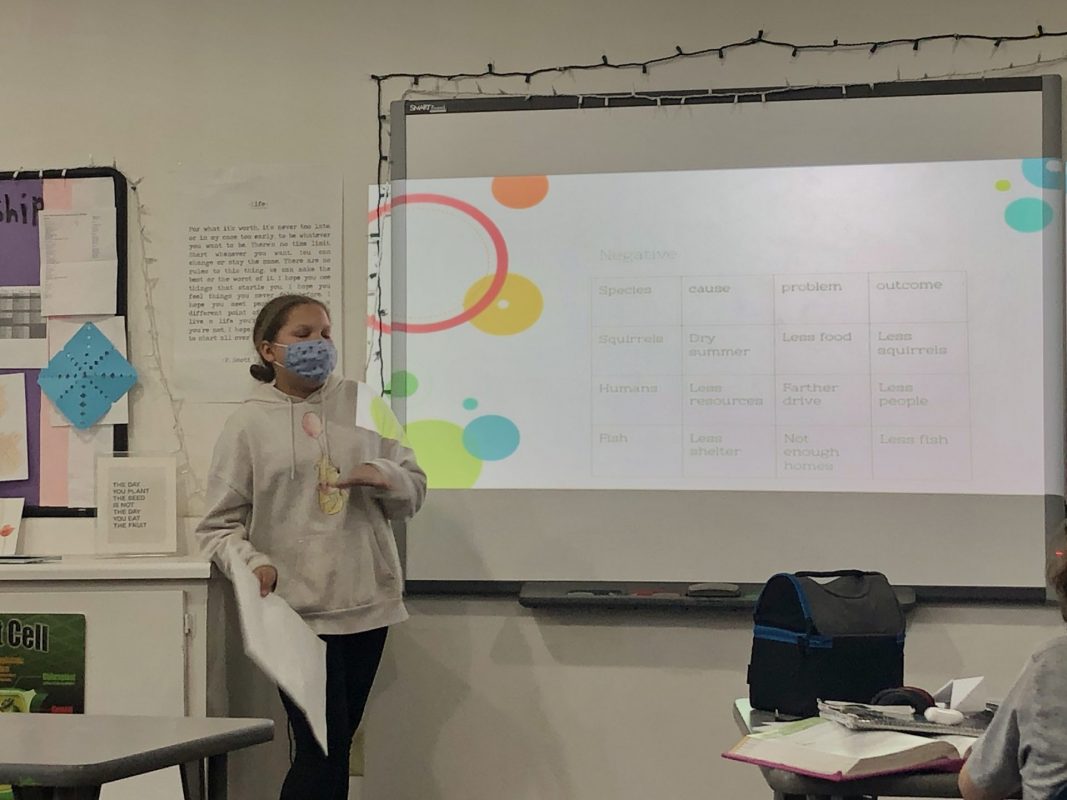
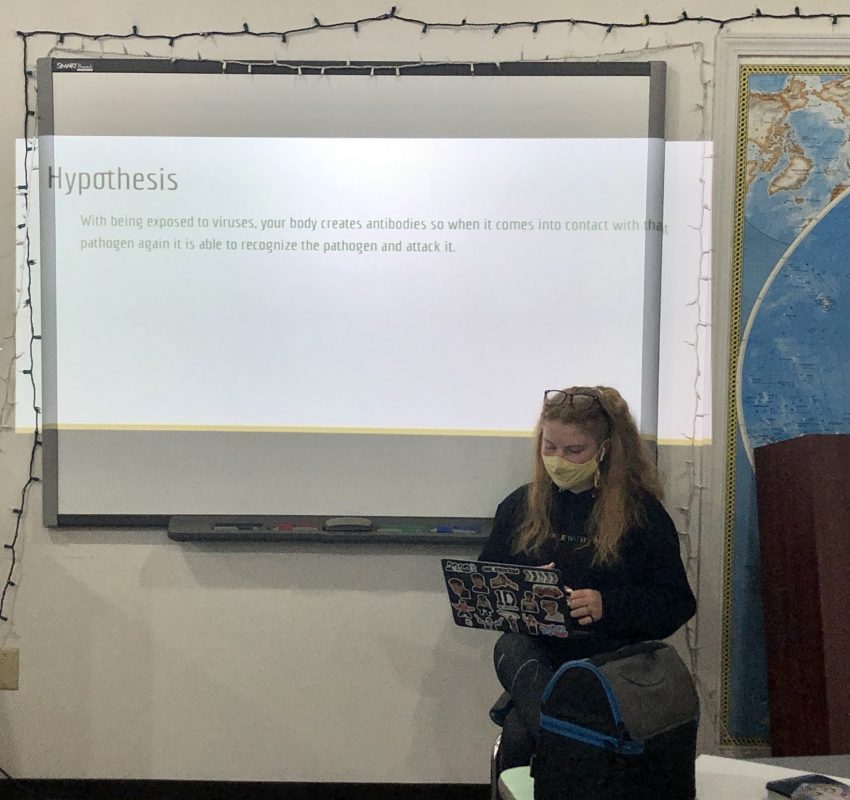
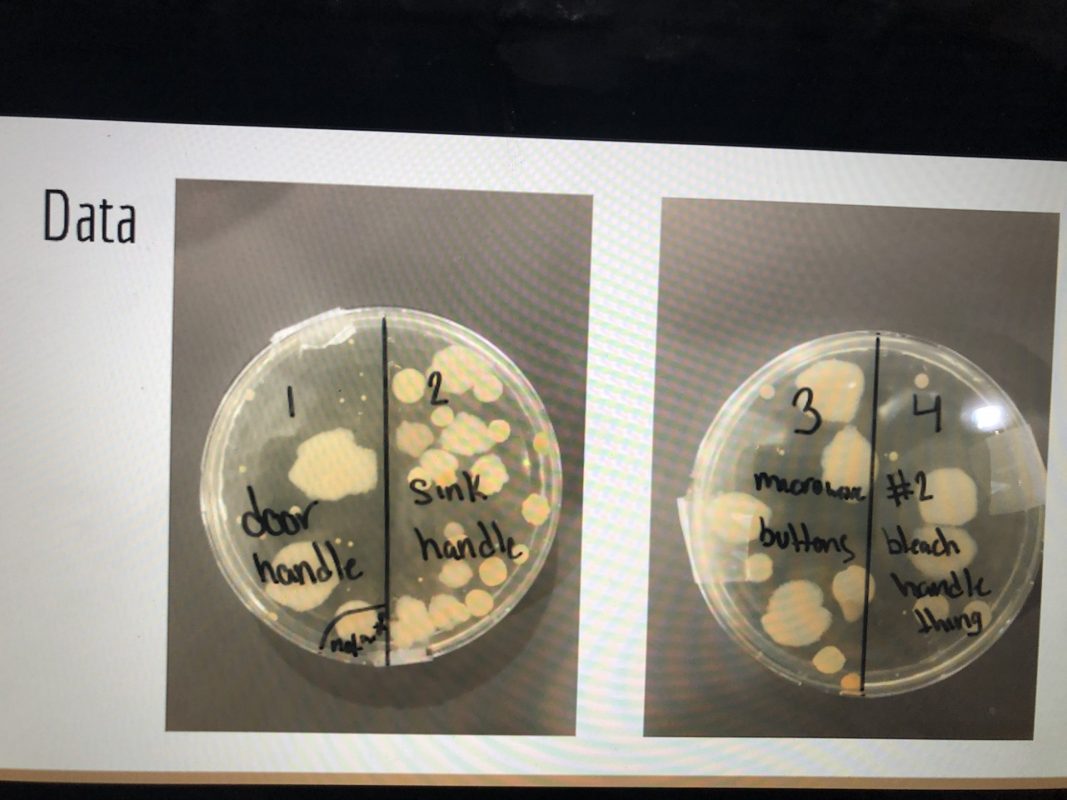
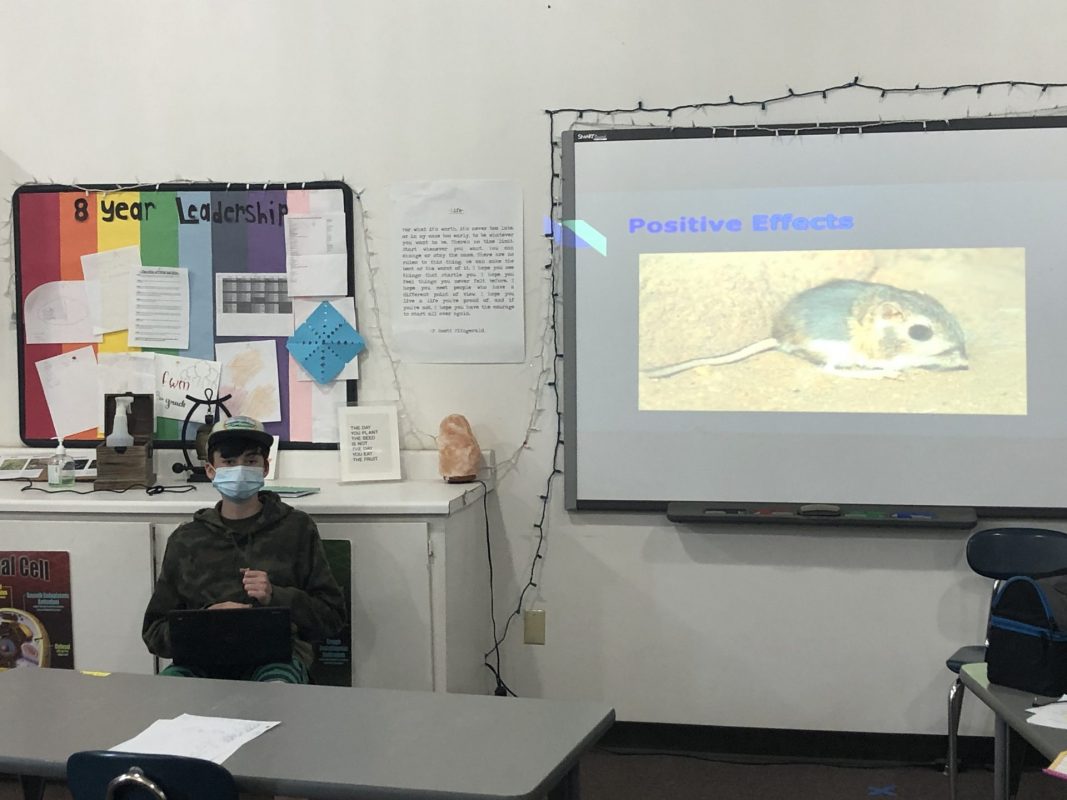
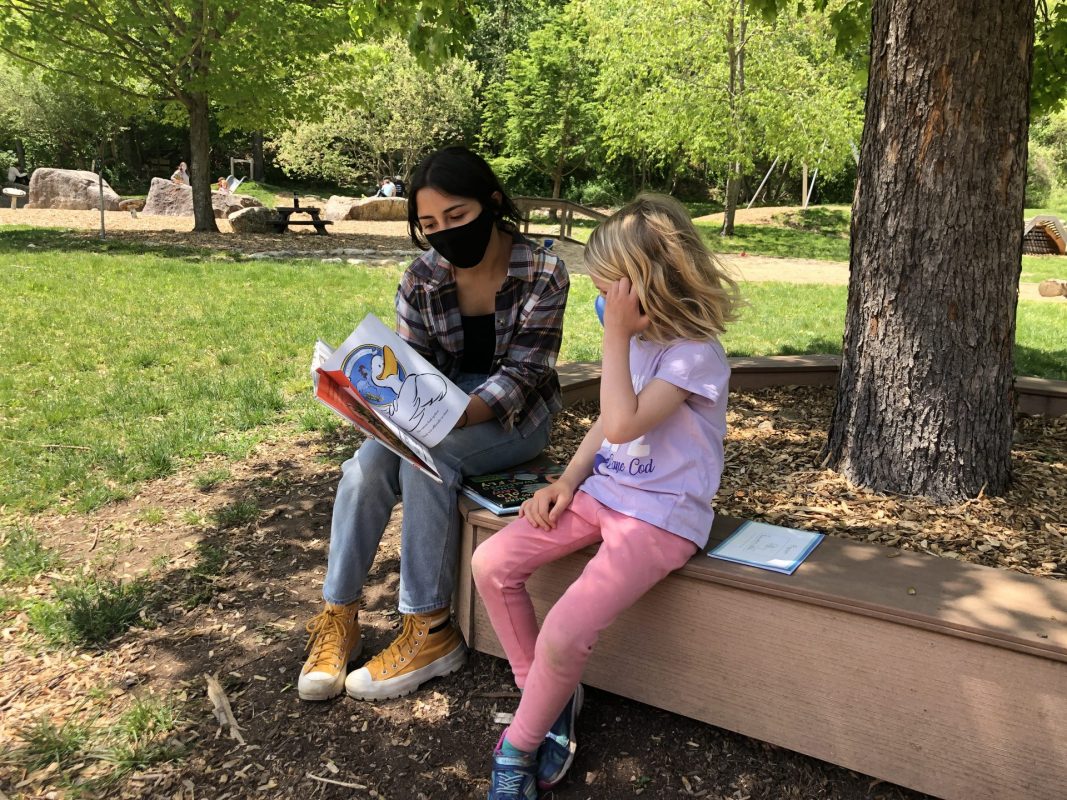
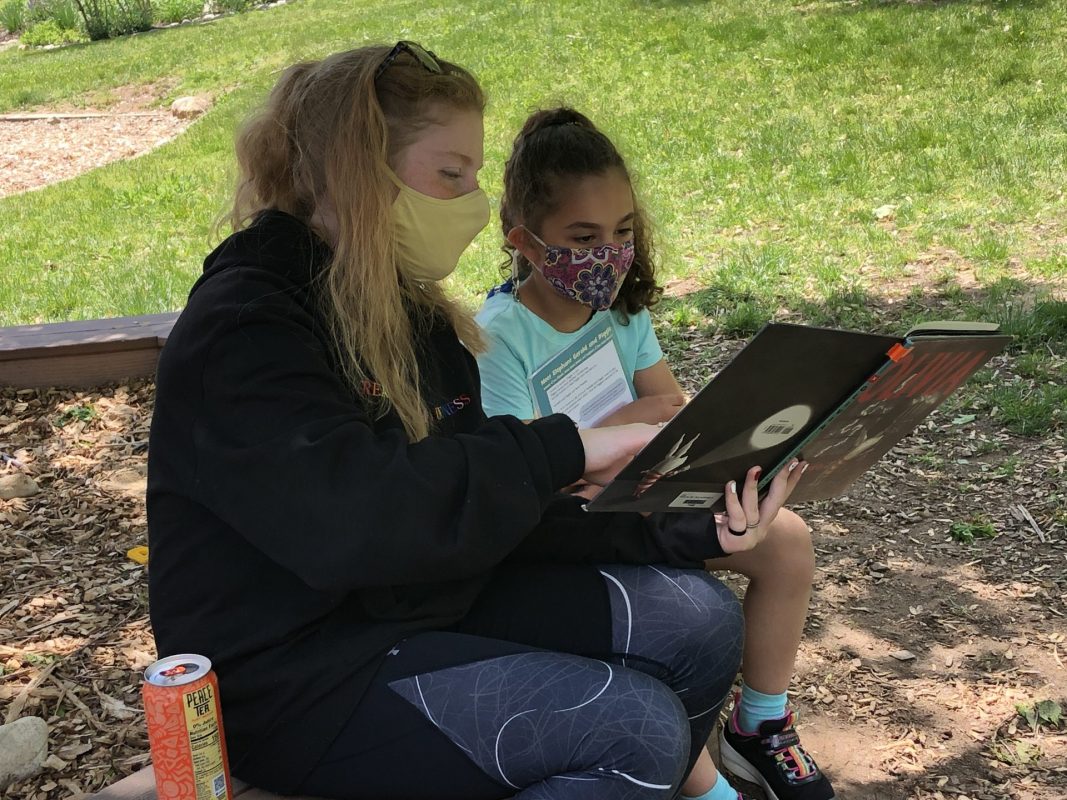
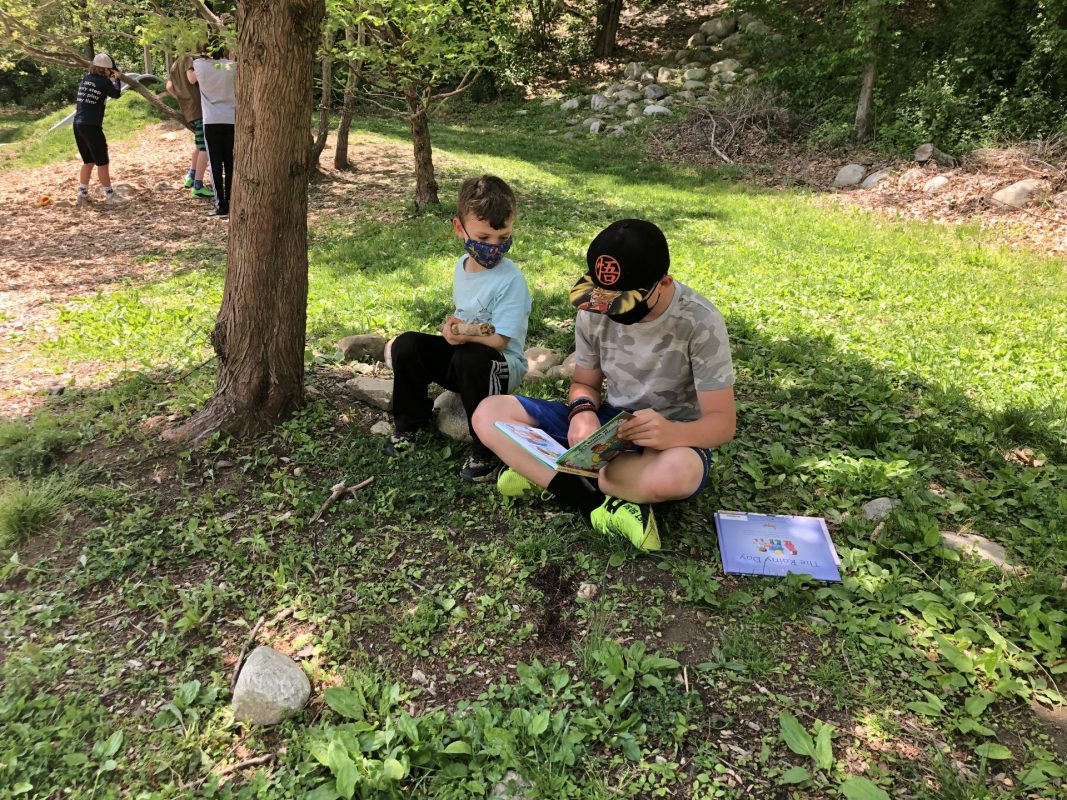
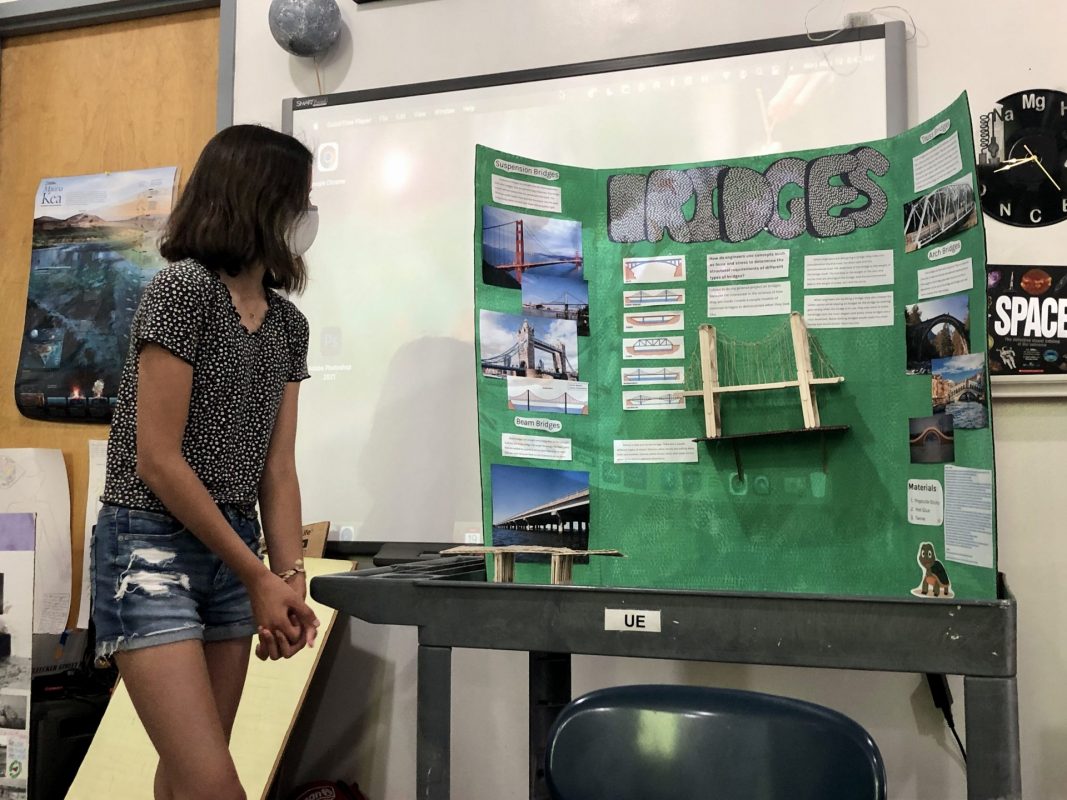


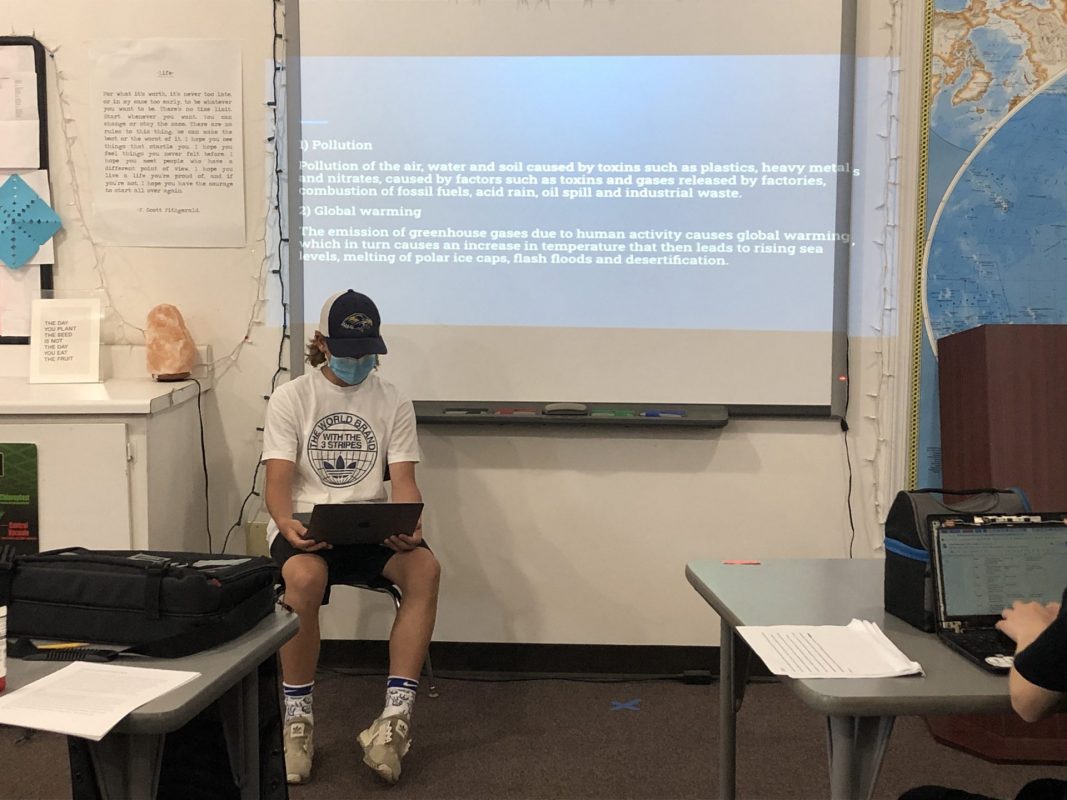
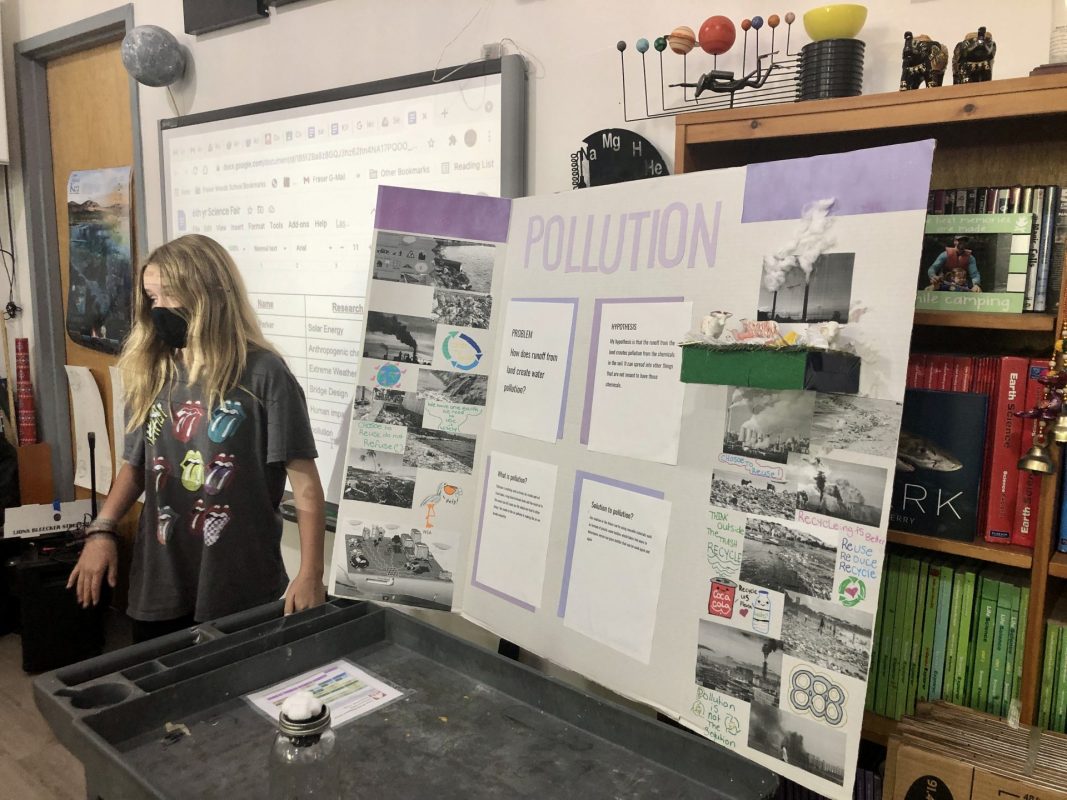
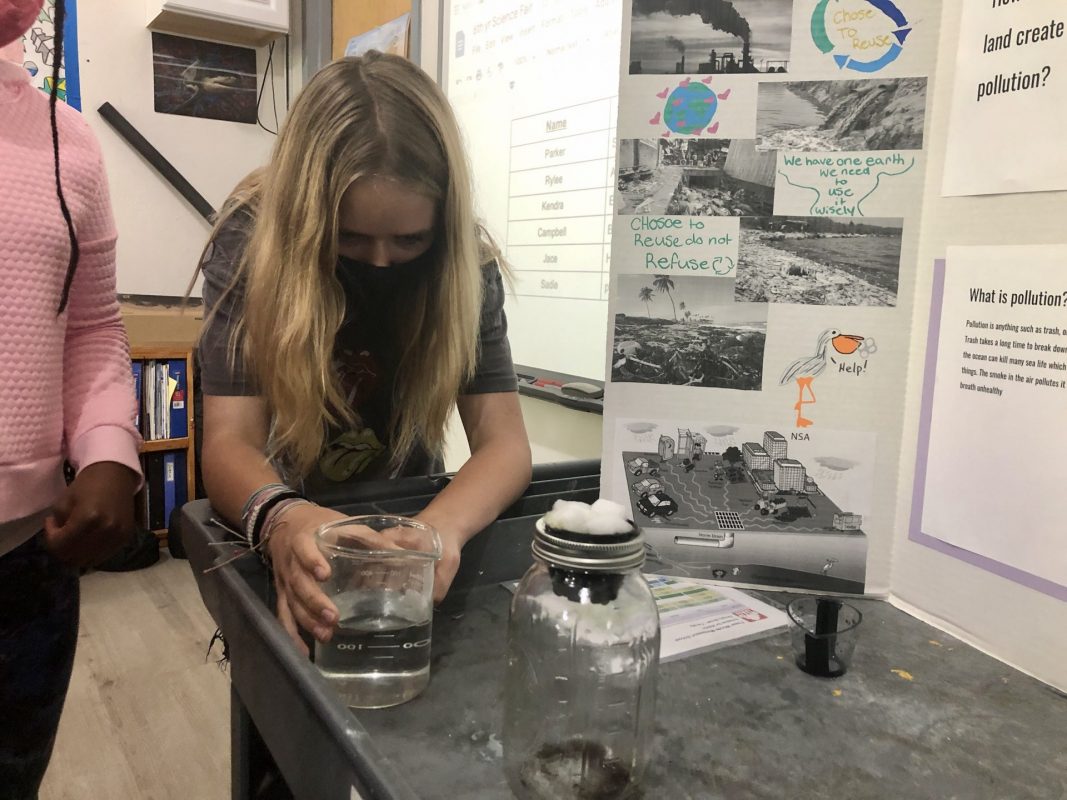
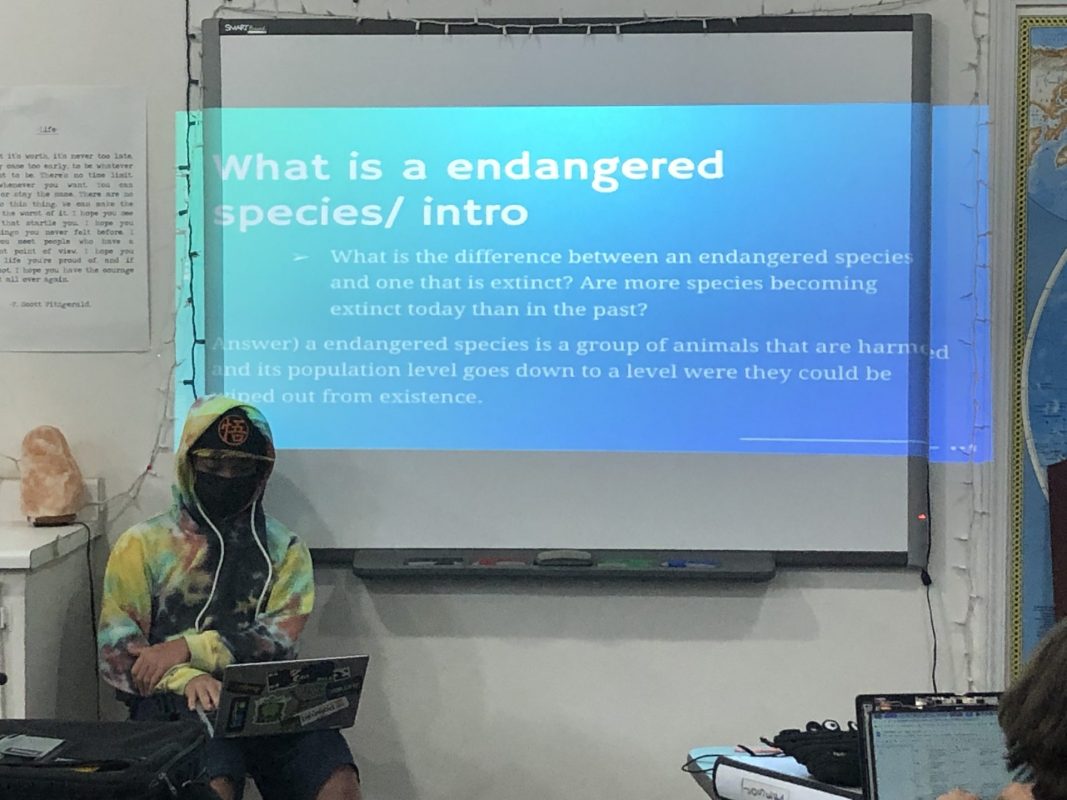
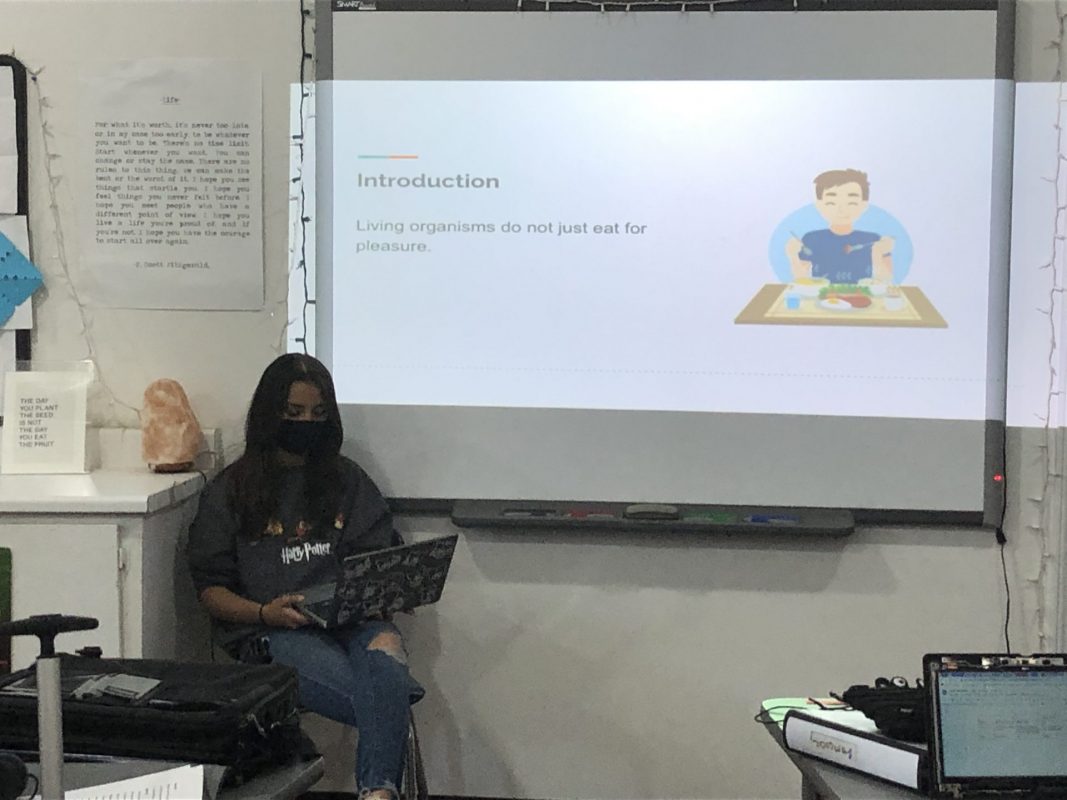
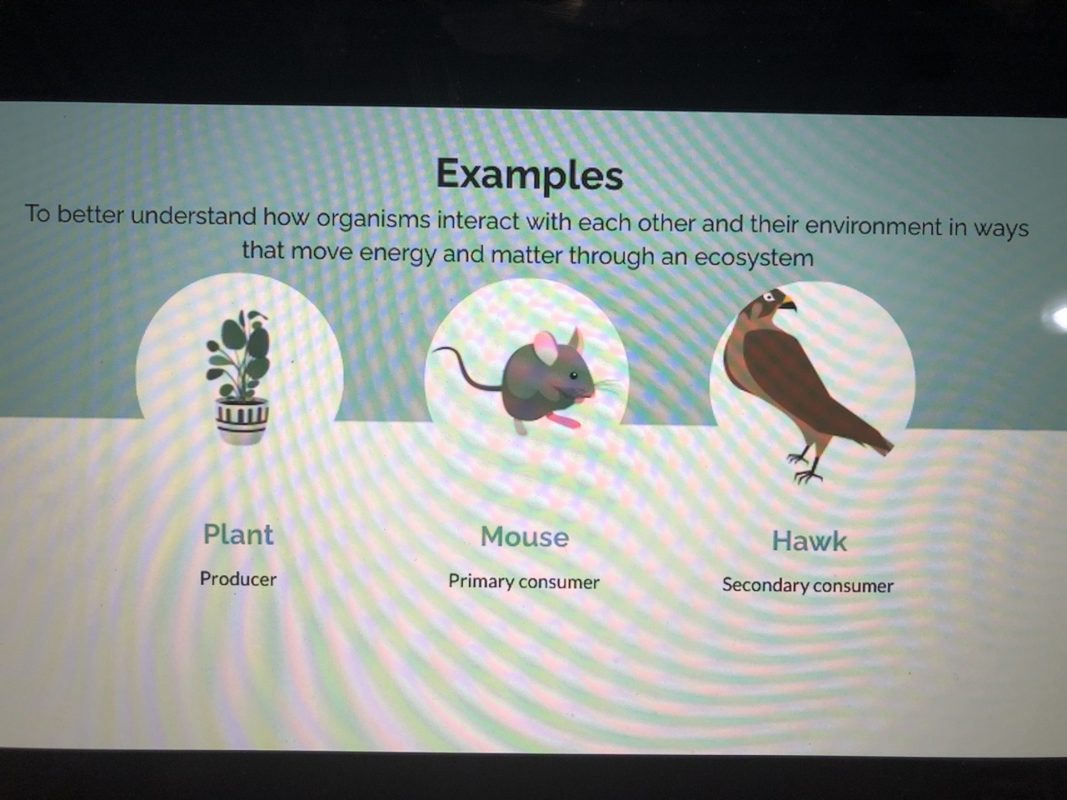
This week, the 6th year Earth Science and 7th year Physical Science students presented their science fair research projects. Students had the opportunity to choose a concept from their science tech-book and research the stated CYE (Can You Explain) question. Students formatted their research based on the scientific method, stating the problem/question, identifying their hypothesis, formatting research, compiling data, analyzing results, and providing a conclusion.
Topics for the 6th year Earth Science class were Solar Energy, Anthropogenic Changes, Extreme Weather, Bridge Design, Human Impact on Natural Resources, and Pollution. The 7th year Life Science students’ topics were Kinetic Energy, Potential Energy, Static Charges, Molecular Structure of Plastics, Chemicals of our World, and Tesla Coils.
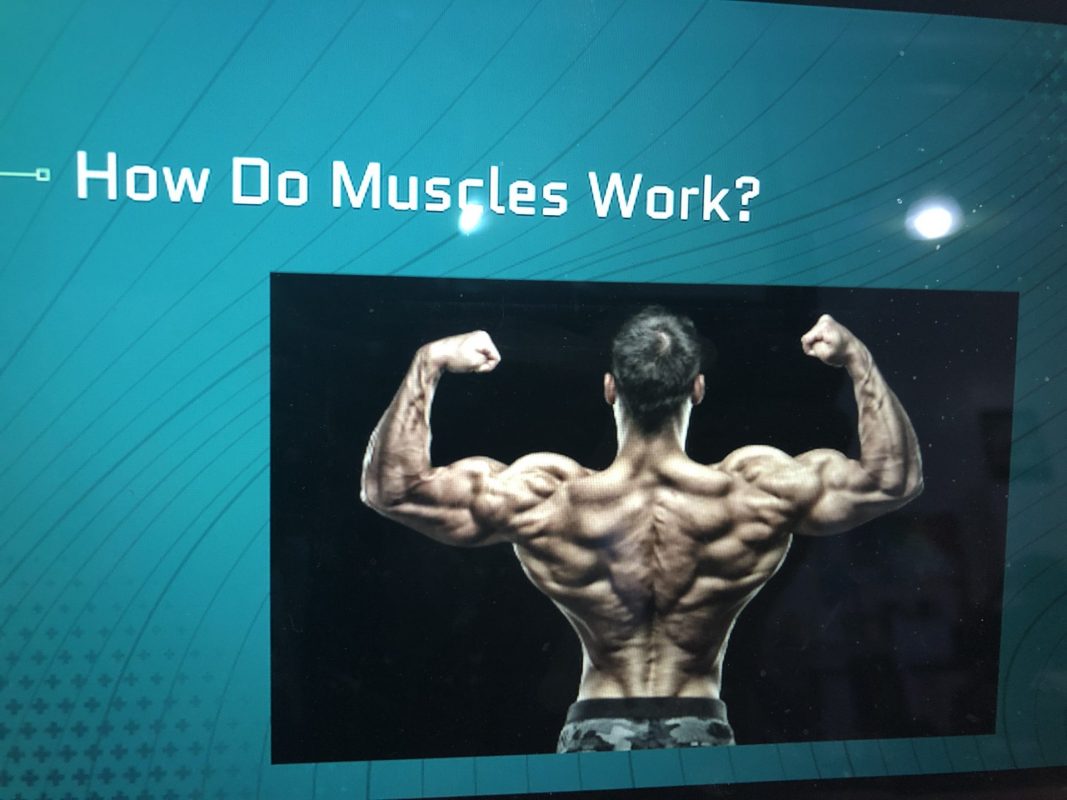
Life Science students presented their research on the following topics; Muscular-Skeletal- Immune-Integumentary Systems, Environmental Issues & Endangered Species, Preventing Land Use and Environmental Problems, Overpopulation, Populations and Communities, Evolution-Adaptations, and Energy in our Ecosystems.
All middle school students were asked prior to these presentations to complete a KWL (what you Know, what you Want to know, what you have Learned) chart based on each concept. KWL charts are graphic organizers that help students organize information before, during, and after a unit or a lesson. They can be used to engage students in a new topic, activate prior knowledge, share unit objectives, and monitor students’ learning.
Next week both the 6th and 7th year students will be constructing rockets which will be launched at our sports field once completed. 7th year Physical Science students will take into consideration the velocity, potential/kinetic energy of this project while the 6th year Earth Science students will make observations about the design aspect of the rocket as part of their next unit on Space Exploration.
Mrs. Wilson: Big Works, Small Community
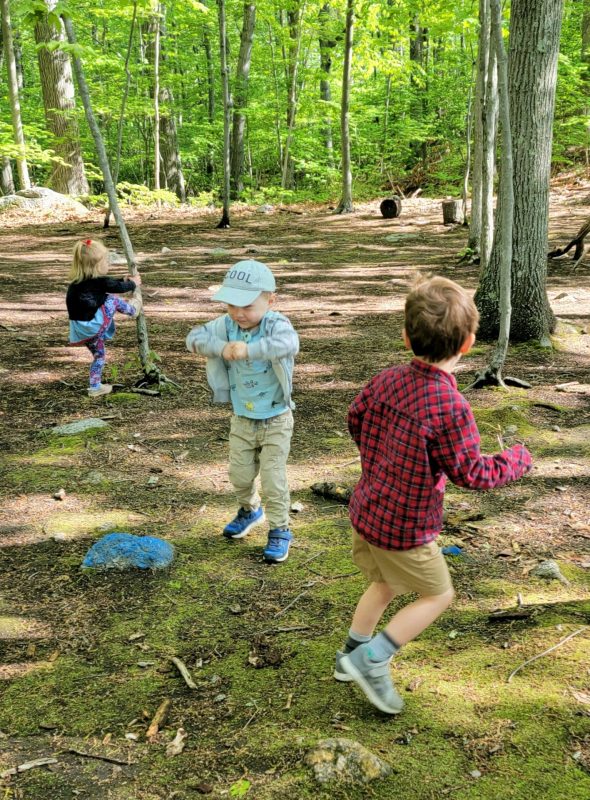
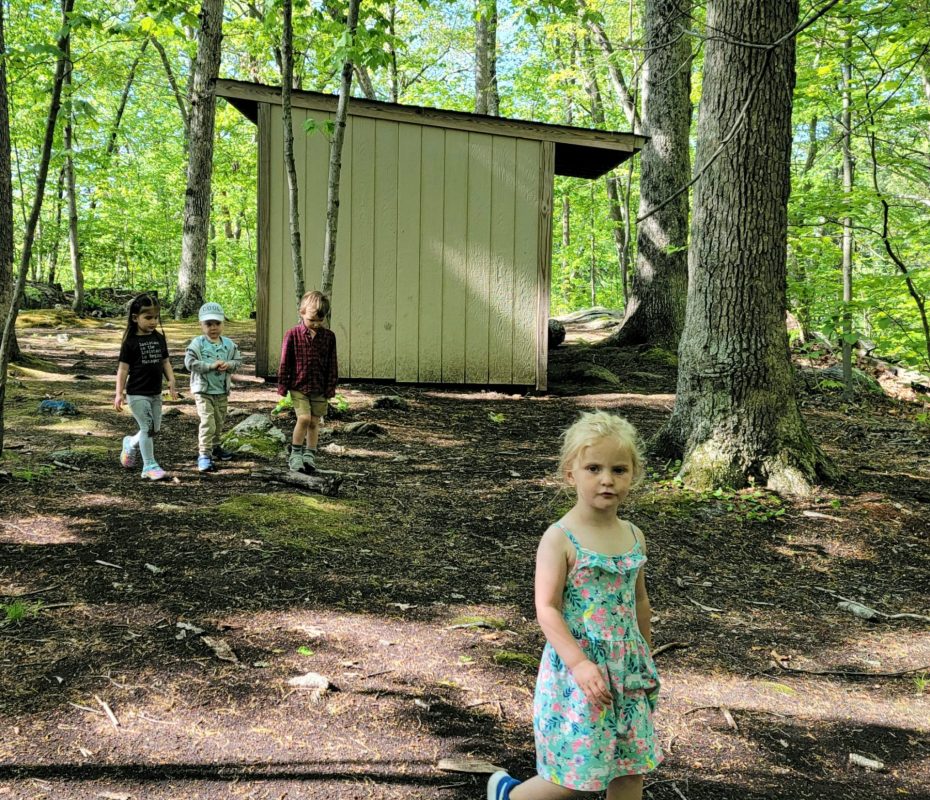
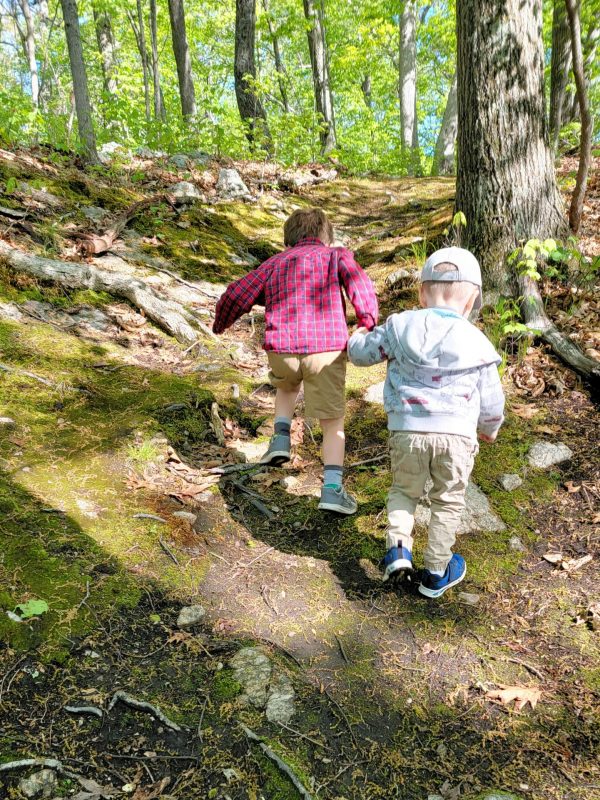
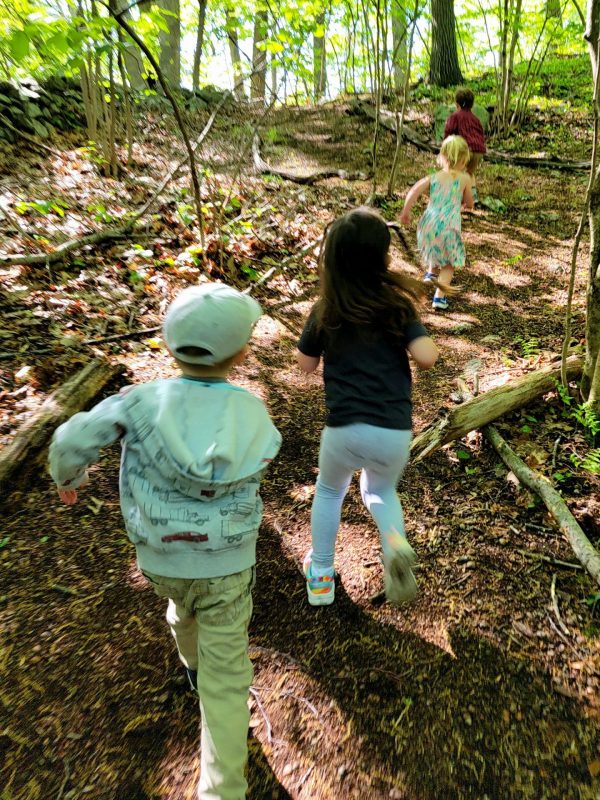

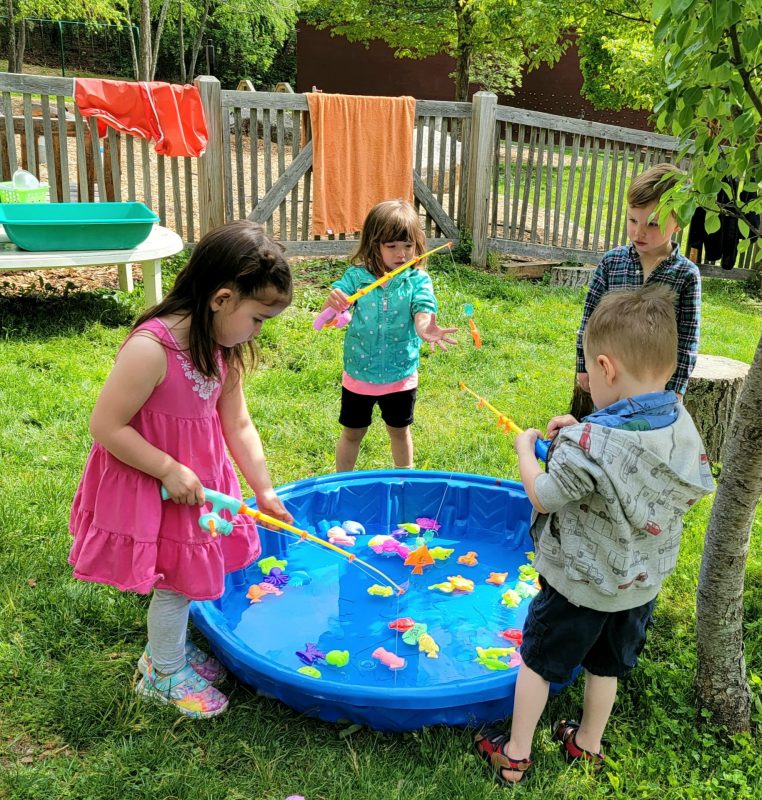
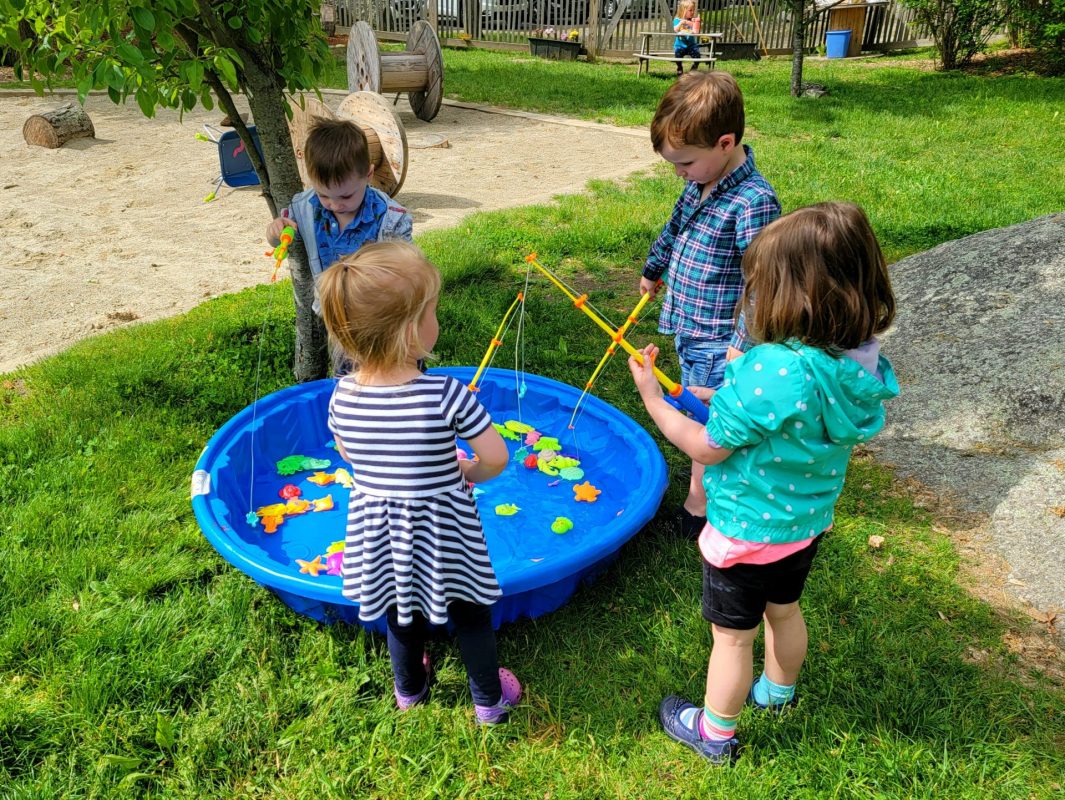
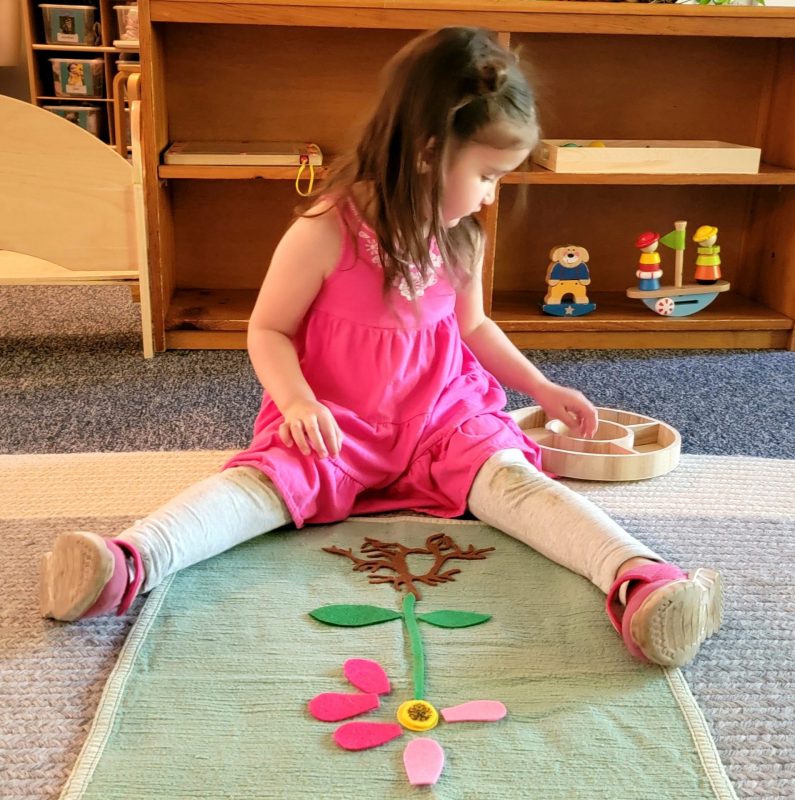
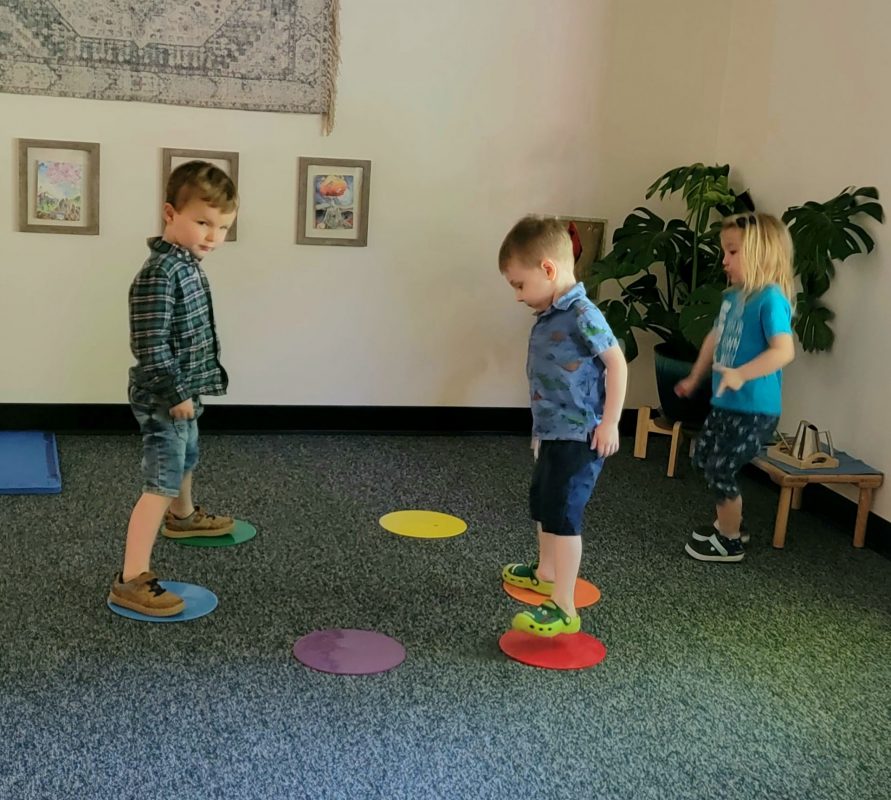
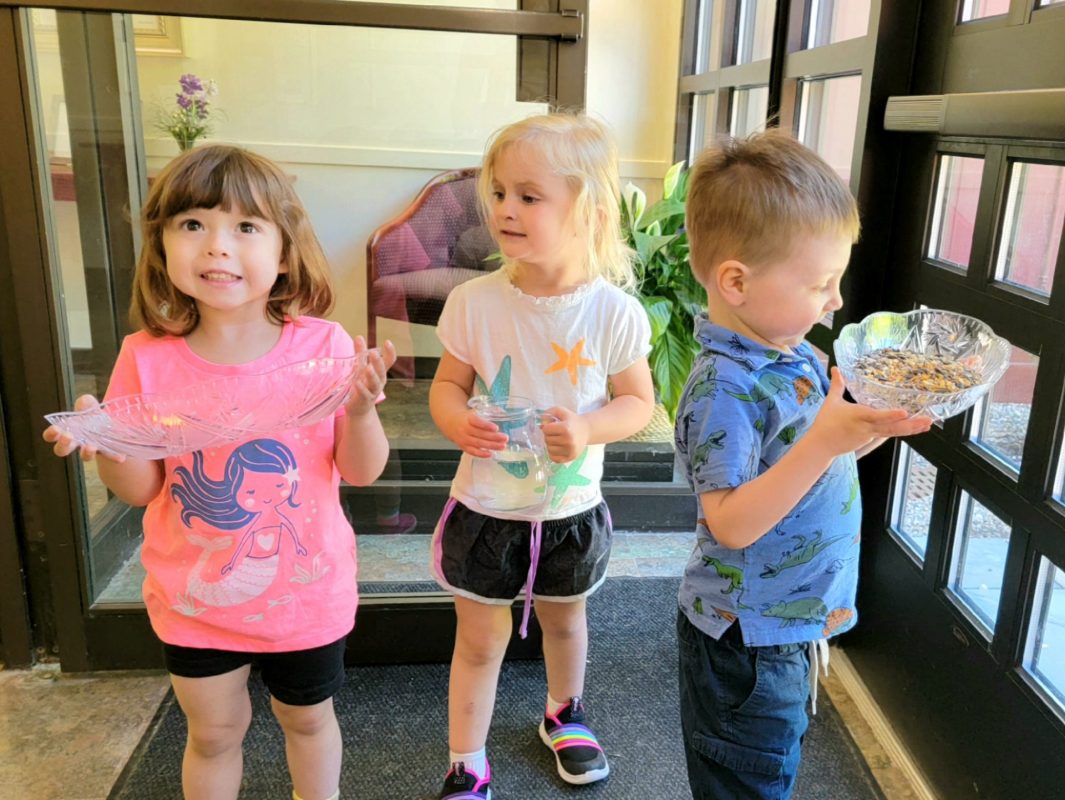
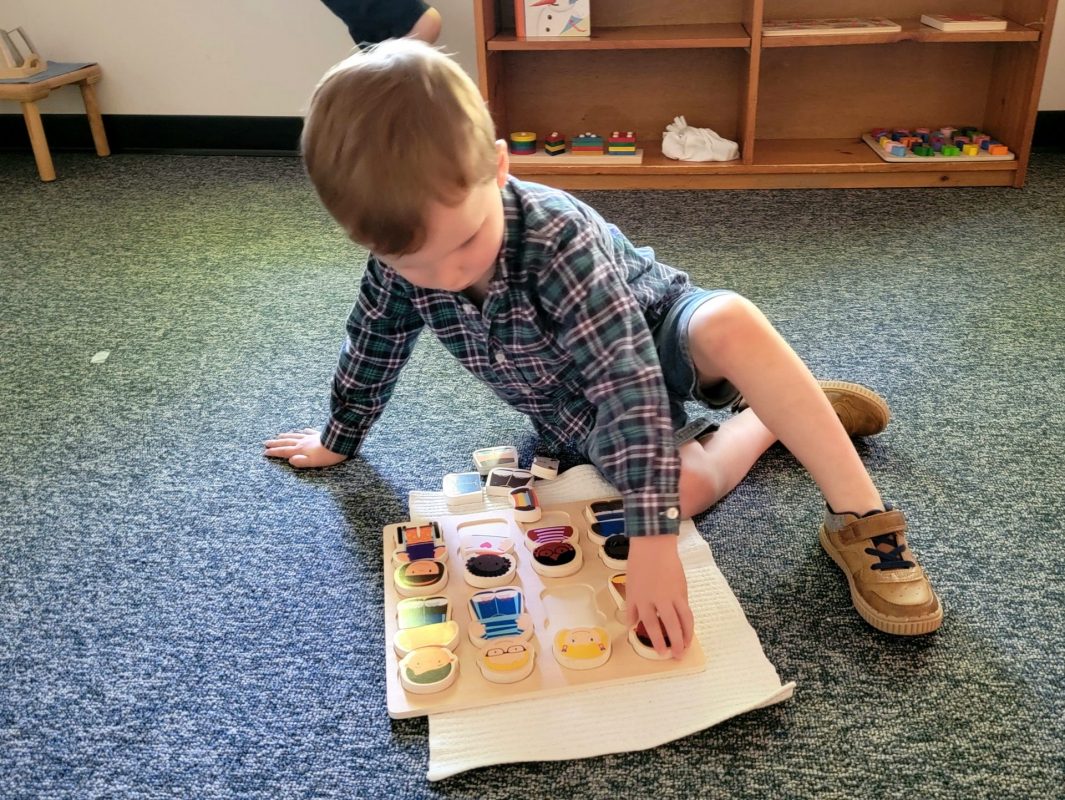
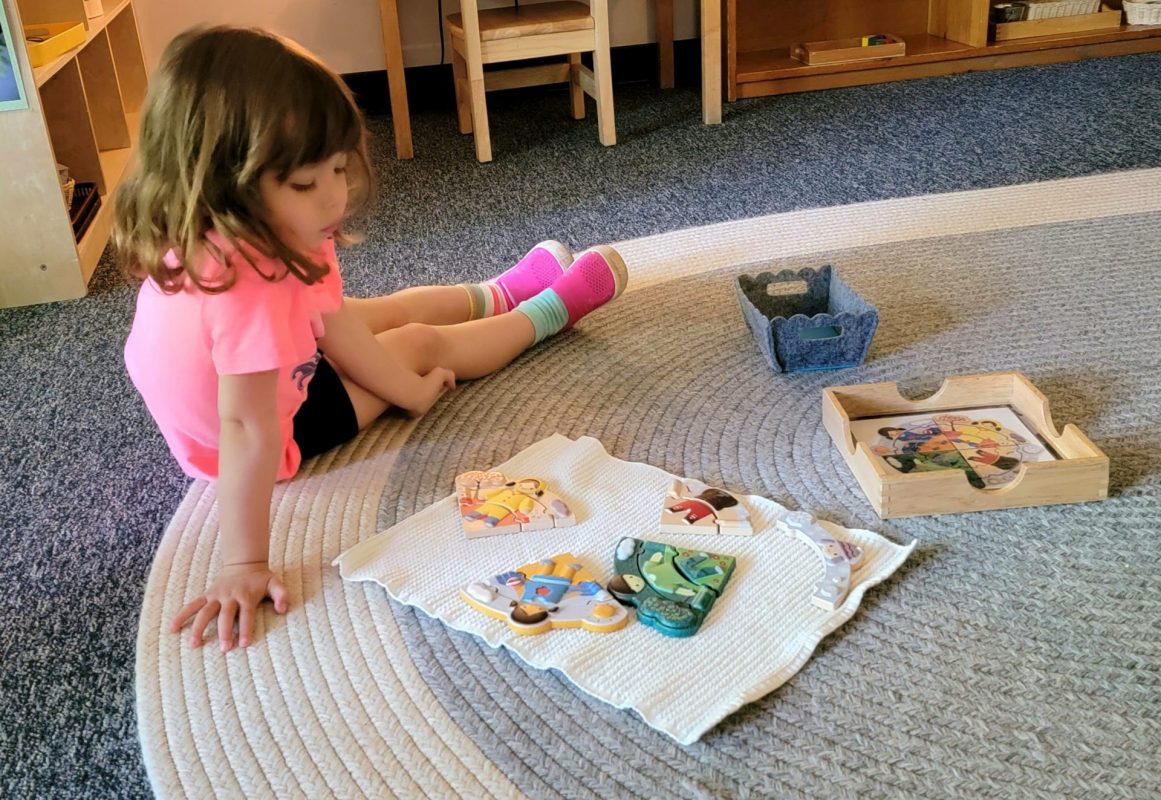


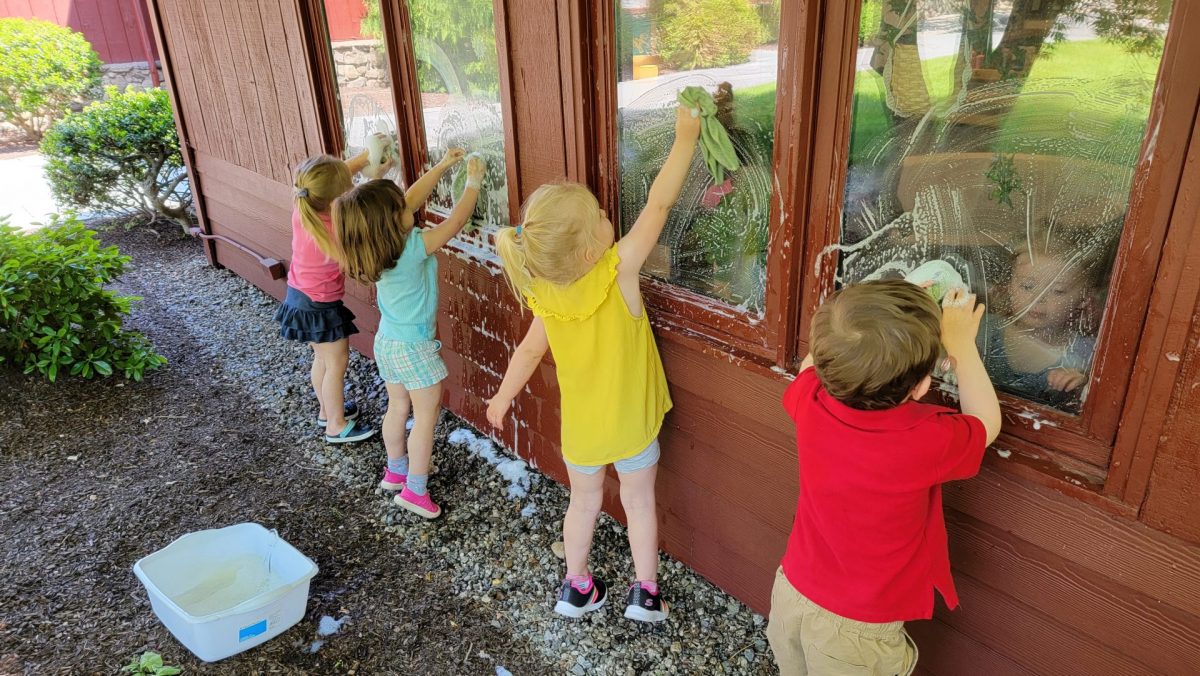
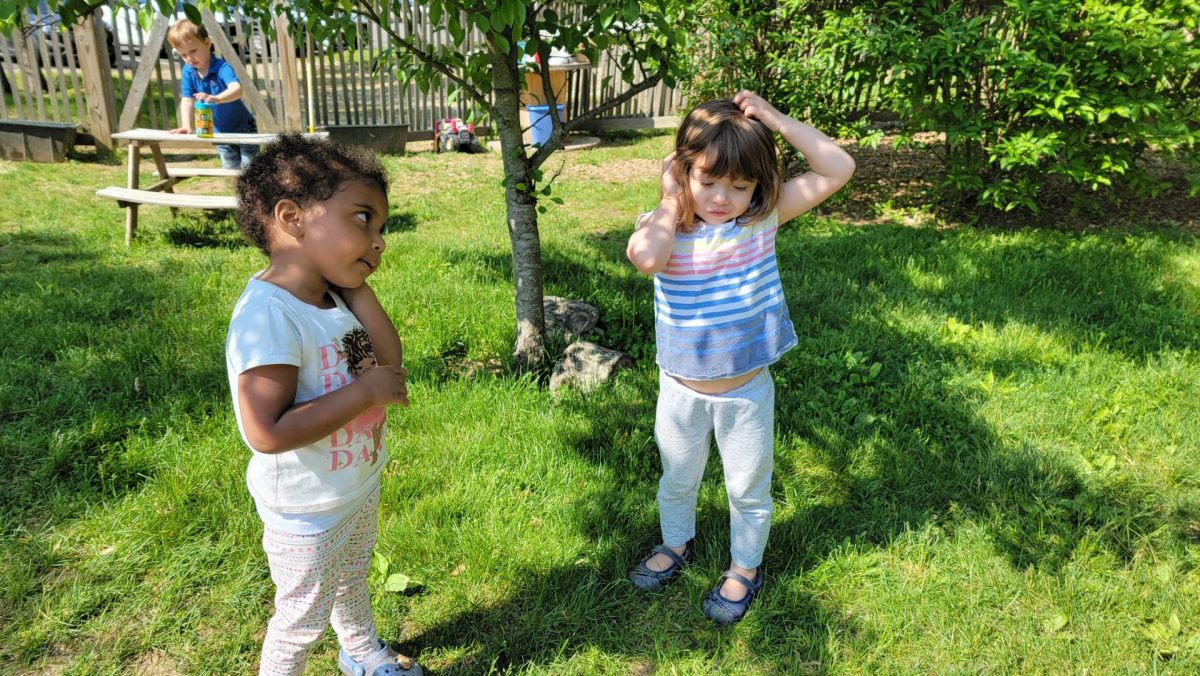

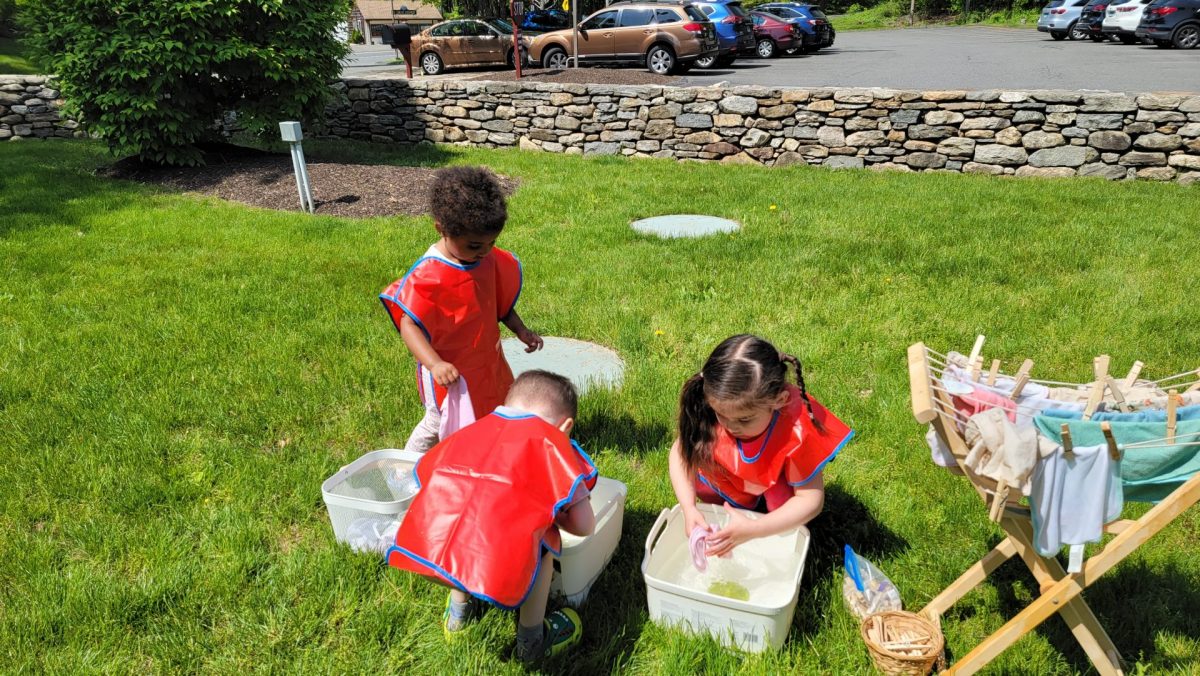
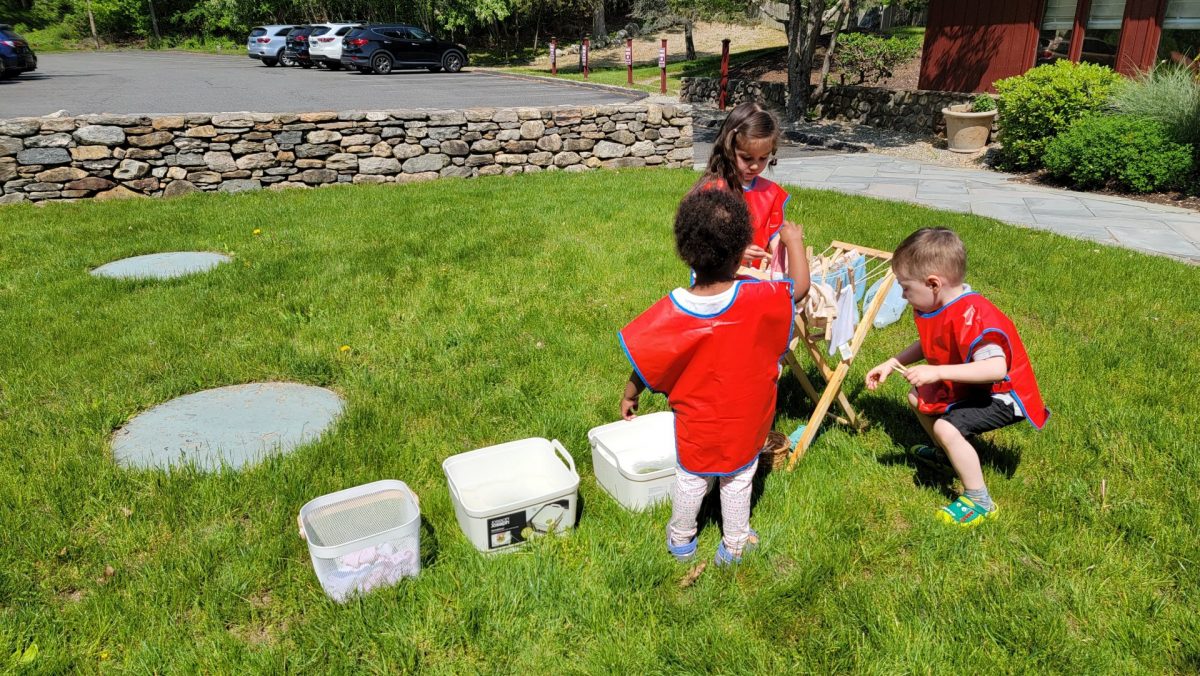
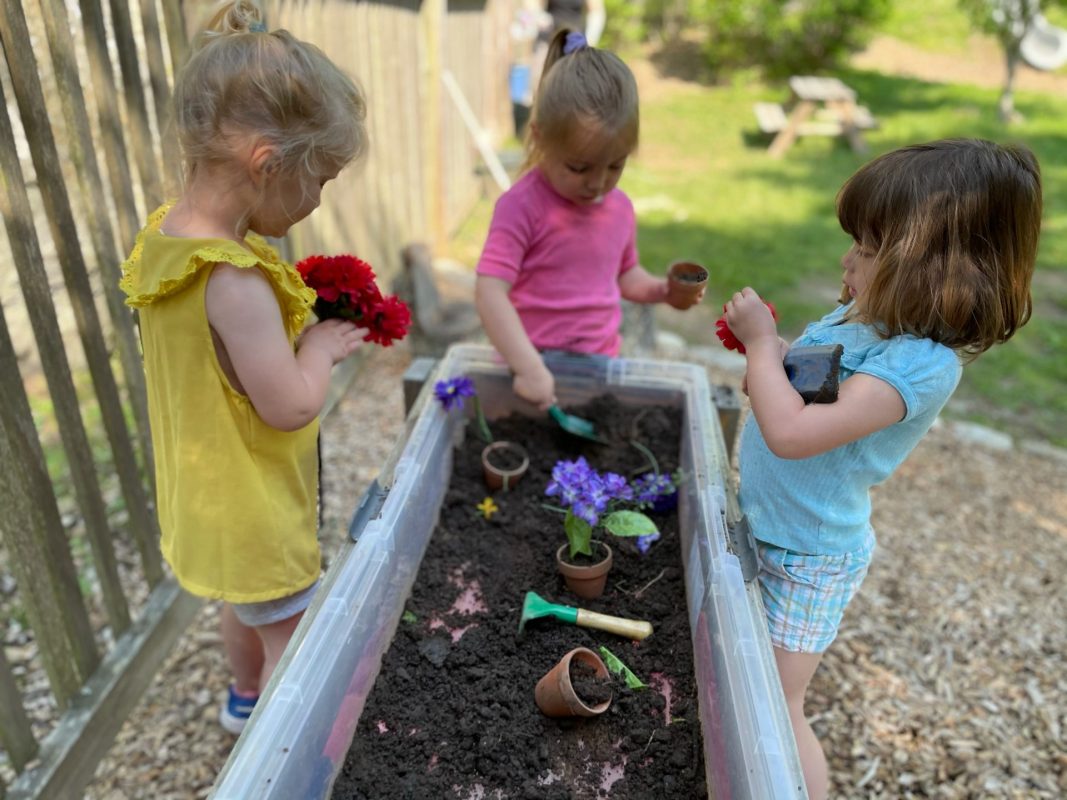
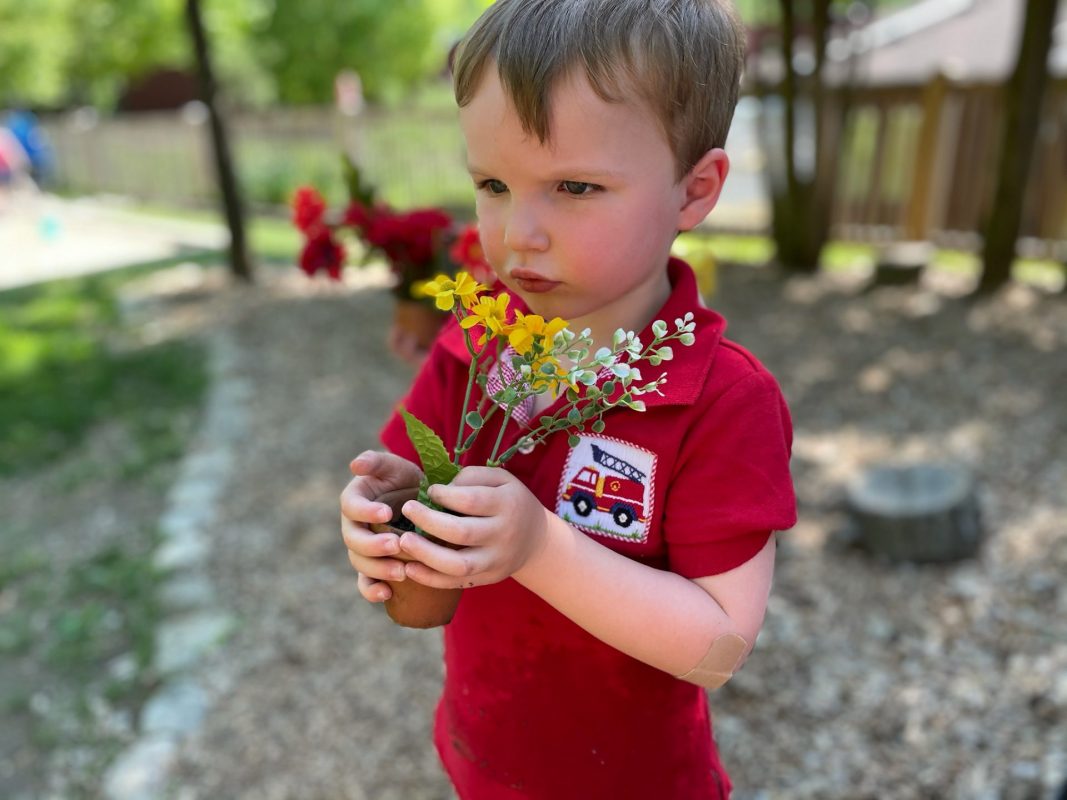


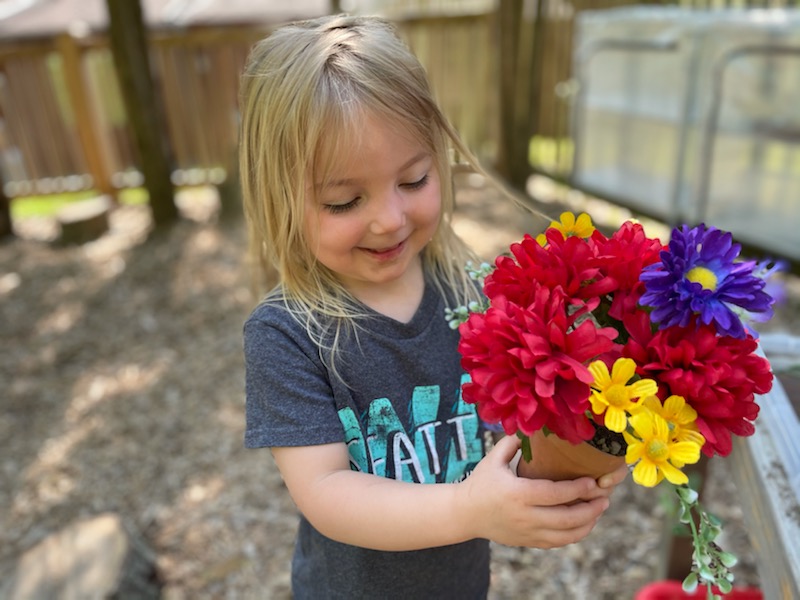

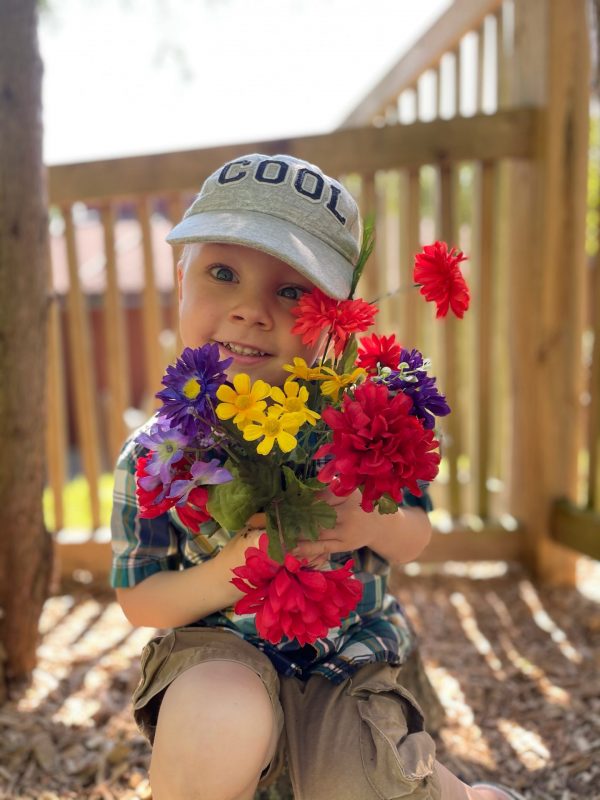

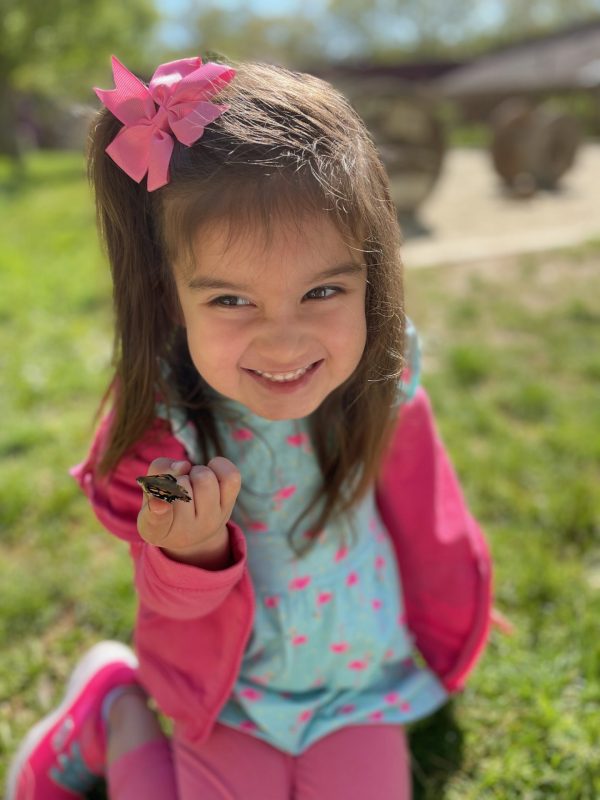
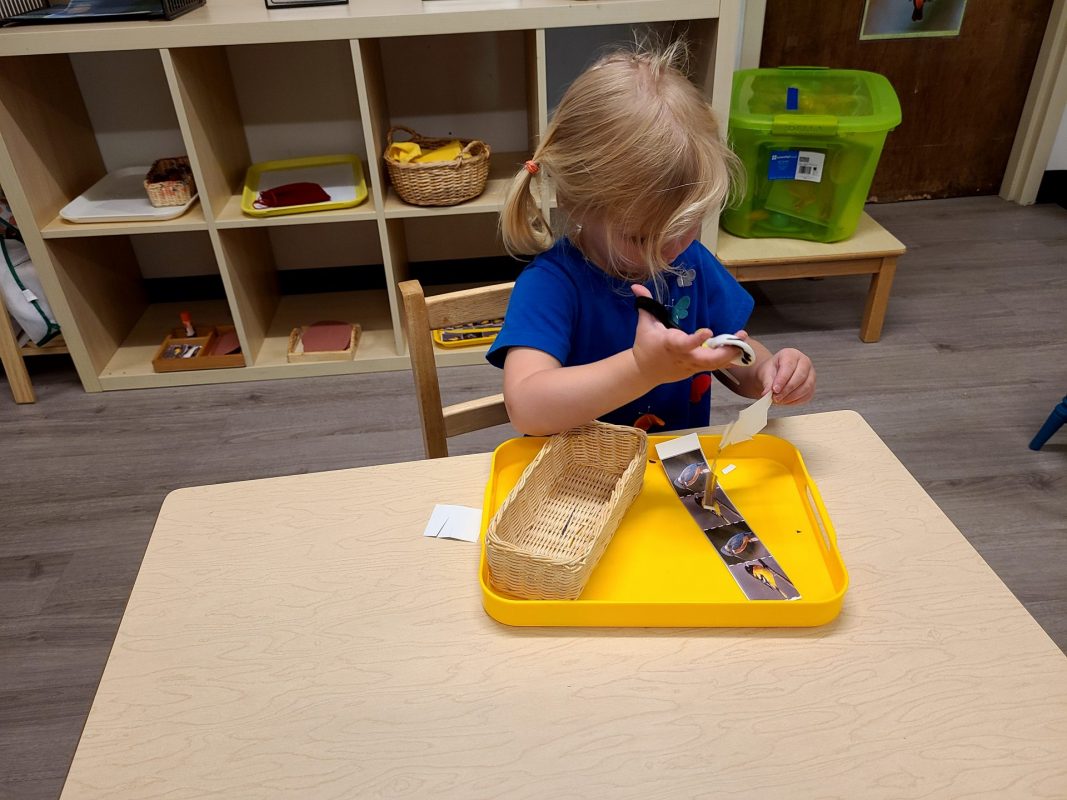
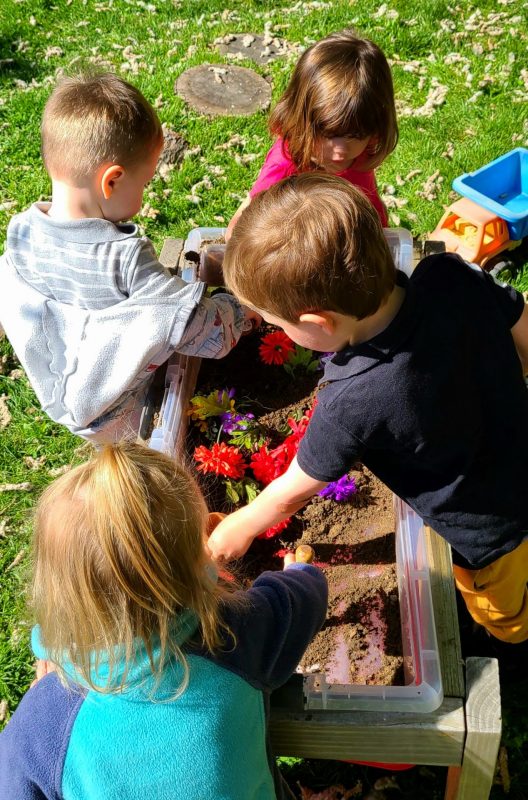
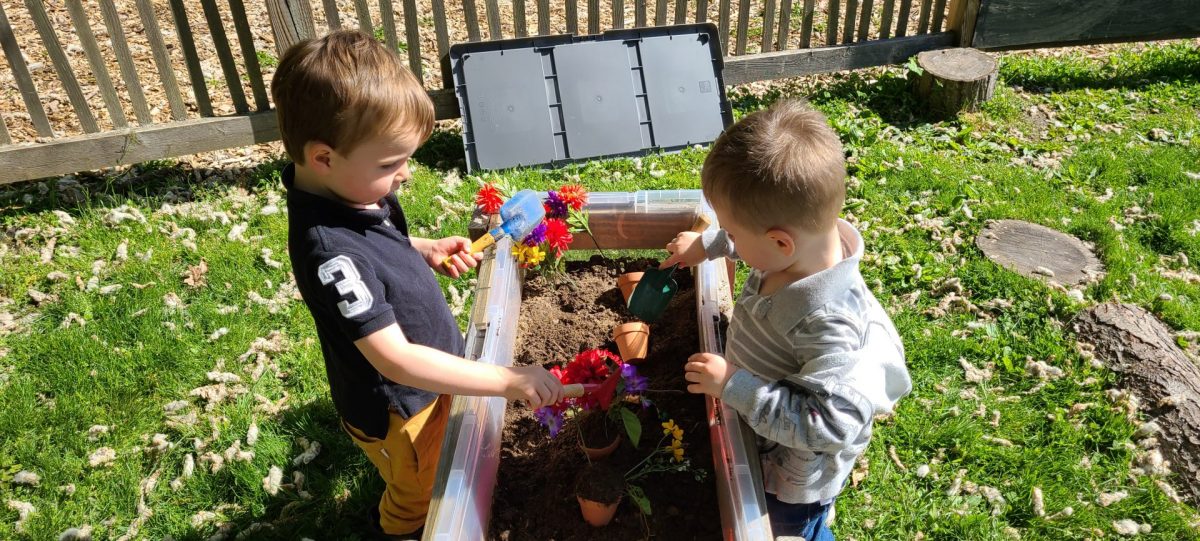
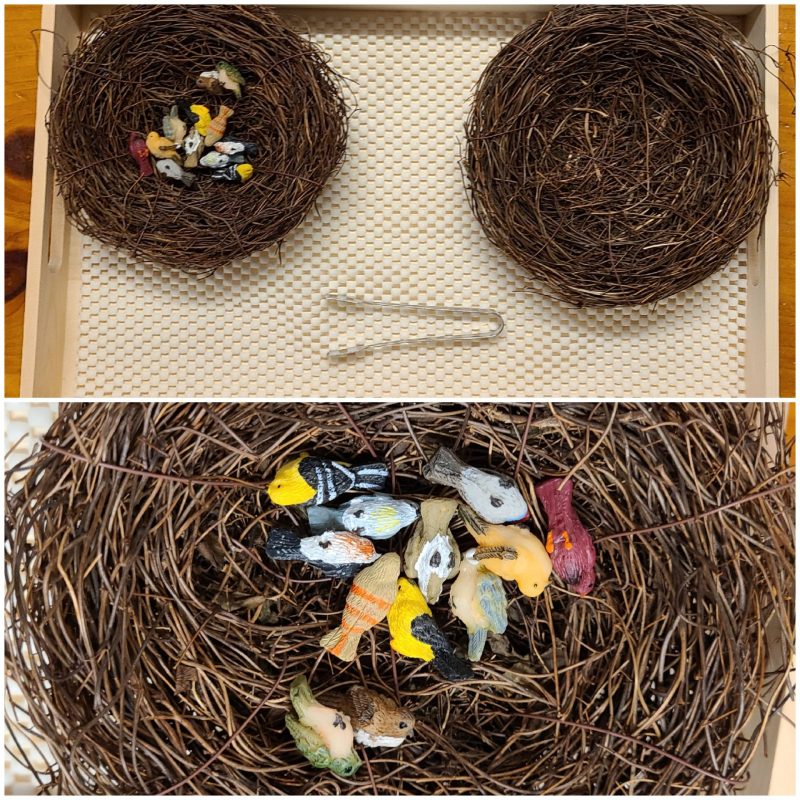
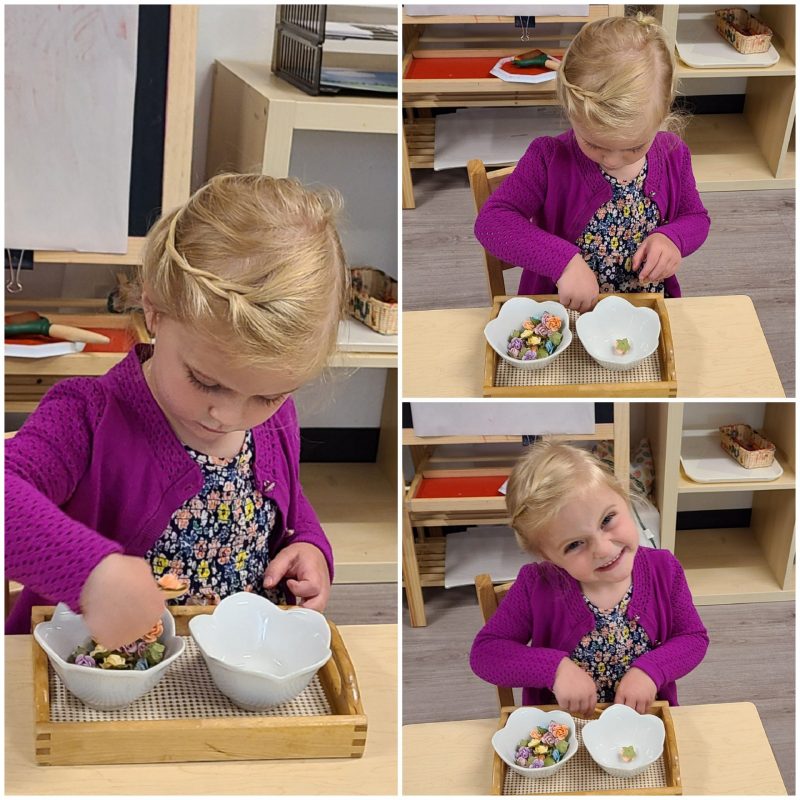
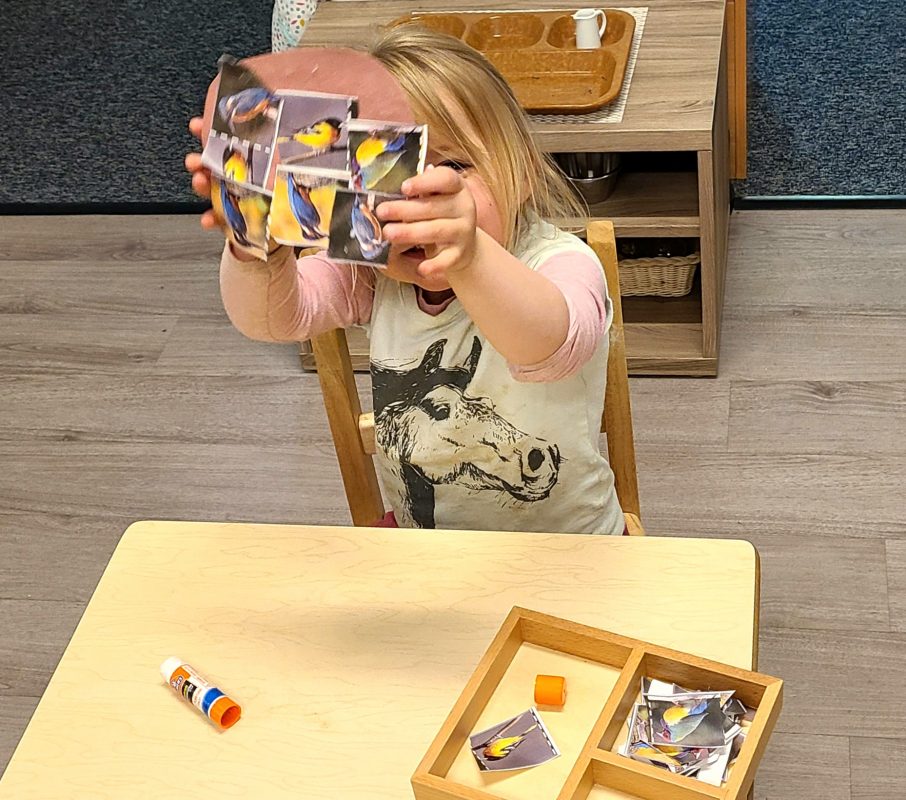
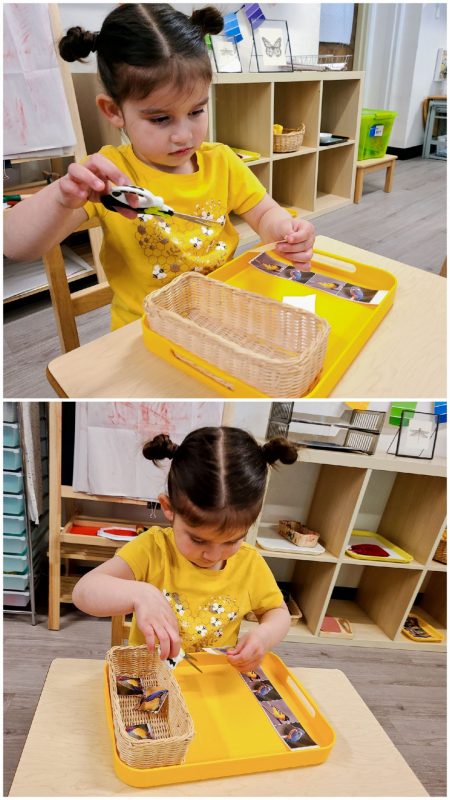
The children continued their exploration with birds and flowers. This week I introduced a lesson showing the parts of a flower. There is even a tray with real flowers and a magnifying glass to have a closer look. Outside we played the silence game. The children closed their eyes and sat quietly to listen to the surroundings. Some of the sounds they heard were birds, trucks, monkeys, an airplane, a dog barking, and a dinosaur.
Some highlights from this week:
We went on a hike through the woods and explored the new trails. Thank you Middle School! The trails look beautiful and are toddler-approved!
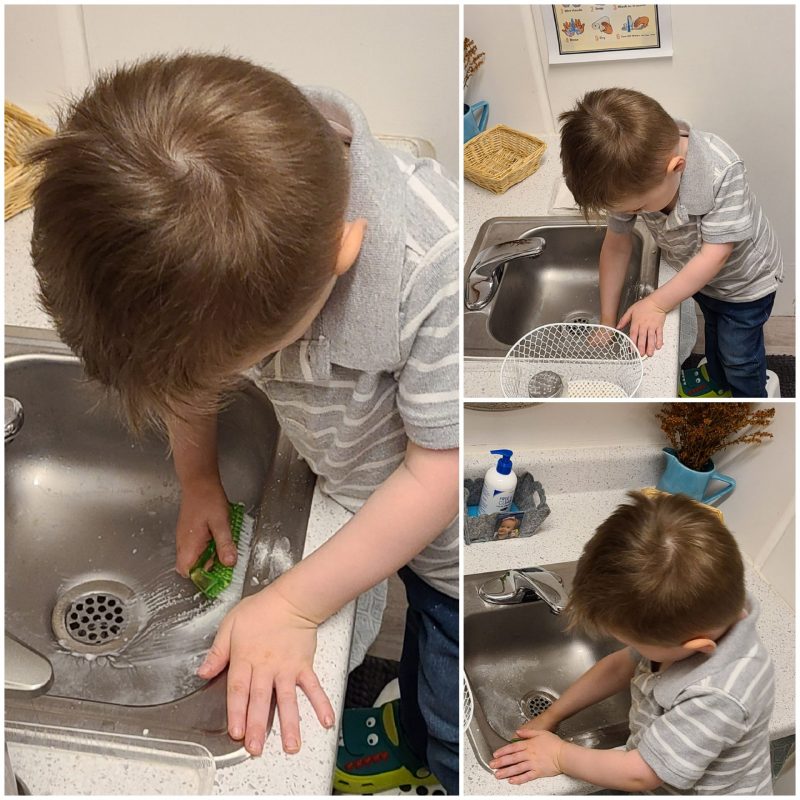
Some children had a lesson on washing windows. Have you noticed how sparkling the windows to our classroom are?
Others had a lesson on hand washing our laundry.
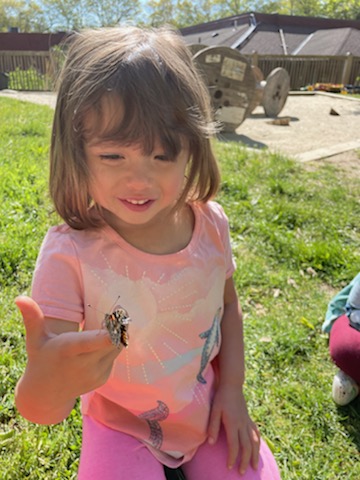
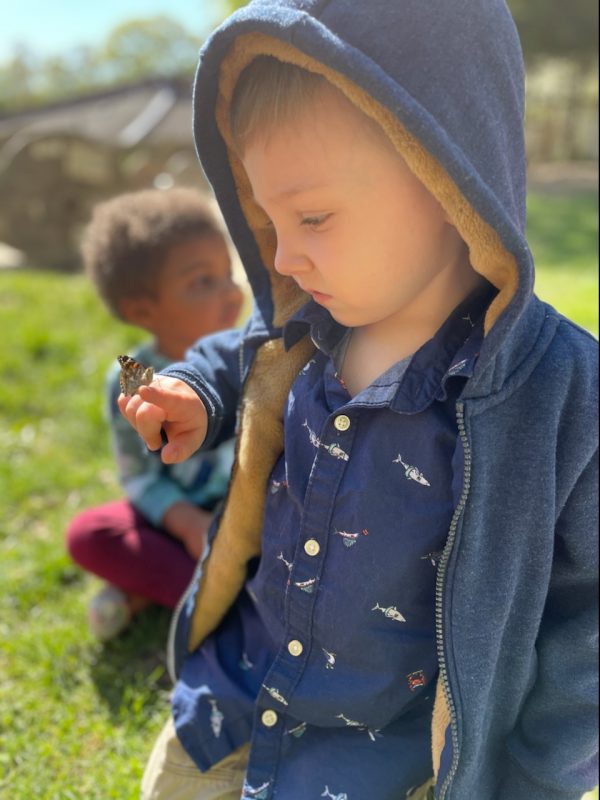
We also released some of our butterflies last week and this week. The children all had a chance to hold one. Unfortunately, two butterflies’ wings didn’t dry properly and due to their bent wings, they will not be able to fly. We are caring for them in the classroom.
Enjoy the beautiful photos!
Mrs. Wilson and Ms. Sara
In Gratitude
One Day. One Purpose.
After twenty-three years as a member of the FWM community, I continue to be humbled, graced, and inspired by you, our Fraser Woods families. Your commitment to Fraser Woods and your generosity to our first FWM Giving Day totaled $17,206!
Thank you for coming together, for one day, in gratitude to celebrate what Fraser Woods Montessori School means to our community.
A note about Finishing the School Year Strong:
Governor Lamont has announced that masks will no longer be mandated for vaccinated people in CT, beginning on May 19. However, both the CDC and the CT Department of Public Health are recommending that schools “Finish Strong” by continuing all of their current mitigation strategies through the end of the school year. In alignment with these recommendations, FWM will continue all of our current COVID protections, including masking, through the last day of school.
Thank you to all for your patience and support. We have made it through an unimaginable year with the help of the whole community. Thank you, all!!
Mrs. Wilson: Symbolic Play






This year’s FWM sweatshirt, designed by the 8th grade class, is available! Order by Monday to receive yours before the end of the year! 2021 FWM Sweatshirt- Order Here!
The past few weeks reminded me of a wonderful children’s book that I love, Roxaboxen by Alice McLerran. This story is about some neighborhood children creating a world using rocks, sticks, boxes, and a dirt hill. This is the childhood I remember and to see these children at play brought back so many fond memories of how childhood used to be.
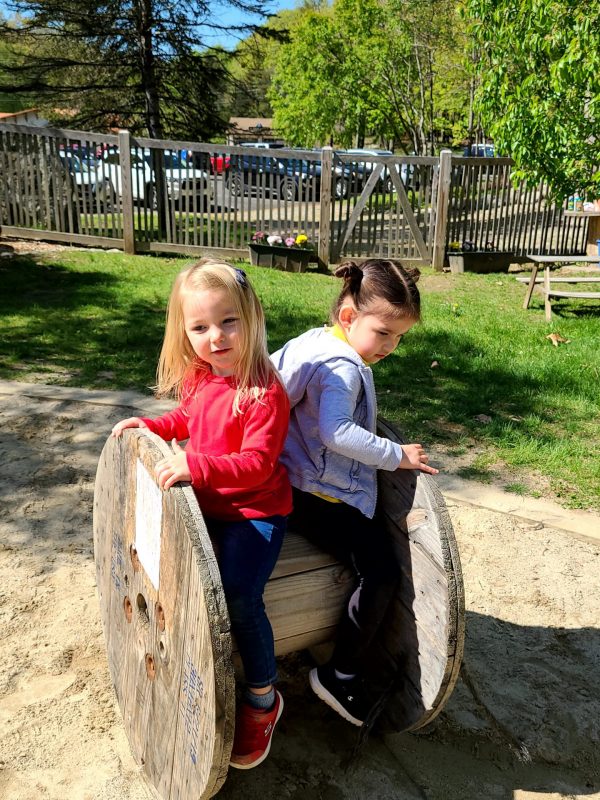
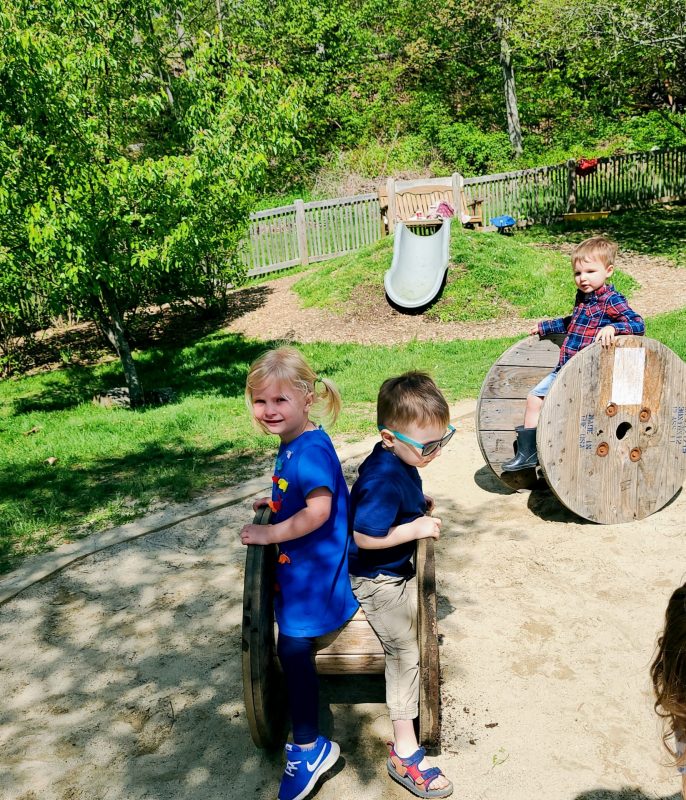
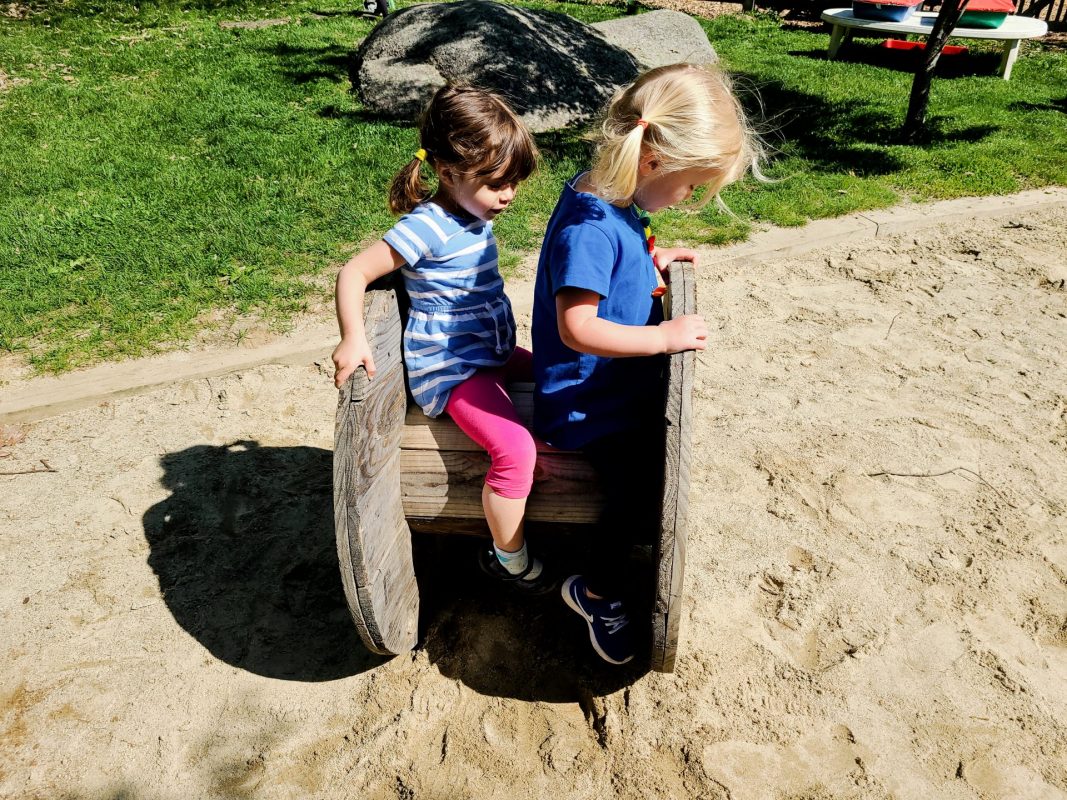
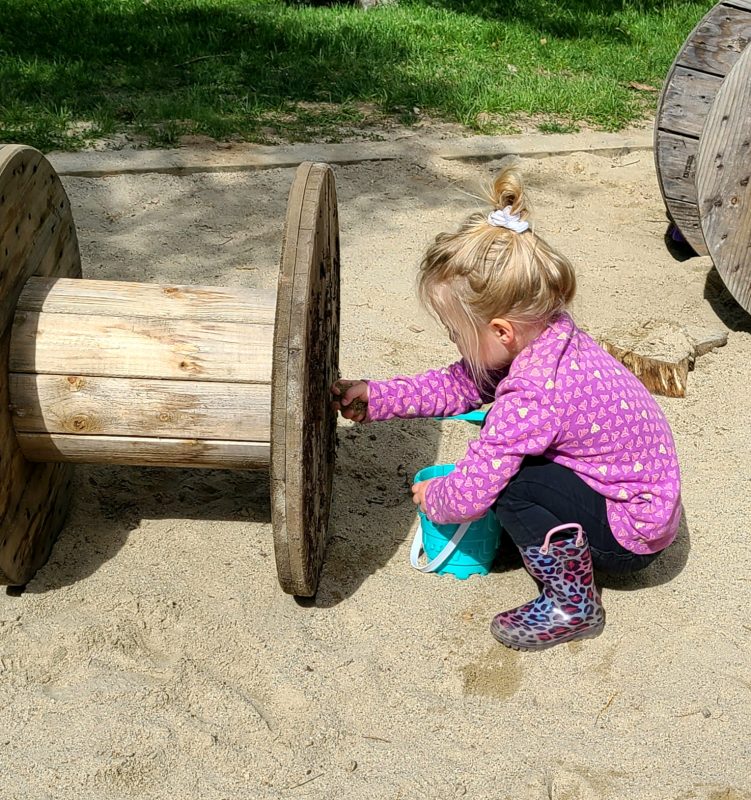
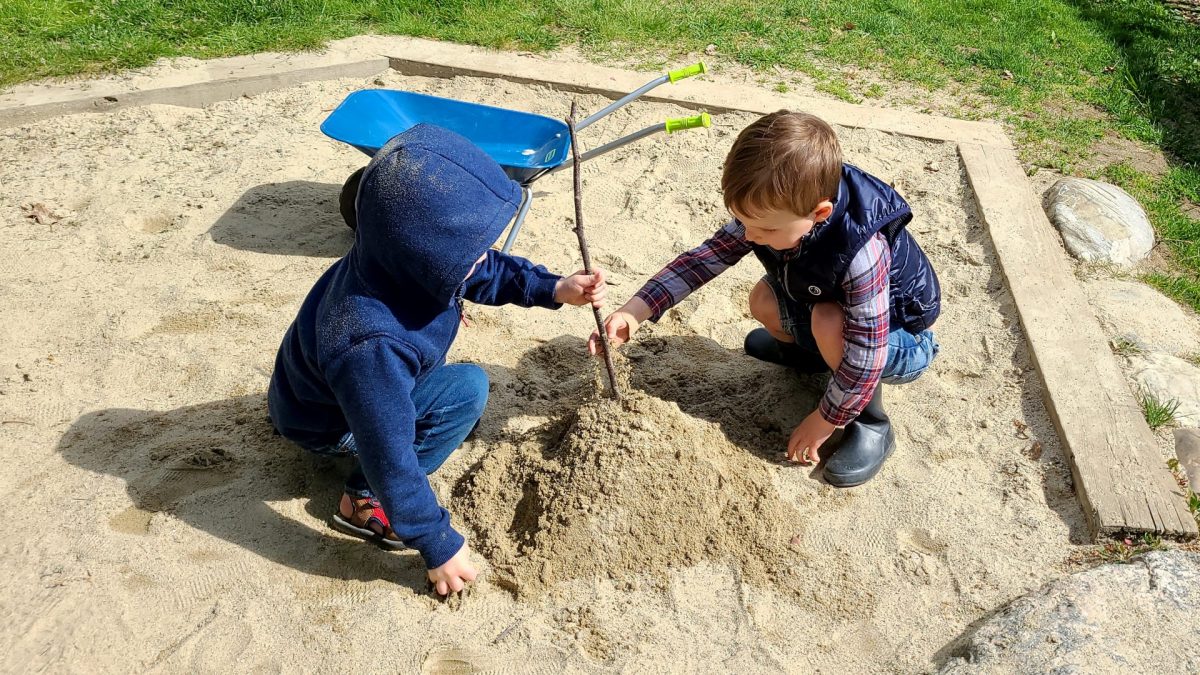
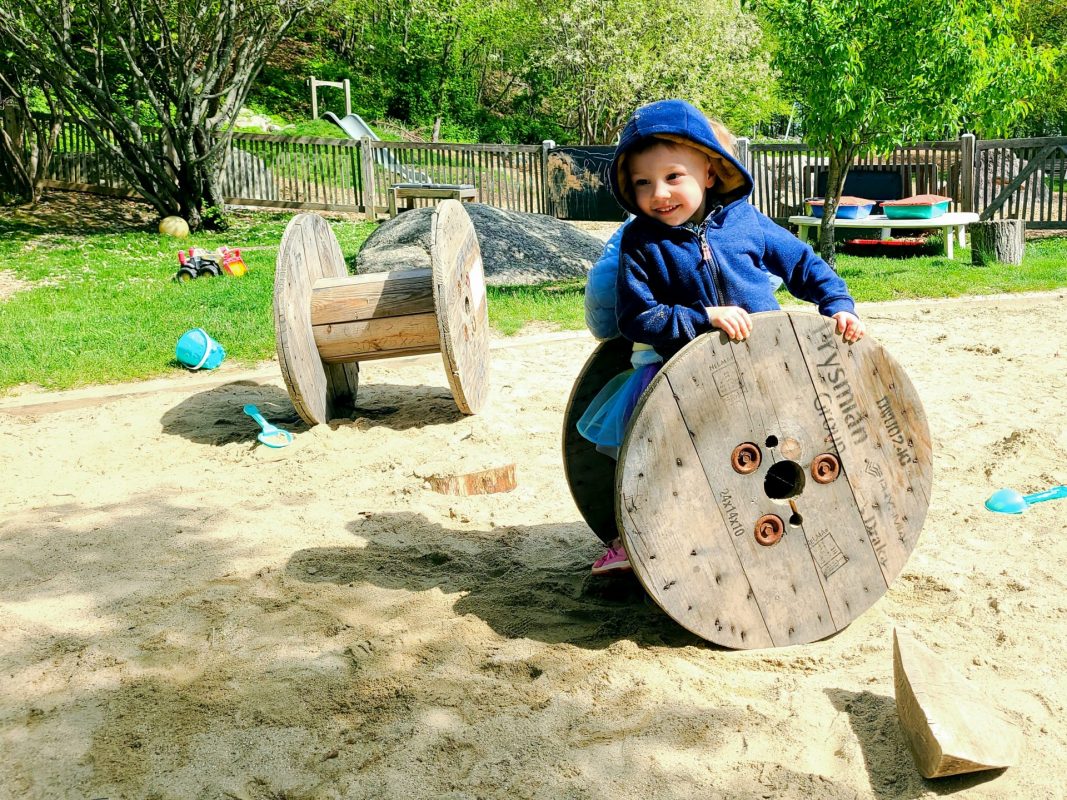
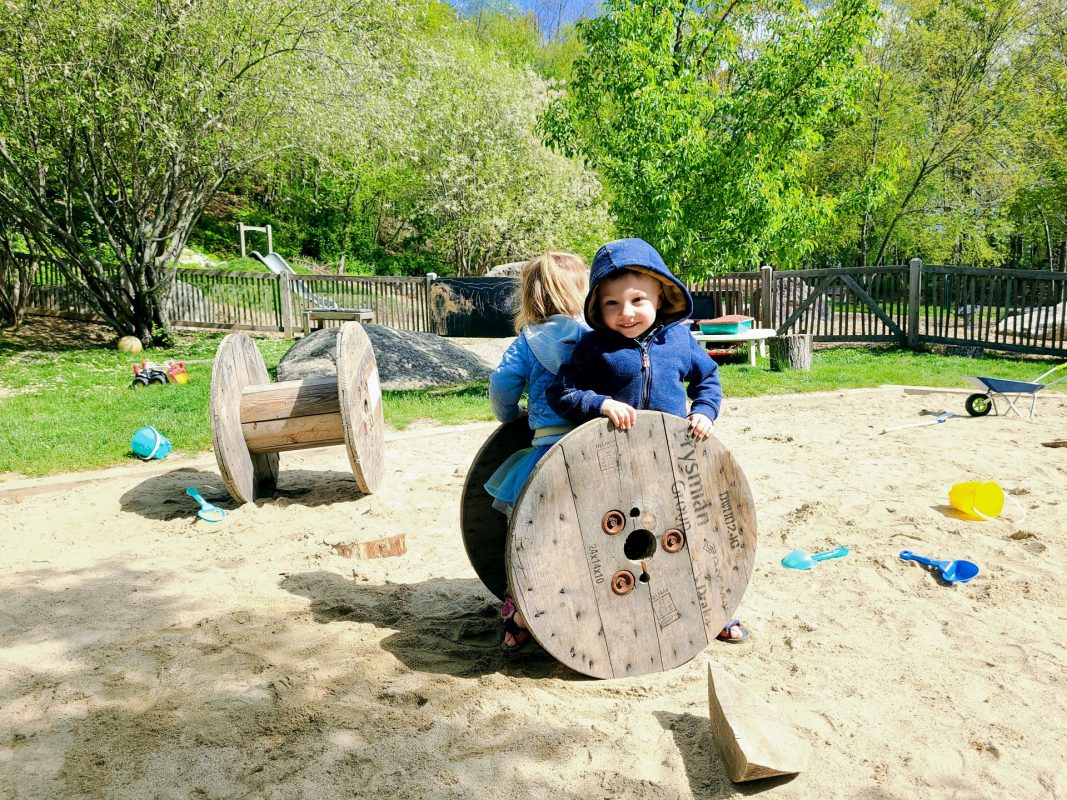
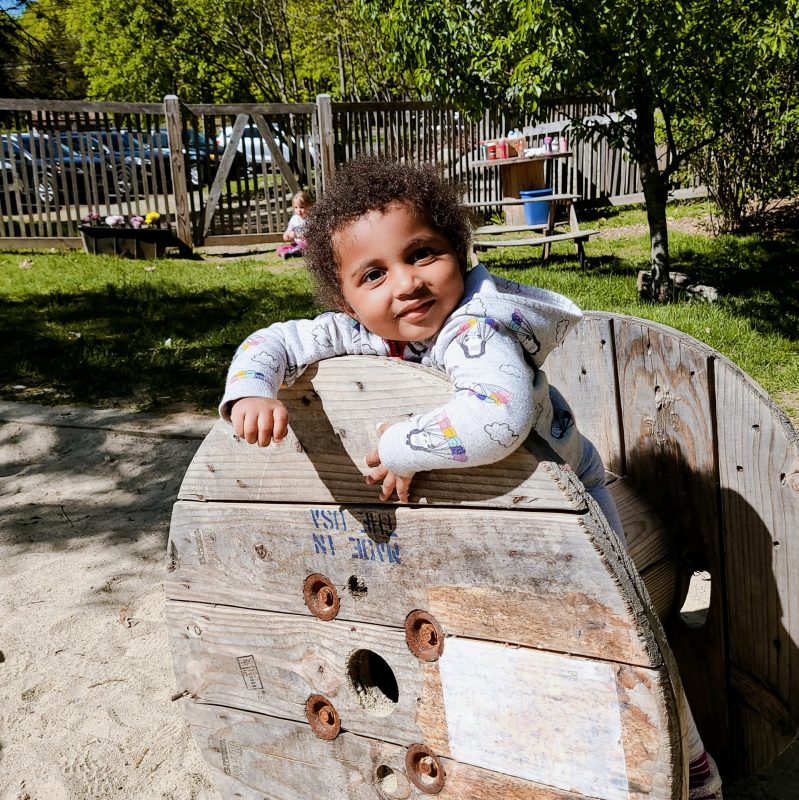
The children have been doing just this outside on the playground. They have been creating games using their imagination, the environment, and some pieces of nature they find. They don’t need the bells and whistles for their props. One friend created a wonderful experience for the others by telling them that the large spools are horses. She invited them to come to ride with her. Next thing you know they were all riding horses and collaborating together on the story that they were part of. They even took wonderful care of these horses by collecting food (sand) in a bucket to feed the horses. Sometimes the horses did get a little wild as the children would roll off of them. It is really an experience to watch them become so creative in their play. Another day the children were making a giant birthday cake and adding candles (sticks) on top. When they finished baking the cake they even sang Happy Birthday.
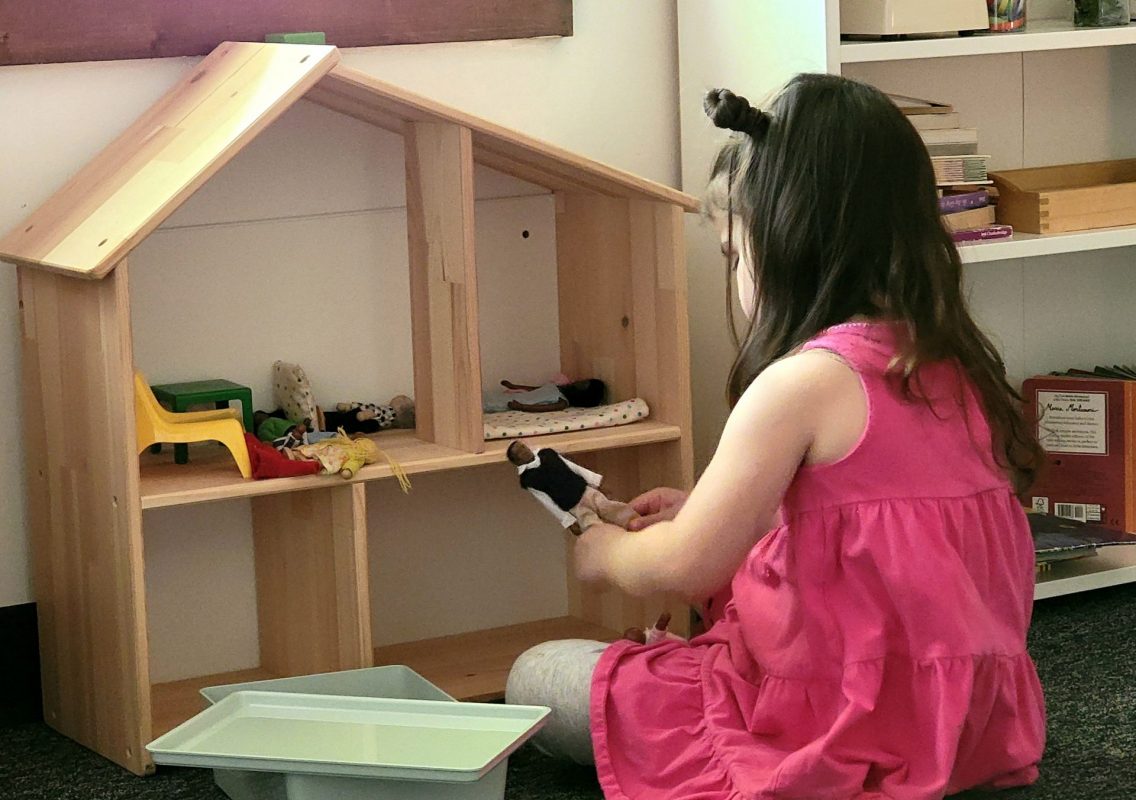
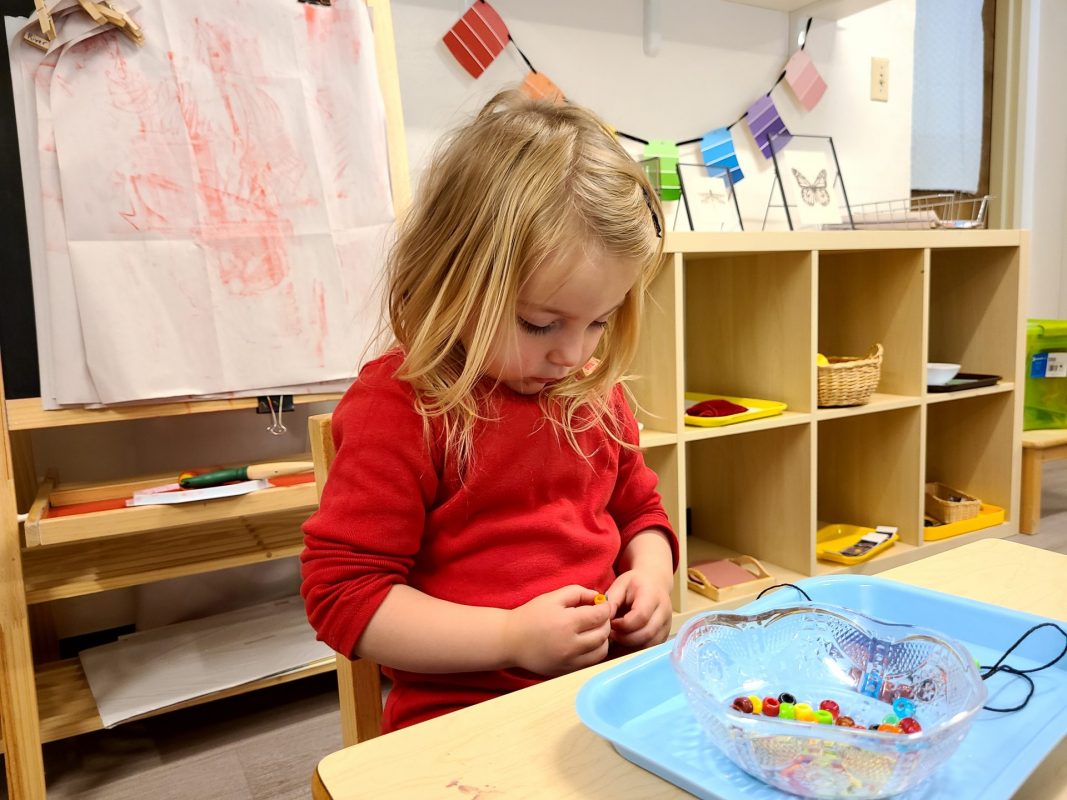
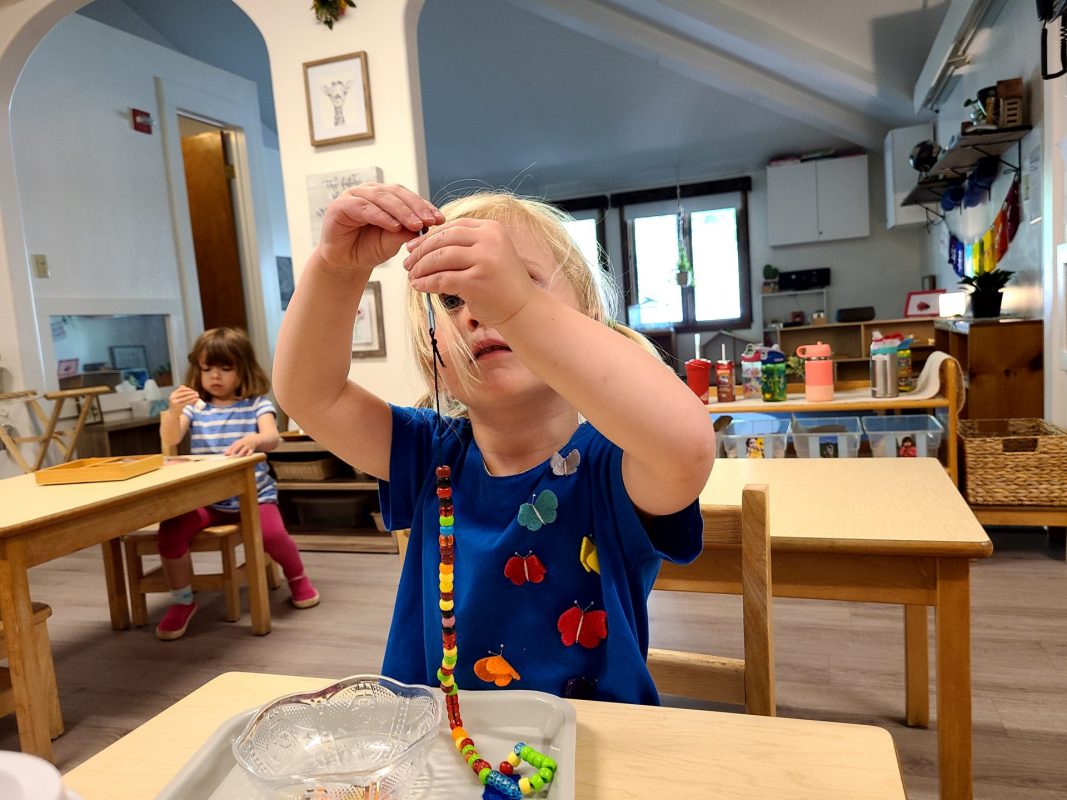
The dollhouse has become a popular item in the classroom. There is a diverse group of people they can use. I like sitting back, listening to them use different tones for each character.
Children at this age use their imagination based on real experiences for symbolic or pretend play. They understand these experiences more than they would understand make-believe. Sometimes it is hard for them to distinguish what is real vs fantasy. This is why the classroom experiences are child-size with real materials and work. “Play Is The Work of the Child” – Maria Montessori
Mrs. Wilson and Ms. Sara
Delicious Science in Upper Elementary
-
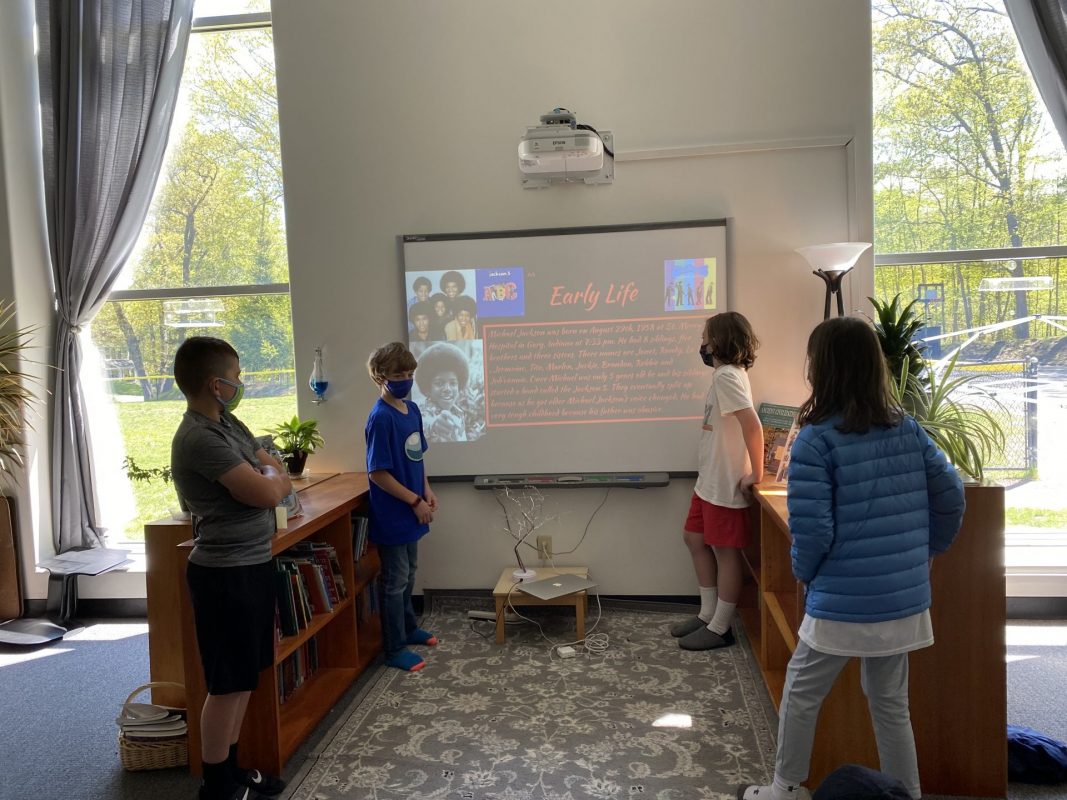
- Research presentation
-
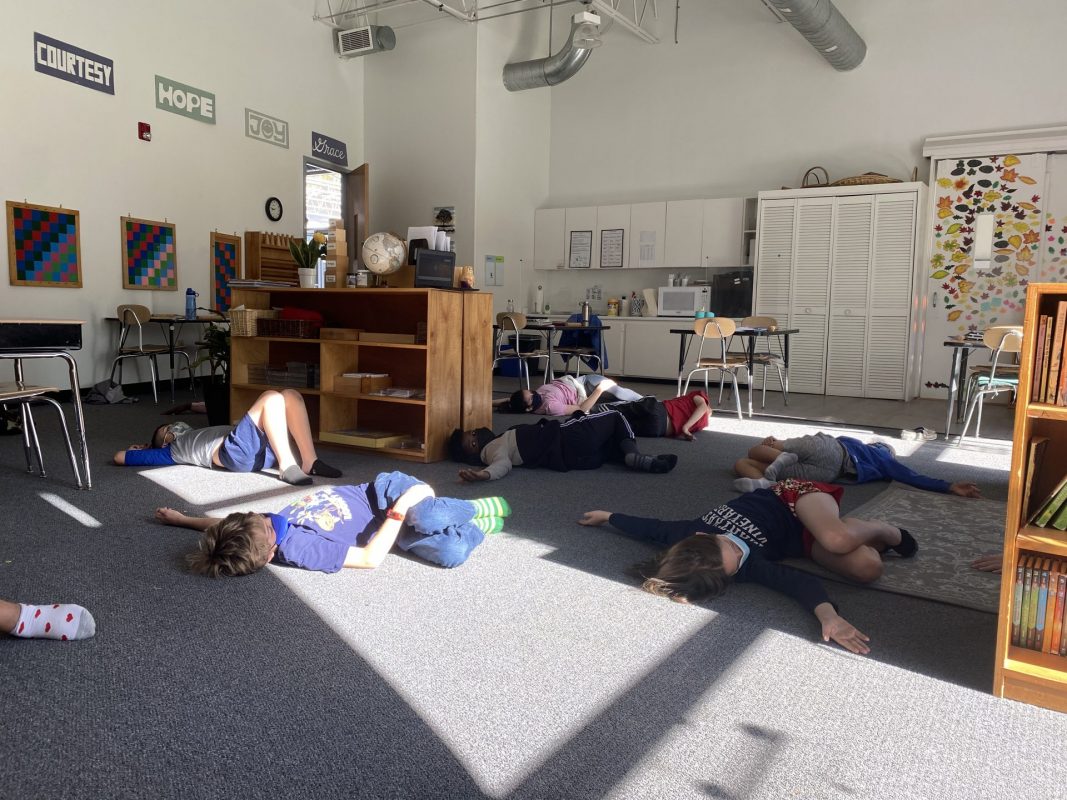
- Morning meditation

This year’s FWM sweatshirt, designed by the 8th grade class, is available! Order by Monday to receive yours before the end of the year! 2021 FWM Sweatshirt- Order Here!
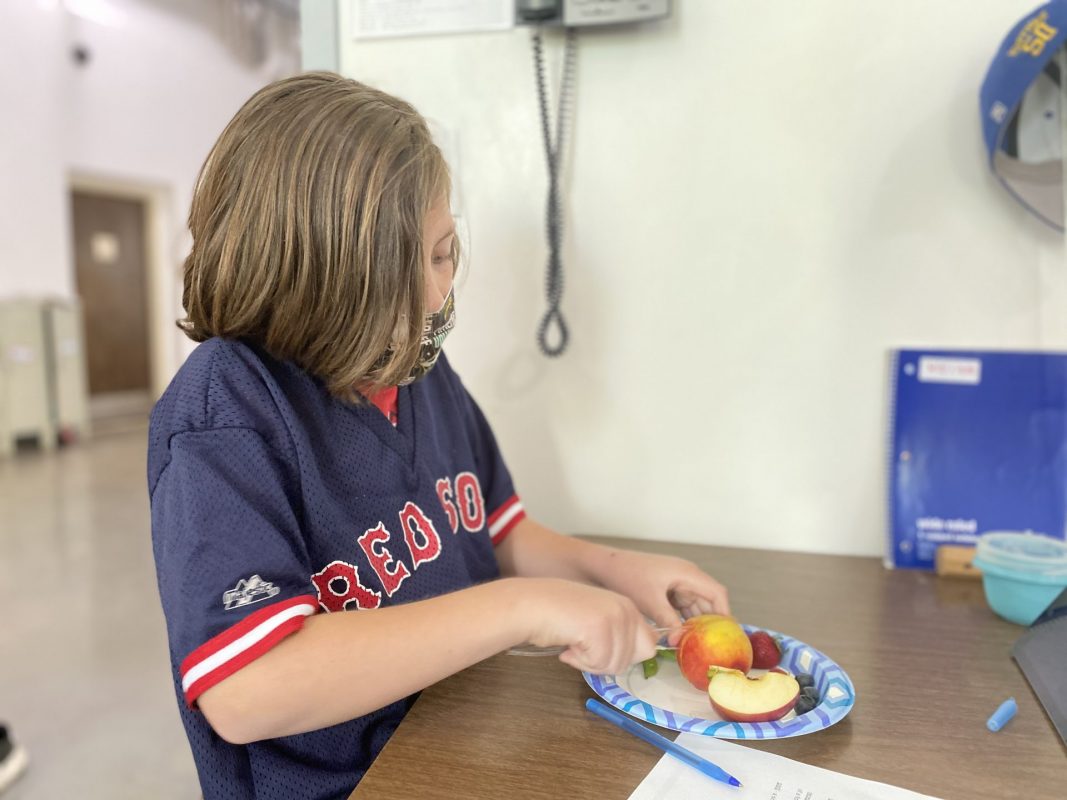
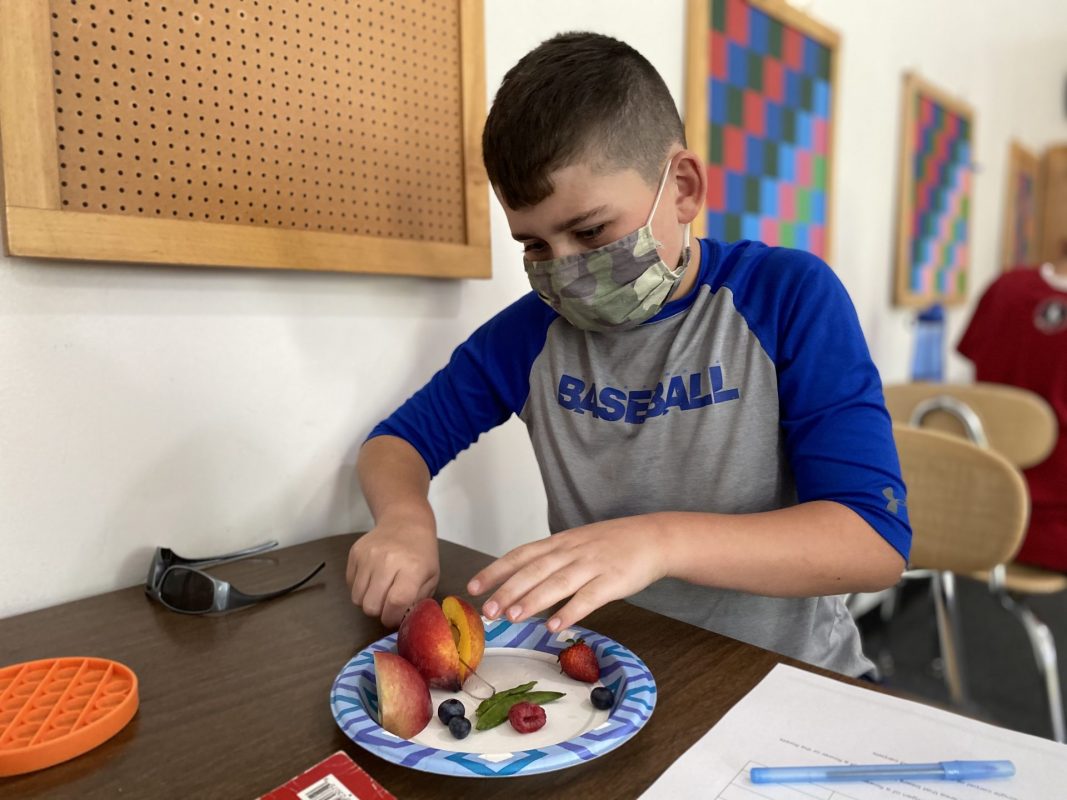
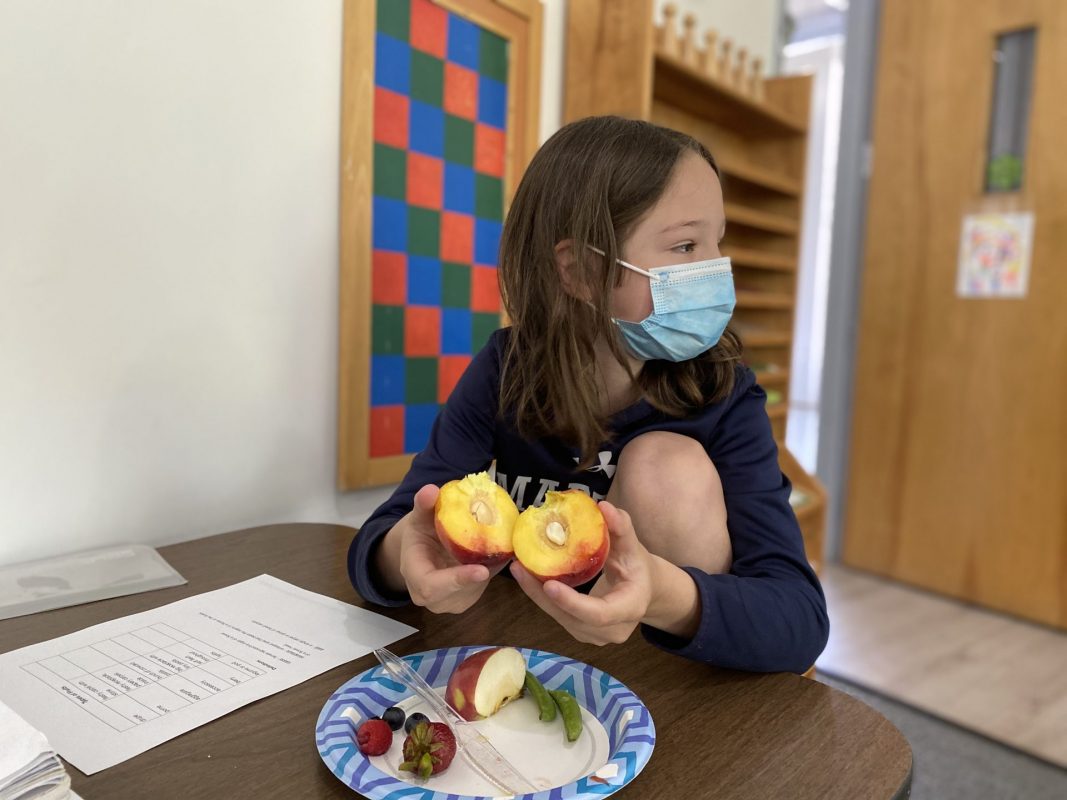
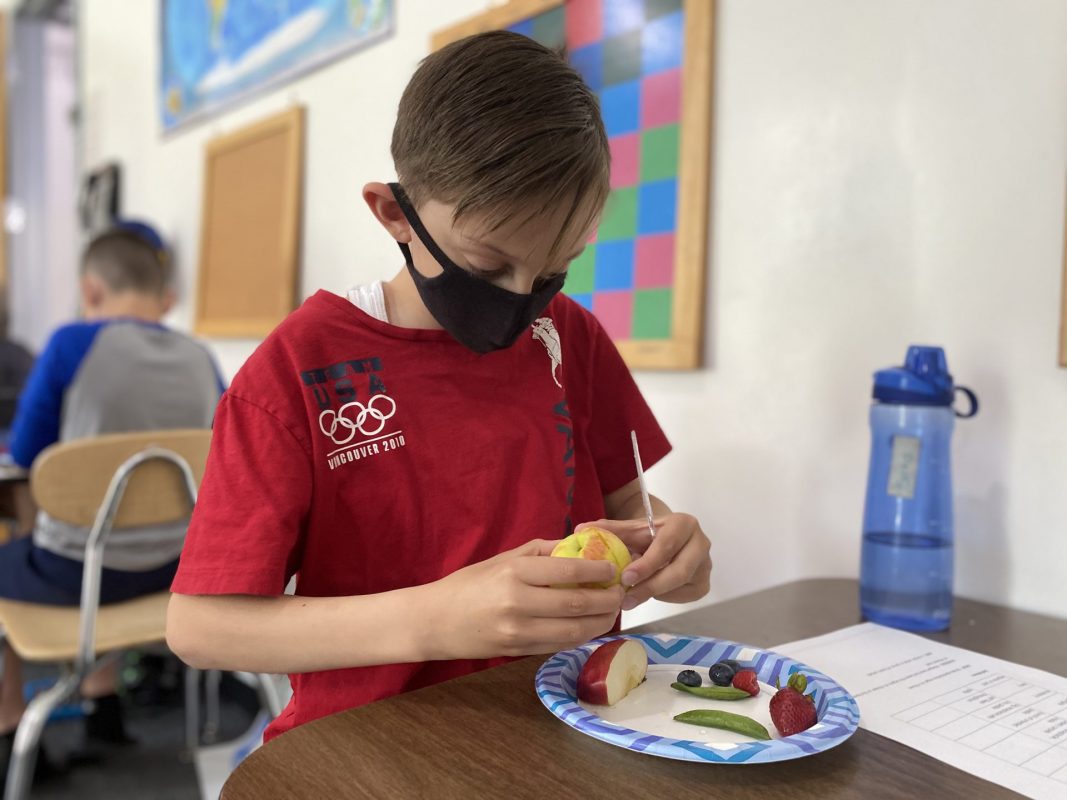
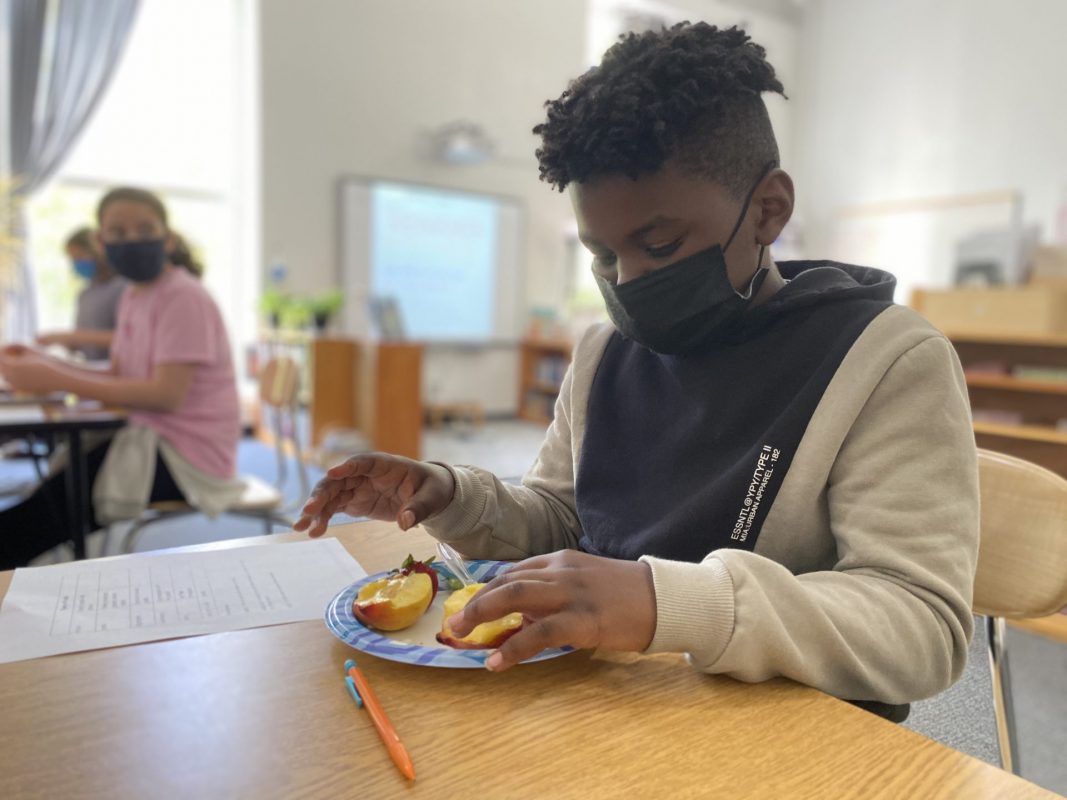
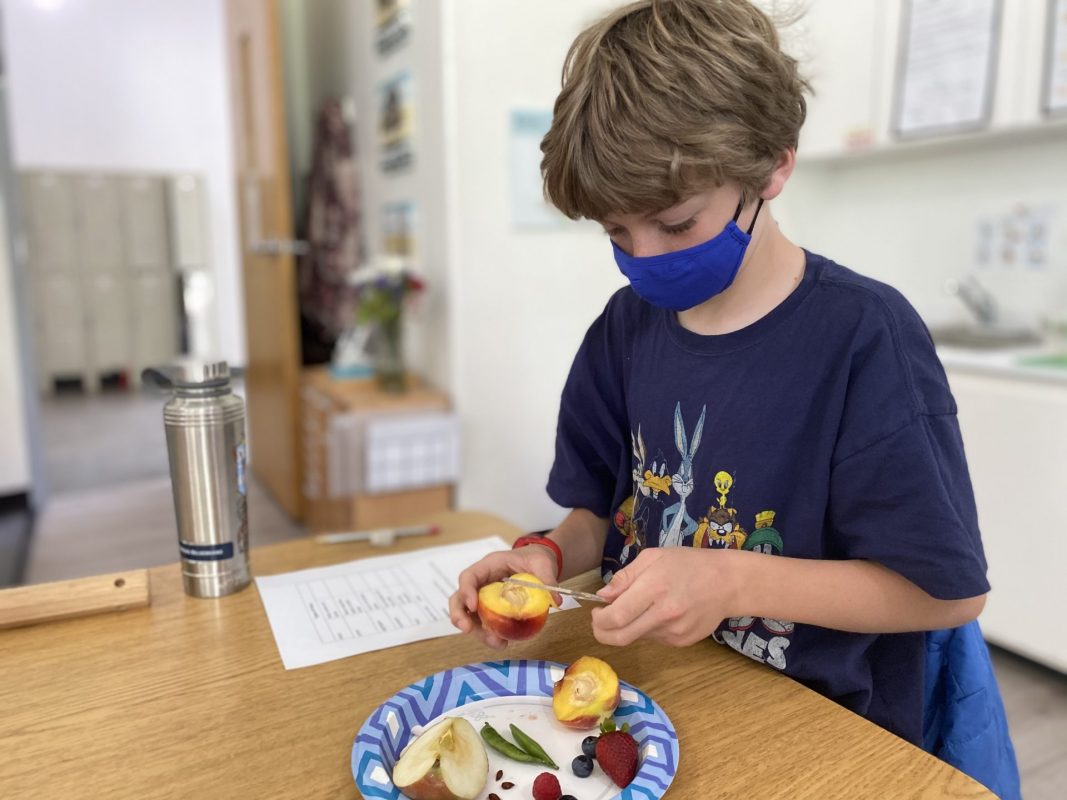
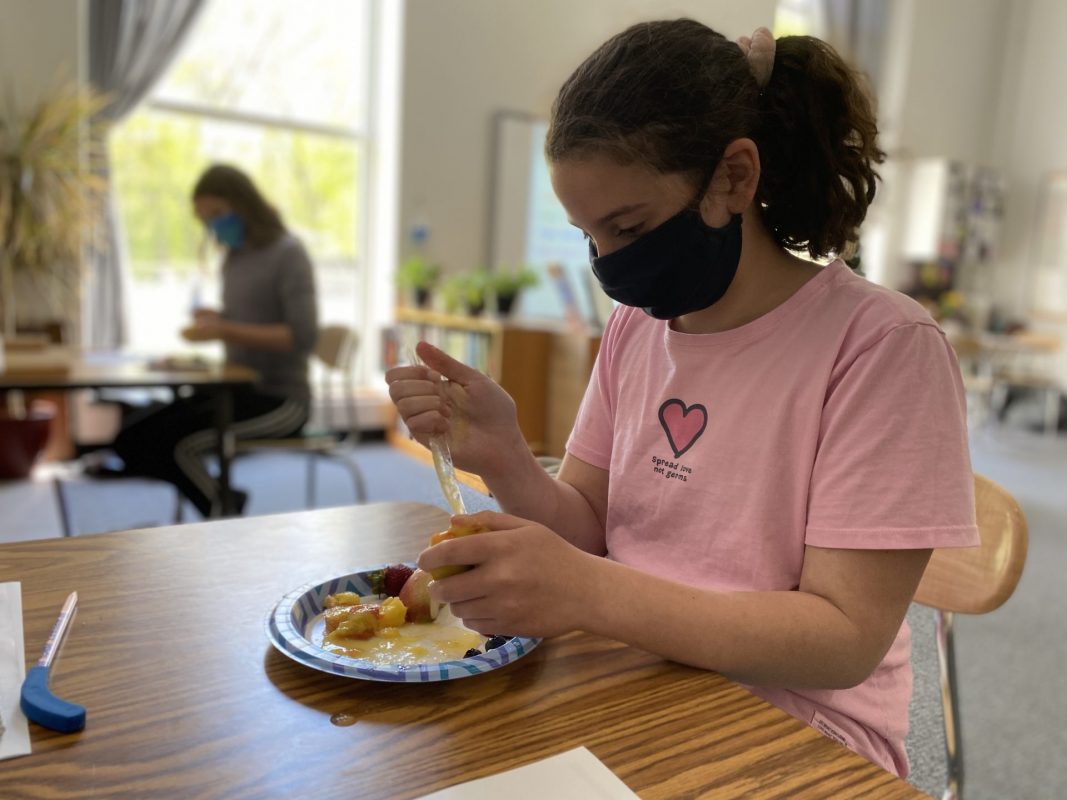
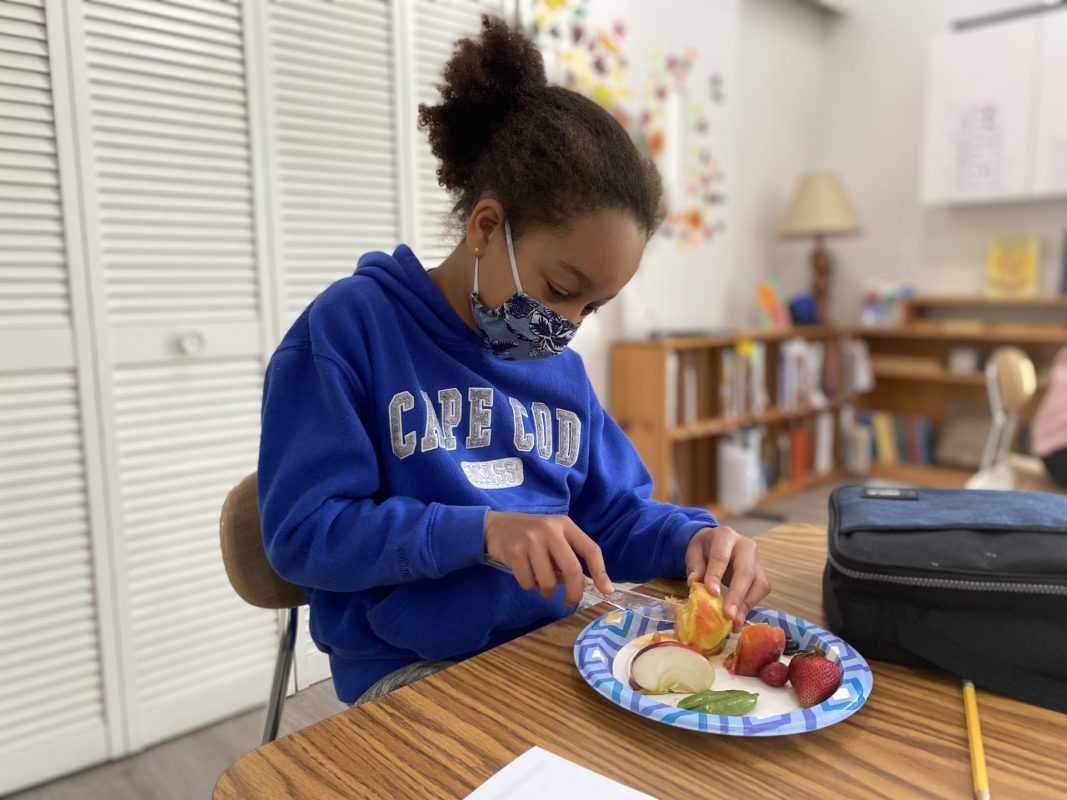
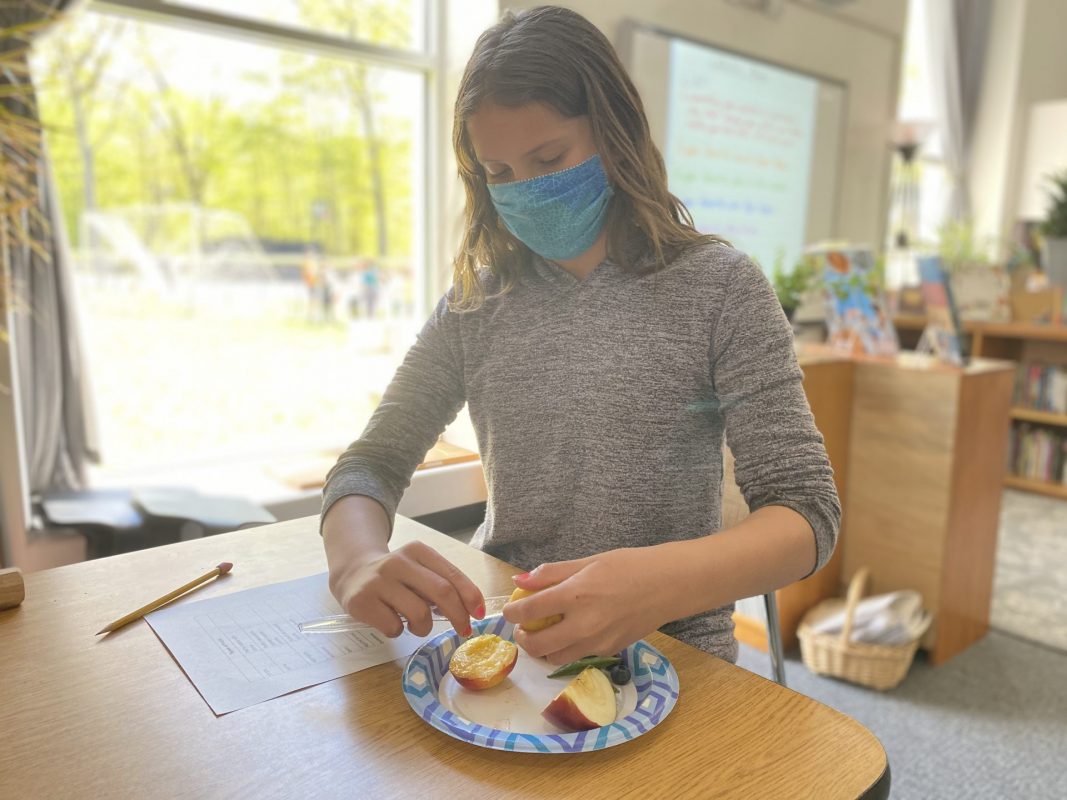
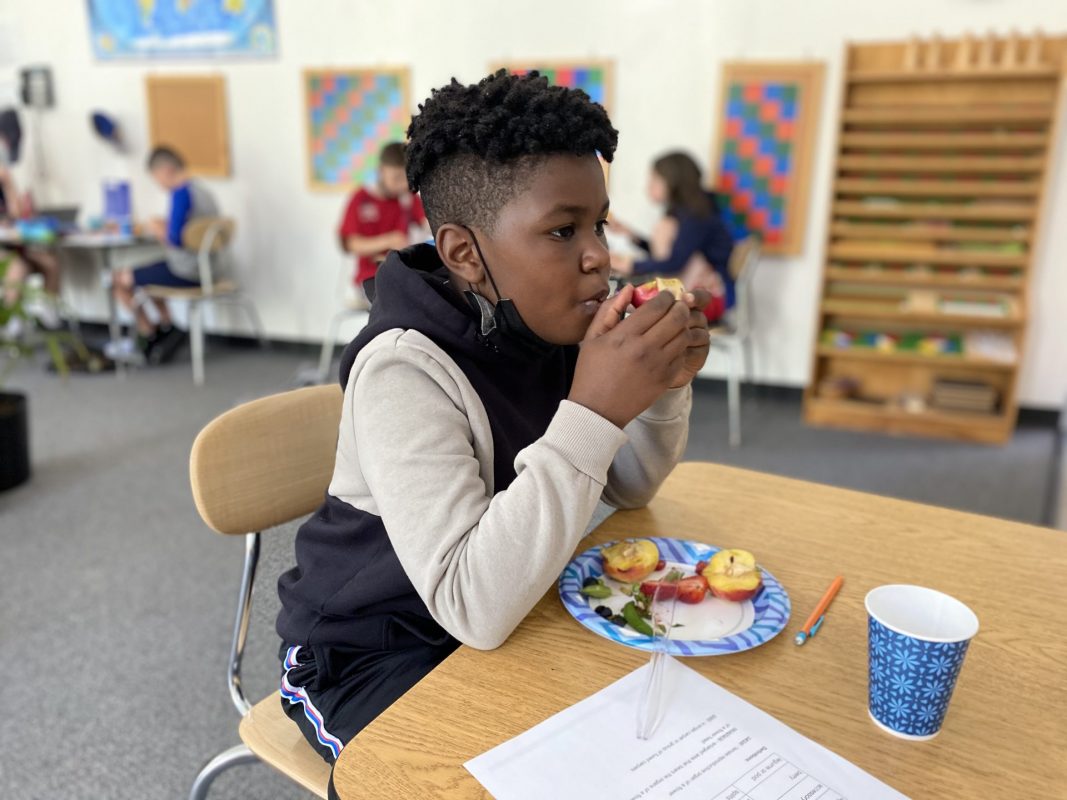
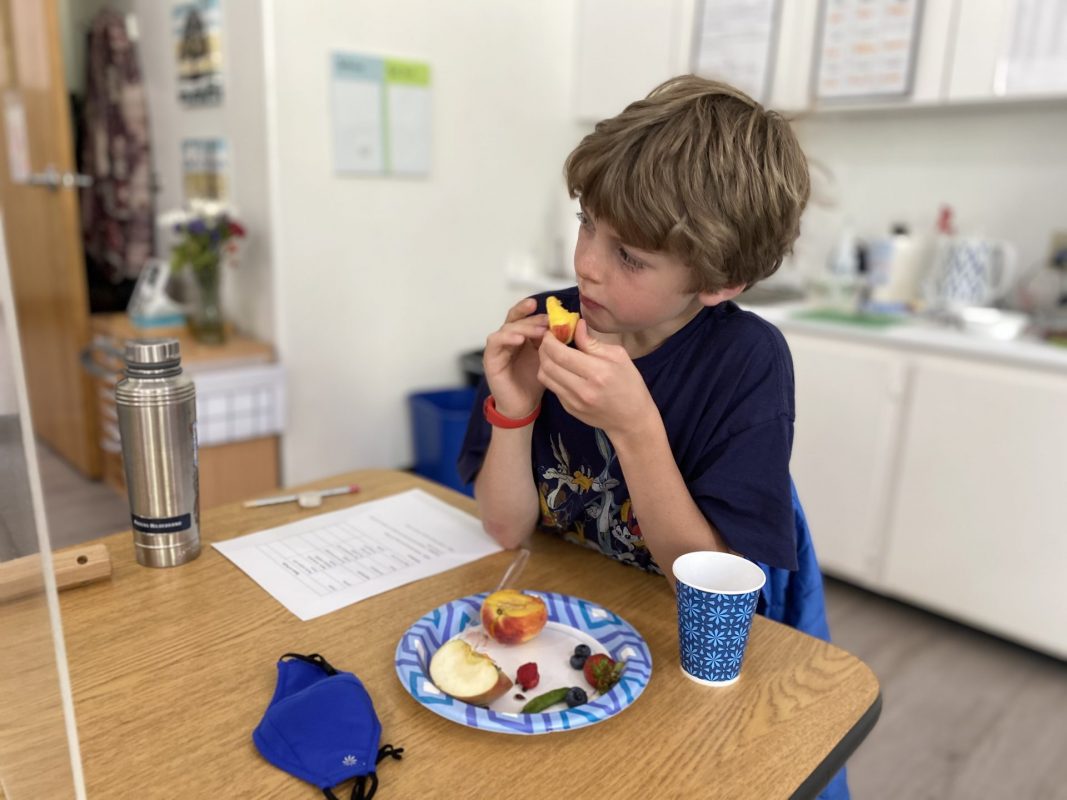
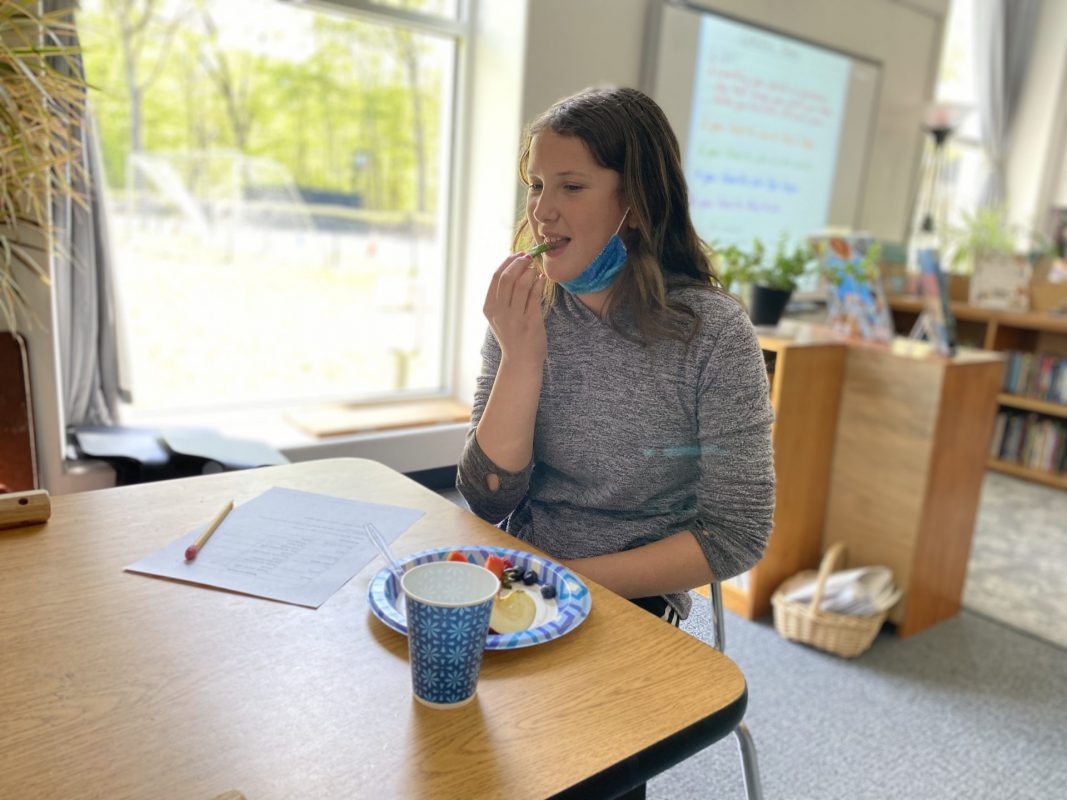
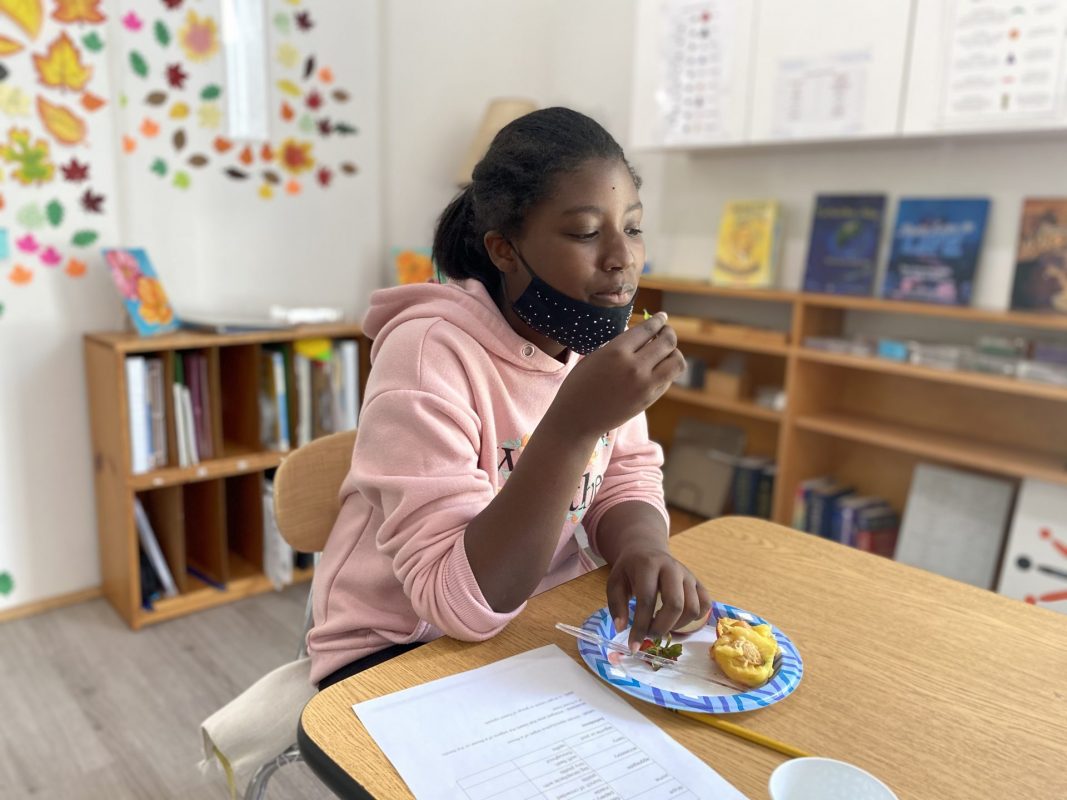
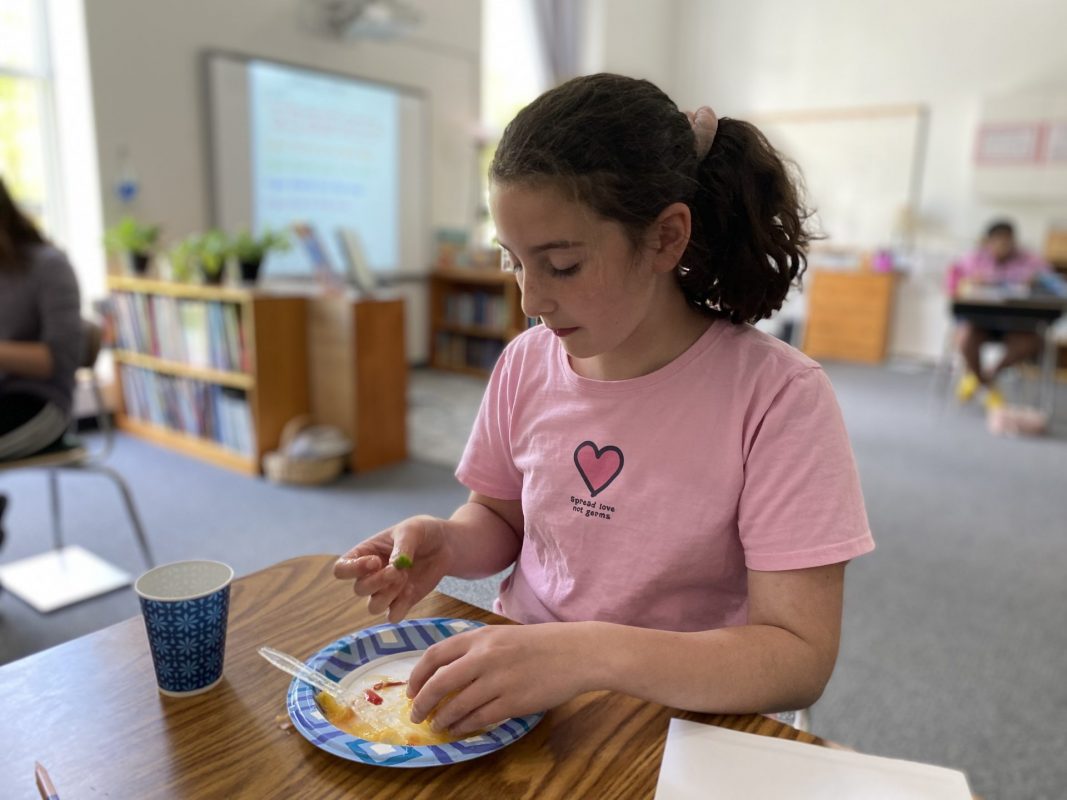
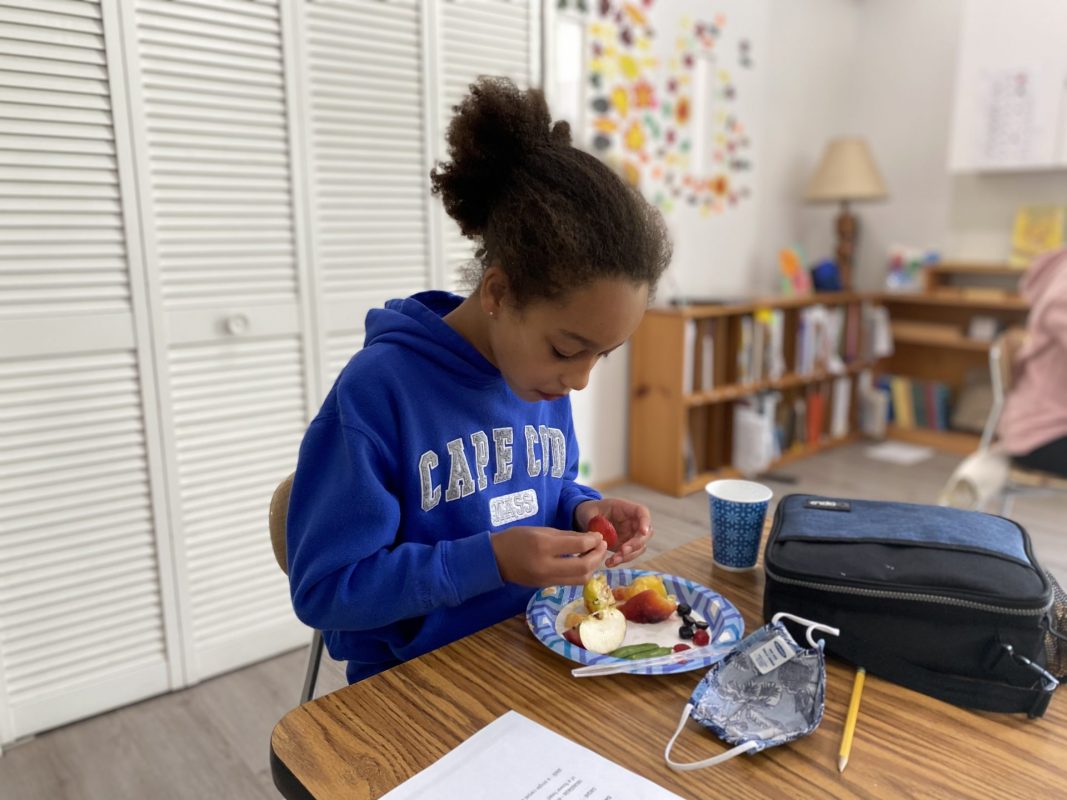
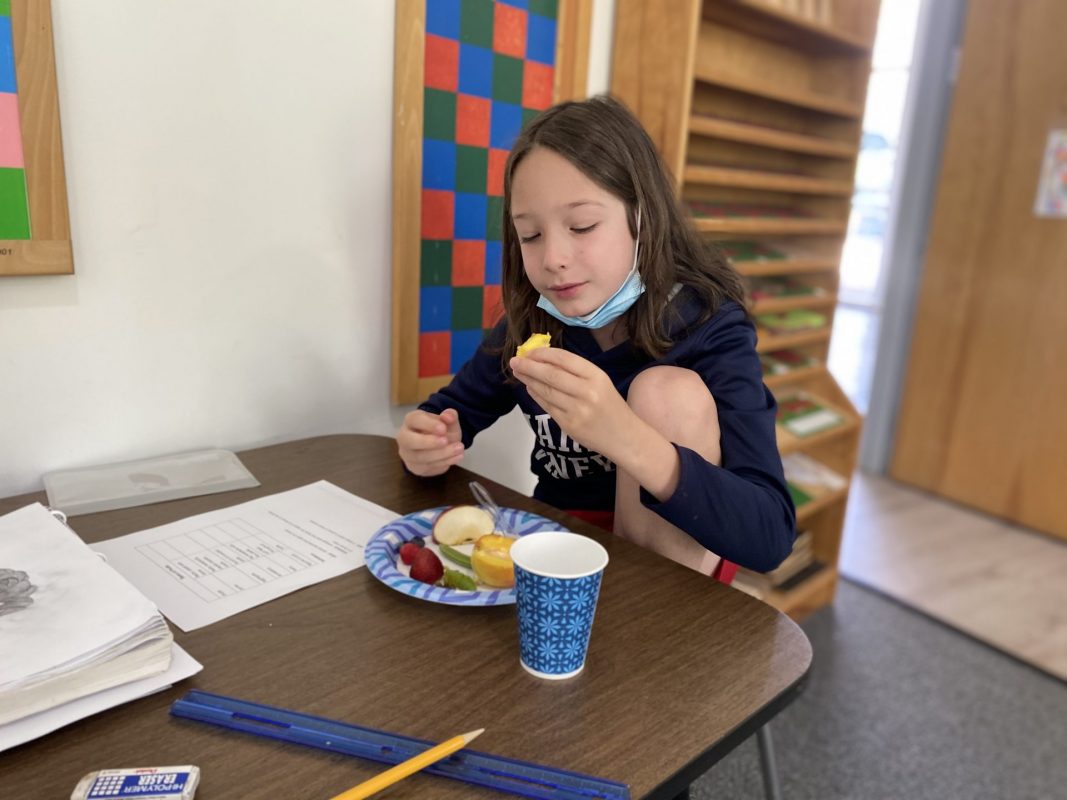
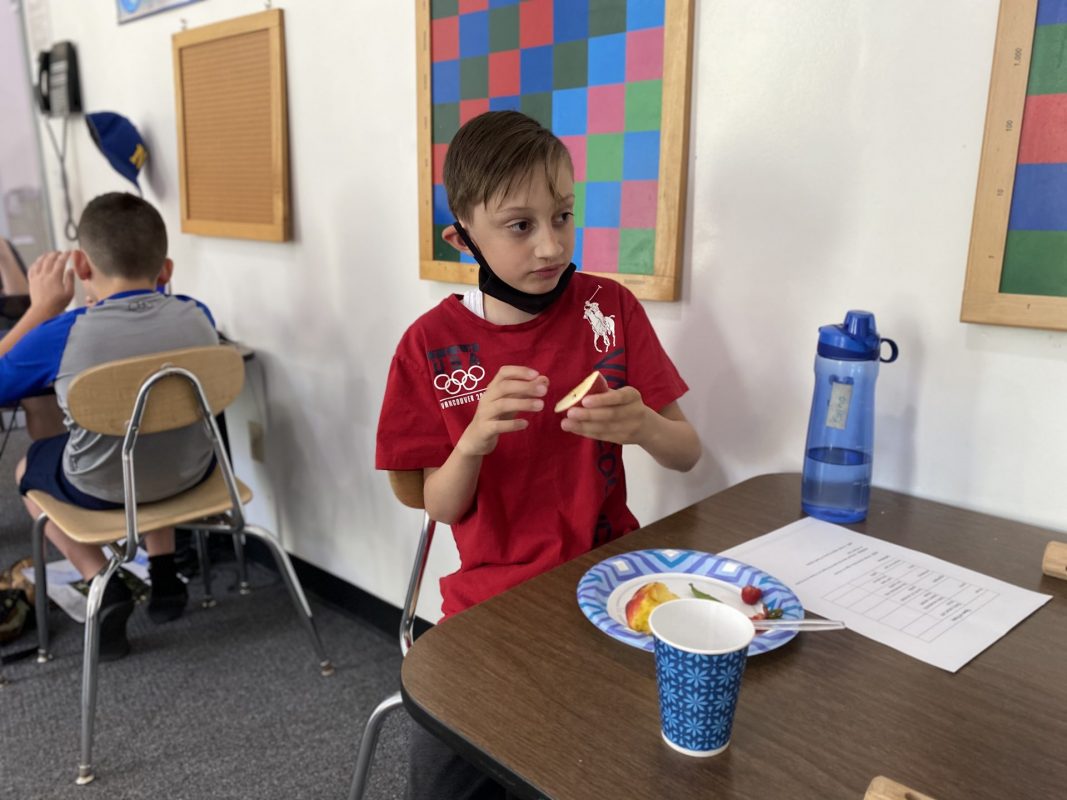
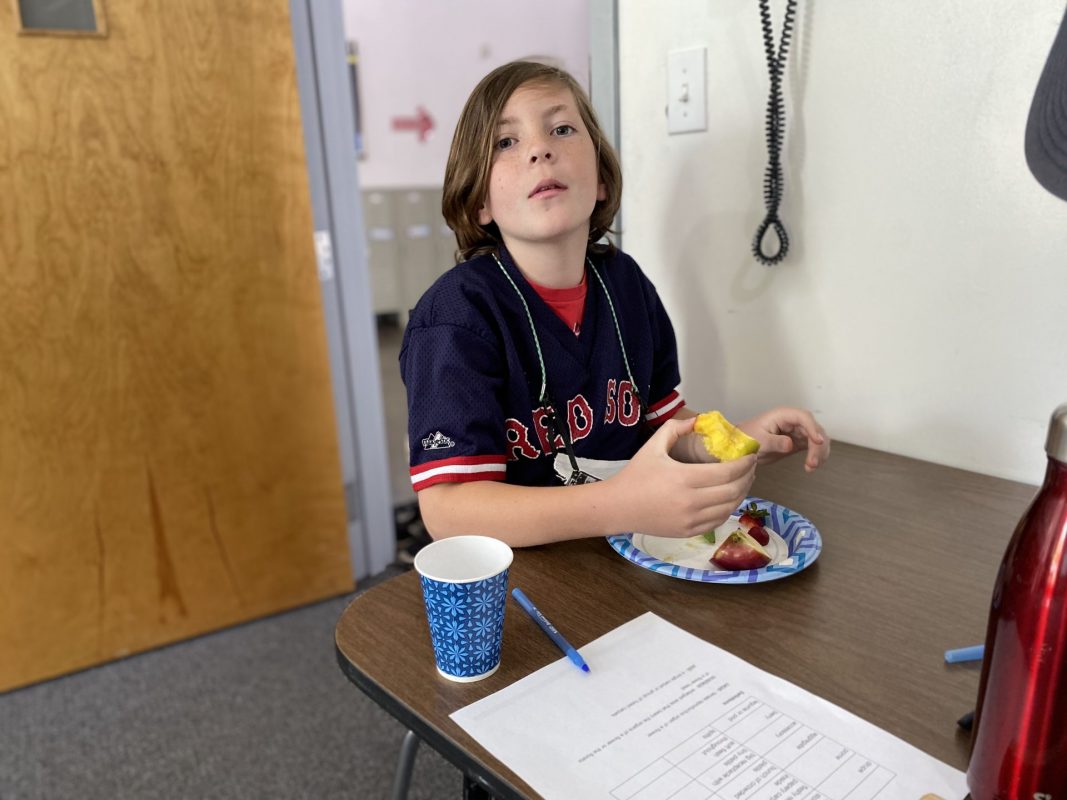
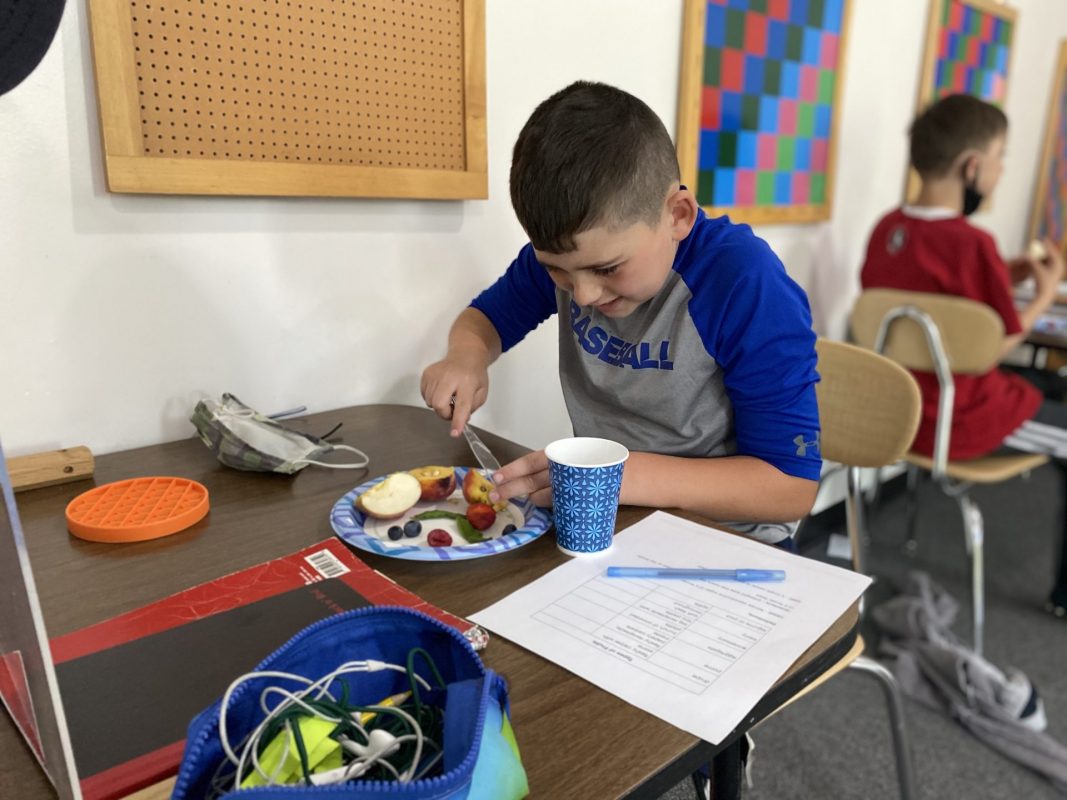
The favorite lesson of the week (and according to one student, their favorite lesson of the year) focused on sorting different types of fruit based on their seeds. During this biology activity, students had to examine five different fruits and identify if they were a drupe (peach), pome (apple), aggregate (raspberry), accessory (strawberry), berry (blueberry), or pod (pea). They thoroughly enjoyed this activity and especially enjoyed eating the fruit after the identification activity was completed.
In geometry, fourth years learned to find the area of a right angle triangle. They did this by first constructing a square out of two congruent right triangles, finding the area of the square, and dividing it in half. They then used materials to understand the formula for finding the area. Fifth years had an initial lesson on finding the area of a circle. They did this by dividing the circle into 16 equal triangular parts and forming a curvilinear rectangle which was congruent to the original circle. They then found the area of the rectangle using the formula Area=base x height. Next week we will apply this work to learning the formula for finding the area of a circle. Montessori geometry work always starts with materials, using hands on activities and sensorial experiences. This type of introduction to concepts provides students with the opportunity to have a concrete understanding of the formulas they learn in order to do their geometry work.
Fourth graders continued their lessons on our closest living relatives in history. This week they learned to define the human species as the tool maker. We talked about the evolution that has taken place during the Neozoic era. This lesson gives students the impression of the amount of time humans existed on the earth before they became toolmakers. It also gives them an impression of the amount of time humans existed before they began to record their history. Fifth graders had their final history lessons on modern humans. They learned about the Megalith Builders from 5,000 years ago, the different groups of people and events of the Bronze Age, and the Celts of the Iron Age. Next week we will use the work they have done throughout this unit to construct a timeline of modern humans.
Community Building in Lower Elementary



This year’s FWM sweatshirt, designed by the 8th grade class, is available! Order by Monday to receive yours before the end of the year! 2021 FWM Sweatshirt- Order Here!
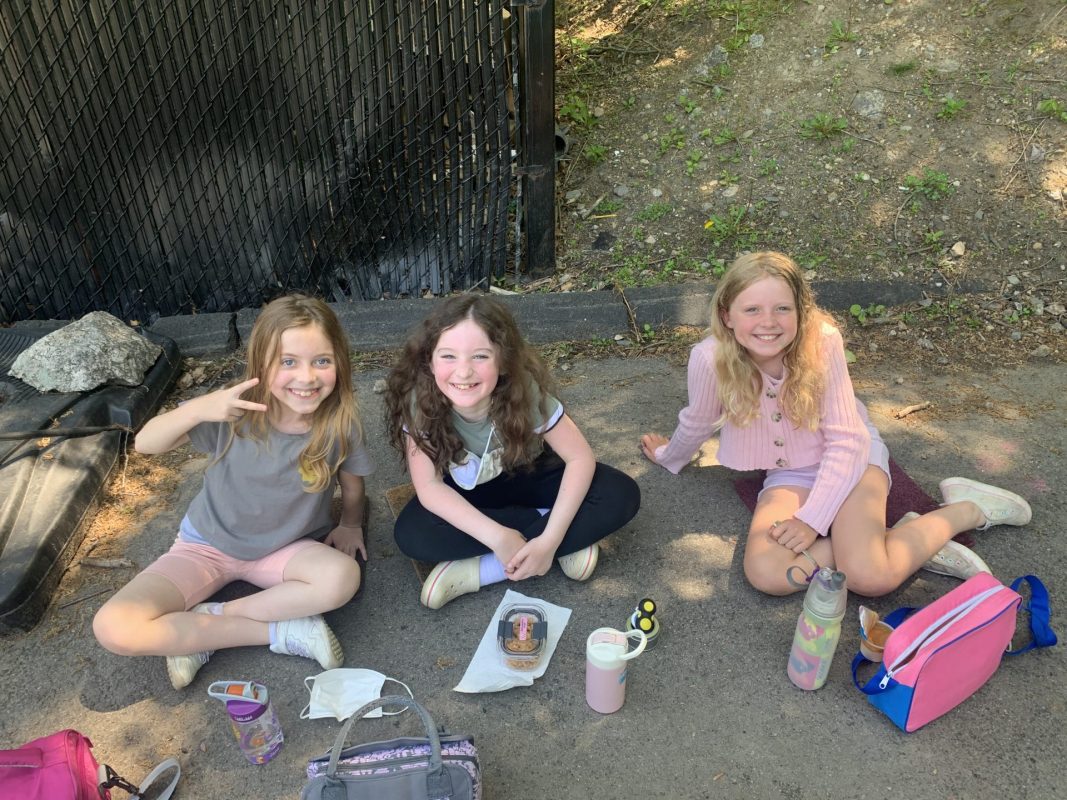
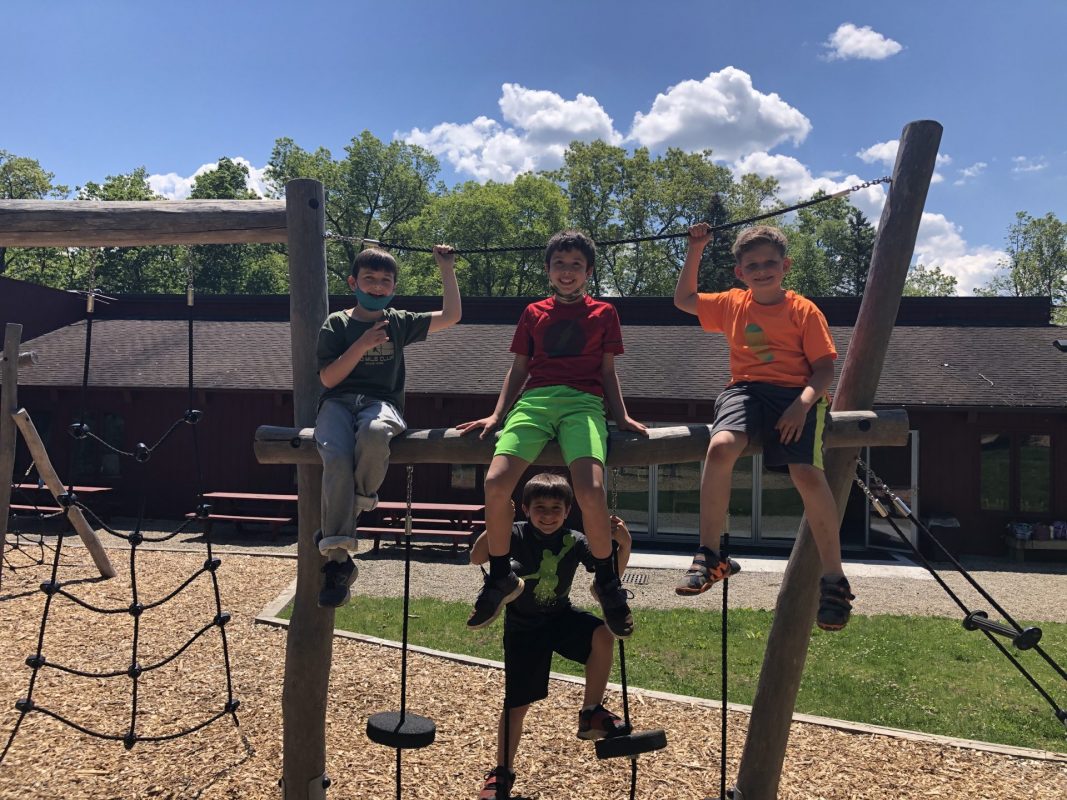
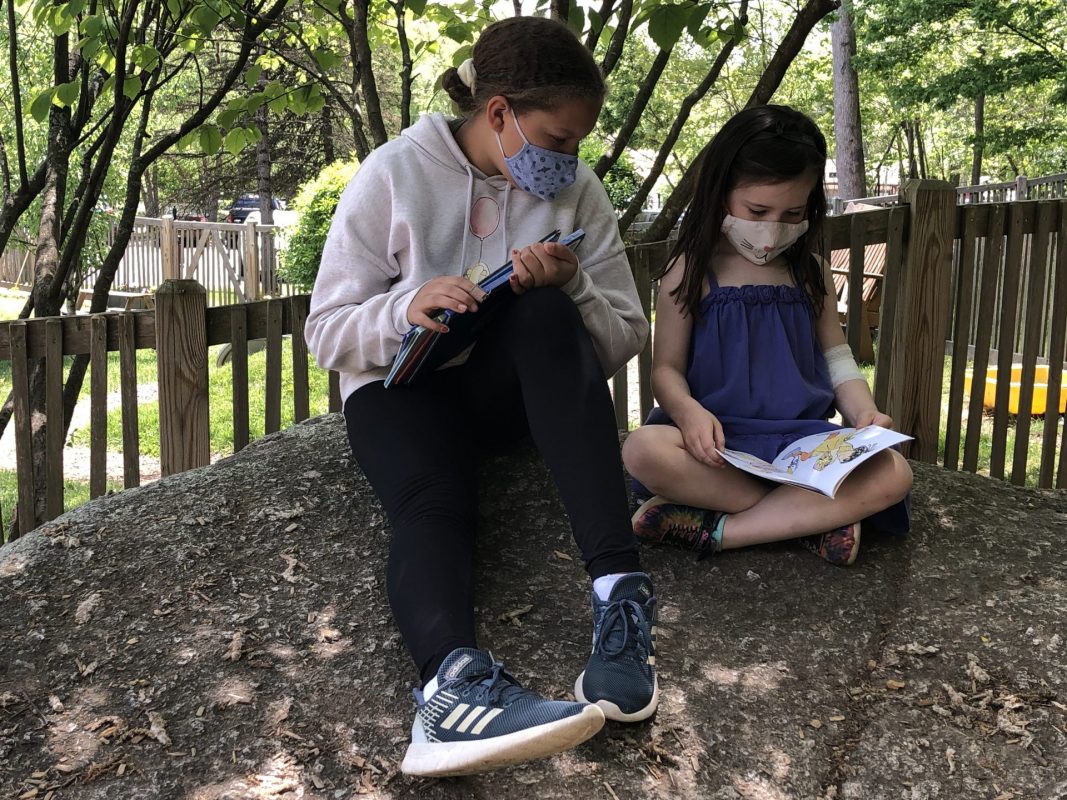
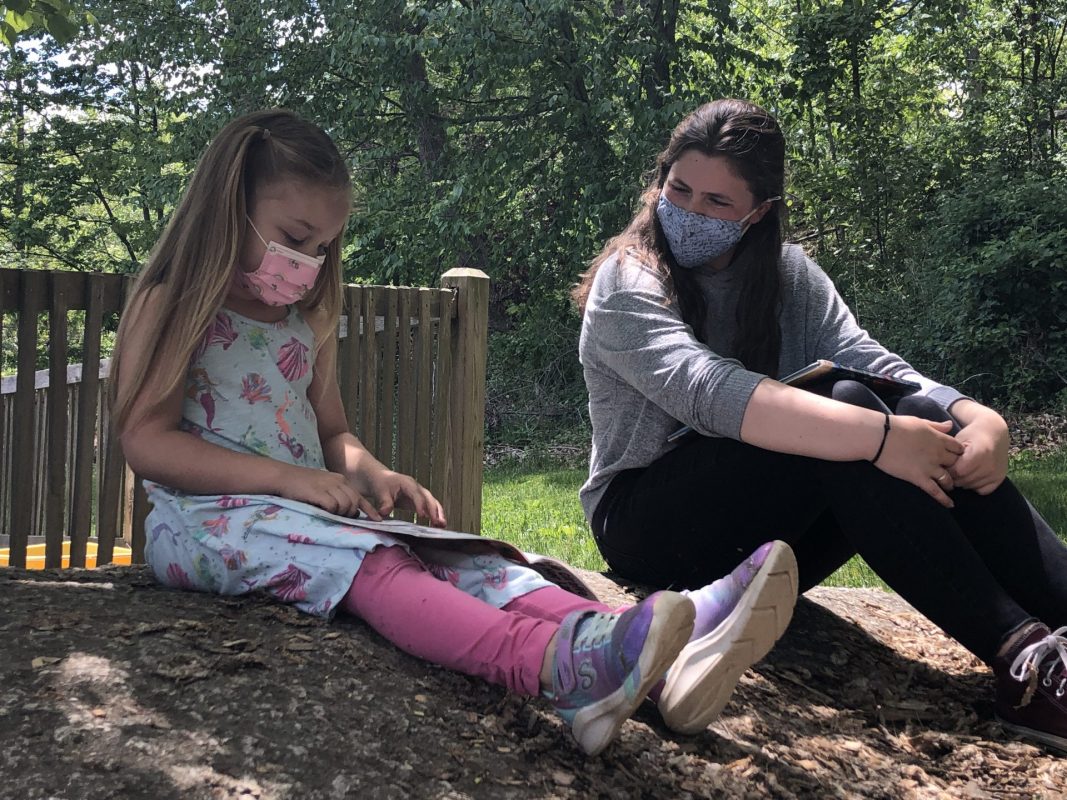
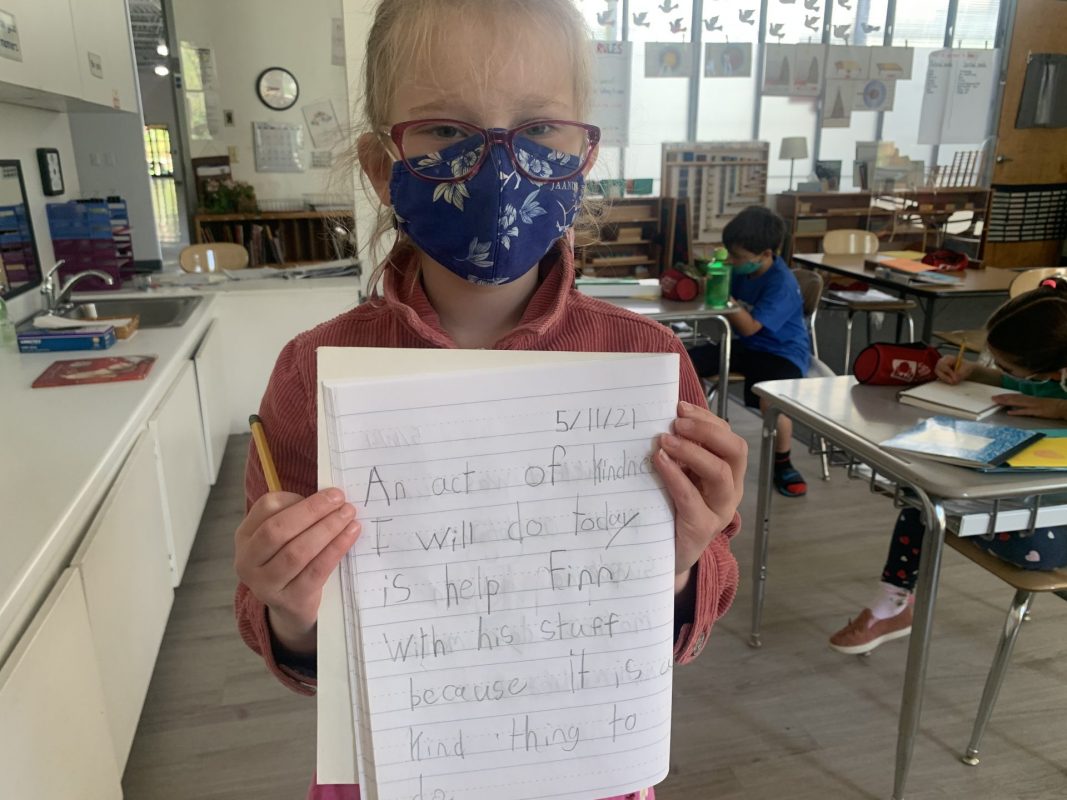
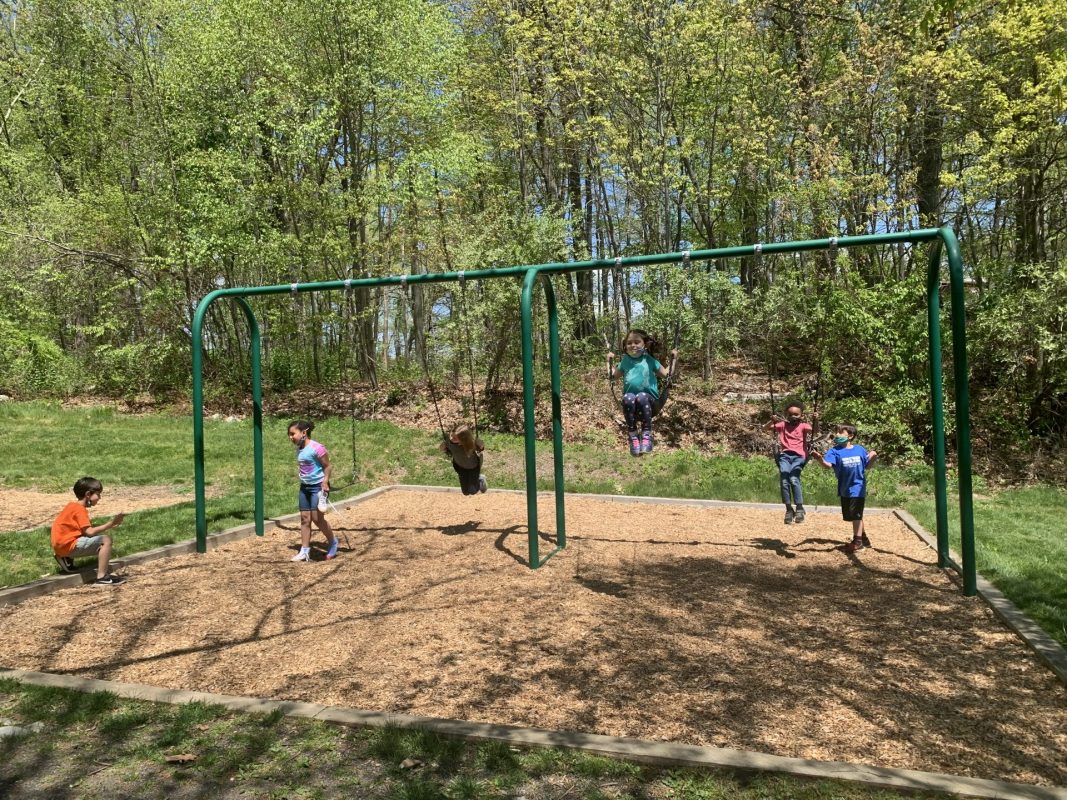
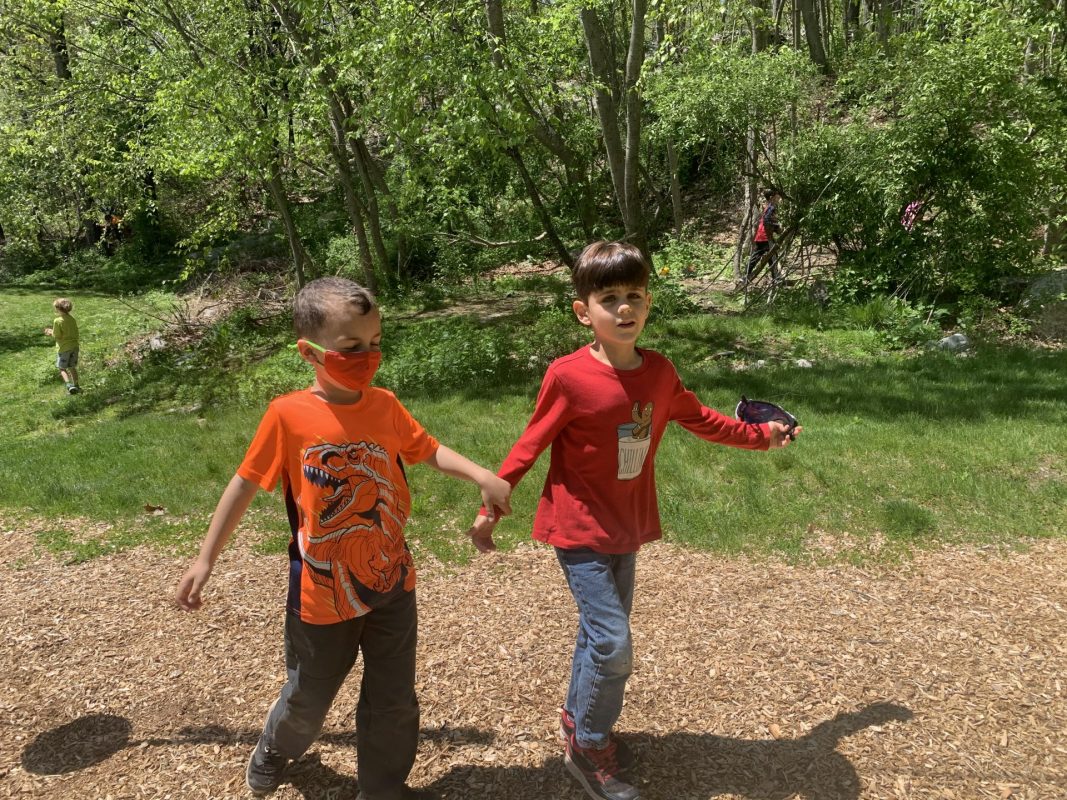
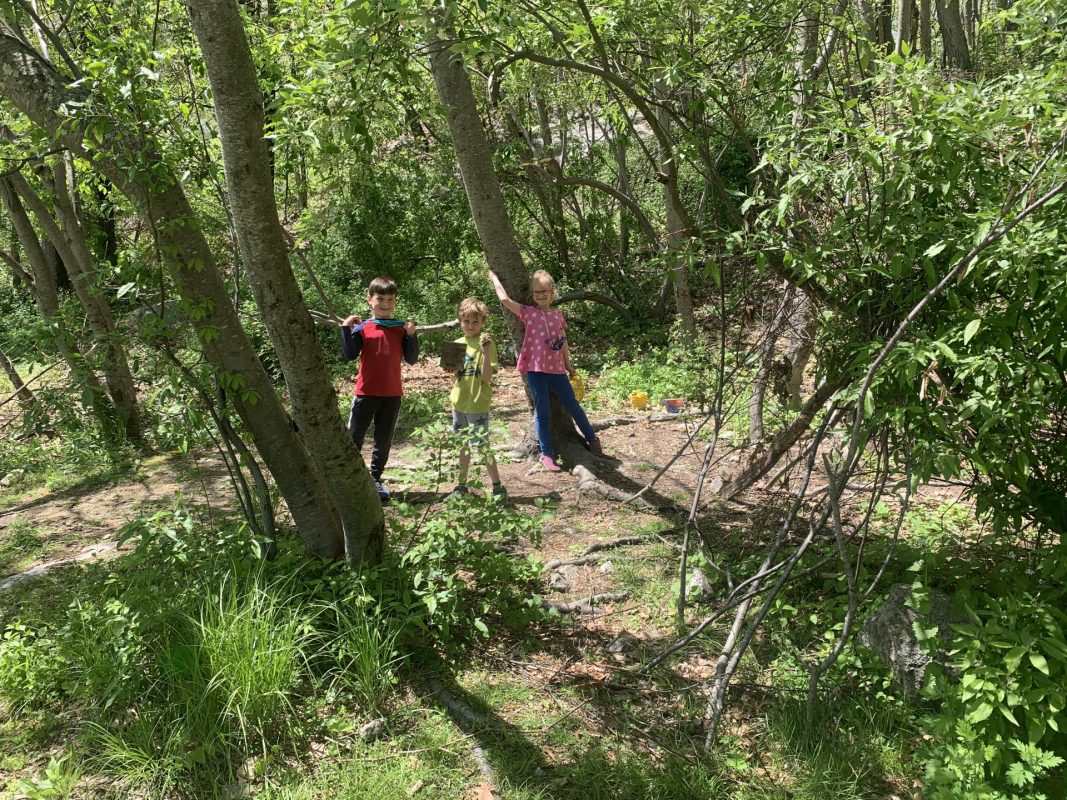
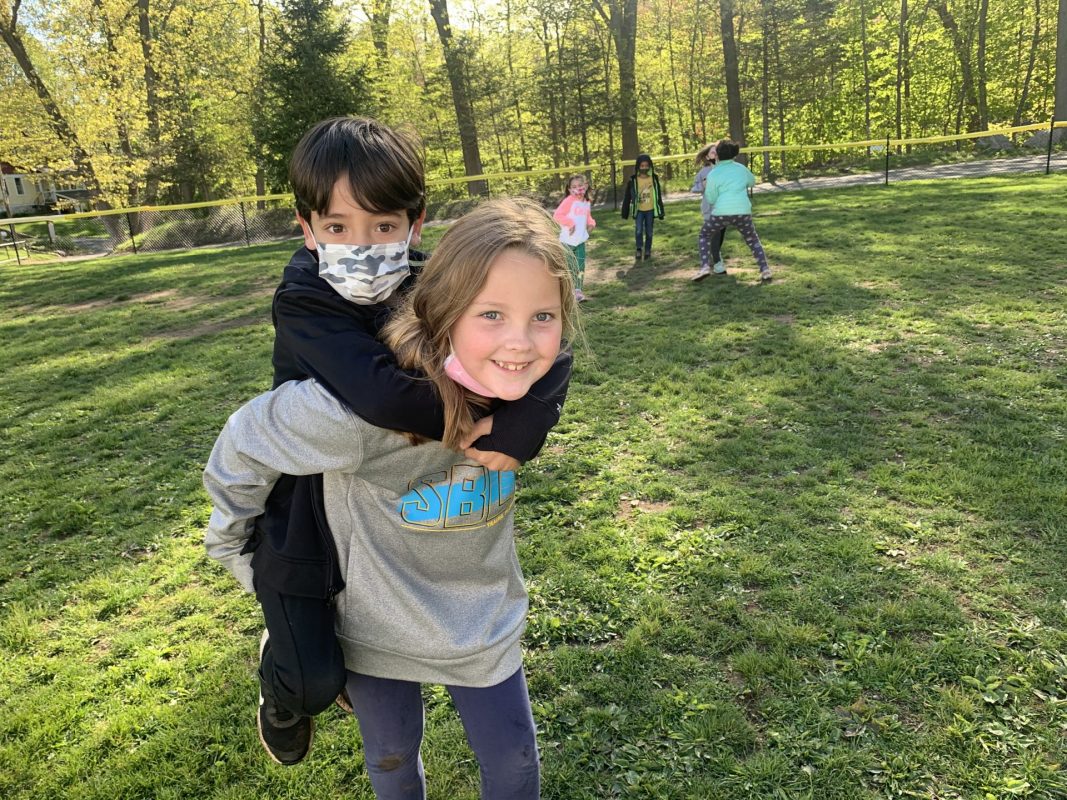
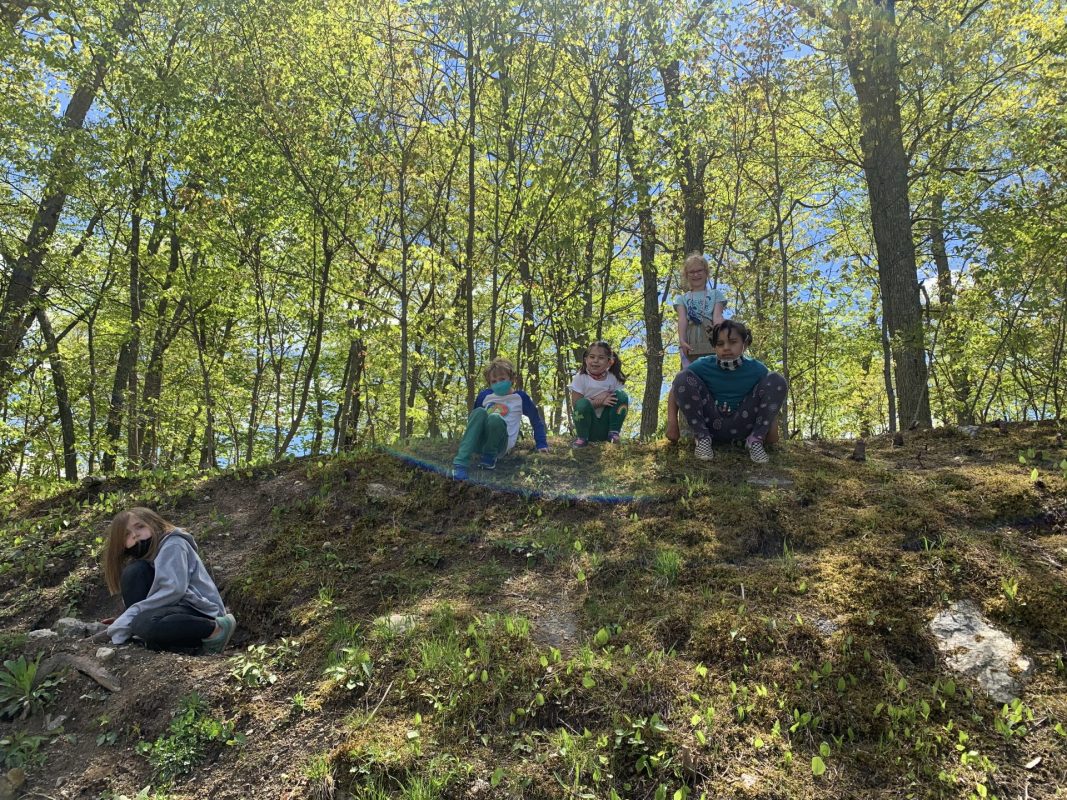
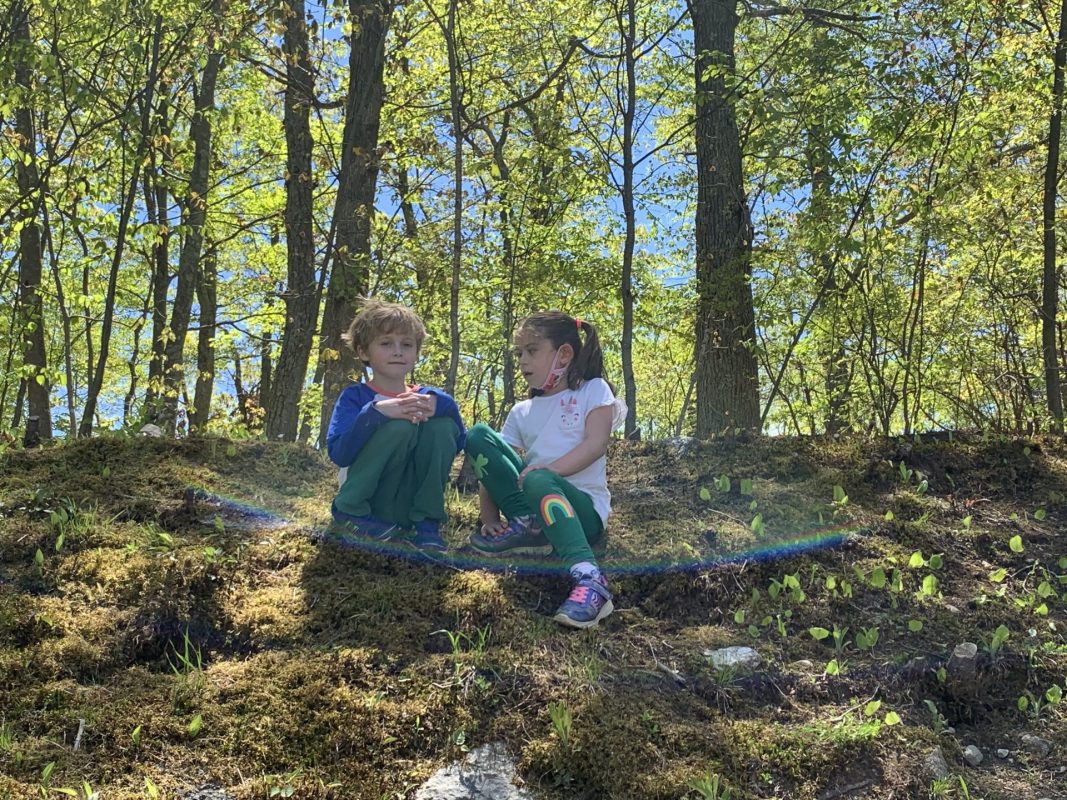
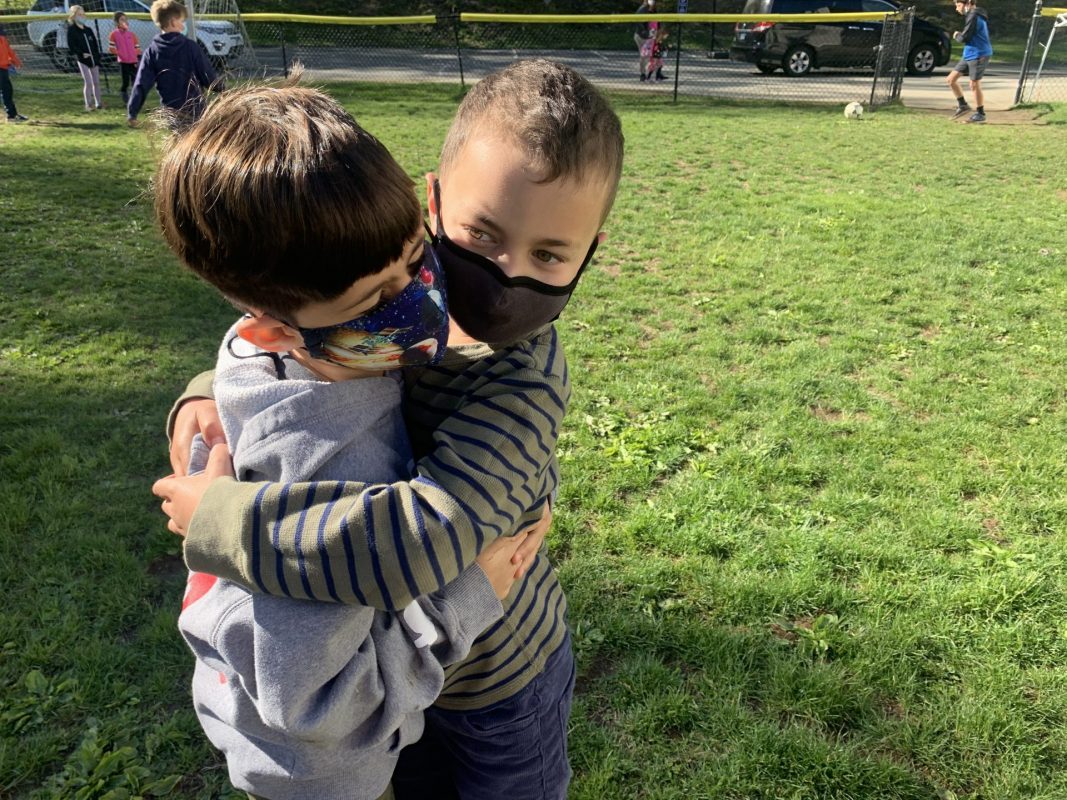
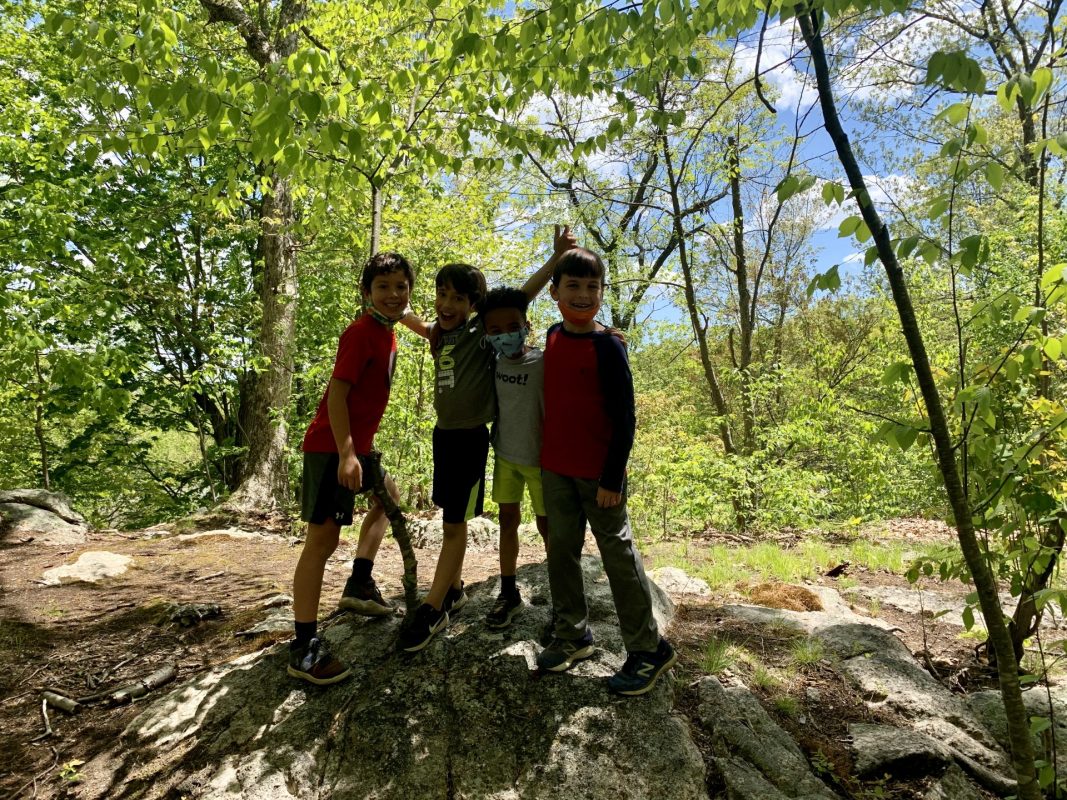
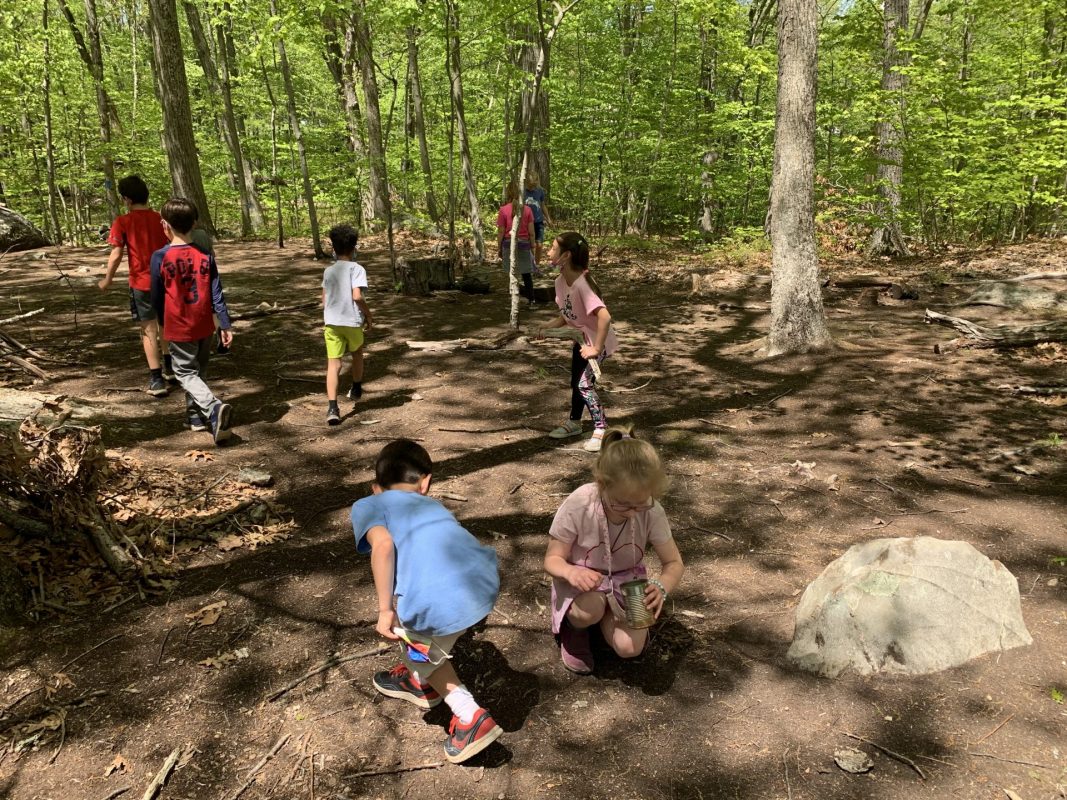
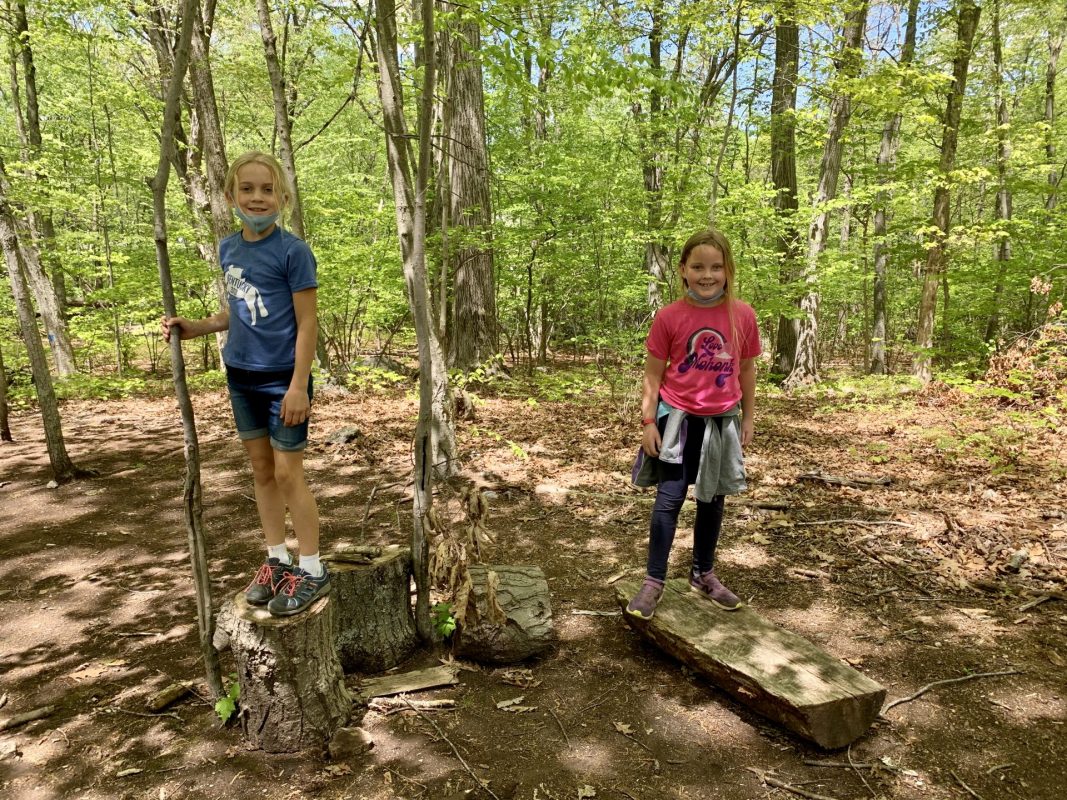
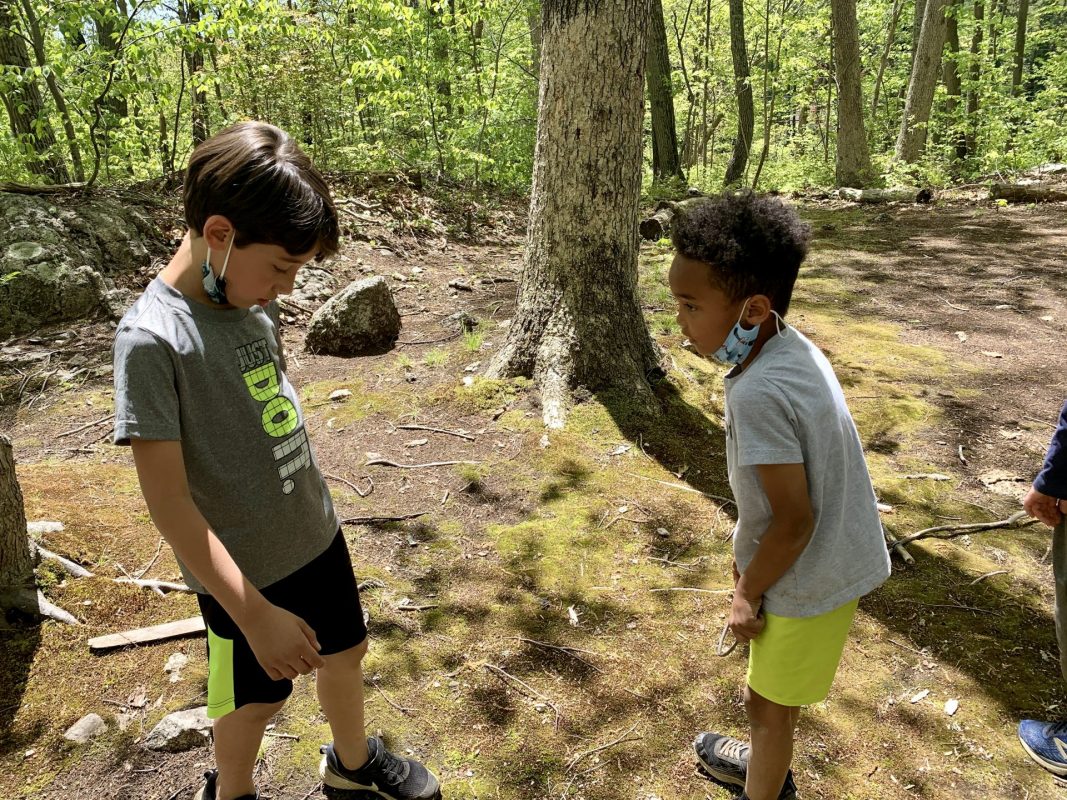
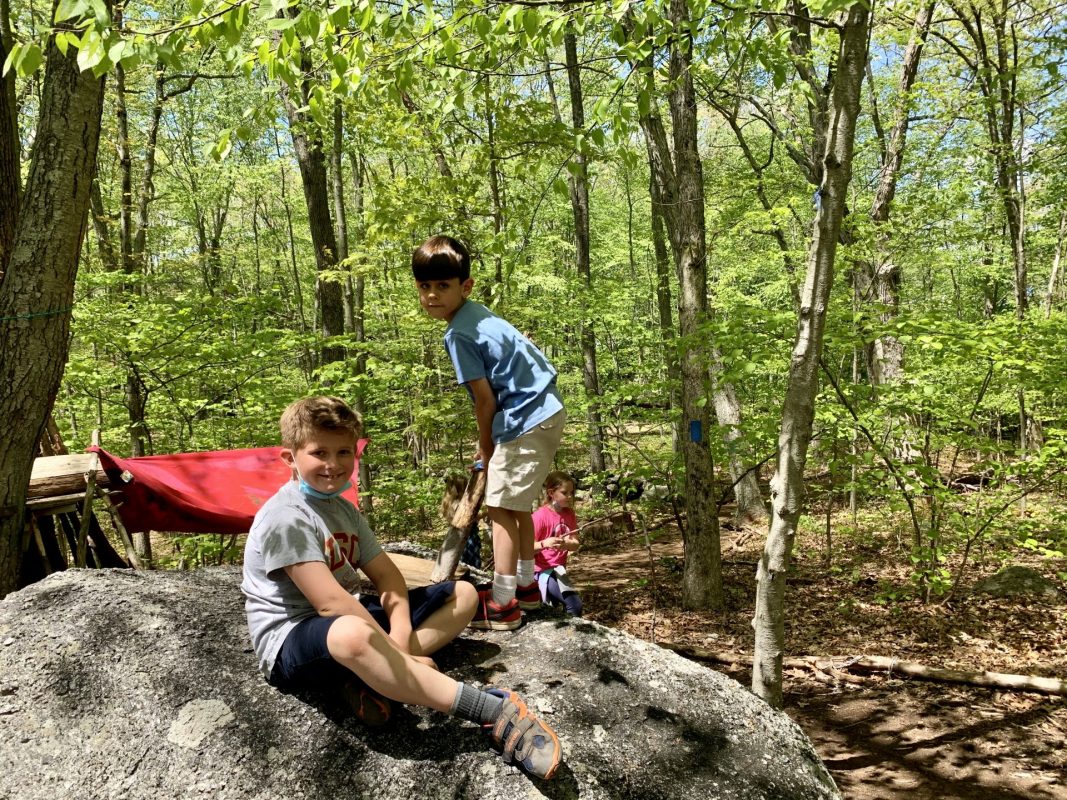
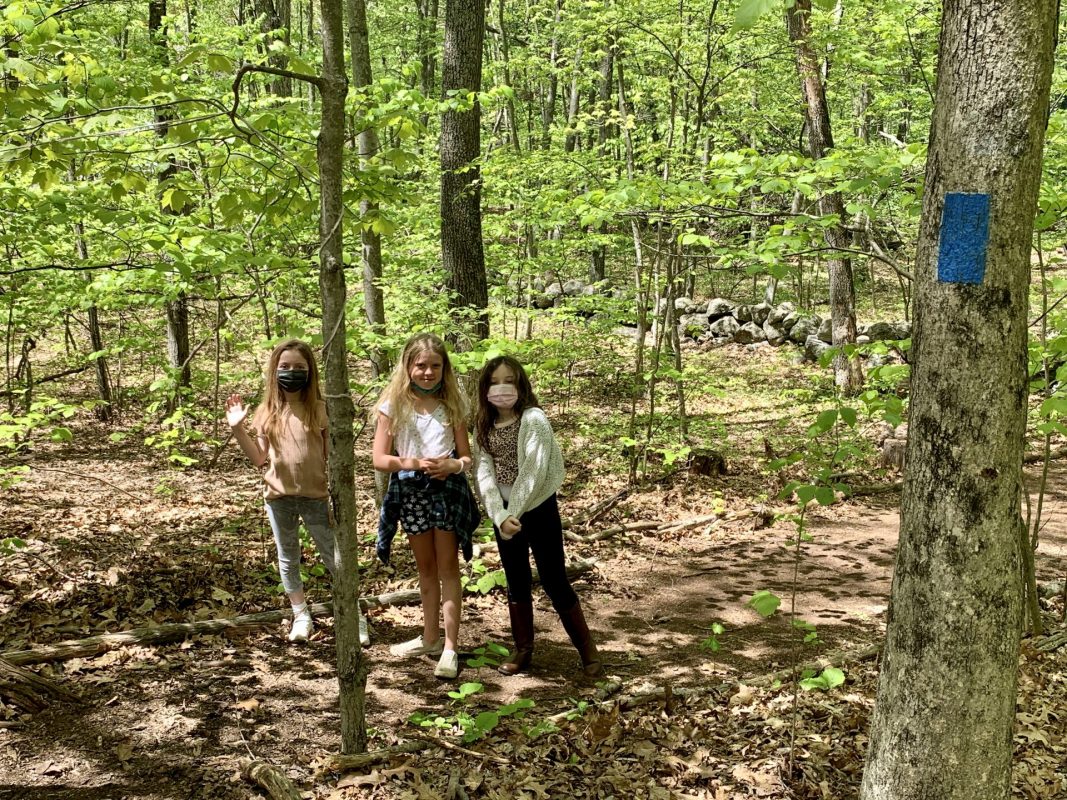
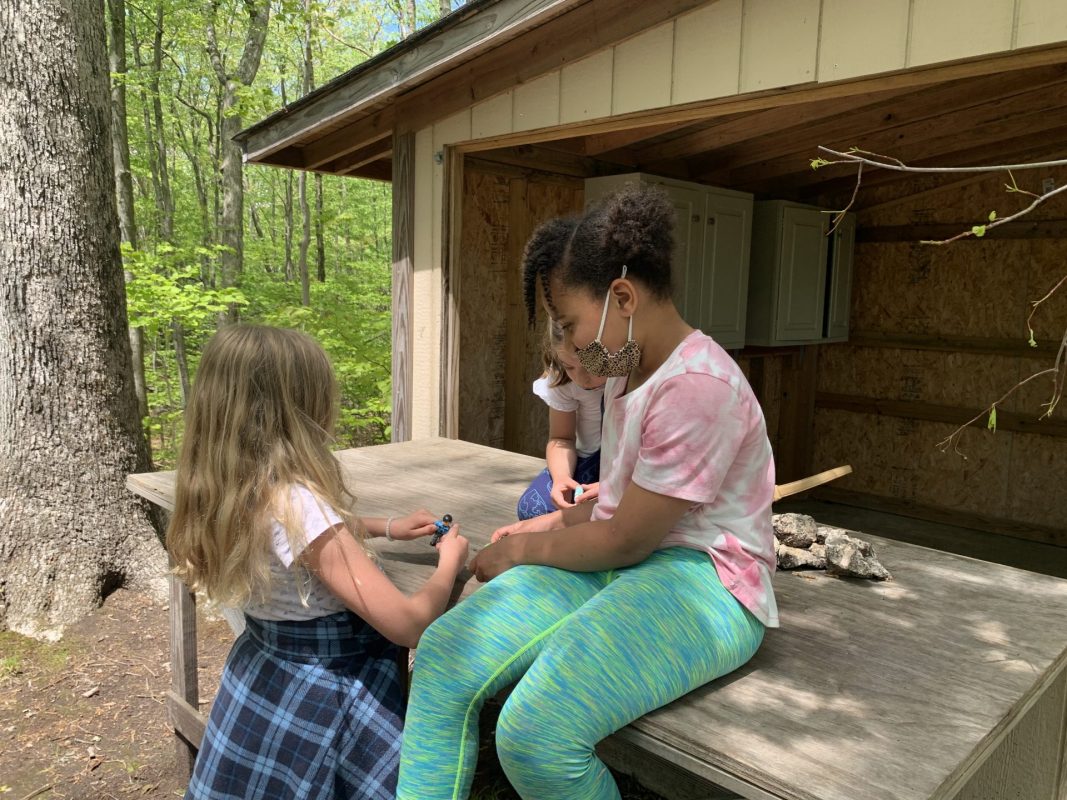
There is such a great sense of community in our school. Within the class, the children love just spending time with one another. Every Thursday we have community building time in the outdoor classroom at the end of the day. The children play games, build with sticks, and get creative with friends. Most children play with different classmates each week and, as a result, many friendships are being cultivated! I think that is part of the beauty of a Montessori classroom; the chance to collaborate with children from different age groups. Children of various ages, working together, will learn from each other, both as students and as teachers. Just as siblings learn and grow together, so do children in a mixed-age classroom environment! Our Lower Elementary classroom is very much a family!
Collaboration – Another Hallmark of a Montessori Elementary Classroom
When Dr. Montessori was developing her teaching methodology, as a scientist she observed specific characteristics that marked each age group:
The individualistic nature of the child from birth to 6 years old evolves into an elementary-aged child with a complete social personality that desires peer interaction.
What does peer interaction and collaboration look like in a Montessori Elementary classroom?
- The elementary teacher gives lessons with the child’s need for socialization in mind. The teacher often selects a small group (children can be the same age or grade, share a common interest or level of readiness).
- You will find the mixed-age groupings in all levels in a Montessori school, but at the elementary level, mixed-age grouping is intentionally designed to support collaboration because it is a need that is highlighted at this age.
- Children in LE and UE have the freedom to communicate. There is a “hum” in each classroom because the Montessori classroom does not have an expectation of classroom silence that is expected in many traditional environments. Together, students plan, organize, and consult with one another all day long.
- Students have the freedom to move about the room and choose their own seating arrangements, work on the floor, or spread out and work in the hallway.
- An air of peer cooperation fills a Montessori elementary classroom. Peers supporting and “tutoring” one another happens very naturally. A student who may be challenged by a concept in math can ask a peer for help. Older students are natural mentors for younger students, as younger students observe the work they will be doing in the future.
There is so much beauty to see in a Montessori classroom and I am grateful to witness it each and every today!