-
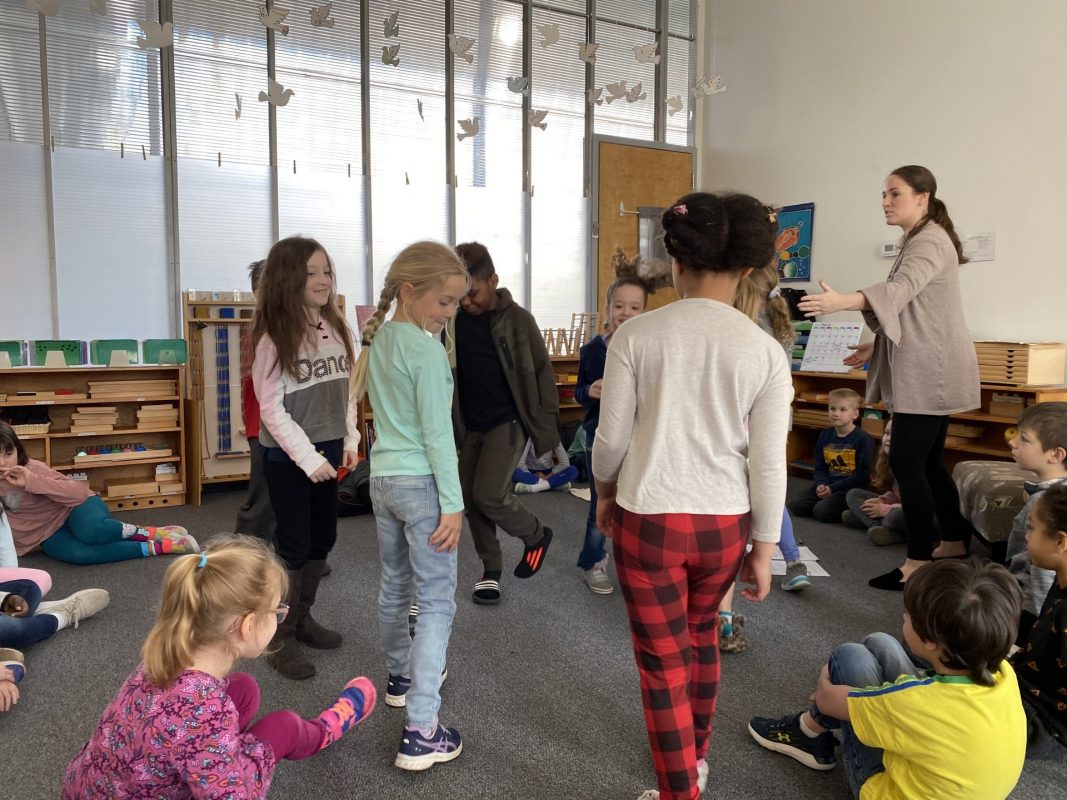
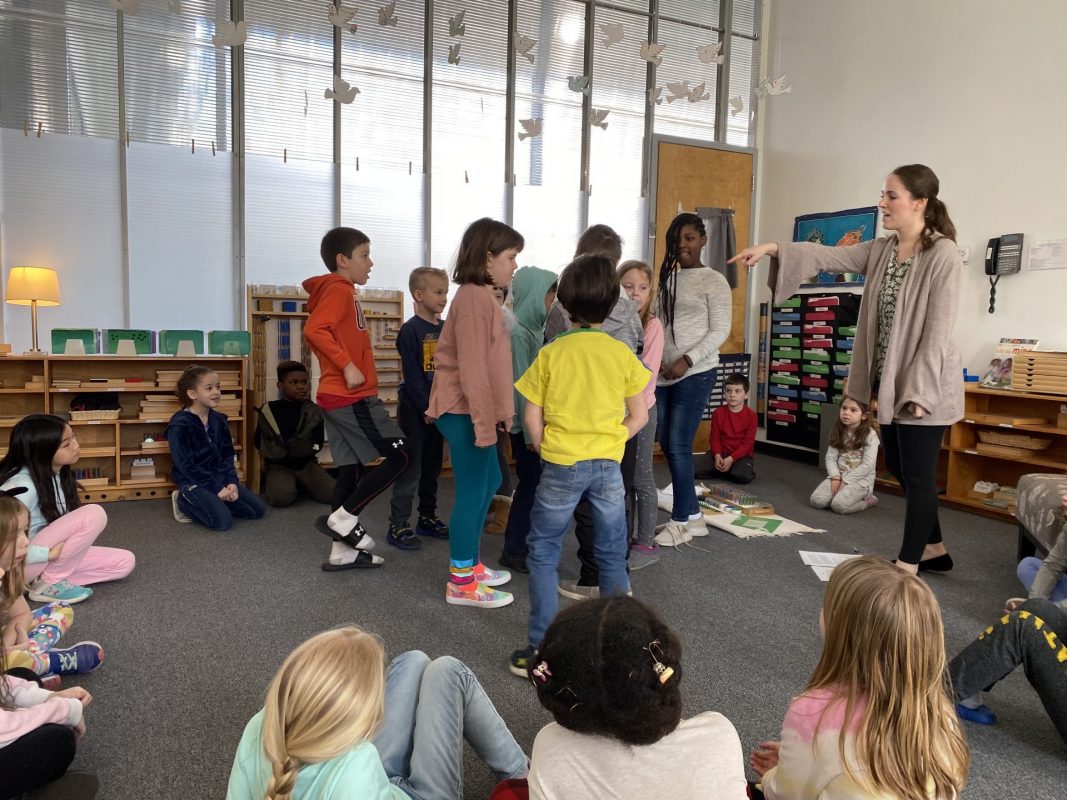
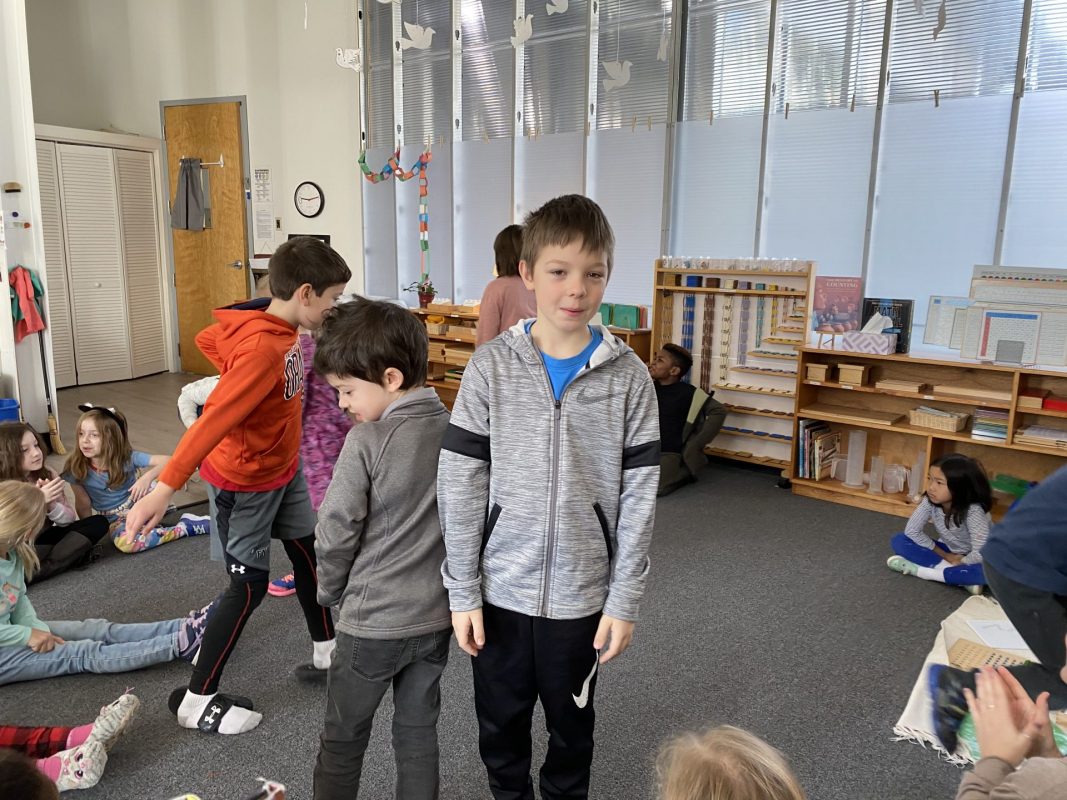
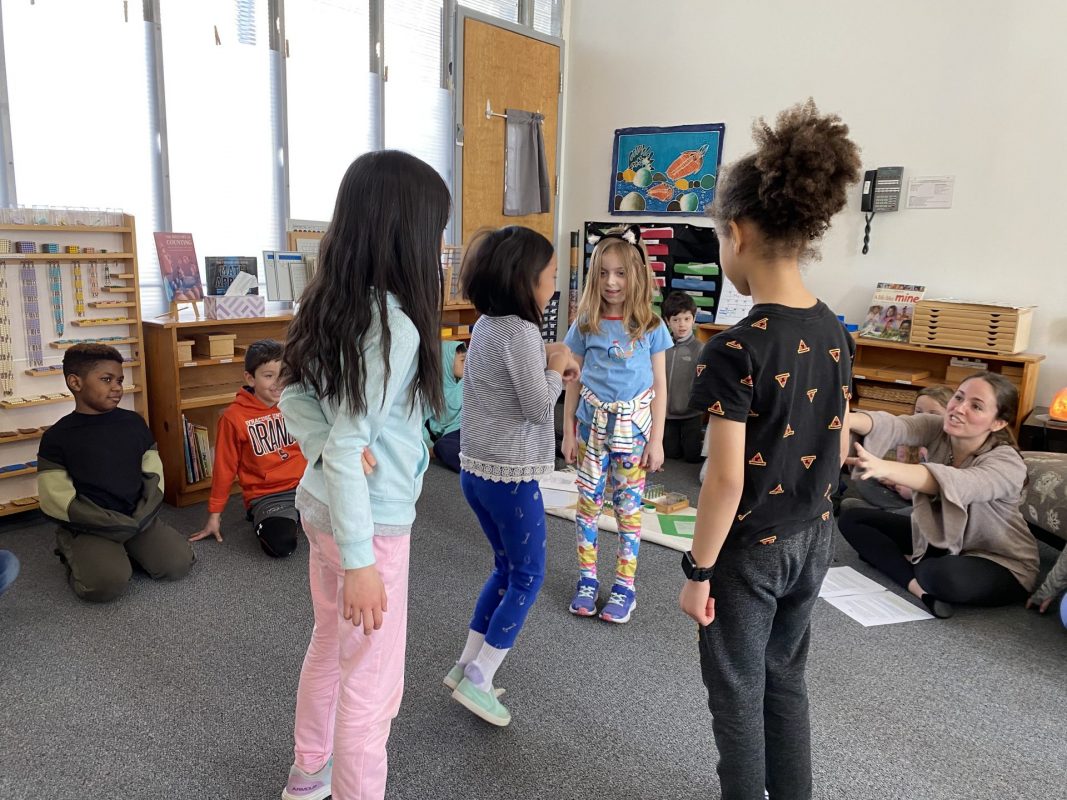
- Atoms, photons, and energy

-
- Plants need light.
-
- Can you see light move?
-
- Land and water forms

-
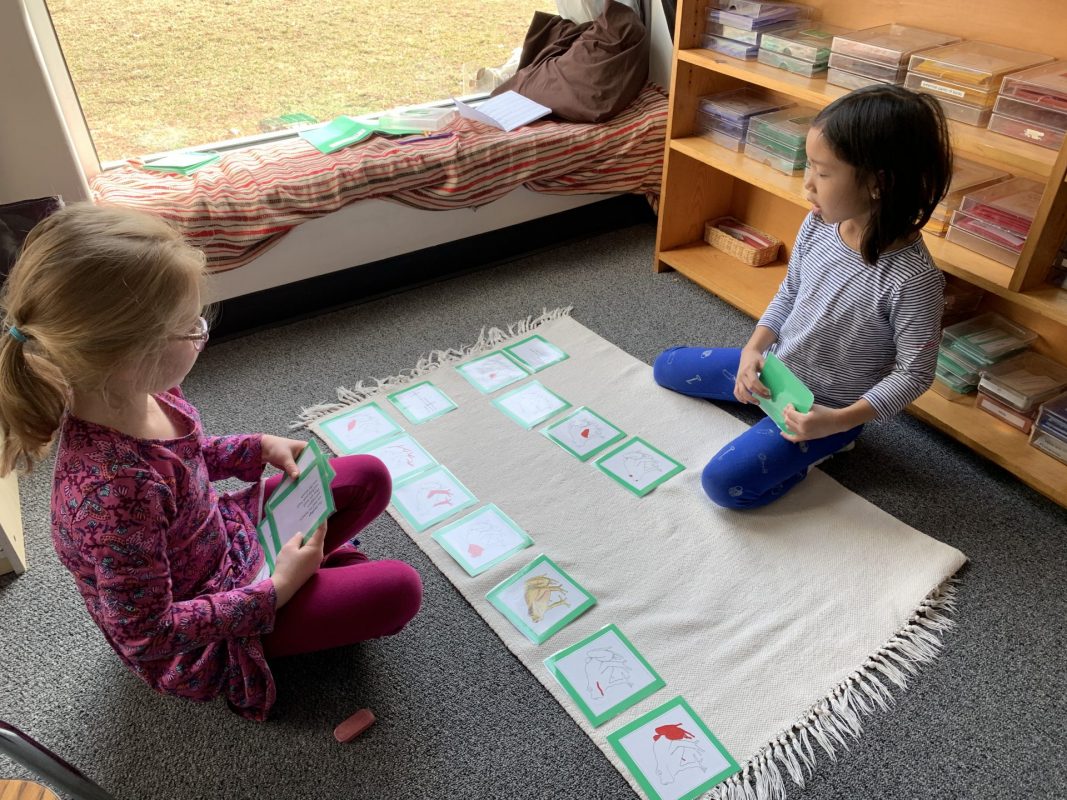
- External parts of amphibians
-
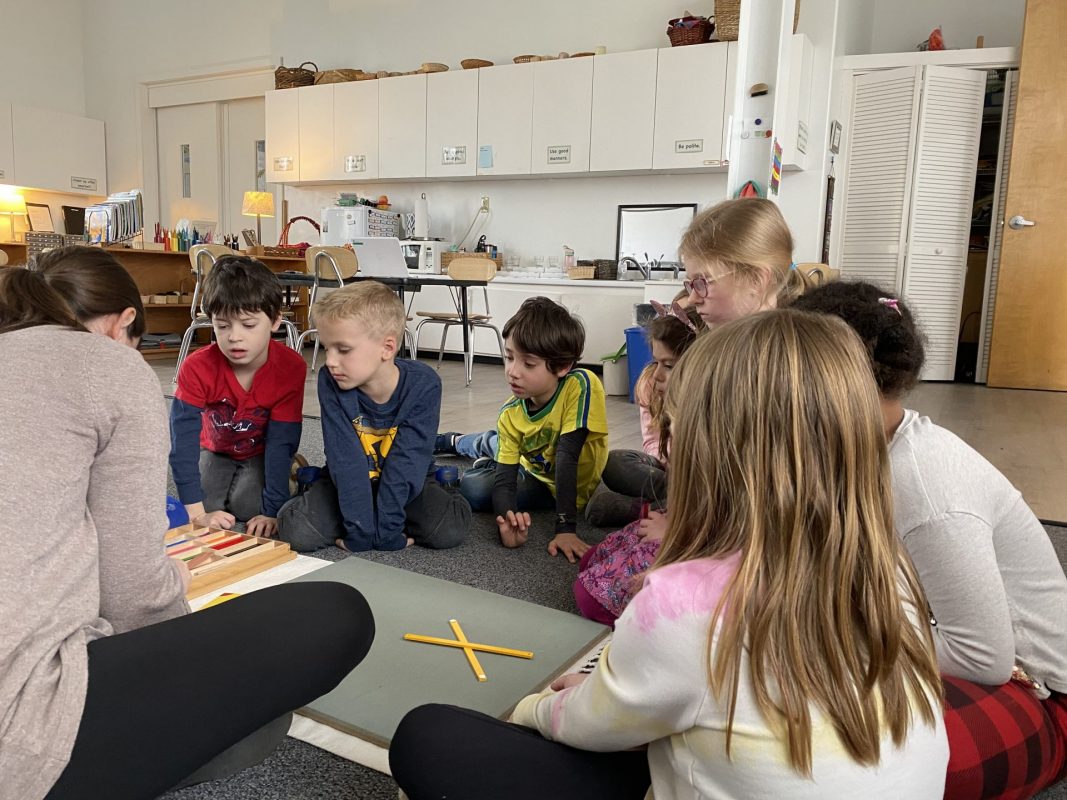
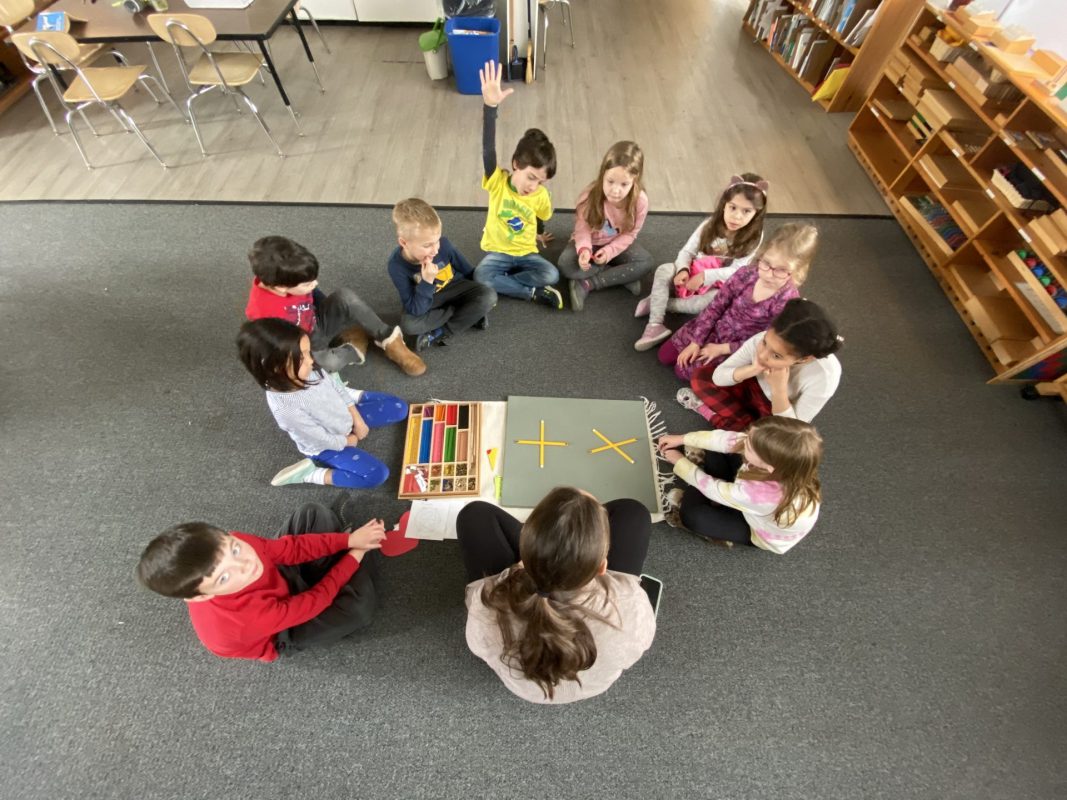
- Oblique and perpendicular lines

-
- Advanced land and water forms

-
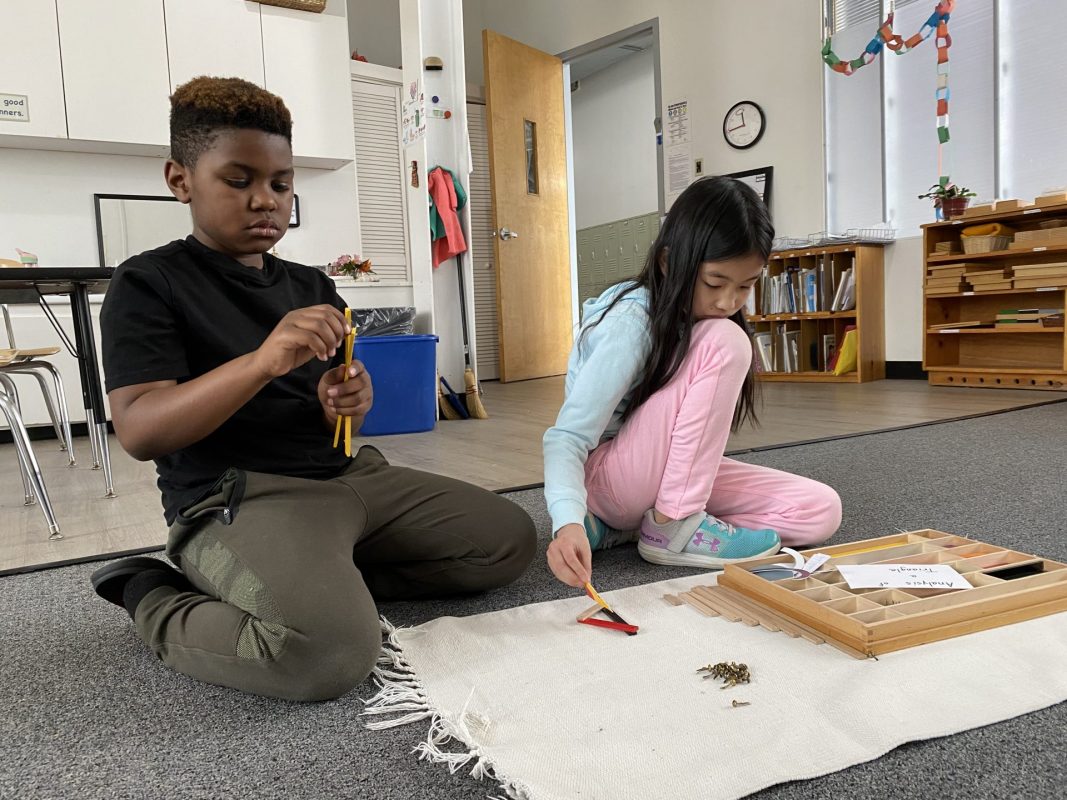
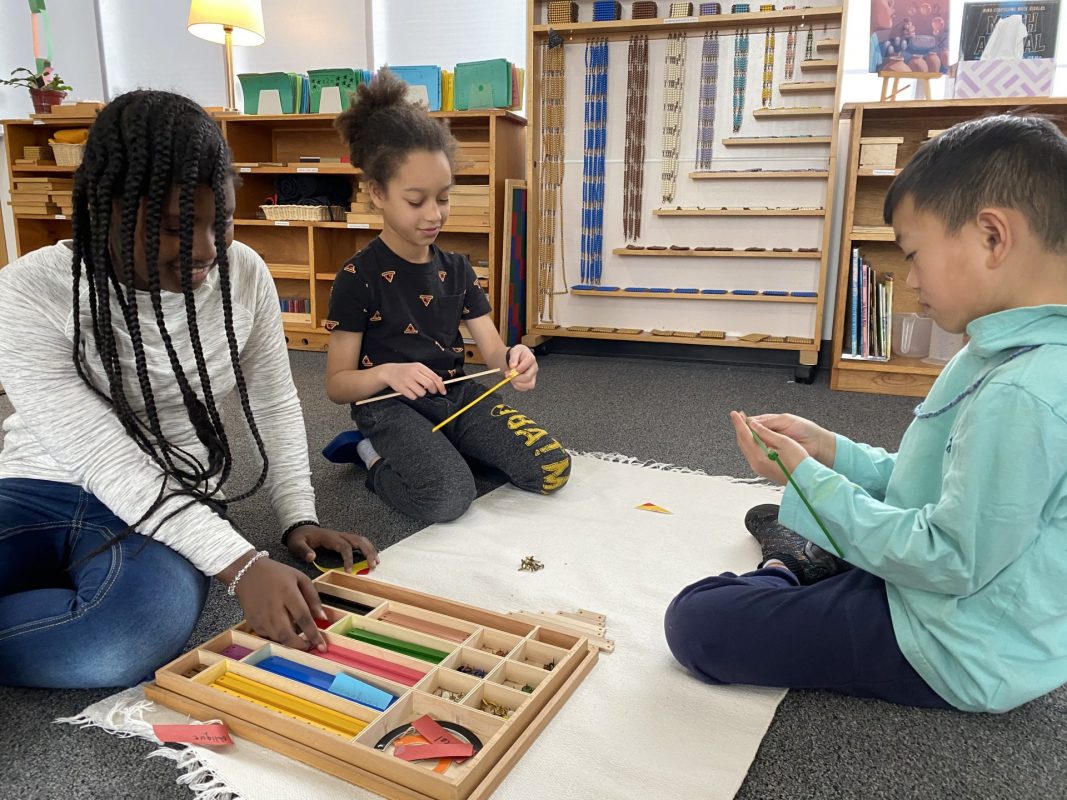
- Making right-angled, obtuse-angled, and acute-angled triangles with the box of sticks

-
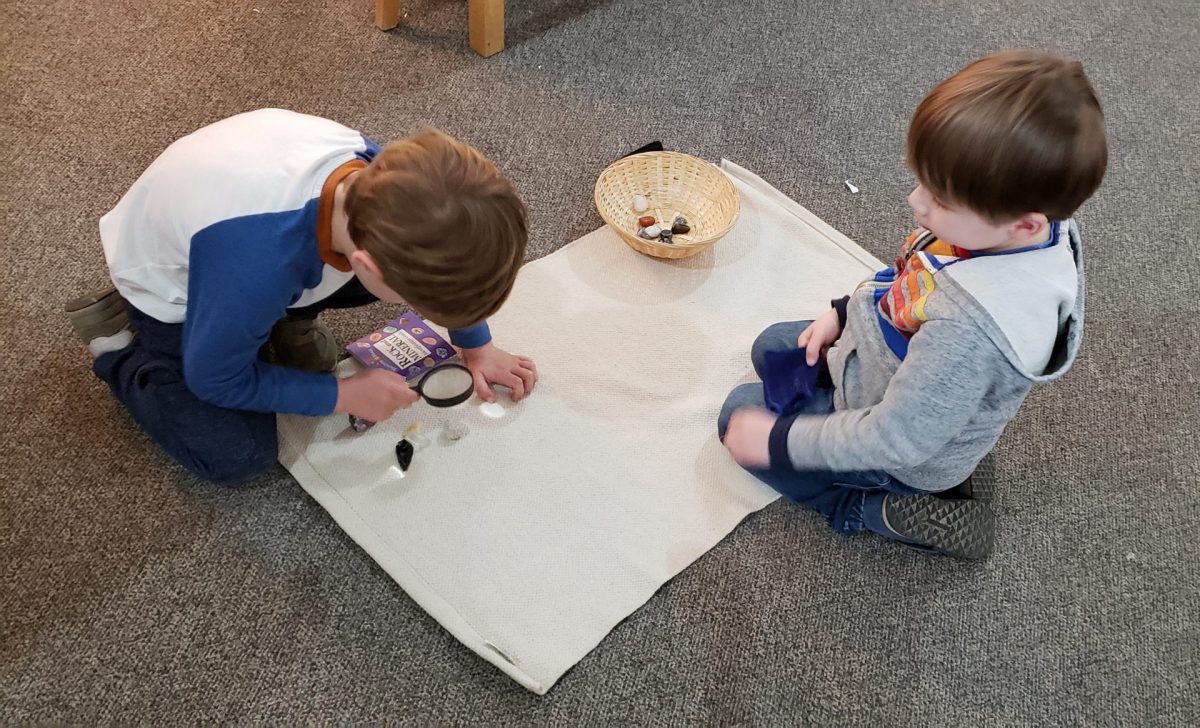
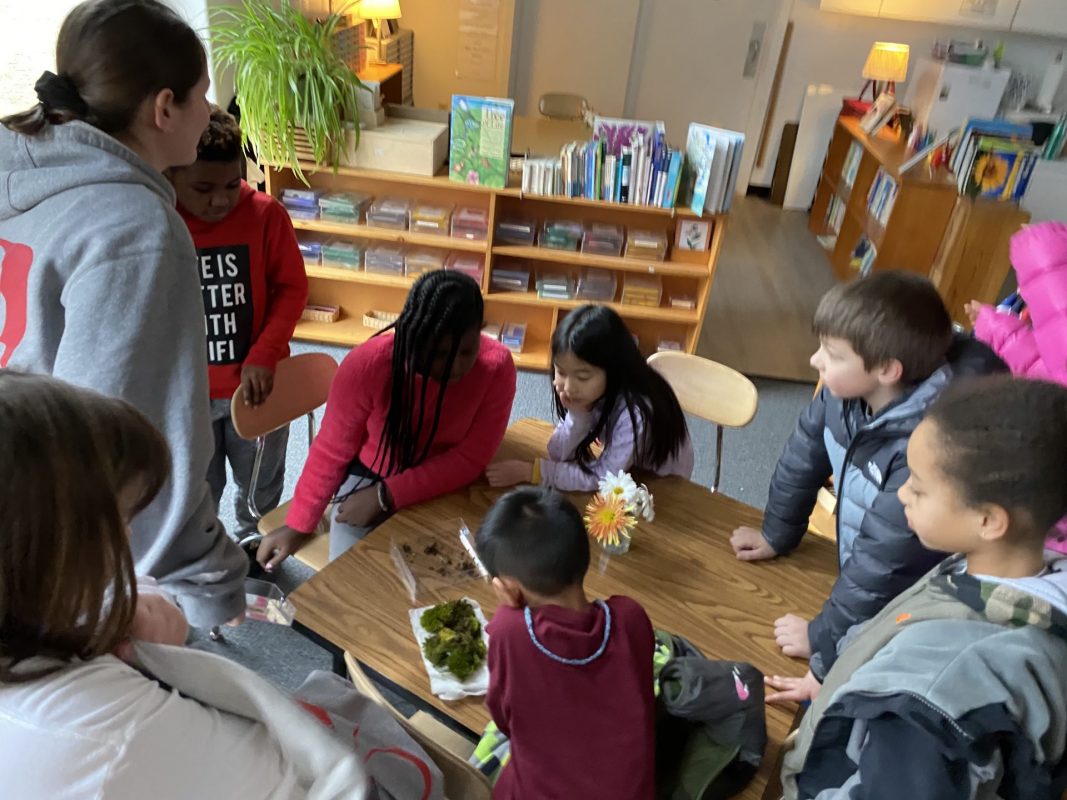
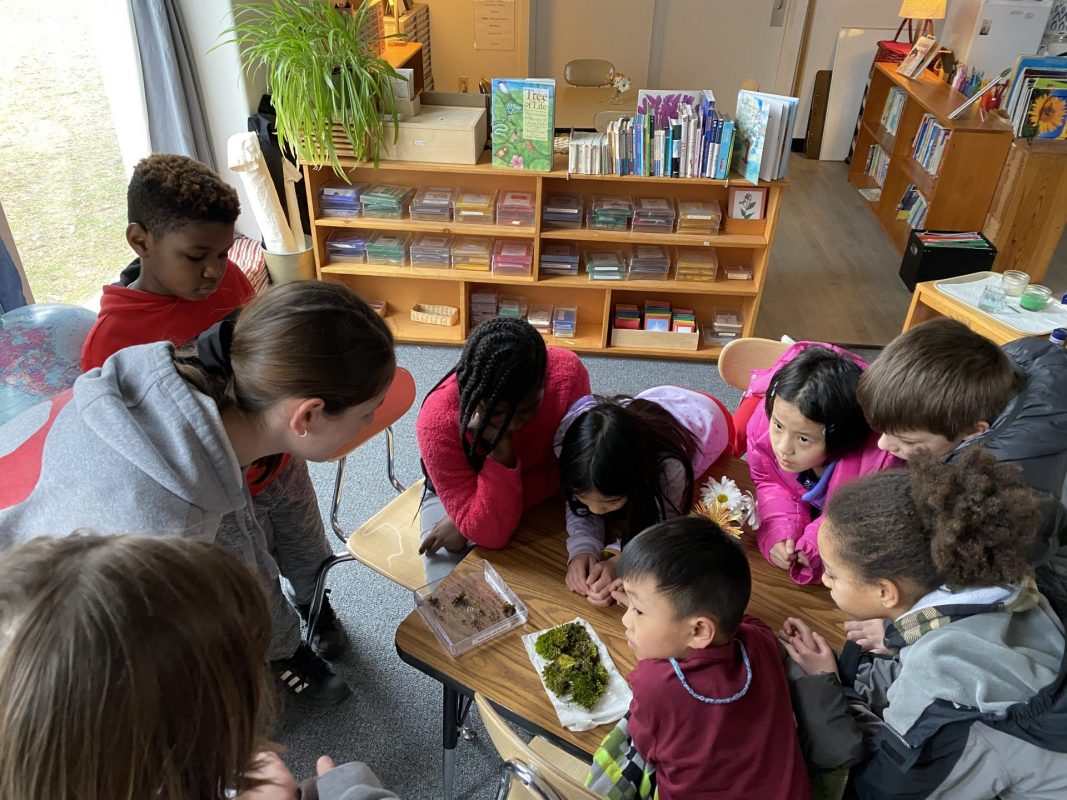
- Learning about moss
-
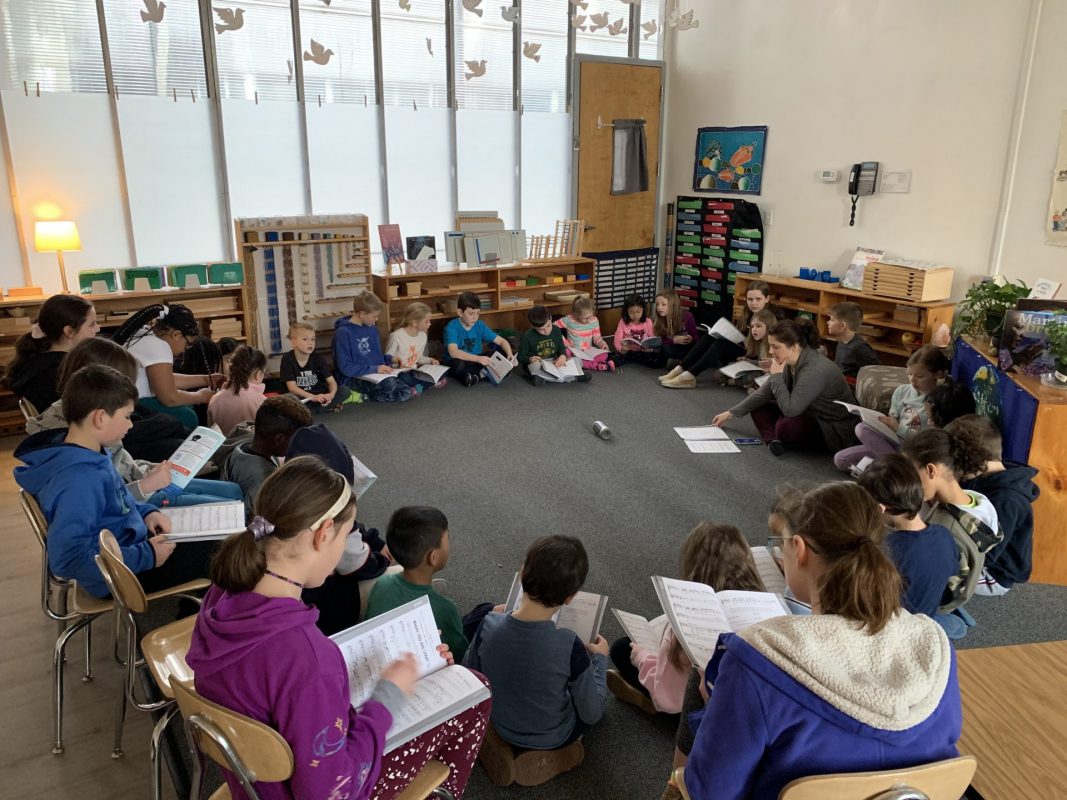
- Practicing songs for Moana
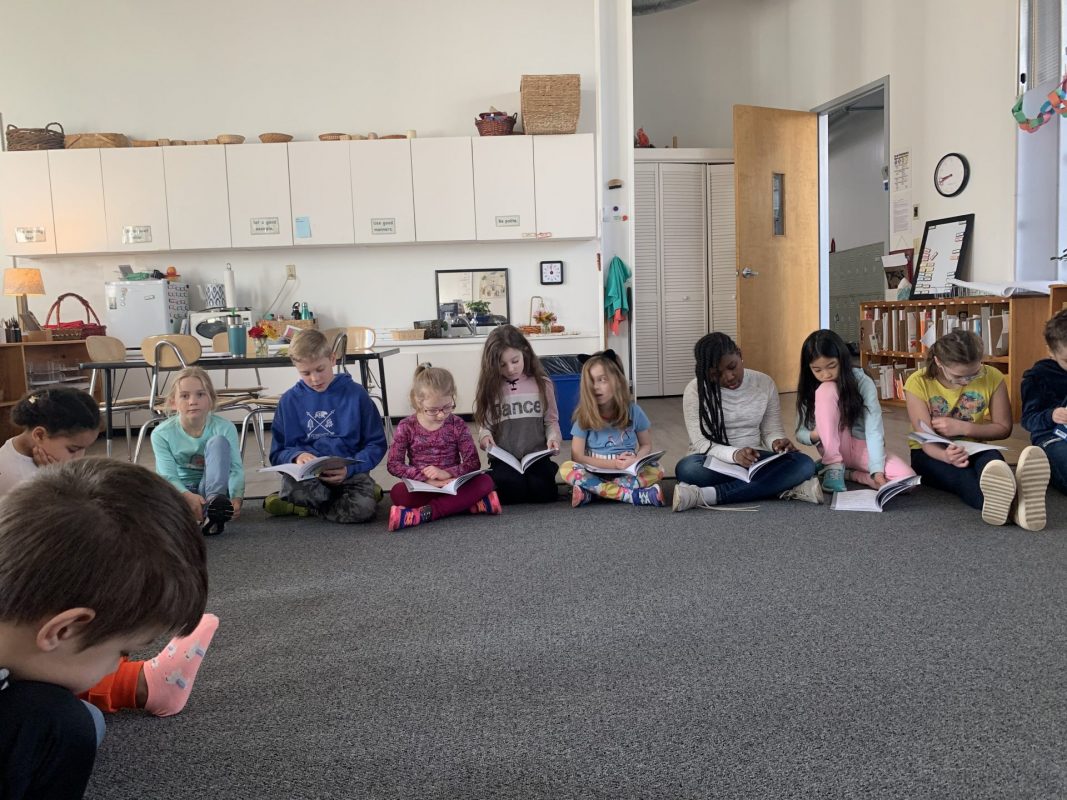
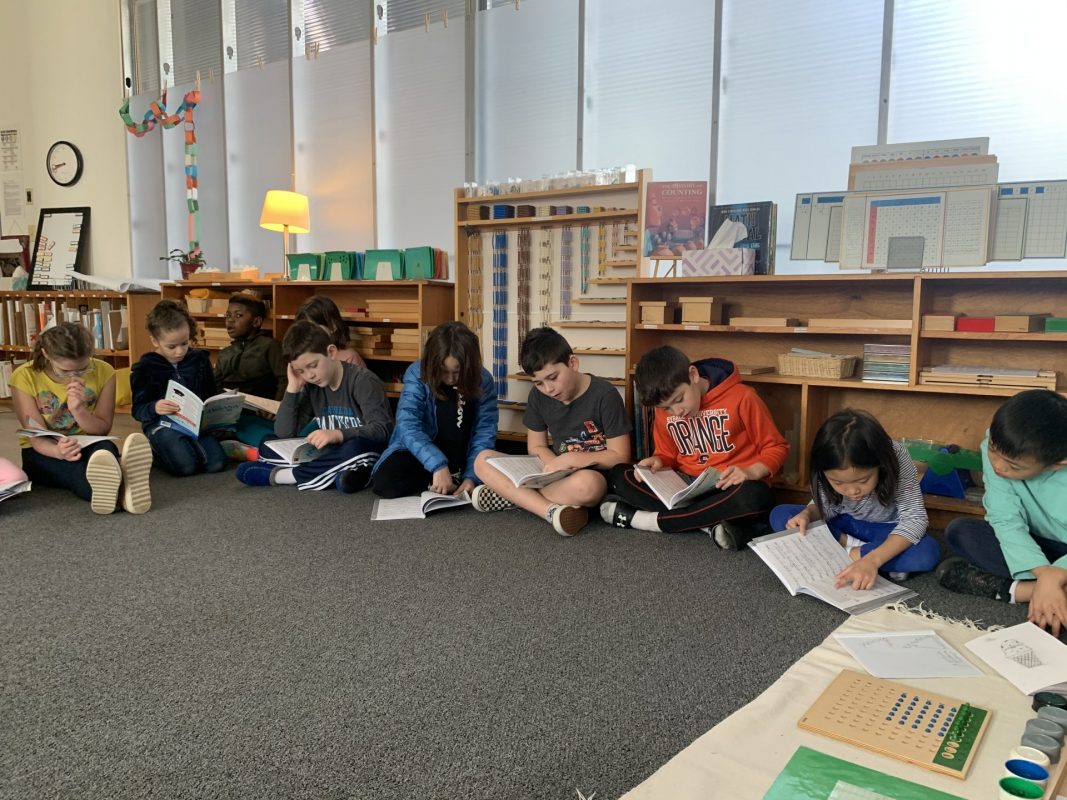
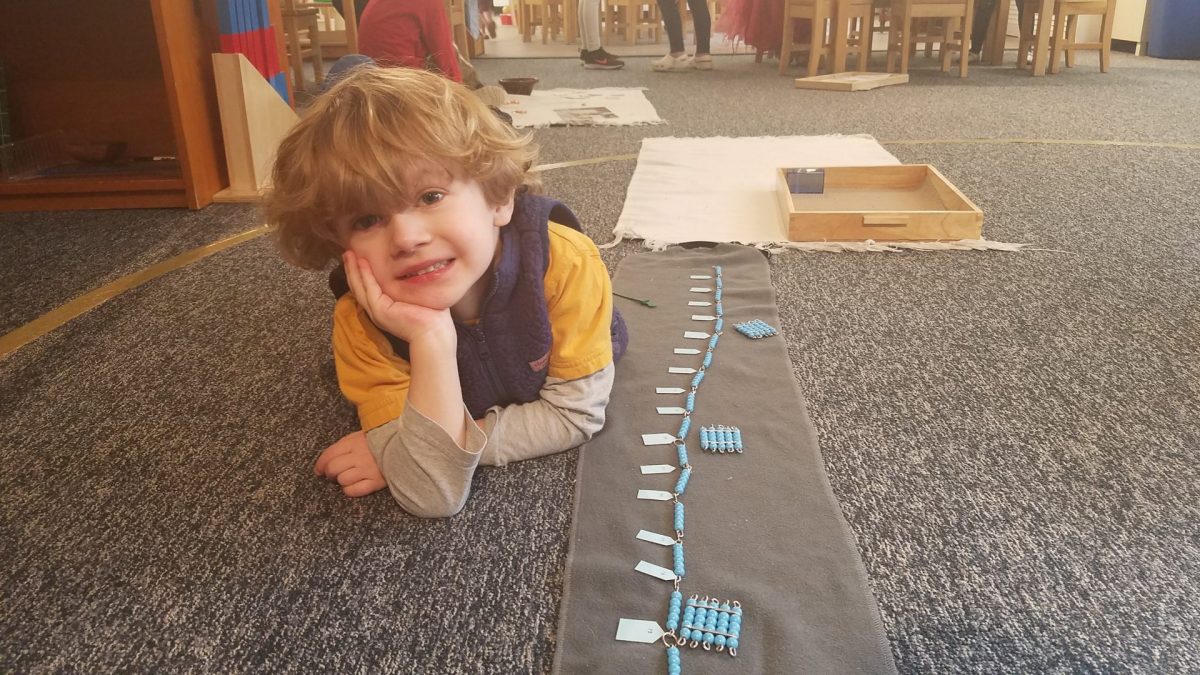
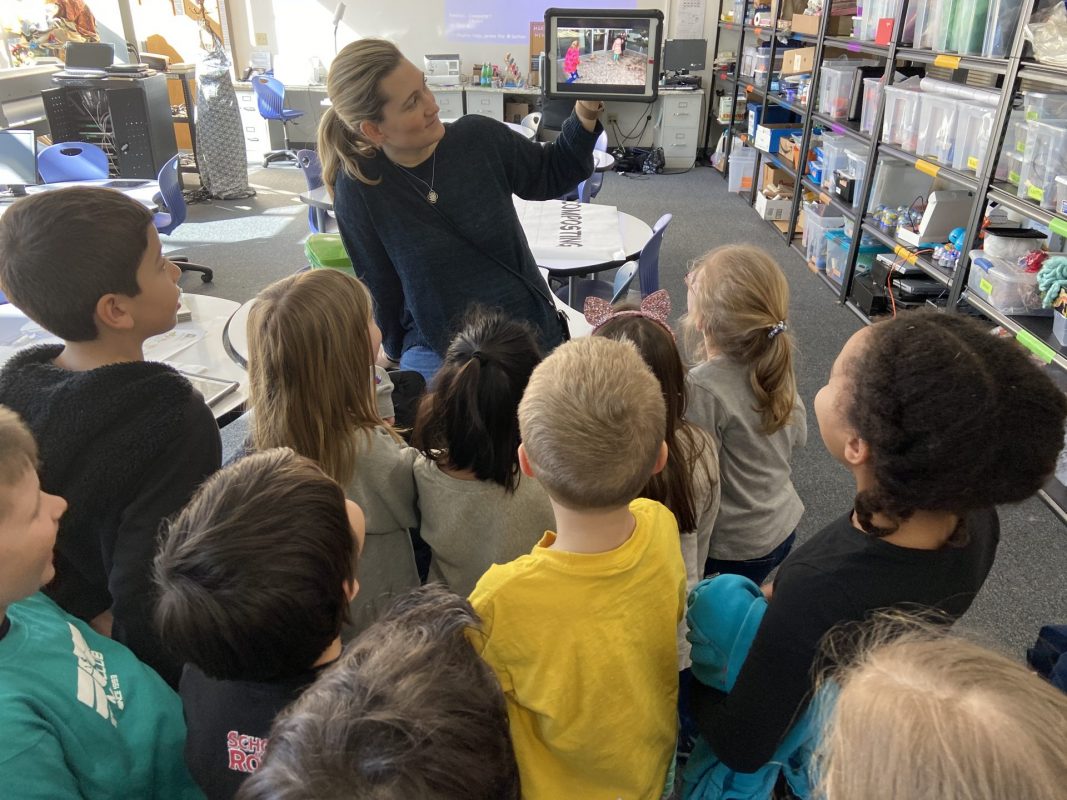
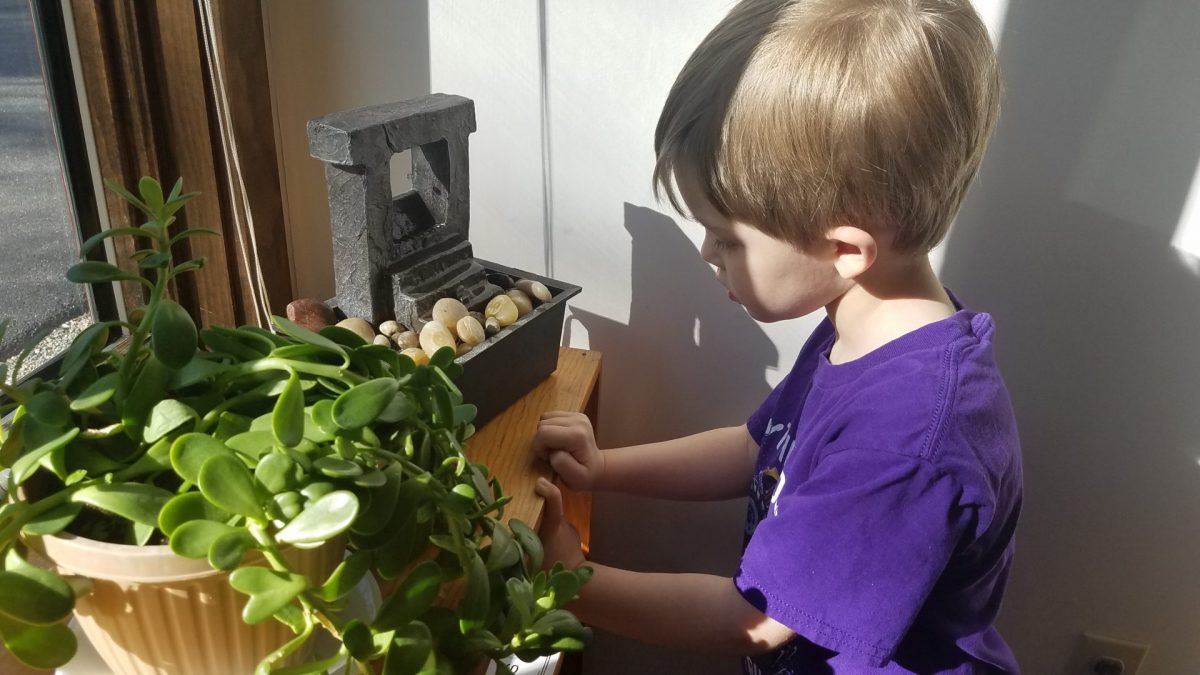
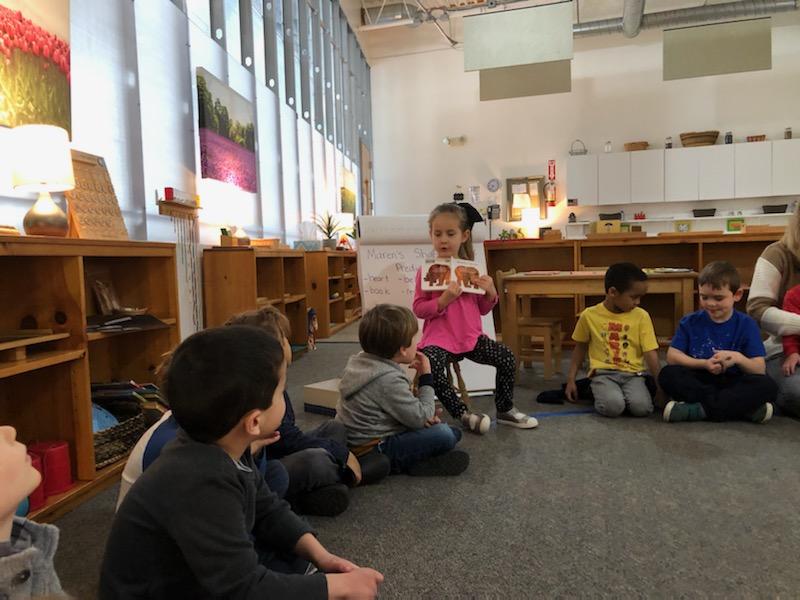
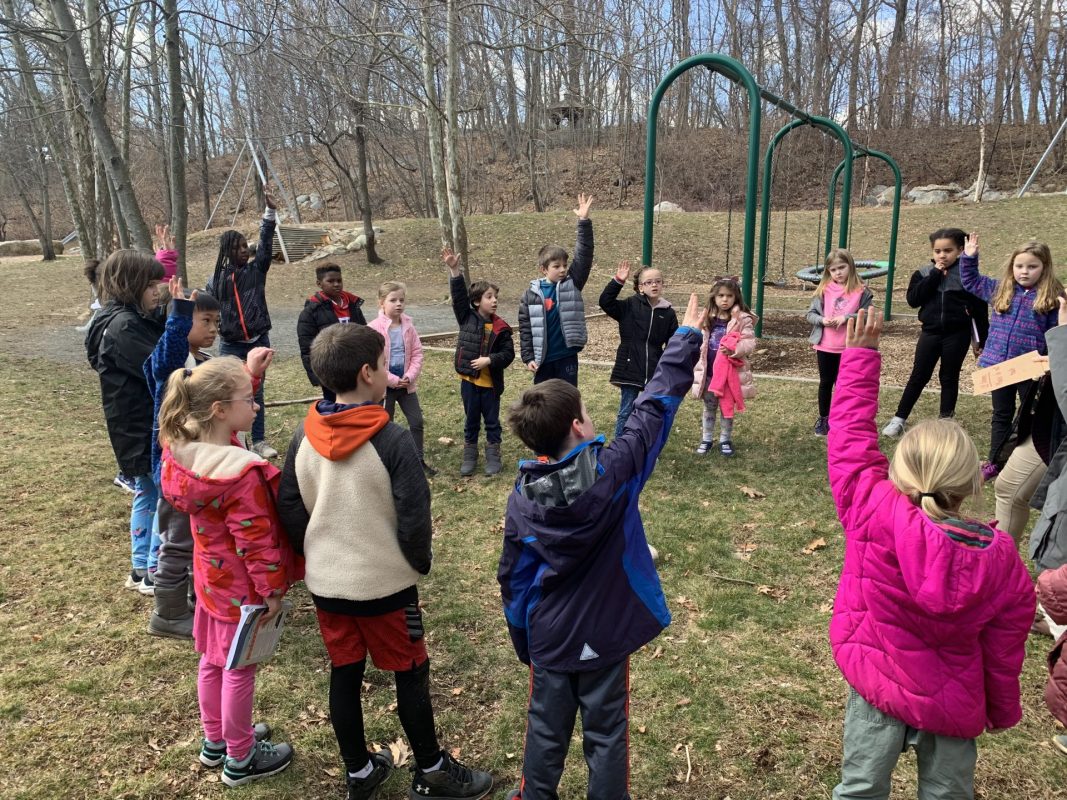
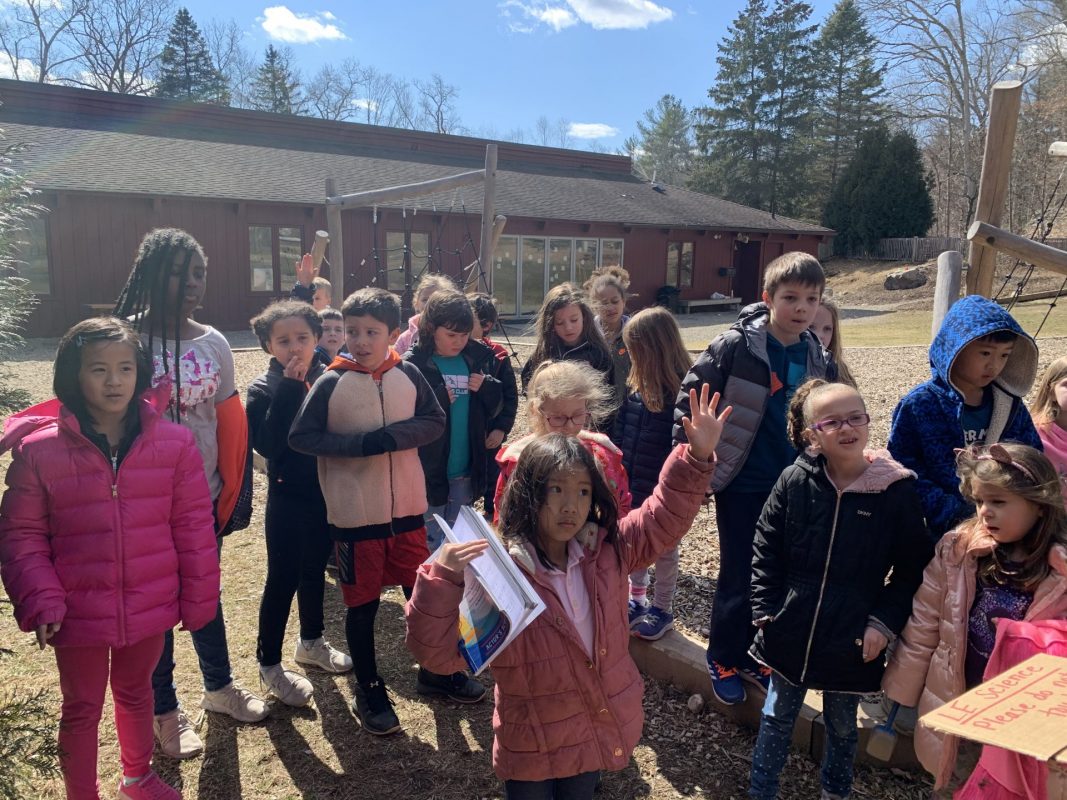
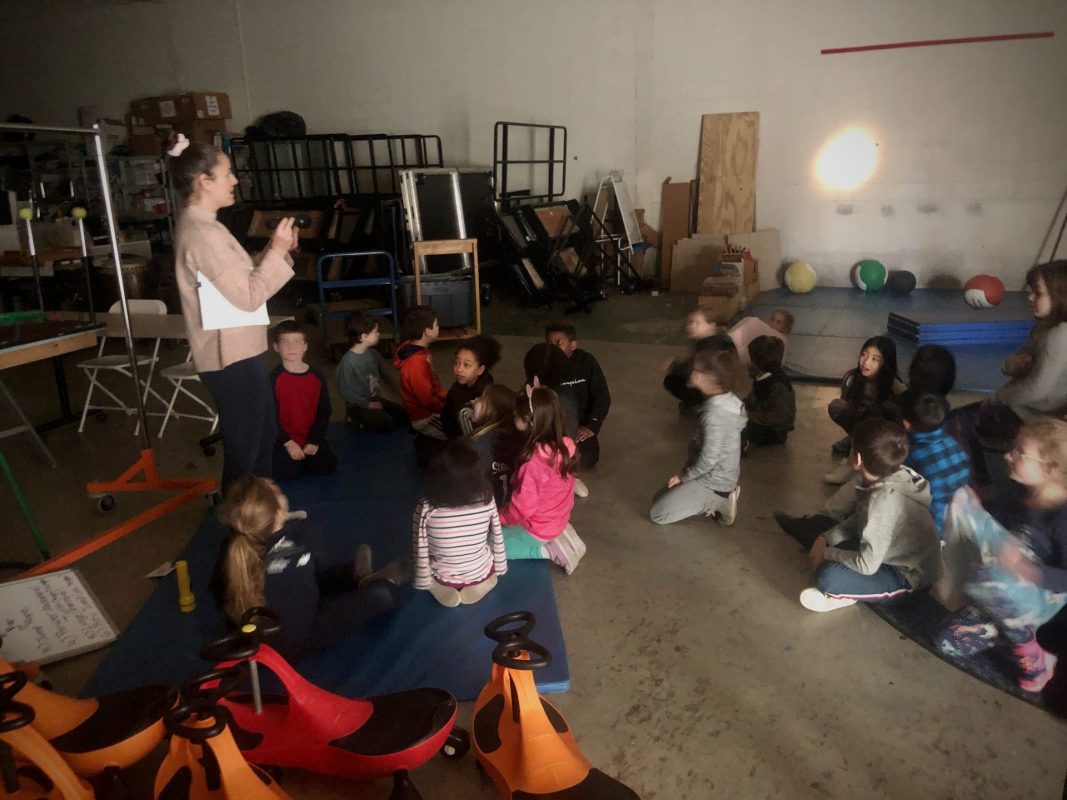
We have had a wonderfully busy and productive week in Lower Elementary. We are enjoying our physical science lessons on light. We discussed the difference between natural light and artificial light and then we went on a walk through the school and took a light survey, seeing how many sources we could find that produce light. Next, we learned that atoms get excited when energy is added in the form of heat or a chemical reaction and light is produced when the excited atoms release their energy in bundles of photons. The children had fun acting out the roles of the atoms and photons as Ms. Beckett verbally added energy. We also discussed what role light plays in the survival of plants. We learned about photosynthesis and chlorophyll and why we see plants as green. We covered a small patch of grass and a leaf on our playground to see what will happen when they aren’t able to collect sunlight. We will be checking on them next week. Finally, we went into a dark room and turned on a flashlight. We noticed that we could see the light at its source and at the point where it bounced off the wall but we could not see its beam. Then we shook a dusty pillow. We noticed that we could then see the beam of light reflecting off the dust particles. We will continue with light lessons over the next few weeks and we will be learning more about light when we go on our April field trip.
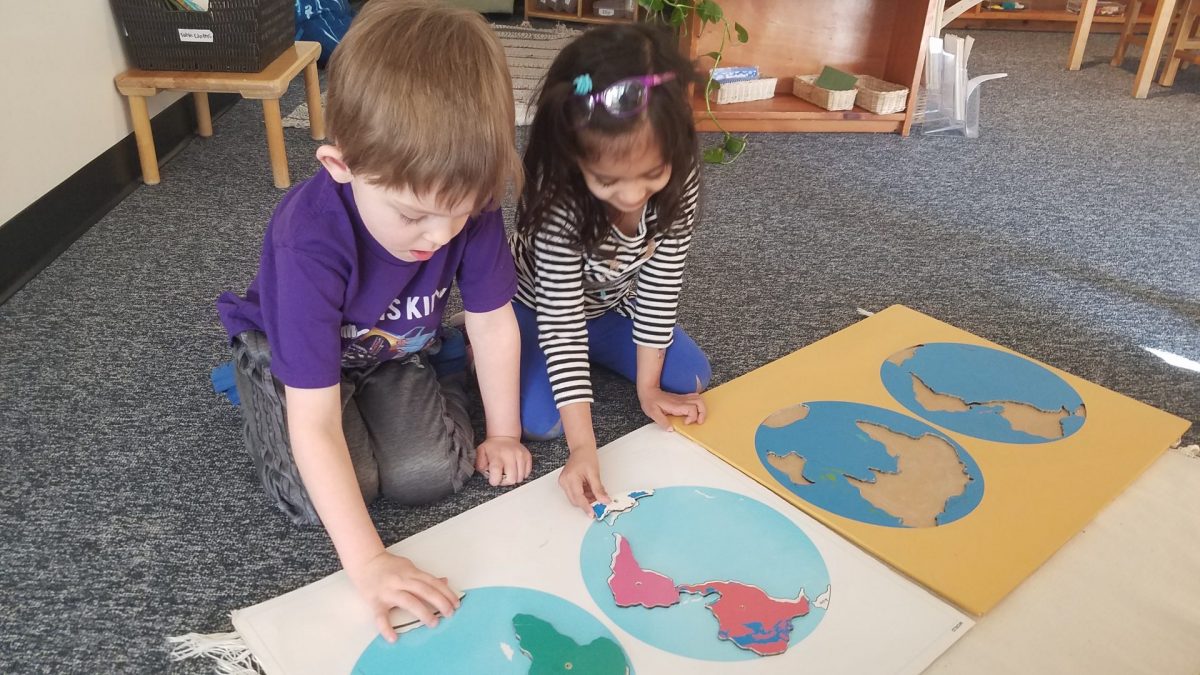
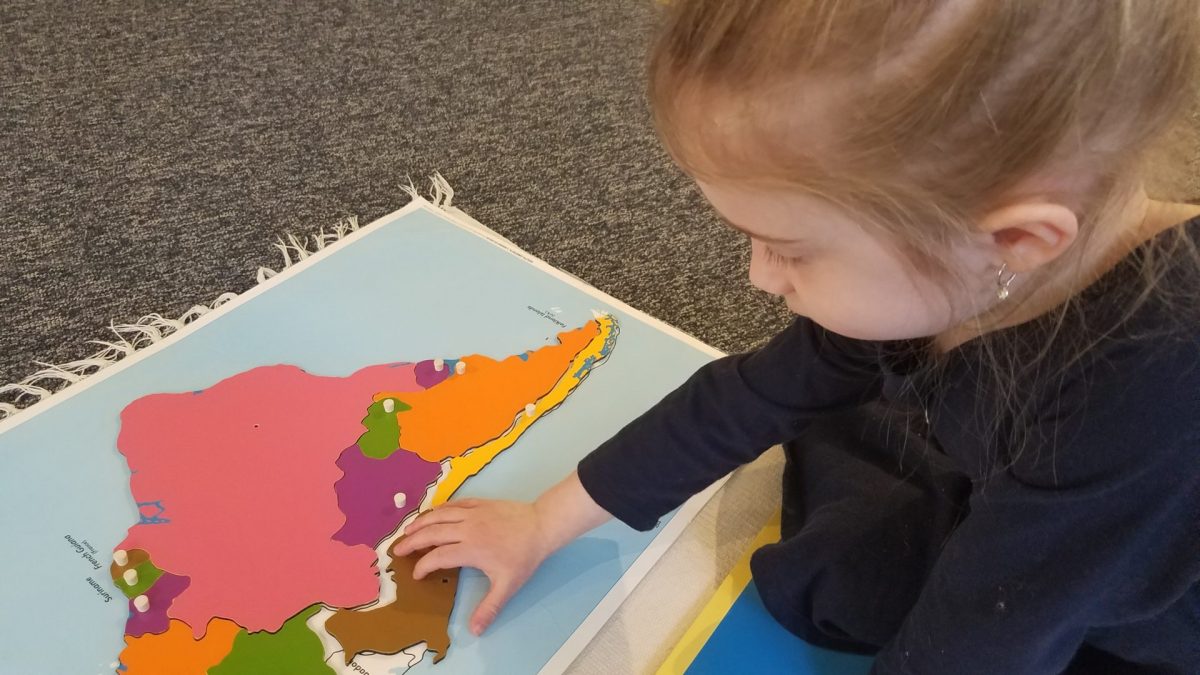
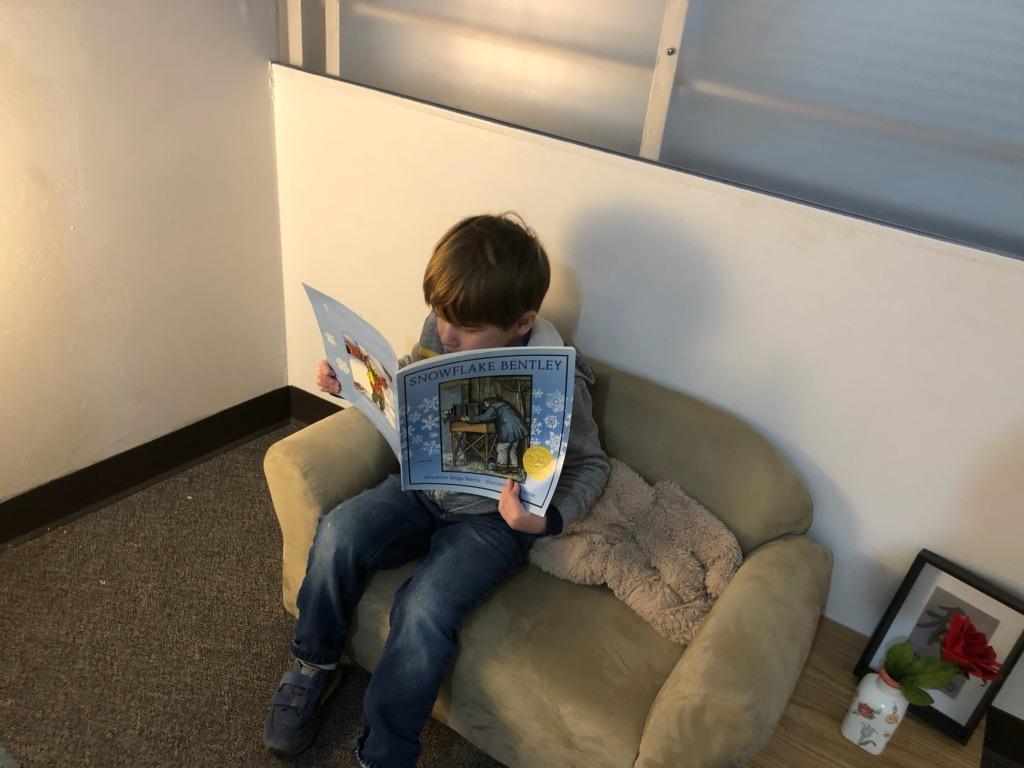
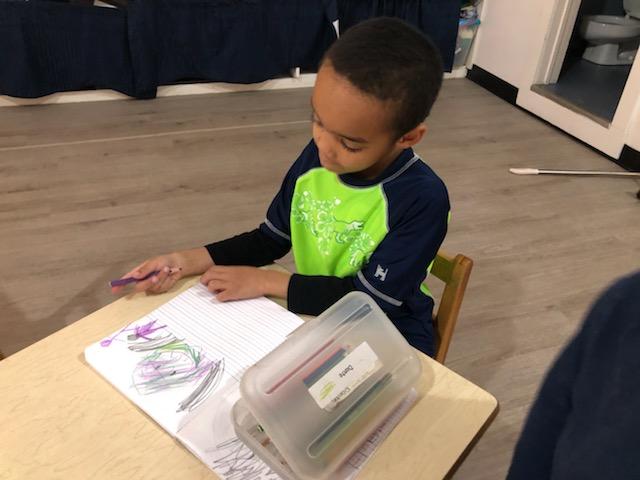
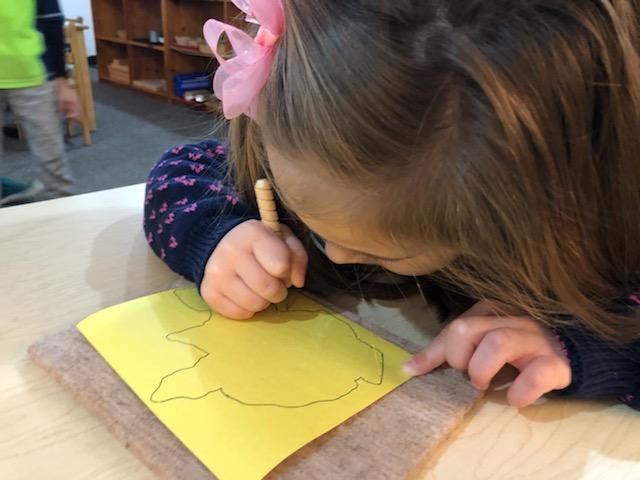
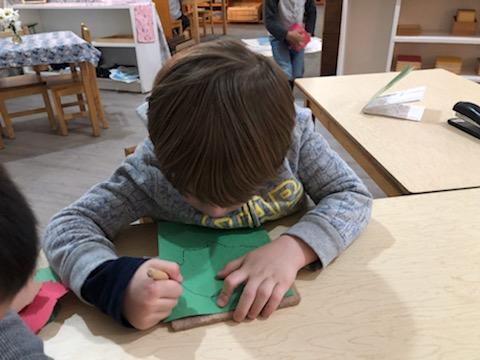
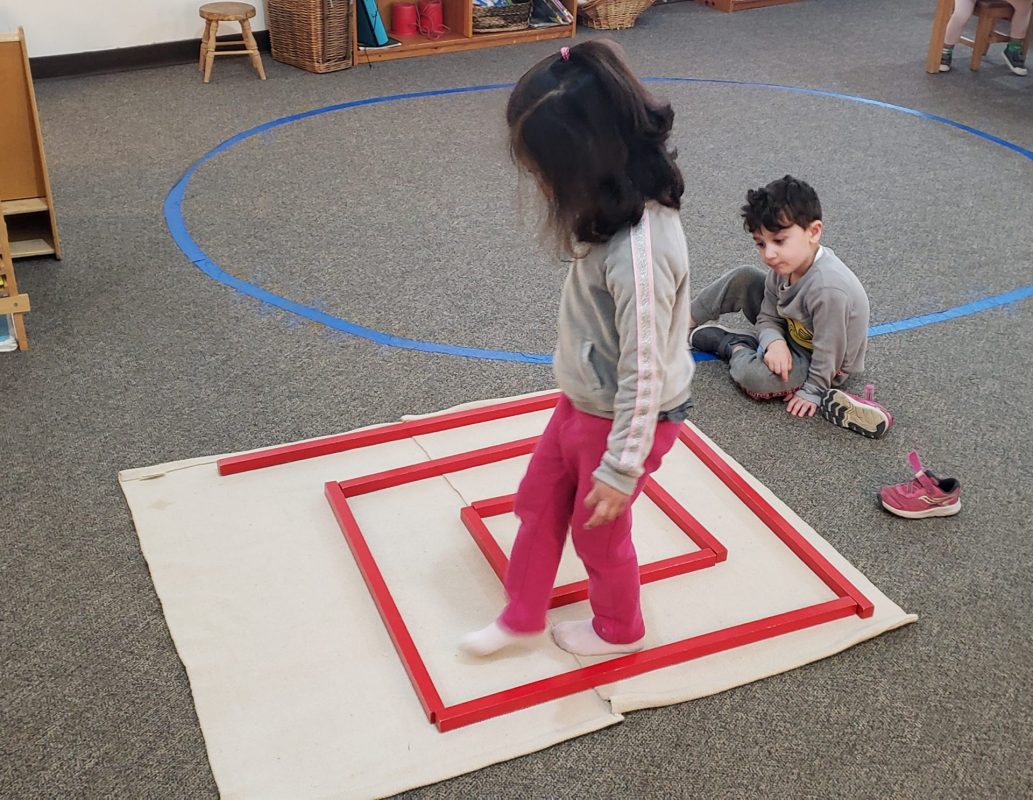
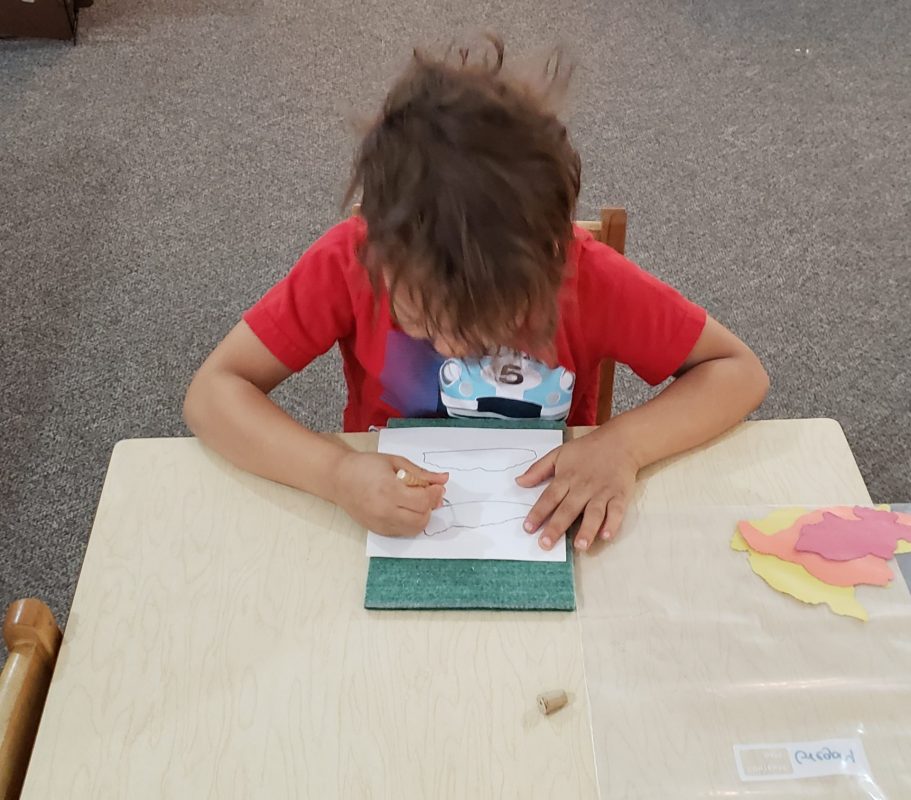
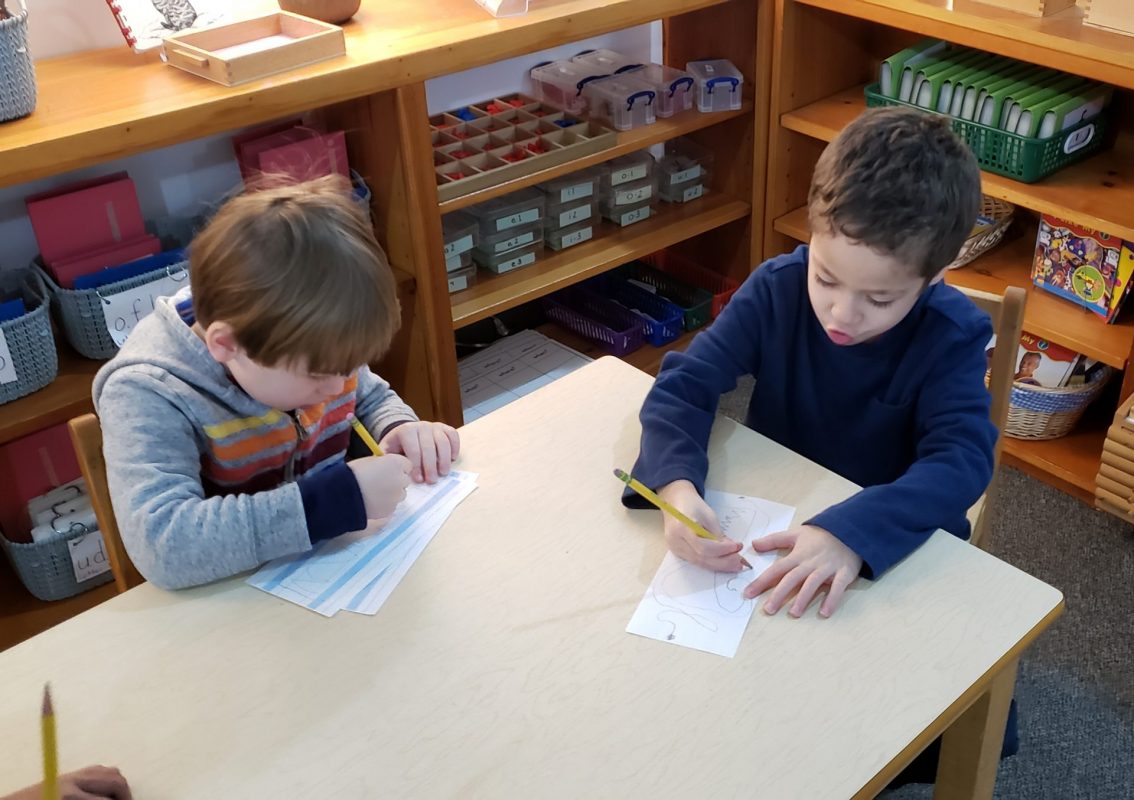
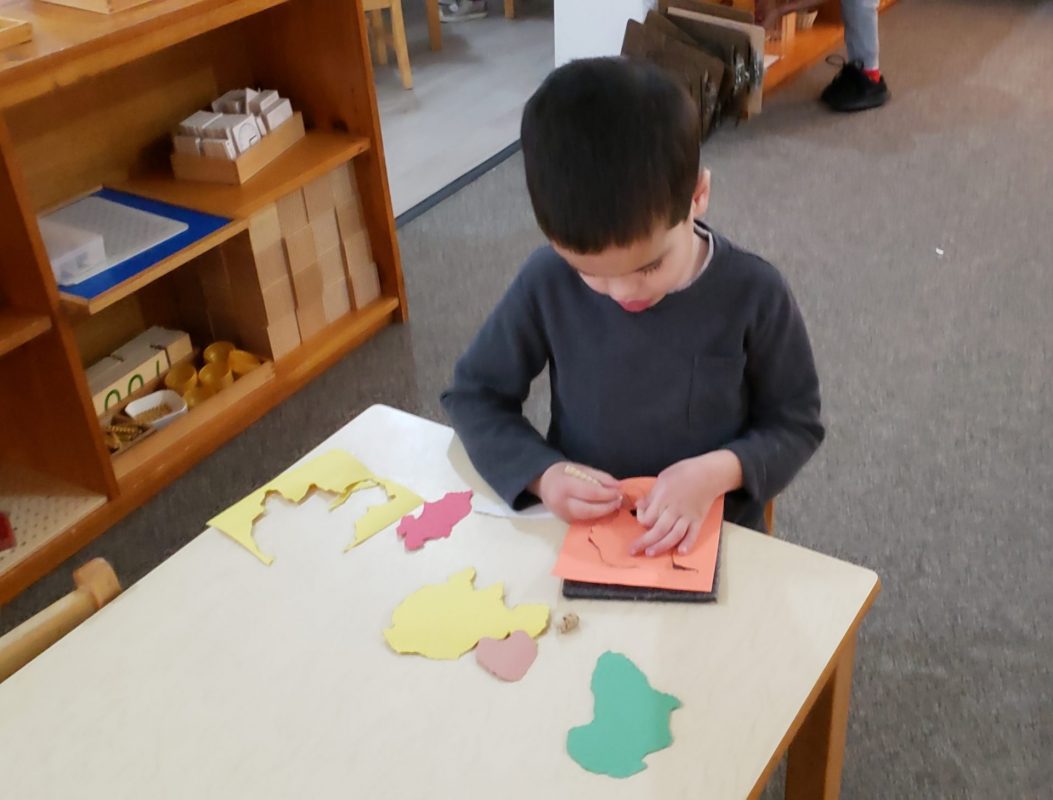
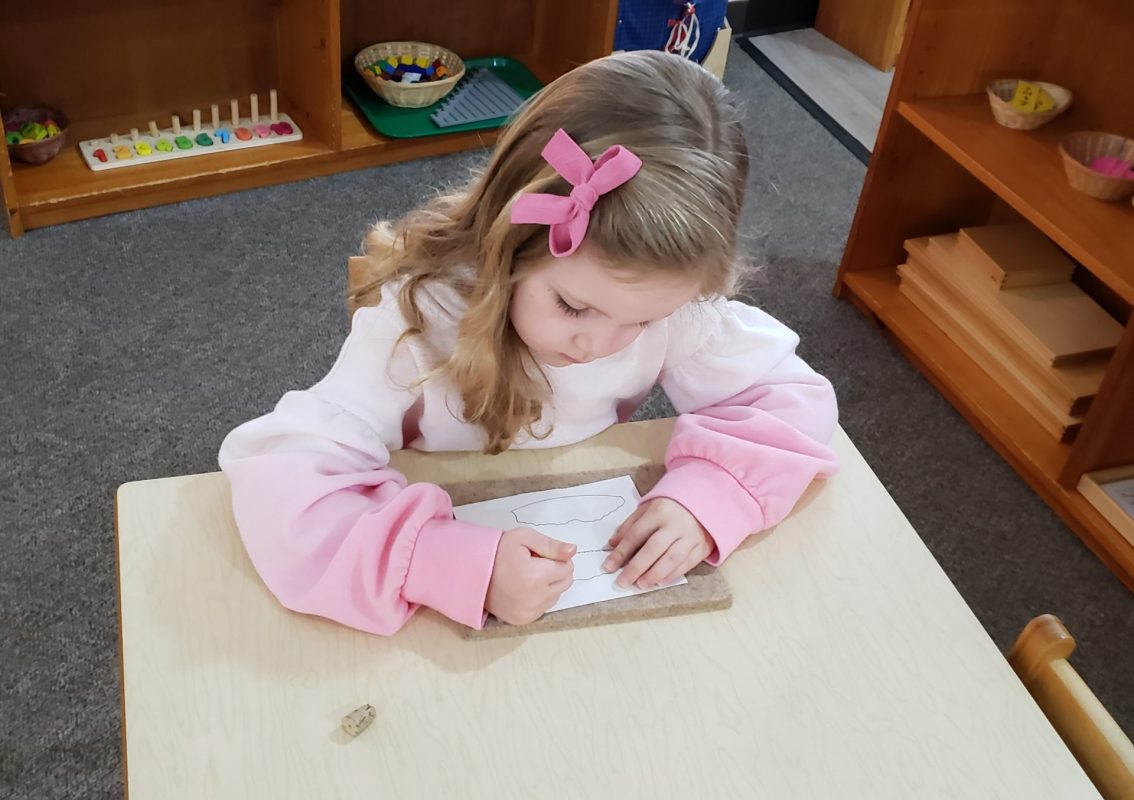
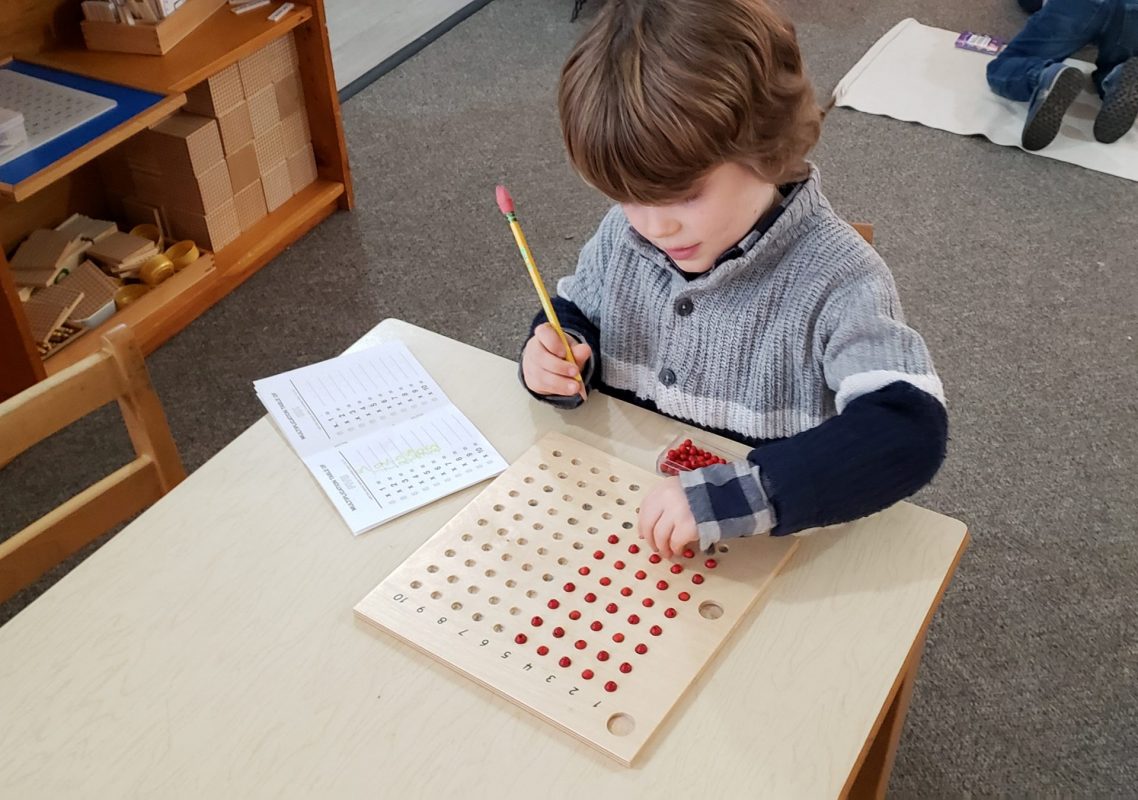
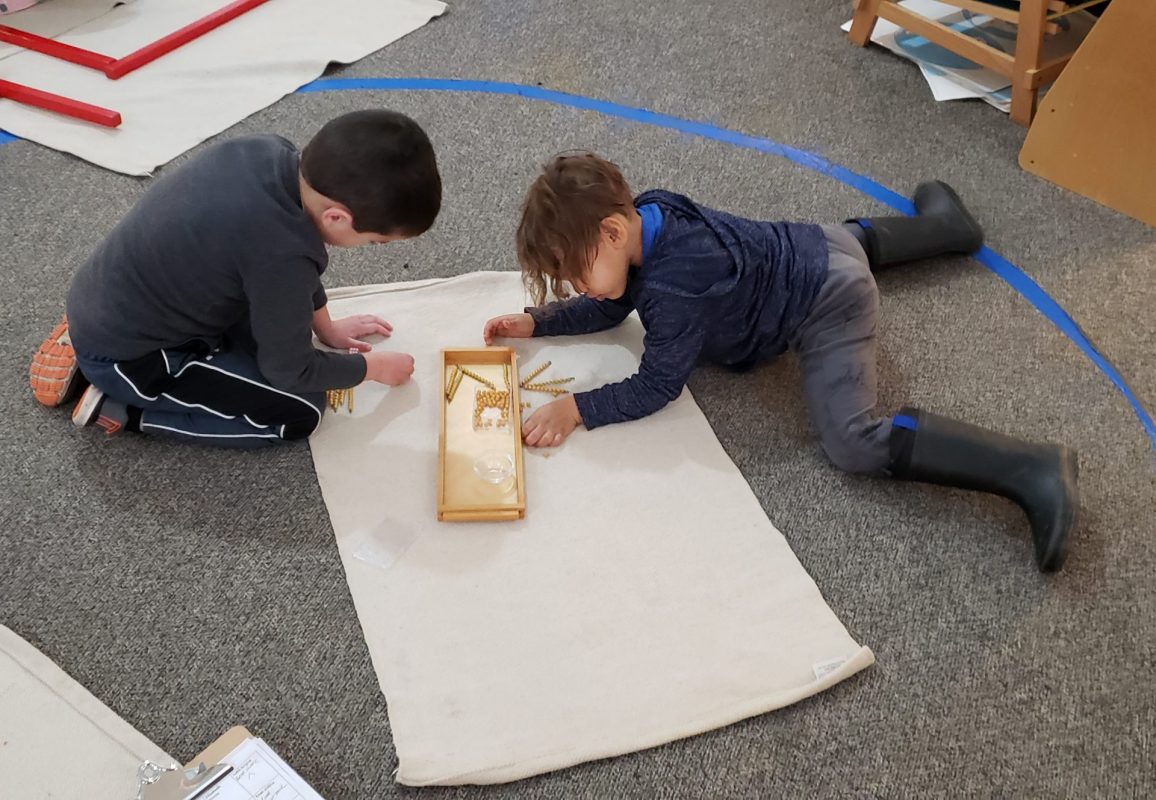
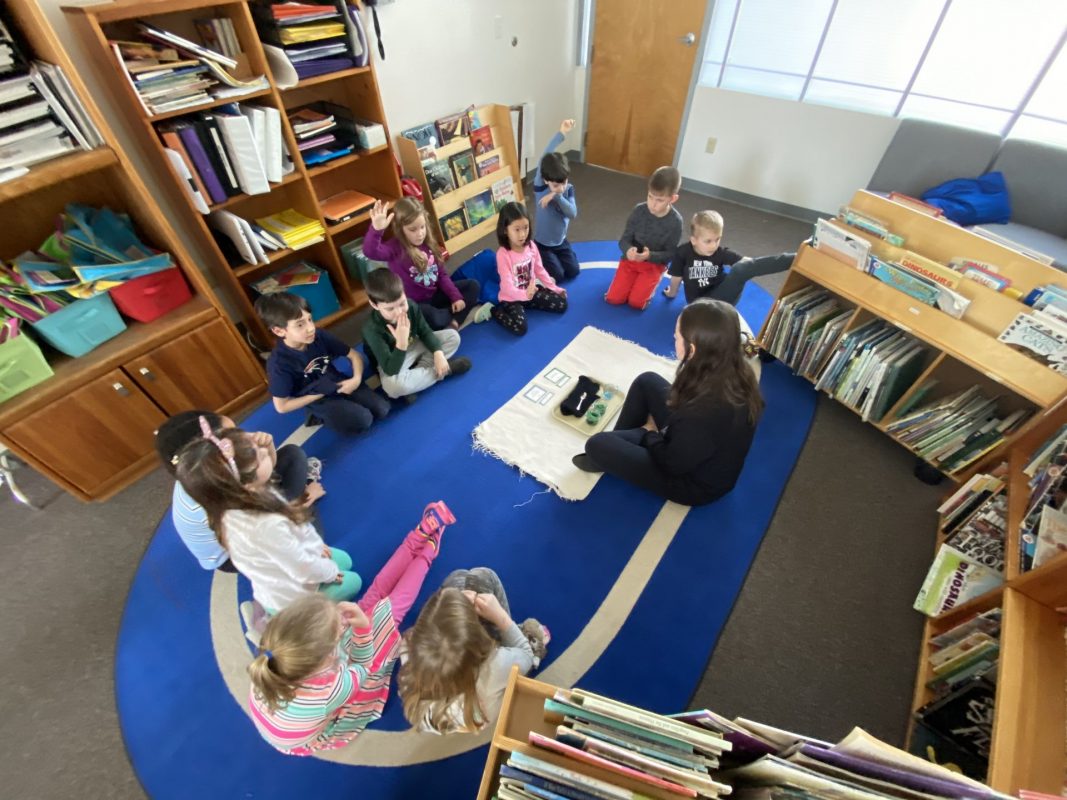
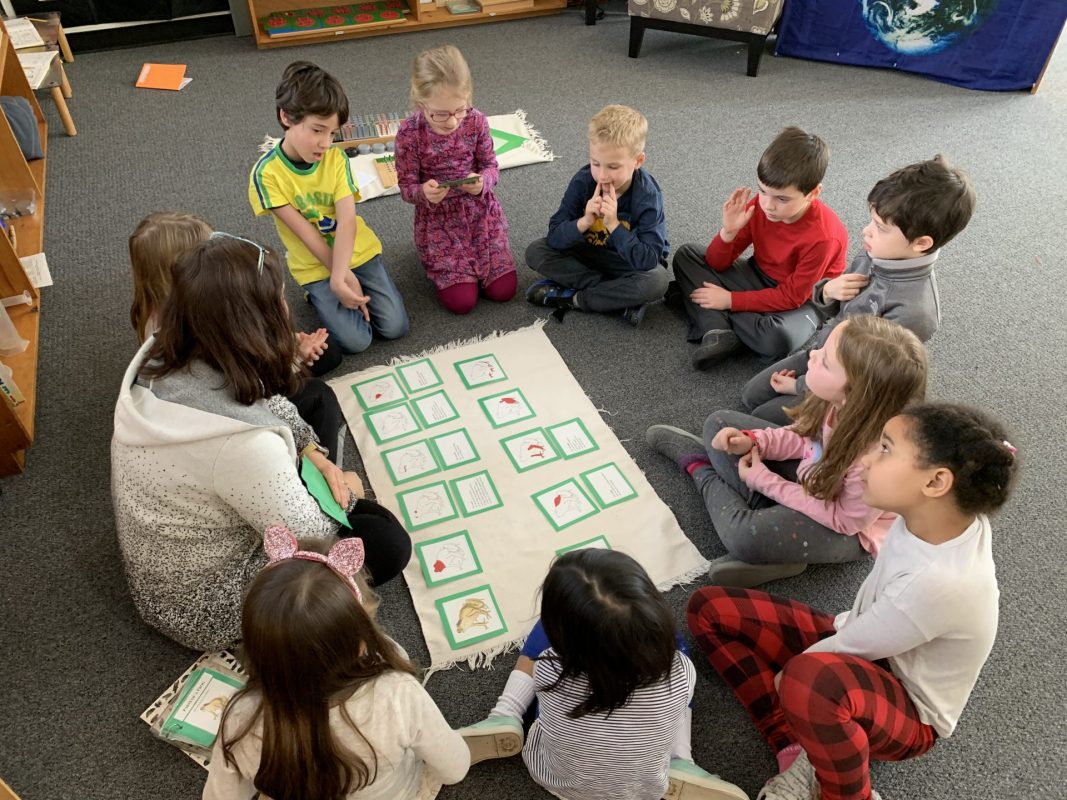
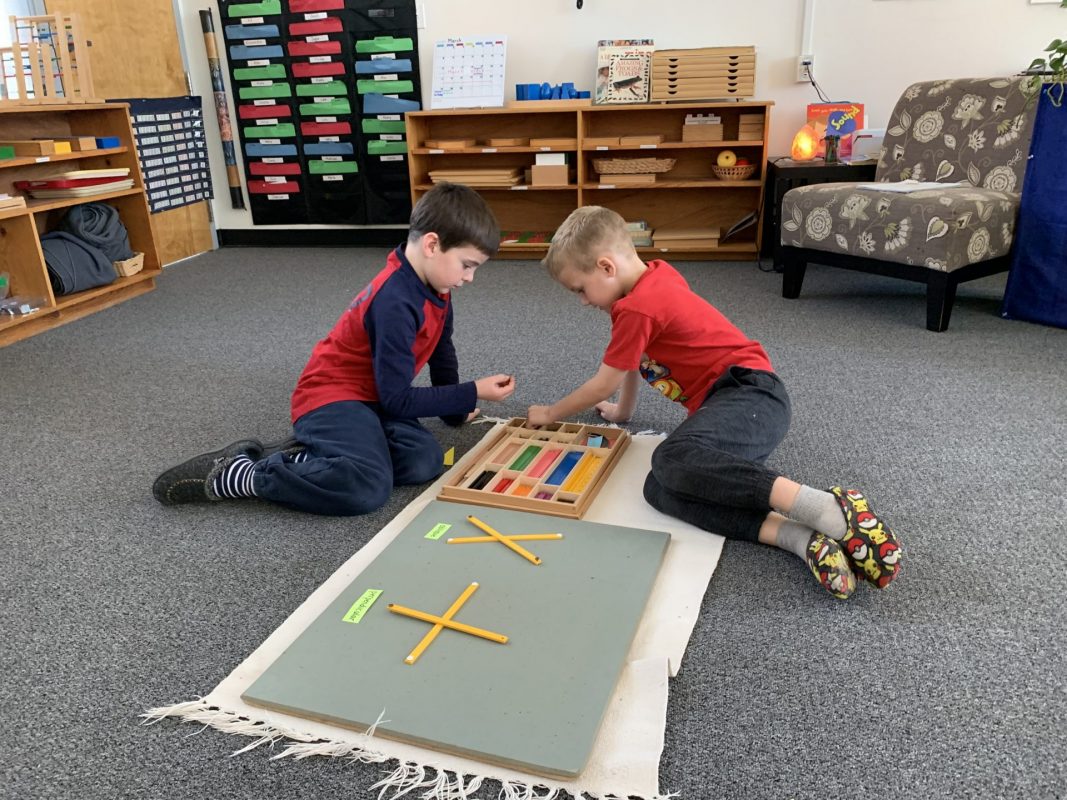
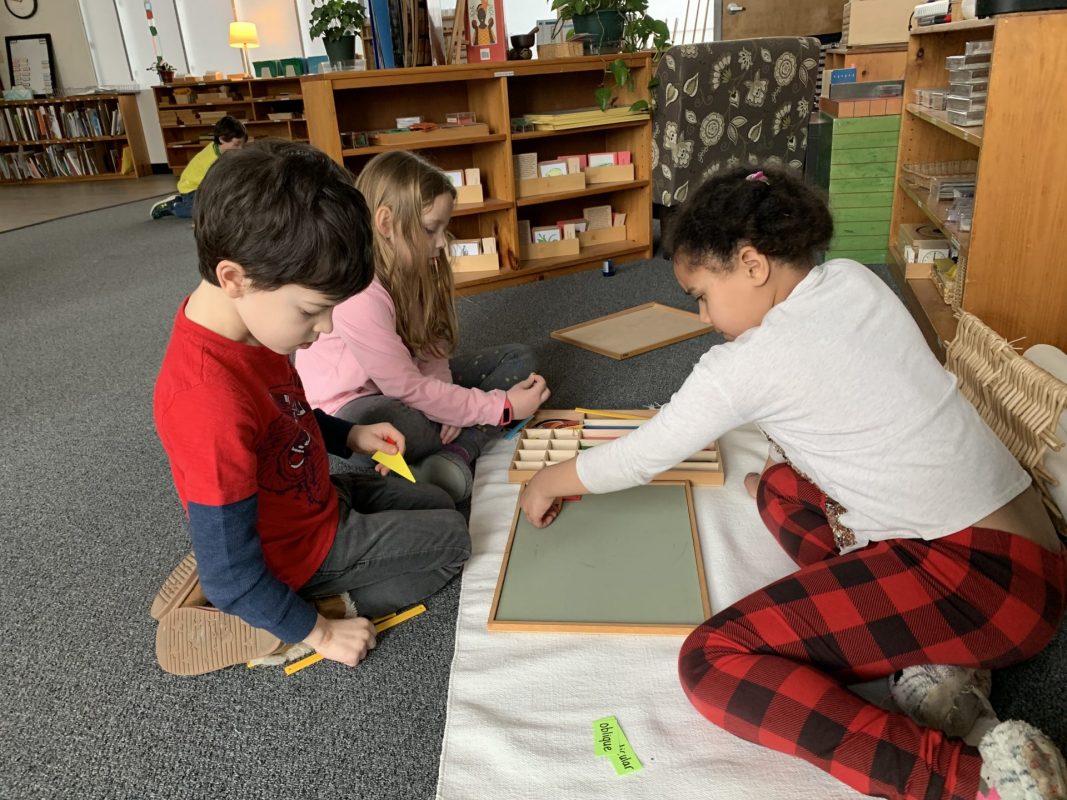
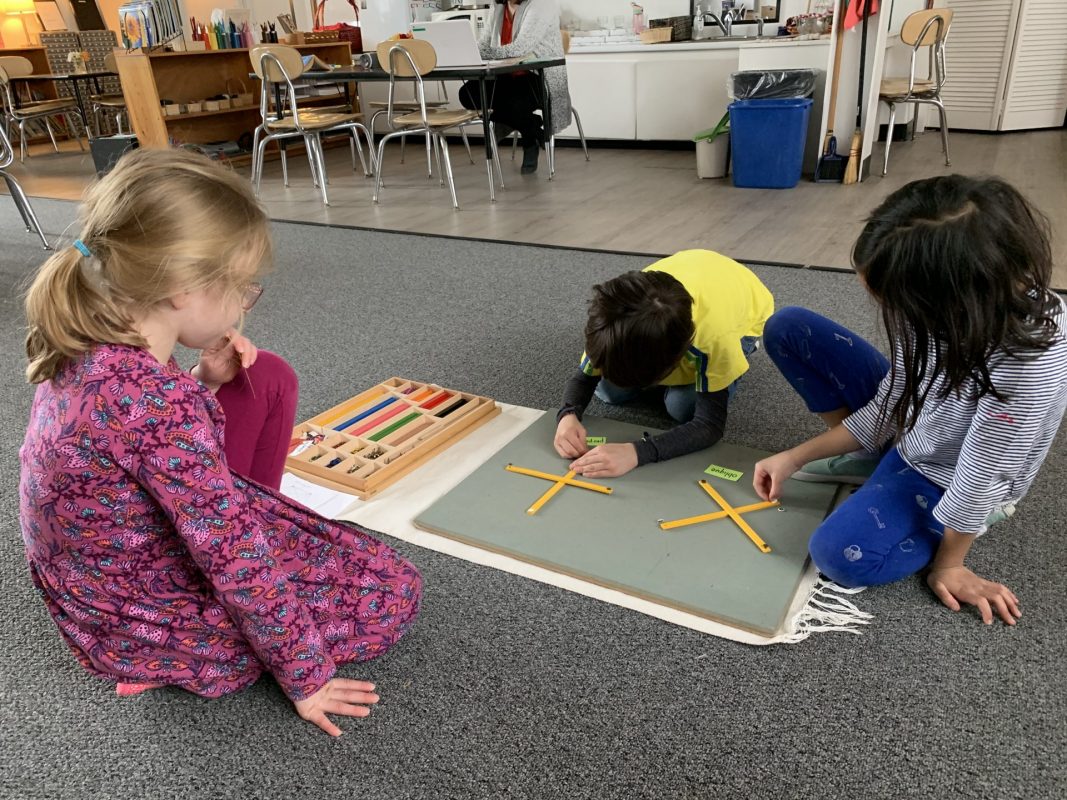
In addition to our physical science lessons on light, we had many other small group lessons this week. First year students learned about external parts of amphibians in biology, land and water forms in geography, and oblique and perpendicular lines in geometry. Second year students learned about the body functions of amphibians in biology, advanced land and water forms in geography, and subtracting angles with the Montessori protractor in geometry. Third year students collected moss and examined it under a microscope. They are learning about the external parts and body functions of moss in biology and about constructing right-angled, obtuse-angled, and acute-angled triangles with the box of sticks in geometry.
The children have received their parts for our May musical, Moana Jr. They are working hard already and have been enjoying coming together with Upper Elementary to sing songs from Moana in the mornings before we start our day. The children should bring their scripts to school every day since we will be doing a lot of practicing in the coming weeks. Be on the lookout next week for an email with more information about costumes, props, and parts.