Blog

Mrs.Wilson’s Class: Water Station


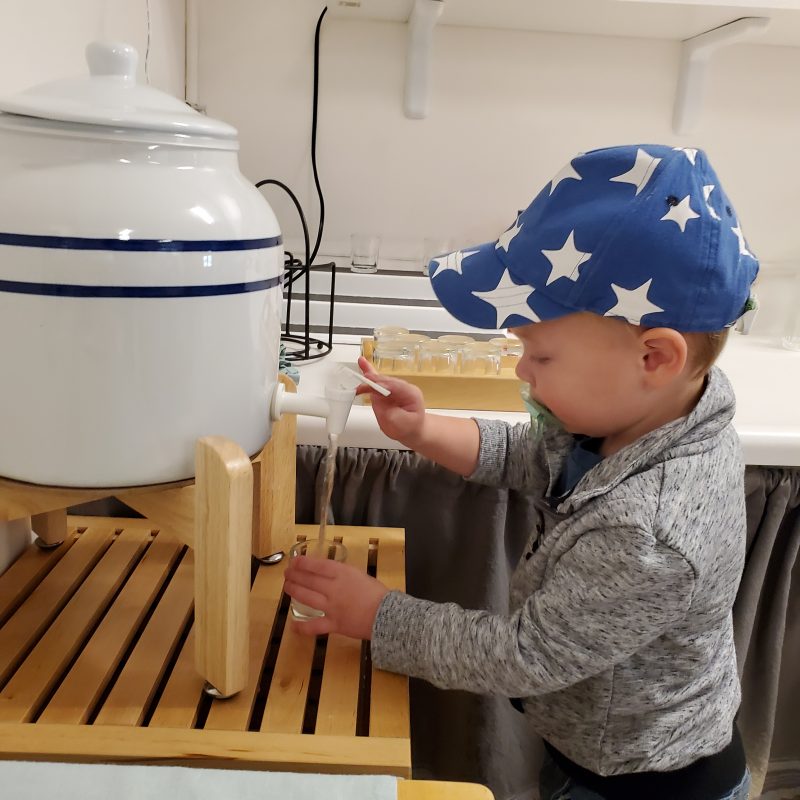
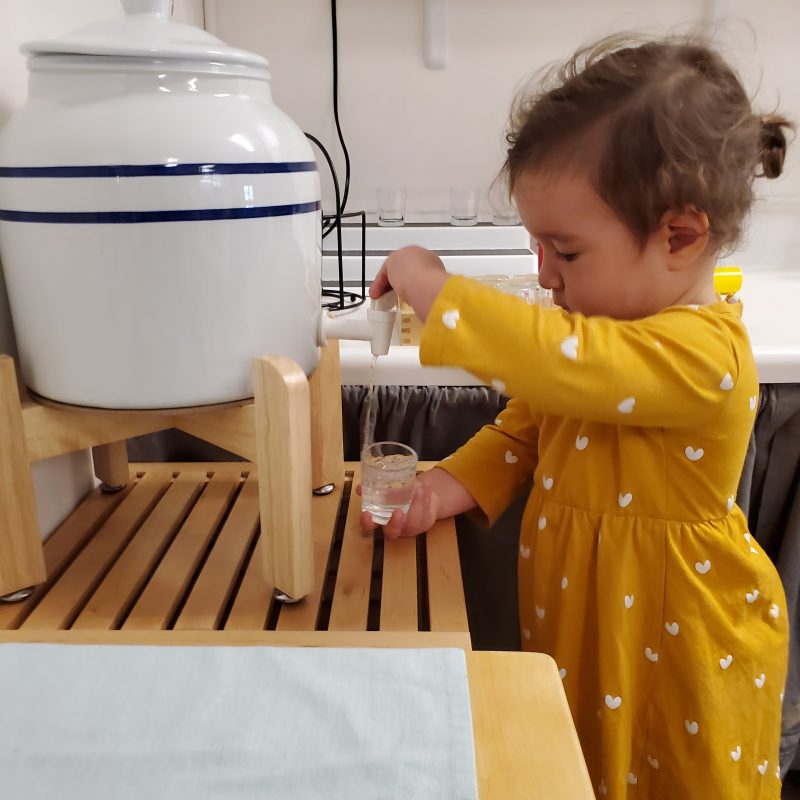
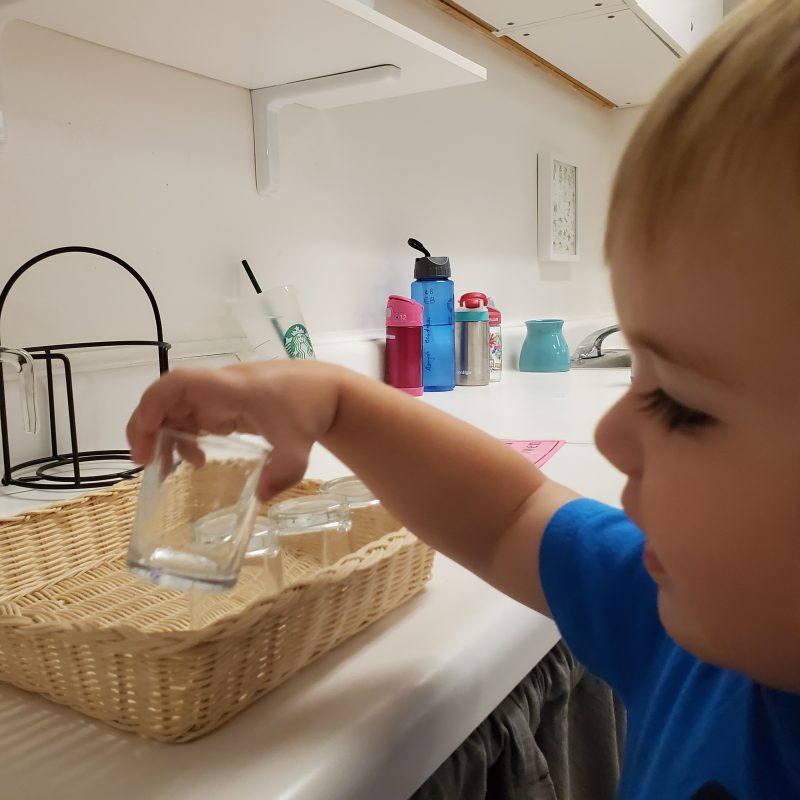
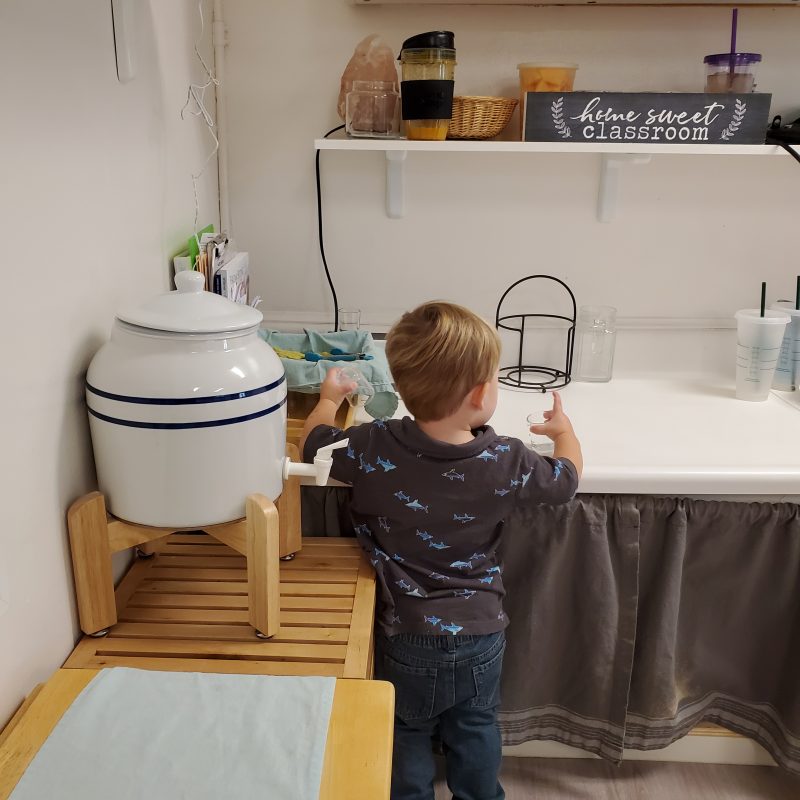
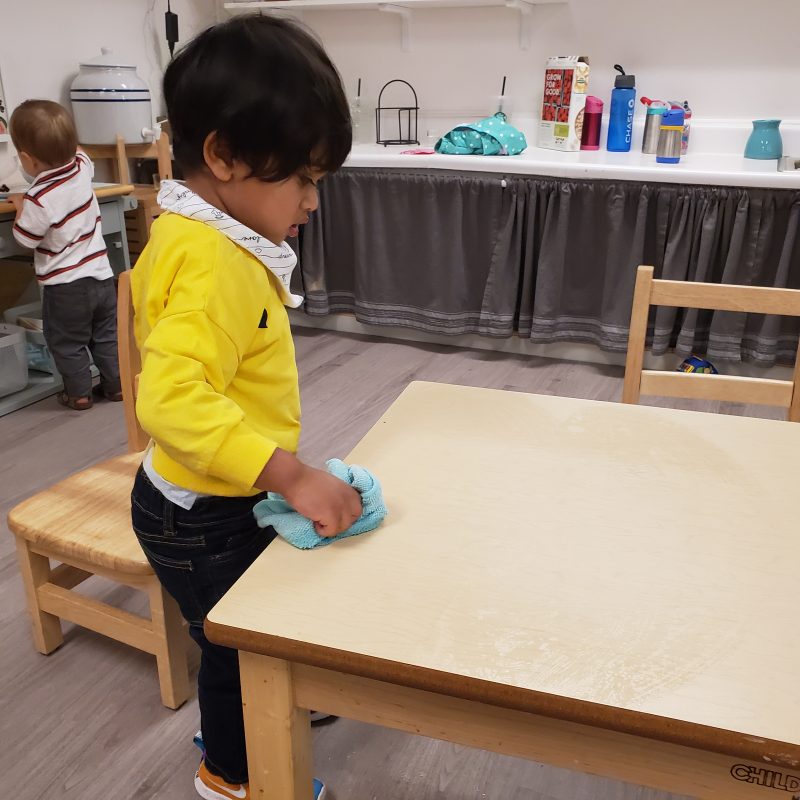
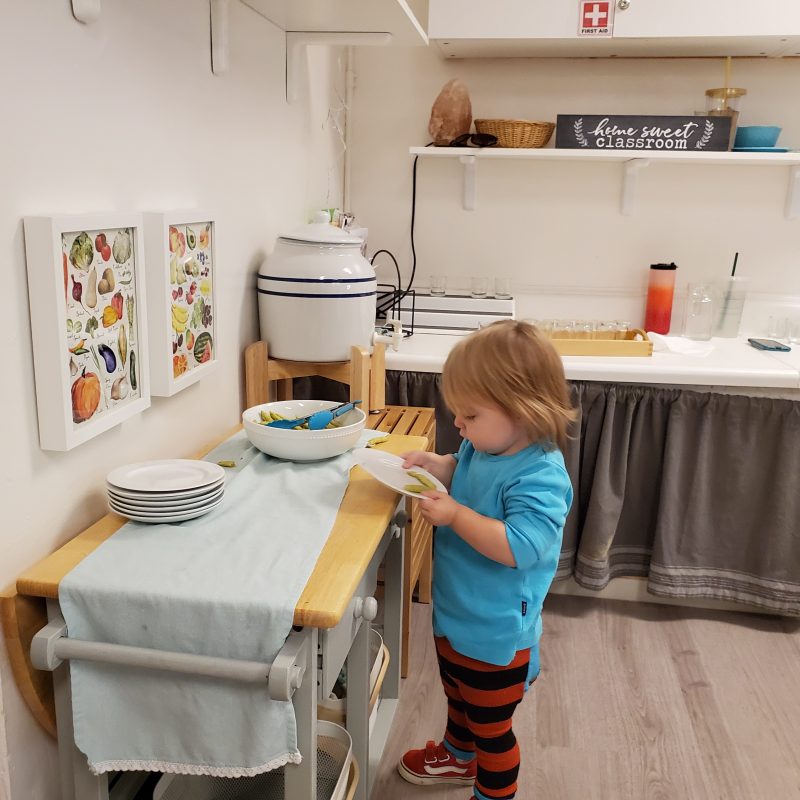
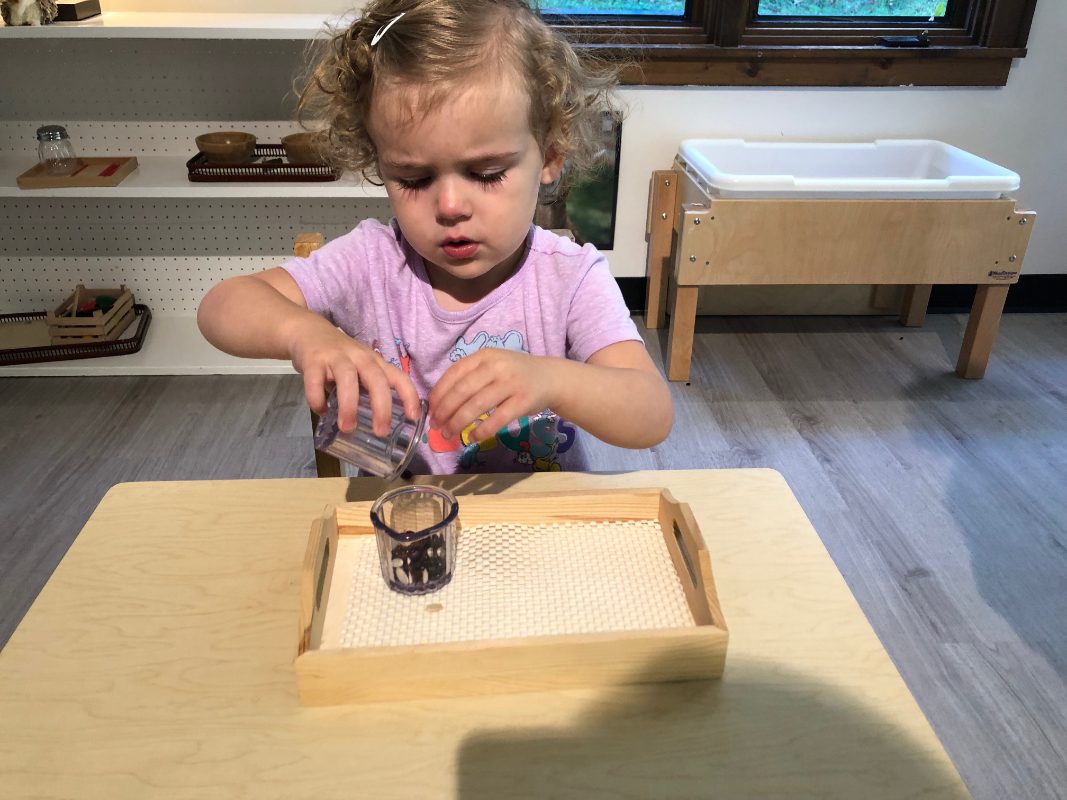
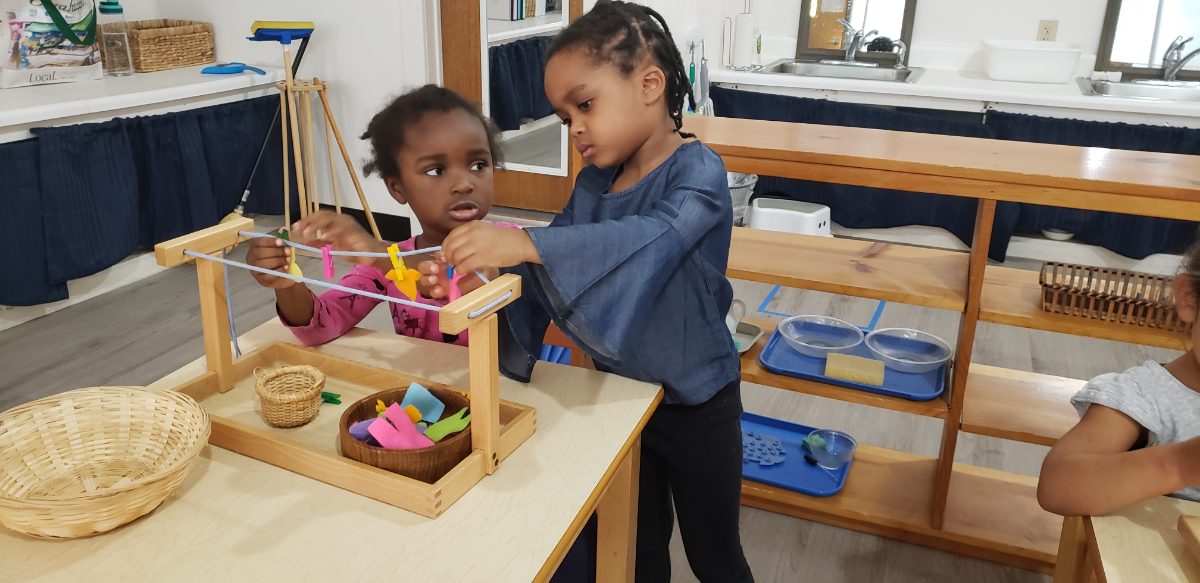
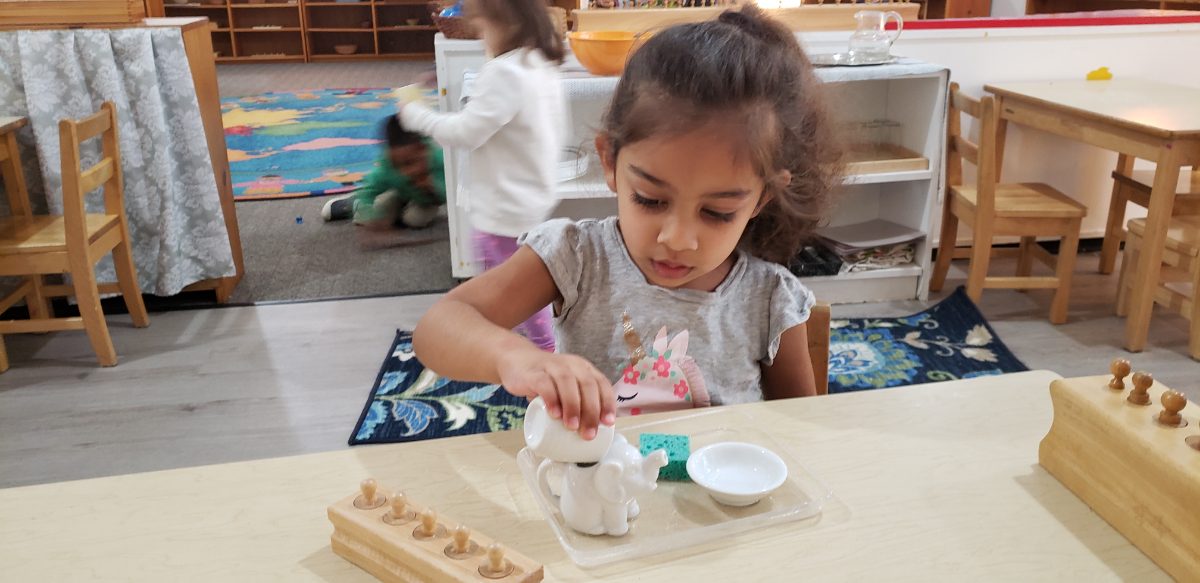
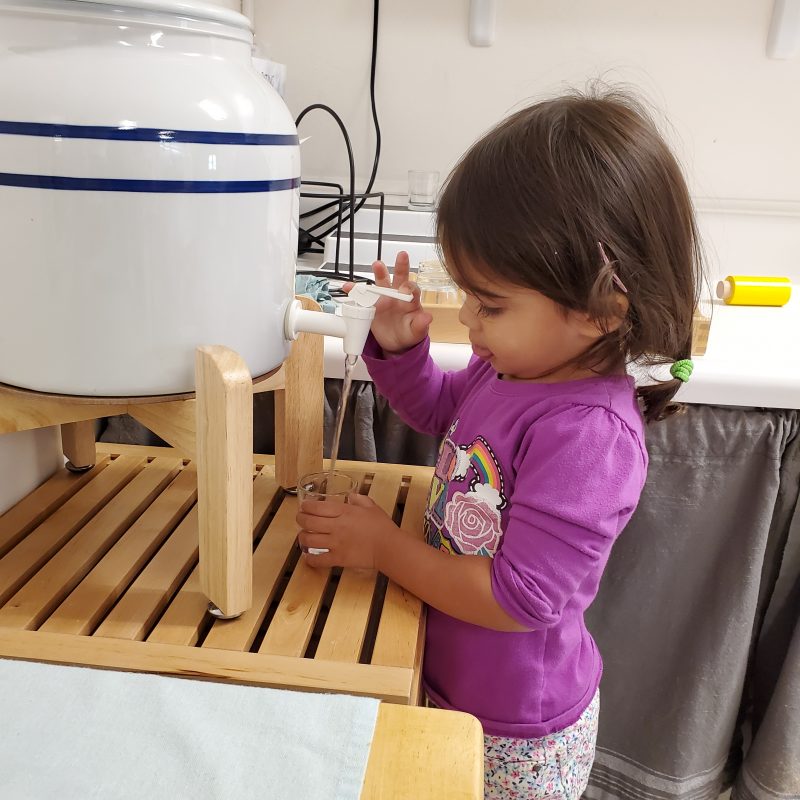
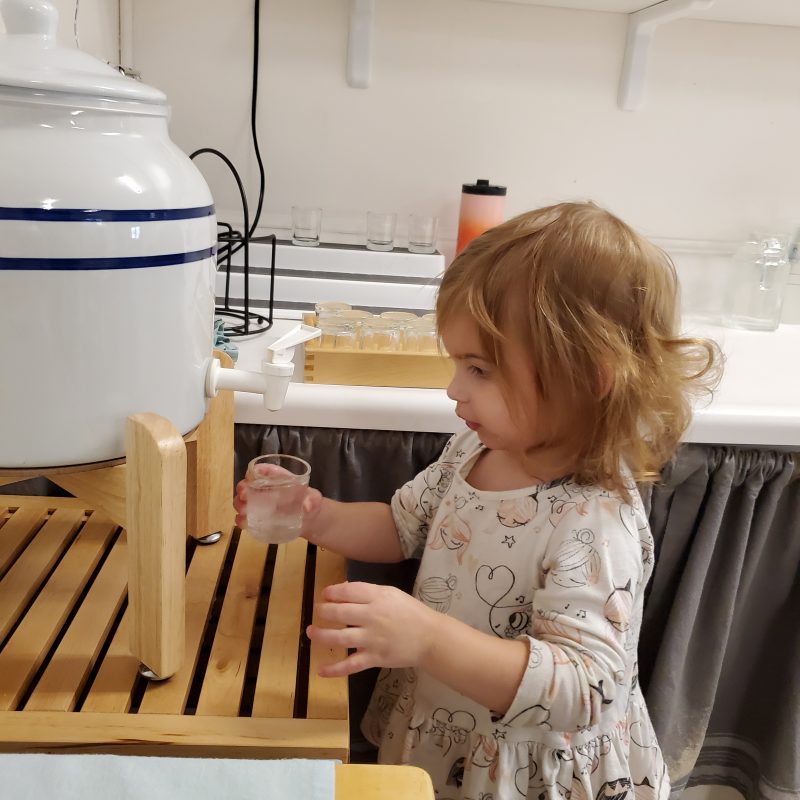
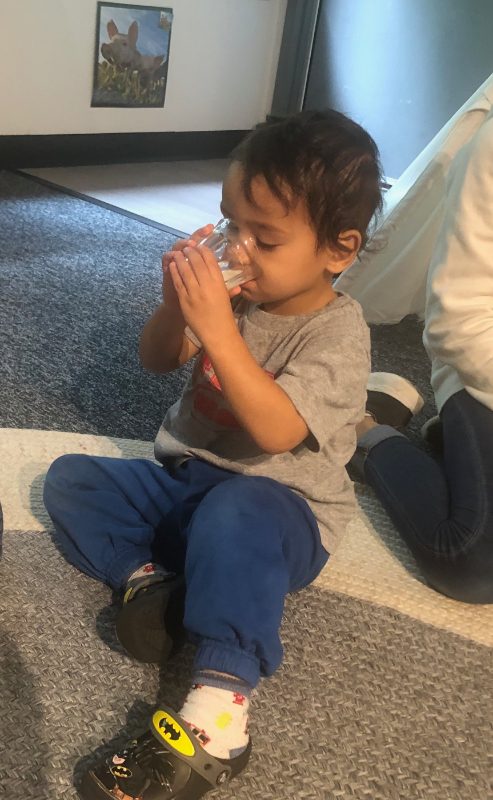
This week I braced up and introduced the Water Station. I started out by giving a lesson to one child at a time and then allowing that child to have a go at it.  The children are able to access and fill up their own glass. Then they can carry the glass to the table to enjoy. The clear glass allows the child to see how much water they are pouring in and when they have overfilled the glass. And yes! Spills do happen and that is okay; it is all part of the process. We guide them to get a towel and dry up the spill. You would not believe how thirsty your children have become now that they have water at their free will.

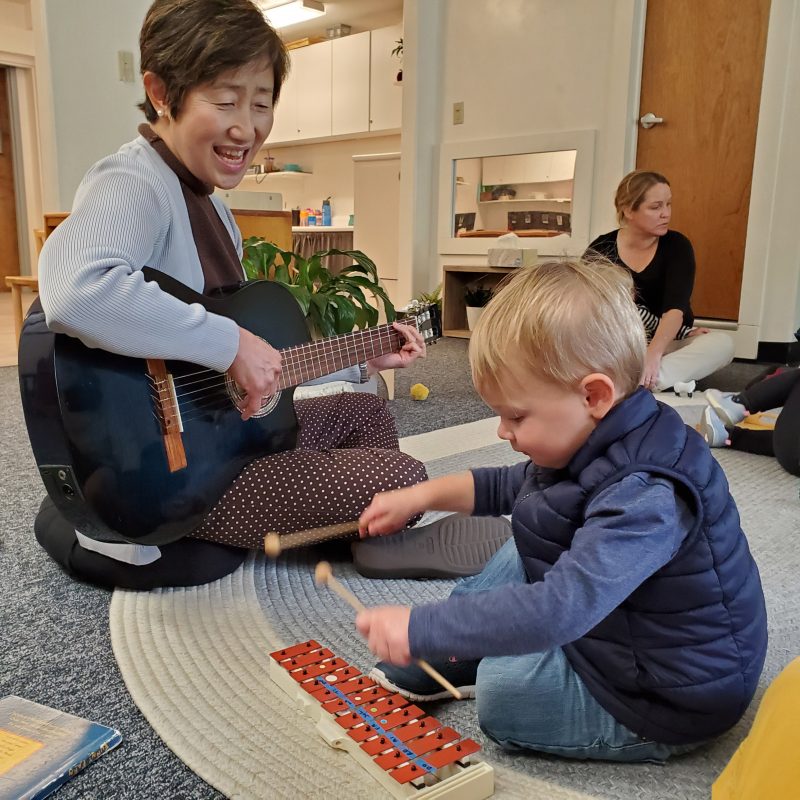
The children seem to enjoy listening to the book called We All Sing with the Same Voice By J. Philip Miller.


Mrs. Hood’s Class: La Vaca Lola

Have you heard of La Vaca Lola?
Maria Montessori believed that the initial six years of a child’s life are crucial for a child’s language development. That from birth a child must receive appropriate stimulation. This is also widely recognized by many specialists in language, also when referring to learning foreign languages.
Research shows that learning a second language boosts problem-solving, critical-thinking, and listening skills, in addition to improving memory, concentration, and the ability to multitask. Children proficient in other languages also show signs of enhanced creativity and mental flexibility. This is why one of our goals this year is to offer a Toddler Spanish immersion experience.

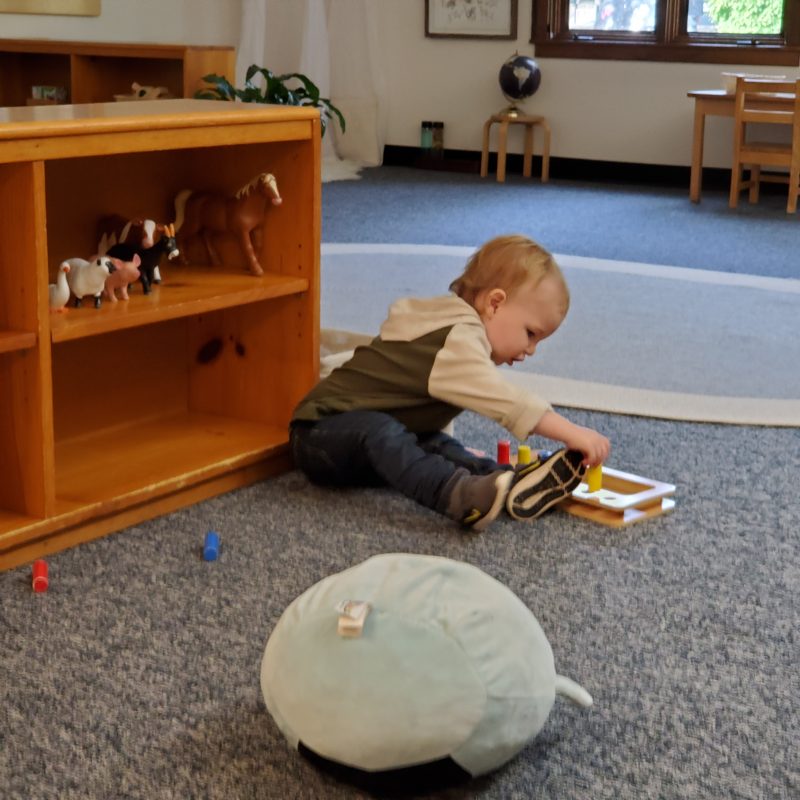
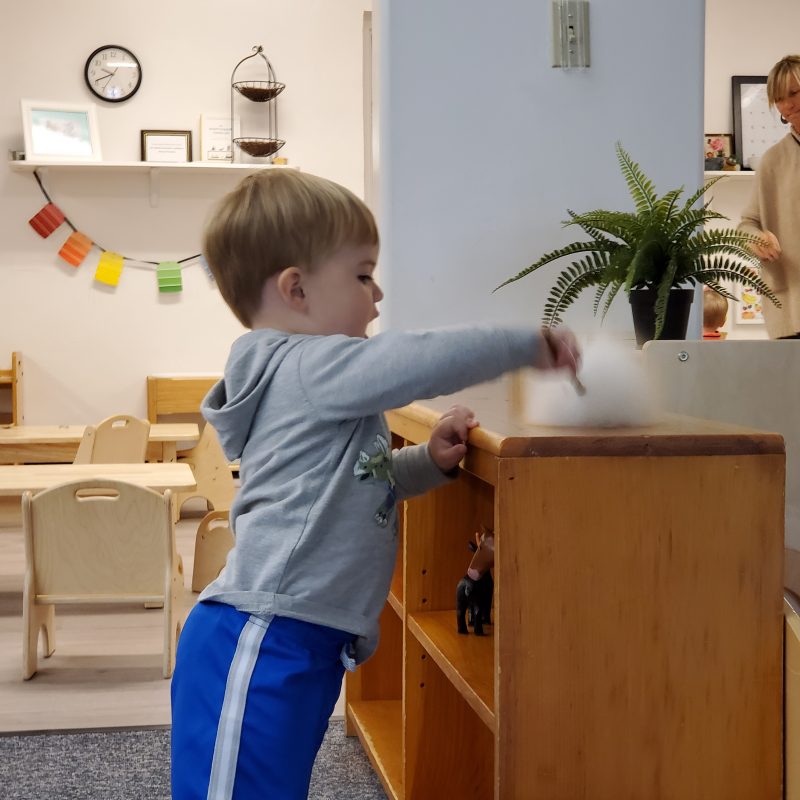
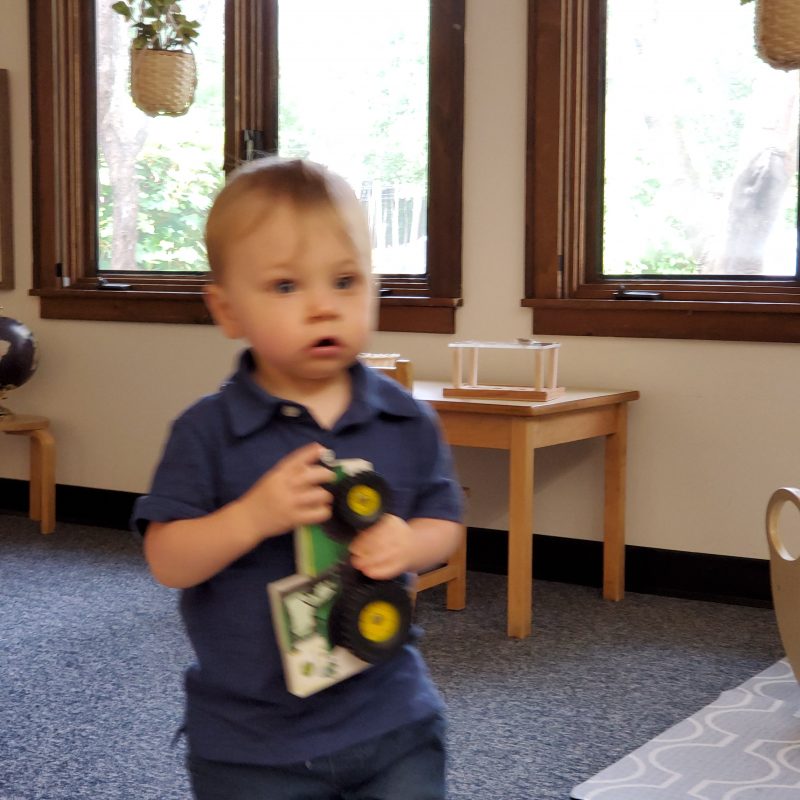
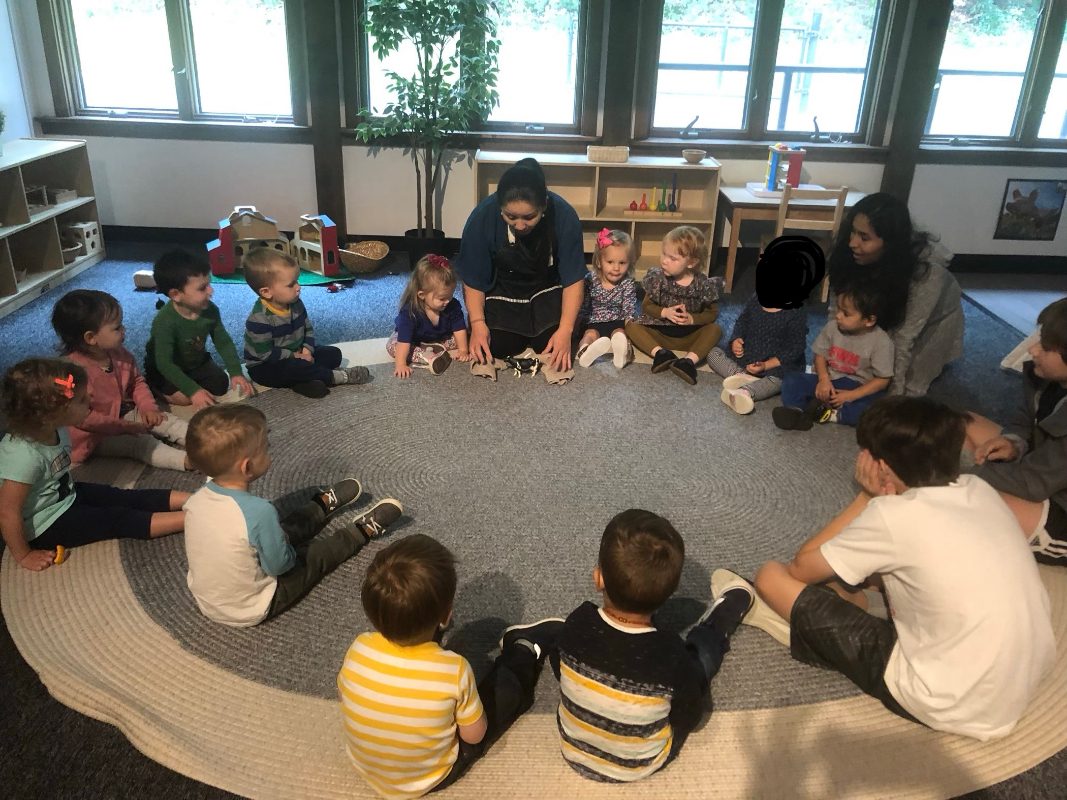
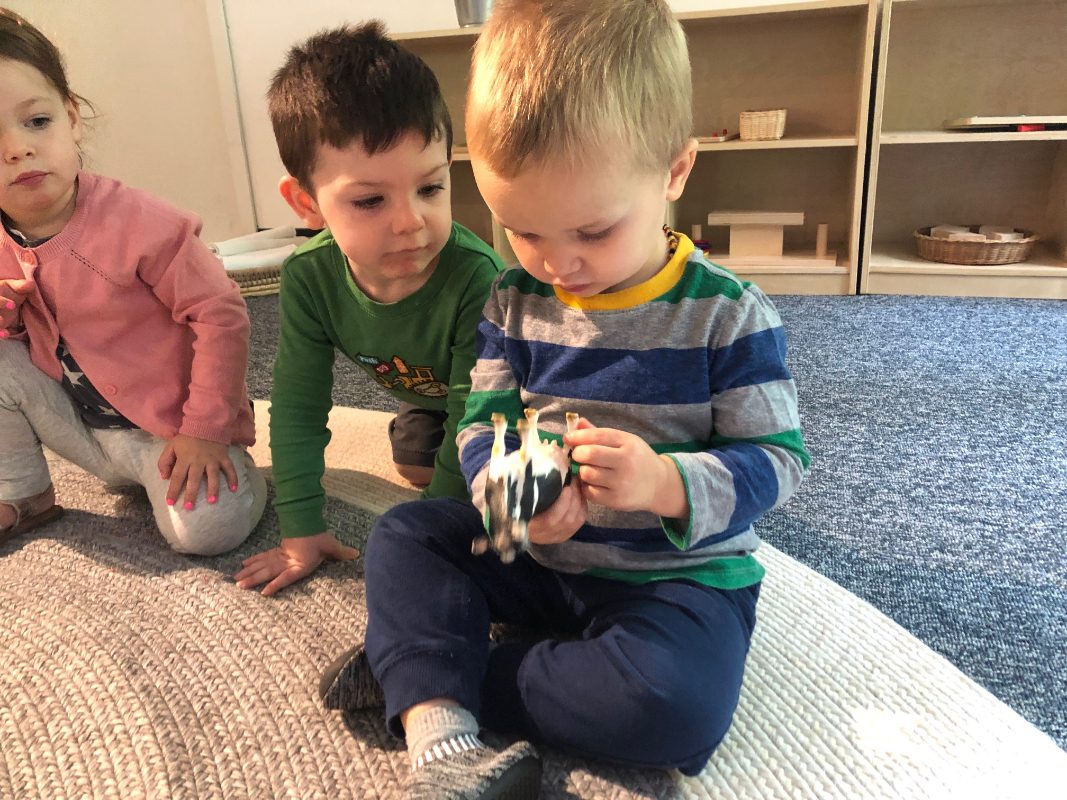
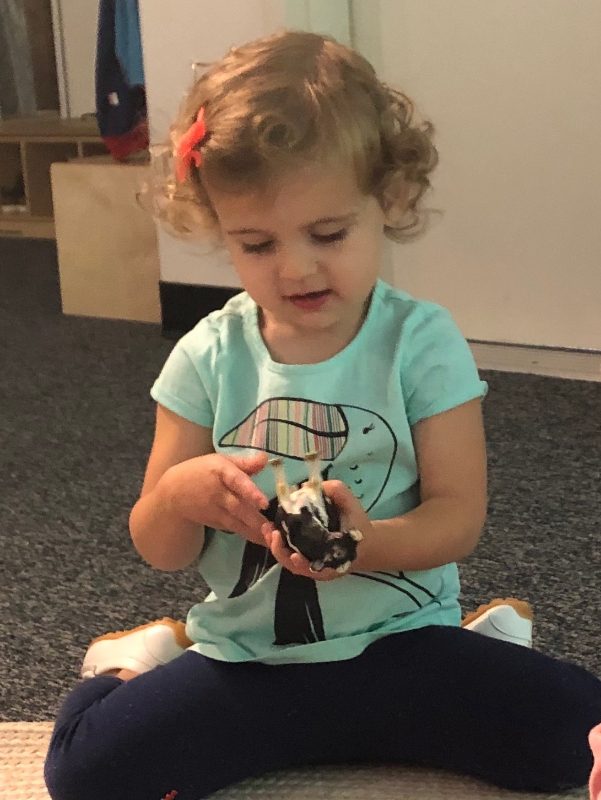
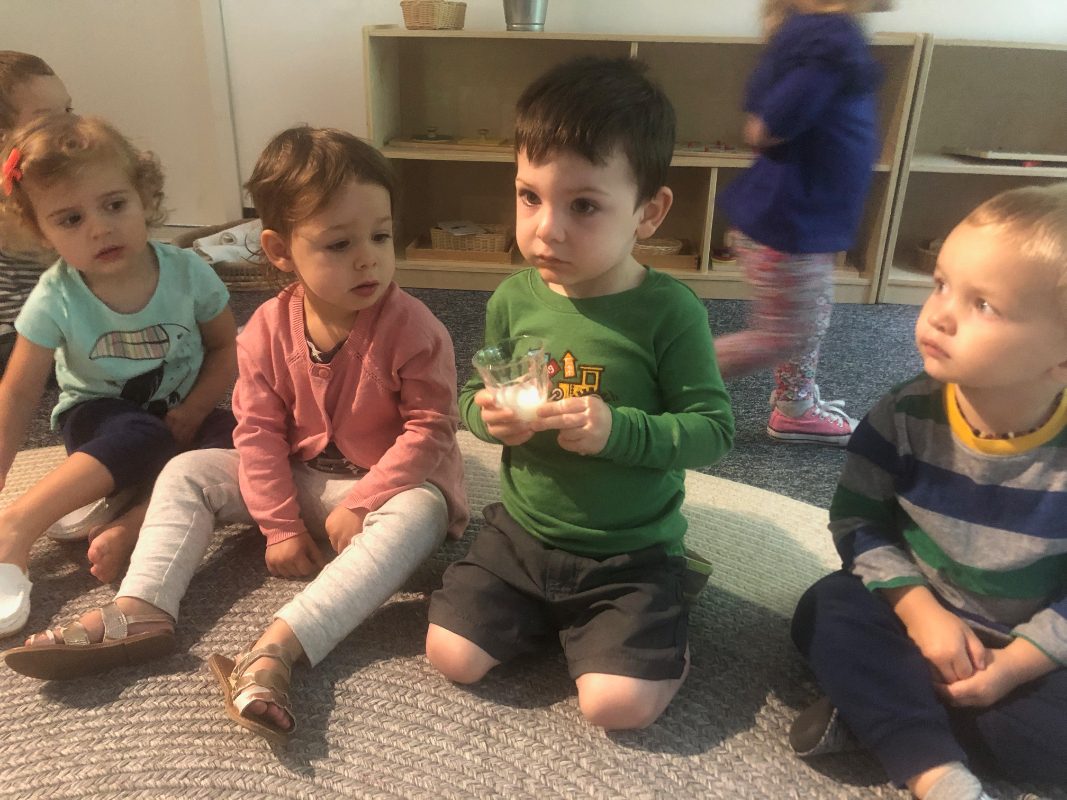
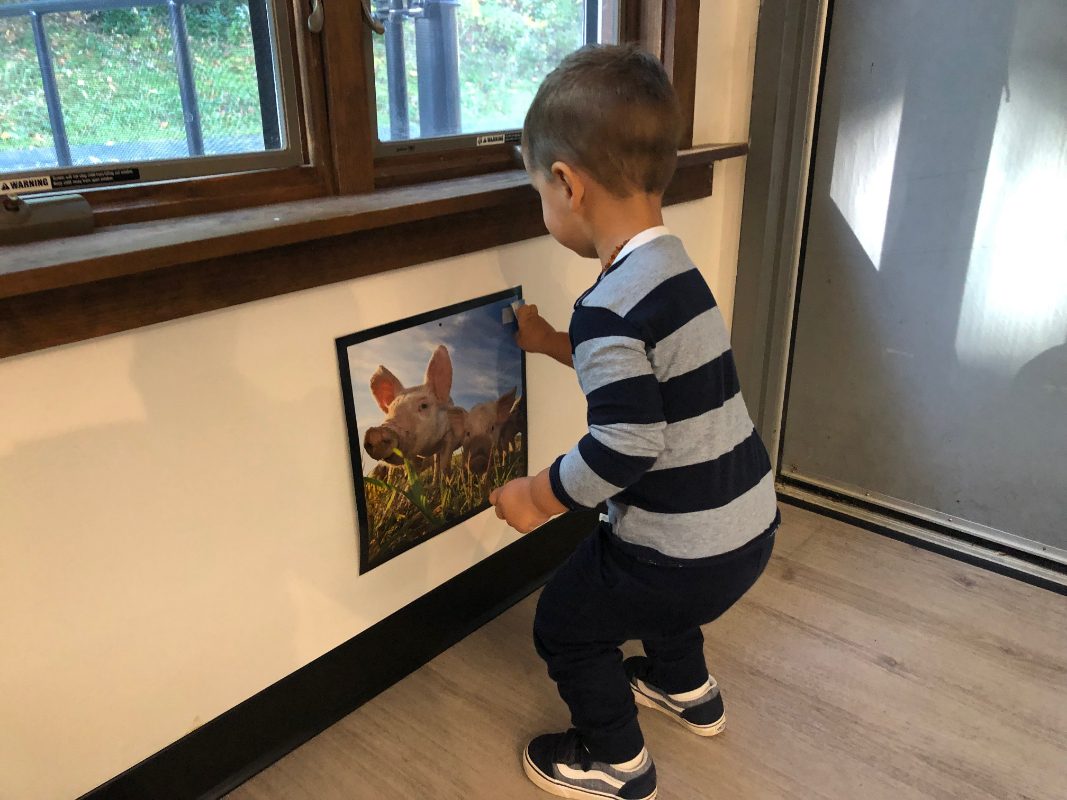
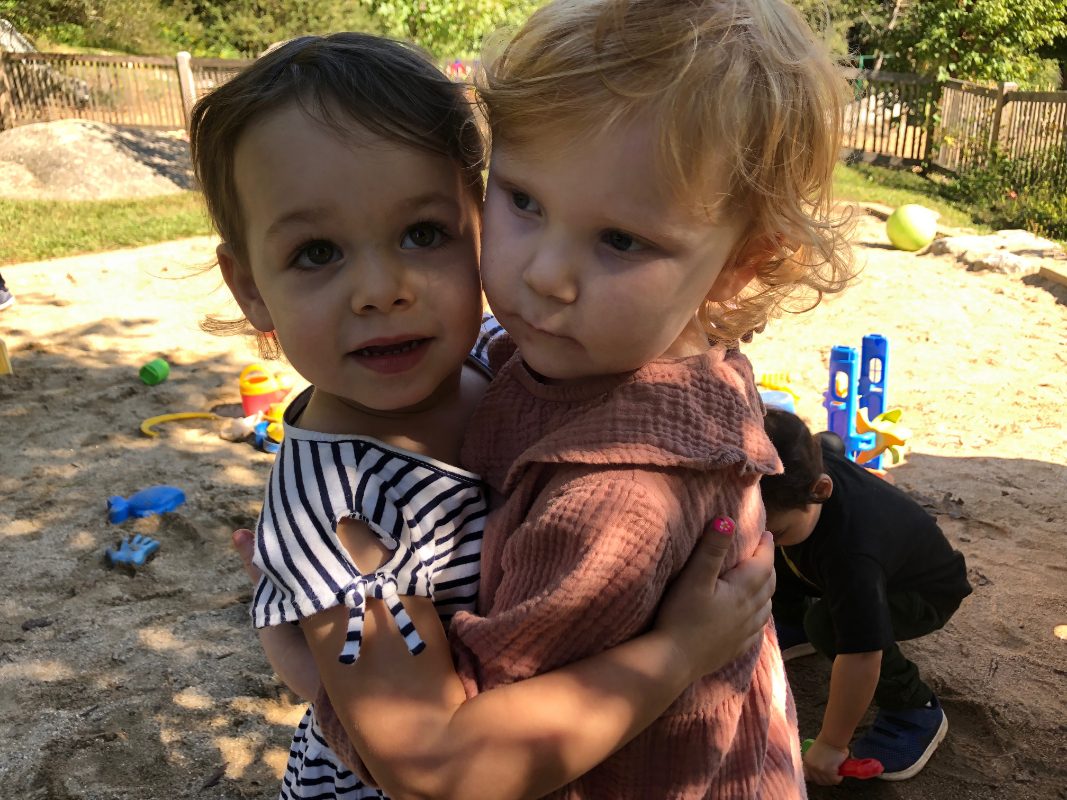
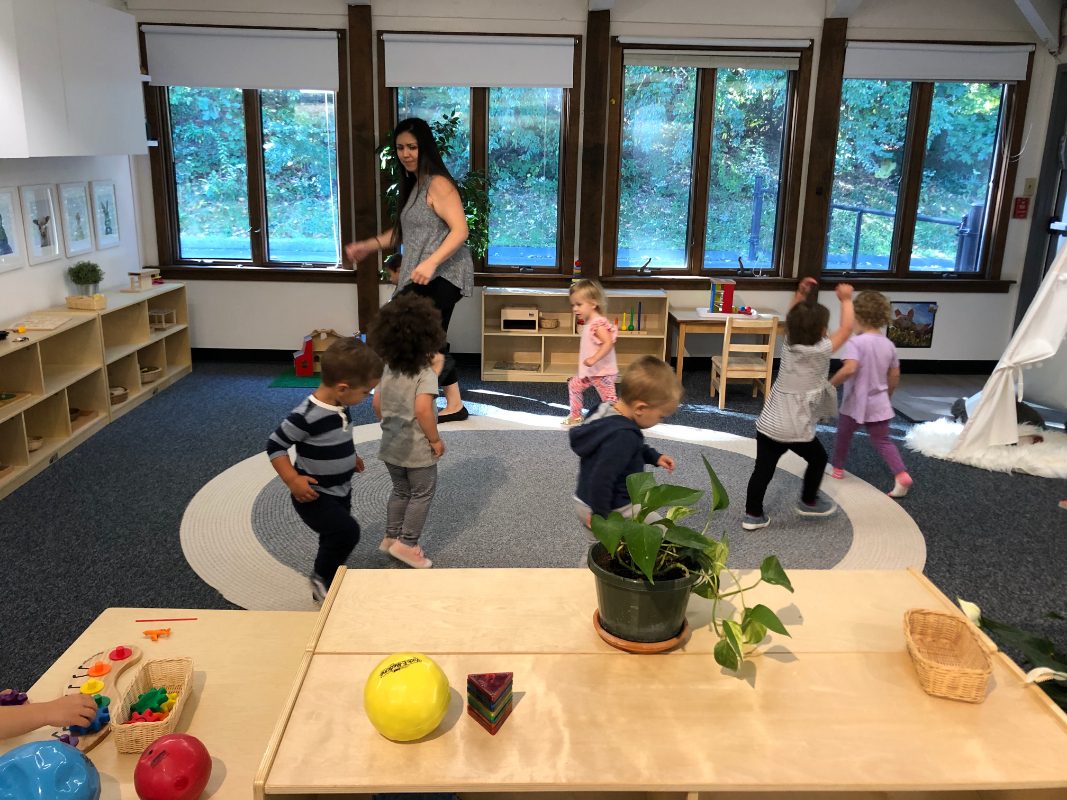
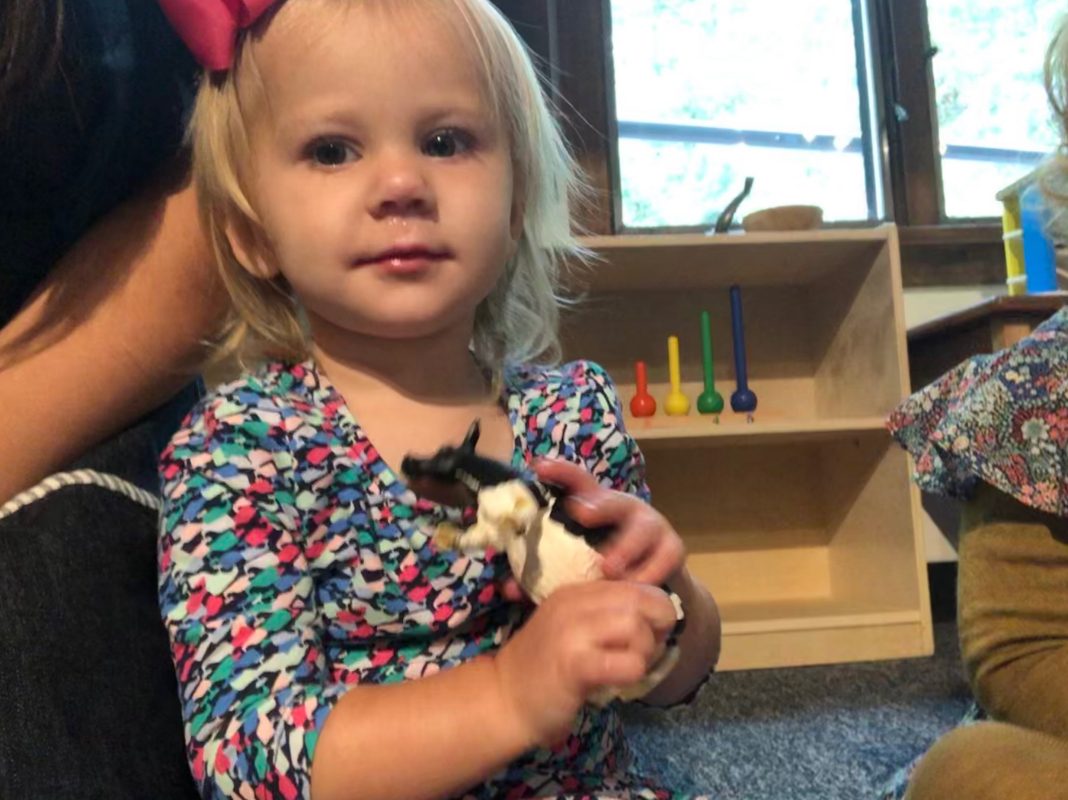
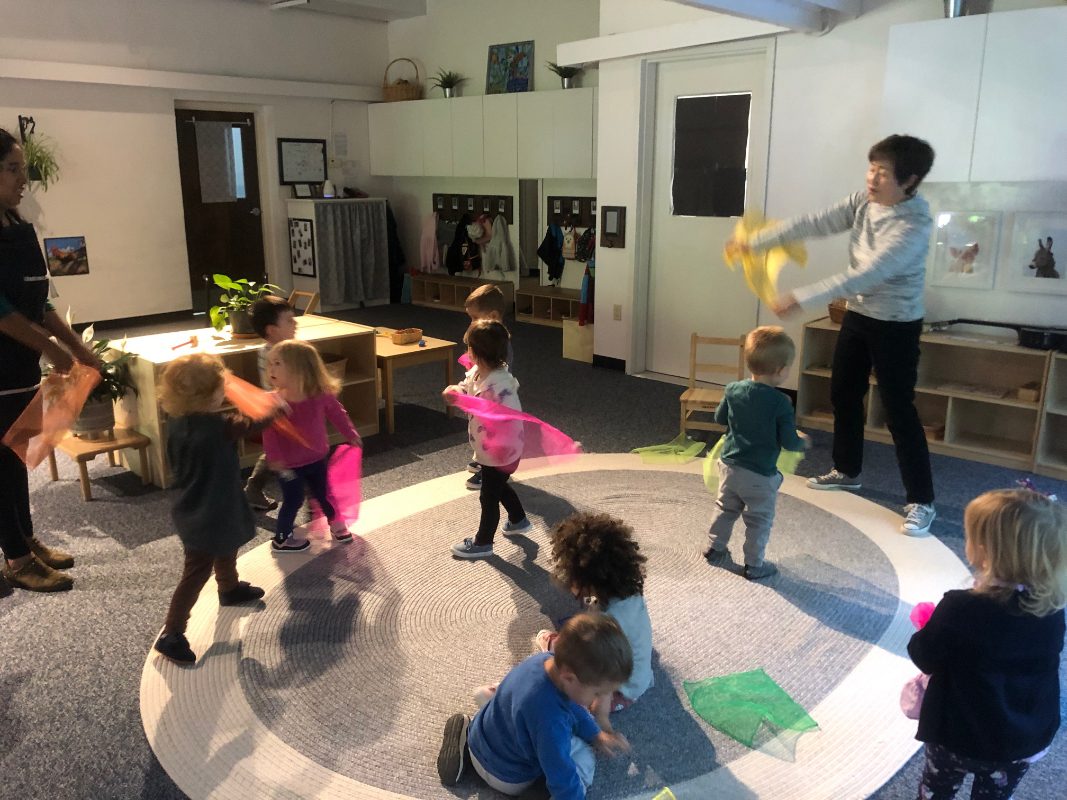
La Vaca Lola (The Cow Named Lola) was a song introduced this week to our students! And, oh boy! They loved it! Some of the students even showed pretty good moves when dancing to it. Based on our farm theme, this week we focused on one of the most beloved farm animals: the cow. Children carefully observed a cow model and engage in conversation about the characteristics of it. One of those is that cows give us milk. Children enjoyed having a taste of milk and while some absolutely refused to taste it, others wouldn’t stop asking for more.

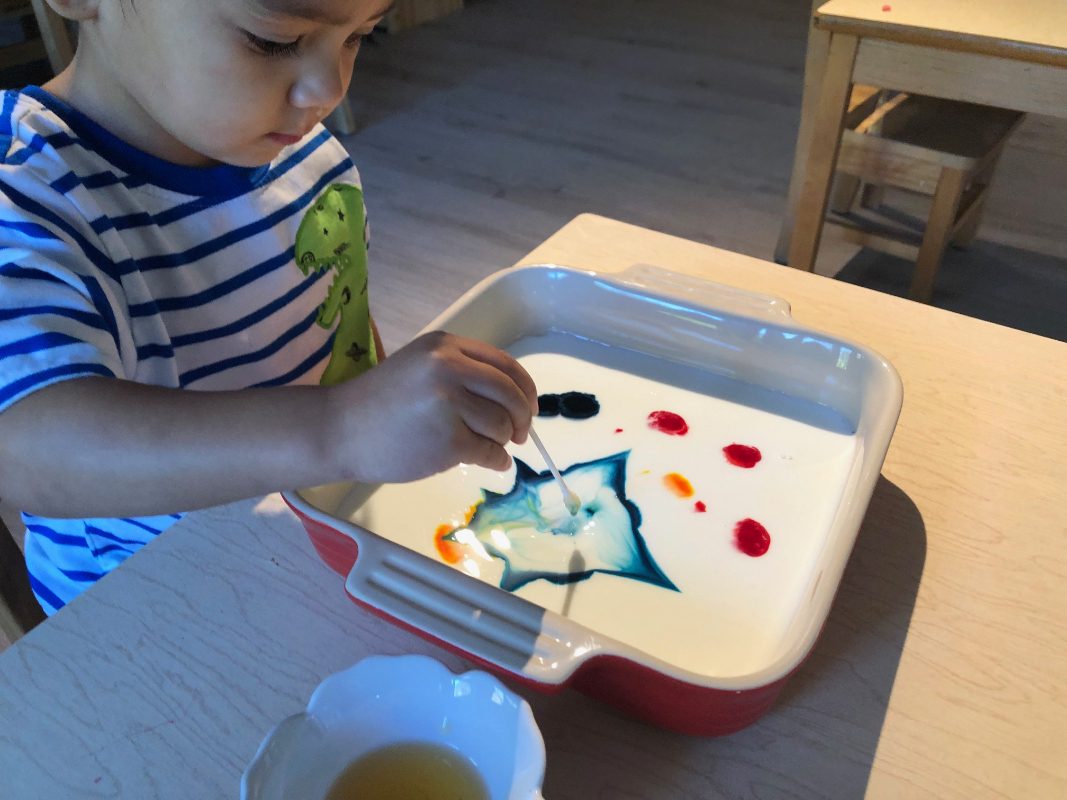
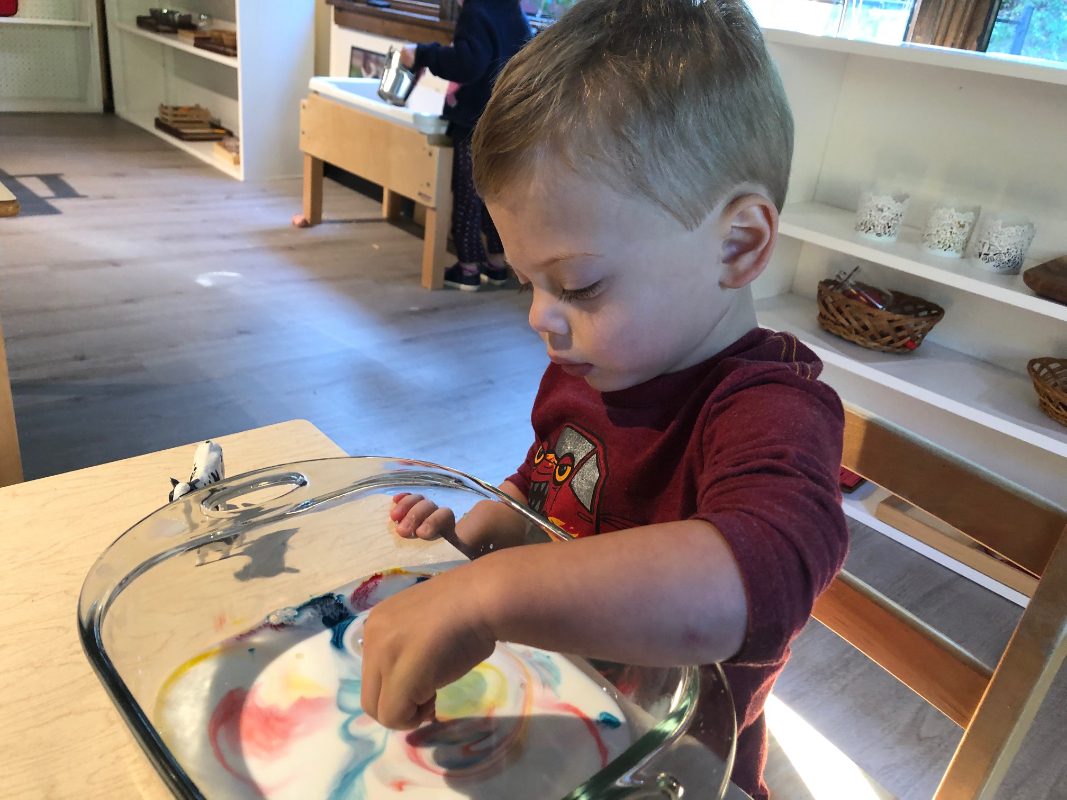
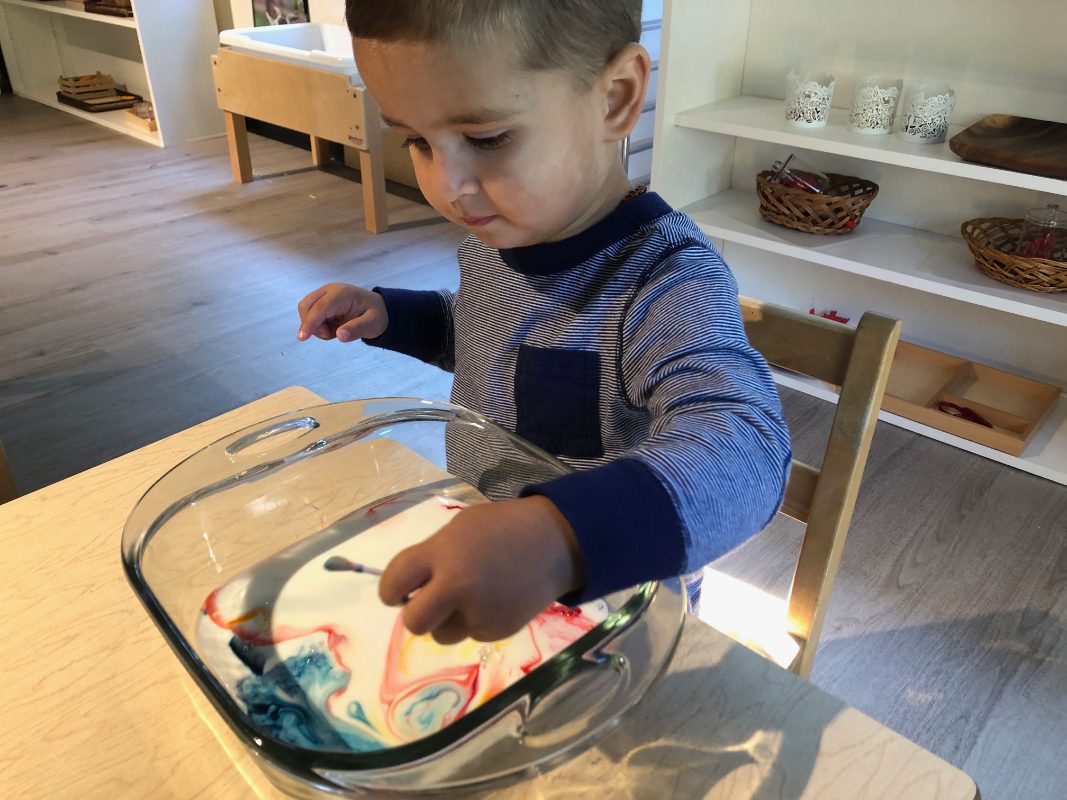
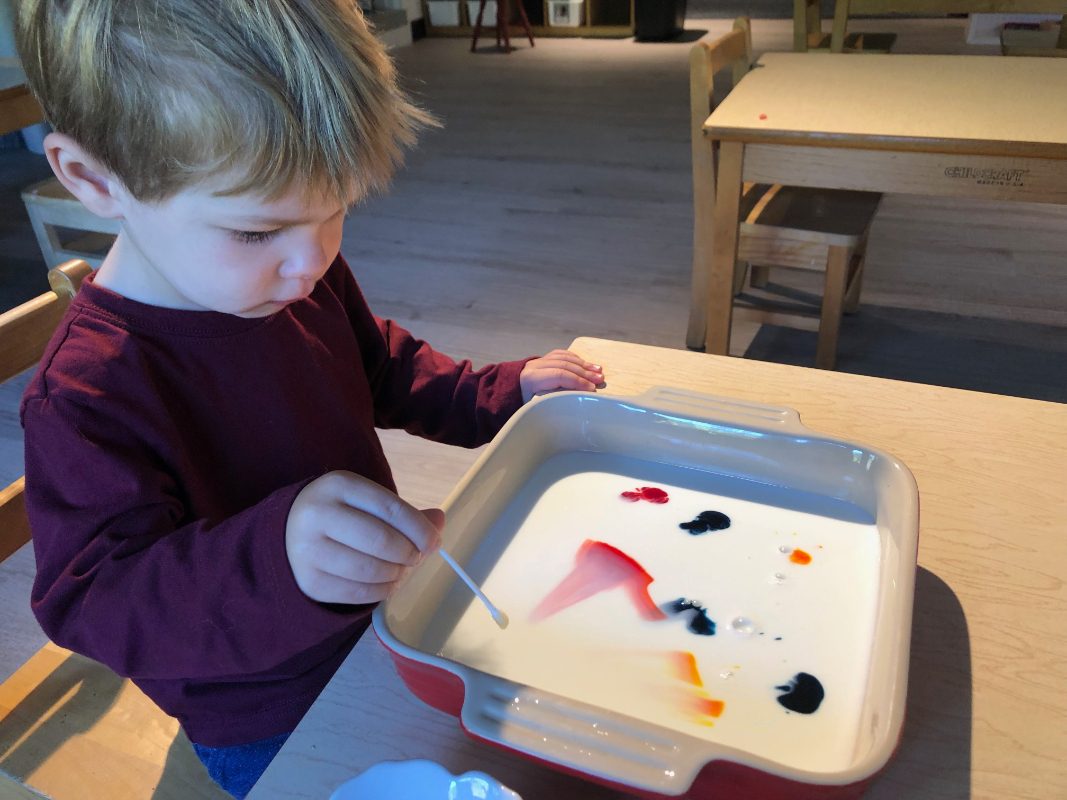
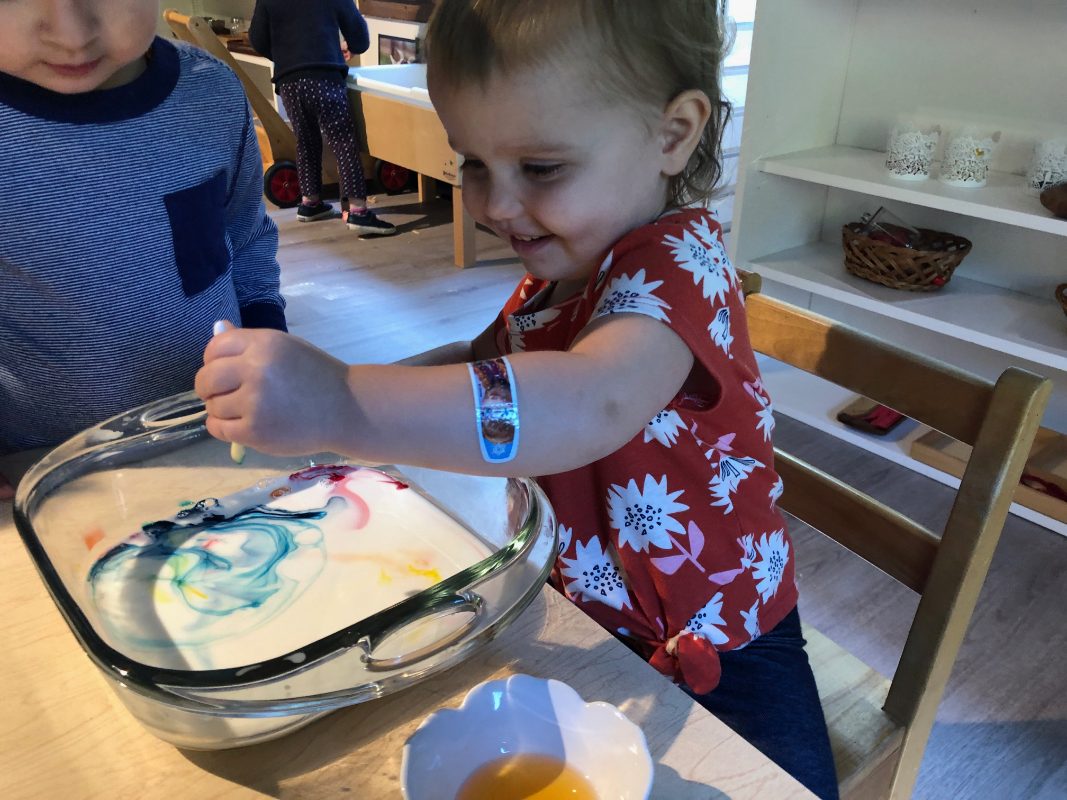
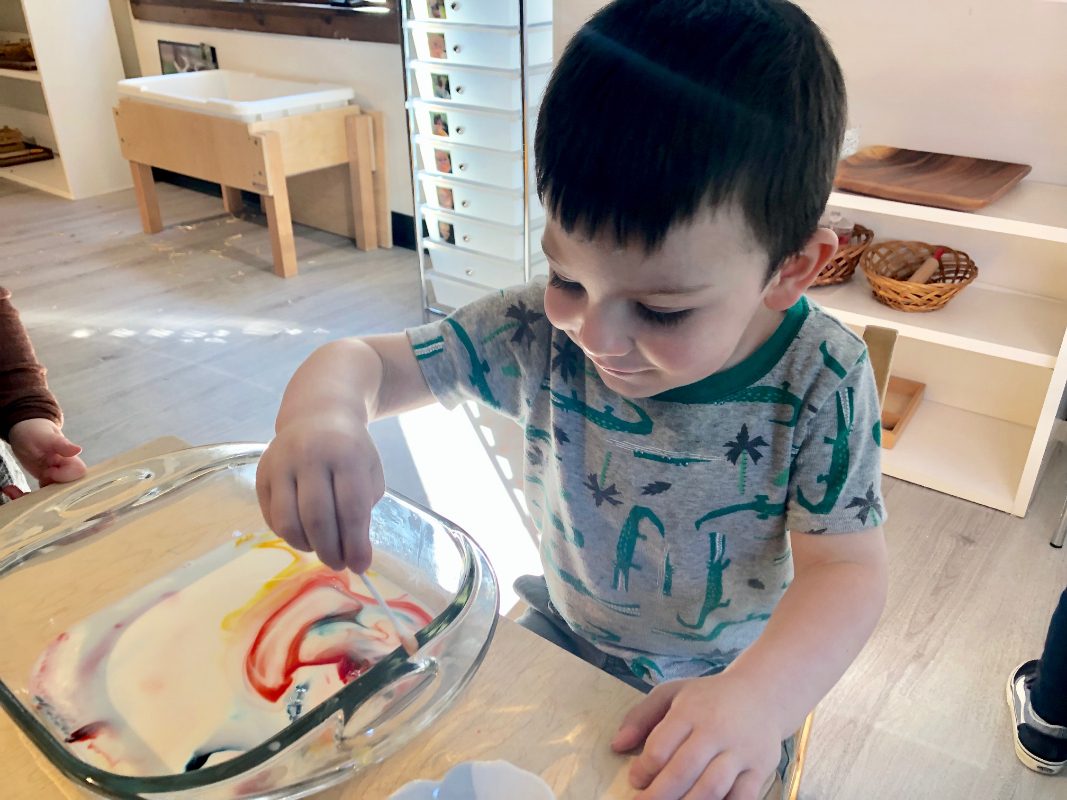
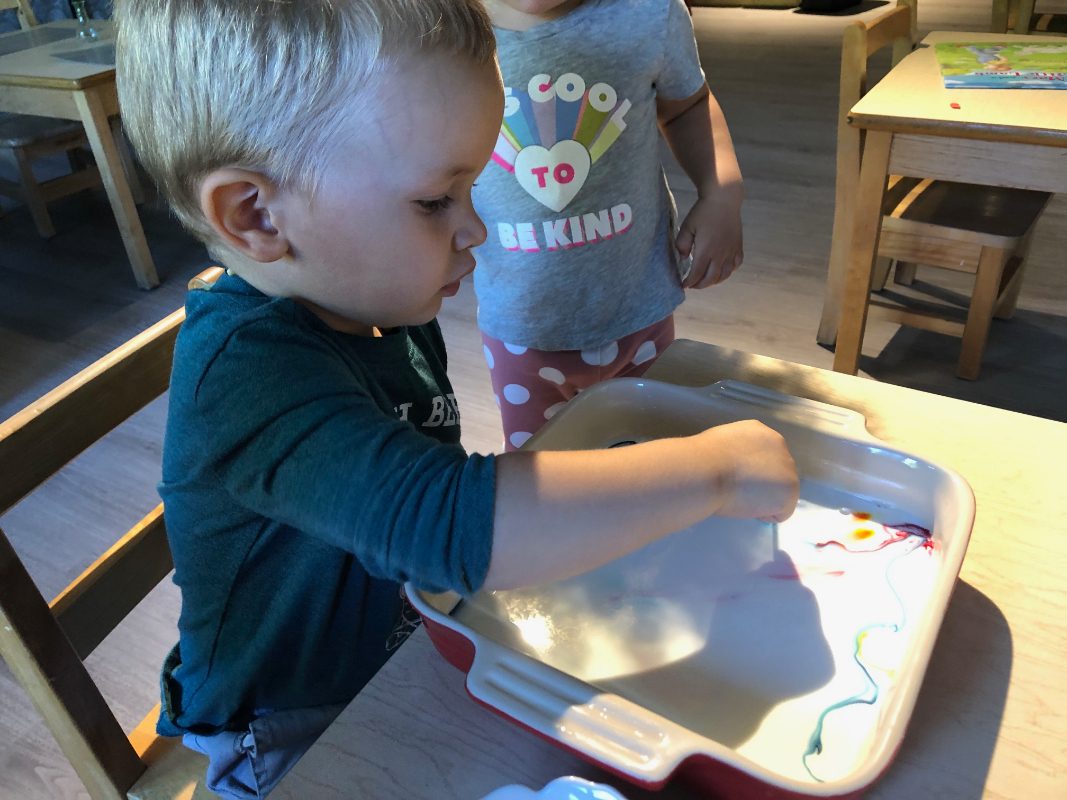
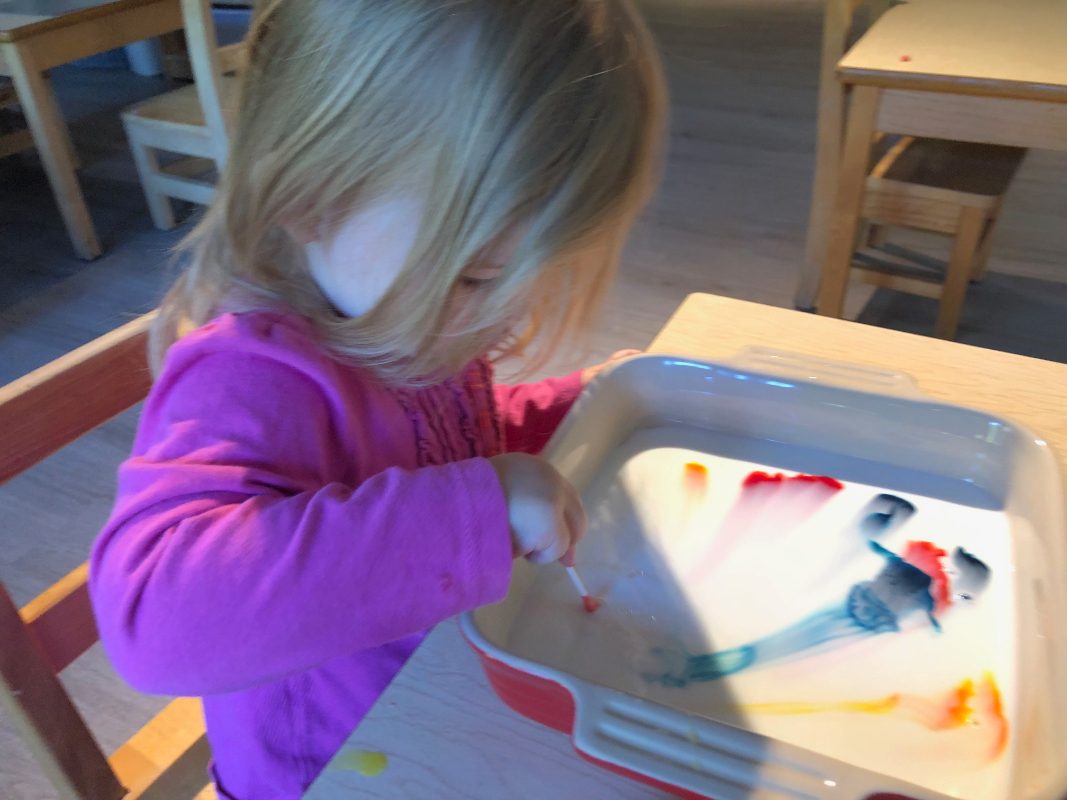
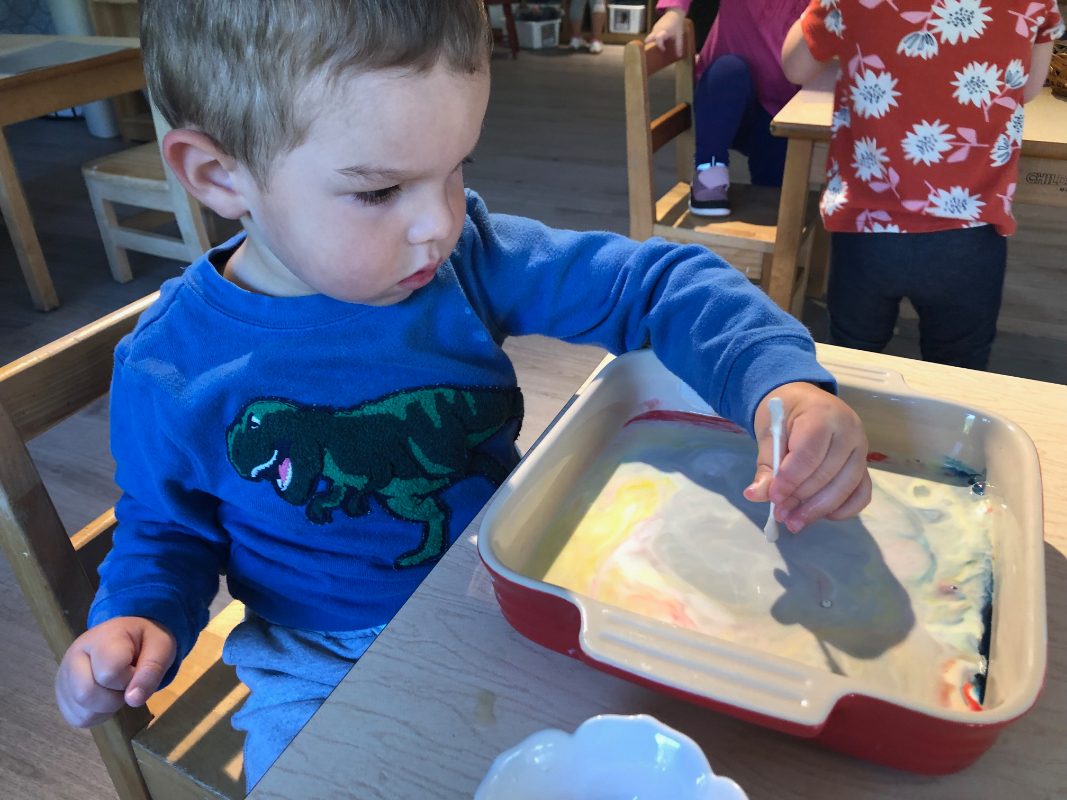
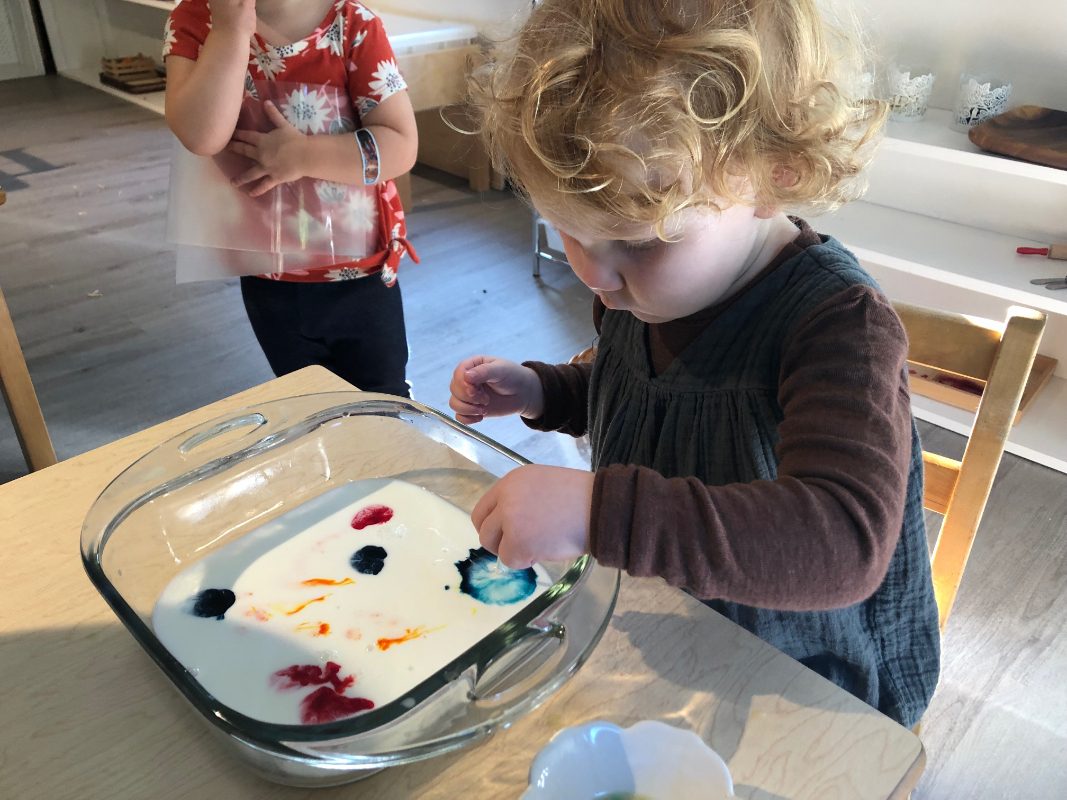
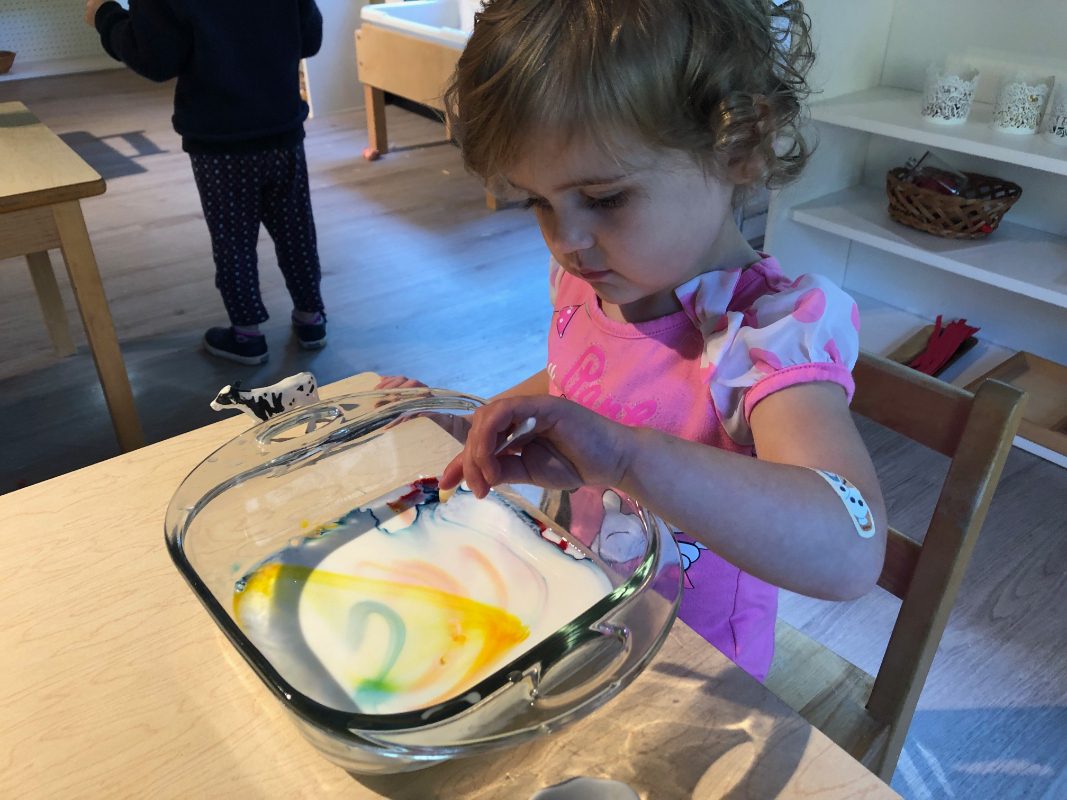
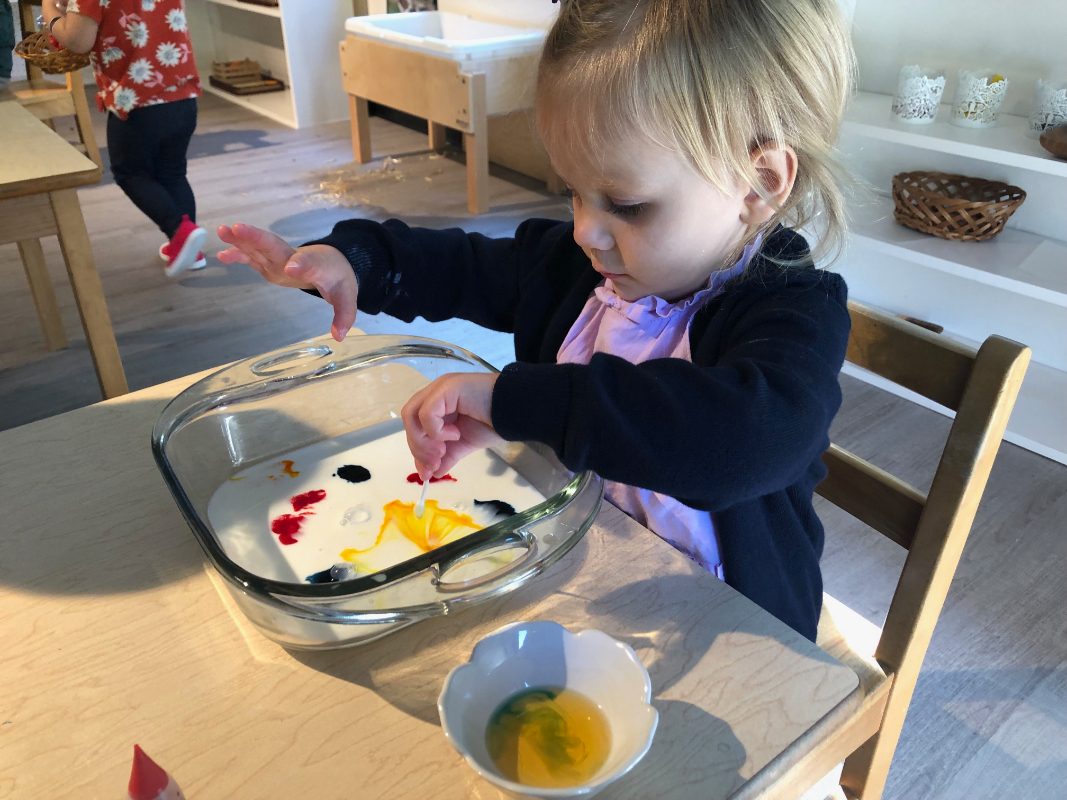
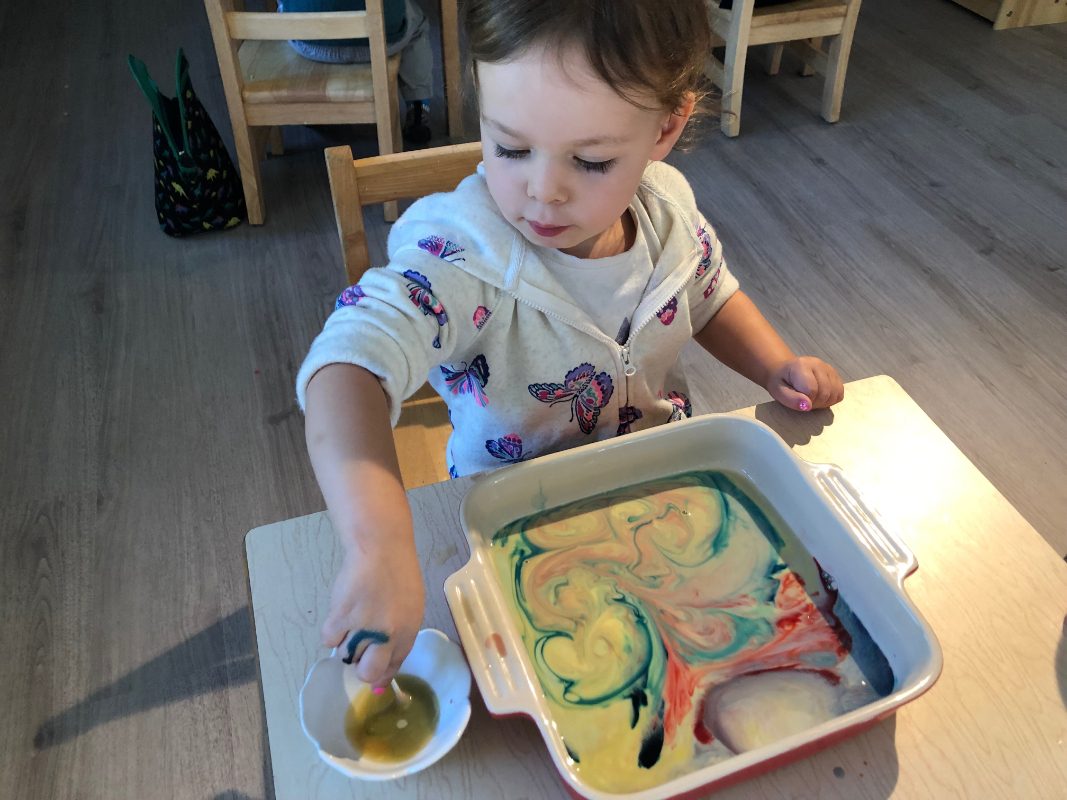
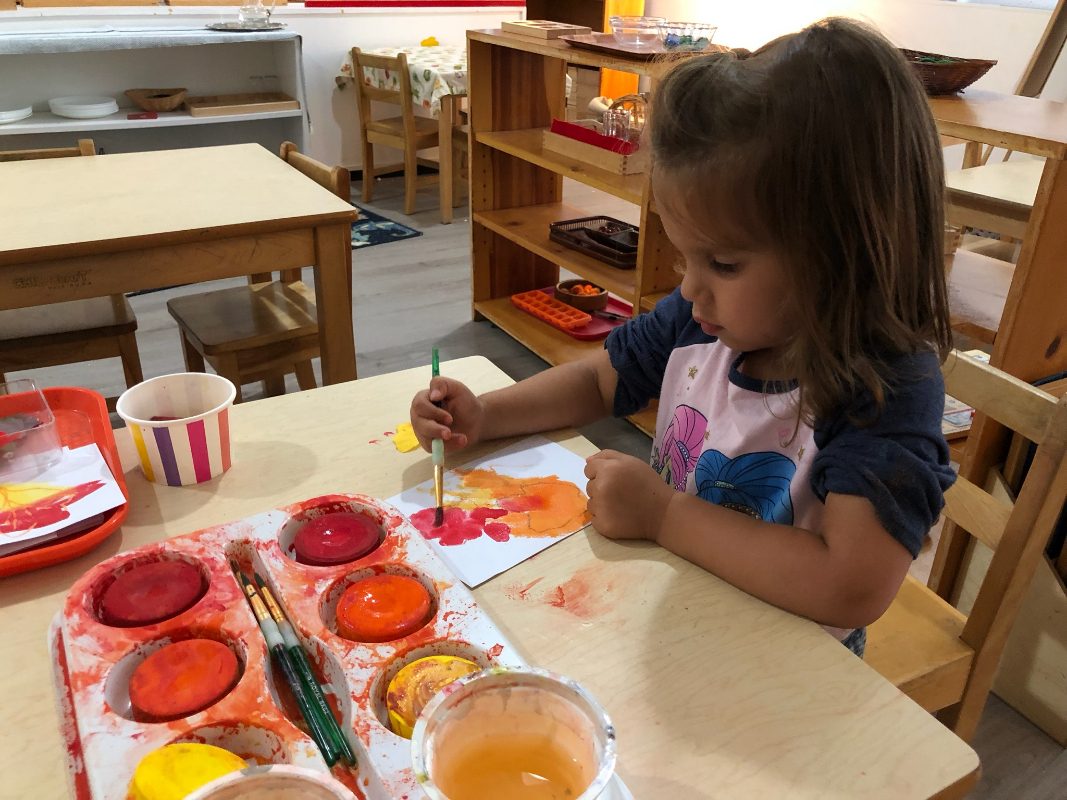
At the end of the week we also had a great Sensorial experience that finished as a magical art project. For this we used food coloring, cotton swabs, dish soap, and of course, milk. As milk has fat in it, the food coloring can float on top of the fat. When you add the dish soap to the milk, the fat separates and moves making magical milk art! The smile in the faces of the children were priceless! At the end of the experience we placed cardstock in the milk and captured a print of the art they made.

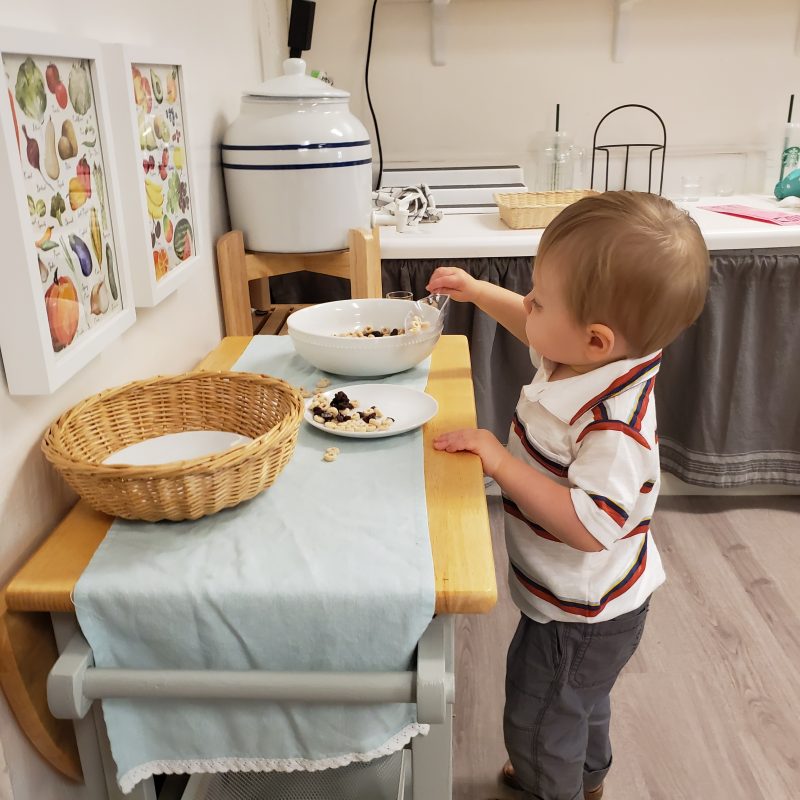
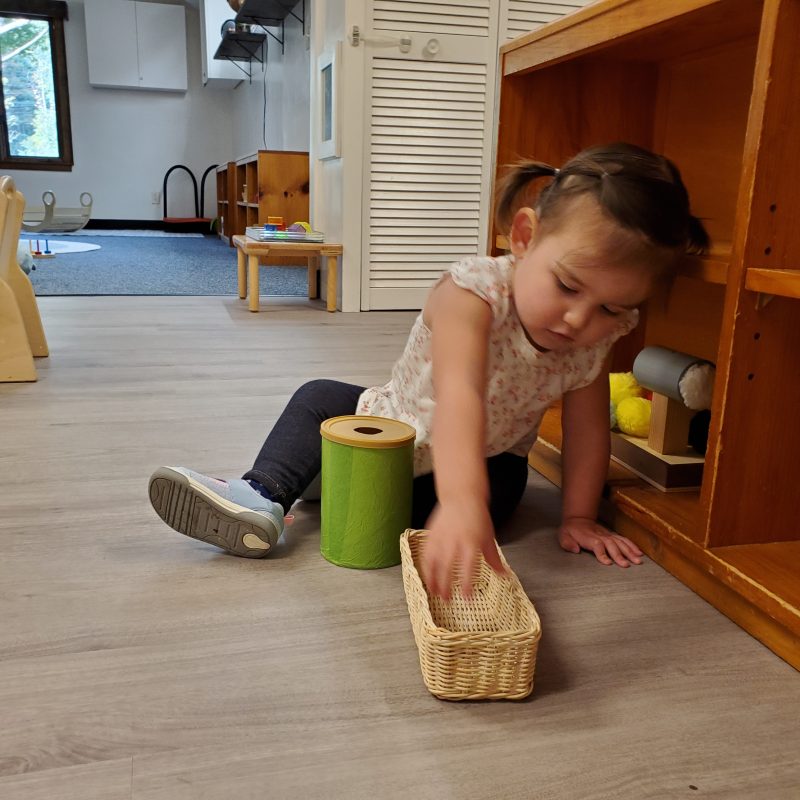
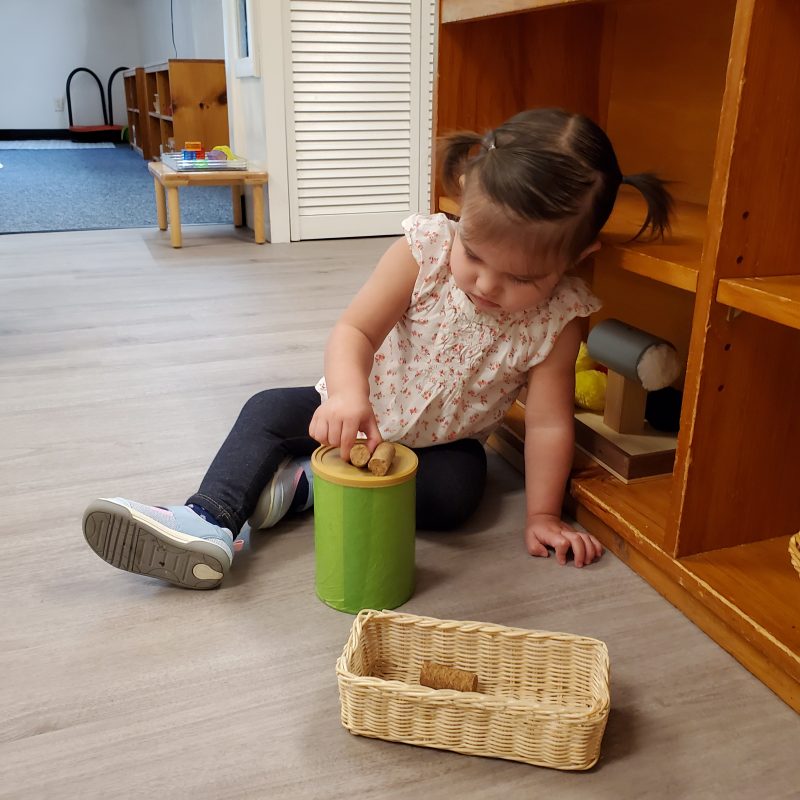
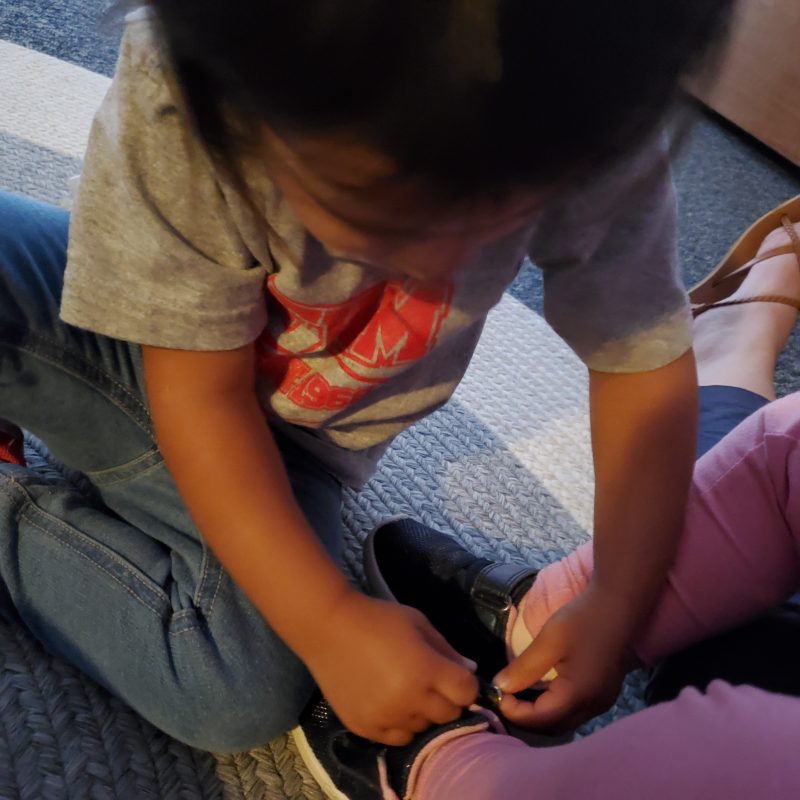
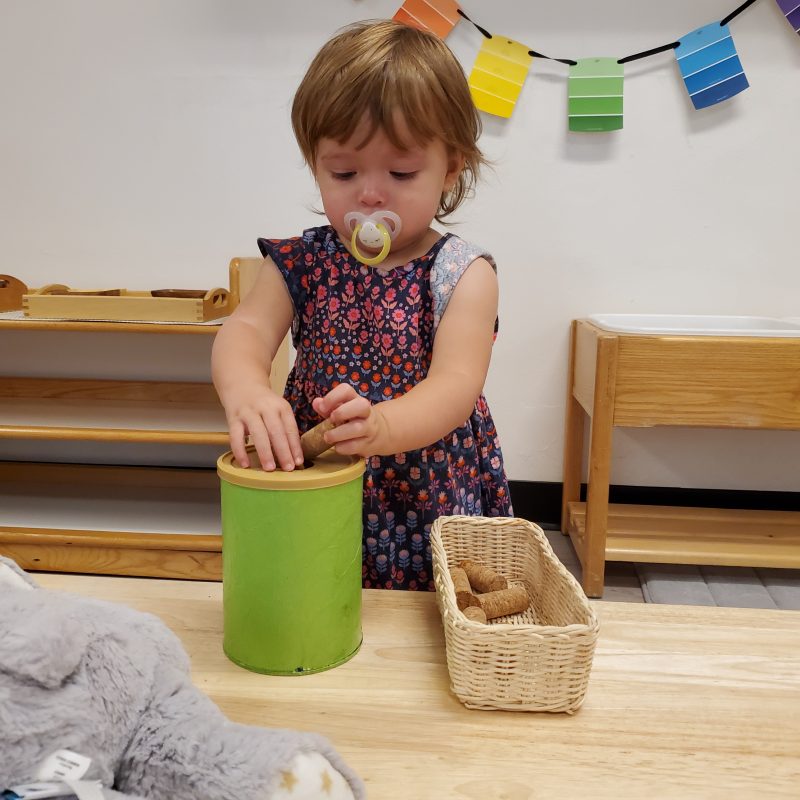
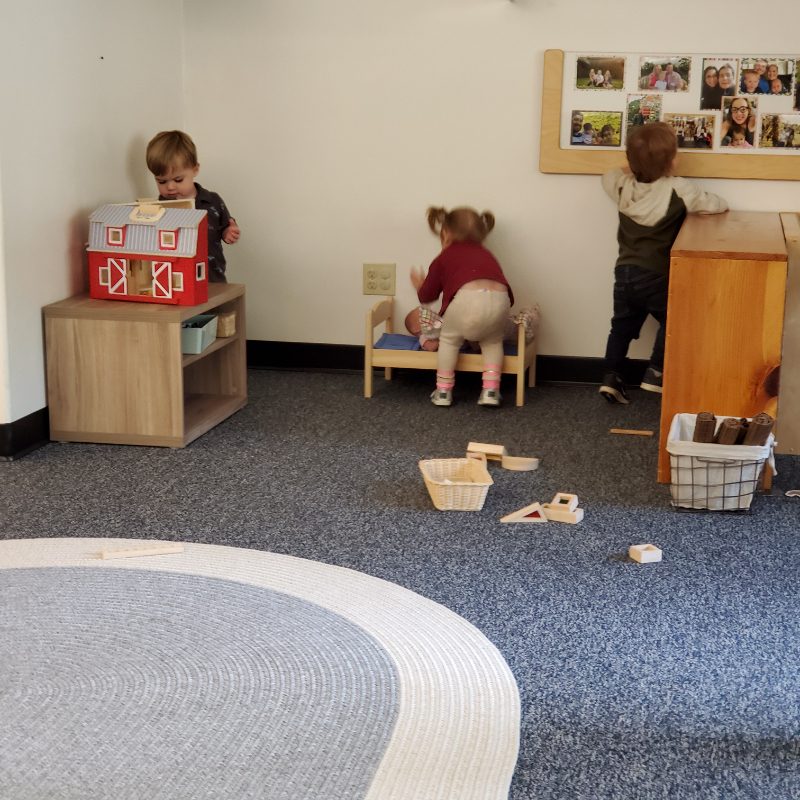
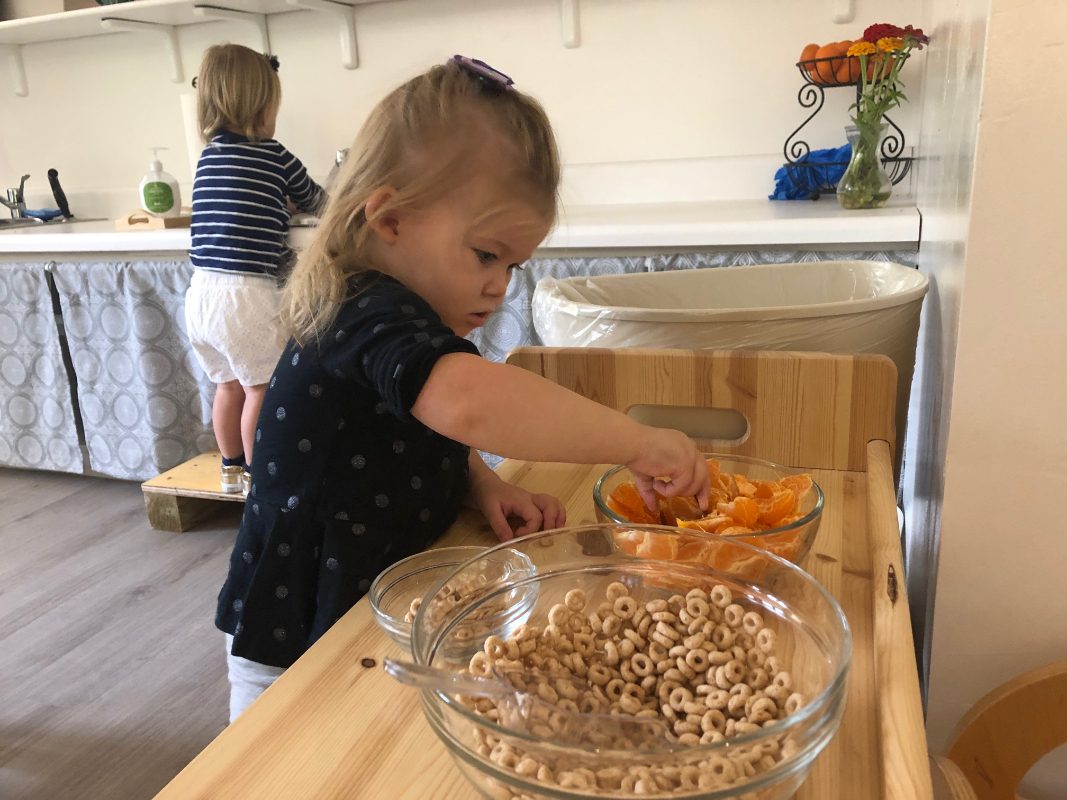
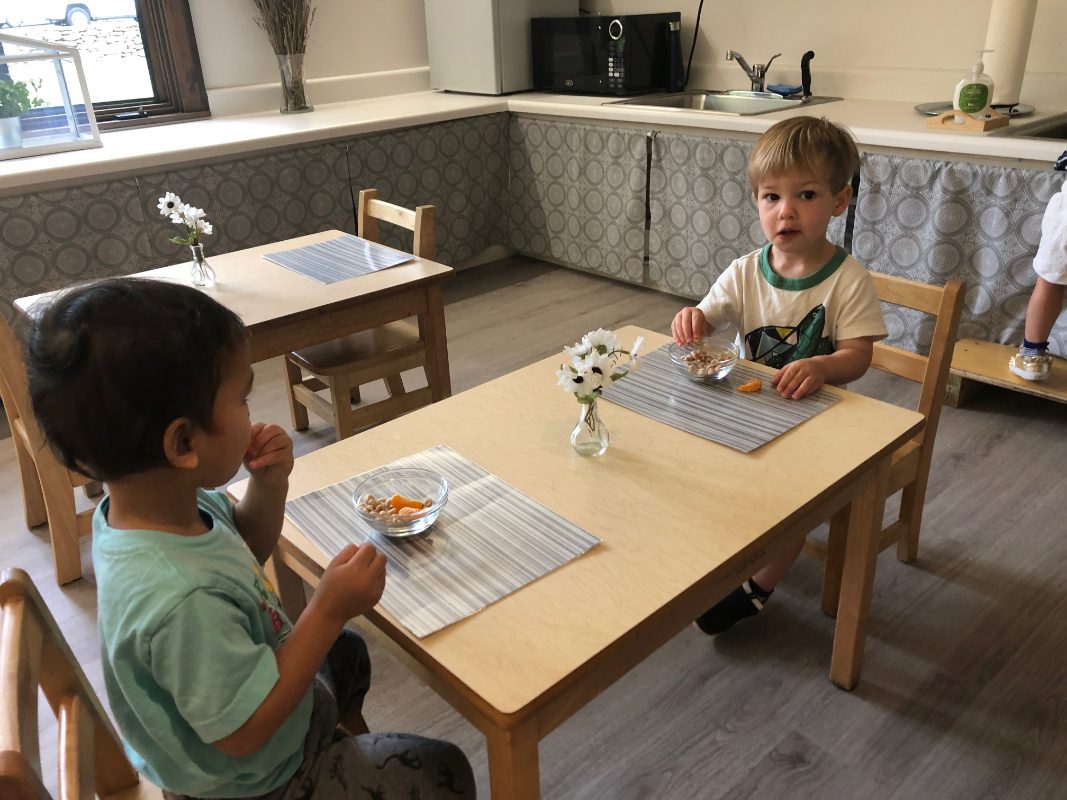
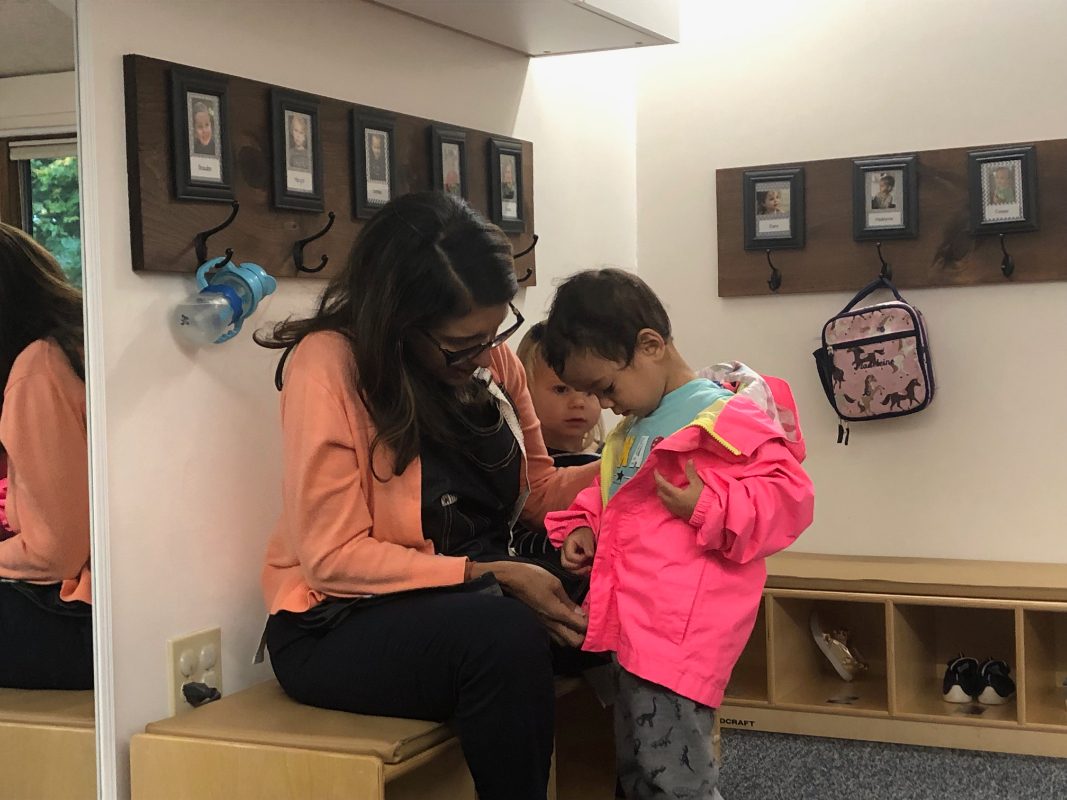
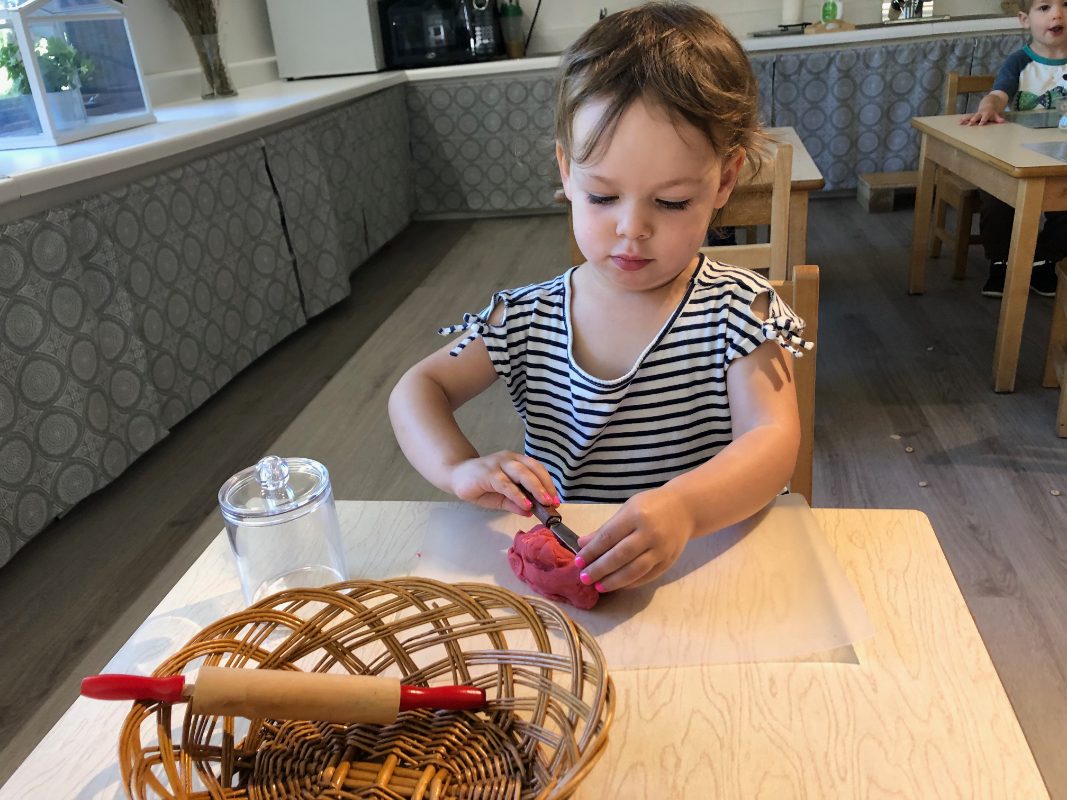
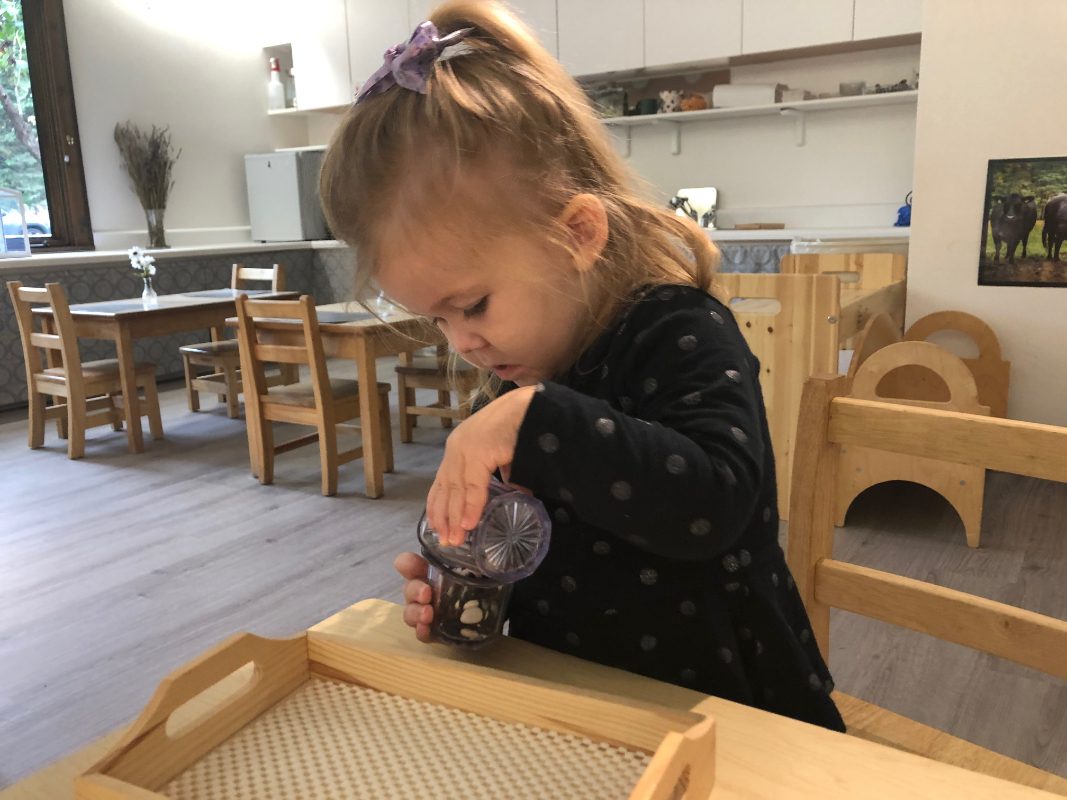
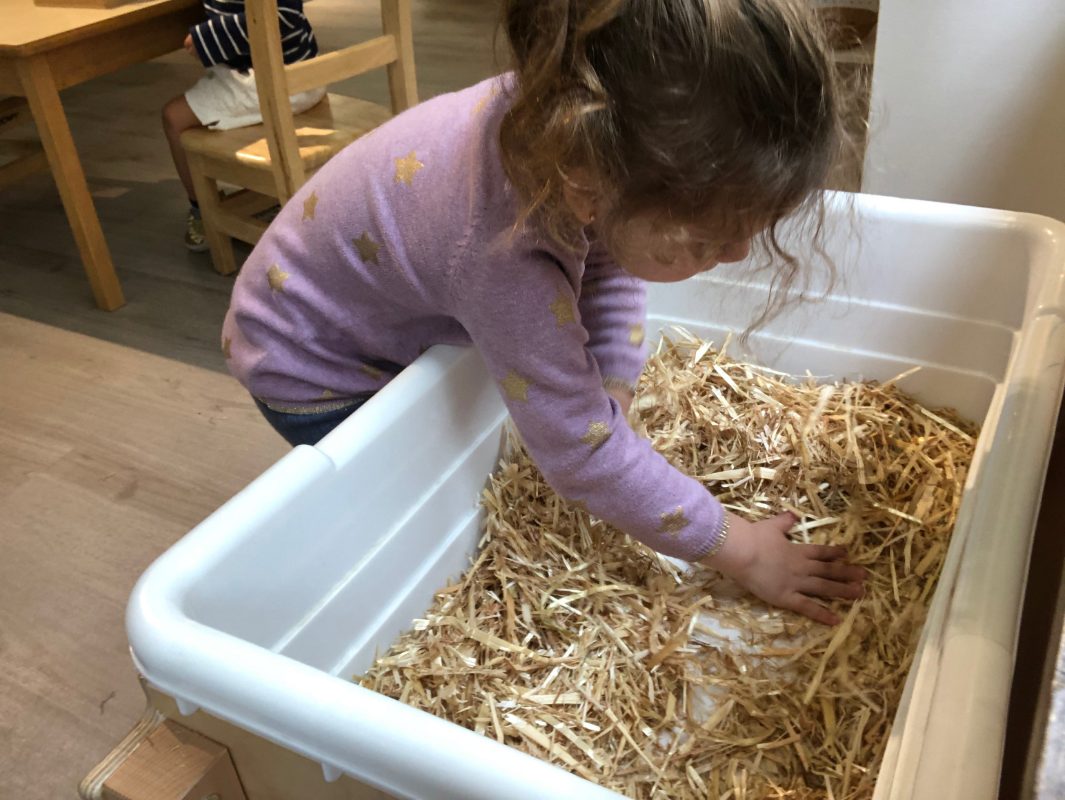
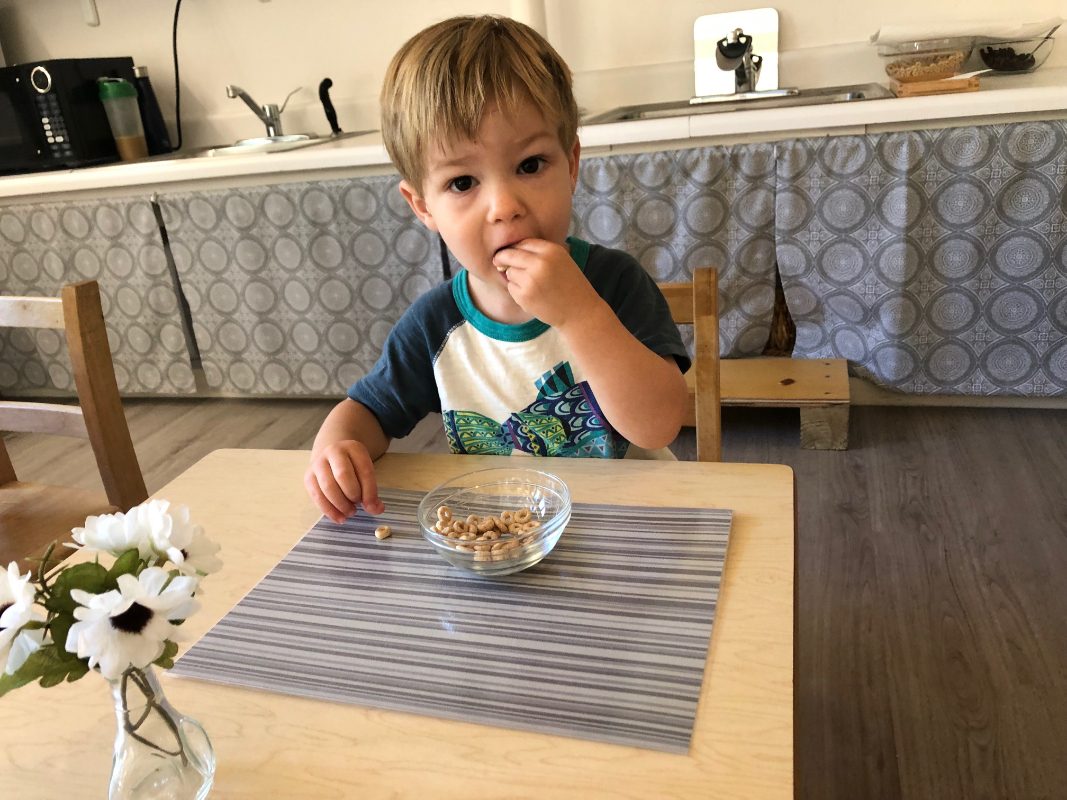
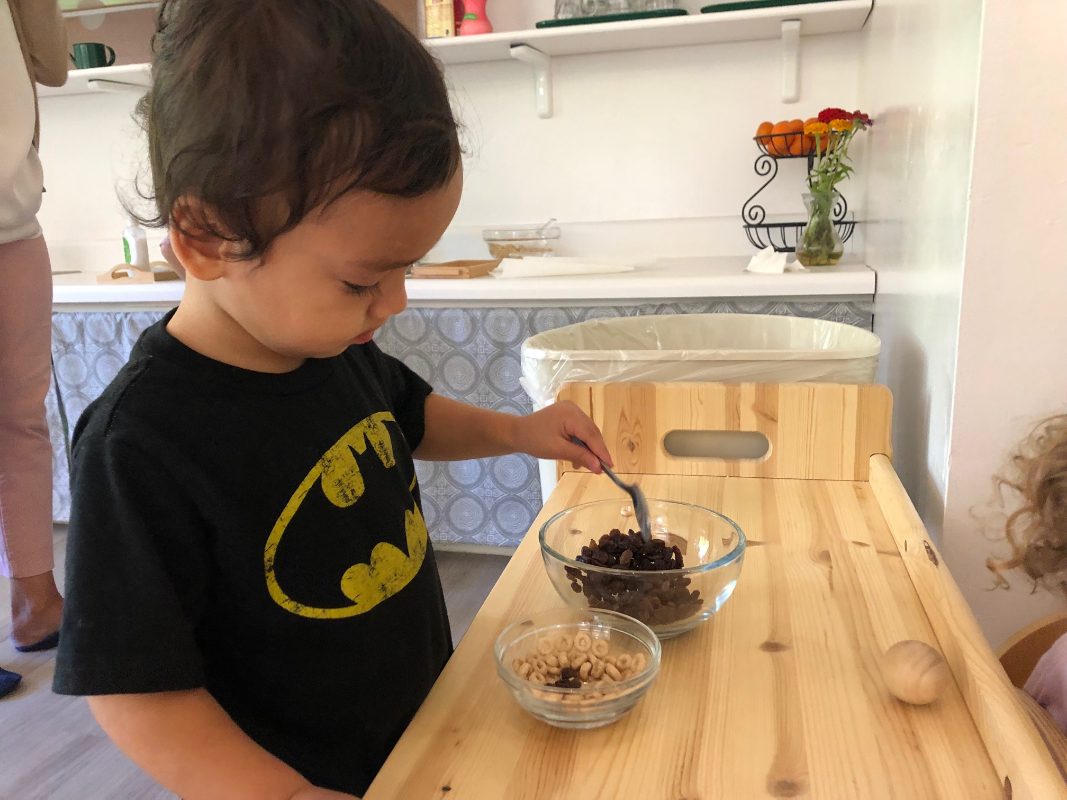
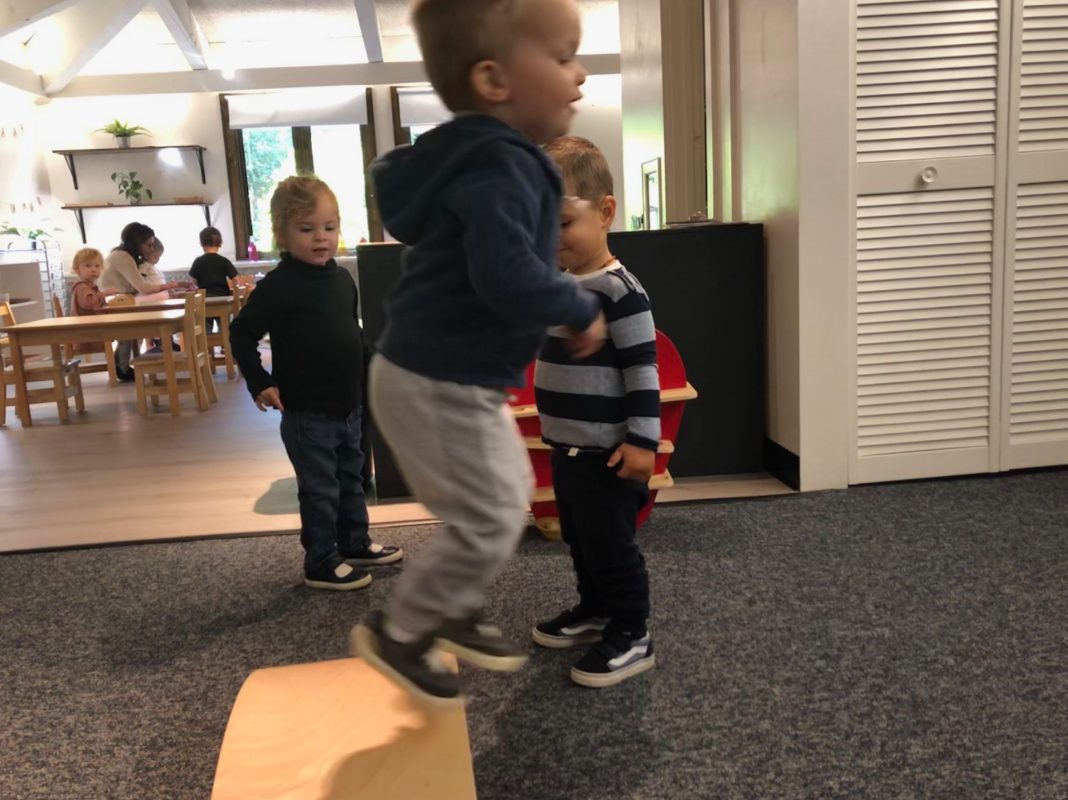
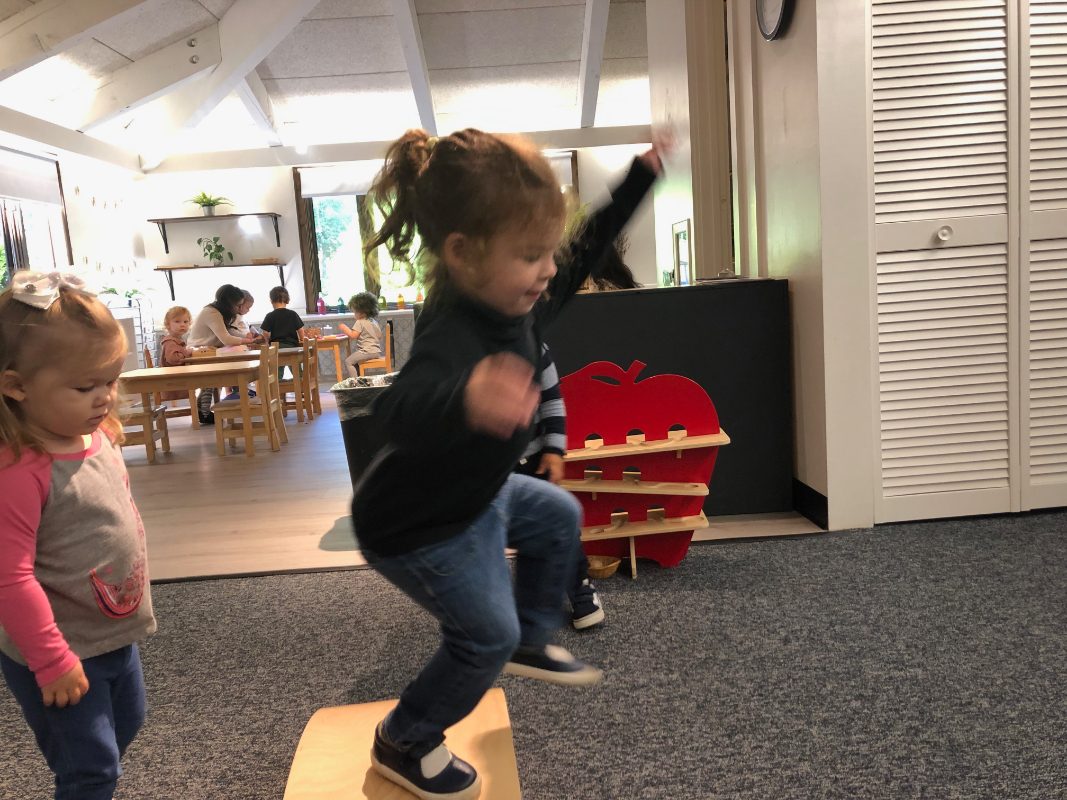
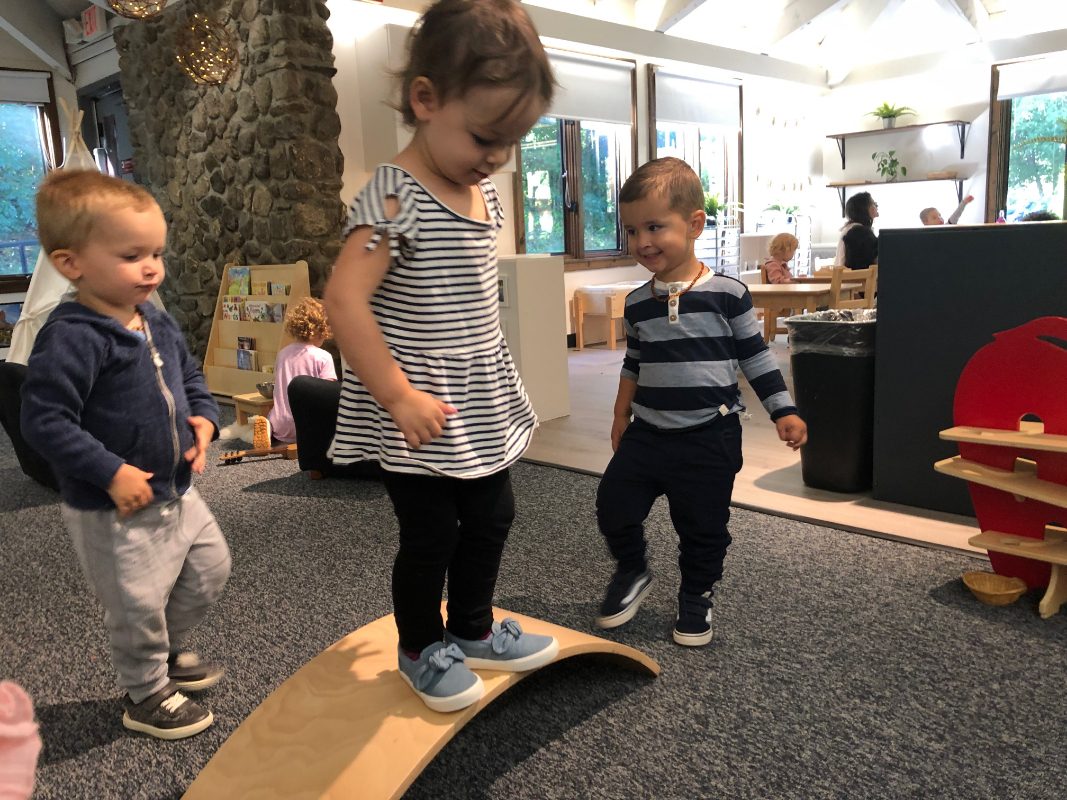
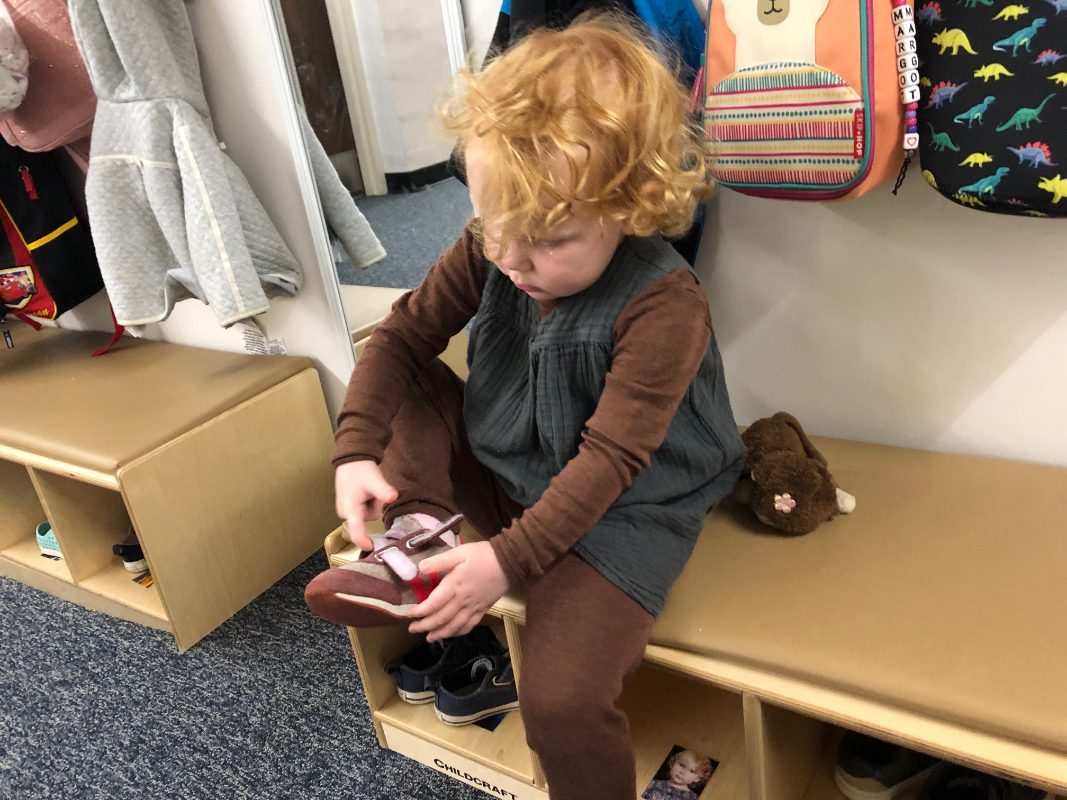
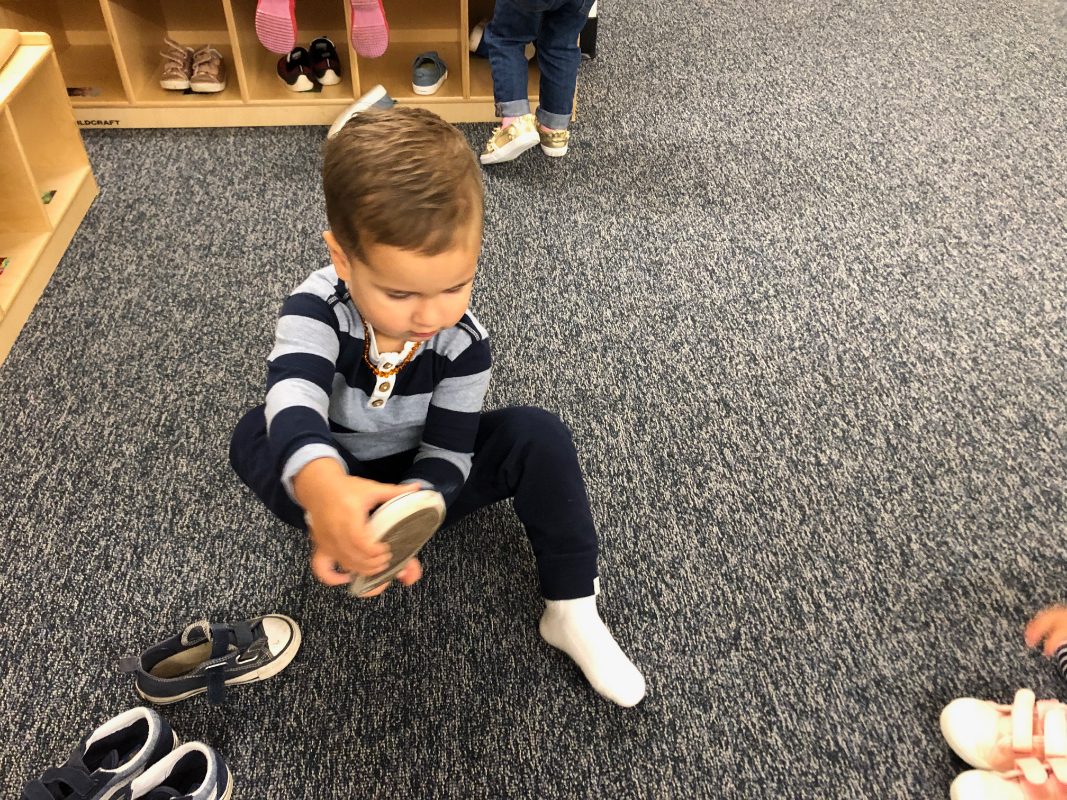
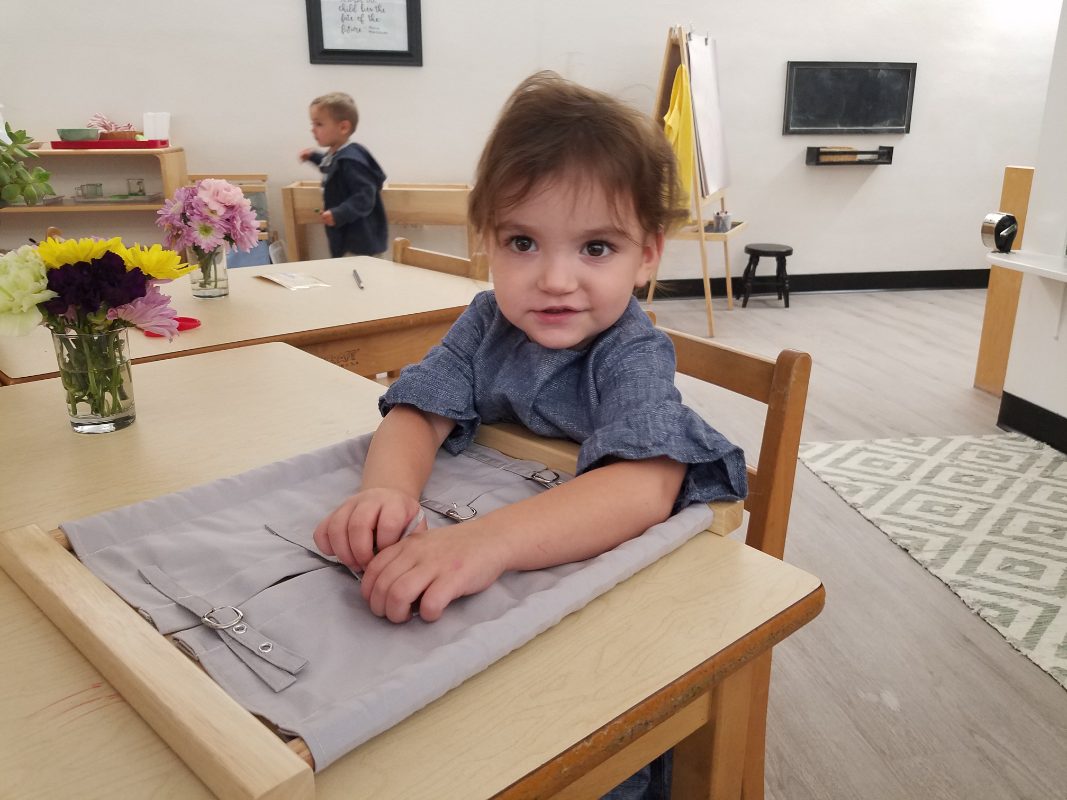
Other highlights of the week were the introduction to the routine of changing into indoor shoes when entering the environment and self-serving snack. These two are huge components of our Montessori Toddler curriculum. Independence, hand- eye coordination, and self-regulation is encouraged during these exercises. As children continue to exercise these skills at school, we strongly encourage you to offer the opportunity for the exercise at home.

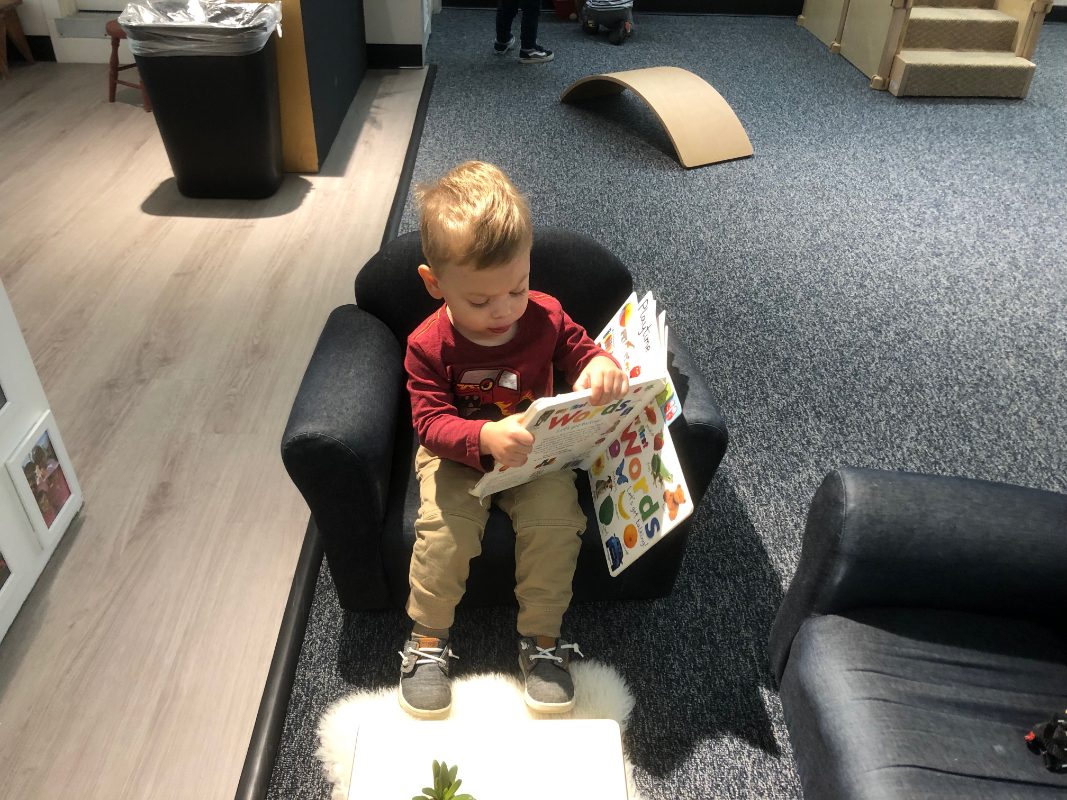
The Itsy Bitsy Spider and Mary Had a Little Lamb as told and illustrated by Iza Trapani were the children’s favorite books this week. Walking in the Jungle, Listen and Move, and of course, La Vaca Lola were the children’s favorite songs to dance to.

In case you also want to join us in the fun, I will leave you the musical video of La Vaca Lola. Go ahead and turn up the volume and enjoy with your little ones.

La vaca lola ( The cow named Lola)
La vaca lola (The cow named Lola)
Tiene cabeza y tiene cola (It has a head and it has a tail)
Y hace: MUUU (and she goes Mooh)


Working and Having Fun in Lower Elementary

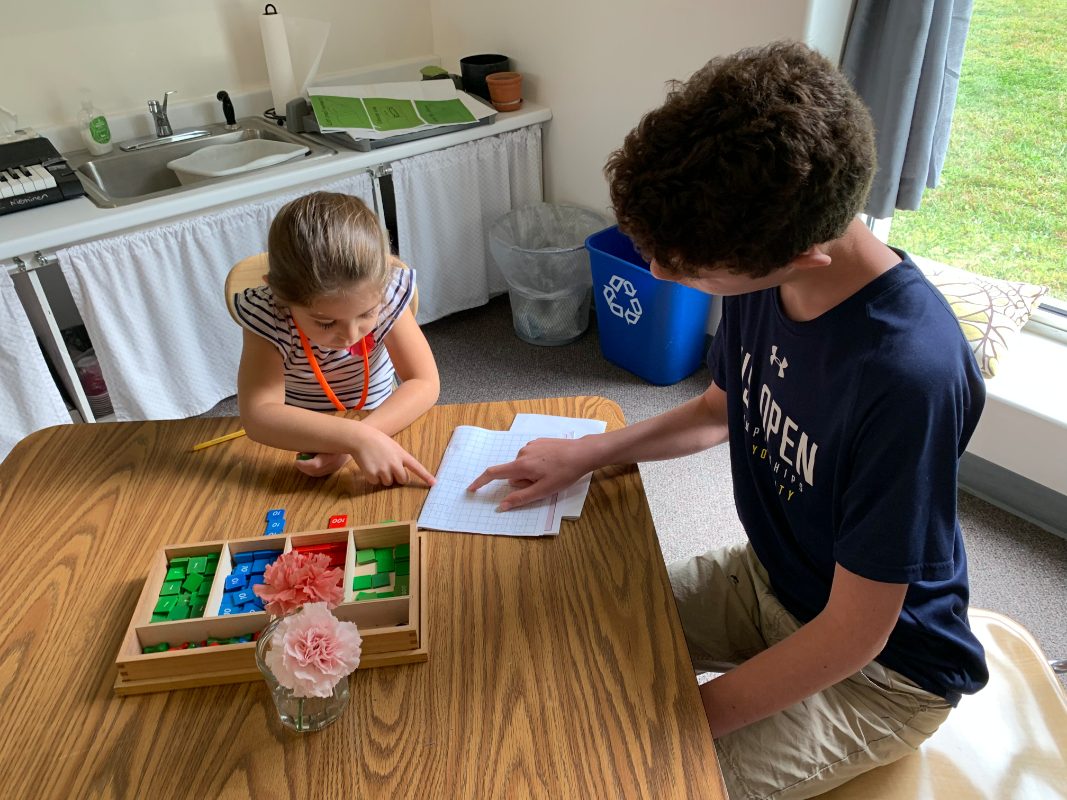
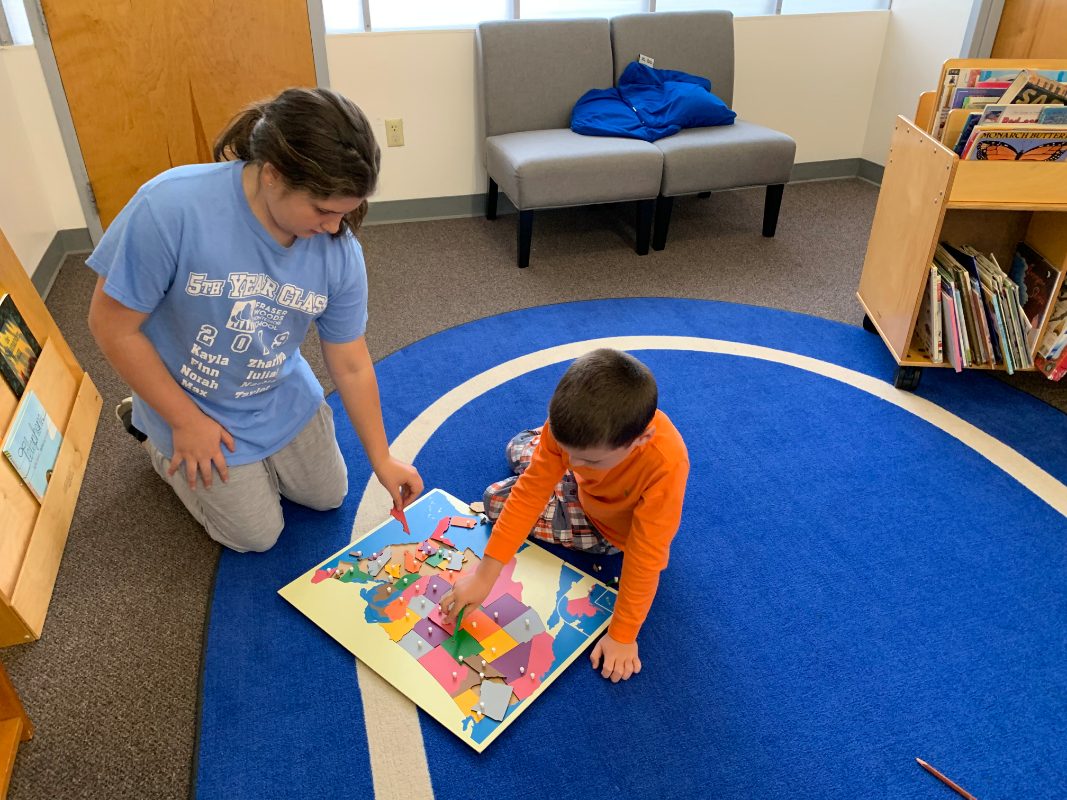
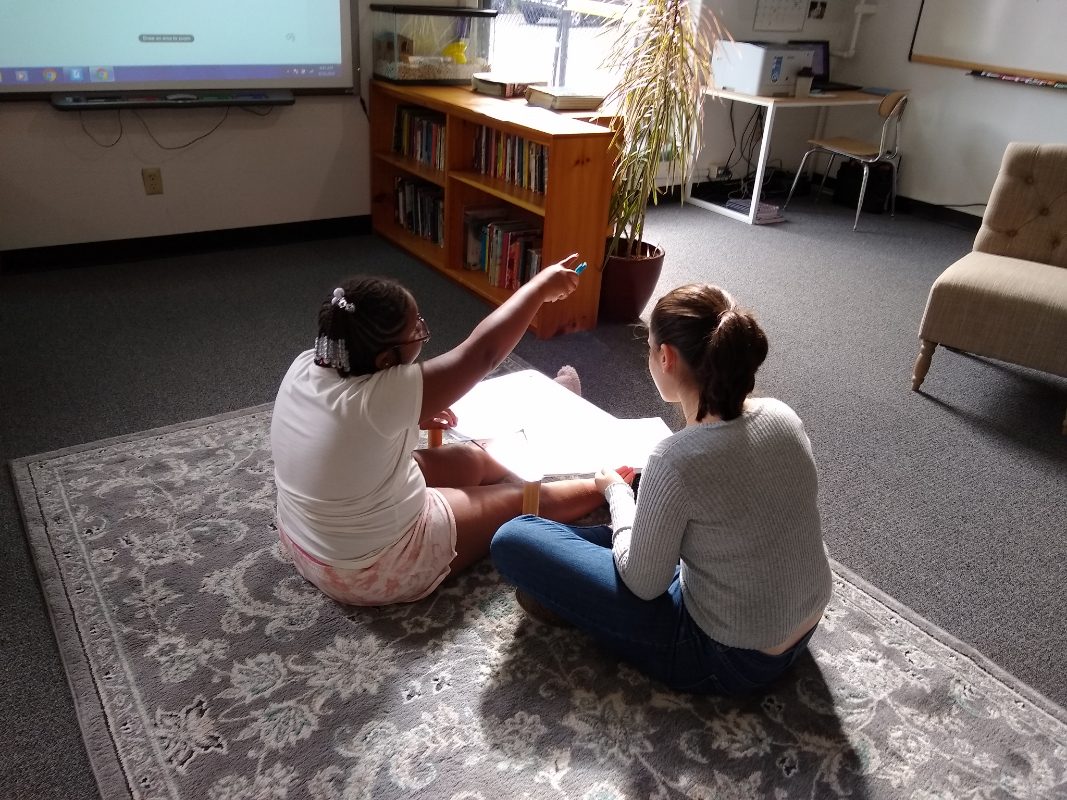
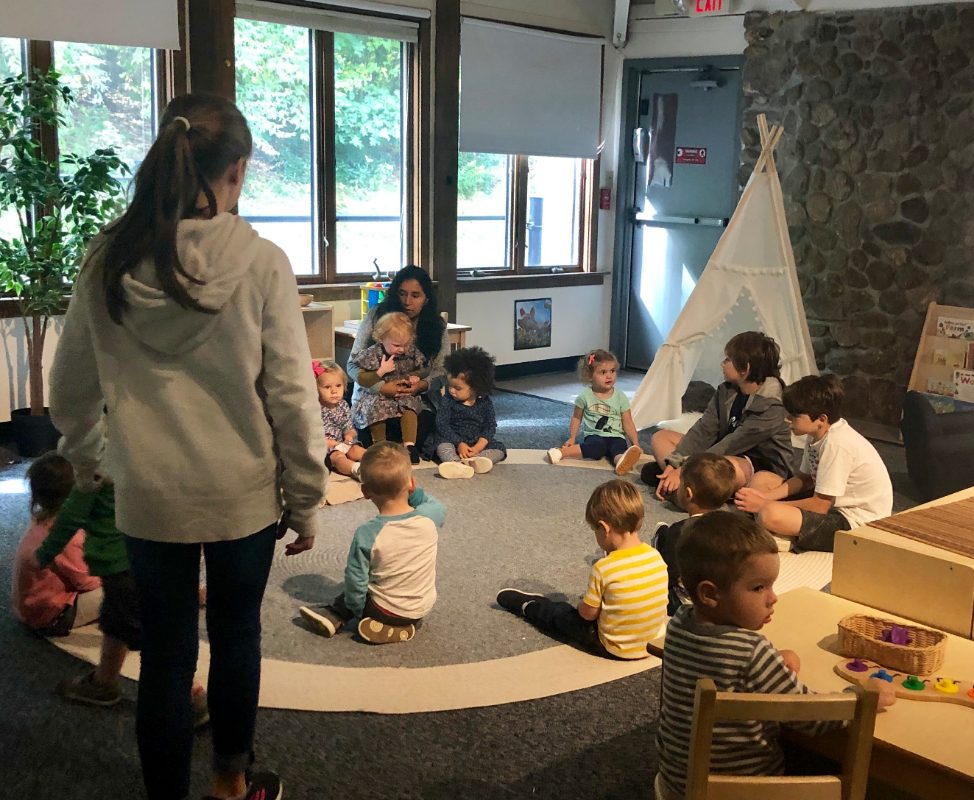
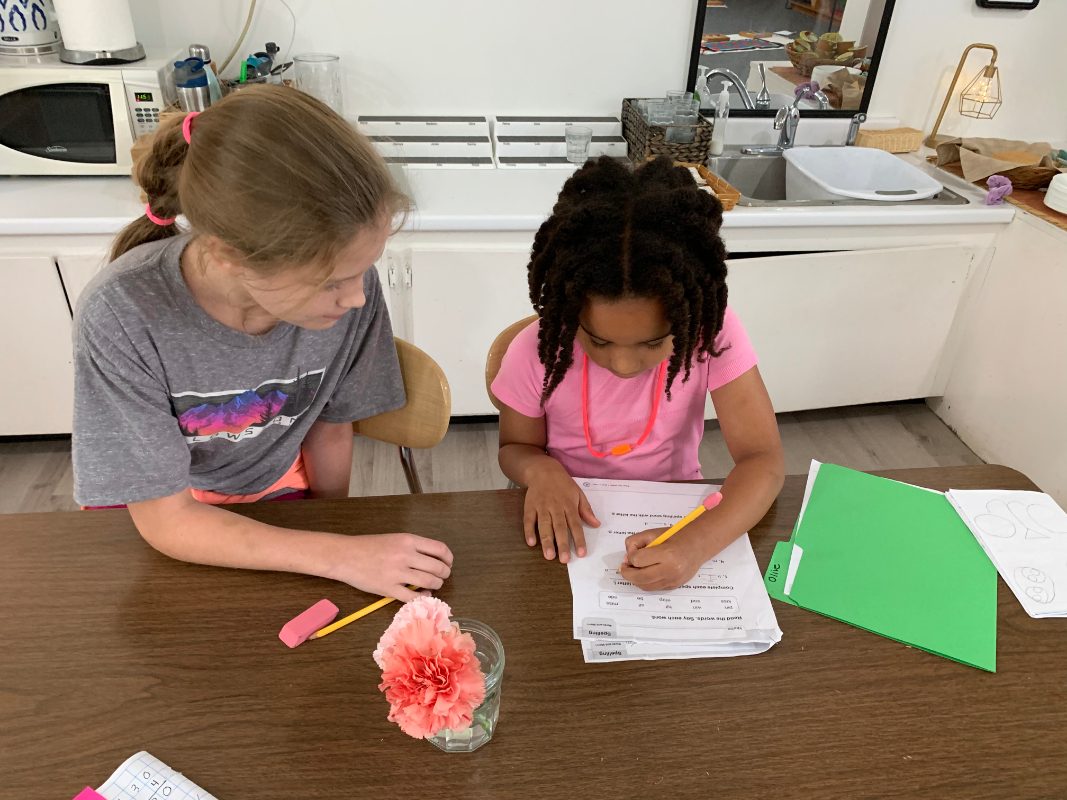
We had a great second full week of school! We enjoyed our first Community Service day when the Middle School students came to help us with our work. All of the students, Lower Elementary and Middle School, benefit from this experience. We get to have extra individualized attention while connecting with the elders of our school. The Middle School students get to experience the wonderful feeling of giving help where needed. We love the days our older friends visit!

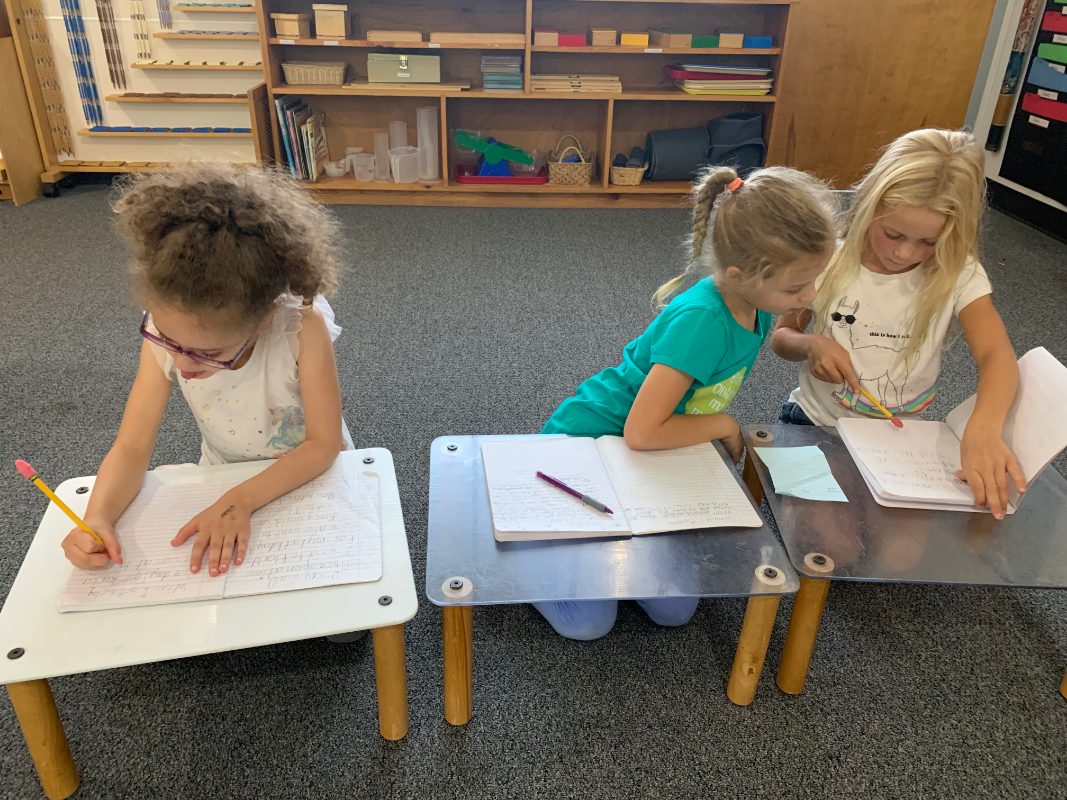
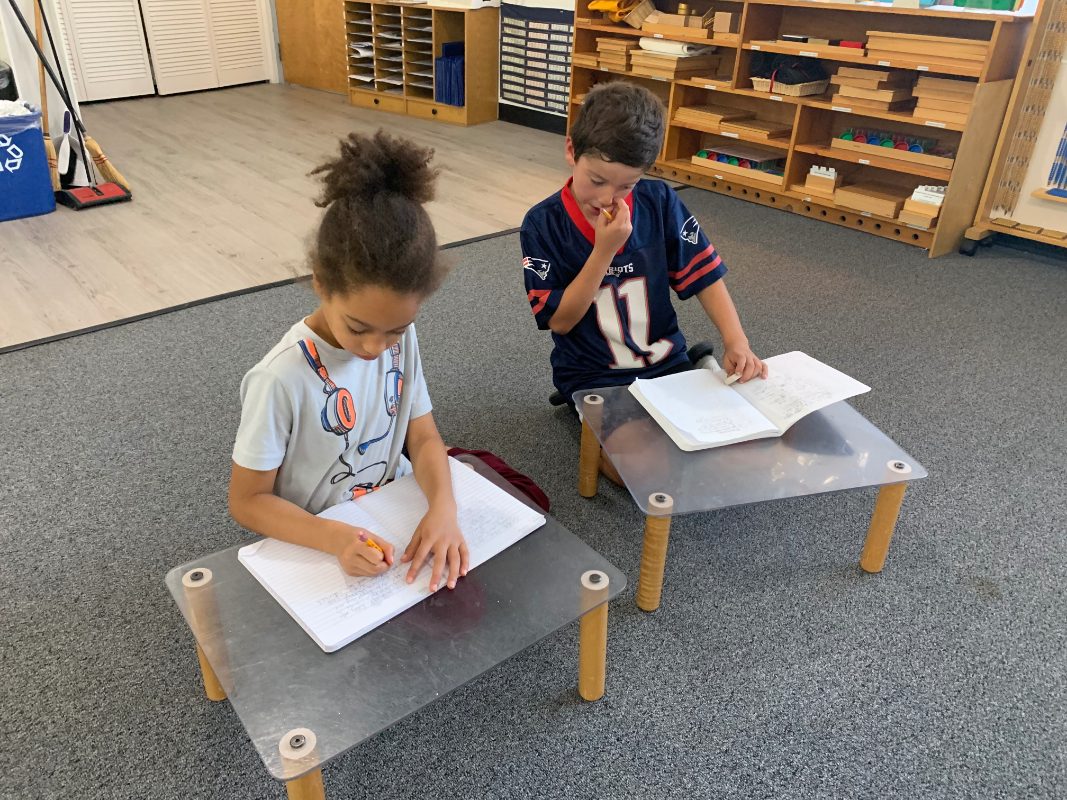
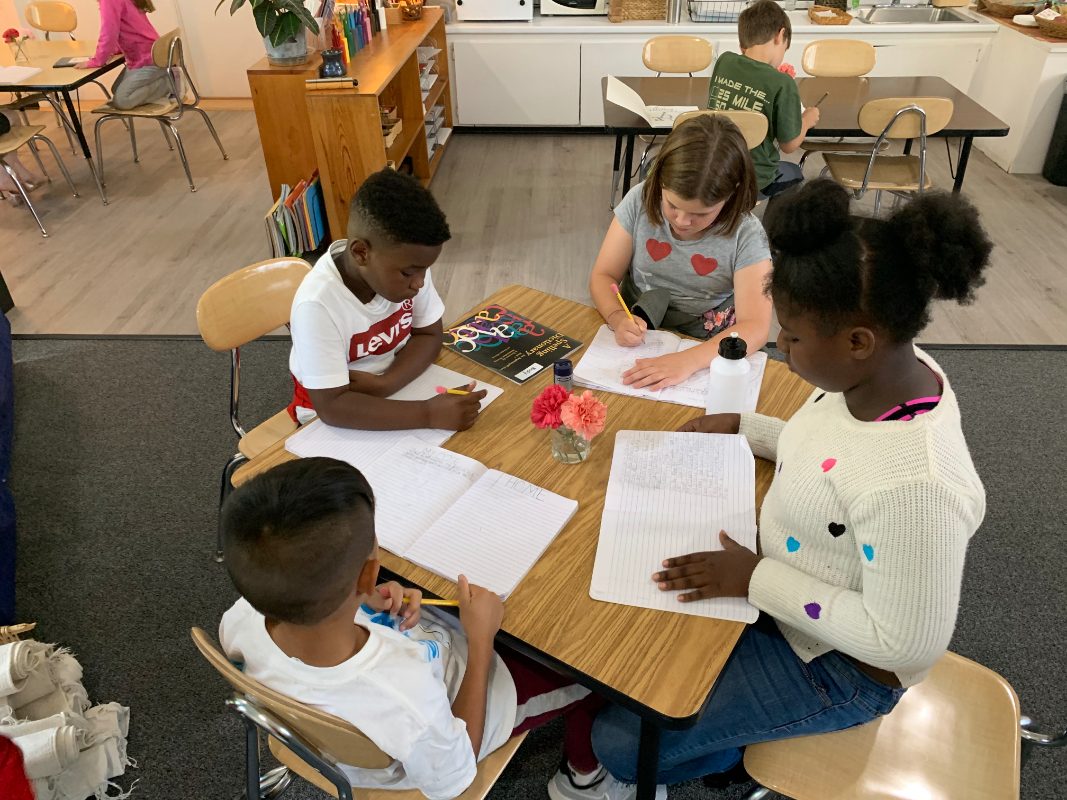
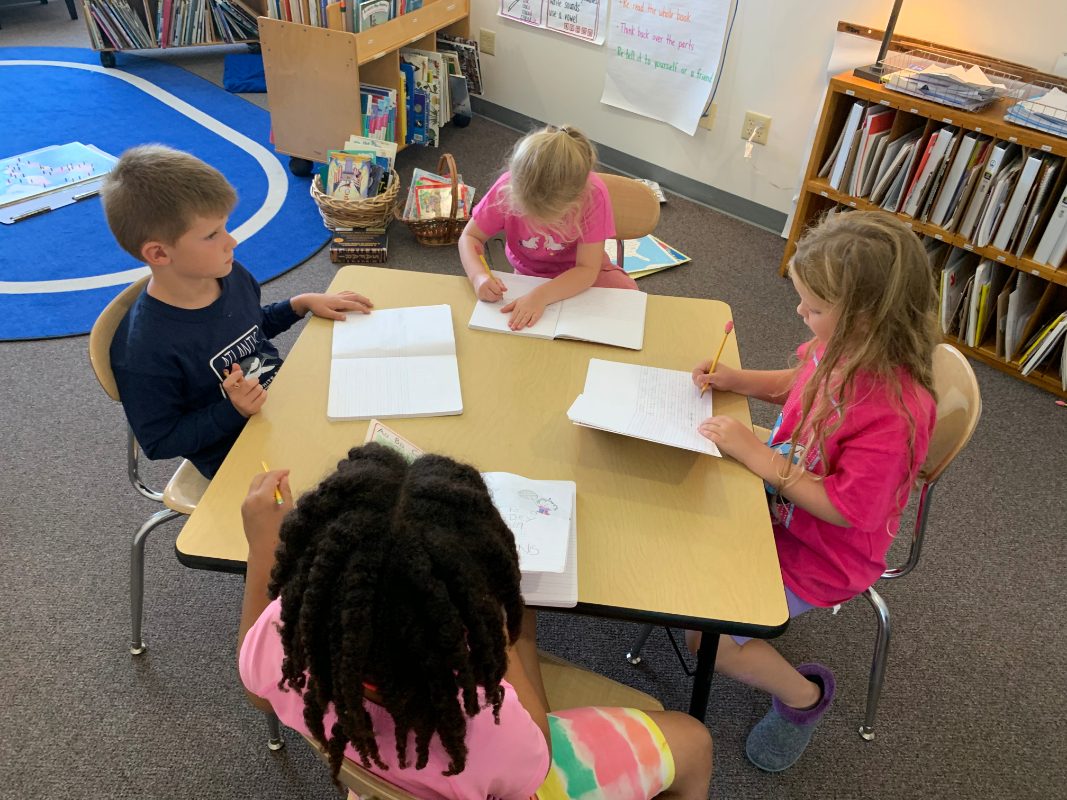
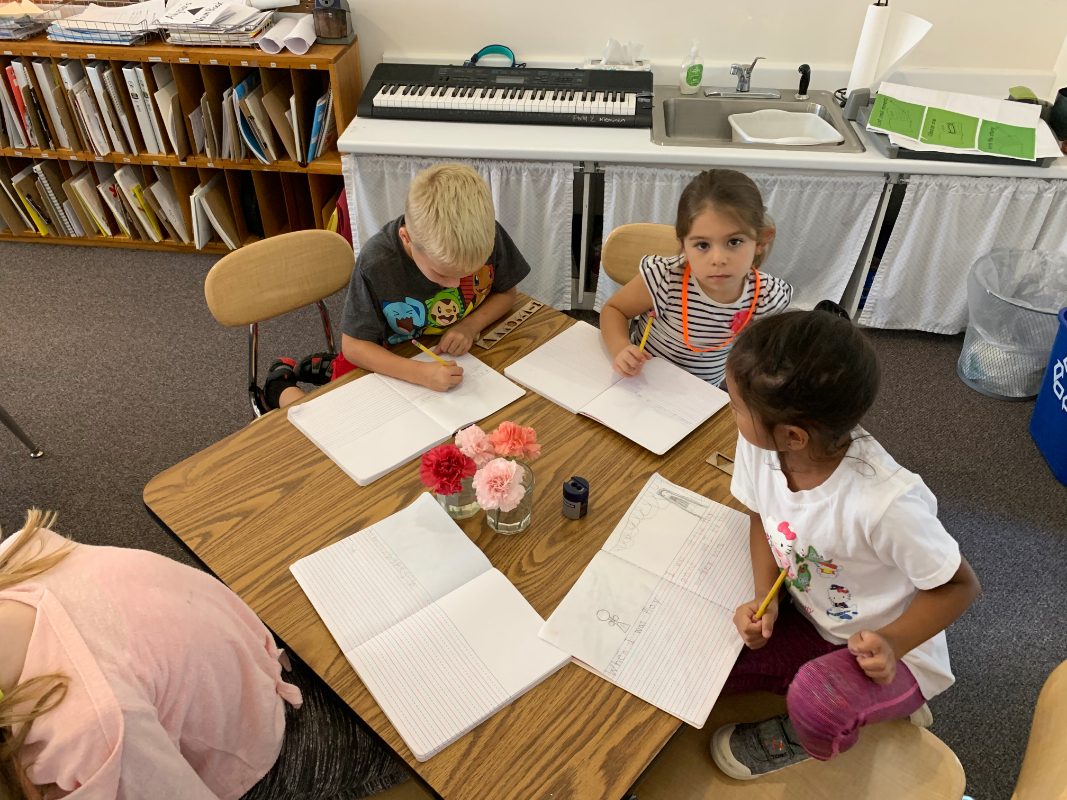
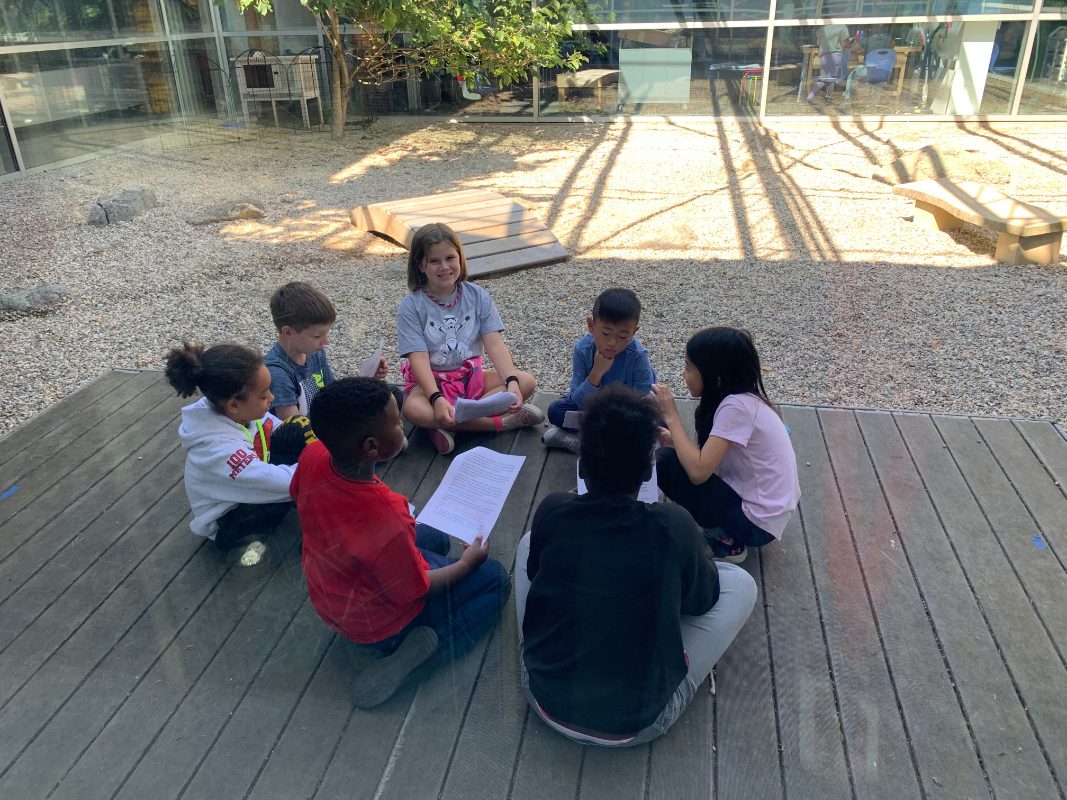
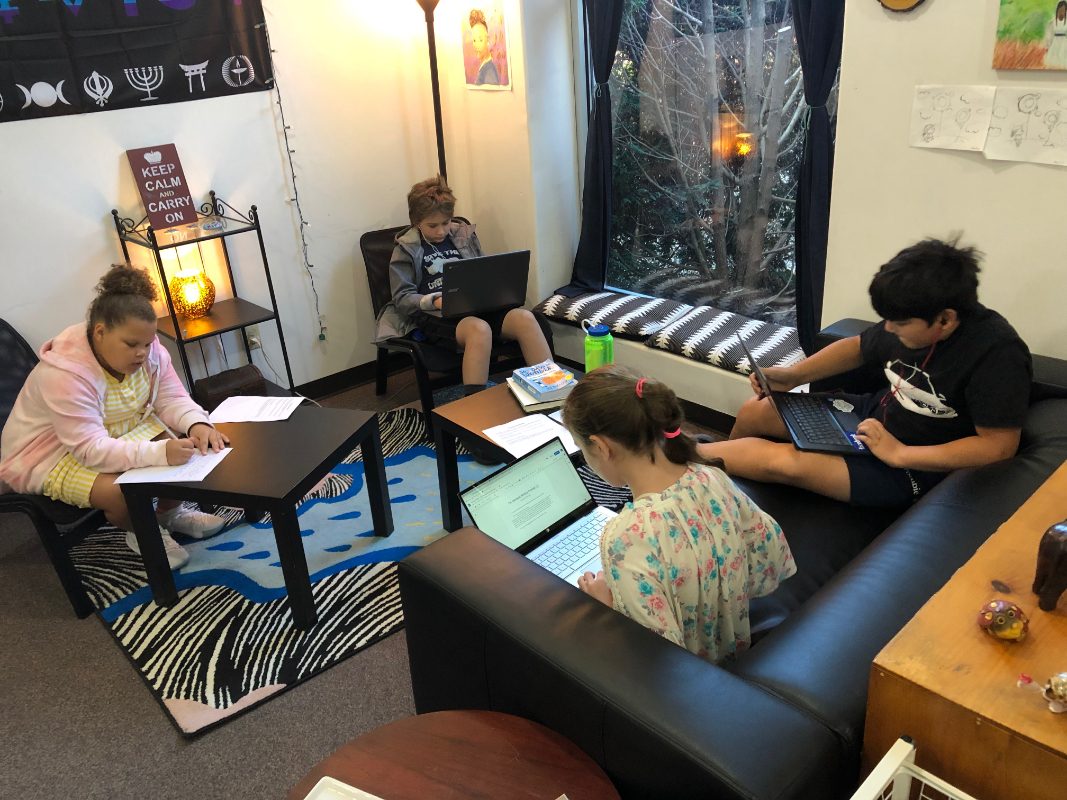
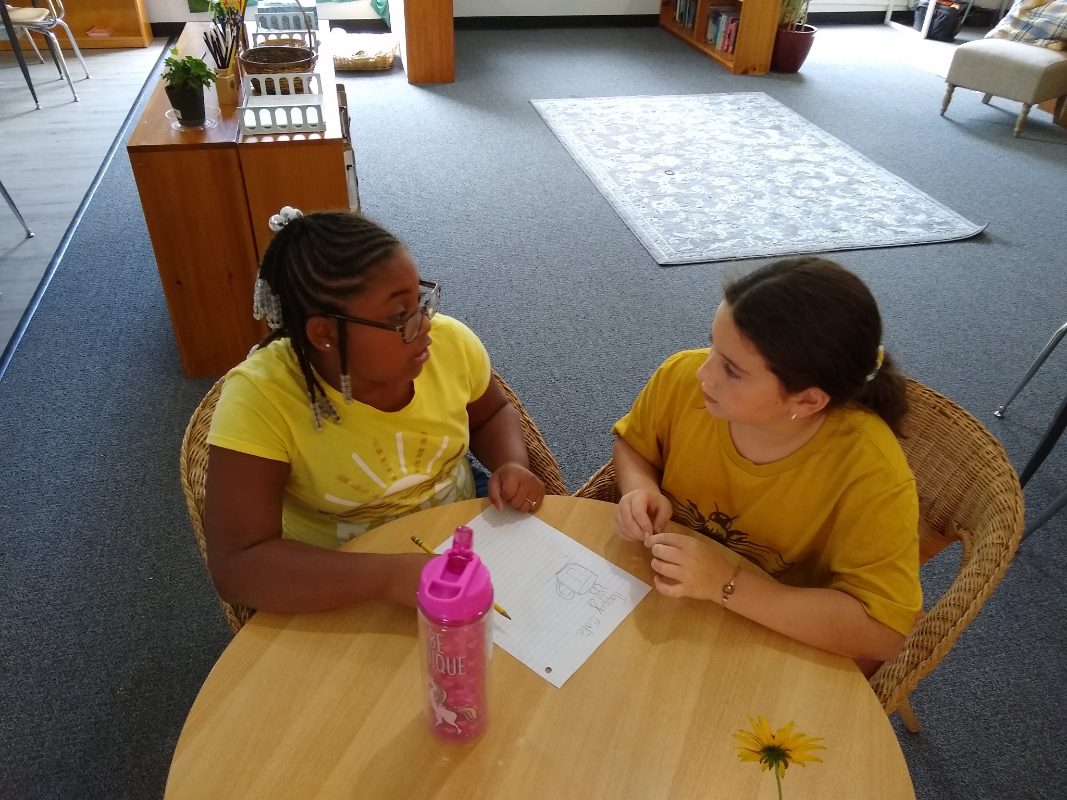
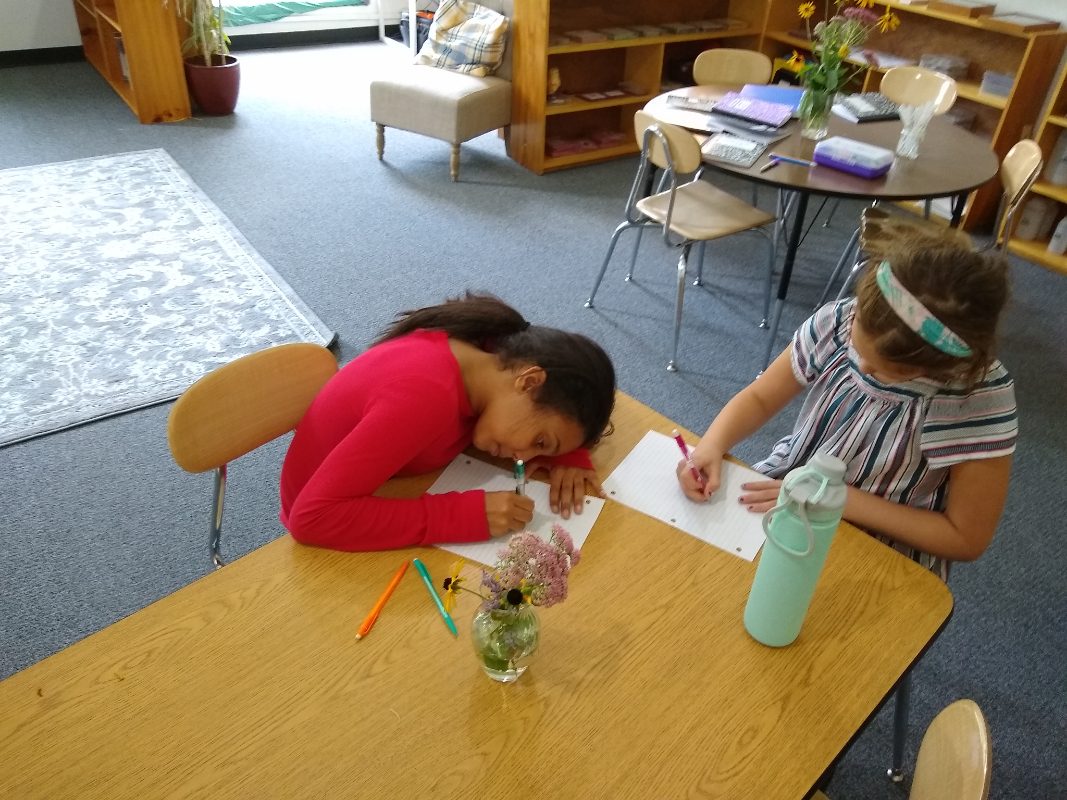
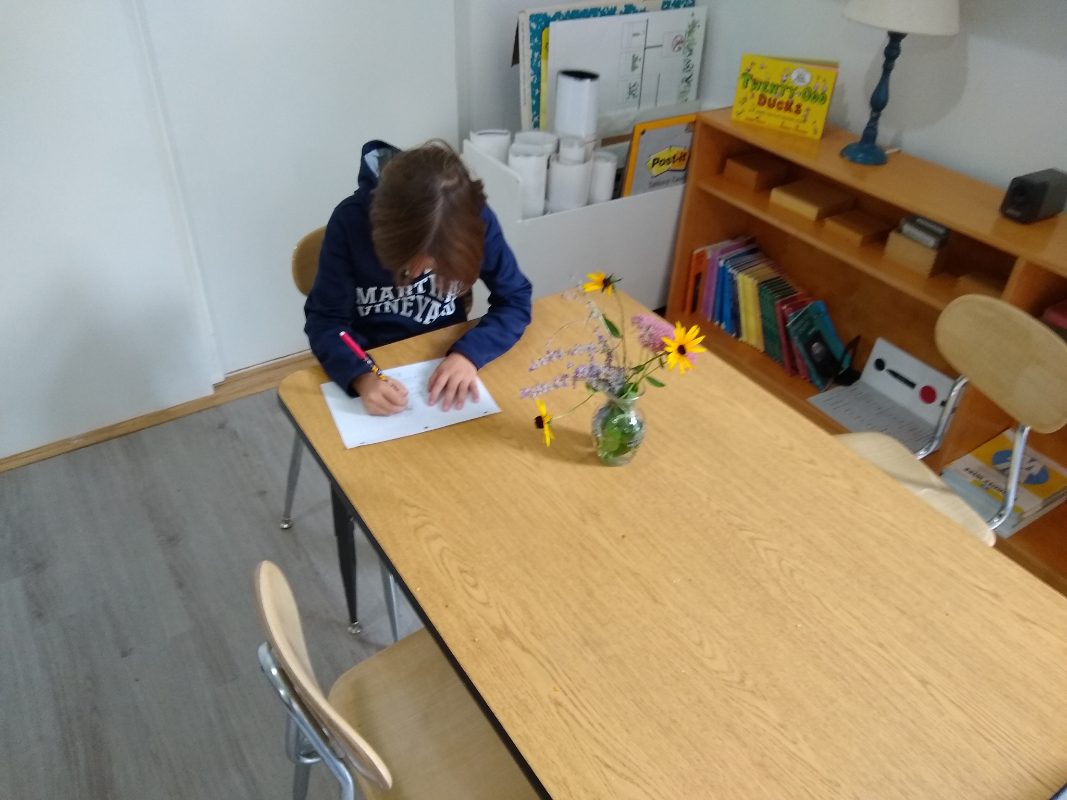
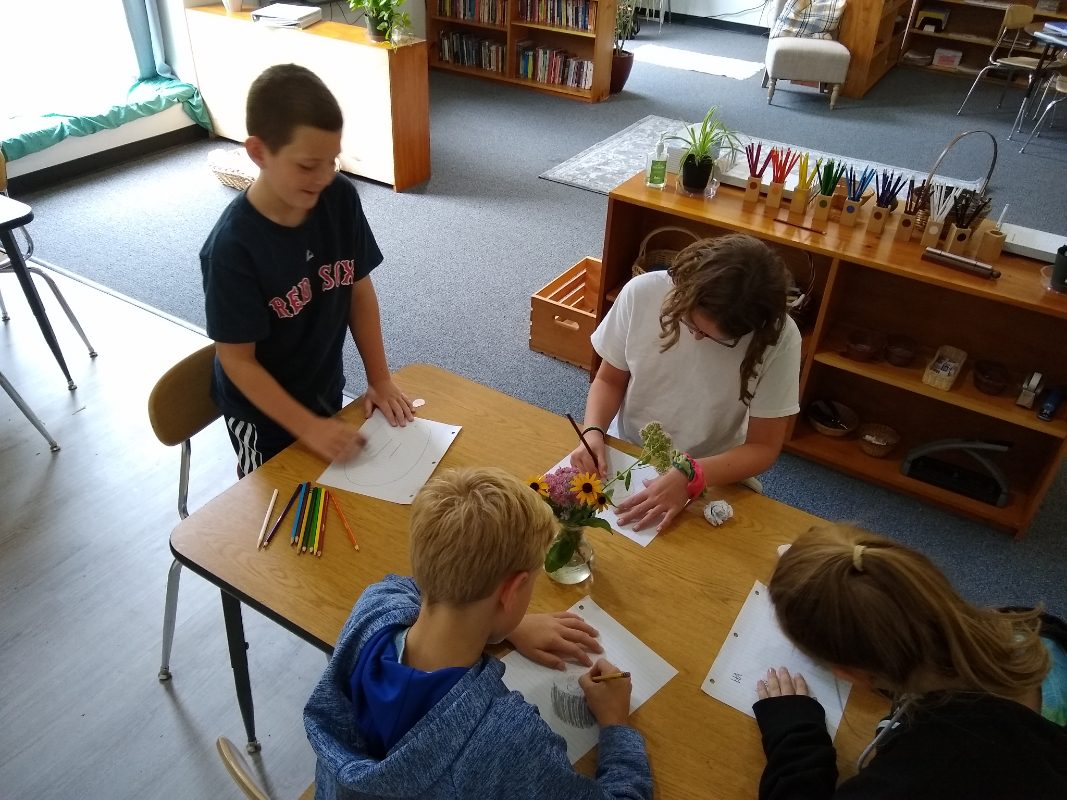
We are diving right into our Writer’s Workshop lessons. Our first unit in each grade focuses on writing true stories about our own lives. The children participate in separate mini-lessons by grade level and then spend some quiet time writing and practicing the new skills they are learning. During this time, Ms. Beckett and I are able to move around the room and conference with individual students, giving them help and instruction where needed. We periodically get together as a whole group and share our writing with each other; this is a favorite part of Writer’s Workshop for many.

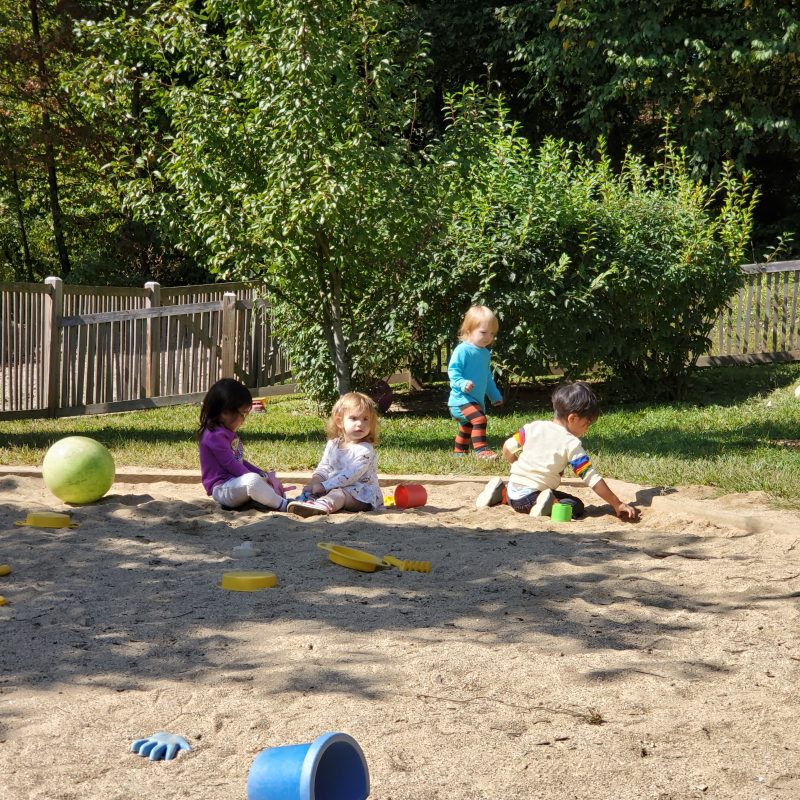
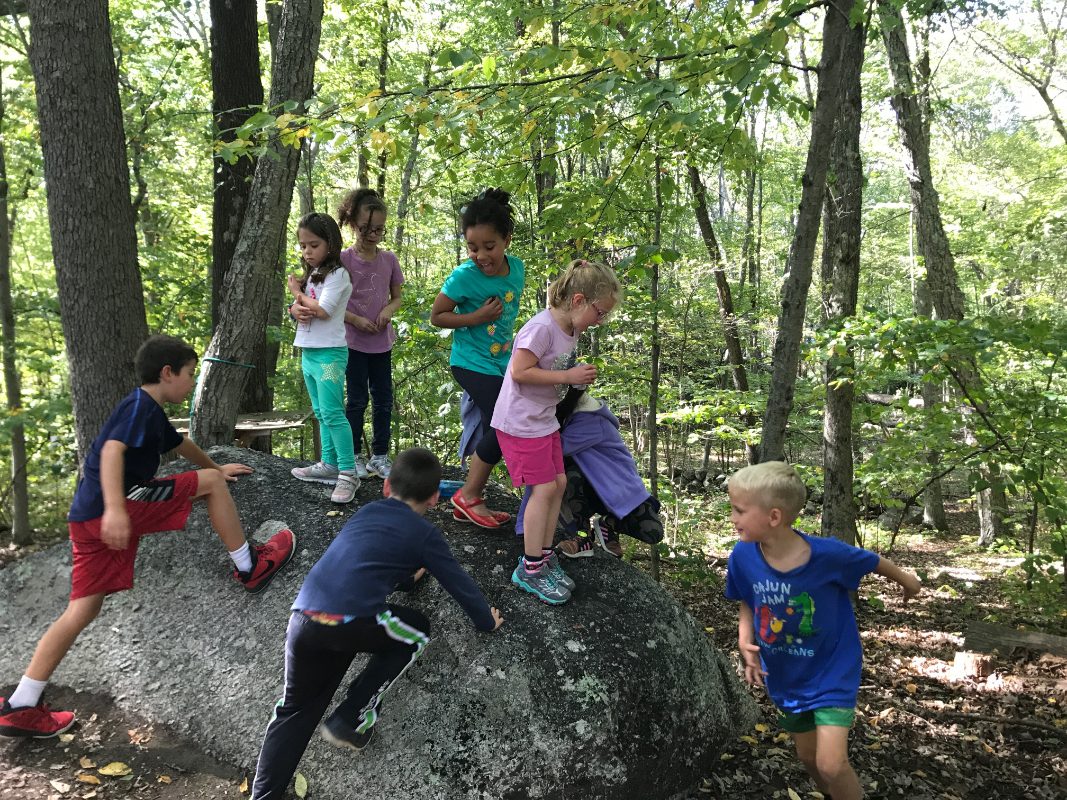
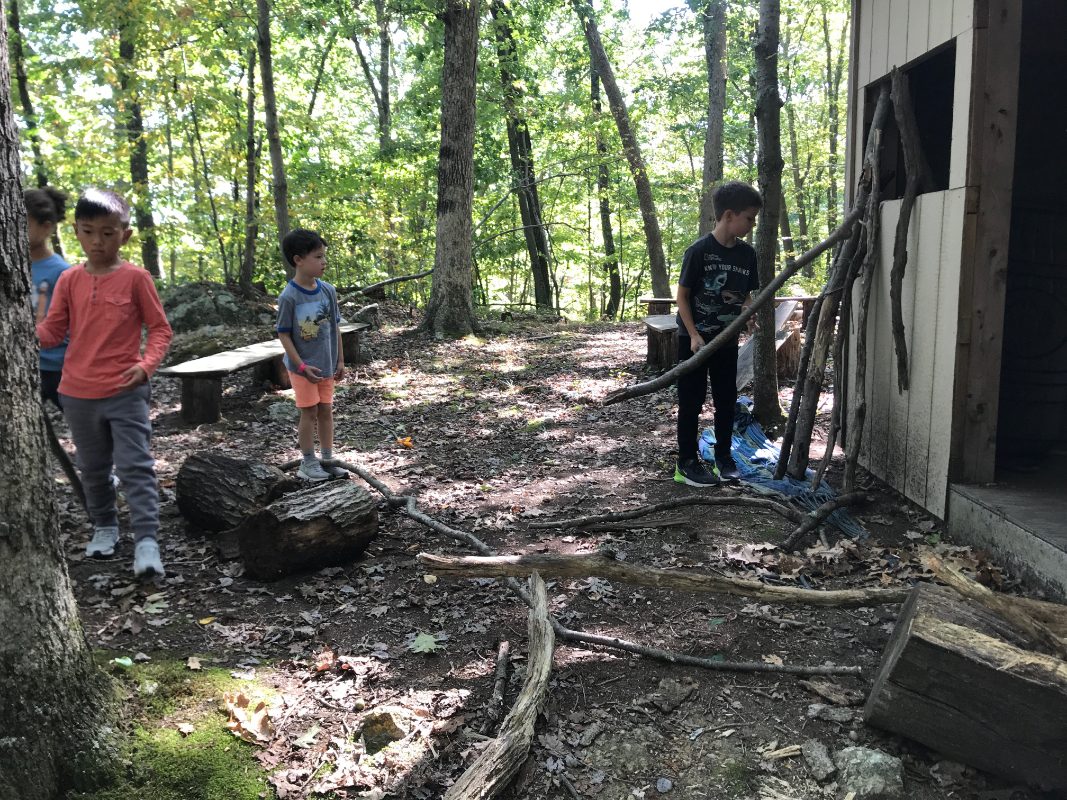
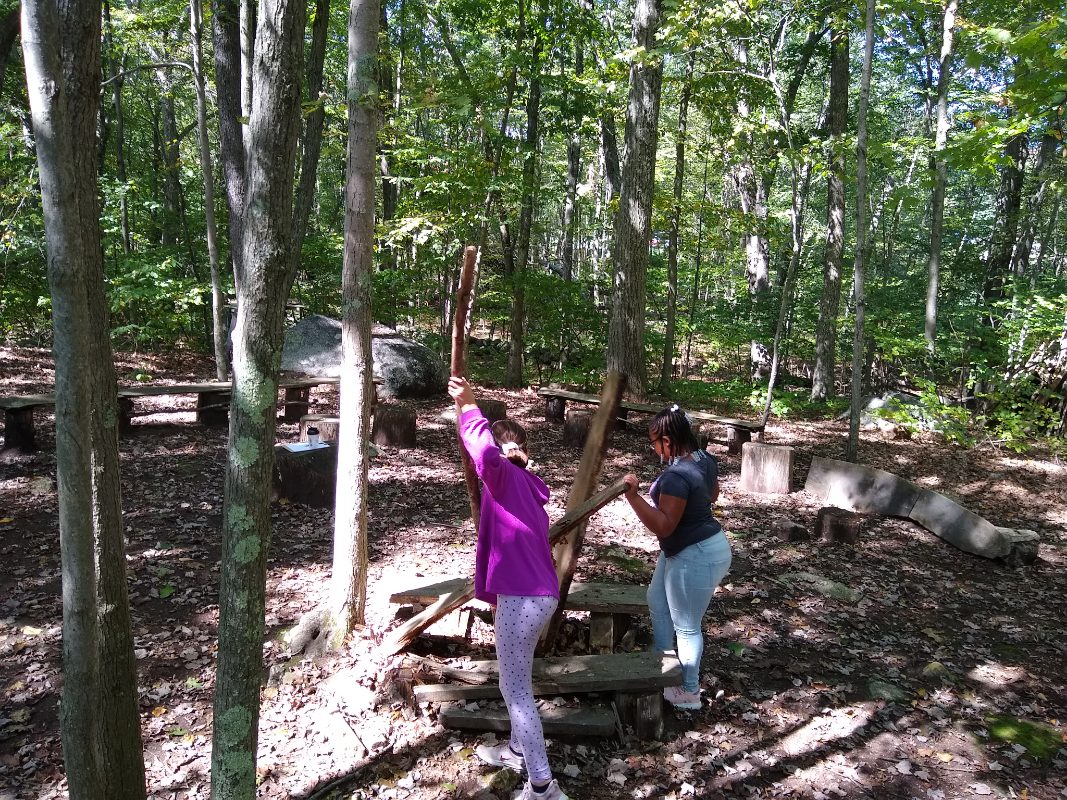
Each Friday afternoon we have Friday Fun. This is a time when the children socialize with each other and build our Lower Elementary community, making bonds and creating memories. Whenever possible, during this time we enjoy going to our outdoor classroom and playing in the woods. Spending time in nature is incredibly valuable and it is wonderful to watch the children be creative and play, no equipment needed!


Mrs. Lopes Class: Learning About Our World

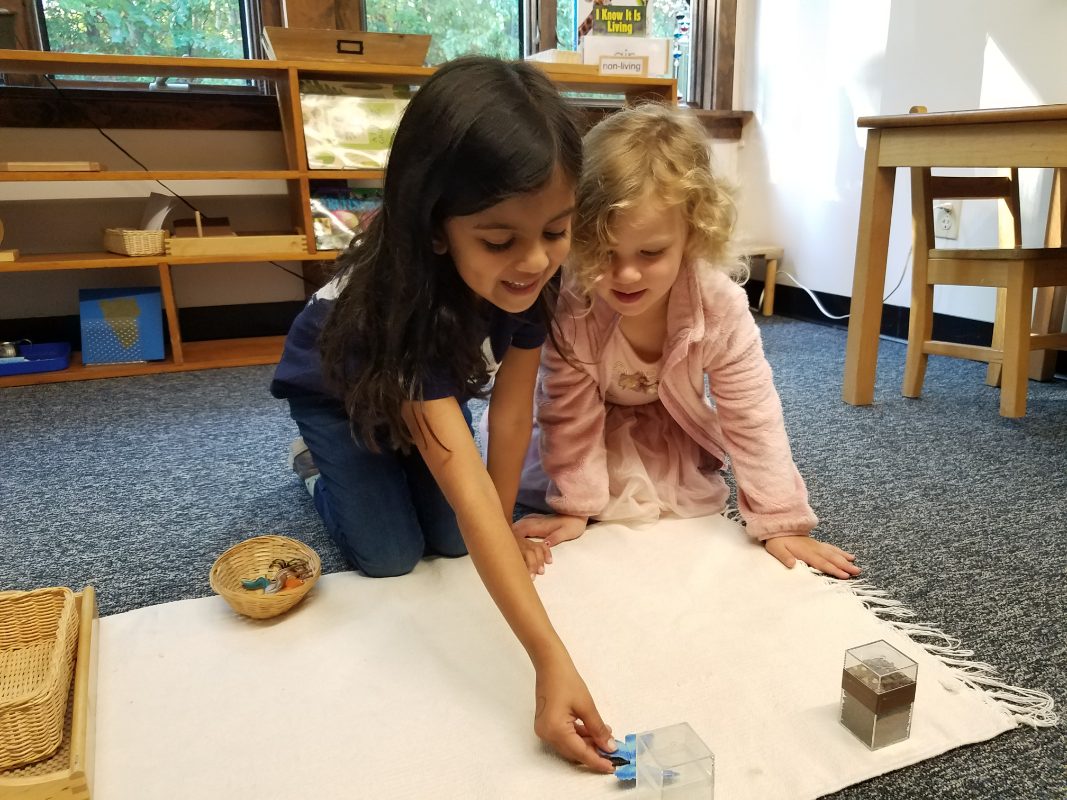
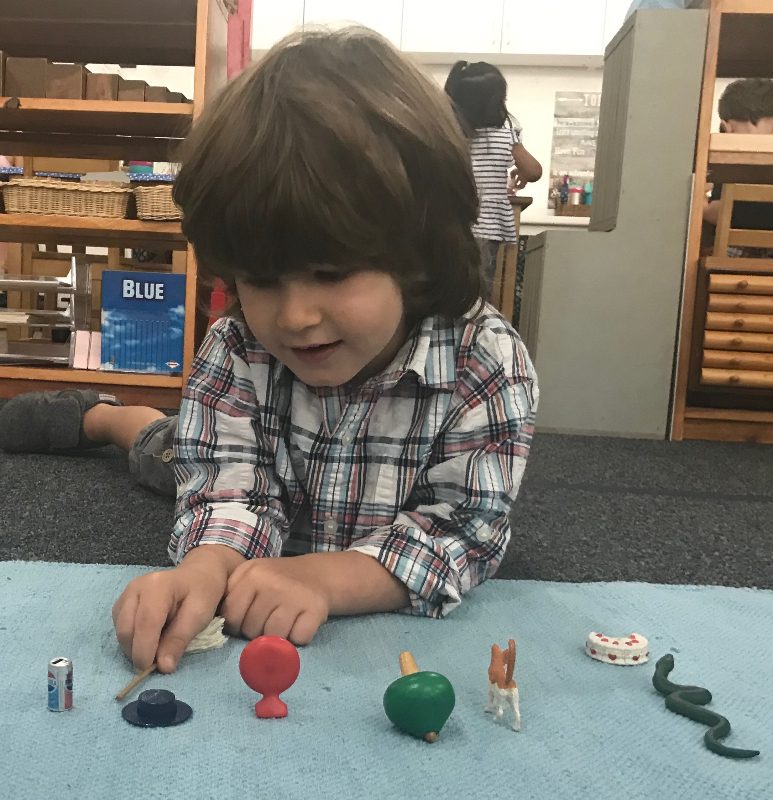
In our second week, the children enjoyed a fun introduction to our science area.  We began with the concept of living vs non-living.  We discussed what makes something living; they move, they breath, need water, and need food. We then sorted several small objects to determine if they were living or non living. It was interesting to watch them sort and hear their reasoning on why an object was living or non-living. We also talked about the difference between land, water, and air.  The children studied jars containing land, water, and air.  They then explored lessons where they could sort animals and forms of transportation to the land, water, and air.

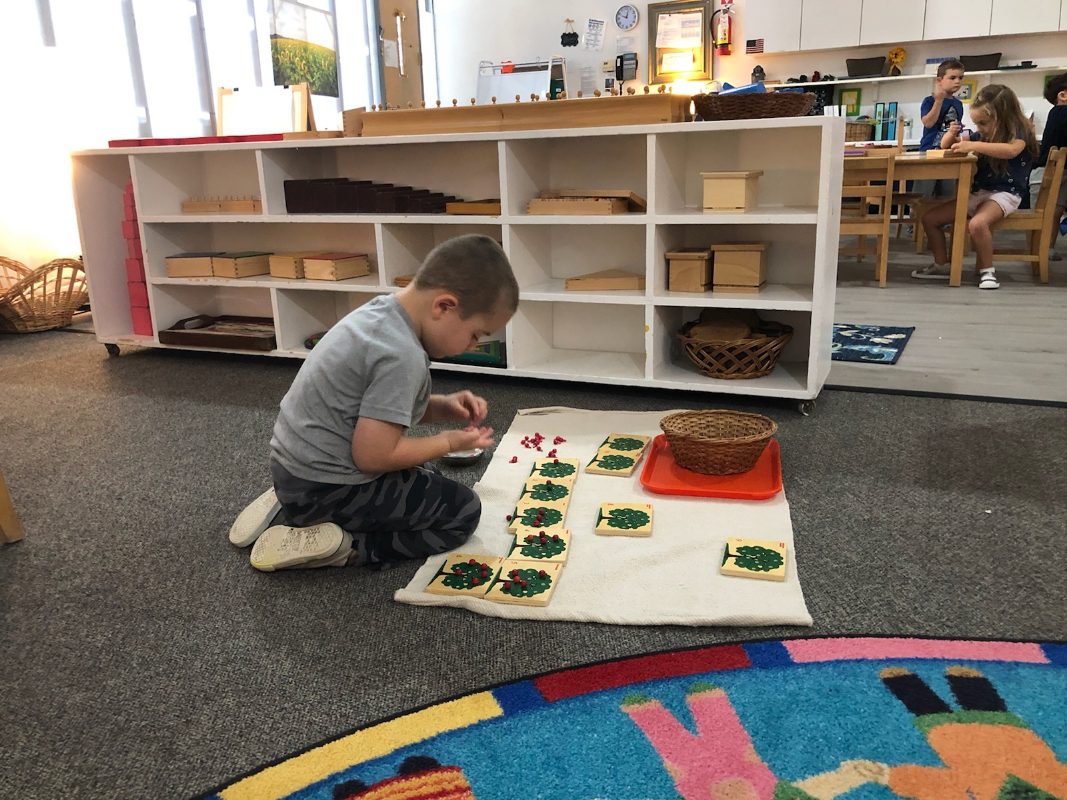
In preparation for our apple unit next week, the children have been learning the “5 Little Apples” song.  Ask them to sing it for you!  Here are the lyrics if you would like to sing it at home:

Way up high in the apple tree,

5 little apples smiled down at me,

I shook that tree as hard as I could,

Down came an apple,

Mmmmm was it good!

(We then repeat the song with 4, 3, 2, 1 apples until there are no apples left on the tree)

Best,

Mrs. Lopes & Ms. Vigue


Middle School: All About the Community

Another beautiful week has commenced in Middle School. This week, I noticed the mindset shift towards community. I’ve always been in awe of the FWM Middle School because in my school and camp experiences, I have never seen students across the three grades and ages come together to play one game so effortlessly as I have at FWM. I think my entire first year here, I continually commented on the socialization between grades; it truly felt like one community. This came to mind as Ms. Sutherland made a similar comment to me.

Then I thought about how the 8th years are leading the charge with fundraising. They planned and are executing their Name the Bunny fundraiser in the commons. They had each grade, 1-8 nominate a name. Each name was placed on a jar and left in the Commons. Whichever jar has the most value in coins after two weeks, will be the name of our new rabbit. The sole purpose of this is to raise enough money throughout the year to install a water bottle filling station. This group is fully aware that they will not benefit from this, but the idea of helping the community and filling a need is essential to their class. They are planning another fundraiser for Oktoberfest as well.

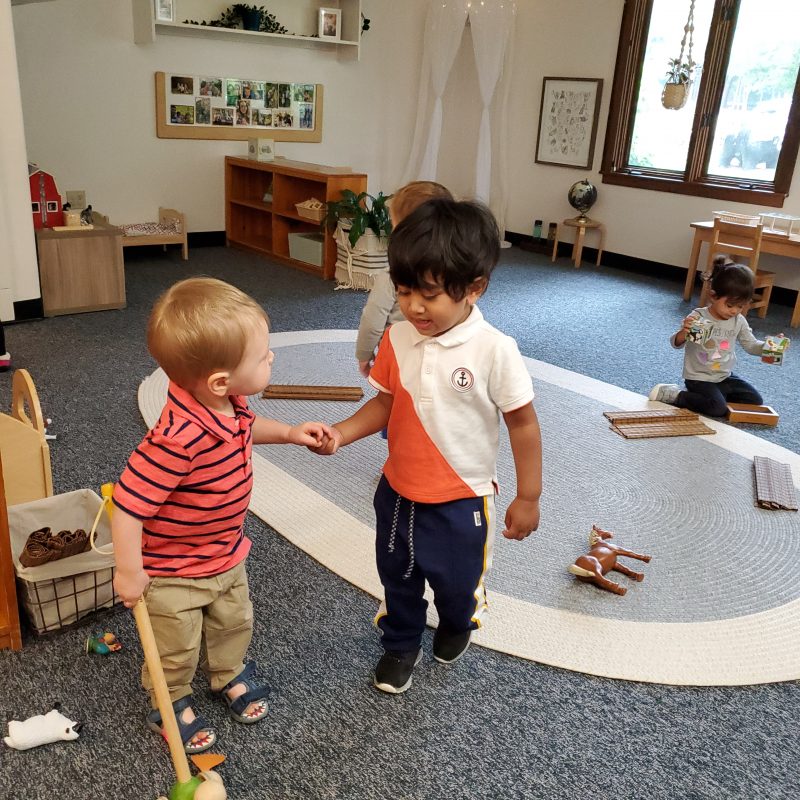
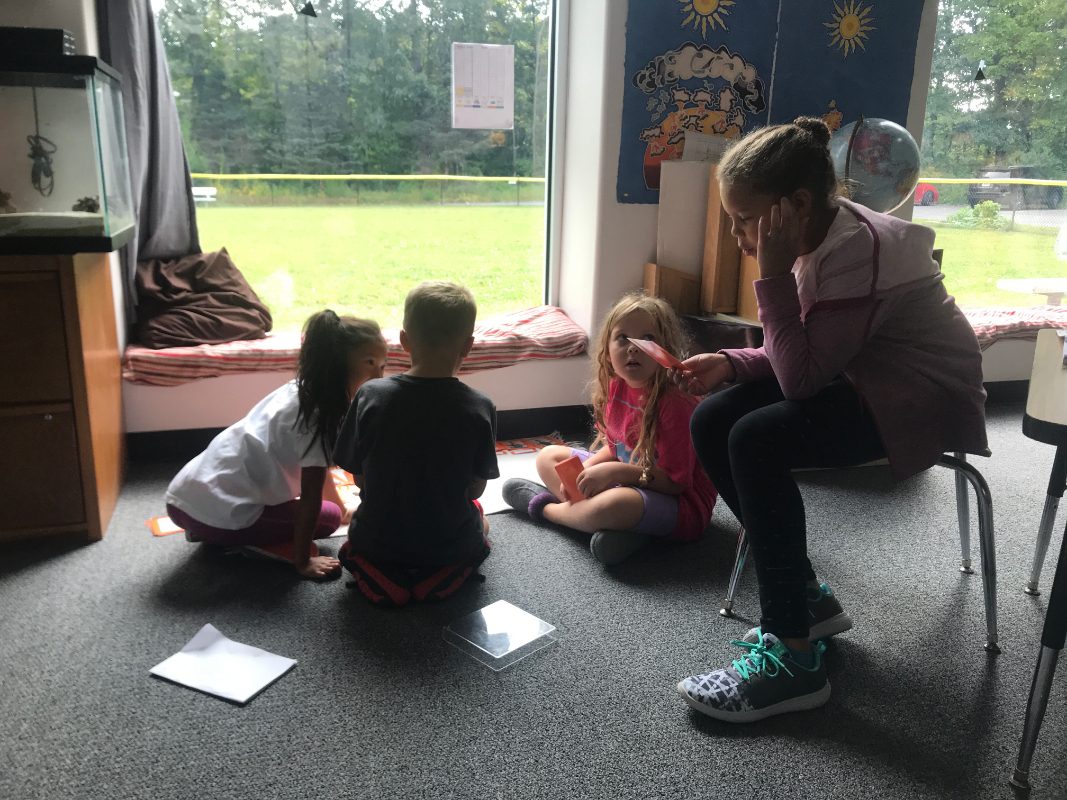
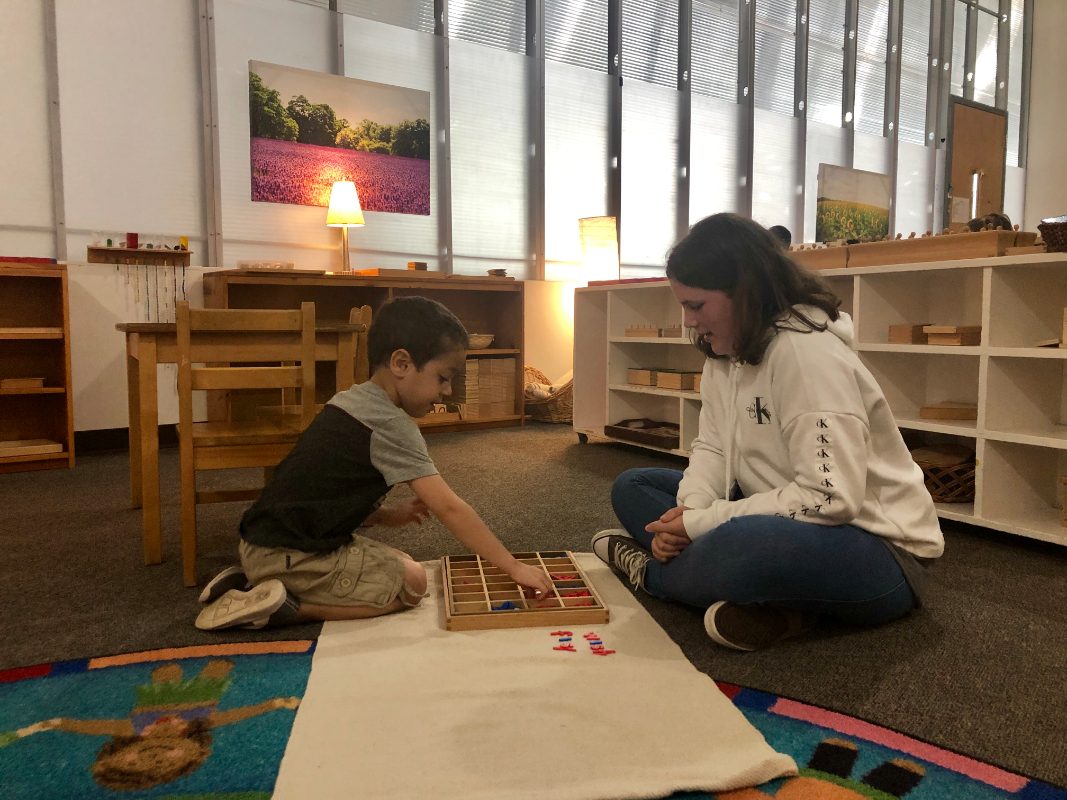
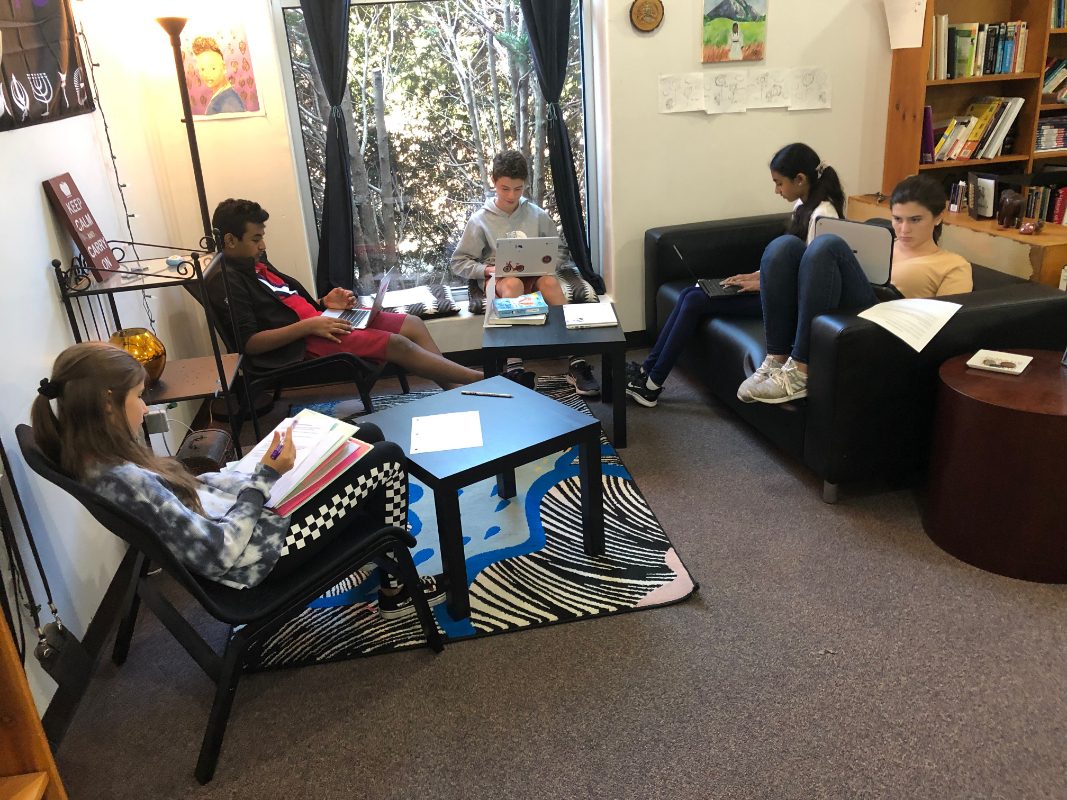
Another way the FWM Middle School embodies community is with their community service period. This dedicated period occurs one period in their 6-day rotation. They truly look forward to entering the younger classrooms and becoming a buddy or mentor to a younger student during their work cycle. This looks differently depending on the age. It’s beautiful. Not only do the younger children look forward to seeing their Middle School friends, but the older students are reminded about their vital presence in a younger community.

Now for a quick overview of academics:

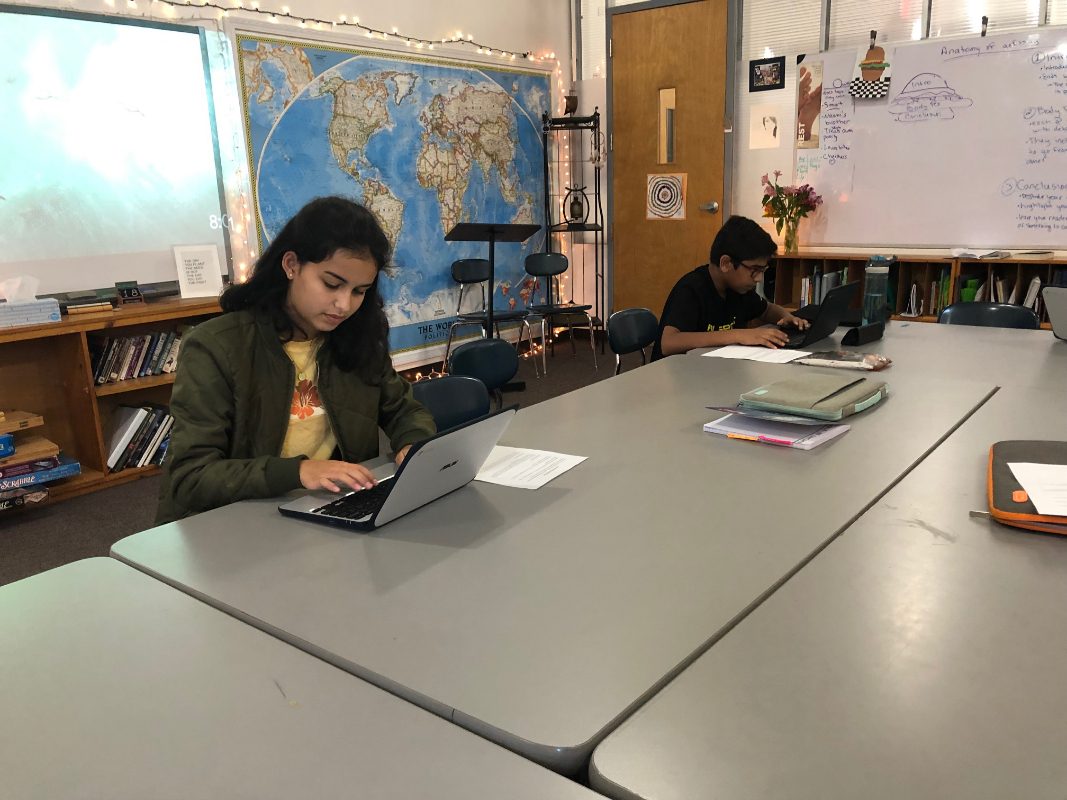
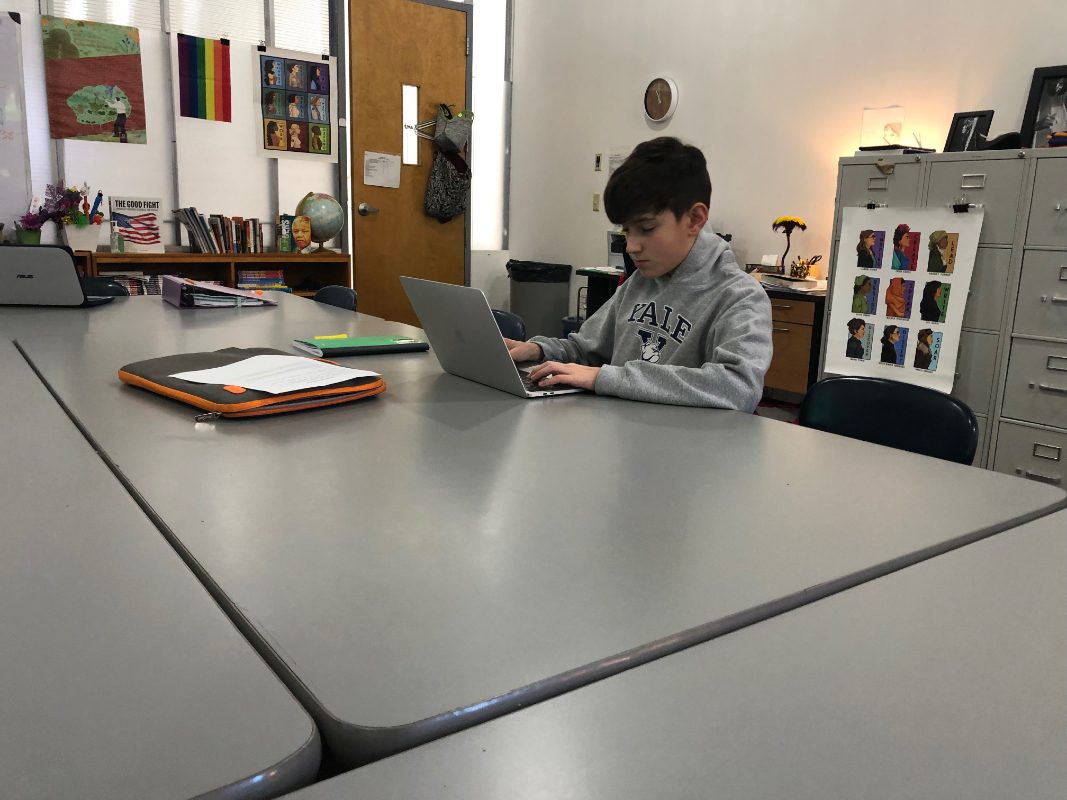
In Humanities, all classes had their first current events presentations of the year! They really rose to the occasion and had wonderful discussions about important global events. 6th years discussed Becoming Naomi Leon character progression and went through some “anatomy” lessons about writing. 7th years had an awesome week comparing and contrasting political and economic systems, learning about Mao Zedong (Mao Tse-tung), the cultural revolution in China, and the significance of Tiananmen Square.  They also reviewed essay writing techniques. Finally, 8th years began reading A Different Mirror and discussing the idea of the Master Narrative in the story of America. They also read about and discussed what it means to be American, leading to lessons about stereotypes- are they true? Where do they come from? How can we overcome them?

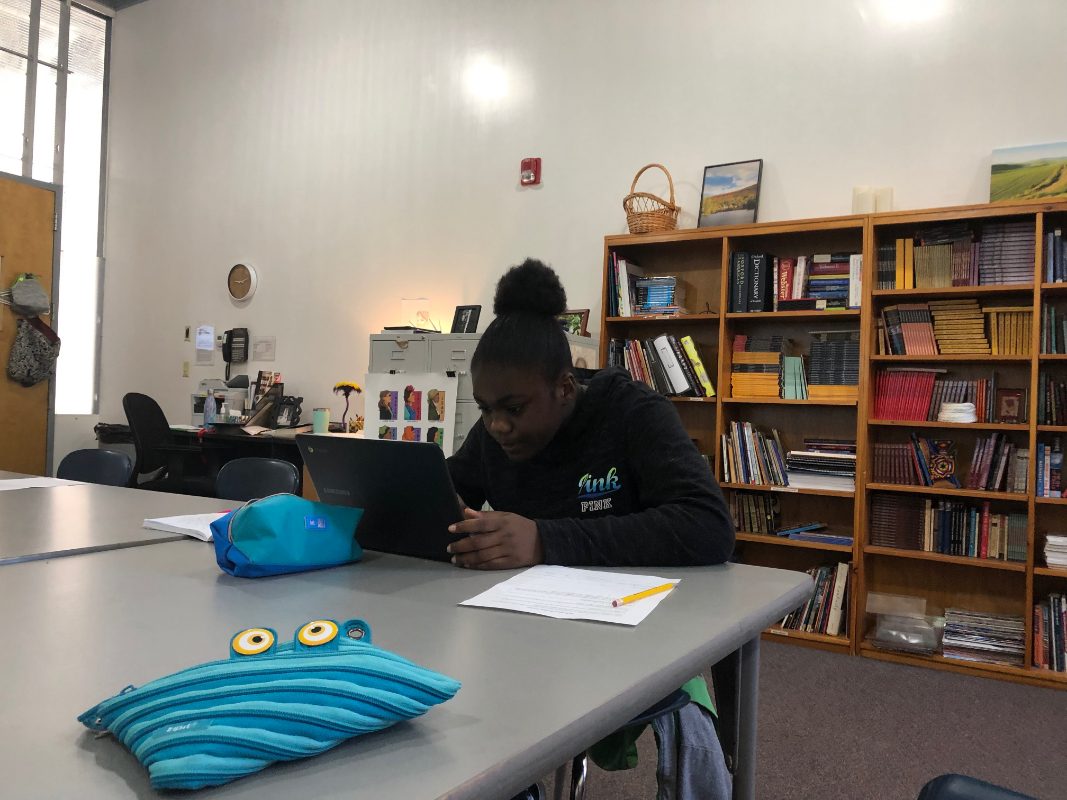
Week 3 Math classes at FWM are over and chapter 1 is almost done! This week, all math groups continue to prepare for their cumulative chapter tests. This is an opportunity to summarize all they have learned in the past 14 school days.
Algebra 1 has been using the graphing calculator to work on plotting scatter points, drawing linear functions, and creating new absolute value images. They are analyzing data with mean, median, range and mean absolute deviation (MAD) values.
Transition has been working on mastering order of operation, problems using inequalities to compare numbers, and simplifying fractions. Most recently we have practiced how to plot ordered pairs on a coordinate grid using both paper/pencil and a graphing calculator. We have also worked with numbers in scientific notation form.
Pre-transition has been working on understanding mixed, improper, and proper fractions. They are able to identify natural numbers, whole numbers, and integers. They are also practicing different study techniques in order to feel prepared for the upcoming test.
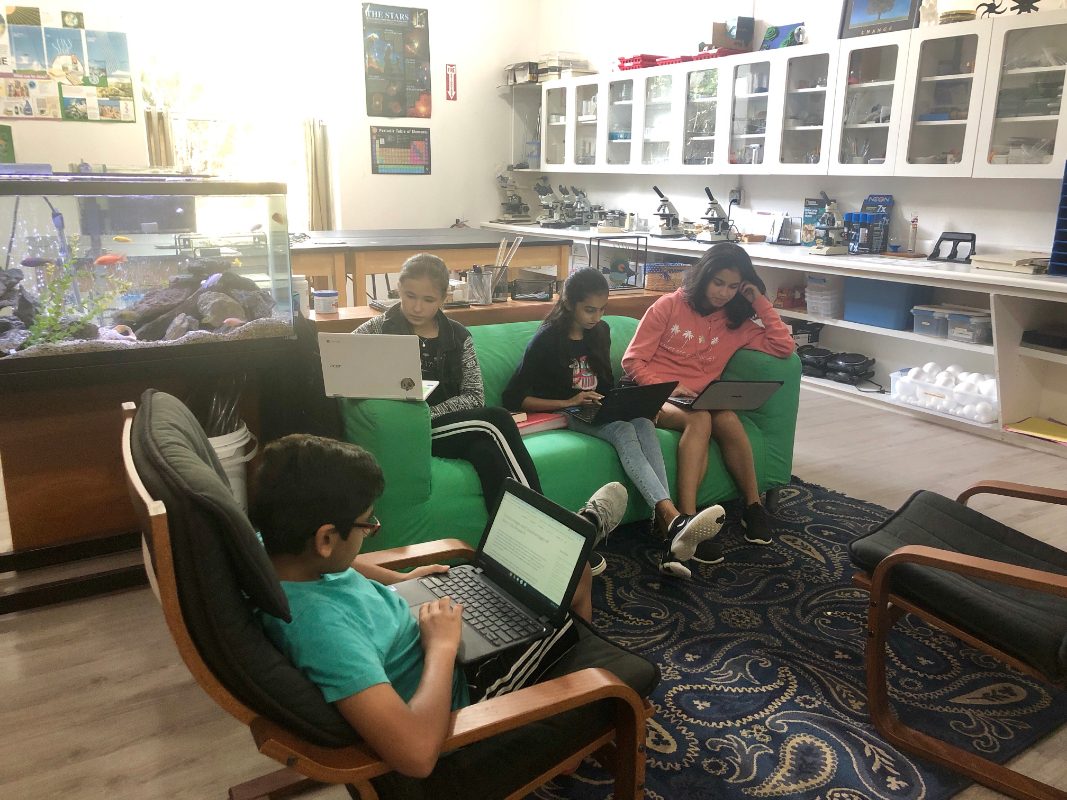
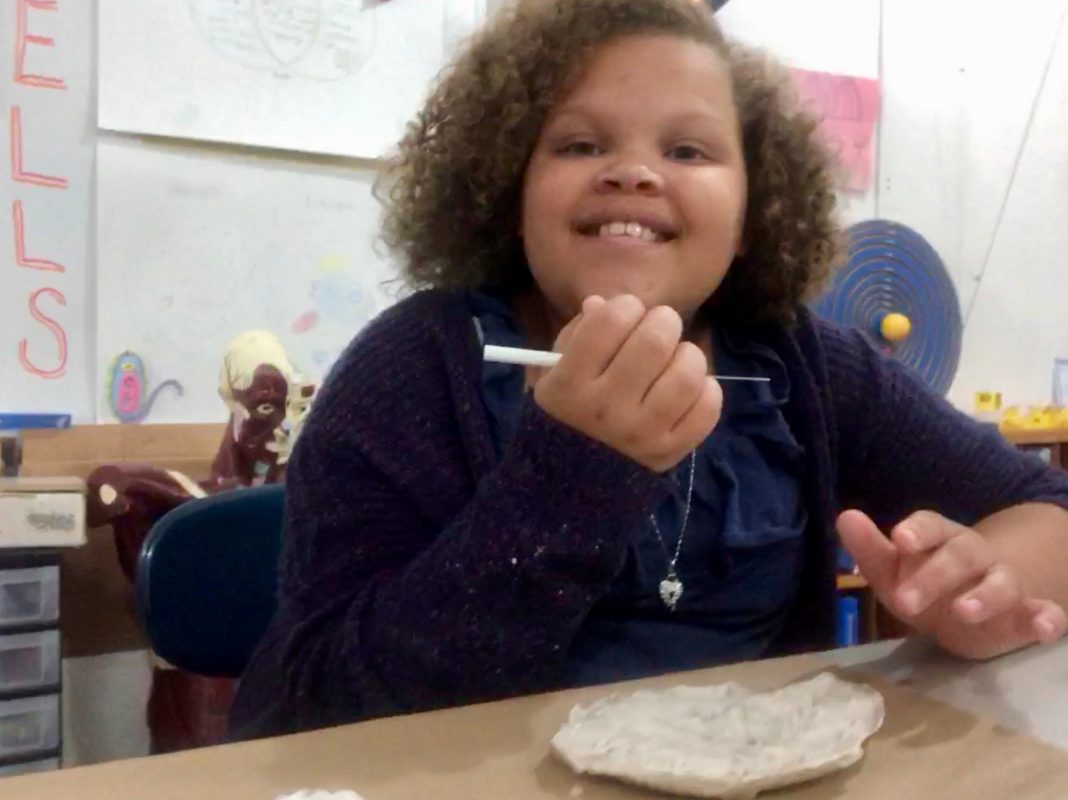
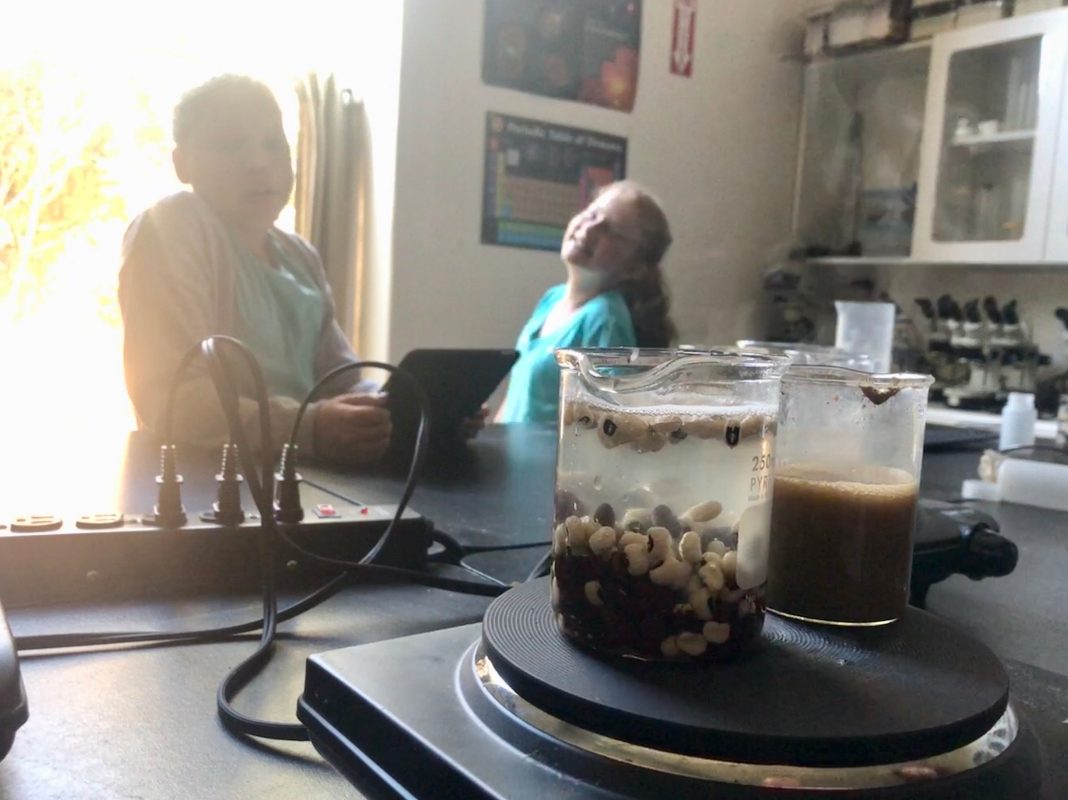
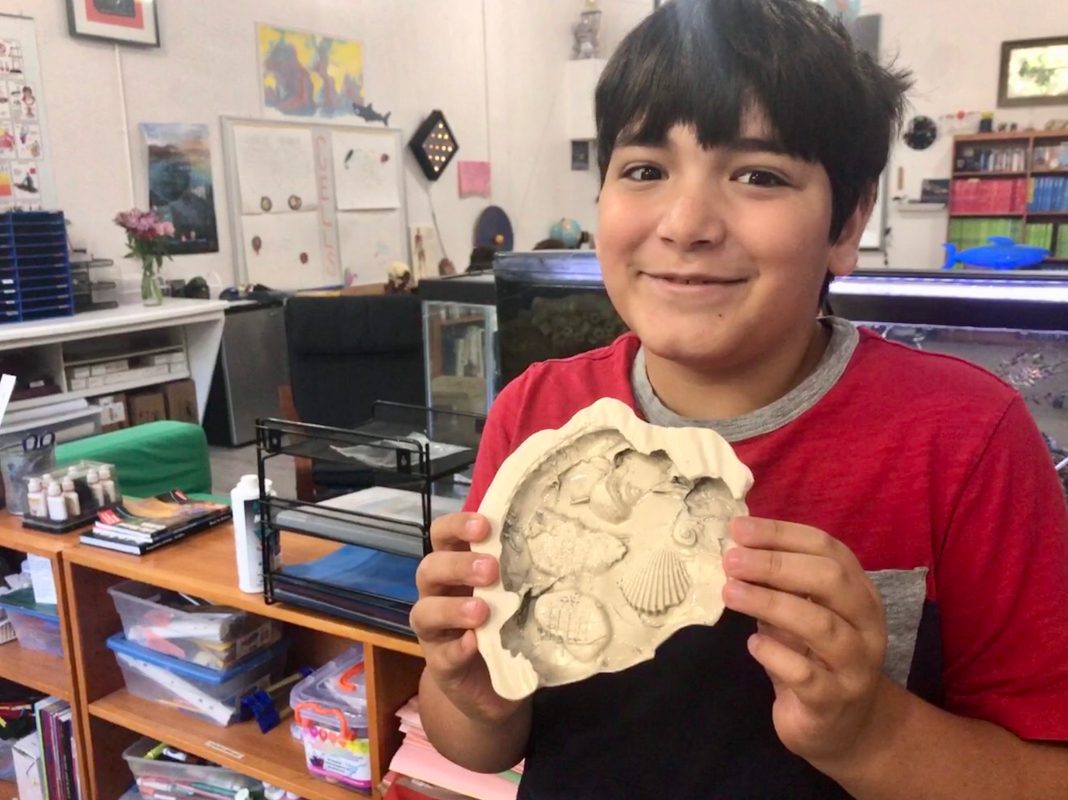
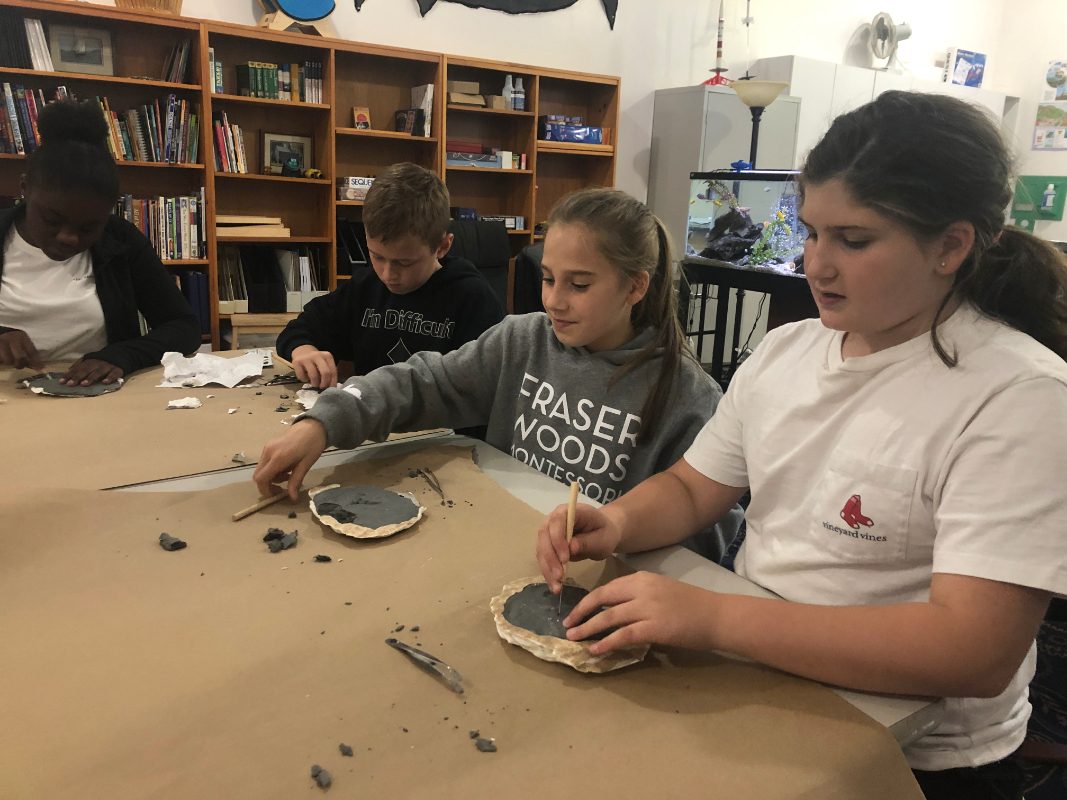
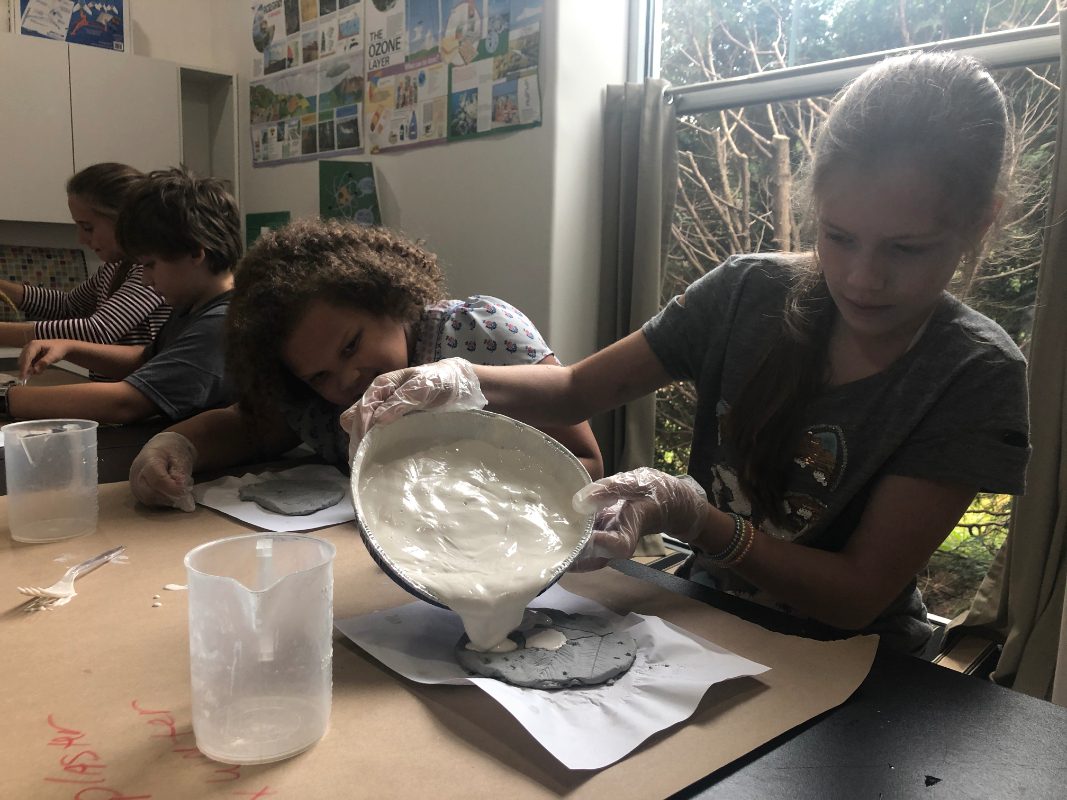
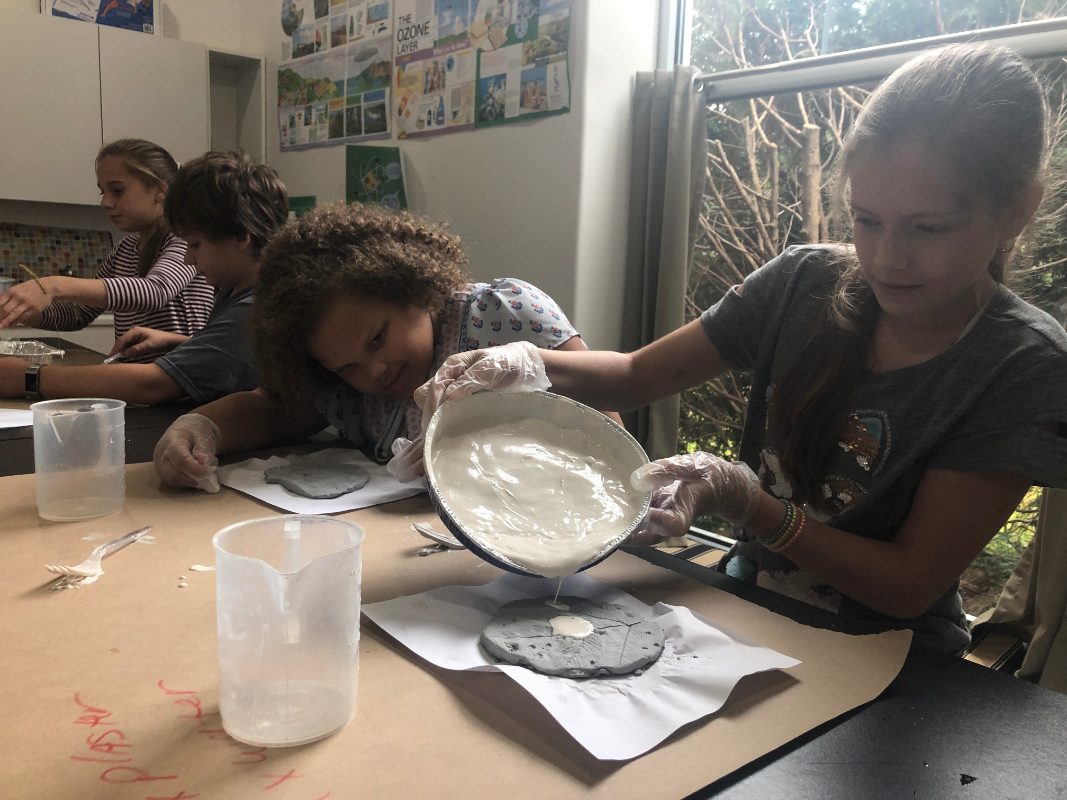
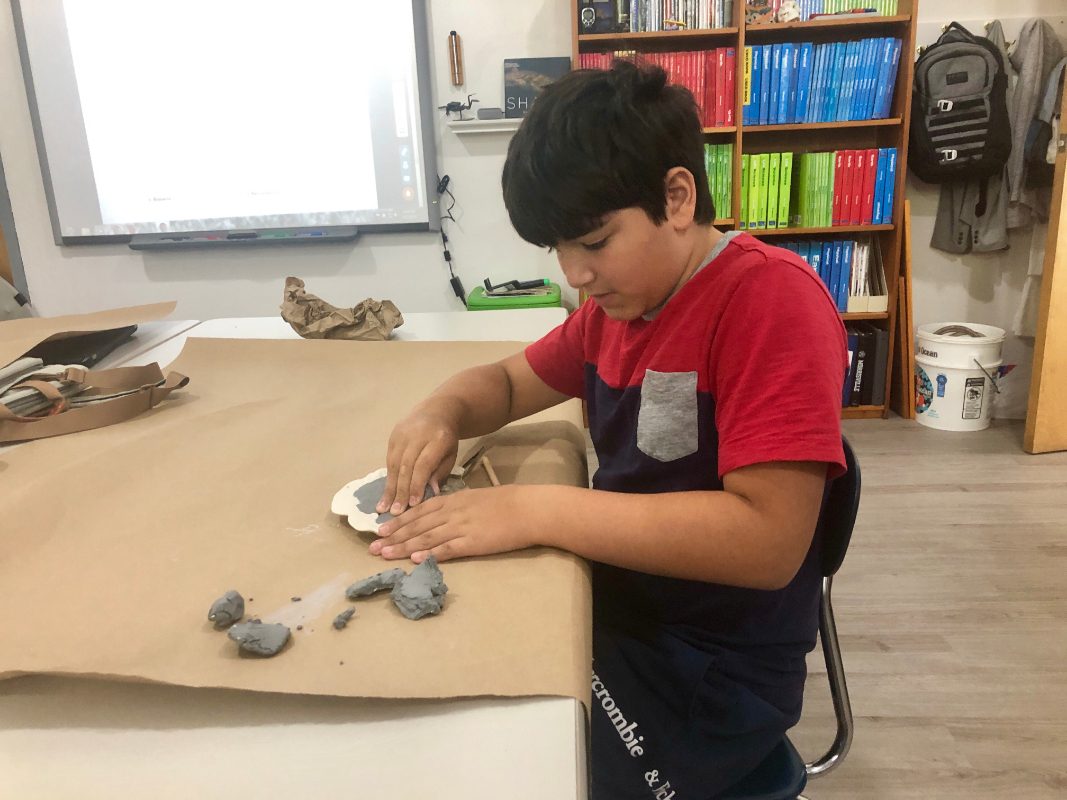
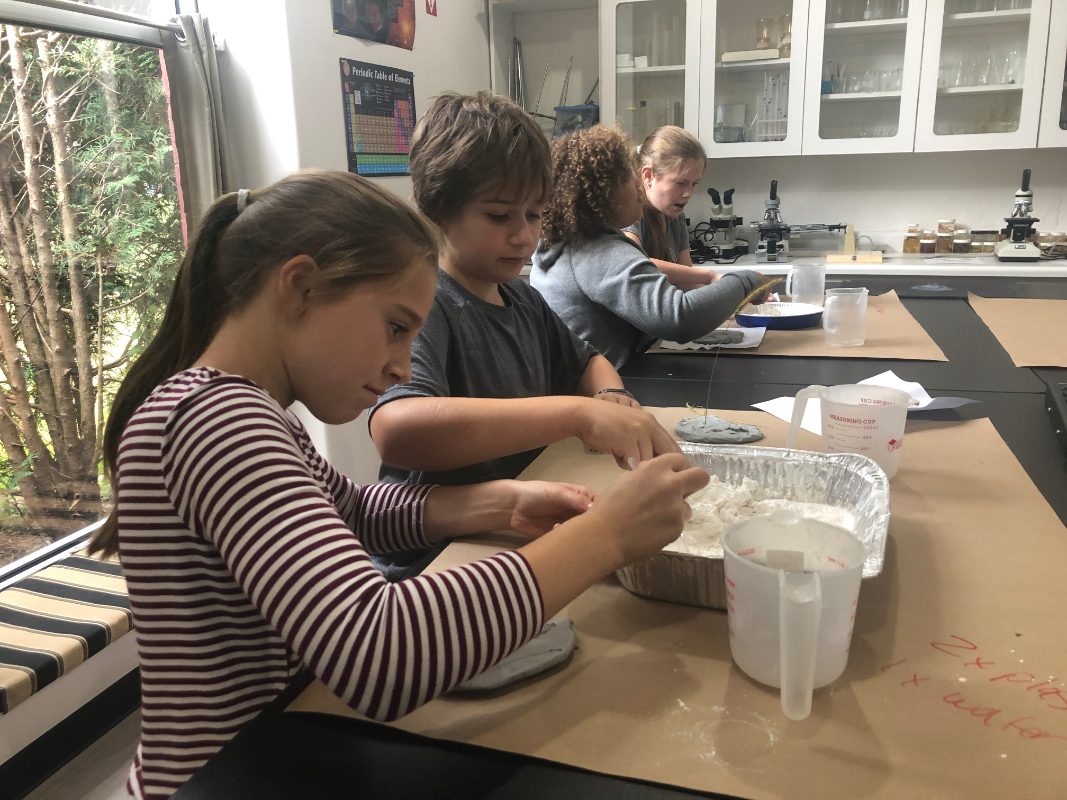
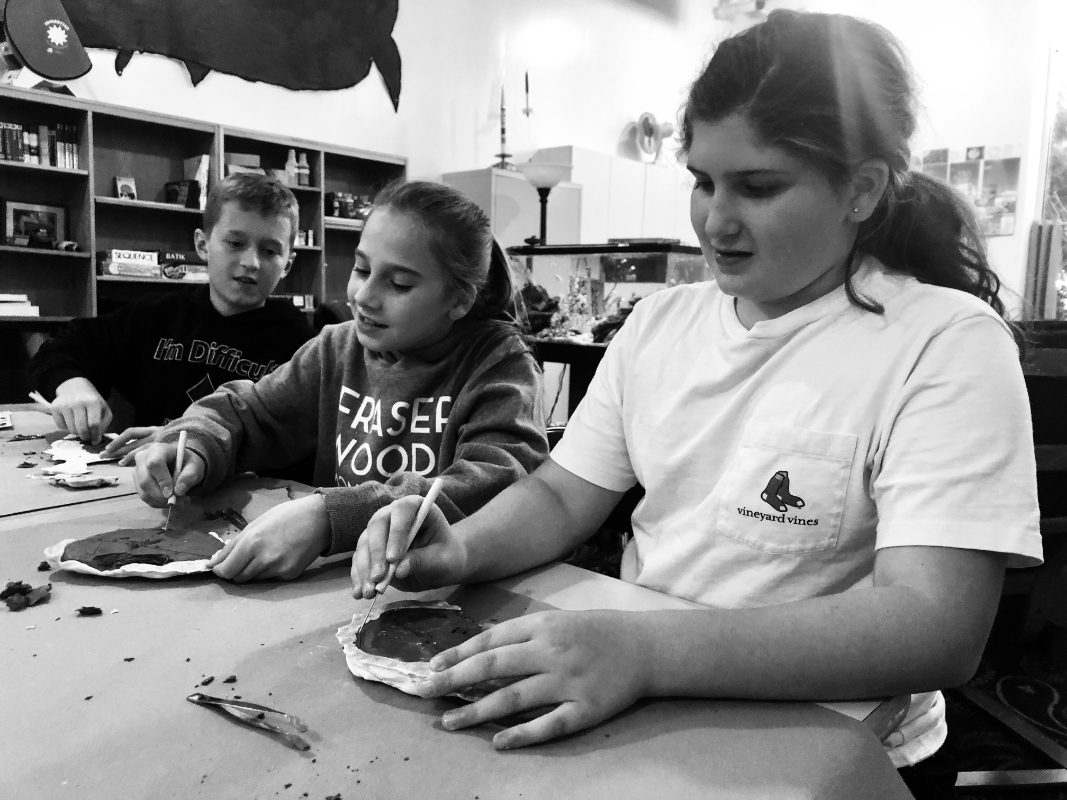
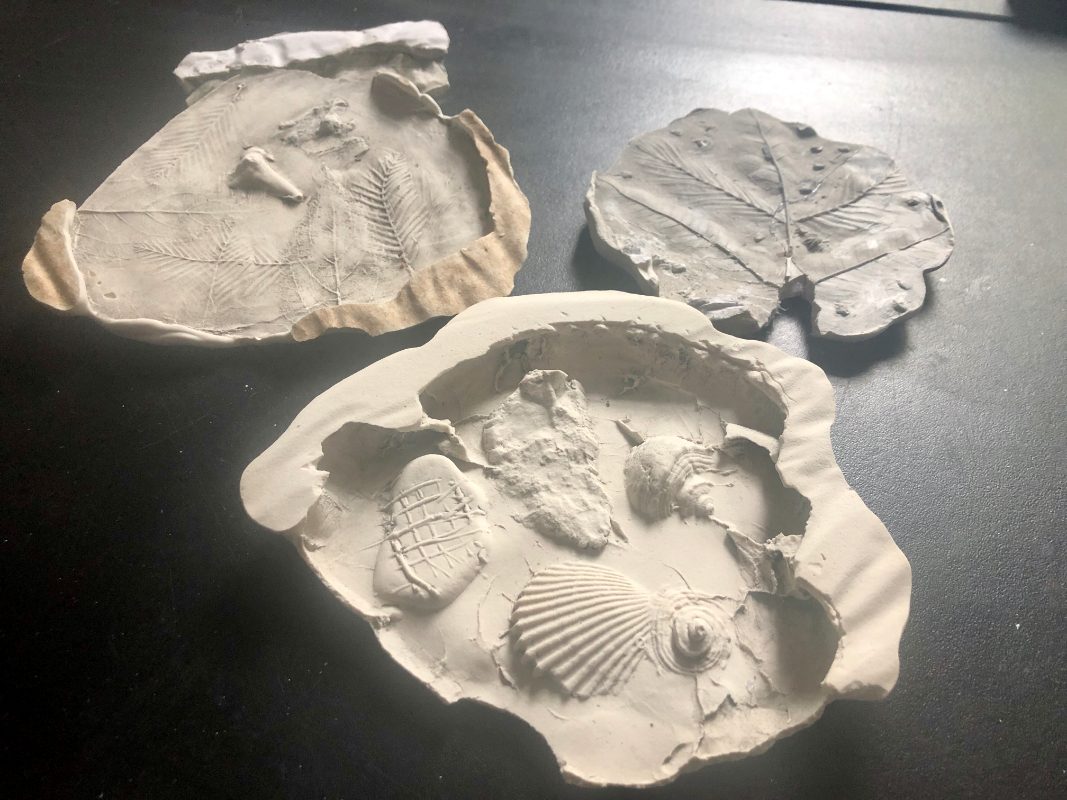
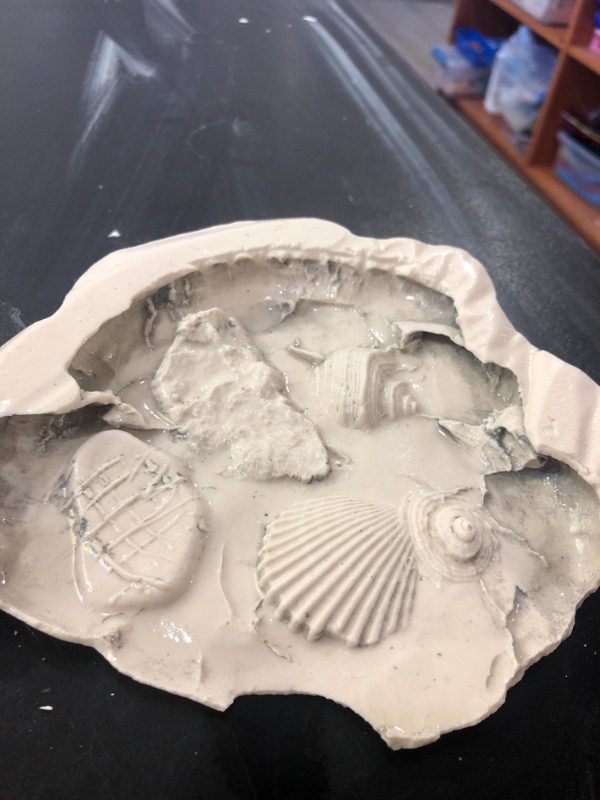
In Science, 6th year students continue working on factors that influence the preservation of a fossil. Students made molds in clay using objects found in nature, then poured plaster of paris into the impression. The result is known as a cast, which represents the initial impression left from the object used. 7th year students conducted their own trials on different types of mixtures. Students were asked to create a solution, suspension, and colloid. Afterwards, each student was to record what methods were implemented in order to bring each mixture back to a pure substance. Finally, 8th year students are busy working on gathering information for their debate on stem cells. This debate correlates to their past unit on the Cell Theory.
Mrs. Carroll’s Class: Across the Planet
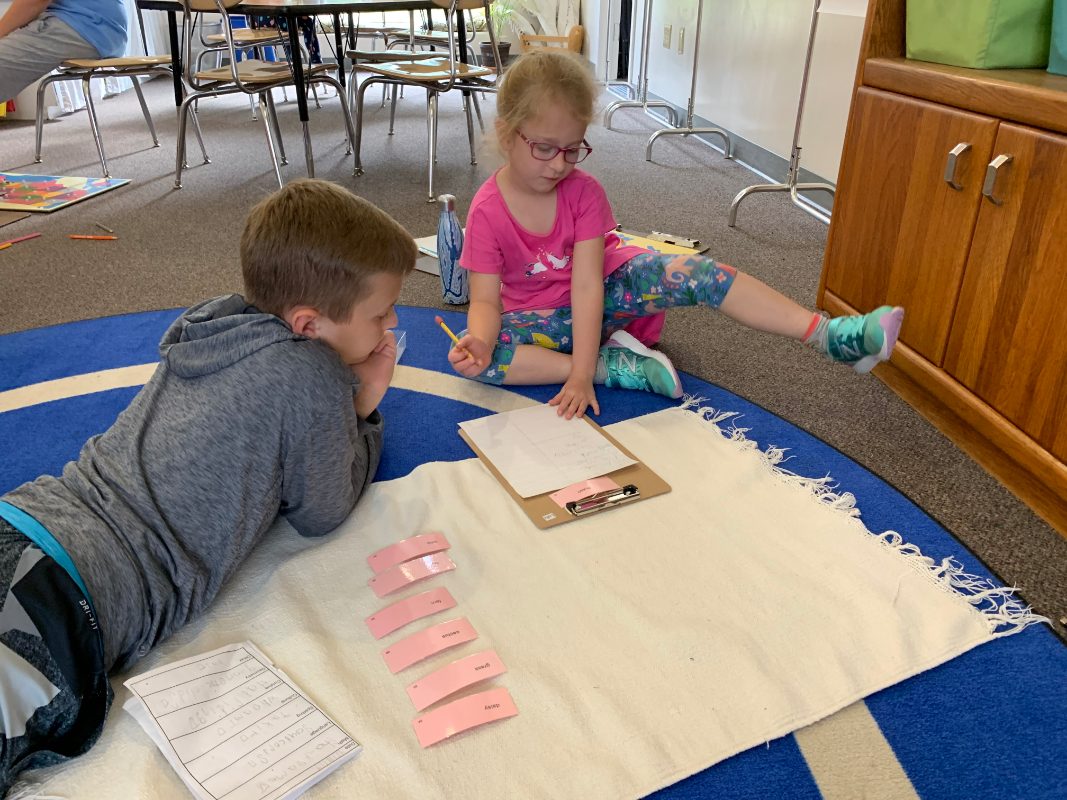
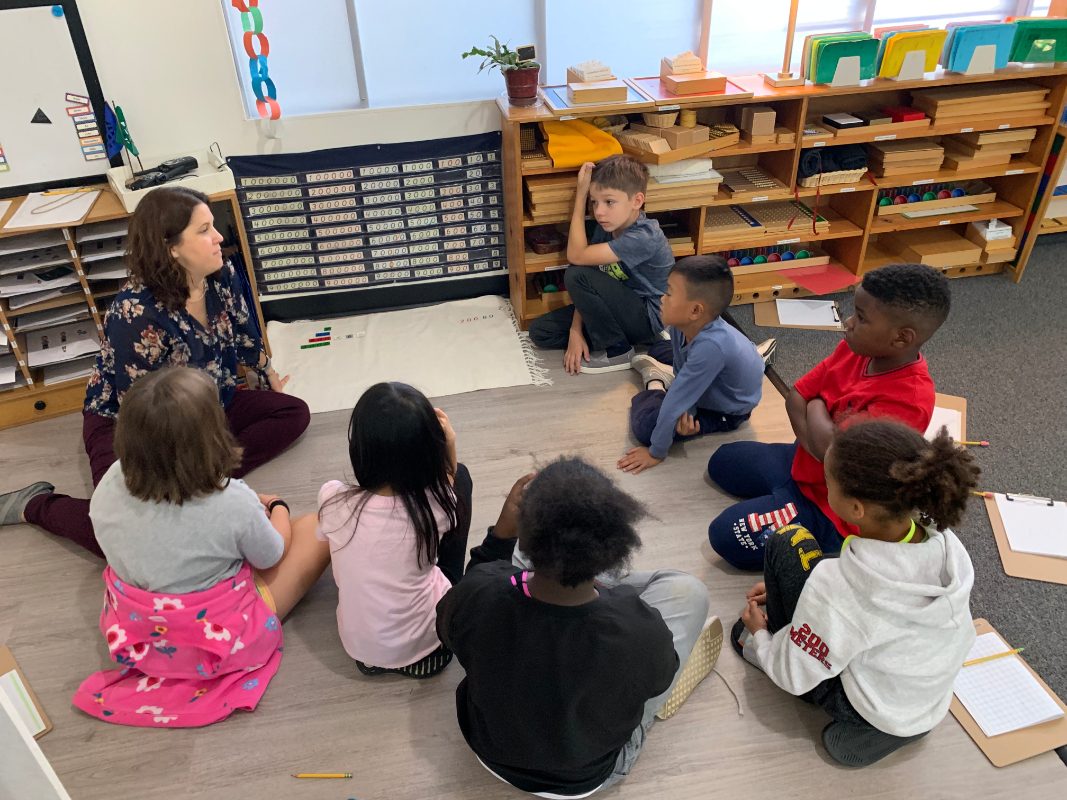
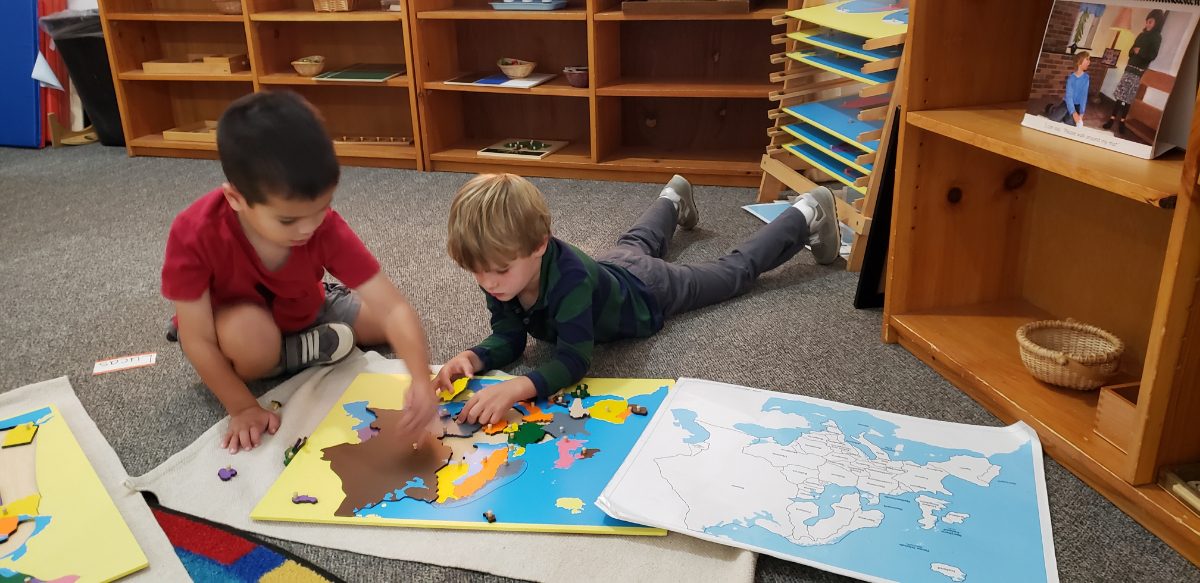
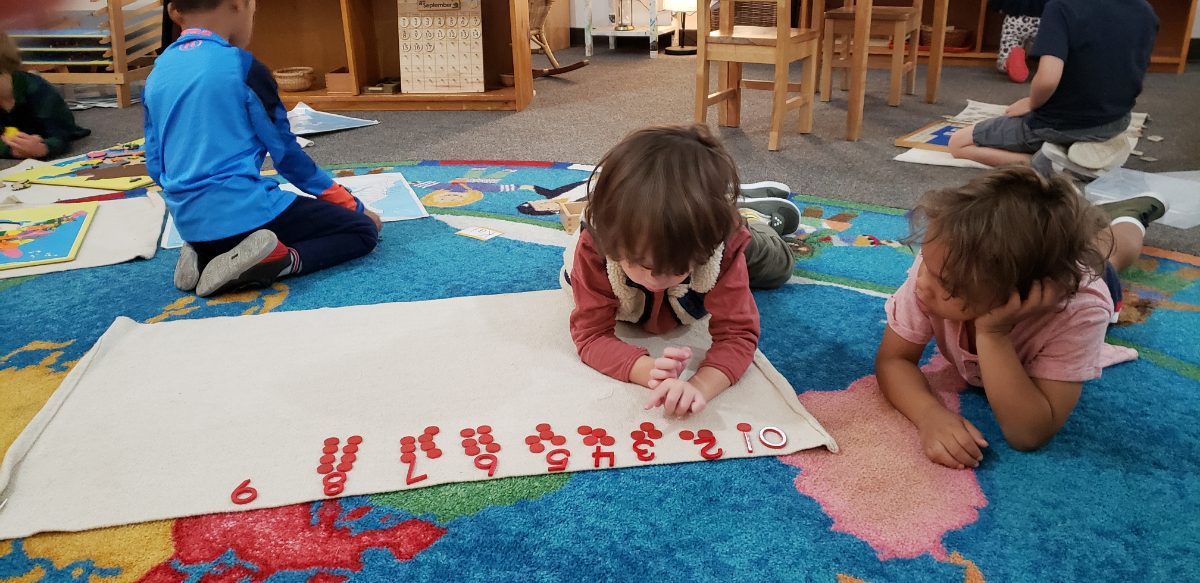
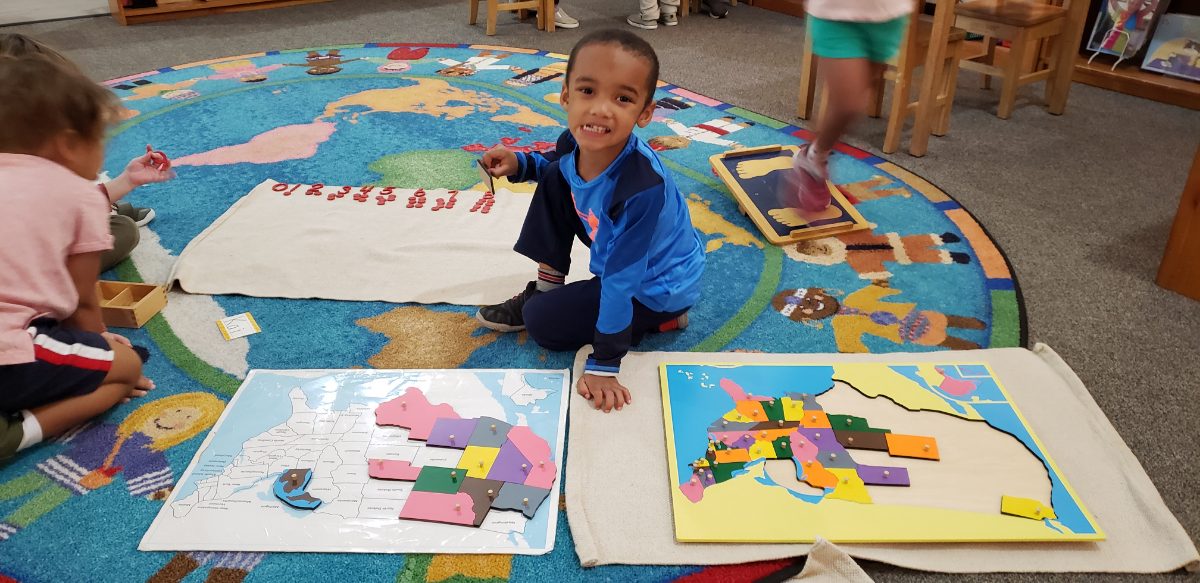
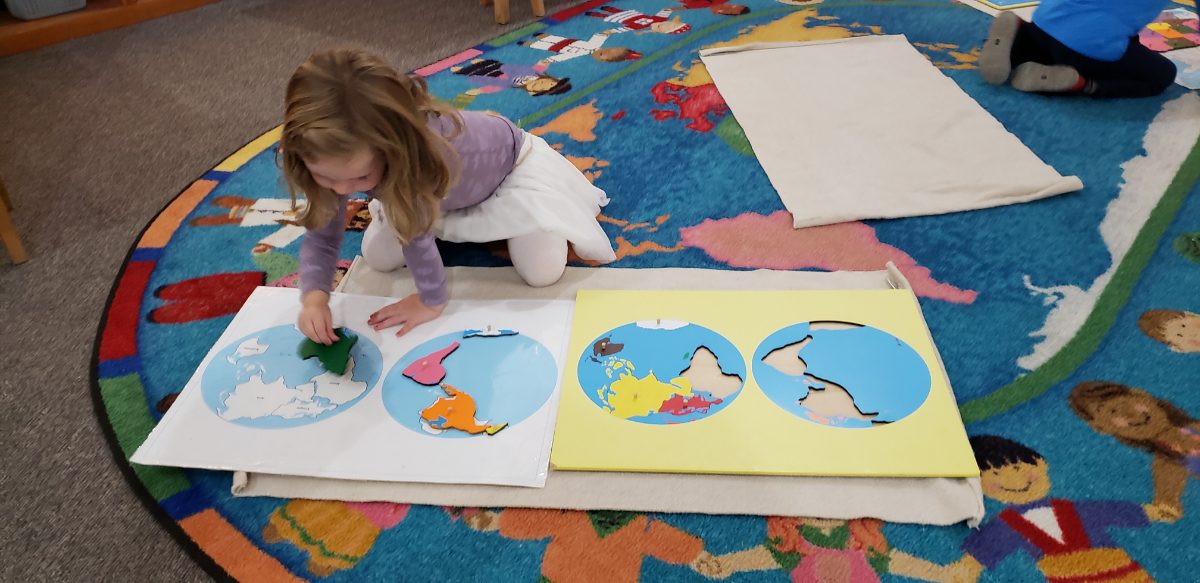
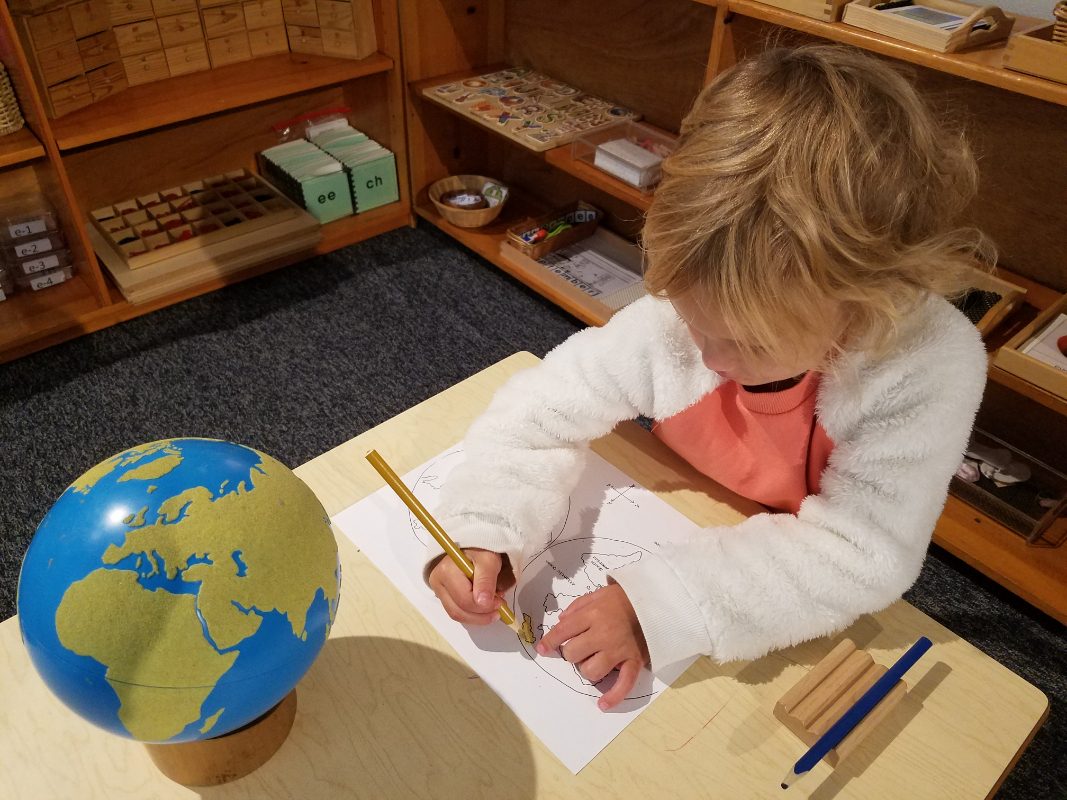
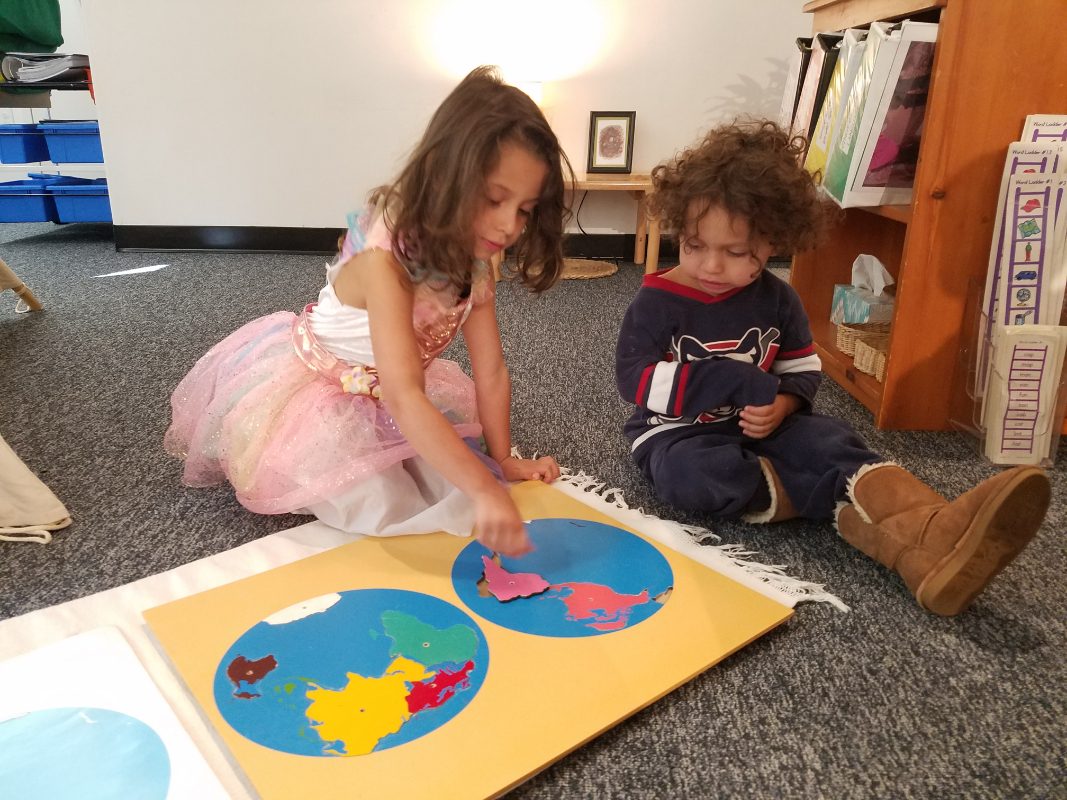
We have spent the first few weeks of school exploring globes, their smooth blue areas called water/oceans, and the rough areas, land/continents. The Cultural materials make the relationships of all the parts of the Earth concrete, starting with simple globes the child can explore. The first globe, the Sandpaper Globe represents land on the Earth with rough surfaces and water on the Earth with smooth surfaces, so the child can feel the areas on the face of the Earth which are both land and water. The second, the Colored Globe presents the land in its continental divisions, introducing the child to the distinctions between continents and beginning to identify these continents in particular colors. Your child can use this globe to learn the name of each continent. Eventually they will explore the large puzzle maps, which open the surfaces of the globe to lay flat and include puzzle pieces for each continent and our journey begins.
Cultural materials allow your child to satisfy their inherent curiosity about our planet and their place within in. By starting with simple comparisons, between land and water or between the different continents, the materials help the child to understand the geography of our planet. These same globes are later used to introduce the relationship of the Earth and the Moon, and most beautifully during our birthday celebrations, to illustrate the passage of time over the course of each year of the child’s life.
Geography is a wonderful way of sparking a child’s imagination. Beginning with the Sandpaper and Colored Globes, the Cultural materials respond to a child’s desire to learn about the world and inspire them to learn more about our differences and commonalities across the planet.

Until next week…

Ms. Sharlene & Mrs. Carroll


Mrs. Doyle’s Class: Friday Folder Facts


“We have to remember as adults, that we want things done, and as quickly as possible, so that they are finished and out of the way; whereas the child is interested and content in the doing, not the done.” –Margaret Stephenson The Art of Montessori in the Home

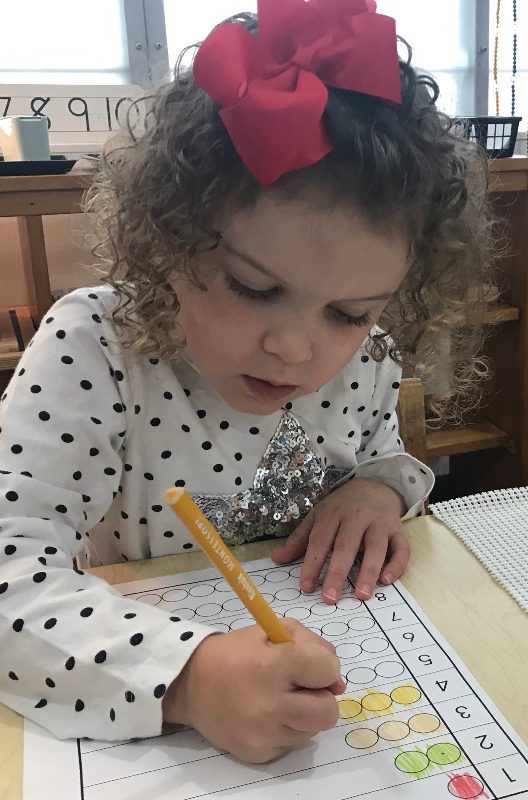
Each Friday we send home the blue Friday Folders with the work the children have completed over the course of the past week. It is not uncommon for us to receive emails asking why there was so little work inside and what exactly are the children doing?

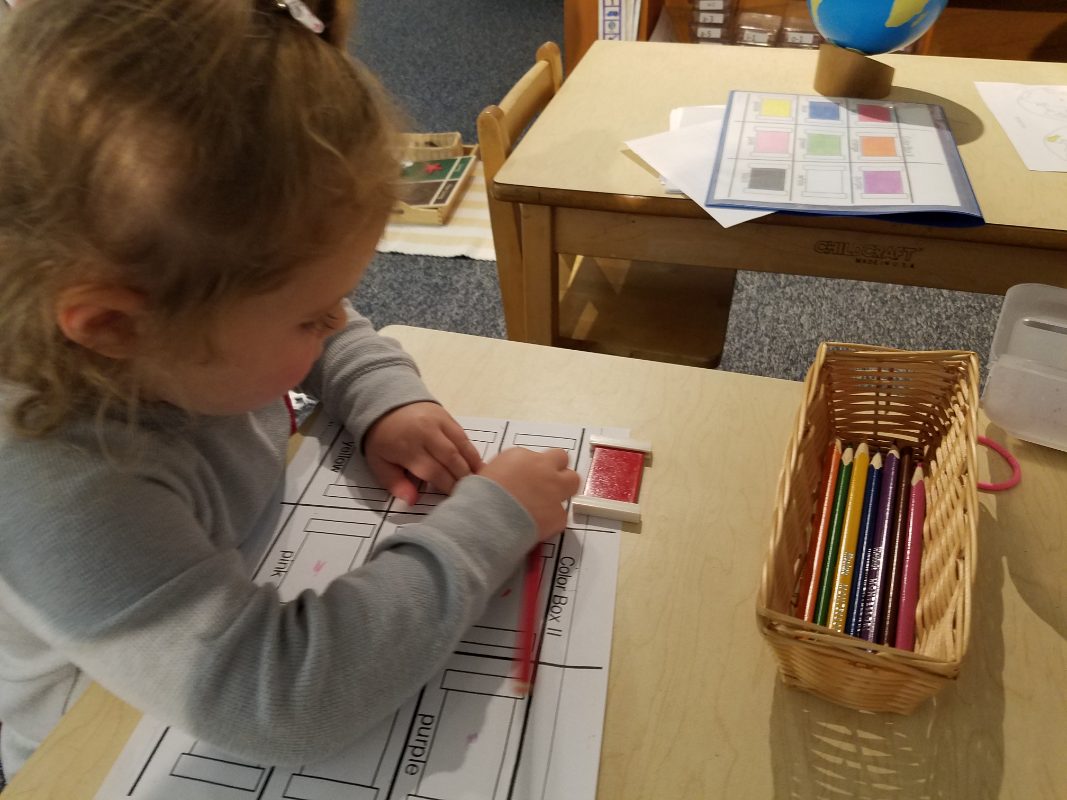
Sometimes it can be difficult to accept the idea of focusing on the process, not the product. What exactly does that mean? Many of the works in the Montessori classroom do not end with a physical product the children will bring home to share with everyone. There is often no way to visually assess what a child is learning. Overall, as a society, we are product driven and often times base our success on this factor. The experience a child has when working with the materials is truly what is most important. However, when you hear they did “nothing” day after day, it can often be unsettling.

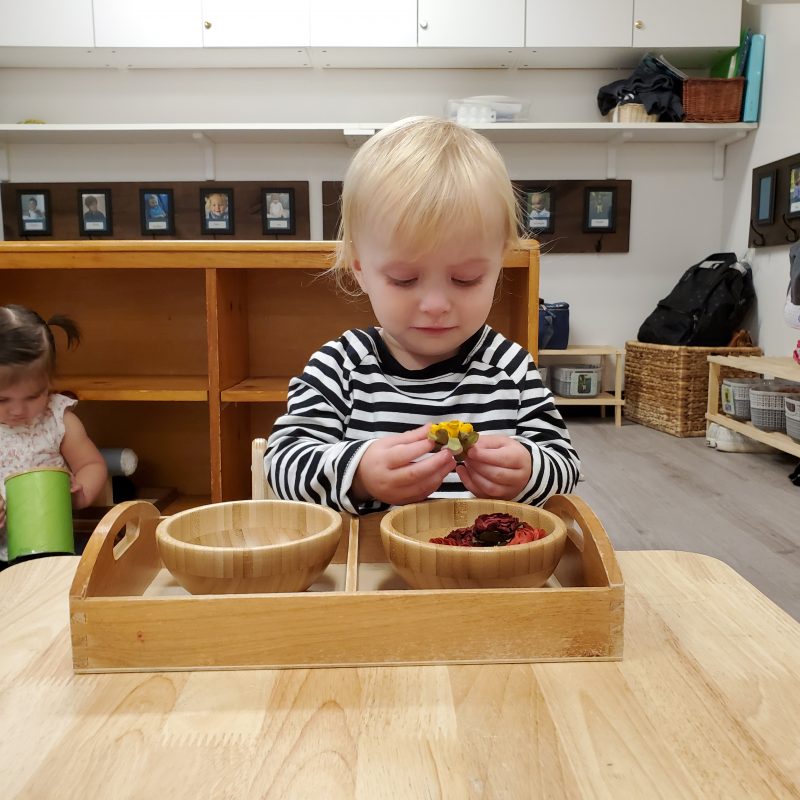
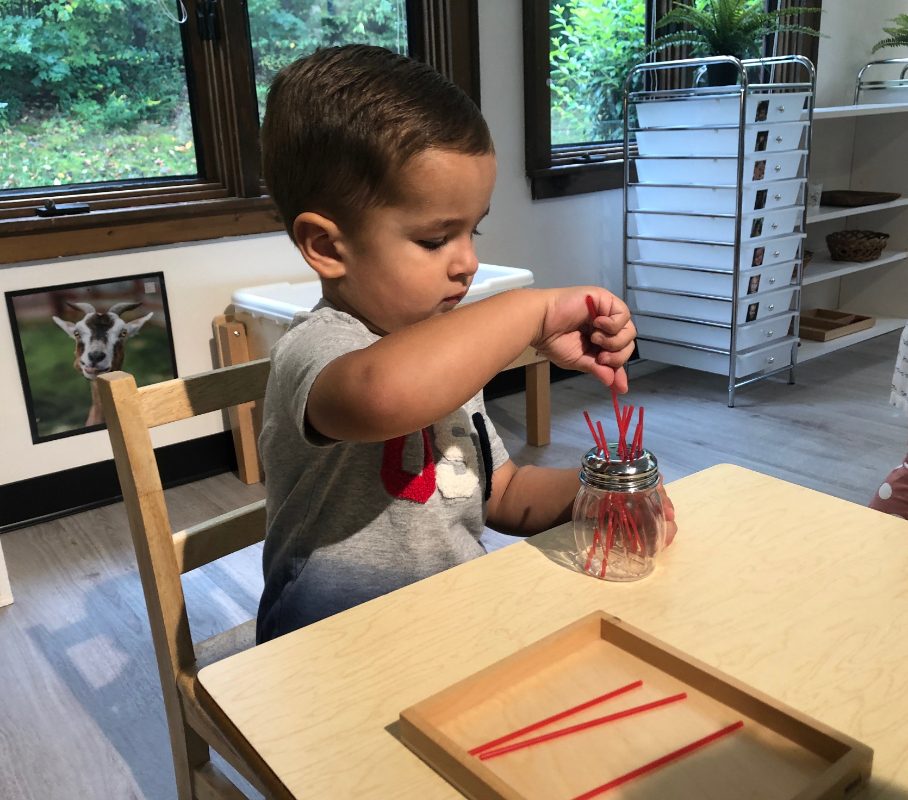
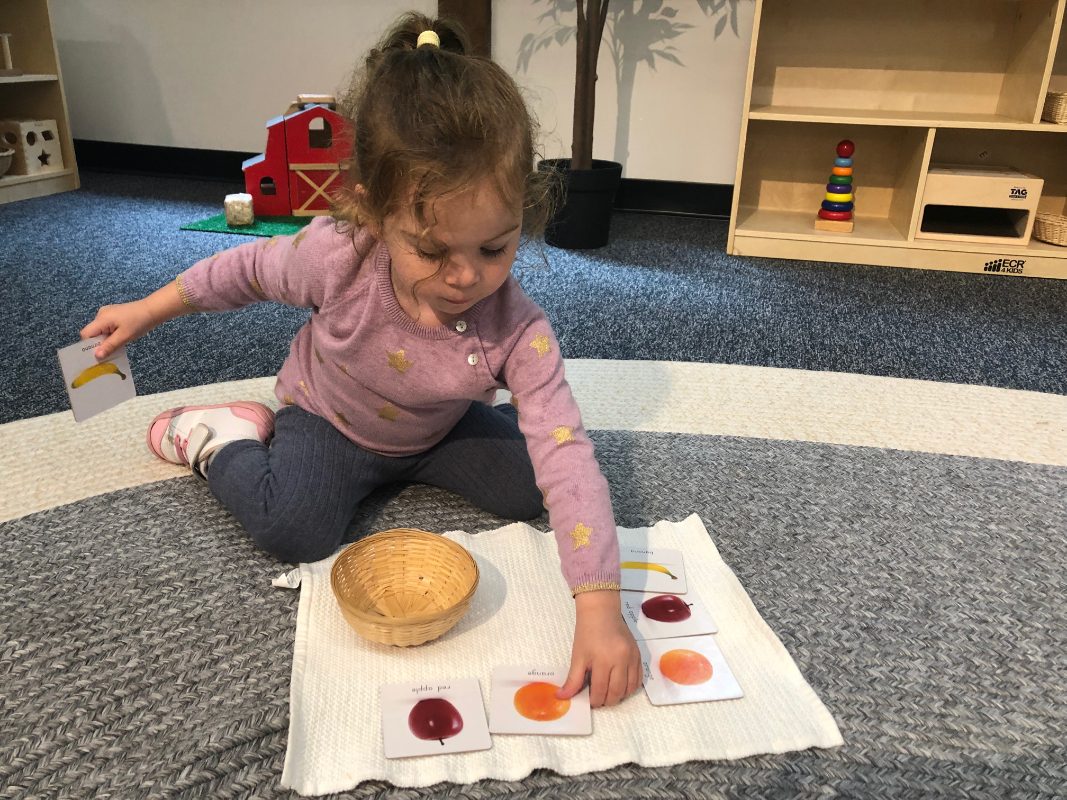
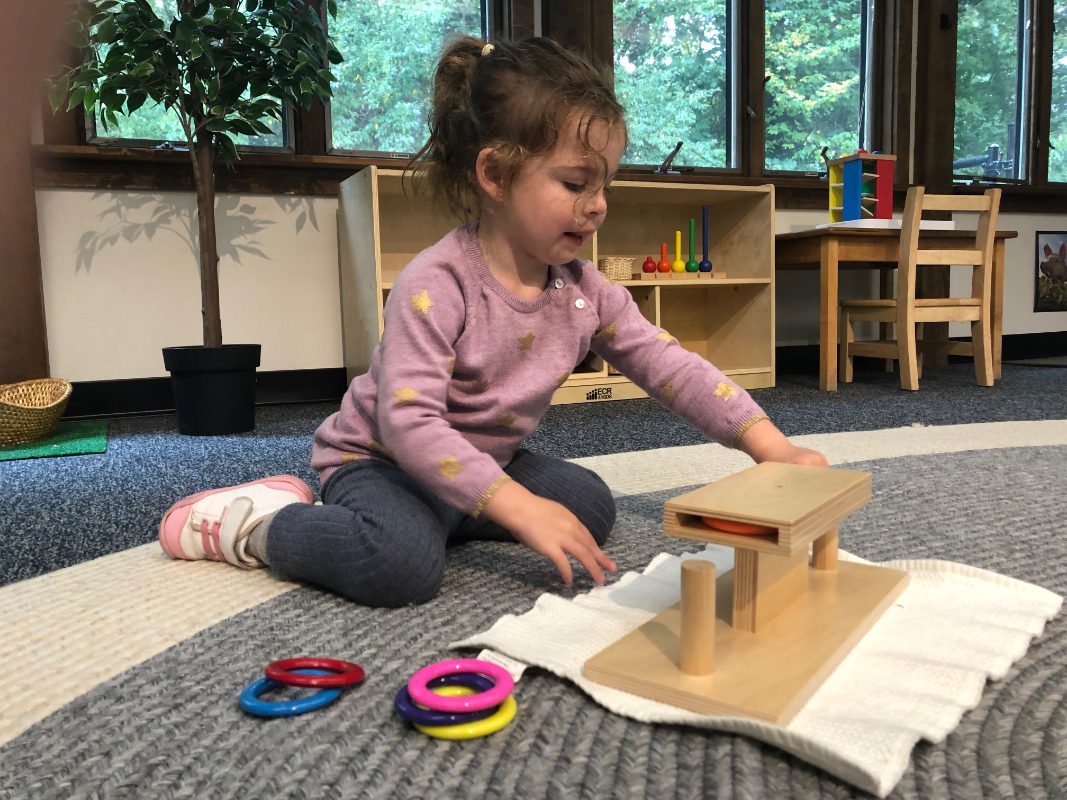
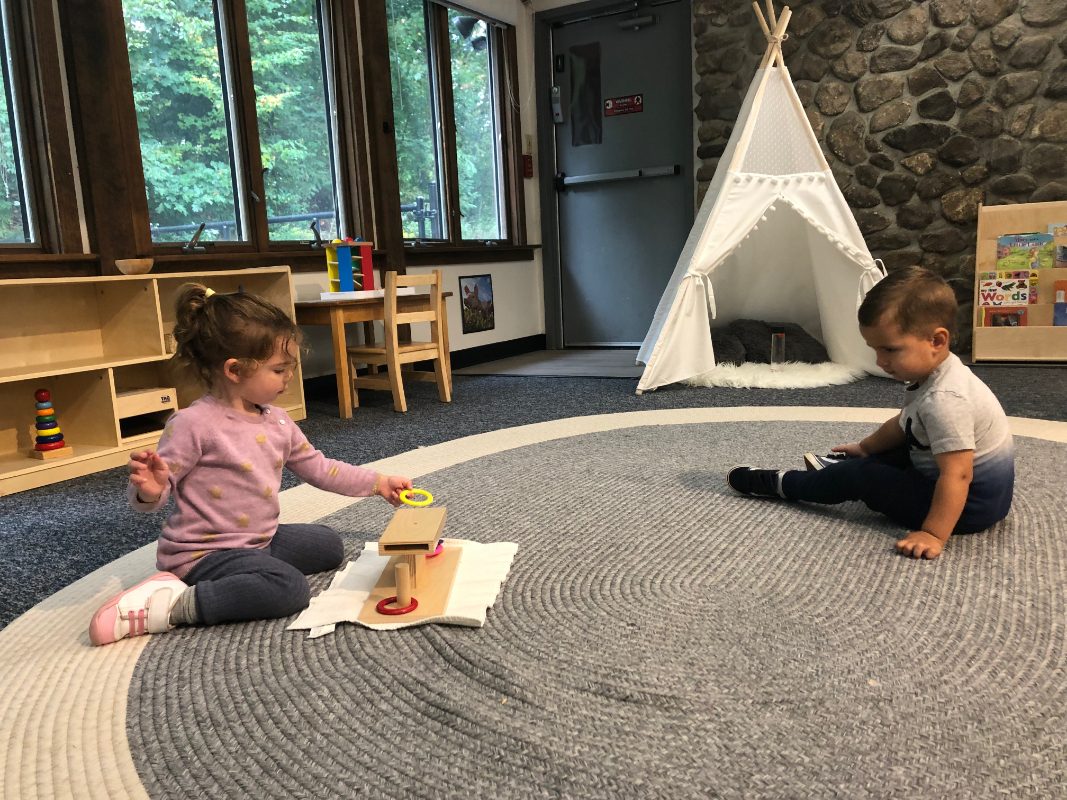
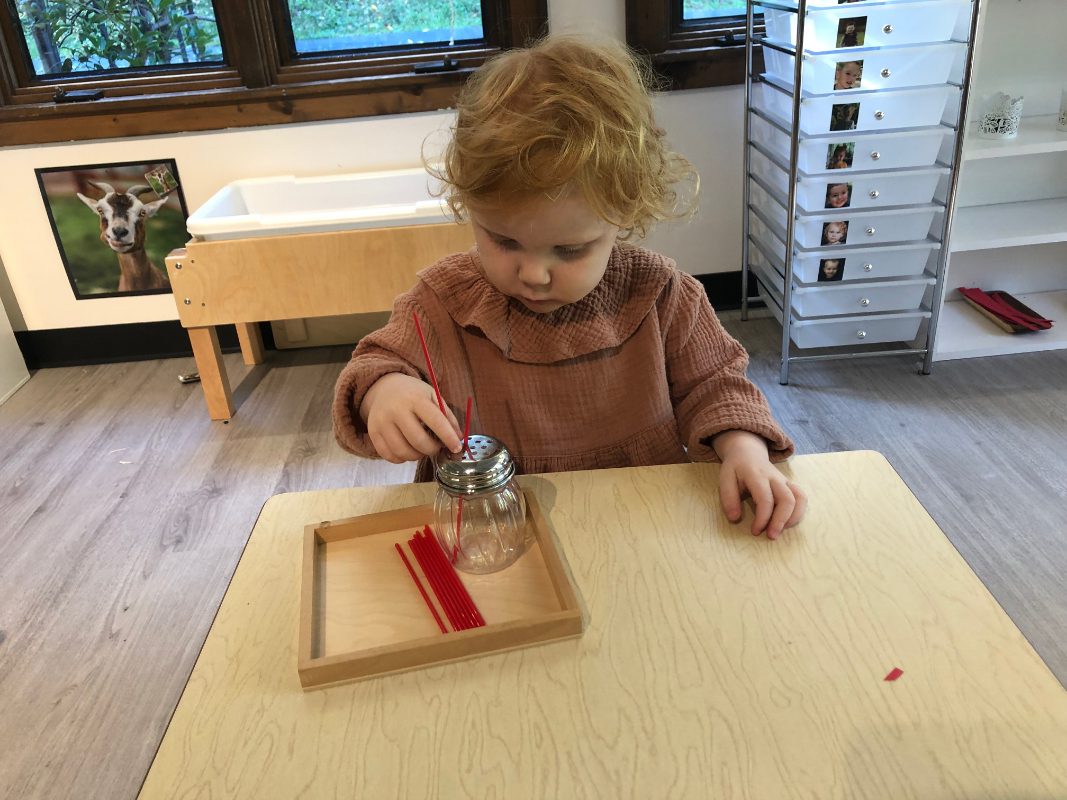
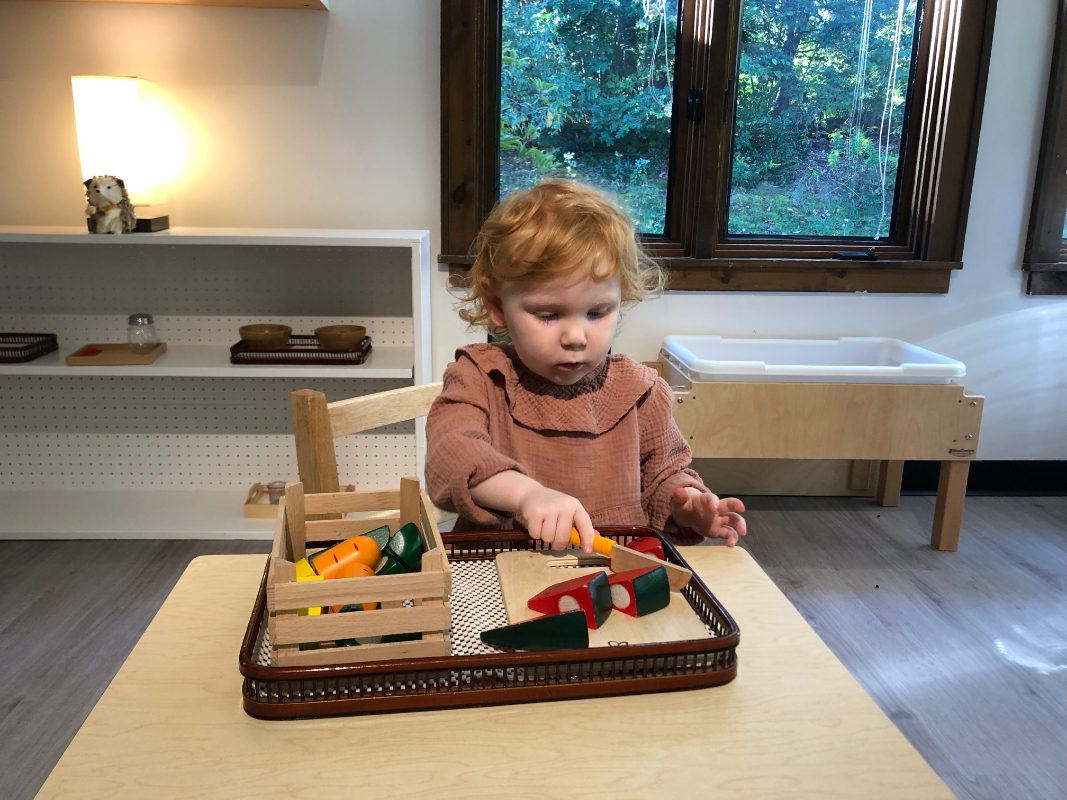
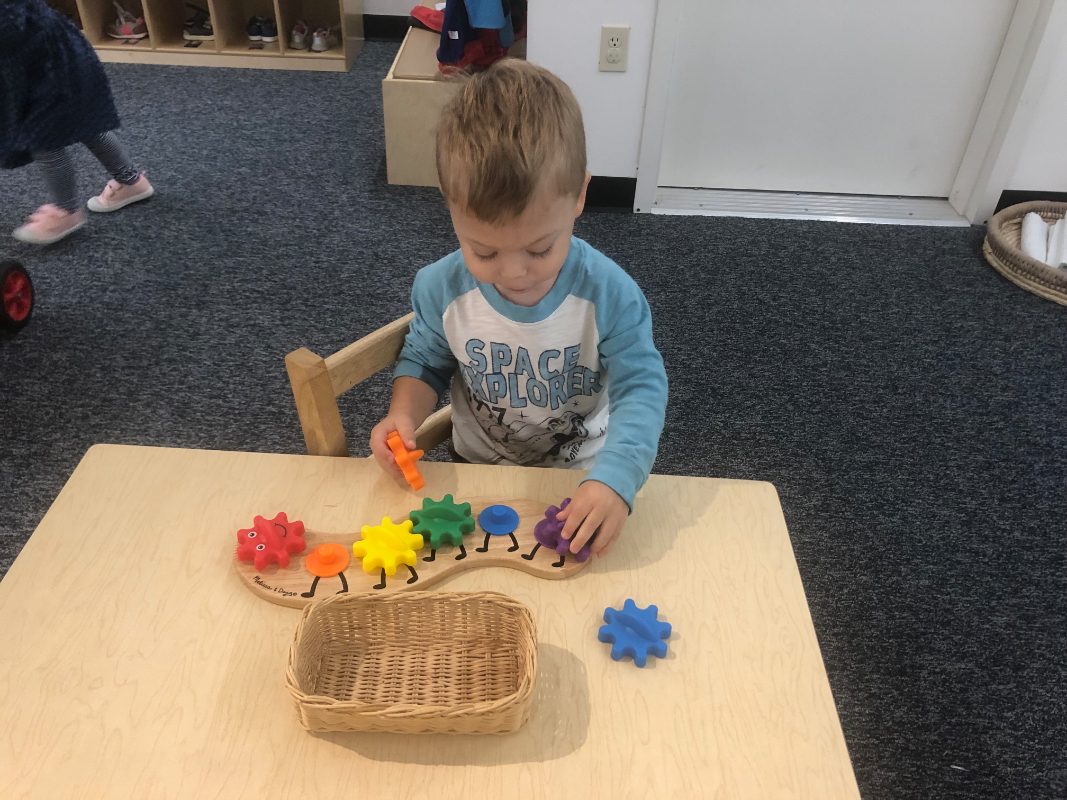
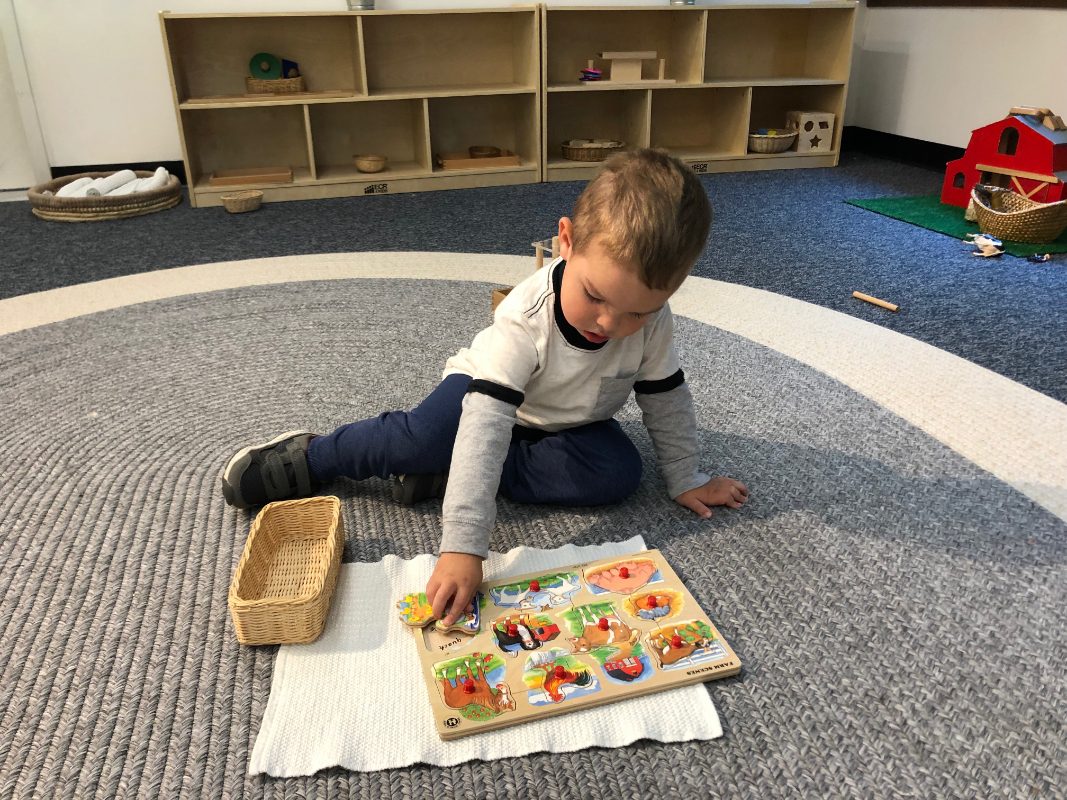
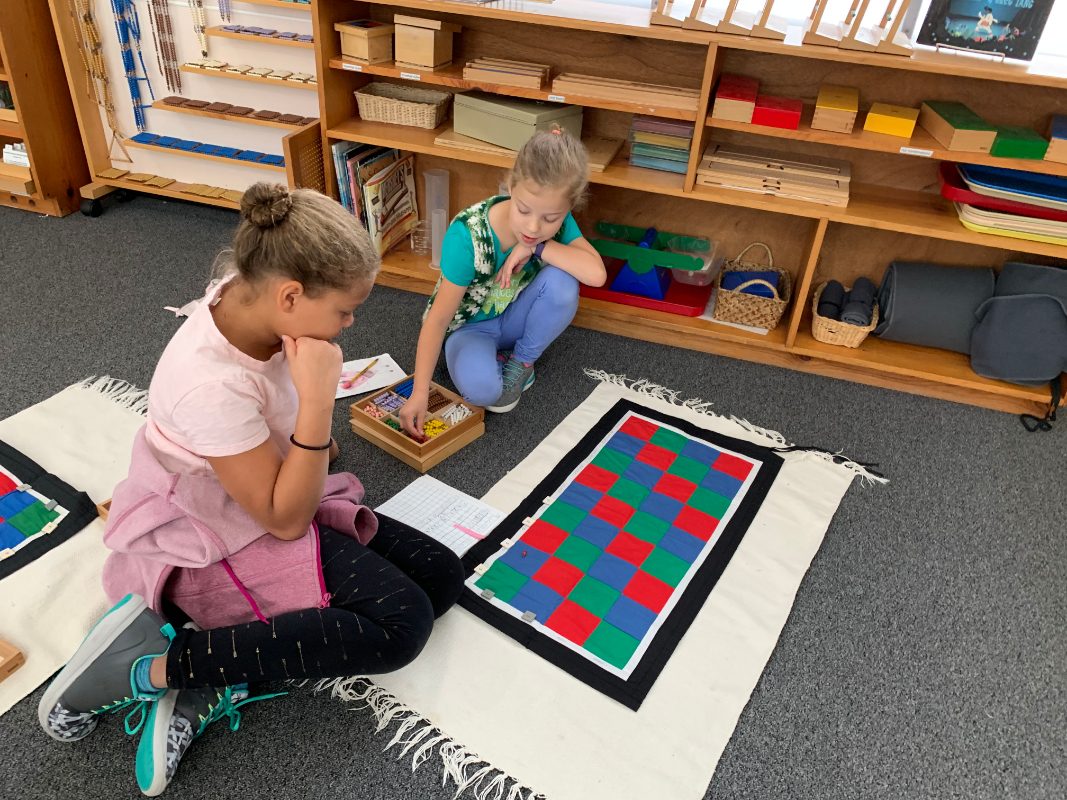
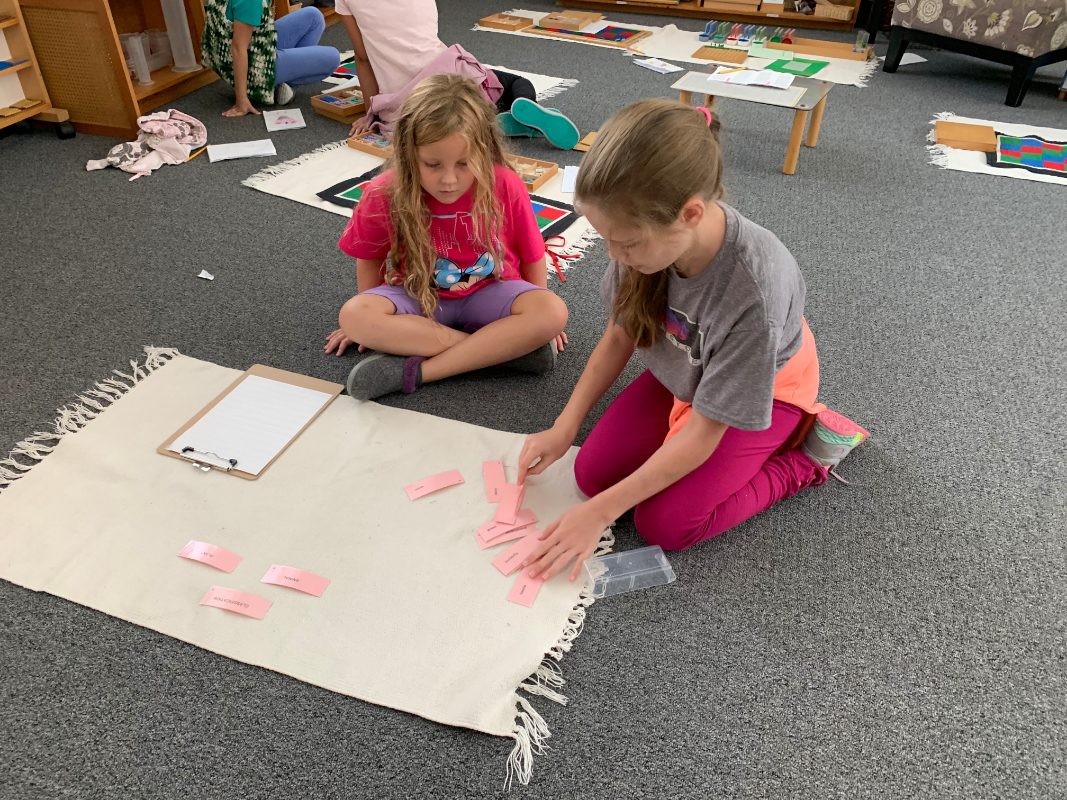
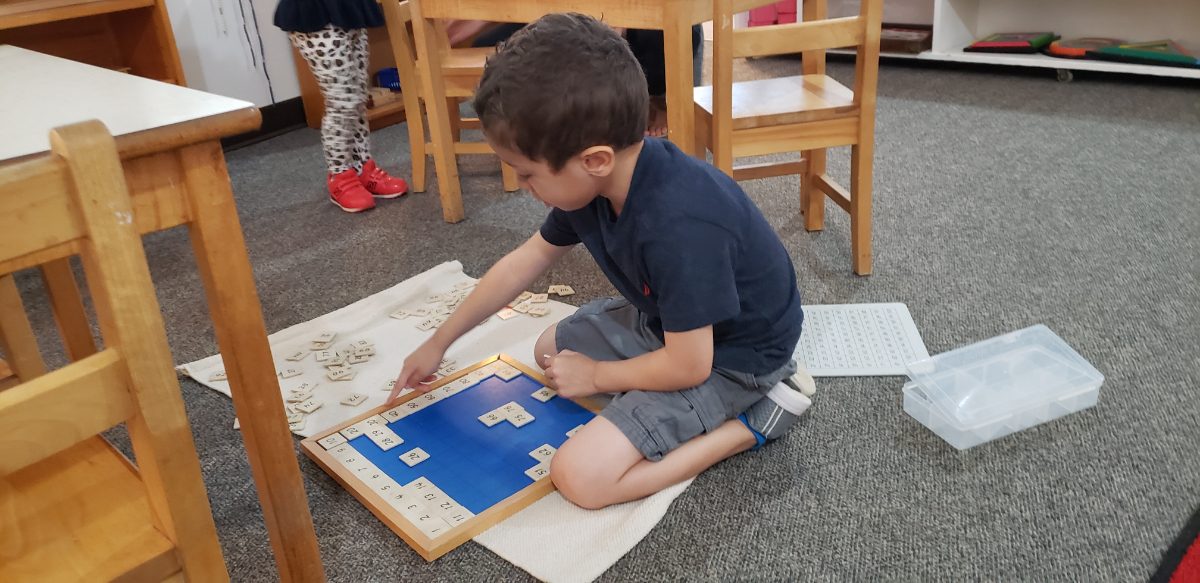
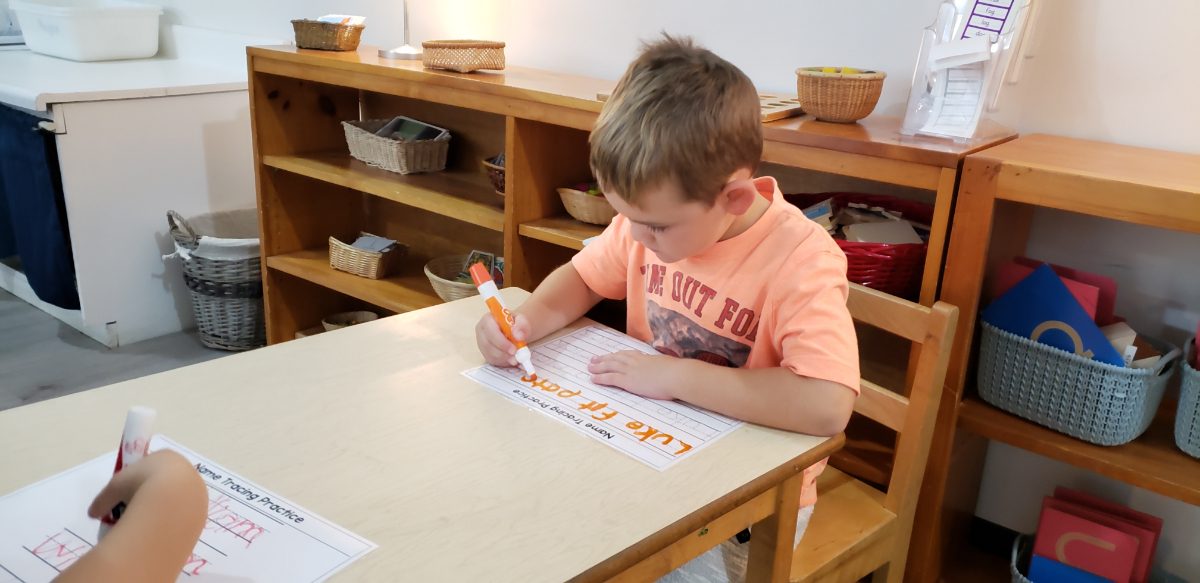
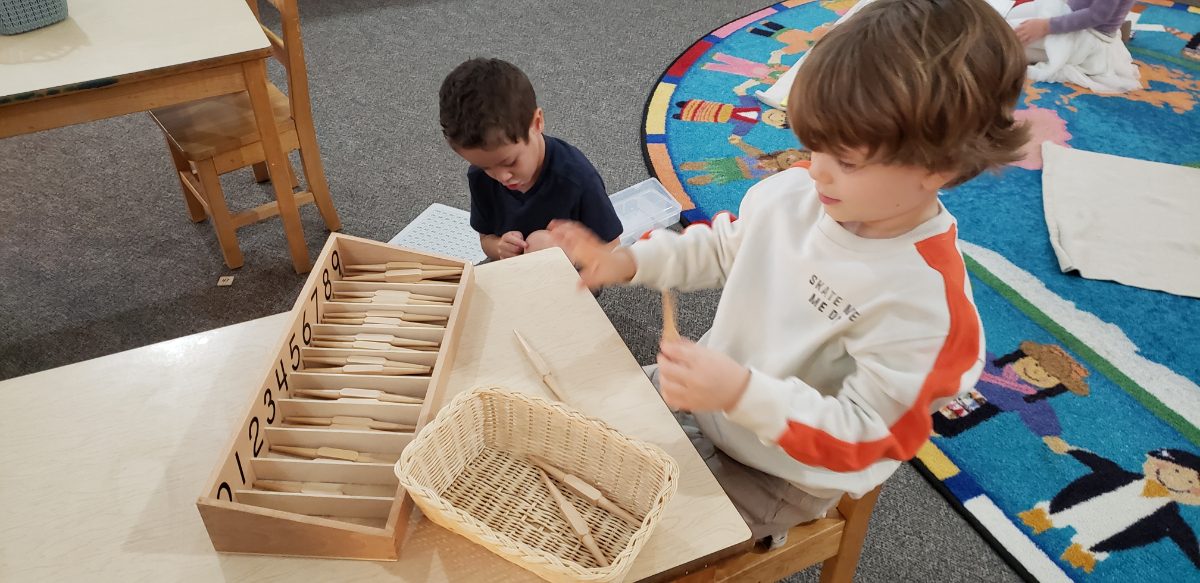
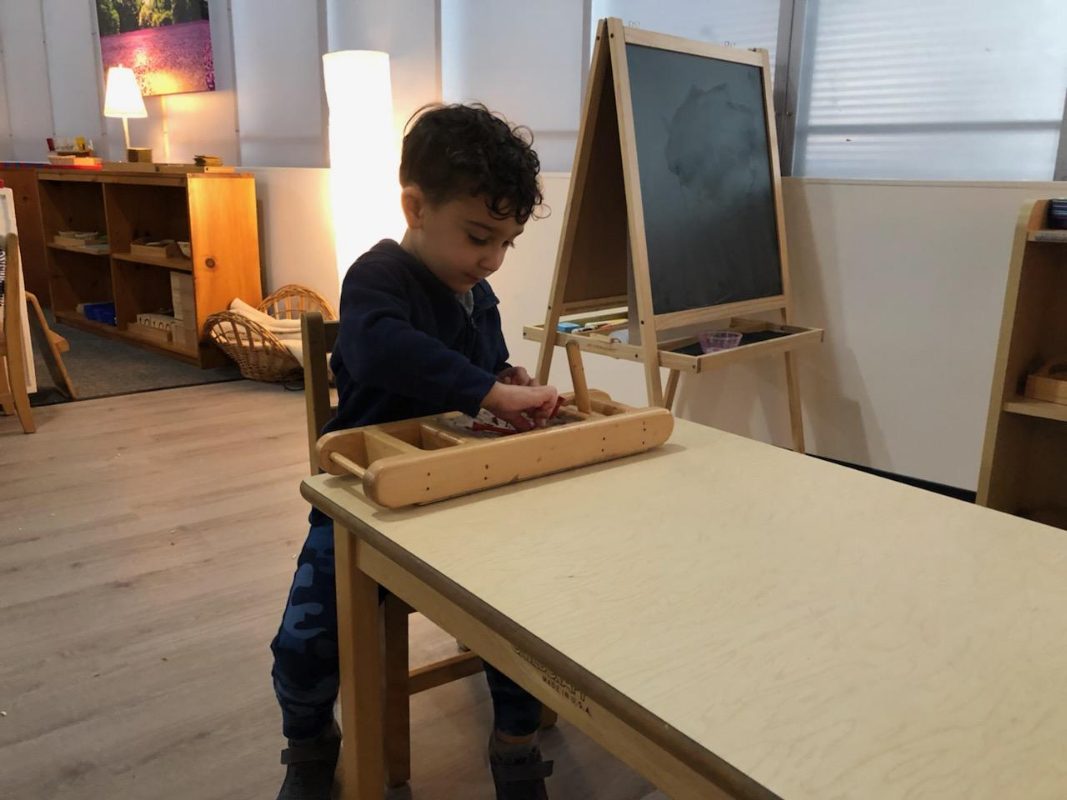
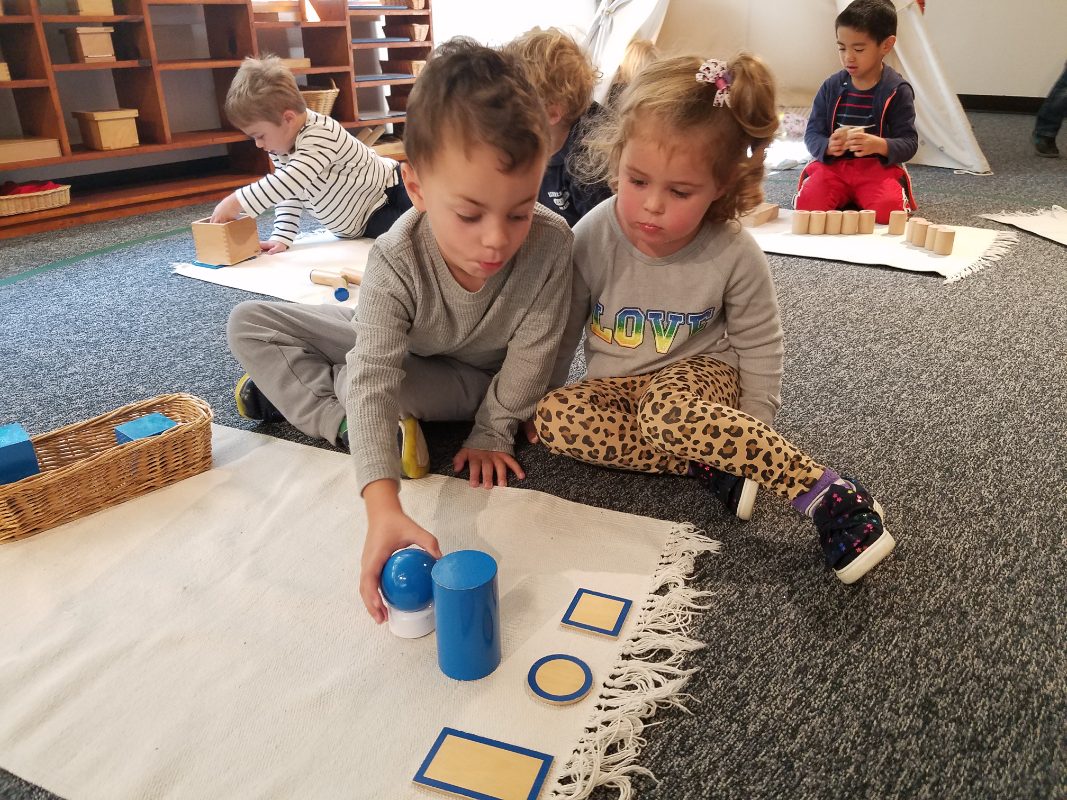
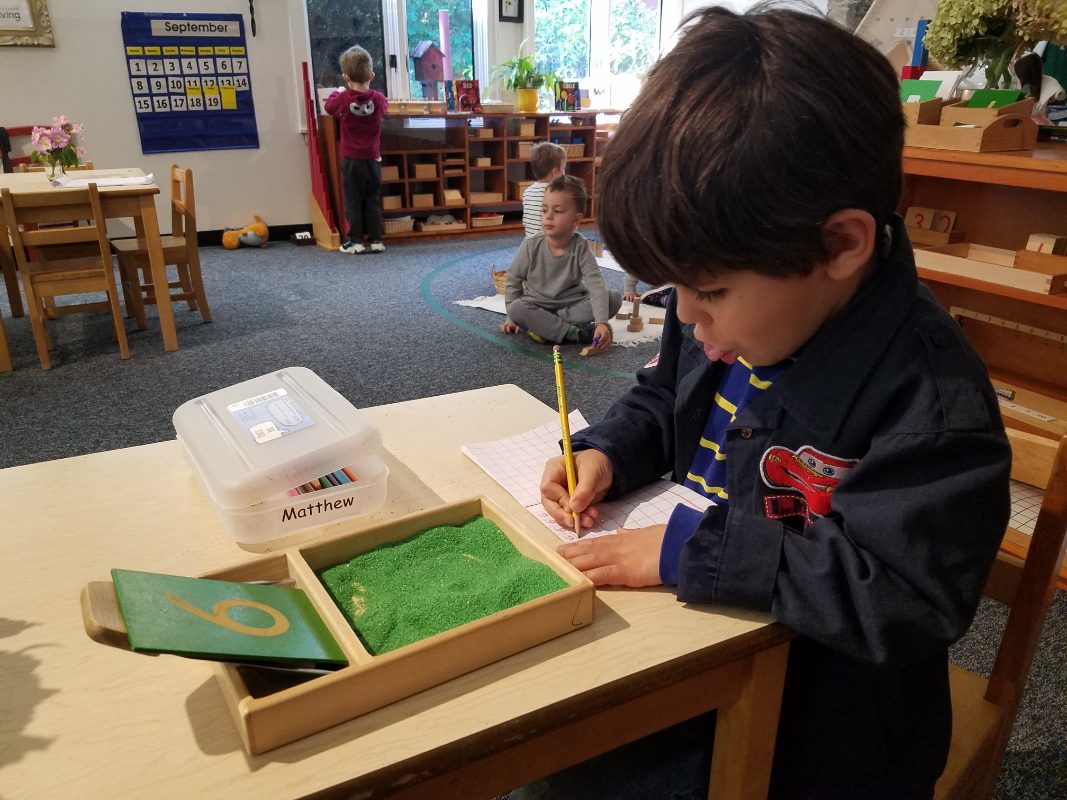
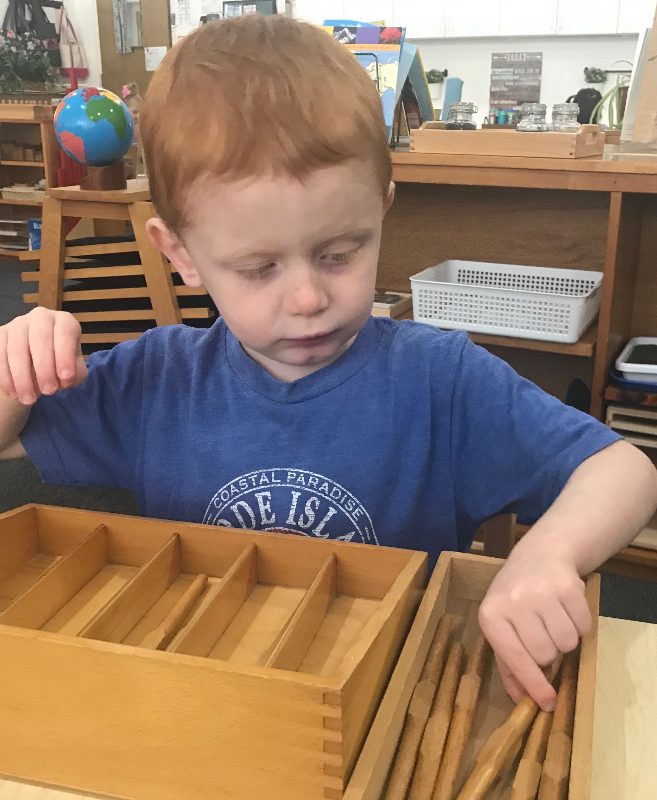
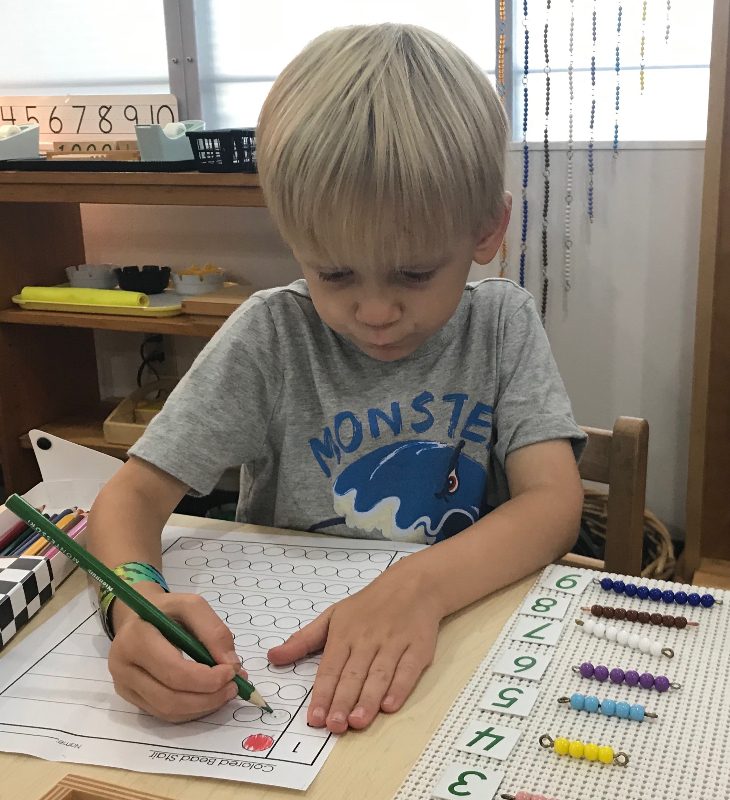
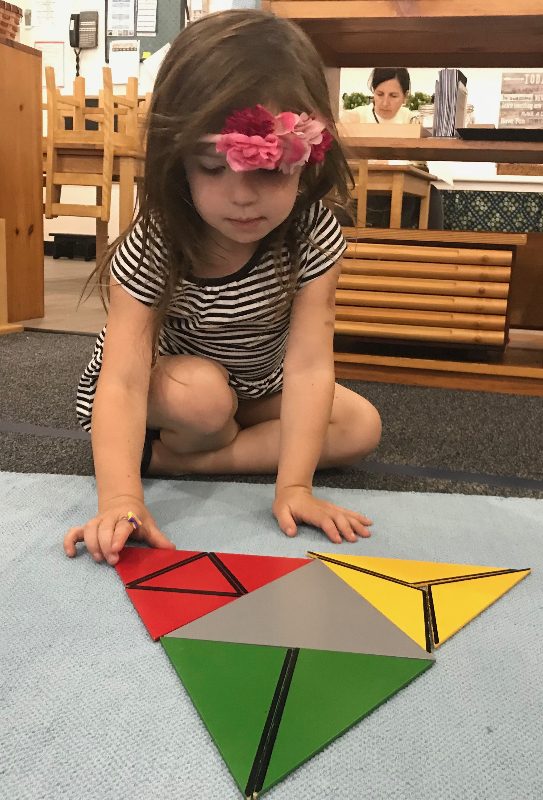
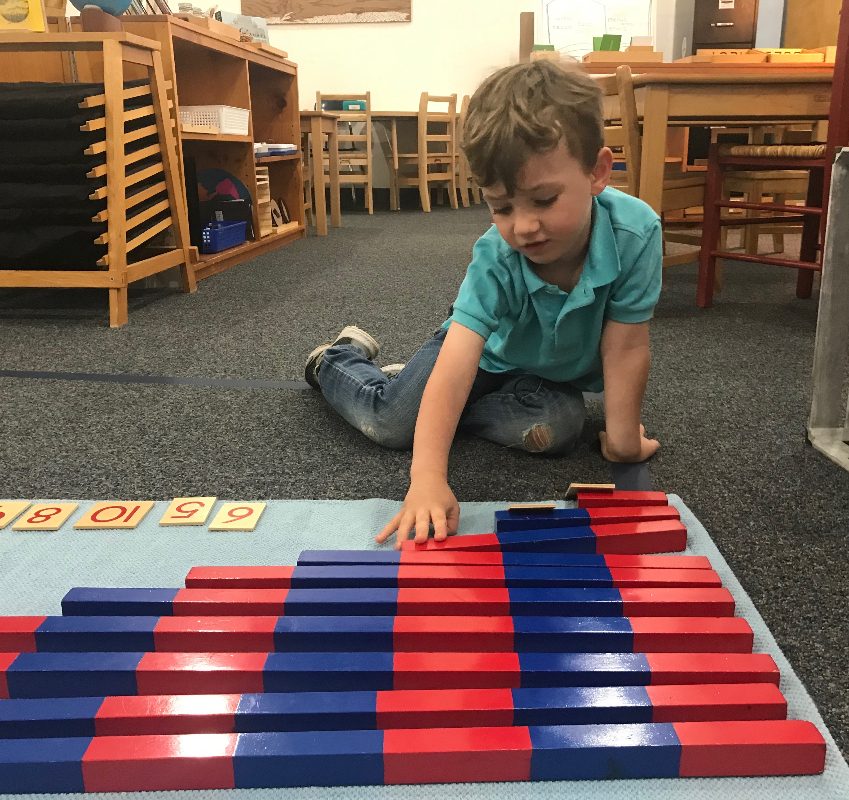
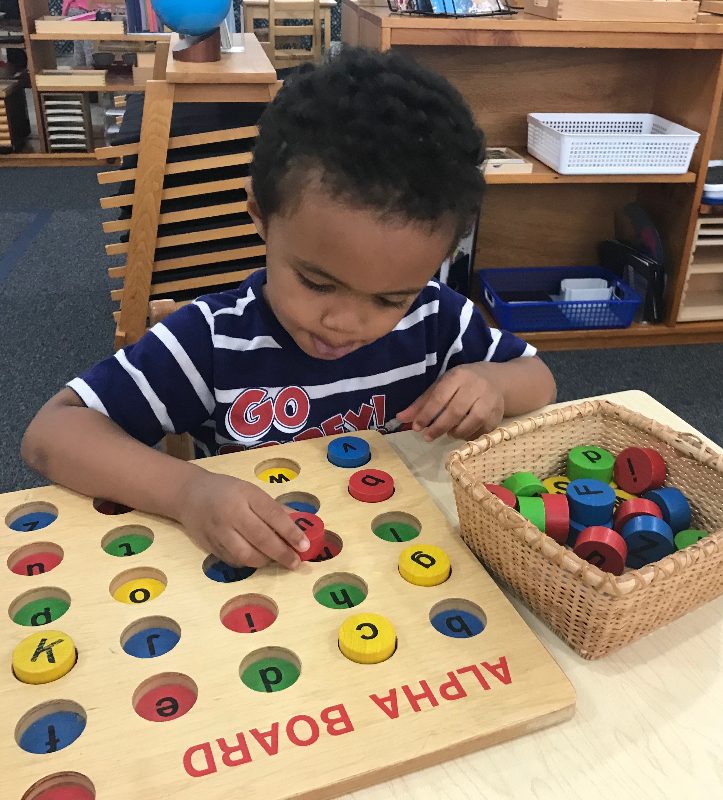
Research shows that children from ages 3-6 learn best through their hands. In order to truly understand a concept they need to explore it through touch. This is why so many of the lessons found in the Montessori environment are not based on memorization alone. Most concepts we are teaching involve tracing, manipulating, and exploring with their hands.

Perhaps most importantly, focusing on the process protects the child’s intrinsic motivation to learn and understand. It is not influenced by external factors such as recognition, praise, or reward. The time and experience with the materials is what we truly value and encourage.

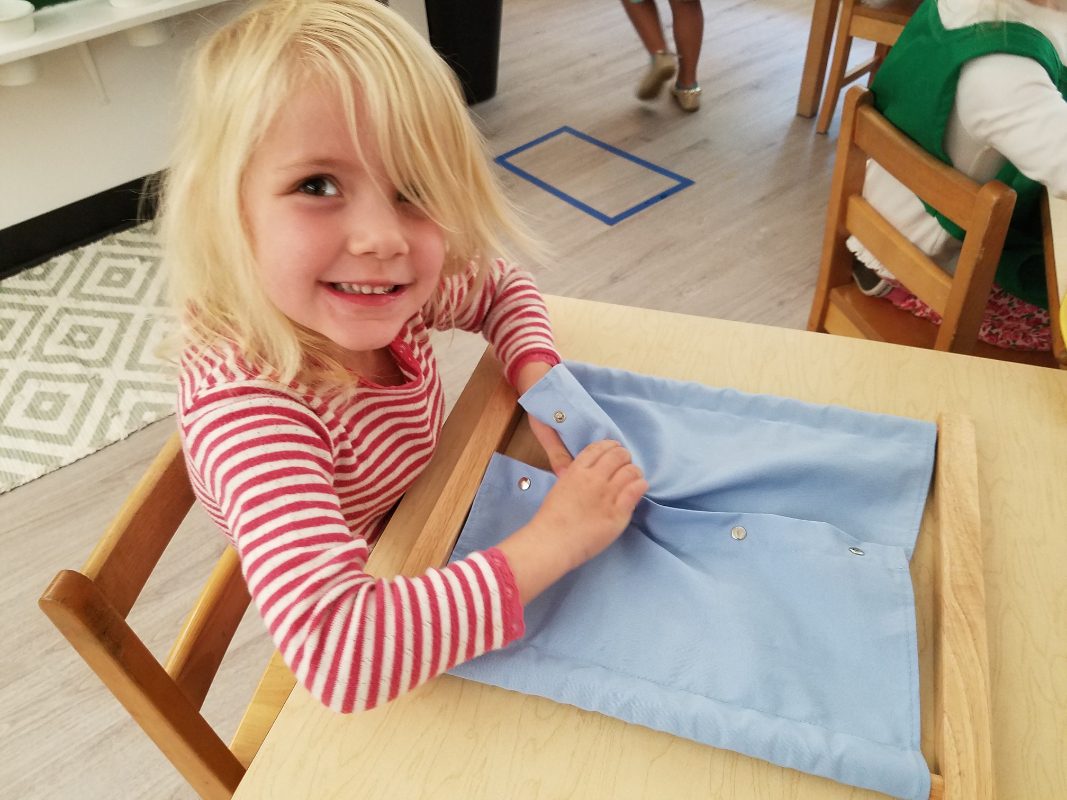
So, if your child’s folder comes home with little to no work, just know that their accomplishments can’t always ‘fit’ in that folder. Maybe after weeks and weeks of trying they learned how to zipper their own coat or maybe they can finally carry a work without it dropping. Maybe after observing a lesson day after day,  your child tried it independently for the first time. The list of skills each child can accomplish will never be fully represented in the Friday Folder. So please enjoy the work that is in there but know it is not an accurate portrayal of all that the children are accomplishing.

Warmly,

Michelle & Jeannine


Upper Elementary: Community Helpers

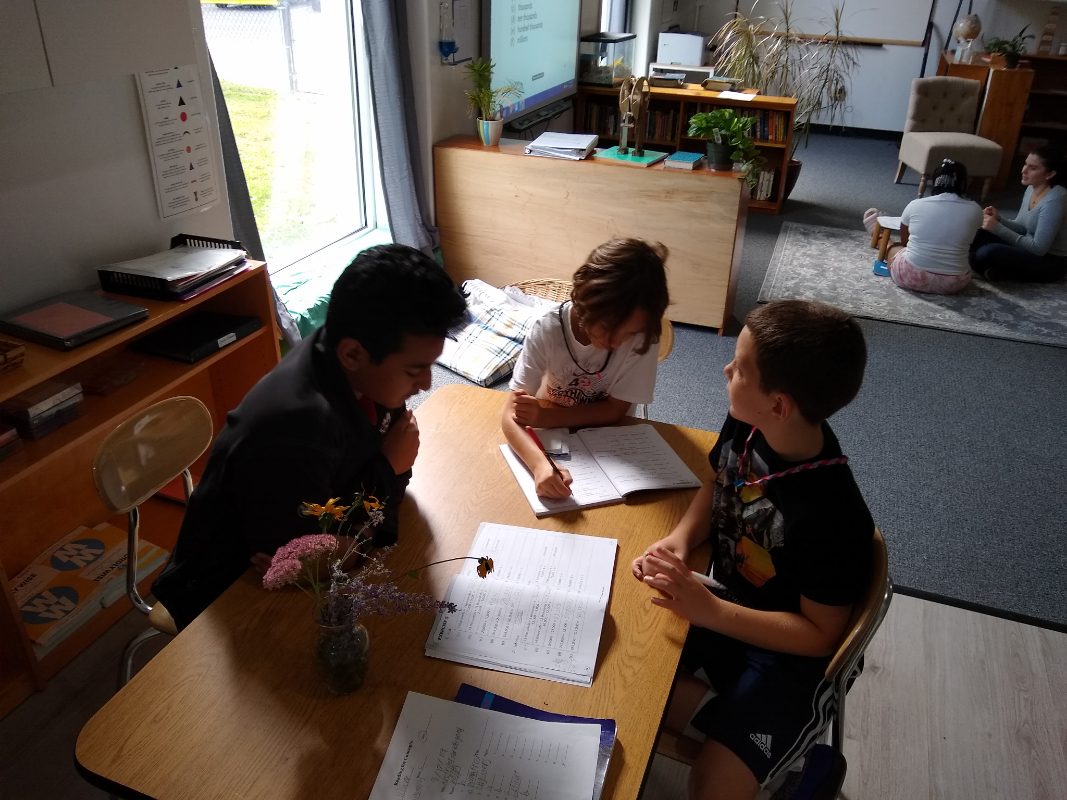
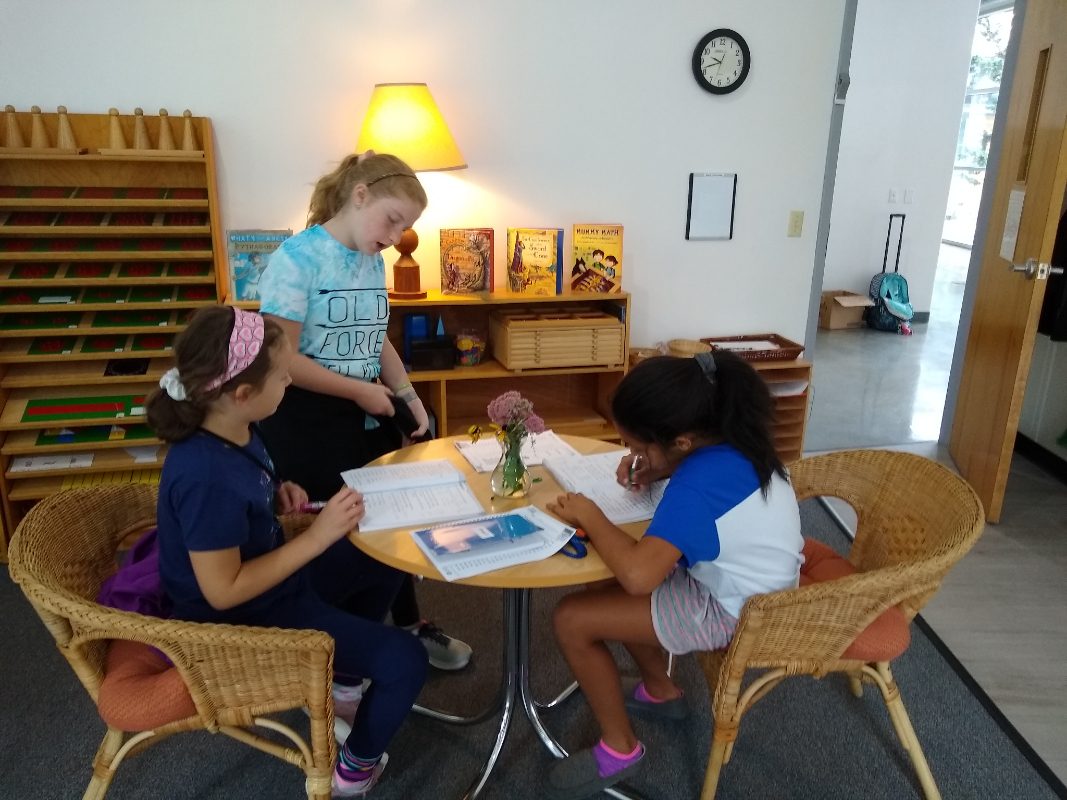
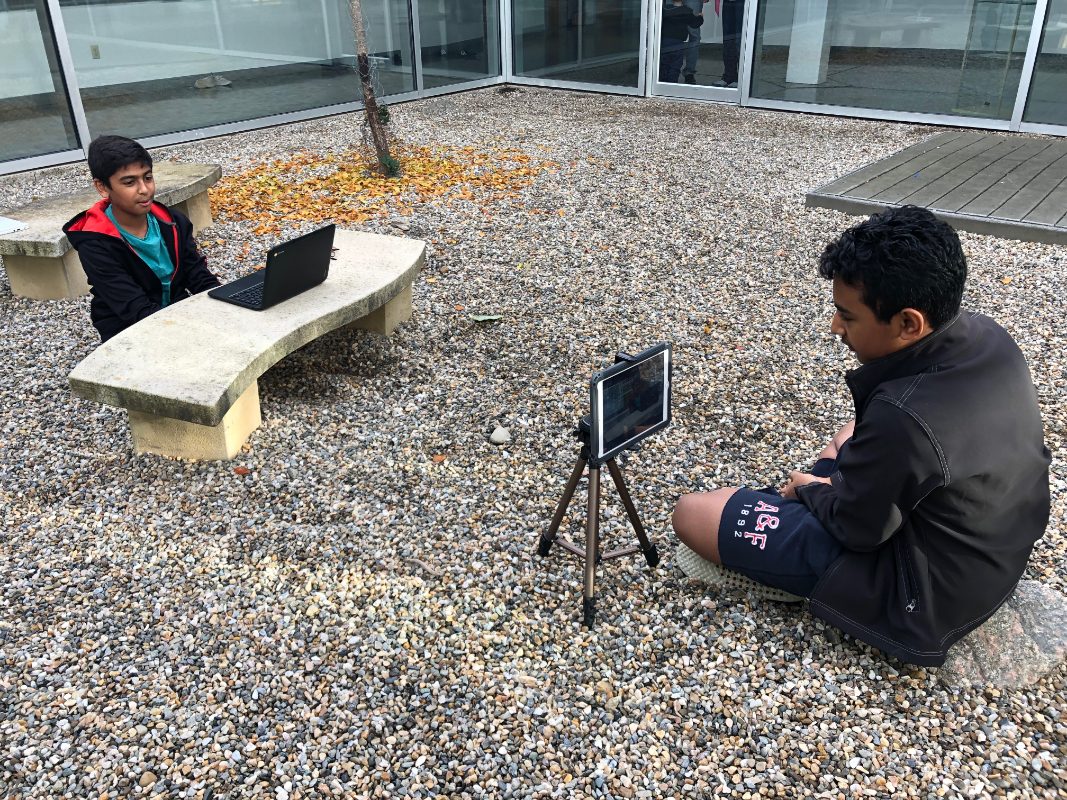
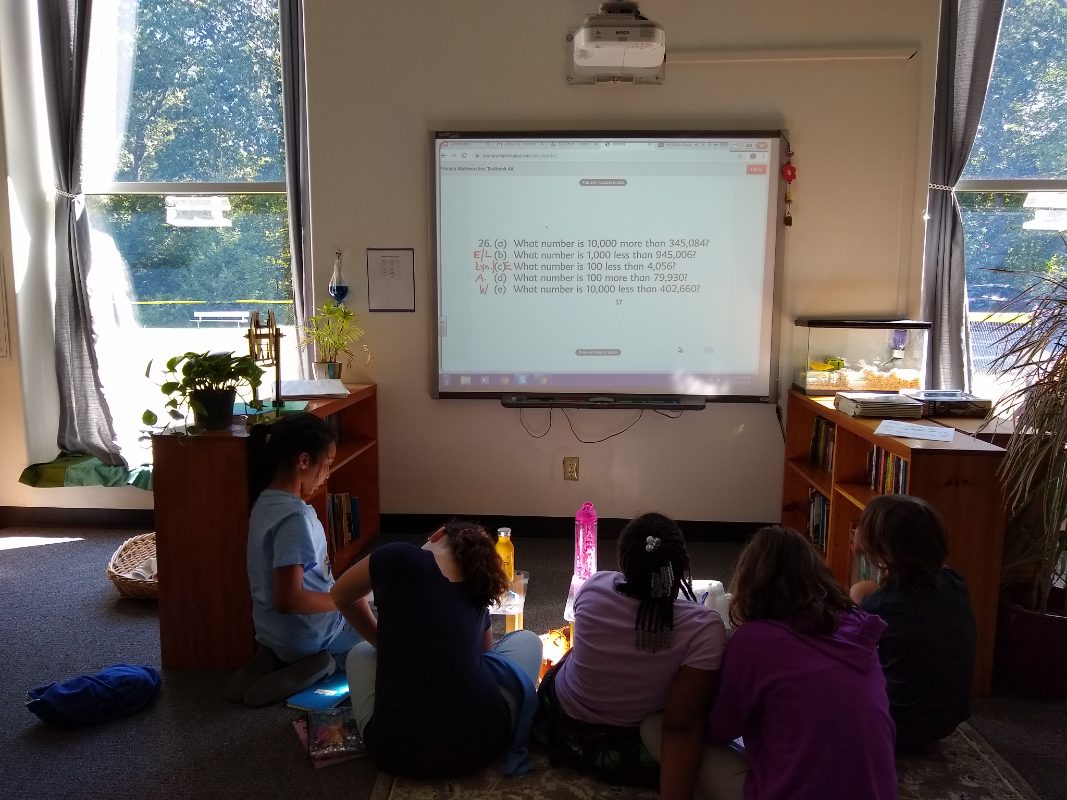
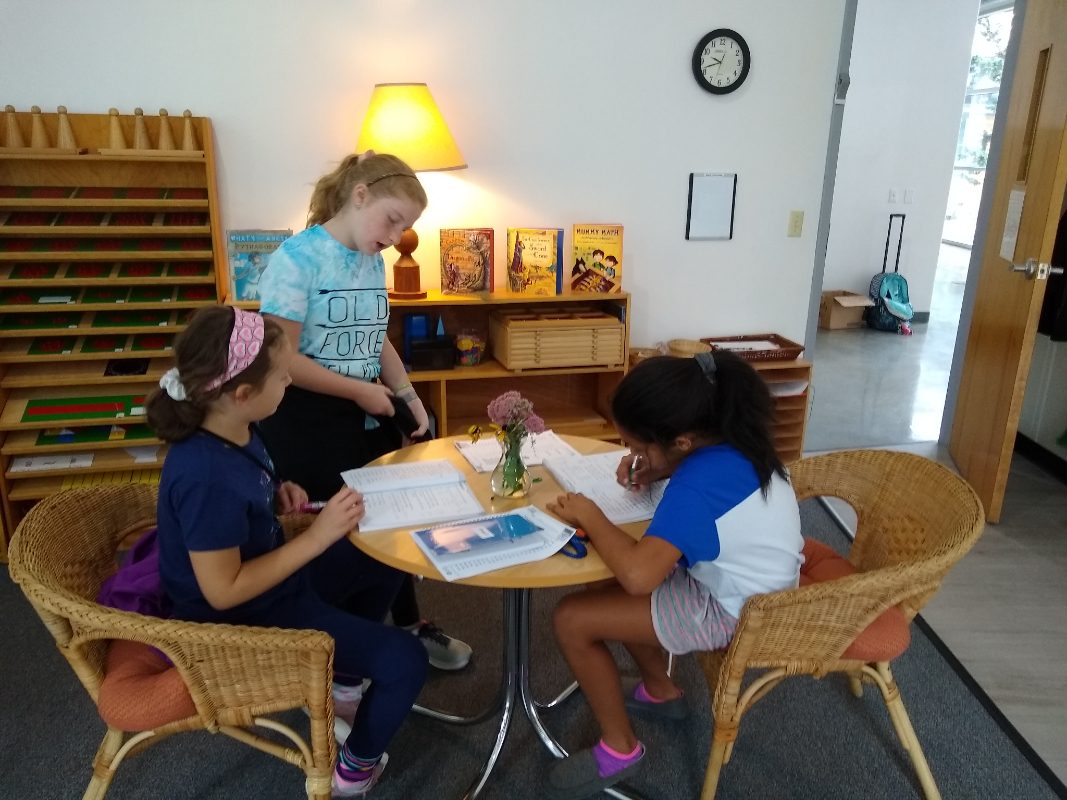
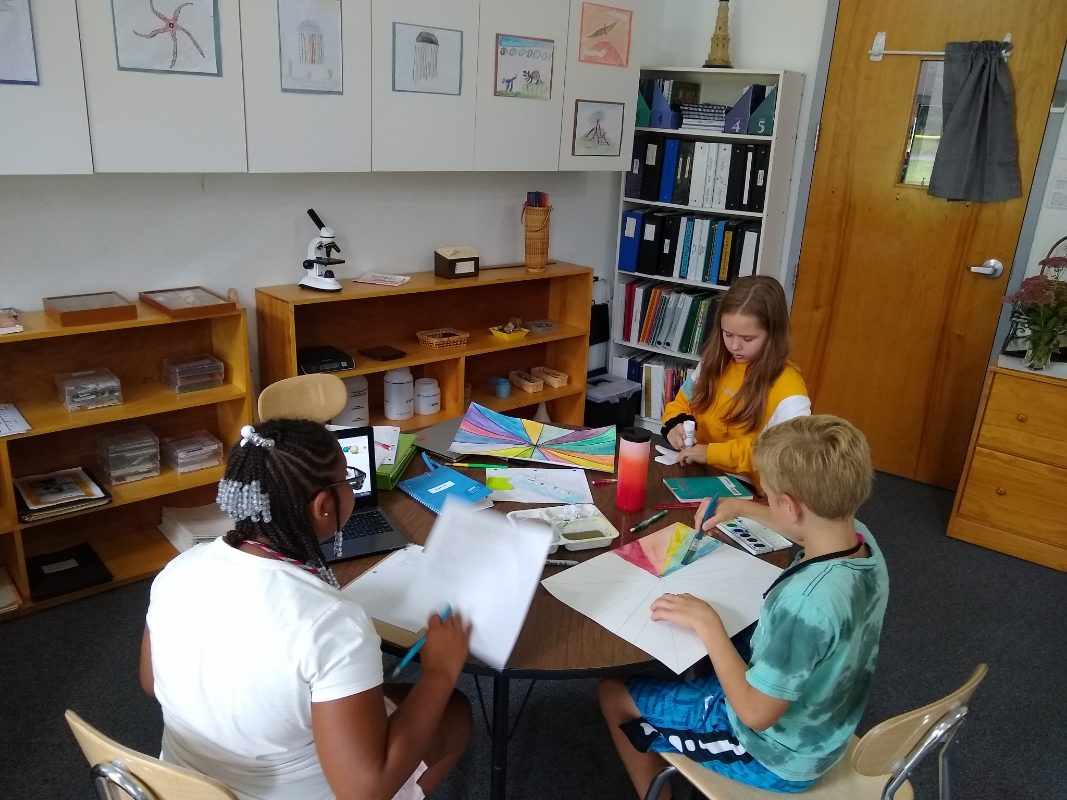
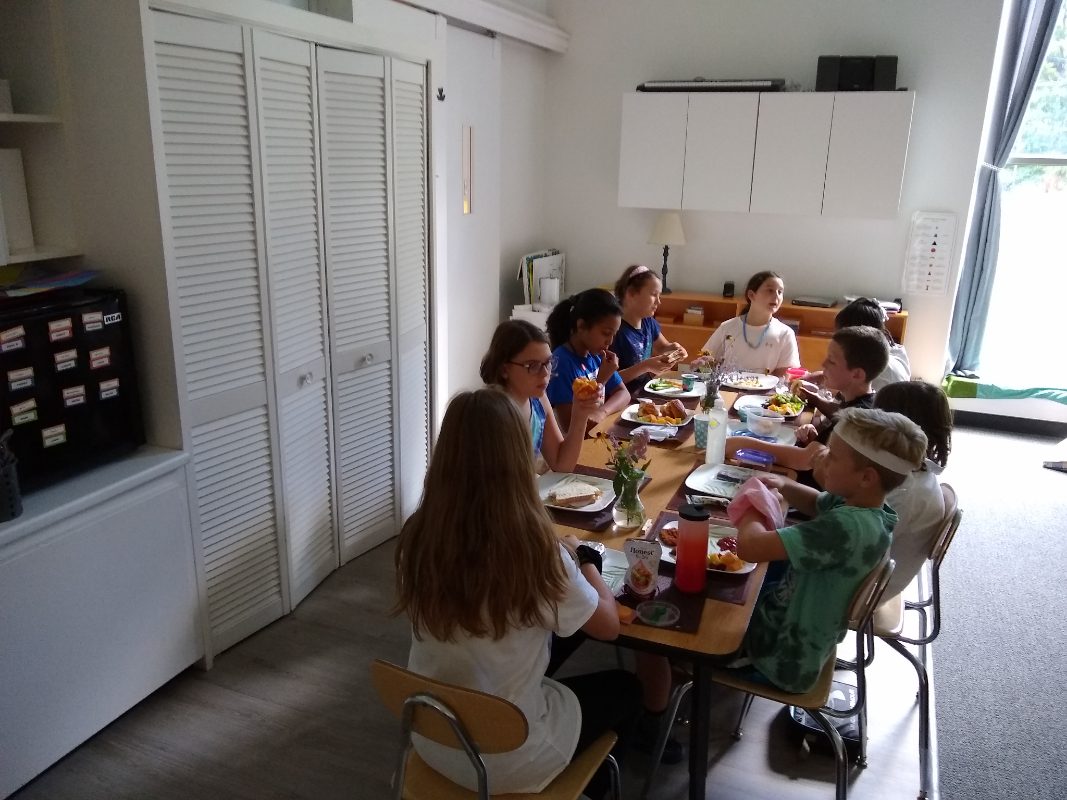
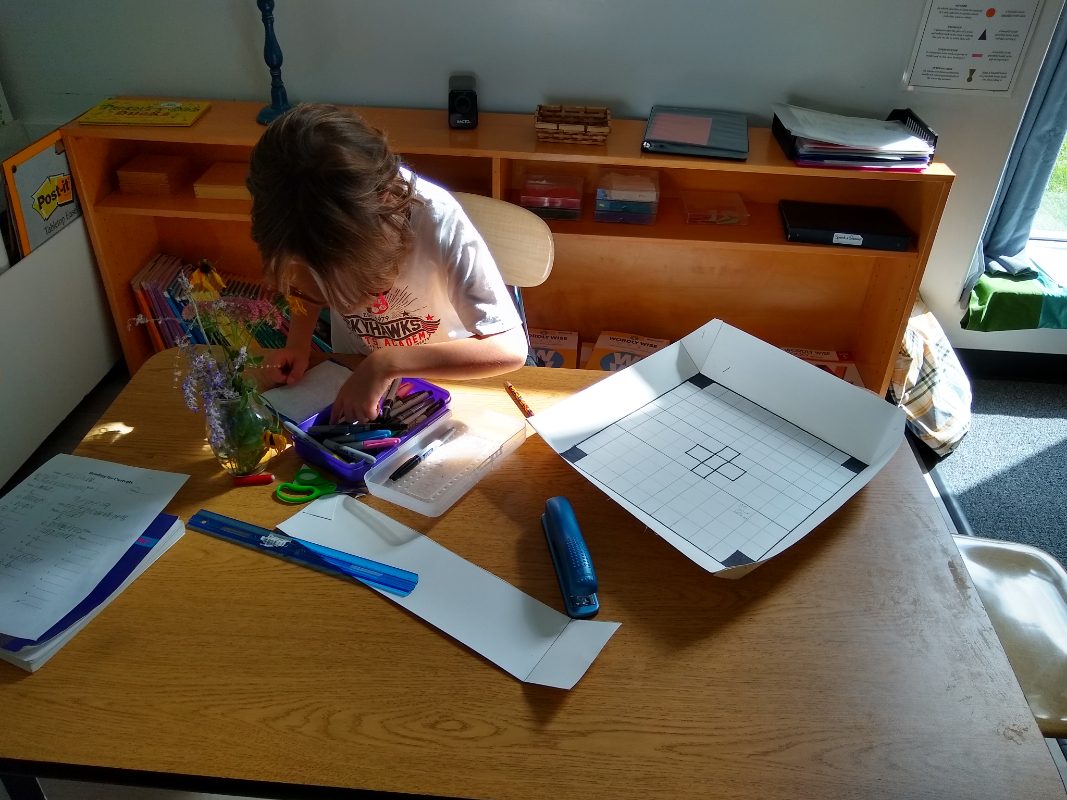
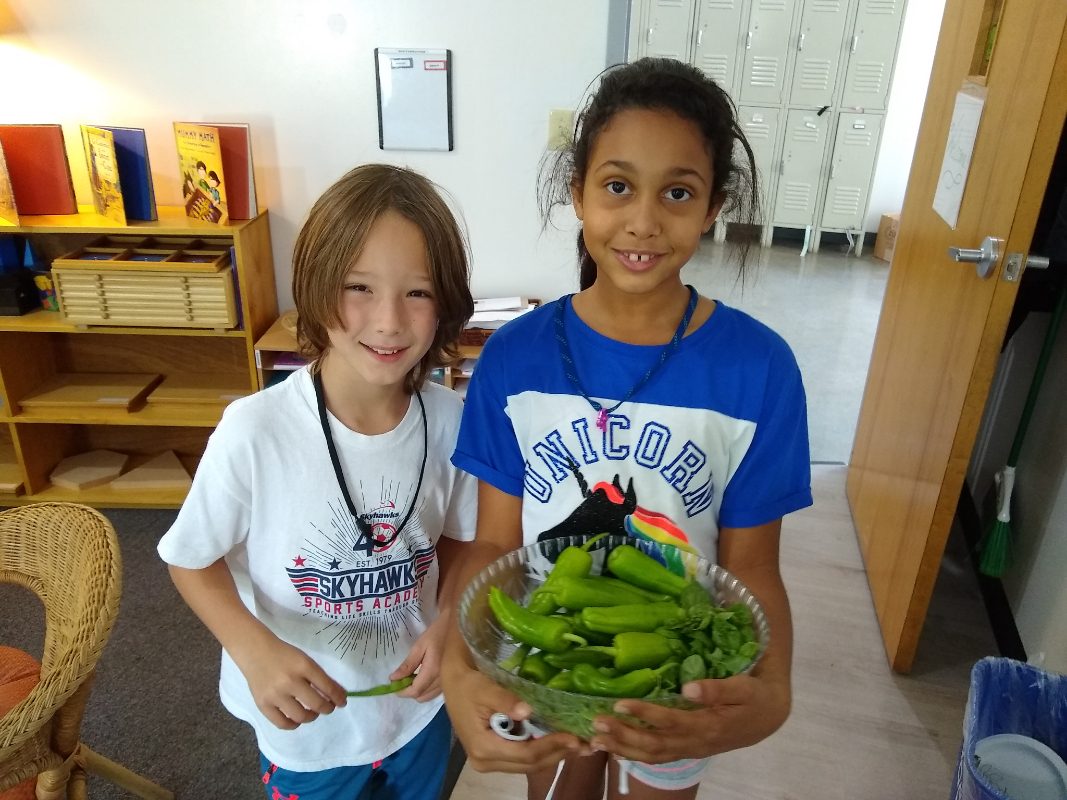
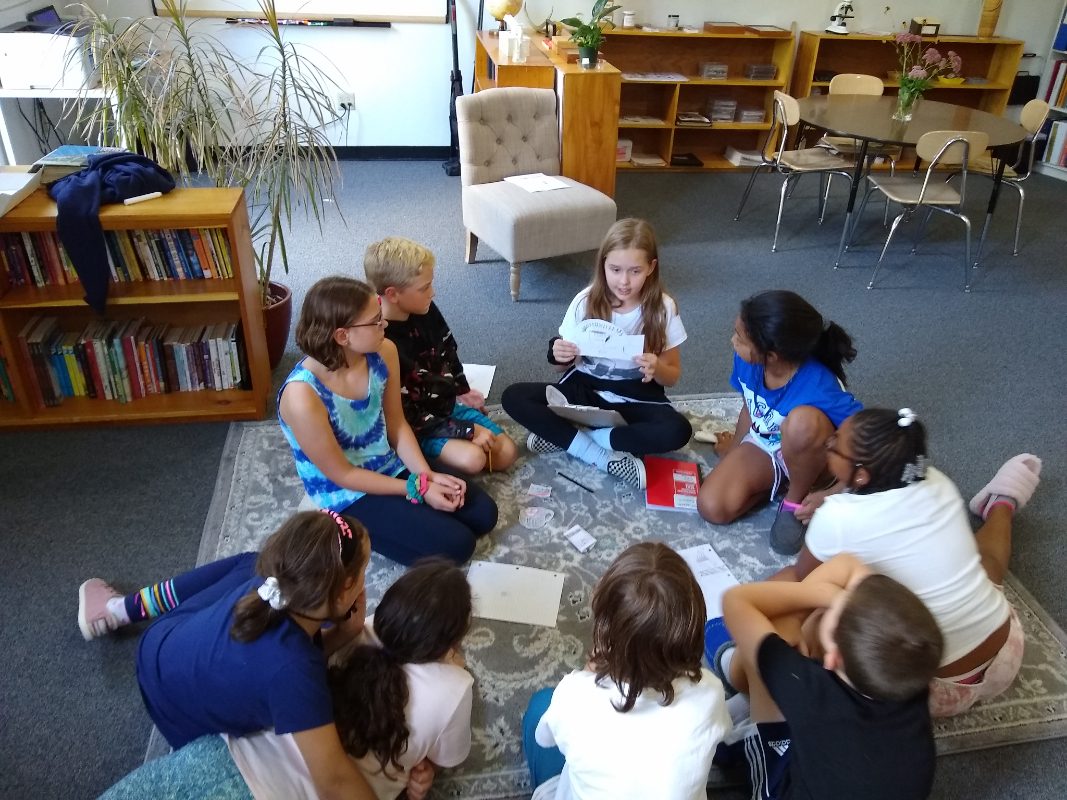
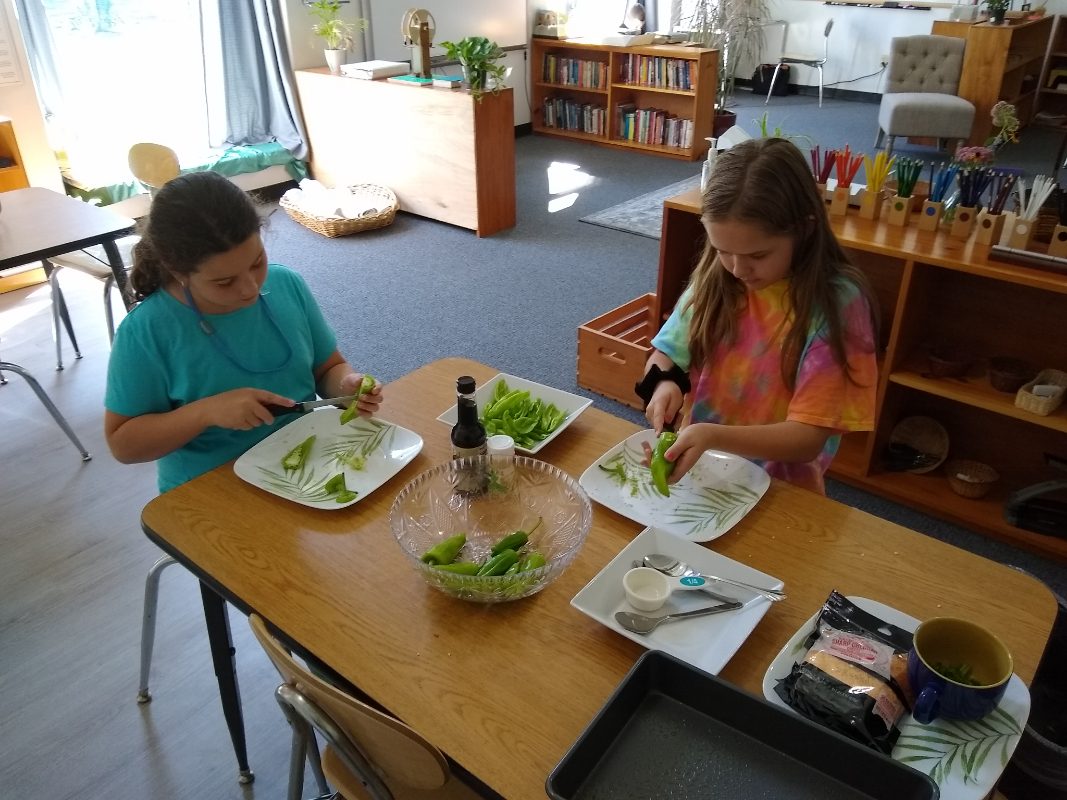
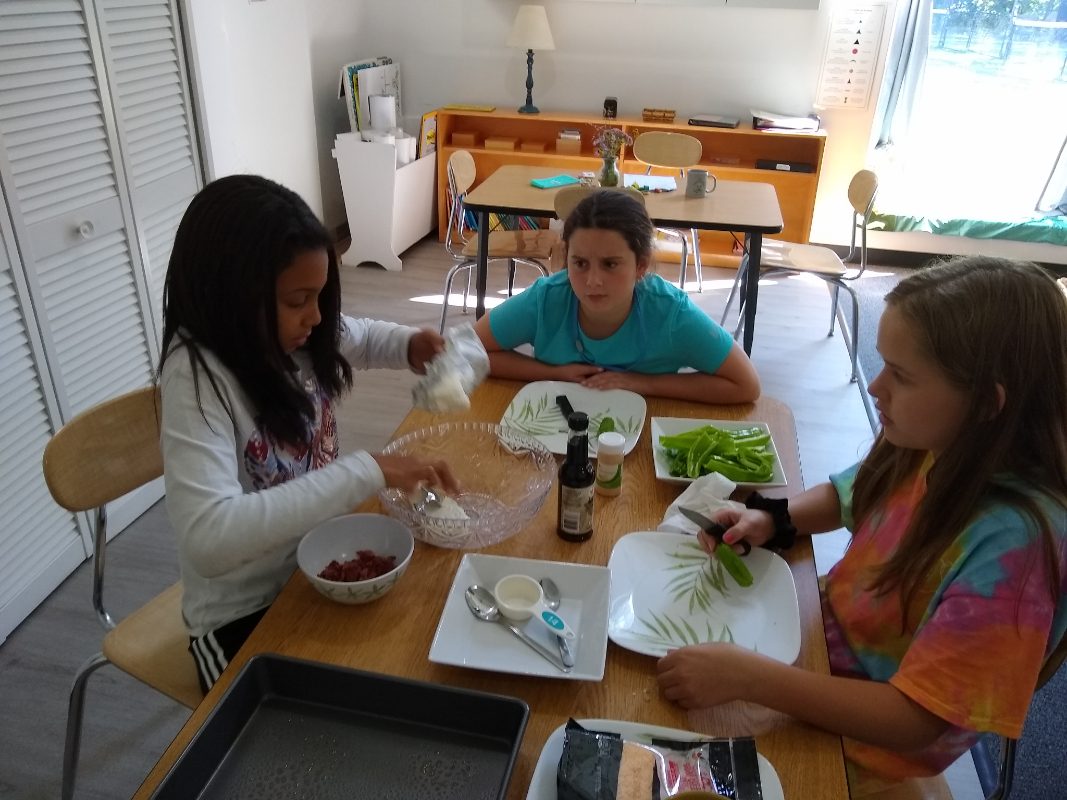
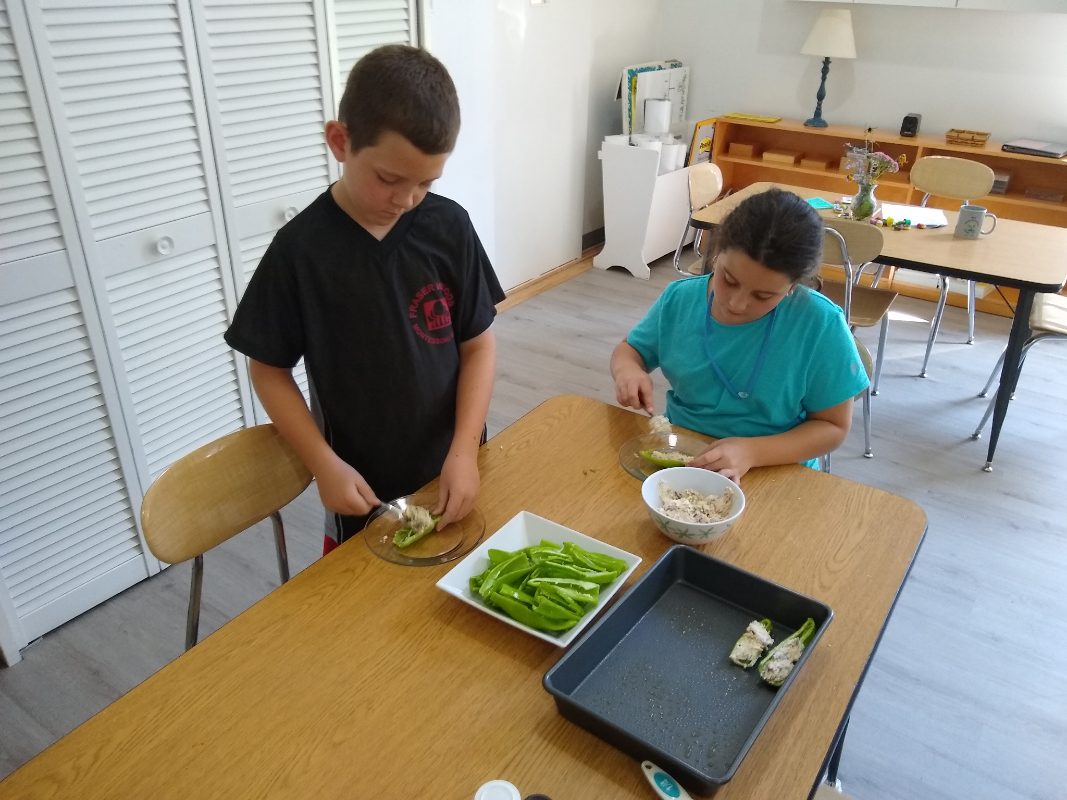
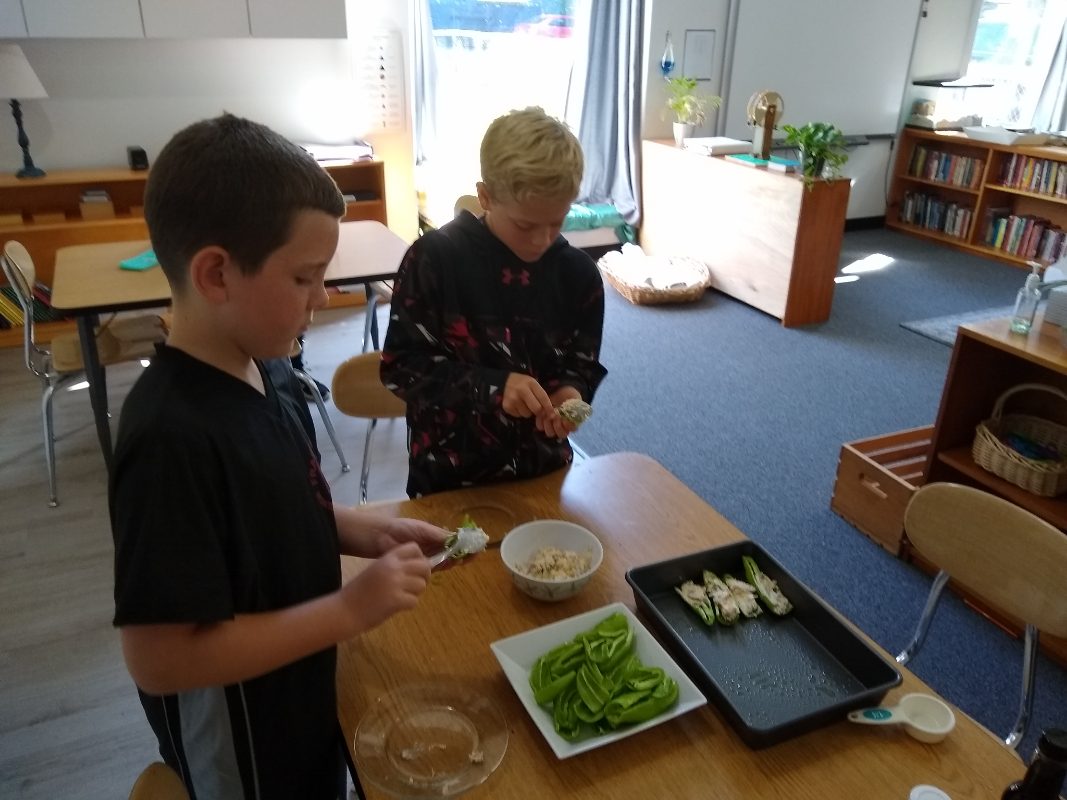
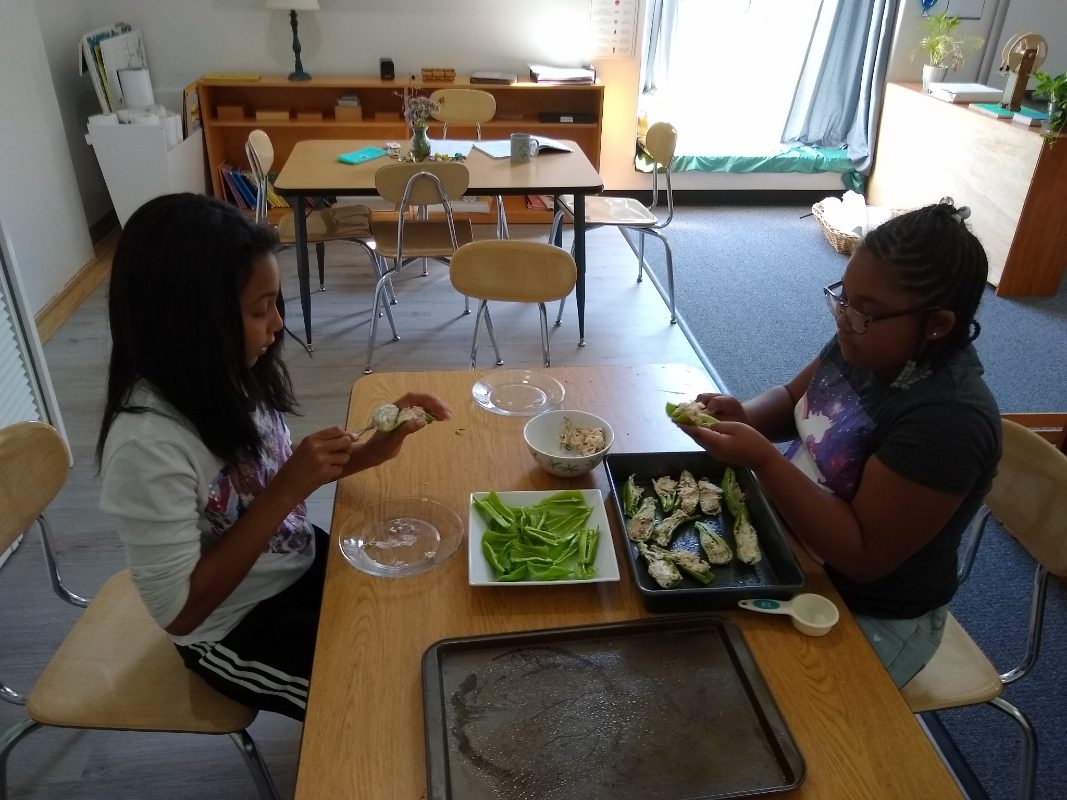
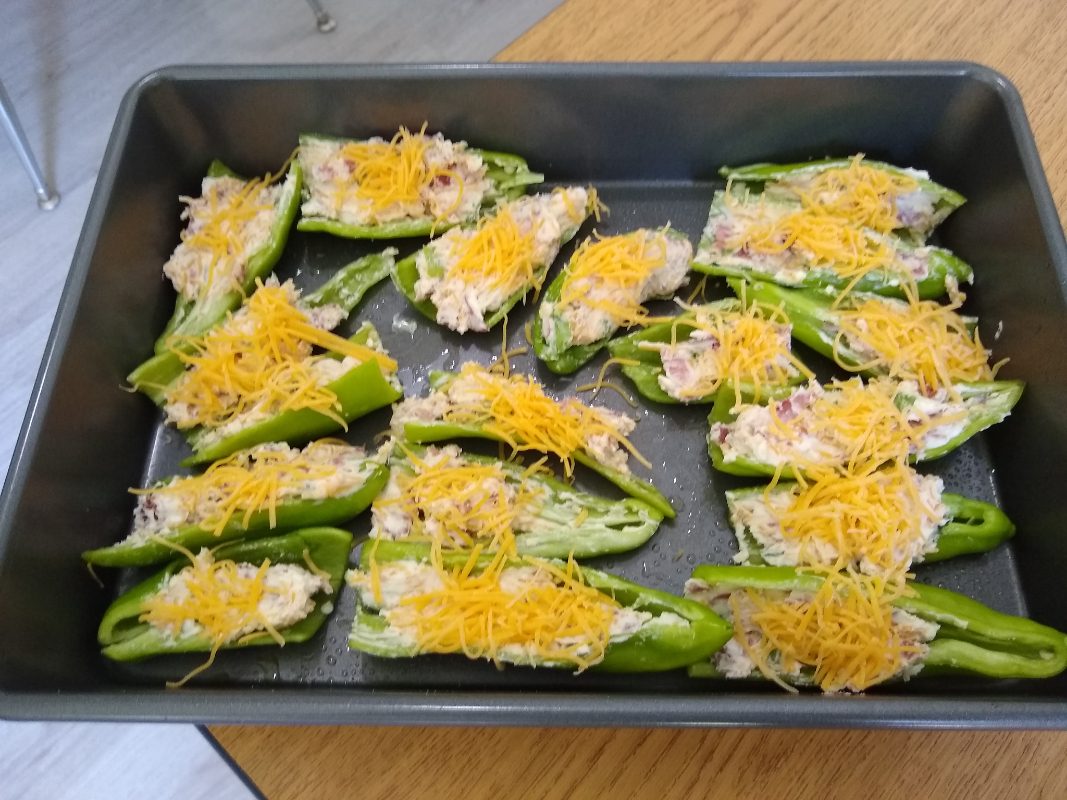
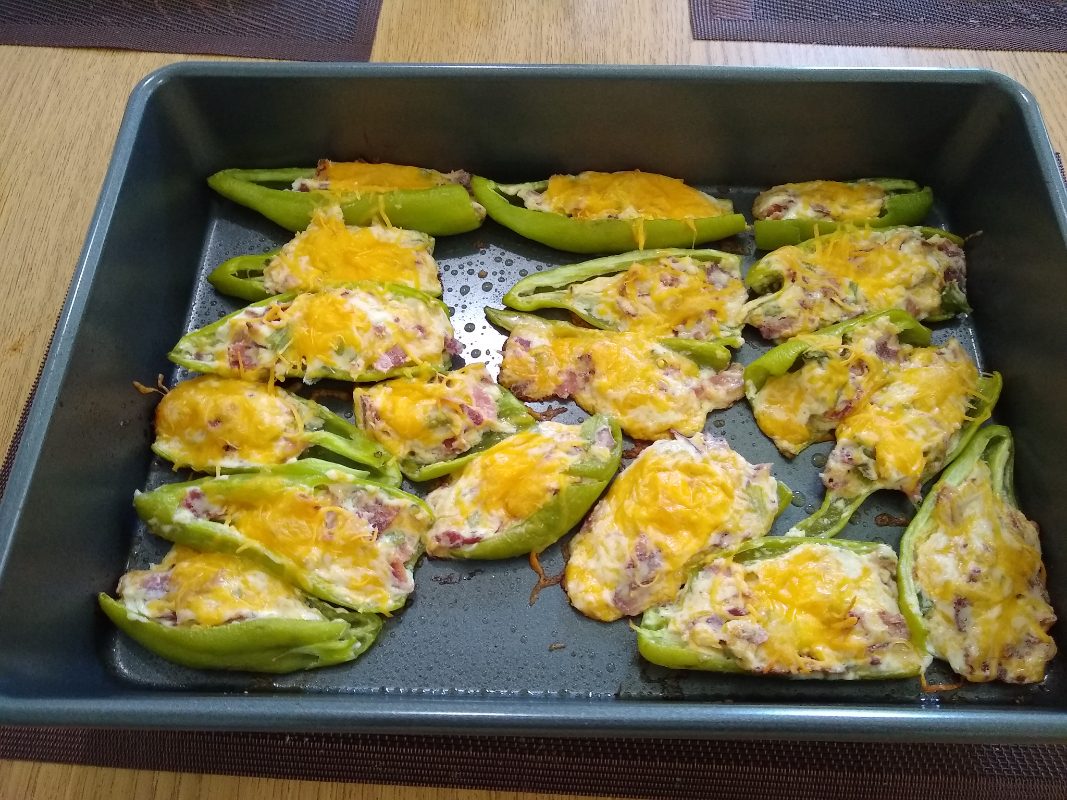
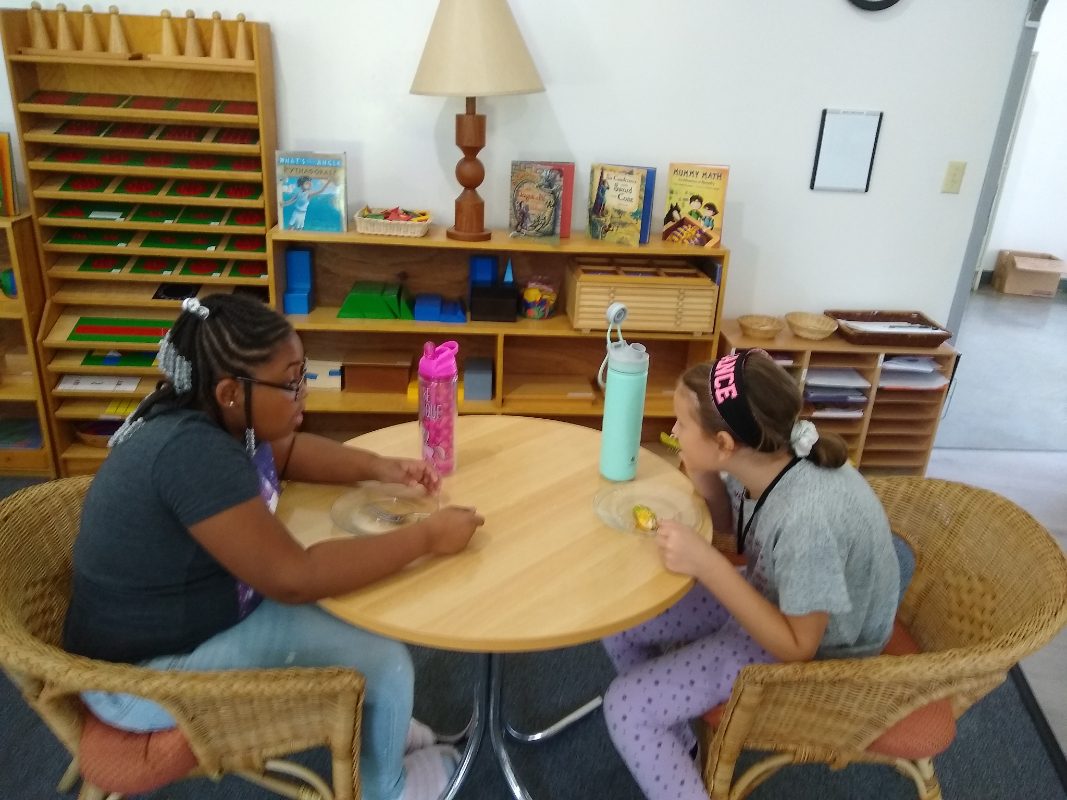
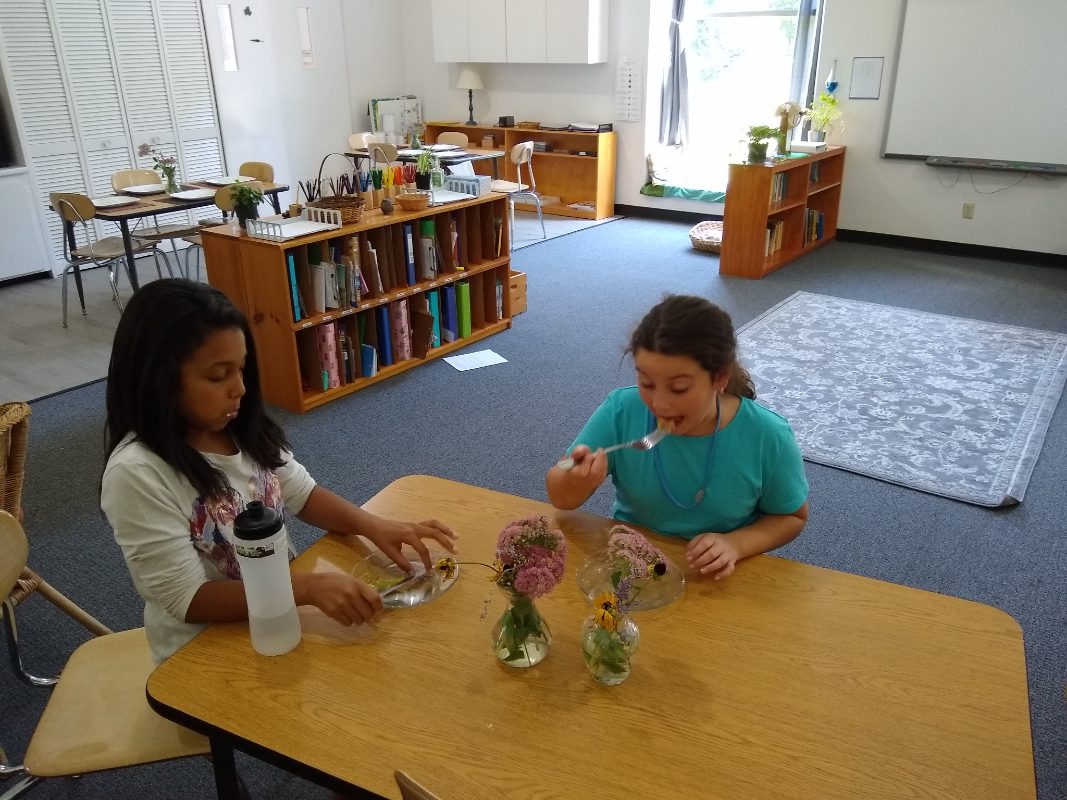
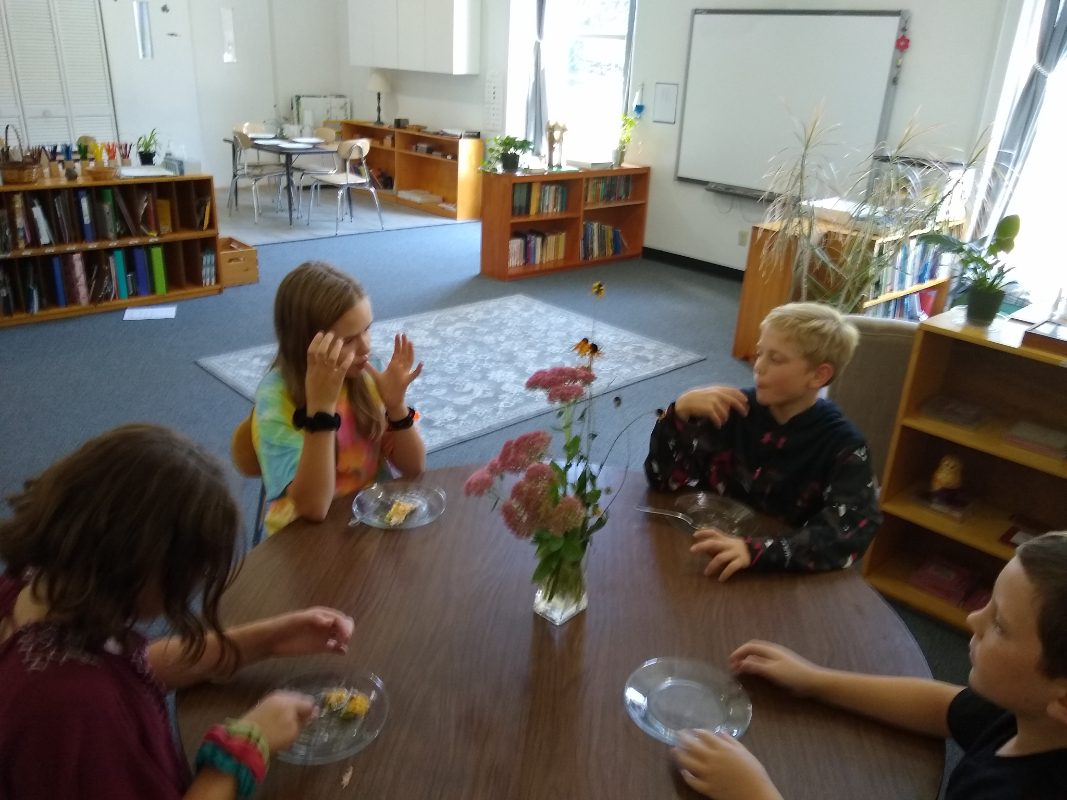
This week the Upper Elementary students spent some time as community helpers lending a hand in various ways. Some of these tasks included sorting and delivering lost and found items, cleaning up the garden beds, assisting primary students during morning drop off, and tidying up the zen garden. Our community helpers were eager to help out and their tasks will rotate and change throughout the school year. In our classroom, we made stuffed peppers using several peppers from our garden. They came out great and a few students that were not fans of peppers were surprised they enjoyed the taste. Next week, our goal is to make pesto using basil from the enormous basil plant from the same garden. We met to discuss our coffee shop plans and the students agreed on the name, Happe Cafe. They made logos and voted on the logos during student council. At the conclusion of our week we enjoyed some time on the trails during recess.