




Please Enjoy the following article from Parent Toolkit
Parent Toolkit provides parents with a comprehensive guide to helping their children succeed in school and life, whether they’re just starting out in pre-school or preparing their college applications. It is produced by NBC News Education Nation and supported by Pearson.
Guiding Our Children Through School Transitions: Middle School by Sharon Sevier
Ah, middle school, the time during which every parent gains a full understanding of why some animals eat their young. Seriously, I do love middle school students. They live in a world of black and white. There’s no gray. Things are either a crisis or they are nothing. I often referred to my students as my “drama and trauma kings and queens,” and they earned that title every year.
My daughter is a middle school counselor, and I love talking to her about these years. She’s very trendy, funny, and sassy, and the kids gravitate towards her like nobody’s business. She tells it like it is with her students, and she gets away with saying things to them that their parents would not dare, for fear of having their heads bitten off.
Middle school is a time when many kids regard their parents as being “dumb,” “over-protective,” and “not knowing anything.” When I got my Ph.D., I thought my kids (then in middle school) would be so proud of their mom. What I realized is that they thought those three letters were wrong; they thought they should be “DTD”…Dumber Than Dirt. It was tough to go through but, parents, we do get revenge. Once my kids had children of their own, I became the smartest woman on Earth!! So it does come full circle.
Here’s what happens in the middle school years: our children become more and more independent. In 6th grade, it’s the transition between elementary and middle school. There’s a bit more coddling in their academic setting, and the students have a healthy sense of unease as they enter the social world of middle school. By the end of 6th grade, they’ve pretty much got it all figured out, and their social world bursts open with wild abandon. For the next two years, they think they are standing at the mountain top and they know it all. Mood swings are rampant, popularity becomes a curse and a blessing, body image, attire, and being cool all take precedence over anything else. So how do parents navigate these years keeping their kids safe and in check, while also keeping their sanity?
Here are a few of my favorite tips, and also a few from my daughter:
• Stay in contact with the school, especially with the school counselor, and allow them to “be the heavy” when you’re struggling to get through to your child. I often had conversations with parents who were so frustrated because their child would not listen to them. So I offered to “be the heavy” for them. I’d call the student in and would “talk turkey” with them, saying basically what the parent had said. In fact, I remember the day one of my students said, “you sound like my mom,” before he left. I was thinking, “yeah, that’s because I just talked to her!”
Seriously, school counselors have different credibility in middle school than parents. We can say the exact same things that you do and the kids will listen because we’re not you! School counselors become a godsend at this age and they can be a great resource and support, but you have to talk to them and trust them. Don’t be embarrassed about telling them about family life issues. The more information the counselor has, the more s/he can help you, your child, and the teachers. School counselors are there to help. They’re not there to be in or know your business. We care about your child’s success in every facet of his/her life, and we want to be good advocates.
• Continue with the set time for homework, and stay on top of grades. Don’t wait for the teachers to contact you; you can also contact them. Most middle schools today have an online student management system that allows parents to see their child’s progress. You can check grades, as well as attendance. I’d suggest making it a weekly event, maybe during homework time, that you sit down with your child and review what’s online in the student management system. Teachers have well over 100 students they are dealing with on a daily basis. Parents, generally, have only a couple of students they are in charge of. Parents need to stay on top of their child’s grades, and they need to contact teachers when they have questions/concerns. There is no excuse for a parent to say “I didn’t know” when so much information is readily available.
Have a specified time and place for homework each school night. Don’t accept, “I don’t have any homework.” If there is no homework, they can always review what was taught that day or they can read. You must be firm and let your child know that the homework time and place are in cement–no negotiation. When they are finished with their homework, ask to see it. I wouldn’t suggest reviewing it, but check it for completion. They have to know that you take this seriously, and you are going to be checking.
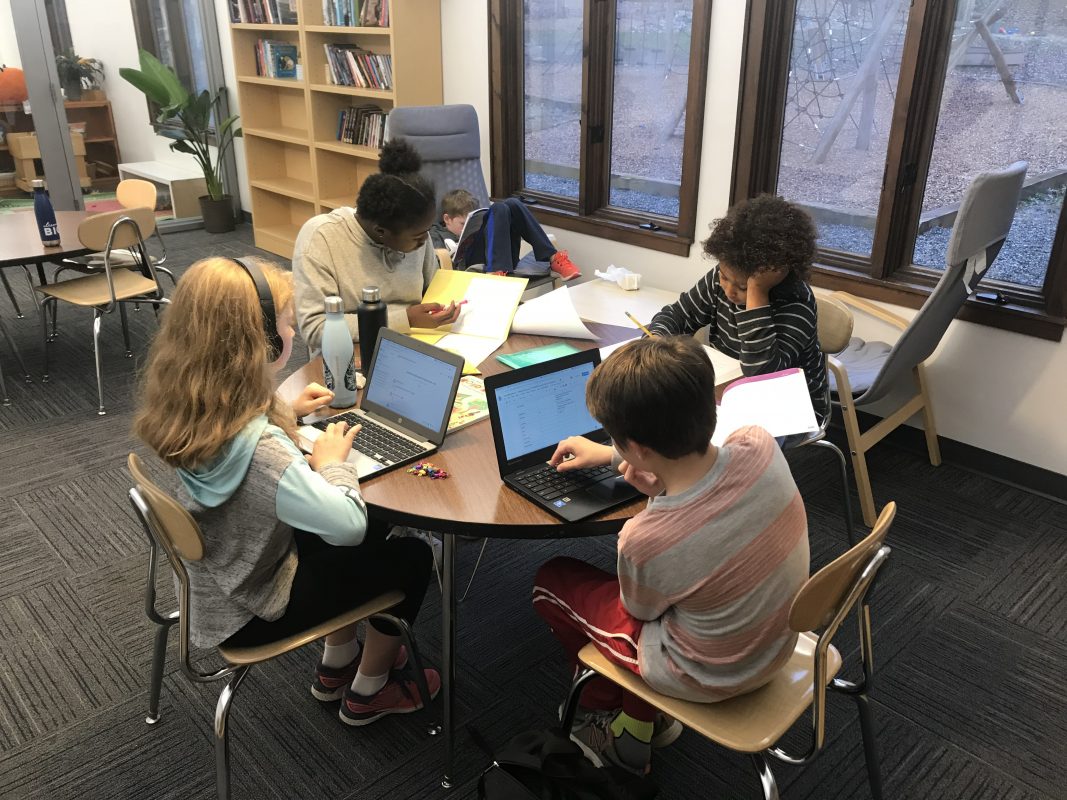
If I may, I’d like to beg and plead with you about the place for homework. Please don’t send your kids off to their rooms, armed with technology, to do homework. Have them do homework in a central place in your home where your presence is apparent. NO cell phones during homework time. They will take things much more seriously if you put some strong parameters on homework completion. They make think you are the spawn of Satan for taking their cell phone but, trust me, they’ll live through it and their work will be better quality.
• Technology…the good, bad and ugly. No doubt, technology is alive, well and rampant. We love it, we hate it. Our kids adore it. It’s their life line, it’s their life. My daughter, the middle school counselor, feels very strongly about middle school students having free reign with technology. She suggests that parents check the sites their kids are going to, and that means reading what’s posted there. Too often, middle school students get caught up in things they shouldn’t, and it can have disastrous effects. You are the parent, monitor the technology! There are ways that you can block sites, monitor use, and monitor what’s being communicated. You can also cancel the cell phone. If your child isn’t using technology safely and appropriately, cancel it. It’s a tough lesson, and they will say that you are ruining their life and they hate you, but you are doing them a favor. Make them earn the privilege back. Notice what I said. It’s a privilege to have a cell phone; it’s not a right. Technology is wonderful when used for good, but it can turn into a nightmare without supervision.
• Vary friendships. Middle school is that time of life when kids change friends like it’s their job. Girl bullying, boy bullying, and popularity requirements are the bane of the middle school student’s existence, and of their parents’. It doesn’t happen to everyone, but it happens enough. I always strongly urge parents to identify their child’s passions and interests and get them into groups outside of school. These groups enlarge the friendship circle and, if things aren’t going well at school, there are always other people to hang out with. Church, Scouts, athletics, volunteer work, dance, and hobbies/talents all offer students a chance to grow, blossom, and be with different people. If you find your child hanging with the same kids all the time and/or afraid to do things without those people, it’s time to change things up. Having just one or two friends is a sure sign of future trouble, you just know that, at some point, they are going to cease getting along and the world will collapse. If they have other friends, outside of school, they’ll be in much better shape.
• Don’t rescue your child from natural consequences. Be a parent…not a friend. My sister-in-law is a character. She’s very honest and blunt, and I love it. She told me about a conversation she had with her two daughters. It went something like this, “I’m your parent, not your friend. I don’t need more friends and, if I did, I wouldn’t choose you.” I cracked up. Now, let me tell you, she loves her kids beyond belief, but she was making a point, I’m your parent! I’m not here to be your friend.
Being a parent means setting boundaries, setting rules, having expectations that stick, and allowing your child to suffer the consequences of their actions. If your child flunks a test, don’t blame the teacher. Your child should be the first one you talk to. If the teacher says your child isn’t doing homework and your child says s/he is, make them show it to you each night. If your child goes to an unacceptable website at school, and gets in trouble for it, don’t blame the school. Kids learn from their consequences. If we take away their accountability, they will never learn responsibility. It’s ok not to be the “cool mom” or the “cool dad.” “Cool” only matters if you need a sweater. It’s the “mom” and “dad” word that matters the most. Be one, and be tough! Your kids will love you for it.
Good luck with middle school! Keep your eyes and ears open, and ask for help when you need it. You are surrounded by support, and you are SMART and strong to ask for it! One last aside, I told my daughter, the middle school counselor, that I was writing this blog. I read her what I wrote about getting my Ph.D. and she said, “that’s not true! I was very proud of you.” Then she blamed her brother for being the one who thought I should have been “DTD”. Kids…