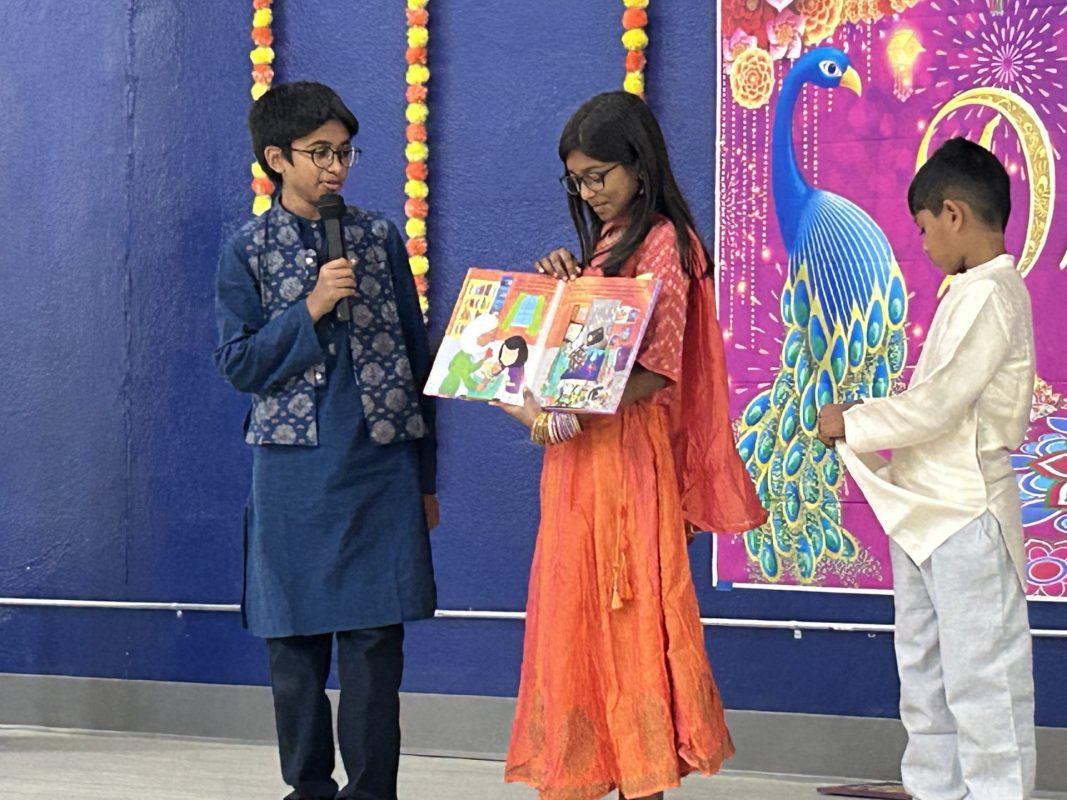
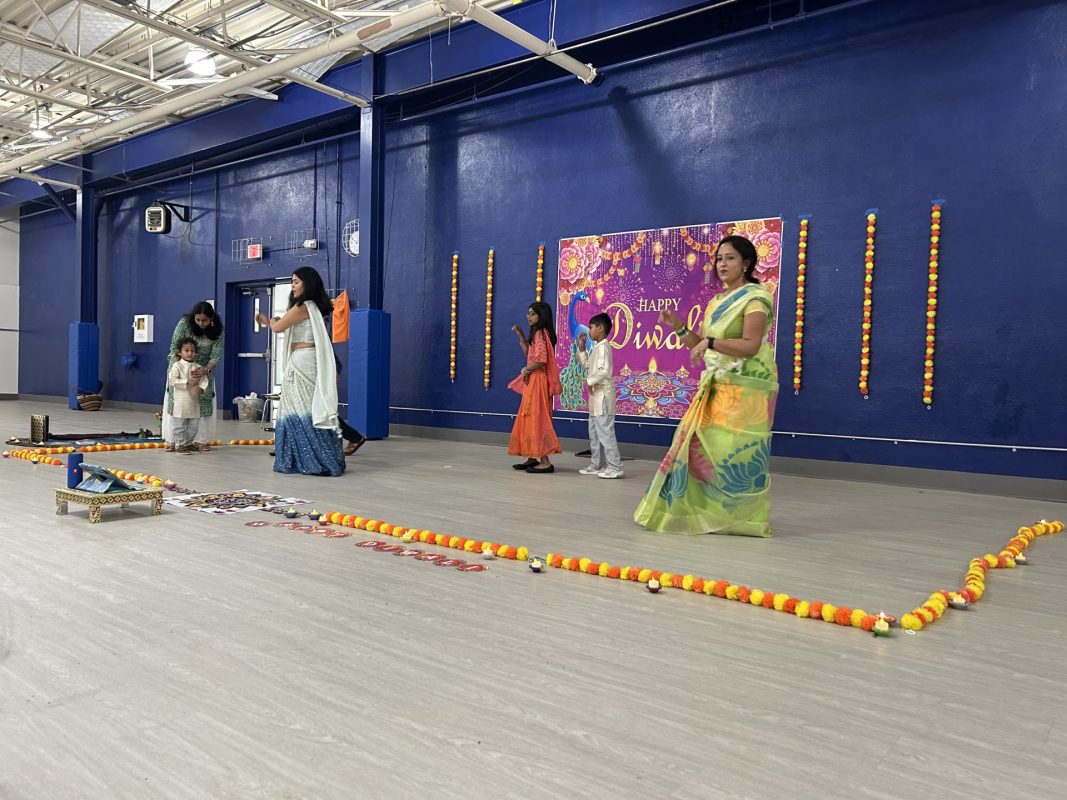
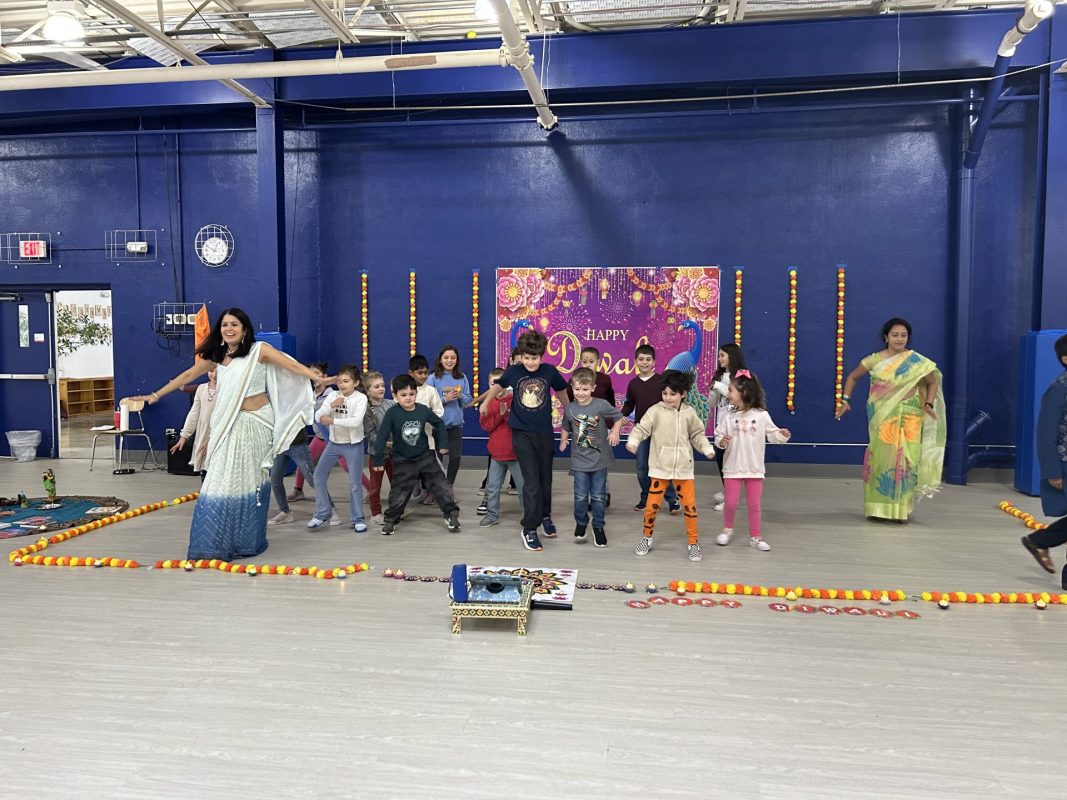
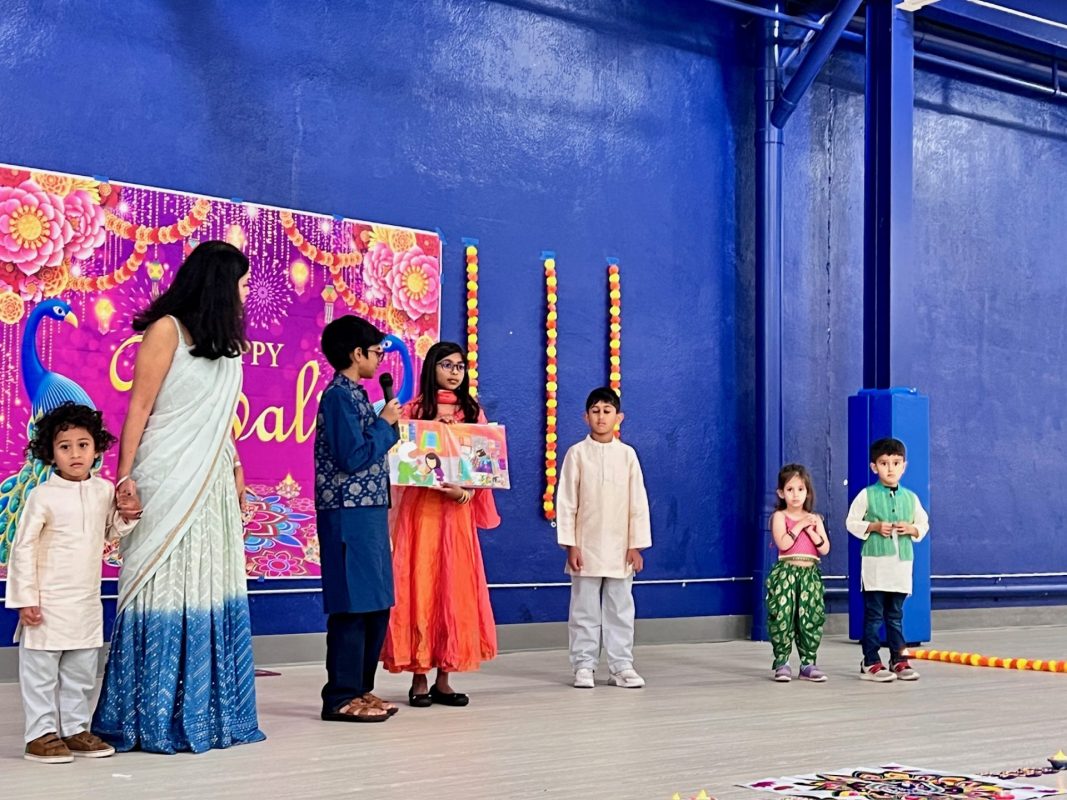
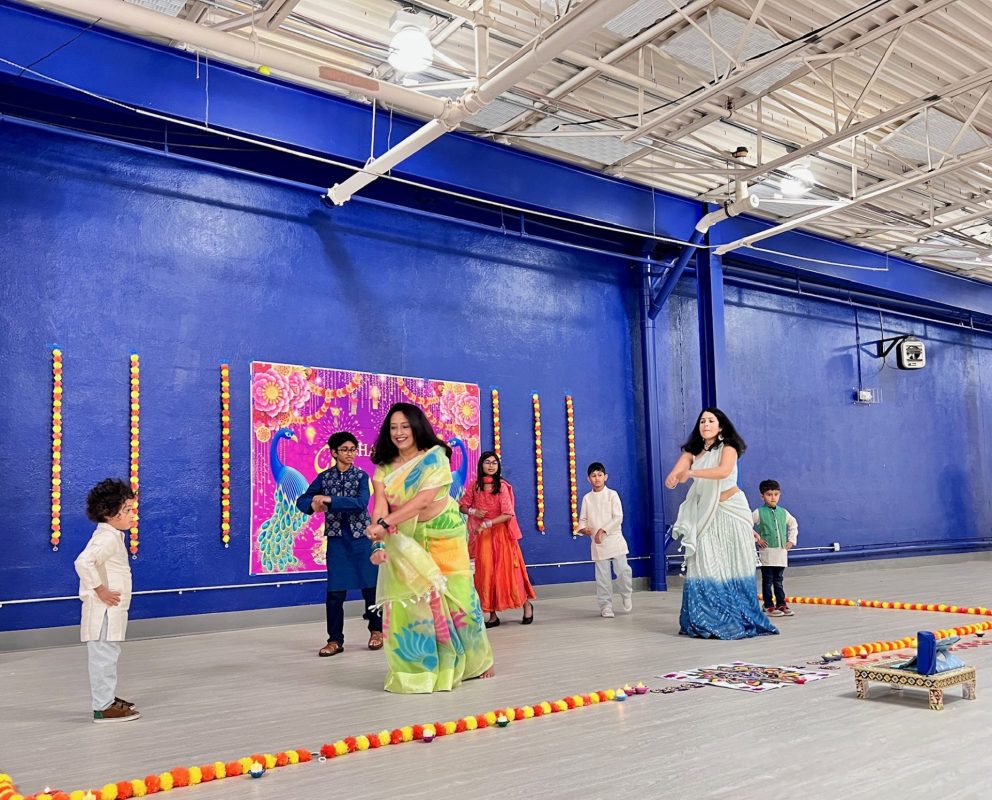
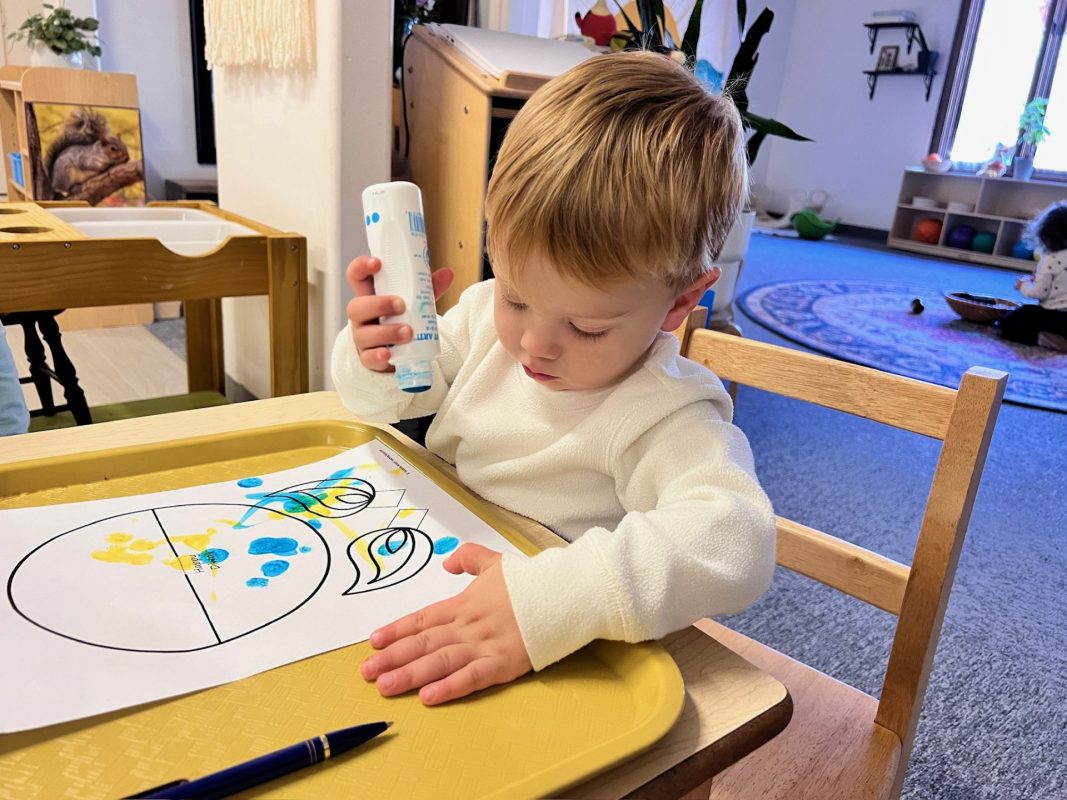
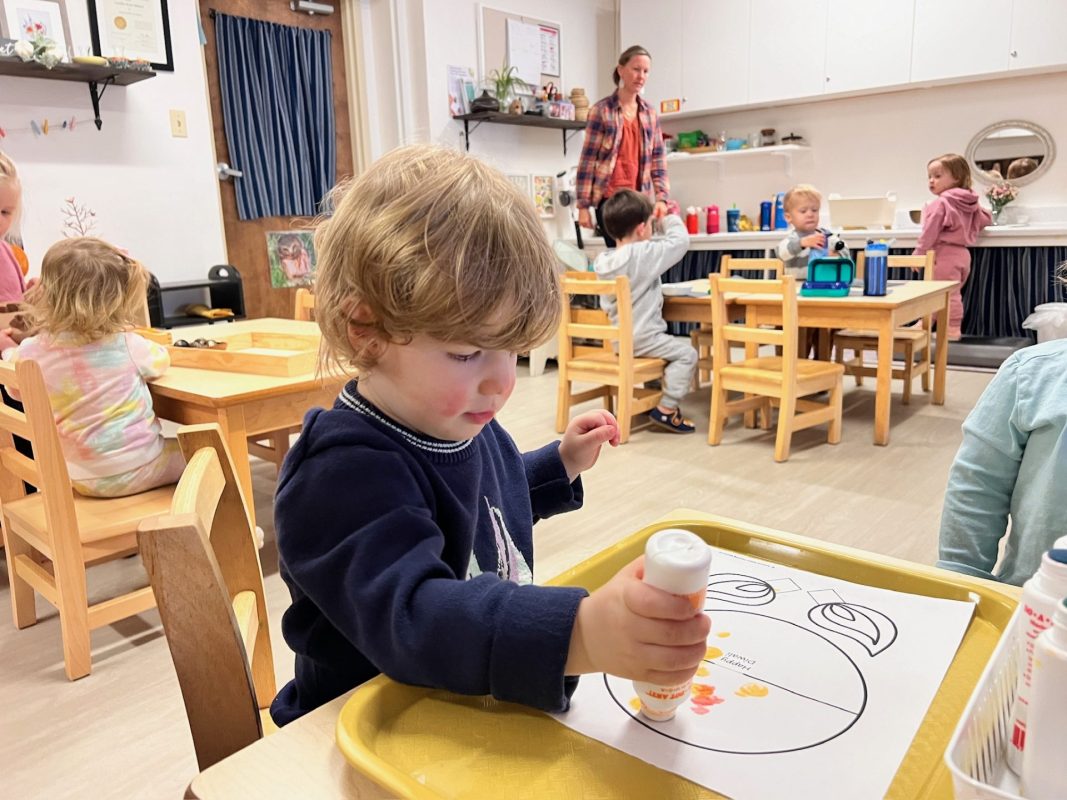
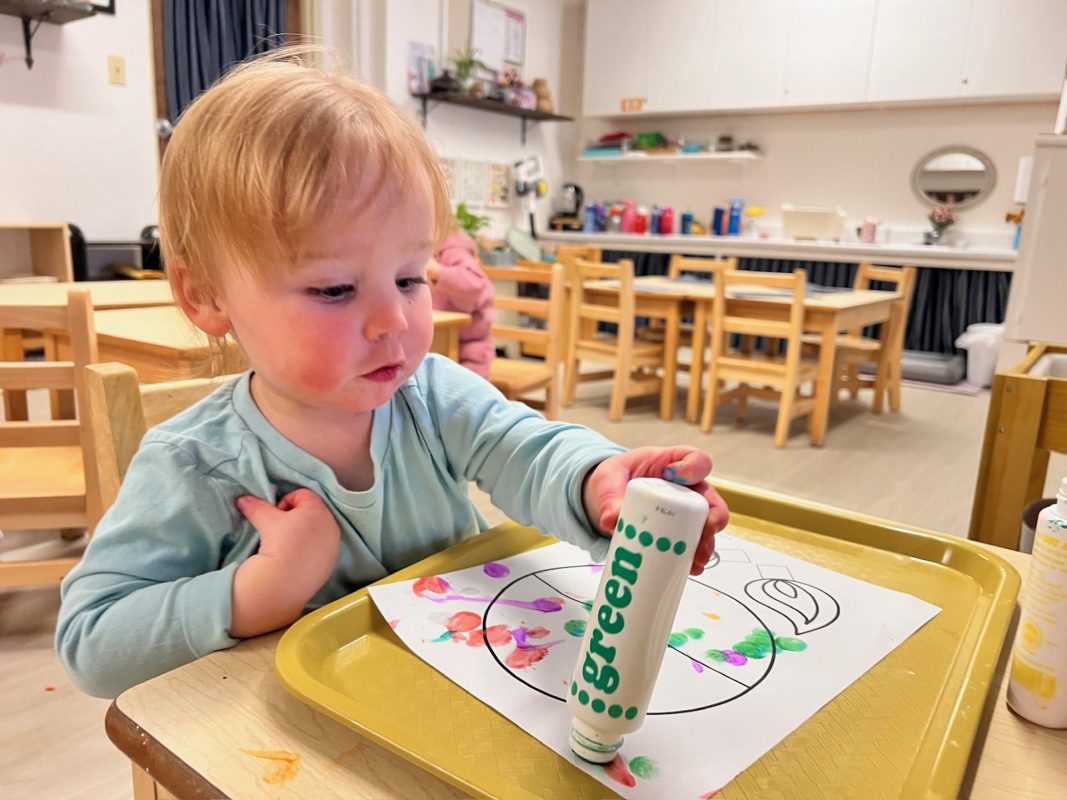
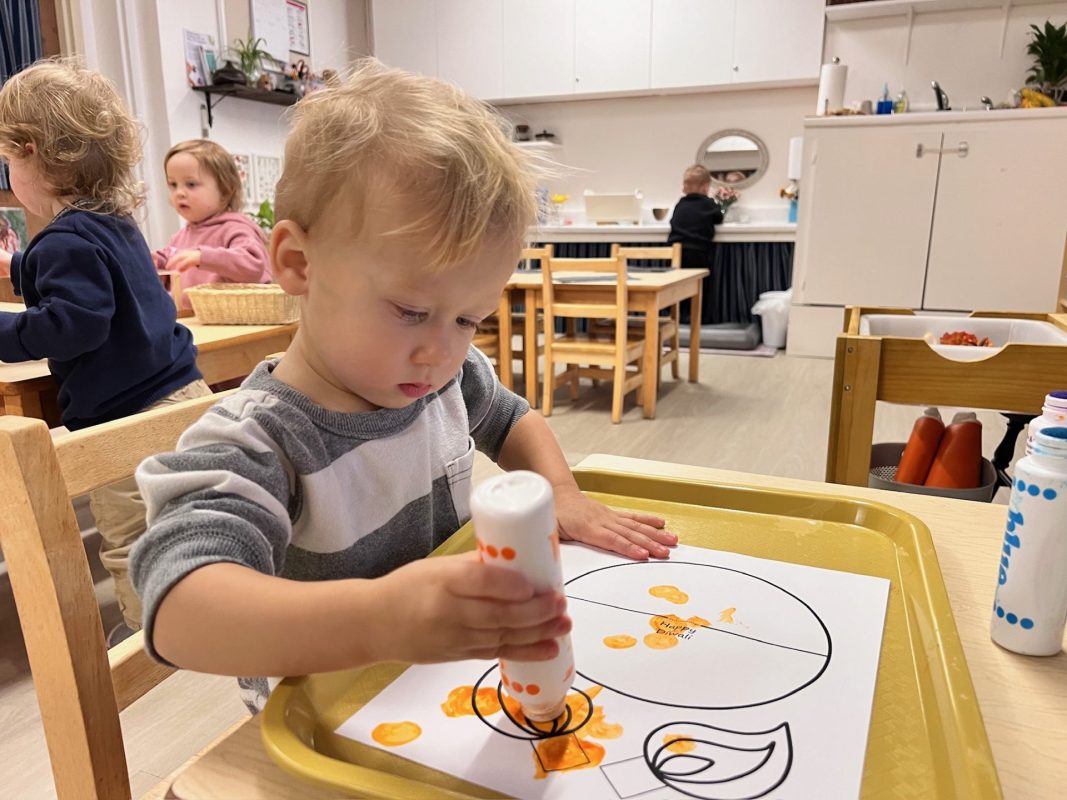
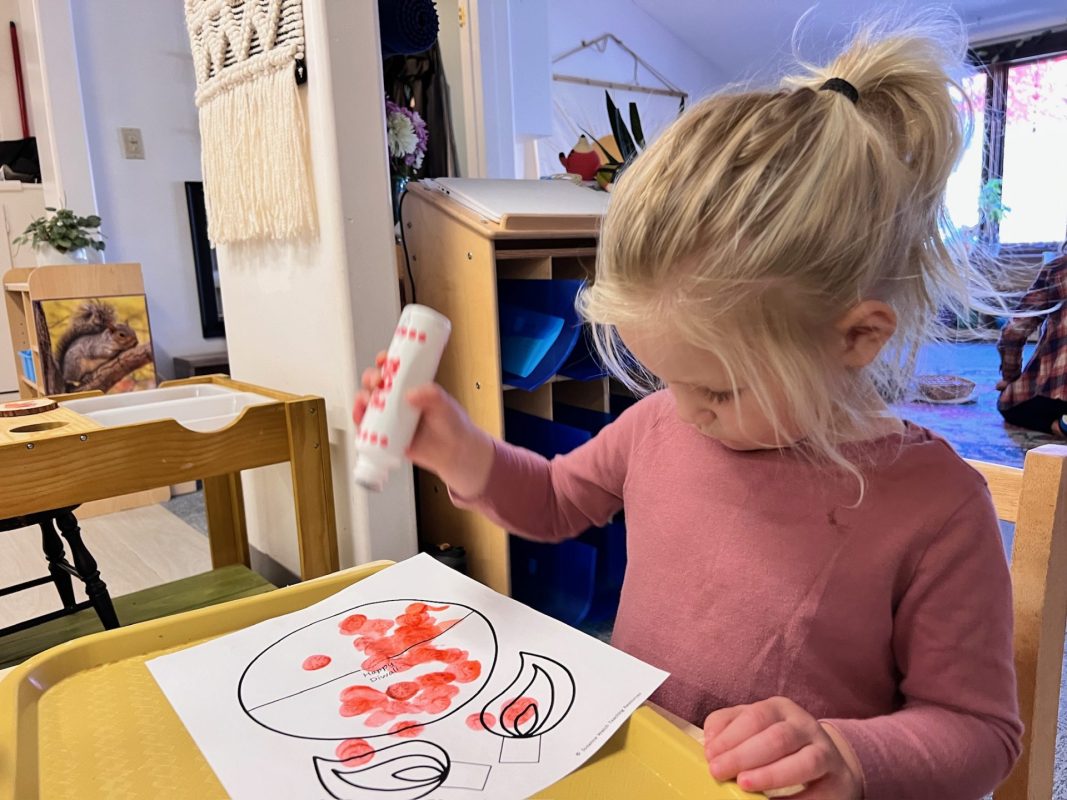
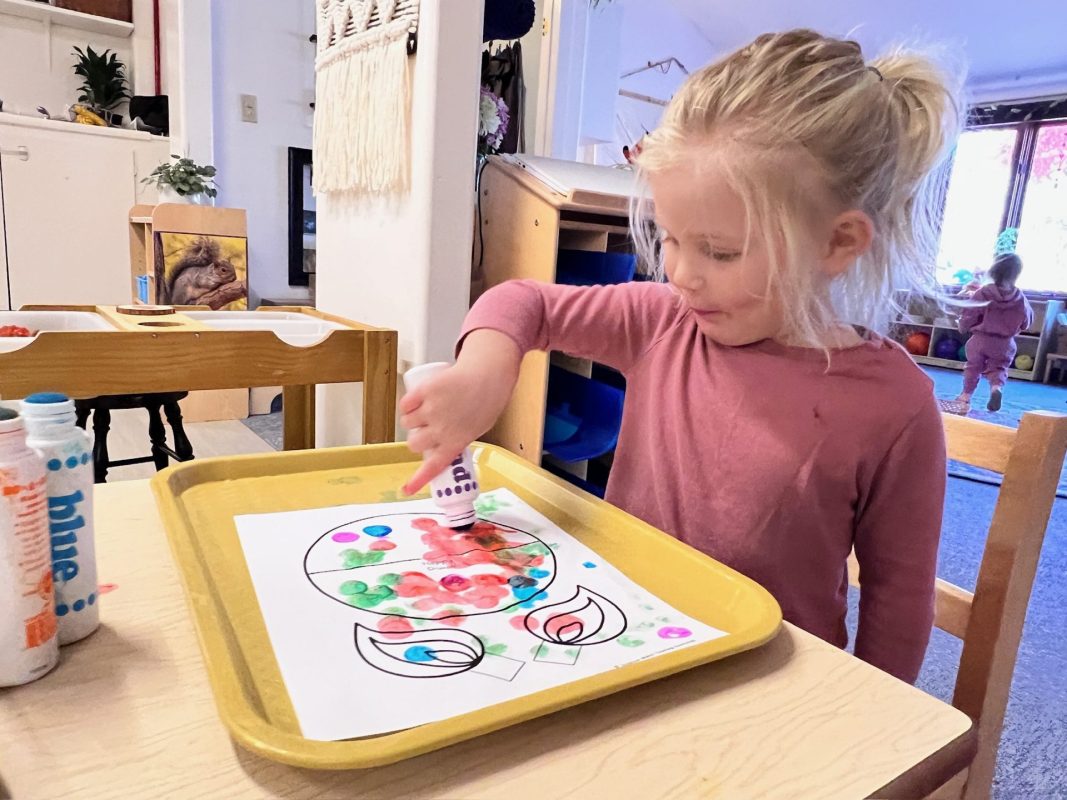
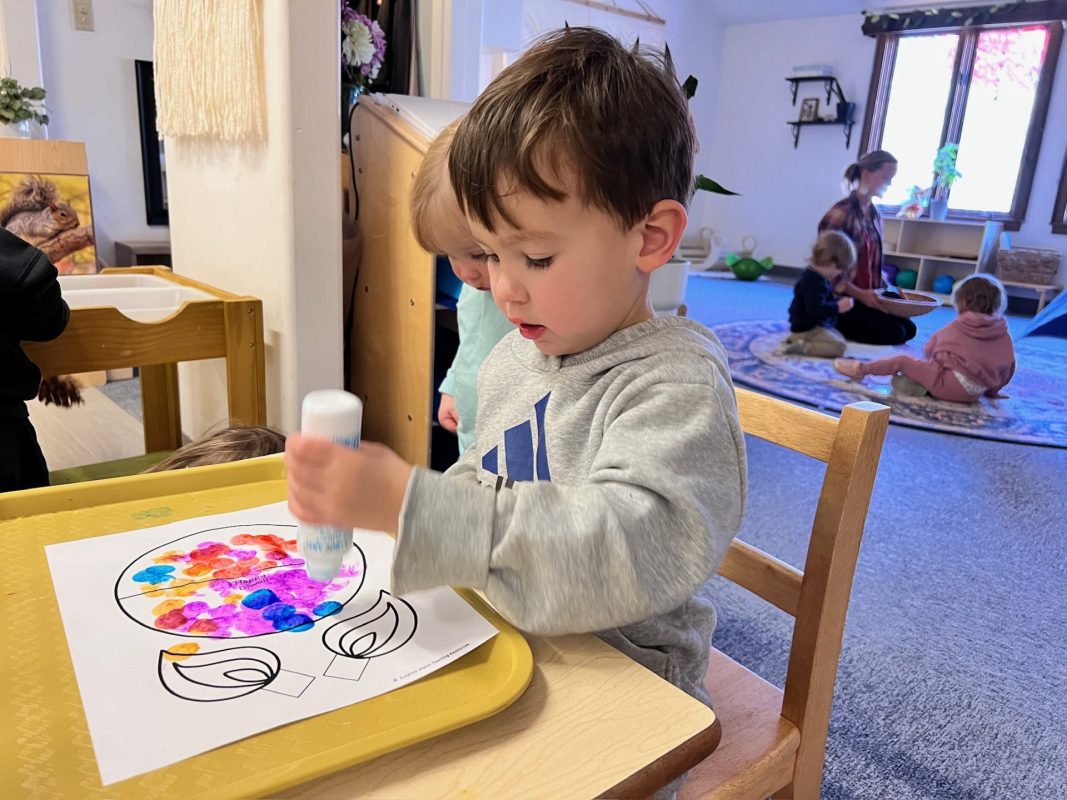
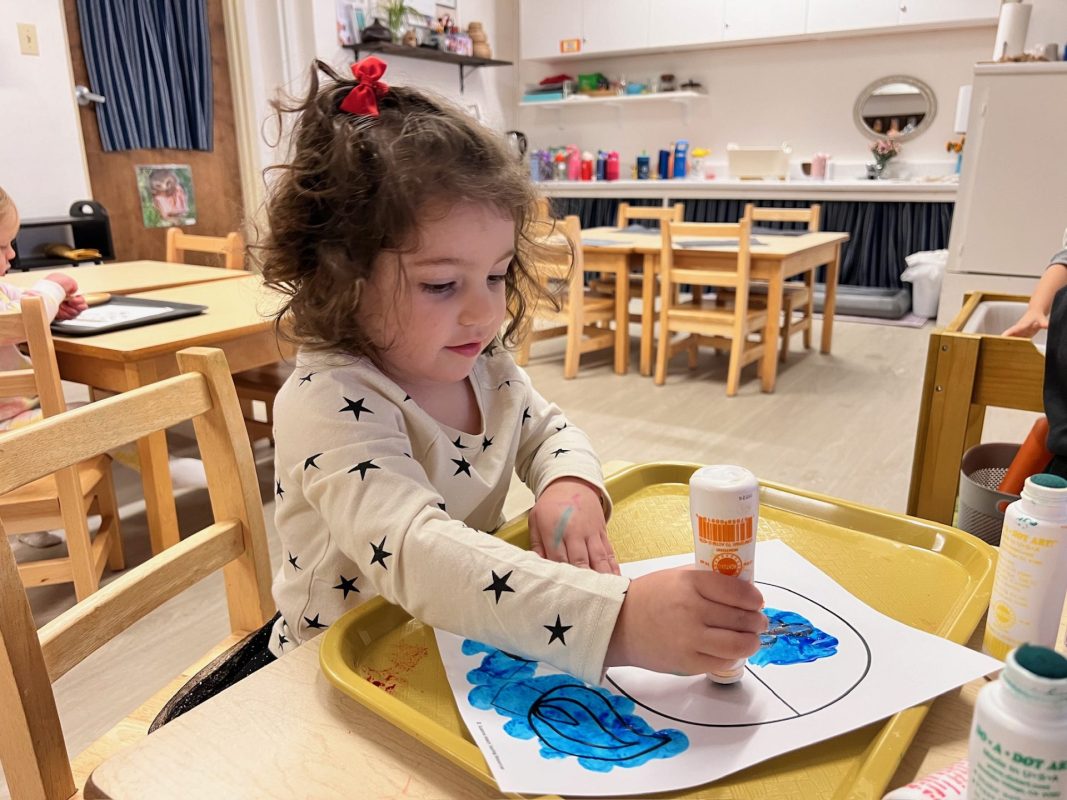
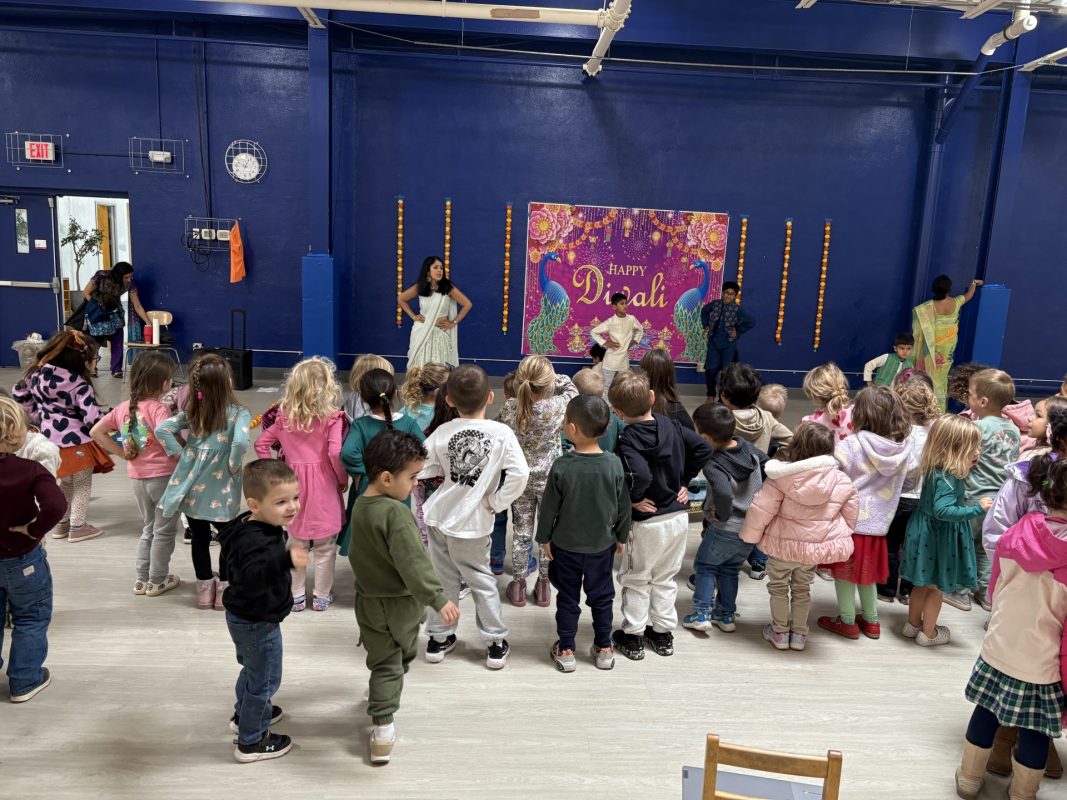
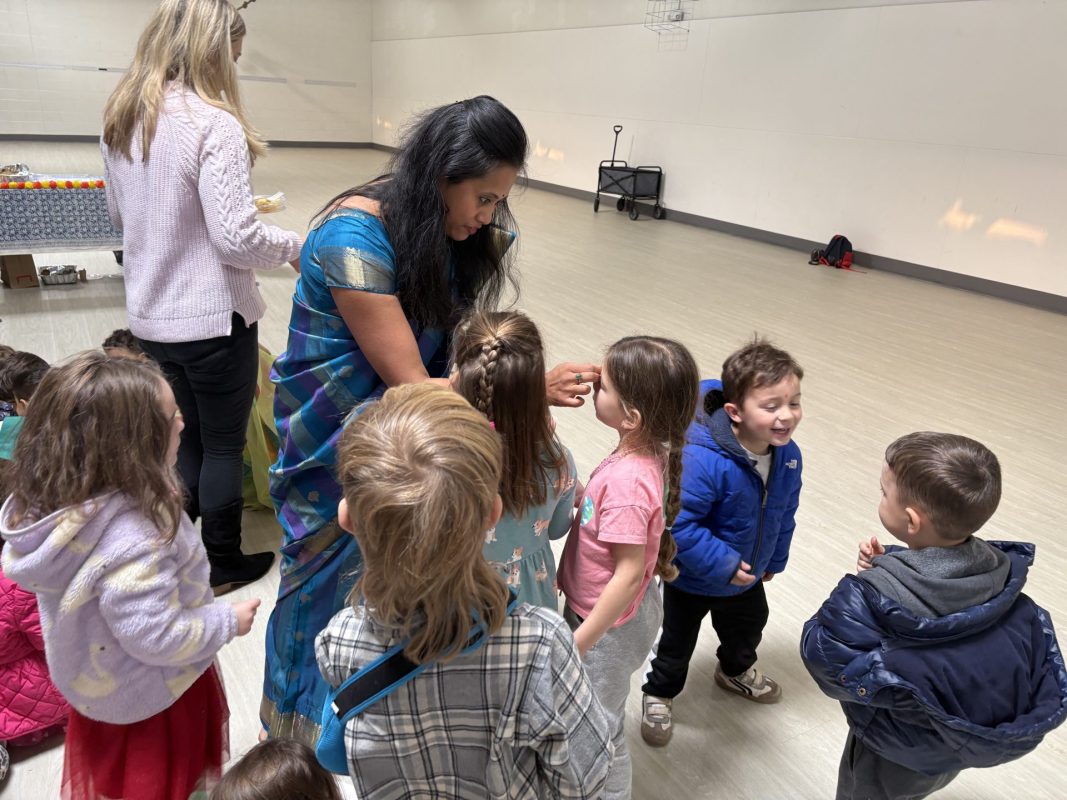
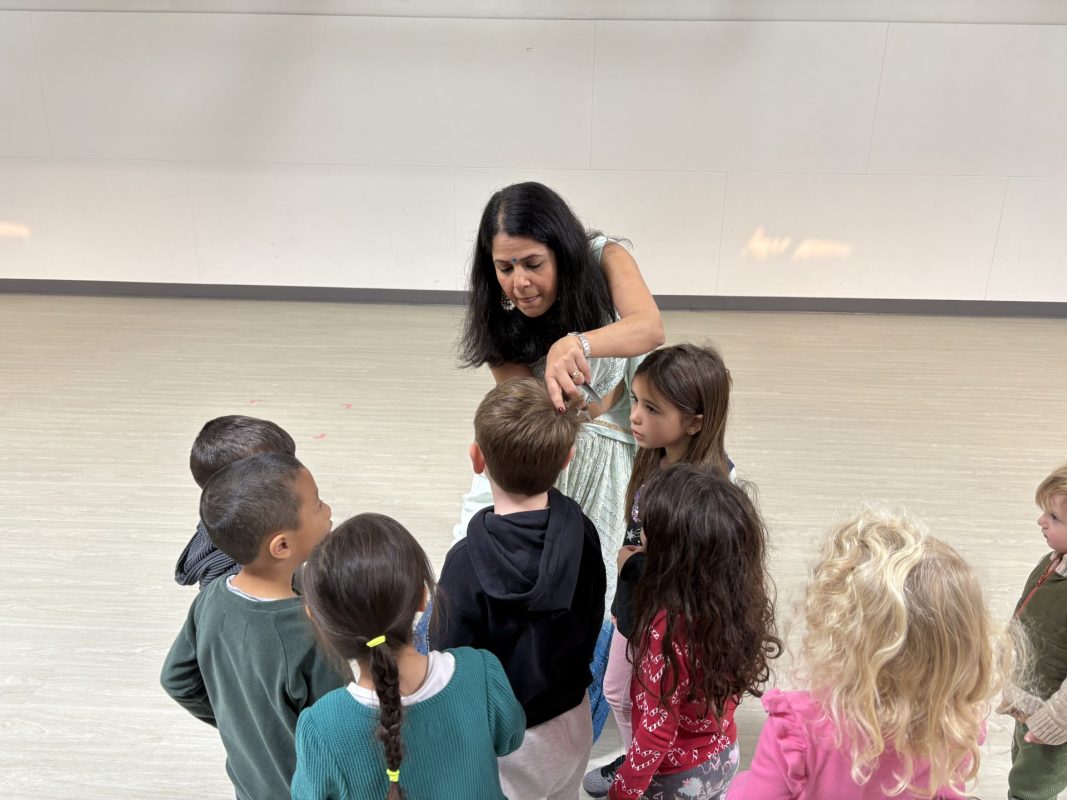
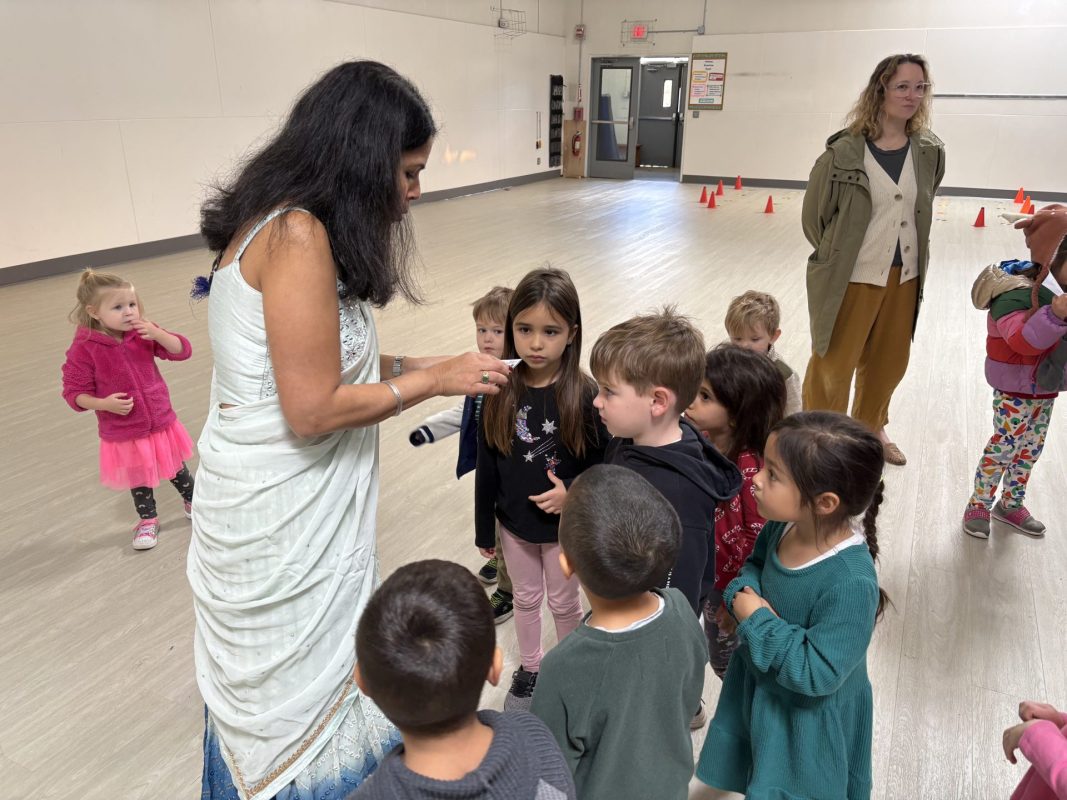
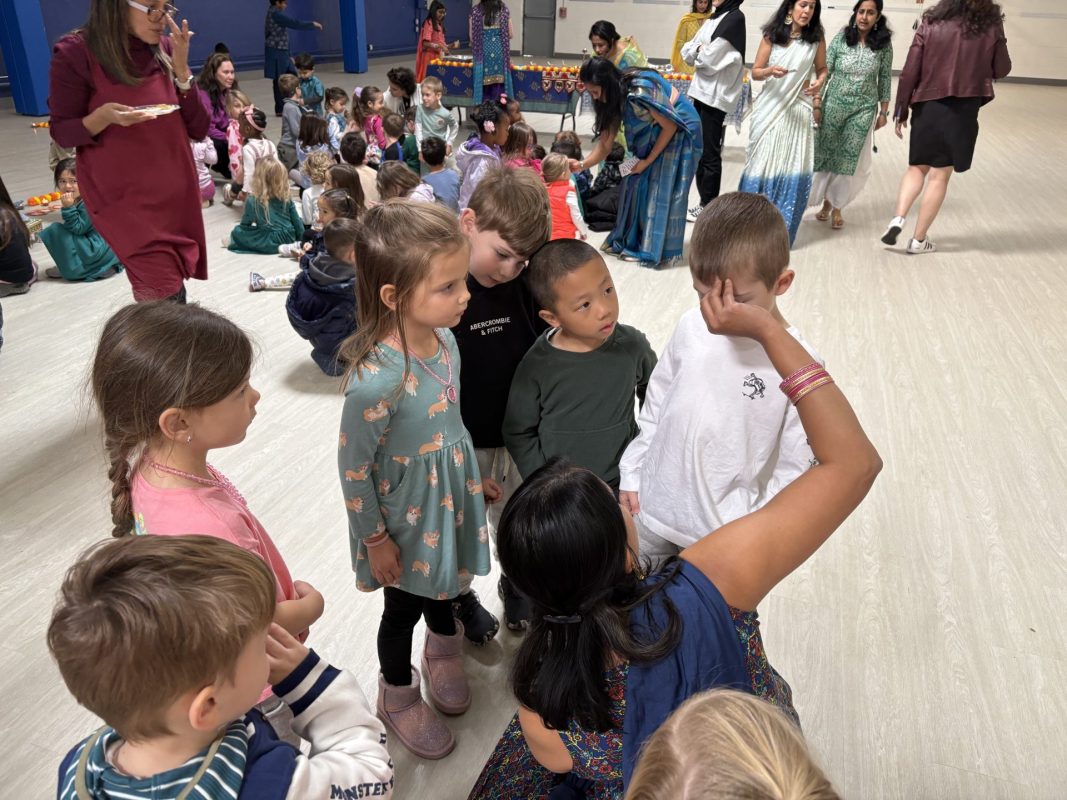
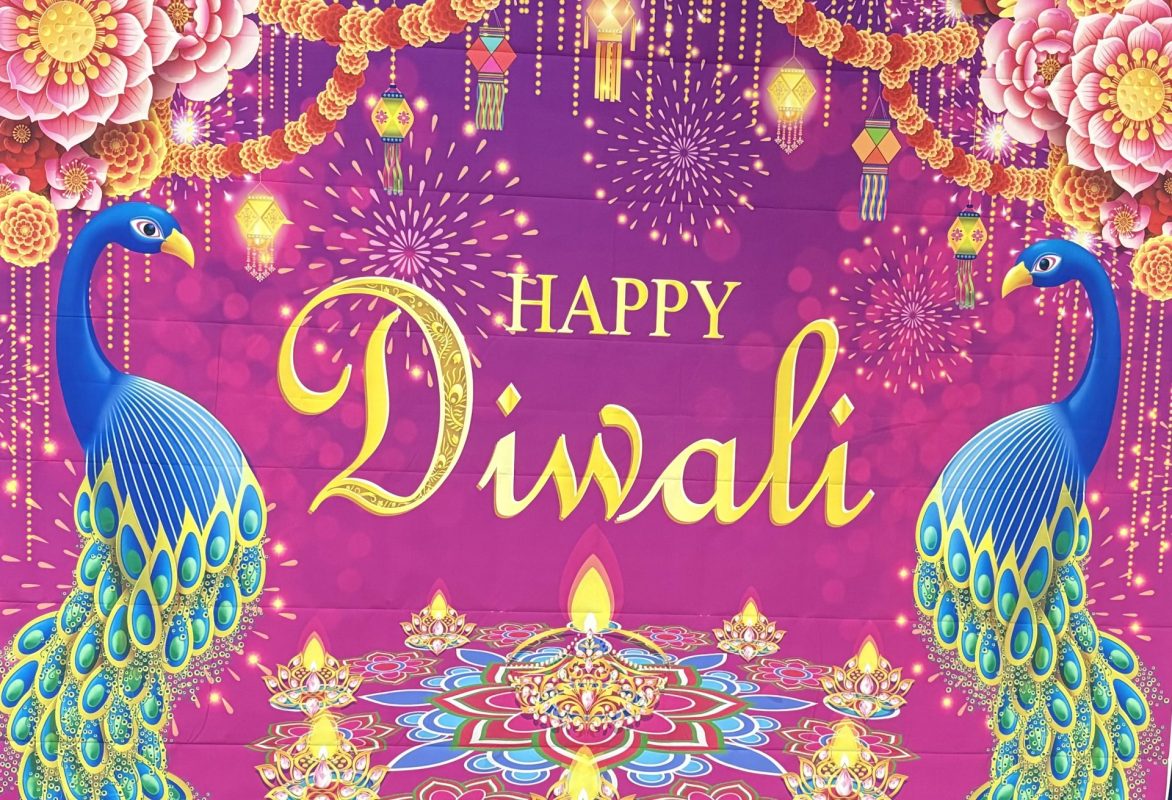
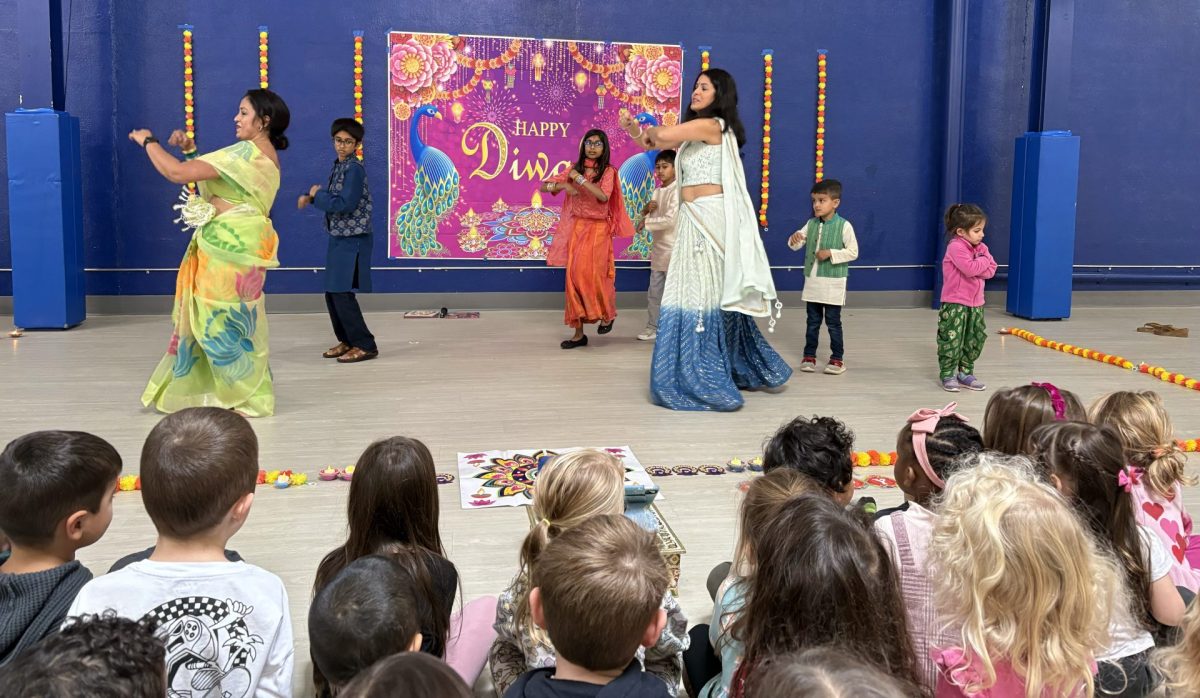
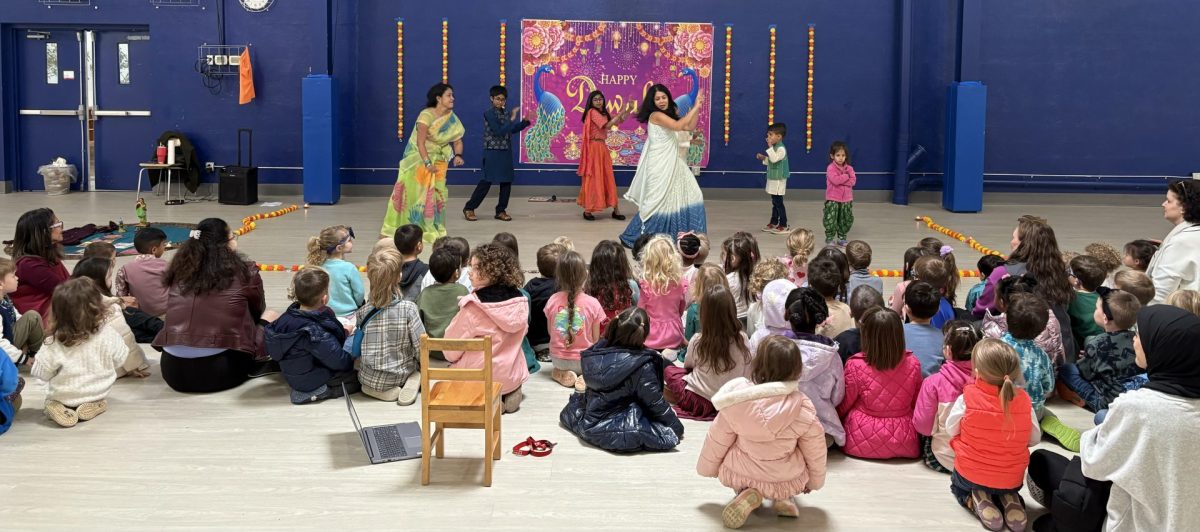
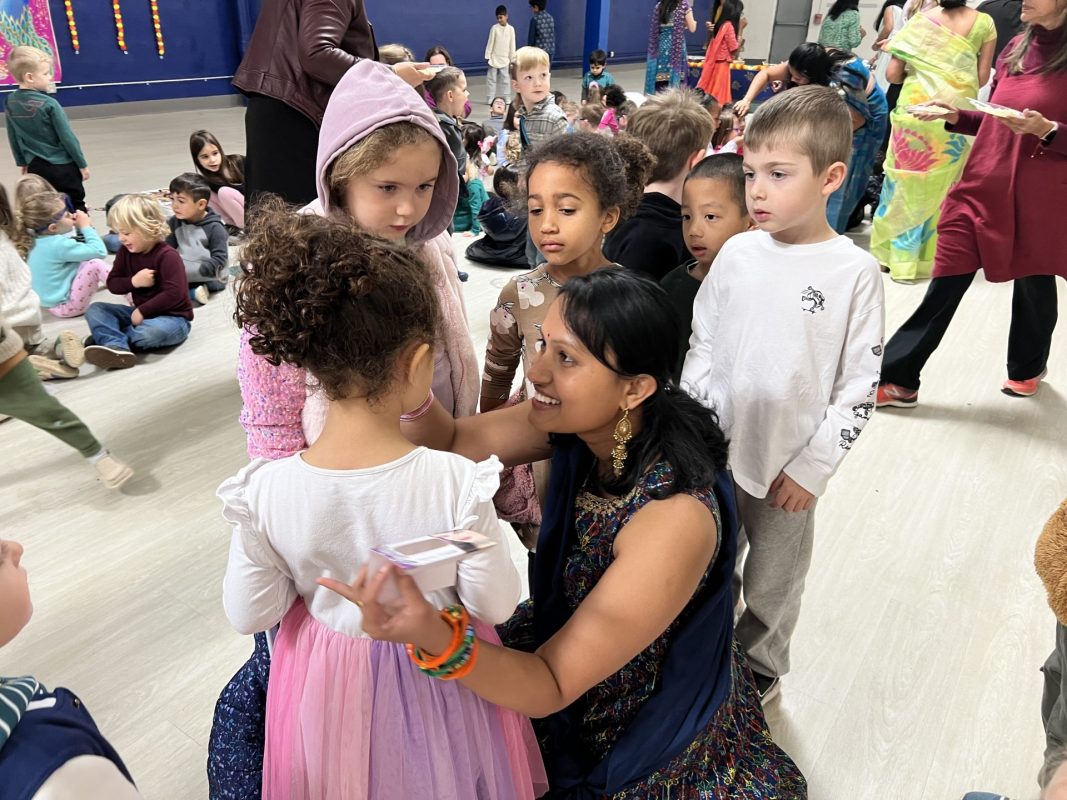
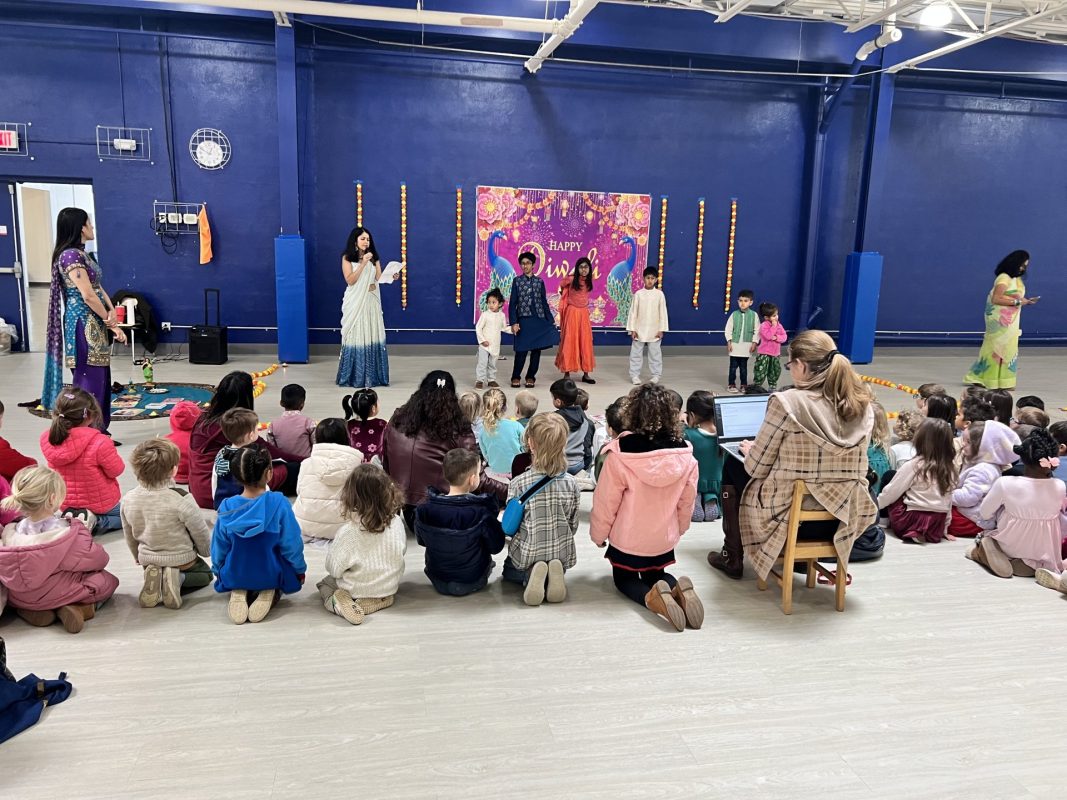
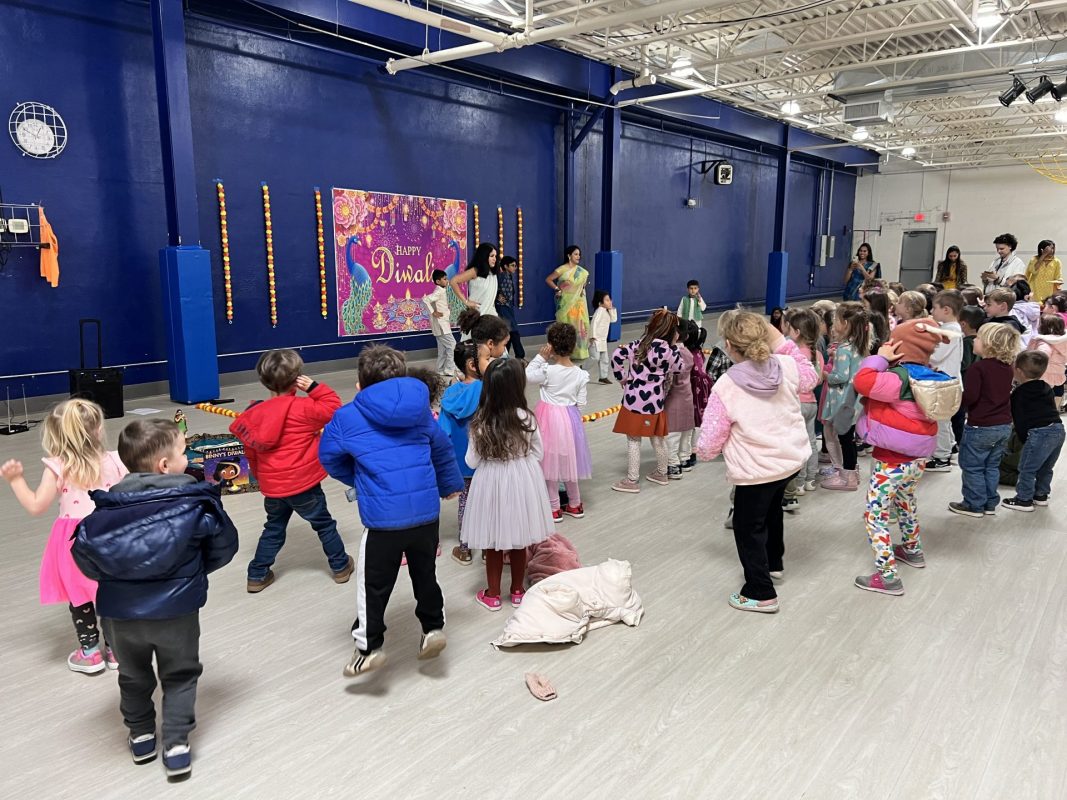
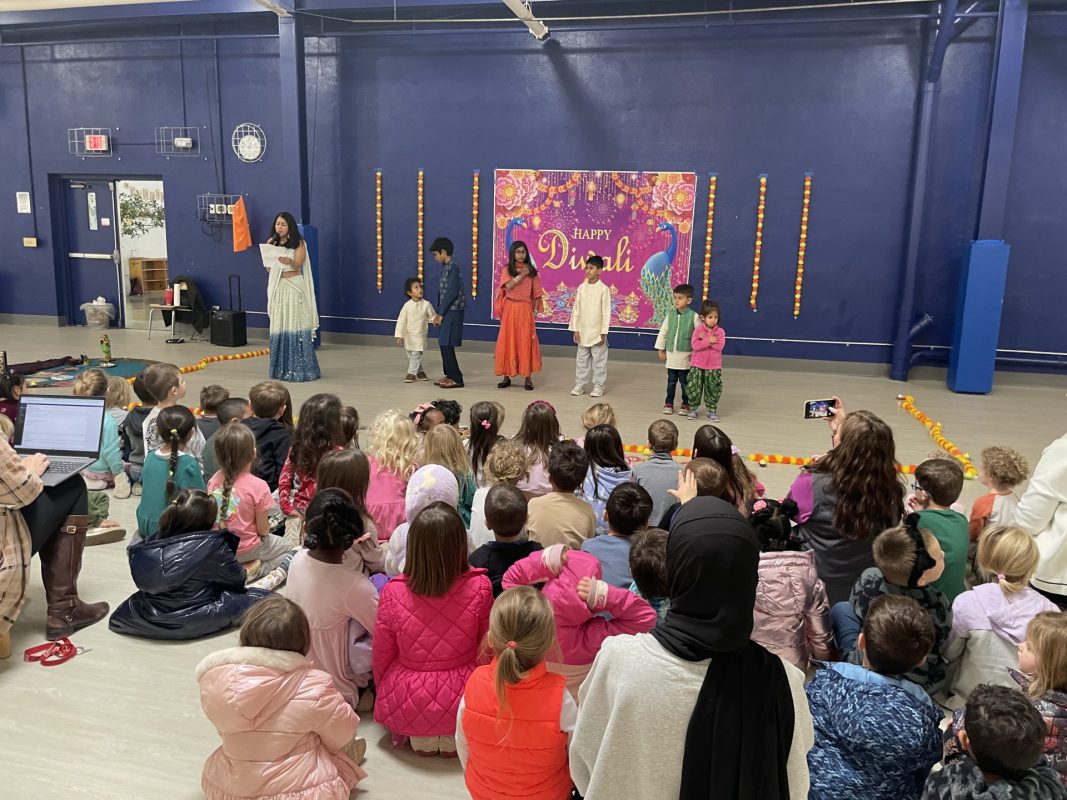
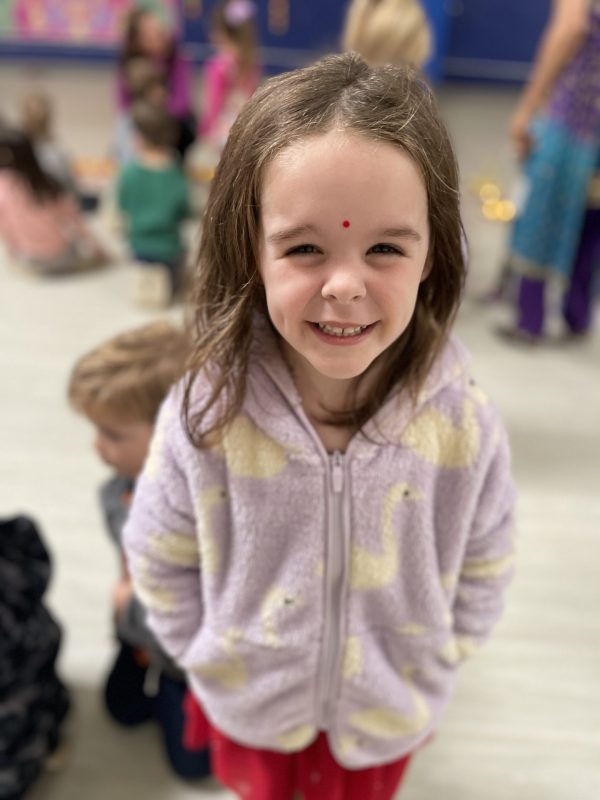
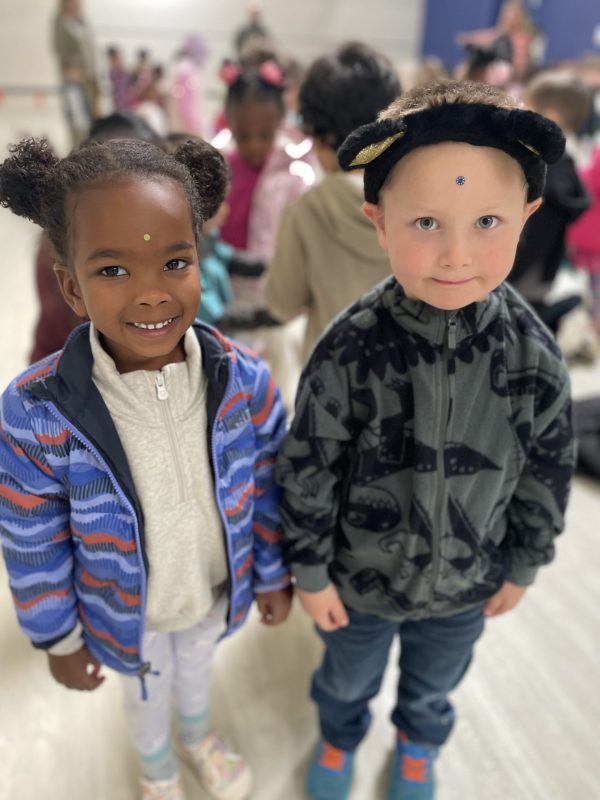
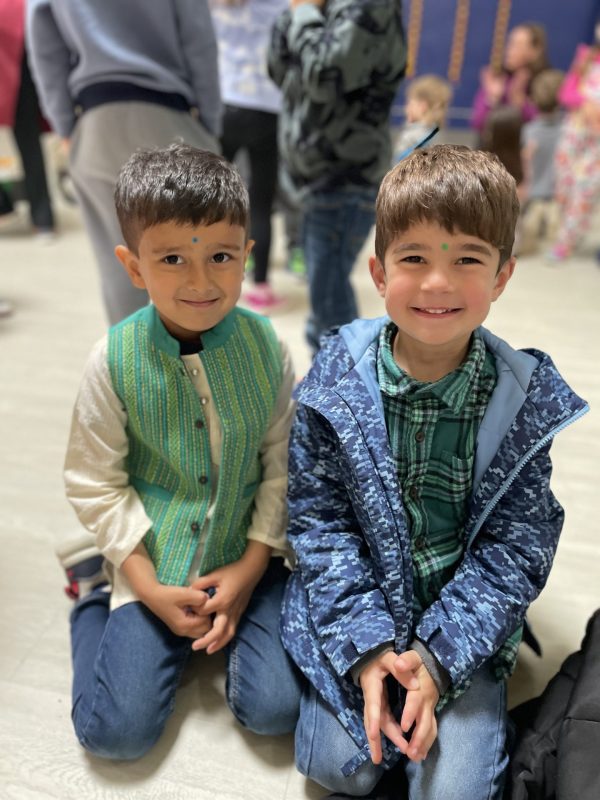
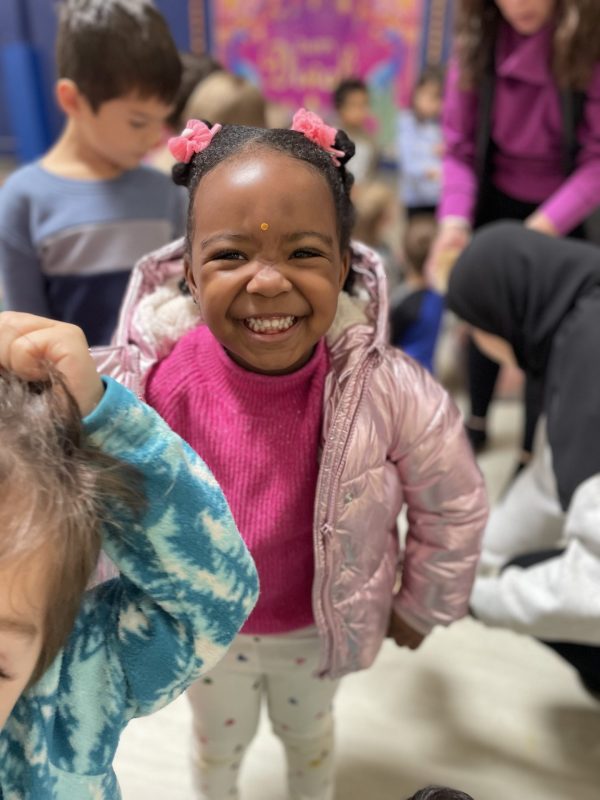
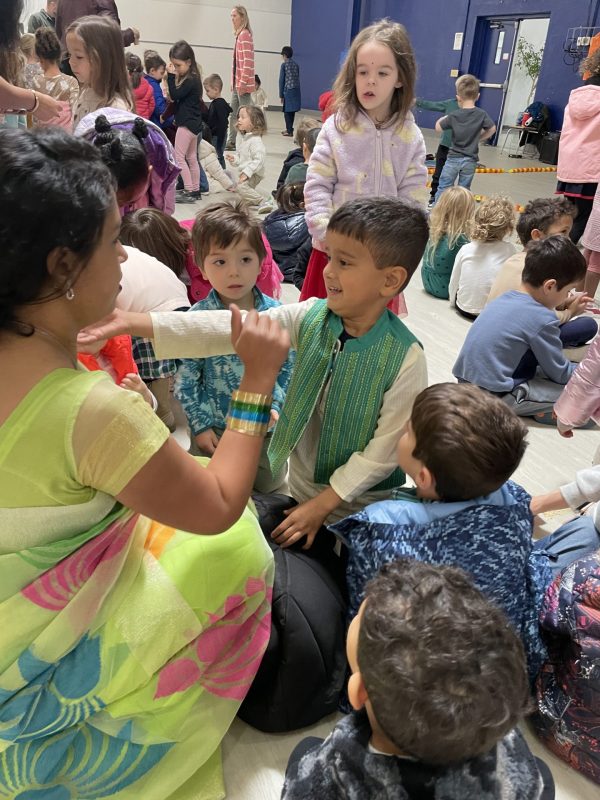
On Tuesday, the entire Primary level gathered in the gymnasium for a Diwali celebration. Diwali is a five-day festival that is observed around the world, and its rituals vary by region. Diwali represents new beginnings and the victory of light over darkness, good over evil. It is the triumph of righteousness, knowledge in place of ignorance. Homes are brightly illuminated with diyas (candles) and oil lamps, and people decorate their homes with rangoli. People also often wear new fine clothes and jewelry and celebrate with family and friends.
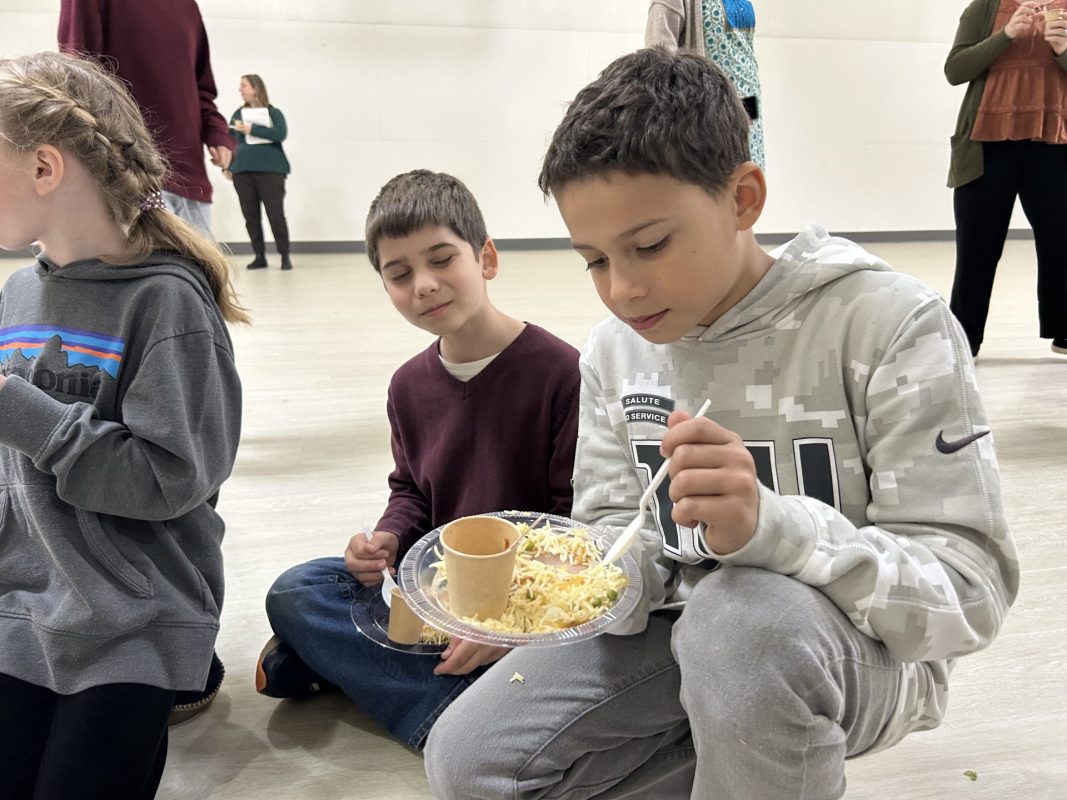
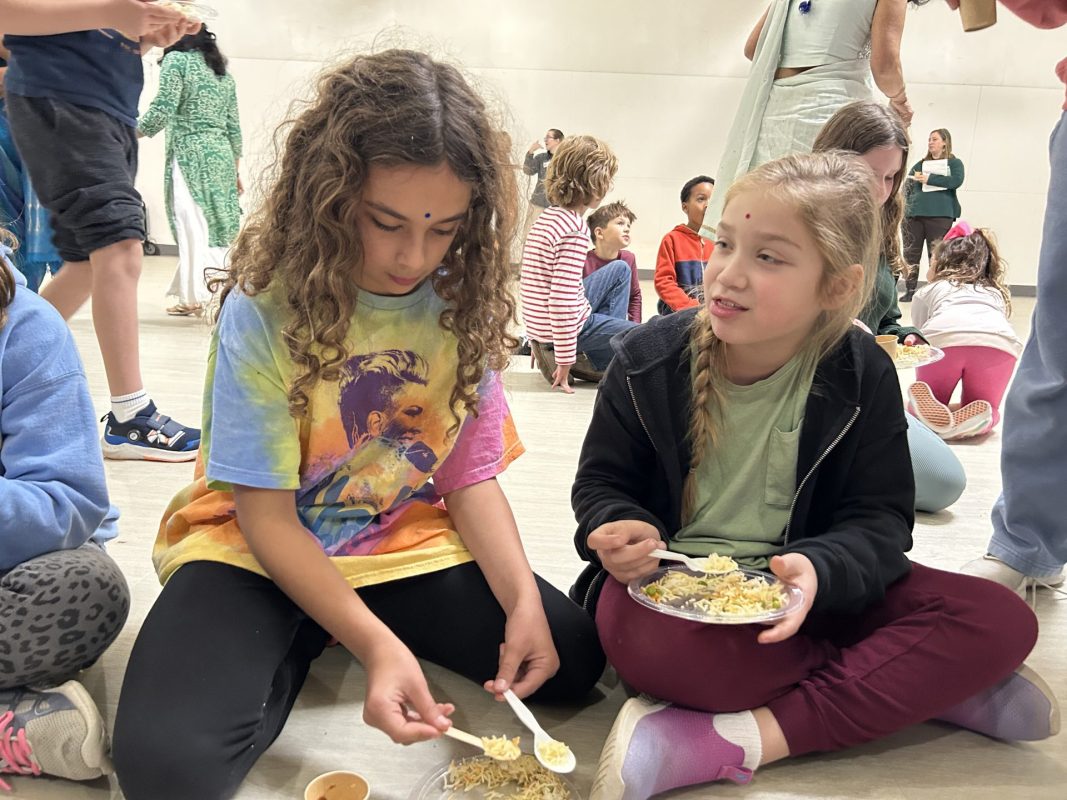
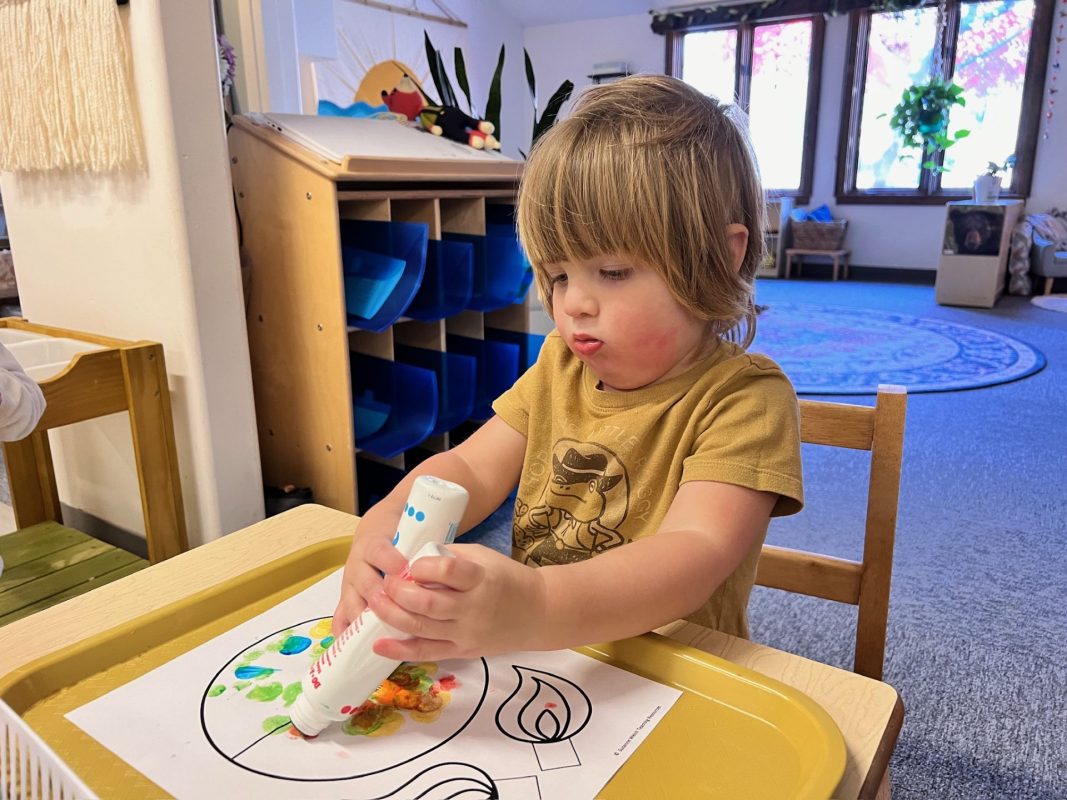
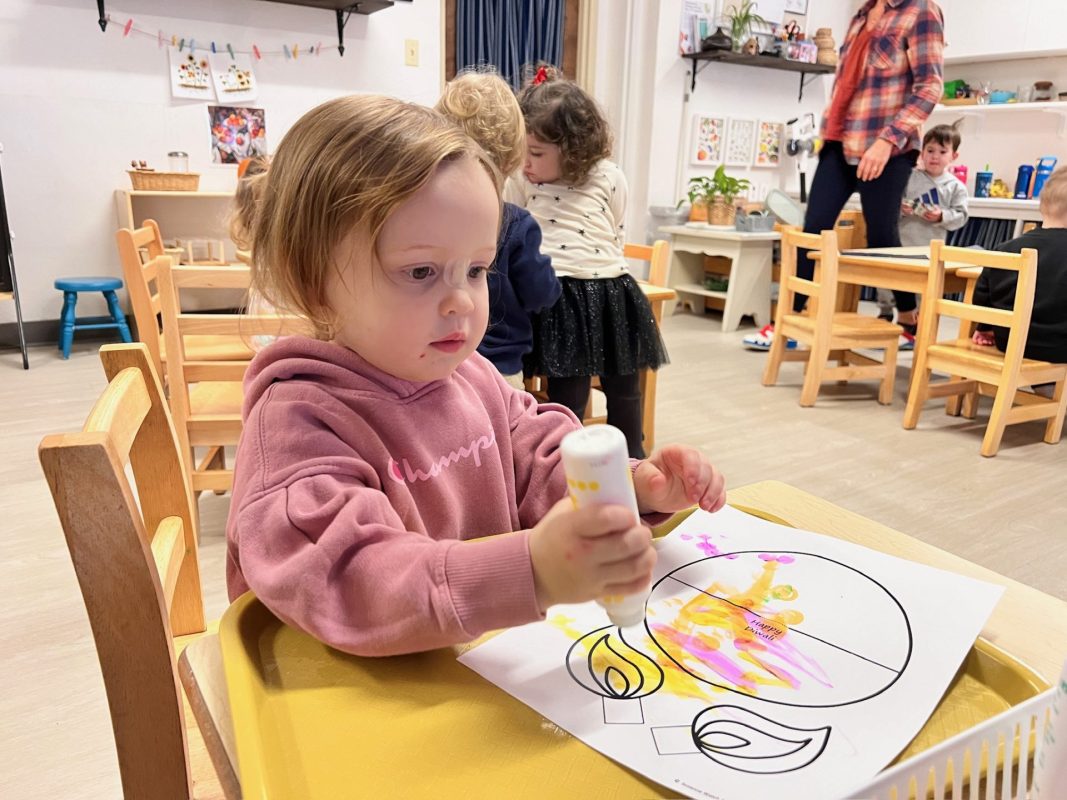
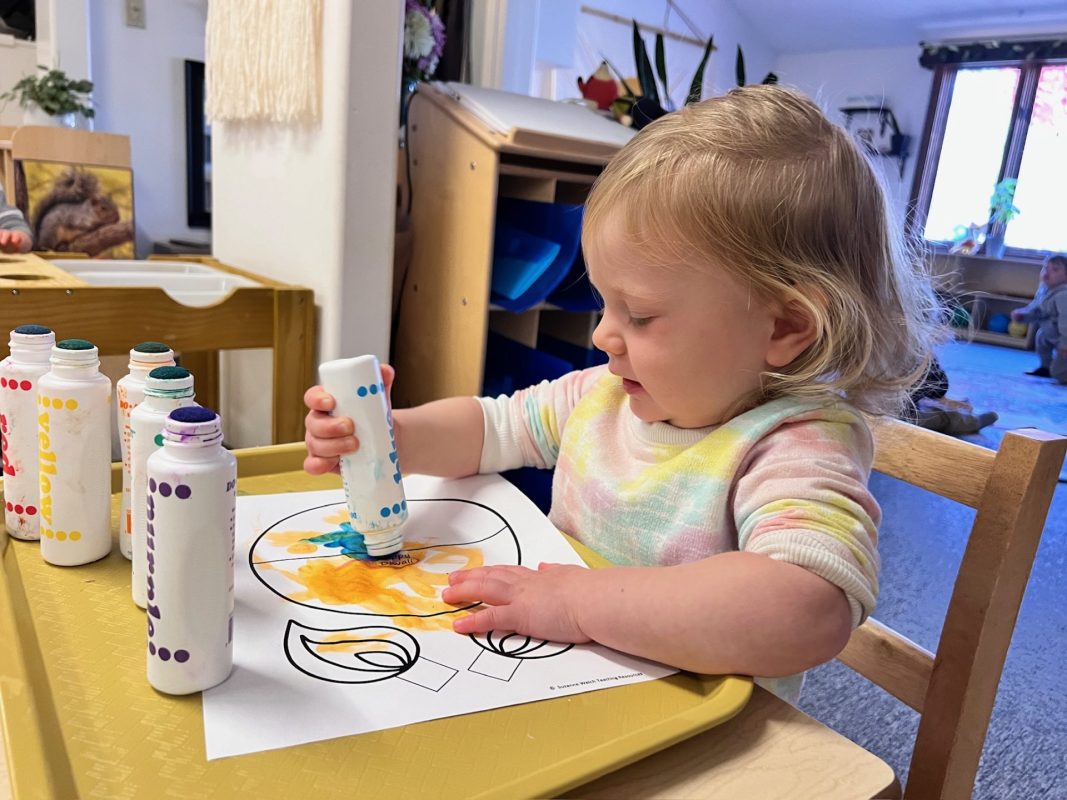
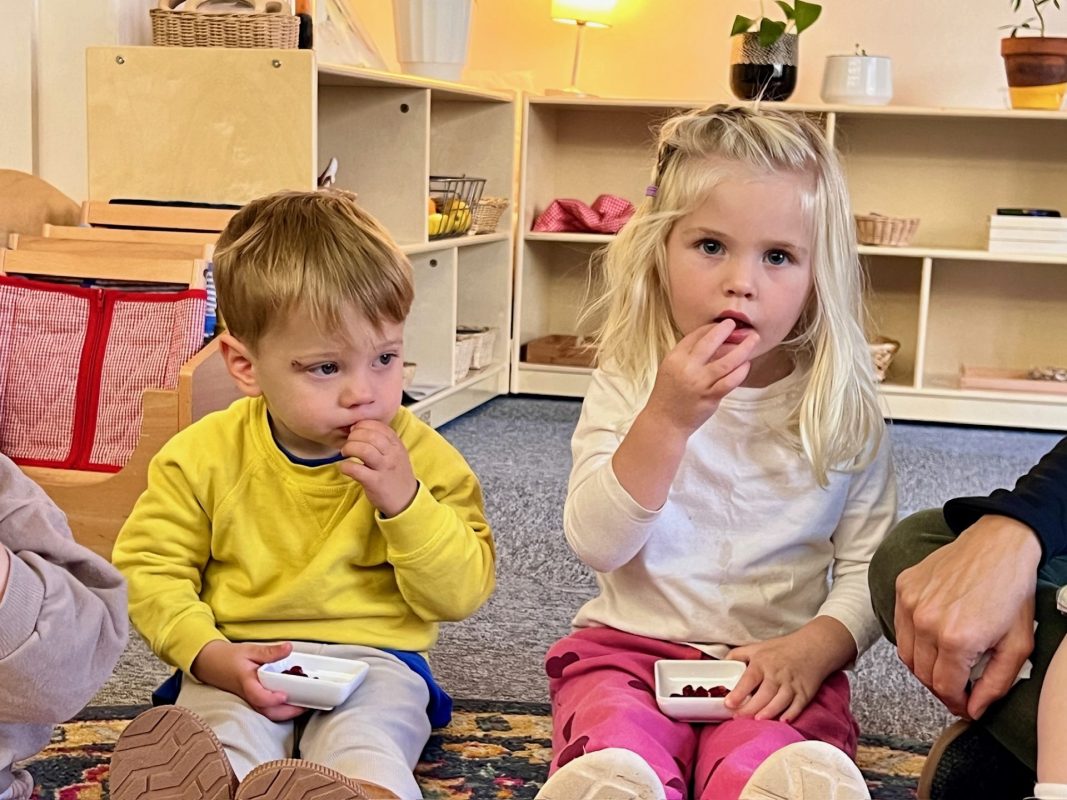
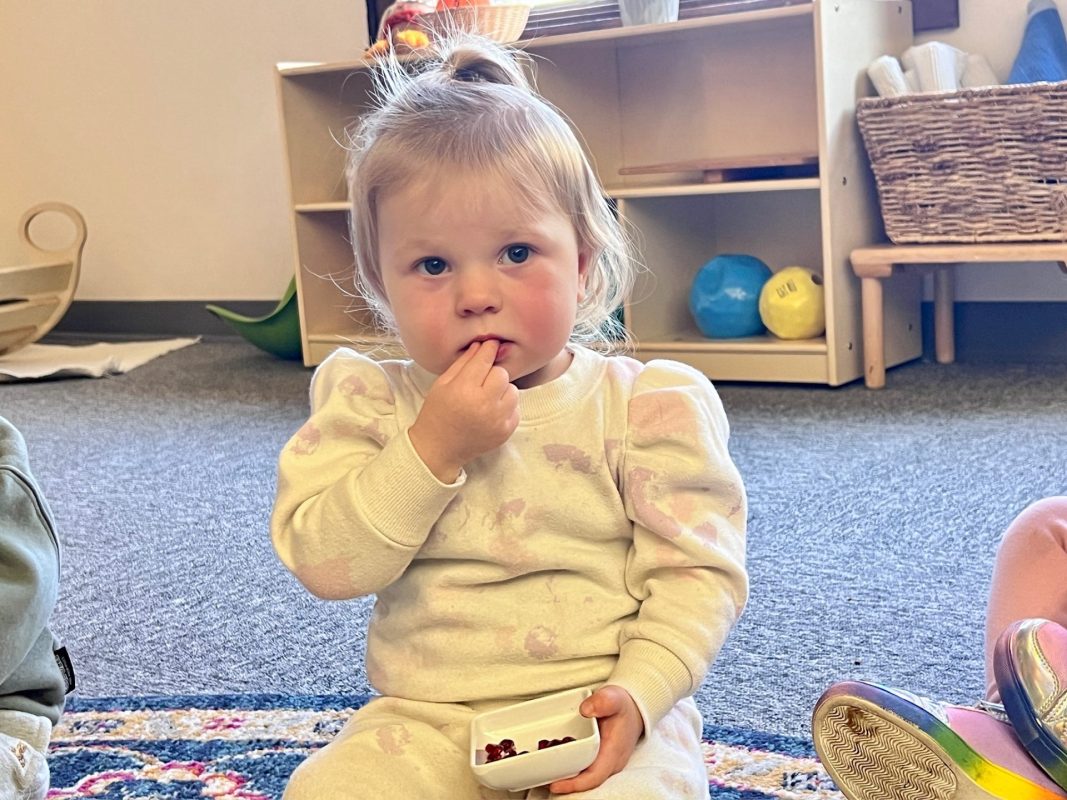
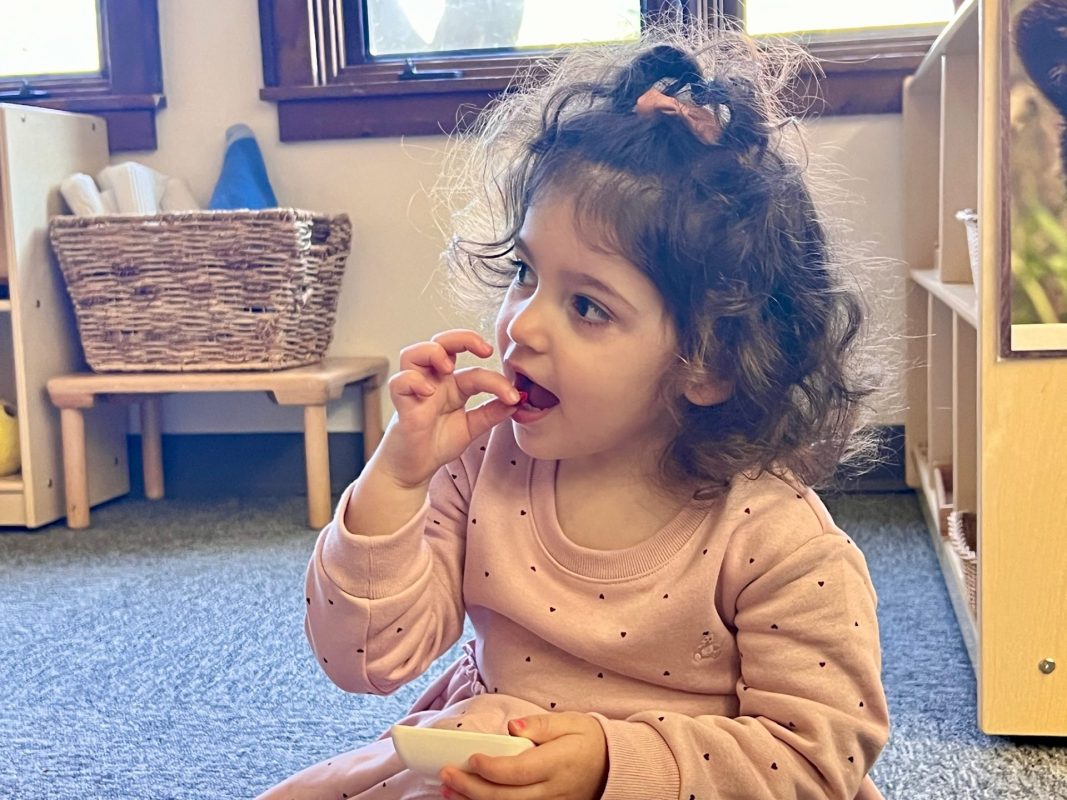
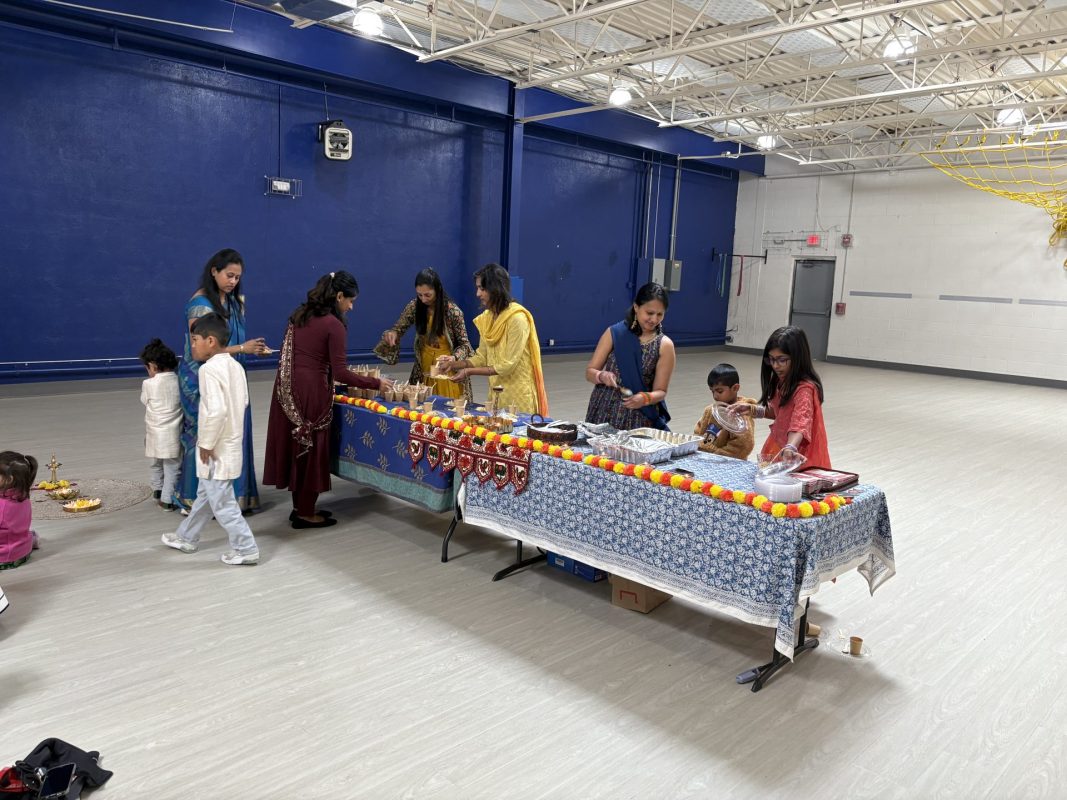
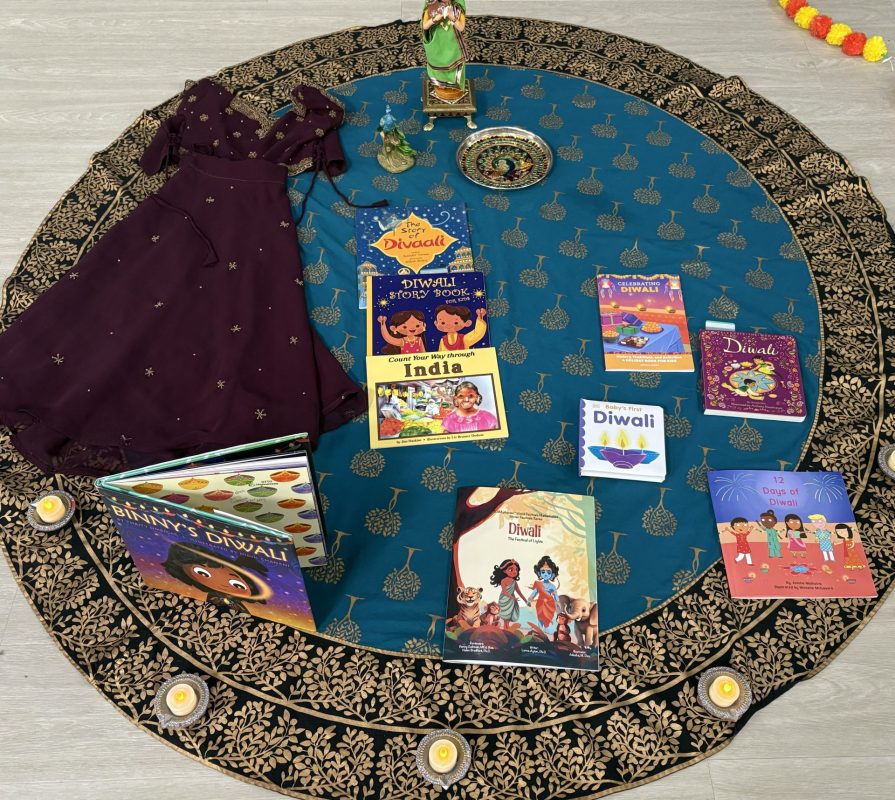
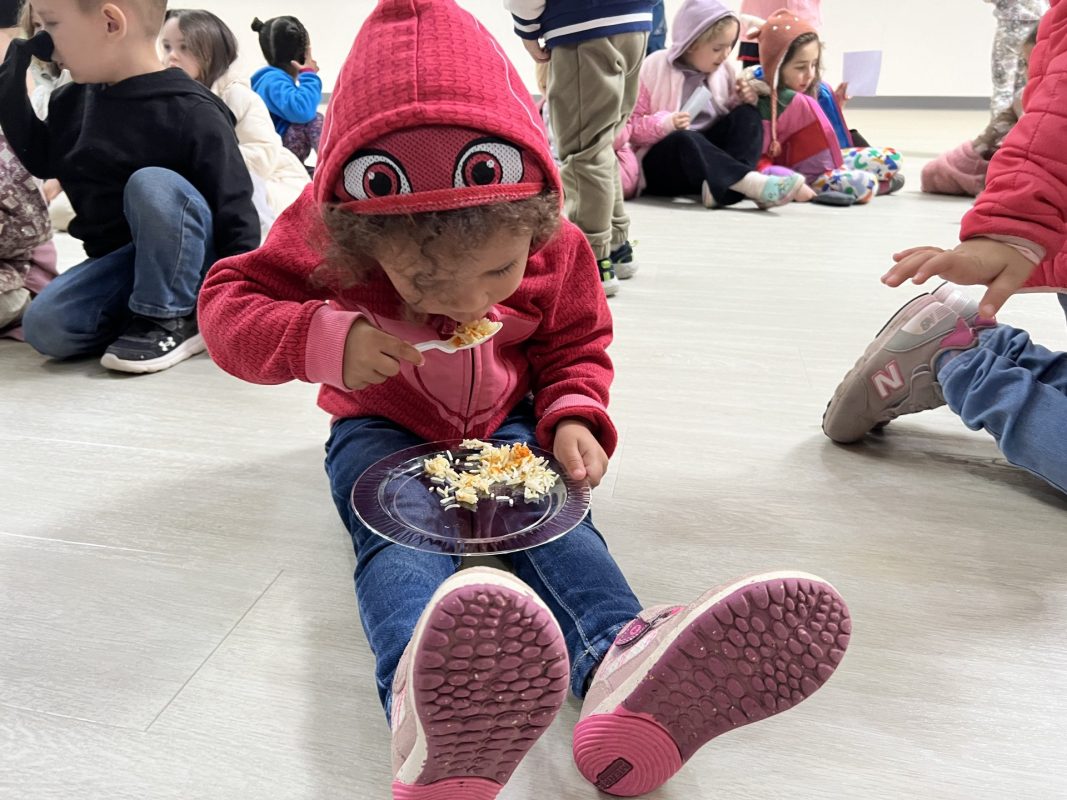
Ms. Paromita and Ms. Hema, along with several parents from our community – including some of our very own students’ Moms -were dressed in traditional Indian attire and provided our children with a wonderful opportunity to experience the beauty of Indian culture. A few students from lower and upper elementary read a book about Diwali. Our children were mesmerized by the sights and sounds! Ms. Paromita danced to Indian music in her gorgeous attire, and the gymnasium was decorated with beautiful and meaningful items related to Diwali. The children were able to taste traditional Indian food and decorate diyas to take home. We are so grateful to all who shared their culture!
Earlier in the week, we celebrated Ms. Tima’s birthday. She was delighted to receive so many wishes, flowers, and cards. Hayes’ Mom even baked a delicious coffee cake, which we shared as a group, as Ms. Tima blew out a candle and made a wish. We had a lovely week in the classroom.
Wishing everyone a week filled with peace and love. -Christine & Fatima