Caroling
Spreading good cheer ‘the old fashioned way’ is easy when you go Caroling. Not only is this a beautiful way to infuse the delight of Holiday song through your local community, it’s also an excuse to get outside and walk around with your caroling friends – be they new friends or old!
You don’t need a one-horse open sleigh, glistening snow, or angelic voices to enjoy caroling with your family. The key to making caroling fun for kids is mixing cheery music with lots of holiday spirit!
Check Your List
Before heading out, use this checklist to get ready:
- Invite your children’s friends and their parents to join you.
- Make songbooks. Kids ages 3 to 7 can create book covers, while 8 to 12 year olds help you write out or print copies of lyrics to favorite songs.
- Pick a well-lit path you know well.
- Decide beforehand how far your carolers will walk and how long you want to stay out.
- Kids can carry flashlights; adults can carry candle lanterns.
- Take a wagon. It can hold everything you take along as well as small children who might get tired.
- Give yourselves a fun name like “Santa’s Singing Superstars,” and make a sign to put on the wagon.
- If collecting money for a charity, make a sign and a donation jar with the organization’s name.
- Before visiting a nursing home or hospital, call ahead and get an okay from the administration.
- Bring along cookies and a big thermos of hot cocoa. Don’t forget the cups and marshmallows!
Before you head out to spread cheers, I would like to share what I found about Caroling.
How did the Caroling tradition begin? Who wrote the carols? And why do we feel compelled to sing them on the front porch of a total stranger’s home?
The root of the word “carol” lies not in song, but in dance. In Old French, “carole” means “kind of dance.” In Latin, “choraula” means “a dance to the flute,” and in Greek, “choraules” means “flute player who accompanies the choral dance.” Although there are some carols centering around religion, the song were originally secular — up-tempo melodies with alternating choruses and verses associated with traditional dances. Like many other Christmas traditions, caroling is also thought to have its roots in the pre-Christian celebration of the Festival of Yule, when Northern Europeans would come together to sing and dance to honor the Winter Solstice. As carols evolved into a Christian tradition, they became hymns, having little relation to any type of dance.
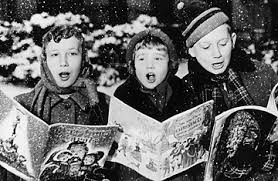
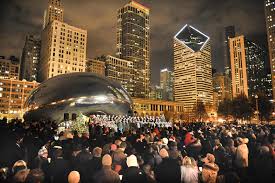
Christmas carols today carry cozy connotations of ancient traditions as old as King Wenceslas, but Christmas caroling as we know it dates back to the 19th Century and not much further. In fact, caroling itself didn’t always involve Christmas, and the ancient tradition of traveling from house to house to wish neighbors good cheer didn’t always involve singing. There’s a distinction to be made between carols — songs stemming from medieval musical traditions — and today’s Christmas caroling, says Daniel Abraham, musicology expert and choral director at American University in Washington, D.C. “The concept of carol in its origins has actually nothing to do with Christmas,” Abraham says. Medieval carols were liturgical songs reserved for processionals in the 12th and 13th centuries. And though modern carols sometimes take their form from these original carols – starting with refrain, followed by verses uniform structure – they are separate entities.
Happy Holidays!!