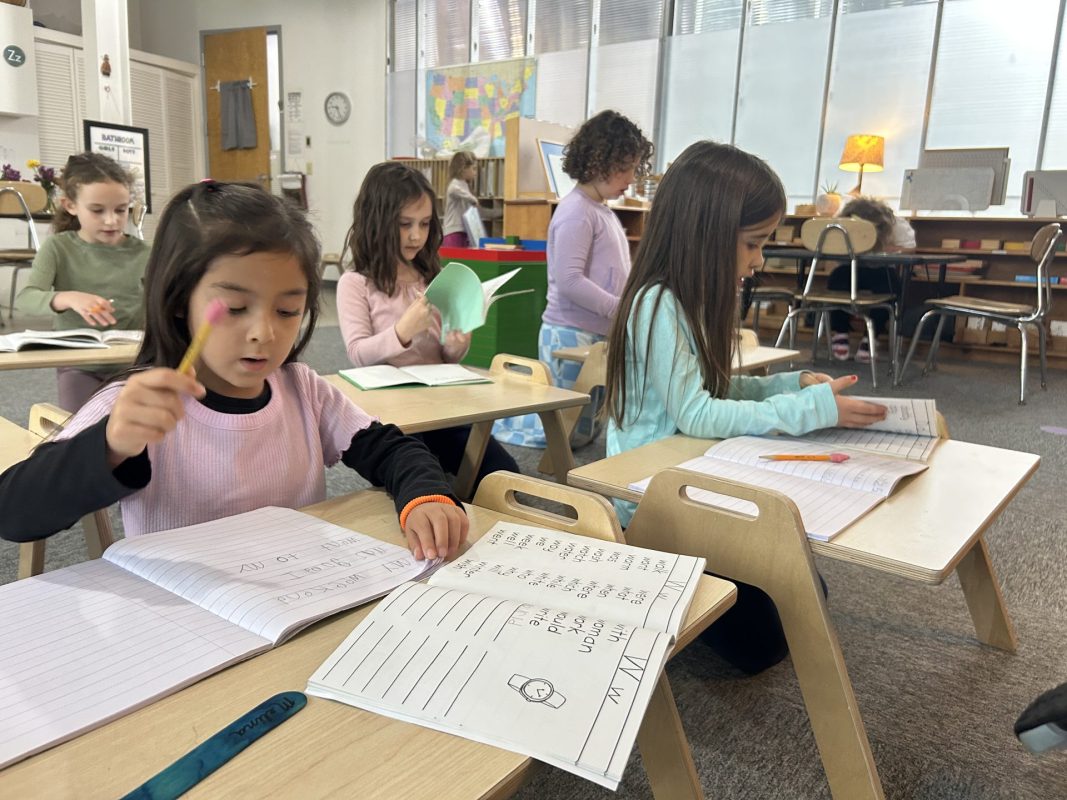
This Week in Lower Elementary

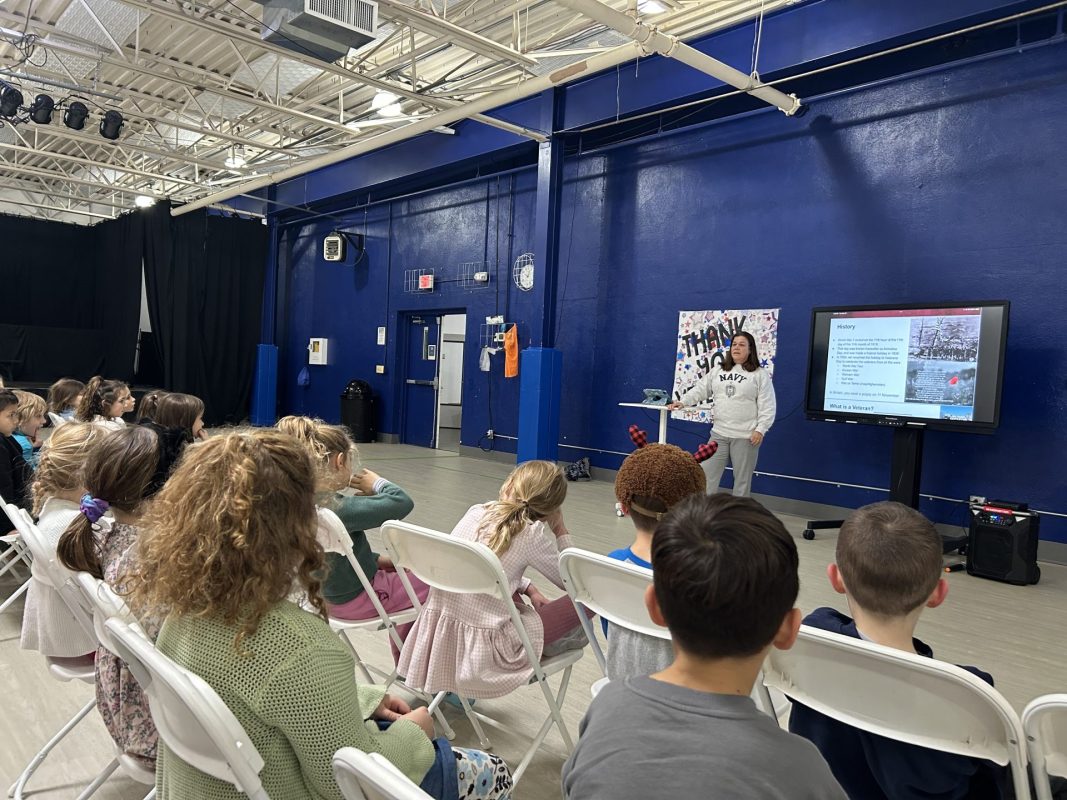
This week, we had the wonderful opportunity to welcome a parent visitor, Jennifer Mills (Elinor’s mom), who is also a Navy veteran. In honor of Veterans Day, she offered an engaging and thoughtful presentation for the children. She explained the purpose of Veterans Day, shared her experiences serving in the Navy, and introduced the different branches of the military in a way that was clear, accessible, and captivating. The children were so enthusiastic to hear all she had to share. They asked insightful questions and were truly engaged. We are so grateful that she took the time to visit and share her expertise with our community.

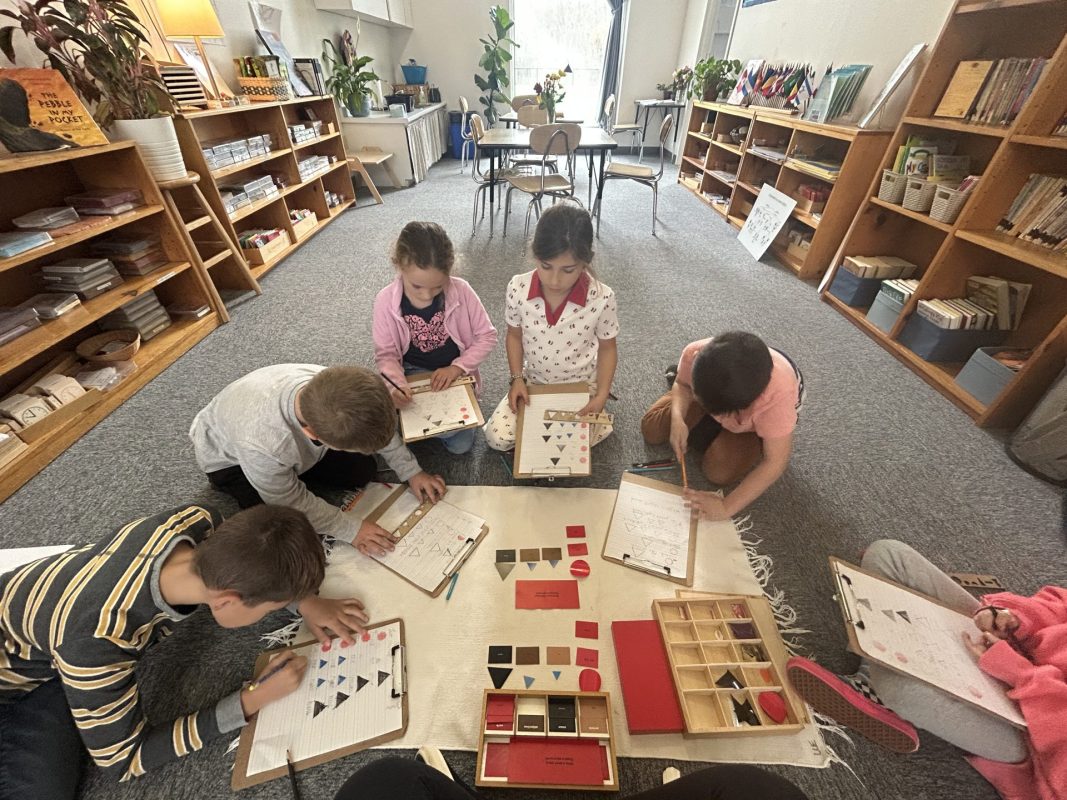
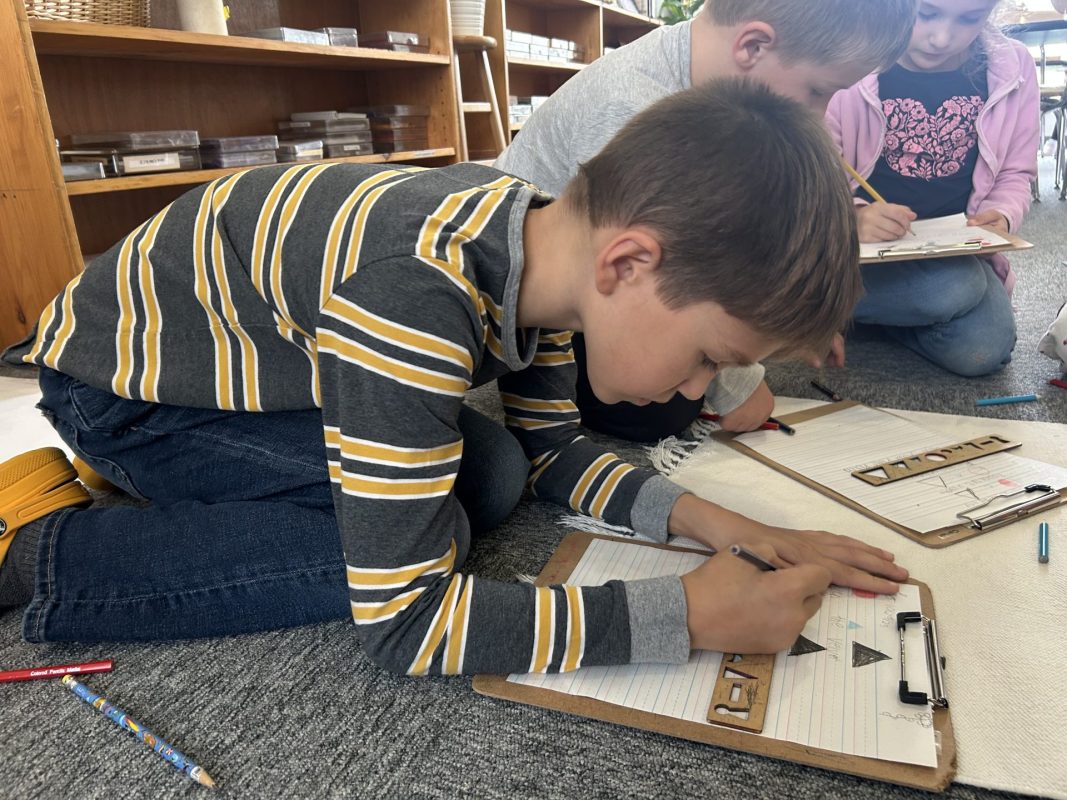
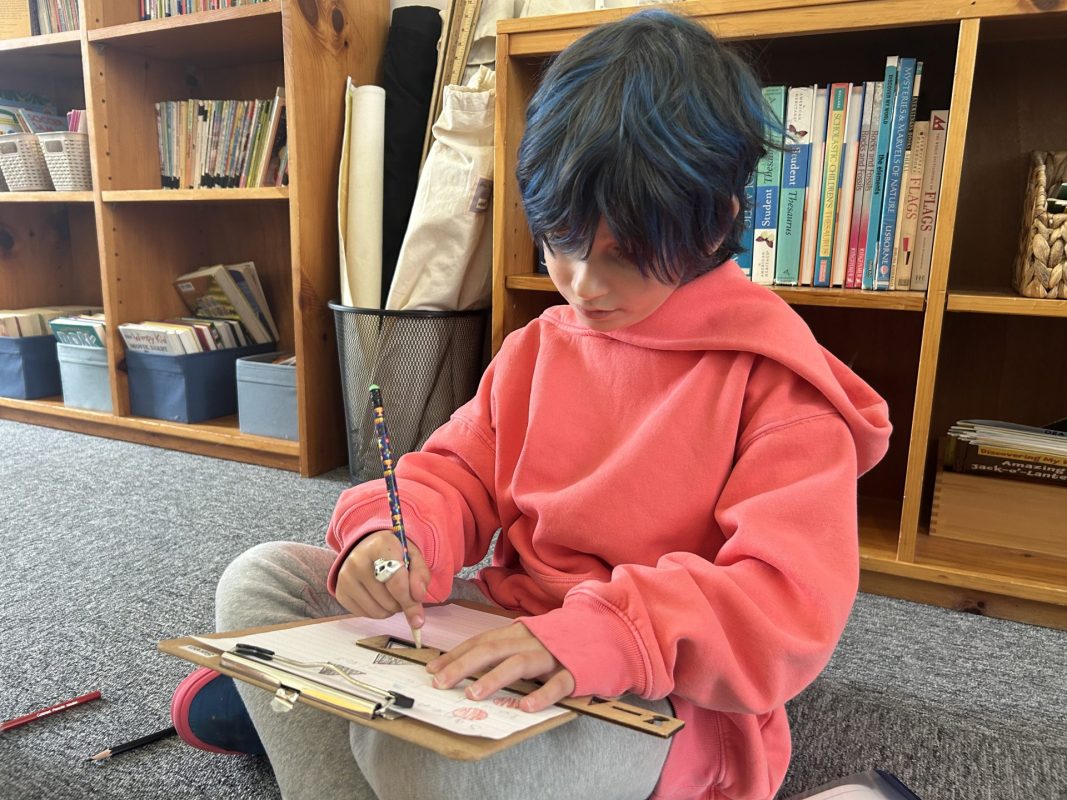
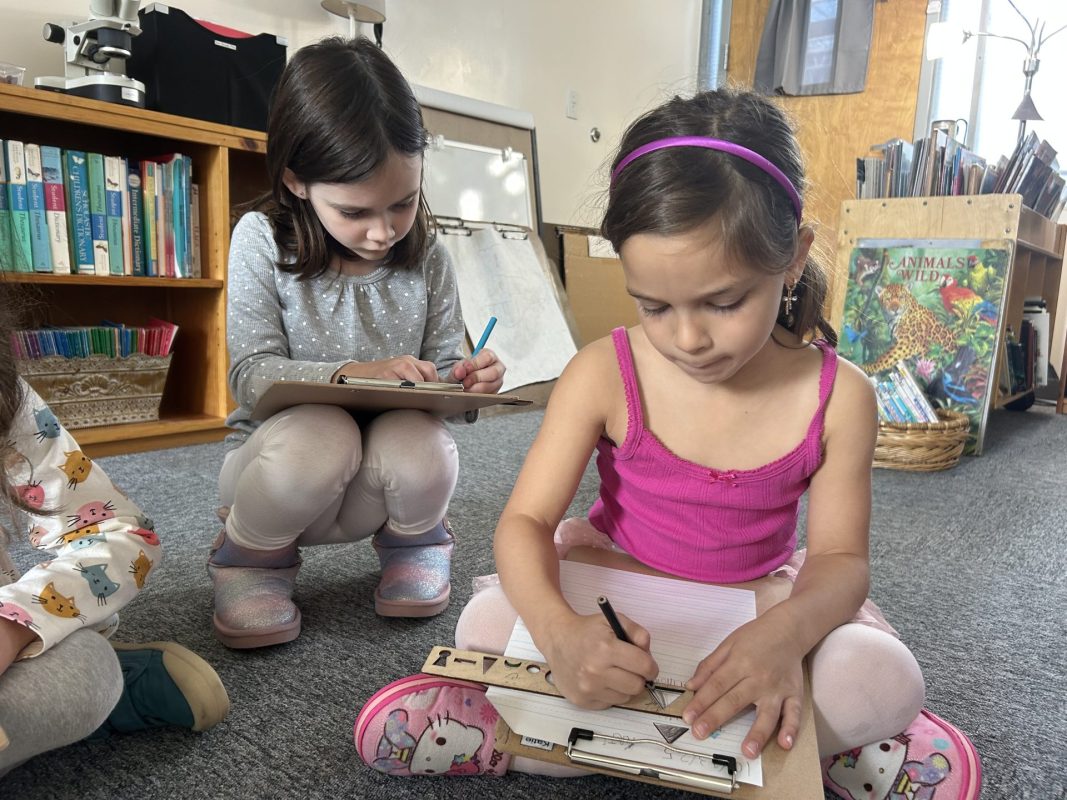
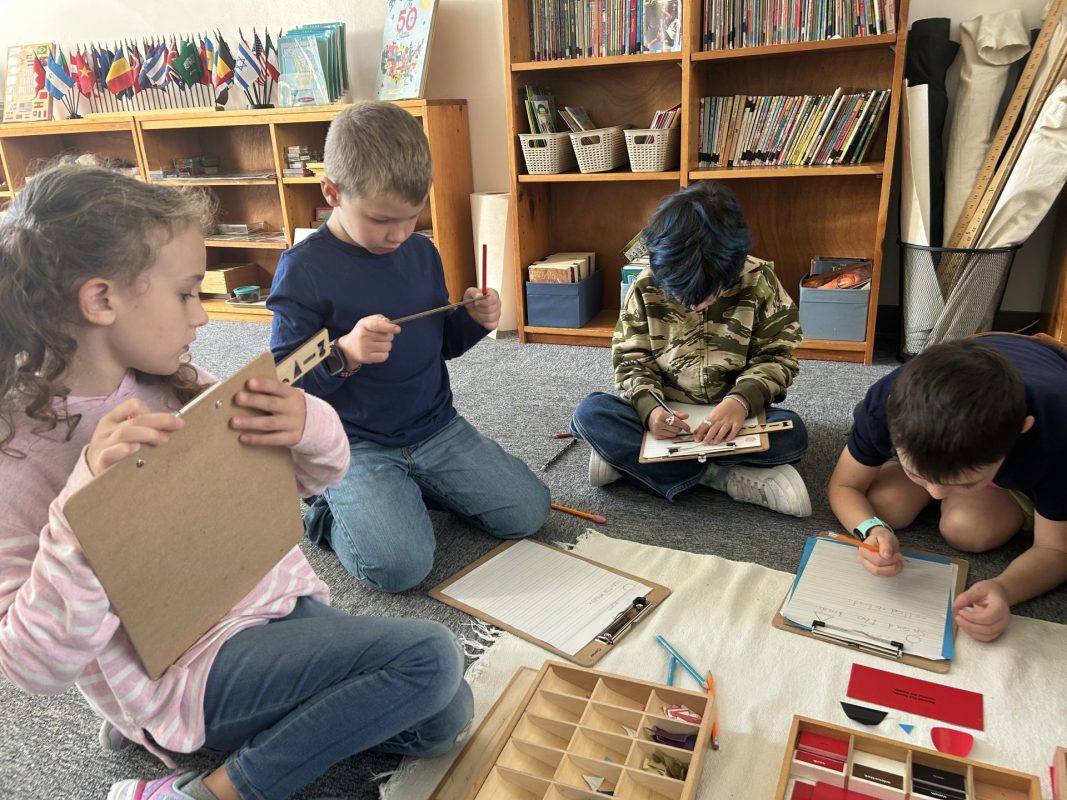
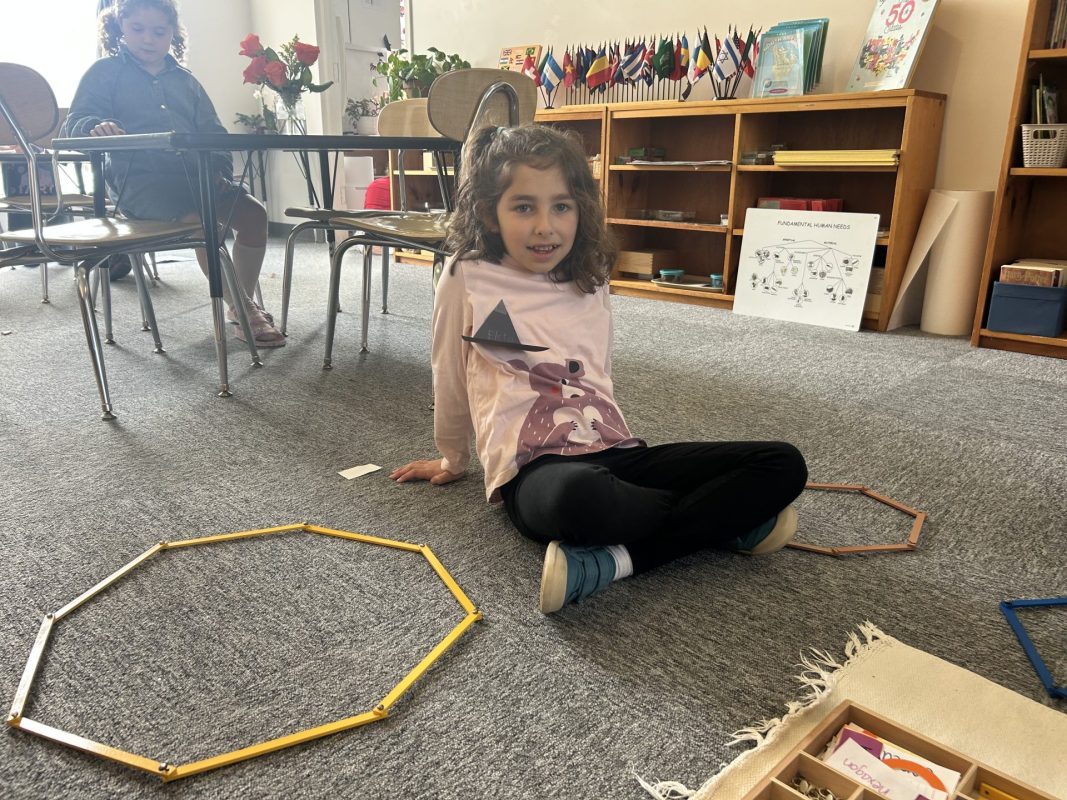
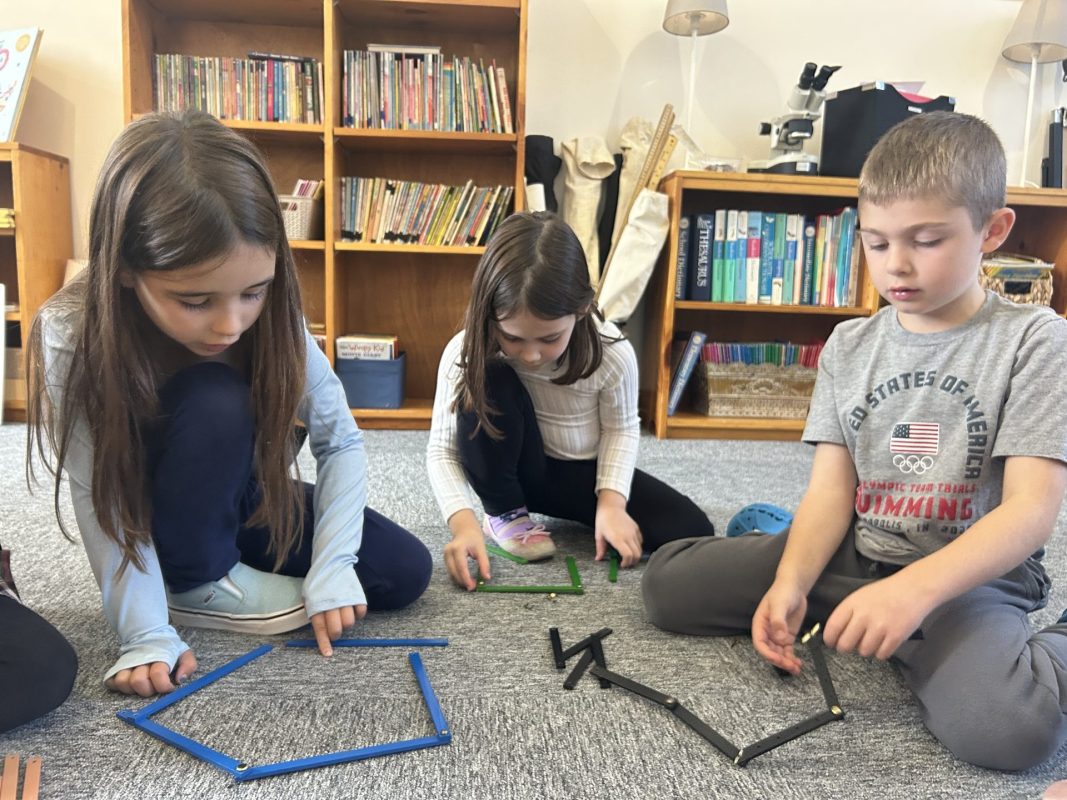
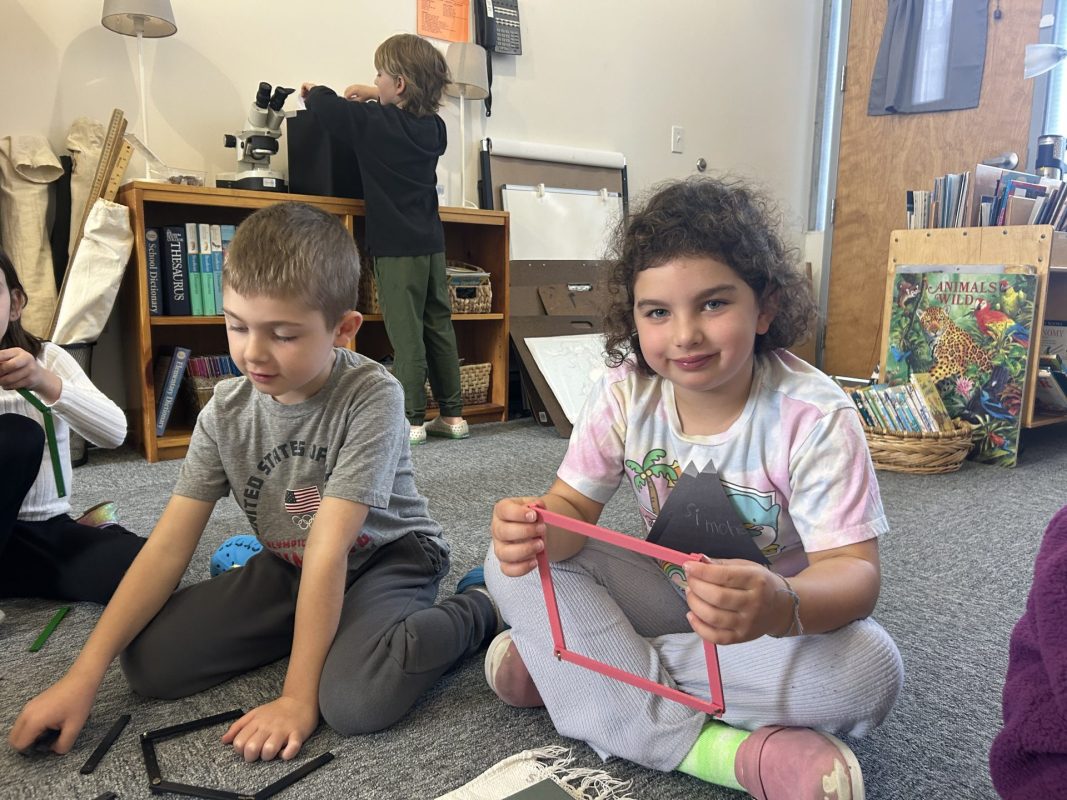
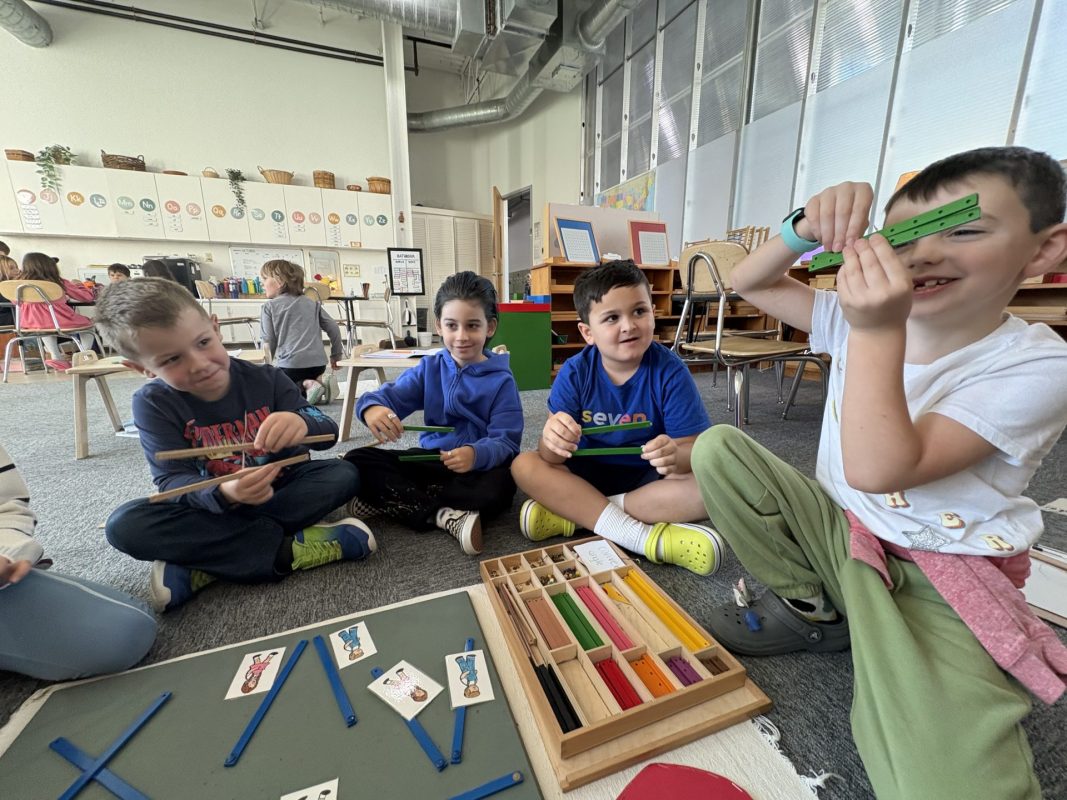
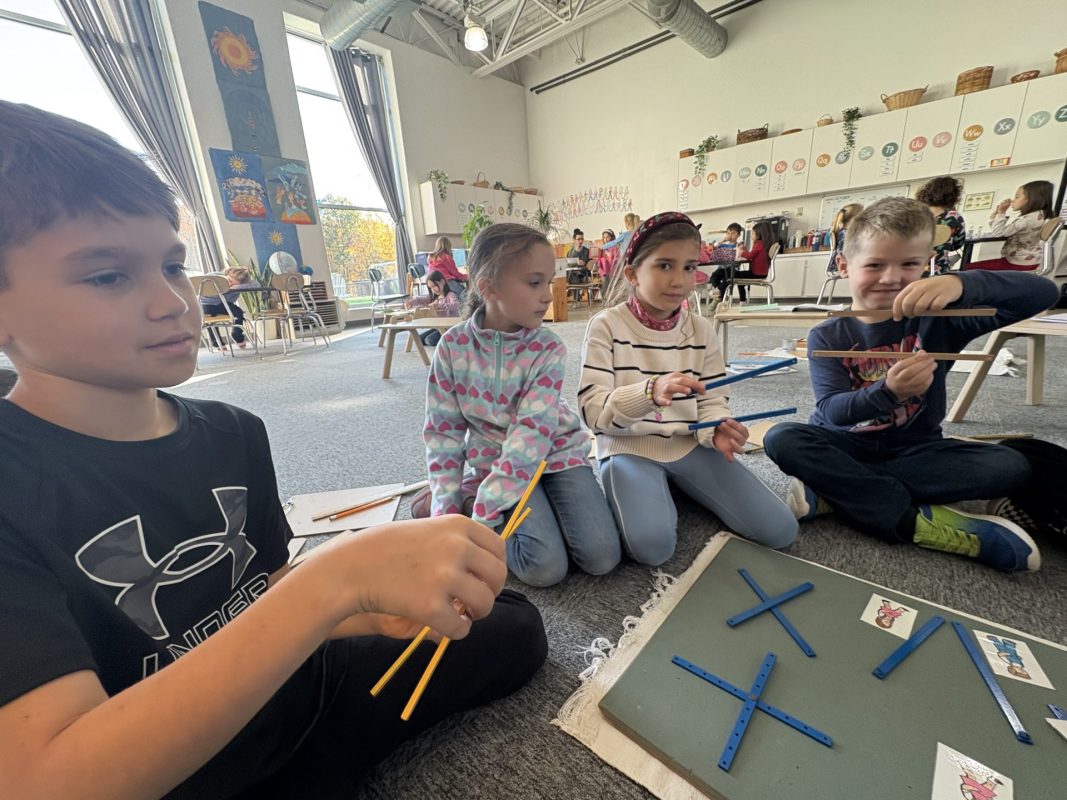
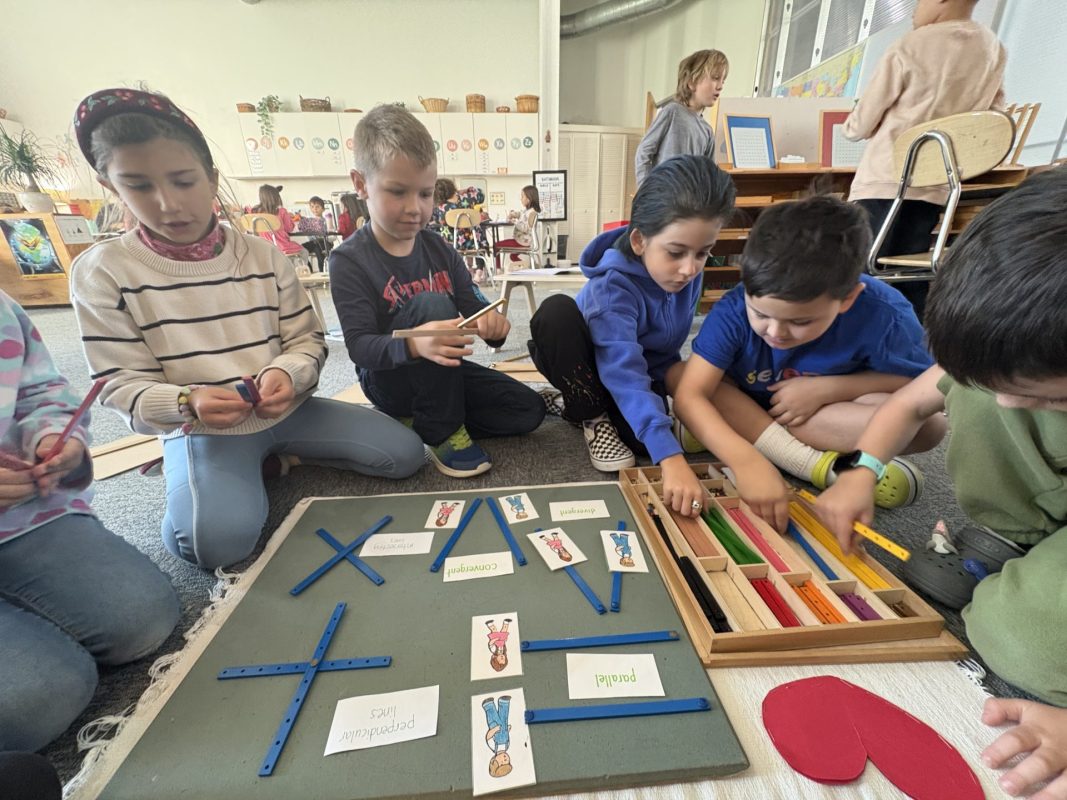
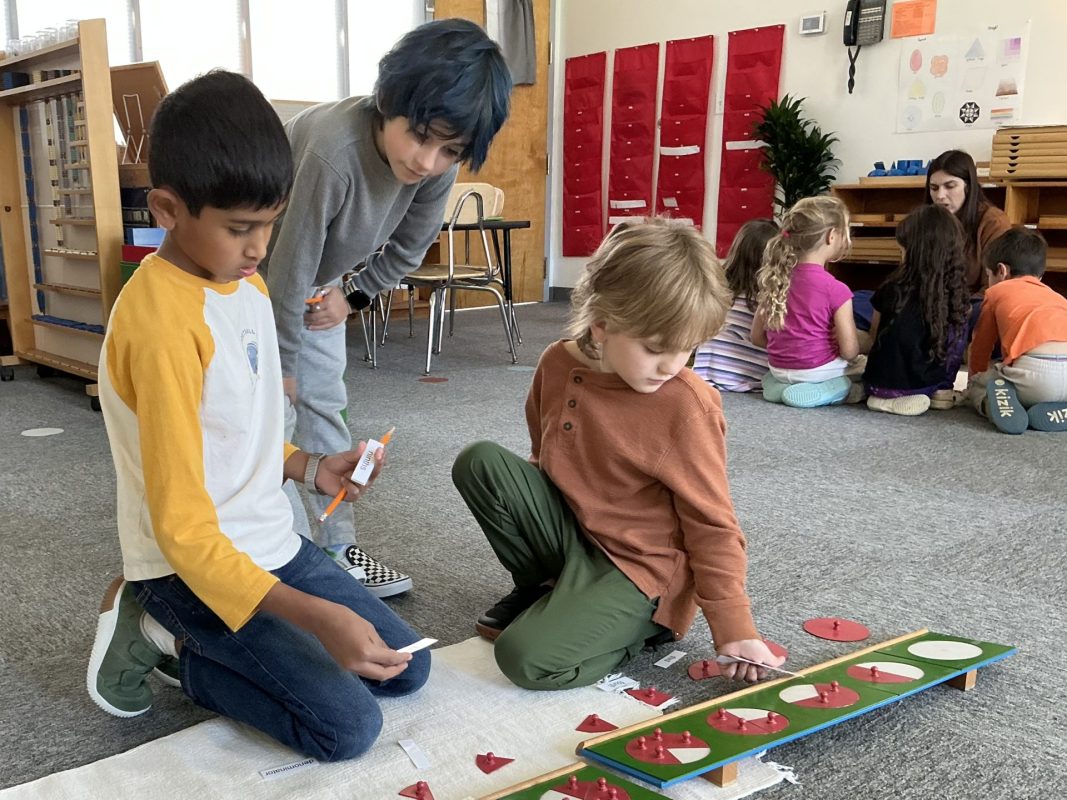
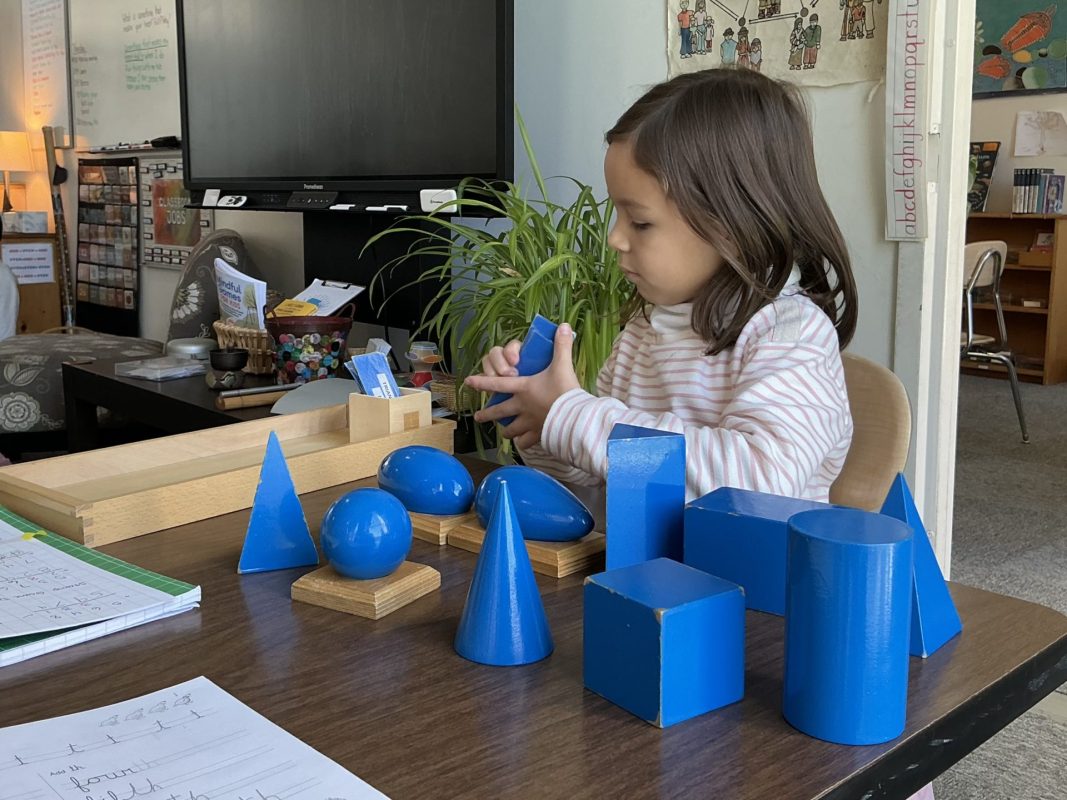
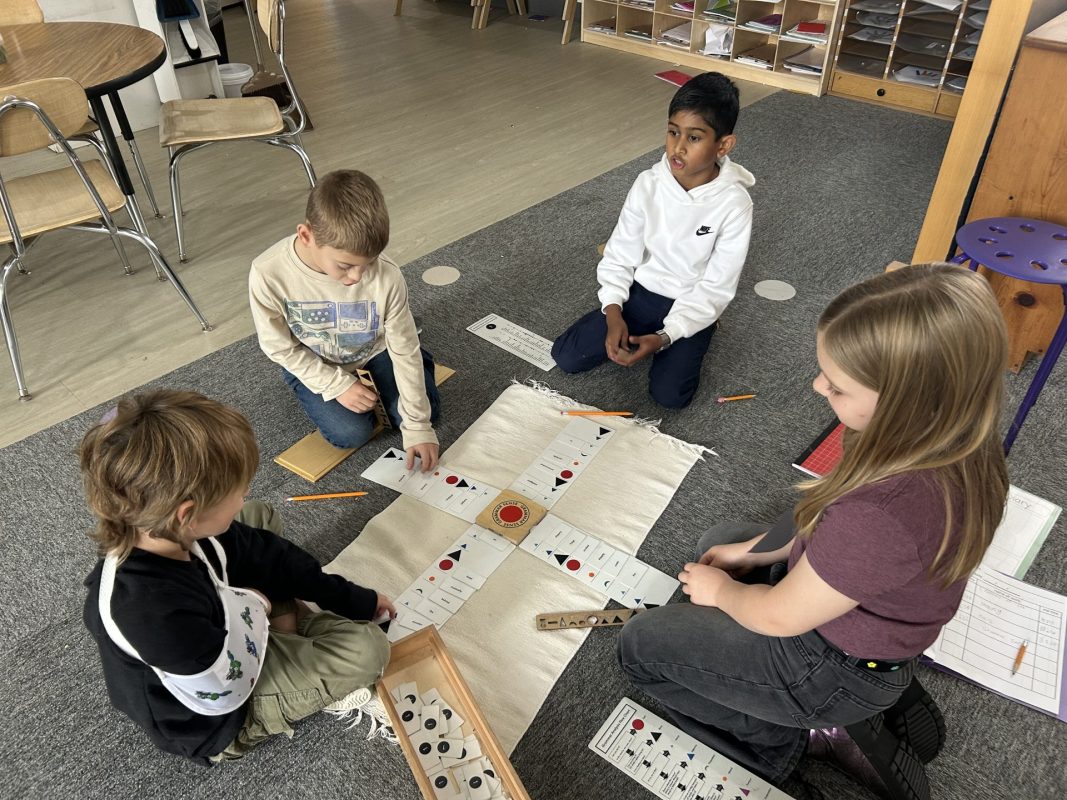
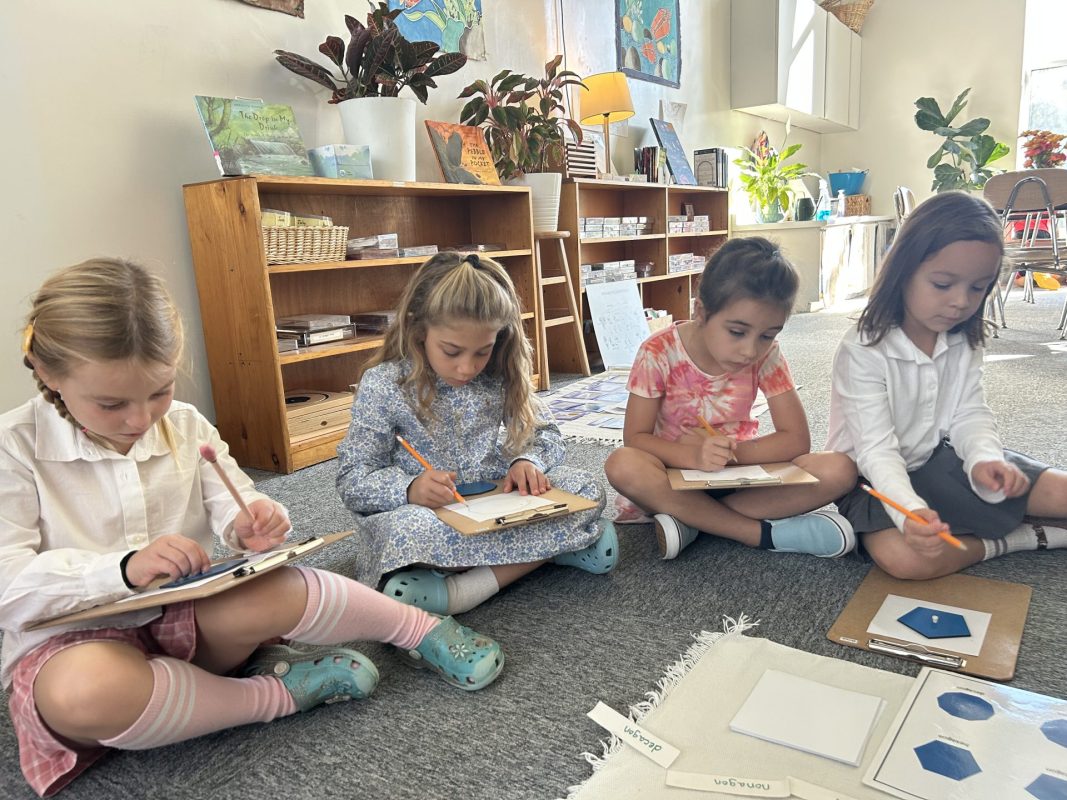
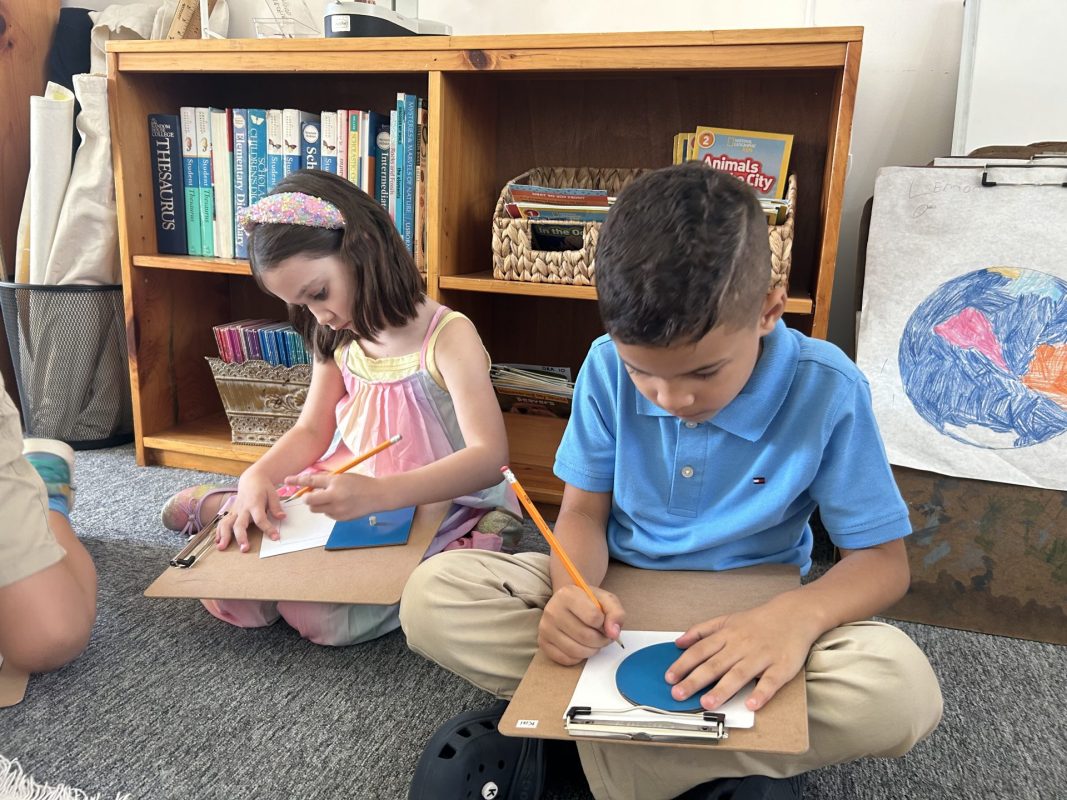
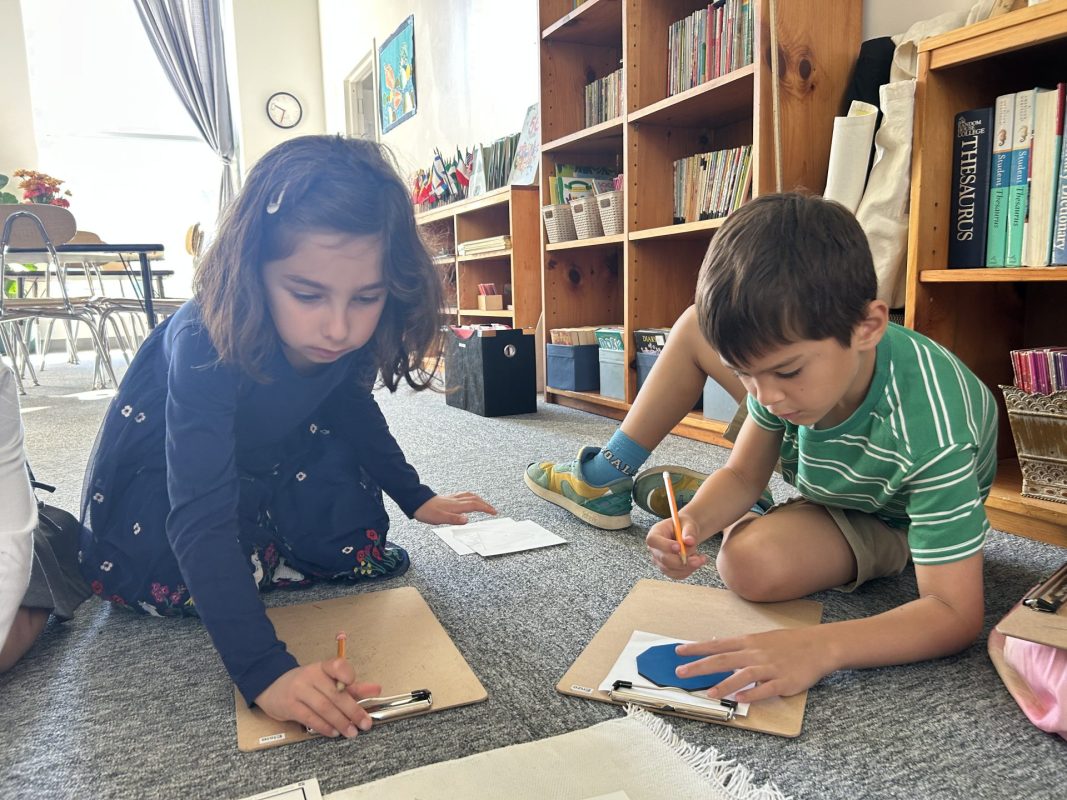
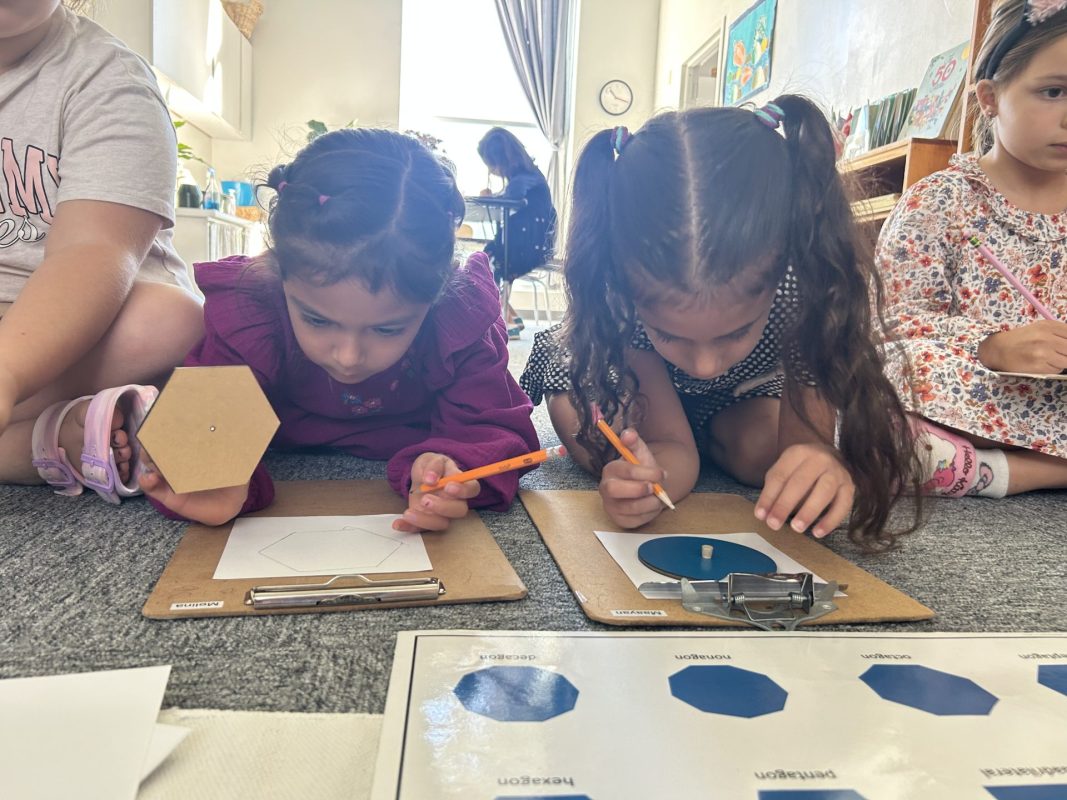
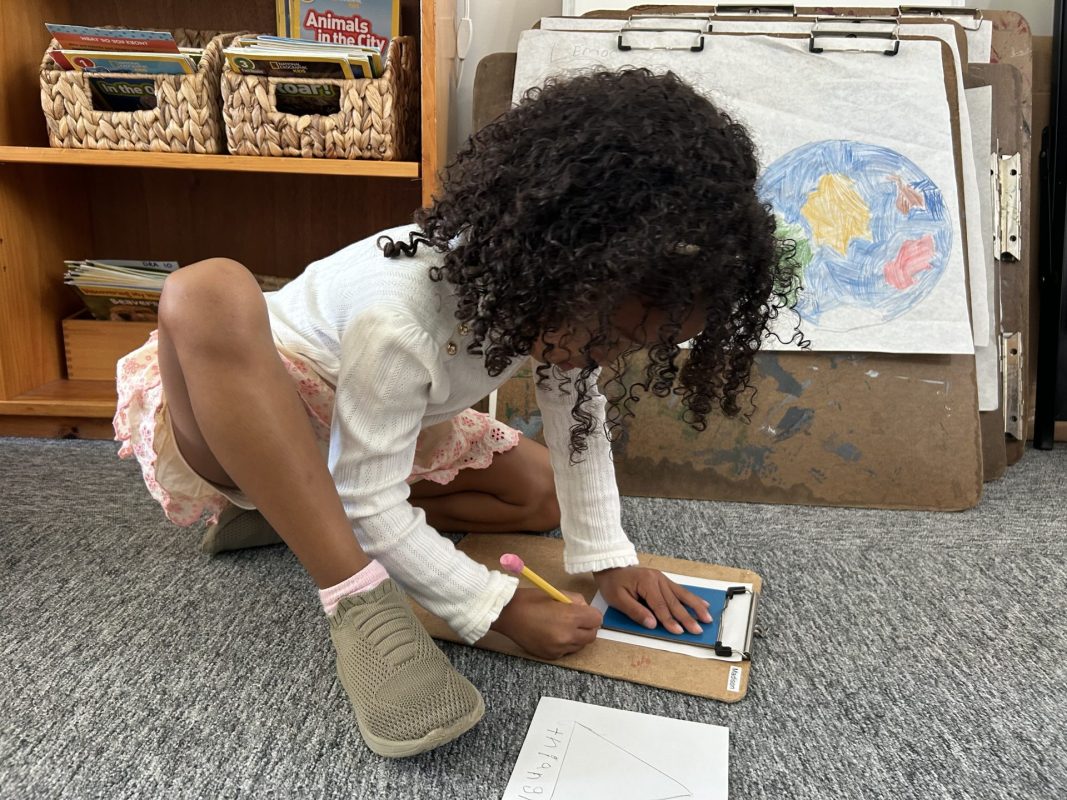
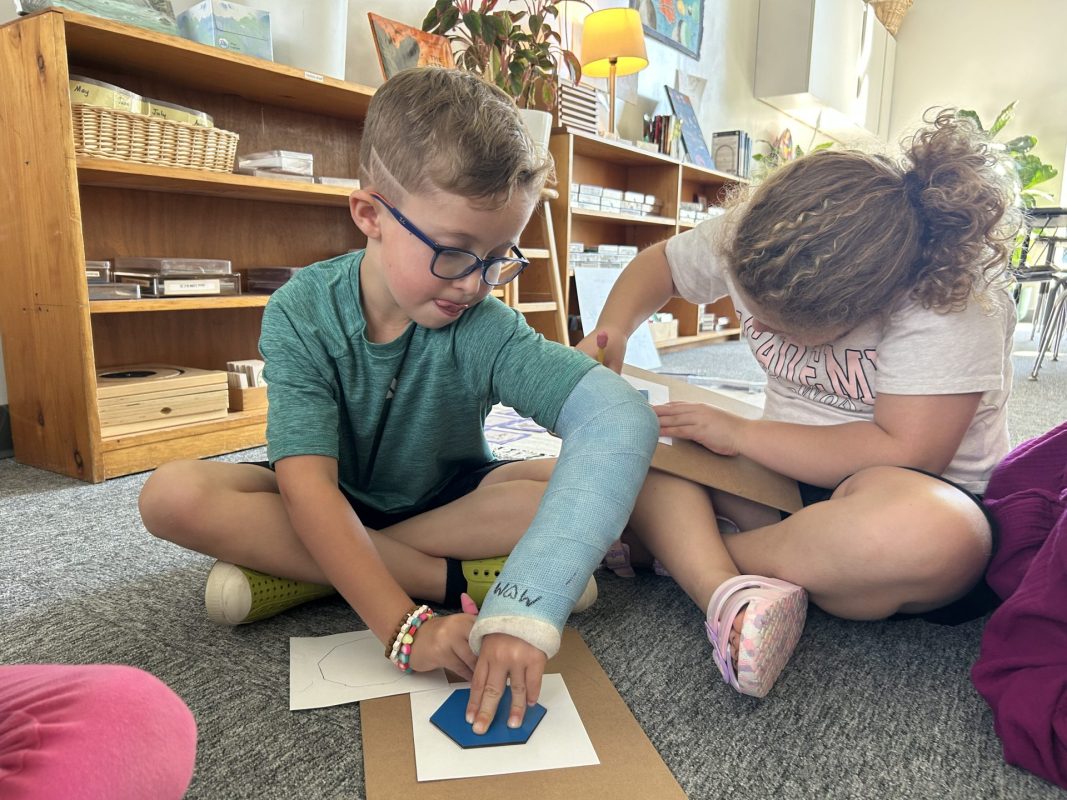
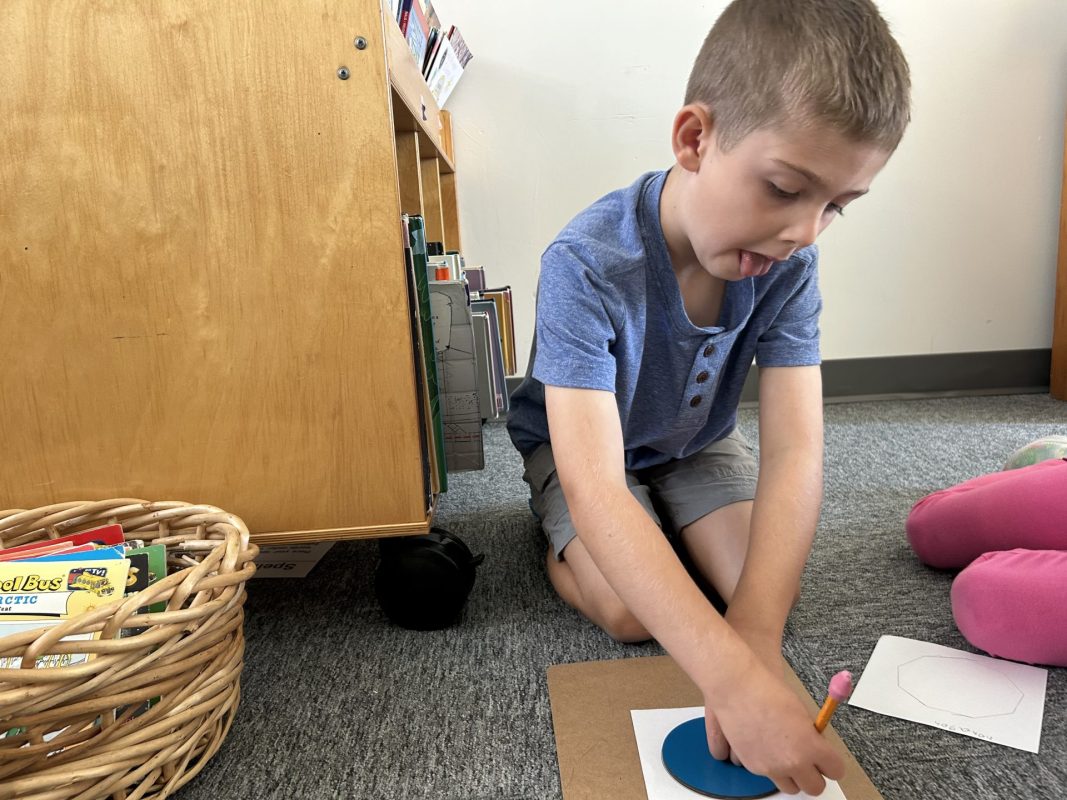
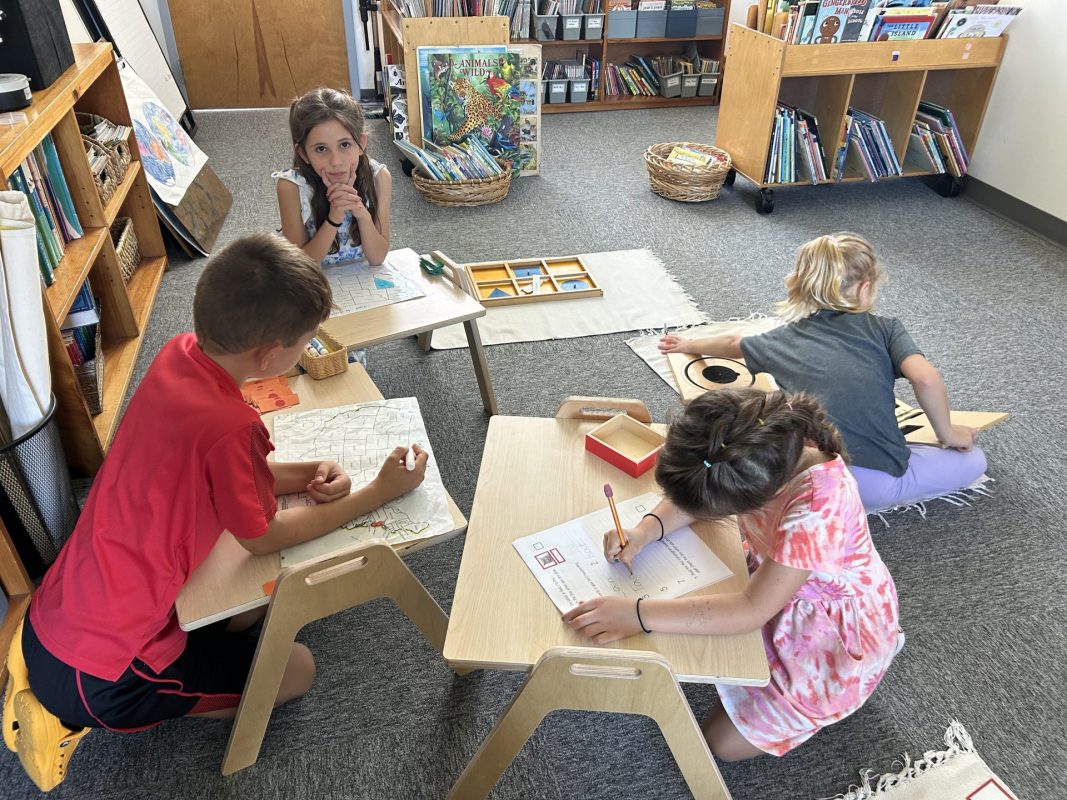
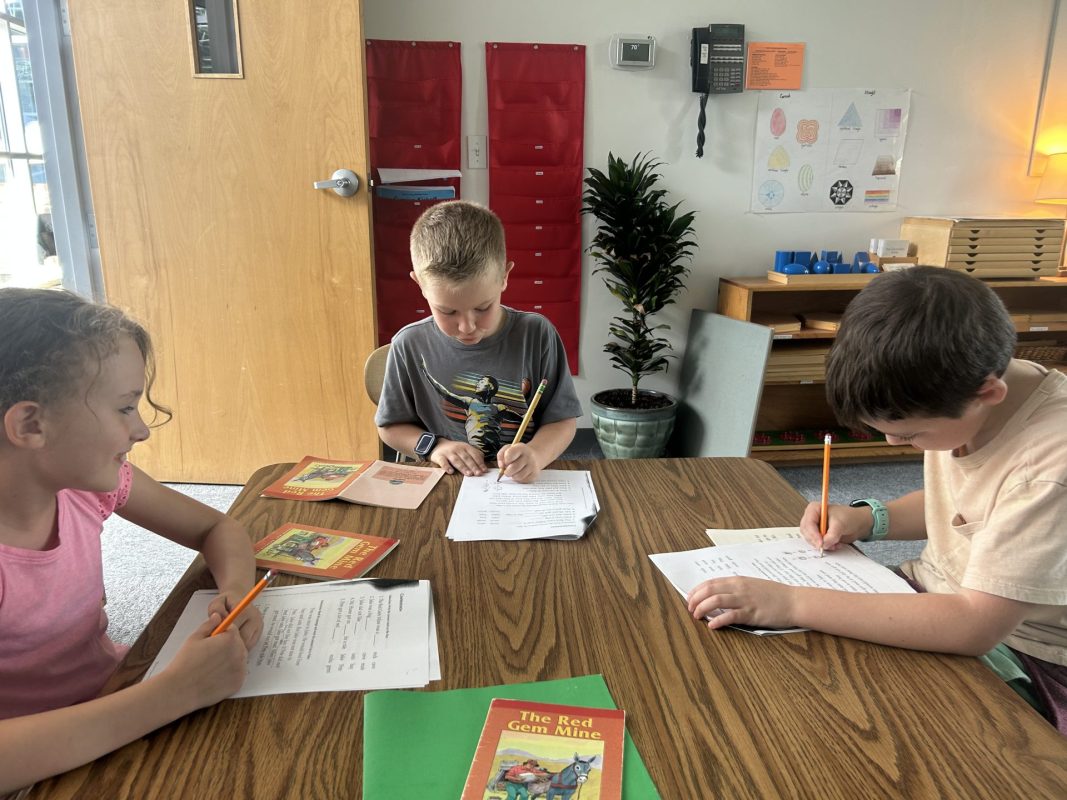
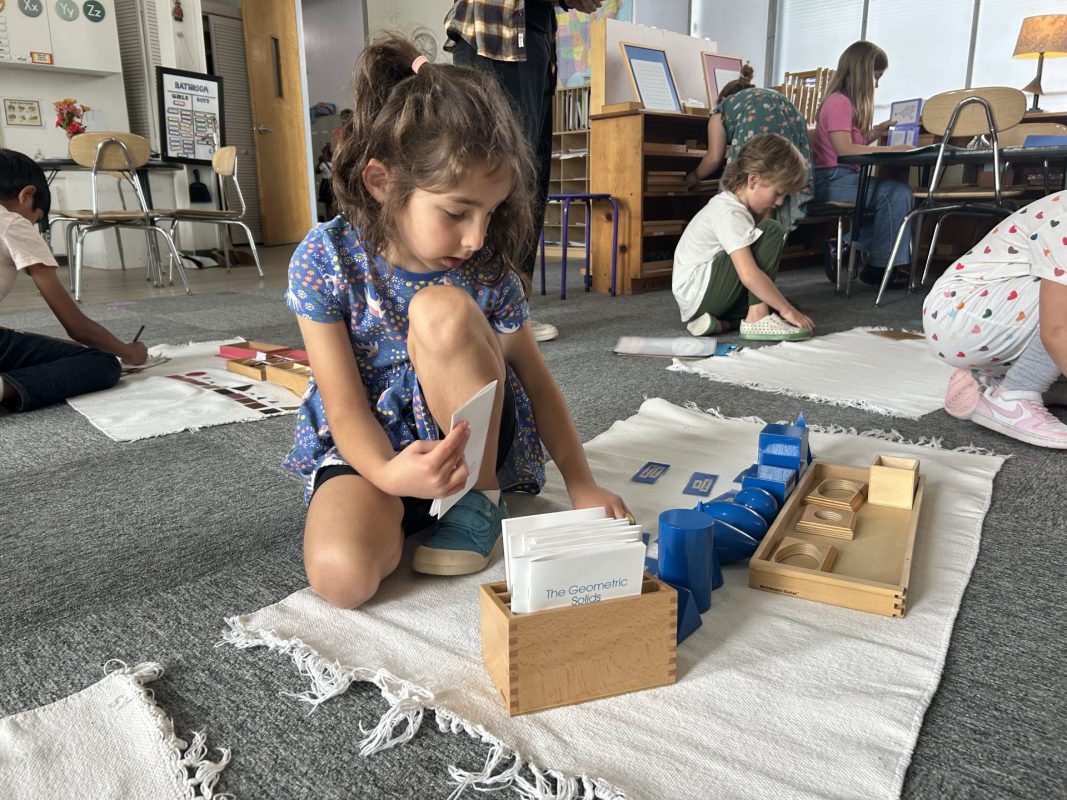
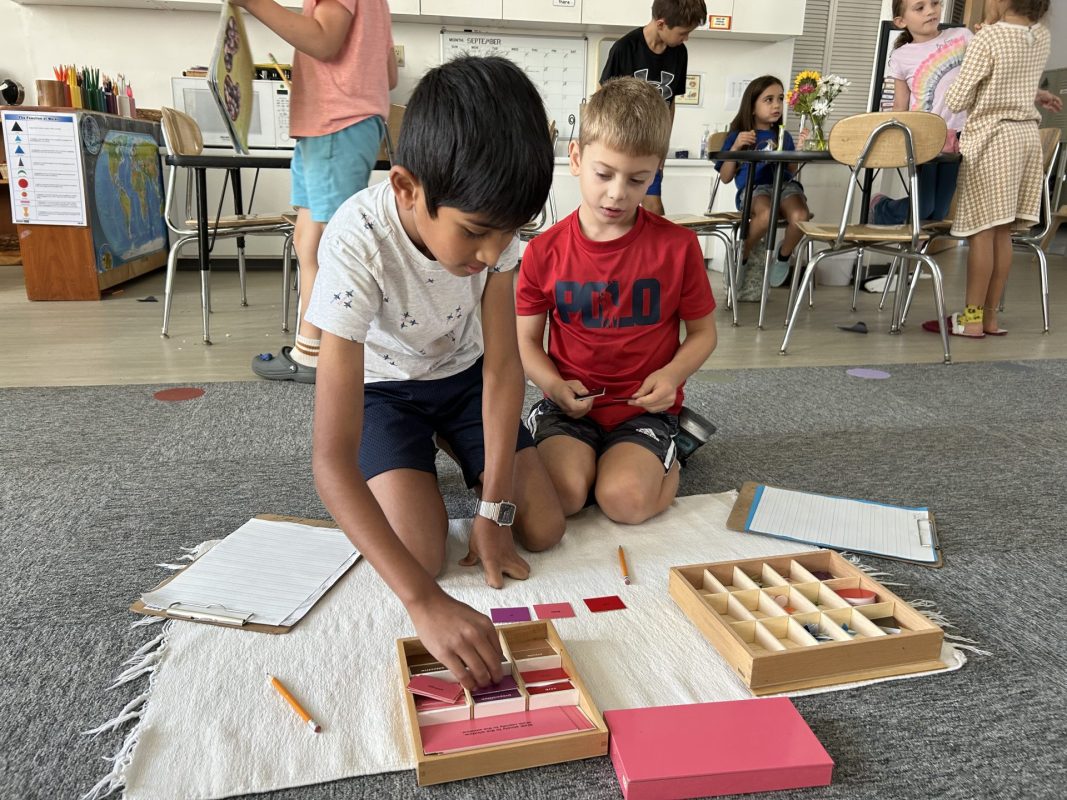
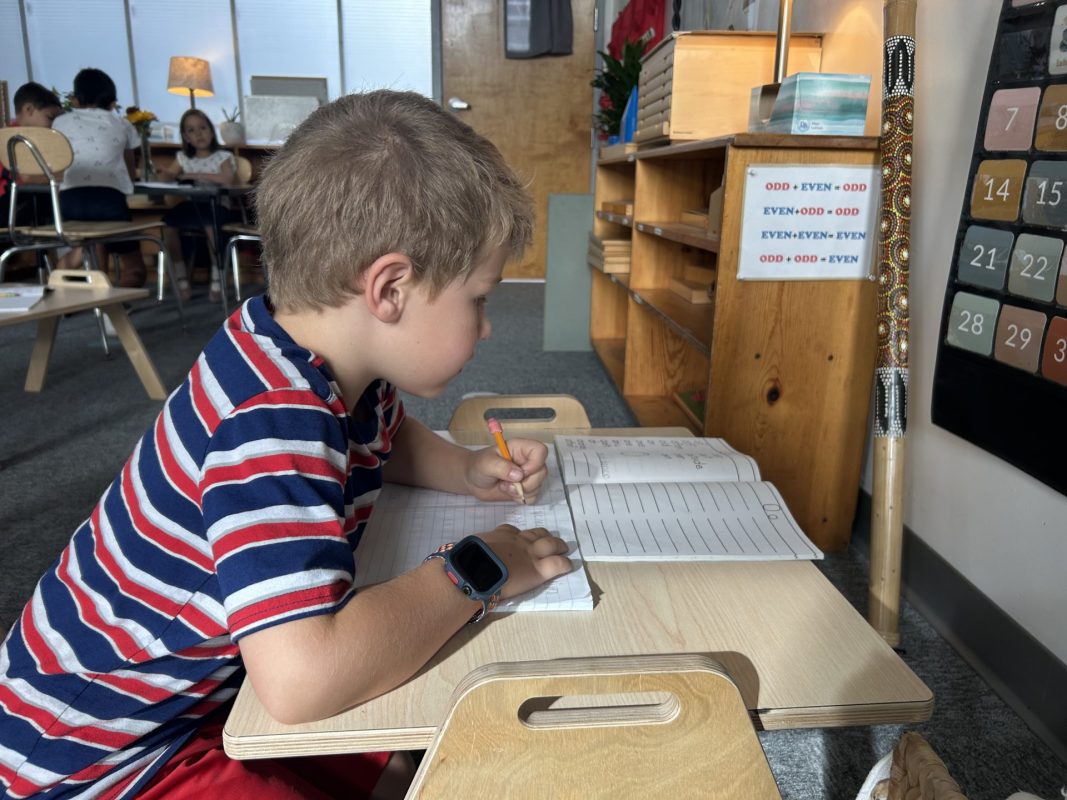
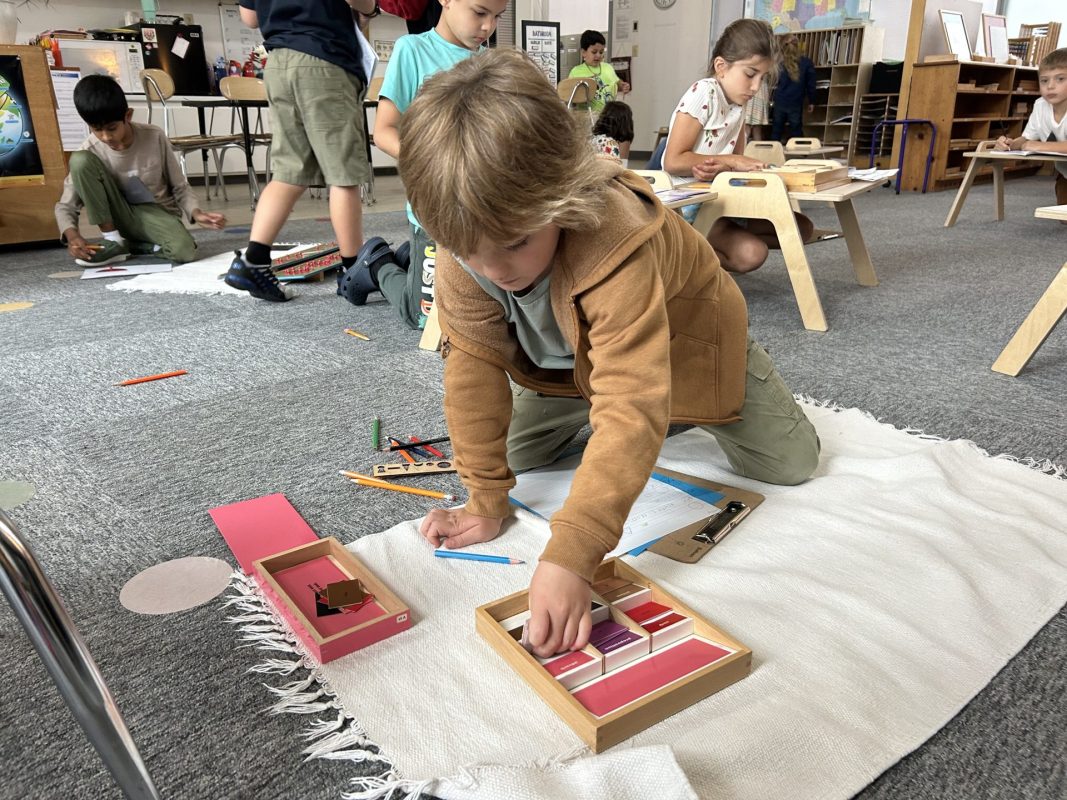
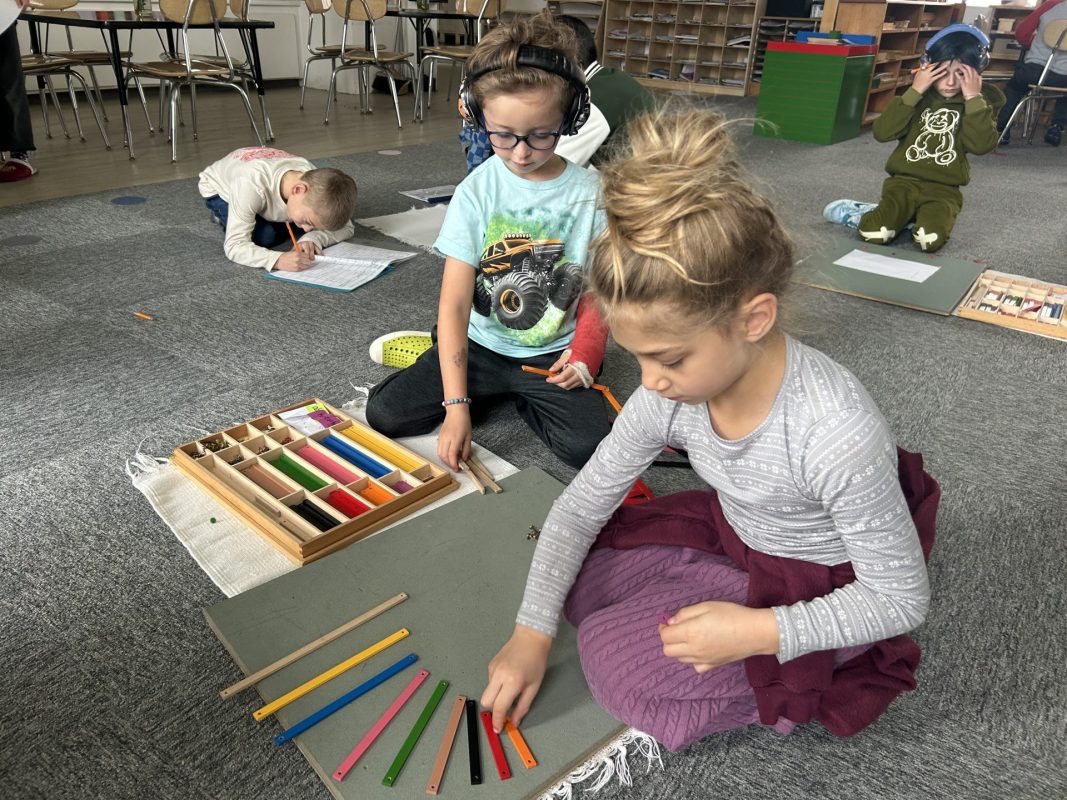
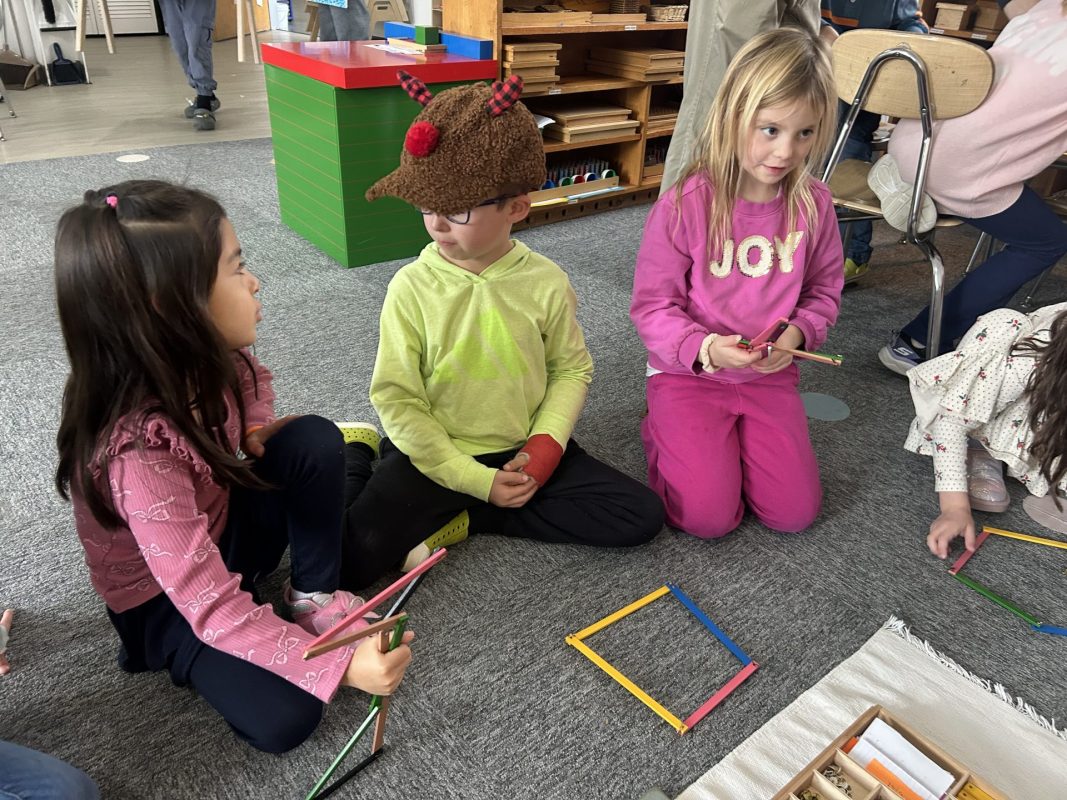
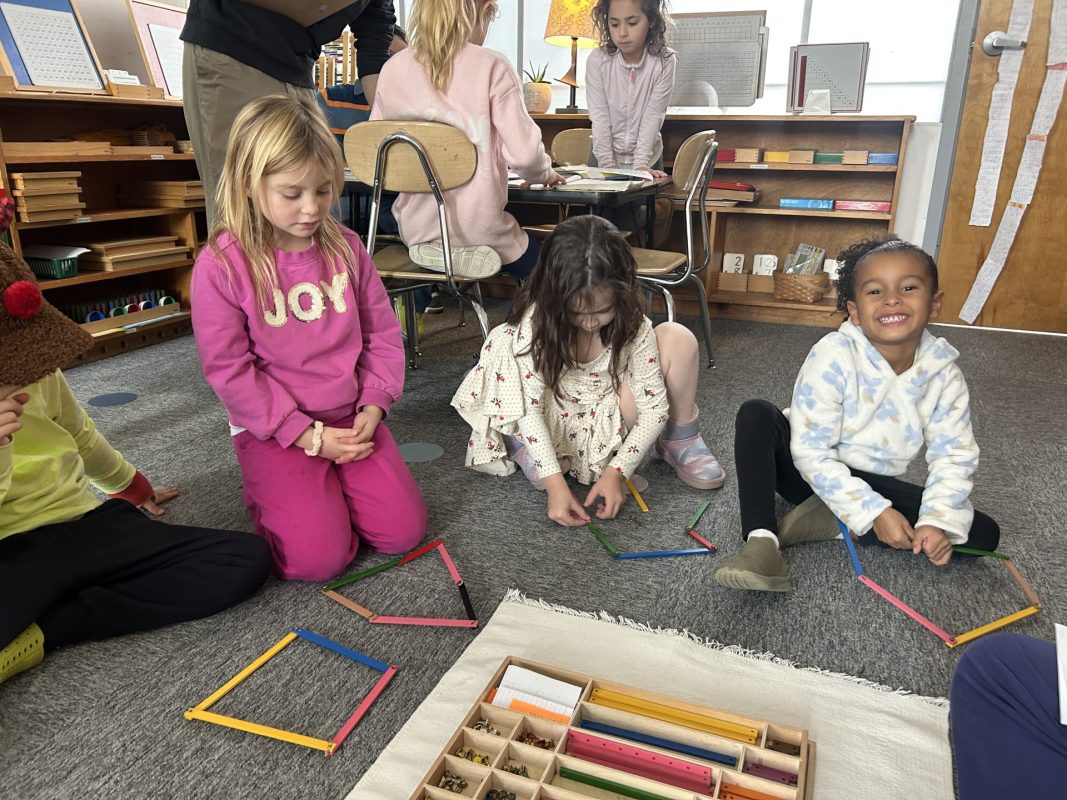
This week, in geometry, the children explored new concepts while strengthening their foundational skills. The first graders worked with polygons, reviewing their names and the meaning behind those names. Using the box of sticks, they created both regular and irregular polygons and quickly noticed how the symmetry and equal side lengths of regular shapes distinguish them from irregular ones. The second graders were introduced to angles for the first time. They explored what an angle is and learned to identify whole, straight, and right angles. Meanwhile, the third graders continued their work with fractions, using concrete materials to understand how fractional parts combine as they learned to add fractions and were excited to move on to subtracting fractions next.

It was a full and exciting week of hands-on learning, meaningful discussion, and joyful discovery in our classroom! 


Lower Elementary Field Trip

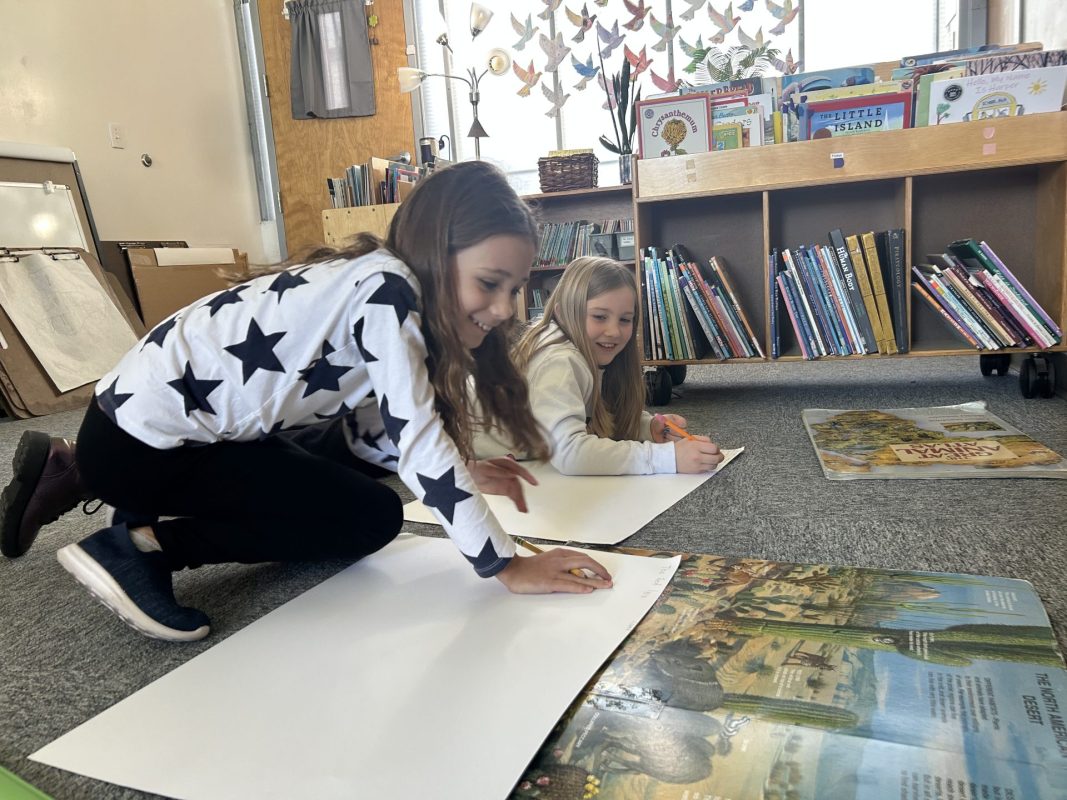
Our class had an exciting field trip this week as we explored the fascinating world of light! From the moment we arrived, the children were engaged and curious, ready to dive into hands-on discovery.

We began our morning with a science demonstration that introduced us to some of the amazing ways light behaves. The children learned that light is all around us—both visible and invisible—and they were fascinated to discover the differences between ultraviolet and infrared light. Using special tools and visual aids, they saw how UV light can reveal hidden patterns and how infrared light helps us see heat. The children were also amazed to learn that light is actually a rainbow made up of many different colors that blend together to form what we see as white light.

Our day concluded in the Light Lab, where students had the chance to put their knowledge into action. They experimented with additive color mixing, combining red, green, and blue lights to create new colors—including white light! The children also had fun testing out optical illusions, discovering how our brains sometimes interpret light and color in unexpected ways. They moved from station to station, experimenting with lenses, prisms, and mirrors. They were especially intrigued by the section on rods and cones, the tiny cells in our eyes that help us see color and light. Many children were surprised to learn that these cells work together to help us perceive the full range of colors we see every day!
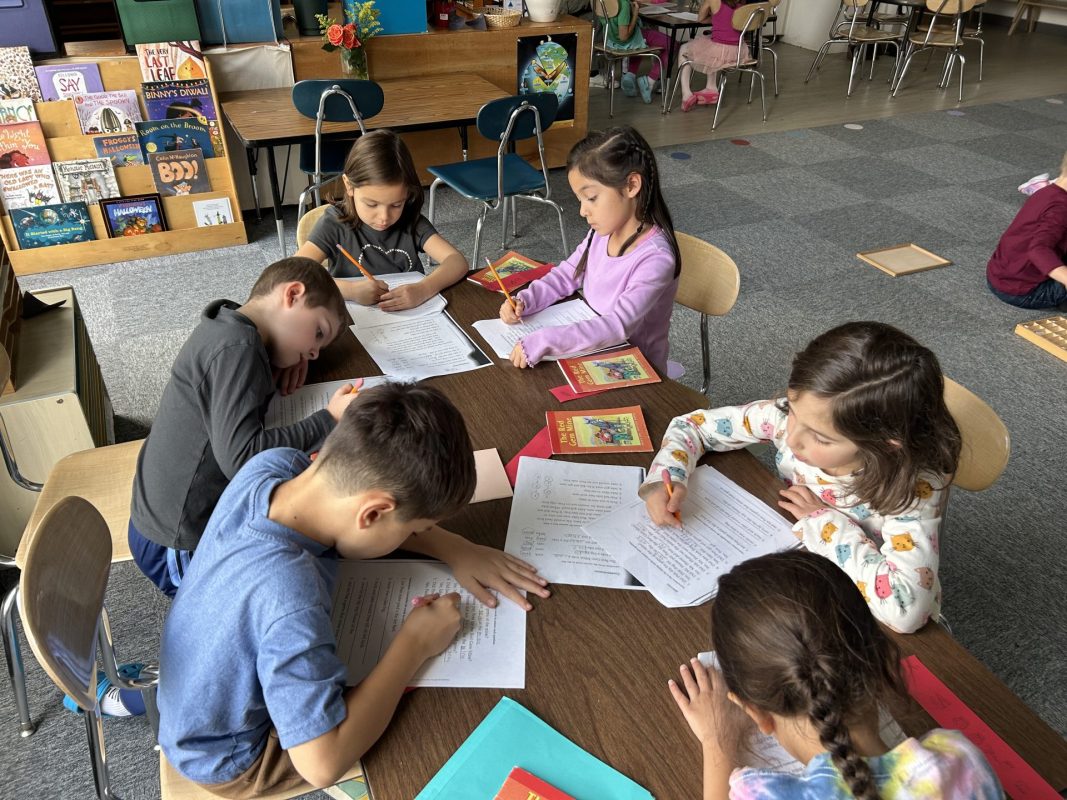
To make the week even more special, the children also enjoyed learning about Diwali through a beautiful presentation shared by teachers, staff, students, and families. They listened to stories, saw traditional clothing and decorations, and learned about the meaning of light in this joyful celebration. Thank you to everyone who helped make this a fun and memorable experience for the children!


Halloween and Reminders in Lower Elementary

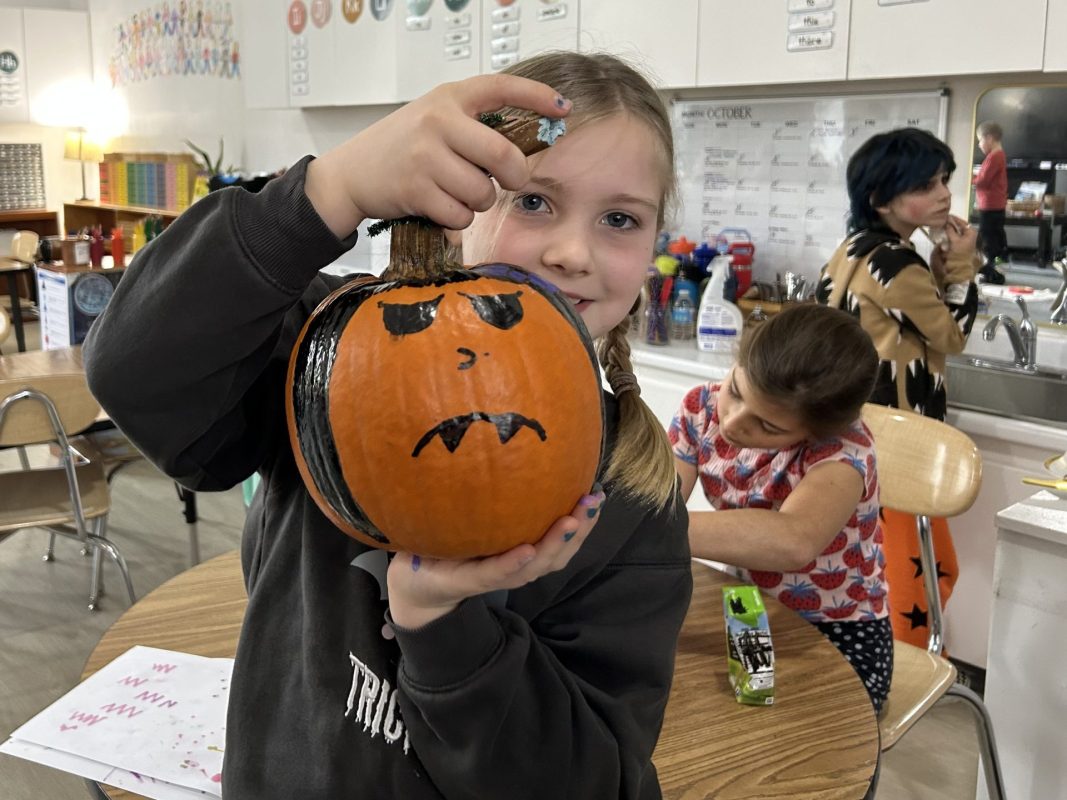
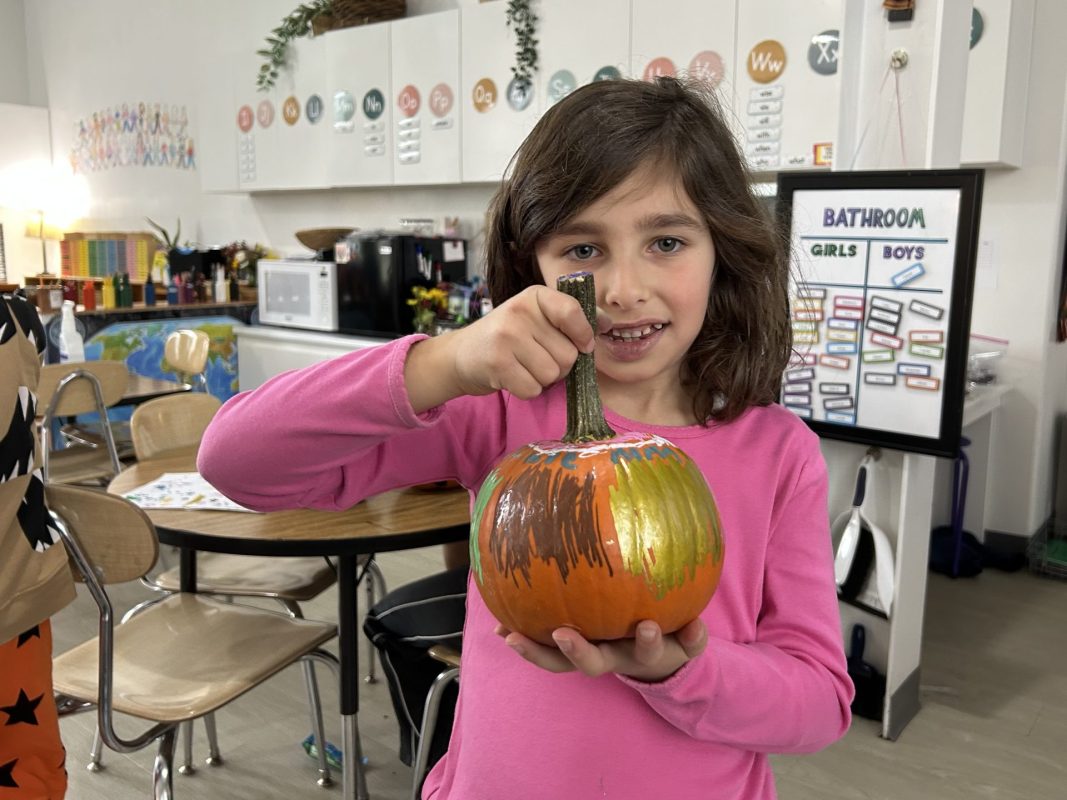
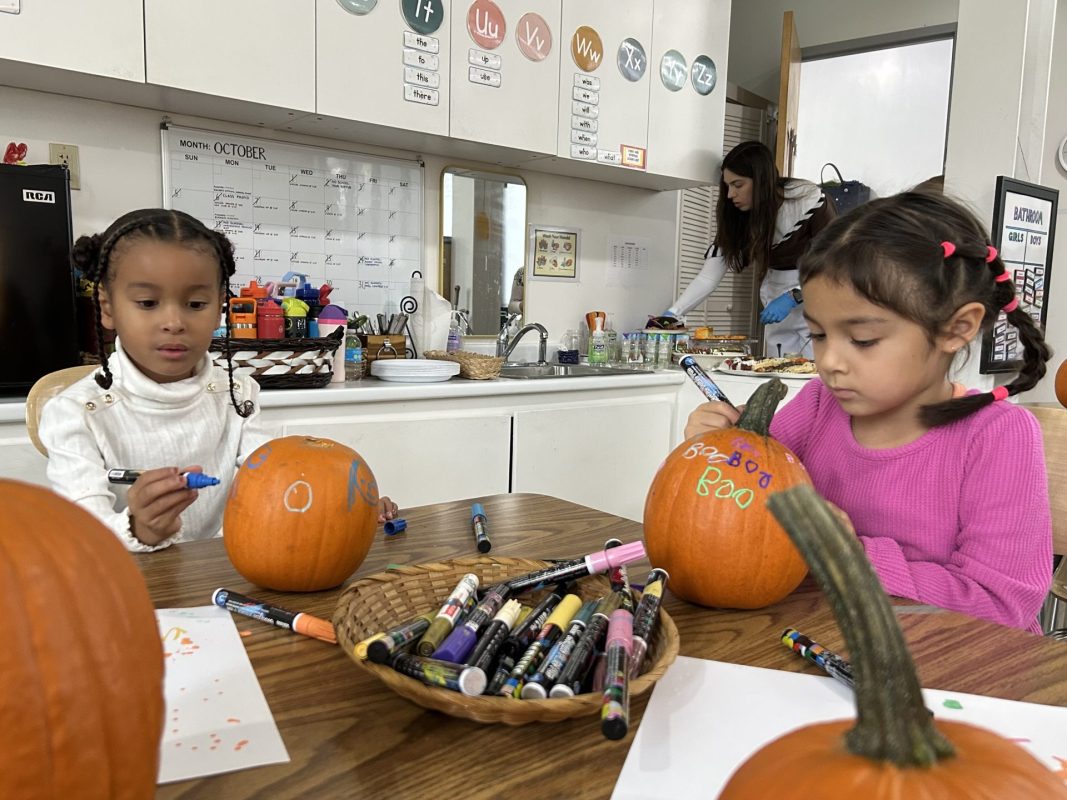
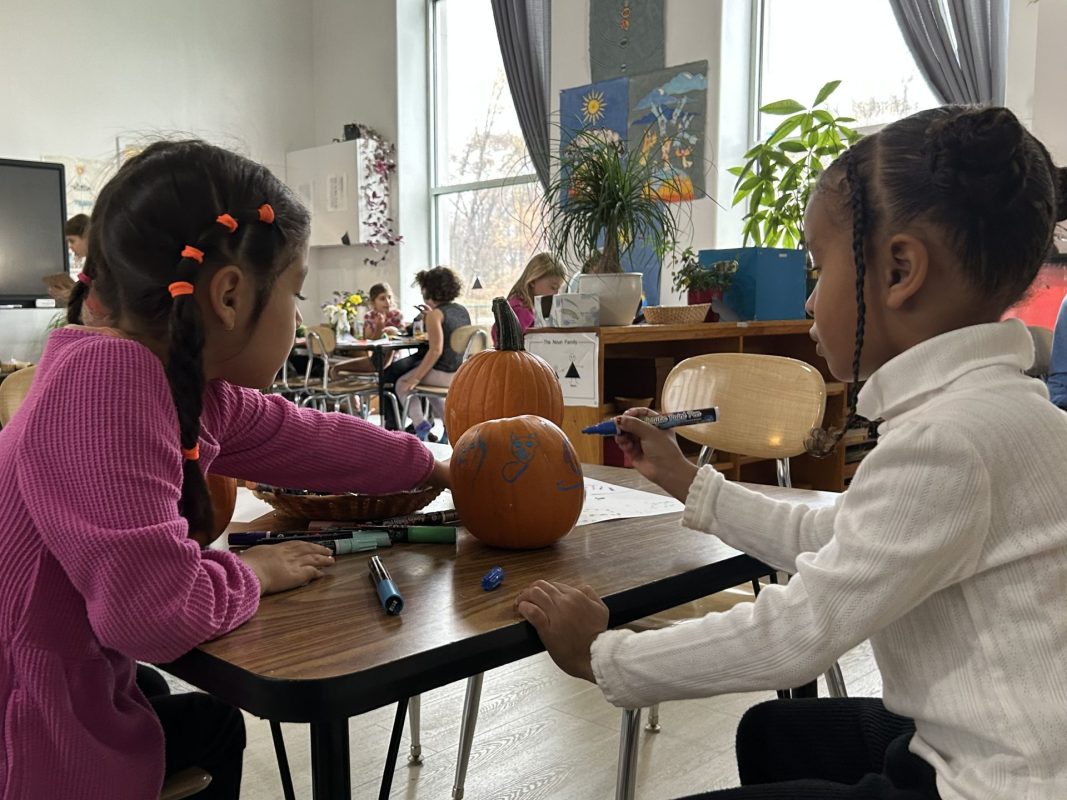
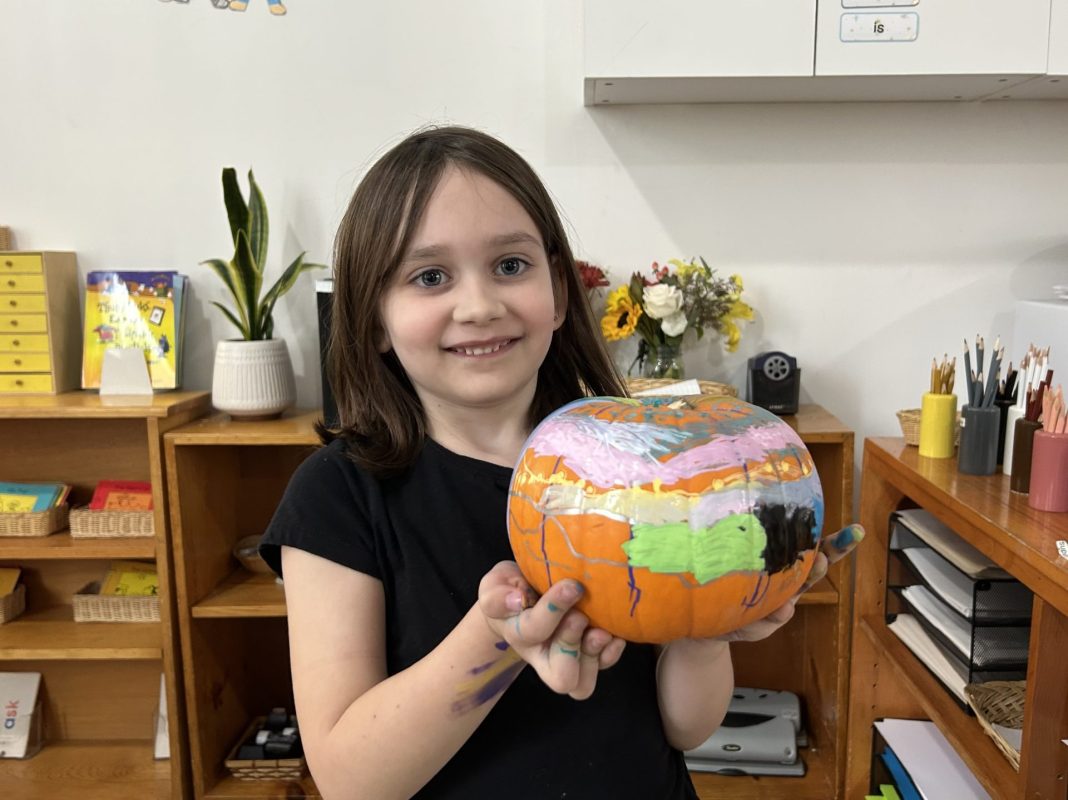
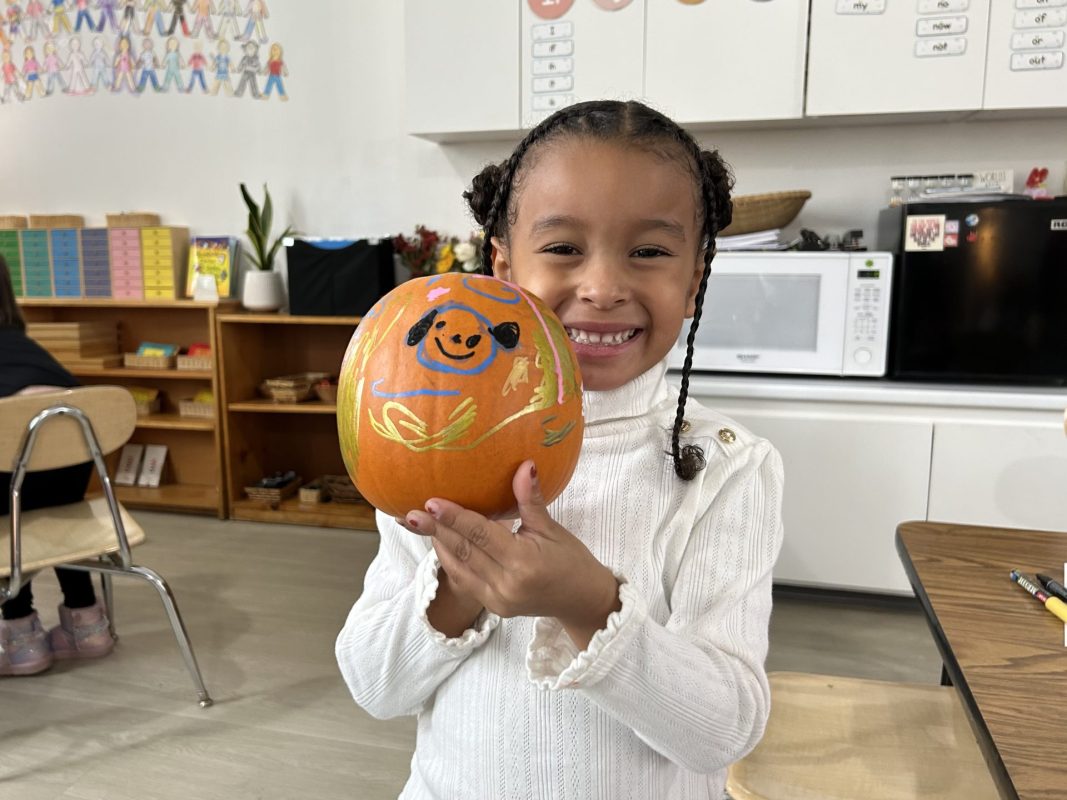
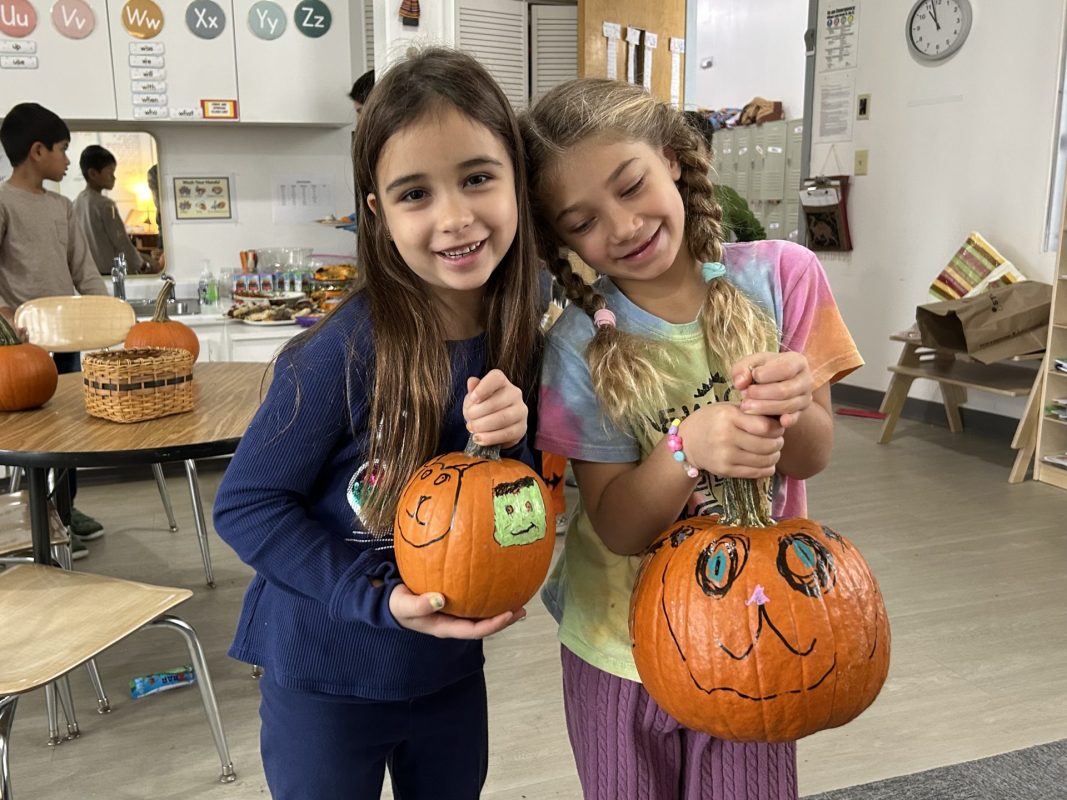
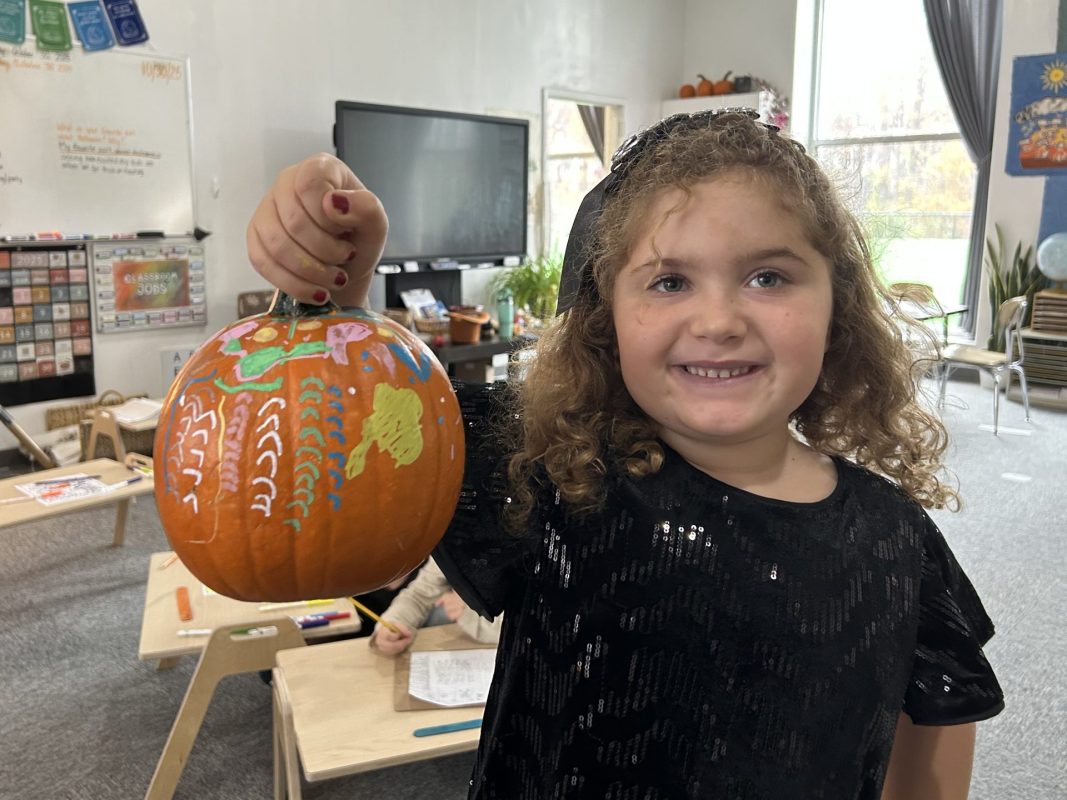
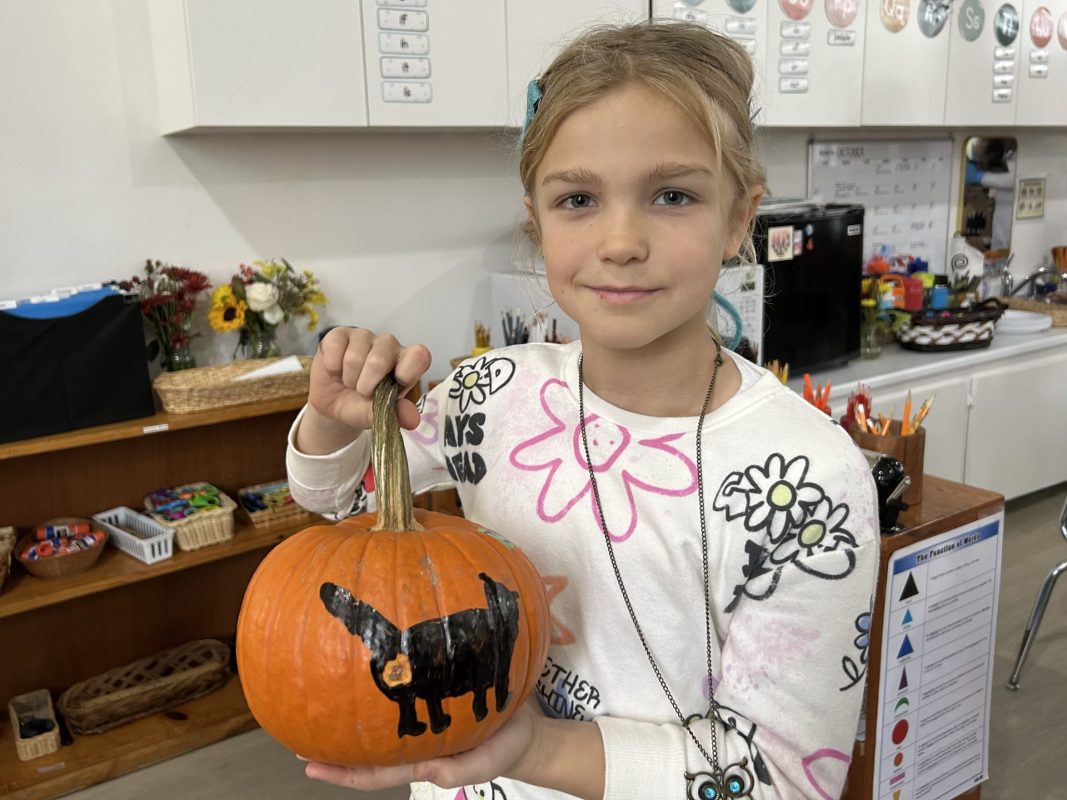
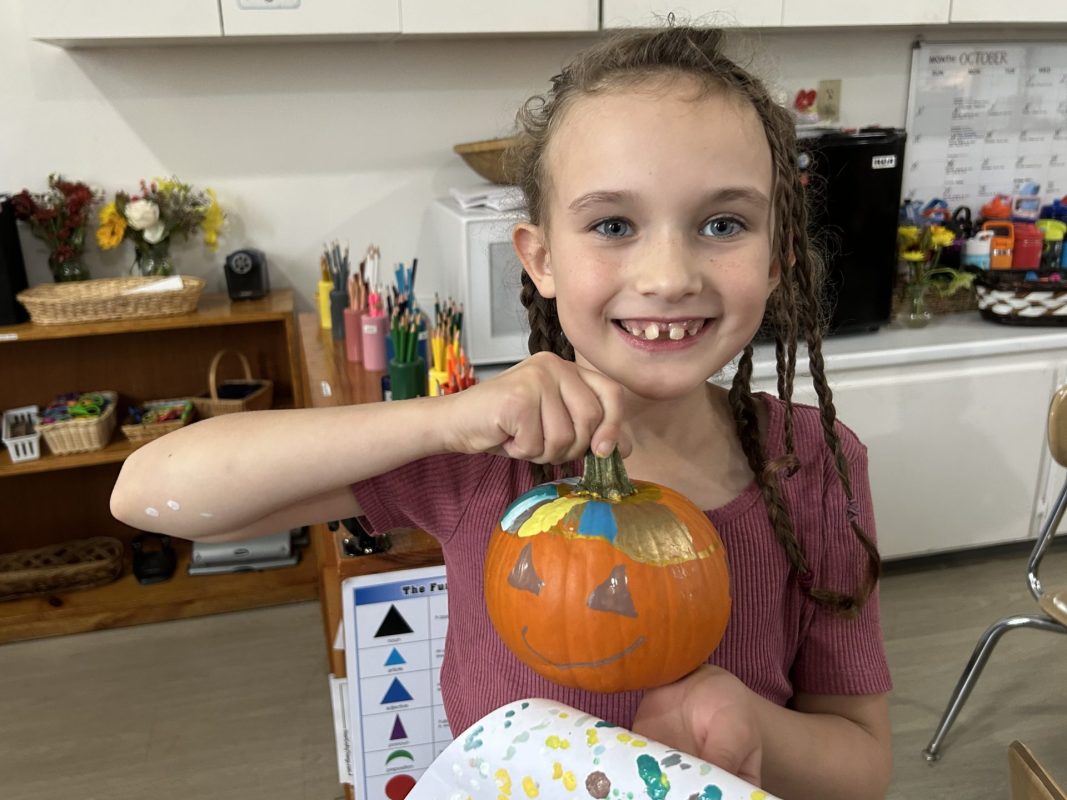
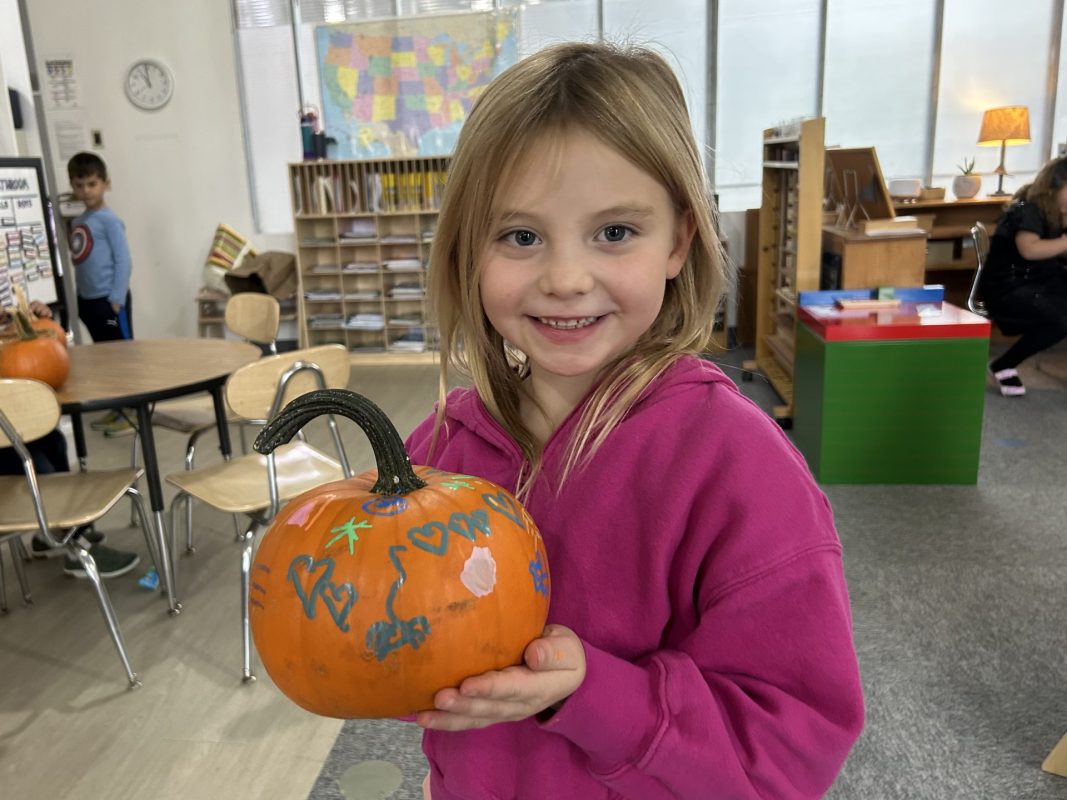
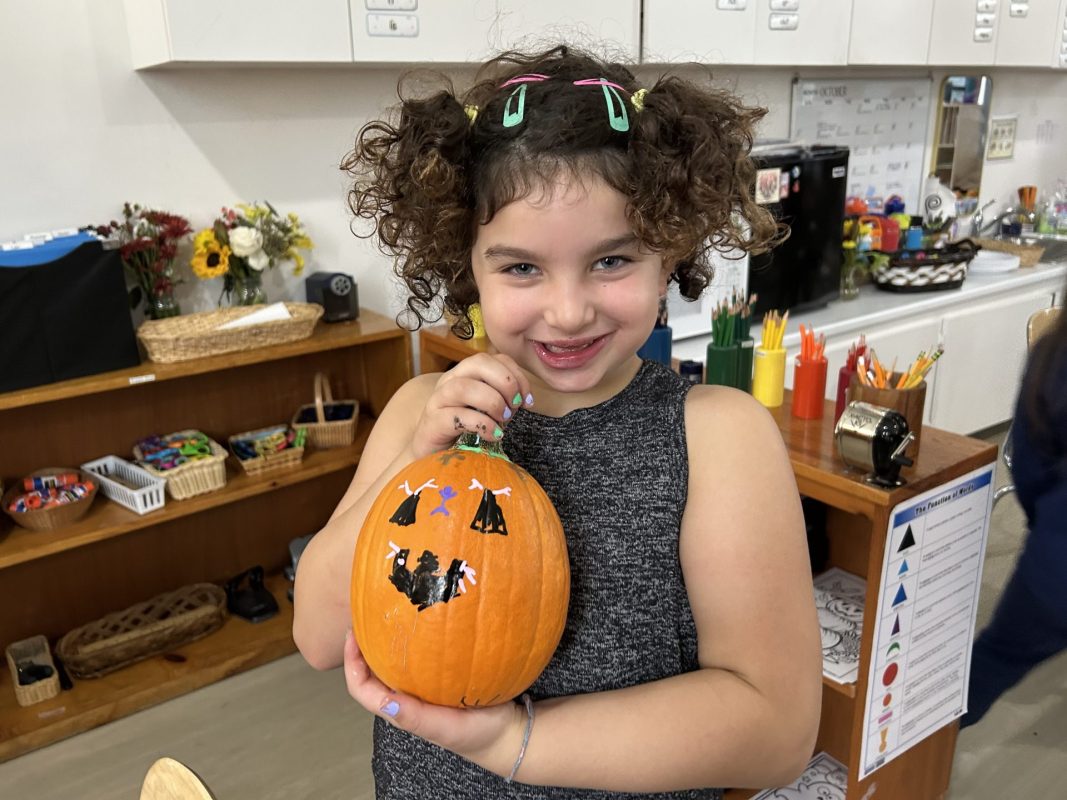
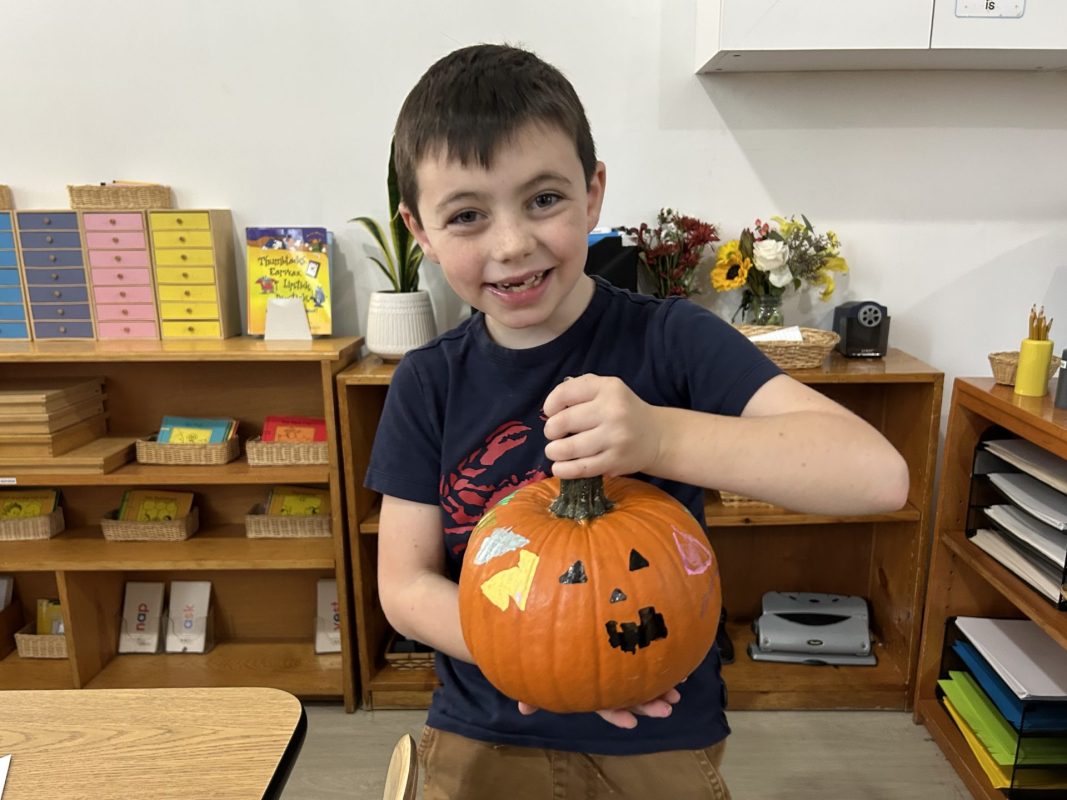
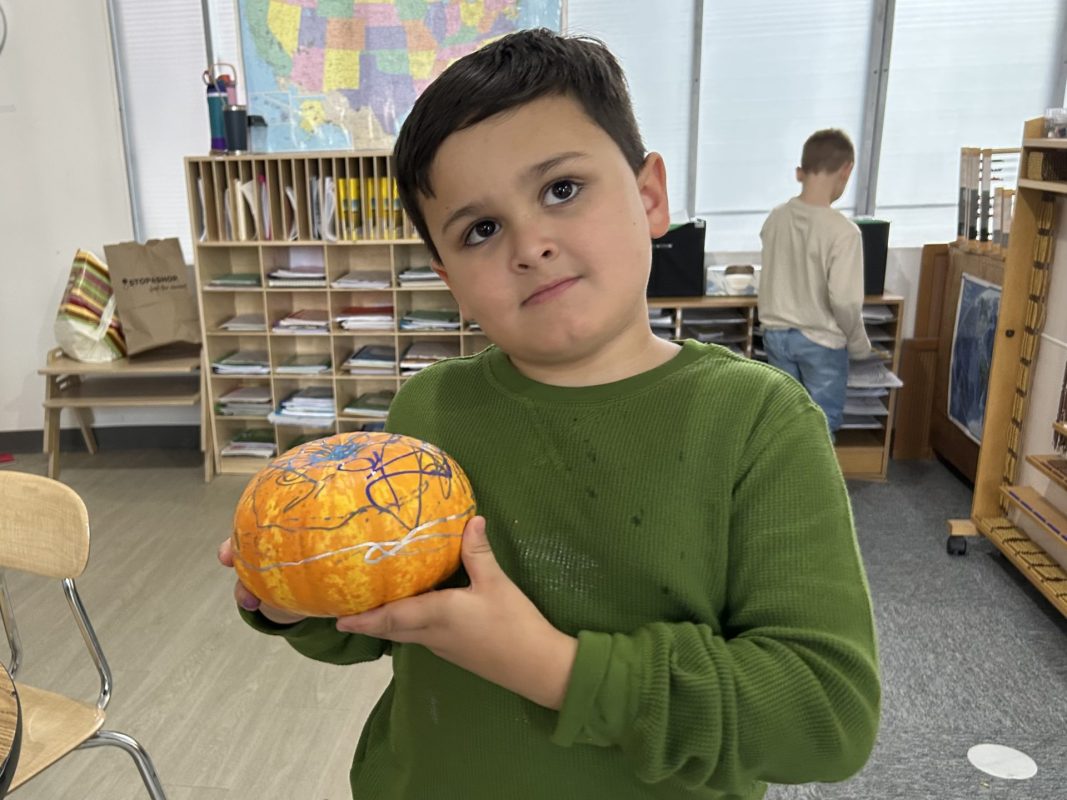
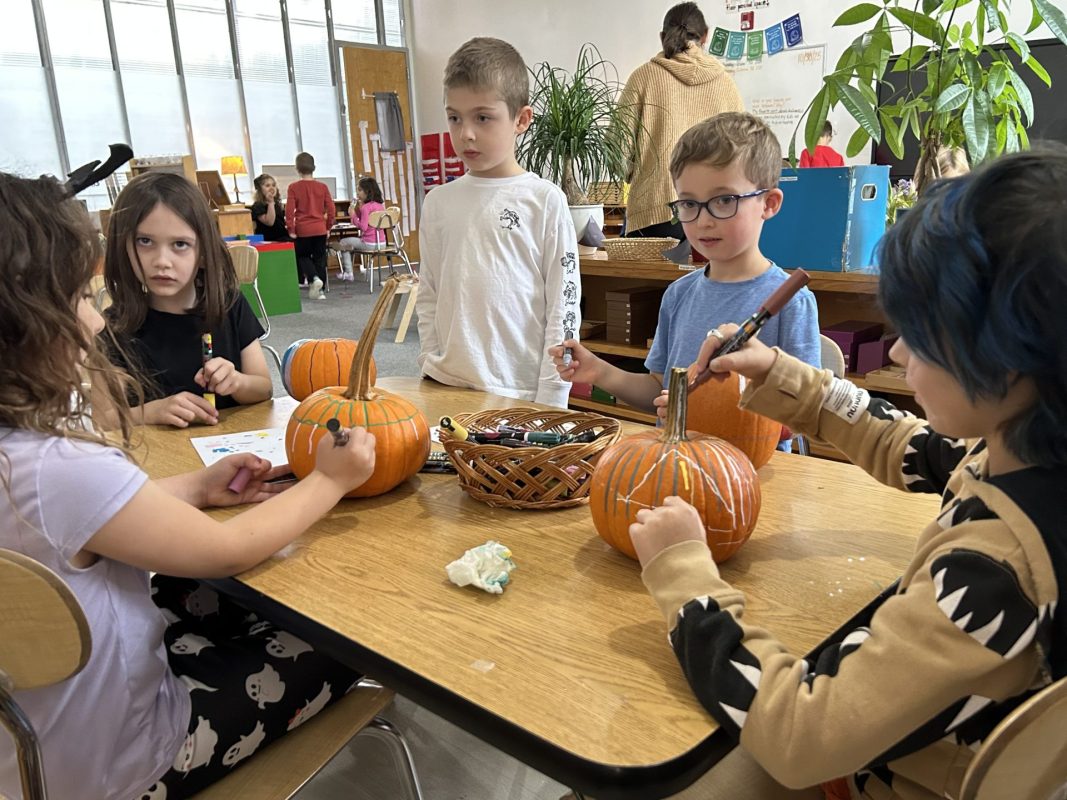
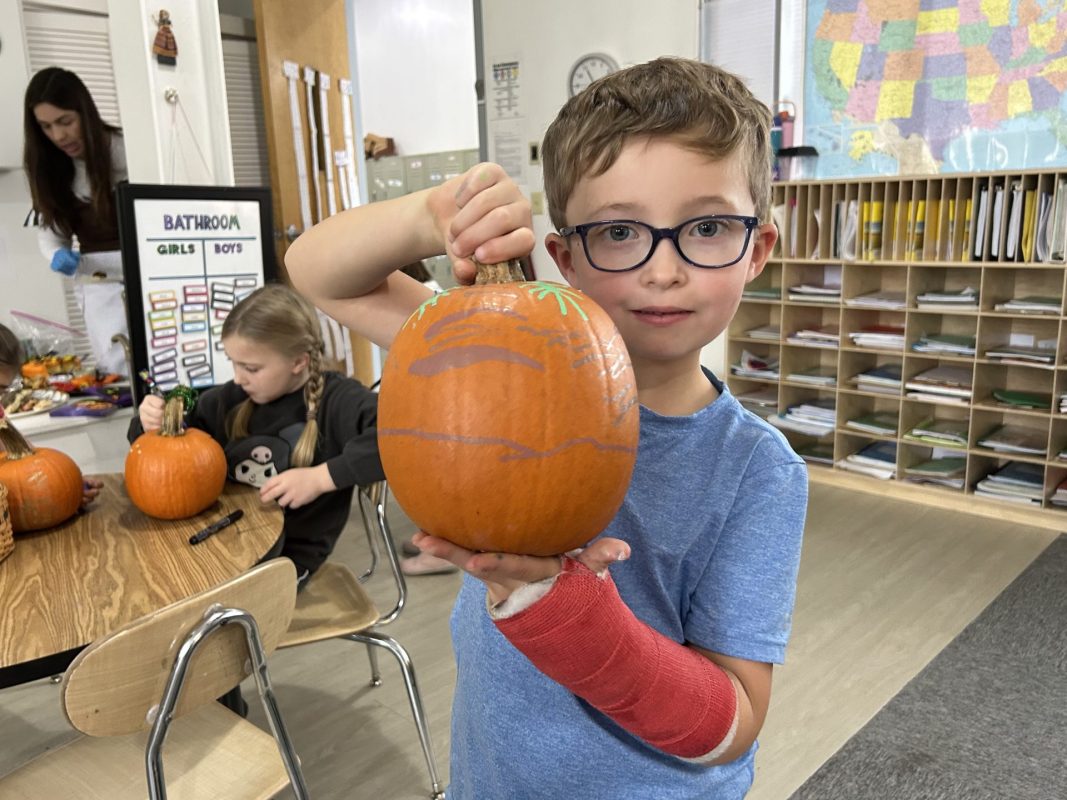
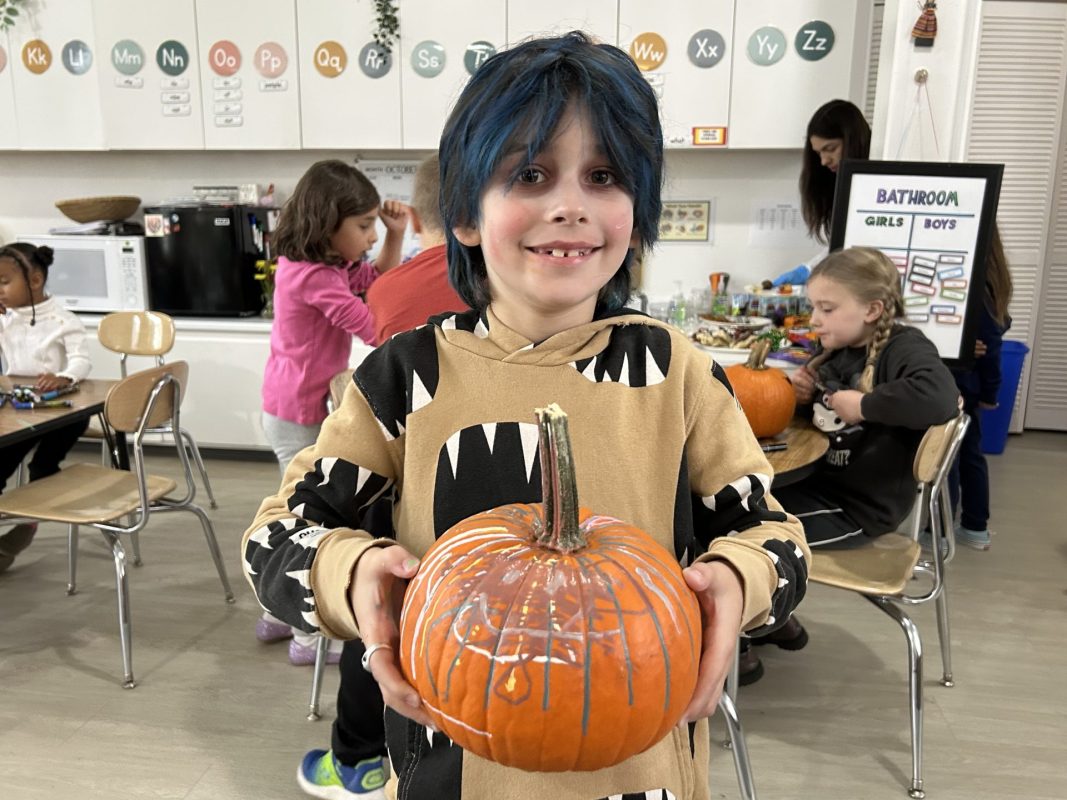
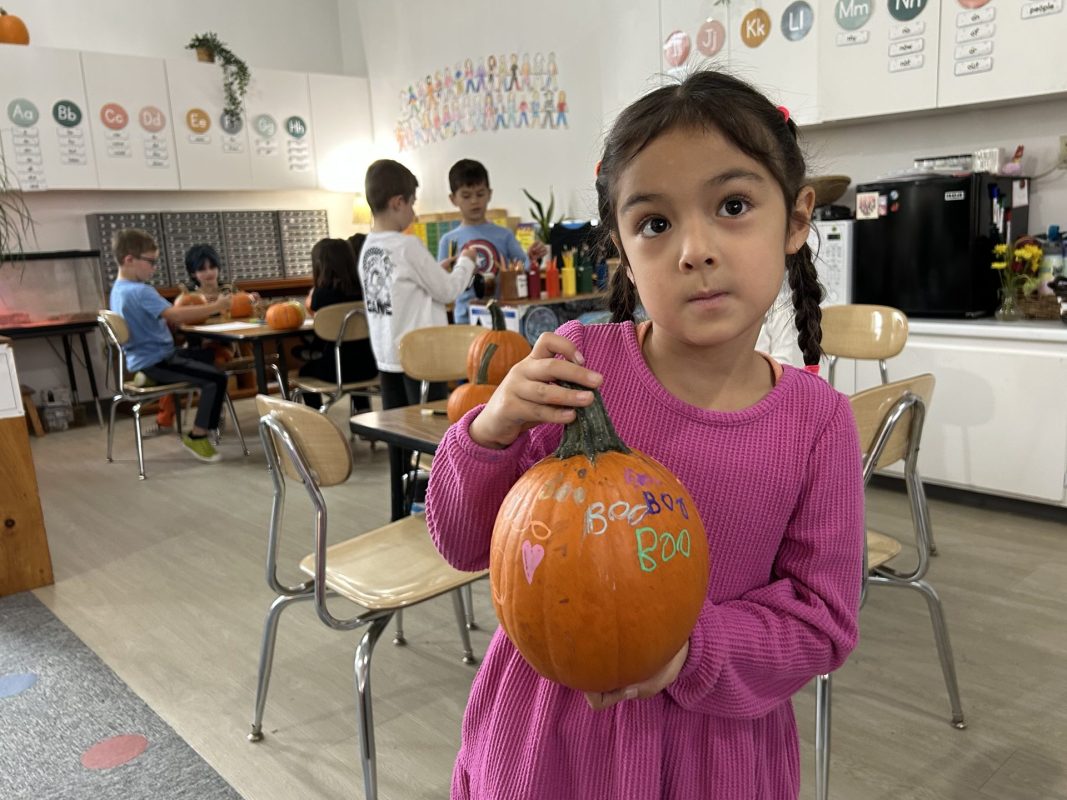
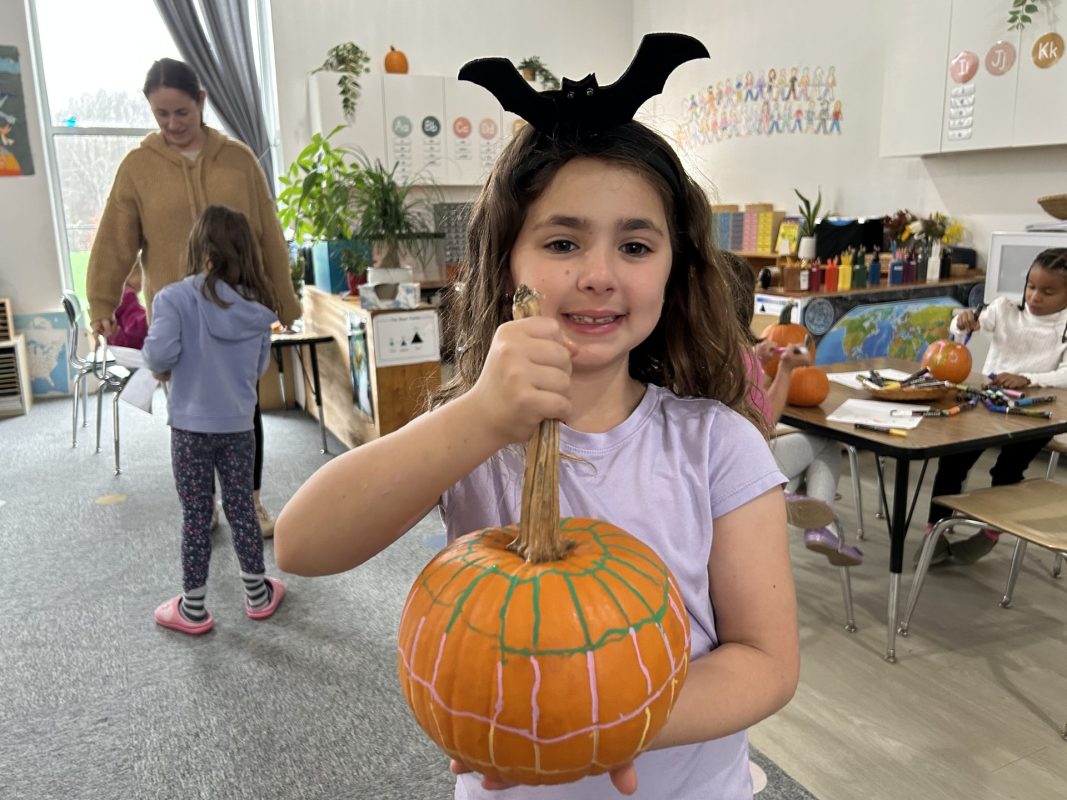
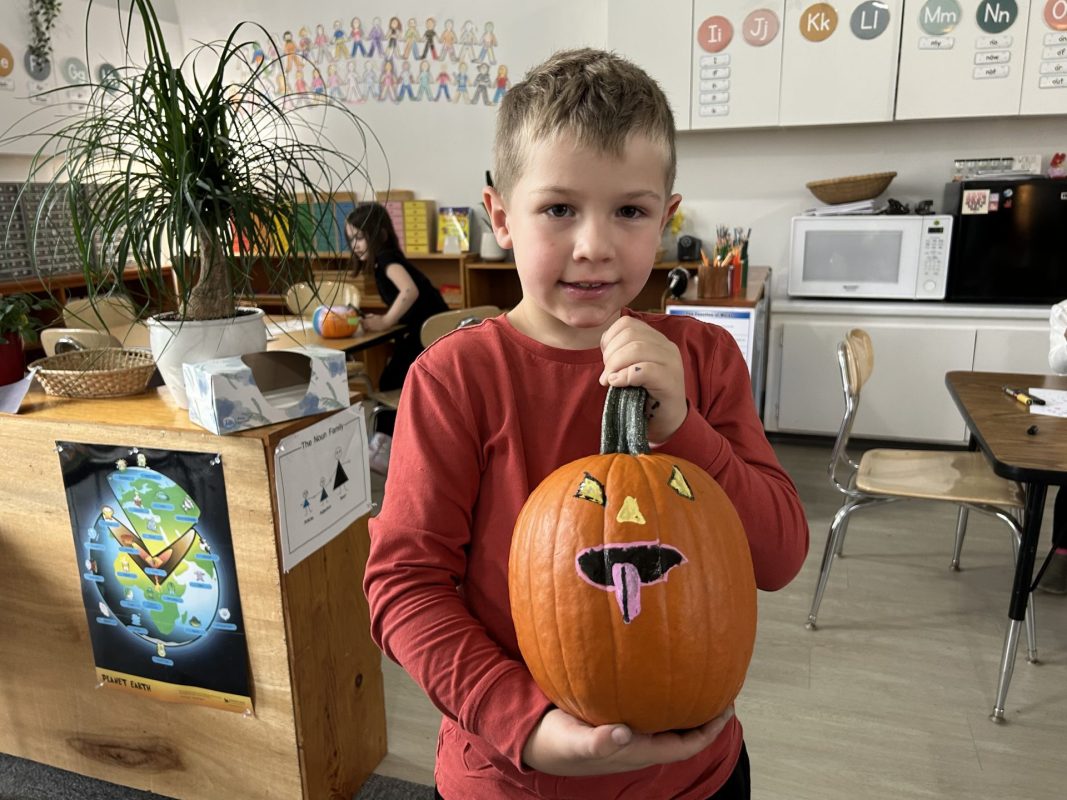
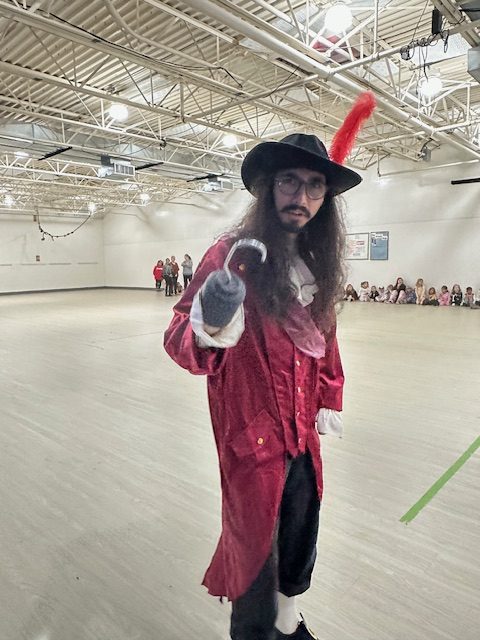
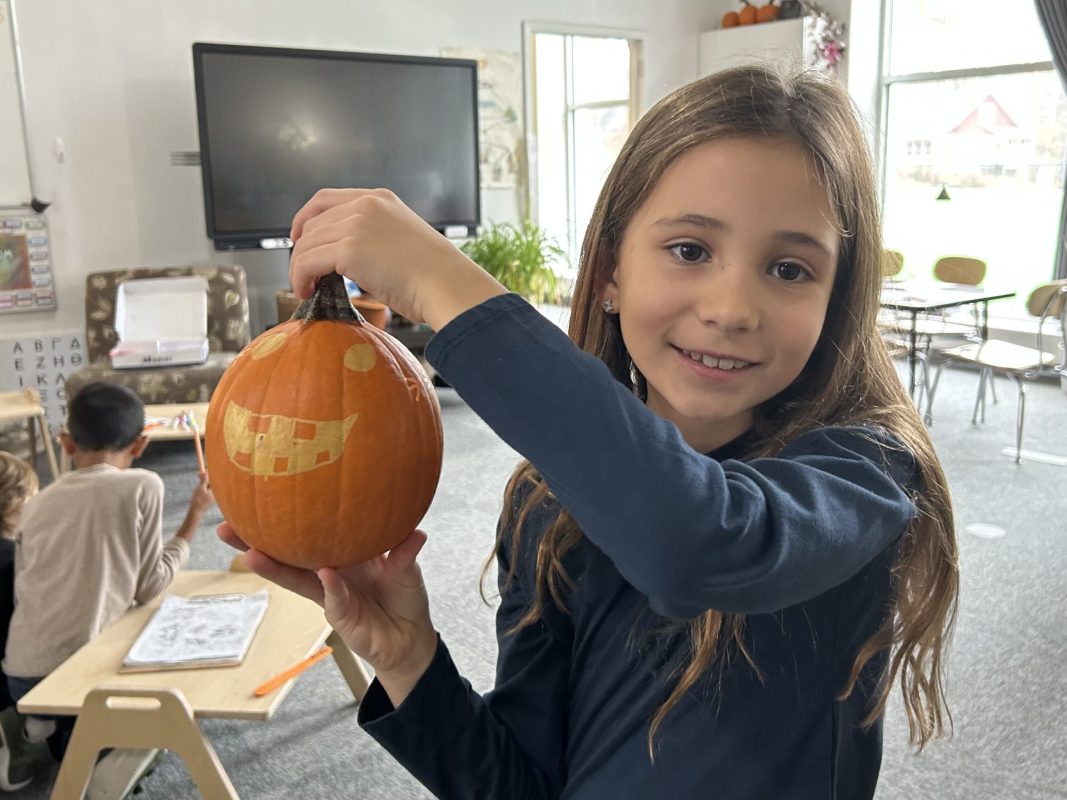
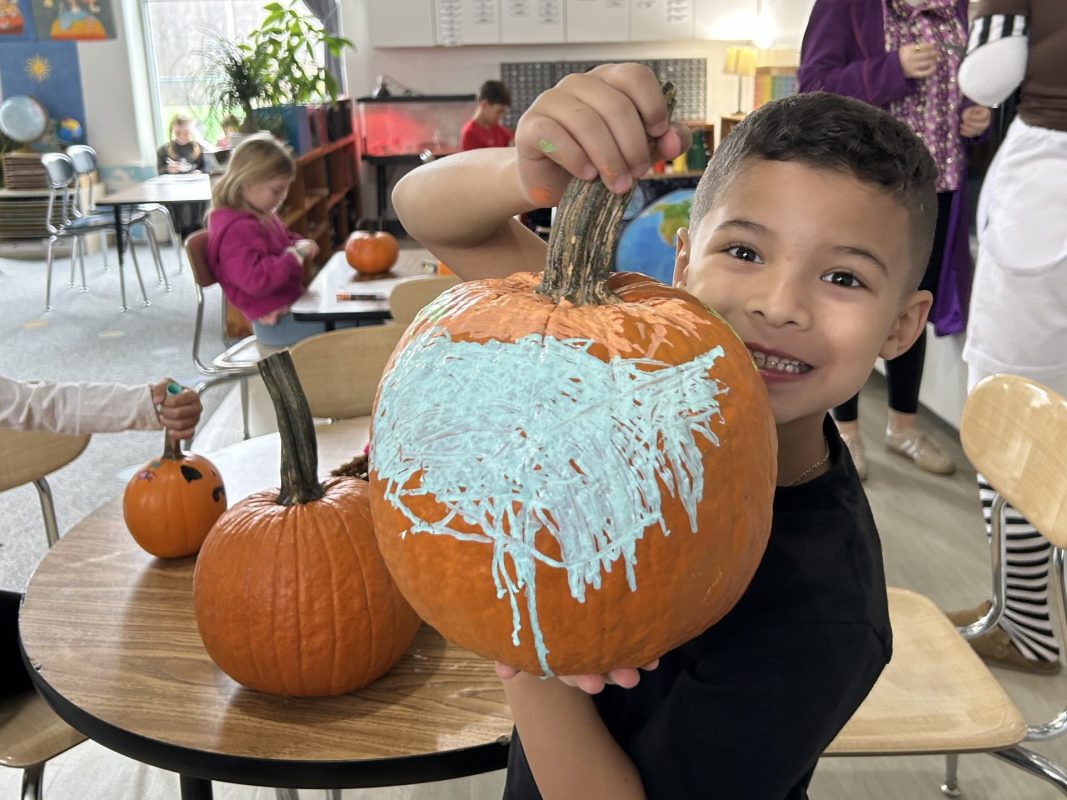
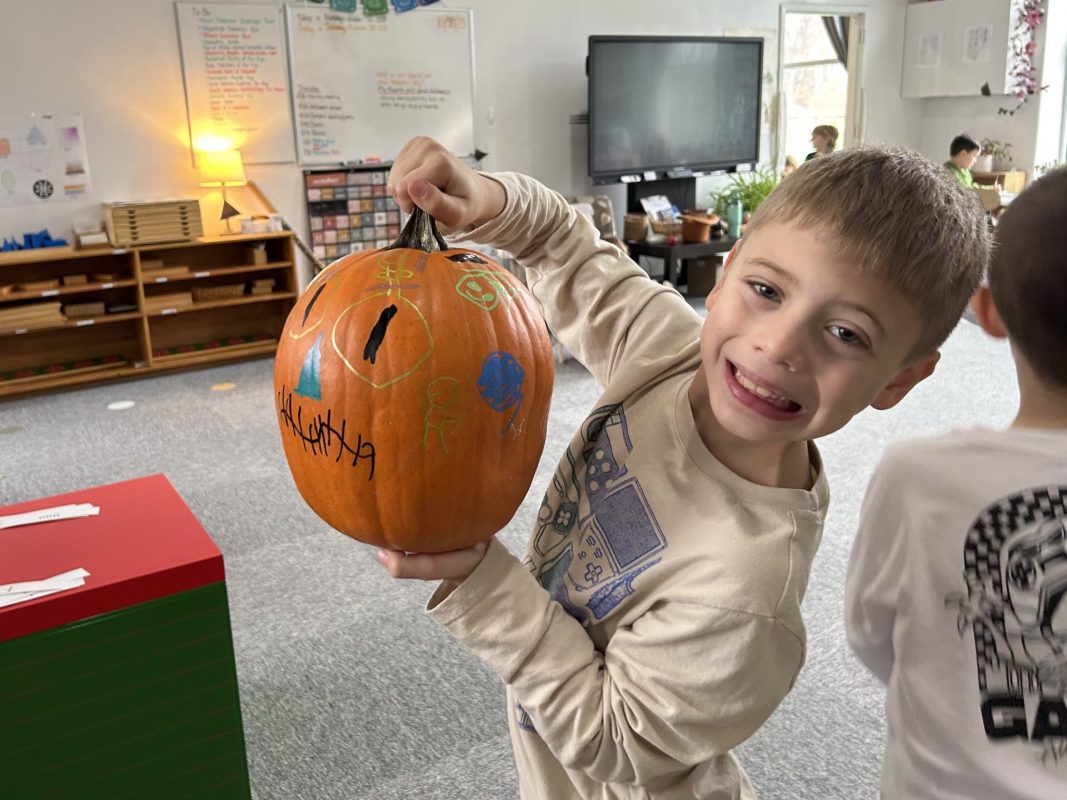
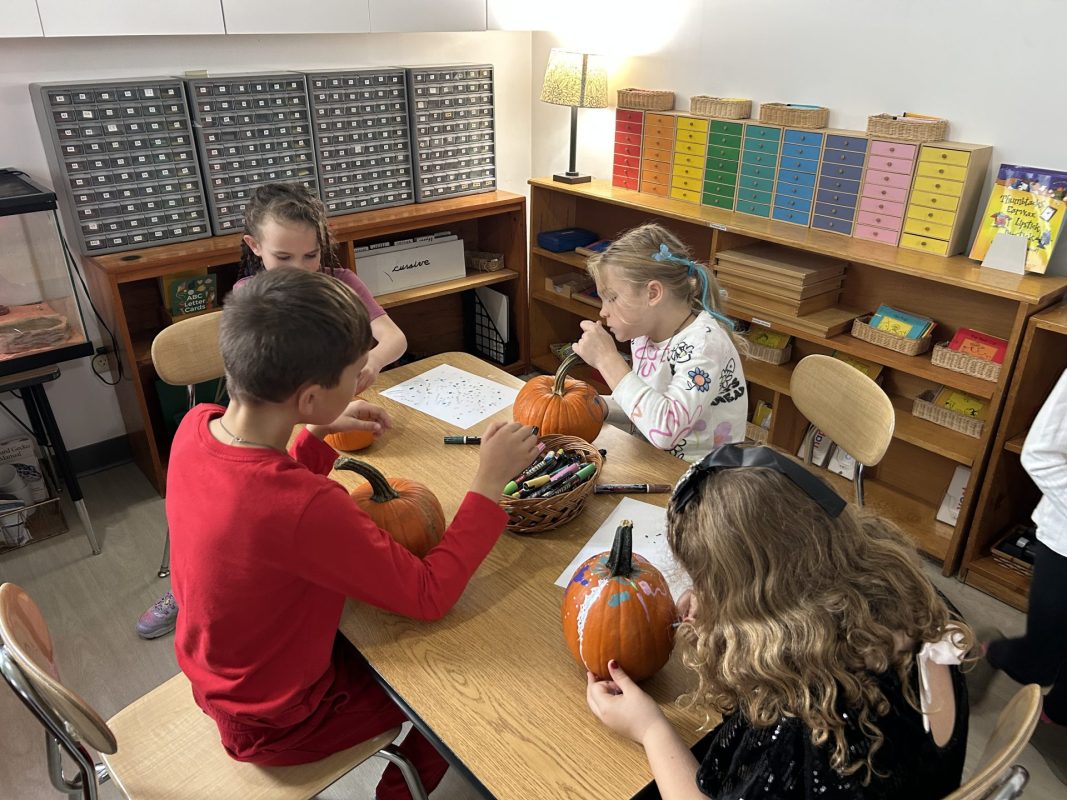
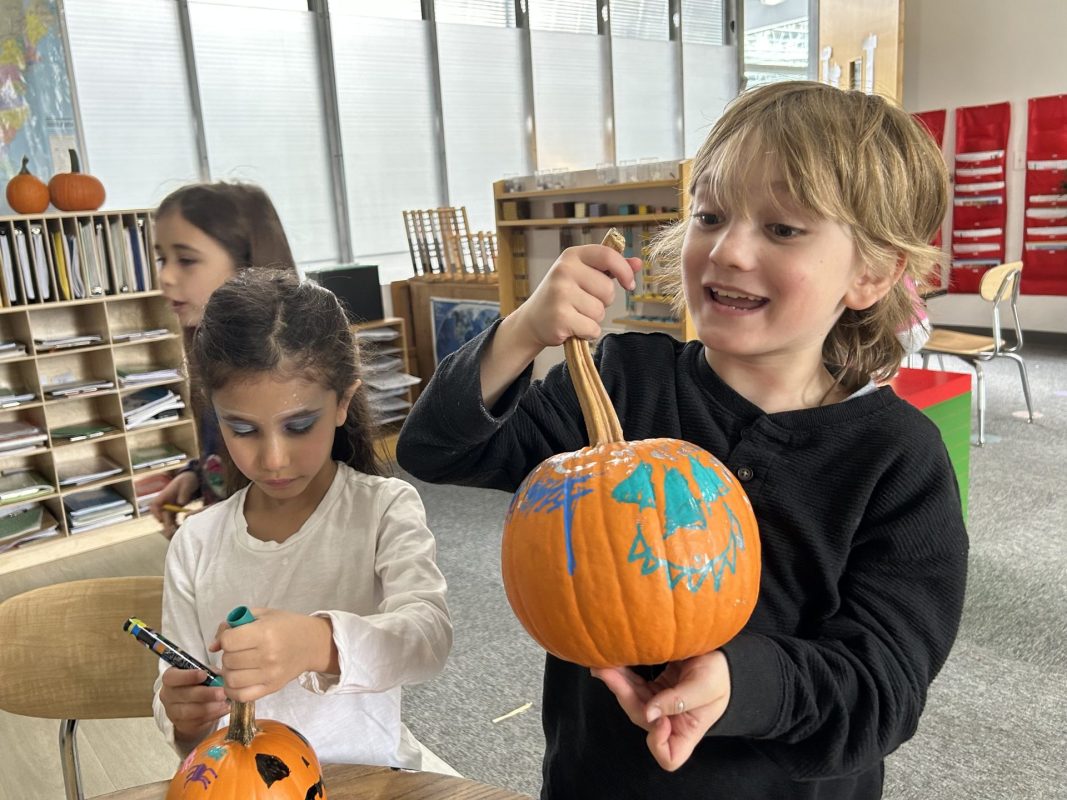
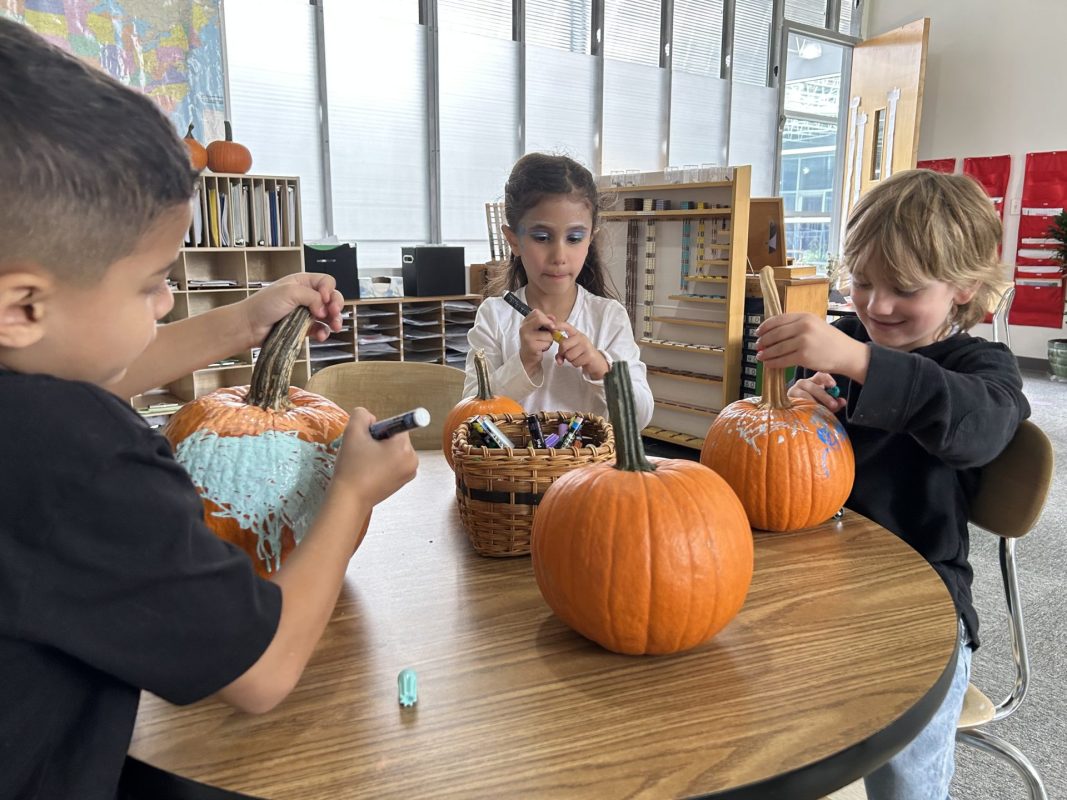
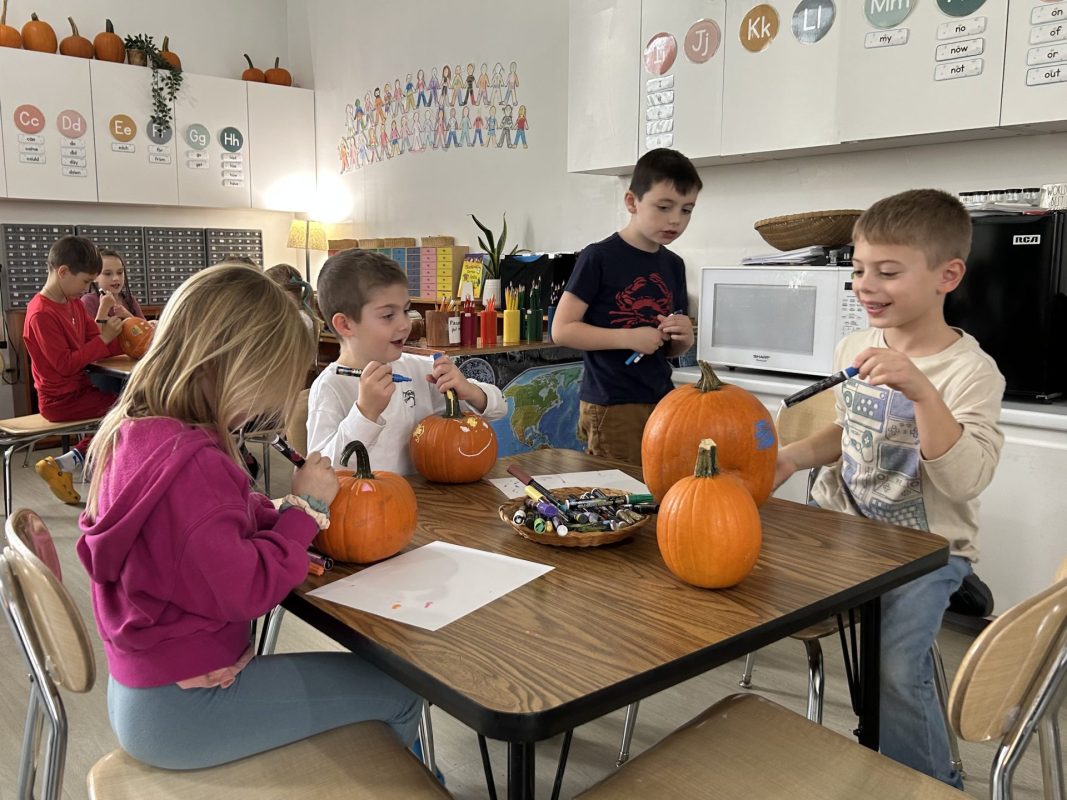
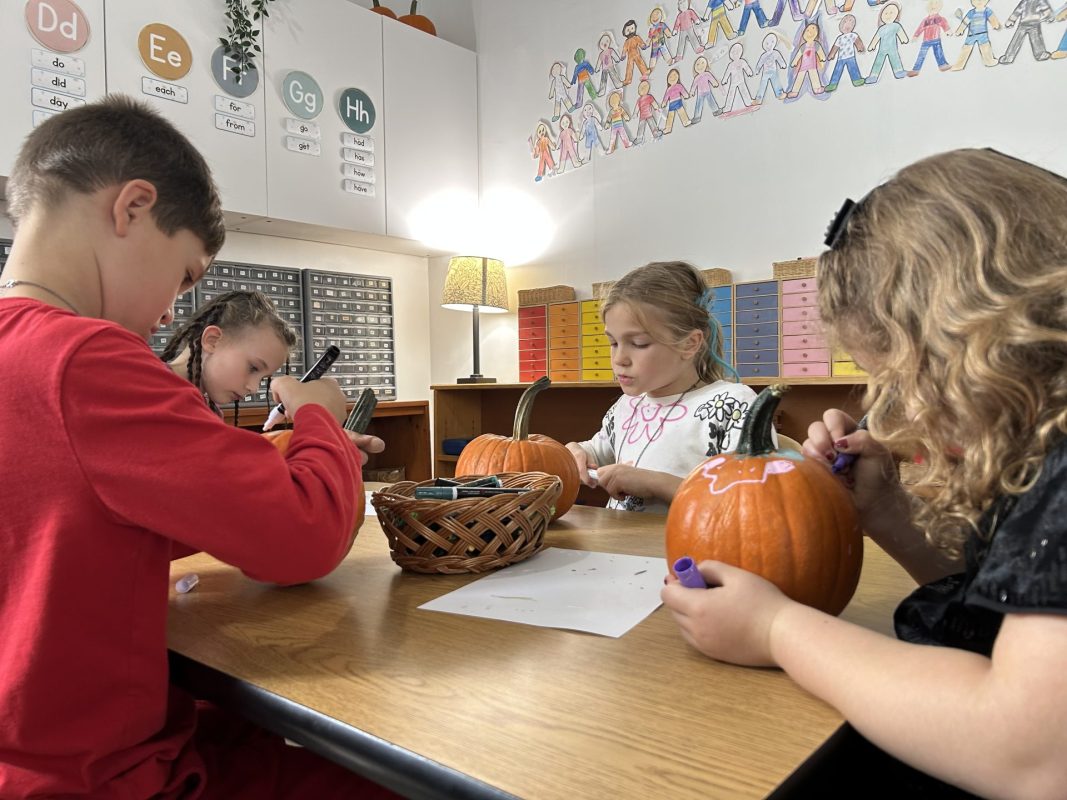
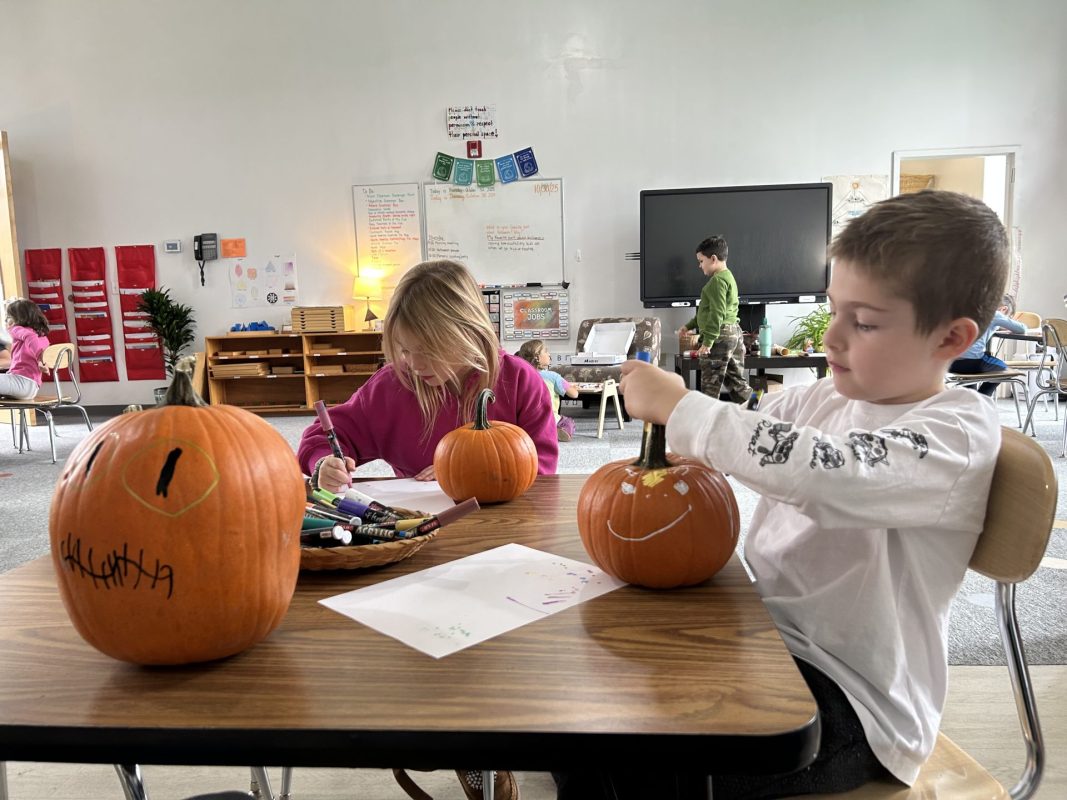
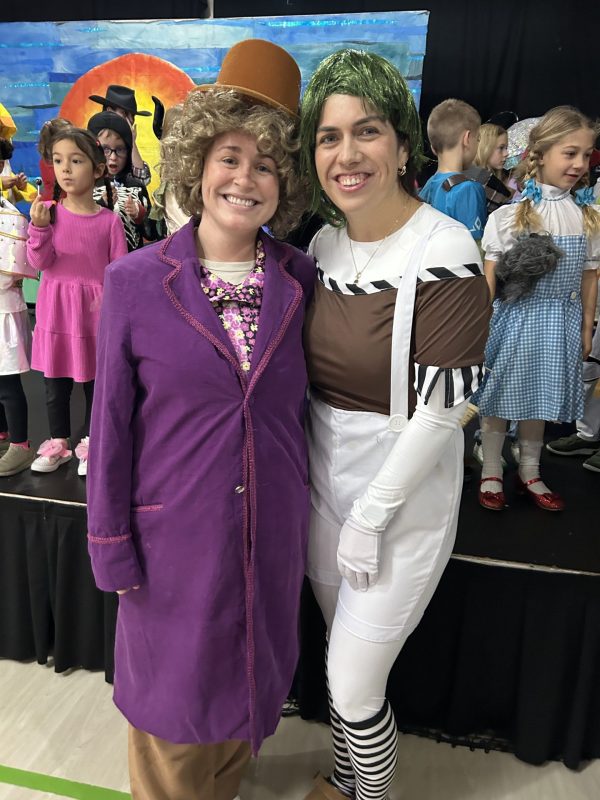
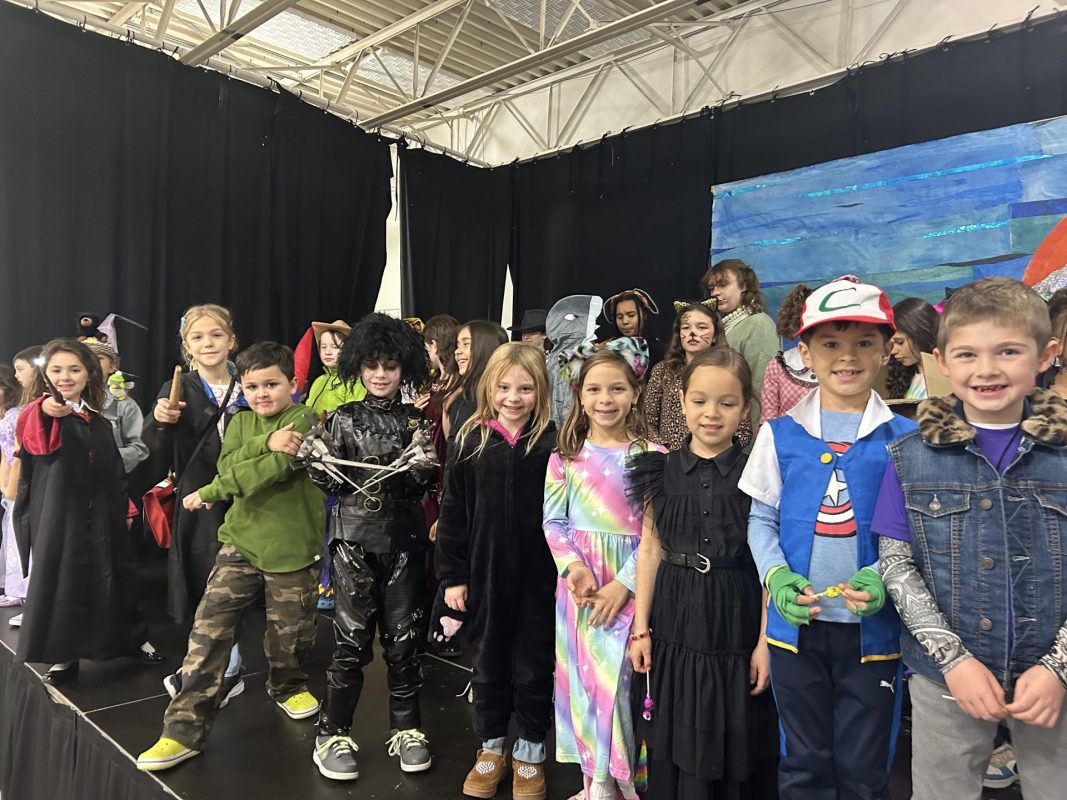
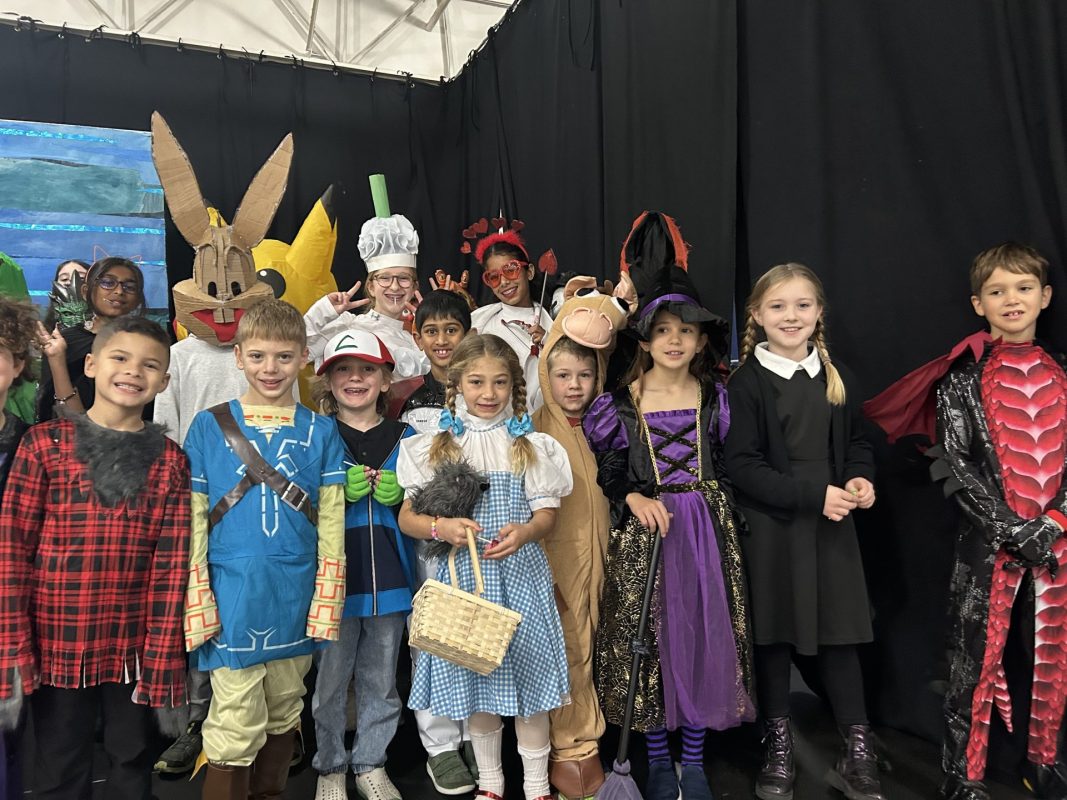
Our Halloween celebration was packed with fun from start to finish! The day began with our school parade, where the children proudly showed off their creative costumes to classmates and other classes. Laughter and excitement filled the gym as everyone admired the festive spirit all around. Later, the children had a blast decorating and painting their pumpkins, each one unique and full of personality! The children also enjoyed delicious festive treats generously sent in by parents—thank you for helping make our celebration extra special!

As the weather turns colder, we would like to remind families to please send their children to school with warm clothing, including coats, hats, and gloves. We go outside every morning and afternoon, even during the winter months, so it’s important that everyone is dressed comfortably for the season. Thank you for your help in keeping our students warm and ready for outdoor fun!

And don’t forget, our class field trip is coming up this Wednesday, November 5th! Please see our previous email for more details. We’re looking forward to an exciting adventure together!


Lower Elementary Grammar Lessons

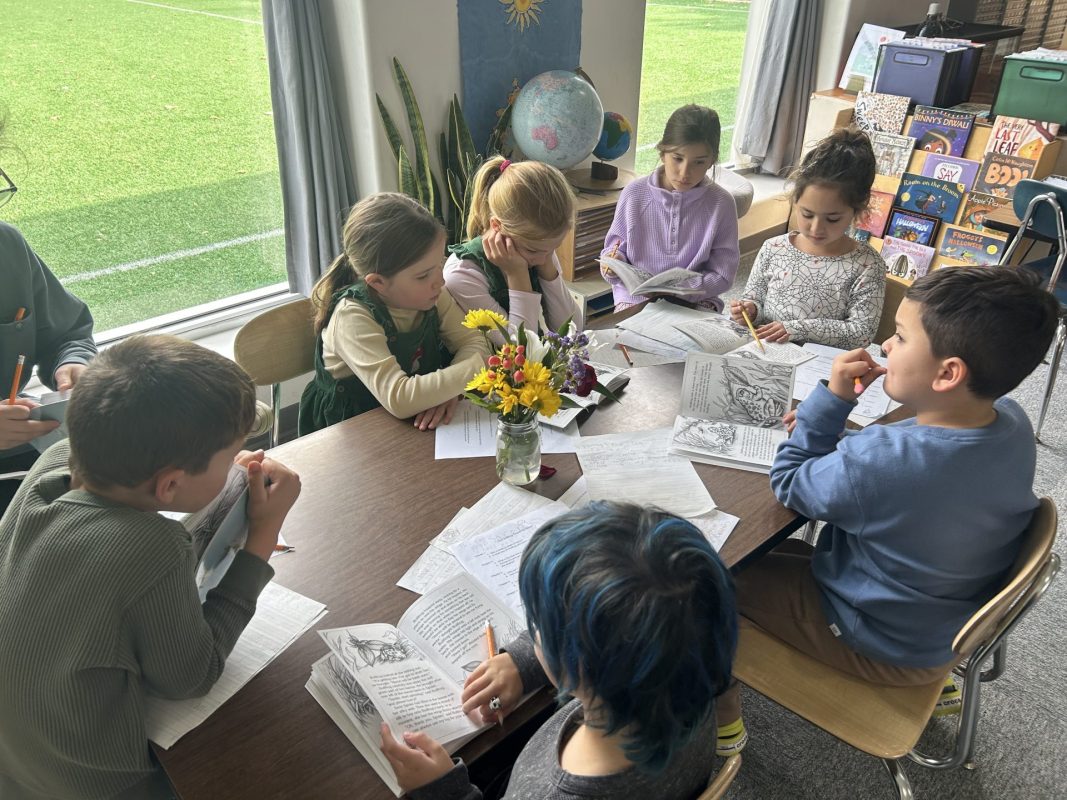
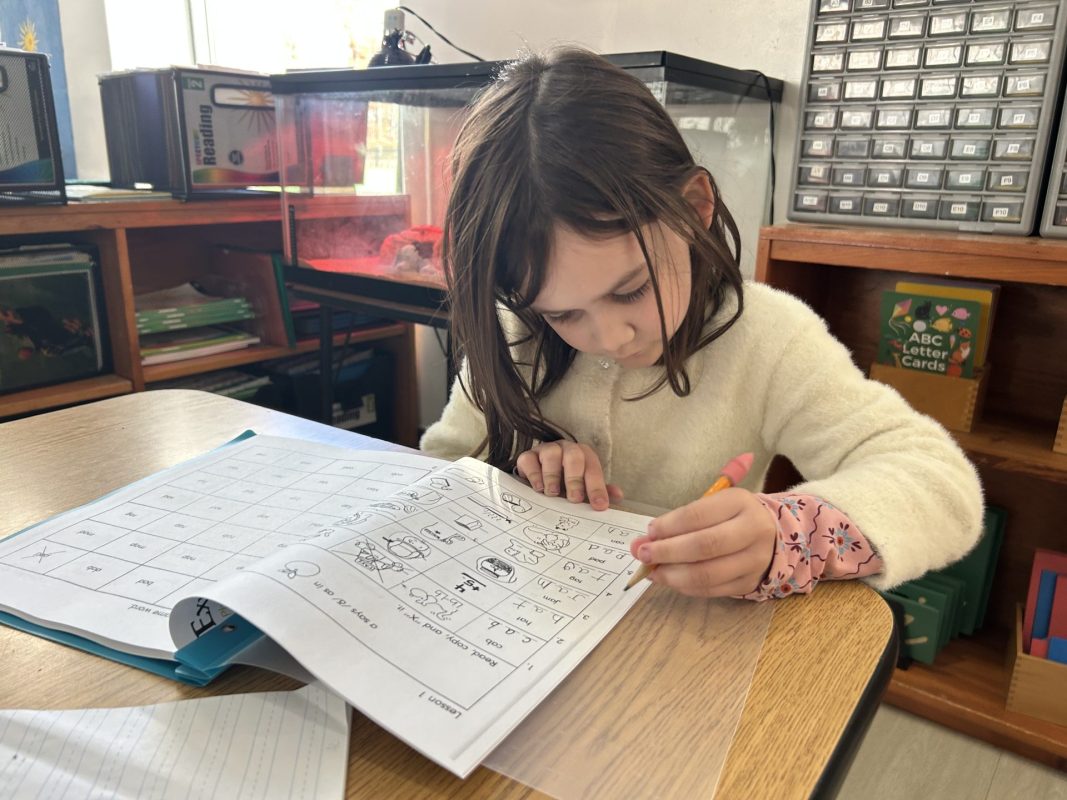
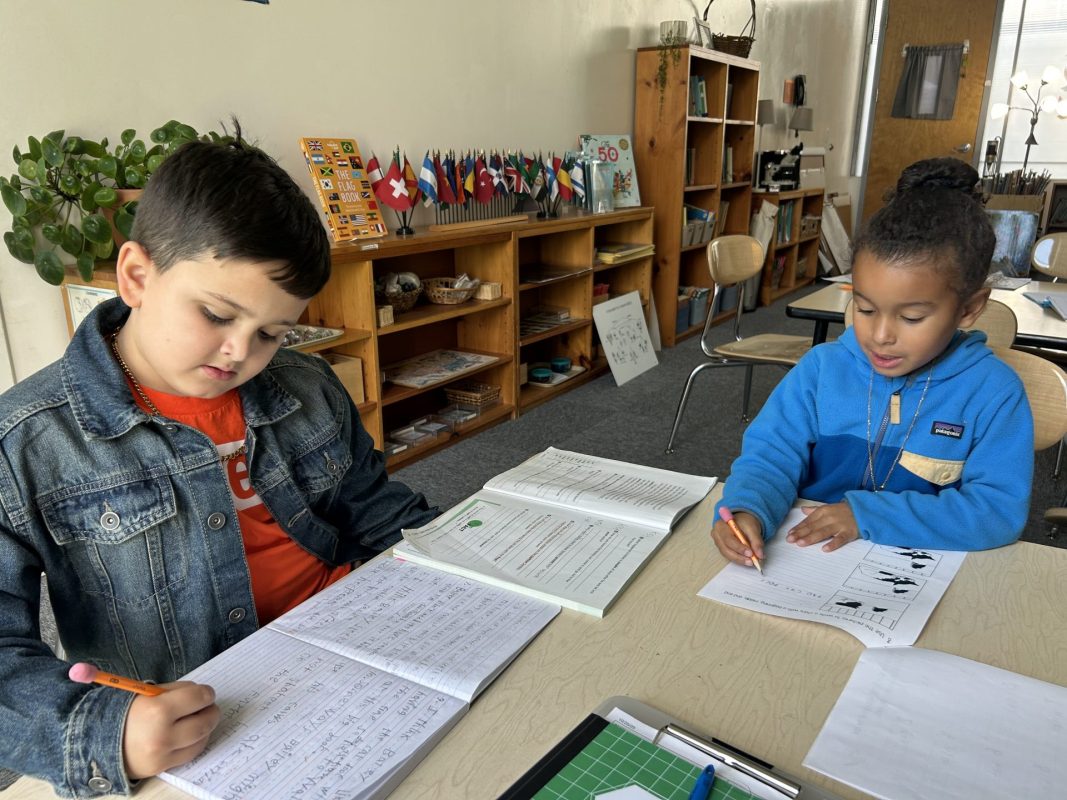
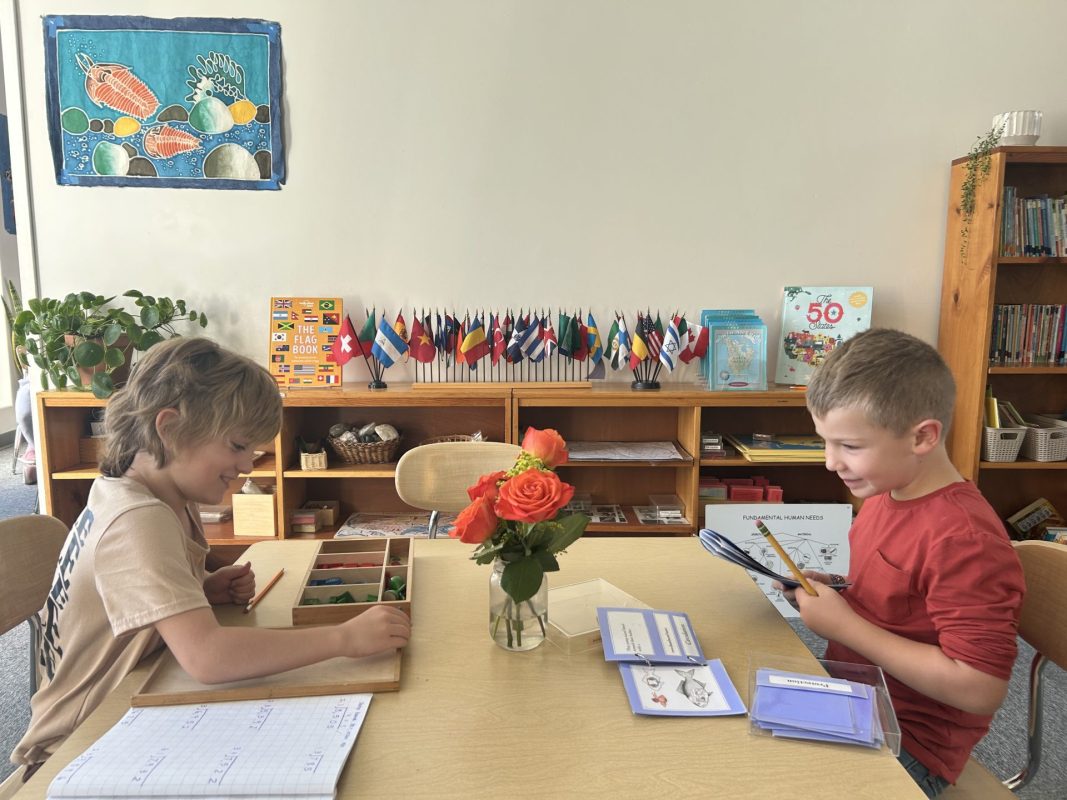
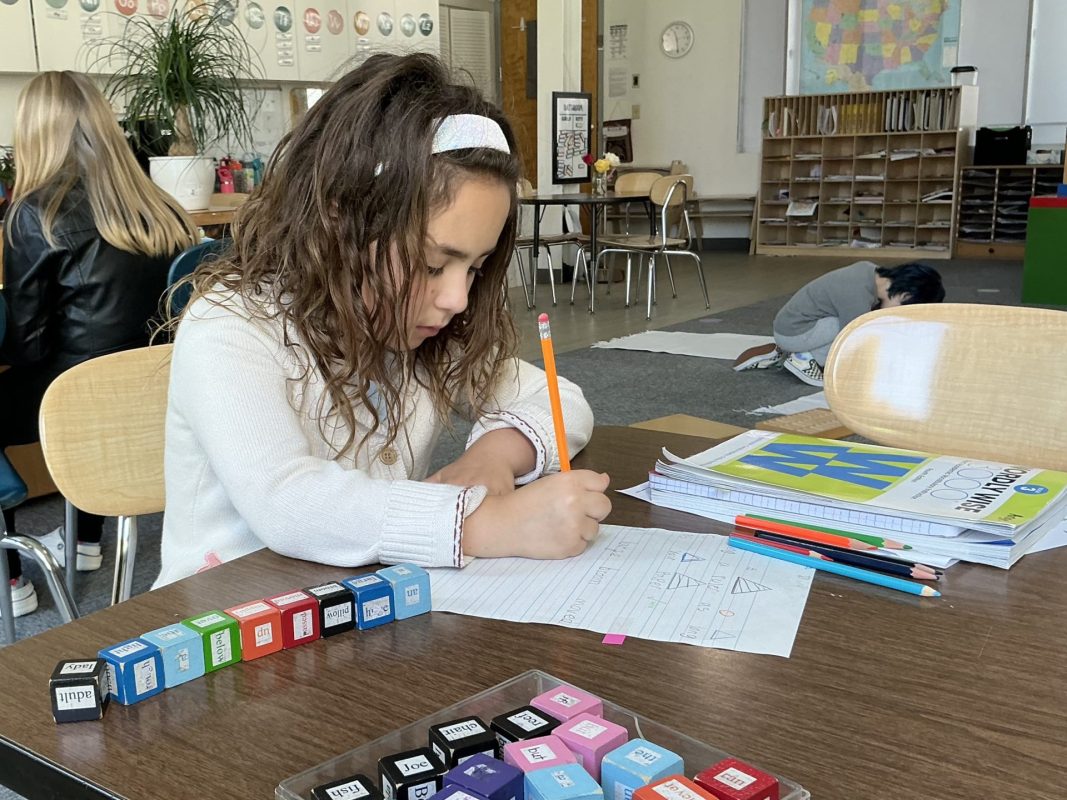
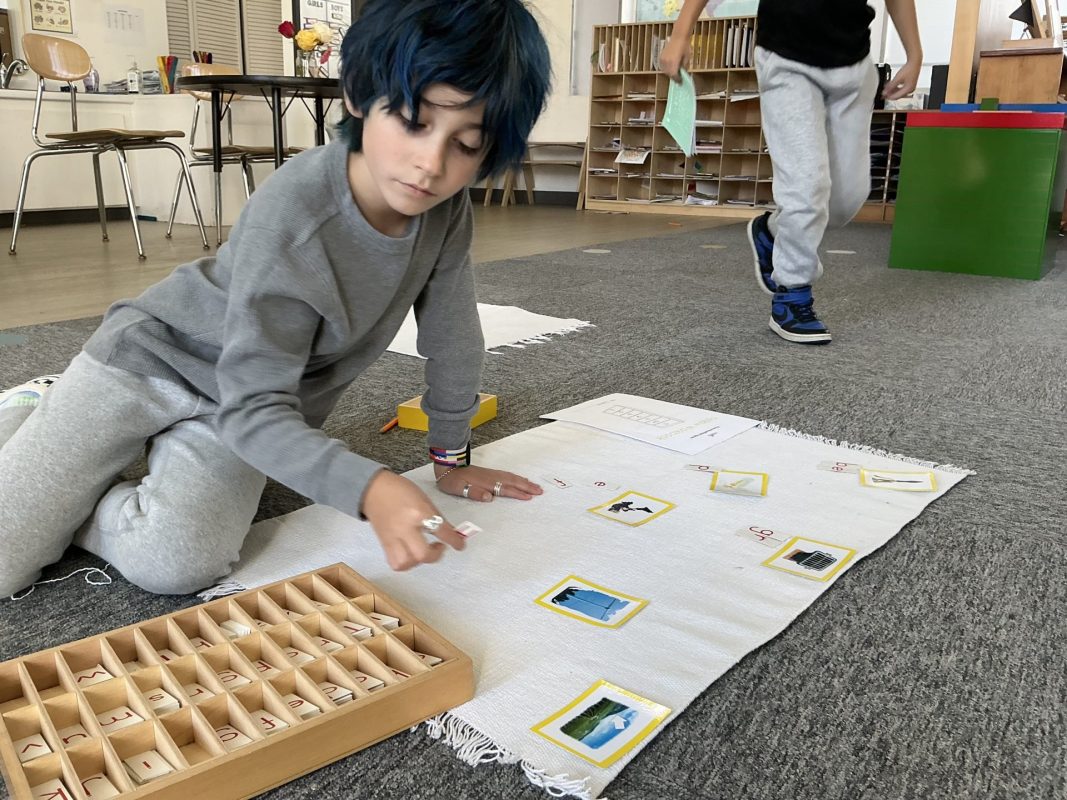
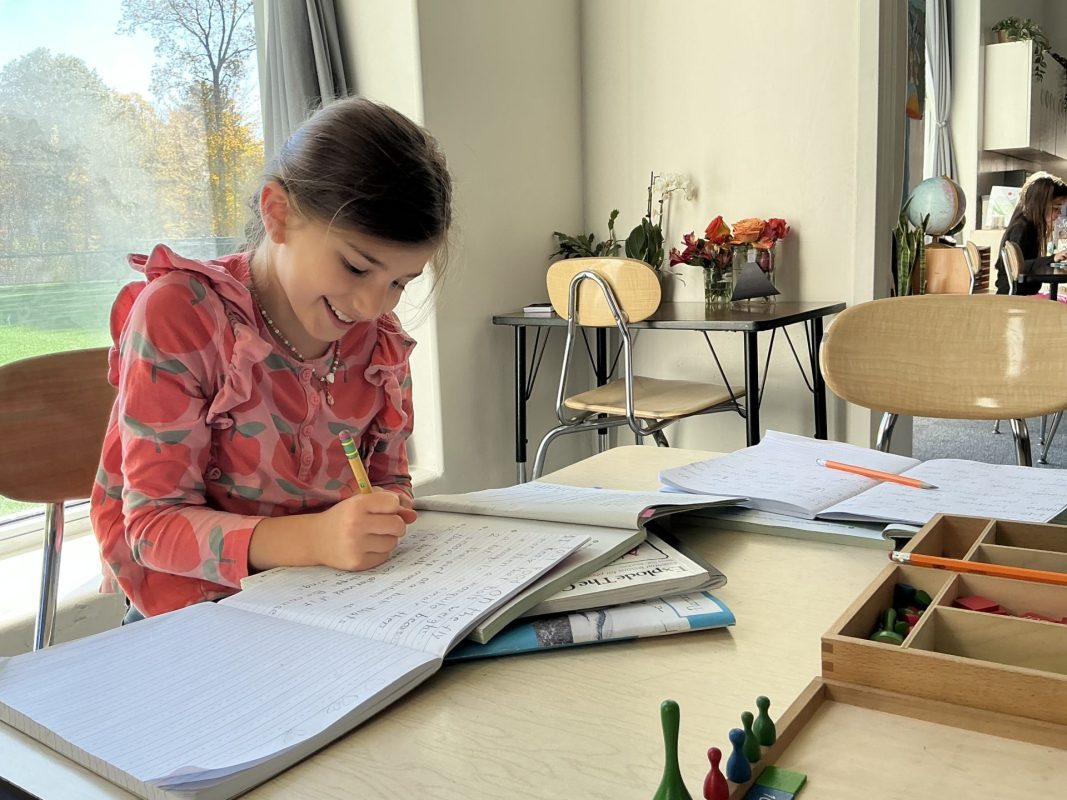
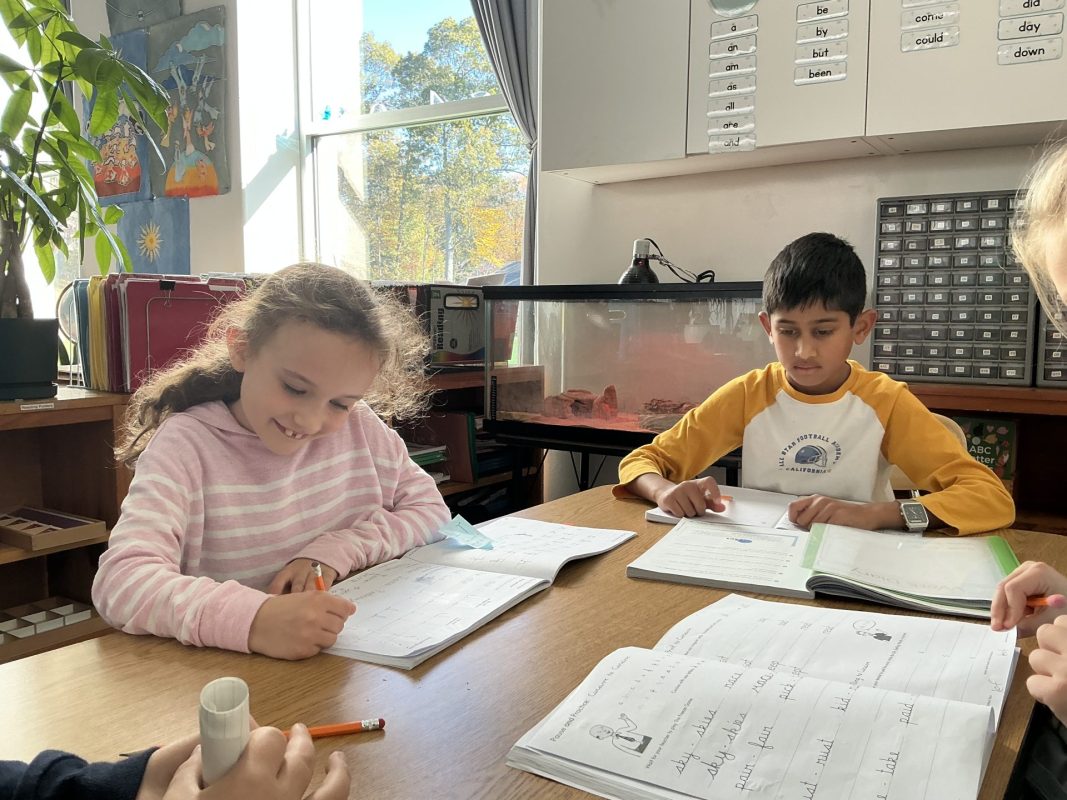
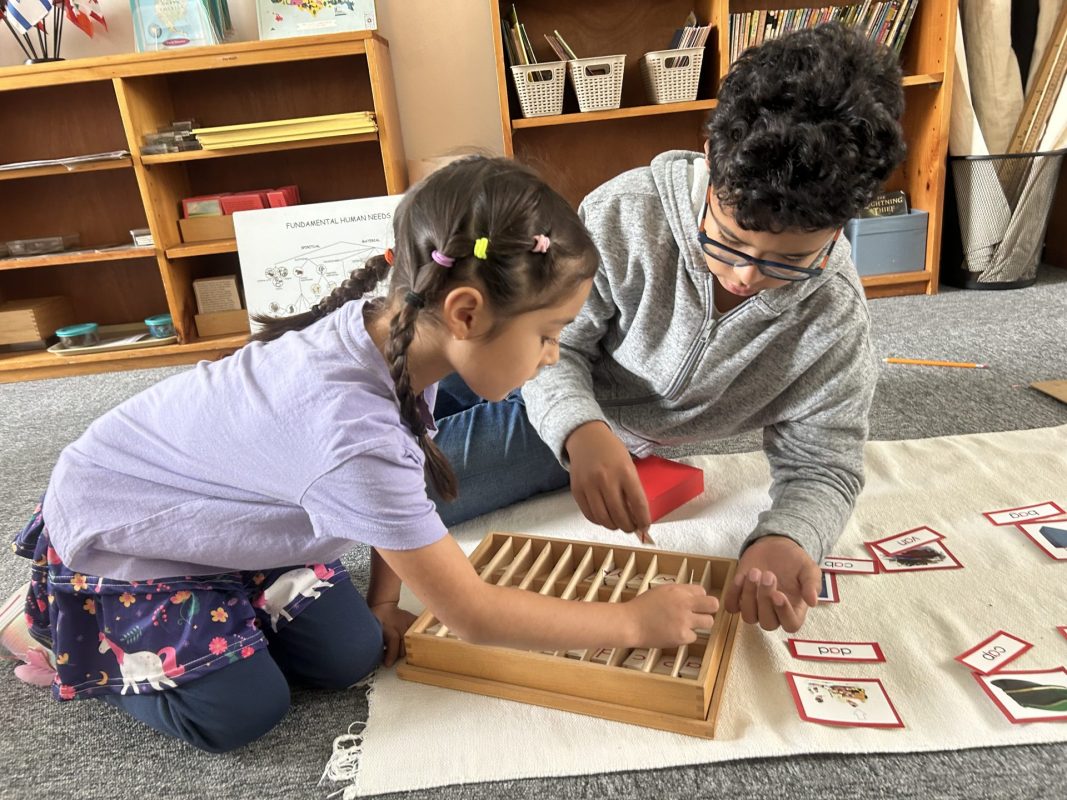
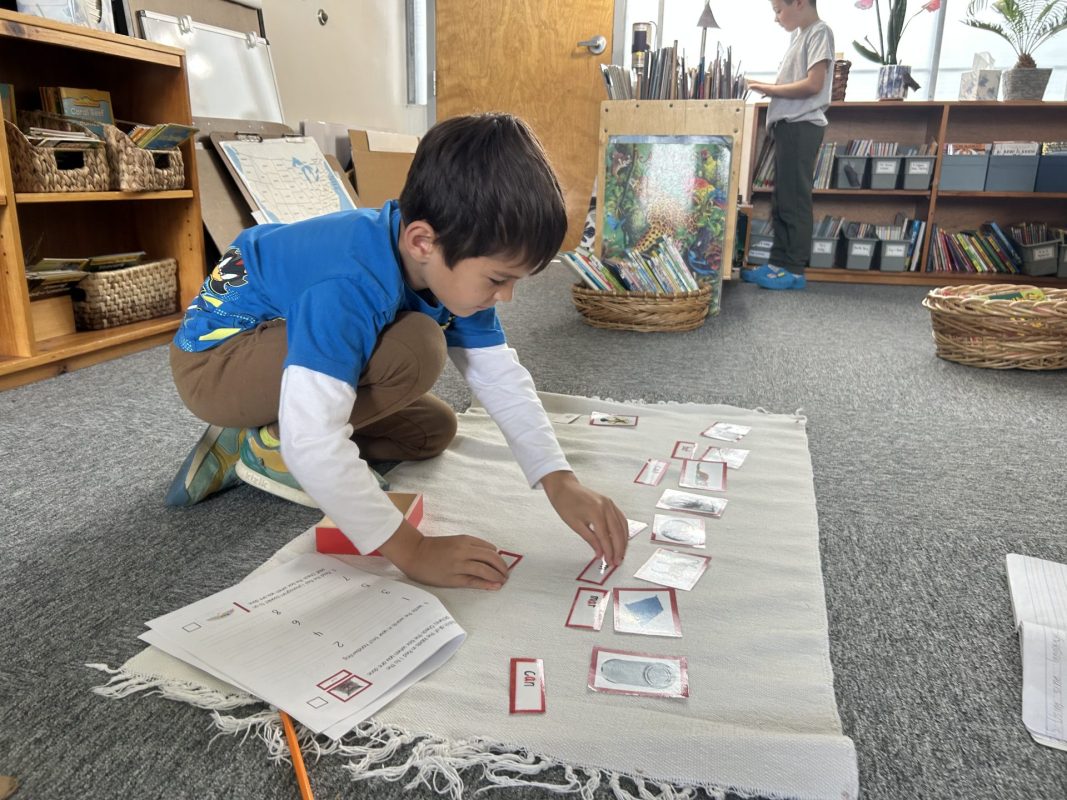
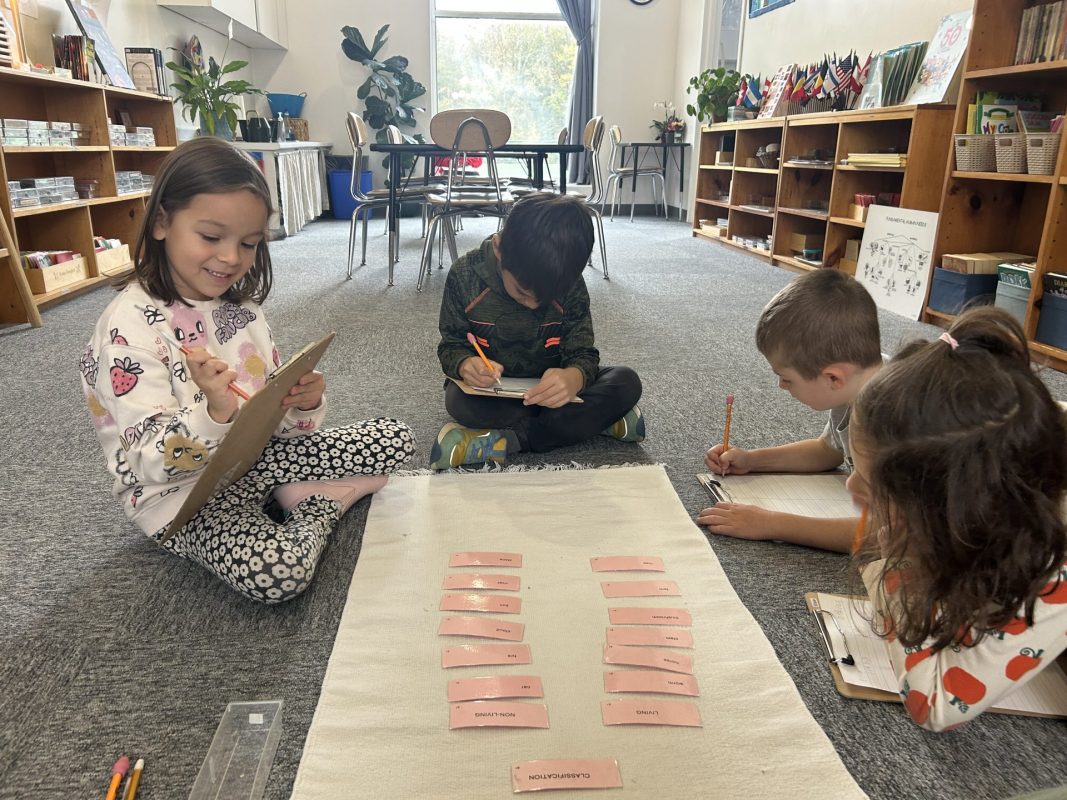
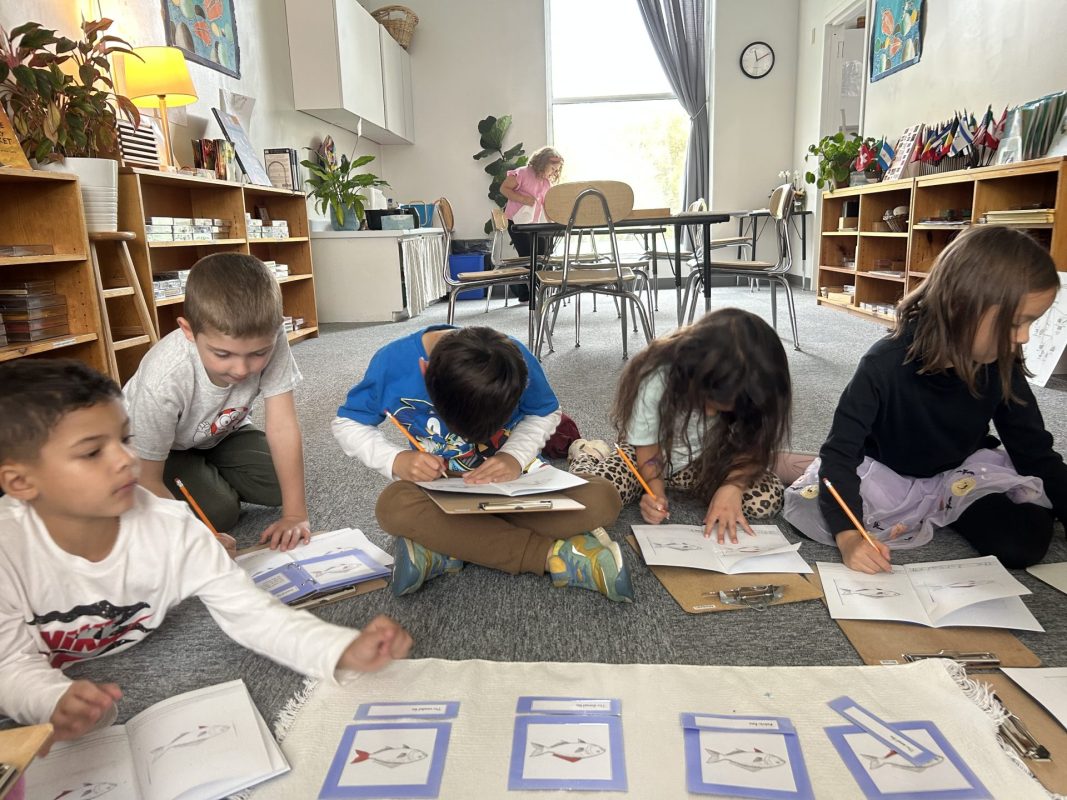
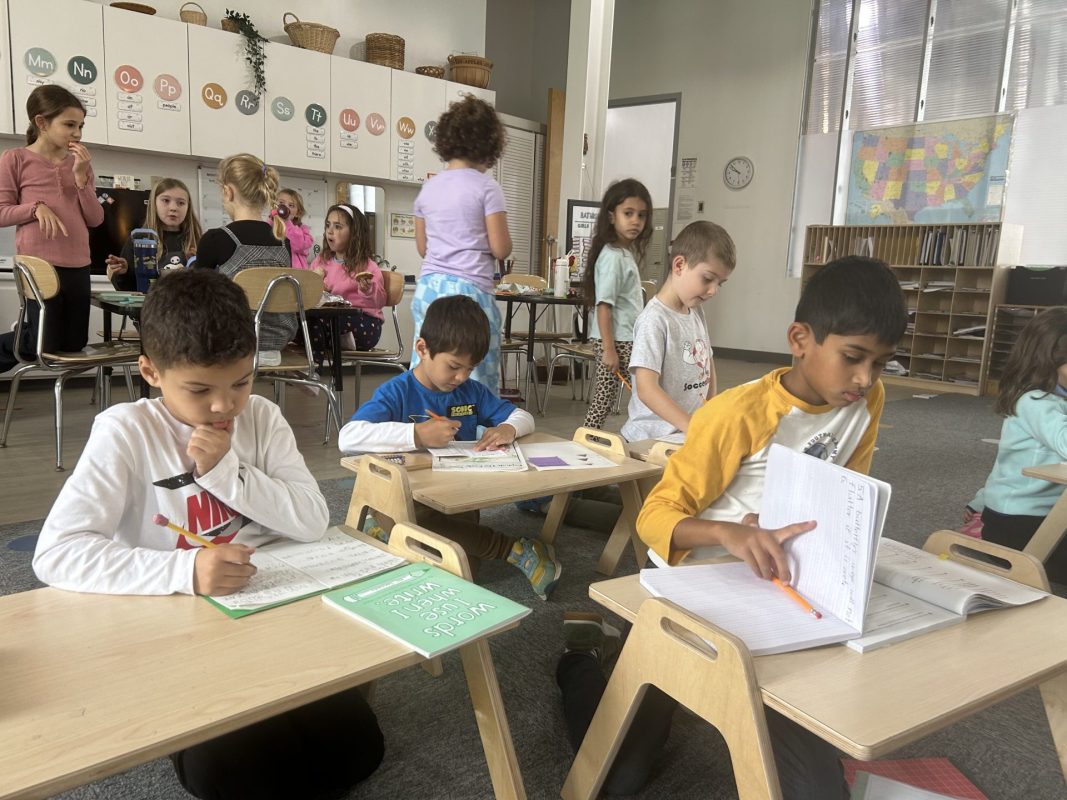
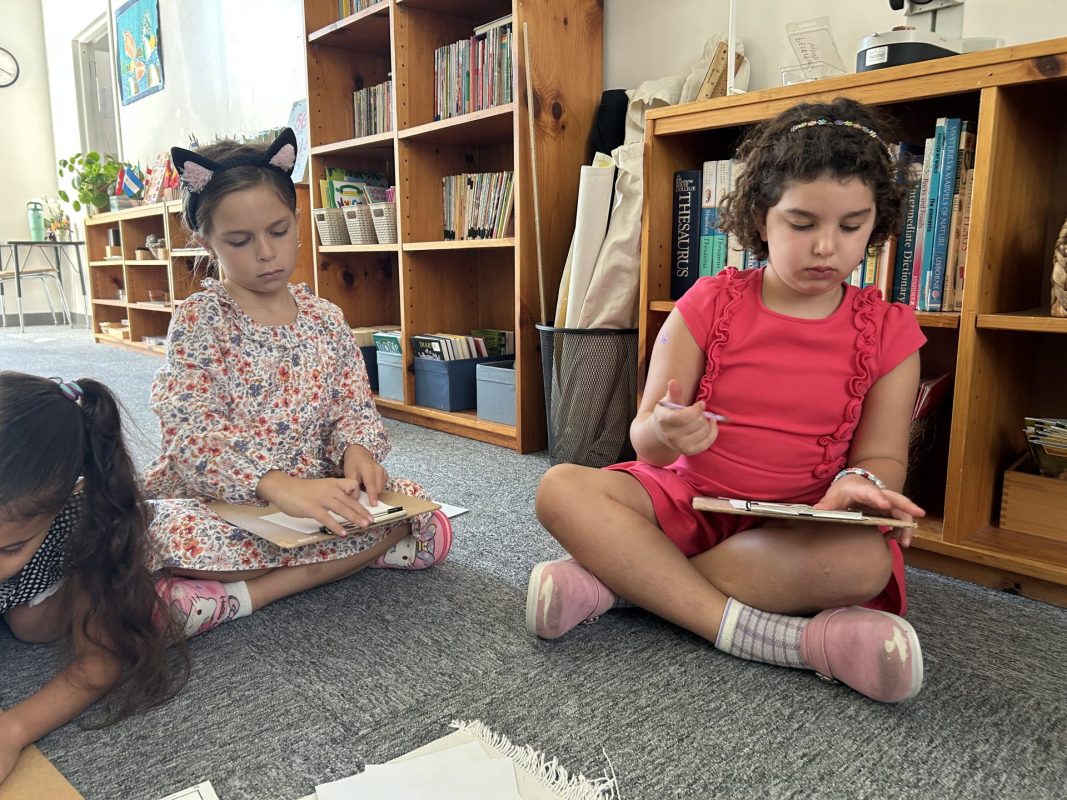
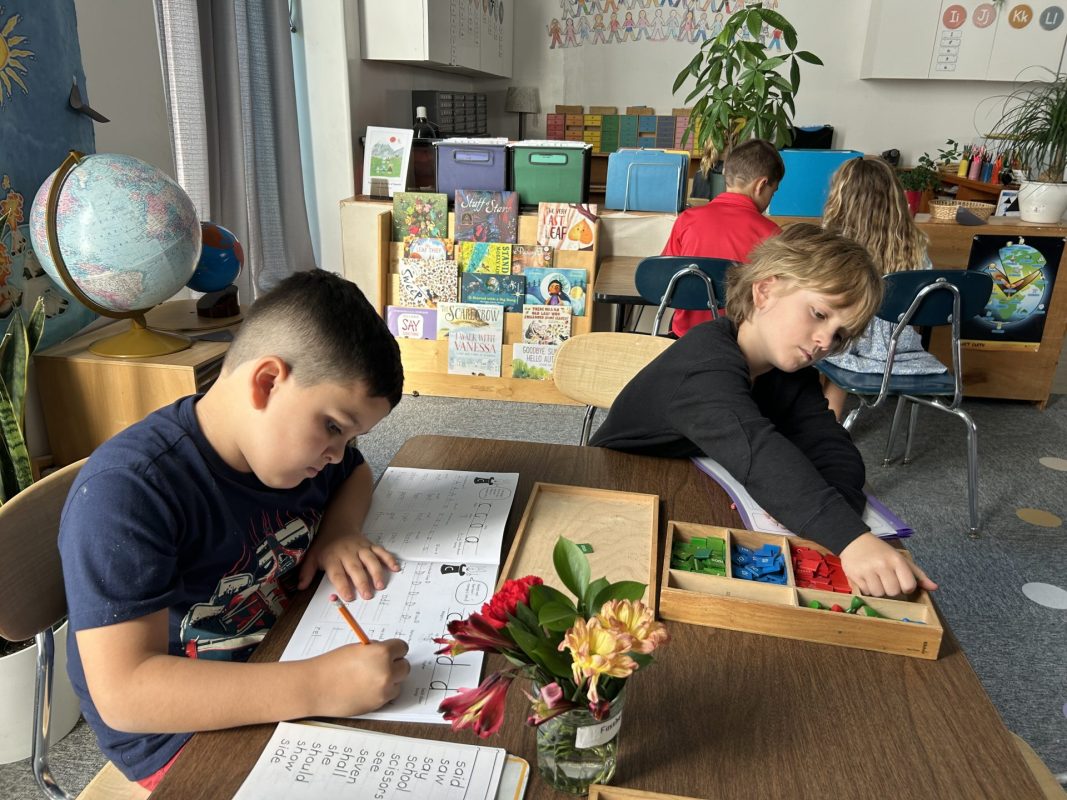
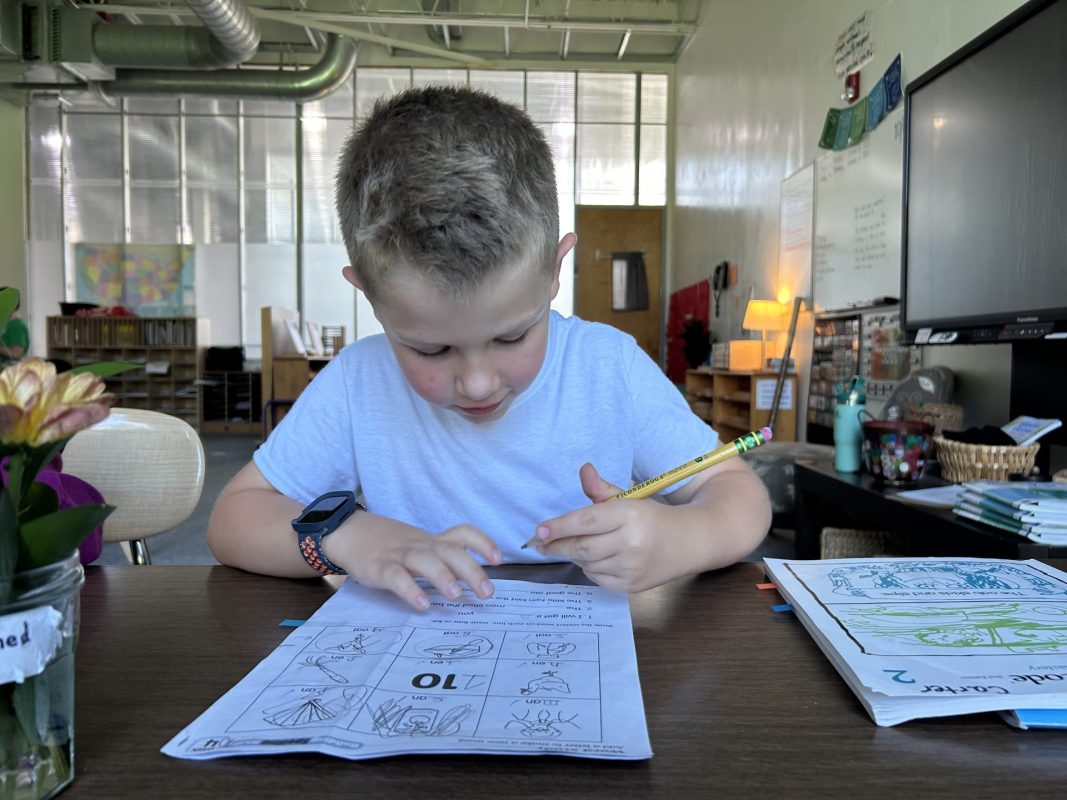
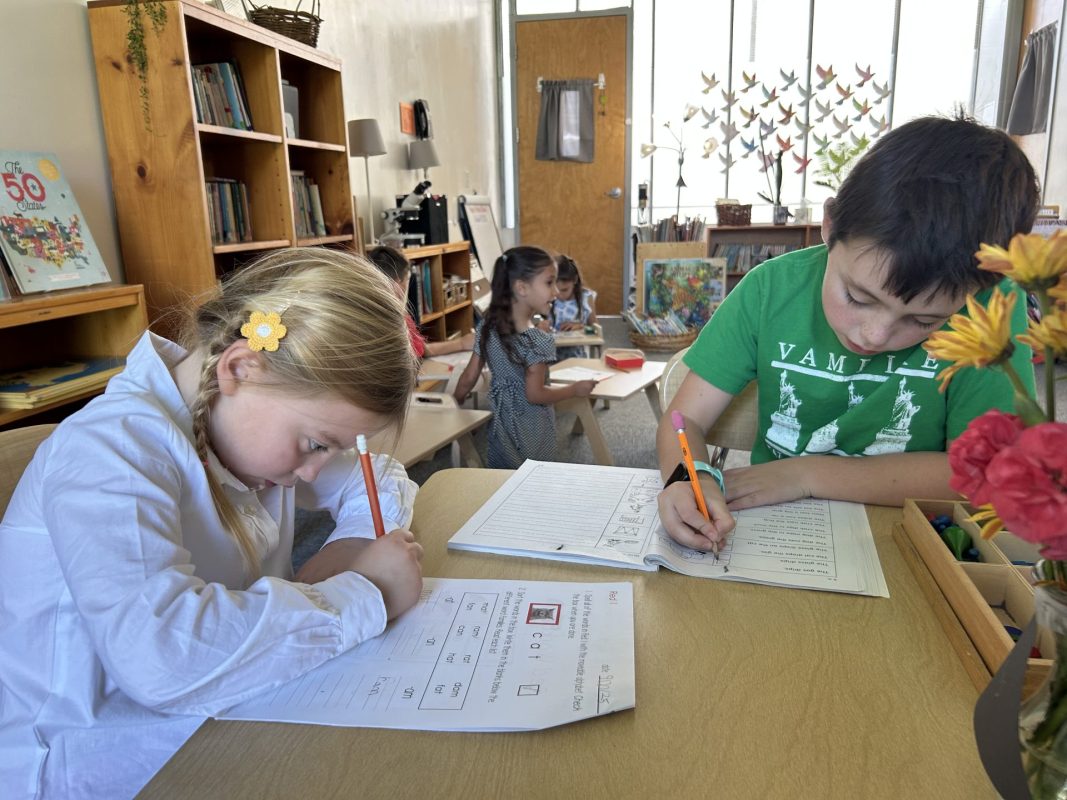
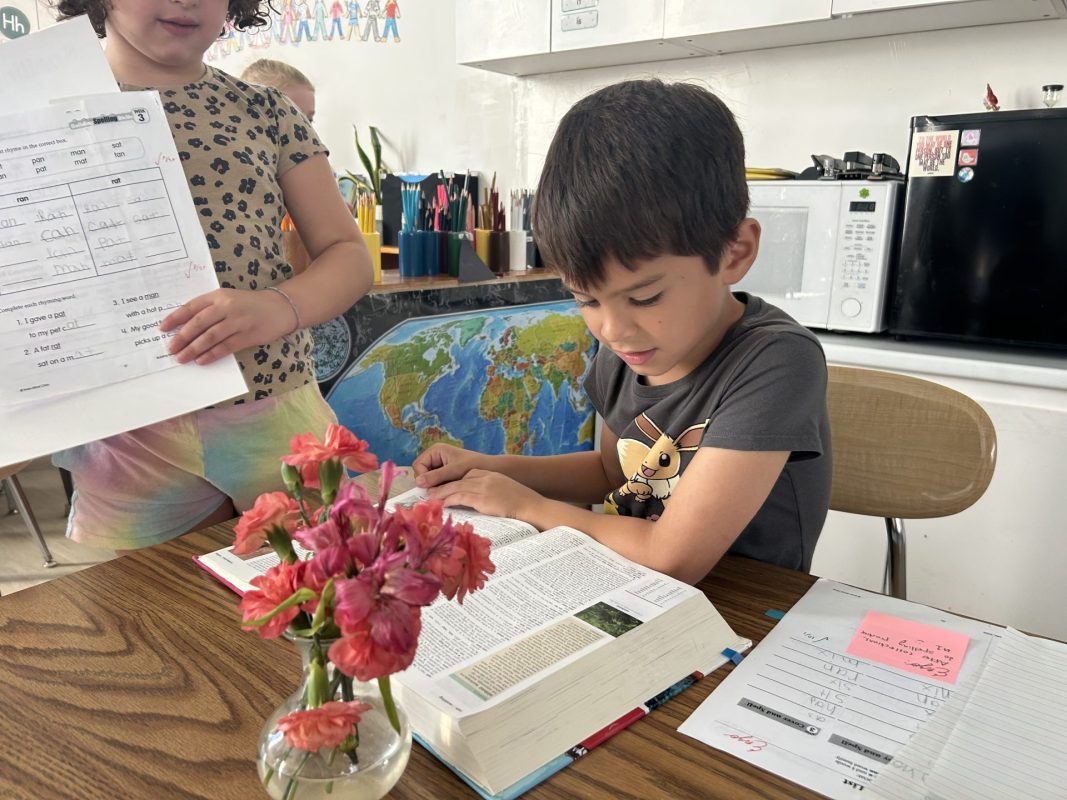
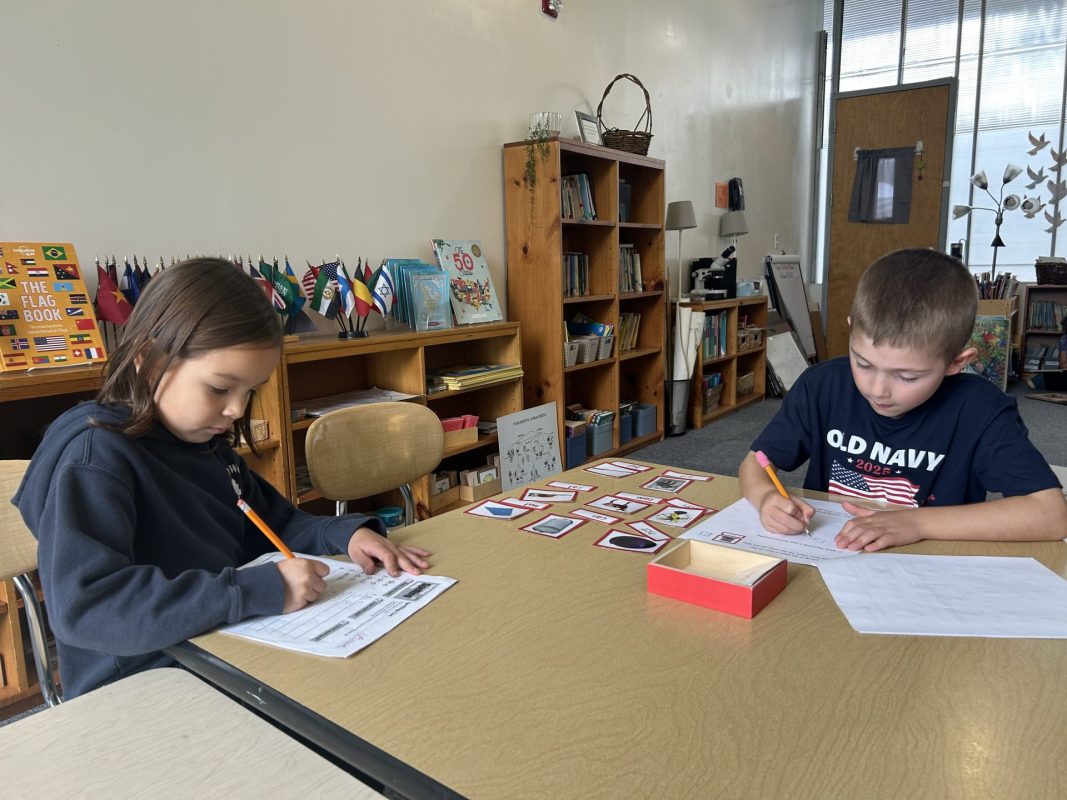
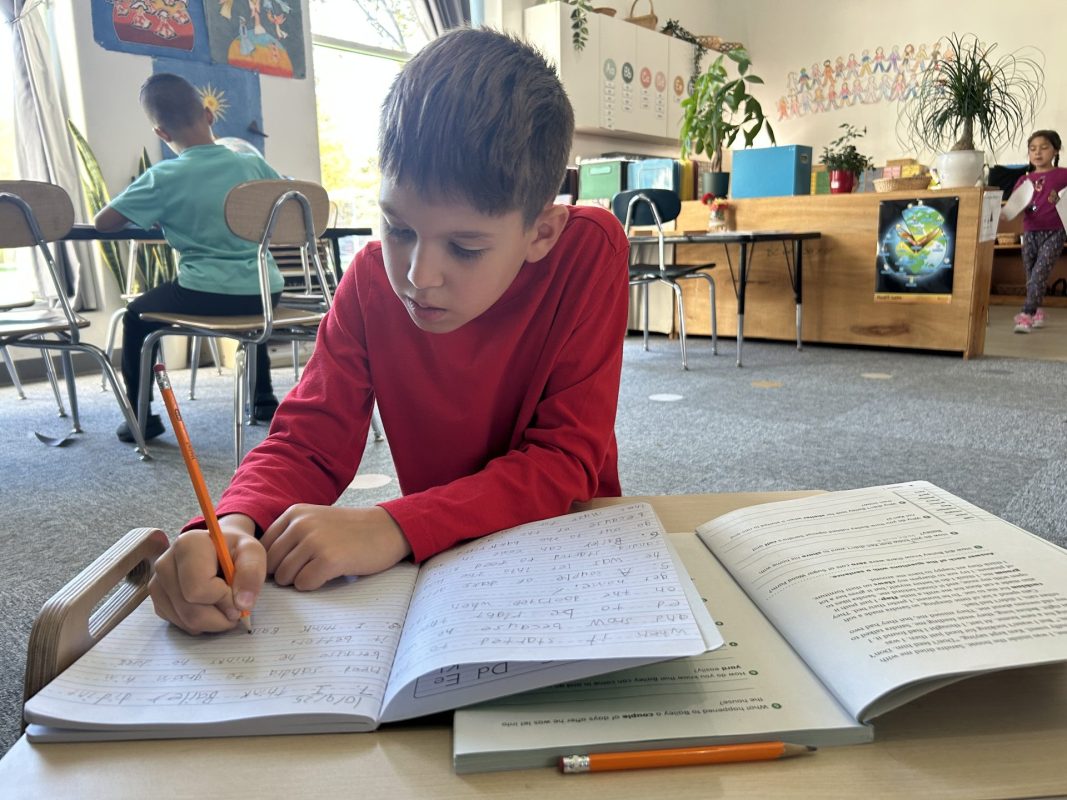
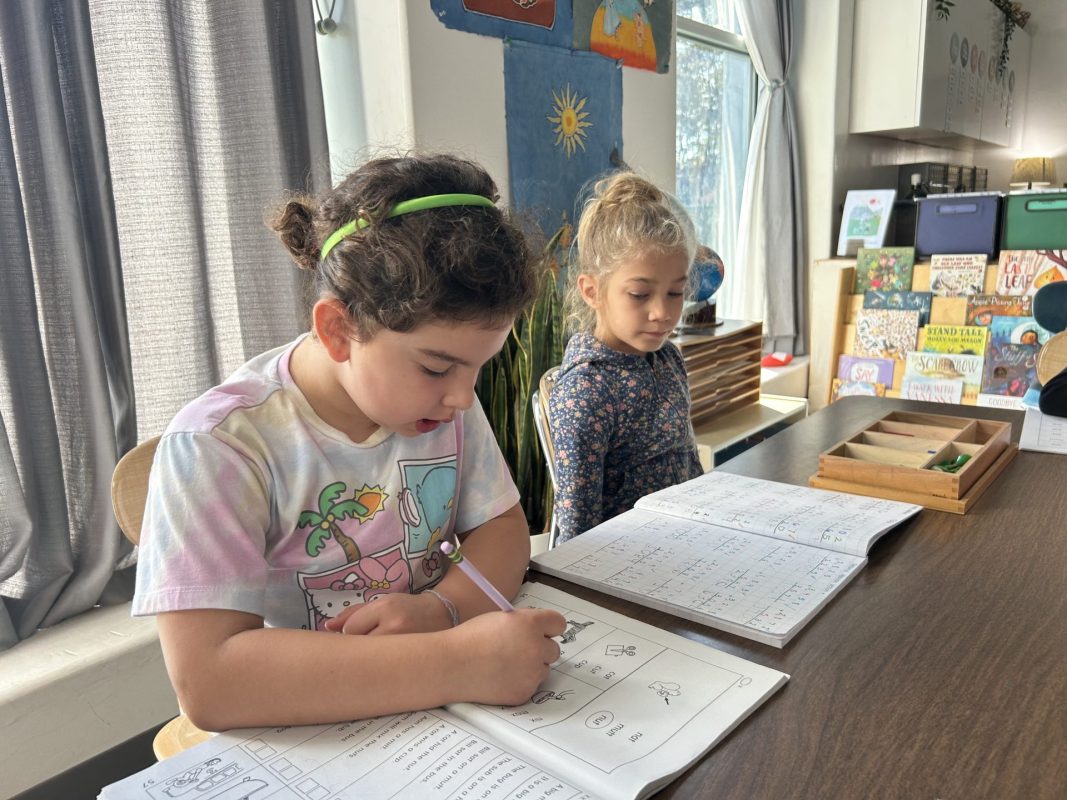
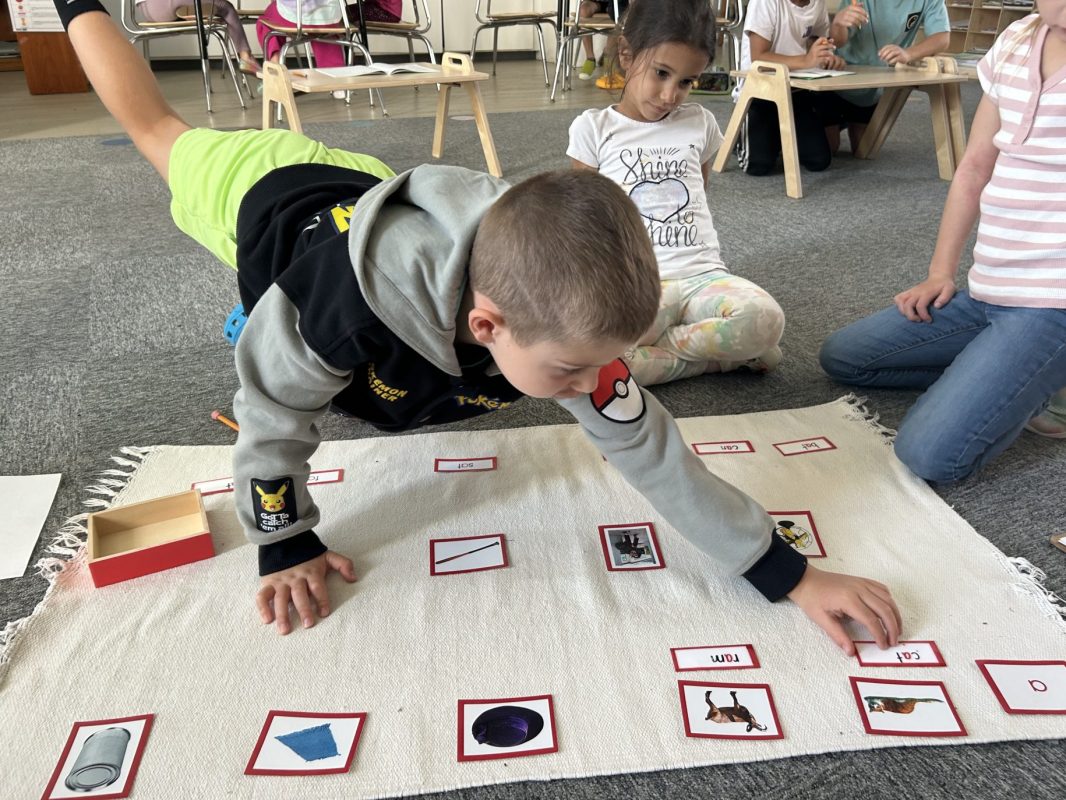
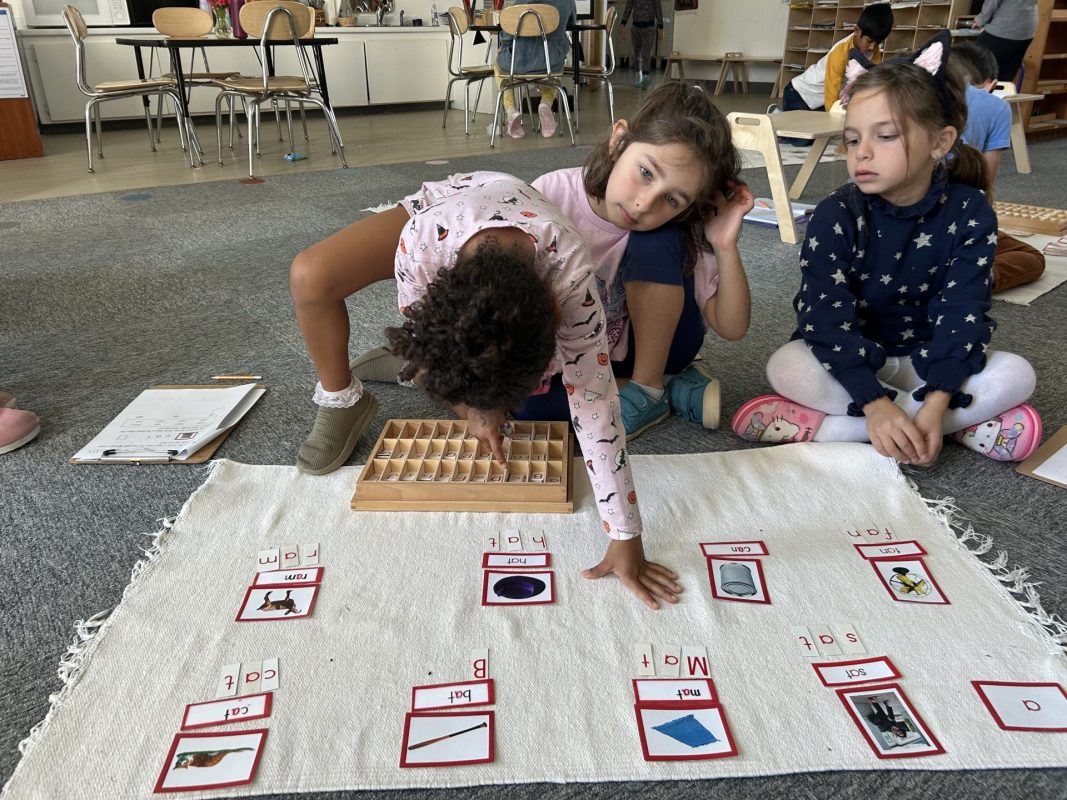
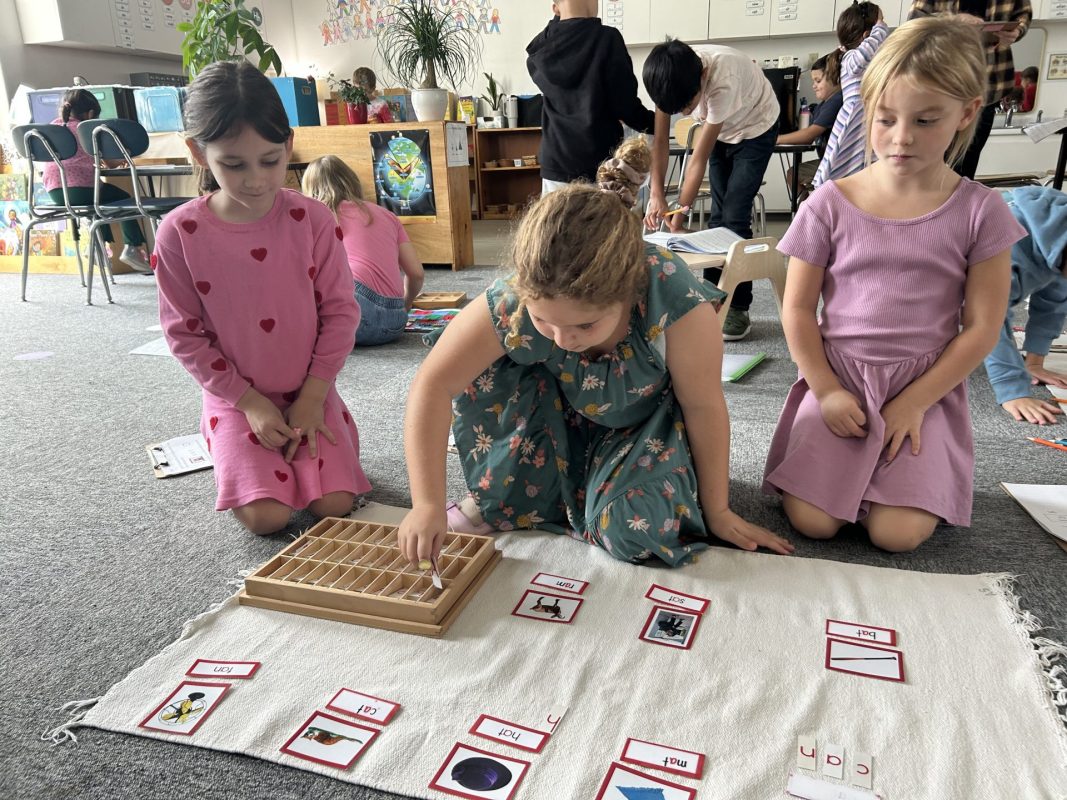
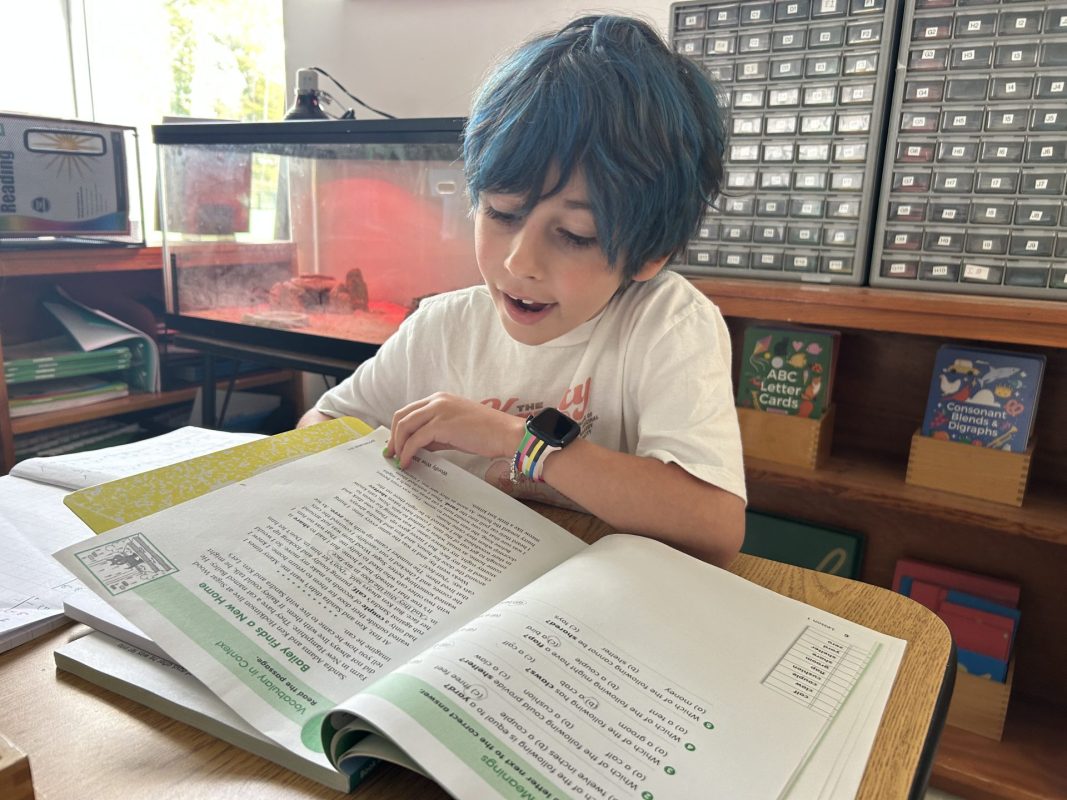
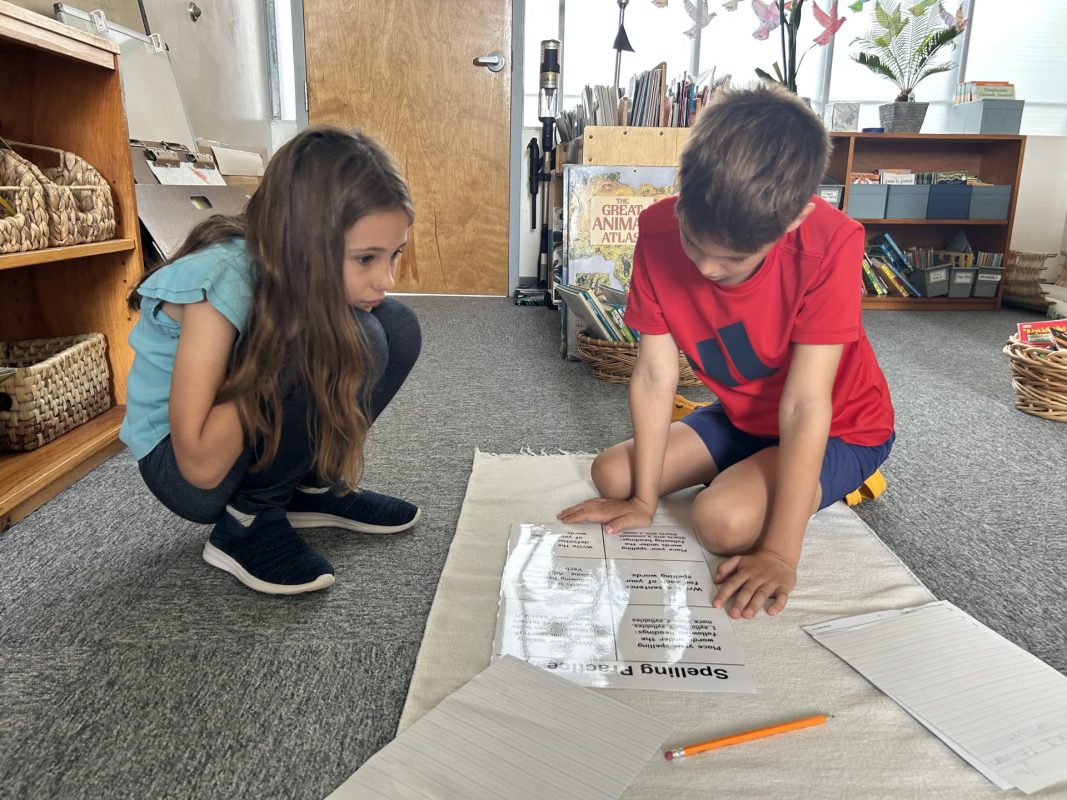
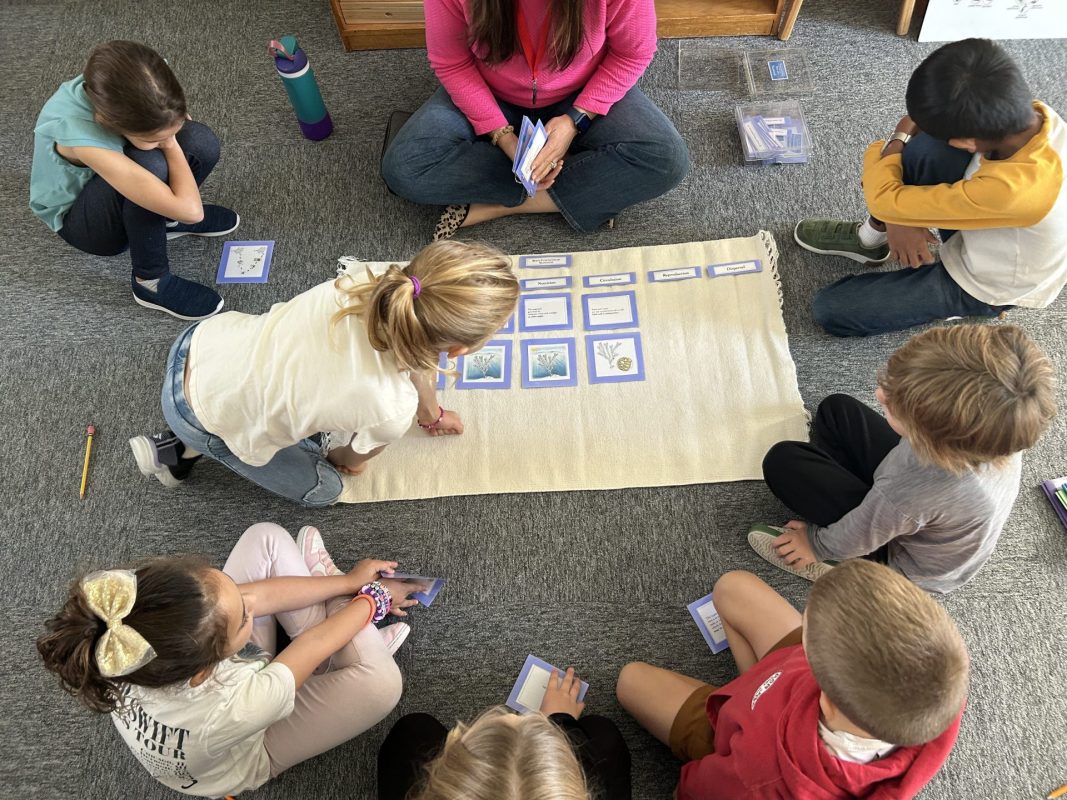
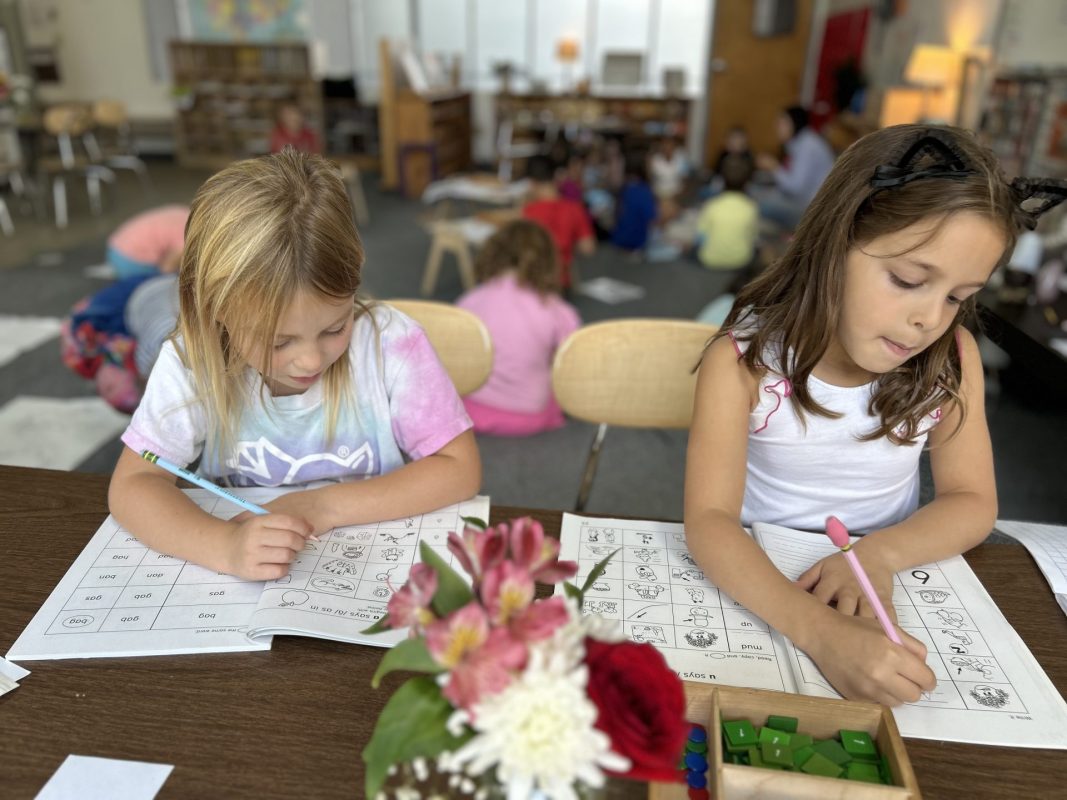
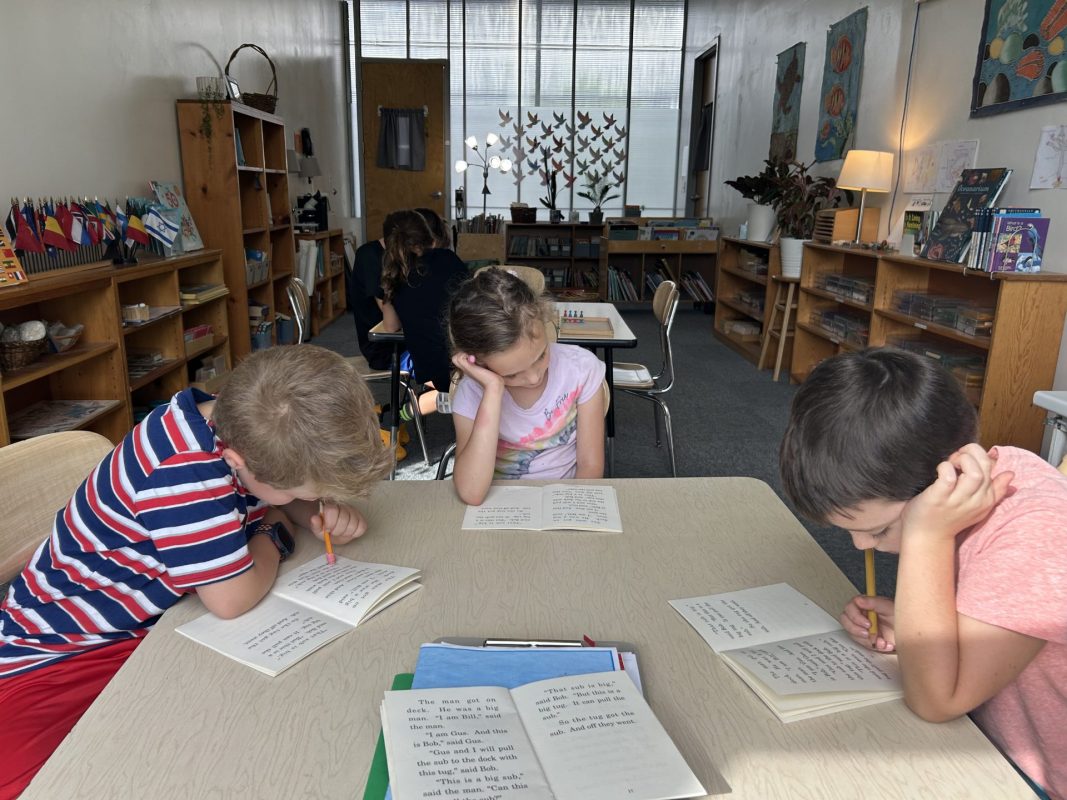
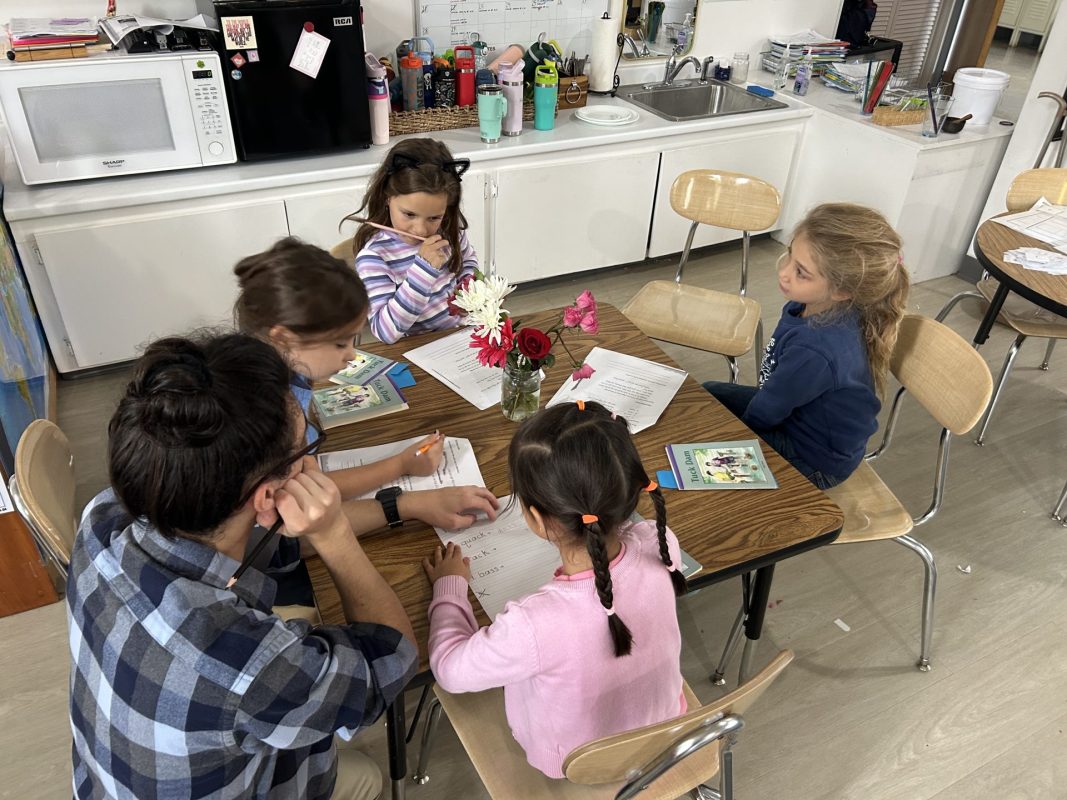
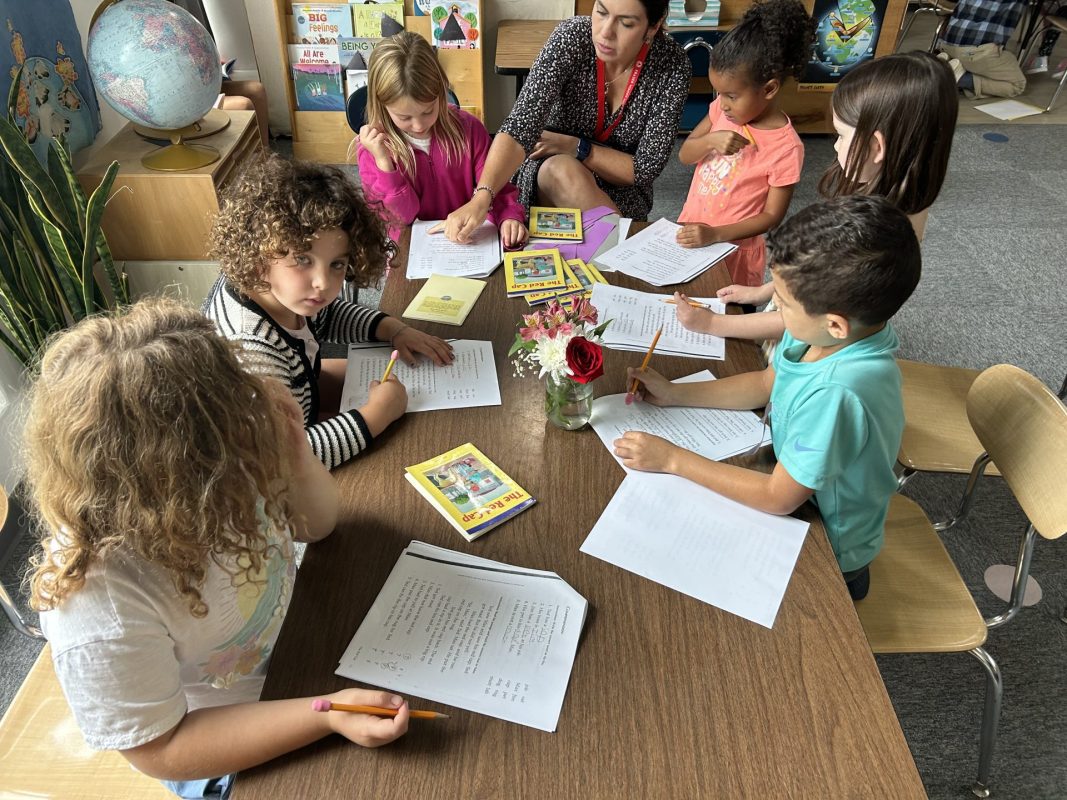
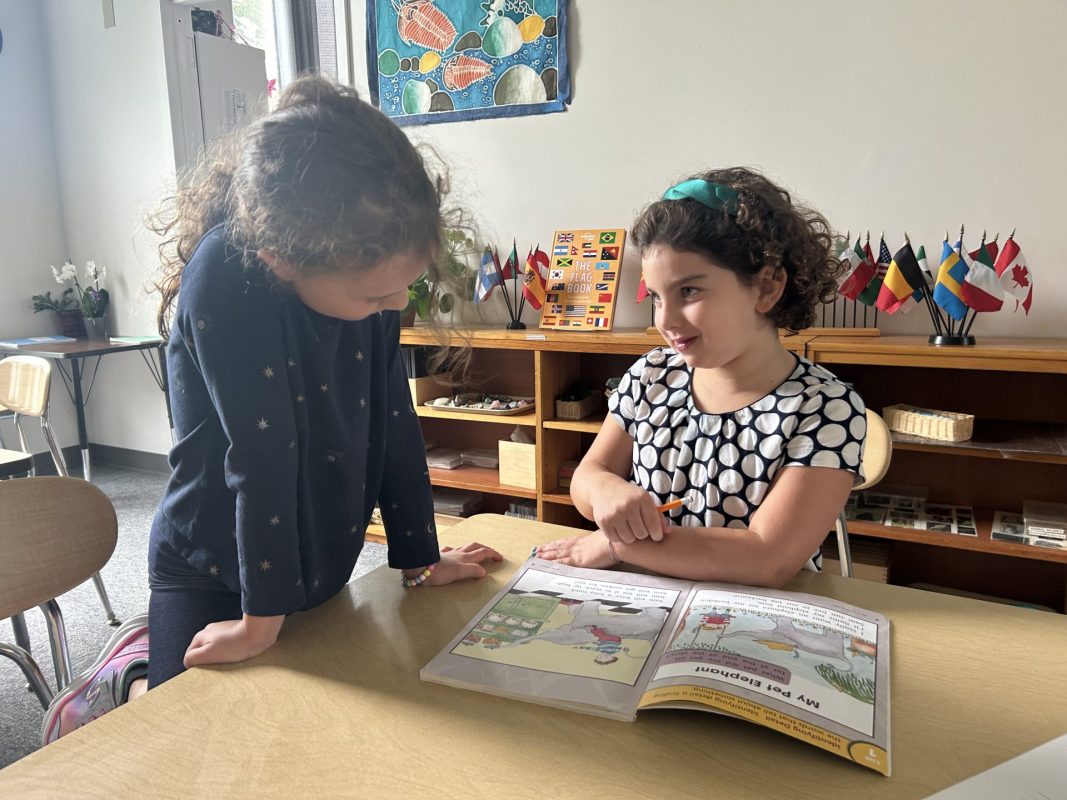
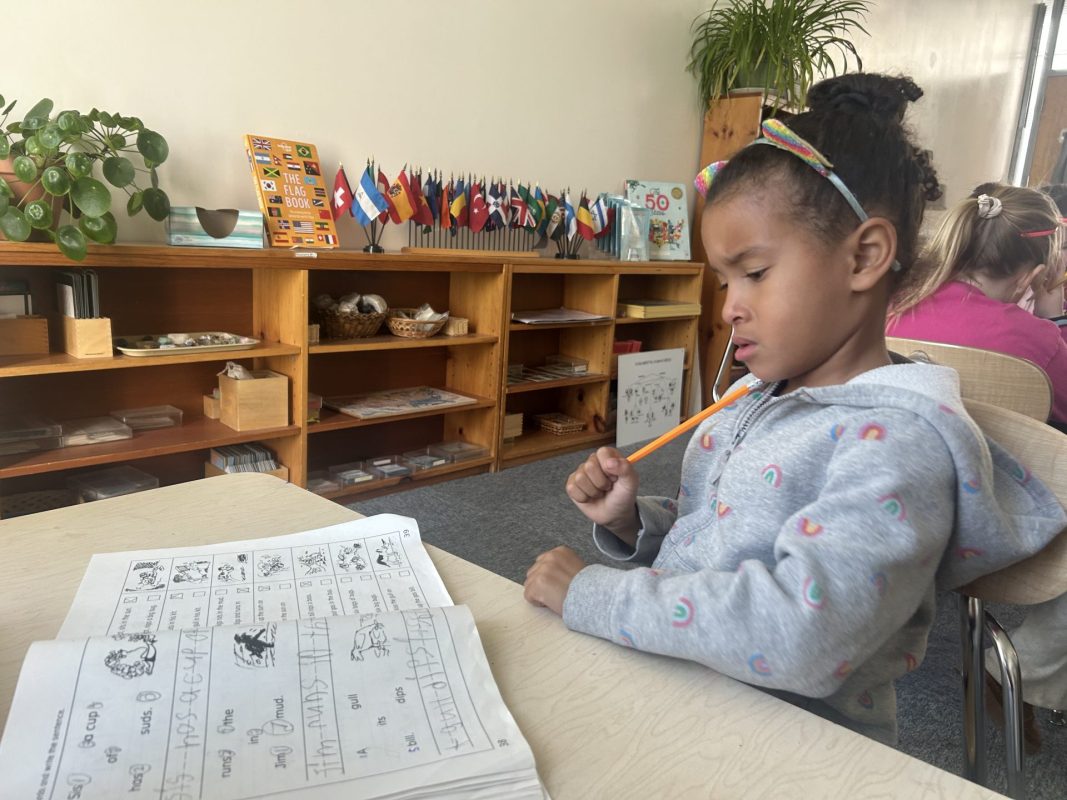
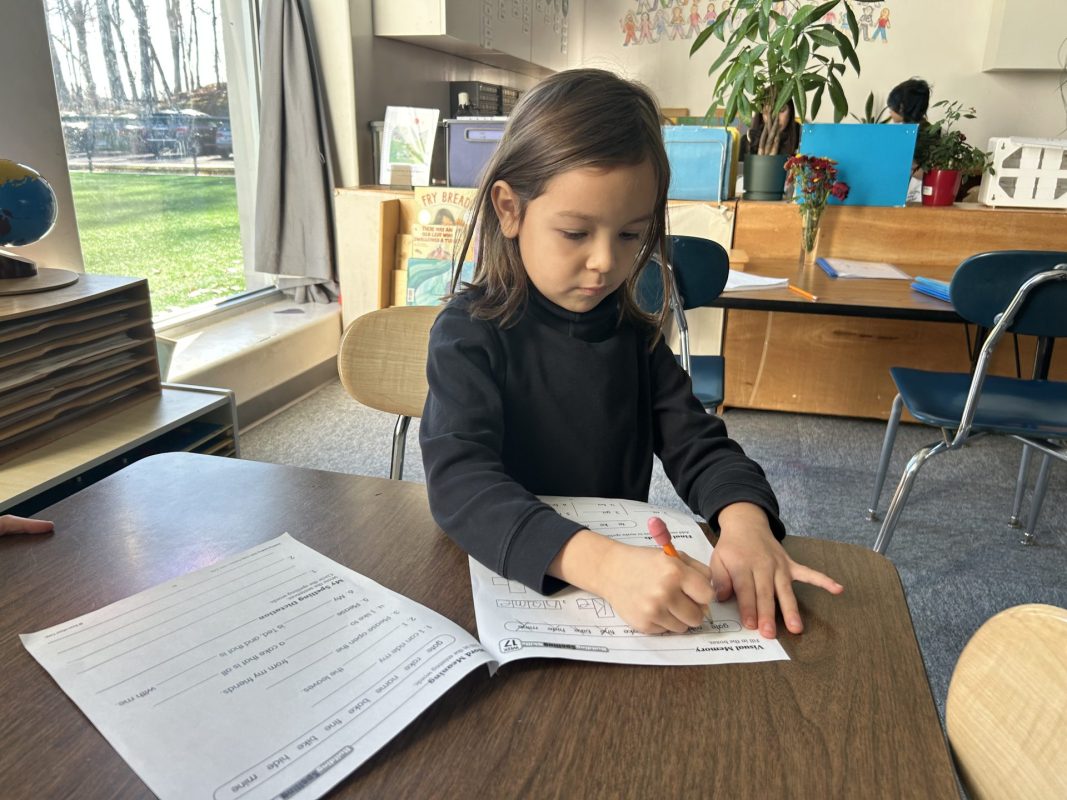
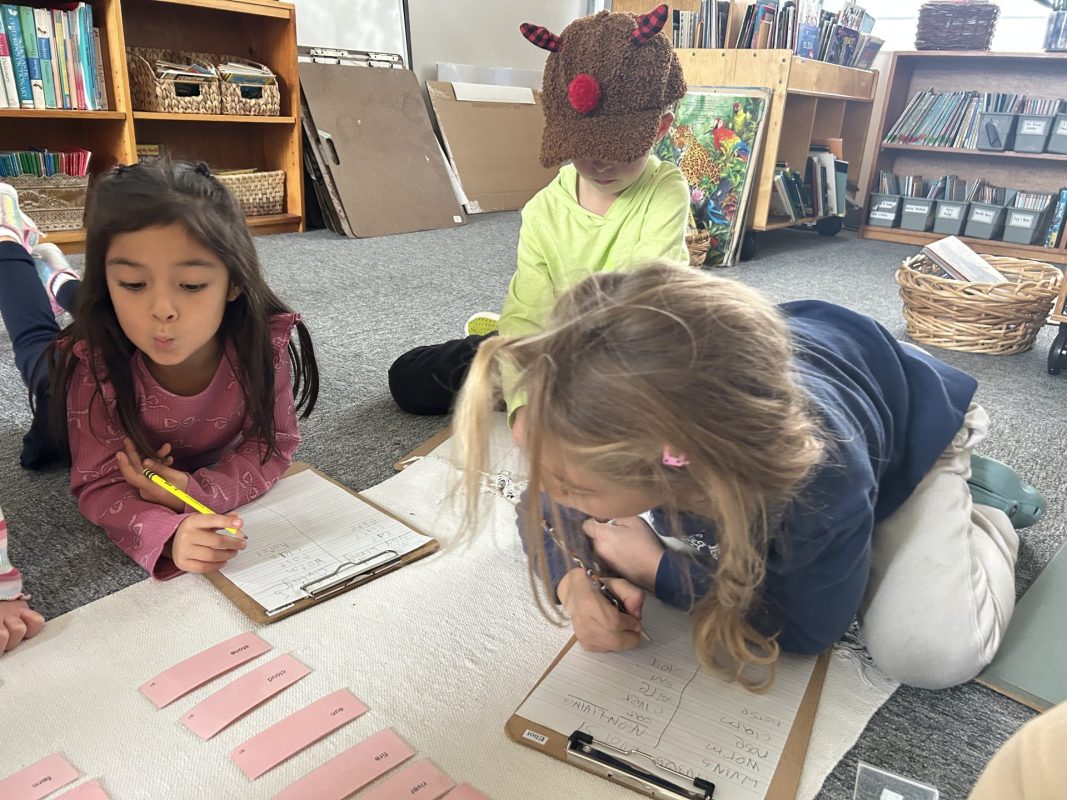
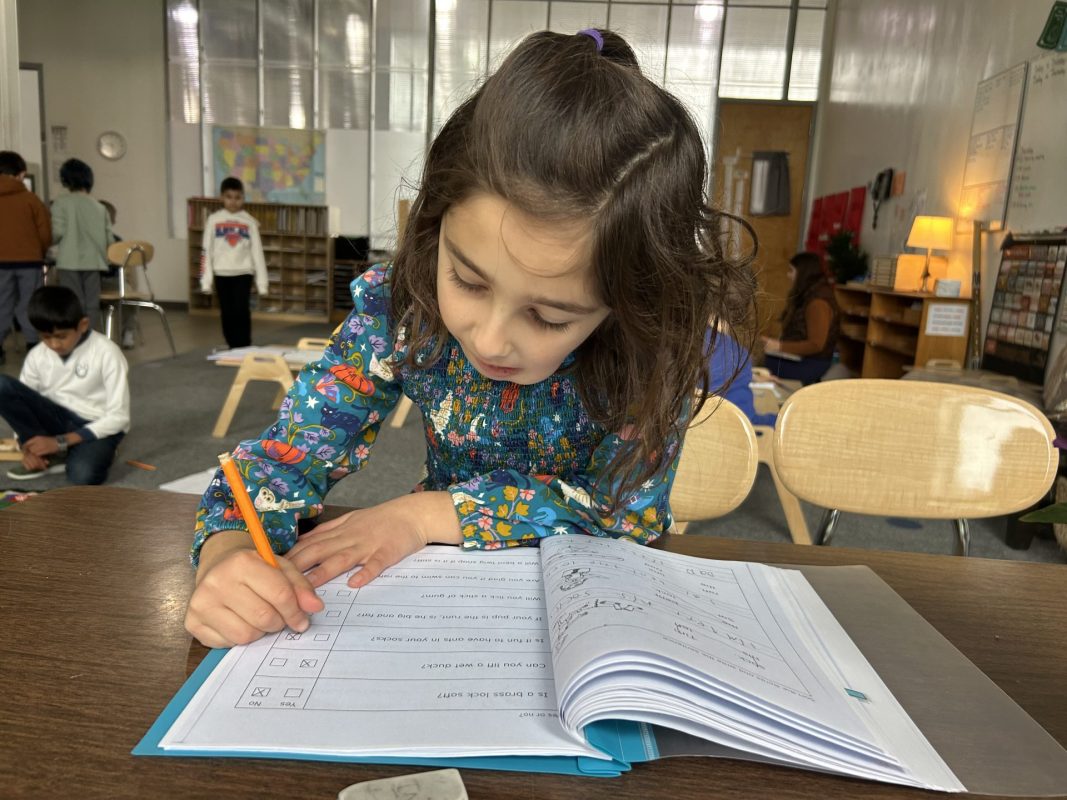
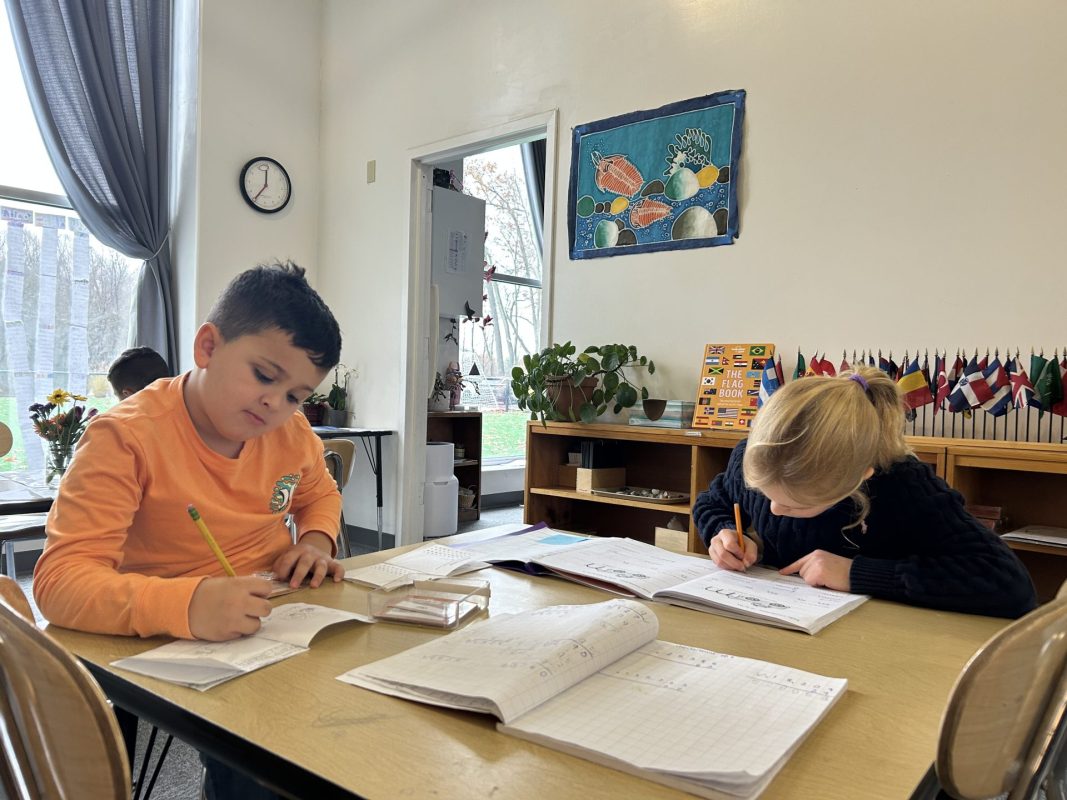
Our classroom has been buzzing with thoughtful language work lately as the children dive deeper into their Montessori grammar studies. Each child is working at their own level, exploring the parts of speech through hands-on materials that bring language to life.

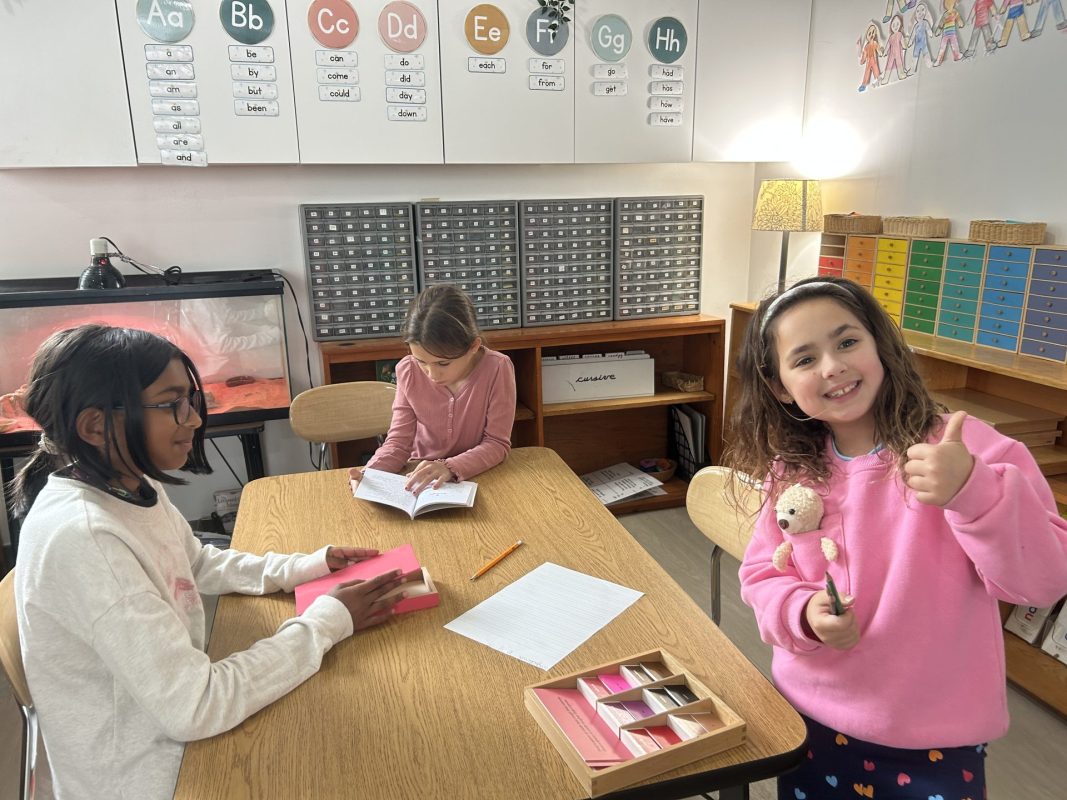
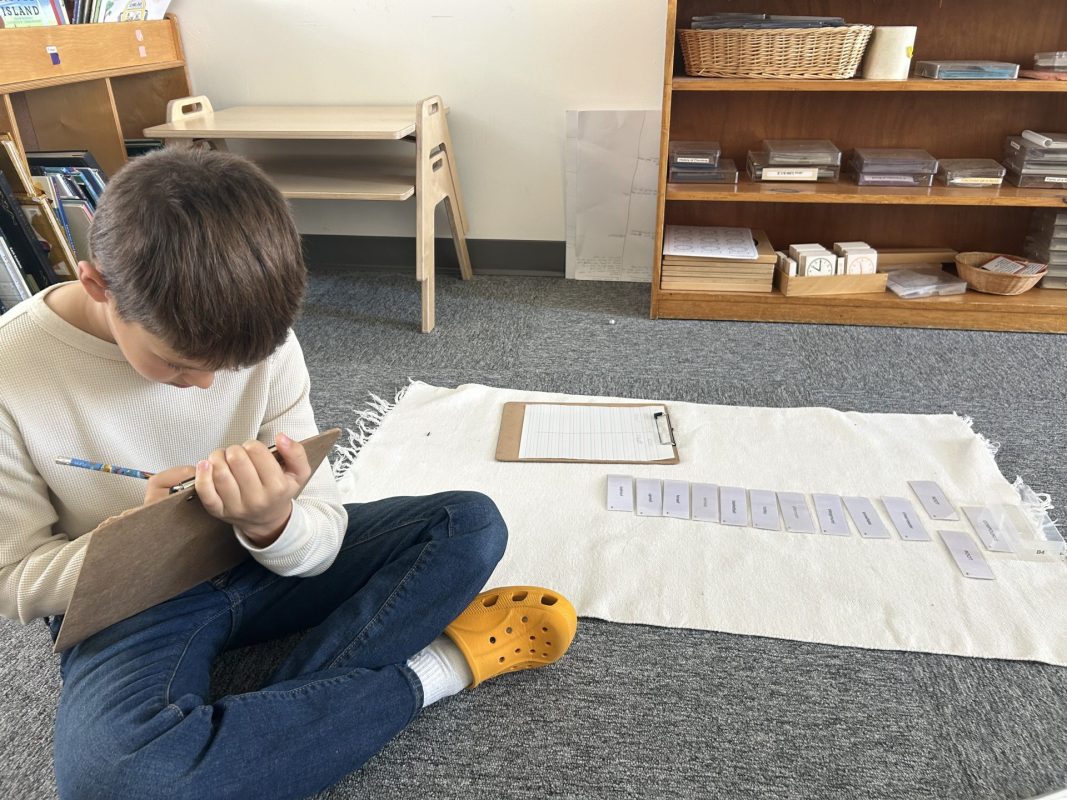
Our first-year students have been focusing on nouns and articles and discovering the relationship between them. Through activities with the Montessori grammar boxes and various other concrete materials, they are learning how the words the, a, or an” give meaning and precision to the noun they accompany. The children have also begun to explore the difference between common nouns—like city or teacher—and proper nouns—like Connecticut or Mrs. O’Connell, Mrs. Taveras, and Mr. Jake.

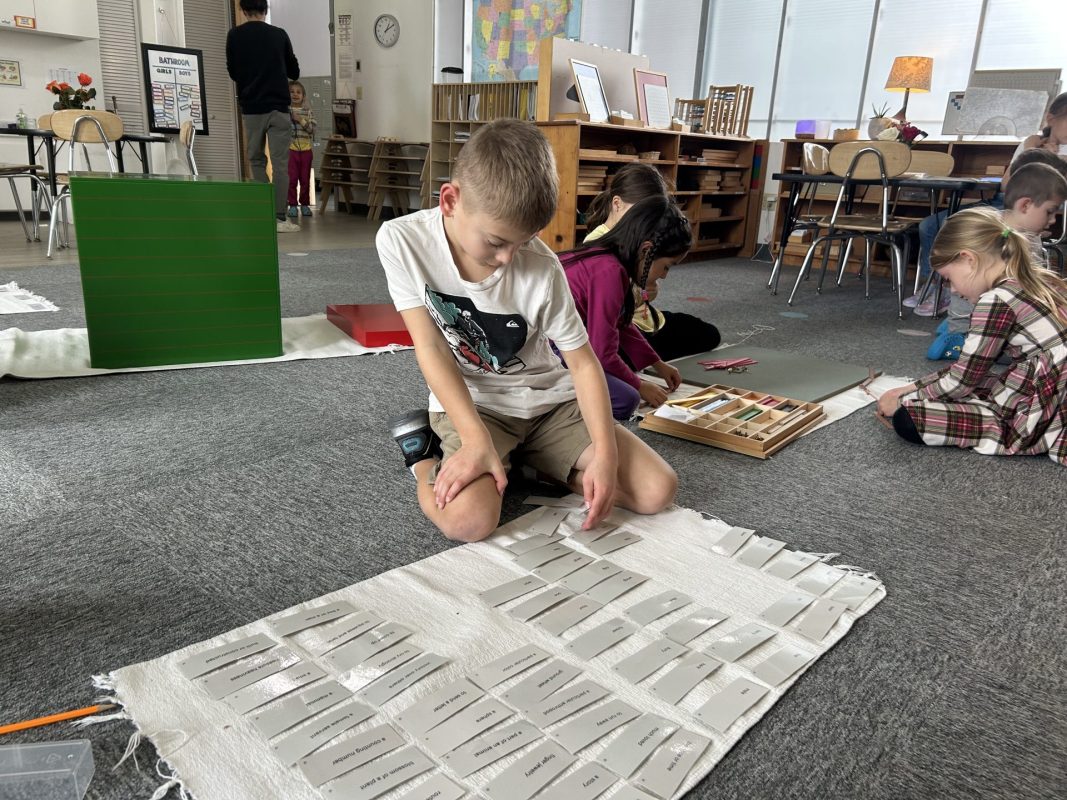
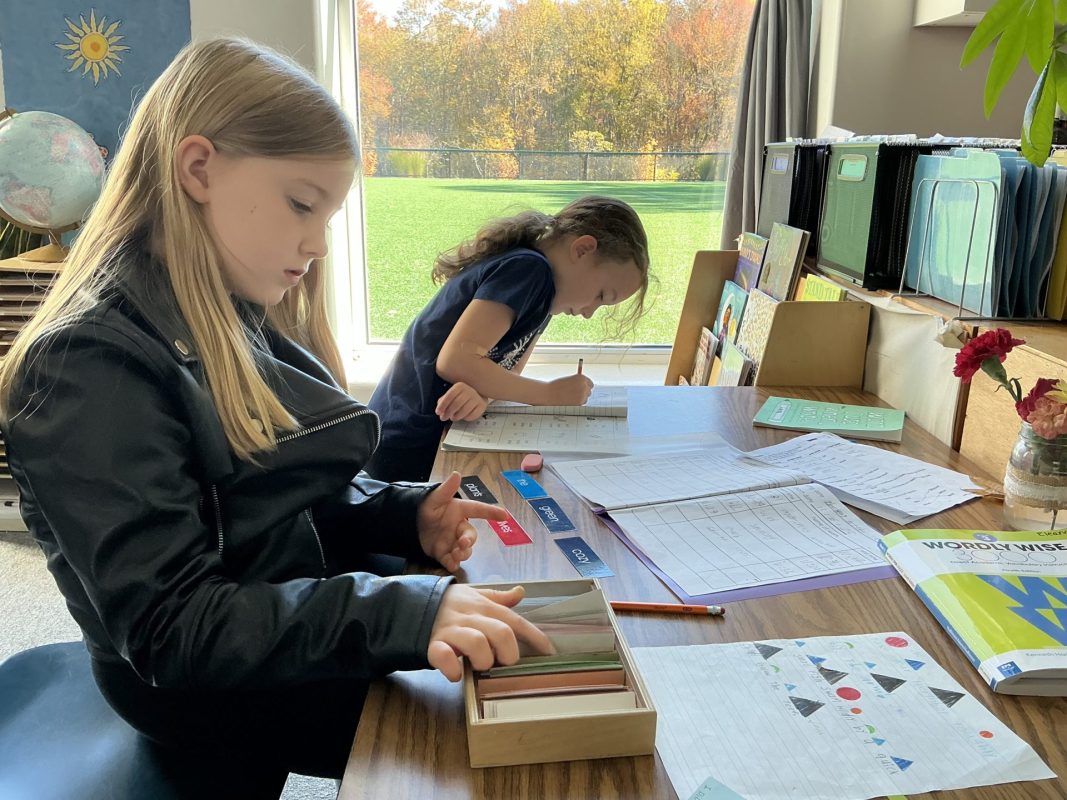
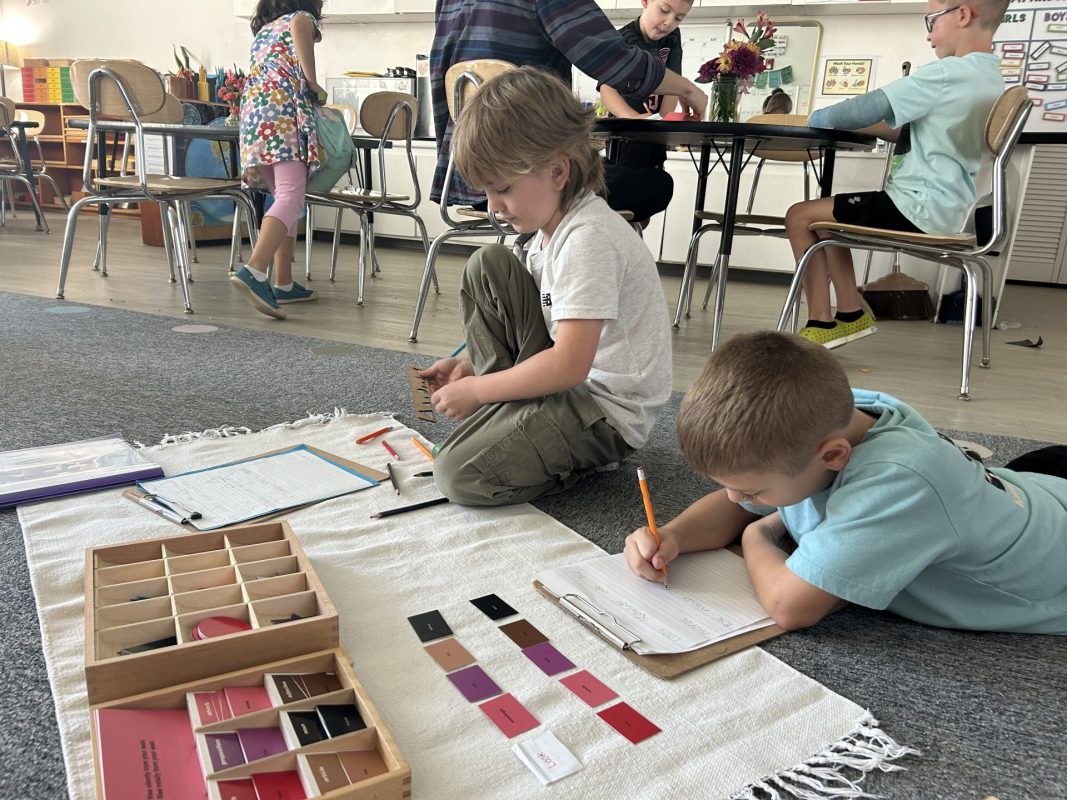
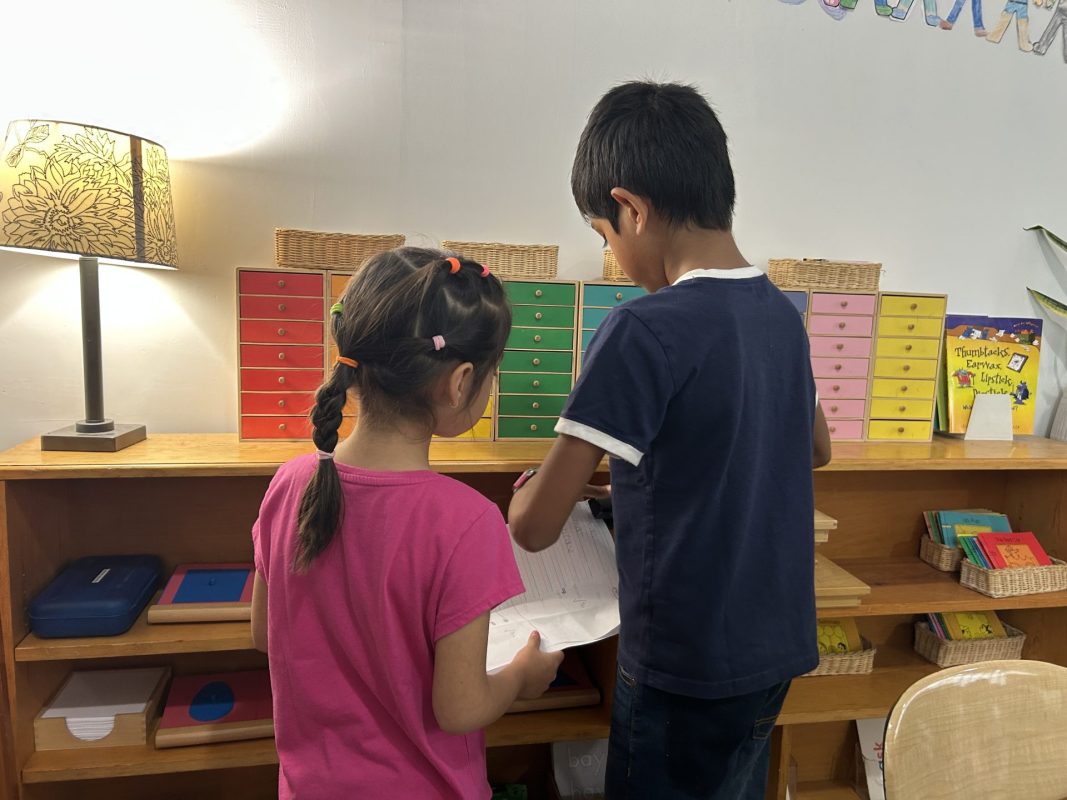
Meanwhile, our second-year students have been hard at work with their adjective and verb grammar boxes. The grammar boxes allow children to build and analyze sentences by selecting word cards from drawers, each color-coded to represent a part of speech. With adjectives, they’ve been exploring how descriptive words add color and texture to our language, and how the placement and choice of these words can change the meaning of a sentence entirely. Their verb work has been full of energy, as they experiment with these words and see how verbs form the action of every sentence.

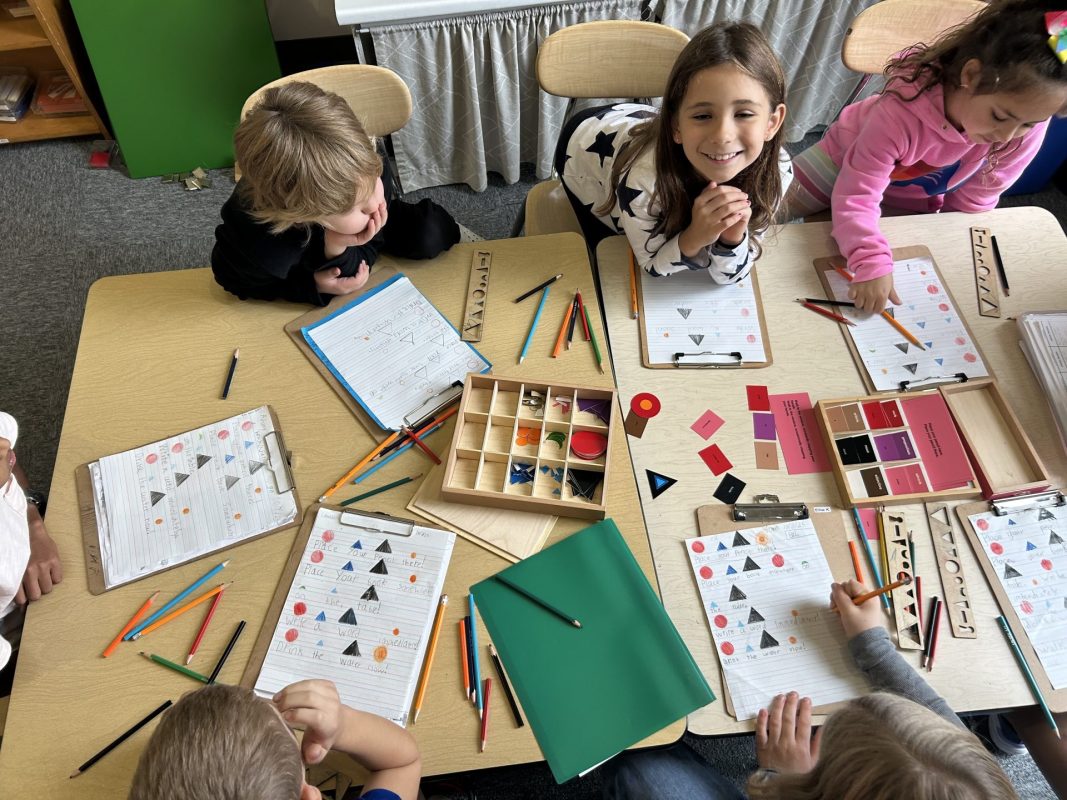
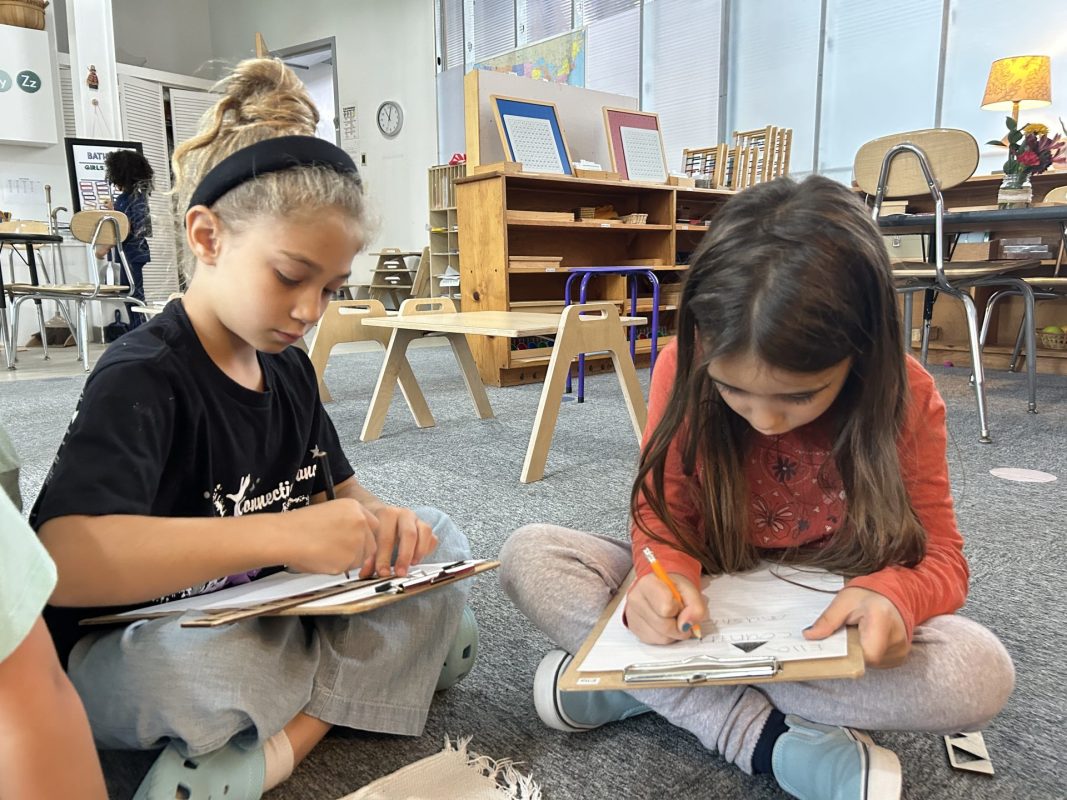
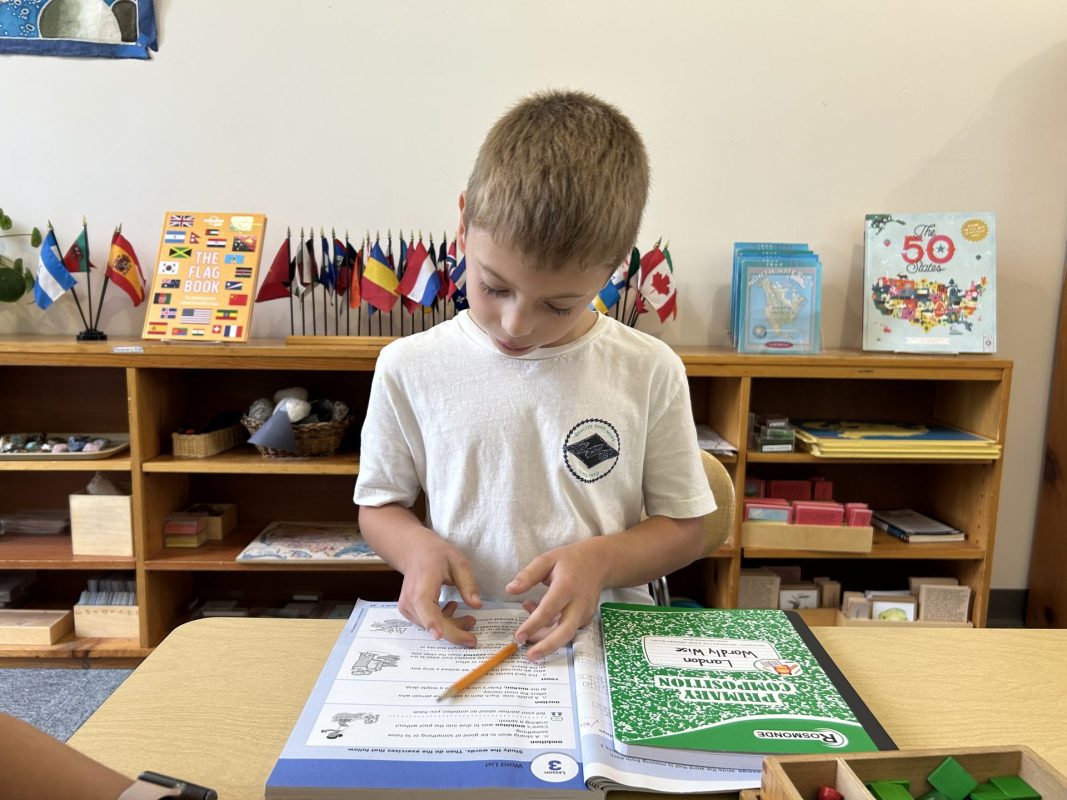
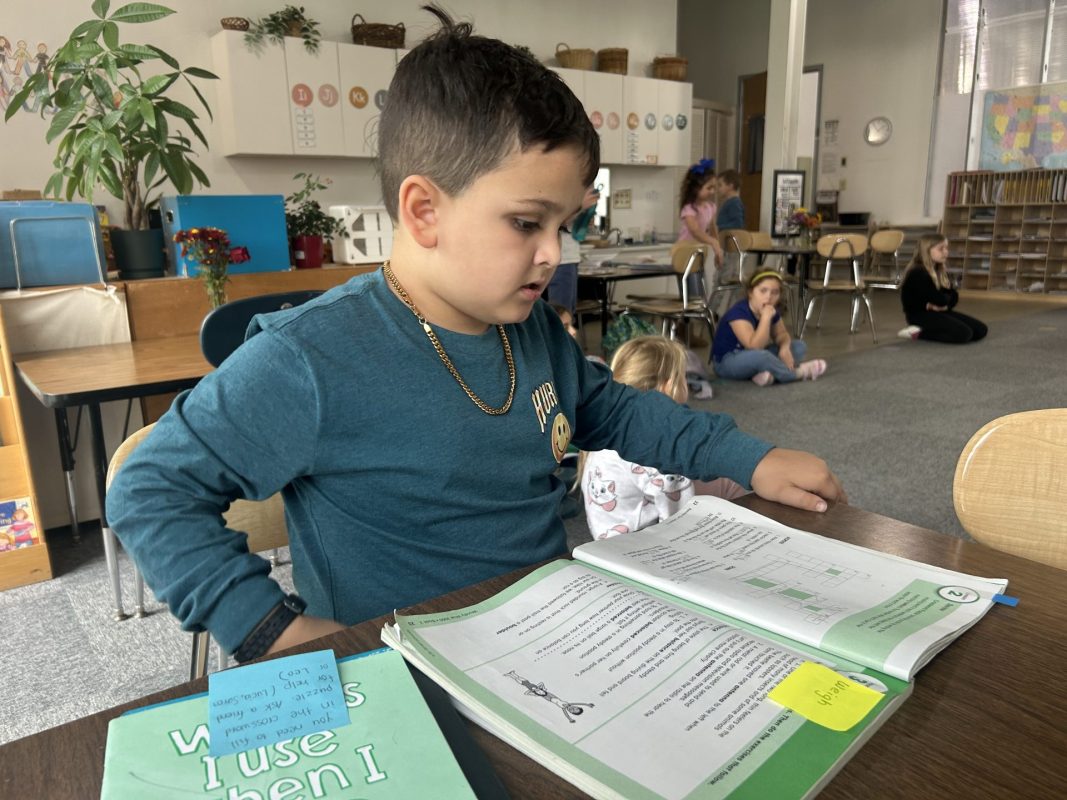
The third years are also enjoying their adverb work, discovering how adverbs give even more detail by telling how, when, or where something happens. Recently, they’ve also begun their study of sentence analysis, an exciting new layer of grammar work in the lower elementary classroom. Sentence analysis helps children understand how words come together to form complete thoughts. We start by identifying the subject (who or what the sentence is about), the action (what is happening), and the direct object (who or what receives the action). Using arrows and symbols, the children visually map out the structure of a sentence, which deepens their comprehension and supports their growing writing skills.


Lower Elementary: The Communication of Signs

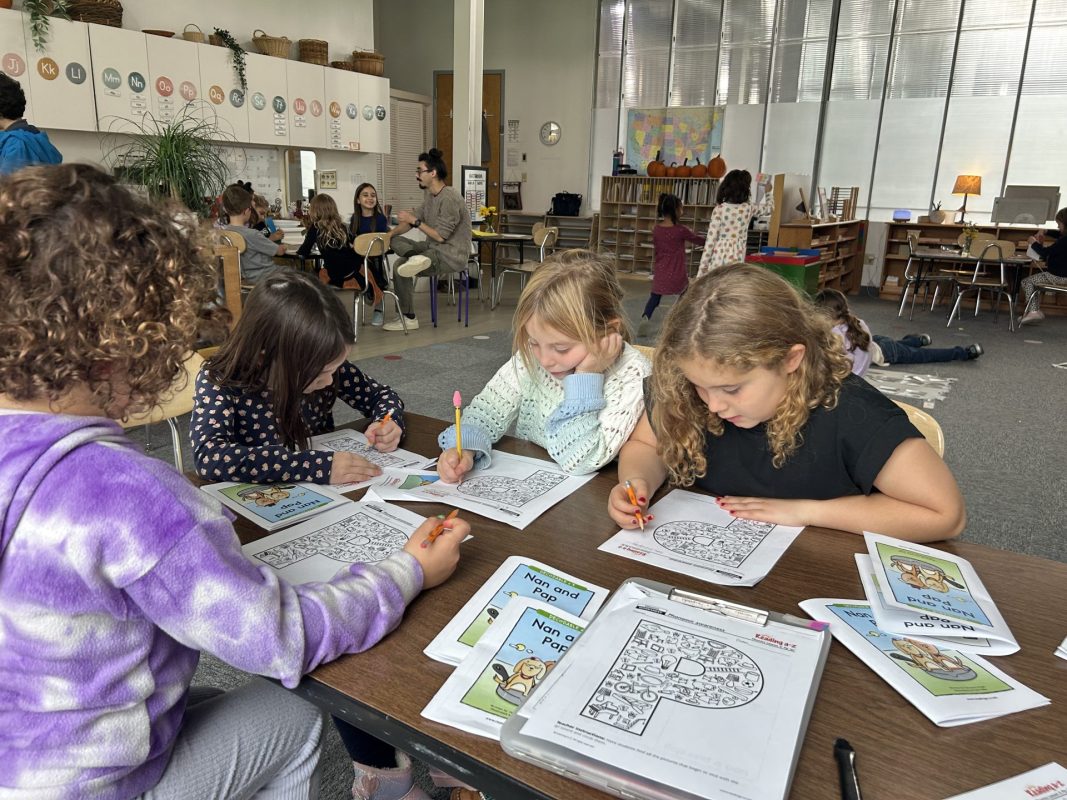
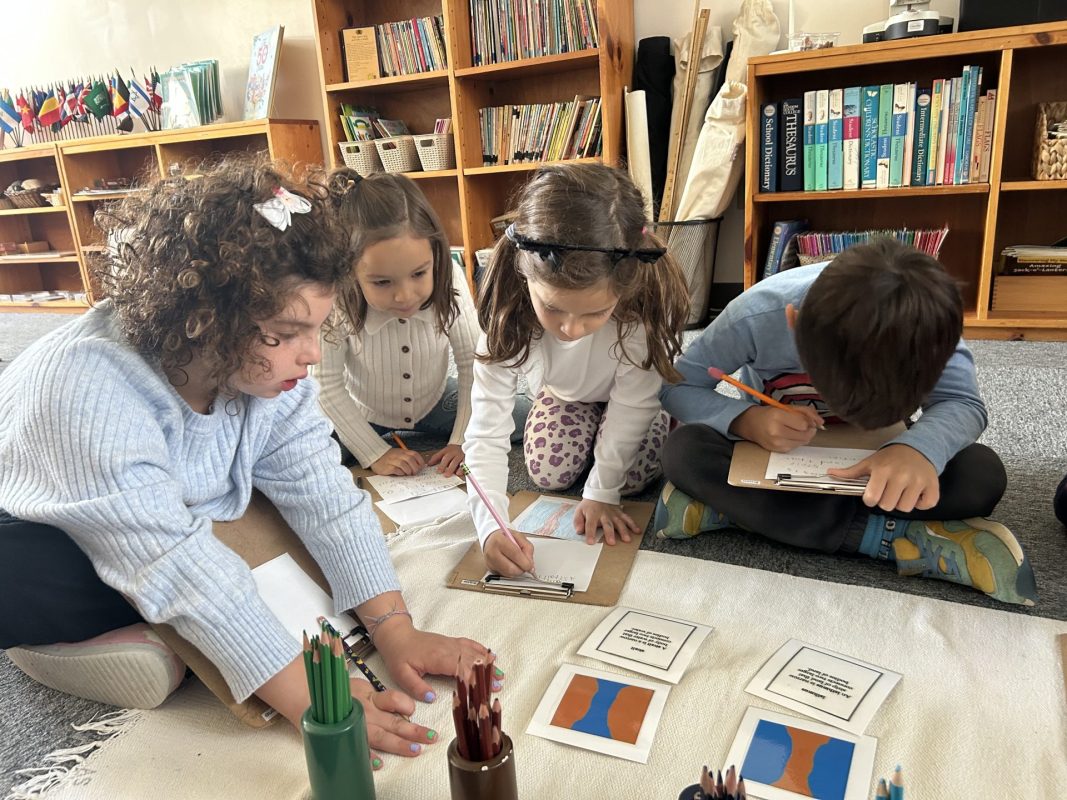
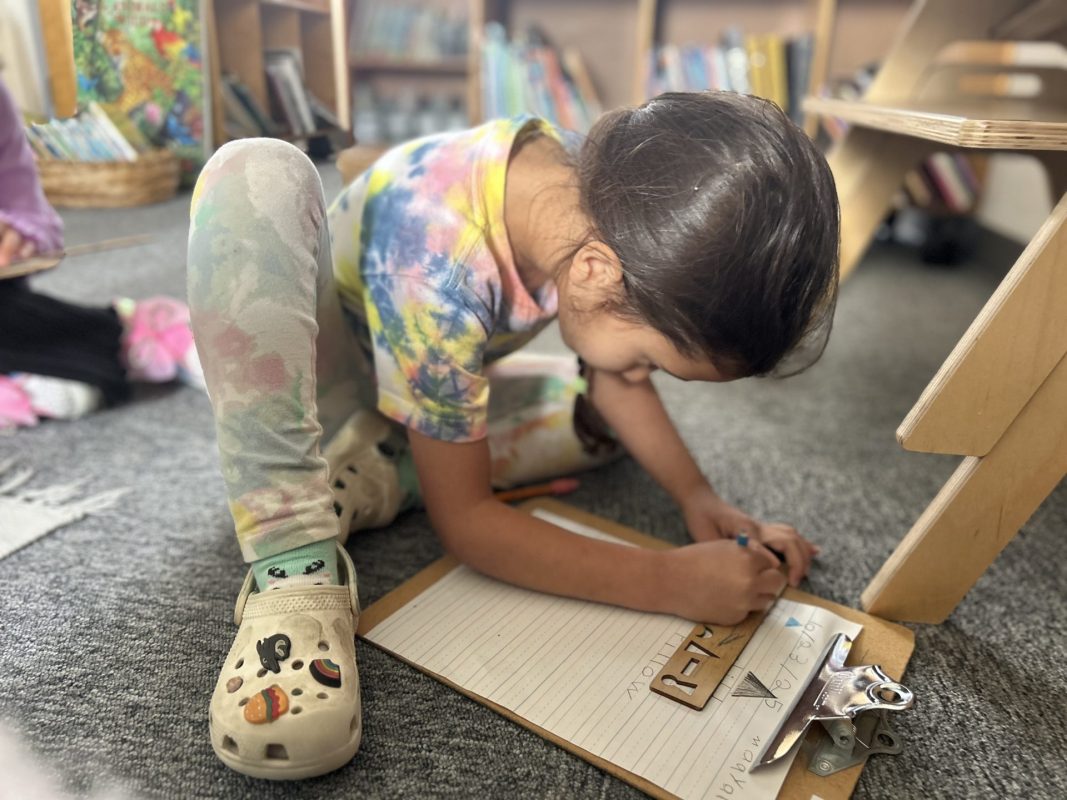
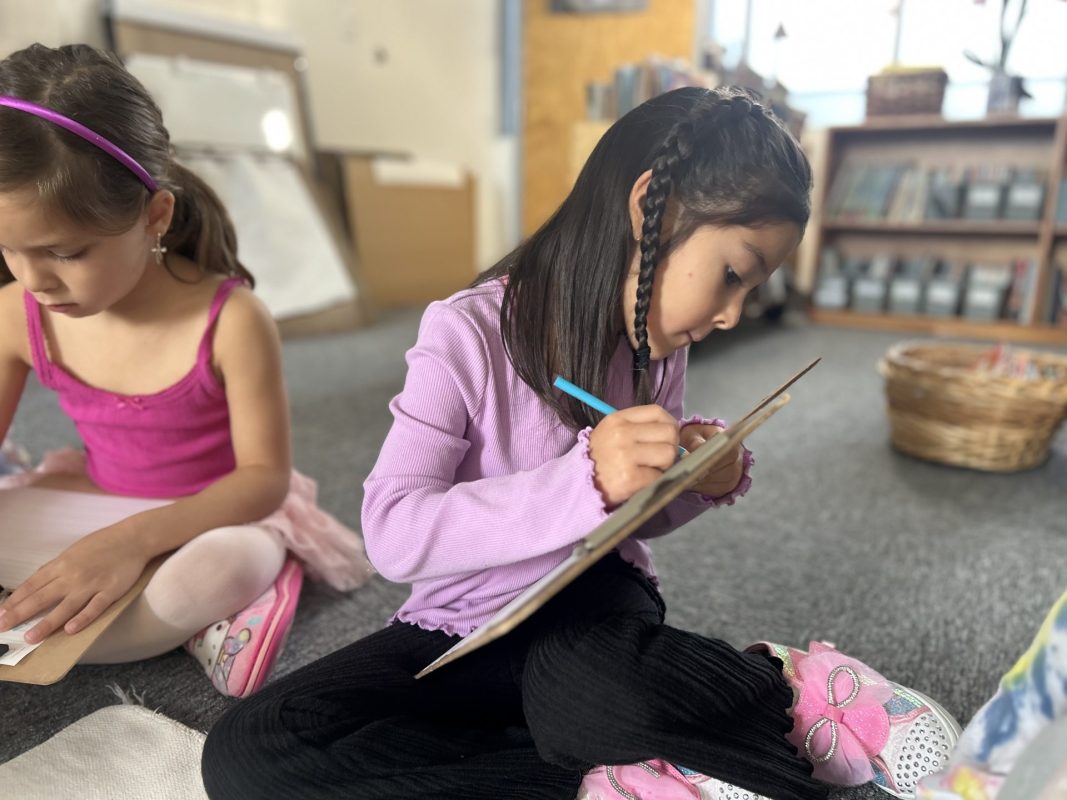
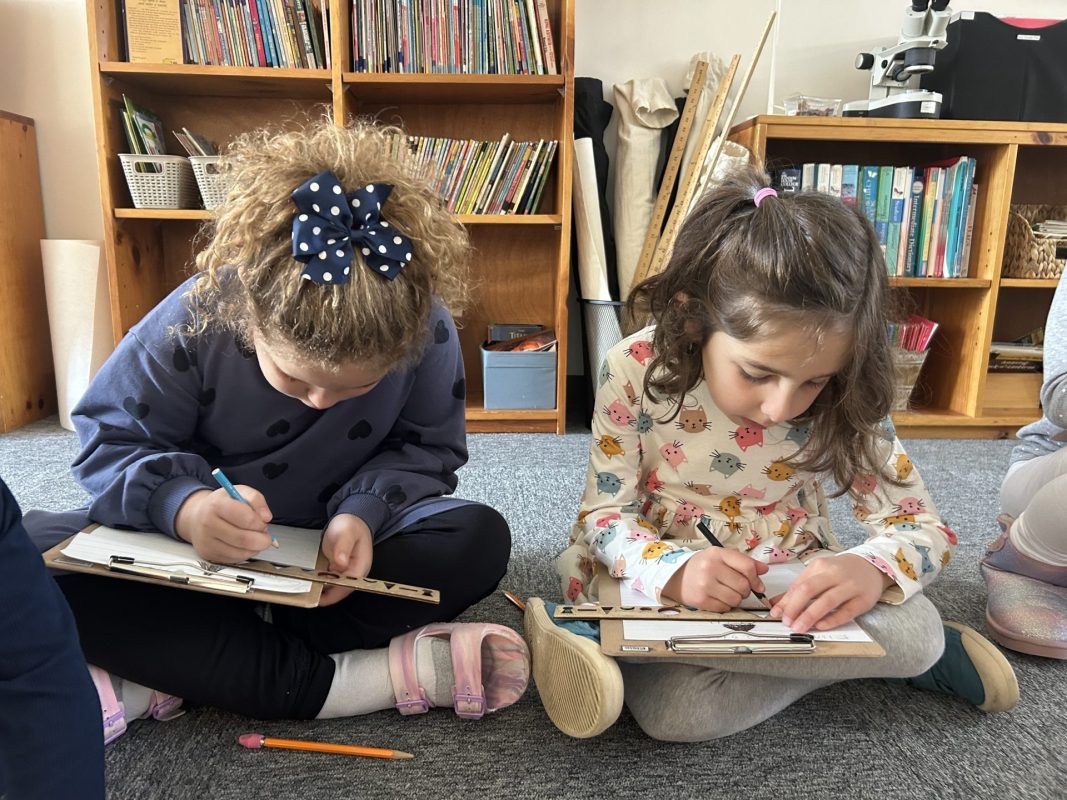
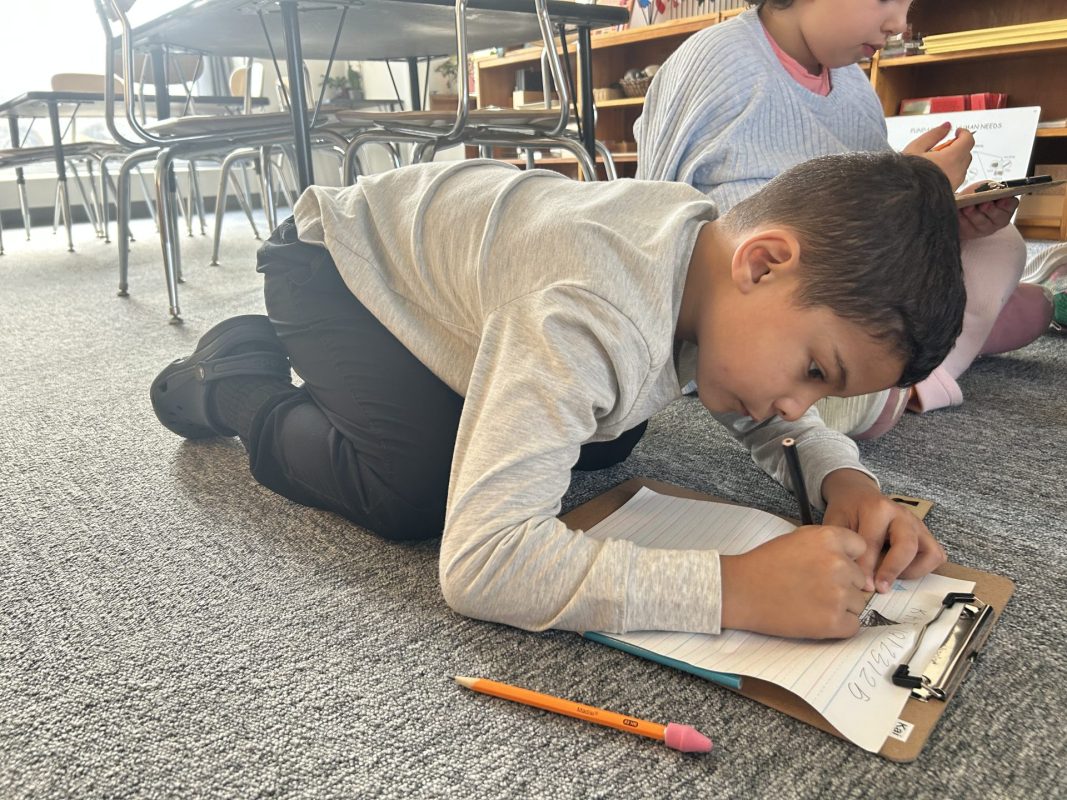
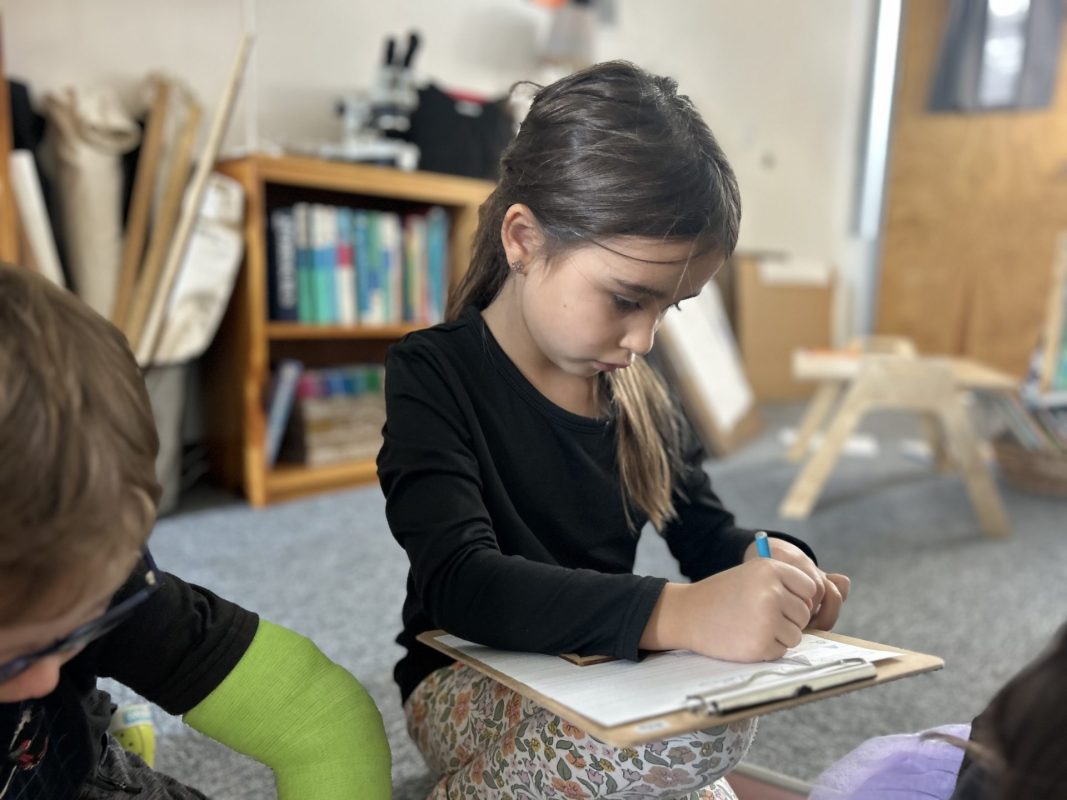
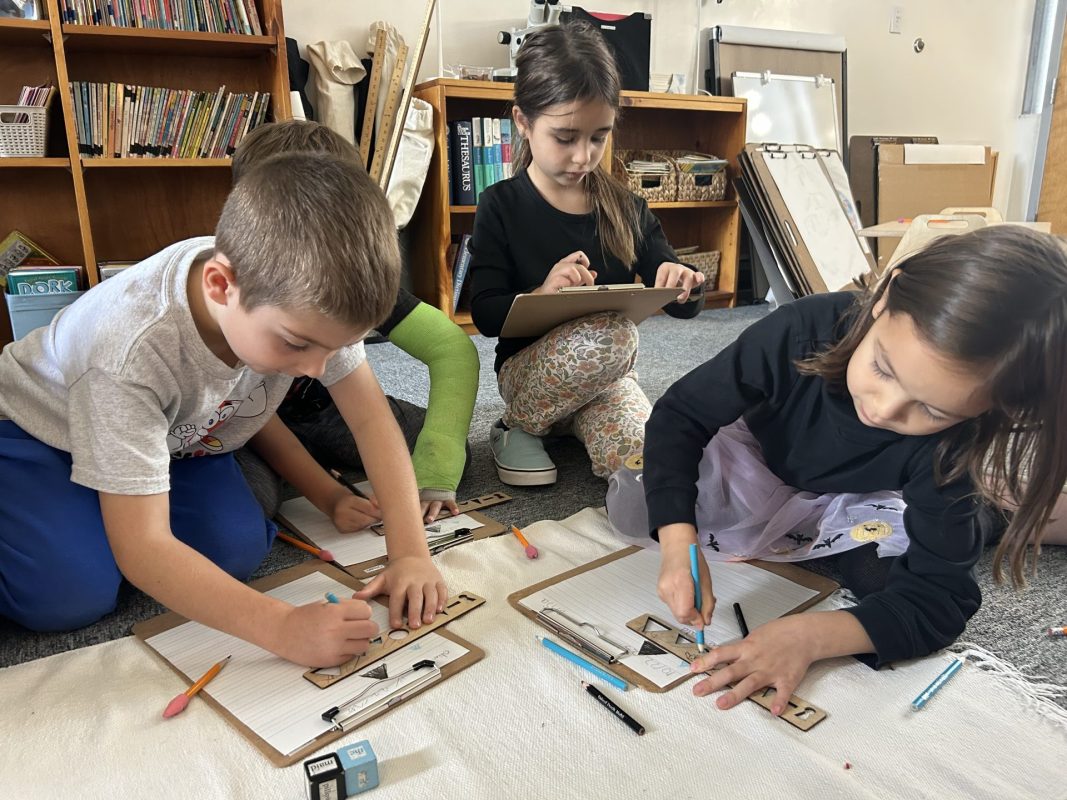
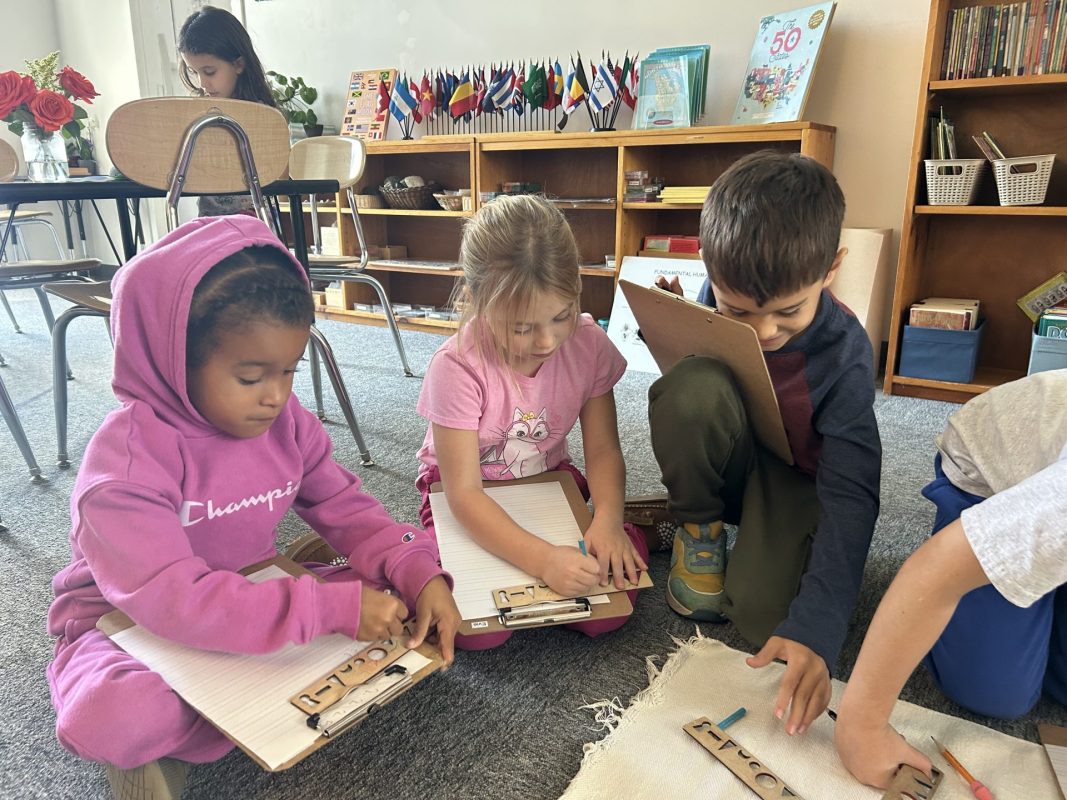
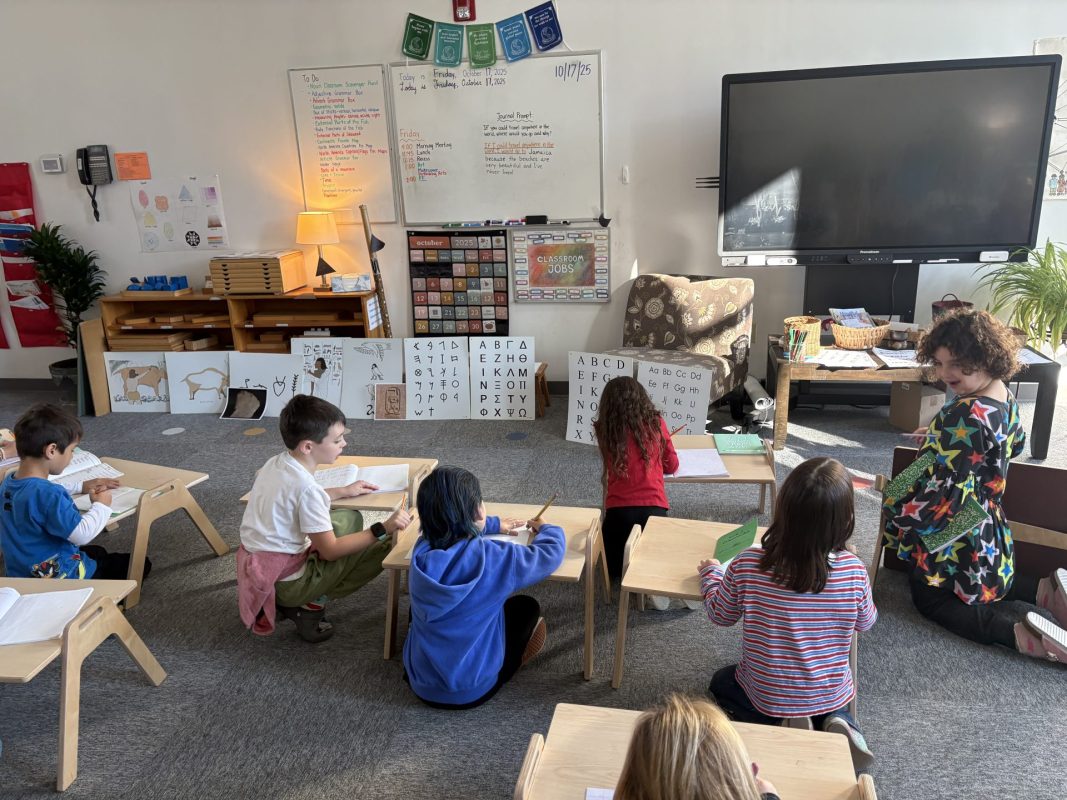
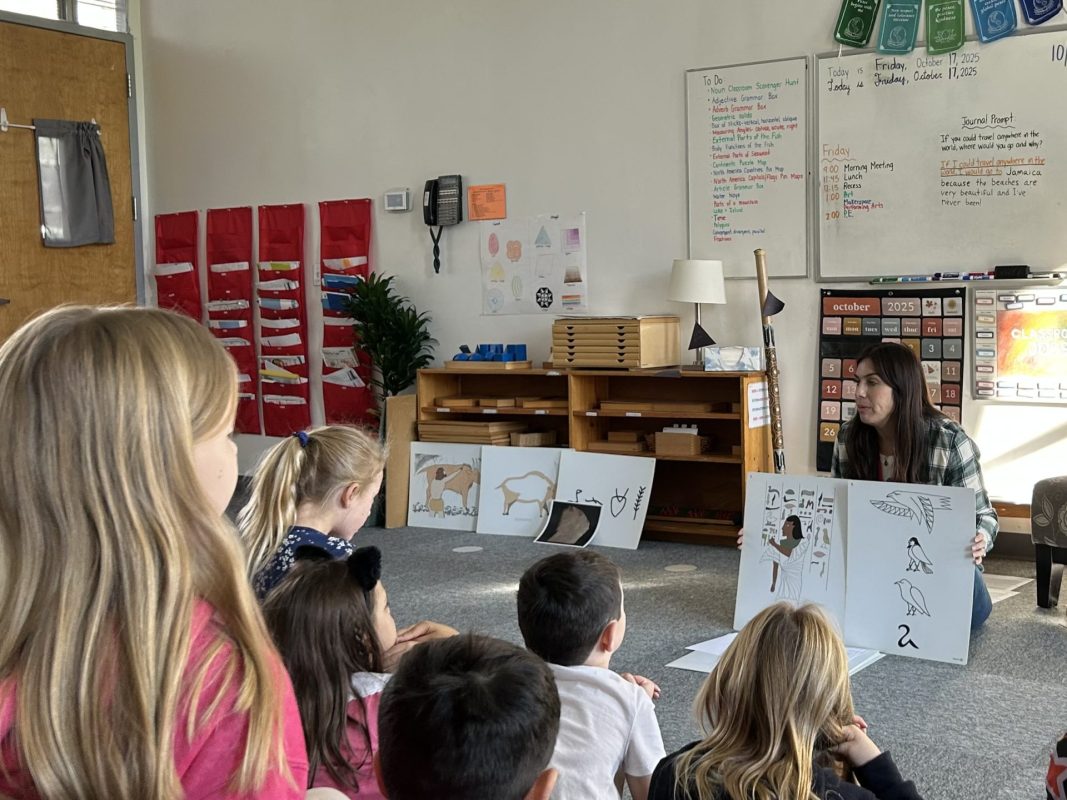
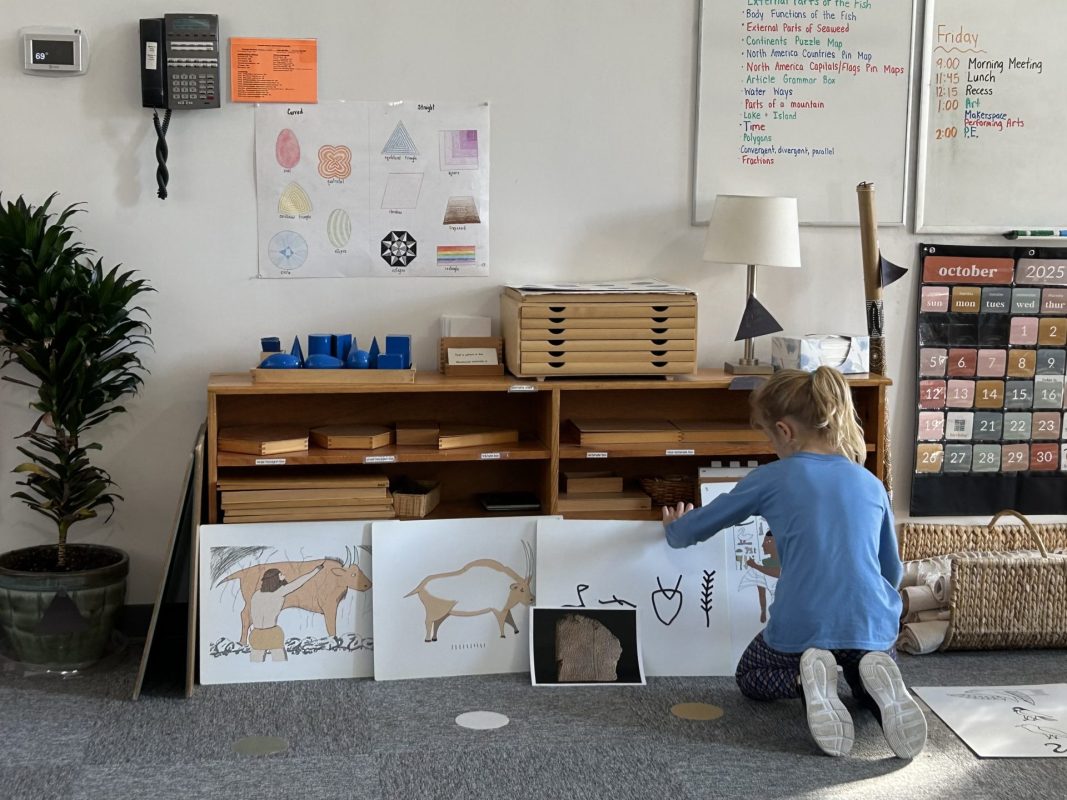
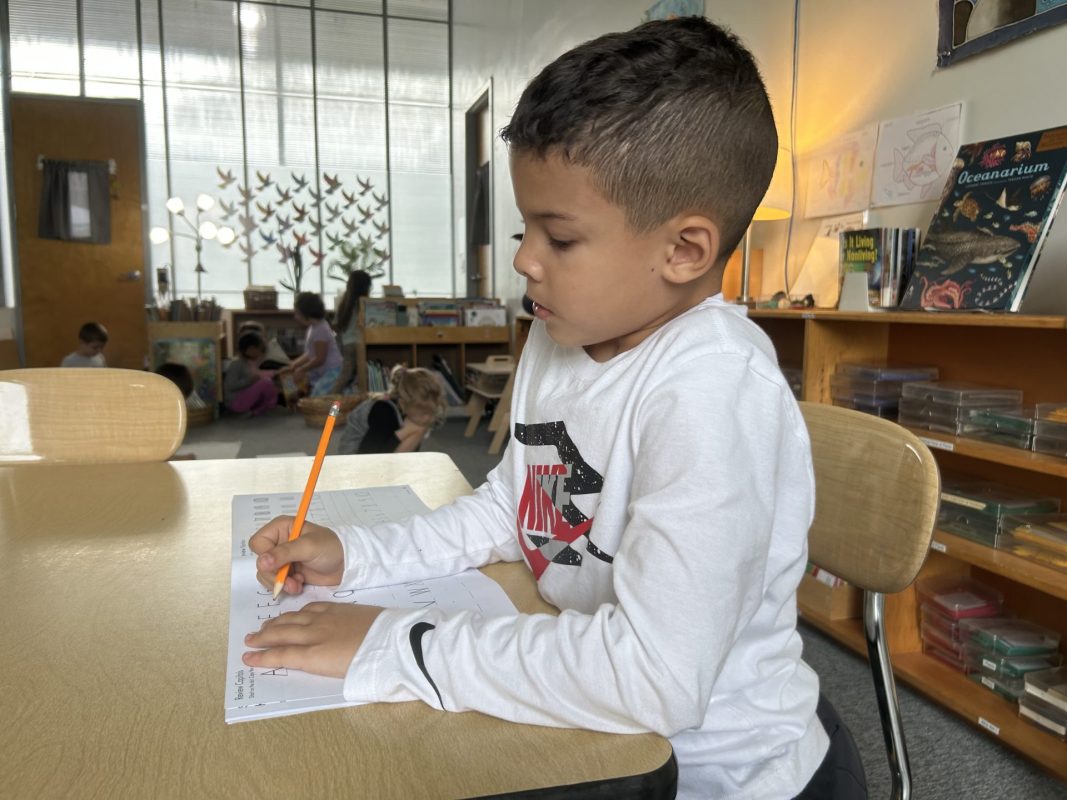
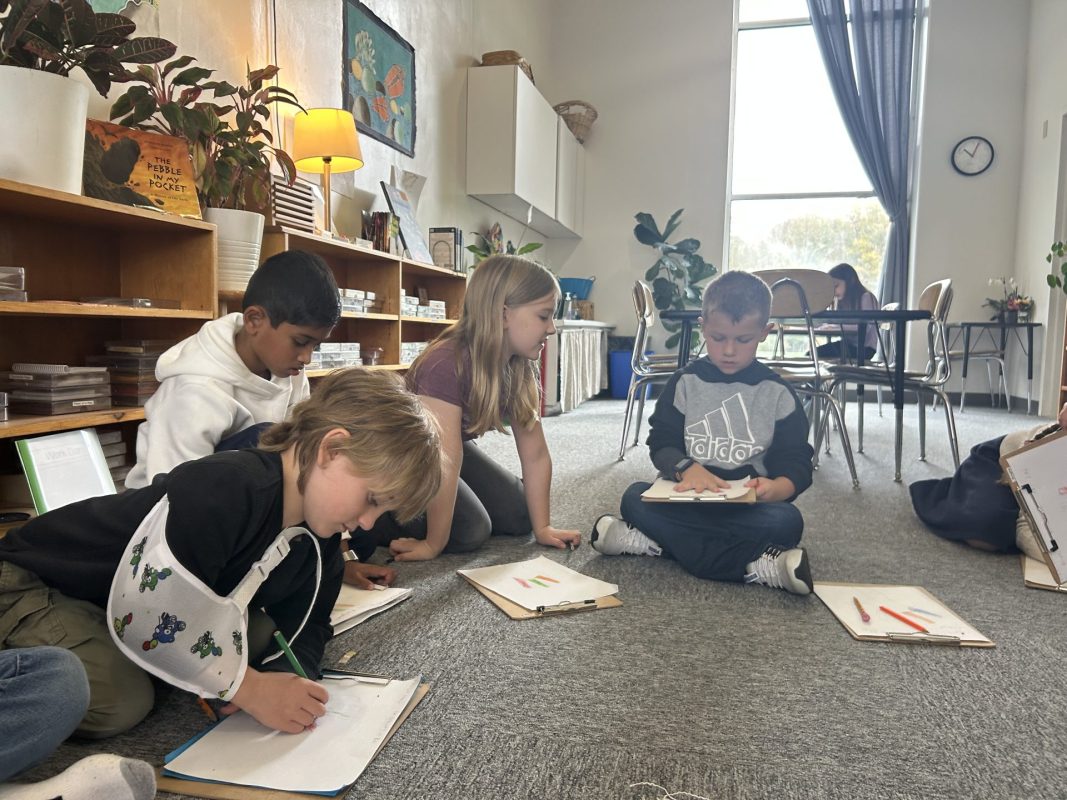
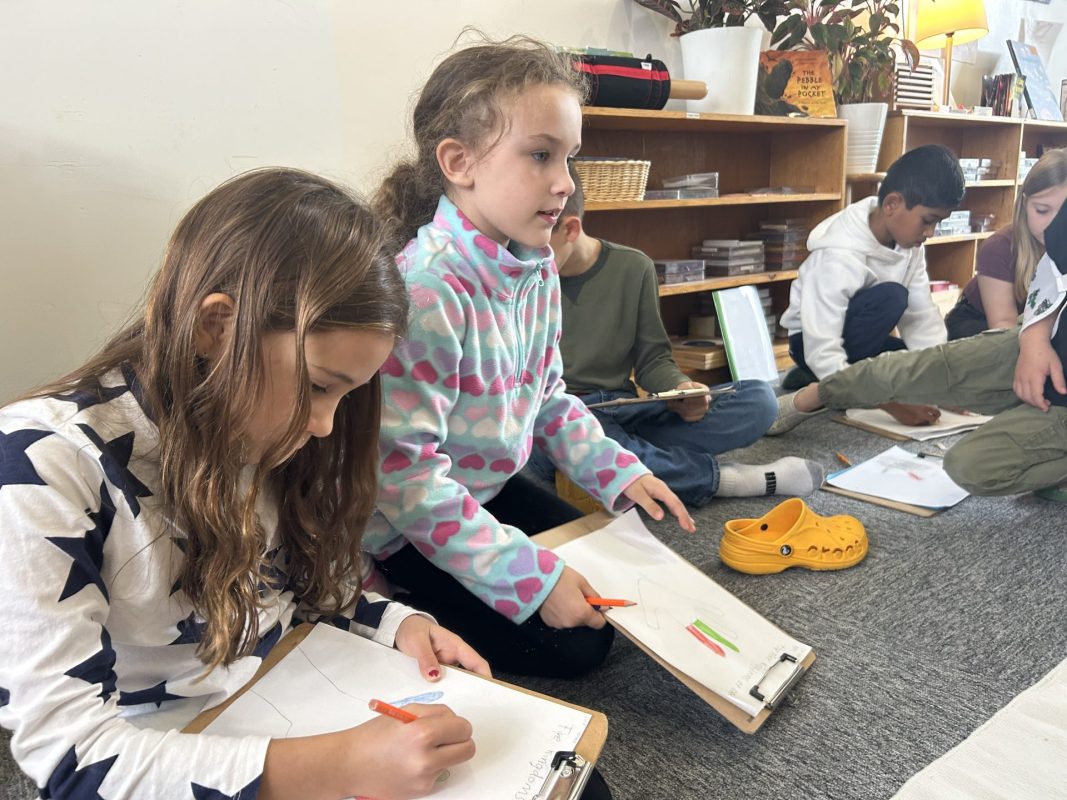
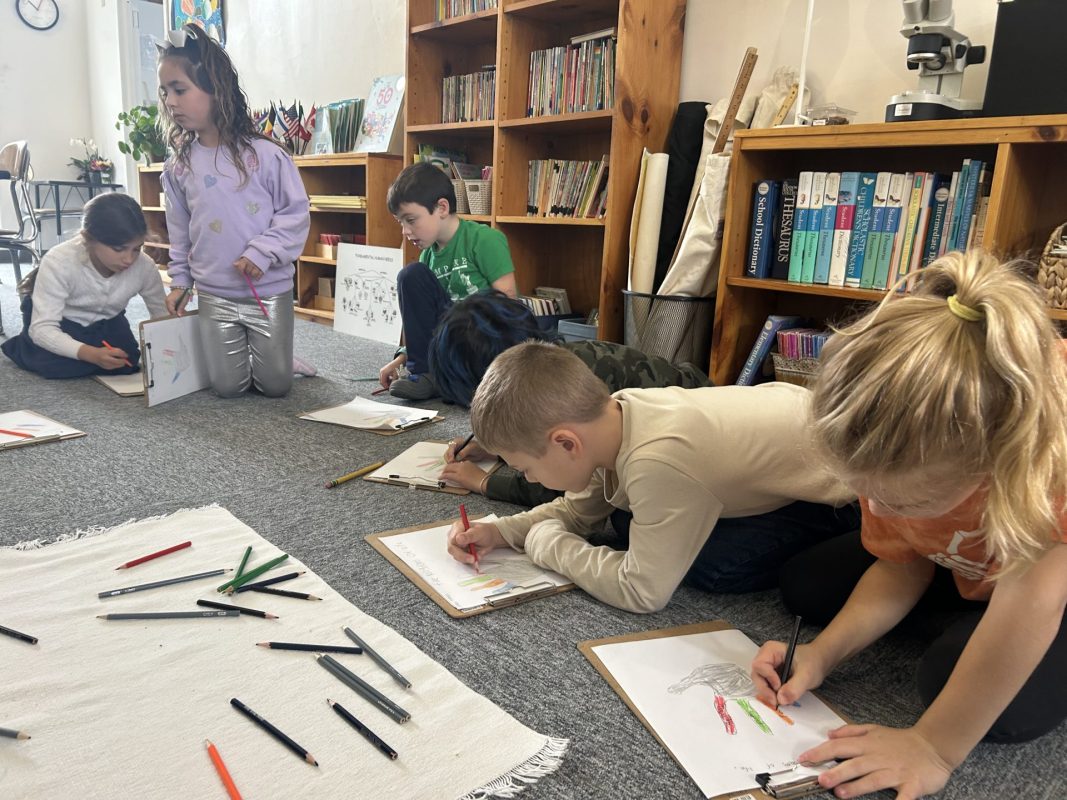
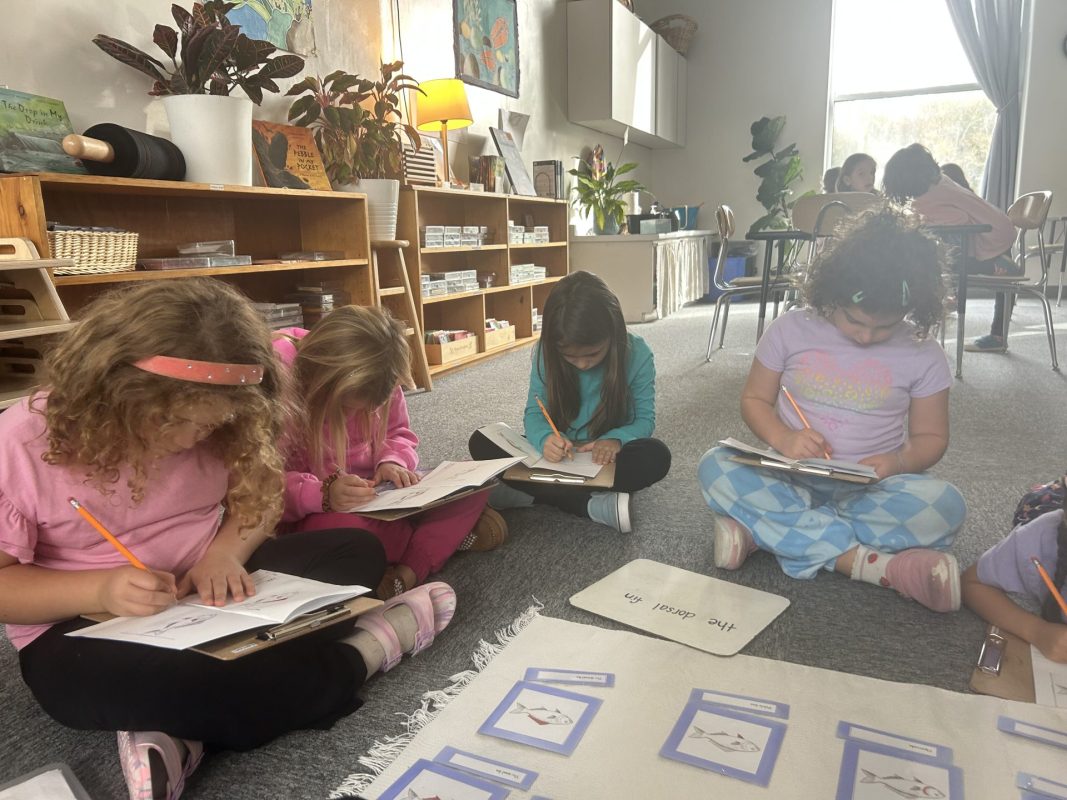
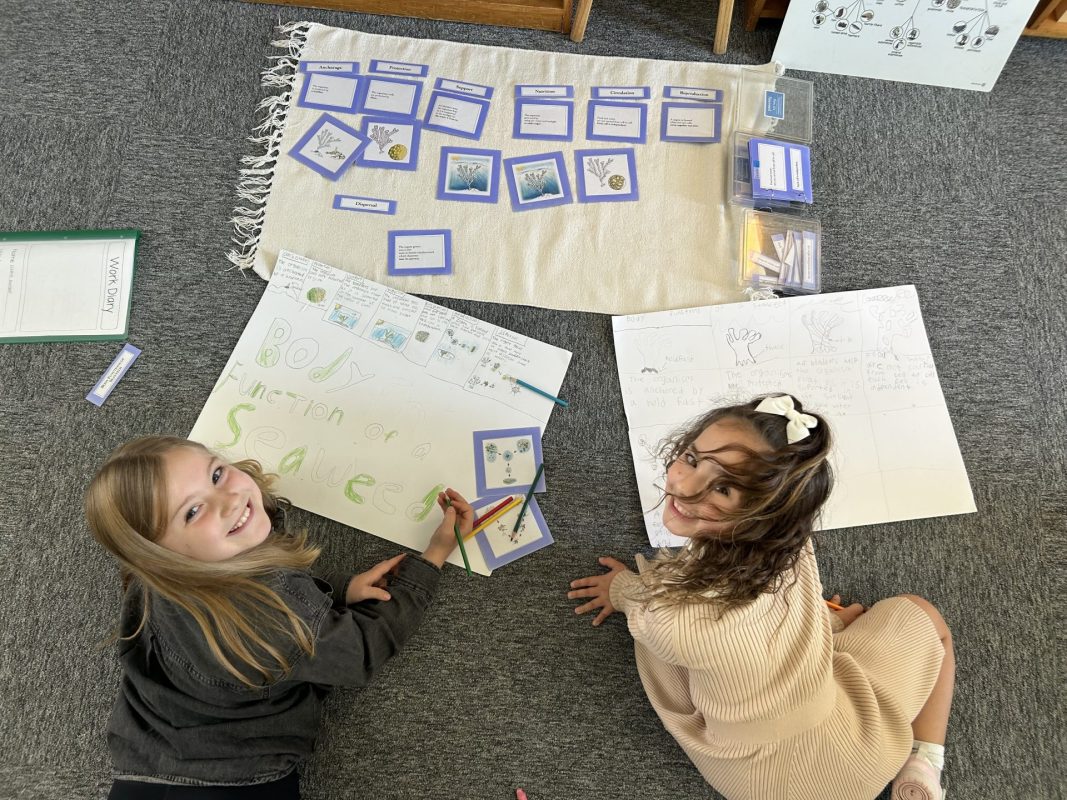
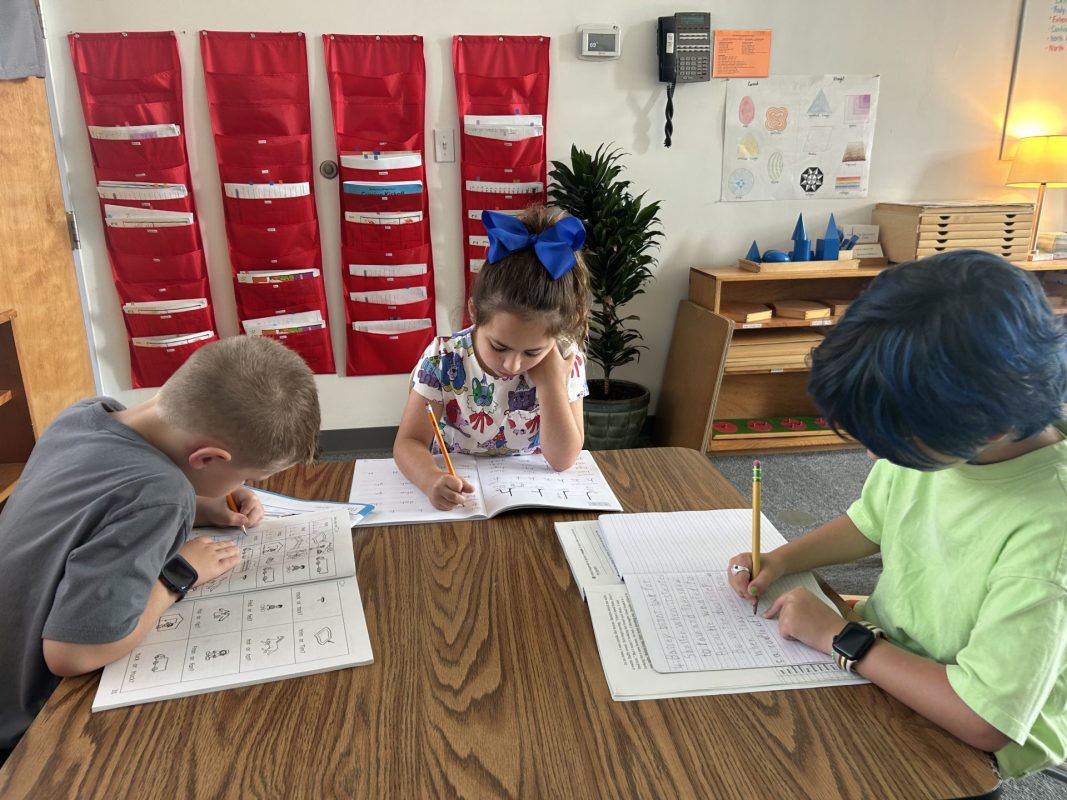
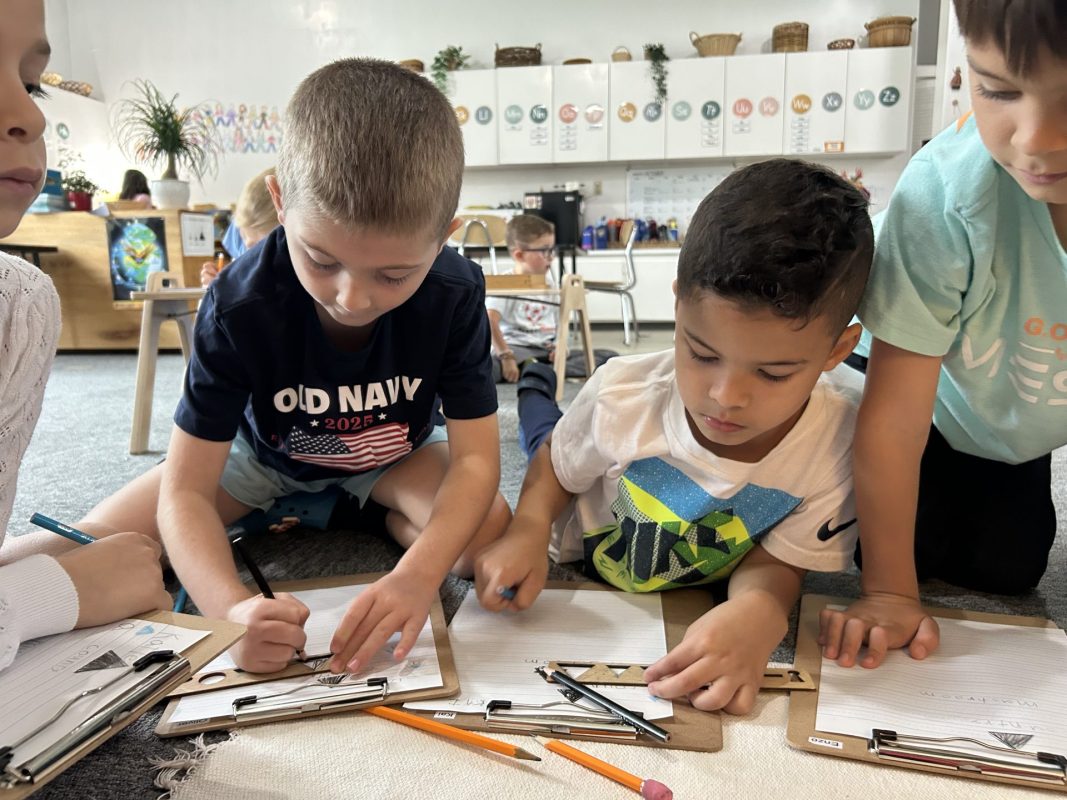
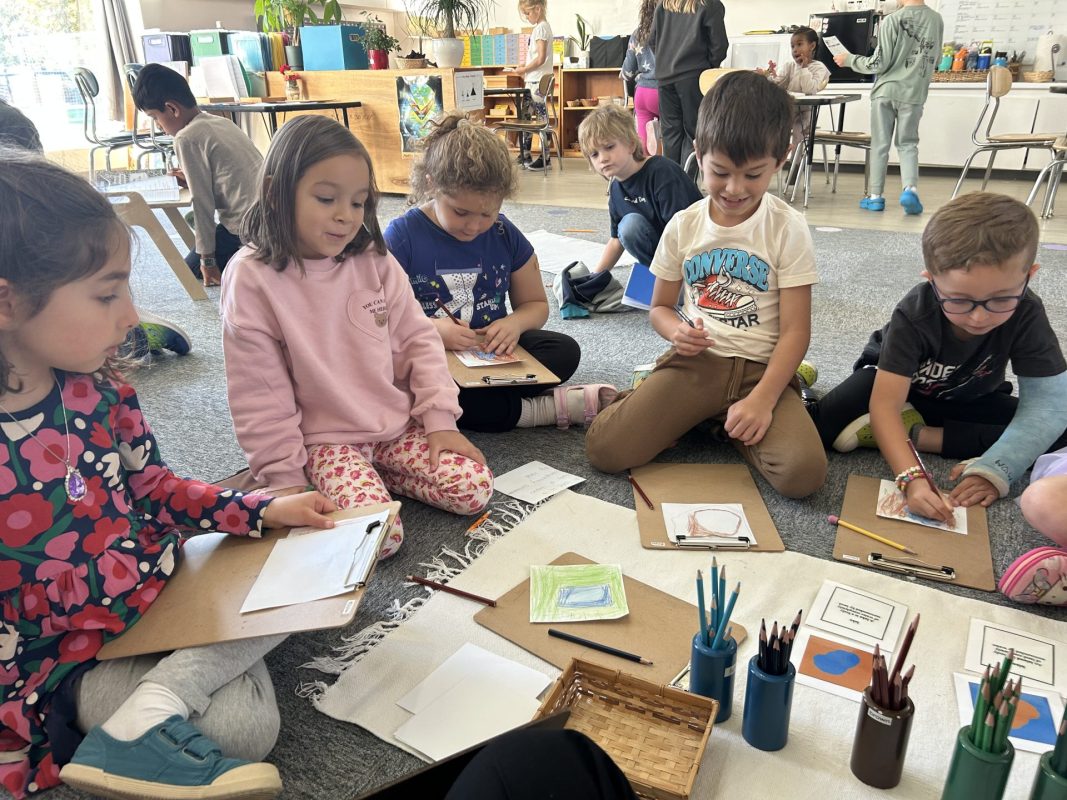
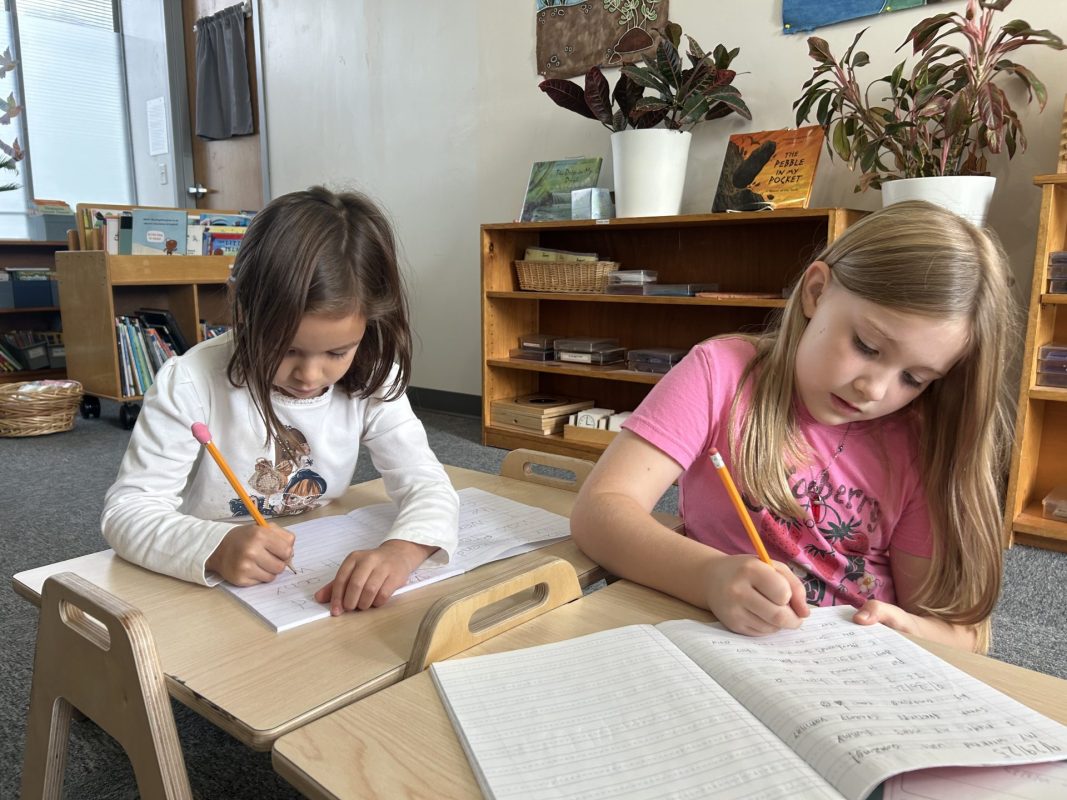
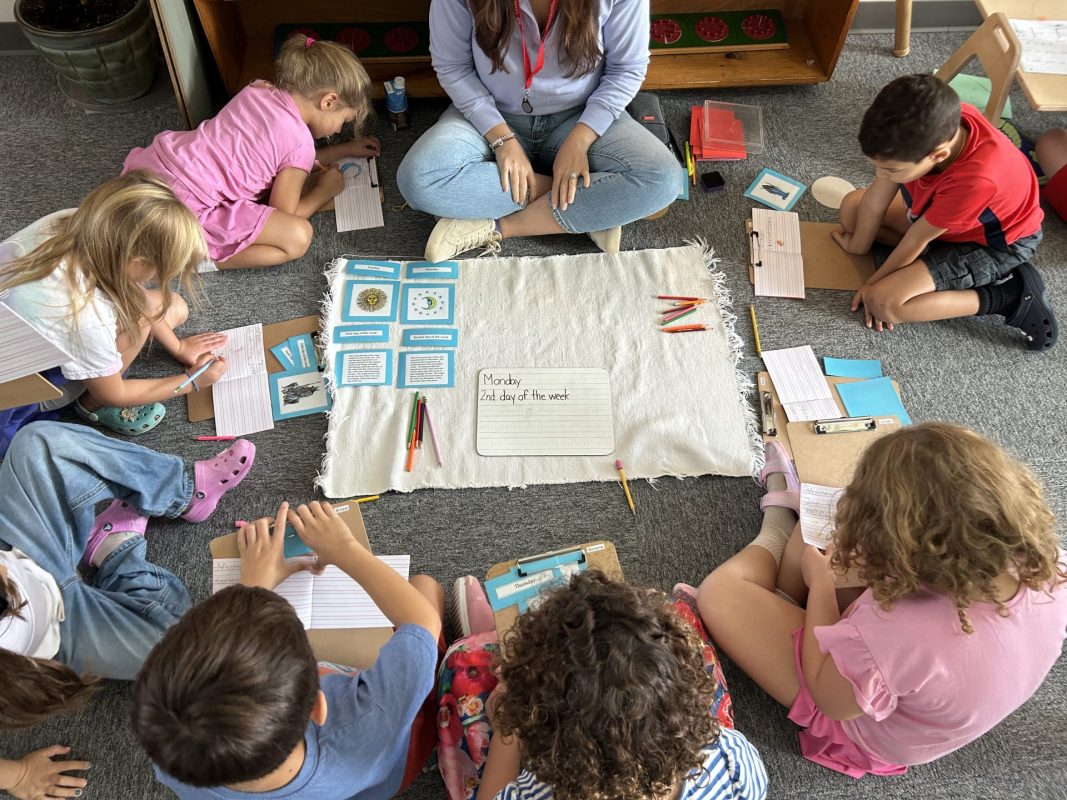
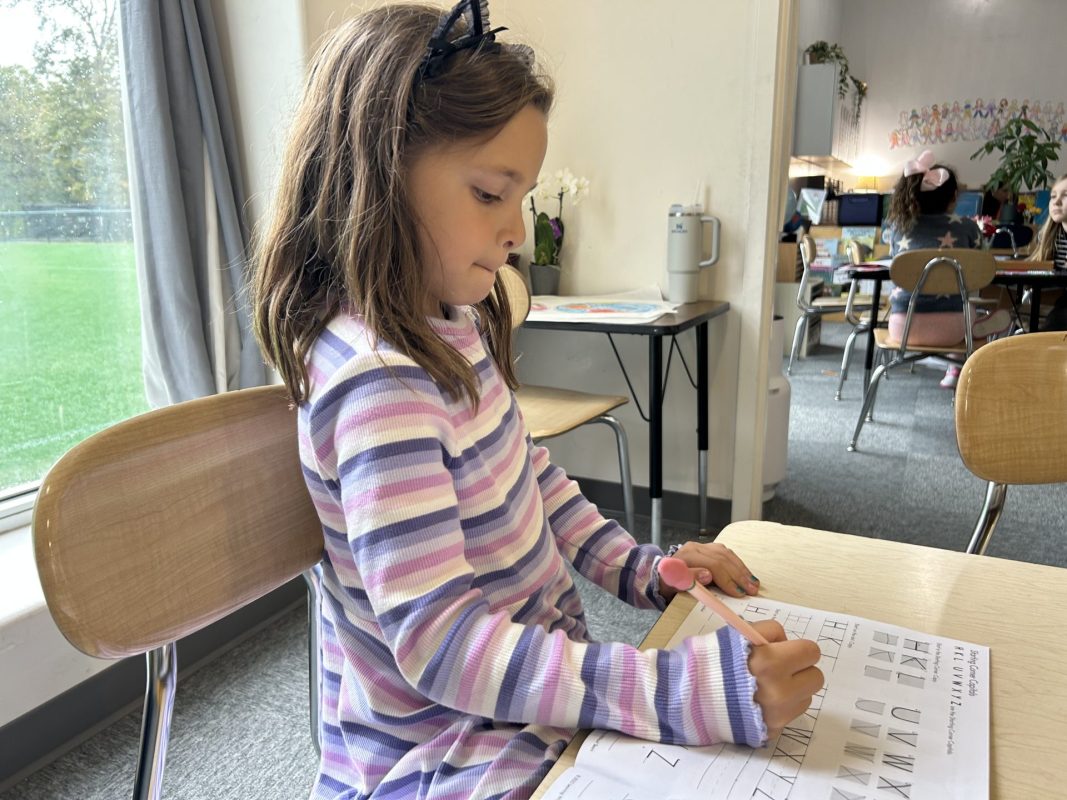
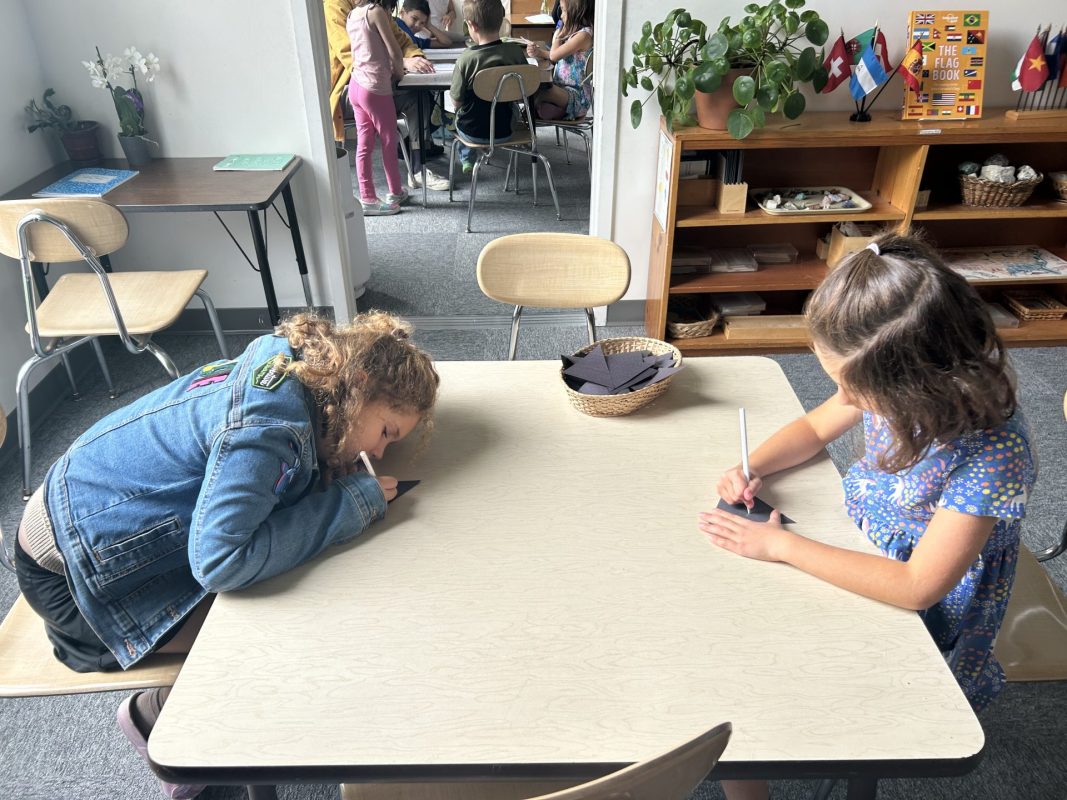
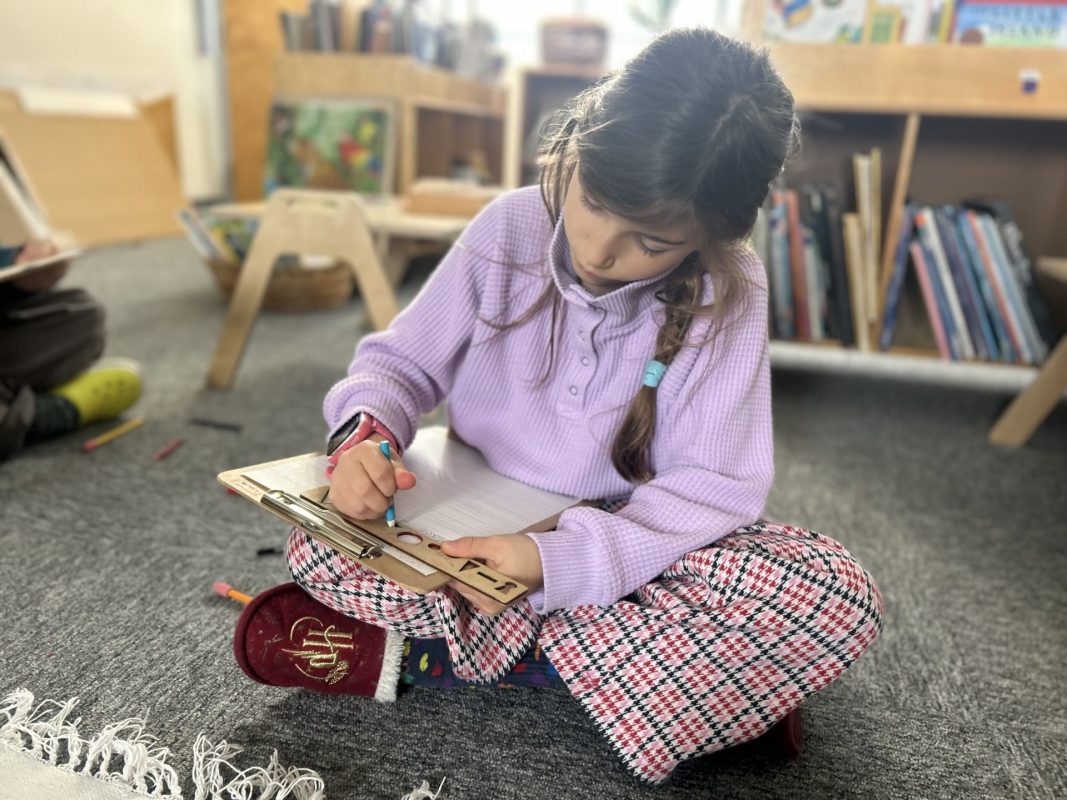
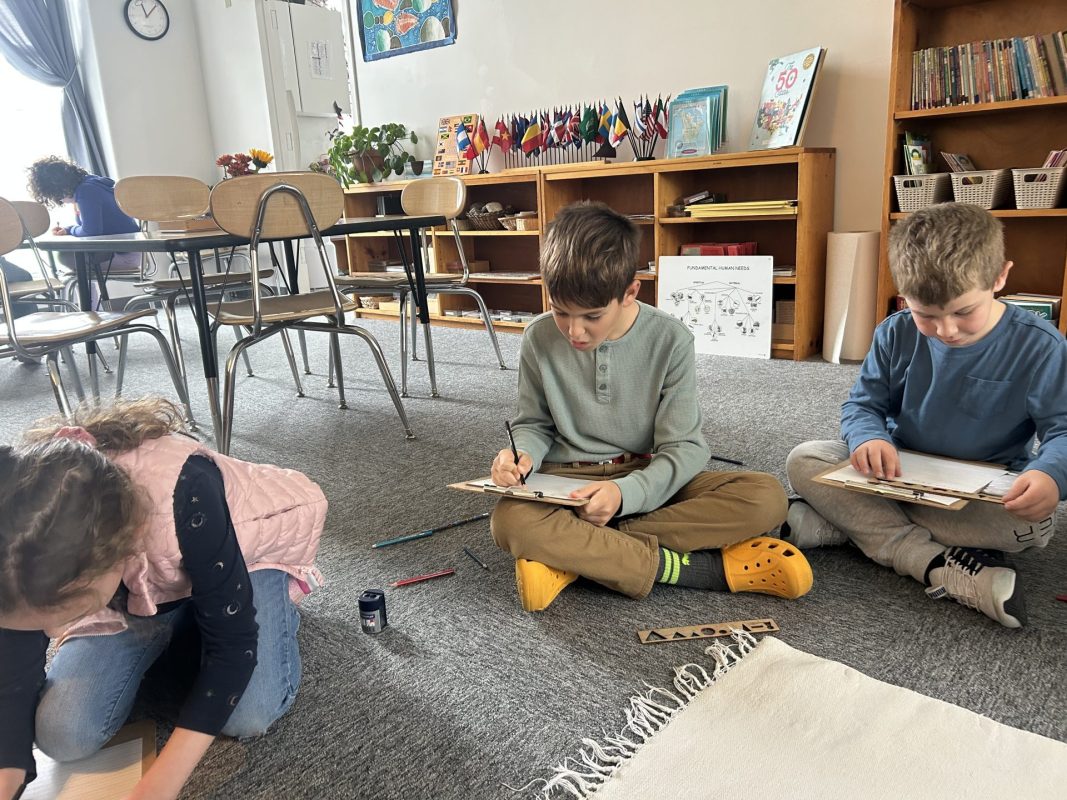
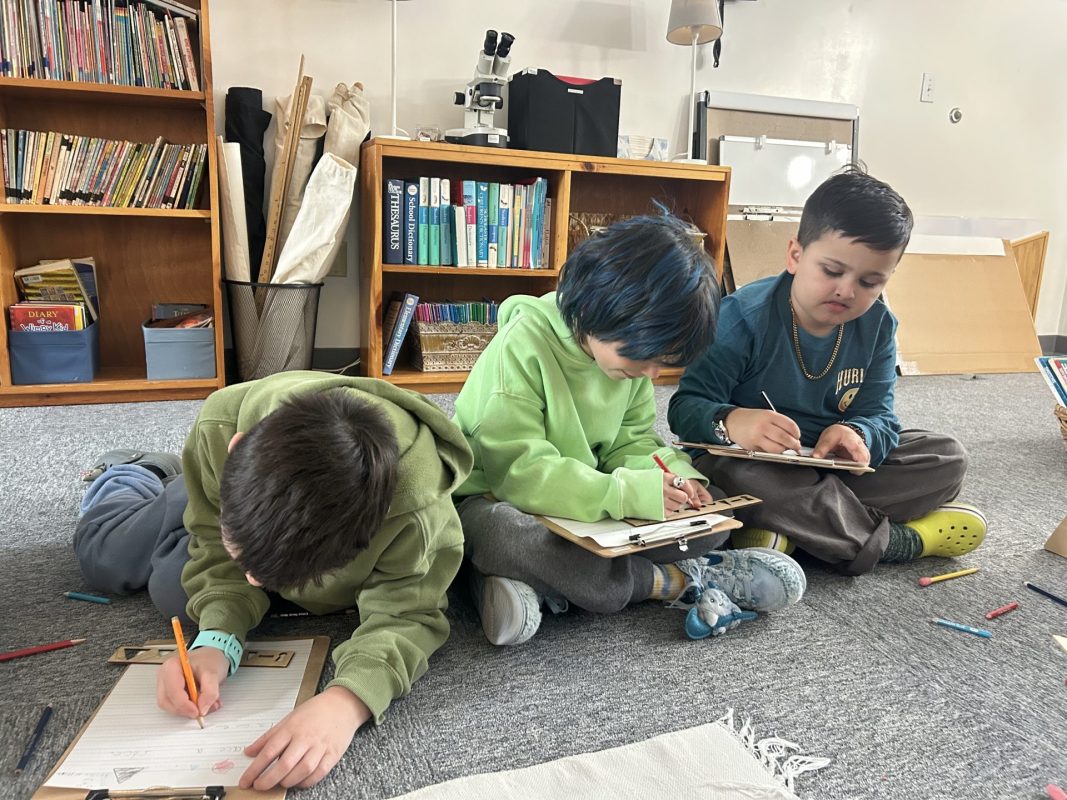
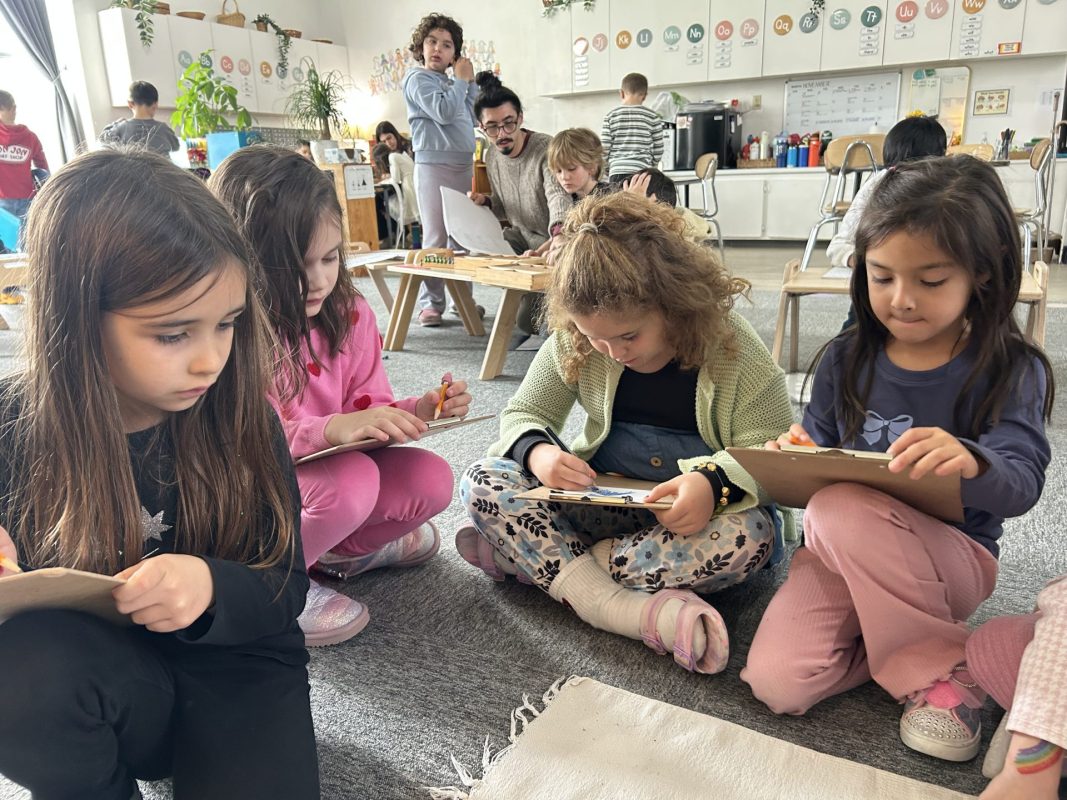
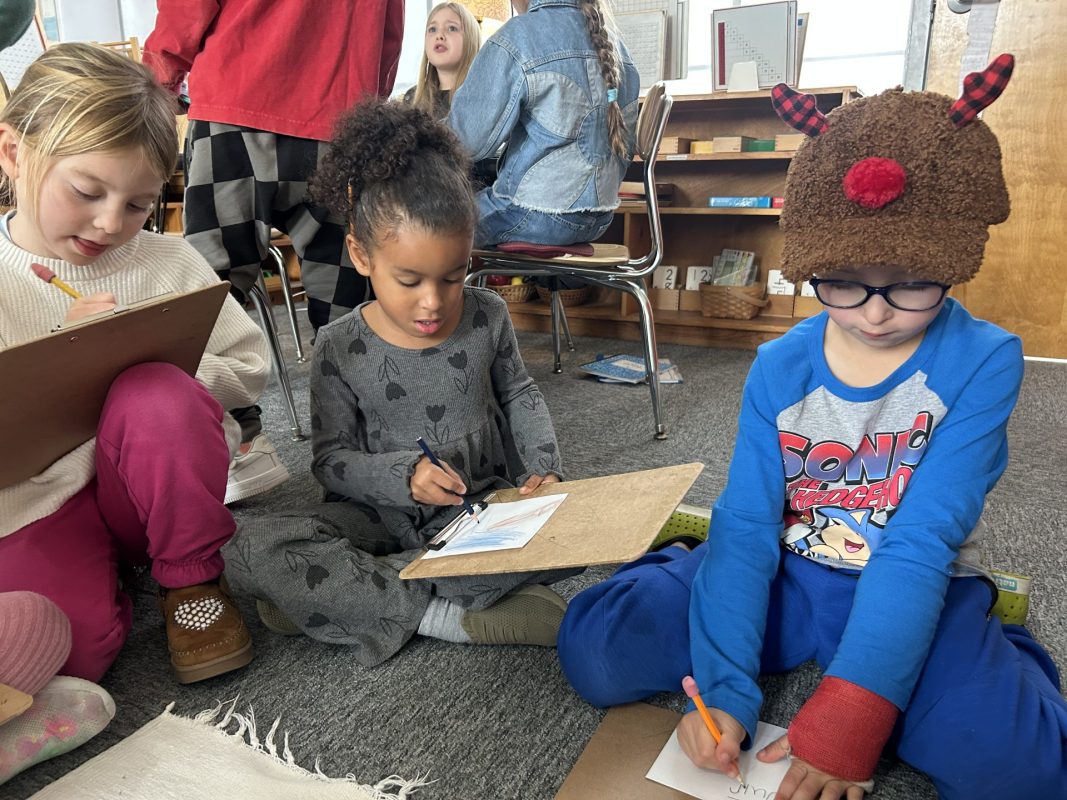
The classroom was filled with excitement this week after we shared the fourth Great Lesson with the children. The children gathered as we told the engaging story of Communication in Signs (the story of our alphabet) and showed the children visuals of ancient writing, such as pictographs, cuneiform, hieroglyphics, and alphabet systems from the Phoenicians, Greeks, and Romans. Through the story, we traced the journey of how people began using symbols to communicate, turning pictures into marks, marks into sounds, and sounds into the letters we know today. The children were captivated as they learned about the evolution of the Roman alphabet and how it connects to the writing we use every day. The children were amazed to observe the connections between ancient systems and our modern alphabet.

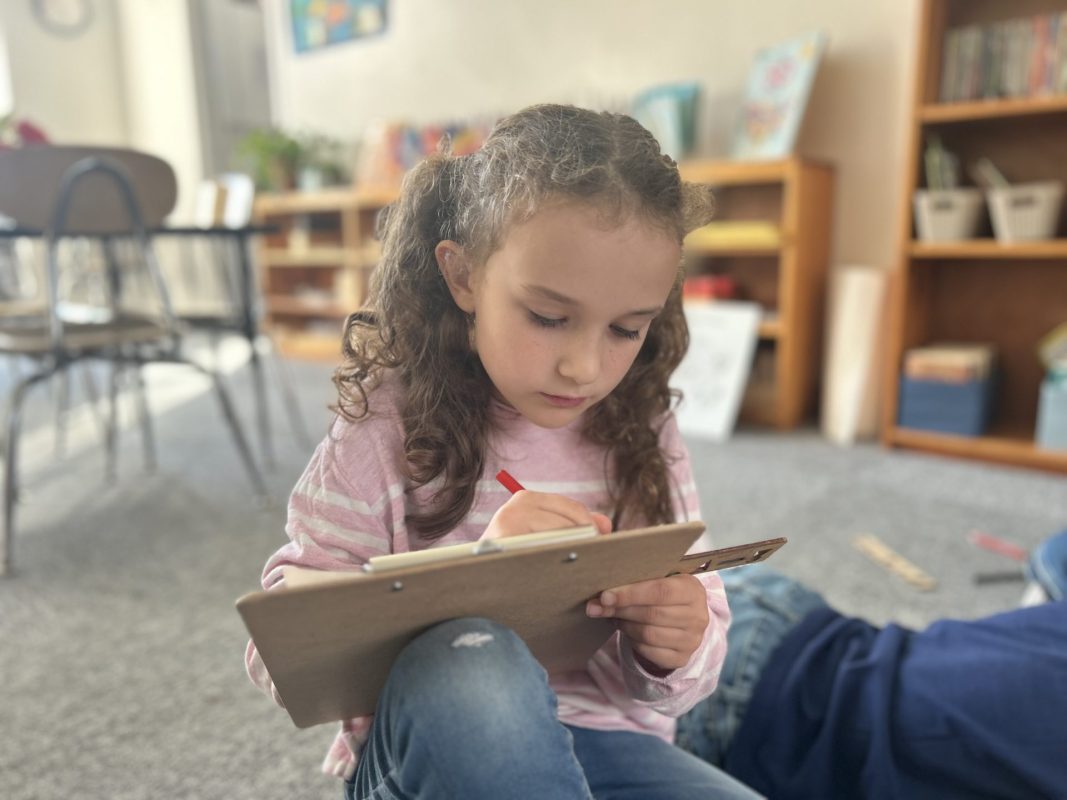
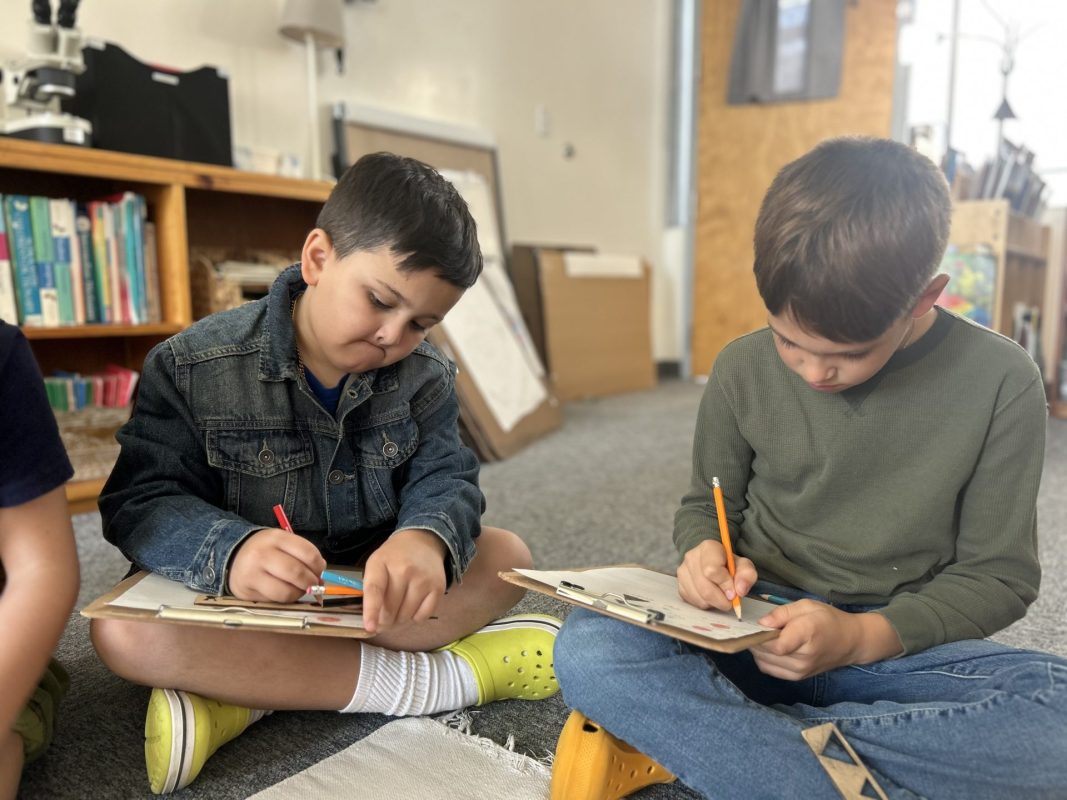
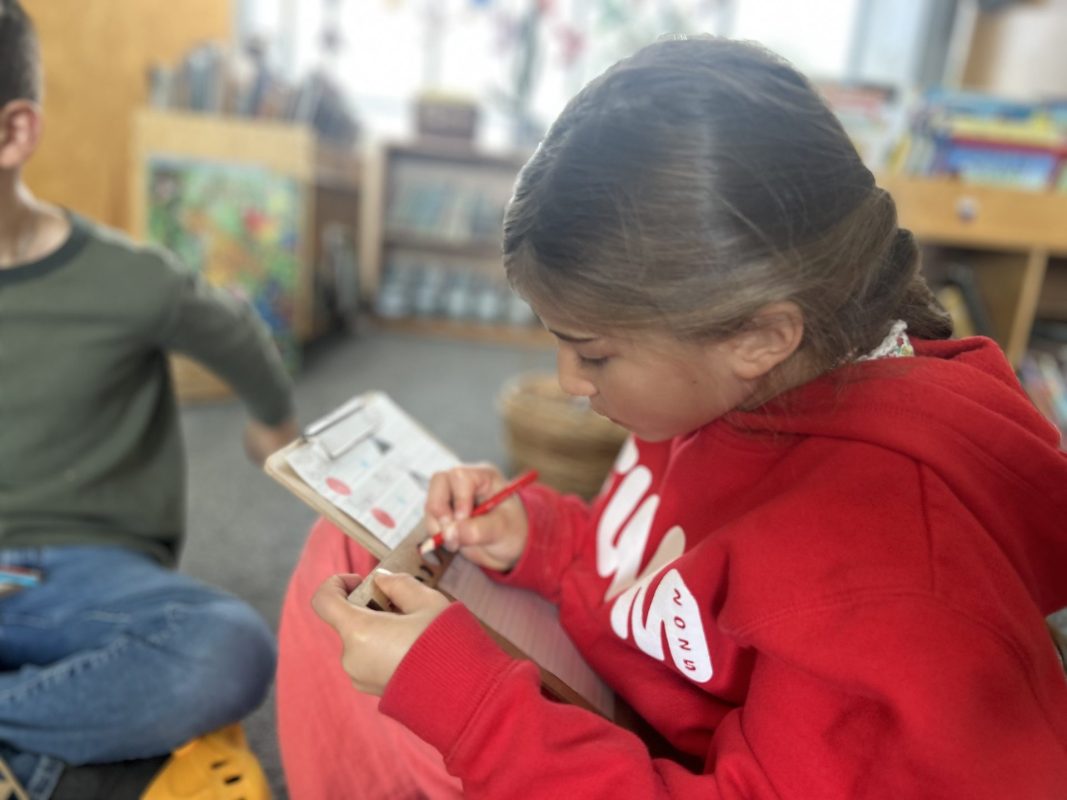
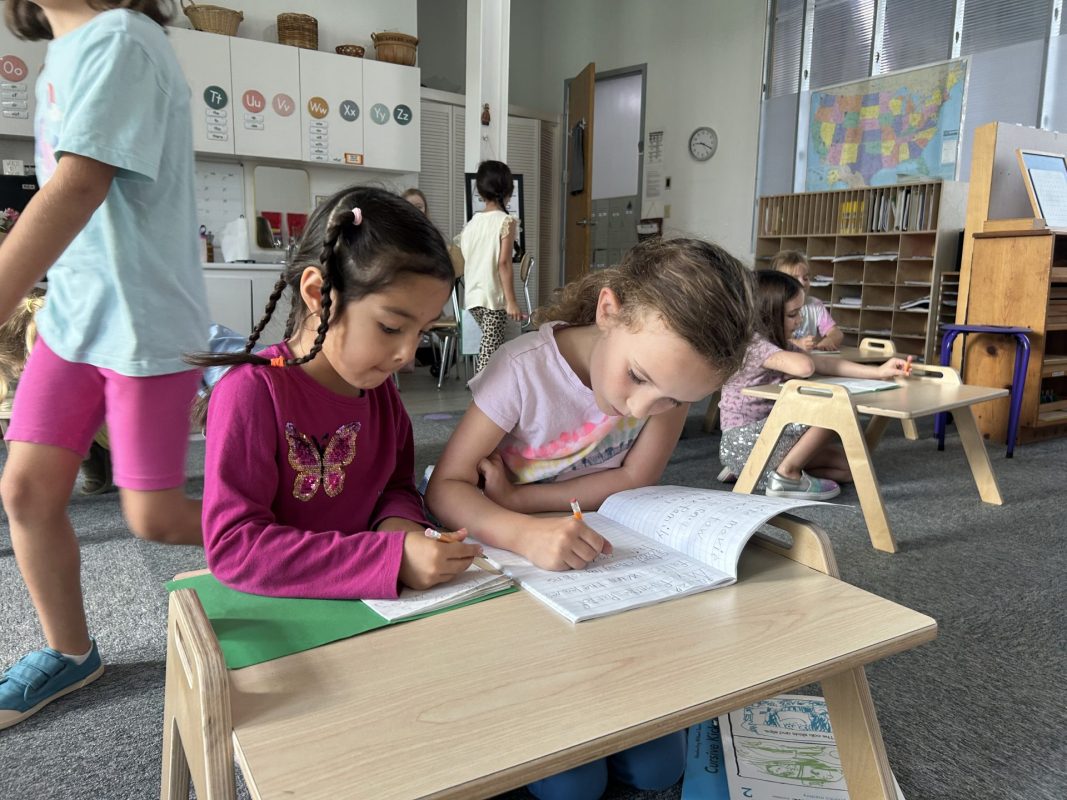
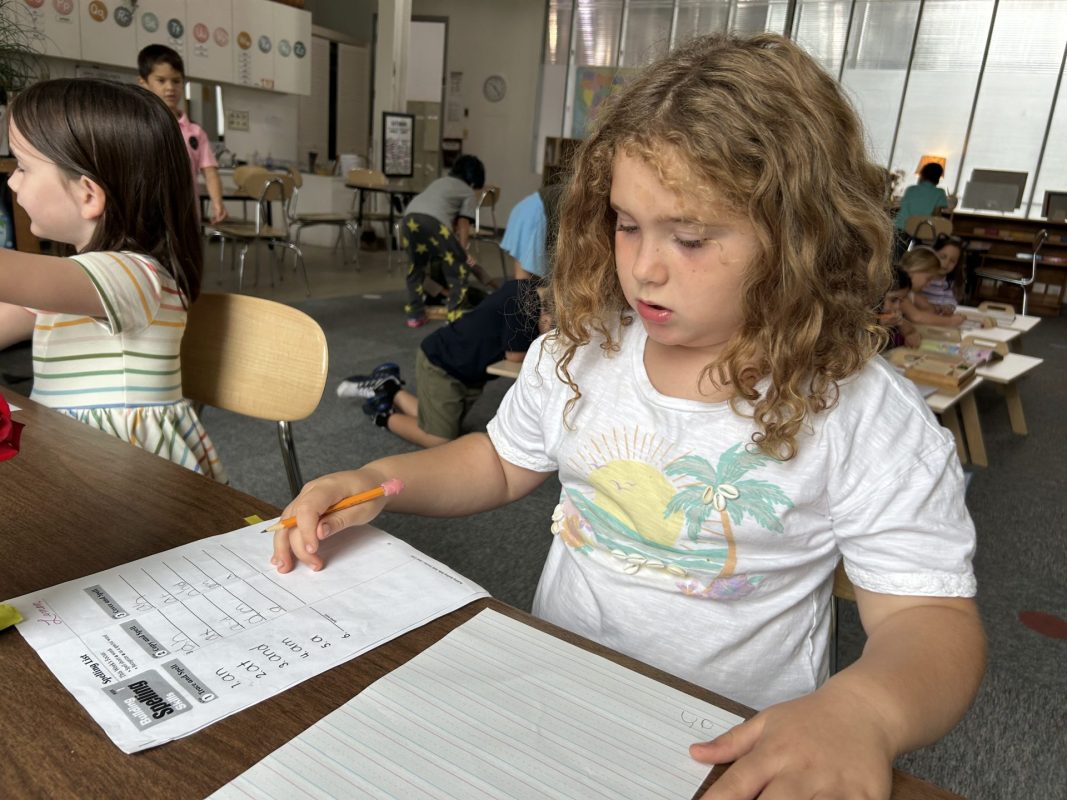
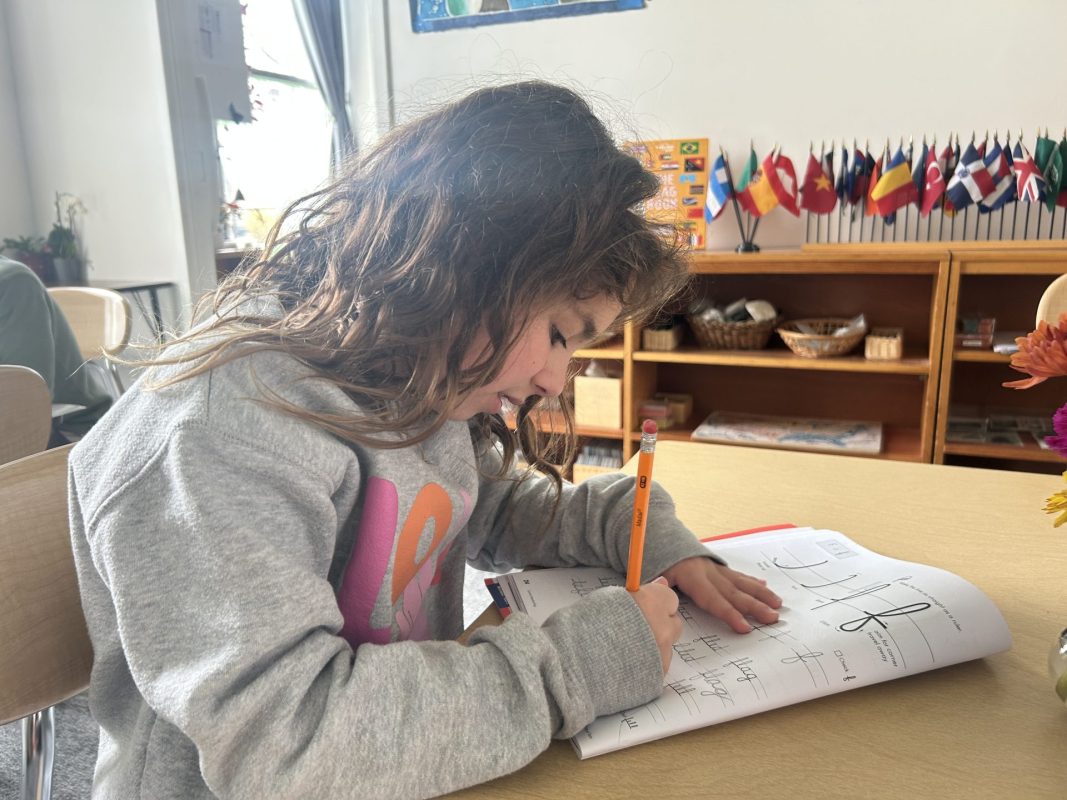
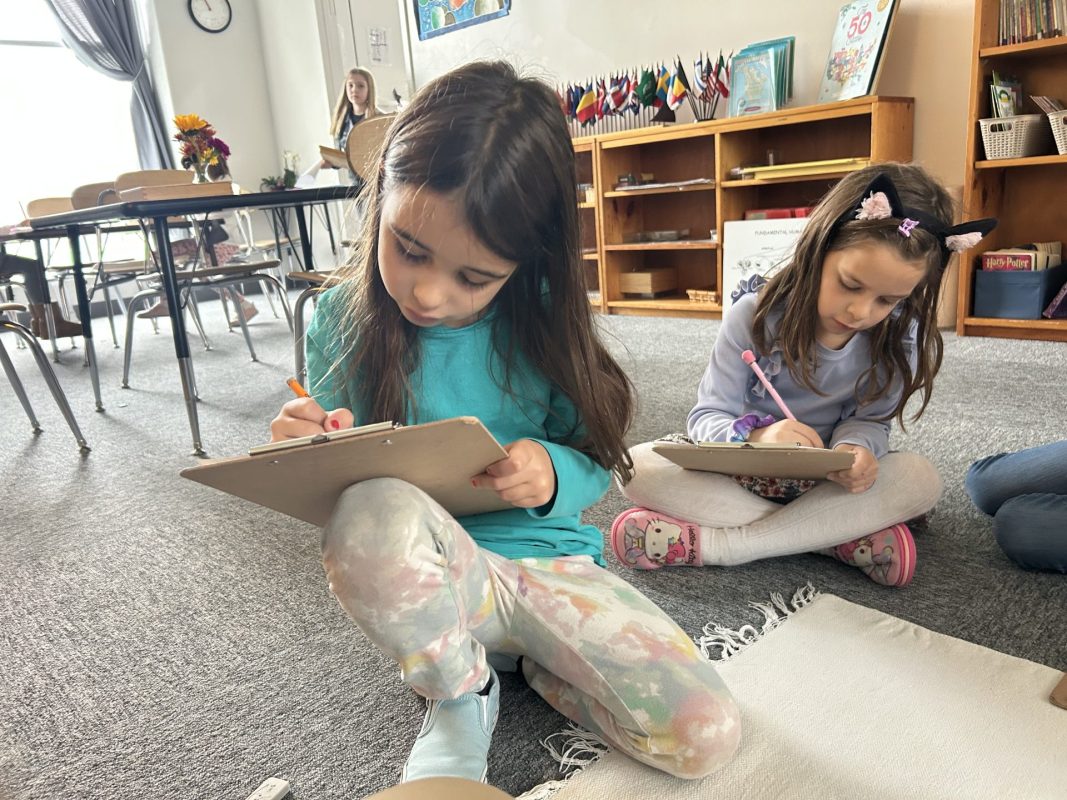
The story naturally opened up a wonderful field of exploration into the history of language. The children were eager to compare different alphabet systems from around the world, noticing both their unique qualities and shared patterns. Their curiosity led us straight into the world of ancient Egyptian hieroglyphics, where they delighted in decoding and writing their own symbols. The excitement in the room was contagious as they discovered how these early signs were used to record stories, ideas, and events thousands of years ago.

As we discussed, the story of written language is truly the story of humanity’s need to connect and communicate. It helps us see how people throughout history have worked to perfect communication and explore new ways to share ideas. Through this Great Lesson, the children began to understand that language, one of our greatest human achievements, was an amazing invention and a clear result of humans using the special gifts of their minds, hands, and hearts. The incredible invention of written language acts as a bridge that connects people across time and space. The story introduced the children to the development and history of written language in a way that creates an appreciation of the simplicity and beauty of these languages.

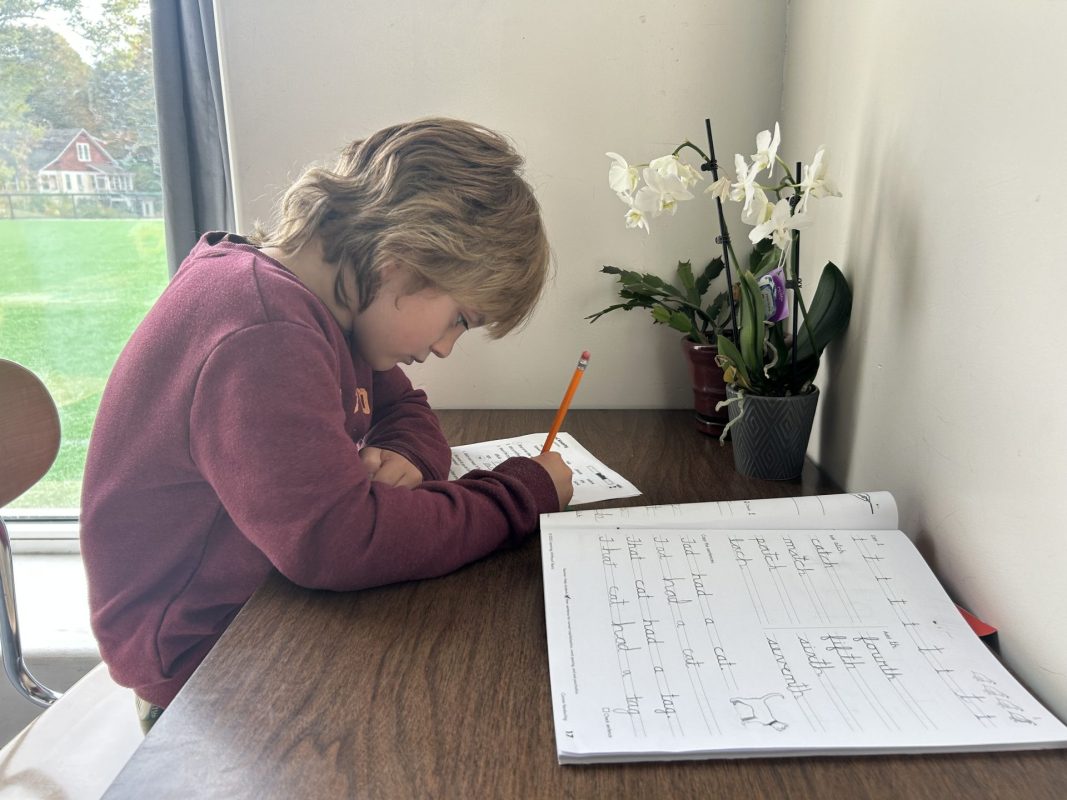
We will continue to build on this excitement as we explore how writing systems evolved, how punctuation and spelling developed, and how handwriting styles changed through time. The story of Communication in Signs has opened a door to wonder, and the children are eager to step through it.

The Peabody Museum in New Haven features incredible exhibits on the Babylonians and Egyptians, showcasing fascinating artifacts like cuneiform tablets and ancient hieroglyphics. It is a fantastic place to visit and might be fun for the children to see these historic treasures up close.


Lower Elementary: Exploring Montessori Math

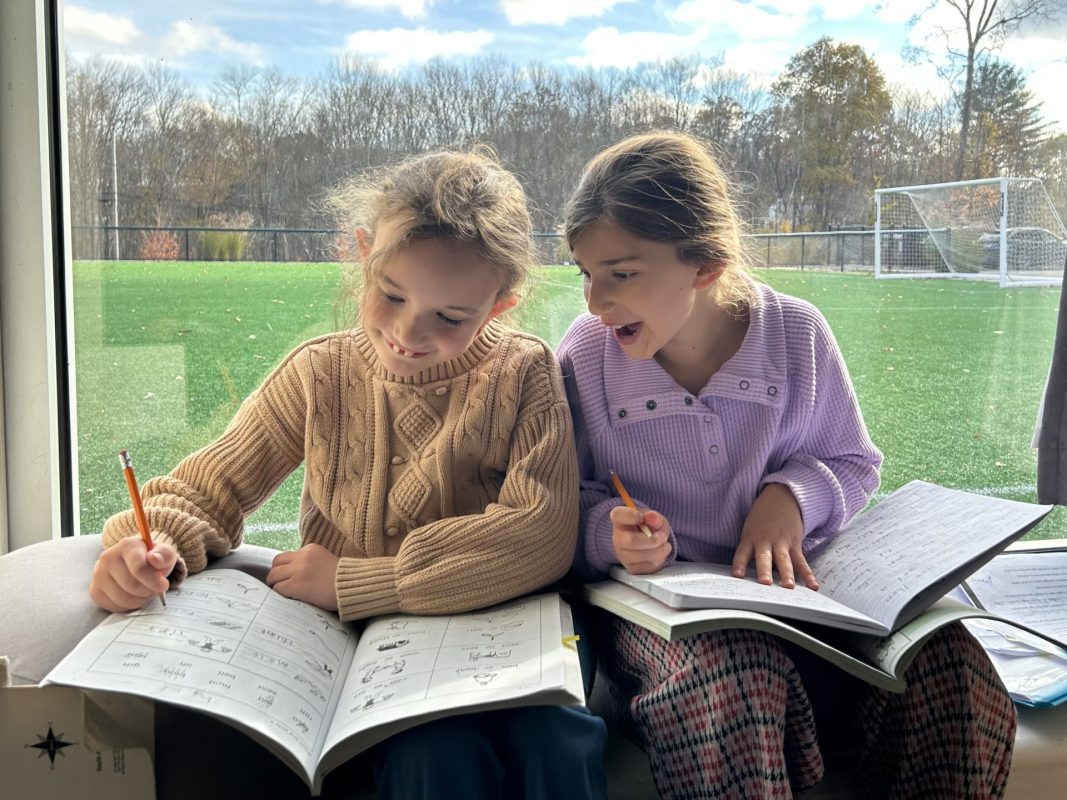
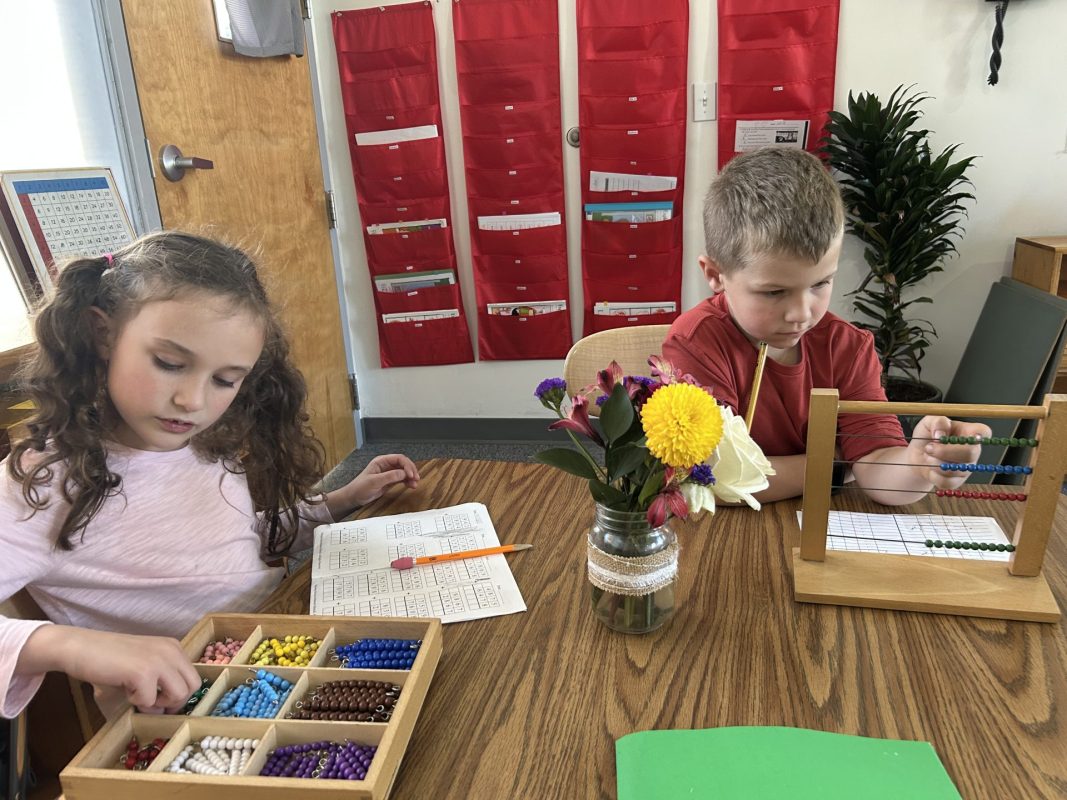
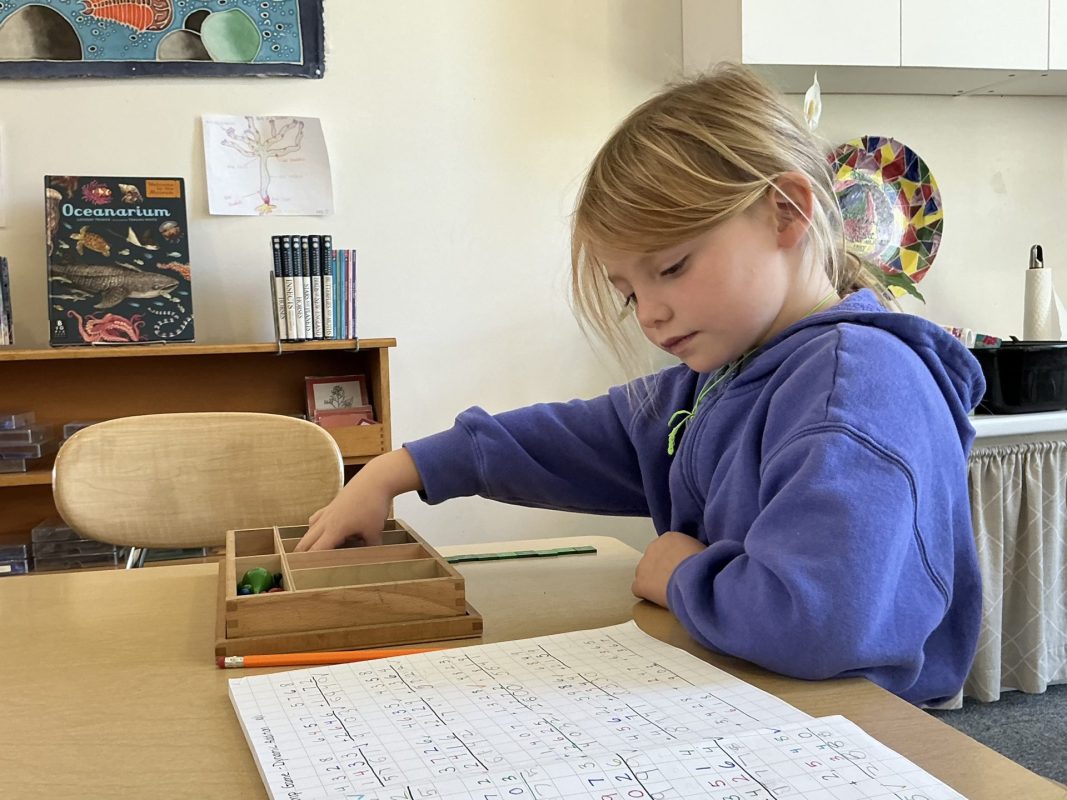
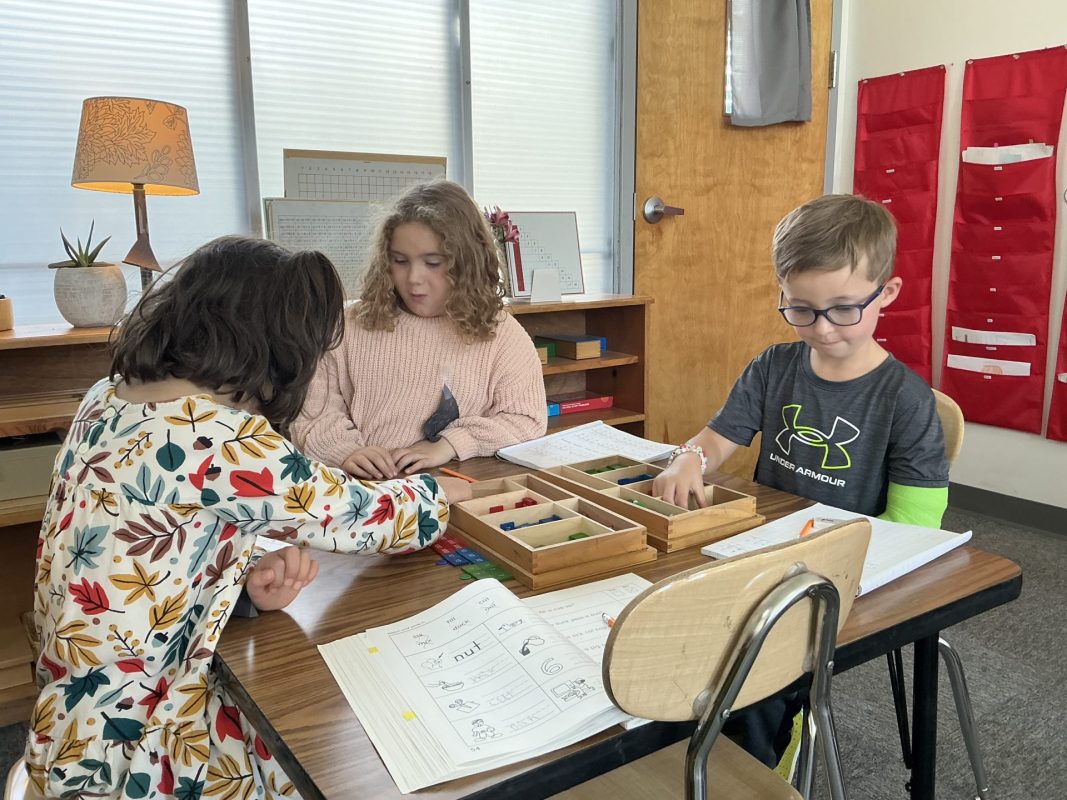
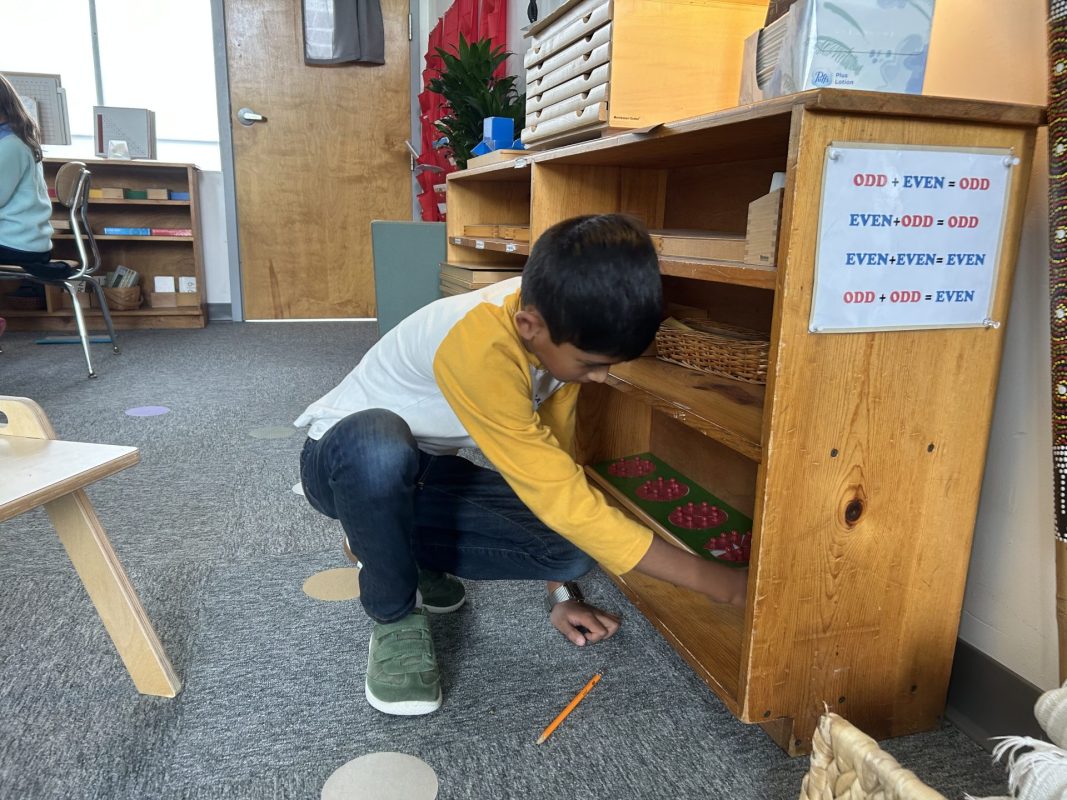
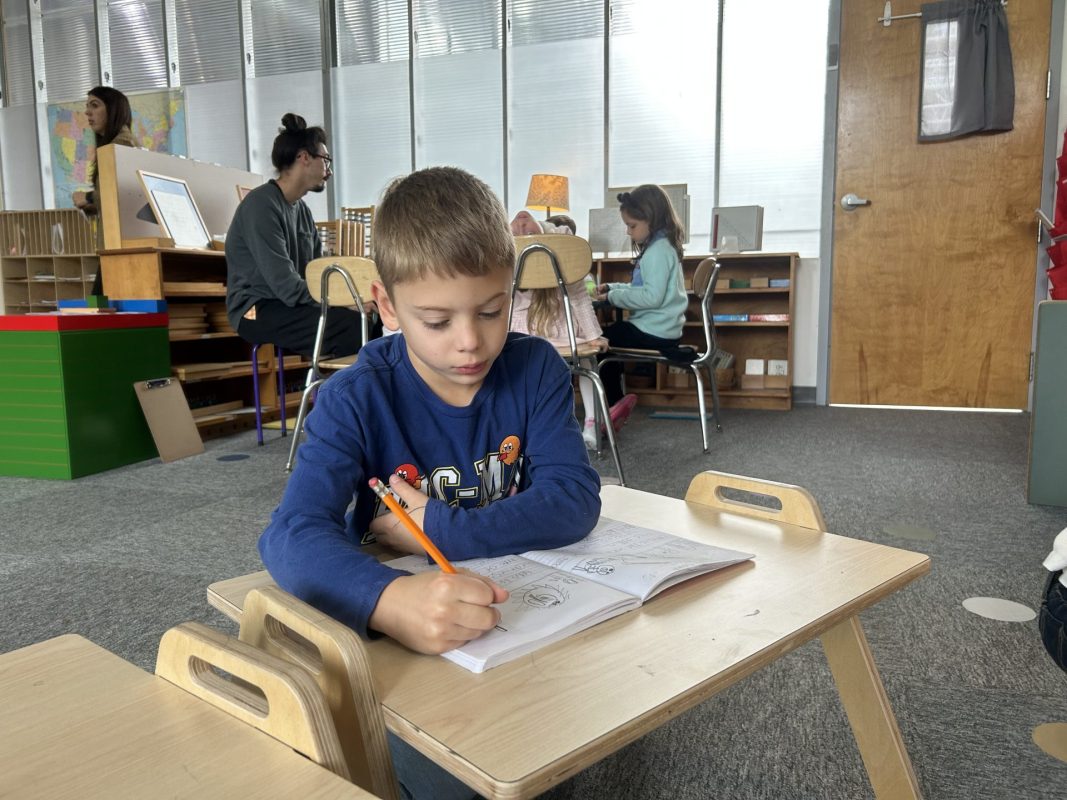
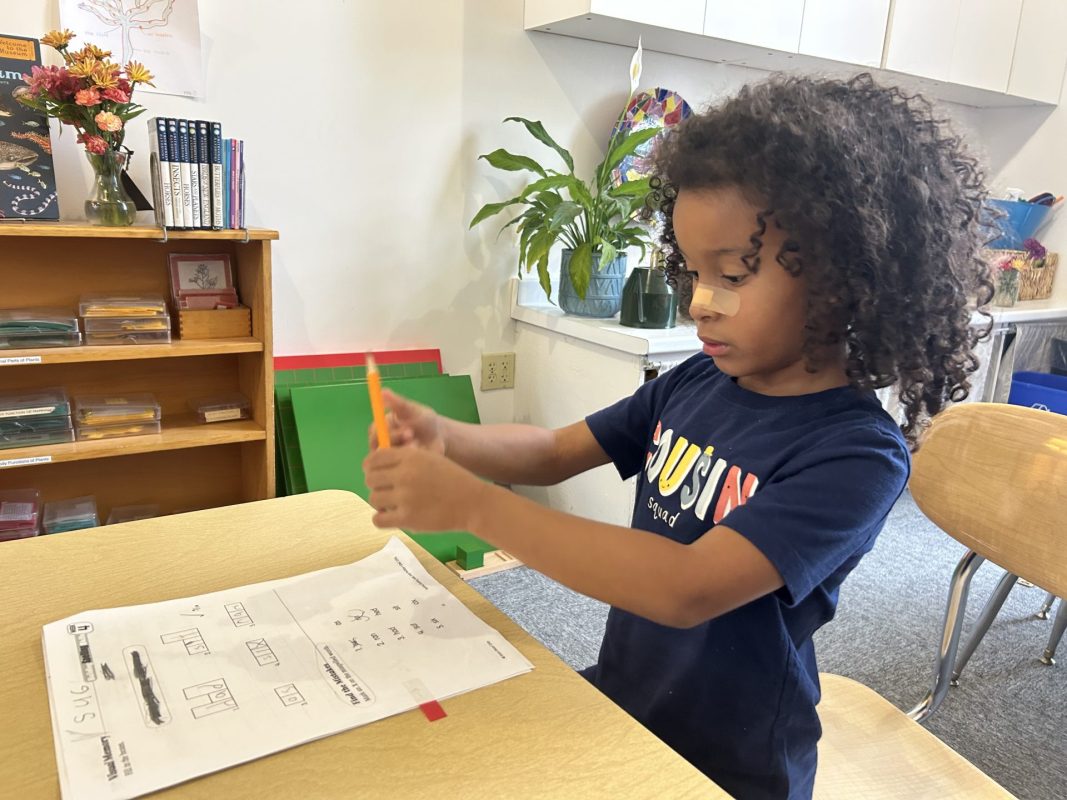
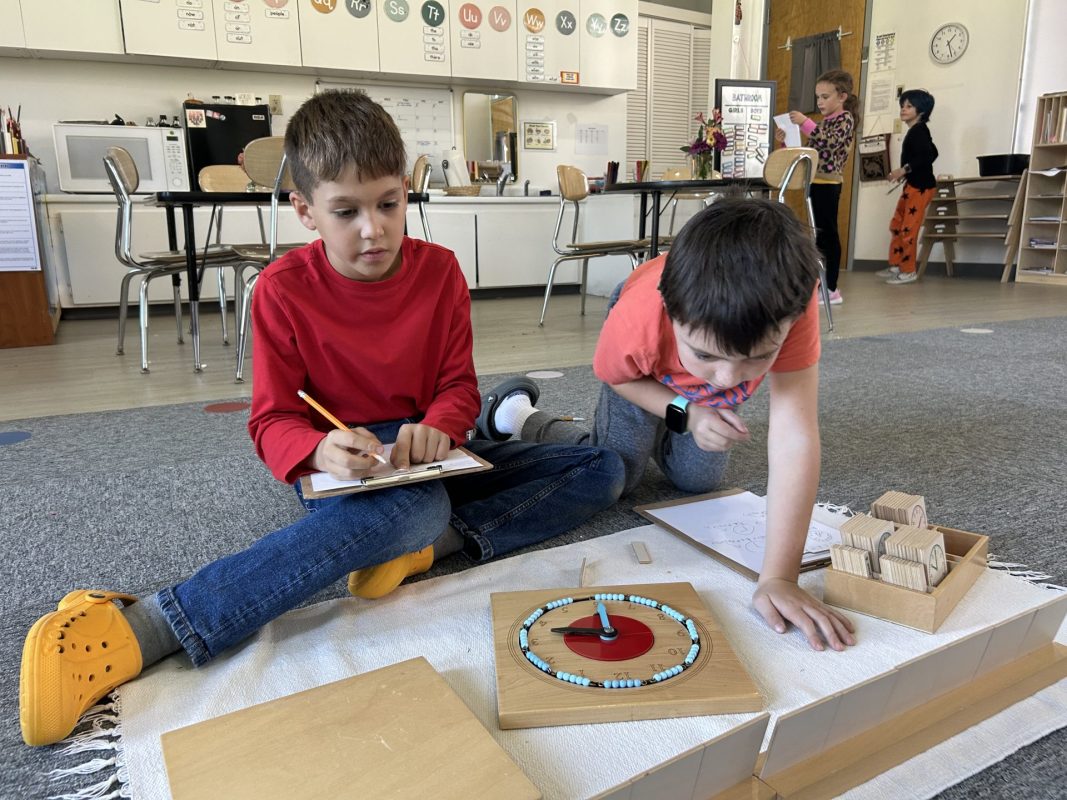
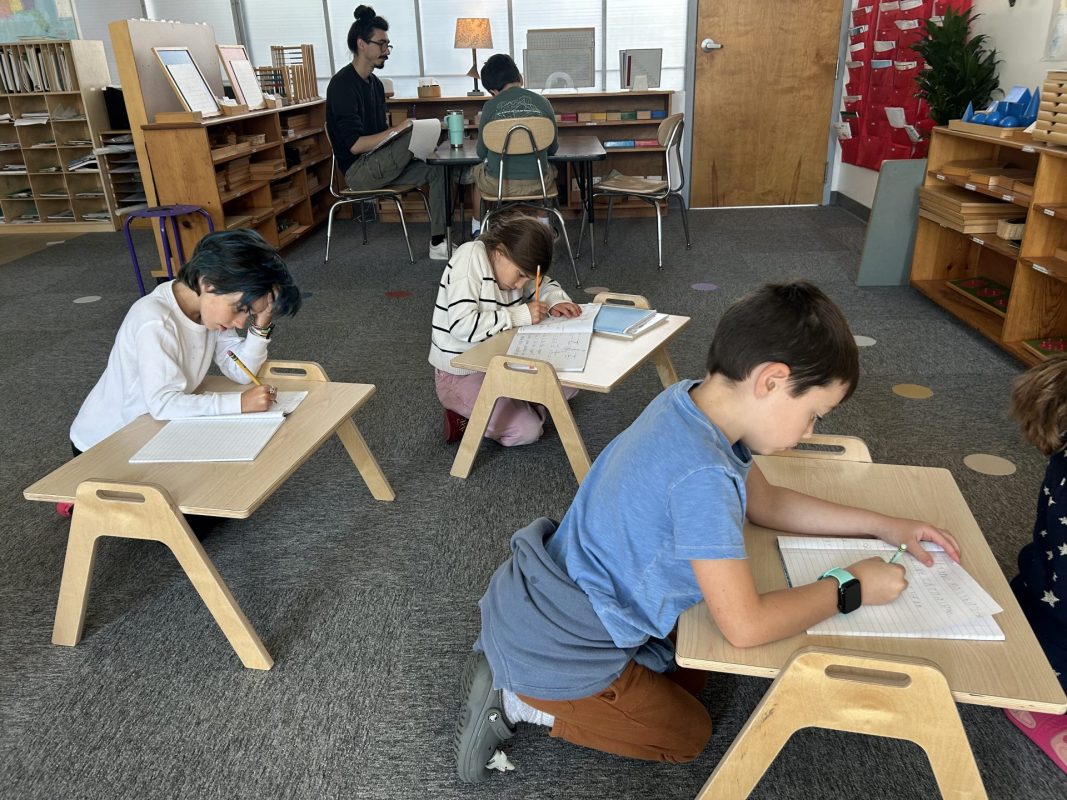
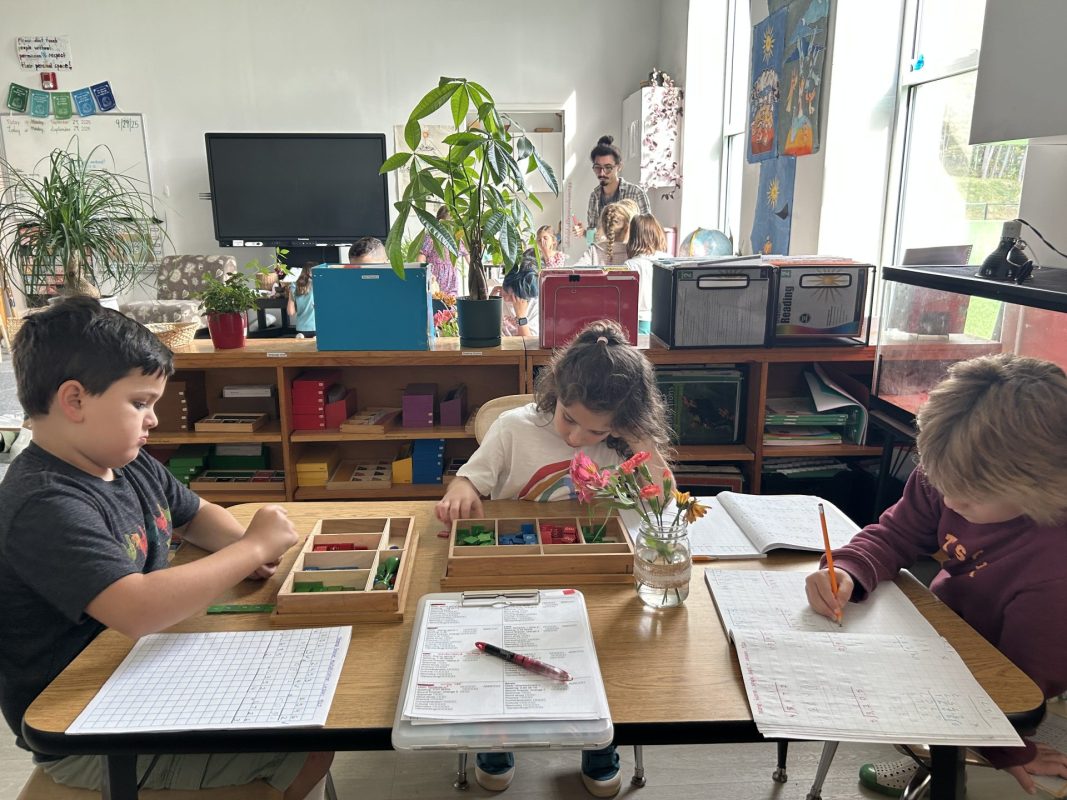
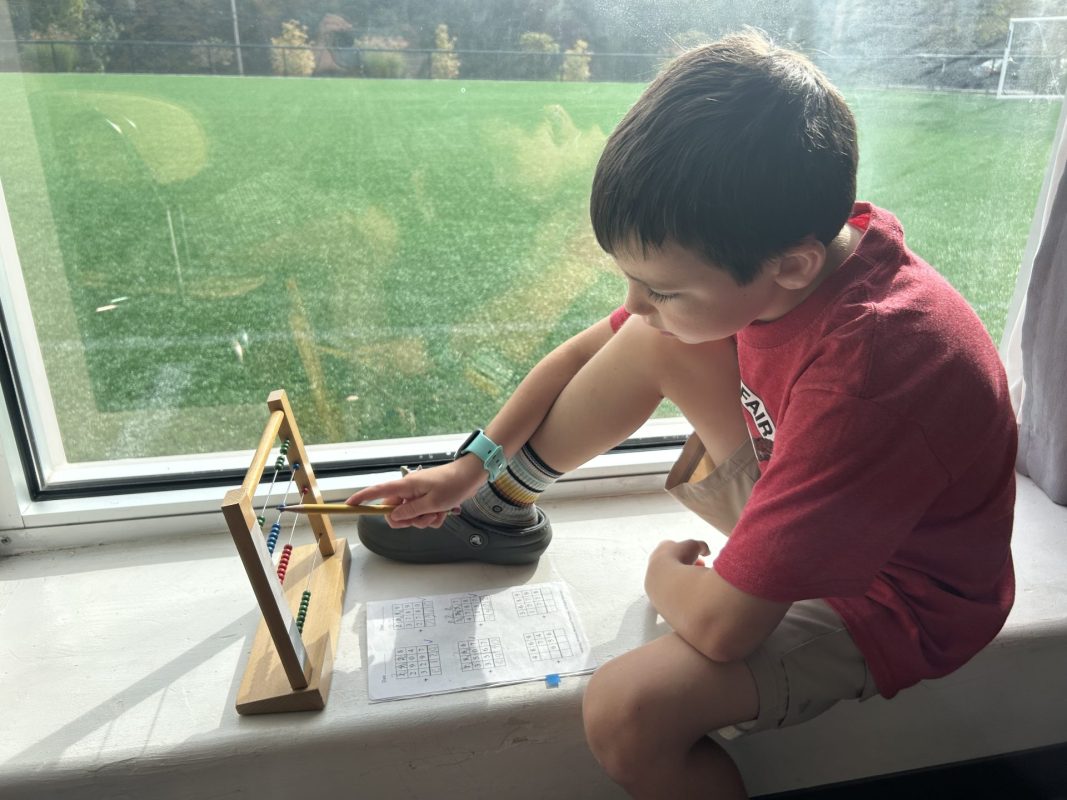
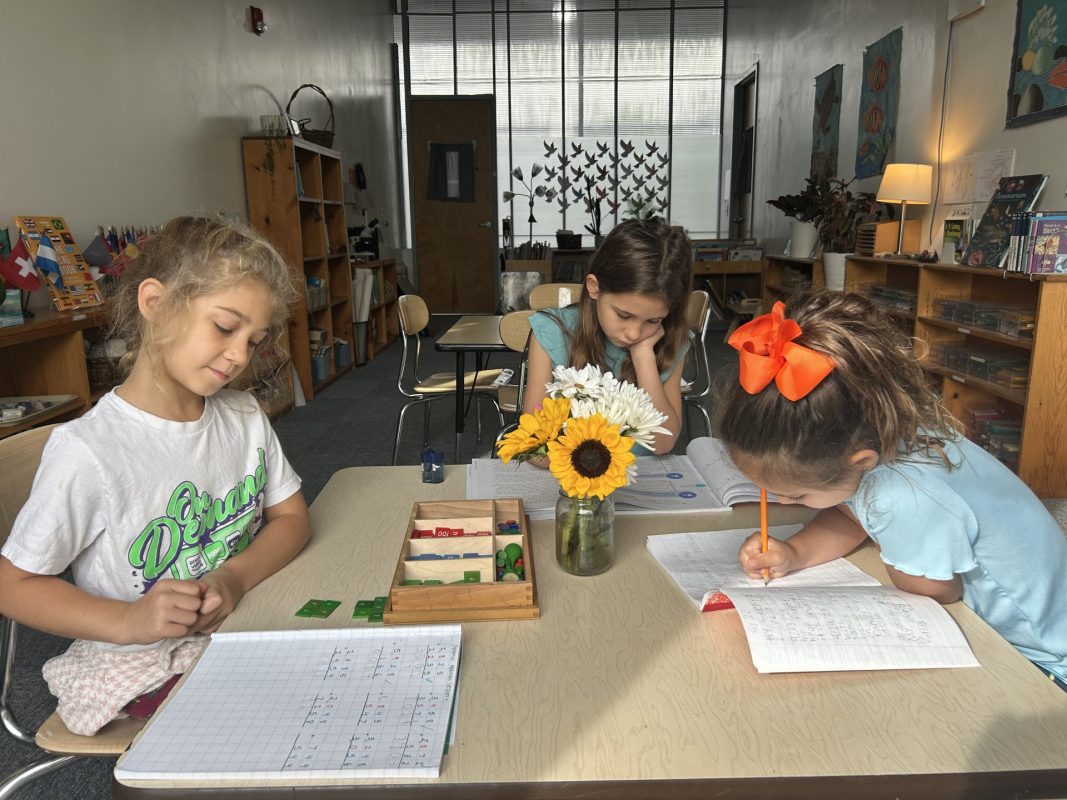
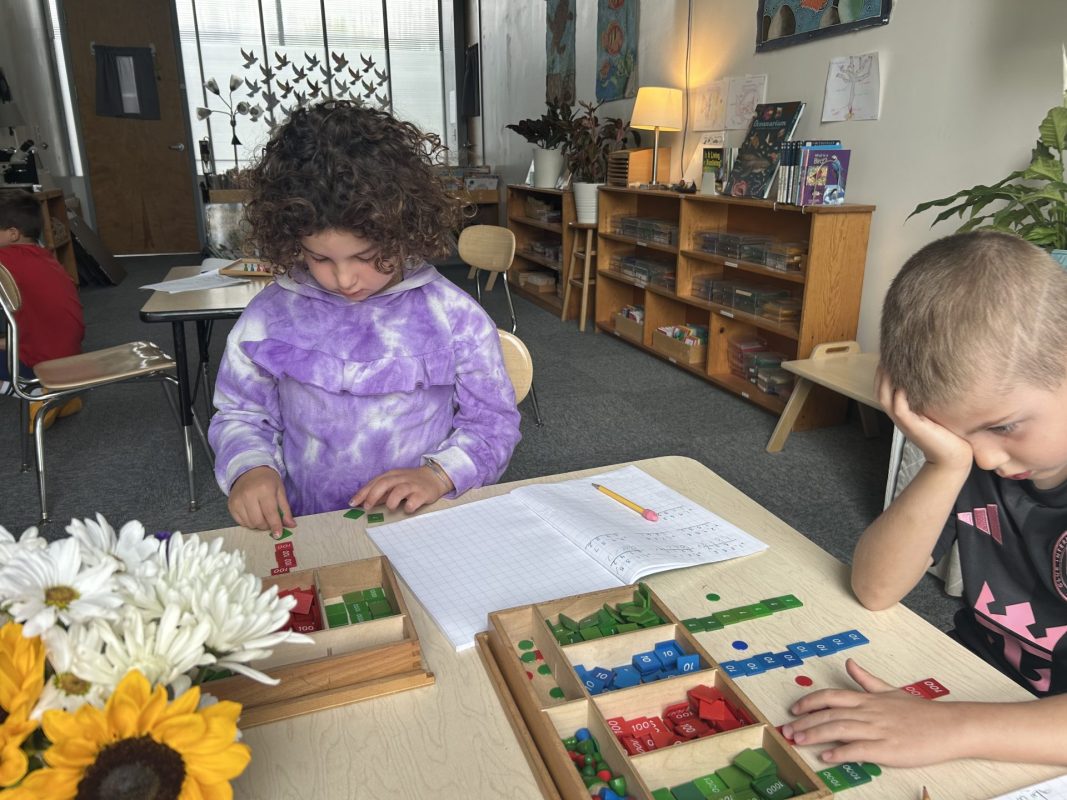
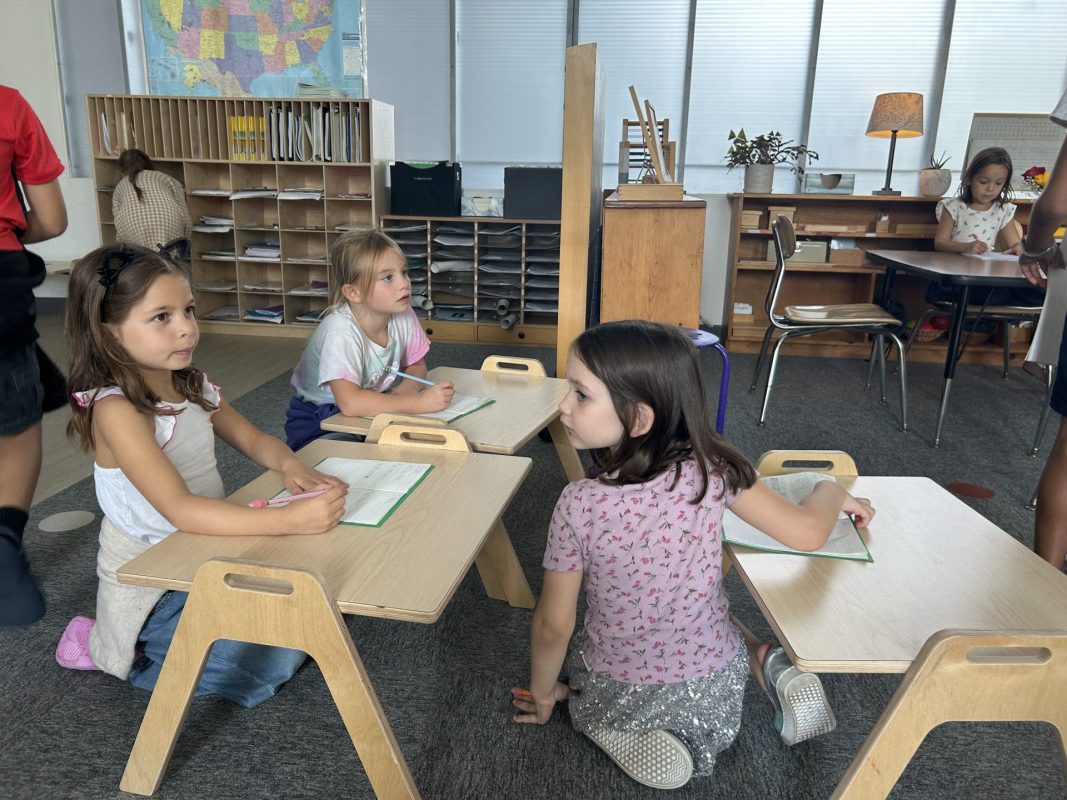
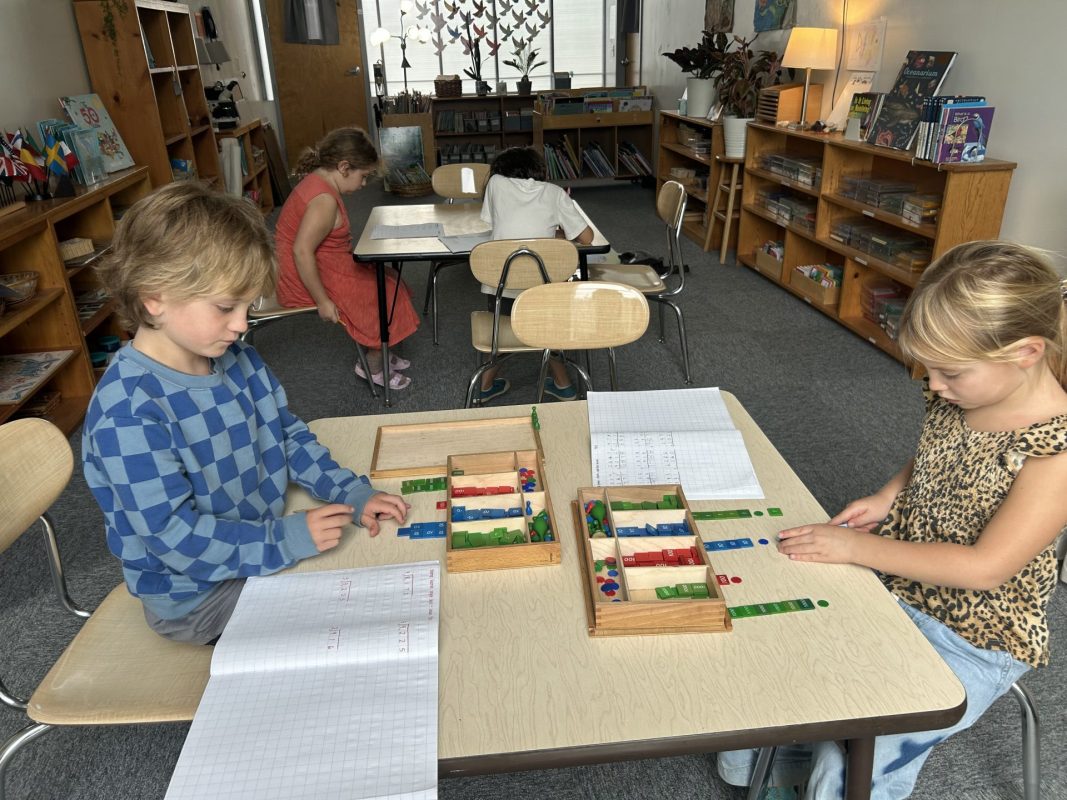
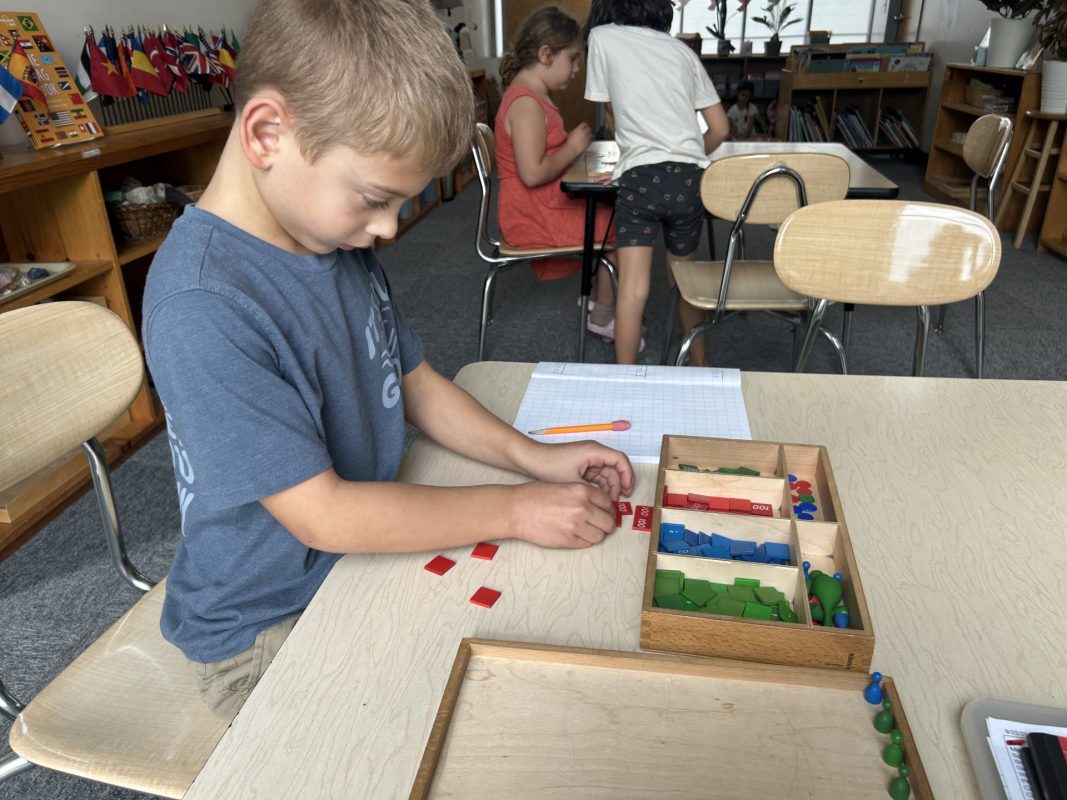
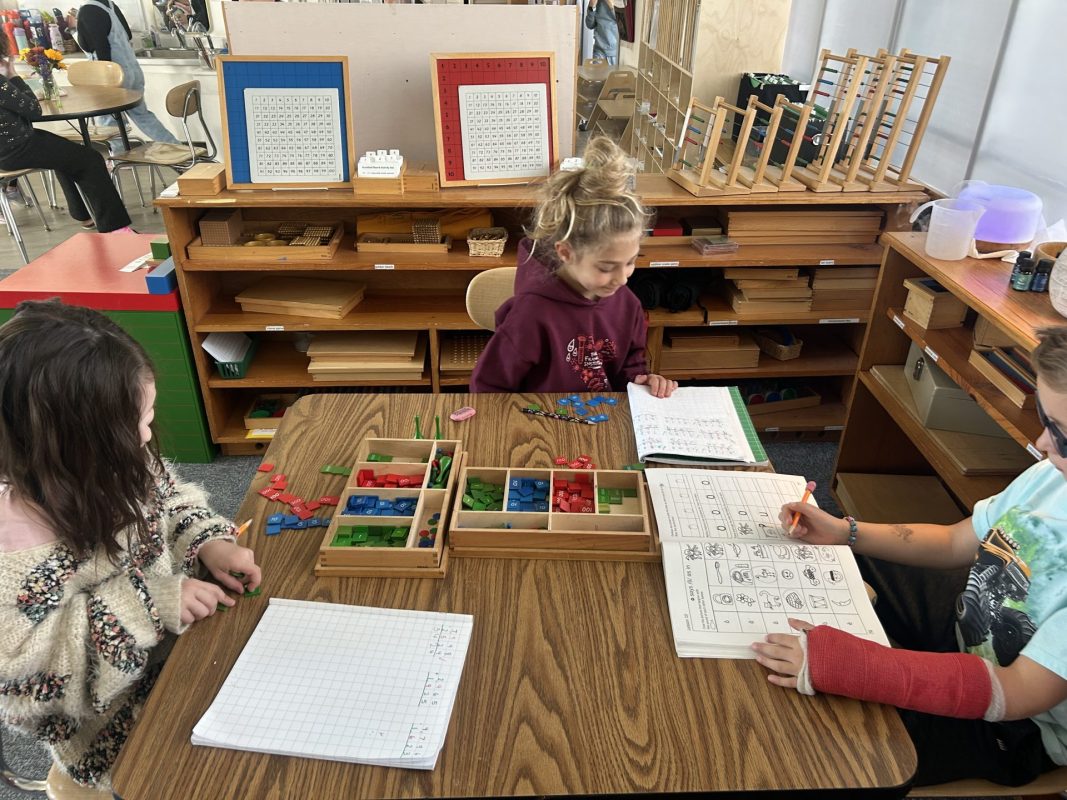
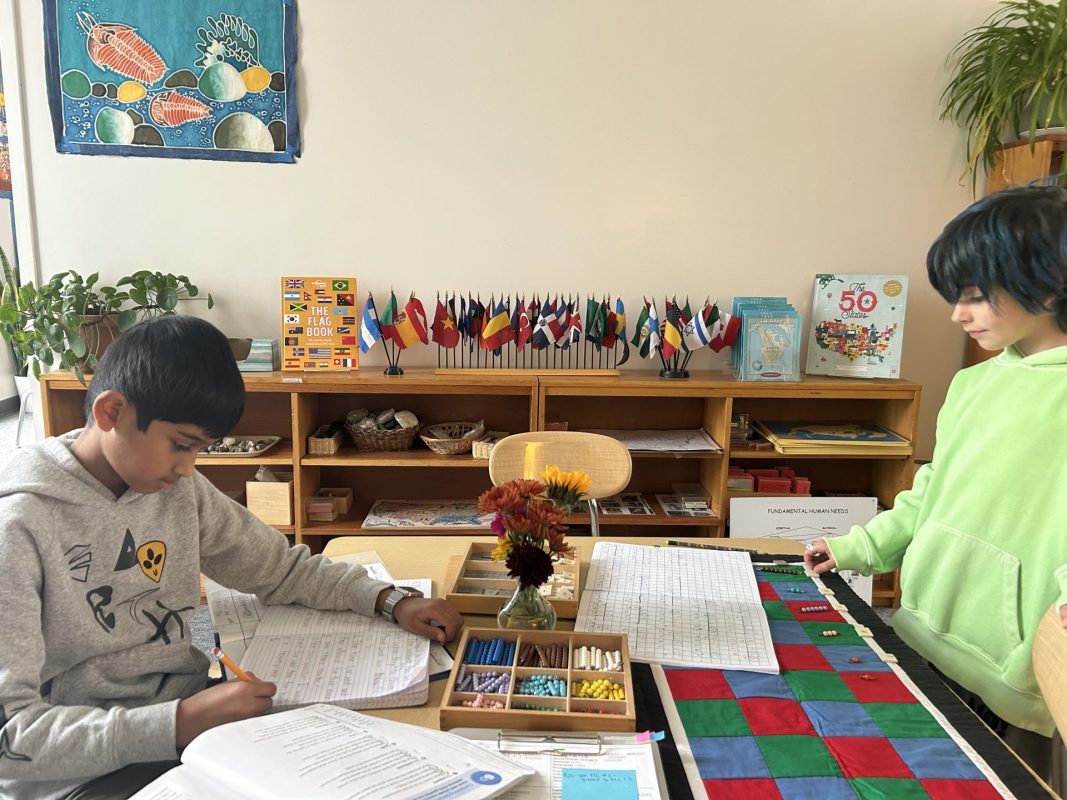
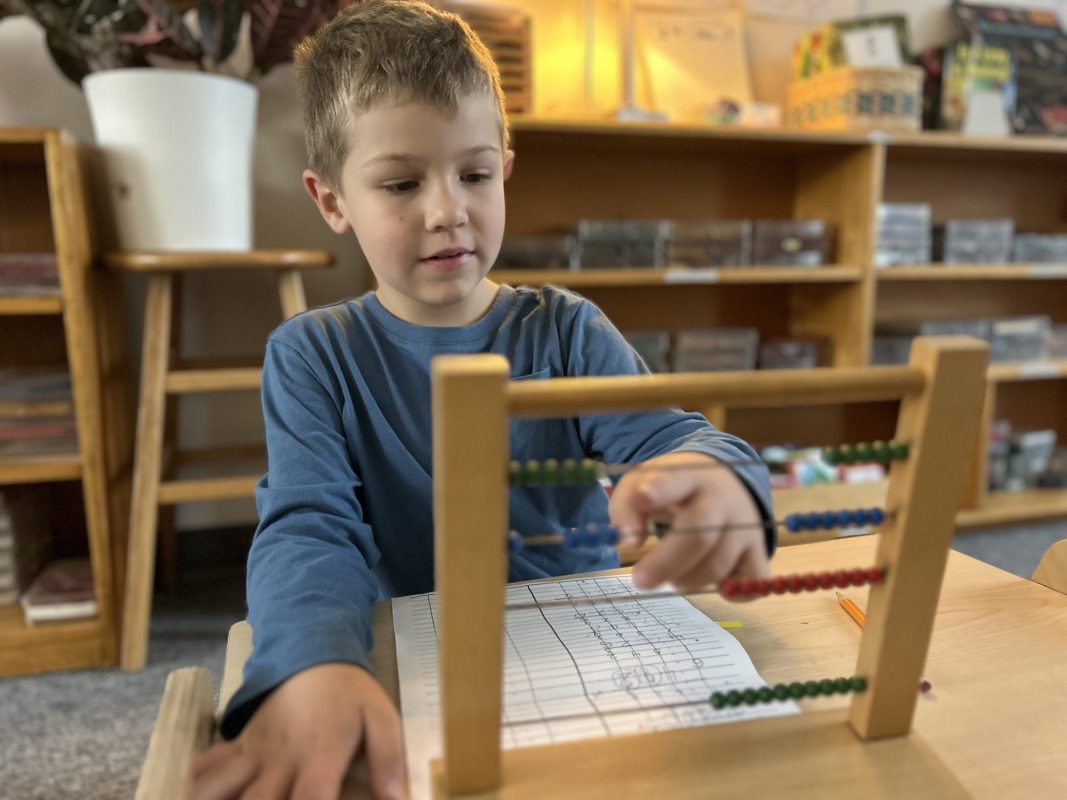
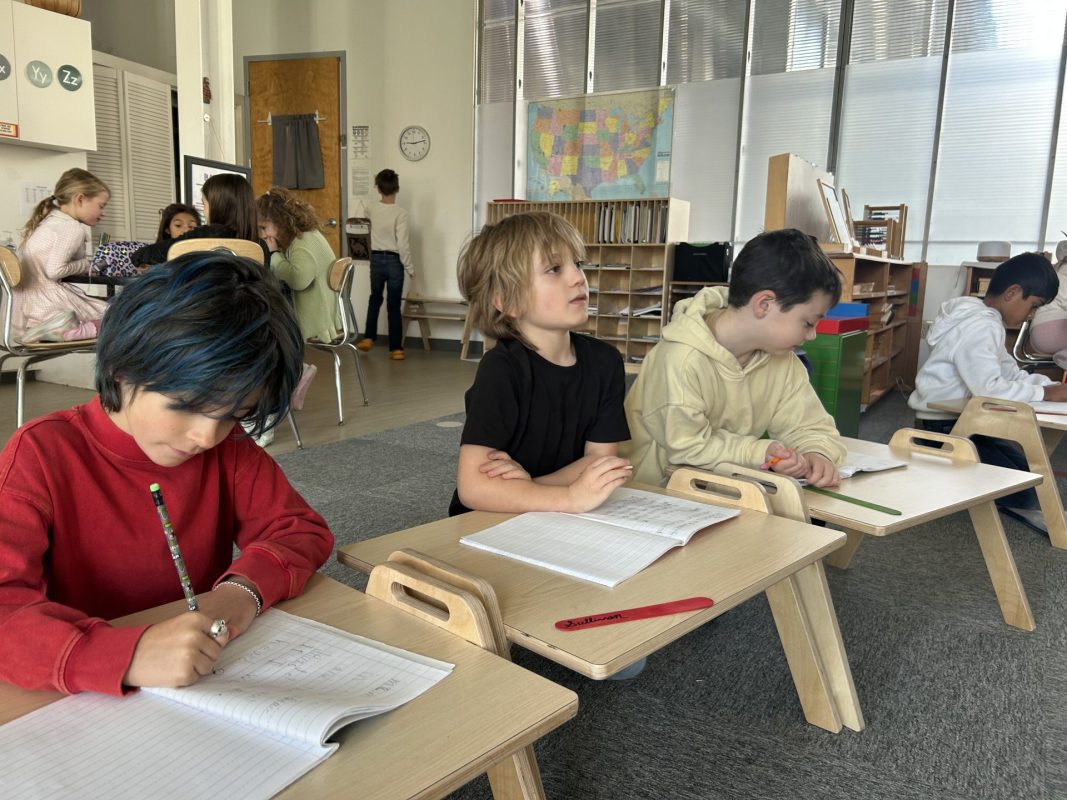
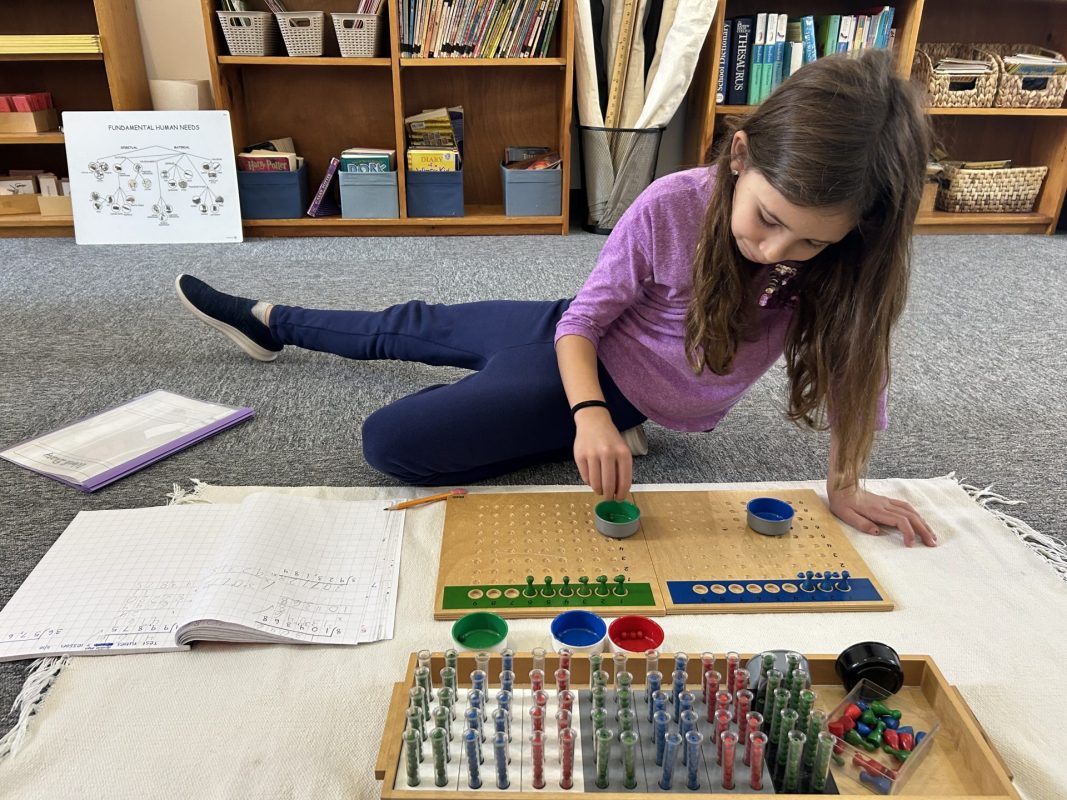
Math in a Montessori lower elementary classroom is a beautiful blend of hands-on exploration and deep understanding. Instead of relying on worksheets and memorization, students use concrete materials that help them truly see and feel mathematical concepts before moving to abstraction.

At this age, children are naturally curious about how the world works, and math becomes a way for them to make sense of patterns, relationships, and quantities. The Montessori philosophy supports this by introducing math through materials that allow students to manipulate numbers and operations in a tangible way.

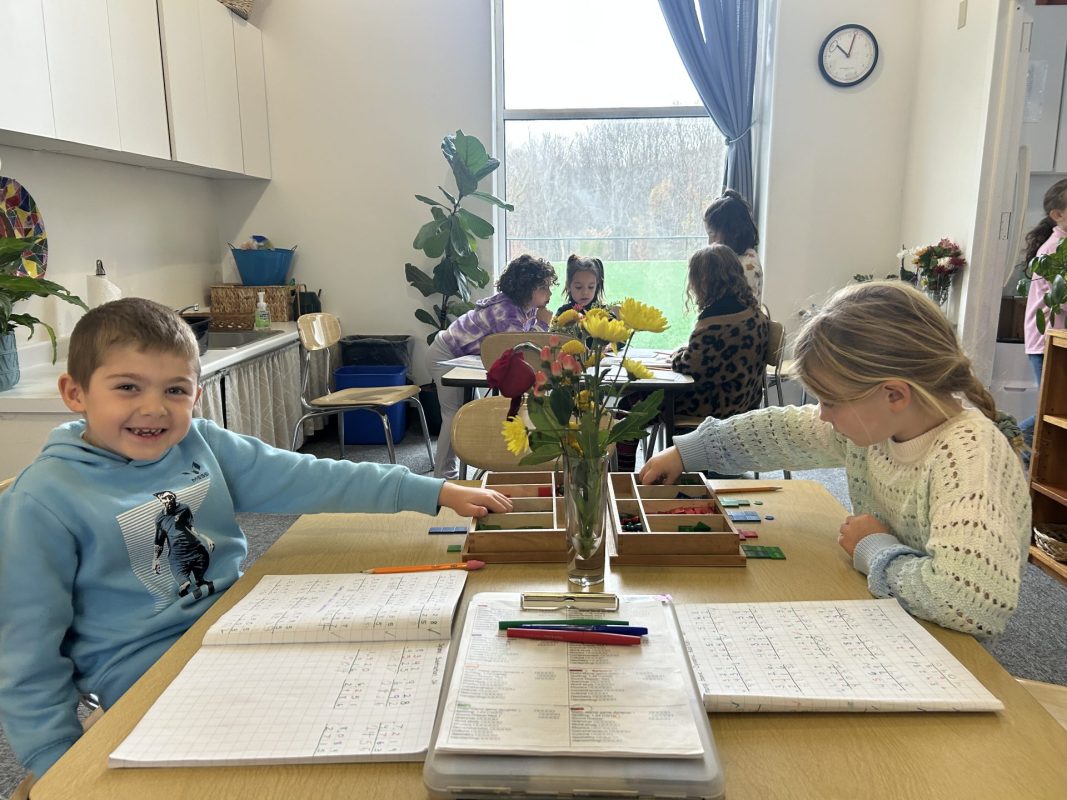
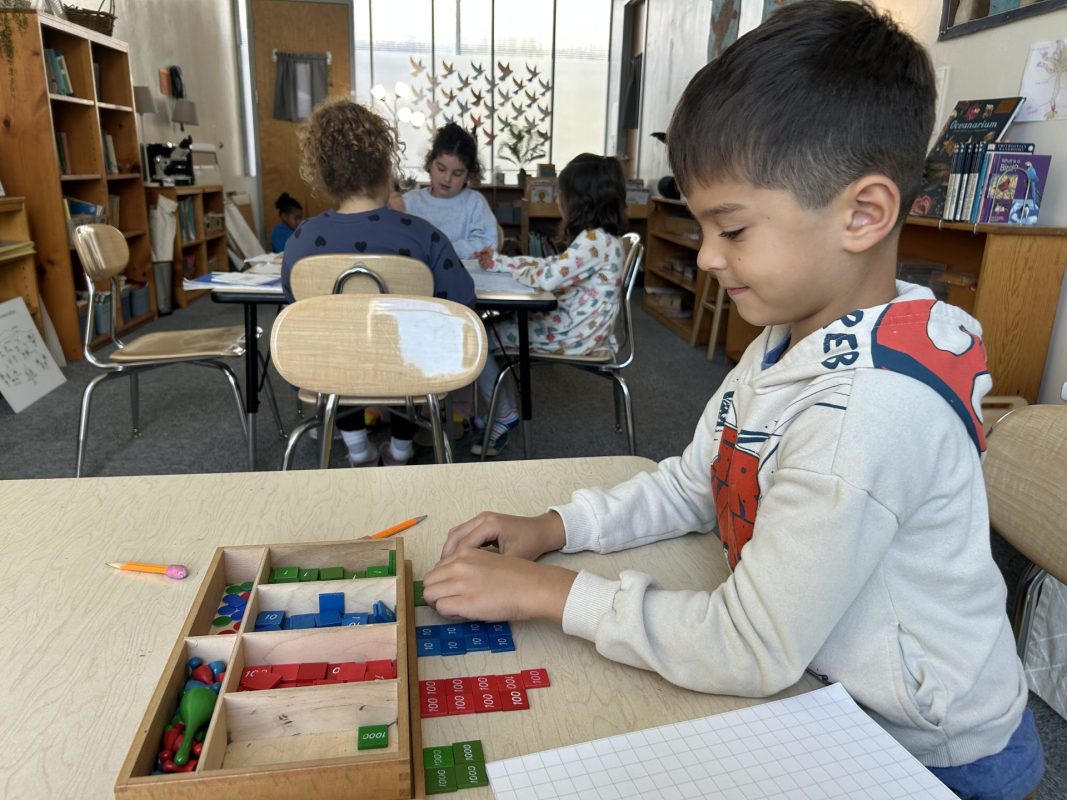
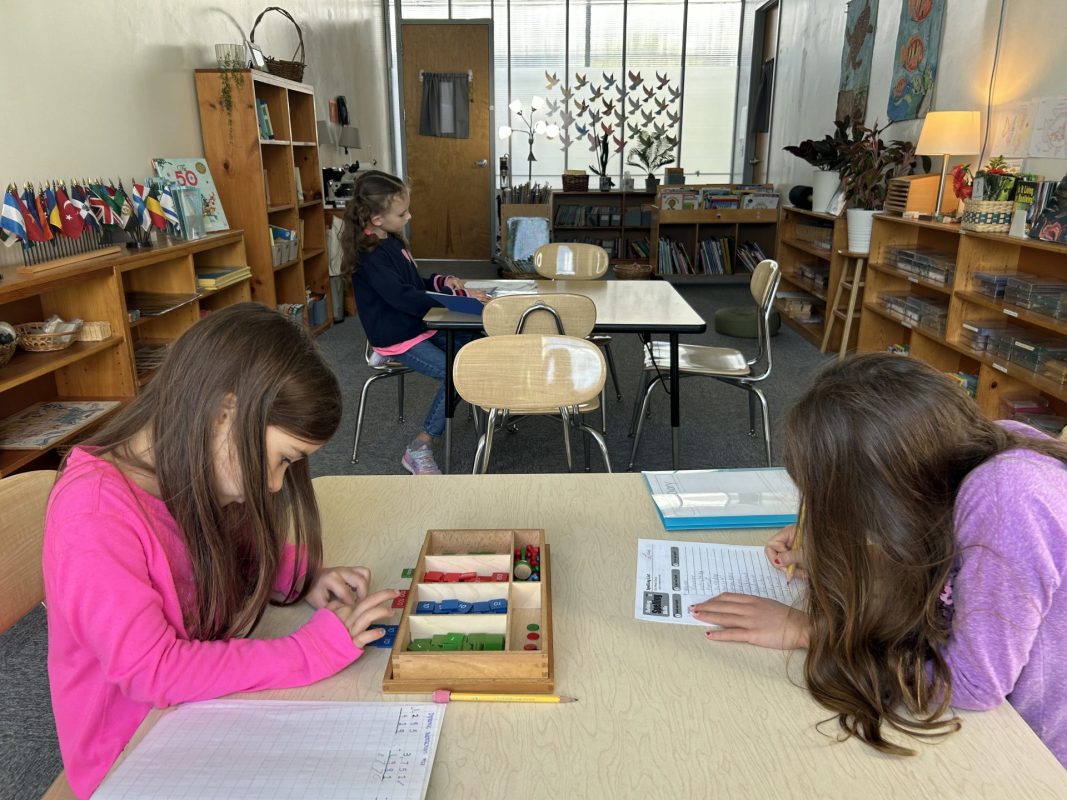
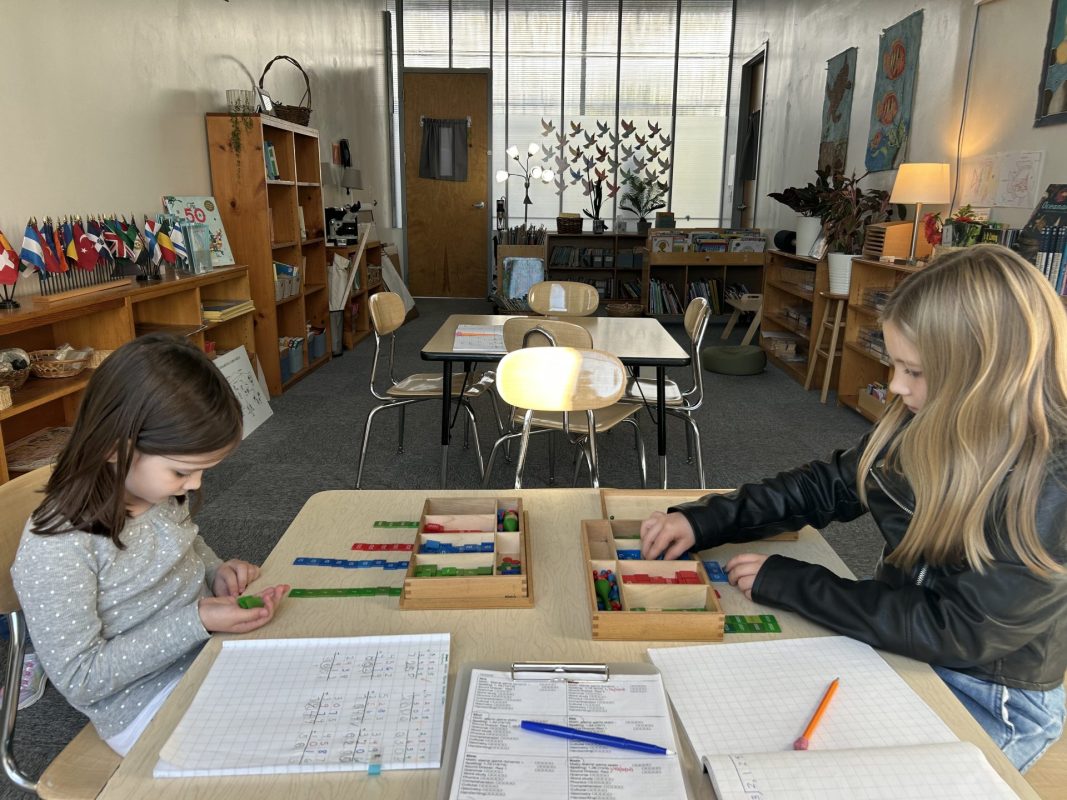
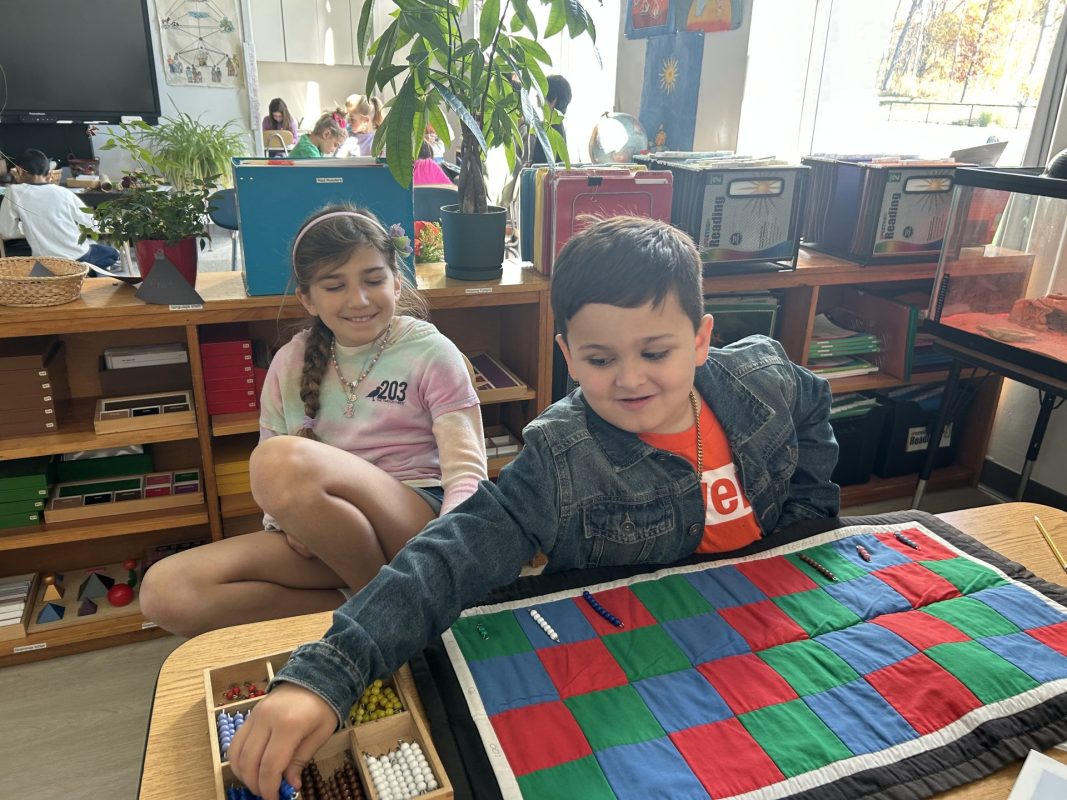
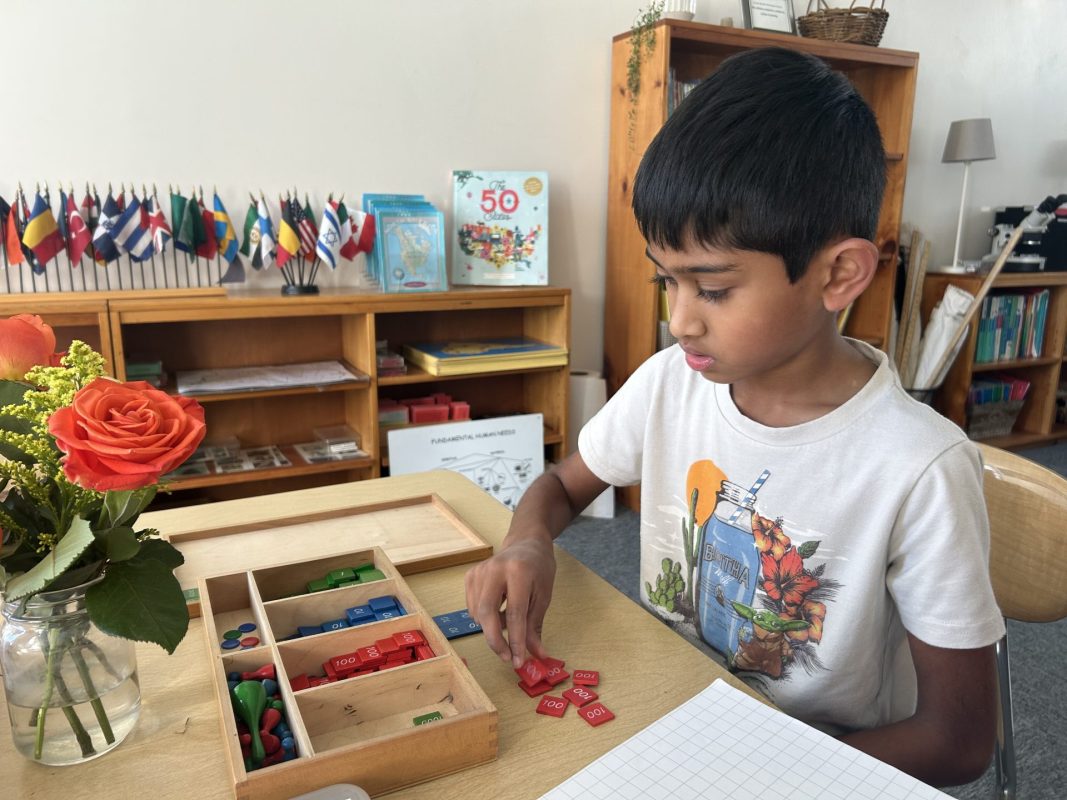
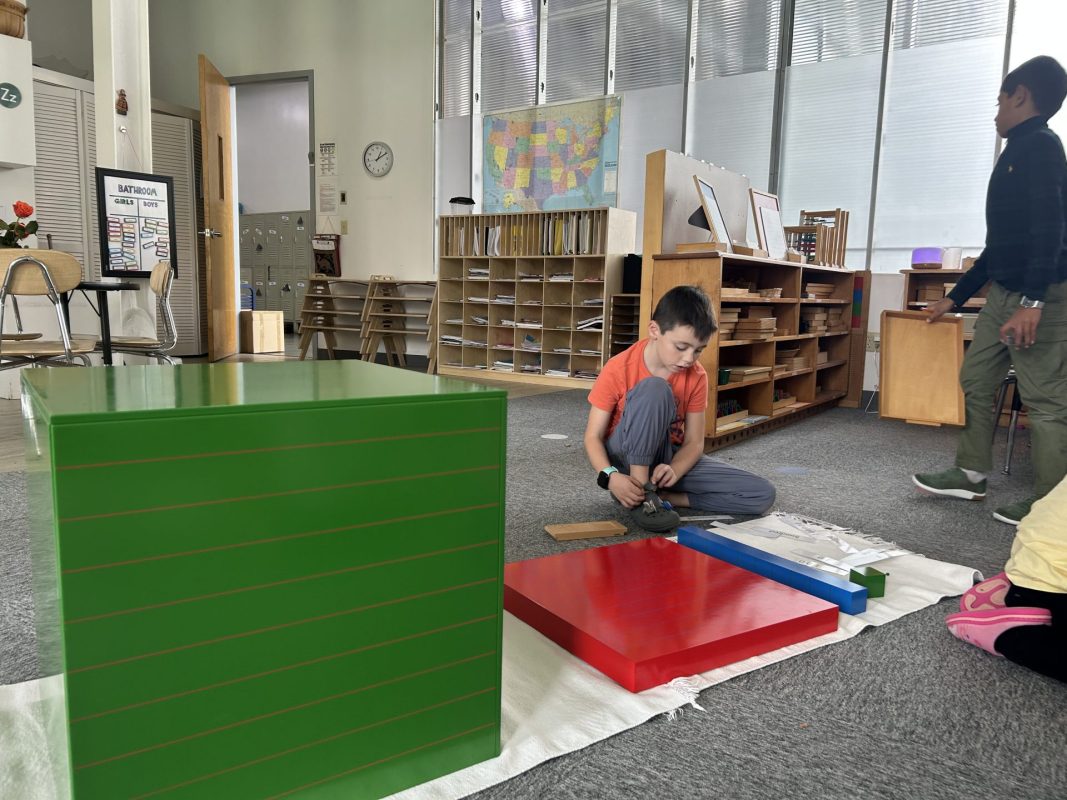
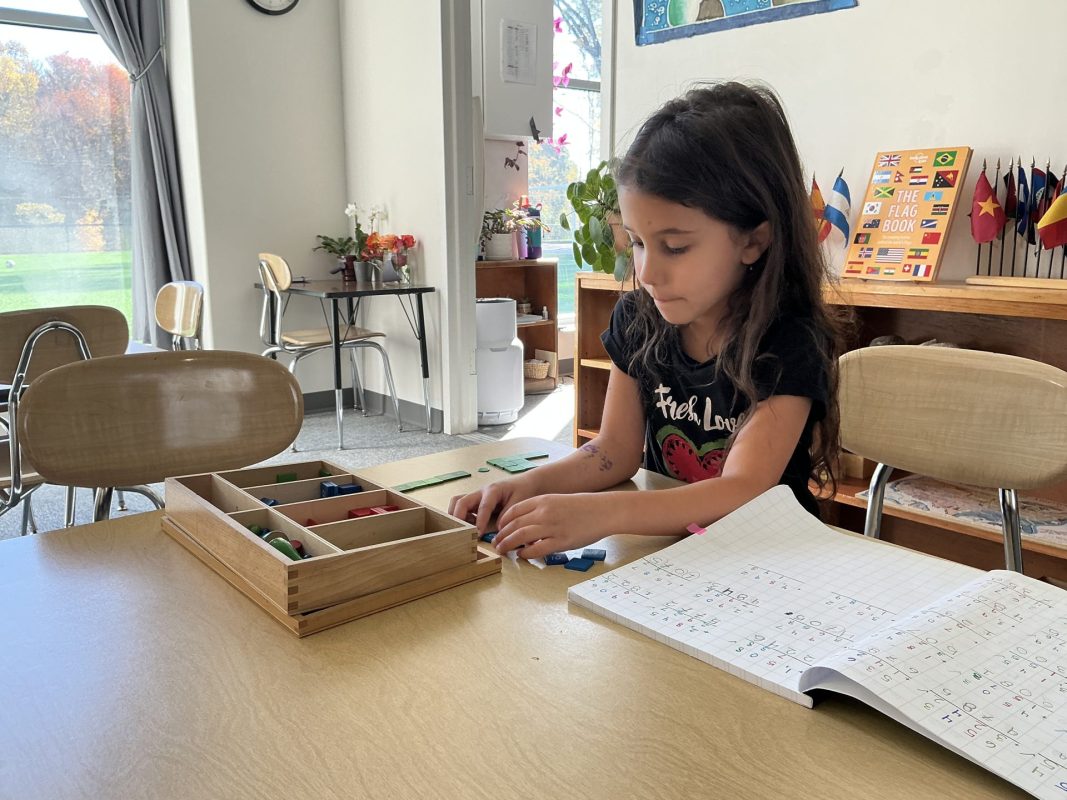
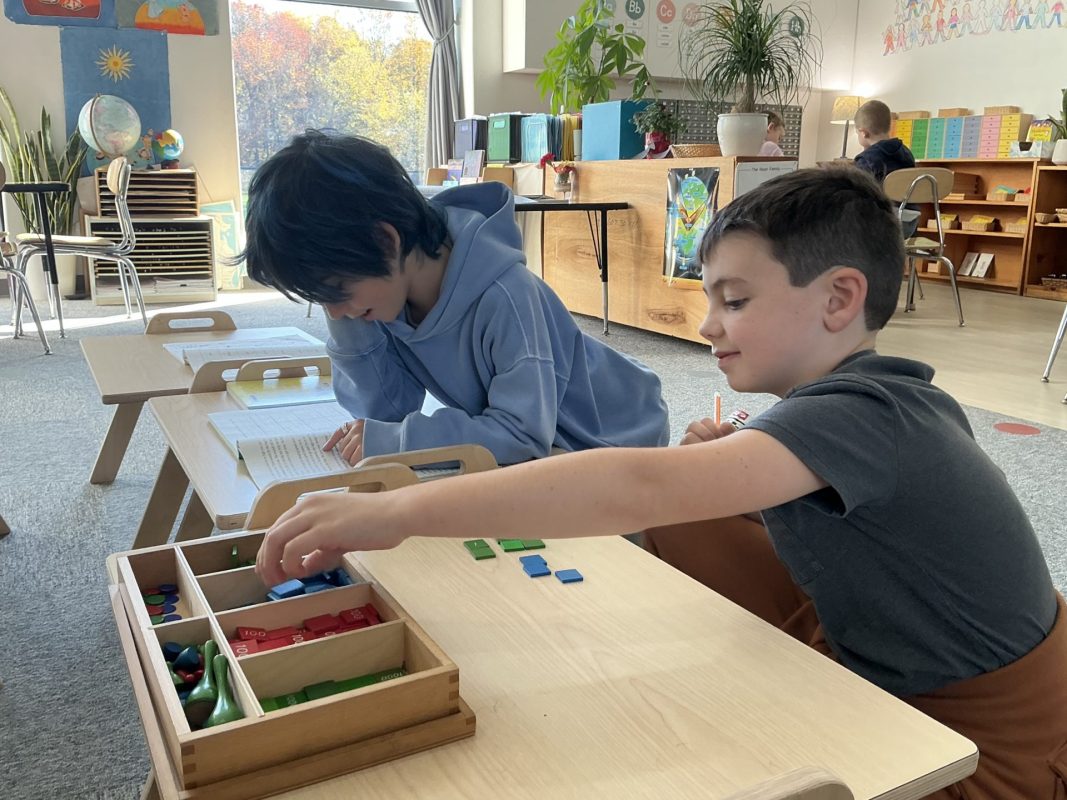
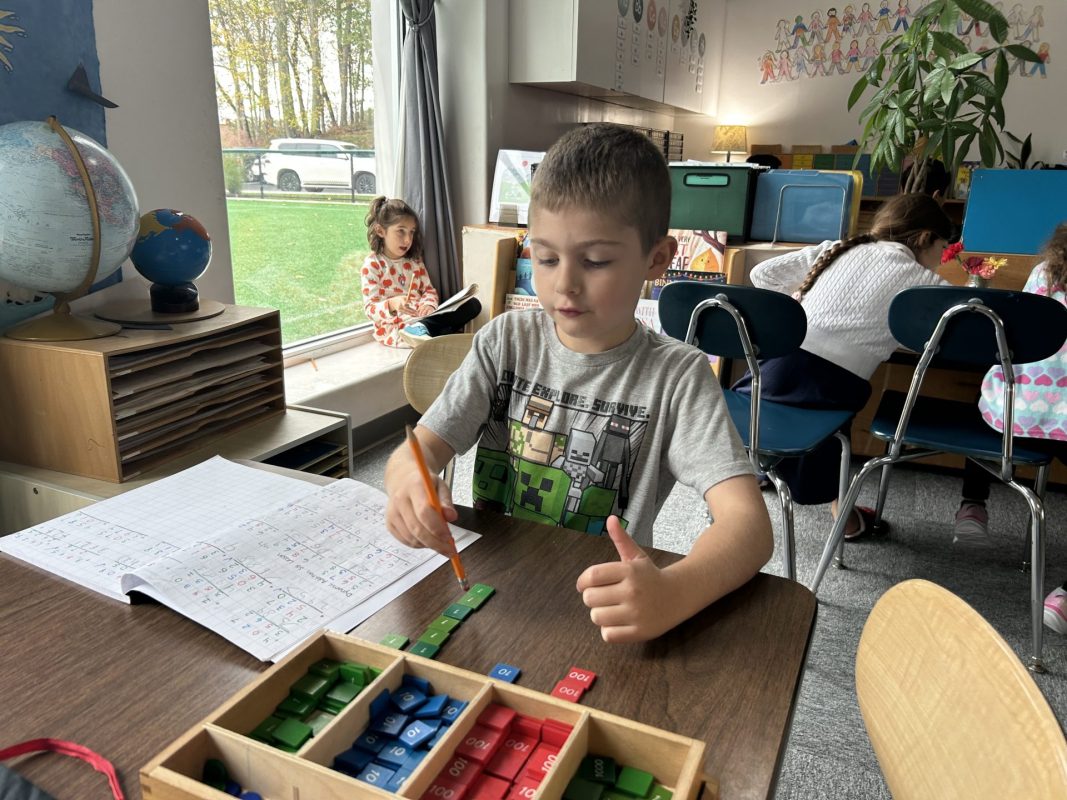
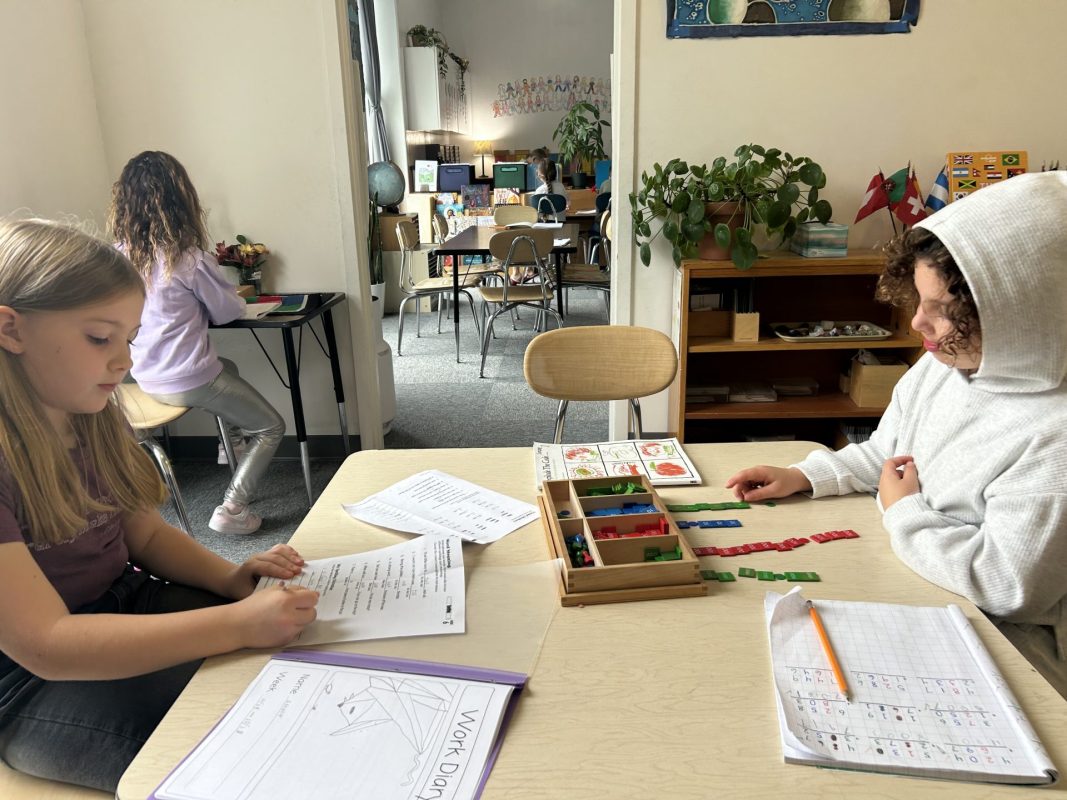
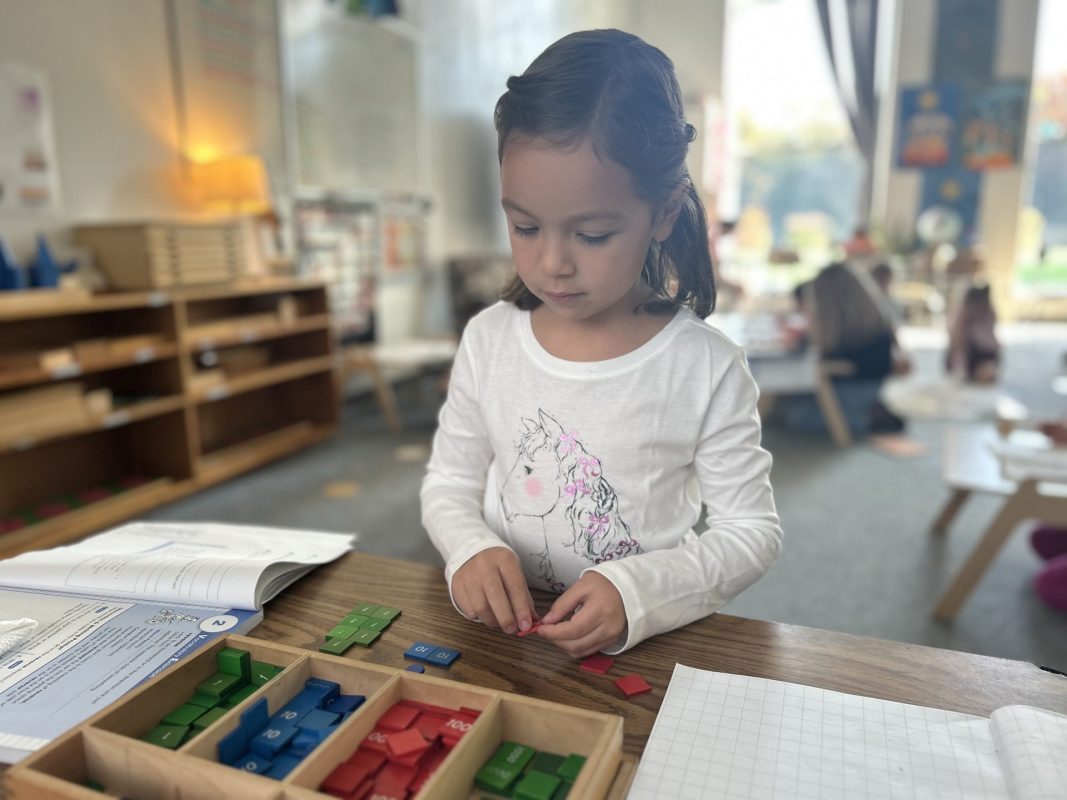
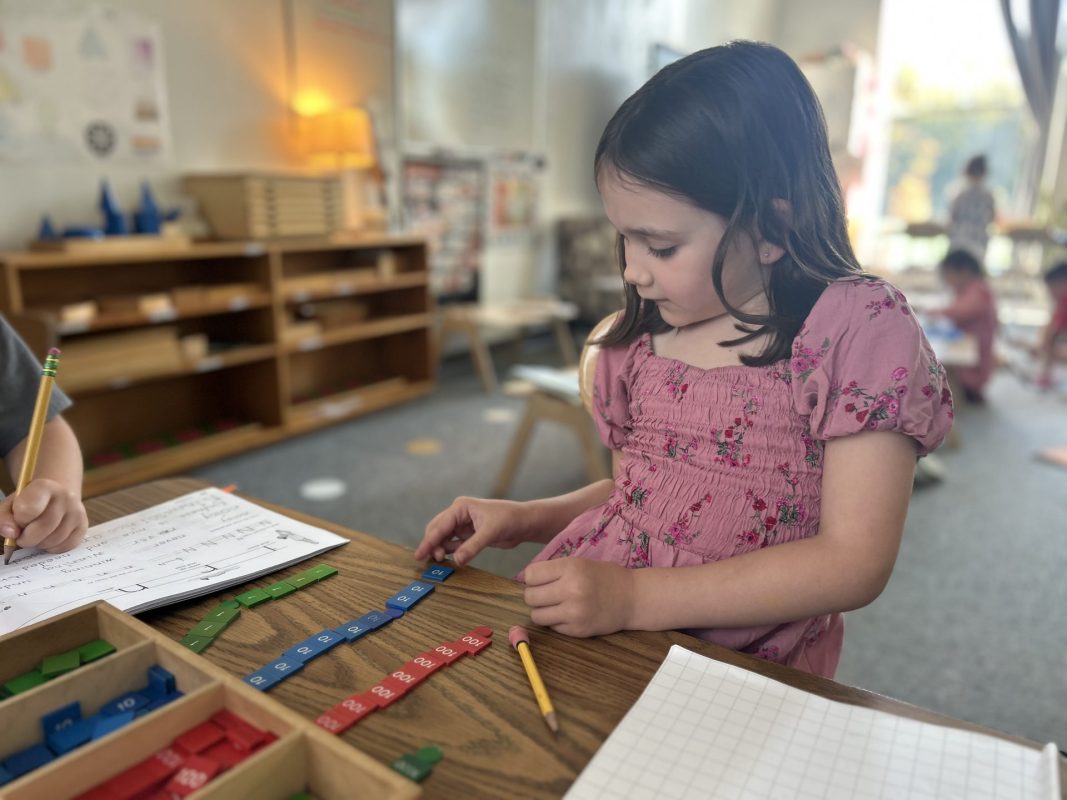
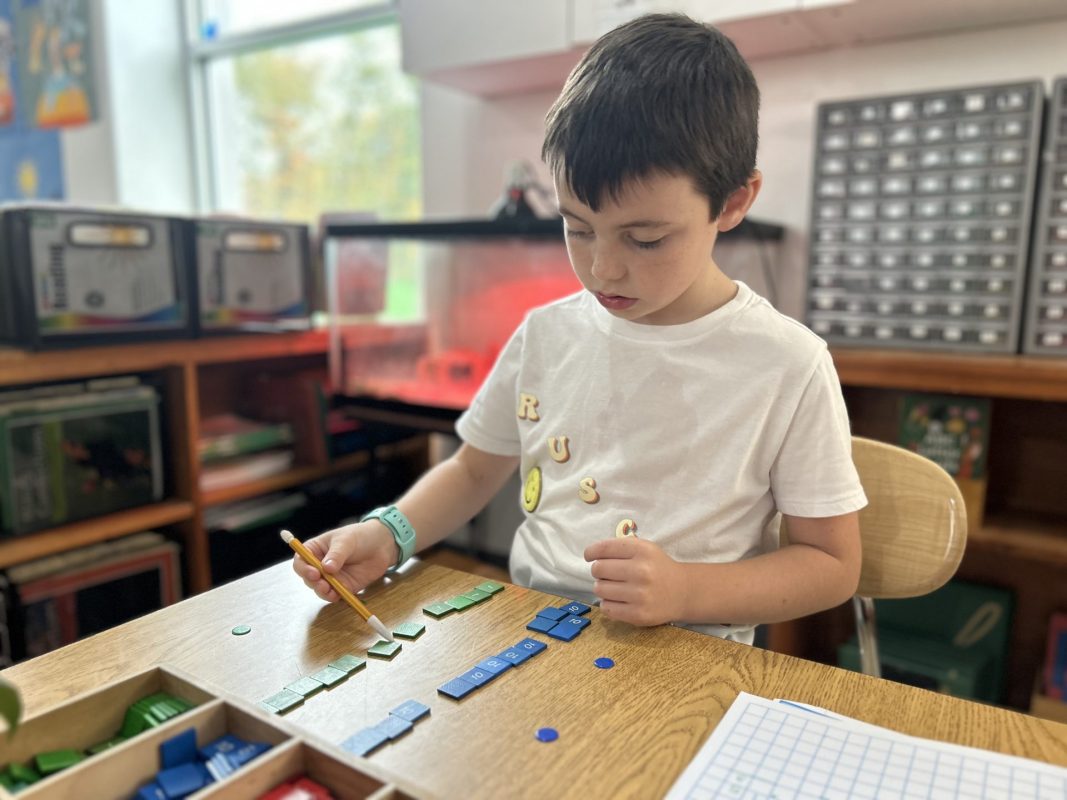
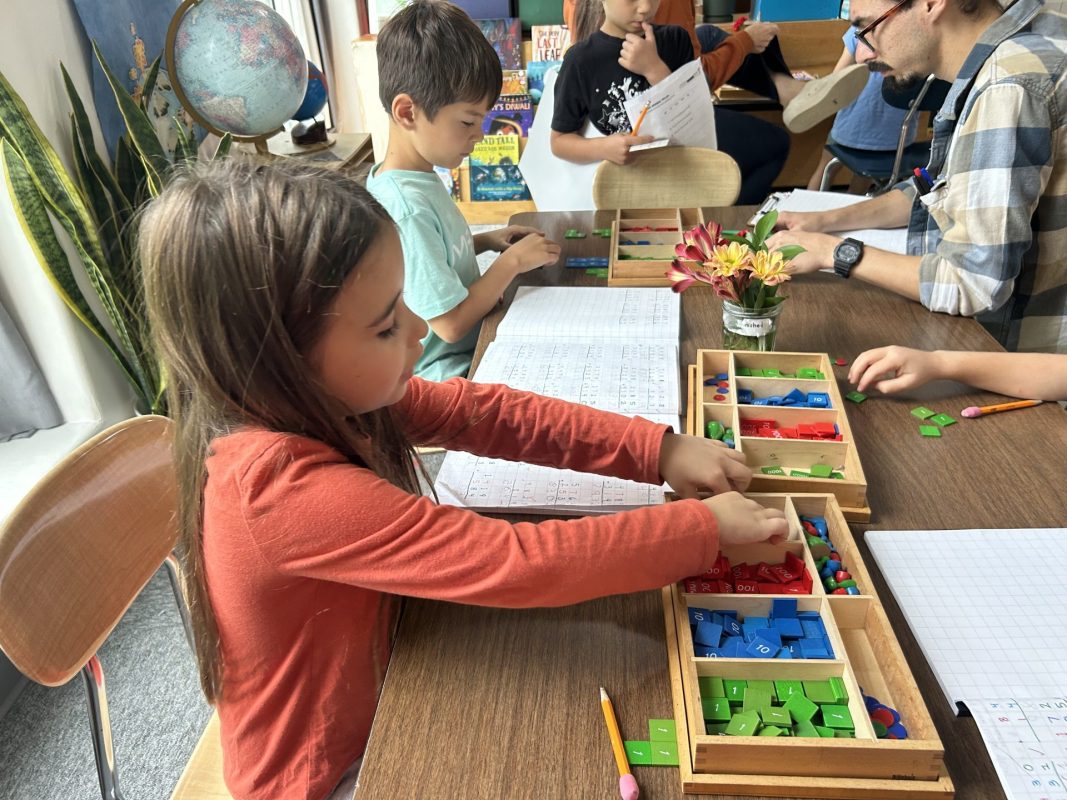
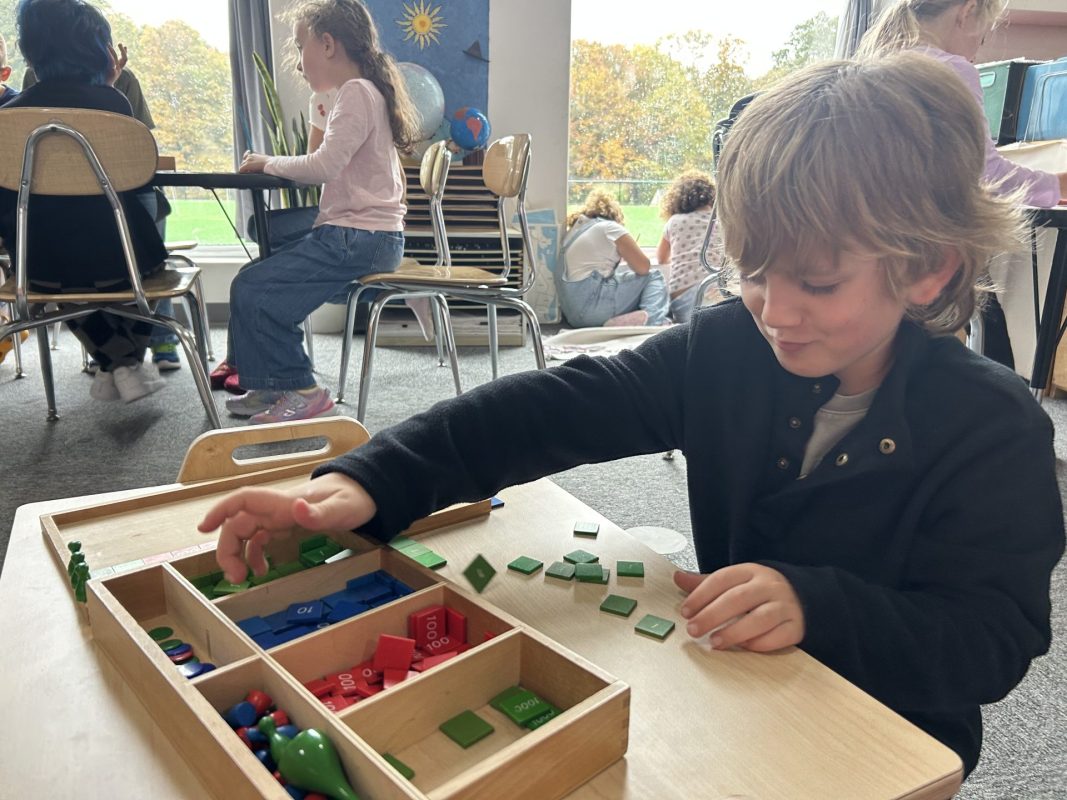
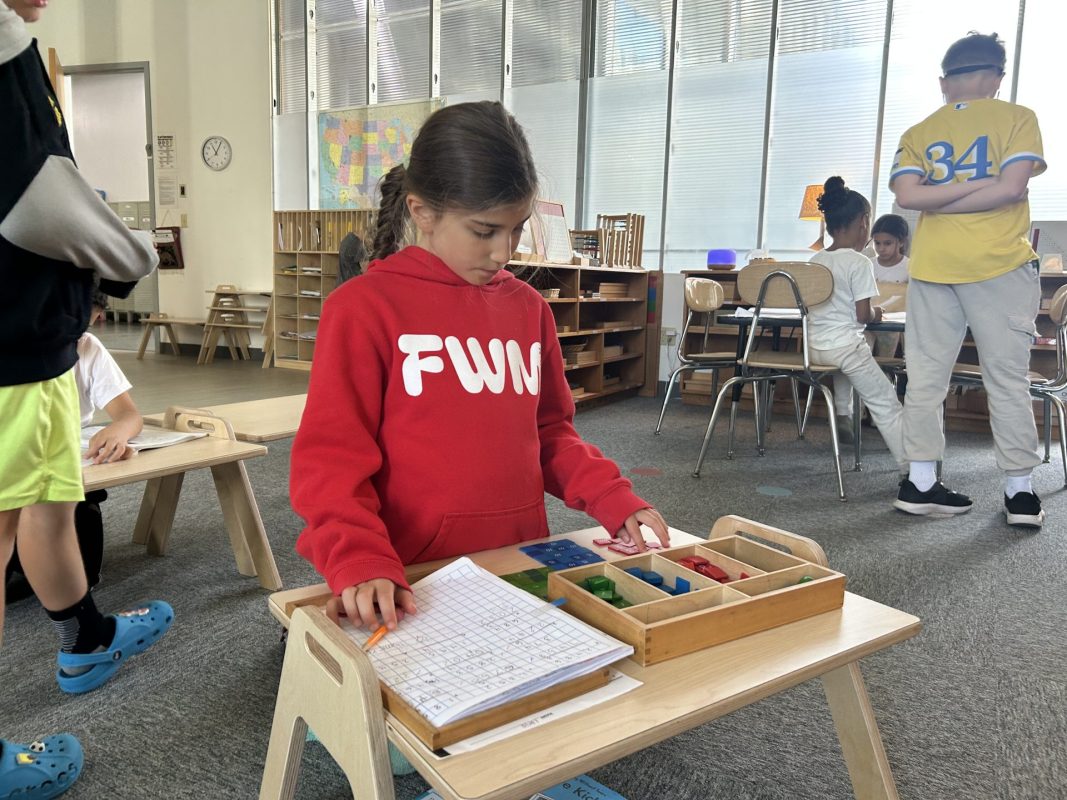
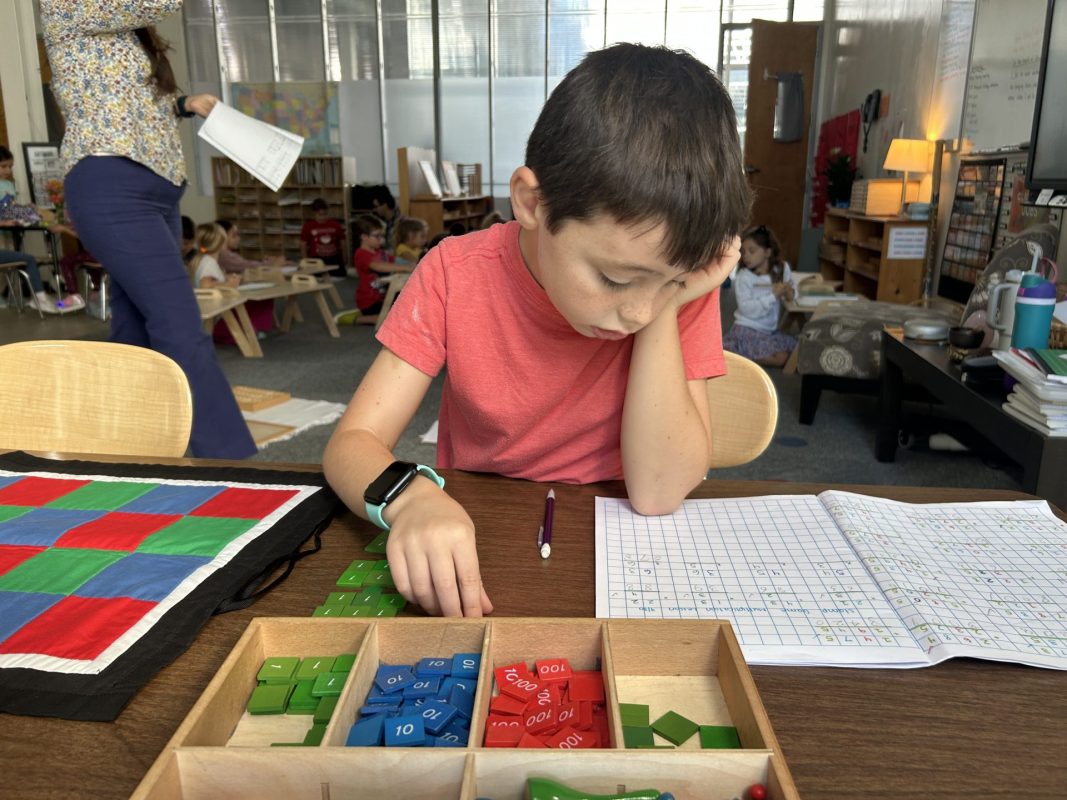
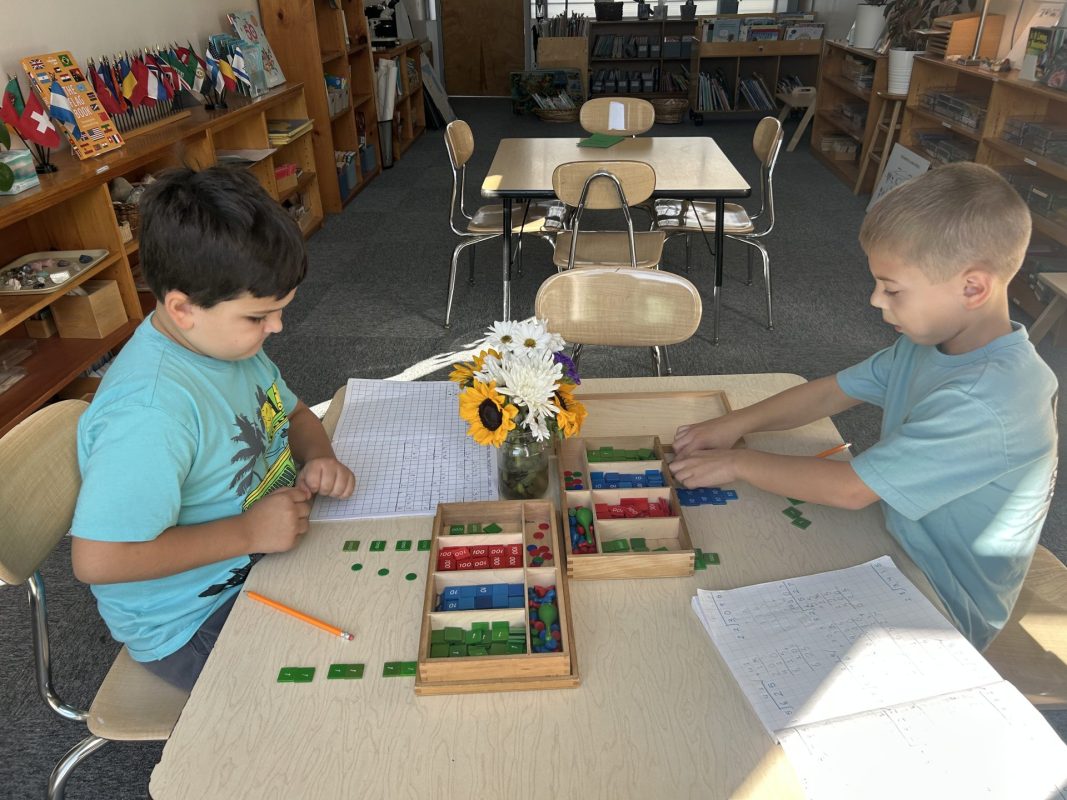
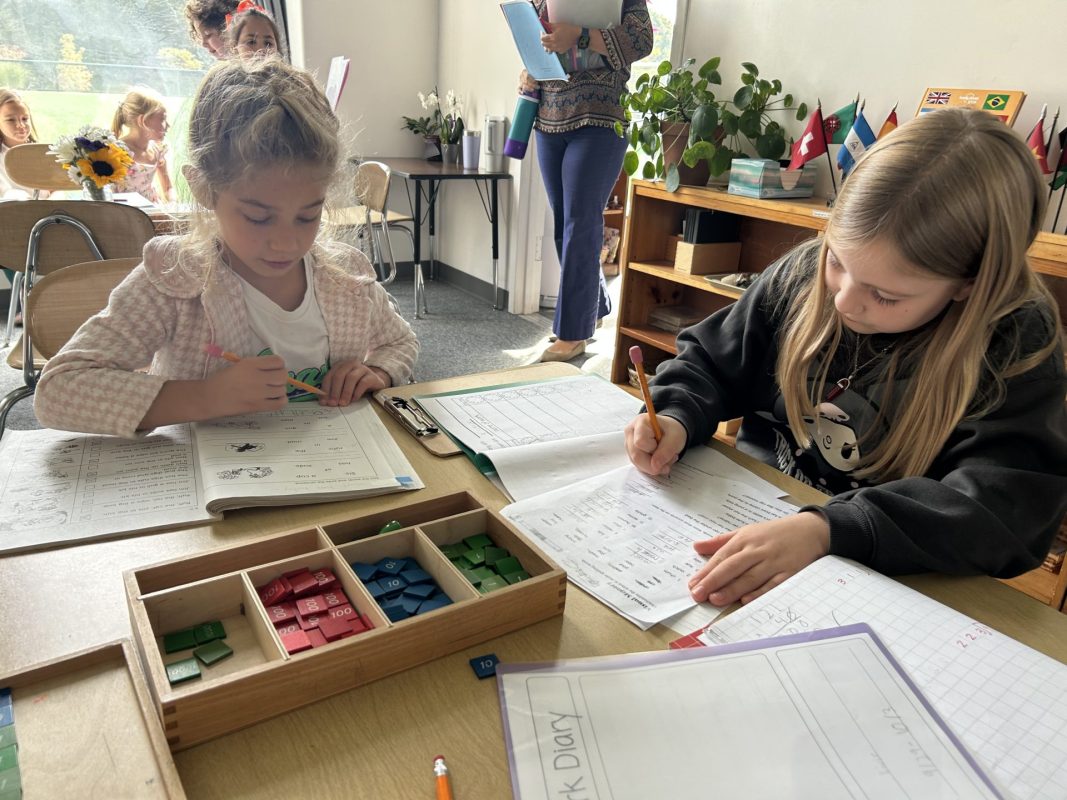
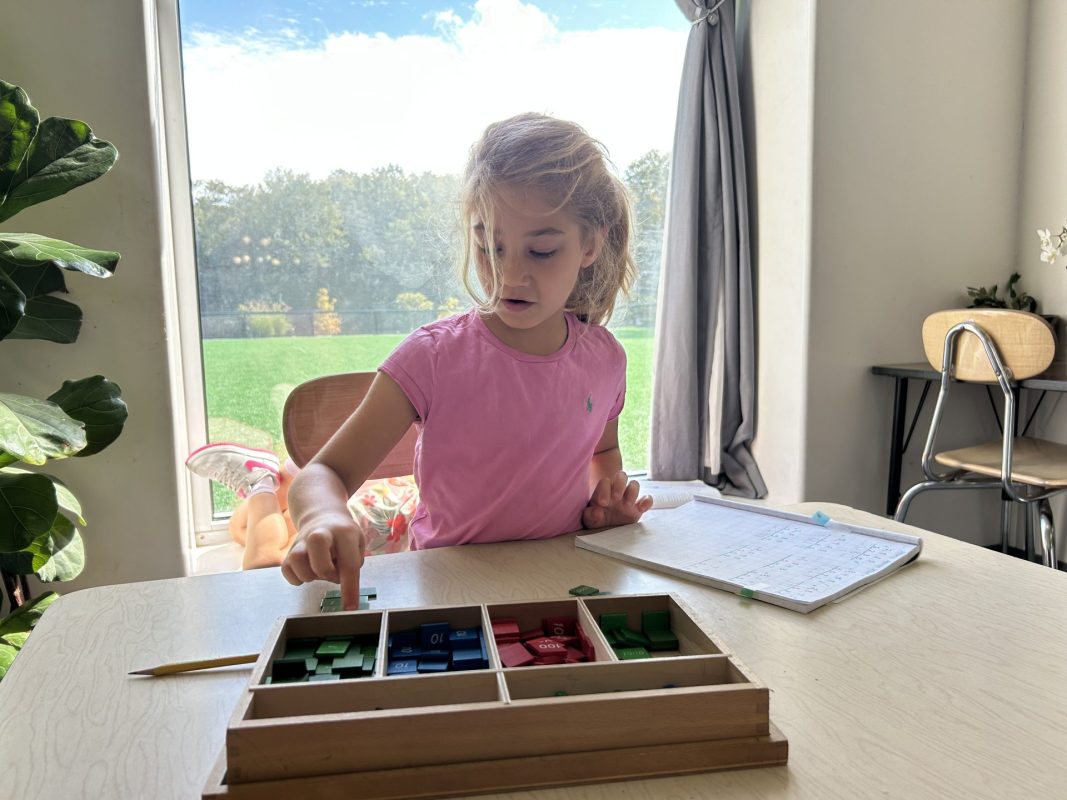
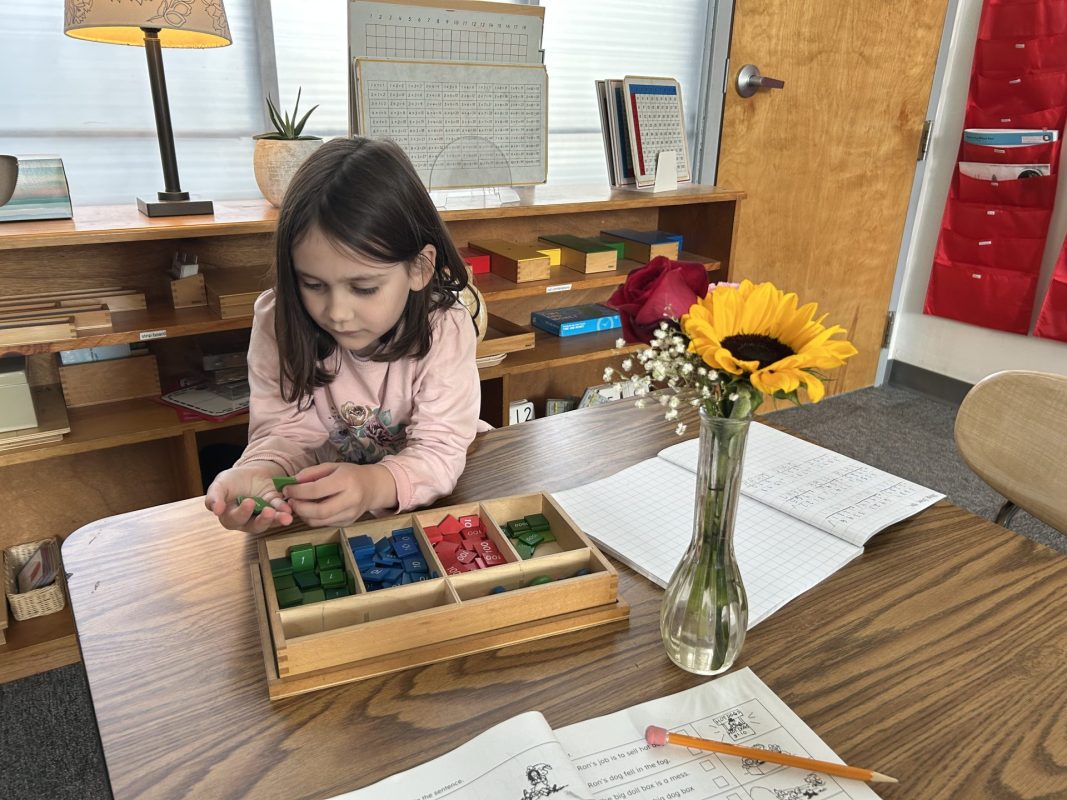
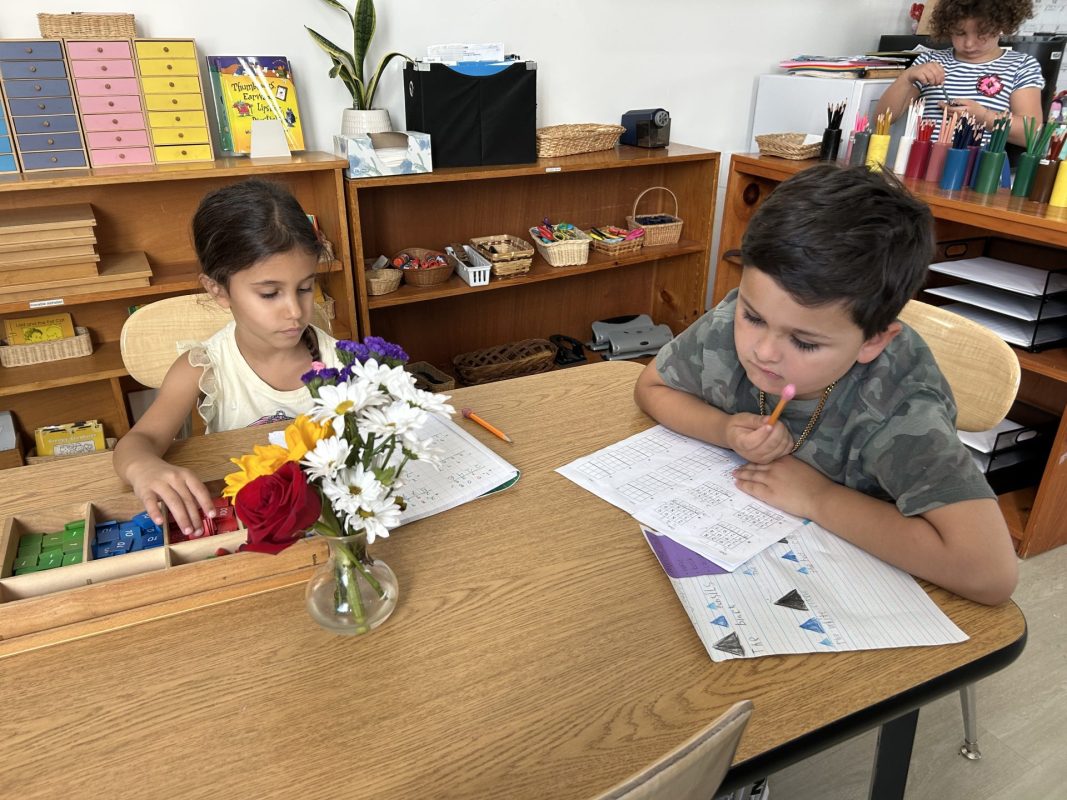
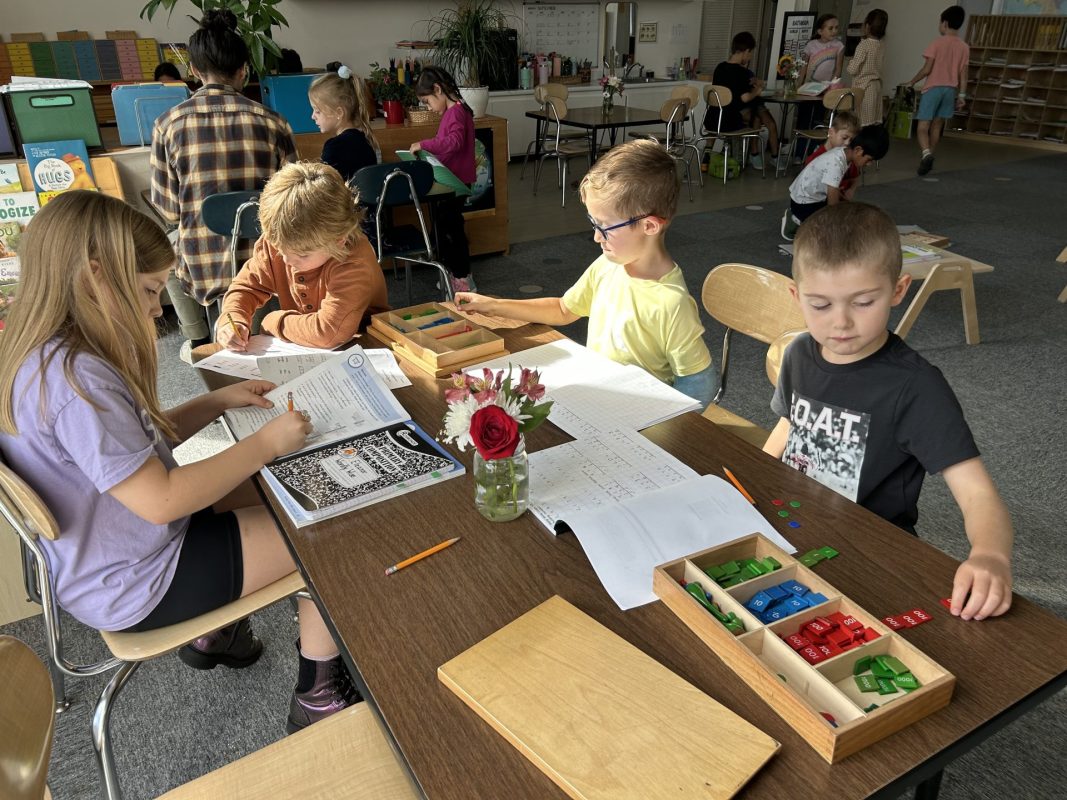
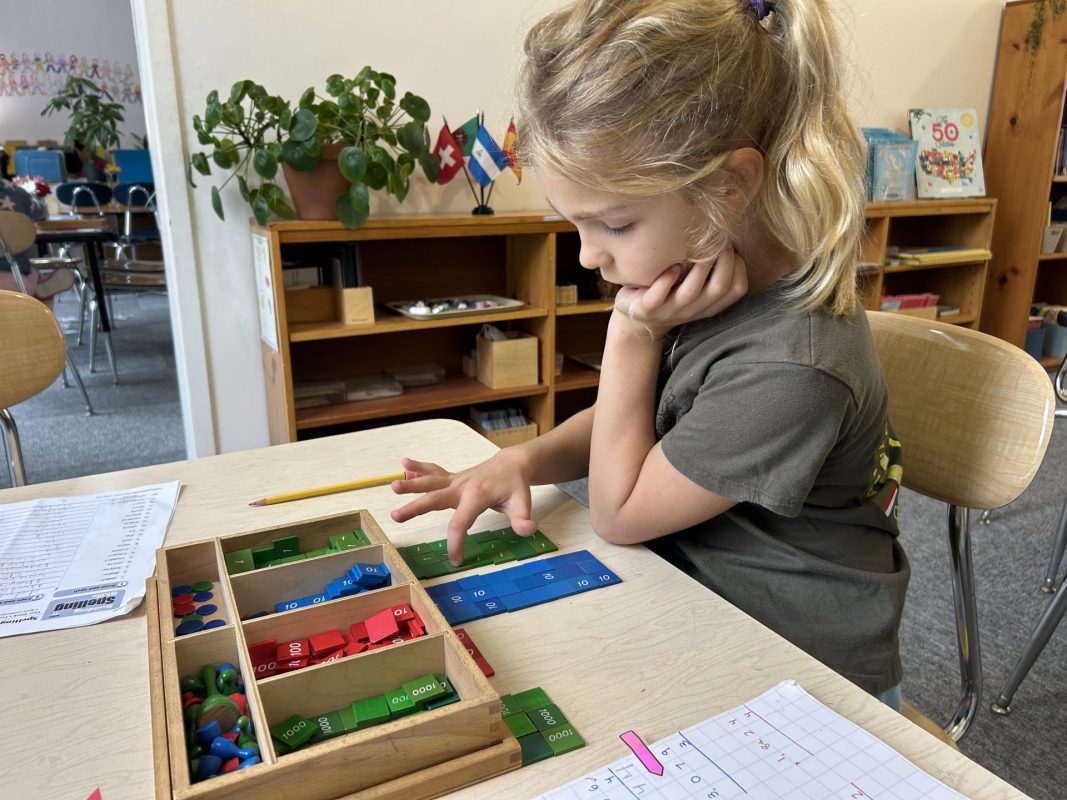
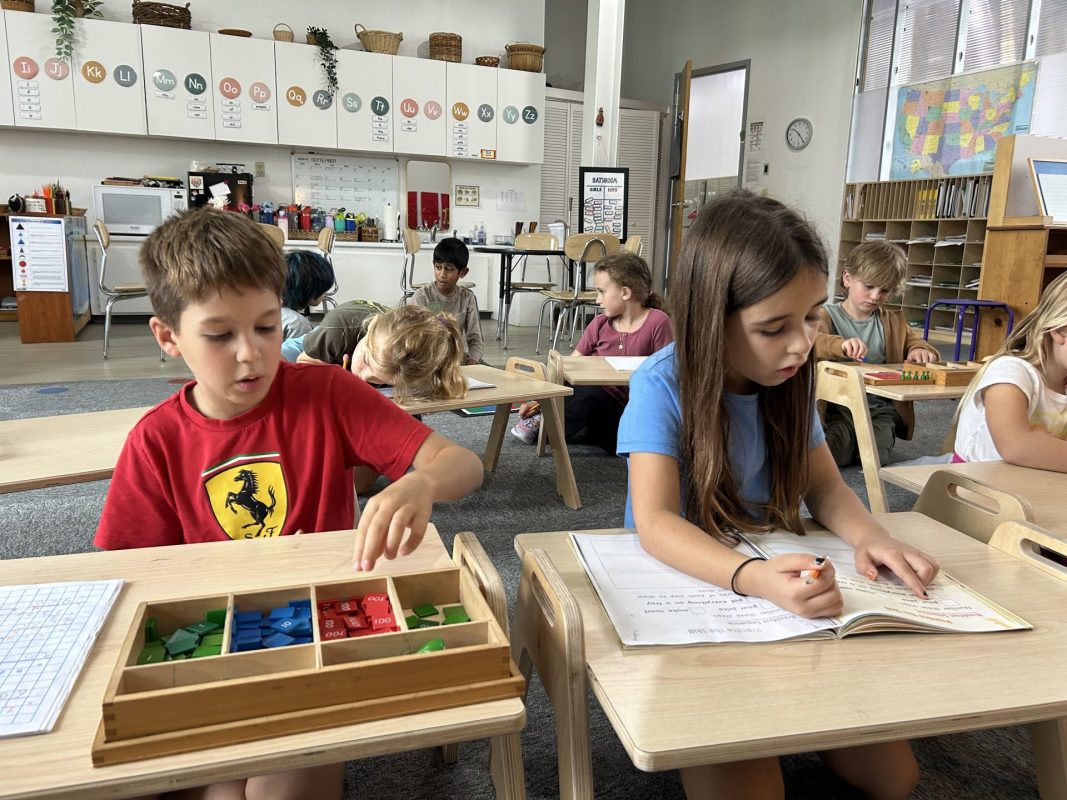
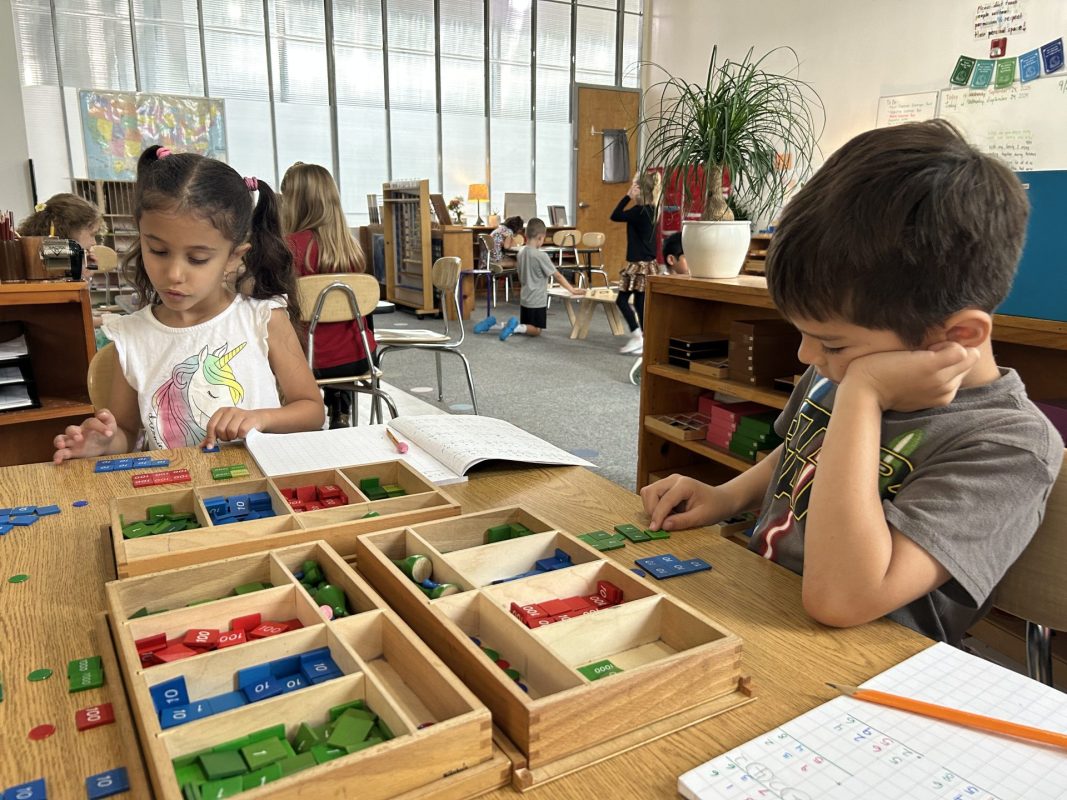
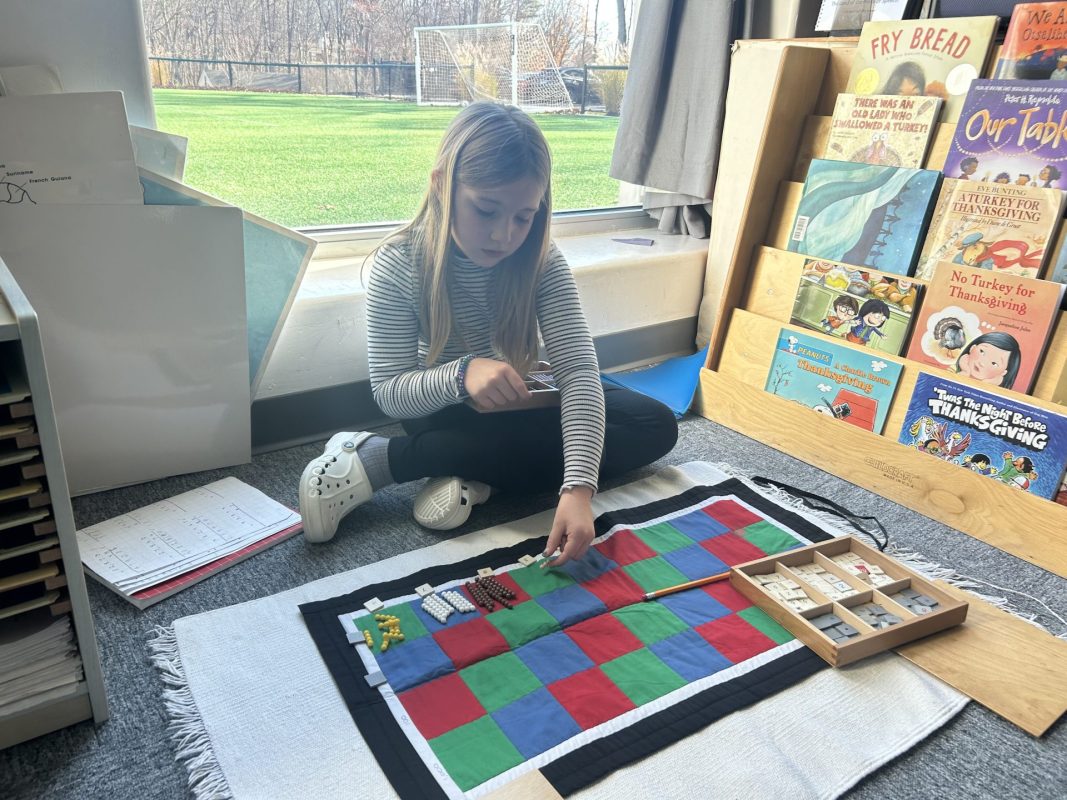
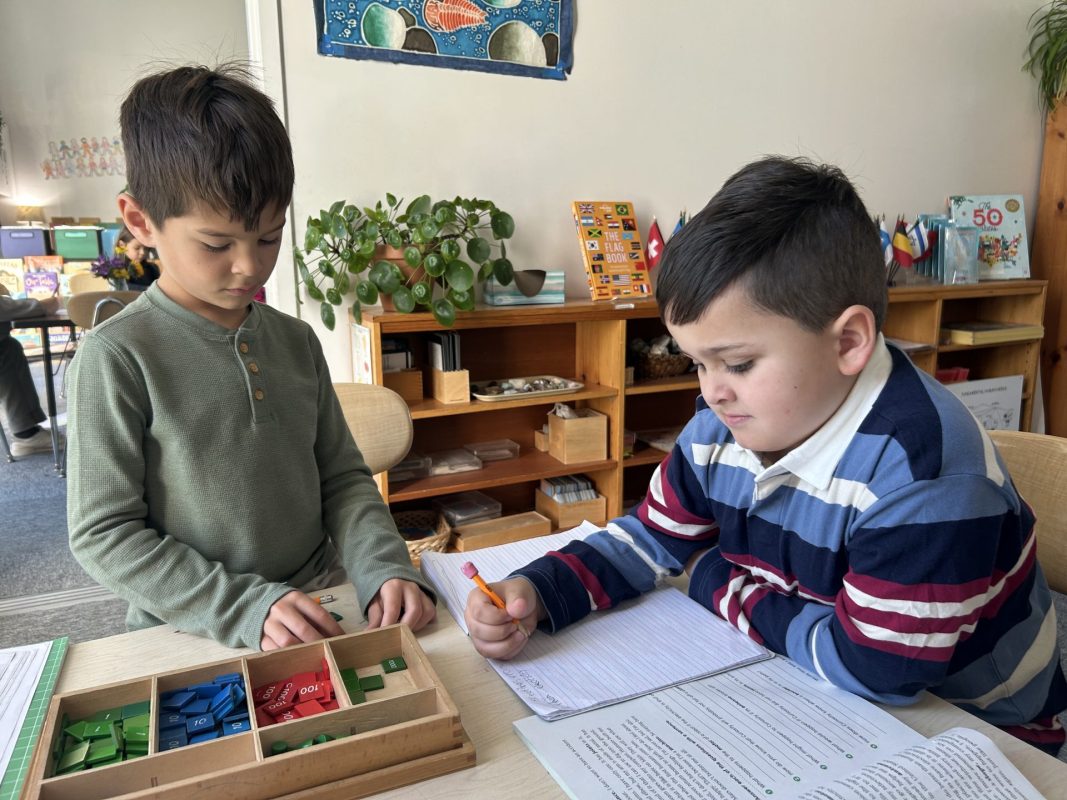
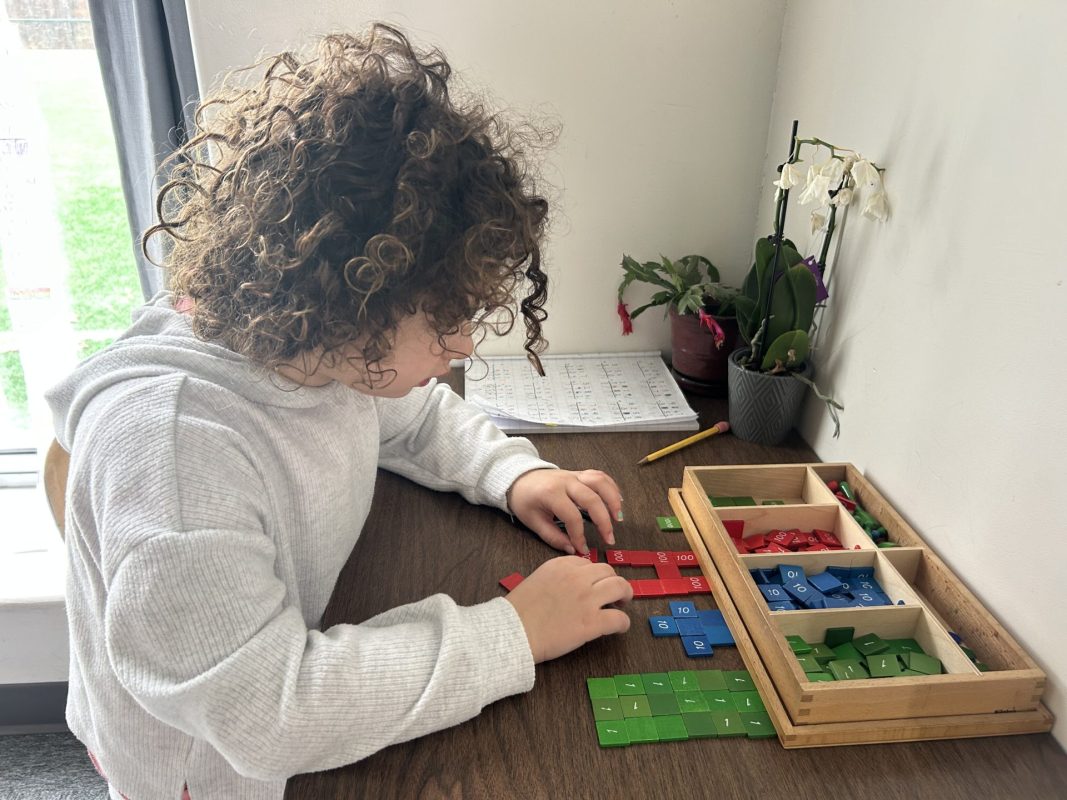
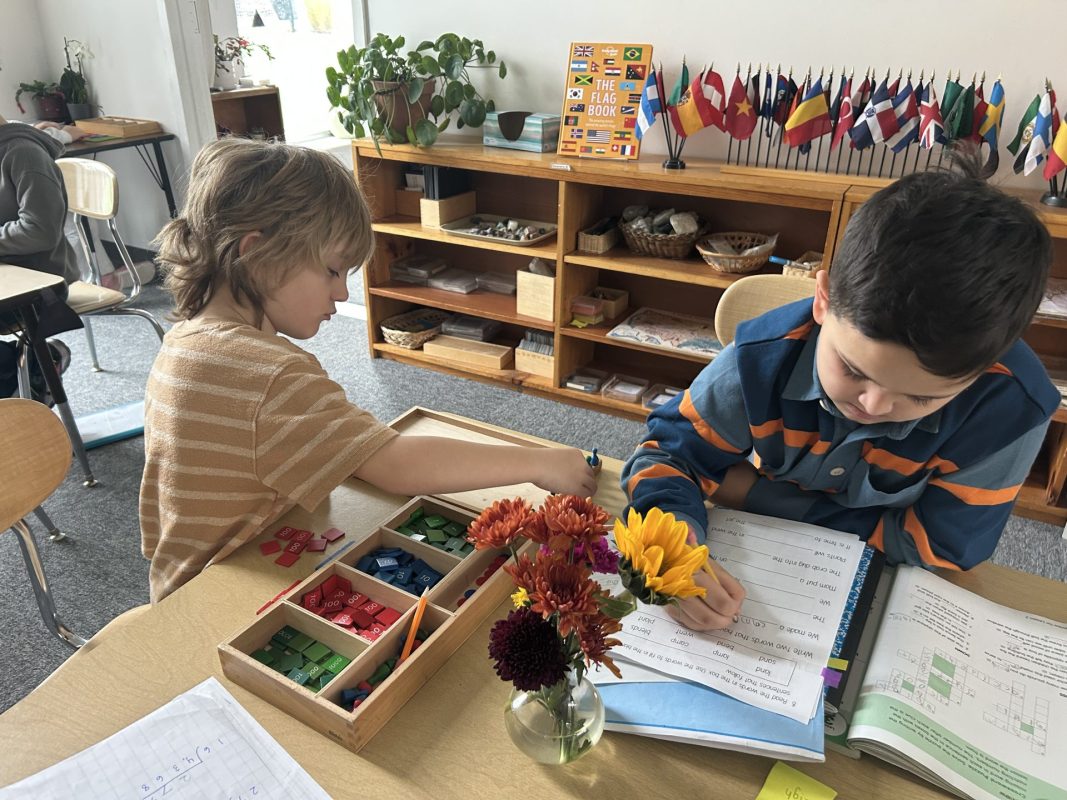
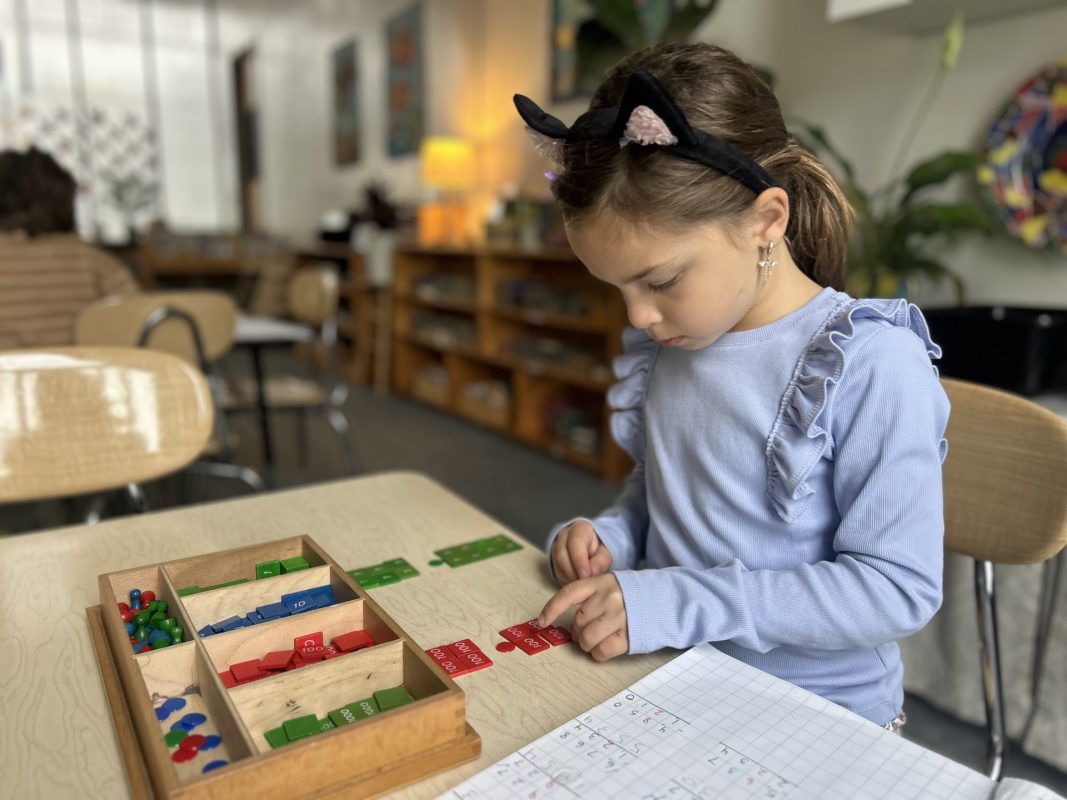
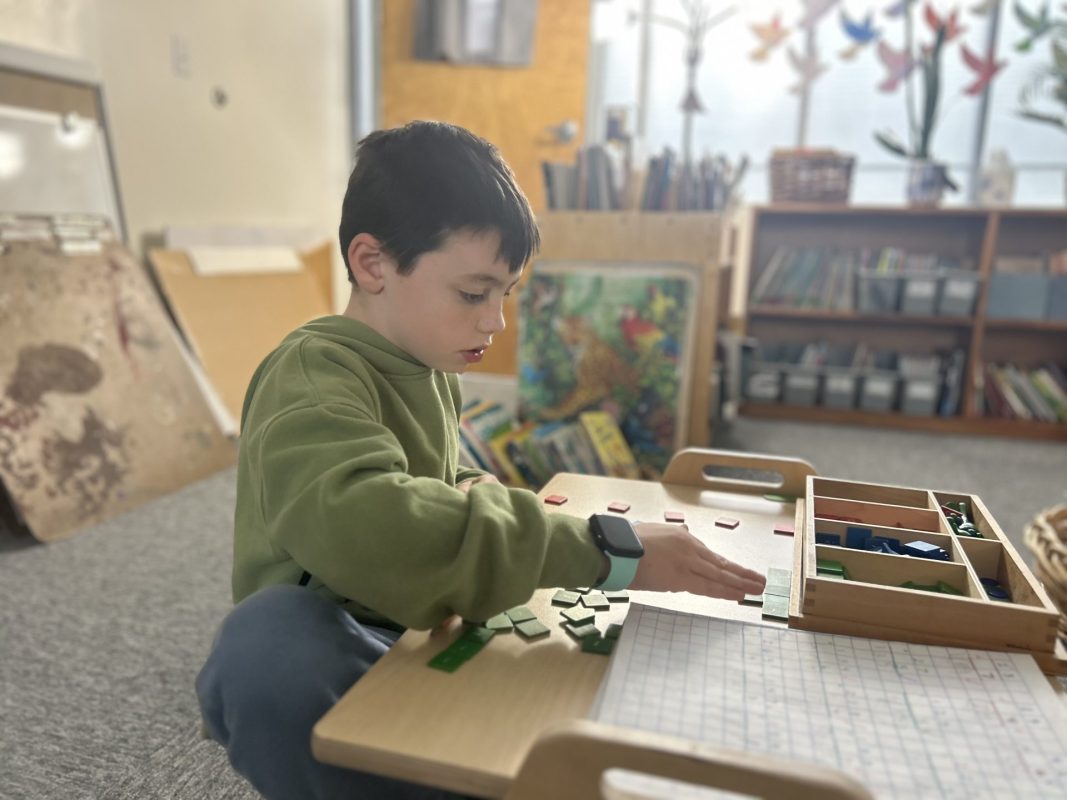
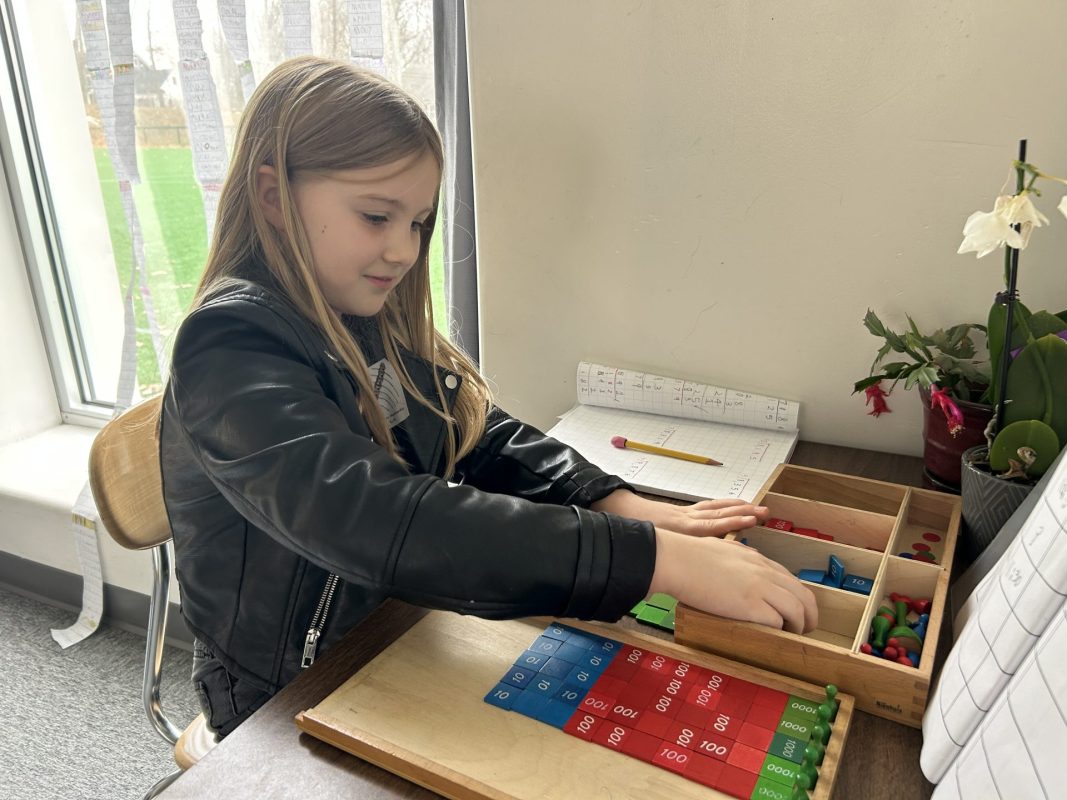
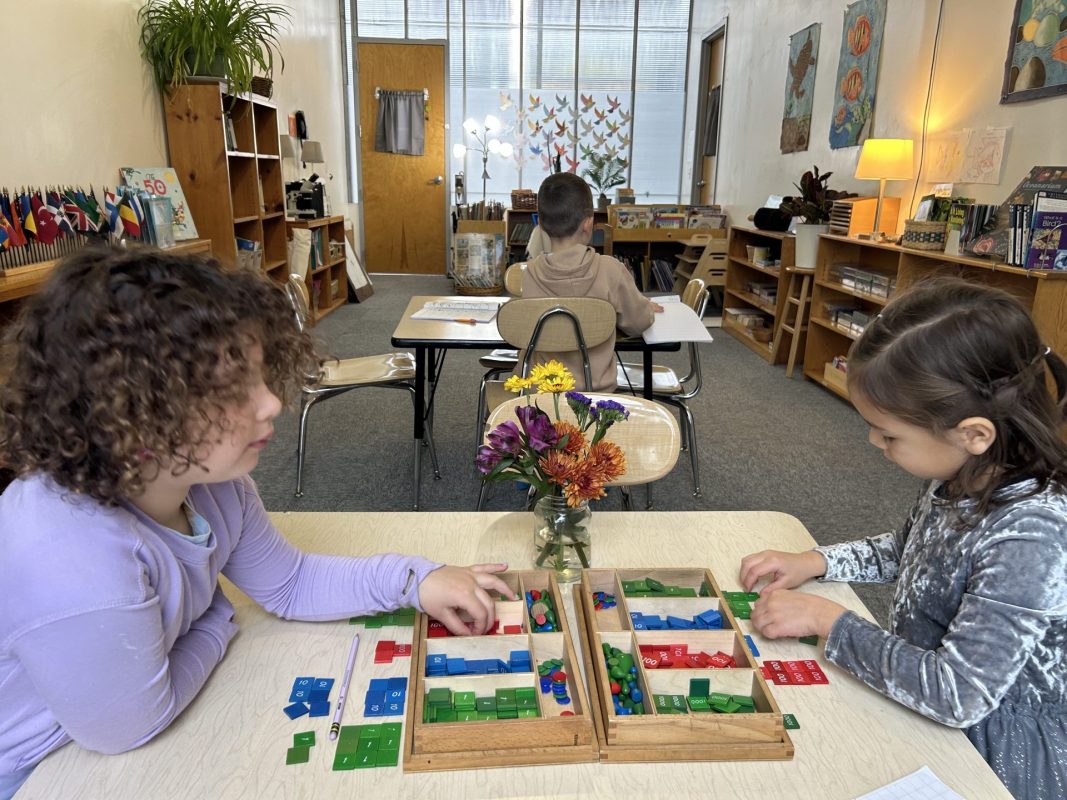
For example, the Stamp Game helps bridge the gap between concrete and abstract thinking. Students use small tiles, called stamps, to represent units, tens, hundreds, and thousands as they work through operations like addition, subtraction, multiplication, and division. They’re physically building and exchanging quantities, which helps them understand why processes like regrouping happen, not just how to do them.

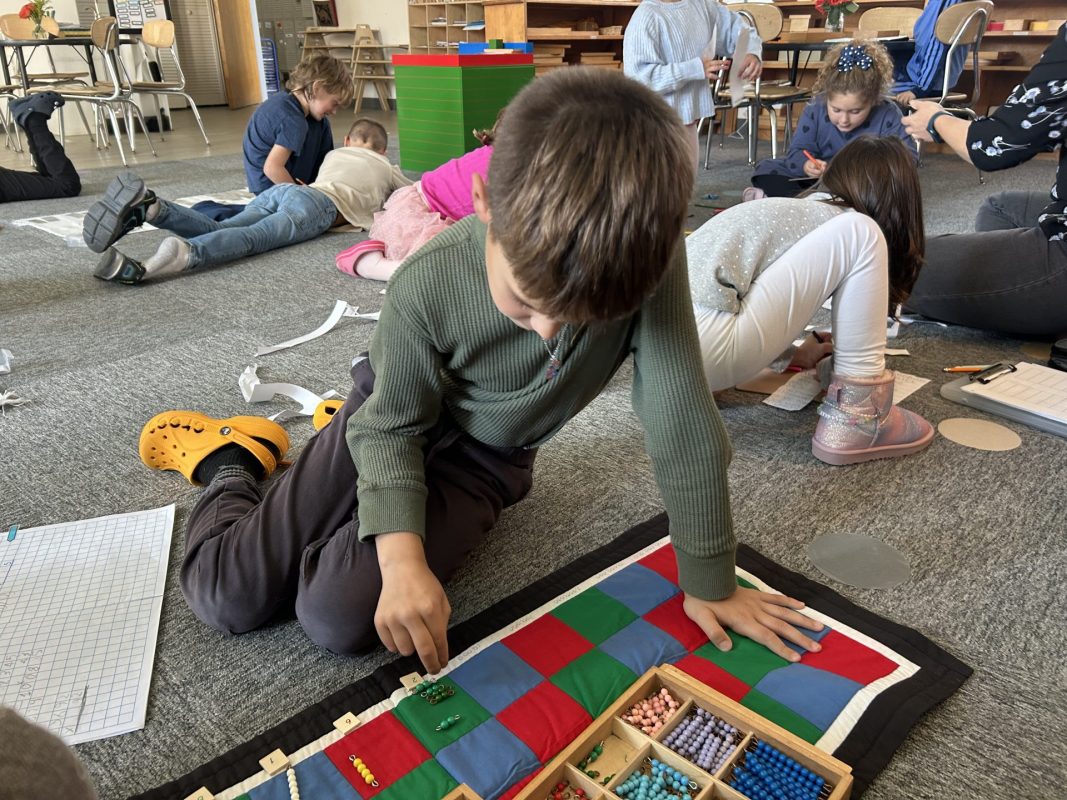
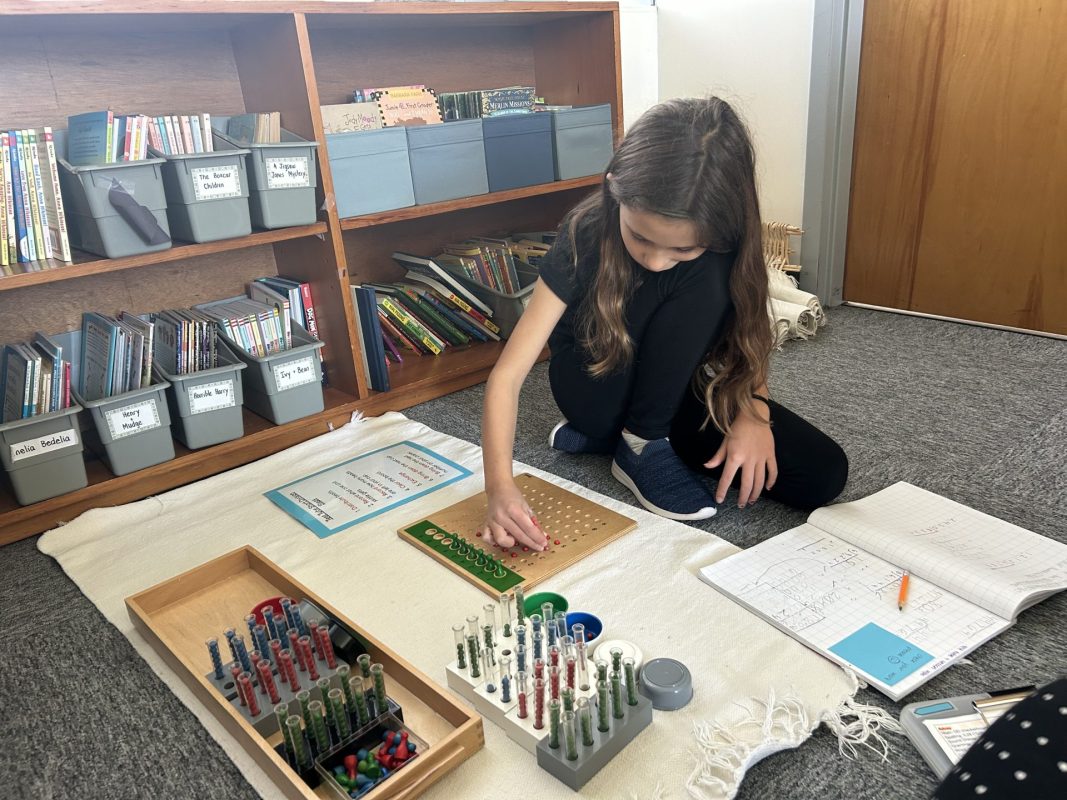
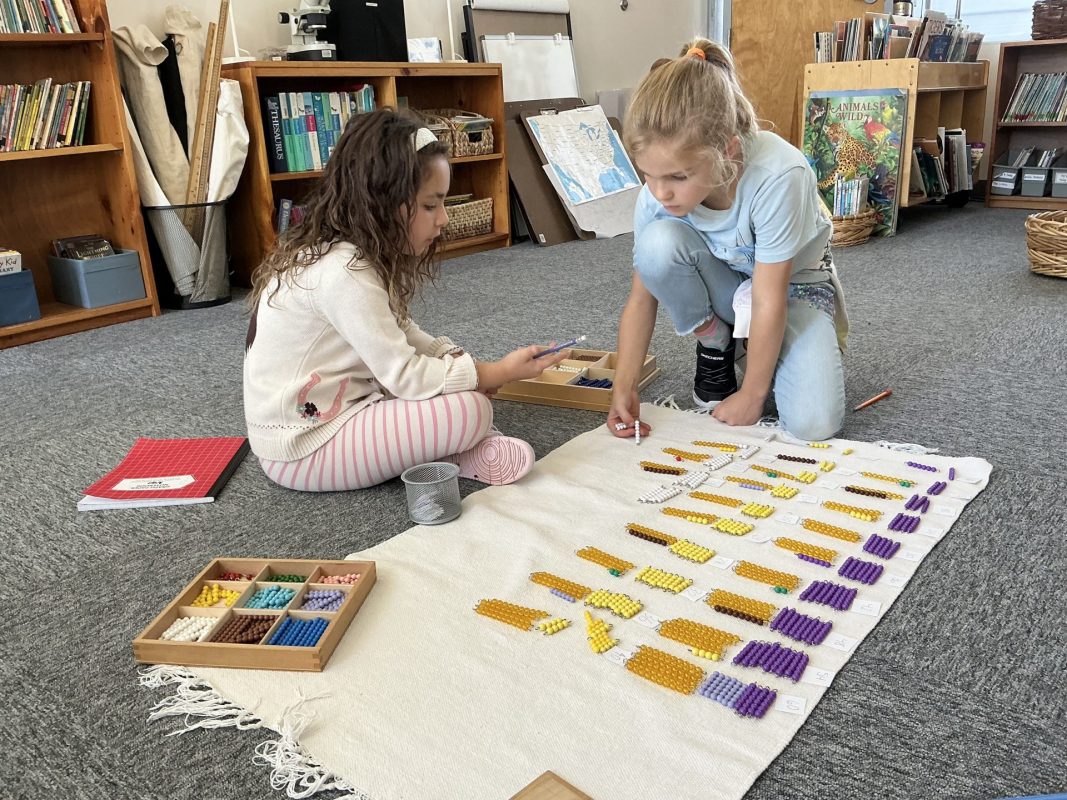
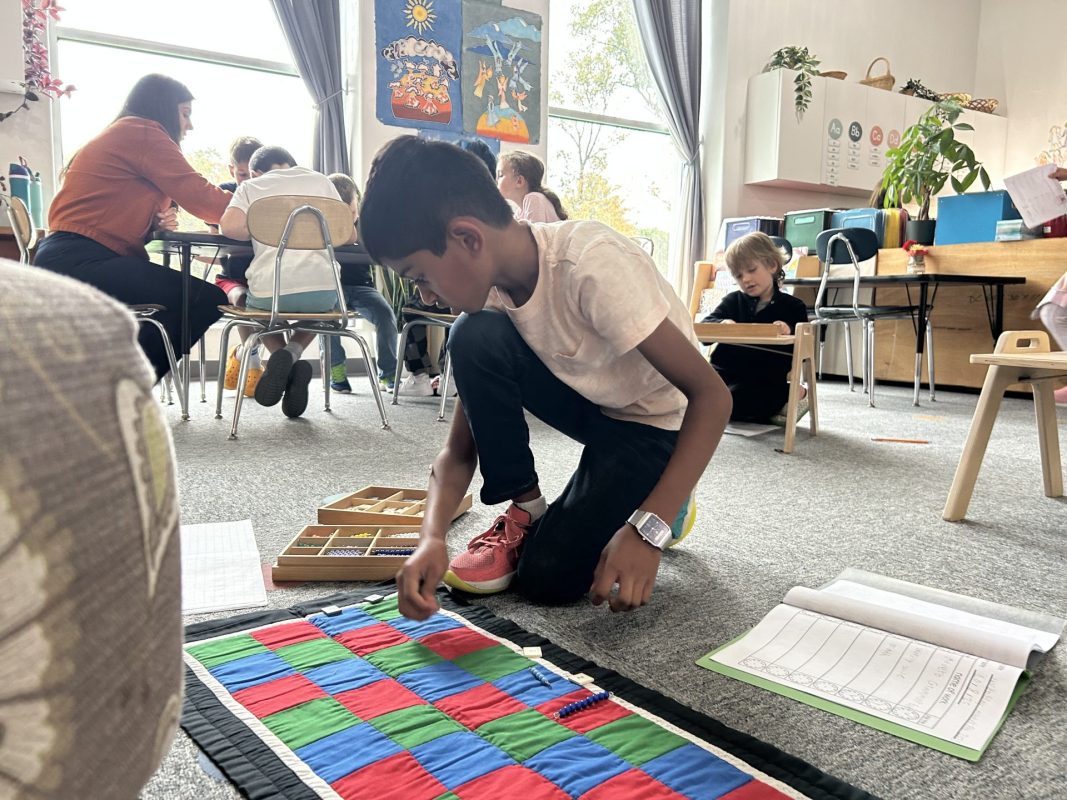
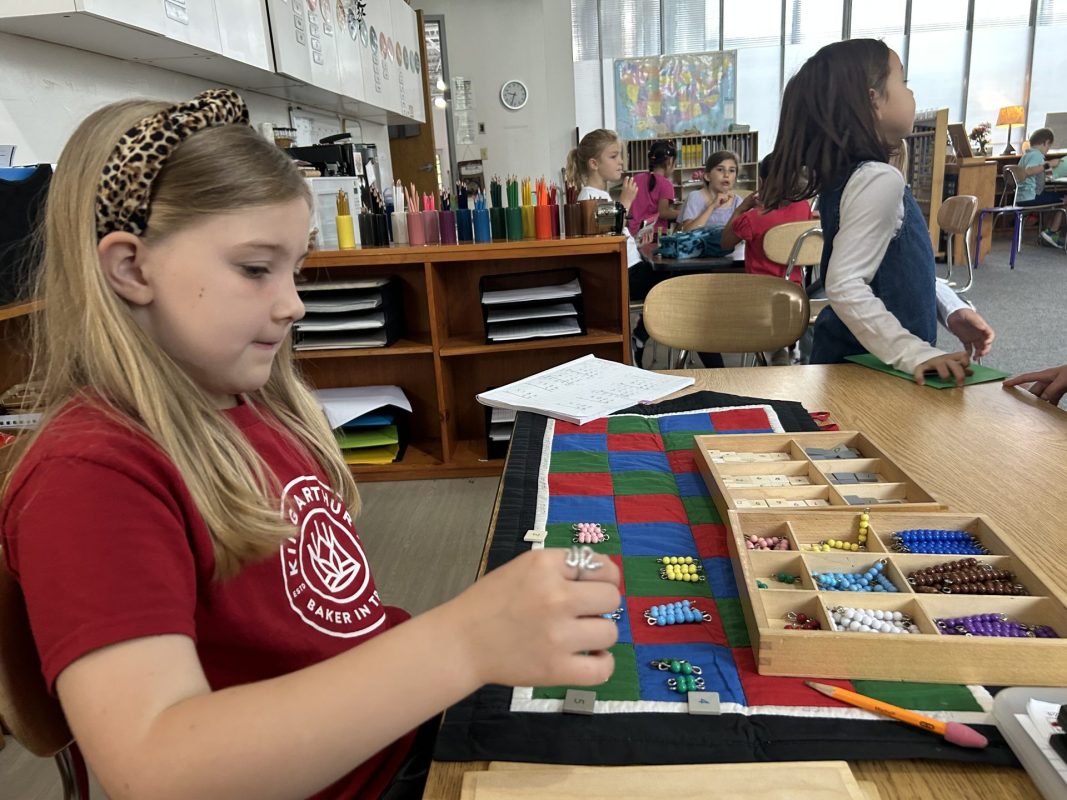
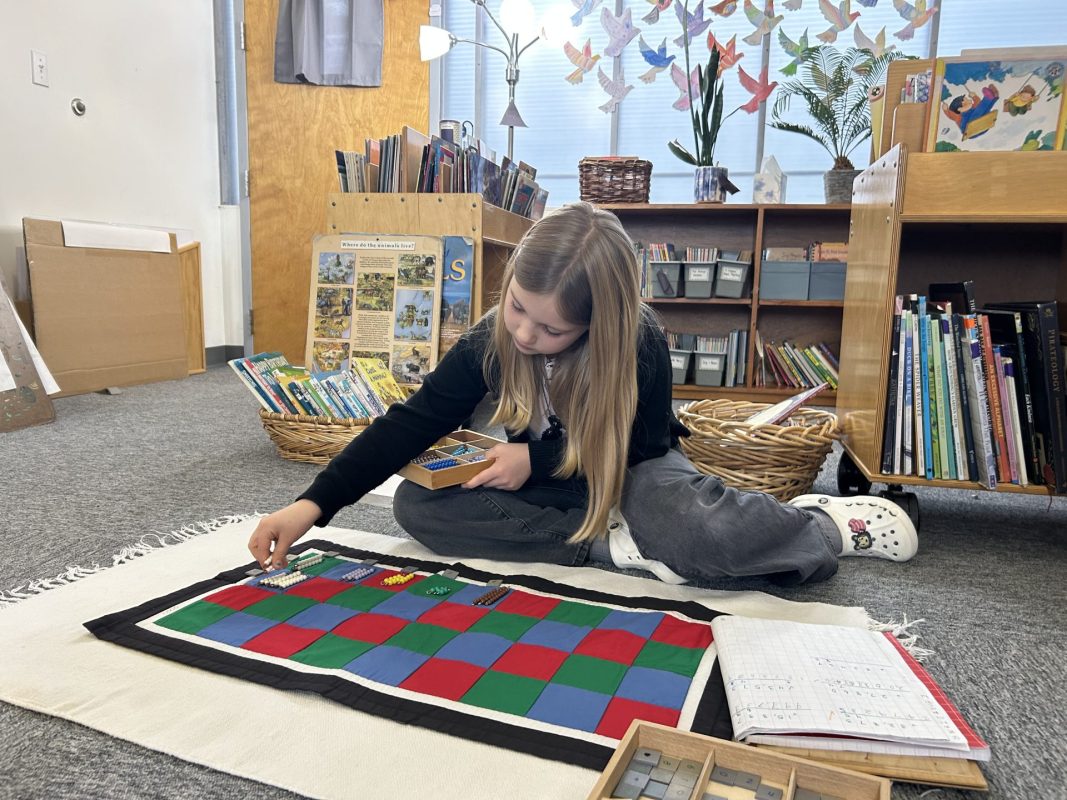
Another favorite is the Checkerboard, a colorful material that turns large multiplication problems into a visual and interactive experience. A different color represents each place value, and students use beads to work through multi-digit multiplication with confidence and clarity.

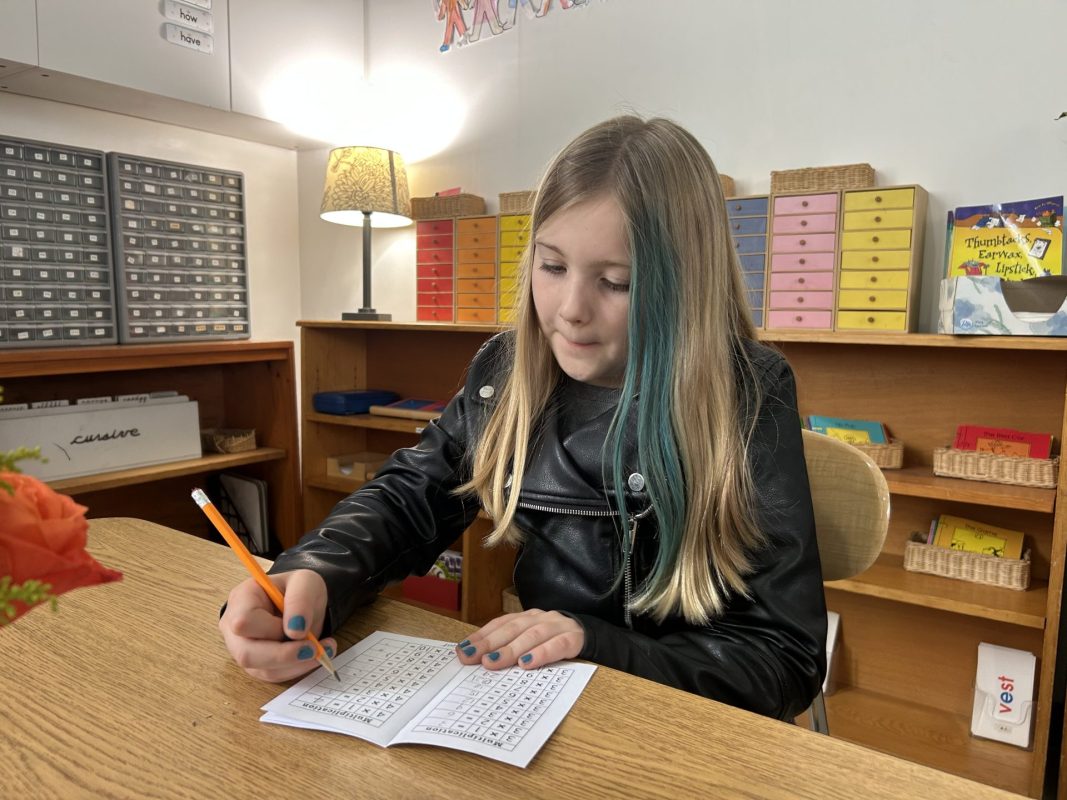
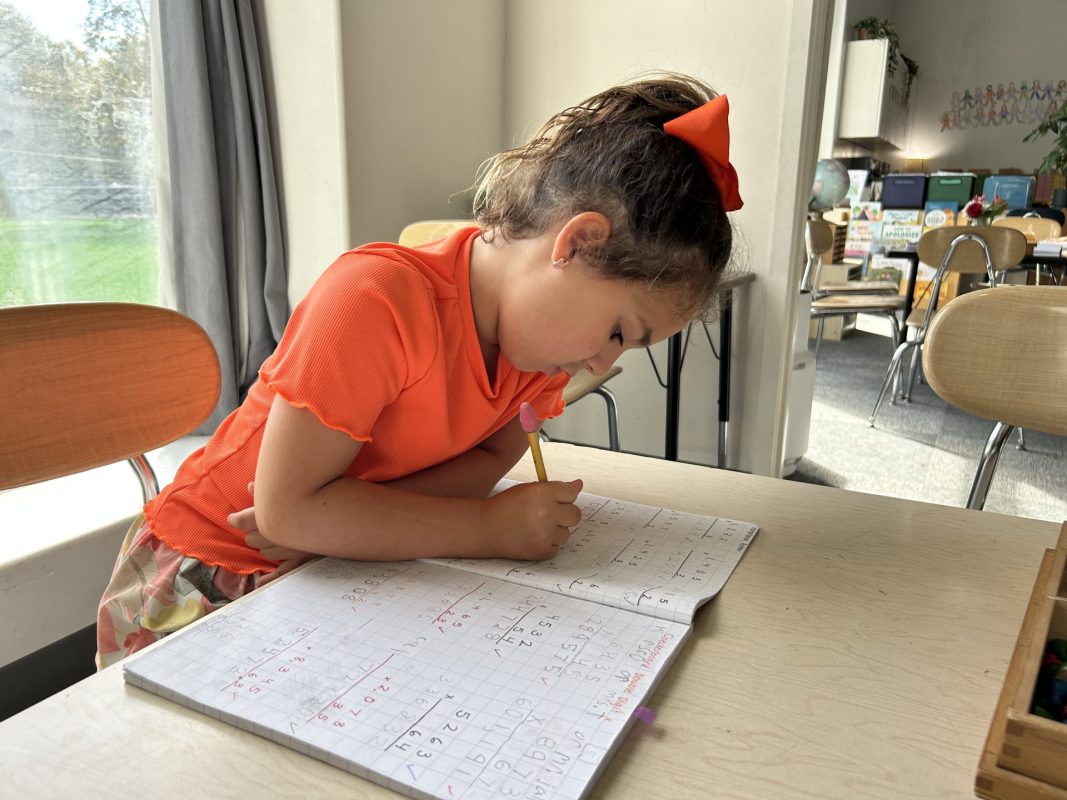
Over time, as students gain mastery, they naturally begin to internalize these processes and move toward abstract computation. By the time they’re ready to put pencil to paper, they’ve built a strong conceptual foundation that supports flexible and confident mathematical thinking.

In a Montessori classroom, math isn’t about speed or rote memorization; it’s about understanding. Students learn to see math as a language that describes the world around them, one that’s logical, creative, and even fun.


Lower Elementary: The Power of Mentorship

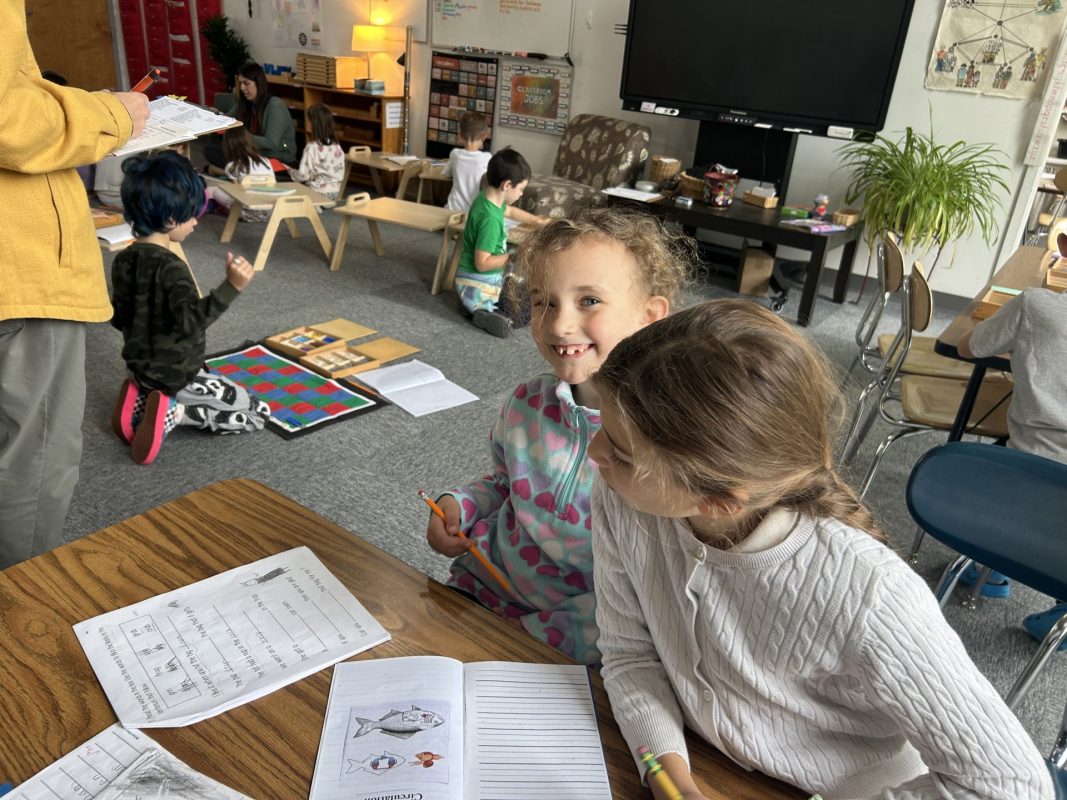
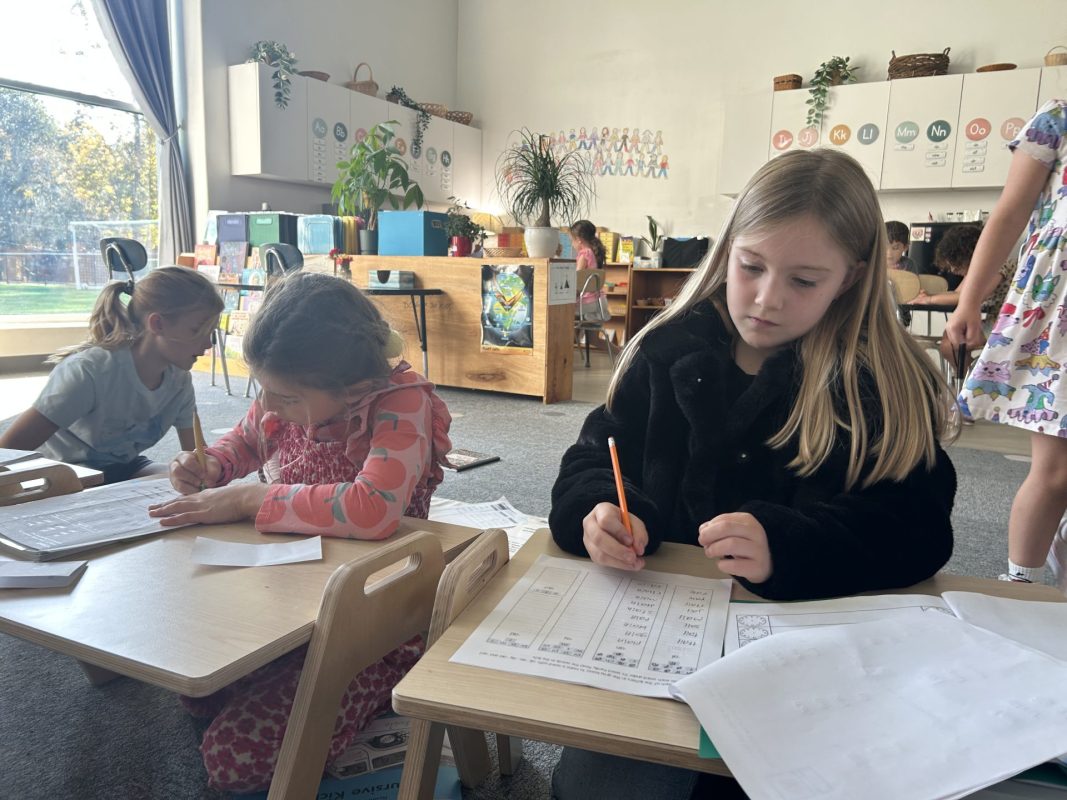
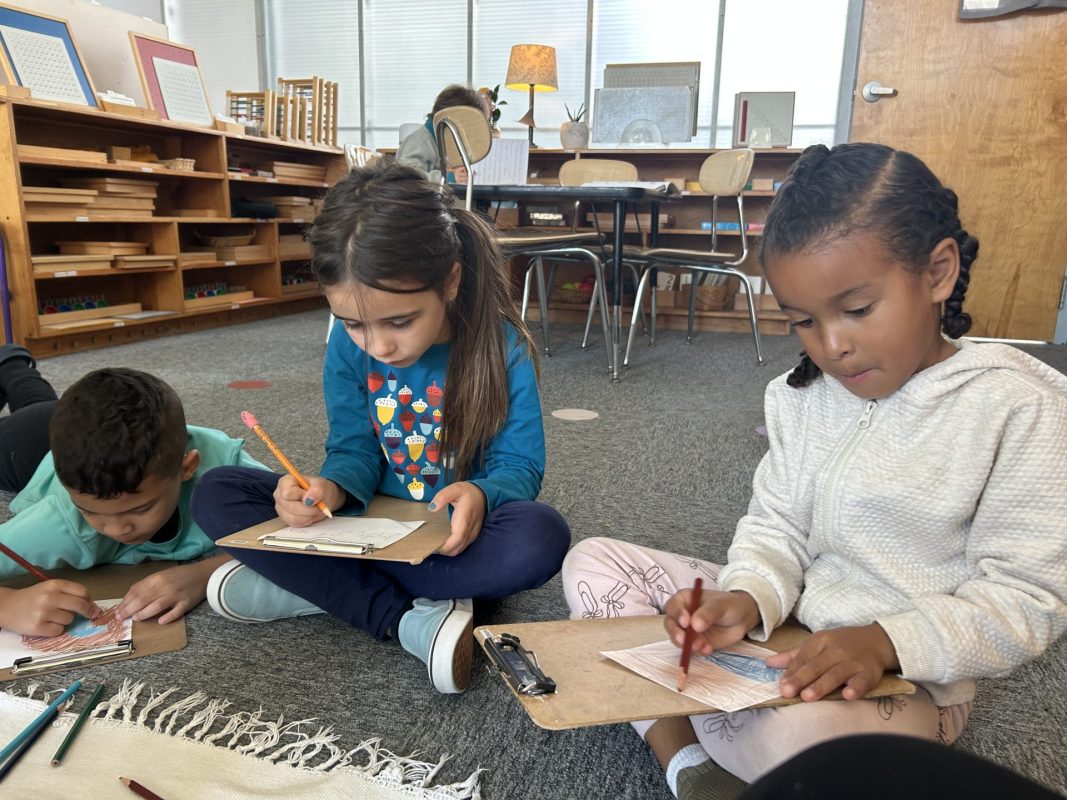
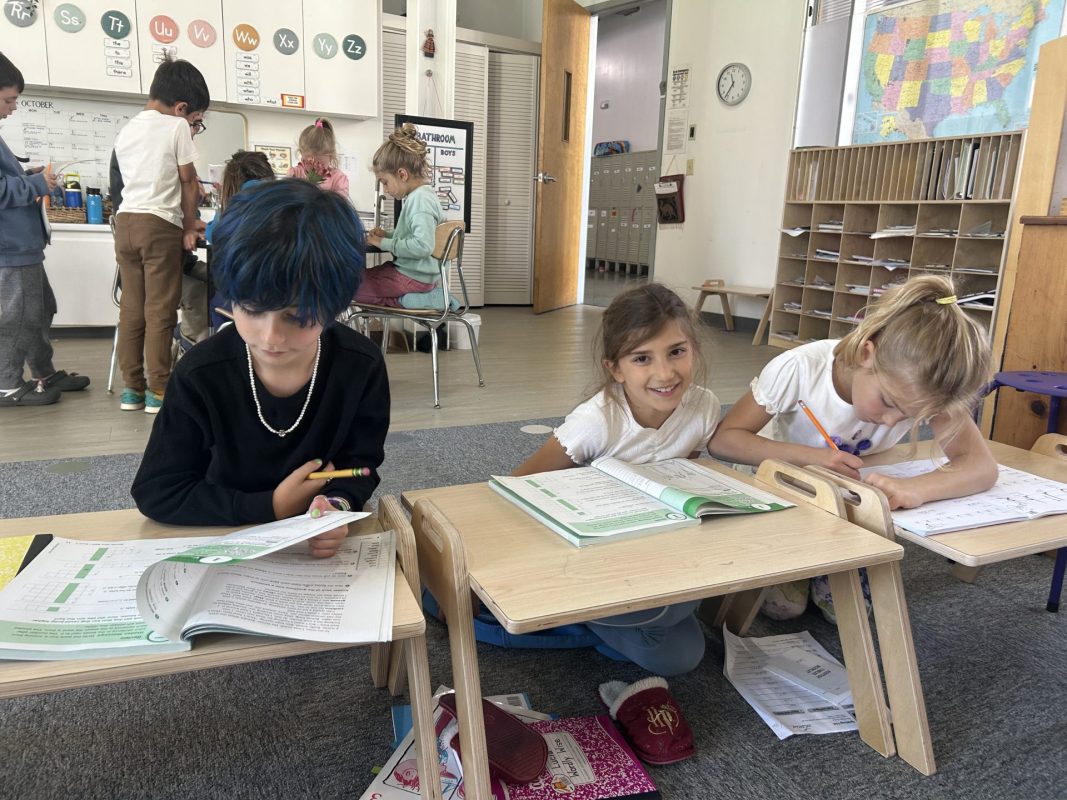
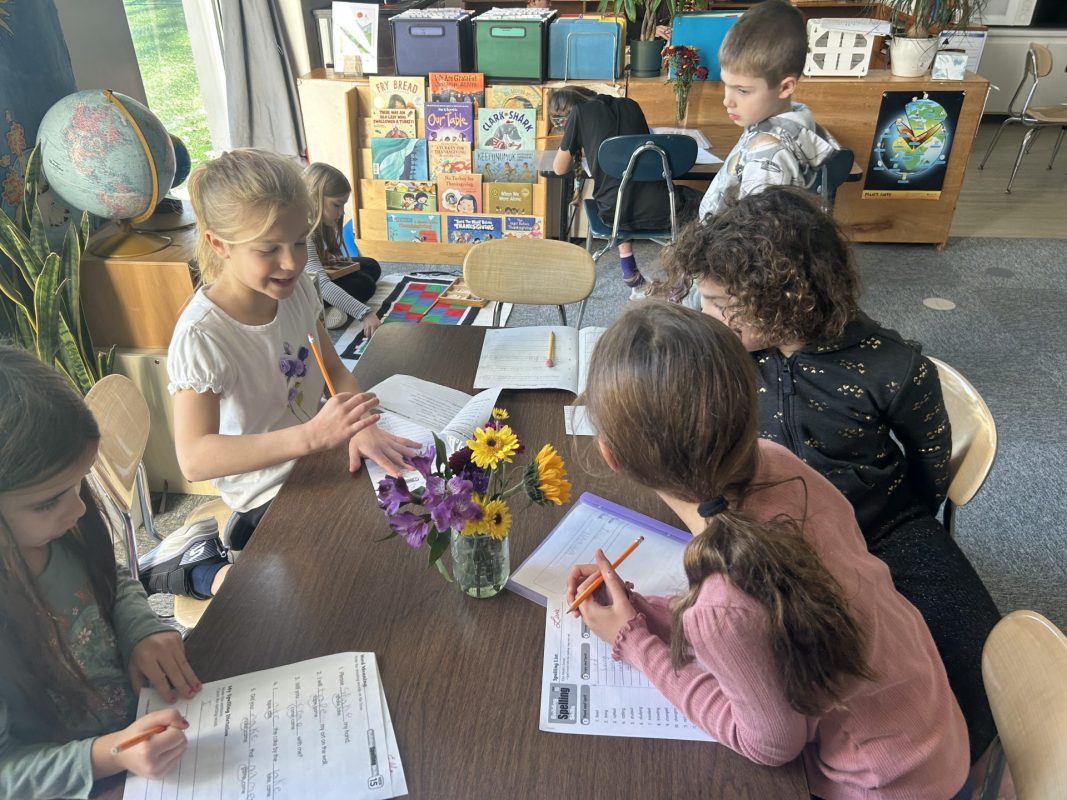
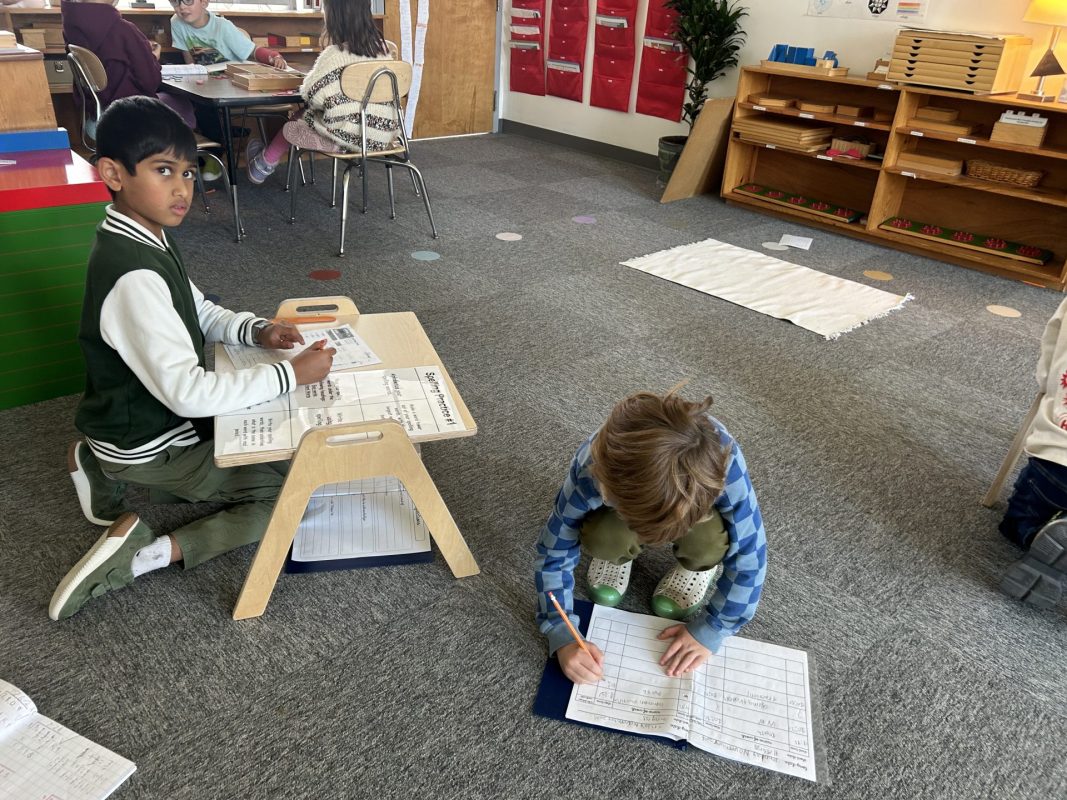
One of the aspects we love most about teaching in a Montessori lower elementary classroom is the unique multi-aged environment. Having children of different ages and grade levels together creates a learning community where every student has something to give and something to gain.

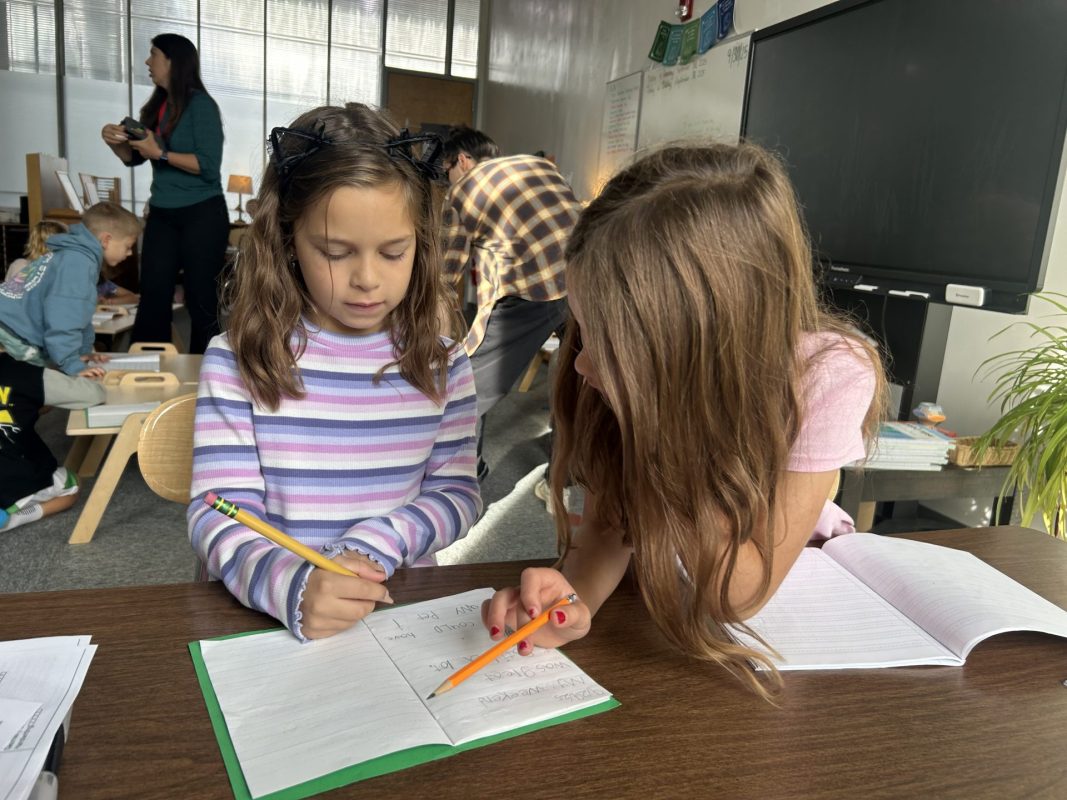
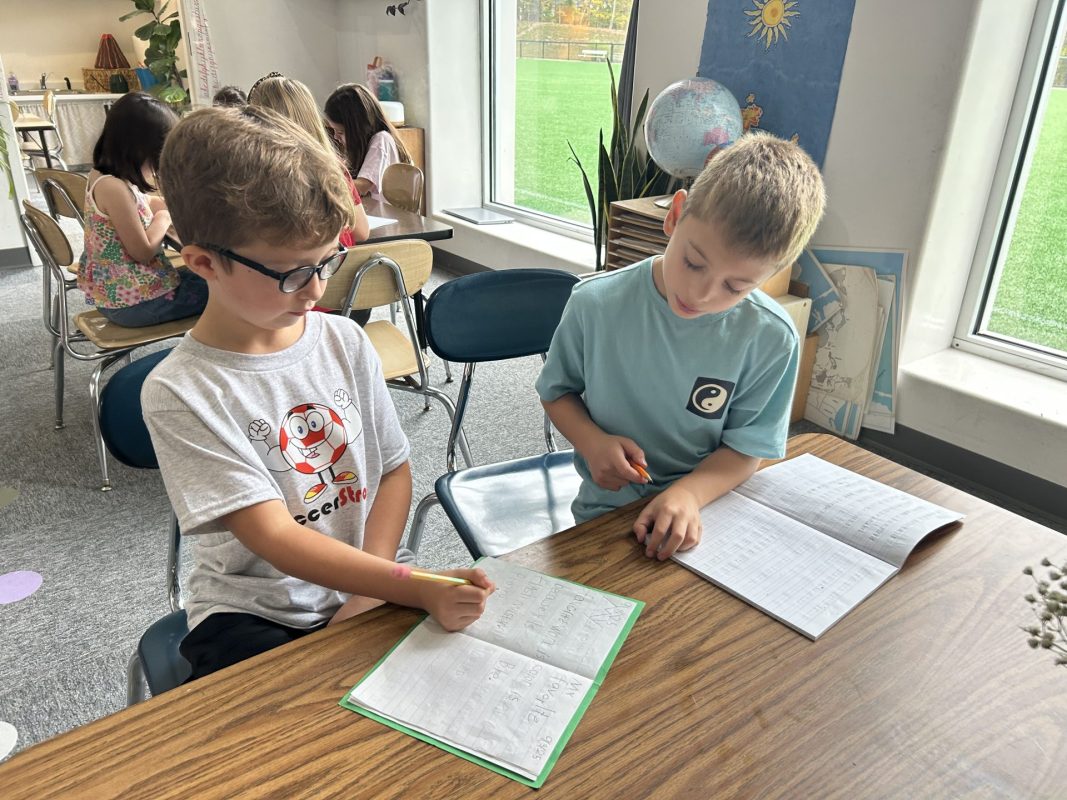
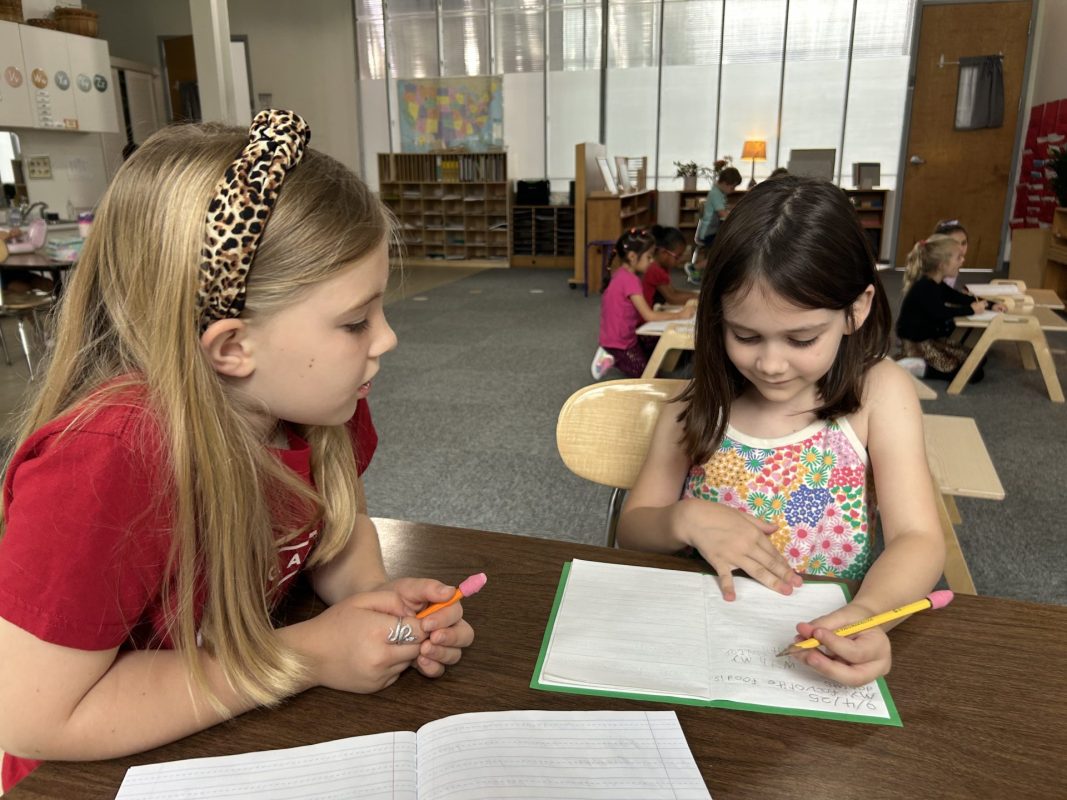
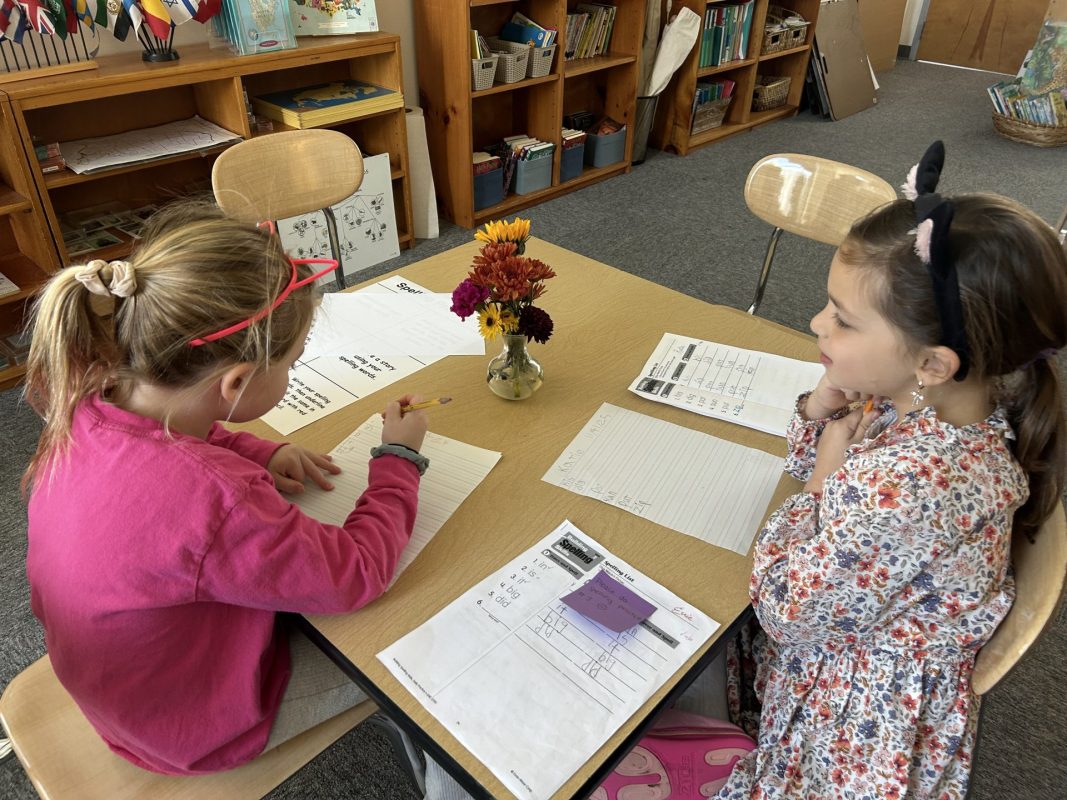
One of the most powerful outcomes of this setup is mentorship. Older students naturally step into leadership roles, guiding and supporting their younger classmates. This dynamic creates opportunities for both groups: older children grow into patient leaders who practice empathy, communication, and responsibility, while younger children benefit from seeing skills and behaviors modeled by peers they admire. In fact, younger students often feel more encouraged to try something new when they see a slightly older friend mastering it.

This approach mirrors the way communities work outside of school, where people of different ages and experiences learn alongside one another. Instead of fostering competition, our classroom promotes collaboration. Students begin to recognize that their actions have an impact on others—whether it’s showing kindness, explaining a math problem, or setting an example of focus during work time.

In a multi-aged Montessori classroom, every child has the chance to be both a learner and a leader. Over the course of three years, students experience each role, which allows them to develop confidence, independence, and compassion. This cycle of growth ensures that children are not just absorbing academic knowledge, but also learning essential life skills that prepare them to contribute meaningfully to their communities.

Mentorship is not simply a classroom strategy; it’s a cornerstone of Montessori education. And its benefits extend far beyond academics, shaping children into thoughtful, capable, and caring individuals.


Lower El: Great Lessons and Key Lessons

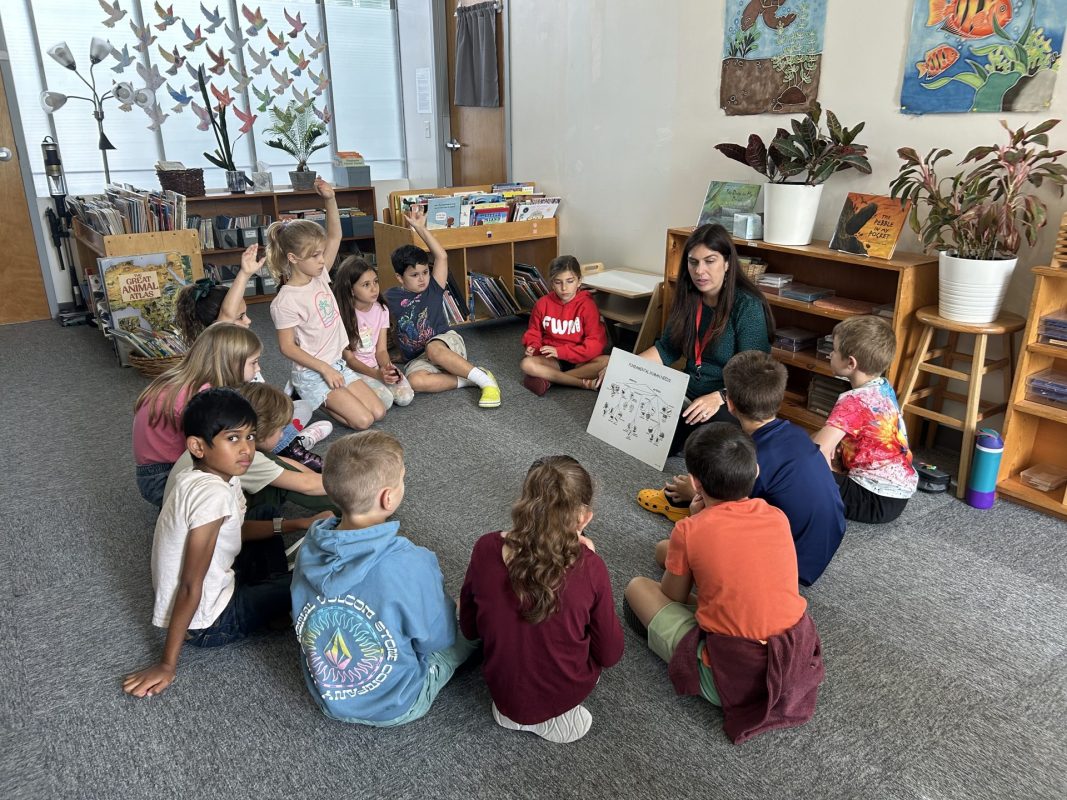
Happy Fall, everyone! It was so great to connect with many families at Curriculum Night. This week was another rich week in the classroom as we shared the third Great Lesson and also began presenting some “Key Lessons.” The Great Lessons set the stage for each subject of the curriculum and spark the children’s imagination. At the same time, the Key Lessons give more detail, offer new information, and guide the children toward their own independent discoveries.

The third Great Lesson, “The Coming of Humans,” is a story meant to help the children see the special place humans hold in the story of life. It reminds them how the Earth had to be carefully prepared before humans could arrive. The seas formed, plants filled the air with oxygen, and animals created balance in the world. Each step built upon the last until the Earth was finally ready for human life. When humans finally appeared, they came with gifts no other creature before them had: the mind that can think and imagine, the hand that can work, and the heart that can love like no other. The purpose of this lesson is to highlight the role humans play in the larger story of life and to lay the foundation for the work that will grow from the Great Lessons that follow. Our hope is that the children will come away with gratitude for the gifts they possess and an understanding that each of them is part of something truly special and important.

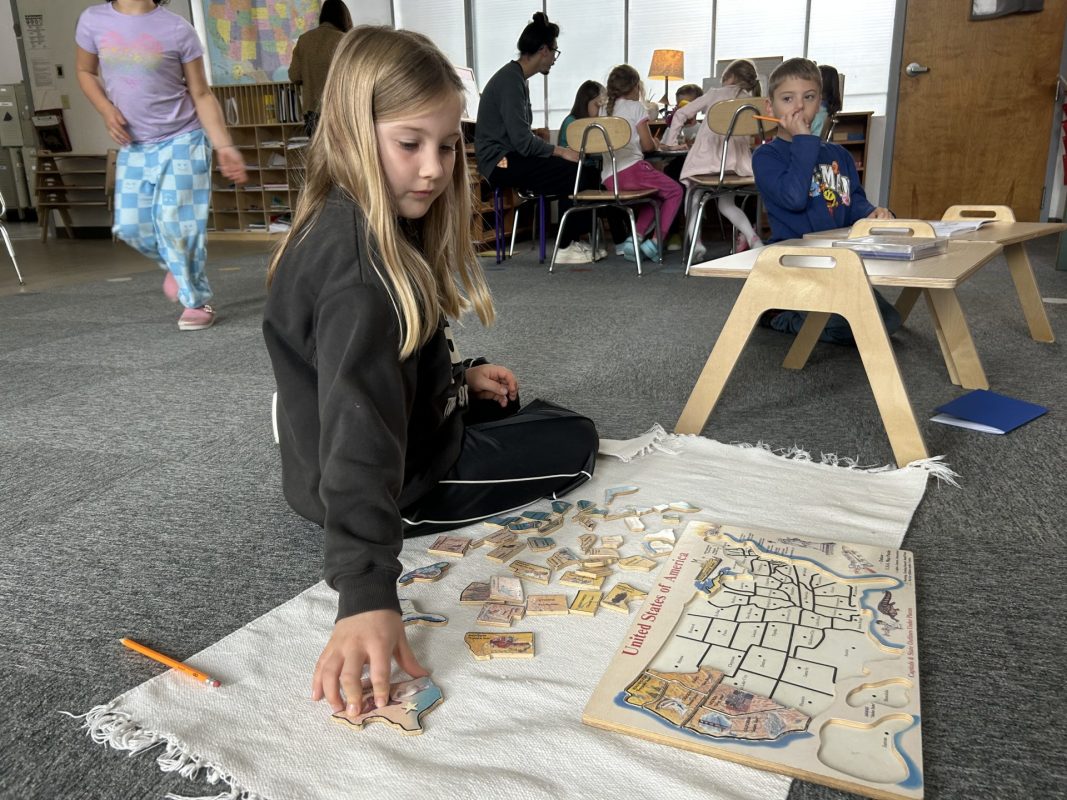
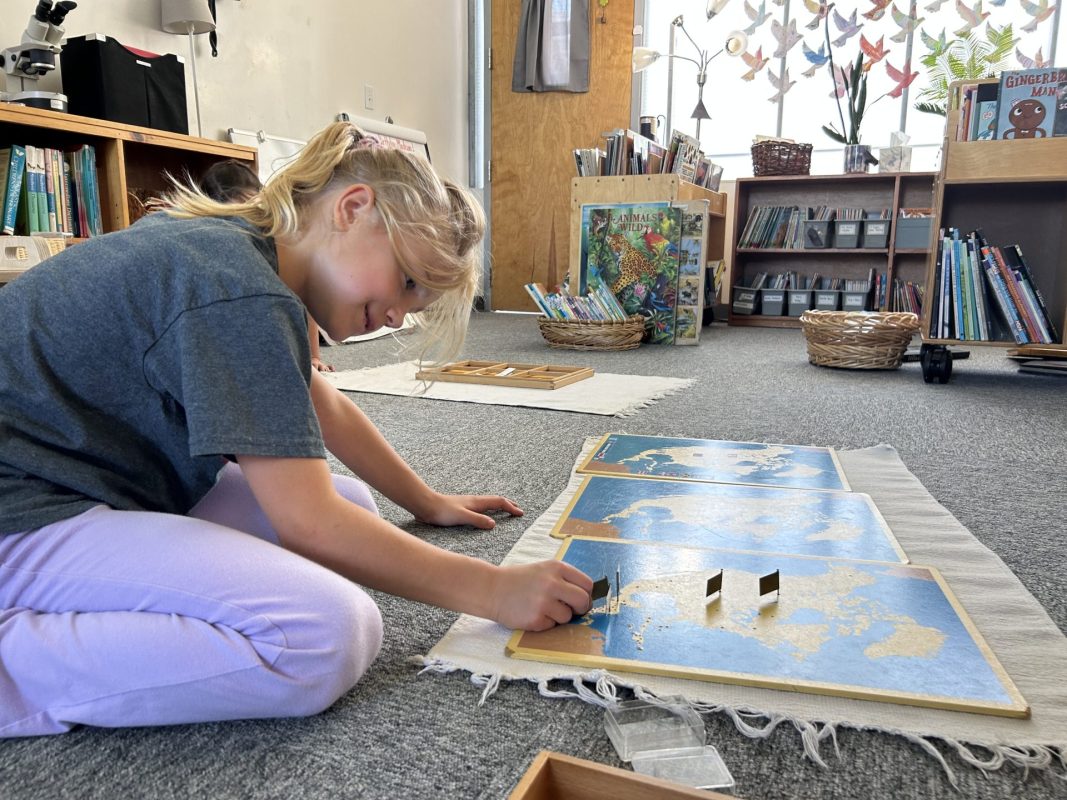
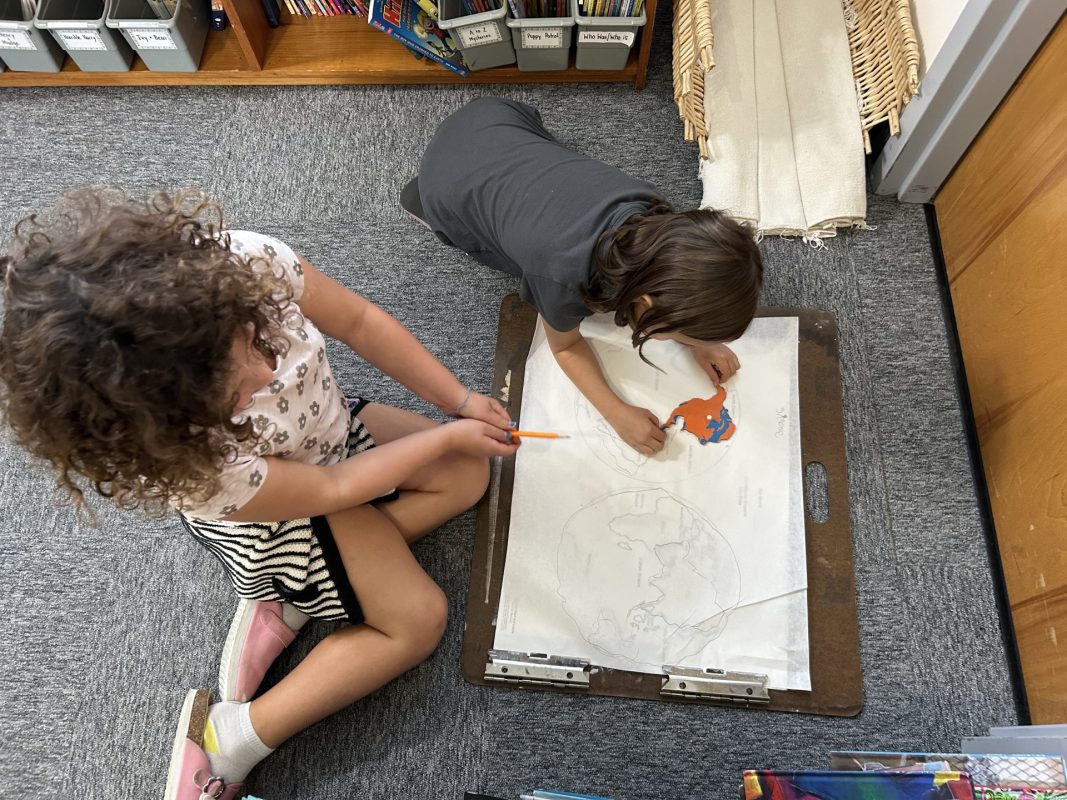
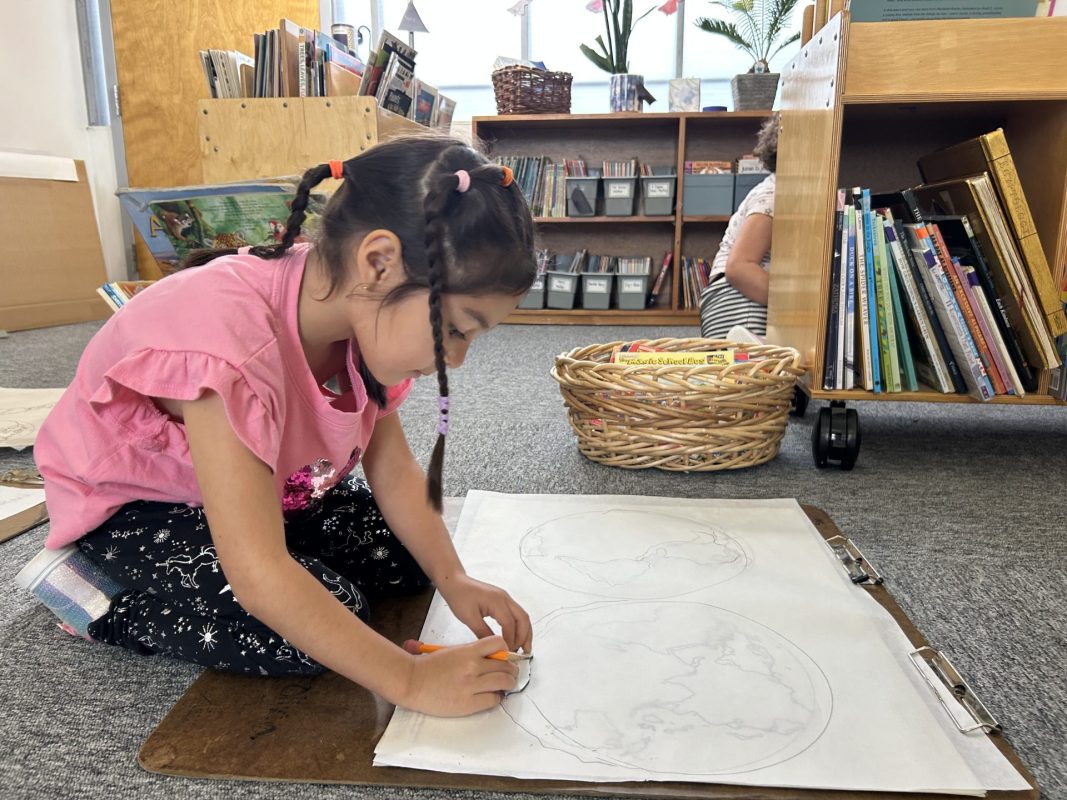
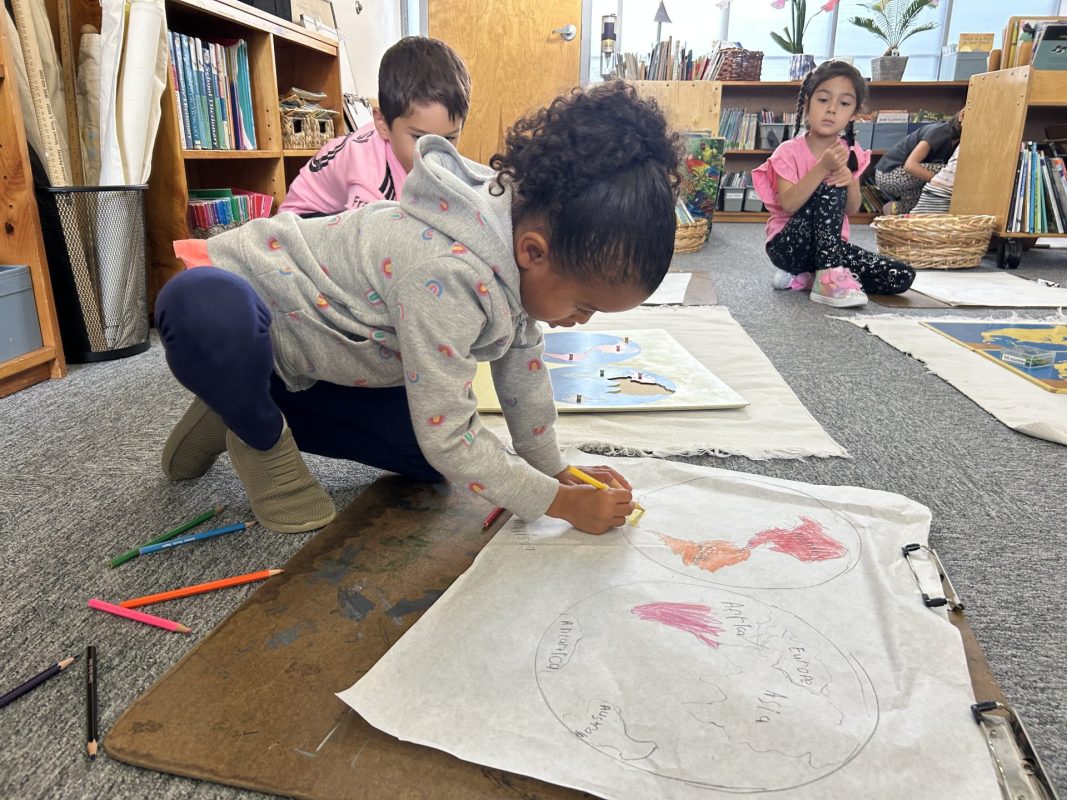
We welcomed the autumn equinox with an introduction to our Sun and Earth work in geography. As we told the story of the equinox, the children got to see how the tilt and rotation of the Earth create the changing seasons and why day and night are equal during the equinox. This work is a Key Lesson that connects back to the Story of the Universe. The Story of the Universe is like a wheel, and the Sun and Earth work is one of the many radiating spokes that we share with the children.

We recently opened the door to the geometry curriculum with the Story of Geometry. The children enjoyed learning about how geometry got its name. This story introduced the children to the history of how humans first explored geometry. We told the story of how the ancient Egyptian rope stretchers used ropes to measure land and create boundaries each year when the Nile flooded. This story emphasizes the influence that history has had on geometry and vice versa. By having this approach, the children may become interested in geometry through history or the other way around. Through this story, children see geometry as an exciting part of human discovery and a creative way humans use their thinking minds and their working hands to solve a problem.

It is so special to share these moments of discovery with your children. It brings us such joy to witness their curiosity and sense of wonder unfold as we share these lessons and stories with them!