Middle School: Week in Review

IMPORTANT ANNOUNCEMENTS:

  • Order your 8th-grade-designed 2024 FWM sweatshirt ASAP! Orders close on 4/27! Click here to order.
  • ALSO, we are looking forward to having a great Middle School turnout at this year’s auction, Saturday Night Fraser, on Saturday, 4/26! If you want to see Mr. Brown (and his retro mustache) & Mrs. Lamb in their finest 70s attire, be sure to grab your tickets here: Fraser Woods Auction Tickets

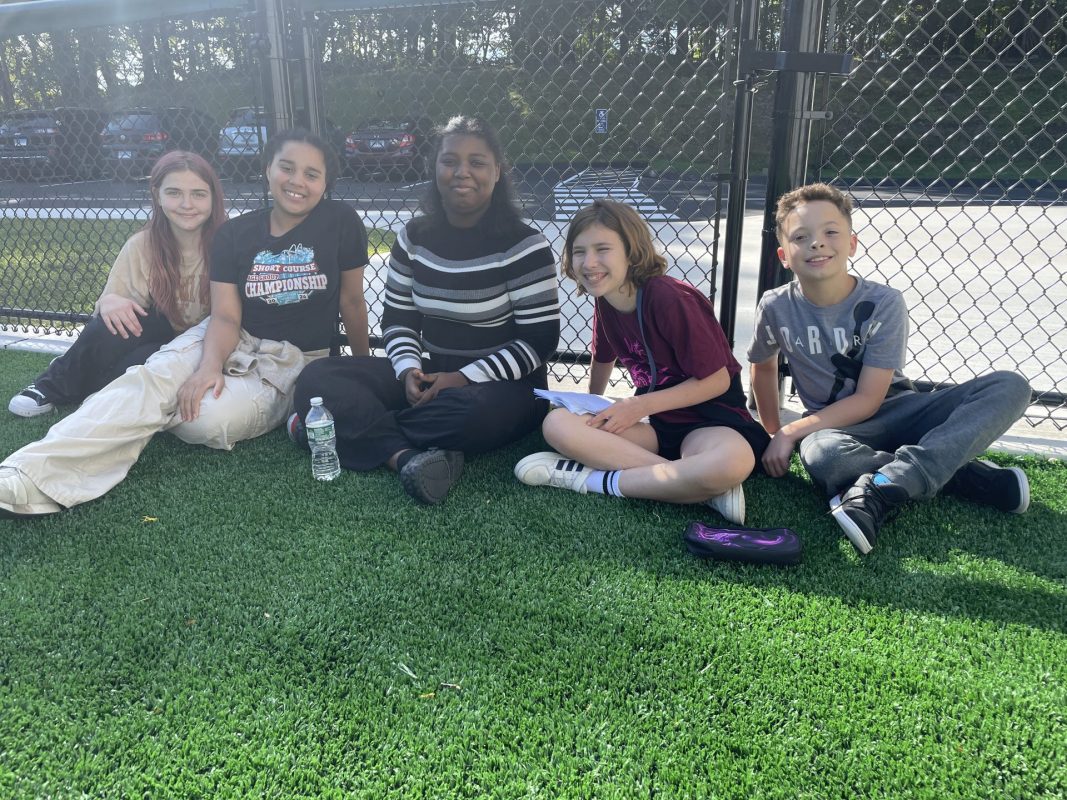
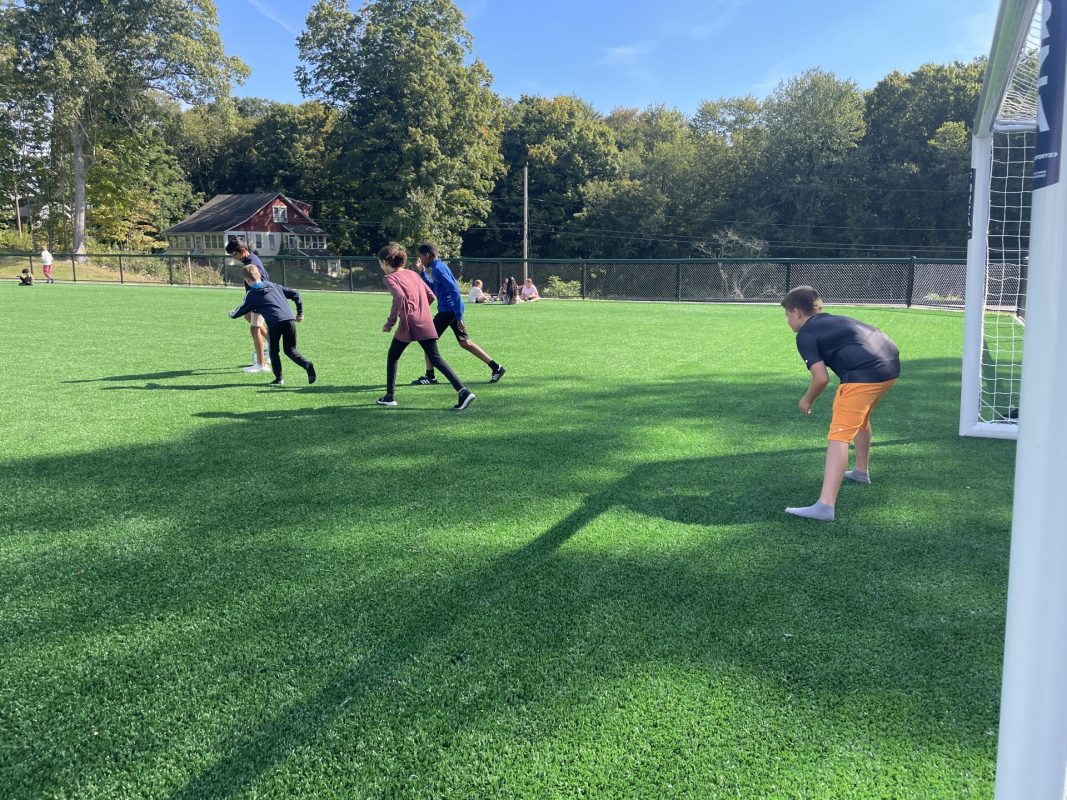
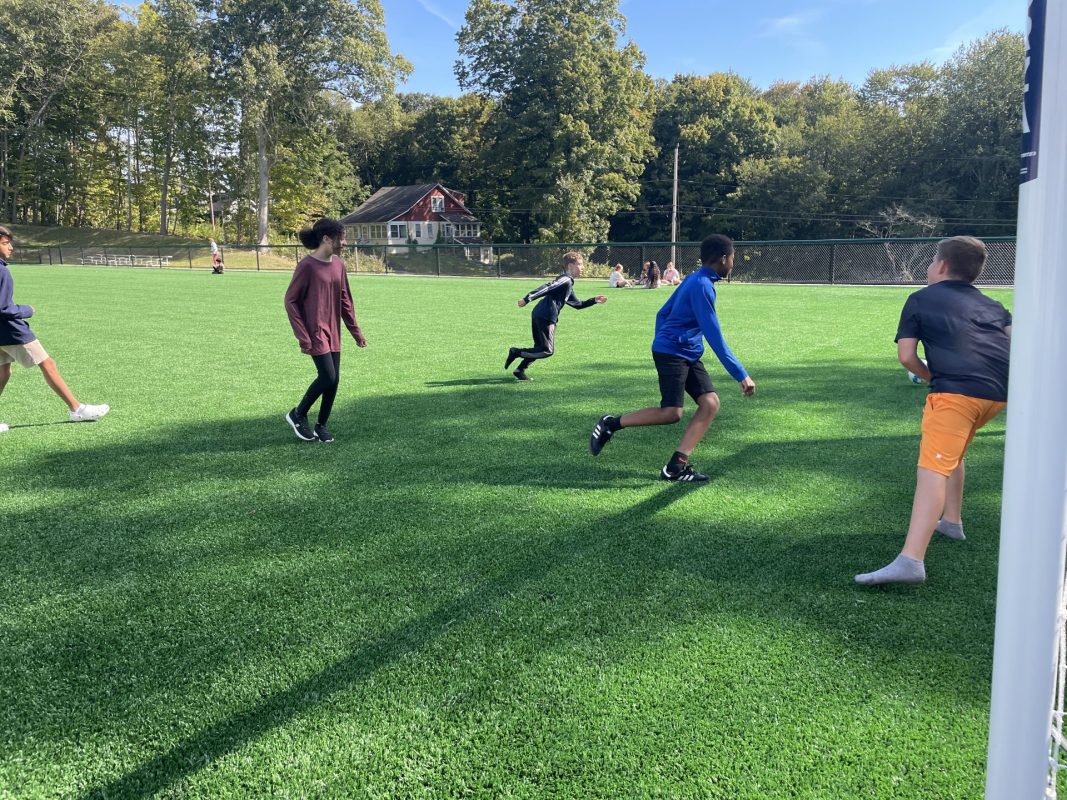
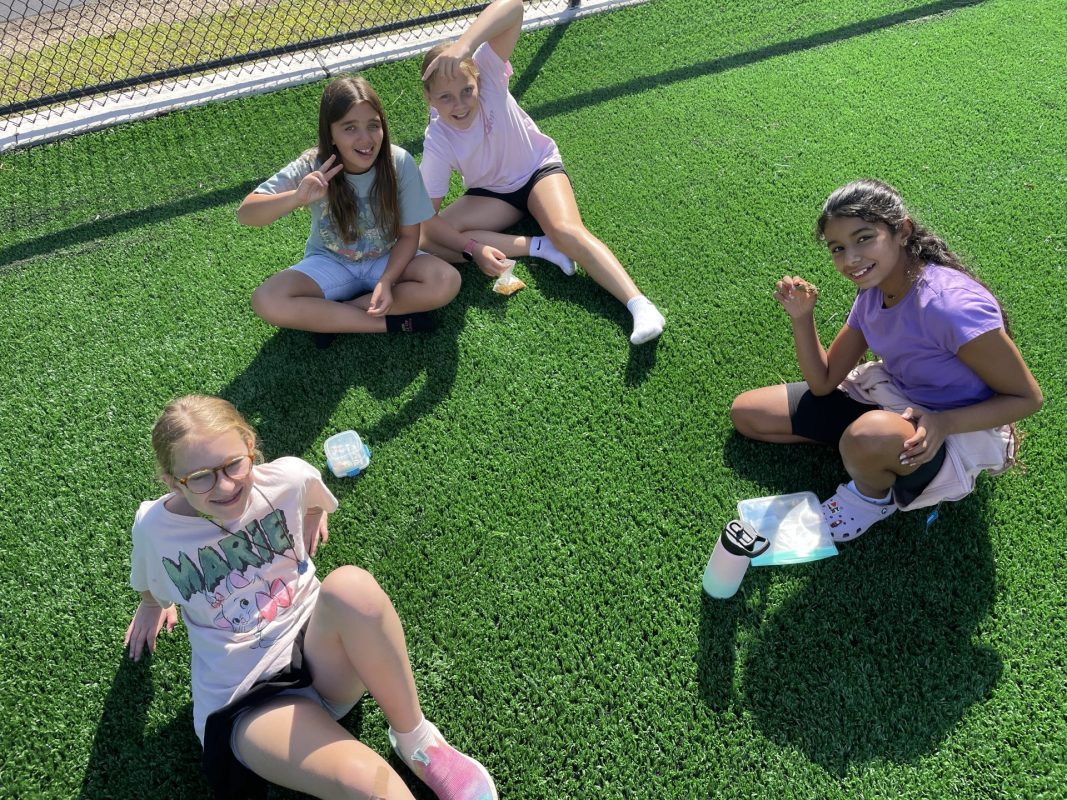
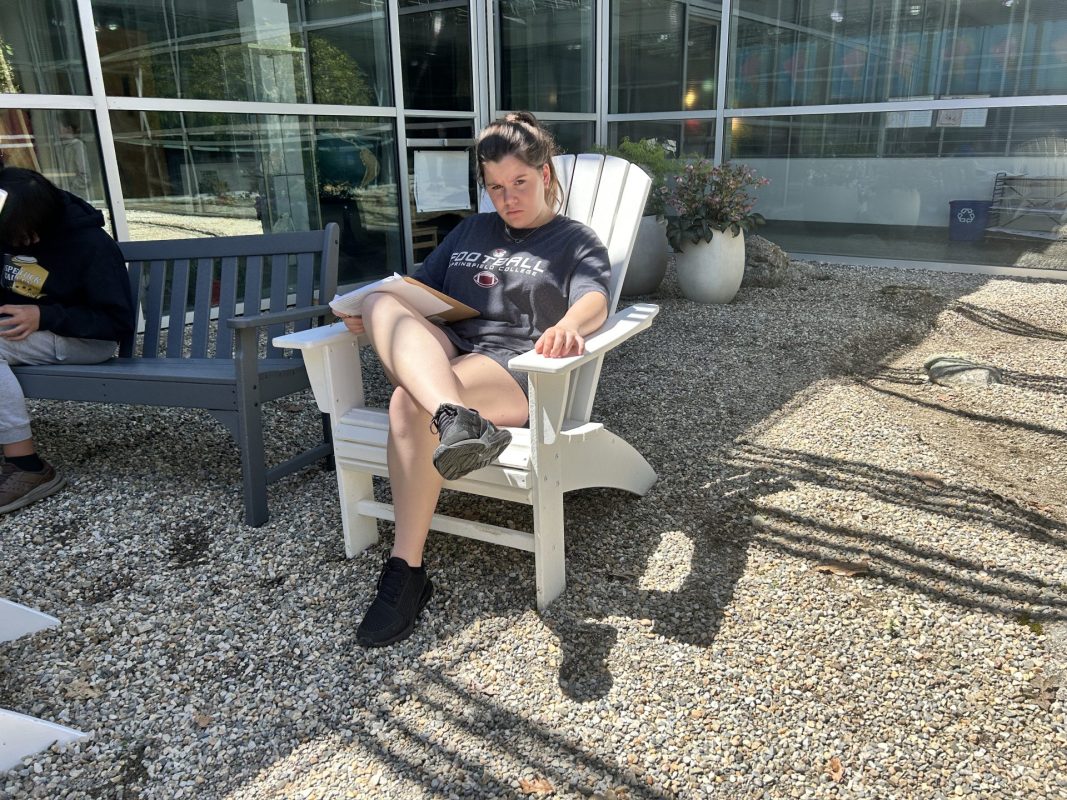
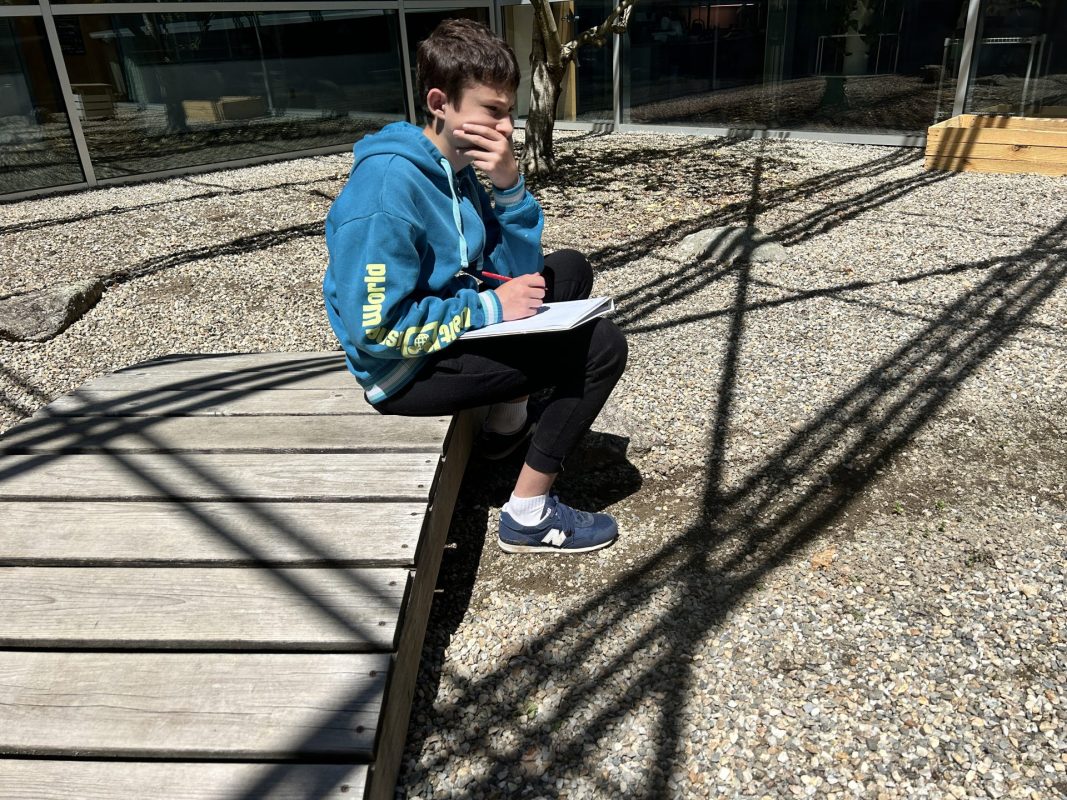
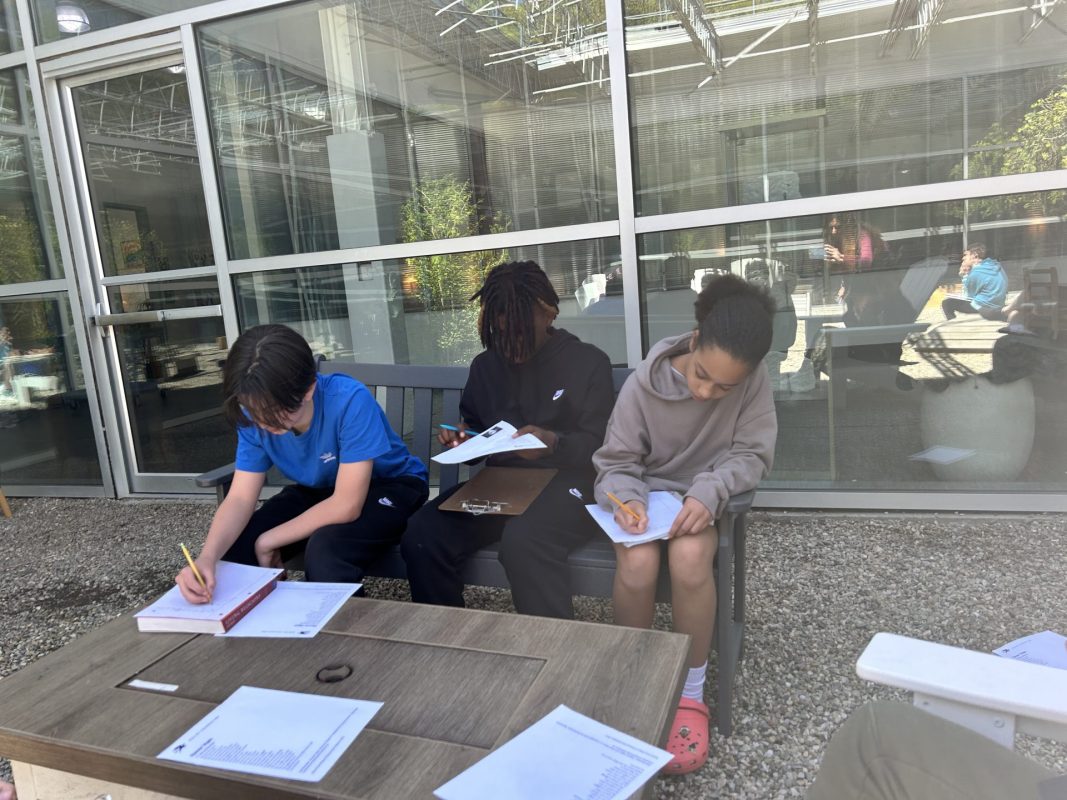
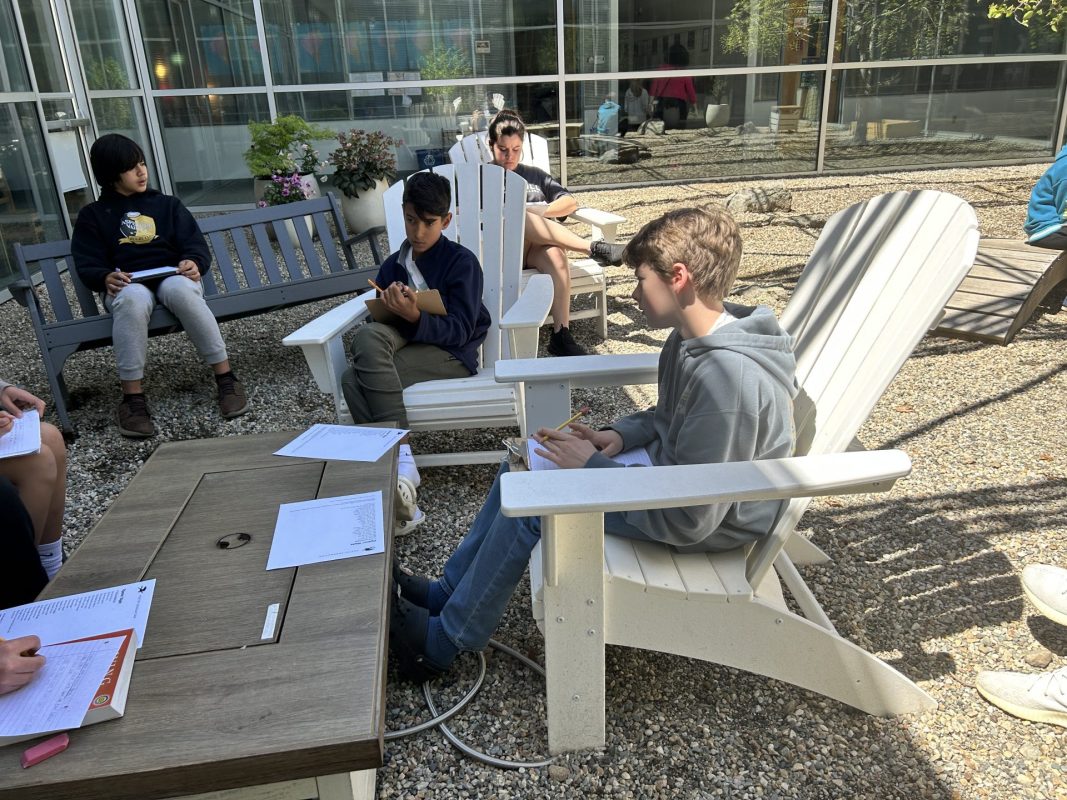
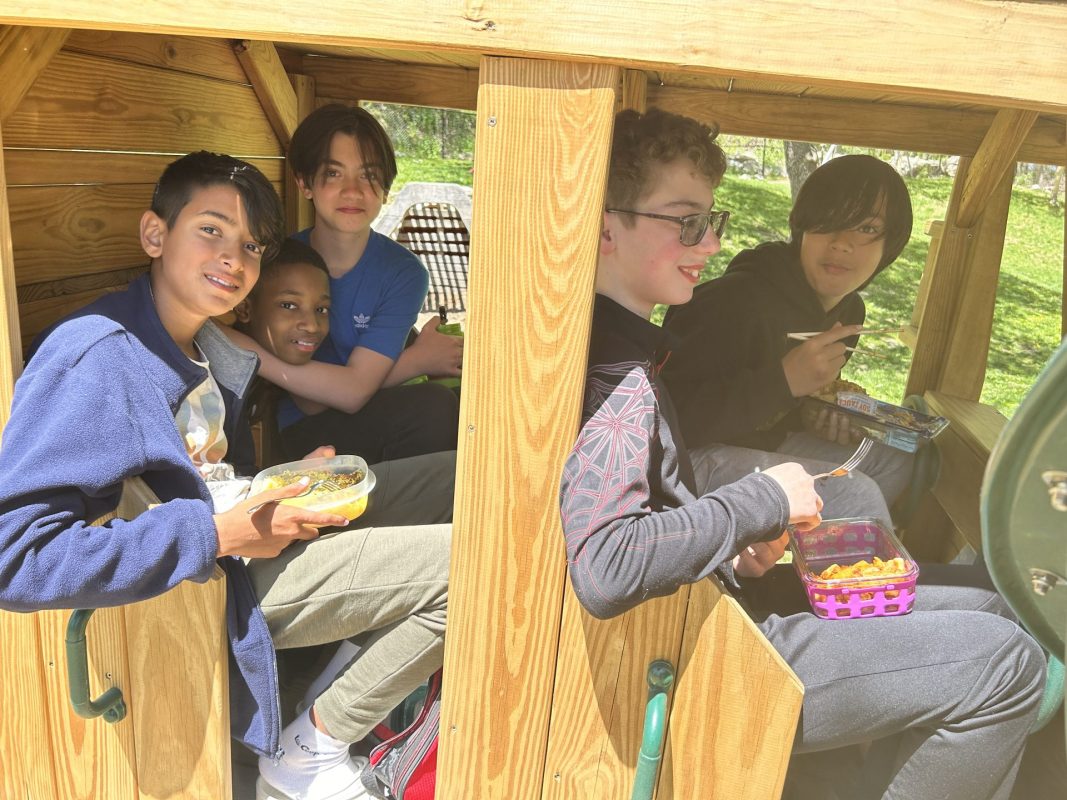
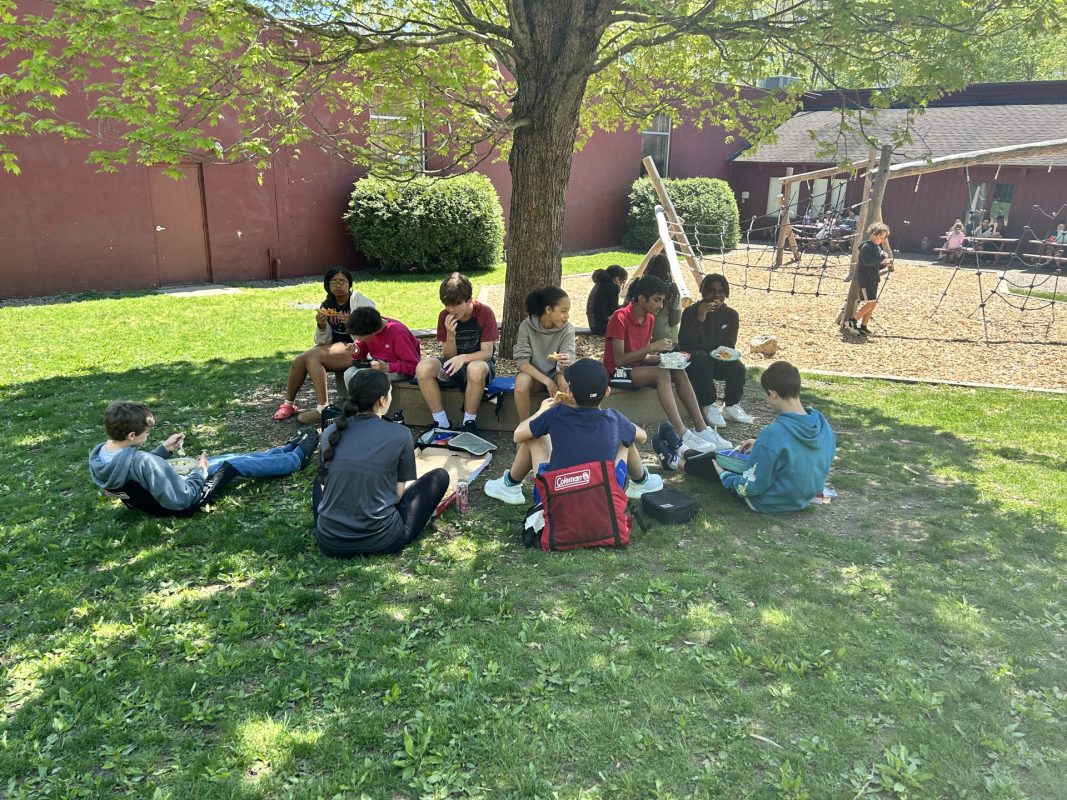
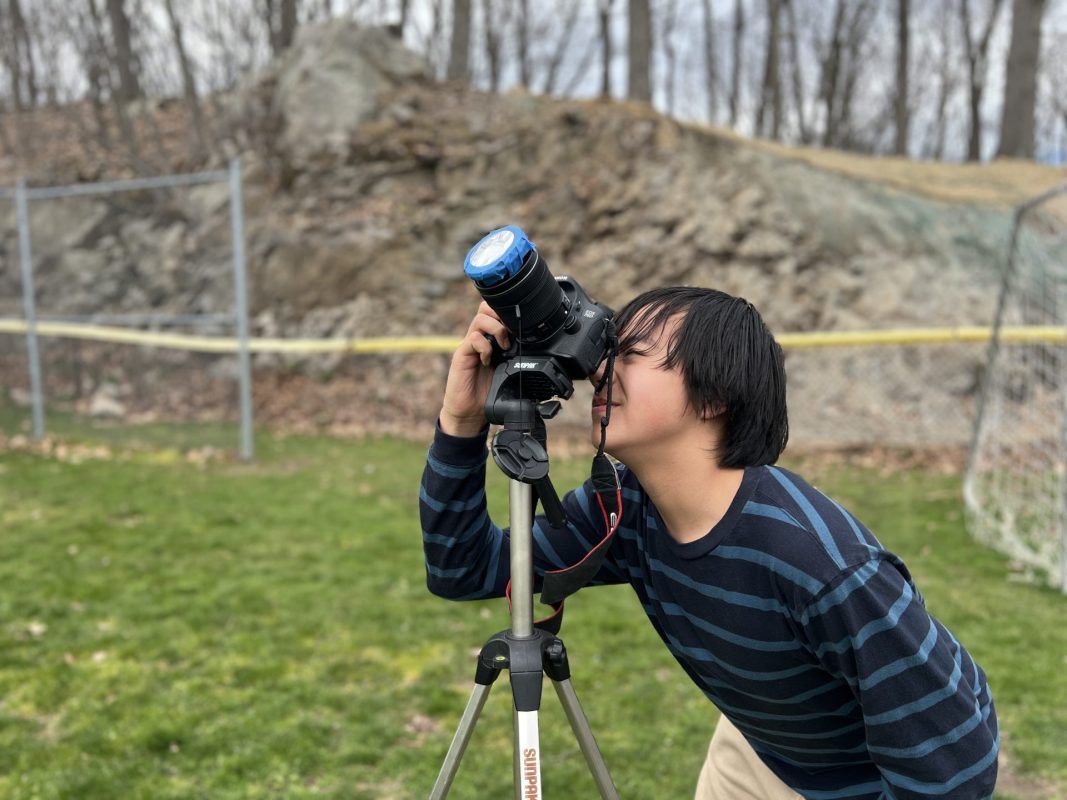
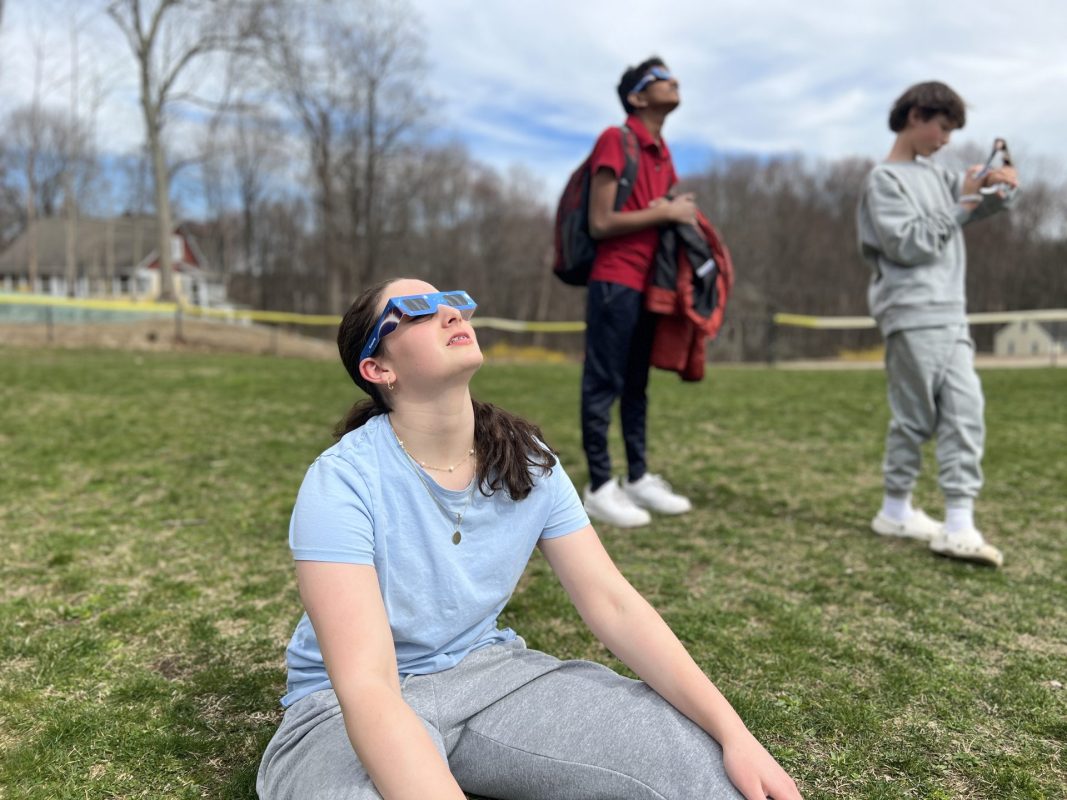
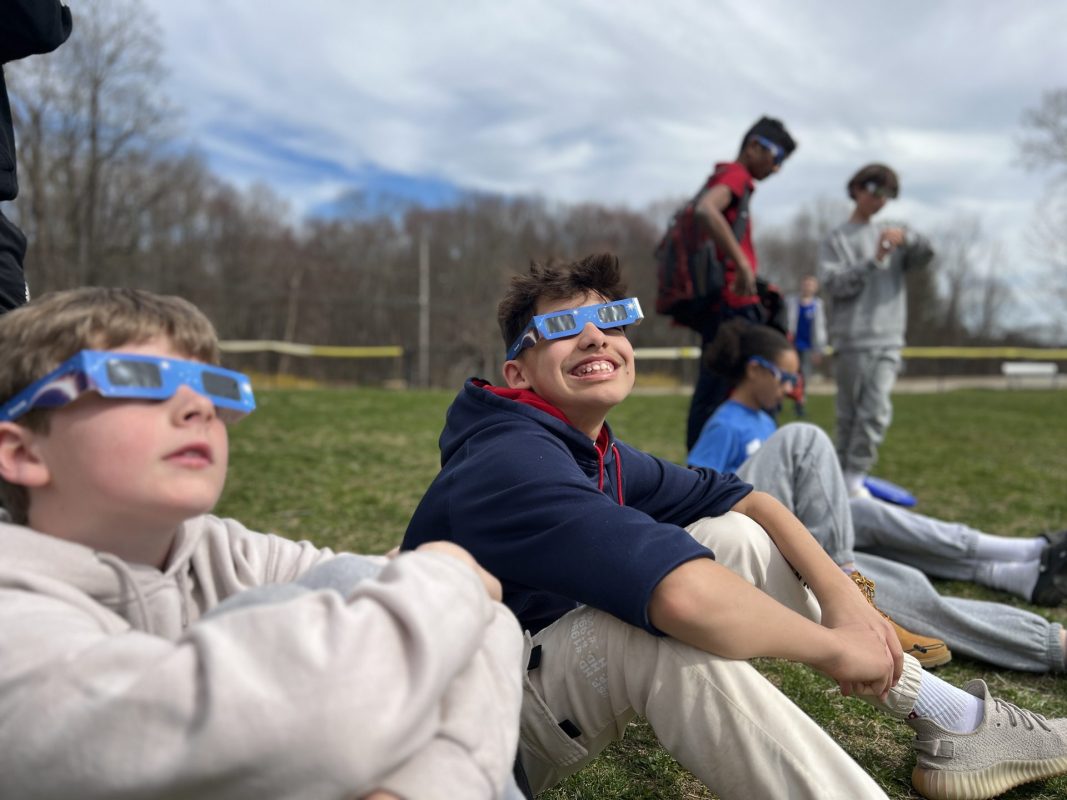
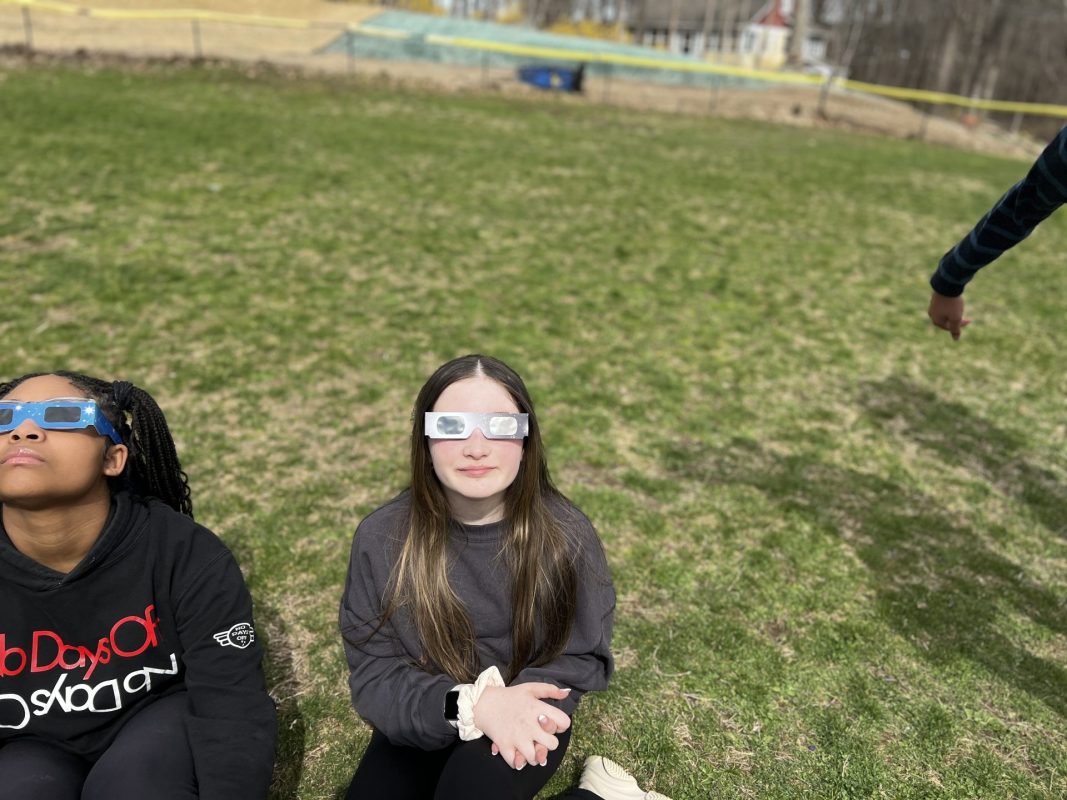
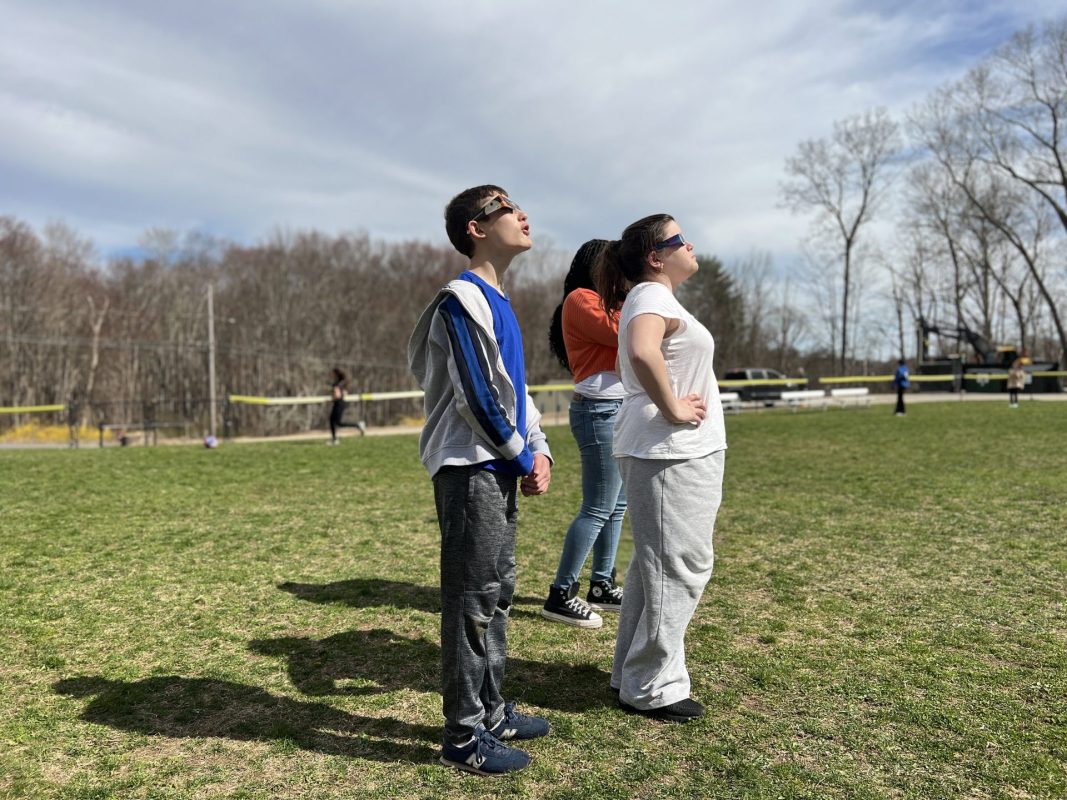
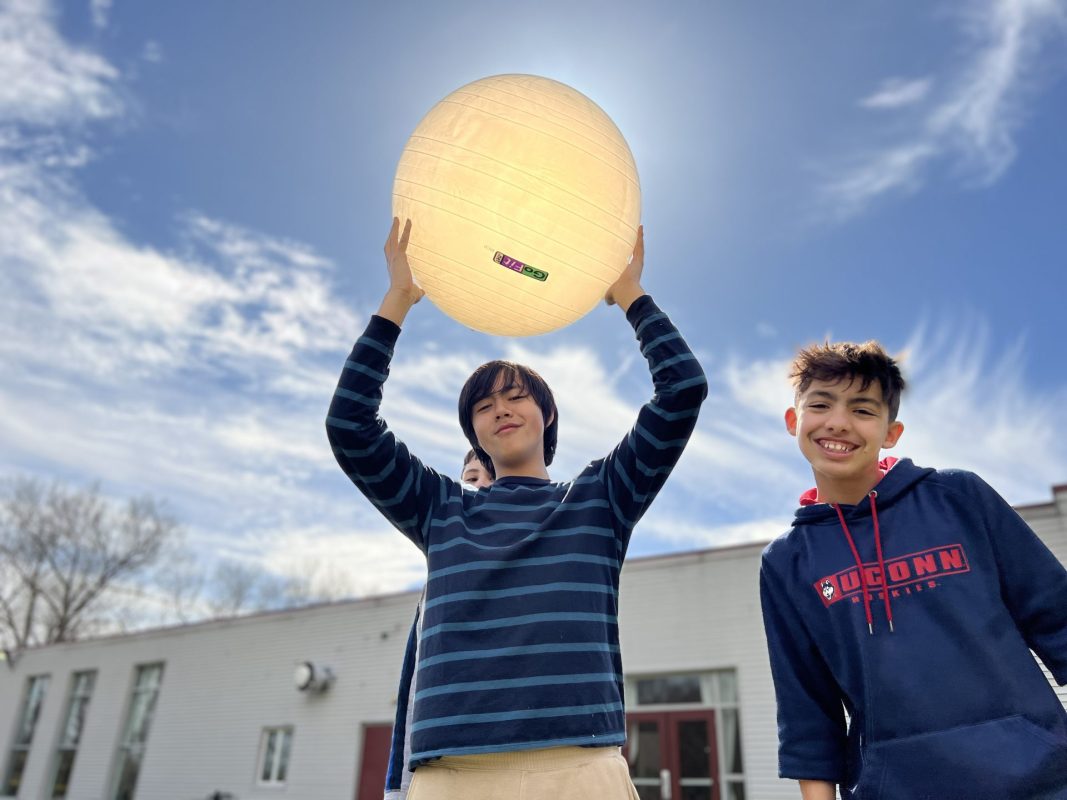
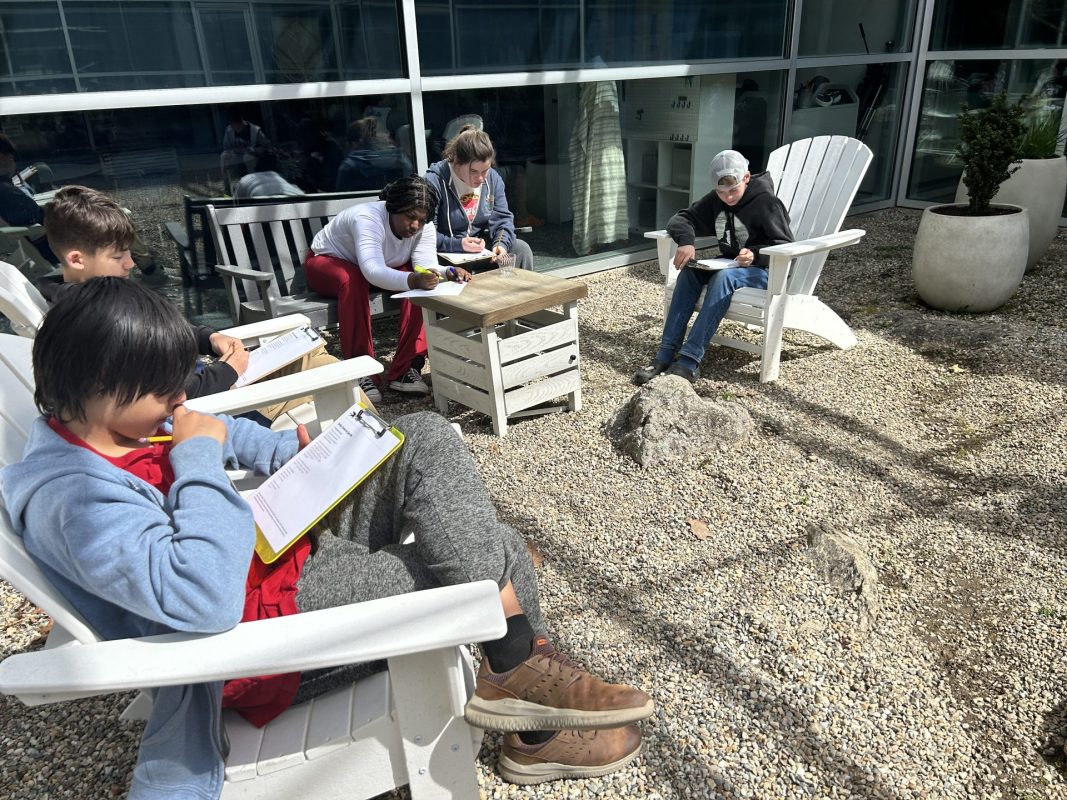
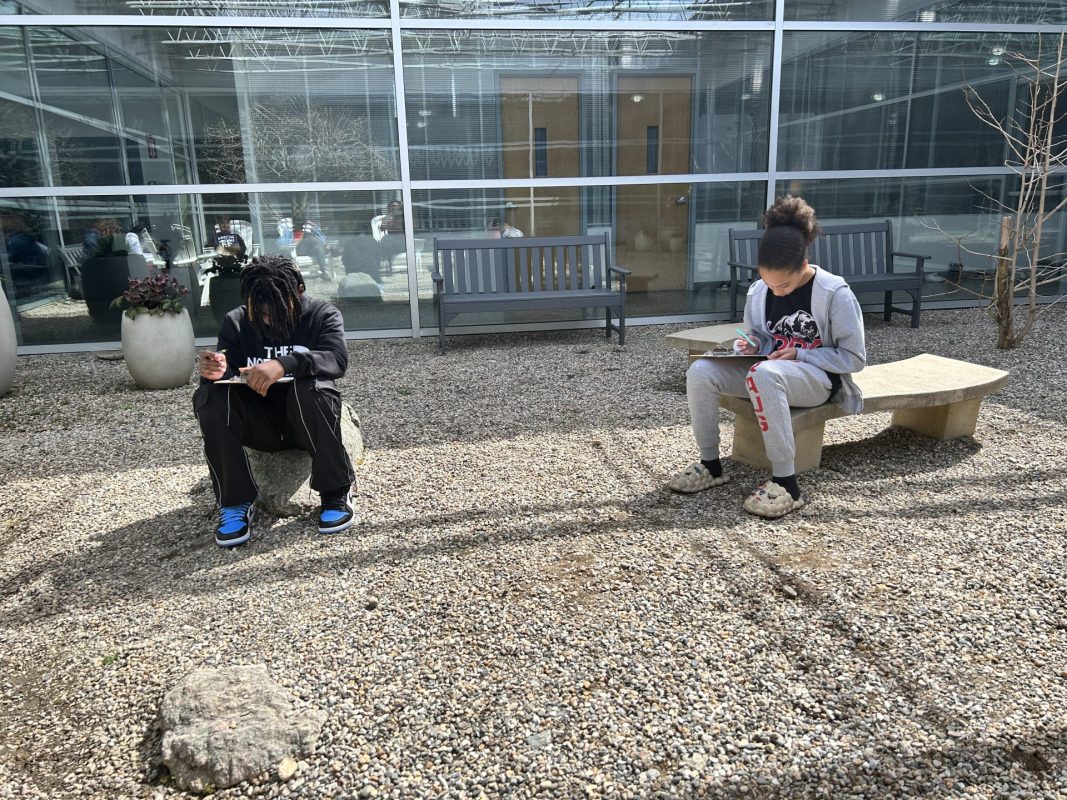
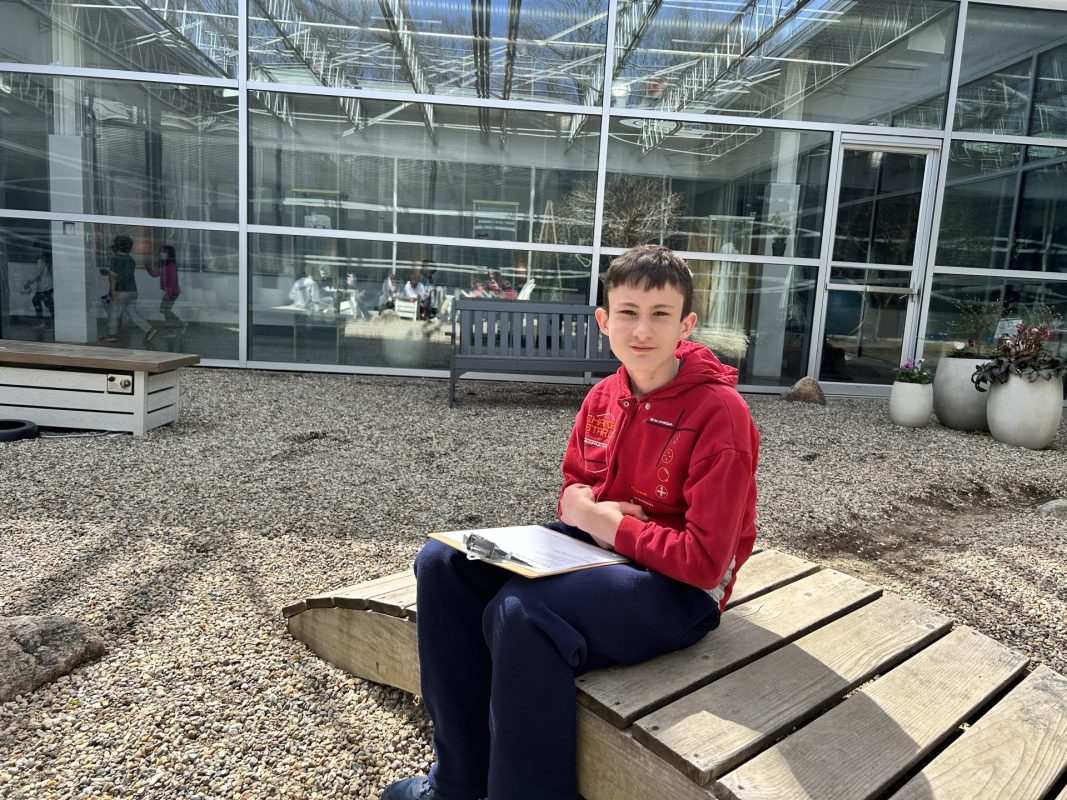
Well it is certainly feeling like spring from the warmer days, eating lunch outside, flowers popping, and all the extra sneezing from those pesky allergies creeping up. The Middle School also enjoyed putting on their glasses and getting outside on Monday to view the solar eclipse.

Here’s what went on in classes this week:

Humanities

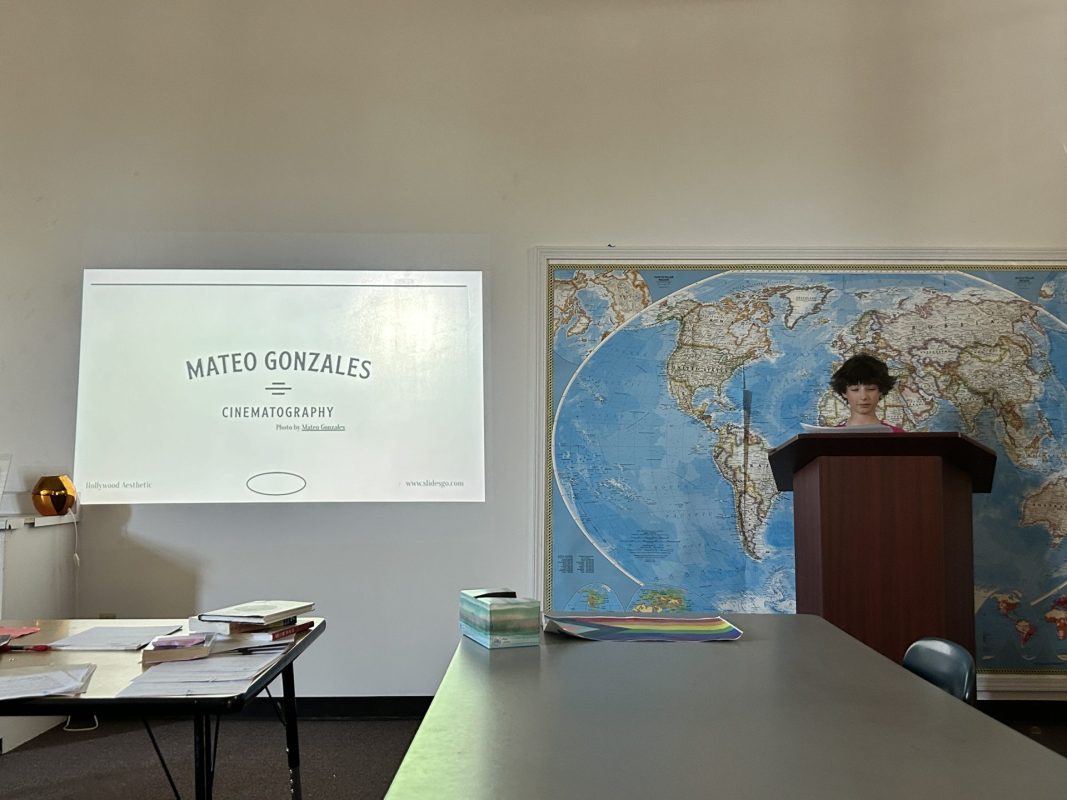
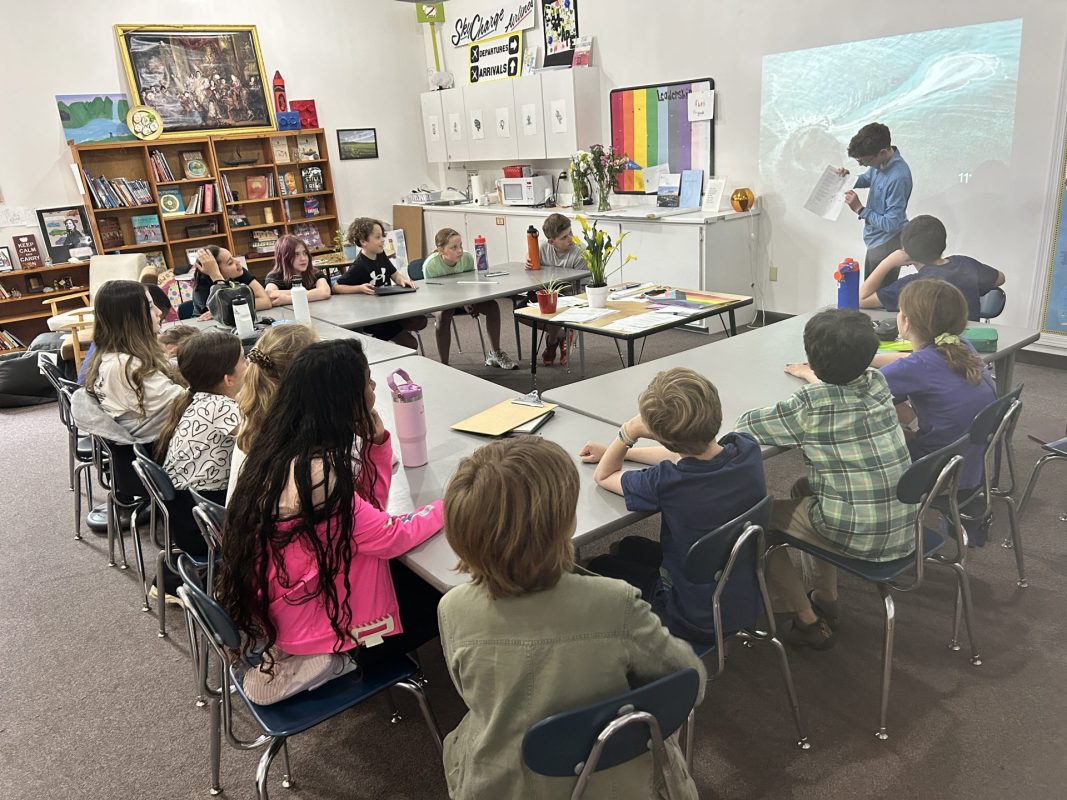
The 6th-grade Humanities class had a current events week, so they presented their work and had rich discussions about topics going on in the world right now. This group knows how to have informed conversations while offering their opinions respectfully. Additionally, they continue to annotate and move forward in the class novel, The Eye of Ra. Annotations lead our discussions with important moments to recall, questions to answer, and personal reactions to events. The class is also learning about the engineering and building of the pyramids of Egypt, as this is central to their novel, and they have been learning about the pyramid of Djoser and the Great Pyramids. Finally, the group expressed curiosity surrounding sandstorms after one occurred in this week’s reading. The class then learned about the climate of Egypt, when and how sandstorms occur there, and viewed a giant one from 2023.

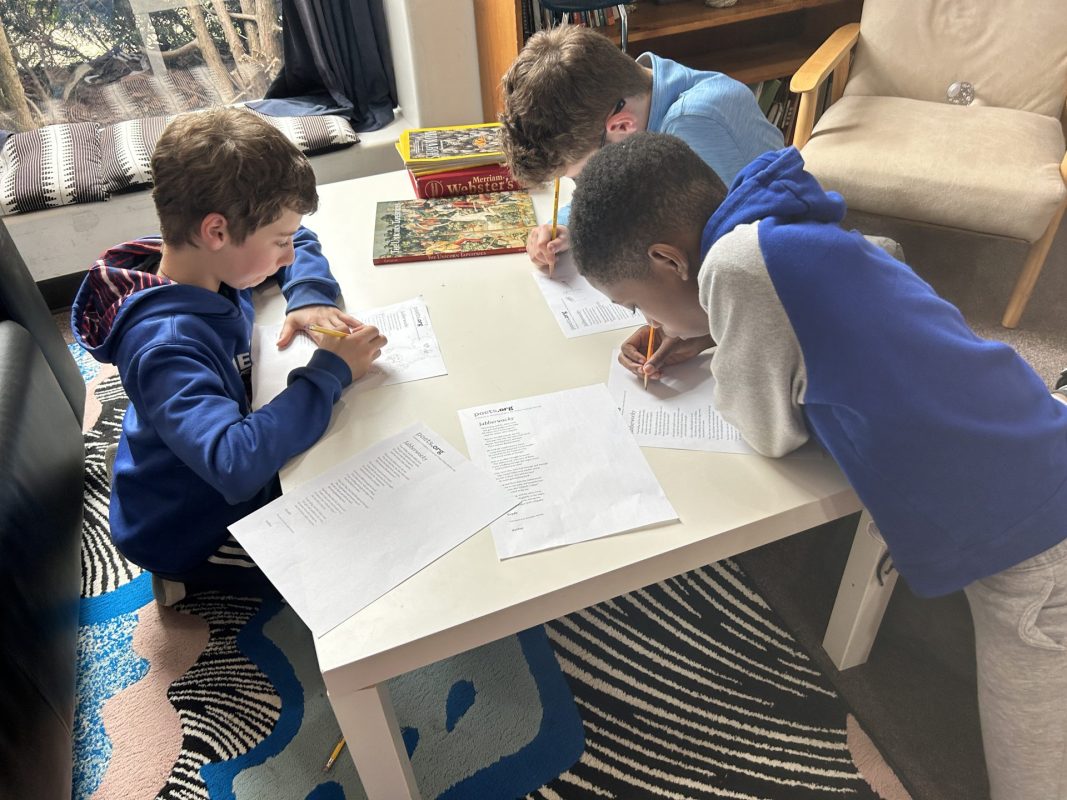
The 7th-grade Humanities class also had a current events week. There was a wide range of topics and discussions surrounding the presentations. Additionally, on Poetry Tuesday, we spent a bit of time on the poem “Turtle Came to See Me” by Margarita Engle, a Cuban American contemporary poet. The poem is a great example of how imagery can really make writing come to life. Additionally, the main message of the poem, that adults we see as experts can sometimes be wrong offered a great discussion about how we are all human. Next, 7th-grade students drafted their literary analysis essays for A Long Walk to Water using quotations to support Salva’s claim that perseverance made all the difference in his life.

This week in 8th grade American History with Mr. Newman, students began examining the end of the Civil War and the process of Reconstruction. Students learned about the Emancipation Proclamation, The Compromise of 1877, and the assassination of Abraham Lincoln, to name a few. Next week, they will move into the Gilded Age. With Mrs. Lamb, students continue to read and annotate She Came to Slay, a biography about Harriet Tubman. This week’s annotations prove that this group is moving into high school thinking. The class also took a day to study African American Spirituals: what they are, how they became an important part of Black life during and after slavery, and how they continue to represent an important part of community and culture among Black Americans. They also learned how they played a role in the Underground Railroad. Students read lyrics to a few songs and listened to recordings from the Library of Congress as well as recordings from Marian Anderson, Louie Armstrong, contemporary gospel singers, and Fisk University’s Jubilee Singers. Drafts of expert research papers are due on 4/22.

Math

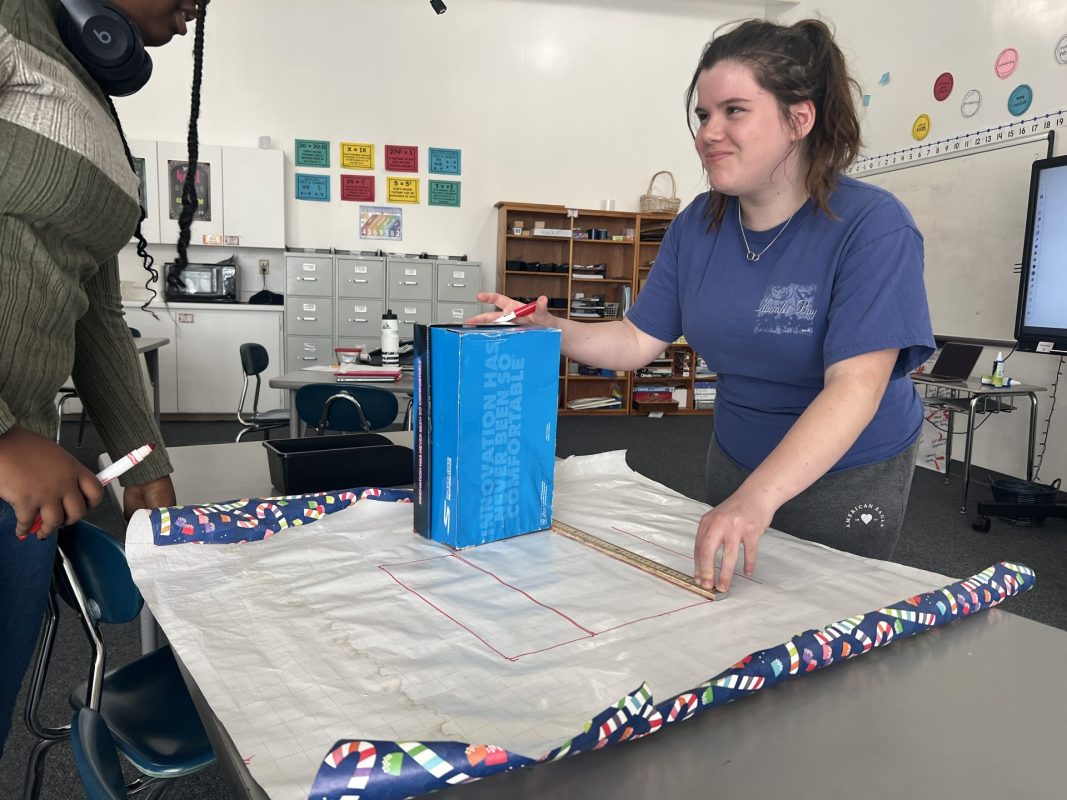
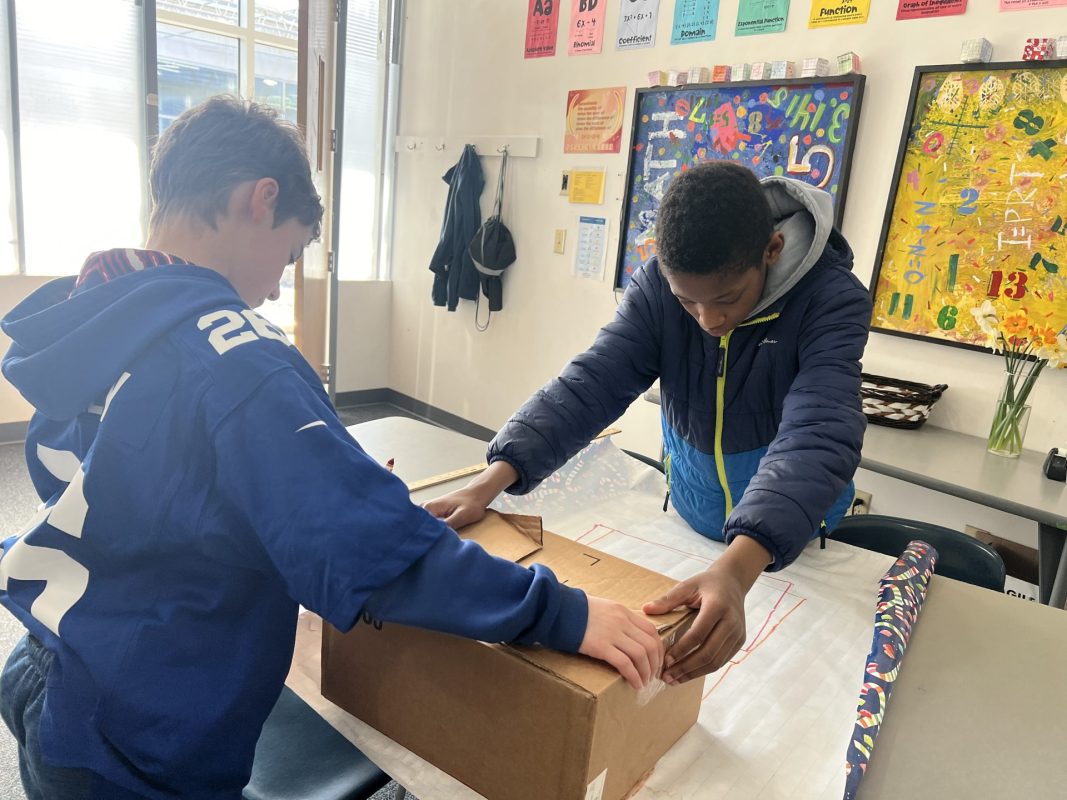
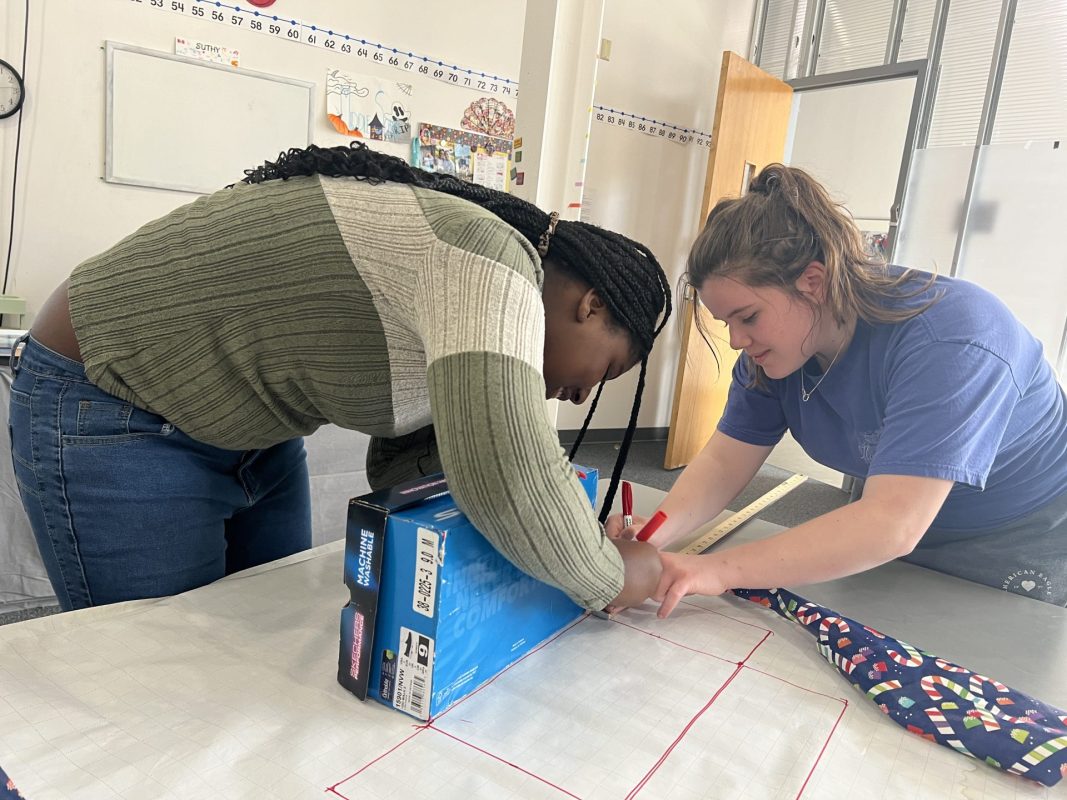
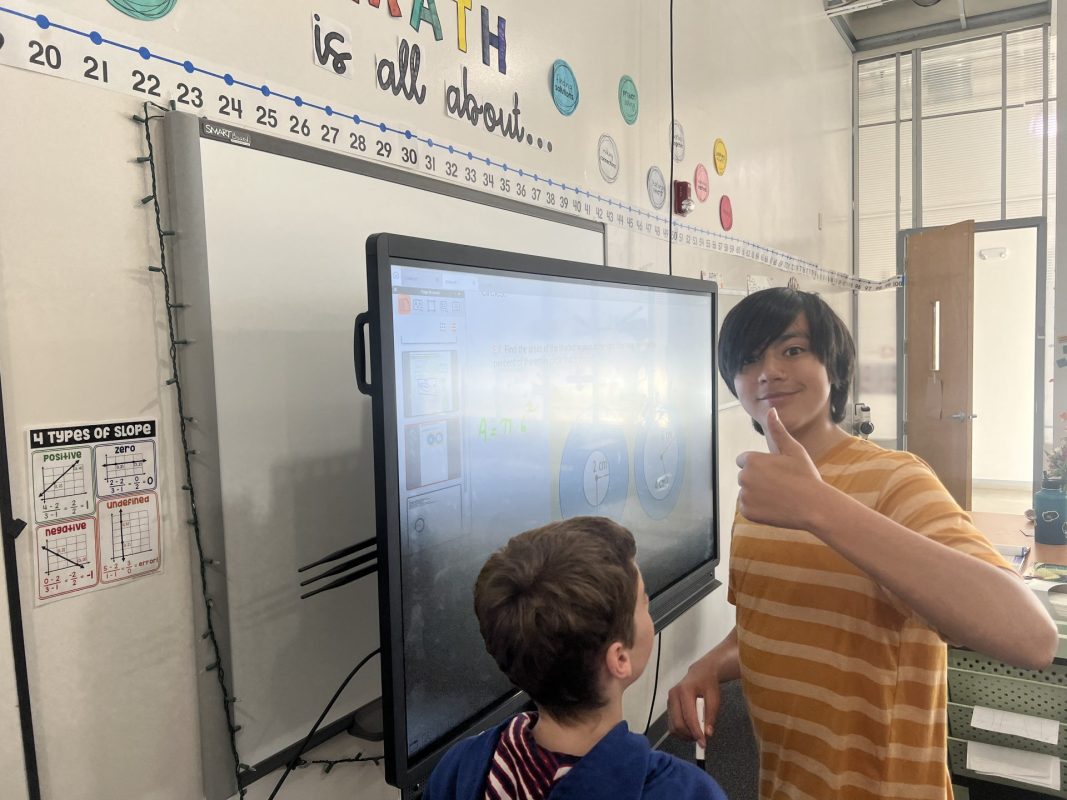
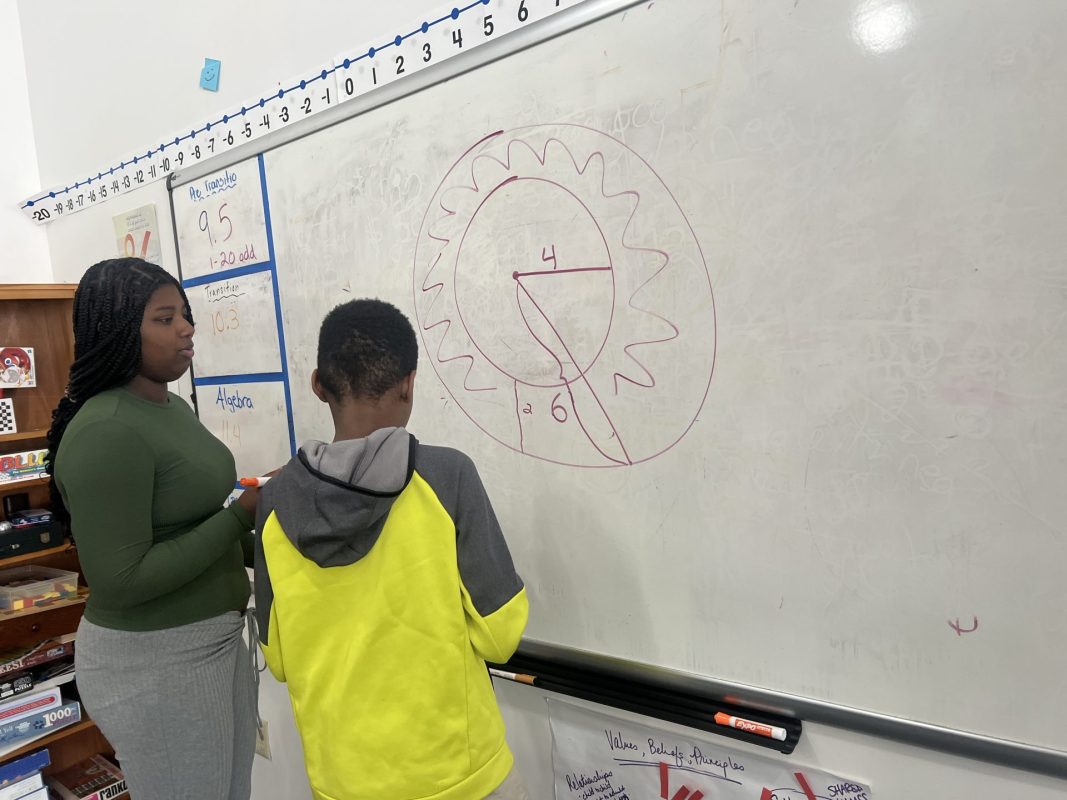
Pre-Transition students had an engaging week as they were introduced to Chapter 9’s focus on area and volume. From mastering operations of arithmetic to calculating the area of a triangle and parallelogram, students were immersed in the essential concepts that form the foundation of geometry. Through a variety of activities and real-life examples, students gained a deeper understanding of how to calculate and compare different shapes’ areas, setting the stage for more complex geometric explorations in the future.

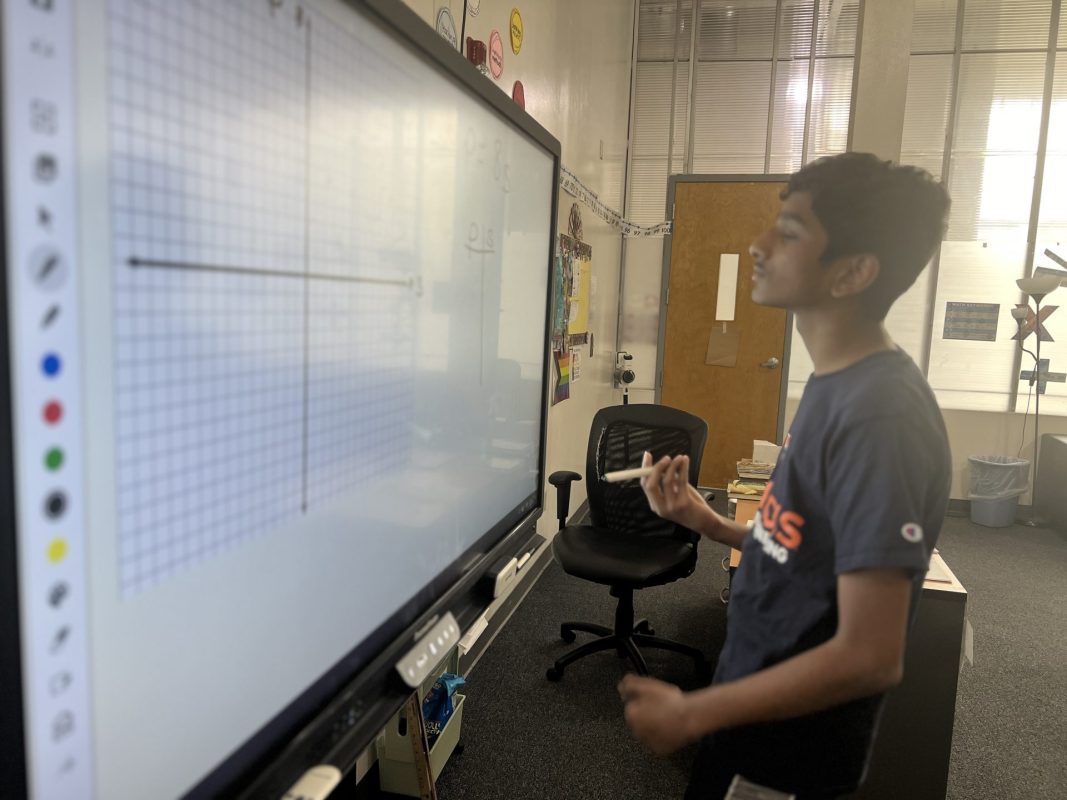
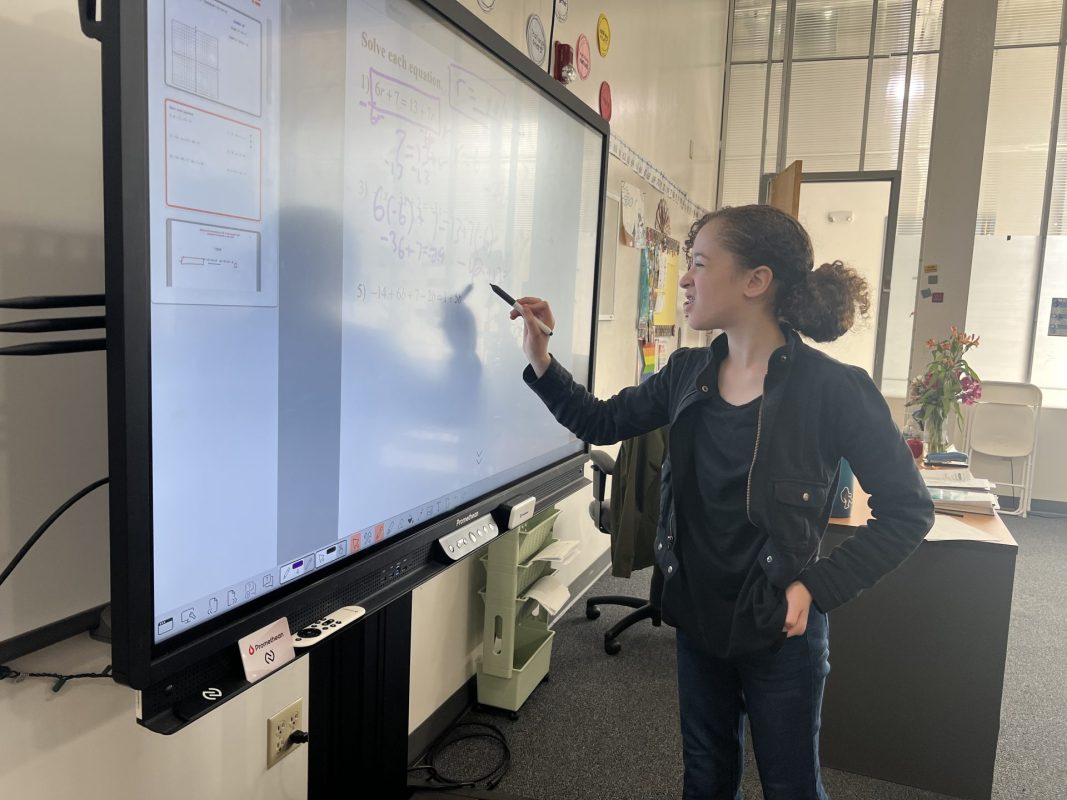
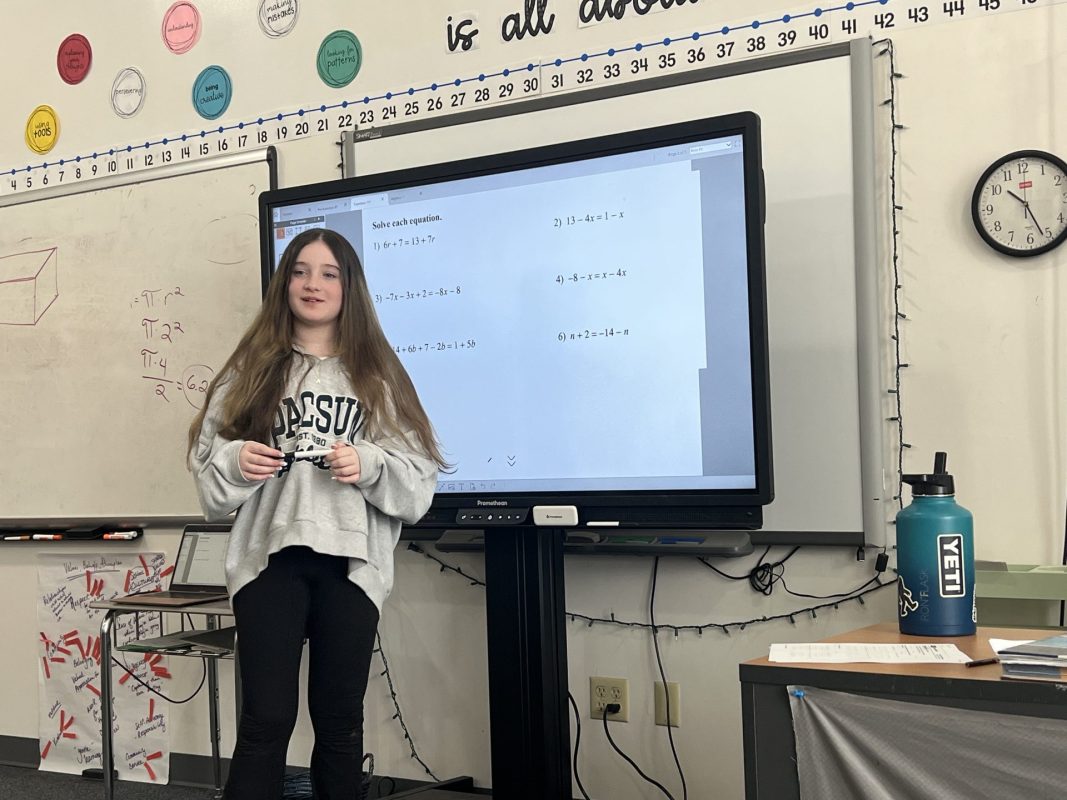
Throughout this week, Transition students worked on linear equations and inequalities in their Transition mathematics class. They kicked off by exploring how to find solutions by analyzing graphs, followed by mastering the art of solving equations in the form of ax + b = cx + d. Additionally, students learned about graphing linear inequalities of the type y < ax + b. These fundamental concepts are building blocks in understanding the relationships between variables and will continue to shape their problem-solving skills moving forward.

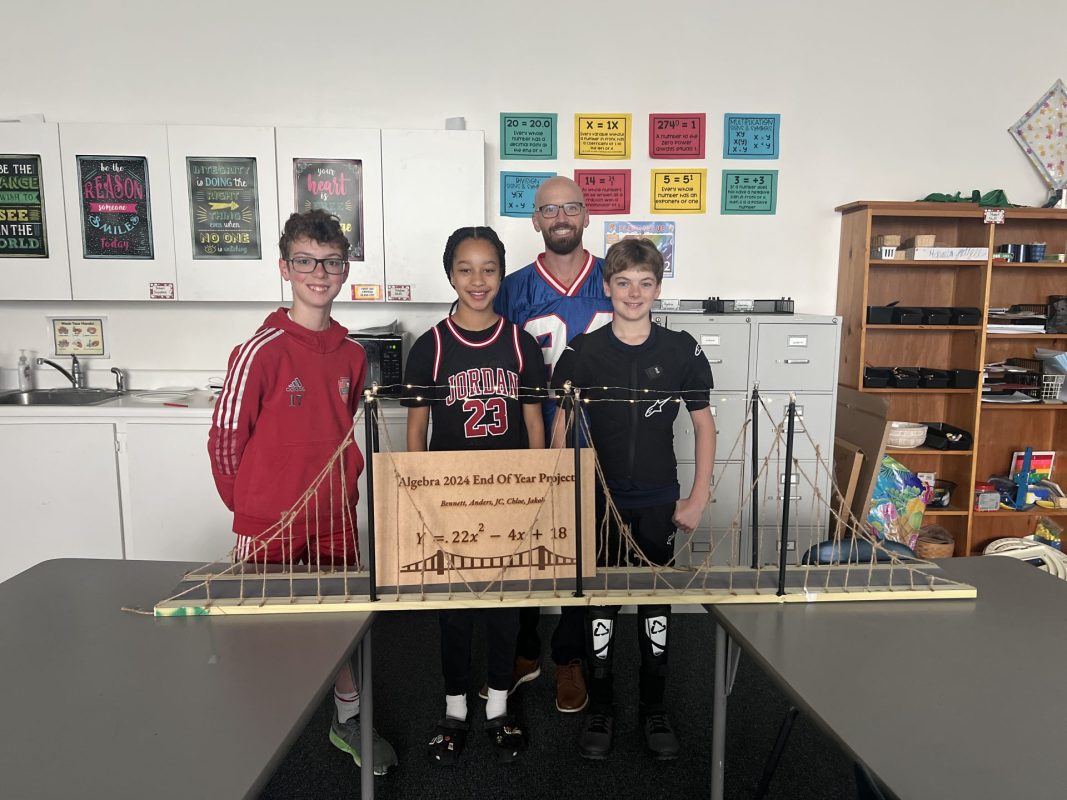
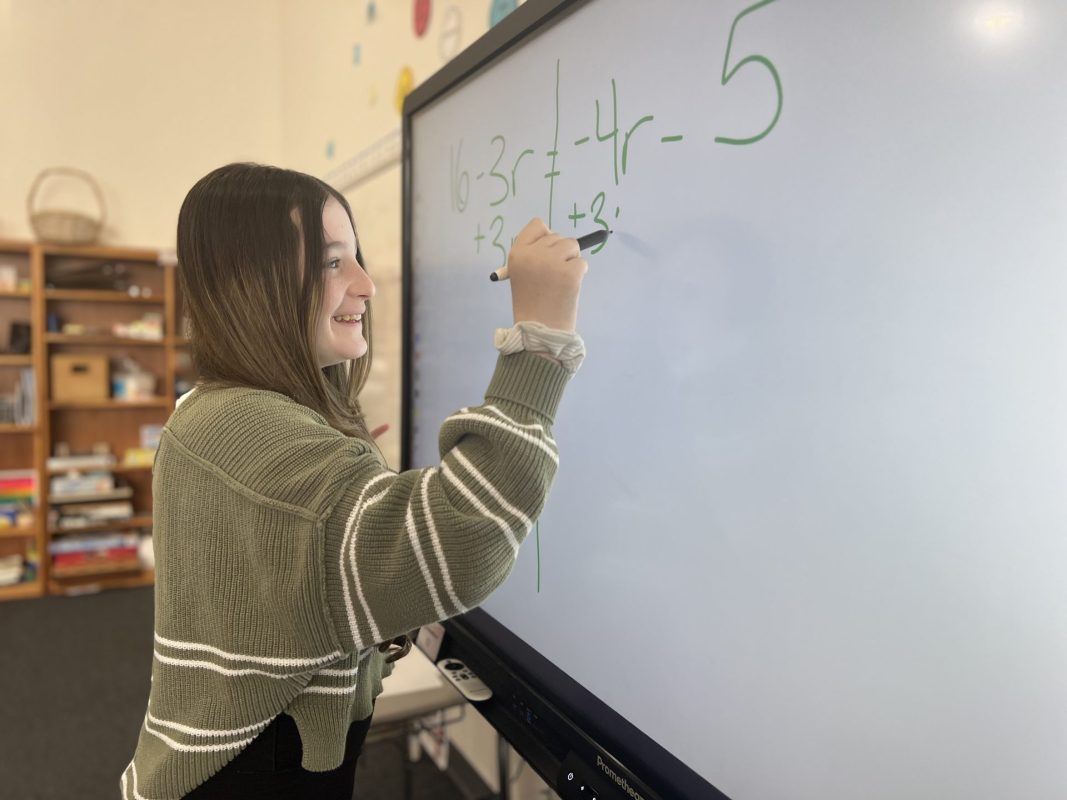
This week, as Algebra students embarked on their journey into the world of polynomials, they worked on exploring concepts such as investments intertwined with polynomials. They tackled the classification of polynomials, learning how to differentiate between terms like binomials, trinomials, and more. Additionally, they honed their skills in multiplying a polynomial by a monomial, mastering the art of these mathematical operations. With this knowledge, students are well on their way to unraveling the mysteries of algebraic expressions and equations.

The geometry class has been working on finding the area of a regular polygon, using their knowledge of special right triangles and the Pythagorean theorem to find the apothem. They have also reviewed simplifying radicals, which are needed to express various lengths of the sides of a right triangle.

Science

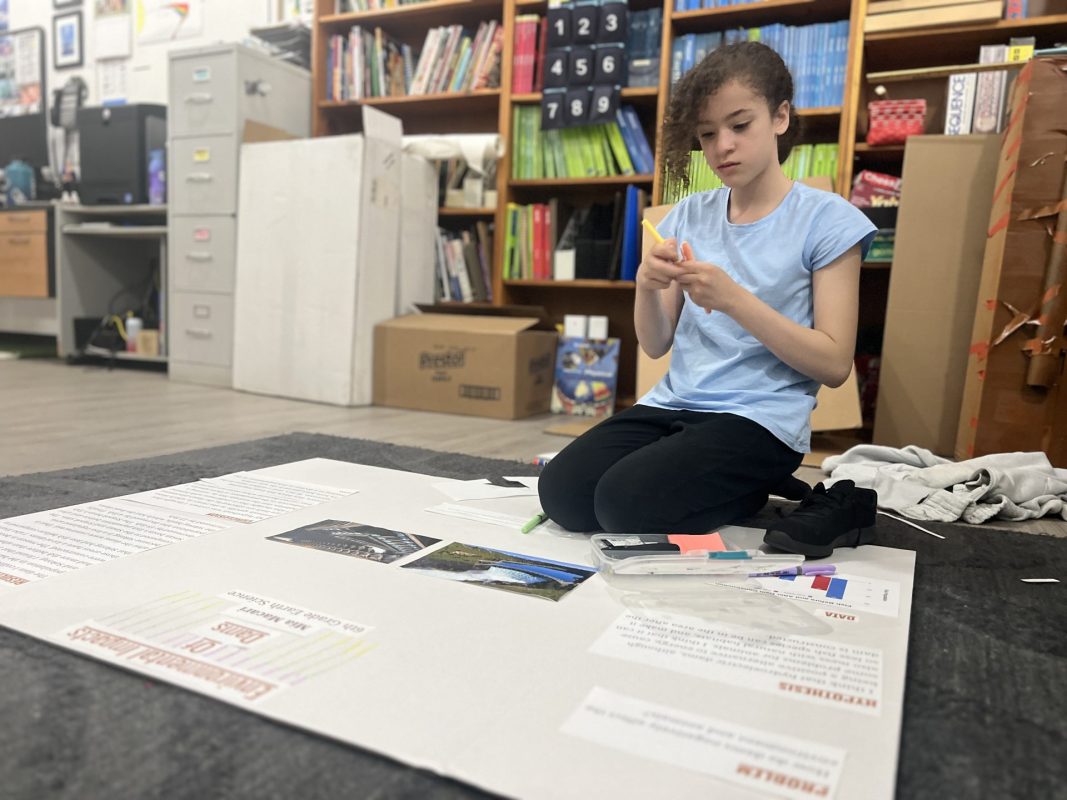
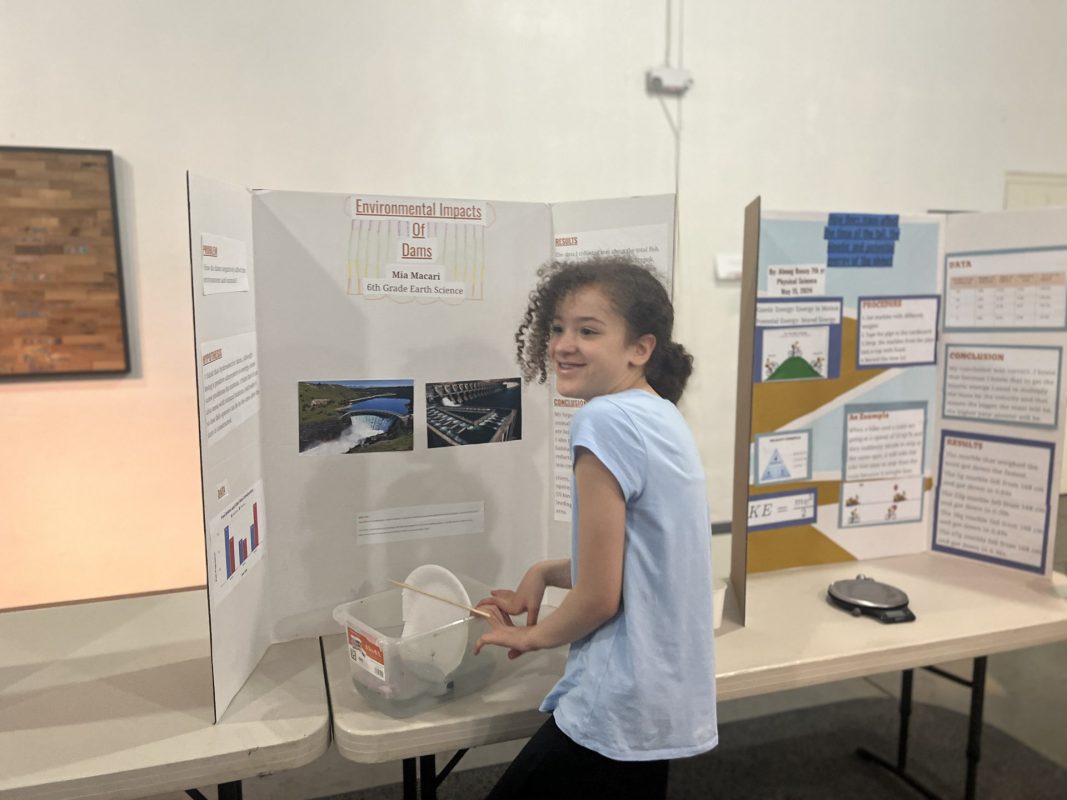
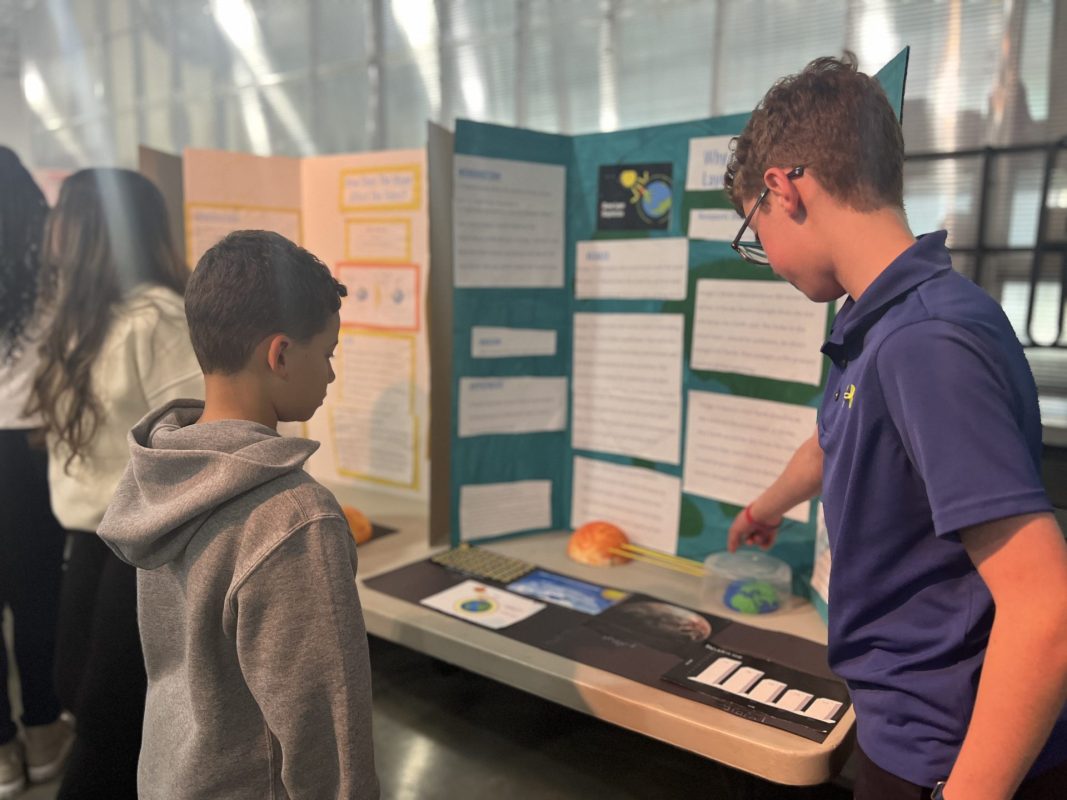
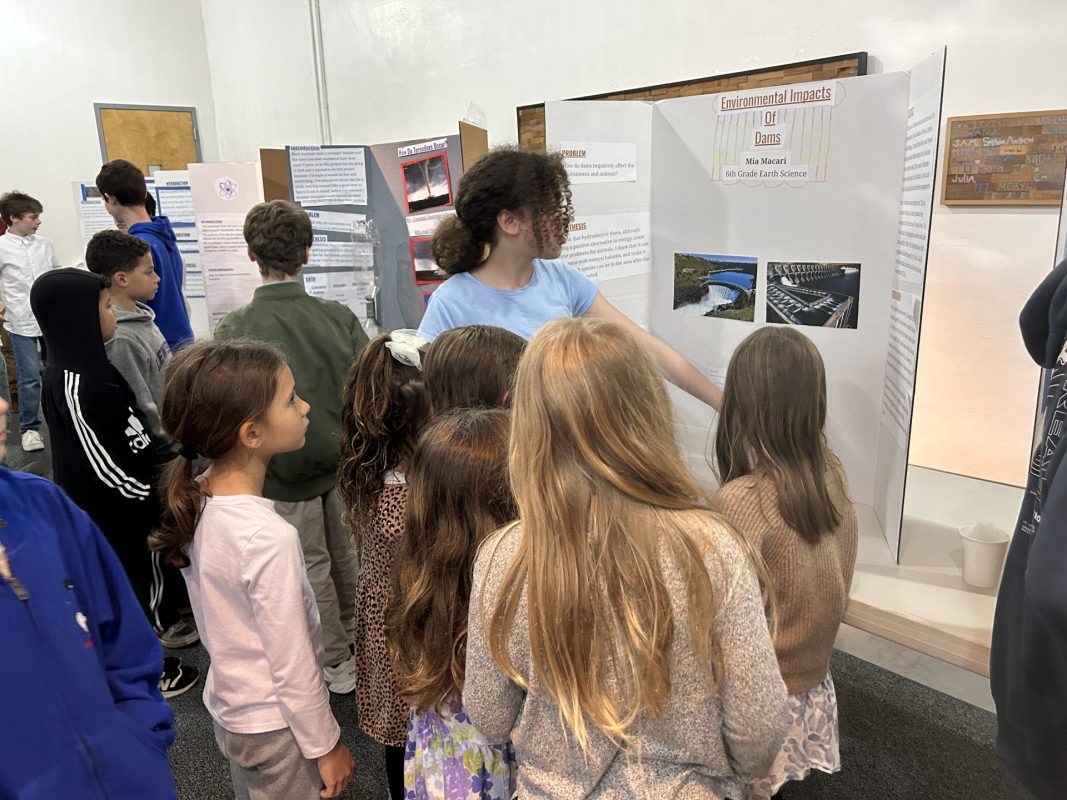
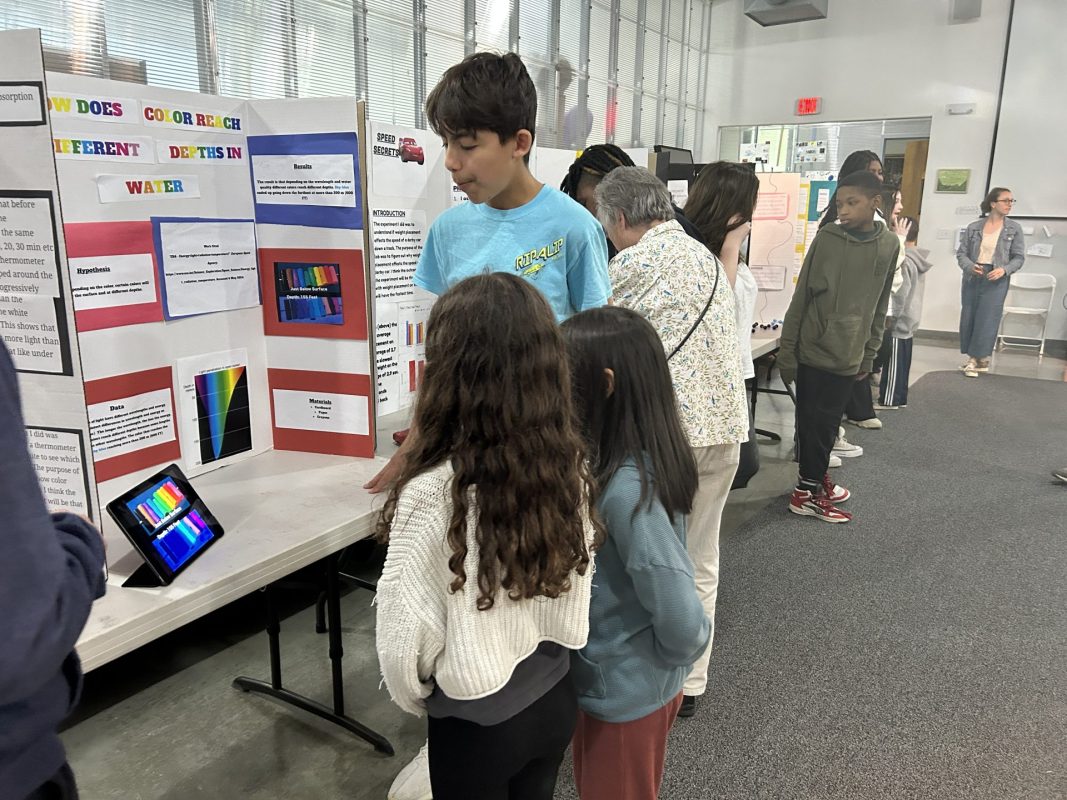
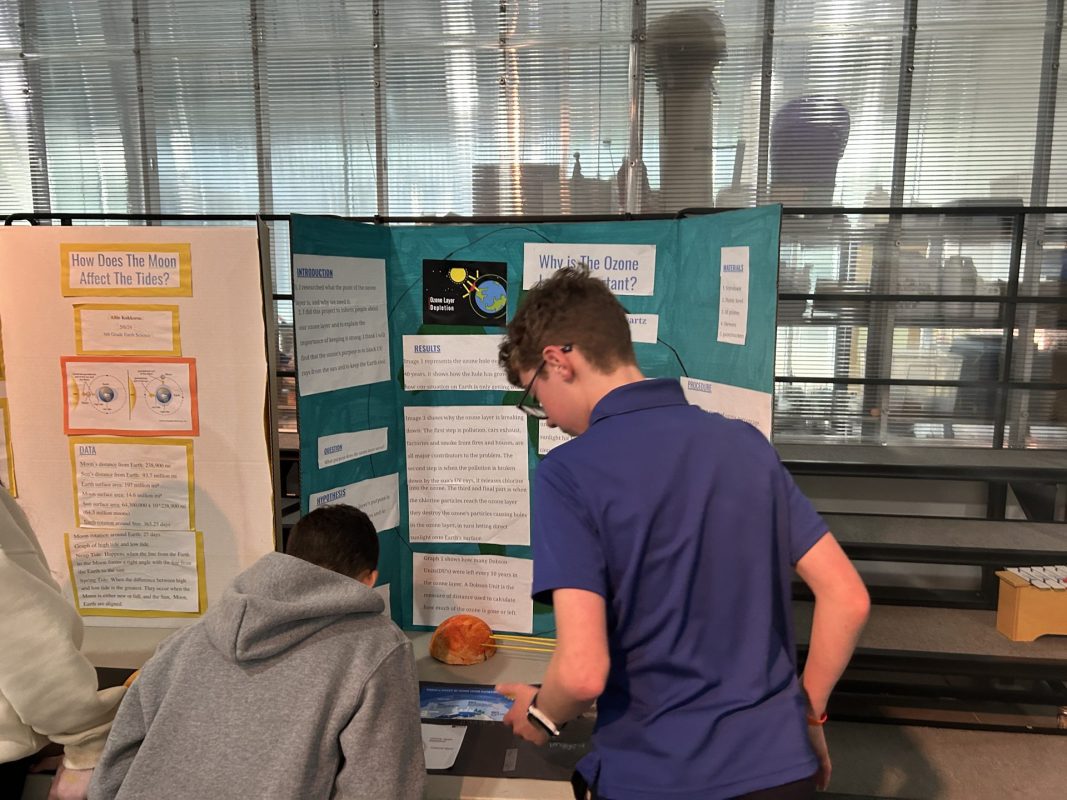
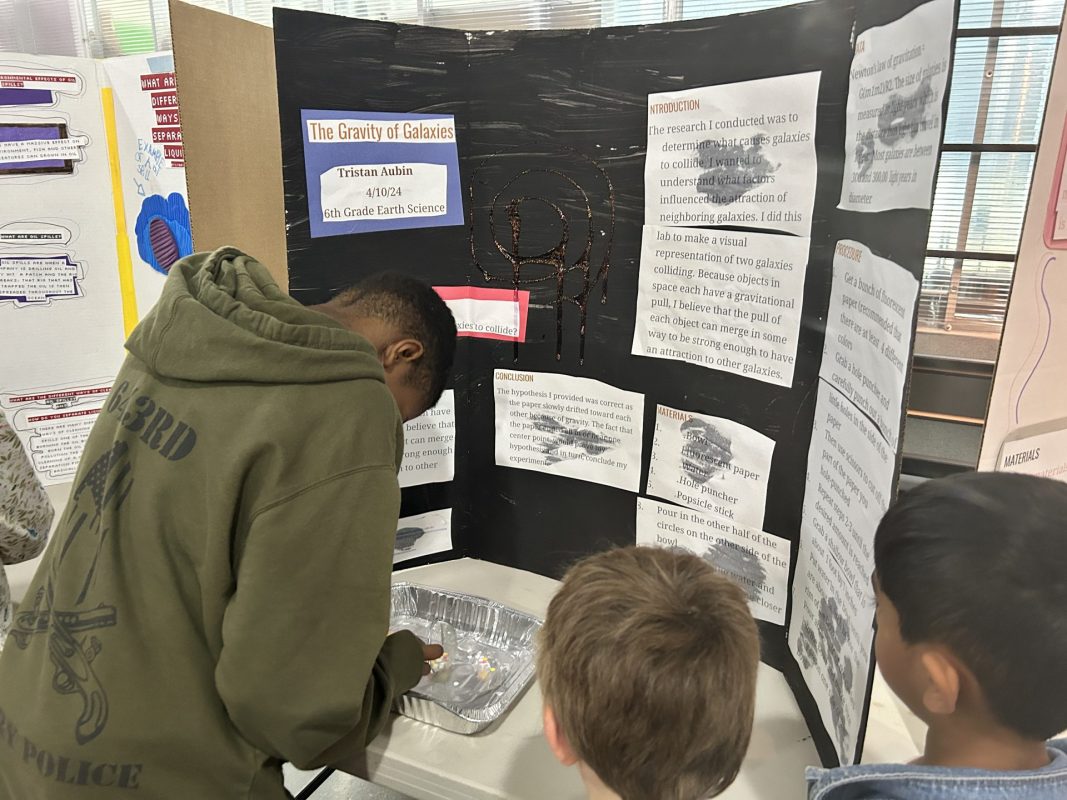
In the 6th year of Earth Science studies, students have completed their unit on eclipses, diving deep into the celestial alignment that causes these remarkable phenomena. Following their lessons, students had the unique opportunity to witness an eclipse firsthand this past Monday, allowing them a rare and awe-inspiring experience of this natural occurrence.

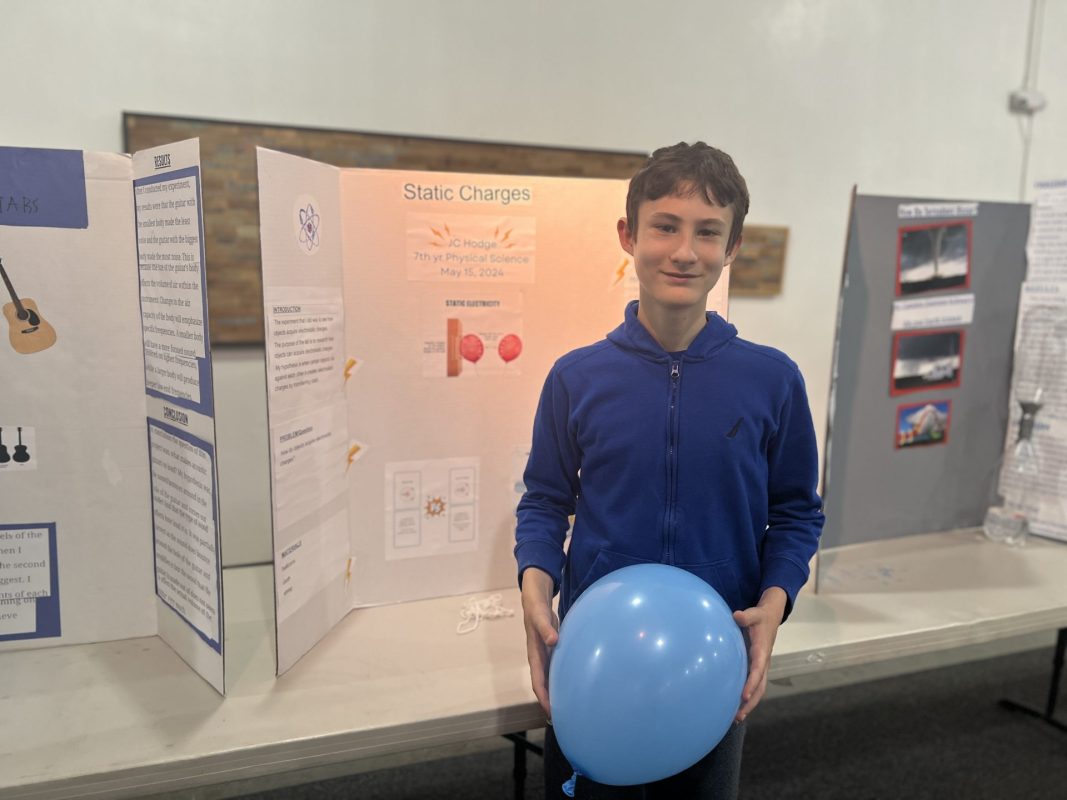
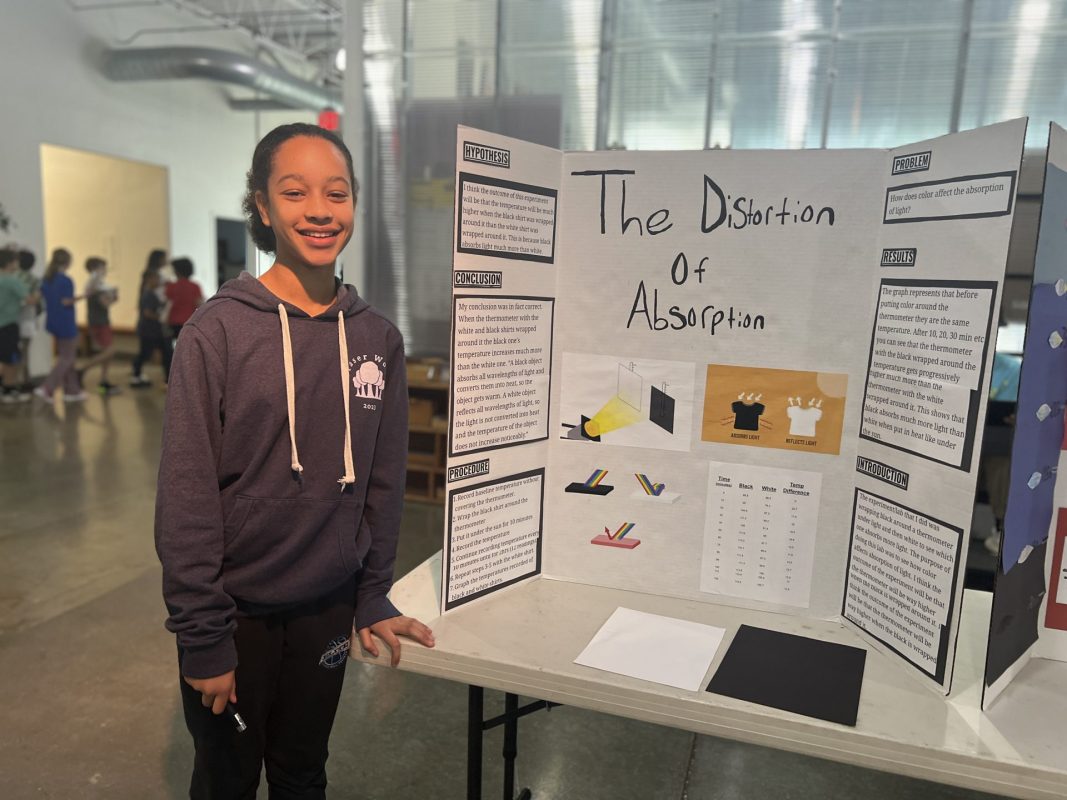
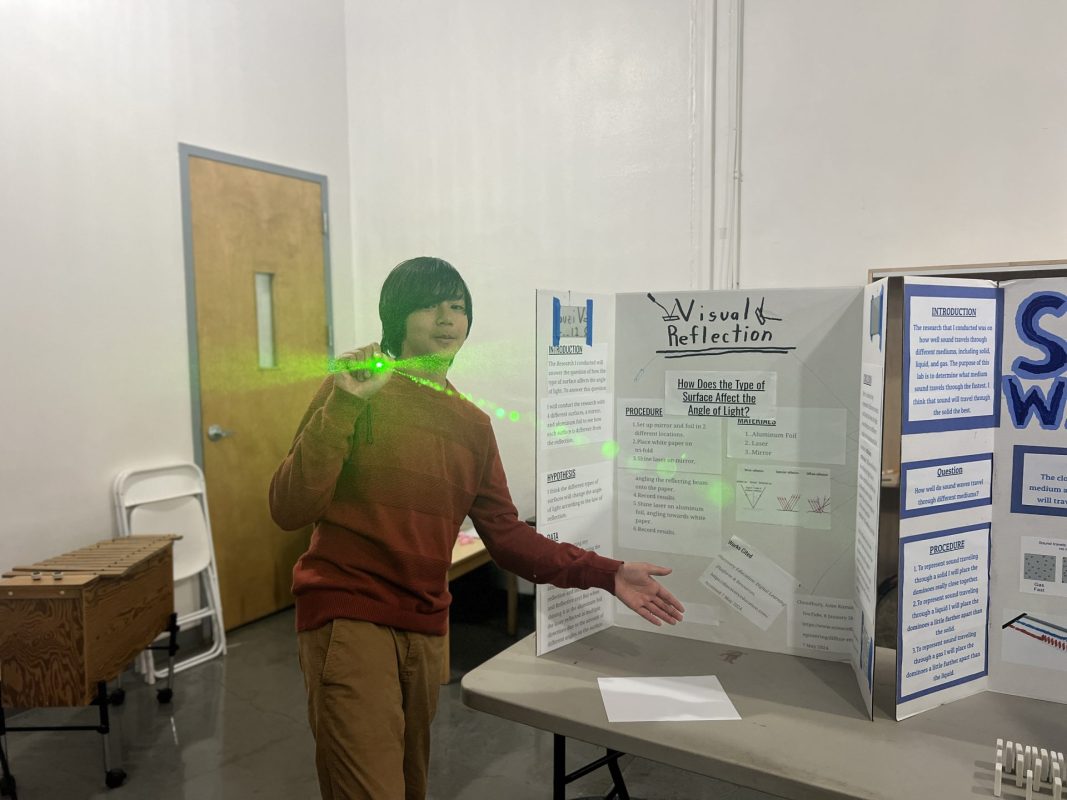
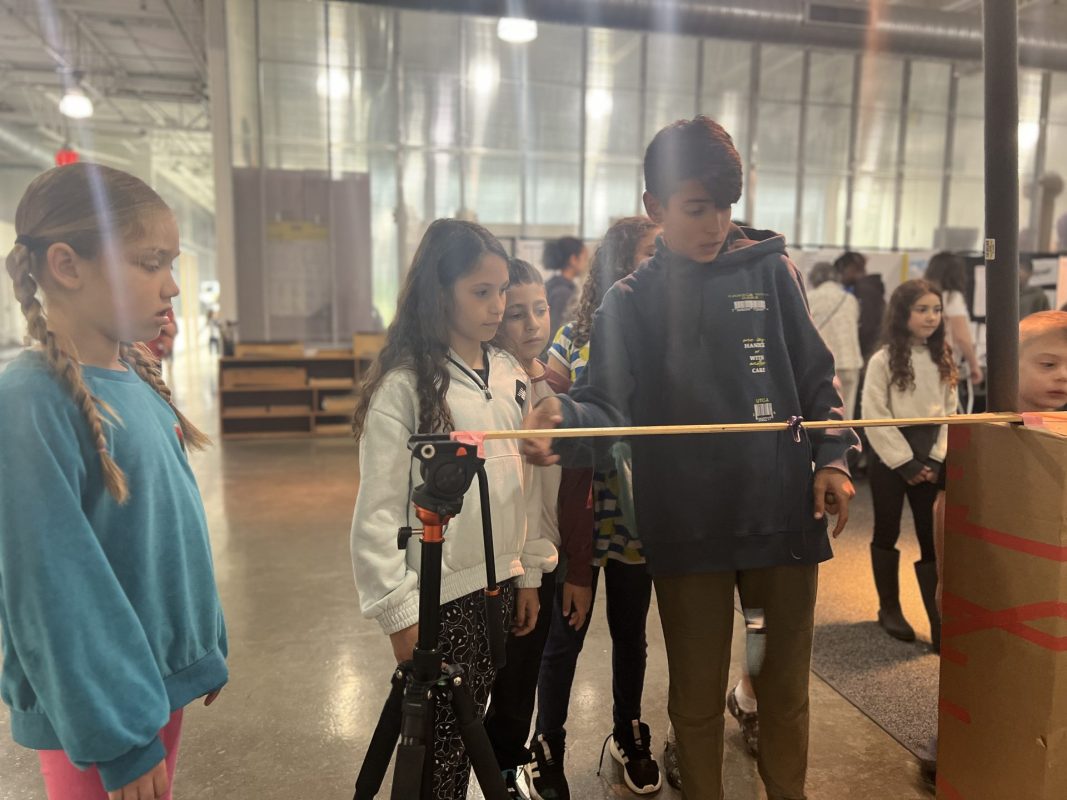
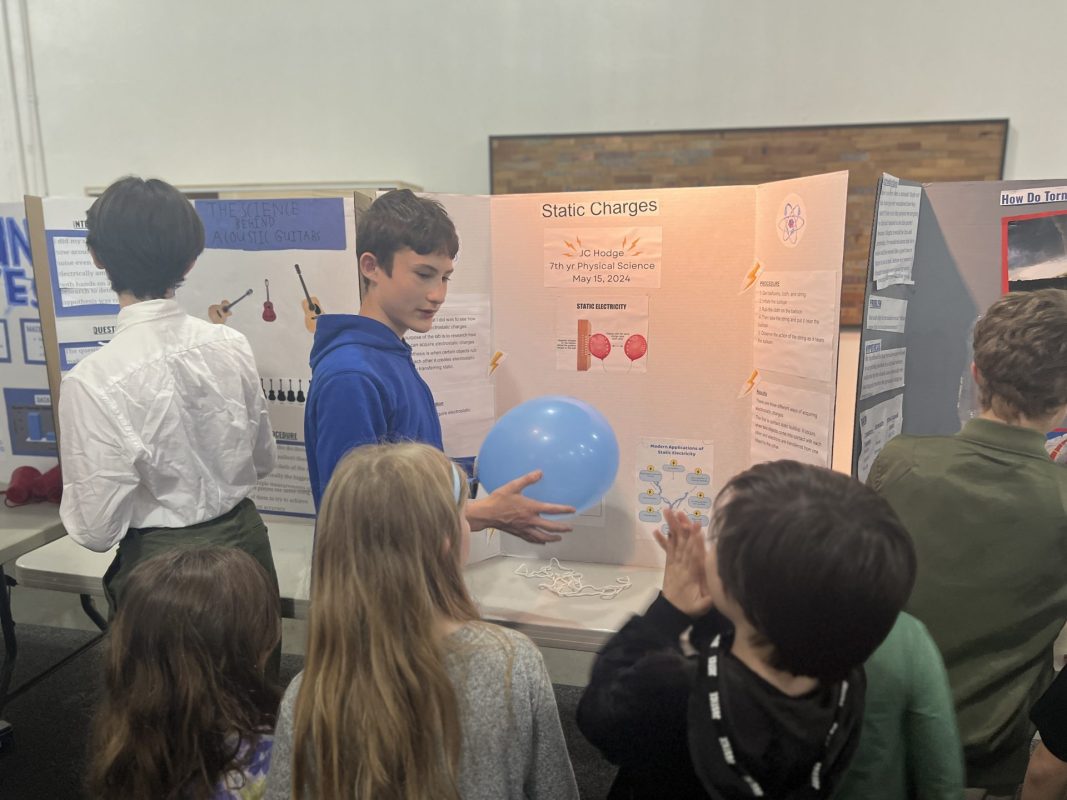
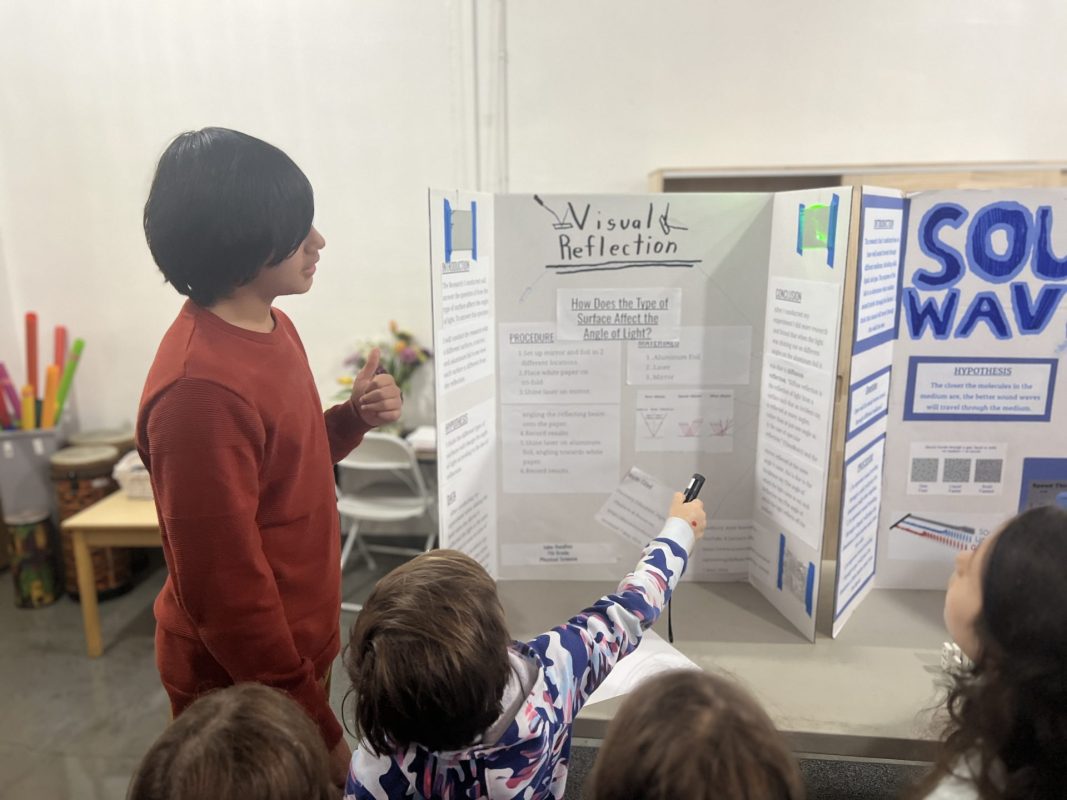
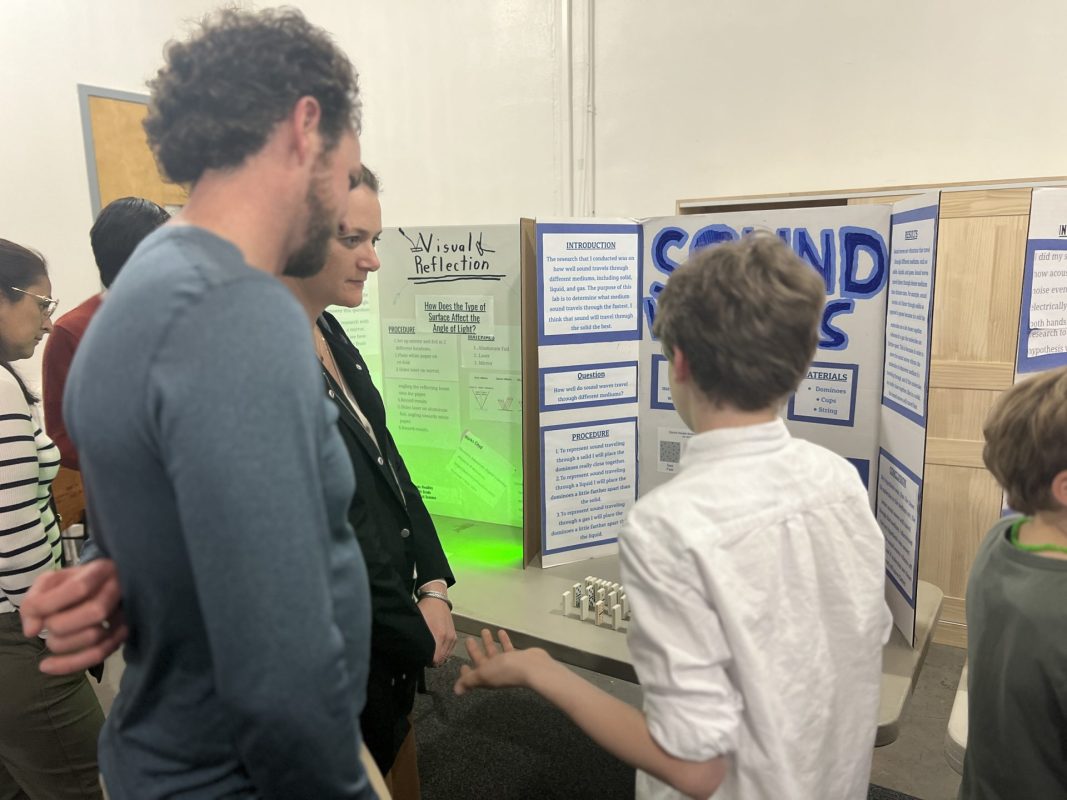
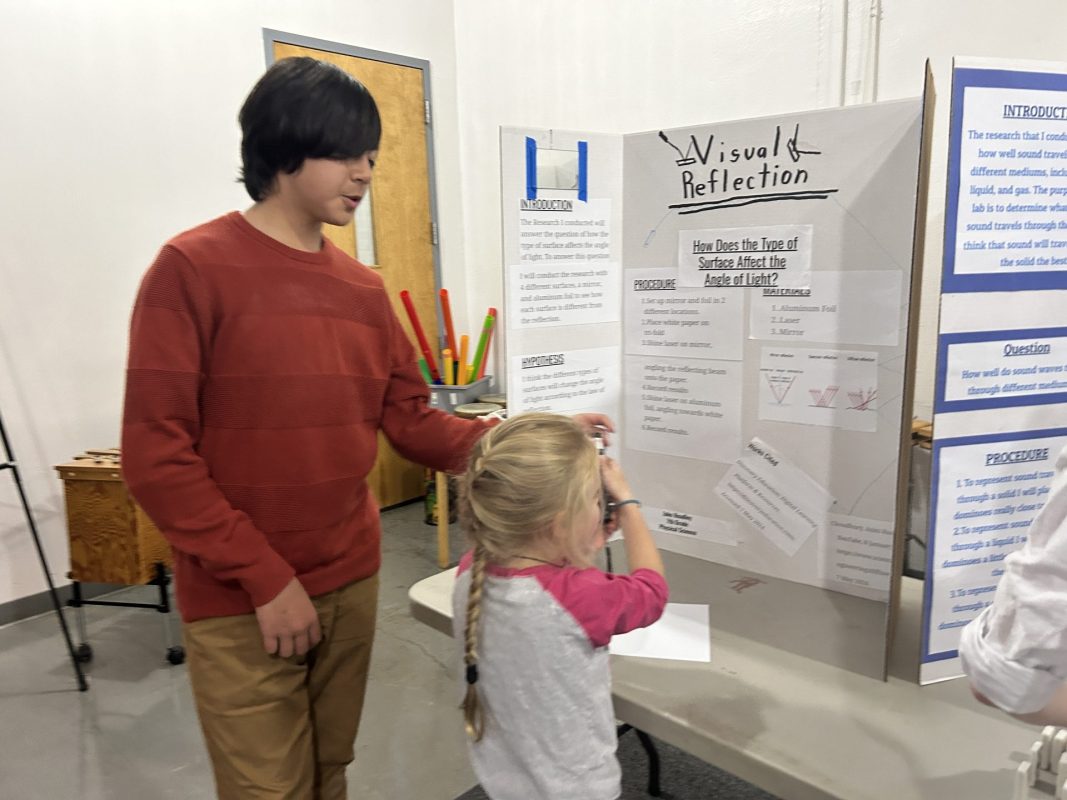
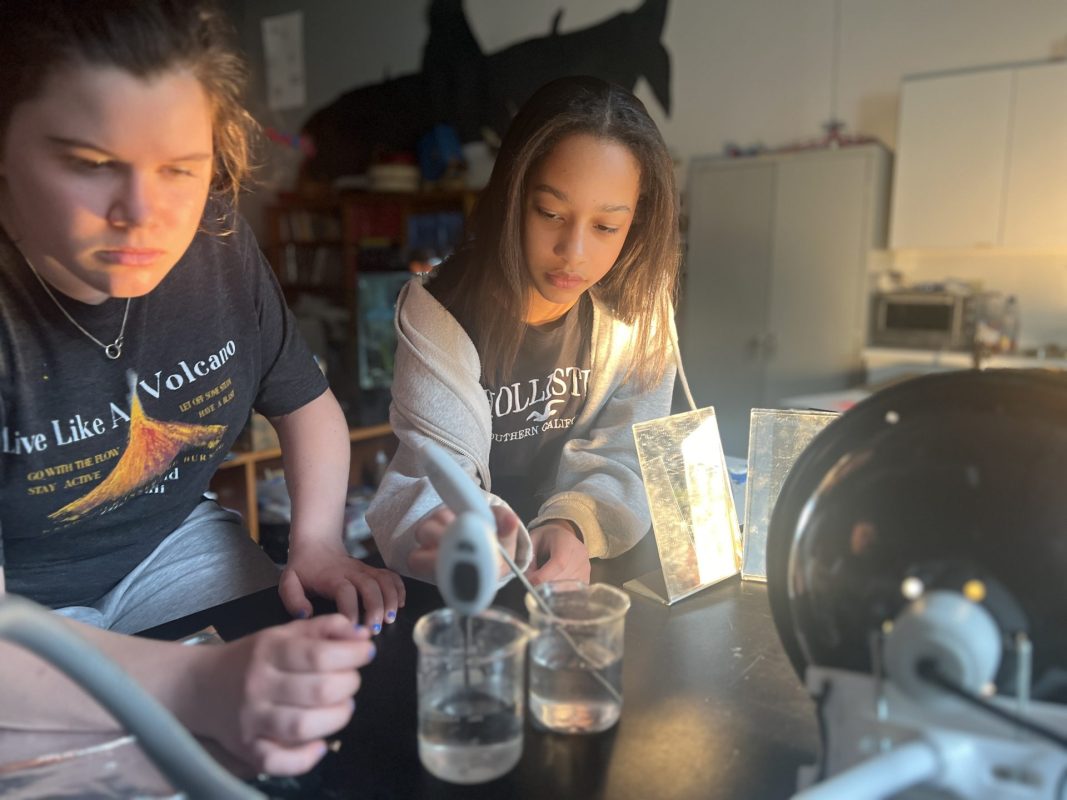
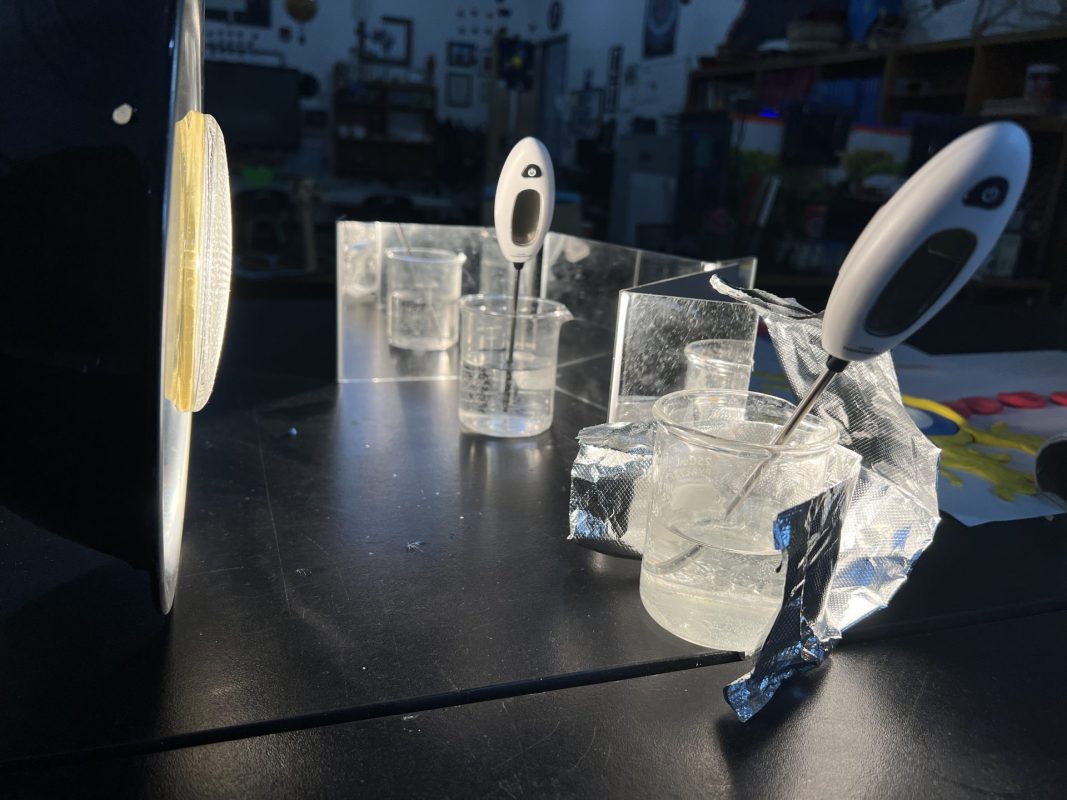
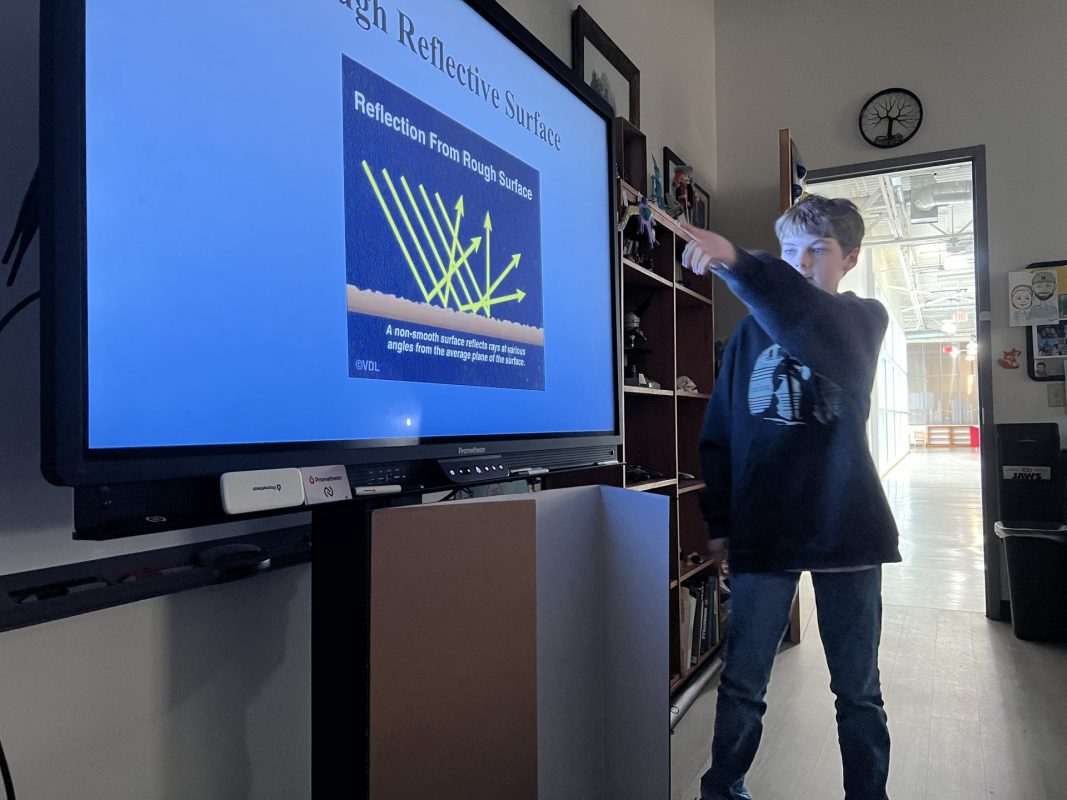
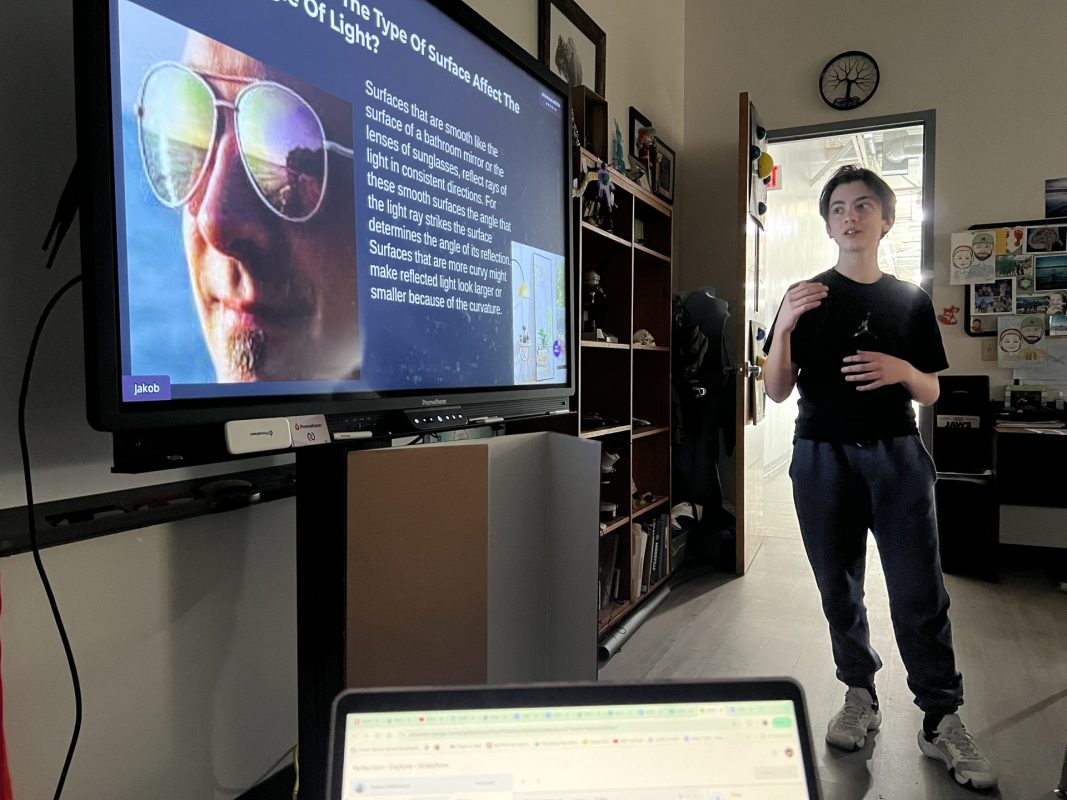
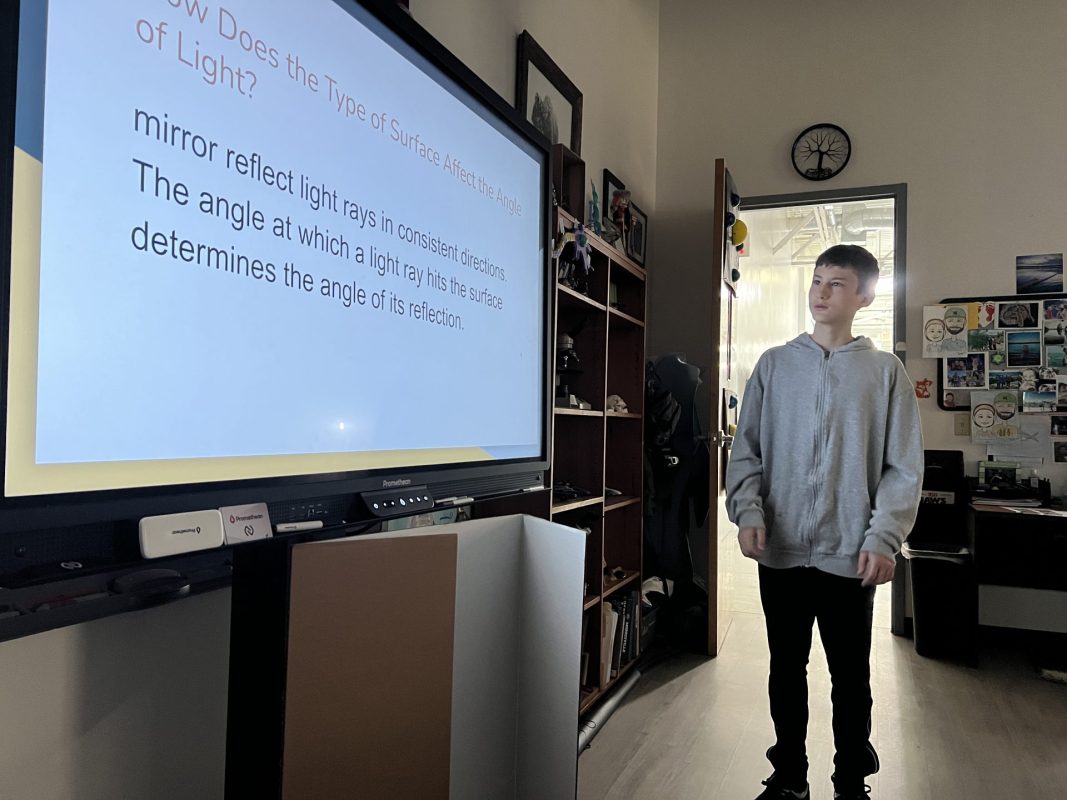
7th-year Physical Science students continue to study the unit of reflection, building upon their knowledge from previous years. Through engaging experiments with lasers and mirrors, they are discovering how different surface materials impact the reflection of light. The primary objectives of this unit include designing experiments to evaluate the reflectivity of various materials, recognizing the distinct characteristics of different types of mirrors, and explaining the behavior of light as it reflects off diverse surfaces.

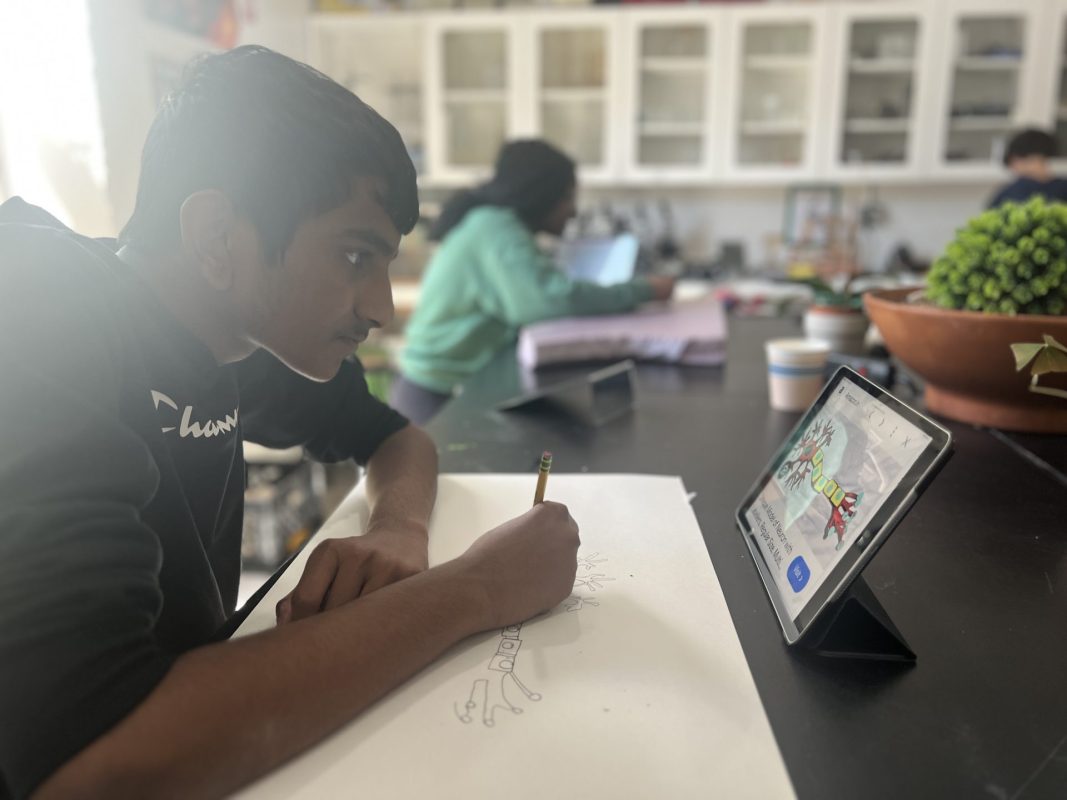
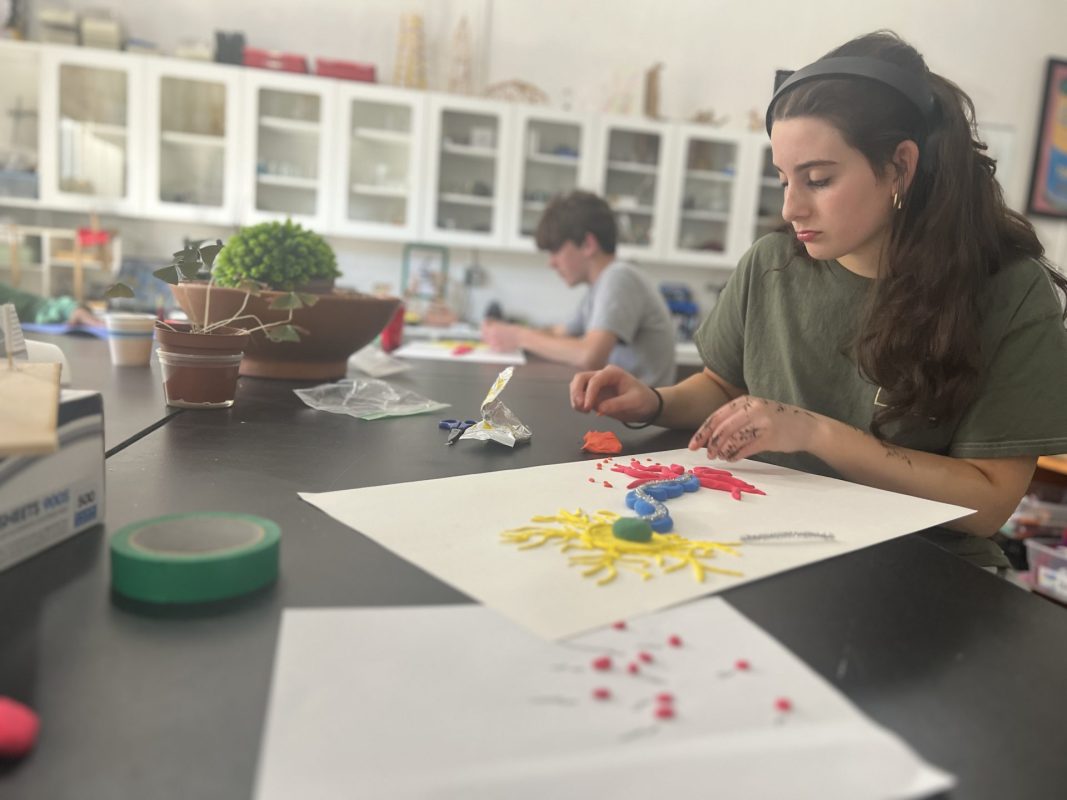
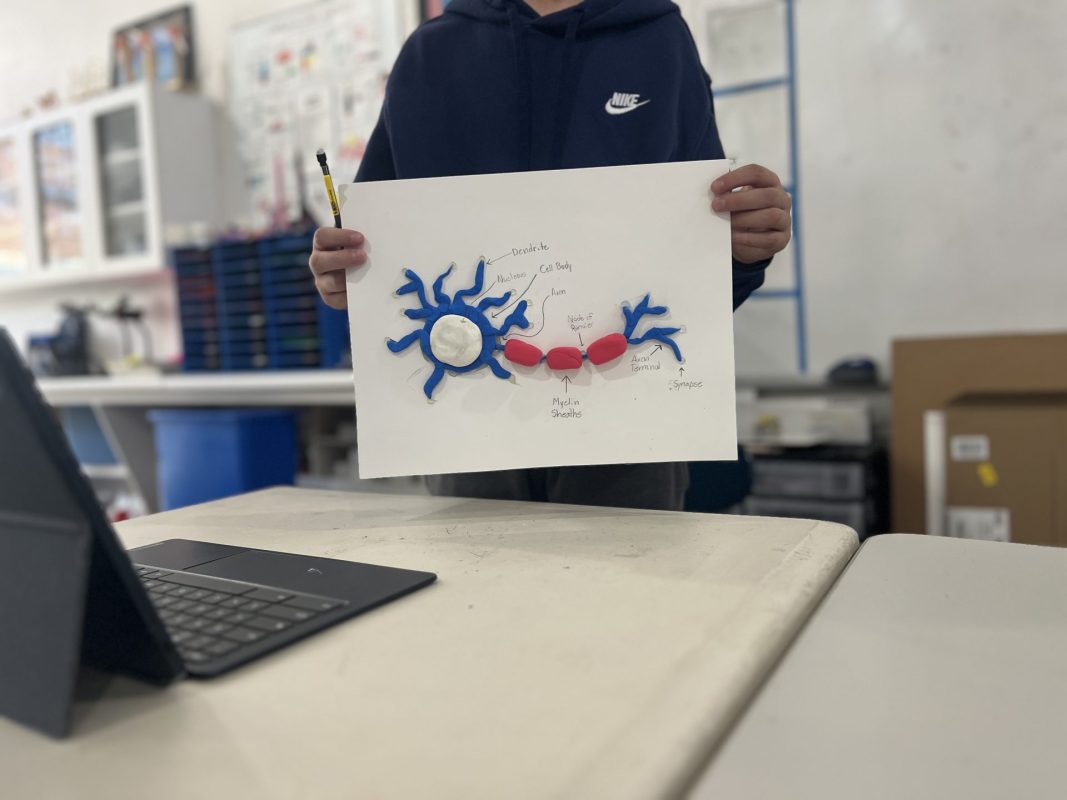
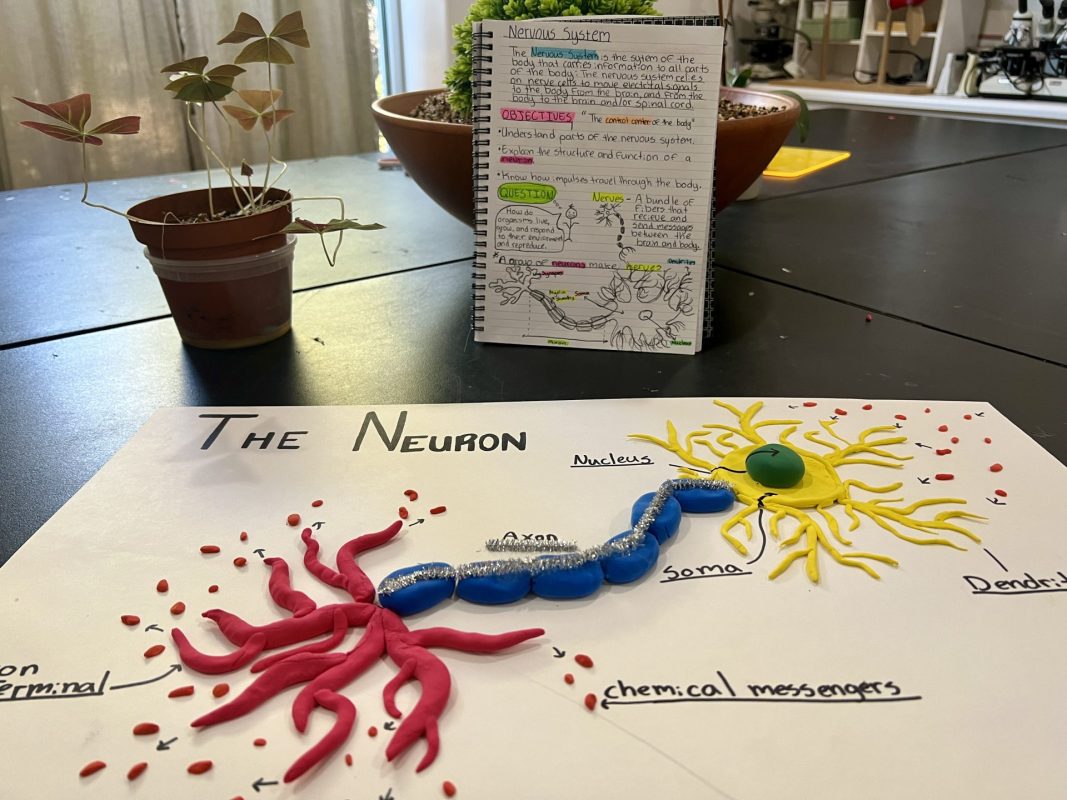
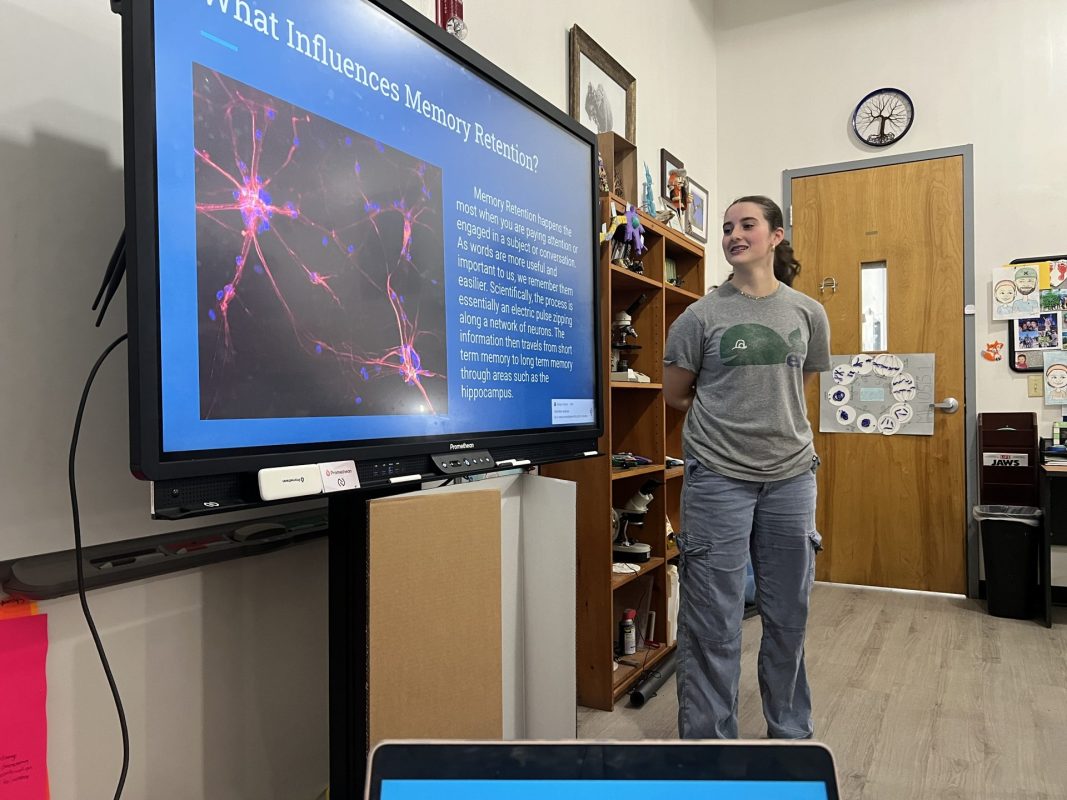
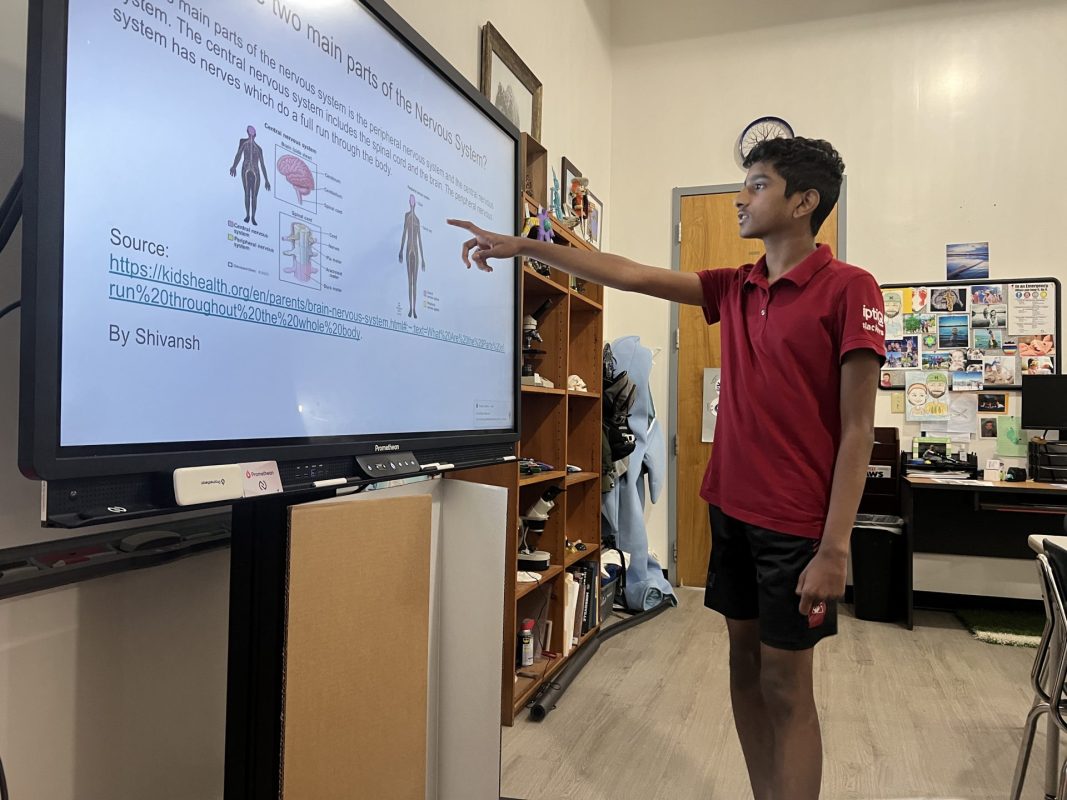
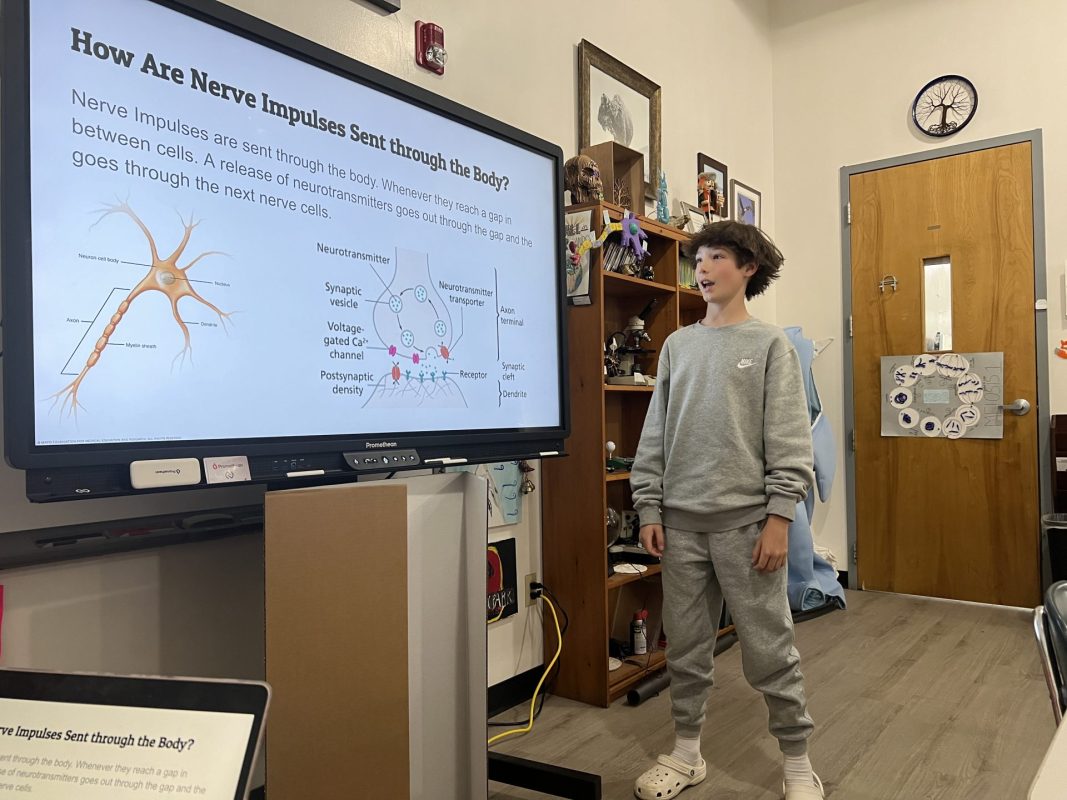
As 8th-grade Life Science students wrap up their exploration of the circulatory system, they dive into the intricate world of the nervous system. In this upcoming unit, students will unravel the mysteries of the brain, spine, and nerves that control our every move. They will explore the details of neurons and the building blocks of our nervous system and understand how these specialized cells function and communicate. Through hands-on experiments, students will track how nerve impulses zip through the body, carrying vital messages and responses at lightning speed. Get ready to embark on a new journey, mapping out the routes of stimulus and sensation that keep us in sync with the world around us.

Looking forward to next week!

Middle School: Week in Review

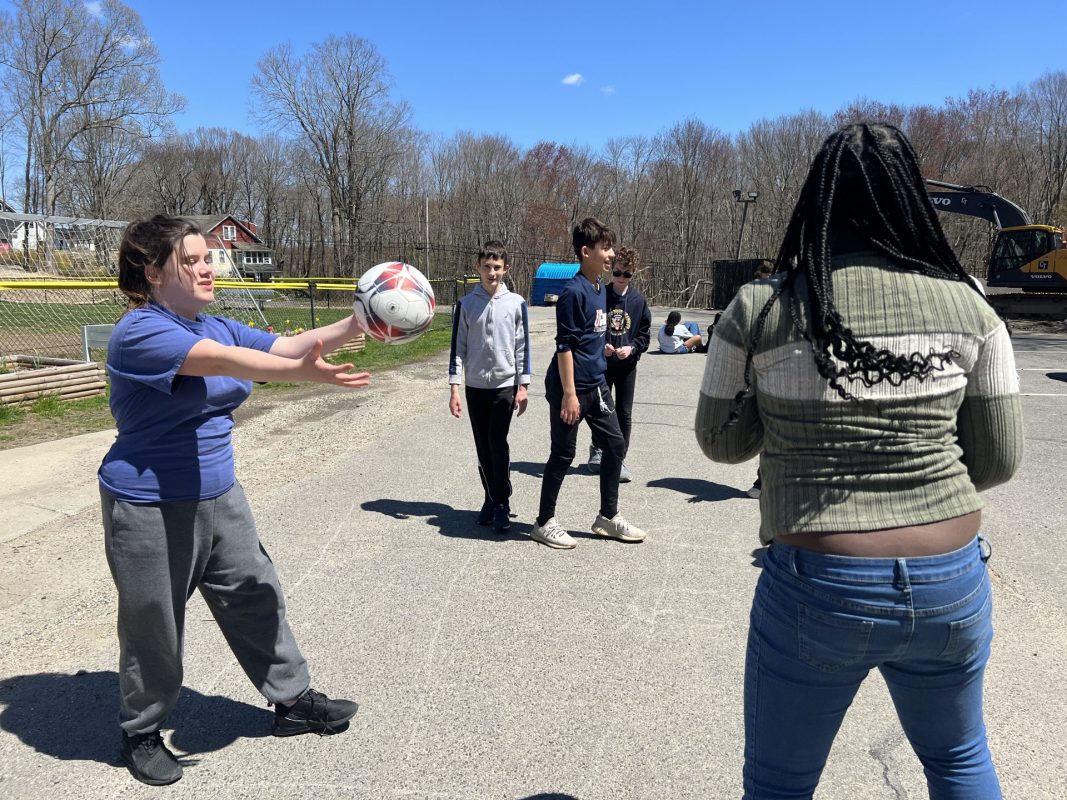
Another productive week in Middle School! A highlight outside of academic classes took place on Wednesday afternoon when all middle school students assisted the kindergarteners with their research projects. They read books about their topic to the kindergarteners and then chatted about the new information they learned.

Here’s what went on in other classes:

Math

Transition math students have been discussing real-world patterns that eventually lead to division. This week’s lessons have focused on the ratio-comparison model for division, allowing students to grasp the concept of dividing quantities into equal groups. Moving on to proportions, students have been exploring the idea of comparisons between two ratios, enhancing their proportional thinking skills. To further solidify their understanding, students have also been studying proportions in similar figures, connecting geometry with their newfound knowledge of division.

In the chapter on Linear Systems that Algebra math students have been working on this week, they delved into various intriguing concepts. These included exploring systems and parallel lines, grappling with systems of inequalities, and deciphering nonlinear systems. The discussions also extended to real-world applications, such as how air traffic controllers use these mathematical ideas to anticipate points of intersection for air travel routes, showcasing the practical relevance of algebra in everyday scenarios.

The eighth-grade geometry class has been busy exploring the Pythagorean theorem and how it is used to find different sides of a triangle. They also learned how it would help them find missing sides in a complicated polygon that doesn’t have all the given sides. They can classify triangles as obtuse, right, or acute, given the three sides.

Science

6th-year Earth Science students have completed their study on rotation, revolution, and seasons. Excitingly, they are now gearing up for their next adventure into the captivating realm of eclipses. During this unit, they will delve into the mysteries of lunar and solar eclipses, aiming to model and explain the mesmerizing phenomena that occur during these celestial events. As they eagerly anticipate the upcoming solar eclipse next Monday, each student will have the opportunity to observe this rare occurrence safely with the provided pair of solar glasses.

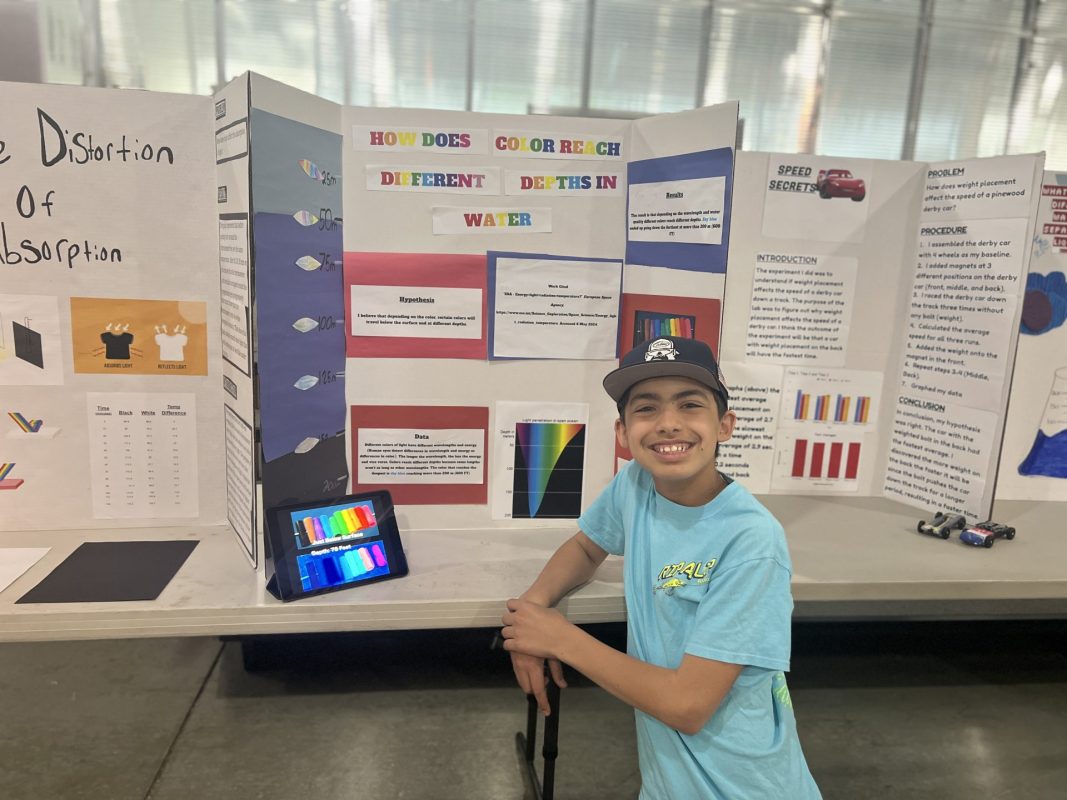
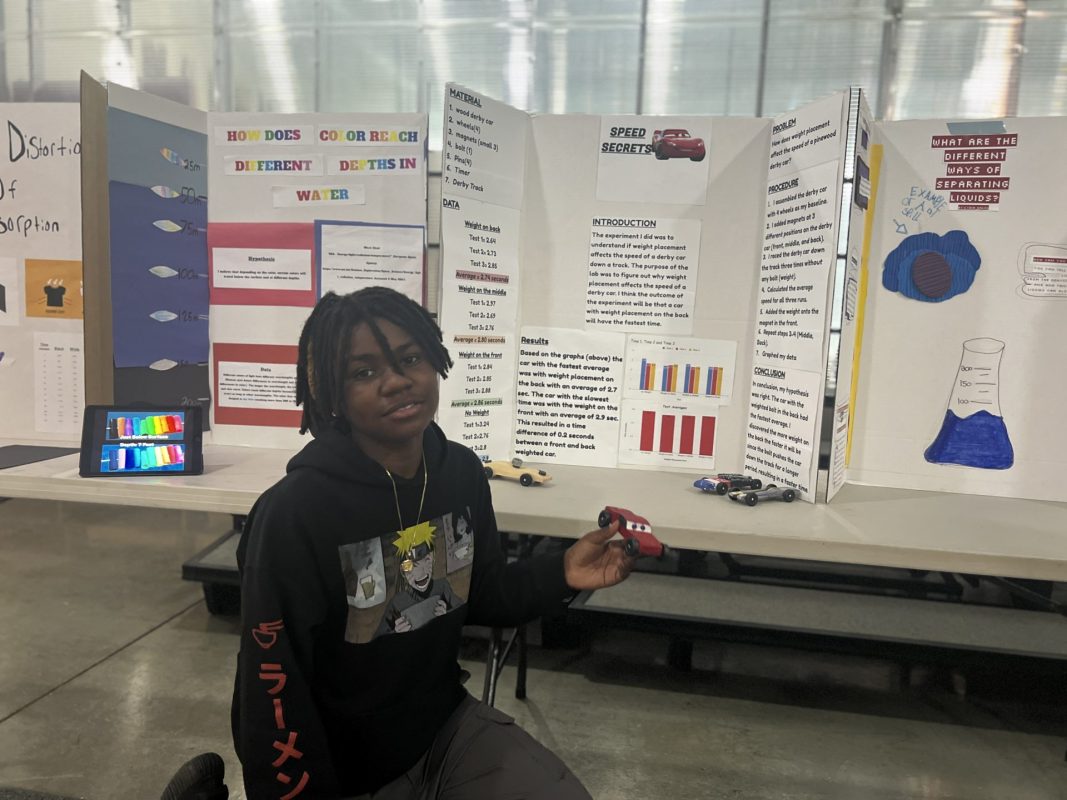
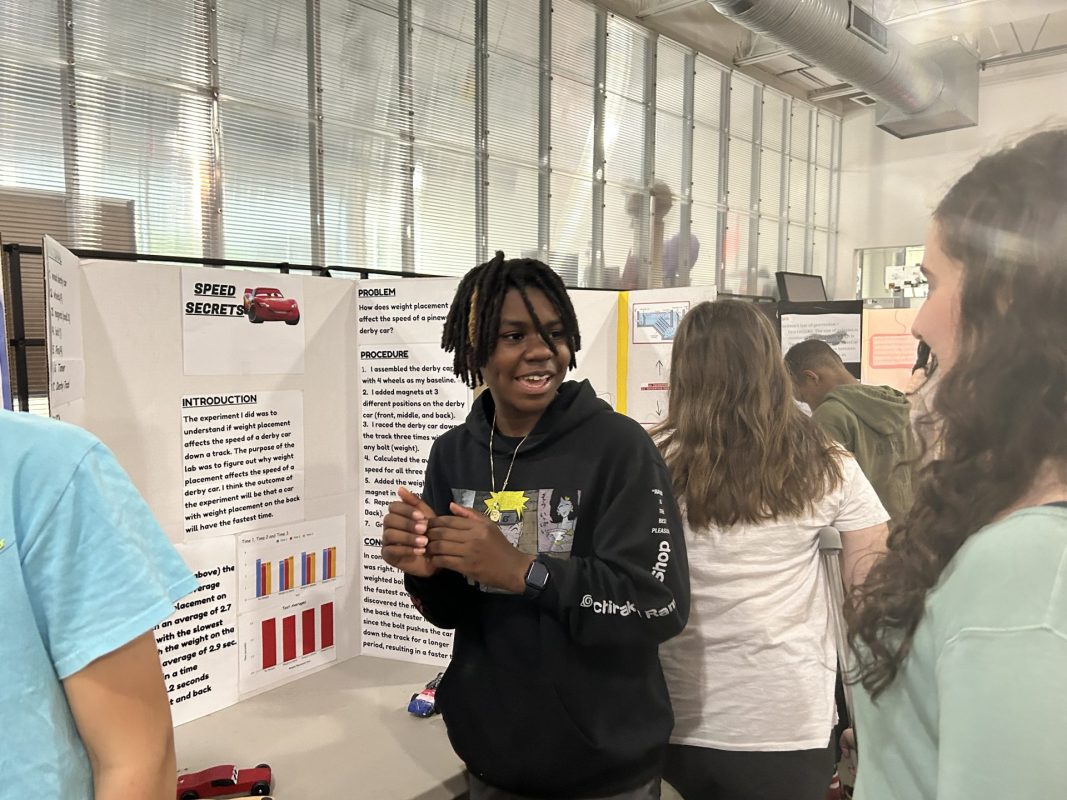
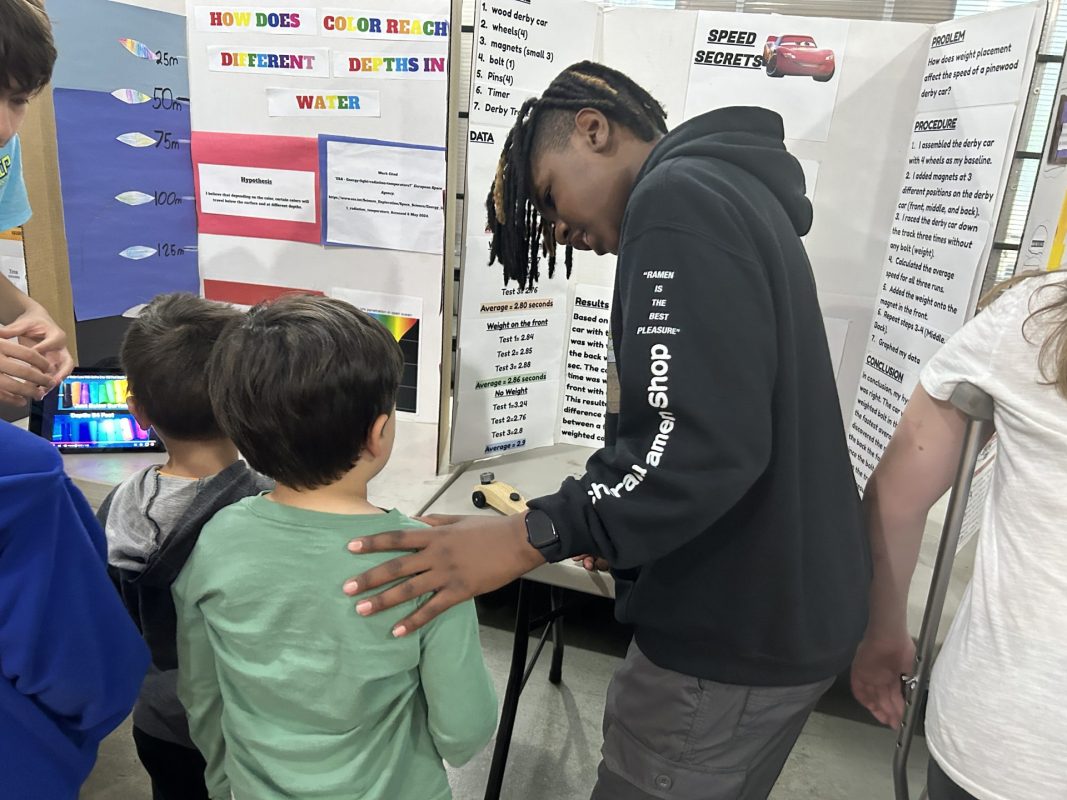
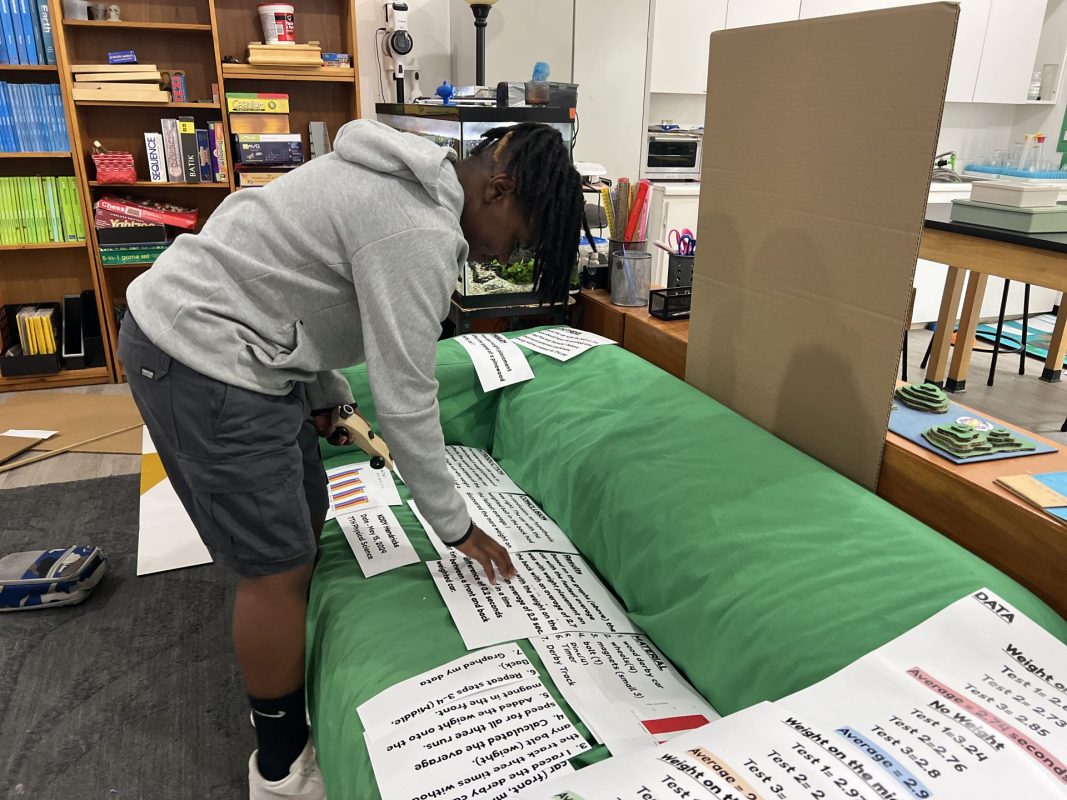
7th-year physical science students recently wrapped up their exploration of kinetic energy by putting their derby cars to the test. They raced each car multiple times, taking the average of their runs while also carefully calculating the mass of their creations. Looking ahead to the next unit, Reflection, students are eager to design experiments to investigate the reflectivity of various materials. As they delve into this new topic, they will learn to identify key characteristics of different types of mirrors and understand how light behaves as it reflects off different surfaces, paving the way for a deeper understanding of the fascinating world of light and optics.

In their recent exploration of genetics and heredity, 8th-year life science students have gained a deeper understanding of how traits are passed down through generations. As they transition into the next unit on the circulatory system, students will explore the intricate networks responsible for transporting oxygen, nutrients, and waste throughout the body. They will learn to describe the function of the circulatory system, create a drawing illustrating the path of circulation in the body, know the difference between veins, arteries, and capillaries, and understand the structure and function of the heart. This new unit promises to reveal the fascinating inner workings of one of the body’s most vital systems.

Humanities

6th-grade Humanities classes continued reading their class novel, The Eye of Ra, by Ben Gartner, which centers around two kids accidentally traveling back to Ancient Egypt. This group is leading discussion using their annotations from nightly reading assignments. The students also read the Egyptian creation myth and learned about the first of the great pyramids, the Pyramid of Djoser, or the Step Pyramid. Finally, students are preparing a current events report and discussion for next week.

The 7th-grade Humanities class completed the novel A Long Walk to Water, which follows the real story of Salva Dut, a Lost Boy of Sudan. We have spent the week learning about Sudan and South Sudan, their geography and culture, as well as their conflicts, and delved deeper into the stories of the Lost Boys who walked from Sudan to Ethiopia and then on to Kenya. Finally, students are preparing a current events report and discussion for next week.

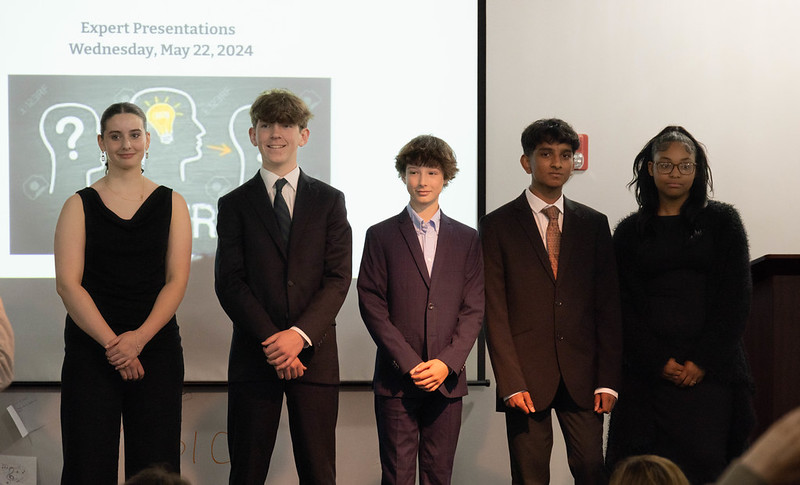
8th-grade Humanities classes with Mrs. Lamb began with a major check-in for the Expert Project. Most students have completed their expert interviews and research, and they are ready to write their research essays. Next, the students continued reading and annotating She Came to Slay, a biography of Harriet Tubman by Erica Armstrong Dunbar. Finally, as they read and learned of the role religion played in the lives of the enslaved, they learned and listened to African American spirituals.

We hope everyone has a wonderful weekend!!


Middle School: Welcome to Spring 2024!

Welcome back, Middle School families! It was a great first week of the spring trimester. The students were refreshed and energized as we entered these last couple of months of school.

Humanities

6th grade Humanities classes are studying Ancient Egypt. They researched some specific vocabulary that will be useful in their study of this time of history, as well as building knowledge as they read the novel The Eye of Ra by Ben Gartner. This book surrounds the building of the Pyramid of Djoser and includes the infamous architect Imhotep. The students are learning to make their own annotations as they read in lieu of comprehension questions and will eventually be leading their own book discussions. Finally, we got back to Poetry Tuesdays this week and discussed the many usages of some words as well as etymology.

7th-grade Humanities classes dove right back into their class novel, A Long Walk to Water, by Linda Sue Park. This piece recounts the experience of Salva Dut, a Sudanese man who was part of the Lost Boys of Sudan, fleeing his country to safety from rebel military groups in the late 1980s. The class also watched a video in two parts about the geography of Sudan: political, physical, and human.  They will continue with this region next week, focusing on South Sudan and its independence in 2011. 7th-grade students will be making annotations moving forward with this novel, and we discussed how to do so when reading by recognizing something important, having a reaction, making a connection, and asking a question. Finally, students returned to regular Poetry Tuesday readings with a poem called “Guilt” by Jed Chambers.

8th grade began the week in Mr. Newman’s class. In American History they are continuing their examination of the Civil War and its outcomes. The class will be studying how the country was divided prior to and just after the war and what challenges lay ahead. In conjunction with this, they began a book with Mrs. Lamb called She Came to Slay, by Erica Armstrong Dunsbar. This biography, published in 2019, details the life of Minty (a.k.a Harriet Tubman) and her predecessors. 8th-grade students are annotating and leading class discussions. This book is bringing about many questions about slavery, so they are exploring more about its history in the U.S. as well. Students also checked in with Mrs. Lamb regarding their Expert Interviews and have a big check-in on Tuesday, April 2.

Science

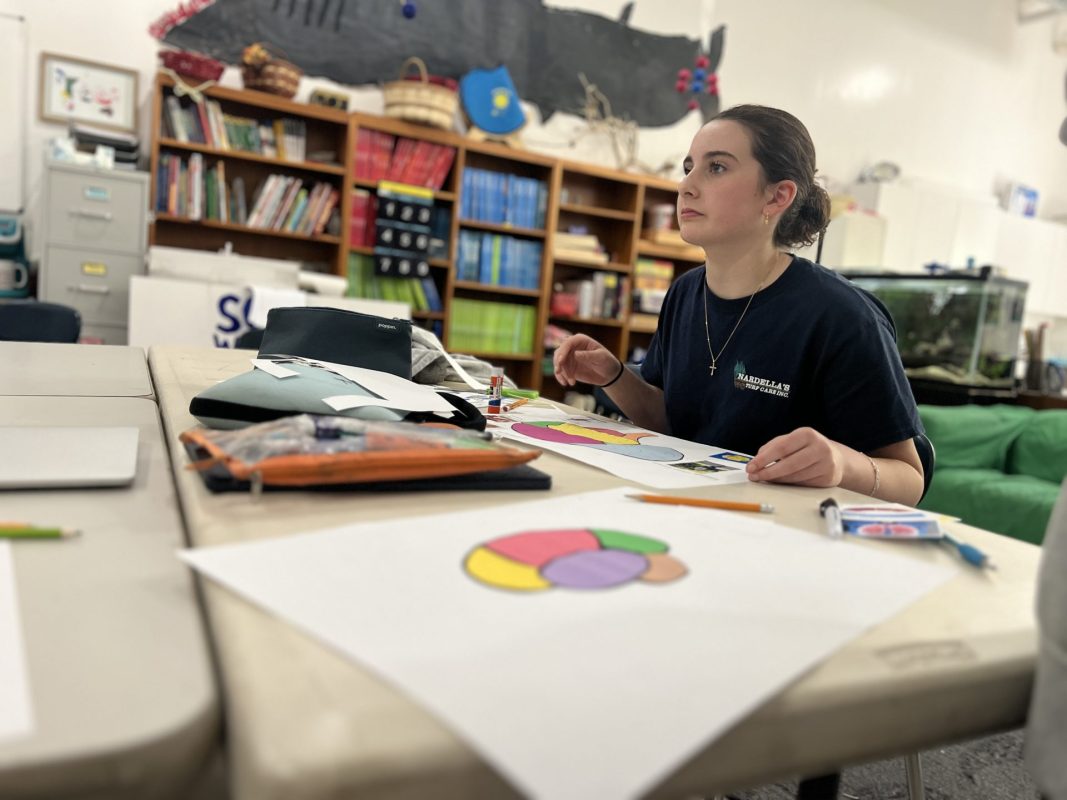
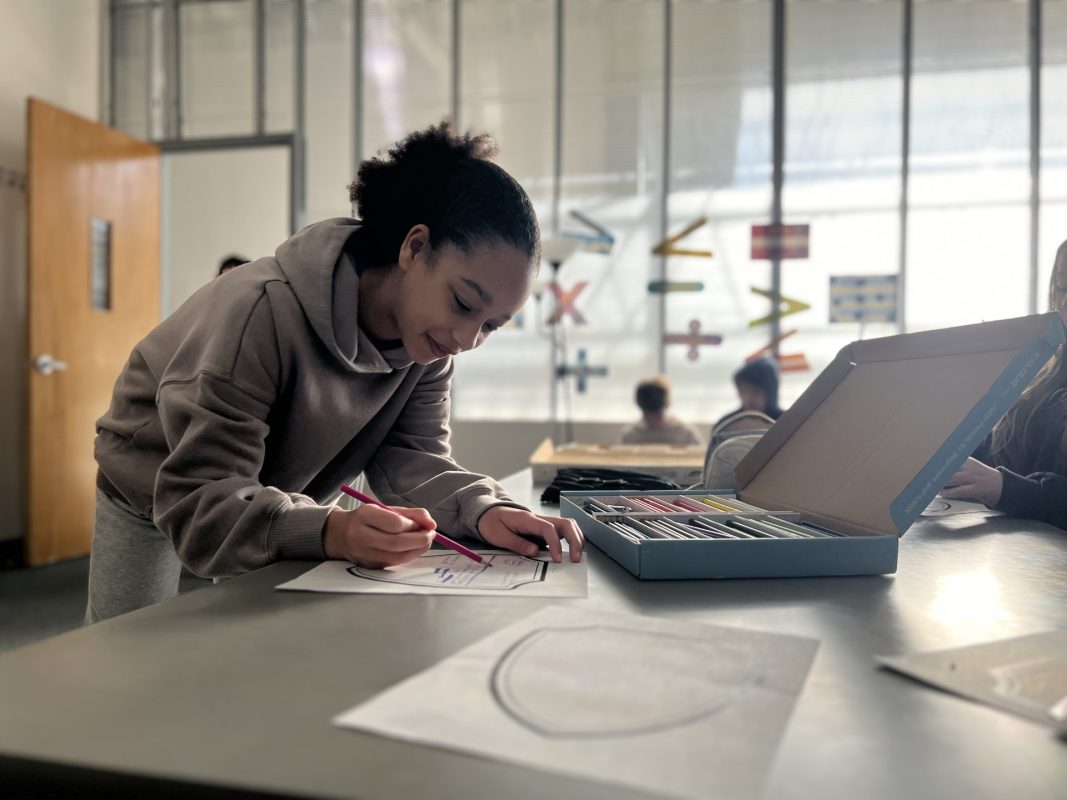
In 6th-year Earth Science, students are delving into the fascinating topic of what causes seasons on our planet. This past week, they dedicated their time to creating artistic representations that capture the essence of the unit’s objectives. Through their creativity, students are gaining a deeper understanding of how the tilt of Earth’s axis and its orbit around the sun contributes to the changing seasons we experience throughout the year.

In 7th-year Physical Science class, students have been immersed in a fascinating project constructing pinewood derby cars, all part of the Kinetic Energy unit. Throughout this hands-on experience, each student has been tasked with applying key concepts of both kinetic and potential energy, as well as delving into the relationship between energy, speed, and velocity. Once the young engineers complete their builds, an exhilarating race awaits, putting their newfound knowledge to the test in a thrilling display of scientific principles in action.
8th-year Life Science students have continued to work on our unit, Heredity and Genetics, focusing on genotypes and phenotypes. As students construct their unique “Monsters” family, they witness firsthand how specific traits are inherited by the offspring. This hands-on approach not only brings genetics to life but also deepens students’ understanding of how traits are passed down through generations in living organisms.

Math

In the chapter, Ratio and Proportion, Pre-Transition math students are delving into the world of ratios and proportions which are essential concepts in mathematics. By grasping the ratio comparison model for division, students can effectively compare quantities. Furthermore, they are exploring reciprocals, uncovering the multiplicative inverse property crucial for solving equations. Additionally, students are mastering the division of fractions and mixed numbers, which provides a solid foundation for more complex math problems. Equally important, they are learning to solve equations of the form ax=b, a fundamental skill with broad applications in various mathematical contexts.

Transition math students are currently covering the chapter Patterns Leading to Division. This week’s lessons have been filled with exciting concepts such as integer division, the rate model for division, division of fractions, negative numbers, equations and inequalities, and the ratio-comparison model for division. By exploring these topics, students are building a strong foundation in division that will not only help them solve mathematical problems but also see the connections and patterns that exist within numbers.

Linear systems in Algebra are a fundamental concept where equations involving multiple variables are solved simultaneously to find a common solution. This week, students have been exploring different methods, such as substitution, addition, and multiplication, to solve these systems. They have also learned about the relationship between systems and parallel lines, as well as delving into matrices and matrix multiplication. By mastering these techniques, students are better equipped to solve real-world problems that involve multiple unknowns and variables.

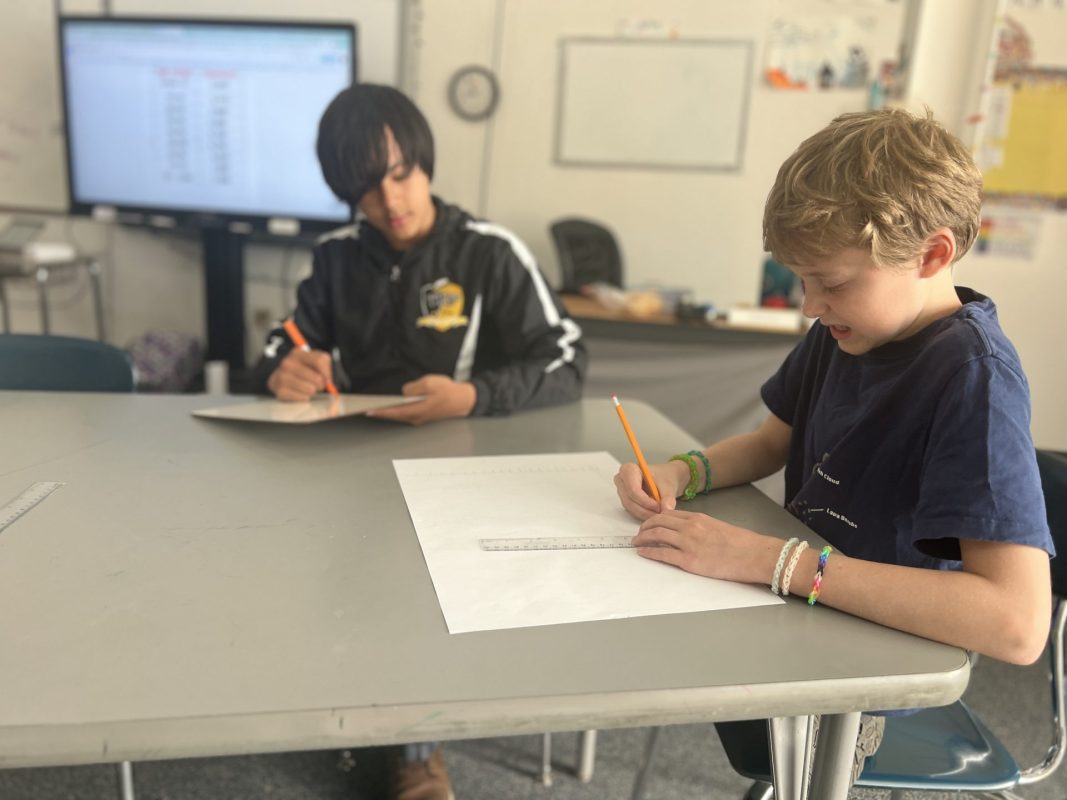
The geometry class has been exploring the area and perimeter of various polygons. They discovered how the formula for the area of a triangle came about. They are applying conversions to finding the same area: square miles to feet, square yards to square feet and square inches, and square miles to square acres. Given tesselations, students can predict its area.

Have a wonderful weekend! To those celebrating, Happy Easter.


Middle School: Week in Review

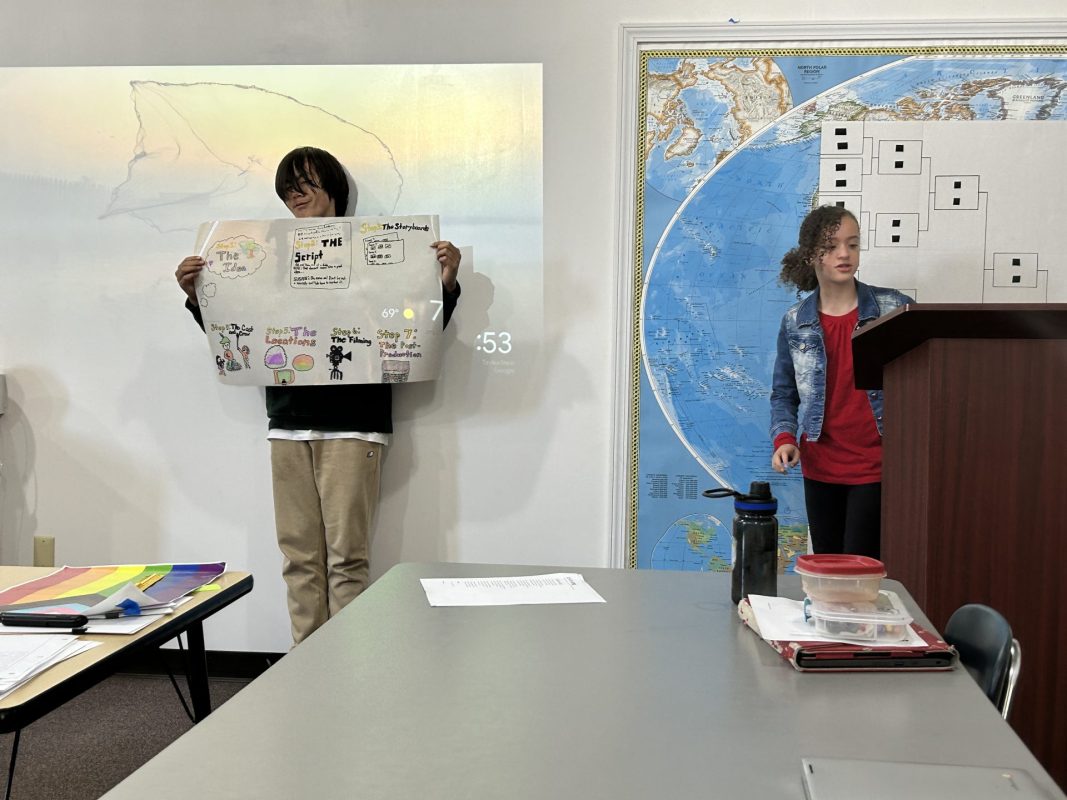
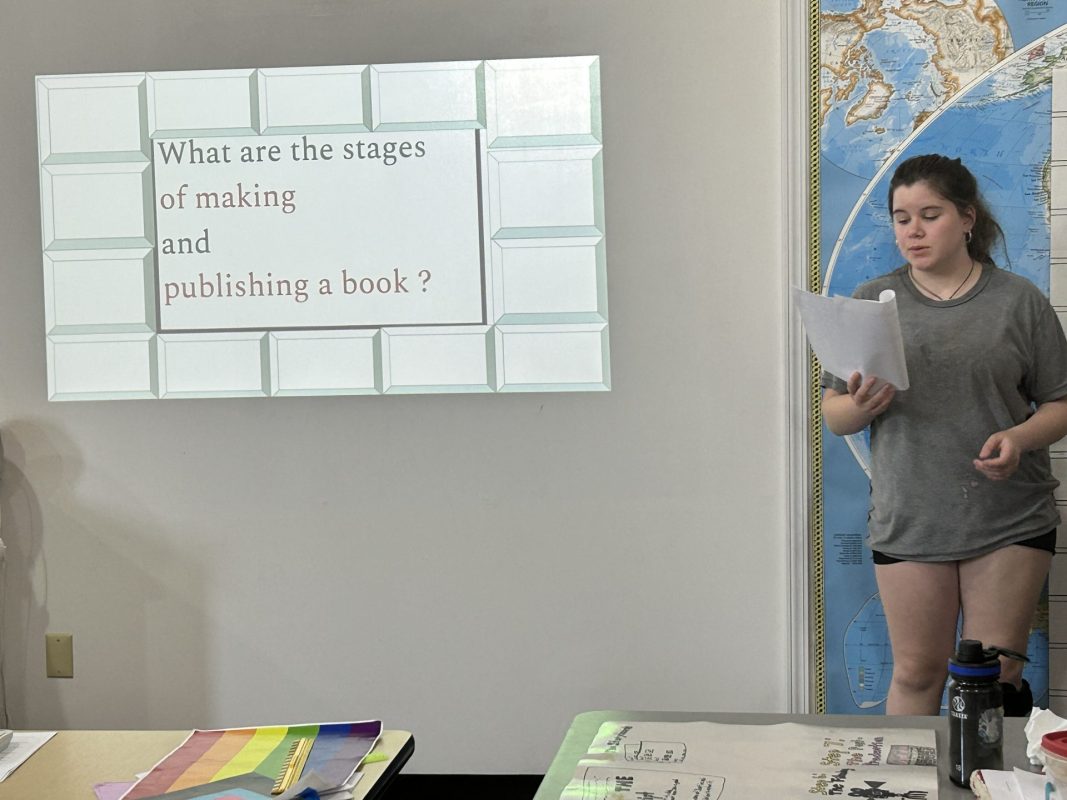
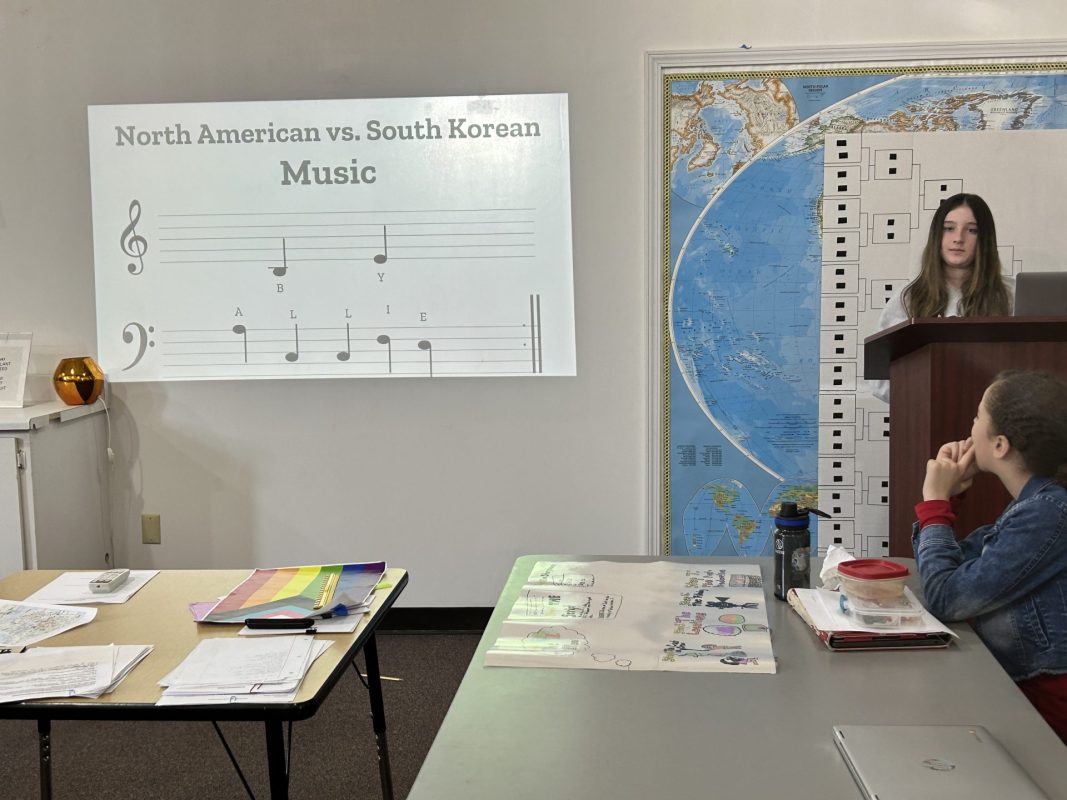
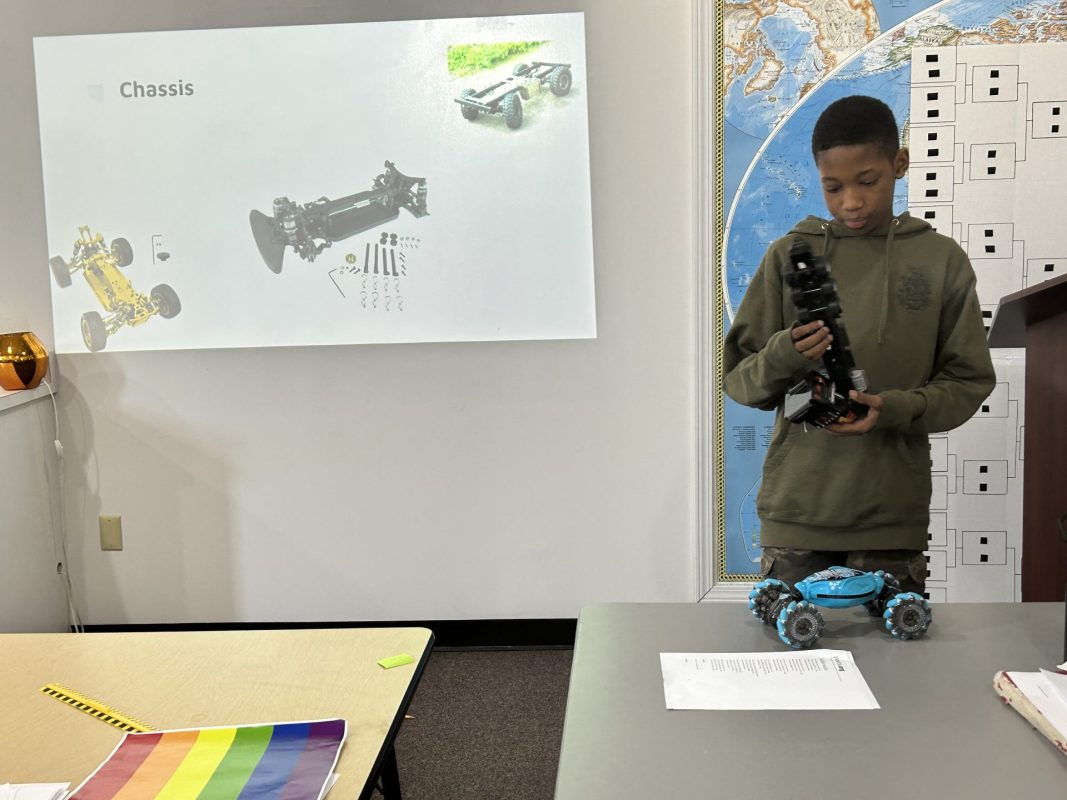
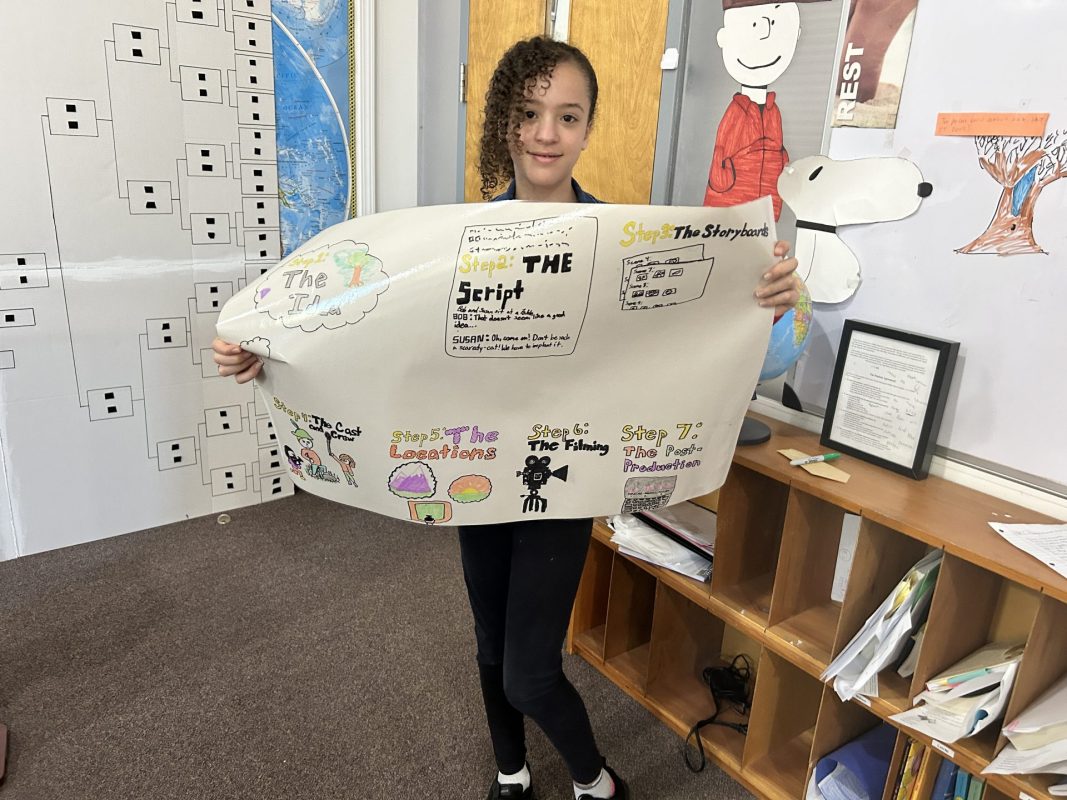
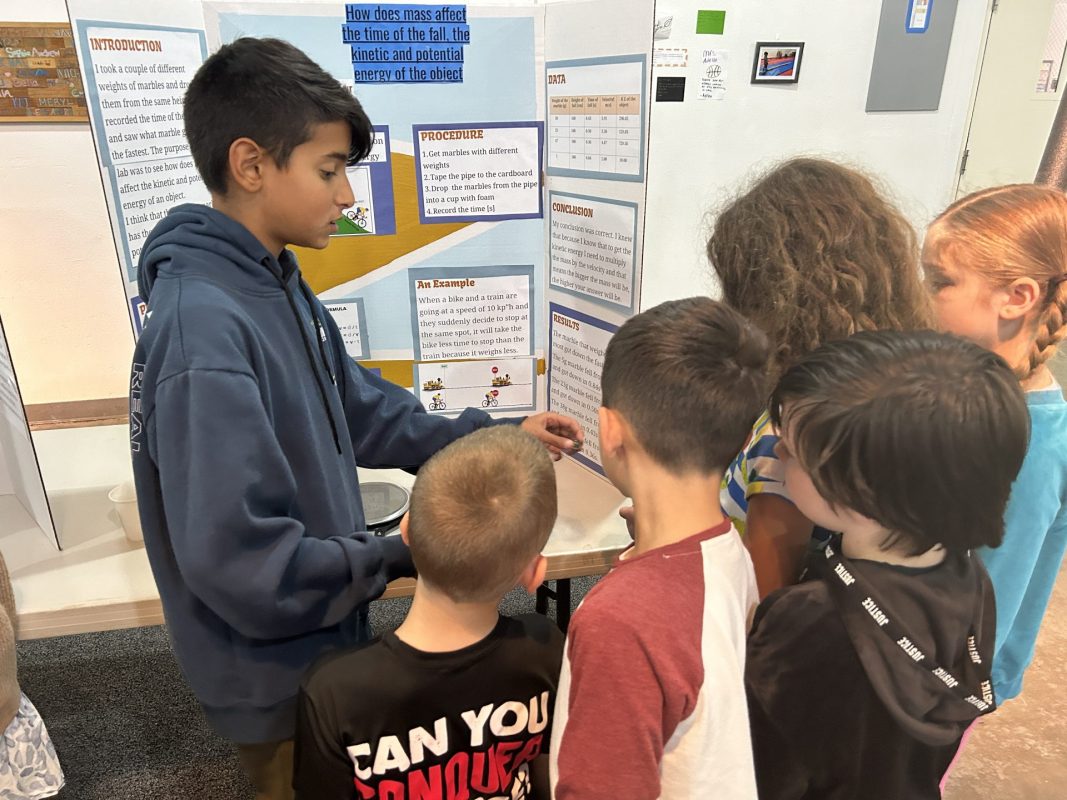
6th and 7th Grade Research Presentations were a great send-off into spring break! Students should feel accomplished with all of their hard work preparing for this project.

Here’s what went on in classes this week:

Humanities

Grades 6 & 7 finalized their presentations and finished revising their essays this week. Some students moved on to other Humanities work when they felt prepared for research night (Grade 6- Ancient Egypt & Grade 7- A Long Walk to Water).

8th-grade Humanities classes sent off their first round of inquiries to potential experts for their final Expert Project. They also completed their final grammar assessment on complex and compound sentences. This week in US History, 8th-grade students presented on their reform topics. As we head into March break, the class will be moving into the start of the Civil War.

Science

6th-year Earth Science students have recently delved into a fascinating new unit titled Rotations, Orbits, and Seasons. This unit explores fundamental concepts in science and astronomy that are crucial for understanding the world around us. Understanding rotations, orbits, and seasons is essential as it helps students comprehend the reasons behind day and night, the changing seasons, and even the varying lengths of days throughout the year. These concepts lay the groundwork for students to appreciate Earth’s place in the solar system and how it influences life on our planet.

7th-year Physical Science students have recently started the unit on Kinetic Energy. During this unit, students will have the opportunity to apply their understanding by designing and analyzing how kinetic and potential energy are utilized in building a marble roller coaster. Additionally, they have also begun the exciting task of designing their pinewood derby cars. These cars will be tested to see how mass influences the transfer of kinetic energy.

8th-year Life Science students have recently begun the unit, Genes, where they are exploring heredity and the impact of past generations on our present lives. Currently, they are engaged in a fascinating monster genetics lab that delves into alleles, phenotypes, and genotypes to understand how these factors influence the appearance of their unique monsters. To conclude this project, students will creatively depict their monsters artistically.

Math

Pre-Transition students recently completed Chapter 7, Division Properties, which included units on the division of decimals (7.8), division of negative numbers (7.9), and solving division and multiplication equations using fact triangles (7.10). They will be moving on to their next chapter (8) on Ratios and Proportions, which are crucial in real-world applications.

Transition students finished Chapter 8 on Multiplication in Algebra, which involved units on Graphing y = ax + b (8.7), Solving c = ax + b (8.8), and Solving c ax + b (8.9). Their upcoming chapter (9) will focus on Patterns Leading to Long Division.

Algebra students are currently immersed in Chapter 10 on Linear Systems, covering units on solving systems using substitution (10.2), more using substitution (10.3), solving systems using addition (10.4), solving systems using multiplication (10.5), systems and parallel lines (10.6), as well as matrices and matrix multiplication (10.7).

The geometry class has explored triangle congruence theorems and the commonality of specific properties that quadrilaterals share. Students have applied these theorems and properties in their proofs. After the break, the class will explore perimeters and areas of triangles, quadrilaterals, and irregular figures. The end of chapter 8 concludes with exploring the Pythagorean theorem, special right triangles, and the arc length,  circumference, and area of a circle.

Have a restful spring break, everyone!


Middle School: Week in Review

Well, folks, it is almost time for spring break! While it may not feel like spring outside quite yet, there are signs of spring manifesting in sprouting foliage, buds, and increased energy among the middle schoolers.

On the agenda for the final week before spring break is 6th and 7th grade Research Night! Please arrive at 5:50 for the 6 pm start time. Students will be separated into two mixed-grade groups and will be presenting in either Mrs. Lamb’s room OR the Math room. The program should run for about 45 minutes.

**Student presenters should be dressed to impress in business casual clothes and neat hair. Please leave sweats, torn clothes, and everyday gym shoes at home.**

Humanities

In general, Humanities classes were productive and almost entirely student-run, working through a few different tasks with each student in a different place with their own independent work. 6th and 7th-grade Humanities classes worked on revisions, presentation run-throughs, and finishing up their Black History Month gallery project. This is the culmination of Black History Month and additional learning about impactful Black Americans and topics in Black American history.

8th-grade classes this week for Mrs. Lamb included a one-on-one expert project check-in. Each student showed where they were with their research and set a goal for the next check-in. Also, the class discussed finding experts, reaching out and drafting emails, and interview questions, as these are due at the end of March. 8th grade also moved forward with their grammar unit and learned how to write and punctuate compound sentences to enhance writing. With learning how to identify independent and dependent clauses as well as complex and compound sentence structures, 8th graders will have a grammar assessment next week. This week, on the history side of Humanities, students have focused on the early reform of the 1800s in the United States. Students have been working on presentations for the class.

Math

Geometry students have been working very diligently on proving triangles congruent using four different theorems. They are “dissecting ” overlapping triangles as a means to an end. We have also started on the properties of a parallelogram and finding measurements of missing angles and sides using these properties.

Pre-Transition math students continued their exploration of division properties this week, covering units 7.6 on Flexibility using division, 7.7 on Terminating or repeating decimals, 7.8 on Division of decimals, and 7.9 on Division of negative numbers. They honed their skills in applying flexible division strategies, identifying and working with terminating and repeating decimals, accurately dividing decimal numbers while observing decimal placement, and mastering division operations involving negative numbers, comprehending the specific rules and processes in each case.
Transition math students continued to work on chapter 8 – Multiplication in Algebra, focusing on advanced topics in chapter 8. They explored combining percentages and learning how to work with percentages efficiently. Additionally, they tackled Solving ax = b, Graphing y=ax+b to visualize linear equations, and Solving c=ax+b equations involving variables, enhancing their problem-solving skills and algebraic reasoning. Finally, students grappled with the complexities of Solving c ax+b equations, honing their understanding of algebraic manipulations and equations with multiple variables.

This week in Algebra, students continued their work on chapter 9 – Quadratic Equations and Functions. They explored essential topics like Graphing y = a in unit 9.3, understanding the connection between Quadratics and projectiles in unit 9.4, learning the powerful quadratic formula in unit 9.5, analyzing solutions to quadratic equations in unit 9.6, and gaining insights into the significance of quadratics in unit 9.7. By mastering these concepts, students are one step closer to becoming proficient problem solvers in the realm of Algebra.

Science

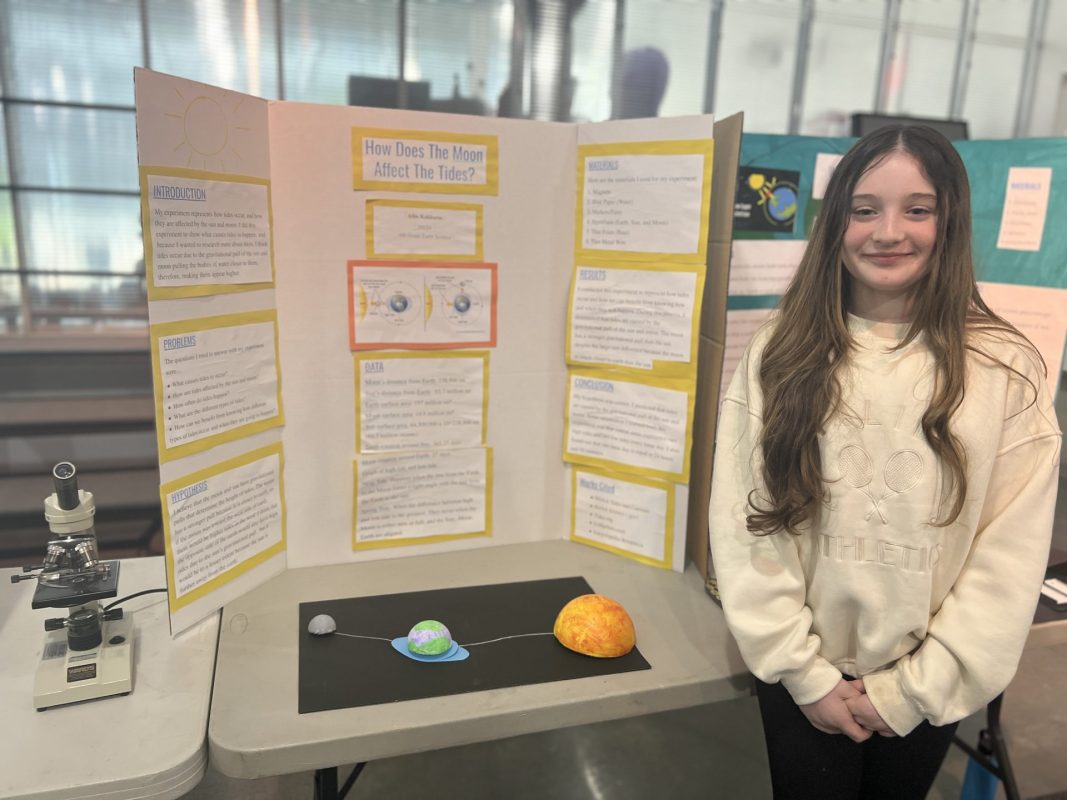
Throughout the week, 6th-year Earth Science students continued their work on tides, exploring how the gravitational forces of the sun, moon, and Earth interact to create the rhythmic rise and fall of oceans around the globe. By understanding the relationship between these celestial bodies, students gained insight into how high and low tides are formed, allowing them to appreciate the intricate dance of nature that influences our coastlines every day.

7th-year Physical Science students have been finishing their unit, Chemical Equations and Reactions, exploring how substances interact and transform. As we transition into our next exciting unit on Kinetic Energy, students will embark on a journey to understand the conversion of energy from potential to kinetic forms. They will discover how energy can change from stored energy to energy in motion. To conclude this unit, students will engage in a hands-on project where they will design their pinewood derby car. Through this activity, they will apply their knowledge of weight, velocity, and friction to comprehend the principles of potential and kinetic energy in a real-world setting.
8th-year Life Science students have continued to work on their unit, Influencing Inheritance. Students researched and discussed how this scientific practice influences our daily lives. By researching various global issues, students have discovered the potential of genetic engineering to address a range of everyday problems faced by people across the world. From enhancing crop yields to developing disease-resistant organisms, genetic engineering presents innovative solutions that can positively impact living organisms and societies as a whole.
Have a great weekend!

Middle School: Week in Review

It was a great couple of weeks in Middle School. We had a small celebration of friendship with some special snacks on Valentine’s Day.

**Please have your MS student come to school ready for the outdoors (jacket, gloves, boots when snowy). We like to be outside daily when we can, and more importantly, when the students join their younger peers on Wednesdays for Social Impact, most of the classes are going outdoors. Thank you for your help with this.

Humanities
6th-grade Humanities students completed drafts of their research essays and also prepared the first run-throughs of their research presentations. They have been busy! This group has particularly been working to understand how to use citations and develop a works cited page. They will be revising their essay drafts as well. Additionally, students are continuing to learn about Ancient Mesopotamia and have focused on Sumer.

7th grade also completed drafts of their research essays and prepared the first run-throughs of their research presentations. Additionally, they have been continuing to learn about the continent of Africa, particularly the human geography and industry (mining, drilling, forestry, and fishing). The class began the novel A Long Walk to Water, and we have been working on it in class.

8th-grade Humanities classes with Mrs. Lamb began with a presentation of current events before moving to grammar. They are completing a unit of study focused on creating complex and compound sentences. Right now, they are identifying independent and dependent clauses along with subordinating conjunctions. This also helps them understand when to use commas in sentences that have both dependent and independent clauses (complex). With Mr. Newman, students are currently examining the reforming of American society from 1820 to 1850. This includes the study of slavery and expansion westward.

Science
6th-year Earth Science students are currently on the unit Tides. Objectives for this unit are for students to explain what tides are, what causes high tide and low tide, describe the difference between high tide and low tide, detail the relationship between the sun, moon, and Earth concerning tides, and describe how Earth’s rotation affects tides. Students will detail several main objectives of this unit through artistic representations.

7th-year Physical Science students are in the unit Chemical Reactions and Equations. Objectives from this unit are for students to list the indicators that a chemical reaction has occurred, identify the reactants and products in a chemical reaction, distinguish between endothermic and exothermic chemical reactions, explain the law of conservation of mass, and how chemical reactions are represented so that mass is conserved.

8th-year Life Science students are on the unit Influencing Inheritance. From this unit, students will be able to distinguish between two categories of genetic engineering, explain how humans can influence certain characteristics of organisms by selective breeding, explain why gene modification, animal husbandry, and gene therapy are examples of artificial selection and evaluate the impacts of human use of technology to influence the desired traits of organisms.

Math
Pre-Transition students are on Chapter 7, Using Division. Topics covered this week were the rate model for division, arrays, and divisibility, using factorization to make division easier, integer division, and short division.
Transition students are on Chapter 8, Multiplication in Algebra. Topics covered this week were multiplication as shortcut addition, rate factor model for multiplication, multiplication with negative numbers, multiplying probability, and combining percentages.
Algebra students are on Chapter 9, Quadratic Equations and Functions. Topics covered this week were functions with the equation y = ax^2, solving ax^2 = b, graphing y = ax^2 + bx + c, and quadratics and projectiles. Students have been able to use the program Desmos to provide a visualization of each quadratic equation.
Geometry students have started to learn about triangle congruence. They will explore the ways that they can prove triangles are congruent by looking at the corresponding angles and sides. By applying newly learned theorems, students will be able to prove triangles are congruent. These proofs will also include theorems/postulates from previous chapters to help with proving lines/ angles congruent: isosceles base angle theorem, parallel lines theorems, and vertical angles.

Middle School: Week in Review

It’s been another great week in middle school, and we have been outside to enjoy the sun every day!

Humanities

Throughout the month of February, each Humanities class begins with a mini-lesson acknowledging Black History Month. Topics range from highlighting a person to an event or time period related to Black America. 

6th-grade Humanities classes have been completing work with both research writing and Ancient Mesopotamia. Writing lessons in choosing an outline format to organize writing, using transitions between paragraphs, a refresher of using them within a paragraph, giving credit to sources using in-text citations, and using direct quotations to enhance writing were all completed while they continued to draft their essays which are due on Wednesday, 2/14. After completing and reviewing some vocabulary related to ancient civilizations, students began their study of Mesopotamia. They learned about the importance of the region and land, the fertile crescent, and why silt was a crucial factor in the success of the civilization.

7th grade Humanities classes also worked on their research essays. They started the week with a one-on-one review of their introductions and refreshers on using transitions between and within paragraphs, giving credit to sources using in-text citations, and using direct quotations to enhance writing. While they have independent study periods to work on their essays, students should also be working at home to complete them by the due date of Wednesday, 2/15. Additionally, students are continuing with the geography of Sub-Saharan Africa before moving on to the class novel, A Long Walk to Water. 

8th-grade Humanities had their first research check-in on Monday for their expert projects. Mrs. Lamb gave each student a goal and suggestions moving forward with the project. February should be spent conducting research regularly. Also, the 8th grade began a grammar unit on sentence structure and will begin to review independent and dependent clauses as they relate to complex and compound sentences. With Mr. Newman, the class continues to focus on the early presidencies and the formative years of the United States, examining the physical growth of the country as well as the political challenges faced in the years 1800-1850.

Math

Pre-Transition students spent the week covering units 6-6 through 6-10. From these units, students learned how to calculate percentages in their heads, calculate percent as a quantity, use percent of a quantity, order of operations, and multiply mixed numbers.

Transition students covered units explaining expansion and contraction using multiplication, area of circles, trapezoids, and triangles. Our next unit, ” Multiplication in Algebra,” will begin on Monday.
Algebra students were introduced to topics covering negative exponents, powers of products and quotients, square roots and cube roots, multiplying and dividing square roots, and distance in a plane. Students have done a great job using available resources to facilitate their understanding throughout the class.
Geometry students have been learning about reflection symmetry and how an object or shape remains unchanged when reflected across the line(s) of symmetry. They did this with some common shapes and a few uncommon ones. Students have spent a good deal of time learning about the properties of quadrilaterals and isosceles triangles. They have discussed the similarities between them (lines, angles) and the differences. The students have been applying these properties in the proofs that they are learning. The class will be done with Chapter 6 soon, and then they will move on to proving triangles congruent.
Science
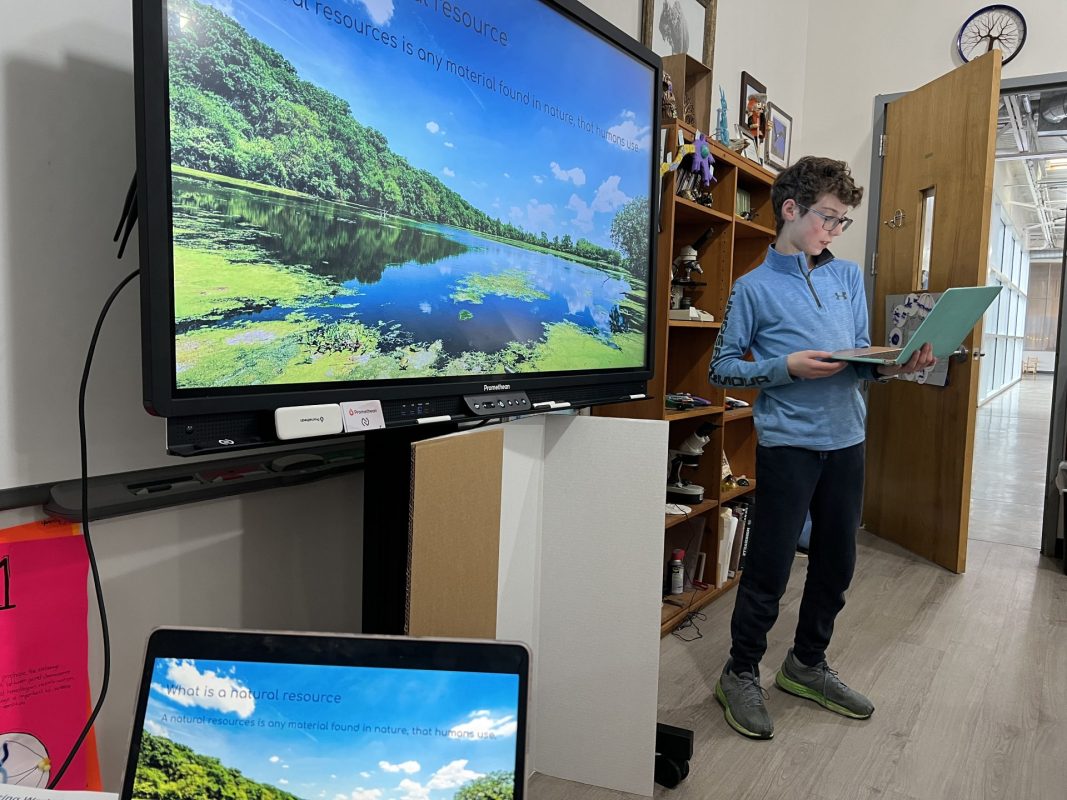
6th-year Earth Science students are finishing their unit, Natural Resources. Students have been able to hold several class discussions pertaining to the role humans have on climate change as it relates to our use of natural resources.
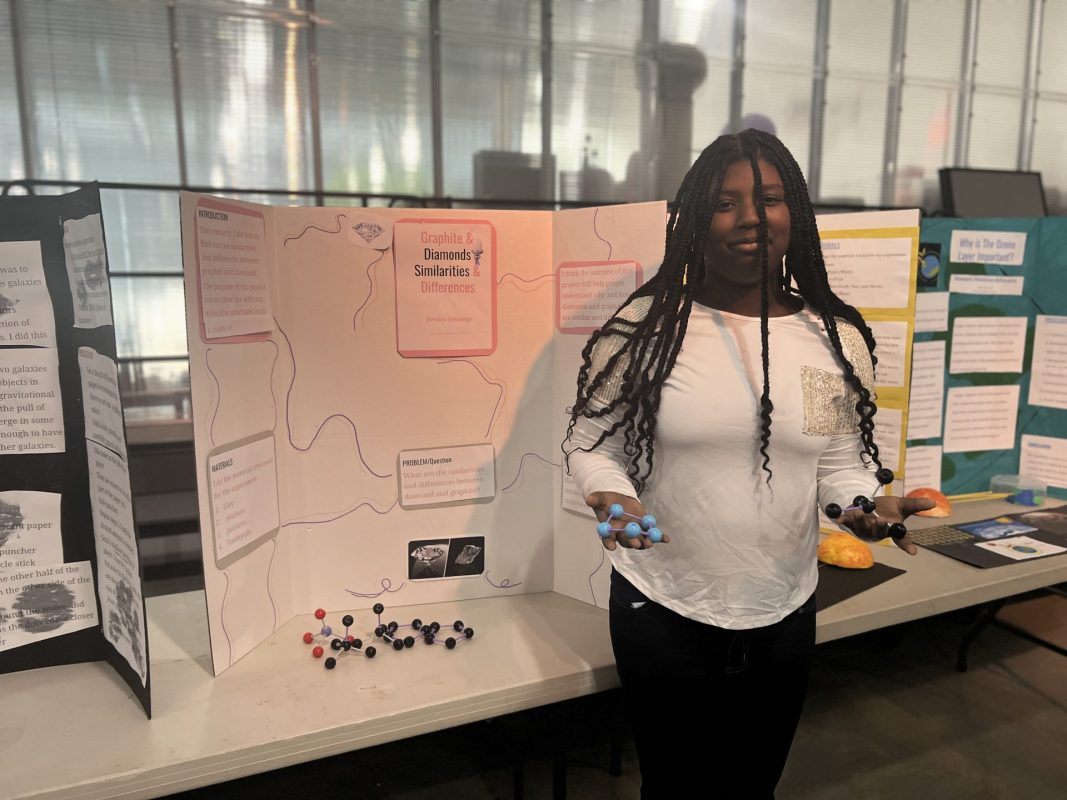
7th-year Physical Science students finished their 3-D molecule project and have begun their new unit, Chemical Reactions and Equations. From this unit, students will be able to list the indicators that a chemical reaction has occurred and explain what happened, identify the reactants and products in a chemical reaction, distinguish between endothermic and exothermic chemical reactions, and explain the law of conservation of mass.
8th-year Life Science students have begun researching GMOs (genetically modified organisms). Each student was tasked with creating a slideshow representation that addresses what GMOs are, what the benefits and risks are, and where this research and application of genetic engineering may take us in the future.

Middle School: Week in Review

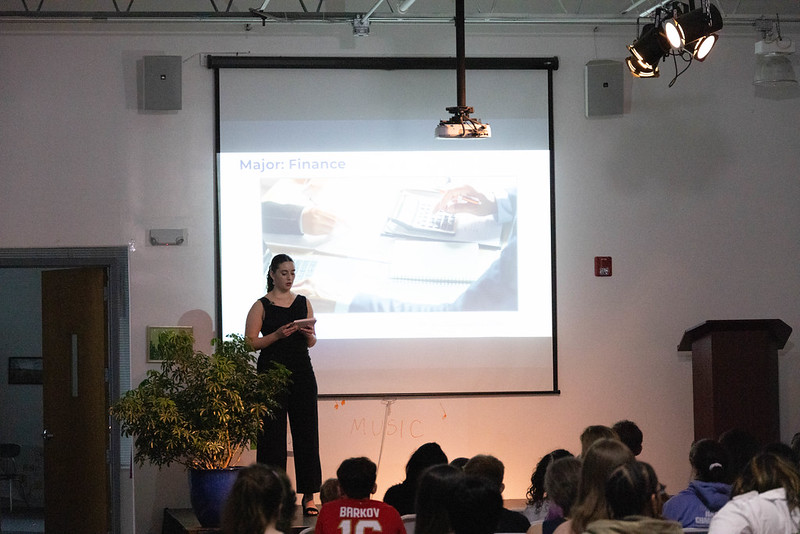
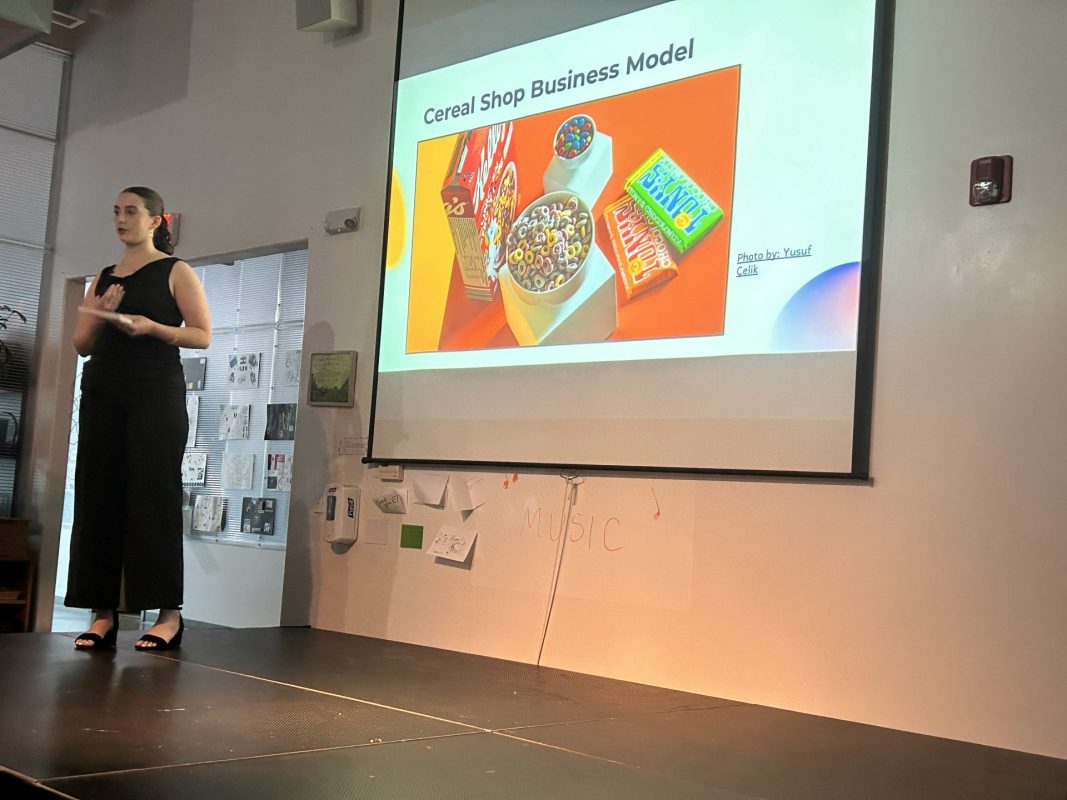
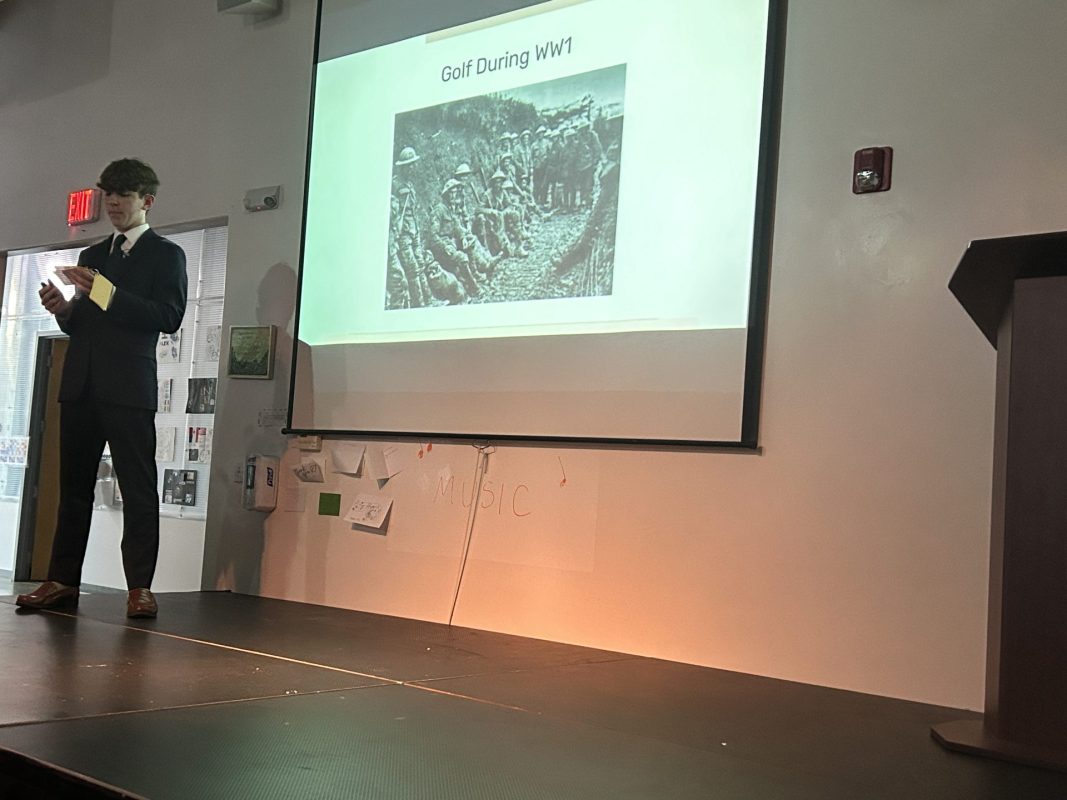
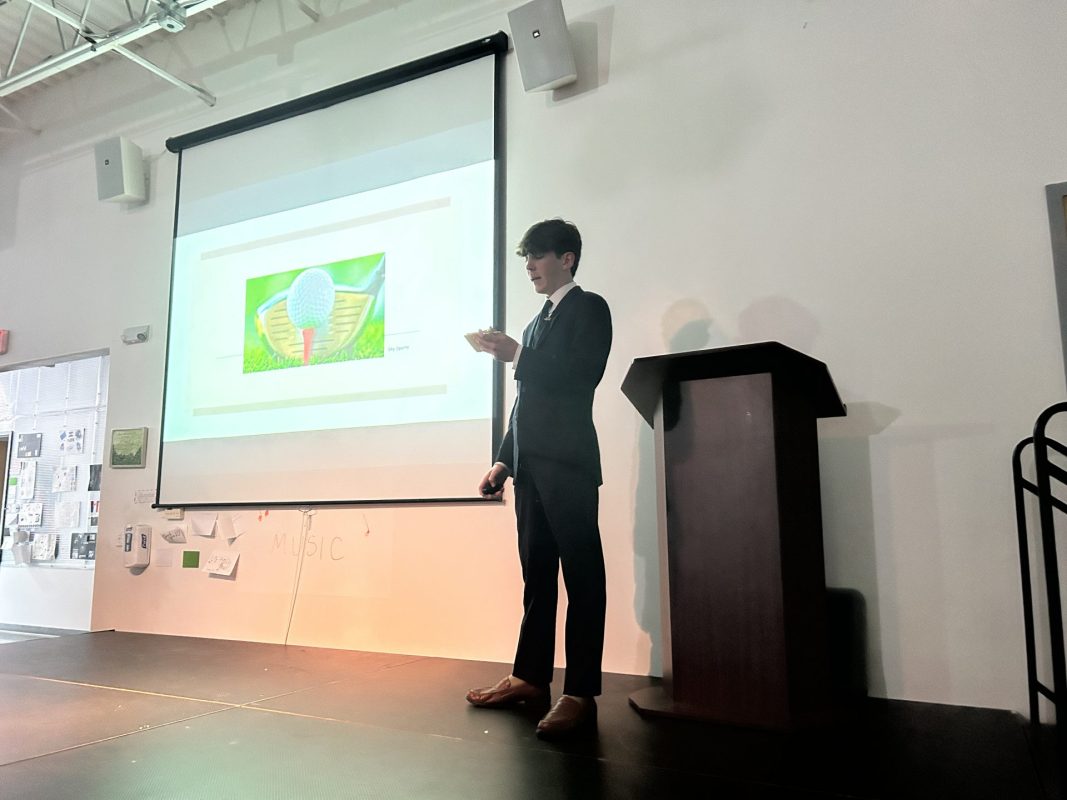
Happy February, Middle School families! It’s been a great week that included 8th-grade internship presentations to the upper elementary and middle school students and teachers.

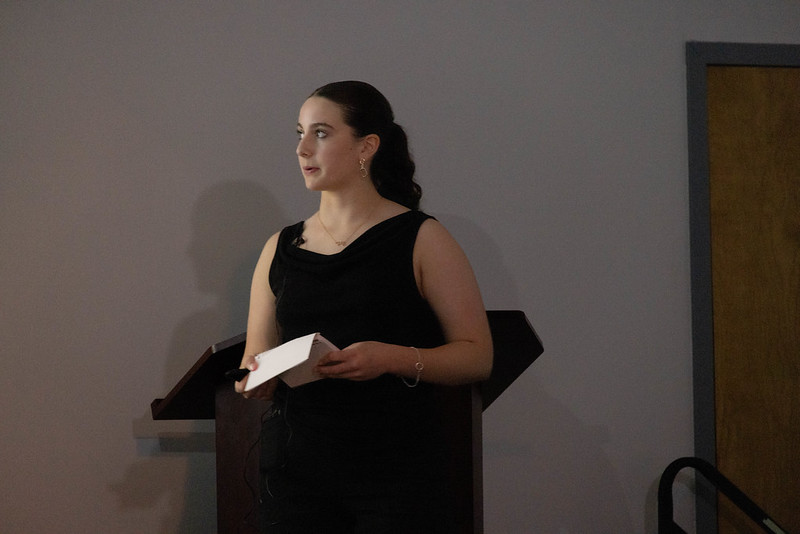
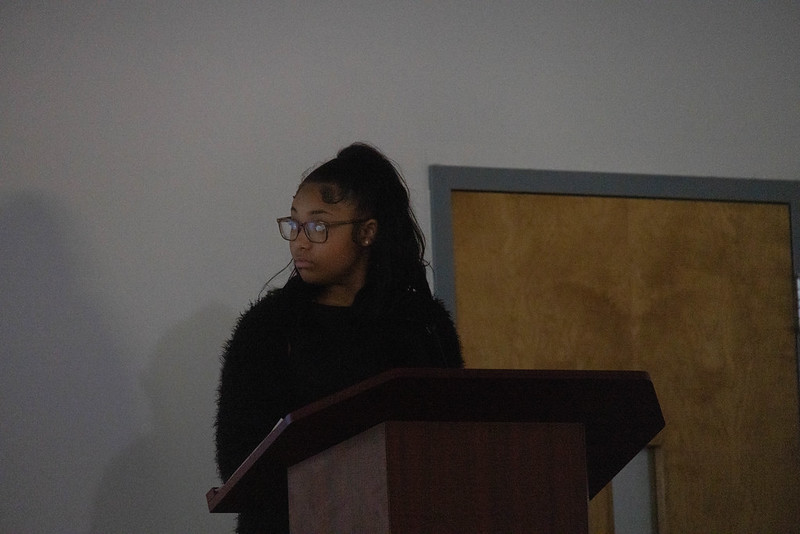
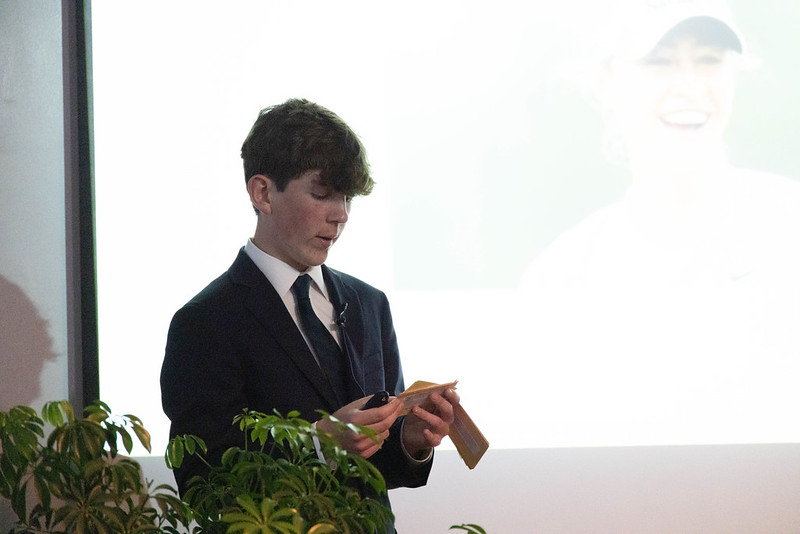
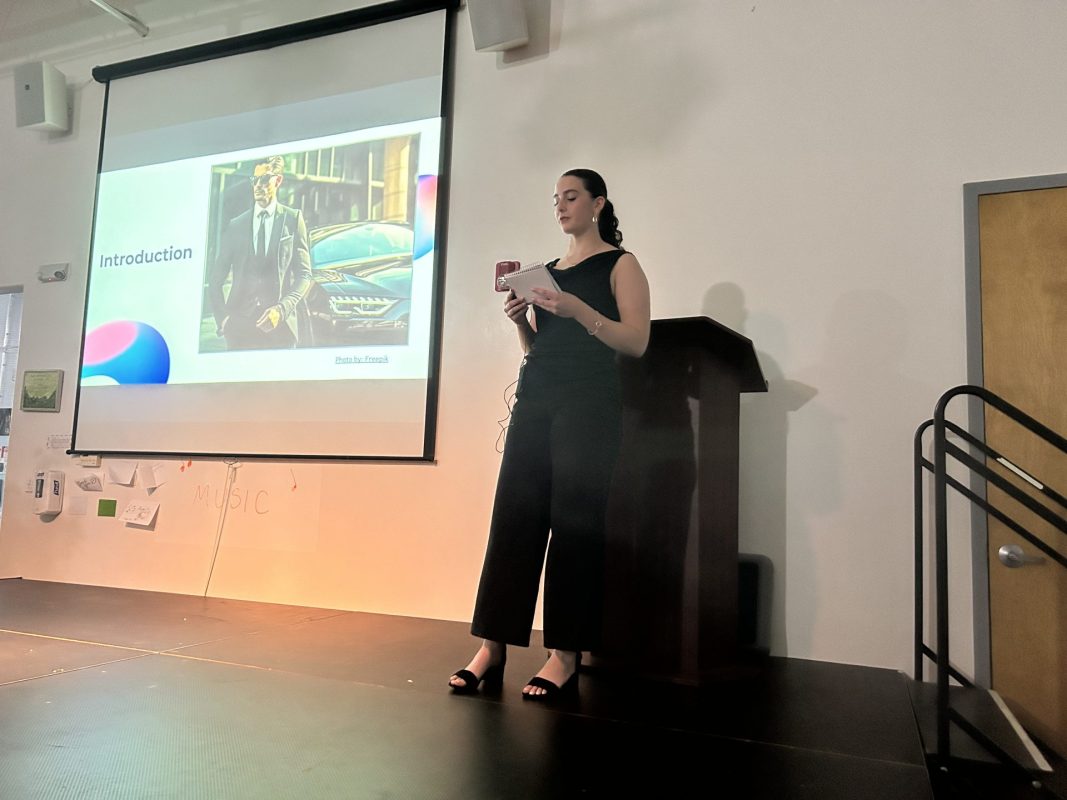
A component of our 8th-grade program includes a unique Internship project. This allows students to engage with professionals and experts, gaining real-life experience and information. The internship project has students reach out to business professionals and ask to become an interns for three days. This looks different depending on the profession, but students might be working right alongside professionals, observing and engaging in interviews about the work environment and culture. They complete daily written journals, a presentation about their experience to be delivered to the community, and a written reflection.

You will see pictures of this year’s presentations in our photos this week. These presentations made the teachers see that these 8th graders are ready to become high schoolers! It is completely bittersweet.

Here’s what went on in the other classrooms:

Science

6th-year Earth Science students are exploring their unit, Natural Resources. From this unit, students will be able to classify a natural resource as renewable or non-renewable, provide examples of ways humans depend on natural resources, compare and explain how natural resources form, explain the importance of using natural resources wisely, and cite ways in which humans can do so. Students began the week presenting their research on the impact of using non-renewable resources if restrictions are not implemented.

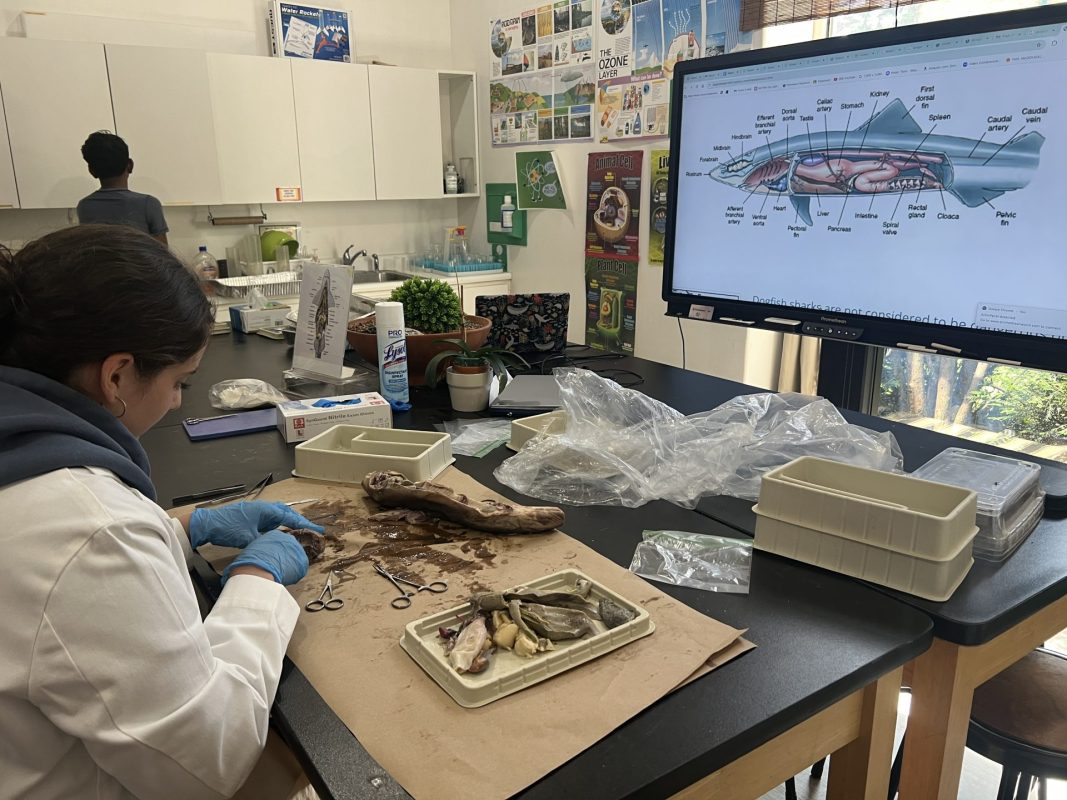
7th-year Physical Science students are continuing their unit, Molecules. From this unit, students will be able to recognize that atoms and molecules are too small to be seen. They will also identify, draw, and build models of elements, compounds, molecules, and diatomic molecules, as well as describe how the properties of a compound are different from the properties of the elements that form the compound. Students have done a great job creating their 3-D molecule representation on display in our classroom.
8th-year Life Science students are on the unit Genes and the Impacts of Mutations on Organisms. From this unit, students will be able to explain what a gene is and identify the location of genes, explain how genes affect the structure and function of a cell, use a model to describe why structural changes to genes (mutations) may affect proteins, and analyze whether a gene mutation is harmful, beneficial, or neutral to the structure and function of an organism.
Math

Pre-Transition Students

In our math class, Pre-Transition students have been working diligently on Chapter 6, titled “Using Multiplication.” This week, we focused on various important units, including:

  1. Arrays: Understanding the concept of arrays and how they relate to multiplication.
  2. Multiplying Fractions and Decimals: Exploring the multiplication of fractions and decimals.
  3. Areas: Applying multiplication to calculate the area of different shapes.
  4. Powers: Examining the concept of powers, including exponentiation.

Transition Students

We are currently immersed in Chapter 7, titled “Multiplication in Geometry.” In this chapter, we have explored several fascinating topics, such as:

  1. Area Models for Multiplication: Understanding how to use area models to visualize multiplication.
  2. Multiplication of Fractions: Learning how to multiply fractions effectively.
  3. Distributive Property: Applying the distributive property to simplify multiplication expressions.
  4. Area of Triangles and Trapezoids: Calculating the area of triangles and trapezoids through multiplication.

Algebra Students

We are currently delving into Chapter 8, titled “Powers and Roots.” In this chapter, you will be learning some powerful concepts, including:

  1. Discovering the Products and Quotients of Powers: Understanding how to multiply and divide numbers with powers.
  2. Negative Exponents: Exploring the rules and applications of negative exponents.
  3. Square/Cube Roots: Exploring the concept of square and cube roots and their significance.

Humanities

6th-grade Humanities students have been focused on the region of North Africa and the Middle East. They have particularly been looking at the current political maps of the region and had an assessment identifying countries. Next, they went back in time to look at the maps of 3 ancient civilizations: Indus Valley, Mesopotamia, and Egypt, focusing on bodies of water and major cities. Next week, students will begin to look at how societies organized and comparing to today. Students ended the week completing their research notes for this trimester’s research project, A Moment in History and began their research essays, which are due on the revised date of Wednesday, 2/14.

7th-grade Humanities classes had a great time presenting their Community Projects that they have been working on this month. This is a group project that had students look at the idea of Utopia stemming from their class novel, The Giver, and create their own ideas of what this might look like in a community. They brainstormed, wrote responses to each of the required components of the community, and created presentations to their classmates trying to convince them that their community is, in fact, Utopian. As each group presented, students wrote notes about what they were on board with, what they questioned, and whether or not they would consider living there. In the end, they anonymously voted on the community they felt most embodied Utopia. Of the four groups, there was a tie between 2! Finally, students ended the week completing their research notes for this trimester’s research project, A Moment in History and began their research essays, which are due on the revised date of Wednesday, 2/14.

The 8th grade had a busy week! With Mrs. Lamb, they started the week by giving the first run-through of their internship presentations, receiving feedback, and making revisions. Then, they were able to give their final presentations to the upper elementary and middle school classes. With Mr. Newman, students examine the first five presidents, looking at who they were, what similarities they shared as people, and the challenges they faced as the first leaders of a new country.
We hope you have a wonderful weekend!