Mrs. Doyle: Happy Harvest!

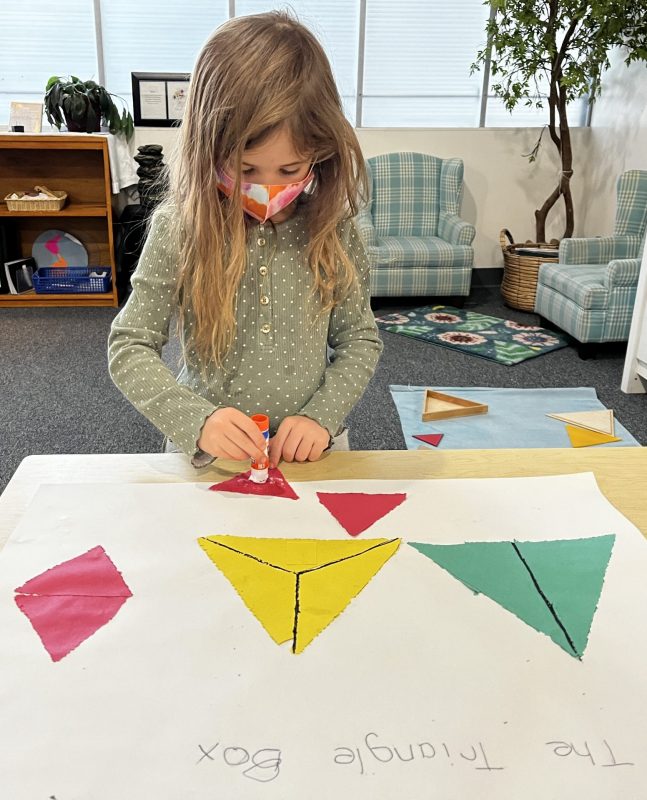
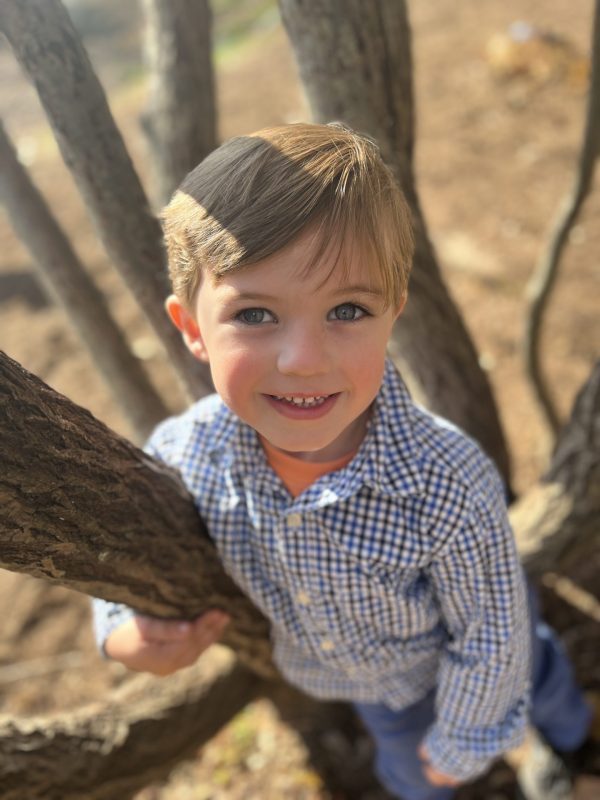
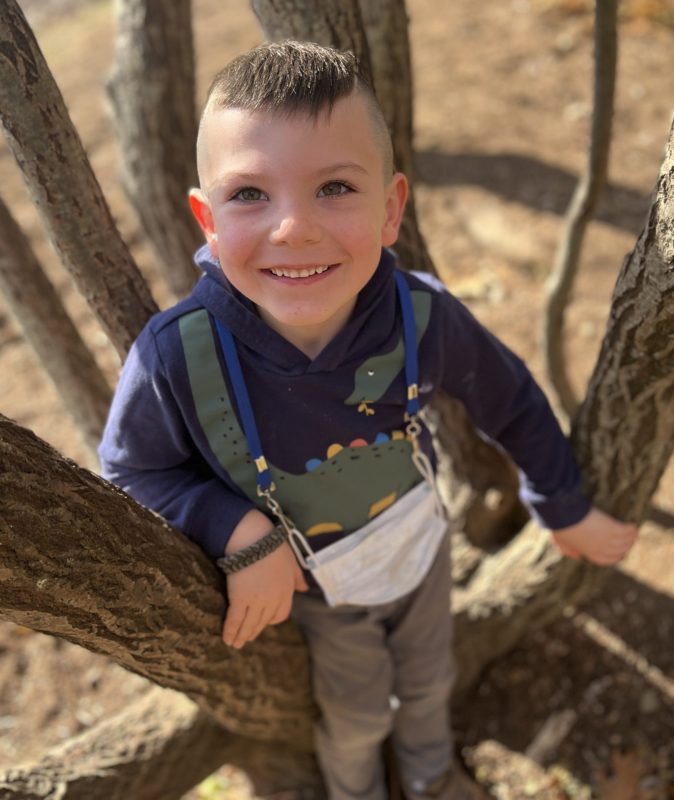
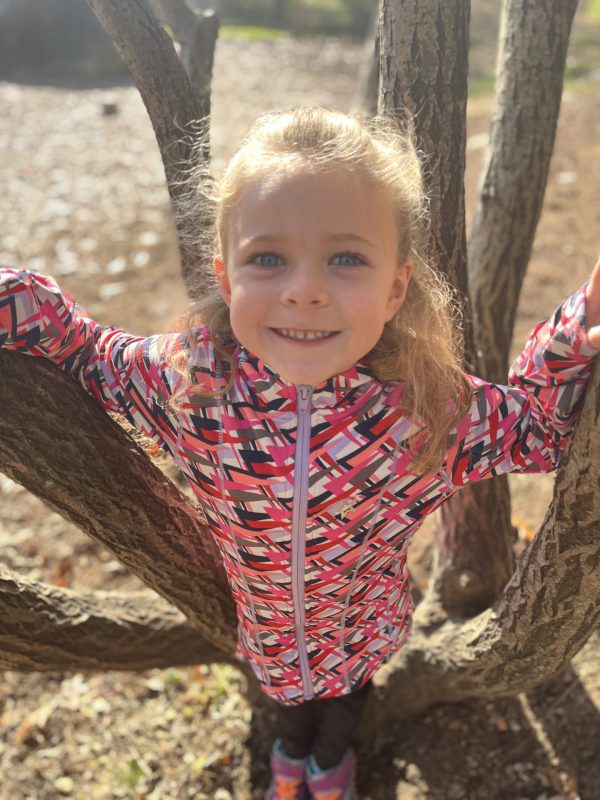
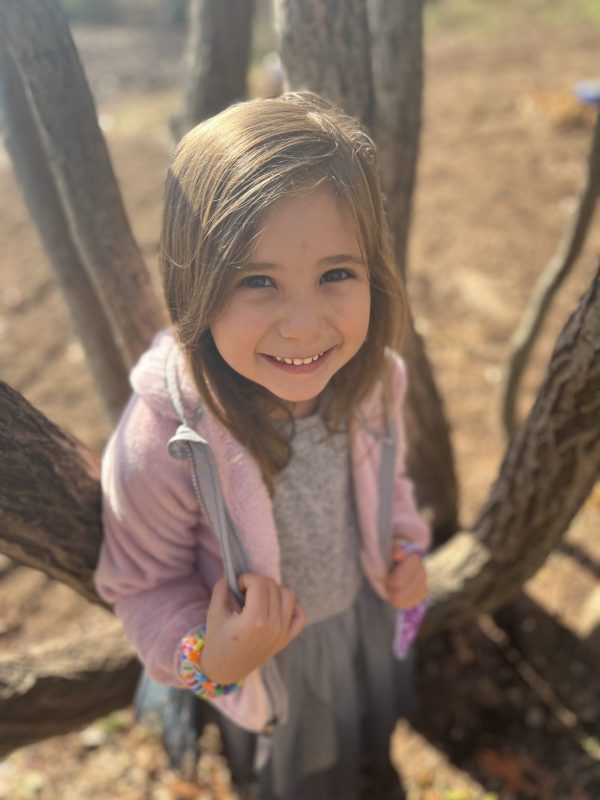
We hope everyone had a wonderful Halloween weekend!   On Wednesday, the children were able to head out to the FWM “Pumpkin Patch” and pick their own pumpkin.  We journeyed back inside to carve our newly named pumpkin, Boo, and enjoy a spooktacular snack.  The children then made spiders by filling a glove with popcorn. A fun time was had by all.   A huge thank you to Meg and Jackie for organizing everything and for Melissa and Punam for creating the pumpkin patch.  We know there is always a lot of behind the scenes work and we are thankful for our village.

While I dearly miss conferences being face to face, I am grateful that we can connect via Zoom.  Thank you all for your open, honest communication and ensuring that we have a strong home/school connection. As always, please feel free to reach out at any time.

Wishing you a week filled with peace and love.

Michelle & Liset


Mrs. Lopes: Harvest Celebration

We hope everyone had a fun and safe Halloween weekend!  Last Wednesday, was our Annual Primary Harvest Celebration.  First, the children had a chance to search for a pumpkin on the playground during our “Pumpkin Hunt”.  The children were so excited to search the playground for the perfect pumpkin!  After finding a pumpkin, we came back inside to carve our class pumpkin.  Ms. Heather asked the children for suggestions on what type of face to carve and “spooky” won.  While Ms. Heather was carving the pumpkin, the children enjoyed a snack of mummy rice crispy treats, apple slices, and apple cider.  Once the pumpkin was carved we lit the pumpkin and read a Halloween story.  Finally, we sat outside our classroom to watch the Middle School/Elementary Halloween parade.  Lots of fun was had by all!  Thank you again to all who donated their time or supplies to make our celebration a success, we truly appreciate it!

Although I do miss “in person” conferences, it was so nice to see you all over Zoom last week!  I enjoyed sharing with you all the accomplishments and hard work your children have been doing in the classroom.  Thank you for all the open and honest conversations and your support for our home/school connection.  As always feel free to reach out as needed.

Have a wonderful week,

Amanda and Heather


Mrs. Doyle: The Three Period Lesson


When we introduce new concepts or materials to the children, we often do so using a three-period lesson. This is an important tenet of Montessori education and it helps to move the child from basic understanding of a concept to mastery.

Period One is the introduction stage. In this stage we are isolating new vocabulary to the children. For example, if we are introducing the color tablets, we say, “This is blue.”  Repeating that statement and allowing the child to manipulate the blue color tablet are crucial during this stage.

Period Two is all about association and recognition. It is often a separate lesson. We do not ask the children to remember the vocabulary or recall the concept.  We are simply reinforcing the concept taught in Period One. We use words such as “Show me the blue tablet,” or “Can you place the blue tablet on your lap?”

Period Three is the recall stage and the first time we ask the child to remember the concept independently. We ask them, “What is this?” when showing them the blue color tablet. We are careful not to begin Period Three until we know they are ready for success.

Every time a child masters a new concept it paves the way to move towards another one.

Wishing you a week filled with peace and love!

Michelle & Liset

Mrs. Lopes: Defining a Work Space

The love of one’s environment is the secret of social evolution. -Maria Montessori

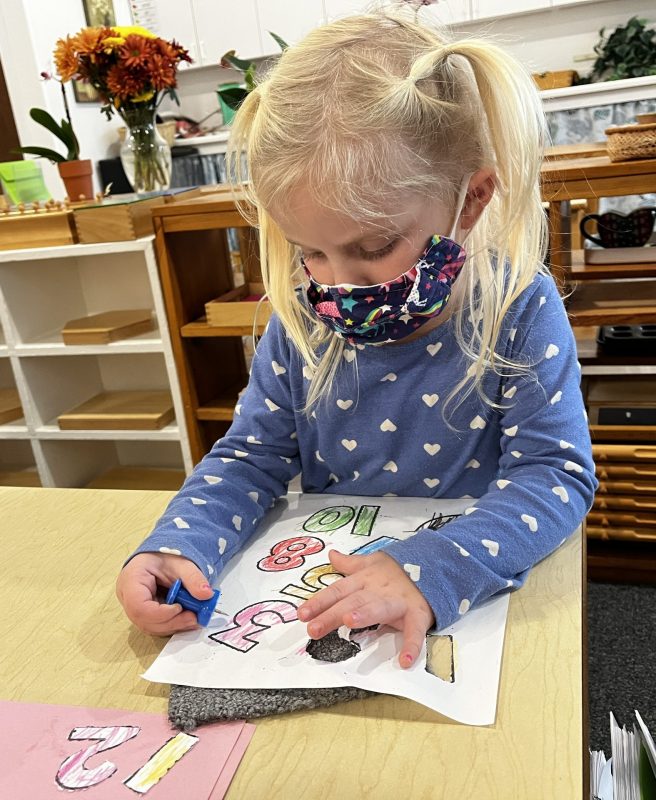
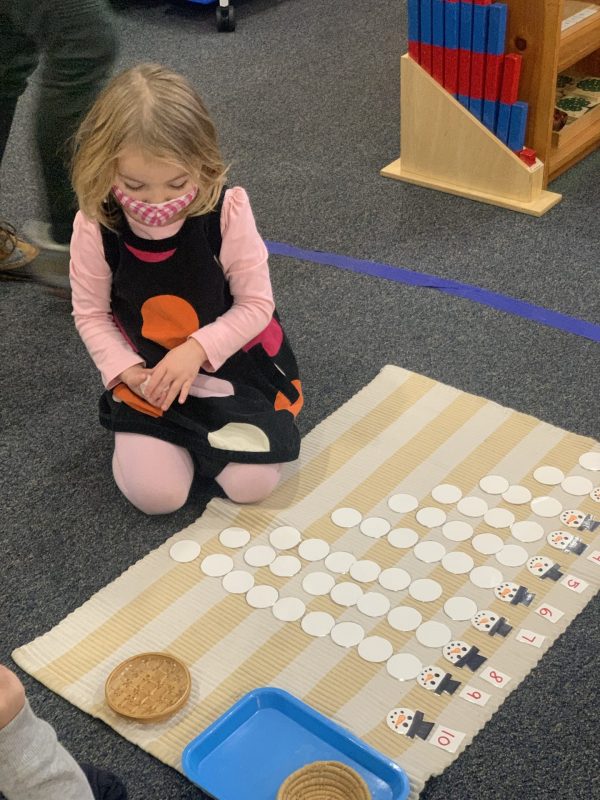
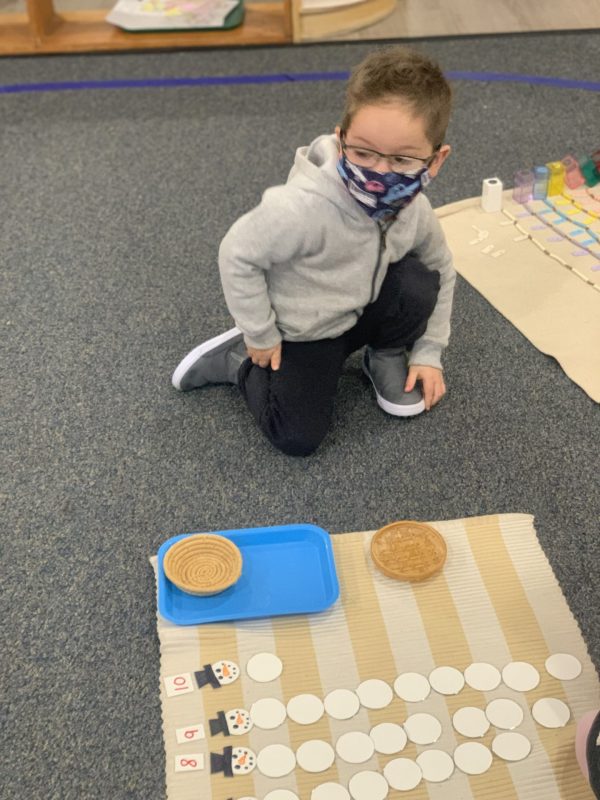
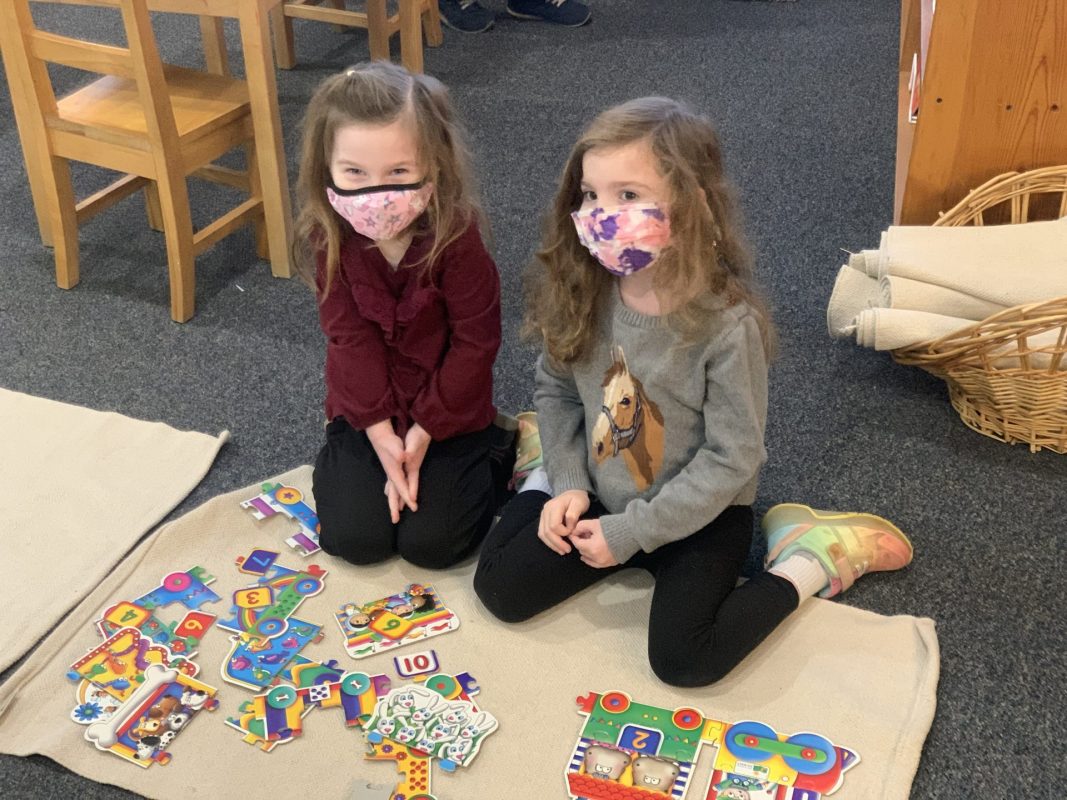
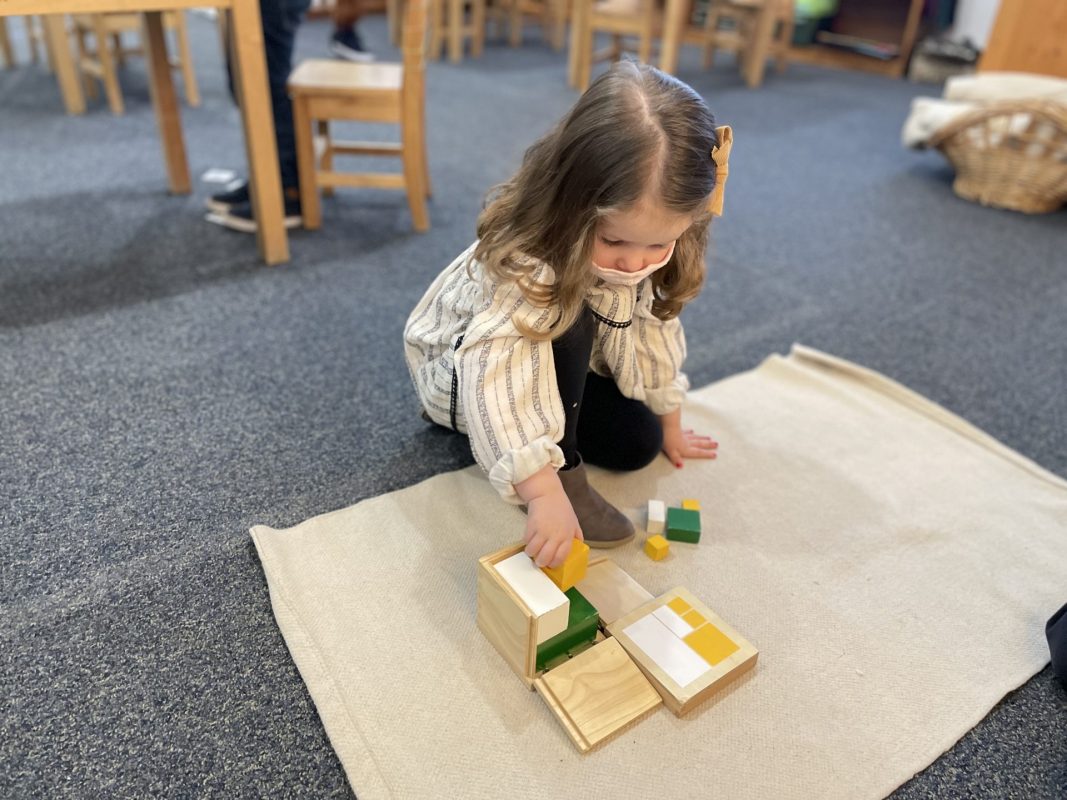
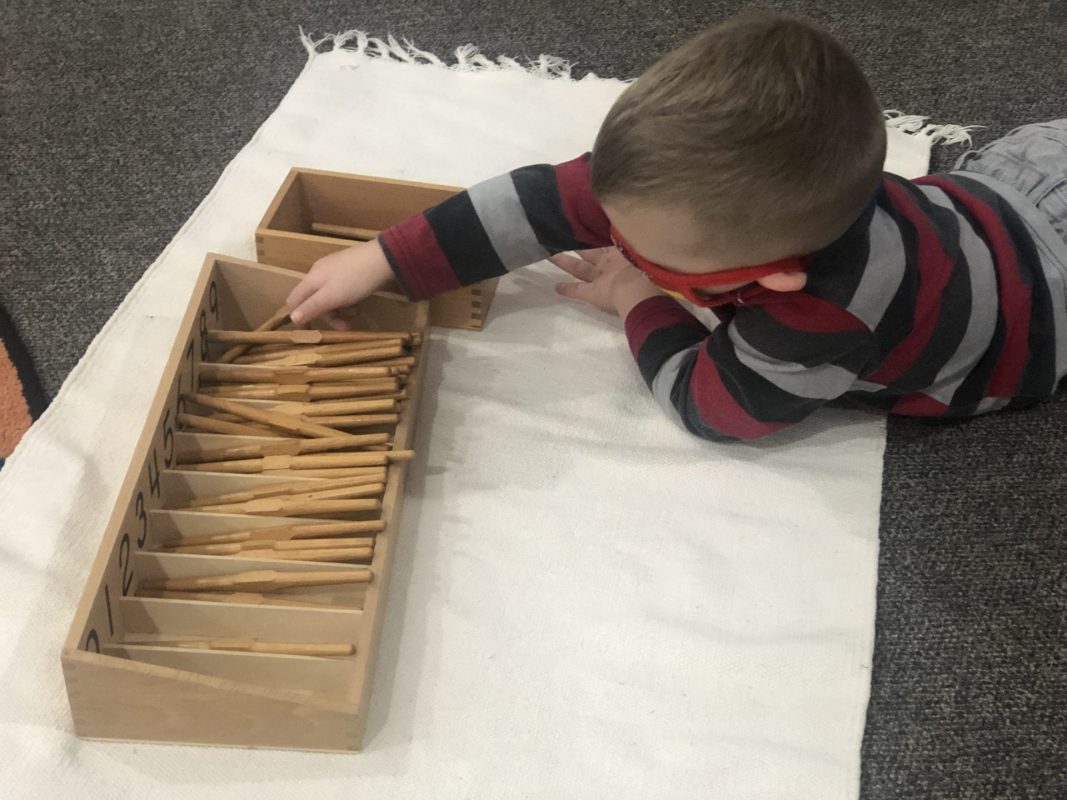
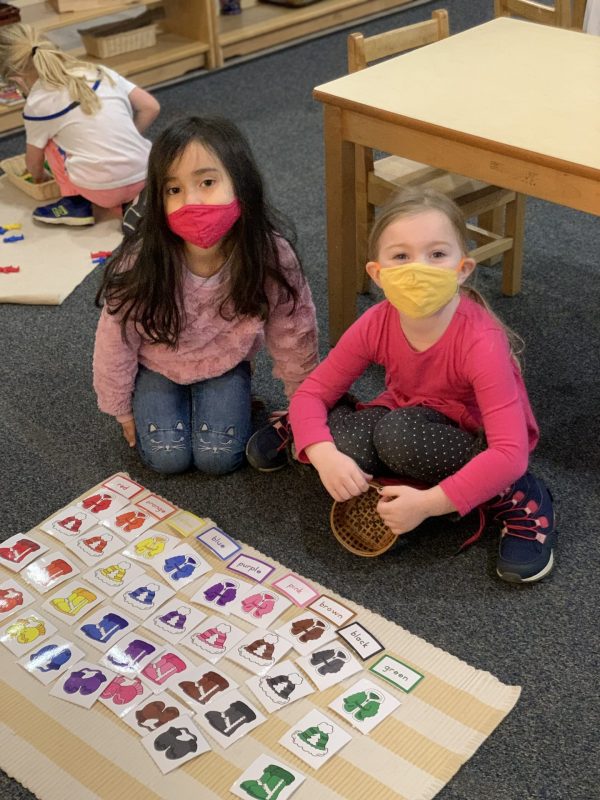
Walking to the basket to get a mat, picking it up carefully, finding the perfect spot to work, and rolling the mat out provides an opportunity to practice gross motor skills and body consciousness. Everything that gets placed on the mat thereafter becomes the responsibility (and privilege) of the child working on that mat.

Montessori work mats define a work space as the child’s own and sets an intention to “work.” Not only does the child know that their lesson is exclusive to them (unless they invite someone to join them on their mat), they also have the responsibility to put their materials away when they are finished and to roll up their mat and bring it back to the basket.

Our floors have been a sea of rugs! Your children are skillfully maneuvering themselves throughout the environment, careful not to disturb a friend’s work. I continue to be amazed at their growing control and respect for both friends and the environment.

We continued our unit on the solar system this week; learning interesting facts about each of the planets, talking about our moon, and exploring concepts such as a black hole.  The children are enjoying exploring our solar system lessons on the shelf and have been asking great questions about our universe.

Have a wonderful weekend,

Amanda and Heather


Mrs. Semmah: An Introduction to Geography and Water Lessons

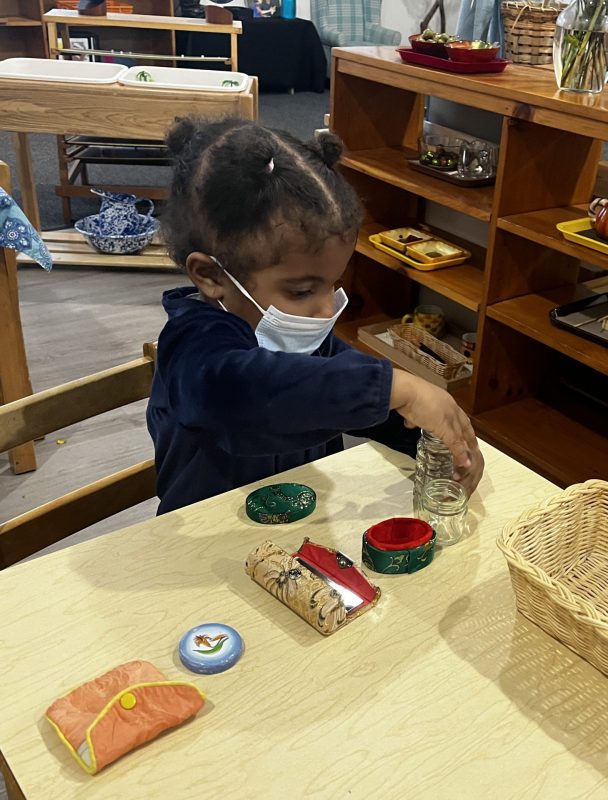
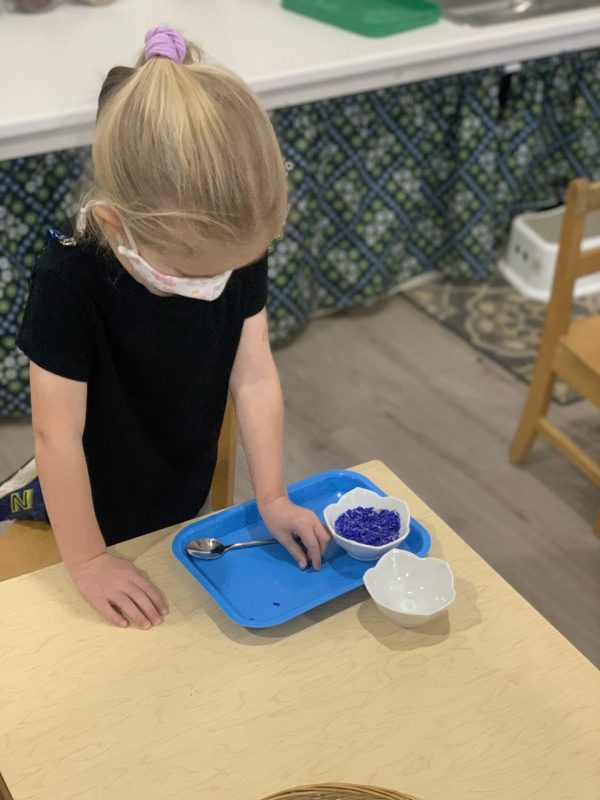
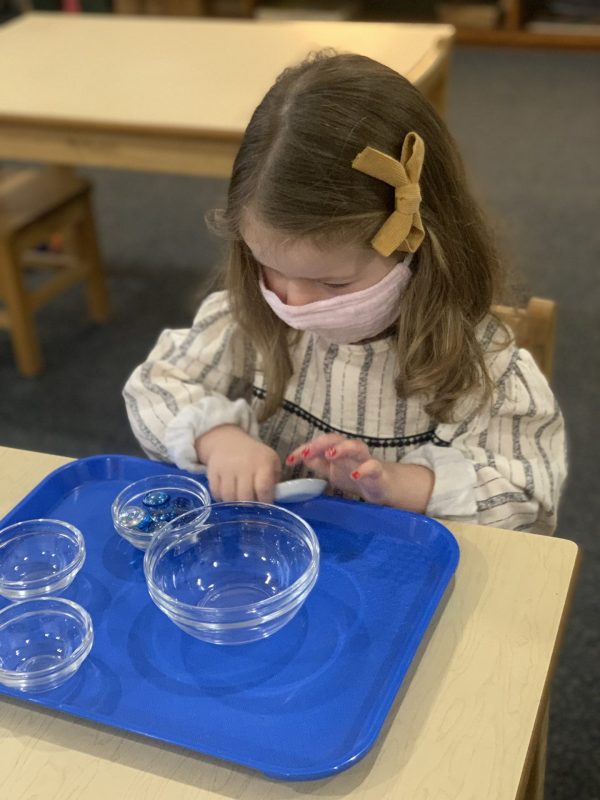
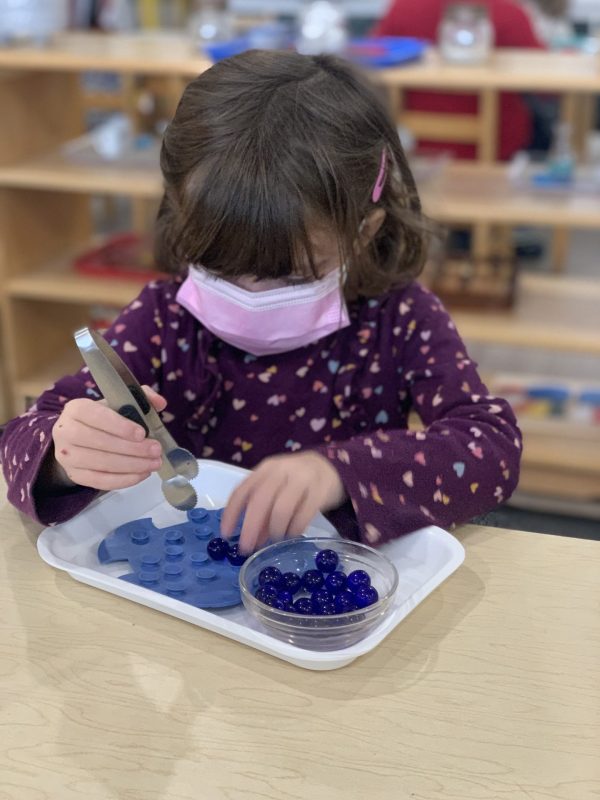
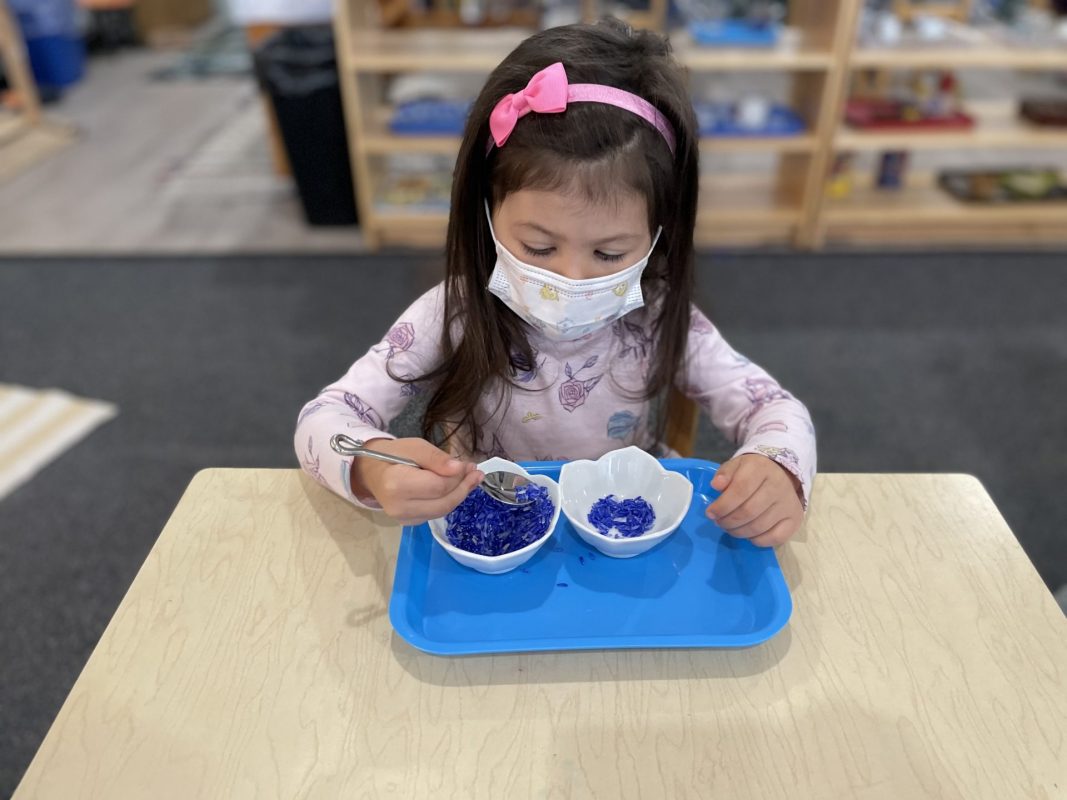
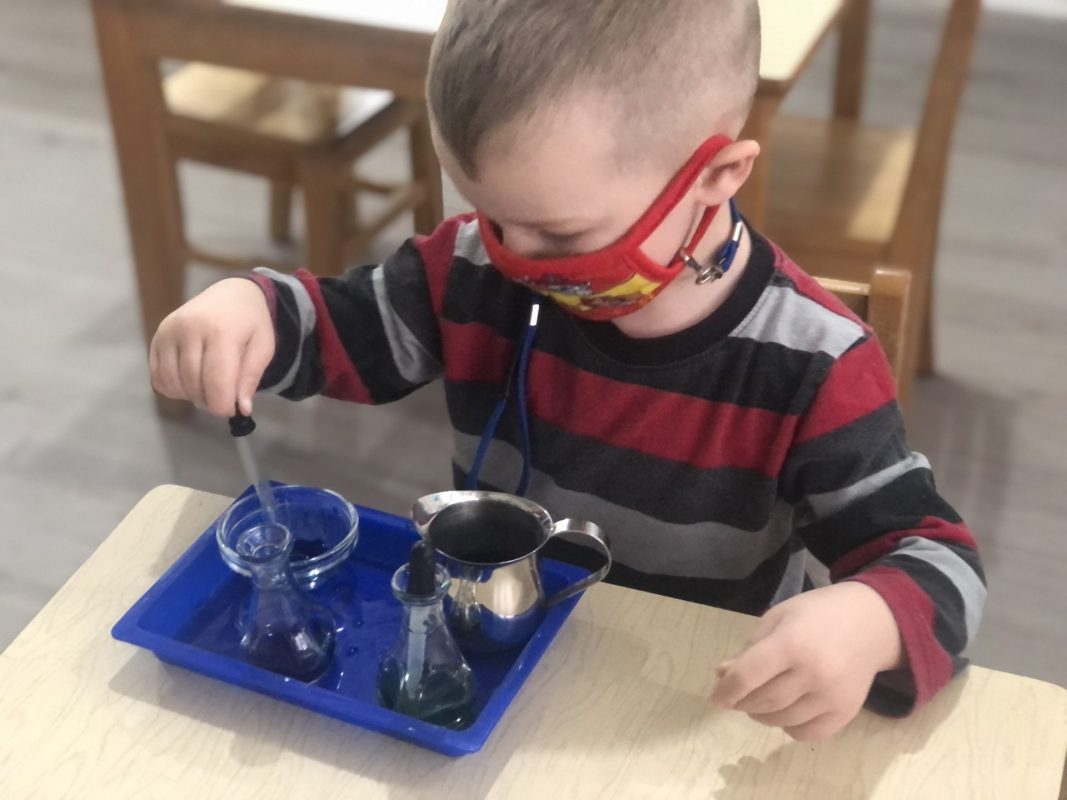
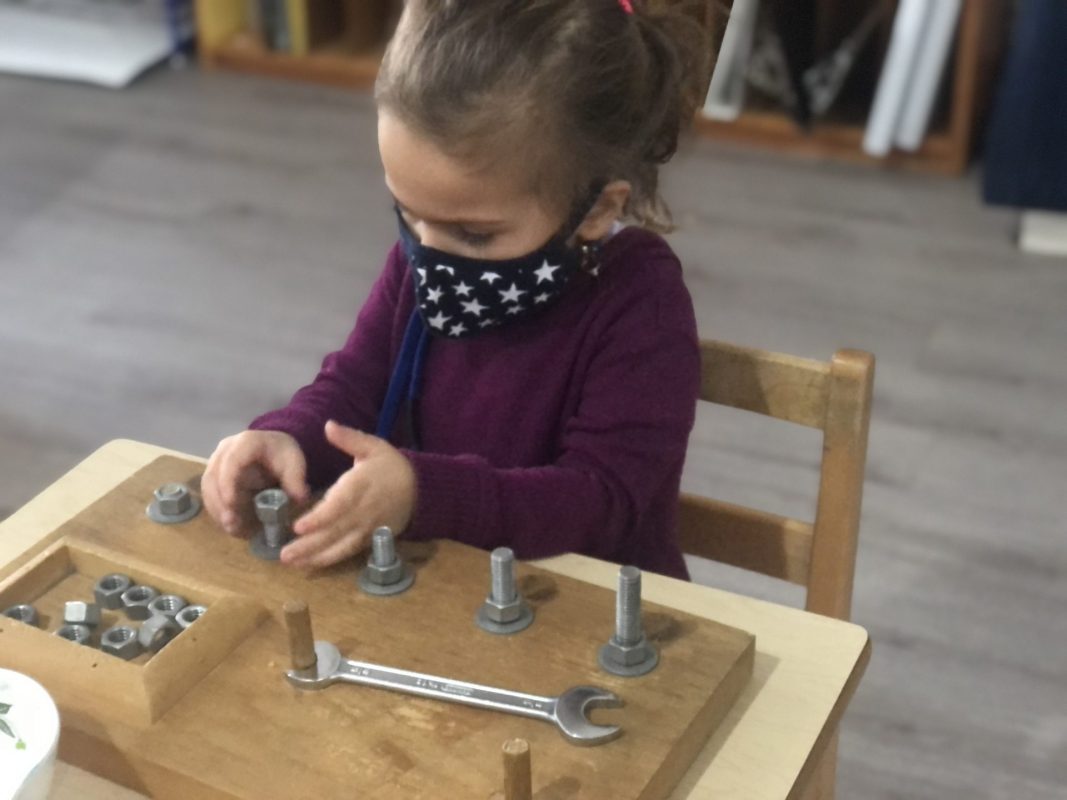
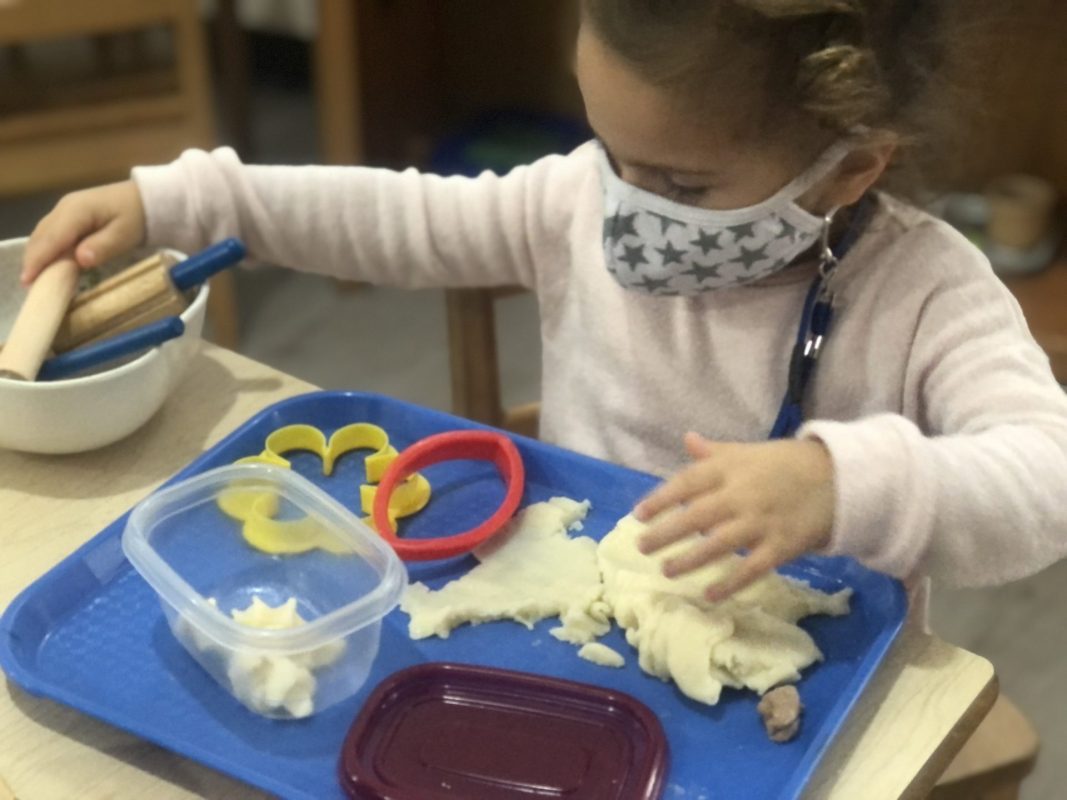
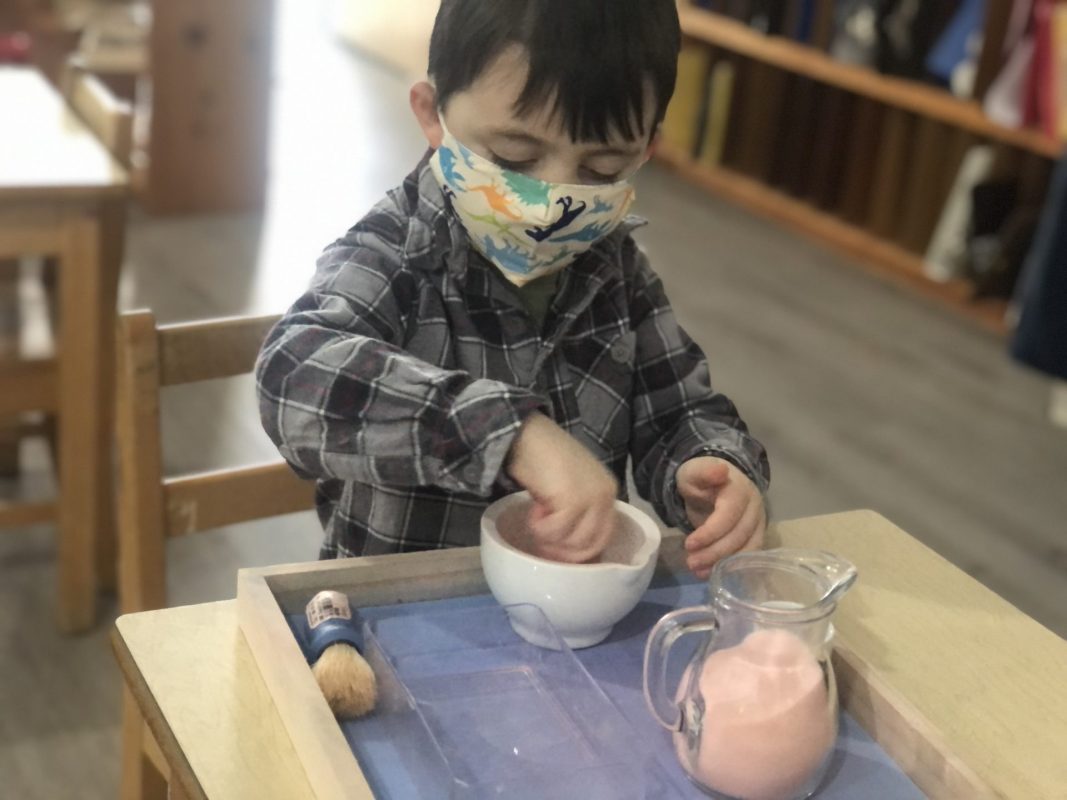
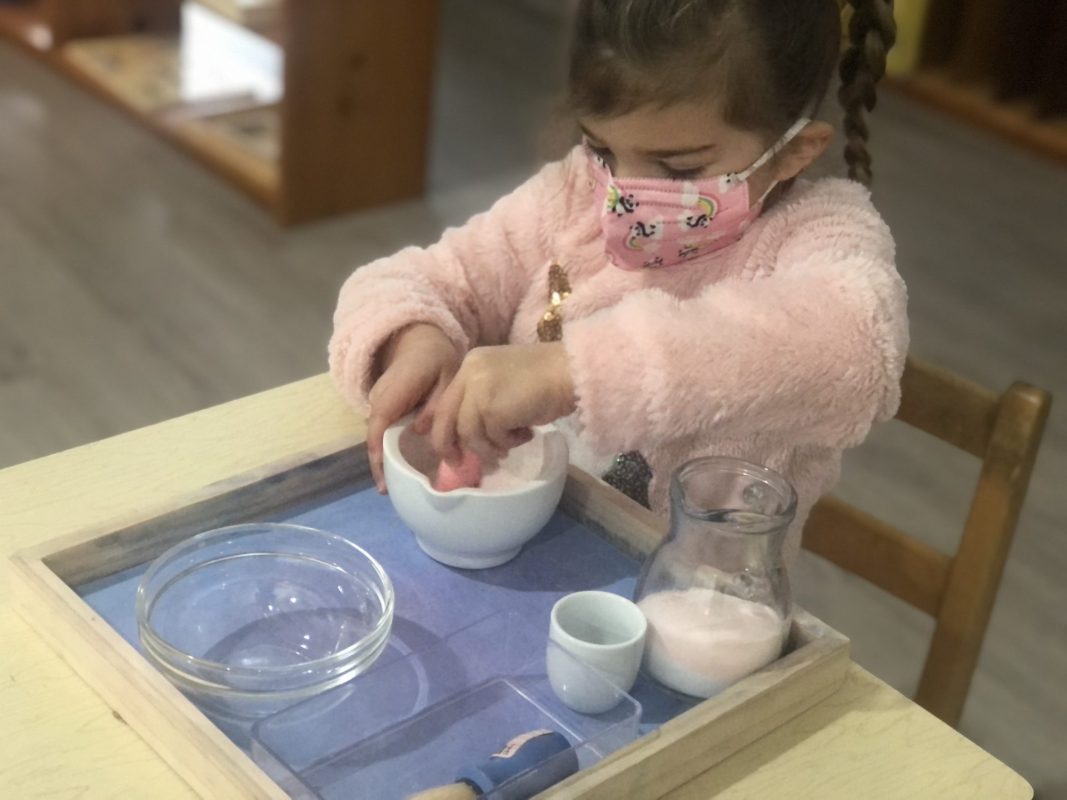
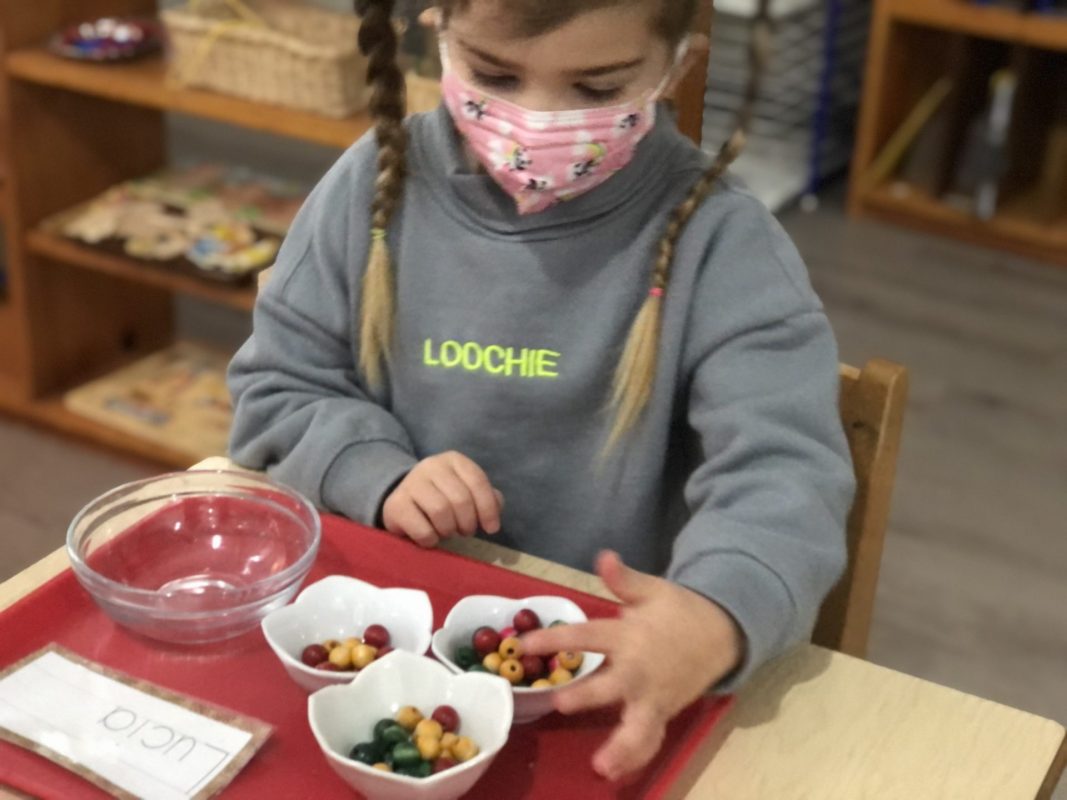
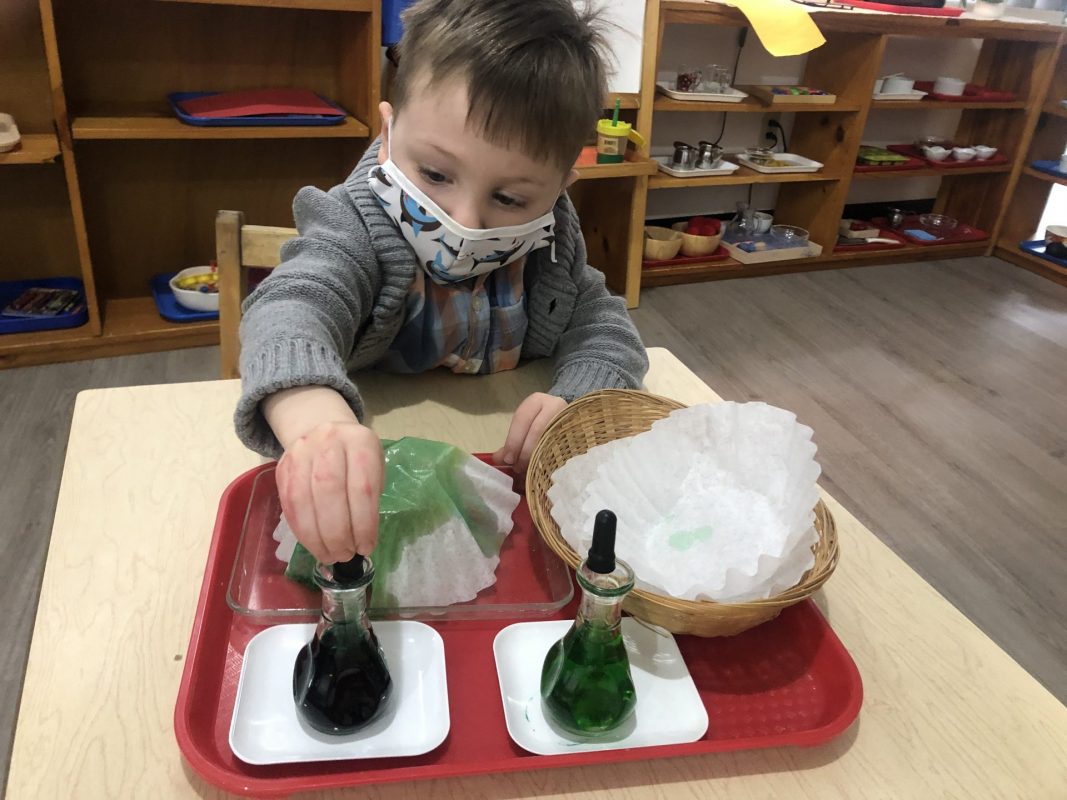
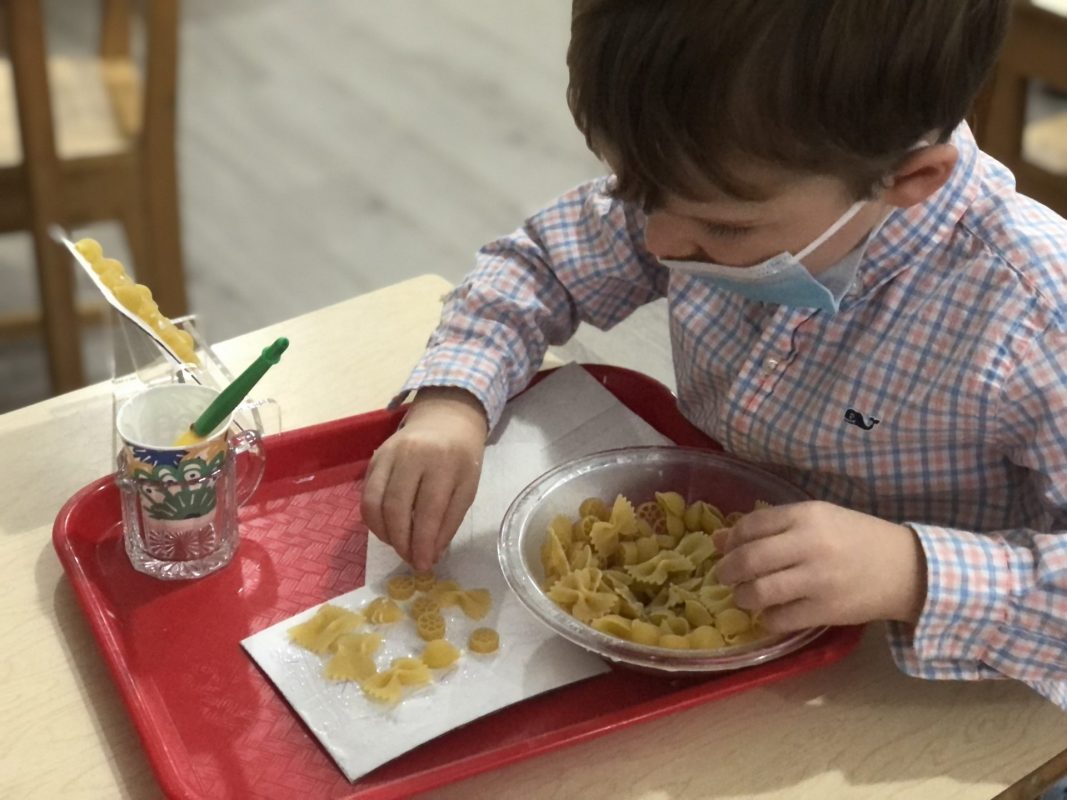
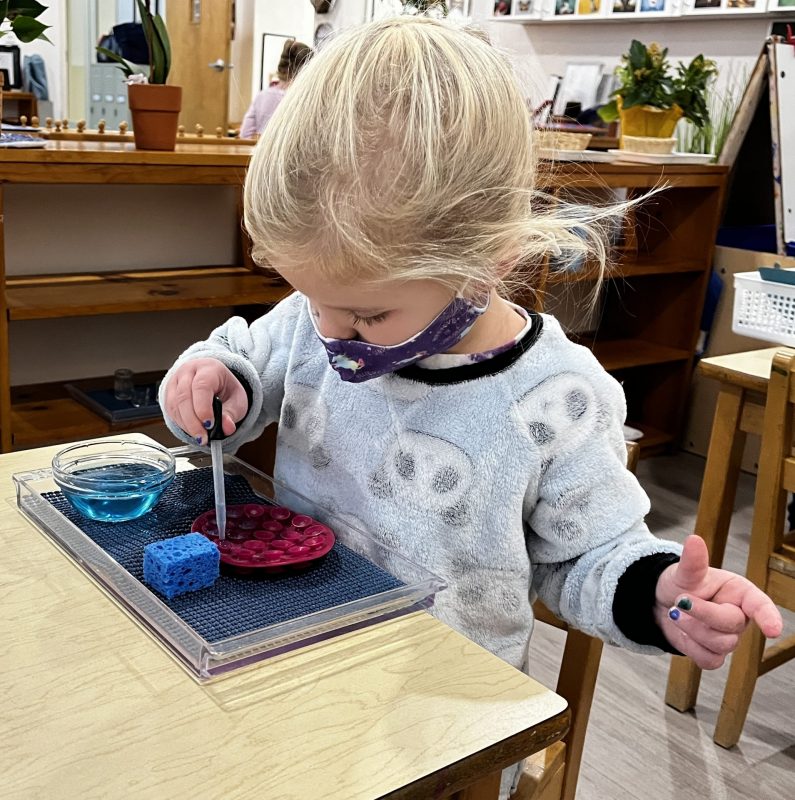
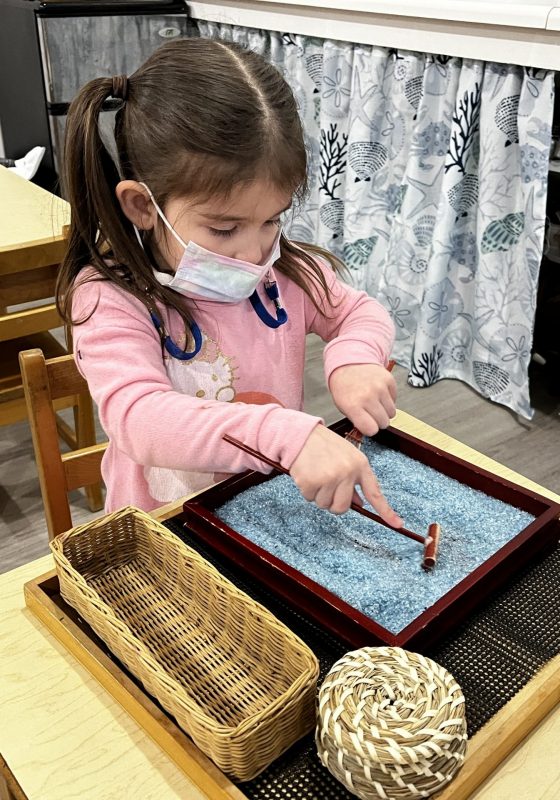
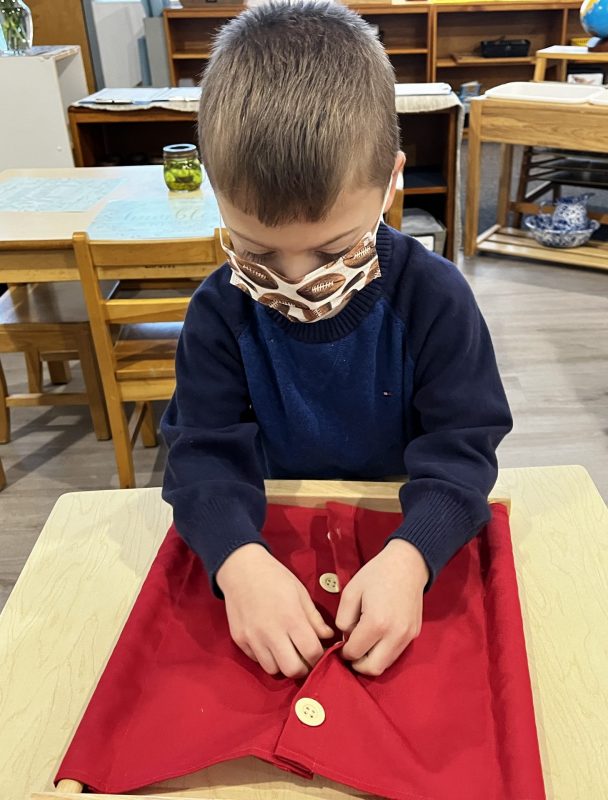
One of our main focuses at the beginning of the year is to introduce fine motor works in the practical life area. Practical life includes pouring, squeezing, and spooning. Adding to these lessons are the additional goals of helping the children increase their attention span and follow a sequence of steps. These indirect goals help the children to handle more complex work in other areas of the classroom.

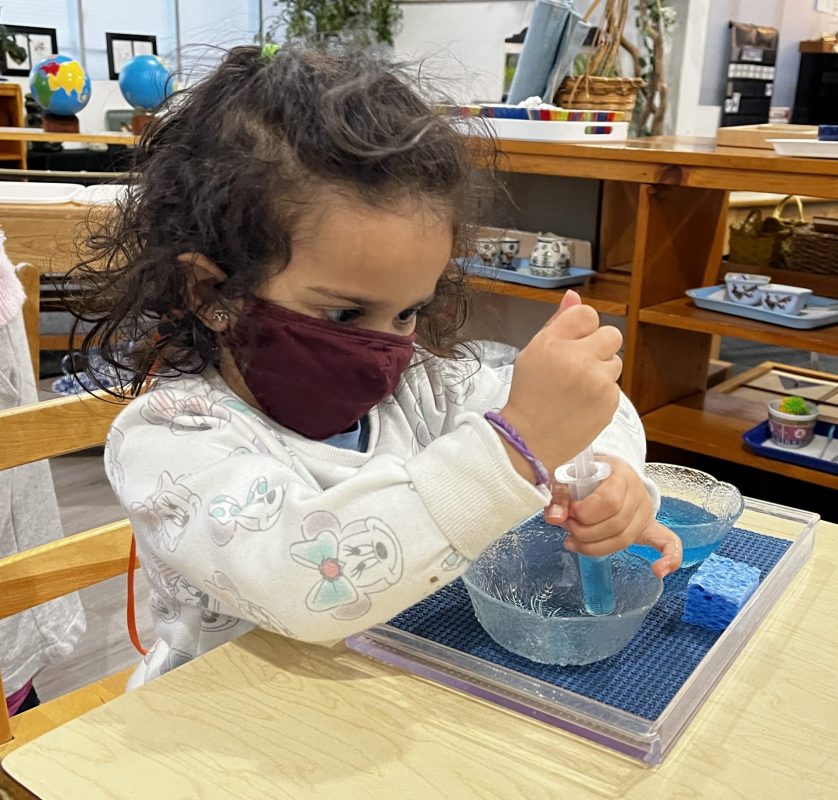
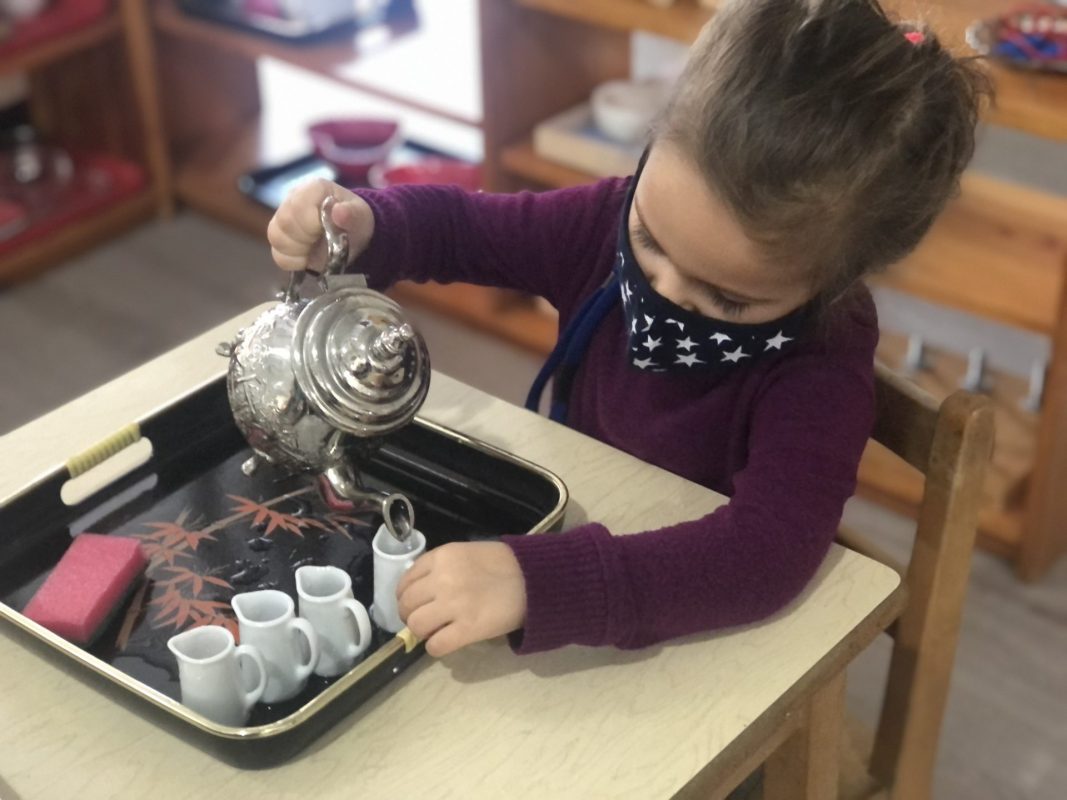
Last month we presented dry pouring and dry spooning. Those skills are taught in isolation until the child masters them. This month we introduced water pouring and water spooning or scooping. To make it fun and appealing for children we add yellow food coloring to the water. We showed them how to pour water by holding the handle of the pitcher with the dominant hand and putting the non-dominant hand under the pitcher and pouring slowly into another pitcher. In case of a spill, we use the sponge to wipe it.

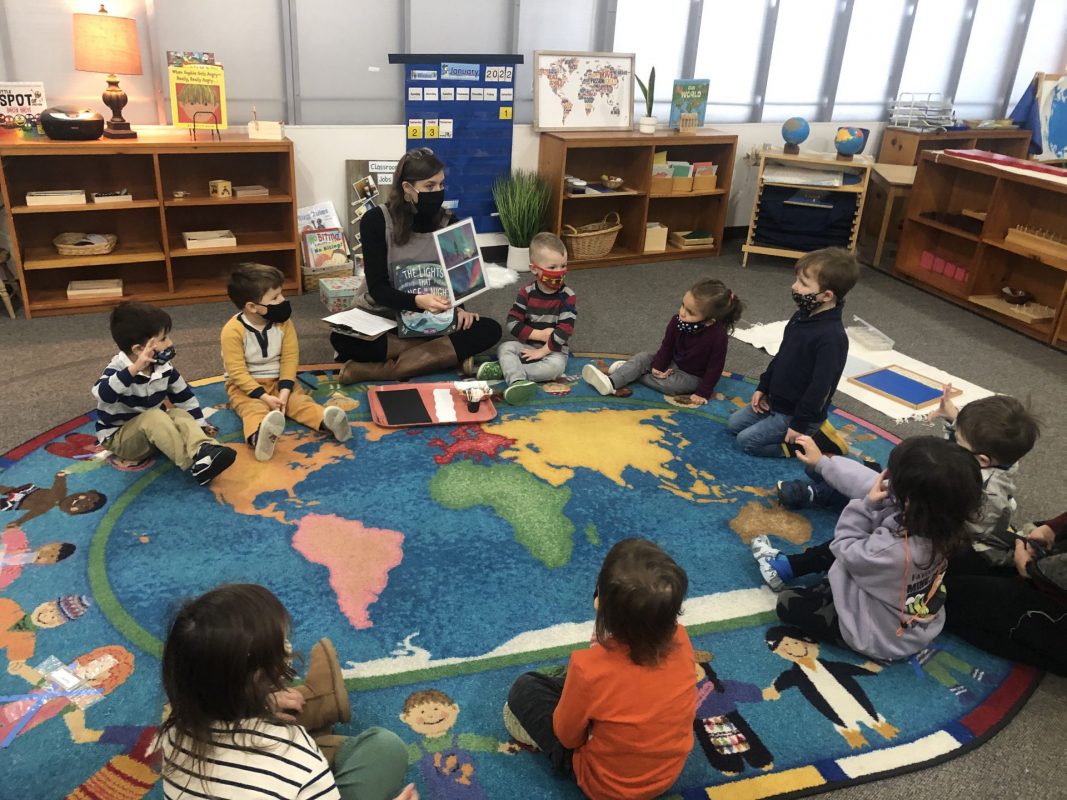
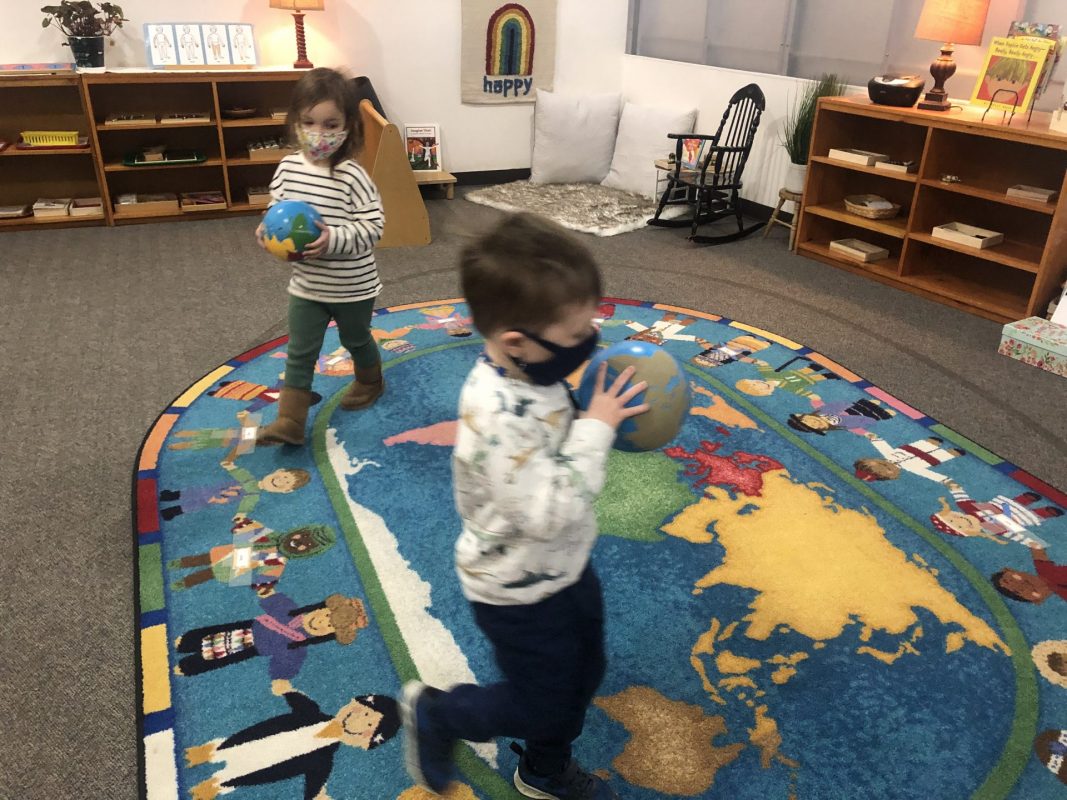
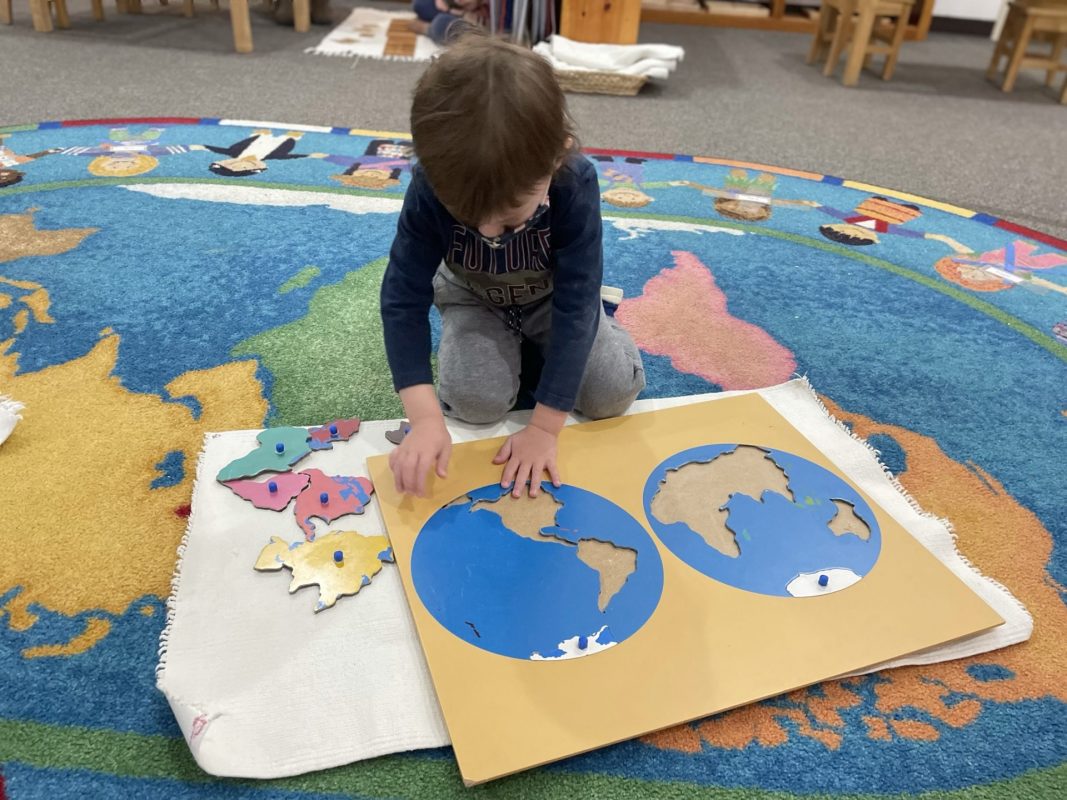
We also introduced the globe this week. Children love to learn about our planet Earth where we live. We find the best way for them to learn the names of the continents is by singing the continents song and pointing to each continent on the globe. As an extension of their understanding, we talk about the shape of our planet earth as a sphere. To transfer this to a large wooden map, we have to divide the sphere into 2 hemispheres. We showed them a visual example of this by dividing an apple in half, with each half representing a hemisphere, using the apple to represent the globe. Children are motivated with spontaneous interest and curiosity to know about the globe and North America. It is a very precious moment to hear three years old at circle time saying, “We live in North America.”

Wishing you a wonderful weekend!

Kaoutar and Sara


Mrs. Doyle: 3-2-1 Blast Off!

We especially need imagination in science. It is not all mathematics nor all logic, but it is somewhat beauty and poetry.    –Maria Montessori

We are beginning our study of the solar system. Bringing some of the wonders of the universe to the children is exciting and one of their favorite units that we study. By nature, children are inquisitive, observant, and eager to learn about the world around them. With their concrete thinking, understanding, and desire to label and name everything they learn about, we start by introducing the components of the universe, especially our own solar system.

We begin by discussing what the children think the solar system is. We know that as we look up at the sky during the day we can see the sun and at night time we can see the moon, stars, and some planets.

We learned about our star, the sun. It is made of gas and gives us light and heat. Our sun is the center of our solar system, with planets orbiting around it. The children learned the names of the planets, in order from the sun. We also learned fun facts about each planet and will do hands-on activities to explain revolution and rotation. Below is the song we are singing to help us learn the names of the planets in our Solar System.

If you have not yet signed up for a time to meet for Parent/Teacher conferences on October 28th, please click on this link to do so.

Wishing you a week filled with peace and love,

Michelle & Liset

Mrs. Lopes: Our Solar System


“Let us give the child a vision of the whole universe. The universe is an imposing reality, and an answer to all questions.” -Maria Montessori 
We are beginning our study of the solar system. Bringing some of the wonders of the universe to the children is exciting and one of their favorite units that we study. By nature, children are inquisitive, observant, and eager to learn about the world around them.  A child’s concrete thinking, understanding, and desire to label and name everything they learn about makes this a wonderful unit of study.
We begin by discussing what the children think the Solar System is. We know that as we look up at the sky during the day we can see the sun and at night time we can see the moon, stars, and some planets.  We learned about our closest star, the sun.  It is made of gas and gives us light and heat. Our sun is the center of our solar system, with planets circling around it.  The children then learned the names of the planets, in order from the sun.  In the next week we will be learning fun facts about each planet and singing a fun planet song.  Below I included the lyrics to the “8 Little Planets” song we have been singing this week, enjoy!
Wishing everyone a wonderful week!

Amanda & Heather


8 Little Planets

One little, two little, three little planets,

Four little, five little, six little planets,

Seven little, eight little, eight little planets,

Orbiting around the sun.

Mercury, Venus, and the Earth,

Mars, Jupiter, and Saturn,

Uranus and Neptune,

Eight planets orbiting the sun.


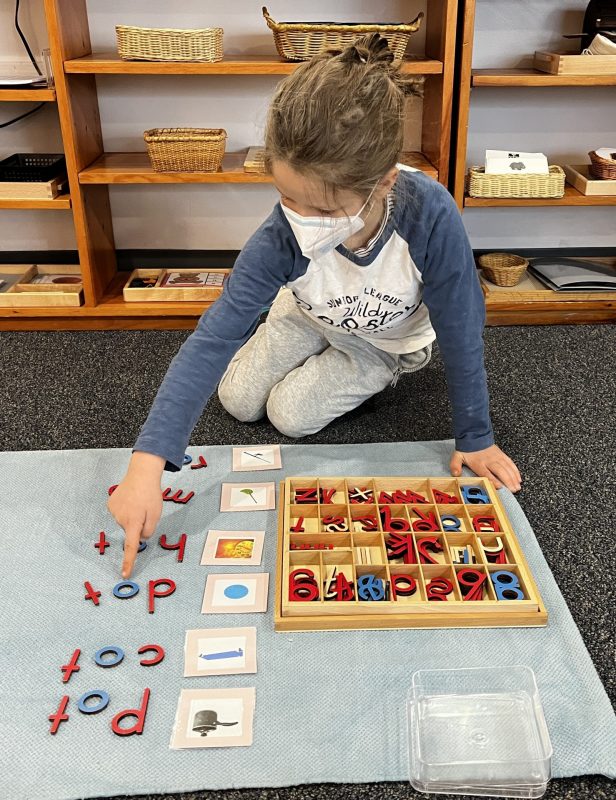
Mrs. Semmah: The Beauty of the Movable Alphabet

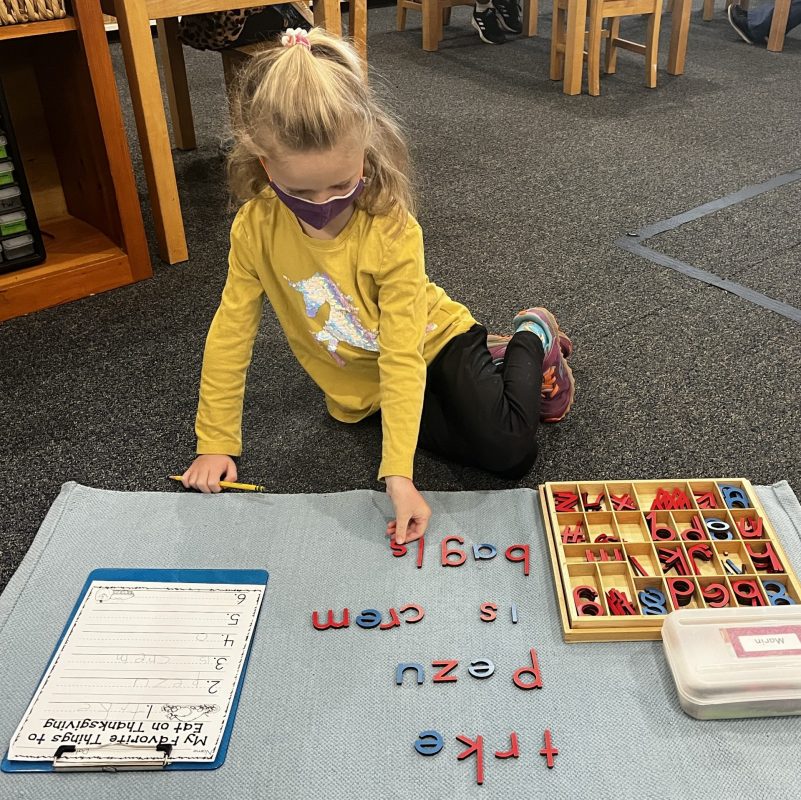
Maria Montessori believes that children have a natural sensitivity for language at a very early age. The children at years three, four, and five have a unique fascination for both written and spoken words. This fascination motivates the children to start reading and writing at a very early stage. Children with good phonemic awareness are often ready and eager to build words before their hands are ready to hold the pencil and write.

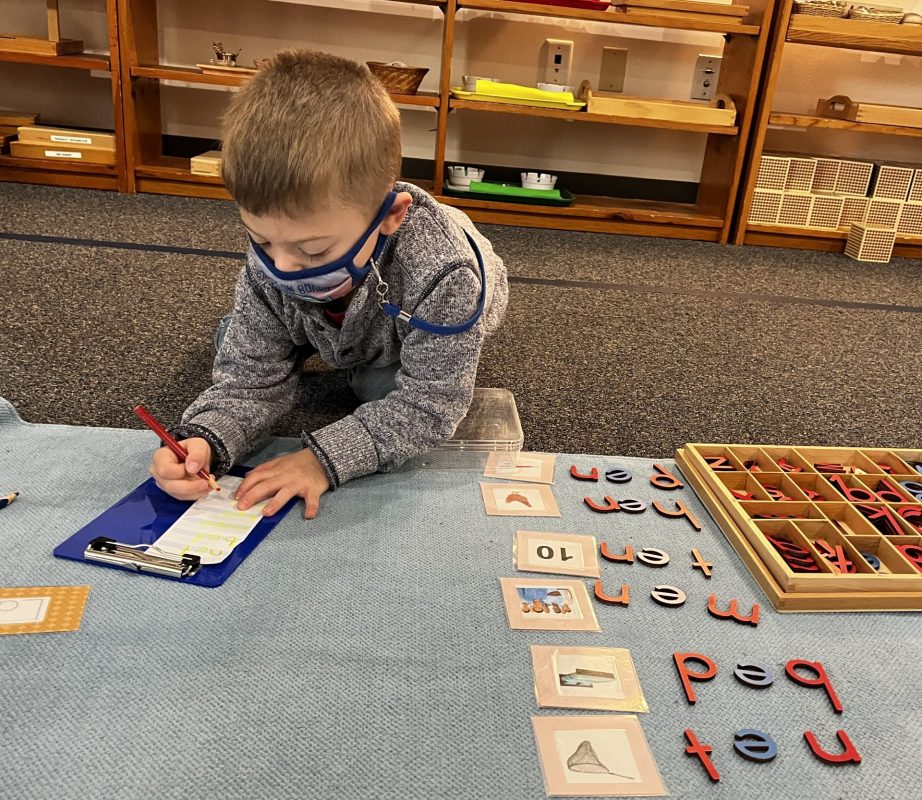
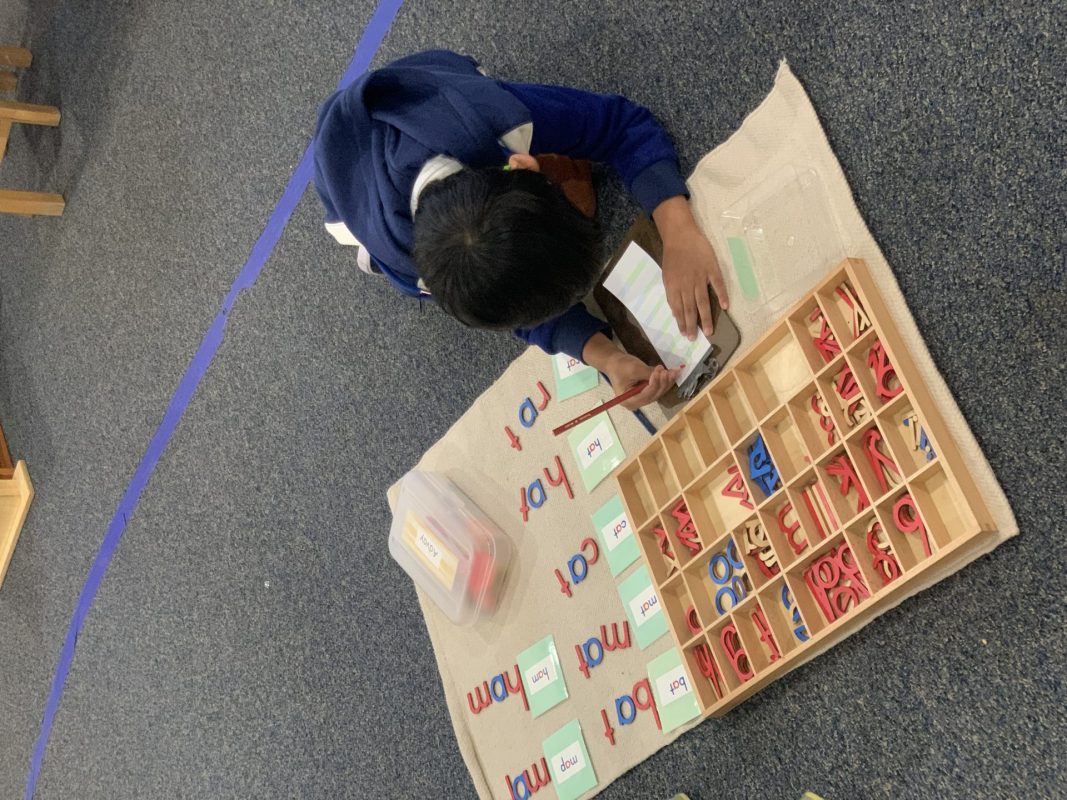
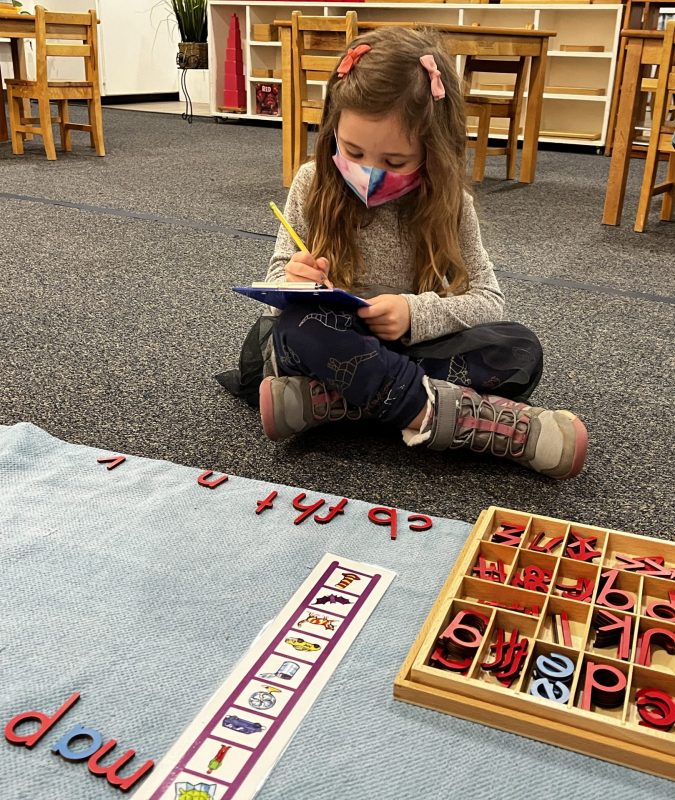
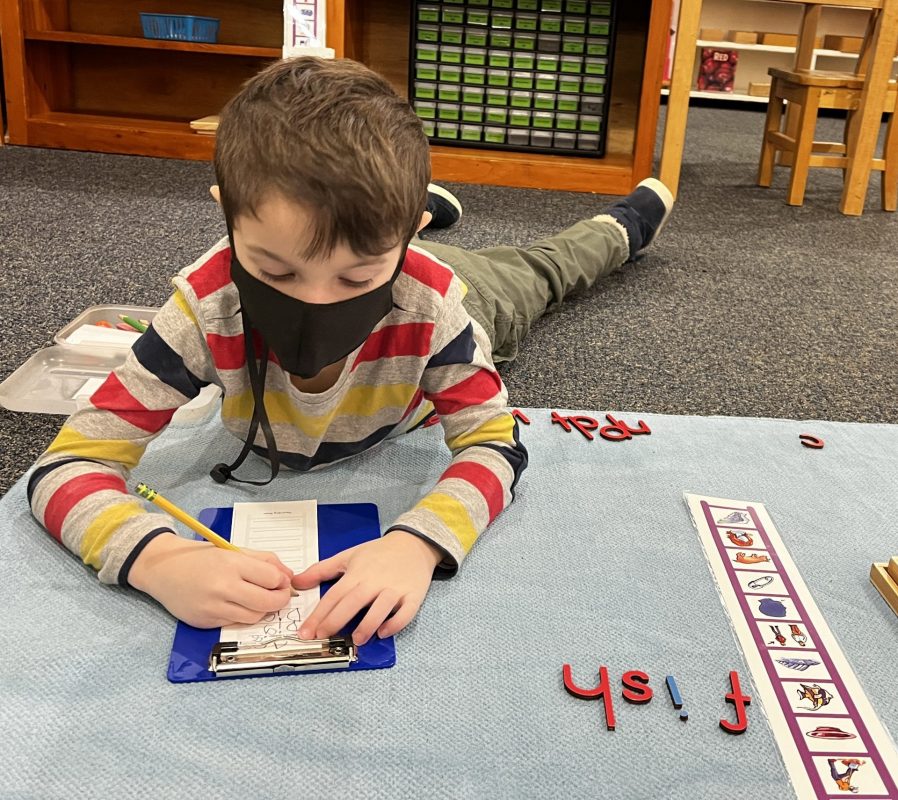
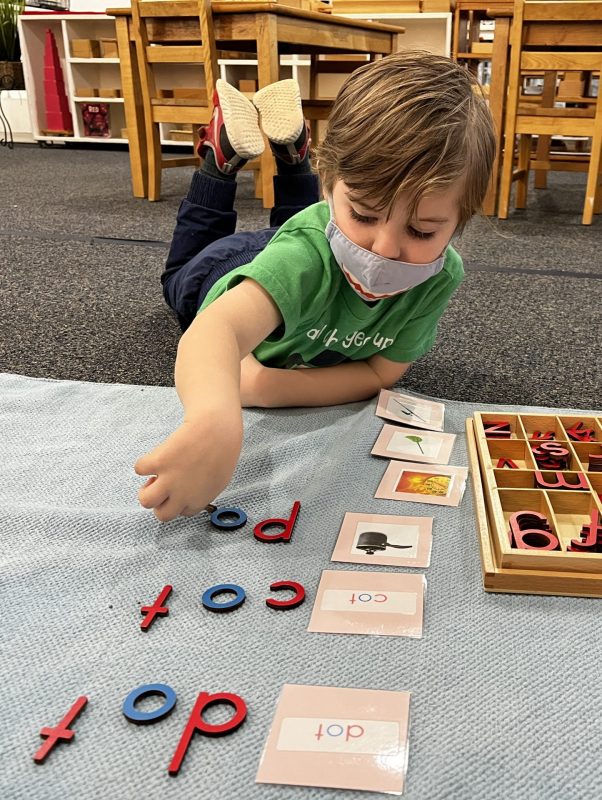
The Movable Alphabet is for the composition of words. The goal is expression. It is introduced to the children after they have learned sandpaper letters, knowing the phonetic sound of the letters, the letter type (vowel or consonant), and the signs to write. When the children are using the Movable Alphabet, all the letters are in front of them.

Using the Movable Alphabet, the children start to make a connection between the spoken and the written words. This is a powerful connection and the children need to make these discoveries themselves. The children will form CVC words by hearing the sounds, isolating, and blending words like cat, log, and pig.

The Movable Alphabet is an exploration of children’s language and our goal is not to read at this point, which is why we don’t read the words back. It will be the children’s discovery of a magical moment when one day they read the word back.

Virtual Parent-Teacher Conferences are coming up on October 28th! Please look for an email this coming Tuesday with a link for you to sign up for your conference slot.