Ms. Kayser’s Class: Thank You Blue Jay Orchards!


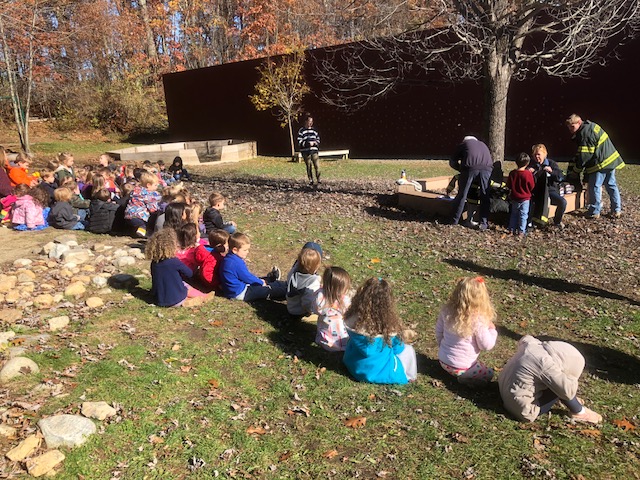
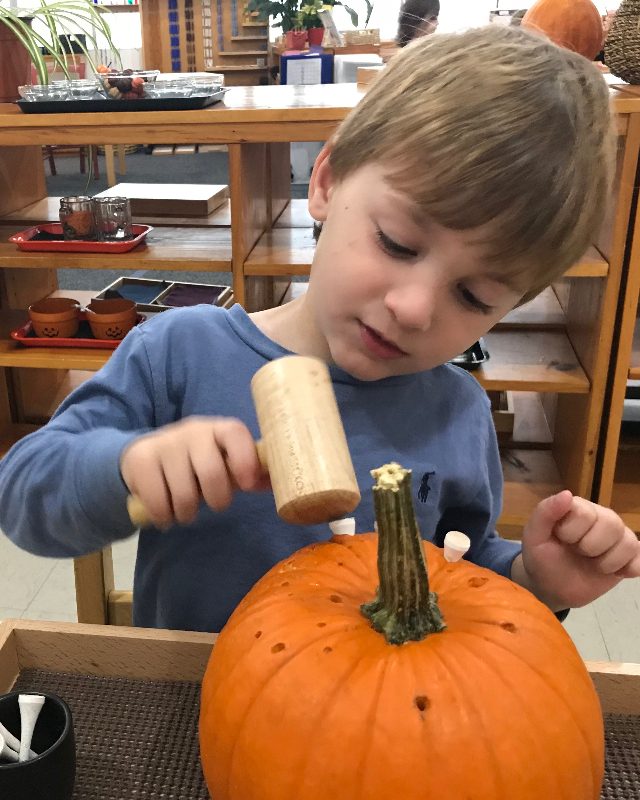
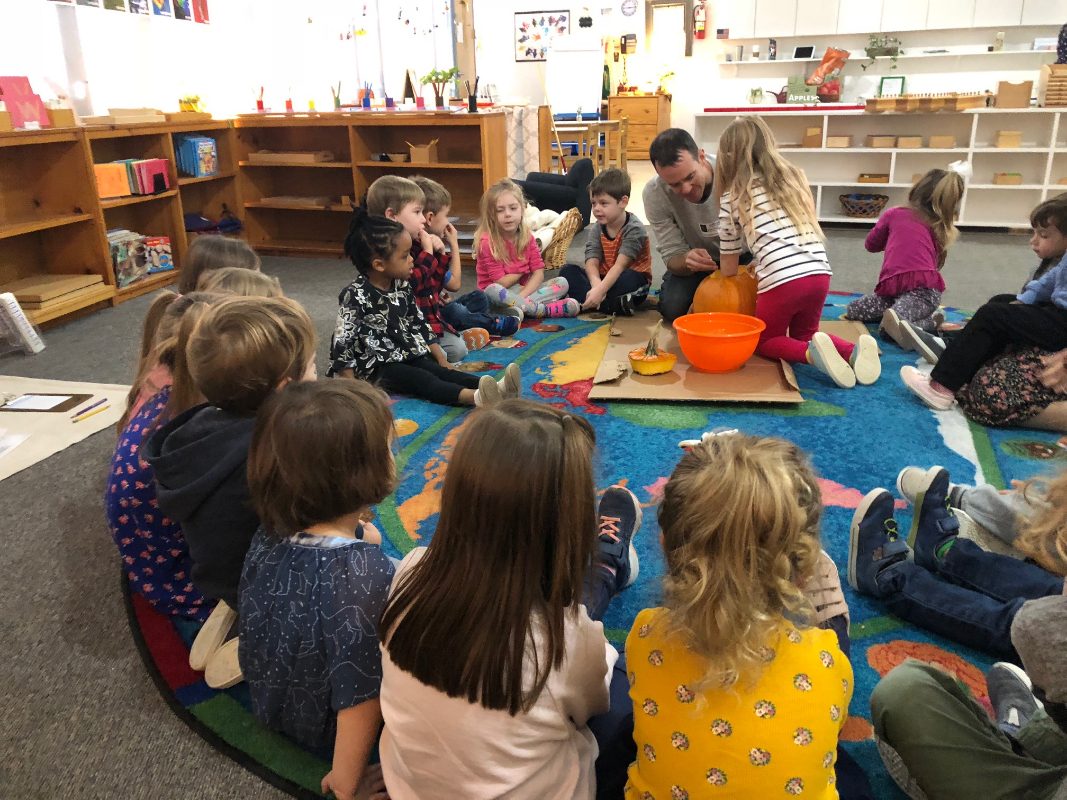
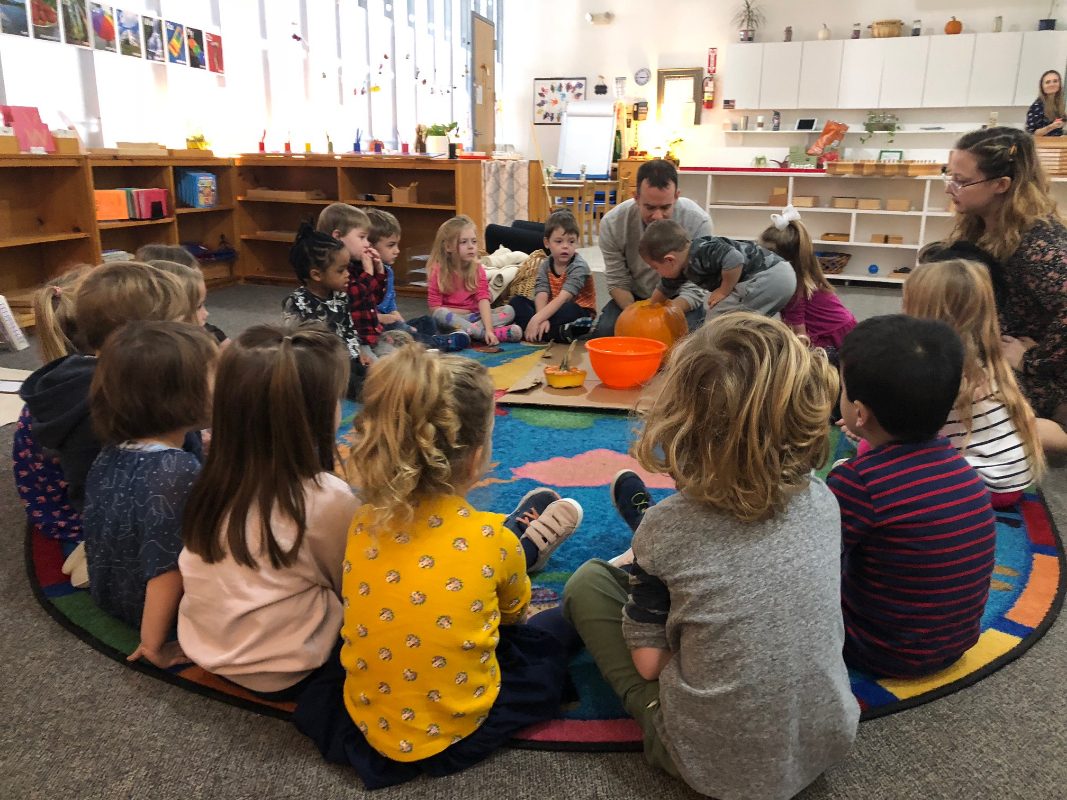
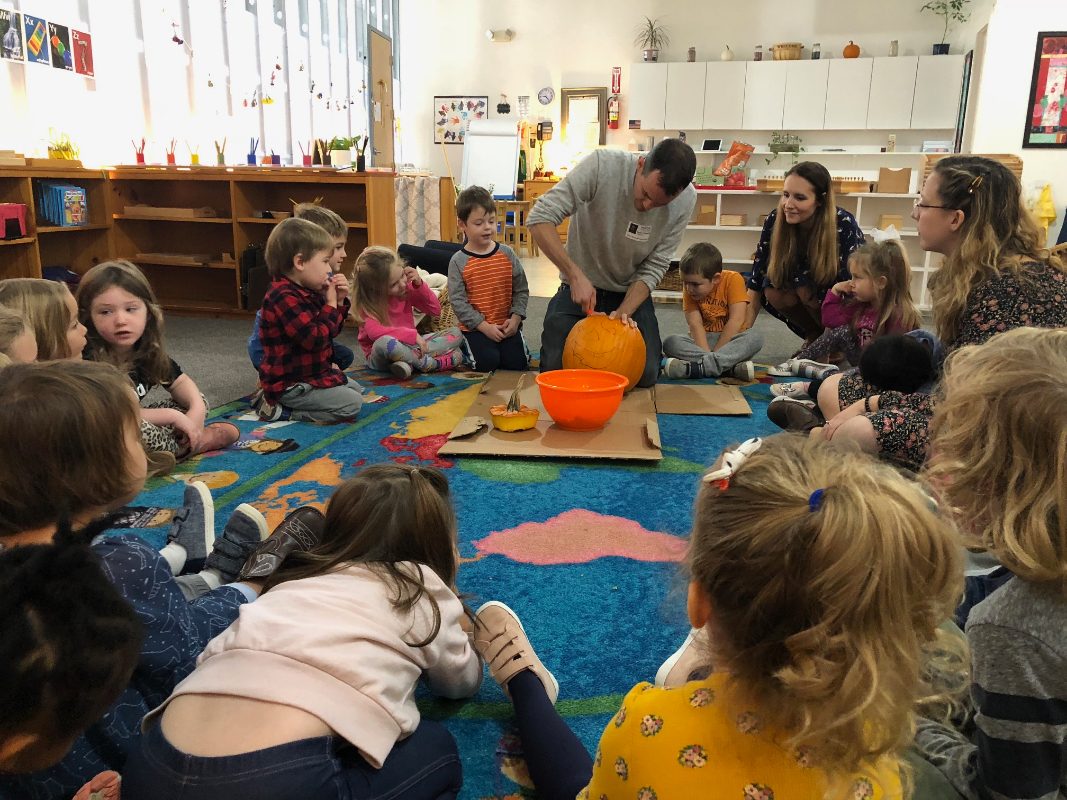
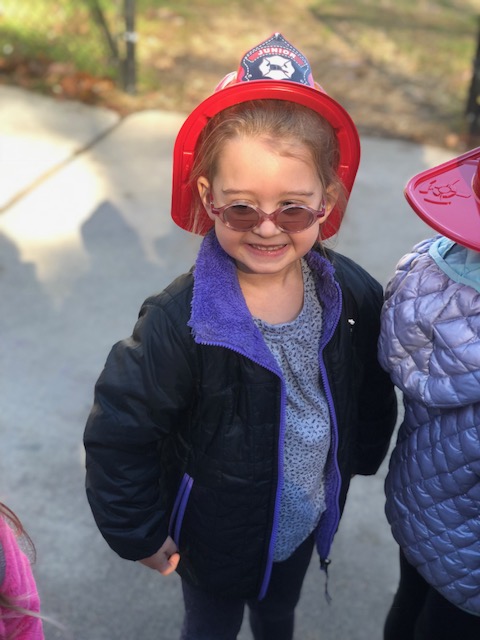
This week in class, our kindergarten students got to go on an exciting field trip to Blue Jay Orchards! After a gloomy week, the skies opened up beautifully and presented us a perfect day to explore the orchard.

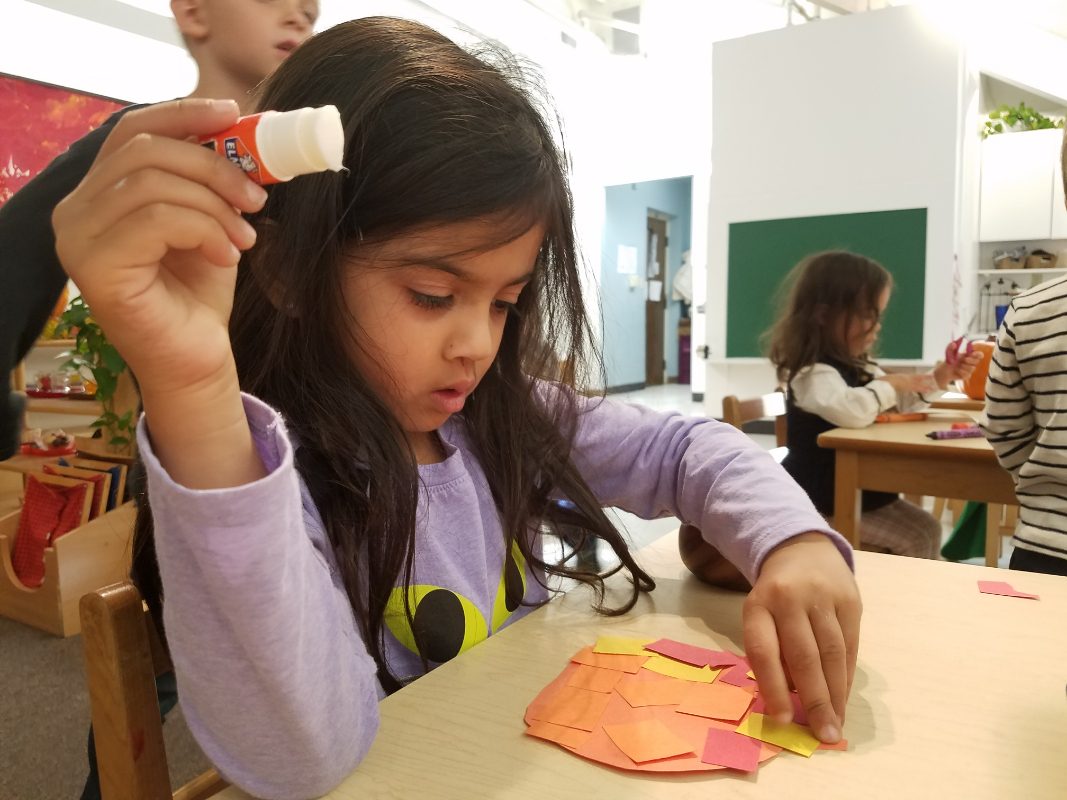
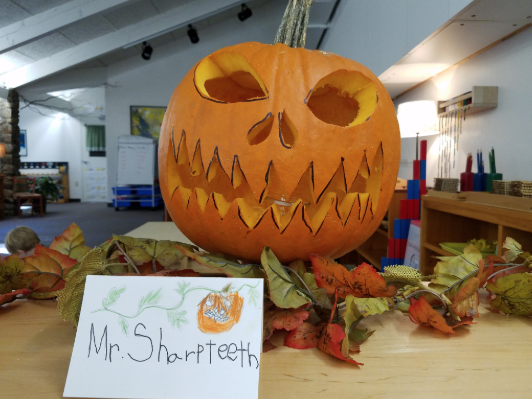
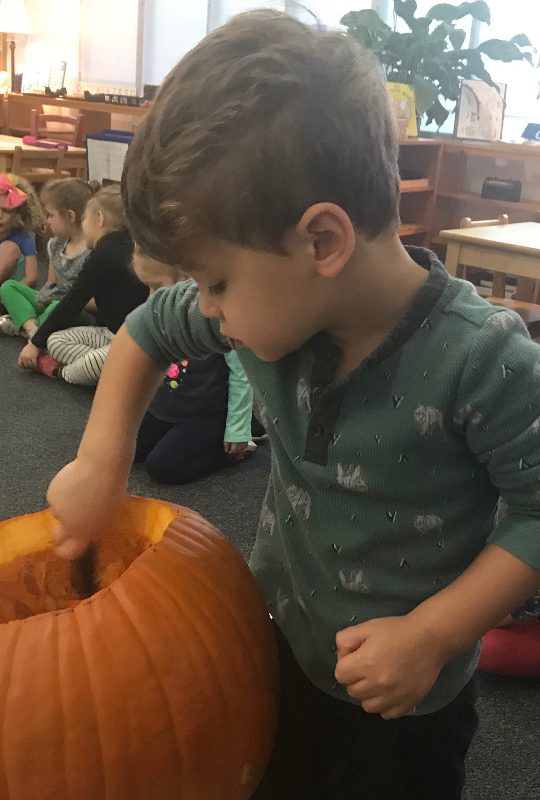
We got to ride on a tractor driven hay-ride to see the whole orchard, and even got to pick our own pumpkins from a pumpkin patch! The wonderful staff at the orchard taught us all about the varieties of apples they grow and even showed us how they make apple cider. It was such an unforgettable experience that our kindergarten really enjoyed.

In order to bring some of the excitement and fun from the orchard back into our classroom, our kindergarten students brought back a special bag of apples for the rest of our class to make into a special treat on Friday. That morning, our class gathered in the kitchen and each student got their very own apple to clean, peel, and cut into slices. Once they were finished, they put all the apples into our crockpot and added some delicious spices in order to make applesauce!

All day the fragrant smell of apples and cinnamon tickled our noses while we waited patiently for the applesauce to finish cooking. It took three whole hours to finish! After lunch, we were able to take turns using our mixer to make our applesauce smooth.

Finally, the wait was over! We all got to sit down in our kitchen at a community table and share the delicious snack together. It was a day that we will never forget thanks to Blue Jay Orchards and all the wonderful parent volunteers that helped make our field trip a success.

Ms. Kayser and Ms. Alli

~Parent & Teacher Conferences are coming up!

Parent & Teacher Conferences are on Thursday, October 25th

This is to a wonderful time to learn about your child’s progress; it is strongly encouraged that parents attend.  The online Parent & Teacher sign-up will be live on Monday, October 8th – please look for more information in Monday’s School News about scheduling your Parent & Teacher Conference online.  If you are unavailable to meet with your child’s teacher on October 25th, please email your child’s teacher directly about scheduling another day or time that week for a conference.


Mrs. Doyle’s Class: Loving Science!

Children are fascinated by nature and living things. Inspiring wonder and connecting to nature are an important part of Montessori education. Maria Montessori strongly believed that nature presented an inspiration and strong opportunity for learning. Knowing this, we introduce the children to the topics of botany and zoology on an age-appropriate level.
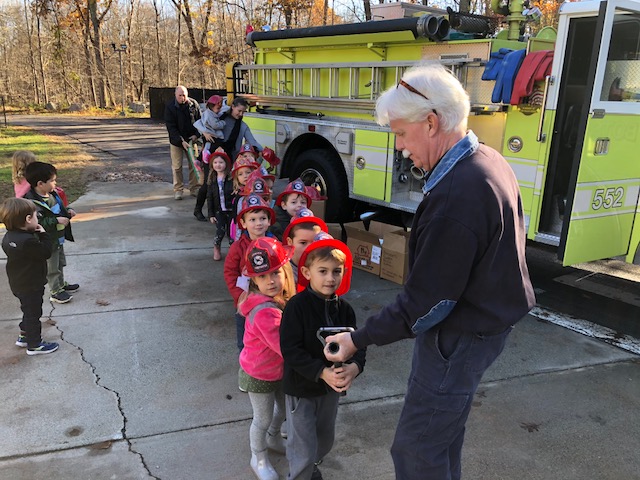
We first introduce the concept of living and non-living. The children loved observing and comparing Hank, our fish and a Pepperidge Farm goldfish cracker.  It was determined that Hank, like all living things, needs food and water, is born, not made, moves, “makes more” or reproduces, and eventually dies. Conversely, non-living things are not born, do not need food or water, do not move, and do not reproduce.  Next, we categorize living things into either a plant or an animal.

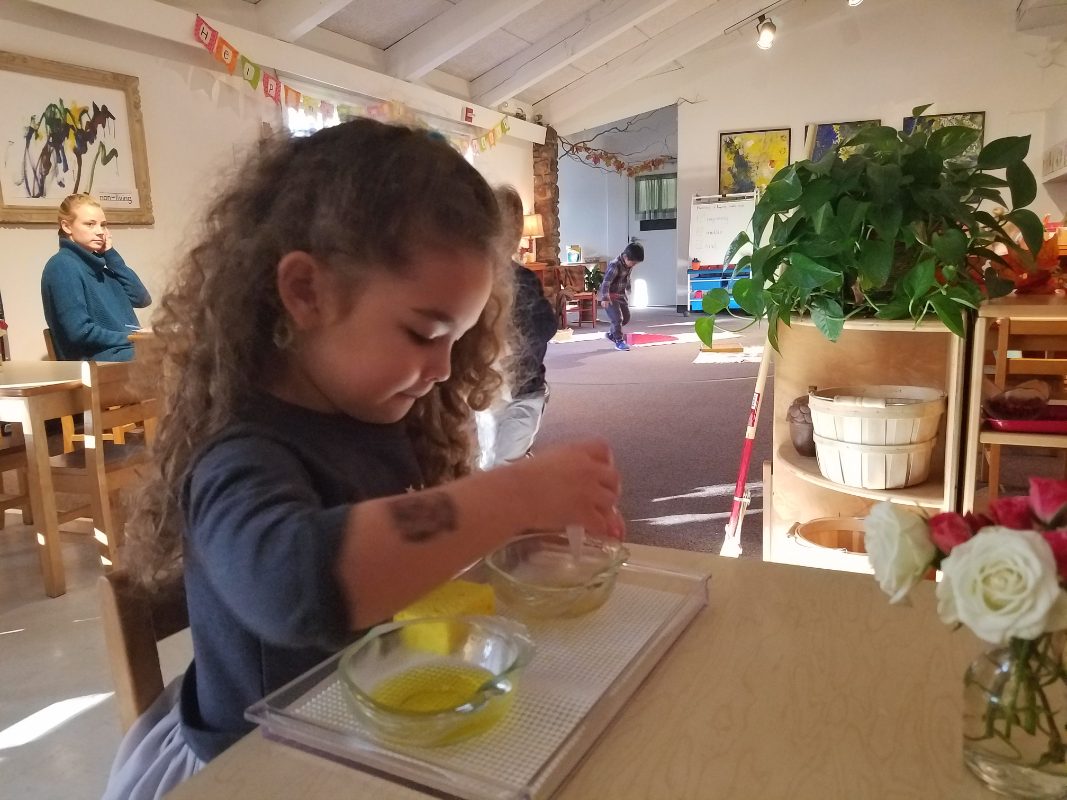
Although many of our science topics are introduced in a large group setting.  The materials are available on the shelves for the children to work with independently.

~Parent & Teacher Conferences are coming up!

Parent & Teacher Conferences are on Thursday, October 25th.

This is to a wonderful time to learn about your child’s progress; it is strongly encouraged that parents attend.  The online Parent & Teacher sign-up will be live on Monday, October 8th – please look for more information in Monday’s School News about scheduling your Parent & Teacher Conference online.  If you are unavailable to meet with your child’s teacher on October 25th, please email your child’s teacher directly about scheduling another day or time that week for a conference.


Ms. Kayser’s Class: It is Living and I Know Why!

At the beginning of the year, the class was introduced to the exciting living and non-living activities in science! Each week we have introduced a new quality that distinguishes living things from non-living things. To help us remember these qualities, we learned two new songs that we sing every morning on circle. After we finish singing the songs, the children get the chance to explore the room and share some of the things in our classroom that are either living or non-living. Below are the lyrics to the “living” song. Ask your children to share it with you and sing along with them! It is to the tune of Frère Jacques.

It is living!

It is living!

I know why! I know why!

It breathes and grows and changes

It breathes and grows and changes

It’s alive! It’s alive!

Along with the living and non-living activities on the shelf, this week we introduced a new work to the children identifying the different parts of a tree. It is exciting to watch the children take what they are learning in the classroom and become engaged in insightful exploration together when we go outside for recess.  Our natural playground allows their curiosity to flourish as they get a hands-on experience with nature. In the next few weeks we will be able to take some of the beautiful foliage into our classroom and use it for art work and exploration!

On a final note, this week was very special for our kindergarten students because they got to be a part of the naming ceremony for our two new bunnies in the zen garden! They happily reported back to the class after the assembly and let their younger friends know that our two new companions will be named Grace and Charity!


Ms. Kayser and Ms. Alli


Mrs. Doyle’s Class: Traveling Our World

We are beginning to introduce the geography materials to the children. Simply put, geography at this age is about sharing our world with children.  The Montessori approach to teaching geography is unique and is comprised of two components, physical geography and political geography, also known as Culture. From the beginning of the school year, we weave geography lessons and terminology into our day as we learn about our physical world.
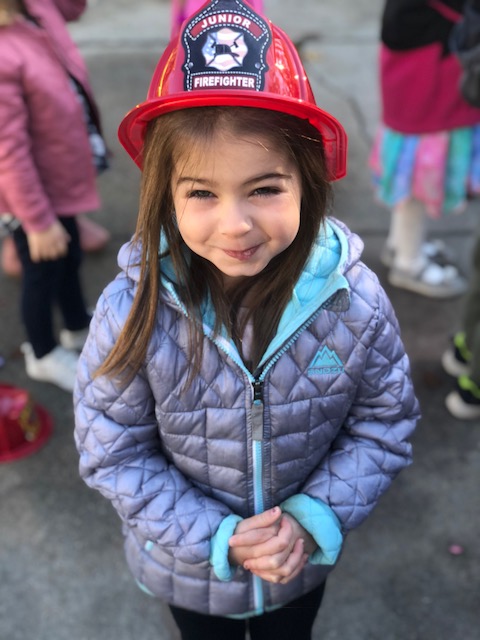
We start by teaching that the Earth is composed of land, water, and air.  Next, we introduce the Earth by learning about globes. Moving from this three dimensional representation of the Earth, we segway into maps.

Early in our school year, we categorized the planet Earth into air, land, and water. We then sorted what we would find in each of these different components of our world. Next, we introduced the geometric solid known as a sphere to the children and compared it to the shape of the globe. We start with a sandpaper globe that helps to distinguish land and water. The colored globe comes next and we begin to teach the continent names. We make a playdough sphere and cut it into half to help them visualize the concept of a hemisphere. Simultaneously, the children are learning about land forms that introduce the concept of lake, island, bay, cape, peninsula, gulf, isthmus, strait, archipelago, and a system of lakes.  These sensory experiences help the children learn about their physical world.

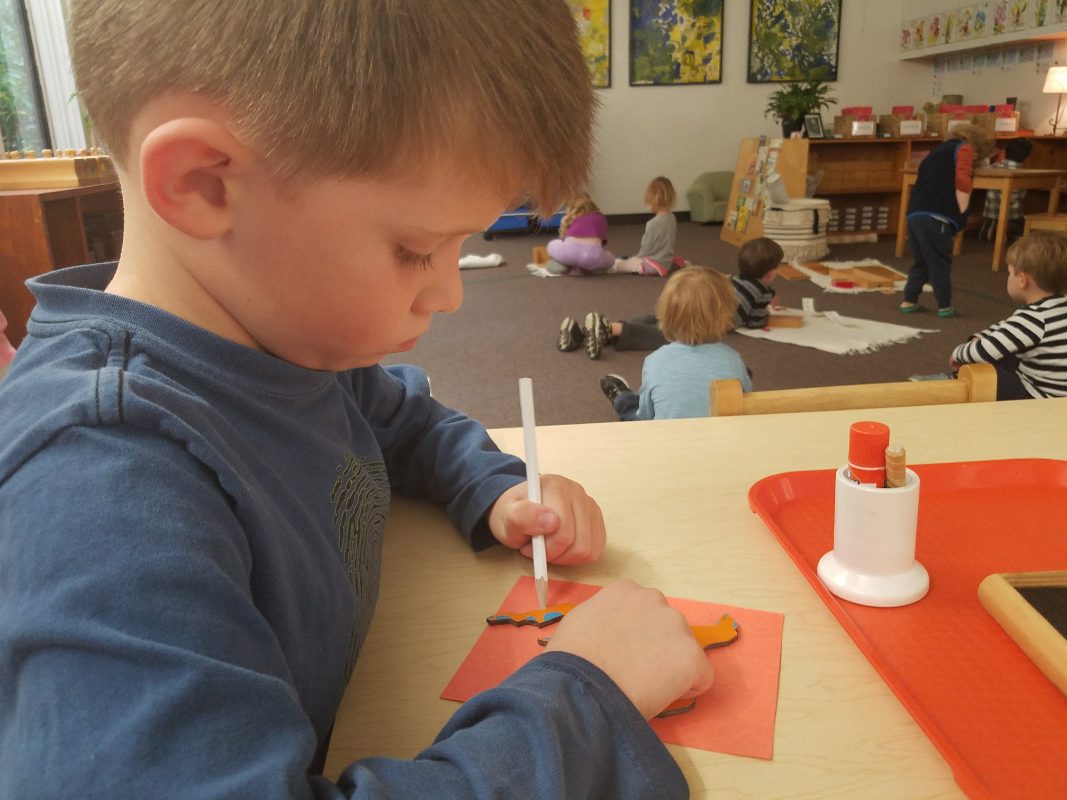
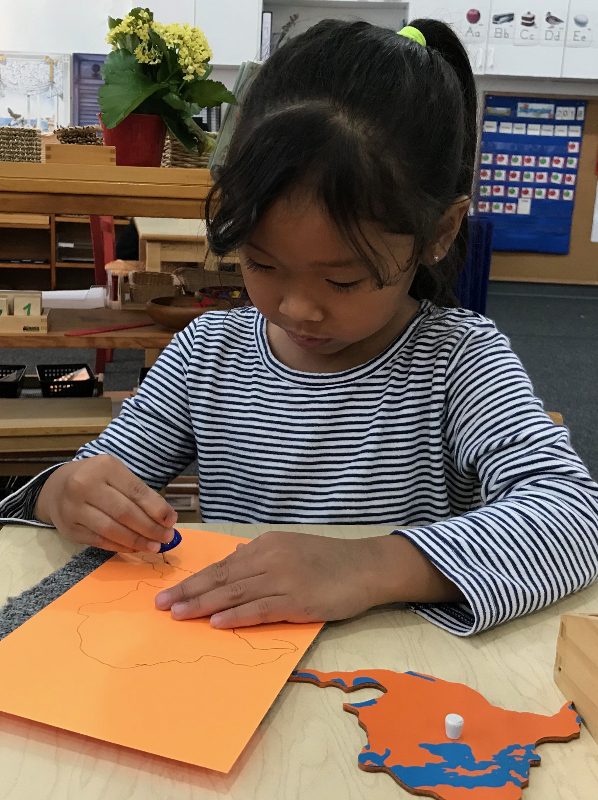
After learning the continent names, we introduce the puzzle maps for each continent, starting with North America in November. We learn that there are many countries in North America. The older children will trace and paint each of the puzzle maps. We will learn about the animals, people, and climate often associated with each of the continents. Our goal is to encourage the children to appreciate the beauty and wonder found in the similarities and differences around the world.

In our classroom, we have a cultural shelf with artifacts from each continent. If anyone is ever traveling and has the opportunity to add to our treasured class collection, we would be ever so grateful.

Listen carefully and you may just hear your child singing, “Do You Know The Continents?”

Have a wonderful week!

Mrs. Doyle & Mrs. Lyga


Mrs. Carroll’s Class: Our Little Place on Earth

Montessori geography lessons and materials are a beautiful part of the classroom. Your children have been intrigued with our introduction to the Montessori globes. We have spent the first few weeks of school exploring the smooth blue areas called water/oceans and the rough areas, land/continents. This week we have named the oceans and continents using the political globe, which uses color to identify each, more clearly. We will continue our study of geography, showing how continents on a globe can be represented on a flat map, and our journey begins.

Geography is a wonderful way of sparking a child’s imagination.  It is an opportunity for cross disciplinary learning, for making art and practicing fine motor skills. Geography helps children place themselves on Earth, fostering care for the rivers, forests, oceans, and people. It creates the foundation for recognizing the needs that all people share while appreciating the diversity of how different cultures satisfy those needs.

Until next week…

Ms. Sharlene & Mrs. Carroll


Mrs. Carroll’s Class: Let The Journey Begin!

The beginning of school is a time of excitement, yet with that comes anxiety and nervousness for many children. Planning, patience, and nurturing ensures that each child starts the year feeling loved, respected and safe.  Respect and courtesy in our Montessori school is the foundation for everything we do and each child has already begun to learn the following important skills:

  • how to put their work away where they found it
  • how to tidy up after themselves
  • the importance of helping a friend in need
  • the importance of respecting the materials, the teachers and each other
  • how to tuck in their chair when they leave the table
  • how to walk in the classroom
  • how to be self directed and find their own ‘work’ and most importantly,
  • how to be independent!

         ( NAMC, 2010)

We are thrilled to be starting the new school year with your children and look forward to nurturing their independence, respect, and courtesy.

Let the Montessori journey begin!

Mrs. Carroll and Ms. Sharlene


Ms. Kayser’s Class: Welcome Back!

The beginning of the school year has been a whirlwind of excitement! The first full week of school is almost over and the children are on their way to getting acclimated to our new classroom and routines. Our kindergarten group this year has been such an asset to our class by mentoring and guiding the younger and new students through this transition period. A strong, harmonious community has already begun to develop within our room and it is a beautiful thing to witness everyday.

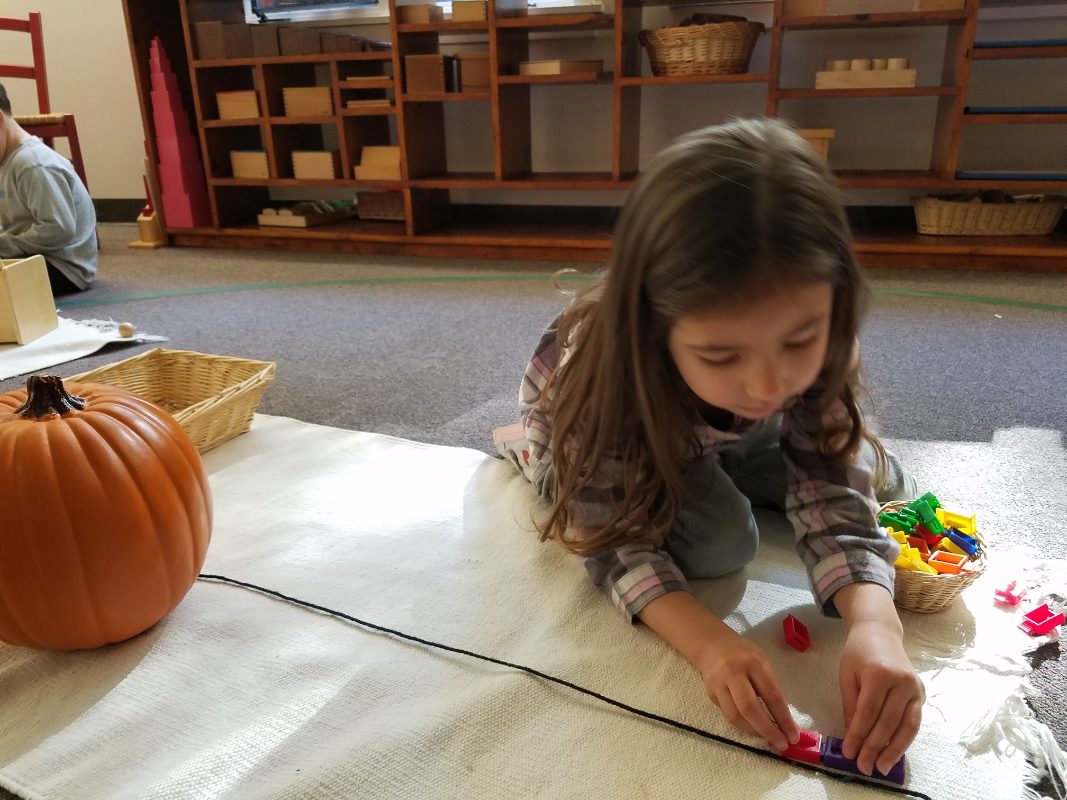
Although there have been a lot of new things to get used to for the children, it has not stopped them from exploring the classroom and trying new lessons! Both our new and returning children have immersed themselves into all areas of our classroom, enthusiastically reaching out to learn more and more each day.

Ms. Alli and I are both so thrilled to have such an incredible group of children with us this year and look forward to all the new adventures we will be sharing together!

Ms. Kayser and Ms. Alli


Mrs. Doyle’s Class: Focusing On The Process Not The Product

“We have to remember as adults, that we want things done, and as quickly as possible, so that they are finished and out of the way; whereas the child is interested and content in the doing, not the done.” –Margaret Stephenson The Art of Montessori in the Home

Sometimes it can be difficult to accept the idea of focusing on the process, not the product.  What exactly does that mean anyway?  Many of the works in the Montessori classroom do not end with a physical product the children will bring home to share with everyone. There is often no way to assess what a child is  learning. Overall, as a society, we are product driven and often times base our success on this factor. The experience a child has when working with the materials is truly what is most important. However, when you hear they did “nothing” day after day, it can often be unsettling.

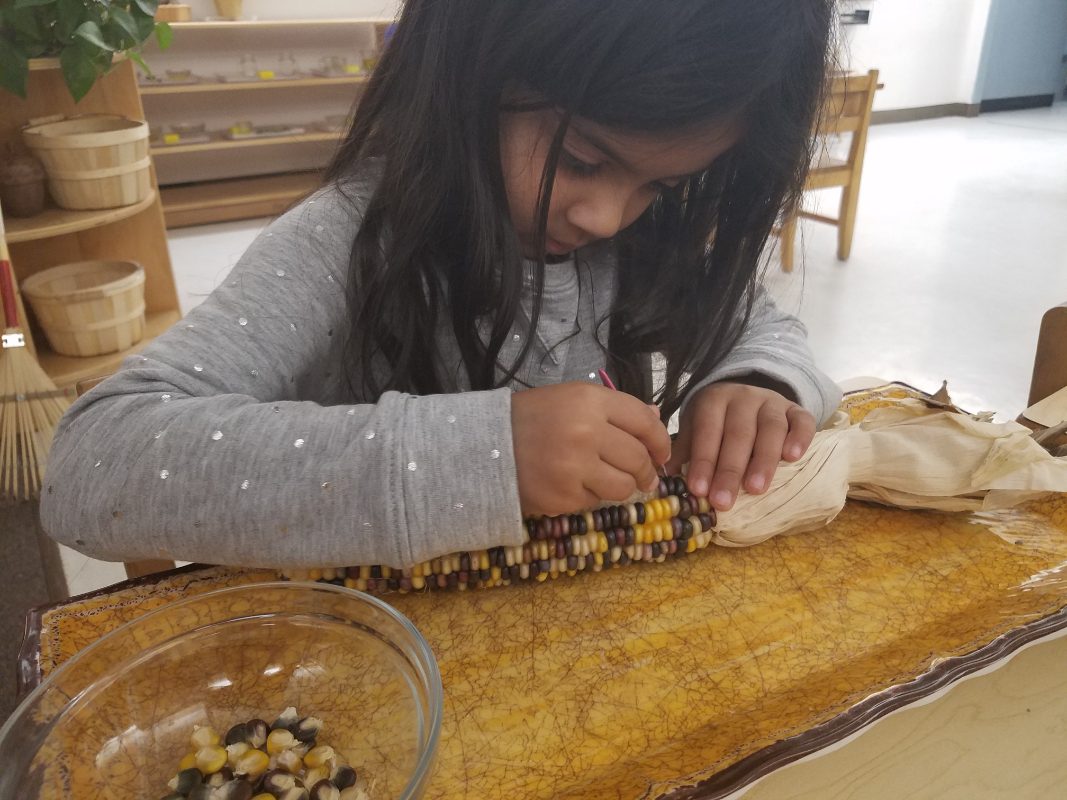
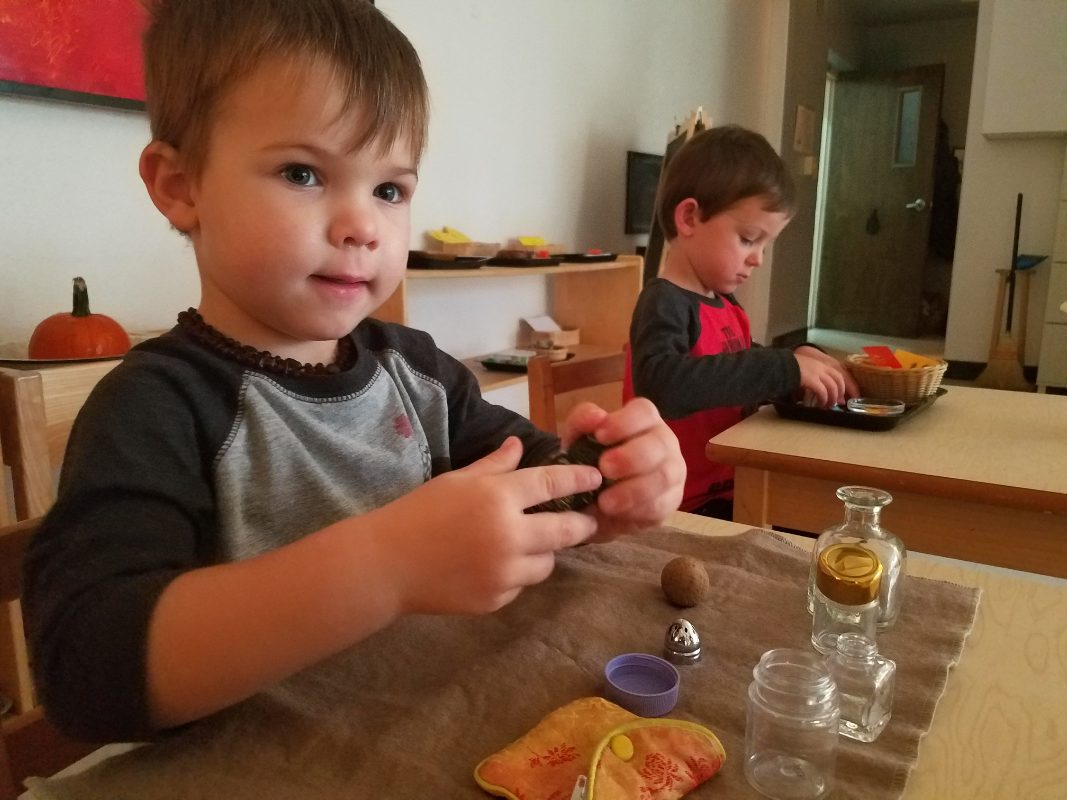
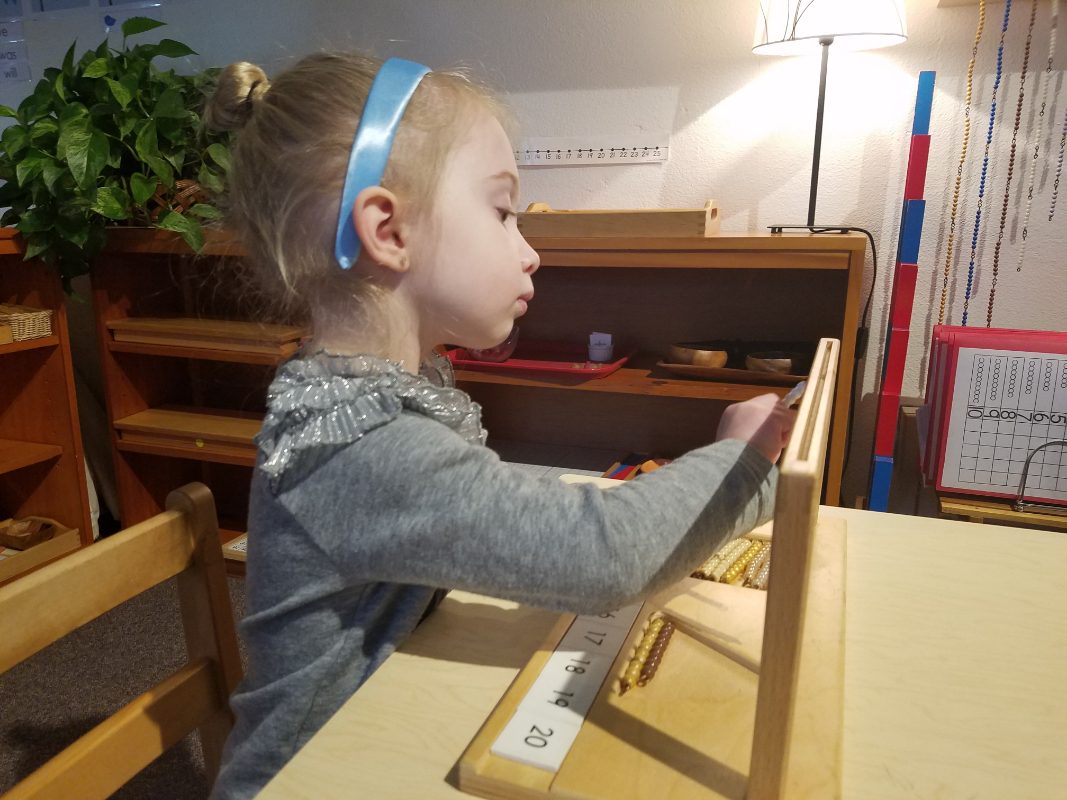
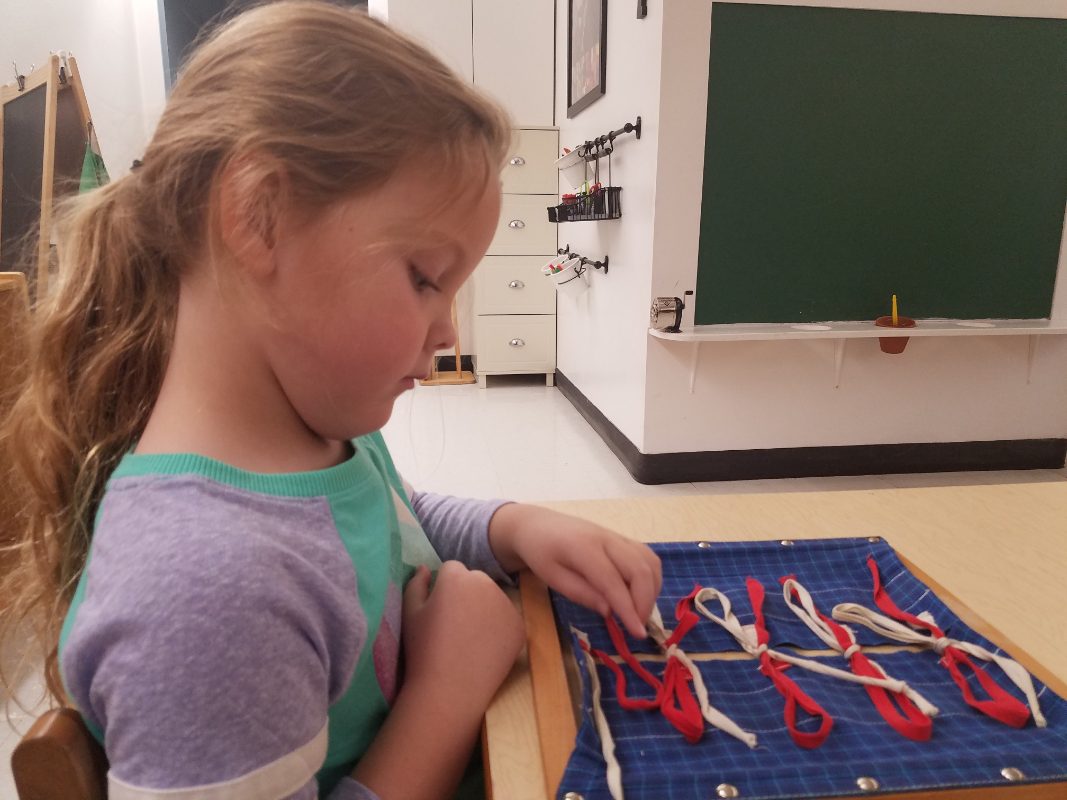
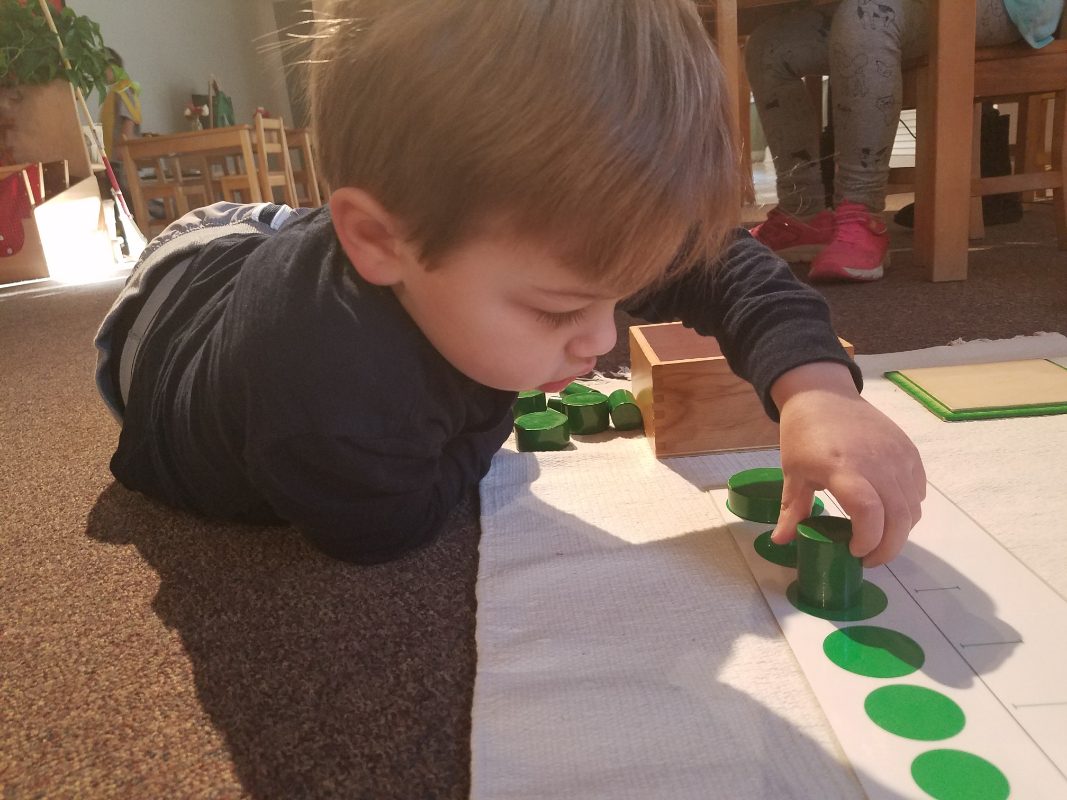
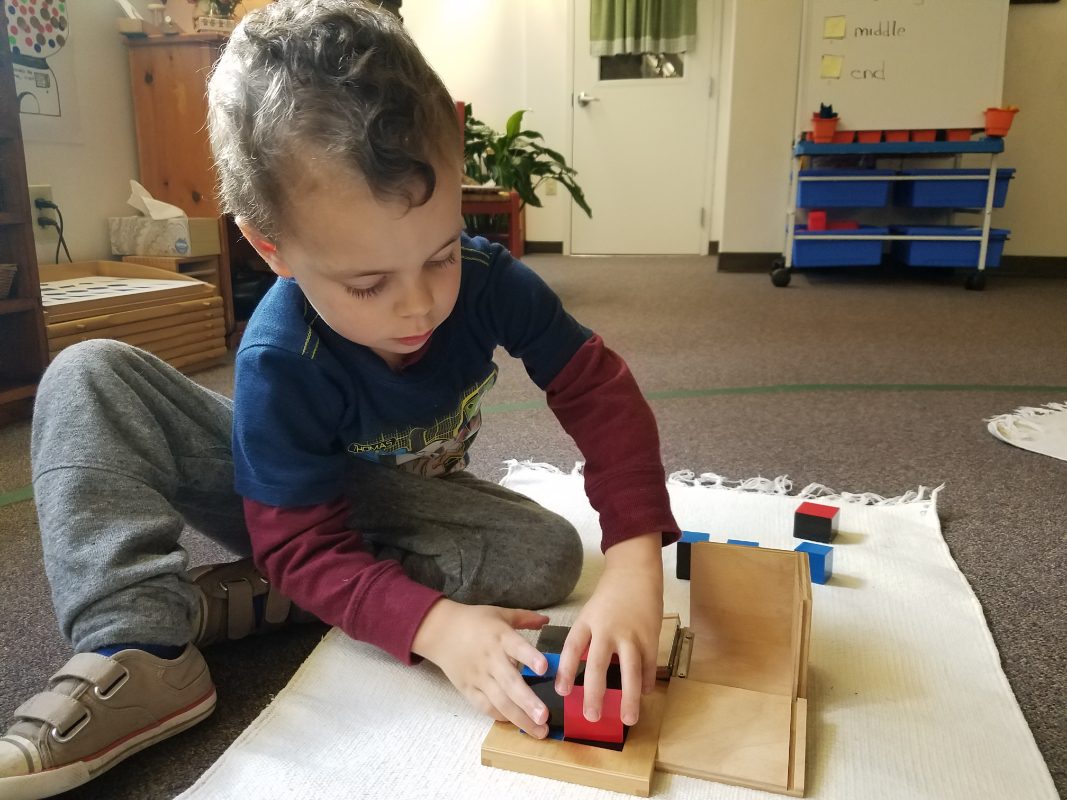
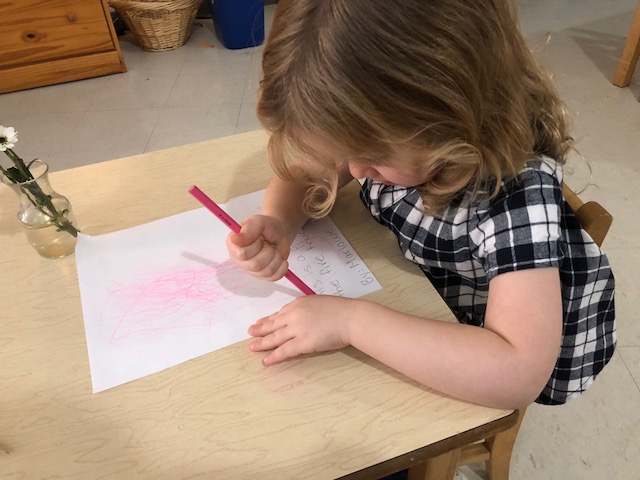
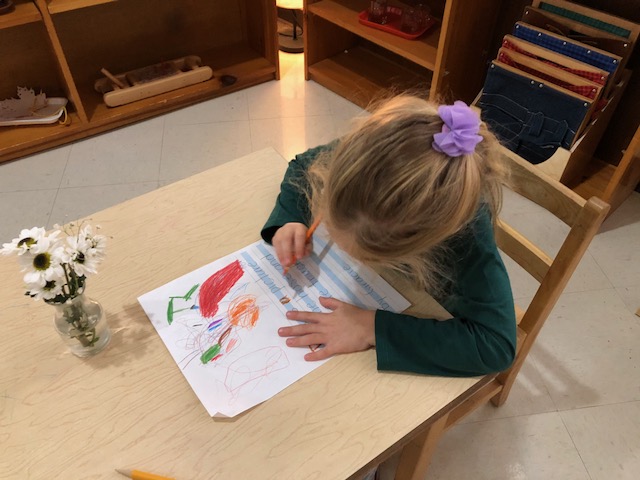
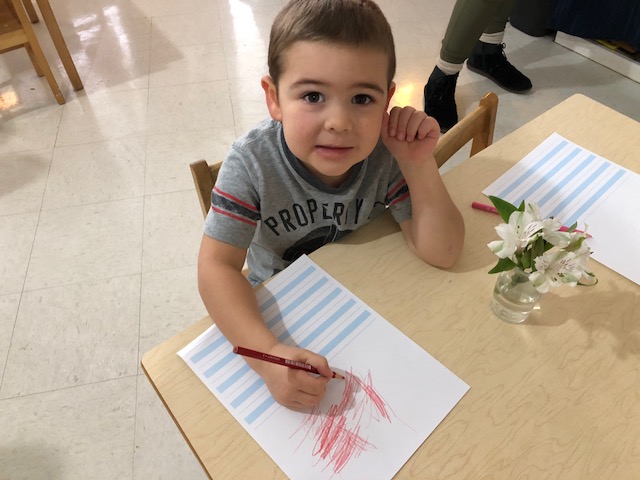
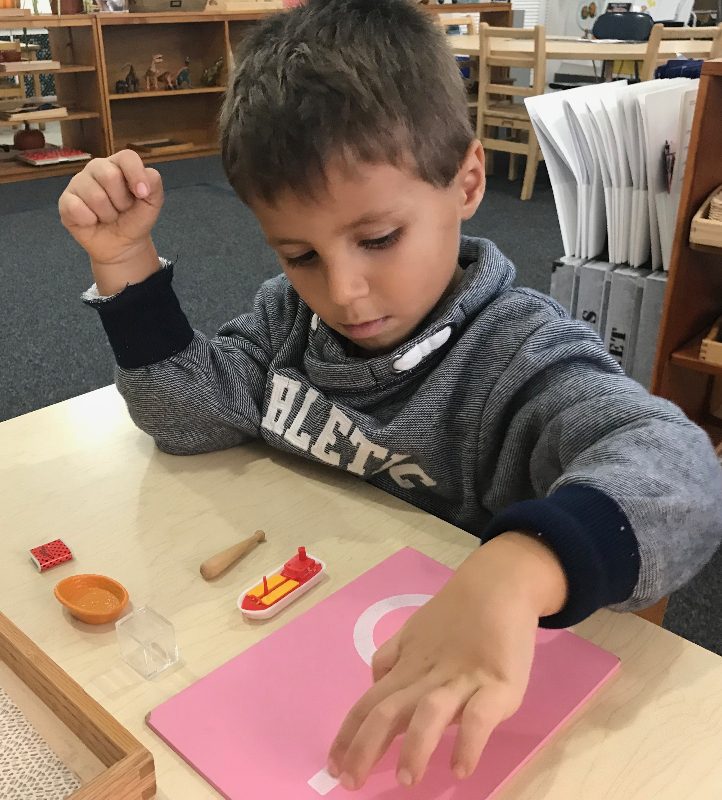
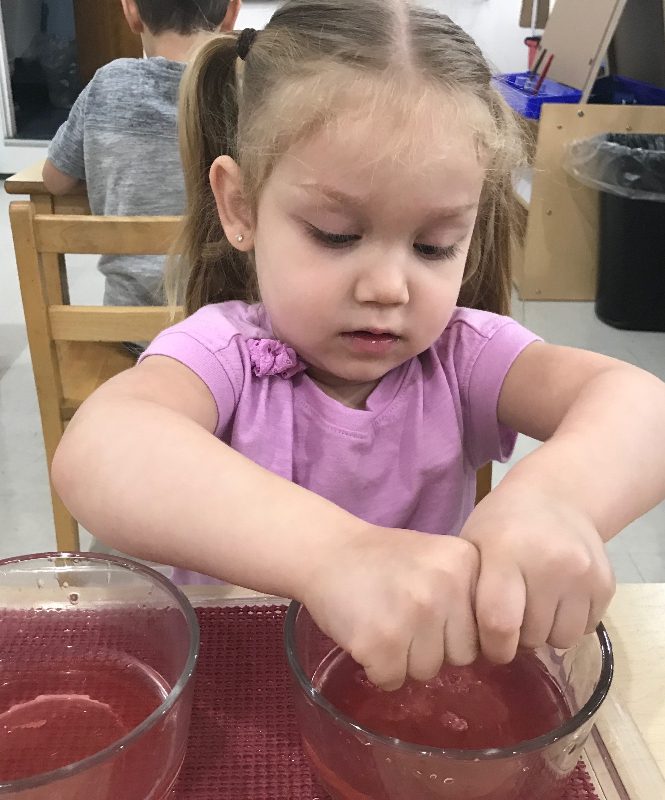
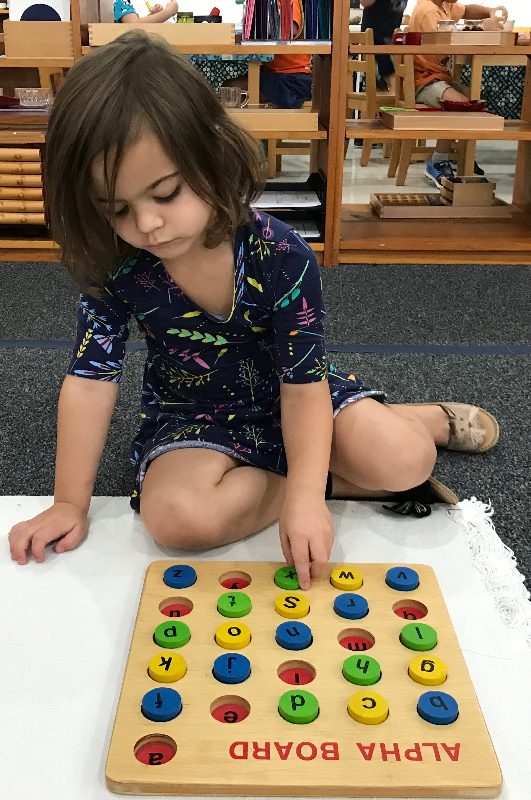
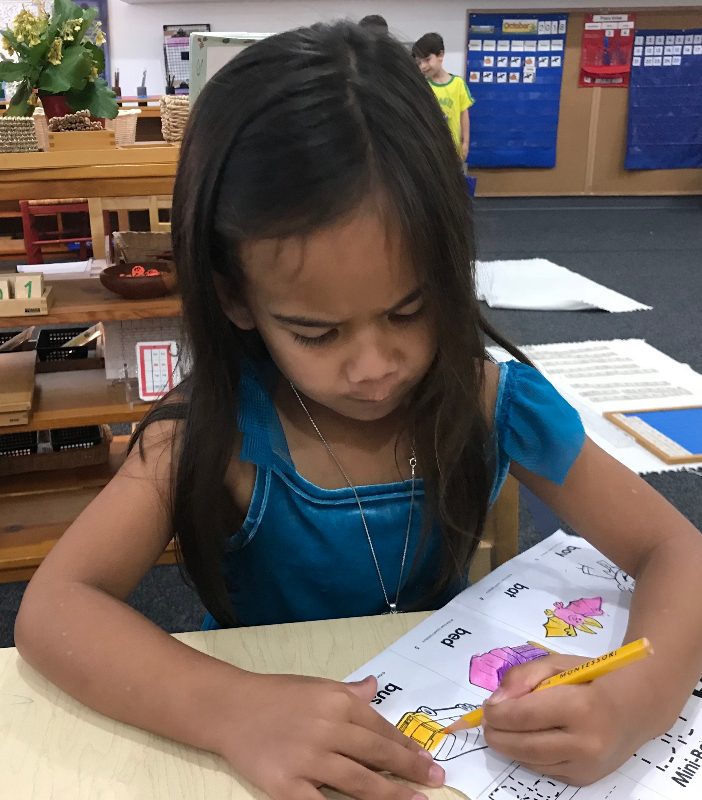
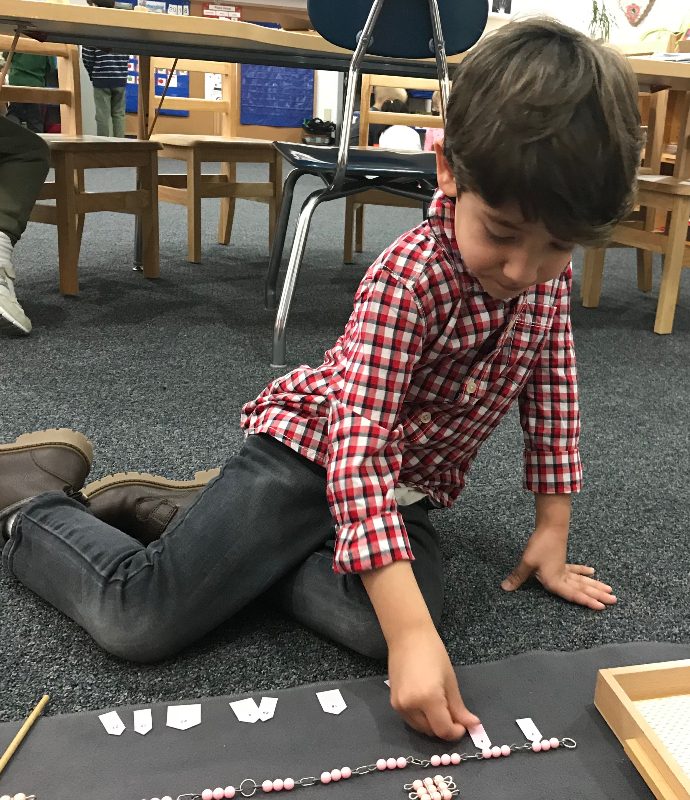
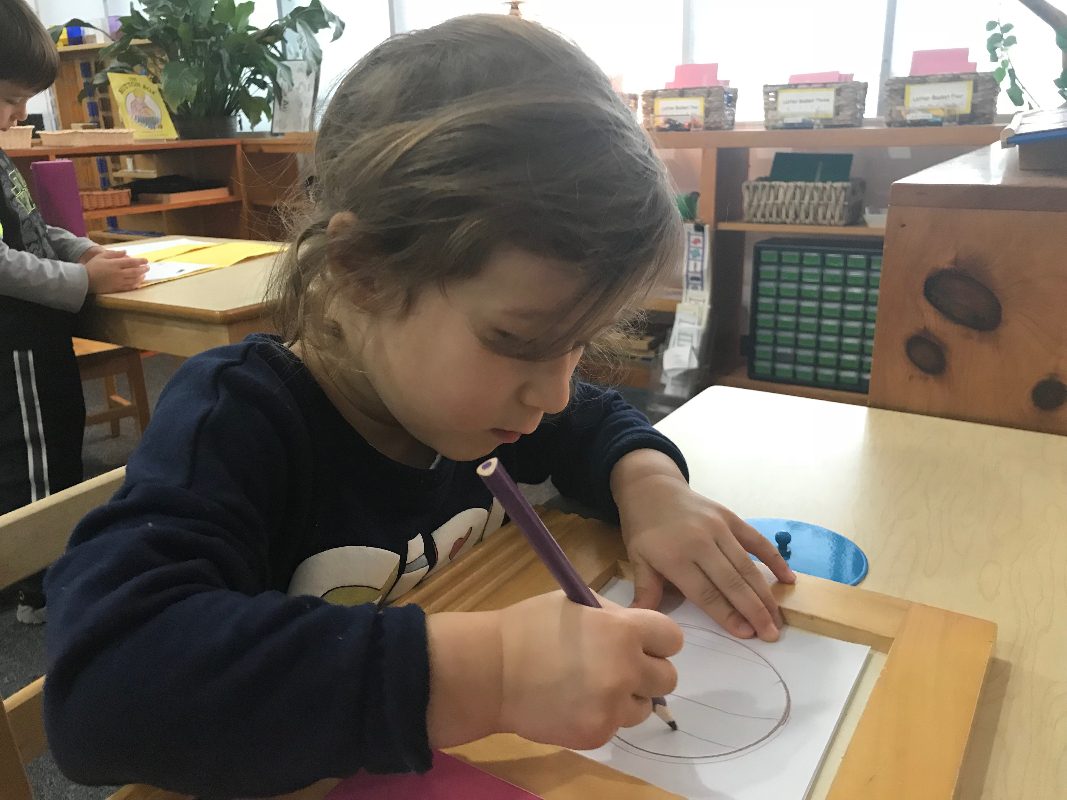
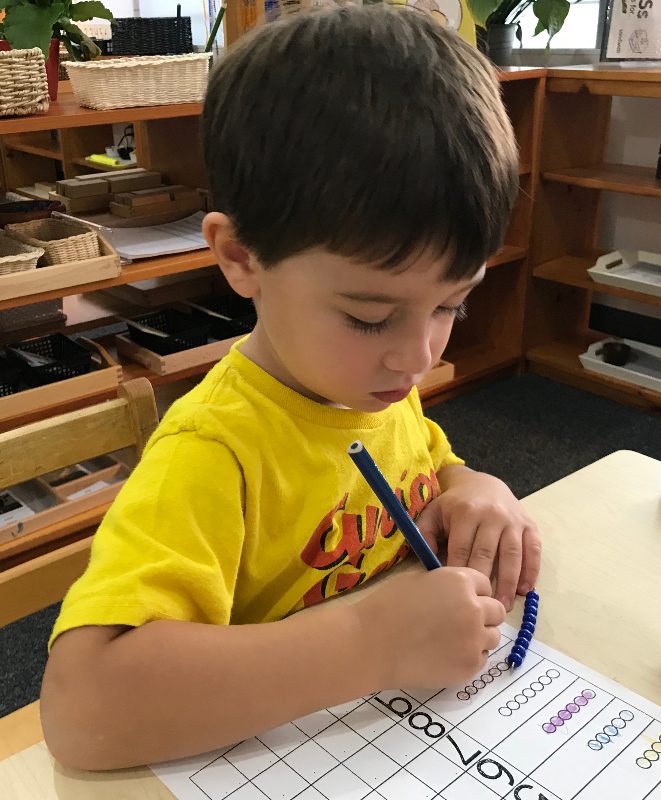
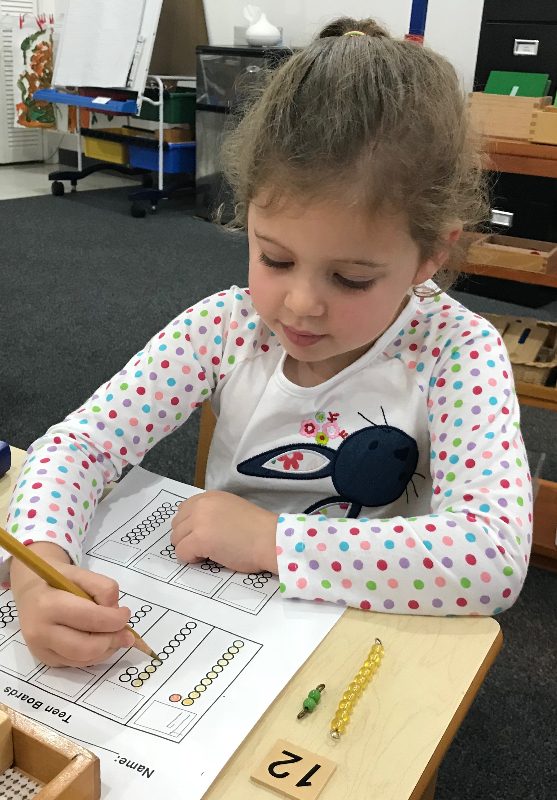
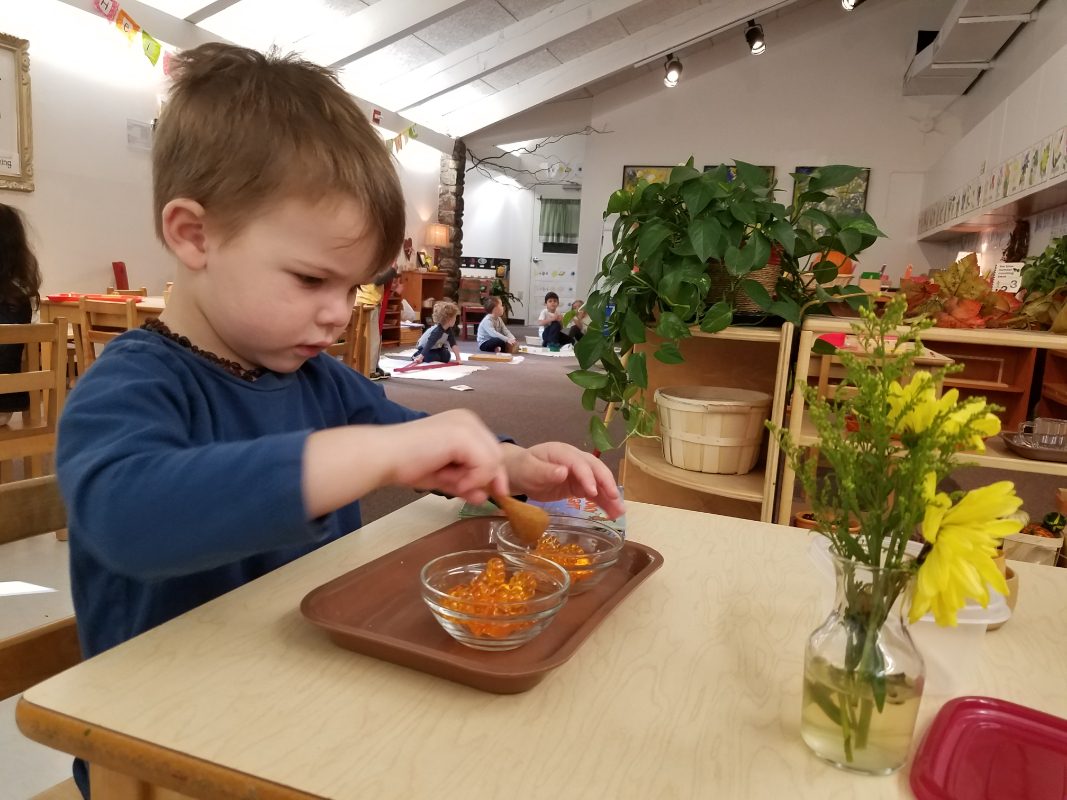
Research shows that children from 3-6 learn best through their hands. In order to truly understand a concept they need to explore it through touch.  It is why so many of the lessons found in the Montessori environment are not based on memorization alone. Most concepts we are trying to teach involve  tracing, manipulating, and exploring with their hands.

Perhaps most importantly, focusing on the process protects the child’s intrinsic motivation to learn and understand. It is not influenced by external factors such as recognition, praise, or reward. The time and experience with the materials is what we truly value and encourage.

Warmly,

Mrs. Doyle & Mrs. Lyga