Mrs. Hood: The Secret of Perfection!

“To have learned something for the child is only a point of departure. When he has learned the meaning of an exercise, then he begins to enjoy repeating it, and he does repeat it an infinite number of times, with the most evident satisfaction”- Maria Montessori – The Montessori Method

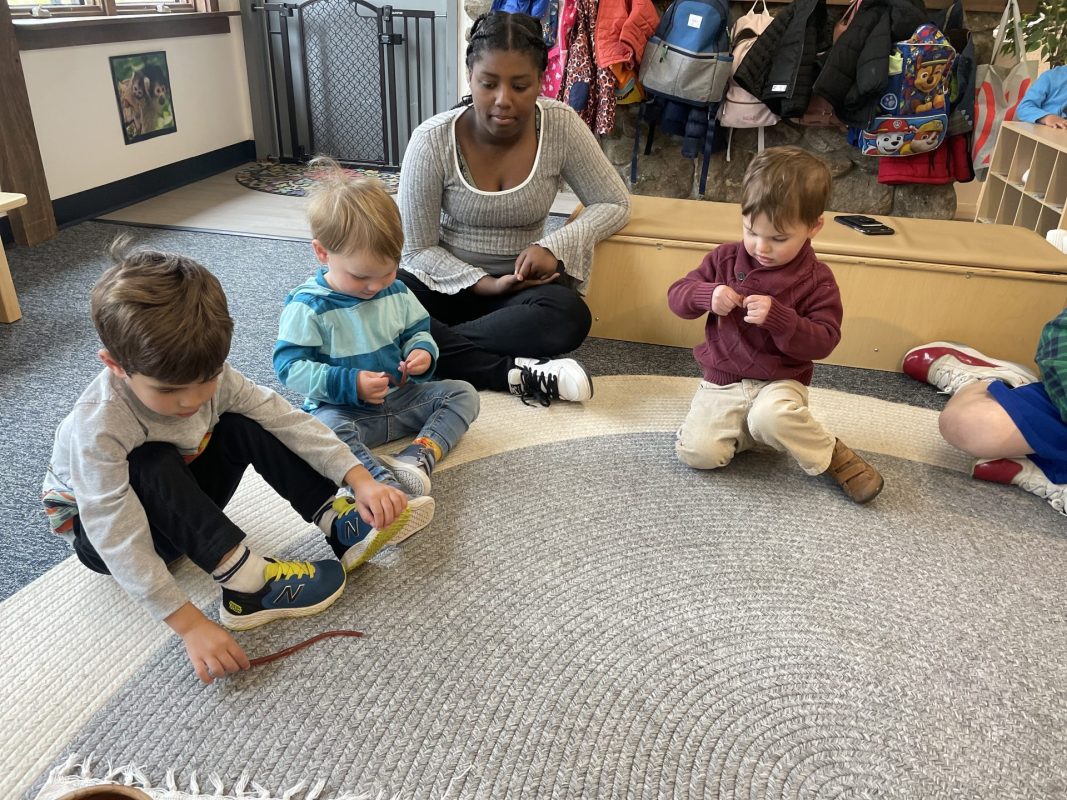
The children had a great time this week exploring and repeating some of the new materials in the environment. In a Montessori environment, repetition does not necessarily mean that the child has to engage in the same exact work over and over again. Anything that provides the child with the practice of a previously learned skill, including extensions and games, is repetition.

Dr. Montessori said, “Repetition is the secret of perfection.”

Through repetitive exploration, your children are able to look at a material from different angles and explore it, letting it become part of their understanding of the world. At the same time, it allows them to self-critique: they look at how they are doing something and make slight changes in order to perfect the action, making it more efficient. The Montessori environment is designed to support exactly this kind of learning. Children choose their own work, allowing their interests to guide them to a choice. They are drawn by desire, and that allows them to return to an activity with frequency, working with it until they have perfected it. It is, in fact, a developmental need. A common phrase you can hear in our environment is the children saying: “Again!” Dr. Maria Montessori wrote, “When a child has attained this stage of repeating an exercise, he is on the way to self-development, and the external sign of this condition is his self-discipline.”

Based on our observations, this is  just ONE of the many works your child seems VERY attracted to lately and enjoys repeating:

Amelia- Belonging picture matching – Language work

Ava- Open and close latches

Anthony- Creating new paths with the train set

Ben- Color mixing

Connor- Baby and Mommy animal puzzles

Ryder- Stackable color blocks

Hadley- Life cycle language works

Zion- Feeding and taking care of baby Molly

Everest- building with Magna tiles on the light table

Timothy- building wooden blocks

Rose- Flower arrangement

Matteo- Magnetic insect puzzle

On another note, the children enjoyed exploring mushrooms during our food-tasting lesson. They also keep observing the changes in our caterpillars, who, by the end of the week, were ready to form their chrysalis. Children also learned about the parts of an insect, and we explored the special characteristics of some of them, like ladybugs, grasshoppers, flies, bees, ant,s and dragonflies.

We also enjoyed the visit of one of our class parents; we celebrated two birthdays and enjoyed some treats together!

Enjoy your weekend,

Mrs. Hood and Ms. Marissa


Mrs. Hood: The Very Hungry Caterpillar

“We cannot create observers by saying ‘observe,’ but by giving them the power and the means for this observation, and the means are procured through education of the senses” – Maria Montessori. 

The grass is getting greener, the birds are chirping louder, and after a long winter, we happily observe how the Earth wakes from its deep slumber. Even though we witness this season every year, it feels so magical every time!

Like Dr. Maria Montessori, we believe nature is a patient teacher, and Earth is our classroom. In terms of how we teach children in the Montessori tradition, nature provides concrete and abstract learning for students of all ages. At our level, children have experiences that introduce them to marvelous wonders by using all five senses to comprehend concrete things and build a foundation for understanding natural life processes.

Earlier this week, children enjoyed the visit of very special guests in our environment: caterpillars. The amazement in your children’s eyes is indescribable, but we can tell you that they seem very excited about our new visitors. As we start our studies about insects, we will observe a butterfly’s metamorphosis for the next couple of days! We introduced the first stages of its life cycle this week, and children seem to be very curious about the caterpillars’ anatomy, movement, and feeding procedures. Vocabulary words like egg, caterpillar, chrysalis, and butterfly were introduced. The Very Hungry Caterpillar, a book by Eric Carle, was the most popular book of the week.

New works have been added to the environment on every shelf, and children continue to sharpen their motor and cognitive skills.

For food tasting, we explored Kumquats this week, and it was a tangy and fun experience! The pucker faces were just awesome!

Lastly, we had a great time with the visit of Grandparents and special friends on Friday! Children felt proud of themselves and eager to show our beautiful environment to their loved ones.

We hope to see you tomorrow for the Here We Grow Gala! It’s going to be a blast!

Best,

Mrs. Hood and Ms. Marissa


Mrs. Wilson: Worm Weather

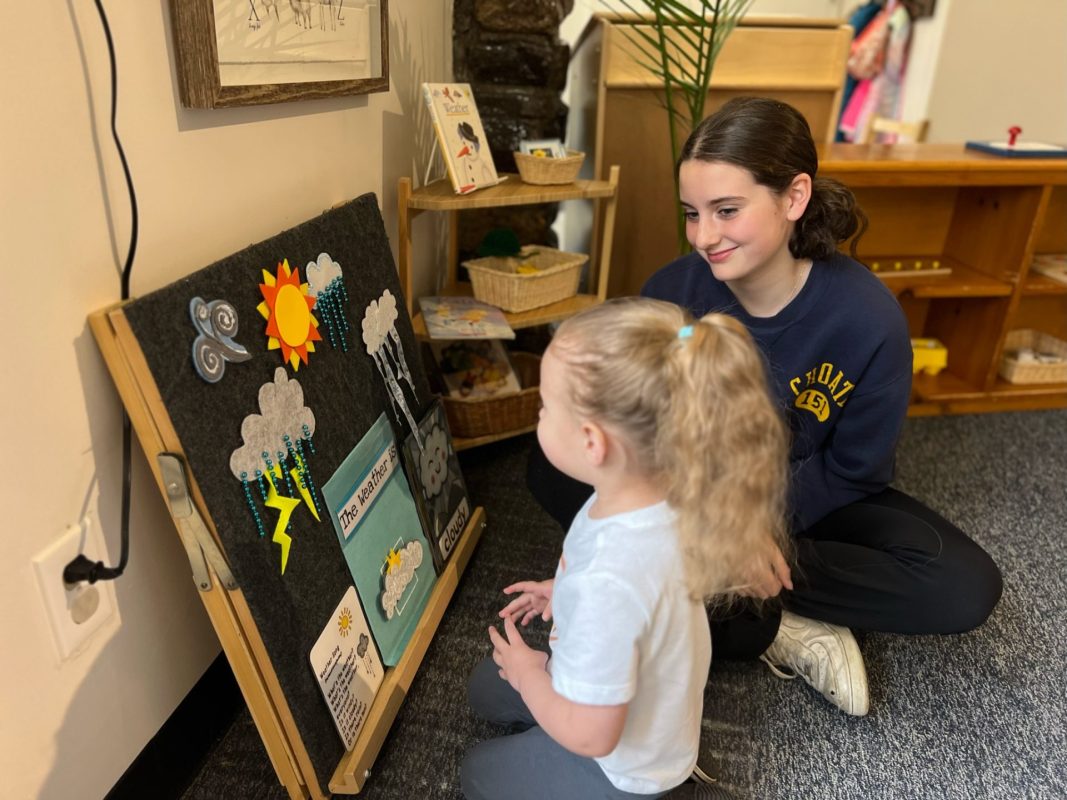
For the last two weeks, we have been talking about and describing the weather. The children have a chance to be the meteorologist for the morning. We start by singing “What’s The Weather?” When it is their turn, they get to look out the window to describe what they see. If it’s windy, we talk about how they will see the tree branches sway. If it is cloudy, the sun will hide behind the clouds. Next, we practice the phrase “The weather is…” Then the child chooses the felt weather piece along with the weather card that matches the weather outside.

Outside in the sensory bin, the children can explore mud with fake worms. They can use tongs and hands to search through the mud to find the wiggly worms. We read the book Worm Weather by Jean Taft. The children enjoyed this book and requested to hear it two times in a row.

This week the picker triangle was introduced. The children amazed me with their patience. They understand the concept of one friend at a time. This piece of equipment is a beautiful addition to the environment. It builds confidence, patience, and body awareness. And even though the children use it to get out extra energy, it also slows their bodies down as they cautiously yet confidently climb as far as they are comfortable. Then, when they make it up and over, you can see and, for some, hear them say, “I did it!” or “AWESOME!”

We hope to see you at the Gala this Saturday.
Cynthia and Sara


Mrs. Hood: I Know a Chicken!

The highlights for this week are based on the continuation of our chicken studies. We focused on completing the life cycle of a chicken. We learned that after the chick hatches from the egg, the mother hen takes care of it and provides food. Children learned that chickens do not have teeth, but they have strong beaks to eat seeds, corn, insects, and worms. In our outside environment, we were not too lucky to find some real worms yet, but then we pretended to be little chicks by exploring the worm sensory bin. Children practiced their fine motor skills by digging, finding, and picking with tweezers some life-like worms and transferring them to a bowl.

We also learned that worms don’t have eyes or lungs and breathe through their skin. This week we introduced the song “I Know a Chicken” by Laurie Berkner, and we had so much fun dancing to it with our egg shakers.

On another note, we introduced two new works in the movement area. These both were the most popular works in the environment this week. The first is oversized blocks for building and imagination. Children exercise their need for maximum effort and peer bonding through this work. It also stimulates cognitive development by improving problem-solving skills, spatial awareness, and visual-spatial reasoning. These skills are essential for later academic success in subjects such as math and science.

The second is a new individual rocker also used as a climber! Some of the benefits of this work include sensory stimulation, improving balance and coordination, developing gross motor skills, promoting relaxation, enhancing vestibular system development, and providing opportunities for imaginative play.

Lastly, the children seemed to enjoy exploring creamy avocados during our food-tasting lesson. If I am honest, avocados are difficult for me to introduce as they are definitely not my favorite. Still, this time I was truly surprised when I tasted this avocado. It was so creamy! This is just another example of how important it is to keep introducing different foods to your child. One day (even if it’s in their 40’s), they will surprise themselves by enjoying new foods.

Enjoy the pictures of your beautiful children, take some time to dance, and have a great weekend!

Mrs. Hood and Ms. Marissa.


Mrs. Wilson: Life Cycle of a Butterfly

Albert Einstein once said, “Look deep into nature and then you would understand everything better.”

Children are naturally curious about the world around them. They want to explore everything from the tiniest ant to the tallest tree. What I love about our spring curriculum is that we get to explore the life cycle of a butterfly. This experience is so magical even for me. We started with one of my favorite childhood stories, The Very Hungry Caterpillar, by Eric Carle. Next, we went over the object and language card matching of the life cycle of a butterfly. They learned the vocabulary butterfly, eggs, caterpillar, and chrysalis. Next, I showed them real live caterpillars. They each had a turn holding the container gently to observe them. Each day we will observe the magical metamorphosis process.

Food Tasting: This week, we tasted the fun fruit kumquats. The children experienced the sourness of the first bite, but as they continued to eat, it was sweet.

Cynthia and Sara


Mrs. Hood: Los Pollitos!

Toddlers are curious about the world around them and eager to learn new things. One educational topic that captures their imagination is the life cycle of living things! Teaching toddlers about life cycles has numerous benefits, including building scientific knowledge, fostering curiosity and wonder, enhancing vocabulary and language skills, encouraging hands-on learning, and instilling empathy and respect for nature.

Spring is the perfect season to introduce these concepts! So this week, we started our studies on the life cycle of a chicken! From interesting eggs to fluffy chicks to clucking hens, the journey of a chicken from egg to adult is a fascinating process that toddlers always seem to enjoy!

So far, we have focused on two concepts: chickens come from eggs, and a baby chicken is called a chick. Children enjoyed some short educational videos where they could observe the hatching process. The smiles on the children’s faces were so priceless.

To bring a real-life experience to this topic, we explored an egg as part of our food-tasting lesson. We introduced vocabulary words like a shell, egg white, and yolk. Children seemed surprised to find “a yellow ball” -as one of the children called it-  inside the egg. Children could practice their fine motor skills by learning how to peel their eggs. They seemed to enjoy cracking the egg and carefully peeling the shell. I encourage you to allow your toddler to practice this skill at home. The children seemed to feel proud of themselves.

Some of the children didn’t find the sliminess of the boiled egg very attractive and didn’t want to taste the egg, but other children kept asking to repeat the activity and taste another egg. It’s always fun to observe how the children react to these sensory experiences and how their brain seems to work hard on classifying the textures and flavors of the food items we introduce. Since some students don’t consume eggs, we had an extra food-tasting lesson with delicious “look-a-like-egg” tofu! That was a hit as well!

To reinforce the Spanish language, the children were also introduced to a fun Spanish song called: Los Pollitos. In Spanish, the chicks say, “pio, pio,” instead of “chirp, chirp.” Just an interesting cultural bonus sent your way :). I hope you enjoy the song at the bottom of this note and practice with your children at home if you would like.

Lastly,  we explored the color orange and learned that we create orange when mixing red and yellow. We also had a blast playing with water and enjoying the wonderful summer-like weather. Your children did great in our whole school fire drill as well. Enjoy some of the pictures of the toddlers visiting the Middle School play and a birthday celebration last week as well.

We hope you all have a wonderful weekend, and if you are planning to visit a farm as a fun spring activity, please take the time to observe the chickens and talk with your toddler about what you see.

Best,

Mrs. Hood and Ms. Marissa 


Mrs. Wilson: Springtime Celebration and Exploration

For the past two weeks, the children have been learning about spring. We started with a spring celebration. The children painted paper plates with green paint, which we later cut into a crown. Then they selected spring-themed stickers to apply to the crown. We used the crown as a party hat during our spring celebration. They all received a pinwheel and a delicious graham cracker treat.

The children are learning about life cycles; we are currently learning about the life cycle of a chicken and will explore the life cycle of flowers, butterflies, mommy animals, and babies.

Food Tasting this week was avocado. It was a big hit, and one friend recognized the taste and said it tasted like guacamole.


Mrs. Hood: Spring is here!

I remember a couple of years ago, sitting by a small window and observing the gigantic icicles that covered my view. Then, suddenly I noticed how slowly water started to drip from the icicles on a sunny morning! I remember so clearly how this sense of joy filled my life! This was the end of my first winter in America, and since then, I have loved the hope that spring brings when Earth seems to wake up and become alive again! Longer, warmer, and sunnier days, windows opened, greener views, flowers growing, trees budding, birds singing, puddle jumping, and that crisp in the air are just some of the things that spring offers us and that we all appreciate!

Besides being my favorite season, spring offers incredible opportunities and benefits to your child’s development. Cognitively and conceptually, your child grows tremendously during this season when exposed to different sensorial experiences. They learn about different textures, colors, shapes, and sizes by exploring nature. In addition, they can begin to develop concepts about nature and the seasons, such as understanding that flowers grow from seeds or that the weather gets warmer at this time of the year.

Their physical development improves, too, as they can get outside more often and engage in physical activities for extended periods without the constriction of winter coats, mittens, hats, and boots! In addition, it boosts social and emotional development as it allows your toddlers to connect with nature and learn about empathy and compassion towards plants and animals. All those opportunities to connect with different children at a neighborhood’s playground are also a gift to them!!

To celebrate the return to school and the beginning of spring, the children worked on an art project creating a spring crown. Together we got to say goodbye to winter and welcome spring by talking and learning about all the changes we will observe in the coming weeks and, naturally, sharing some treats together and dancing our hearts out. We also spent longer outdoor time, and the children got to explore the differences in nature that are already evident! The children also enjoyed catching the rainbow game using a prism and catching some fun bubbles!

We can’t wait for all the fun we will have as we dive into our spring studies in this last trimester of our school year! Please remember to send your child with rain boots and coats as we will explore outdoors even if it’s softly raining, especially on warmer days. Puddling jumping is one of our favorite activities this season!

On another note, we explored raspberries for food tasting and enjoyed celebrating two 3-year-old birthdays!

Enjoy the weekend,

Mrs. Hood and Ms. Marissa