Blog

Middle School: Week in Review

IMPORTANT ANNOUNCEMENTS:

  • Order your 8th-grade-designed 2024 FWM sweatshirt ASAP! Orders close on 4/27! Click here to order.
  • ALSO, we are looking forward to having a great Middle School turnout at this year’s auction, Saturday Night Fraser, on Saturday, 4/26! If you want to see Mr. Brown (and his retro mustache) & Mrs. Lamb in their finest 70s attire, be sure to grab your tickets here: Fraser Woods Auction Tickets

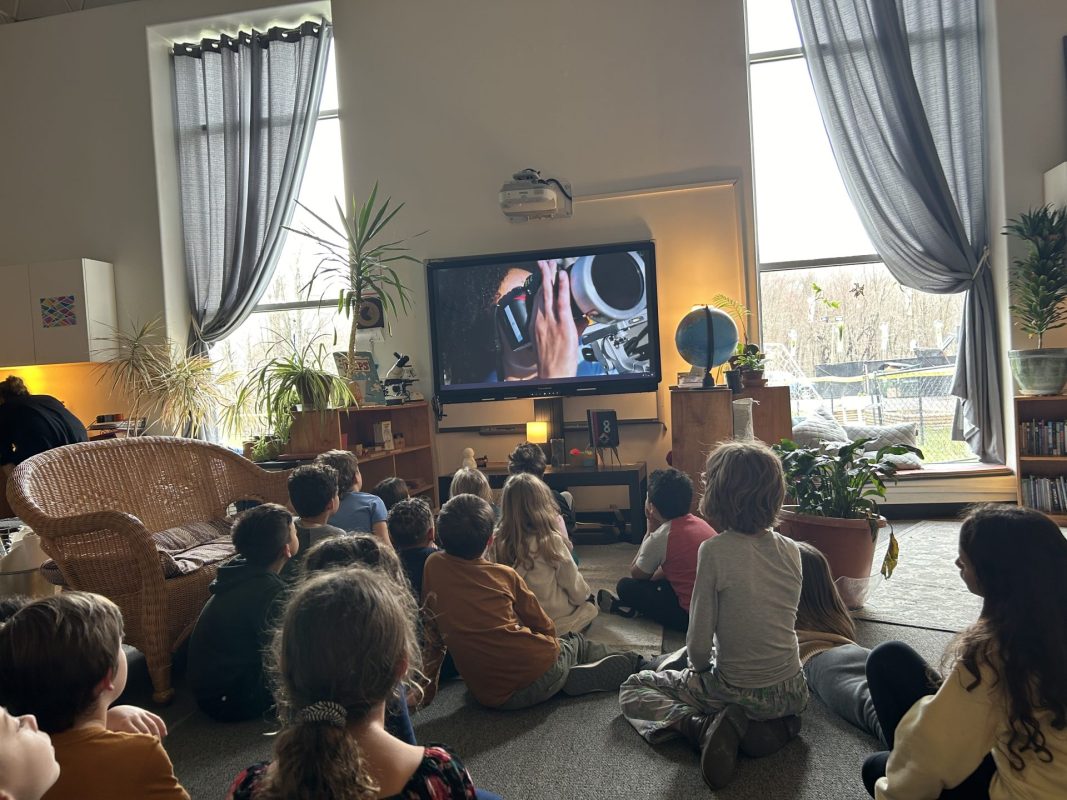
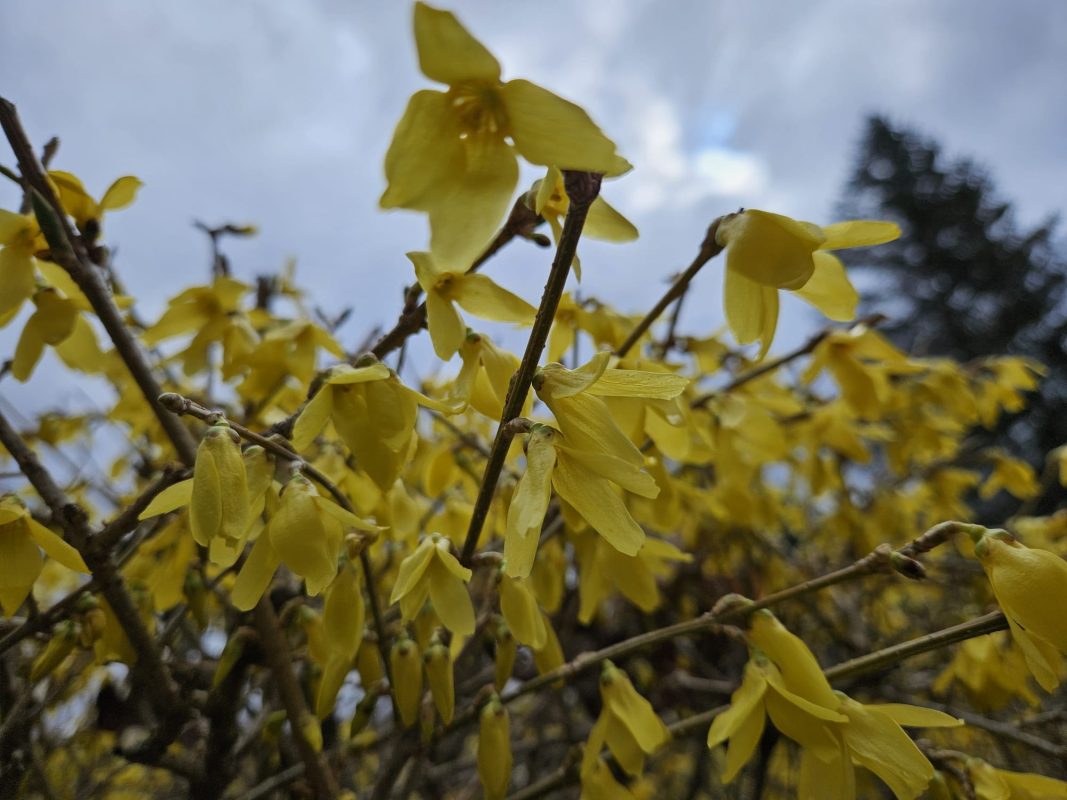
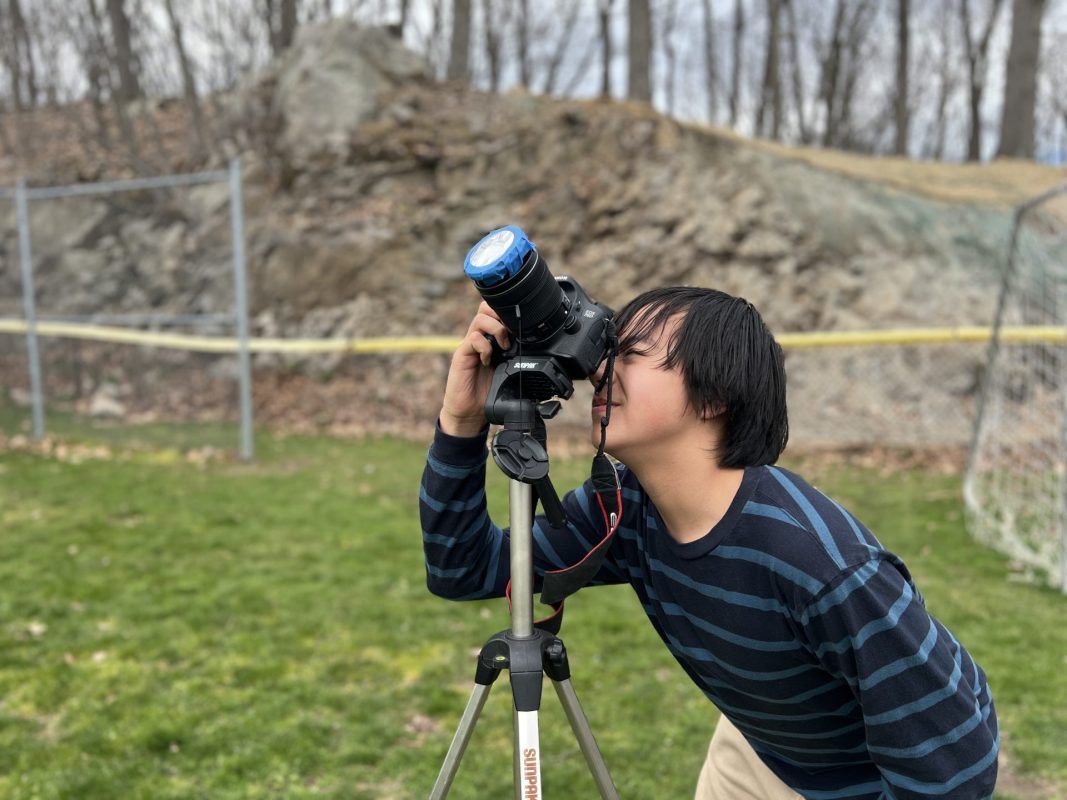
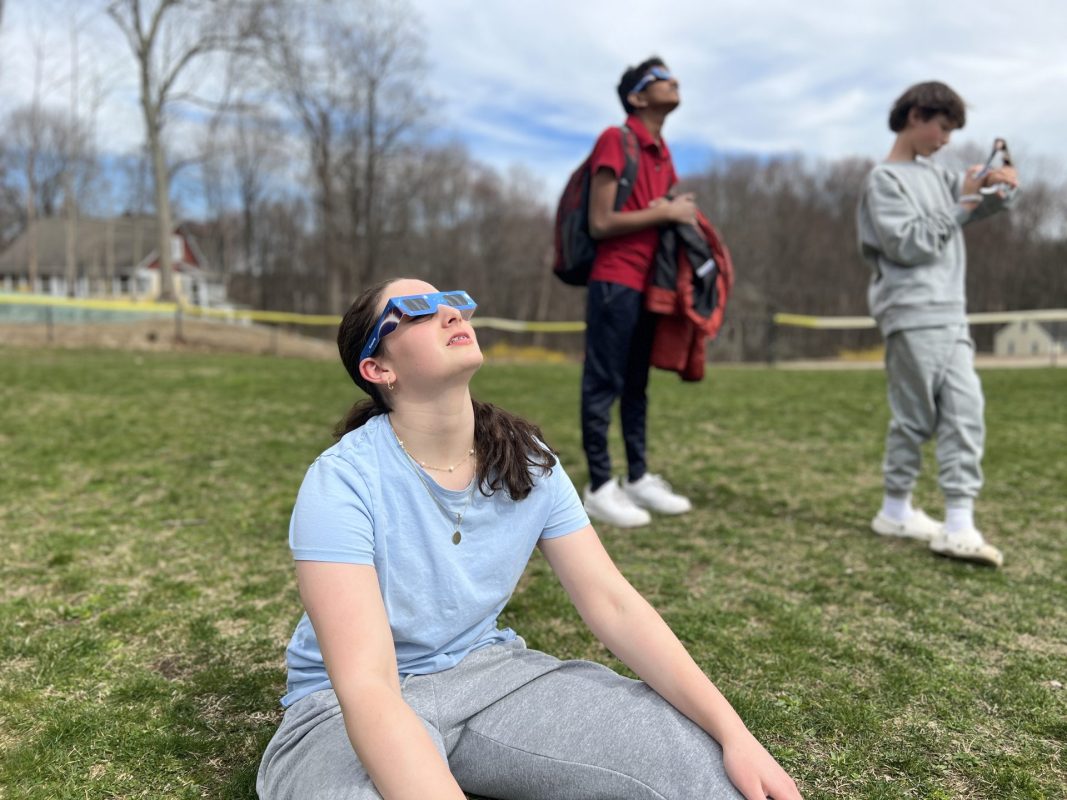
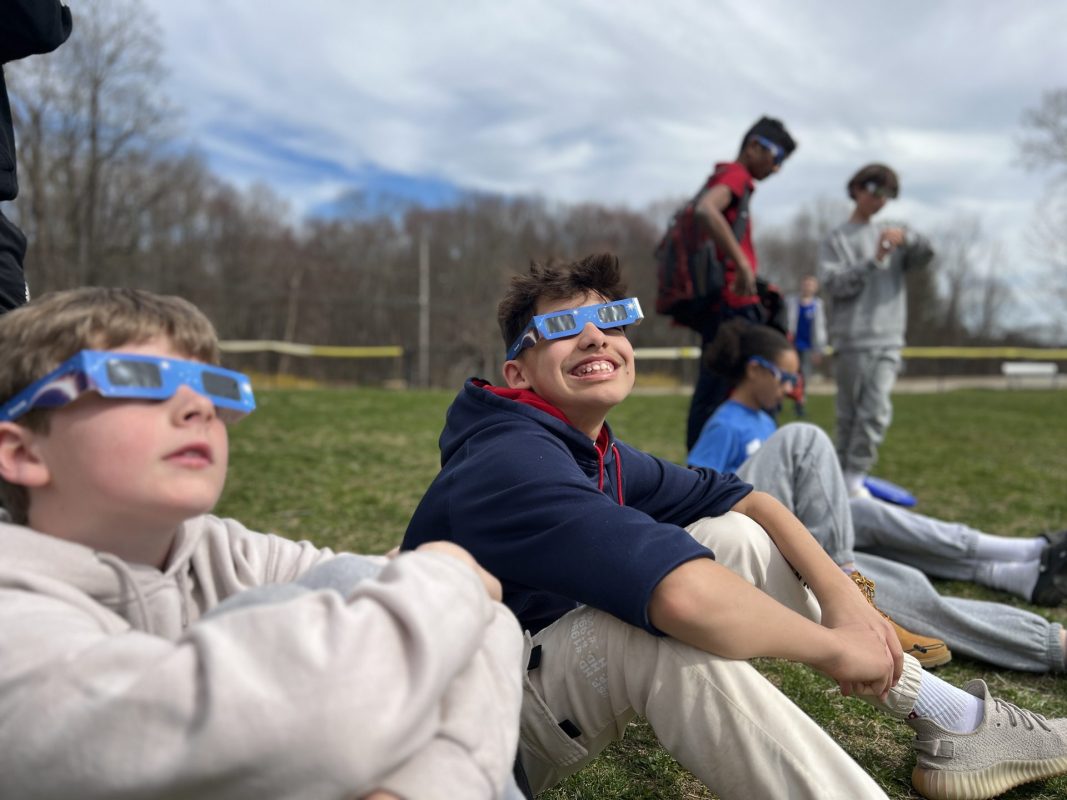
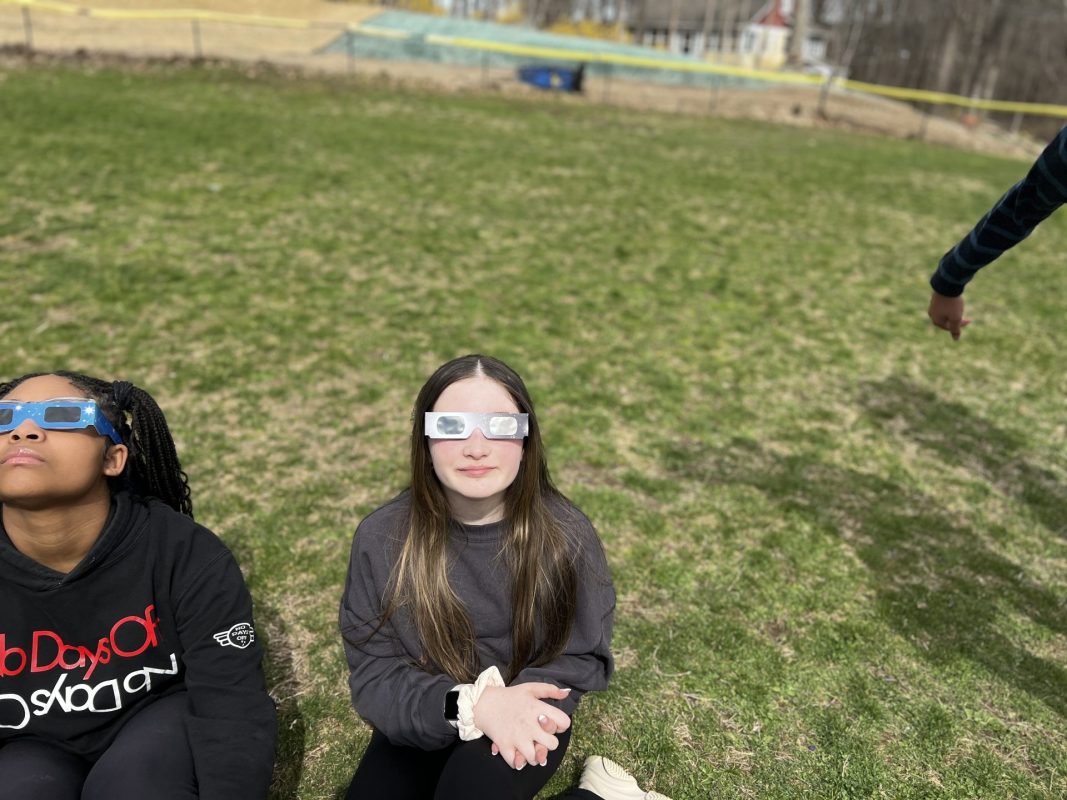
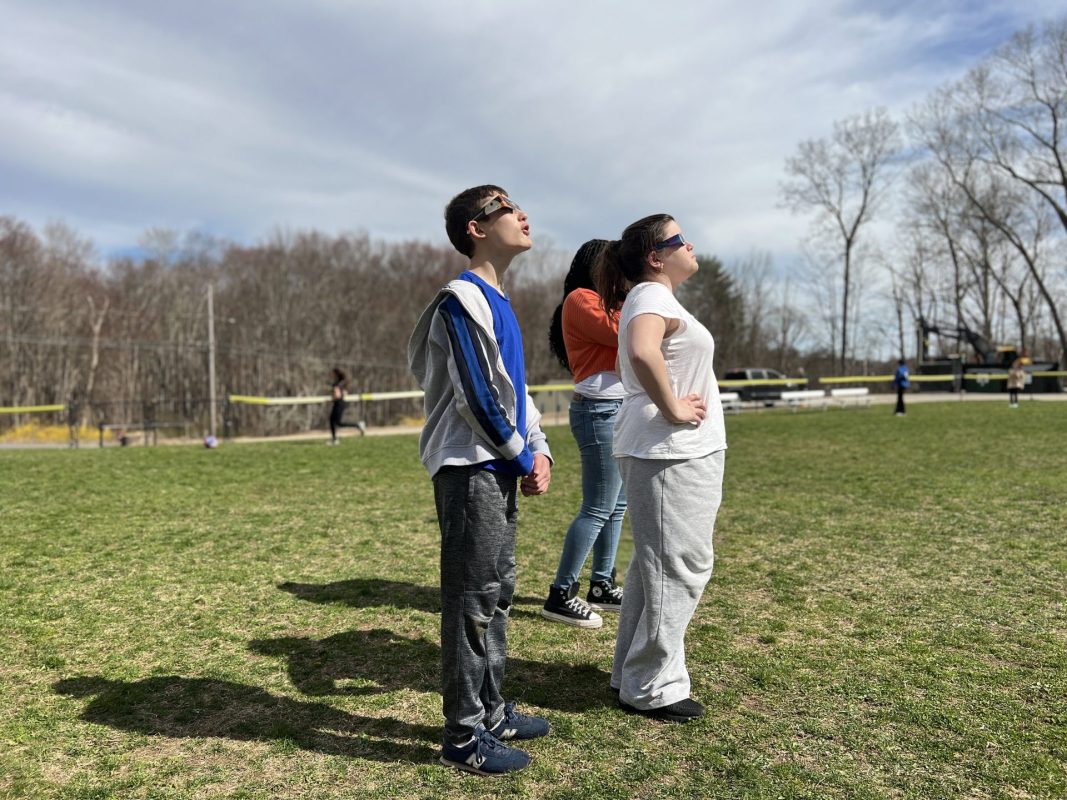
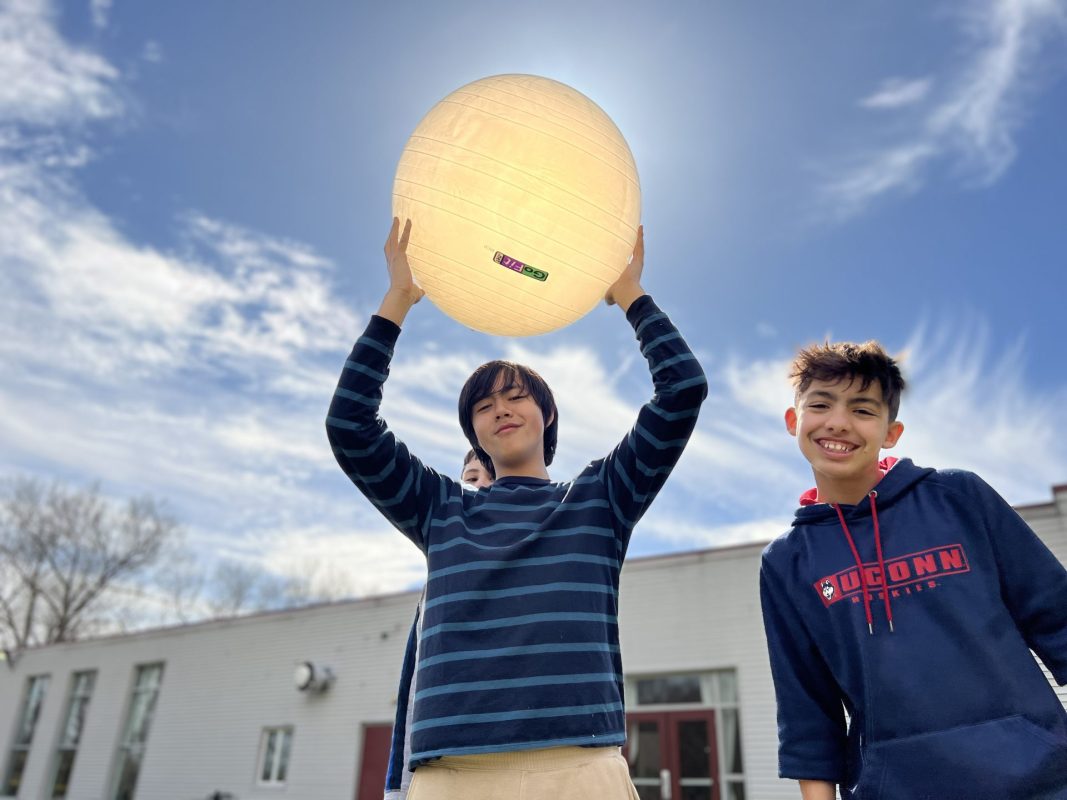
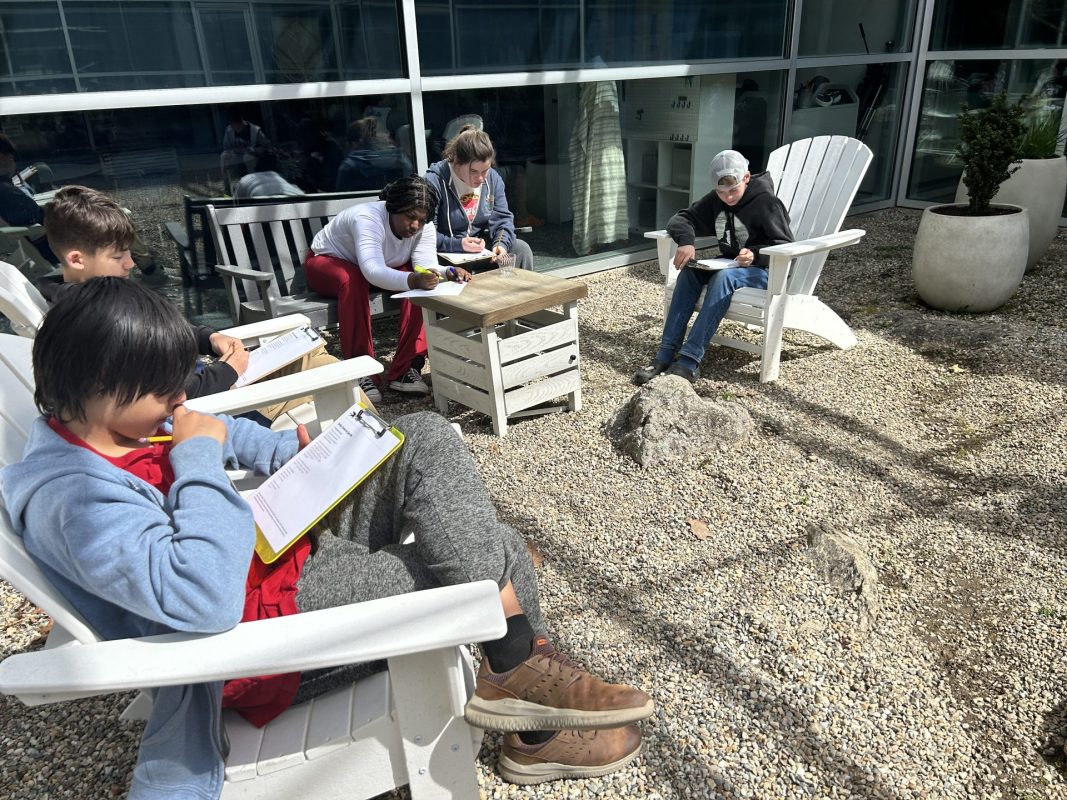
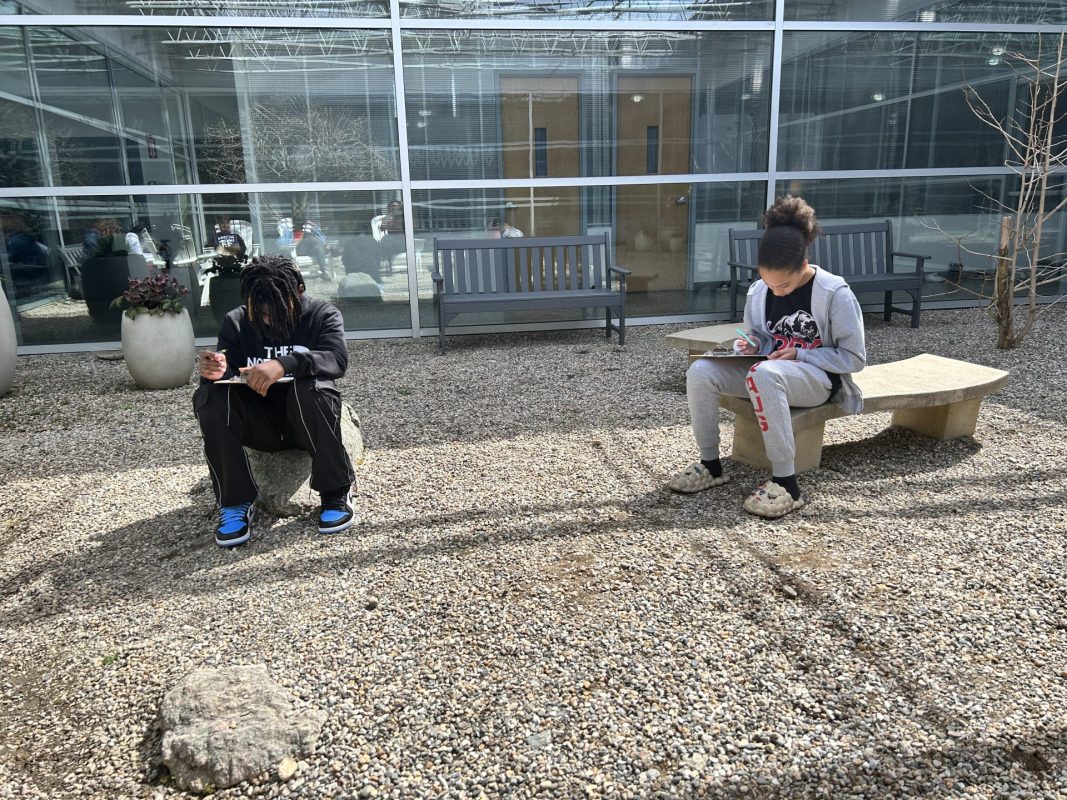
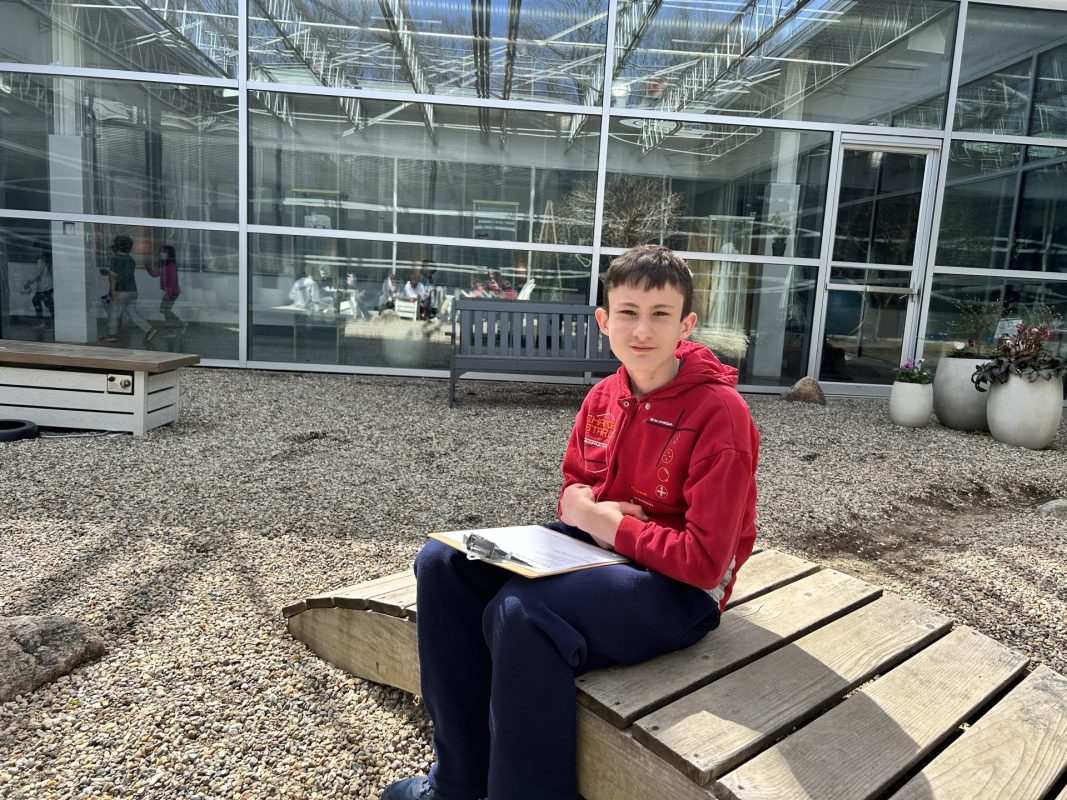
Well it is certainly feeling like spring from the warmer days, eating lunch outside, flowers popping, and all the extra sneezing from those pesky allergies creeping up. The Middle School also enjoyed putting on their glasses and getting outside on Monday to view the solar eclipse.

Here’s what went on in classes this week:

Humanities

The 6th-grade Humanities class had a current events week, so they presented their work and had rich discussions about topics going on in the world right now. This group knows how to have informed conversations while offering their opinions respectfully. Additionally, they continue to annotate and move forward in the class novel, The Eye of Ra. Annotations lead our discussions with important moments to recall, questions to answer, and personal reactions to events. The class is also learning about the engineering and building of the pyramids of Egypt, as this is central to their novel, and they have been learning about the pyramid of Djoser and the Great Pyramids. Finally, the group expressed curiosity surrounding sandstorms after one occurred in this week’s reading. The class then learned about the climate of Egypt, when and how sandstorms occur there, and viewed a giant one from 2023.

The 7th-grade Humanities class also had a current events week. There was a wide range of topics and discussions surrounding the presentations. Additionally, on Poetry Tuesday, we spent a bit of time on the poem “Turtle Came to See Me” by Margarita Engle, a Cuban American contemporary poet. The poem is a great example of how imagery can really make writing come to life. Additionally, the main message of the poem, that adults we see as experts can sometimes be wrong offered a great discussion about how we are all human. Next, 7th-grade students drafted their literary analysis essays for A Long Walk to Water using quotations to support Salva’s claim that perseverance made all the difference in his life.

This week in 8th grade American History with Mr. Newman, students began examining the end of the Civil War and the process of Reconstruction. Students learned about the Emancipation Proclamation, The Compromise of 1877, and the assassination of Abraham Lincoln, to name a few. Next week, they will move into the Gilded Age. With Mrs. Lamb, students continue to read and annotate She Came to Slay, a biography about Harriet Tubman. This week’s annotations prove that this group is moving into high school thinking. The class also took a day to study African American Spirituals: what they are, how they became an important part of Black life during and after slavery, and how they continue to represent an important part of community and culture among Black Americans. They also learned how they played a role in the Underground Railroad. Students read lyrics to a few songs and listened to recordings from the Library of Congress as well as recordings from Marian Anderson, Louie Armstrong, contemporary gospel singers, and Fisk University’s Jubilee Singers. Drafts of expert research papers are due on 4/22.

Math

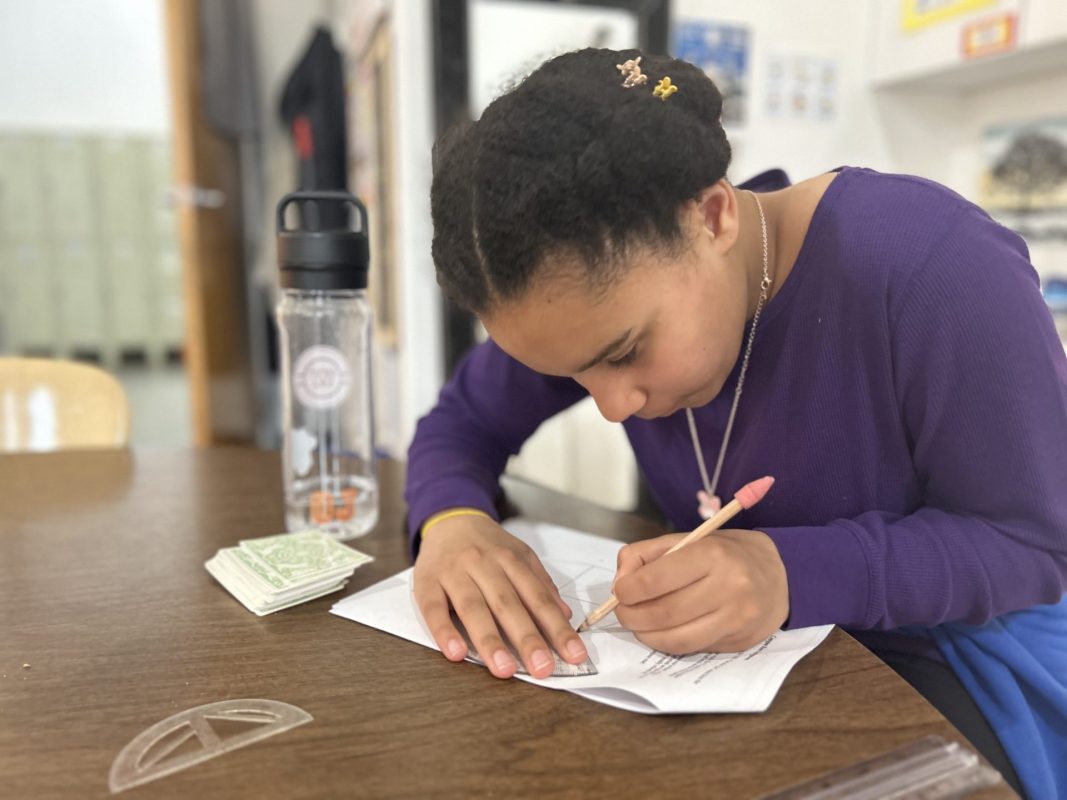
Pre-Transition students had an engaging week as they were introduced to Chapter 9’s focus on area and volume. From mastering operations of arithmetic to calculating the area of a triangle and parallelogram, students were immersed in the essential concepts that form the foundation of geometry. Through a variety of activities and real-life examples, students gained a deeper understanding of how to calculate and compare different shapes’ areas, setting the stage for more complex geometric explorations in the future.

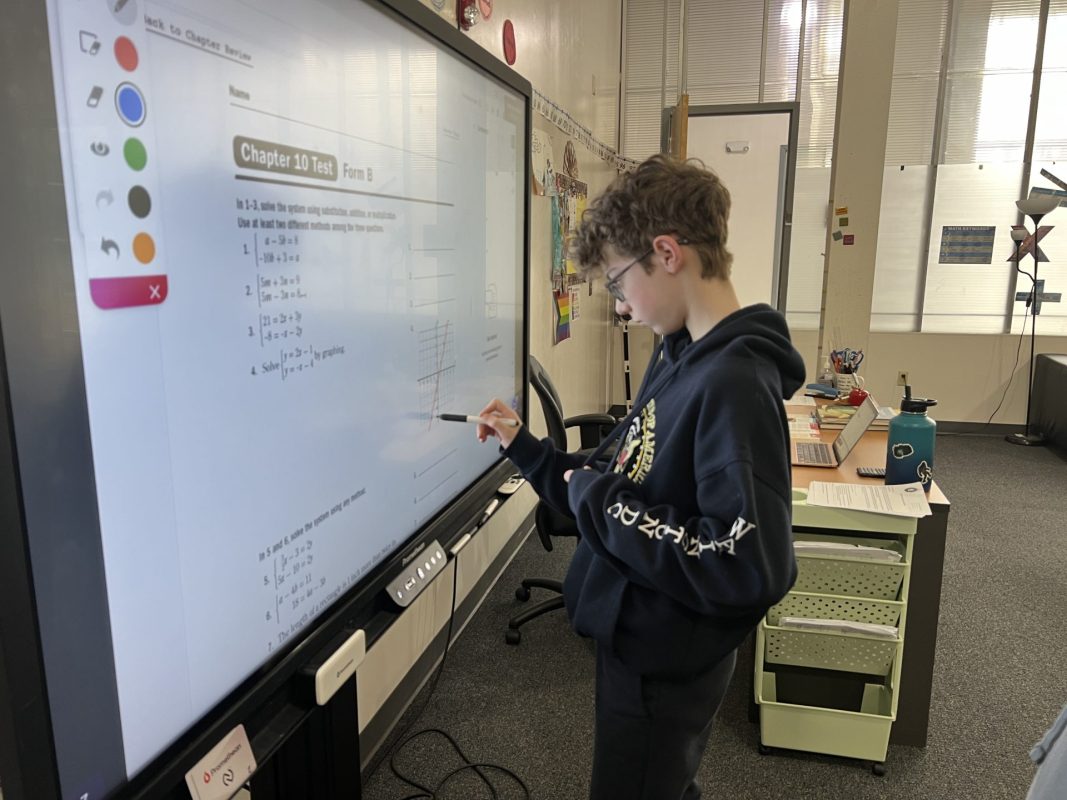
Throughout this week, Transition students worked on linear equations and inequalities in their Transition mathematics class. They kicked off by exploring how to find solutions by analyzing graphs, followed by mastering the art of solving equations in the form of ax + b = cx + d. Additionally, students learned about graphing linear inequalities of the type y < ax + b. These fundamental concepts are building blocks in understanding the relationships between variables and will continue to shape their problem-solving skills moving forward.

This week, as Algebra students embarked on their journey into the world of polynomials, they worked on exploring concepts such as investments intertwined with polynomials. They tackled the classification of polynomials, learning how to differentiate between terms like binomials, trinomials, and more. Additionally, they honed their skills in multiplying a polynomial by a monomial, mastering the art of these mathematical operations. With this knowledge, students are well on their way to unraveling the mysteries of algebraic expressions and equations.

The geometry class has been working on finding the area of a regular polygon, using their knowledge of special right triangles and the Pythagorean theorem to find the apothem. They have also reviewed simplifying radicals, which are needed to express various lengths of the sides of a right triangle.

Science

In the 6th year of Earth Science studies, students have completed their unit on eclipses, diving deep into the celestial alignment that causes these remarkable phenomena. Following their lessons, students had the unique opportunity to witness an eclipse firsthand this past Monday, allowing them a rare and awe-inspiring experience of this natural occurrence.

7th-year Physical Science students continue to study the unit of reflection, building upon their knowledge from previous years. Through engaging experiments with lasers and mirrors, they are discovering how different surface materials impact the reflection of light. The primary objectives of this unit include designing experiments to evaluate the reflectivity of various materials, recognizing the distinct characteristics of different types of mirrors, and explaining the behavior of light as it reflects off diverse surfaces.

As 8th-grade Life Science students wrap up their exploration of the circulatory system, they dive into the intricate world of the nervous system. In this upcoming unit, students will unravel the mysteries of the brain, spine, and nerves that control our every move. They will explore the details of neurons and the building blocks of our nervous system and understand how these specialized cells function and communicate. Through hands-on experiments, students will track how nerve impulses zip through the body, carrying vital messages and responses at lightning speed. Get ready to embark on a new journey, mapping out the routes of stimulus and sensation that keep us in sync with the world around us.

Looking forward to next week!

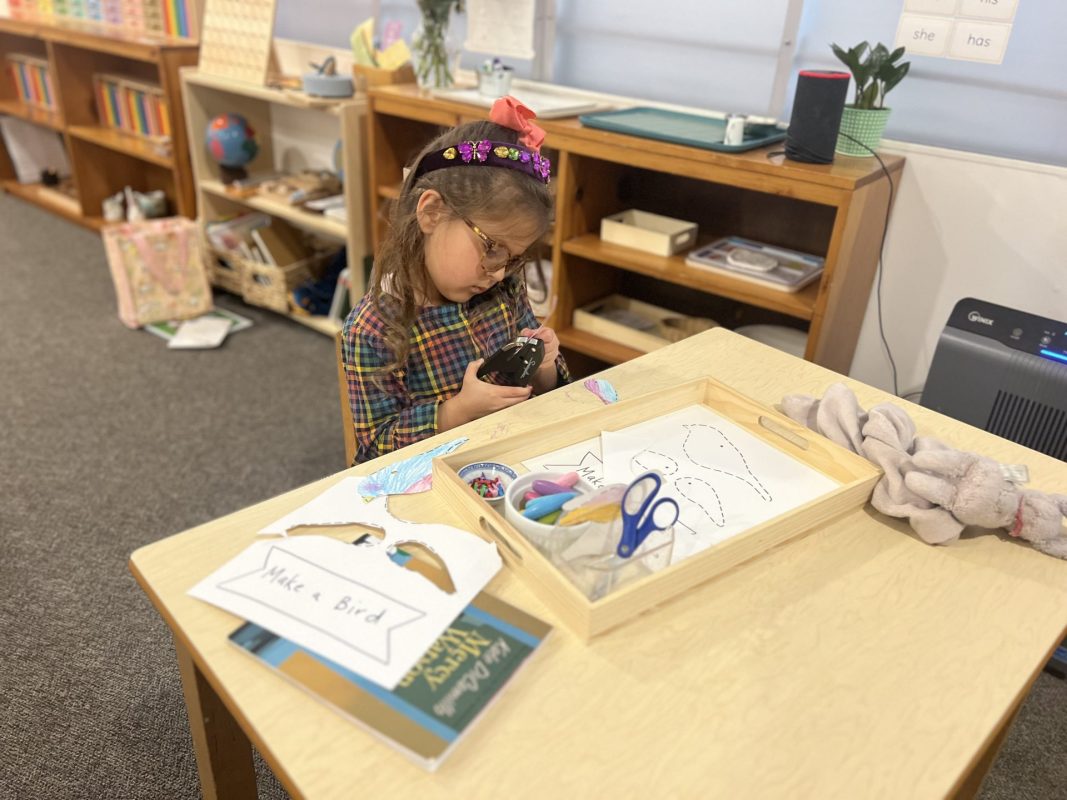
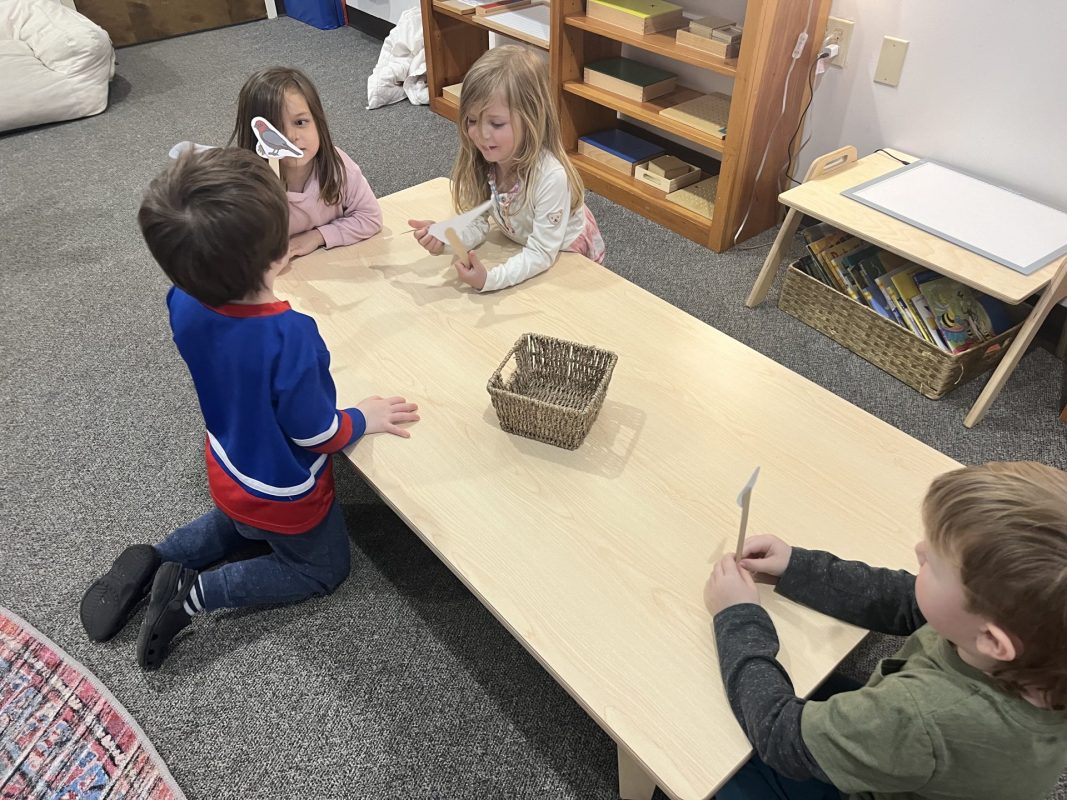
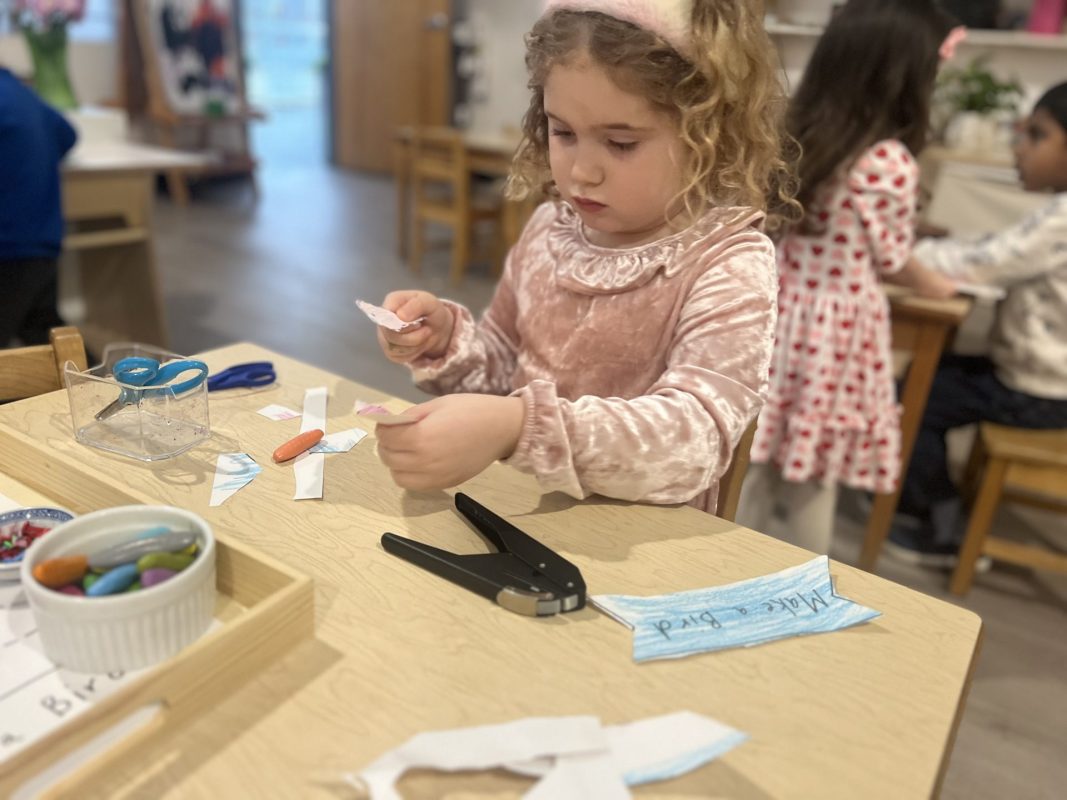
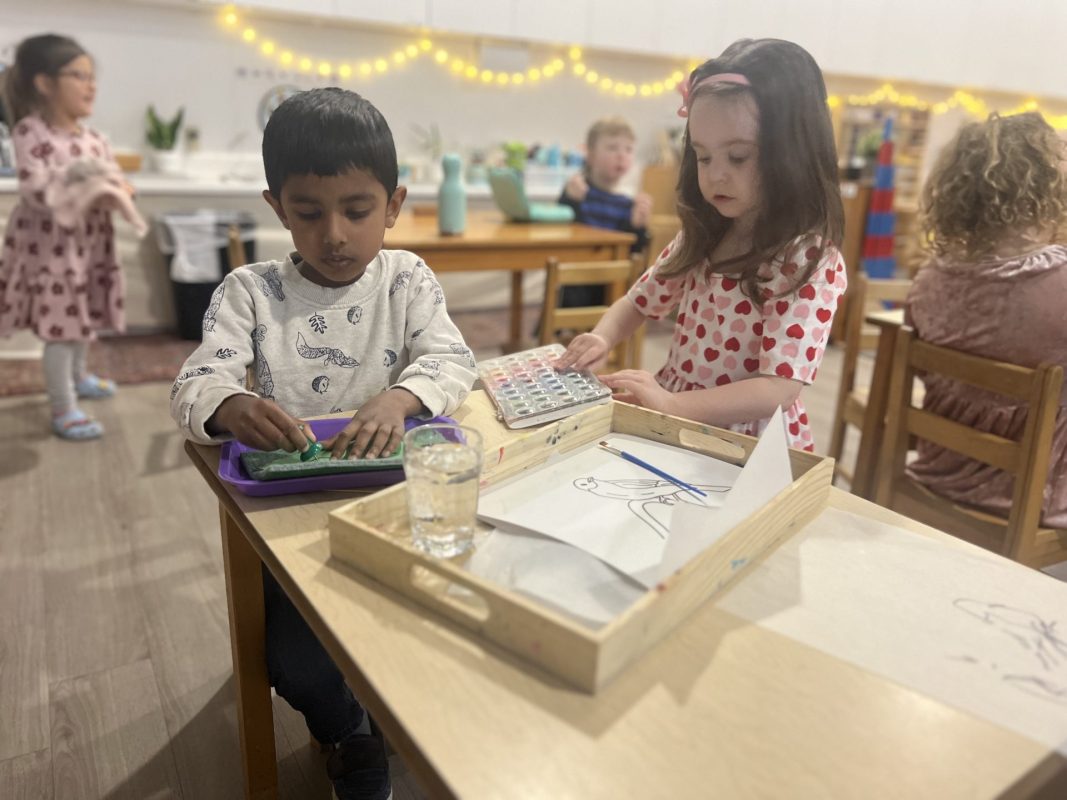
Ms. Marissa: Backyard Bird Watching

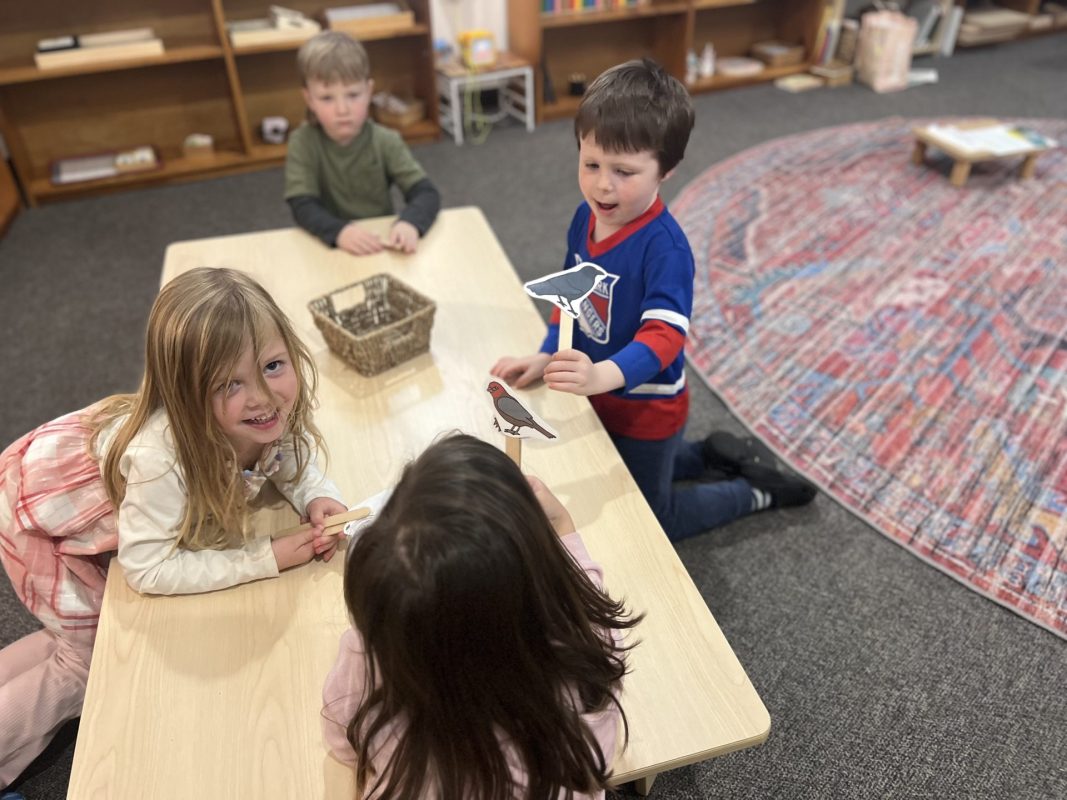
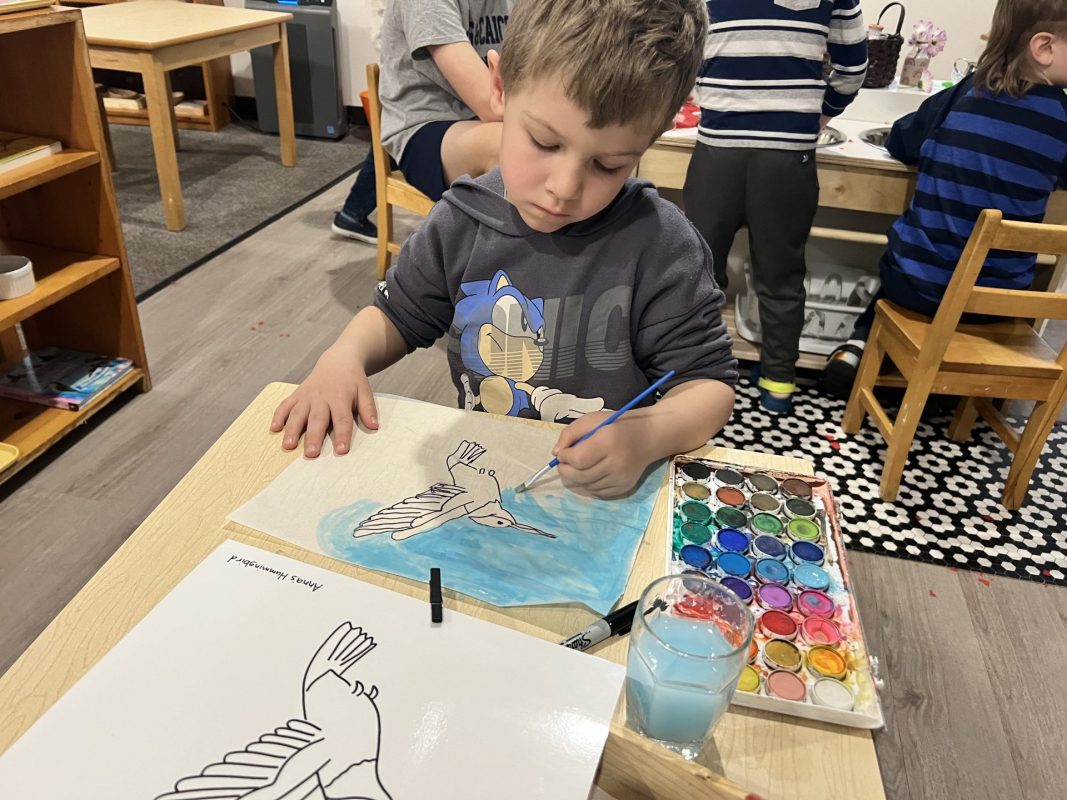
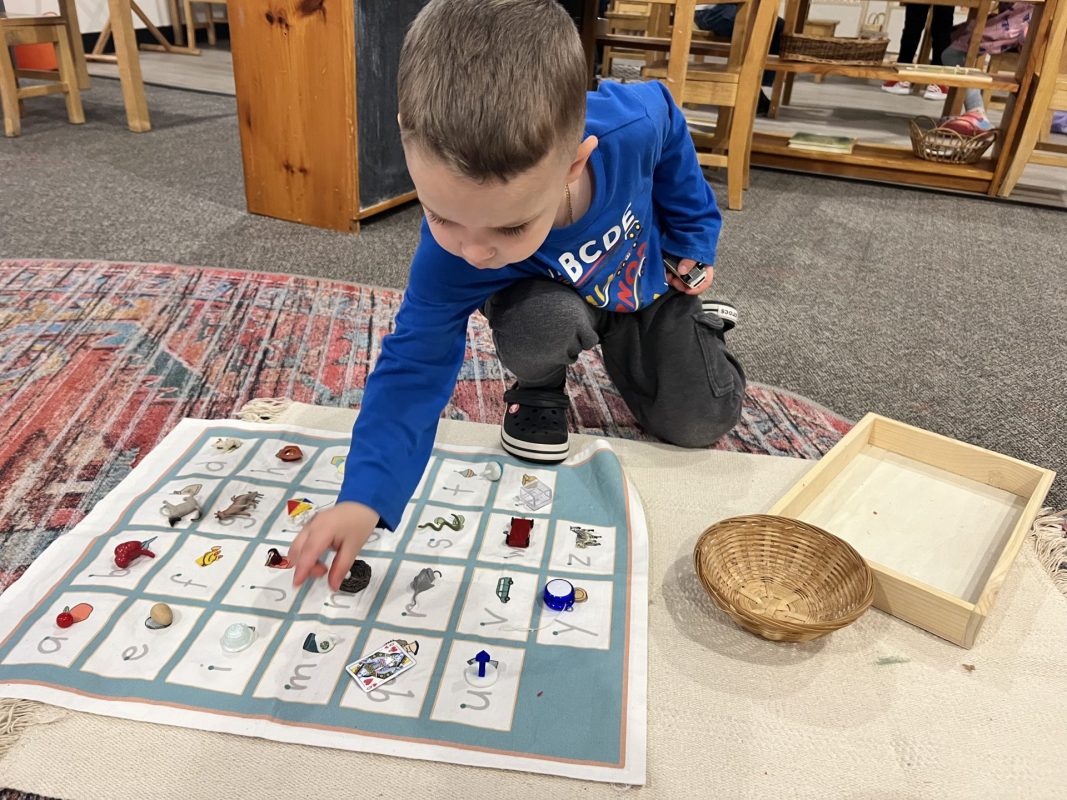
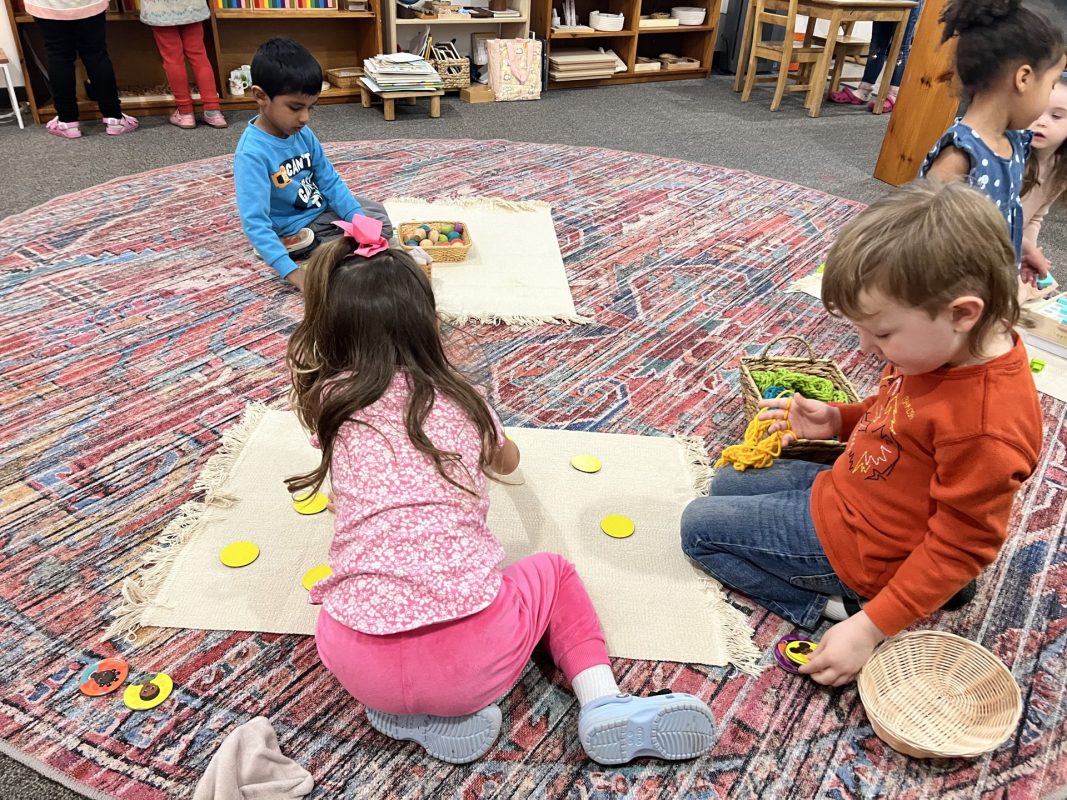
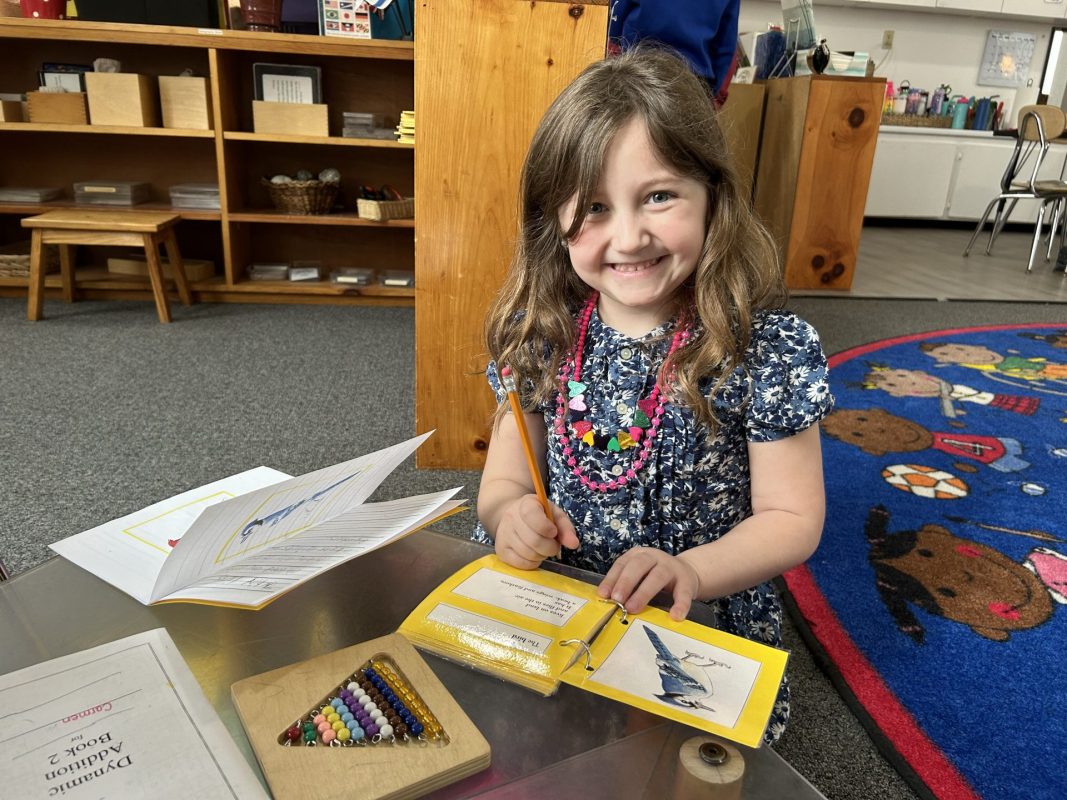
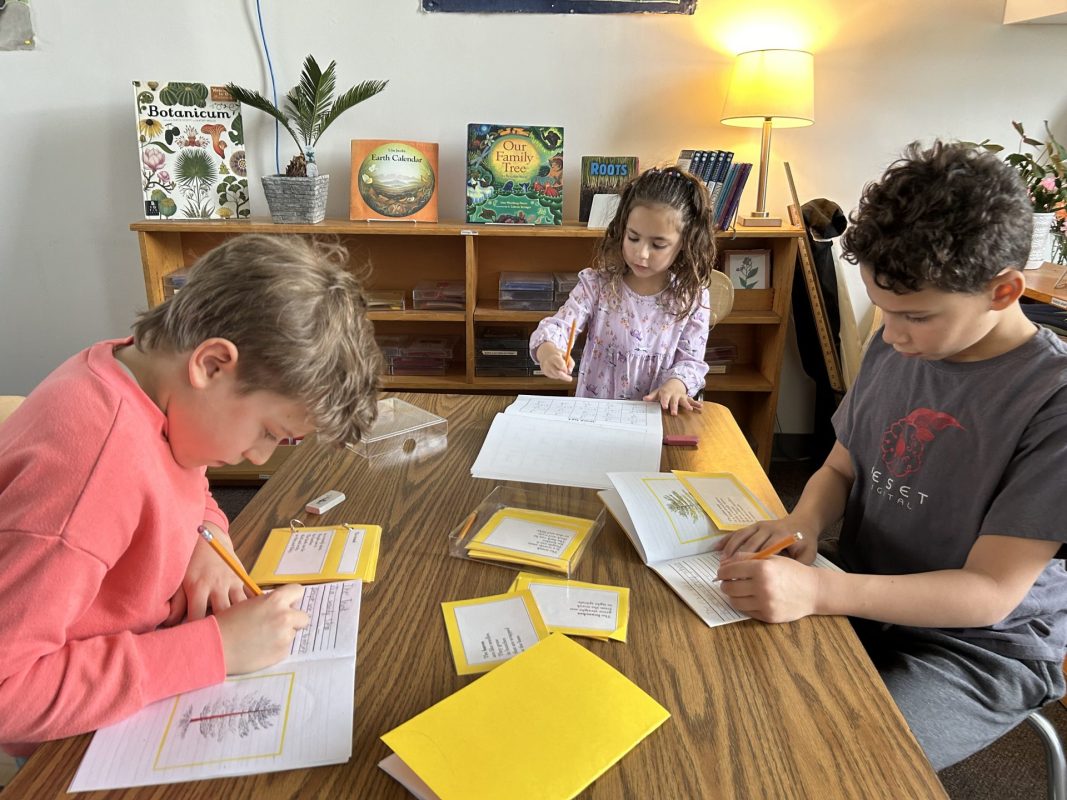
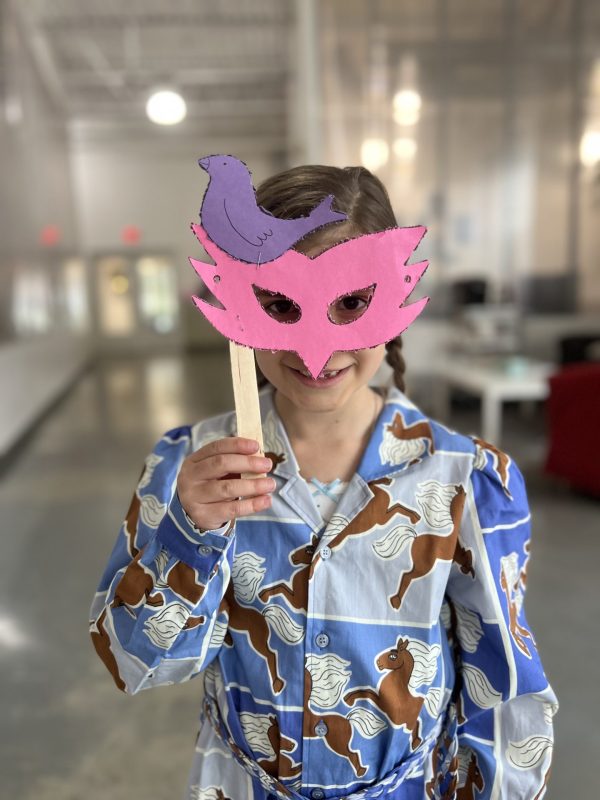
Our April study is one of my favorites of the entire year! We are studying everything about birds. We are learning about many birds we may see in our own backyards, like Blue Jays, American Robins, Goldfinches, Crows, and Black-Capped Chickadees. We look at photos of birds, learn their names, and even get to listen to their beautiful songs! In one of our Sunshine Spots, children can look at an interactive book and hear bird calls from many different backyard birds.

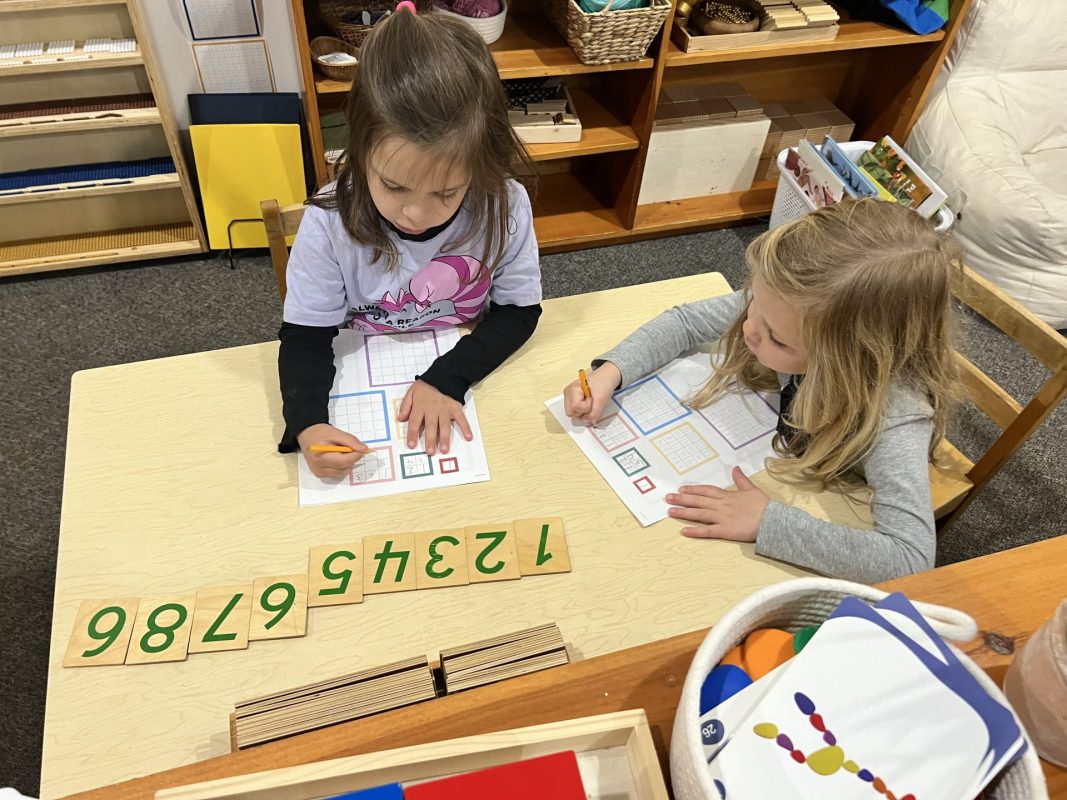
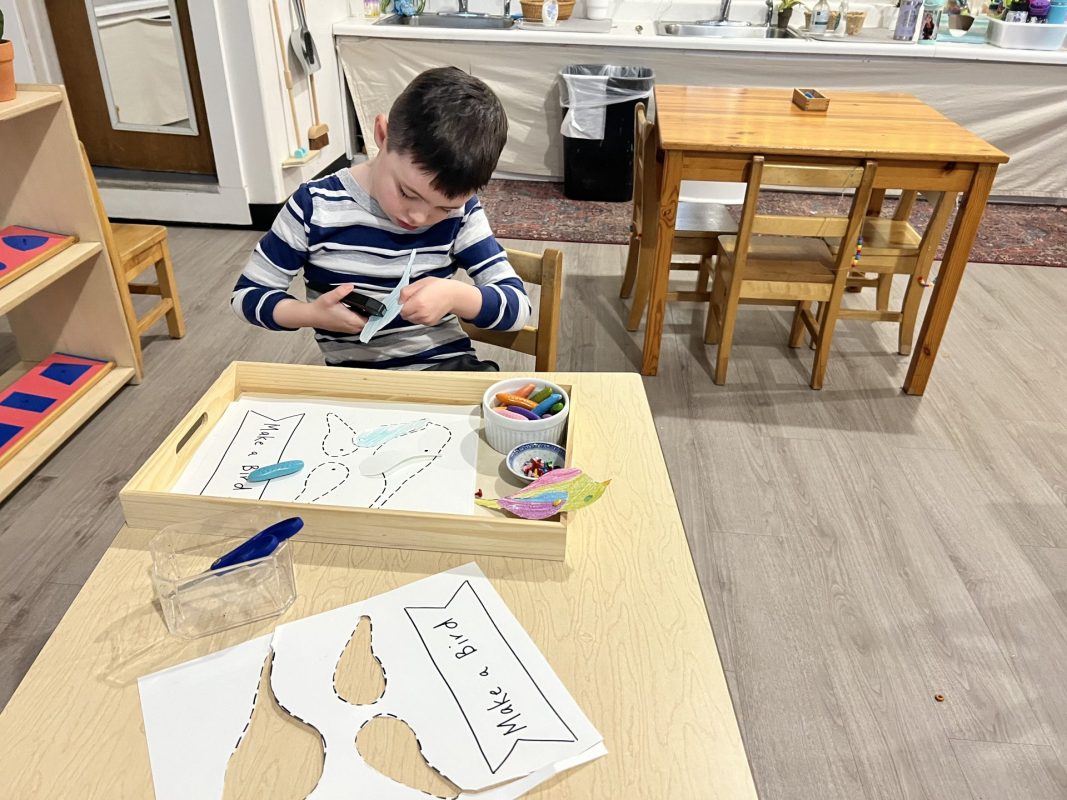
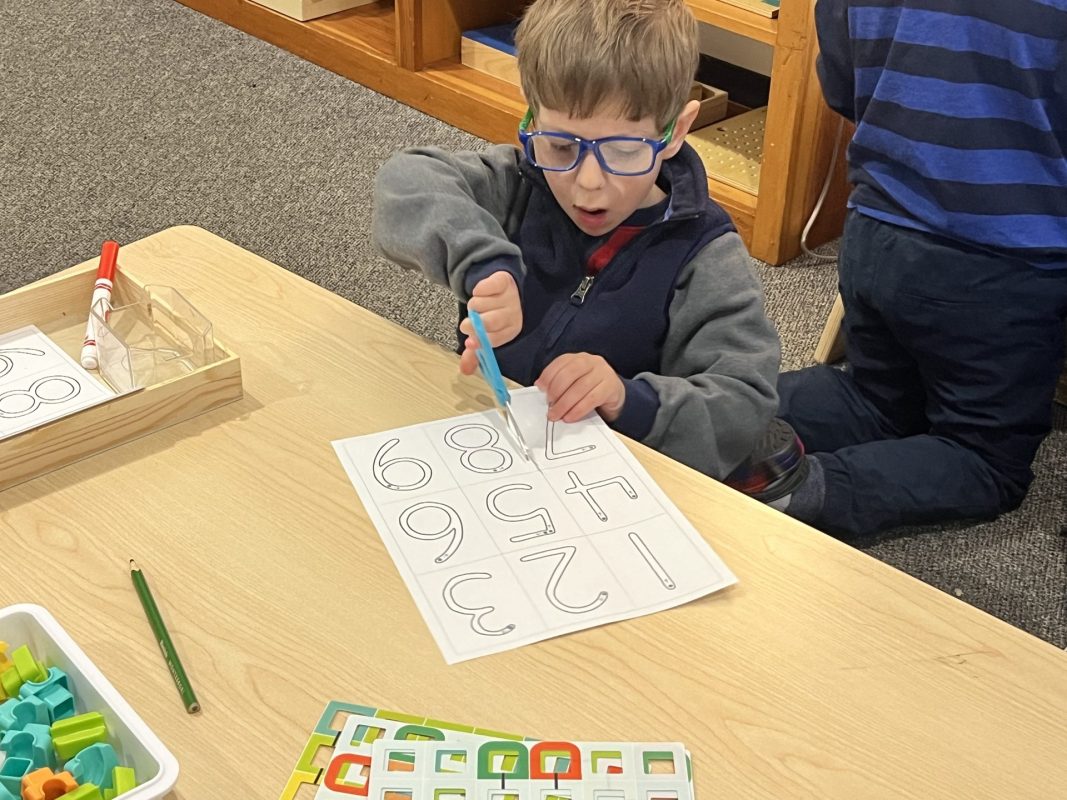
We incorporate birds into our math work by counting birds and making feather booklets where we write numbers. Children have been tracing hummingbirds and Stellars Jay and painting them with beautiful watercolors. There is even a pretend bird’s nest where a mama bird is caring for her four eggs!

Our Parent/Teacher Conferences are coming up on Friday, April 12th and 19th. Please look out for the Sign Ups on Monday!

The children have really been enjoying singing songs about birds. Ask your child to sing Two Little Black Birds or Red Red Robin.

Our absolute favorite is Jennie Jenkins. You and your child can sing along!


Mrs. Sargeant: A Peek at the Week

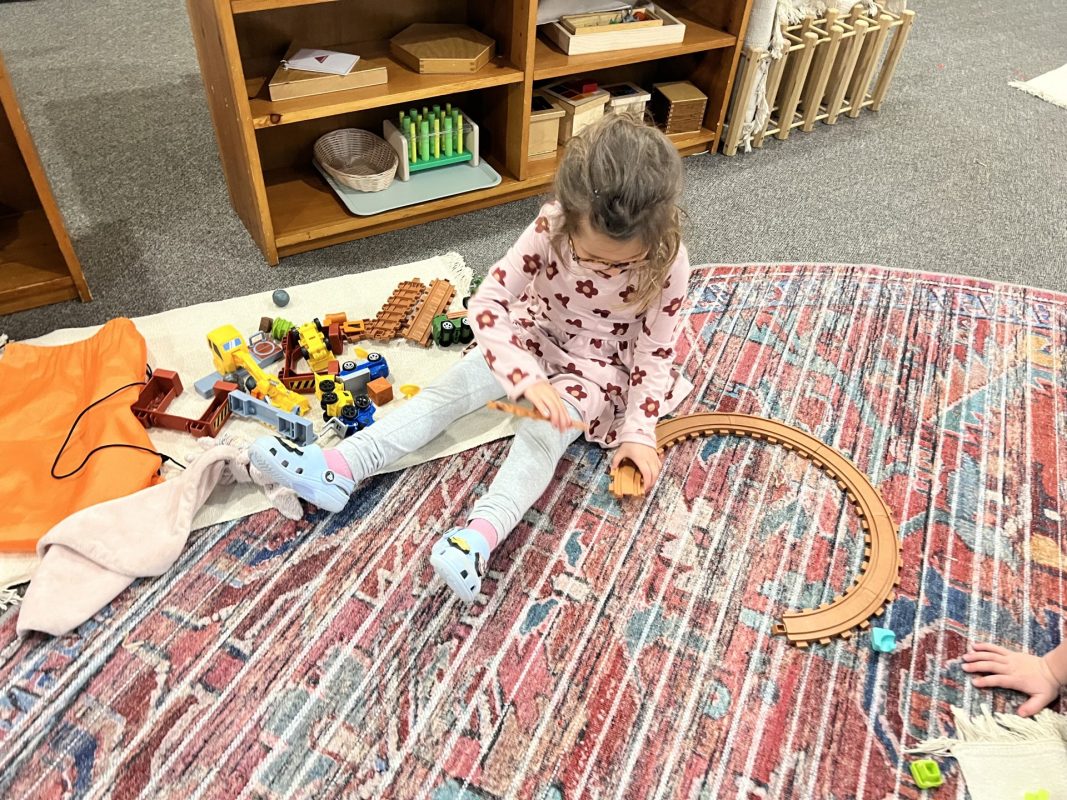
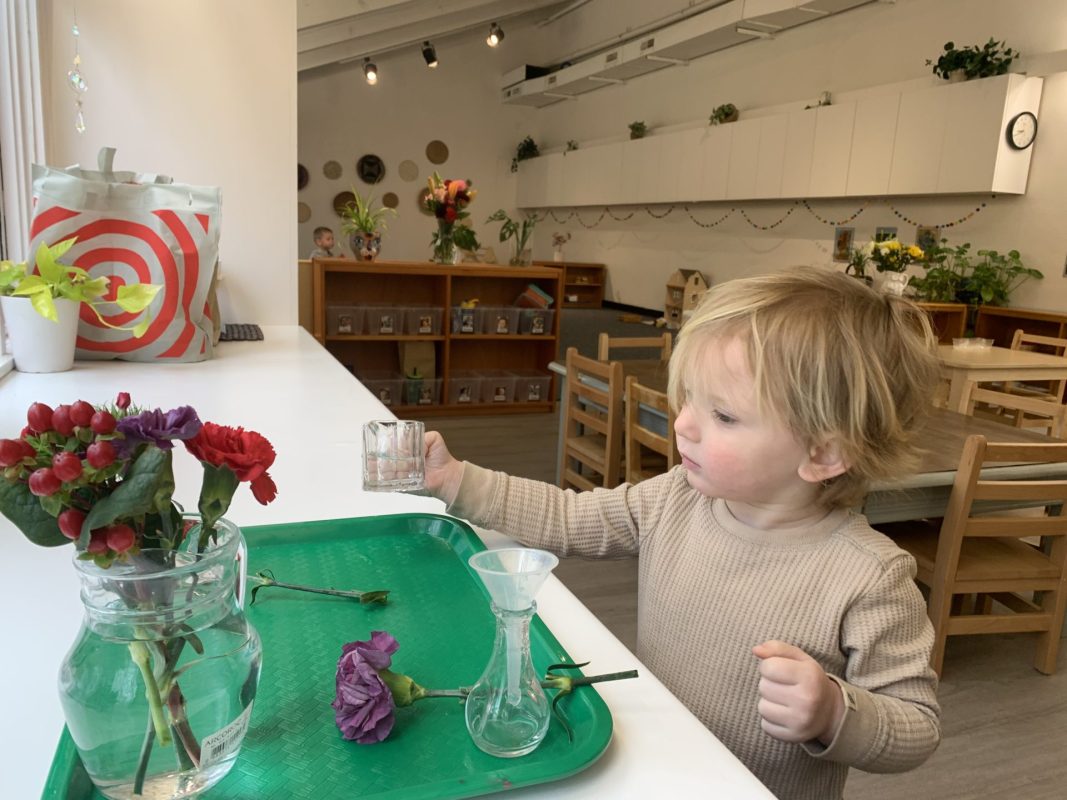
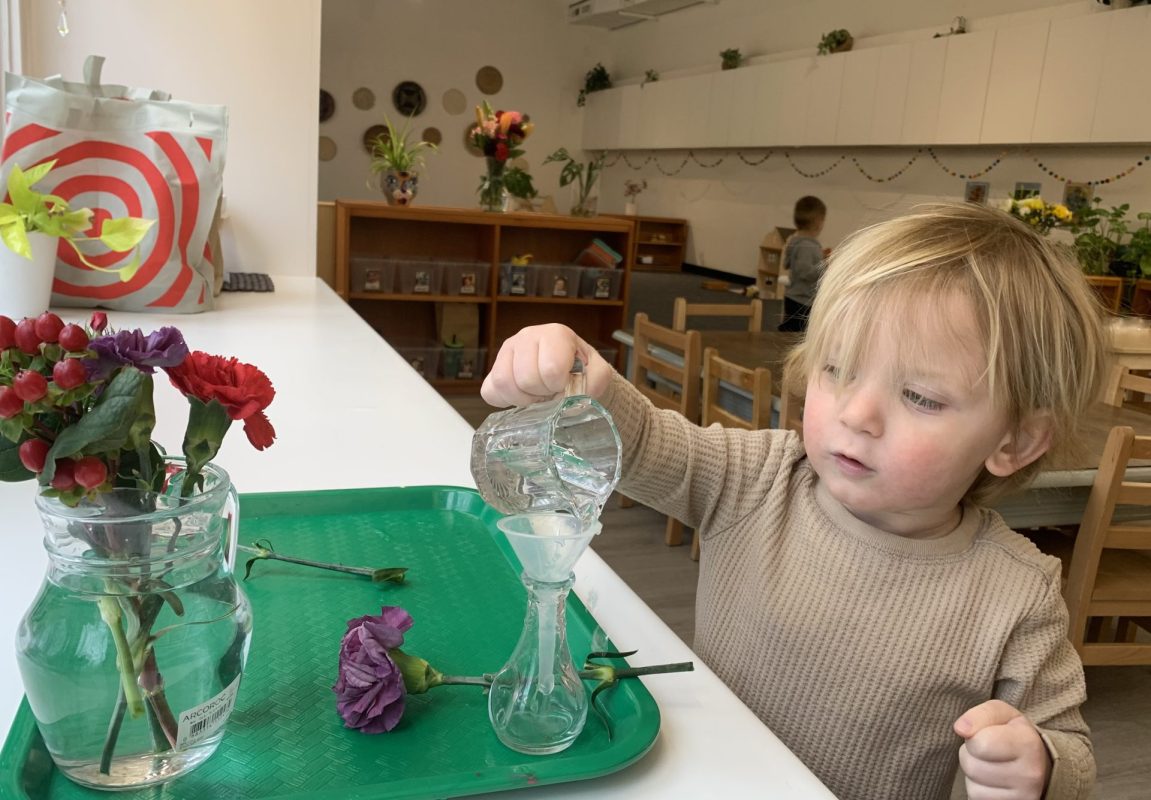
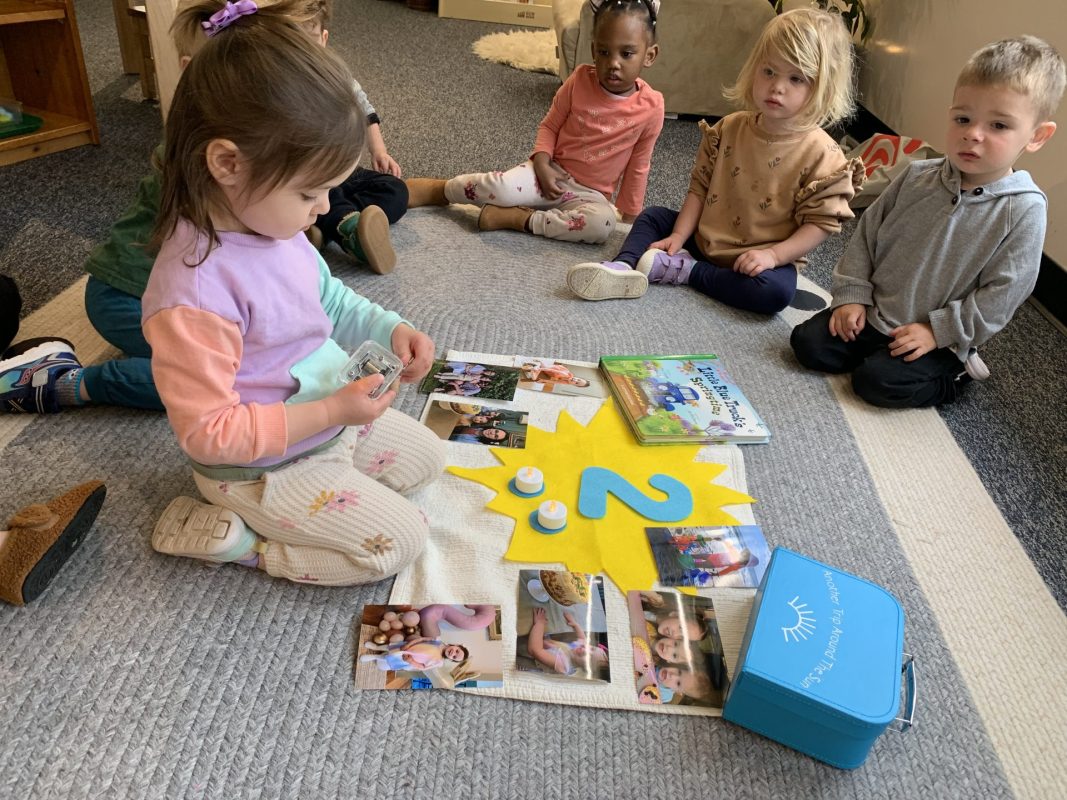
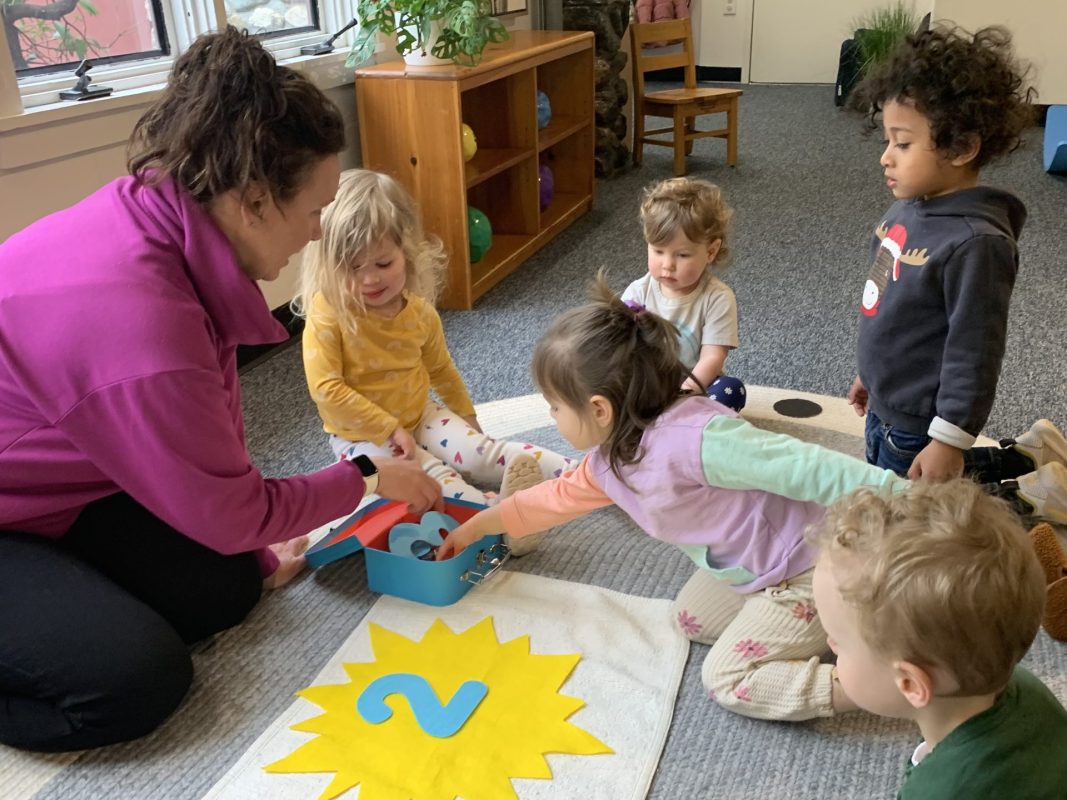
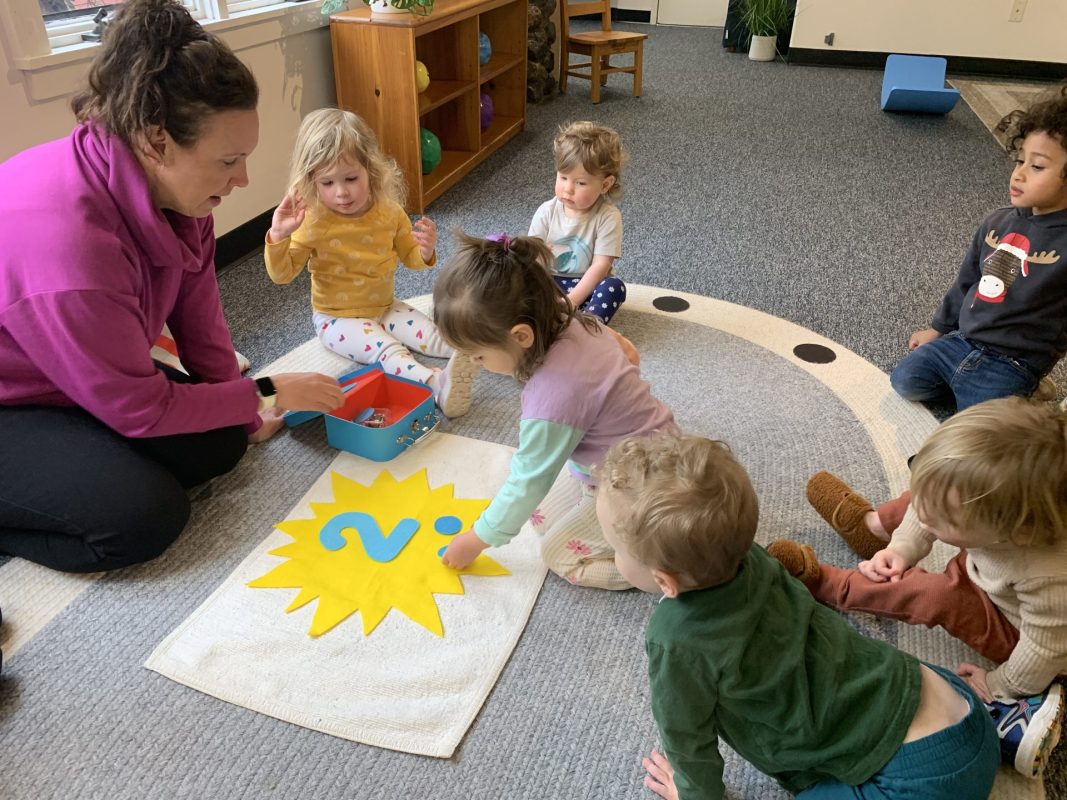
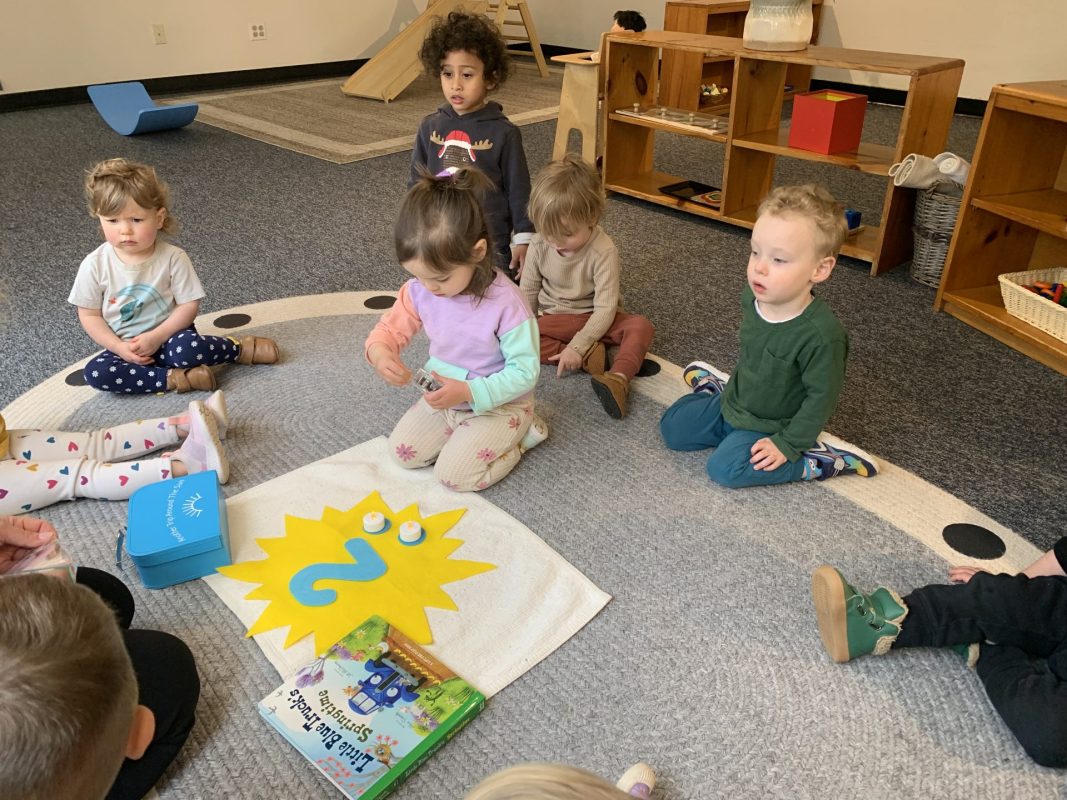
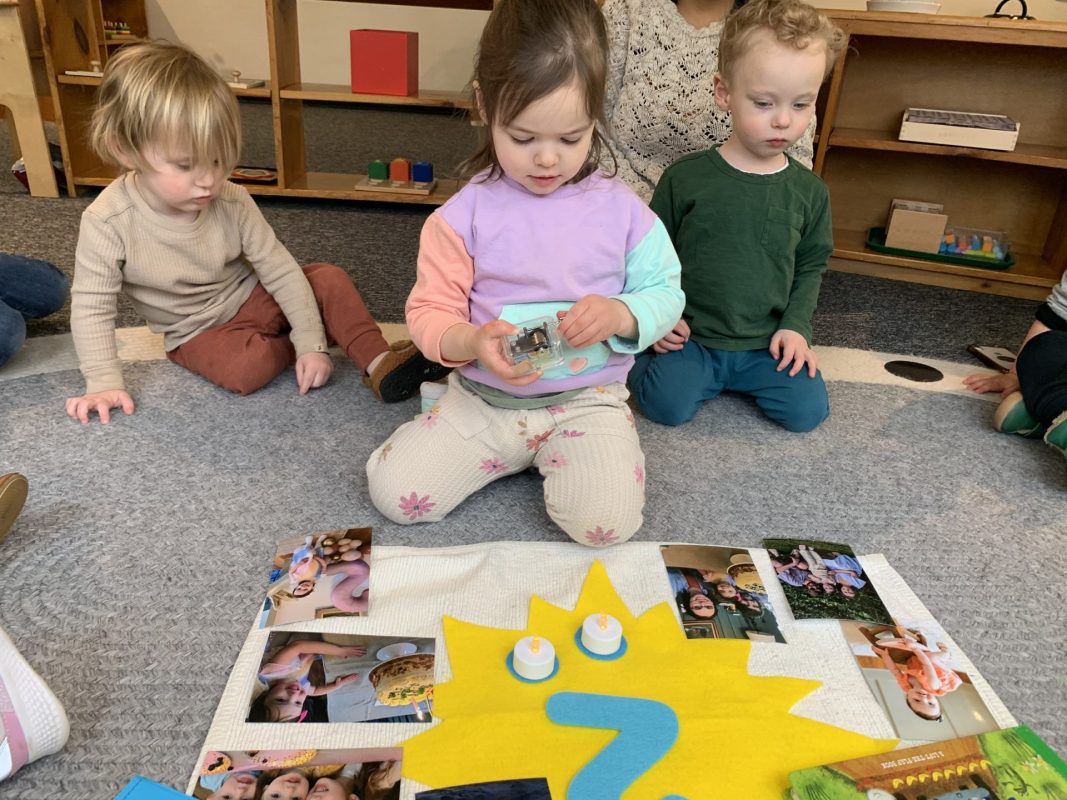
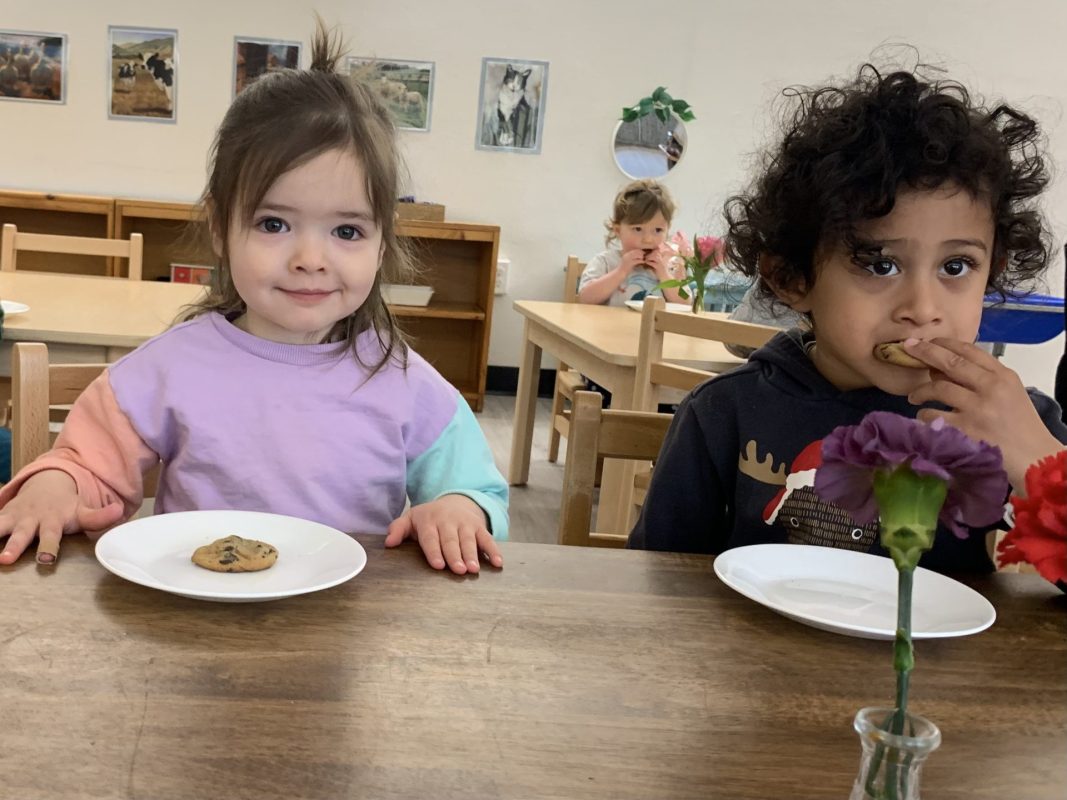
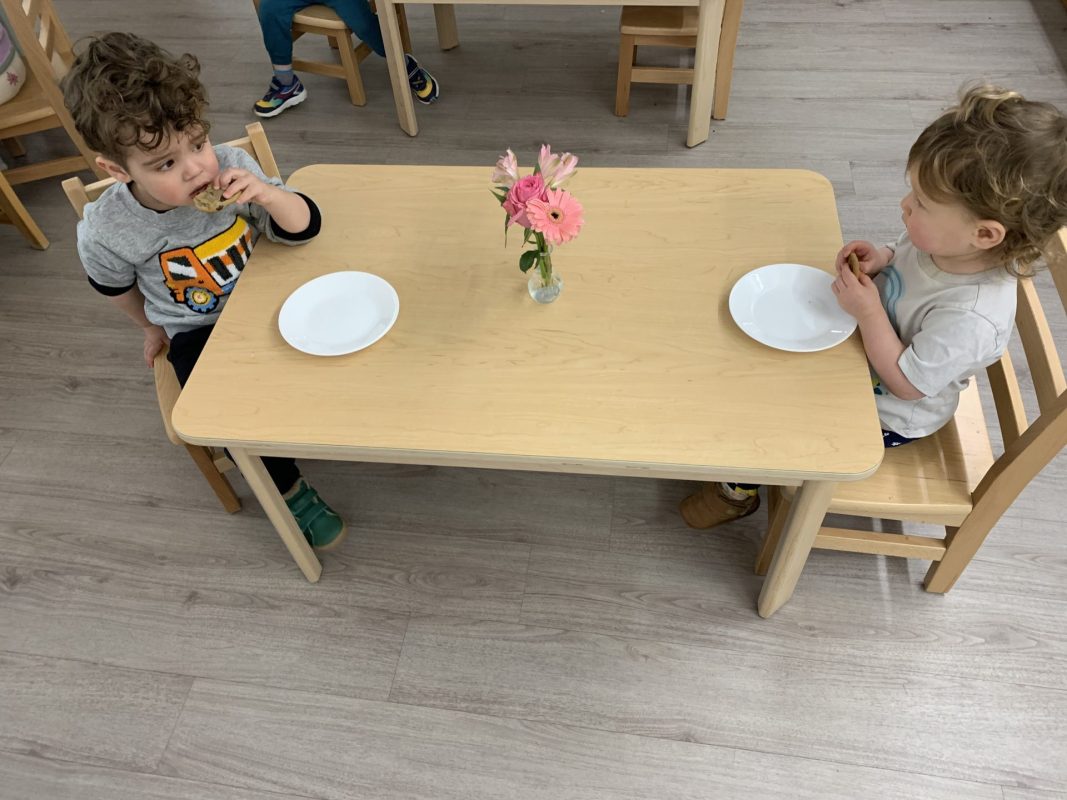
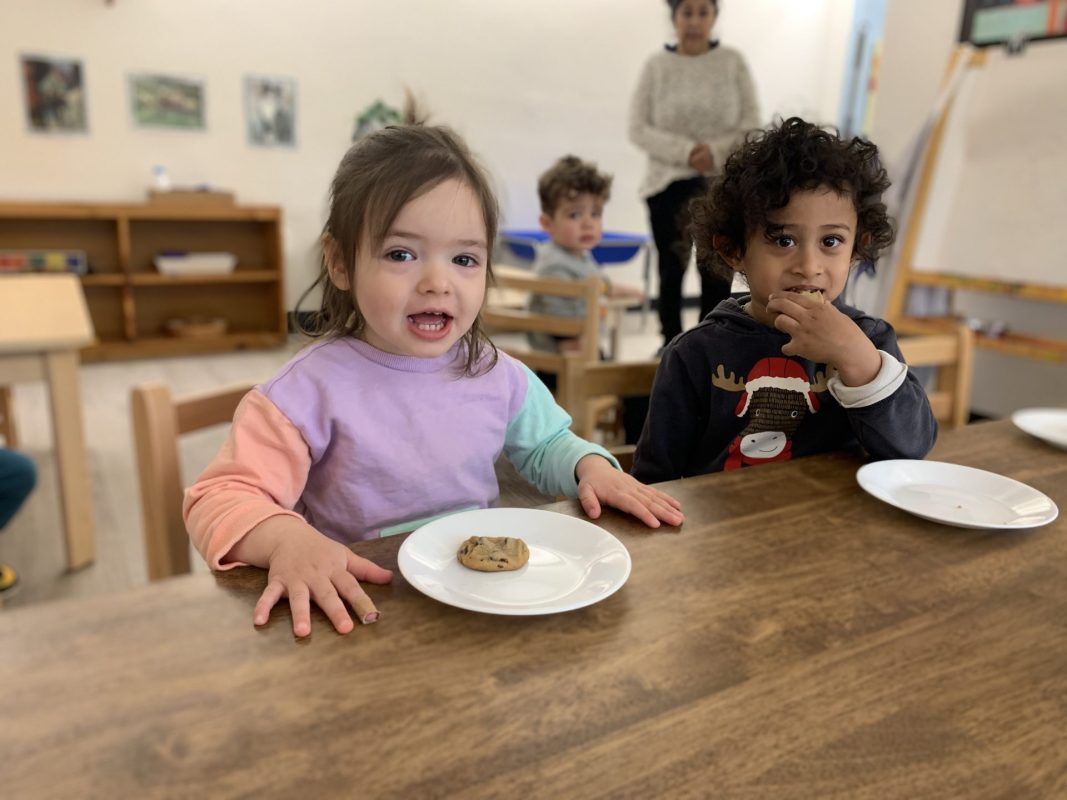
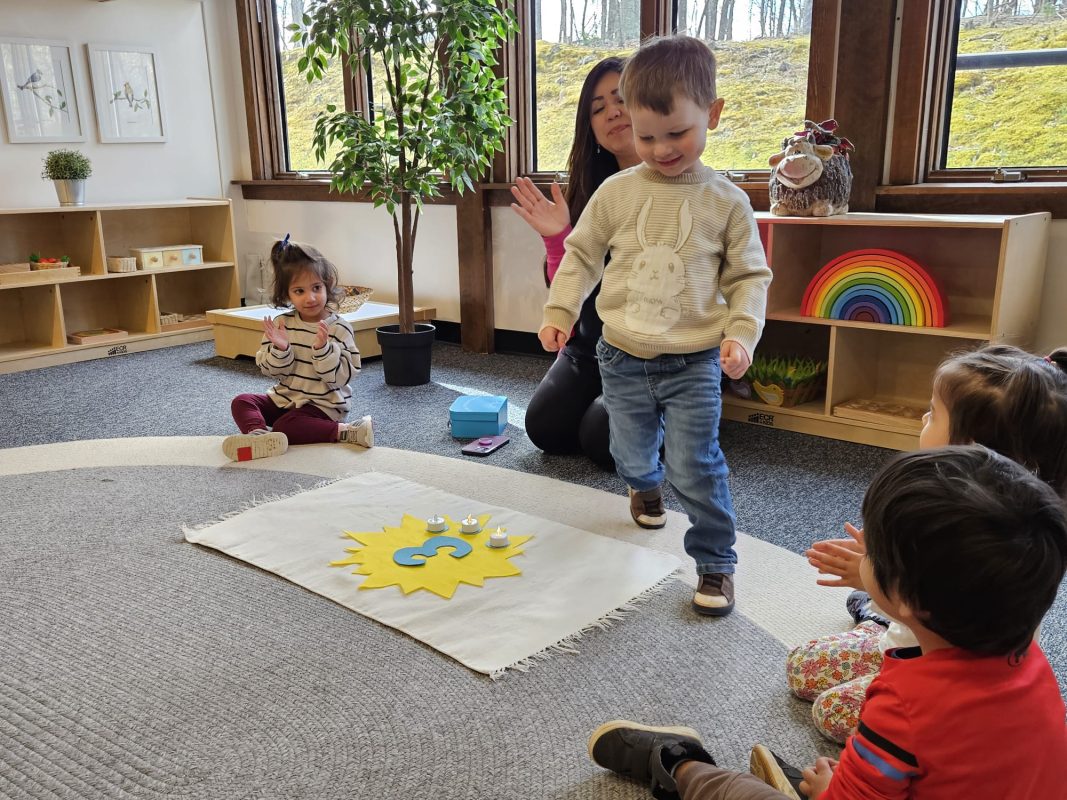
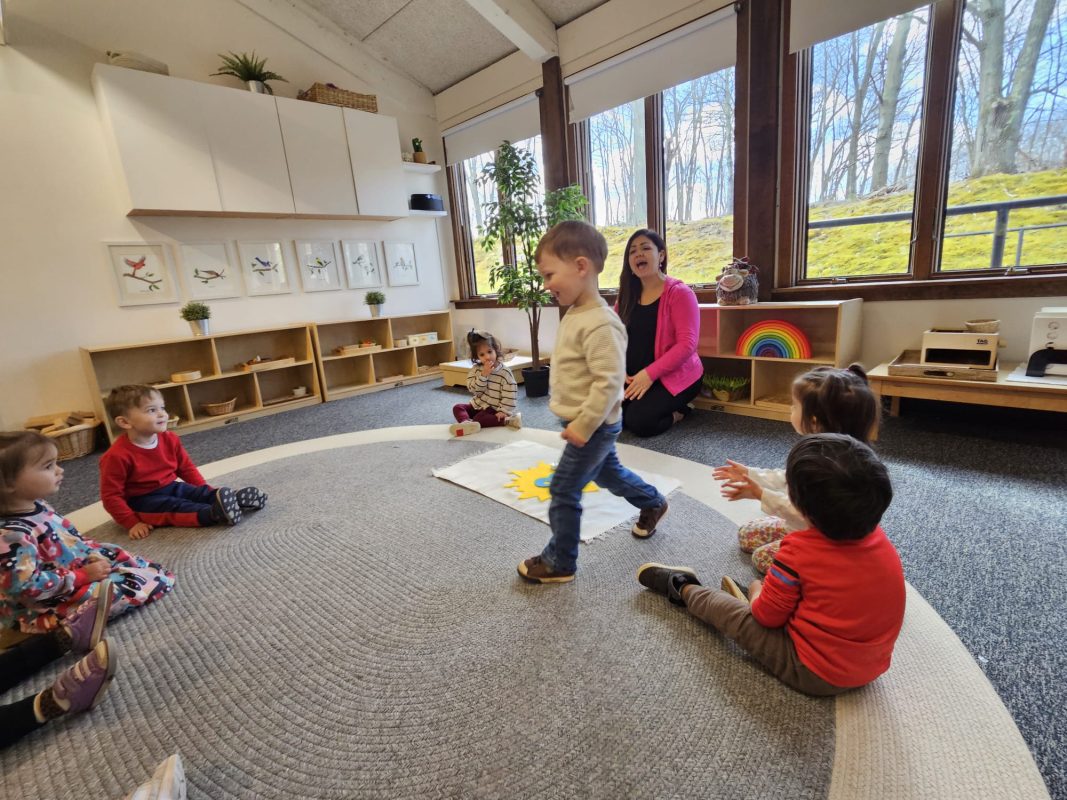
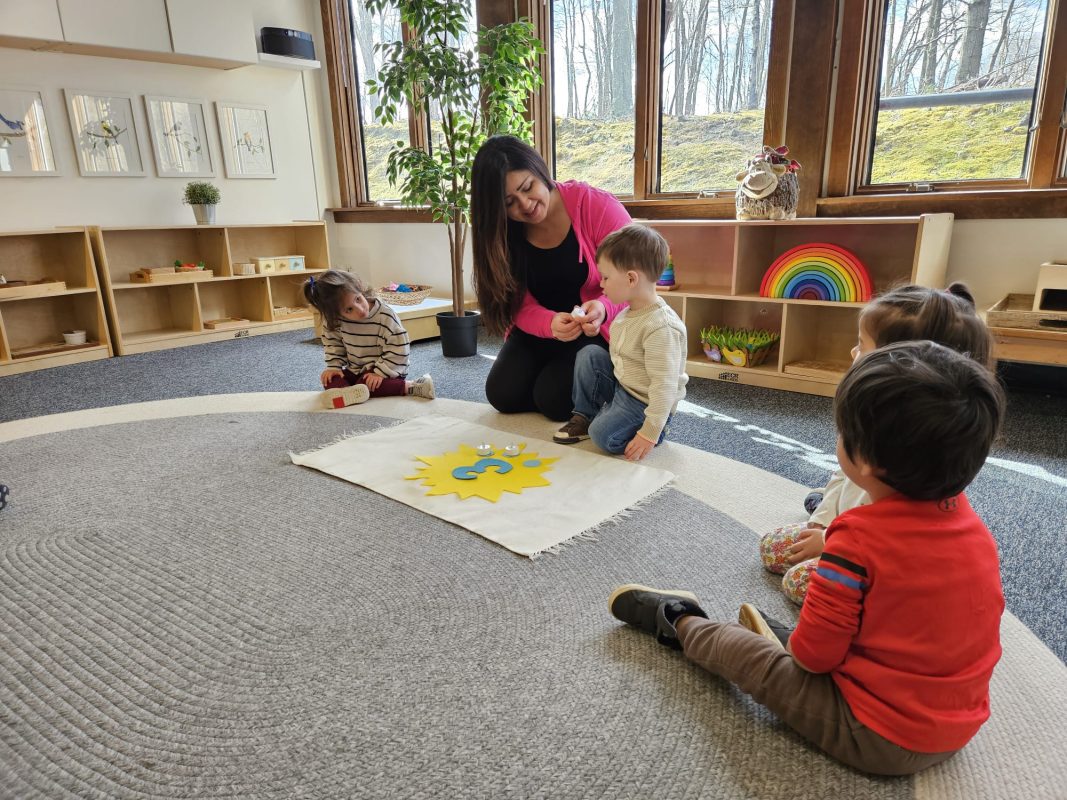
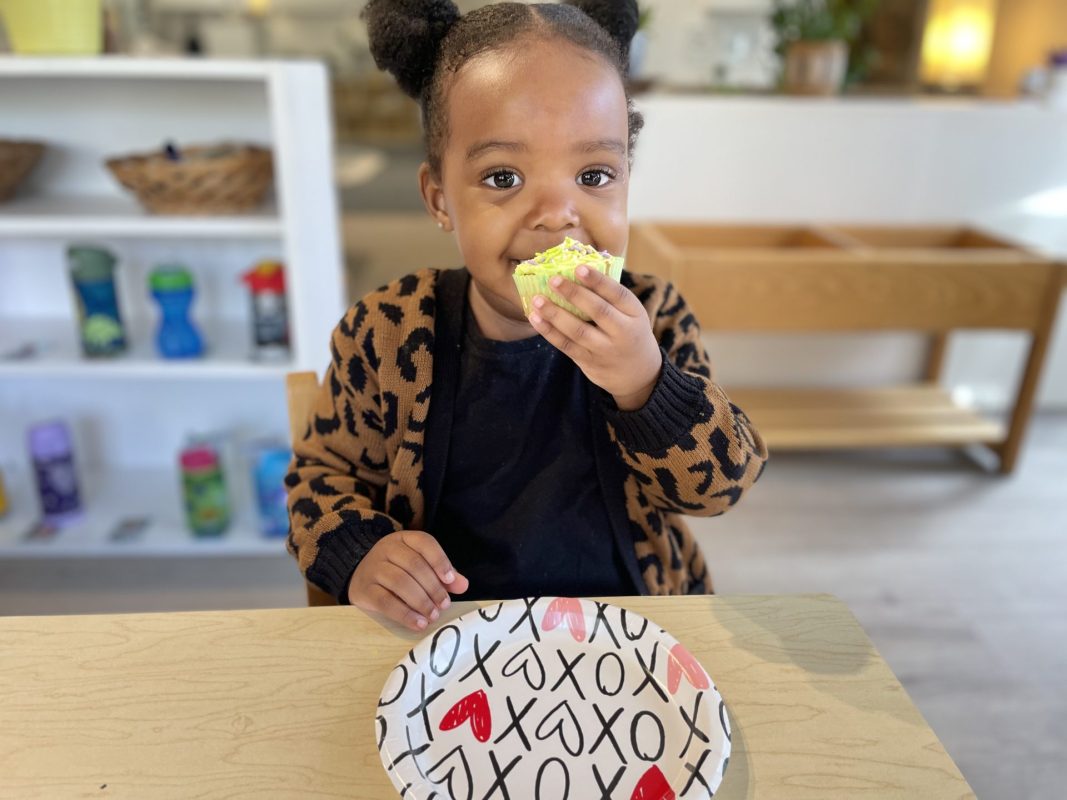
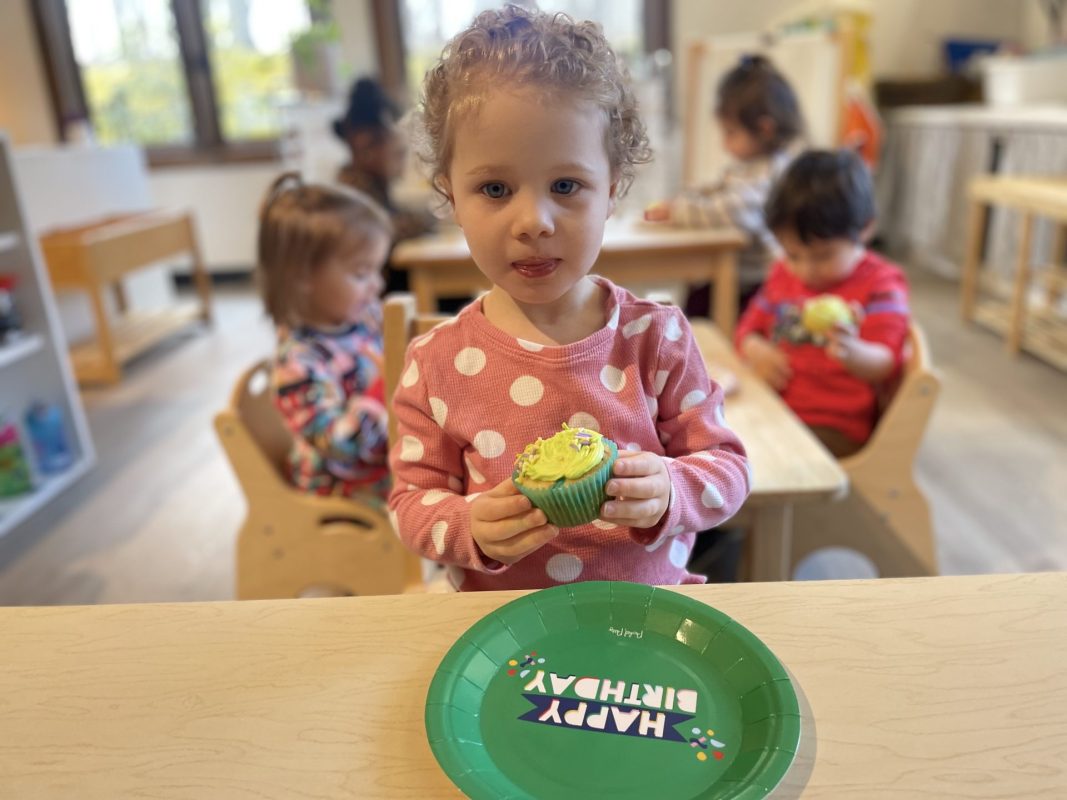
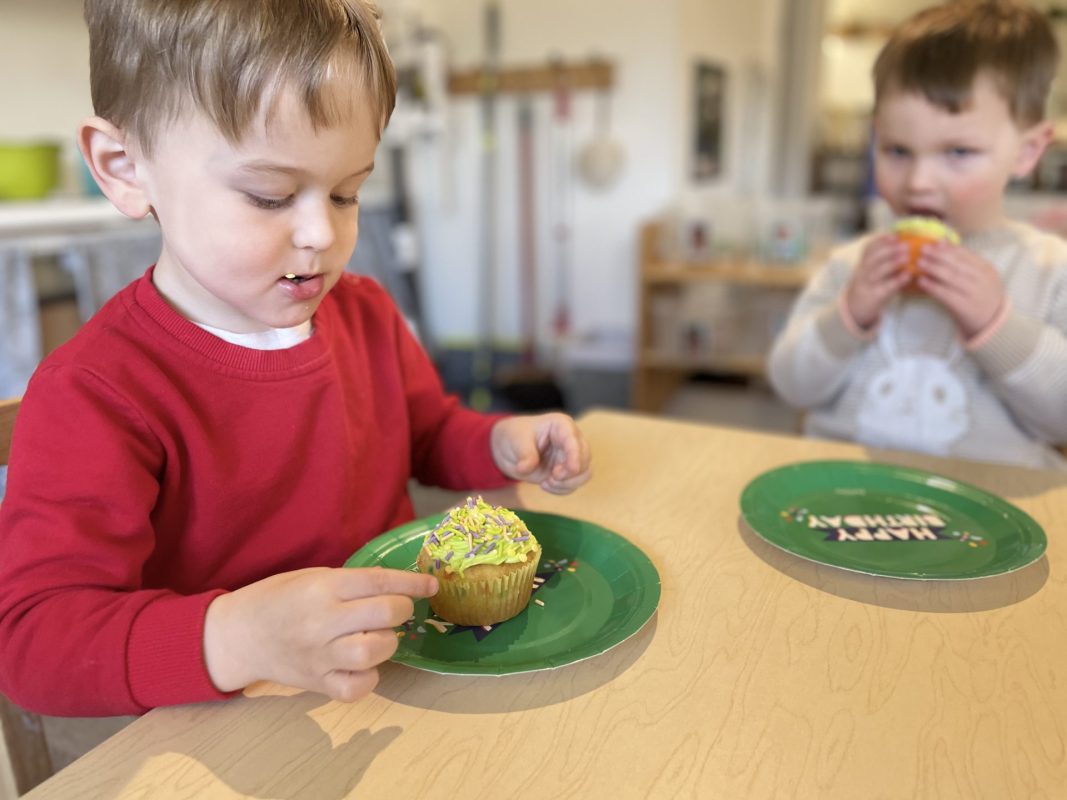
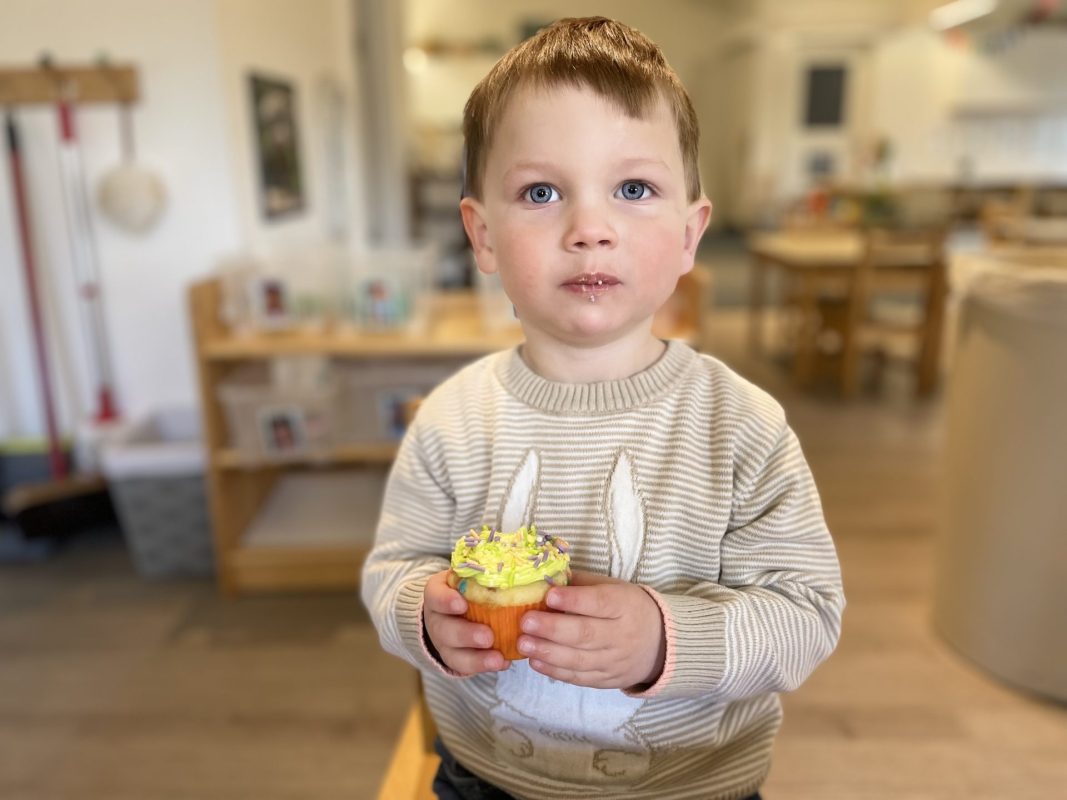
We celebrated another birthday this week! This time we shared a special snack of delicious chocolate chip cookies and read one of the birthday girl’s favorite books, Little Blue Truck’s Springtime,  which the children have continued to enjoy all week long. It was a lovely celebration for our sweet friend. 
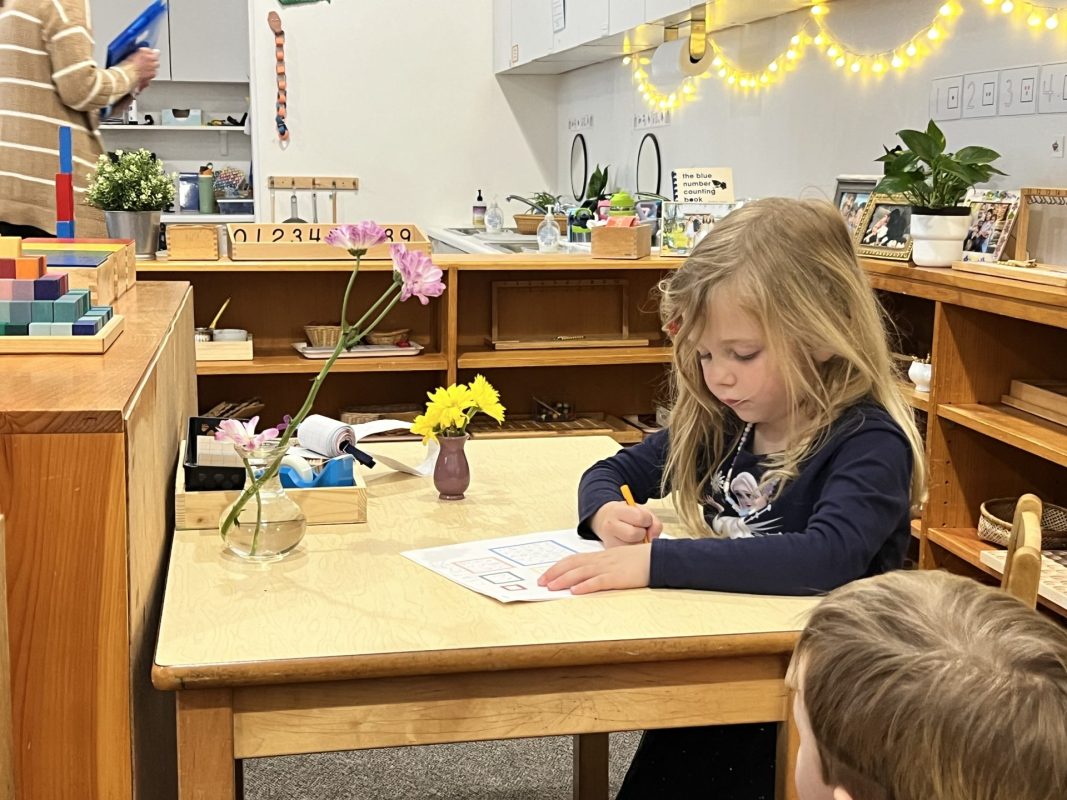
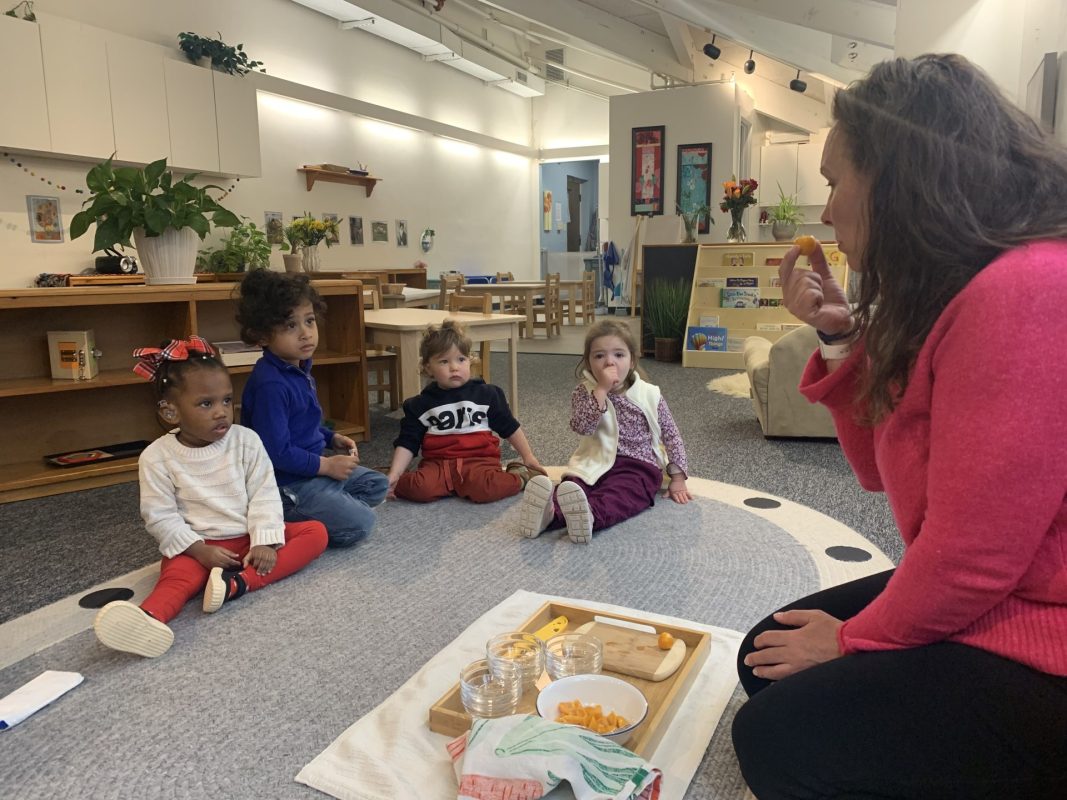
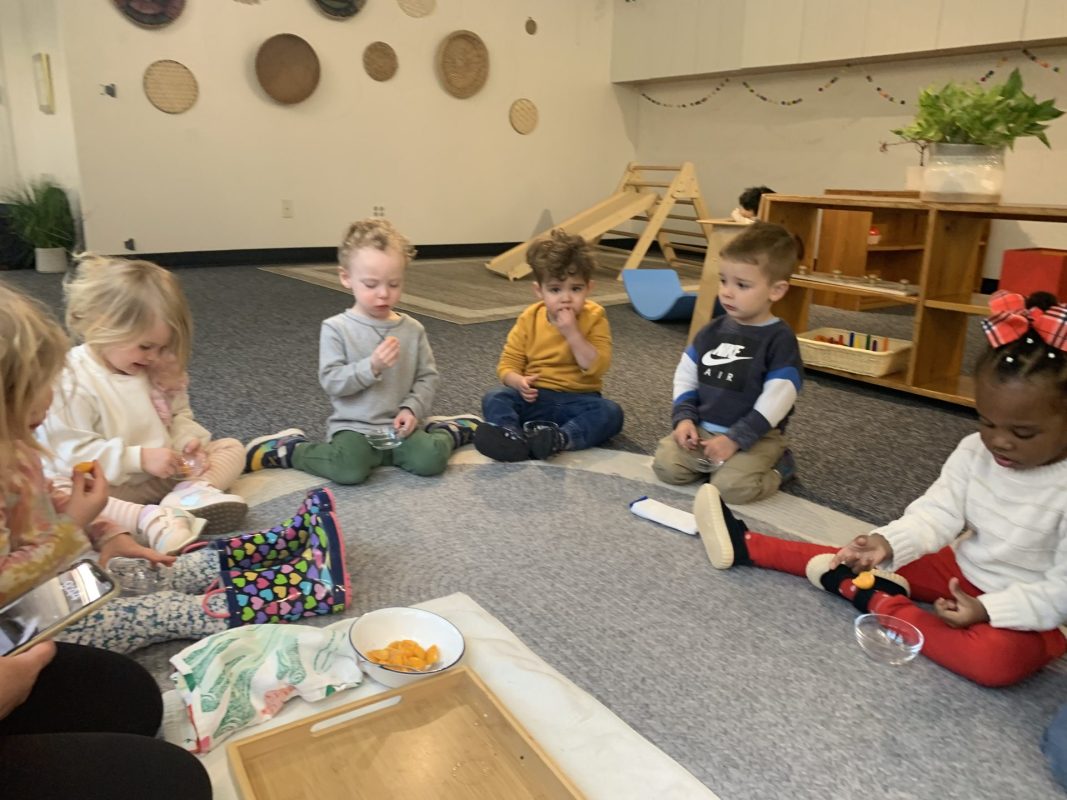
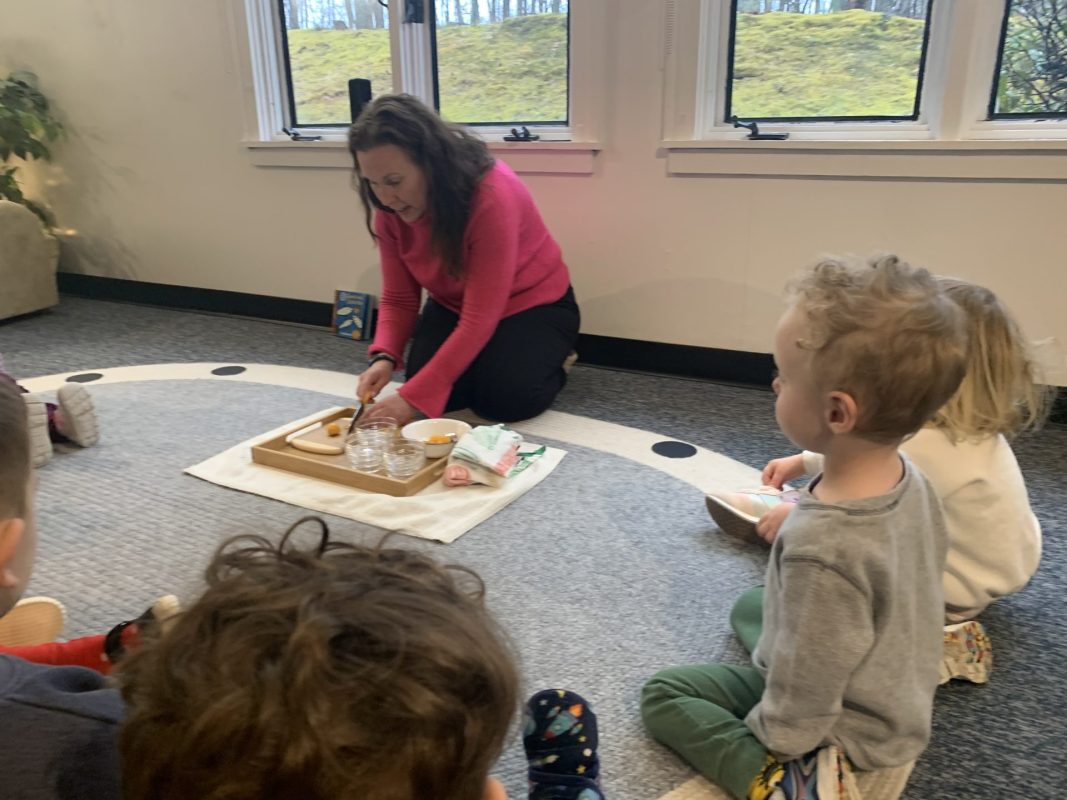
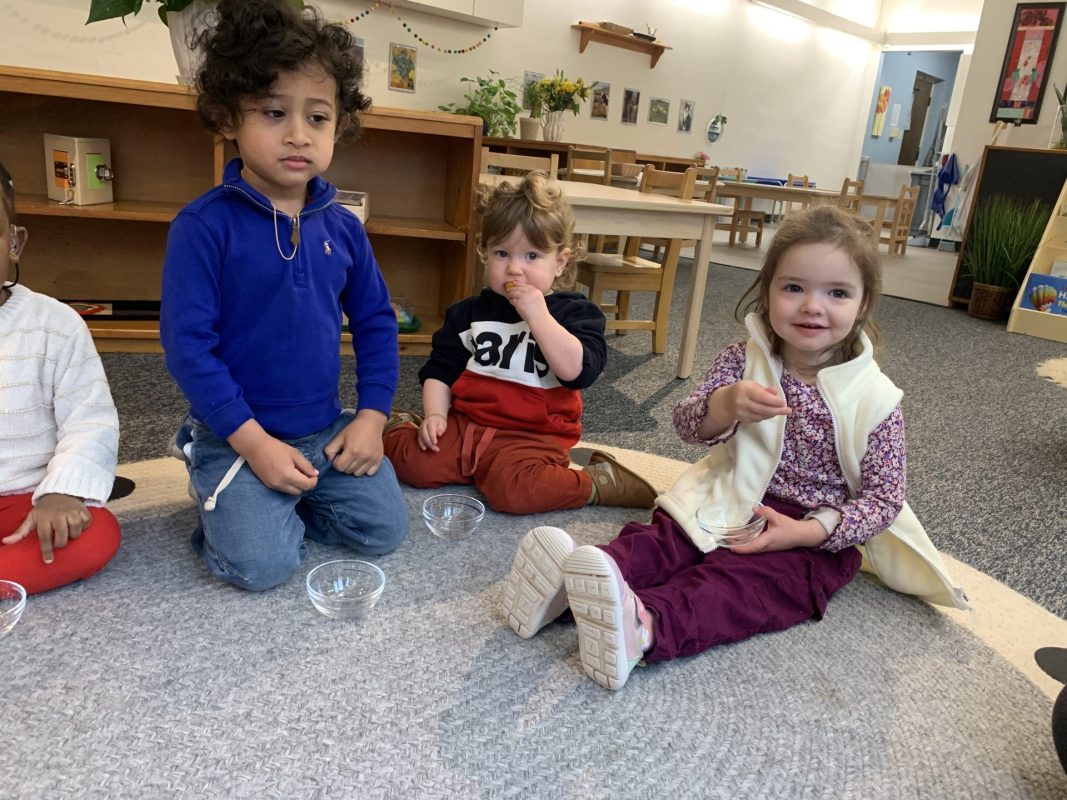
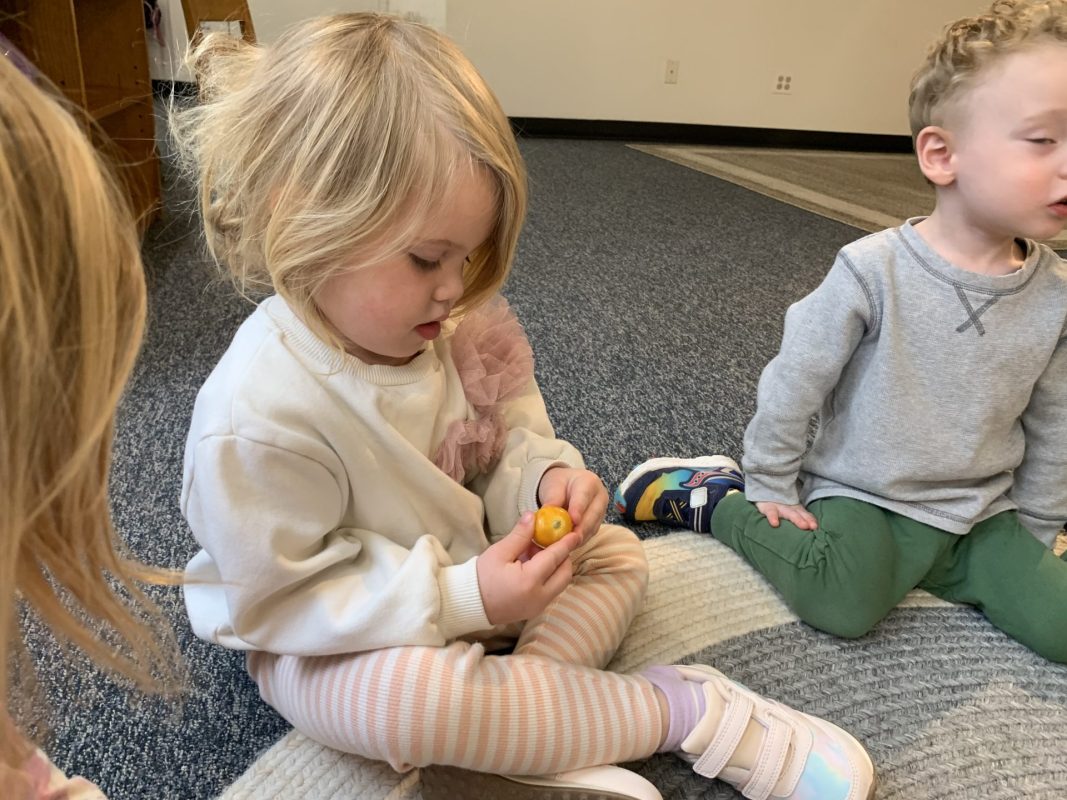
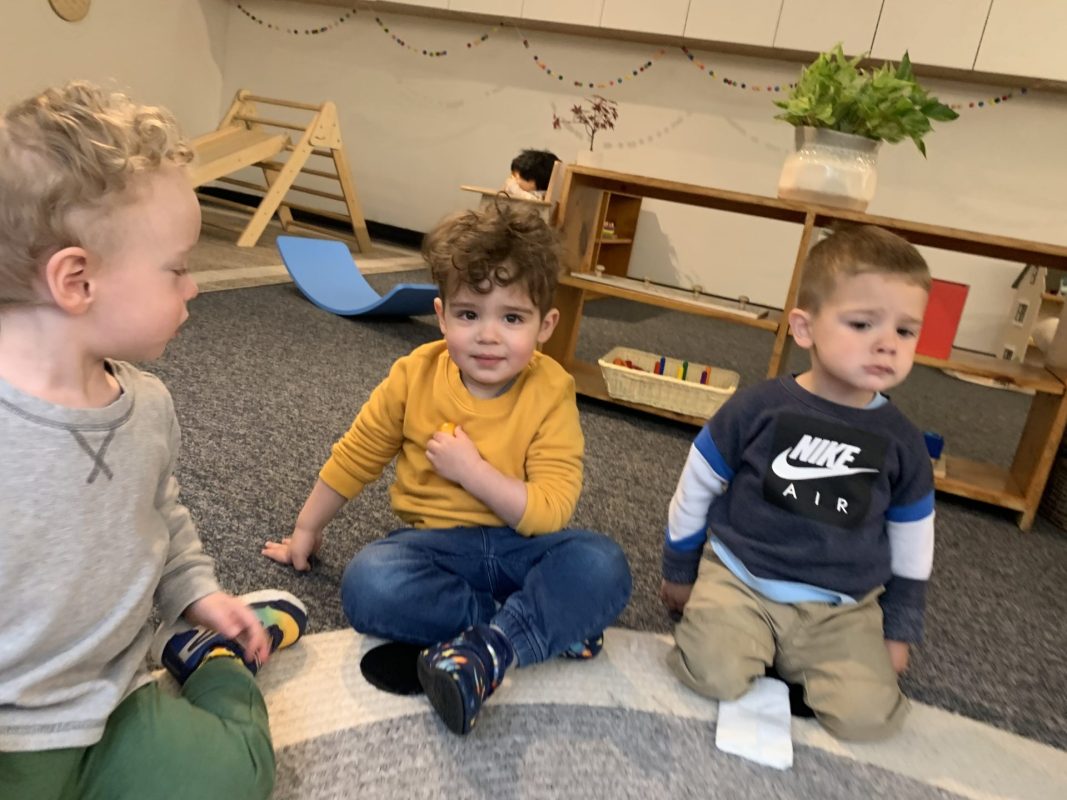
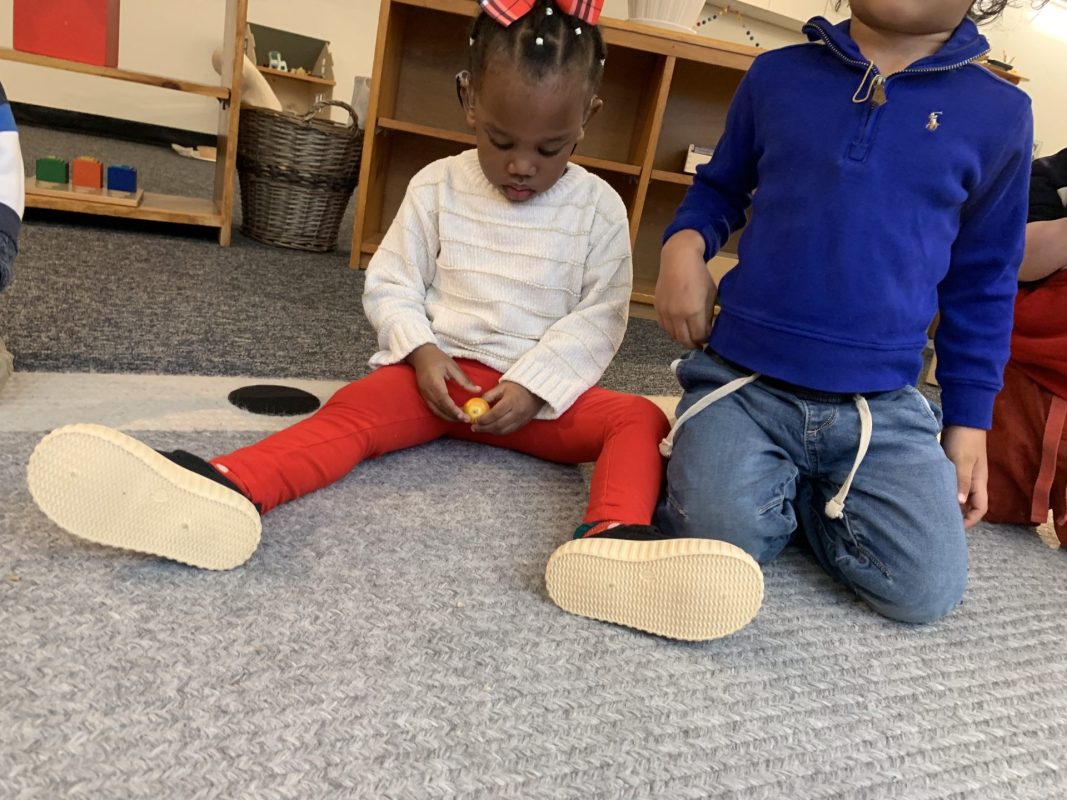
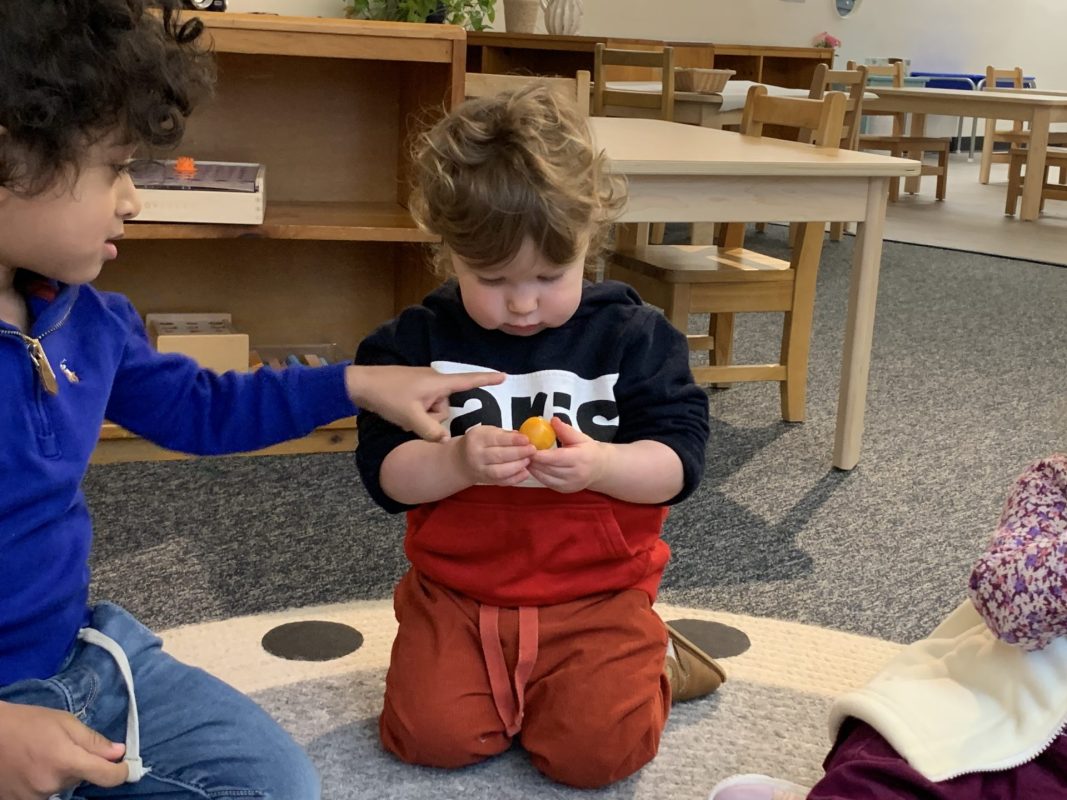
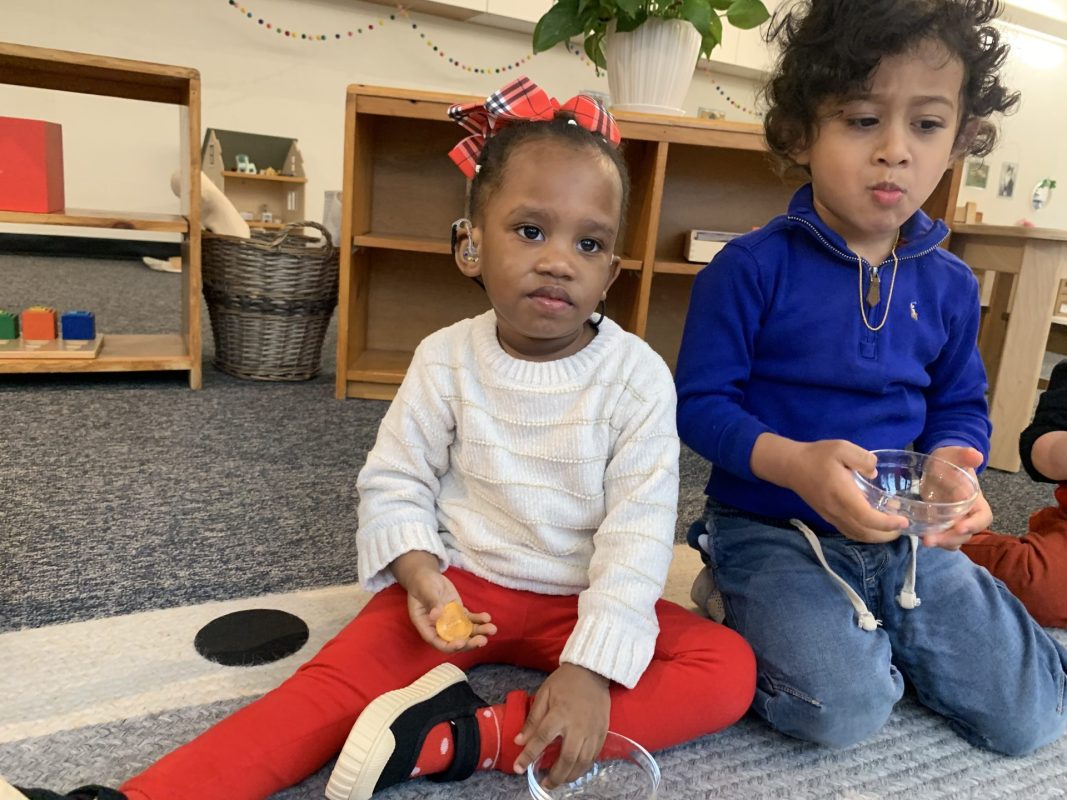
Food tasting was a huge hit this week. We tried golden berries. Golden berries belong to the nightshade family and are native to Chile and Peru. They are closely related to the tomatillo with a sweet, tropical taste somewhat reminiscent of pineapple and mango. I was trying this fruit for the first time along with many of the children, which was exciting. Such an interesting fruit with an impressive nutrient profile!
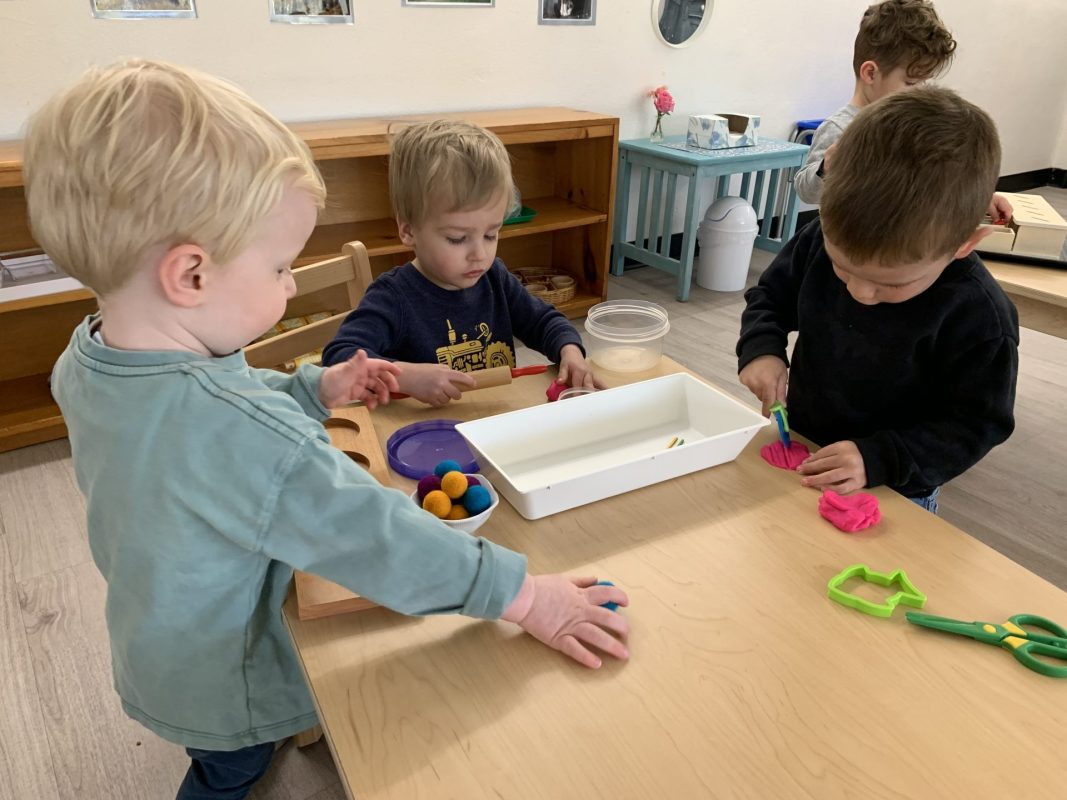
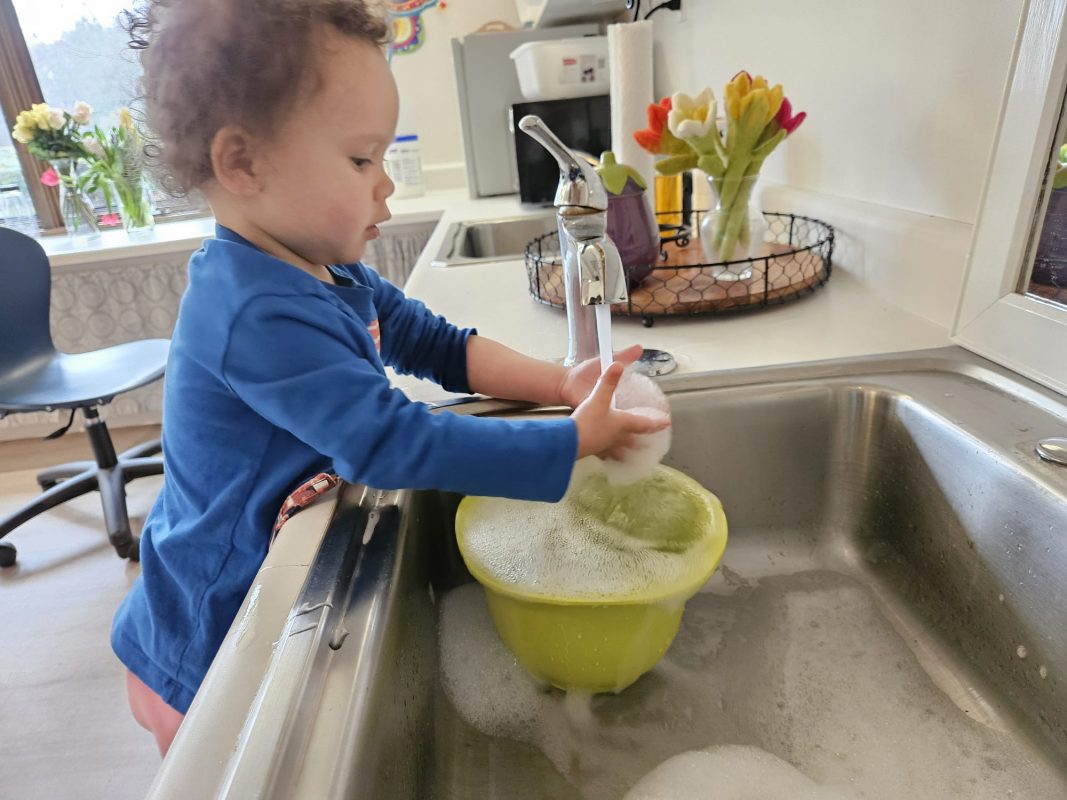
We continue to encourage the children to “catch” their cough with their elbow. We’d love your help to encourage this at home as well. We also walk each child through the steps of washing their hands at the sink. First, they roll up their sleeves (most need help with this). Then, they place one hand under the soap pump, and the other hand pushes the pump. We tell them that their hands will share the soap, and we show them how to rub their palms together and look for the bubbles, then show them how to rub the tops of each hand. As we show them how to rinse, we mention that we are cleaning some of the germs off our hands. Then, we show them how to use a towel to dry each hand. 

Wishing you all a happy weekend! 
Christine & Lizette


April 2024 Family Connection Newsletter

“The satisfaction which they find in their work has given them a grace and ease like that which comes from music.” ~Maria Montessori, The Discovery of the Child

April’s edition of the American Montessori Society’s Family Connection Newsletter delves into human tendencies in relation to the Montessori method. You will learn about the eleven cardinal tendencies that Maria Montessori identified as driving humans to understand and make a difference in the world: orientation, order, exploration, communication, activity, manipulation, work, repetition, exactness, abstraction, and perfection. Knowledge of these human tendencies allows adults opportunities to prepare our children’s environments to be places that promote growth in learning and exploration.

The newsletter also provides helpful information about the differences between praise and acknowledgment in your home.

I hope this month’s newsletter is helpful to you.

Warm regards,

Karen Sankey
Director of Montessori Education


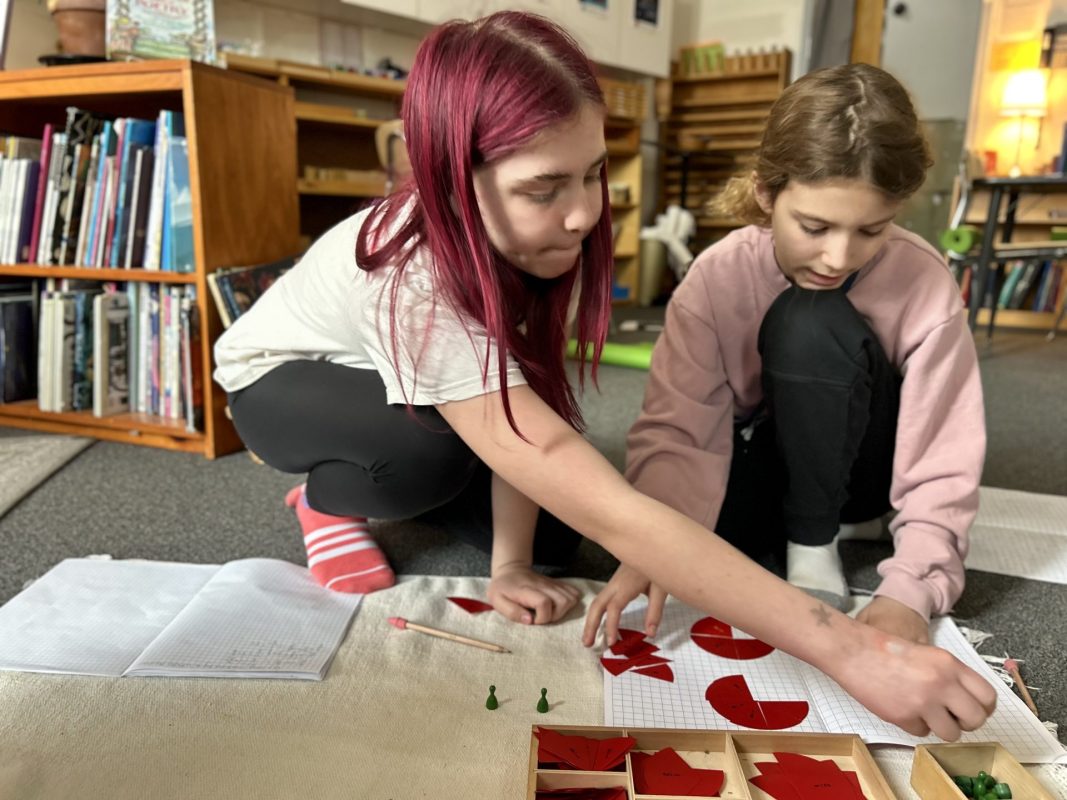
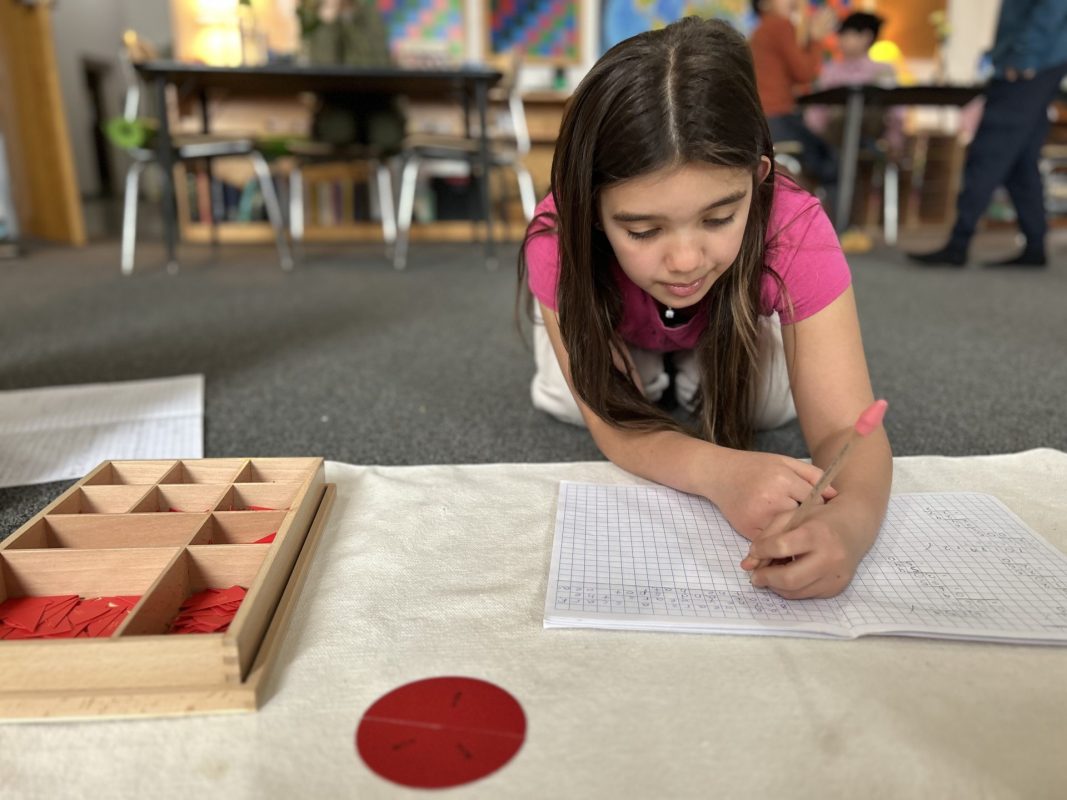
Exploring the Magic of Montessori Math in Lower Elementary

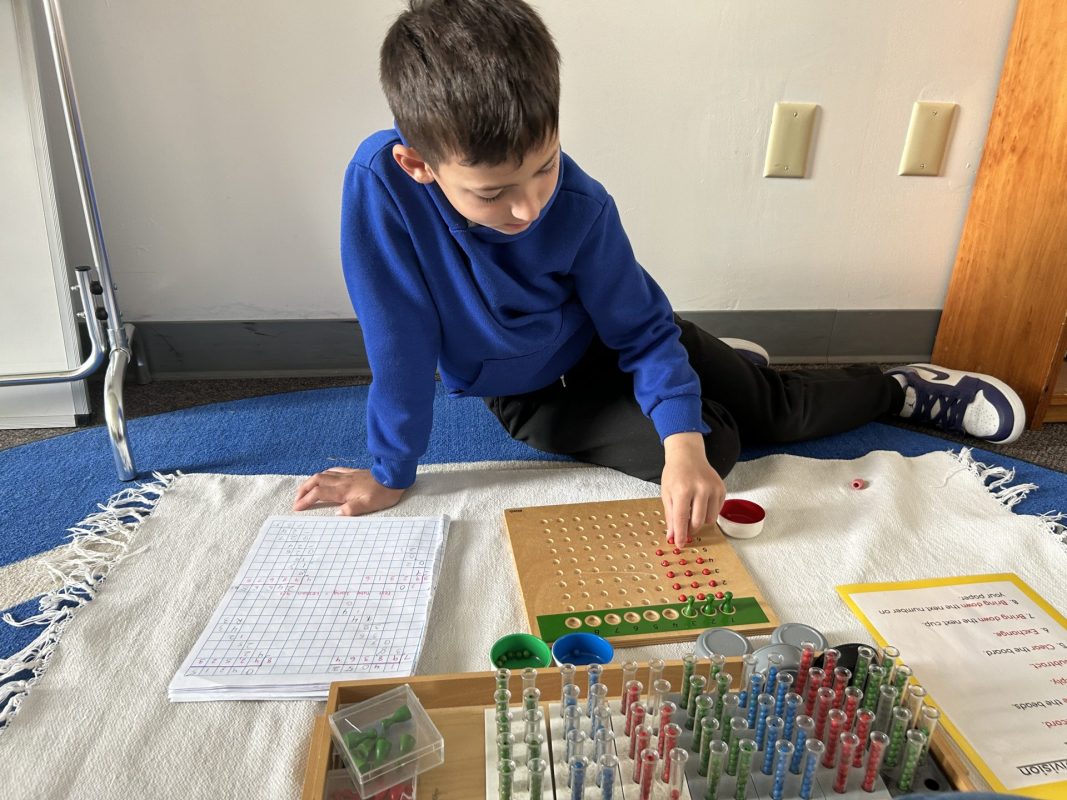
Math, often perceived as a daunting subject, can become a magical journey of discovery when approached through the lens of Montessori education. In our lower elementary, the Montessori method transforms abstract concepts into tangible experiences, fostering a deep understanding and love for numbers among young learners.

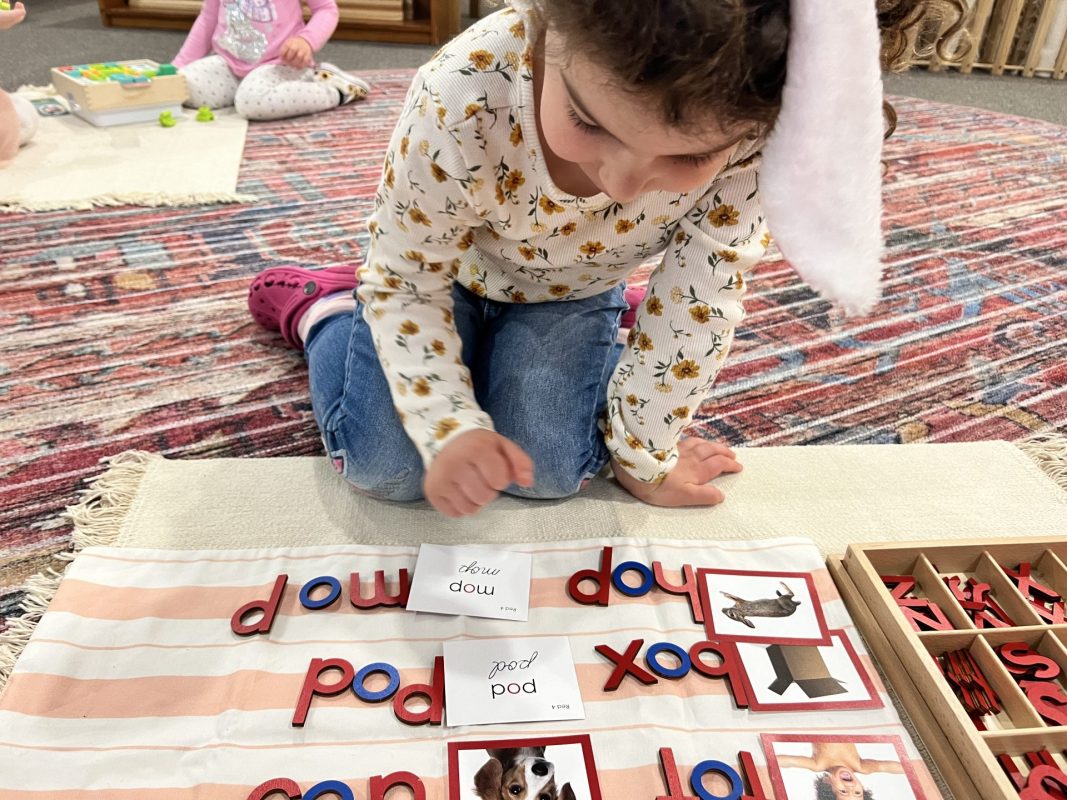
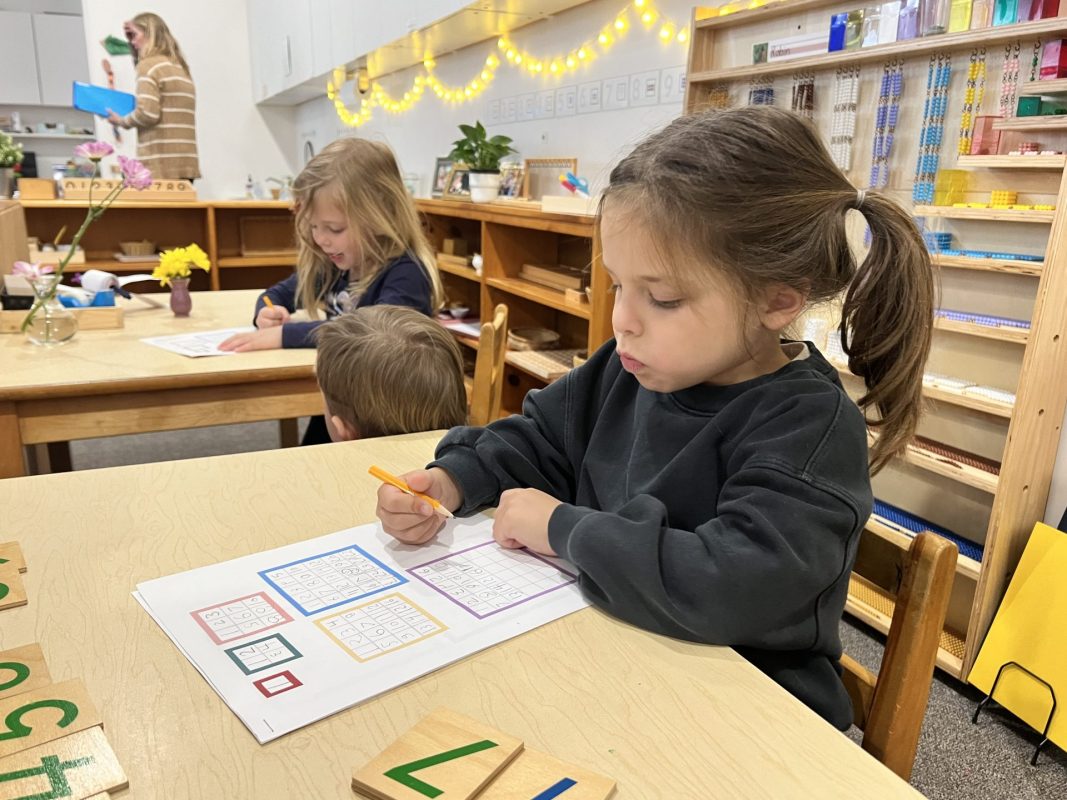
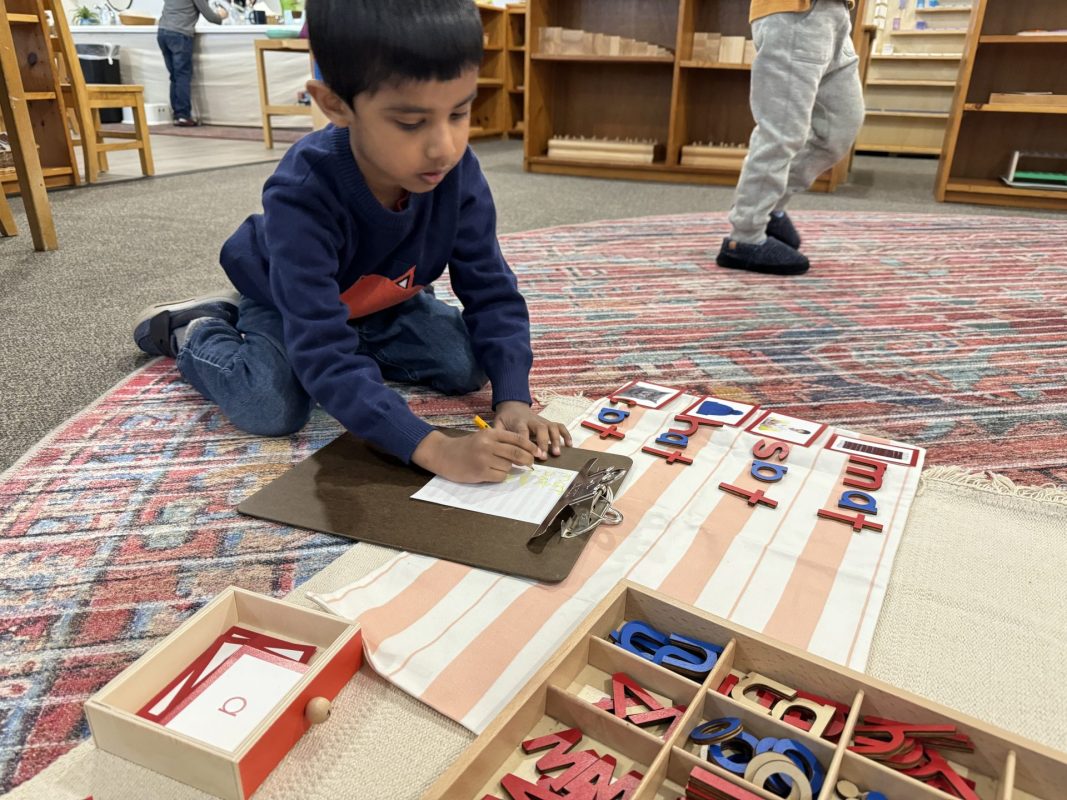
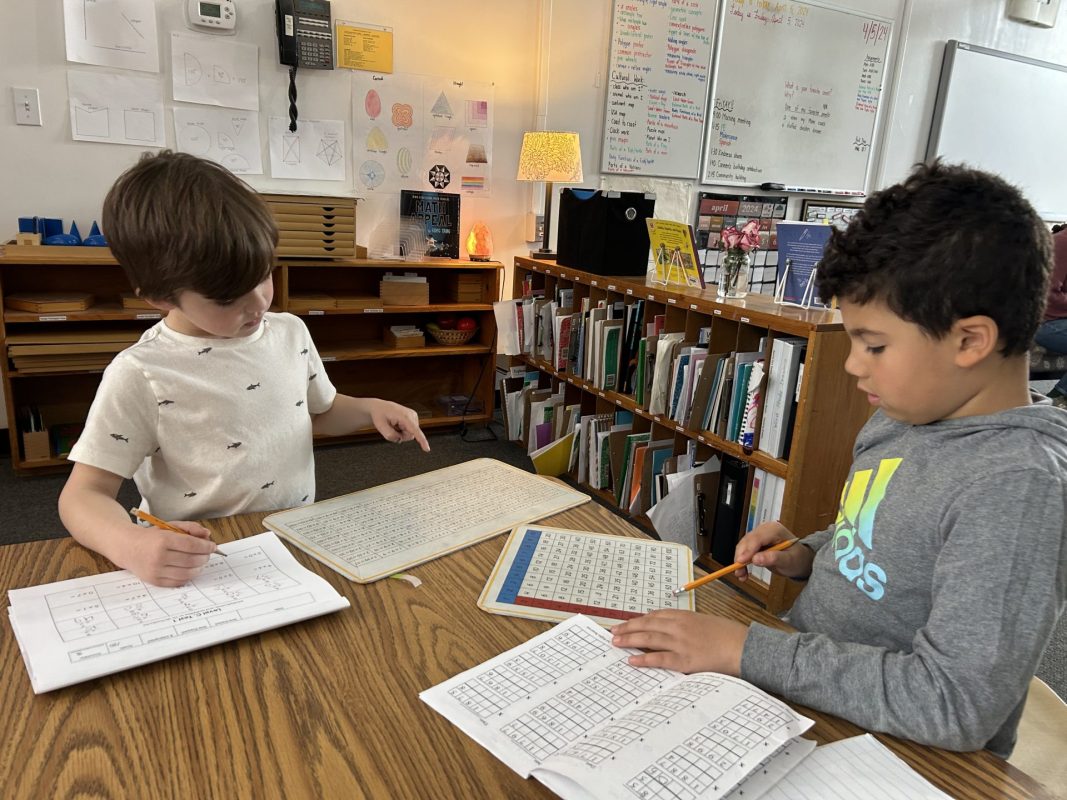
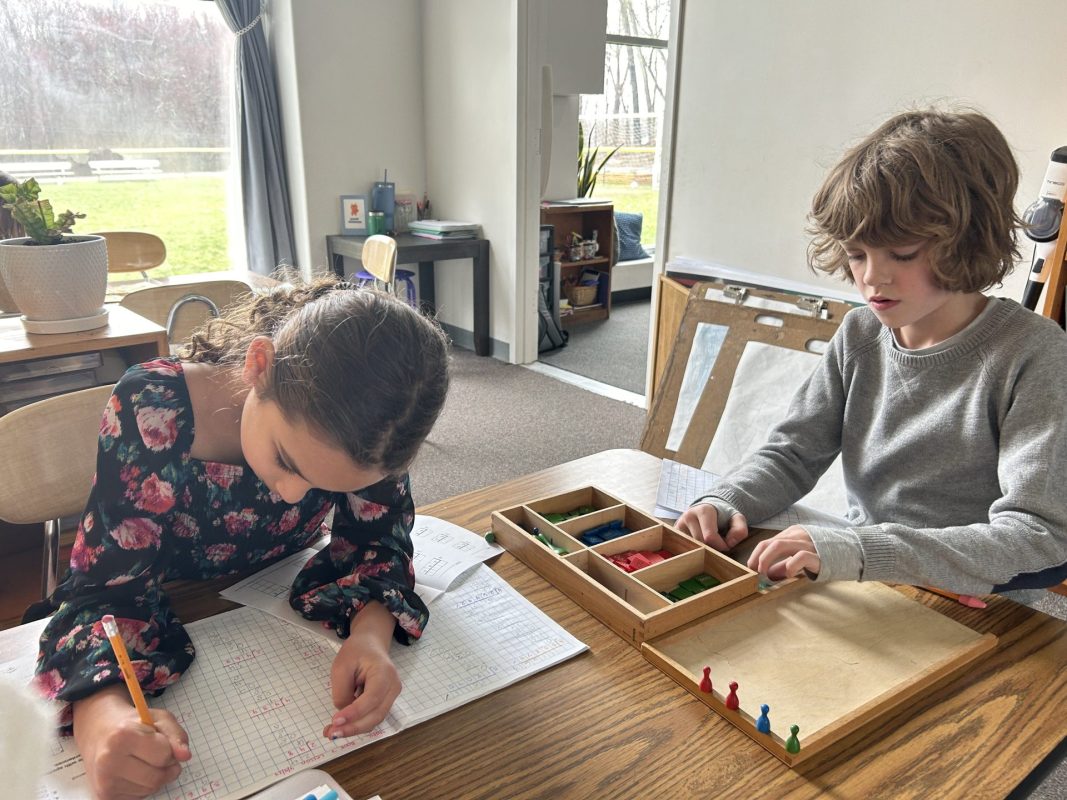
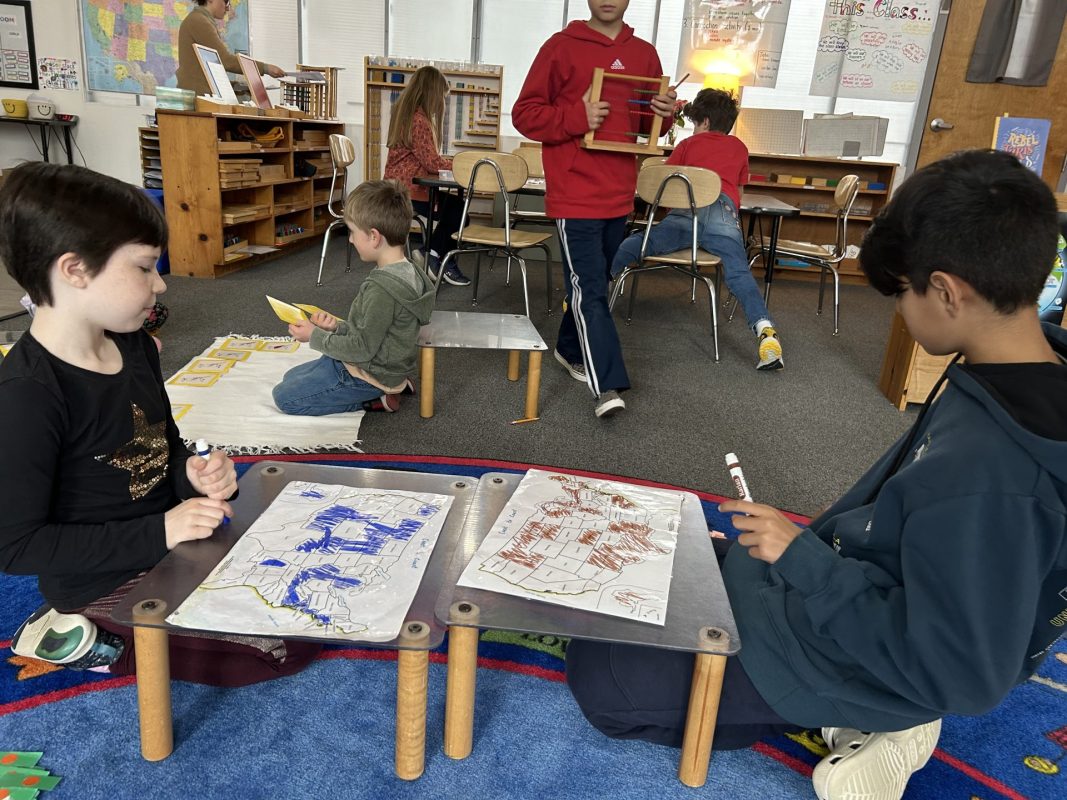
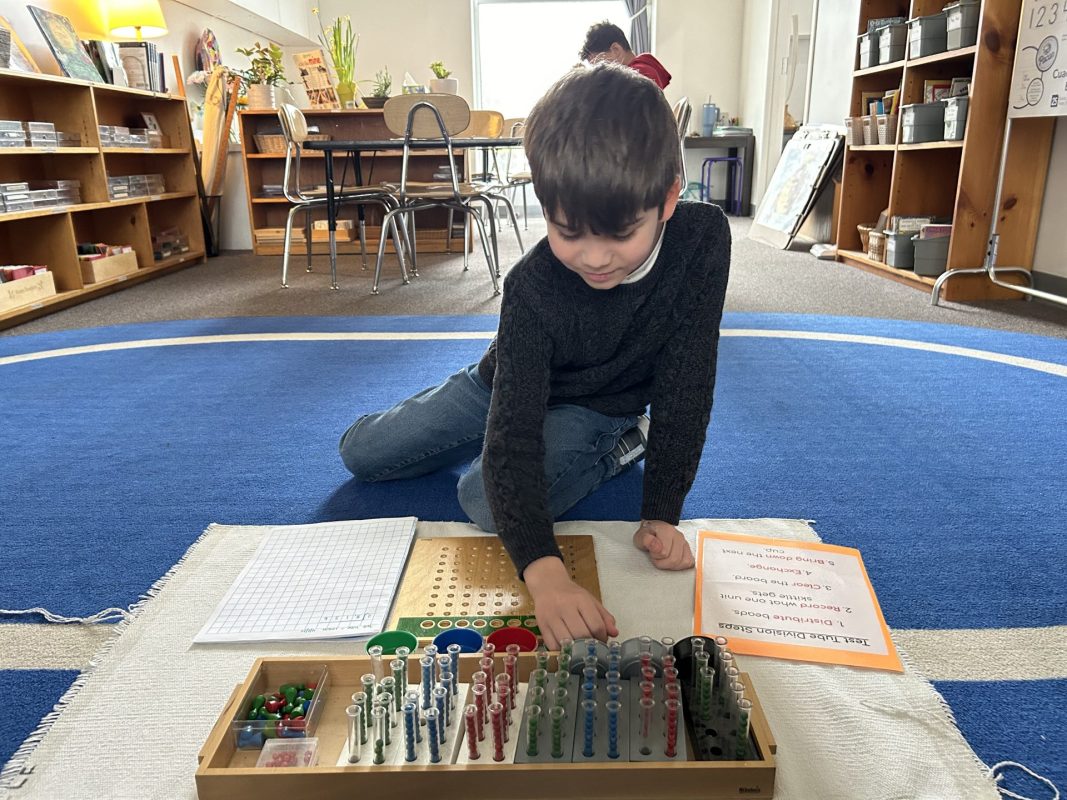
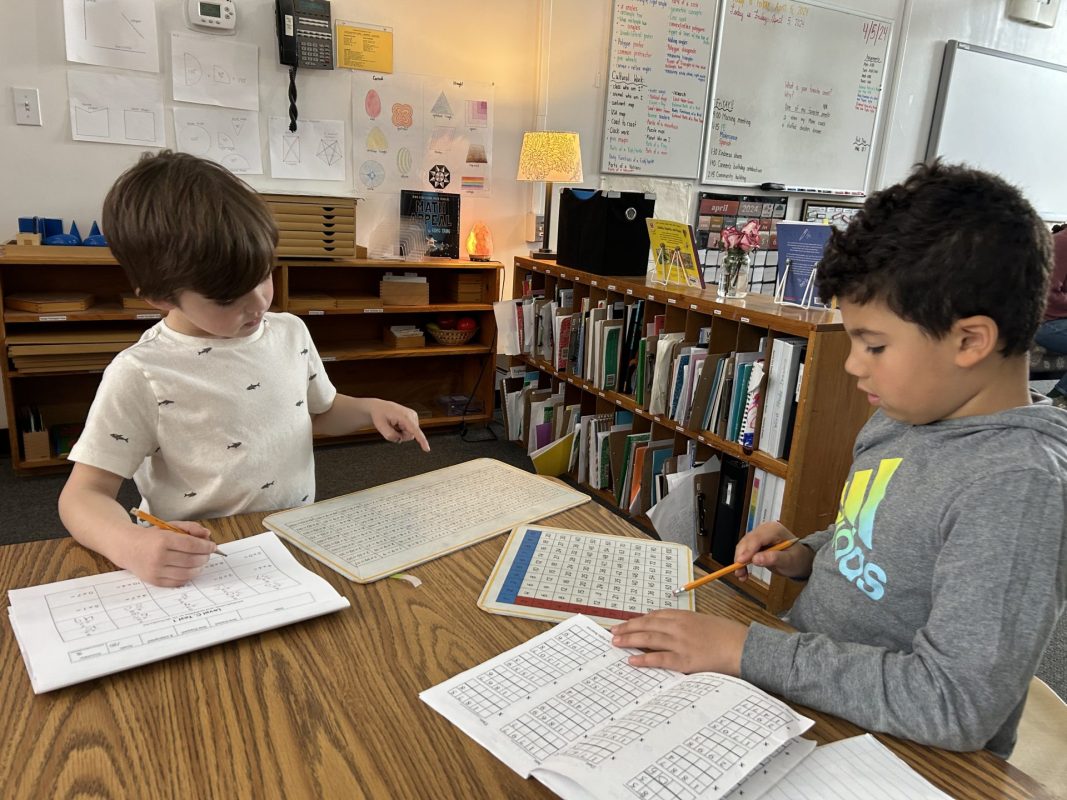
At the heart of Montessori math lies the principle of hands-on learning. Instead of memorizing abstract formulas, children engage in concrete activities using specially designed materials. These materials, meticulously crafted to appeal to the senses and spark curiosity, invite children to explore mathematical concepts at their own pace. Some of Lower Elementary’s favorite versatile concrete materials are the stamp game and bead frames. Other beautiful materials we often see children working on are the checkerboard for multiplication and test tubes for division.

Montessori math empowers children to become independent learners. In a Montessori classroom, teachers serve as guides, observing each child’s progress and offering individualized support when needed. Children are encouraged to choose their activities, work at their own pace, and explore mathematical concepts through self-directed discovery. This autonomy not only enhances children’s confidence but also cultivates a lifelong love for learning.


Middle School: Week in Review

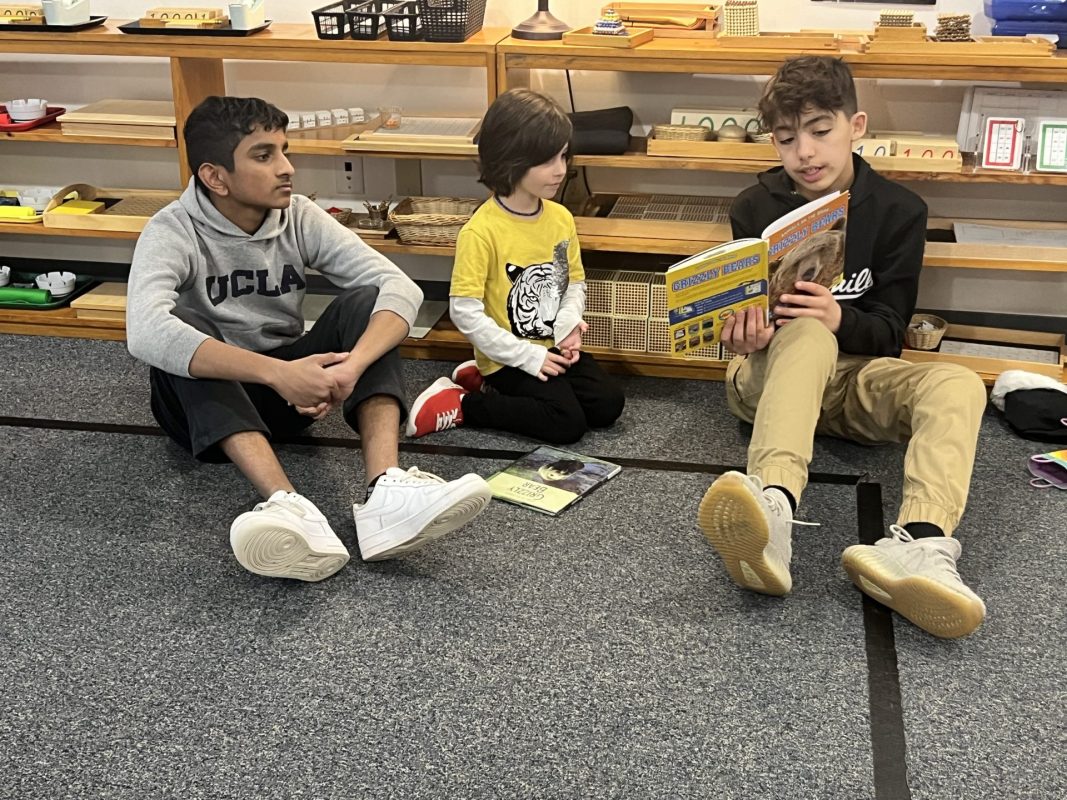
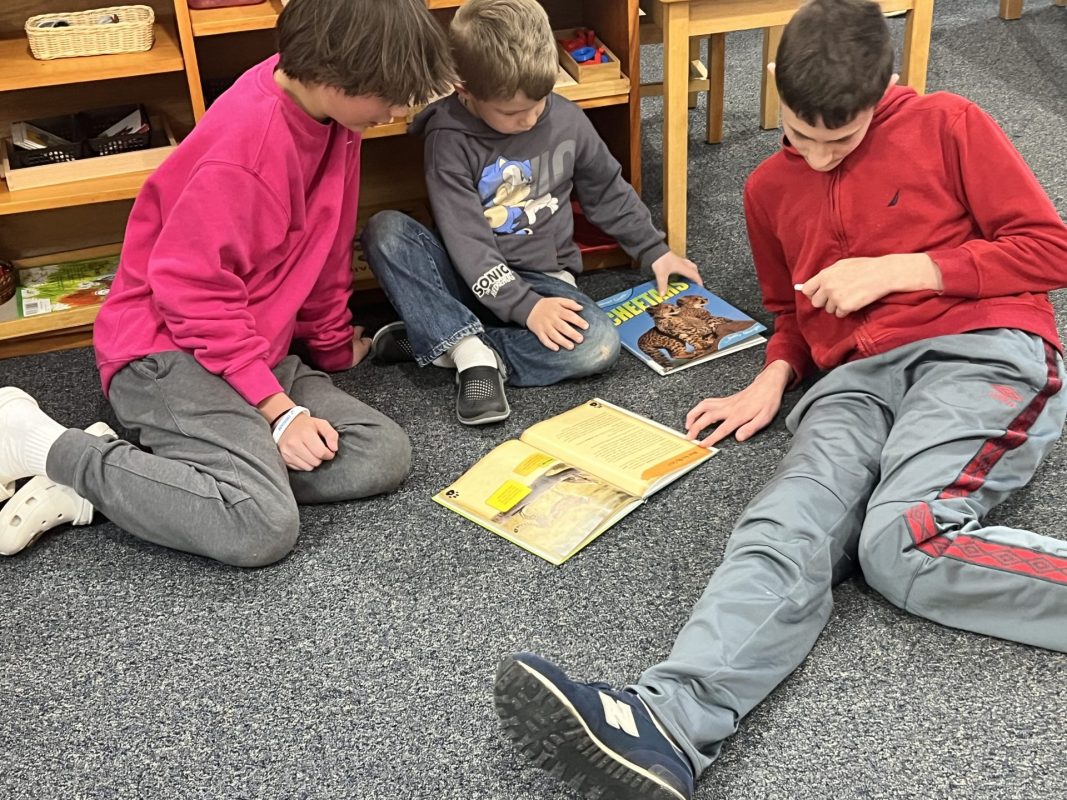
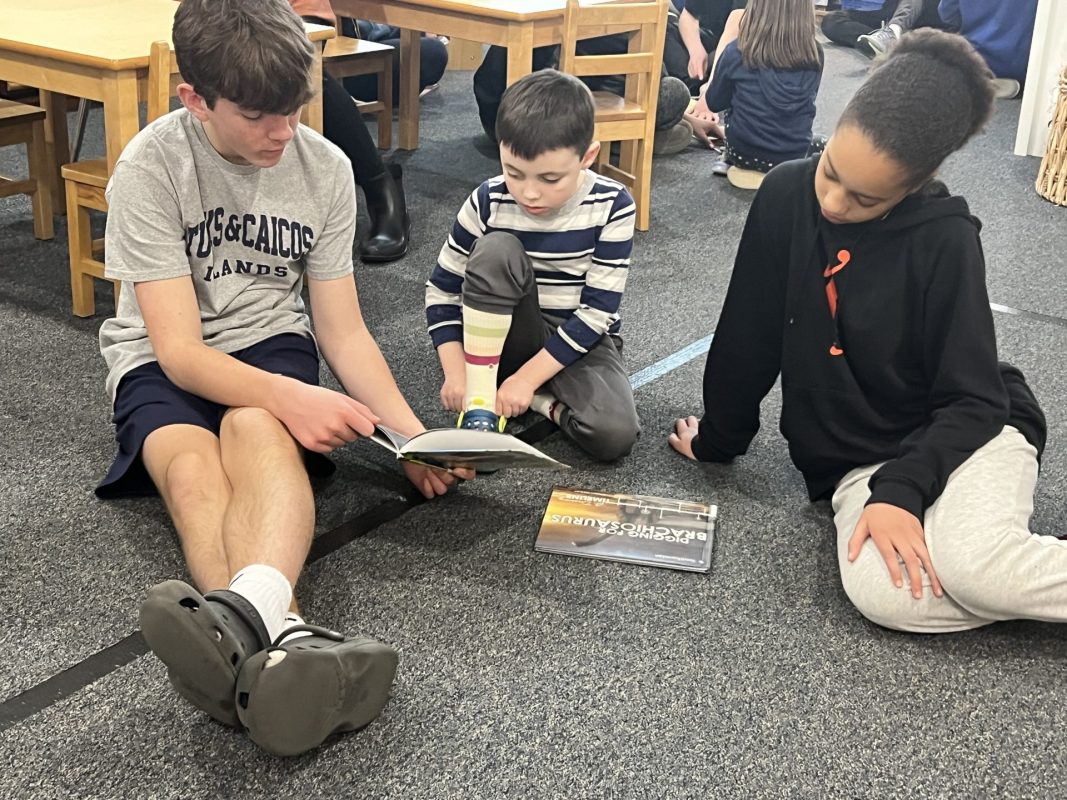
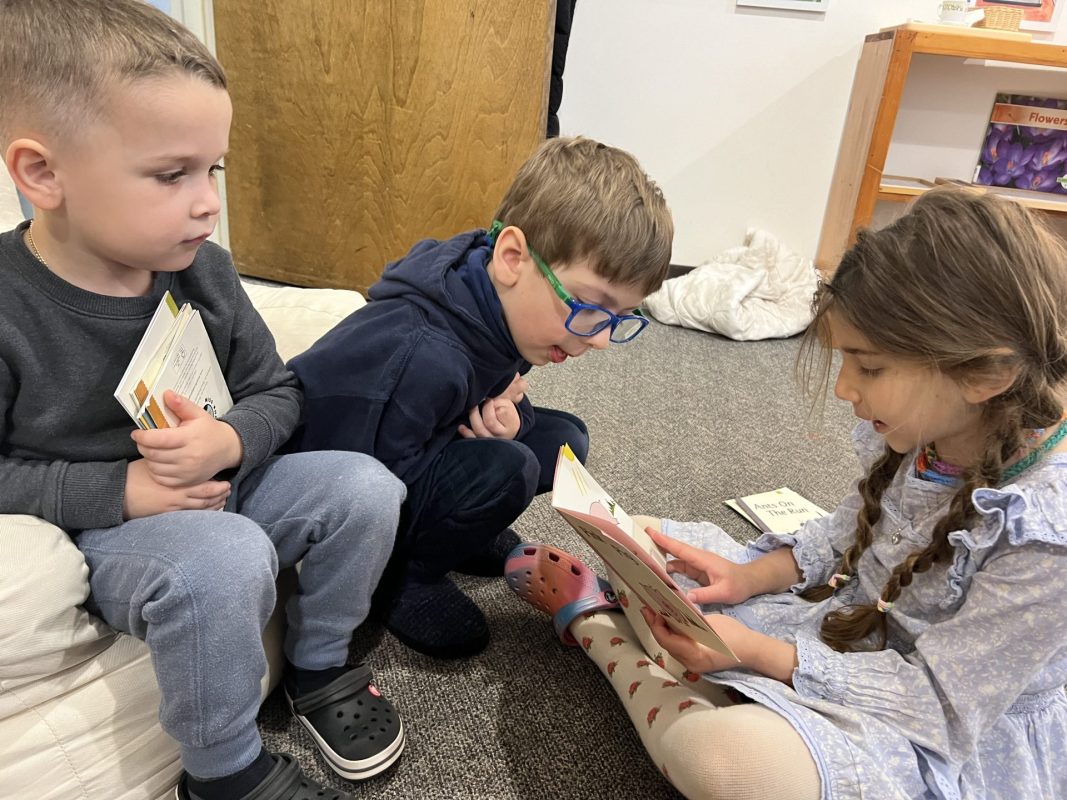
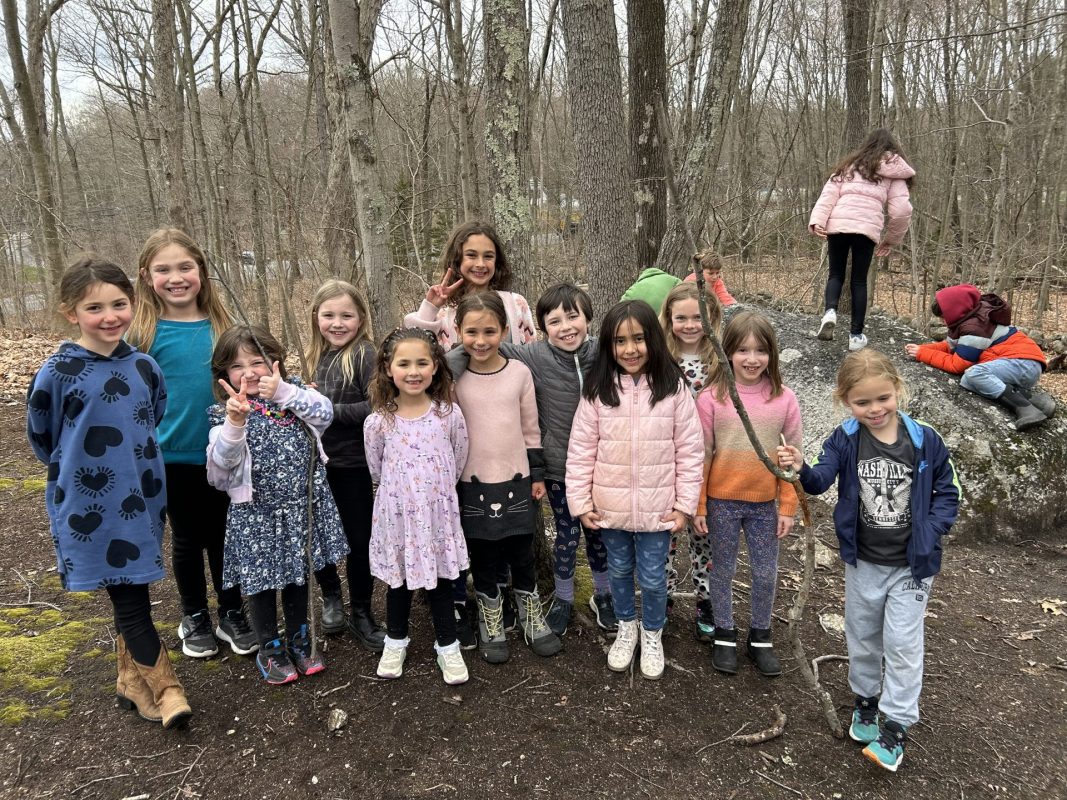
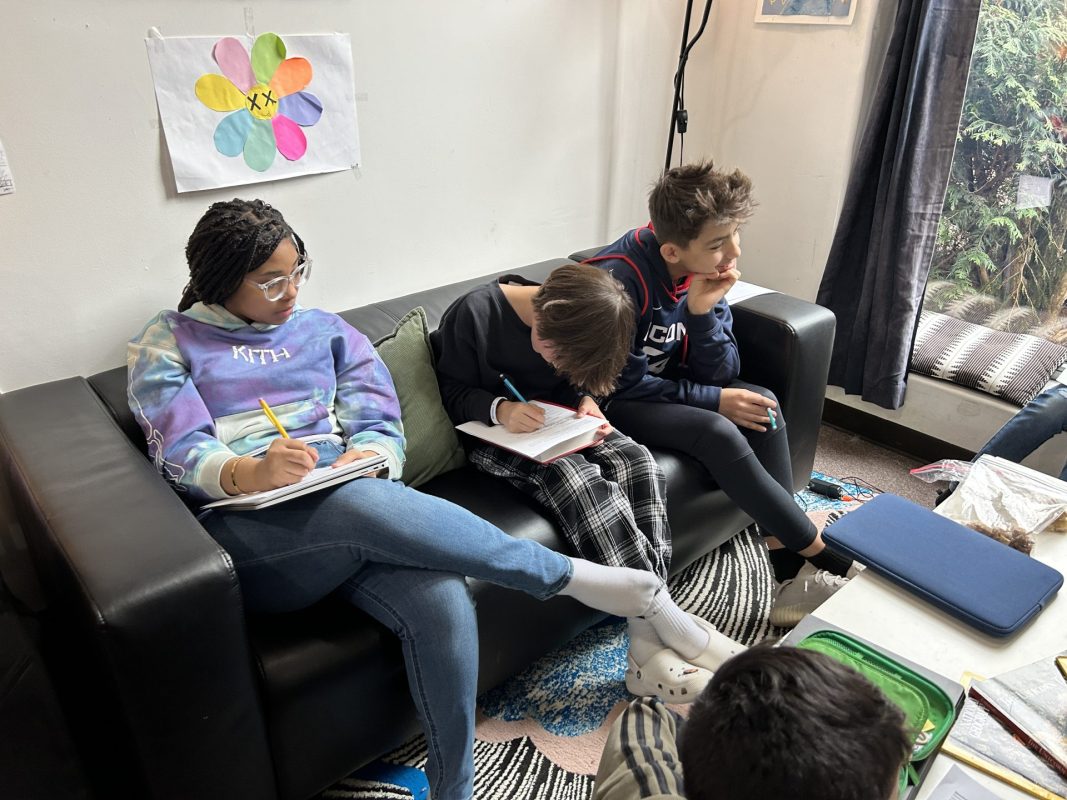
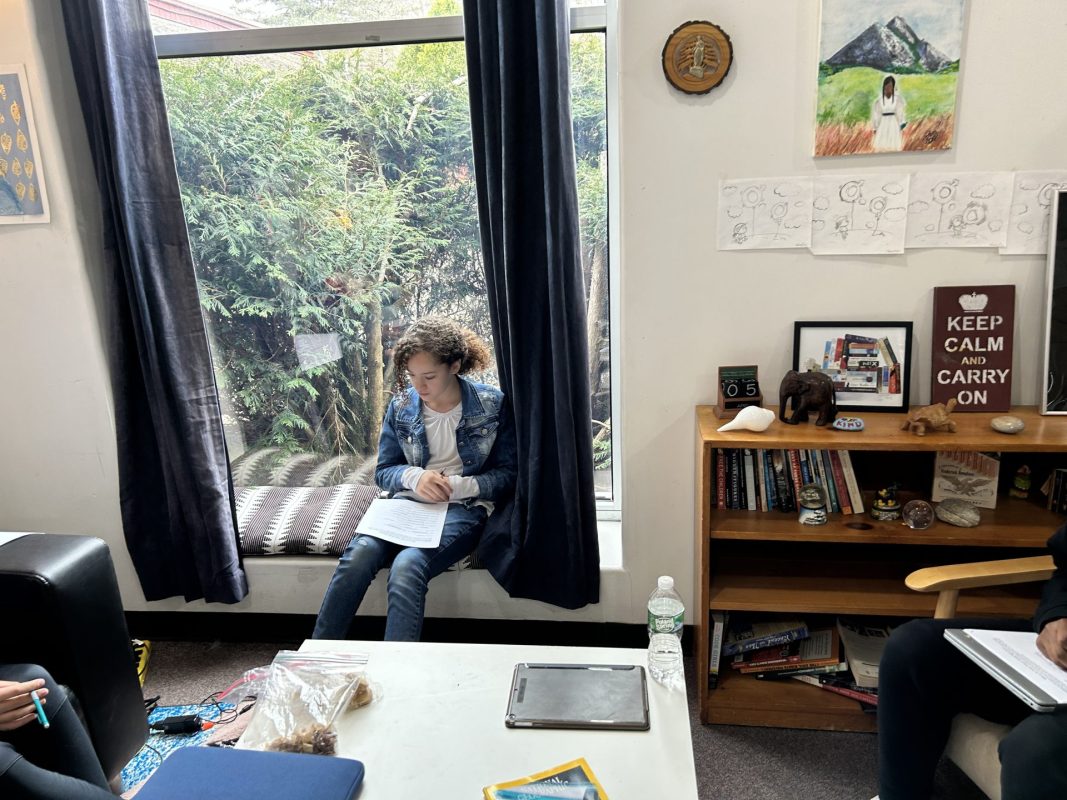
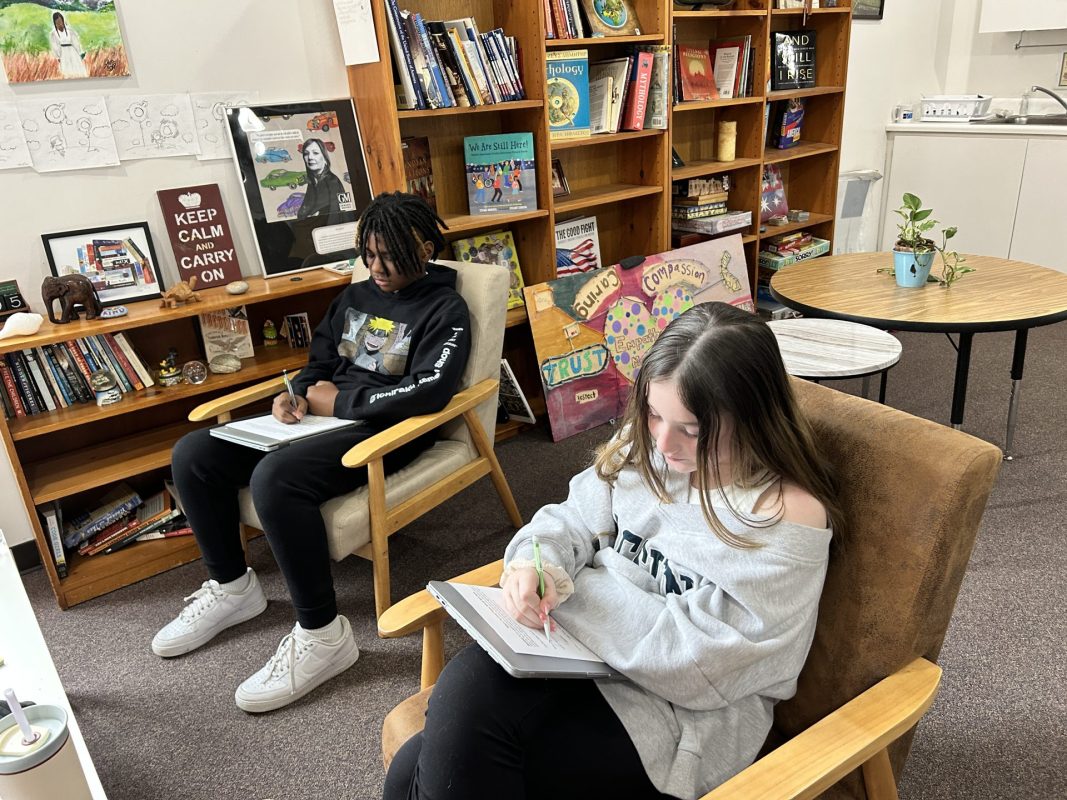
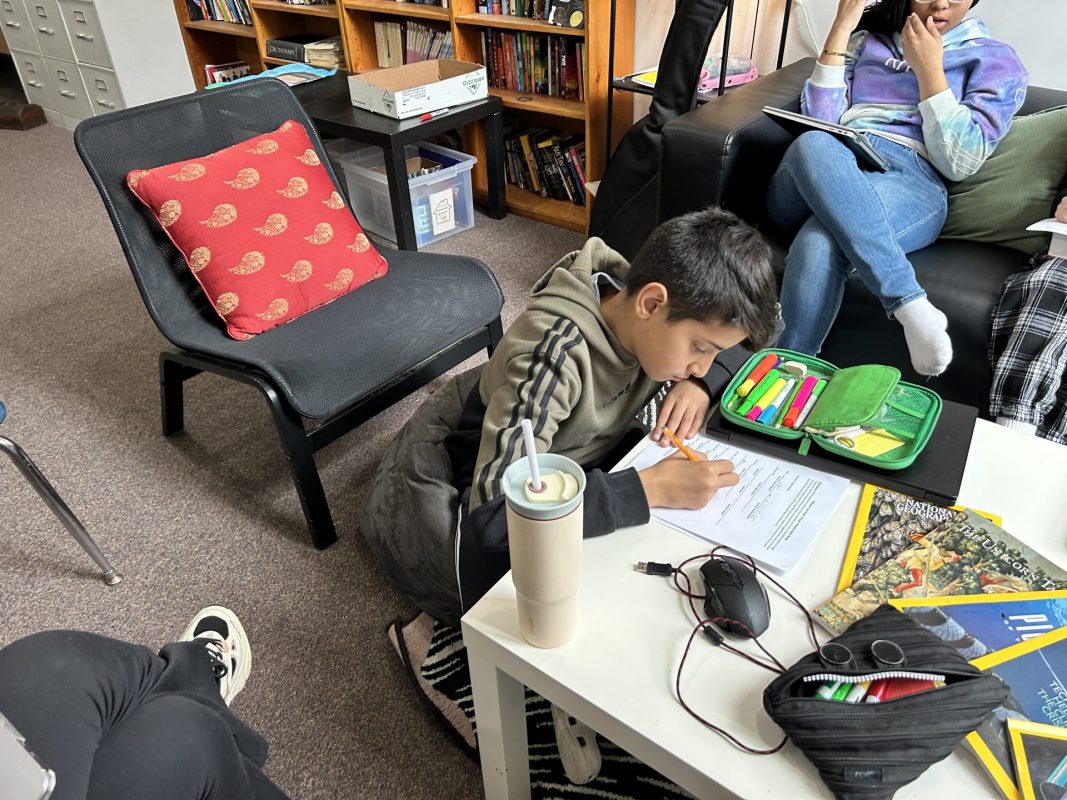
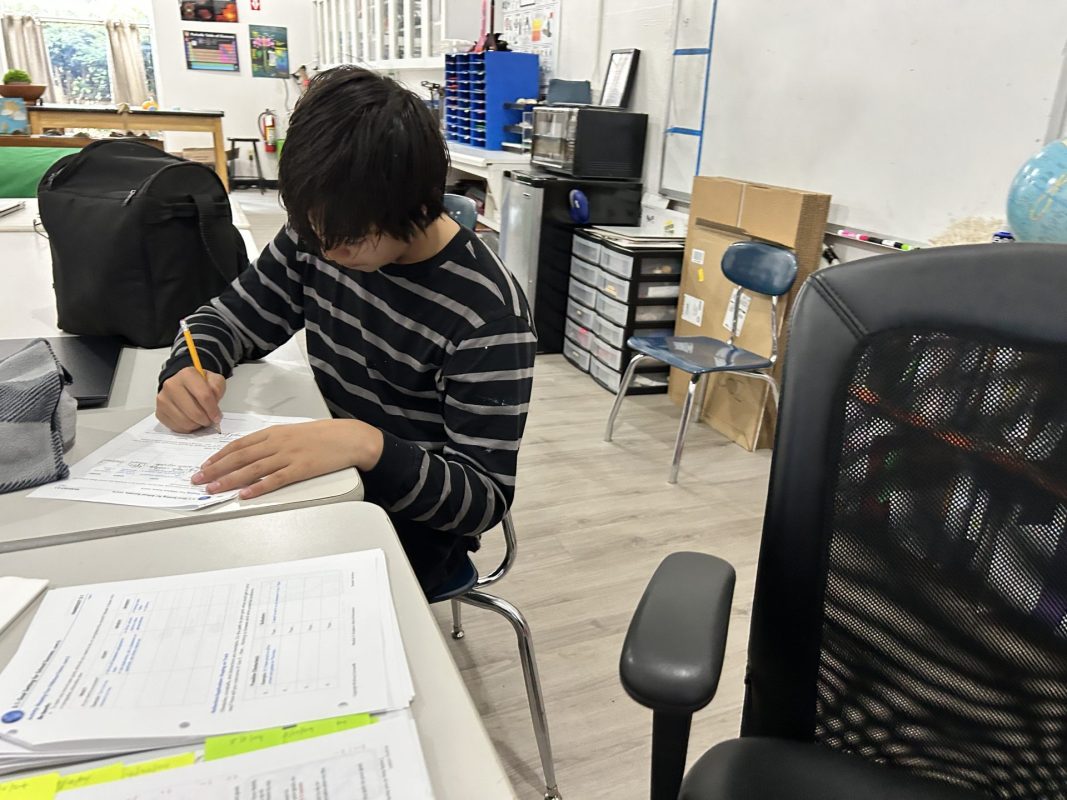
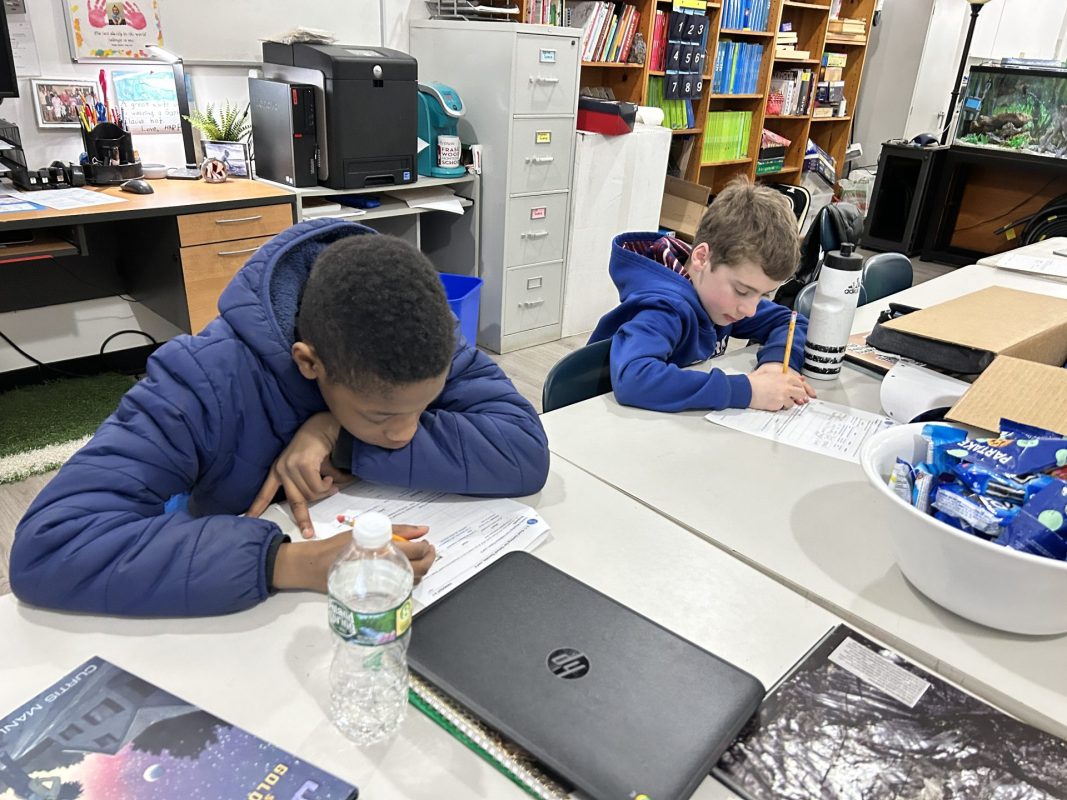
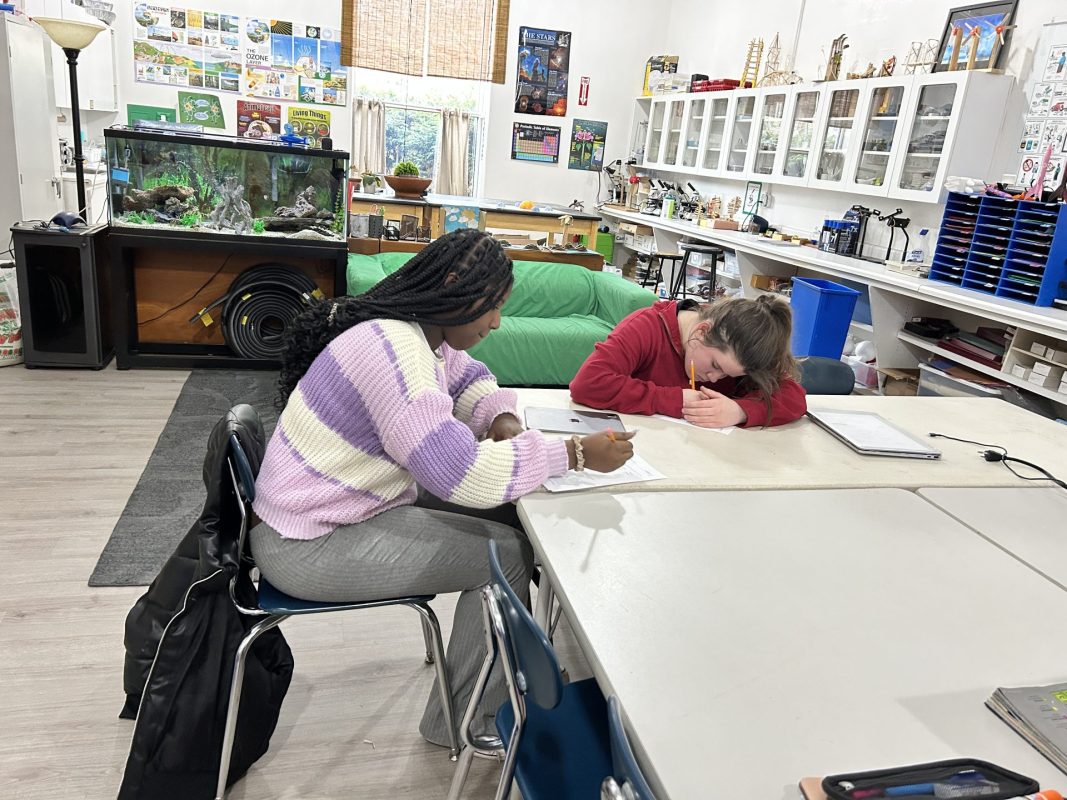
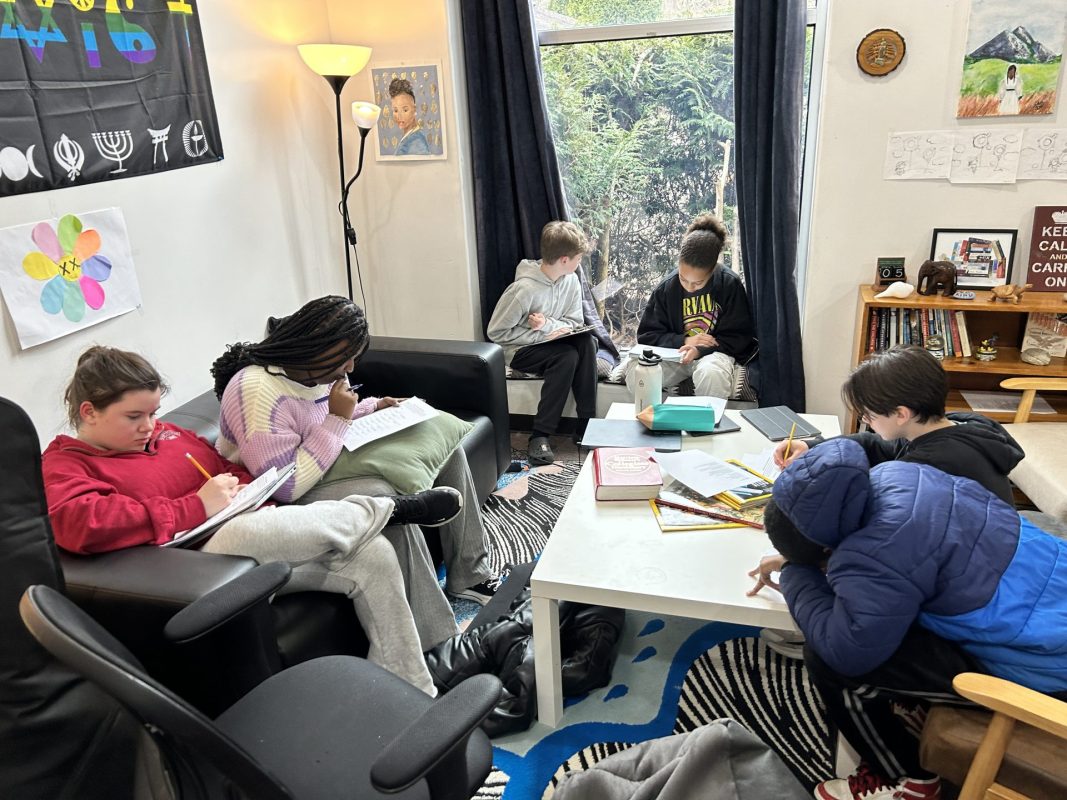
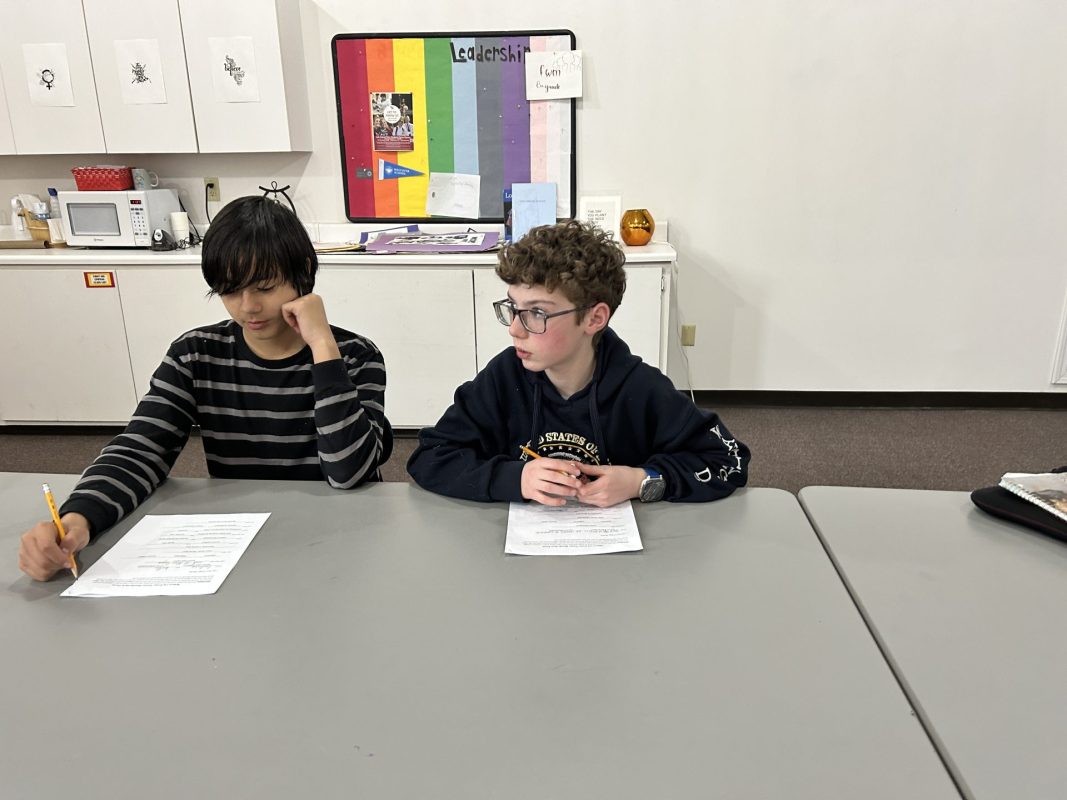
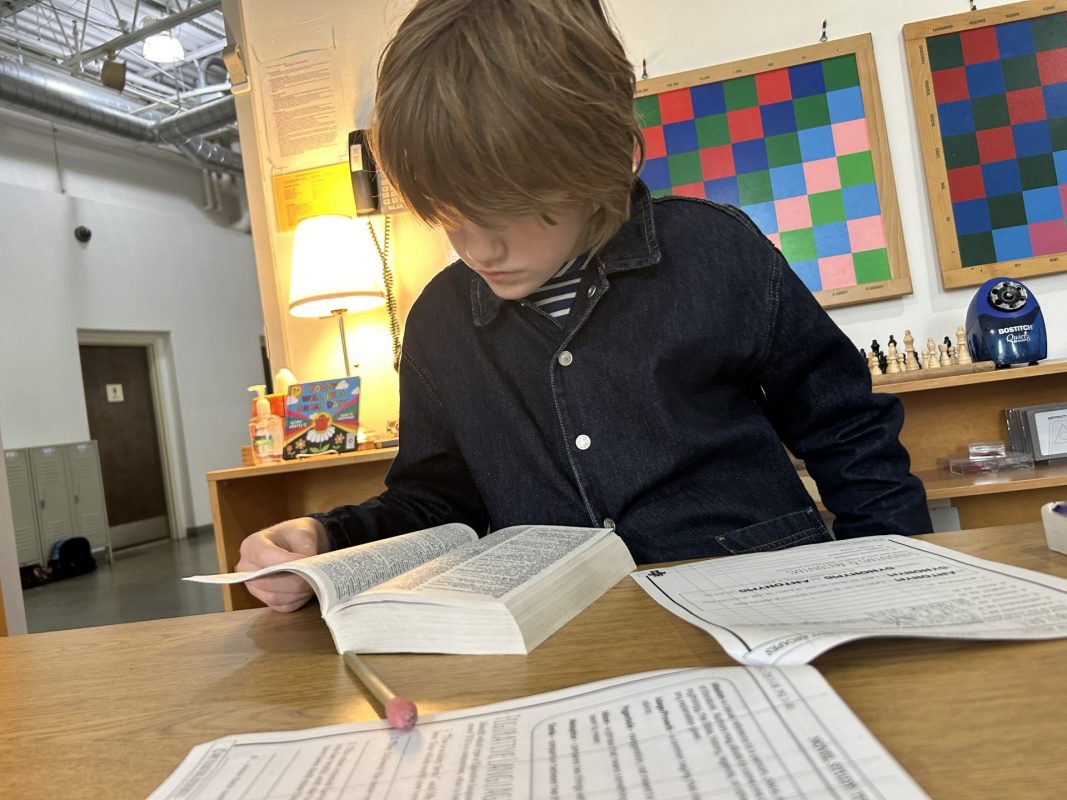
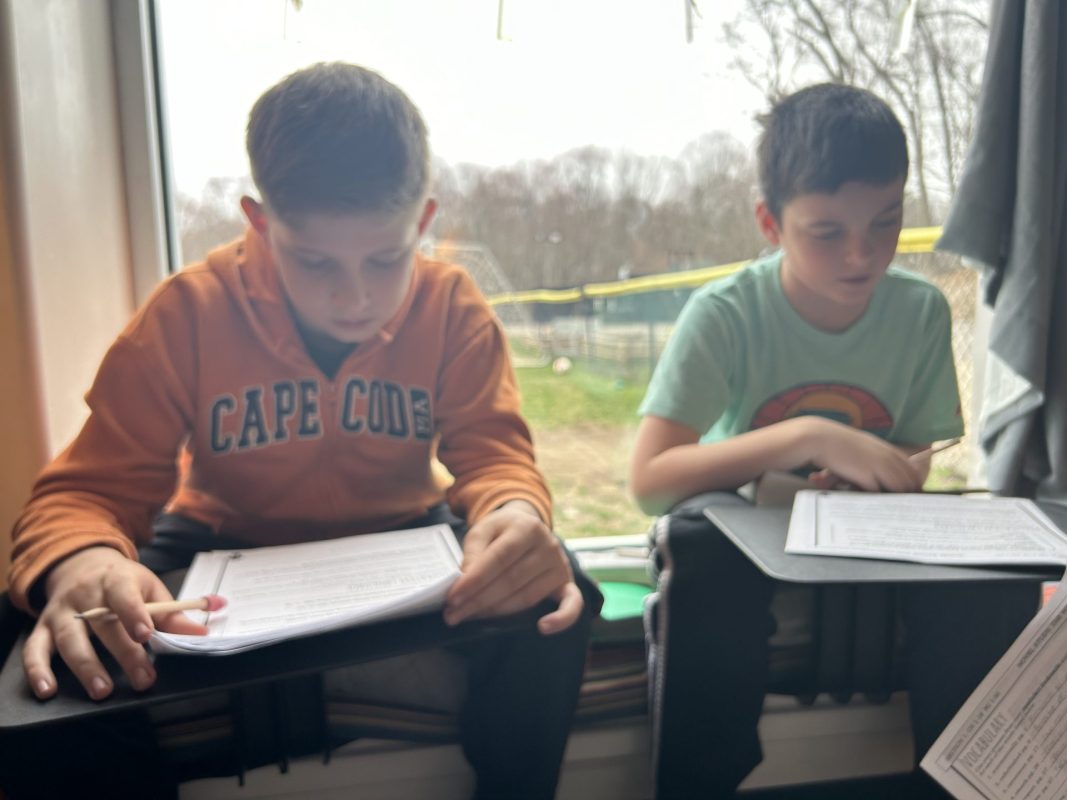
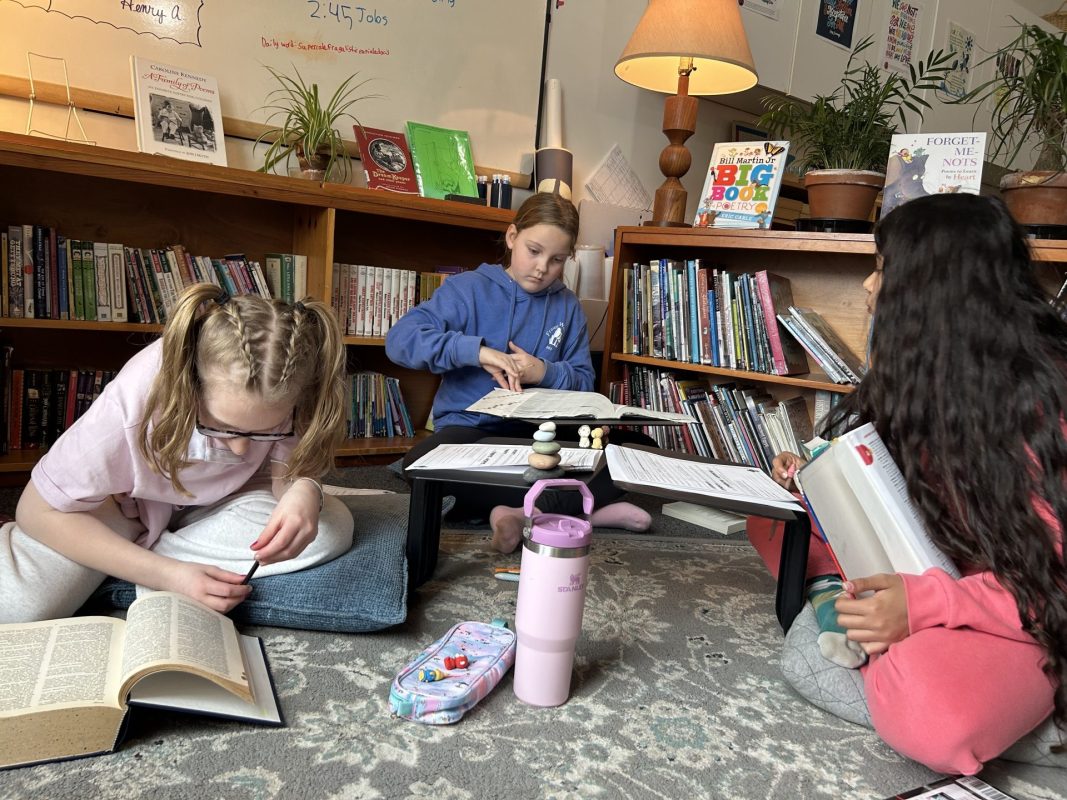
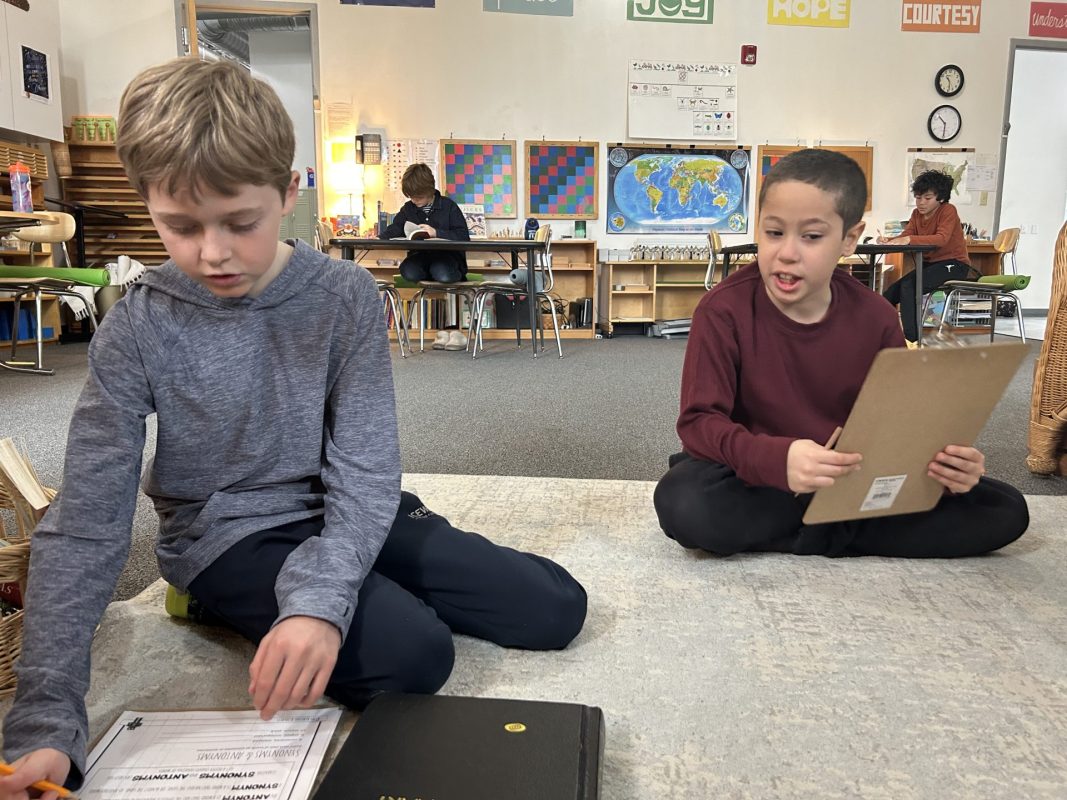
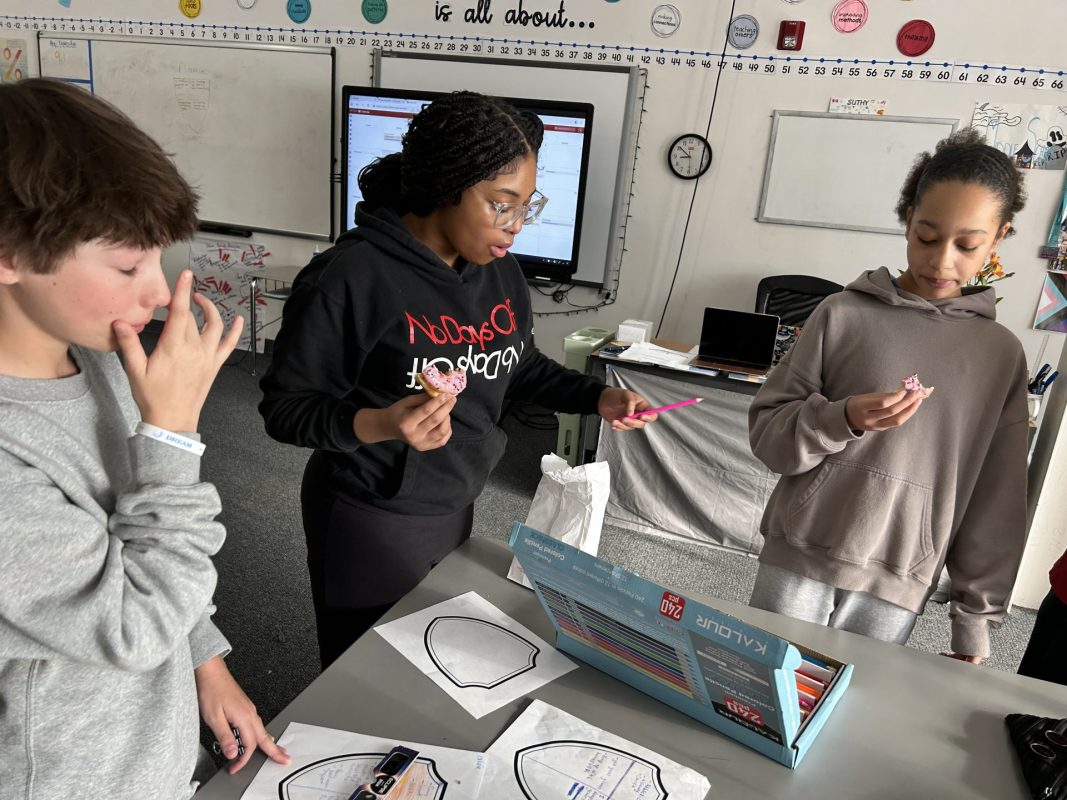
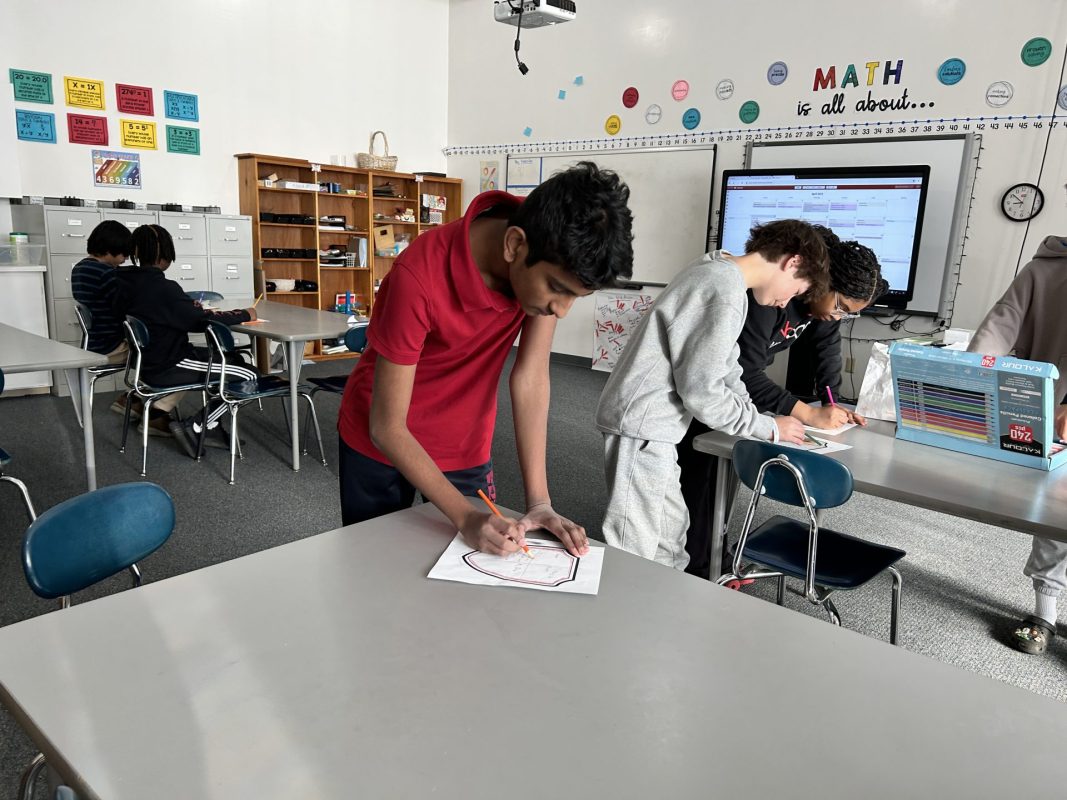
Another productive week in Middle School! A highlight outside of academic classes took place on Wednesday afternoon when all middle school students assisted the kindergarteners with their research projects. They read books about their topic to the kindergarteners and then chatted about the new information they learned.

Here’s what went on in other classes:

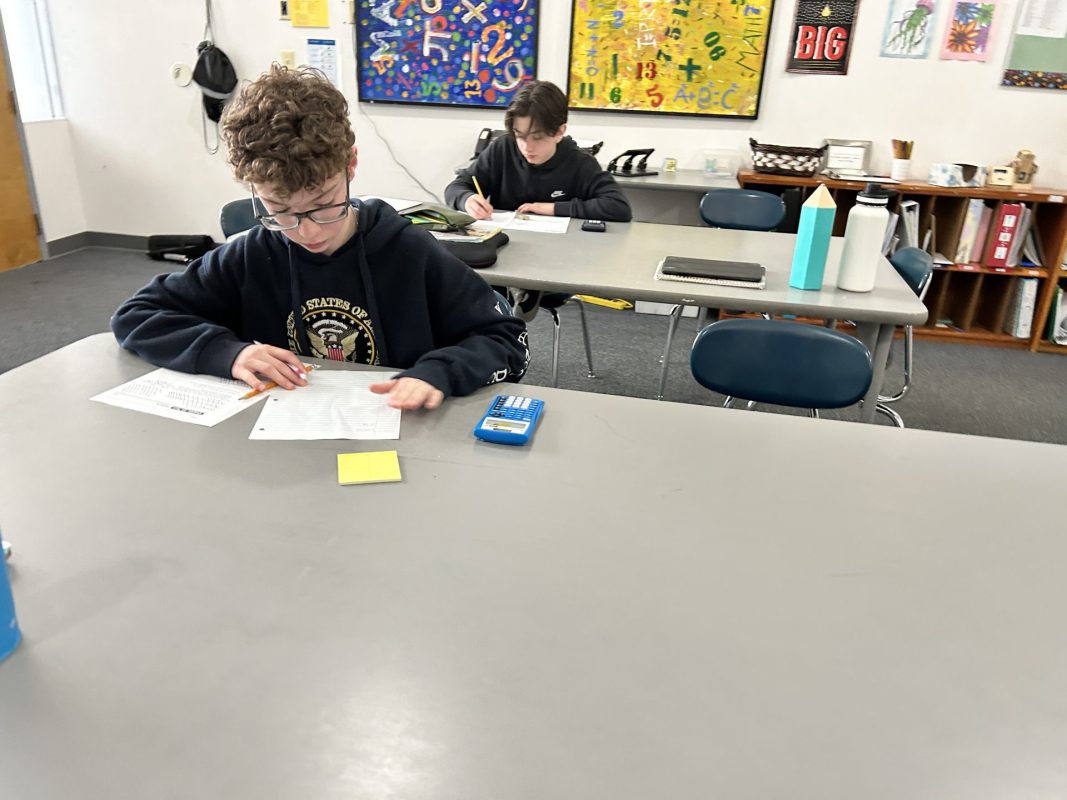
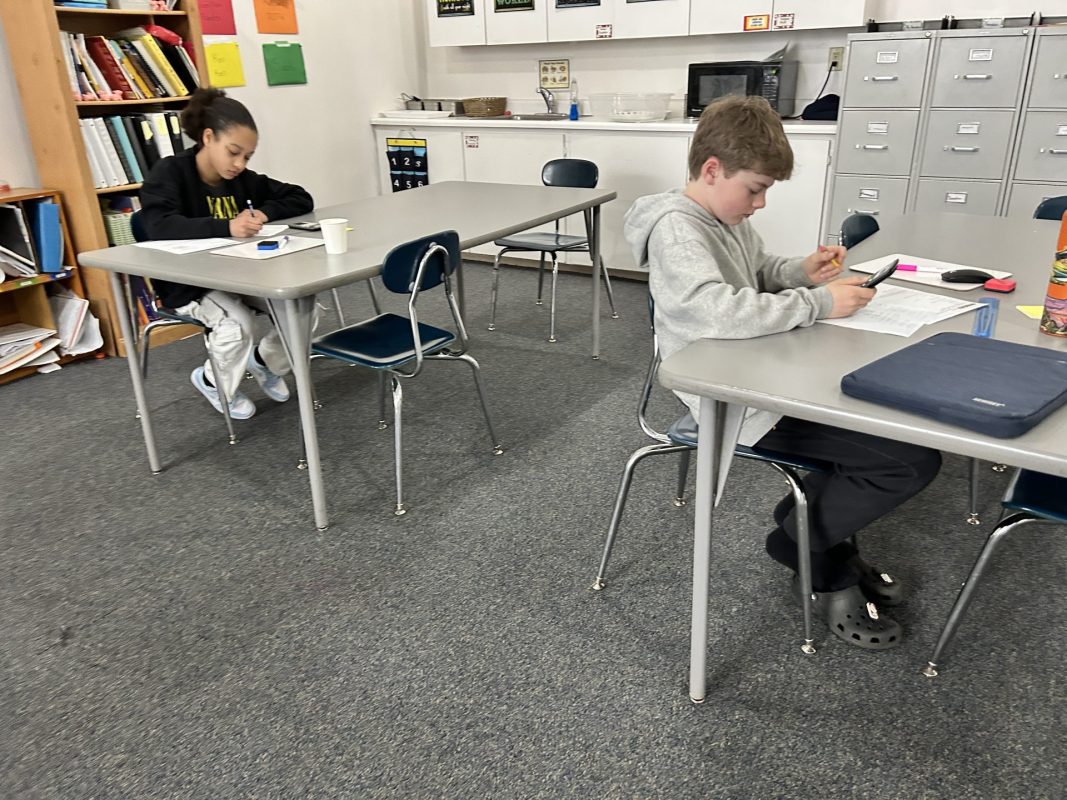
Math

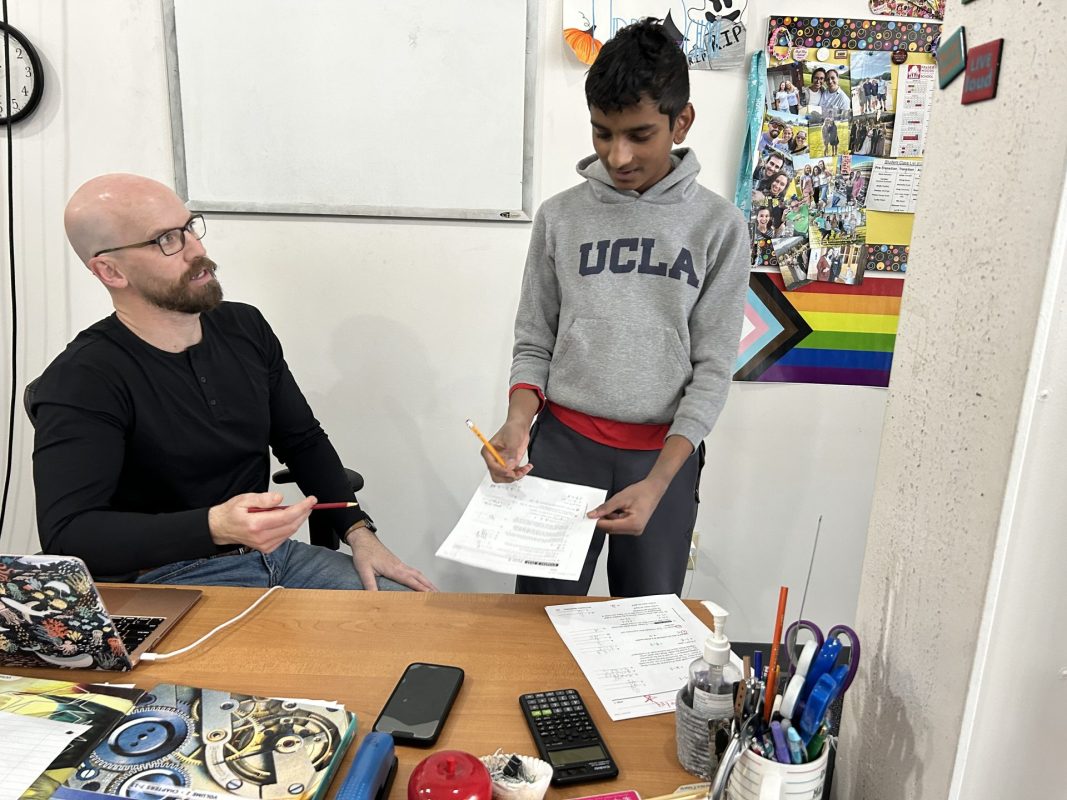
Transition math students have been discussing real-world patterns that eventually lead to division. This week’s lessons have focused on the ratio-comparison model for division, allowing students to grasp the concept of dividing quantities into equal groups. Moving on to proportions, students have been exploring the idea of comparisons between two ratios, enhancing their proportional thinking skills. To further solidify their understanding, students have also been studying proportions in similar figures, connecting geometry with their newfound knowledge of division.

In the chapter on Linear Systems that Algebra math students have been working on this week, they delved into various intriguing concepts. These included exploring systems and parallel lines, grappling with systems of inequalities, and deciphering nonlinear systems. The discussions also extended to real-world applications, such as how air traffic controllers use these mathematical ideas to anticipate points of intersection for air travel routes, showcasing the practical relevance of algebra in everyday scenarios.

The eighth-grade geometry class has been busy exploring the Pythagorean theorem and how it is used to find different sides of a triangle. They also learned how it would help them find missing sides in a complicated polygon that doesn’t have all the given sides. They can classify triangles as obtuse, right, or acute, given the three sides.

Science

6th-year Earth Science students have completed their study on rotation, revolution, and seasons. Excitingly, they are now gearing up for their next adventure into the captivating realm of eclipses. During this unit, they will delve into the mysteries of lunar and solar eclipses, aiming to model and explain the mesmerizing phenomena that occur during these celestial events. As they eagerly anticipate the upcoming solar eclipse next Monday, each student will have the opportunity to observe this rare occurrence safely with the provided pair of solar glasses.

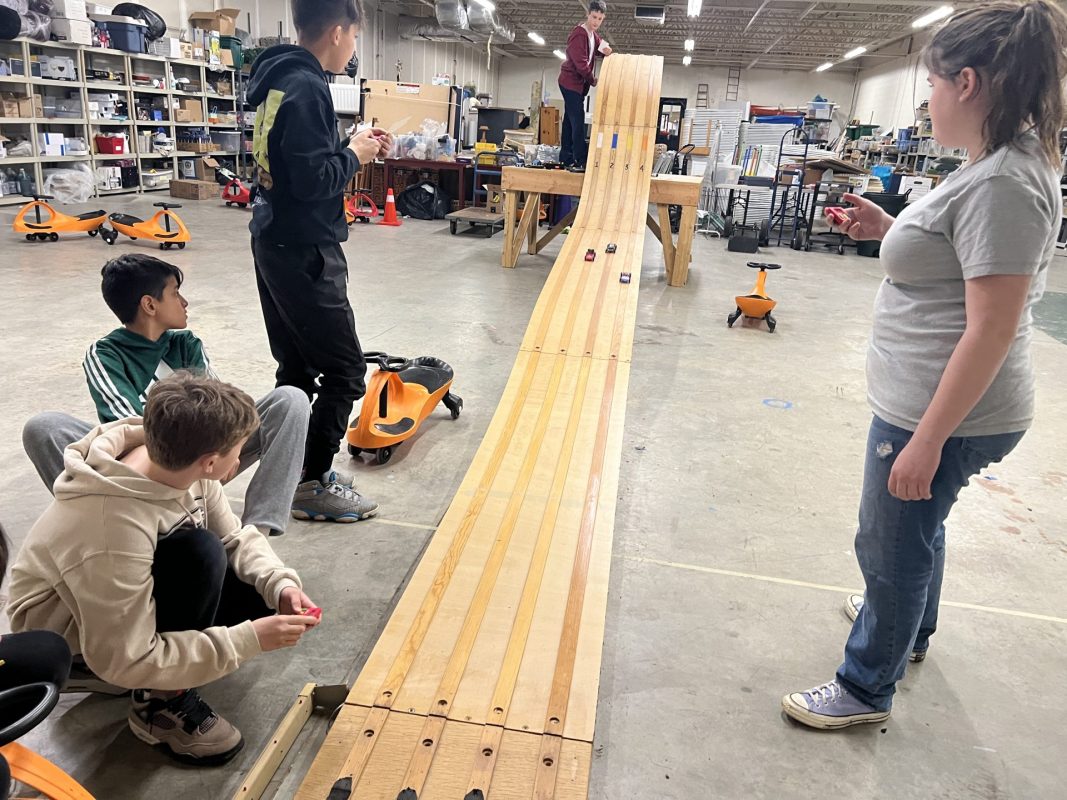
7th-year physical science students recently wrapped up their exploration of kinetic energy by putting their derby cars to the test. They raced each car multiple times, taking the average of their runs while also carefully calculating the mass of their creations. Looking ahead to the next unit, Reflection, students are eager to design experiments to investigate the reflectivity of various materials. As they delve into this new topic, they will learn to identify key characteristics of different types of mirrors and understand how light behaves as it reflects off different surfaces, paving the way for a deeper understanding of the fascinating world of light and optics.

In their recent exploration of genetics and heredity, 8th-year life science students have gained a deeper understanding of how traits are passed down through generations. As they transition into the next unit on the circulatory system, students will explore the intricate networks responsible for transporting oxygen, nutrients, and waste throughout the body. They will learn to describe the function of the circulatory system, create a drawing illustrating the path of circulation in the body, know the difference between veins, arteries, and capillaries, and understand the structure and function of the heart. This new unit promises to reveal the fascinating inner workings of one of the body’s most vital systems.

Humanities

6th-grade Humanities classes continued reading their class novel, The Eye of Ra, by Ben Gartner, which centers around two kids accidentally traveling back to Ancient Egypt. This group is leading discussion using their annotations from nightly reading assignments. The students also read the Egyptian creation myth and learned about the first of the great pyramids, the Pyramid of Djoser, or the Step Pyramid. Finally, students are preparing a current events report and discussion for next week.

The 7th-grade Humanities class completed the novel A Long Walk to Water, which follows the real story of Salva Dut, a Lost Boy of Sudan. We have spent the week learning about Sudan and South Sudan, their geography and culture, as well as their conflicts, and delved deeper into the stories of the Lost Boys who walked from Sudan to Ethiopia and then on to Kenya. Finally, students are preparing a current events report and discussion for next week.

8th-grade Humanities classes with Mrs. Lamb began with a major check-in for the Expert Project. Most students have completed their expert interviews and research, and they are ready to write their research essays. Next, the students continued reading and annotating She Came to Slay, a biography of Harriet Tubman by Erica Armstrong Dunbar. Finally, as they read and learned of the role religion played in the lives of the enslaved, they learned and listened to African American spirituals.

We hope everyone has a wonderful weekend!!


This Week in Upper El

“We must help the child to act for himself, will for himself, think for himself; this is the art of those who aspire to serve the spirit.” -Maria Montessori

We welcomed April with just a few April Fools Day shenanigans and a productive week. Our work cycles were buzzing with activity, lessons, and focused work.

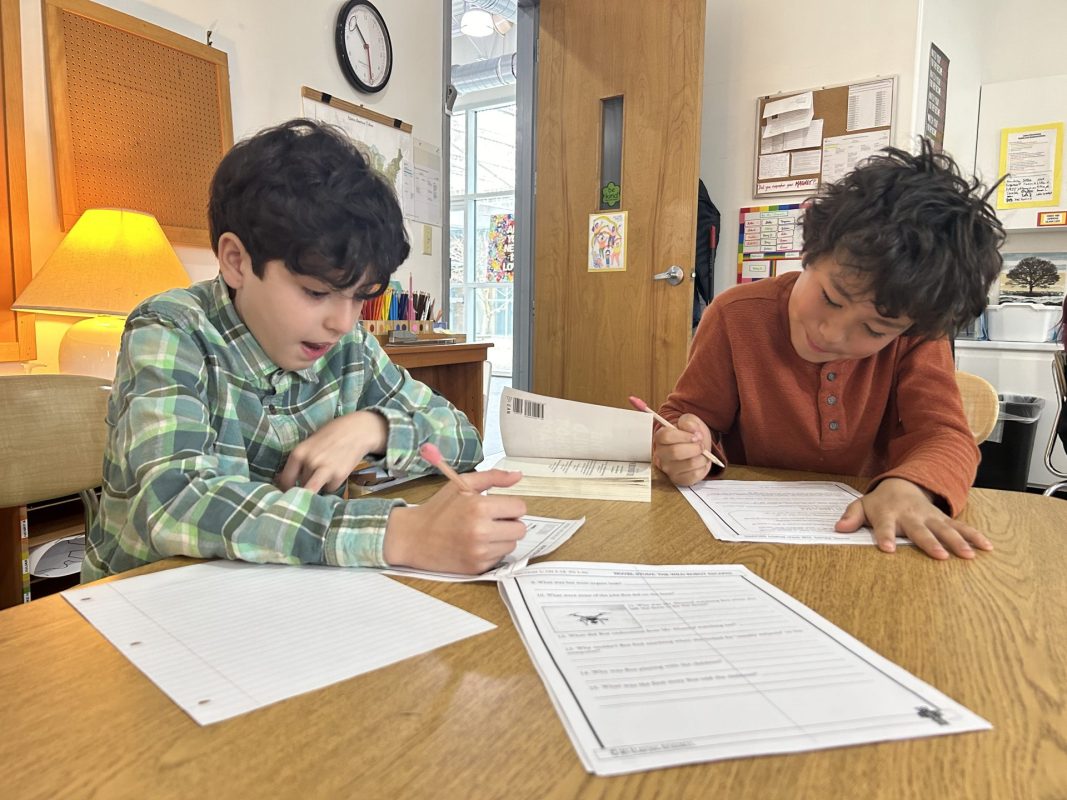
We started the week by kicking off our new novel study for the book The Wild Robot Escapes. This is already becoming a nice change of pace from our usual literature circle activities and discussions. It will also enable us to discuss this book as a whole class instead of splitting into three groups. In other language work this week, we did some poetry reading and writing and had grammar lessons. Fourth-year students continued their study of adjectives by learning about interrogatives and proper adjectives. They learned that interrogative adjectives ask a question about the noun and that proper adjectives are formed from proper nouns but act as modifiers. Fifths had their next lesson about personal pronouns, focusing on person and number. They learned to identify the pronoun in a sentence and whether it is in the first, second, or third person.

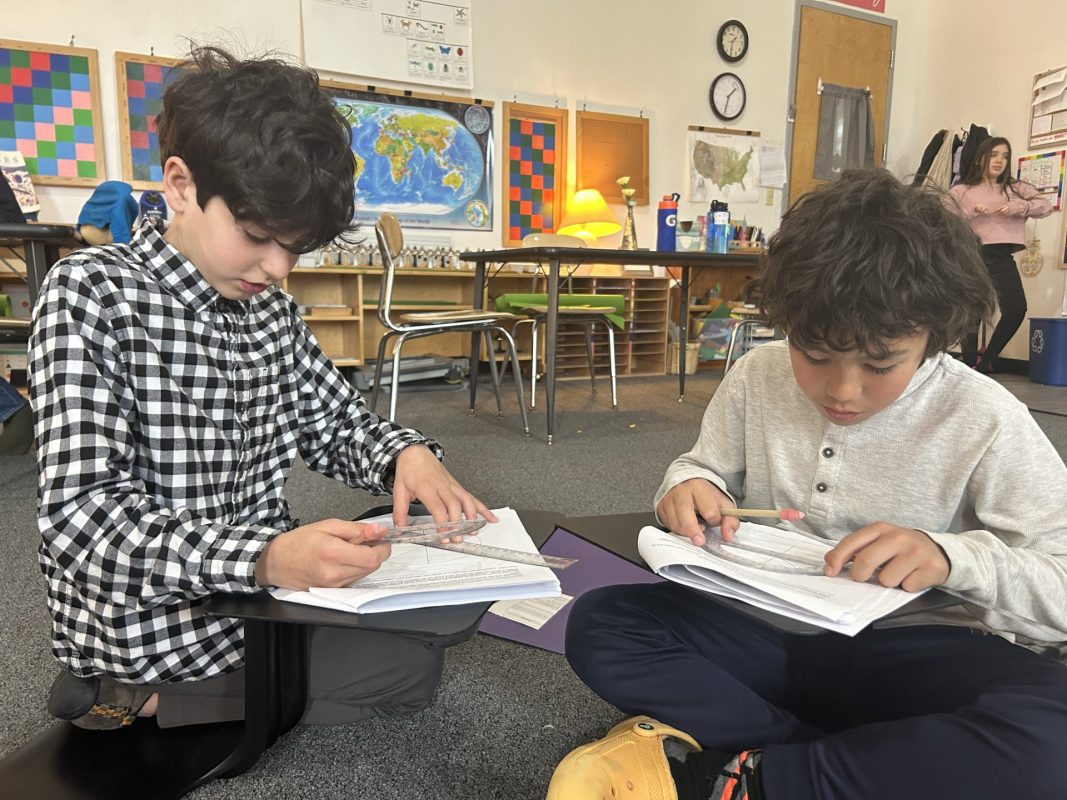
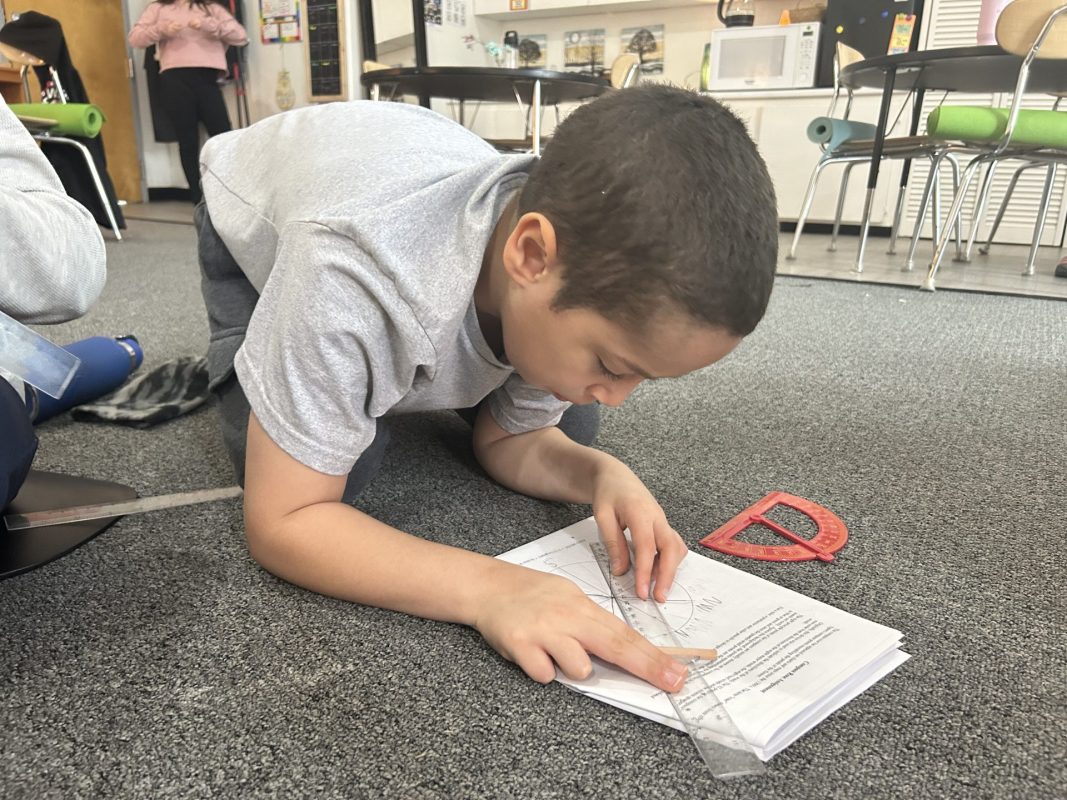
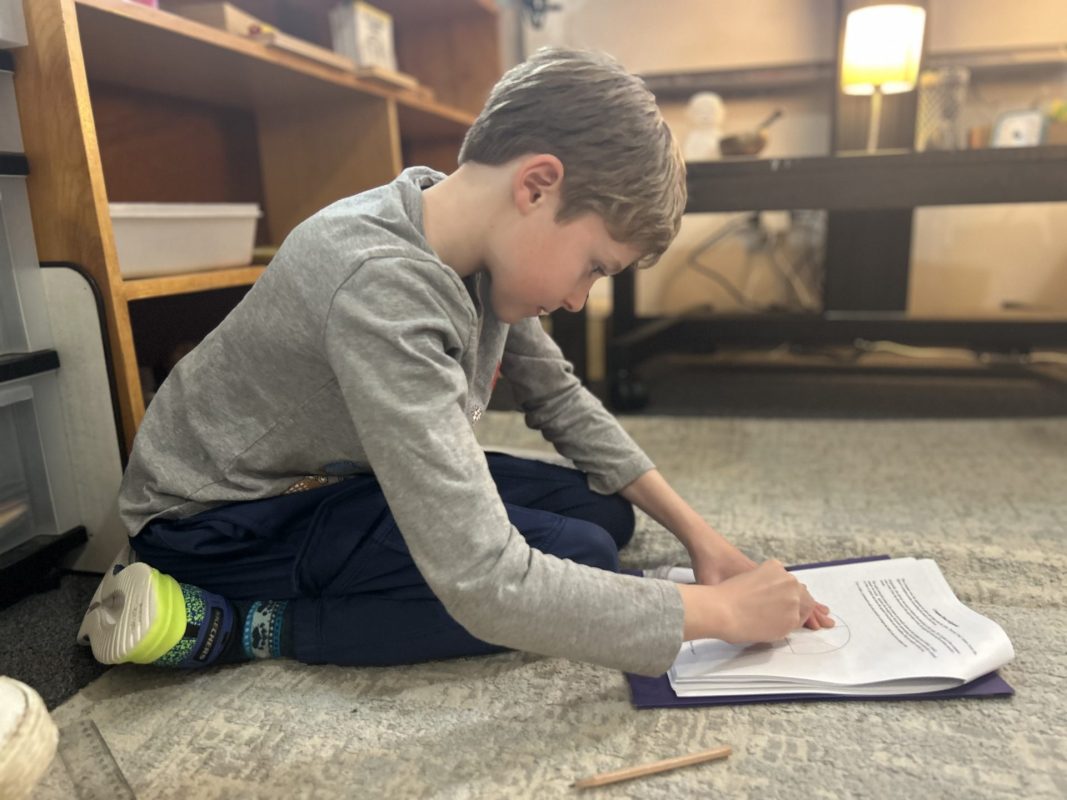
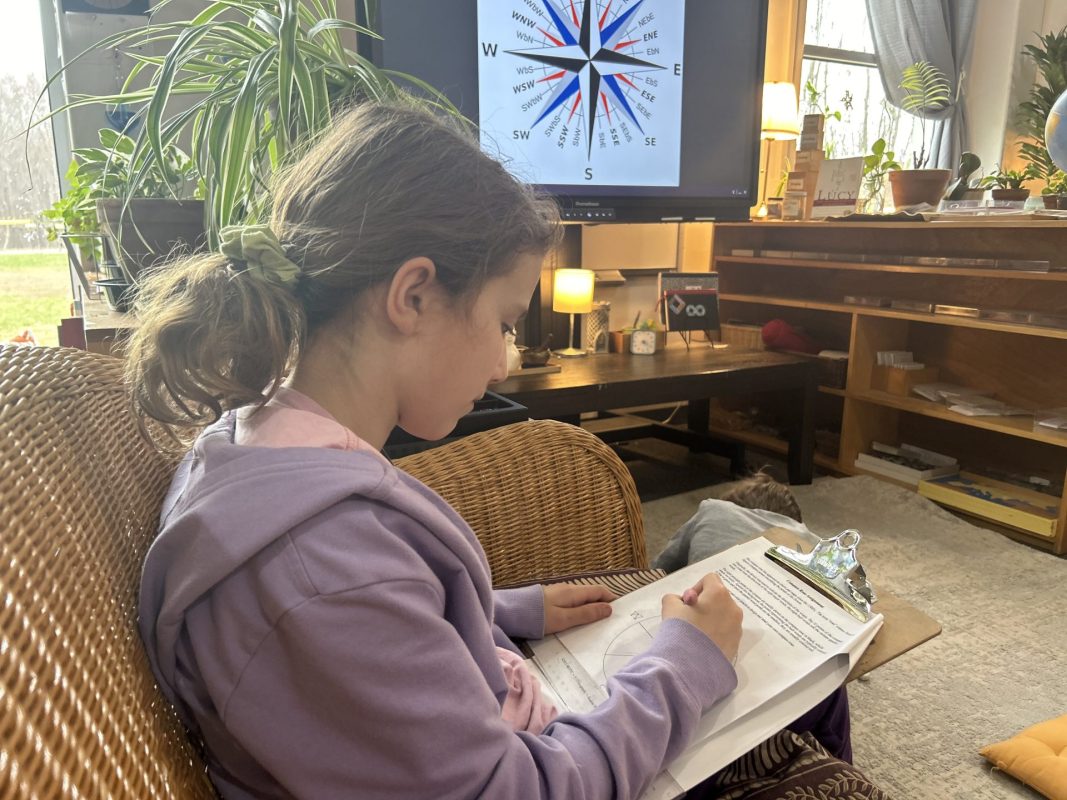
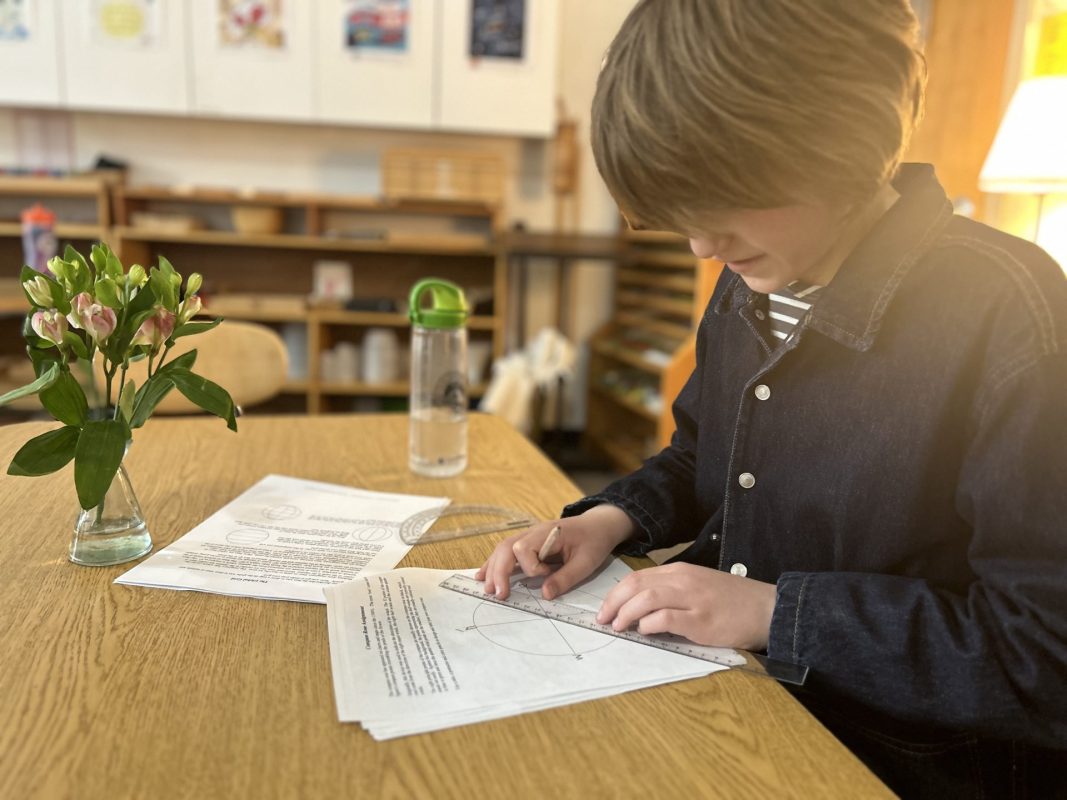
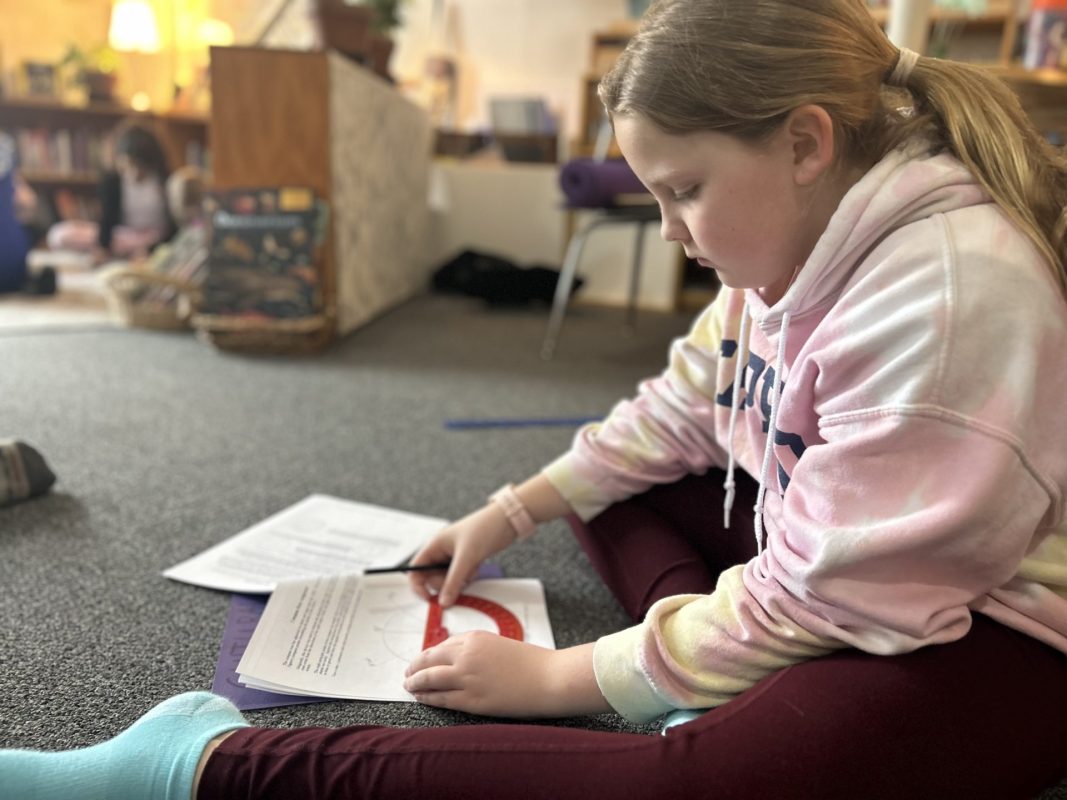
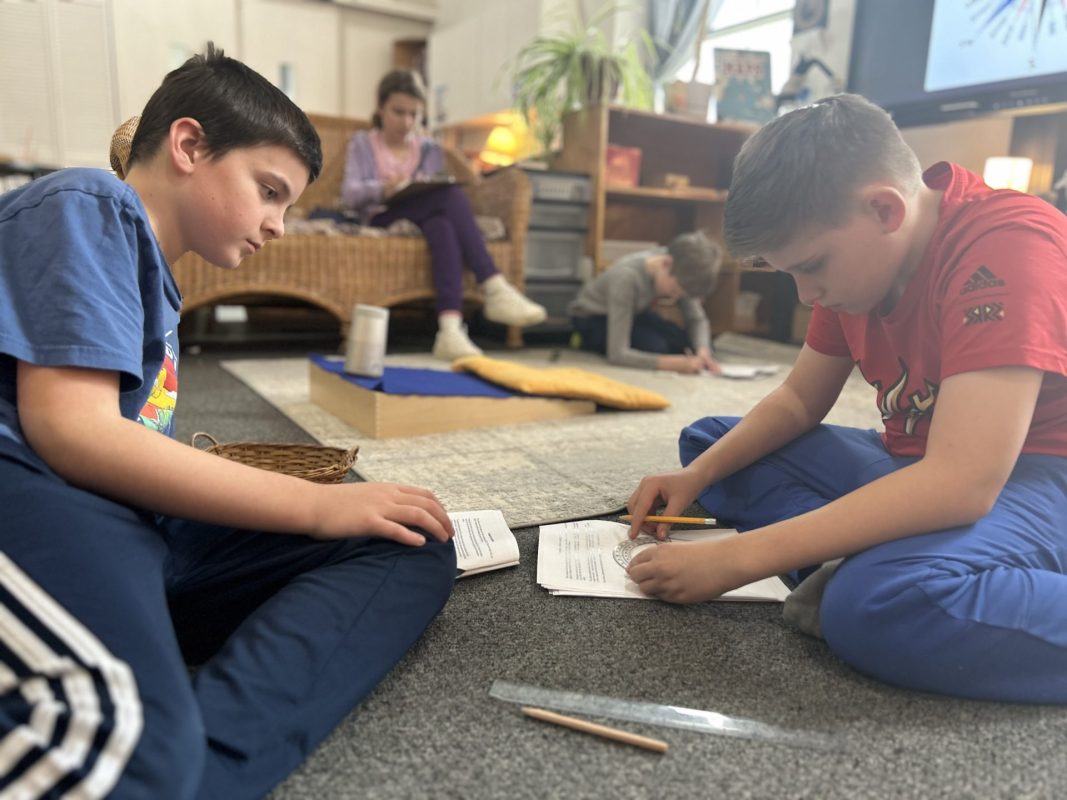
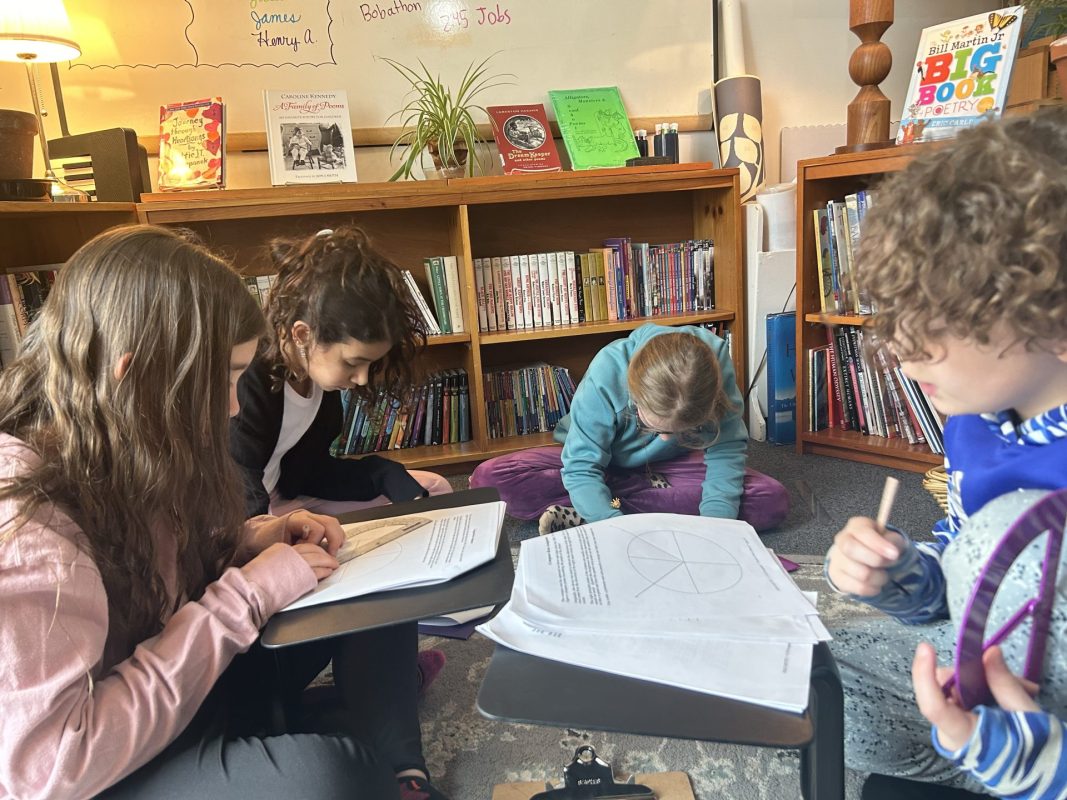
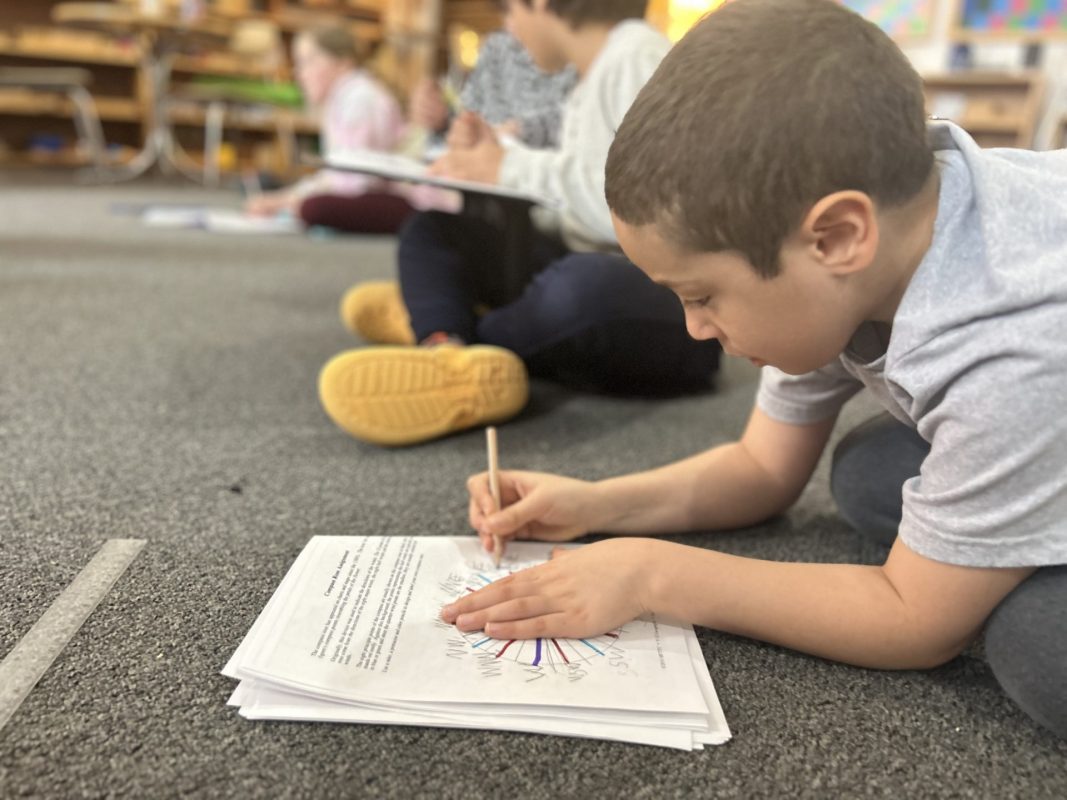
In geography this week, we learned about the compass rose. We discussed the history and use of this symbol by cartographers and sailors. Students followed up this lesson by making their own 32-point compass roses.

In biology, we continued our study of advanced classification with a lesson on characteristics used for classification. Students learned that the basis of zoological classification is identifying specific “characters” of an animal. We also had a dynamic discussion about the origins of using binomial nomenclature, genus + species, to classify animals.

I am looking forward to meeting with you on April 19 for Parent-Teacher-Student Conferences! Please look for the sign-up in your email on Monday.

Wishing you a wonderful weekend,
Karen & Deb


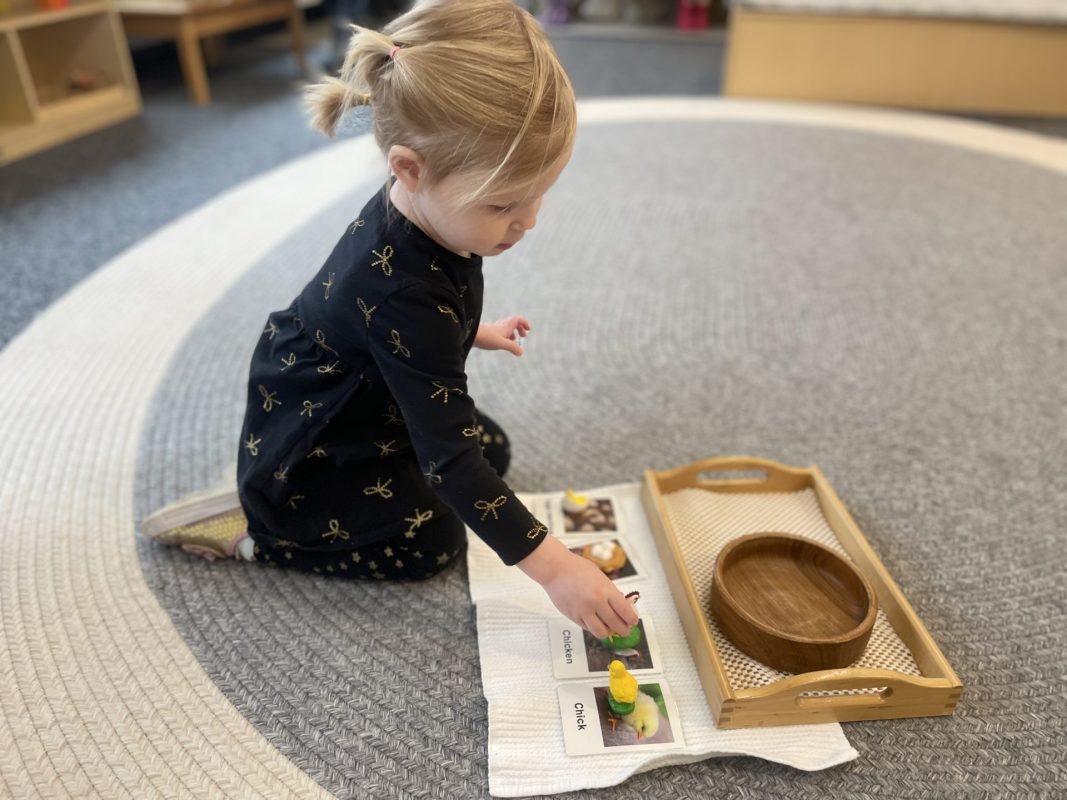
Mrs. Hood: Los pollitos!

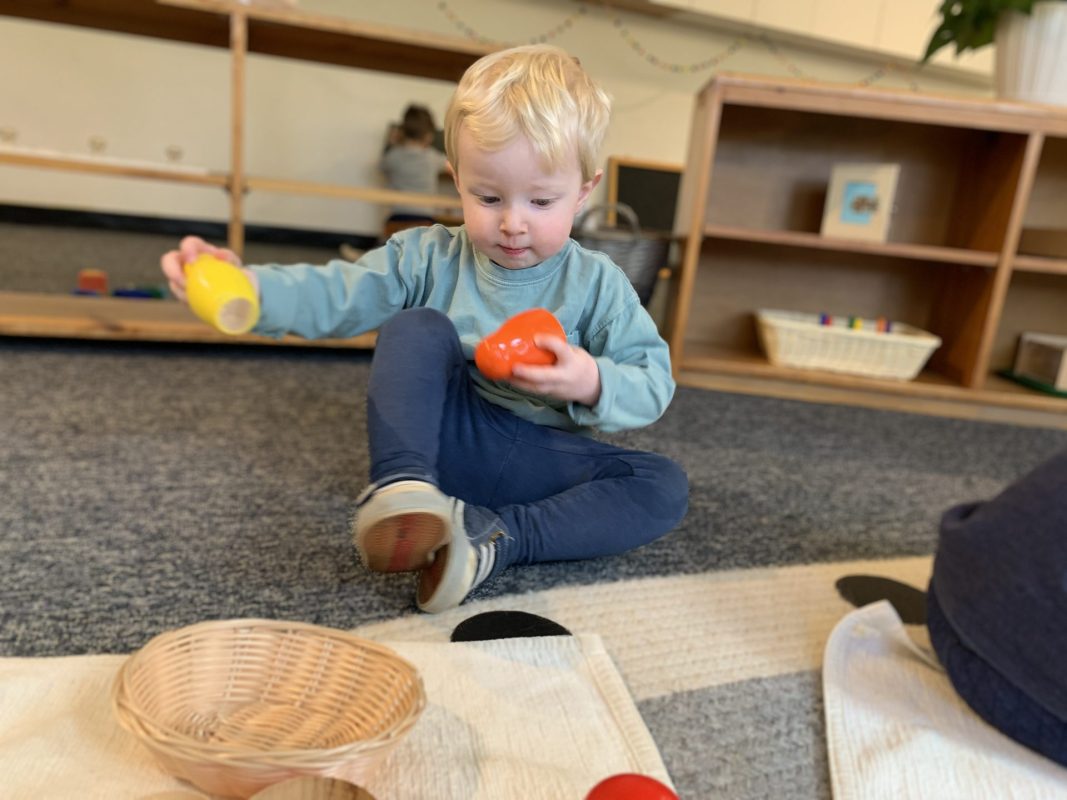
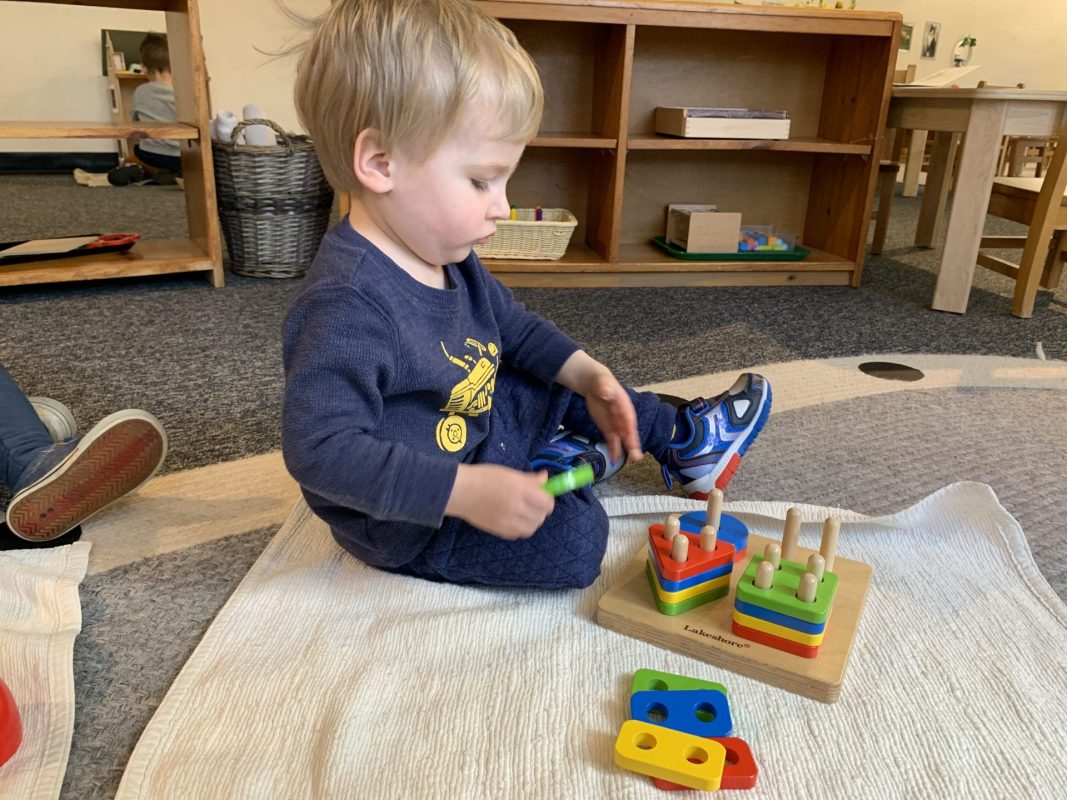
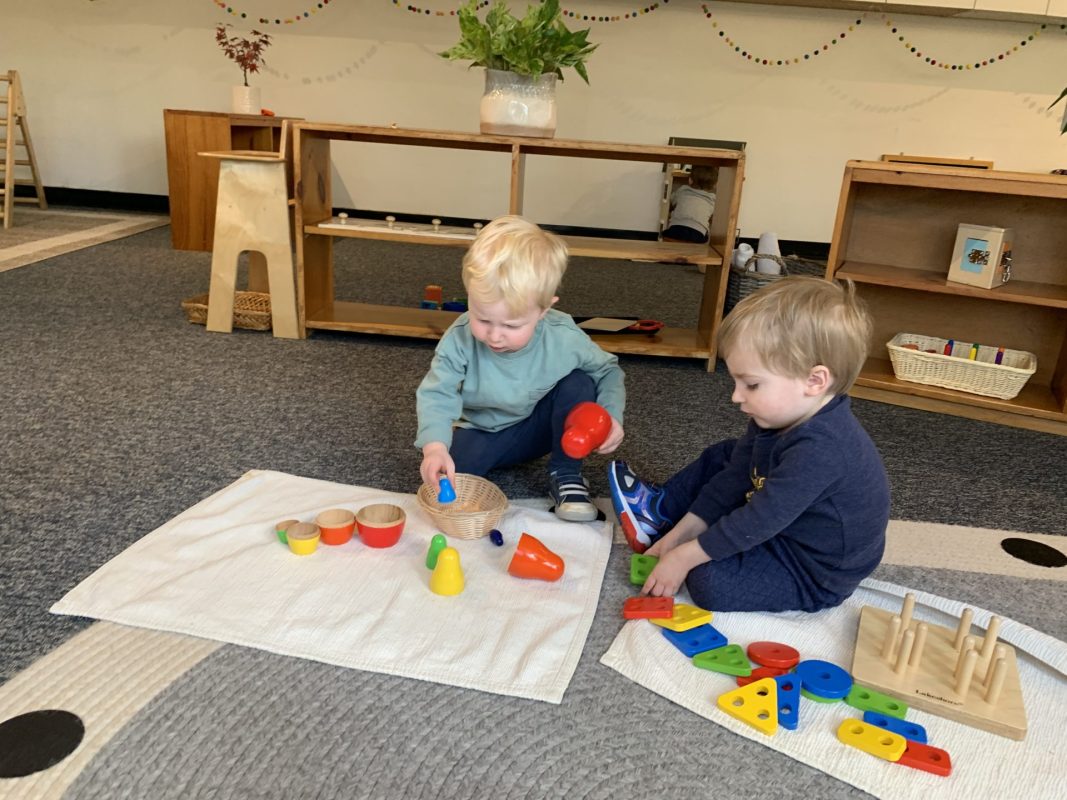
Toddlers are curious about the world around them and eager to learn new things. One educational topic that captures their imagination is the life cycle of living things! Teaching toddlers about life cycles has numerous benefits, including building scientific knowledge, fostering curiosity and wonder, enhancing vocabulary and language skills, encouraging hands-on learning, and instilling empathy and respect for nature.

Spring is the perfect season to introduce these concepts (even though winter had a sneaky appearance, huh?)! So, this week, we started our studies on the life cycle of a chicken! From interesting eggs to fluffy chicks to clucking hens, the journey of a chicken from egg to adult is a fascinating process that toddlers always seem to enjoy!

So far, we have focused on two concepts: chickens come from eggs, and a baby chicken is called a chick. Children enjoyed some short educational videos where they could observe the hatching process. The smiles on the children’s faces were so priceless.

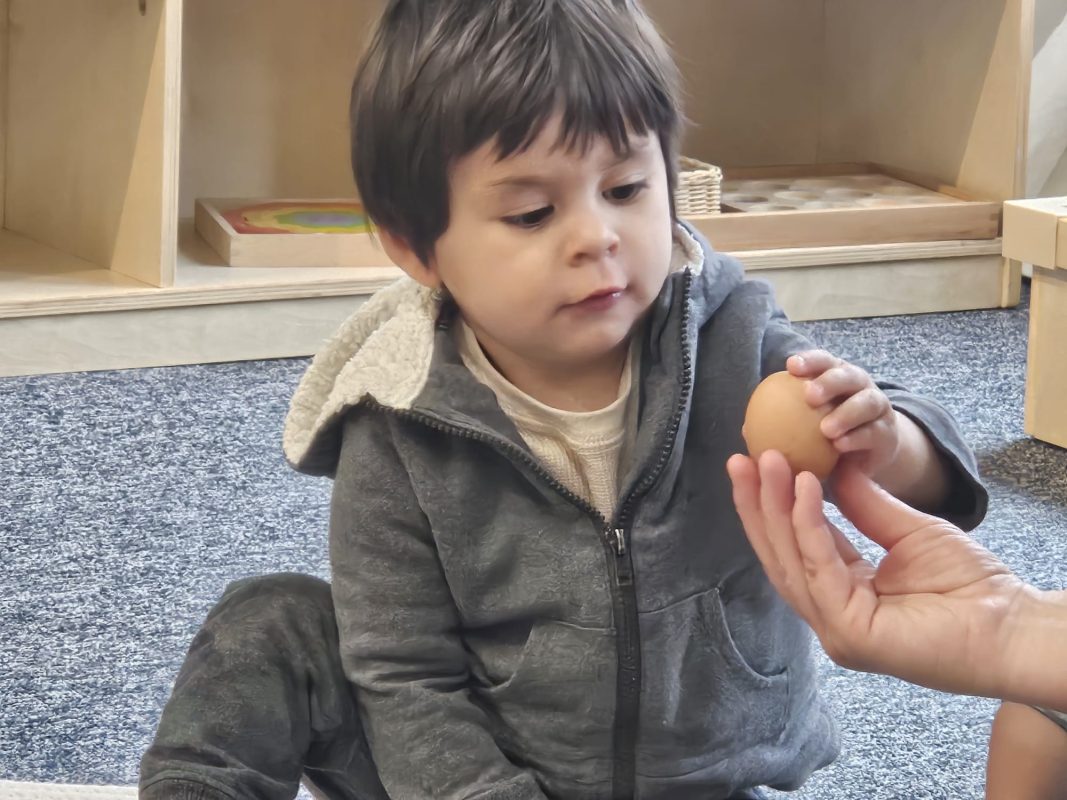
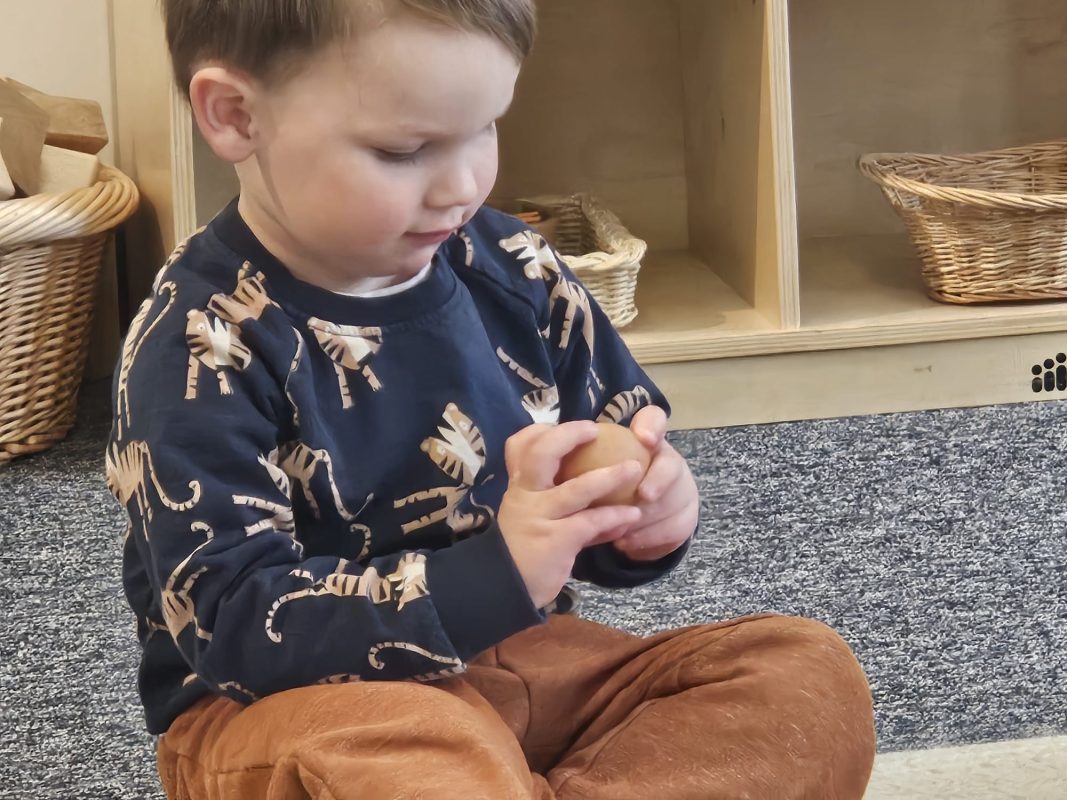
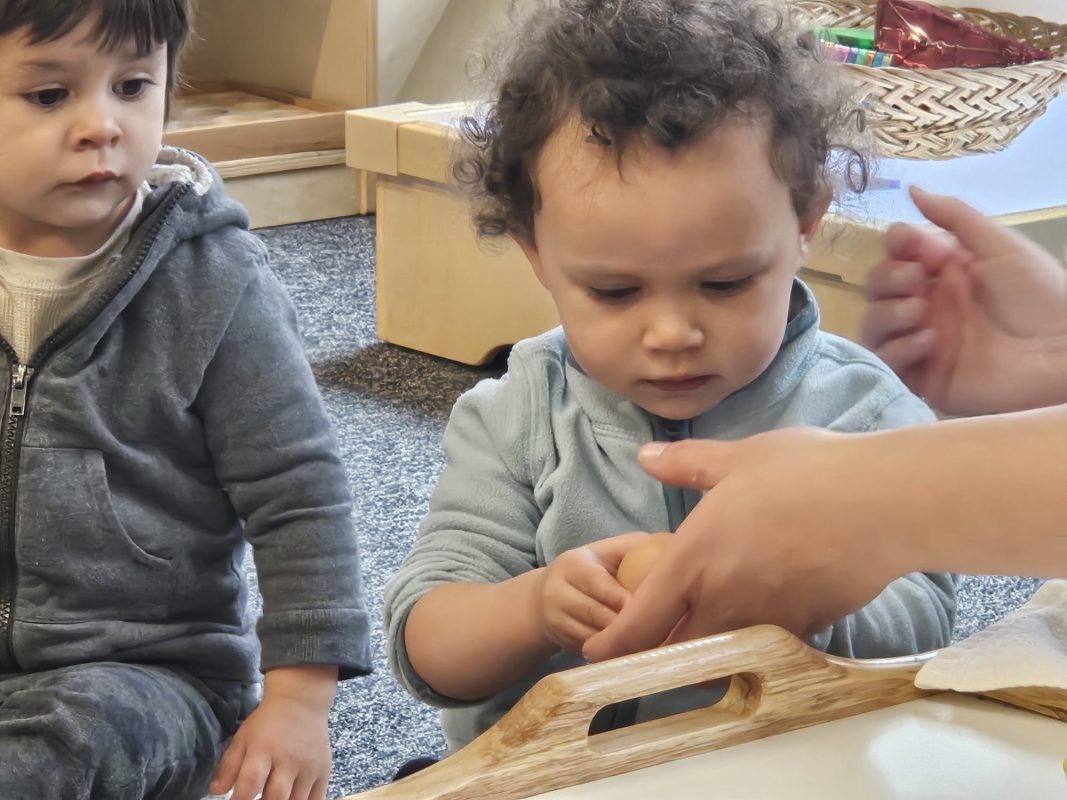
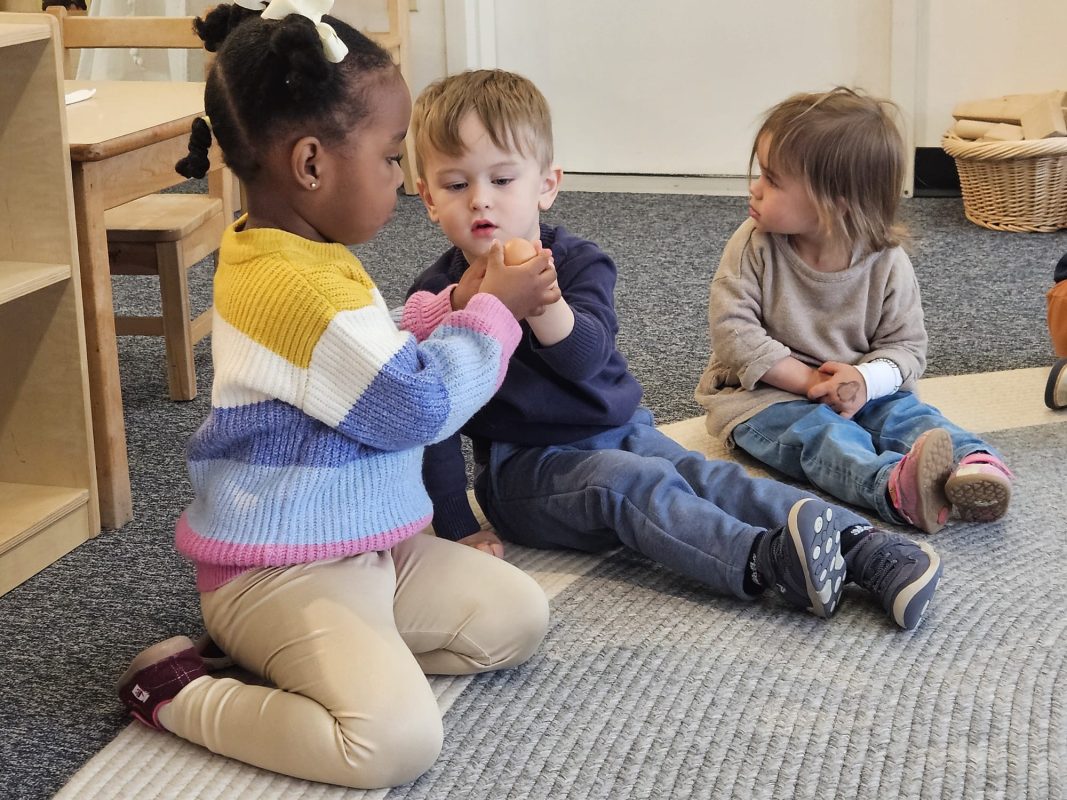
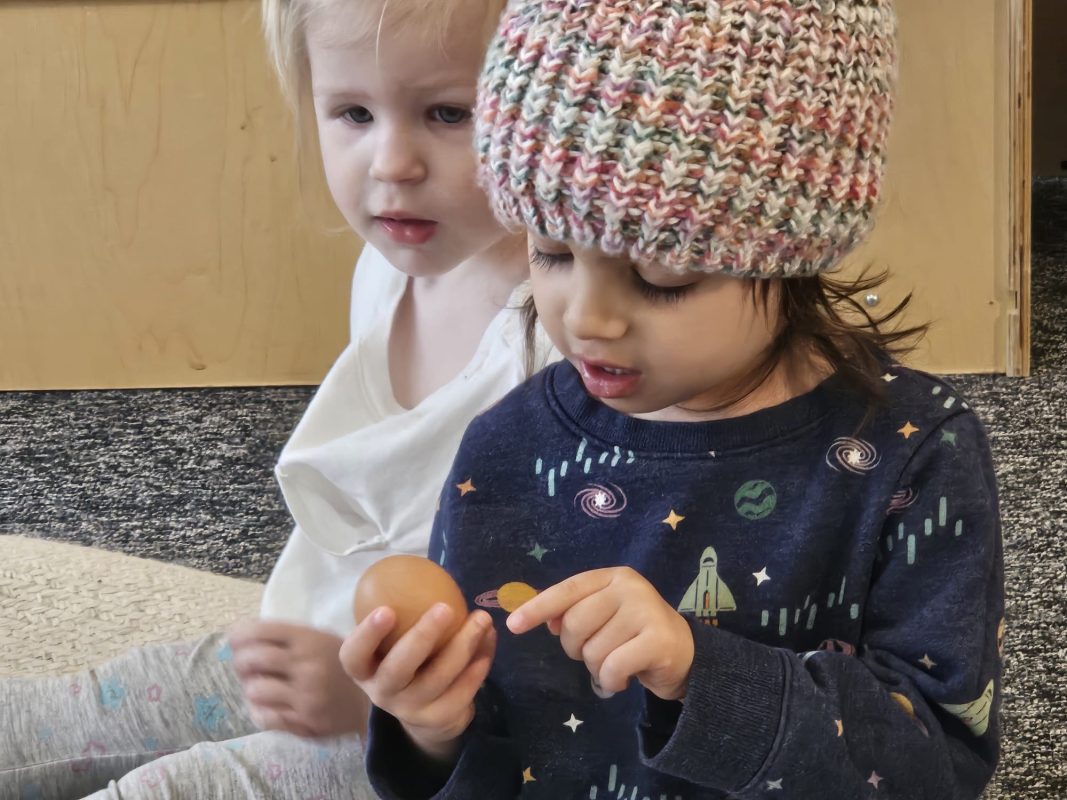
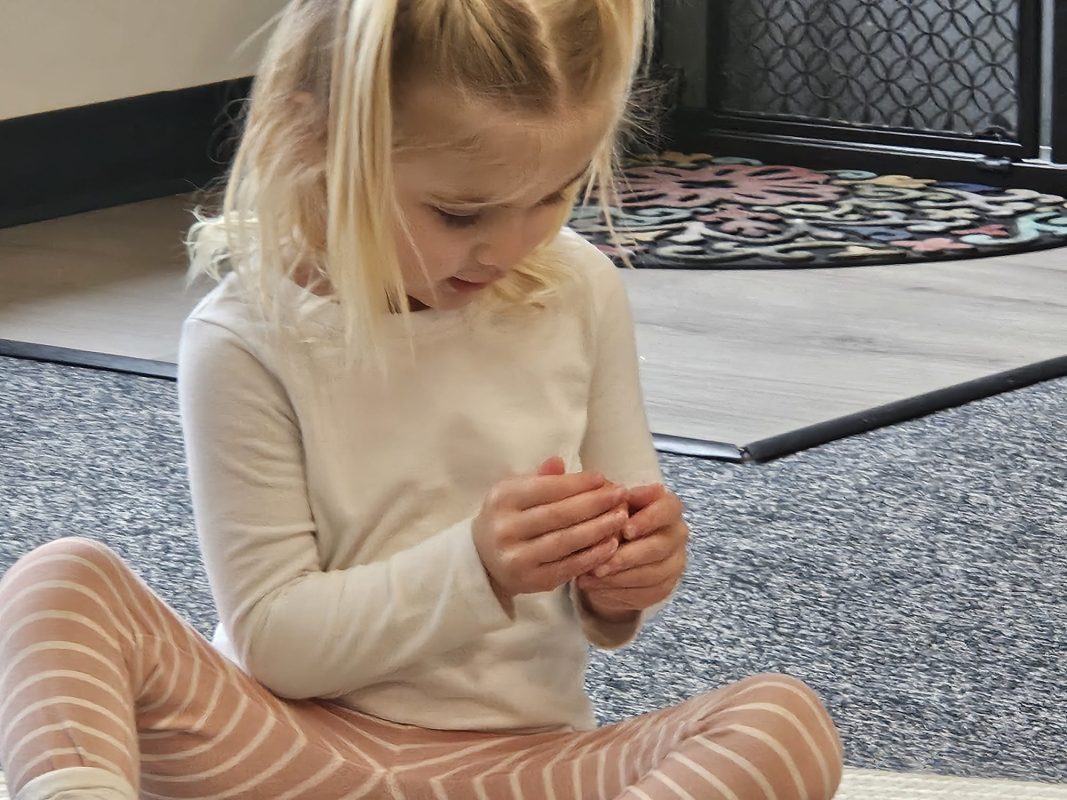
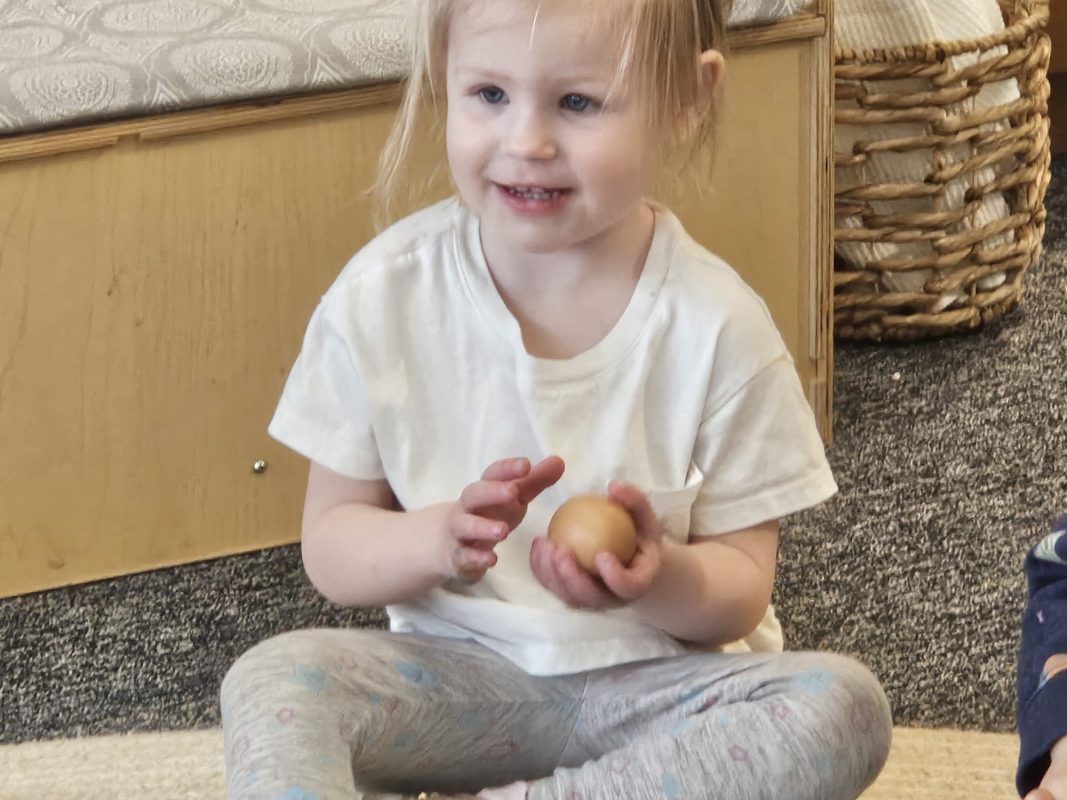
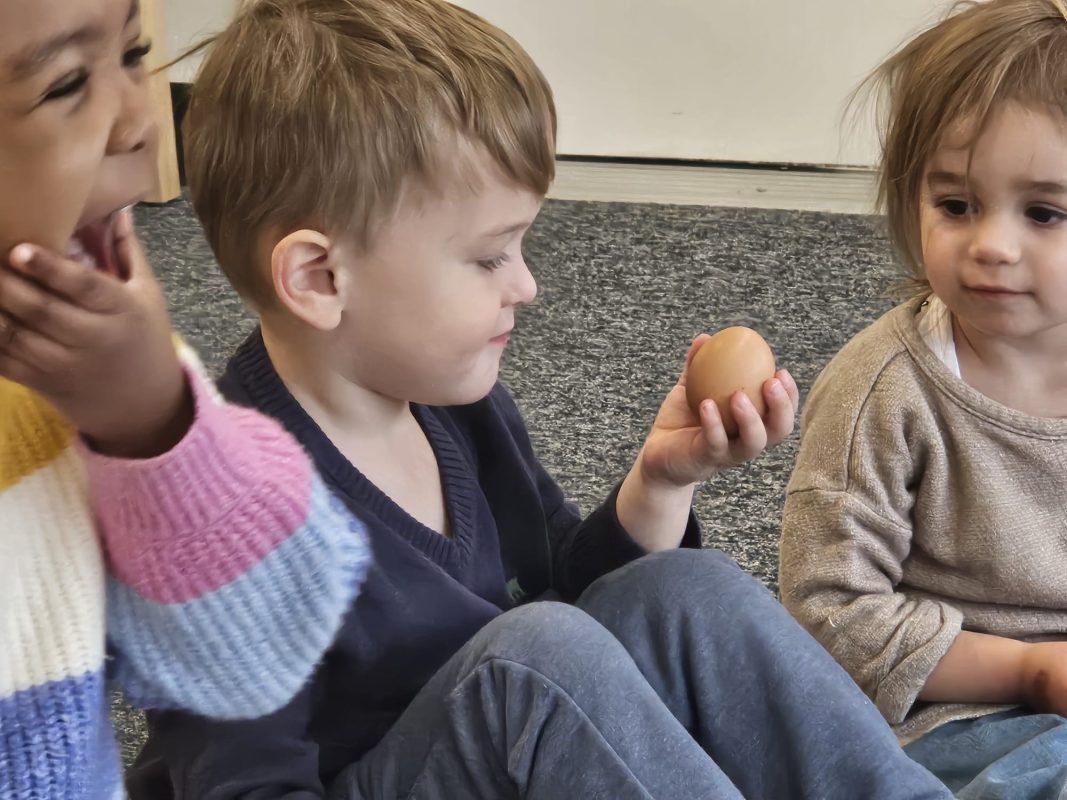
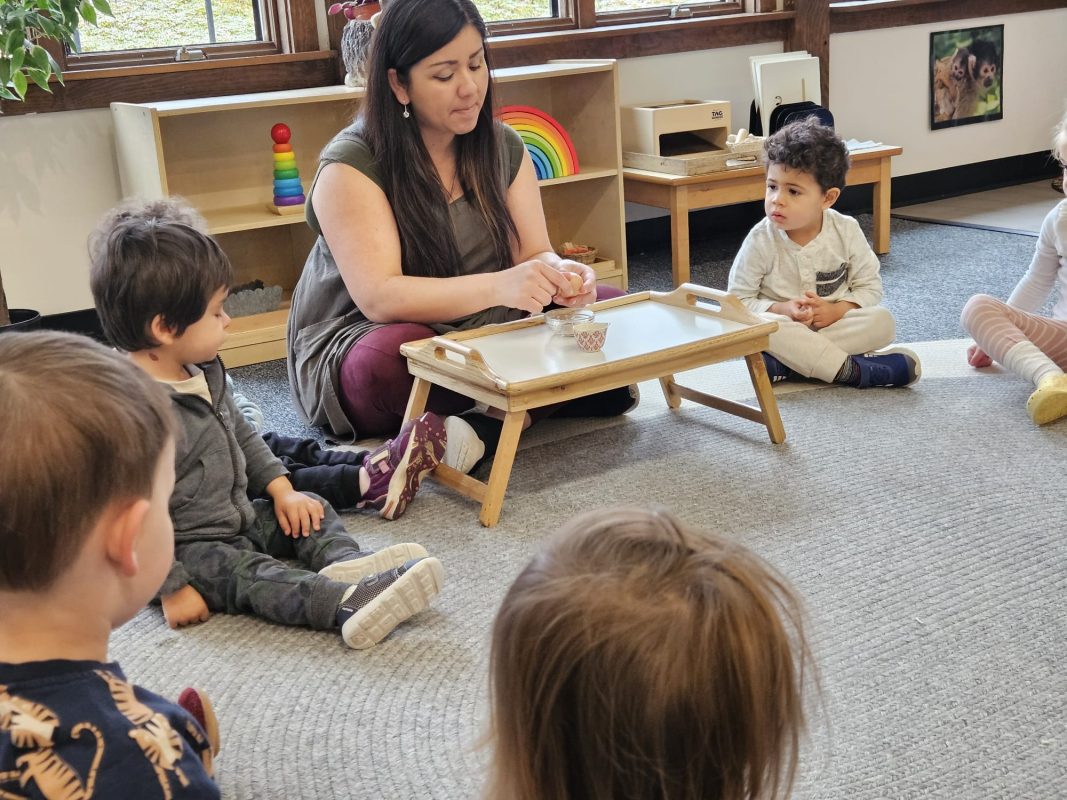
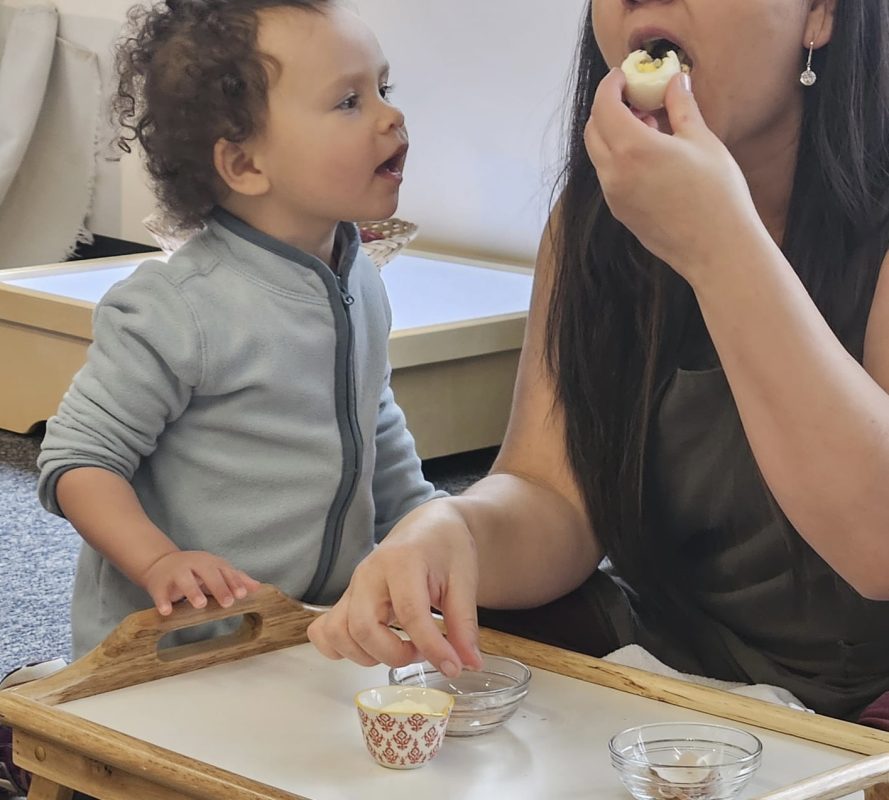
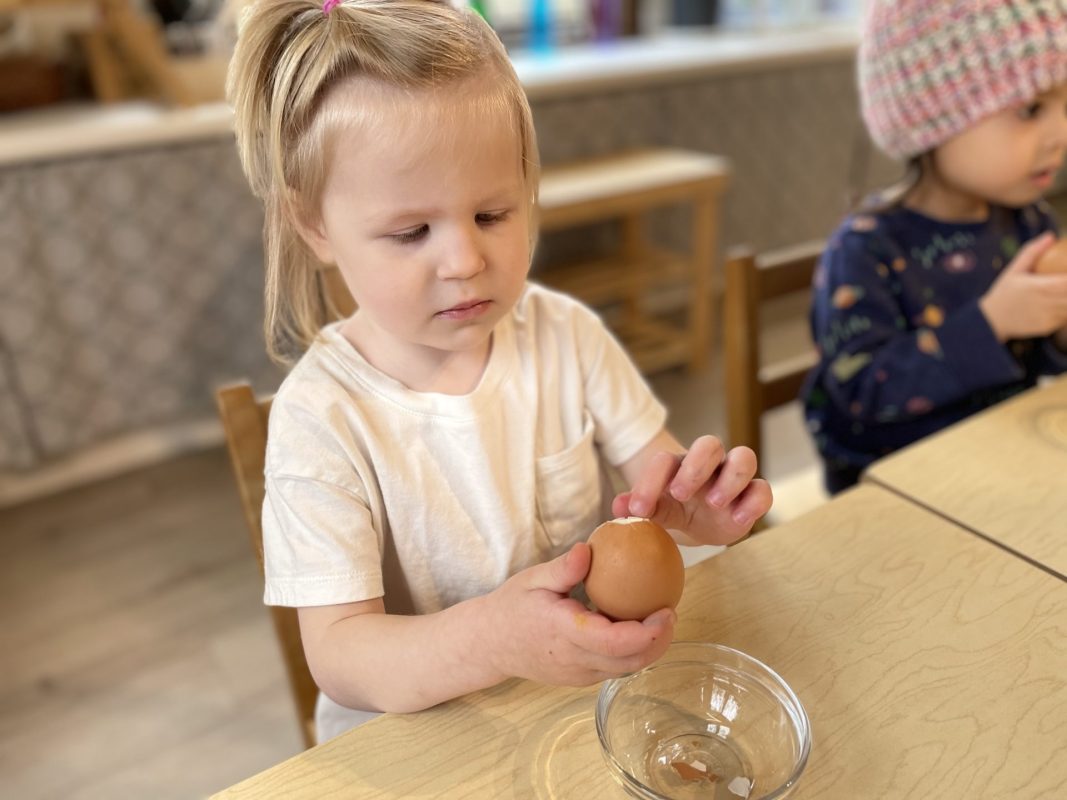
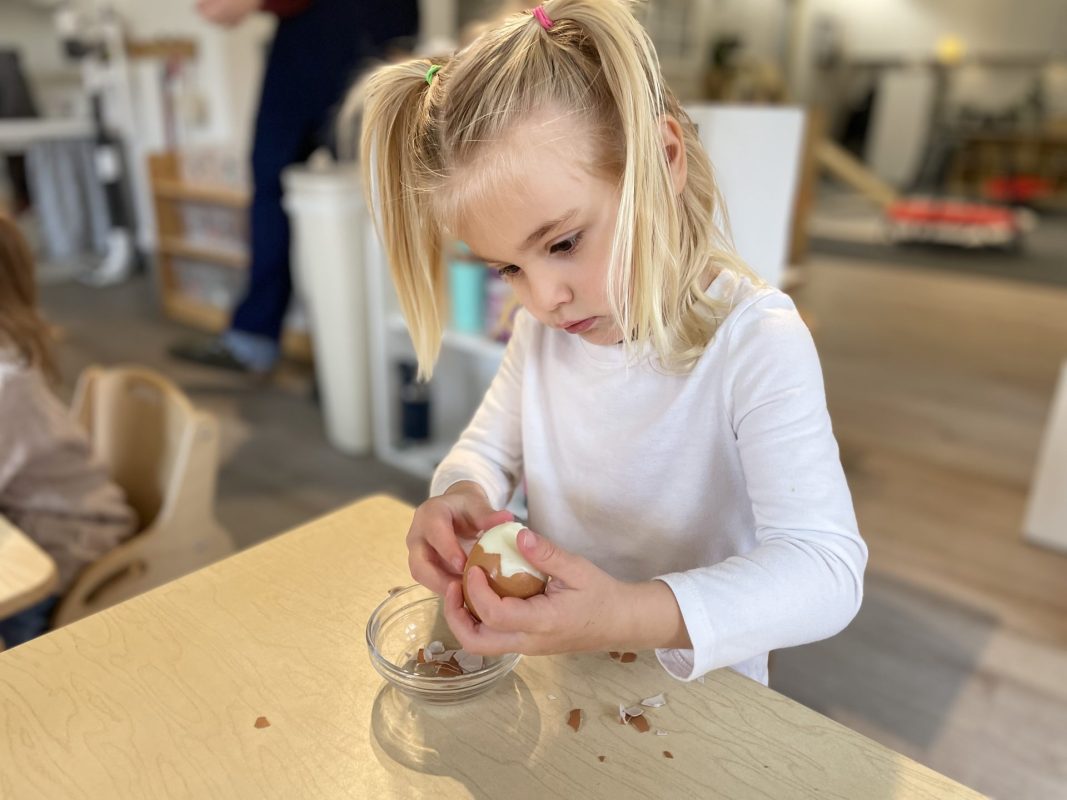
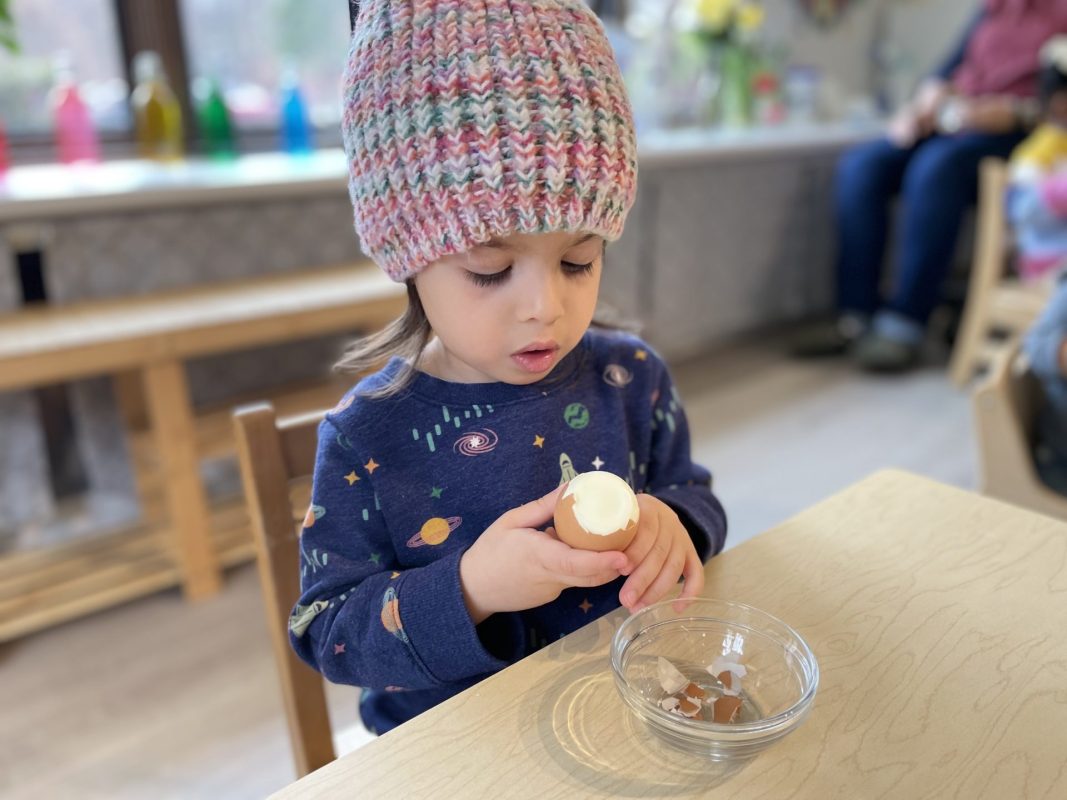
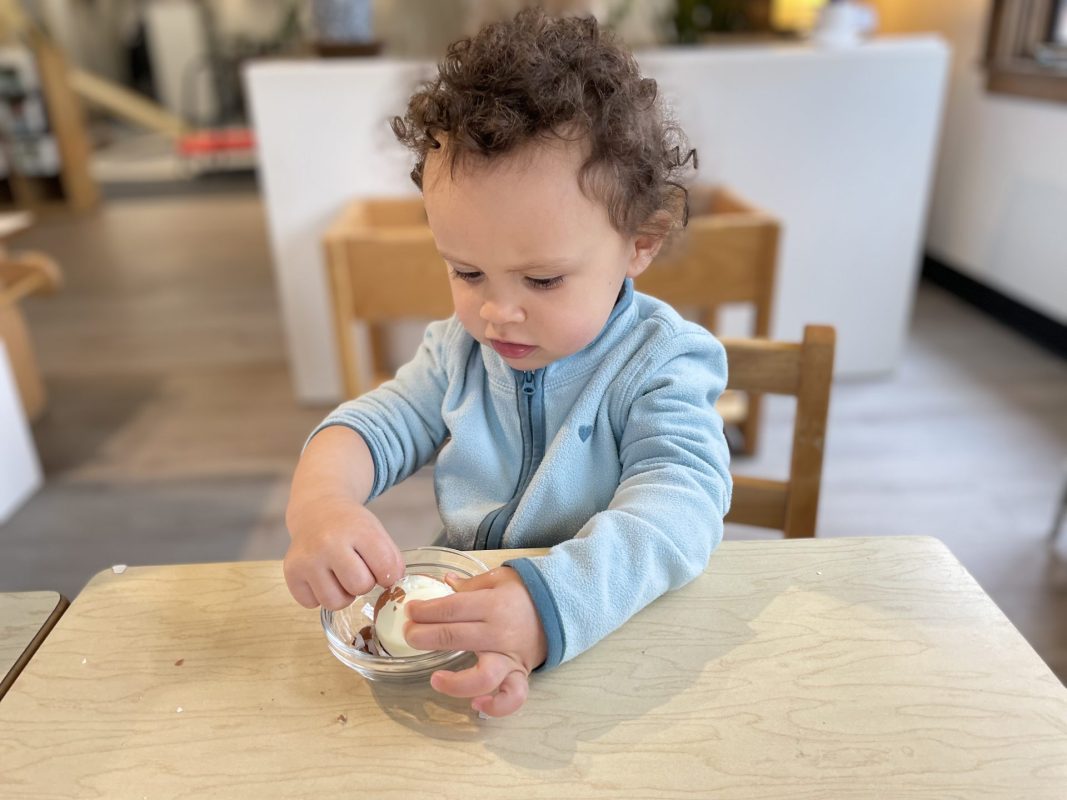
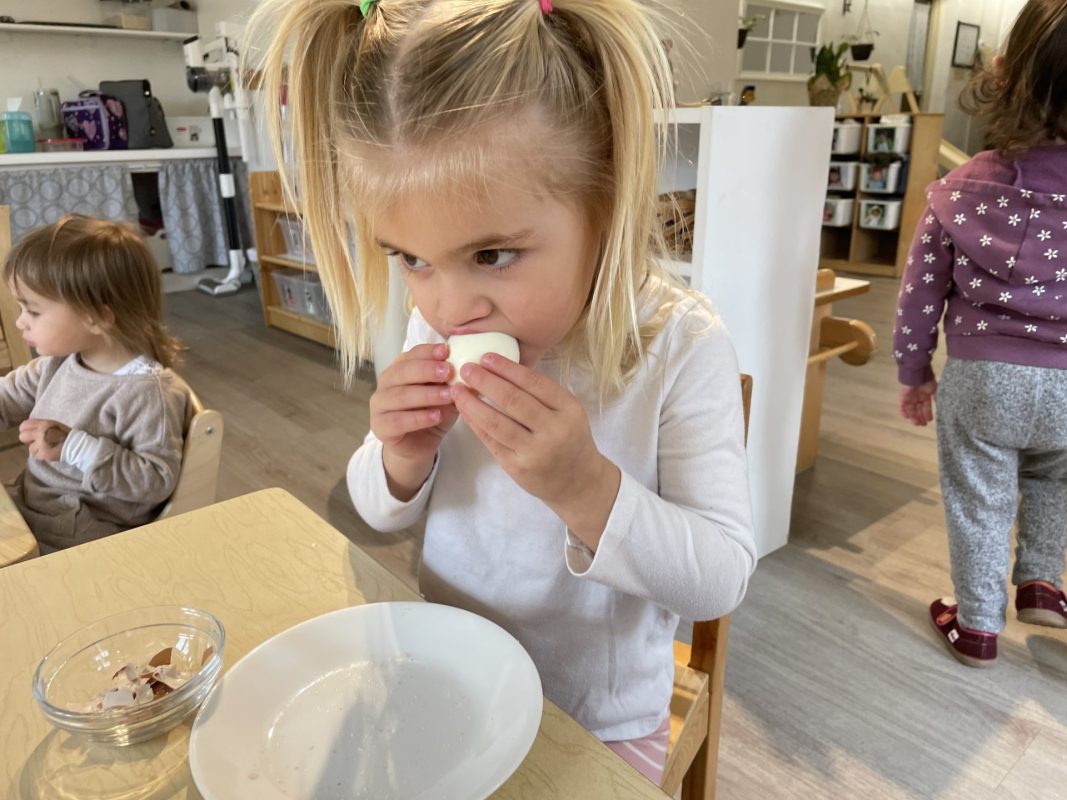
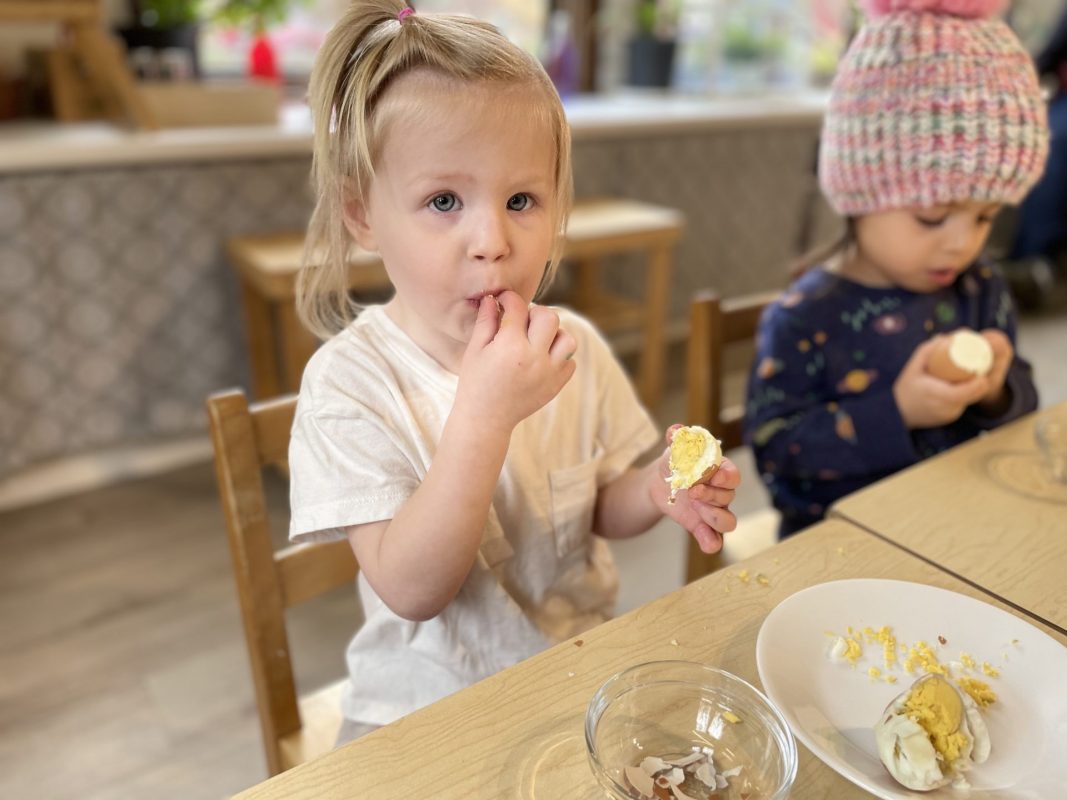
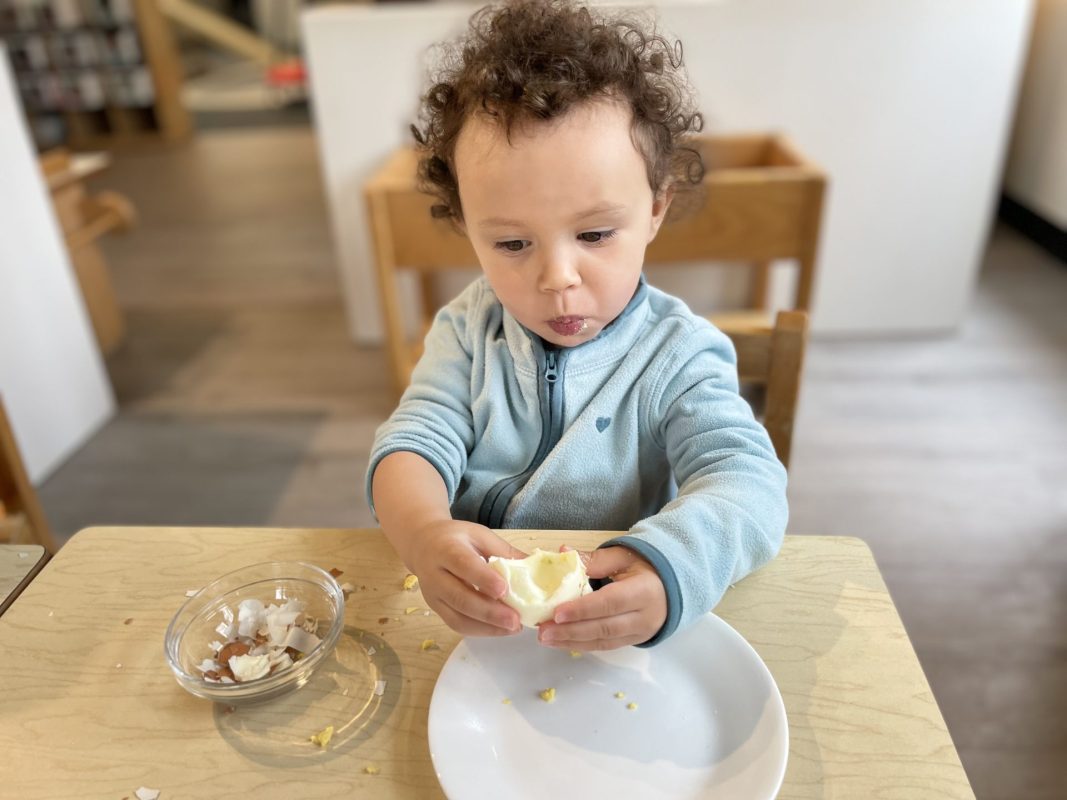
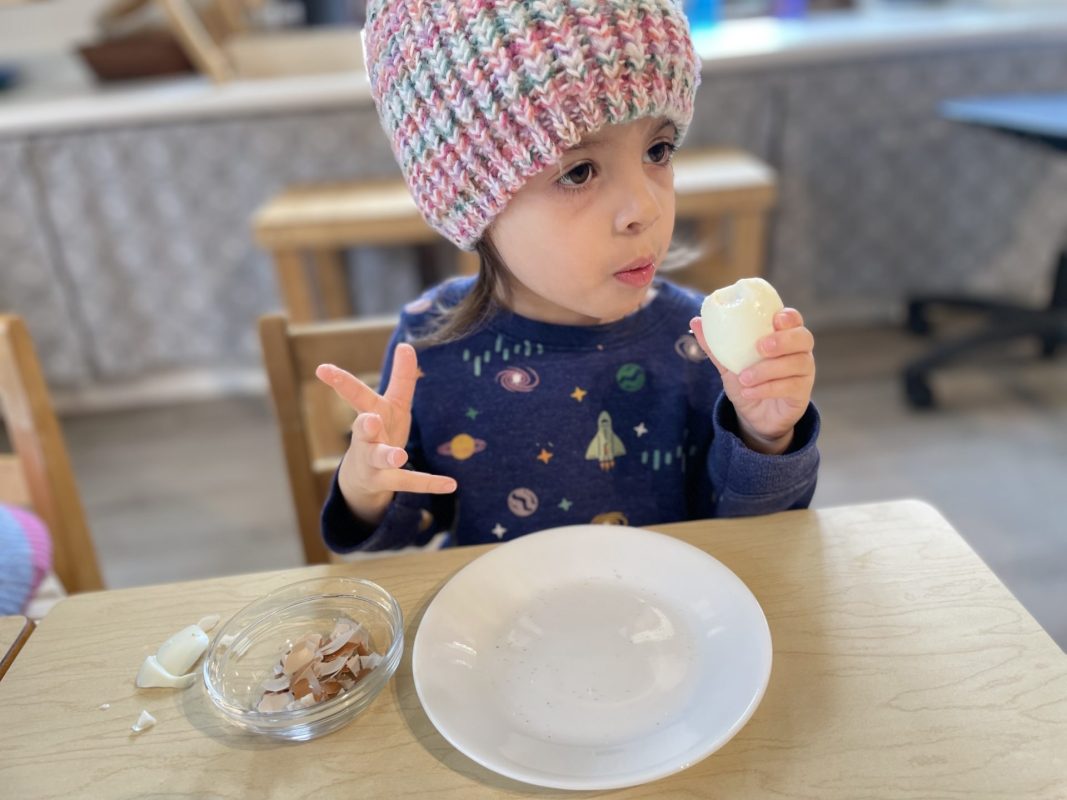
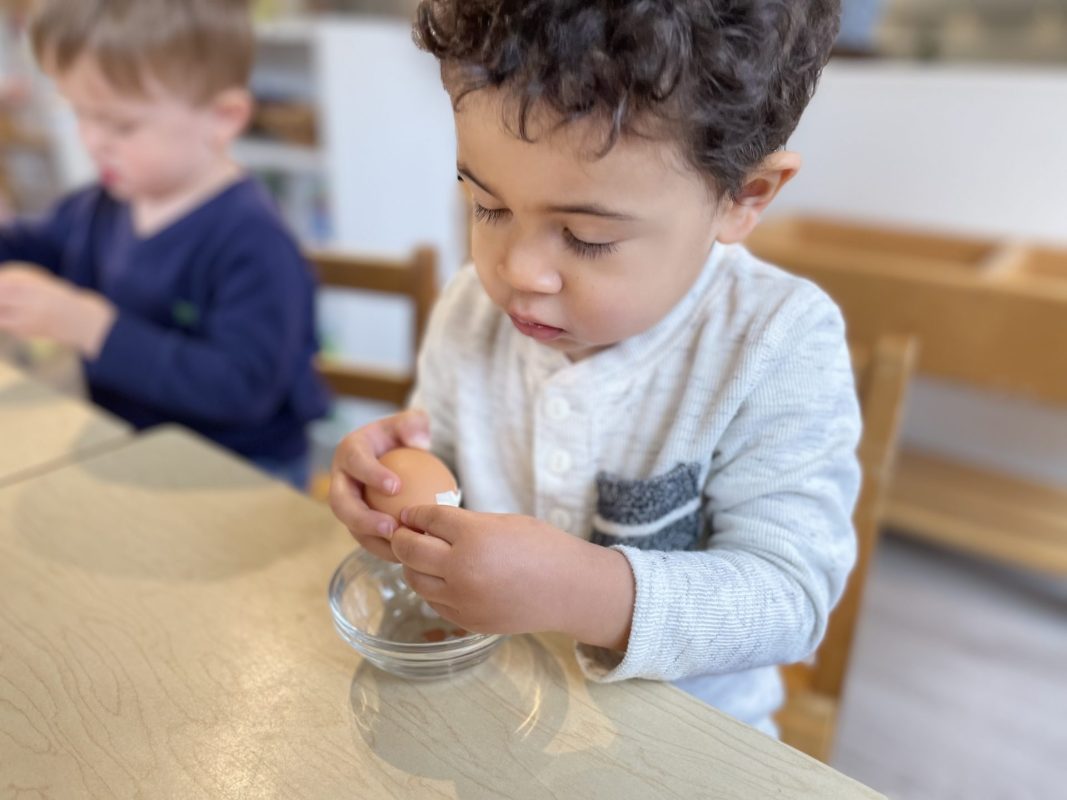
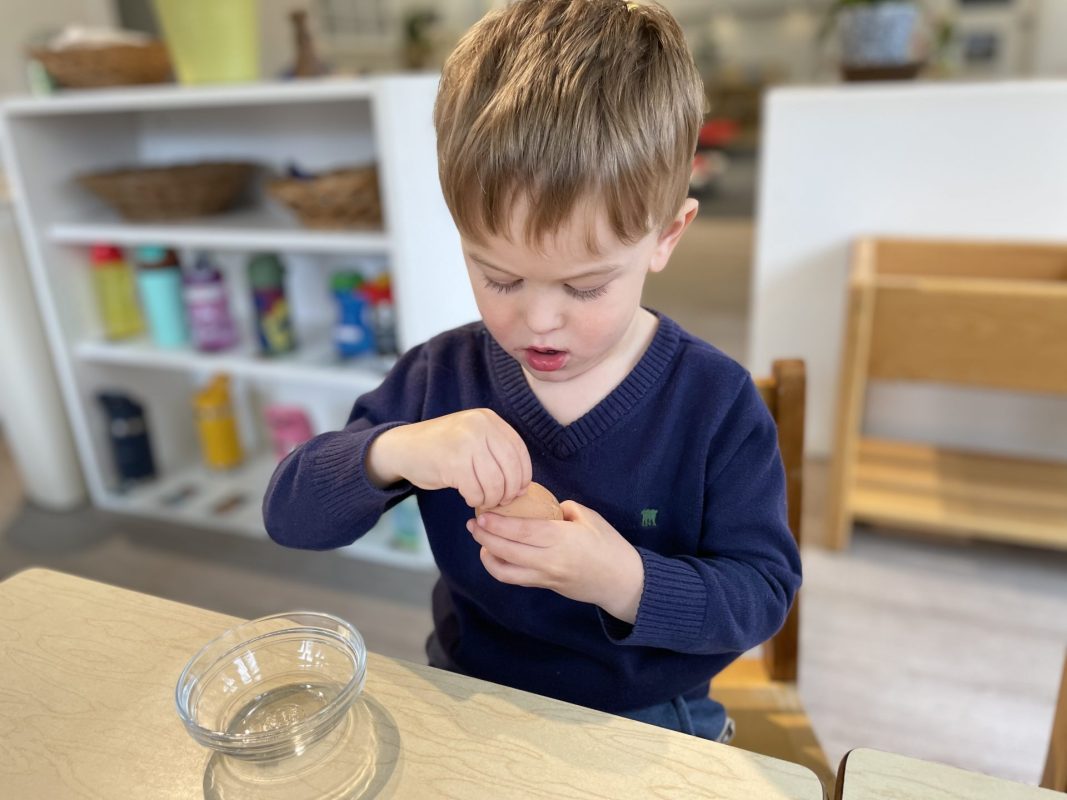
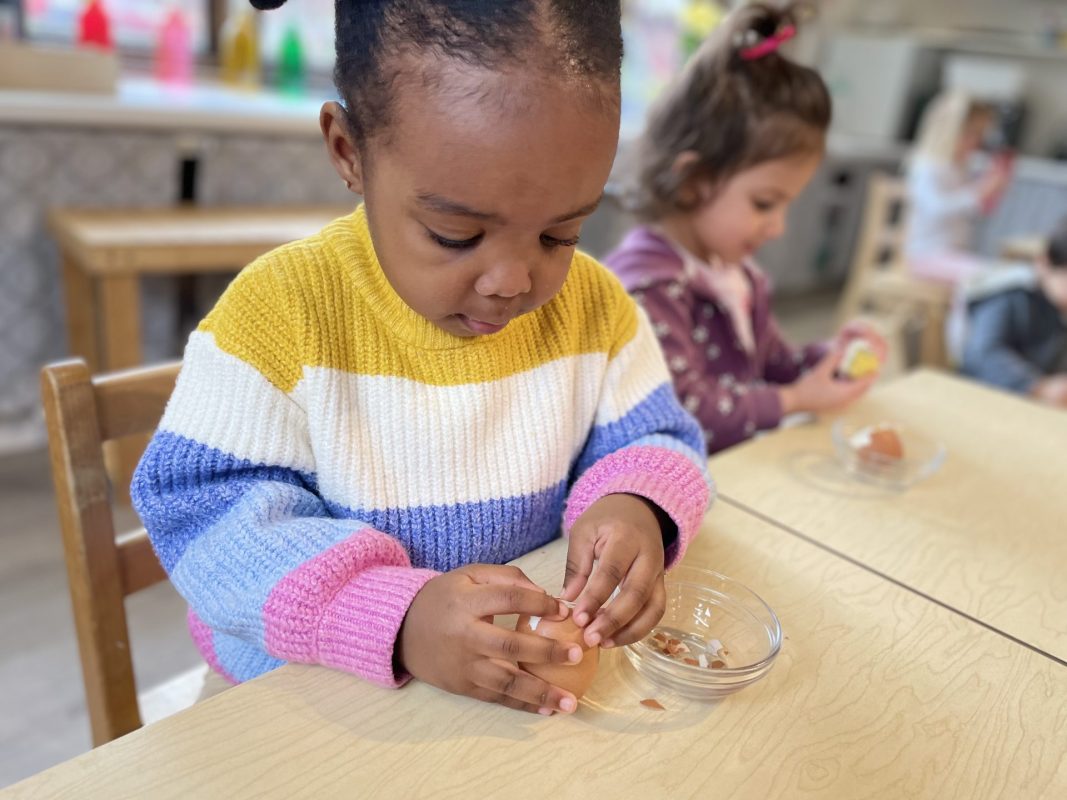
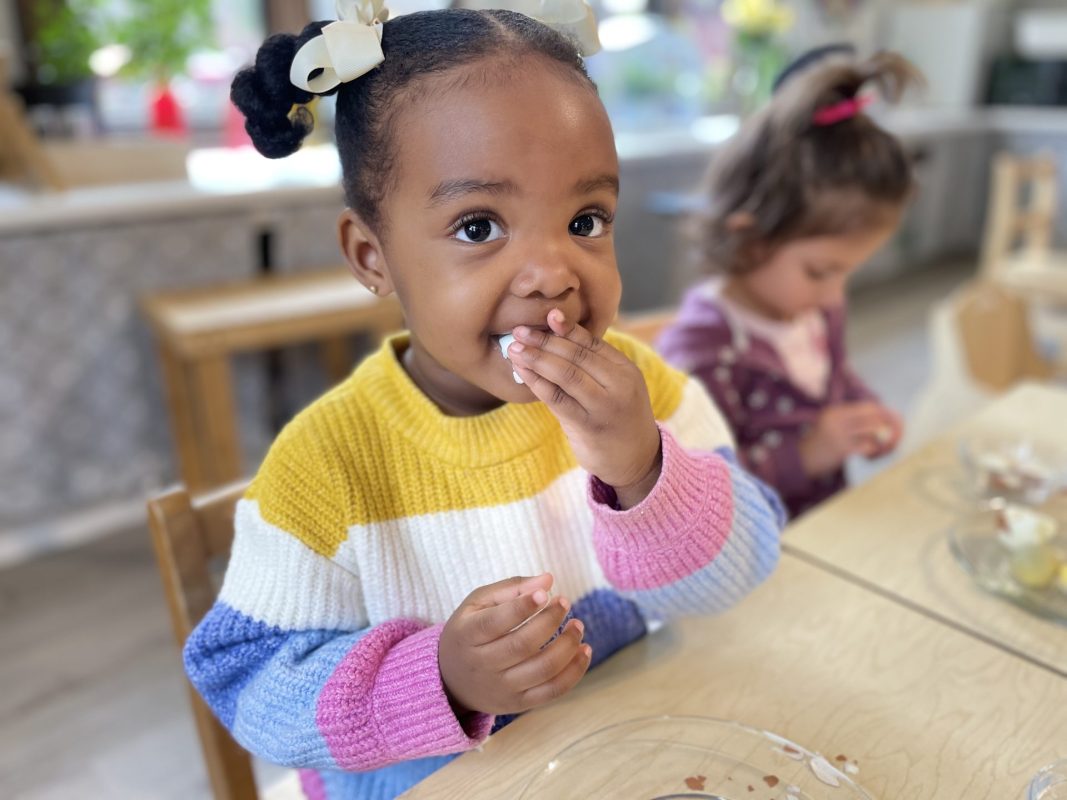
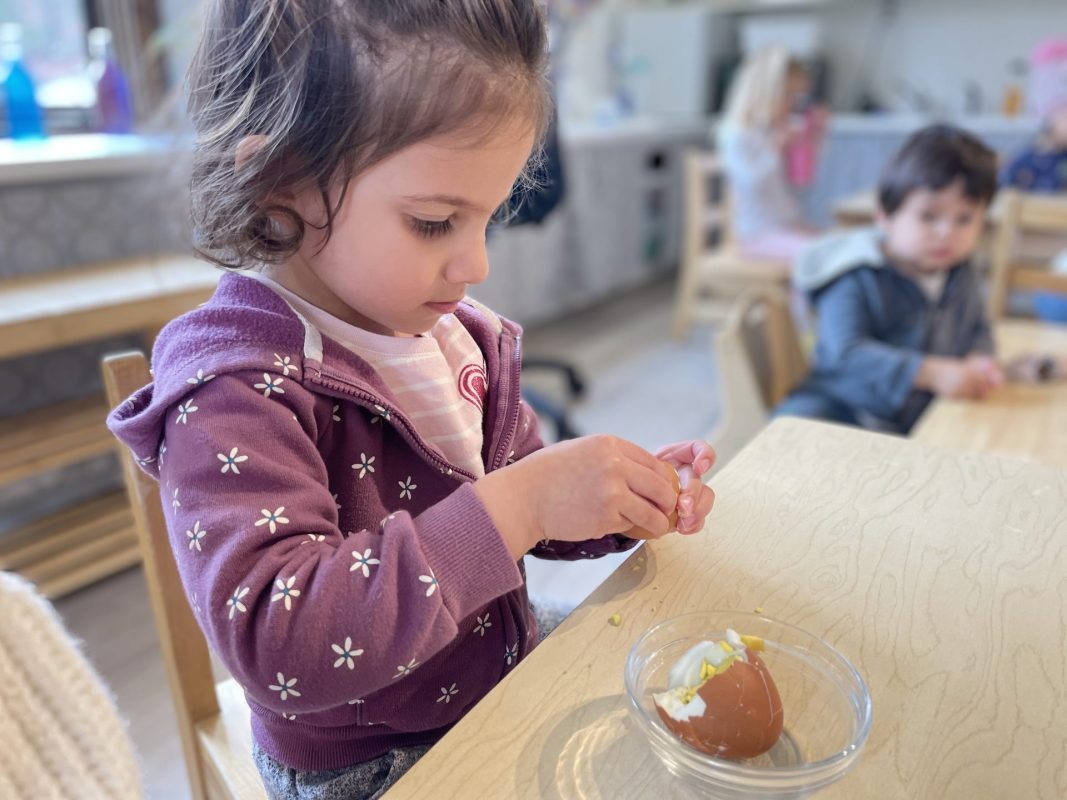
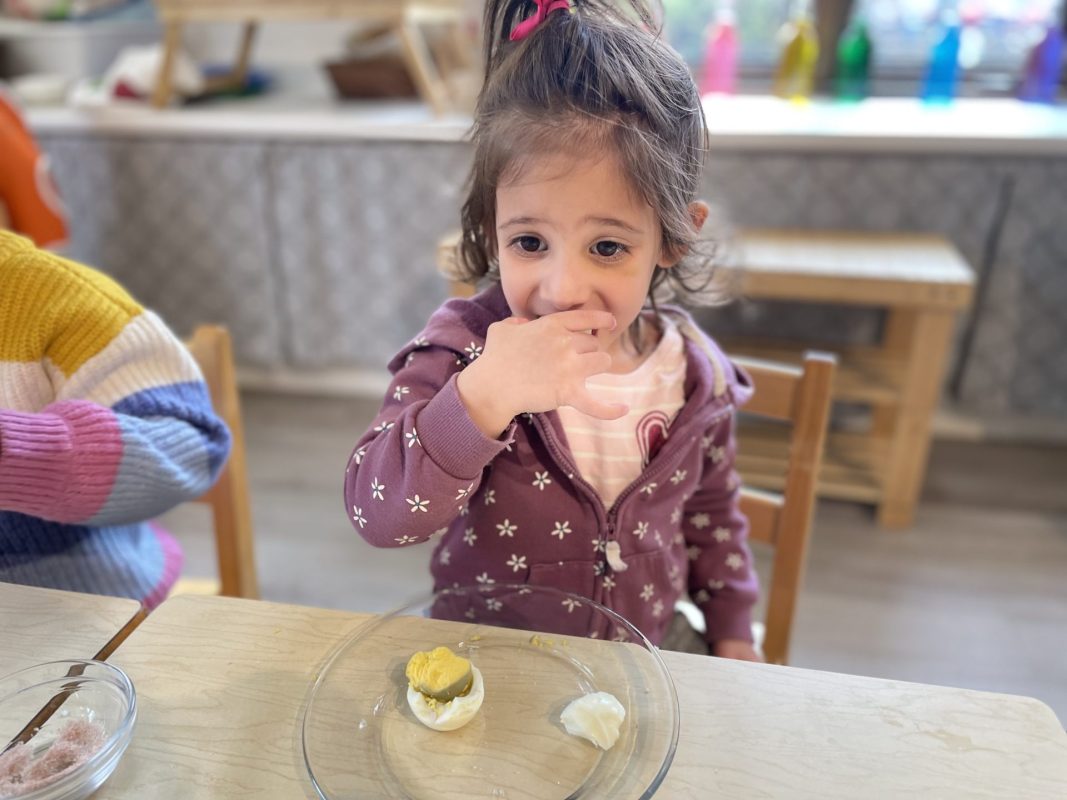
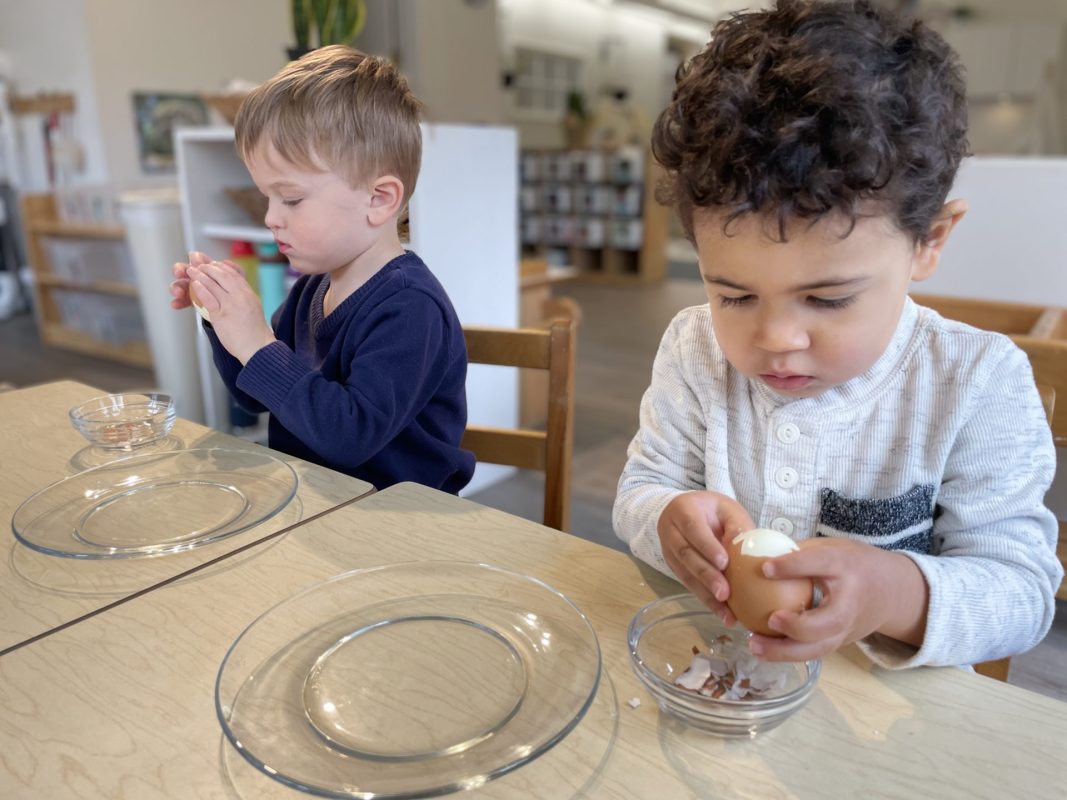
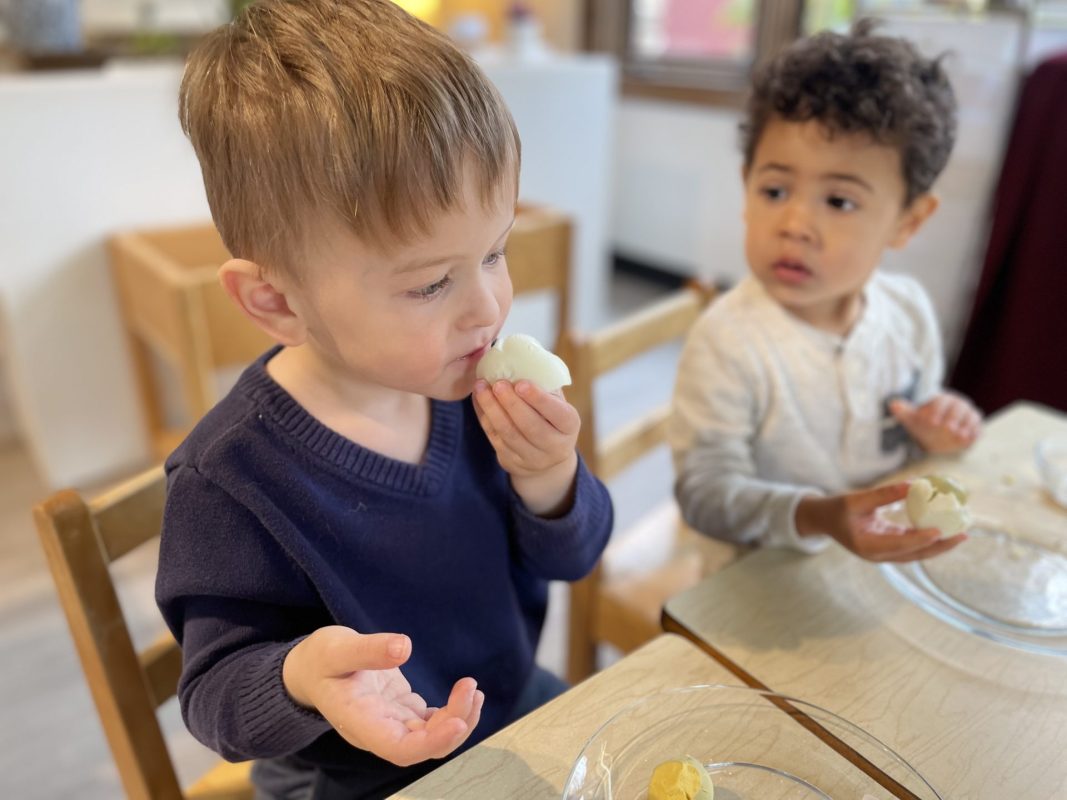
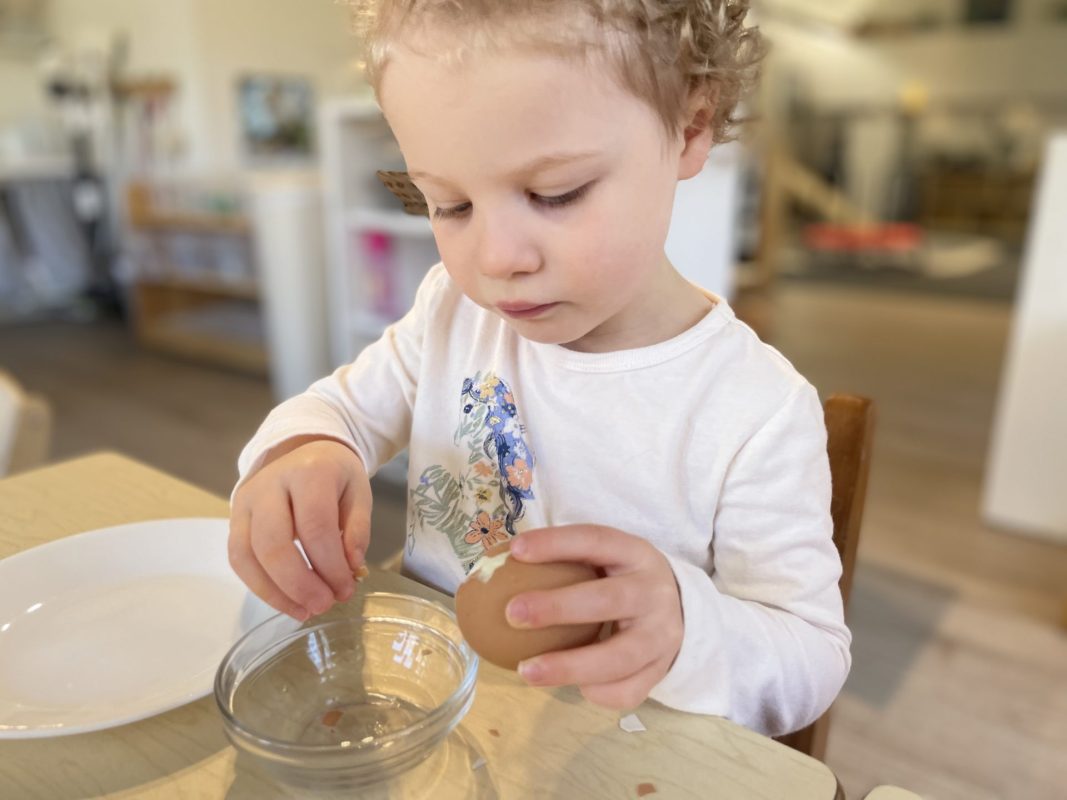
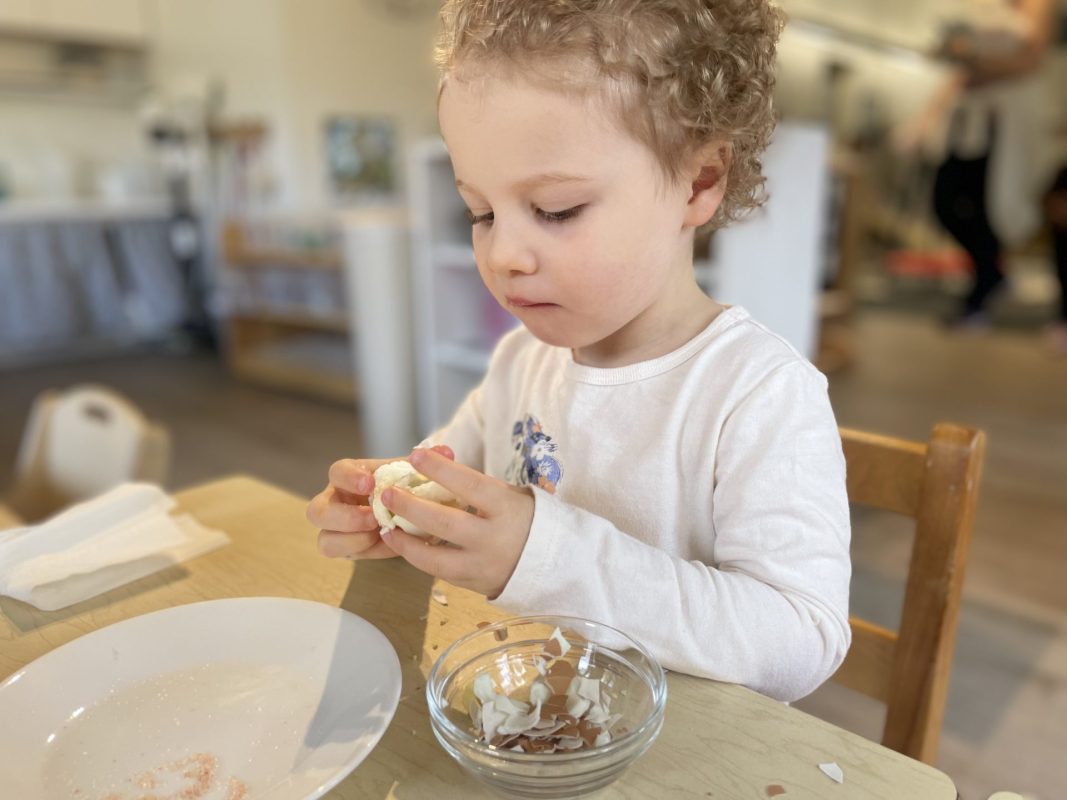
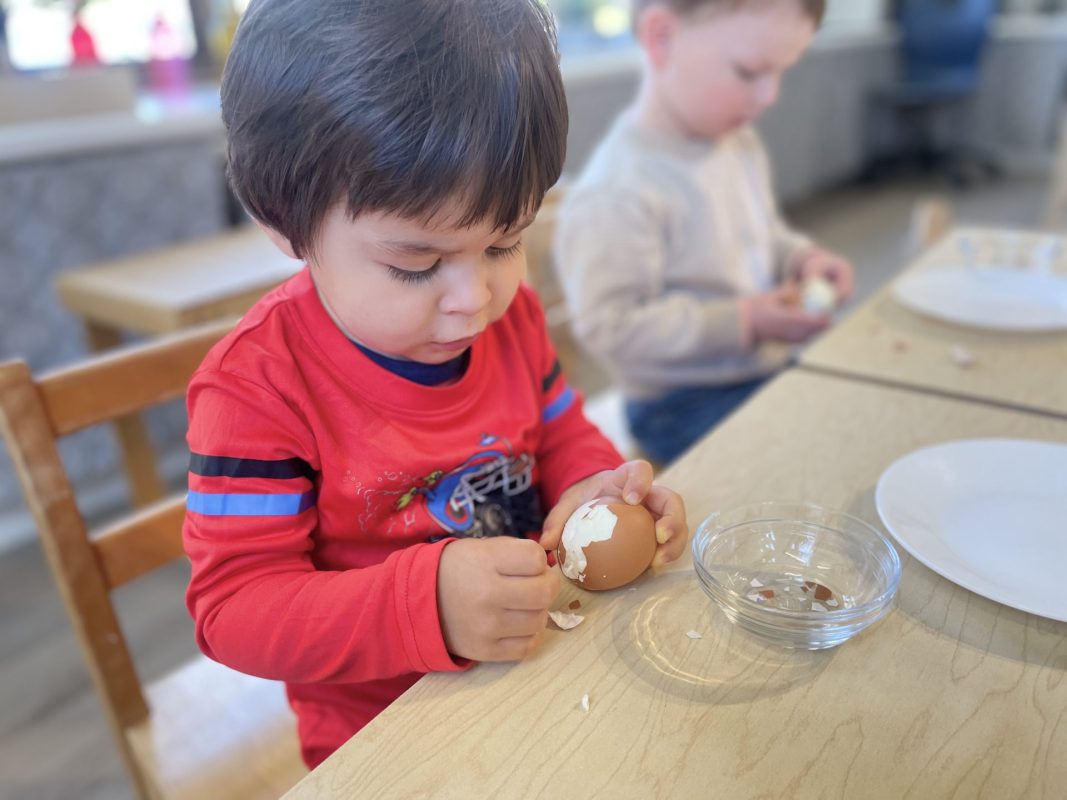
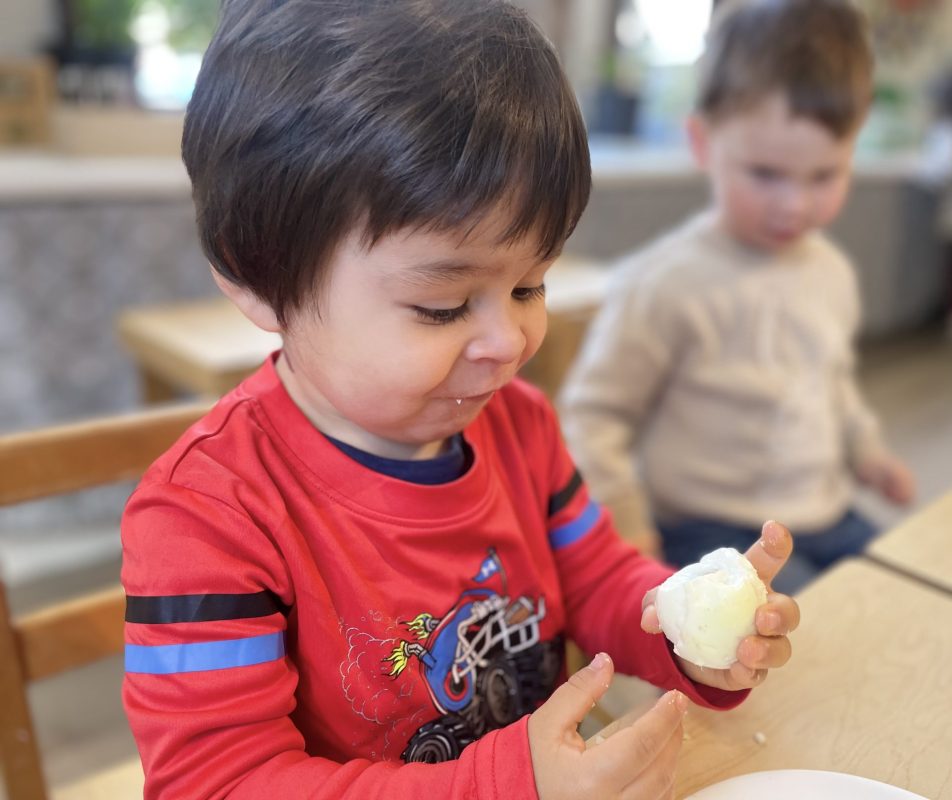
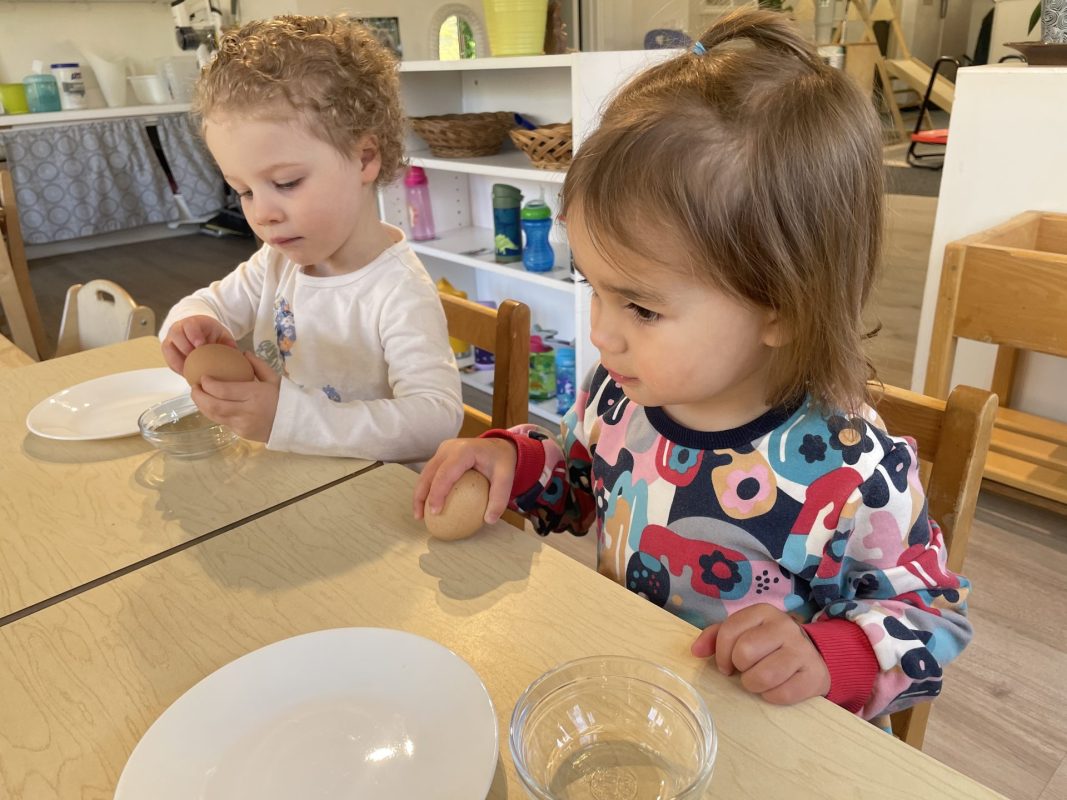
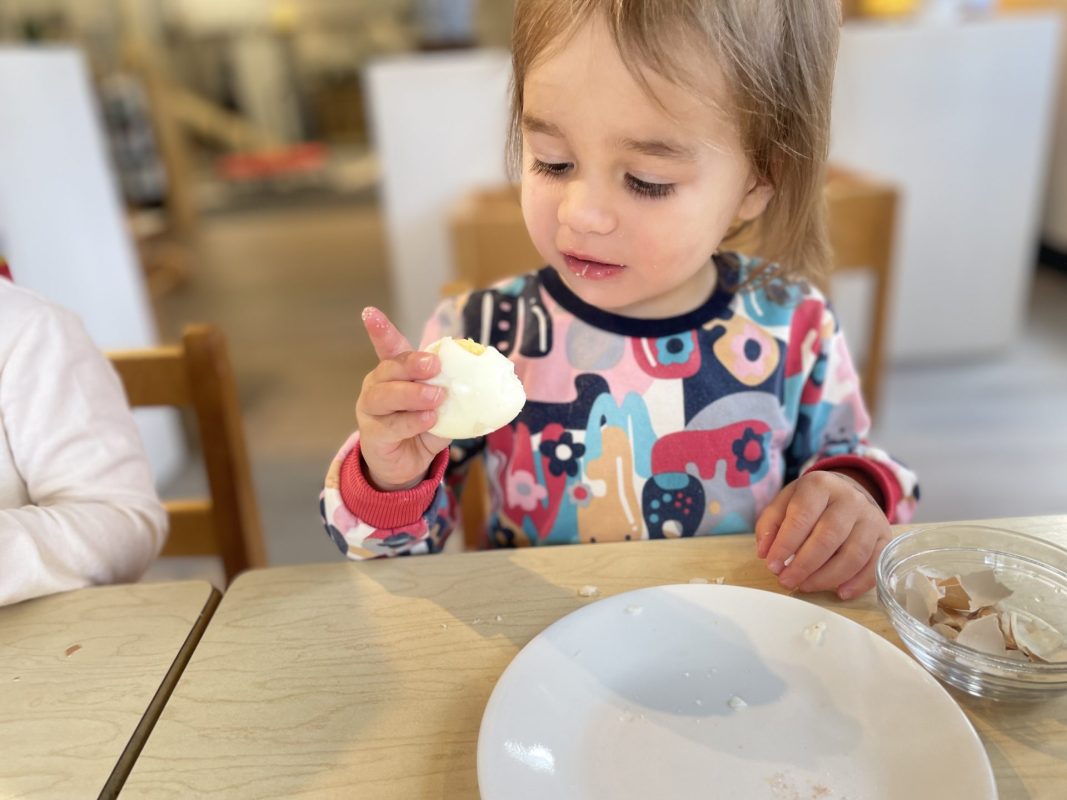
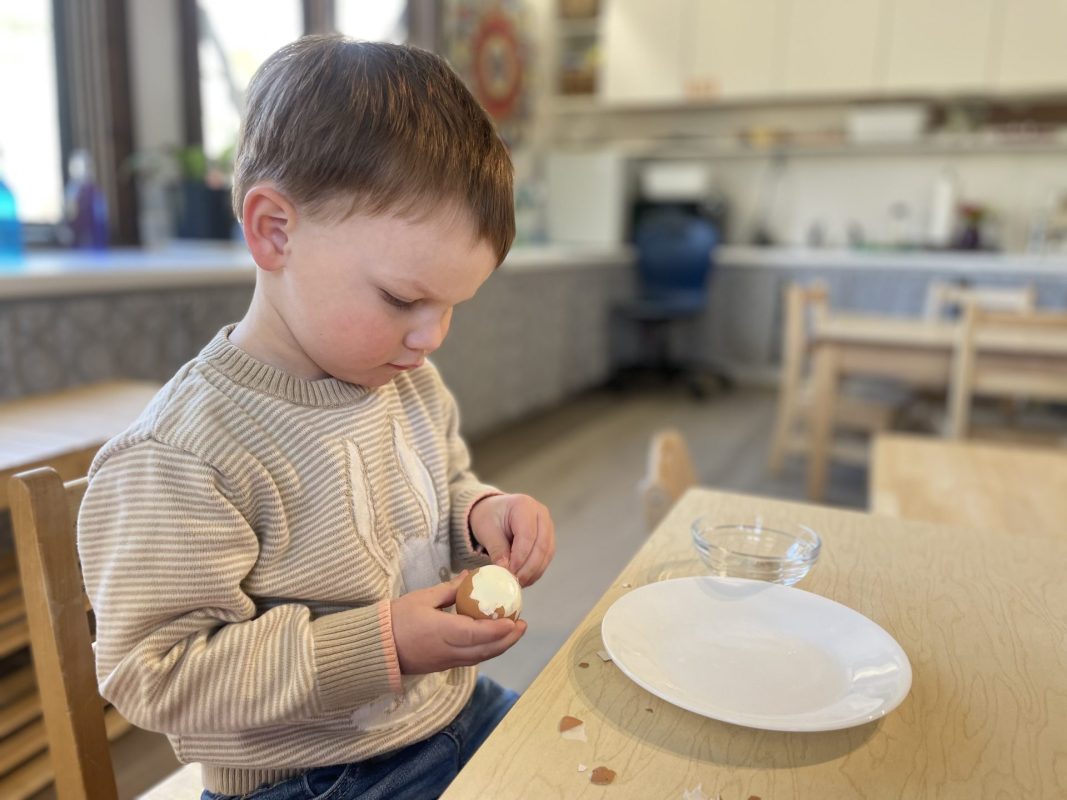
To bring a real-life experience to this topic, we explored an egg as part of our food-tasting lesson. We introduced vocabulary words like shell, egg white, and yolk. Children seemed surprised to find “a yellow ball” -as one of the children called it-  inside the egg. Children were able to take their time and strengthen their fine motor skills by learning how to peel their eggs.  They seemed to enjoy cracking the egg and carefully peeling the shell. I encourage you to allow your toddler to practice this skill at home. It’s truly a great exercise! Peeling an egg requires coordination between the fingers and thumb. This can improve dexterity and precision in hand movements, plus it helps their patience and persistence tremendously! 😀 The children seemed to feel proud of themselves.

Some of the children didn’t find the sliminess of the boiled egg very attractive and didn’t want to taste the egg, but other children kept asking to repeat the activity and taste another egg. It’s always fun to observe how the children react to these sensory experiences and how their brain seems to work hard on classifying the textures and flavors of the food items we introduce. To reinforce the Spanish language, the children were also introduced to a fun Spanish song called Los Pollitos. In Spanish, the chicks say, “pio, pio,” instead of “chirp, chirp.” Just an interesting cultural bonus sent your way :). I hope you enjoy the song at the bottom of this note and practice with your children at home if you would like.

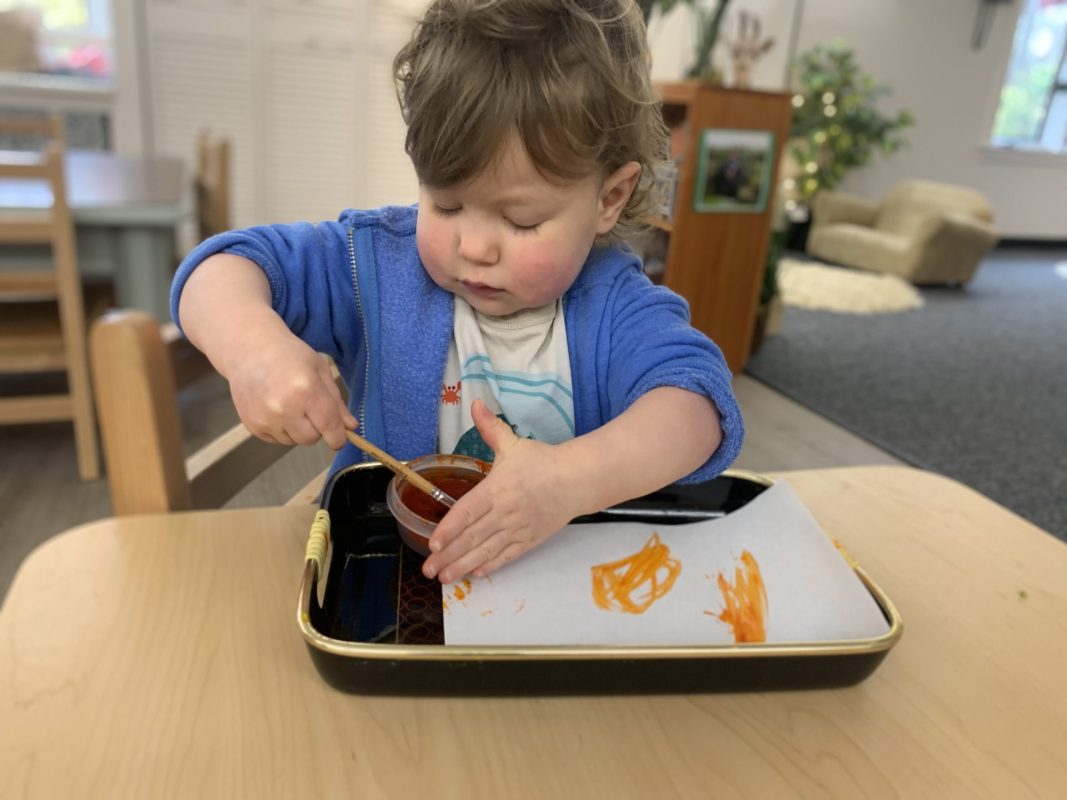
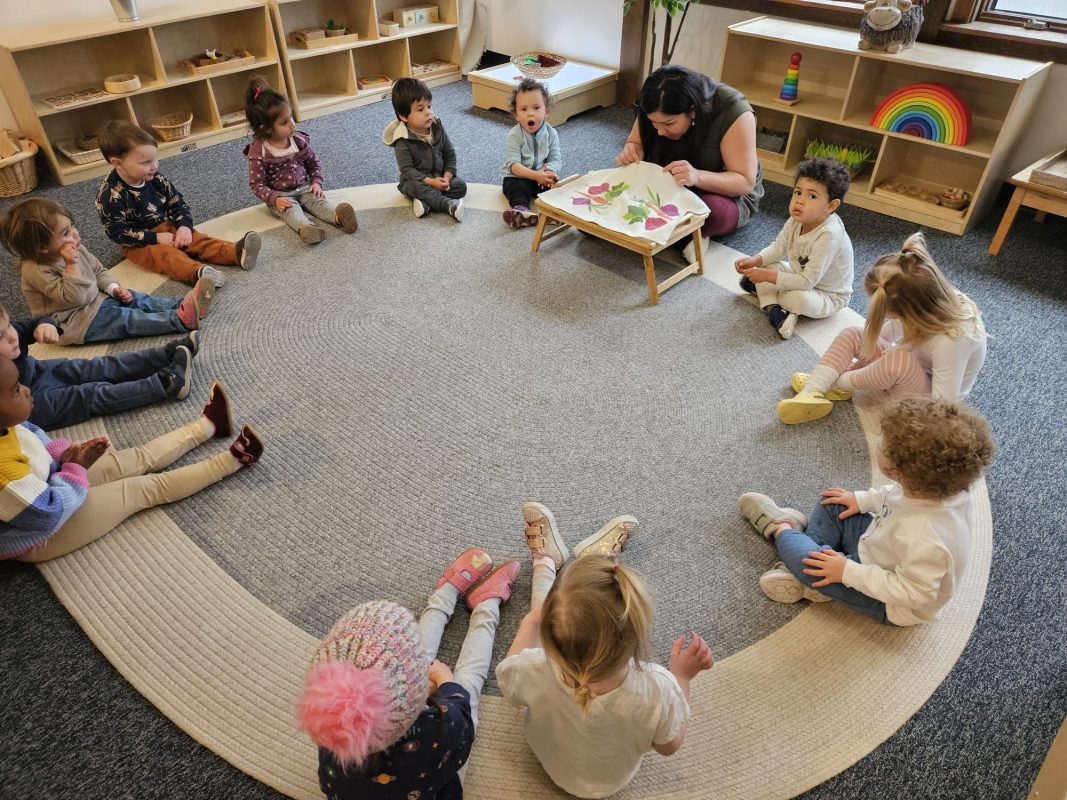
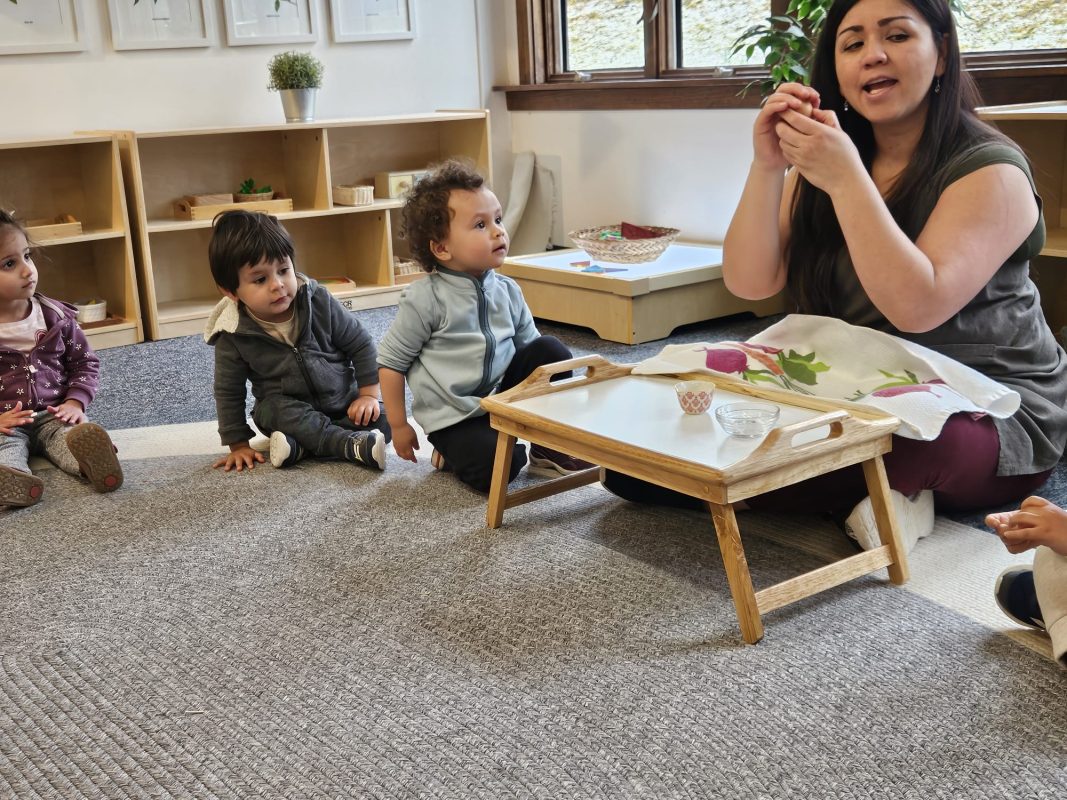
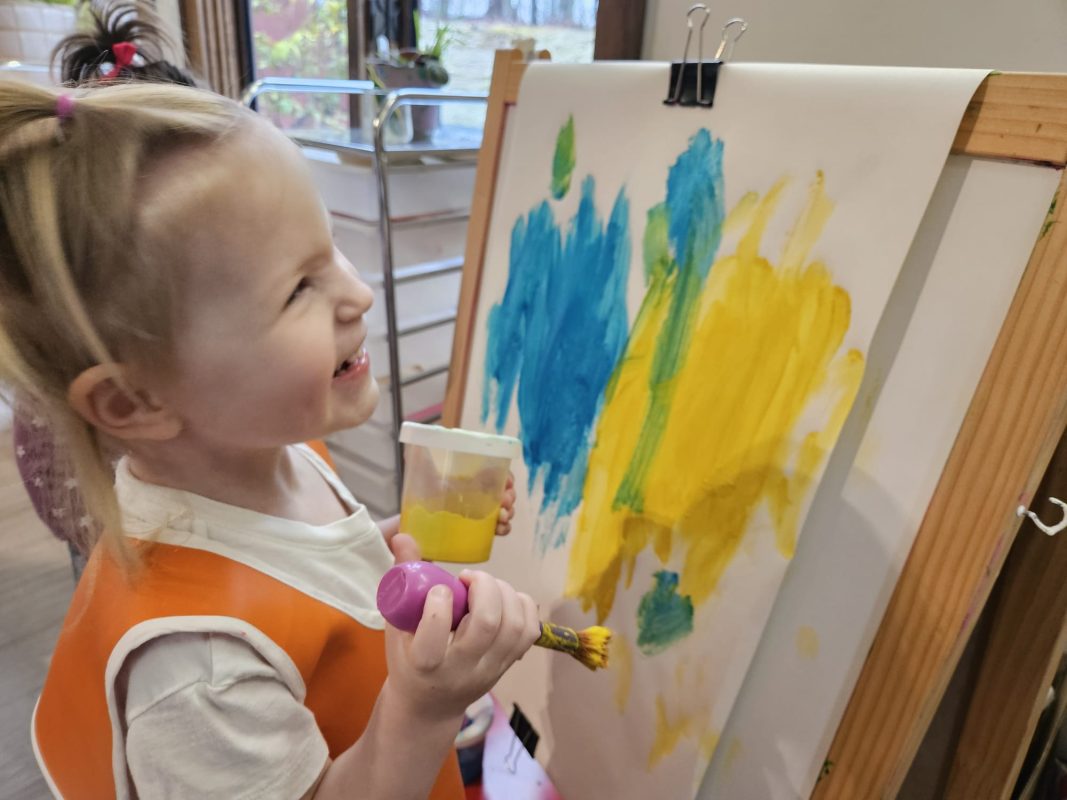
Based on our color studies, we introduced the concept of color mixing to the children this week. We gathered the children to circle and showed them what happens when you mix yellow with blue color. It was a magical moment! The children’s expressions were amazing! They couldn’t believe that we had made a new color. Their faces seemed to be in awe! Immediately, they were ready to take a turn at the easel and make the magic happen by themselves!

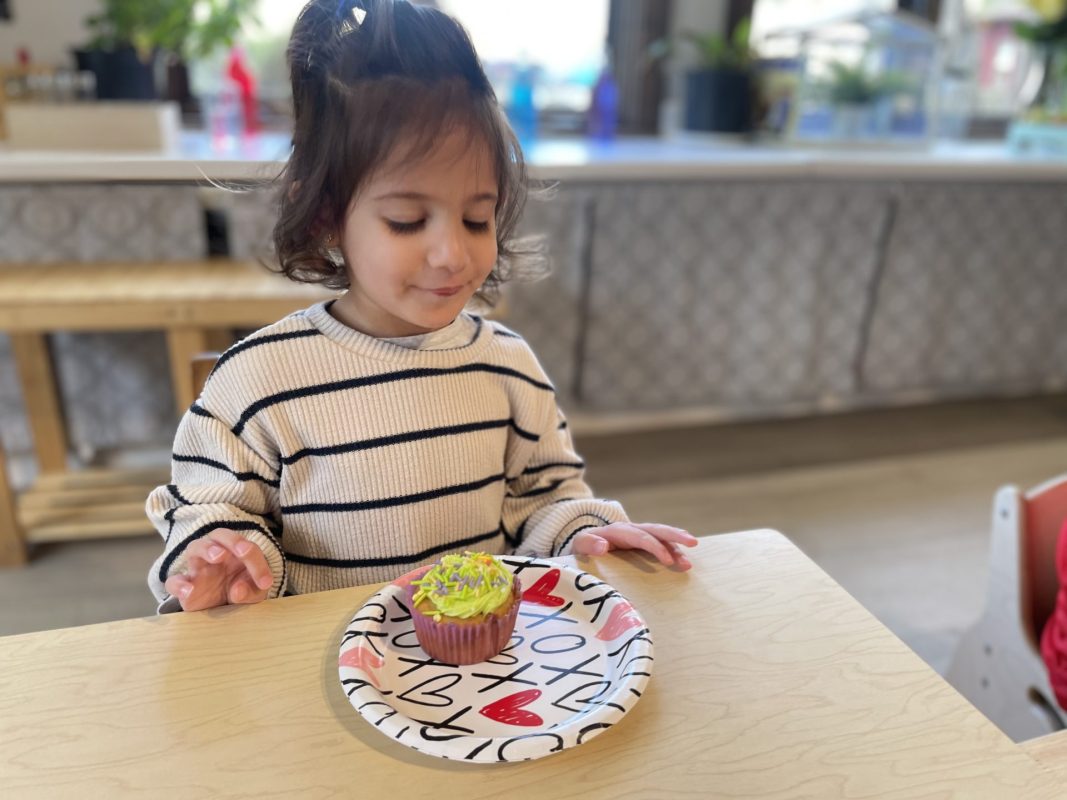
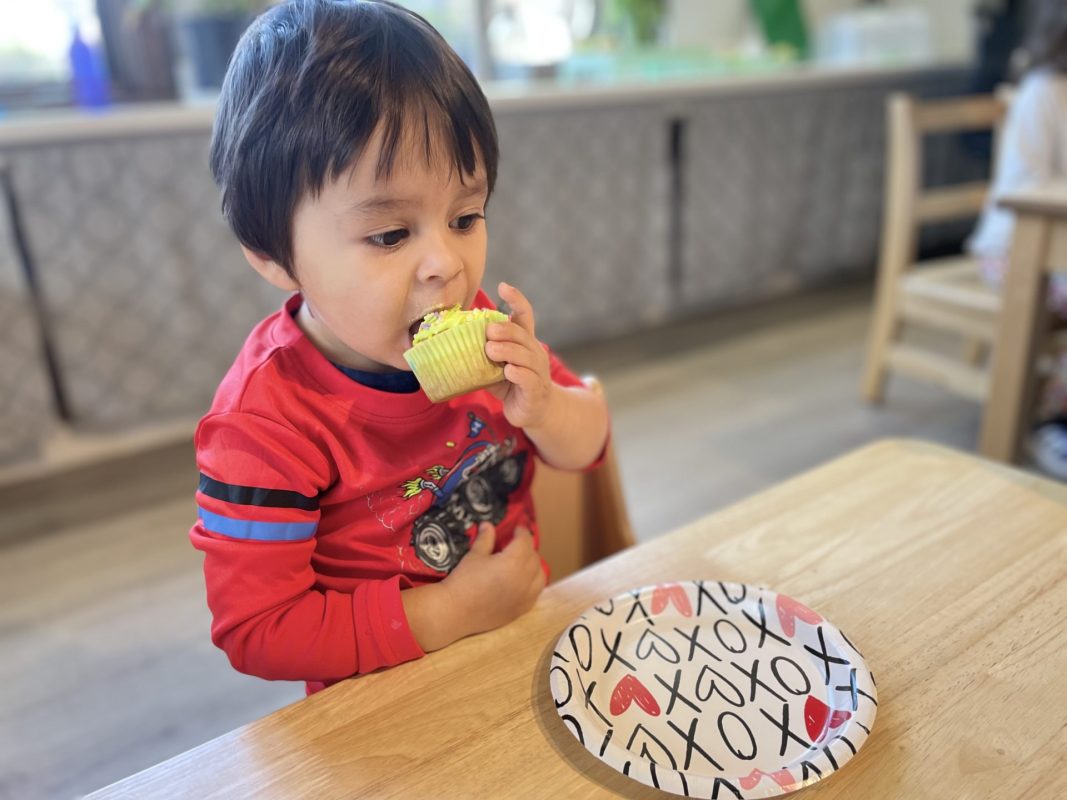
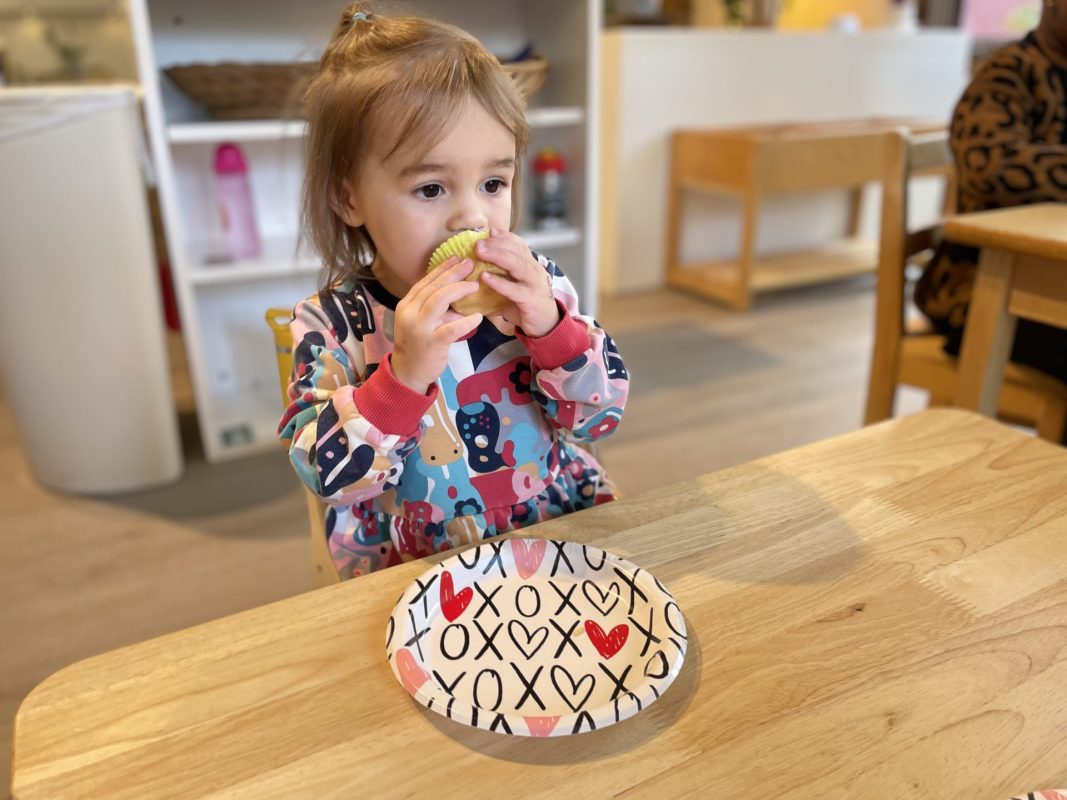
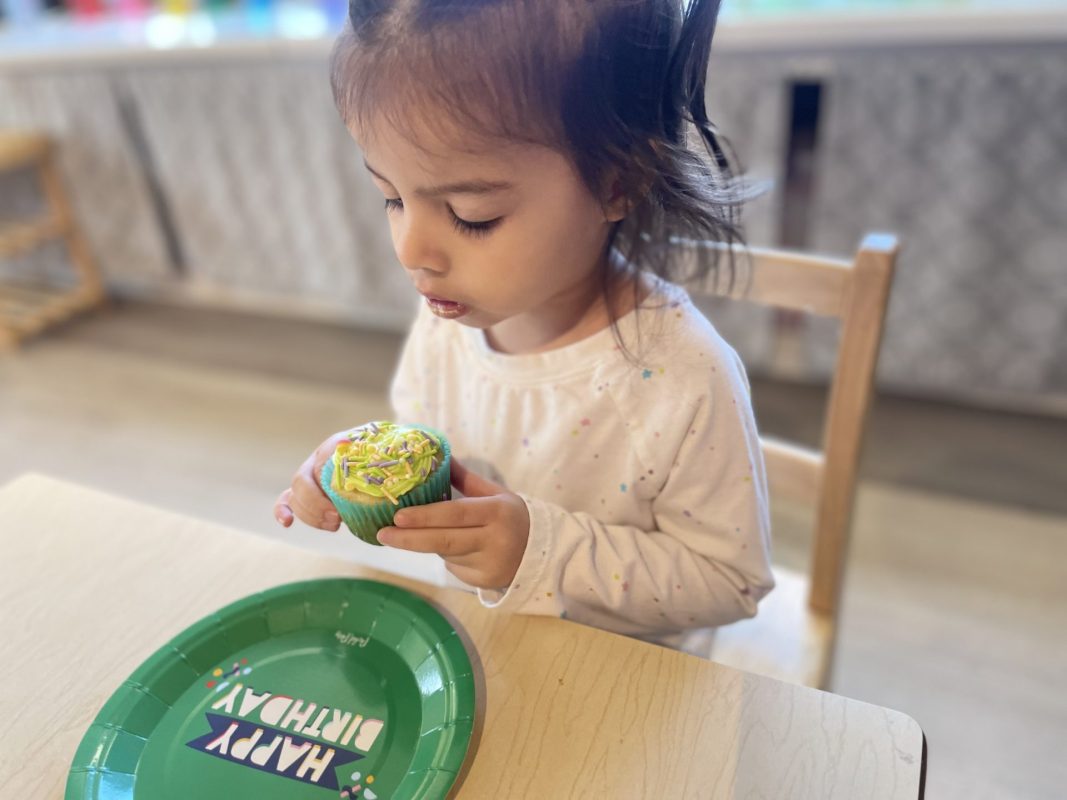
Lastly, we celebrated another 3-year-old birthday in our class! It’s always such a special day for all!

We hope you all have a wonderful weekend. If you are planning to visit a farm as a fun spring activity, please take the time to observe the chickens and talk with your toddler about what you see.

Best,

Mrs. Hood and Ms. Mollie