Mrs. Doyle: Welcome To Our Pumpkin Patch

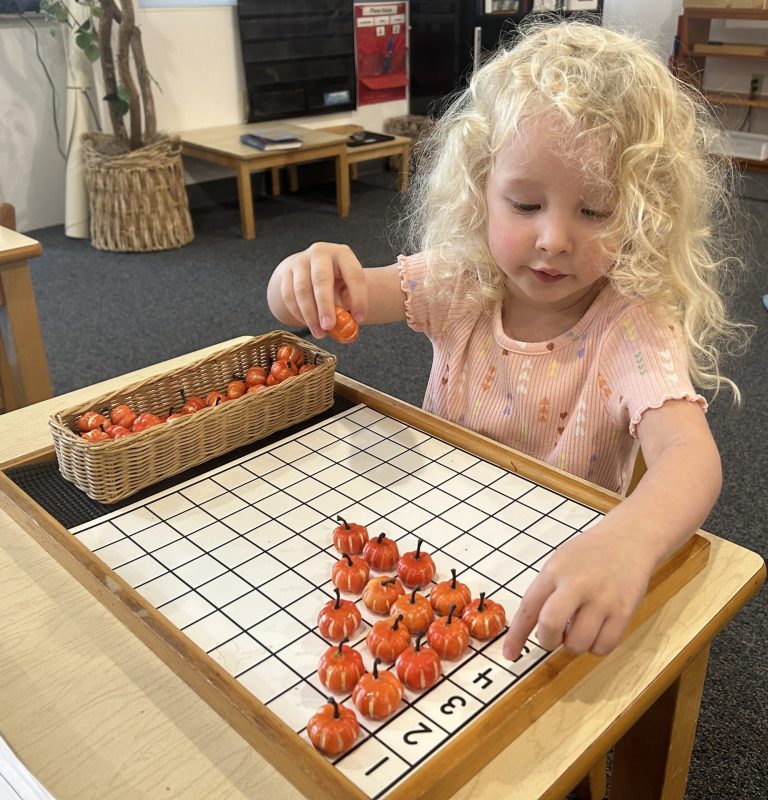
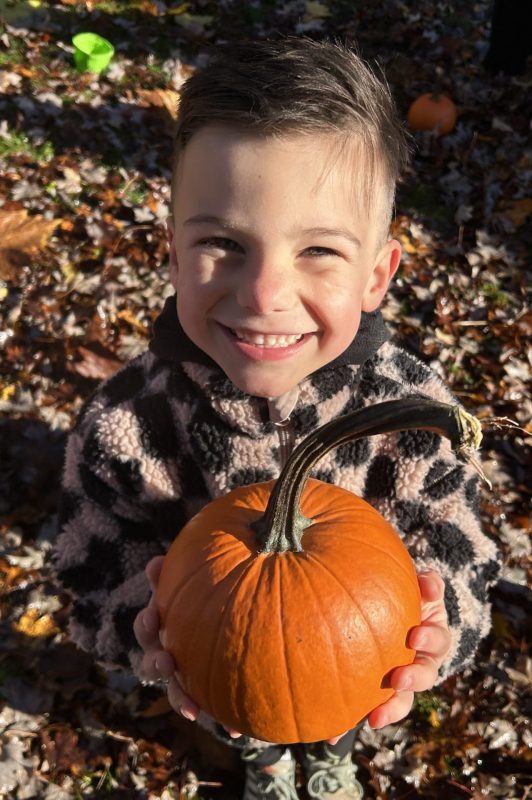
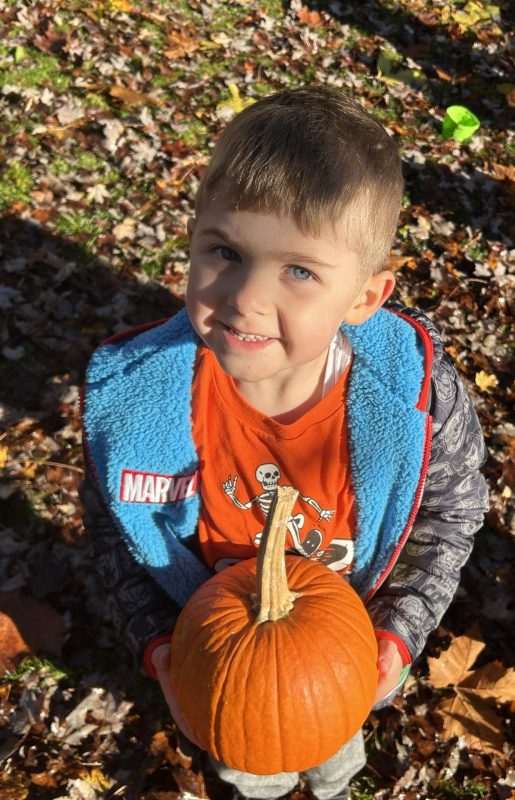
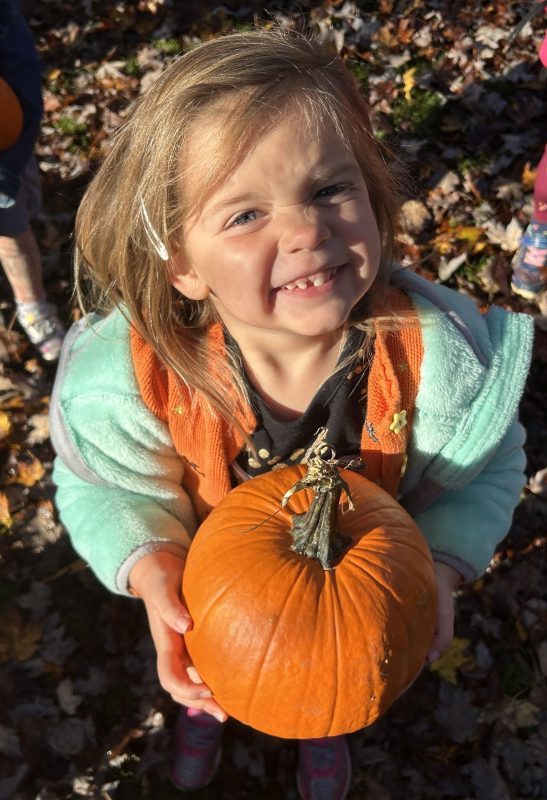
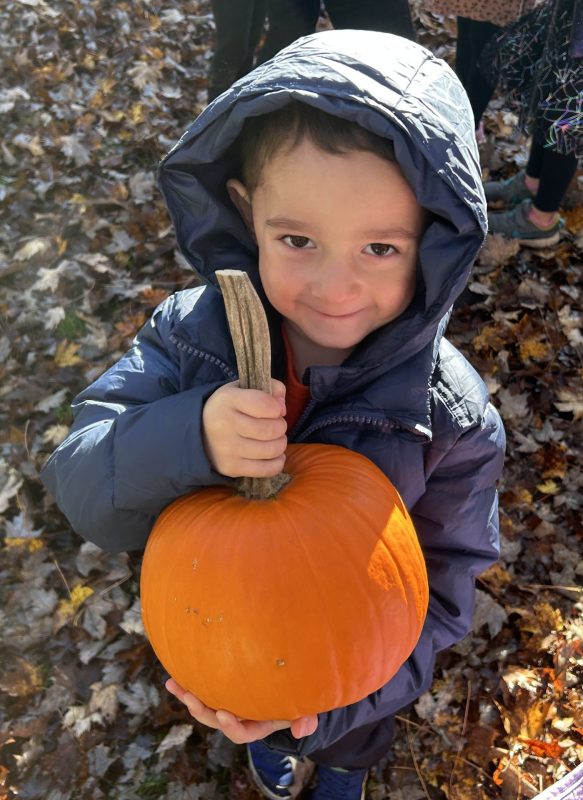
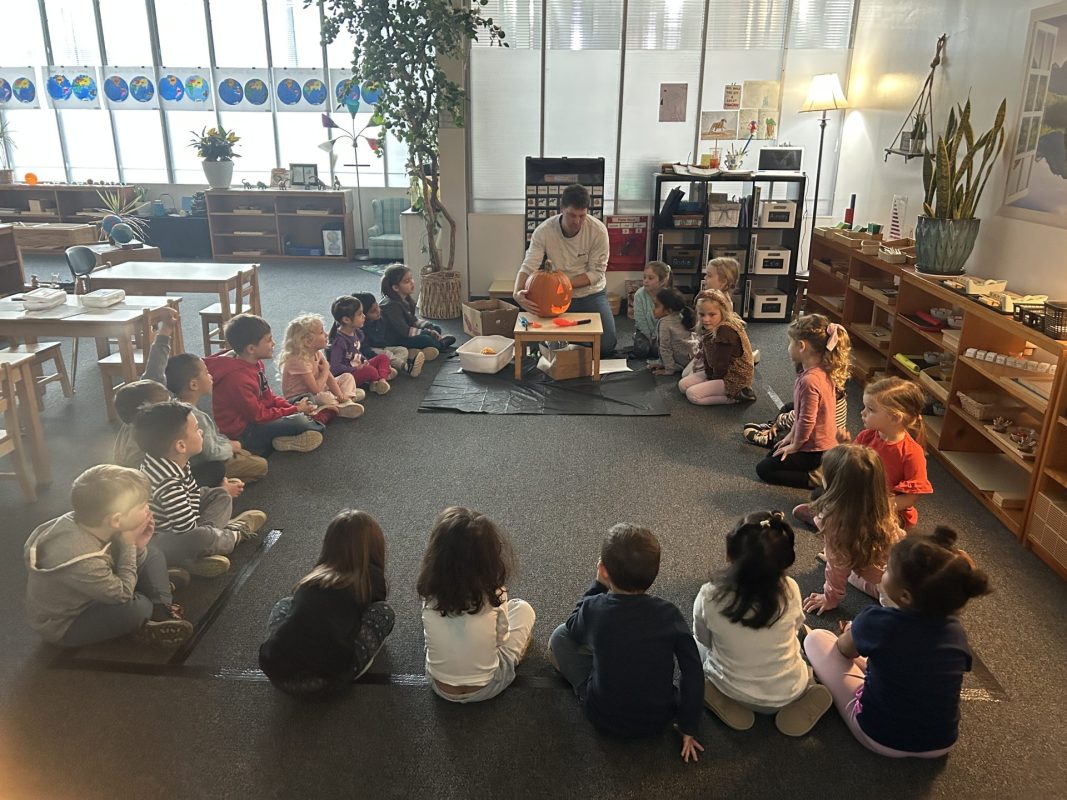
Welcome to our pumpkin patch!  There are pumpkins everywhere in our class. Having pumpkins in the classroom provides many opportunities for the children to observe and introduce basic science and math concepts.

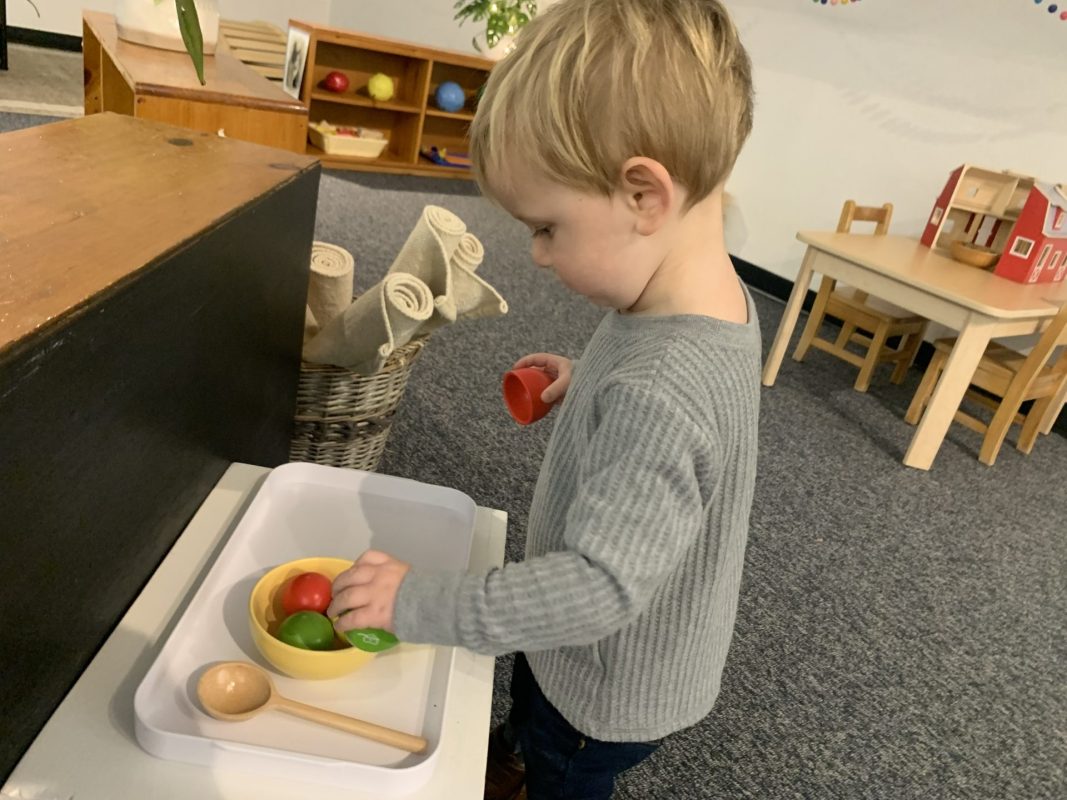
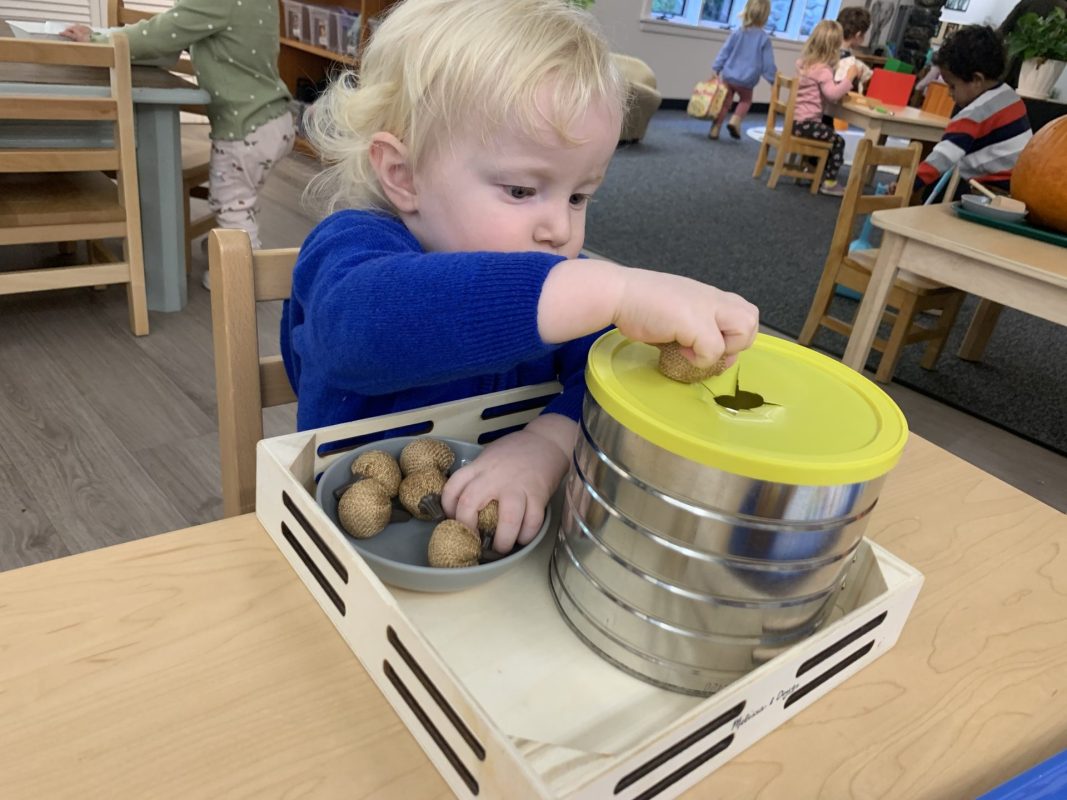
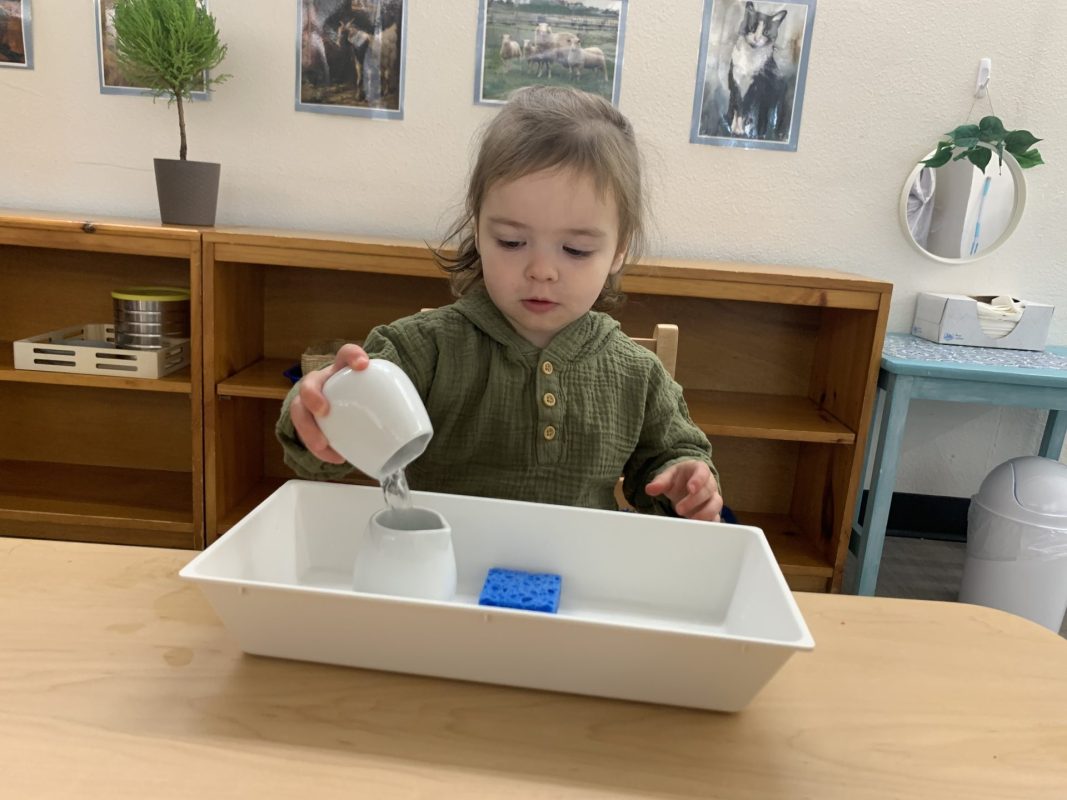
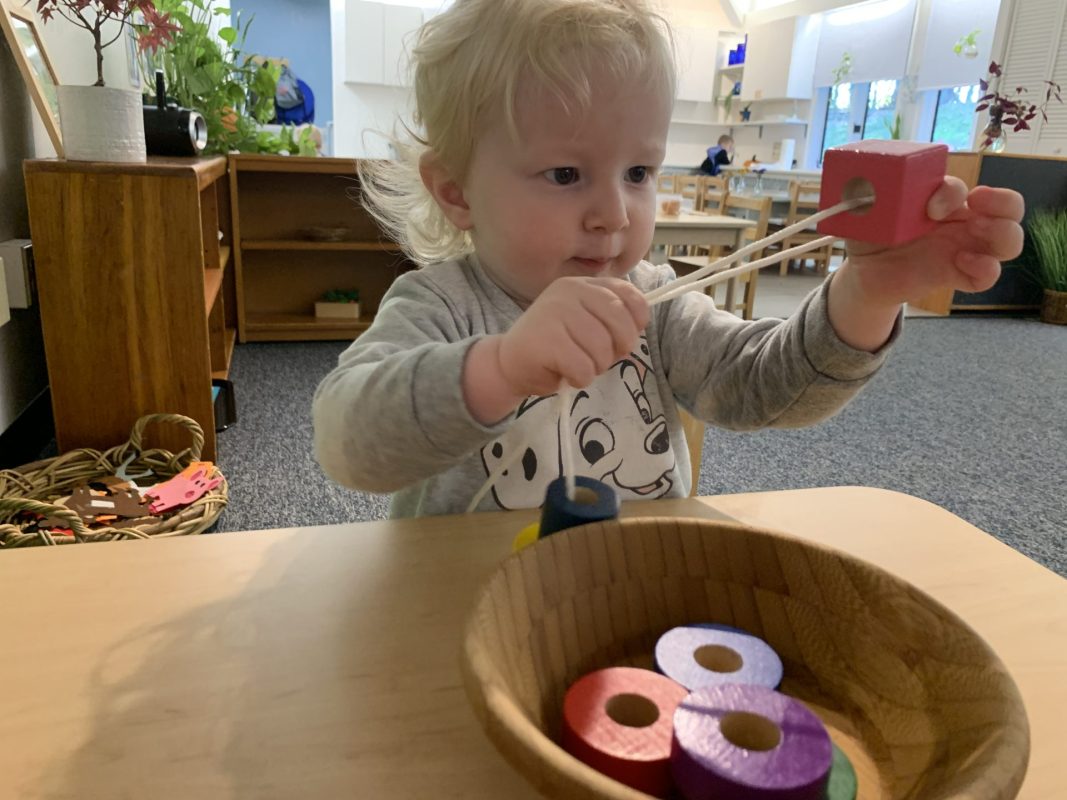
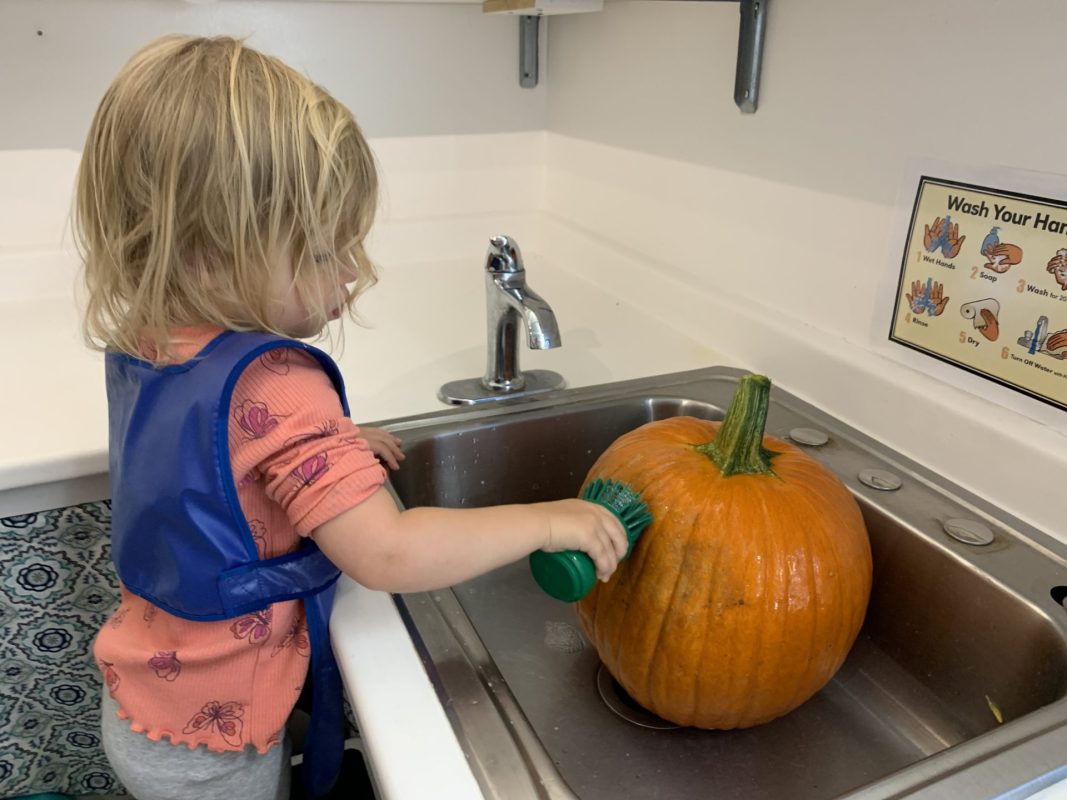
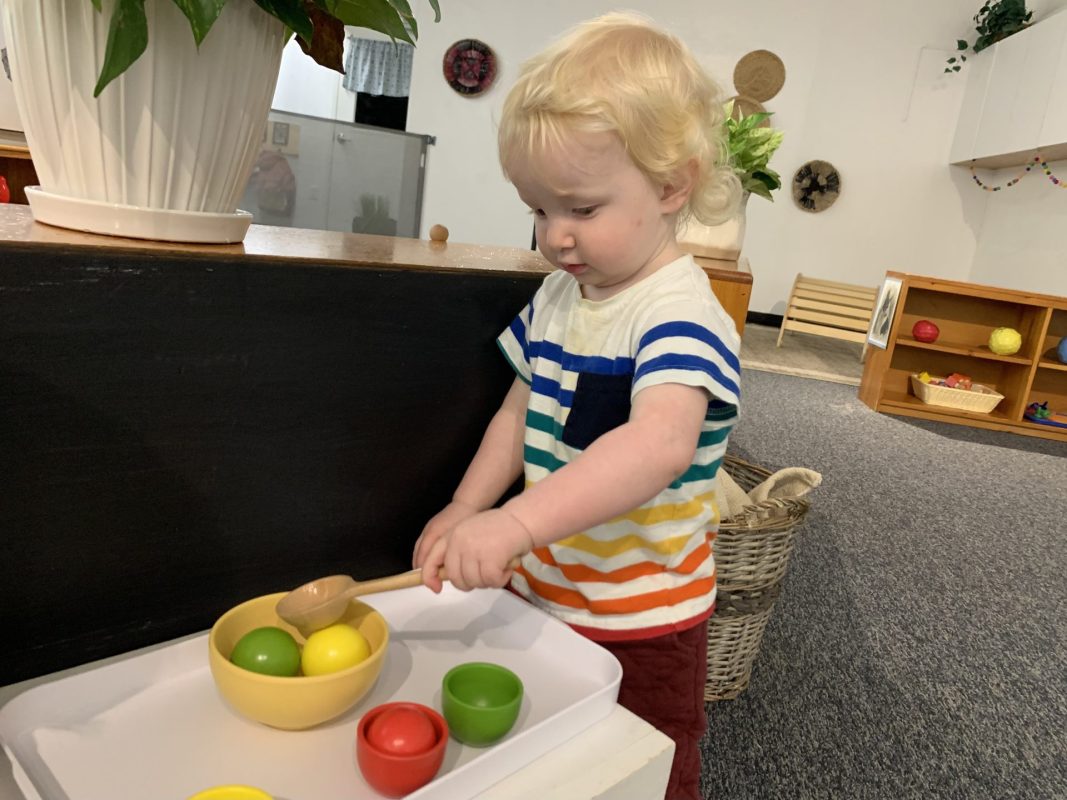
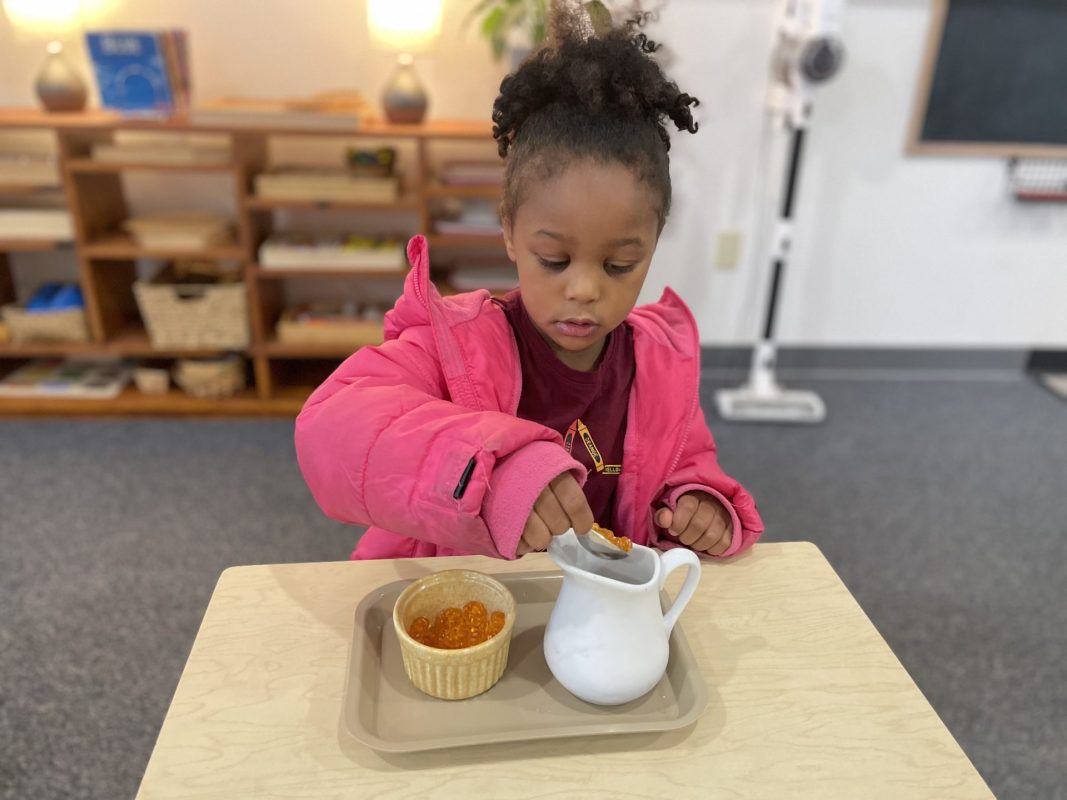
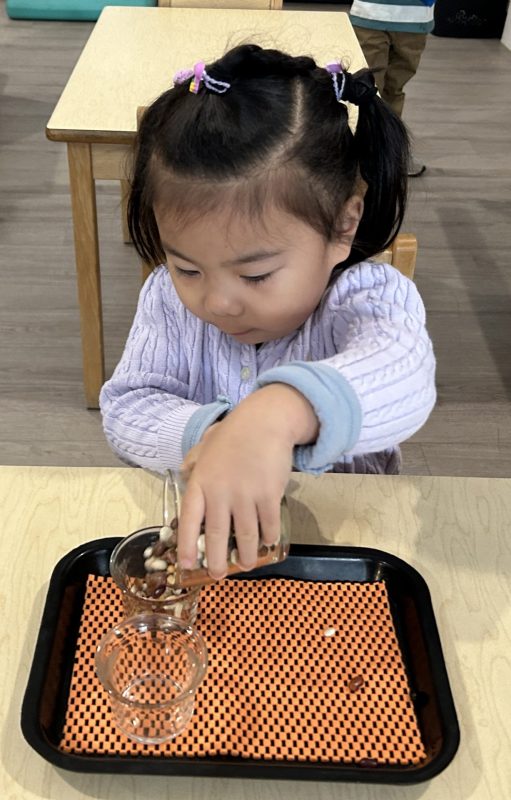
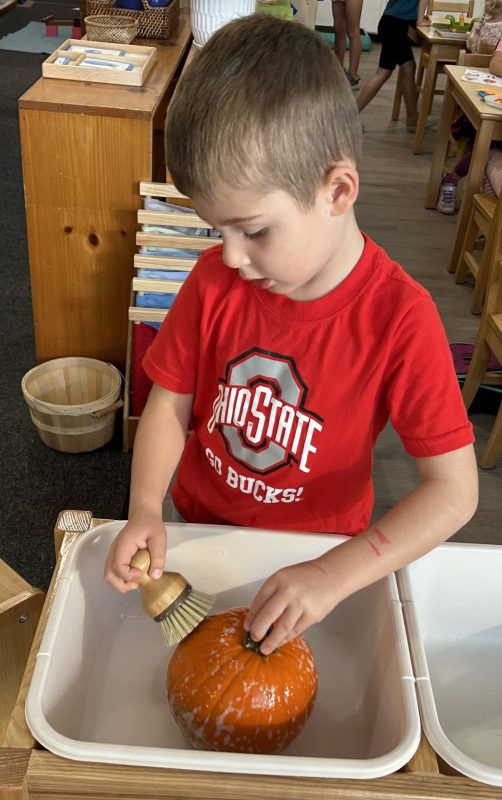
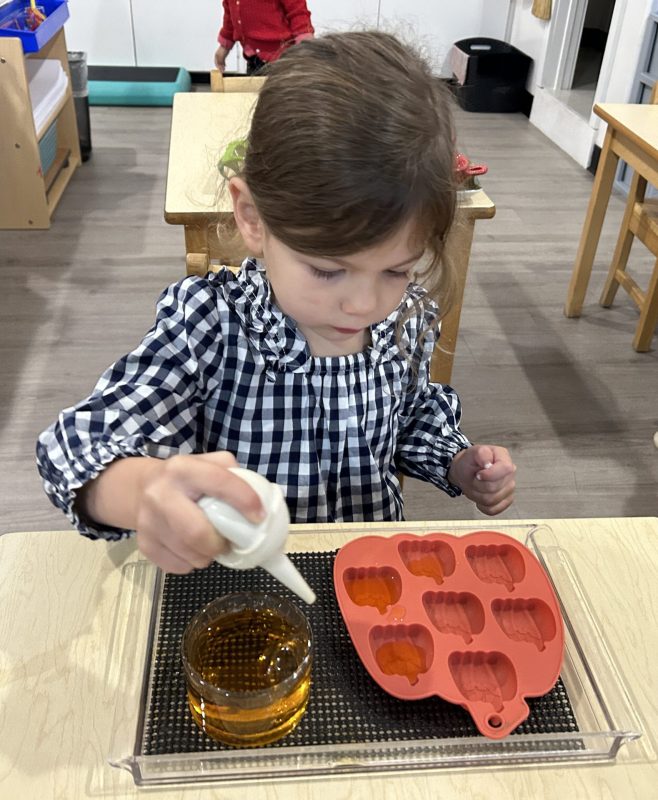
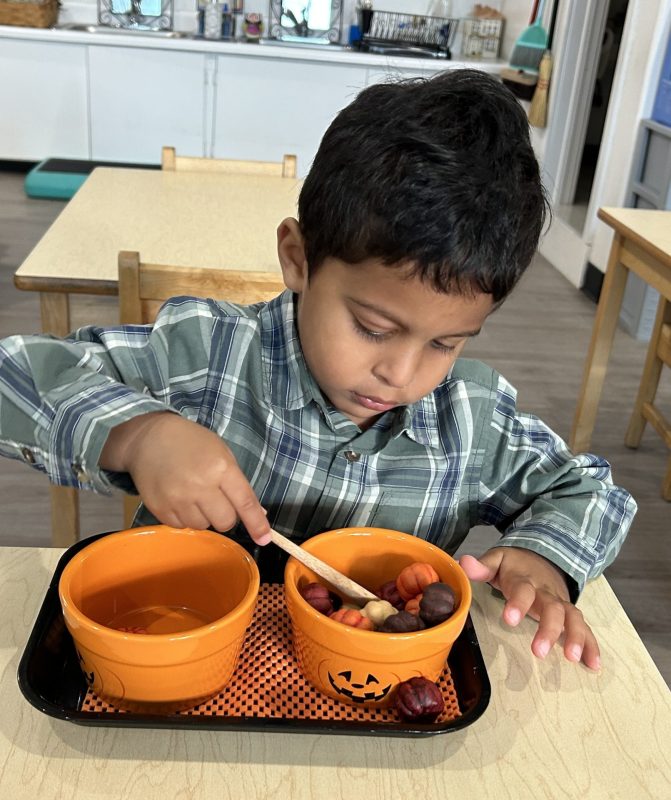
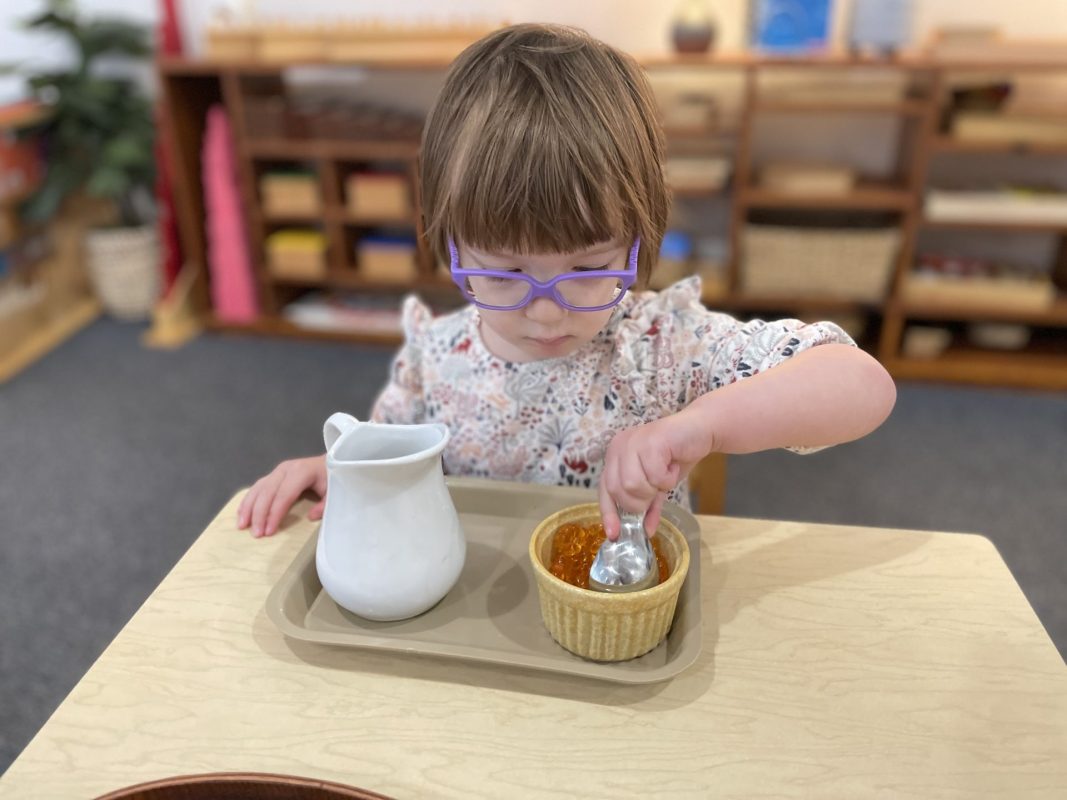
In Practical Life, we have pumpkin spooning, pumpkin pouring, pumpkin scrubbing, and pumpkin grasping. In Science, we learned about the parts of a pumpkin and the pumpkin’s life cycle. We compared pumpkins and categorized them as small, medium, and large. We are using our five senses to determine what pumpkins look, smell, feel, sound, and taste like.

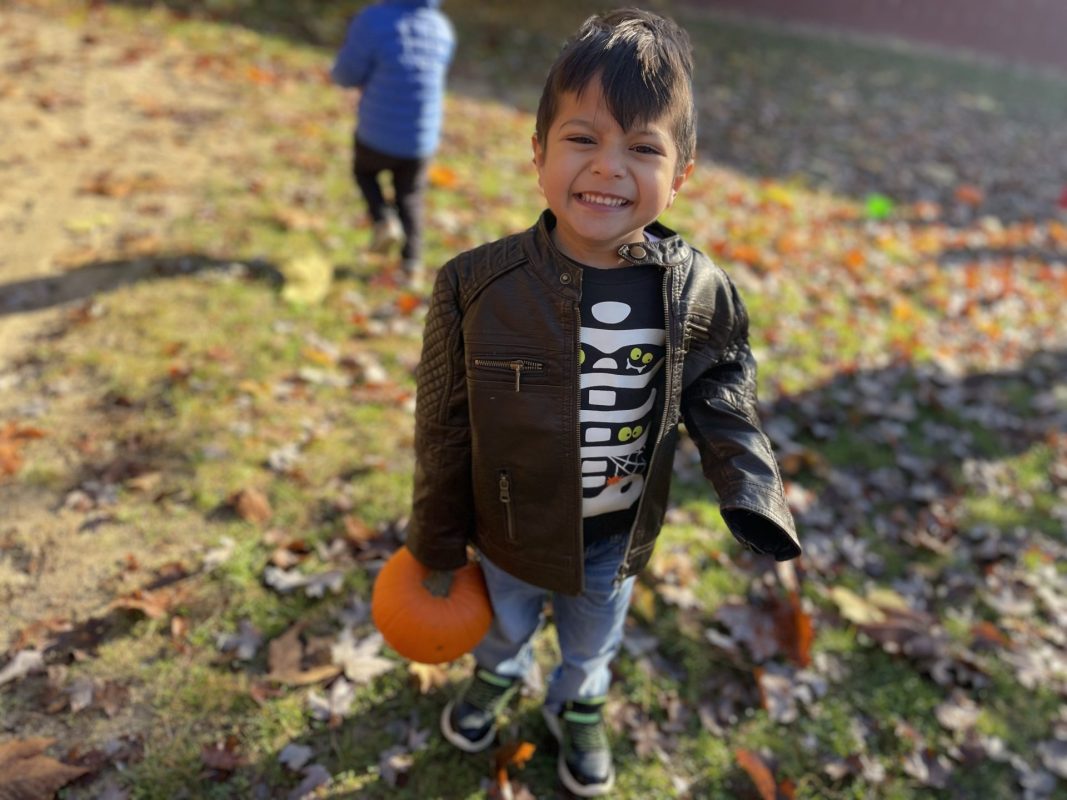
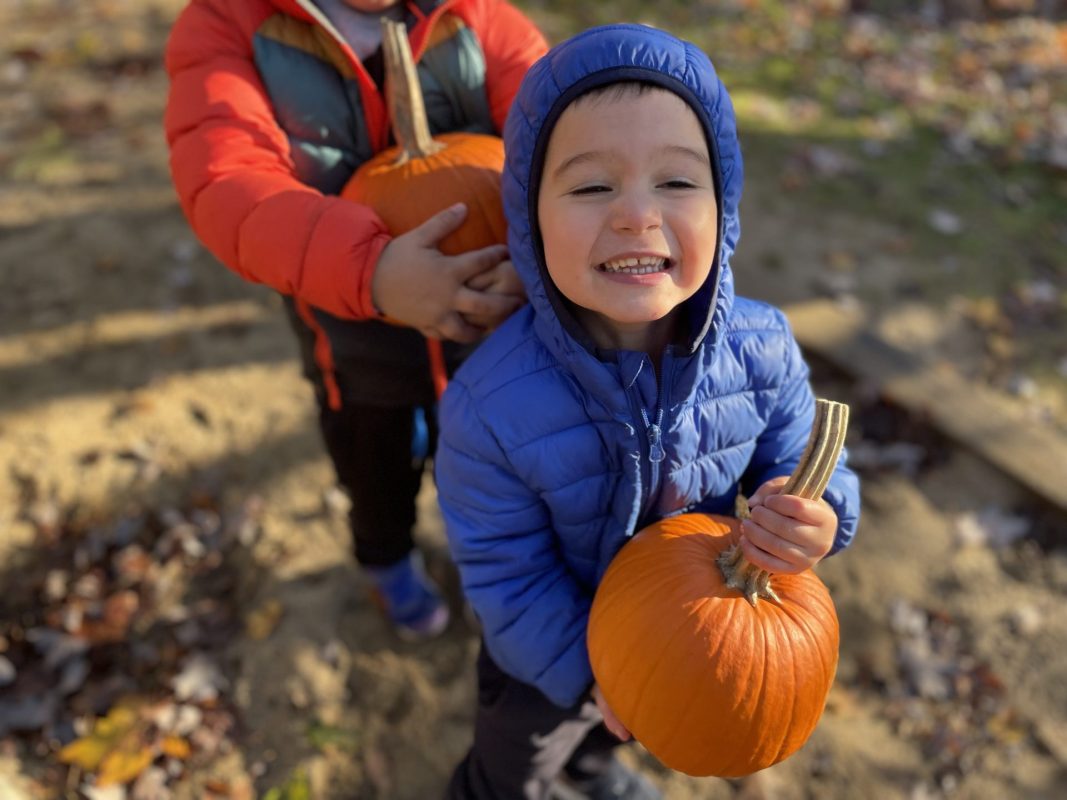
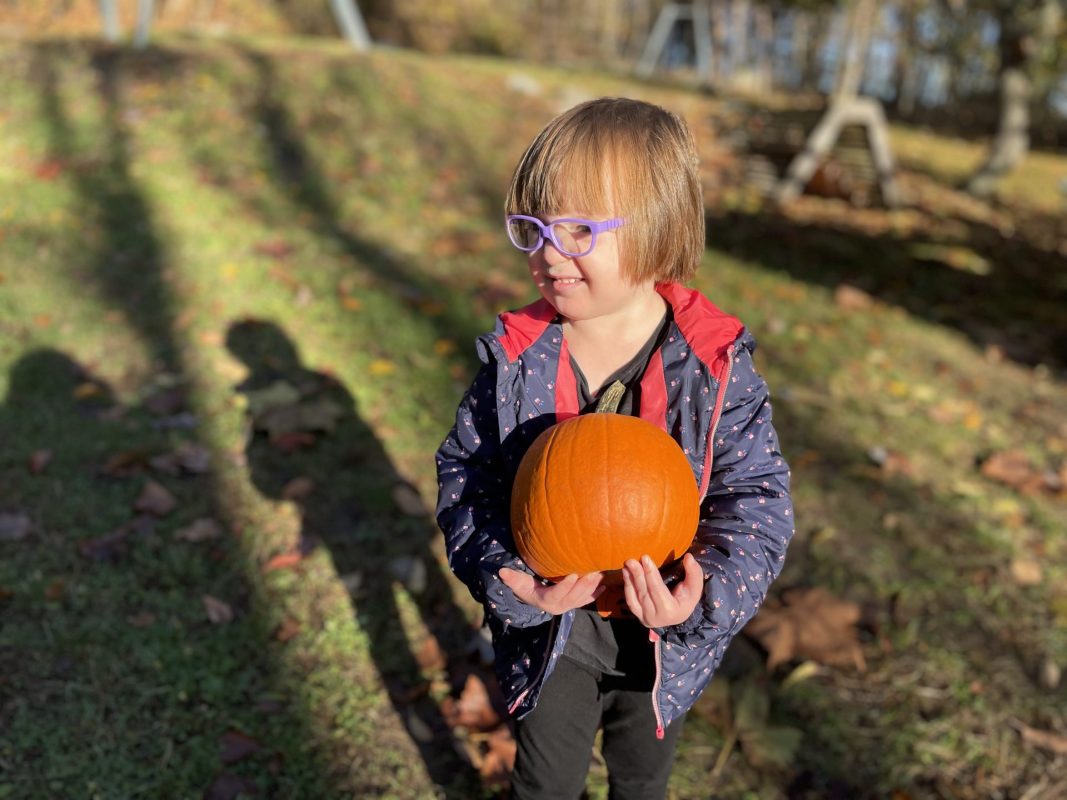
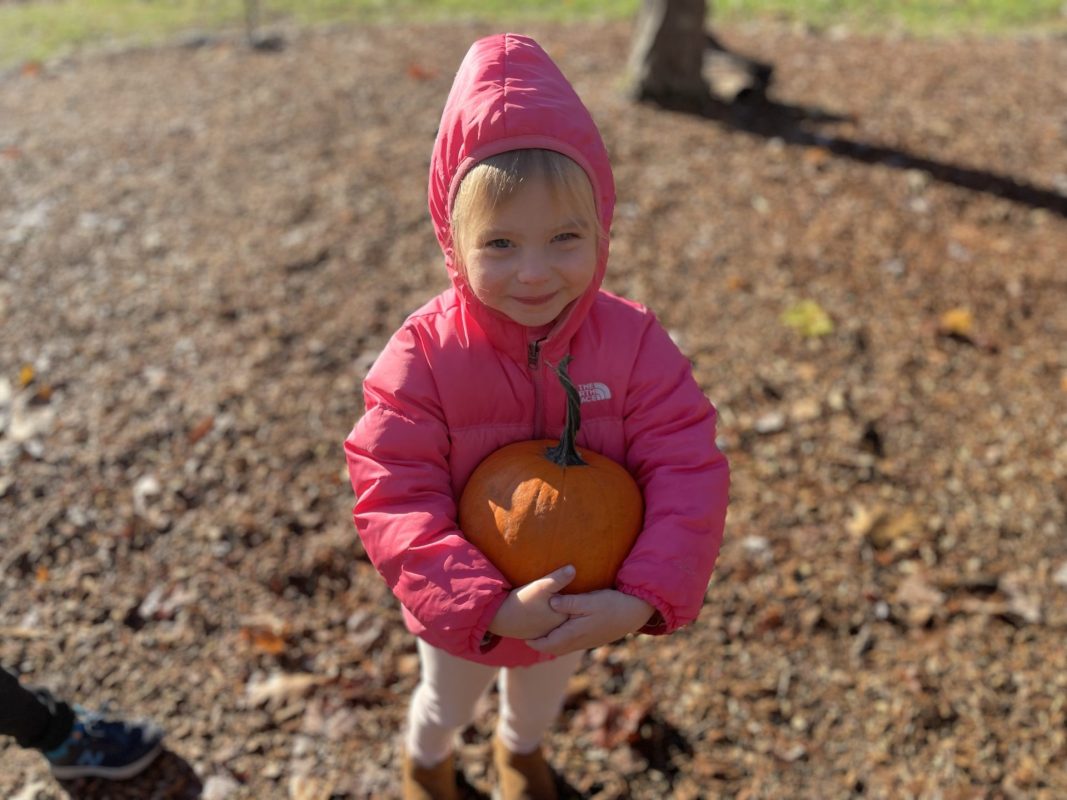
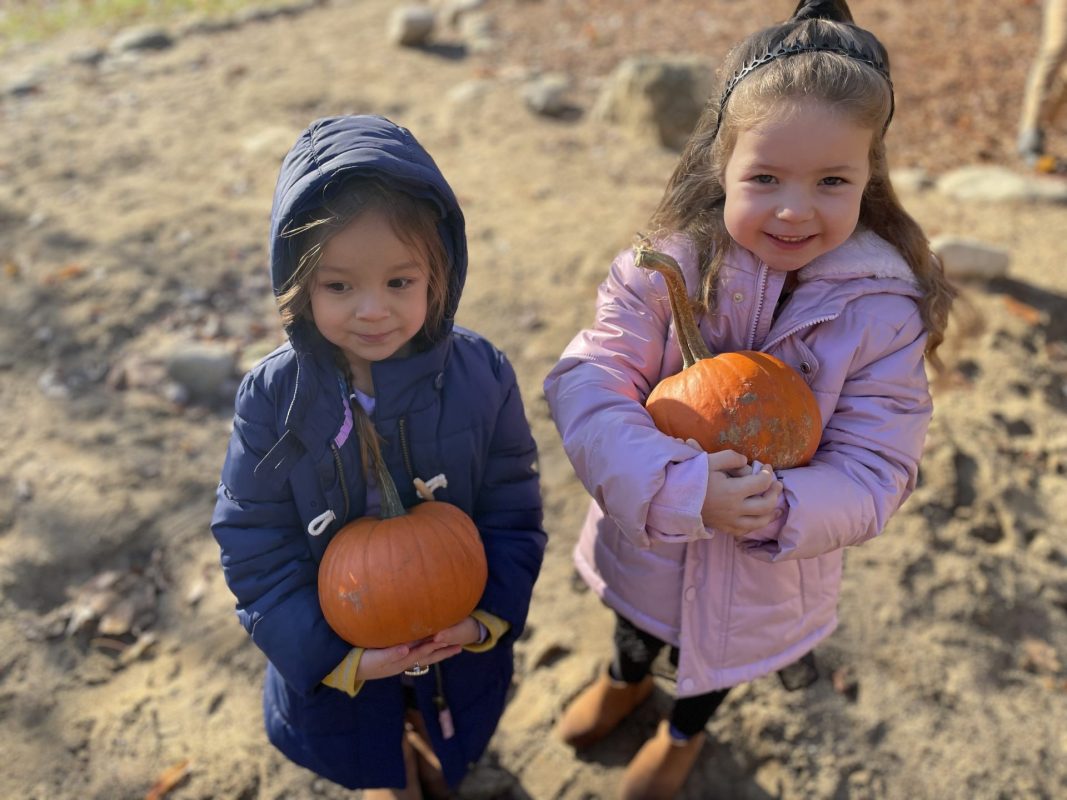
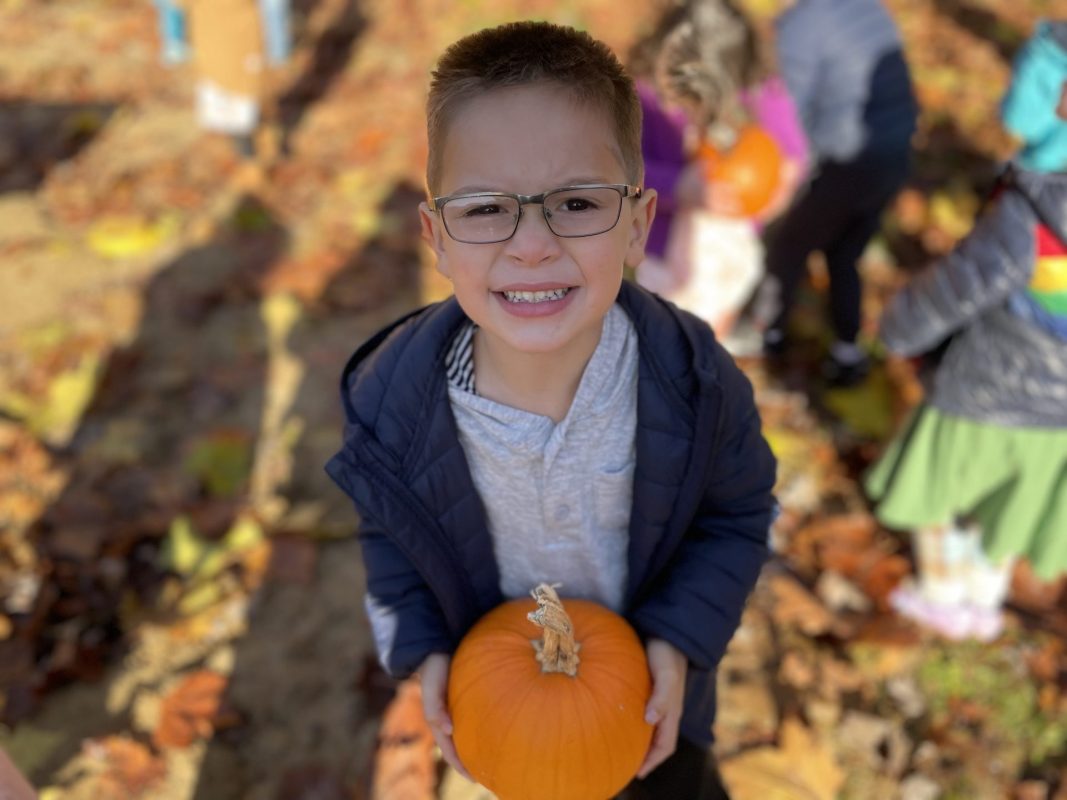
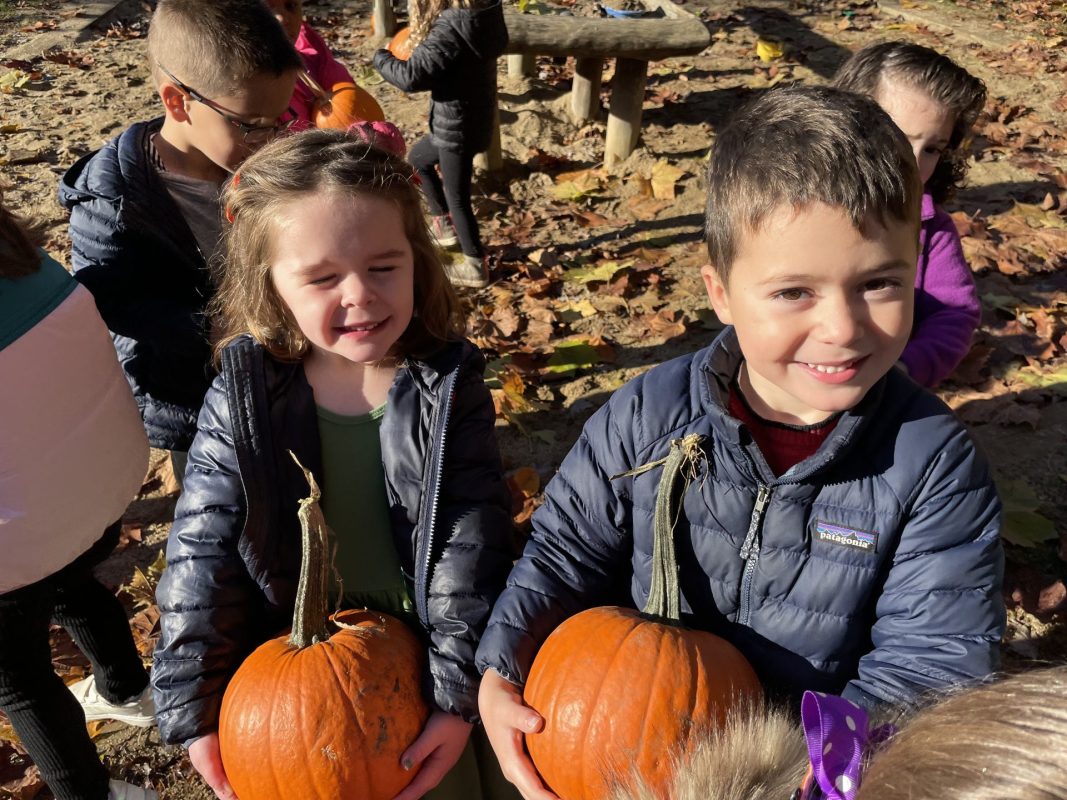
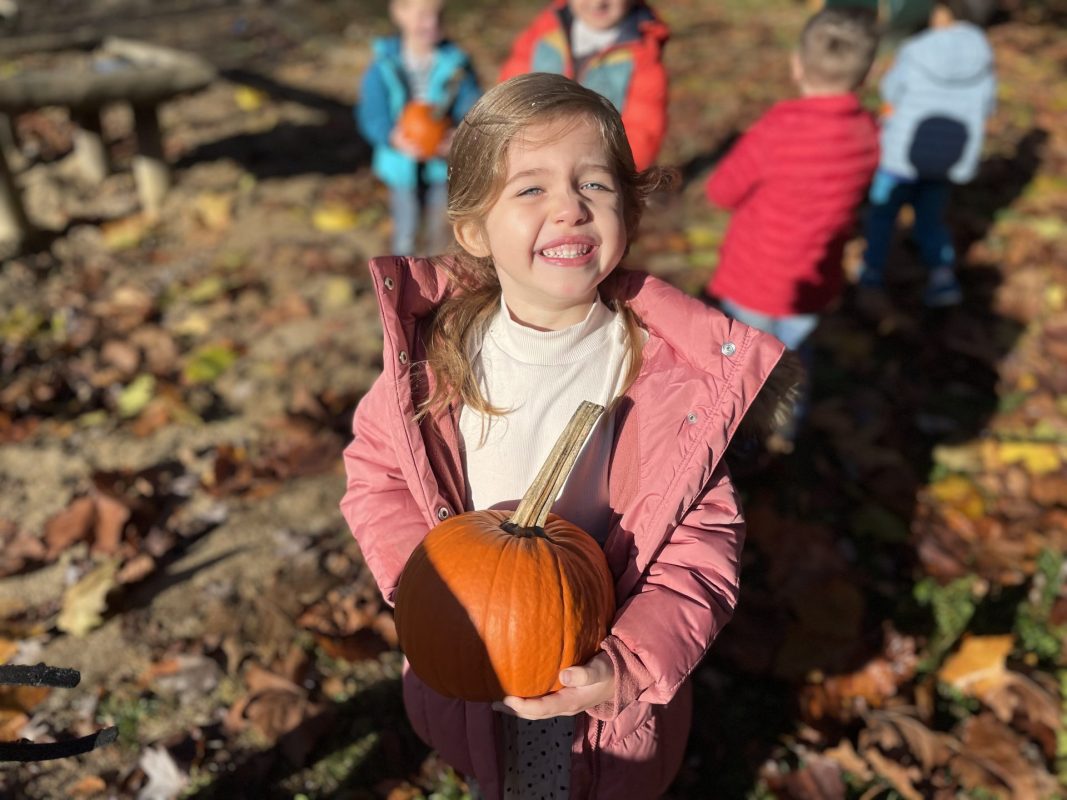
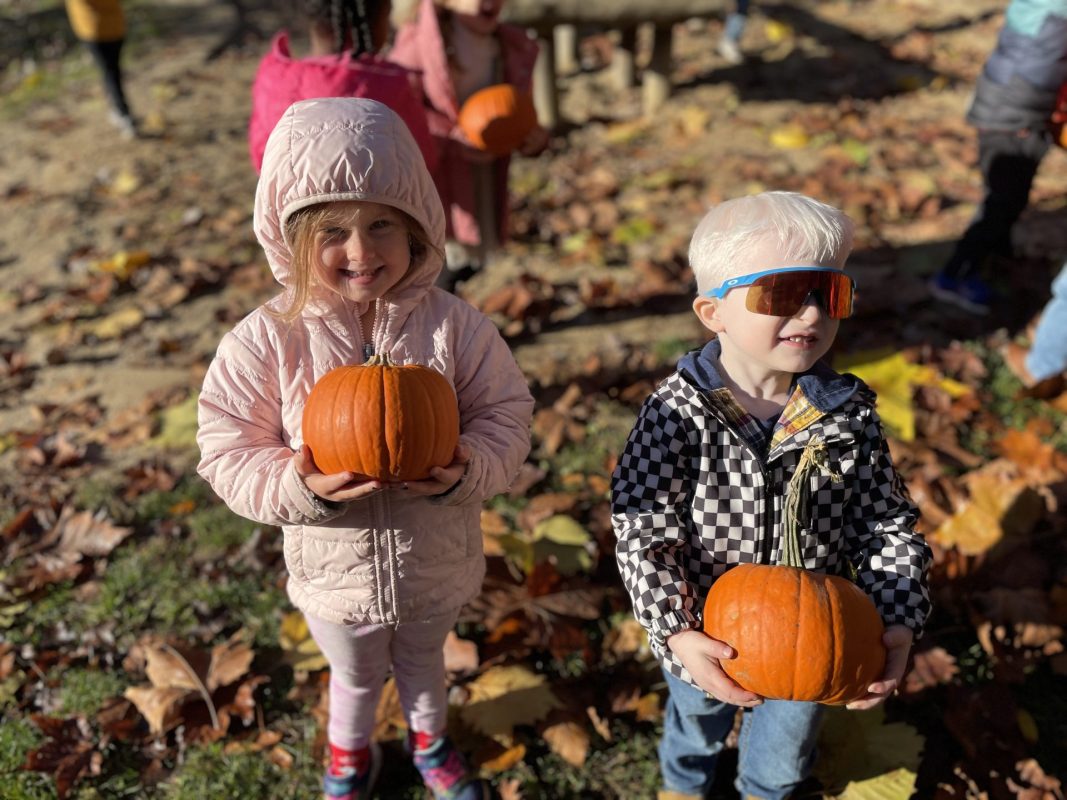
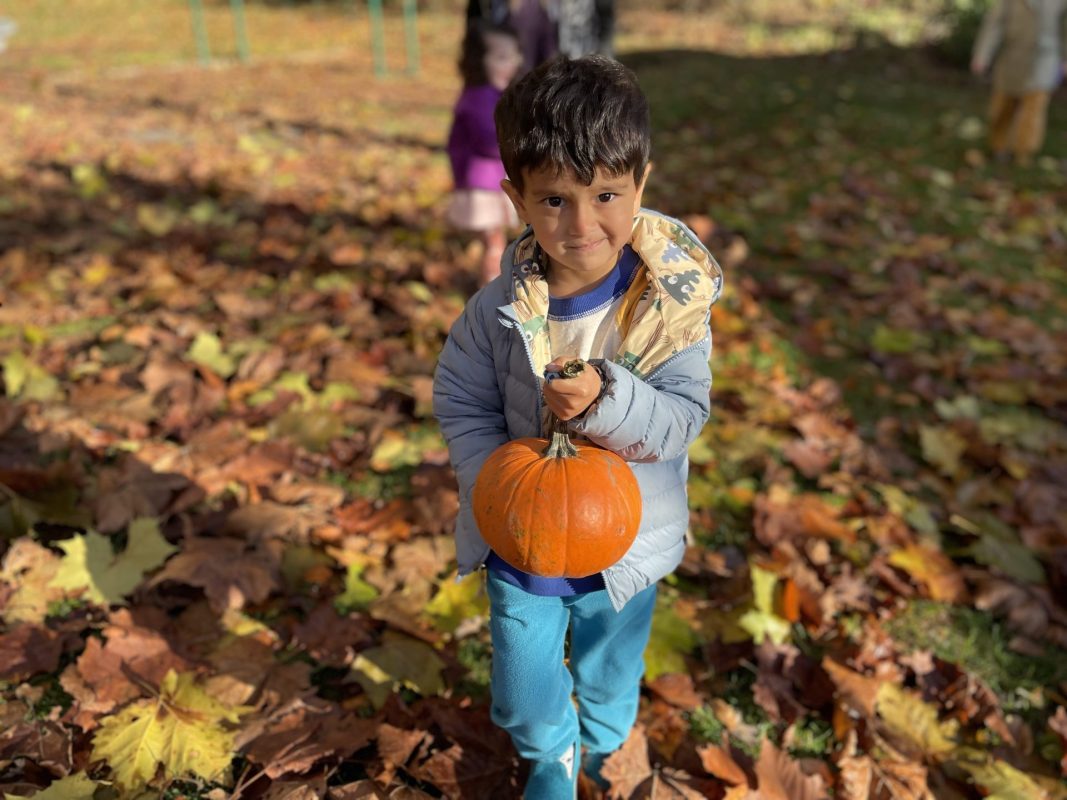
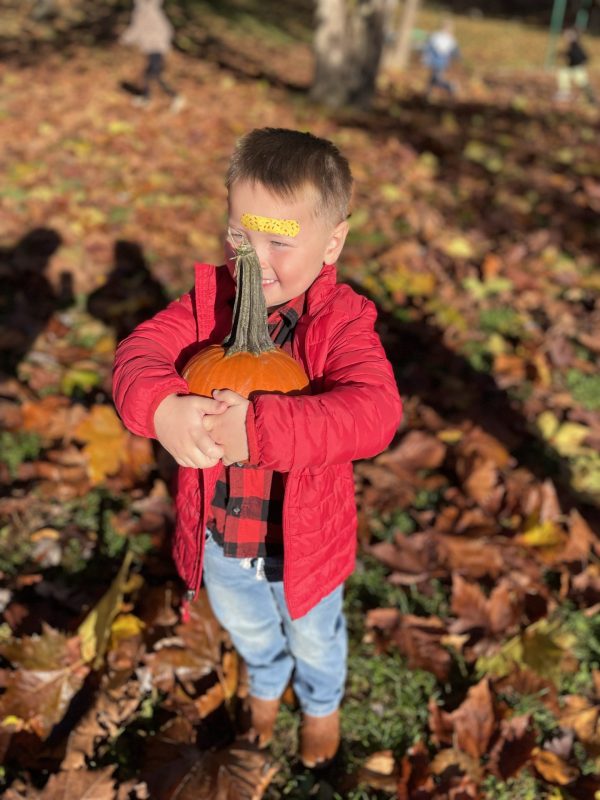
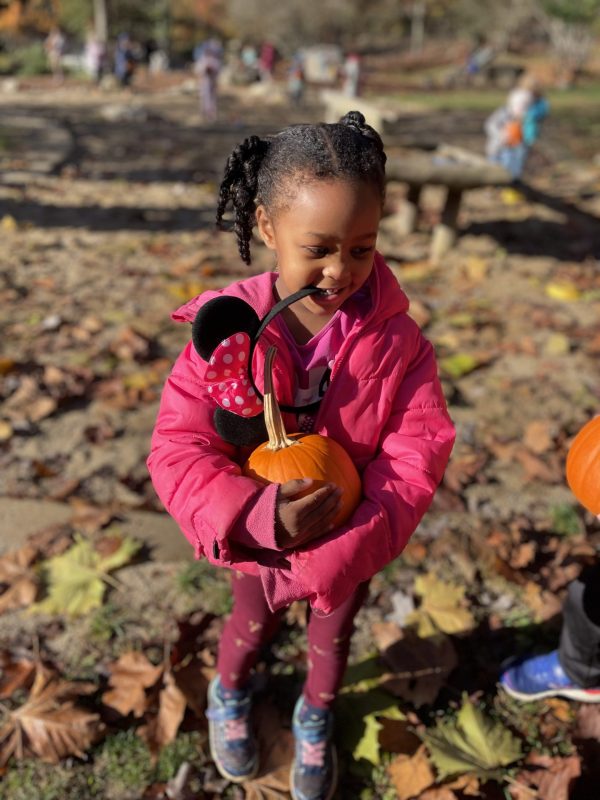
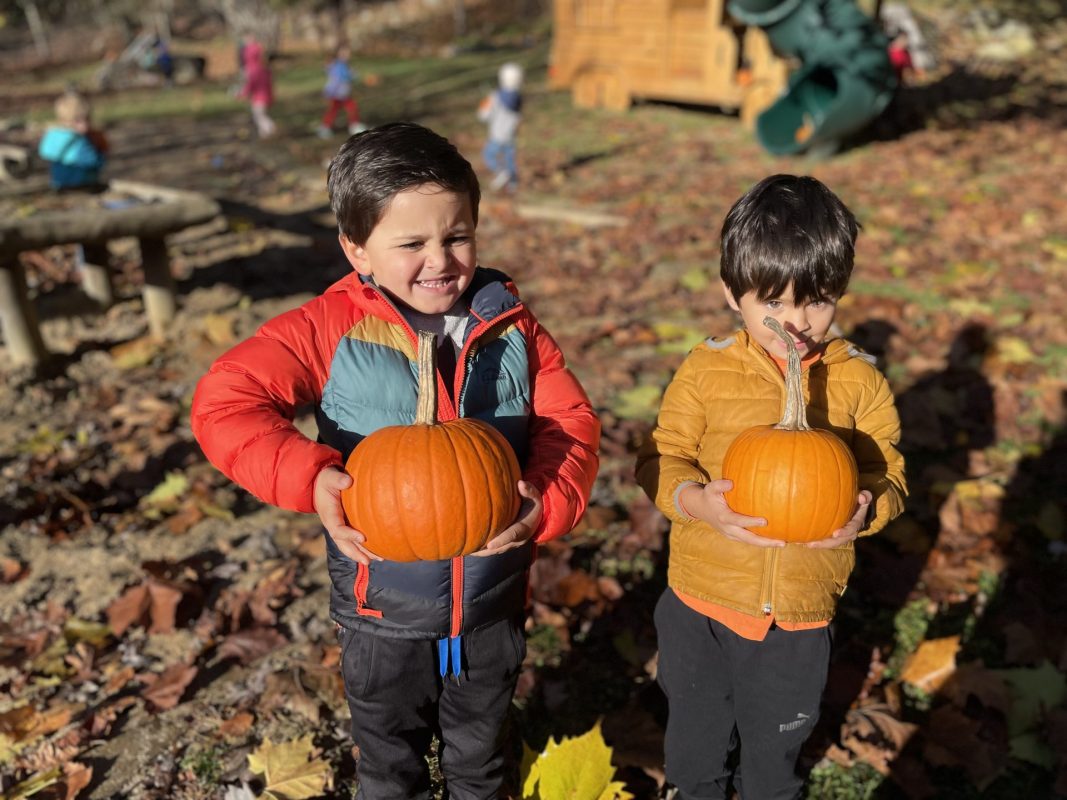
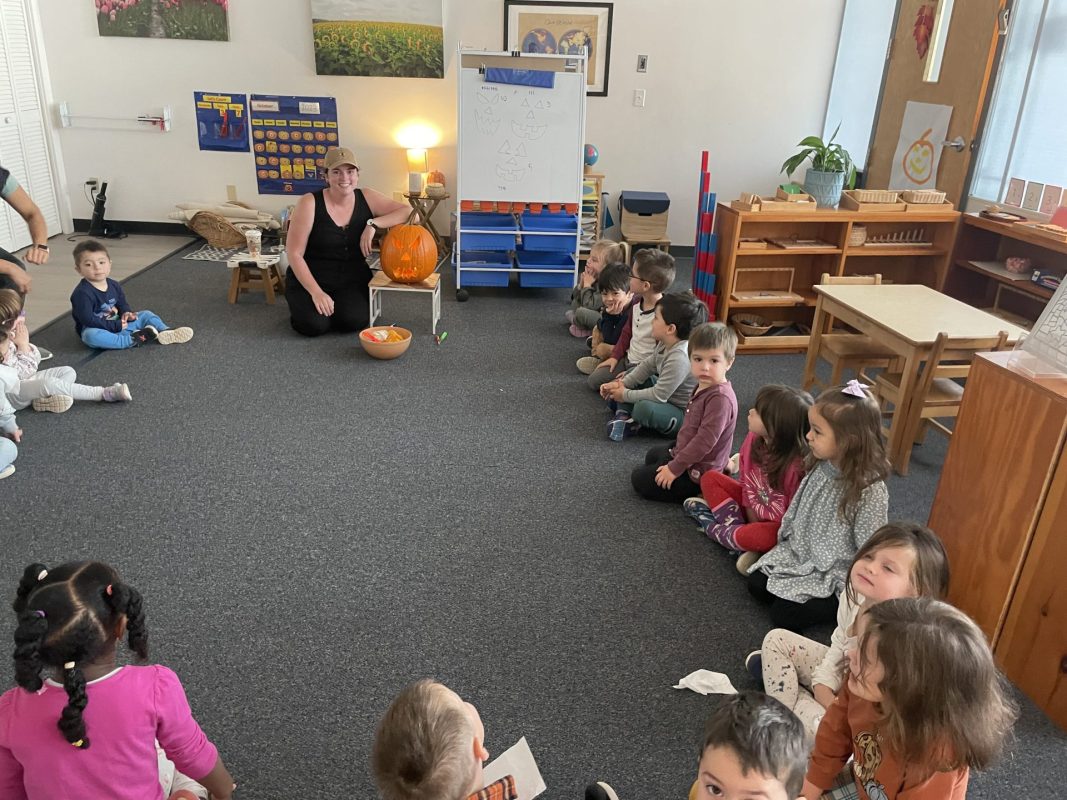
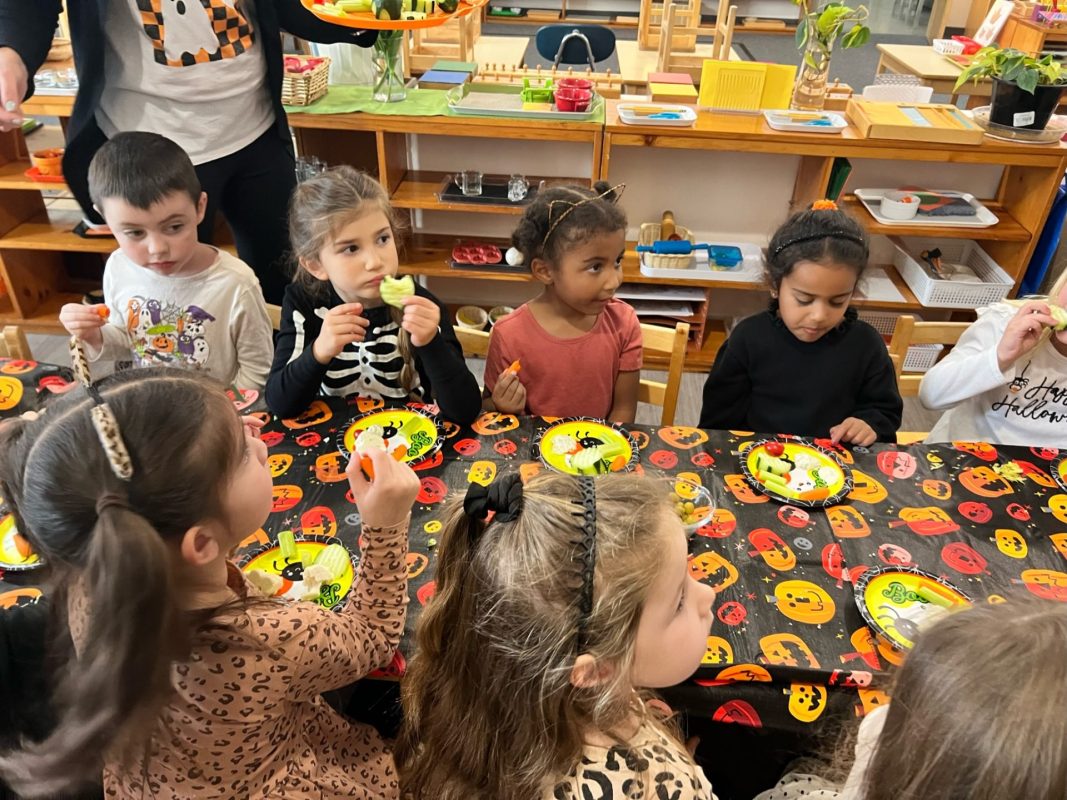
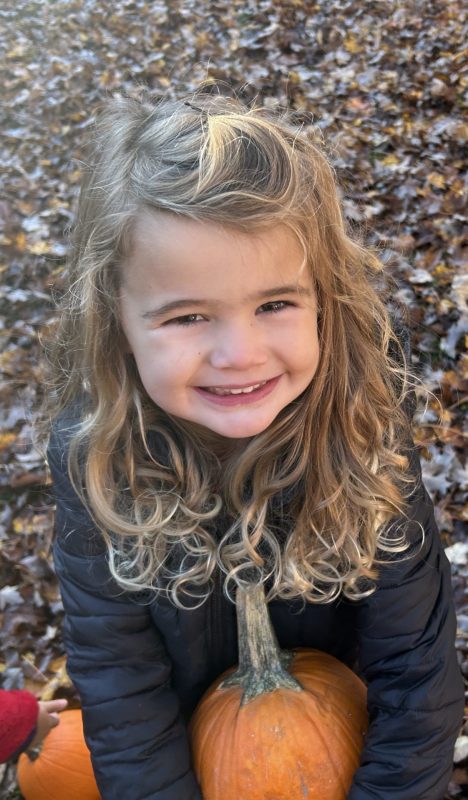
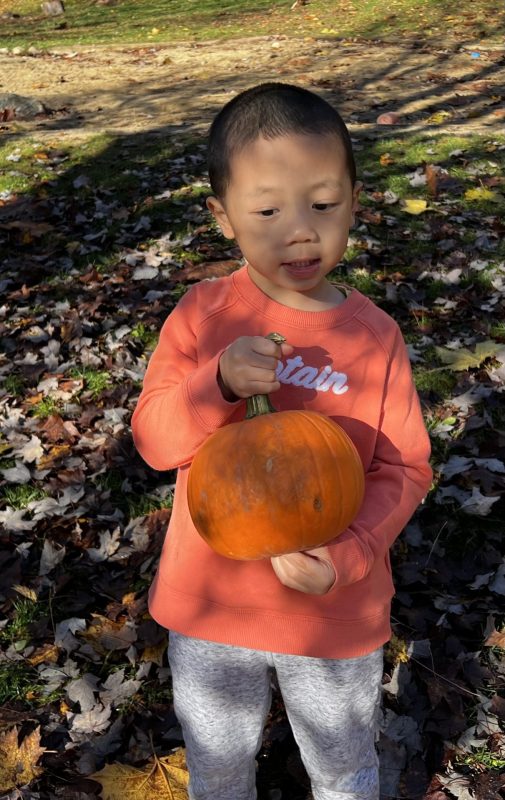
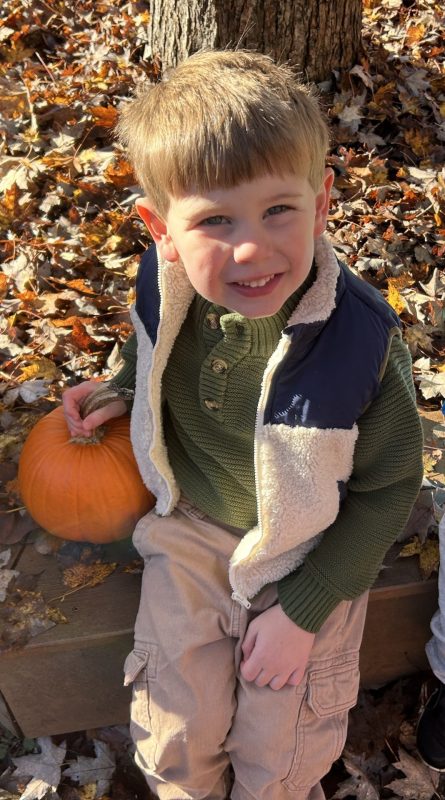
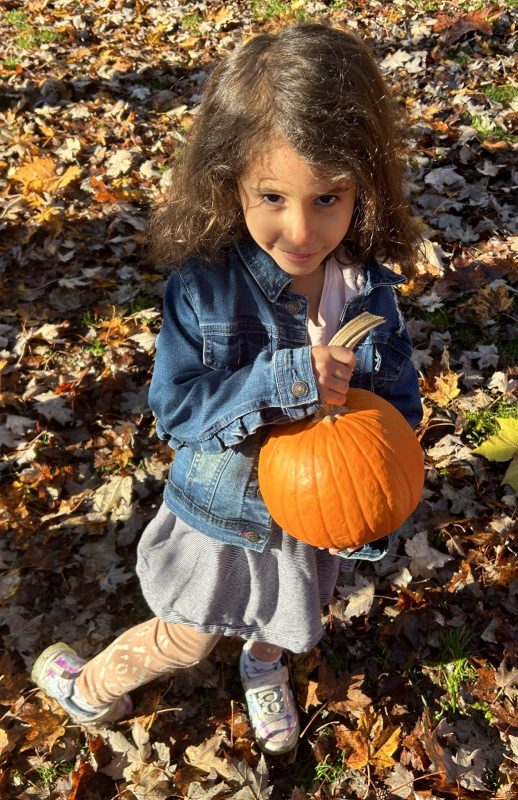
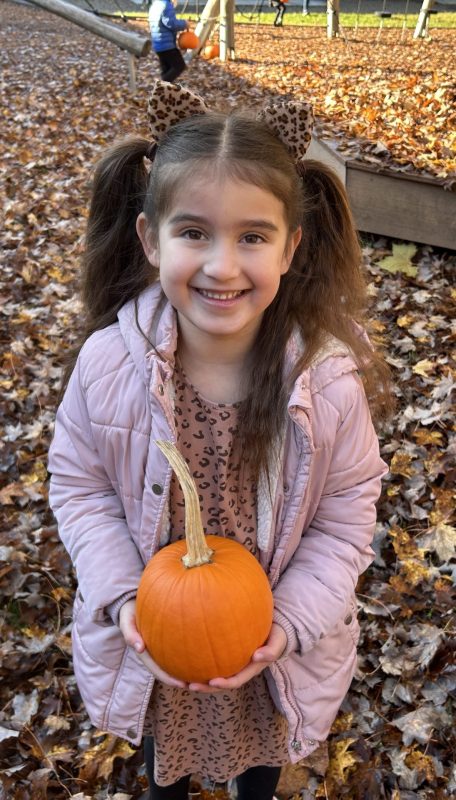
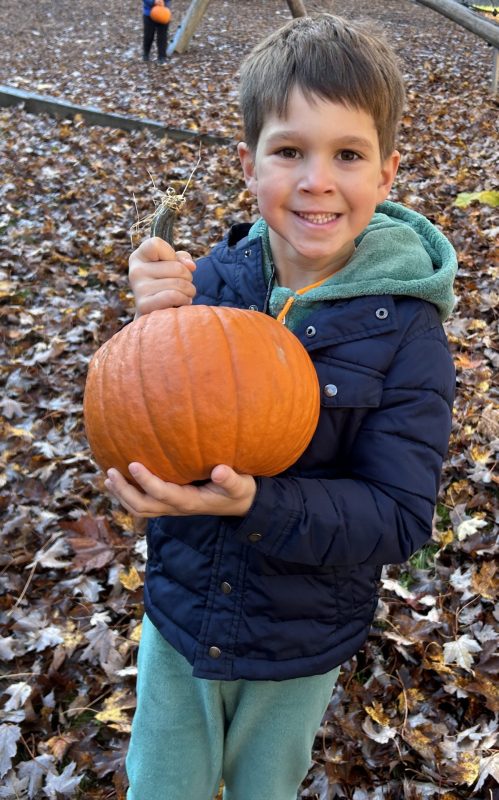
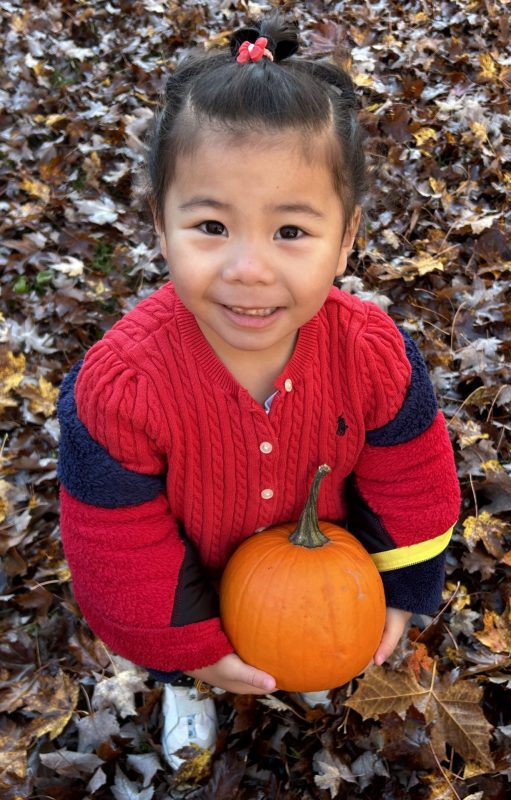
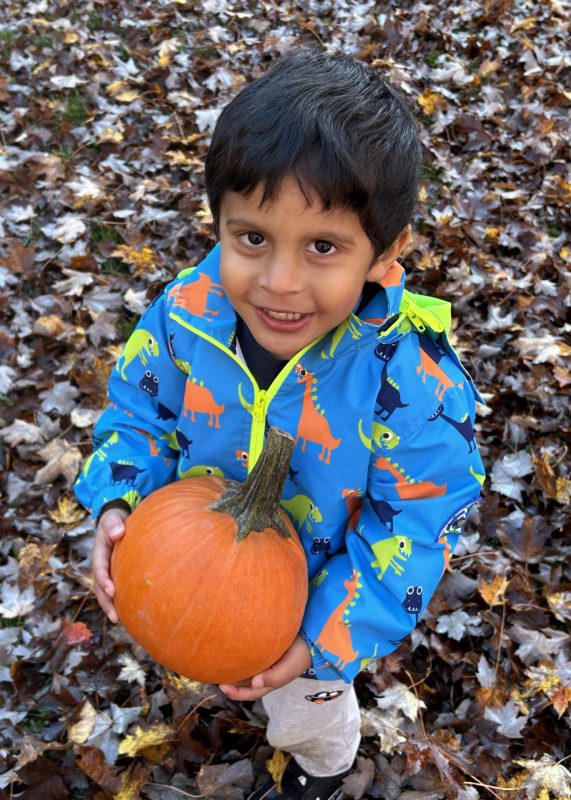
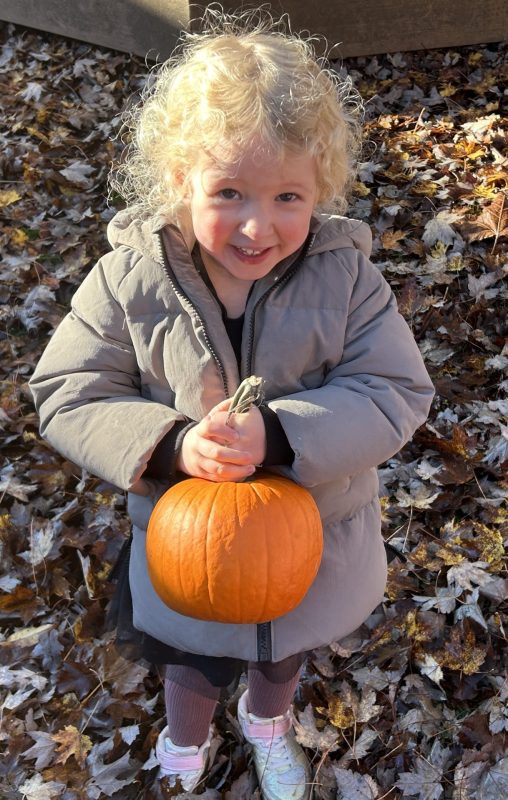
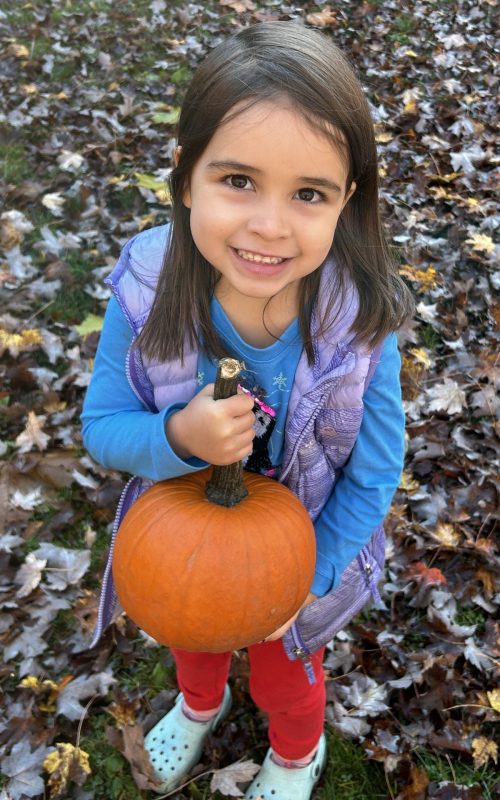
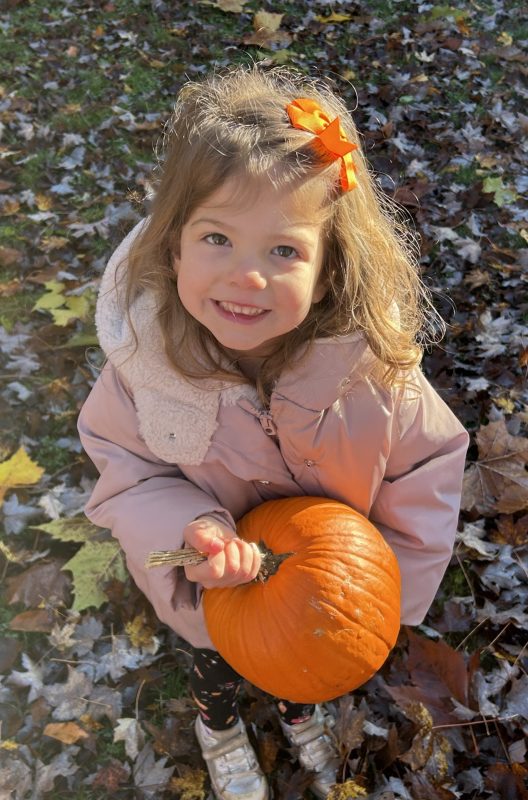
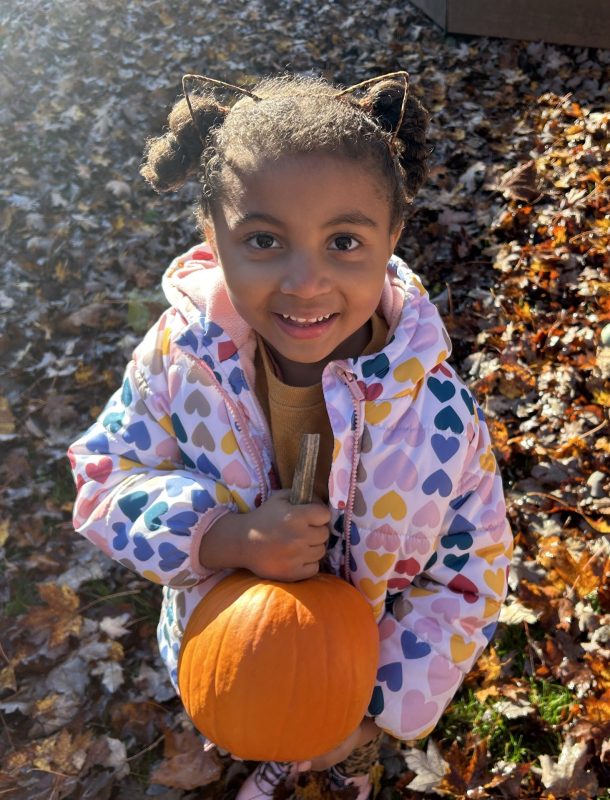
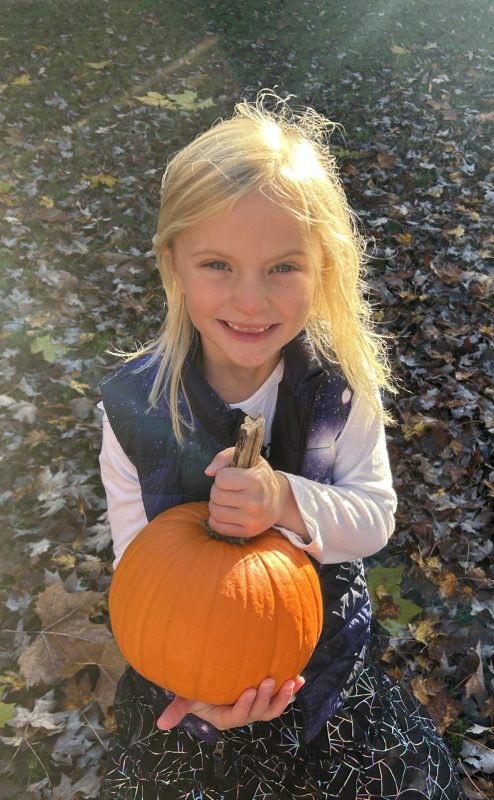
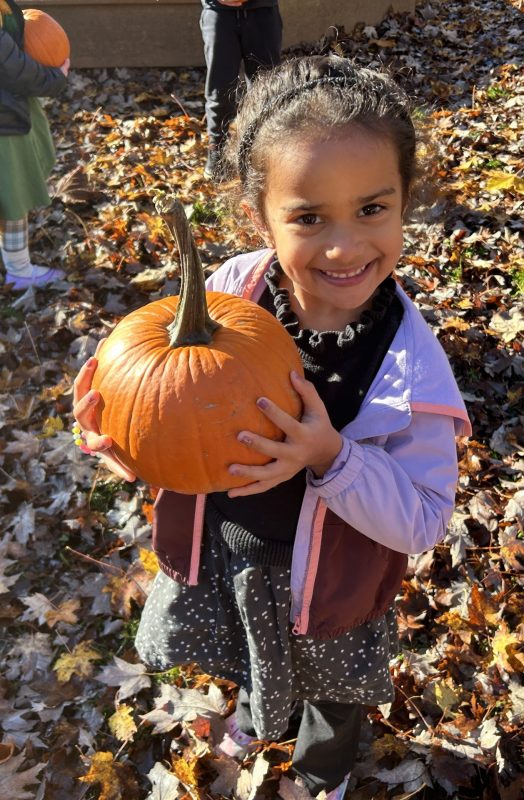
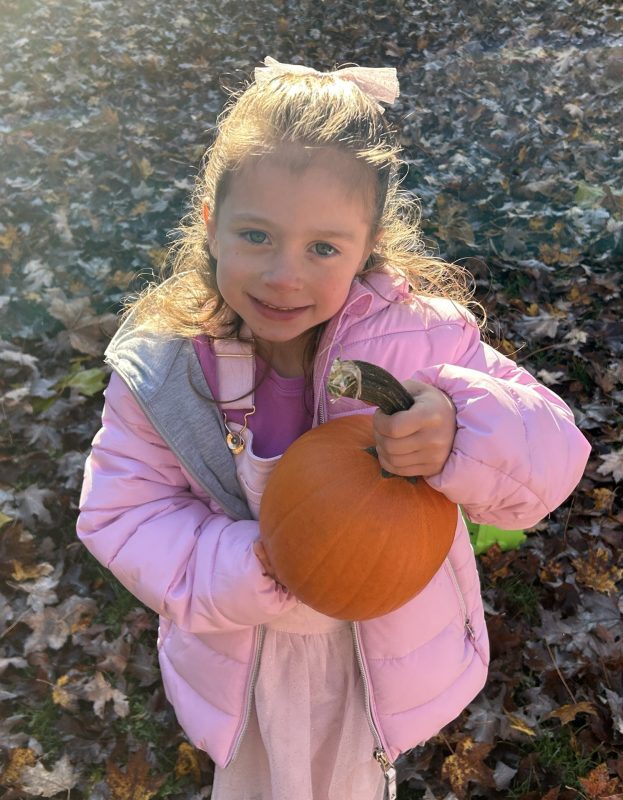
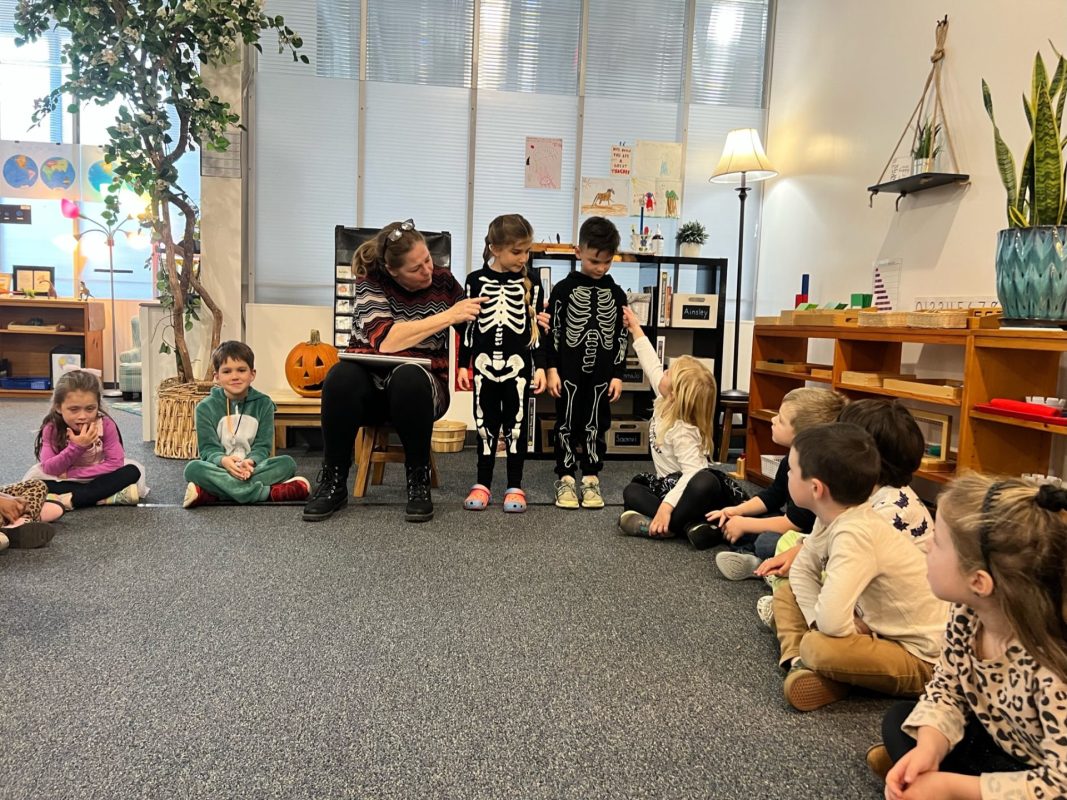
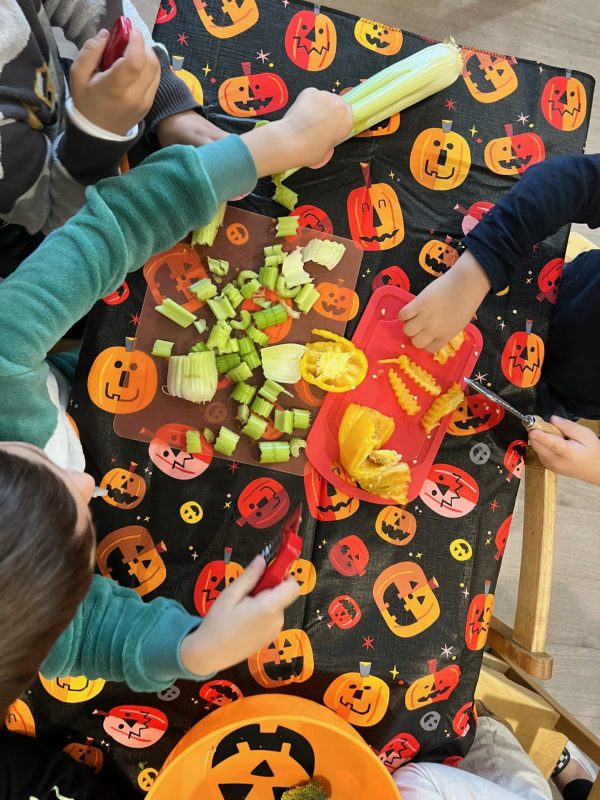
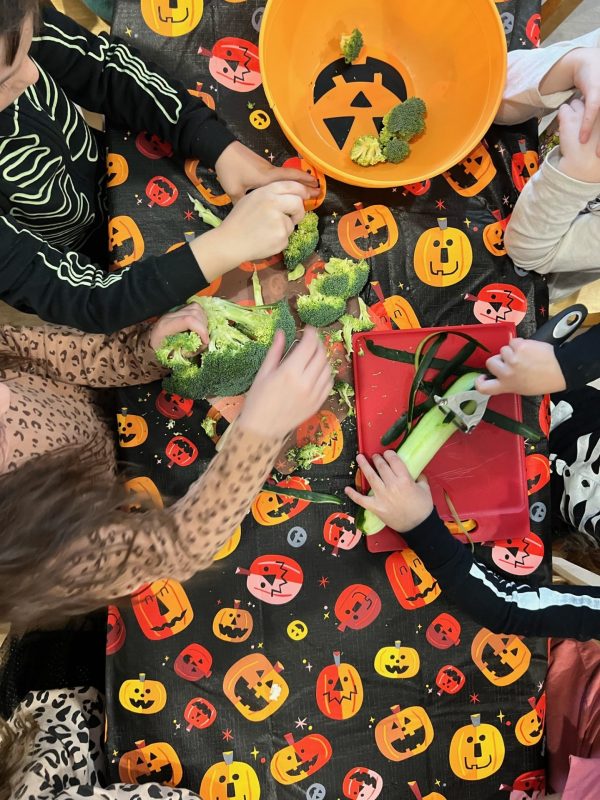
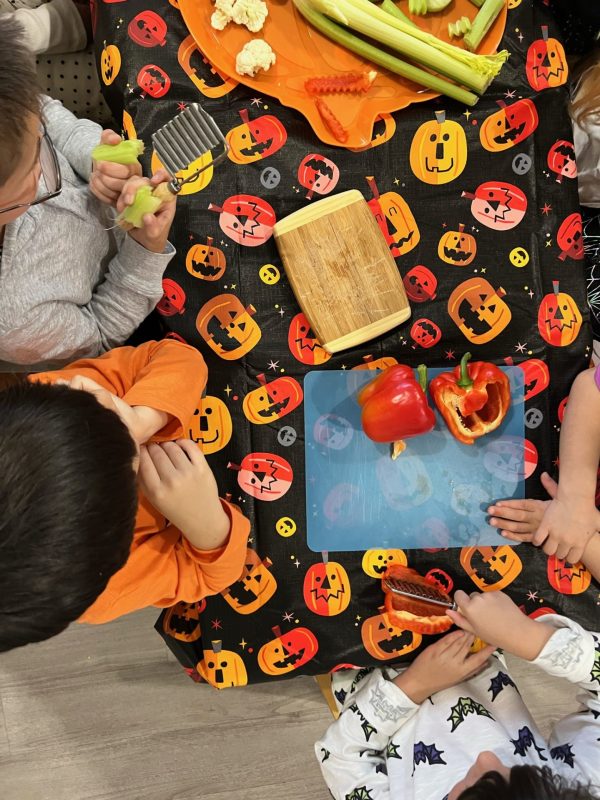
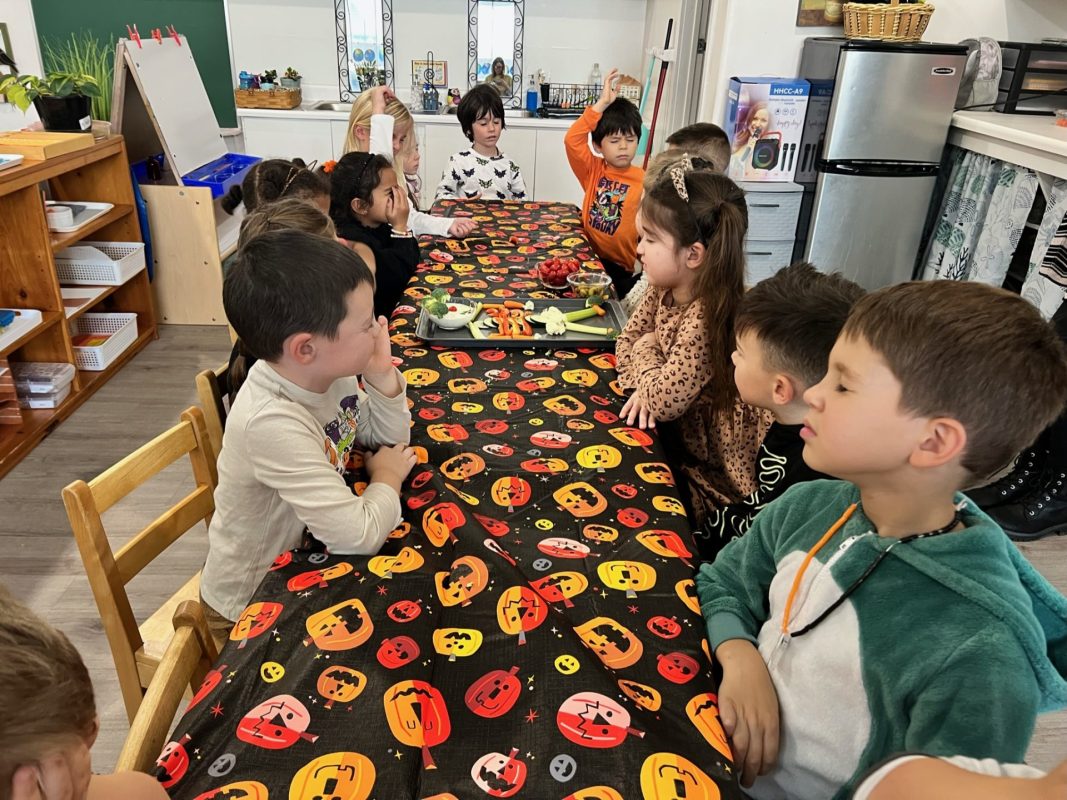
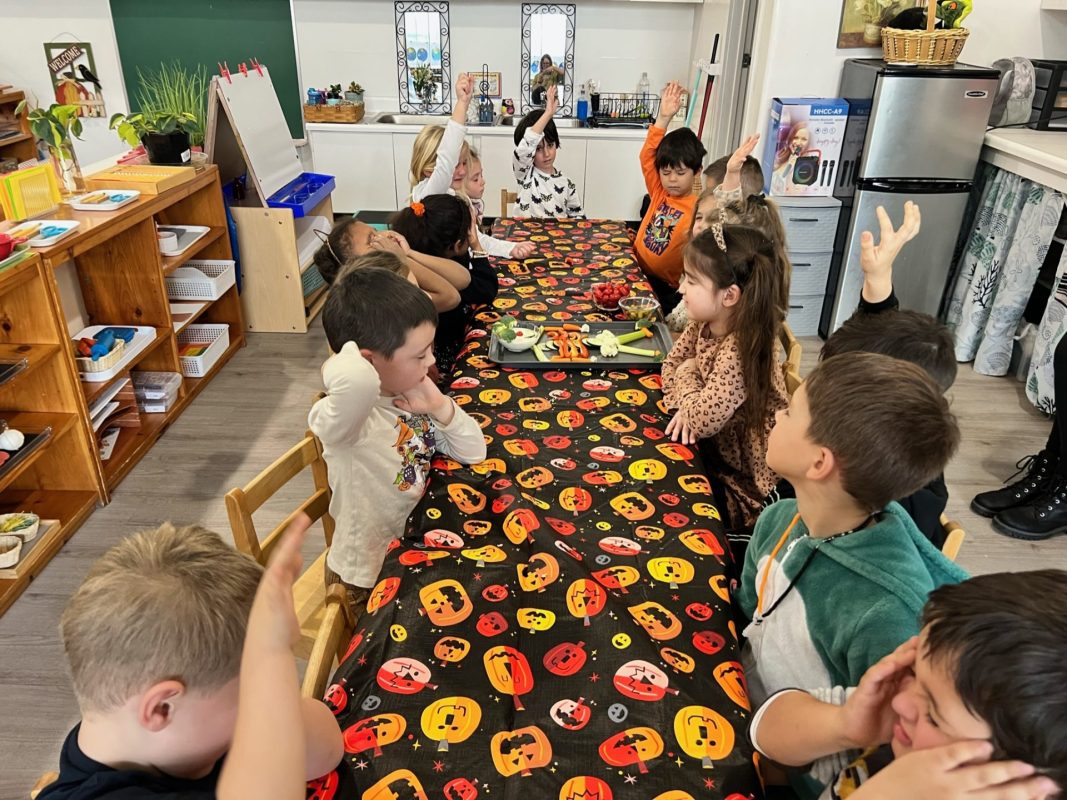
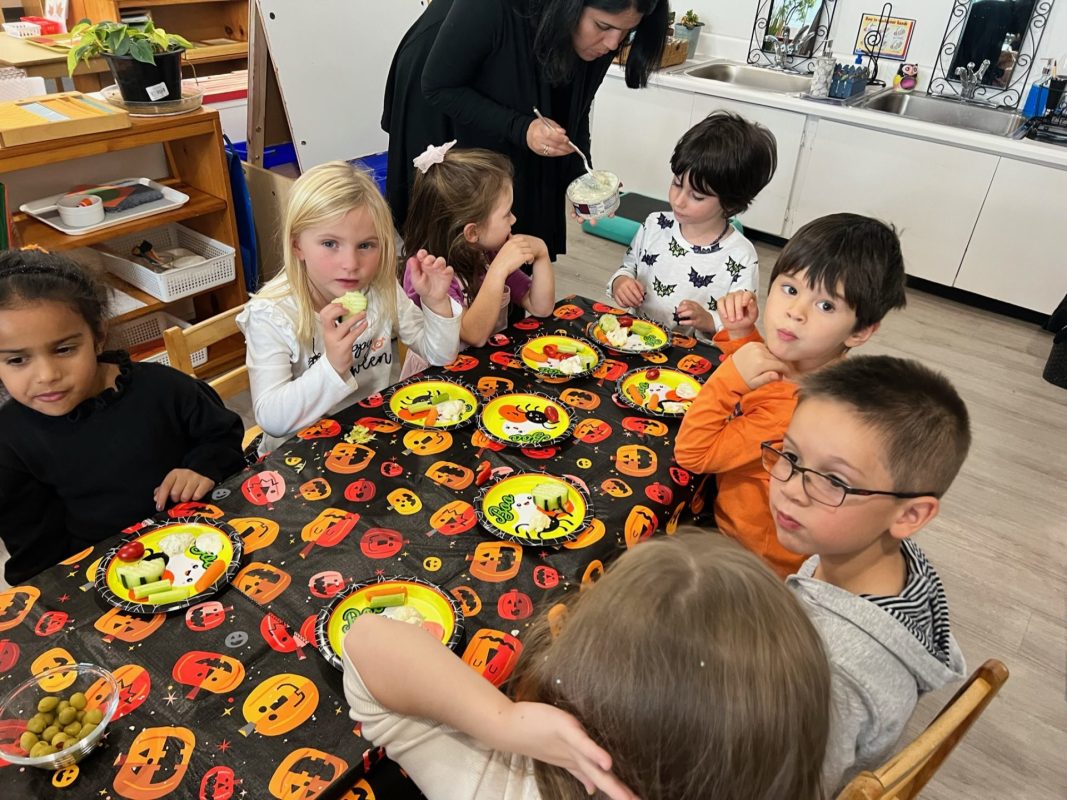
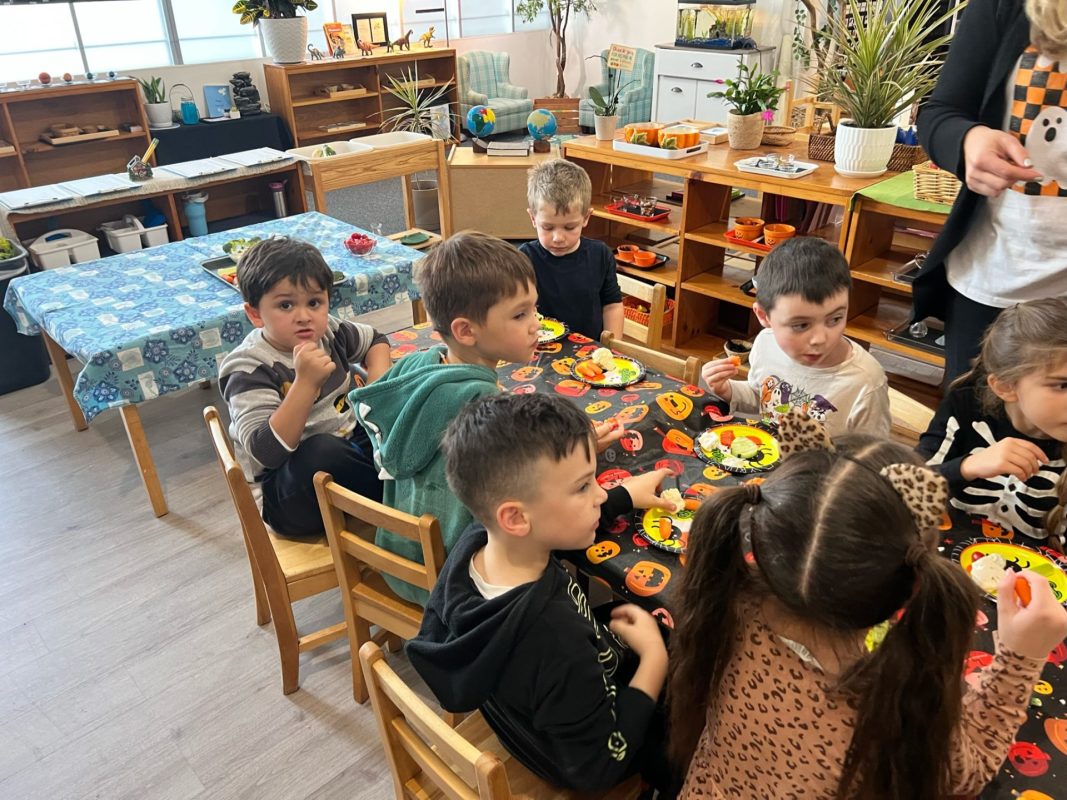
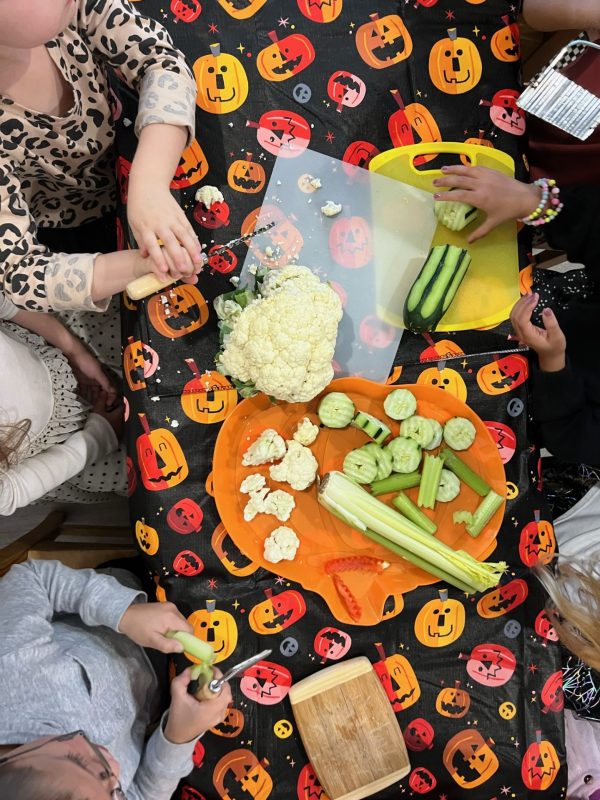
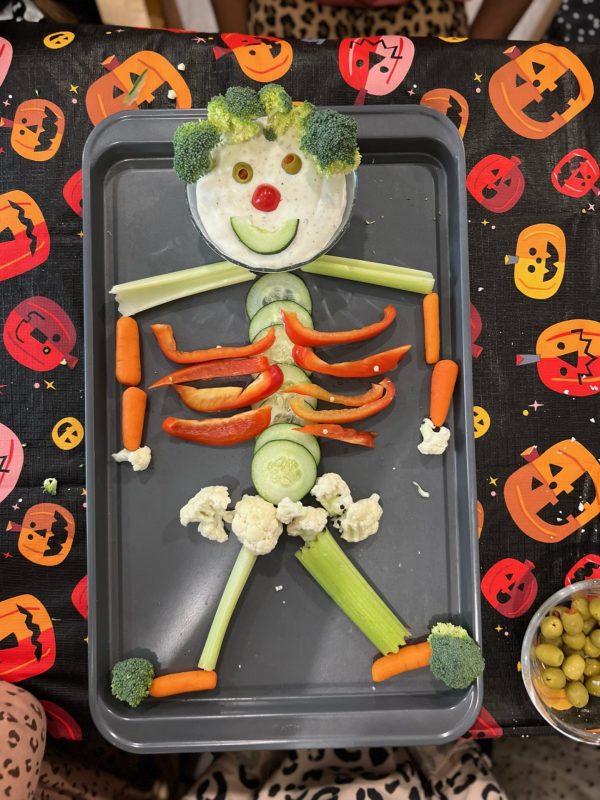
On Tuesday, we had a small in-class Harvest Celebration where each child had the opportunity to visit our “pumpkin patch” and pick their own pumpkin, make a yarn spider web, and have a fun snack.  Last but not least, meet Skelly, our veggie skeleton prepared by the kindergarten students.  It is always so wonderful to hear the children say they don’t like this vegetable or that one and then devour all of it! All of this was possible because of parents helping behind the scenes.  A huge shout out to everyone for sharing their time and energy with us to provide these wonderful opportunities for the children. We are very grateful and truly blessed.

Wishing you a week filled with peace and love.

Michelle & Maria

Mrs. Lopes: Welcome to Our Pumpkin Patch

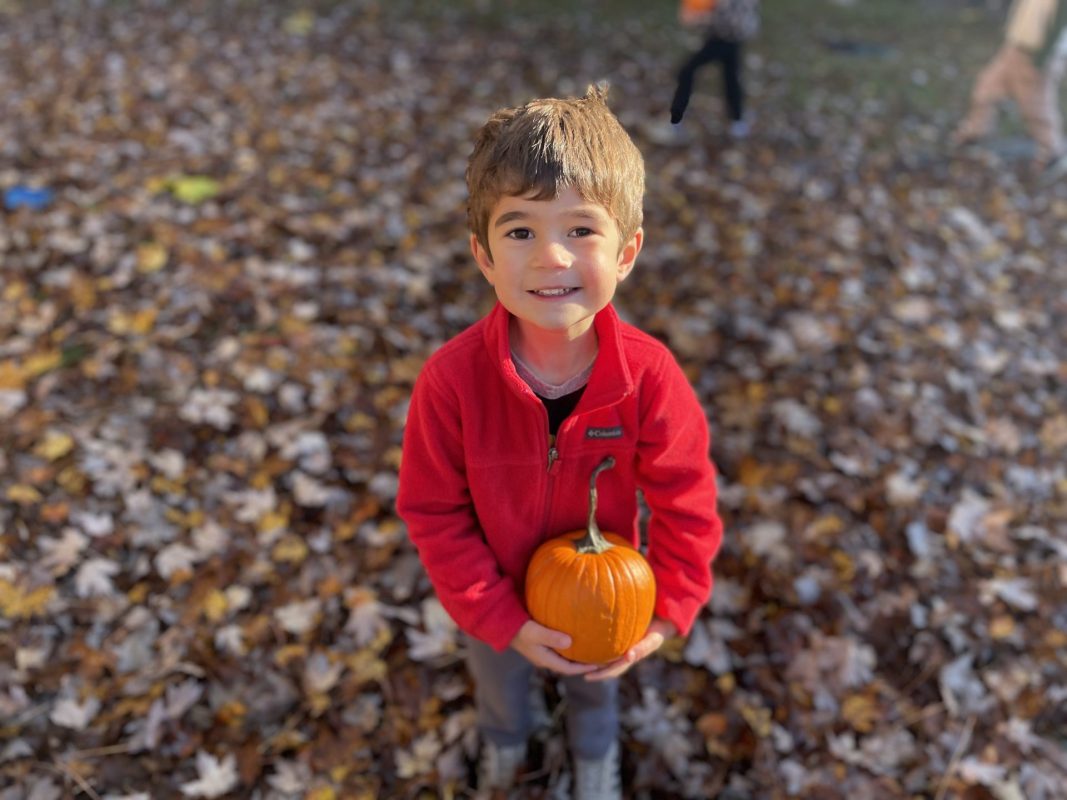
Welcome to our pumpkin patch!  There are pumpkins everywhere in our class. Having pumpkins in the classroom provides many opportunities for the children to observe and introduce basic science and math concepts.

In Practical Life, we have pumpkin spooning, pumpkin pouring, pumpkin scrubbing, and pumpkin grasping. In Science, we learned about the parts of a pumpkin and the pumpkin’s life cycle. We compared pumpkins and categorized them as small, medium, and large. We are using our five senses to determine what pumpkins look, smell, feel, sound, and taste like.

On Tuesday, we had a small in-class Harvest Celebration where each child had the opportunity to visit our “pumpkin patch” and pick their own pumpkin, make a yarn spider web, and have a fun snack.  Last but not least, meet Skelly, our veggie skeleton prepared by the kindergarten students.  It is always so wonderful to hear the children say they don’t like this vegetable or that one and then devour all of it! All of this was possible because of parents helping behind the scenes.  A huge shout out to everyone for sharing their time and energy with us to provide these wonderful opportunities for the children. We are very grateful and truly blessed.

Wishing you a week filled with peace and love.

Amanda & Hema


Mrs. Sargeant: A Peek at the Week


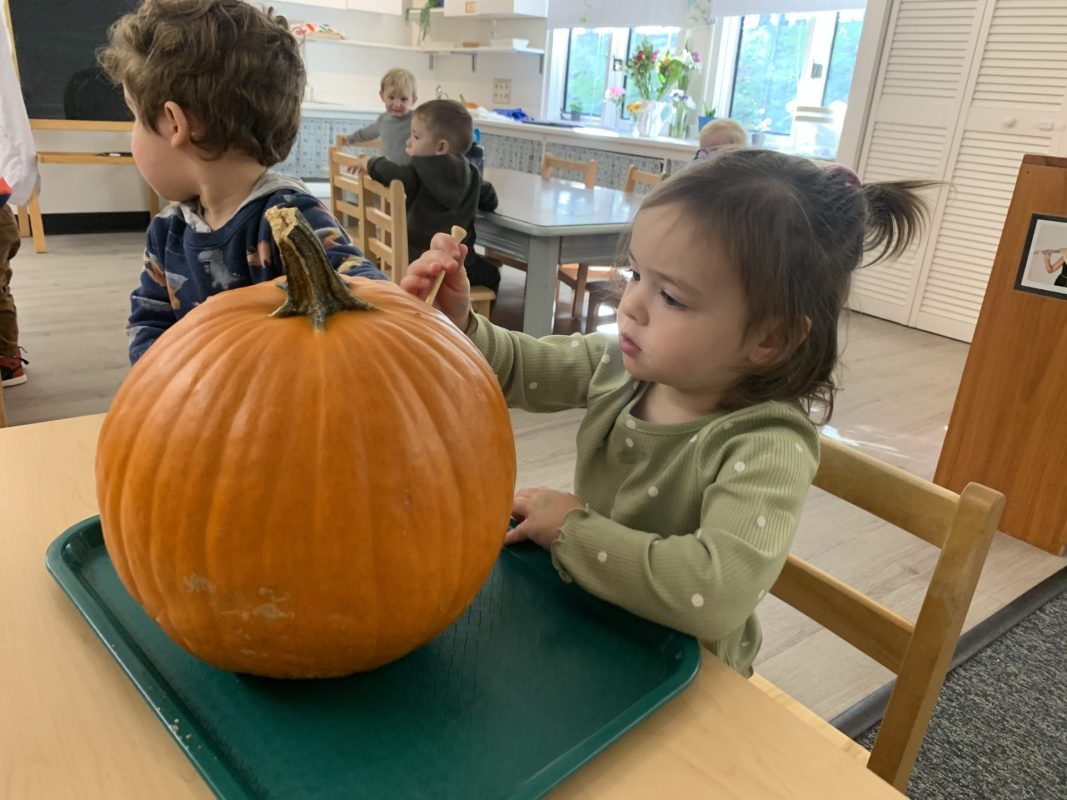
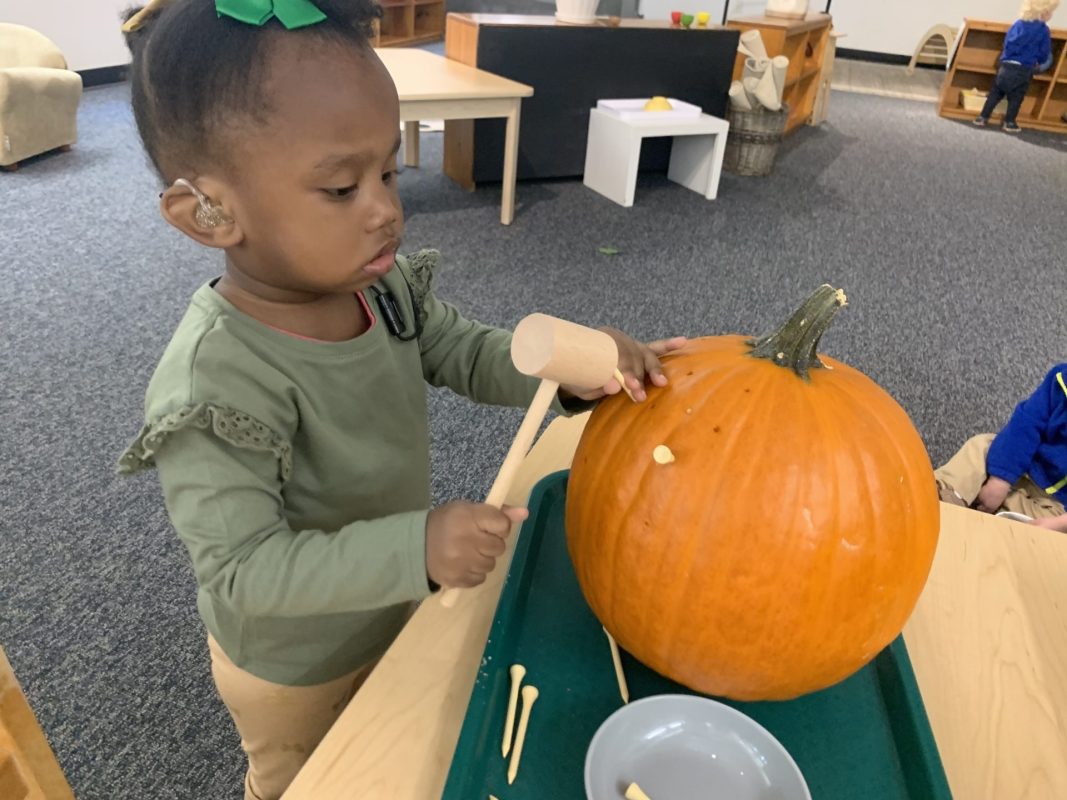
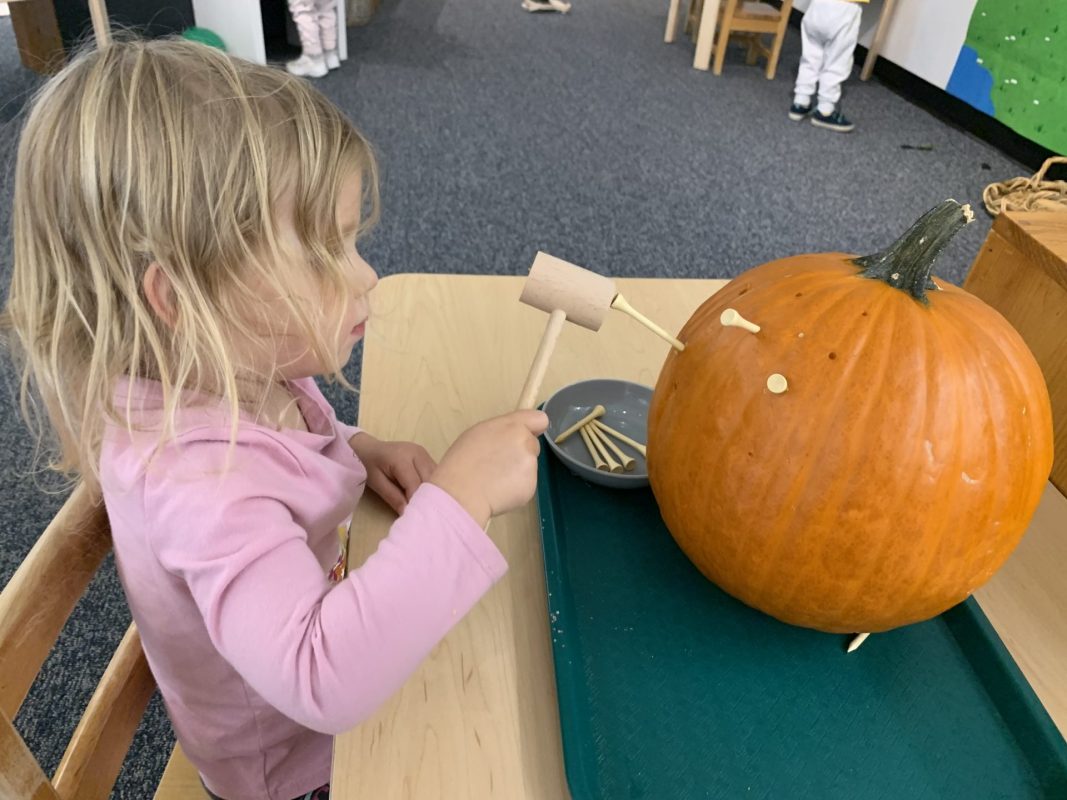
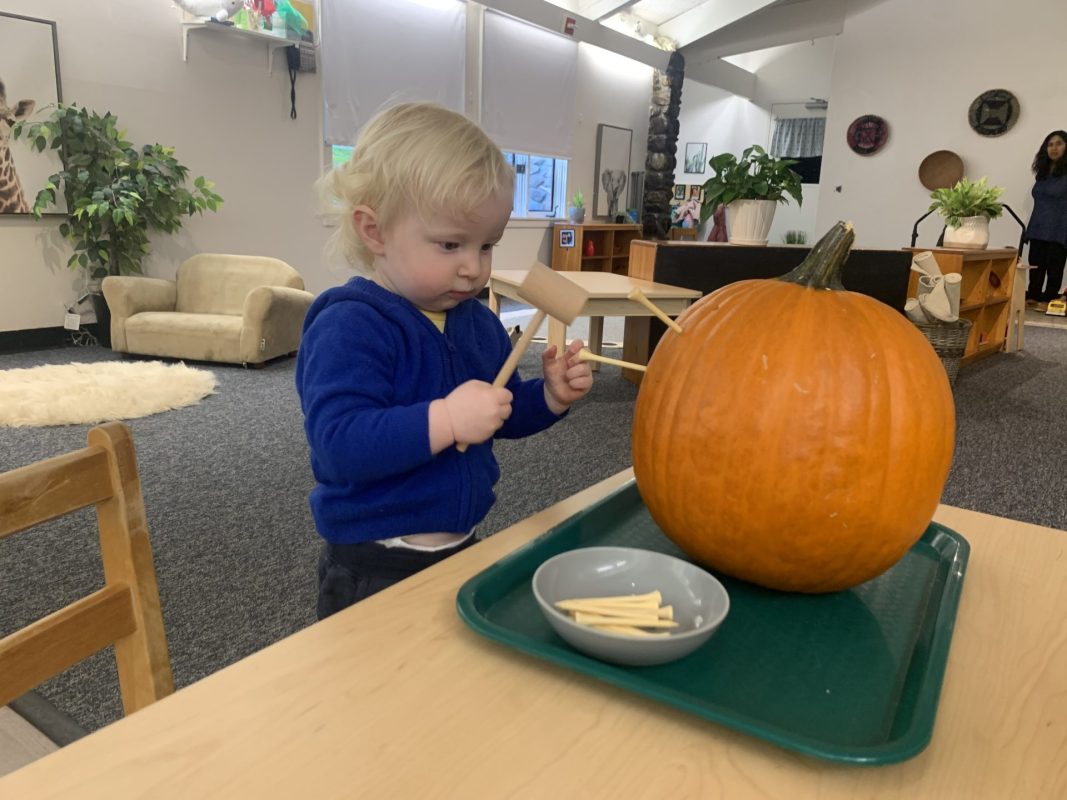
With autumn in the air, we have been taking advantage of pumpkin-related activities. This week, the children have been enjoying pumpkin scrubbing, and pumpkin hammering.

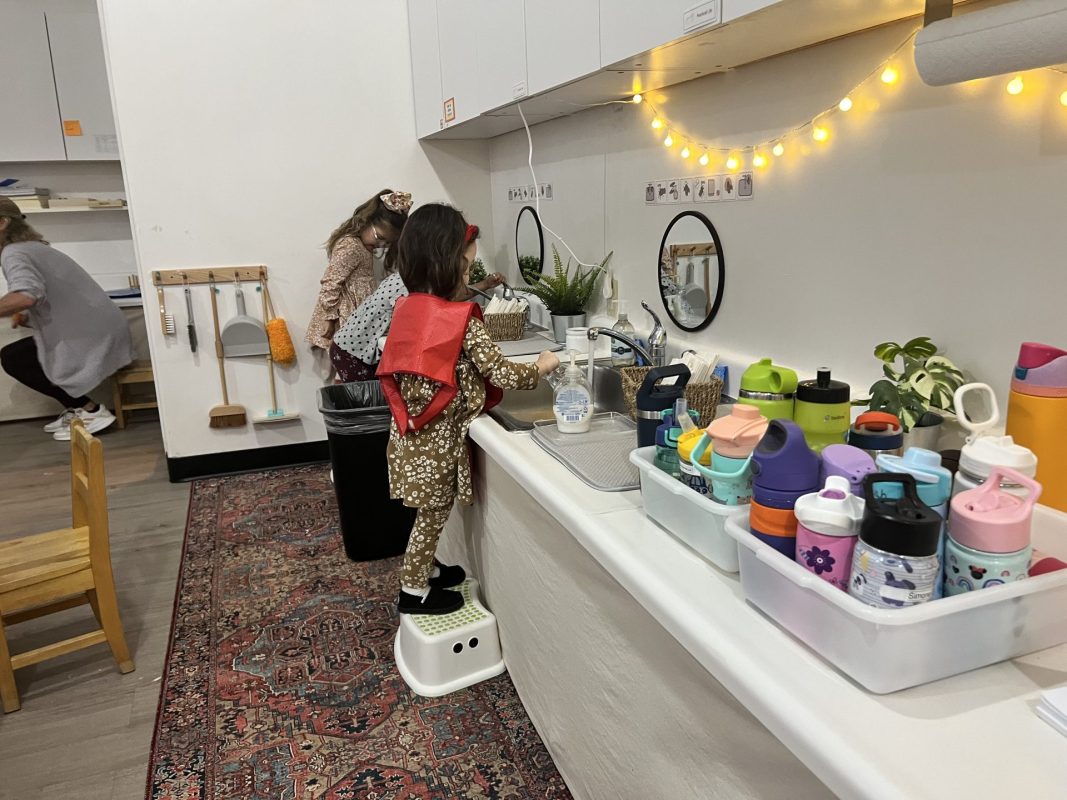
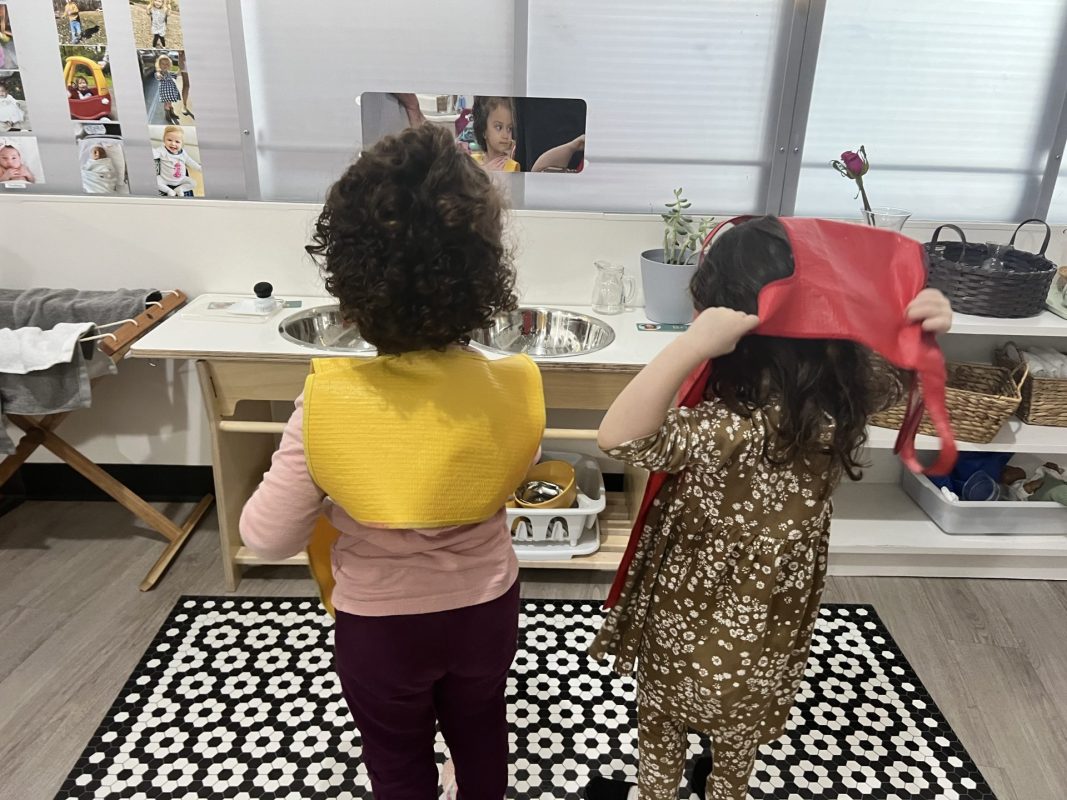
Pumpkin scrubbing is a multi-step practical life activity which the children love. They start by rolling up their sleeves, then putting an apron on over their head, securing the velcro, turning the water on, scrubbing the pumpkin, (as they delight in observing the bubbles form from the soap), turning the water off, drying the pumpkin, and finally removing the apron. They also have the opportunity to use a sponge to remove the dirty soap bubbles. This activity strengthens the muscles in the hands and fingers, in addition to building concentration and independence.

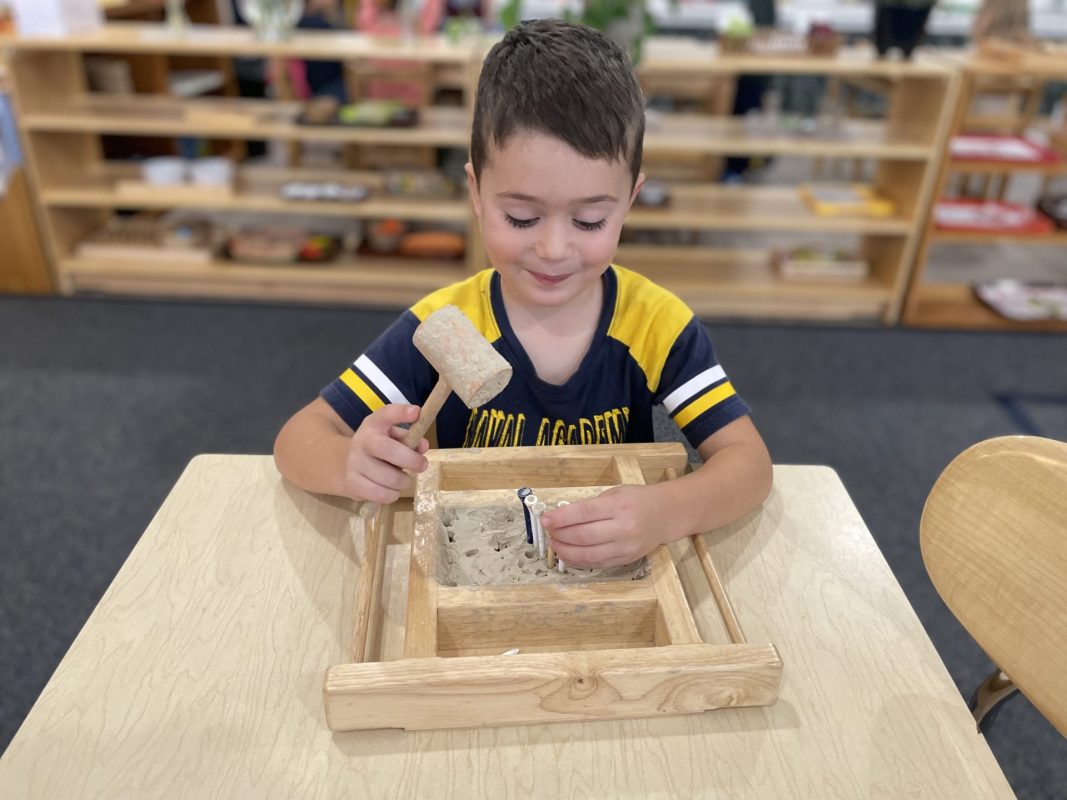
Pumpkin hammering requires a great deal of hand-eye coordination. We use a wooden mallet to hammer golf tees into a pumpkin. When the children are finished, they remove the tees with their fingers – which is quite a challenge – in order to make the activity ready for the next person.

One new song that we have been singing, which has become a fast favorite, is Five Perfect Pumpkins by Stephanie Leavell.

We’re looking forward to next week’s pumpkin picking activity in the Zen garden, which our Middle School friends will help us with. Thank you all for providing the decorations, wagons, pumpkins, and snack – we couldn’t do this without your participation.

Continue reading “Mrs. Sargeant: A Peek at the Week”


Mrs. Lopes: The Three Period Lesson

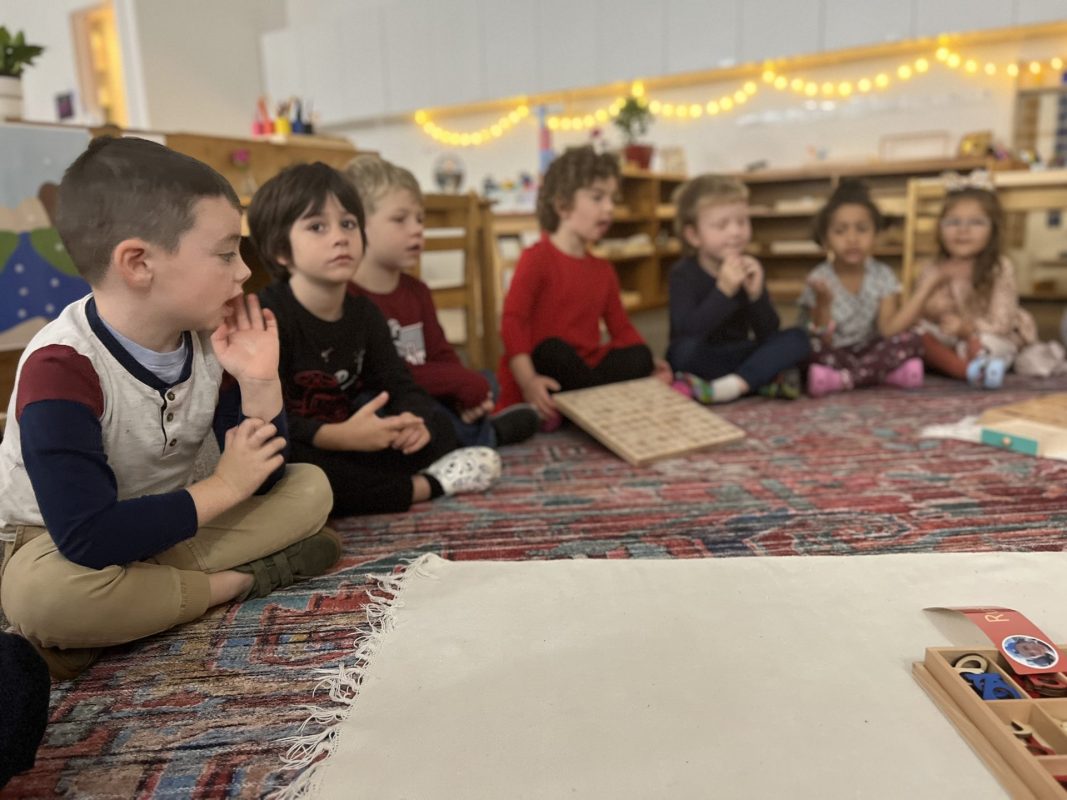
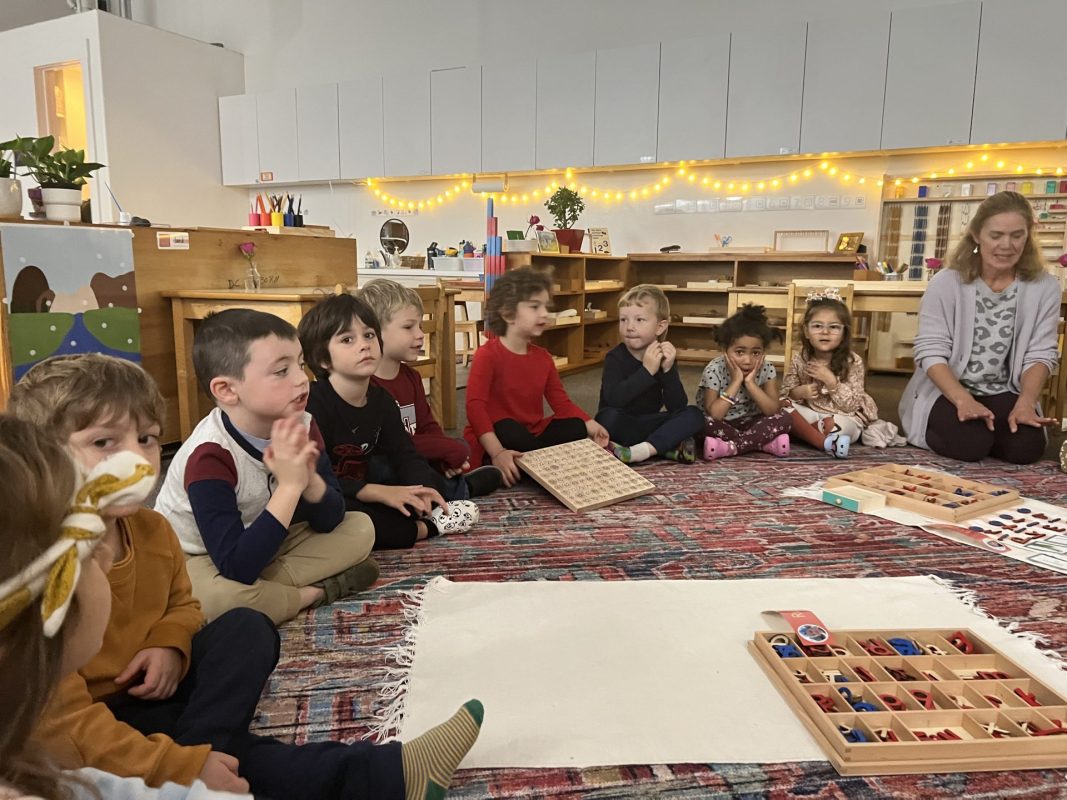
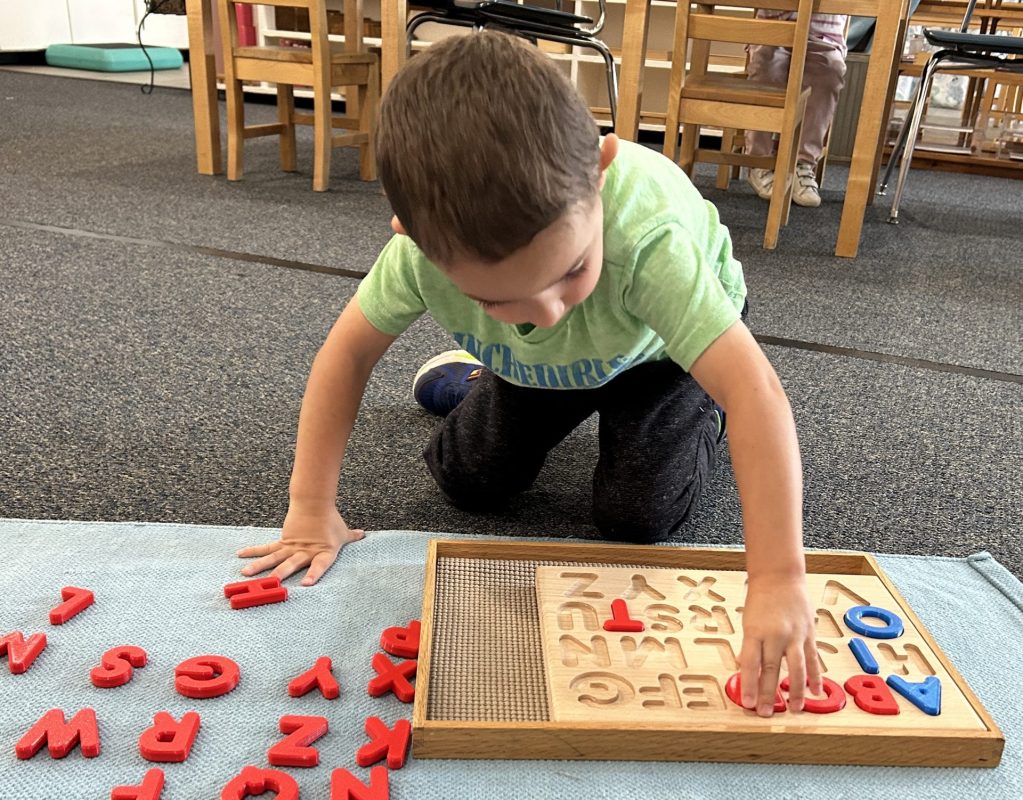
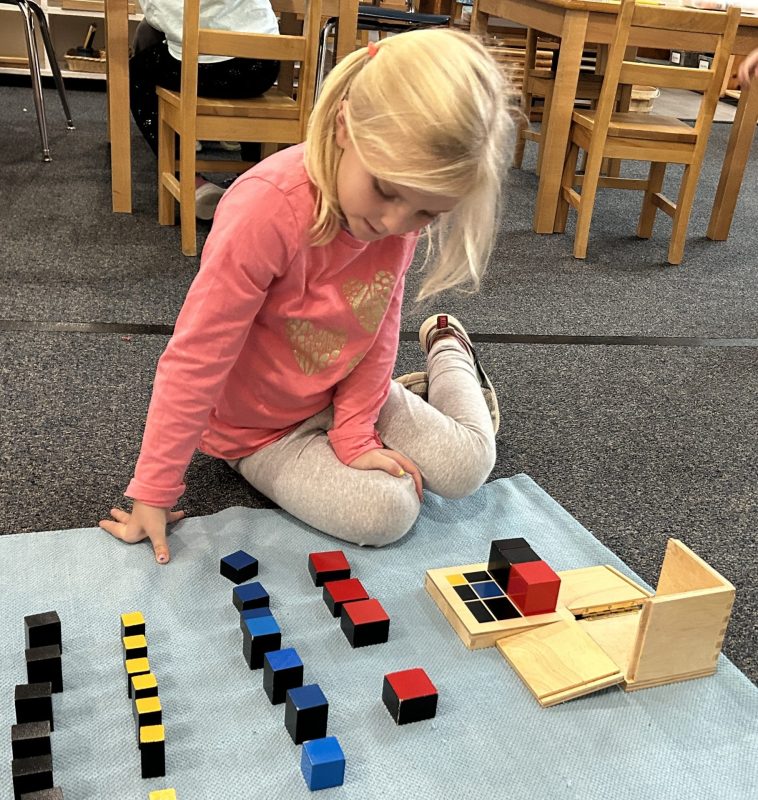
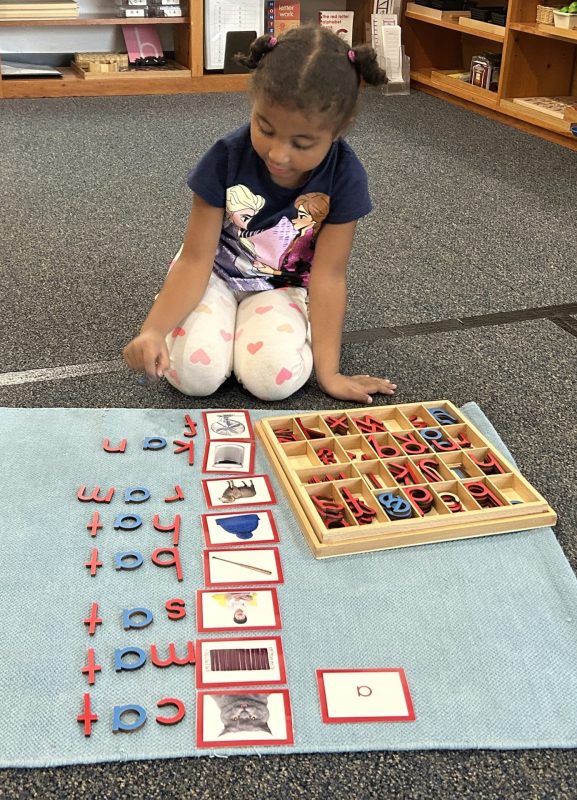
When we introduce new concepts or materials to the children, we often do so using a three-period lesson. This is an important tenet of Montessori education and it helps to move the child from basic understanding of a concept to mastery.

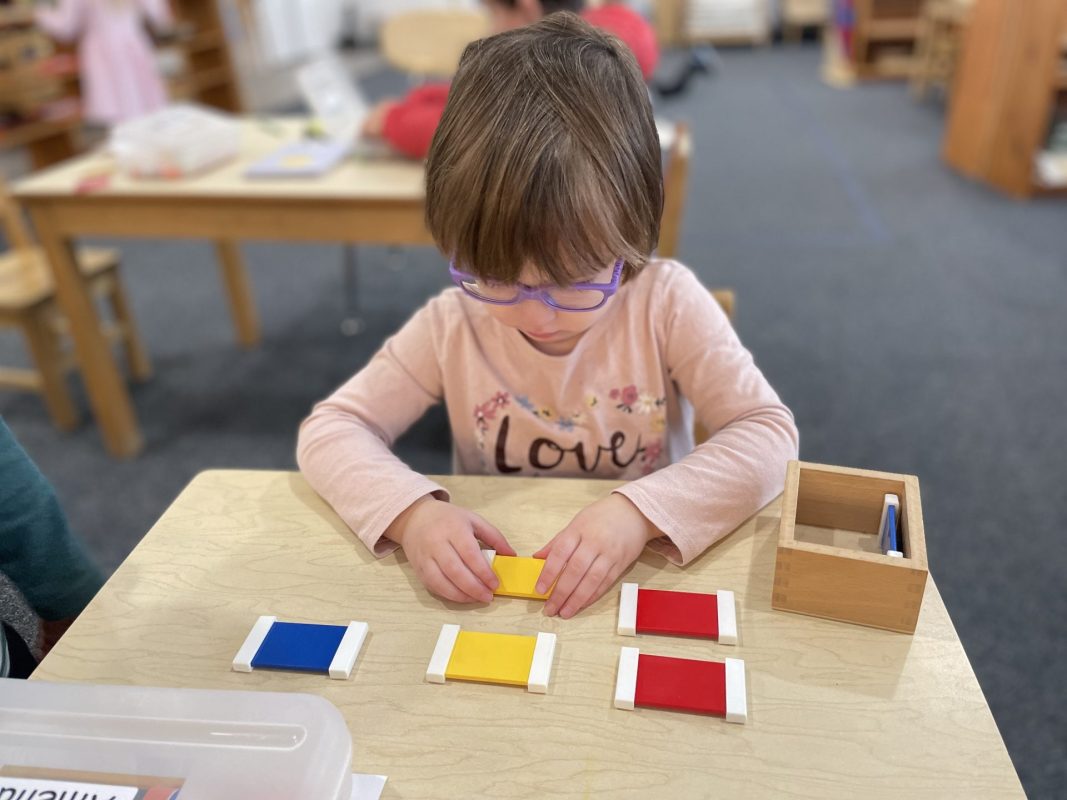
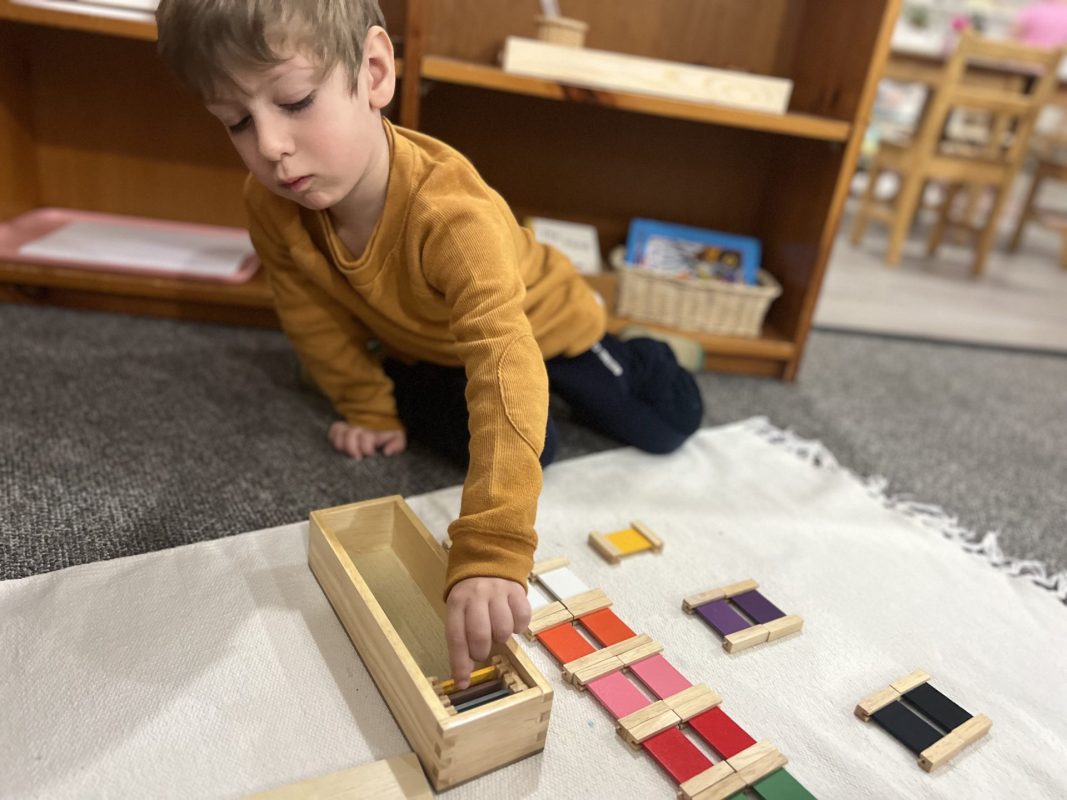
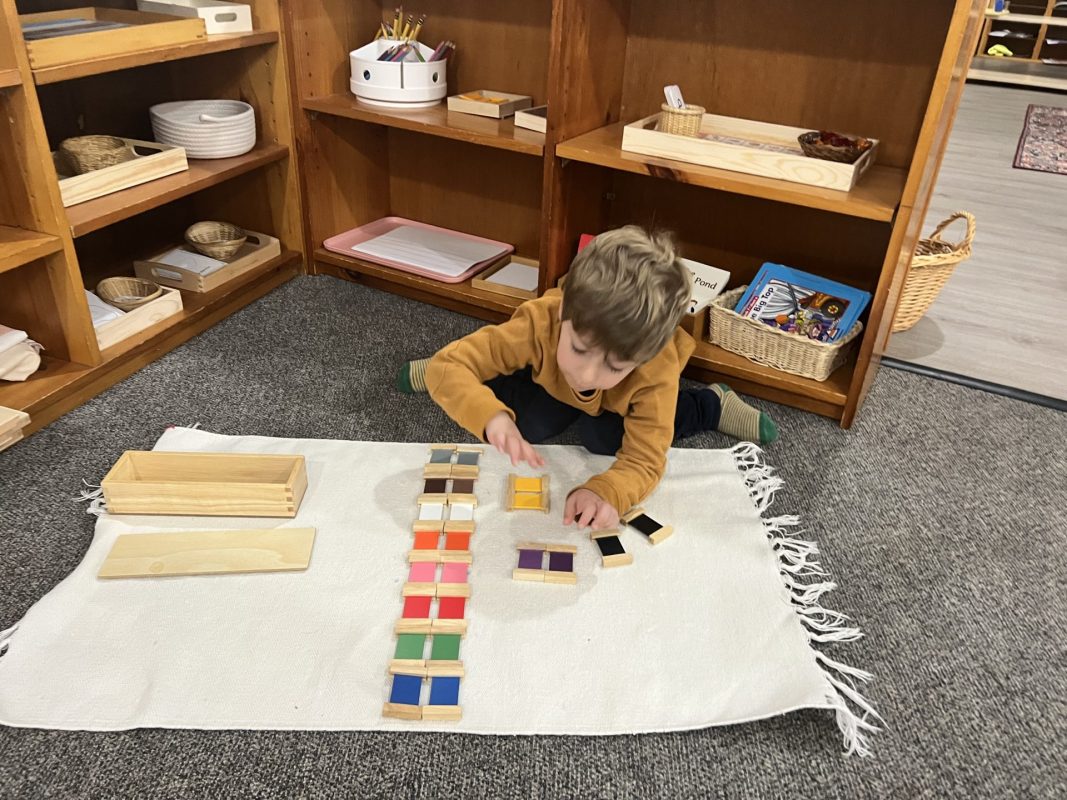
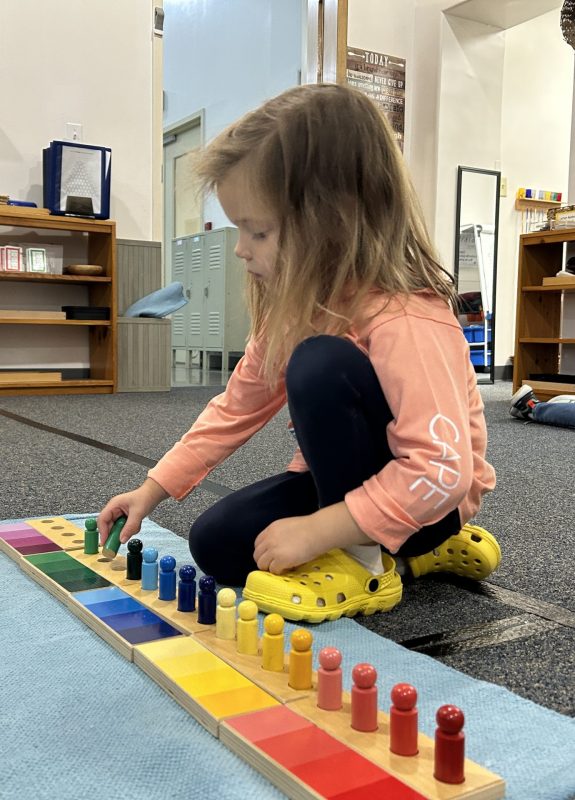
Period One is the introduction stage. In this stage we are isolating new vocabulary to the children. For example, if we are introducing the color tablets, we say, “This is blue.”  Repeating that statement and allowing the child to manipulate the blue color tablet are crucial during this stage.

Period Two is all about association and recognition. It is often a separate lesson. We do not ask the children to remember the vocabulary or recall the concept.  We are simply reinforcing the concept taught in Period One. We use words such as “Show me the blue tablet,” or “Can you place the blue tablet on your lap?”

Period Three is the recall stage and the first time we ask the child to remember the concept independently. We ask them, “What is this?” when showing them the blue color tablet. We are careful not to begin Period Three until we know they are ready for success.

Every time a child masters a new concept it builds the foundation for the next lesson or concept to be taught.

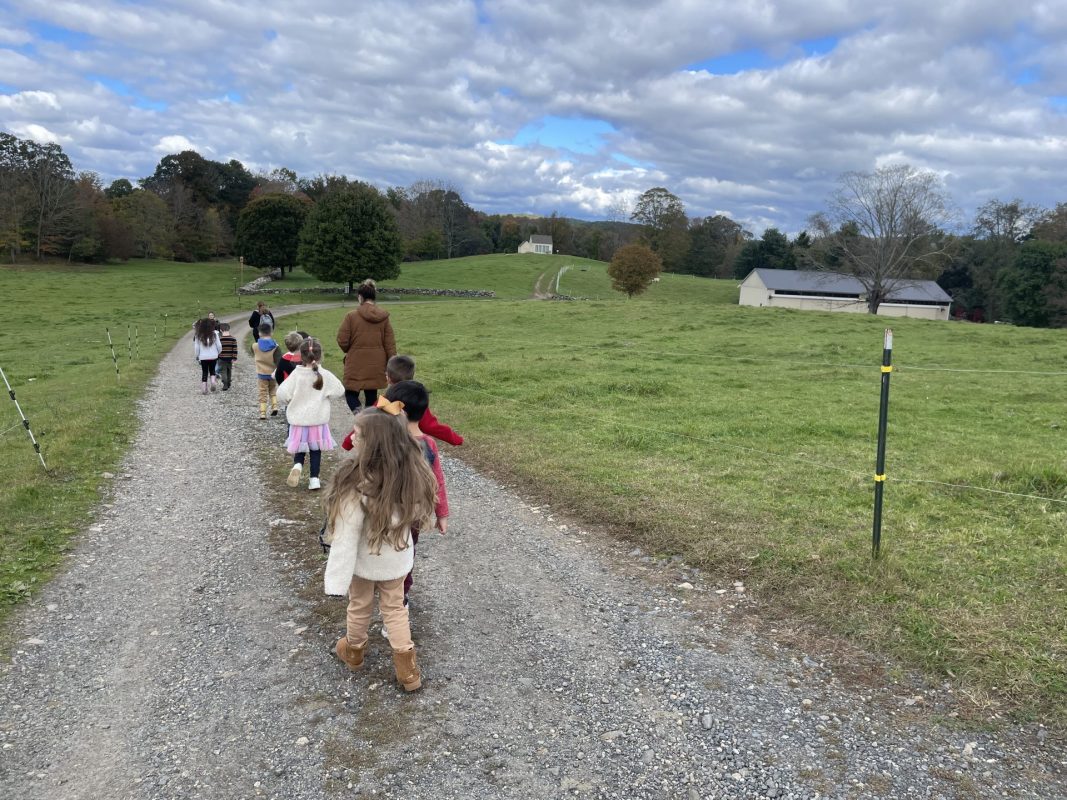
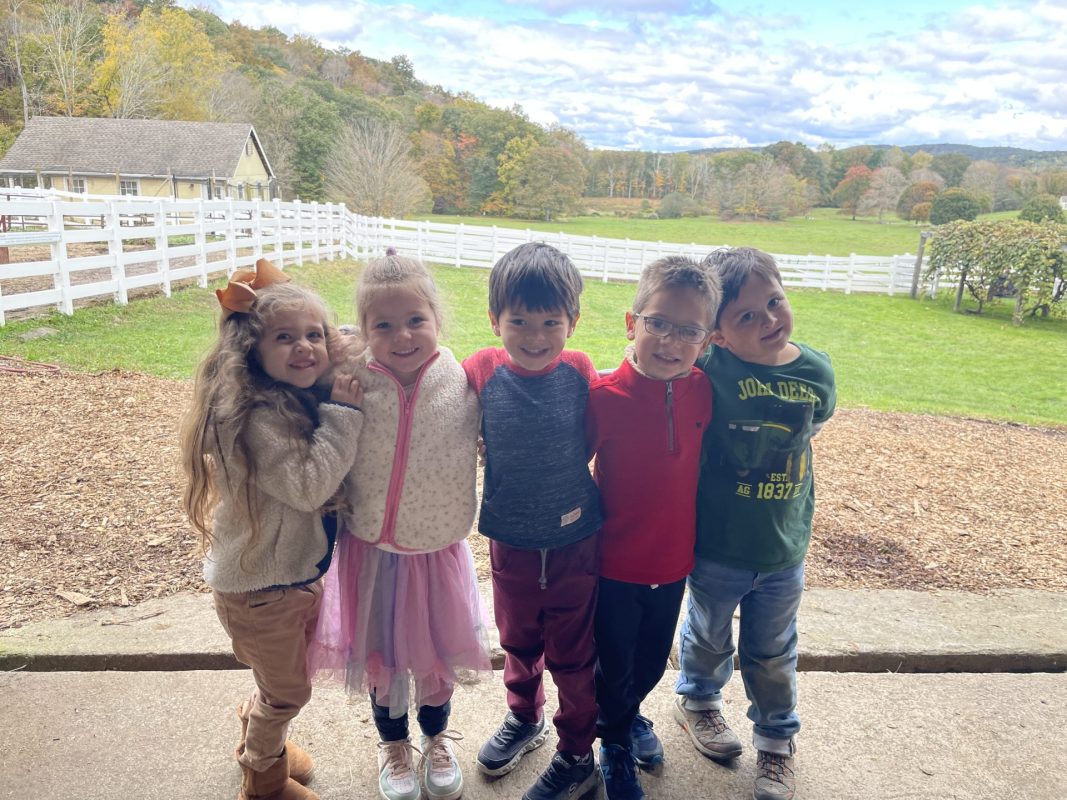
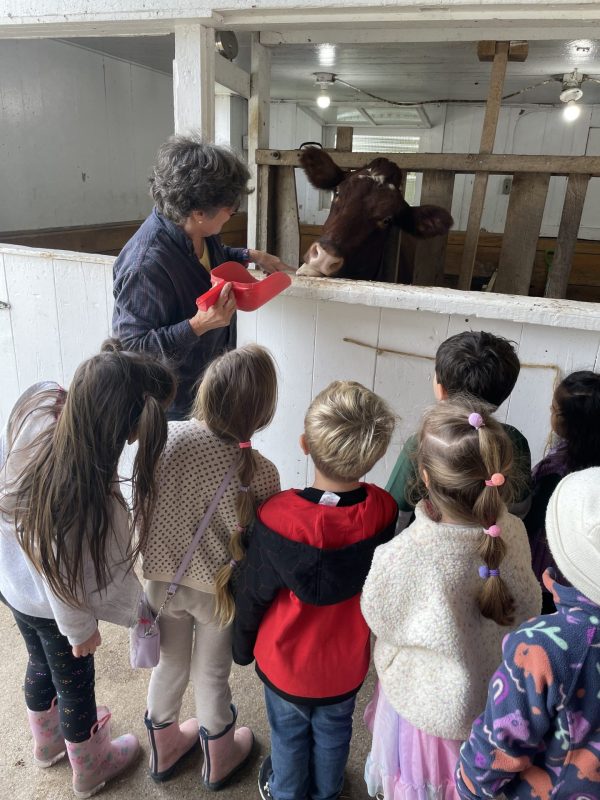
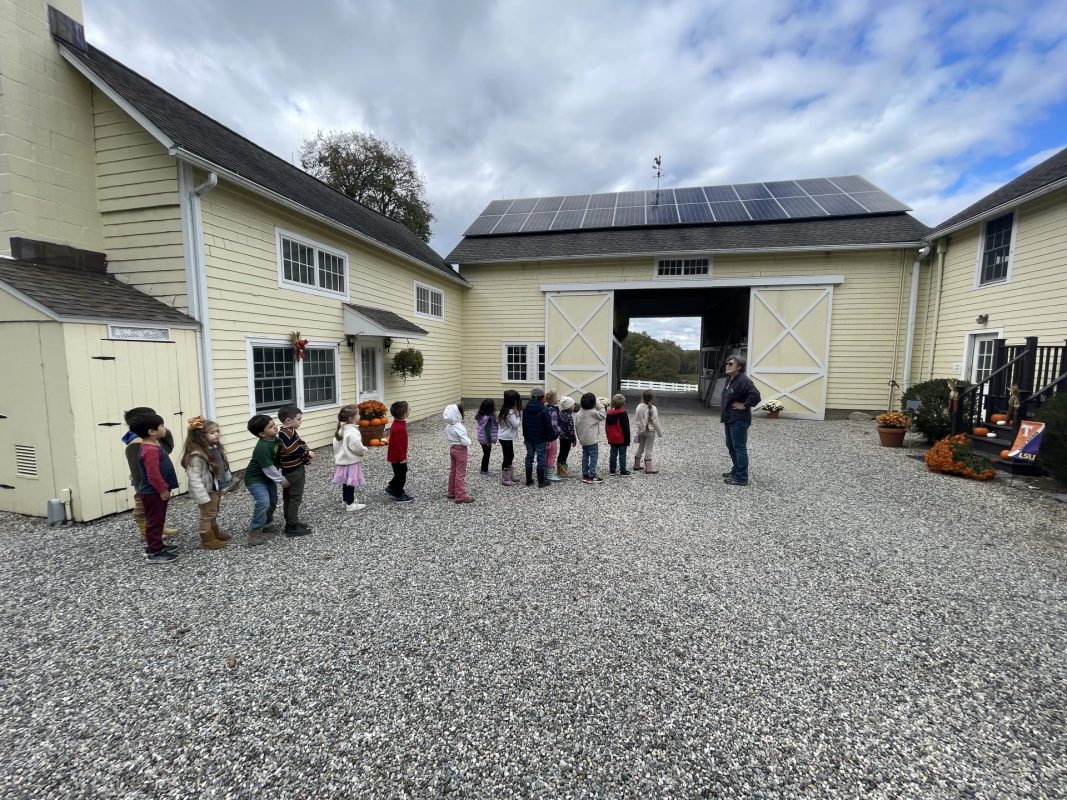
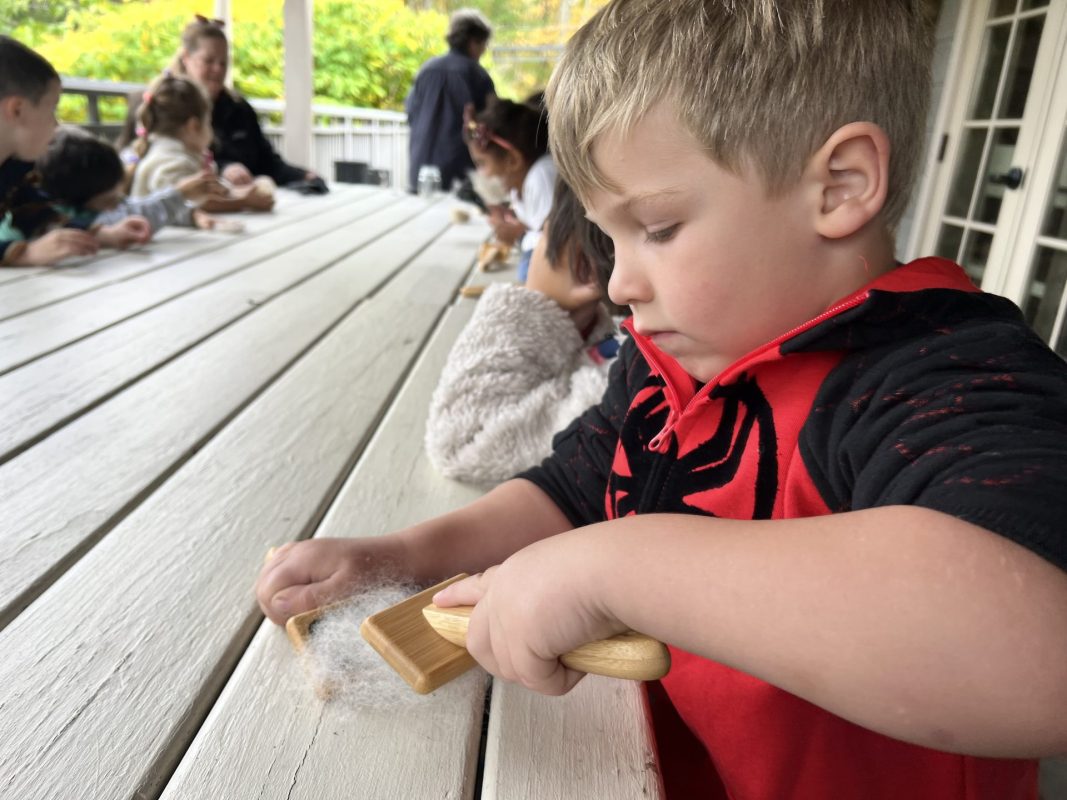
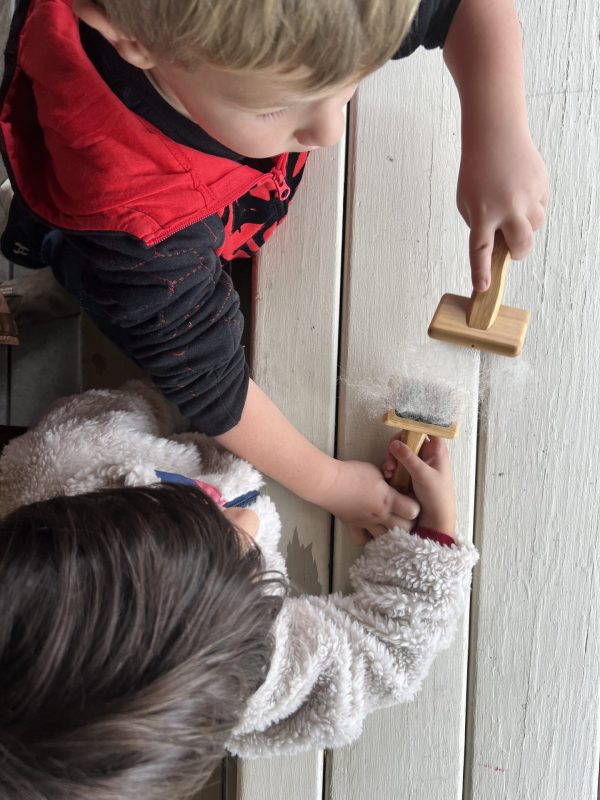
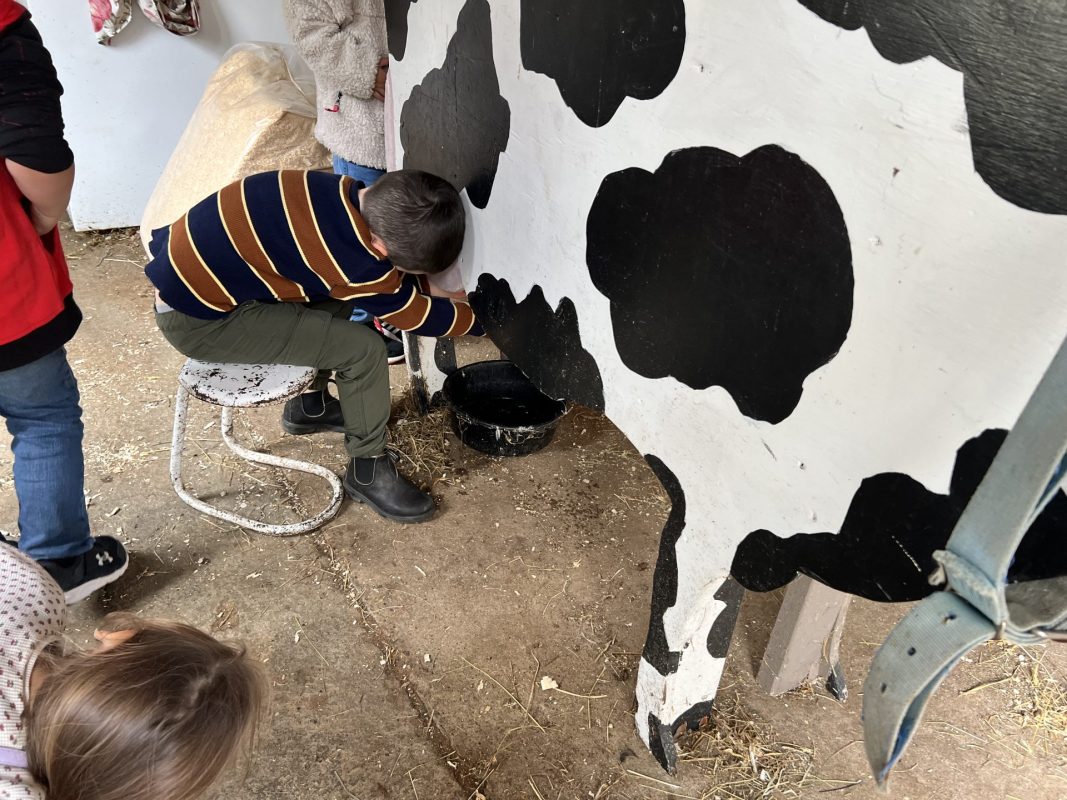
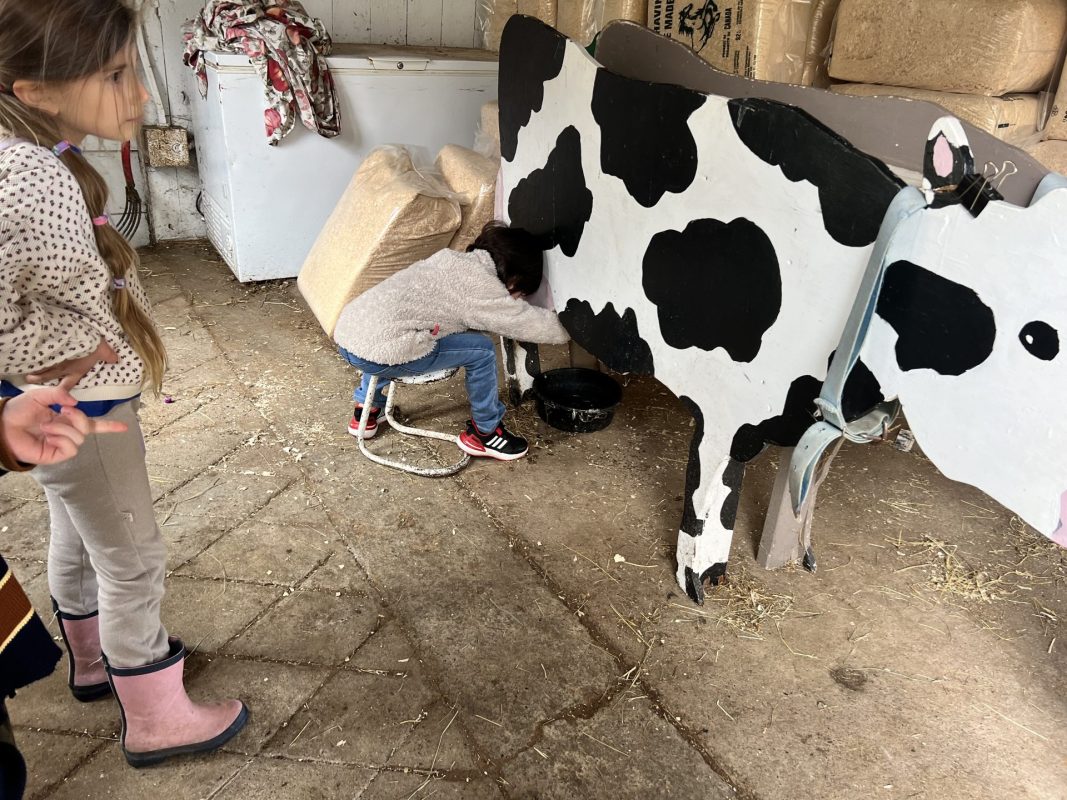
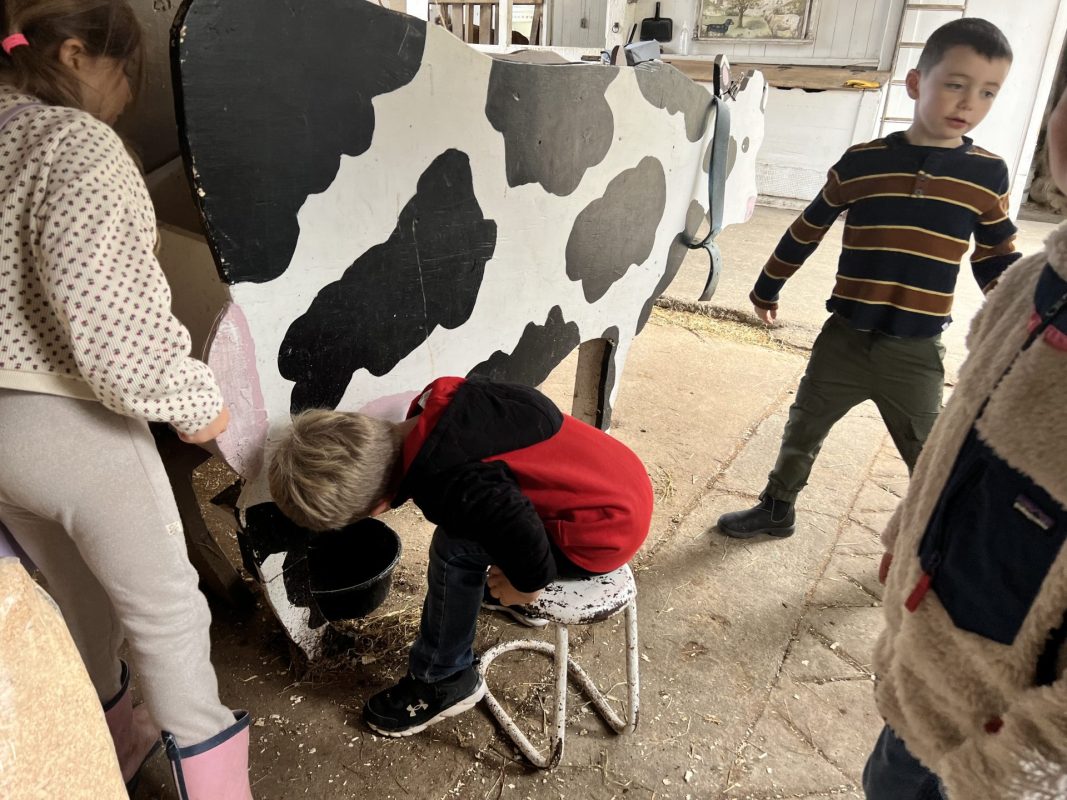
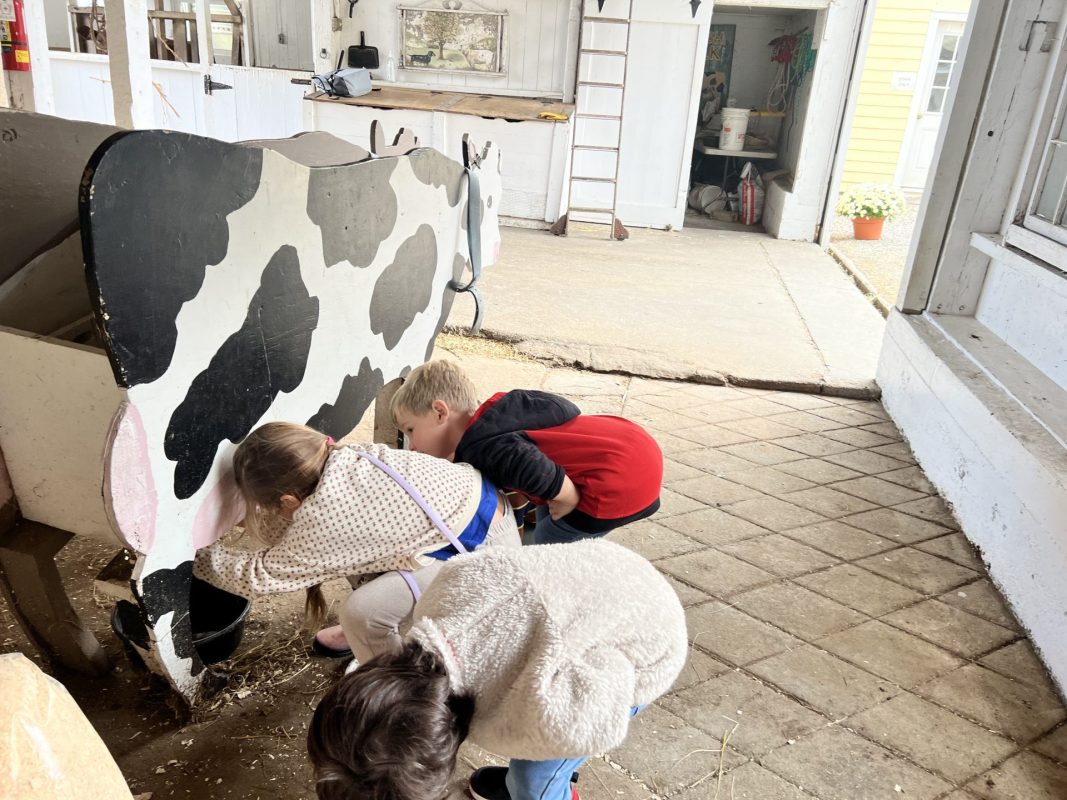
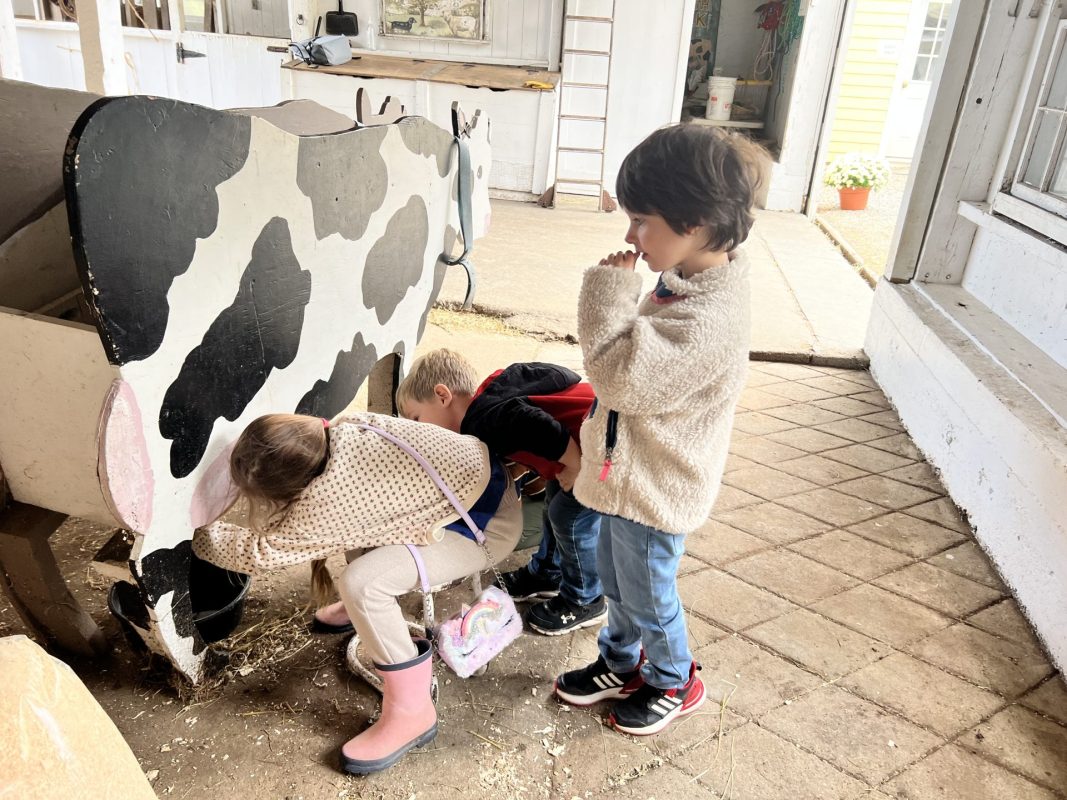
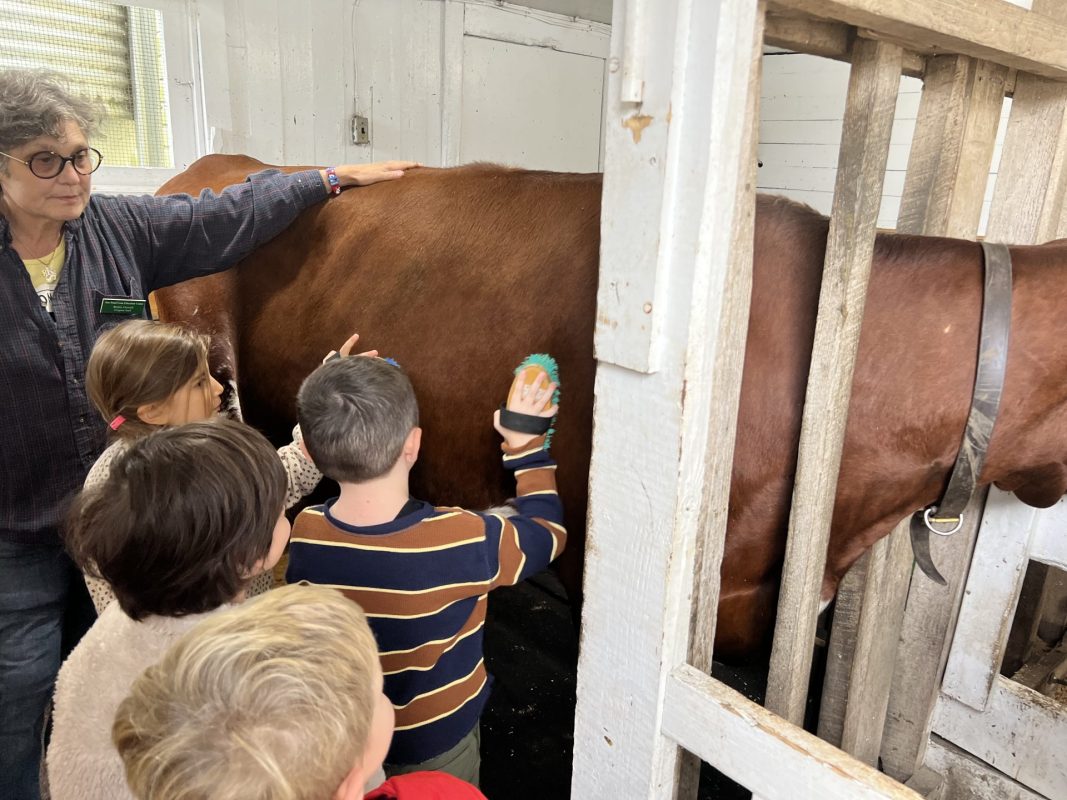
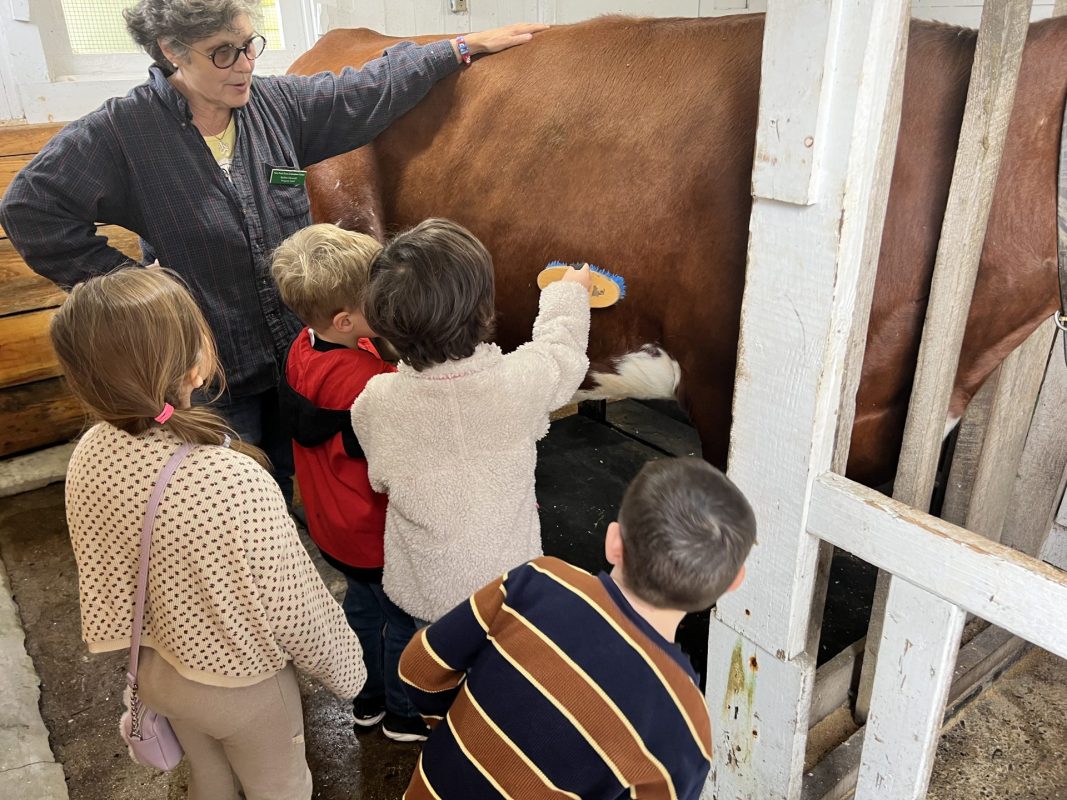
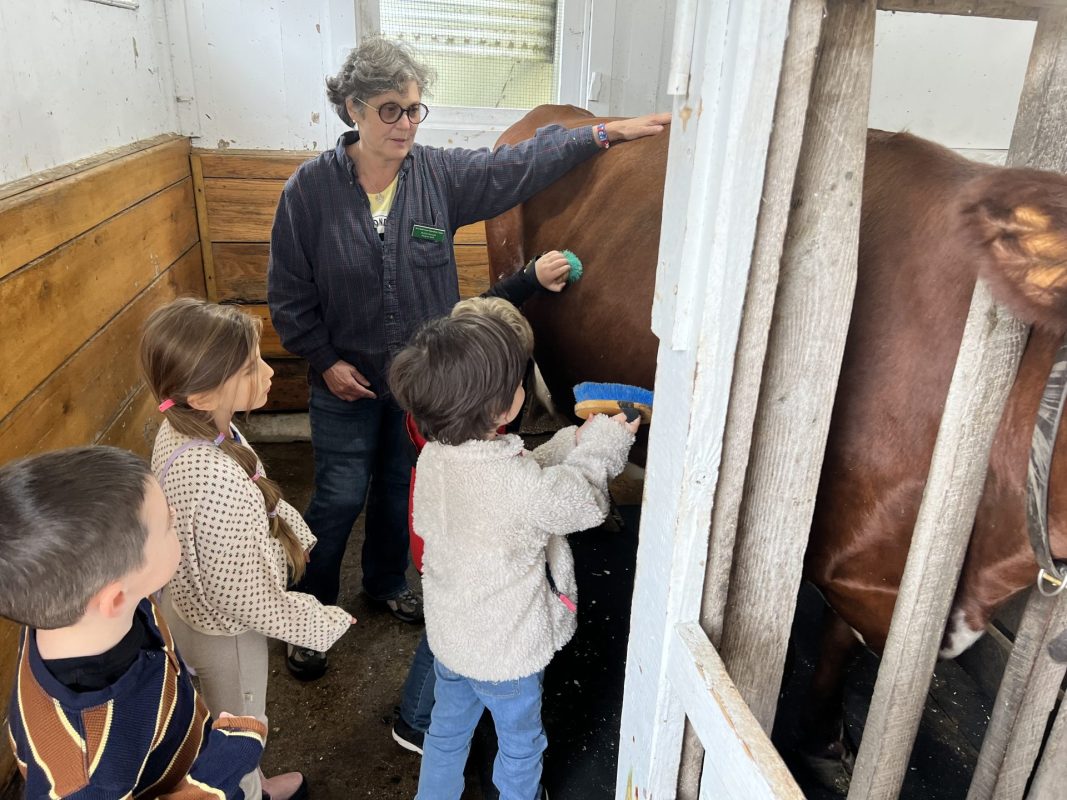
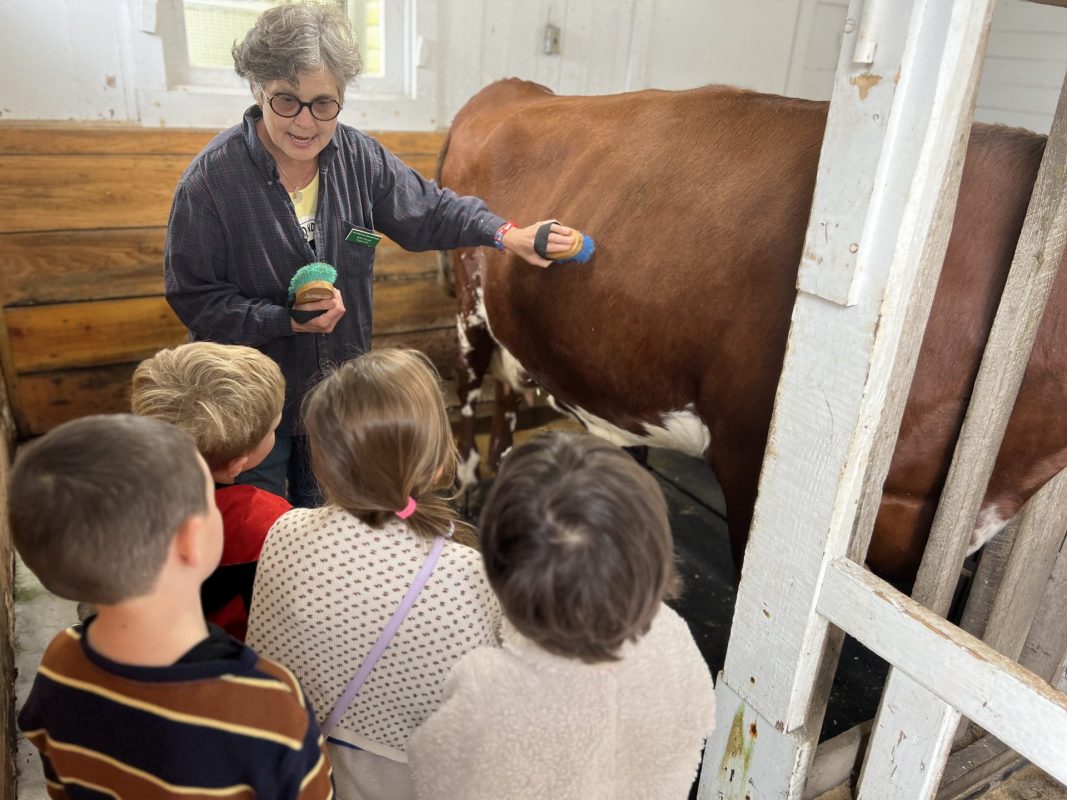
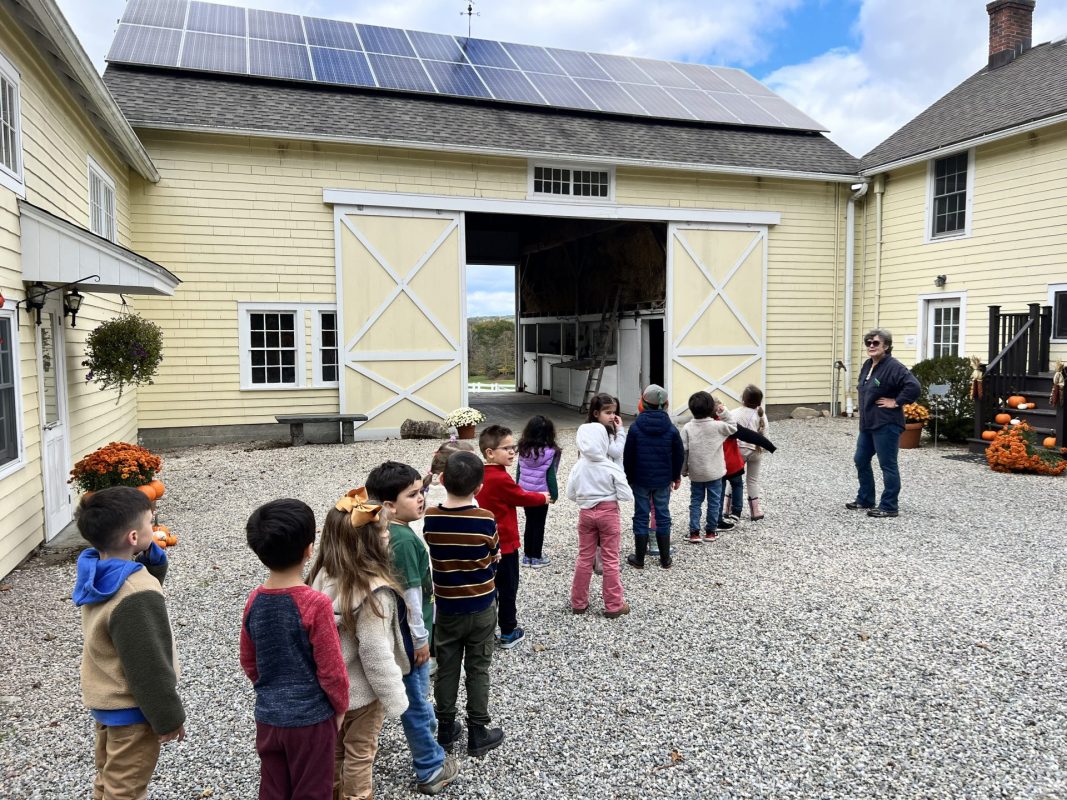
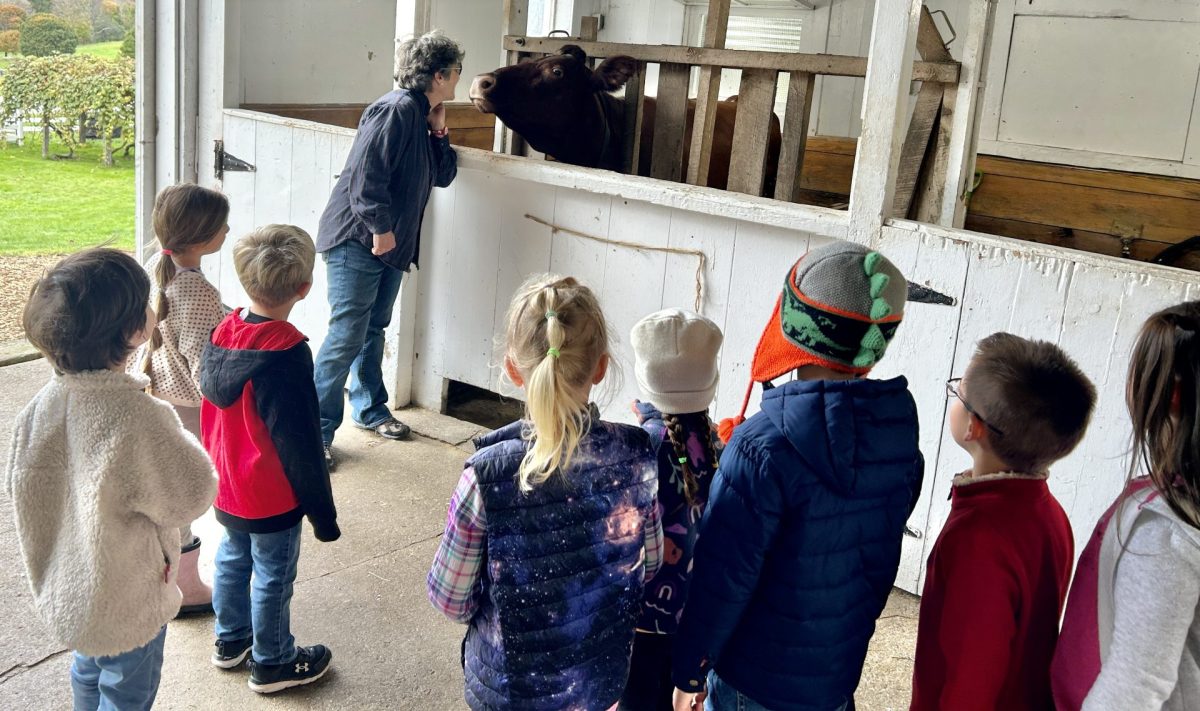
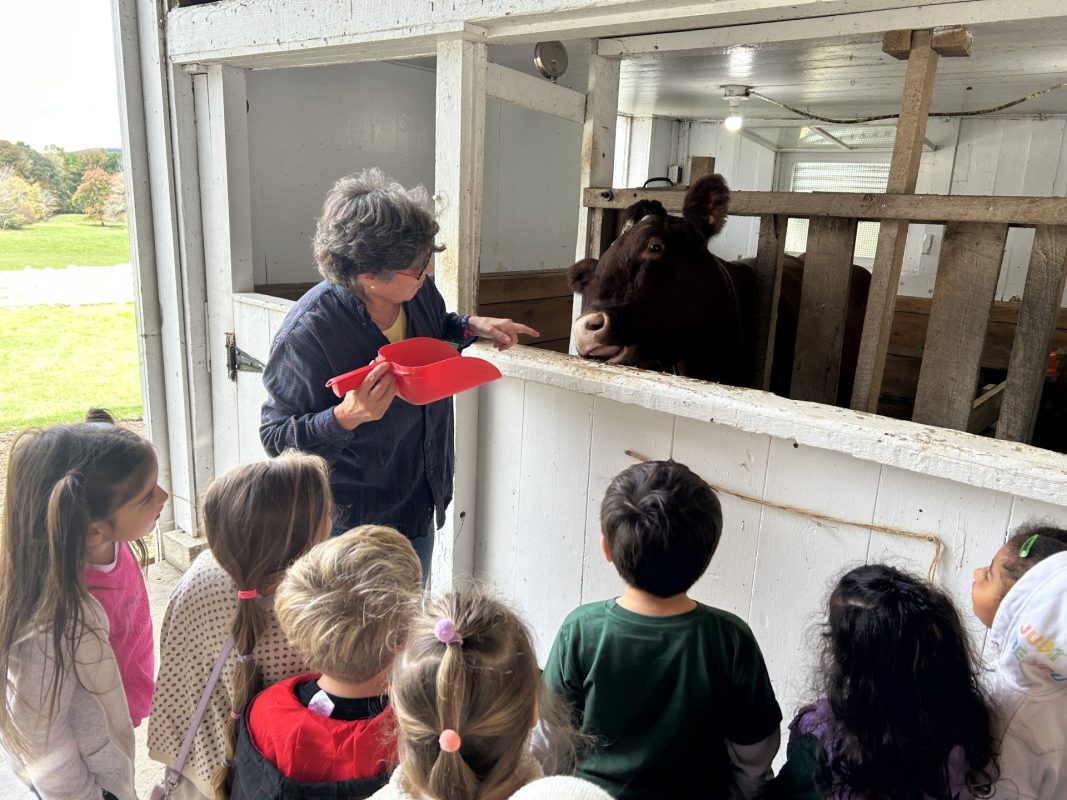
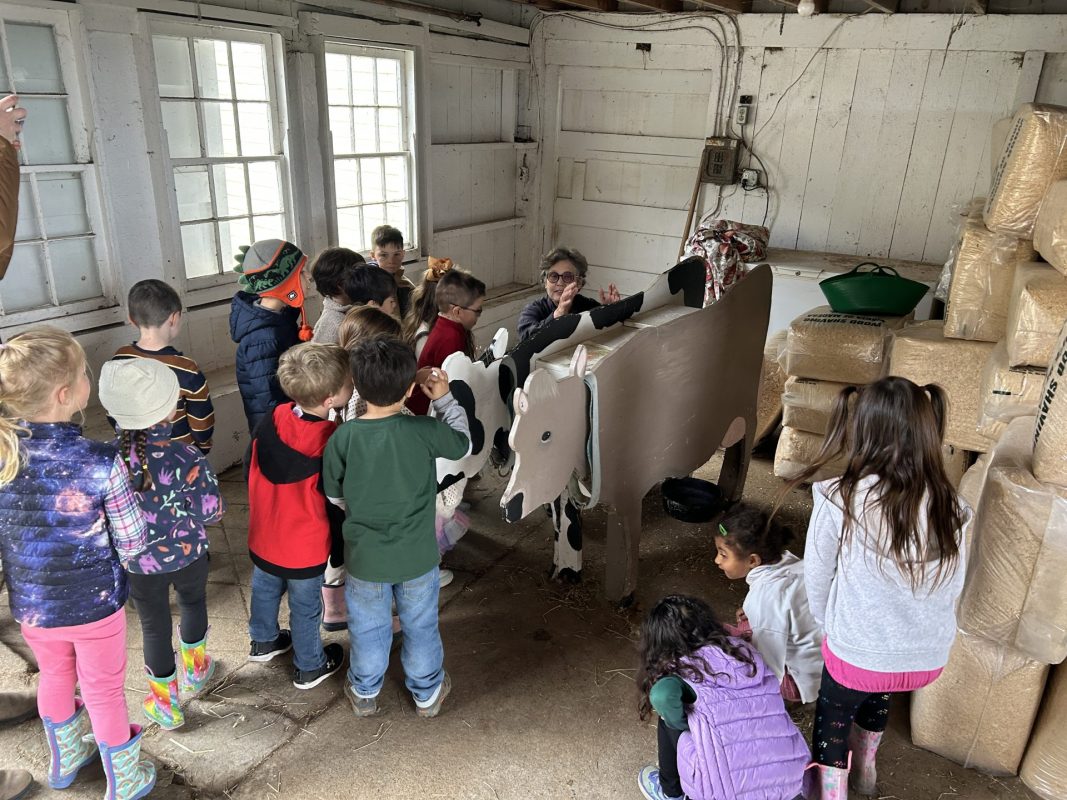
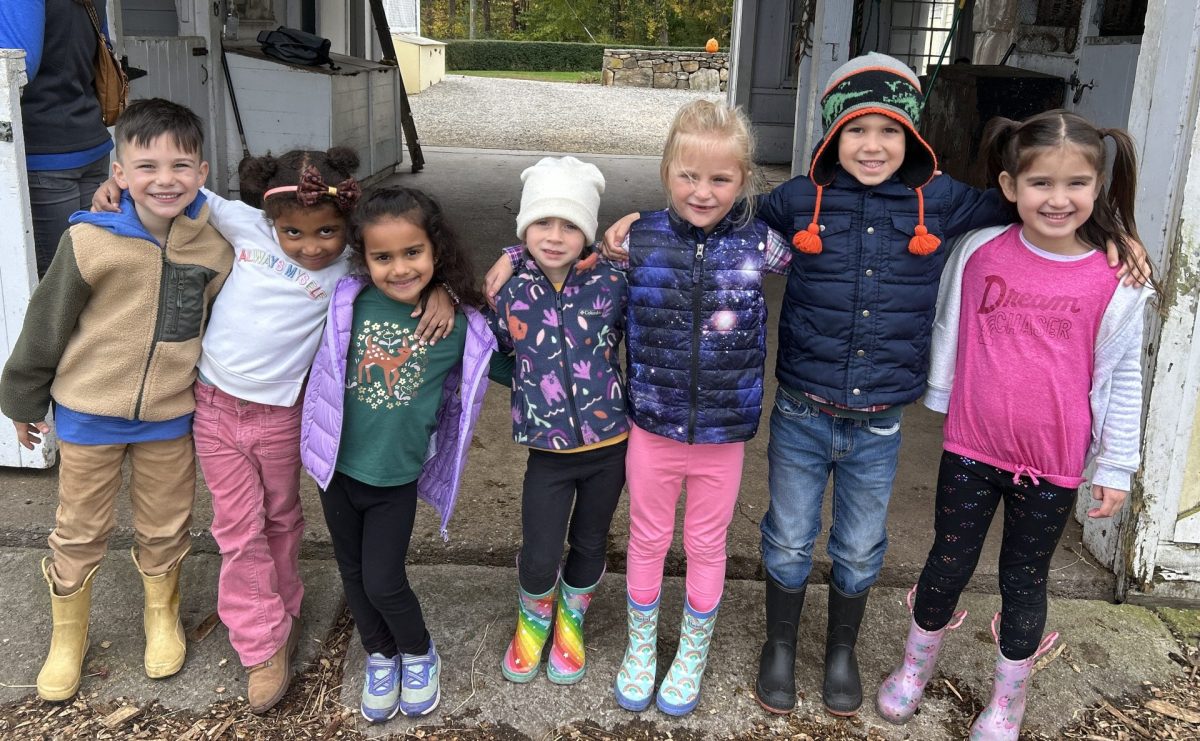
On Monday, the Kindergarten children had the opportunity to visit New Pond Farm in Redding.  We had a wonderful time walking around and learning about the different animals that live on the farm. We met Sugar the cow and her newborn calf, chickens, pigs, and sheep.  The highlight of our field trip was when the children used previously shorn fleece, washed and combed it and then made a bracelet to keep.

Wishing you a week filled with peace and love!

Amanda & Hema


Ms. Marissa: The Three Period Lesson

When we introduce new concepts or materials to the children, we often do so using a three-period lesson. This is an important tenet of Montessori education and it helps to move the child from basic understanding of a concept to mastery.

Period One is the introduction stage. In this stage we are isolating new vocabulary to the children. For example, if we are introducing the color tablets, we say, “This is blue.”  Repeating that statement and allowing the child to manipulate the blue color tablet are crucial during this stage.

Period Two is all about association and recognition. It is often a separate lesson. We do not ask the children to remember the vocabulary or recall the concept.  We are simply reinforcing the concept taught in Period One. We use words such as “Show me the blue tablet,” or “Can you place the blue tablet on your lap?”

Period Three is the recall stage and the first time we ask the child to remember the concept independently. We ask them, “What is this?” when showing them the blue color tablet. We are careful not to begin Period Three until we know they are ready for success.

Every time a child masters a new concept it builds the foundation for the next lesson or concept to be taught.

On Monday, the Kindergarten children had the opportunity to visit New Pond Farm in Redding.  We had a wonderful time walking around and learning about the different animals that live on the farm. The highlight of our field trip was when the children used previously shorn fleece, washed and combed it and then made a bracelet to keep.

Have a wonderful weekend!

Marissa & Sue


Mrs. Doyle: The Three Period Lesson


When we introduce new concepts or materials to the children, we often do so using a three-period lesson. This is an important tenet of Montessori education and it helps to move the child from basic understanding of a concept to mastery.

Period One is the introduction stage. In this stage we are isolating new vocabulary to the children. For example, if we are introducing the color tablets, we say, “This is blue.”  Repeating that statement and allowing the child to manipulate the blue color tablet are crucial during this stage.

Period Two is all about association and recognition. It is often a separate lesson. We do not ask the children to remember the vocabulary or recall the concept.  We are simply reinforcing the concept taught in Period One. We use words such as “Show me the blue tablet,” or “Can you place the blue tablet on your lap?”

Period Three is the recall stage and the first time we ask the child to remember the concept independently. We ask them, “What is this?” when showing them the blue color tablet. We are careful not to begin Period Three until we know they are ready for success.

Every time a child masters a new concept it builds the foundation for the next lesson or concept to be taught.

On Wednesday, the Kindergarten children had the opportunity to visit New Pond Farm in Redding.  We had a wonderful time walking around and learning about the different animals that live on the farm. We met Sugar the cow and her newborn calf, chickens and sheep.  The highlight of our field trip was when the children used previously shorn fleece, washed and combed it and then made a bracelet to keep.

Wishing you a week filled with peace and love!

Michelle & Maria


Mrs. Doyle: Do You Know the Continents?

The Montessori approach to teaching Geography is unique and comprises two components: physical geography and political geography, also known as Culture. From the beginning of the school year, we weave Geography lessons and terminology into our day as we learn about our physical world. The Geography materials are always fascinating to the children and are a springboard for wonderful discussions.

Early in our school year, we categorized the planet Earth into air, land, and water.  We then sorted what we would find in each of these different components of our world.  Next, we introduced the geometric solid known as a sphere to the children and compared it to the shape of the globe.  We start with a sandpaper globe that helps to distinguish land and water.  The colored globe comes next, and we begin to teach the continent names.  We make a sphere out of play dough and cut it in half to help them visualize the concept of a hemisphere.  Simultaneously, the children are learning about landforms that introduce the concept of lake, island, bay, cape, peninsula, gulf, isthmus, strait, archipelago, and a system of lakes.  These sensory experiences help the children learn about their physical world.

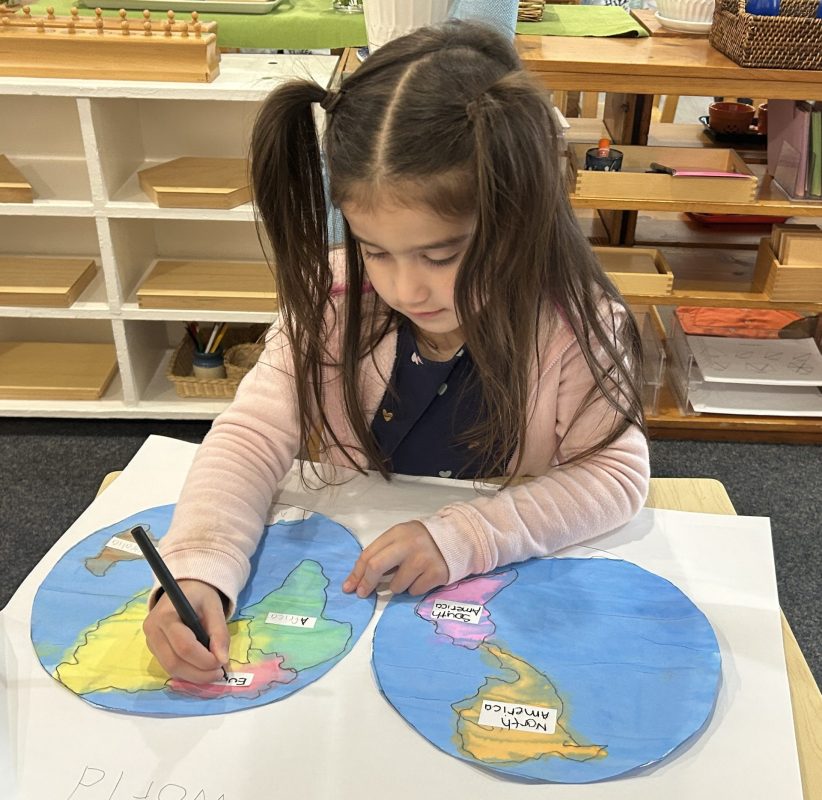
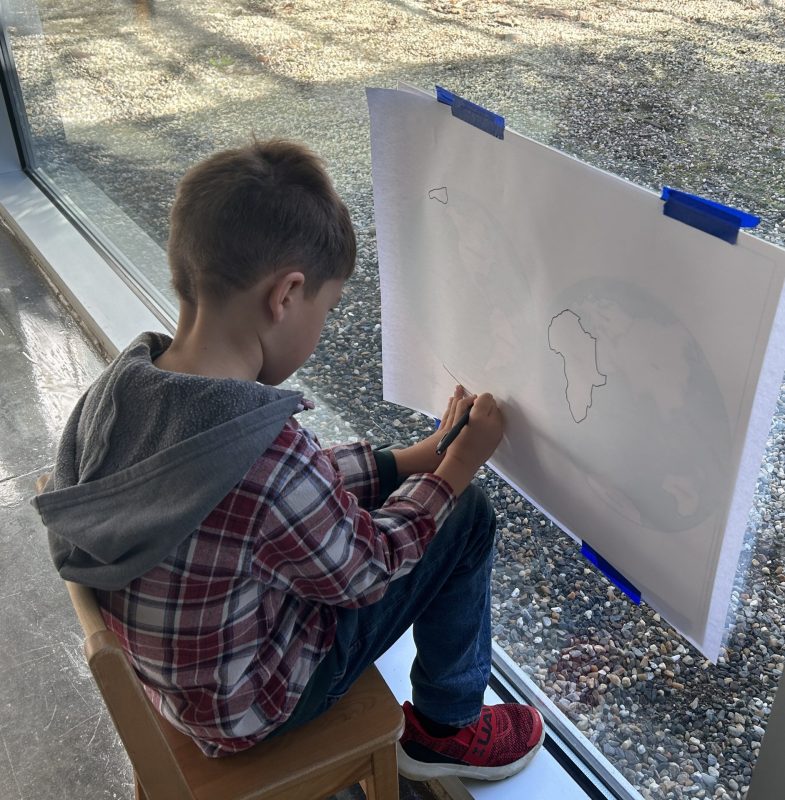
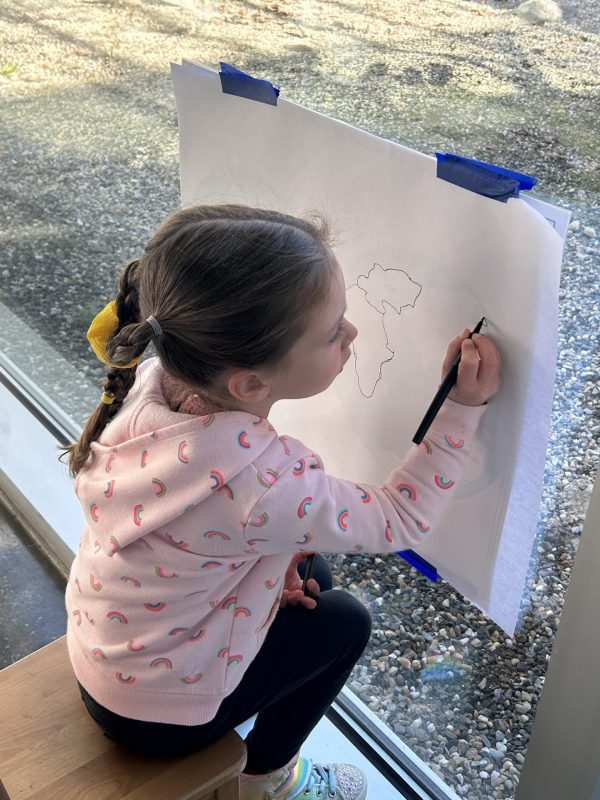
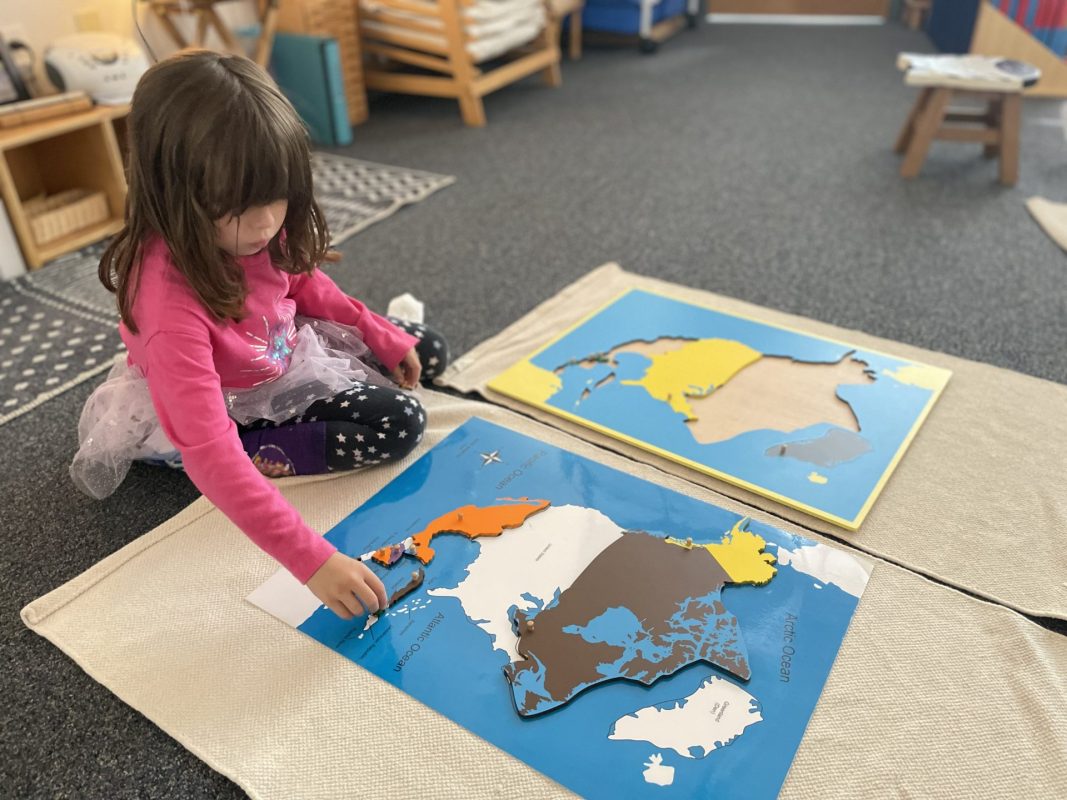
After learning the continent names, we introduce the puzzle maps for each continent, starting with North America in November. We learn that there are many countries in North America.  The older children will trace and paint each of the puzzle maps. We will learn about the animals, people, and climate often associated with each of the continents.  Our goal is to encourage the children to appreciate the beauty and wonder found in the similarities and differences around the world. In our classroom, we have a cultural shelf with artifacts from each continent.

Last week, we introduced the song “Do You Know The Continents,” and we often hear the children singing it quietly to themselves as they work.

We are thrilled to be having Parent/Teacher Conferences!  They will be on Thursday, October 26th.  If you have not yet had the chance to sign up for a time, please click here to do so.

Wishing all of you a week filled with peace and love!

Michelle & Maria

Mrs. Lopes: Do You Know the Continents?


The Montessori approach to teaching Geography is unique and comprises two components: physical and political geography, also known as Culture. From the beginning of the school year, we weave Geography lessons and terminology into our day as we learn about our physical world. The Geography materials are always fascinating to the children and are a springboard for wonderful discussions.
Early in our school year, we categorized the planet Earth into air, land, and water.  We then sorted what we would find in each of these different components of our world.  Next, we introduced the geometric solid known as a sphere to the children and compared it to the shape of the globe.  We start with a sandpaper globe that helps to distinguish land and water.  The colored globe comes next, and we begin to teach the continent names.  We make a sphere out of play dough and cut it in half to help them visualize the concept of a hemisphere.  Simultaneously, the children are learning about landforms that introduce the concept of lake, island, bay, cape, peninsula, gulf, isthmus, strait, archipelago, and a system of lakes.  These sensory experiences help the children learn about their physical world.

After learning the continent names, we introduce the puzzle maps for each continent, starting with North America in November. We learn that there are many countries in North America.  The older children will trace and paint each of the puzzle maps. We will learn about the animals, people, and climate often associated with each of the continents.  Our goal is to encourage the children to appreciate the beauty and wonder found in the similarities and differences around the world. In our classroom, we have a cultural shelf with artifacts from each continent.

We are thrilled to be having Parent/Teacher Conferences!  They will be on Thursday, October 26th.  If you have not yet had the chance to sign up for a time, please click here to do so.

Wishing all of you a week filled with peace and love!

Amanda & Hema