Mrs. Wilson: A Quiet Wintry Week

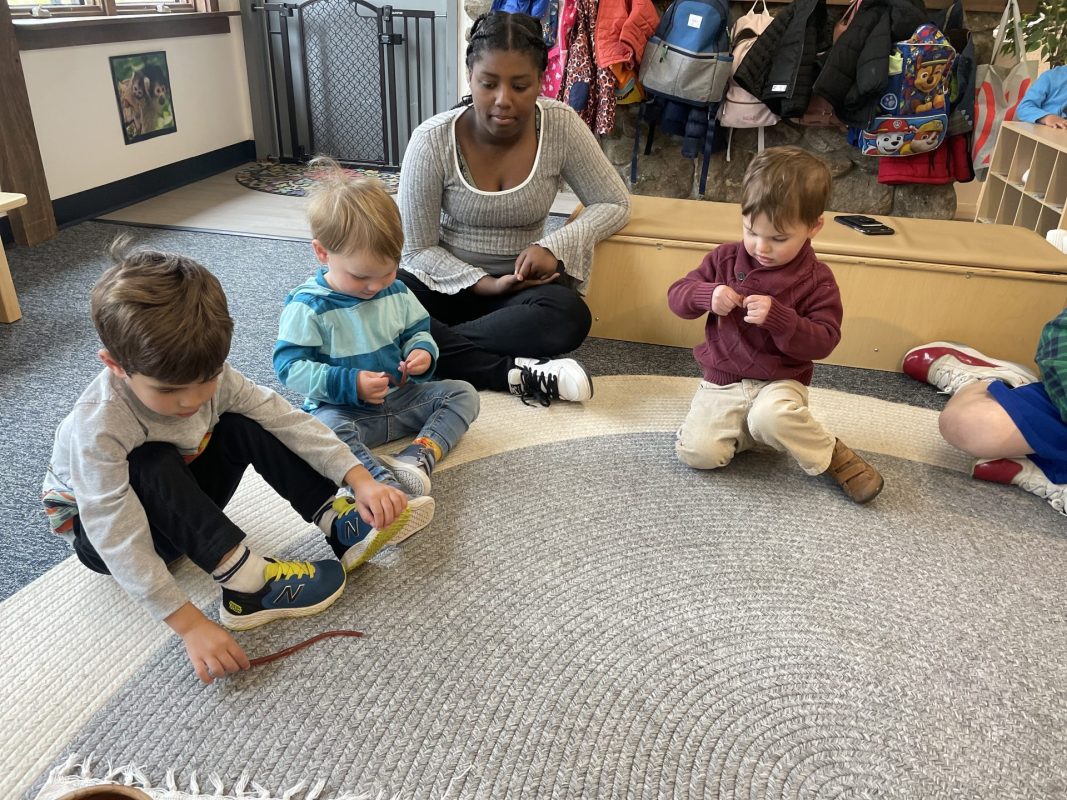
This week was a quiet wintry week. The children continued to explore all the winter-themed materials. We added to the lessons by introducing different types of penguin language cards. The cards were introduced by showing them the adult and the chick. Then we identify any special markings. Another work that was added was threading paper beads onto a pipe cleaner. This exercise helps develop their hand-eye coordination, refines their pincer grasp, and focus. It takes a lot of focus to get one end of the pipe cleaner into the small hole of the paper bead.

We celebrated another friend’s birthday this week. He brought in his favorite book to donate called Dreams by The Sesame Street Crew. Our friend was very excited to share this story with all his peers. We also enjoyed a mini cupcake for a birthday treat.

Food Tasting this week was broccoli. The children seemed to be excited to taste broccoli. First, they tasted it roasted and then blanched.  Most of the children seem to like the broccoli and didn’t have a preference for either way it was prepared. They just wanted more and more!

Have a great weekend!

Cynthia and Sara


Mrs. Hood: Toileting the Montessori Way!

“Learning to use the toilet is a natural process that begins when your child’s desire to be grown up and his neurological development have reached the point where he can control his bladder and bowels. We don’t train children to use the toilet, we support them when they are ready.” (How to Raise an Amazing Child: The Montessori way to bring up caring confident children, by Tim Seldin)

As children continue to work on their self-caring skills, we want to focus our attention this week on what has become a popular topic (and sometimes a dreaded one) between the parents: “potty training.”

In our Montessori environment, we call it “toilet learning” since we believe that using the toilet is a very natural and gradual process that develops at the child’s pace, rather than when the adult decides the child is going to be toilet ‘trained.’ In our experience as Montessorians, we have witnessed toddlers as early as 20 months to as late as closer to three years old master these skills. Also, we have observed that apart from the developmental stage the child is in, one of the main factors for success relies on the parent’s commitment early on to support this process at home by making their child an active participant in the diaper changing process as we do in our environment.

You might be asking yourself: “But how do we do this? How can we support our child at home?”

As this topic can be extensive due to the fact that this type of support can start even when your child is a young baby, we are going to leave you here with some important tips focused on your toddlers and their stage of development:

  1. Ditch the changing table and start changing your child in the bathroom area. This is important as it sends a clear message to the child that this is where we go to be changed and use the toilet.
  2. Prepare the environment. You may use a potty to start if you feel your child needs some more balance or you may add a toilet seat to your regular toilet. If using the latter, please find a stable stool where your child will feel secure and encouraged to use the toilet. Add a basket with clean diapers and wipes and also a basket with books, so children are encouraged to sit on the toilet and wait when needed. If your child is showing signs of readiness, a basket of clean training underwear and a basket for wet underwear should be part of this area.
  3. Incorporate CONSISTENT toileting into your child’s routine. Offer the potty/toilet at times when the child normally urinates or has bowel movements (Ex. after waking up, before going outside, after coming in from outside, after lunch/before nap, etc.)
  4. Say “It’s time to use the toilet,” rather than “Do you want to go to the toilet?” (The answer will usually be no.) As the child becomes more aware of their body they will be able to tell you, “No, I don’t need to go.” You can then say something like, “Of course, I know you will tell me if you need any help when you need to go.” You can also use an alarm clock set at regular intervals to remind them to go, “The clock says it’s time to use the toilet.”
  5. Never force a child to use the toilet or potty.
  6. Do not interrupt the child to use the toilet—for example, wait until they have finished their puzzle, etc. before offering the toilet.
  7. Focus on encouraging your child to be an active part of the process by asking them to push their pants down, open the tabs of their own diaper, and recognize if they have had a bowel movement or not (we always ask this to teach the children that if they have had a bowel movement, they will need our support to remove the diaper), wipe (when having a bowel movement we provide a small stool where they can turn around and put their hands on it for stabilization and the adult will clean them), place diaper in the trash, pull their own pants up after receiving a new diaper and wash/dry hands. This is a daily routine in our environment. As soon as you incorporate this at home, we believe your child will increase their interest, and signs of readiness will become more obvious.
  8. Provide clothing that supports the process. Avoid zippers, buttons, tight clothing, dresses, onesies, jeans, overalls, rompers, etc. Reminder: Please avoid this type of clothing on your child for school as well.

When should my child transition into wearing underwear?

When your child is staying dry for long periods, telling you when they are wet or soiled and they are having consistent success using the toilet at home and at school, it may be time to transition into underwear. The thick, quilted training pants work best as they allow the child to feel the wetness and are more absorbent than the thinner cotton underwear. When circumstances allow, you may let the child go bare bottom at home. This can help them see and understand what is happening. Please be aware that toddlers usually show signs of readiness at home first and as they become more confident in the process, the transition into school life usually is peaceful and successful.

Communication between home and school is vital in this process. Please always reach out with any questions you may have! We will be more than glad to assist you!


Lastly, we want to take a minute to give a shout-out to our wonderful Ms. Bethann.  She has supported and loved your children well and we all going to miss her so much! As she steps out to take care of her health, we wish her the best in her process and a speedy recovery! 💗We love you, Ms. Bethann!💗


Have a great weekend,

Mrs. Hood, Ms. Bethann, and Ms. Marissa. 

“There should be no pressure, no reward or punishment, no adult deciding when the child should learn to use the potty. The environment is prepared, and the child is free to explore and imitate in these natural developmental stages.” (The Joyful Child)


Mrs. Wilson: Mittens vs Gloves

“Never help a child with a task at which he feels he can succeed.”
Maria Montessori

Can you imagine putting 120 little fingers into 12 pairs of mittens? It’s such a tedious task! This is why we focus so much on independence in the toddler program. One of the lessons we are focusing on is guiding the children to put on their own mittens. Mittens are a lot easier for toddlers to put on vs gloves successfully.  While they practiced we sang a song, called:

 The Mitten Song 
This is the song we sing in mitten weather.
Thumb in the thumb place
and fingers all together.

Please send in mittens with your child so we can continue to develop our independence.

Food Tasting this week was beets. Ten out of the twelve children liked them. I did hear a child say that the color of the beets was beautiful.

The children played a snowball toss game using fake, soft snowballs. First, we took a turn trying to get the snowball inside the penguin buckets. Then the children were invited to toss the snowballs at each other. Our friendly snowball fight was such a blast!


Mrs. Wilson: Welcome Winter!

In January, we are focusing on the winter season and cold climate animals. The children can explore penguins trapped in ice with a family of polar bears. This activity is a great way to explore the feeling of cold, and the stages of water as a solid to liquid. As the ice melts, the children express their joy in retrieving the penguins from the ice. In language, the children are learning new vocabulary words for winter weather clothing and arctic animals such as caribou, arctic fox, arctic rabbit, Huskey, beluga whale, orca, harp seal, walrus, and polar bear.

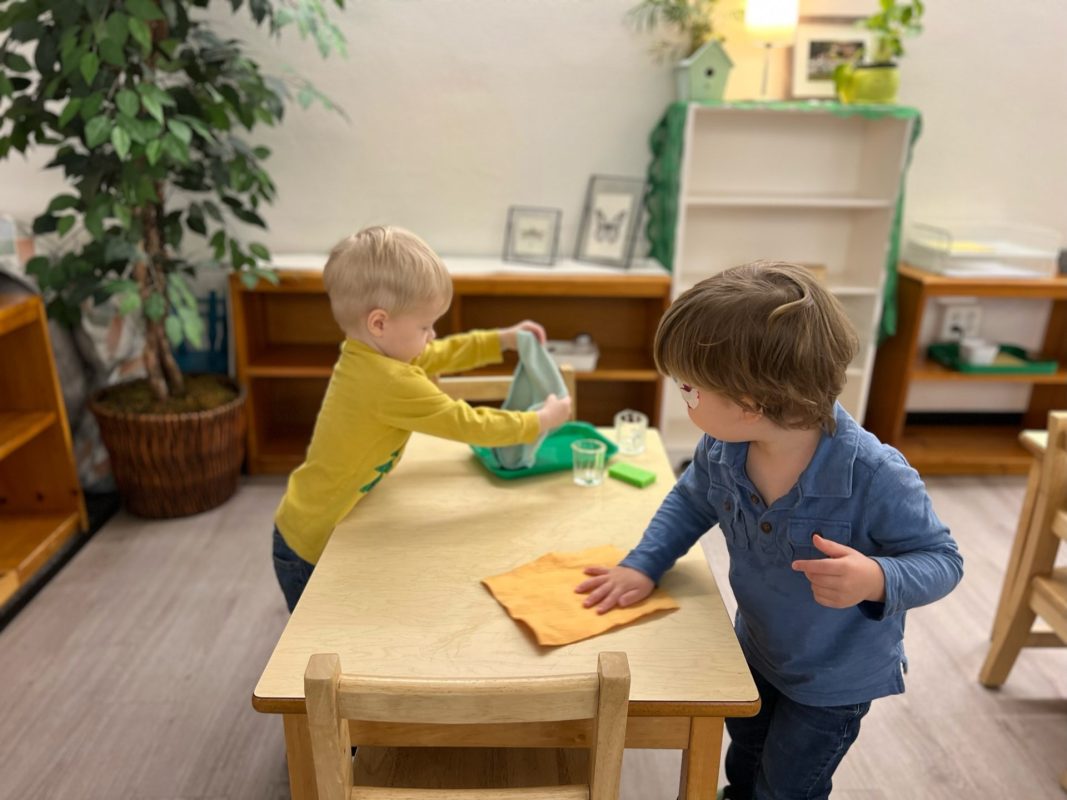
The practical life area is expanding. Some of the children received lessons this week on table washing. The task has a lot of steps and takes time to complete. The very last step in this work is to hang the wet towel on the clothesline, then put a dry towel in the bin for the next child. At this moment, they would much rather spray all of the water out of the bottle. As time goes on they will soon realize that too much water is harder to dry. I love watching the progression of this work go from a fun wet experience to purposeful work.

Food Tasting this week was roasted parsnip. The parsnips were roasted with honey and most of the children enjoyed it very much.

Lastly, we ended this week with a birthday celebration. The children enjoyed the story Little Green Frog, ate banana chocolate chip muffins, and danced as we celebrated our friend’s second birthday!

Enjoy the photos!

Cynthia and Sara


Mrs. Hood: The Process of Normalization

In Montessori education, the term “normalization” has a specialized meaning. “Normal” does not refer to what is considered to be “typical” or “average” or even “usual.” “Normalization” does not refer to a process of being forced to conform. Instead, Maria Montessori used the terms “normal” and “normalization” to describe a unique process she observed in child development.

Dr. Montessori observed that when children are allowed freedom in an environment suited to their needs, they blossom. After a period of intense concentration, working with materials that fully engage their interest, children appear to be refreshed and content. Through continued concentrated work of their own choice, children grow in inner discipline and peace. She called this process “normalization” and cited it as “the most important single result of our whole work (The Absorbent Mind, 1949).”

The children in our environment are on a great path to “normalization.” Every morning we get to see its signs! We also watch with joy how children have internalized the routines, and transitions are more peaceful! They recognize their friends and feel comfortable sharing and working together. Deep friendships are developing, and expressions of love and care for each other are more evident.

On another note, we introduced the art skill of gluing and it’s now a very popular work in our environment! Learning to use glue develops hand-eye coordination and fine motor planning skills. It also helps your child understand the sensory concept of stickiness.

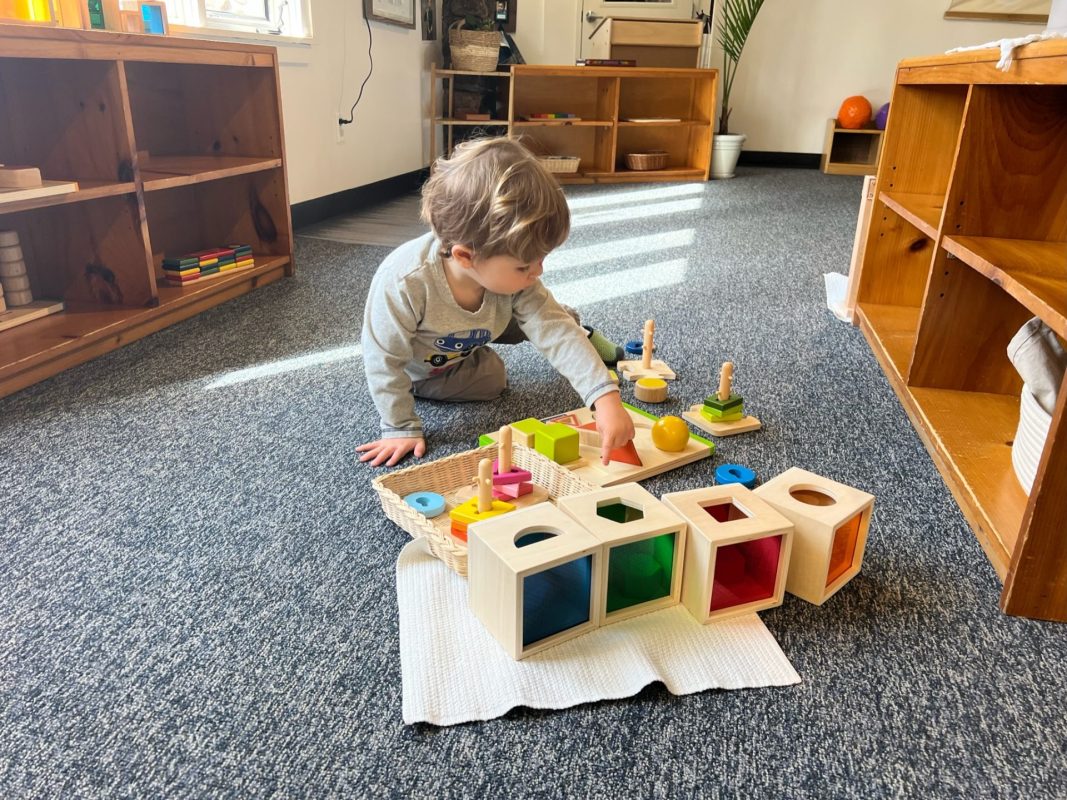
In practical life, apart from exploring all the new winter works, children have been learning how to use a key to open a coin box and learning how to use a pegboard using colorful elastics to create shapes. Children have also enjoyed learning about magnetism in our sensory bin where they have to search inside cotton balls for magnetic snowflakes.  Another of the popular works this week was building a snowman out of felt. Through this exercise, children review body parts and winter clothing names and enhance their critical thinking skills in deciding where these parts belong on the snowman.

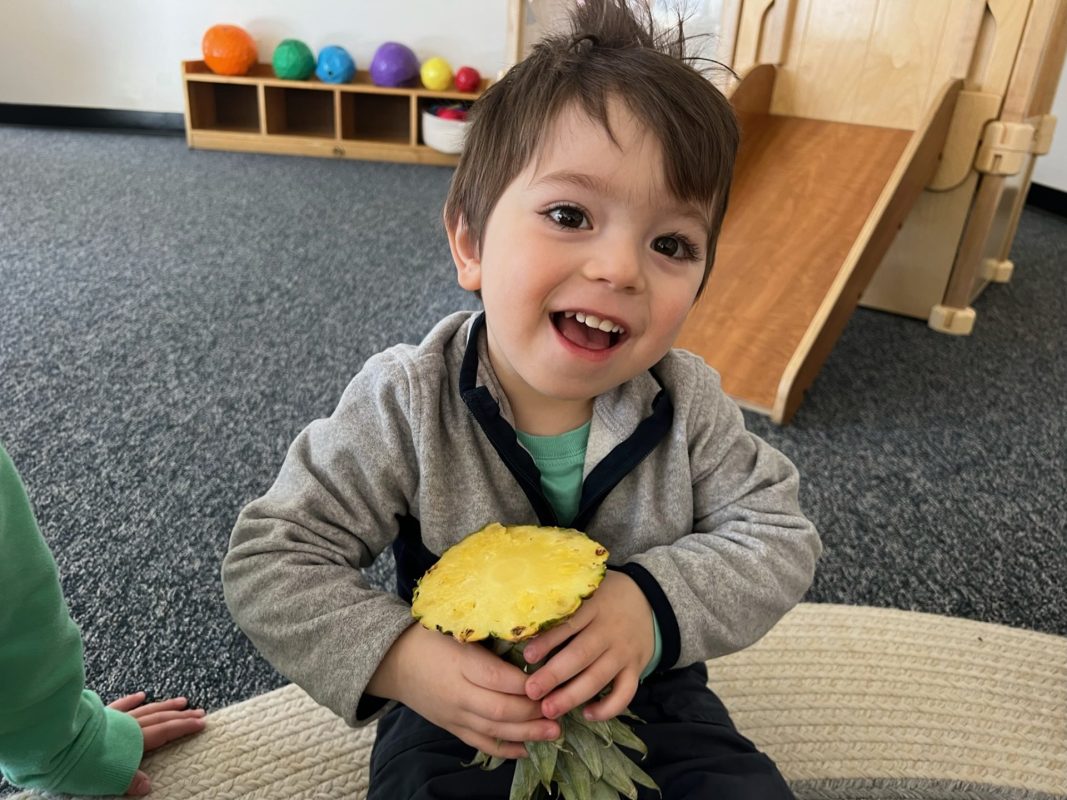
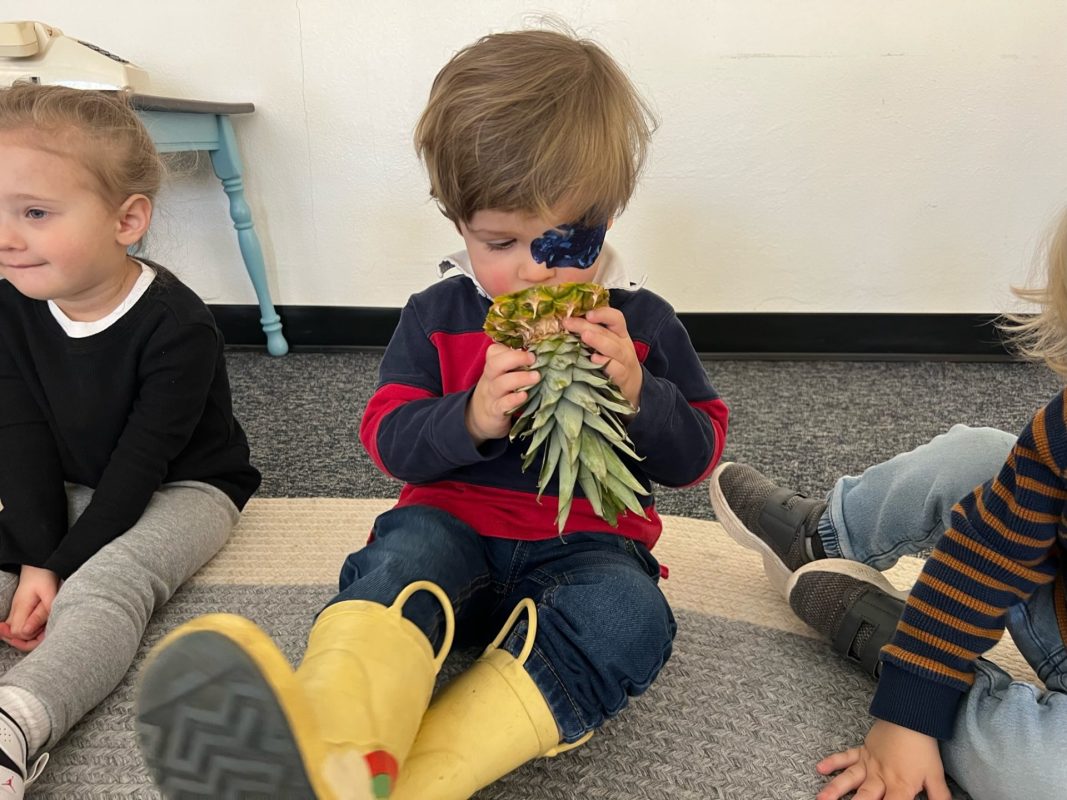
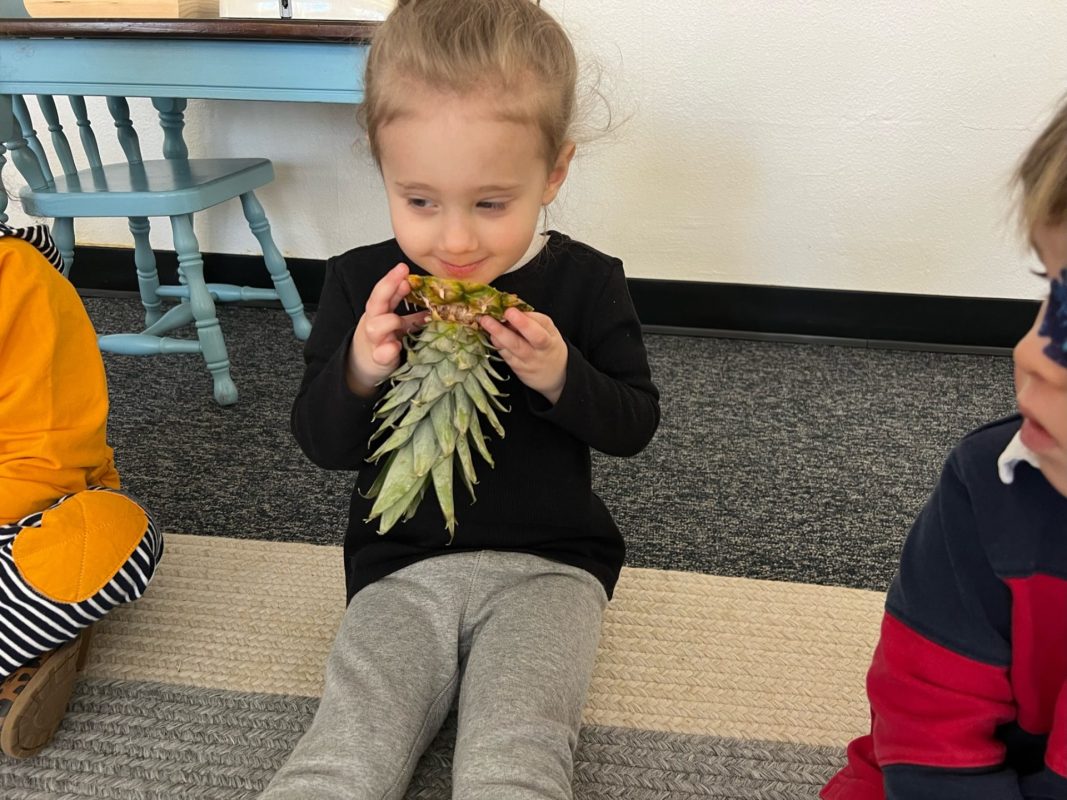
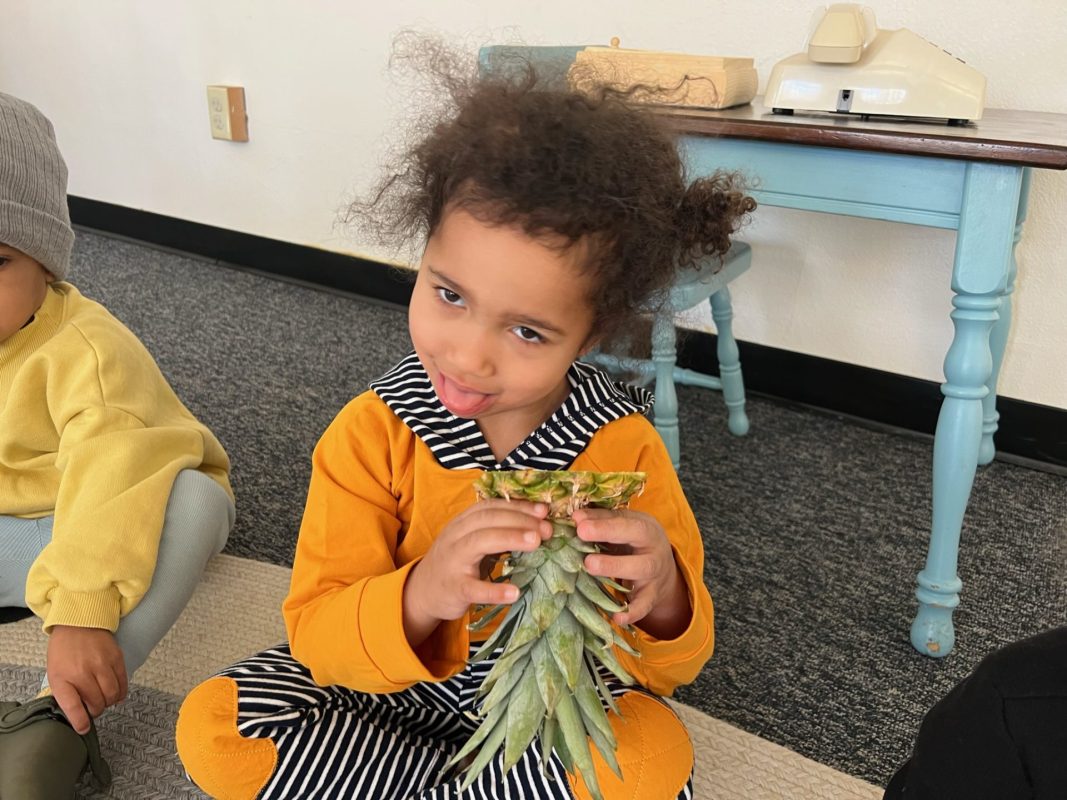
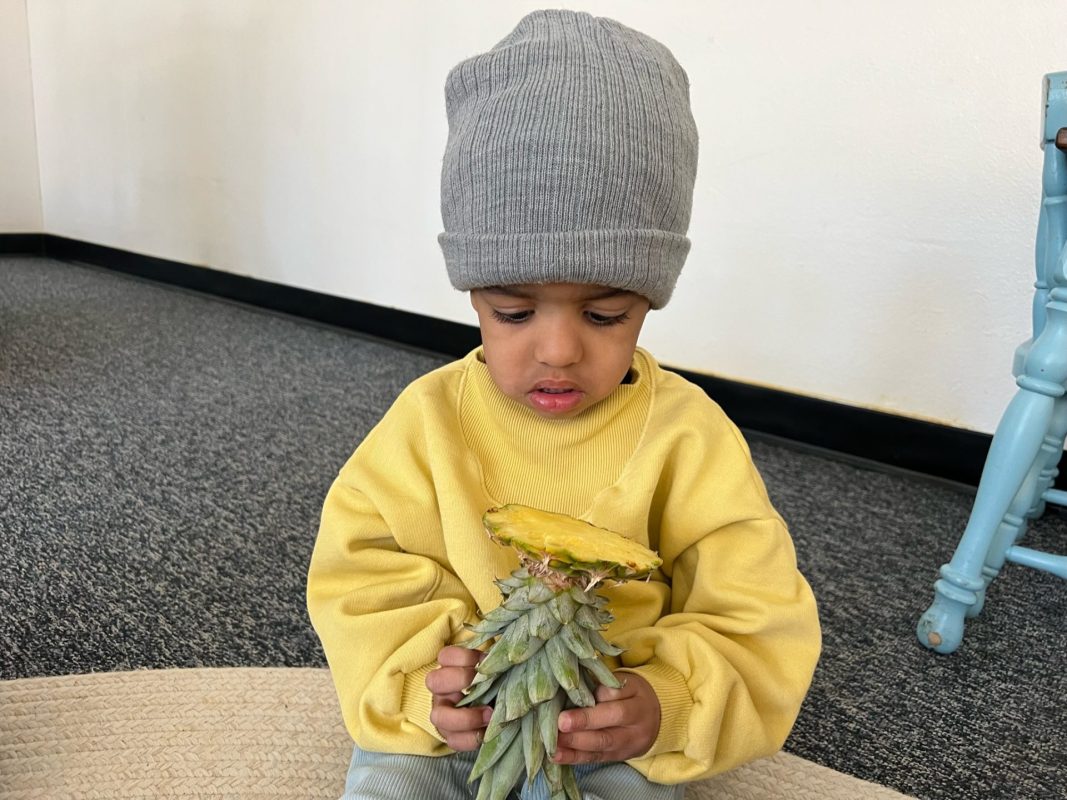
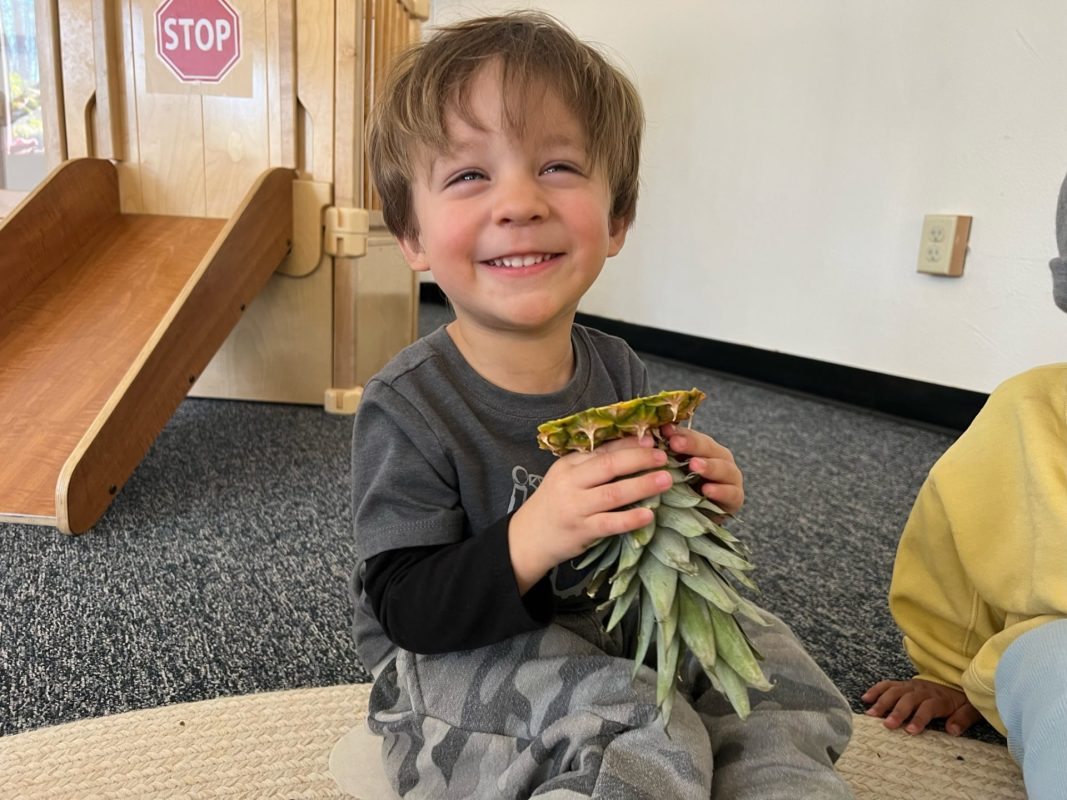
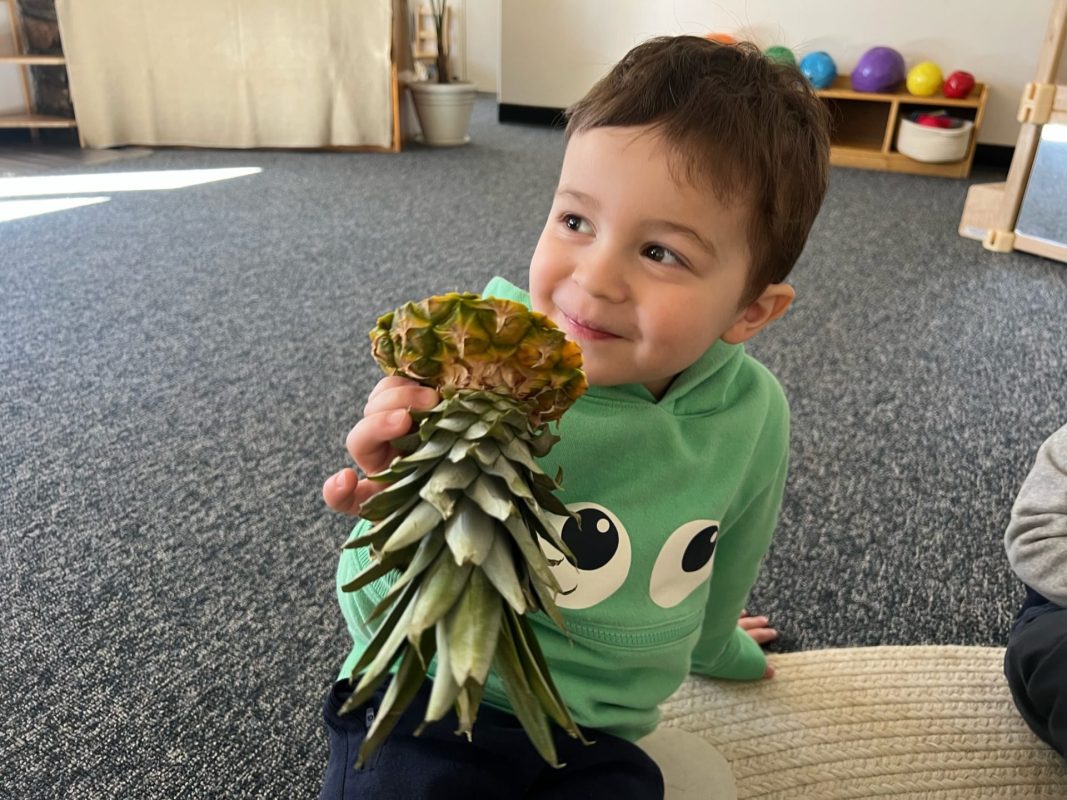
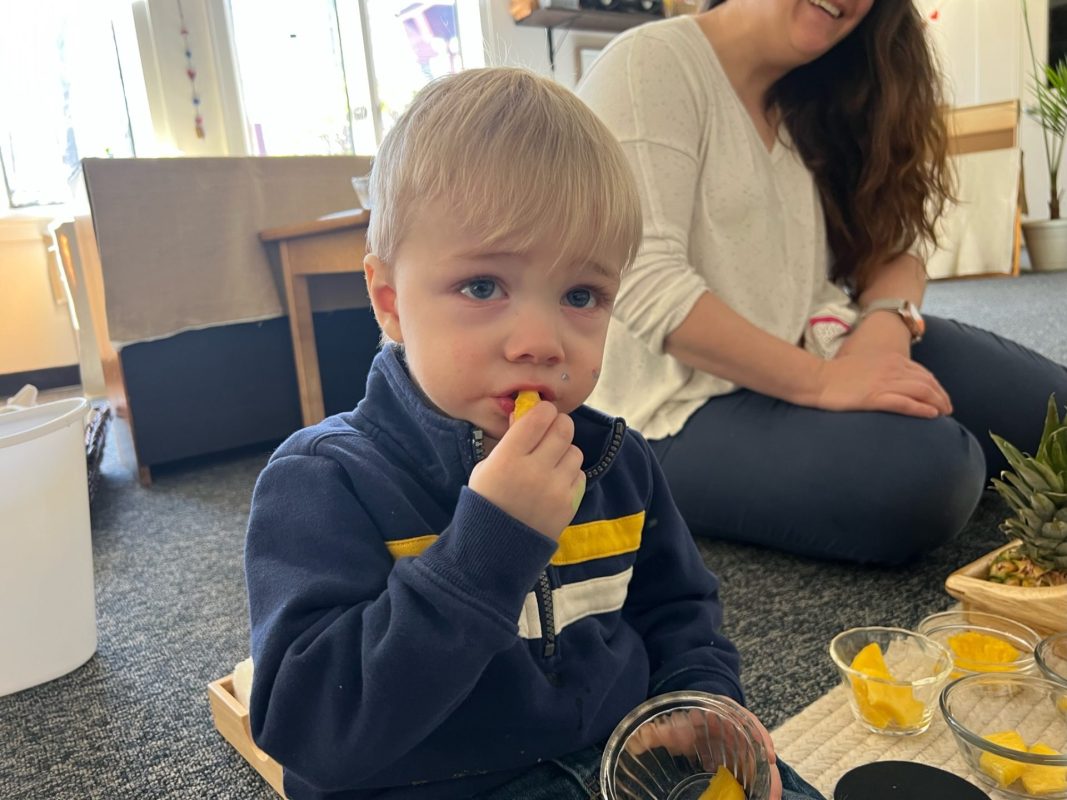
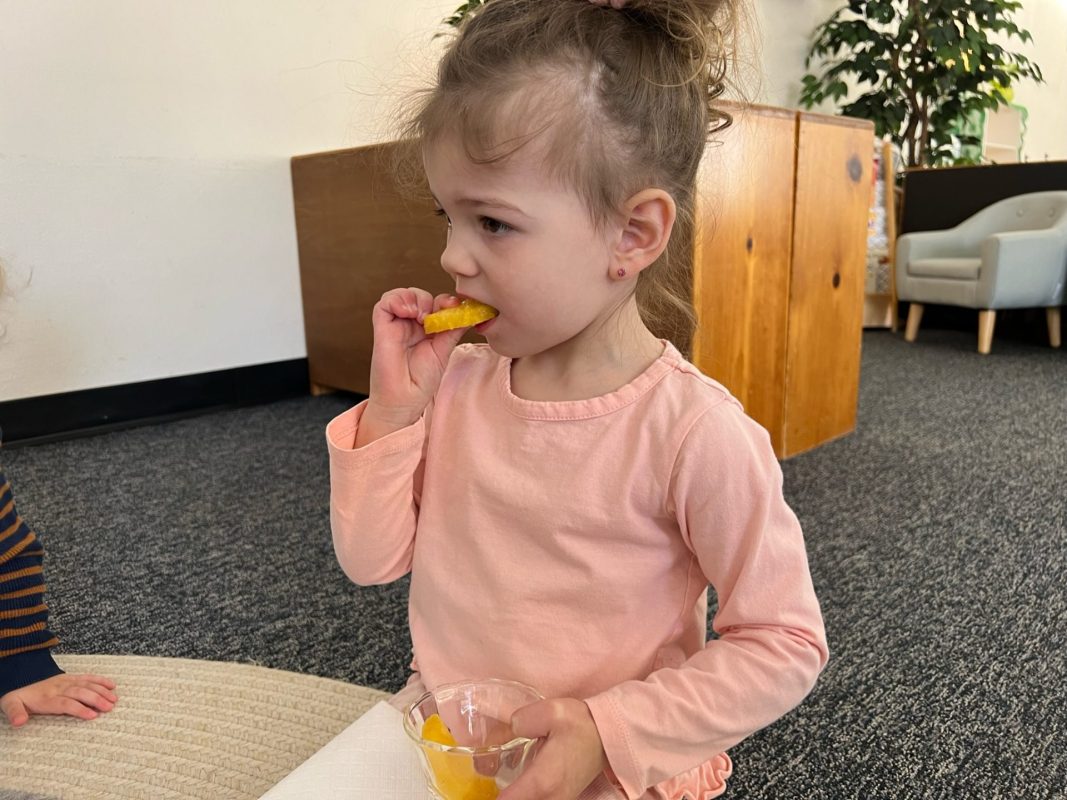
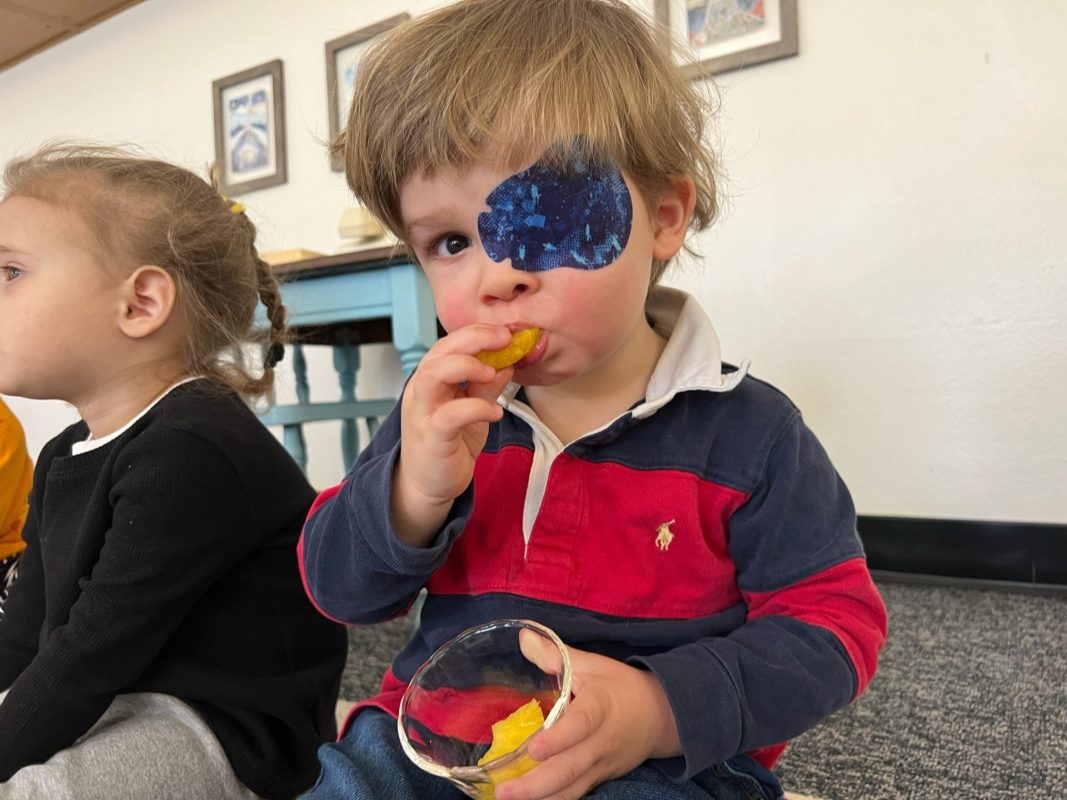
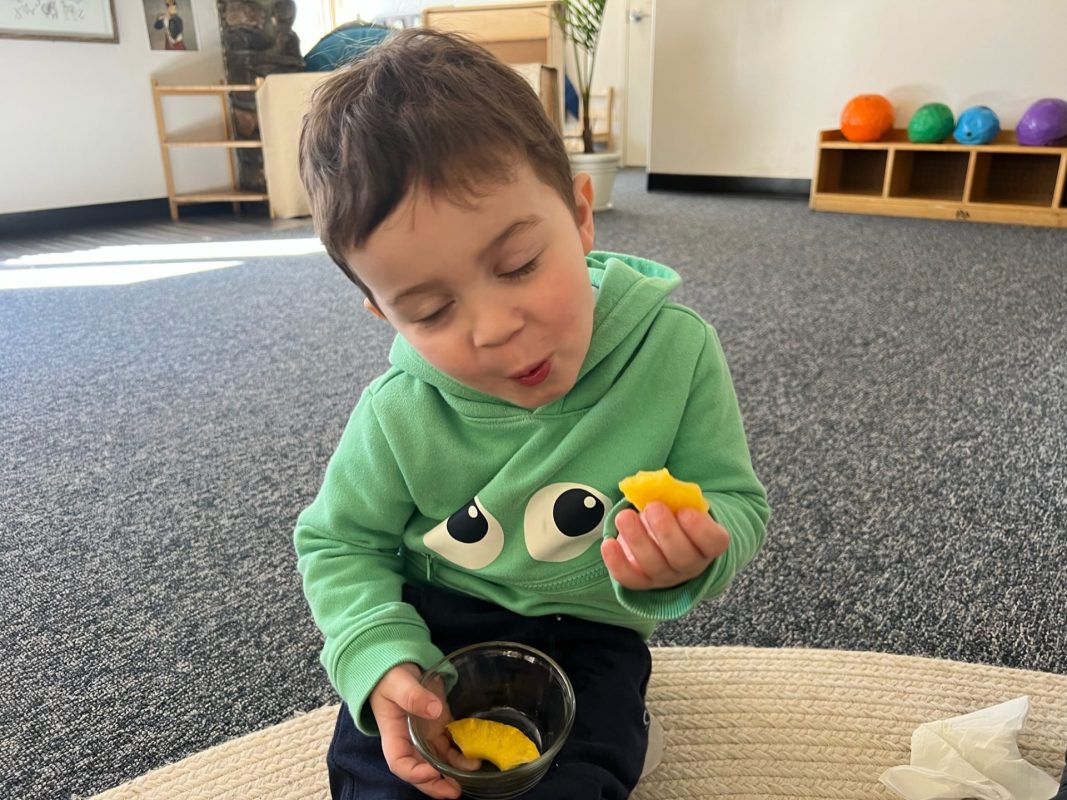
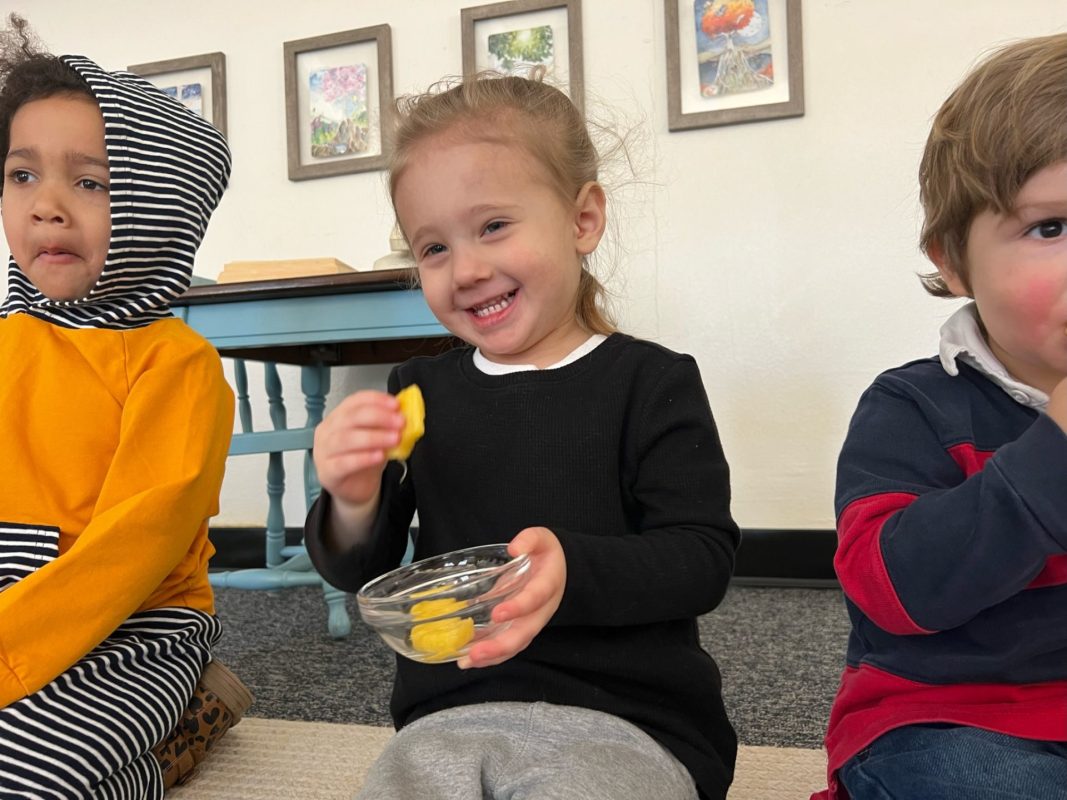
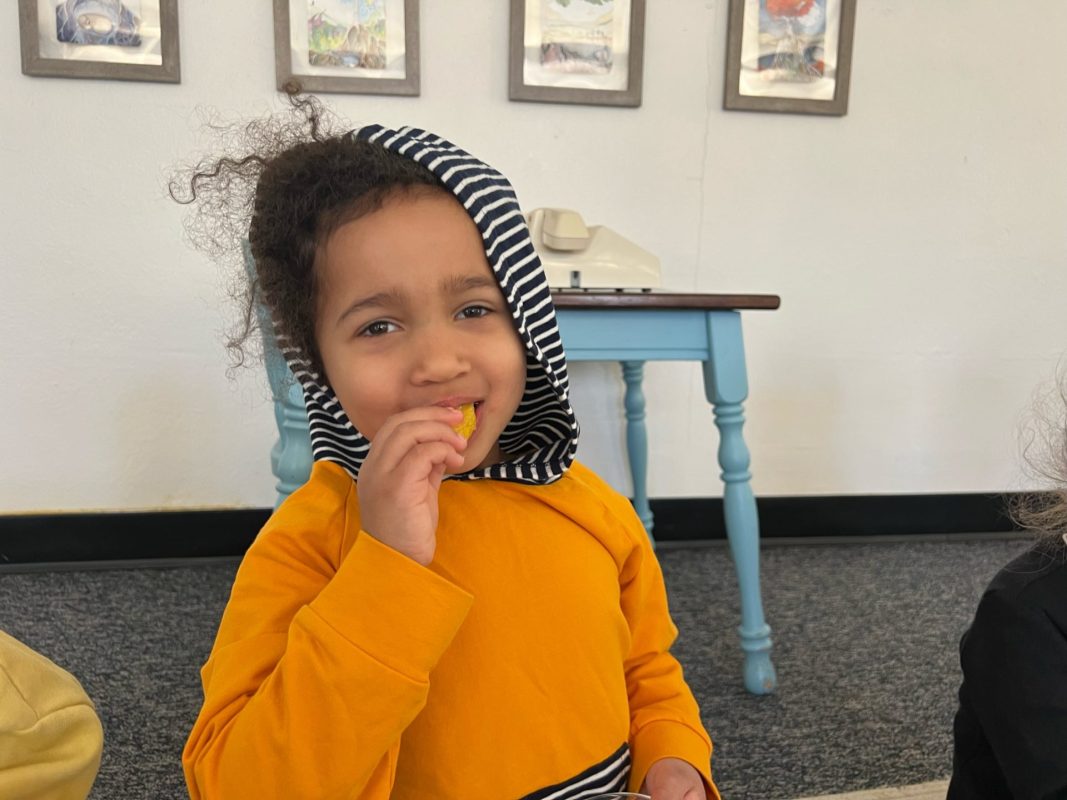
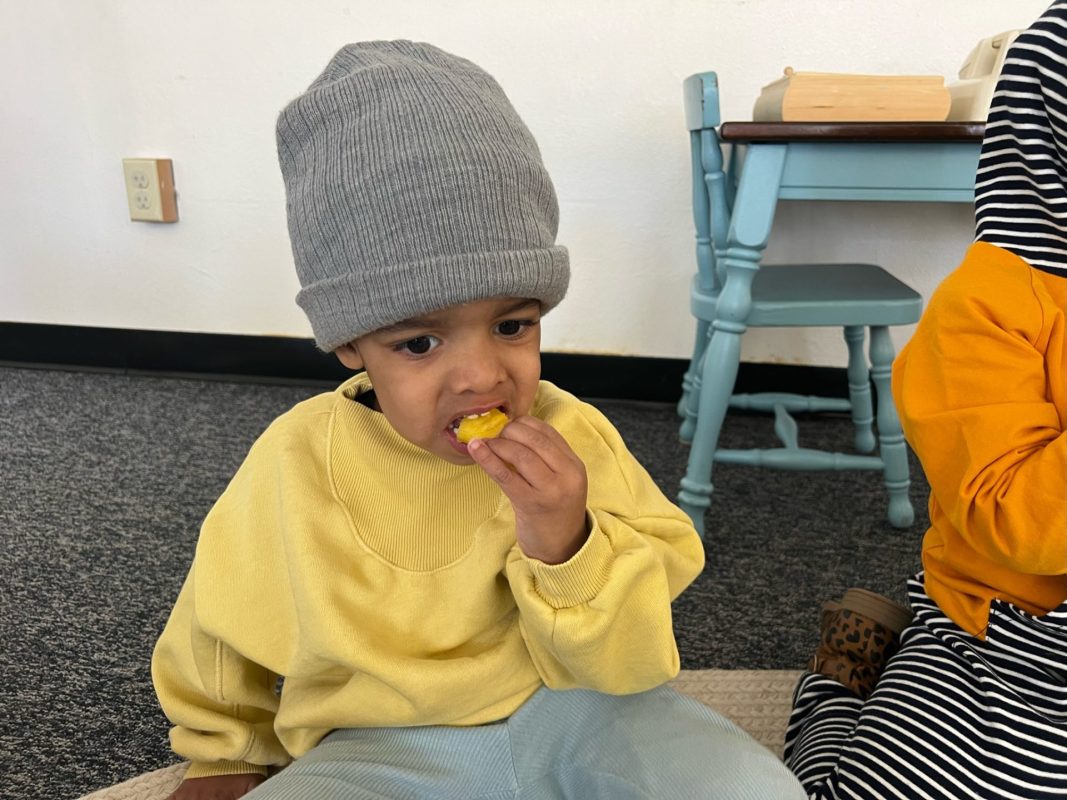
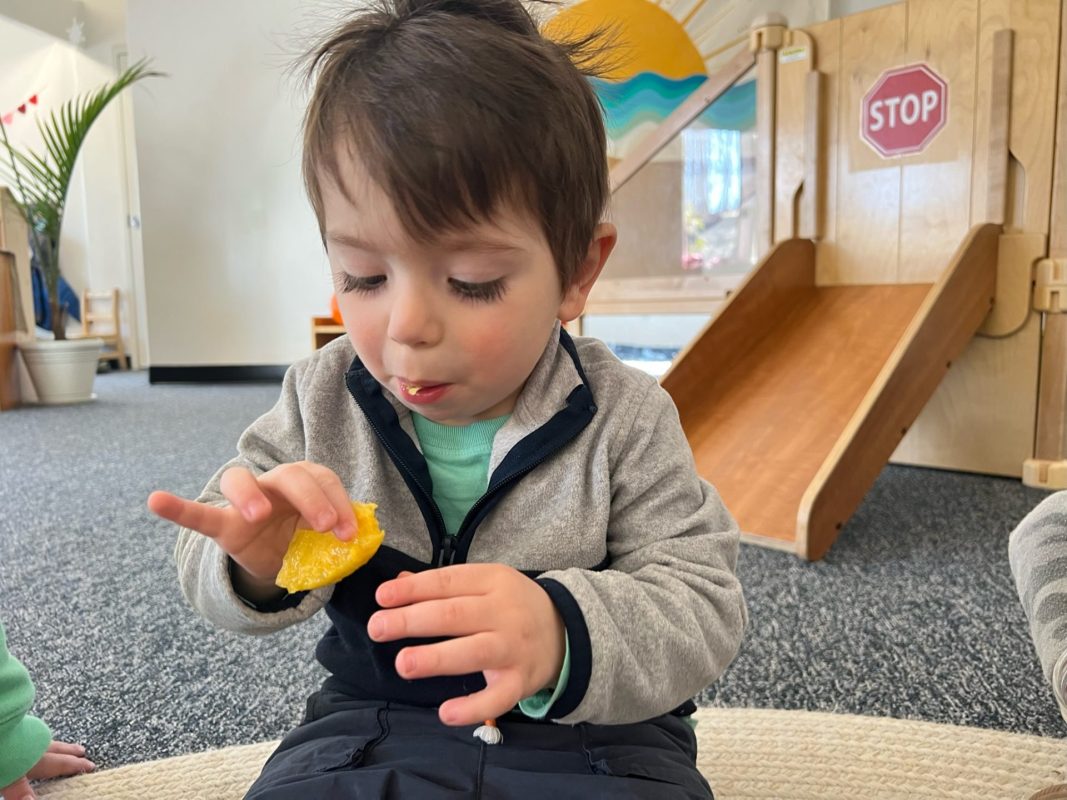
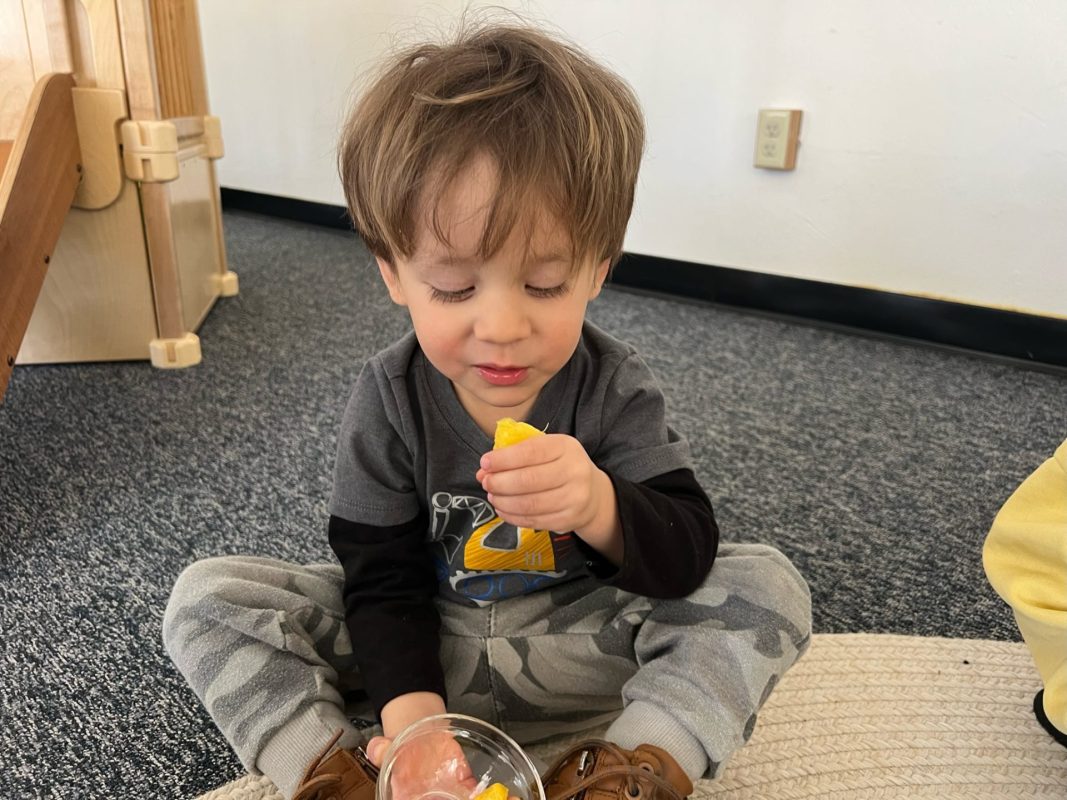
For food tasting, children explored a mango and they were very surprised to find out that it had a yellow pulp. For some reason, some of the children were convinced that it was going to be green or purple! 🙂 Needless to say, they devoured the mango and asked for repeats. It’s a great fruit to add to your grocery list!

Enjoy the weekend,

Mrs. Hood and Mrs. Bethann


Mrs.Wilson: Happy New Year!

Welcome back from winter break. We missed all of our little friends while we were away. It was so nice to receive a warm hug and see their smiling faces. While we welcomed them back we also welcomed a new friend to our community. The children gently guided our new friend around the classroom. They offer to hold his hand and help him navigate the environment.

Wednesday, we had our pajama and pancake party. The children started by participating in a lovely tradition that Ryan’s family does over the holidays. Before they enjoy their Christmas Eve dinner, they break a piece of a Christmas Wafer called Oplatek with one another to show how much they love and appreciate each other. The children all received a piece of this wafer and we modeled the language to say, Thank you for being my friend, I love you, or Happy New Year.

Thereafter, the children were invited to sit at the table to enjoy some delicious pancakes, mixed fruit, and a dollop of whip cream. They also enjoyed some Mexican Hot Chocolate with a couple of mini marshmallows. To end our party we had a pajama dance with fun music and scarves.

Thursday the children tasted a raw carrot. They learned about the parts of a carrot: carrot greens which are made up of leaves and stems, the root, and root hairs. They also learned that a carrot is a root vegetable that grows underground. We took the carrot tops and placed them into water. We are hoping to watch the carrots grow.


Mrs. Hood: Welcome Back!

Happy New Year, families! We hope you had a wonderful holiday break and you got some relaxation and meaningful time with your families!

Your children transitioned peacefully after the break and they arrived eager and ready to explore the environment and all the new works on the shelves. As we have officially entered the winter season, we will be focusing on bringing it into the environment and enjoying different aspects of it. Water and its different stages will be a main subject for conversations and sensorial experiences during this month.

In the language area, children seemed to enjoy working with the winter clothes vocabulary cards. As children are growing in expressive language, they like repeating sounds, naming objects and having one on one conversations about them. Children were also introduced to an object-to-picture matching work focused on arctic animals. Children are learning to recognize a harp seal, an arctic fox, a killer whale, a walrus, a husky, a caribou, a beluga whale, and a polar bear. This was one of the most popular works this week.  

On another note, we introduced a beloved work by all the children: a baby doll. Her name is Molly. Through this work, children practice grace and courtesy, gentleness, and a lot of patience since everybody wants to take care of the baby. Children enjoyed this work so much! Some of them cuddled Molly with such care, others explored her body parts using it as an enrichment of vocabulary work. The fact that the baby can open and shut her eyes was a point of interest for many of the children. Needless to say, they reminded each other to not poke the baby’s eyes, which was great to witness. The children worked together to make sure Molly felt loved. They read, sang and kissed her… some of them even wanted to cuddle with Molly in her crib!

For food tasting we explored Kale and to our surprise most of the children really enjoyed tasting it!

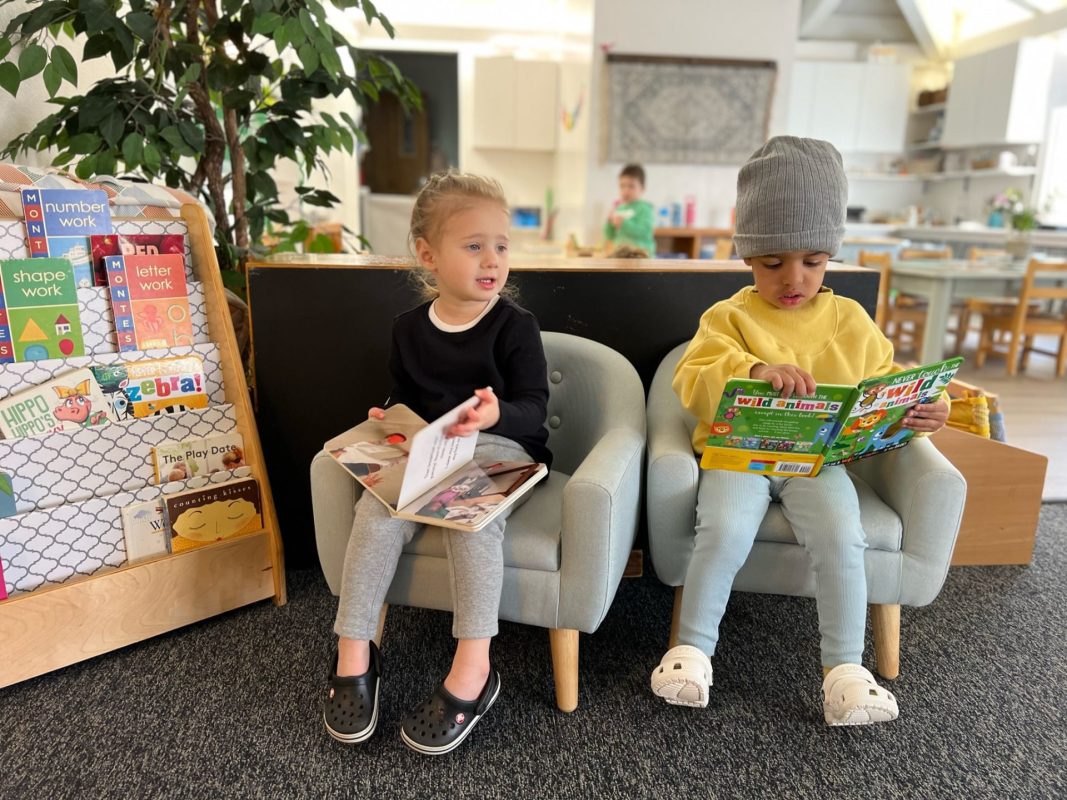
The favorite books this week were: The Itsy Bitsy Snowman by Jeffrey Burton; Winter is Here by Kevin Henkes; Waiting Is Not Forever by Elizabeth Verdick and I Help by Cheri Meiners.

Reminder: Please check the updated Food Tasting and Flowers Calendar in resources on MyFWM. Thank you in advance!

Enjoy the weekend,

Mrs. Hood and Miss. Bethann


Mrs. Hood: ‘Tis the Season!

And just like that, our first trimester comes to an end, filled with great moments and stories to tell. Your children are blooming and our environment is full of love, smiles, curiosity and great fun because of them! We feel honored to be able to see each of your little ones unfolding so beautifully.

We thank you SO much for your support and trust. We love partnering with you in this adventure! We also thank you so much for your generous gifts! We truly appreciate it!

May the wonder and Joy of this holiday season bring light, hope and peace to you and yours.

May 2023 be a great year for all of us, filled with happiness and health!

Enjoy a peek from our small pajama holiday celebration! We missed a bunch of friends but we are positive we will have more special moments like these in the coming months.

Stay safe and see you next year! 🙂

Mrs. Hood and Ms. Bethann